EP3722011B1 - Procédé et convoyeur de traitement et de tri des matériaux potentiellement contaminés par des substances radioactives - Google Patents
Procédé et convoyeur de traitement et de tri des matériaux potentiellement contaminés par des substances radioactives Download PDFInfo
- Publication number
- EP3722011B1 EP3722011B1 EP20162899.7A EP20162899A EP3722011B1 EP 3722011 B1 EP3722011 B1 EP 3722011B1 EP 20162899 A EP20162899 A EP 20162899A EP 3722011 B1 EP3722011 B1 EP 3722011B1
- Authority
- EP
- European Patent Office
- Prior art keywords
- materials
- measured values
- selection
- conveyor
- selection device
- Prior art date
- Legal status (The legal status is an assumption and is not a legal conclusion. Google has not performed a legal analysis and makes no representation as to the accuracy of the status listed.)
- Active
Links
Images

Classifications
-
- B—PERFORMING OPERATIONS; TRANSPORTING
- B07—SEPARATING SOLIDS FROM SOLIDS; SORTING
- B07C—POSTAL SORTING; SORTING INDIVIDUAL ARTICLES, OR BULK MATERIAL FIT TO BE SORTED PIECE-MEAL, e.g. BY PICKING
- B07C5/00—Sorting according to a characteristic or feature of the articles or material being sorted, e.g. by control effected by devices which detect or measure such characteristic or feature; Sorting by manually actuated devices, e.g. switches
- B07C5/34—Sorting according to other particular properties
- B07C5/346—Sorting according to other particular properties according to radioactive properties
-
- B—PERFORMING OPERATIONS; TRANSPORTING
- B07—SEPARATING SOLIDS FROM SOLIDS; SORTING
- B07B—SEPARATING SOLIDS FROM SOLIDS BY SIEVING, SCREENING, SIFTING OR BY USING GAS CURRENTS; SEPARATING BY OTHER DRY METHODS APPLICABLE TO BULK MATERIAL, e.g. LOOSE ARTICLES FIT TO BE HANDLED LIKE BULK MATERIAL
- B07B13/00—Grading or sorting solid materials by dry methods, not otherwise provided for; Sorting articles otherwise than by indirectly controlled devices
-
- B—PERFORMING OPERATIONS; TRANSPORTING
- B07—SEPARATING SOLIDS FROM SOLIDS; SORTING
- B07C—POSTAL SORTING; SORTING INDIVIDUAL ARTICLES, OR BULK MATERIAL FIT TO BE SORTED PIECE-MEAL, e.g. BY PICKING
- B07C5/00—Sorting according to a characteristic or feature of the articles or material being sorted, e.g. by control effected by devices which detect or measure such characteristic or feature; Sorting by manually actuated devices, e.g. switches
- B07C5/36—Sorting apparatus characterised by the means used for distribution
Definitions
- the invention relates to a method for treating and sorting materials potentially contaminated with radioactive substances according to patent claim 1 and a conveyor system according to patent claim 10.
- Sorting methods and conveyor systems are known in which one or more measuring devices is or are directed towards a conveyor device and the measuring device detects when bulk material with a predetermined property, e.g. radioactive bulk material, is in the measuring area, so that it can be fed to a corresponding container .
- a predetermined property e.g. radioactive bulk material
- non-contaminated materials are not mixed with contaminated materials, since the non-contaminated materials are to be dumped or released into the environment in some other way. Therefore, mixing of contamination-free materials with contaminated materials should be prevented. It should also be avoided that excessively large amounts of non-contaminated materials get to the contaminated materials, since this increases the amount of substances that are difficult to dispose of or have to be temporarily stored, and the disposal and/or storage costs would increase significantly as a result.
- the object of the invention is therefore to provide a method for sorting materials potentially contaminated with radioactive substances, which ensures a reliable separation between contaminated and non-contaminated materials and at the same time a reliable correction of the measured values determined with regard to the influence of cross radiation.
- a corrected measured value is determined by subtracting the measured values of temporally and/or spatially adjacent conveying device subareas in a weighted form from the respectively determined measured value of a conveyor device subarea.
- Such a method advantageously enables a reliable separation between radioactively contaminated materials and non-contaminated materials based on the measured values obtained with respect to at least one type of ionizing radiation, for example beta or gamma radiation.
- the selection device advantageously ensures that the materials are assigned to a material flow on the basis of the measured values assigned to them, so that contaminated and non-contaminated materials are conveyed separately from one another, for example into different containers.
- the selection device advantageously feeds the material that has already been conveyed into the selection device to the corresponding material flow in order to ensure reliable separation between materials contaminated with radioactive substances and materials that are not contaminated.
- Such a method thus makes it possible for the materials not only to be evaluated and sorted in fixed, predetermined units of quantity (batch sizes), but also for the system to be able to advantageously adapt the assignment to the material flows at any time by changing the selection signal in the event of changes in the material.
- the method according to the invention enables a reliable correction of the measured values with regard to the influence of transverse radiation when several sensors of the same type arranged side by side and/or one behind the other in the direction of transport, are aimed at the conveying device, since a corrected measured value is determined by subtracting the measured values of temporally or spatially adjacent conveying device subareas in a weighted form from the respectively determined measured value of a conveying device subarea.
- a particularly reliable selection signal can be provided if the individual measured values determined are fed to a digital filter, it being provided in particular that the individual measured values are weighted and/or summed up and/or that a maximum value is determined from the individual measured values, and that the filtered measured value signal determined by filtering is used to form the selection signal.
- the formation of the selection signal to use measured values that were recorded a predetermined period of time beforehand, with this period of time corresponding in particular to the time it took for the materials to be transported from the recording area of the at least one sensor corresponds to the position of the selection device on the conveyor device.
- a particularly reliable sorting of potentially contaminated materials on the basis of the measured values of different sensors can be ensured by using measured values of different sensors, sensitive to different types of radiation and/or energy ranges, for the formation of the selection signal, which were each recorded different predetermined time periods previously, with these time periods correspond in particular to the time that corresponds to the conveyance of the materials from the receiving area of the respective sensor to the position of the selection device on the conveyor device.
- a further improvement in the sorting or separation between contaminated and non-contaminated materials can be achieved if an average value, in particular a moving average, or a maximum value based on the in a predetermined time interval that precedes the point in time at which the materials the position of the selection device on the conveyor device, the measured values recorded by the sensors are determined and used as a selection signal for forwarding the materials being conveyed.
- a particularly reliable separation of materials that are contaminated with radioactive substances that emit gamma radiation can be guaranteed if the results of a gamma spectral measurement for a number of different particle energies are used as the measured value, where A weighted sum of the individual measured spectral values of the gamma spectrum is used in particular when generating the selection signal, individual areas of the gamma spectrum that are assigned to specific radioactive substances of interest being preferably weighted higher than the other areas.
- a particularly reliable separation of materials that contain beta emitters can be achieved if the beta radiation intensity is used as the measured value.
- a particularly reliable correction of gamma readings with regard to the influence of cross-irradiation can be guaranteed if a corrected gamma reading is determined and if an energy-dependent weighting of the neighboring gamma readings is carried out as part of the correction, especially if higher-energy components of the gamma readings are weighted more heavily when subtracting than low-energy portions of the gamma readings.
- a particularly reliable estimation of the radiation due to pure beta emitters can be ensured if a comparison of the individual gamma measurements, in particular the results of the gamma spectral measurement, for a number of different particle energies with the beta radiation measurements, each relating to the same area or part of the mined materials have been determined, the presence of pure beta emitters being determined in this way and the activity of the pure beta emitters being estimated.
- a measure of the total contamination of the contaminated materials, each conveyed into a container can be provided if the individual measured values for which the same selection signal was determined and which were recorded in relation to materials which were assigned to the same material stream are accumulated, particular provision being made for an accumulation of all gamma readings or beta radiation readings fed to the same container.
- a measure of the contamination of individual radioactive materials of interest present in the materials conveyed into a cask can be provided if the measured values determined for the respective materials conveyed into the same cask, in particular the results of the gamma Spectral measurement for a number of different particle energies are accumulated, with a mass-specific measurement variable being determined for each container, and with an accumulated measurement value, in particular the specific activity, of certain radioactive nuclides of interest being derived for the respective container.
- a further improvement in the sorting of materials potentially contaminated with radioactive substances can be achieved if, in a first sorting pass, the materials are identified as contaminated and/or uncontaminated and the materials forwarded by the at least one selection device to a relevant material flow are conveyed in at least one new sorting pass on the conveyor device and are measured with regard to at least one form of ionizing radiation, a selection signal for the respective selection device being determined again in each case as a function of that measured value or those measured values which have been assigned to the part of the materials located in the region of the selection device.
- a particularly small-scale sorting of the materials potentially contaminated with radioactive substances can be achieved if the selection signal is generated and the conveyed materials are forwarded to one of the at least two material flows continuously as a function of the selection signal.
- control and processing unit (5) is designed to determine a corrected measured value using a method according to the invention.
- the selection device advantageously feeds the material that has already been conveyed into the selection device to the corresponding material flow in order to ensure reliable separation between materials contaminated with radioactive substances and materials that are not contaminated.
- the materials can not only be evaluated and sorted in fixed units of quantity, i.e. batch sizes, but can also be advantageously assigned to the corresponding material flow at any time when the measured values of the materials change by changing the selection signal.
- a conveyor system designed in this way advantageously enables reliable separation between materials contaminated with radioactive substances and non-contaminated materials, since the selection signal for the selection device is generated by the control and processing unit on the basis of the measured values from at least one sensor with regard to at least one type of ionizing radiation, e.g. beta or gamma radiation, have been measured.
- the control and processing unit controls the selection device according to the selection signal, so that it is advantageously ensured that the materials are assigned to a corresponding material flow based on the measured values assigned to them, and such contaminated and non-contaminated materials are conveyed separately from one another, for example into different containers.
- control and processing unit is designed to determine a selection signal using a method according to the invention and/or a measured value using a method according to the invention.
- a particularly small-scale sorting of the materials potentially contaminated with radioactive substances can be achieved if the control and processing unit is designed to continuously generate the selection signal and the at least one selection device is designed to continuously forward the conveyed materials to one of the at least two material flows in To be forwarded as a function of the selection signal.
- control and processing unit is designed to generate the selection signal discontinuously for specified quantity units, in particular in batches, and the at least one selection device is designed to select the conveyed Forward materials discontinuously in predetermined units of quantity, in particular in batches, to one of the at least two material streams depending on the selection signal.
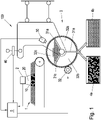
- the conveyor system 100 comprises a conveyor device 1, for example a conveyor belt, on which materials 10 potentially contaminated with radioactive substances are conveyed.
- the potentially contaminated materials 10 can be, for example, bulk material such as loose rock material of different grain sizes, but also potentially contaminated waste.
- a selection device 3 can, for example, be a rotatably mounted drum which has walls 31a, 31b, 31c that protrude radially from the drum axis. so that thereby cup segments 32a, 32b, 32c are formed. Materials 10 falling from the conveyor device 1 reach these bucket segments 32a, 32b, 32c and are conveyed into different containers 4a, 4b, for example barrels.
- the selection device 3 has a drive unit 32, which further rotates the selection device 3 and thus the bucket segments 32a, 32b, 32c of the selection device 3 by an arc section of, for example, 120° and places the materials 10 into different containers depending on the direction of rotation of the selection device 3 4a, 4b are funded.
- the unsorted materials 10 are first brought onto the conveyor 1, distributed and on the conveyor 1 or the conveyor belt under at least one Sensor 2 conveyed through.
- the conveyor system 100 can optionally include a rake, for example, which ensures that the conveyor device 1 is loaded as uniformly as possible.
- the conveyor system 100 can include an optical belt scale, for example, in order to check this occupancy of the conveyor device 1, to enable a statement to be made about the bulk thickness and to detect a lack of occupancy at an early stage.
- a conveyor system 100 with only one sensor 2 for ionizing radiation is used, as is shown in 2 is shown schematically.
- Sensor 2 is in 2 arranged perpendicular to the transport direction T of the conveyor 1 and its measuring range extends over the entire width of the conveyor 1.
- the sensor 2 is in data communication with a control and processing unit 5 , and the measured values determined by the sensor 2 are temporarily stored in a memory 51 of the control and processing unit 5 .
- the measured values are assigned to that area of the conveyed materials 10 that is in the measuring range of the sensor 2 at the respective recording time.
- the position of the measured conveyed materials 10 on the conveyor 1 can be determined, for example, via the change in position between two measurements by a rotary encoder on a non-driven roller and assigned to the respectively determined measured values by the control and processing unit 5.
- the conveyed materials 10 are fed to the selection device 3, which, depending on a selection signal, forwards the conveyed materials 10 arriving at it to one of at least two material streams.
- the selection signal is created as a function of the measured value that was assigned to the materials 10 that are currently in the area of the selection device 3 .
- the control and processing unit 5 is connected to the selection device 3 or its drive unit 32 and activates the drive unit 32 of the at least one selection device 3 to rotate.
- the direction of rotation is dependent on the selection signal determined, so that the materials 10 correspond to the corresponding material flow are supplied, and such contaminated and non-contaminated materials are conveyed separately into different containers 4a, 4b.
- Such a configuration of the conveyor system advantageously makes it possible to evaluate and sort materials 10 not only in predetermined quantity units or batch sizes, ie discontinuously.
- the materials 10 can also be assigned to the corresponding material flow at any time, for example when the measured values determined for the materials 10 change, by changing the relevant selection signal.
- a selection signal is continuously provided, for example, for those materials 10 that have currently been fed from the conveying device 1 to the selection device 3 or have entered a bucket segment 32a, 32b, 32c of the selection device 3, so that these materials 10 are also continuously transferred from the selection device 3 to the , the selection signal corresponding material flow are assigned. This means that it can be forwarded to the corresponding material flow in a wide variety of subsets at any point in time, for example if the measured value determined for the respective materials 10 exceeds a predetermined limit value.
- a more complex structure according to the invention with a plurality of sensors can also be used.
- two sensors 2, 21 that are sensitive to different types of radiation can also be arranged one behind the other when viewed in the transport direction T.
- This can be, for example, a sensor 2 for gamma radiation and a sensor 21 for beta radiation.
- more than two sensors that are sensitive to different types of radiation and/or energy ranges can also be arranged one behind the other.
- the sensors 2, 21 arranged one behind the other can each determine measured values in relation to a measuring range 20 which covers the entire width of the conveyor device 1 or the conveyor belt.
- the individual measured values are each stored in the memory 51 of the control and processing unit 5, with all measured values that originate from the same area of the conveyed materials 10 being stored together and used to form the selection signal for actuating the selection device 3.
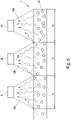
- the measurements can also be carried out with a large number of sensors 2a, ..., 2d; 21a, ..., 21d can be made, as is the case in 3 is shown.
- the recording area of each of the sensors 2a, ..., 2d; 21a, . . . , 21d only covers a partial area 1a, .
- Such a sensor arrangement according to the invention is 3 shown by way of example, where four sensors 2a, ..., 2d, which are sensitive to gamma radiation, for example, are arranged next to one another in the transport direction T, so that the recording area 20a, ..., 20d of each of the sensors 2a, ..., 2d each has a partial area 1a, . .., 1d covering the width of the conveyor belt.
- a further sensor 21a, . . . , 2d which is sensitive to other types of radiation and/or energy ranges, is arranged in front of each of the sensors 2a, .
- this is by no means absolutely necessary and an efficient sorting of potentially contaminated and non-contaminated materials 10 can also be achieved with a method according to the invention if only one type of sensor is used.
- the coverage area of the other different sensors 21a, ..., 21d has in the embodiment in 3 the same width as the coverage area 20a, ..., 20d of the sensors 2a, ..., 2d.
- the selection is made with a plurality of separate selection devices 3a, ..., 3d.
- Each selection device 3a, ..., 3d is one of the sensors 2a, ..., 2d; 21a, . . . , 21d or the respectively covered partial area 1a , .
- the mutually associated selection devices 3a, ..., 3d and sensors 2a, ..., 2d; 21a, ..., 21d each cover the same partial area 1a, ..., 1d of the width of the conveying device 1.
- the selection signal for each of the selection devices 3a, . . . , 3d is based on the temporarily stored measured values of the sensors 2a, . 21a, ..., 21d determined. This means, for example, that the selection signal for the selection device 3a based on the measured values of the sensors 2a; 21a is formed, as in 3 is shown.
- measured values are used whose recording time is a predetermined period of time ago.
- this period of time corresponds to FIG Figures 1 to 6 the time it takes for the materials 10 to be conveyed from the receiving area of the respective sensor 2a, ..., 2d; 21a, ..., 21d up to the position of the selection device 3 on the conveyor device 1.
- the z. B. are sensitive to different types of radiation and/or energy ranges, determine measured values in relation to areas of the conveyed materials 10, as is shown in 3 is shown, different predetermined time periods are taken into account. This is due to the fact that the periods of time that elapse before the materials 10 arrive at the conveyor device 1 from the receiving area of a respective sensor to the position of the selection device 3a, . . . , 3d are different.
- the selection signal for controlling a selection device 3 or a plurality of selection devices 3a, . . . , 3d can be determined in different ways using digital filters.
- a digital filter is understood to mean, for example, the weighting and summation of the individually determined measured values or the determination of a maximum value from the individual measured values. For example, an average, e.g. a moving average, or a maximum value can be formed on the basis of the measured values determined.
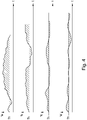
- This mean value or maximum value can be determined, for example, for the unsorted materials 10 that are transported past a relevant sensor, for example a gamma detector, within a predetermined time interval, as is shown in 4 is shown.
- the time interval can be adapted to the recording area of the respective sensor 2, 21 and have a length of several seconds, for example. If the mean value or maximum value determined in this way exceeds a predetermined threshold value Th, the relevant materials 10 are regarded as contaminated and assigned to the corresponding material flow by the relevant selection device 3 .
- a selection signal can be derived on the basis of the gamma or beta measured values averaged over a variable time interval, which is e.g. dependent on the extent of the change in the measured values over time.
- a selection signal for the forwarding of the conveyed materials 10 can be derived on the basis of, for example, a moving average value of the beta radiation measured values, e.g. the beta radiation intensity, within a defined time interval of, for example, several seconds will.
- a sorting decision or a relevant selection signal can be derived on the basis of the maximum beta radiation measured value within a defined longer interval of e.g. 16 s.
- measured values of a gamma spectral measurement for a number of different particle energies determined with at least one sensor 2, which covers the entire width of the conveyor device 1, can also be used.
- several similar sensors 2a, . . . , 2d arranged next to one another can be used to determine gamma spectra.
- Such a sensor structure for determining gamma radiation measured values is shown in the exemplary embodiment in figure 5 shown.
- a weighted sum of the individual spectral measurement values of the gamma spectrum is used, for example.
- figure 5 shows three sensors 2a, 2b, 2c with recording areas 20a, 20b, 20c, which each detect conveyor device sub-areas 1a, 1b, 1c.
- the sensor 2b shown with the recording area 20b provides, for example, material 10 that is conveyed on the adjacent partial areas 1a, 1c of the conveying device 1 or radiation that is emitted by these materials 10, making a contribution to the measured value that the sensor 2b measures.
- Radiation from the sections of partial area 1b of conveyor device 1 that have already moved out of recording area 20b of detector 2b or have not yet entered recording area 20b also provides radiation components that are detected by sensor 2b.
- a measured value corrected for this influence of transverse radiation is determined in that, from the measured value determined for a receiving area 20a, . . . , 20d of a conveyor device sub-area 1a, . .., 1d can be subtracted in weighted form.
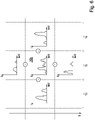
- FIG. 6 shows a section of three conveyor device sections 1a, 1b, 1c of a conveyor device 1, which moves along the transport direction T.
- a gamma spectrum is recorded by the sensor 2b shown and is intended to include the contribution of the gamma spectra that were determined for the locally adjacent conveyor device sub-areas 1a, 1c to the right or left and the contribution of the gamma spectra that were determined for the temporally preceding or following areas of sub-area 1b have been determined can be corrected.
- 6 schematically shows the gamma spectrum to be corrected of the recording area 20b of the detector 2b, as well as the gamma spectra to be taken into account for the correction of the locally adjacent or temporally preceding and following conveyor device sub-areas.
- the correction is indicated schematically by subtraction signs between the relevant gamma spectra.
- sensors 2a, 2c measure spectra for the locally adjacent recording areas 20a, 20c, which are figure 5 are shown and stored in memory 51 of control and processing unit 5 .
- the gamma spectra for the sensor 2b for the temporally preceding or following area of the sub-area 1b were or are also stored in the memory 51.
- a respective gamma spectrum is corrected, for example, by a weighted, for example percentage, subtraction of the neighboring spectra.
- an energy-dependent weighting of the adjacent gamma measurement values can also be carried out, with higher-energy components of the gamma measurement values being weighted more heavily when deducting, for example, than lower-energy components.
- individual areas of the gamma spectrum that are assigned to specific radioactive substances of interest can be weighted higher than the other areas.
- measured values of a gamma spectral measurement determined with at least one sensor 2, which covers the entire width of the conveyor device 1, can be used for a number of different particle energies as a basis for the calculation of weighting factors or quotient sums.
- germanium detectors can be used for such a gamma spectral measurement.
- control and processing unit 5 sums, for example, the individually determined gamma spectra of the respective sensors 2 sensitive to gamma radiation based on their position information over a predefined length of the conveyor belt or a predefined time interval, the length of which is adapted to the size of the recording area of the respective sensor 2 .
- the most recent 23 individual gamma spectra are summed on average.
- the chronologically oldest gamma spectrum of the specified time interval is no longer taken into account for summation.
- the unsorted materials 10, as described above, are conveyed into container 4 by means of a selection unit 3 or various selection devices 3a, . . .
- a selection unit 3 or various selection devices 3a, . . . for this purpose, for example, the individual gamma measured values or beta radiation measured values for which the same selection signal was determined and which were recorded in relation to materials 10 that were assigned to the same material flow are accumulated, for example summed up.
- a conveyor system 100 for carrying out a method according to the invention can also include a weighing unit 40 for a container 4 or for a plurality of containers 4a, . . . , 4d.
- a weighing unit 40 for a container 4 or for a plurality of containers 4a, . . . , 4d For example, the net mass of the container 4; 4a, . . . , 4d can be determined during operation, which is the case if the containers 4; 4a, ..., 4d conclusions about the density of the materials 10 in the respective container 4; 4a, ..., 4d were funded.
- the conveyor system 100 can include a filling level sensor 30.
- a specific activity indication per container 4 or 4a, . . . , 4d can optionally be determined. For this purpose, as previously described, an accumulated activity is determined for a respective container 4, its weight is determined by weighing the respective container 4, and a specific activity is determined from these two pieces of information.
- a comparison of the gamma measured values determined for the same area or partial area of the conveyed materials 10 with the beta radiation measurements are carried out. Since it is known for radioactive nuclides which types of radiation or with which activity they emit radiation, a comparison of the gamma measured values with the beta radiation measured values can be used to estimate whether, in addition to nuclides or substances that contain both gamma and beta radiation emitted, substances are present that emit only beta radiation. In this way, the pure beta emitters can be estimated and their activity can be determined.
- a method according to the invention for treating and sorting materials 10 potentially contaminated with radioactive substances can also be designed as a multi-stage method.
- the materials 10 classified as contaminated in a first sorting run can be reassessed in at least one new sorting run with changed parameters, for example different threshold values, for the generation of the selection signal.
- a relatively low threshold for sorting out as contaminated material can be applied if, for example, it is not known which radionuclides are present in the materials 10 to be sorted. If a subsequent analysis of the measured values determined for the materials 10 shows that only nuclides are present that allow a higher threshold value than the sorting threshold, a new sorting run can take place in this case with an adjusted threshold value.
- a reassessment of the materials 10 classified as contaminated in a first sorting run can also be carried out, for example, if during an optional weighing of a respective container 4; 4a, ..., 4d it is subsequently recognized that the bulk density of the materials 10 was underestimated. The effect of this is that when an activity is calculated per mass or per container 4, it is overestimated.
- a new sorting run can also take place if it is determined after a first sorting run that mostly harmless, uncontaminated or only slightly contaminated materials 10 are mixed with a few highly contaminated particles, which cause isolated, high maxima in otherwise unremarkable measured values. In this case, these contaminated particles can be sorted out from the materials 10 classified as contaminated in a renewed second sorting run with a high sorting value or threshold value.
- the materials 10 classified as uncontaminated in a first sorting run can be reassessed in at least one new sorting run with changed parameters, for example different threshold values, for the creation of the selection signal. This can be done, for example, if a subsequent analysis of the measured values determined for the materials 10 reveals that one or more unexpected radionuclides are present, for which, for example, a lower sorting value or sorting using sensors sensitive to gamma radiation would be required. Depending on the data situation, it is advantageous in this case to subject the materials 10 classified as uncontaminated to another sorting run with parameters adapted to the relevant nuclide.
- such a renewed sorting run can take place if, with an optional weighing of a respective container 4; 4a, ..., 4d it is subsequently recognized that the bulk density of the materials 10 was overestimated. In this case, the activity per mass was underestimated. Depending on the data situation, it is advantageous in this case to re-sort the materials 10 classified as uncontaminated using parameters adapted to the bulk density.
Landscapes
- Measurement Of Radiation (AREA)
- Analysing Materials By The Use Of Radiation (AREA)
Claims (11)
- Procédé de traitement et de tri de matériaux potentiellement contaminés par des substances radioactives (10),a) dans lequel des matériaux non triés (10) sont transportés sur un dispositif de transport (1),b) dans lequel des zones individuelles des matériaux non triés (10) sont mesurées au cours du transport sur le dispositif de transport (1) en ce qui concerne au moins une forme de rayonnement ionisant,c) dans lequel les valeurs de mesure ainsi déterminées sont mémorisées temporairement et associées à la zone des matériaux transportés (10) qui se trouve, au moment de l'enregistrement, dans la zone de mesure de l'au moins un capteur (2 ; 21) déterminant la valeur de mesure,d) dans lequel les matériaux transportés (10) sont amenés à une position du dispositif de transport (1), en particulier à son extrémité, à au moins un dispositif de sélection (3) qui, en fonction d'un signal de sélection, transmet les matériaux transportés (10) lui parvenant à un d'au moins deux flux de matériau,e) dans lequel le signal de sélection respectif transmis à l'au moins un dispositif de sélection (3) est déterminé en fonction de la valeur de mesure ou des valeurs de mesure qui a ou qui ont été associées à la partie des matériaux (10) se trouvant dans la zone du dispositif de sélection (3), dans lequel- les mesures sont réalisées avec une pluralité de capteurs (2a, ..., 2d ; 21a, ..., 21d) de même type, dans lequel la zone de réception de chacun des capteurs (2a, ..., 2d ; 21a, ..., 21d) ne couvre respectivement qu'une zone partielle de la largeur du dispositif de transport (1),- une sélection est réalisée avec une pluralité de dispositifs de sélection séparés (3a, ..., 3d), dans lequel chaque dispositif de sélection (3a, ..., 3d) est associé respectivement à un des capteurs (2a, ..., 2d ; 21a, ..., 21d) et les dispositifs de sélection (3a, ..., 3d) et capteurs (2a, ..., 2d ; 21a, ..., 21d) associés les uns aux autres couvrent respectivement la même zone partielle de la largeur du dispositif de transport (1), et- la formation des signaux de sélection individuels pour les dispositifs de sélection (3a, ..., 3d) est réalisée respectivement sur la base des valeurs de mesure mémorisées temporairement du capteur (2a, ..., 2d ; 21a, ..., 21d) respectif associé au dispositif de sélection (3a, ..., 3d) et/ou dans lequel- pour le ou pour chaque dispositif de sélection (3 ; 3a, ..., 3d), il est prévu une pluralité de capteurs (2 ; 2a, ..., 2d ; 21 ; 21a, ..., 21d) se trouvant les uns derrière les autres dans la direction de transport (T), sensibles à différents types de rayonnement et/ou à différentes plages d'énergie, qui déterminent respectivement des valeurs de mesure par rapport à des zones des matériaux transportés (10), qui parviennent respectivement à un dispositif de sélection (3 ; 3a, ..., 3d), et- les valeurs de mesure individuelles, qui sont respectivement associées à la même zone de matériaux transportés (10), sont mémorisées en commun et utilisées pour la formation du signal de sélection pour l'actionnement du dispositif de sélection respectif (3 ; 3a, ..., 3d)caractérisé en ce
qu'une valeur de mesure corrigée est déterminée, en soustrayant, sous forme pondérée, les valeurs de mesure de zones partielles de dispositif de transport (1a, ..., 1d) voisines dans le temps et/ou dans l'espace de la valeur de mesure respectivement déterminée d'une zone partielle de dispositif de transport (1a, ..., 1d). - Procédé selon la revendication 1, caractérisé en ce- que les valeurs de mesure individuelles déterminées sont amenées à un filtre numérique,
dans lequel il est en particulier prévu que les valeurs de mesure individuelles soient pondérées et/ou additionnées et/ou qu'une valeur maximale soit déterminée parmi les valeurs de mesure individuelles, et- que le signal de valeur mesurée filtré ainsi déterminé par filtrage est utilisé pour former le signal de sélectionet/ou- que, pour la formation du signal de sélection, des valeurs de mesure qui ont été enregistrées auparavant pendant une période de temps prédéterminée sont utilisées, dans lequel cette période de temps correspond en particulier au temps que dure le transport des matériaux (10) depuis la zone de réception de l'au moins un capteur (2, 21) jusqu'à la position du dispositif de sélection (3) sur le dispositif de transport (1). - Procédé selon la revendication 2, caractérisé en ce que, pour la formation du signal de sélection, sont utilisées des valeurs de mesure de différents capteurs (2 ; 2a, ..., 2d ; 21 ; 21a, ..., 21d) sensibles à différents types de rayonnement et/ou à différentes plages d'énergie, qui ont été enregistrés respectivement pendant différentes périodes de temps prédéterminées auparavant, dans lequel ces périodes de temps correspondent en particulier au temps qui correspond au transport des matériaux (10) depuis la zone de réception du capteur respectif jusqu'à la position du dispositif de sélection (3 ; 3a, ..., 3d) sur le dispositif de transport (1).
- Procédé selon l'une quelconque des revendications précédentes, caractérisé en ce qu'une valeur moyenne, en particulier une valeur moyenne glissante, ou une valeur maximale est déterminée sur la base des valeurs de mesure des capteurs (2 ; 2a, ..., 2d ; 21 ; 21a, ..., 21d) enregistrées dans un intervalle de temps prédéterminé précédant le moment où les matériaux (10) se trouvent à la position du dispositif de sélection (3 ; 3a, ..., 3d) sur le dispositif de transport (1), et est utilisée comme signal de sélection pour la transmission des matériaux transportés (10).
- Procédé selon l'une quelconque des revendications précédentes, caractérisé en ce- que les résultats d'une mesure spectrale gamma pour un certain nombre d'énergies de particules différentes sont utilisés comme valeur de mesure, dans lequel
en particulier lors de l'établissement du signal de sélection, une somme pondérée des valeurs de mesure spectrale individuelles du spectre gamma est utilisée, dans lequel des zones individuelles du spectre gamma, qui sont associées à certaines substances radioactives d'intérêt, sont de préférence plus fortement pondérées que les zones restantes
et/ou- que l'intensité de rayonnement bêta est utilisée comme valeur de mesure. - Procédé selon l'une quelconque des revendications précédentes, caractérisé en ce qu'une valeur de mesure gamma corrigée est déterminée et en ce que, dans le cadre de la correction, une pondération en fonction de l'énergie des valeurs de mesure gamma voisines est réalisée, en particulier en ce que les parts à plus haute énergie des valeurs de mesure gamma sont plus fortement pondérées lors de la déduction que les parts à plus basse énergie des valeurs de mesure gamma.
- Procédé selon l'une quelconque des revendications précédentes, caractérisé en ce qu'une comparaison des valeurs de mesure gamma individuelles, en particulier des résultats de la mesure spectrale gamma, est réalisée pour un certain nombre d'énergies de particules différentes avec les valeurs de mesure du rayonnement bêta, qui ont été déterminées respectivement par rapport à la même zone ou zone partielle des matériaux transportés (10), dans lequel la présence d'émetteurs bêta purs est ainsi déterminée et l'activité des émetteurs bêta purs est estimée.
- Procédé selon l'une quelconque des revendications précédentes, caractérisé en ce que les différentes valeurs de mesure sont accumulées, pour lesquelles le même signal de sélection a été déterminé et qui ont été reçues par rapport à des matériaux (10) qui ont été associés au même flux de matériau,dans lequel il est prévu en particulier de réaliser une accumulation de toutes les valeurs de mesure gamma ou valeurs de mesure de rayonnement bêta qui sont amenées au même récipient (4 ; 4a, ..., 4d),dans lequel il est prévu en particulier que les valeurs de mesure déterminées pour les matériaux transportés (10) respectivement dans le même récipient (4 ; 4a, ..., 4d), en particulier les résultats de la mesure spectrale gamma pour un certain nombre d'énergies de particules différentes, sont accumulées, dans lequel une grandeur de mesure spécifique à la masse est déterminée pour chaque récipient (4 ; 4a, ..., 4d) est déterminée, et une valeur de mesure accumulée, en particulier l'activité spécifique, de certains nucléides radioactifs d'intérêt est déduite pour le récipient respectif (4 ; 4a, ..., 4d).
- Procédé selon l'une quelconque des revendications précédentes, caractérisé en ce- que des matériaux (10) reconnus comme contaminés et/ou non contaminés lors d'un premier passage de tri et transmis par l'au moins un dispositif de sélection (3 ; 3a, ..., 3d) à un flux de matériau correspondant sont transportés sur le dispositif de transport (1) lors d'au moins un nouveau passage de tri et mesurés en ce qui concerne au moins une forme de rayonnement ionisant, dans lequel un signal de sélection pour le dispositif de sélection (3) respectif est respectivement à nouveau déterminé en fonction de la valeur de mesure ou des valeurs de mesure qui a ou qui ont été associées à la partie des matériaux (10) se trouvant dans la zone du dispositif de sélection (3)
et/ou- que l'établissement du signal de sélection et la transmission des matériaux transportés (10) à un des au moins deux flux de matériau s'effectuent, en fonction du signal de sélection, de manière discontinue pour des unités de quantité prédéfinies, en particulier par lots, ou en continu. - Installation de transport (100) pour le traitement et le tri de matériaux potentiellement contaminés par des substances radioactives (10), en particulier pour la mise en œuvre d'un procédé selon l'une quelconque des revendications 1 à 9, comprenant- un dispositif de transport (1), en particulier en continu, pour le transport de matériaux non triés (10),- au moins un capteur (2) qui est dirigé vers le dispositif de transport (1) et qui est conçu pour mesurer des zones individuelles des matériaux non triés (10) au cours du transport sur le dispositif de transport (1) en ce qui concerne au moins une forme de rayonnement ionisant,- au moins un dispositif de sélection (3) auquel les matériaux transportés (10) sont amenés à une position du dispositif de transport (1), en particulier à son extrémité, dans lequel le dispositif de sélection (3) est conçu pour transmettre les matériaux transportés (10) qui lui parviennent à un d'au moins deux flux de matériau en fonction d'un signal de sélection et- une unité de commande et de traitement (5) en aval de l'au moins un capteur (2) et connectée à l'au moins un dispositif de sélection (3), dans lequel l'unité de commande et de traitement (5) est conçue pour- mémoriser temporairement les valeurs de mesure déterminées par l'au moins un capteur (2) et les associer à la zone des matériaux transportés (10) qui se trouve, au moment de l'enregistrement, dans la zone de mesure du capteur (2 ; 21) déterminant la valeur de mesure,- déterminer un signal de sélection en fonction de la valeur de mesure ou des valeurs de mesure qui ont été associées à la partie des matériaux (10) se trouvant dans la zone du dispositif de sélection (3), et- transmettre le signal de sélection respectif à l'au moins un dispositif de sélection (3),
dans lequel une pluralité de capteurs (2a, ..., 2d ; 21a, ..., 21d) de même type est prévue, dans lequel la zone de réception de chacun des capteurs (2a, ..., 2d ; 21a, ..., 21d) ne couvre respectivement qu'une zone partielle de la largeur du dispositif de transport (1),- une pluralité de dispositifs de sélection séparés (3a, ..., 3d) est prévue, dans lequel chaque dispositif de sélection (3a, ..., 3d) est associé respectivement à un des capteurs (2a, ..., 2d ; 21a, ..., 21d) et les dispositifs de sélection (3a, ..., 3d) et capteurs (2a, ..., 2d ; 21a, ..., 21d) associés les uns aux autres couvrent respectivement la même zone partielle de la largeur du dispositif de transport (1), et- l'unité de commande et de traitement (5) est conçue pour déterminer les signaux de sélection individuels pour les dispositifs de sélection (3a, ..., 3d) respectivement sur la base des valeurs de mesure mémorisées temporairement du capteur (2a, ..., 2d ; 21a, ..., 21d) respectif associé au dispositif de sélection (3a, ..., 3d)
et/ou
dans lequel- pour le ou pour chaque dispositif de sélection (3 ; 3a, ..., 3d), il est prévu une pluralité de capteurs (2 ; 2a, 2d ; 21 ;
21a, ..., 21d) se trouvant les uns derrière les autres dans la direction de transport (T), sensibles à différents types de rayonnement et/ou à différentes plages d'énergie, dans lequel les capteurs (2 ; 2a, ..., 2d ; 21; 21a, ..., 21d) sont respectivement conçus pour déterminer des valeurs de mesure par rapport à des zones des matériaux transportés (10) qui parviennent respectivement à un dispositif de sélection (3 ; 3a, ..., 3d), et- l'unité de commande et de traitement (5) est conçue pour mémoriser ensemble les valeurs de mesure individuelles qui sont respectivement associées à la même zone de matériaux transportés (10) et pour les utiliser lors de la formation du signal de sélection pour l'actionnement du dispositif de sélection respectif (3 ; 3a, ..., 3d),caractérisé en ce que
l'unité de commande et de traitement (5) est conçue pour déterminer une valeur de mesure corrigée selon l'une quelconque des revendications 1 à 10. - Installation de transport (100) selon la revendication 10, caractérisée en ce- que l'unité de commande et de traitement (5) est conçue pour déterminer un signal de sélection selon l'une quelconque des revendications 2 à 4 et/ou une valeur de mesure selon l'une quelconque des revendications 5 à 8 et/ou- que l'unité de commande et de traitement (5) est conçue pour établir le signal de sélection de manière discontinue pour des unités de quantité prédéterminées, en particulier par lots, ou en continu, et en ce que l'au moins un dispositif de sélection (3) est conçu pour transmettre les matériaux transportés (10) de manière discontinue dans des unités de quantité prédéterminées, en particulier par lots, ou en continu, à un des au moins deux flux de matériau en fonction du signal de sélection.
Applications Claiming Priority (1)
| Application Number | Priority Date | Filing Date | Title |
|---|---|---|---|
| ATA50324/2019A AT522316B1 (de) | 2019-04-10 | 2019-04-10 | Verfahren zum Behandeln und Sortieren von potentiell mit radioaktiven Stoffen kontaminierten Materialien |
Publications (2)
| Publication Number | Publication Date |
|---|---|
| EP3722011A1 EP3722011A1 (fr) | 2020-10-14 |
| EP3722011B1 true EP3722011B1 (fr) | 2022-06-08 |
Family
ID=69844413
Family Applications (1)
| Application Number | Title | Priority Date | Filing Date |
|---|---|---|---|
| EP20162899.7A Active EP3722011B1 (fr) | 2019-04-10 | 2020-03-13 | Procédé et convoyeur de traitement et de tri des matériaux potentiellement contaminés par des substances radioactives |
Country Status (3)
| Country | Link |
|---|---|
| EP (1) | EP3722011B1 (fr) |
| AT (1) | AT522316B1 (fr) |
| HU (1) | HUE059361T2 (fr) |
Cited By (1)
| Publication number | Priority date | Publication date | Assignee | Title |
|---|---|---|---|---|
| WO2025168659A1 (fr) * | 2024-02-08 | 2025-08-14 | Stadler Anlagenbau Gmbh | Procédé d'analyse d'une composition d'un lot d'un mélange de matériaux précieux, et système de tri |
Families Citing this family (2)
| Publication number | Priority date | Publication date | Assignee | Title |
|---|---|---|---|---|
| WO2023213806A1 (fr) | 2022-05-04 | 2023-11-09 | Nukem Technologies Engineering Services Gmbh | Procédé de détermination de contamination radioactive |
| DE102022115105B3 (de) | 2022-05-04 | 2023-08-10 | Nukem Technologies Engineering Services Gmbh | Verfahren zur Bestimmung von radioaktiven Verunreinigungen |
Family Cites Families (7)
| Publication number | Priority date | Publication date | Assignee | Title |
|---|---|---|---|---|
| FR1278051A (fr) * | 1960-10-24 | 1961-12-08 | Commissariat Energie Atomique | Procédé et installation de triage en continu, d'éléments séparés, en fonction de la valeur d'une de leurs caractéristiques physiques, notamment, en fonction de leur radioactivité |
| ZA781016B (en) * | 1978-02-21 | 1980-01-30 | Gen Mining & Finance Corp | Bulk ore sorter |
| US4679738A (en) * | 1984-09-10 | 1987-07-14 | Westinghouse Electric Corp. | Conveyor for sorting radioactive waste |
| GB0422135D0 (en) * | 2004-10-06 | 2004-11-03 | Lyons Keith | Processing nuclear waste |
| FR3001643B1 (fr) * | 2013-02-07 | 2015-02-20 | Grs Valtech | Procede de tri en flux continu de matieres contaminees et dispositif correspondant |
| AT518254B1 (de) * | 2016-04-25 | 2017-09-15 | Nuclear Eng Seibersdorf Gmbh | Anordnung zum Sortieren von Schüttgut |
| CN106994448A (zh) * | 2017-06-02 | 2017-08-01 | 南华大学 | 一种放射性矿石分选设备 |
-
2019
- 2019-04-10 AT ATA50324/2019A patent/AT522316B1/de active
-
2020
- 2020-03-13 EP EP20162899.7A patent/EP3722011B1/fr active Active
- 2020-03-13 HU HUE20162899A patent/HUE059361T2/hu unknown
Cited By (1)
| Publication number | Priority date | Publication date | Assignee | Title |
|---|---|---|---|---|
| WO2025168659A1 (fr) * | 2024-02-08 | 2025-08-14 | Stadler Anlagenbau Gmbh | Procédé d'analyse d'une composition d'un lot d'un mélange de matériaux précieux, et système de tri |
Also Published As
| Publication number | Publication date |
|---|---|
| HUE059361T2 (hu) | 2022-11-28 |
| AT522316B1 (de) | 2020-10-15 |
| EP3722011A1 (fr) | 2020-10-14 |
| AT522316A4 (de) | 2020-10-15 |
Similar Documents
| Publication | Publication Date | Title |
|---|---|---|
| EP3722011B1 (fr) | Procédé et convoyeur de traitement et de tri des matériaux potentiellement contaminés par des substances radioactives | |
| DE102016208320B3 (de) | Vorrichtung zur Sortierung von Materialien, insbesondere Schrottpartikeln, mittels Röntgenfluoreszenz | |
| WO2015135885A1 (fr) | Procédé permettant de mesurer un produit en vrac | |
| DE3007038A1 (de) | Verfahren und vorrichtung zum sortieren von erz | |
| EP3577626A1 (fr) | Procédé de mesure dimensionnelle par rayons x, en particulier par tomodensitométrie et tomodensitomètre à rayons x | |
| DE69123337T2 (de) | Vorrichtung zur messung des gehaltes von verschiedenen schüttgutkomponenten mit pulsierender neutronenstrahlung und verfahren zur bestimmung des gehaltes mit dieser vorrichtung | |
| DE2823705A1 (de) | Verfahren zum bestimmen des anteils wenigstens eines materials in einer sich bewegenden materialmischung und vorrichtung zur durchfuehrung des verfahrens | |
| CH643359A5 (de) | Verfahren zum pruefen von produktproben und anordnung zur durchfuehrung des verfahrens. | |
| DE19824039B4 (de) | Verfahren und Vorrichtung zur Prüfung von Schüttmaterial, insbesondere von Bauschutt und/oder Bodenaushub, auf den Gehalt an Radionukliden | |
| DE3000602A1 (de) | Verfahren und vorrichtung zur bestimmung der art von transportiertem material | |
| DE3872208T2 (de) | Verfahren und vorrichtung zur messung der radioaktivitaet. | |
| DE2226924A1 (de) | Verfahren und einrichtung zur messung und regelung der tonerkonzentration in elektrophotographischen reproduktionsmaschinen | |
| DE102007022519A1 (de) | Verfahren zur Ermittlung einzelner Quantenabsorptionsereignisse bei einem Strahlungswandler zur Wandlung einzelner Quanten einer darauf einfallenden ionisierenden Strahlung. Programmcodemittel zur Durchführung des Verfahrens, Einrichtung zur elektronischen Datenverarbeitung, Strahlungswandler und Bildgebendes Tomografiegerät | |
| DE10360094C9 (de) | Pulverdosierung - automatische Pulverzustellung | |
| DE3035929A1 (de) | Vorrichtung zur ermittlung der volumenanteile eines mehrkomponentengemisches durch transission mehrerer gammalinien | |
| EP2217946B1 (fr) | Dispositif pour la détermination en ligne du contenu d'une substance et procédé utilisant un tel dispositif | |
| DE1803372B2 (de) | Verfahren und vorrichtung zum messen der masse einer reihe von gegenstaenden | |
| DE69938455T2 (de) | Verfahren zum simulieren der antwort eines detektors für durch radioaktive elemente emittierte strahlungen und verfahren zur kontrolle von kernbrennstabbündeln unter verwendung dieser simulation | |
| DE102011077397B4 (de) | Röntgenbildaufnahmevorrichtung mit Koinzidenzschaltungen in Detektoreinheiten | |
| DE19711124C2 (de) | Verfahren und Vorrichtung zur Erkennung künstlicher Gammastrahlung | |
| DE69518504T2 (de) | Detektion von verunreinigungen in metallagglomeraten | |
| EP3238836B1 (fr) | Système de tri de produits en vrac | |
| EP3052966B1 (fr) | Détecteur de rayonnements x | |
| DE3046858A1 (de) | Verfahren und vorrichtung zum messen radioaktiver emissionen sich bewegenden radioaktiven materials | |
| EP4182729A1 (fr) | Procédé de mesure de sûreté nucléaire d'un matériau à mesurer au moyen d'un système de mesure de dégagement, produit-programme informatique et système de mesure de dégagement |
Legal Events
| Date | Code | Title | Description |
|---|---|---|---|
| PUAI | Public reference made under article 153(3) epc to a published international application that has entered the european phase |
Free format text: ORIGINAL CODE: 0009012 |
|
| STAA | Information on the status of an ep patent application or granted ep patent |
Free format text: STATUS: THE APPLICATION HAS BEEN PUBLISHED |
|
| AK | Designated contracting states |
Kind code of ref document: A1 Designated state(s): AL AT BE BG CH CY CZ DE DK EE ES FI FR GB GR HR HU IE IS IT LI LT LU LV MC MK MT NL NO PL PT RO RS SE SI SK SM TR |
|
| AX | Request for extension of the european patent |
Extension state: BA ME |
|
| STAA | Information on the status of an ep patent application or granted ep patent |
Free format text: STATUS: REQUEST FOR EXAMINATION WAS MADE |
|
| 17P | Request for examination filed |
Effective date: 20210413 |
|
| RBV | Designated contracting states (corrected) |
Designated state(s): AL AT BE BG CH CY CZ DE DK EE ES FI FR GB GR HR HU IE IS IT LI LT LU LV MC MK MT NL NO PL PT RO RS SE SI SK SM TR |
|
| GRAP | Despatch of communication of intention to grant a patent |
Free format text: ORIGINAL CODE: EPIDOSNIGR1 |
|
| STAA | Information on the status of an ep patent application or granted ep patent |
Free format text: STATUS: GRANT OF PATENT IS INTENDED |
|
| INTG | Intention to grant announced |
Effective date: 20220215 |
|
| GRAS | Grant fee paid |
Free format text: ORIGINAL CODE: EPIDOSNIGR3 |
|
| GRAA | (expected) grant |
Free format text: ORIGINAL CODE: 0009210 |
|
| STAA | Information on the status of an ep patent application or granted ep patent |
Free format text: STATUS: THE PATENT HAS BEEN GRANTED |
|
| AK | Designated contracting states |
Kind code of ref document: B1 Designated state(s): AL AT BE BG CH CY CZ DE DK EE ES FI FR GB GR HR HU IE IS IT LI LT LU LV MC MK MT NL NO PL PT RO RS SE SI SK SM TR |
|
| REG | Reference to a national code |
Ref country code: AT Ref legal event code: REF Ref document number: 1496556 Country of ref document: AT Kind code of ref document: T Effective date: 20220615 Ref country code: CH Ref legal event code: EP |
|
| REG | Reference to a national code |
Ref country code: DE Ref legal event code: R096 Ref document number: 502020001184 Country of ref document: DE |
|
| REG | Reference to a national code |
Ref country code: IE Ref legal event code: FG4D Free format text: LANGUAGE OF EP DOCUMENT: GERMAN |
|
| REG | Reference to a national code |
Ref country code: LT Ref legal event code: MG9D |
|
| REG | Reference to a national code |
Ref country code: NL Ref legal event code: MP Effective date: 20220608 Ref country code: SK Ref legal event code: T3 Ref document number: E 40140 Country of ref document: SK |
|
| PG25 | Lapsed in a contracting state [announced via postgrant information from national office to epo] |
Ref country code: SE Free format text: LAPSE BECAUSE OF FAILURE TO SUBMIT A TRANSLATION OF THE DESCRIPTION OR TO PAY THE FEE WITHIN THE PRESCRIBED TIME-LIMIT Effective date: 20220608 Ref country code: NO Free format text: LAPSE BECAUSE OF FAILURE TO SUBMIT A TRANSLATION OF THE DESCRIPTION OR TO PAY THE FEE WITHIN THE PRESCRIBED TIME-LIMIT Effective date: 20220908 Ref country code: LT Free format text: LAPSE BECAUSE OF FAILURE TO SUBMIT A TRANSLATION OF THE DESCRIPTION OR TO PAY THE FEE WITHIN THE PRESCRIBED TIME-LIMIT Effective date: 20220608 Ref country code: HR Free format text: LAPSE BECAUSE OF FAILURE TO SUBMIT A TRANSLATION OF THE DESCRIPTION OR TO PAY THE FEE WITHIN THE PRESCRIBED TIME-LIMIT Effective date: 20220608 Ref country code: GR Free format text: LAPSE BECAUSE OF FAILURE TO SUBMIT A TRANSLATION OF THE DESCRIPTION OR TO PAY THE FEE WITHIN THE PRESCRIBED TIME-LIMIT Effective date: 20220909 Ref country code: FI Free format text: LAPSE BECAUSE OF FAILURE TO SUBMIT A TRANSLATION OF THE DESCRIPTION OR TO PAY THE FEE WITHIN THE PRESCRIBED TIME-LIMIT Effective date: 20220608 Ref country code: ES Free format text: LAPSE BECAUSE OF FAILURE TO SUBMIT A TRANSLATION OF THE DESCRIPTION OR TO PAY THE FEE WITHIN THE PRESCRIBED TIME-LIMIT Effective date: 20220608 Ref country code: BG Free format text: LAPSE BECAUSE OF FAILURE TO SUBMIT A TRANSLATION OF THE DESCRIPTION OR TO PAY THE FEE WITHIN THE PRESCRIBED TIME-LIMIT Effective date: 20220908 |
|
| REG | Reference to a national code |
Ref country code: HU Ref legal event code: AG4A Ref document number: E059361 Country of ref document: HU |
|
| PG25 | Lapsed in a contracting state [announced via postgrant information from national office to epo] |
Ref country code: RS Free format text: LAPSE BECAUSE OF FAILURE TO SUBMIT A TRANSLATION OF THE DESCRIPTION OR TO PAY THE FEE WITHIN THE PRESCRIBED TIME-LIMIT Effective date: 20220608 Ref country code: LV Free format text: LAPSE BECAUSE OF FAILURE TO SUBMIT A TRANSLATION OF THE DESCRIPTION OR TO PAY THE FEE WITHIN THE PRESCRIBED TIME-LIMIT Effective date: 20220608 |
|
| PG25 | Lapsed in a contracting state [announced via postgrant information from national office to epo] |
Ref country code: NL Free format text: LAPSE BECAUSE OF FAILURE TO SUBMIT A TRANSLATION OF THE DESCRIPTION OR TO PAY THE FEE WITHIN THE PRESCRIBED TIME-LIMIT Effective date: 20220608 |
|
| PG25 | Lapsed in a contracting state [announced via postgrant information from national office to epo] |
Ref country code: SM Free format text: LAPSE BECAUSE OF FAILURE TO SUBMIT A TRANSLATION OF THE DESCRIPTION OR TO PAY THE FEE WITHIN THE PRESCRIBED TIME-LIMIT Effective date: 20220608 Ref country code: RO Free format text: LAPSE BECAUSE OF FAILURE TO SUBMIT A TRANSLATION OF THE DESCRIPTION OR TO PAY THE FEE WITHIN THE PRESCRIBED TIME-LIMIT Effective date: 20220608 Ref country code: PT Free format text: LAPSE BECAUSE OF FAILURE TO SUBMIT A TRANSLATION OF THE DESCRIPTION OR TO PAY THE FEE WITHIN THE PRESCRIBED TIME-LIMIT Effective date: 20221010 Ref country code: EE Free format text: LAPSE BECAUSE OF FAILURE TO SUBMIT A TRANSLATION OF THE DESCRIPTION OR TO PAY THE FEE WITHIN THE PRESCRIBED TIME-LIMIT Effective date: 20220608 |
|
| PG25 | Lapsed in a contracting state [announced via postgrant information from national office to epo] |
Ref country code: PL Free format text: LAPSE BECAUSE OF FAILURE TO SUBMIT A TRANSLATION OF THE DESCRIPTION OR TO PAY THE FEE WITHIN THE PRESCRIBED TIME-LIMIT Effective date: 20220608 Ref country code: IS Free format text: LAPSE BECAUSE OF FAILURE TO SUBMIT A TRANSLATION OF THE DESCRIPTION OR TO PAY THE FEE WITHIN THE PRESCRIBED TIME-LIMIT Effective date: 20221008 |
|
| REG | Reference to a national code |
Ref country code: DE Ref legal event code: R097 Ref document number: 502020001184 Country of ref document: DE |
|
| PG25 | Lapsed in a contracting state [announced via postgrant information from national office to epo] |
Ref country code: AL Free format text: LAPSE BECAUSE OF FAILURE TO SUBMIT A TRANSLATION OF THE DESCRIPTION OR TO PAY THE FEE WITHIN THE PRESCRIBED TIME-LIMIT Effective date: 20220608 |
|
| PLBE | No opposition filed within time limit |
Free format text: ORIGINAL CODE: 0009261 |
|
| STAA | Information on the status of an ep patent application or granted ep patent |
Free format text: STATUS: NO OPPOSITION FILED WITHIN TIME LIMIT |
|
| PG25 | Lapsed in a contracting state [announced via postgrant information from national office to epo] |
Ref country code: DK Free format text: LAPSE BECAUSE OF FAILURE TO SUBMIT A TRANSLATION OF THE DESCRIPTION OR TO PAY THE FEE WITHIN THE PRESCRIBED TIME-LIMIT Effective date: 20220608 |
|
| 26N | No opposition filed |
Effective date: 20230310 |
|
| PG25 | Lapsed in a contracting state [announced via postgrant information from national office to epo] |
Ref country code: SI Free format text: LAPSE BECAUSE OF FAILURE TO SUBMIT A TRANSLATION OF THE DESCRIPTION OR TO PAY THE FEE WITHIN THE PRESCRIBED TIME-LIMIT Effective date: 20220608 |
|
| P01 | Opt-out of the competence of the unified patent court (upc) registered |
Effective date: 20230621 |
|
| PG25 | Lapsed in a contracting state [announced via postgrant information from national office to epo] |
Ref country code: MC Free format text: LAPSE BECAUSE OF FAILURE TO SUBMIT A TRANSLATION OF THE DESCRIPTION OR TO PAY THE FEE WITHIN THE PRESCRIBED TIME-LIMIT Effective date: 20220608 |
|
| PG25 | Lapsed in a contracting state [announced via postgrant information from national office to epo] |
Ref country code: LU Free format text: LAPSE BECAUSE OF NON-PAYMENT OF DUE FEES Effective date: 20230313 |
|
| REG | Reference to a national code |
Ref country code: IE Ref legal event code: MM4A |
|
| PG25 | Lapsed in a contracting state [announced via postgrant information from national office to epo] |
Ref country code: IE Free format text: LAPSE BECAUSE OF NON-PAYMENT OF DUE FEES Effective date: 20230313 |
|
| PG25 | Lapsed in a contracting state [announced via postgrant information from national office to epo] |
Ref country code: BG Free format text: LAPSE BECAUSE OF FAILURE TO SUBMIT A TRANSLATION OF THE DESCRIPTION OR TO PAY THE FEE WITHIN THE PRESCRIBED TIME-LIMIT Effective date: 20220608 |
|
| PG25 | Lapsed in a contracting state [announced via postgrant information from national office to epo] |
Ref country code: BG Free format text: LAPSE BECAUSE OF FAILURE TO SUBMIT A TRANSLATION OF THE DESCRIPTION OR TO PAY THE FEE WITHIN THE PRESCRIBED TIME-LIMIT Effective date: 20220608 |
|
| PGFP | Annual fee paid to national office [announced via postgrant information from national office to epo] |
Ref country code: AT Payment date: 20250417 Year of fee payment: 5 |
|
| PGFP | Annual fee paid to national office [announced via postgrant information from national office to epo] |
Ref country code: CH Payment date: 20250401 Year of fee payment: 6 |
|
| PG25 | Lapsed in a contracting state [announced via postgrant information from national office to epo] |
Ref country code: CY Free format text: LAPSE BECAUSE OF FAILURE TO SUBMIT A TRANSLATION OF THE DESCRIPTION OR TO PAY THE FEE WITHIN THE PRESCRIBED TIME-LIMIT; INVALID AB INITIO Effective date: 20200313 |
|
| PG25 | Lapsed in a contracting state [announced via postgrant information from national office to epo] |
Ref country code: TR Free format text: LAPSE BECAUSE OF FAILURE TO SUBMIT A TRANSLATION OF THE DESCRIPTION OR TO PAY THE FEE WITHIN THE PRESCRIBED TIME-LIMIT Effective date: 20220608 |
|
| REG | Reference to a national code |
Ref country code: CH Ref legal event code: U11 Free format text: ST27 STATUS EVENT CODE: U-0-0-U10-U11 (AS PROVIDED BY THE NATIONAL OFFICE) Effective date: 20260401 |
|
| PGFP | Annual fee paid to national office [announced via postgrant information from national office to epo] |
Ref country code: GB Payment date: 20260324 Year of fee payment: 7 |
|
| PGFP | Annual fee paid to national office [announced via postgrant information from national office to epo] |
Ref country code: DE Payment date: 20260319 Year of fee payment: 7 |
|
| PGFP | Annual fee paid to national office [announced via postgrant information from national office to epo] |
Ref country code: BE Payment date: 20260319 Year of fee payment: 7 Ref country code: IT Payment date: 20260324 Year of fee payment: 7 |
|
| PGFP | Annual fee paid to national office [announced via postgrant information from national office to epo] |
Ref country code: HU Payment date: 20260323 Year of fee payment: 7 |
|
| PGFP | Annual fee paid to national office [announced via postgrant information from national office to epo] |
Ref country code: FR Payment date: 20260320 Year of fee payment: 7 |
|
| PGFP | Annual fee paid to national office [announced via postgrant information from national office to epo] |
Ref country code: CZ Payment date: 20260310 Year of fee payment: 7 |
|
| PGFP | Annual fee paid to national office [announced via postgrant information from national office to epo] |
Ref country code: SK Payment date: 20260310 Year of fee payment: 7 |