EP3722301B1 - Organometallische verbindung, organische lichtemittierende vorrichtung mit der organometallischen verbindung, diagnostische zusammensetzung mit der organometallischen verbindung - Google Patents
Organometallische verbindung, organische lichtemittierende vorrichtung mit der organometallischen verbindung, diagnostische zusammensetzung mit der organometallischen verbindung Download PDFInfo
- Publication number
- EP3722301B1 EP3722301B1 EP20168158.2A EP20168158A EP3722301B1 EP 3722301 B1 EP3722301 B1 EP 3722301B1 EP 20168158 A EP20168158 A EP 20168158A EP 3722301 B1 EP3722301 B1 EP 3722301B1
- Authority
- EP
- European Patent Office
- Prior art keywords
- group
- substituted
- formula
- unsubstituted
- salt
- Prior art date
- Legal status (The legal status is an assumption and is not a legal conclusion. Google has not performed a legal analysis and makes no representation as to the accuracy of the status listed.)
- Active
Links
Images

Classifications
-
- C—CHEMISTRY; METALLURGY
- C07—ORGANIC CHEMISTRY
- C07F—ACYCLIC, CARBOCYCLIC OR HETEROCYCLIC COMPOUNDS CONTAINING ELEMENTS OTHER THAN CARBON, HYDROGEN, HALOGEN, OXYGEN, NITROGEN, SULFUR, SELENIUM OR TELLURIUM
- C07F15/00—Compounds containing elements of Groups 8, 9, 10 or 18 of the Periodic Table
- C07F15/0006—Compounds containing elements of Groups 8, 9, 10 or 18 of the Periodic Table compounds of the platinum group
- C07F15/0033—Iridium compounds
-
- C—CHEMISTRY; METALLURGY
- C09—DYES; PAINTS; POLISHES; NATURAL RESINS; ADHESIVES; COMPOSITIONS NOT OTHERWISE PROVIDED FOR; APPLICATIONS OF MATERIALS NOT OTHERWISE PROVIDED FOR
- C09K—MATERIALS FOR MISCELLANEOUS APPLICATIONS, NOT PROVIDED FOR ELSEWHERE
- C09K11/00—Luminescent materials, e.g. electroluminescent or chemiluminescent
- C09K11/06—Luminescent materials, e.g. electroluminescent or chemiluminescent containing organic luminescent materials
-
- G—PHYSICS
- G01—MEASURING; TESTING
- G01N—INVESTIGATING OR ANALYSING MATERIALS BY DETERMINING THEIR CHEMICAL OR PHYSICAL PROPERTIES
- G01N21/00—Investigating or analysing materials by the use of optical means, i.e. using sub-millimetre waves, infrared, visible or ultraviolet light
- G01N21/62—Systems in which the material investigated is excited whereby it emits light or causes a change in wavelength of the incident light
- G01N21/63—Systems in which the material investigated is excited whereby it emits light or causes a change in wavelength of the incident light optically excited
- G01N21/64—Fluorescence; Phosphorescence
-
- G—PHYSICS
- G01—MEASURING; TESTING
- G01N—INVESTIGATING OR ANALYSING MATERIALS BY DETERMINING THEIR CHEMICAL OR PHYSICAL PROPERTIES
- G01N33/00—Investigating or analysing materials by specific methods not covered by groups G01N1/00 - G01N31/00
- G01N33/48—Biological material, e.g. blood, urine; Haemocytometers
- G01N33/50—Chemical analysis of biological material, e.g. blood, urine; Testing involving biospecific ligand binding methods; Immunological testing
- G01N33/58—Chemical analysis of biological material, e.g. blood, urine; Testing involving biospecific ligand binding methods; Immunological testing involving labelled substances
-
- H—ELECTRICITY
- H10—SEMICONDUCTOR DEVICES; ELECTRIC SOLID-STATE DEVICES NOT OTHERWISE PROVIDED FOR
- H10K—ORGANIC ELECTRIC SOLID-STATE DEVICES
- H10K50/00—Organic light-emitting devices
- H10K50/10—OLEDs or polymer light-emitting diodes [PLED]
- H10K50/11—OLEDs or polymer light-emitting diodes [PLED] characterised by the electroluminescent [EL] layers
-
- H—ELECTRICITY
- H10—SEMICONDUCTOR DEVICES; ELECTRIC SOLID-STATE DEVICES NOT OTHERWISE PROVIDED FOR
- H10K—ORGANIC ELECTRIC SOLID-STATE DEVICES
- H10K50/00—Organic light-emitting devices
- H10K50/10—OLEDs or polymer light-emitting diodes [PLED]
- H10K50/11—OLEDs or polymer light-emitting diodes [PLED] characterised by the electroluminescent [EL] layers
- H10K50/12—OLEDs or polymer light-emitting diodes [PLED] characterised by the electroluminescent [EL] layers comprising dopants
-
- H—ELECTRICITY
- H10—SEMICONDUCTOR DEVICES; ELECTRIC SOLID-STATE DEVICES NOT OTHERWISE PROVIDED FOR
- H10K—ORGANIC ELECTRIC SOLID-STATE DEVICES
- H10K85/00—Organic materials used in the body or electrodes of devices covered by this subclass
- H10K85/30—Coordination compounds
- H10K85/341—Transition metal complexes, e.g. Ru(II)polypyridine complexes
- H10K85/342—Transition metal complexes, e.g. Ru(II)polypyridine complexes comprising iridium
-
- H—ELECTRICITY
- H10—SEMICONDUCTOR DEVICES; ELECTRIC SOLID-STATE DEVICES NOT OTHERWISE PROVIDED FOR
- H10K—ORGANIC ELECTRIC SOLID-STATE DEVICES
- H10K85/00—Organic materials used in the body or electrodes of devices covered by this subclass
- H10K85/40—Organosilicon compounds, e.g. TIPS pentacene
-
- C—CHEMISTRY; METALLURGY
- C09—DYES; PAINTS; POLISHES; NATURAL RESINS; ADHESIVES; COMPOSITIONS NOT OTHERWISE PROVIDED FOR; APPLICATIONS OF MATERIALS NOT OTHERWISE PROVIDED FOR
- C09K—MATERIALS FOR MISCELLANEOUS APPLICATIONS, NOT PROVIDED FOR ELSEWHERE
- C09K2211/00—Chemical nature of organic luminescent or tenebrescent compounds
- C09K2211/10—Non-macromolecular compounds
- C09K2211/1018—Heterocyclic compounds
- C09K2211/1025—Heterocyclic compounds characterised by ligands
- C09K2211/1029—Heterocyclic compounds characterised by ligands containing one nitrogen atom as the heteroatom
- C09K2211/1033—Heterocyclic compounds characterised by ligands containing one nitrogen atom as the heteroatom with oxygen
-
- C—CHEMISTRY; METALLURGY
- C09—DYES; PAINTS; POLISHES; NATURAL RESINS; ADHESIVES; COMPOSITIONS NOT OTHERWISE PROVIDED FOR; APPLICATIONS OF MATERIALS NOT OTHERWISE PROVIDED FOR
- C09K—MATERIALS FOR MISCELLANEOUS APPLICATIONS, NOT PROVIDED FOR ELSEWHERE
- C09K2211/00—Chemical nature of organic luminescent or tenebrescent compounds
- C09K2211/10—Non-macromolecular compounds
- C09K2211/1018—Heterocyclic compounds
- C09K2211/1025—Heterocyclic compounds characterised by ligands
- C09K2211/1029—Heterocyclic compounds characterised by ligands containing one nitrogen atom as the heteroatom
- C09K2211/1037—Heterocyclic compounds characterised by ligands containing one nitrogen atom as the heteroatom with sulfur
-
- C—CHEMISTRY; METALLURGY
- C09—DYES; PAINTS; POLISHES; NATURAL RESINS; ADHESIVES; COMPOSITIONS NOT OTHERWISE PROVIDED FOR; APPLICATIONS OF MATERIALS NOT OTHERWISE PROVIDED FOR
- C09K—MATERIALS FOR MISCELLANEOUS APPLICATIONS, NOT PROVIDED FOR ELSEWHERE
- C09K2211/00—Chemical nature of organic luminescent or tenebrescent compounds
- C09K2211/18—Metal complexes
- C09K2211/185—Metal complexes of the platinum group, i.e. Os, Ir, Pt, Ru, Rh or Pd
-
- H—ELECTRICITY
- H10—SEMICONDUCTOR DEVICES; ELECTRIC SOLID-STATE DEVICES NOT OTHERWISE PROVIDED FOR
- H10K—ORGANIC ELECTRIC SOLID-STATE DEVICES
- H10K2101/00—Properties of the organic materials covered by group H10K85/00
- H10K2101/10—Triplet emission
-
- H—ELECTRICITY
- H10—SEMICONDUCTOR DEVICES; ELECTRIC SOLID-STATE DEVICES NOT OTHERWISE PROVIDED FOR
- H10K—ORGANIC ELECTRIC SOLID-STATE DEVICES
- H10K50/00—Organic light-emitting devices
- H10K50/10—OLEDs or polymer light-emitting diodes [PLED]
- H10K50/14—Carrier transporting layers
- H10K50/15—Hole transporting layers
-
- H—ELECTRICITY
- H10—SEMICONDUCTOR DEVICES; ELECTRIC SOLID-STATE DEVICES NOT OTHERWISE PROVIDED FOR
- H10K—ORGANIC ELECTRIC SOLID-STATE DEVICES
- H10K50/00—Organic light-emitting devices
- H10K50/10—OLEDs or polymer light-emitting diodes [PLED]
- H10K50/14—Carrier transporting layers
- H10K50/16—Electron transporting layers
-
- H—ELECTRICITY
- H10—SEMICONDUCTOR DEVICES; ELECTRIC SOLID-STATE DEVICES NOT OTHERWISE PROVIDED FOR
- H10K—ORGANIC ELECTRIC SOLID-STATE DEVICES
- H10K50/00—Organic light-emitting devices
- H10K50/10—OLEDs or polymer light-emitting diodes [PLED]
- H10K50/17—Carrier injection layers
-
- H—ELECTRICITY
- H10—SEMICONDUCTOR DEVICES; ELECTRIC SOLID-STATE DEVICES NOT OTHERWISE PROVIDED FOR
- H10K—ORGANIC ELECTRIC SOLID-STATE DEVICES
- H10K50/00—Organic light-emitting devices
- H10K50/10—OLEDs or polymer light-emitting diodes [PLED]
- H10K50/17—Carrier injection layers
- H10K50/171—Electron injection layers
-
- H—ELECTRICITY
- H10—SEMICONDUCTOR DEVICES; ELECTRIC SOLID-STATE DEVICES NOT OTHERWISE PROVIDED FOR
- H10K—ORGANIC ELECTRIC SOLID-STATE DEVICES
- H10K50/00—Organic light-emitting devices
- H10K50/10—OLEDs or polymer light-emitting diodes [PLED]
- H10K50/18—Carrier blocking layers
Definitions
- One or more embodiments relate to an organometallic compound, an organic light-emitting device including the organometallic compound, and a diagnostic composition including the organometallic compound.
- Organic light-emitting devices are self-emission devices, which have excellent characteristics in terms of a viewing angle, response time, brightness, driving voltage, and response speed, and produce full-color images.
- an organic light-emitting device includes an anode, a cathode, and an organic layer between the anode and the cathode, wherein the organic layer includes an emission layer.
- a hole transport region may be between the anode and the emission layer, and an electron transport region may be between the emission layer and the cathode.
- Holes provided from the anode may move toward the emission layer through the hole transport region, and electrons provided from the cathode may move toward the emission layer through the electron transport region.
- the holes and the electrons recombine in the emission layer to produce excitons. These excitons transit from an excited state to a ground state, thereby generating light.
- Luminescent compounds may be used to monitor, sense, or detect a variety of biological materials including cells and proteins.
- An example of the luminescent compounds is a phosphorescent luminescent compound.
- EP 3 637 489 discloses an organometallic compound including a transition metal and at least one organic ligand.
- US 2016/164007 discloses organic metal compounds and organic light-emitting devices employing the same.
- EP 3 560 940 discloses an organometallic compound, an organic light-emitting device including the organometallic compound, and a diagnostic composition including the organometallic compound.
- aspects of the present disclosure provide a novel organometallic compound, an organic light-emitting device including the novel organometallic compound, and a diagnostic composition including the novel organometallic compound.
- An aspect of the present invention provides an organometallic compound in accordance with claim 1.
- an organic light-emitting device including: a first electrode; a second electrode; and an organic layer disposed between the first electrode and the second electrode and including an emission layer, wherein the organic layer includes at least one organometallic compound represented by Formula 1.
- the organometallic compound included in the emission layer of the organic layer may act as a dopant.
- Another aspect of the present invention provides a diagnostic composition including at least one organometallic compound represented by Formula 1.
- FIGURE is a schematic cross-sectional view of an organic light-emitting device according to an embodiment.
- relative terms such as “lower” or “bottom” and “upper” or “top,” may be used herein to describe one element's relationship to another element as illustrated in the Figures. It will be understood that relative terms are intended to encompass different orientations of the device in addition to the orientation depicted in the Figures. For example, if the device in one of the figures is turned over, elements described as being on the “lower” side of other elements would then be oriented on “upper” sides of the other elements. The exemplary term “lower,” can therefore, encompasses both an orientation of “lower” and “upper,” depending on the particular orientation of the figure.
- Exemplary embodiments are described herein with reference to cross section illustrations that are schematic illustrations of idealized embodiments. As such, variations from the shapes of the illustrations as a result, for example, of manufacturing techniques and/or tolerances, are to be expected. Thus, embodiments described herein should not be construed as limited to the particular shapes of regions as illustrated herein but are to include deviations in shapes that result, for example, from manufacturing. For example, a region illustrated or described as flat may, typically, have rough and/or nonlinear features. Moreover, sharp angles that are illustrated may be rounded. Thus, the regions illustrated in the figures are schematic in nature and their shapes are not intended to illustrate the precise shape of a region and are not intended to limit the scope of the present claims.
- An aspect of the present invention provides an organometallic compound represented by Formula 1 below: Formula 1 M(L 1 ) n1 (L 2 ) n2 .
- L 1 in Formula 1 is a ligand represented by Formula 2, and n1 in Formula 1 indicates the number of L 1 in Formula 1 and is 1, 2, or 3.
- n1 is 2 or more, two or more L 1 (s) are identical to or different from each other:
- n1 may be 1 or 2.
- L 2 in Formula 1 is a bidentate ligand represented by Formula 3: wherein, in Formula 3,
- n2 in Formula 1 may be 1 or 2.
- L 1 and L 2 are different from each other.
- M is Ir or Os, and the sum of n1 and n2 is 3 or 4; or M is Pt, and the sum of n1 and n2 is 2.
- X 1 is C, N, Si, or P
- X 21 is C or N.
- X 21 may be C.
- ring CY 1 and ring CY 21 are each independently a C 5 -C 30 carbocyclic group or a C 2 -C 30 heterocyclic group.
- ring CY 1 and ring CY 21 may each independently be i) a first ring, ii) a second ring, iii) a condensed ring in which at least two first rings are condensed with each other, iv) a condensed ring in which at least two second rings are condensed with each other, or v) a condensed ring in which at least one first ring and at least one second ring are condensed with each other.
- the first ring may be a cyclopentane group, a cyclopentadiene group, a furan group, a thiophene group, a pyrrole group, a silole group, an indene group, a benzofuran group, a benzothiophene group, an indole group, a benzosilole group, an oxazole group, an isoxazole group, an oxadiazole group, an isoxadiazole group, an oxatriazole group, an isoxatriazole group, a thiazole group, an isothiazole group, a thiadiazole group, an isothiadiazole group, a thiatriazole group, an isothiatriazole group, a pyrazole group, an imidazole group, a triazole group, a tetrazole group, an azasilole group, a diazasil
- the second ring may be an adamantane group, a norbornane group, a norbornene group, a cyclohexane group, a cyclohexene group, a benzene group, a pyridine group, a pyrimidine group, a pyrazine group, a pyridazine group, or a triazine group.
- ring CY 1 and ring CY 21 may each independently be a cyclopentene group, a cyclohexene group, a benzene group, a naphthalene group, an anthracene group, a phenanthrene group, a triphenylene group, a pyrene group, a chrysene group, a cyclopentadiene group, a 1,2,3,4-tetrahydronaphthalene group, a thiophene group, a furan group, an indole group, a benzoborole group, a benzophosphole group, an indene group, a benzosilole group, a benzogermole group, a benzothiophene group, a benzoselenophene group, a benzofuran group, a carbazole group, a dibenzoborole group, a dibenzophosphole group, a fluorene group,
- ring CY 1 may be a cyclopentane group, a cyclohexane group, a cycloheptane group, a cyclooctane group, an adamantane group, a norbornane group, a norbornene group, a cyclopentene group, a cyclohexene group, a cycloheptene group, a benzene group, a naphthalene group, a fluorene group, a phenanthrene group, an anthracene group, a fluoranthene group, a triphenylene group, a pyrene group, a chrysene group, a pyrrole group, a thiophene group, a furan group, an imidazole group, a pyrazole group, a thiazole group, an isothiazole group, an oxazole group, an
- X 2 and X 3 are each independently O, S, Se, or C(R 2 ), wherein X 2 or X 3 is O, S, or Se.
- X 2 may be O, S, or Se
- X 3 may be C(R 2 ); or ii) X 2 may be C(R 2 ), and X 3 may be O, S, or Se.
- X 4 is N or C(R 4 )
- X 5 is N or C(R 5 ).
- X 4 may be C(R 4 ), and X 5 may be C(R 5 ).
- R 1 , R 2 , R 4 , R 5 , and R 21 are each independently hydrogen, deuterium, -F, -Cl, -Br, -I, -SFs, a hydroxyl group, a cyano group, a nitro group, an amino group, an amidino group, a hydrazine group, a hydrazone group, a carboxylic acid group or a salt thereof, a sulfonic acid group or a salt thereof, a phosphoric acid group or a salt thereof, a substituted or unsubstituted C 1 -C 60 alkyl group, a substituted or unsubstituted C 2 -C 60 alkenyl group, a substituted or unsubstituted C 2 -C 60 alkynyl group, a substituted or unsubstituted C 1 -C 60 alkoxy group, a substituted or unsubstituted C 3 -C 10 cycloalky
- R 1 , R 2 , R 4 , R 5 , R 21 , and R 10a may each independently be:
- a1 and a21 each indicate the number of R 1 and the number of R 21 , respectively, and are each independently an integer from 0 to 20 (for example, an integer from 0 to 10 or an integer from 0 to 5).
- a1 is 2 or more, two or more R 1 (s) may be identical to or different from each other, and when a21 is 2 or more, two or more R 21 (s) may be identical to or different from each other.
- ring CY 1 and R 2 are not linked to each other, and R 1 and R 2 are not linked to each other.
- a group represented by in Formula 2 may be a C 2 -C 10 cycloalkenyl group, a C 2 -C 10 heterocycloalkenyl group, a C 6 -C 30 aryl group, a C 2 -C 30 heteroaryl group, a monovalent non-aromatic condensed polycyclic group, or a monovalent non-aromatic condensed heteropolycyclic group, each unsubstituted or substituted with R 1 (s) in the number of a1.
- R 1 and R 2 may each independently be:
- a group represented by in Formula 2 may be a phenyl group, a biphenyl group, a naphthyl group, a fluorenyl group, a phenanthrenyl group, an anthracenyl group, a fluoranthenyl group, a triphenylenyl group, a pyrenyl group, a chrysenyl group, a pyrrolyl group, a thiophenyl group, a furanyl group, an imidazolyl group, a pyrazolyl group, a thiazolyl group, an isothiazolyl group, an oxazolyl group, an isoxazolyl group, a pyridinyl group, a pyrazinyl group, a pyrimidinyl group, a pyridazinyl group, an isoindolyl group, an indolyl group, an indazolyl group, an ind
- R 1 and R 2 may each independently be:
- a group represented by in Formula 2 may be a group represented by one of Formulae 10-13(1) to 10-13(18) and 10-13:
- R 1a to R 1e are each independently the same as defined in connection with R 1 , wherein R 1a to R 1e are not each hydrogen, and * indicates a binding site to a neighboring atom (e.g., carbon atom).
- a group represented by in Formula 2 may be a group represented by one of Formulae 10-13 to 10-240, wherein R 1 , R 2 , R 4 , R 5 , R 21 , and R 10a may each independently be hydrogen, deuterium, -F, a cyano group, a nitro group, -SFs, -CH 3 , -CD 3 , -CD 2 H, -CDH 2 , -CF 3 , -CF 2 H, -CFH 2 , a group represented by Formulae one of 9-1 to 9-19, a group represented by one of Formulae 10-1 to 10-240, or -Si(Q 3 )(Q 4 )(Q 5 ) (wherein Q 3 to Q 5 are the same as described above), but embodiments of the present disclosure are not limited thereto:
- L 11 may be a C 5 -C 30 carbocyclic group that is unsubstituted or substituted with at least one R 10a or a C 2 -C 30 heterocyclic group that is unsubstituted or substituted with at least one R 10a , wherein R 10a is the same as described above.
- L 11 may be a benzene group, a naphthalene group, an anthracene group, a phenanthrene group, a triphenylene group, a pyrene group, a chrysene group, a cyclopentadiene group, a thiophene group, a furan group, an indole group, a benzoborole group, a benzophosphole group, an indene group, a benzosilole group, a benzogermole group, a benzothiophene group, a benzoselenophene group, a benzofuran group, a carbazole group, a dibenzoborole group, a dibenzophosphole group, a fluorene group, a dibenzosilole group, a dibenzogermole group, a dibenzothiophene group, a dibenzoselenophene group, a dibenzo
- b11 indicates the number of L 11 , and may be an integer from 0 to 10, wherein, when b11 is 0, a group represented by *-(L 11 ) b11- *' may be a single bond, and when b11 is 2 or more, two or more L 11 (s) may be identical to or different from each other.
- b11 may be 0, 1, 2, or 3, but embodiments of the present disclosure are not limited thereto.
- two of a plurality of neighboring R 21 (s) may optionally be linked to form a C 5 -C 30 carbocyclic group that is unsubstituted or substituted with at least one R 10a or a C 2 -C 30 heterocyclic group that is unsubstituted or substituted with at least one R 10a (for example, a benzene group, a cyclopentane group, a cyclopentadiene group, a furan group, a thiophene group, a pyrrole group, a silole group, an indene group, a benzofuran group, a benzothiophene group, an indole group, or a benzosilole group, each unsubstituted or substituted with at least one R 10a , wherein R 10a is the same as defined in connection with R 21 ).
- R 10a is the same as defined in connection with R 21 .
- a group represented by in Formula 2 may be a group represented by one of Formulae CY21-1 to CY21-25:
- a group represented by in Formula 2 may be a group represented by one of Formulae CY21(1) to CY21(56) or a group represented by Formulae one of CY21-20 to CY21-25:
- a group represented by in Formula 2 may be a group represented by Formulae CY21(1), CY21(3), or CY21(10) or a group represented by one of Formulae CY21-20 to CY21-25, but embodiments of the present disclosure are not limited thereto.
- R 21a and R 21b may be identical to or different from each other.
- R 21a and R 21b may be different from each other, and the number of carbon atoms included in R 21a may be larger than the number of carbon atoms included in R 21b .
- L 1 may be a ligand represented by Formula 2A or 2B, but embodiments of the present disclosure are not limited thereto:
- X 1 , X 21 , ring CY 1 , ring CY 21 , X 4 , X 5 , R 1 , R 2 , R 21 , a1, a21, L 11 , b11, *, and *' may each independently be the same as described herein, wherein X 2 and X 3 may each independently be O, S, or Se.
- L 2 may be a bidentate ligand linked to M of Formula 1 via O, S, N, C, P, Si, or As.
- X 31 and X 32 may each be O; ii) X 31 may be O, and X 32 may be N, or iii) X 31 may be N, and X 32 may be C, but embodiments of the present disclosure are not limited thereto.
- L 2 may be oxalate, acetylacetonate, picolinic acid, or glycinate, but embodiments of the present disclosure are not limited thereto.
- L 2 may be a group represented by one of Formulae 3A to 3D:
- the C 5 -C 30 carbocyclic group and the C 2 -C 30 heterocyclic group may each independently be the same as defined in connection with ring CY 21 .
- a moiety represented by in Formula 3D may be a group represented by Formulae one of CY11-1 to CY11-34, and/or a moiety represented by in Formulae 3C and 3D may be a group represented by Formulae one of CY12-1 to CY12-34:
- L 2 may be a group represented by one of Formulae 3-1(1) to 3-1(66), 3-1(301) and 3-1(308), but embodiments of the present disclosure are not limited thereto:
- Z 11 and Z 13 in Formula 3-1(301) may each independently be a methyl group.
- Z 11 , Z 13 , or a combination thereof in Formula 3-1(301) may each independently be a substituted or unsubstituted C 2 -C 30 alkyl group or a substituted or unsubstituted C 3 -C 10 cycloalkyl group, but embodiments of the present disclosure are not limited thereto.
- the organometallic compound represented by Formula 1 may emit red light or green light.
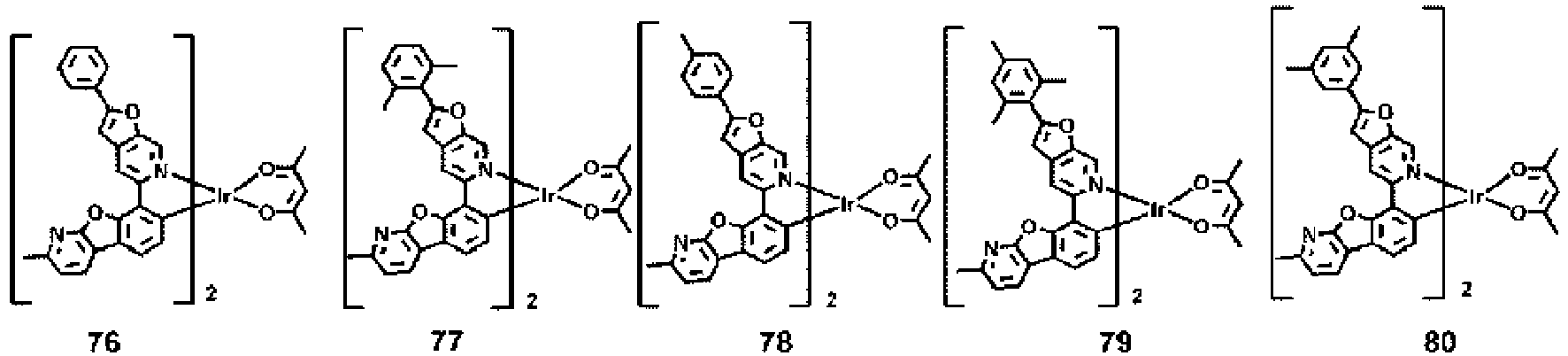
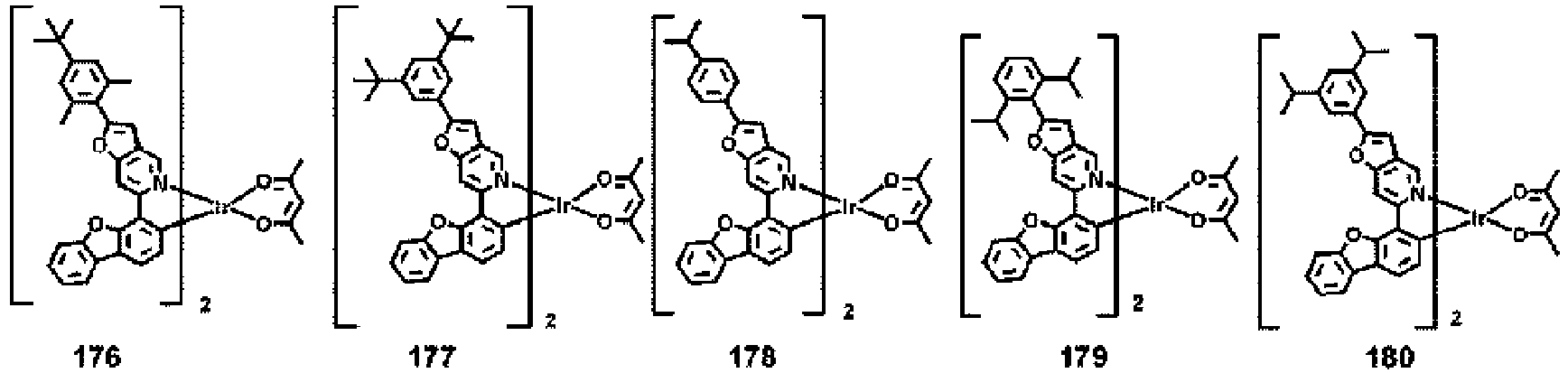
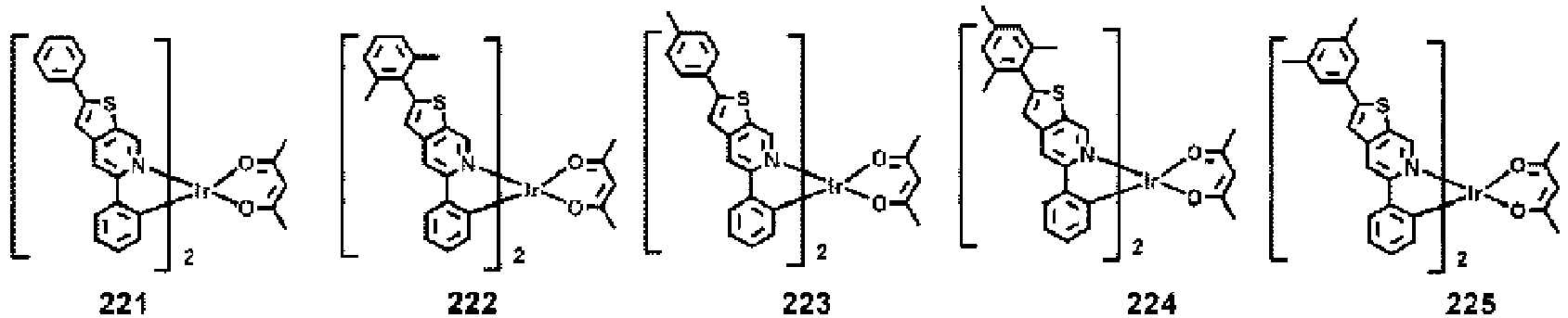
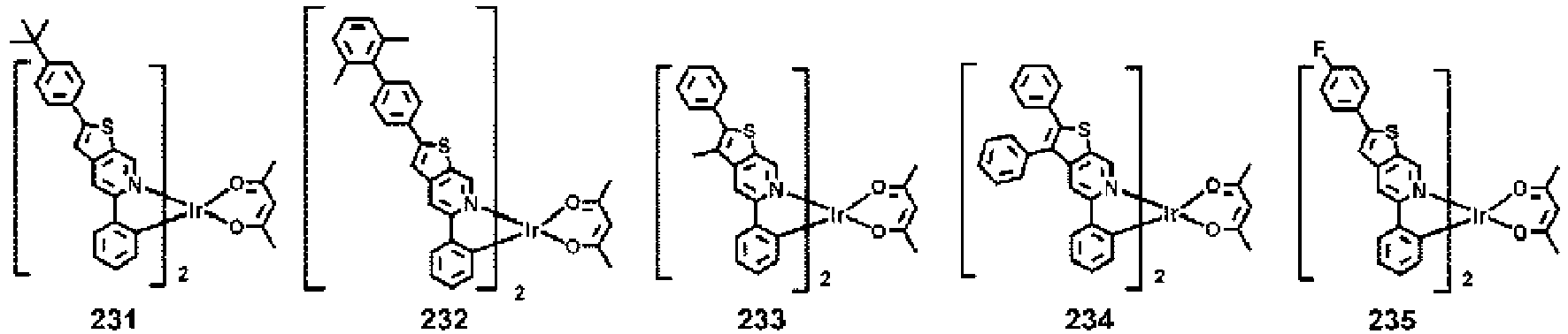
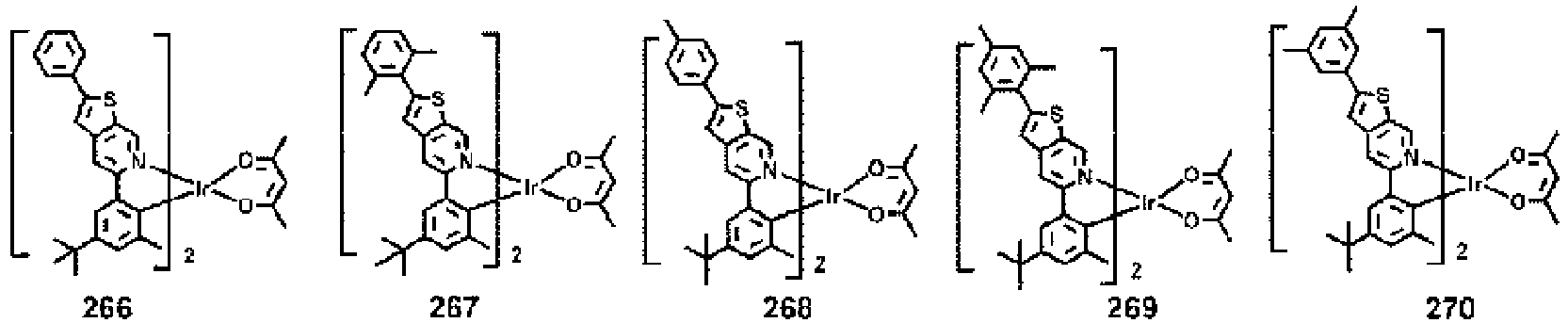
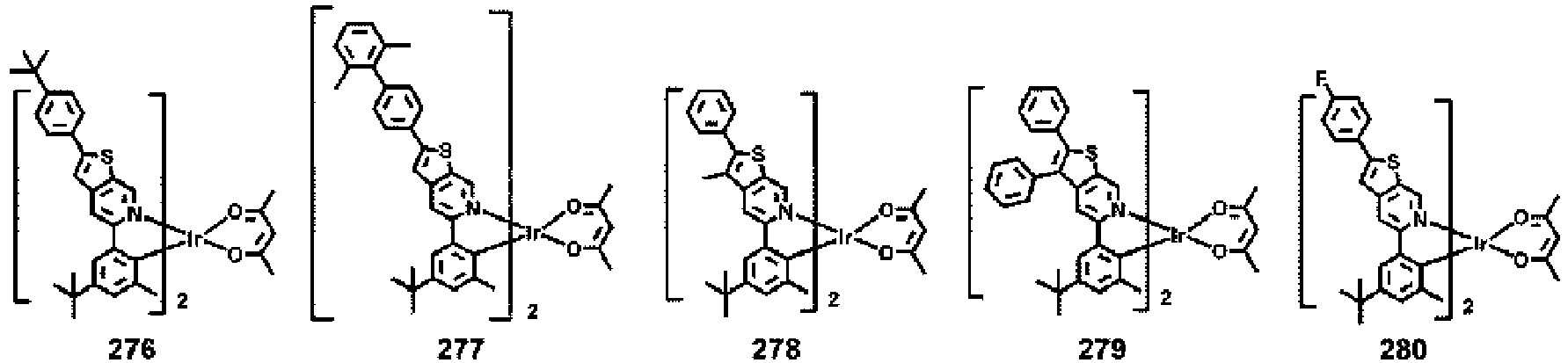
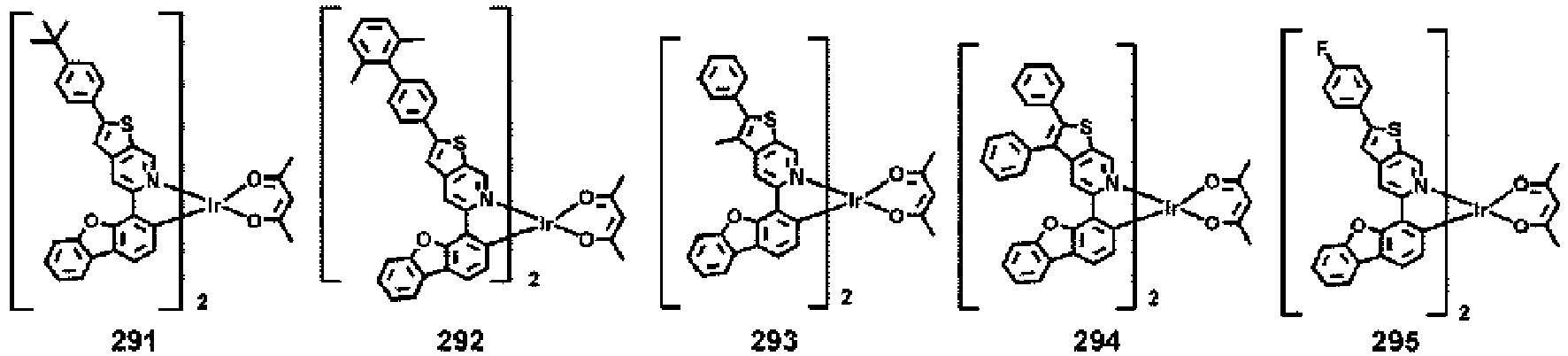
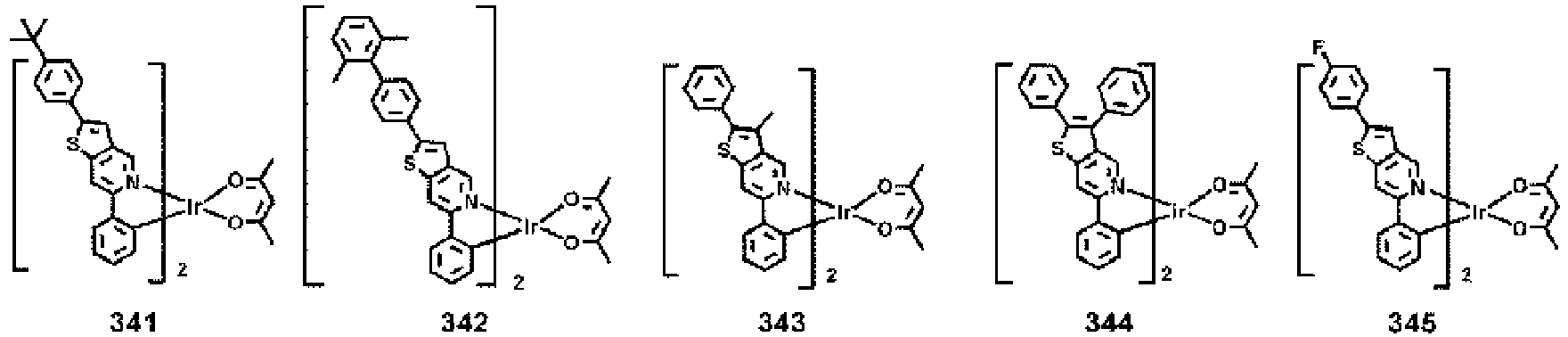
- the organometallic compound represented by Formula 1 may be one of Compounds 1 to 15, 17-218, 220-328, 330-438, 440-453, 455-466, 468 and 469, but embodiments of the present disclosure are not limited thereto:
- L 1 of the organometallic compound represented by Formula 1 may be a ligand represented by Formula 2A, and n1 which indicates the number of L 1 may be 1, 2, or 3. That is, the organometallic compound includes, as ligands linked to metal M, at least one ligand represented by Formula 2.
- the ligand represented by Formula 2 includes "ring CY 1 ". Therefore, a transition dipole moment increases in an alignment axis direction of Formula 1, and the alignment of the organometallic compound represented by Formula 1 may be improved, thereby increasing the luminescence efficiency of an electronic device, for example, an organic light-emitting device, which includes the organometallic compound represented by Formula 1.
- a highest occupied molecular orbital (HOMO) energy level, a lowest unoccupied molecular orbital (LUMO) energy level, and a triplet (T 1 ) energy level of some compounds of the organometallic compound represented by Formula 1 are evaluated by a density functional theory (DFT) of Gaussian program with molecular structure optimization based on B3LYP, and results are shown in Table 1.
- DFT density functional theory
- the organometallic compound represented by Formula 1 has such electrical characteristics that are suitable for use in an electronic device, for example, an organic light-emitting device, for use as a dopant.
- Synthesis methods of the organometallic compound represented by Formula 1 may be understood by one of ordinary skill in the art by referring to Synthesis Examples provided below.
- the organometallic compound represented by Formula 1 may be suitable for use in an organic layer of an organic light-emitting device, for example, for use as a dopant in an emission layer of the organic layer.
- an organic light-emitting device including: a first electrode, a second electrode, and an organic layer disposed between the first electrode and the second electrode and including an emission layer, wherein the organic layer includes at least one organometallic compound represented by Formula 1.
- the organic light-emitting device may have, due to the inclusion of an organic layer including the organometallic compound represented by Formula 1, a low driving voltage, high external quantum luminescence efficiency, a low roll-off ratio, and a long lifespan.
- the organometallic compound represented by Formula 1 may be used between a pair of electrodes of an organic light-emitting device.
- the organometallic compound represented by Formula 1 may be included in the emission layer.
- the organometallic compound may act as a dopant, and the emission layer may further include a host (that is, an amount of the organometallic compound represented by Formula 1 is smaller than an amount of the host).
- the emission layer may emit, for example, green light or red light.
- (an organic layer) includes at least one organometallic compound” as used herein may include a case in which "(an organic layer) includes identical organometallic compounds represented by Formula 1" and a case in which "(an organic layer) includes two or more different organometallic compounds represented by Formula 1".
- the organic layer may include, as the organometallic compound, only Compound 1.
- Compound 1 may exist only in the emission layer of the organic light-emitting device.
- the organic layer may include, as the organometallic compound, Compound 1 and Compound 2.
- Compound 1 and Compound 2 may exist in an identical layer (for example, Compound 1 and Compound 2 both may exist in an emission layer).
- the first electrode may be an anode, which is a hole injection electrode, and the second electrode may be a cathode, which is an electron injection electrode; or the first electrode may be a cathode, which is an electron injection electrode, and the second electrode may be an anode, which is a hole injection electrode.
- the first electrode is an anode
- the second electrode is a cathode
- the organic layer further includes a hole transport region between the first electrode and the emission layer and an electron transport region between the emission layer and the second electrode
- the hole transport region includes a hole injection layer, a hole transport layer, an electron blocking layer, or any combination thereof
- the electron transport region includes a hole blocking layer, an electron transport layer, an electron injection layer, or any combination thereof.
- organic layer refers to a single layer and/or a plurality of layers disposed between the first electrode and the second electrode of an organic light-emitting device.
- the “organic layer” may include, in addition to an organic compound, an organometallic complex including metal.
- FIGURE is a schematic cross-sectional view of an organic light-emitting device 10 according to an embodiment.
- the organic light-emitting device 10 includes a first electrode 11, an organic layer 15, and a second electrode 19, which are sequentially stacked.
- a substrate may be additionally disposed under the first electrode 11 or above the second electrode 19.
- the substrate any substrate that is used in general organic light-emitting devices may be used, and the substrate may be a glass substrate or a transparent plastic substrate, each having excellent mechanical strength, thermal stability, transparency, surface smoothness, ease of handling, and water resistance.
- the first electrode 11 may be formed by depositing or sputtering a material for forming the first electrode 11 on the substrate.
- the first electrode 11 may be an anode.
- the material for forming the first electrode 11 may be a material with a high work function to facilitate hole injection.
- the first electrode 11 may be a reflective electrode, a semi-reflective electrode, or a transmissive electrode.
- the material for forming the first electrode may be, for example, indium tin oxide (ITO), indium zinc oxide (IZO), tin oxide (SnO 2 ), or zinc oxide (ZnO).
- the material for forming the first electrode 11 may be metal or metal alloy, such as magnesium (Mg), aluminum (Al), aluminum-lithium (Al-Li), calcium (Ca), magnesium-indium (Mg-In), or magnesium-silver (Mg-Ag).
- Mg magnesium
- Al aluminum
- Al-Li aluminum-lithium
- Ca calcium
- Mg-In magnesium-indium
- Mg-Ag magnesium-silver
- the first electrode 11 may have a single-layered structure or a multi-layered structure including two or more layers.
- the first electrode 11 may have a three-layered structure of ITO/Ag/ITO, but the structure of the first electrode 11 is not limited thereto.
- the organic layer 15 is disposed on the first electrode 11.
- the organic layer 15 may include a hole transport region, an emission layer, and an electron transport region.
- the hole transport region may be disposed between the first electrode 11 and the emission layer.
- the hole transport region may include a hole injection layer, a hole transport layer, an electron blocking layer, a buffer layer, or any combination thereof.
- the hole transport region may include only either a hole injection layer or a hole transport layer.
- the hole transport region may have a hole injection layer/hole transport layer structure or a hole injection layer/hole transport layer/electron blocking layer structure, which are sequentially stacked in this stated order from the first electrode 11.
- the hole injection layer may be formed on the first electrode 11 by using one or more suitable methods, for example, vacuum deposition, spin coating, casting, and/or Langmuir-Blodgett (LB) deposition.
- suitable methods for example, vacuum deposition, spin coating, casting, and/or Langmuir-Blodgett (LB) deposition.
- the deposition conditions may vary according to a material that is used to form the hole injection layer, and the structure and thermal characteristics of the hole injection layer.
- the deposition conditions are not limited thereto.
- coating conditions may vary according to the material used to form the hole injection layer, and the structure and thermal properties of the hole injection layer.
- a coating speed may be from about 2,000 rpm to about 5,000 rpm
- a temperature at which a heat treatment is performed to remove a solvent after coating may be from about 80 °C to about 200 °C.
- the coating conditions are not limited thereto.
- Conditions for forming a hole transport layer and an electron blocking layer may be understood by referring to conditions for forming the hole injection layer.
- the hole transport region may include, for example, m-MTDATA, TDATA, 2-TNATA, NPB, ⁇ -NPB, TPD, spiro-TPD, spiro-NPB, methylated-NPB, TAPC, HMTPD, 4,4',4"-tris(N-carbazolyl)triphenylamine (TCTA), polyaniline/dodecylbenzenesulfonic acid (PANI/DBSA), poly(3,4-ethylenedioxythiophene)/poly(4-styrenesulfonate) (PEDOT/PSS), polyaniline/camphor sulfonic acid (PANI/CSA), polyaniline/poly(4-styrenesulfonate) (PANI/PSS), a compound represented by Formula 201 below, a compound represented by Formula 202 below, or any combination thereof:
- Ar 101 and Ar 102 may each independently be a phenylene group, a pentalenylene group, an indenylene group, a naphthylene group, an azulenylene group, a heptalenylene group, an acenaphthylene group, a fluorenylene group, a phenalenylene group, a phenanthrenylene group, an anthracenylene group, a fluoranthenylene group, a triphenylenylene group, a pyrenylene group, a chrysenylenylene group, a naphthacenylene group, a picenylene group, a perylenylene group, or a pentacenylene group, each unsubstituted or substituted with deuterium, -F, -Cl, -Br, -I, a hydroxyl group, a cyano group, a nitro group,
- xa and xb may each independently be an integer from 0 to 5, or may be 0, 1, or 2.
- xa may be 1, and xb may be 0, but embodiments of the present disclosure are not limited thereto.
- R 101 to R 108 , R 111 to R 119 , and R 121 to R 124 may each independently be:
- R 109 may be a phenyl group, a naphthyl group, an anthracenyl group, or a pyridinyl group, each unsubstituted or substituted with deuterium, -F, -Cl, -Br, -I, a hydroxyl group, a cyano group, a nitro group, an amino group, an amidino group, a hydrazine group, a hydrazone group, a carboxylic acid group or a salt thereof, a sulfonic acid group or a salt thereof, a phosphoric acid group or a salt thereof, a C 1 -C 20 alkyl group, a C 1 -C 20 alkoxy group, a phenyl group, a naphthyl group, an anthracenyl group, a pyridinyl group, or any combination thereof.
- the compound represented by Formula 201 may be represented by Formula 201A below, but embodiments of the present disclosure are not limited thereto:
- R 101 , R 111 , R 112 , and R 109 in Formula 201A are the same as described above.
- the compound represented by Formula 201 and the compound represented by Formula 202 may each include Compounds HT1 to HT20, but are not limited thereto:
- a thickness of the hole transport region may be from about 100 ⁇ to about 10,000 ⁇ , for example, about 100 ⁇ to about 1,000 ⁇ .
- a thickness of the hole injection layer may be in a range of about 100 ⁇ to about 10000 ⁇ , for example, about 100 ⁇ to about 1,000 ⁇ , and a thickness of the hole transport layer may be in a range of about 50 ⁇ to about 2,000 ⁇ , for example about 100 ⁇ to about 1,500 ⁇ .
- the thicknesses of the hole transport region, the hole injection layer, and the hole transport layer are within these ranges, satisfactory hole transporting characteristics may be obtained without a substantial increase in driving voltage.
- the hole transport region may further include, in addition to these materials, a charge-generation material for the improvement of conductive properties.
- the charge-generation material may be homogeneously or non-homogeneously dispersed in the hole transport region.
- the charge-generation material may be, for example, a p-dopant.
- the p-dopant may be a quinone derivative, a metal oxide, a cyano group-containing compound, or any combination thereof, but embodiments of the present disclosure are not limited thereto.
- Non-limiting examples of the p-dopant are a quinone derivative, such as tetracyanoquinodimethane (TCNQ) or 2,3,5,6-tetrafluoro-tetracyano-1,4-benzoquinodimethane (F4-TCNQ); a metal oxide, such as a tungsten oxide or a molybdenum oxide; and a cyano group-containing compound, such as Compound HT-D1 below, but are not limited thereto:
- a quinone derivative such as tetracyanoquinodimethane (TCNQ) or 2,3,5,6-tetrafluoro-tetracyano-1,4-benzoquinodimethane (F4-TCNQ)
- a metal oxide such as a tungsten oxide or a molybdenum oxide
- a cyano group-containing compound such as Compound HT-D1 below, but are not limited thereto:
- the hole transport region may include a buffer layer.
- the buffer layer may compensate for an optical resonance distance according to a wavelength of light emitted from the emission layer, and thus, efficiency of a formed organic light-emitting device may be improved.
- a material for the electron blocking layer may be a material as described for the hole transport region described above, a material for a host to be explained later, or any combination thereof.
- the material for the electron blocking layer is not limited thereto.
- a material for the electron blocking layer may be mCP, which will be explained later.
- An emission layer may be formed on the hole transport region by vacuum deposition, spin coating, casting, LB deposition, or the like.
- the deposition or coating conditions may be similar to those applied in forming the hole injection layer although the deposition or coating conditions may vary according to a compound that is used to form the emission layer.
- the emission layer may include a host and a dopant, and the dopant may include the organometallic compound represented by Formula 1.
- the host may include TPBi, TBADN, ADN (also referred to as "DNA”), CBP, CDBP, TCP, mCP, one of Compounds H50 to H52, or any combination thereof:
- the emission layer may be patterned into a red emission layer, a green emission layer, and/or a blue emission layer.
- the emission layer may emit white light.
- an amount of the dopant may be in a range of about 0.01 parts by weight to about 15 parts by weight based on 100 parts by weight of the host, but embodiments of the present disclosure are not limited thereto.
- a thickness of the emission layer may be in a range of about 100 ⁇ to about 1,000 ⁇ , for example, about 200 ⁇ to about 600 ⁇ . When the thickness of the emission layer is within this range, excellent light-emission characteristics may be obtained without a substantial increase in driving voltage.
- An electron transport region may be disposed on the emission layer.
- the electron transport region may include a hole blocking layer, an electron transport layer, an electron injection layer, or any combination thereof.
- the electron transport region may have a hole blocking layer/electron transport layer/electron injection layer structure or an electron transport layer/electron injection layer structure, but the structure of the electron transport region is not limited thereto.
- the electron transport layer may have a single-layered structure or a multi-layered structure including two or more different materials.
- Conditions for forming the hole blocking layer, the electron transport layer, and the electron injection layer which constitute the electron transport region may be understood by referring to the conditions for forming the hole injection layer.
- the hole blocking layer may include, for example, BCP, Bphen, BAIq, or any combination thereof, but embodiments of the present disclosure are not limited thereto:
- a thickness of the hole blocking layer may be from about 20 ⁇ to about 1,000 ⁇ , for example, about 30 ⁇ to about 300 ⁇ . When the thickness of the hole blocking layer is within these ranges, the hole blocking layer may have excellent hole blocking characteristics without a substantial increase in driving voltage.
- the electron transport layer may include BCP, Bphen, Alq 3 , BAlq, TAZ, NTAZ, or any combination thereof:
- the electron transport layer may include one of ET1 to ET25, but embodiments of the present disclosure are not limited thereto:
- a thickness of the electron transport layer may be from about 100 ⁇ to about 1,000 ⁇ , for example, about 150 ⁇ to about 500 ⁇ . When the thickness of the electron transport layer is within the range described above, the electron transport layer may have satisfactory electron transport characteristics without a substantial increase in driving voltage.
- the electron transport layer may further include, in addition to the materials described above, a metal-containing material.
- the metal-containing material may include a Li complex.
- the Li complex may include, for example, Compound ET-D1 (LiQ), ET-D2, or any combination thereof:
- the electron transport region may include an electron injection layer that promotes the flow of electrons from the second electrode 19 thereinto.
- the electron injection layer may include LiF, NaCl, CsF, Li 2 O, BaO, or any combination thereof.
- a thickness of the electron injection layer may be from about 1 ⁇ to about 100 ⁇ , for example, about 3 ⁇ to about 90 ⁇ . When a thickness of the electron injection layer is within these ranges, satisfactory electron injection characteristics may be obtained without substantial increase in driving voltage.
- the second electrode 19 is disposed on the organic layer 15.
- the second electrode 19 may be a cathode.
- a material for forming the second electrode 19 may be metal, an alloy, an electrically conductive compound, or a combination thereof, which have a relatively low work function.
- lithium (Li), magnesium (Mg), aluminum (Al), aluminum-lithium (Al-Li), calcium (Ca), magnesium-indium (Mg-In), or magnesium-silver (Mg-Ag) may be used as the material for forming the second electrode 19.
- a transmissive electrode formed using ITO or IZO may be used as the second electrode 19.
- Another aspect of the present disclosure provides a diagnostic composition including at least one organometallic compound represented by Formula 1.
- the organometallic compound represented by Formula 1 provides high luminescence efficiency. Accordingly, a diagnostic composition including the organometallic compound may have high diagnostic efficiency.
- the diagnostic composition may be used in various applications including a diagnosis kit, a diagnosis reagent, a biosensor, and a biomarker.
- C 1 -C 60 alkyl group refers to a linear or branched saturated aliphatic hydrocarbon monovalent group having 1 to 60 carbon atoms, and examples thereof include a methyl group, an ethyl group, a propyl group, an isobutyl group, a sec-butyl group, a tert-butyl group, a pentyl group, an isoamyl group, and a hexyl group.
- C 1 -C 60 alkylene group refers to a divalent group having the same structure as the C 1 -C 60 alkyl group.
- C 1 -C 60 alkoxy group refers to a monovalent group represented by -OA 101 (wherein A 101 is the C 1 -C 60 alkyl group), and examples thereof include a methoxy group, an ethoxy group, and an isopropyloxy group.
- C 2 -C 60 alkenyl group refers to a hydrocarbon group having at least one carbon-carbon double bond in the middle or at the terminus of the C 2 -C 60 alkyl group, and examples thereof include an ethenyl group, a propenyl group, and a butenyl group.
- C 2 -C 60 alkenylene group refers to a divalent group having the same structure as the C 2 -C 60 alkenyl group.
- C 2 -C 60 alkynyl group refers to a hydrocarbon group having at least one carbon-carbon triple bond in the middle or at the terminus of the C 2 -C 60 alkyl group, and examples thereof include an ethynyl group, and a propynyl group.
- C 2 -C 60 alkynylene group refers to a divalent group having the same structure as the C 2 -C 60 alkynyl group.
- C 3 -C 10 cycloalkyl group refers to a monovalent saturated hydrocarbon monocyclic group having 3 to 10 carbon atoms, and non-limiting examples thereof include a cyclopropyl group, a cyclobutyl group, a cyclopentyl group, a cyclohexyl group, and a cycloheptyl group.
- C 3 -C 10 cycloalkylene group refers to a divalent group having the same structure as the C 3 -C 10 cycloalkyl group.
- C 2 -C 10 heterocycloalkyl group refers to a monovalent saturated monocyclic group having N, O, P, Si, Se, S, or a combination thereof and 2 to 10 carbon atoms as ring-forming atoms, and non-limiting examples thereof include a tetrahydrofuranyl group, and a tetrahydrothiophenyl group.
- C 2 -C 10 heterocycloalkylene group refers to a divalent group having the same structure as the C 2 -C 10 heterocycloalkyl group.
- C 3 -C 10 cycloalkenyl group refers to a monovalent monocyclic group that has 3 to 10 carbon atoms and at least one carbon-carbon double bond in the ring thereof and no aromaticity, and non-limiting examples thereof include a cyclopentenyl group, a cyclohexenyl group, and a cycloheptenyl group.
- C 3 -C 10 cycloalkenylene group refers to a divalent group having the same structure as the C 3 -C 10 cycloalkenyl group.
- C 2 -C 10 heterocycloalkenyl group refers to a monovalent monocyclic group that has N, O, P, Si, Se, S, or a combination thereof and 1 to 10 carbon atoms as ring-forming atoms, and a double bond in the ring.
- Examples of the C 2 -C 10 heterocycloalkenyl group are a 2,3-dihydrofuranyl group, and a 2,3-dihydrothiophenyl group.
- C 2 -C 10 heterocycloalkenylene group refers to a divalent group having the same structure as the C 2 -C 10 heterocycloalkenyl group.
- C 6 -C 60 aryl group refers to a monovalent group having a carbocyclic aromatic system having 6 to 60 carbon atoms
- C 6 -C 60 arylene group refers to a divalent group having a carbocyclic aromatic system having 6 to 60 carbon atoms.
- Non-limiting examples of the C 6 -C 60 aryl group include a phenyl group, a naphthyl group, an anthracenyl group, a phenanthrenyl group, a pyrenyl group, and a chrysenyl group.
- the C 6 -C 60 aryl group and the C 6 -C 60 arylene group each include two or more rings, the rings may be fused to each other.
- C 1 -C 60 heteroaryl group refers to a monovalent group having a heterocyclic aromatic system that has N, O, P, Si, Se, S, or a combination thereof and 2 to 60 carbon atoms as ring-forming atoms.
- C 1 -C 60 heteroarylene group refers to a divalent group having a heterocyclic aromatic system that has N, O, P, Si, Se, S, or a combination thereof as ring-forming atoms.
- Non-limiting examples of the C 1 -C 60 heteroaryl group include a pyridinyl group, a pyrimidinyl group, a pyrazinyl group, a pyridazinyl group, a triazinyl group, a quinolinyl group, and an isoquinolinyl group.
- the C 1 -C 60 heteroaryl group and the C 1 -C 60 heteroarylene group each include two or more rings, the rings may be fused to each other.
- C 6 -C 60 aryloxy group indicates -OA 102 (wherein A 102 is the C 6 -C 60 aryl group), and the term “C 6 -C 60 arylthio group” as used herein indicates - SA 103 (wherein A 103 is the C 6 -C 60 aryl group).
- monovalent non-aromatic condensed polycyclic group refers to a monovalent group (for example, having 8 to 60 carbon atoms) having two or more rings condensed to each other, only carbon atoms as ring-forming atoms, and no aromaticity in its entire molecular structure.
- monovalent non-aromatic condensed polycyclic group include a fluorenyl group.
- divalent non-aromatic condensed polycyclic group refers to a divalent group having the same structure as the monovalent non-aromatic condensed polycyclic group.
- the term "monovalent non-aromatic condensed heteropolycyclic group” as used herein refers to a monovalent group (for example, having 2 to 60 carbon atoms) having two or more rings condensed to each other, N, O, P, Si, Se, S, or any combination thereof, other than carbon atoms, as ring-forming atoms, and no aromaticity in its entire molecular structure.
- Non-limiting examples of the monovalent non-aromatic condensed heteropolycyclic group include a carbazolyl group.
- divalent non-aromatic condensed heteropolycyclic group refers to a divalent group having the same structure as the monovalent non-aromatic condensed heteropolycyclic group.
- C 5 -C 30 carbocyclic group refers to a saturated or unsaturated cyclic group having, as ring-forming atoms, 5 to 30 carbon atoms only.
- the C 5 -C 30 carbocyclic group may be a monocyclic group or a polycyclic group.
- C 2 -C 30 heterocyclic group refers to a saturated or unsaturated cyclic group having, N, O, Si, P, Se, S, or any combination thereof and 1 to 30 carbon atoms as ring-forming atoms.
- the C 2 -C 30 heterocyclic group may be a monocyclic group or a polycyclic group.
- Q 1 to Q 9 , Q 11 to Q 19 , Q 21 to Q 29 , and Q 31 to Q 39 may each independently be hydrogen, deuterium, -F, -Cl, -Br, -I, a hydroxyl group, a cyano group, a nitro group, an amino group, an amidino group, a hydrazine group, a hydrazone group, a carboxylic acid group or a salt thereof, a sulfonic acid group or a salt thereof, a phosphoric acid group or a salt thereof, a C 1 -C 60 alkyl group, a C 2 -C 60 alkenyl group, a C 2 -C 60 alkynyl group, a C 1 -C 60 alkoxy group, a C 3 -C 10 cycloalkyl group, a C 2 -C 10 heterocycloalkyl group, a C 3 -C 10 cycloalkenyl group, a C
- a decay time T decay of the film was obtained by fitting one or more exponential decay functions to the result obtained therefrom.
- Equation 10 The function used for fitting is expressed by Equation 10, and the greatest value among the values obtained from each exponential decay function used for fitting was taken as T decay .
- a baseline or background signal curve was obtained by repeating the same measurement once more for the same measurement time as the measurement time for obtaining the TRPL curve in a dark state (a state in which a pumping signal applied to the predetermined film was blocked), and the baseline or background signal curve was used for fitting as a baseline.
- the quantum efficiency of the film was measured by using a Hamamatsu Quantaurus-QY Absolute PL quantum yield spectrometer (provided with a xenon light source, a monochromator, a photonic multichannel analyzer, and an integrating sphere and using PLQY measurement software (Hamamatsu Photonics, Ltd., Shizuoka, Japan)).
- the excitation wavelength was measured while scanning from 320 nm to 380 nm at an interval of 10 nm, and the greatest value was taken as the quantum efficiency ( ⁇ ).
- the radiative decay rate (k r ) of Compound 1 was obtained by substituting T decay and ⁇ into Equation 11, and results thereof are shown in Table 2.
- k r ⁇ / T decay .
- 2-TNATA was vacuum-deposited on the anode to form a hole injection layer having a thickness of 600 ⁇
- NPB 4,4'-bis[N-(1-naphthyl)-N-phenylamino]biphenyl
- CBP host
- Compound 1 dopant
- BCP was vacuum-deposited on the emission layer to form a hole blocking layer having a thickness of 50 ⁇
- Alq 3 was vacuum-deposited on the hole blocking layer to form an electron transport layer having a thickness of 350 ⁇
- LiF was vacuum-deposited on the electron transport layer to form an electron injection layer having a thickness of 10 ⁇
- Mg and Ag were co-deposited on the electron injection layer at a weight ratio of 90:10 to form a cathode having a thickness of 120 ⁇ , thereby completing the manufacture of an organic light-emitting device (which emits red light).
- Organic light-emitting devices were manufactured in the same manner as in Example 1, except that Compounds shown in Table 3 were each used instead of Compound 1 as a dopant in forming an emission layer.
- the driving voltage, maximum value of external quantum efficiency (Max EQE), roll-off ratio, maximum emission wavelength of main peak of EL spectrum, and lifespan (T 97 ) of the organic light-emitting devices manufactured according to Examples 1 to 7 and Comparative Examples A1, A2, B, C1, C2, and D were evaluated, and results thereof are shown in Table 3.
- a current-voltage meter (Keithley 2400) and a luminance meter (Minolta Cs-1000A) were used as the evaluation devices, and the lifespan (T 97 ) (at 3,500 nit) indicates an amount of time that lapsed when luminance was 97 % of initial luminance (100 %).
- Example 1 1 4.0 28.4 8 524 273 Reference Example 2 16 3.7 30.1 9 558 205 Example 3 31 3.8 26.6 6 533 155 Example 4 236 3.5 31.9 7 582 320 Example 5 346 3.7 31.7 10 565 232 Example 6 468 3.6 28.4 9 540 253 Example 7 469 4.0 26.8 8 538 212 Comparative Example A1 A1 5.2 24.8 13 530 120 Comparative Example A2 A2 4.8 24.0 11 540 65 Comparative Example B B 4.3 26.0 12 580 60 Comparative Example C1 C1 4.8 21.8 12 515 108 Comparative Example C2 C2 5.4 22.9 15 510 34 Comparative Example D D 4.6 22.0 12 552 33
- an electronic device for example, an organic light-emitting device, which includes the organometallic compound represented by Formula 1, may have improved driving voltage, improved external quantum luminescence efficiency, improved roll-off ratio, and improved lifespan characteristics.
- an electronic device for example, an organic light-emitting device, which includes the organometallic compound represented by Formula 1
- an organic light-emitting device which includes the organometallic compound represented by Formula 1
- a diagnostic composition having high diagnostic efficiency may be provided by using the organometallic compound.
Landscapes
- Chemical & Material Sciences (AREA)
- Engineering & Computer Science (AREA)
- Organic Chemistry (AREA)
- Materials Engineering (AREA)
- Health & Medical Sciences (AREA)
- Life Sciences & Earth Sciences (AREA)
- Physics & Mathematics (AREA)
- Crystallography & Structural Chemistry (AREA)
- Inorganic Chemistry (AREA)
- Immunology (AREA)
- Biochemistry (AREA)
- Hematology (AREA)
- Urology & Nephrology (AREA)
- General Health & Medical Sciences (AREA)
- General Physics & Mathematics (AREA)
- Analytical Chemistry (AREA)
- Pathology (AREA)
- Biomedical Technology (AREA)
- Molecular Biology (AREA)
- Optics & Photonics (AREA)
- Cell Biology (AREA)
- Microbiology (AREA)
- Biotechnology (AREA)
- Nuclear Medicine, Radiotherapy & Molecular Imaging (AREA)
- Food Science & Technology (AREA)
- Medicinal Chemistry (AREA)
- Electroluminescent Light Sources (AREA)
Claims (14)
- Organometallische Verbindung, dargestellt durch Formel 1:Formel 1M(L1)n1(L2)n2,wobei, in Formel 1,L1 ein durch Formel 2 dargestellter Ligand ist,n1 1, 2 oder 3 ist, wobei, wenn n1 2 oder mehr ist, zwei oder mehr L1 identisch zueinander oder unterschiedlich voneinander sind,L2 ein durch Formel 3 dargestellter zweizähniger Ligand ist,n2 1, 2, 3 oder 4 ist, wobei, wenn n2 2 oder mehr ist, zwei oder mehr L2 identisch oder unterschiedlich voneinander sind, undL1 und L2 unterschiedlich voneinander sind:M Ir oder Os ist und die Summe von n1 und n2 3 oder 4 ist; oder M Pt ist und die Summe von n1 und n2 2 ist,
 wobei, in Formel 2,X1 C, N, Si oder P ist,X21 C oder N ist,Ring CY1 und Ring CY21 j eweils unabhängig eine carbocyclische C5-C30-Gruppe oder eine heterocyclische C2-C30-Gruppe sind,X2 und X3 jeweils unabhängig O, S, Se oder C(R2) sind, wobei X2 oder X3 O, S oder Se ist,X4 N oder C(R4) ist,X5 N oder C(R5) ist,R1, R2, R4, R5 und R21 jeweils unabhängig Wasserstoff, Deuterium, - F, -Cl, -Br, -I, -SF5, eine Hydroxylgruppe, eine Cyanogruppe, eine Nitrogruppe, eine Aminogruppe, eine Amidinogruppe, eine Hydrazingruppe, eine Hydrazongruppe, eine Carboxylsäuregruppe oder ein Salz davon, eine Sulfonsäuregruppe oder ein Salz davon, eine Phosphorsäuregruppe oder ein Salz davon, eine substituierte oder unsubstituierte C1-C60-Alkylgruppe, eine substituierte oder unsubstituierte C2-C60-Alkenylgruppe, eine substituierte oder unsubstituierte C2-C60-Alkinylgruppe, eine substituierte oder unsubstituierte C1-C60-Alkoxygruppe, eine substituierte oder unsubstituierte C3-C10-Cycloalkylgruppe, eine substituierte oder unsubstituierte C2-C10-Heterocycloalkylgruppe, eine substituierte oder unsubstituierte C3-C10-Cycloalkenylgruppe, eine substituierte oder unsubstituierte C2-C10-Heterocycloalkenylgruppe, eine substituierte oder unsubstituierte C6-C60-Arylgruppe, eine substituierte oder unsubstituierte C6-C60-Aryloxygruppe, eine substituierte oder unsubstituierte C6-C60Arylthiogruppe, eine substituierte oder unsubstituierte C1-C60-Heteroarylgruppe, eine substituierte oder unsubstituierte monovalente nichtaromatische kondensierte polycyclische Gruppe, eine substituierte oder unsubstituierte monovalente nichtaromatische kondensierte heteropolycyclische Gruppe, -N(Q1)(Q2), - Si(Q3)(Q4)(Q5), -B(Q6)(Q7), -P(=O)(Q8)(Q9) oder -P(Q8)(Q9) sind,a1 und a21 jeweils unabhängig eine ganze Zahl von 0 bis 20 sind,Ring CY1 und R2 nicht miteinander verknüpft sind und R1 und R2 nicht miteinander verknüpft sind,L11 eine carbocyclische C5-C30-Gruppe ist, die unsubstituiert oder mit mindestens einer R10a substituiert ist, oder eine heterocyclische C2-C30-Gruppe, die unsubstituiert oder mit mindestens einer R10a substituiert ist,b11 eine ganze Zahl von 0 bis 10 ist, wobei, wenn b11 0 ist, eine durch ∗-(L11)b11-∗' dargestellte Gruppe eine Einfachbindung ist, und wenn b11 2 oder mehr ist, zwei oder mehr L11 identisch zueinander oder unterschiedlich voneinander sind,zwei einer Vielzahl von benachbarten R21 optional miteinander verknüpft sind, um eine carbocyclische C5-C30-Gruppe, die unsubstituiert oder mit mindestens einer R10a substituiert ist, oder eine heterocyclische C2-C30-Gruppe, die unsubstituiert oder mit mindestens einer R10a substituiert ist, zu bilden,R10a die gleiche wie in Verbindung mit R21 definiert ist,* und *' jeweils eine Bindungsstelle an M in Formel 1 angeben,ein Substituent der substituierten carbocyclischen C5-C30-Gruppe, der substituierten heterocyclischen C2-C30-Gruppe, der substituierten C1-C60-Alkylgruppe, der substituierten C2-C60-Alkenylgruppe, der substituierten C2-C60-Alkinylgruppe, der substituierten C1-C60-Alkoxygruppe, der substituierten C3-C10-Cycloalkylgruppe, der substituierten C2-C10-Heterocycloalkylgruppe, der substituierten C3-C10-Cycloalkenylgruppe, der substituierten C2-C10-Heterocycloalkenylgruppe, der substituierten C6-C60-Arylgruppe, der substituierten C6-C60-Aryloxygruppe, der substituierten C6-C60-Arylthiogruppe, der substituierten C1-C60-Heteroarylgruppe, der substituierten monovalenten nichtaromatischen kondensierten polycyclischen Gruppe und der substituierten monovalenten nichtaromatischen kondensierten heteropolycyclischen Gruppe ist:Deuterium, -F, -Cl, -Br, -I, -CD3, -CD2H, -CDH2, -CF3, -CF2H, -CFH2, eine Hydroxylgruppe, eine Cyanogruppe, eine Nitrogruppe, eine Aminogruppe, eine Amidinogruppe, eine Hydrazingruppe, eine Hydrazongruppe, eine Carboxylsäuregruppe oder ein Salz davon, eine Sulfonsäuregruppe oder ein Salz davon, eine Phosphorsäuregruppe oder ein Salz davon, eine C1-C60-Alkylgruppe, eine C2-C60-Alkenylgruppe, eine C2-C60-Alkynylgruppe oder eine C1-C60-Alkoxygruppe;eine C1-C60-Alkylgruppe, eine C2-C60-Alkenylgruppe, eine C2-C60-Alkinylgruppe oder eine C1-C60-Alkoxygruppe, jeweils substituiert mit Deuterium, -F, -Cl, -Br, -I, -CD3, -CD2H, - CDH2, -CF3, -CF2H, -CFH2, eine Hydroxylgruppe, eine Cyanogruppe, eine Nitrogruppe, eine Aminogruppe, eine Amidinogruppe, eine Hydrazingruppe, eine Hydrazongruppe, eine Carboxylsäuregruppe oder ein Salz davon, eine Sulfonsäuregruppe oder ein Salz davon, eine Phosphorsäuregruppe oder ein Salz davon, eine C3-C10-Cycloalkylgruppe, eine C2-C10-Heterocycloalkylgruppe, eine C3-C10-Cycloalkenylgruppe, eine C2-C10-Heterocycloalkenylgruppe, eine C6-C60-Arylgruppe, eine C6-C60-Aryloxygruppe, eine C6-C60-Arylthiogruppe, eine C1-C60-Heteroarylgruppe, eine monovalente nichtaromatische kondensierte polycyclische Gruppe, eine monovalente nichtaromatische kondensierte heteropolycyclische Gruppe, -N(Q11)(Q12), -Si(Q13)(Q14)(Q15), -B(Q16)(Q17), -P(=O)(Q18)(Q19) oder eine beliebige Kombination davon;eine C3-C10-Cycloalkylgruppe, eine C2-C10-Heterocycloalkylgruppe, eine C3-C10-Cycloalkenylgruppe, eine C2-C10-Heterocycloalkenylgruppe, eine C6-C60-Arylgruppe, eine C6-C60-Aryloxygruppe, eine C6-C60-Arylthiogruppe, eine C1-C60-Heteroarylgruppe, eine monovalente nichtaromatische kondensierte polycyclische Gruppe und eine monovalente nichtaromatische kondensierte heteropolycyclische Gruppe;eine C3-C10-Cycloalkylgruppe, eine C2-C10-Heterocycloalkylgruppe, eine C3-C10-Cycloalkenylgruppe, eine C2-C10-Heterocycloalkenylgruppe, eine C6-C60-Arylgruppe, eine C6-C60-Aryloxygruppe, eine C6-C60-Arylthiogruppe, eine C1-C60-Heteroarylgruppe, eine monovalente nichtaromatische kondensierte polycyclische Gruppe oder eine monovalente nichtaromatische kondensierte heteropolycyclische Gruppe, jeweils substituiert mit Deuterium, - F, -Cl, -Br, -I, -CD3, -CD2H, -CDH2, -CF3, -CF2H, -CFH2, eine Hydroxylgruppe, eine Cyanogruppe, eine Nitrogruppe, eine Aminogruppe, eine Amidinogruppe, eine Hydrazingruppe, eine Hydrazongruppe, eine Carboxylsäuregruppe oder ein Salz davon, eine Sulfonsäuregruppe oder ein Salz davon, eine Phosphorsäuregruppe oder ein Salz davon, eine C1-C60-Alkylgruppe, eine C2-C60-Alkenylgruppe, eine C2-C60-Alkinylgruppe, eine C1-C60-Alkoxygruppe, eine C3-C10-Cycloalkylgruppe, eine C2-C10-Heterocycloalkylgruppe, eine C3-C10-Cycloalkenylgruppe, eine C2-C10-Heterocycloalkenylgruppe, eine C6-C60-Arylgruppe, eine C6-C60-Aryloxygruppe, eine C6-C60-Arylthiogruppe, eine C1-C60-Heteroarylgruppe, eine monovalente nichtaromatische kondensierte polycyclische Gruppe, eine monovalente nichtaromatische kondensierte heteropolycyclische Gruppe, -N(Q21)(Q22), -Si(Q23)(Q24)(Q25), -B(Q26)(Q27), -P(=O)(Q28)(Q29) oder eine beliebige Kombination davon;-N(Q31)(Q32), -Si(Q33)(Q34)(Q35), -B(Q36)(Q37) oder -P(=O)(Q38)(Q39); odereine beliebige Kombination davon, undQ1 bis Q9, Q11 bis Q19, Q21 bis Q29 und Q31 bis Q39 jeweils unabhängig Wasserstoff, Deuterium, -F, -Cl, -Br, -I, eine Hydroxylgruppe, eine Cyanogruppe, eine Nitrogruppe, eine Aminogruppe, eine Amidinogruppe, eine Hydrazingruppe, eine Hydrazongruppe, eine Carboxylsäuregruppe oder ein Salz davon, eine Sulfonsäuregruppe oder ein Salz davon, eine Phosphorsäuregruppe oder ein Salz davon, eine C1-C60-Alkylgruppe, eine C2-C60-Alkenylgruppe, eine C2-C60-Alkinylgruppe, eine C1-C60-Alkoxygruppe, eine C3-C10-Cycloalkylgruppe, eine C2-C10-Heterocycloalkylgruppe, eine C3-C10-Cycloalkenylgruppe, eine C2-C10-Heterocycloalkenylgruppe, eine C6-C60-Arylgruppe, eine C6-C60-Arylgruppe substituiert mit einer C1-C60-Alkylgruppe, eine C6-C60-Arylgruppe oder eine beliebige Kombination davon, eine C6-C60-Aryloxygruppe, eine C6-C60-Arylthiogruppe, eine C1-C60-Heteroarylgruppe, eine monovalente nichtaromatische kondensierte polycyclische Gruppe und eine monovalente nichtaromatische kondensierte heteropolycyclische Gruppe sind;
 wobei, in Formel 3,X31 und X32 jeweils O sind;X31 O ist und X32 N ist; oderX31 N ist und X32 C ist,
 * und *' jeweils eine Bindungsstelle an M in Formel 1 angeben; undwobei die organometallische Verbindung nicht die folgende Verbindung ist:
- Organometallische Verbindung nach Anspruch 1, wobei
Ring CY1 und Ring CY21 jeweils unabhängig eine Cyclopentengruppe, eine Cyclohexengruppe, eine Benzolgruppe, eine Naphthalengruppe, eine Anthracengruppe, eine Phenanthrengruppe, eine Triphenylengruppe, eine Pyrengruppe, eine Chrysengruppe, eine Cyclopentadiengruppe, eine 1,2,3,4-Tetrahydronaphthalengruppe, eine Thiophengruppe, eine Furangruppe, eine Indolgruppe, eine Benzoborolgruppe, eine Benzophospholgruppe, eine Indengruppe, eine Benzosilolgruppe, eine Benzogermolgruppe, eine Benzothiophengruppe, eine Benzoselenophengruppe, eine Benzofurangruppe, eine Carbazolgruppe, eine Dibenzoborolgruppe, eine Dibenzophospholgruppe, eine Fluorengruppe, eine Dibenzosilolgruppe, eine Dibenzogermolgruppe, eine Dibenzothiophengruppe, eine Dibenzoselenophengruppe, eine Dibenzofurangruppe, eine Dibenzothiophen-5-oxid-Gruppe, eine 9H-Fluoren-9-on-Gruppe, eine Dibenzothiophen-5,5-dioxid-Gruppe, eine Azaindolgruppe, eine Azabenzoborolgruppe, eine Azabenzophospholgruppe, eine Azaindengruppe, eine Azabenzosilolgruppe, eine Azabenzogermolgruppe, eine Azabenzothiophengruppe, eine Azabenzoselenophengruppe, eine Azabenzofurangruppe, eine Azacarbazolgruppe, eine Azadibenzoborolgruppe, eine AzadibenzophosphoIgruppe, eine Azafluorengruppe, eine Azadibenzosilolgruppe, eine Azadibenzogermolgruppe, eine Azadibenzothiophengruppe, eine Azadibenzoselenophengruppe, eine Azadibenzofurangruppe, eine Azadibenzothiophen-5-oxid-Gruppe, eine Aza-9H-fluoren-9-on-Gruppe, eine Azadibenzothiophen-5,5-dioxid-Gruppe, eine Pyridingruppe, eine Pyrimidingruppe, eine Pyrazingruppe, eine Pyridazingruppe, eine Triazingruppe, eine Chinolingruppe, eine Isochinolingruppe, eine Chinoxalingruppe, eine Chinazolingruppe, eine Phenanthrolingruppe, eine Pyrrolgruppe, eine Pyrazolgruppe, eine Imidazolgruppe, eine Triazolgruppe, eine Oxazolgruppe, eine Isoxazolgruppe, eine Thiazolgruppe, eine Isothiazolgruppe, eine Oxadiazolgruppe, eine Thiadiazolgruppe, eine Benzopyrazolgruppe, eine Benzimidazolgruppe, eine Benzoxazolgruppe, eine Benzothiazolgruppe, eine Benzoxadiazolgruppe, eine Benzothiadiazolgruppe, eine 5,6,7,8-Tetrahydroisochinolingruppe oder eine 5,6,7,8-Tetrahydrochinolingruppe sind. - Organometallische Verbindung nach Ansprüchen 1 oder 2, wobei R1, R2, R4, R5, R21 und R10a jeweils unabhängig sind:Wasserstoff, Deuterium, -F, -Cl, -Br, -I, eine Hydroxylgruppe, eine Cyanogruppe, eine Nitrogruppe, eine Aminogruppe, eine Amidinogruppe, eine Hydrazingruppe, eine Hydrazongruppe, eine Carboxylsäuregruppe oder ein Salz davon, eine Sulfonsäuregruppe oder ein Salz davon, eine Phosphorsäuregruppe oder ein Salz davon, -SF5, eine C1-C20-Alkylgruppe oder eine C1-C20-Alkoxygruppe;eine C1-C20-Alkylgruppe oder eine C1-C20-Alkoxygruppe, jeweils substituiert mit Deuterium, -F, -Cl, -Br, -I, -CD3, -CD2H, -CDH2, -CF3, -CF2H, - CFH2, eine Hydroxylgruppe, eine Cyanogruppe, eine Nitrogruppe, eine Aminogruppe, eine Amidinogruppe, eine Hydrazingruppe, eine Hydrazongruppe, eine Carboxylsäuregruppe oder ein Salz davon, eine Sulfonsäuregruppe oder ein Salz davon, eine Phosphorsäuregruppe oder ein Salz davon, eine C1-C10-Alkylgruppe, eine Cyclopentylgruppe, eine Cyclohexylgruppe, eine Cycloheptylgruppe, eine Cycloctylgruppe, eine Adamantanylgruppe, eine Norbomanylgruppe, eine Norbornenylgruppe, eine Cyclopentenylgruppe, eine Cyclohexenylgruppe, eine Cycloheptenylgruppe, eine Bicyclo[1.1.1]pentylgruppe, eine Bicyclo[2.1.1]hexylgruppe, eine Bicyclo[2.2.1]heptylgruppe, eine Bicyclo[2.2.2]octylgruppe, eine Phenylgruppe, eine Biphenylgruppe, eine Terphenylgruppe, eine Naphthylgruppe, eine Pyridinylgruppe, eine Pyrimidinylgruppe oder eine beliebige Kombination davon;eine Cyclopentylgruppe, eine Cyclohexylgruppe, eine Cycloheptylgruppe, eine Cyclooctylgruppe, eine Adamantanylgruppe, eine Norbornenylgruppe, eine Cyclopentenylgruppe, eine Cyclohexenylgruppe, eine Cycloheptenylgruppe, eine Cyclooctenylgruppe, eine Bicyclo[1.1.1]pentylgruppe, eine Bicyclo[2.1.1]hexylgruppe, eine Bicyclo[2.2.1]heptylgruppe, eine Bicyclo[2.2.2]octylgruppe, eine Phenylgruppe,eine Biphenylgruppe, eine Terphenylgruppe, eine Naphthylgruppe, eine Fluorenylgruppe, eine Phenanthrenylgruppe, eine Anthracenylgruppe, eine Fluoranthenylgruppe, eine Triphenylenylgruppe, eine Pyrenylgruppe, eine Chrysenylgruppe, eine Pyrrolylgruppe, eine Thiophenylgruppe, eine Furanylgruppe, eine Imidazolylgruppe, Pyrazolylgruppe, eine Thiazolylgruppe, eine Isothiazolylgruppe, eine Oxazolylgruppe, eine Isoxazolylgruppe, eine Pyridinylgruppe, eine Pyrazinylgruppe, eine Pyrimidinylgruppe, eine Pyridazinylgruppe, eine Isoindolylgruppe, eine Indolylgruppe, eine Indazolylgruppe, eine Purinylgruppe, eine Chinolinylgruppe, eine Isochinolinylgruppe, eine Benzochinolinylgruppe, eine Chinoxalinylgruppe, eine Chinazolinylgruppe, eine Cinnolinylgruppe, eine Carbazolylgruppe, eine Phenanthrolinylgruppe, eine Benzoimidazolylgruppe, eine Benzofuranylgruppe, eine Benzothiophenylgruppe, eine Isobenzothiazolylgruppe, eine Benzoxazolylgruppe, eine Isobenzoxazolylgruppe, eine Triazolylgruppe, eine Tetrazolylgruppe, eine Oxadiazolylgruppe, eine Triazinylgruppe, eine Dibenzofuranylgruppe, eine Dibenzothiophenylgruppe, eine Benzocarbazolylgruppe, eine Dibenzocarbazolylgruppe, eine Imidazopyridinylgruppe oder eine Imidazopyrimidinylgruppe, jeweils unsubstituiert oder substituiert mit Deuterium, -F, -Cl, -Br, -I, -CD3, -CD2H, -CDH2, -CF3, -CF2H, -CFH2, eine Hydroxylgruppe, eine Cyanogruppe, eine Nitrogruppe, eine Aminogruppe, eine Amidinogruppe, eine Hydrazingruppe, eine Hydrazongruppe, eine Carboxylsäureguppe oder ein Salz davon, eine Sulfonsäuregruppe oder ein Salz davon, eine Phosphorsäuregruppe oder ein Salz davon, eine C1-C20-Alylgruppe, eine C1-C20-Alkoxygruppe, eine Cyclopentylgruppe, eine Cyclohexylgruppe, eine Cycloheptylgruppe, eine Cycloctylgruppe, eine Adamantanylgruppe, eine Norbornenylgruppe, eine Cyclopentenylgruppe, eine Cyclohexenylgruppe, eine Cycloheptenylgruppe, eine Cyclooctenylgruppe, eine Bicyclo[1.1.1]pentylgruppe, eine Bicyclo[2.1.1]hexylgruppe, eine Bicyclo[2.2.1]heptylgruppe, eine Bicyclo[2.2.2]octylgruppe, eine Phenylgruppe, eine Biphenylgruppe, eine Terphenylgruppe, eine Naphthylgruppe, eine Fluorenylgruppe, eine Phenanthrenylgruppe, eine Anthracenylgruppe, eine Fluoranthenylgruppe, eine Triphenylenylgruppe, eine Pyrenylgruppe, eine Chrysenylgruppe, eine Pyrrolylgruppe, eine Thiophenylgruppe, eine Furanylgruppe, eine Imidazolylgruppe, eine Pyrazolylgruppe, eine Thiazolylgruppe, eine Isothiazolylgruppe, eine Oxazolylgruppe, eine Isoxazolylgruppe, eine Pyridinylgruppe, eine Pyrazinylgruppe, eine Pyrimidinylgruppe, eine Pyridazinylgruppe, eine Isoindolylgruppe, eine Indolylgruppe, eine Indazolylgruppe, eine Purinylgruppe, eine Chinolinylgruppe, eine Isochinolinylgruppe, eine Benzochinolinylgruppe, eine Chinoxalinylgruppe, eine Chinazolinylgruppe, eine Cinnolinylgruppe, eine Carbazolylgruppe, eine Phenanthrolinylgruppe, eine Benzimidazolylgruppe, eine Benzofuranylgruppe, eine Benzothiophenylgruppe, eine Isobenzothiazolylgruppe, eine Benzoxazolylgruppe, eine Isobenzoxazolylgruppe, eine Triazolylgruppe, eine Tetrazolylgruppe, eine Oxadiazolylgruppe, eine Triazinylgruppe, eine Dibenzofuranylgruppe, eine Dibenzothiophenylgruppe, eine Benzocarbazolylgruppe, eine Dibenzocarbazolylgruppe, eine Imidazopyridinylgruppe und eine Imidazopyrimidinylgruppe, -Si(Q33)(Q34)(Q35) oder eine beliebige Kombination davon; oder-N(Q1)(Q2), -Si(Q3)(Q4)(Q5), -B(Q6)(Q7), -P(=O)(Q8)(Q9) oder -P(Q9)(Q8), undQ1 bis Q9 und Q33 bis Q35 jeweils unabhängig sind:-CH3, -CD3, -CD2H, -CDH2, -CH2CH3, -CH2CD3, -CH2CD2H, -CH2CDH2, -CHDCH3, - CHDCD2H, -CHDCDH2, -CHDCD3, -CD2CD3, -CD2CD2H oder -CD2CDH2; odereine n-Propylgruppe, eine Isopropylgruppe, eine n-Butylgruppe, eine Isobutylgruppe, eine sec-Butylgruppe, eine tert-Butylgruppe, eine n-Pentylgruppe, eine Isopentylgruppe, eine sec-Pentylgruppe, eine tert-Pentylgruppe, eine Phenylgruppe oder eine Naphthylgruppe, jeweils unsubstituiert oder substituiert mit Deuterium, eine C1-C10-Alkylgruppe, einer Phenylgruppe oder eine beliebige Kombination davon.
- Organometallische Verbindung nach einem der Ansprüche 1-3, wobeieine Gruppe, dargestellt durch
 in Formel 2, R1 und R2 jeweils unabhängig sind:Wasserstoff, Deuterium, -F, -Cl, -Br, -I, eine Cyanogruppe oder -SF5, odereine C1-C60-Alkylgruppe, eine C1-C60-Alkoxygruppe, eine C3-C10-Cycloalkylgruppe, eine C2-C10-Heterocycloalkylgruppe, eine C3-C10-Cycloalkenylgruppe oder eine C2-C10-Heterocycloalkenylgruppe, jeweils unsubstituiert oder substituiert mit Deuterium, -F, -Cl, -Br, -I, -CD3, -CD2H, -CDH2, -CF3, -CF2H, -CFH2, eine Cyanogruppe, eine C1-C20-Alkylgruppe, eine Cyclopentylgruppe, eine Cyclohexylgruppe, eine Cycloheptylgruppe, eine Cycloctylgruppe, eine Adamantylgruppe, eine Norbornylgruppe, eine Norbornenylgruppe, eine Cyclopentenylgruppe, eine Cyclohexenylgruppe, eine Cycloheptenylgruppe, eine Phenylgruppe, eine Biphenylgruppe, eine Naphthylgruppe, eine Pyridinylgruppe, eine Pyrimidinylgruppe oder eine beliebige Kombination davon, unda1 eine ganze Zahl von 0 bis 10 ist.
 - Organometallische Verbindung nach einem der Ansprüche 1-4, wobei eine Gruppe, dargestellt durch

in Formel 2, R1 und R2 jeweils unabhängig sind:Wasserstoff, Deuterium, -F, -Cl, -Br, -I, eine Cyanogruppe oder -SF5, odereine Methylgruppe, eine Ethylgruppe, eine Propylgruppe, eine n-Butylgruppe, eine Isobutylgruppe, eine sec-Butylgruppe, eine tert-Butylgruppe, eine n-Pentylgruppe, eine Isopentylgruppe, eine sec-Pentylgruppe, eine tert-Pentylgruppe, eine n-Hexylgruppe, eine Isohexylgruppe, eine sec-Hexylgruppe, eine tert-Hexylgruppe, eine n-Heptylgruppe, eine Isoheptylgruppe, eine sec-Heptylgruppe, eine tert-Heptylgruppe, eine n-Octylgruppe, eine Isooctylgruppe, eine sec-Octylgruppe, eine tert-Octylgruppe, eine n-Nonanylgruppe, eine Isononanylgruppe, eine sec-Nonanylgruppe, eine tert-Nonanylgruppe, eine n-Decanylgruppe, eine Isodecanylgruppe, eine sec-Decanylgruppe, eine tert-Decanylgruppe, eine C1-C10-Alkoxy-, eine Cyclopentylgruppe, eine Cyclohexylgruppe, eine Cycloheptylgruppe, eine Cyclooctylgruppe, eine Adamantanylgruppe, eine Norbornylgruppe, eine Norbornenylgruppe, eine Cyclopentenylgruppe, eine Cyclohexenylgruppe oder eine Cycloheptenylgruppe, jeweils unsubstituiert oder substituiert mit Deuterium, -F, -Cl, -Br, -I, -CD3, -CD2H, -CDH2, -CF3, -CF2H, -CFH2, eine Cyanogruppe, eine C1-C20 -Alkylgruppe, eine Cyclopentylgruppe, eine Cyclohexylgruppe, eine Cycloheptylgruppe, eine Cyclooctylgruppe, eine Adamantanylgruppe, eine Norbornylgruppe, eine Norbornenylgruppe, eine Cyclopentenylgruppe, eine Cyclohexenylgruppe, eine Cycloheptenylgruppe, eine Phenylgruppe, eine Biphenylgruppe, eine Naphthylgruppe, eine Pyridinylgruppe, eine Pyrimidinylgruppe oder eine beliebige Kombination davon, unda1 eine ganze Zahl von 0 bis 5 ist. - Organometallische Verbindung nach einem der Ansprüche 1-5, wobeieine Gruppe, dargestellt durch


 wobei, in Formeln 10-13(1) bis 10-13(18) und 10-13, R1a bis R1e jeweils unabhängig gleich sind, wie in Verbindung mit R1 in Anspruch 1 definiert, wobei R1a bis R1e jeweils nicht Wasserstoff sind und * eine Bindungsstelle an ein Nachbaratom angibt.
 - Organometallische Verbindung nach einem der Ansprüche 1-6, wobei
eine Gruppe, dargestellt durch


 X21 und R21 jeweils unabhängig gleich sind, wie in Anspruch 1 beschrieben,X22 C(R22)(R23), N(R22), O, S oder Si(R22)(R23) ist,R22 bis R29 jeweils unabhängig gleich sind, wie in Verbindung mit R21 in Anspruch 1 definiert,a26 eine ganze Zahl von 0 bis 6 ist,a24 eine ganze Zahl von 0 bis 4 ist,a23 eine ganze Zahl von 0 bis 3 ist,a22 eine ganze Zahl von 0 bis 2 ist,*" eine Bindungsstelle an ein Kohlenstoffatom eines benachbarten 6-gliedrigen Rings in Formel 2 angibt, und* eine Bindungsstelle an M in Formel 1 angibt;bevorzugt, wobeieine Gruppe, dargestellt durch


 wobei, in Formeln CY21(1) bis CY21(56),X21 und R21 jeweils unabhängig gleich sind, wie in Anspruch 1 beschrieben,R21a bis R21d jeweils unabhängig gleich sind, wie in Verbindung mit R21 in Anspruch 1 definiert, wobei R21 und R21d bis R21d jeweils nicht Wasserstoff sind,*" eine Bindungsstelle an ein Kohlenstoffatom eines benachbarten 6-gliedrigen Rings in Formel 2 angibt, und* eine Bindungsstelle an M in Formel 1 angibt.
 - Organometallische Verbindung nach einem der Ansprüche 1-7, wobei L1 ein durch Formel 2A oder 2B dargestellter Ligand ist:

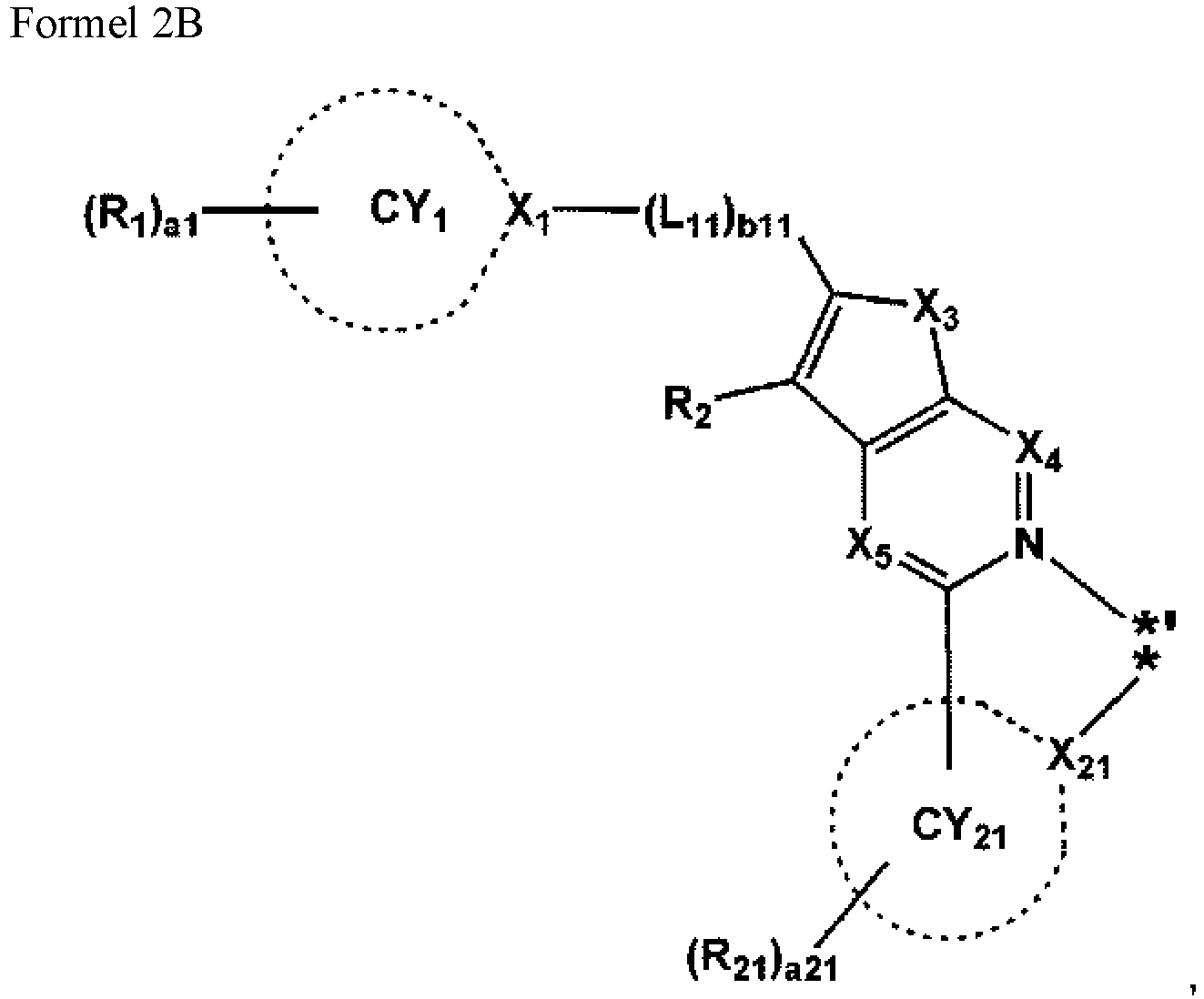
- Organometallische Verbindung nach einem der Ansprüche 1-8, wobei in Formel 1, L2 eine Gruppe, dargestellt durch eine von Formeln 3A bis 3D, ist:
 Y13 O, N oder N(Z1) ist,Y14 O, N oder N(Z3) ist,T11 eine Einfachbindung, eine Doppelbindung, ∗-C(Z11)(Z12)-∗', ∗-C(Z11)=C(Z12)-∗', ∗=C(Z11)-∗', ∗-C(Z11)=∗', ∗=C(Z11)-C(Z12)=C(Z13)-∗', ∗-C(Z11)=C(Z12)-C(Z13)=∗', ∗-N(Z11)-∗' oder eine carbocyclische C5-C30-Gruppe, unsubstituiert oder substituiert mit mindestens einer Z11, ist,a11 eine ganze Zahl von 1 bis 10 ist,Y11 und Y12 jeweils unabhängig C oder N sind,T21 eine Einfachbindung, eine Doppelbindung, O, S, C(Z11)(Z12), Si(Z11)(Z12) oder N(Zn) ist,Ring CY11 und Ring CY12 jeweils unabhängig eine carbocyclische C5-C30-Gruppe oder eine heterocyclische C2-C30-Gruppe sind,Z1 bis Z3 und Z11 bis Z13 jeweils unabhängig gleich sind, wie in Verbindung mit R21 in Anspruch 1 definiert,d1 und d2 jeweils unabhängig eine ganze Zahl von 0 bis 10 sind, und* und *' jeweils eine Bindungsstelle an M in Formel 1 angeben.
 - Organometallische Verbindung nach einem der Ansprüche 1-9, wobei,
in Formel 1, L2 eine Gruppe, dargestellt durch Formeln eine von 3-1(1) bis 3-1(66), 3-1(301) und 3-1(308), ist: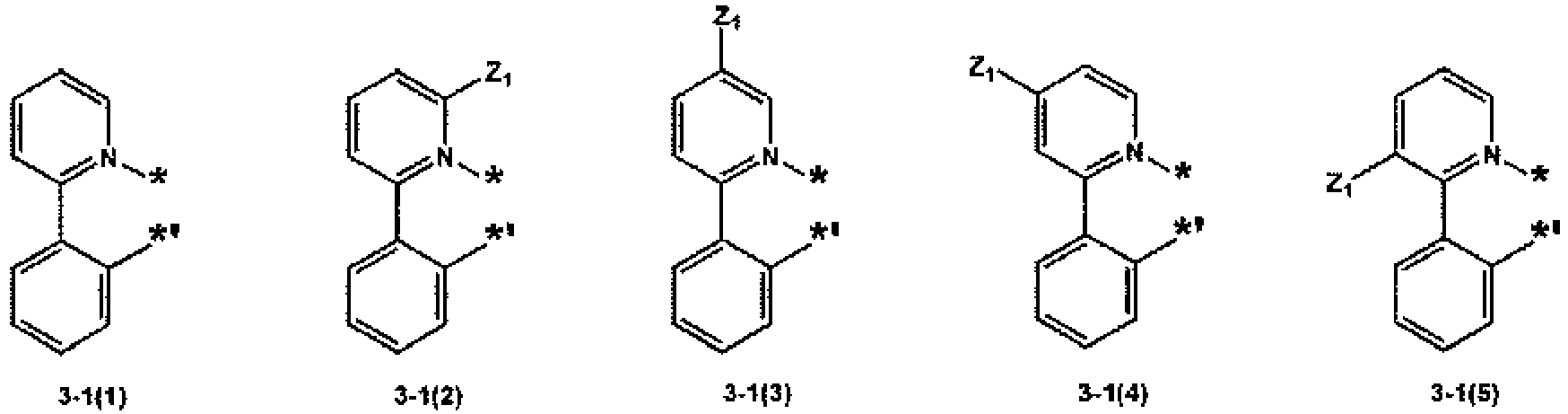
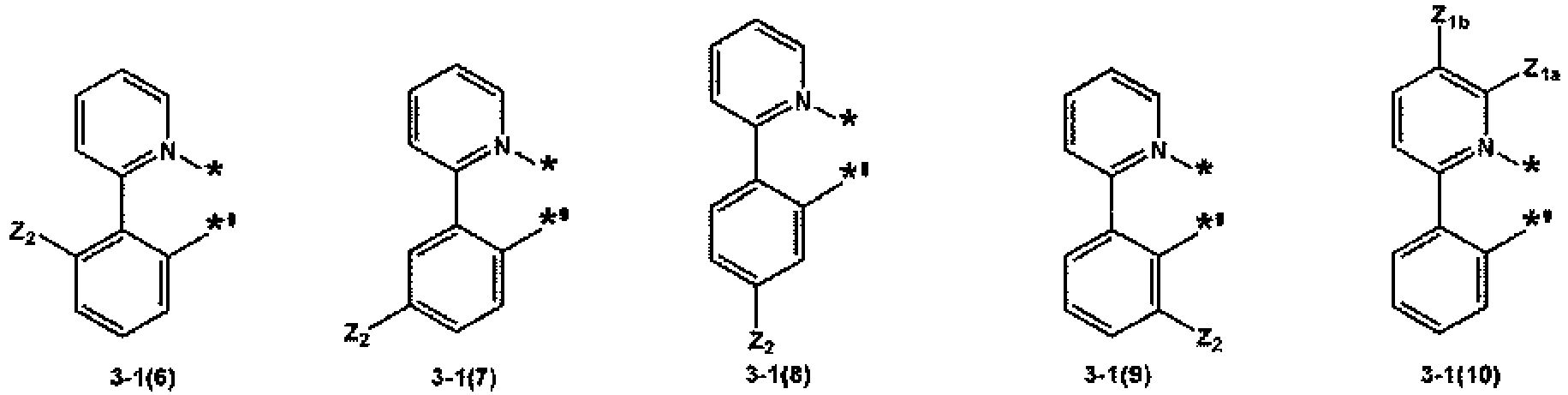
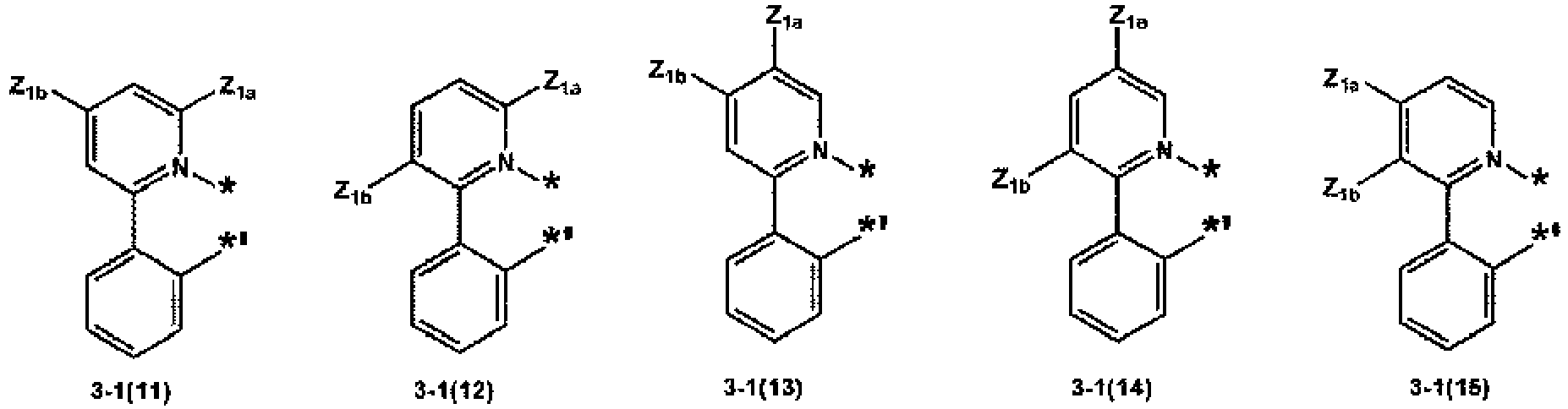
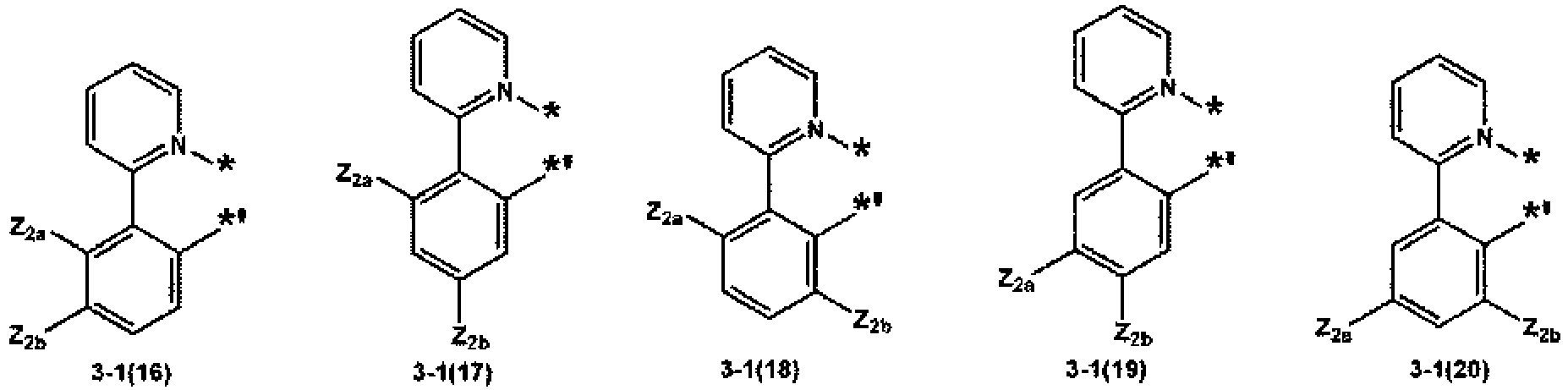

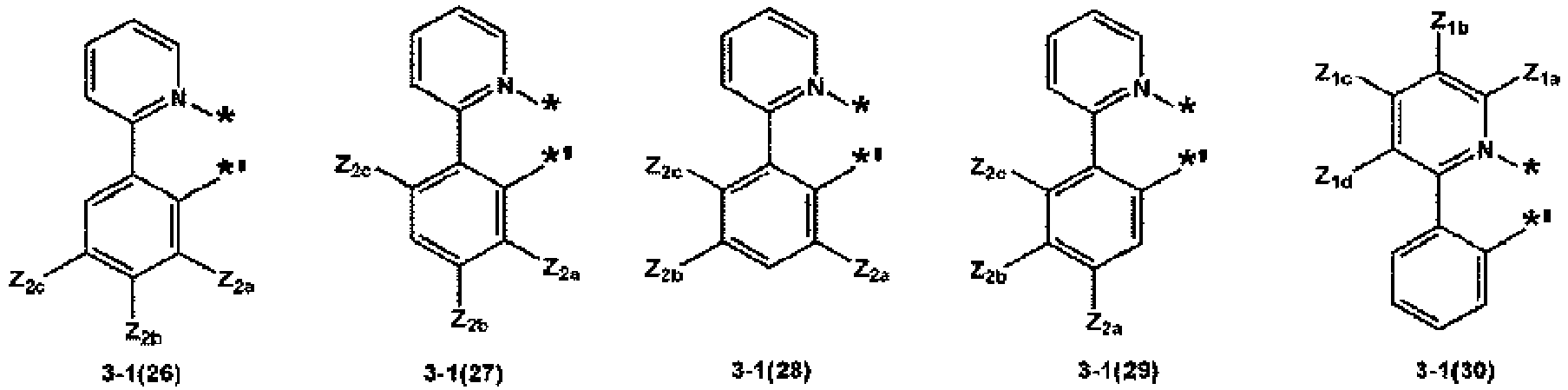


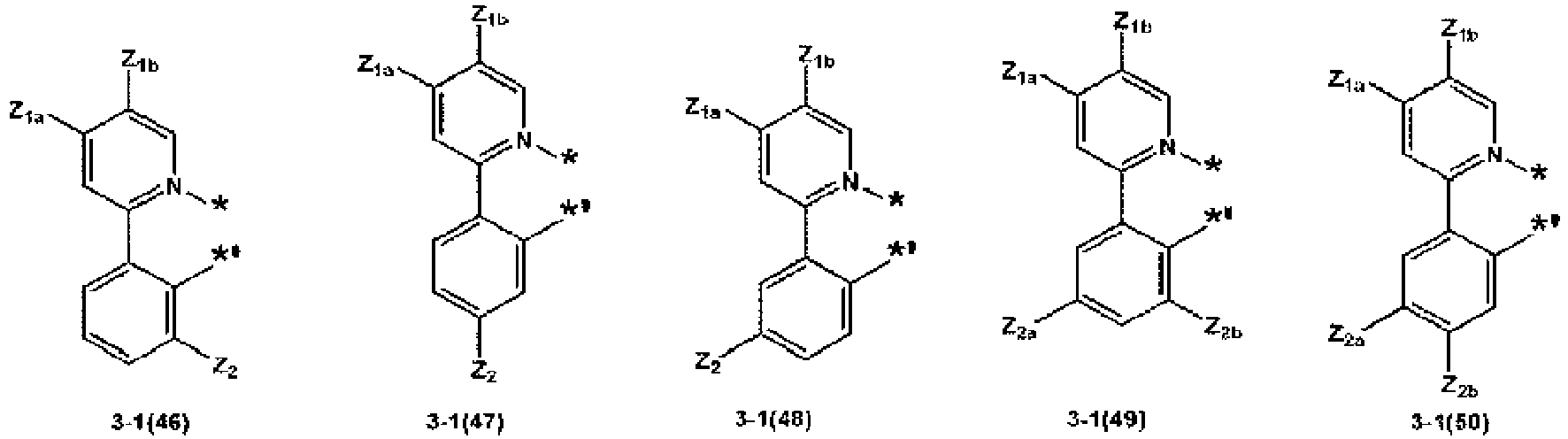


 X41 O, S, N(Z21), C(Z21)(Z22) oder Si(Z21)(Z22) ist,Z1, Z2, Z1a, Z1b, Z1c, Z1d, Z2a, Z2b, Z2c, Z2d, Z11 bis Z13, Z21 und Z22 jeweils unabhängig gleich sind, wie in Verbindung mit R21 in Anspruch 1 definiert,d14 eine ganze Zahl von 0 bis 4 ist,d26 eine ganze Zahl von 0 bis 6 ist, und* und *' jeweils eine Bindungsstelle an M in Formel 1 angeben.
 - Organometallische Verbindung nach Anspruch 1, wobei
die organometallische Verbindung eine von Verbindungen 1 bis 15, 17-218, 220-328, 330-438, 440-453, 455-466, 468 und 469 ist:


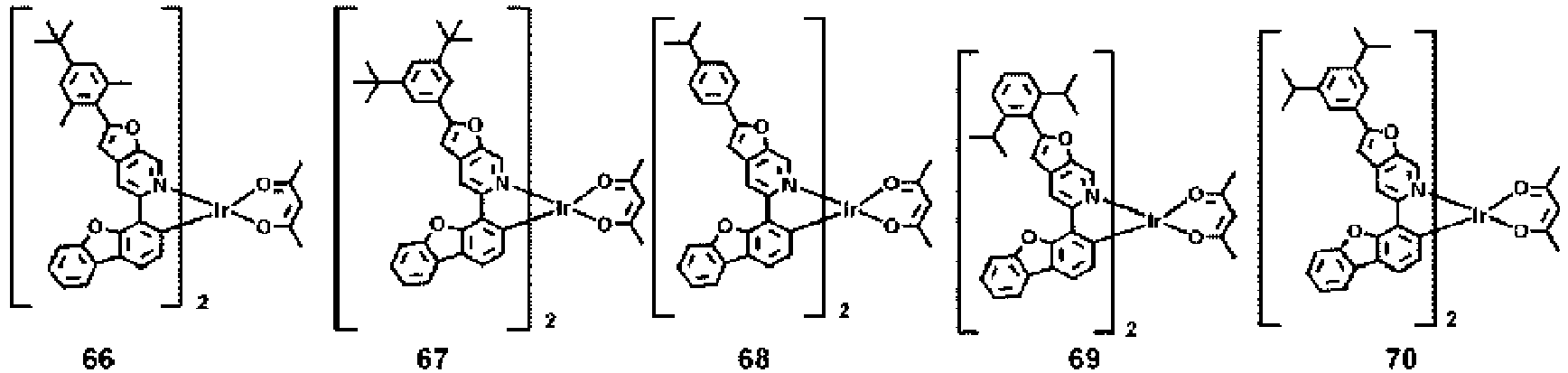

















- Organische lichtemittierende Vorrichtung, umfassend:eine erste Elektrode;eine zweite Elektrode; undeine organische Schicht, die zwischen der ersten Elektrode und der zweiten Elektrode angeordnet ist und eine Emissionsschicht umfasst,wobei die organische Schicht mindestens eine organometallische Verbindung nach einem der Ansprüche 1-11 umfasst.
- Organische lichtemittierende Vorrichtung nach Anspruch 12, wobeidie erste Elektrode eine Anode ist,die zweite Elektrode eine Kathode ist,die organische Schicht ferner einen Lochtransportbereich zwischen der ersten Elektrode und der Emissionsschicht und einen Elektronentransportbereich zwischen der Emissionsschicht und der zweiten Elektrode umfasst,der Lochtransportbereich eine Lochinjektionsschicht, eine Lochtransportschicht, eine Elektronenblockierschicht, eine Pufferschicht oder eine beliebige Kombination davon umfasst, undder Elektronentransportbereich eine Lochblockierschicht, eine Elektronentransportschicht, eine Elektroneninjektionsschicht oder eine beliebige Kombination davon umfasst; und/oderwobei die Emissionsschicht die organometallische Verbindung umfasst, bevorzugt, wobei die Emissionsschicht ferner einen Wirt umfasst und eine Menge des Wirts größer ist als eine Menge der organometallischen Verbindung.
- Diagnostische Zusammensetzung, umfassend die organometallische Verbindung nach einem der Ansprüche 1-11.
Applications Claiming Priority (1)
| Application Number | Priority Date | Filing Date | Title |
|---|---|---|---|
| KR1020190042745A KR102710727B1 (ko) | 2019-04-11 | 2019-04-11 | 유기금속 화합물, 이를 포함한 유기 발광 소자 및 이를 포함한 진단용 조성물 |
Publications (2)
| Publication Number | Publication Date |
|---|---|
| EP3722301A1 EP3722301A1 (de) | 2020-10-14 |
| EP3722301B1 true EP3722301B1 (de) | 2023-11-01 |
Family
ID=70189828
Family Applications (1)
| Application Number | Title | Priority Date | Filing Date |
|---|---|---|---|
| EP20168158.2A Active EP3722301B1 (de) | 2019-04-11 | 2020-04-06 | Organometallische verbindung, organische lichtemittierende vorrichtung mit der organometallischen verbindung, diagnostische zusammensetzung mit der organometallischen verbindung |
Country Status (4)
| Country | Link |
|---|---|
| US (1) | US11856838B2 (de) |
| EP (1) | EP3722301B1 (de) |
| KR (1) | KR102710727B1 (de) |
| CN (1) | CN111808140B (de) |
Families Citing this family (4)
| Publication number | Priority date | Publication date | Assignee | Title |
|---|---|---|---|---|
| US20200111977A1 (en) * | 2018-10-08 | 2020-04-09 | Samsung Electronics Co., Ltd. | Organometallic compound and organic light-emitting device including the same |
| KR102710729B1 (ko) | 2019-04-16 | 2024-09-27 | 삼성전자주식회사 | 유기금속 화합물, 이를 포함한 유기 발광 소자 및 이를 포함한 진단용 조성물 |
| CN114031645A (zh) * | 2021-11-26 | 2022-02-11 | 北京燕化集联光电技术有限公司 | 一种有机发光材料及其应用 |
| KR20230099169A (ko) * | 2021-12-27 | 2023-07-04 | 엘지디스플레이 주식회사 | 유기금속 화합물 및 이를 포함하는 유기발광소자 |
Family Cites Families (25)
| Publication number | Priority date | Publication date | Assignee | Title |
|---|---|---|---|---|
| US9193746B2 (en) * | 2006-12-07 | 2015-11-24 | Biotium, Inc. | Luminescent metal complexes and associated technology |
| JP2008239759A (ja) * | 2007-03-27 | 2008-10-09 | Konica Minolta Holdings Inc | 有機エレクトロルミネッセンス素子材料、有機エレクトロルミネッセンス素子、表示装置及び照明装置 |
| TWI543983B (zh) | 2009-04-06 | 2016-08-01 | 環球展覽公司 | 包含新穎配位體結構之金屬錯合物 |
| US10158089B2 (en) | 2011-05-27 | 2018-12-18 | Universal Display Corporation | Organic electroluminescent materials and devices |
| US10079349B2 (en) | 2011-05-27 | 2018-09-18 | Universal Display Corporation | Organic electroluminescent materials and devices |
| EP2882763B1 (de) | 2012-08-07 | 2018-08-22 | Merck Patent GmbH | Metallkomplexe |
| WO2015000546A1 (de) | 2013-07-02 | 2015-01-08 | Merck Patent Gmbh | Polycyclische verbindungen |
| US9831447B2 (en) | 2013-10-08 | 2017-11-28 | Universal Display Corporation | Organic electroluminescent materials and devices |
| US9978961B2 (en) | 2014-01-08 | 2018-05-22 | Universal Display Corporation | Organic electroluminescent materials and devices |
| JP6640098B2 (ja) | 2014-02-05 | 2020-02-05 | メルク、パテント、ゲゼルシャフト、ミット、ベシュレンクテル、ハフツングMerck Patent GmbH | 金属錯体 |
| US10003035B2 (en) | 2014-11-28 | 2018-06-19 | Samsung Electronics Co., Ltd. | Organometallic compound and organic light-emitting device including the same |
| KR102455432B1 (ko) | 2014-11-28 | 2022-10-18 | 삼성전자주식회사 | 유기금속 화합물 및 이를 포함한 유기 발광 소자 |
| TWI526448B (zh) * | 2014-12-03 | 2016-03-21 | 財團法人工業技術研究院 | 有機金屬化合物、及包含其之有機發光裝置 |
| TWI586672B (zh) | 2014-12-03 | 2017-06-11 | 財團法人工業技術研究院 | 有機金屬化合物及包含其之有機電激發光裝置 |
| US9859510B2 (en) * | 2015-05-15 | 2018-01-02 | Universal Display Corporation | Organic electroluminescent materials and devices |
| KR20160142940A (ko) | 2015-06-03 | 2016-12-14 | 삼성디스플레이 주식회사 | 유기 발광 표시 장치 |
| JP6946269B2 (ja) | 2015-08-25 | 2021-10-06 | メルク、パテント、ゲゼルシャフト、ミット、ベシュレンクテル、ハフツングMerck Patent GmbH | 金属錯体 |
| KR102637099B1 (ko) | 2016-04-08 | 2024-02-19 | 삼성전자주식회사 | 유기금속 화합물 및 이를 포함한 유기 발광 소자 |
| TWI594999B (zh) * | 2016-12-16 | 2017-08-11 | 財團法人工業技術研究院 | 有機金屬錯合物及包含其之有機發光二極體 |
| US10862055B2 (en) * | 2017-05-05 | 2020-12-08 | Universal Display Corporation | Organic electroluminescent materials and devices |
| US11377458B2 (en) | 2017-10-16 | 2022-07-05 | Samsung Electronics Co., Ltd. | Organometallic compound and organic light-emitting device including the same |
| KR20190042459A (ko) | 2017-10-16 | 2019-04-24 | 삼성전자주식회사 | 유기금속 화합물 및 이를 포함한 유기 발광 소자 |
| KR102626925B1 (ko) | 2018-04-23 | 2024-01-19 | 삼성전자주식회사 | 유기금속 화합물 및 이를 포함한 유기 발광 소자 |
| JP7344668B2 (ja) | 2018-04-23 | 2023-09-14 | 三星電子株式会社 | 有機金属化合物とそれを含む有機発光素子及び診断用組成物 |
| US20200111977A1 (en) * | 2018-10-08 | 2020-04-09 | Samsung Electronics Co., Ltd. | Organometallic compound and organic light-emitting device including the same |
-
2019
- 2019-04-11 KR KR1020190042745A patent/KR102710727B1/ko active Active
-
2020
- 2020-04-06 EP EP20168158.2A patent/EP3722301B1/de active Active
- 2020-04-06 US US16/840,845 patent/US11856838B2/en active Active
- 2020-04-08 CN CN202010267966.7A patent/CN111808140B/zh active Active
Also Published As
| Publication number | Publication date |
|---|---|
| KR20200120185A (ko) | 2020-10-21 |
| CN111808140A (zh) | 2020-10-23 |
| EP3722301A1 (de) | 2020-10-14 |
| KR102710727B1 (ko) | 2024-09-27 |
| US20200328360A1 (en) | 2020-10-15 |
| US11856838B2 (en) | 2023-12-26 |
| CN111808140B (zh) | 2024-08-06 |
Similar Documents
| Publication | Publication Date | Title |
|---|---|---|
| EP3663308B1 (de) | Organometallische verbindung, organische lichtemittierende vorrichtung mit der organometallischen verbindung und diagnostische zusammensetzung mit der organometallischen verbindung | |
| EP3450441B1 (de) | Organometallische verbindung, organische lichtemittierende vorrichtung mit der organometallischen verbindung und diagnostische zusammensetzung mit der organometallischen verbindung | |
| EP3266790B1 (de) | Organometallische verbindung, organische lichtemittierende vorrichtung damit und diagnosezusammensetzung mit der organometallischen verbindung | |
| KR102637103B1 (ko) | 유기금속 화합물, 이를 포함한 유기 발광 소자 및 이를 포함한 진단용 조성물 | |
| EP3560940B1 (de) | Organometallische verbindung, organische lichtemittierende vorrichtung mit der organometallischen verbindung und diagnostische zusammensetzung mit der organometallischen verbindung | |
| EP3508491A1 (de) | Organometallische verbindung, organische lichtemittierende vorrichtung damit und diagnosezusammensetzung damit | |
| EP3461830B1 (de) | Organometallische verbindung, organische lichtemittierende vorrichtung mit der organometallischen verbindung und diagnostische zusammensetzung mit der organometallischen verbindung | |
| EP3705483B1 (de) | Organometallische verbindung, organische lichtemittierende vorrichtung damit und elektronische vorrichtung mit der organischen lichtemittierenden vorrichtung | |
| EP3415520A1 (de) | Organometallische verbindung, organische lichtemittierende vorrichtung mit der organometallischen verbindung und diagnostische zusammensetzung mit der organometallischen verbindung | |
| EP3483170A1 (de) | Organometallische verbindung, organische lichtemittierende vorrichtung mit der organometallischen verbindung und diagnostische zusammensetzung mit der organometallischen verbindung | |
| EP3715354B1 (de) | Organometallische verbindung, organische lichtemittierende vorrichtung mit der organometallischen verbindung und diagnostische zusammensetzung mit der organometallischen verbindung | |
| EP4016656B1 (de) | Organometallische verbindung, organische lichtemittierende vorrichtung damit und diagnosezusammensetzung mit der organometallischen verbindung | |
| EP3943499A2 (de) | Organometallische verbindung, organische lichtemittierende vorrichtung damit und elektronische einrichtung mit der organischen lichtemittierenden vorrichtung | |
| EP3862360B1 (de) | Organometallische verbindung, organische lichtemittierende vorrichtung damit und elektronische einrichtung mit der organischen lichtemittierenden vorrichtung | |
| EP3722301B1 (de) | Organometallische verbindung, organische lichtemittierende vorrichtung mit der organometallischen verbindung, diagnostische zusammensetzung mit der organometallischen verbindung | |
| EP3392258B1 (de) | Organometallische verbindung, organische lichtemittierende vorrichtung mit der organometallischen verbindung und diagnostische zusammensetzung mit der organometallischen verbindung | |
| EP3725793B1 (de) | Organometallische verbindung, organische lichtemittierende vorrichtung mit der organometallischen verbindung und diagnostische zusammensetzung mit der organometallischen verbindung | |
| EP3865553A1 (de) | Organometallische verbindung, organische lichtemittierende vorrichtung damit und elektronische einrichtung mit der organischen lichtemittierenden vorrichtung | |
| EP3971260A1 (de) | Organometallische verbindung, organische lichtemittierende vorrichtung, die diese umfasst, und elektronisches gerät, das diese organische lichtemittierende vorrichtung umfasst | |
| EP3988557B1 (de) | Organometallische verbindung, organische lichtemittierende vorrichtung damit und diagnosezusammensetzung mit der organometallischen verbindung | |
| KR102626925B1 (ko) | 유기금속 화합물 및 이를 포함한 유기 발광 소자 | |
| EP3715352B1 (de) | Organometallische verbindung, organische lichtemittierende vorrichtung damit und elektronische vorrichtung mit der organischen lichtemittierenden vorrichtung | |
| EP3617216B1 (de) | Organometallische verbindung, organische lichtemittierende vorrichtung damit und diagnosezusammensetzung mit der organometallischen verbindung | |
| EP3909964B1 (de) | Organometallische verbindung, organische lichtemittierende vorrichtung damit und elektronisches gerät mit der organischen lichtemittierenden vorrichtung | |
| EP3992199A1 (de) | Organometallische verbindung, organische lichtemittierende vorrichtung damit und elektronische einrichtung mit der organischen lichtemittierenden vorrichtung |
Legal Events
| Date | Code | Title | Description |
|---|---|---|---|
| PUAI | Public reference made under article 153(3) epc to a published international application that has entered the european phase |
Free format text: ORIGINAL CODE: 0009012 |
|
| STAA | Information on the status of an ep patent application or granted ep patent |
Free format text: STATUS: THE APPLICATION HAS BEEN PUBLISHED |
|
| AK | Designated contracting states |
Kind code of ref document: A1 Designated state(s): AL AT BE BG CH CY CZ DE DK EE ES FI FR GB GR HR HU IE IS IT LI LT LU LV MC MK MT NL NO PL PT RO RS SE SI SK SM TR |
|
| AX | Request for extension of the european patent |
Extension state: BA ME |
|
| STAA | Information on the status of an ep patent application or granted ep patent |
Free format text: STATUS: REQUEST FOR EXAMINATION WAS MADE |
|
| 17P | Request for examination filed |
Effective date: 20210406 |
|
| RBV | Designated contracting states (corrected) |
Designated state(s): AL AT BE BG CH CY CZ DE DK EE ES FI FR GB GR HR HU IE IS IT LI LT LU LV MC MK MT NL NO PL PT RO RS SE SI SK SM TR |
|
| STAA | Information on the status of an ep patent application or granted ep patent |
Free format text: STATUS: EXAMINATION IS IN PROGRESS |
|
| 17Q | First examination report despatched |
Effective date: 20220624 |
|
| RIC1 | Information provided on ipc code assigned before grant |
Ipc: H10K 85/30 20230101ALI20230316BHEP Ipc: C09K 11/06 20060101ALI20230316BHEP Ipc: C09K 11/07 20060101ALI20230316BHEP Ipc: C07F 15/00 20060101AFI20230316BHEP |
|
| GRAP | Despatch of communication of intention to grant a patent |
Free format text: ORIGINAL CODE: EPIDOSNIGR1 |
|
| STAA | Information on the status of an ep patent application or granted ep patent |
Free format text: STATUS: GRANT OF PATENT IS INTENDED |
|
| INTG | Intention to grant announced |
Effective date: 20230516 |
|
| P01 | Opt-out of the competence of the unified patent court (upc) registered |
Effective date: 20230520 |
|
| GRAS | Grant fee paid |
Free format text: ORIGINAL CODE: EPIDOSNIGR3 |
|
| GRAA | (expected) grant |
Free format text: ORIGINAL CODE: 0009210 |
|
| STAA | Information on the status of an ep patent application or granted ep patent |
Free format text: STATUS: THE PATENT HAS BEEN GRANTED |
|
| AK | Designated contracting states |
Kind code of ref document: B1 Designated state(s): AL AT BE BG CH CY CZ DE DK EE ES FI FR GB GR HR HU IE IS IT LI LT LU LV MC MK MT NL NO PL PT RO RS SE SI SK SM TR |
|
| REG | Reference to a national code |
Ref country code: GB Ref legal event code: FG4D |
|
| REG | Reference to a national code |
Ref country code: CH Ref legal event code: EP |
|
| REG | Reference to a national code |
Ref country code: DE Ref legal event code: R096 Ref document number: 602020020083 Country of ref document: DE |
|
| REG | Reference to a national code |
Ref country code: IE Ref legal event code: FG4D |
|
| REG | Reference to a national code |
Ref country code: LT Ref legal event code: MG9D |
|
| REG | Reference to a national code |
Ref country code: NL Ref legal event code: MP Effective date: 20231101 |
|
| PG25 | Lapsed in a contracting state [announced via postgrant information from national office to epo] |
Ref country code: GR Free format text: LAPSE BECAUSE OF FAILURE TO SUBMIT A TRANSLATION OF THE DESCRIPTION OR TO PAY THE FEE WITHIN THE PRESCRIBED TIME-LIMIT Effective date: 20240202 |
|
| PG25 | Lapsed in a contracting state [announced via postgrant information from national office to epo] |
Ref country code: IS Free format text: LAPSE BECAUSE OF FAILURE TO SUBMIT A TRANSLATION OF THE DESCRIPTION OR TO PAY THE FEE WITHIN THE PRESCRIBED TIME-LIMIT Effective date: 20240301 |
|
| PG25 | Lapsed in a contracting state [announced via postgrant information from national office to epo] |
Ref country code: LT Free format text: LAPSE BECAUSE OF FAILURE TO SUBMIT A TRANSLATION OF THE DESCRIPTION OR TO PAY THE FEE WITHIN THE PRESCRIBED TIME-LIMIT Effective date: 20231101 |
|
| REG | Reference to a national code |
Ref country code: AT Ref legal event code: MK05 Ref document number: 1627139 Country of ref document: AT Kind code of ref document: T Effective date: 20231101 |
|
| PG25 | Lapsed in a contracting state [announced via postgrant information from national office to epo] |
Ref country code: NL Free format text: LAPSE BECAUSE OF FAILURE TO SUBMIT A TRANSLATION OF THE DESCRIPTION OR TO PAY THE FEE WITHIN THE PRESCRIBED TIME-LIMIT Effective date: 20231101 |
|
| PG25 | Lapsed in a contracting state [announced via postgrant information from national office to epo] |
Ref country code: AT Free format text: LAPSE BECAUSE OF FAILURE TO SUBMIT A TRANSLATION OF THE DESCRIPTION OR TO PAY THE FEE WITHIN THE PRESCRIBED TIME-LIMIT Effective date: 20231101 |
|
| PG25 | Lapsed in a contracting state [announced via postgrant information from national office to epo] |
Ref country code: ES Free format text: LAPSE BECAUSE OF FAILURE TO SUBMIT A TRANSLATION OF THE DESCRIPTION OR TO PAY THE FEE WITHIN THE PRESCRIBED TIME-LIMIT Effective date: 20231101 |
|
| PG25 | Lapsed in a contracting state [announced via postgrant information from national office to epo] |
Ref country code: NL Free format text: LAPSE BECAUSE OF FAILURE TO SUBMIT A TRANSLATION OF THE DESCRIPTION OR TO PAY THE FEE WITHIN THE PRESCRIBED TIME-LIMIT Effective date: 20231101 Ref country code: LT Free format text: LAPSE BECAUSE OF FAILURE TO SUBMIT A TRANSLATION OF THE DESCRIPTION OR TO PAY THE FEE WITHIN THE PRESCRIBED TIME-LIMIT Effective date: 20231101 Ref country code: IS Free format text: LAPSE BECAUSE OF FAILURE TO SUBMIT A TRANSLATION OF THE DESCRIPTION OR TO PAY THE FEE WITHIN THE PRESCRIBED TIME-LIMIT Effective date: 20240301 Ref country code: GR Free format text: LAPSE BECAUSE OF FAILURE TO SUBMIT A TRANSLATION OF THE DESCRIPTION OR TO PAY THE FEE WITHIN THE PRESCRIBED TIME-LIMIT Effective date: 20240202 Ref country code: ES Free format text: LAPSE BECAUSE OF FAILURE TO SUBMIT A TRANSLATION OF THE DESCRIPTION OR TO PAY THE FEE WITHIN THE PRESCRIBED TIME-LIMIT Effective date: 20231101 Ref country code: BG Free format text: LAPSE BECAUSE OF FAILURE TO SUBMIT A TRANSLATION OF THE DESCRIPTION OR TO PAY THE FEE WITHIN THE PRESCRIBED TIME-LIMIT Effective date: 20240201 Ref country code: AT Free format text: LAPSE BECAUSE OF FAILURE TO SUBMIT A TRANSLATION OF THE DESCRIPTION OR TO PAY THE FEE WITHIN THE PRESCRIBED TIME-LIMIT Effective date: 20231101 Ref country code: PT Free format text: LAPSE BECAUSE OF FAILURE TO SUBMIT A TRANSLATION OF THE DESCRIPTION OR TO PAY THE FEE WITHIN THE PRESCRIBED TIME-LIMIT Effective date: 20240301 |
|
| PG25 | Lapsed in a contracting state [announced via postgrant information from national office to epo] |
Ref country code: SE Free format text: LAPSE BECAUSE OF FAILURE TO SUBMIT A TRANSLATION OF THE DESCRIPTION OR TO PAY THE FEE WITHIN THE PRESCRIBED TIME-LIMIT Effective date: 20231101 Ref country code: RS Free format text: LAPSE BECAUSE OF FAILURE TO SUBMIT A TRANSLATION OF THE DESCRIPTION OR TO PAY THE FEE WITHIN THE PRESCRIBED TIME-LIMIT Effective date: 20231101 Ref country code: PL Free format text: LAPSE BECAUSE OF FAILURE TO SUBMIT A TRANSLATION OF THE DESCRIPTION OR TO PAY THE FEE WITHIN THE PRESCRIBED TIME-LIMIT Effective date: 20231101 Ref country code: NO Free format text: LAPSE BECAUSE OF FAILURE TO SUBMIT A TRANSLATION OF THE DESCRIPTION OR TO PAY THE FEE WITHIN THE PRESCRIBED TIME-LIMIT Effective date: 20240201 Ref country code: LV Free format text: LAPSE BECAUSE OF FAILURE TO SUBMIT A TRANSLATION OF THE DESCRIPTION OR TO PAY THE FEE WITHIN THE PRESCRIBED TIME-LIMIT Effective date: 20231101 Ref country code: HR Free format text: LAPSE BECAUSE OF FAILURE TO SUBMIT A TRANSLATION OF THE DESCRIPTION OR TO PAY THE FEE WITHIN THE PRESCRIBED TIME-LIMIT Effective date: 20231101 |
|
| PG25 | Lapsed in a contracting state [announced via postgrant information from national office to epo] |
Ref country code: DK Free format text: LAPSE BECAUSE OF FAILURE TO SUBMIT A TRANSLATION OF THE DESCRIPTION OR TO PAY THE FEE WITHIN THE PRESCRIBED TIME-LIMIT Effective date: 20231101 |
|
| PG25 | Lapsed in a contracting state [announced via postgrant information from national office to epo] |
Ref country code: CZ Free format text: LAPSE BECAUSE OF FAILURE TO SUBMIT A TRANSLATION OF THE DESCRIPTION OR TO PAY THE FEE WITHIN THE PRESCRIBED TIME-LIMIT Effective date: 20231101 |
|
| PG25 | Lapsed in a contracting state [announced via postgrant information from national office to epo] |
Ref country code: SK Free format text: LAPSE BECAUSE OF FAILURE TO SUBMIT A TRANSLATION OF THE DESCRIPTION OR TO PAY THE FEE WITHIN THE PRESCRIBED TIME-LIMIT Effective date: 20231101 |
|
| PG25 | Lapsed in a contracting state [announced via postgrant information from national office to epo] |
Ref country code: SM Free format text: LAPSE BECAUSE OF FAILURE TO SUBMIT A TRANSLATION OF THE DESCRIPTION OR TO PAY THE FEE WITHIN THE PRESCRIBED TIME-LIMIT Effective date: 20231101 Ref country code: SK Free format text: LAPSE BECAUSE OF FAILURE TO SUBMIT A TRANSLATION OF THE DESCRIPTION OR TO PAY THE FEE WITHIN THE PRESCRIBED TIME-LIMIT Effective date: 20231101 Ref country code: IT Free format text: LAPSE BECAUSE OF FAILURE TO SUBMIT A TRANSLATION OF THE DESCRIPTION OR TO PAY THE FEE WITHIN THE PRESCRIBED TIME-LIMIT Effective date: 20231101 Ref country code: EE Free format text: LAPSE BECAUSE OF FAILURE TO SUBMIT A TRANSLATION OF THE DESCRIPTION OR TO PAY THE FEE WITHIN THE PRESCRIBED TIME-LIMIT Effective date: 20231101 Ref country code: DK Free format text: LAPSE BECAUSE OF FAILURE TO SUBMIT A TRANSLATION OF THE DESCRIPTION OR TO PAY THE FEE WITHIN THE PRESCRIBED TIME-LIMIT Effective date: 20231101 Ref country code: CZ Free format text: LAPSE BECAUSE OF FAILURE TO SUBMIT A TRANSLATION OF THE DESCRIPTION OR TO PAY THE FEE WITHIN THE PRESCRIBED TIME-LIMIT Effective date: 20231101 |
|
| REG | Reference to a national code |
Ref country code: DE Ref legal event code: R097 Ref document number: 602020020083 Country of ref document: DE |
|
| PLBE | No opposition filed within time limit |
Free format text: ORIGINAL CODE: 0009261 |
|
| STAA | Information on the status of an ep patent application or granted ep patent |
Free format text: STATUS: NO OPPOSITION FILED WITHIN TIME LIMIT |
|
| 26N | No opposition filed |
Effective date: 20240802 |
|
| PG25 | Lapsed in a contracting state [announced via postgrant information from national office to epo] |
Ref country code: SI Free format text: LAPSE BECAUSE OF FAILURE TO SUBMIT A TRANSLATION OF THE DESCRIPTION OR TO PAY THE FEE WITHIN THE PRESCRIBED TIME-LIMIT Effective date: 20231101 |
|
| PG25 | Lapsed in a contracting state [announced via postgrant information from national office to epo] |
Ref country code: SI Free format text: LAPSE BECAUSE OF FAILURE TO SUBMIT A TRANSLATION OF THE DESCRIPTION OR TO PAY THE FEE WITHIN THE PRESCRIBED TIME-LIMIT Effective date: 20231101 |
|
| PG25 | Lapsed in a contracting state [announced via postgrant information from national office to epo] |
Ref country code: MC Free format text: LAPSE BECAUSE OF FAILURE TO SUBMIT A TRANSLATION OF THE DESCRIPTION OR TO PAY THE FEE WITHIN THE PRESCRIBED TIME-LIMIT Effective date: 20231101 |
|
| PG25 | Lapsed in a contracting state [announced via postgrant information from national office to epo] |
Ref country code: MC Free format text: LAPSE BECAUSE OF FAILURE TO SUBMIT A TRANSLATION OF THE DESCRIPTION OR TO PAY THE FEE WITHIN THE PRESCRIBED TIME-LIMIT Effective date: 20231101 |
|
| REG | Reference to a national code |
Ref country code: CH Ref legal event code: PL |
|
| PG25 | Lapsed in a contracting state [announced via postgrant information from national office to epo] |
Ref country code: LU Free format text: LAPSE BECAUSE OF NON-PAYMENT OF DUE FEES Effective date: 20240406 |
|
| REG | Reference to a national code |
Ref country code: BE Ref legal event code: MM Effective date: 20240430 |
|
| PG25 | Lapsed in a contracting state [announced via postgrant information from national office to epo] |
Ref country code: LU Free format text: LAPSE BECAUSE OF NON-PAYMENT OF DUE FEES Effective date: 20240406 |
|
| PG25 | Lapsed in a contracting state [announced via postgrant information from national office to epo] |
Ref country code: BE Free format text: LAPSE BECAUSE OF NON-PAYMENT OF DUE FEES Effective date: 20240430 |
|
| PG25 | Lapsed in a contracting state [announced via postgrant information from national office to epo] |
Ref country code: BE Free format text: LAPSE BECAUSE OF NON-PAYMENT OF DUE FEES Effective date: 20240430 Ref country code: CH Free format text: LAPSE BECAUSE OF NON-PAYMENT OF DUE FEES Effective date: 20240430 |
|
| PG25 | Lapsed in a contracting state [announced via postgrant information from national office to epo] |
Ref country code: IE Free format text: LAPSE BECAUSE OF NON-PAYMENT OF DUE FEES Effective date: 20240406 |
|
| PGFP | Annual fee paid to national office [announced via postgrant information from national office to epo] |
Ref country code: DE Payment date: 20250311 Year of fee payment: 6 |
|
| PG25 | Lapsed in a contracting state [announced via postgrant information from national office to epo] |
Ref country code: RO Free format text: LAPSE BECAUSE OF FAILURE TO SUBMIT A TRANSLATION OF THE DESCRIPTION OR TO PAY THE FEE WITHIN THE PRESCRIBED TIME-LIMIT Effective date: 20231101 |
|
| PG25 | Lapsed in a contracting state [announced via postgrant information from national office to epo] |
Ref country code: CY Free format text: LAPSE BECAUSE OF FAILURE TO SUBMIT A TRANSLATION OF THE DESCRIPTION OR TO PAY THE FEE WITHIN THE PRESCRIBED TIME-LIMIT; INVALID AB INITIO Effective date: 20200406 |
|
| PG25 | Lapsed in a contracting state [announced via postgrant information from national office to epo] |
Ref country code: HU Free format text: LAPSE BECAUSE OF FAILURE TO SUBMIT A TRANSLATION OF THE DESCRIPTION OR TO PAY THE FEE WITHIN THE PRESCRIBED TIME-LIMIT; INVALID AB INITIO Effective date: 20200406 |
|
| PG25 | Lapsed in a contracting state [announced via postgrant information from national office to epo] |
Ref country code: FI Free format text: LAPSE BECAUSE OF FAILURE TO SUBMIT A TRANSLATION OF THE DESCRIPTION OR TO PAY THE FEE WITHIN THE PRESCRIBED TIME-LIMIT Effective date: 20231101 |
|
| PG25 | Lapsed in a contracting state [announced via postgrant information from national office to epo] |
Ref country code: TR Free format text: LAPSE BECAUSE OF FAILURE TO SUBMIT A TRANSLATION OF THE DESCRIPTION OR TO PAY THE FEE WITHIN THE PRESCRIBED TIME-LIMIT Effective date: 20231101 |
|
| PGFP | Annual fee paid to national office [announced via postgrant information from national office to epo] |
Ref country code: GB Payment date: 20260323 Year of fee payment: 7 |
|
| PGFP | Annual fee paid to national office [announced via postgrant information from national office to epo] |
Ref country code: FR Payment date: 20260323 Year of fee payment: 7 |