EP3722830A1 - Identifizierungsvorrichtung eines luftfahrzeugtyps, entsprechendes identifizierungsverfahren und computerprogramm - Google Patents
Identifizierungsvorrichtung eines luftfahrzeugtyps, entsprechendes identifizierungsverfahren und computerprogramm Download PDFInfo
- Publication number
- EP3722830A1 EP3722830A1 EP20169176.3A EP20169176A EP3722830A1 EP 3722830 A1 EP3722830 A1 EP 3722830A1 EP 20169176 A EP20169176 A EP 20169176A EP 3722830 A1 EP3722830 A1 EP 3722830A1
- Authority
- EP
- European Patent Office
- Prior art keywords
- aircraft
- type
- identification device
- neural network
- trajectory data
- Prior art date
- Legal status (The legal status is an assumption and is not a legal conclusion. Google has not performed a legal analysis and makes no representation as to the accuracy of the status listed.)
- Granted
Links
Images
Classifications
-
- G—PHYSICS
- G01—MEASURING; TESTING
- G01S—RADIO DIRECTION-FINDING; RADIO NAVIGATION; DETERMINING DISTANCE OR VELOCITY BY USE OF RADIO WAVES; LOCATING OR PRESENCE-DETECTING BY USE OF THE REFLECTION OR RERADIATION OF RADIO WAVES; ANALOGOUS ARRANGEMENTS USING OTHER WAVES
- G01S13/00—Systems using the reflection or reradiation of radio waves, e.g. radar systems; Analogous systems using reflection or reradiation of waves whose nature or wavelength is irrelevant or unspecified
- G01S13/02—Systems using reflection of radio waves, e.g. primary radar systems; Analogous systems
- G01S13/06—Systems determining position data of a target
- G01S13/42—Simultaneous measurement of distance and other co-ordinates
-
- G—PHYSICS
- G01—MEASURING; TESTING
- G01S—RADIO DIRECTION-FINDING; RADIO NAVIGATION; DETERMINING DISTANCE OR VELOCITY BY USE OF RADIO WAVES; LOCATING OR PRESENCE-DETECTING BY USE OF THE REFLECTION OR RERADIATION OF RADIO WAVES; ANALOGOUS ARRANGEMENTS USING OTHER WAVES
- G01S13/00—Systems using the reflection or reradiation of radio waves, e.g. radar systems; Analogous systems using reflection or reradiation of waves whose nature or wavelength is irrelevant or unspecified
- G01S13/02—Systems using reflection of radio waves, e.g. primary radar systems; Analogous systems
- G01S13/06—Systems determining position data of a target
- G01S13/42—Simultaneous measurement of distance and other co-ordinates
- G01S13/426—Scanning radar, e.g. 3D radar
-
- G—PHYSICS
- G01—MEASURING; TESTING
- G01S—RADIO DIRECTION-FINDING; RADIO NAVIGATION; DETERMINING DISTANCE OR VELOCITY BY USE OF RADIO WAVES; LOCATING OR PRESENCE-DETECTING BY USE OF THE REFLECTION OR RERADIATION OF RADIO WAVES; ANALOGOUS ARRANGEMENTS USING OTHER WAVES
- G01S13/00—Systems using the reflection or reradiation of radio waves, e.g. radar systems; Analogous systems using reflection or reradiation of waves whose nature or wavelength is irrelevant or unspecified
- G01S13/66—Radar-tracking systems; Analogous systems
- G01S13/72—Radar-tracking systems; Analogous systems for two-dimensional [2D] tracking, e.g. combination of angle and range tracking, track-while-scan radar
- G01S13/723—Radar-tracking systems; Analogous systems for two-dimensional [2D] tracking, e.g. combination of angle and range tracking, track-while-scan radar by using numerical data
- G01S13/726—Multiple target tracking
-
- G—PHYSICS
- G01—MEASURING; TESTING
- G01S—RADIO DIRECTION-FINDING; RADIO NAVIGATION; DETERMINING DISTANCE OR VELOCITY BY USE OF RADIO WAVES; LOCATING OR PRESENCE-DETECTING BY USE OF THE REFLECTION OR RERADIATION OF RADIO WAVES; ANALOGOUS ARRANGEMENTS USING OTHER WAVES
- G01S13/00—Systems using the reflection or reradiation of radio waves, e.g. radar systems; Analogous systems using reflection or reradiation of waves whose nature or wavelength is irrelevant or unspecified
- G01S13/86—Combinations of radar systems with non-radar systems, e.g. sonar, direction finder
- G01S13/867—Combination of radar systems with cameras
-
- G—PHYSICS
- G01—MEASURING; TESTING
- G01S—RADIO DIRECTION-FINDING; RADIO NAVIGATION; DETERMINING DISTANCE OR VELOCITY BY USE OF RADIO WAVES; LOCATING OR PRESENCE-DETECTING BY USE OF THE REFLECTION OR RERADIATION OF RADIO WAVES; ANALOGOUS ARRANGEMENTS USING OTHER WAVES
- G01S13/00—Systems using the reflection or reradiation of radio waves, e.g. radar systems; Analogous systems using reflection or reradiation of waves whose nature or wavelength is irrelevant or unspecified
- G01S13/87—Combinations of radar systems, e.g. primary radar and secondary radar
- G01S13/872—Combinations of primary radar and secondary radar
-
- G—PHYSICS
- G01—MEASURING; TESTING
- G01S—RADIO DIRECTION-FINDING; RADIO NAVIGATION; DETERMINING DISTANCE OR VELOCITY BY USE OF RADIO WAVES; LOCATING OR PRESENCE-DETECTING BY USE OF THE REFLECTION OR RERADIATION OF RADIO WAVES; ANALOGOUS ARRANGEMENTS USING OTHER WAVES
- G01S7/00—Details of systems according to groups G01S13/00, G01S15/00, G01S17/00
- G01S7/02—Details of systems according to groups G01S13/00, G01S15/00, G01S17/00 of systems according to group G01S13/00
- G01S7/41—Details of systems according to groups G01S13/00, G01S15/00, G01S17/00 of systems according to group G01S13/00 using analysis of echo signal for target characterisation; Target signature; Target cross-section
- G01S7/414—Discriminating targets with respect to background clutter
-
- G—PHYSICS
- G01—MEASURING; TESTING
- G01S—RADIO DIRECTION-FINDING; RADIO NAVIGATION; DETERMINING DISTANCE OR VELOCITY BY USE OF RADIO WAVES; LOCATING OR PRESENCE-DETECTING BY USE OF THE REFLECTION OR RERADIATION OF RADIO WAVES; ANALOGOUS ARRANGEMENTS USING OTHER WAVES
- G01S7/00—Details of systems according to groups G01S13/00, G01S15/00, G01S17/00
- G01S7/02—Details of systems according to groups G01S13/00, G01S15/00, G01S17/00 of systems according to group G01S13/00
- G01S7/41—Details of systems according to groups G01S13/00, G01S15/00, G01S17/00 of systems according to group G01S13/00 using analysis of echo signal for target characterisation; Target signature; Target cross-section
- G01S7/417—Details of systems according to groups G01S13/00, G01S15/00, G01S17/00 of systems according to group G01S13/00 using analysis of echo signal for target characterisation; Target signature; Target cross-section involving the use of neural networks
-
- G—PHYSICS
- G06—COMPUTING OR CALCULATING; COUNTING
- G06N—COMPUTING ARRANGEMENTS BASED ON SPECIFIC COMPUTATIONAL MODELS
- G06N3/00—Computing arrangements based on biological models
- G06N3/02—Neural networks
- G06N3/04—Architecture, e.g. interconnection topology
- G06N3/044—Recurrent networks, e.g. Hopfield networks
-
- G—PHYSICS
- G06—COMPUTING OR CALCULATING; COUNTING
- G06N—COMPUTING ARRANGEMENTS BASED ON SPECIFIC COMPUTATIONAL MODELS
- G06N3/00—Computing arrangements based on biological models
- G06N3/02—Neural networks
- G06N3/04—Architecture, e.g. interconnection topology
- G06N3/044—Recurrent networks, e.g. Hopfield networks
- G06N3/0442—Recurrent networks, e.g. Hopfield networks characterised by memory or gating, e.g. long short-term memory [LSTM] or gated recurrent units [GRU]
-
- G—PHYSICS
- G06—COMPUTING OR CALCULATING; COUNTING
- G06N—COMPUTING ARRANGEMENTS BASED ON SPECIFIC COMPUTATIONAL MODELS
- G06N3/00—Computing arrangements based on biological models
- G06N3/02—Neural networks
- G06N3/04—Architecture, e.g. interconnection topology
- G06N3/045—Combinations of networks
-
- G—PHYSICS
- G06—COMPUTING OR CALCULATING; COUNTING
- G06N—COMPUTING ARRANGEMENTS BASED ON SPECIFIC COMPUTATIONAL MODELS
- G06N3/00—Computing arrangements based on biological models
- G06N3/02—Neural networks
- G06N3/04—Architecture, e.g. interconnection topology
- G06N3/0464—Convolutional networks [CNN, ConvNet]
-
- G—PHYSICS
- G06—COMPUTING OR CALCULATING; COUNTING
- G06N—COMPUTING ARRANGEMENTS BASED ON SPECIFIC COMPUTATIONAL MODELS
- G06N3/00—Computing arrangements based on biological models
- G06N3/02—Neural networks
- G06N3/08—Learning methods
-
- G—PHYSICS
- G06—COMPUTING OR CALCULATING; COUNTING
- G06N—COMPUTING ARRANGEMENTS BASED ON SPECIFIC COMPUTATIONAL MODELS
- G06N3/00—Computing arrangements based on biological models
- G06N3/02—Neural networks
- G06N3/08—Learning methods
- G06N3/09—Supervised learning
-
- G—PHYSICS
- G06—COMPUTING OR CALCULATING; COUNTING
- G06V—IMAGE OR VIDEO RECOGNITION OR UNDERSTANDING
- G06V20/00—Scenes; Scene-specific elements
-
- G—PHYSICS
- G08—SIGNALLING
- G08G—TRAFFIC CONTROL SYSTEMS
- G08G5/00—Traffic control systems for aircraft
- G08G5/20—Arrangements for acquiring, generating, sharing or displaying traffic information
- G08G5/22—Arrangements for acquiring, generating, sharing or displaying traffic information located on the ground
-
- G—PHYSICS
- G08—SIGNALLING
- G08G—TRAFFIC CONTROL SYSTEMS
- G08G5/00—Traffic control systems for aircraft
- G08G5/70—Arrangements for monitoring traffic-related situations or conditions
- G08G5/72—Arrangements for monitoring traffic-related situations or conditions for monitoring traffic
- G08G5/727—Arrangements for monitoring traffic-related situations or conditions for monitoring traffic from a ground station
-
- G—PHYSICS
- G08—SIGNALLING
- G08G—TRAFFIC CONTROL SYSTEMS
- G08G5/00—Traffic control systems for aircraft
- G08G5/50—Navigation or guidance aids
- G08G5/55—Navigation or guidance aids for a single aircraft
-
- G—PHYSICS
- G08—SIGNALLING
- G08G—TRAFFIC CONTROL SYSTEMS
- G08G5/00—Traffic control systems for aircraft
- G08G5/50—Navigation or guidance aids
- G08G5/57—Navigation or guidance aids for unmanned aircraft
Definitions
- the present invention relates to a device for identifying an aircraft type.
- the invention also relates to a monitoring system comprising such an identification device.
- the invention also relates to a method for identifying an aircraft.
- the invention also relates to a computer program comprising software instructions which, when they are executed by a computer, implement such an identification method.
- the invention relates to the field of aerial surveillance.
- the invention applies in particular to control systems capable of monitoring large territorial areas by processing information, received for example by RADAR systems ( standing for RAdio Detection And Ranging ).
- Identification devices comprising a tracking module (English tracker ) and a classification module (English classifier ).
- the tracking module is configured to process the information coming from the RADAR systems in order to obtain aircraft trajectory tracks.
- the classification module is configured to classify, according to fixed determination rules, a type or a class of aircraft.
- the aim of the present invention is thus to provide an identification device and an associated method which make it possible to identify the type of aircraft with better precision.
- a subject of the invention is also a monitoring system comprising an identification device as described above, the monitoring system further comprising at least one image sensor configured to take a picture. series of images of an airspace and to transmit the series of images to the identification device.
- a subject of the invention is a computer program comprising software instructions which, when they are executed by a computer, implement a method as described above.
- the subject of the invention is also a computer program product comprising software instructions which, when they are executed by a computer, implement an identification method as defined above.
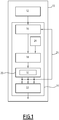
- a surveillance system 10 comprises at least one image sensor 12 and an identification device 14 of an aircraft type.
- Surveillance system 10 is configured to monitor airspace (not shown).
- the surveillance system 10 is configured to generate information relating to aircraft present inside the airspace.
- the monitoring system 10 is configured to identify the type of aircraft from among a predefined set of types of aircraft.
- the surveillance system 10 is configured to determine the type of one or more aircraft present within the airspace.
- Aircraft type is a class or category of aircraft.
- the predefined set of aircraft types includes, for example, a pressurized aircraft, a non-pressurized aircraft, a propeller or turbojet aircraft, a supersonic aircraft, a helicopter, a missile, or even a drone.
- a particular type of aircraft comprises several sub-types.
- a turbojet airplane is a narrow-body airplane or a wide-body airplane.
- the surveillance system 10 comprises several image sensors 12. As a variant, the surveillance system 10 comprises a single image sensor 12.
- the or each image sensor 12 is configured to take images and generate a series of images of the airspace.
- the image sensor 12 is a RADAR type sensor ( standing for RAdio Detection And Ranging ).
- the image sensor 12 is a sensor of the primary radar type, also called PSR (standing for Primary Surveillance Radar ) or a sensor of the secondary radar type, also called SSR (standing for Secondary Surveillance Radar ). .
- the image sensor 12 is provided with a controller (not shown) configured to control the operation of the image sensor 12.
- the controller of the image sensor 12 is configured to define the position and the size of the airspace scanned by the image sensor 12.
- the image sensor 12 is further configured to transmit, in particular via the controller, the series of images to the identification device 14.
- the identification device 14 is configured to identify the type of at least one aircraft, from the series of images transmitted by the image sensor (s) 12.
- the identification device 14 is configured to receive the series of images as input and to output the type of aircraft.
- the identification device 14 comprises a generation module 16, a processing module 18, a determination module 20 and an identification module 22.
- the identification device 14 further comprises a learning base 24 configured to store predetermined trajectory data.
- the generation module 16 is also called tracker (English tracker).
- the generation module 16 is notably configured to receive as input the series of images taken by the image sensor 12.
- the generation module 16 is configured to generate trajectory data from the series of images taken by the image sensor 12.
- the trajectory data is a first output variable of the generation module 16.
- the generation module 16 is configured to detect at least one aircraft present in the airspace, called “detected aircraft” in the remainder of the description, and to follow the evolution of the aircraft detected in space. air. From the series of images, the generation module 16 is thus configured to generate the trajectory data comprising a set of kinematic parameter (s) of the aircraft detected.
- a trajectory datum comprises a trajectory vector.
- the path vector has three components in three-dimensional space, namely a velocity, a curvature perpendicular to the velocity, and a torsion perpendicular to the velocity and curvature.
- Each kinematic parameter, generated by the generation module 16 is in particular an element chosen from the group consisting of a three-dimensional speed, a three-dimensional curvature of the trajectory of the aircraft, a three-dimensional torsion of the trajectory of the aircraft, a speed normalized in a plane, a curvature in a plane, an altitude of the aircraft, a vertical speed of the aircraft, and / or a vertical acceleration of the aircraft.
- the trajectory data only comprise three-dimensional speeds of the detected aircraft, for example standardized three-dimensional speeds. According to another example, the trajectory data only comprises three-dimensional speeds of the detected aircraft and the altitude of the detected aircraft.
- the generation module 16 is further configured to generate a radar equivalent area or RCS ( Radar Cross Section ) from the images taken by the image sensor 12.
- the radar equivalent area is a value. one-dimensional relating to the shape of the detected aircraft and to the nature of the constituent materials of the detected aircraft. Thus, the radar equivalent surface makes it possible to supply information relating to the type of the aircraft detected.
- the radar equivalent area is a second output variable of the generation 16 module.
- the generation module 16 is configured to receive as input a data item relating to the type of aircraft (described below) from among the predefined set of types of aircraft, in particular coming from the determination module 20, as represented. on the figure 1 via the link 25.
- the generation module 16 is configured to choose, as a function of the data relating to the type of aircraft, a specific algorithm for the generation of the trajectory data. For example, when the data relating to the type of aircraft indicates that the detected aircraft is a fighter aircraft, the generation module 16 is configured to choose an algorithm capable of following sudden movements of a fighter aircraft for the generation trajectory data.
- the processing module 18 is in particular configured to preprocess the trajectory data with a view to transmitting processed trajectory data to the determination module 20.
- the processing module 18 is for example configured to receive as input the trajectory data from the generation module 16. In addition or as a variant, the processing module 18 is configured to receive predefined trajectory data from the learning base 24. The processing module 18 is preferably configured to output at least one processed signal comprising the processed trajectory data to the determination module 20.
- the processing module 18 is configured to send five processed signals.
- the or each signal processed is in particular a time series of trajectory data.
- the processing module 18 is in particular configured to sub-sample the trajectory data and to supply the processed signal comprising sub-sampled trajectory data.
- the processing module 18 is configured to define a plurality of time windows of different durations, and to sample the trajectory data on each time window on a predefined number of samples N.
- the processing module 18 is thus configured to provide development information on the time of the trajectory data, in particular a development of the trajectory data over different durations.
- the processing module 18 is for example configured to filter the trajectory data according to predefined frequencies, for example via a bandpass filter. According to one example, the processed signal thus comprises filtered trajectory data.
- the processing module 18 comprises a reception unit 26 configured to receive the trajectory data.
- the processing module 18 further comprises a sampling unit 28 configured to receive the trajectory data from the reception unit 26, to sub-sample the trajectory data, and to provide the processed signal comprising trajectory data under -sampled.
- the processing module 18 includes a filter unit 30 configured to receive the trajectory data from the receive unit 26, to filter the trajectory data according to predefined frequencies, and to provide the processed signal comprising data from the trajectory. filtered trajectory.
- the processing module 18 is arranged upstream of the determination module 20.
- the processing module 18 is thus notably configured to output the processed signal comprising the trajectory data processed to the determination module 20.
- the determination module 20 is also called a classifier (or classifier in English).
- the determination module 20 comprises a neural network 32, also called an artificial neural network.
- the determination module 20 is configured to determine, via the neural network 32, at least one piece of data relating to the type of aircraft from among the predefined set of types of aircraft.
- the data item relating to the type of aircraft comprises for example one or more probabilities of belonging to each of the types of the predefined set of types of aircraft.
- the determination module 20 is configured to determine the probability of membership as follows.
- the predefined set of aircraft types includes, for example, a turbojet aircraft, a drone and a helicopter.
- the determination module 20 is configured to receive at least the first variable as input, and to provide membership probabilities as output.
- the determination module 20 is configured to provide a probability of belonging of the detected aircraft of 90% to the drone type, a probability of belonging to 5% to the turbojet airplane type and a probability of belonging to 5. % helicopter type.
- the sum of the membership probabilities determined by the determination module 20 is equal to 100%, that is to say to 1.
- the identification module 22 is configured to identify the type of aircraft as a function of the data relating to the type of aircraft.
- the module identification 22 is configured to receive the probabilities of belonging to each of the types of the predefined set of types of aircraft, and to identify the type of aircraft exhibiting the highest probability among the determined probabilities of membership. In the above example, the identification module 22 is then configured to identify that the detected aircraft is a drone.
- the generation module 16, the processing module 18, the determination module 20 and the identification module 22 are each produced in the form of software that can be executed by one or more processors (not shown).
- a memory (not shown) of the identification device 16 is then able to store generation software configured to generate at least the trajectory data of the aircraft detected, processing software configured to preprocess the trajectory data, software determination configured to determine the data relating to the type of aircraft, and identification software configured to identify the type of aircraft as a function of the data relating to the type of aircraft.
- the processor or processors are then able to execute the generation software, the processing software, the determination software and the identification software.
- the generation module 16, the processing module 18, the determination module 20 and the identification module 22 are each made in the form of a programmable logic component, such as an FPGA (from English Field Programmable Gate Array ), or in the form of a dedicated integrated circuit, such as an ASIC (standing for Applications Specific Integrated Circuit ).
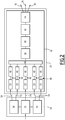
- the neural network 32 comprises in particular a plurality of artificial neurons organized in successive layers, namely an input layer, shown in the figure. figure 2 by arrows 34, corresponding to the input variable (s), an output layer, represented on the figure 2 by arrows 36, corresponding to the output variable or variables, and possible intermediate layers also called hidden layers and arranged between the input layer 34 and the output layer 36, as shown in Figure figure 2 .
- the neural network 32 is configured to receive at least the first input variable and to provide at least the data relating to the type of aircraft as output.
- the neural network 32 is also configured to receive the second input variable.
- the neural network 32 is in particular a convolutional neural network.
- the neural network 32 comprises for example at least one convolutional layer 38 comprising at least one convolutional network and at least one storage layer 40.
- the convolutional network (s) have at least one linear filter, the parameters of which can be learned.
- Convolutional networks are configured to extract characteristics from the input variables, such as an evolution of the first variable over time.
- the storage layer or layers 40 comprise for example at least one recurrent neural network, such as a network of LTSM type (standing for Long-Short Term Memory ) or of GRU type ( standing for Gated Recurrent Unit ). .
- the storage layers 40 of the neural network 32 are in particular configured to compress information included in the input variable (s), in particular by removing the redundant information in the input variables.
- the storage layer or layers 40 of the neural network 32 are configured to reduce the corresponding input variable to a single value, for example by storing only the maximum value of the corresponding input variable.
- the neural network 32 comprises each storage layer 40 associated with a convolutional layer 38 preceding this storage layer 40.
- the storage layer 40 of the neural network 32 is thus configured to calculate an intensity of a characteristic of the variable d input filtered by the linear filter of the associated convolutional layer 38.
- the neural network 32 comprises at least a dense layer 42 and a functional layer 44.
- the dense layer 42 of the neural network 32 comprises a plurality of artificial neurons forming a dense network, configured to define a provisional probability of membership. of the aircraft detected at each type of aircraft from a signal received by the layers preceding the dense layer 42.
- the functional layer 44 of the neural network 32 has for example a normalized exponential function (or softmax function in English) , in particular capable of promoting the distinction between the types of aircraft, in particular by maximizing a probability associated with a type of aircraft.
- y j is thus the output variable of the neural network 32.
- the neural network 32 comprises a plurality of branches 46 parallel in each other comprising a convolutional layer 38 and a storage layer 40 associated with the convolutional layer 38 preceding this storage layer 40.
- the neural network 32 according to the embodiment of the figure 2 further comprises a concatenation unit 48 configured to combine signals from each branch 46 into a single signal.
- the neural network 32 further comprises, connected in series downstream from the concatenation unit 48, a convolutional layer 38, a storage layer 40, a dense layer 42 and a functional layer 44.
- the neural network 30 comprises, in series, a convolutional layer 38, a storage layer 40, a convolutional layer 38, a storage layer 40, a dense layer 42 and a functional layer 44.
- the learning of the neural network 32 is preferably supervised. It then uses, for example, an algorithm for backpropagating the error gradient, such as an algorithm based on the minimization of an error criterion by using a so-called gradient descent method.
- an algorithm for backpropagating the error gradient such as an algorithm based on the minimization of an error criterion by using a so-called gradient descent method.
- the supervised learning of the neural network 32 is carried out in particular by providing it as input variable (s) at least the trajectory data of the aircraft and as output variable (s) the data relating to the type of aircraft. aircraft corresponding to the aircraft whose trajectory data are supplied as input.
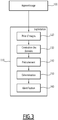
- the method comprises in particular a learning phase 100 and an operating phase 110.
- the identification device 14, and in particular the neural network 32 is trained, which is done in particular by providing it with at least the trajectory data as input variable (s). of the aircraft and as output variable (s) the data or data relating to the type of aircraft corresponding to the aircraft, the trajectory data of which are supplied as input.
- the neural network 32 receives, optionally via the processing module 18, the predetermined trajectory data from the base learning, and further receives the data or data relating to the corresponding type.
- the learning phase 100 is implemented at least once before the implementation of the operating phase 110.
- the identification device 14 identifies the type of aircraft on the basis of the series of images taken by the image sensor 12.
- the or each image sensor 12 takes images and generates the series of images of the airspace.
- the controller (not shown) of the image sensor 12 controls the operation of the image sensor 12.
- the controller defines the position and the size of the airspace scanned by the image sensor.
- the image sensor 12 transmits, in particular via the controller, the series of images to the identification device 14.
- the identification device 14 then identifies the type of at least one aircraft, in particular on the basis of the series of images received as input.
- the generation module 16 of the identification device 14 generates the trajectory data from the series of images taken by the image sensor 12
- the generation module 16 detects at least one aircraft present in the airspace, and follows the evolution of the aircraft detected in the airspace.
- the generation module 16 also generates the radar equivalent area of the aircraft detected from the images taken by the image sensor 12.
- the processing module 18 preprocesses the trajectory data in view of a transmission of the trajectory data to the determination module 20.
- the processing module 18 receives as input the trajectory data of the generation module 16, and outputs at least the processed signal comprising the processed trajectory data intended for the determination module 20.
- the processing module 18 transmits five processed signals, and the or each signal processed is in particular a time series of the trajectory data.
- the processing module 18 sub-samples the trajectory data and supplies the processed signal comprising sub-sampled trajectory data.
- the processing module 18 defines a plurality of time windows of different durations, and samples the trajectory data over each time window over a predefined number of samples N.
- the processing module 18 thus provides development information on the time of the trajectory data, in particular a development of the trajectory data over different durations.
- the processing module 18 further filters the trajectory data according to predefined frequencies, for example by a bandpass filter.
- the processed signal thus comprises filtered trajectory data.
- the determination module 20 determines, via the neural network 32, at least the data item relating to the type of aircraft from among the predefined set of types of aircraft. For example, the determination module 20 determines the probability of membership as follows.
- the predefined set of aircraft types includes, for example, a turbojet aircraft, a drone and a helicopter.
- the determination module 20 receives at least the first variable as input, and provides membership probabilities as output. For example, the determination module 20 provides a probability of belonging of the detected aircraft of 90% to the drone type, a probability of belonging to 5% to the type of turbojet airplane and a probability of belonging to 5% to the type. helicopter.
- the identification module 22 identifies the type of aircraft as a function of the data relating to the type of aircraft. In particular, the identification module 22 receives the probabilities of belonging to each of the types of the predefined set of types of aircraft, and identifies the type of aircraft exhibiting the highest probability among the probabilities of belonging. In the above example, the identification module 22 identifies that the detected aircraft is a drone.
- the identification device 14 and the identification method according to the invention make it possible to identify the type of aircraft with better precision. Thanks to the neural network 32, the identification device 14 is also easily adaptable, for example for particular types of aircraft.
Landscapes
- Engineering & Computer Science (AREA)
- Remote Sensing (AREA)
- Radar, Positioning & Navigation (AREA)
- Physics & Mathematics (AREA)
- General Physics & Mathematics (AREA)
- Theoretical Computer Science (AREA)
- Computer Networks & Wireless Communication (AREA)
- Evolutionary Computation (AREA)
- Artificial Intelligence (AREA)
- Computing Systems (AREA)
- Software Systems (AREA)
- Molecular Biology (AREA)
- Data Mining & Analysis (AREA)
- General Engineering & Computer Science (AREA)
- Computational Linguistics (AREA)
- Mathematical Physics (AREA)
- General Health & Medical Sciences (AREA)
- Biophysics (AREA)
- Health & Medical Sciences (AREA)
- Biomedical Technology (AREA)
- Life Sciences & Earth Sciences (AREA)
- Aviation & Aerospace Engineering (AREA)
- Multimedia (AREA)
- Radar Systems Or Details Thereof (AREA)
- Image Analysis (AREA)
Applications Claiming Priority (1)
| Application Number | Priority Date | Filing Date | Title |
|---|---|---|---|
| FR1903932A FR3095047B1 (fr) | 2019-04-12 | 2019-04-12 | Dispositif d'identification d'un type d'aeronef, procede d'identification et programme d'ordinateur associes |
Publications (2)
| Publication Number | Publication Date |
|---|---|
| EP3722830A1 true EP3722830A1 (de) | 2020-10-14 |
| EP3722830B1 EP3722830B1 (de) | 2023-11-29 |
Family
ID=68138232
Family Applications (1)
| Application Number | Title | Priority Date | Filing Date |
|---|---|---|---|
| EP20169176.3A Active EP3722830B1 (de) | 2019-04-12 | 2020-04-10 | Identifizierungsvorrichtung eines luftfahrzeugtyps, entsprechendes identifizierungsverfahren und computerprogramm |
Country Status (3)
| Country | Link |
|---|---|
| EP (1) | EP3722830B1 (de) |
| FI (1) | FI3722830T3 (de) |
| FR (1) | FR3095047B1 (de) |
Cited By (3)
| Publication number | Priority date | Publication date | Assignee | Title |
|---|---|---|---|---|
| CN112882011A (zh) * | 2021-01-12 | 2021-06-01 | 西安电子科技大学 | 基于频域相关性特征的雷达载频变化稳健目标识别方法 |
| EP4239575A1 (de) * | 2022-03-01 | 2023-09-06 | Thales | Vorrichtung zur verfolgung der entwicklung mindestens eines flugzeugs in einem luftraum, überwachungssystem und verfolgungsverfahren dafür |
| CN120831630A (zh) * | 2025-09-18 | 2025-10-24 | 湖南坤雷科技有限公司 | 基于序列观测的无人机定位方法、装置、设备及介质 |
-
2019
- 2019-04-12 FR FR1903932A patent/FR3095047B1/fr not_active Expired - Fee Related
-
2020
- 2020-04-10 FI FIEP20169176.3T patent/FI3722830T3/fi active
- 2020-04-10 EP EP20169176.3A patent/EP3722830B1/de active Active
Non-Patent Citations (3)
| Title |
|---|
| MOHAJERIN NIMA ET AL: "Feature extraction and radar track classification for detecting UAVs in civillian airspace", 2014 IEEE RADAR CONFERENCE, IEEE, 19 May 2014 (2014-05-19), pages 674 - 679, XP032628051, DOI: 10.1109/RADAR.2014.6875676 * |
| SCHUMANN ARNE ET AL: "Deep cross-domain flying object classification for robust UAV detection", 2017 14TH IEEE INTERNATIONAL CONFERENCE ON ADVANCED VIDEO AND SIGNAL BASED SURVEILLANCE (AVSS), IEEE, 29 August 2017 (2017-08-29), pages 1 - 6, XP033233410, DOI: 10.1109/AVSS.2017.8078558 * |
| THAI VAN-PHAT ET AL: "Detection, Tracking and Classification of Aircraft and Drones in Digital Towers Using Machine Learning on Motion Patterns", 2019 INTEGRATED COMMUNICATIONS, NAVIGATION AND SURVEILLANCE CONFERENCE (ICNS), IEEE, 9 April 2019 (2019-04-09), pages 1 - 8, XP033560928, DOI: 10.1109/ICNSURV.2019.8735240 * |
Cited By (4)
| Publication number | Priority date | Publication date | Assignee | Title |
|---|---|---|---|---|
| CN112882011A (zh) * | 2021-01-12 | 2021-06-01 | 西安电子科技大学 | 基于频域相关性特征的雷达载频变化稳健目标识别方法 |
| EP4239575A1 (de) * | 2022-03-01 | 2023-09-06 | Thales | Vorrichtung zur verfolgung der entwicklung mindestens eines flugzeugs in einem luftraum, überwachungssystem und verfolgungsverfahren dafür |
| FR3133255A1 (fr) * | 2022-03-01 | 2023-09-08 | Thales | Dispositif de suivi d'une évolution d'au moins un aéronef dans un espace aérien, système de surveillance et procédé de suivi associés |
| CN120831630A (zh) * | 2025-09-18 | 2025-10-24 | 湖南坤雷科技有限公司 | 基于序列观测的无人机定位方法、装置、设备及介质 |
Also Published As
| Publication number | Publication date |
|---|---|
| EP3722830B1 (de) | 2023-11-29 |
| FI3722830T3 (fi) | 2024-02-05 |
| FR3095047A1 (fr) | 2020-10-16 |
| FR3095047B1 (fr) | 2021-04-23 |
Similar Documents
| Publication | Publication Date | Title |
|---|---|---|
| EP3722830B1 (de) | Identifizierungsvorrichtung eines luftfahrzeugtyps, entsprechendes identifizierungsverfahren und computerprogramm | |
| EP1335258B1 (de) | Verfahren zum Leiten eines Flugzeuges während der Endphase der Landung und dazugehörige Vorrichtung | |
| CN115761421A (zh) | 一种多源信息融合低慢小目标探测方法及无人空防系统 | |
| AU2018288720A1 (en) | Rare instance classifiers | |
| EP3321861A1 (de) | Eine drone mit einer vorrichtung zur bestimmung der representation eines zielobjekts unter verwendung von neuronalen netzen, ein zugehöriges verfahren und ein computerprogramm | |
| FR3110999A1 (fr) | Procédé et système de détection et d’évitement d’obstacles à plusieurs espaces de détection pour aéronef | |
| CA3047249A1 (fr) | Plate-forme d'entrainement et/ou d'assistance au controle aerien via un systeme electronique de controle du trafic aerien, procede associe | |
| EP4027269A1 (de) | Verfahren zur konstruktion und zum antrieb eines detektors von anomalien in einem zeitsignal, entsprechende vorrichtungen und verfahren | |
| EP3709049B1 (de) | Radardaten-verarbeitungssystem und entsprechendes verfahren zur geräuschdämpfung | |
| WO2024218118A1 (fr) | Procédé et dispositif électronique d'aide au pilotage d'un aéronef via la surveillance d'au moins un critère opérationnel, programme d'ordinateur et aéronef associés | |
| EP3923104B1 (de) | Verfahren und system zur überwachung eines beschädigungsgrades von mindestens einem flugzeugteil sowie entsprechendes flugzeug | |
| FR2954540A1 (fr) | Procede de classification d'objets dans un systeme de veille par imagerie. | |
| WO2020260649A1 (fr) | Dispositif radar pour la détection d'un comportement de référence de cibles pistées; procédé et produit programme d'ordinateur associés | |
| FR3078803A1 (fr) | Procédé d’application d’un algorithme de suivi et moyens pour sa mise en œuvre | |
| FR3149687A1 (fr) | Procédé de détection d’obstacles mis en œuvre par un système de détection embarqué sur un aéronef et système de détection d’obstacles associé | |
| JP2025500905A (ja) | 角度を考慮したオブジェクトの分類 | |
| EP4579524B1 (de) | Verfahren zur erkennung von spuranomalien und zugehörige vorrichtung | |
| EP4425211B1 (de) | System zur klassifizierung von radarspuren in falsche juckenspuren und anderen spuren, die sich auf interessierende ziele wie flugzeuge oder flugkörper sind | |
| CN117387636B (zh) | 一种空间目标轨道确定方法及装置 | |
| EP4239575B1 (de) | Vorrichtung zur verfolgung der entwicklung mindestens eines flugzeugs in einem luftraum, überwachungssystem und verfolgungsverfahren dafür | |
| US20250139811A1 (en) | Method of controlling the observation of a space using a tracking system and associated device | |
| EP4556939A1 (de) | Verbessertes radarsystem, konfigurationsverfahren und computerprogrammprodukte dafür | |
| Ryall | Detecting Satellites with Object Detection: Challenges of Implementing Deep Learning Techniques for Space-based Images | |
| FR3161287A1 (fr) | Procédé et dispositif de classification pour déterminer une classe pour au moins un objet détecté par un radar. | |
| FR2983971A1 (fr) | Procede et dispositif de surveillance automatique sur un aeronef d'un identifiant d'une station sol d'un systeme de radionavigation. |
Legal Events
| Date | Code | Title | Description |
|---|---|---|---|
| PUAI | Public reference made under article 153(3) epc to a published international application that has entered the european phase |
Free format text: ORIGINAL CODE: 0009012 |
|
| STAA | Information on the status of an ep patent application or granted ep patent |
Free format text: STATUS: THE APPLICATION HAS BEEN PUBLISHED |
|
| AK | Designated contracting states |
Kind code of ref document: A1 Designated state(s): AL AT BE BG CH CY CZ DE DK EE ES FI FR GB GR HR HU IE IS IT LI LT LU LV MC MK MT NL NO PL PT RO RS SE SI SK SM TR |
|
| AX | Request for extension of the european patent |
Extension state: BA ME |
|
| STAA | Information on the status of an ep patent application or granted ep patent |
Free format text: STATUS: REQUEST FOR EXAMINATION WAS MADE |
|
| 17P | Request for examination filed |
Effective date: 20210322 |
|
| RBV | Designated contracting states (corrected) |
Designated state(s): AL AT BE BG CH CY CZ DE DK EE ES FI FR GB GR HR HU IE IS IT LI LT LU LV MC MK MT NL NO PL PT RO RS SE SI SK SM TR |
|
| STAA | Information on the status of an ep patent application or granted ep patent |
Free format text: STATUS: EXAMINATION IS IN PROGRESS |
|
| 17Q | First examination report despatched |
Effective date: 20220630 |
|
| GRAP | Despatch of communication of intention to grant a patent |
Free format text: ORIGINAL CODE: EPIDOSNIGR1 |
|
| STAA | Information on the status of an ep patent application or granted ep patent |
Free format text: STATUS: GRANT OF PATENT IS INTENDED |
|
| RIC1 | Information provided on ipc code assigned before grant |
Ipc: G01S 7/40 20060101ALN20230706BHEP Ipc: G01S 13/90 20060101ALN20230706BHEP Ipc: G01S 13/86 20060101ALI20230706BHEP Ipc: G01S 13/87 20060101ALI20230706BHEP Ipc: G01S 13/72 20060101ALI20230706BHEP Ipc: G01S 7/41 20060101ALI20230706BHEP Ipc: G08G 5/02 20060101ALI20230706BHEP Ipc: G08G 5/00 20060101ALI20230706BHEP Ipc: G06N 3/08 20060101ALI20230706BHEP Ipc: G01S 13/91 20060101ALI20230706BHEP Ipc: G01S 13/42 20060101AFI20230706BHEP |
|
| INTG | Intention to grant announced |
Effective date: 20230720 |
|
| GRAS | Grant fee paid |
Free format text: ORIGINAL CODE: EPIDOSNIGR3 |
|
| GRAA | (expected) grant |
Free format text: ORIGINAL CODE: 0009210 |
|
| STAA | Information on the status of an ep patent application or granted ep patent |
Free format text: STATUS: THE PATENT HAS BEEN GRANTED |
|
| AK | Designated contracting states |
Kind code of ref document: B1 Designated state(s): AL AT BE BG CH CY CZ DE DK EE ES FI FR GB GR HR HU IE IS IT LI LT LU LV MC MK MT NL NO PL PT RO RS SE SI SK SM TR |
|
| REG | Reference to a national code |
Ref country code: GB Ref legal event code: FG4D Free format text: NOT ENGLISH |
|
| REG | Reference to a national code |
Ref country code: CH Ref legal event code: EP |
|
| REG | Reference to a national code |
Ref country code: DE Ref legal event code: R096 Ref document number: 602020021728 Country of ref document: DE |
|
| REG | Reference to a national code |
Ref country code: IE Ref legal event code: FG4D Free format text: LANGUAGE OF EP DOCUMENT: FRENCH |
|
| P01 | Opt-out of the competence of the unified patent court (upc) registered |
Effective date: 20231223 |
|
| REG | Reference to a national code |
Ref country code: FI Ref legal event code: FGE |
|
| REG | Reference to a national code |
Ref country code: NL Ref legal event code: FP |
|
| REG | Reference to a national code |
Ref country code: NO Ref legal event code: T2 Effective date: 20231129 |
|
| REG | Reference to a national code |
Ref country code: SE Ref legal event code: TRGR |
|
| REG | Reference to a national code |
Ref country code: LT Ref legal event code: MG9D |
|
| PG25 | Lapsed in a contracting state [announced via postgrant information from national office to epo] |
Ref country code: GR Free format text: LAPSE BECAUSE OF FAILURE TO SUBMIT A TRANSLATION OF THE DESCRIPTION OR TO PAY THE FEE WITHIN THE PRESCRIBED TIME-LIMIT Effective date: 20240301 |
|
| PG25 | Lapsed in a contracting state [announced via postgrant information from national office to epo] |
Ref country code: IS Free format text: LAPSE BECAUSE OF FAILURE TO SUBMIT A TRANSLATION OF THE DESCRIPTION OR TO PAY THE FEE WITHIN THE PRESCRIBED TIME-LIMIT Effective date: 20240329 |
|
| PG25 | Lapsed in a contracting state [announced via postgrant information from national office to epo] |
Ref country code: LT Free format text: LAPSE BECAUSE OF FAILURE TO SUBMIT A TRANSLATION OF THE DESCRIPTION OR TO PAY THE FEE WITHIN THE PRESCRIBED TIME-LIMIT Effective date: 20231129 |
|
| PG25 | Lapsed in a contracting state [announced via postgrant information from national office to epo] |
Ref country code: ES Free format text: LAPSE BECAUSE OF FAILURE TO SUBMIT A TRANSLATION OF THE DESCRIPTION OR TO PAY THE FEE WITHIN THE PRESCRIBED TIME-LIMIT Effective date: 20231129 |
|
| PG25 | Lapsed in a contracting state [announced via postgrant information from national office to epo] |
Ref country code: LT Free format text: LAPSE BECAUSE OF FAILURE TO SUBMIT A TRANSLATION OF THE DESCRIPTION OR TO PAY THE FEE WITHIN THE PRESCRIBED TIME-LIMIT Effective date: 20231129 Ref country code: IS Free format text: LAPSE BECAUSE OF FAILURE TO SUBMIT A TRANSLATION OF THE DESCRIPTION OR TO PAY THE FEE WITHIN THE PRESCRIBED TIME-LIMIT Effective date: 20240329 Ref country code: GR Free format text: LAPSE BECAUSE OF FAILURE TO SUBMIT A TRANSLATION OF THE DESCRIPTION OR TO PAY THE FEE WITHIN THE PRESCRIBED TIME-LIMIT Effective date: 20240301 Ref country code: ES Free format text: LAPSE BECAUSE OF FAILURE TO SUBMIT A TRANSLATION OF THE DESCRIPTION OR TO PAY THE FEE WITHIN THE PRESCRIBED TIME-LIMIT Effective date: 20231129 Ref country code: BG Free format text: LAPSE BECAUSE OF FAILURE TO SUBMIT A TRANSLATION OF THE DESCRIPTION OR TO PAY THE FEE WITHIN THE PRESCRIBED TIME-LIMIT Effective date: 20240229 |
|
| REG | Reference to a national code |
Ref country code: AT Ref legal event code: MK05 Ref document number: 1636686 Country of ref document: AT Kind code of ref document: T Effective date: 20231129 |
|
| PG25 | Lapsed in a contracting state [announced via postgrant information from national office to epo] |
Ref country code: RS Free format text: LAPSE BECAUSE OF FAILURE TO SUBMIT A TRANSLATION OF THE DESCRIPTION OR TO PAY THE FEE WITHIN THE PRESCRIBED TIME-LIMIT Effective date: 20231129 Ref country code: PL Free format text: LAPSE BECAUSE OF FAILURE TO SUBMIT A TRANSLATION OF THE DESCRIPTION OR TO PAY THE FEE WITHIN THE PRESCRIBED TIME-LIMIT Effective date: 20231129 Ref country code: LV Free format text: LAPSE BECAUSE OF FAILURE TO SUBMIT A TRANSLATION OF THE DESCRIPTION OR TO PAY THE FEE WITHIN THE PRESCRIBED TIME-LIMIT Effective date: 20231129 Ref country code: HR Free format text: LAPSE BECAUSE OF FAILURE TO SUBMIT A TRANSLATION OF THE DESCRIPTION OR TO PAY THE FEE WITHIN THE PRESCRIBED TIME-LIMIT Effective date: 20231129 |
|
| PG25 | Lapsed in a contracting state [announced via postgrant information from national office to epo] |
Ref country code: DK Free format text: LAPSE BECAUSE OF FAILURE TO SUBMIT A TRANSLATION OF THE DESCRIPTION OR TO PAY THE FEE WITHIN THE PRESCRIBED TIME-LIMIT Effective date: 20231129 |
|
| PG25 | Lapsed in a contracting state [announced via postgrant information from national office to epo] |
Ref country code: CZ Free format text: LAPSE BECAUSE OF FAILURE TO SUBMIT A TRANSLATION OF THE DESCRIPTION OR TO PAY THE FEE WITHIN THE PRESCRIBED TIME-LIMIT Effective date: 20231129 Ref country code: AT Free format text: LAPSE BECAUSE OF FAILURE TO SUBMIT A TRANSLATION OF THE DESCRIPTION OR TO PAY THE FEE WITHIN THE PRESCRIBED TIME-LIMIT Effective date: 20231129 |
|
| PG25 | Lapsed in a contracting state [announced via postgrant information from national office to epo] |
Ref country code: SK Free format text: LAPSE BECAUSE OF FAILURE TO SUBMIT A TRANSLATION OF THE DESCRIPTION OR TO PAY THE FEE WITHIN THE PRESCRIBED TIME-LIMIT Effective date: 20231129 |
|
| PG25 | Lapsed in a contracting state [announced via postgrant information from national office to epo] |
Ref country code: SM Free format text: LAPSE BECAUSE OF FAILURE TO SUBMIT A TRANSLATION OF THE DESCRIPTION OR TO PAY THE FEE WITHIN THE PRESCRIBED TIME-LIMIT Effective date: 20231129 Ref country code: SK Free format text: LAPSE BECAUSE OF FAILURE TO SUBMIT A TRANSLATION OF THE DESCRIPTION OR TO PAY THE FEE WITHIN THE PRESCRIBED TIME-LIMIT Effective date: 20231129 Ref country code: RO Free format text: LAPSE BECAUSE OF FAILURE TO SUBMIT A TRANSLATION OF THE DESCRIPTION OR TO PAY THE FEE WITHIN THE PRESCRIBED TIME-LIMIT Effective date: 20231129 Ref country code: EE Free format text: LAPSE BECAUSE OF FAILURE TO SUBMIT A TRANSLATION OF THE DESCRIPTION OR TO PAY THE FEE WITHIN THE PRESCRIBED TIME-LIMIT Effective date: 20231129 Ref country code: DK Free format text: LAPSE BECAUSE OF FAILURE TO SUBMIT A TRANSLATION OF THE DESCRIPTION OR TO PAY THE FEE WITHIN THE PRESCRIBED TIME-LIMIT Effective date: 20231129 Ref country code: CZ Free format text: LAPSE BECAUSE OF FAILURE TO SUBMIT A TRANSLATION OF THE DESCRIPTION OR TO PAY THE FEE WITHIN THE PRESCRIBED TIME-LIMIT Effective date: 20231129 Ref country code: AT Free format text: LAPSE BECAUSE OF FAILURE TO SUBMIT A TRANSLATION OF THE DESCRIPTION OR TO PAY THE FEE WITHIN THE PRESCRIBED TIME-LIMIT Effective date: 20231129 |
|
| PG25 | Lapsed in a contracting state [announced via postgrant information from national office to epo] |
Ref country code: PT Free format text: LAPSE BECAUSE OF FAILURE TO SUBMIT A TRANSLATION OF THE DESCRIPTION OR TO PAY THE FEE WITHIN THE PRESCRIBED TIME-LIMIT Effective date: 20240401 |
|
| PG25 | Lapsed in a contracting state [announced via postgrant information from national office to epo] |
Ref country code: PT Free format text: LAPSE BECAUSE OF FAILURE TO SUBMIT A TRANSLATION OF THE DESCRIPTION OR TO PAY THE FEE WITHIN THE PRESCRIBED TIME-LIMIT Effective date: 20240401 |
|
| REG | Reference to a national code |
Ref country code: DE Ref legal event code: R097 Ref document number: 602020021728 Country of ref document: DE |
|
| PLBE | No opposition filed within time limit |
Free format text: ORIGINAL CODE: 0009261 |
|
| STAA | Information on the status of an ep patent application or granted ep patent |
Free format text: STATUS: NO OPPOSITION FILED WITHIN TIME LIMIT |
|
| PG25 | Lapsed in a contracting state [announced via postgrant information from national office to epo] |
Ref country code: SI Free format text: LAPSE BECAUSE OF FAILURE TO SUBMIT A TRANSLATION OF THE DESCRIPTION OR TO PAY THE FEE WITHIN THE PRESCRIBED TIME-LIMIT Effective date: 20231129 |
|
| PG25 | Lapsed in a contracting state [announced via postgrant information from national office to epo] |
Ref country code: SI Free format text: LAPSE BECAUSE OF FAILURE TO SUBMIT A TRANSLATION OF THE DESCRIPTION OR TO PAY THE FEE WITHIN THE PRESCRIBED TIME-LIMIT Effective date: 20231129 |
|
| 26N | No opposition filed |
Effective date: 20240830 |
|
| PG25 | Lapsed in a contracting state [announced via postgrant information from national office to epo] |
Ref country code: MC Free format text: LAPSE BECAUSE OF FAILURE TO SUBMIT A TRANSLATION OF THE DESCRIPTION OR TO PAY THE FEE WITHIN THE PRESCRIBED TIME-LIMIT Effective date: 20231129 |
|
| PG25 | Lapsed in a contracting state [announced via postgrant information from national office to epo] |
Ref country code: MC Free format text: LAPSE BECAUSE OF FAILURE TO SUBMIT A TRANSLATION OF THE DESCRIPTION OR TO PAY THE FEE WITHIN THE PRESCRIBED TIME-LIMIT Effective date: 20231129 |
|
| PG25 | Lapsed in a contracting state [announced via postgrant information from national office to epo] |
Ref country code: LU Free format text: LAPSE BECAUSE OF NON-PAYMENT OF DUE FEES Effective date: 20240410 |
|
| REG | Reference to a national code |
Ref country code: BE Ref legal event code: MM Effective date: 20240430 |
|
| PG25 | Lapsed in a contracting state [announced via postgrant information from national office to epo] |
Ref country code: LU Free format text: LAPSE BECAUSE OF NON-PAYMENT OF DUE FEES Effective date: 20240410 |
|
| PG25 | Lapsed in a contracting state [announced via postgrant information from national office to epo] |
Ref country code: BE Free format text: LAPSE BECAUSE OF NON-PAYMENT OF DUE FEES Effective date: 20240430 |
|
| PG25 | Lapsed in a contracting state [announced via postgrant information from national office to epo] |
Ref country code: BE Free format text: LAPSE BECAUSE OF NON-PAYMENT OF DUE FEES Effective date: 20240430 |
|
| PG25 | Lapsed in a contracting state [announced via postgrant information from national office to epo] |
Ref country code: IE Free format text: LAPSE BECAUSE OF NON-PAYMENT OF DUE FEES Effective date: 20240410 |
|
| PGFP | Annual fee paid to national office [announced via postgrant information from national office to epo] |
Ref country code: DE Payment date: 20250411 Year of fee payment: 6 |
|
| PGFP | Annual fee paid to national office [announced via postgrant information from national office to epo] |
Ref country code: GB Payment date: 20250417 Year of fee payment: 6 |
|
| PGFP | Annual fee paid to national office [announced via postgrant information from national office to epo] |
Ref country code: IT Payment date: 20250409 Year of fee payment: 6 |
|
| PGFP | Annual fee paid to national office [announced via postgrant information from national office to epo] |
Ref country code: FR Payment date: 20250429 Year of fee payment: 6 |
|
| PGFP | Annual fee paid to national office [announced via postgrant information from national office to epo] |
Ref country code: CH Payment date: 20250501 Year of fee payment: 6 |
|
| PGFP | Annual fee paid to national office [announced via postgrant information from national office to epo] |
Ref country code: SE Payment date: 20250422 Year of fee payment: 6 |
|
| PG25 | Lapsed in a contracting state [announced via postgrant information from national office to epo] |
Ref country code: CY Free format text: LAPSE BECAUSE OF FAILURE TO SUBMIT A TRANSLATION OF THE DESCRIPTION OR TO PAY THE FEE WITHIN THE PRESCRIBED TIME-LIMIT; INVALID AB INITIO Effective date: 20200410 |
|
| PG25 | Lapsed in a contracting state [announced via postgrant information from national office to epo] |
Ref country code: HU Free format text: LAPSE BECAUSE OF FAILURE TO SUBMIT A TRANSLATION OF THE DESCRIPTION OR TO PAY THE FEE WITHIN THE PRESCRIBED TIME-LIMIT; INVALID AB INITIO Effective date: 20200410 |
|
| REG | Reference to a national code |
Ref country code: CH Ref legal event code: R18 Free format text: ST27 STATUS EVENT CODE: U-0-0-R10-R18 (AS PROVIDED BY THE NATIONAL OFFICE) Effective date: 20260106 |
|
| PGFP | Annual fee paid to national office [announced via postgrant information from national office to epo] |
Ref country code: NO Payment date: 20260330 Year of fee payment: 7 |
|
| PGFP | Annual fee paid to national office [announced via postgrant information from national office to epo] |
Ref country code: FI Payment date: 20260324 Year of fee payment: 7 |
|
| PGFP | Annual fee paid to national office [announced via postgrant information from national office to epo] |
Ref country code: NL Payment date: 20260326 Year of fee payment: 7 |