EP3723404B1 - Procédé, dispositif et système de traitement de porteuse sans licence - Google Patents
Procédé, dispositif et système de traitement de porteuse sans licence Download PDFInfo
- Publication number
- EP3723404B1 EP3723404B1 EP17935523.5A EP17935523A EP3723404B1 EP 3723404 B1 EP3723404 B1 EP 3723404B1 EP 17935523 A EP17935523 A EP 17935523A EP 3723404 B1 EP3723404 B1 EP 3723404B1
- Authority
- EP
- European Patent Office
- Prior art keywords
- convergence node
- frequency
- secondary cell
- cell
- bbu
- Prior art date
- Legal status (The legal status is an assumption and is not a legal conclusion. Google has not performed a legal analysis and makes no representation as to the accuracy of the status listed.)
- Active
Links
Images



Classifications
-
- H—ELECTRICITY
- H04—ELECTRIC COMMUNICATION TECHNIQUE
- H04W—WIRELESS COMMUNICATION NETWORKS
- H04W16/00—Network planning, e.g. coverage or traffic planning tools; Network deployment, e.g. resource partitioning or cells structures
- H04W16/14—Spectrum sharing arrangements between different networks
-
- H—ELECTRICITY
- H04—ELECTRIC COMMUNICATION TECHNIQUE
- H04B—TRANSMISSION
- H04B17/00—Monitoring; Testing
- H04B17/30—Monitoring; Testing of propagation channels
- H04B17/309—Measuring or estimating channel quality parameters
- H04B17/336—Signal-to-interference ratio [SIR] or carrier-to-interference ratio [CIR]
-
- H—ELECTRICITY
- H04—ELECTRIC COMMUNICATION TECHNIQUE
- H04W—WIRELESS COMMUNICATION NETWORKS
- H04W24/00—Supervisory, monitoring or testing arrangements
- H04W24/02—Arrangements for optimising operational condition
-
- H—ELECTRICITY
- H04—ELECTRIC COMMUNICATION TECHNIQUE
- H04W—WIRELESS COMMUNICATION NETWORKS
- H04W24/00—Supervisory, monitoring or testing arrangements
- H04W24/10—Scheduling measurement reports ; Arrangements for measurement reports
-
- H—ELECTRICITY
- H04—ELECTRIC COMMUNICATION TECHNIQUE
- H04W—WIRELESS COMMUNICATION NETWORKS
- H04W72/00—Local resource management
- H04W72/04—Wireless resource allocation
- H04W72/044—Wireless resource allocation based on the type of the allocated resource
- H04W72/0453—Resources in frequency domain, e.g. a carrier in FDMA
-
- H—ELECTRICITY
- H04—ELECTRIC COMMUNICATION TECHNIQUE
- H04W—WIRELESS COMMUNICATION NETWORKS
- H04W72/00—Local resource management
- H04W72/50—Allocation or scheduling criteria for wireless resources
- H04W72/54—Allocation or scheduling criteria for wireless resources based on quality criteria
- H04W72/541—Allocation or scheduling criteria for wireless resources based on quality criteria using the level of interference
-
- H—ELECTRICITY
- H04—ELECTRIC COMMUNICATION TECHNIQUE
- H04W—WIRELESS COMMUNICATION NETWORKS
- H04W88/00—Devices specially adapted for wireless communication networks, e.g. terminals, base stations or access point devices
- H04W88/08—Access point devices
- H04W88/085—Access point devices with remote components
-
- H—ELECTRICITY
- H04—ELECTRIC COMMUNICATION TECHNIQUE
- H04W—WIRELESS COMMUNICATION NETWORKS
- H04W16/00—Network planning, e.g. coverage or traffic planning tools; Network deployment, e.g. resource partitioning or cells structures
- H04W16/02—Resource partitioning among network components, e.g. reuse partitioning
- H04W16/10—Dynamic resource partitioning
Definitions
- Embodiments of this application relate to the communications field, and in particular, to an unlicensed carrier processing method, apparatus, and system.
- Lampsite is an indoor coverage solution.
- the LampSite mainly focuses on indoor coverage of mobile broadband data. Through digitalization of the indoor coverage, indoor coverage construction and maintenance costs are greatly reduced, and promotion of mobile broadband experience is facilitated.
- a mobile communications service provider begins to dispose repeaters in dead zones in which radio waves can hardly cover, for example, outdoors, inside buildings, and underground, to furthest meet a requirement of the user for a call service.
- An integrated access system implemented based on the LampSite is a dedicated distributed system architecture for supporting multiple standards and multiple frequency bands.
- the current integrated access system may implement indoor co-construction and sharing.
- a convergence node opens an interconnection interface across base band units (Base Band Unit, BBU), so that the BBU accesses the convergence node, thereby implementing co-construction and sharing performed by multiple operators by using different BBUs.
- BBU Base Band Unit
- the convergence node may be configured to manage a resource of a licensed (Licensed) carrier, and different operators may use licensed carriers allocated to the operators, so that licensed frequencies used between the operators are mutually independent.
- Licensed licensed
- US2016/337176 A1 describes configuration of a secondary cellular network node for a secondary serving cell associated with a primary serving cell in a carrier aggregation enabled communications network. It is described that the secondary cellular network node receives an indication from a primary cellular network node associated with the primary serving cell to start scanning an unlicensed frequency band for deployment of the secondary serving cell. It is described that the secondary cellular network node scans at least one unlicensed frequency band to determine whether or not interference from transmitting interferers is present in the at least one unlicensed frequency band.
- the secondary cellular network node determines, based on the scanning, at least one frequency interval of the at least one unlicensed frequency band substantially free from the transmitting interferers, and that the secondary cellular network node transmits first configuration information of the at least one frequency interval to the primary cellular network node. It is described that the secondary cellular network node deploys the secondary serving cell by configuring the secondary cellular network node for transmission in one of the at least one frequency interval according to second configuration information being based on the first configuration information.
- WO2017/070635 A1 describes a distributed radio frequency communication system facilitates communication between wireless terminals and a core network. It is described that the system includes a group of remote radio units (RRUs). Each RRU of the group of RRUs is coupled to an antenna to communicate with at least some of the mobile terminals and includes electronic circuitry to perform at least a first portion of a first-level protocol of a radio access network (RAN) and communicate over a fronthaul link.
- RAN radio access network
- the system also includes a baseband unit (BBU) coupled to the core network and the fronthaul link, and communicably coupled to the group of RRUs over the fronthaul link, and that the BBU includes electronic circuitry to assign one or more RRUs, selected from the group of RRUs, to a cluster of RRUs based on one or more parameters, and to perform at least a second-level protocol of the RAN.
- BBU baseband unit
- WO2017/202300 A1 describes a method for control-plane and user-plane transmissions in a customized C-RAN. It is described that the method includes providing control-plane (CP) signaling using a first beam in a radio resource, and providing user-plane (UP) content using a second beam in the radio resource based on the CP signaling, wherein the first beam provides wider access coverage than the second beam, the radio resource is a licensed band or an unlicensed band, the first beam and the second beam are millimeter-wave beams, the first beam has an omni-directional beam pattern, and the second beam has a directional beam pattern.
- CP control-plane
- UP user-plane
- US2015/245307A1 describes methods, systems, and devices for uplink synchronization for physical uplink control channel (PUCCH) enabled secondary cells (SCells). It is described that a UE may be able to determine that synchronization with a PUCCH-enabled SCell ("PUCCH-SCell”) is lost and to initiate synchronization. It is described that additionally or alternatively, a base station may be configured to expediently determine that a UE has lost synchronization with a PUCCH SCell, and it may initiate synchronization.
- PUCCH physical uplink control channel
- a UE or a base station may be configured to initiate synchronization depending on a particular carrier aggregation or dual-connectivity may be configured to determine that synchronization has been lost and initiate re-synchronization. It is described that initiating a synchronization procedure may include a base station sending a PDCCH order on a PUCCH SCell, or a UE sending a random access preamble or an unsynchronization alert message on a PUCCH SCell.
- Embodiments of this application provide an unlicensed carrier processing method, apparatus, and system, to implement co-construction and sharing of an unlicensed carrier, and improve spectrum utilization of the unlicensed carrier.
- Claim 1 defines an unlicensed carrier processing methods.
- Claim 5 defines a convergence node.
- Claim 6 defines a computer-readable storage medium.
- Claim 7 defines a computer program product. The invention and its scope of protection is defined by these independent claims. The following aspects and implementations of the disclosure provide exmples of how technical subject matters can be combined.
- an embodiment of this application provides an unlicensed carrier processing method, including: deploying, by a convergence node, a first secondary cell using a first unlicensed carrier; generating, by the convergence node, frequency information of the first secondary cell based on frequency interference information measured by a pico remote radio unit pRRU, where the frequency information includes a first frequency that corresponds to the first unlicensed carrier and that is selected by the convergence node for the first secondary cell; and sending, by the convergence node, cell information of the first secondary cell to a base band unit BBU, where the cell information includes the frequency information of the first secondary cell, and the BBU corresponds to a target primary cell using a licensed carrier.
- a secondary cell using an unlicensed carrier is deployed on the convergence node, and the convergence node may uniformly plan frequencies of the secondary cell, so that a constraint performed by the pRRU on an instantaneous operating bandwidth may be met.
- a deployment location of the unlicensed carrier is disposed on the convergence node, so that the secondary cell using the unlicensed carrier may be used as a public resource to implement co-construction and sharing between operators, thereby improving spectrum utilization of the unlicensed carrier.
- the generating, by the convergence node, frequency information of the first secondary cell based on frequency interference information measured by a pico remote radio unit pRRU includes: generating, by the convergence node, the frequency information of the first secondary cell based on the frequency interference information measured by the pRRU, a topological relationship between pRRUs, and a mapping relationship between the pRRUs and cells, where the cell includes the first secondary cell and the target primary cell.
- the convergence node may further select an optimal frequency for the first secondary cell as the first frequency based on the frequency interference information measured by the pRRU, the topological relationship between the pRRUs, and the mapping relationship between the pRRUs and the cells, where the optimal frequency may be a frequency of which an interference value and a quantity of frequencies in a coverage area of the target primary cell meet a requirement.
- the generating, by the convergence node, the frequency information of the first secondary cell based on the frequency interference information measured by the pRRU, a topological relationship between pRRUs, and a mapping relationship between the pRRUs and cells includes: receiving, by the convergence node, frequency measurement results respectively reported by M pRRUs, where the frequency measurement results are information generated after each pRRU performs interference measurement on N frequencies, and M and N are positive integers; selecting, by the convergence node from the N frequencies, based on the frequency measurement results, the topological relationship, and the mapping relationship, a frequency of which an interference value is less than an interference threshold as the first frequency, where the interference threshold is determined by using a smallest interference value in the N frequencies; and generating, by the convergence node, the frequency information of the first secondary cell based on the selected first frequency.
- the convergence node may determine, by using the mapping relationship between the pRRUs and the cells, a pRRU corresponding to the first unlicensed carrier.
- the convergence node may select, based on the topological relationship between the pRRUs and with reference to the frequency interference information of the N frequencies, a frequency of which the interference value is less than the interference threshold as the first frequency, to reduce interference between different pRRUs.
- the selecting, by the convergence node from the N frequencies, based on the frequency measurement results, the topological relationship, and the mapping relationship, a frequency of which an interference value is less than an interference threshold as the first frequency includes: selecting, by the convergence node from the N frequencies, a frequency of which the interference value is less than the interference threshold and of which a quantity of frequencies of the unlicensed carrier in the target primary cell is less than a threshold of the quantity of frequencies as the first frequency.
- the convergence node may consider both the interference threshold and the threshold of the quantity of frequencies as a selecting condition to select the first frequency for the first secondary cell from the N frequencies.
- the selecting condition may meet that: interference of the unlicensed carrier between pRRUs is the lowest and a quantity of frequencies of the unlicensed carrier in the coverage area of a same target primary cell is the lowest. In this way, interference between different pRRUs may be reduced.
- the deploying, by a convergence node, a first secondary cell using a first unlicensed carrier includes: obtaining, by the convergence node, region information of a secondary cell; and creating, by the convergence node based on the region information of the secondary cell, the first secondary cell using the first unlicensed carrier.
- the convergence node may automatically generate, based on the region information of the secondary cell, the first unlicensed carrier allowed to be used by the secondary cell in the region, and automatically configure all public configurations related to the secondary cell.
- a coexistence solution of the unlicensed carrier may be completed by using the convergence node, without a customized configuration and maintenance.
- the method before the sending, by the convergence node, cell information of the first secondary cell to a base band unit BBU, the method further includes: determining, by the convergence node based on a principle of performing sharing by using a same carrier, a primary cell having an overlapping coverage area with the first secondary cell as the target primary cell; and determining, by the convergence node, the BBU based on the target primary cell.
- the convergence node may determine the target primary cell in a manner of performing sharing by using the same carrier.
- the primary cell having the overlapping coverage area with the first secondary cell is the target primary cell
- a BBU corresponding to the target primary cell is an object receiving the frequency information sent by the convergence node, so that the convergence node may send the cell information of the first secondary cell to the determined BBU based on the determined BBU.
- the method before the sending, by the convergence node, cell information of the first secondary cell to a base band unit BBU, the method further includes: determining, by the convergence node based on an unlicensed carrier allocation proportion required by a principle of performing sharing by using different carriers sharing principle, a BBU set to which the first unlicensed carrier is allocated; determining, by the convergence node from a plurality of primary cells corresponding to the BBU set to which the first unlicensed carrier is allocated, a primary cell having an overlapping coverage area with the first secondary cell as the target primary cell; and determining, by the convergence node, the BBU based on the target primary cell.
- the convergence node may further determine the target primary cell in a manner of performing sharing by using different carriers.
- the convergence node determines, based on a carrier allocation proportion between operators, an operator to which the first secondary cell is allocated.
- the operator may use the BBU set.
- a primary cell that has the overlapping coverage area with the first secondary cell and that is selected from a plurality of primary cells corresponding to the BBU set is the target primary cell
- the BBU corresponding to the target primary cell is an object receiving the frequency information sent by the convergence node, so that the convergence node may send the cell information of the first secondary cell to the determined BBU based on the determined BBU.
- an embodiment of this application further provides an unlicensed carrier processing method, including: receiving, by a base band unit BBU, cell information that is of a first secondary cell and that is sent by a convergence node, where the BBU corresponds to a target primary cell using a licensed carrier, and the cell information includes a first frequency that corresponds to a first unlicensed carrier and that is selected by the convergence node; and configuring, by the BBU based on the cell information of the first secondary cell, the first secondary cell using the first unlicensed carrier.
- the base band unit may determine, from the convergence node, a frequency corresponding to the unlicensed carrier, so that a secondary cell can be configured on the frequency.
- the base band unit may transmit data by using the configured secondary cell, thereby implementing spectrum utilization of the unlicensed carrier.
- the configuring, by the BBU based on the cell information of the first secondary cell, the first secondary cell using the first unlicensed carrier includes: sending, by the BBU, measurement configuration information to a terminal, where the measurement configuration information includes a first frequency that needs to be measured; receiving, by the BBU, a measurement report reported by the terminal based on the measurement configuration information; and configuring, by the BBU, the secondary cell on the first frequency based on the measurement report reported by the terminal.
- the BBU may deliver the measurement configuration information to the terminal, so that the terminal may perform measurement based on the first frequency indicated by the BBU.
- the terminal reports the measurement report to the BBU, and the BBU may configure the first secondary cell on the first frequency based on the measurement report reported by the terminal, to implement an accurate configuration of the secondary cell based on the measurement report.
- the sending, by the BBU, measurement configuration information to a terminal includes: determining, by the BBU based on the cell information of the first secondary cell, that a quantity of first frequencies is S, where S is a positive integer greater than or equal to 2; determining, by the BBU, T first frequencies from the S first frequencies based on a quantity of secondary cells separately owned by the S first frequencies, where T is less than or equal to S; and sending, by the BBU to the terminal, measurement configuration information of the T first frequencies that need to be measured.
- the terminal may perform measurement on the T first frequencies.
- the BBU selects the S first frequencies, and the BBU only needs that the terminal measures the T first frequencies. When T is less than S, this embodiment of this application reduces a quantity of measurement frequencies of the terminal, and improves measurement efficiency.
- an embodiment of this application provides a convergence node, including: a processing module, configured to deploy a first secondary cell using a first unlicensed carrier; the processing module, further configured to generate frequency information of the first secondary cell based on frequency interference information measured by a pico remote radio unit pRRU, where the frequency information includes a first frequency that corresponds to the first unlicensed carrier and that is selected by the convergence node for the first secondary cell; and a sending module, configured to send cell information of the first secondary cell to a base band unit BBU, where the cell information includes the frequency information of the first secondary cell, and the BBU corresponds to a target primary cell using a licensed carrier.
- a processing module configured to deploy a first secondary cell using a first unlicensed carrier
- the processing module further configured to generate frequency information of the first secondary cell based on frequency interference information measured by a pico remote radio unit pRRU, where the frequency information includes a first frequency that corresponds to the first unlicensed carrier and that is selected by the convergence node for the first secondary cell
- a secondary cell using an unlicensed carrier is deployed on the convergence node, and the convergence node may uniformly plan frequencies of the secondary cell, so that a constraint performed by the pRRU on an instantaneous operating bandwidth may be met.
- a deployment location of the unlicensed carrier is disposed on the convergence node, so that the secondary cell using the unlicensed carrier may be used as a public resource to implement co-construction and sharing between operators, thereby improving spectrum utilization of the unlicensed carrier.
- the processing module is specifically configured to generate the frequency information of the first secondary cell based on the frequency interference information measured by the pRRU, a topological relationship between pRRUs, and a mapping relationship between the pRRUs and cells, and the cell includes the first secondary cell and the target primary cell.
- the convergence node may further select an optimal frequency for the first secondary cell as the first frequency based on the frequency interference information measured by the pRRU, the topological relationship between the pRRUs, and the mapping relationship between the pRRUs and the cells, where the optimal frequency may be a frequency of which an interference value and a quantity of frequencies in a coverage area of the target primary cell meet a requirement.
- the convergence node further includes: a receiving module, the receiving module, configured to receive frequency measurement results respectively reported by M pRRUs, where the frequency measurement results are information generated after each pRRU performs interference measurement on N frequencies, and M and N are positive integers; and the processing module, specifically configured to: select, from the N frequencies based on the frequency measurement results, the topological relationship, and the mapping relationship, a frequency of which an interference value is less than an interference threshold as the first frequency, where the interference threshold is determined by using a smallest interference value in the N frequencies; and generate the frequency information of the first secondary cell based on the selected first frequency.
- the convergence node may determine, by using the mapping relationship between the pRRUs and the cells, a pRRU corresponding to the first unlicensed carrier.
- the convergence node may select, based on the topological relationship between the pRRUs and with reference to the frequency interference information of the N frequencies, a frequency of which the interference value is less than the interference threshold as the first frequency, to reduce interference between different pRRUs.
- the processing module is specifically configured to select, from the N frequencies, a frequency of which the interference value is less than the interference threshold and of which a quantity of frequencies of an unlicensed carrier in the target primary cell is less than a threshold of the quantity of frequencies as the first frequency.
- the convergence node may consider both the interference threshold and the threshold of the quantity of frequencies as a selecting condition to select the first frequency for the first secondary cell from the N frequencies.
- the selecting condition may meet that: interference of the unlicensed carrier between pRRUs is the lowest and a quantity of frequencies of the unlicensed carrier in the coverage area of a same target primary cell is the lowest. In this way, interference between different pRRUs may be reduced.
- the processing module is specifically configured to: obtain region information of a secondary cell; and create, based on the region information of the secondary cell, the first secondary cell using the first unlicensed carrier.
- the convergence node may automatically generate, based on the region information of the secondary cell, the first unlicensed carrier allowed to be used by the secondary cell in the region, and automatically configure all public configurations related to the secondary cell.
- a coexistence solution of the unlicensed carrier may be completed by using the convergence node, without a customized configuration and maintenance.
- the processing module before the sending module sends the cell information of the first secondary cell to the base band unit BBU, the processing module is further configured to: determine, based on a principle of performing sharing by using a same carrier, a primary cell having an overlapping coverage area with the first secondary cell as the target primary cell; and determine the BBU based on the target primary cell.
- the convergence node may determine the target primary cell in a manner of performing sharing by using the same carrier.
- the primary cell having the overlapping coverage area with the first secondary cell is the target primary cell
- a BBU corresponding to the target primary cell is an object receiving the frequency information sent by the convergence node, so that the convergence node may send the cell information of the first secondary cell to the determined BBU based on the determined BBU.
- the processing module before the sending module sends the cell information of the first secondary cell to the base band unit BBU, the processing module is further configured to: determine, based on an unlicensed carrier allocation proportion required by a principle of performing sharing by using different carriers, a BBU set to which the first unlicensed carrier is allocated; determine, from a plurality of primary cells corresponding to the BBU set to which the first unlicensed carrier is allocated, a primary cell having an overlapping coverage area with the first secondary cell as the target primary cell; and determine the BBU based on the target primary cell.
- the convergence node may further determine the target primary cell in a manner of performing sharing by using different carriers.
- the convergence node determines, based on a carrier allocation proportion between operators, an operator to which the first secondary cell is allocated.
- the operator may use the BBU set.
- a primary cell that has the overlapping coverage area with the first secondary cell and that is selected from a plurality of primary cells corresponding to the BBU set is the target primary cell
- the BBU corresponding to the target primary cell is an object receiving the frequency information sent by the convergence node, so that the convergence node may send the cell information of the first secondary cell to the determined BBU based on the determined BBU.
- composition modules of the convergence node may further perform steps described in the foregoing first aspect and the various possible implementations.
- steps described in the foregoing first aspect and the various possible implementations may further perform steps described in the foregoing first aspect and the various possible implementations.
- an embodiment of this application provides a base band unit, where the base band unit corresponds to a target primary cell using a licensed carrier, and the base band unit includes: a receiving module, configured to receive cell information that is of a first secondary cell and that is sent by a convergence node, where the cell information includes a first frequency that corresponds to a first unlicensed carrier and that is selected by the convergence node; and a processing module, configured to configure, based on the cell information of the first secondary cell, the first secondary cell using the first unlicensed carrier.
- the base band unit may determine, from the convergence node, a frequency corresponding to the unlicensed carrier, so that a secondary cell can be configured on the frequency.
- the base band unit may transmit data by using the configured secondary cell, thereby implementing spectrum utilization of the unlicensed carrier.
- the base band unit further includes: a sending module, the sending module, configured to send measurement configuration information to a terminal, where the measurement configuration information includes a first frequency that needs to be measured; the receiving module, configured to receive a measurement report reported by the terminal based on the measurement configuration information; and the processing module, specifically configured to configure the secondary cell on the first frequency based on the measurement report reported by the terminal.
- the BBU may deliver the measurement configuration information to the terminal, so that the terminal may perform measurement based on the first frequency indicated by the BBU.
- the terminal reports the measurement report to the BBU, and the BBU may configure the first secondary cell on the first frequency based on the measurement report reported by the terminal, to implement an accurate configuration of the secondary cell based on the measurement report.
- the processing module is specifically configured to: determine, based on the cell information of the first secondary cell, that a quantity of first frequencies is S, where S is a positive integer greater than or equal to 2; and determine T first frequencies from the S first frequencies based on a quantity of secondary cells separately owned by the S first frequencies, where T is less than or equal to S; and the sending module is specifically configured to send, to the terminal, measurement configuration information of the T first frequencies that need to be measured.
- the terminal may perform measurement on the T first frequencies.
- the BBU selects the S first frequencies, and the BBU only needs that the terminal measures the T first frequencies. When T is less than S, this embodiment of this application reduces a quantity of measurement frequencies of the terminal, and improves measurement efficiency.
- composition modules of the base band unit may further perform steps described in the foregoing second aspect and the various possible implementations.
- steps described in the foregoing second aspect and the various possible implementations may further perform steps described in the foregoing second aspect and the various possible implementations.
- an embodiment of this application provides a convergence node, where the convergence node includes a processor and a memory, the memory is configured to store an instruction; and the processor is configured to execute the instruction in the memory, so that a communications apparatus performs the method according to any one of possible implementations in the foregoing first aspect.
- an embodiment of this application provides a base band unit, where the base band unit includes a processor and a memory, the memory is configured to store an instruction; and the processor is configured to execute the instruction in the memory, so that a communications apparatus performs the method according to any one of possible implementations in the foregoing second aspect.
- this application provides a chip system, where the chip system includes a processor, configured to support a convergence node or a base band unit in implementing functions in the foregoing aspects, for example, sending or processing data and/or information in the foregoing methods.
- the chip system further includes a memory, and the memory is configured to store a program instruction and data that are necessary to a network device or a terminal device.
- the chip system may include a chip, or may include a chip and another discrete device.
- this application provides a computer-readable storage medium, the computer-readable storage medium stores an instruction, and when the instruction is run on a computer, the computer is enabled to perform the method according to the foregoing aspects.
- this application provides a computer program product including an instruction, and when the instruction is run on a computer, the computer is enabled to perform the method according to the foregoing aspects.
- this application provides an unlicensed carrier processing system, including a convergence node and a base band unit, where the convergence node and the base band unit communicate with each other; the convergence node is the convergence node according to any one of possible implementations in the foregoing third aspect; and the base band unit is the base band unit according to any one of possible implementations in the foregoing fourth aspect.
- Embodiments of this application provide an unlicensed carrier processing method, apparatus, and system, to implement multi-operator co-construction and sharing of an unlicensed carrier, and improve spectrum utilization of the unlicensed carrier.
- the unlicensed carrier processing system provided in the embodiments of this application is applicable to a scenario in which a single operator and multiple operators uniformly perform an operation and maintenance.
- the unlicensed carrier processing system may support independent radio frequency (Radio Frequency, RF) signal source feeding of different operators, and support digital signal source feeding that is of a future-oriented large-capacity and that is in a scenario of a 5th-generation (5th-Generation) mobile communications technology.
- RF Radio Frequency
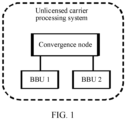
- an unlicensed carrier processing system provided in an embodiment of this application may include a convergence node and a BBU.
- the convergence node may be implemented by using a BBU of a host operator, or may be implemented as an independent management unit of an unlicensed carrier.
- Each BBU is separately connected to a base station network management subsystem of an operator, thereby implementing decoupling in an integrated access system.
- an unlicensed carrier processing system may include a convergence node and three BBUs.
- the three BBUs are a BBU 1, a BBU 2, and a BBU 3 respectively.
- the convergence node may be disposed in a remote building, and the three BBUs are disposed in a near-end central equipment room.
- the BBU 1 is connected to a base station network management subsystem (BTS(UL) for short) of an operator A
- the BBU 2 is connected to a base station network management subsystem of an operator B
- the BBU 3 is connected to a base station network management subsystem of an operator C.
- the convergence node may be connected to each BBU by using a fiber channel, and the convergence node may further be connected to a pico remote radio unit (pico Remote Radio Unit, pRRU) by using a remote radio unit hub (also referred to as an RHUB).
- the fiber channel may specifically include a common public radio interface (Common Public Radio Interface, CPRI) channel and a media access control (Media Access Control, MAC) channel.
- CPRI Common Public Radio Interface
- MAC media access control
- the RHUB is connected to the pRRU by using an electrical interface of the CPRI channel (also referred to as a CPRI-E), or the RHUB may further be connected to the pRRU by using an electrical interface of the MAC channel.
- the convergence node may be connected to a base station network management subsystem (BTS(R) for short) of a host operator by using an operation management (Operate Management, OM) channel.
- the convergence node may include a radio frequency board, an interface board, and a main control board.
- the BBU may include a baseband board and a main control board.
- the interface board of the convergence node may be connected to the baseband board of the BBU.
- a procedure of interaction between a convergence node and a BBU may include the following processes.
- the convergence node deploys a first secondary cell using a first unlicensed carrier.
- the convergence node first deploys a secondary cell using an unlicensed carrier.
- the unlicensed carrier is defined as the "first unlicensed carrier”
- the secondary cell deployed by the convergence node is defined as the "first secondary cell”
- the convergence node deploys the secondary cell on one side of the convergence node, to facilitate management performed by the convergence node on the secondary cell.
- the convergence node generates frequency information of the first secondary cell based on frequency interference information measured by a pRRU.
- the convergence node may communicate with the pRRU by using an RHUB. There may be one or more pRRUs. After performing measurement on interference of each frequency, the pRRU sends the frequency interference information to the convergence node.
- the convergence node may select a frequency for the first secondary cell based on the frequency interference information, and the selected frequency is defined as a "first frequency”.
- the convergence node may generate the frequency information of the first secondary cell, and the frequency information includes a first frequency that corresponds to the first unlicensed carrier and that is selected by the convergence node for the first secondary cell.
- the convergence node sends cell information of the first secondary cell to the BBU.
- the convergence node may communicate with the BBU by using a CPRI channel.
- the convergence node sends the cell information of the first secondary cell to the BBU, and the cell information may include the foregoing generated frequency information of the first secondary cell.
- the BBU corresponds to a target primary cell using a licensed carrier.
- the BBU receives the cell information that is of the first secondary cell and that is sent by the convergence node, and the cell information includes the frequency information of the first secondary cell.
- the frequency information includes the first frequency that corresponds to the first unlicensed carrier and that is elected by the convergence node.
- the BBU determines, from the frequency information, the first frequency selected by the convergence node.
- the BBU may configure the first secondary cell based on the cell information, and the BBU transmits data by using the configured first secondary cell, to implement spectrum utilization of the first unlicensed carrier.
- the secondary cell using the unlicensed carrier is deployed on the convergence node, and the convergence node may uniformly plan frequencies of the secondary cell, so that a constraint performed by the pRRU on instantaneous operating bandwidth may be met.
- a deployment location of the unlicensed carrier is disposed on the convergence node, so that the secondary cell using the unlicensed carrier may be used as a common resource to implement co-construction and sharing between operators, thereby improving spectrum utilization of the unlicensed carrier.
- an unlicensed carrier processing method is provided.
- the convergence node is used to create the secondary cell and allocate the frequency, and the BBU configures the secondary cell based on secondary cell information sent by the convergence node, so that a mutual constraint between unlicensed frequencies used by operators may be avoided. Because frequencies of an unlicensed carrier are shared and an interference status dynamically changes, the secondary cell using the unlicensed carrier is deployed on the convergence node, to ensure that in a scenario in which operators perform sharing by using different carriers, different frequencies are selected by different operators in a continuous instantaneous bandwidth (Instantaneous Bandwidth, IBW) range.
- IBW Intelligent Bandwidth
- each operator may use a highest carrier aggregation specification, and select a frequency for the unlicensed carrier by using frequency interference information provided by a pRRU, to avoid a difficulty of inter-frequency deployment between pRRUs and reduce interference.
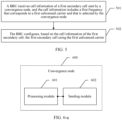
- an unlicensed carrier processing method provided in an embodiment of this application may include the following steps.
- a convergence node deploys a first secondary cell using a first unlicensed carrier.
- the convergence node first deploys a secondary cell using an unlicensed carrier.
- the convergence node deploys the first secondary cell using the first unlicensed carrier and a second secondary cell using a second unlicensed carrier.
- the first unlicensed carrier and the second unlicensed carrier are used to indicate different unlicensed carriers
- the convergence node may create a plurality of secondary cells using different unlicensed carriers
- the convergence node may create the secondary cell in a plurality of manners.
- step 401 in which the convergence node deploys the first secondary cell using the first unlicensed carrier includes:
- the convergence node first determines the region information of the secondary cell, for example, only simple region information of the secondary cell needs to be configured.
- the region information of the secondary cell may be specifically country code information of the cell.
- the convergence node may automatically generate, based on the country code information, the first unlicensed carrier allowed to be used by the secondary cell in the region, and automatically configure all public configurations related to the secondary cell.
- a coexistence solution of the unlicensed carrier may be completed by using the convergence node, without a customized configuration and maintenance.
- the convergence node generates frequency information of the first secondary cell based on frequency interference information measured by a pico remote radio unit pRRU, and the frequency information includes a first frequency that corresponds to the first unlicensed carrier and that is selected by the convergence node for the first secondary cell.
- the convergence node may communicate with the pRRU by using an RHUB. There may be one or more pRRUs. After performing measurement on interference of each frequency, the pRRU sends the frequency interference information to the convergence node. The convergence node may select the first frequency for the first secondary cell based on the frequency interference information, and the convergence node may generate the frequency information of the first secondary cell. It is not limited that the convergence node may further select a second frequency for the second secondary cell when deploying the second secondary cell.
- the convergence node may select a frequency of the first secondary cell based on interference statuses of a plurality of frequencies measured by the pRRU. For example, the convergence node may select a frequency with smallest interference as the first frequency.
- step 402 in which the convergence node generates the frequency information of the first secondary cell based on the frequency interference information of the pRRU includes: generating, by the convergence node, the frequency information of the first secondary cell based on the frequency interference information measured by the pRRU, a topological relationship between pRRUs, and a mapping relationship between the pRRUs and cells, where the cell includes the first secondary cell and a target primary cell.
- the topological relationship between the pRRUs is a topological relationship between a plurality of pRRUs on which the first unlicensed carrier is located.
- the mapping relationship between the pRRUs and the cells is a secondary cell and a primary cell to which each pRRU is mapped.
- the cell includes the first secondary cell and the target primary cell.
- the convergence node may further select an optimal frequency for the first secondary cell as the first frequency based on the frequency interference information measured by the pRRU, the topological relationship between the pRRUs, and the mapping relationship between the pRRUs and the cells, where the optimal frequency may be a frequency of which an interference value and a quantity of frequencies in a coverage area of the target primary cell meet a requirement.
- the generating, by the convergence node, the frequency information of the first secondary cell based on the frequency interference information measured by the pRRU, a topological relationship between pRRUs, and a mapping relationship between the pRRUs and cells includes:
- That a quantity of pRRUs connected to the convergence node is M is used as an example. Each pRRU separately reports a frequency measurement result to the convergence node. A quantity of frequencies measured by each pRRU is N. Values of M and N are not limited.
- the convergence node selects the first frequency based on the smallest interference value in the N frequencies, for example, a frequency with a smallest interference value in the N frequencies may be selected as the first frequency.
- the convergence node may further determine the interference threshold by using the smallest interference value in the N frequencies.
- the convergence node selects, from the N frequencies based on the frequency measurement result, the topological relationship between pRRUs, and the mapping relationship between the pRRUs and the cells, the frequency of which the interference value is less than the interference threshold as the first frequency.
- the convergence node may determine, based on the mapping relationship between the pRRUs and the cells, a pRRU corresponding to the first unlicensed carrier.
- the convergence node may select, based on the topological relationship between the pRRUs and with reference to the frequency interference information of the N frequencies, the frequency of which the interference value is less than the interference threshold as the first frequency, to reduce interference between different pRRUs.
- the selecting, by the convergence node from the N frequencies, based on the frequency measurement results, the topological relationship, and the mapping relationship, a frequency of which an interference value is less than an interference threshold as the first frequency includes: selecting, by the convergence node from the N frequencies, the frequency of which the interference value is less than the interference threshold and of which a quantity of frequencies of the unlicensed carrier in the target primary cell is less than a threshold of the quantity of frequencies as the first frequency.
- the convergence node may consider both the interference threshold and the threshold of the quantity of frequencies as a selecting condition to select the first frequency for the first secondary cell from the N frequencies.
- the selecting condition may meet that: interference of the unlicensed carrier between pRRUs is the lowest and a quantity of frequencies of the unlicensed carrier in the coverage area of a same target primary cell is the lowest. In this way, interference between different pRRUs may be reduced.
- the convergence node sends cell information of the first secondary cell to a BBU, and the BBU corresponds to a target primary cell using a licensed carrier.
- the convergence node may send the cell information of the first secondary cell to the BBU corresponding to the target primary cell using the licensed carrier.
- the cell information of the first secondary cell includes the frequency information of the first secondary cell.
- a receiving object selected by the convergence node is the BBU corresponding to the target primary cell using the licensed carrier.
- the convergence node may determine the target primary cell based on a default configuration.
- the convergence node may further select the target primary cell from a plurality of primary cells.
- the target primary cell may be selected in a plurality of implementations. The following provides an example for description.
- the unlicensed carrier processing method provided in an embodiment of this application may include:
- the convergence node may determine the target primary cell in a manner of performing sharing by using the same carrier.
- the primary cell having the overlapping coverage area with the first secondary cell is the target primary cell
- a BBU corresponding to the target primary cell is an object receiving the frequency information sent by the convergence node, so that the convergence node may send the cell information of the first secondary cell to the determined BBU based on the determined BBU.
- the unlicensed carrier processing method provided in an embodiment of this application may include:
- the convergence node may further determine the target primary cell in a manner of performing sharing by using different carriers. For example, the convergence node determines, based on a carrier allocation proportion between operators, an operator to which the first secondary cell is allocated. The operator may use the BBU set. Then, a primary cell that has the overlapping coverage area with the first secondary cell and that is selected from a plurality of primary cells corresponding to the BBU set is the target primary cell, the BBU corresponding to the target primary cell is an object receiving the frequency information sent by the convergence node, so that the convergence node may send the cell information of the first secondary cell to the determined BBU based on the determined BBU.
- the convergence node first deploys the first secondary cell using the first unlicensed carrier, and then the convergence node generates the frequency information of the first secondary cell based on the frequency interference information measured by the pRRU, and the frequency information includes: a first frequency that corresponds to the first unlicensed carrier and that is selected by the convergence node for the first secondary cell; and finally, the convergence node sends the cell information of the first secondary cell to the BBU, and the BBU corresponds to the target primary cell using the licensed carrier.
- the secondary cell using the unlicensed carrier is deployed on the convergence node, and the convergence node may uniformly plan frequencies of the secondary cell, so that a constraint performed by the pRRU on an instantaneous operating bandwidth may be met.
- a deployment location of the unlicensed carrier is disposed on the convergence node, so that the secondary cell using the unlicensed carrier may be used as a public resource to implement co-construction and sharing between operators, thereby improving spectrum utilization of the unlicensed carrier.
- an unlicensed carrier processing method provided in an embodiment of this application is described from a side of the convergence node.
- the following describes the unlicensed carrier processing method provided in the embodiments of this application from a side of the BBU.
- an unlicensed carrier processing method provided in an embodiment of this application mainly includes the following steps.
- a BBU receives cell information of a first secondary cell sent by a convergence node, and the cell information includes a first frequency that corresponds to a first unlicensed carrier and that is selected by the convergence node.
- the BBU corresponds to a target primary cell using a licensed carrier, and the BBU is a receiving object determined by the convergence node.
- the BBU parses the cell information sent by the convergence node, and the BBU may determine that a frequency selected by the convergence node for the first secondary cell is the first frequency.
- the BBU configures, based on the cell information of the first secondary cell, the first secondary cell using the first unlicensed carrier.
- the BBU may determine that the frequency selected by the convergence node for the first secondary cell is the first frequency
- the BBU may configure, on the first frequency, the first secondary cell using the first unlicensed carrier.
- the BBU may transmit data by using the first secondary cell, to implement spectrum utilization of the first unlicensed carrier.
- the secondary cell using the unlicensed carrier is deployed on the convergence node, and the convergence node may uniformly plan frequencies of the secondary cell, so that a constraint performed by the pRRU on an instantaneous operating bandwidth may be met.
- a deployment location of the unlicensed carrier is disposed on the convergence node, so that the secondary cell using the unlicensed carrier may be used as a public resource to implement co-construction and sharing between operators, thereby improving spectrum utilization of the unlicensed carrier.
- the BBU may configure the first secondary cell in a blind configuration manner.
- the BBU adds the first secondary cell by using a default configuration parameter of the cell, so that configuration efficiency of the cell may be improved.
- step 502 in which the BBU configures, based on the frequency information of the unlicensed carrier, the first secondary cell using the first unlicensed carrier includes:
- the BBU may deliver the measurement configuration information to the terminal, so that the terminal may perform measurement based on the first frequency indicated by the BBU.
- the terminal reports the measurement report to the BBU, and the BBU may configure the first secondary cell on the first frequency based on the measurement report reported by the terminal, to implement an accurate configuration of the secondary cell based on the measurement report.
- a process of measurement performed by the terminal on the frequency is not described in detail again.
- the sending, by the BBU, measurement configuration information to a terminal includes:
- the BBU may determine T first frequencies from the S first frequencies based on the quantity of secondary cells separately owned by the S first frequencies, and T is less than or equal to S. For example, the BBU determines, based on the quantity of secondary cells separately owned by the S first frequencies, first T first frequencies having a largest quantity of secondary cells.
- the BBU sends, to the terminal, the measurement configuration information of the T first frequencies that need to be measured, so that the terminal may perform measurement on the T first frequencies.
- the BBU selects the S first frequencies, and the BBU only needs that the terminal measures the T first frequencies. When T is less than S, this embodiment of this application reduces a quantity of measurement frequencies of the terminal, and improves measurement efficiency.
- the base band unit corresponds to the target primary cell using the licensed carrier.
- the base band unit first receives the cell information that is of the first secondary cell and that is sent by the convergence node, and the cell information includes the frequency information of the first secondary cell.
- the frequency information includes the first frequency that corresponds to the first unlicensed carrier and that is selected by the convergence node.
- the base band unit may configure, based on the cell information of the first secondary cell, the first secondary cell using the first unlicensed carrier.
- the base band unit may determine, from the convergence node, a frequency corresponding to the unlicensed carrier, so that a secondary cell can be configured on the frequency.
- the base band unit may transmit data by using the configured secondary cell, thereby implementing spectrum utilization of the unlicensed carrier.
- the convergence node may be responsible for managing physical devices of an RHUB and a pRRU, and performing virtualization and slicing on resource objects of the pRRU and the RHUB.
- Main resources include resources such as a carrier (standard, frequency band, transmit power, and bandwidth) resource, a CPRI bandwidth resource, and a quantity of combined cells. The resources are divided based on an actual situation of each operator.
- an operator binds an allocated carrier resource to a BBU on an operator side, for example, an unlicensed carrier F 1 allocated to an operator A and an unlicensed carrier F2 allocated to an operator B are used to activate a corresponding BBU and a corresponding service.
- An unlicensed carrier resource as a public resource, is allocated to each BBU through virtualization and slicing, in this way, each operator device can independently invoke the unlicensed carrier resource.
- the convergence node may implement sharing of frequencies of the unlicensed carrier among a plurality of operators. Through unified planning performed by the convergence node, different operators may select different frequencies.
- LAA licensed assisted access
- An LAA cell is deployed on the convergence node, serves as a public resource such as the RHUB and the pRRU, is managed by a host operator, and is shared among multiple operators.
- the convergence node configures an LAA secondary cell SCell in a minimalist manner, and it only needs to support a simple configuration to complete building the secondary cell. A minimalist operation and maintenance solution of the LAA is maintained by the host operator.
- This embodiment of this application may support inter-BBU coordination-based carrier aggregation between the operator and the LAA SCell of the host operator.
- the BBU is configured to: configure the secondary cell in which the unlicensed carrier is deployed; receive frequency information of the unlicensed carrier from the convergence node; send measurement configuration information to a terminal; and configure the secondary cell based on a measurement result of the terminal.
- the convergence node may be configured to deploy the secondary cell. For example, the convergence node configures the secondary cell by using a coexistence technology of the unlicensed carrier, and the convergence node manages the secondary cell by using a minimalist operation and maintenance manner of an LAA SCell.
- a simplified configuration function of the cell having the unlicensed carrier is implemented, the unlicensed carrier is carried on the convergence node of multiple operators as a public resource, to implement efficient sharing among multiple operators.
- a process of interaction between the convergence node and a BBU is described below by using an example, and mainly includes the following steps.
- a convergence node deploys a secondary cell using an unlicensed carrier.
- the convergence node only needs to configure simple region information, for example, country code, and may automatically configure, based on the country code information, all public configurations related to the cell. Coexistence-related technologies of the unlicensed carrier are internally implemented, without a customized configuration and maintenance.
- the convergence node selects a frequency of a secondary cell on each pRRU based on a frequency interference status measured by the pRRU, a topological relationship between pRRUs, and a mapping relationship between the pRRUs and the cells.
- the convergence node obtains the mapping relationship between the pRRUs and the cells, and the cells may include a primary cell using a licensed carrier and the secondary cell using the unlicensed carrier, as shown in Table 1.
- the tick in the Table 1 indicates that the pRRU is configured with a corresponding cell.
- the Cell 1 is a cell using a licensed carrier, and both the pRRU 1 and the pRRU 2 are configured with the Cell 1.
- the convergence node automatically selects a frequency for each secondary cell using the unlicensed carrier. For example, an optimal combination of unlicensed frequencies is selected based on a location relationship between a pRRU in which the primary cell using the licensed carrier is located and a pRRU in which the secondary cell using the unlicensed carrier is located, and a topological relationship between pRRUs in which the secondary cell using the unlicensed carrier is located.
- the optimal means that unlicensed interference between pRRUs is the lowest and a quantity of frequencies of the unlicensed frequency in a coverage area of the primary cell using the licensed carrier is the smallest.
- the convergence node After the convergence node determines the frequency, the convergence node sends secondary cell information to the BBU corresponding to the primary cell using the licensed carrier based on the following principle.
- a selecting principle of the primary cell using the licensed carrier may include:
- a sent target primary cell using the licensed carrier is selected, and the target primary cell using the licensed carrier and the secondary cell using the unlicensed carrier have overlapping coverage, as shown in Table 2:
- pRRU Target primary cell using a licensed carrier Cell 4 pRRU 2 Cell 1 and cell 2 Cell 5 pRRU 2 Cell 1 and cell 2 Cell 6 pRRU 1 Cell 1 and cell 3 Cell 7 pRRU 1 Cell 1 and cell 3
- pRRU Target primary cell using a licensed carrier Note
- Cell 4 pRRU 2 Cell 1 Co-coverage cells include the Cell 1 and the Cell 2, which respectively belong to an operator A and an operator B, and the Cell 4 and the Cell 5 respectively correspond to one target primary cell.
- the co-coverage cells include the Cell 1 and the Cell 2.
- the operator to which the unlicensed carrier belongs may be determined based on the carrier allocation proportion of the operator. If the unlicensed carrier belongs to the operator A, it may be determined that a target primary cell corresponding to a secondary cell Cell 4 is the Cell 1.
- the BBU primary cell using the licensed carrier receives, the secondary cell information sent by the convergence node, and determines whether blind configuration is selected. If blind configuration is selected, an LAA SCell may be configured without performing measurement, and the LAA SCell may be directly configured as an SCell. Then, the procedure ends. If blind configuration is not selected, the BBU needs to add an LAA SCell based on a measurement result.
- the BBU sends frequency information of the secondary cell to a terminal through a measurement configuration information.
- the BBU receives a measurement report from the terminal and configures the LAA SCell based on the measurement result.
- the terminal may perform inter-BBU coordinated LAA.
- the LAA is carrier aggregation, while the SCell of the LAA works on an unlicensed spectrum.
- the secondary cell using the unlicensed carrier uses a simplified operation and maintenance manner, which is responsible by a host operator. For example, the host operator is responsible for LAA SCell configuration, restart, alarm reporting, and the like.
- the secondary cells using the unlicensed carrier is deployed on the convergence node. Frequencies of the secondary cell using the unlicensed carrier are uniformly planned on the convergence node, to ensure that a constraint of the pRRU IBW is met.
- sharing performed by using the same carrier may be implemented between operators, a quantity of unlicensed frequencies at a single head end is reduced, interference between pRRUs is reduced, and spectral efficiency is improved to the greatest extent.
- each operator can use a highest spectrum resource, for example, a pRRU has four unlicensed frequencies in total, the four unlicensed frequencies are shared by two operators, and each operator may use the four unlicensed frequencies, to fully use all carriers.
- the primary cell using the licensed carrier performs measurement and configuration and only sends frequencies in a coverage area of the primary cell using the licensed carrier, to reduce a quantity of frequencies that need to be measured and improve measurement efficiency.
- the convergence node accurately locates frequency information of the unlicensed carrier in a coverage area of the target primary cell based on a relationship between a pRRU in which the primary cell using the licensed carrier is located and a pRRU in which the secondary cell using the unlicensed carrier is located and a topological relationship between pRRUs, to reduce a quantity of frequencies that need to be measured, reduce a delay of configuring the secondary cell by UE, and improve user experience.
- a deployment location of the unlicensed carrier is changed, so that the unlicensed carrier is shared by a plurality of operators as a public resource, and each operator may configure a secondary carrier with a highest specification.
- a multi-operator co-construction and sharing network architecture is used, so that the unlicensed carrier is responsible and managed by the host operator as a public resource, thereby implementing sharing performed by licensed carriers of multiple operators by using different BBUs, and sharing performed by unlicensed carriers by using the same carrier, to maximize spectral efficiency of the unlicensed carrier.
- the cell using the unlicensed carrier uses a minimalist operation and maintenance solution, which is responsible by the convergence node, to reduce operation and maintenance costs of the operator.
- An optimal frequency combination is selected based on the topological relationship between the primary cell using the licensed carrier and the secondary cell using the unlicensed carrier, to reduce interference, minimize a quantity of frequencies that need to be measured, and improve measurement efficiency.
- the following further provides a related apparatus configured to implement the foregoing solutions.
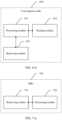
- the convergence node 600 may include: a processing module 601 and a sending module 602,
- the processing module 601 is specifically configured to generate the frequency information of the first secondary cell based on the frequency interference information measured by the pRRU, a topological relationship between pRRUs, and a mapping relationship between the pRRUs and cells, where the cell includes the first secondary cell and the target primary cell.
- the convergence node 600 further includes: a receiving module 603,
- the processing module 601 is specifically configured to select, from the N frequencies, a frequency of which the interference value is less than the interference threshold and of which a quantity of frequencies of an unlicensed carrier in the target primary cell is less than a threshold of the quantity of frequencies as the first frequency.
- the processing module 601 is specifically configured to: obtain region information of a secondary cell; and create, based on the region information of the secondary cell, the first secondary cell using the first unlicensed carrier.
- the processing module 601 before the sending module 602 sends the cell information of the first secondary cell to the base band unit BBU, the processing module 601 is further configured to: determine, based on a principle of performing sharing by using a same carrier, a primary cell having an overlapping coverage area with the first secondary cell as the target primary cell; and determine the BBU based on the target primary cell.
- the processing module 601 before the sending module 602 sends the cell information of the first secondary cell to the base band unit BBU, the processing module 601 is further configured to: determine, based on an unlicensed carrier allocation proportion required by a principle of performing sharing by using different carriers, a BBU set to which the first unlicensed carrier is allocated; determine, from a plurality of primary cells corresponding to the BBU set to which the first unlicensed carrier is allocated, a primary cell having an overlapping coverage area with the first secondary cell as the target primary cell; and determine the BBU based on the target primary cell.
- the convergence node first deploys the first secondary cell using the first unlicensed carrier, and then the convergence node generates the frequency information of the first secondary cell based on the frequency interference information measured by the pRRU, and the frequency information includes: a first frequency that corresponds to the first unlicensed carrier and that is selected by the convergence node for the first secondary cell; and finally, the convergence node sends the cell information of the first secondary cell to the BBU, and the BBU corresponds to the target primary cell using the licensed carrier.
- the secondary cell using the unlicensed carrier is deployed on the convergence node, and the convergence node may uniformly plan frequencies of the secondary cell, so that a constraint performed by the pRRU on an instantaneous operating bandwidth may be met.
- a deployment location of the unlicensed carrier is disposed on the convergence node, so that the secondary cell using the unlicensed carrier may be used as a public resource to implement co-construction and sharing between operators, thereby improving spectrum utilization of the unlicensed carrier.
- an embodiment of this application provides a BBU 700.
- the BBU 700 corresponds to a target primary cell using a licensed carrier.
- the BBU 700 includes: a receiving module 701 and a processing module 702,
- the BBU 700 further includes: a sending module 703,
- the processing module 702 is specifically configured to: determine, based on the cell information of the first secondary cell, that a quantity of first frequencies is S, where S is a positive integer greater than or equal to 2; and determine T first frequencies from the S first frequencies based on a quantity of secondary cells separately owned by the S first frequencies, where T is less than or equal to S; and the sending module 703 is specifically configured to send, to the terminal, measurement configuration information of the T first frequencies that need to be measured.
- the base band unit corresponds to the target primary cell using the licensed carrier.
- the base band unit first receives the cell information that is of the first secondary cell and that is sent by the convergence node, and the cell information includes the frequency information of the first secondary cell.
- the frequency information includes the first frequency that corresponds to the first unlicensed carrier and that is selected by the convergence node.
- the base band unit may configure, based on the cell information of the first secondary cell, the first secondary cell using the first unlicensed carrier.
- the base band unit may determine, from the convergence node, a frequency corresponding to the unlicensed carrier, so that a secondary cell can be configured on the frequency.
- the base band unit may transmit data by using the configured secondary cell, thereby implementing spectrum utilization of the unlicensed carrier.
- An embodiment of this application further provides a computer storage medium.
- the computer storage medium stores a program, and the program performs some or all of the steps recorded in the foregoing method embodiments.
- a convergence node 800 includes: a receiver 801, a transmitter 802, a processor 803, and a memory 804 (there may be one or more processors 803 in the convergence node 800, and that there is one processor in the convergence node 800 is used as an example in FIG. 8 ).
- the receiver 801, the transmitter 802, the processor 803, and the memory 804 may be connected by using a bus or in another manner. In FIG. 8 , an example in which the receiver 801, the transmitter 802, the processor 803, and the memory 804 are connected by using the bus is used.
- the memory 804 may include a read-only memory and a random access memory, and provide an instruction and data to the processor 803. Apart of the memory 804 may further include a non-volatile random access memory (English full name: Non-Volatile Random Access Memory, NVRAM for short).
- the memory 804 stores an operating system and an operation instruction, an executable module or a data structure, or a subnet thereof, or an extended set thereof.
- the operation instruction may include various operation instructions, to implement various operations.
- the operating system may include various system programs, to implement various basic services and process hardware-based tasks.
- the processor 803 controls an operation of the convergence node, and the processor 803 may further be referred to as a central processing unit (English full name: Central Processing Unit, CPU for short).
- a central processing unit International Processing Unit, CPU for short.
- components of the convergence node are coupled together by using a bus system.
- the bus system includes a power bus, a control bus, and a status signal bus.
- various types of buses in the figure are marked as the bus system.
- the method disclosed in the foregoing embodiments of this application may be applied to the processor 803, or may be implemented by the processor 803.
- the processor 803 may be an integrated circuit chip and has a signal processing capability.
- steps in the foregoing methods can be implemented by using a hardware integrated logical circuit in the processor 803, or by using instructions in a form of software.
- the processor 803 may be a general purpose processor, a digital signal processor (English full name: digital signal processor, DSP for short), an application-specific integrated circuit (English full name: Application Specific Integrated Circuit, ASIC for short), a field-programmable gate array (English full name: Field-Programmable Gate Array, FPGA for short) or another programmable logical device, a discrete gate or transistor logic device, or a discrete hardware component. It may implement or perform the methods, the steps, and logical block diagrams that are disclosed in the embodiments of this application.
- the general purpose processor may be a microprocessor, or the processor may be any conventional processor or the like.
- Steps of the methods disclosed with reference to the embodiments of this application may be directly executed and accomplished by means of a hardware decoding processor, or may be executed and accomplished by using a combination of hardware and software modules in the decoding processor.
- a software module may be located in a mature storage medium in the art, such as a random access memory, a flash memory, a read-only memory, a programmable read-only memory, an electrically erasable programmable memory, or a register.
- the storage medium is located in the memory 804, and a processor 803 reads information in the memory 804 and completes the steps in the foregoing methods in combination with hardware of the processor.
- the processor 803 is configured to perform the unlicensed carrier processing method performed on a side of the convergence node. For details, refer to the description of the method in the foregoing embodiments.
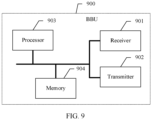
- the BBU 900 includes a receiver 901, a transmitter 902, a processor 903, and a memory 904 (there may be one or more processors 903 in the BBU 900, and that there is one processor in the BBU 900 is used as an example in FIG. 9 ).
- the receiver 901, the transmitter 902, the processor 903, and the memory 904 may be connected by using a bus or in another manner. In FIG. 9 , an example in which the receiver 901, the transmitter 902, the processor 903, and the memory 904 are connected by using the bus is used.
- the memory 904 may include a read-only memory and a random access memory, and provide an instruction and data to the processor 903. Apart of the memory 904 may further include an NVRAM.
- the memory 904 stores an operating system and an operation instruction, an executable module or a data structure, or a subset thereof, or an extended set thereof.
- the operation instruction may include various operation instructions, to implement various operations.
- the operating system may include various system programs, to implement various basic services and process hardware-based tasks.
- the processor 903 controls an operation of the BBU, and the processor 903 may further be referred to as a CPU.
- components of the BBU are coupled together by using a bus system.
- the bus system includes a power bus, a control bus, and a status signal bus.
- various types of buses in the figure are marked as the bus system.
- the method disclosed in the foregoing embodiments of this application may be applied to the processor 903, or may be implemented by the processor 903.
- the processor 903 may be an integrated circuit chip and has a signal processing capability. In an implementation process, steps in the foregoing methods can be implemented by using a hardware integrated logical circuit in the processor 903, or by using instructions in a form of software.
- the foregoing processor 903 may be a general purpose processor, a DSP, an ASIC, an FPGA or another programmable logical device, a discrete gate or transistor logic device, or a discrete hardware component. It may implement or perform the methods, the steps, and logical block diagrams that are disclosed in the embodiments of this application.
- the general purpose processor may be a microprocessor, or the processor may be any conventional processor or the like. Steps of the methods disclosed with reference to the embodiments of this application may be directly executed and accomplished by means of a hardware decoding processor, or may be executed and accomplished by using a combination of hardware and software modules in the decoding processor.
- a software module may be located in a mature storage medium in the art, such as a random access memory, a flash memory, a read-only memory, a programmable read-only memory, an electrically erasable programmable memory, or a register.
- the storage medium is located in the memory 904, and a processor 903 reads information in the memory 904 and completes the steps in the foregoing methods in combination with hardware of the processor.
- the processor 903 is configured to perform the unlicensed carrier processing method performed on a side of the foregoing BBU.
- the processor 903 is configured to perform the unlicensed carrier processing method performed on a side of the foregoing BBU.
- the chip when the convergence node or the BBU is a chip in a device, the chip includes a processing unit and a communications unit.
- the processing unit may be, for example, a processor.
- the communications unit may be, for example, an input/output interface, a pin, or a circuit.
- the processing unit may execute a computer executable instruction stored in a storage unit, so that the chip in the device performs the wireless communication method according to any one of possible designs in the first aspect.
- the storage unit is a storage unit in the chip, for example, a register or a cache, or the storage unit may alternatively be a storage unit that is in the terminal and that is outside the chip, for example, a read-only memory (read-only memory, ROM), another type of static storage device that can store static information and an instruction, or a random access memory (random access memory, RAM).
- ROM read-only memory
- RAM random access memory
- the processor mentioned in any of the foregoing designs may be a general-purpose central processing unit (CPU), a microprocessor, an application-specific integrated circuit (application-specific integrated circuit, ASIC), or one or more integrated circuits for controlling program execution of the wireless communication method according to the first aspect.
- CPU central processing unit
- ASIC application-specific integrated circuit
- the described apparatus embodiment is merely an example.
- the units described as separate parts may or may not be physically separate, and parts displayed as units may or may not be physical units, may be located in one position, or may be distributed on a plurality of network units. Some or all the modules may be selected according to actual needs to achieve the objectives of the solutions of the embodiments.
- connection relationships between modules indicate that the modules have communication connections with each other, which may be specifically implemented as one or more communications buses or signal cables. A person of ordinary skill in the art may understand and implement the embodiments of the present invention without creative efforts.
- this application may be implemented by software in addition to necessary universal hardware, or by dedicated hardware, including a dedicated integrated circuit, a dedicated CPU, a dedicated memory, a dedicated component, and the like.
- dedicated hardware including a dedicated integrated circuit, a dedicated CPU, a dedicated memory, a dedicated component, and the like.
- any functions that can be performed by a computer program can be easily implemented by using corresponding hardware.
- a specific hardware structure used to achieve a same function may be of various forms, for example, in a form of an analog circuit, a digital circuit, a dedicated circuit, or the like.
- software program implementation is a better implementation in most cases.
- the technical solutions of this application essentially or the part contributing to the prior art may be implemented in a form of a software product.
- the software product is stored in a readable storage medium, such as a floppy disk, a USB flash drive, a removable hard disk, a read-only memory (ROM, Read-Only Memory), a random access memory (RAM, Random Access Memory), a magnetic disk, or an optical disc of a computer, and includes several instructions for instructing a computer device (which may be a personal computer, a server, a network device, and the like) to perform the methods described in the embodiments of this application.
- a computer device which may be a personal computer, a server, a network device, and the like
- All or some of the foregoing embodiments may be implemented by using software, hardware, firmware, or any combination thereof.
- the embodiments may be implemented completely or partially in a form of a computer program product.
- the computer program product includes one or more computer instructions.
- the computer may be a general-purpose computer, a dedicated computer, a computer network, or other programmable apparatuses.
- the computer instructions may be stored in a computer-readable storage medium or may be transmitted from a computer-readable storage medium to another computer-readable storage medium.
- the computer instructions may be transmitted from a website, computer, server, or data center to another website, computer, server, or data center in a wired (for example, a coaxial cable, an optical fiber, or a digital subscriber line (DSL)) or wireless (for example, infrared, radio, or microwave) manner.
- a wired for example, a coaxial cable, an optical fiber, or a digital subscriber line (DSL)
- wireless for example, infrared, radio, or microwave
- the computer-readable storage medium may be any usable medium accessible by a computer, or a data storage device, such as a server or a data center, integrating one or more usable media.
- the usable medium may be a magnetic medium (for example, a floppy disk, a hard disk, or a magnetic tape), an optical medium (for example, a DVD), a semiconductor medium (for example, a solid-state drive Solid State Disk (SSD)), or the like.
Landscapes
- Engineering & Computer Science (AREA)
- Computer Networks & Wireless Communication (AREA)
- Signal Processing (AREA)
- Quality & Reliability (AREA)
- Physics & Mathematics (AREA)
- Electromagnetism (AREA)
- Mobile Radio Communication Systems (AREA)
Claims (7)
- Procédé de traitement de porteuse sans licence, comprenant :le déploiement (401), par un noeud de convergence, d'une première cellule secondaire utilisant une première porteuse sans licence, dans lequel la première cellule secondaire est déployée sur le noeud de convergence, dans lequel un emplacement de déploiement de la première porteuse sans licence est disposé sur le noeud de convergence, dans lequel le noeud de convergence est connecté à chaque unité de bande de base, BBU, d'un ensemble BBU, et dans lequel chaque BBU appartient à un opérateur différent ;la génération (402), par le noeud de convergence, d'informations de fréquence de la première cellule secondaire sur la base d'informations d'interférence de fréquence mesurées par et reçues d'une pico-unité radio distante, pRRU, dans lequel les informations de fréquence comprennent une première fréquence qui correspond à la première porteuse sans licence et qui est sélectionnée par le noeud de convergence pour la première cellule secondaire, et dans lequel la pRRU est connectée au noeud de convergence à l'aide d'un hub d'unité radio distante, RHUB, dans lequel la génération, par le noeud de convergence, d'informations de fréquence de la première cellule secondaire est basée sur les informations d'interférence de fréquence mesurées par la pRRU, comprend la génération, par le noeud de convergence, des informations de fréquence de la première cellule secondaire sur la base des informations d'interférence de fréquence mesurées par la pRRU, d'une relation topologique entre des pRRU et d'une relation de mappage entre les pRRU et les cellules, dans lequel la cellule comprend la première cellule secondaire et une cellule primaire cible ; dans lequel la relation topologique entre les pRRU est une relation topologique entre une pluralité de pRRU sur lesquelles se trouve la première porteuse sans licence ; dans lequel la relation de mappage entre les pRRU et les cellules est une cellule secondaire et une cellule primaire sur lesquelles chaque pRRU est mappée ; etl'envoi (403), par le noeud de convergence, d'informations de cellule de la première cellule secondaire à une unité de bande de base, BBU, de l'ensemble BBU, dans lequel les informations de cellule comprennent les informations de fréquence de la première cellule secondaire, et la BBU correspond à la cellule primaire cible utilisant une porteuse sous licence, et dans lequel les informations de cellule de la première cellule secondaire sont utilisées par la BBU pour configurer la première cellule secondaire utilisant la première porteuse sans licence ;dans lequel avant l'envoi, par le noeud de convergence, d'informations de cellule de la première cellule secondaire à la BBU, le procédé comprend également :la détermination, par le noeud de convergence sur la base d'une proportion d'attribution de porteuse sans licence requise par un principe d'exécution de partage à l'aide de différentes porteuses, d'un ensemble BBU auquel la première porteuse sans licence est attribuée ;la détermination, par le noeud de convergence, parmi une pluralité de cellules primaires correspondant à l'ensemble BBU auquel la première porteuse sans licence est attribuée, d'une cellule primaire ayant une zone de couverture chevauchante avec la première cellule secondaire en tant que cellule primaire cible ;la détermination, par le noeud de convergence, de la BBU sur la base de la cellule primaire cible ; etla détermination, par le noeud de convergence, de la cellule primaire cible comprenant la détermination, sur la base d'une proportion d'attribution de porteuse entre les différents opérateurs, d'un opérateur auquel la première cellule secondaire est attribuée, et dans lequel une cellule primaire qui présente la zone de couverture chevauchante avec la première cellule secondaire et qui est sélectionnée parmi une pluralité de cellules primaires correspondant à l'ensemble BBU constitue la cellule primaire cible.
- Procédé selon la revendication 1, dans lequel la génération, par le noeud de convergence, des informations de fréquence de la première cellule secondaire sur la base des informations d'interférence de fréquence mesurées par la pRRU, d'une relation topologique entre des pRRU et d'une relation de mappage entre les pRRU et des cellules comprend :la réception, par le noeud de convergence, de résultats de mesure de fréquence rapportés respectivement par M pRRU, dans lequel les résultats de mesure de fréquence sont des informations générées après que chaque pRRU a exécuté une mesure d'interférence sur N fréquences, et M et N sont des nombres entiers positifs ;la sélection, par le noeud de convergence parmi les N fréquences, sur la base des résultats de mesure de fréquence, de la relation topologique et de la relation de mappage, d'une fréquence dont une valeur d'interférence est inférieure à un seuil d'interférence en tant que première fréquence, dans lequel le seuil d'interférence est déterminé à l'aide d'une plus petite valeur d'interférence dans les N fréquences ; etla génération, par le noeud de convergence, des informations de fréquence de la première cellule secondaire sur la base de la première fréquence sélectionnée.
- Procédé selon la revendication 2, dans lequel la sélection, par le noeud de convergence parmi les N fréquences, sur la base des résultats de mesure de fréquence, de la relation topologique et de la relation de mappage, d'une fréquence dont une valeur d'interférence est inférieure à un seuil d'interférence en tant que première fréquence comprend :
la sélection, par le noeud de convergence parmi les N fréquences, d'une fréquence dont la valeur d'interférence est inférieure au seuil d'interférence et dont une quantité de fréquences d'une porteuse sans licence dans la cellule primaire cible est inférieure à un seuil de la quantité de fréquences en tant que première fréquence. - Procédé selon la revendication 1, dans lequel le déploiement, par un noeud de convergence, d'une première cellule secondaire utilisant une première porteuse sans licence comprend :l'obtention, par le noeud de convergence, d'informations de région d'une cellule secondaire ; etla création, par le noeud de convergence sur la base des informations de région de la cellule secondaire, de la première cellule secondaire utilisant la première porteuse sans licence.
- Noeud de convergence (800), dans lequel le noeud de convergence comprend un processeur (803) et une mémoire (804), et le processeur (803) et la mémoire (804) communiquent l'un avec l'autre ;
la mémoire (804) est configurée pour stocker une instruction ; et le processeur (803) est configuré pour exécuter l'instruction dans la mémoire, pour exécuter le procédé selon l'une quelconque des revendications 1 à 4. - Support de stockage lisible par ordinateur, comprenant une instruction, dans lequel lorsque l'instruction est exécutée sur un processeur d'un noeud de convergence, le noeud de convergence est activé pour exécuter le procédé selon l'une quelconque des revendications 1 à 4.
- Produit de programme informatique comprenant une instruction, dans lequel lorsque l'instruction est exécutée sur un processeur d'un noeud de convergence, le noeud de convergence est activé pour exécuter le procédé selon l'une quelconque des revendications 1 à 4.
Applications Claiming Priority (1)
| Application Number | Priority Date | Filing Date | Title |
|---|---|---|---|
| PCT/CN2017/118022 WO2019119424A1 (fr) | 2017-12-22 | 2017-12-22 | Procédé, dispositif et système de traitement de porteuse sans licence |
Publications (3)
| Publication Number | Publication Date |
|---|---|
| EP3723404A1 EP3723404A1 (fr) | 2020-10-14 |
| EP3723404A4 EP3723404A4 (fr) | 2020-10-28 |
| EP3723404B1 true EP3723404B1 (fr) | 2024-07-31 |
Family
ID=66994326
Family Applications (1)
| Application Number | Title | Priority Date | Filing Date |
|---|---|---|---|
| EP17935523.5A Active EP3723404B1 (fr) | 2017-12-22 | 2017-12-22 | Procédé, dispositif et système de traitement de porteuse sans licence |
Country Status (6)
| Country | Link |
|---|---|
| US (1) | US20200322808A1 (fr) |
| EP (1) | EP3723404B1 (fr) |
| JP (1) | JP6947483B2 (fr) |
| CN (1) | CN111066340B (fr) |
| CA (1) | CA3086255C (fr) |
| WO (1) | WO2019119424A1 (fr) |
Families Citing this family (9)
| Publication number | Priority date | Publication date | Assignee | Title |
|---|---|---|---|---|
| CN111050338B (zh) * | 2019-12-16 | 2022-05-03 | 重庆邮电大学 | 基于LampSite室分系统的下行容量分析方法 |
| US12356222B2 (en) * | 2020-01-23 | 2025-07-08 | Telefonaktiebolaget Lm Ericsson (Publ) | Method and terminal device for measurement control |
| US20240048338A1 (en) * | 2020-12-23 | 2024-02-08 | Telefonaktiebolaget Lm Ericsson (Publ) | Carrier aggregation in a radio communication network |
| CN112867134B (zh) * | 2020-12-31 | 2022-11-15 | 京信网络系统股份有限公司 | 时延配置管理系统、方法和基站 |
| CN115052319A (zh) * | 2021-03-09 | 2022-09-13 | 大唐移动通信设备有限公司 | 一种信息确认方法、装置及网络设备 |
| CN112996008B (zh) * | 2021-04-30 | 2021-07-30 | 成都爱瑞无线科技有限公司 | 用于无线通信的系统、装置、方法及存储介质 |
| CN113973386B (zh) * | 2021-12-27 | 2022-03-18 | 成都爱瑞无线科技有限公司 | 非授权频段资源的调度方法、系统、装置及存储介质 |
| CN114375051B (zh) * | 2021-12-29 | 2025-06-13 | 中国电信股份有限公司 | 一种业务调度方法、装置、设备以及存储介质 |
| CN116017516B (zh) * | 2023-03-24 | 2023-06-27 | 广州世炬网络科技有限公司 | 基于链路干扰的节点连接配置方法及装置 |
Citations (1)
| Publication number | Priority date | Publication date | Assignee | Title |
|---|---|---|---|---|
| US20150245307A1 (en) * | 2014-02-21 | 2015-08-27 | Qualcomm Incorporated | Ul out-of-synchronization for a secondary cell carrying pucch |
Family Cites Families (23)
| Publication number | Priority date | Publication date | Assignee | Title |
|---|---|---|---|---|
| EP2525623B1 (fr) * | 2011-05-17 | 2014-05-14 | Huawei Technologies Co., Ltd. | Système de communication et son procédé de gestion |
| US10405345B2 (en) * | 2013-12-19 | 2019-09-03 | Telefonaktiebolaget Lm Ericsson (Publ) | Configuration of cellular network nodes |
| EP3079423A4 (fr) * | 2013-12-31 | 2016-11-30 | Huawei Tech Co Ltd | Procédé et dispositif de sélection de canaux |
| CN105338531B (zh) * | 2014-05-27 | 2020-06-12 | 索尼公司 | 基站控制方法、基站控制装置、无线通信系统及电子设备 |
| EP3149989B1 (fr) * | 2014-05-28 | 2020-04-22 | Telefonaktiebolaget LM Ericsson (publ) | Procédés et appareils pour permettre l'utilisation de bande de fréquence sans licence |
| US10063304B2 (en) * | 2014-06-16 | 2018-08-28 | Telefonaktiebolaget L M Ericsson (Publ) | Channel state information measurements for license-assisted access |
| US10080159B2 (en) * | 2014-06-24 | 2018-09-18 | Qualcomm Incorporated | Dynamic bandwidth management for load-based equipment in unlicensed spectrum |
| KR101875255B1 (ko) * | 2014-08-07 | 2018-07-06 | 주식회사 케이티 | 캐리어 병합 구성 방법 및 그 장치 |
| EP3195647B1 (fr) * | 2014-08-08 | 2020-10-21 | Telefonaktiebolaget LM Ericsson (publ) | Modification du nombre de cellules à mesurer dans un réseau faisant appel à des cellules marche/arrêt |
| US10187803B2 (en) * | 2014-10-27 | 2019-01-22 | Telefonaktiebolaget Lm Ericsson (Publ) | Systems and methods for controlling SCell on/off durations |
| HUE043005T2 (hu) * | 2015-01-29 | 2019-07-29 | Intel Ip Corp | Rádió erõforrás menedzselési (RRM) jelentés licencelt támogatású hozzáféréshez (LAA) |
| CN106034364B (zh) * | 2015-03-12 | 2019-10-11 | 上海诺基亚贝尔股份有限公司 | 用于室内通信系统的中央基带处理单元及网络架构 |
| CN106162695B (zh) * | 2015-04-10 | 2020-04-28 | 上海诺基亚贝尔股份有限公司 | 用于非授权频段的干扰测量的方法及装置 |
| US10091659B2 (en) * | 2015-05-08 | 2018-10-02 | Samsung Electronics Co., Ltd. | Methods and apparatus for partial subframe transmission and broadcast channel on unlicensed spectrum in a licensed assisted access (LAA) cell |
| CN106572472B (zh) * | 2015-10-13 | 2019-09-13 | 南京中兴软件有限责任公司 | 使用非授权载波的方法和装置 |
| WO2017070635A1 (fr) * | 2015-10-22 | 2017-04-27 | Phluido, Inc. | Virtualisation et organisation d'un réseau d'accès radio |
| WO2017073651A1 (fr) * | 2015-10-27 | 2017-05-04 | 株式会社Nttドコモ | Terminal utilisateur, station de base sans fil et procédé de communication sans fil |
| CN106658721B (zh) * | 2015-10-30 | 2020-05-19 | 中兴通讯股份有限公司 | 非授权载波资源处理方法及装置 |
| US11057873B2 (en) * | 2016-02-05 | 2021-07-06 | Qualcomm Incorporated | Techniques for long term evolution licensed assisted-access(LTE LAA) coexistence with other radio access technologies |
| CN107135512B (zh) * | 2016-02-29 | 2022-05-31 | 中兴通讯股份有限公司 | 一种射频拉远单元合并小区上行容量提升方法和系统 |
| US10172158B2 (en) * | 2016-04-04 | 2019-01-01 | Telefonaktlebolaget Lm Ericsson (Publ) | Systems and methods for self-deferral with downlink and uplink transmission opportunity sharing |
| EP3466194A4 (fr) * | 2016-05-23 | 2019-12-11 | FG Innovation Company Limited | Référence croisée à une ou plusieurs applications associées |
| CN106658566B (zh) * | 2016-12-06 | 2020-02-21 | 上海华为技术有限公司 | 一种小区确定的方法、相关设备以及系统 |
-
2017
- 2017-12-22 WO PCT/CN2017/118022 patent/WO2019119424A1/fr not_active Ceased
- 2017-12-22 JP JP2020534406A patent/JP6947483B2/ja active Active
- 2017-12-22 EP EP17935523.5A patent/EP3723404B1/fr active Active
- 2017-12-22 CN CN201780094529.6A patent/CN111066340B/zh active Active
- 2017-12-22 CA CA3086255A patent/CA3086255C/fr active Active
-
2020
- 2020-06-19 US US16/906,288 patent/US20200322808A1/en not_active Abandoned
Patent Citations (1)
| Publication number | Priority date | Publication date | Assignee | Title |
|---|---|---|---|---|
| US20150245307A1 (en) * | 2014-02-21 | 2015-08-27 | Qualcomm Incorporated | Ul out-of-synchronization for a secondary cell carrying pucch |
Also Published As
| Publication number | Publication date |
|---|---|
| CN111066340B (zh) | 2021-11-19 |
| US20200322808A1 (en) | 2020-10-08 |
| JP6947483B2 (ja) | 2021-10-13 |
| CN111066340A (zh) | 2020-04-24 |
| JP2021507630A (ja) | 2021-02-22 |
| CA3086255C (fr) | 2023-08-15 |
| EP3723404A4 (fr) | 2020-10-28 |
| WO2019119424A1 (fr) | 2019-06-27 |
| CA3086255A1 (fr) | 2019-06-27 |
| EP3723404A1 (fr) | 2020-10-14 |
Similar Documents
| Publication | Publication Date | Title |
|---|---|---|
| EP3723404B1 (fr) | Procédé, dispositif et système de traitement de porteuse sans licence | |
| US12028941B2 (en) | Integrated access system, configuration method, and baseband unit | |
| JP6888115B2 (ja) | ランダムアクセス方法および装置 | |
| US20130331114A1 (en) | Adjacent network aware self organizing network system | |
| JP7074123B2 (ja) | 装置、方法及びプログラム | |
| CN109314547B (zh) | 混合无线通信系统 | |
| US20170318472A1 (en) | Method, apparatus, system and computer program | |
| CN111918297B (zh) | 一种cu-du架构下小区合并的方法及装置 | |
| CN101820683A (zh) | 干扰控制信息的传输方法 | |
| US12581381B2 (en) | Communication method and apparatus | |
| US20230217474A1 (en) | Supplementary Uplink Sul Configuration Method and Apparatus | |
| CN106211175B (zh) | 一种基站工作频段的配置方法、装置及系统 | |
| CN102547774B (zh) | 无线室内优化方法和设备 | |
| US20220182812A1 (en) | Data transfer using a dual sim phone | |
| US11317421B2 (en) | Cellular communications network | |
| US20240348291A1 (en) | Communication method and apparatus | |
| EP4383899A1 (fr) | Procédé de configuration de ressources dans un domaine fréquentiel et appareil associé | |
| CN116567868B (zh) | 信号传输方法、装置及存储介质 | |
| US20250310780A1 (en) | Radio Access Network (RAN) Intelligent Controller Application (rAPP)-coordinated Time Division Duplexing (TDD) configuration in Open Radio Access Network (O-RAN) | |
| WO2021029071A1 (fr) | Terminal et procédé de commande du fonctionnement d'un terminal | |
| US20250310790A1 (en) | Spectrum Access System (SAS)/Service Management and Orchestration (SMO) interference mitigation for remote interference |
Legal Events
| Date | Code | Title | Description |
|---|---|---|---|
| STAA | Information on the status of an ep patent application or granted ep patent |
Free format text: STATUS: THE INTERNATIONAL PUBLICATION HAS BEEN MADE |
|
| PUAI | Public reference made under article 153(3) epc to a published international application that has entered the european phase |
Free format text: ORIGINAL CODE: 0009012 |
|
| STAA | Information on the status of an ep patent application or granted ep patent |
Free format text: STATUS: REQUEST FOR EXAMINATION WAS MADE |
|
| 17P | Request for examination filed |
Effective date: 20200706 |
|
| AK | Designated contracting states |
Kind code of ref document: A1 Designated state(s): AL AT BE BG CH CY CZ DE DK EE ES FI FR GB GR HR HU IE IS IT LI LT LU LV MC MK MT NL NO PL PT RO RS SE SI SK SM TR |
|
| AX | Request for extension of the european patent |
Extension state: BA ME |
|
| A4 | Supplementary search report drawn up and despatched |
Effective date: 20200929 |
|
| RIC1 | Information provided on ipc code assigned before grant |
Ipc: H04W 24/02 20090101AFI20200923BHEP Ipc: H04W 16/14 20090101ALI20200923BHEP |
|
| DAV | Request for validation of the european patent (deleted) | ||
| DAX | Request for extension of the european patent (deleted) | ||
| STAA | Information on the status of an ep patent application or granted ep patent |
Free format text: STATUS: EXAMINATION IS IN PROGRESS |
|
| 17Q | First examination report despatched |
Effective date: 20211008 |
|
| 17Q | First examination report despatched |
Effective date: 20211026 |
|
| GRAP | Despatch of communication of intention to grant a patent |
Free format text: ORIGINAL CODE: EPIDOSNIGR1 |
|
| STAA | Information on the status of an ep patent application or granted ep patent |
Free format text: STATUS: GRANT OF PATENT IS INTENDED |
|
| INTG | Intention to grant announced |
Effective date: 20240328 |
|
| P01 | Opt-out of the competence of the unified patent court (upc) registered |
Effective date: 20240514 |
|
| GRAS | Grant fee paid |
Free format text: ORIGINAL CODE: EPIDOSNIGR3 |
|
| GRAA | (expected) grant |
Free format text: ORIGINAL CODE: 0009210 |
|
| STAA | Information on the status of an ep patent application or granted ep patent |
Free format text: STATUS: THE PATENT HAS BEEN GRANTED |
|
| AK | Designated contracting states |
Kind code of ref document: B1 Designated state(s): AL AT BE BG CH CY CZ DE DK EE ES FI FR GB GR HR HU IE IS IT LI LT LU LV MC MK MT NL NO PL PT RO RS SE SI SK SM TR |
|
| REG | Reference to a national code |
Ref country code: CH Ref legal event code: EP Ref country code: GB Ref legal event code: FG4D |
|
| REG | Reference to a national code |
Ref country code: DE Ref legal event code: R096 Ref document number: 602017083788 Country of ref document: DE |
|
| REG | Reference to a national code |
Ref country code: IE Ref legal event code: FG4D |
|
| REG | Reference to a national code |
Ref country code: LT Ref legal event code: MG9D |
|
| REG | Reference to a national code |
Ref country code: NL Ref legal event code: MP Effective date: 20240731 |
|
| PG25 | Lapsed in a contracting state [announced via postgrant information from national office to epo] |
Ref country code: PT Free format text: LAPSE BECAUSE OF FAILURE TO SUBMIT A TRANSLATION OF THE DESCRIPTION OR TO PAY THE FEE WITHIN THE PRESCRIBED TIME-LIMIT Effective date: 20241202 |
|
| REG | Reference to a national code |
Ref country code: AT Ref legal event code: MK05 Ref document number: 1709707 Country of ref document: AT Kind code of ref document: T Effective date: 20240731 |
|
| PG25 | Lapsed in a contracting state [announced via postgrant information from national office to epo] |
Ref country code: PT Free format text: LAPSE BECAUSE OF FAILURE TO SUBMIT A TRANSLATION OF THE DESCRIPTION OR TO PAY THE FEE WITHIN THE PRESCRIBED TIME-LIMIT Effective date: 20241202 |
|
| PG25 | Lapsed in a contracting state [announced via postgrant information from national office to epo] |
Ref country code: NO Free format text: LAPSE BECAUSE OF FAILURE TO SUBMIT A TRANSLATION OF THE DESCRIPTION OR TO PAY THE FEE WITHIN THE PRESCRIBED TIME-LIMIT Effective date: 20241031 |
|
| PG25 | Lapsed in a contracting state [announced via postgrant information from national office to epo] |
Ref country code: NL Free format text: LAPSE BECAUSE OF FAILURE TO SUBMIT A TRANSLATION OF THE DESCRIPTION OR TO PAY THE FEE WITHIN THE PRESCRIBED TIME-LIMIT Effective date: 20240731 Ref country code: FI Free format text: LAPSE BECAUSE OF FAILURE TO SUBMIT A TRANSLATION OF THE DESCRIPTION OR TO PAY THE FEE WITHIN THE PRESCRIBED TIME-LIMIT Effective date: 20240731 Ref country code: PL Free format text: LAPSE BECAUSE OF FAILURE TO SUBMIT A TRANSLATION OF THE DESCRIPTION OR TO PAY THE FEE WITHIN THE PRESCRIBED TIME-LIMIT Effective date: 20240731 Ref country code: GR Free format text: LAPSE BECAUSE OF FAILURE TO SUBMIT A TRANSLATION OF THE DESCRIPTION OR TO PAY THE FEE WITHIN THE PRESCRIBED TIME-LIMIT Effective date: 20241101 |
|
| PG25 | Lapsed in a contracting state [announced via postgrant information from national office to epo] |
Ref country code: BG Free format text: LAPSE BECAUSE OF FAILURE TO SUBMIT A TRANSLATION OF THE DESCRIPTION OR TO PAY THE FEE WITHIN THE PRESCRIBED TIME-LIMIT Effective date: 20240731 |
|
| PG25 | Lapsed in a contracting state [announced via postgrant information from national office to epo] |
Ref country code: LV Free format text: LAPSE BECAUSE OF FAILURE TO SUBMIT A TRANSLATION OF THE DESCRIPTION OR TO PAY THE FEE WITHIN THE PRESCRIBED TIME-LIMIT Effective date: 20240731 |
|
| PG25 | Lapsed in a contracting state [announced via postgrant information from national office to epo] |
Ref country code: AT Free format text: LAPSE BECAUSE OF FAILURE TO SUBMIT A TRANSLATION OF THE DESCRIPTION OR TO PAY THE FEE WITHIN THE PRESCRIBED TIME-LIMIT Effective date: 20240731 Ref country code: IS Free format text: LAPSE BECAUSE OF FAILURE TO SUBMIT A TRANSLATION OF THE DESCRIPTION OR TO PAY THE FEE WITHIN THE PRESCRIBED TIME-LIMIT Effective date: 20241130 |
|
| PG25 | Lapsed in a contracting state [announced via postgrant information from national office to epo] |
Ref country code: HR Free format text: LAPSE BECAUSE OF FAILURE TO SUBMIT A TRANSLATION OF THE DESCRIPTION OR TO PAY THE FEE WITHIN THE PRESCRIBED TIME-LIMIT Effective date: 20240731 |
|
| PG25 | Lapsed in a contracting state [announced via postgrant information from national office to epo] |
Ref country code: RS Free format text: LAPSE BECAUSE OF FAILURE TO SUBMIT A TRANSLATION OF THE DESCRIPTION OR TO PAY THE FEE WITHIN THE PRESCRIBED TIME-LIMIT Effective date: 20241031 Ref country code: ES Free format text: LAPSE BECAUSE OF FAILURE TO SUBMIT A TRANSLATION OF THE DESCRIPTION OR TO PAY THE FEE WITHIN THE PRESCRIBED TIME-LIMIT Effective date: 20240731 |
|
| PG25 | Lapsed in a contracting state [announced via postgrant information from national office to epo] |
Ref country code: RS Free format text: LAPSE BECAUSE OF FAILURE TO SUBMIT A TRANSLATION OF THE DESCRIPTION OR TO PAY THE FEE WITHIN THE PRESCRIBED TIME-LIMIT Effective date: 20241031 Ref country code: PL Free format text: LAPSE BECAUSE OF FAILURE TO SUBMIT A TRANSLATION OF THE DESCRIPTION OR TO PAY THE FEE WITHIN THE PRESCRIBED TIME-LIMIT Effective date: 20240731 Ref country code: NO Free format text: LAPSE BECAUSE OF FAILURE TO SUBMIT A TRANSLATION OF THE DESCRIPTION OR TO PAY THE FEE WITHIN THE PRESCRIBED TIME-LIMIT Effective date: 20241031 Ref country code: NL Free format text: LAPSE BECAUSE OF FAILURE TO SUBMIT A TRANSLATION OF THE DESCRIPTION OR TO PAY THE FEE WITHIN THE PRESCRIBED TIME-LIMIT Effective date: 20240731 Ref country code: LV Free format text: LAPSE BECAUSE OF FAILURE TO SUBMIT A TRANSLATION OF THE DESCRIPTION OR TO PAY THE FEE WITHIN THE PRESCRIBED TIME-LIMIT Effective date: 20240731 Ref country code: IS Free format text: LAPSE BECAUSE OF FAILURE TO SUBMIT A TRANSLATION OF THE DESCRIPTION OR TO PAY THE FEE WITHIN THE PRESCRIBED TIME-LIMIT Effective date: 20241130 Ref country code: HR Free format text: LAPSE BECAUSE OF FAILURE TO SUBMIT A TRANSLATION OF THE DESCRIPTION OR TO PAY THE FEE WITHIN THE PRESCRIBED TIME-LIMIT Effective date: 20240731 Ref country code: GR Free format text: LAPSE BECAUSE OF FAILURE TO SUBMIT A TRANSLATION OF THE DESCRIPTION OR TO PAY THE FEE WITHIN THE PRESCRIBED TIME-LIMIT Effective date: 20241101 Ref country code: FI Free format text: LAPSE BECAUSE OF FAILURE TO SUBMIT A TRANSLATION OF THE DESCRIPTION OR TO PAY THE FEE WITHIN THE PRESCRIBED TIME-LIMIT Effective date: 20240731 Ref country code: ES Free format text: LAPSE BECAUSE OF FAILURE TO SUBMIT A TRANSLATION OF THE DESCRIPTION OR TO PAY THE FEE WITHIN THE PRESCRIBED TIME-LIMIT Effective date: 20240731 Ref country code: BG Free format text: LAPSE BECAUSE OF FAILURE TO SUBMIT A TRANSLATION OF THE DESCRIPTION OR TO PAY THE FEE WITHIN THE PRESCRIBED TIME-LIMIT Effective date: 20240731 Ref country code: AT Free format text: LAPSE BECAUSE OF FAILURE TO SUBMIT A TRANSLATION OF THE DESCRIPTION OR TO PAY THE FEE WITHIN THE PRESCRIBED TIME-LIMIT Effective date: 20240731 |
|
| PG25 | Lapsed in a contracting state [announced via postgrant information from national office to epo] |
Ref country code: SM Free format text: LAPSE BECAUSE OF FAILURE TO SUBMIT A TRANSLATION OF THE DESCRIPTION OR TO PAY THE FEE WITHIN THE PRESCRIBED TIME-LIMIT Effective date: 20240731 Ref country code: RO Free format text: LAPSE BECAUSE OF FAILURE TO SUBMIT A TRANSLATION OF THE DESCRIPTION OR TO PAY THE FEE WITHIN THE PRESCRIBED TIME-LIMIT Effective date: 20240731 Ref country code: DK Free format text: LAPSE BECAUSE OF FAILURE TO SUBMIT A TRANSLATION OF THE DESCRIPTION OR TO PAY THE FEE WITHIN THE PRESCRIBED TIME-LIMIT Effective date: 20240731 |
|
| PG25 | Lapsed in a contracting state [announced via postgrant information from national office to epo] |
Ref country code: EE Free format text: LAPSE BECAUSE OF FAILURE TO SUBMIT A TRANSLATION OF THE DESCRIPTION OR TO PAY THE FEE WITHIN THE PRESCRIBED TIME-LIMIT Effective date: 20240731 |
|
| PG25 | Lapsed in a contracting state [announced via postgrant information from national office to epo] |
Ref country code: CZ Free format text: LAPSE BECAUSE OF FAILURE TO SUBMIT A TRANSLATION OF THE DESCRIPTION OR TO PAY THE FEE WITHIN THE PRESCRIBED TIME-LIMIT Effective date: 20240731 |
|
| PG25 | Lapsed in a contracting state [announced via postgrant information from national office to epo] |
Ref country code: SK Free format text: LAPSE BECAUSE OF FAILURE TO SUBMIT A TRANSLATION OF THE DESCRIPTION OR TO PAY THE FEE WITHIN THE PRESCRIBED TIME-LIMIT Effective date: 20240731 Ref country code: IT Free format text: LAPSE BECAUSE OF FAILURE TO SUBMIT A TRANSLATION OF THE DESCRIPTION OR TO PAY THE FEE WITHIN THE PRESCRIBED TIME-LIMIT Effective date: 20240731 |
|
| REG | Reference to a national code |
Ref country code: DE Ref legal event code: R097 Ref document number: 602017083788 Country of ref document: DE |
|
| PLBE | No opposition filed within time limit |
Free format text: ORIGINAL CODE: 0009261 |
|
| STAA | Information on the status of an ep patent application or granted ep patent |
Free format text: STATUS: NO OPPOSITION FILED WITHIN TIME LIMIT |
|
| PG25 | Lapsed in a contracting state [announced via postgrant information from national office to epo] |
Ref country code: MC Free format text: LAPSE BECAUSE OF FAILURE TO SUBMIT A TRANSLATION OF THE DESCRIPTION OR TO PAY THE FEE WITHIN THE PRESCRIBED TIME-LIMIT Effective date: 20240731 |
|
| 26N | No opposition filed |
Effective date: 20250501 |
|
| REG | Reference to a national code |
Ref country code: CH Ref legal event code: PL |
|
| PG25 | Lapsed in a contracting state [announced via postgrant information from national office to epo] |
Ref country code: LU Free format text: LAPSE BECAUSE OF NON-PAYMENT OF DUE FEES Effective date: 20241222 |
|
| PG25 | Lapsed in a contracting state [announced via postgrant information from national office to epo] |
Ref country code: SE Free format text: LAPSE BECAUSE OF FAILURE TO SUBMIT A TRANSLATION OF THE DESCRIPTION OR TO PAY THE FEE WITHIN THE PRESCRIBED TIME-LIMIT Effective date: 20240731 |
|
| REG | Reference to a national code |
Ref country code: BE Ref legal event code: MM Effective date: 20241231 |
|
| PG25 | Lapsed in a contracting state [announced via postgrant information from national office to epo] |
Ref country code: BE Free format text: LAPSE BECAUSE OF NON-PAYMENT OF DUE FEES Effective date: 20241231 |
|
| PG25 | Lapsed in a contracting state [announced via postgrant information from national office to epo] |
Ref country code: FR Free format text: LAPSE BECAUSE OF NON-PAYMENT OF DUE FEES Effective date: 20241231 |
|
| PG25 | Lapsed in a contracting state [announced via postgrant information from national office to epo] |
Ref country code: CH Free format text: LAPSE BECAUSE OF NON-PAYMENT OF DUE FEES Effective date: 20241231 |
|
| PG25 | Lapsed in a contracting state [announced via postgrant information from national office to epo] |
Ref country code: IE Free format text: LAPSE BECAUSE OF NON-PAYMENT OF DUE FEES Effective date: 20241222 |
|
| PGFP | Annual fee paid to national office [announced via postgrant information from national office to epo] |
Ref country code: DE Payment date: 20251104 Year of fee payment: 9 |
|
| PGFP | Annual fee paid to national office [announced via postgrant information from national office to epo] |
Ref country code: GB Payment date: 20251030 Year of fee payment: 9 |