EP3723730B1 - Procédés de traitement de lésions résiduelles d'anomalies vasculaires - Google Patents
Procédés de traitement de lésions résiduelles d'anomalies vasculaires Download PDFInfo
- Publication number
- EP3723730B1 EP3723730B1 EP18889060.2A EP18889060A EP3723730B1 EP 3723730 B1 EP3723730 B1 EP 3723730B1 EP 18889060 A EP18889060 A EP 18889060A EP 3723730 B1 EP3723730 B1 EP 3723730B1
- Authority
- EP
- European Patent Office
- Prior art keywords
- composition
- treatment
- acid
- concentration
- vascular
- Prior art date
- Legal status (The legal status is an assumption and is not a legal conclusion. Google has not performed a legal analysis and makes no representation as to the accuracy of the status listed.)
- Active
Links
Images

Classifications
-
- A—HUMAN NECESSITIES
- A61—MEDICAL OR VETERINARY SCIENCE; HYGIENE
- A61K—PREPARATIONS FOR MEDICAL, DENTAL OR TOILETRY PURPOSES
- A61K31/00—Medicinal preparations containing organic active ingredients
- A61K31/56—Compounds containing cyclopenta[a]hydrophenanthrene ring systems; Derivatives thereof, e.g. steroids
- A61K31/575—Compounds containing cyclopenta[a]hydrophenanthrene ring systems; Derivatives thereof, e.g. steroids substituted in position 17 beta by a chain of three or more carbon atoms, e.g. cholane, cholestane, ergosterol, sitosterol
-
- A—HUMAN NECESSITIES
- A61—MEDICAL OR VETERINARY SCIENCE; HYGIENE
- A61K—PREPARATIONS FOR MEDICAL, DENTAL OR TOILETRY PURPOSES
- A61K9/00—Medicinal preparations characterised by special physical form
- A61K9/0012—Galenical forms characterised by the site of application
- A61K9/0019—Injectable compositions; Intramuscular, intravenous, arterial, subcutaneous administration; Compositions to be administered through the skin in an invasive manner
-
- A—HUMAN NECESSITIES
- A61—MEDICAL OR VETERINARY SCIENCE; HYGIENE
- A61K—PREPARATIONS FOR MEDICAL, DENTAL OR TOILETRY PURPOSES
- A61K47/00—Medicinal preparations characterised by the non-active ingredients used, e.g. carriers or inert additives; Targeting or modifying agents chemically bound to the active ingredient
- A61K47/02—Inorganic compounds
-
- A—HUMAN NECESSITIES
- A61—MEDICAL OR VETERINARY SCIENCE; HYGIENE
- A61K—PREPARATIONS FOR MEDICAL, DENTAL OR TOILETRY PURPOSES
- A61K47/00—Medicinal preparations characterised by the non-active ingredients used, e.g. carriers or inert additives; Targeting or modifying agents chemically bound to the active ingredient
- A61K47/06—Organic compounds, e.g. natural or synthetic hydrocarbons, polyolefins, mineral oil, petrolatum or ozokerite
- A61K47/08—Organic compounds, e.g. natural or synthetic hydrocarbons, polyolefins, mineral oil, petrolatum or ozokerite containing oxygen, e.g. ethers, acetals, ketones, quinones, aldehydes, peroxides
- A61K47/10—Alcohols; Phenols; Salts thereof, e.g. glycerol; Polyethylene glycols [PEG]; Poloxamers; PEG/POE alkyl ethers
-
- A—HUMAN NECESSITIES
- A61—MEDICAL OR VETERINARY SCIENCE; HYGIENE
- A61K—PREPARATIONS FOR MEDICAL, DENTAL OR TOILETRY PURPOSES
- A61K47/00—Medicinal preparations characterised by the non-active ingredients used, e.g. carriers or inert additives; Targeting or modifying agents chemically bound to the active ingredient
- A61K47/06—Organic compounds, e.g. natural or synthetic hydrocarbons, polyolefins, mineral oil, petrolatum or ozokerite
- A61K47/24—Organic compounds, e.g. natural or synthetic hydrocarbons, polyolefins, mineral oil, petrolatum or ozokerite containing atoms other than carbon, hydrogen, oxygen, halogen, nitrogen or sulfur, e.g. cyclomethicone or phospholipids
-
- A—HUMAN NECESSITIES
- A61—MEDICAL OR VETERINARY SCIENCE; HYGIENE
- A61K—PREPARATIONS FOR MEDICAL, DENTAL OR TOILETRY PURPOSES
- A61K47/00—Medicinal preparations characterised by the non-active ingredients used, e.g. carriers or inert additives; Targeting or modifying agents chemically bound to the active ingredient
- A61K47/50—Medicinal preparations characterised by the non-active ingredients used, e.g. carriers or inert additives; Targeting or modifying agents chemically bound to the active ingredient the non-active ingredient being chemically bound to the active ingredient, e.g. polymer-drug conjugates
- A61K47/51—Medicinal preparations characterised by the non-active ingredients used, e.g. carriers or inert additives; Targeting or modifying agents chemically bound to the active ingredient the non-active ingredient being chemically bound to the active ingredient, e.g. polymer-drug conjugates the non-active ingredient being a modifying agent
- A61K47/54—Medicinal preparations characterised by the non-active ingredients used, e.g. carriers or inert additives; Targeting or modifying agents chemically bound to the active ingredient the non-active ingredient being chemically bound to the active ingredient, e.g. polymer-drug conjugates the non-active ingredient being a modifying agent the modifying agent being an organic compound
-
- A—HUMAN NECESSITIES
- A61—MEDICAL OR VETERINARY SCIENCE; HYGIENE
- A61K—PREPARATIONS FOR MEDICAL, DENTAL OR TOILETRY PURPOSES
- A61K47/00—Medicinal preparations characterised by the non-active ingredients used, e.g. carriers or inert additives; Targeting or modifying agents chemically bound to the active ingredient
- A61K47/50—Medicinal preparations characterised by the non-active ingredients used, e.g. carriers or inert additives; Targeting or modifying agents chemically bound to the active ingredient the non-active ingredient being chemically bound to the active ingredient, e.g. polymer-drug conjugates
- A61K47/51—Medicinal preparations characterised by the non-active ingredients used, e.g. carriers or inert additives; Targeting or modifying agents chemically bound to the active ingredient the non-active ingredient being chemically bound to the active ingredient, e.g. polymer-drug conjugates the non-active ingredient being a modifying agent
- A61K47/54—Medicinal preparations characterised by the non-active ingredients used, e.g. carriers or inert additives; Targeting or modifying agents chemically bound to the active ingredient the non-active ingredient being chemically bound to the active ingredient, e.g. polymer-drug conjugates the non-active ingredient being a modifying agent the modifying agent being an organic compound
- A61K47/542—Carboxylic acids, e.g. a fatty acid or an amino acid
-
- A—HUMAN NECESSITIES
- A61—MEDICAL OR VETERINARY SCIENCE; HYGIENE
- A61K—PREPARATIONS FOR MEDICAL, DENTAL OR TOILETRY PURPOSES
- A61K9/00—Medicinal preparations characterised by special physical form
- A61K9/08—Solutions
-
- A—HUMAN NECESSITIES
- A61—MEDICAL OR VETERINARY SCIENCE; HYGIENE
- A61P—SPECIFIC THERAPEUTIC ACTIVITY OF CHEMICAL COMPOUNDS OR MEDICINAL PREPARATIONS
- A61P9/00—Drugs for disorders of the cardiovascular system
- A61P9/14—Vasoprotectives; Antihaemorrhoidals; Drugs for varicose therapy; Capillary stabilisers
Definitions
- the present disclosure relates to the technical fields of tumor biology and medicine.
- Vascular anomalies encompass a variety of rare and often complex tumors, malformations, vascular birthmark-producing syndromes that are produced by some localized defect in one or more elements of the vasculature (i.e., arteries, veins, capillaries and lymphatics). As their name suggests, vascular anomalies are primarily of a vascular nature and tend to actively profilerate. However, in many cases these anomalies comprise residual lesions that form once the anomaly has entered a non-proliferating stage. These residual lesions have a vascular component, but also have a fibrous or fibro-fatty tissue component as well.
- Infantile hemangiomas are the most common soft tissue tumor of infancy with a prevalence of approximately 4.5%. They appear shortly after birth, grow to peak size by about nine months of age, and then involute over months to years. When left untreated, up to 70% of the time, the process of vascular degeneration results in permanent sequelae such as, telangiectasia, anetoderma, and/or excess fibrofatty tissue, all of which can cause significant cosmetic or functional concerns.
- IHs have a distinct natural history involving three stages.
- An early proliferative phase is characterized by rapid growth of abnormal blood vessels during the first 6 months of life and extends to the first 10-12 months of life. This proliferative stage is followed by a plateau stage and then an involuting stage starting at about 1 year of age that may continue for several years.
- the IH becomes involuted, which can comprise one or more subtypes: atrophic scars, fibrofatty remnants (FFR), residual telangiectasia, and residual lesions or discoloration.
- FFR fibrofatty remnants
- Anetoderma, or macular atrophy is another condition associated with involuted IH.
- Congenital hemangioma is a vascular lesion that is present and fully grown at birth.
- Kaposiform hemangiomendothelioma is a rare vascular tumor. It is usually seen at birth or as a newborn. KHE is most common on the trunk, arms, legs and back, but is sometimes seen on the head or neck.
- a tufted angioma is a similar to KHE, and there is some thought that it may be a mild form of KHE.
- Lymphatic malformations comprise a collection of lymphatic channels in loose connective tissue stroma, and result in fluid collecting in tissues.
- WO 2013/038195 A2 relates to relates to the treatment of ocular diseases, including the use of bile acids in these treatments.
- Ma J. et al., (European Journal of Pharmacology (2004) 505 (1-3), 67-74 ) relates to ursodeoxycholic acid inhibiting endothelin-1 production in human vascular endothelial cells.
- the invention provides a composition comprising a pharmaceutically-acceptable formulation comprising deoxycholic acid or its salt for use in the treatment of involuted infantile hemangioma in a patient in need thereof.
- the deoxycholic acid is conjugated to taurine or glycine.
- the composition is administrable as an aqueous solution.
- the solution comprises deoxycholic acid at a concentration of about 1% w/v to about 5% w/v.
- the solution comprises deoxycholic acid at a concentration of 1% w/v.
- the solution comprises sodium deoxycholate.
- the composition is administrable intralesionally.
- the duration of the treatment is at least 2 months.
- the duration of the treatment is at least 1 year.
- the duration of the treatment is effective to achieve at least a 5% reduction in the size of the lesion.
- the duration of the treatment is effective to achieve at least a 50% reduction in the size of the lesion.
- the invention also provides a composition for use in the treatment of involuted infantile hemangioma in a patient in need thereof, comprising an aqueous pharmaceutical formulation comprising:
- the present disclosure relates to the treatment of a patient having a residual lesion of a vascular anomaly.
- the vascular anomaly is an infantile hemangioma.
- the vascular anomaly is an involuted infantile hemangioma.
- the involuted infantile hemangioma comprises a sequelae.
- the sequelae is or comprises telangiectasia.
- the sequelae is or comprises fibrofatty tissue or residue (FFR).
- the sequelae is or comprises anetoderma.
- the anetoderma may be associated with or the result of a disorder or condition that is not a vascular anomaly.
- the vascular anomaly is a congenital hemangioma.
- the vascular anomaly is a kaposiform hemangiomendothelioma.
- the vascular anomaly is a tufted angioma.
- the vascular anomaly is a lymphatic malformation.
- treatment comprising contacting the residual lesion with a composition comprising a pharmaceutically-acceptable formulation comprising at least one bile acid or its salt.
- the bile acid is cholic acid.
- the bile acid is glycocholic acid.
- the bile acid is taurocholic acid.
- the bile acid is deoxycholic acid.
- the bile acid is chenodeoxycholic acid.
- the bile acid is glycochenodeoxycholic acid.
- the bile acid is tautochenodeoxycholic acid.
- the bile acid is litrochlic acid. In another aspect of the disclosure, the bile acid is 7-alpha-dehydroxylate. In another aspect of the disclosure, the bile acid is ursodeoxycholic acid. In another aspect of the disclosure, the bile acid is obeticholic acid. In another aspect of the disclosure, the bile acid is a dihydroxy- or trihydroxy-bile acid. In some embodiments of the invention, the bile acid is conjugated to taurine or glycine.
- the composition is administered to the patient as an aqueous solution.
- the solution comprises deoxycholic acid at a concentration of about 1% w/v to about 5% w/v.
- the solution comprises sodium deoxycholate.
- the aqueous pharmaceutical formulation comprises deoxycholic acid at a concentration of 10 mg/mL; benzyl alcohol at a concentration of 9 mg/mL; dibasic sodium phosphate at a concentration of 1.42 mg/mL; sodium chloride at a concentration of 4.38 mg/mL; sodium hydroxide at a concentration of 1.43 mg/mL; and a pH of about 8.3.
- the composition is administered to the patient only one time. In some aspects of the disclosure, the composition is administered to the patient more than once. In some aspects of the disclosure, the composition is administered intralesionally. In some aspects of the disclosure, the duration of treatment comprising multiple administrations takes place over the course of a month, two months, three months or even a year or more. In some aspects of the disclosure, the duration of treatment is determined by a particular endpoint, e.g., a duration effective to achieve at least a 5%, 10%, 25%, or 50% reduction in the size of the lesion. An improvement in one or more additional symptoms of the residual lesion (e.g., pain, discoloration) may also be used to determine the duration of treatment.
- a particular endpoint e.g., a duration effective to achieve at least a 5%, 10%, 25%, or 50% reduction in the size of the lesion.
- An improvement in one or more additional symptoms of the residual lesion may also be used to determine the duration of treatment.
- the present disclosure also relates to the use of a pharmaceutically-acceptable formulation comprising at least one bile acid or its salt for the treatment of a residual lesion of a vascular anomaly in a patient in need thereof.
- the present disclosure also relates to the use of a pharmaceutically-acceptable formulation comprising at least one bile acid or its salt in the manufacture of a medicament for the treatment or the treatment of a residual lesion of a vascular anomaly in a patient in need thereof.
- the present disclosure also relates a composition such as those described herein above for use in the treatment treatment of a residual lesion of a vascular anomaly in a patient in need thereof.
- the present disclosure related to addressing the aforementioned challenges and unmet needs by providing, inter alia, therapeutic compositions comprising bile acids (e.g., deoxycholic acid (DCA)) and/or their salts in pharmaceutically-acceptable formulations and methods of use thereof for the non-surgical treatment of residual lesions of vascular anomolies.
- bile acids e.g., deoxycholic acid (DCA)
- DCA deoxycholic acid
- Administration routes, treatment regimens using the therapeutic compositions, and article of manufactures, such as a kit or a system comprising any of the therapeutic compositions are also disclosed.
- the present disclosure relates to therapeutic compositions that comprise at least one pharmacologically-active bile acid or salt, optionally at least one pharmaceutically-acceptable excipient, and optionally one or more additional active ingredients, analgesics or dispersion agents and their use in treating residual lesions of vascular anomalies.
- pharmaceutically acceptable refers to an ingredient or material that is not biologically or otherwise undesirable, i.e., the ingredient or material may be incorporated into a pharmaceutical composition administered to a patient without causing any undesirable biological effects or interacting in a deleterious manner with any of the other components of the composition in which it is contained.
- pharmaceutically acceptable refers to a pharmaceutical carrier or excipient, it is implied that the carrier or excipient has met the required standards of toxicological and manufacturing testing or that it is included on the Inactive Ingredient Guide prepared by the U.S. Food and Drug Administration.
- “Pharmacologically active” or simply “active" as in a “pharmacologically active” derivative or analog, refers to a derivative or analog having the same type of pharmacological activity as the parent compound and approximately equivalent in degree.
- bile acid refers to steroid acids found predominantly in the bile of mammals and other vertebrates.
- Primary bile acids are those synthesized by the liver. Secondary bile acids result from bacterial actions in the colon. They play an important role in the digestion and absorption of fat.
- Exemplary bile acids that are contemplated by the present disclosure include, but are not limited to, cholic acid, glycocholic acid, taurocholic acid, deoxycholic acid, chenodeoxycholic acid, glycochenodeoxycholic acid, tautochenodeoxycholic acid, litrochlic acid, 7-alpha-dehydroxylate, ursodeoxycholic, obeticholic acid, dihydroxy- and trihydroxy-bile acids.
- the term "bile salt” refers to a salt (e.g., sodium or potassium) of the conjugate of any bile acid with either glycine or taurine. Certain aspects of the disclosure relate to stereoisomers of any of the bile acids described herein, including intermediates in the synthesis of those bile acids and to pharmaceutically acceptable salts thereof. In other aspects of the disclosure, the bile salt is a synthetic bile salt. See, e.g., U.S. Patent No. 8,461,140 .
- Bile salts constitute a large family of molecules, composed of a steroid structure with four rings (A-D), a five- or eight-carbon side-chain terminating in a carboxylic acid, and several hydroxyl groups, the number and orientation of which differs among the specific bile salts.
- Suitable concentrations of bile acids or bile salts contemplated for use in the therapeutic compositions described and provided herein include, without limitation, a concentration range of about 0.001% up to about 50% w/v and any fraction of a percentage within these two values.
- the therapeutic compositions comprise bile salts in an amount (w/v) of about 0.1%, about 0.5%, about 1%, about 1.5%, about 2%, about 2.5%, about 3%, about 3.5%, about 4%, about 4.5%, about 5%, about 10%, up to about 50%. It is understood that the final concentration is dependent on many factors known to persons skilled in the art including, but not limited to, location and size of the treatment site (as discussed below).
- the present disclosure provides a pharmaceutical formulation comprising DCA (3 ⁇ ,12 ⁇ -dihydroxy-5 ⁇ -cholan-24-oic acid) or a pharmaceutically acceptable salt thereof.
- An exemplary formulation comprising 10 mg/mL DCA is shown in Table 1.
- Table 1 DCA 10 mg Benzyl alcohol 9 mg Dibasic sodium phosphate 1.42 mg Sodium chloride 4.38 mg Sodium hydroxide 1.43 mg Water, USP 1 mL
- An acid e.g., hydrochloric acid
- base e.g., sodium hydroxide
- a desired pH e.g. 8.3
- a “residual lesion” refers to a lesion that is produced by a vascular anomaly but is not tumorous in nature, i.e., the vascular anomaly is in a non-proliferative stage or state.
- a “residual lesion” also comprises at least some fibrous or fibrofatty tissue or cells and is not purely vascular in nature.
- Therapeutic compositions described herein can include other active ingredients such as, without limitation, and in any compatible combination, anti-inflammatory agents and analgesics.
- Therapeutic compositions described herein can also include pharmaceutically acceptable excipients, dispersion agents, and penetration enhancers.
- Anti-inflammatory agents suitable for use with the therapeutic compositions described herein can be either steroidal anti-inflammatory agents or non-steroidal anti-inflammatory agents.
- Suitable steroidal anti-inflammatory agents include, although are not limited to, corticosteroids such as hydrocortisone, hydroxyl triamcinolone alphamethyl dexamethasone, dexamethasone-phosphate, beclomethasone dipropionate, clobetasol valerate, desonide, desoxymethasone, desoxycorticosterone acetate, dexamethasone, dichlorisone, diflorasone diacetate, diflucortolone valerate, fluadrenolone, fluclarolone acetonide, fludrocortisone, flumethasone pivalate, fluosinolone acetonide, fluocinonide, flucortine butylester, fluocortolone, fluprednidene (fluprednylidene)
- Suitable non-steroidal anti-inflammatory agents include, but are not limited to: the oxicams, such as piroxicam, isoxicam, tonexicam, sudoxicam, and CP-14,304; the salicylates, such as salicylic acid, aspirin, disalcid, benorylate, trilisate, safapryn, solprin, diflunisal, and fendosal; the acetic acid derivatives, such as diclofenac, fenclofenac, indomethacin, sulindac, tolmetin, isoxepac, furofenac, tiopinac, zidometacin, acematacin, fentiazac, zomepiract, clidanac, oxepinac, and felbinac; the fenamates, such as mefenamic, meclofenamic, flufenamic, niflumic, and tolfenamic
- Analgesics suitable for use with the therapeutic compositions described herein include, but are not limited to, local amine and ester anesthetics.
- Non-limiting examples of analgesics include lidocaine, mepivacaine, bupivacaine, procaine, chloroprocaine, etidocaine, prilocaine and tetracaine. Ice may also be used. Mixtures of these analgesics can also be employed, as well as the pharmaceutically acceptable salts and esters or these agents.
- Analgesics may be injected or topically applied (e.g., compounded into an ointment or cream).
- Pharmacologically acceptable aqueous vehicles for the compositions of the present disclosure can include, for example, any liquid solution that is capable of dissolving a bile acid or bile salt and is not toxic to the particular individual receiving the formulation.
- examples of pharmaceutically acceptable aqueous vehicles include, without limitation, saline, water, and acetic acid.
- Pharmaceutically acceptable aqueous vehicles are preferably sterile.
- the therapeutic compositions described herein can include one or more pharmaceutically-acceptable excipients.
- suitable excipients include lactose, dextrose, sucrose, sorbitol, mannitol, starches, gum acacia, calcium phosphate, alginates, tragacanth, gelatin, calcium silicate, microcrystalline cellulose, polyvinylpyrrolidone, phosphatidylcholine, cellulose, sterile water, syrup, and methyl cellulose.
- Additional excipients suitable for formulation with the therapeutic compositions described herein include penetration enhancers and dispersion agents.
- Non-limiting examples of dispersion agents that facilitate the dispersion of the pharmacologically active component(s) of the therapeutic compositions in tissue include hyaluronidase and collagenase.
- Hyaluronidase functions to augment tissue permeability and dispersion of other drugs.
- Collagenase has been used to isolate adipocytes from subcutaneous fat and does not have lytic effects on adipocytes themselves. Additionally hyaluronidase and collagenase can facilitate healing by accelerating removal of damaged or necrotic tissue (if any) after treatment with any of the therapeutic compositions described herein.
- the therapeutic compositions described herein can additionally include lubricating agents such as talc, magnesium stearate, and mineral oil; wetting agents or emulsifying and suspending agents and preserving agents such as methyl-and propylhydroxy-benzoates and benzyl alcohol.
- lubricating agents such as talc, magnesium stearate, and mineral oil
- wetting agents or emulsifying and suspending agents and preserving agents such as methyl-and propylhydroxy-benzoates and benzyl alcohol.
- preserving agents such as methyl-and propylhydroxy-benzoates and benzyl alcohol.
- compositions that comprise at least one pharmacologically-active bile acid or its salt, optionally at least one pharmaceutically-acceptable excipient, and optionally one or more additional active ingredients, analgesics or dispersion agents and their use in treating residual lesions of vascular anomalies.
- Contemplated vascular anomalies include involuting infantile hemangiomas, involuted infantile hemangiomas, congenital hemangiomas, kaposiform hemangiomendotheliomas (KHE), tufted angiomas, lymphatic malformations, and other vascular anomalies that comprise a residual lesion, i.e., a lesion that is not tumorous and that has some partial fibrous or fibrofatty characteristics.
- DCA is a pharmacologically-active bile acid that was approved in 2015 to treat submental fat reduction in adults and is marketed under the trade name KYBELLA ® .
- DCA works by disrupting adipocyte cell membranes leading to cell lysis and inflammation.
- vascular anomalies are produced by some localized defect in one or more elements of the vasculature (i.e., arteries, veins, capillaries and lymphatics) and lack the predominantly adipose character for which DCA is indicated and approved.
- fat cells comprise a part of the residual lesion of a particular vascular anomaly (e.g., FFR)
- fat cells appear different from localized adipose tissue in that it is fibrofatty, i.e., a mix of fibrous and fat cells.
- a therapeutic composition comprising a bile acid or its salt to treat a a residual lesion of a vascular anomaly.
- the methods comprise contacting the residual lesion of the vascular anomaly with an effective amount of a composition comprising a bile acid or its salt.
- a composition comprising a bile acid or its salt.
- the terms “treat” and “treatment” refer to the alleviation or amelioration of one or more symptoms or effects associated with the vascular anomaly, prevention, inhibition or delay of the onset of one or more symptoms or effects, lessening of the severity or frequency of one or more symptoms or effects, and/or increasing or trending toward desired outcomes. Desired outcomes of the treatments disclosed herein vary according to the nature of the vascular anomaly and patient profile and are readily determinable to those skilled in the art.
- Desired outcomes of the disclosed therapies are generally quantifiable measures as compared to a control or baseline measurement (e.g., compared to a healthy area in the same individual) or baseline measurements of, e.g., a lesion prior to treatment with a bile acid or its salt.
- desired outcomes include measurable indices such as reduction in size or clearance of the lesion, or improvement in the external or cosmetic appearance of the lesion.
- Quantitative measures of improvement include reduction of the residual lesion in any dimension, reduction in volume of the residual lesion, reduction in number or size of superficial (visible) vessels, reduction of any symptoms, and improvement in quality of life.
- Qualitative or semi-qualitative measures of improvement include lightening of superficial (visible) vessels, smoothing out of the residual lesion so that more closely resembles surrounding normal tissue/skin, decrease in protuberance, improved skin and soft tissue integrity/feel of residual lesion, and firming/tightening of the lesion. Changes or improvements in response to therapy are generally statistically significant and described by a p-value less than or equal to 0.1, less than 0.05, less than 0.01, less than 0.005, or less than 0.001 may be regarded as significant.
- the therapeutic composition is administered by injection, for example, by bolus injection.
- the composition In order to be effective, the composition must contact the vascular anomaly regardless of how the composition is infused.
- Therapeutic compositions described herein can be injected subcutaneously or infused directly into anomaly.
- Compositions may be formulated for injection as suspensions, solutions, or emulsions in oily or aqueous vehicles, and can contain formulatory agents such as suspending, stabilizing and/or dispersing agents.
- Compositions formulated for injection can be packaged in unit dosage form, for example, in ampoules or in multi-dose containers, with an added preservative.
- the therapeutic composition is administered topically.
- the therapeutic composition may comprise a cream or ointment comprising an additive such as dimethyl sulfoxide to facilitate passage of the bile acid or salt.
- compositions formulated for injection can be injected subcutaneously using an area-adjusted dose of about 0.1 mg/cm 2 , about 0.5 mg/cm 2 , 1 mg/cm 2 , 1.5 mg/cm 2 , or 2 mg/cm 2 , or 4 mg/cm 2 , or 8 mg/cm 2 , or any fraction thereof. Higher area adjusted doses are contemplated as well. As such, the safe and effective use of the therapeutic compositions depend on the use of the correct number and locations for injections, proper needle placement, and administration techniques, which are within the purview of one of ordinary skill in the art.
- a single treatment can consist of one or more injections, depending upon the total volume or amount of the therapeutic composition, the weight percentage or strength of the bile acid or bile salt, and the area of treatment. For example of 0.2 mL each (of a 1% bile acid/bile salt formulation) up to a total of 10 mL, spaced 1 cm apart in the lesion. Multiple treatments may be administered over the course of hours to years, depending upon the patient's response and tolerance.
- compositions described herein may form part of a packaged article, e.g., an article of manufacture, such as a kit or a system for use in any contemplated method of administration and delivery of the compositions for the treatment of contemplated involuted infantile hemangiomas and other contemplated elastic and vascular tissue disorders.
- the packaged article can include, optionally, a label(s) and/or instructions for use. Such instructions include directing or promoting, including advertising, use of the article of manufacture.
- Compositions formulated for injection can be packaged in unit dosage form, for example, in ampoules or in multi-dose containers, optionally with an added preservative.
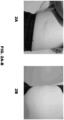
- a 12-year-old girl was referred for treatment of an involuted IH. She was concerned about the visual appearance and the feeling of fullness caused by the significant convexity of the tumor. Examination of the right flank revealed a skin-colored oval sagging soft tumor with overlying pinpoint vessels and branching telangiectasia ( Figure 1A-1B ). Initial measurement was 0.8 cm high and 7.5cm wide. Management options including surgical excision and laser treatments were discussed. The patient's mother was apprehensive regarding surgery due to the inherent risks of scarring, nerve damage, infection, bleeding, and tissue necrosis.
- the present inventors considered administering DCA to the patient to reduce the protuberance of the mass.
- the associated risks of DCA administration, as well as off-label use, and lack of pediatric approval were discussed with the patient. Two series of injections were planned.
- the site was anesthetized with a topical 40% lidocaine ointment. Following prepping with alcohol, an injection grid modified to overlay the affected tissue was applied. Subsequently, 0.2 mL of DCA concentrated to 2 mg/cm 2 was injected at 1 cm intervals using a total of 4.4 mL, followed by the application of ice packs. The patient tolerated the procedure well, and experienced moderate post-injection pain, erythema, bruising, and swelling lasting 24-48 hours.
- the first treatment achieved marginal improvement. As planned, injections were repeated 3 months later, using an additional 4.2 mL. The patient returned for evaluation two months after her second injection, and reported significant improvement in visual appearance and degree of protrusion.
- the FFR measured 0.2 cm high and 6.4 cm wide ( Figure 2A-2B ). Some of the visible superficial vessels and telangiectasias in the FFR of IH decreased in size, caliber, and/or lightened in color. Some of the superifical vessels appeared to resolve completely (clinically go away/not visible after treatment) post treatment.
Landscapes
- Health & Medical Sciences (AREA)
- Chemical & Material Sciences (AREA)
- Life Sciences & Earth Sciences (AREA)
- Medicinal Chemistry (AREA)
- Pharmacology & Pharmacy (AREA)
- Animal Behavior & Ethology (AREA)
- General Health & Medical Sciences (AREA)
- Public Health (AREA)
- Veterinary Medicine (AREA)
- Epidemiology (AREA)
- Engineering & Computer Science (AREA)
- Bioinformatics & Cheminformatics (AREA)
- Chemical Kinetics & Catalysis (AREA)
- General Chemical & Material Sciences (AREA)
- Dermatology (AREA)
- Oil, Petroleum & Natural Gas (AREA)
- Inorganic Chemistry (AREA)
- Vascular Medicine (AREA)
- Cardiology (AREA)
- Heart & Thoracic Surgery (AREA)
- Nuclear Medicine, Radiotherapy & Molecular Imaging (AREA)
- Organic Chemistry (AREA)
- Molecular Biology (AREA)
- Biophysics (AREA)
- Pharmaceuticals Containing Other Organic And Inorganic Compounds (AREA)
- Medicinal Preparation (AREA)
Claims (12)
- Composition comprenant une formulation pharmaceutiquement acceptable comprenant de l'acide désoxycholique ou son sel destinée à être utilsée dans le traitement de l'hémangiome infantile involuté chez un patient en ayant besoin.
- Composition destinée à être utilisée selon la revendication 1, dans laquelle l'acide désoxycholique est conjugué à la taurine ou à la glycine.
- Composition destinée à être utilisée selon la revendication 1 ou la revendication 2, dans laquelle la composition est administrable sous forme de solution aqueuse.
- Composition destinée à être utilisée selon la revendication 3, dans laquelle la solution comprend de l'acide désoxycholique à une concentration d'environ 1 % p/v à environ 5 % p/v.
- Composition destinée à être utilisée selon la revendication 4, dans laquelle la solution comprend de l'acide désoxycholique à une concentration de 1 % p/v.
- Composition destinée à être utilisée selon l'une quelconque des revendications 2 à 5, dans laquelle la solution comprend du désoxycholate de sodium.
- Composition destinée à être utilisée selon l'une quelconque des revendications 1 à 6, dans laquelle la composition est administrable par voie intralésionnelle.
- Composition destinée à être utilisée selon l'une quelconque des revendications 1 à 7, dans laquelle la durée du traitement est d'au moins 2 mois.
- Composition destinée à être utilisée selon la revendication 8, dans laquelle la durée du traitement est d'au moins 1 an.
- Composition destinée à être utilisée selon la revendication 8 ou la revendication 9, dans laquelle la durée du traitement est efficace pour obtenir une réduction d'au moins 5 % de la taille de la lésion.
- Composition destinée à être utilisée selon la revendication 8 ou la revendication 9, dans laquelle la durée du traitement est efficace pour obtenir une réduction d'au moins 50 % de la taille de la lésion.
- Composition destinée à être utilisée dans le traitement de l'hémangiome infantile involuté chez un patient en ayant besoin, comprenant une formulation pharmaceutique aqueuse comprenant :a) de l'acide désoxycholique à une concentration de 10 mg/mL ;b) de l'alcool benzylique à une concentration de 9 mg/mL ;c) du phosphate de sodium dibasique à une concentration de 1,42 mg/mL ;d) du chlorure de sodium à une concentration de 4,38 mg/mL ; ete) de l'hydroxyde de sodium à la concentration de 1,43 mg/mL,dans laquelle la formulation pharmaceutique a un pH d'environ 8,3.
Applications Claiming Priority (2)
| Application Number | Priority Date | Filing Date | Title |
|---|---|---|---|
| US201762599531P | 2017-12-15 | 2017-12-15 | |
| PCT/US2018/066054 WO2019118979A1 (fr) | 2017-12-15 | 2018-12-17 | Procédés de traitement de lésions résiduelles d'anomalies vasculaires |
Publications (3)
| Publication Number | Publication Date |
|---|---|
| EP3723730A1 EP3723730A1 (fr) | 2020-10-21 |
| EP3723730A4 EP3723730A4 (fr) | 2021-09-08 |
| EP3723730B1 true EP3723730B1 (fr) | 2024-05-29 |
Family
ID=66819717
Family Applications (1)
| Application Number | Title | Priority Date | Filing Date |
|---|---|---|---|
| EP18889060.2A Active EP3723730B1 (fr) | 2017-12-15 | 2018-12-17 | Procédés de traitement de lésions résiduelles d'anomalies vasculaires |
Country Status (4)
| Country | Link |
|---|---|
| US (2) | US11554126B2 (fr) |
| EP (1) | EP3723730B1 (fr) |
| CA (1) | CA3085221A1 (fr) |
| WO (1) | WO2019118979A1 (fr) |
Family Cites Families (5)
| Publication number | Priority date | Publication date | Assignee | Title |
|---|---|---|---|---|
| HU206367B (en) * | 1988-04-30 | 1992-10-28 | Sandoz Ag | Process for producing acid addition salts of steroid carboxylic acid-amidated taurine and glycine, as well as pharmaceutical compositions comprising such salts |
| US20050158408A1 (en) * | 1998-07-24 | 2005-07-21 | Yoo Seo H. | Dried forms of aqueous solubilized bile acid dosage formulation: preparation and uses thereof |
| US8242294B2 (en) | 2007-06-19 | 2012-08-14 | Kythera Biopharmaceuticals, Inc. | Synthetic bile acid compositions and methods |
| CN103930115A (zh) | 2011-09-13 | 2014-07-16 | 阿尔塔克有限公司 | 药物纳米粒组合物 |
| US20180078652A1 (en) | 2015-04-24 | 2018-03-22 | The Regents Of The University Of California | Nanoporphyrin telodendrimers for treatment of vascular abnormalities |
-
2018
- 2018-12-17 EP EP18889060.2A patent/EP3723730B1/fr active Active
- 2018-12-17 WO PCT/US2018/066054 patent/WO2019118979A1/fr not_active Ceased
- 2018-12-17 US US16/772,630 patent/US11554126B2/en active Active
- 2018-12-17 CA CA3085221A patent/CA3085221A1/fr active Pending
-
2022
- 2022-12-16 US US18/082,973 patent/US20230201223A1/en not_active Abandoned
Also Published As
| Publication number | Publication date |
|---|---|
| CA3085221A1 (fr) | 2019-06-20 |
| EP3723730A4 (fr) | 2021-09-08 |
| EP3723730A1 (fr) | 2020-10-21 |
| US11554126B2 (en) | 2023-01-17 |
| US20200384000A1 (en) | 2020-12-10 |
| US20230201223A1 (en) | 2023-06-29 |
| WO2019118979A1 (fr) | 2019-06-20 |
Similar Documents
| Publication | Publication Date | Title |
|---|---|---|
| US20240108638A1 (en) | Methods and related compositions for reduction of fat and skin tightening | |
| US20220387449A1 (en) | Treatment of submental fat | |
| Kara et al. | Effects of single-dose steroid usage on edema, ecchymosis, and intraoperative bleeding in rhinoplasty | |
| Rehman et al. | Use of intralesional verapamil to dissolve Peyronie’s disease plaque: a long-term single-blind study | |
| US8298556B2 (en) | Methods and related compositions for the non-surgical removal of fat | |
| TWI283177B (en) | New use of neurotoxin for treating thyroid and calcemia disorders | |
| Leenheer et al. | Mini-plication to treat small-angle strabismus: a minimally invasive procedure | |
| Jarahi et al. | Effects of progesterone on neuropathic pain responses in an experimental animal model for peripheral neuropathy in the rat: a behavioral and electrophysiological study | |
| Souyoul et al. | Alopecia after injection of ATX-101 for reduction of submental fat | |
| TW201803561A (zh) | 軟性抗膽鹼類似物之製劑 | |
| US9220717B2 (en) | Medicinal cosmetic lipoatrophy | |
| US20230201223A1 (en) | Methods of Treating Residual Lesions of Vascular Anomalies | |
| EP2263683A1 (fr) | Agent pour traiter le vieillissement de la peau et les cicatrices | |
| Odorico et al. | Effect of nimodipine and botulinum toxin A on peripheral nerve regeneration in rats: A pilot study | |
| Manavi | Lipid infusion as a treatment for local anesthetic toxicity: a literature review. | |
| Narita et al. | Tumescent local anesthesia in inguinal herniorrhaphy with a PROLENE hernia system: original technique and results | |
| Kumar et al. | Vitamin C premedication reduces postoperative rescue analgesic requirement after laparoscopic surgeries | |
| US10213441B2 (en) | Medicinal cosmetic lipoatrophy | |
| Levin | Nerve blocks and nerve stimulation in headache disorders | |
| Kotani et al. | An aromatic substance, eugenol induces distinct depressant effects on respiratory activity in different postnatal developmental stages of the rat | |
| MD et al. | The Use of Deoxycholic Acid for the Clinical Reduction of Excess Submental Fat in Indian Patients | |
| KR20190065079A (ko) | 회전근개 파열 치료용 약제학적 조성물 | |
| Wang et al. | A promising novel local anesthetic for effective anesthesia in oral inflammatory conditions through reducsing mitochondria-related apoptosis | |
| JP2025111372A (ja) | 痛みと浮腫そして副作用のない局所脂肪減少用組成物及びその投与方法{Composition for localized fat reduction without pain,edema and side effects and method of administration thereof} | |
| KR20250061869A (ko) | 지방 세포의 지방을 분해하기 위한 조성물 |
Legal Events
| Date | Code | Title | Description |
|---|---|---|---|
| STAA | Information on the status of an ep patent application or granted ep patent |
Free format text: STATUS: THE INTERNATIONAL PUBLICATION HAS BEEN MADE |
|
| PUAI | Public reference made under article 153(3) epc to a published international application that has entered the european phase |
Free format text: ORIGINAL CODE: 0009012 |
|
| STAA | Information on the status of an ep patent application or granted ep patent |
Free format text: STATUS: REQUEST FOR EXAMINATION WAS MADE |
|
| 17P | Request for examination filed |
Effective date: 20200622 |
|
| AK | Designated contracting states |
Kind code of ref document: A1 Designated state(s): AL AT BE BG CH CY CZ DE DK EE ES FI FR GB GR HR HU IE IS IT LI LT LU LV MC MK MT NL NO PL PT RO RS SE SI SK SM TR |
|
| AX | Request for extension of the european patent |
Extension state: BA ME |
|
| RIN1 | Information on inventor provided before grant (corrected) |
Inventor name: CARDIS, MICHAEL ANDREW Inventor name: DEKLOTZ, CYNTHIA MARIE CARVER |
|
| DAV | Request for validation of the european patent (deleted) | ||
| DAX | Request for extension of the european patent (deleted) | ||
| A4 | Supplementary search report drawn up and despatched |
Effective date: 20210810 |
|
| RIC1 | Information provided on ipc code assigned before grant |
Ipc: A61K 47/18 20170101ALI20210804BHEP Ipc: A61K 31/57 20060101ALI20210804BHEP Ipc: A61K 9/08 20060101AFI20210804BHEP |
|
| STAA | Information on the status of an ep patent application or granted ep patent |
Free format text: STATUS: EXAMINATION IS IN PROGRESS |
|
| 17Q | First examination report despatched |
Effective date: 20221118 |
|
| GRAP | Despatch of communication of intention to grant a patent |
Free format text: ORIGINAL CODE: EPIDOSNIGR1 |
|
| STAA | Information on the status of an ep patent application or granted ep patent |
Free format text: STATUS: GRANT OF PATENT IS INTENDED |
|
| INTG | Intention to grant announced |
Effective date: 20230828 |
|
| GRAS | Grant fee paid |
Free format text: ORIGINAL CODE: EPIDOSNIGR3 |
|
| P01 | Opt-out of the competence of the unified patent court (upc) registered |
Effective date: 20240102 |
|
| GRAA | (expected) grant |
Free format text: ORIGINAL CODE: 0009210 |
|
| STAA | Information on the status of an ep patent application or granted ep patent |
Free format text: STATUS: THE PATENT HAS BEEN GRANTED |
|
| AK | Designated contracting states |
Kind code of ref document: B1 Designated state(s): AL AT BE BG CH CY CZ DE DK EE ES FI FR GB GR HR HU IE IS IT LI LT LU LV MC MK MT NL NO PL PT RO RS SE SI SK SM TR |
|
| REG | Reference to a national code |
Ref country code: CH Ref legal event code: EP |
|
| REG | Reference to a national code |
Ref country code: IE Ref legal event code: FG4D |
|
| REG | Reference to a national code |
Ref country code: DE Ref legal event code: R096 Ref document number: 602018070184 Country of ref document: DE |
|
| REG | Reference to a national code |
Ref country code: LT Ref legal event code: MG9D |
|
| REG | Reference to a national code |
Ref country code: NL Ref legal event code: MP Effective date: 20240529 |
|
| PG25 | Lapsed in a contracting state [announced via postgrant information from national office to epo] |
Ref country code: IS Free format text: LAPSE BECAUSE OF FAILURE TO SUBMIT A TRANSLATION OF THE DESCRIPTION OR TO PAY THE FEE WITHIN THE PRESCRIBED TIME-LIMIT Effective date: 20240929 |
|
| PG25 | Lapsed in a contracting state [announced via postgrant information from national office to epo] |
Ref country code: BG Free format text: LAPSE BECAUSE OF FAILURE TO SUBMIT A TRANSLATION OF THE DESCRIPTION OR TO PAY THE FEE WITHIN THE PRESCRIBED TIME-LIMIT Effective date: 20240529 |
|
| PG25 | Lapsed in a contracting state [announced via postgrant information from national office to epo] |
Ref country code: HR Free format text: LAPSE BECAUSE OF FAILURE TO SUBMIT A TRANSLATION OF THE DESCRIPTION OR TO PAY THE FEE WITHIN THE PRESCRIBED TIME-LIMIT Effective date: 20240529 Ref country code: FI Free format text: LAPSE BECAUSE OF FAILURE TO SUBMIT A TRANSLATION OF THE DESCRIPTION OR TO PAY THE FEE WITHIN THE PRESCRIBED TIME-LIMIT Effective date: 20240529 |
|
| PG25 | Lapsed in a contracting state [announced via postgrant information from national office to epo] |
Ref country code: GR Free format text: LAPSE BECAUSE OF FAILURE TO SUBMIT A TRANSLATION OF THE DESCRIPTION OR TO PAY THE FEE WITHIN THE PRESCRIBED TIME-LIMIT Effective date: 20240830 |
|
| REG | Reference to a national code |
Ref country code: AT Ref legal event code: MK05 Ref document number: 1690057 Country of ref document: AT Kind code of ref document: T Effective date: 20240529 |
|
| PG25 | Lapsed in a contracting state [announced via postgrant information from national office to epo] |
Ref country code: ES Free format text: LAPSE BECAUSE OF FAILURE TO SUBMIT A TRANSLATION OF THE DESCRIPTION OR TO PAY THE FEE WITHIN THE PRESCRIBED TIME-LIMIT Effective date: 20240529 |
|
| PG25 | Lapsed in a contracting state [announced via postgrant information from national office to epo] |
Ref country code: AT Free format text: LAPSE BECAUSE OF FAILURE TO SUBMIT A TRANSLATION OF THE DESCRIPTION OR TO PAY THE FEE WITHIN THE PRESCRIBED TIME-LIMIT Effective date: 20240529 |
|
| PG25 | Lapsed in a contracting state [announced via postgrant information from national office to epo] |
Ref country code: PL Free format text: LAPSE BECAUSE OF FAILURE TO SUBMIT A TRANSLATION OF THE DESCRIPTION OR TO PAY THE FEE WITHIN THE PRESCRIBED TIME-LIMIT Effective date: 20240529 |
|
| PG25 | Lapsed in a contracting state [announced via postgrant information from national office to epo] |
Ref country code: LV Free format text: LAPSE BECAUSE OF FAILURE TO SUBMIT A TRANSLATION OF THE DESCRIPTION OR TO PAY THE FEE WITHIN THE PRESCRIBED TIME-LIMIT Effective date: 20240529 |
|
| PG25 | Lapsed in a contracting state [announced via postgrant information from national office to epo] |
Ref country code: PL Free format text: LAPSE BECAUSE OF FAILURE TO SUBMIT A TRANSLATION OF THE DESCRIPTION OR TO PAY THE FEE WITHIN THE PRESCRIBED TIME-LIMIT Effective date: 20240529 Ref country code: NO Free format text: LAPSE BECAUSE OF FAILURE TO SUBMIT A TRANSLATION OF THE DESCRIPTION OR TO PAY THE FEE WITHIN THE PRESCRIBED TIME-LIMIT Effective date: 20240829 Ref country code: LV Free format text: LAPSE BECAUSE OF FAILURE TO SUBMIT A TRANSLATION OF THE DESCRIPTION OR TO PAY THE FEE WITHIN THE PRESCRIBED TIME-LIMIT Effective date: 20240529 Ref country code: IS Free format text: LAPSE BECAUSE OF FAILURE TO SUBMIT A TRANSLATION OF THE DESCRIPTION OR TO PAY THE FEE WITHIN THE PRESCRIBED TIME-LIMIT Effective date: 20240929 Ref country code: HR Free format text: LAPSE BECAUSE OF FAILURE TO SUBMIT A TRANSLATION OF THE DESCRIPTION OR TO PAY THE FEE WITHIN THE PRESCRIBED TIME-LIMIT Effective date: 20240529 Ref country code: GR Free format text: LAPSE BECAUSE OF FAILURE TO SUBMIT A TRANSLATION OF THE DESCRIPTION OR TO PAY THE FEE WITHIN THE PRESCRIBED TIME-LIMIT Effective date: 20240830 Ref country code: FI Free format text: LAPSE BECAUSE OF FAILURE TO SUBMIT A TRANSLATION OF THE DESCRIPTION OR TO PAY THE FEE WITHIN THE PRESCRIBED TIME-LIMIT Effective date: 20240529 Ref country code: ES Free format text: LAPSE BECAUSE OF FAILURE TO SUBMIT A TRANSLATION OF THE DESCRIPTION OR TO PAY THE FEE WITHIN THE PRESCRIBED TIME-LIMIT Effective date: 20240529 Ref country code: BG Free format text: LAPSE BECAUSE OF FAILURE TO SUBMIT A TRANSLATION OF THE DESCRIPTION OR TO PAY THE FEE WITHIN THE PRESCRIBED TIME-LIMIT Effective date: 20240529 Ref country code: AT Free format text: LAPSE BECAUSE OF FAILURE TO SUBMIT A TRANSLATION OF THE DESCRIPTION OR TO PAY THE FEE WITHIN THE PRESCRIBED TIME-LIMIT Effective date: 20240529 Ref country code: RS Free format text: LAPSE BECAUSE OF FAILURE TO SUBMIT A TRANSLATION OF THE DESCRIPTION OR TO PAY THE FEE WITHIN THE PRESCRIBED TIME-LIMIT Effective date: 20240829 |
|
| PG25 | Lapsed in a contracting state [announced via postgrant information from national office to epo] |
Ref country code: NL Free format text: LAPSE BECAUSE OF FAILURE TO SUBMIT A TRANSLATION OF THE DESCRIPTION OR TO PAY THE FEE WITHIN THE PRESCRIBED TIME-LIMIT Effective date: 20240529 |
|
| PG25 | Lapsed in a contracting state [announced via postgrant information from national office to epo] |
Ref country code: NL Free format text: LAPSE BECAUSE OF FAILURE TO SUBMIT A TRANSLATION OF THE DESCRIPTION OR TO PAY THE FEE WITHIN THE PRESCRIBED TIME-LIMIT Effective date: 20240529 |
|
| PG25 | Lapsed in a contracting state [announced via postgrant information from national office to epo] |
Ref country code: DK Free format text: LAPSE BECAUSE OF FAILURE TO SUBMIT A TRANSLATION OF THE DESCRIPTION OR TO PAY THE FEE WITHIN THE PRESCRIBED TIME-LIMIT Effective date: 20240529 |
|
| PG25 | Lapsed in a contracting state [announced via postgrant information from national office to epo] |
Ref country code: EE Free format text: LAPSE BECAUSE OF FAILURE TO SUBMIT A TRANSLATION OF THE DESCRIPTION OR TO PAY THE FEE WITHIN THE PRESCRIBED TIME-LIMIT Effective date: 20240529 |
|
| PG25 | Lapsed in a contracting state [announced via postgrant information from national office to epo] |
Ref country code: CZ Free format text: LAPSE BECAUSE OF FAILURE TO SUBMIT A TRANSLATION OF THE DESCRIPTION OR TO PAY THE FEE WITHIN THE PRESCRIBED TIME-LIMIT Effective date: 20240529 |
|
| PG25 | Lapsed in a contracting state [announced via postgrant information from national office to epo] |
Ref country code: SK Free format text: LAPSE BECAUSE OF FAILURE TO SUBMIT A TRANSLATION OF THE DESCRIPTION OR TO PAY THE FEE WITHIN THE PRESCRIBED TIME-LIMIT Effective date: 20240529 Ref country code: RO Free format text: LAPSE BECAUSE OF FAILURE TO SUBMIT A TRANSLATION OF THE DESCRIPTION OR TO PAY THE FEE WITHIN THE PRESCRIBED TIME-LIMIT Effective date: 20240529 |
|
| PG25 | Lapsed in a contracting state [announced via postgrant information from national office to epo] |
Ref country code: SM Free format text: LAPSE BECAUSE OF FAILURE TO SUBMIT A TRANSLATION OF THE DESCRIPTION OR TO PAY THE FEE WITHIN THE PRESCRIBED TIME-LIMIT Effective date: 20240529 |
|
| PG25 | Lapsed in a contracting state [announced via postgrant information from national office to epo] |
Ref country code: SM Free format text: LAPSE BECAUSE OF FAILURE TO SUBMIT A TRANSLATION OF THE DESCRIPTION OR TO PAY THE FEE WITHIN THE PRESCRIBED TIME-LIMIT Effective date: 20240529 Ref country code: SK Free format text: LAPSE BECAUSE OF FAILURE TO SUBMIT A TRANSLATION OF THE DESCRIPTION OR TO PAY THE FEE WITHIN THE PRESCRIBED TIME-LIMIT Effective date: 20240529 Ref country code: RO Free format text: LAPSE BECAUSE OF FAILURE TO SUBMIT A TRANSLATION OF THE DESCRIPTION OR TO PAY THE FEE WITHIN THE PRESCRIBED TIME-LIMIT Effective date: 20240529 Ref country code: EE Free format text: LAPSE BECAUSE OF FAILURE TO SUBMIT A TRANSLATION OF THE DESCRIPTION OR TO PAY THE FEE WITHIN THE PRESCRIBED TIME-LIMIT Effective date: 20240529 Ref country code: DK Free format text: LAPSE BECAUSE OF FAILURE TO SUBMIT A TRANSLATION OF THE DESCRIPTION OR TO PAY THE FEE WITHIN THE PRESCRIBED TIME-LIMIT Effective date: 20240529 Ref country code: CZ Free format text: LAPSE BECAUSE OF FAILURE TO SUBMIT A TRANSLATION OF THE DESCRIPTION OR TO PAY THE FEE WITHIN THE PRESCRIBED TIME-LIMIT Effective date: 20240529 |
|
| PG25 | Lapsed in a contracting state [announced via postgrant information from national office to epo] |
Ref country code: IT Free format text: LAPSE BECAUSE OF FAILURE TO SUBMIT A TRANSLATION OF THE DESCRIPTION OR TO PAY THE FEE WITHIN THE PRESCRIBED TIME-LIMIT Effective date: 20240529 |
|
| REG | Reference to a national code |
Ref country code: DE Ref legal event code: R097 Ref document number: 602018070184 Country of ref document: DE |
|
| PLBE | No opposition filed within time limit |
Free format text: ORIGINAL CODE: 0009261 |
|
| STAA | Information on the status of an ep patent application or granted ep patent |
Free format text: STATUS: NO OPPOSITION FILED WITHIN TIME LIMIT |
|
| PG25 | Lapsed in a contracting state [announced via postgrant information from national office to epo] |
Ref country code: SI Free format text: LAPSE BECAUSE OF FAILURE TO SUBMIT A TRANSLATION OF THE DESCRIPTION OR TO PAY THE FEE WITHIN THE PRESCRIBED TIME-LIMIT Effective date: 20240529 |
|
| 26N | No opposition filed |
Effective date: 20250303 |
|
| REG | Reference to a national code |
Ref country code: DE Ref legal event code: R119 Ref document number: 602018070184 Country of ref document: DE |
|
| PG25 | Lapsed in a contracting state [announced via postgrant information from national office to epo] |
Ref country code: MC Free format text: LAPSE BECAUSE OF FAILURE TO SUBMIT A TRANSLATION OF THE DESCRIPTION OR TO PAY THE FEE WITHIN THE PRESCRIBED TIME-LIMIT Effective date: 20240529 |
|
| REG | Reference to a national code |
Ref country code: CH Ref legal event code: PL |
|
| PG25 | Lapsed in a contracting state [announced via postgrant information from national office to epo] |
Ref country code: LU Free format text: LAPSE BECAUSE OF NON-PAYMENT OF DUE FEES Effective date: 20241217 |
|
| GBPC | Gb: european patent ceased through non-payment of renewal fee |
Effective date: 20241217 |
|
| PG25 | Lapsed in a contracting state [announced via postgrant information from national office to epo] |
Ref country code: SE Free format text: LAPSE BECAUSE OF FAILURE TO SUBMIT A TRANSLATION OF THE DESCRIPTION OR TO PAY THE FEE WITHIN THE PRESCRIBED TIME-LIMIT Effective date: 20240529 |
|
| REG | Reference to a national code |
Ref country code: BE Ref legal event code: MM Effective date: 20241231 |
|
| PG25 | Lapsed in a contracting state [announced via postgrant information from national office to epo] |
Ref country code: DE Free format text: LAPSE BECAUSE OF NON-PAYMENT OF DUE FEES Effective date: 20250701 |
|
| PG25 | Lapsed in a contracting state [announced via postgrant information from national office to epo] |
Ref country code: GB Free format text: LAPSE BECAUSE OF NON-PAYMENT OF DUE FEES Effective date: 20241217 Ref country code: BE Free format text: LAPSE BECAUSE OF NON-PAYMENT OF DUE FEES Effective date: 20241231 |
|
| PG25 | Lapsed in a contracting state [announced via postgrant information from national office to epo] |
Ref country code: FR Free format text: LAPSE BECAUSE OF NON-PAYMENT OF DUE FEES Effective date: 20241231 |
|
| PG25 | Lapsed in a contracting state [announced via postgrant information from national office to epo] |
Ref country code: CH Free format text: LAPSE BECAUSE OF NON-PAYMENT OF DUE FEES Effective date: 20241231 |
|
| PG25 | Lapsed in a contracting state [announced via postgrant information from national office to epo] |
Ref country code: IE Free format text: LAPSE BECAUSE OF NON-PAYMENT OF DUE FEES Effective date: 20241217 |
|
| PG25 | Lapsed in a contracting state [announced via postgrant information from national office to epo] |
Ref country code: PT Free format text: LAPSE BECAUSE OF NON-PAYMENT OF DUE FEES Effective date: 20240529 |