EP3723873B1 - Übungsmaschinenüberwachungssystem zur überwachung eines oder mehrerer übungsmaschinen - Google Patents
Übungsmaschinenüberwachungssystem zur überwachung eines oder mehrerer übungsmaschinen Download PDFInfo
- Publication number
- EP3723873B1 EP3723873B1 EP18821764.0A EP18821764A EP3723873B1 EP 3723873 B1 EP3723873 B1 EP 3723873B1 EP 18821764 A EP18821764 A EP 18821764A EP 3723873 B1 EP3723873 B1 EP 3723873B1
- Authority
- EP
- European Patent Office
- Prior art keywords
- exercise
- user device
- exercise machine
- user
- wireless communication
- Prior art date
- Legal status (The legal status is an assumption and is not a legal conclusion. Google has not performed a legal analysis and makes no representation as to the accuracy of the status listed.)
- Active
Links
Images




Classifications
-
- G—PHYSICS
- G16—INFORMATION AND COMMUNICATION TECHNOLOGY [ICT] SPECIALLY ADAPTED FOR SPECIFIC APPLICATION FIELDS
- G16H—HEALTHCARE INFORMATICS, i.e. INFORMATION AND COMMUNICATION TECHNOLOGY [ICT] SPECIALLY ADAPTED FOR THE HANDLING OR PROCESSING OF MEDICAL OR HEALTHCARE DATA
- G16H20/00—ICT specially adapted for therapies or health-improving plans, e.g. for handling prescriptions, for steering therapy or for monitoring patient compliance
- G16H20/30—ICT specially adapted for therapies or health-improving plans, e.g. for handling prescriptions, for steering therapy or for monitoring patient compliance relating to physical therapies or activities, e.g. physiotherapy, acupressure or exercising
-
- A—HUMAN NECESSITIES
- A63—SPORTS; GAMES; AMUSEMENTS
- A63B—APPARATUS FOR PHYSICAL TRAINING, GYMNASTICS, SWIMMING, CLIMBING, OR FENCING; BALL GAMES; TRAINING EQUIPMENT
- A63B21/00—Exercising apparatus for developing or strengthening the muscles or joints of the body by working against a counterforce, with or without measuring devices
- A63B21/06—User-manipulated weights
- A63B21/062—User-manipulated weights including guide for vertical or non-vertical weights or array of weights to move against gravity forces
- A63B21/0626—User-manipulated weights including guide for vertical or non-vertical weights or array of weights to move against gravity forces with substantially vertical guiding means
- A63B21/0628—User-manipulated weights including guide for vertical or non-vertical weights or array of weights to move against gravity forces with substantially vertical guiding means for vertical array of weights
-
- A—HUMAN NECESSITIES
- A63—SPORTS; GAMES; AMUSEMENTS
- A63B—APPARATUS FOR PHYSICAL TRAINING, GYMNASTICS, SWIMMING, CLIMBING, OR FENCING; BALL GAMES; TRAINING EQUIPMENT
- A63B24/00—Electric or electronic controls for exercising apparatus of preceding groups; Controlling or monitoring of exercises, sportive games, training or athletic performances
- A63B24/0062—Monitoring athletic performances, e.g. for determining the work of a user on an exercise apparatus, the completed jogging or cycling distance
-
- A—HUMAN NECESSITIES
- A63—SPORTS; GAMES; AMUSEMENTS
- A63B—APPARATUS FOR PHYSICAL TRAINING, GYMNASTICS, SWIMMING, CLIMBING, OR FENCING; BALL GAMES; TRAINING EQUIPMENT
- A63B71/00—Games or sports accessories not covered in groups A63B1/00 - A63B69/00
- A63B71/06—Indicating or scoring devices for games or players, or for other sports activities
- A63B71/0619—Displays, user interfaces and indicating devices, specially adapted for sport equipment, e.g. display mounted on treadmills
-
- G—PHYSICS
- G16—INFORMATION AND COMMUNICATION TECHNOLOGY [ICT] SPECIALLY ADAPTED FOR SPECIFIC APPLICATION FIELDS
- G16H—HEALTHCARE INFORMATICS, i.e. INFORMATION AND COMMUNICATION TECHNOLOGY [ICT] SPECIALLY ADAPTED FOR THE HANDLING OR PROCESSING OF MEDICAL OR HEALTHCARE DATA
- G16H40/00—ICT specially adapted for the management or administration of healthcare resources or facilities; ICT specially adapted for the management or operation of medical equipment or devices
- G16H40/60—ICT specially adapted for the management or administration of healthcare resources or facilities; ICT specially adapted for the management or operation of medical equipment or devices for the operation of medical equipment or devices
- G16H40/63—ICT specially adapted for the management or administration of healthcare resources or facilities; ICT specially adapted for the management or operation of medical equipment or devices for the operation of medical equipment or devices for local operation
-
- A—HUMAN NECESSITIES
- A63—SPORTS; GAMES; AMUSEMENTS
- A63B—APPARATUS FOR PHYSICAL TRAINING, GYMNASTICS, SWIMMING, CLIMBING, OR FENCING; BALL GAMES; TRAINING EQUIPMENT
- A63B2220/00—Measuring of physical parameters relating to sporting activity
- A63B2220/20—Distances or displacements
-
- A—HUMAN NECESSITIES
- A63—SPORTS; GAMES; AMUSEMENTS
- A63B—APPARATUS FOR PHYSICAL TRAINING, GYMNASTICS, SWIMMING, CLIMBING, OR FENCING; BALL GAMES; TRAINING EQUIPMENT
- A63B2220/00—Measuring of physical parameters relating to sporting activity
- A63B2220/62—Time or time measurement used for time reference, time stamp, master time or clock signal
-
- A—HUMAN NECESSITIES
- A63—SPORTS; GAMES; AMUSEMENTS
- A63B—APPARATUS FOR PHYSICAL TRAINING, GYMNASTICS, SWIMMING, CLIMBING, OR FENCING; BALL GAMES; TRAINING EQUIPMENT
- A63B2220/00—Measuring of physical parameters relating to sporting activity
- A63B2220/80—Special sensors, transducers or devices therefor
- A63B2220/801—Contact switches
-
- A—HUMAN NECESSITIES
- A63—SPORTS; GAMES; AMUSEMENTS
- A63B—APPARATUS FOR PHYSICAL TRAINING, GYMNASTICS, SWIMMING, CLIMBING, OR FENCING; BALL GAMES; TRAINING EQUIPMENT
- A63B2220/00—Measuring of physical parameters relating to sporting activity
- A63B2220/80—Special sensors, transducers or devices therefor
- A63B2220/805—Optical or opto-electronic sensors
-
- A—HUMAN NECESSITIES
- A63—SPORTS; GAMES; AMUSEMENTS
- A63B—APPARATUS FOR PHYSICAL TRAINING, GYMNASTICS, SWIMMING, CLIMBING, OR FENCING; BALL GAMES; TRAINING EQUIPMENT
- A63B2220/00—Measuring of physical parameters relating to sporting activity
- A63B2220/80—Special sensors, transducers or devices therefor
- A63B2220/83—Special sensors, transducers or devices therefor characterised by the position of the sensor
- A63B2220/833—Sensors arranged on the exercise apparatus or sports implement
-
- A—HUMAN NECESSITIES
- A63—SPORTS; GAMES; AMUSEMENTS
- A63B—APPARATUS FOR PHYSICAL TRAINING, GYMNASTICS, SWIMMING, CLIMBING, OR FENCING; BALL GAMES; TRAINING EQUIPMENT
- A63B2225/00—Miscellaneous features of sport apparatus, devices or equipment
- A63B2225/50—Wireless data transmission, e.g. by radio transmitters or telemetry
-
- G—PHYSICS
- G08—SIGNALLING
- G08C—TRANSMISSION SYSTEMS FOR MEASURED VALUES, CONTROL OR SIMILAR SIGNALS
- G08C2201/00—Transmission systems of control signals via wireless link
- G08C2201/90—Additional features
- G08C2201/93—Remote control using other portable devices, e.g. mobile phone, PDA, laptop
-
- H—ELECTRICITY
- H04—ELECTRIC COMMUNICATION TECHNIQUE
- H04Q—SELECTING
- H04Q2209/00—Arrangements in telecontrol or telemetry systems
- H04Q2209/40—Arrangements in telecontrol or telemetry systems using a wireless architecture
- H04Q2209/47—Arrangements in telecontrol or telemetry systems using a wireless architecture using RFID associated with sensors
Definitions
- the invention relates generally to devices, systems and methods for measuring, transmitting, recording and displaying information relating to physical exercise and, more particularly, to a monitoring system for monitoring exercise machines comprising a lifting mechanism for selectively engaging a number of weights.
- weight training equipment There are various types of weight training equipment. Typical weight machines, for example, use gravity as the primary source of resistance. A combination of simple machines (e.g., pulleys, levers, wheels, inclines, etc.) to change the mechanical advantage of the overall machine relative to the weight and convey the resistance to the person using the exercise machine.
- Conventional stacked weight machines such as those made by Cybex International, Inc. and Nautilus, Inc., typically include a stack of rectangular weight plates through which a lifting mechanism, e.g. comprising a vertical lifting bar, passes.
- the lifting bar includes a plurality of holes configured to accept an engaging member, such as a pin.
- Each of the plates has a corresponding channel that aligns with one of the holes in the lifting bar when the lifting bar is in the lowered or at-rest position.
- the user operates the engaging member, e.g. by inserting a pin through the channel and the corresponding hole in the lift bar at a selected weight level.
- the lift bar rises and the engaging member supports all of the plates stacked above it.
- Conventional weight pins usually include a cylindrical shaft made of stainless steel or other hard metal.
- a weight pin can be made from a single piece of cylindrical metal rod that is bent slightly at one end to form a handle for inserting and removing the pin into a weight stack.
- Other types of weight pins can include a plastic or metal handle portion that is attached to the cylindrical shaft which is inserted into the weight stack.
- the shaft can include spring-loaded ball bearings and/or other locking features to releasable engage the pin with the weight stack and prevent it from becoming dislodged during use of the weight machine.
- Some pins with locking features include a push button on the handle to facilitate engagement of the locking feature with the weight stack and/or lifting bar.
- One important aspect of any type of exercise program is the ability to track personal performance and progress. For example, people engaged in endurance or distance forms of exercise (e.g., running, swimming, bicycling, etc.) often track the distance and/or time associated with a particular run, swim, ride, etc. Similarly, people using cardiovascular exercise machines (e.g., treadmills, stair-steppers, stationary bicycles, etc.) are often interested in knowing how long they exercise or how many calories they burn during a particular session.
- endurance or distance forms of exercise e.g., running, swimming, bicycling, etc.
- cardiovascular exercise machines e.g., treadmills, stair-steppers, stationary bicycles, etc.
- a system for tracking workout related information was suggested in WO2015/113162A1 .
- That system includes a wearable device wirelessly connectable to receive workout information related to use of a workout equipment, including a weight being used in the workout equipment.
- Workout information is collected by means of a weight stack selector device, which may determine both selected weight information and repetition information based on distance measured from a weight stack selector device to a stationary reference point. This may be accomplished by means of a transmitter incorporated in the selector device.
- the system proposed in WO2015/113162A1 relies on that a user possesses a wearable device, in order for the collection of work out information to take place.
- WO2017178048A1 discloses a measurement system for use in an exercise machine, which exercise machine comprises a lifting mechanism and an engaging member for selectively engaging a number of stacked weights to the lifting mechanism, the measurement system comprising a pair of cooperating members including a range meter and a reflector member, wherein one of the cooperating members is connected to the lifting mechanism and the other of the cooperating members is connected to the engaging member, wherein the range meter is directed to measure a distance to the reflector member to determine a distance which correlates to the weight of the selectively engaged weights.
- a general problem related to systems for measuring and tracking workout data is power consumption.
- exercise machines are typically spread out on the floor throughout one or more rooms, and access to a mains outlet is rarely available at each machine.
- the system is therefore preferably battery-charged, and moderate power consumption is consequently an overall objective.
- gym users tend to find new ways of exercising using such machines.
- the measurement system should be so devised that minimum user interaction is required, and such that accidental tampering or inhibition of the measurement is prevented during foreseeable use of the exercise machine.
- an object of embodiments herein is to provide a system for monitoring exercise machines that is robust, easy to install, power efficient, that provides a good user experience for users and where the users do not need any additional hardware.
- a further objective is to provide a monitoring system that can provide data to gym owners in order to enable gym owners to use of the data to analyze activities in the gym.
- a first aspect of the disclosure relates to an exercise machine monitoring system for monitoring a plurality of exercise machines, where the exercise machines, comprise a plurality of stacked weights.
- the monitoring system further comprises, for each of the exercise machines a repetition detector and an exercise machine identifier.
- the monitoring system further comprises an observer and a user device.
- the repetition detector is configured to be arranged to the stacked weights and to broadcast a short-range wireless communication signal comprising an identity of the exercise machine and an indication of a vertical movement of at least one of the stacked weights.
- the exercise machine identifier is configured to transmit a near field wireless communication signal comprising the identity of the exercise machine (i.e. an exercise machine identity).
- the observer is configured to receive the short-range wireless communication signals broadcasted by repetition detectors and to generate the exercise data based on the received short range wireless communication signals.
- the observer is configured to be arranged centrally in the gym.
- the user device is configured to receive a near field wireless communication signal transmitted by one of the repetition detectors, to retrieve the exercise data generated by the observer corresponding to an exercise machine identity comprised in the received near field wireless communication signal and to provide the retrieved exercise data or information associated therewith to a user.
- the proposed monitoring system is robust and easy to install as no cables are required. Furthermore, the monitoring system is power efficient and it a can be retro-fitted to existing gyms using their old machines. The monitoring system does not require any external power, but the devices may be provided with their own power sources, typically batteries. Because observers are typically placed centrally in the gym, the short-range wireless communication signals may be broadcasted with low energy, whereby the batteries may last long.
- the user device is configured to present enhanced exercise data obtained by combining exercise data received directly from the observer with exercise data received from the server, to the user.
- the observer is configured to generate exercise data in real-time and wherein the user device is configured to retrieve the generated data and to present it to the user in real-time.
- the user device is configured to present the exercise data on a display of the user device.
- the near field wireless communication signal is an NFC signal.
- the short-range wireless communication signal is a low energy signal.
- the short-range wireless communication signal is a Bluetooth Low Energy, BLE, signal.
- the user device is a smartphone.
- the disclosure relates to a method for monitoring a plurality of exercise machines arranged in a gym, wherein each of the exercise machines comprise a plurality of stacked weights, wherein each stacked weight comprises a repetition detector continually broadcasting a short-range wireless signal comprising an exercise machine identifier and an indication of a vertical movement of at least one of the stacked weights.
- the method comprising receiving, by a user device, a near filed wireless communication signal, transmitted by an exercise machine identifier of one of the exercise machines, comprising the exercise machine identity, and sending, by the user device, the user identity and an exercise machine identity, to a server and/or to other user devices.
- the method further comprises receiving, by one or more observers arranged centrally in the gym, short-range wireless signals broadcasted by the repetition detectors of the exercise machines, sending the received exercise data from the one or more observers to a server, and retrieving, by the user device, exercise data corresponding to an exercise machine identity comprised in the received near filed wireless signal for provision to a user.
- the method further comprises retrieving, comprises retrieving the exercise data from the server and/or directly from a repetition detector of the exercise machine corresponding to the exercise machine identity.
- the method comprises combining exercise data received directly from the observer with exercise data received from the server.
- Fig. 1a is an isometric view of a stacked weight exercise machine 1 having a plurality of weights 2 which may be monitored using the proposed monitoring system.
- Fig.1b the stacked weights are shown in further detail.
- a first example implementation (denoted 100a) of the proposed monitoring system 100 for monitoring one or more exercise machines is shown in Fig.2 .
- the monitoring system 100a of Fig. 2 comprises one repetition detector 10 and one exercise machine identifier 40 for each exercise machine that is to be monitored.
- the monitoring system 100a further comprises a server 2, at least one observer 30, and a wireless communication device 50, a weight sensing device 60 and an admin tool 70.
- the server has access to a data storage 20.
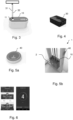
- Fig. 3 shows the repetition detector 10, also referred to as a main unit, in further detail.
- the repetition detector 10 is configured to be arranged to the stacked weights 2 of exercise machine 1. For example, it is configured to be arranged on the top of the stack of weights i.e. on the uppermost weight ( Fig. 5b ).
- the repetition detector 10 advertises information (e.g. a series of integers) associated with the exercising using short range wireless communication.
- the repetition detector 10 comprises a sensor arrangement 11 configured to provide sensor data indicative of a vertical movement of at least one of the stacked weights 2.
- the user may typically select how many of the weights should be used or engaged in the exercise. This is e.g. done by inserting a pin in one of the weights 2.
- the user will then indirectly "lift" the selected weights, which corresponds to a vertical movement of the selected weights.
- the training may be tracked by monitoring how many weights are selected to be lifted and how many times the selected weights are lifted.
- the repetition detector 10 comprises a sensor arrangement 11 configured to detect when a user performs an exercise in the exercise machine 1, by detecting vertical movements (herein also referred to as repetitions) of at least one of the stacked weights 2.
- the sensor arrangement 11 may e.g. comprise an accelerometer, range finder, a tension meter and/or similar.
- the sensor arrangement 11 comprises a light range finder.
- the light range finder is configured to transmit a laser beam 31 and to receive a reflection 32 of the transmitted laser beam to determine the distance to a fixed point of the upper part of the exercise machine.
- the rangefinder operates on the time of flight principle by sending a laser pulse in a narrow beam towards the object and measuring the time taken by the pulse to be reflected off the target and returned to the sender.
- Detection of a vertical movement of the stacked weight would then typically correspond to detecting that the distance between the repetition detector 10 and the exercise machine has changes a pre-determined amount, which corresponds to that the stacked weights 2 lave been lifted. It is also possible to detect that at least one of the stacked weights 2 have moved more than a pre-determined distance upwards and then starts moving in the opposite direction.
- the repetition detector 10 further comprises a short-range wireless communication interface.
- the short-range wireless communication interface e.g. uses Bluetooth Low Energy, BLE, ZigBee, LoRa.
- the repetition detector 10 further comprises control circuitry configured to detect a vertical movement based on the sensor data provided by the sensor arrangement 11.
- the control circuitry is further configured to broadcast, using the short-range wireless communication interface, a signal (i.e. an advertisement) comprising an identity of the exercise machine 1 and an indication of the detected vertical movement of at least one of the stacked weights 2. That the signal is broadcasted means that it may be heard by multiple receivers. Typically, it can be heard by any observer 30 or user device 50 that supports the short-range communication protocol.
- the broadcasted signal comprise may also comprise other data such as a sequence number and/or repetition number or other information.
- the repetition detector 10 serves as a broadcaster.
- a broadcaster does typically nothing more than transmitting data to its surroundings. It does so by advertising, and usually has useful data in the advertising packet, data that is meant for everyone to see. Such a device does not require a receiver, as its only role is to broadcast to others, so it never accepts connections.
- control circuitry is also configured to implement a power control function.
- the repetition detector 10 is then set in a sleep mode (which corresponds to practically completely switched off) when no exercise is performed, i.e. when the repetition detector 10 (and the stacked weights 2) are not moving.
- An accelerometer or similar is then used to wake-up the repetition detector 10 when it starts moving.
- the sensor arrangement 11 is then activated and starts detecting repetitions. If the repetition detector 10 is still for more than a few seconds, it will return to sleep mode.
- the detection and broadcasting are typically performed in real-time, such that each and every repetition that a user performs in the exercise machine is "reported". Thus, it is important that each and every signal can be correctly observed. Therefore, in one example implementation the broadcasted signal comprises a pulse-train of ten repeated signals.
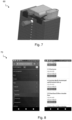
- the repetition detector 10 also comprises or is connected to a weight sensing device 60 ( Fig. 7 )
- the weight sensing device 60 is configured to estimate the weight that the user uses when training. This may e.g. be implemented by measuring a distance between the weight sensing device 60 and an engaging member.
- One example implementation is shown in international patent application WO2017/178048 . Then the broadcasted signal also comprises information about the estimated weight.
- the at least one repetition detector 10 is configured to broadcast a short-range wireless communication signal comprising an identity of the exercise machine 1 and an indication of a vertical movement of at least one of the stacked weights 2.
- the exercise machine identifier 40 is configured to transmit a near field wireless communication signal comprising the identity of the exercise machine. More specifically, the exercise machine identifier 40 comprises a proximity detector e.g. a NFC receiver, configured to detect proximity of e.g. a user device 50 and a transmitter configured to transmit the near field wireless communication signal.
- the signal is e.g. NFC or RFID.
- the proximity detector and transmitter may be implemented by as an NFC tag.
- the near field wireless communication signal is typically received by a user device 50 (e.g. a user's smartphone). The user may then inform the server that he/she intends to start exercising in the exercise machine 1.
- Fig. 5b illustrates the exercise machine identifier 40 and the repetition detector 10 when installed in the exercise machine 1. The repetition detector 10 is then mounted in the upper weight of the stacked weights 2.
- the observer 30 ( Fig. 4 ) comprises a short-range wireless communication interface, for monitoring short range wireless communication signals transmitted by repetition detectors 10 arranged to a plurality of exercise machines in a gym.
- the observer 30 is the opposite of a broadcaster (here the repetition detector 10), i.e. it passively listens to broadcasting devices in its area and processes the data from the advertising packets it receives. It does not need a transmitter, as it sends nothing and is never meant to enter a connection.
- the observer 30 is configured to receive signals broadcasted by repetition detectors 10 and to generate exercise data based on the received signals. More specifically, the observer 30 parses the data from detected advertisements (e.g. a series of integers) and sends it on the server 21. The observer 30 typically doesn't know whether a user is registered or logged in at the machines, it just forwards all correctly parsed advertisements. This means that all training in the gym is tracked, even when the user is not registered to the service.
- the observers 30 typically also comprise a securing arrangement for securing the observers e.g. to the ceiling.
- the one or more observers 30 are typically placed centrally in the area to be able to monitor short-range wireless communication signals transmitted by all the exercise machines 1 in the gym. It is typically desirable to broadcast the short-range wireless communication signals with low power. Therefore, if there is a plurality of observers 30 they may be distributed to cover different rooms, floors etc. Note that several observers may hear the same broadcast. Then this needs to be resolved e.g. by the server 21.
- Some analysis of the data is typically performed at the observer 30. More specifically, when the observer receives a pulse train from the repetition detector 10, then it filters the repetitions, e.g. removing duplicates having the same repetition number, and interprets it as one repetition.
- the generated exercise data is then forwarded to the server 21, where it is typically stored in the data storage 20.
- the observer 30 e.g. uses ordinary internet communication for communication with the server 21.
- the observer 30 may also comprise logic for establishing such connection and to detect bad internet connection and to reconnect, when connection is lost.
- the data storage 20 is configured to store the exercise data of the exercise machines.
- the data storage 20 is comprised in a server 21 or backend.
- the data storage 20 is e.g. a cloud implemented database or a remote database.
- the data stored in the data storage 20 may be used to gain insights and data about gym members and their training patterns and would also enable detailed analysis of utilization of gym machines.
- the server 21 typically communicates over internet i.e. using IP/Ethernet.
- the server 21 will receive exercise data from the observer and store it in the data storage 20.
- the stored exercise data can be used for all kinds of analysis at a later point in time. If a user device 40 is registered on a certain machine, then exercise data will be forwarded to the user device 50 in real time. In other words, exercise data corresponding to every detected repetition will be forwarded to the user device 50.
- the user device 50 is e.g. a smartphone comprising a mobile application, e.g. an android app ( Fig. 6 ).
- a mobile application e.g. an android app ( Fig. 6 ).
- the user may monitor machine training automatically in real-time, follow pre-defined workouts or save your personal workouts, view history of all training data, workout programs, statistics and progress.
- Fig. 9 illustrates the signaling between the devices of the monitoring system 100.
- a user starts a workout (or follows a program), touches the exercise machine identifier 40 with his/her user device 50, does his/her exercises, touch another exercise machine identifier (not shown), does his/her exercises, and he/she is done. In real time, the weighs and repetitions are presented nicely and everything is logged for future reference.
- the distance toward the pin is measured with another time of flight sensor. This distance represents a weight.
- a second user device 50b touches the exercise machine identifier 40 when exercise machine identifier 1 is still logged in on the exercise machine. It is detected by the exercise machine identifier.
- This example implementation solution is dependent upon a good internet, since the real-time experience is delivered over internet. With a local connectivity based solution it is possible get away from the problem. If the internet is lagging in the connection from the observer to the cloud, or from the cloud to the phone, the user experience will be bad.
- Fig. 10 illustrates a second example embodiment (denoted 100b) of the monitoring system 100.
- This embodiment differs from the first example embodiment in that the functionality of the observer 30 is integrated in the user device 50, e.g. the user's phone. This means that during exercise the signaling to from a server 21 over internet is not needed.
- This embodiment could be used on its own, when there is no wireless communication network coverage or it may be used in parallel with the first embodiment to enhance security, as will be explained in more detail below.
- the repetition detector 10, the exercise machine identifier 40 will be the same as in the first example embodiment. However, the functionality of the observer 30 and the user device 50 would typically be different, as no signaling there between is needed. In particular the integrated observer functionality will provide the exercise data directly to the user device 50, as it is comprised therein. Furthermore, the user device 50 will be configured to, when occupied, broadcast a signal that informs other user devices that the exercise machine 1 is occupied.
- Fig. 11 illustrates signaling between the devices in the monitoring system 100 according to the second example embodiment 100b.
- the method is initiated when the first user device 10a (first phone) touches the exercise machine identifier 40, and is detected by the proximity sensor on the exercise machine identifier 40.
- the accelerometer of the repetition detector 10 wakes up the system from sleep mode, when the user starts a repetition.
- the Time of Flight sensor measures the distance to the top of the exercise machine.
- the repetition detector 10 is back to starting position for a few seconds it goes to sleep again.
- the cable which lifts the weight pack it is stretched (this is a way to ensure consistency in measurements) the distance toward the pin is measured with another time of flight sensor. This distance represents a weight.
- Steps S5, S6 of the first example embodiment are not needed in this example implementation, as the short-range wireless communication signal is monitored directly by the user device 50.
- the filtering of processing of the repetitions and weight is handled internally in the user device 50. Instead, the exercise data is generated and stored internally in the first user device 50.
- step S1 When a second user device 50b (second phone) touches the exercise machine identifier it is detected by the proximity sensor. (same as step S1).
- the functionality of the observer 30 is also comprised in the user device 50, which means that the user device 50 can receive exercise data directly from the repetition detector 10.
- the user device 50 is configured to retrieve broadcasted exercise data both from the server 21 and directly from the repetition detector 10 and to combine exercise data received directly from the repetition detector 10 with exercise data retrieved from the server 21.
- the user device 50 may receive two parallel streams of advertisements (here referred to as advertising messages) that originate from (i.e. are broadcasted by) one specific repetition detector 10, where each advertising message comprises an exercise machine identifier and a message identifier (e.g. 001, 002, 003).
- the user device 50 may then compare the individual messages to determine which advertising messages were actually broadcasted by the repetition detector 10.
- the redundancy created by using two streams decreases the risk that individual advertising message is missed or incorrectly received. In other words, this solution would typically be more stable, as the risk that an individual packet is lost is decreased. For example, if the internet connection is lost, the user device 50 will continue to receive exercise data directly from the repetition detector 10.
- a computer-readable medium may include removable and non-removable storage devices including, but not limited to, Read Only Memory (ROM), Random Access Memory (RAM), compact discs (CDs), digital versatile discs (DVD), etc.
- program modules may include routines, programs, objects, components, data structures, etc. that performs particular tasks or implement particular abstract data types.
- Computer-executable instructions, associated data structures, and program modules represent examples of program code for executing steps of the methods disclosed herein. The particular sequence of such executable instructions or associated data structures represents examples of corresponding acts for implementing the functions described in such steps or processes.
- Fig. 12 illustrates a corresponding method for monitoring a plurality of exercise machines.
- the method is typically performed when a user is exercising in a gym.
- the user will typically initiate the method by starting the application, logging in (which might be automatic) and then tap the user device 50 (typically a smart phone) at the exercise machine identifier 40 he intends to use.
- logging in which might be automatic
- tap the user device 50 typically a smart phone
- step S1 the user device 50 receives near filed wireless communication signal comprising the identity of the exercise machine from exercise machine identifier 40.
- the user device is informed about the identity of the exercise machine that he/she intends to use.
- step S2 the user device 50 sends User Id and machine identity to server S2a and/or to other user devices S2b.
- the user may register to the machine either by informing the server or by directly informing other user devices.
- step S3 the repetition detector 10 continually broadcasts short range wireless communication signal comprising detected repetitions and machine ID and typically also weight and repetition/sequence number.
- step S4 the observer receives a short-range wireless communication signal transmitted by the repetition detector 10 comprising information about a detected repetition (and potentially also weight) and machine ID.
- the observer typically identifies a repetition using e.g. filtering.
- step S5 the observer 30 forwards exercise data corresponding to the received signal to a server 21.
- step S6 the server 21 sends exercise data to user device 50 of a user that has registered to the corresponding exercise machine 1.
- step S7 the user device to retrieves, exercise data corresponding to an exercise machine identity comprised in the received near filed wireless communication signal from server S6a or from observer S6, for provision to a user.
- step S8 another user device sends a user ID and exercise machine identity to the server.
- step S9 the server or the other user device instructs the user device to log-off and/or to stop listening to the repetition detector 10.
- the user device stores complete exercise in a data storage 20. This might be done when changing machine or when the entire exercise is completed.
Landscapes
- Health & Medical Sciences (AREA)
- General Health & Medical Sciences (AREA)
- Physical Education & Sports Medicine (AREA)
- Engineering & Computer Science (AREA)
- Life Sciences & Earth Sciences (AREA)
- Biophysics (AREA)
- Primary Health Care (AREA)
- Biomedical Technology (AREA)
- Epidemiology (AREA)
- Medical Informatics (AREA)
- Orthopedic Medicine & Surgery (AREA)
- Public Health (AREA)
- Human Computer Interaction (AREA)
- Business, Economics & Management (AREA)
- General Business, Economics & Management (AREA)
- Medical Treatment And Welfare Office Work (AREA)
Claims (15)
- Überwachungssystem (100) zum Überwachen einer Mehrzahl von Trainingsgeräten (1), die in einem Fitnessstudio angeordnet sind, wobei jedes der Trainingsgeräte (1) eine Mehrzahl von gestapelten Gewichten (2) umfasst, das Überwachungssystem (100) umfasstfür jedes der Trainingsgeräte (1):- eine Haupteinheit (10), die so konfiguriert ist, dass sie an den gestapelten Gewichten (2) angeordnet werden kann, um ein Funkkommunikationssignal für kurze Reichweiten auszusenden, das eine Trainingsgerätidentität und eine Angabe einer vertikalen Bewegung von mindestens einem der gestapelten Gewichte (2) umfasst, und- ein Trainingsgerätidentifikator (40), der dazu konfiguriert ist, dass ein Nahfeld-Funkkommunikationssignal zu übertragen, das die Trainingsgerätidentität umfasst,wobei das Überwachungssystem ferner umfasst:- eine Benutzervorrichtung (50),- ein oder mehrere Beobachter (30), die so konfiguriert sind, dass sie zentral im Fitnessstudio angeordnet werden können, und ein Beobachter, der in die Benutzervorrichtung integriert ist, wobei die genannten Beobachter dazu konfiguriert sind, von den Haupteinheiten (10) der Mehrzahl von Trainingsgeräten (1) ausgesendete Funkkommunikationssignale für kurze Reichweiten zu empfangen und basierend auf den empfangenen Funkkommunikationssignalen für kurze Reichweiten Trainingsdaten für die Mehrzahl von Trainingsgeräten (1) zu generieren,- einen Server (21) der Zugriff auf einen Datenspeicher hat, wobei der Server (21) dazu konfiguriert ist, Trainingsdaten für die Mehrzahl von Trainingsgeräten (1) von dem einen oder den mehreren Beobachtern (30) zu empfangen und die empfangenen Trainingsdaten für die Mehrzahl von Trainingsgeräten (1) im Datenspeicher (20) zu speichern, und- wobei die Benutzervorrichtung (50) dazu konfiguriert ist:ein Nahfeld-Funkkommunikationssignal zu empfangen, das ein Trainingsgerät (1) anhand eines der Trainingsgerätidentifikatoren (40) identifiziert, wenn auf den genannten Trainingsgerätidentifikator (40) getippt wird,Trainingsdaten abzurufen, die dem Trainingsgerät (1) entsprechen, das durch das empfangene Nahfeld-Funkkommunikationssignal identifiziert wurde,ein Signal auszusenden, das andere Benutzervorrichtungen darüber informiert, dass das identifizierte Trainingsgerät (1) belegt ist, unddie abgerufenen Trainingsdaten, die dem Trainingsgerät (1) entsprechen, das durch das empfangene Nahfeld-Funkkommunikationssignal identifiziert wurde, einem Benutzer zu präsentieren.
- Überwachungssystem (100) nach Anspruch 1, ferner umfassend:- eine Gewichtserfassungsvorrichtung (60), die dazu konfiguriert ist, dass das Gewicht der gestapelten Gewichte, die die vertikale Bewegung ausführen, zu erfassen,wobei das Funkkommunikationssignal für kurze Reichweiten ferner eine Angabe des erfassten Gewichts umfasst.
- Überwachungssystem (100) nach einem der vorstehenden Ansprüche, wobei die Benutzervorrichtung (50) dazu konfiguriert ist, die ausgesendeten Trainingsdaten vom Server (21) abzurufen.
- Überwachungssystem (100) nach einem der vorstehenden Ansprüche, wobei die Benutzervorrichtung (50) dazu konfiguriert ist, ausgesendete Trainingsdaten direkt von der Haupteinheit (10) zu empfangen und direkt von der Haupteinheit (10) empfangene Trainingsdaten mit Trainingsdaten, die vom Server (21) abgerufen werden, zu kombinieren.
- Überwachungssystem nach Anspruch 4, wobei die Benutzervorrichtung dazu konfiguriert ist, dem Benutzer erweiterte Trainingsdaten zu präsentieren, die durch Kombinieren von direkt vom Beobachter (30) empfangenen Trainingsdaten mit vom Server (21) empfangenen Trainingsdaten erhalten werden.
- Überwachungssystem nach einem der vorstehenden Ansprüche, wobei der Beobachter (30) dazu konfiguriert ist, Trainingsdaten in Echtzeit zu generieren, und wobei die Benutzervorrichtung (50) dazu konfiguriert ist, die generierten Daten abzurufen und sie dem Benutzer in Echtzeit zu präsentieren.
- Überwachungssystem nach einem der vorstehenden Ansprüche, wobei die Benutzervorrichtung (50) dazu konfiguriert ist, die Trainingsdaten auf einer Anzeige der Benutzervorrichtung (50) zu präsentieren.
- Überwachungssystem nach einem der vorstehenden Ansprüche, wobei das Nahfeld-Funkkommunikationssignal ein NFC-Signal ist.
- Überwachungssystem nach einem der vorstehenden Ansprüche, wobei das Funkkommunikationssignal für kurze Reichweiten ein Niedrigenergiesignal ist.
- Überwachungssystem nach einem der vorstehenden Ansprüche, wobei das Funkkommunikationssignal für kurze Reichweiten ein Bluetooth Low Energy-, BLE-, Signal ist.
- Überwachungssystem nach einem der vorstehenden Ansprüche, wobei die Benutzervorrichtung (50) ein Smartphone ist.
- Verfahren zum Überwachen einer Mehrzahl von Trainingsgeräten (1), die in einem Fitnessstudio angeordnet sind, wobei jedes der Trainingsgeräte (1) eine Mehrzahl von gestapelten Gewichten (2) umfasst, wobei jedes gestapelte Gewicht eine Haupteinheit umfasst, die kontinuierlich ein Funkkommunikationssignal für kurze Reichweiten aussendet, das eine Trainingsgerätidentität und eine Anzeige einer vertikalen Bewegung von mindestens einem der gestapelten Gewichte (2) umfasst, wobei das Verfahren umfasst:Empfangen (S1) eines Nahfeld-Funkkommunikationssignals durch eine Benutzervorrichtung (50), das von einem Trainingsgerätidentifikator (40) eines der Trainingsgeräte (1) übertragen wird, das eine Trainingsgerätidentität umfasst,Empfangen (S4) der von der Haupteinheit (10) des genannten einen Trainingsgeräte (1) ausgesendeten Funksignale für kurze Reichweiten durch einen oder mehrere zentral im Fitnessstudio angeordnete Beobachter (30) und durch einen in die Benutzervorrichtung integrierten Beobachter (30),Senden (S5, S10) von Trainingsdaten, die basierend auf den empfangenen Funksignalen für kurze Reichweiten generiert wurden, vom Beobachter (30) an einen Server (21),Aussenden eines Signals durch die Benutzervorrichtung (50), das andere Benutzervorrichtungen darüber informiert, dass das genannte eine Trainingsgerät (1) belegt ist, undAbrufen (S7) von Trainingsdaten, die einer Trainingsgerätidentität entsprechen, die in dem empfangenen Nahfeld-Funksignal enthalten ist, durch die Benutzervorrichtung (50) zur Bereitstellung an einen Benutzer.
- Verfahren nach Anspruch 12, wobei das Abrufen (S7) das Abrufen der Trainingsdaten von dem Server (S6a) und/oder direkt von einer Haupteinheit (10) des Trainingsgeräts umfasst, die der Identität des Trainingsgeräts entspricht.
- Verfahren nach Anspruch 13, das ferner das Kombinieren von direkt vom Beobachter (30) empfangenen Trainingsdaten mit vom Server (21) empfangenen Trainingsdaten umfasst.
- Verfahren nach einem der Ansprüche 12-14, ferner umfassend:
Senden (S2) einer Benutzeridentität und der Identität des Trainingsgeräts durch die Benutzervorrichtung (50) an den Server (S2a) und/oder an andere Benutzervorrichtungen (S2b).
Applications Claiming Priority (2)
| Application Number | Priority Date | Filing Date | Title |
|---|---|---|---|
| SE1850079 | 2018-01-24 | ||
| PCT/SE2018/051242 WO2019147174A1 (en) | 2018-01-24 | 2018-12-03 | An exercise machine monitoring system for monitoring one or more exercise machines |
Publications (2)
| Publication Number | Publication Date |
|---|---|
| EP3723873A1 EP3723873A1 (de) | 2020-10-21 |
| EP3723873B1 true EP3723873B1 (de) | 2025-02-12 |
Family
ID=64734098
Family Applications (1)
| Application Number | Title | Priority Date | Filing Date |
|---|---|---|---|
| EP18821764.0A Active EP3723873B1 (de) | 2018-01-24 | 2018-12-03 | Übungsmaschinenüberwachungssystem zur überwachung eines oder mehrerer übungsmaschinen |
Country Status (3)
| Country | Link |
|---|---|
| US (1) | US11745042B2 (de) |
| EP (1) | EP3723873B1 (de) |
| WO (1) | WO2019147174A1 (de) |
Families Citing this family (11)
| Publication number | Priority date | Publication date | Assignee | Title |
|---|---|---|---|---|
| EP3788629A1 (de) * | 2018-05-04 | 2021-03-10 | Sony Corporation | Automatische abmeldung von einer übungsmaschine in einem übungsmaschinenüberwachungssystem |
| EP4371627B1 (de) | 2019-10-25 | 2025-04-23 | Lumos Holdings US Acquisition Co. | Prädiktive wartung von übungsmaschinen mit flugzeitsensoren |
| EP4054157B1 (de) | 2021-03-05 | 2024-11-27 | Sony Group Corporation | System und verfahren zur überwachung der aktivität in einer fitnessstudioumgebung |
| US20220374806A1 (en) * | 2021-05-20 | 2022-11-24 | Chimney Hill Ventures LLC | System and method for tracking exercise equipment usage |
| EP4419215A1 (de) | 2021-10-21 | 2024-08-28 | Speede Fitness, LLC | Widerstandstrainingsmaschine und verfahren zur verwendung |
| EP4438137B1 (de) * | 2021-12-28 | 2025-09-17 | Drax Inc. | Sensormodul und gewichtstrainingsvorrichtung damit |
| KR102769300B1 (ko) * | 2021-12-28 | 2025-02-19 | 주식회사 디랙스 | 센서 모듈 및 이를 포함한 웨이트 운동 기기 |
| KR102769301B1 (ko) * | 2021-12-28 | 2025-02-19 | 주식회사 디랙스 | 센서 모듈 및 이를 포함한 웨이트 운동 기기 |
| WO2023250464A2 (en) | 2022-06-23 | 2023-12-28 | Speede Fitness, Llc | Multi-motor module for a resistance training machine, systems, and methods of use |
| SE2251408A1 (en) * | 2022-12-02 | 2024-06-03 | Lumos Holdings Us Acquisition Co | Automated monitoring of exercise devices |
| EP4653061A1 (de) * | 2024-05-22 | 2025-11-26 | Atletica Deutschland GmbH | Sensorgewichtssystem für eine übungsmaschine |
Citations (1)
| Publication number | Priority date | Publication date | Assignee | Title |
|---|---|---|---|---|
| WO2017178048A1 (en) * | 2016-04-13 | 2017-10-19 | Sony Mobile Communications Inc | Measurement system for use in an exercise machine |
Family Cites Families (9)
| Publication number | Priority date | Publication date | Assignee | Title |
|---|---|---|---|---|
| US20030211916A1 (en) | 2002-04-23 | 2003-11-13 | Capuano Patrick J. | Exercise parameters monitoring, recording and reporting system for free weight, weight stack, and sport-simulation exercise machines |
| US20140363800A1 (en) * | 2012-08-28 | 2014-12-11 | HAI Logan Gym, LLC | Personal training system and method |
| US9468793B2 (en) * | 2012-11-13 | 2016-10-18 | D'Miles Salmon | System for monitoring fitness performance |
| US9498128B2 (en) * | 2012-11-14 | 2016-11-22 | MAD Apparel, Inc. | Wearable architecture and methods for performance monitoring, analysis, and feedback |
| US20150265903A1 (en) * | 2013-03-26 | 2015-09-24 | Paul T. Kolen | Social web interactive fitness training |
| EP3099386A1 (de) | 2014-01-30 | 2016-12-07 | Gymtrack Inc. | Systeme, verfahren und vorrichtungen zur verfolgung von trainingsbezogenen informationen |
| US9616292B2 (en) * | 2015-01-09 | 2017-04-11 | Nolan Orfield | Exercise tracker |
| US10987535B2 (en) | 2016-01-21 | 2021-04-27 | Sony Mobile Communications Inc. | Deciding weight and repetitions in a gym machine with no mechanical impact |
| EP3373190B1 (de) | 2017-03-10 | 2021-08-18 | Sony Group Corporation | Elektronisches etikett |
-
2018
- 2018-12-03 WO PCT/SE2018/051242 patent/WO2019147174A1/en not_active Ceased
- 2018-12-03 US US16/957,049 patent/US11745042B2/en active Active
- 2018-12-03 EP EP18821764.0A patent/EP3723873B1/de active Active
Patent Citations (1)
| Publication number | Priority date | Publication date | Assignee | Title |
|---|---|---|---|---|
| WO2017178048A1 (en) * | 2016-04-13 | 2017-10-19 | Sony Mobile Communications Inc | Measurement system for use in an exercise machine |
Also Published As
| Publication number | Publication date |
|---|---|
| WO2019147174A1 (en) | 2019-08-01 |
| US20200342975A1 (en) | 2020-10-29 |
| US11745042B2 (en) | 2023-09-05 |
| EP3723873A1 (de) | 2020-10-21 |
Similar Documents
| Publication | Publication Date | Title |
|---|---|---|
| EP3723873B1 (de) | Übungsmaschinenüberwachungssystem zur überwachung eines oder mehrerer übungsmaschinen | |
| US20240033572A1 (en) | Outdoors training systems and methods for designing, monitoring and providing feedback of training | |
| US10898758B2 (en) | Measurement system for use in an exercise machine | |
| US10021188B2 (en) | Athletic performance monitoring with dynamic proximity pairing | |
| US11426632B2 (en) | Device and method for enhancing user operation of an exercise machine | |
| US20160346617A1 (en) | Systems, methods and devices for tracking workout related information | |
| US10905916B1 (en) | Device for logging exercise data and method thereof | |
| WO2016037012A1 (en) | Measuring health and fitness data using proximity sensors and mobile technologies | |
| EP2963953A1 (de) | Bluetooth-bakenübertragung | |
| US12131815B2 (en) | Auto log-out from an exercise machine in an exercise machine monitoring system | |
| EP2108311A1 (de) | System zur Ermittlung und Darstellung der Herzfrequenzen Einzelner während des Trainings | |
| US20170209743A1 (en) | System and method for linking oscillating movements of exercise equipment to a user of the exercise equipment in a database | |
| WO2016053905A1 (en) | Exercise class apparatus and method | |
| US9907999B2 (en) | Systems and methods for tracking, collecting, and analyzing user data for gyms | |
| KR102231899B1 (ko) | 다이나믹 밸런서 제어시스템 및 제어방법 | |
| CN109617998A (zh) | 一种分析定位的方法、装置及系统 | |
| US12453895B2 (en) | System for automatically logging strength exercise data | |
| EP4673235A1 (de) | Modulare interaktive übungs- und spielsysteme und verfahren | |
| US10427016B1 (en) | Golf club tracking system | |
| CN202427129U (zh) | 健身器材的自动计数器 | |
| US9668291B2 (en) | Pairing method of gym system | |
| US20260069924A1 (en) | Electronic networked intelligent fitness training coach system | |
| TWI734526B (zh) | 具阻力調整的運動資訊傳輸裝置 | |
| KR20180037530A (ko) | 비콘을 이용한 미션프로그램을 진행하는 방법 | |
| JP2023004812A (ja) | フィットネスエクササイズシステム及び運動器材の改造方法 |
Legal Events
| Date | Code | Title | Description |
|---|---|---|---|
| STAA | Information on the status of an ep patent application or granted ep patent |
Free format text: STATUS: UNKNOWN |
|
| STAA | Information on the status of an ep patent application or granted ep patent |
Free format text: STATUS: THE INTERNATIONAL PUBLICATION HAS BEEN MADE |
|
| PUAI | Public reference made under article 153(3) epc to a published international application that has entered the european phase |
Free format text: ORIGINAL CODE: 0009012 |
|
| STAA | Information on the status of an ep patent application or granted ep patent |
Free format text: STATUS: REQUEST FOR EXAMINATION WAS MADE |
|
| 17P | Request for examination filed |
Effective date: 20200717 |
|
| AK | Designated contracting states |
Kind code of ref document: A1 Designated state(s): AL AT BE BG CH CY CZ DE DK EE ES FI FR GB GR HR HU IE IS IT LI LT LU LV MC MK MT NL NO PL PT RO RS SE SI SK SM TR |
|
| AX | Request for extension of the european patent |
Extension state: BA ME |
|
| STAA | Information on the status of an ep patent application or granted ep patent |
Free format text: STATUS: EXAMINATION IS IN PROGRESS |
|
| 17Q | First examination report despatched |
Effective date: 20210209 |
|
| DAV | Request for validation of the european patent (deleted) | ||
| DAX | Request for extension of the european patent (deleted) | ||
| RAP3 | Party data changed (applicant data changed or rights of an application transferred) |
Owner name: SONY GROUP CORPORATION |
|
| RAP1 | Party data changed (applicant data changed or rights of an application transferred) |
Owner name: LUMOS HOLDINGS US ACQUISITION CO. |
|
| RAP3 | Party data changed (applicant data changed or rights of an application transferred) |
Owner name: LUMOS HOLDINGS US ACQUISITION CO. |
|
| GRAP | Despatch of communication of intention to grant a patent |
Free format text: ORIGINAL CODE: EPIDOSNIGR1 |
|
| STAA | Information on the status of an ep patent application or granted ep patent |
Free format text: STATUS: GRANT OF PATENT IS INTENDED |
|
| RIC1 | Information provided on ipc code assigned before grant |
Ipc: G16H 40/63 20180101ALI20240923BHEP Ipc: G16H 20/30 20180101ALI20240923BHEP Ipc: A63B 71/06 20060101ALI20240923BHEP Ipc: A63B 24/00 20060101ALI20240923BHEP Ipc: A63B 21/062 20060101AFI20240923BHEP |
|
| INTG | Intention to grant announced |
Effective date: 20241008 |
|
| GRAS | Grant fee paid |
Free format text: ORIGINAL CODE: EPIDOSNIGR3 |
|
| GRAA | (expected) grant |
Free format text: ORIGINAL CODE: 0009210 |
|
| STAA | Information on the status of an ep patent application or granted ep patent |
Free format text: STATUS: THE PATENT HAS BEEN GRANTED |
|
| AK | Designated contracting states |
Kind code of ref document: B1 Designated state(s): AL AT BE BG CH CY CZ DE DK EE ES FI FR GB GR HR HU IE IS IT LI LT LU LV MC MK MT NL NO PL PT RO RS SE SI SK SM TR |
|
| REG | Reference to a national code |
Ref country code: GB Ref legal event code: FG4D |
|
| REG | Reference to a national code |
Ref country code: CH Ref legal event code: EP |
|
| REG | Reference to a national code |
Ref country code: DE Ref legal event code: R096 Ref document number: 602018079124 Country of ref document: DE |
|
| REG | Reference to a national code |
Ref country code: IE Ref legal event code: FG4D |
|
| REG | Reference to a national code |
Ref country code: NL Ref legal event code: MP Effective date: 20250212 |
|
| PG25 | Lapsed in a contracting state [announced via postgrant information from national office to epo] |
Ref country code: RS Free format text: LAPSE BECAUSE OF FAILURE TO SUBMIT A TRANSLATION OF THE DESCRIPTION OR TO PAY THE FEE WITHIN THE PRESCRIBED TIME-LIMIT Effective date: 20250512 |
|
| PG25 | Lapsed in a contracting state [announced via postgrant information from national office to epo] |
Ref country code: FI Free format text: LAPSE BECAUSE OF FAILURE TO SUBMIT A TRANSLATION OF THE DESCRIPTION OR TO PAY THE FEE WITHIN THE PRESCRIBED TIME-LIMIT Effective date: 20250212 |
|
| PG25 | Lapsed in a contracting state [announced via postgrant information from national office to epo] |
Ref country code: PL Free format text: LAPSE BECAUSE OF FAILURE TO SUBMIT A TRANSLATION OF THE DESCRIPTION OR TO PAY THE FEE WITHIN THE PRESCRIBED TIME-LIMIT Effective date: 20250212 |
|
| PG25 | Lapsed in a contracting state [announced via postgrant information from national office to epo] |
Ref country code: ES Free format text: LAPSE BECAUSE OF FAILURE TO SUBMIT A TRANSLATION OF THE DESCRIPTION OR TO PAY THE FEE WITHIN THE PRESCRIBED TIME-LIMIT Effective date: 20250212 |
|
| REG | Reference to a national code |
Ref country code: LT Ref legal event code: MG9D |
|
| PG25 | Lapsed in a contracting state [announced via postgrant information from national office to epo] |
Ref country code: IS Free format text: LAPSE BECAUSE OF FAILURE TO SUBMIT A TRANSLATION OF THE DESCRIPTION OR TO PAY THE FEE WITHIN THE PRESCRIBED TIME-LIMIT Effective date: 20250612 Ref country code: NO Free format text: LAPSE BECAUSE OF FAILURE TO SUBMIT A TRANSLATION OF THE DESCRIPTION OR TO PAY THE FEE WITHIN THE PRESCRIBED TIME-LIMIT Effective date: 20250512 |
|
| PG25 | Lapsed in a contracting state [announced via postgrant information from national office to epo] |
Ref country code: NL Free format text: LAPSE BECAUSE OF FAILURE TO SUBMIT A TRANSLATION OF THE DESCRIPTION OR TO PAY THE FEE WITHIN THE PRESCRIBED TIME-LIMIT Effective date: 20250212 |
|
| PG25 | Lapsed in a contracting state [announced via postgrant information from national office to epo] |
Ref country code: HR Free format text: LAPSE BECAUSE OF FAILURE TO SUBMIT A TRANSLATION OF THE DESCRIPTION OR TO PAY THE FEE WITHIN THE PRESCRIBED TIME-LIMIT Effective date: 20250212 |
|
| PG25 | Lapsed in a contracting state [announced via postgrant information from national office to epo] |
Ref country code: PT Free format text: LAPSE BECAUSE OF FAILURE TO SUBMIT A TRANSLATION OF THE DESCRIPTION OR TO PAY THE FEE WITHIN THE PRESCRIBED TIME-LIMIT Effective date: 20250612 Ref country code: LV Free format text: LAPSE BECAUSE OF FAILURE TO SUBMIT A TRANSLATION OF THE DESCRIPTION OR TO PAY THE FEE WITHIN THE PRESCRIBED TIME-LIMIT Effective date: 20250212 |
|
| PG25 | Lapsed in a contracting state [announced via postgrant information from national office to epo] |
Ref country code: BG Free format text: LAPSE BECAUSE OF FAILURE TO SUBMIT A TRANSLATION OF THE DESCRIPTION OR TO PAY THE FEE WITHIN THE PRESCRIBED TIME-LIMIT Effective date: 20250212 Ref country code: GR Free format text: LAPSE BECAUSE OF FAILURE TO SUBMIT A TRANSLATION OF THE DESCRIPTION OR TO PAY THE FEE WITHIN THE PRESCRIBED TIME-LIMIT Effective date: 20250513 |
|
| REG | Reference to a national code |
Ref country code: AT Ref legal event code: MK05 Ref document number: 1765544 Country of ref document: AT Kind code of ref document: T Effective date: 20250212 |
|
| PG25 | Lapsed in a contracting state [announced via postgrant information from national office to epo] |
Ref country code: SE Free format text: LAPSE BECAUSE OF FAILURE TO SUBMIT A TRANSLATION OF THE DESCRIPTION OR TO PAY THE FEE WITHIN THE PRESCRIBED TIME-LIMIT Effective date: 20250212 |
|
| PG25 | Lapsed in a contracting state [announced via postgrant information from national office to epo] |
Ref country code: SM Free format text: LAPSE BECAUSE OF FAILURE TO SUBMIT A TRANSLATION OF THE DESCRIPTION OR TO PAY THE FEE WITHIN THE PRESCRIBED TIME-LIMIT Effective date: 20250212 |
|
| PG25 | Lapsed in a contracting state [announced via postgrant information from national office to epo] |
Ref country code: DK Free format text: LAPSE BECAUSE OF FAILURE TO SUBMIT A TRANSLATION OF THE DESCRIPTION OR TO PAY THE FEE WITHIN THE PRESCRIBED TIME-LIMIT Effective date: 20250212 |
|
| PG25 | Lapsed in a contracting state [announced via postgrant information from national office to epo] |
Ref country code: IT Free format text: LAPSE BECAUSE OF FAILURE TO SUBMIT A TRANSLATION OF THE DESCRIPTION OR TO PAY THE FEE WITHIN THE PRESCRIBED TIME-LIMIT Effective date: 20250212 |
|
| PG25 | Lapsed in a contracting state [announced via postgrant information from national office to epo] |
Ref country code: AT Free format text: LAPSE BECAUSE OF FAILURE TO SUBMIT A TRANSLATION OF THE DESCRIPTION OR TO PAY THE FEE WITHIN THE PRESCRIBED TIME-LIMIT Effective date: 20250212 |
|
| PG25 | Lapsed in a contracting state [announced via postgrant information from national office to epo] |
Ref country code: EE Free format text: LAPSE BECAUSE OF FAILURE TO SUBMIT A TRANSLATION OF THE DESCRIPTION OR TO PAY THE FEE WITHIN THE PRESCRIBED TIME-LIMIT Effective date: 20250212 Ref country code: CZ Free format text: LAPSE BECAUSE OF FAILURE TO SUBMIT A TRANSLATION OF THE DESCRIPTION OR TO PAY THE FEE WITHIN THE PRESCRIBED TIME-LIMIT Effective date: 20250212 |
|
| PG25 | Lapsed in a contracting state [announced via postgrant information from national office to epo] |
Ref country code: RO Free format text: LAPSE BECAUSE OF FAILURE TO SUBMIT A TRANSLATION OF THE DESCRIPTION OR TO PAY THE FEE WITHIN THE PRESCRIBED TIME-LIMIT Effective date: 20250212 |
|
| PG25 | Lapsed in a contracting state [announced via postgrant information from national office to epo] |
Ref country code: SK Free format text: LAPSE BECAUSE OF FAILURE TO SUBMIT A TRANSLATION OF THE DESCRIPTION OR TO PAY THE FEE WITHIN THE PRESCRIBED TIME-LIMIT Effective date: 20250212 |
|
| REG | Reference to a national code |
Ref country code: DE Ref legal event code: R097 Ref document number: 602018079124 Country of ref document: DE |
|
| PLBE | No opposition filed within time limit |
Free format text: ORIGINAL CODE: 0009261 |
|
| STAA | Information on the status of an ep patent application or granted ep patent |
Free format text: STATUS: NO OPPOSITION FILED WITHIN TIME LIMIT |
|
| PGFP | Annual fee paid to national office [announced via postgrant information from national office to epo] |
Ref country code: DE Payment date: 20251126 Year of fee payment: 8 |
|
| PGFP | Annual fee paid to national office [announced via postgrant information from national office to epo] |
Ref country code: GB Payment date: 20251119 Year of fee payment: 8 |
|
| 26N | No opposition filed |
Effective date: 20251113 |