EP3726455A2 - Procédé de pronostic de la disponibilité d'au moins une station de charge pour un véhicule électrique - Google Patents
Procédé de pronostic de la disponibilité d'au moins une station de charge pour un véhicule électrique Download PDFInfo
- Publication number
- EP3726455A2 EP3726455A2 EP20169103.7A EP20169103A EP3726455A2 EP 3726455 A2 EP3726455 A2 EP 3726455A2 EP 20169103 A EP20169103 A EP 20169103A EP 3726455 A2 EP3726455 A2 EP 3726455A2
- Authority
- EP
- European Patent Office
- Prior art keywords
- charging
- charging station
- electric vehicle
- determined
- specific
- Prior art date
- Legal status (The legal status is an assumption and is not a legal conclusion. Google has not performed a legal analysis and makes no representation as to the accuracy of the status listed.)
- Pending
Links
Images

Classifications
-
- B—PERFORMING OPERATIONS; TRANSPORTING
- B60—VEHICLES IN GENERAL
- B60L—PROPULSION OF ELECTRICALLY-PROPELLED VEHICLES; SUPPLYING ELECTRIC POWER FOR AUXILIARY EQUIPMENT OF ELECTRICALLY-PROPELLED VEHICLES; ELECTRODYNAMIC BRAKE SYSTEMS FOR VEHICLES IN GENERAL; MAGNETIC SUSPENSION OR LEVITATION FOR VEHICLES; MONITORING OPERATING VARIABLES OF ELECTRICALLY-PROPELLED VEHICLES; ELECTRIC SAFETY DEVICES FOR ELECTRICALLY-PROPELLED VEHICLES
- B60L53/00—Methods of charging batteries, specially adapted for electric vehicles; Charging stations or on-board charging equipment therefor; Exchange of energy storage elements in electric vehicles
- B60L53/30—Constructional details of charging stations
- B60L53/305—Communication interfaces
-
- B—PERFORMING OPERATIONS; TRANSPORTING
- B60—VEHICLES IN GENERAL
- B60L—PROPULSION OF ELECTRICALLY-PROPELLED VEHICLES; SUPPLYING ELECTRIC POWER FOR AUXILIARY EQUIPMENT OF ELECTRICALLY-PROPELLED VEHICLES; ELECTRODYNAMIC BRAKE SYSTEMS FOR VEHICLES IN GENERAL; MAGNETIC SUSPENSION OR LEVITATION FOR VEHICLES; MONITORING OPERATING VARIABLES OF ELECTRICALLY-PROPELLED VEHICLES; ELECTRIC SAFETY DEVICES FOR ELECTRICALLY-PROPELLED VEHICLES
- B60L53/00—Methods of charging batteries, specially adapted for electric vehicles; Charging stations or on-board charging equipment therefor; Exchange of energy storage elements in electric vehicles
- B60L53/60—Monitoring or controlling charging stations
- B60L53/62—Monitoring or controlling charging stations in response to charging parameters, e.g. current, voltage or electrical charge
-
- B—PERFORMING OPERATIONS; TRANSPORTING
- B60—VEHICLES IN GENERAL
- B60L—PROPULSION OF ELECTRICALLY-PROPELLED VEHICLES; SUPPLYING ELECTRIC POWER FOR AUXILIARY EQUIPMENT OF ELECTRICALLY-PROPELLED VEHICLES; ELECTRODYNAMIC BRAKE SYSTEMS FOR VEHICLES IN GENERAL; MAGNETIC SUSPENSION OR LEVITATION FOR VEHICLES; MONITORING OPERATING VARIABLES OF ELECTRICALLY-PROPELLED VEHICLES; ELECTRIC SAFETY DEVICES FOR ELECTRICALLY-PROPELLED VEHICLES
- B60L53/00—Methods of charging batteries, specially adapted for electric vehicles; Charging stations or on-board charging equipment therefor; Exchange of energy storage elements in electric vehicles
- B60L53/60—Monitoring or controlling charging stations
- B60L53/63—Monitoring or controlling charging stations in response to network capacity
-
- B—PERFORMING OPERATIONS; TRANSPORTING
- B60—VEHICLES IN GENERAL
- B60L—PROPULSION OF ELECTRICALLY-PROPELLED VEHICLES; SUPPLYING ELECTRIC POWER FOR AUXILIARY EQUIPMENT OF ELECTRICALLY-PROPELLED VEHICLES; ELECTRODYNAMIC BRAKE SYSTEMS FOR VEHICLES IN GENERAL; MAGNETIC SUSPENSION OR LEVITATION FOR VEHICLES; MONITORING OPERATING VARIABLES OF ELECTRICALLY-PROPELLED VEHICLES; ELECTRIC SAFETY DEVICES FOR ELECTRICALLY-PROPELLED VEHICLES
- B60L53/00—Methods of charging batteries, specially adapted for electric vehicles; Charging stations or on-board charging equipment therefor; Exchange of energy storage elements in electric vehicles
- B60L53/60—Monitoring or controlling charging stations
- B60L53/65—Monitoring or controlling charging stations involving identification of vehicles or their battery types
-
- B—PERFORMING OPERATIONS; TRANSPORTING
- B60—VEHICLES IN GENERAL
- B60L—PROPULSION OF ELECTRICALLY-PROPELLED VEHICLES; SUPPLYING ELECTRIC POWER FOR AUXILIARY EQUIPMENT OF ELECTRICALLY-PROPELLED VEHICLES; ELECTRODYNAMIC BRAKE SYSTEMS FOR VEHICLES IN GENERAL; MAGNETIC SUSPENSION OR LEVITATION FOR VEHICLES; MONITORING OPERATING VARIABLES OF ELECTRICALLY-PROPELLED VEHICLES; ELECTRIC SAFETY DEVICES FOR ELECTRICALLY-PROPELLED VEHICLES
- B60L53/00—Methods of charging batteries, specially adapted for electric vehicles; Charging stations or on-board charging equipment therefor; Exchange of energy storage elements in electric vehicles
- B60L53/60—Monitoring or controlling charging stations
- B60L53/66—Data transfer between charging stations and vehicles
-
- B—PERFORMING OPERATIONS; TRANSPORTING
- B60—VEHICLES IN GENERAL
- B60L—PROPULSION OF ELECTRICALLY-PROPELLED VEHICLES; SUPPLYING ELECTRIC POWER FOR AUXILIARY EQUIPMENT OF ELECTRICALLY-PROPELLED VEHICLES; ELECTRODYNAMIC BRAKE SYSTEMS FOR VEHICLES IN GENERAL; MAGNETIC SUSPENSION OR LEVITATION FOR VEHICLES; MONITORING OPERATING VARIABLES OF ELECTRICALLY-PROPELLED VEHICLES; ELECTRIC SAFETY DEVICES FOR ELECTRICALLY-PROPELLED VEHICLES
- B60L53/00—Methods of charging batteries, specially adapted for electric vehicles; Charging stations or on-board charging equipment therefor; Exchange of energy storage elements in electric vehicles
- B60L53/60—Monitoring or controlling charging stations
- B60L53/67—Controlling two or more charging stations
-
- B—PERFORMING OPERATIONS; TRANSPORTING
- B60—VEHICLES IN GENERAL
- B60L—PROPULSION OF ELECTRICALLY-PROPELLED VEHICLES; SUPPLYING ELECTRIC POWER FOR AUXILIARY EQUIPMENT OF ELECTRICALLY-PROPELLED VEHICLES; ELECTRODYNAMIC BRAKE SYSTEMS FOR VEHICLES IN GENERAL; MAGNETIC SUSPENSION OR LEVITATION FOR VEHICLES; MONITORING OPERATING VARIABLES OF ELECTRICALLY-PROPELLED VEHICLES; ELECTRIC SAFETY DEVICES FOR ELECTRICALLY-PROPELLED VEHICLES
- B60L53/00—Methods of charging batteries, specially adapted for electric vehicles; Charging stations or on-board charging equipment therefor; Exchange of energy storage elements in electric vehicles
- B60L53/60—Monitoring or controlling charging stations
- B60L53/68—Off-site monitoring or control, e.g. remote control
-
- G—PHYSICS
- G06—COMPUTING OR CALCULATING; COUNTING
- G06Q—INFORMATION AND COMMUNICATION TECHNOLOGY [ICT] SPECIALLY ADAPTED FOR ADMINISTRATIVE, COMMERCIAL, FINANCIAL, MANAGERIAL OR SUPERVISORY PURPOSES; SYSTEMS OR METHODS SPECIALLY ADAPTED FOR ADMINISTRATIVE, COMMERCIAL, FINANCIAL, MANAGERIAL OR SUPERVISORY PURPOSES, NOT OTHERWISE PROVIDED FOR
- G06Q10/00—Administration; Management
- G06Q10/02—Reservations, e.g. for tickets, services or events
-
- G—PHYSICS
- G06—COMPUTING OR CALCULATING; COUNTING
- G06Q—INFORMATION AND COMMUNICATION TECHNOLOGY [ICT] SPECIALLY ADAPTED FOR ADMINISTRATIVE, COMMERCIAL, FINANCIAL, MANAGERIAL OR SUPERVISORY PURPOSES; SYSTEMS OR METHODS SPECIALLY ADAPTED FOR ADMINISTRATIVE, COMMERCIAL, FINANCIAL, MANAGERIAL OR SUPERVISORY PURPOSES, NOT OTHERWISE PROVIDED FOR
- G06Q10/00—Administration; Management
- G06Q10/04—Forecasting or optimisation specially adapted for administrative or management purposes, e.g. linear programming or "cutting stock problem"
-
- G—PHYSICS
- G06—COMPUTING OR CALCULATING; COUNTING
- G06Q—INFORMATION AND COMMUNICATION TECHNOLOGY [ICT] SPECIALLY ADAPTED FOR ADMINISTRATIVE, COMMERCIAL, FINANCIAL, MANAGERIAL OR SUPERVISORY PURPOSES; SYSTEMS OR METHODS SPECIALLY ADAPTED FOR ADMINISTRATIVE, COMMERCIAL, FINANCIAL, MANAGERIAL OR SUPERVISORY PURPOSES, NOT OTHERWISE PROVIDED FOR
- G06Q30/00—Commerce
- G06Q30/02—Marketing; Price estimation or determination; Fundraising
- G06Q30/0201—Market modelling; Market analysis; Collecting market data
- G06Q30/0204—Market segmentation
- G06Q30/0205—Market segmentation based on location or geographical consideration
-
- G—PHYSICS
- G06—COMPUTING OR CALCULATING; COUNTING
- G06Q—INFORMATION AND COMMUNICATION TECHNOLOGY [ICT] SPECIALLY ADAPTED FOR ADMINISTRATIVE, COMMERCIAL, FINANCIAL, MANAGERIAL OR SUPERVISORY PURPOSES; SYSTEMS OR METHODS SPECIALLY ADAPTED FOR ADMINISTRATIVE, COMMERCIAL, FINANCIAL, MANAGERIAL OR SUPERVISORY PURPOSES, NOT OTHERWISE PROVIDED FOR
- G06Q50/00—Information and communication technology [ICT] specially adapted for implementation of business processes of specific business sectors, e.g. utilities or tourism
- G06Q50/06—Energy or water supply
-
- G—PHYSICS
- G06—COMPUTING OR CALCULATING; COUNTING
- G06Q—INFORMATION AND COMMUNICATION TECHNOLOGY [ICT] SPECIALLY ADAPTED FOR ADMINISTRATIVE, COMMERCIAL, FINANCIAL, MANAGERIAL OR SUPERVISORY PURPOSES; SYSTEMS OR METHODS SPECIALLY ADAPTED FOR ADMINISTRATIVE, COMMERCIAL, FINANCIAL, MANAGERIAL OR SUPERVISORY PURPOSES, NOT OTHERWISE PROVIDED FOR
- G06Q50/00—Information and communication technology [ICT] specially adapted for implementation of business processes of specific business sectors, e.g. utilities or tourism
- G06Q50/40—Business processes related to the transportation industry
-
- B—PERFORMING OPERATIONS; TRANSPORTING
- B60—VEHICLES IN GENERAL
- B60L—PROPULSION OF ELECTRICALLY-PROPELLED VEHICLES; SUPPLYING ELECTRIC POWER FOR AUXILIARY EQUIPMENT OF ELECTRICALLY-PROPELLED VEHICLES; ELECTRODYNAMIC BRAKE SYSTEMS FOR VEHICLES IN GENERAL; MAGNETIC SUSPENSION OR LEVITATION FOR VEHICLES; MONITORING OPERATING VARIABLES OF ELECTRICALLY-PROPELLED VEHICLES; ELECTRIC SAFETY DEVICES FOR ELECTRICALLY-PROPELLED VEHICLES
- B60L2240/00—Control parameters of input or output; Target parameters
- B60L2240/60—Navigation input
- B60L2240/62—Vehicle position
-
- B—PERFORMING OPERATIONS; TRANSPORTING
- B60—VEHICLES IN GENERAL
- B60L—PROPULSION OF ELECTRICALLY-PROPELLED VEHICLES; SUPPLYING ELECTRIC POWER FOR AUXILIARY EQUIPMENT OF ELECTRICALLY-PROPELLED VEHICLES; ELECTRODYNAMIC BRAKE SYSTEMS FOR VEHICLES IN GENERAL; MAGNETIC SUSPENSION OR LEVITATION FOR VEHICLES; MONITORING OPERATING VARIABLES OF ELECTRICALLY-PROPELLED VEHICLES; ELECTRIC SAFETY DEVICES FOR ELECTRICALLY-PROPELLED VEHICLES
- B60L2240/00—Control parameters of input or output; Target parameters
- B60L2240/60—Navigation input
- B60L2240/68—Traffic data
-
- B—PERFORMING OPERATIONS; TRANSPORTING
- B60—VEHICLES IN GENERAL
- B60L—PROPULSION OF ELECTRICALLY-PROPELLED VEHICLES; SUPPLYING ELECTRIC POWER FOR AUXILIARY EQUIPMENT OF ELECTRICALLY-PROPELLED VEHICLES; ELECTRODYNAMIC BRAKE SYSTEMS FOR VEHICLES IN GENERAL; MAGNETIC SUSPENSION OR LEVITATION FOR VEHICLES; MONITORING OPERATING VARIABLES OF ELECTRICALLY-PROPELLED VEHICLES; ELECTRIC SAFETY DEVICES FOR ELECTRICALLY-PROPELLED VEHICLES
- B60L2240/00—Control parameters of input or output; Target parameters
- B60L2240/70—Interactions with external data bases, e.g. traffic centres
- B60L2240/72—Charging station selection relying on external data
-
- B—PERFORMING OPERATIONS; TRANSPORTING
- B60—VEHICLES IN GENERAL
- B60L—PROPULSION OF ELECTRICALLY-PROPELLED VEHICLES; SUPPLYING ELECTRIC POWER FOR AUXILIARY EQUIPMENT OF ELECTRICALLY-PROPELLED VEHICLES; ELECTRODYNAMIC BRAKE SYSTEMS FOR VEHICLES IN GENERAL; MAGNETIC SUSPENSION OR LEVITATION FOR VEHICLES; MONITORING OPERATING VARIABLES OF ELECTRICALLY-PROPELLED VEHICLES; ELECTRIC SAFETY DEVICES FOR ELECTRICALLY-PROPELLED VEHICLES
- B60L2260/00—Operating Modes
- B60L2260/40—Control modes
- B60L2260/50—Control modes by future state prediction
-
- B—PERFORMING OPERATIONS; TRANSPORTING
- B60—VEHICLES IN GENERAL
- B60L—PROPULSION OF ELECTRICALLY-PROPELLED VEHICLES; SUPPLYING ELECTRIC POWER FOR AUXILIARY EQUIPMENT OF ELECTRICALLY-PROPELLED VEHICLES; ELECTRODYNAMIC BRAKE SYSTEMS FOR VEHICLES IN GENERAL; MAGNETIC SUSPENSION OR LEVITATION FOR VEHICLES; MONITORING OPERATING VARIABLES OF ELECTRICALLY-PROPELLED VEHICLES; ELECTRIC SAFETY DEVICES FOR ELECTRICALLY-PROPELLED VEHICLES
- B60L2260/00—Operating Modes
- B60L2260/40—Control modes
- B60L2260/50—Control modes by future state prediction
- B60L2260/52—Control modes by future state prediction drive range estimation, e.g. of estimation of available travel distance
-
- Y—GENERAL TAGGING OF NEW TECHNOLOGICAL DEVELOPMENTS; GENERAL TAGGING OF CROSS-SECTIONAL TECHNOLOGIES SPANNING OVER SEVERAL SECTIONS OF THE IPC; TECHNICAL SUBJECTS COVERED BY FORMER USPC CROSS-REFERENCE ART COLLECTIONS [XRACs] AND DIGESTS
- Y02—TECHNOLOGIES OR APPLICATIONS FOR MITIGATION OR ADAPTATION AGAINST CLIMATE CHANGE
- Y02E—REDUCTION OF GREENHOUSE GAS [GHG] EMISSIONS, RELATED TO ENERGY GENERATION, TRANSMISSION OR DISTRIBUTION
- Y02E60/00—Enabling technologies; Technologies with a potential or indirect contribution to GHG emissions mitigation
-
- Y—GENERAL TAGGING OF NEW TECHNOLOGICAL DEVELOPMENTS; GENERAL TAGGING OF CROSS-SECTIONAL TECHNOLOGIES SPANNING OVER SEVERAL SECTIONS OF THE IPC; TECHNICAL SUBJECTS COVERED BY FORMER USPC CROSS-REFERENCE ART COLLECTIONS [XRACs] AND DIGESTS
- Y02—TECHNOLOGIES OR APPLICATIONS FOR MITIGATION OR ADAPTATION AGAINST CLIMATE CHANGE
- Y02T—CLIMATE CHANGE MITIGATION TECHNOLOGIES RELATED TO TRANSPORTATION
- Y02T10/00—Road transport of goods or passengers
- Y02T10/60—Other road transportation technologies with climate change mitigation effect
- Y02T10/70—Energy storage systems for electromobility, e.g. batteries
-
- Y—GENERAL TAGGING OF NEW TECHNOLOGICAL DEVELOPMENTS; GENERAL TAGGING OF CROSS-SECTIONAL TECHNOLOGIES SPANNING OVER SEVERAL SECTIONS OF THE IPC; TECHNICAL SUBJECTS COVERED BY FORMER USPC CROSS-REFERENCE ART COLLECTIONS [XRACs] AND DIGESTS
- Y02—TECHNOLOGIES OR APPLICATIONS FOR MITIGATION OR ADAPTATION AGAINST CLIMATE CHANGE
- Y02T—CLIMATE CHANGE MITIGATION TECHNOLOGIES RELATED TO TRANSPORTATION
- Y02T10/00—Road transport of goods or passengers
- Y02T10/60—Other road transportation technologies with climate change mitigation effect
- Y02T10/7072—Electromobility specific charging systems or methods for batteries, ultracapacitors, supercapacitors or double-layer capacitors
-
- Y—GENERAL TAGGING OF NEW TECHNOLOGICAL DEVELOPMENTS; GENERAL TAGGING OF CROSS-SECTIONAL TECHNOLOGIES SPANNING OVER SEVERAL SECTIONS OF THE IPC; TECHNICAL SUBJECTS COVERED BY FORMER USPC CROSS-REFERENCE ART COLLECTIONS [XRACs] AND DIGESTS
- Y02—TECHNOLOGIES OR APPLICATIONS FOR MITIGATION OR ADAPTATION AGAINST CLIMATE CHANGE
- Y02T—CLIMATE CHANGE MITIGATION TECHNOLOGIES RELATED TO TRANSPORTATION
- Y02T10/00—Road transport of goods or passengers
- Y02T10/60—Other road transportation technologies with climate change mitigation effect
- Y02T10/72—Electric energy management in electromobility
-
- Y—GENERAL TAGGING OF NEW TECHNOLOGICAL DEVELOPMENTS; GENERAL TAGGING OF CROSS-SECTIONAL TECHNOLOGIES SPANNING OVER SEVERAL SECTIONS OF THE IPC; TECHNICAL SUBJECTS COVERED BY FORMER USPC CROSS-REFERENCE ART COLLECTIONS [XRACs] AND DIGESTS
- Y02—TECHNOLOGIES OR APPLICATIONS FOR MITIGATION OR ADAPTATION AGAINST CLIMATE CHANGE
- Y02T—CLIMATE CHANGE MITIGATION TECHNOLOGIES RELATED TO TRANSPORTATION
- Y02T90/00—Enabling technologies or technologies with a potential or indirect contribution to GHG emissions mitigation
- Y02T90/10—Technologies relating to charging of electric vehicles
- Y02T90/12—Electric charging stations
-
- Y—GENERAL TAGGING OF NEW TECHNOLOGICAL DEVELOPMENTS; GENERAL TAGGING OF CROSS-SECTIONAL TECHNOLOGIES SPANNING OVER SEVERAL SECTIONS OF THE IPC; TECHNICAL SUBJECTS COVERED BY FORMER USPC CROSS-REFERENCE ART COLLECTIONS [XRACs] AND DIGESTS
- Y02—TECHNOLOGIES OR APPLICATIONS FOR MITIGATION OR ADAPTATION AGAINST CLIMATE CHANGE
- Y02T—CLIMATE CHANGE MITIGATION TECHNOLOGIES RELATED TO TRANSPORTATION
- Y02T90/00—Enabling technologies or technologies with a potential or indirect contribution to GHG emissions mitigation
- Y02T90/10—Technologies relating to charging of electric vehicles
- Y02T90/16—Information or communication technologies improving the operation of electric vehicles
-
- Y—GENERAL TAGGING OF NEW TECHNOLOGICAL DEVELOPMENTS; GENERAL TAGGING OF CROSS-SECTIONAL TECHNOLOGIES SPANNING OVER SEVERAL SECTIONS OF THE IPC; TECHNICAL SUBJECTS COVERED BY FORMER USPC CROSS-REFERENCE ART COLLECTIONS [XRACs] AND DIGESTS
- Y02—TECHNOLOGIES OR APPLICATIONS FOR MITIGATION OR ADAPTATION AGAINST CLIMATE CHANGE
- Y02T—CLIMATE CHANGE MITIGATION TECHNOLOGIES RELATED TO TRANSPORTATION
- Y02T90/00—Enabling technologies or technologies with a potential or indirect contribution to GHG emissions mitigation
- Y02T90/10—Technologies relating to charging of electric vehicles
- Y02T90/16—Information or communication technologies improving the operation of electric vehicles
- Y02T90/167—Systems integrating technologies related to power network operation and communication or information technologies for supporting the interoperability of electric or hybrid vehicles, i.e. smartgrids as interface for battery charging of electric vehicles [EV] or hybrid vehicles [HEV]
-
- Y—GENERAL TAGGING OF NEW TECHNOLOGICAL DEVELOPMENTS; GENERAL TAGGING OF CROSS-SECTIONAL TECHNOLOGIES SPANNING OVER SEVERAL SECTIONS OF THE IPC; TECHNICAL SUBJECTS COVERED BY FORMER USPC CROSS-REFERENCE ART COLLECTIONS [XRACs] AND DIGESTS
- Y04—INFORMATION OR COMMUNICATION TECHNOLOGIES HAVING AN IMPACT ON OTHER TECHNOLOGY AREAS
- Y04S—SYSTEMS INTEGRATING TECHNOLOGIES RELATED TO POWER NETWORK OPERATION, COMMUNICATION OR INFORMATION TECHNOLOGIES FOR IMPROVING THE ELECTRICAL POWER GENERATION, TRANSMISSION, DISTRIBUTION, MANAGEMENT OR USAGE, i.e. SMART GRIDS
- Y04S10/00—Systems supporting electrical power generation, transmission or distribution
- Y04S10/12—Monitoring or controlling equipment for energy generation units, e.g. distributed energy generation [DER] or load-side generation
- Y04S10/126—Monitoring or controlling equipment for energy generation units, e.g. distributed energy generation [DER] or load-side generation the energy generation units being or involving electric vehicles [EV] or hybrid vehicles [HEV], i.e. power aggregation of EV or HEV, vehicle to grid arrangements [V2G]
-
- Y—GENERAL TAGGING OF NEW TECHNOLOGICAL DEVELOPMENTS; GENERAL TAGGING OF CROSS-SECTIONAL TECHNOLOGIES SPANNING OVER SEVERAL SECTIONS OF THE IPC; TECHNICAL SUBJECTS COVERED BY FORMER USPC CROSS-REFERENCE ART COLLECTIONS [XRACs] AND DIGESTS
- Y04—INFORMATION OR COMMUNICATION TECHNOLOGIES HAVING AN IMPACT ON OTHER TECHNOLOGY AREAS
- Y04S—SYSTEMS INTEGRATING TECHNOLOGIES RELATED TO POWER NETWORK OPERATION, COMMUNICATION OR INFORMATION TECHNOLOGIES FOR IMPROVING THE ELECTRICAL POWER GENERATION, TRANSMISSION, DISTRIBUTION, MANAGEMENT OR USAGE, i.e. SMART GRIDS
- Y04S30/00—Systems supporting specific end-user applications in the sector of transportation
- Y04S30/10—Systems supporting the interoperability of electric or hybrid vehicles
- Y04S30/14—Details associated with the interoperability, e.g. vehicle recognition, authentication, identification or billing
Definitions
- the invention relates to a method for predicting the availability of at least one charging station for an electric vehicle, real demand for a charging process being estimated for the at least one charging station, and a first probability of availability of the at least one charging station being determined from this at a future point in time.
- the invention also relates to a method for the assisted booking of a charging station for an electric vehicle.
- Electric vehicles currently have a shorter range than vehicles with internal combustion engines. While the latter often have a range in the high three-digit kilometer range, the range of electric vehicles is usually in the range of a few hundred km.
- a further complicating factor for the use of electric vehicles for long-distance journeys is that the time required to recharge electrical energy at a charging station is significantly higher than filling up gasoline or diesel fuel. For this reason, it is of particular importance for users of electric vehicles to be able to plan charging processes as reliably as possible.
- a binding booking of a charging station allows it to be charged with essentially complete security within a certain time window. Due to unpredictable events, however, it can happen that a firmly booked charging station cannot be reached at the desired time, for example due to a traffic jam.
- bookings of charging stations lead to which are ultimately not used for an originally booked charging process, to a requirement to provide a larger number of charging stations than actually required for charging processes. If a booking is chargeable, on the one hand failure or cancellation costs may arise, as well as additional booking fees if a new chargeable booking has to be made at another charging station.
- some of the charging stations can make their current status available via an Internet-based service. This means that other road users can use the service to find out whether a charging station is currently available or not. If a booking system is integrated into the service, it can also be reported whether a fixed booking has already been made for a charging station at a specific point in time. Such information, however, only relates to the current actual status with regard to the charging processes that are taking place and which are already bindingly booked, but do not take into account the real demand situation at the desired charging time in the spatial area desired for the charging process.
- the invention is therefore based on the object of specifying a method for charging stations of electric vehicles which allows the availability of a charging station to be predicted as precisely as possible at a future point in time.
- the invention is also based on the object of specifying a method for assisted booking of a charging station for an electric vehicle, which method identifies required charging processes as reliably as possible and thereby reduces bookings of charging stations that are subject to a charge.
- the first-mentioned object is achieved by a method for predicting the availability of at least one charging station for an electric vehicle, a specific charging requirement being determined for a plurality of electric vehicles, each of the electric vehicles sending an inquiry regarding the availability of at least one charging station as a function of the specific charging requirement outputs, and wherein a real demand for a charging process is estimated for the at least one charging station on the basis of the inquiries from the electric vehicles, and a first probability for an availability of the at least one charging station at a future point in time is determined from this.
- a charging station for an electric vehicle is to be understood here in particular as meaning that a further charging process can be carried out at the relevant charging station for a specific period of time and that not all charging connections or cables are occupied at all individual charging stations of the charging station, or There are already binding bookings and reservations for the charging connections that are still free, so that no further charging can be guaranteed there.
- a specific charging requirement can be restricted, in particular, to a certain period or a certain time window, as well as spatially restricted to one or a few charging stations.
- Determining the specific charging requirement therefore consists in particular of a start time and possibly also a charging time as well as a spatial area in which the next charging process will take place, preferably based on the charging status of an electric vehicle and a range resulting therefrom, in accordance with the considerations described above restricted sufficiently narrow.
- the request is preferably output by a corresponding communication system of the electric vehicle, which is connected to a computer unit for determining the specific charging requirement.
- a computer unit can, in particular, implement management and monitoring of a charge level as well as comparable functions and, for example, be integrated into a comprehensive trip management system in which a navigation system of the electric vehicle is preferably also integrated.
- the request can be output to the charging station and / or to a central control or distribution system of charging stations.
- the charging station can estimate a real demand, possibly with the aid of statistical data previously stored in a computer unit of the charging station about inquiries and charging processes at other charging stations.
- a real demand in a central control or distribution system of charging stations is preferably determined on the basis of the inquiries.
- the concept of a central control or distribution system should not necessarily suggest a centralized computer structure, but rather the central recording of queries and possibly further information about a plurality of spatially separated charging stations as a function should be in the foreground.
- the central control or distribution system can in particular also be implemented via a cloud network.
- the request is implemented as a non-binding process of exchanging information without any firm booking or reservation.
- the specific charging requirement is now determined for the majority of electric vehicles. This can be determined, for example, on the basis of the current charge level and the resulting maximum range as well as on the basis of information about a planned or estimated route of the electric vehicle. If, for example, a route of a given electric vehicle is known with a sufficiently high probability, e.g. through a destination entered into a navigation system of the electric vehicle (and the reasonable assumption that this destination is actually being approached), this information can be used along a route suggested by the navigation system or otherwise Charging stations that are likely to be located within the maximum range on a specific route are determined as the subject of the specific demand. Further additional information or justified or statistically justifiable assumptions, such as the assumption that a charging process is only carried out below a certain charge level, since for technical reasons it is desirable to empty the battery as completely as possible, allow a further restriction of the in Question coming charging stations.
- a kind of "swarm request" is generated to individual charging stations, which is used to estimate the real demand.
- the connection between the swarm request and the real demand results, on the other hand, from the specific charging requirement on which the request is based: There is no need for a booking process in the request - even if real bookings have already been made as additional requests for the forecast of real demand - however, the need for the request is sufficiently specific to associate it with a real charging process, which will have to take place in the near future with a high degree of probability using the location and time parameters specified in the request.
- overbooking in particular can be avoided, which are caused by booking processes that are only made as a result of an imprecise forecast of the availability of charging stations at a future point in time for a certain area, in order to have a charging station available without actually having the charging process at the end or which cannot be used due to unforeseeable events such as traffic jams etc.
- the number of required charging stations for a certain fleet size of electric vehicles can be reduced, since fewer charging stations have to be kept for such overbooking.
- an additional assessment of a scaling of the inquiries can take place, which takes into account the fact that not all electric vehicles that have a charging requirement may issue an inquiry (e.g. because the corresponding vehicle model is not integrated into a system that carries out the process), and thus the real demand is correspondingly higher than all inquiries received for a specific point in time at a specific charging station (possibly weighted for each vehicle with a corresponding probability, if a charging requirement can also be met by other charging stations).
- a travel route is preferably determined or estimated for an electric vehicle and / or a charge level and thus at least one approximate value for a maximum range is determined, the specific charge requirement being determined on the basis of the determined or estimated route and / or on the basis of the charge level.
- Determination should be understood here and generally in particular to mean that the variable to be determined, i.e. in the present case the route, results from the information available in a deterministic manner, and thus in particular uncertainties which only lead to probabilistic information result from the information. Accordingly, an estimation is to be understood in particular as meaning that the variable to be estimated can only be determined with an uncertainty afflicted with the information available, even if the information itself does not have any uncertainty. In this case, in particular the variable to be estimated can be specified with a corresponding probability value.
- the route is expediently determined by entering a destination into a navigation system, or a current position of the electric vehicle is determined and the route of the electric vehicle is determined based on the determined current position and, in particular, a route in the area estimated from the current position.
- An input of a destination in a navigation system can be interpreted as a particularly reliable indicator for the route, in particular in connection with a route proposed by the navigation system. But even if there is no such input, a presumed route can be estimated based on the current position of the vehicle and, if necessary, based on further information.
- data is preferably used that was noted by the driver in an electronic appointment calendar and / or in social networks, in particular in corresponding event and / or appointment functions of a social network.
- Such data can, if they indicate a date or an event at a certain point in time at a certain location, be used as an indicator of the route, whereby an uncertainty factor must be taken into account as to whether on the one hand the date is actually perceived and which route is actually chosen to the location corresponding to the date or the event, since here - unlike in the case of the navigation system - there is no specific suggestion of a route associated with the presumed date or the presumed event.
- a corresponding uncertainty or probability factor can preferably be obtained from a statistical model which analyzes the behavior of a large number of drivers and / or based on individual statistics about the specific driver of the electric vehicle in question.
- a probability value is determined for a specific charging requirement to carry out or carry out a charging process at a certain point in time, and in particular for a certain minimum duration, within a spatially limited area, which preferably includes a number of charging stations have to.
- a probability value for the fact that a charging process is actually to be carried out can be estimated, in particular, under the premise that, for technical reasons, a battery always runs to the greatest possible discharge becomes.
- a probability value that a charging process has to be carried out can be estimated as a function of the scenario that otherwise it would no longer be possible to continue driving due to a complete battery discharge.
- Such a probability value determined for a specific charging requirement which can in particular be directly linked to a specific charging station, is preferably output with the request so that it can be included as a probabilistic value when estimating the real demand at a charging station.
- a charging process i.e. in particular information about the respective charging station as well as about charging time and duration, is recorded for the majority of electric vehicles after a respective request, with a first statistical model being developed based on the recorded charging processes of the electric vehicles and the corresponding inquiries, and wherein the first statistical model is used to estimate the real demand based on the inquiries.
- This first statistical model makes it possible, in particular, to check the quality of the determination of the specific charging requirement at the level of the individual electric vehicles.
- the first statistical model allows an interpolation of the inquiries from electric vehicles, which are involved in the method, to the charging requirements of all electric vehicles, i.e. also those that are not covered by the method and thus no inquiries, but nevertheless a real demand for the Generate individual charging stations.
- individual patterns at the level of individual drivers of the second electric vehicles and / or model-specific patterns at the level of a given series and / or manufacturer-specific patterns are preferably used in the first statistical model with regard to a request representing a specific charging requirement and its corresponding assignment to a recorded charging process at the level of a manufacturer's vehicle fleet.
- the individual patterns at the level of individual drivers can each contain preferences of an individual driver, which can be taken into account when determining the real demand, for example if it can be determined that a Driver visits charging stations significantly more often, which a restaurant or similar exhibit nearby. In this case, the specific charging requirement does not change, but a real demand for a corresponding charging station that meets the preferences of the individual user is more likely.
- Model-specific patterns can be present, for example, in the statistical accumulation of charging processes for station wagons near suburban residential areas of families.
- a model at the manufacturer level can be given, for example, in a cooperation between the manufacturer and a specific operator of charging stations, which leads to reduced charging conditions and / or prices for the users of the manufacturer in question at the operator's charging stations, which makes corresponding use more likely .
- a second statistical model is generated based on a plurality of binding bookings for the at least one charging station, the second statistical model being used to estimate the real demand based on the inquiries.
- this takes place in connection with the total number of charging processes, which are carried out at the same time as the charging processes with booking, so that a number and / or accumulation of bookings via the second statistical model is indicative of the real expected demand for a charging station and thus about its Availability that can be used for the process.
- the second-mentioned object is achieved according to the invention by a method for the assisted booking of a charging station for an electric vehicle, with a specific charging requirement being determined for the electric vehicle, with a request for the availability of at least one charging station being output as a function of the determined charging requirement, with at least a charging station estimates the probability of availability according to the method described above and outputs it as a response to the request is, and a communication device of the electric vehicle proposes a binding booking corresponding to the specific charging requirement for a confirmation or is carried out immediately if the probability of availability of the charging station is below a limit value.
- the limit value can depend on the specific charging requirement, so that e.g. The lower the current charge level of the electric vehicle, the higher this is, since there is less range available for finding alternative charging stations.
- the invention also mentions a central control unit for a control system of charging stations for electric vehicles, which is set up to estimate a probability of real availability of the requested charging station at a future point in time based on a plurality of received requests regarding the availability of at least one of the charging stations, if the The majority of inquiries were made by electric vehicles as a result of an identified, specific charging requirement.
- the central control unit according to the invention shares the advantages of the method according to the invention for predicting the availability of at least one charging station; the advantages specified for the latter and for its developments can be transferred accordingly to the central control unit.
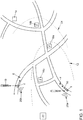
- a first electric vehicle 1 and a second electric vehicle 2 are shown schematically in a map.
- the first vehicle 1 is here on a first road section 4, the second electric vehicle 2 on a road section 6.
- the first vehicle 1 is assigned a first charge level 8 of the relevant battery of the first electric vehicle 1
- the second electric vehicle 2 is assigned a second charge level 10 battery concerned.
- a first range 12 for the first electric vehicle 1 results from the first charge level 8 and the road layout which is directly adjacent to the road section 4, which is shown in FIG Figure 1 is represented by a dashed line.
- the first range 12 may not be possible in a real driving situation, as in FIG Figure 1 In simplified terms, it is limited by a sharp line, but rather by a limit area (for example due to the speed-dependent frictional forces and a correspondingly higher, non-recoverable power consumption at higher speeds), which, however, is negligible in its own extent compared to the total range at a maximum charge level should be.
- both the first electric vehicle 1 and the second electric vehicle 2 have a common destination 14, which, however, neither of the two electric vehicles 1, 2 can reach at the current charge level 8 or 10 without a charging process.
- a corresponding booking or reservation for a desired period can be made in advance.
- the first electric vehicle 1 travels on the road section 4 in a first direction of travel 18. It is assumed here that a navigation system of the first electric vehicle 1 is deactivated or that the destination 14 is not entered into the navigation system, but rather the driver of the first electric vehicle has no input Navigation aid drives. Even without knowledge of the destination 14, however, it can be recognized on the basis of the first direction of travel 18, the first charge level and thus the first range 12 as well as the routing of the roads adjacent to the road section 4 that the first electric vehicle is at one of the two charging stations 16a, c Charging will have to perform. On the basis of an average driving speed of the first electric vehicle 1 and the respective distance from the charging station 16a or 16c and possibly speed restrictions etc.
- a point in time can now be determined at which the first electric vehicle 1 presumably one of the two charging stations 16a, c will visit for a charging process.
- a specific charging requirement is determined, which is spatially restricted to the two charging stations 16a, c, and does not include the charging station 16b, and is limited in time to the respective presumed arrival times (possibly with certain tolerances).
- the first electric vehicle 1 can thus send a request 20a to a central control unit 22 of a control system, which controls an allocation and booking of the charging station 16a-c.
- the destination 14 is stored in a navigation system of the second electric vehicle 2.
- the corresponding second range 24 can thus be compared with the destination 14 in the second electric vehicle.
- the result is that as a result of the higher second control station 10, the second electric vehicle can reach all 3 charging stations 16a-c, but will probably not get through to destination 14 without a charging process.
- the charging station 16c Due to the knowledge of the destination 14 in the navigation system of the second electric vehicle 2, the charging station 16c can be discarded as being remote. Only the charging station 16a and the charging station 16b are therefore relevant.
- the respective distance of the second electric vehicle 2 from the respective charging station 16a, b and from this a corresponding point in time for an arrival at the respective charging station 16a, b can be determined based on the average driving speed.
- a specific charging requirement is also determined for the second electric vehicle 2, namely spatially limited to the charging station 16a and 16b while the charging station 16c is broken and limited in time to the respective arrival time calculated in advance.
- the second electric vehicle now transmits a request 20b to the central control unit with regard to the availability of the charging station in 16a and 16b at the desired time.
- the request 20a of the first electric vehicle 1 can also be accompanied by the information that the determined specific charging requirement on which the request 20a is based was estimated without knowledge of the destination 14, so that when the real demand for the charging stations 16a-c is predicted a charging process of the first electric vehicle 1 in the charging station 16a and the charging station 16c is weighted to be similarly likely by the central control unit 22.
- a weighting can also be changed by the navigation system without knowledge of the destination 14 if there is sufficiently justified, different information about the destination 14, for example if the control system of the first electric vehicle 1 accesses an electronic calendar of the driver of the first vehicle to determine the specific charging requirement 1, and this accordingly entered a date at the first destination 14 Has.
- the probability of a charging process at the charging station 16a by the first electric vehicle 1 can be increased accordingly, while the probability of charging at the charging station 16c is reduced.
- the evaluation of the specific charging process will take precedence on the basis of the current first direction of travel 18, the routing in the vicinity of the currently traveled road section 4 and on the basis of the first charge level 8 and the resulting first range 12.
- the central control unit 22 now has a request 20c from the first electric vehicle 1 regarding the charging station 16a and 16c (with comparable probability) and a request 20b from the second electric vehicle for the charging stations 16a and 16b.
- a potentially increased real demand for the charging station 16a is predicted by the inquiries 20a, 20b. Since, as a result of the similar distances between the two electric vehicles 1, 2 and this charging station 16a, the presumed charging periods, as they were transmitted to the central control unit 22 in the respective request 20a or 20b, would overlap, the central control unit 22 sends the second Electric vehicle 2 issued a recommendation to visit the charging station 16b.
- a proposal is issued to the first electric vehicle to book the first charging station 16a as a precaution if it is actually on the desired route, since a request from the second electric vehicle 2 is also available for this charging station 16a.
- a corresponding proposal for a binding (and possibly chargeable) booking can be issued. It is to be expected, however, that in the present case the driver of the second electric vehicle 2 will use the charging station 16b without a binding booking, so that at least this driver does not overbook.
- FIG. 2 is schematically the same situation as in Fig. 1 shown.
- Inquiries 20c-e are sent to central control unit 22 accordingly.
- the respective range 32 is assumed to be essentially the same for the three further electric vehicles 26, 28, 30 (dashed line), the ranges for the first and second electric vehicles 1 and 2 as in FIG Fig. 1 shown.
- the two charging stations 16a, 16b now have a significantly increased probability of a real charging process.
- the electric vehicles 26 and 30 While the electric vehicle 28 presumably does not contribute to this demand due to its direction of travel 34, but rather tries to charge it at a further charging station, not shown, the electric vehicles 26 and 30 have a specific charging requirement, which is directed to the charging stations 16a and 16b. In the present case, the drivers of the electric vehicles 26 and 30 would be given a binding booking of the charging station 16a or 16b for an imminent charging period for confirmation, while the drivers of the first and second electric vehicles 1, 2 would be given a binding booking of the charging station 16a or 16b 16b is proposed for confirmation in the subsequent loading period.
Landscapes
- Engineering & Computer Science (AREA)
- Business, Economics & Management (AREA)
- Economics (AREA)
- Strategic Management (AREA)
- Human Resources & Organizations (AREA)
- Tourism & Hospitality (AREA)
- General Physics & Mathematics (AREA)
- Physics & Mathematics (AREA)
- Marketing (AREA)
- Theoretical Computer Science (AREA)
- General Business, Economics & Management (AREA)
- Mechanical Engineering (AREA)
- Transportation (AREA)
- Power Engineering (AREA)
- Development Economics (AREA)
- Entrepreneurship & Innovation (AREA)
- Health & Medical Sciences (AREA)
- Primary Health Care (AREA)
- General Health & Medical Sciences (AREA)
- Operations Research (AREA)
- Quality & Reliability (AREA)
- Game Theory and Decision Science (AREA)
- Finance (AREA)
- Accounting & Taxation (AREA)
- Public Health (AREA)
- Water Supply & Treatment (AREA)
- Data Mining & Analysis (AREA)
- Electric Propulsion And Braking For Vehicles (AREA)
- Navigation (AREA)
Applications Claiming Priority (1)
| Application Number | Priority Date | Filing Date | Title |
|---|---|---|---|
| DE102019205713.6A DE102019205713A1 (de) | 2019-04-18 | 2019-04-18 | Verfahren zur Prognose einer Verfügbarkeit wenigstens einer Ladestation für ein Elektrofahrzeug |
Publications (2)
| Publication Number | Publication Date |
|---|---|
| EP3726455A2 true EP3726455A2 (fr) | 2020-10-21 |
| EP3726455A3 EP3726455A3 (fr) | 2021-06-16 |
Family
ID=70285539
Family Applications (1)
| Application Number | Title | Priority Date | Filing Date |
|---|---|---|---|
| EP20169103.7A Pending EP3726455A3 (fr) | 2019-04-18 | 2020-04-09 | Procédé de pronostic de la disponibilité d'au moins une station de charge pour un véhicule électrique |
Country Status (3)
| Country | Link |
|---|---|
| EP (1) | EP3726455A3 (fr) |
| CN (1) | CN111832798A (fr) |
| DE (1) | DE102019205713A1 (fr) |
Cited By (6)
| Publication number | Priority date | Publication date | Assignee | Title |
|---|---|---|---|---|
| CN113537615A (zh) * | 2021-07-28 | 2021-10-22 | 车主邦(北京)科技有限公司 | 一种充电车辆的预测方法、装置及电子设备 |
| WO2023011982A1 (fr) * | 2021-08-02 | 2023-02-09 | Bayerische Motoren Werke Aktiengesellschaft | Adaptation de processus de charge de véhicules électriques |
| WO2023102334A1 (fr) * | 2021-12-03 | 2023-06-08 | Caterpillar Inc. | Gestion de charge pour véhicules de travail électriques |
| DE102022104771A1 (de) | 2022-03-01 | 2023-09-07 | Audi Aktiengesellschaft | Verfahren zum Kontrollieren einer Ladeinfrastruktur |
| CN117284147A (zh) * | 2023-08-09 | 2023-12-26 | 江苏悦达起亚汽车有限公司 | 一种新能源汽车用光伏充电管理方法及系统 |
| EP4575939A1 (fr) * | 2023-12-15 | 2025-06-25 | Robert Bosch GmbH | Procédé et dispositif de réservation de possibilité de charge de véhicule électrique, et procédé informatique et support lisible par ordinateur |
Citations (1)
| Publication number | Priority date | Publication date | Assignee | Title |
|---|---|---|---|---|
| EP2751902B1 (fr) * | 2011-09-02 | 2017-09-06 | Tesla, Inc. | Système de charge à courant continu pour véhicule à ports multiples avec distribution de puissance variable |
Family Cites Families (12)
| Publication number | Priority date | Publication date | Assignee | Title |
|---|---|---|---|---|
| JP5553106B2 (ja) * | 2010-02-22 | 2014-07-16 | トヨタ自動車株式会社 | 電力供給制御装置 |
| DE102010014291A1 (de) * | 2010-04-01 | 2011-10-06 | Bayerische Motoren Werke Aktiengesellschaft | Verfahren zur Bestimmung einer Gesamtfahrzeit eines Elektrofahrzeuges und Elektrofahrzeug |
| JP5494270B2 (ja) * | 2010-06-17 | 2014-05-14 | 日産自動車株式会社 | 情報提供装置および情報提供方法 |
| US9348381B2 (en) * | 2011-10-19 | 2016-05-24 | Zeco Systems Pte Ltd | Methods and apparatuses for charging of electric vehicles |
| US10112497B2 (en) * | 2014-04-11 | 2018-10-30 | Nissan North America, Inc. | System and method of monitoring usage of a charging station |
| US20150294329A1 (en) * | 2014-04-11 | 2015-10-15 | Nissan North America, Inc. | System and method of predicting usage of a charging station |
| DE102014225122A1 (de) * | 2014-12-08 | 2016-06-09 | Bayerische Motoren Werke Aktiengesellschaft | Verfahren und System zur Bereitstellung von Informationen zur Verfügbarkeit von Ladestationen |
| CN105539185A (zh) * | 2015-12-29 | 2016-05-04 | 戴姆勒股份公司 | 一种电动汽车充电路径规划与充电预定的方法及系统 |
| WO2018156732A1 (fr) * | 2017-02-22 | 2018-08-30 | Iotecha Corp. | Procédé et appareil pour charger une batterie à partir d'un réseau d'alimentation électrique pouvant être isolé |
| CN107392336B (zh) * | 2017-07-17 | 2021-04-02 | 哈尔滨工程大学 | 智能交通中基于预约的分布式电动汽车充电调度方法 |
| DE102017212930A1 (de) * | 2017-07-27 | 2019-01-31 | Bayerische Motoren Werke Aktiengesellschaft | Verfahren zum Ermitteln einer Verfügbarkeit einer elektrischen Ladestation für einen elektrischen Ladevorgang eines Kraftfahrzeugs und zugehörige Servervorrichtung |
| CN109029477A (zh) * | 2018-06-08 | 2018-12-18 | 沃尔沃汽车公司 | 电动车辆智能充电规划和预定系统和方法 |
-
2019
- 2019-04-18 DE DE102019205713.6A patent/DE102019205713A1/de not_active Ceased
-
2020
- 2020-04-09 EP EP20169103.7A patent/EP3726455A3/fr active Pending
- 2020-04-15 CN CN202010294515.2A patent/CN111832798A/zh active Pending
Patent Citations (1)
| Publication number | Priority date | Publication date | Assignee | Title |
|---|---|---|---|---|
| EP2751902B1 (fr) * | 2011-09-02 | 2017-09-06 | Tesla, Inc. | Système de charge à courant continu pour véhicule à ports multiples avec distribution de puissance variable |
Cited By (9)
| Publication number | Priority date | Publication date | Assignee | Title |
|---|---|---|---|---|
| CN113537615A (zh) * | 2021-07-28 | 2021-10-22 | 车主邦(北京)科技有限公司 | 一种充电车辆的预测方法、装置及电子设备 |
| CN113537615B (zh) * | 2021-07-28 | 2024-03-12 | 浙江安吉智电控股有限公司 | 一种充电车辆的预测方法、装置及电子设备 |
| WO2023011982A1 (fr) * | 2021-08-02 | 2023-02-09 | Bayerische Motoren Werke Aktiengesellschaft | Adaptation de processus de charge de véhicules électriques |
| WO2023102334A1 (fr) * | 2021-12-03 | 2023-06-08 | Caterpillar Inc. | Gestion de charge pour véhicules de travail électriques |
| US20250033512A1 (en) * | 2021-12-03 | 2025-01-30 | Caterpillar Inc. | Charging Management For Electric Work Vehicles |
| DE102022104771A1 (de) | 2022-03-01 | 2023-09-07 | Audi Aktiengesellschaft | Verfahren zum Kontrollieren einer Ladeinfrastruktur |
| CN117284147A (zh) * | 2023-08-09 | 2023-12-26 | 江苏悦达起亚汽车有限公司 | 一种新能源汽车用光伏充电管理方法及系统 |
| CN117284147B (zh) * | 2023-08-09 | 2024-05-28 | 江苏悦达起亚汽车有限公司 | 一种新能源汽车用光伏充电管理方法及系统 |
| EP4575939A1 (fr) * | 2023-12-15 | 2025-06-25 | Robert Bosch GmbH | Procédé et dispositif de réservation de possibilité de charge de véhicule électrique, et procédé informatique et support lisible par ordinateur |
Also Published As
| Publication number | Publication date |
|---|---|
| CN111832798A (zh) | 2020-10-27 |
| EP3726455A3 (fr) | 2021-06-16 |
| DE102019205713A1 (de) | 2020-10-22 |
Similar Documents
| Publication | Publication Date | Title |
|---|---|---|
| EP3726455A2 (fr) | Procédé de pronostic de la disponibilité d'au moins une station de charge pour un véhicule électrique | |
| EP3387851B1 (fr) | Assigner des véhicules à des stations de charge | |
| DE102016217087B4 (de) | Lade-Fahr-Assistent für Elektrofahrzeuge und Elektrofahrzeug | |
| DE102015208291A1 (de) | Gemeinschaftsfahrzeugmanagement | |
| EP3381735A1 (fr) | Procédé de coordination des processus de charge de véhicules électriques ainsi que véhicule automobile à moteur électrique et véhicules d'alimentation électrique | |
| WO2013034406A1 (fr) | Système de réservation d'un poste de charge | |
| WO2015185405A1 (fr) | Procédé et dispositifs d'exploitation d'un système de parc de véhicules | |
| DE102017213984A1 (de) | Verfahren zum Betreiben einer Navigationsvorrichtung für ein Kraftfahrzeug | |
| DE102017216478B4 (de) | Verfahren zur automatischen Anforderung eines Lademobils für batterieelektrische Fortbewegungsmittel zur Minimierung von ladestandsbedingten Ausfallzeiten | |
| DE102022206794B4 (de) | Verfahren und System zur Steuerung der Auslastung einer Parkfläche durch dynamische Unterteilung der Parkfläche in Stellplätze | |
| DE102022115574A1 (de) | Verfahren und Vorrichtung zur Prädiktion der Wartezeit an einer Ladestation | |
| WO2019106100A1 (fr) | Procédé pour faire fonctionner un dispositif de commande d'un véhicule automobile pour prédire un prochain arrêt, dispositif de commande et véhicule automobile | |
| DE102022121732A1 (de) | Verfahren für ein elektrisch antreibbares Kraftfahrzeug zur Abschätzung einer Wartezeit, Computerprogramm, Datenverarbeitungsvorrichtung, und Kraftfahrzeug | |
| WO2024033082A1 (fr) | Procédé de détermination de la disponibilité de stations de charge | |
| DE102018203392A1 (de) | Fahrerassistenzverfahren zum Planen einer Routengestaltung eines Elektrokraftfahrzeuges mit einem oder mehreren Ladestopps an Ladestationen und entsprechende Fahrerassistenzvorrichtung | |
| DE102014001300A1 (de) | Verfahren zur Steuerung eines Hybridantriebs in einem Kraftfahrzeug und zugehöriges Kraftfahrzeug | |
| DE102020107537A1 (de) | Verfahren und System zum Betreiben eines Kraftfahrzeugs | |
| DE102019210808A1 (de) | Vorrausschauender Betrieb einer Nachladeinfrastruktur für Elektrofahrzeuge | |
| DE102022104771A1 (de) | Verfahren zum Kontrollieren einer Ladeinfrastruktur | |
| DE102017204783B4 (de) | Verfahren zum Fernsteuern von mehreren führerlosen Selbstfahrsystemen sowie Leitstand zum Fernsteuern der Selbstfahrsysteme und System | |
| DE102018216042A1 (de) | Verfahren und vorrichtung zum automatisierten fahren eines fahrzeugs, und fahrzeug | |
| EP2789510B1 (fr) | Gestion d'énergie pour un véhicule automobile | |
| DE102020007059A1 (de) | Verfahren zur gezielten Beeinflussung einer Lichtsignalanlage durch ein bevorrechtigtes Fahrzeug, insbesondere durch Fahrzeuge des öffentlichen Personennahverkehrs | |
| WO2021023442A1 (fr) | Appareils de gestion de charge, système de gestion de charge et procédé de gestion pour charger un véhicule | |
| DE102012220604B4 (de) | Parkraumreservierungssystem und Verfahren |
Legal Events
| Date | Code | Title | Description |
|---|---|---|---|
| PUAI | Public reference made under article 153(3) epc to a published international application that has entered the european phase |
Free format text: ORIGINAL CODE: 0009012 |
|
| STAA | Information on the status of an ep patent application or granted ep patent |
Free format text: STATUS: THE APPLICATION HAS BEEN PUBLISHED |
|
| AK | Designated contracting states |
Kind code of ref document: A2 Designated state(s): AL AT BE BG CH CY CZ DE DK EE ES FI FR GB GR HR HU IE IS IT LI LT LU LV MC MK MT NL NO PL PT RO RS SE SI SK SM TR |
|
| AX | Request for extension of the european patent |
Extension state: BA ME |
|
| PUAL | Search report despatched |
Free format text: ORIGINAL CODE: 0009013 |
|
| AK | Designated contracting states |
Kind code of ref document: A3 Designated state(s): AL AT BE BG CH CY CZ DE DK EE ES FI FR GB GR HR HU IE IS IT LI LT LU LV MC MK MT NL NO PL PT RO RS SE SI SK SM TR |
|
| RIC1 | Information provided on ipc code assigned before grant |
Ipc: G06Q 50/30 20120101AFI20210508BHEP Ipc: G06Q 10/02 20120101ALI20210508BHEP Ipc: B60L 53/30 20190101ALI20210508BHEP Ipc: B60L 53/62 20190101ALI20210508BHEP Ipc: B60L 53/63 20190101ALI20210508BHEP Ipc: B60L 53/65 20190101ALI20210508BHEP Ipc: B60L 53/66 20190101ALI20210508BHEP Ipc: B60L 53/67 20190101ALI20210508BHEP Ipc: B60L 53/68 20190101ALI20210508BHEP Ipc: G06Q 10/06 20120101ALI20210508BHEP Ipc: G06Q 30/02 20120101ALI20210508BHEP |
|
| STAA | Information on the status of an ep patent application or granted ep patent |
Free format text: STATUS: REQUEST FOR EXAMINATION WAS MADE |
|
| 17P | Request for examination filed |
Effective date: 20211216 |
|
| RBV | Designated contracting states (corrected) |
Designated state(s): AL AT BE BG CH CY CZ DE DK EE ES FI FR GB GR HR HU IE IS IT LI LT LU LV MC MK MT NL NO PL PT RO RS SE SI SK SM TR |
|
| STAA | Information on the status of an ep patent application or granted ep patent |
Free format text: STATUS: EXAMINATION IS IN PROGRESS |
|
| 17Q | First examination report despatched |
Effective date: 20230824 |