EP3726801A1 - Procédés permettant de commander dynamiquement une fonctionnalité de poussée de protocole de commande de transmission et dispositifs associés - Google Patents
Procédés permettant de commander dynamiquement une fonctionnalité de poussée de protocole de commande de transmission et dispositifs associés Download PDFInfo
- Publication number
- EP3726801A1 EP3726801A1 EP20169475.9A EP20169475A EP3726801A1 EP 3726801 A1 EP3726801 A1 EP 3726801A1 EP 20169475 A EP20169475 A EP 20169475A EP 3726801 A1 EP3726801 A1 EP 3726801A1
- Authority
- EP
- European Patent Office
- Prior art keywords
- tcp
- packet
- push flag
- network traffic
- traffic management
- Prior art date
- Legal status (The legal status is an assumption and is not a legal conclusion. Google has not performed a legal analysis and makes no representation as to the accuracy of the status listed.)
- Withdrawn
Links
Images



Classifications
-
- H—ELECTRICITY
- H04—ELECTRIC COMMUNICATION TECHNIQUE
- H04L—TRANSMISSION OF DIGITAL INFORMATION, e.g. TELEGRAPHIC COMMUNICATION
- H04L69/00—Network arrangements, protocols or services independent of the application payload and not provided for in the other groups of this subclass
- H04L69/16—Implementation or adaptation of Internet protocol [IP], of transmission control protocol [TCP] or of user datagram protocol [UDP]
-
- H—ELECTRICITY
- H04—ELECTRIC COMMUNICATION TECHNIQUE
- H04L—TRANSMISSION OF DIGITAL INFORMATION, e.g. TELEGRAPHIC COMMUNICATION
- H04L47/00—Traffic control in data switching networks
- H04L47/10—Flow control; Congestion control
- H04L47/28—Flow control; Congestion control in relation to timing considerations
- H04L47/283—Flow control; Congestion control in relation to timing considerations in response to processing delays, e.g. caused by jitter or round trip time [RTT]
-
- H—ELECTRICITY
- H04—ELECTRIC COMMUNICATION TECHNIQUE
- H04L—TRANSMISSION OF DIGITAL INFORMATION, e.g. TELEGRAPHIC COMMUNICATION
- H04L67/00—Network arrangements or protocols for supporting network services or applications
- H04L67/50—Network services
- H04L67/535—Tracking the activity of the user
-
- H—ELECTRICITY
- H04—ELECTRIC COMMUNICATION TECHNIQUE
- H04L—TRANSMISSION OF DIGITAL INFORMATION, e.g. TELEGRAPHIC COMMUNICATION
- H04L67/00—Network arrangements or protocols for supporting network services or applications
- H04L67/50—Network services
- H04L67/55—Push-based network services
-
- H—ELECTRICITY
- H04—ELECTRIC COMMUNICATION TECHNIQUE
- H04L—TRANSMISSION OF DIGITAL INFORMATION, e.g. TELEGRAPHIC COMMUNICATION
- H04L69/00—Network arrangements, protocols or services independent of the application payload and not provided for in the other groups of this subclass
- H04L69/16—Implementation or adaptation of Internet protocol [IP], of transmission control protocol [TCP] or of user datagram protocol [UDP]
- H04L69/161—Implementation details of TCP/IP or UDP/IP stack architecture; Specification of modified or new header fields
Definitions
- This technology generally relates to network traffic management and, more particularly, to methods and devices for controlling Transmission Control Protocol (TCP) push functionality to improve network resource utilization.
- TCP Transmission Control Protocol
- Transmission Control Protocol is commonly used in communication networks to transmit data between network devices.
- a sending device can set a TCP push flag for a TCP segment, referred to herein as a packet.
- the TCP push flag is a control bit that causes a TCP layer of a protocol stack at a destination device to push data to a receiving application executing on the destination device.
- the TCP push flag is generally set for the last packet from a send buffer at the sending device.
- a destination device Upon receipt of a packet with a TCP push flag set, a destination device pushes buffered data up a protocol stack to a destination receiving application and returns an acknowledgement message (ACK) to the sending device.
- ACK acknowledgement message
- a significant number of sent packets may have the TCP push flag set.
- Sending a large number of packets with a set TCP push flag may not optimize or meaningfully reduce delay observed by a receiving application, but will result in the corresponding transmission of a significant number of ACKs as many TCP implementations acknowledge every packet with a set TCP push flag. Transmitting a relatively large number of ACKs wastes resources, including processor cycles, power (e.g., on handset devices), and network bandwidth that could have been used for other network traffic.
- a method for managing transmission control protocol (TCP) functionality is disclosed that is implemented by a network traffic management system, including one or more network traffic management apparatuses, server devices, or client devices, and includes monitoring messages generated by an application or one or more characteristics of one or more TCP connections with a destination device or a source device.
- a determination is made when a first TCP push flag should be set for a first packet associated with data based on the monitoring.
- the data is provided by the application.
- the first TCP push flag for the first packet is set prior to the first packet being sent to the destination device via a first one of the TCP connections, based on the determination that the first TCP push flag should be set for the first packet.
- a network traffic management apparatus includes memory including programmed instructions stored thereon and one or more processors configured to be capable of executing the stored programmed instructions to monitor messages generated by an application or one or more characteristics of one or more TCP connections with a destination device or a source device.
- a determination is made when a first TCP push flag should be set for a first packet associated with data based on the monitoring.
- the data is provided by the application.
- the first TCP push flag for the first packet is set prior to the first packet being sent to the destination device via a first one of the TCP connections, based on the determination that the first TCP push flag should be set for the first packet.
- a non-transitory computer readable medium that has stored thereon instructions for managing TCP functionality includes executable code that, when executed by one or more processors, causes the processors to monitor messages generated by an application or one or more characteristics of one or more TCP connections with a destination device or a source device.
- a determination is made when a first TCP push flag should be set for a first packet associated with data based on the monitoring.
- the data is provided by the application.
- the first TCP push flag for the first packet is set prior to the first packet being sent to the destination device via a first one of the TCP connections, based on the determination that the first TCP push flag should be set for the first packet.
- a network traffic management system includes one or more network traffic management apparatuses, server devices, or client devices with memory including programmed instructions stored thereon and one or more processors configured to be capable of executing the stored programmed instructions to monitor messages generated by an application or one or more characteristics of one or more TCP connections with a destination device or a source device.
- a determination is made when a first TCP push flag should be set for a first packet associated with data based on the monitoring.
- the data is provided by the application.
- the first TCP push flag for the first packet is set prior to the first packet being sent to the destination device via a first one of the TCP connections, based on the determination that the first TCP push flag should be set for the first packet.
- This technology has a number of associated advantages including methods, non-transitory computer readable media, and network traffic management systems and apparatuses that optimize TCP push functionality to reduce acknowledgement (ACK) traffic.
- This technology dynamically controls the setting of TCP push flags for packets to minimize delay for a receiving application at a destination device while reducing ACKs. Reducing ACKs advantageously reduces processor cycles required to process the ACK messages as well as network bandwidth required to transmit the ACK messages.
- the network traffic management system 100 in this example includes a network traffic management apparatus 12 that is coupled to server devices 14(1)-14(n) via communication network(s) 16 and client devices 18(1)-18(n) via communication network(s) 20, although the network traffic management apparatus 12, server devices 14(1)-14(n), and client devices 18(1)-18(n) may be coupled together via other topologies.
- the network traffic management system 10 also may include other network devices such as routers or switches, for example, which are known in the art and thus will not be described herein.
- This technology provides a number of advantages including methods, non-transitory computer readable media, and network traffic management apparatuses and systems that dynamically manage the setting of Transmission Control Protocol (TCP) push flags based on network and/or application characteristics to improve resource utilization without introducing significant delay for receiving applications.
- TCP Transmission Control Protocol
- the network traffic management apparatus 12, server devices 14(1)-14(n), and client devices 18(1)-18(n) are disclosed in FIG. 1 as dedicated hardware devices.
- one or more of the network traffic management apparatus 12, server devices 14(1)-14(n), or client devices 18(1)-18(n) can also be implemented in software within one or more other devices in the network traffic management system 10.
- the network traffic management apparatus 12 can be hosted by one or more of the server devices 14(1)-14(n), and other network configurations can also be used.
- the network traffic management apparatus 12 of the network traffic management system 10 may perform any number of functions, including providing network security, load balancing network traffic across the server devices 14(1)-14(n), proxying connections between the client devices 18(1)-18(n) and server devices 14(1)-14(n), or accelerating network traffic associated with applications hosted by the server devices 14(1)-14(n), for example.
- the network traffic management apparatus 12 in this example includes processor(s) 22, memory 24, and a communication interface 26, which are coupled together by a bus 28, although the network traffic management apparatus 12 can include other types or numbers of elements in other configurations.
- the processor(s) 22 of the network traffic management apparatus 12 may execute programmed instructions stored in the memory 24 of the network traffic management apparatus 12 for any number of functions described and illustrated herein.
- the processor(s) 22 of the network traffic management apparatus 12 may include one or more central processing units (CPUs) with one or more processing cores, for example, although other types of processor(s) can also be used.
- the memory 24 of the network traffic management apparatus 12 stores these programmed instructions for one or more aspects of the present technology as described and illustrated herein, although some or all of the programmed instructions could be stored elsewhere.
- a variety of different types of storage devices such as random access memory (RAM), read only memory (ROM), hard disk drives (HDDs), solid state drives (SSDs), flash memory, or other computer readable medium which is read from and written to by a magnetic, optical, or other reading and writing system that is coupled to the processor(s) 22, can be used for the memory 24.
- the memory 24 of the network traffic management apparatus 12 can store one or more modules that can include computer executable instructions that, when executed by the network traffic management apparatus 12, cause the network traffic management apparatus 12 to perform actions, such as to transmit, receive, or otherwise process messages, for example, and to perform other actions described and illustrated below with reference to FIGS. 3-5 .
- the modules can be implemented as components of other modules. Further, the modules can be implemented as applications, operating system extensions, plugins, or the like.
- the modules may be operative in a cloud-based computing environment.
- the modules can be executed within or as virtual machine(s) or virtual server(s) that may be managed in a cloud-based computing environment.
- the modules, and even the network traffic management apparatus 12 itself may be located in virtual server(s) running in a cloud-based computing environment rather than being tied to one or more specific physical network computing devices.
- the modules may be running in one or more virtual machines (VMs) executing on the network traffic management apparatus 12. Additionally, in one or more examples of this technology, virtual machine(s) running on the network traffic management apparatus 12 may be managed or supervised by a hypervisor.
- VMs virtual machines
- the memory 24 of the network traffic management apparatus 12 includes an operating system 30 and a network stack 32 with a TCP layer 34 that includes a TCP send buffer 36, although the memory 24 can include other policies, modules, databases, or applications, for example.
- the operating system 30 can execute applications and control the general operation and tasks performed by the network traffic management apparatus 12, for example, including proxying TCP connections between the client devices 18(1)-18(n) and the server devices 14(1)-14(n).
- the operating system 30 can be a traffic management microkernel (TMM) provided by F5 Networks, Inc. of Seattle, WA, although other types of operating systems can also be used in other examples.
- TMM traffic management microkernel
- the operating system 30 and/or other applications executed by the network traffic management apparatus 12 can generate application data that is communicated to an upper layer or module of the network stack 32 to subsequently be packetized by the TCP layer 34, buffered in the TCP send buffer 36, and sent to a remote or destination device, such as one of the client devices 18(1)-18(n) or one of the server devices 14(1)-14(n).
- the network stack 32 can include a plurality of other layers or modules configured to communicate between each other in order to facilitate the transmission of data across the communication network(s) 16 and/or 20, for example.
- the network stack 32 also referred to as a protocol stack, includes software implementations for a plurality of network communication protocols.
- the network traffic management apparatus 12 may receive packets from the server devices 14(1)-14(n) with header and payload data contained therein, process the packets using the operating system 30, and generate and send new packets to the client devices 18(1)-18(n) in order to communicate the data to the client devices 18(1)-18(n).
- the packets may be received by the network traffic management apparatus 12 from the client devices 18(1)-18(n) and proxied to the server devices 14(1)-14(n), and other arrangements are also possible in other examples.
- the TCP layer 32 in particular may receive application data from a higher or upper layer of the network stack 32 (e.g., a Hypertext Transfer Protocol (HTTP) layer), which is then packetized.
- HTTP Hypertext Transfer Protocol
- the TCP layer 34 with this technology advantageously automatically and dynamically optimizes setting of TCP push flags in packets to improve processor and network bandwidth utilization, as described and illustrated in more detail later with reference to FIGS. 3-5 .
- the communication interface 26 of the network traffic management apparatus 12 operatively couples and communicates between the network traffic management apparatus 12, server devices 14(1)-14(n), and client devices 18(1)-18(n), which are coupled together at least in part by the communication network(s) 16 and 20, although other types or numbers of communication networks or systems with other types or numbers of connections or configurations to other devices or elements can also be used.
- the communication network(s) 16 and/or 20 can include local area network(s) (LAN(s)) or wide area network(s) (WAN(s)), and can use TCP/IP over Ethernet and industry-standard protocols, although other types or numbers of protocols or communication networks can be used.
- the communication network(s) 16 and/or 20 in this example can employ any suitable interface mechanisms and network communication technologies including, for example, Ethernet-based Packet Data Networks (PDNs) and the like.
- PDNs Packet Data Networks
- the network traffic management apparatus 12 is illustrated in this example as including a single device, the network traffic management apparatus 12 in other examples can include a plurality of devices or blades each having one or more processors (each processor with one or more processing cores) that implement one or more steps of this technology.
- one or more of the devices can have a dedicated communication interface or memory.
- one or more of the devices can utilize the memory, communication interface, or other hardware or software components of one or more other devices included in the network traffic management apparatus 12.
- one or more of the devices that together comprise the network traffic management apparatus 12 in other examples can be standalone devices or integrated with one or more other devices or apparatuses, such as one or more of the server devices 14(1)-14(n), for example.
- one or more of the devices of the network traffic management apparatus 12 in these examples can be in a same or a different communication network including one or more public, private, or cloud networks, for example.
- Each of the server devices 14(1)-14(n) of the network traffic management system 10 in this example includes processor(s), a memory, and a communication interface, which are coupled together by a bus or other communication link (not illustrated), although other numbers or types of components could be used.
- the server devices 14(1)-14(n) in this example can include application servers or database servers, for example, although other types of server devices can also be included in the network traffic management system 10.
- one or more of the server devices 14(1)-14(n) process login and other requests received from the client devices 18(1)-18(n) via the communication network(s) 20 according to the HTTP-based application RFC protocol, for example.
- a web application may be operating on one or more of the server devices 14(1)-14(n) and transmitting data (e.g., files or web pages) to the client devices 18(1)-18(n) (e.g., via the network traffic management apparatus 12) in response to requests from the client devices 18(1)-18(n).
- the server devices 14(1)-14(n) may be hardware or software or may represent a system with multiple servers in a pool, which may include internal or external networks.
- server devices 14(1)-14(n) are illustrated as single devices, one or more actions of each of the server devices 14(1)-14(n) may be distributed across one or more distinct network computing devices that together comprise one or more of the server devices 14(1)-14(n).
- the server devices 14(1)-14(n) are not limited to a particular configuration.
- the server devices 14(1)-14(n) may contain network computing devices that operate using a master/slave approach, whereby one of the network computing devices of the server devices 14(1)-14(n) operate to manage or otherwise coordinate operations of the other network computing devices.
- the server devices 14(1)-14(n) may operate as a plurality of network computing devices within a cluster architecture, a peer-to peer architecture, virtual machines, or within a cloud architecture, for example.
- one or more of the server devices 14(1)-14(n) can operate within the network traffic management apparatus 12 itself rather than as a stand-alone server device communicating with the network traffic management apparatus 12 via communication network(s) 16.
- the one or more of the server devices 14(1)-14(n) operate within the memory 24 of the network traffic management apparatus 12.
- the client devices 18(1)-18(n) of the network traffic management system 10 in this example include any type of computing device that can exchange network data, such as mobile, desktop, laptop, or tablet computing devices, virtual machines (including cloud-based computers), or the like.
- Each of the client devices 18(1)-18(n) in this example includes a processor, a memory, and a communication interface, which are coupled together by a bus or other communication link (not illustrated), although other numbers or types of components could also be used.
- the client devices 18(1)-18(n) may run interface applications, such as standard web browsers or standalone client applications, which may provide an interface to make requests for, and receive content stored on, one or more of the server devices 14(1)-14(n) via the communication network(s) 16 and 20.
- the client devices 18(1)-18(n) may further include a display device, such as a display screen or touchscreen, and/or an input device, such as a keyboard, for example (not illustrated).
- server devices 14(1)-14(n), client devices 18(1)-18(n), and communication network(s) 16 and 20 are described and illustrated herein, other types or numbers of systems, devices, components, or elements in other topologies can be used. It is to be understood that the systems of the examples described herein are for exemplary purposes, as many variations of the specific hardware and software used to implement the examples are possible, as will be appreciated by those skilled in the relevant art(s).
- One or more of the components depicted in the network traffic management system 10, such as the network traffic management apparatus 12, server devices 14(l)-14(n), or client devices 18(1)-18(n), for example, may be configured to operate as virtual instances on the same physical machine.
- one or more of the network traffic management apparatus 12, server devices 14(1)-14(n), or client devices 18(1)-18(n) may operate on the same physical device rather than as separate devices communicating through communication network(s) 16 and/or 20.
- two or more computing systems or devices can be substituted for any one of the systems or devices in any example. Accordingly, principles and advantages of distributed processing, such as redundancy and replication also can be implemented, as desired, to increase the robustness and performance of the devices and systems of the examples.
- the examples may also be implemented on computer system(s) that extend across any suitable network using any suitable interface mechanisms and traffic technologies, including by way of example only, wireless traffic networks, cellular traffic networks, Packet Data Networks (PDNs), the Internet, intranets, and combinations thereof.
- PDNs Packet Data Networks
- the examples also may be embodied as one or more non-transitory computer readable media having instructions stored thereon, such as in the memory 24 of the network traffic management apparatus 12, for one or more aspects of the present technology, as described and illustrated by way of the examples herein.
- the instructions in some examples include executable code that, when executed by one or more processors, such as the processor(s) 22 of the network traffic management apparatus 12, cause the processors to carry out steps necessary to implement the methods of the examples of this technology that are described and illustrated herein.
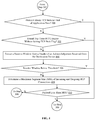
- step 300 in this example the network traffic management apparatus 12 of the network traffic management system 10 determines whether the TCP send buffer 36 is empty.
- the TCP send buffer 36 in this example stores packetized application data.
- the application data could have been generated by the operating system 30 or another hosted application according to an application layer protocol above the TCP layer (e.g., HTTP), which was then processed by the network stack 32, for example, although the TCP send buffer 36 could have been populated in other ways.
- the Yes branch is taken back to step 300 and the TCP layer 34 of the network traffic management apparatus 12 effectively waits for packetized application data to be generated and inserted into the TCP send buffer 36.
- the No branch is taken to step 302.
- the network traffic management apparatus 12 retrieves a packet from the TCP send buffer 36.
- the packet corresponds to a TCP segment in this example and includes header information as well as a payload.
- the payload can include a portion of the application data to be transmitted to a destination device, such as one of the client devices 18(1)-18(n), for example.
- the payload includes a portion of data communicated by one of the server devices 14(1)-14(n) to be analyzed, modified, or otherwise proxied by the network traffic management apparatus 12 to a requesting one of the client devices 18(1)-18(n), although other types of application data can also be packetized in the TCP send buffer 36 in other examples.
- step 304 the network traffic management apparatus 12 determines whether a TCP push flag is required to be set for the packet retrieved from the TCP send buffer 36. An exemplary method for determining in step 304 whether the TCP push flag is required to be set is described and illustrated in more detail later with reference to FIG. 4 . If the network traffic management apparatus 12 determines that the TCP push flag should be set for the packet retrieved in step 302, then the Yes branch is taken to step 306.
- the network traffic management apparatus 12 sets the TCP push flag for the packet.
- the TCP push flag is a control bit that is set in the header of the packet, which indicates to a destination device (e.g., one of the client devices 18(1)-18(n)) that the packet should be pushed to a receiving application executing on the destination device.
- received packets are buffered at a destination device and the TCP push flag indicates to the destination device that the buffer should be cleared such that the contents are pushed to a receiving application.
- step 304 the network traffic management apparatus 12 determines in step 304 that the TCP push flag does not need to be set for the packet and the No branch is taken, then the network traffic management apparatus 12 proceeds to step 308.
- the network traffic management apparatus 12 sends the packet to the destination device, such as one of the client devices 18(1)-18(n), for example.
- the destination device is identified in a header of the packet (e.g., by a destination Internet Protocol (IP) address) and the packet can be sent via the communication network(s) 20 in this example.
- IP Internet Protocol
- the network traffic management apparatus 12 proceeds back to step 300 in this example.
- steps 300-308 can be performed in a different order or in parallel for any number of packets.
- step 400 the network traffic management apparatus 12 of the network traffic management system 10 determines whether a network protocol layer above the TCP layer 34 in the network stack (e.g., an HTTP layer) has communicated message(s) to the TCP layer 34 indicating an end of a current transmission of application data. Accordingly, the determination in step 400 can be based on monitoring messages received by the TCP layer 34 from the network protocol layer above the TCP layer 34, for example.
- a network protocol layer above the TCP layer 34 in the network stack e.g., an HTTP layer
- an HTTP protocol layer is above the TCP layer 34 in the network stack 32 and is configured to communicate application data and end of application data messages to the TCP layer 34, although other network protocol layers can also exist in the network stack (e.g., Secure Sockets Layer (SSL)) and be configured to communicate message(s) indicating an end of the transmission of application data in other examples.
- SSL Secure Sockets Layer
- the TCP push flag is set for the packet in step 306. Accordingly, if the network protocol layer above the TCP layer 34 in the network stack 32 has communicated an end of a current application data transmission, then the network traffic management apparatus 12 sets the TCP push flag to prompt the destination device (e.g., one of the client devices 18(1)-18(n)) to push the payload data associated with the packet, and any other payload data that may have been previously transmitted and is currently buffered, to the receiving application executing at the destination device.
- the end of application data is not always communicated to the TCP layer 34, it is a relatively good indicator that the data should be pushed to the receiving application.
- the TCP layer 34 is more likely to receive application data in a relatively short period of time as compared to when the network protocol layer above the TCP layer 34 in the network stack 32 communicates that it has completed a current transmission of application data. Accordingly, setting a TCP push flag upon emptying of the TCP send buffer 36 may result in an increased number of acknowledgement messages (ACKs) from the destination device.
- ACKs acknowledgement messages
- step 400 in FIG. 4 if the network traffic management apparatus 12 determines that a network protocol layer above the TCP layer 34 in the network stack 32 has not communicated message(s) to the TCP layer 34 indicating an end of a current transmission of application data, then the No branch is taken to step 402.
- the network traffic management apparatus 12 determines whether a current round trip time (RTT) has expired without a TCP push flag being set for any packet associated with a TCP connection with a destination device (e.g., one of the client devices 18(1)-18(n)).
- the network traffic management apparatus 12 can generate, or otherwise obtain from the memory 24, an RTT for the TCP connection with the destination device.
- the implementation of the TCP layer 34 in this example is configured to maintain performance metrics for the TCP connection, including RTT, based on monitored sent packets and received ACKs.
- the RTT can be a current or average RTT and can be generated dynamically or periodically and stored in the memory 24, and other methods for generating or obtaining the RTT can also be used in other examples.
- the TCP layer 34 is configured to maintain an indication of whether a TCP push flag has been set for a packet, which is reset upon each expiration of an RTT.
- the indication can be a bit or flag that informs the determination in step 402. If the network traffic management apparatus 12 determines in step 402 that the RTT has expired without a TCP push flag being set for a packet, then the Yes branch is taken to step 306 of FIG. 3 .
- the network traffic management apparatus 12 sets the TCP push flag for the packet removed from the TCP send buffer 36, as described and illustrated in more detail earlier.
- the network traffic management apparatus 12 can set the indication of whether a TCP push flag has been set for a packet in a current RTT in step 306 of FIG. 3 for each first packet transmitted within an RTT that has a set TCP push flag, and can automatically reset the indication upon expiration of each RTT.
- the network traffic management apparatus 12 in this example facilitates reduced delay for the receiving application at the destination device by provoking the destination device to push data at least once each RTT to the receiving application.
- the network traffic management apparatus 12 determines in step 402 that a TCP push flag has been set for a packet within a current RTT, then the No branch is taken to step 404.
- the network traffic management apparatus 12 extracts a receive window from a header of an ACK received from the destination device (e.g., one of the client devices 18(1)-18(n)).
- the receive window is advertised by the destination device in ACKs received by the network traffic management apparatus 12.
- a relatively small receive window can be an indication that the receiving application executing on the destination device is not reading transmitted data fast enough. In other words, a relatively small receive window often indicates that application data is being pushed to the receiving application too slowly.
- the network traffic management apparatus 12 determines whether the receive window is below a threshold.
- the threshold can be static, configurable, and/or dynamic.
- the threshold can be based on a maximum segment size (MSS) advertised in ACKs by the destination device.
- MSS maximum segment size
- the threshold is a multiple of three of the MSS, although any other threshold receive window size indicating that the receiving application has capacity to read application data at a quicker rate can be used.
- the Yes branch is taken to step 306 of FIG. 3 , and the TCP push flag is set for the packet by the network traffic management apparatus 12 prior to transmission of the packet to the destination device, as described and illustrated in more detail earlier. Accordingly, the TCP push flag is set for outgoing packets when the receive window is relatively small to prompt the destination device to push data to the receiving application to reduce any delay that the receiving application may be experiencing.
- the No branch is taken to step 408.
- the network traffic management apparatus 12 determines an MSS of incoming and outgoing TCP connections.
- the network traffic management apparatus 12 is a full proxy terminating an incoming TCP connection with one of the server devices 14(1)-14(n) and an outgoing TCP connection with one of the client devices 18(1)-18(n) that has requested resources from the one of the server devices 14(1)-14(n).
- the MSS can be determined based on header information included in packets communicated to the network traffic management apparatus 12 via the incoming and outgoing TCP connections, for example.
- step 410 the network traffic management apparatus 12 determines whether the payload of the current packet retrieved from the TCP send buffer 36 is less than both MSSs of the incoming and outgoing TCP connections.
- a payload data size less than the MSS of the incoming and outgoing TCP connections is an indicator that the data represents the end of a current transmission of data from the sending application. If the network traffic management apparatus 12 determines in step 410 that the payload data size is less than the MSS of the incoming and outgoing TCP connections, then the Yes branch is taken to step 306 of FIG. 3 .
- the network traffic management apparatus sets the TCP push flag for the packet, as described and illustrated in more detail earlier. Since a payload data size less than the MSS of the incoming and outgoing TCP connections may indicate an end of a current data transmission, setting the TCP push flag prompts the destination device (e.g., the one of the client devices 18(1)-18(n)) to push the data to the receiving application and eliminate any delay that may occur for the last portion of data associated with a current transmission. Additionally, setting the TCP push flag in this example facilitates relatively timely pushing of data at a destination device to a receiving application for relatively chatty sending applications that frequently send small payload data.
- the destination device e.g., the one of the client devices 18(1)-18(n)
- step 410 if the network traffic management apparatus 12 determines in step 410 that the payload data size is not less than the MSS of both the incoming and outgoing TCP connections, then the No branch is taken to step 308 of FIG. 3 .
- step 308 the network traffic management apparatus 12 sends the packet retrieved from the TCP send buffer 36 without setting the TCP push flag, as described and illustrated in more detail earlier.
- the conditions in steps 400, 402, 406 and 410 are described and illustrated as occurring in a particular order, the conditions can be tested in other orders in other examples.
- one of the conditions in steps 400, 402, 406 and 410 must be satisfied in order to set the TCP push flag for a packet.
- satisfaction of more or fewer conditions for dynamically setting the TCP push flag for a packet can be used in other examples.
- the condition in step 410 can be tested only in implementations in which the higher layer protocol is not communicating an end of a current transmission of application data, and other permutations can also be used.
- the network stack 32 of the network traffic management apparatus sends application data received at an upper level (e.g., HTTP level) to the TCP layer 34.
- an upper level e.g., HTTP level
- step 502 the TCP layer 34 processes the application data sent from the network stack 32 to packetize the application data. Once packetized, the TCP layer 34 buffers the packetized application data in the TCP send buffer 36.
- the TCP send buffer 36 subsequently, or in parallel to step 502 but with respect to another packet, returns one of the packets buffered in the TCP send buffer 36 to the TCP layer 34 in response to a request or other type of prompt from the TCP layer 34. Accordingly, the TCP layer 34 determines that the TCP send buffer 36 is not empty and retrieves a packet to subsequently send to the client device 18.
- the TCP layer 34 determines whether to set the TCP push flag for the packet. The determination in step 506 can be made based on monitored messages from the application from which the application data originated and/or characteristics of the TCP connection between the network traffic management apparatus 12 and the client device 18, as described and illustrated in more detail earlier with reference to FIG. 4 . If the TCP layer 34 determines in step 506 that the TCP push flag should not be set, then the No branch is taken, and the packet is sent by the TCP layer 34 to the client device 18 in step 508.
- step 510 the TCP layer 34 sets the TCP push flag for the packet before sending the packet to the client device 18 in step 508.
- setting of the TCP push flag for packets corresponding to TCP segments is dynamically controlled at a source device to minimize delay for a receiving application at a destination device while reducing ACKs.
- Reducing ACKs advantageously facilitates a corresponding reduction in power utilization, processor cycles required to process the messages, as well as network bandwidth required to transmit the messages, both of which can instead advantageously be used to process, and reduce the latency for, other network traffic.
Landscapes
- Engineering & Computer Science (AREA)
- Computer Networks & Wireless Communication (AREA)
- Signal Processing (AREA)
- Computer Security & Cryptography (AREA)
- Computer Hardware Design (AREA)
- General Engineering & Computer Science (AREA)
- Data Exchanges In Wide-Area Networks (AREA)
Priority Applications (1)
| Application Number | Priority Date | Filing Date | Title |
|---|---|---|---|
| EP21170209.7A EP3886396B1 (fr) | 2019-04-18 | 2020-04-14 | Procédés permettant de commander dynamiquement une fonctionnalité de poussée de protocole de commande de transmission et dispositifs associés |
Applications Claiming Priority (1)
| Application Number | Priority Date | Filing Date | Title |
|---|---|---|---|
| US201962835605P | 2019-04-18 | 2019-04-18 |
Related Child Applications (1)
| Application Number | Title | Priority Date | Filing Date |
|---|---|---|---|
| EP21170209.7A Division EP3886396B1 (fr) | 2019-04-18 | 2020-04-14 | Procédés permettant de commander dynamiquement une fonctionnalité de poussée de protocole de commande de transmission et dispositifs associés |
Publications (1)
| Publication Number | Publication Date |
|---|---|
| EP3726801A1 true EP3726801A1 (fr) | 2020-10-21 |
Family
ID=70464822
Family Applications (2)
| Application Number | Title | Priority Date | Filing Date |
|---|---|---|---|
| EP20169475.9A Withdrawn EP3726801A1 (fr) | 2019-04-18 | 2020-04-14 | Procédés permettant de commander dynamiquement une fonctionnalité de poussée de protocole de commande de transmission et dispositifs associés |
| EP21170209.7A Active EP3886396B1 (fr) | 2019-04-18 | 2020-04-14 | Procédés permettant de commander dynamiquement une fonctionnalité de poussée de protocole de commande de transmission et dispositifs associés |
Family Applications After (1)
| Application Number | Title | Priority Date | Filing Date |
|---|---|---|---|
| EP21170209.7A Active EP3886396B1 (fr) | 2019-04-18 | 2020-04-14 | Procédés permettant de commander dynamiquement une fonctionnalité de poussée de protocole de commande de transmission et dispositifs associés |
Country Status (2)
| Country | Link |
|---|---|
| US (1) | US11444882B2 (fr) |
| EP (2) | EP3726801A1 (fr) |
Cited By (1)
| Publication number | Priority date | Publication date | Assignee | Title |
|---|---|---|---|---|
| CN116737281A (zh) * | 2023-01-12 | 2023-09-12 | 银河航天(北京)通信技术有限公司 | 文件上注的方法、装置及存储介质 |
Families Citing this family (1)
| Publication number | Priority date | Publication date | Assignee | Title |
|---|---|---|---|---|
| CN112866133B (zh) * | 2019-11-26 | 2023-07-28 | 华为技术有限公司 | 用于获取共用最大分段大小mss的方法及装置 |
Citations (2)
| Publication number | Priority date | Publication date | Assignee | Title |
|---|---|---|---|---|
| US20070206621A1 (en) * | 2003-07-29 | 2007-09-06 | Robert Plamondon | Systems and methods of using packet boundaries for reduction in timeout prevention |
| EP2642702A1 (fr) * | 2010-11-16 | 2013-09-25 | Hitachi, Ltd. | Appareil de communication et système de communication |
Family Cites Families (3)
| Publication number | Priority date | Publication date | Assignee | Title |
|---|---|---|---|---|
| US8311059B2 (en) * | 2005-09-07 | 2012-11-13 | Emulex Design & Manufacturing Corporation | Receive coalescing and automatic acknowledge in network interface controller |
| US20080091868A1 (en) * | 2006-10-17 | 2008-04-17 | Shay Mizrachi | Method and System for Delayed Completion Coalescing |
| WO2012135221A1 (fr) * | 2011-03-28 | 2012-10-04 | Citrix Systems, Inc. | Systèmes et procédés pour suivre un flux de couche d'application par dispositif intermédiaire à plusieurs connexions |
-
2020
- 2020-03-30 US US16/834,145 patent/US11444882B2/en active Active
- 2020-04-14 EP EP20169475.9A patent/EP3726801A1/fr not_active Withdrawn
- 2020-04-14 EP EP21170209.7A patent/EP3886396B1/fr active Active
Patent Citations (2)
| Publication number | Priority date | Publication date | Assignee | Title |
|---|---|---|---|---|
| US20070206621A1 (en) * | 2003-07-29 | 2007-09-06 | Robert Plamondon | Systems and methods of using packet boundaries for reduction in timeout prevention |
| EP2642702A1 (fr) * | 2010-11-16 | 2013-09-25 | Hitachi, Ltd. | Appareil de communication et système de communication |
Cited By (2)
| Publication number | Priority date | Publication date | Assignee | Title |
|---|---|---|---|---|
| CN116737281A (zh) * | 2023-01-12 | 2023-09-12 | 银河航天(北京)通信技术有限公司 | 文件上注的方法、装置及存储介质 |
| CN116737281B (zh) * | 2023-01-12 | 2024-01-09 | 银河航天(北京)通信技术有限公司 | 文件上注的方法、装置及存储介质 |
Also Published As
| Publication number | Publication date |
|---|---|
| EP3886396B1 (fr) | 2024-07-17 |
| US20200336432A1 (en) | 2020-10-22 |
| EP3886396A1 (fr) | 2021-09-29 |
| US11444882B2 (en) | 2022-09-13 |
Similar Documents
| Publication | Publication Date | Title |
|---|---|---|
| EP3482298B1 (fr) | Appareils de diffusion groupée et procédés de distribution de données à de multiples récepteurs dans un calcul à haute performance et des réseaux en nuage | |
| EP3629531B1 (fr) | Technologies de régulation de la congestion pour les rdma routables via ip sur ethernet convergé | |
| US10505818B1 (en) | Methods for analyzing and load balancing based on server health and devices thereof | |
| CN110609746B (zh) | 管理网络系统的方法、设备和计算机可读介质 | |
| US10791192B2 (en) | Hybrid approach for performance enhancing proxies | |
| WO2023005773A1 (fr) | Procédé et appareil de transfert de message basés sur un stockage direct des données à distance, et carte réseau et dispositif | |
| US20200329124A1 (en) | Management client and device monitoring | |
| US9794354B1 (en) | System and method for communication between networked applications | |
| JP2018528679A (ja) | 負荷平衡システムにおいて接続を確立するデバイス及び方法 | |
| US10142241B1 (en) | Methods for dynamic health monitoring of server pools and devices thereof | |
| US20140082180A1 (en) | Information processor apparatus, information processing method, and recording medium | |
| CN110545230B (zh) | 用于转发vxlan报文的方法和装置 | |
| CN114221954A (zh) | 文件传输方法及装置、电子设备及存储介质 | |
| CN114338574A (zh) | 一种即时通讯方法、管理节点及系统 | |
| CN117397232B (zh) | 用于无代理协议的方法、系统 | |
| US10609155B2 (en) | Scalable self-healing architecture for client-server operations in transient connectivity conditions | |
| EP3886396B1 (fr) | Procédés permettant de commander dynamiquement une fonctionnalité de poussée de protocole de commande de transmission et dispositifs associés | |
| US9515777B2 (en) | Snoop virtual receiver time | |
| JP2019106697A (ja) | 相互接続ネットワークでのメッセージ再送遅延を動的に管理するための方法及びデバイス | |
| US10700977B2 (en) | Preventing TCP from becoming too conservative too quickly | |
| US11044350B1 (en) | Methods for dynamically managing utilization of Nagle's algorithm in transmission control protocol (TCP) connections and devices thereof | |
| US20070291782A1 (en) | Acknowledgement filtering | |
| US8806056B1 (en) | Method for optimizing remote file saves in a failsafe way | |
| HK40059701A (en) | Methods for dynamically controlling transmission control protocol push functionality and devices thereof | |
| HK40059701B (en) | Methods for dynamically controlling transmission control protocol push functionality and devices thereof |
Legal Events
| Date | Code | Title | Description |
|---|---|---|---|
| PUAI | Public reference made under article 153(3) epc to a published international application that has entered the european phase |
Free format text: ORIGINAL CODE: 0009012 |
|
| STAA | Information on the status of an ep patent application or granted ep patent |
Free format text: STATUS: THE APPLICATION HAS BEEN PUBLISHED |
|
| AK | Designated contracting states |
Kind code of ref document: A1 Designated state(s): AL AT BE BG CH CY CZ DE DK EE ES FI FR GB GR HR HU IE IS IT LI LT LU LV MC MK MT NL NO PL PT RO RS SE SI SK SM TR |
|
| AX | Request for extension of the european patent |
Extension state: BA ME |
|
| STAA | Information on the status of an ep patent application or granted ep patent |
Free format text: STATUS: REQUEST FOR EXAMINATION WAS MADE |
|
| 17P | Request for examination filed |
Effective date: 20210421 |
|
| RBV | Designated contracting states (corrected) |
Designated state(s): AL AT BE BG CH CY CZ DE DK EE ES FI FR GB GR HR HU IE IS IT LI LT LU LV MC MK MT NL NO PL PT RO RS SE SI SK SM TR |
|
| STAA | Information on the status of an ep patent application or granted ep patent |
Free format text: STATUS: THE APPLICATION HAS BEEN WITHDRAWN |
|
| 18W | Application withdrawn |
Effective date: 20211005 |