EP3728481B1 - Revêtements catalytiques et leurs procédés de fabrication et d'utilisation - Google Patents
Revêtements catalytiques et leurs procédés de fabrication et d'utilisation Download PDFInfo
- Publication number
- EP3728481B1 EP3728481B1 EP18839648.5A EP18839648A EP3728481B1 EP 3728481 B1 EP3728481 B1 EP 3728481B1 EP 18839648 A EP18839648 A EP 18839648A EP 3728481 B1 EP3728481 B1 EP 3728481B1
- Authority
- EP
- European Patent Office
- Prior art keywords
- microns
- coating
- region
- alkaline earth
- oxide
- Prior art date
- Legal status (The legal status is an assumption and is not a legal conclusion. Google has not performed a legal analysis and makes no representation as to the accuracy of the status listed.)
- Active
Links
Images




Classifications
-
- B—PERFORMING OPERATIONS; TRANSPORTING
- B01—PHYSICAL OR CHEMICAL PROCESSES OR APPARATUS IN GENERAL
- B01J—CHEMICAL OR PHYSICAL PROCESSES, e.g. CATALYSIS OR COLLOID CHEMISTRY; THEIR RELEVANT APPARATUS
- B01J35/00—Catalysts, in general, characterised by their form or physical properties
- B01J35/19—Catalysts containing parts with different compositions
-
- C—CHEMISTRY; METALLURGY
- C09—DYES; PAINTS; POLISHES; NATURAL RESINS; ADHESIVES; COMPOSITIONS NOT OTHERWISE PROVIDED FOR; APPLICATIONS OF MATERIALS NOT OTHERWISE PROVIDED FOR
- C09D—COATING COMPOSITIONS, e.g. PAINTS, VARNISHES OR LACQUERS; FILLING PASTES; CHEMICAL PAINT OR INK REMOVERS; INKS; CORRECTING FLUIDS; WOODSTAINS; PASTES OR SOLIDS FOR COLOURING OR PRINTING; USE OF MATERIALS THEREFOR
- C09D1/00—Coating compositions, e.g. paints, varnishes or lacquers, based on inorganic substances
-
- B—PERFORMING OPERATIONS; TRANSPORTING
- B01—PHYSICAL OR CHEMICAL PROCESSES OR APPARATUS IN GENERAL
- B01J—CHEMICAL OR PHYSICAL PROCESSES, e.g. CATALYSIS OR COLLOID CHEMISTRY; THEIR RELEVANT APPARATUS
- B01J21/00—Catalysts comprising the elements, oxides, or hydroxides of magnesium, boron, aluminium, carbon, silicon, titanium, zirconium, or hafnium
- B01J21/18—Carbon
-
- B—PERFORMING OPERATIONS; TRANSPORTING
- B01—PHYSICAL OR CHEMICAL PROCESSES OR APPARATUS IN GENERAL
- B01J—CHEMICAL OR PHYSICAL PROCESSES, e.g. CATALYSIS OR COLLOID CHEMISTRY; THEIR RELEVANT APPARATUS
- B01J23/00—Catalysts comprising metals or metal oxides or hydroxides, not provided for in group B01J21/00
- B01J23/002—Mixed oxides other than spinels, e.g. perovskite
-
- B—PERFORMING OPERATIONS; TRANSPORTING
- B01—PHYSICAL OR CHEMICAL PROCESSES OR APPARATUS IN GENERAL
- B01J—CHEMICAL OR PHYSICAL PROCESSES, e.g. CATALYSIS OR COLLOID CHEMISTRY; THEIR RELEVANT APPARATUS
- B01J23/00—Catalysts comprising metals or metal oxides or hydroxides, not provided for in group B01J21/00
- B01J23/005—Spinels
-
- B—PERFORMING OPERATIONS; TRANSPORTING
- B01—PHYSICAL OR CHEMICAL PROCESSES OR APPARATUS IN GENERAL
- B01J—CHEMICAL OR PHYSICAL PROCESSES, e.g. CATALYSIS OR COLLOID CHEMISTRY; THEIR RELEVANT APPARATUS
- B01J23/00—Catalysts comprising metals or metal oxides or hydroxides, not provided for in group B01J21/00
- B01J23/02—Catalysts comprising metals or metal oxides or hydroxides, not provided for in group B01J21/00 of the alkali- or alkaline earth metals or beryllium
-
- B—PERFORMING OPERATIONS; TRANSPORTING
- B01—PHYSICAL OR CHEMICAL PROCESSES OR APPARATUS IN GENERAL
- B01J—CHEMICAL OR PHYSICAL PROCESSES, e.g. CATALYSIS OR COLLOID CHEMISTRY; THEIR RELEVANT APPARATUS
- B01J23/00—Catalysts comprising metals or metal oxides or hydroxides, not provided for in group B01J21/00
- B01J23/02—Catalysts comprising metals or metal oxides or hydroxides, not provided for in group B01J21/00 of the alkali- or alkaline earth metals or beryllium
- B01J23/04—Alkali metals
-
- B—PERFORMING OPERATIONS; TRANSPORTING
- B01—PHYSICAL OR CHEMICAL PROCESSES OR APPARATUS IN GENERAL
- B01J—CHEMICAL OR PHYSICAL PROCESSES, e.g. CATALYSIS OR COLLOID CHEMISTRY; THEIR RELEVANT APPARATUS
- B01J23/00—Catalysts comprising metals or metal oxides or hydroxides, not provided for in group B01J21/00
- B01J23/16—Catalysts comprising metals or metal oxides or hydroxides, not provided for in group B01J21/00 of arsenic, antimony, bismuth, vanadium, niobium, tantalum, polonium, chromium, molybdenum, tungsten, manganese, technetium or rhenium
- B01J23/32—Manganese, technetium or rhenium
- B01J23/34—Manganese
-
- B—PERFORMING OPERATIONS; TRANSPORTING
- B01—PHYSICAL OR CHEMICAL PROCESSES OR APPARATUS IN GENERAL
- B01J—CHEMICAL OR PHYSICAL PROCESSES, e.g. CATALYSIS OR COLLOID CHEMISTRY; THEIR RELEVANT APPARATUS
- B01J23/00—Catalysts comprising metals or metal oxides or hydroxides, not provided for in group B01J21/00
- B01J23/70—Catalysts comprising metals or metal oxides or hydroxides, not provided for in group B01J21/00 of the iron group metals or copper
- B01J23/76—Catalysts comprising metals or metal oxides or hydroxides, not provided for in group B01J21/00 of the iron group metals or copper combined with metals, oxides or hydroxides provided for in groups B01J23/02 - B01J23/36
- B01J23/83—Catalysts comprising metals or metal oxides or hydroxides, not provided for in group B01J21/00 of the iron group metals or copper combined with metals, oxides or hydroxides provided for in groups B01J23/02 - B01J23/36 with rare earths or actinides
-
- B—PERFORMING OPERATIONS; TRANSPORTING
- B01—PHYSICAL OR CHEMICAL PROCESSES OR APPARATUS IN GENERAL
- B01J—CHEMICAL OR PHYSICAL PROCESSES, e.g. CATALYSIS OR COLLOID CHEMISTRY; THEIR RELEVANT APPARATUS
- B01J23/00—Catalysts comprising metals or metal oxides or hydroxides, not provided for in group B01J21/00
- B01J23/70—Catalysts comprising metals or metal oxides or hydroxides, not provided for in group B01J21/00 of the iron group metals or copper
- B01J23/76—Catalysts comprising metals or metal oxides or hydroxides, not provided for in group B01J21/00 of the iron group metals or copper combined with metals, oxides or hydroxides provided for in groups B01J23/02 - B01J23/36
- B01J23/84—Catalysts comprising metals or metal oxides or hydroxides, not provided for in group B01J21/00 of the iron group metals or copper combined with metals, oxides or hydroxides provided for in groups B01J23/02 - B01J23/36 with arsenic, antimony, bismuth, vanadium, niobium, tantalum, polonium, chromium, molybdenum, tungsten, manganese, technetium or rhenium
- B01J23/85—Chromium, molybdenum or tungsten
- B01J23/888—Tungsten
-
- B—PERFORMING OPERATIONS; TRANSPORTING
- B01—PHYSICAL OR CHEMICAL PROCESSES OR APPARATUS IN GENERAL
- B01J—CHEMICAL OR PHYSICAL PROCESSES, e.g. CATALYSIS OR COLLOID CHEMISTRY; THEIR RELEVANT APPARATUS
- B01J23/00—Catalysts comprising metals or metal oxides or hydroxides, not provided for in group B01J21/00
- B01J23/70—Catalysts comprising metals or metal oxides or hydroxides, not provided for in group B01J21/00 of the iron group metals or copper
- B01J23/76—Catalysts comprising metals or metal oxides or hydroxides, not provided for in group B01J21/00 of the iron group metals or copper combined with metals, oxides or hydroxides provided for in groups B01J23/02 - B01J23/36
- B01J23/84—Catalysts comprising metals or metal oxides or hydroxides, not provided for in group B01J21/00 of the iron group metals or copper combined with metals, oxides or hydroxides provided for in groups B01J23/02 - B01J23/36 with arsenic, antimony, bismuth, vanadium, niobium, tantalum, polonium, chromium, molybdenum, tungsten, manganese, technetium or rhenium
- B01J23/889—Manganese, technetium or rhenium
- B01J23/8892—Manganese
-
- B—PERFORMING OPERATIONS; TRANSPORTING
- B01—PHYSICAL OR CHEMICAL PROCESSES OR APPARATUS IN GENERAL
- B01J—CHEMICAL OR PHYSICAL PROCESSES, e.g. CATALYSIS OR COLLOID CHEMISTRY; THEIR RELEVANT APPARATUS
- B01J27/00—Catalysts comprising the elements or compounds of halogens, sulfur, selenium, tellurium, phosphorus or nitrogen; Catalysts comprising carbon compounds
- B01J27/20—Carbon compounds
- B01J27/22—Carbides
-
- B—PERFORMING OPERATIONS; TRANSPORTING
- B01—PHYSICAL OR CHEMICAL PROCESSES OR APPARATUS IN GENERAL
- B01J—CHEMICAL OR PHYSICAL PROCESSES, e.g. CATALYSIS OR COLLOID CHEMISTRY; THEIR RELEVANT APPARATUS
- B01J27/00—Catalysts comprising the elements or compounds of halogens, sulfur, selenium, tellurium, phosphorus or nitrogen; Catalysts comprising carbon compounds
- B01J27/20—Carbon compounds
- B01J27/232—Carbonates
-
- B—PERFORMING OPERATIONS; TRANSPORTING
- B01—PHYSICAL OR CHEMICAL PROCESSES OR APPARATUS IN GENERAL
- B01J—CHEMICAL OR PHYSICAL PROCESSES, e.g. CATALYSIS OR COLLOID CHEMISTRY; THEIR RELEVANT APPARATUS
- B01J37/00—Processes, in general, for preparing catalysts; Processes, in general, for activation of catalysts
- B01J37/02—Impregnation, coating or precipitation
- B01J37/0215—Coating
-
- B—PERFORMING OPERATIONS; TRANSPORTING
- B01—PHYSICAL OR CHEMICAL PROCESSES OR APPARATUS IN GENERAL
- B01J—CHEMICAL OR PHYSICAL PROCESSES, e.g. CATALYSIS OR COLLOID CHEMISTRY; THEIR RELEVANT APPARATUS
- B01J37/00—Processes, in general, for preparing catalysts; Processes, in general, for activation of catalysts
- B01J37/08—Heat treatment
Definitions
- Coke is a natural by-product of the steam cracking process. Whether formed due to reaction of hydrocarbons with metallic elements such as Ni and Fe in the reactor tube wall (filamentous or catalytic coke) or by dehydrogenation of hydrocarbons in the gas phase (amorphous coke), the result is a continual accumulation of coke on the reactor tube walls. Over time, the coke layer builds to such an extent that decoking is required before the tube becomes entirely plugged. This is accomplished in an offline process whereby the hydrocarbon feed is shut off and air is gradually injected into the cracker to provide sufficient oxygen for coke oxidization. The length of time that the cracker can operate between decoking depends on many factors including the hydrocarbon feed (e.g., ethane vs.
- WO2017003904 A1 discloses a proppant coat for heavy metal recovery, wherein the heavy metal recovery crystals are embedded within a polymer resin matrix.
- the heavy metal recovery crystals are selectable from a large list of components including barium, strontium and manganese oxides, among others.
- WO2016204698 A1 discloses food packaging composites comprising a clay modified with coupling agent and a plant protein polymeric matrix. The composite optionally contains antimicrobial agents selectable from a list including cobalt and nickel, among others.
- US20070190251 A1 discloses a release layer used for producing multi-layer electronic device. The release layer is pertinent for devices such as capacitors made of dielectric material selectable from a list including strontium titanate and calcium titanate, among others.
- WO2002076724 A1 pertains to electrically conductive transparent coating comprising carbon nanotube.
- the coatings comprise inorganic materials selectable from a list including cobalt, chromium and manganese, among others.
- Described herein are coatings and coating methods.
- the present invention describes herein a coating comprising:
- the coatings described herein are deposited on a substrate and have two regions.
- the first region of the coating can comprise a manganese oxide, a chromium-manganese oxide, or a combination thereof.
- the coating, and particularly the first region can catalyze carbon gasification.
- the first region includes a manganese oxide and the manganese oxide can, for example, be selected from the group consisting of MnO, Mn 2 O 3 , Mn 3 O 4 , MnO 2 , and combinations thereof.
- the manganese oxide can comprise Mn 3 O 4 .
- the first region includes a chromium manganese oxide and the chromium manganese oxide can comprise a spinel chromium-manganese oxide, an inverse spinel chromium-manganese oxide, a non-stoichiometric chromium-manganese oxide, or a combination thereof.
- the chromium-manganese oxide can comprise MnCr 2 O 4 , CrMn 2 O 4 , or combinations thereof.
- the thickness of the first region can be from 0.1 microns to 20 microns (e.g., from 1 micron to 20 microns, from 2 microns to 20 microns, from 4 microns to 15 microns, from 5 microns to 12 microns, from 6 microns to 10 microns, or from 7 microns to 9 microns).
- the second region of the coating can comprise Ni, Fe, W, Cr, Co, Mn, Ti, Mo, V, Nb, Zr, Si, C, or a combination thereof.
- the second region can comprise Ni in an amount of 15-45 wt%, W in an amount of 10-50 wt%, Cr in an amount of 1-15 wt%, Fe in an amount of 1-10 wt%, Mn in an amount of 1-20 wt%, Si in an amount of 1-15 wt%, Nb in an amount of 0-2 wt%, Mo in an amount of 0-15 wt%, Ti in an amount of 0-2 wt%, and Zr in amount of 0-2 wt%, based on the total weight of the second region.
- the second region of the coating can comprise X 6 W 6 Z, XWZ, or a combination thereof, wherein X is Ni or a mixture of Ni and one or more transition metals and Z is independently Si, C, or a combination thereof.
- the one or more transition metals can, for example, comprise Fe, Zr, Nb, Cr, Co, Mn, Ti, Mo, V, or a combination thereof.
- the second region of the coating can, for example, comprise Si in an amount of from 1 wt% to 15 wt%, based on the total weight of the second region (e.g., from 3 wt% to 8 wt%).
- the second region of the coating can comprise Mn in an amount of 1 wt% to 20 wt%, based on the total weight of the second region (e.g., from 5 wt% to 15 wt%).
- the second thickness can, for example, be from 50 microns to 1,200 microns (e.g., from 100 microns to 1,200 microns; from 100 microns to 1,000 microns; from 200 microns to 700 microns; from 200 microns to 500 microns; or from 300 microns to 500 microns).
- 50 microns to 1,200 microns e.g., from 100 microns to 1,200 microns; from 100 microns to 1,000 microns; from 200 microns to 700 microns; from 200 microns to 500 microns; or from 300 microns to 500 microns.
- the alkaline earth metal, the alkaline earth oxide, the alkaline earth carbonate, the alkaline earth silicate, or a combination thereof can comprise, for example, Mg, Ca, Sr, Ba, or a combination thereof.
- the alkaline earth oxide can be selected from the group consisting of MgO, CaO, SrO, BaO, and combinations thereof.
- the alkaline earth silicate can be selected from the group consisting of MgSiO 3 , CaSiO 3 , SrSiO 3 , BaSiO 3 , or a combination thereof.
- the coating includes strontium, strontium silicate or strontium oxide.
- the alkaline earth carbonate can be selected from the group consisting of MgCO 3 , CaCO 3 , SrCO 3 , BaCO 3 , and combinations thereof.
- the coating can, for example, comprise the alkaline earth metal, alkaline earth oxide, alkaline earth carbonate, alkaline earth silicate, or a combination thereof in an amount of from 0.5 wt% to 20 wt% based on the total weight of the coating (e.g., from 0.5 wt% to 10 wt%, or from 1 wt% to 5 wt%)
- the coating can include a molybdenum oxide comprising MoO 2 , MoO 3 , or a combination thereof.
- the coating can include a molybdenum carbide comprising MoC.
- the coating can, for example, comprise molybdenum, a molybdenum oxide, a molybdenum carbide, or a combination thereof in an amount of from 0.5 wt% to 20 wt% based on the total weight of the coating (e.g., from 0.5 wt% to 10 wt%, or from 1 wt% to 5 wt%).
- the coating can include a mixed metal perovskite, the mixed metal perovskite comprising a first metal and a second metal.
- the first metal and the second metal can, for example, be selected from the group consisting of Mg, Al, Ca, Sc, Ti, V, Cr, Mn, Fe, Co, Ni, Cu, Zn, Ga, Sr, Y, Zr, Nb, Mo, Ru, Rh, Pd, Ag, In, Sn, Ba, Ta, W, Re, Ir, Pt, Au, Bi, La, Ce, Pr, Nd, and combinations thereof.
- the first metal and the second metal are selected from the group consisting of Al, Ca, Ti, Mn, Fe, Co, Sr, Y, Zr, Ba, La, Ce, Pr, Nd, and combinations thereof.
- mixed metal perovskites include, but are not limited to, SrCoO 3 , La y Sr 1-y CoO 3 , La y Sr 1-y FeO 3 , La y Sr 1-y MnO 3 , La y Ca 1-y MnO 3 , Pr y Ca 1-y MnO 3 , BaZrO 3 , BaTiO 3 , and combinations thereof, wherein y can be from 0.2 to 1 (e.g., from 0.4 to 0.8).
- the coating can, for example, comprise the mixed metal perovskite in an amount of from 0.5 wt % to 20 wt% based on the total weight of the coating (e.g., from 0.5 wt% to 10 wt%, or from 1 wt% to 5 wt%).
- the coating can include a mixed metal inorganic oxide, wherein the mixed metal inorganic oxide comprises a first metal and a second metal.
- the first metal and the second metal can, for example, be selected from the group consisting of Mg, Al, Ca, Sc, Ti, V, Cr, Mn, Fe, Co, Ni, Cu, Zn, Ga, Sr, Y, Zr, Nb, Mo, Ag, In, Sn, Ba, Ta, W, Re, Au, Bi, La, Ce, Pr, Nd, and combinations thereof.
- the first metal and the second metal are selected from the group consisting of Al, Ca, Ti, Mn, Fe, Co, Sr, Y, Zr, Ba, La, Ce, Pr, Nd, and combinations thereof.
- the mixed metal inorganic oxide can, for example, comprise CaMnO 3 ; BaCe x Zr 1-x O 3 , wherein x can be from 0 to 1; or a combination thereof.
- the coating can, for example comprise the mixed metal inorganic oxide in an amount of from 0.5 wt% to 20 wt% based on the total weight of the coating (e.g., from 0.5 wt% to 10 wt%, or from 1 wt% to 5 wt%).
- the substrate can, for example, be made from a high temperature alloy (HTA).
- HTA high temperature alloy
- the HTA can comprise a nickel-chromium-based alloy (e.g., an austenitic steel), a nickel-cobalt-based superalloy, or a combination thereof.
- the methods of making the coatings can comprise applying a mixture of powders to the surface of the substrate.
- the mixture of powders can comprise a first metal powder comprising Ni, Fe, W, Cr, Co, Mn, Ti, Mo, V, Nb, Zr, Si, C, or a combination thereof; and a second powder comprising an alkaline earth metal, an alkaline earth oxide, an alkaline earth carbonate, an alkaline earth silicate, molybdenum, a molybdenum oxide, a molybdenum carbide, a mixed-metal perovskite, a mixed metal inorganic oxide, or a combination thereof.
- the methods further comprise heating the mixture of powders applied to the surface of the substrate in the absence of oxygen under vacuum or under an inert atmosphere to form an initial coating on the surface of the substrate.
- the initial coating on the substrate can be further subjected to oxidation at high temperature to generate a surface oxide, thereby forming a coating on the substrate.
- the coating can, for example comprise any of the coatings described herein.
- compositions and methods described herein may be understood more readily by reference to the following detailed description of specific aspects of the disclosed subject matter and the examples included therein.
- Olefin production through hydrocarbon steam cracking is highly energy and capital intensive.
- One detrimental consequence of the cracking process is the formation of coke.
- Coke deposits in cracking coils, quench exchangers, and other downstream equipment which can result in: loss of heat transfer and thermal efficiency, carburization of coils and components, high maintenance costs and reduced furnace availability, high pressure drop, reduction in furnace throughput, and reduced production yield.
- nickel and iron in the bulk tube metal typically austenitic steel
- Coke formed in the gas phase can also deposit on the coating surface.
- the coatings can block formation of filamentous coke (i.e. passivating the steel tube surface) and oxidize deposited amorphous coke during normal cracking operation, which can thereby reduce the overall build-up of coke in cracking coils, quench exchangers, and/or other downstream equipment.
- the coatings described herein can, in some examples, be used to protect pipe and equipment for other, non-olefin production processes in which coke formation is undesirable.
- the coatings described herein can increase cracker runtime between decoking and have a negligible impact on olefin product consumption, and further have appreciable coke gasification benefit under high coking environments (e.g., naphtha or high severity ethane cracking).
- the present invention describes herein a coating comprising:
- the coatings described herein are deposited on a substrate and have two regions.
- the first region of the coating can comprise a manganese oxide, a chromium-manganese oxide, or a combination thereof.
- the coating, and particularly the first region can catalyze carbon gasification.
- the manganese oxide can, for example, be selected from the group consisting of MnO, Mn 2 O 3 , Mn 3 O 4 , MnO 2 , and combinations thereof.
- the manganese oxide can comprise Mn 3 O 4 .
- the manganese oxide can comprise MnO.
- the chromium manganese oxide can, for example, have a spinel or an inverse spinel structure. In some examples, the chromium manganese oxide can be non-stoichiometric. In some examples, the chromium manganese oxide can comprise Mn a Cr 3-a O 4 , wherein 0.5 ⁇ a ⁇ 3.
- a can be 0.5 or more (e.g., 0.6 or more, 0.7 or more, 0.8 or more, 0.9 or more, 1.0 or more, 1.1 or more, 1.2 or more, 1.3 or more, 1.4 or more, 1.5 or more, 1.6 or more, 1.7 or more, 1.8 or more, 1.9 or more, 2.0 or more, 2.1 or more, 2.2 or more, 2.3 or more, 2.4 or more, 2.5 or more, 2.6 or more, 2.7 or more, or 2.8 or more).
- a can be less than 3.0 (e.g., 2.9 or less, 2.8 or less, 2.7 or less, 2.6 or less, 2.5 or less, 2.4 or less, 2.3 or less, 2.2 or less, 2.1 or less, 2.0 or less, 1.9 or less, 1.8 or less, 1.7 or less, 1.6 or less, 1.5 or less, 1.4 or less, 1.3 or less, 1.2 or less, 1.1 or less, 1.0 or less, 0.9 or less, 0.8 or less, 0.7 or less, or 0.6 or less).
- the chromium manganese oxide can comprise MnCr 2 O 4 , CrMn 2 O 4 , or combinations thereof.
- the first region is a continuous region. In some examples, the first region is a non-continuous region, for example, due to chipping away or incomplete formation of the first region.
- the thickness of the first region, where it is present can be 0.1 micrometers (microns) or more (e.g., 0.5 microns or more, 1 micron or more, 1.5 microns or more, 2 microns or more, 3 microns or more, 3.5 microns or more, 4 microns or more, 4.5 microns or more, 5 microns or more, 6 microns or more, 7 microns or more, 8 microns or more, 9 microns or more, 10 microns or more, 11 microns or more, 12 microns or more, 13 microns or more, 14 microns or more, 15 microns or more, 16 microns or more, 17 microns or more, or 18 microns or more).
- the thickness of the first region can be 20 microns or less (e.g., 19 microns or less, 18 microns or less, 17 microns or less, 16 microns or less, 15 microns or less, 14 microns or less, 13 microns or less, 12 microns or less, 11 microns or less, 10 microns or less, 9 microns or less, 8 microns or less, 7 microns or less, 6 microns or less, 5 microns or less, 4 microns or less, 3 microns or less, 2 microns or less, or 1 micron or less).
- the thickness of the first region can range from any of the minimum values described above to any of the maximum values described above.
- the thickness of the first region can be from 0.1 microns to 20 microns (e.g., from 1 micron to 20 microns, from 2 microns to 20 microns, from 4 microns to 15 microns, from 5 microns to 12 microns, from 6 microns to 10 microns, or from 7 microns to 9 microns).
- the second region of the coating can comprise Ni, Fe, W, Cr, Co, Mn, Ti, Mo, V, Nb, Zr, Si, C, or a combination thereof.
- the second region can comprise Ni in an amount of 15-45 wt%, W in an amount of 10-50 wt%, Cr in an amount of 1-15 wt%, Fe in an amount of 1-10 wt%, Mn in an amount of 1-20 wt%, Si in an amount of 1-15 wt%, Nb in an amount of 0-2 wt%, Mo in an amount of 0-15 wt%, Ti in an amount of 0-2 wt%, and Zr in amount of 0-2 wt%, based on the total weight of the second region.
- the second region of the coating can comprise X 6 W 6 Z (i.e., X 6 W 6 Z 1 , which can also be referred to as the "661" phase), XWZ (i.e., X 1 W 1 Z 1 , which can also be referred to as the "111" phase), or a combination thereof, wherein X is Ni or a mixture of Ni and one or more transition metals and Z is independently Si, C, or a combination thereof.
- the one or more transition metals can, for example, comprise Fe, Zr, Nb, Cr, Co, Mn, Ti, Mo, V, or a combination thereof.
- the second region of the coating can, for example, comprise Si in an amount of 1 wt% or more, based on the total weight of the second region (e.g., 1.5 wt% or more, 2 wt% or more, 2.5 wt% or more, 3 wt% or more, 3.5 wt% or more, 4 wt% or more, 4.5 wt% or more, 5 wt% or more, 5.5 wt% or more, 6 wt% or more, 6.5 wt% or more, 7 wt% or more, 7.5 wt% or more, 8 wt% or more, 8.5 wt% or more, 9 wt% or more, 9.5 wt% or more, 10 wt% or more, 10.5 wt% or more, 11 wt% or more, 11.5 wt% or more, 12 wt% or more, 12.5 wt% or more, or 13 wt% or more).
- the second region of the coating can comprise Si in an amount of 15 wt% or less, based on the total weight of the second region (e.g., 14.5 wt% or less, 14 wt% or less, 13.5 wt% or less, 13 wt% or less, 12.5 wt % or less, 12 wt% or less, 11.5 wt% or less, 11 wt% or less, 10.5 wt% or less, 10 wt% or less, 9.5 wt% or less, 9 wt% or less, 8.5 wt% or less, 8 wt% or less, 7.5 wt% or less, 7 wt% or less, 6.5 wt% or less, 6 wt% or less, 5.5 wt% or less, 5 wt% or less, 4.5 wt% or less, 4 wt% or less, 3.5 wt% or less, 3 wt% or less, 2.5 wt% or less, or
- the amount of Si in the second region can range from any of the minimum values described above to any of the maximum values described above.
- the second region of the coating can comprise Si in an amount of from 1 wt% to 15 wt% based on the total weight of the second region (e.g., from 1 wt% to 10 wt%, from 1.5 wt% to 9.5 wt%, from 2 wt% to 9 wt%, from 2.5 wt% to 8.5 wt%, or from 3 wt% to 8 wt%).
- the second region of the coating can comprise Mn in an amount of 1 wt% or more, based on the total weight of the second region (e.g., 1.5 wt% or more, 2 wt% or more, 2.5 wt% or more, 3 wt% or more, 3.5 wt% or more, 4 wt% or more, 4.5 wt% or more, 5 wt% or more, 5.5 wt% or more, 6 wt% or more, 6.5 wt% or more, 7 wt% or more, 7.5 wt% or more, 8 wt% or more, 8.5 wt% or more, 9 wt% or more, 9.5 wt% or more, 10 wt% or more, 11 wt% or more, 12 wt% or more, 13 wt% or more, 14 wt% or more, 15 wt% or more, 16 wt% or more, 17 wt% or more, or 18 wt%
- the second region of the coating can comprise Mn in an amount of 20 wt% or less, based on the total weight of the second region (e.g., 19 wt% or less, 18 wt% or less, 17 wt% or less, 16 wt% or less, 15 wt% or less, 14 wt% or less, 13 wt% or less, 12 wt% or less, 11 wt% or less, 10 wt% or less, 9.5 wt% or less, 9 wt% or less, 8.5 wt% or less, 8 wt% or less, 7.5 wt% or less, 7 wt% or less, 6.5 wt% or less, 6 wt% or less, 5.5 wt% or less, 5 wt% or less, 4.5 wt% or less, 4 wt% or less, 3.5 wt% or less, 3 wt% or less, 2.5 wt% or less, or 2 wt%
- the amount of Mn in the second region of the coating can range from any of the minimum values described above to any of the maximum values described above.
- the second region of the coating can comprise Mn in an amount of from 1 wt% to 20 wt% based on the total weight of the second region (e.g., from 1 wt% to 19 wt%, from 2 wt% to 18 wt%, from 3 wt % to 17 wt%, from 4 wt% to 16 wt %, or from 5 wt% to 15 wt%).
- the second thickness can, for example, be 50 microns or more (e.g., 100 microns or more; 150 microns or more; 200 microns or more; 250 microns or more; 300 microns or more; 350 microns or more; 400 microns or more; 450 microns or more; 500 microns or more; 550 microns or more; 600 microns or more; 650 microns or more; 700 microns or more; 750 microns or more; 800 microns or more; 850 microns or more; 900 microns or more; 1,000 microns or more; 1,050 microns or more; or 1,100 microns or more).
- 50 microns or more e.g., 100 microns or more; 150 microns or more; 200 microns or more; 250 microns or more; 300 microns or more; 350 microns or more; 400 microns or more; 450 microns or more; 500 microns or more; 550 microns
- the second thickness can be 1,200 microns or less (e.g., 1,150 microns or less; 1,100 microns or less; 1,050 microns or less; 1,000 microns or less; 950 microns or less; 900 microns or less; 850 microns or less; 800 microns or less; 750 microns or less; 700 microns or less; 650 microns or less; 600 microns or less; 550 microns or less; 500 microns or less; 450 microns or less; 400 microns or less; 350 microns or less; 300 microns or less; 250 microns or less; 200 microns or less; 150 microns or less; or 100 microns or less).
- 1,200 microns or less e.g., 1,150 microns or less; 1,100 microns or less; 1,050 microns or less; 1,000 microns or less; 950 microns or less; 900 microns or less; 850 microns or less
- the thickness of the second region can range from any of the minimum values described above to any of the maximum values described above.
- the second thickness can be from 50 microns to 1,200 microns (e.g., from 100 microns to 1,200 microns; from 100 microns to 1,000 microns; from 200 microns to 700 microns; from 200 microns to 500 microns; or from 300 microns to 500 microns).
- the alkaline earth metal, alkaline earth oxide, alkaline earth carbonate, alkaline earth silicate, molybdenum, molybdenum oxide, molybdenum carbide, mixed-metal perovskite, mixed metal inorganic oxide, or combination thereof can be present in the first region, the second region, or a combination thereof.
- the presence of the alkaline earth metal, alkaline earth oxide, alkaline earth carbonate, alkaline earth silicate, molybdenum, molybdenum oxide, molybdenum carbide, mixed-metal perovskite, mixed metal inorganic oxide, or combination thereof in the coating can, for example, improve the coke gasification of the coating.
- the desired level of coke gasification activity relative to unwanted consumption of cracking products such as ethylene or propylene can be optimized by adjusting the level of the alkaline earth metal, alkaline earth oxide, alkaline earth carbonate, alkaline earth silicate, molybdenum, molybdenum oxide, molybdenum carbide, mixed-metal perovskite, mixed metal inorganic oxide, or a combination thereof present in the coating.
- the alkaline earth metal, alkaline earth oxide, alkaline earth carbonate, alkaline earth silicate, or a combination thereof can comprise, for example, Mg, Ca, Sr, Ba, or a combination thereof.
- the alkaline earth oxide can be selected from the group consisting of MgO, CaO, SrO, BaO, and combinations thereof.
- the alkaline earth silicate can be selected from the group consisting of MgSiO 3 , CaSiO 3 , SrSiO 3 , BaSiO 3 , and combinations thereof.
- the coating includes strontium, strontium silicate or strontium oxide.
- the alkaline earth carbonate can be selected from the group consisting of MgCO 3 , CaCO 3 , SrCO 3 , BaCO 3 , and combinations thereof.
- the coating can, for example, comprise an alkaline earth metal, an alkaline earth oxide, an alkaline earth carbonate, an alkaline earth silicate, or a combination thereof in an amount of 0.5 wt% or more, based on the total weight of the coating (e.g., 1 wt% or more, 1.5 wt% or more, 2 wt% or more, 2.5 wt% or more, 3 wt% or more, 3.5 wt% or more, 4 wt% or more, 4.5 wt% or more, 5 wt% or more, 5.5 wt% or more, 6 wt% or more, 6.5 wt% or more, 7 wt% or more, 7.5 wt% or more, 8 wt% or more, 8.5 wt% or more, 9 wt% or more, 9.5 wt% or more, 10 wt% or more, 11 wt% or more, 12 wt% or more, 13 wt% or more,
- the coating can comprise an alkaline earth metal, an alkaline earth oxide, an alkaline earth carbonate, an alkaline earth silicate, or a combination thereof in an amount of 20 wt% or less, based on the total weight of the coating (e.g., 19 wt% or less, 18 wt% or less, 17 wt% or less, 16 wt% or less, 15 wt% or less, 14 wt% or less, 13 wt% or less, 12 wt% or less, 11 wt% or less, 10 wt% or less, 9.5 wt% or less, 9 wt% or less, 8.5 wt% or less, 8 wt% or less, 7.5 wt% or less, 7 wt% or less, 6.5 wt% or less, 6 wt% or less, 5.5 wt% or less, 5 wt% or less, 4.5 wt% or less, 4 wt% or less, 3.5
- the amount of alkaline earth metal, alkaline earth oxide, alkaline earth carbonate, alkaline earth silicate, or combination thereof in the coating can range from any of the minimum values described above to any of the maximum values described above.
- the coating can comprise an alkaline earth metal, an alkaline earth oxide, an alkaline earth carbonate, an alkaline earth silicate, or a combination thereof in an amount of from 0.5 wt% to 20 wt% based on the total weight of the coating (e.g., from 0.5 wt% to 15 wt%, from 0.5 wt% to 10 wt%, from 0.5 wt% to 7.5 wt%, or from 1 wt% to 5 wt%).
- the alkaline earth metal, alkaline earth oxide, alkaline earth carbonate, or alkaline earth silicate can include strontium, strontium silicate, or strontium oxide in the amounts provided above.
- the coatings can comprise molybdenum, a molybdenum oxide, a molybdenum carbide, or combinations thereof.
- the coating can include a molybdenum oxide comprising MoO 2 , MoO 3 , or a combination thereof.
- the coating can include a molybdenum carbide comprising MoC.
- the coating can, for example, comprise molybdenum, a molybdenum oxide, a molybdenum carbide, or combinations thereof in an amount of 0.5 wt% or more, based on the total weight of the coating (e.g., 1 wt% or more, 1.5 wt% or more, 2 wt% or more, 2.5 wt% or more, 3 wt% or more, 3.5 wt% or more, 4 wt% or more, 4.5 wt% or more, 5 wt% or more, 5.5 wt% or more, 6 wt% or more, 6.5 wt% or more, 7 wt% or more, 7.5 wt% or more, 8 wt% or more, 8.5 wt% or more, 9 wt% or more, 9.5 wt% or more, 10 wt% or more, 11 wt% or more, 12 wt% or more, 13 wt% or more, 14 wt% or more
- the coating can comprise molybdenum, a molybdenum oxide, a molybdenum carbide, or combinations thereof in an amount of 20 wt% or less, based on the total weight of the coating (e.g., 19 wt% or less, 18 wt% or less, 17 wt% or less, 16 wt% or less, 15 wt% or less, 14 wt% or less, 13 wt% or less, 12 wt% or less, 11 wt% or less, 10 wt% or less, 9.5 wt% or less, 9 wt% or less, 8.5 wt% or less, 8 wt% or less, 7.5 wt% or less, 7 wt% or less, 6.5 wt% or less, 6 wt% or less, 5.5 wt% or less, 5 wt% or less, 4.5 wt% or less, 4 wt% or less, 3.5 wt% or less, 3
- the amount of molybdenum, a molybdenum oxide, a molybdenum carbide, or combinations thereof in the coating can range from any of the minimum values described above to any of the maximum values described above.
- the coating can comprise molybdenum, a molybdenum oxide, a molybdenum carbide, or combinations thereof in an amount of from 0.5 wt% to 20 wt% based on the total weight of the coating (e.g., from 0.5 wt% to 15 wt%, from 0.5 wt% to 10 wt%, from 0.5 wt% to 7.5 wt%, or from 1 wt% to 5 wt%).
- the coating can include a mixed metal perovskite.
- a mixed metal perovskite includes the class of compounds having the same type of crystal structure as CaTiO 3 .
- Perovskites are described, for example, in U.S. Patent No. 9,499,747 .
- the mixed metal perovskites can comprise a first metal and a second metal.
- the first metal and the second metal can, for example, be selected from the group consisting of Mg, Al, Ca, Sc, Ti, V, Cr, Mn, Fe, Co, Ni, Cu, Zn, Ga, Sr, Y, Zr, Nb, Mo, Ru, Rh, Pd, Ag, In, Sn, Ba, Ta, W, Re, Ir, Pt, Au, Bi, La, Ce, Pr, Nd, and combinations thereof.
- the first metal and the second metal are selected from the group consisting of Al, Ca, Ti, Mn, Fe, Co, Sr, Y, Zr, Ba, La, Ce, Pr, Nd, and combinations thereof.
- mixed metal perovskites include, but are not limited to, SrCoO 3 , La y Sr 1-y CoO 3 , La y Sr 1-y FeO 3 , La y Sr 1-y MnO 3 , La y Ca 1-y MnO 3 , Pr y Ca 1-y MnO 3 , BaZrO 3 , BaTiO 3 , and combinations thereof, wherein y can be from 0.2 to 1.
- the mixed metal perovskite can comprise SrCoO 3 , La y Sr 1-y CoO 3 , La y Sr 1-y FeO 3 , La y Sr 1-y MnO 3 , La y Ca 1-y MnO 3 , Pr y Ca 1-y MnO 3 , BaZrO 3 , BaTiO 3 , or combinations thereof, wherein y can be 0.2 or more (e.g., 0.3 or more, 0.4 or more, 0.5 or more, 0.6 or more, 0.7 or more, or 0.8 or more).
- the mixed metal perovskite can comprise SrCoO 3 , La y Sr 1-y CoO 3 , La y Sr 1-y FeO 3 , La y Sr 1-y MnO 3 , La y Ca 1-y MnO 3 , Pr y Ca 1-y MnO 3 , BaZrO 3 , BaTiO 3 , or combinations thereof, wherein y can be 1 or less (e.g., 0.9 or less, 0.8 or less, 0.7 or less, 0.6 or less, 0.5 or less, or 0.4 or less).
- the value of y in the mixed metal perovskite comprising SrCoO 3 , La y Sr 1-y CoO 3 , La y Sr 1-y FeO 3 , La y Sr 1-y MnO 3 , La y Ca 1-y MnO 3 , Pr y Ca 1-y MnO 3 , BaZrO 3 , BaTiO 3 , or combinations thereof, can range from any of the minimum values described above to any of the maximum values described above.
- the mixed metal perovskite can comprise SrCoO 3 , La y Sr 1-y CoO 3 , La y Sr 1-y FeO 3 , La y Sr 1-y MnO 3 , La y Ca 1-y MnO 3 , Pr y Ca 1-y MnO 3 , BaZrO 3 , BaTiO 3 , or combinations thereof, wherein y can be from 0.2 to 1 (e.g., from 0.2 to 0.6, from 0.6 to 1, from 0.3 to 0.9, or from 0.4 to 0.8).
- the coating can, for example, comprise the mixed metal perovskite in an amount of 0.5 wt% or more, based on the total weight of the coating (e.g., 1 wt% or more, 1.5 wt% or more, 2 wt% or more, 2.5 wt% or more, 3 wt% or more, 3.5 wt% or more, 4 wt% or more, 4.5 wt% or more, 5 wt% or more, 5.5 wt% or more, 6 wt% or more, 6.5 wt% or more, 7 wt% or more, 7.5 wt% or more, 8 wt% or more, 8.5 wt% or more, 9 wt% or more, 9.5 wt% or more, 10 wt% or more, 11 wt% or more, 12 wt% or more, 13 wt% or more, 14 wt% or more, 15 wt% or more, 16 wt% or more, 17 w
- the coating can comprise the mixed metal perovskite in an amount of 20 wt% or less, based on the total weight of the coating (e.g., 19 wt% or less, 18 wt% or less, 17 wt% or less, 16 wt% or less, 15 wt% or less, 14 wt% or less, 13 wt% or less, 12 wt% or less, 11 wt% or less, 10 wt% or less, 9.5 wt% or less, 9 wt% or less, 8.5 wt% or less, 8 wt% or less, 7.5 wt% or less, 7 wt% or less, 6.5 wt% or less, 6 wt% or less, 5.5 wt% or less, 5 wt% or less, 4.5 wt% or less, 4 wt% or less, 3.5 wt% or less, 3 wt% or less, 2.5 wt% or less, or 2 wt
- the amount of mixed metal perovskite in the coating can range from any of the minimum values described above to any of the maximum values described above.
- the coating can comprise the mixed metal perovskite in an amount of from 0.5 wt% to 20 wt% based on the total weight of the coating (e.g., from 0.5 wt% to 15 wt%, from 0.5 wt% to 10 wt%, from 0.5 wt% to 7.5 wt%, or from 1 wt% to 5 wt%).
- the coating can include a mixed metal inorganic oxide.
- the mixed metal inorganic oxides have a crystal structure other than a perovskite structure.
- the mixed metal inorganic oxides can comprise a first metal and a second metal.
- the first metal and the second metal can, for example, be selected from the group consisting of Mg, Al, Ca, Sc, Ti, V, Cr, Mn, Fe, Co, Ni, Cu, Zn, Ga, Sr, Y, Zr, Nb, Mo, Ag, In, Sn, Ba, Ta, W, Re, Au, Bi, La, Ce, Pr, Nd, and combinations thereof.
- the first metal and the second metal are selected from the group consisting of Al, Ca, Ti, Mn, Fe, Co, Sr, Y, Zr, Ba, La, Ce, Pr, Nd, and combinations thereof.
- the mixed metal inorganic oxide can, for example, comprise CaMnO 3 ; BaCe x Zr 1-x O 3 , wherein x can be from 0 to 1; or a combination thereof.
- the mixed metal inorganic oxide can comprise BaCe x Zr 1-x O 3 , wherein x can be 0 or more (e.g., 0.1 or more, 0.2 or more, 0.3 or more, 0.4 or more, 0.5 or more, 0.6 or more, 0.7 or more, or 0.8 or more).
- the mixed metal can inorganic oxide can comprise BaCe x Zr 1-x O 3 , wherein x can be 1 or less (e.g., 0.9 or less, 0.8 or less, 0.7 or less, 0.6 or less, 0.5 or less, 0.4 or less, 0.3 or less, or 0.2 or less).
- x in the mixed metal inorganic oxide BaCe x Zr 1-x O 3 can range from any of the minimum values described above to any of the maximum values described above.
- the mixed metal inorganic oxide can comprise BaCe x Zr 1-x O 3 wherein x can be from 0 to 1 (e.g., from 0 to 0.5, from 0.5 to 1, from 0 to 0.2, from 0.2 to 0.4, from 0.4 to 0.6, from 0.6 to 0.8, from 0.8 to 1, from 0.2 to 1, or from 0.4 to 0.8).
- the coating can, for example comprise the mixed metal inorganic oxide in an amount of 0.5 wt% or more, based on the total weight of the coating (e.g., 1 wt% or more, 1.5 wt% or more, 2 wt% or more, 2.5 wt% or more, 3 wt% or more, 3.5 wt% or more, 4 wt% or more, 4.5 wt% or more, 5 wt% or more, 5.5 wt% or more, 6 wt% or more, 6.5 wt% or more, 7 wt% or more, 7.5 wt% or more, 8 wt% or more, 8.5 wt% or more, 9 wt% or more, 9.5 wt% or more, 10 wt% or more, 11 wt% or more, 12 wt% or more, 13 wt% or more, 14 wt% or more, 15 wt% or more, 16 wt% or more, 17 wt%
- the coating can comprise the mixed metal inorganic oxide in an amount of 20 wt% or less, based on the total weight of the coating (e.g., 19 wt% or less, 18 wt% or less, 17 wt% or less, 16 wt% or less, 15 wt% or less, 14 wt% or less, 13 wt% or less, 12 wt% or less, 11 wt% or less, 10 wt% or less, 9.5 wt% or less, 9 wt% or less, 8.5 wt% or less, 8 wt% or less, 7.5 wt% or less, 7 wt% or less, 6.5 wt% or less, 6 wt% or less, 5.5 wt% or less, 5 wt% or less, 4.5 wt% or less, 4 wt% or less, 3.5 wt% or less, 3 wt% or less, 2.5 wt% or less, or 2 wt%
- the amount of mixed metal inorganic oxide in the coating can range from any of the minimum values described above to any of the maximum values described above.
- the coating can comprise the mixed metal inorganic oxide in an amount of from 0.5 wt% to 20 wt% based on the total weight of the coating (e.g., from 0.5 wt% to 15 wt%, from 0.5 wt% to 10 wt%, from 0.5 wt% to 7.5 wt%, or from 1 wt% to 5 wt%).
- substrates said substrates having a surface, wherein any of the coatings described herein are provided as a coating on the surface of the substrates, wherein the second region is adjacent the surface of the substrate, and the first region is adjacent the second region.
- the substrate can be any material to which the coating will bond.
- the substrate can be a cracking coil, quench exchanger, or other downstream equipment used for olefin production or steam pyrolysis.
- the substrate can comprise a tube and/or pipe that can be used in petrochemical processes such as cracking of hydrocarbons and in particular the cracking of ethane, propane, butane, naphthas, and gas oil, or mixtures thereof.
- Hydrocarbon processing in the manufacture of petrochemicals is carried out in processing equipment that includes tubing, piping, fittings and vessels of broad geometries and alloy compositions, any of which can be used as the substrate.
- These components are generally made of ferrous-based alloys designed to provide adequate chemical, mechanical and physical properties for process containment, and resistance to a range of materials degradation processes.
- austenitic stainless steels are often used ranging from 300 series alloys through to 35Cr-45Ni-Fe alloys, with the level of nickel and chromium in the alloy generally increasing with operating temperature.
- HTAs high-temperature alloys
- HK40 25Cr-20Ni-Fe
- 35Cr-45Ni-Fe or higher
- alloying additives in cast form and similar compositions in wrought form.
- the classification and composition of such steels are known to those skilled in the art.
- the coatings and/or substrates can be used in furnace tubes and/or pipes used for the cracking of alkanes (e.g. ethane, propane, butane, naphtha, and gas oil, or mixtures thereof) to olefins (e.g. ethylene, propylene, butene, etc.).
- alkanes e.g. ethane, propane, butane, naphtha, and gas oil, or mixtures thereof
- olefins e.g. ethylene, propylene, butene, etc.
- a feedstock e.g. ethane
- the tube or pipe runs through a furnace generally maintained at a temperature from 900°C to 1150°C and the outlet gas generally has a temperature from 800°C to 900°C.
- the feedstock passes through the furnace it releases hydrogen (and other byproducts) and becomes unsaturated (e.g. ethylene).
- the typical operating conditions such as temperature, pressure and flow rates for such
- the substrate can be made from a high temperature alloy (HTA).
- HTA high temperature alloy
- the HTA can be, in some examples, nickel-chromium-based alloy (e.g., an austenitic steel), a nickel-cobalt-based superalloy, or a combination thereof.
- HTAs include, but are not limited to, HK40, 800-series (e.g., 800, 800H, 800HT), 25Cr-35Ni-Fe, 35Cr-45Ni-Fe, 40Cr-50Ni-Fe, superalloys, and the like, any of which can further include microalloying elements.
- the coatings described herein can be used, for example, on substrates that comprise metal alloy components susceptible to carbon-based fouling (coking), corrosion and erosion in hydrocarbon processing at elevated temperatures.
- the coatings can generate and sustain surfaces that can catalytically gasify carbonaceous matter, can be inert to filamentous-coke formation, and can provide a net positive economic impact to hydrocarbon manufacturing processes.
- the coatings can be functionally-graded such that they can achieve both the outermost surface catalytic properties required, and a broad range of chemical, physical and thermo-mechanical properties needed to survive the severe operating conditions of hydrocarbon processing, specifically, petrochemicals manufacture that can exceed 800°C.
- coatings and/or coated substrates include furnace components used to manufacture major petrochemicals such as olefins by hydrocarbon steam pyrolysis in which temperatures may exceed 1100° C. These coatings and surfaces can increase operating efficiency by gasification of carbonaceous deposits, reduce filamentous coke formation, and positively impact the overall pyrolysis process and product stream.
- the methods of making the coatings can comprise forming a mixture of powders, such as a mixture of metal powders, that is subsequently applied to the desired substrate.
- the mixture of powders can be formed, for example, by mixing two or more powders. Mixing can be accomplished by mechanical agitation, for example mechanical stirring, shaking (e.g., using a 3-dimensional shaker-mixer), vortexing, sonication (e.g., bath sonication, probe sonication), grinding, milling (e.g., air-attrition milling (jet milling) or ball milling), and the like.
- the powders can, for example, be in elemental form. In some examples, the powders can be processed (e.g., screened) to have a desired size distribution.
- the powders can be processed (e.g., screened) to have a diameter of 45 microns or less.
- the powders have a size distribution having a diameter of 10 microns or less (e.g., 9 microns or less, 8 microns or less, 7 microns or less, 6 microns or less, 5 microns or less, 4 microns or less, 3 microns or less, 2 microns or less, or 1 micron or less).
- the methods can comprise forming the mixture of powders, such as a mixture of metal powders.
- the mixture of powders can, for example, comprise a first metal powder comprising Ni, Fe, W, Cr, Co, Mn, Ti, Mo, V, Nb, Zr, Si, C, or a combination thereof; and a second powder comprising an alkaline earth metal, an alkaline earth oxide, an alkaline earth carbonate, an alkaline earth silicate, molybdenum, a molybdenum oxide, a molybdenum carbide, a mixed-metal perovskite, a mixed metal inorganic oxide, or a combination thereof.
- the methods of making the coatings can comprise applying a mixture of powders to the surface of the substrate.
- Application of the powder mixture can be performed by a range of techniques capable of delivering powder-based formulations to the surface of the substrate. Such techniques include, but are not limited to, spray coating, dip coating, roll coating, and tape casting.
- the powder mixture can be dispersed in a liquid form, a slurry form, or a quasi-solid form, with additions of aqueous and/or organic components known to those versed in the art and appropriate to the compositional formulations noted above (e.g., binder, plasticizer, and/or solvent).
- the substrate with the powder mixture applied thereto is allowed to dry (e.g., by application of heat and/or ventilation).
- the methods can, in some examples, further comprise performing a first heat treatment on the substrate coated with the powder mixture.
- the purpose of the heat treatment is to remove organic components in the coating (e.g. binder, plasticizer and solvent) prior to further processing. This can be accomplished at temperatures up to 400°C under an inert atmosphere or vacuum.
- inert atmospheres include, but are not limited to, argon, neon, helium, or combinations thereof.
- the concentration of reactive gases, such as oxygen and nitrogen, in the atmosphere during the heat treatment should be kept low.
- a vacuum is first drawn and then 15 torr of argon is introduced to the vacuum chamber in which the heat treatment is performed.
- the time for which the first heat treatment occurs can, for example, range from 1 hour to 12 hours (e.g., from 2 hours to 10 hours, from 4 hours to 8 hours, or from 5.5 hours to 6.5 hours).
- a second heat treatment can be performed.
- the purpose of the second heat treatment is to consolidate the coating, e.g., thereby forming a consolidated coating.
- the powder mixture interdiffuses and densifies into a defined microstructure (e.g., with defined regions) that is well-adherent to the substrate.
- the temperature of consolidation can, for example, range from 900 to 1200°C (e.g., from 1000°C to 1200°C, or from 1050°C to 1150°C).
- the time for which the consolidation heat treatment occurs can, for example, range from 1 hour to 6 hours (e.g., from 2 hours to 4 hours, or from 2.5 hours to 3.5 hours).
- the temperature and/or time of consolidation can be selected based on the base material or steel alloy composition (e.g., the nature of the substrate, if present), coating formulation, and the targeted coating microstructure.
- the heat treatment can, for example, be conducted in a vacuum and/or in an inert atmosphere.
- inert atmospheres include, but are not limited to, argon, neon, helium, or combinations thereof.
- concentration of reactive gases, such as oxygen and nitrogen, in the atmosphere during the heat treatment should be kept low.
- a vacuum is first drawn and then 1-2 torr of argon is introduced to the vacuum chamber in which the heat treatment is performed.
- the methods can, for example, further comprise subjecting the coated substrate to oxidation at high temperature to generate the first region adjacent to and in contact with the second region.
- oxidation Prior to final surface generation (oxidation) of the coating, standard cleaning procedures can be used to achieve the desired level of surface cleanliness and surface finish.
- An initial hydrogen treatment can, in some examples, be used to reduce surface oxide species and remove carbonaceous contaminants such as organic cutting fluids.
- final surface generation can be achieved by heating the coating under a controlled atmosphere comprising oxygen.
- the temperature of controlled oxidation can, for example, range from 600 to 1000°C (e.g., from 700°C to 900°C, or from 750°C to 950°C).
- the time for which the controlled oxidation occurs can, for example, be 12 hours of less (e.g., from 2 hours to 12 hours).
- the concentration of oxygen during the controlled oxidation can, for example, be from 2% to 30% (e.g., from 2% to 20%, from 4% to 10%, or from 6% to 8%).
- the temperature at which the controlled oxidation is performed, and the time for which the controlled oxidation is performed different oxide compositions, crystal structures, and morphologies can be produced.
- a precursor material is incorporated into the coating for subsequent conversion into a stable oxide catalyst (e.g., alkaline earth oxide, a molybdenum oxide, a mixed-metal perovskite, a mixed metal inorganic oxide, or a combination thereof).
- a stable oxide catalyst e.g., alkaline earth oxide, a molybdenum oxide, a mixed-metal perovskite, a mixed metal inorganic oxide, or a combination thereof.
- a stable oxide catalyst e.g., alkaline earth oxide, a molybdenum oxide, a mixed-metal perovskite, a mixed metal inorganic oxide, or a combination thereof.
- a stable oxide catalyst e.g., alkaline earth oxide, a molybdenum oxide, a mixed-metal perovskite, a mixed metal inorganic oxide, or a combination thereof.
- Cr is added to the coating in the form of metal powder. This can reduce Cr migration from the underlying substrate into the coating and thereby increase the substrate lifetime under production conditions.
- parts and percentages are parts and percentages by weight and temperature is in °C.
- measurement conditions e.g., component concentrations, temperatures, pressures and other measurement ranges and conditions that can be used to optimize the described process.
- MERT Mating Element Radiant Tube
- MERT Mating Element Radiant Tube
- US 5,950,718 is an engineering solution based on disrupting the flow within the steam cracker tube by welding a spiral bead to the interior wall of the cracker tube. Improved mixing and heat transfer is claimed which results in lower tube metal temperatures, reduced filamentous coke formation, slower amorphous coke deposition and longer run times between de-cokes.
- Cracker tube coatings can be broadly grouped into two categories, those that passivate the surface (i.e., cover reactive Ni and Fe atoms) and block formation of filamentous coke, or those that catalytically oxidize deposited coke in the presence of steam to form CO and CO 2 .
- Passivation technologies are typically focused on the development of new tube alloys that can form a very thin but inert aluminum oxide layer on the cracker tube surface when exposed to a high temperature oxidative environment. In theory, by covering the reactive metallic Ni and Fe sites on the interior wall of the steam cracker tube, formation of filamentous (catalytic) coke will be blocked.
- amorphous coke predominates under high coking environments (e.g., naphtha or high severity ethane cracking), technologies that can minimize the impact of amorphous coke are needed.
- Described herein are catalytic coatings designed with the dual purpose of blocking formation of filamentous coke (i.e. passivating the steel tube surface) while oxidizing deposited amorphous coke during normal cracking operation.
- the coatings described herein can increase cracker runtime between decoking and have a negligible impact on olefin product consumption, and further has appreciable gasification benefit under high coking environments (e.g., naphtha or high severity ethane cracking).
- the coatings described herein comprise oxide based gasifiers with higher activity for coke oxidation than Mn-based technology.
- the metal based coating adheres well to steel cracker tubes and is durable over the life of the steam cracker coil. As long as an adherent and stable coating is prepared with sufficient oxide exposed at the surface, gasification of coke deposited thereon is possible.
- the desired level of coke gasification activity relative to unwanted consumption of cracking products such as ethylene or propylene can be optimized by adjusting the level of oxide catalyst present.
- the candidates include alkaline earth oxides (e.g., MgO, CaO, SrO and BaO), alkaline earth carbonates (e.g., MgCO 3 , CaCO 3 , SrCO 3 , and BaCO 3 ), molybdenum oxides (MoO 2 and MoOs), MoC, mixed metal inorganic oxides (CaMnO 3 , BaCe x Zr 1-x O 3 ), and mixed-metal perovskites (SrCoO 3 , La y Sr 1-y CoO 3 , La y Sr 1-y FeO 3 , La y Sr 1-y MnO 3 , La y Ca 1-y MnO 3 , Pr y Ca 1-y MnO 3 , BaZrO
- the proposed mechanism is based on the oxidation of the MnO by steam resulting in the formation of transient higher Mn oxides (MnO 1+x ) and the release of H 2 .
- the coke is oxidized by the MnO 1+x resulting in the release of CO 2 .
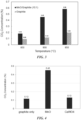
- the MnO:graphite 10: 1 sample was used to further investigate the impact of the reaction temperature on the concentration of CO 2 produced. As shown in Figure 3 , the concentration of CO 2 released increased as the reaction temperature increased from 850°C to 950°C.
- Figure 4 shows the concentration of CO 2 released at a reaction temperature of 900°C for a graphite control, a 10:1 MnO:graphite sample, and a 10:1 CaWO 4 :graphite sample; the 10:1 MnO:graphite sample has the highest activity, while the 10:1 CaWO 4 :graphite sample has comparable activity to the graphite control.
- Figure 5 shows the concentration of CO 2 released at a reaction temperature of 900°C for a graphite control, a 10:1 MnO:graphite sample, and a 10:1 Mn 3 O 4 :graphite sample. While the Mn 3 O 4 catalyst shows an initial high release of CO 2 , over time the levels drop significantly. The initial high release of CO 2 is due to decomposition of the Mn 3 O 4 catalyst with subsequent release of Oz.
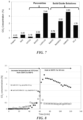
- Figure 6 shows a comparison of Mn 3 O 4 and MnO after extended reaction time at a temperature of 900°C. Presumably, at high temperature the Mn 3 O 4 catalyst decomposes to MnO with the subsequent release of O 2 .
- the gasification activity is comparable to that of the 10:1 MnO:graphite catalyst.
- the long-term gasification activity of the Mn 3 O 4 catalyst approaches that of MnO, confirming that the MnO is the active catalytic gasification component.
- perovskites were synthesized using a citric acid method ( US 8943811 ; Mukai et al. Applied catalysis A, General 2013, 458, 71- 81 ; Spinicci et al. Journal of Molecular Catalysis A: Chemical 2003, 197, 147-155 ).
- the perovskite structure is not required for high gasification activity.
- Subsequent measurement of BET surface area for the various perovskites and mixed oxides also confirmed that high surface area is not required for high gasification activity.
- the results from Figure 7 indicate that Ca, Ba, and/or Sr may be key components for high gasification activity.
- the average concentration of evolved CO 2 and H 2 for the various perovskites and solid oxide solutions mixed with graphite at 900°C are summarized in Table 3. Table 3. CO 2 and Hz results for perovskites and solid oxide solutions at 900°C.
- a coating was prepared by combining Fe, Ni, W, Si and Mn metal powders with 5% La0 .4 Sr 0.6 CoO 3 perovskite, a binder (polyvinyl butyral), and a plasticizer (benzyl butyl phthalate) in toluene. After thorough mixing, the resulting slurry was coated onto small (0.75" x 1") coupons cut from steam cracker tubes. After drying, the coupons were heated to 340°C under vacuum with the addition of 15 torr argon to remove most of the organic binder and plasticizer. Subsequently, the coupons were heated to 1100°C under vacuum with the addition of 1-2 torr of argon to densify the coating and provide adequate coating adhesion to the steel surface.
- the coupons were heated to 920°C in air to oxidize the coating surface.
- hexane cracking at 900°C in a lab reactor, almost half as much coke was deposited on the coupon comprising 5% La 0.4 Sr 0.6 CoO 3 relative to an identically treated coupon without the La 0.4 Sr 0.6 CoO 3 .
Landscapes
- Chemical & Material Sciences (AREA)
- Engineering & Computer Science (AREA)
- Materials Engineering (AREA)
- Organic Chemistry (AREA)
- Chemical Kinetics & Catalysis (AREA)
- Physics & Mathematics (AREA)
- Thermal Sciences (AREA)
- Inorganic Chemistry (AREA)
- Life Sciences & Earth Sciences (AREA)
- Wood Science & Technology (AREA)
- Catalysts (AREA)
- Paints Or Removers (AREA)
- Powder Metallurgy (AREA)
- Other Surface Treatments For Metallic Materials (AREA)
Claims (44)
- Revêtement comprenant :une première région ayant une première épaisseur, la première région comprenant un oxyde de manganèse, un oxyde de chrome-manganèse ou leur combinaison ;une seconde région ayant une seconde épaisseur, la seconde région comprenant Ni, Fe, W, Cr, Co, Mn, Ti, Mo, V, Nb, Zr, Si, C ou leur combinaison ; etun métal alcalino-terreux, un oxyde alcalino-terreux, un carbonate alcalino-terreux, un silicate alcalino-terreux, du molybdène, un oxyde de molybdène, un carbure de molybdène, une pérovskite à métaux mixtes, un oxyde inorganique à métaux mixtes ou leur combinaison,dans lequel la première épaisseur est de 0,1 micron à 20 microns,dans lequel la seconde épaisseur est de 50 microns à 1 200 microns, etdans lequel le revêtement est déposé sur un substrat, la première région est la région la plus à l'extérieur du revêtement par rapport au substrat et est exposée à l'atmosphère de traitement ; et la seconde région est sous-jacente à la première région et immédiatement à proximité du substrat.
- Revêtement selon la revendication 1, dans lequel le revêtement comporte un métal alcalino-terreux, un oxyde alcalino-terreux, un carbonate alcalino-terreux, un silicate alcalino-terreux ou leur combinaison et le métal alcalino-terreux, l'oxyde alcalino-terreux, le carbonate alcalino-terreux, le silicate alcalino-terreux ou leur combinaison comprend Mg, Ca, Sr, Ba ou leur combinaison.
- Revêtement selon l'une quelconque des revendications 1 à 2, dans lequel le revêtement comprend un métal alcalino-terreux, un oxyde alcalino-terreux, un carbonate alcalino-terreux, un silicate alcalino-terreux ou leur combinaison en une quantité de 0,5 % en poids à 20 % en poids, de 0,5 % en poids à 10 % en poids ou de 1 % en poids à 5 % en poids sur la base du poids total du revêtement.
- Revêtement selon l'une quelconque des revendications 1 à 3, dans lequel le revêtement comporte un oxyde de molybdène et l'oxyde de molybdène comprend MoO2, MoOa ou leur combinaison.
- Revêtement selon l'une quelconque des revendications 1 à 4, dans lequel le revêtement comprend du molybdène, un oxyde de molybdène, un carbure de molybdène ou leur combinaison en une quantité de 0,5 % en poids à 20 % en poids, de 0,5 % en poids à 10 % en poids ou de 1 % à 5 % sur la base du poids total du revêtement.
- Revêtement selon l'une quelconque des revendications 1 à 5, dans lequel le revêtement comporte une pérovskite à métaux mixtes et la pérovskite à métaux mixtes comprend un premier métal et un second métal, dans lequel le premier métal et le second métal sont choisis dans le groupe constitué de Mg, AI, Ca, Sc, Ti, V, Cr, Mn, Fe, Co, Ni, Cu, Zn, Ga, Sr, Y, Zr, Nb, Mo, Ru, Rh, Pd, Ag, In, Sn, Ba, Ta, W, Re, Ir, Pt, Au, Bi, La, Ce, Pr, Nd et leurs combinaisons.
- Revêtement selon l'une quelconque des revendications 1 à 6, dans lequel le revêtement comporte une pérovskite à métaux mixtes et la pérovskite à métaux mixtes comprend SrCoC3, LaySr1-yCoO3, LaySr1-yFeO3, LaySr1-yMnO3, LayCa1-yMnO3, PryCa1-yMnO3, BaZrC3, BaTiO3 ou leur combinaison, dans lequel y vaut de 0,2 à 1 ou de 0,4 à 0,8.
- Revêtement selon l'une quelconque des revendications 1 à 7, dans lequel le revêtement comprend la pérovskite à métaux mixtes en une quantité de 0,5 % en poids à 20 % en poids, de 0,5 % en poids à 10 % en poids ou de 1 % en poids à 5 % en poids sur la base du poids total du revêtement.
- Revêtement selon l'une quelconque des revendications 1 à 8, dans lequel le revêtement comporte un oxyde inorganique à métaux mixtes et l'oxyde inorganique à métaux mixtes comprend un premier métal et un second métal, dans lequel le premier métal et le second métal sont choisis dans le groupe constitué de Mg, AI, Ca, Sc, Ti, V, Cr, Mn, Fe, Co, Ni, Cu, Zn, Ga, Sr, Y, Zr, Nb, Mo, Ag, In, Sn, Ba, Ta, W, Re, Au, Bi, La, Ce, Pr, Nd et leurs combinaisons.
- Revêtement selon l'une quelconque des revendications 1 à 9, dans lequel le revêtement comporte un oxyde inorganique à métaux mixtes et l'oxyde inorganique à métaux mixtes comprend CaMnO3, BaCexZr1-xO3 ou leur combinaison, dans lequel x vaut de 0 à 1.
- Revêtement selon l'une quelconque des revendications 1 à 10, dans lequel le revêtement comprend l'oxyde inorganique à métaux mixtes en une quantité de 0,5 % en poids à 20 % en poids, de 0,5 % en poids à 10 % en poids ou de 1 % en poids à 5 % en poids sur la base du poids total du revêtement.
- Revêtement selon l'une quelconque des revendications 1 à 11, dans lequel la seconde région comprend X6W6Z, XWZ ou leur combinaison, dans lequel X est indépendamment Ni ou un mélange de Ni et d'un ou plusieurs métaux de transition et Z est indépendamment Si, C ou leur combinaison.
- Revêtement selon l'une quelconque des revendications 1 à 12, dans lequel la seconde région comprend Si en une quantité de 1 % en poids à 15 % en poids ou de 3 % en poids à 8 % en poids sur la base du poids total de la seconde région.
- Revêtement selon l'une quelconque des revendications 1 à 13, dans lequel la seconde région comprend Mn en une quantité de 1 % en poids à 20 % en poids ou de 5 % en poids à 15 % en poids, sur la base du poids total de la seconde région.
- Revêtement selon l'une quelconque des revendications 1 à 14, dans lequel l'épaisseur de la première région est de 1 micron à 20 microns, de 2 microns à 20 microns, de 4 microns à 15 microns, de 5 microns à 12 microns, de 6 microns à 10 microns ou de 7 microns à 9 microns.
- Revêtement selon l'une quelconque des revendications 1 à 15, dans lequel la seconde région a une épaisseur de 100 microns à 1 200 microns ; de 100 microns à 1 000 microns ; de 200 microns à 700 microns ; de 200 microns à 500 microns ; ou de 300 microns à 500 microns.
- Revêtement selon l'une quelconque des revendications 1 à 16, dans lequel la première région comporte un oxyde de manganèse et l'oxyde de manganèse est choisi dans le groupe constitué de MnO, Mn2O3, Mn3O4, MnO2 et leurs combinaisons.
- Revêtement selon l'une quelconque des revendications 1 à 17, dans lequel la première région comporte un oxyde de chrome-manganèse et l'oxyde de chrome-manganèse comprend un oxyde de chrome-manganèse spinelle, un oxyde de chrome-manganèse spinelle inverse, un oxyde de chrome-manganèse non stoechiométrique ou leur combinaison.
- Revêtement selon l'une quelconque des revendications 1 à 18, dans lequel la seconde région comprend Ni en une quantité de 15 à 45 % en poids, W en une quantité de 10 à 50 % en poids, Cr en une quantité de 1 à 15 % en poids, Fe en une quantité de 1 à 10 % en poids, Mn en une quantité de 1 à 20 % en poids, Si en une quantité de 1 à 15 % en poids, Nb en une quantité de 0 à 2 % en poids, Mo en une quantité de 0 à 15 % en poids, Ti en une quantité de 0 à 2 % en poids et Zr en une quantité de 0 à 2 % en poids, sur la base du poids total de la seconde région.
- Revêtement selon l'une quelconque des revendications 1 à 19, dans lequel le revêtement catalyse la gazéification du carbone.
- Substrat ayant une surface, dans lequel le revêtement selon l'une quelconque des revendications 1 à 20 est fourni sous la forme d'un revêtement sur la surface du substrat, dans lequel la seconde région est à proximité de la surface du substrat, et la première région est à proximité de la seconde région.
- Substrat selon la revendication 21, dans lequel le substrat comprend un alliage à base de nickel-chrome, un superalliage à base de nickel-cobalt ou leur combinaison.
- Procédé de préparation d'un revêtement selon les revendications 1 à 20 sur un substrat, le procédé comprenant :l'application d'un mélange de poudres à la surface du substrat, le mélange de poudres comprenant :une première poudre comprenant Ni, Fe, W, Cr, Co, Mn, Ti, Mo, V, Nb, Zr, Si, C ou leur combinaison ; etune seconde poudre comprenant un métal alcalino-terreux, un oxyde alcalino-terreux, un carbonate alcalino-terreux, un silicate alcalino-terreux, du molybdène, un oxyde de molybdène, un carbure de molybdène, une pérovskite à métaux mixtes, un oxyde inorganique à métaux mixtes ou leur combinaison ; etle chauffage du mélange de poudres appliqué à la surface du substrat en
l'absence d'oxygène sous vide ou sous atmosphère inerte pour former un revêtement initial sur la surface du substrat. - Procédé selon la revendication 23, dans lequel le revêtement comprend :une première région ayant une première épaisseur, la première région comprenant un oxyde de manganèse, un oxyde de chrome-manganèse ou leur combinaison ;une seconde région ayant une seconde épaisseur, la seconde région comprenant Ni, Fe, W, Cr, Co, Mn, Ti, Mo, V, Nb, Zr, Si, C ou leur combinaison ; etun métal alcalino-terreux, un oxyde alcalino-terreux, un carbonate alcalino-terreux, un silicate alcalino-terreux, du molybdène, un oxyde de molybdène, un carbure de molybdène, une pérovskite à métaux mixtes, un oxyde inorganique à métaux mixtes ou leur combinaison ;dans lequel la seconde région est à proximité de la surface du substrat, et la première région est à proximité de la seconde région.
- Procédé selon l'une quelconque des revendications 23 à 24, dans lequel le mélange de poudres est fourni de telle sorte que le revêtement comporte un métal alcalino-terreux, un oxyde alcalino-terreux, un carbonate alcalino-terreux, un silicate alcalino-terreux ou leur combinaison et le métal alcalino-terreux, l'oxyde alcalino-terreux, le carbonate alcalino-terreux, le silicate alcalino-terreux ou leur combinaison comprend Mg, Ca, Sr, Ba ou leur combinaison.
- Procédé selon l'une quelconque des revendications 23 à 25, dans lequel le mélange de poudres est fourni de telle sorte que le revêtement comprend le métal alcalino-terreux, l'oxyde alcalino-terreux, le carbonate alcalino-terreux, le silicate alcalino-terreux ou leur combinaison en une quantité de 0,5 % en poids à 20 % en poids, de 0,5 % en poids à 10 % en poids ou de 1 % en poids à 5 % en poids sur la base du poids total du revêtement.
- Procédé selon l'une quelconque des revendications 23 à 26, dans lequel le mélange de poudres est fourni de telle sorte que le revêtement comporte un oxyde de molybdène et l'oxyde de molybdène comprend MoO2, MoOa ou leur combinaison.
- Procédé selon l'une quelconque des revendications 23 à 27, dans lequel le mélange de poudres est fourni de telle sorte que le revêtement comprend du molybdène, un oxyde de molybdène, un carbure de molybdène ou leur combinaison en une quantité de 0,5 % en poids à 20 % en poids, de 0,5 % en poids à 10 % en poids ou de 1 % à 5 % sur la base du poids total du revêtement.
- Procédé selon l'une quelconque des revendications 23 à 28, dans lequel le mélange de poudres est fourni de telle sorte que le revêtement comporte une pérovskite à métaux mixtes et la pérovskite à métaux mixtes comprend un premier métal et un second métal, dans lequel le premier métal et le second métal sont choisis dans le groupe constitué de Mg, AI, Ca, Sc, Ti, V, Cr, Mn, Fe, Co, Ni, Cu, Zn, Ga, Sr, Y, Zr, Nb, Mo, Ru, Rh, Pd, Ag, In, Sn, Ba, Ta, W, Re, Ir, Pt, Au, Bi, La, Ce, Pr, Nd et leurs combinaisons.
- Procédé selon l'une quelconque des revendications 23 à 29, dans lequel le mélange de poudres est fourni de telle sorte que le revêtement comporte une pérovskite à métaux mixtes et la pérovskite à métaux mixtes comprend SrCoC3, LaySr1-yCoO3, LaySr1-yFeO3, LaySr1-yMnO3, LayCa1-yMnO3, PryCa1-yMnO3, BaZrO3, BaTiO3 ou leur combinaison, dans lequel y vaut de 0,2 à 1, ou de 0,4 à 0,8.
- Procédé selon l'une quelconque des revendications 23 à 30, dans lequel le mélange de poudres est fourni de telle sorte que le revêtement comprend la pérovskite à métaux mixtes en une quantité de 0,5 % en poids à 20 % en poids, de 0,5 % en poids à 10 % en poids ou de 1 % en poids à 5 % en poids sur la base du poids total du revêtement.
- Procédé selon l'une quelconque des revendications 23 à 31, dans lequel le mélange de poudres est fourni de telle sorte que le revêtement comporte un oxyde inorganique à métaux mixtes et l'oxyde inorganique à métaux mixtes comprend un premier métal et un second métal, dans lequel le premier métal et le second métal sont choisis dans le groupe constitué de Mg, AI, Ca, Sc, Ti, V, Cr, Mn, Fe, Co, Ni, Cu, Zn, Ga, Sr, Y, Zr, Nb, Mo, Ag, In, Sn, Ba, Ta, W, Re, Au, Bi, La, Ce, Pr, Nd et leurs combinaisons.
- Procédé selon l'une quelconque des revendications 23 à 32, dans lequel le mélange de poudres est fourni de telle sorte que le revêtement comporte un oxyde inorganique à métaux mixtes et l'oxyde inorganique à métaux mixtes comprend CaMnO3, BaCexZr1-xO3 ou leur combinaison, dans lequel x vaut de 0 à 1.
- Procédé selon l'une quelconque des revendications 23 à 33, dans lequel le mélange de poudres est fourni de telle sorte que le revêtement comprend l'oxyde inorganique à métaux mixtes en une quantité de 0,5 % en poids à 20 % en poids, de 0,5 % en poids à 10 % en poids ou de 1 % en poids à 5 % en poids sur la base du poids total du revêtement.
- Procédé selon l'une quelconque des revendications 23 à 34, dans lequel le mélange de poudres est fourni de telle sorte que la seconde région comprend X6W6Z, XWZ ou leur combinaison, dans lequel X est indépendamment Ni ou un mélange de Ni et d'un ou plusieurs métaux de transition et Z est indépendamment Si, C ou leur combinaison.
- Procédé selon l'une quelconque des revendications 23 à 35, dans lequel le mélange de poudres est fourni de telle sorte que la seconde région comprend Si en une quantité de 1 % en poids à 15 % en poids ou de 3 % en poids à 8 % en poids sur la base du poids total de la seconde région.
- Procédé selon l'une quelconque des revendications 23 à 36, dans lequel le mélange de poudres est fourni de telle sorte que la seconde région comprend Mn en une quantité de 1 % en poids à 20 % en poids ou de 5 % en poids à 15 % en poids, sur la base du poids total de la seconde région.
- Procédé selon l'une quelconque des revendications 23 à 37, dans lequel l'épaisseur de la première région est de 0,1 micron à 20 microns, de 1 micron à 20 microns, de 2 microns à 20 microns, de 4 microns à 15 microns, de 5 microns à 12 microns, de 6 microns à 10 microns ou de 7 microns à 9 microns.
- Procédé selon l'une quelconque des revendications 23 à 38, dans lequel la seconde région a une épaisseur de 50 microns à 1 200 microns ; de 100 microns à 1 200 microns ; de 100 microns à 1 000 microns ; de 200 microns à 700 microns ; de 200 microns à 500 microns ; ou de 300 microns à 500 microns.
- Procédé selon l'une quelconque des revendications 23 à 39, dans lequel le mélange de poudres est fourni de telle sorte que la première région comporte un oxyde de manganèse et l'oxyde de manganèse est choisi dans le groupe constitué de MnO, Mn2O3, Mn3O4, MnO2 et leurs combinaisons.
- Procédé selon l'une quelconque des revendications 23 à 40, dans lequel le mélange de poudres est fourni de telle sorte que la première région comporte un oxyde de chrome-manganèse et l'oxyde de chrome-manganèse comprend un oxyde de chrome-manganèse spinelle, un oxyde de chrome-manganèse spinelle inverse, un oxyde de chrome-manganèse non stoechiométrique ou leur combinaison.
- Procédé selon l'une quelconque des revendications 23 à 41, dans lequel le mélange de poudres est fourni de telle sorte que la seconde région comprend Ni en une quantité de 15 à 45 % en poids, W en une quantité de 10 à 50 % en poids, Cr en une quantité de 1 à 15 % en poids, Fe en une quantité de 1 à 10 % en poids, Mn en une quantité de 1 à 20 % en poids, Si en une quantité de 1 à 15 % en poids, Nb en une quantité de 0 à 2 % en poids, Mo en une quantité de 0 à 15 % en poids, Ti en une quantité de 0 à 2 % en poids et Zr en une quantité de 0 à 2 % en poids, sur la base du poids total de la seconde région.
- Procédé selon l'une quelconque des revendications 23 à 42, dans lequel le revêtement catalyse la gazéification du carbone.
- Procédé selon l'une quelconque des revendications 23 à 43, dans lequel le substrat comprend un alliage à base de nickel-chrome, un superalliage à base de nickel-cobalt ou leur combinaison.
Applications Claiming Priority (2)
| Application Number | Priority Date | Filing Date | Title |
|---|---|---|---|
| US201762599880P | 2017-12-18 | 2017-12-18 | |
| PCT/US2018/065910 WO2019125979A1 (fr) | 2017-12-18 | 2018-12-17 | Revêtements catalytiques et leurs procédés de fabrication et d'utilisation |
Publications (2)
| Publication Number | Publication Date |
|---|---|
| EP3728481A1 EP3728481A1 (fr) | 2020-10-28 |
| EP3728481B1 true EP3728481B1 (fr) | 2023-02-08 |
Family
ID=65201674
Family Applications (1)
| Application Number | Title | Priority Date | Filing Date |
|---|---|---|---|
| EP18839648.5A Active EP3728481B1 (fr) | 2017-12-18 | 2018-12-17 | Revêtements catalytiques et leurs procédés de fabrication et d'utilisation |
Country Status (5)
| Country | Link |
|---|---|
| US (1) | US11484874B2 (fr) |
| EP (1) | EP3728481B1 (fr) |
| JP (1) | JP2021508760A (fr) |
| CA (1) | CA3085934A1 (fr) |
| WO (1) | WO2019125979A1 (fr) |
Families Citing this family (1)
| Publication number | Priority date | Publication date | Assignee | Title |
|---|---|---|---|---|
| EP4577617A1 (fr) * | 2022-08-25 | 2025-07-02 | Basell Poliolefine Italia S.r.l. | Procédé et catalyseur de dépolymérisation oxydative catalytique |
Family Cites Families (19)
| Publication number | Priority date | Publication date | Assignee | Title |
|---|---|---|---|---|
| JPH0398618A (ja) * | 1989-09-09 | 1991-04-24 | Sakai Chem Ind Co Ltd | 脱臭方法 |
| US5100859A (en) * | 1991-01-22 | 1992-03-31 | Norton Company | Catalyst carrier |
| FR2721837B1 (fr) * | 1994-07-01 | 1996-08-30 | Inst Francais Du Petrole | Catalyseur d'oxydation resistant a des temperatures elevees, son procede de preparation et procede de combustion utilisant un tel catalyseur |
| JP3001181B2 (ja) | 1994-07-11 | 2000-01-24 | 株式会社クボタ | エチレン製造用反応管 |
| WO2001094664A2 (fr) * | 2000-06-08 | 2001-12-13 | Surface Engineered Products Corporation | Systeme de revetement pour acier refractaire inoxydable |
| KR20040030553A (ko) | 2001-03-26 | 2004-04-09 | 에이코스 인코포레이티드 | 탄소 나노튜브를 함유하는 코팅막 |
| US6777370B2 (en) * | 2001-04-13 | 2004-08-17 | Engelhard Corporation | SOx tolerant NOx trap catalysts and methods of making and using the same |
| US7122495B2 (en) * | 2003-02-05 | 2006-10-17 | Exxonmobil Chemical Patents Inc. | Combined cracking and selective hydrogen combustion for catalytic cracking |
| US6899966B2 (en) * | 2003-06-24 | 2005-05-31 | Nova Chemicals (International) S.A. | Composite surface on a stainless steel matrix |
| JP2006095378A (ja) * | 2004-09-28 | 2006-04-13 | Kurita Water Ind Ltd | 金属酸化物の触媒活性向上剤及び触媒活性向上方法、並びに排ガス及び飛灰中のハロゲン化有機化合物低減方法 |
| JP2007214452A (ja) * | 2006-02-10 | 2007-08-23 | Tdk Corp | 剥離層用ペースト及び積層型電子部品の製造方法 |
| JP2010524684A (ja) * | 2007-04-25 | 2010-07-22 | エイチアールディー コーポレイション | 天然ガスを高級炭素化合物に転換するための触媒および方法 |
| CN102260519B (zh) | 2010-05-31 | 2017-03-01 | 通用电气公司 | 烃类裂解方法和反应装置 |
| US8943811B2 (en) | 2010-12-22 | 2015-02-03 | GM Global Technology Operations LLC | Perovskite-based catalysts, catalyst combinations and methods of making and using the same |
| BR112014030061B1 (pt) * | 2012-06-01 | 2021-09-21 | Basf Qtech Inc | Revestimento, uso do revestimento, e, substrato revestido |
| WO2016004151A1 (fr) * | 2014-07-02 | 2016-01-07 | Johnson Matthey Public Limited Company | Perovskite avec un revêtement de composant de rcs sous forme d'un catalyseur d'oxydation d'ammoniac et système de régulation des émissions d'échappement sur des moteurs diesels |
| JP5748894B1 (ja) * | 2014-11-07 | 2015-07-15 | 三菱重工業株式会社 | 排ガス処理方法及び脱硝・so3還元装置 |
| SG10201912413VA (en) * | 2015-06-18 | 2020-02-27 | Agency Science Tech & Res | A plant protein and modified clay composite |
| CA2990863A1 (fr) * | 2015-06-30 | 2017-01-05 | Dow Global Technologies Llc | Article composite |
-
2018
- 2018-12-17 EP EP18839648.5A patent/EP3728481B1/fr active Active
- 2018-12-17 WO PCT/US2018/065910 patent/WO2019125979A1/fr not_active Ceased
- 2018-12-17 JP JP2020552676A patent/JP2021508760A/ja active Pending
- 2018-12-17 US US16/955,223 patent/US11484874B2/en active Active
- 2018-12-17 CA CA3085934A patent/CA3085934A1/fr active Pending
Also Published As
| Publication number | Publication date |
|---|---|
| JP2021508760A (ja) | 2021-03-11 |
| US20200330972A1 (en) | 2020-10-22 |
| US11484874B2 (en) | 2022-11-01 |
| EP3728481A1 (fr) | 2020-10-28 |
| CA3085934A1 (fr) | 2019-06-27 |
| WO2019125979A1 (fr) | 2019-06-27 |
Similar Documents
| Publication | Publication Date | Title |
|---|---|---|
| EP2931422B1 (fr) | Revêtements de catalyseur anti-encrassement au moyen d'une couche barrière d'alumine | |
| CN104619789B (zh) | 用于制造石油化学产品的催化表面和涂层 | |
| EP2390302B1 (fr) | Craquage d'hydrocarbures dans un réacteur comprenant un matériau pérovskite sur la surface intérieure pour réduire l'accumulation de dépôts de coke | |
| KR101115994B1 (ko) | 강철 기재상의 복합 표면 | |
| CN102807887A (zh) | 一种抑制烃类裂解炉管催化结焦的裂解炉管及其制造方法 | |
| US11484874B2 (en) | Catalytic coatings, methods of making and use thereof | |
| JP7034137B2 (ja) | 触媒コーティング、その製造方法および使用方法 | |
| CN112725009B (zh) | 处理烃类裂解炉管内表面的方法 | |
| Figueiredo | Reactivity of coke deposited on metal surfaces | |
| CN112725010B (zh) | 处理烃类裂解炉管内表面的方法 | |
| CN117987764A (zh) | 合金炉管及其处理方法与应用 | |
| WO2001025003A1 (fr) | Protection du metal contre le carbone | |
| CN121794056A (zh) | 用于将碳转化为碳氧化物的催化剂组合物和方法 | |
| CN116023977A (zh) | 合金炉管及其处理方法与应用 |
Legal Events
| Date | Code | Title | Description |
|---|---|---|---|
| STAA | Information on the status of an ep patent application or granted ep patent |
Free format text: STATUS: UNKNOWN |
|
| STAA | Information on the status of an ep patent application or granted ep patent |
Free format text: STATUS: THE INTERNATIONAL PUBLICATION HAS BEEN MADE |
|
| PUAI | Public reference made under article 153(3) epc to a published international application that has entered the european phase |
Free format text: ORIGINAL CODE: 0009012 |
|
| STAA | Information on the status of an ep patent application or granted ep patent |
Free format text: STATUS: REQUEST FOR EXAMINATION WAS MADE |
|
| 17P | Request for examination filed |
Effective date: 20200720 |
|
| AK | Designated contracting states |
Kind code of ref document: A1 Designated state(s): AL AT BE BG CH CY CZ DE DK EE ES FI FR GB GR HR HU IE IS IT LI LT LU LV MC MK MT NL NO PL PT RO RS SE SI SK SM TR |
|
| AX | Request for extension of the european patent |
Extension state: BA ME |
|
| DAV | Request for validation of the european patent (deleted) | ||
| DAX | Request for extension of the european patent (deleted) | ||
| STAA | Information on the status of an ep patent application or granted ep patent |
Free format text: STATUS: EXAMINATION IS IN PROGRESS |
|
| 17Q | First examination report despatched |
Effective date: 20210331 |
|
| GRAP | Despatch of communication of intention to grant a patent |
Free format text: ORIGINAL CODE: EPIDOSNIGR1 |
|
| STAA | Information on the status of an ep patent application or granted ep patent |
Free format text: STATUS: GRANT OF PATENT IS INTENDED |
|
| INTG | Intention to grant announced |
Effective date: 20220818 |
|
| GRAS | Grant fee paid |
Free format text: ORIGINAL CODE: EPIDOSNIGR3 |
|
| GRAA | (expected) grant |
Free format text: ORIGINAL CODE: 0009210 |
|
| STAA | Information on the status of an ep patent application or granted ep patent |
Free format text: STATUS: THE PATENT HAS BEEN GRANTED |
|
| AK | Designated contracting states |
Kind code of ref document: B1 Designated state(s): AL AT BE BG CH CY CZ DE DK EE ES FI FR GB GR HR HU IE IS IT LI LT LU LV MC MK MT NL NO PL PT RO RS SE SI SK SM TR |
|
| REG | Reference to a national code |
Ref country code: GB Ref legal event code: FG4D |
|
| REG | Reference to a national code |
Ref country code: CH Ref legal event code: EP Ref country code: AT Ref legal event code: REF Ref document number: 1547477 Country of ref document: AT Kind code of ref document: T Effective date: 20230215 |
|
| REG | Reference to a national code |
Ref country code: DE Ref legal event code: R096 Ref document number: 602018046048 Country of ref document: DE |
|
| REG | Reference to a national code |
Ref country code: NL Ref legal event code: FP Ref country code: IE Ref legal event code: FG4D |
|
| REG | Reference to a national code |
Ref country code: LT Ref legal event code: MG9D |
|
| REG | Reference to a national code |
Ref country code: AT Ref legal event code: MK05 Ref document number: 1547477 Country of ref document: AT Kind code of ref document: T Effective date: 20230208 |
|
| PG25 | Lapsed in a contracting state [announced via postgrant information from national office to epo] |
Ref country code: RS Free format text: LAPSE BECAUSE OF FAILURE TO SUBMIT A TRANSLATION OF THE DESCRIPTION OR TO PAY THE FEE WITHIN THE PRESCRIBED TIME-LIMIT Effective date: 20230208 Ref country code: PT Free format text: LAPSE BECAUSE OF FAILURE TO SUBMIT A TRANSLATION OF THE DESCRIPTION OR TO PAY THE FEE WITHIN THE PRESCRIBED TIME-LIMIT Effective date: 20230609 Ref country code: NO Free format text: LAPSE BECAUSE OF FAILURE TO SUBMIT A TRANSLATION OF THE DESCRIPTION OR TO PAY THE FEE WITHIN THE PRESCRIBED TIME-LIMIT Effective date: 20230508 Ref country code: LV Free format text: LAPSE BECAUSE OF FAILURE TO SUBMIT A TRANSLATION OF THE DESCRIPTION OR TO PAY THE FEE WITHIN THE PRESCRIBED TIME-LIMIT Effective date: 20230208 Ref country code: LT Free format text: LAPSE BECAUSE OF FAILURE TO SUBMIT A TRANSLATION OF THE DESCRIPTION OR TO PAY THE FEE WITHIN THE PRESCRIBED TIME-LIMIT Effective date: 20230208 Ref country code: HR Free format text: LAPSE BECAUSE OF FAILURE TO SUBMIT A TRANSLATION OF THE DESCRIPTION OR TO PAY THE FEE WITHIN THE PRESCRIBED TIME-LIMIT Effective date: 20230208 Ref country code: ES Free format text: LAPSE BECAUSE OF FAILURE TO SUBMIT A TRANSLATION OF THE DESCRIPTION OR TO PAY THE FEE WITHIN THE PRESCRIBED TIME-LIMIT Effective date: 20230208 Ref country code: AT Free format text: LAPSE BECAUSE OF FAILURE TO SUBMIT A TRANSLATION OF THE DESCRIPTION OR TO PAY THE FEE WITHIN THE PRESCRIBED TIME-LIMIT Effective date: 20230208 |
|
| PG25 | Lapsed in a contracting state [announced via postgrant information from national office to epo] |
Ref country code: SE Free format text: LAPSE BECAUSE OF FAILURE TO SUBMIT A TRANSLATION OF THE DESCRIPTION OR TO PAY THE FEE WITHIN THE PRESCRIBED TIME-LIMIT Effective date: 20230208 Ref country code: PL Free format text: LAPSE BECAUSE OF FAILURE TO SUBMIT A TRANSLATION OF THE DESCRIPTION OR TO PAY THE FEE WITHIN THE PRESCRIBED TIME-LIMIT Effective date: 20230208 Ref country code: IS Free format text: LAPSE BECAUSE OF FAILURE TO SUBMIT A TRANSLATION OF THE DESCRIPTION OR TO PAY THE FEE WITHIN THE PRESCRIBED TIME-LIMIT Effective date: 20230608 Ref country code: GR Free format text: LAPSE BECAUSE OF FAILURE TO SUBMIT A TRANSLATION OF THE DESCRIPTION OR TO PAY THE FEE WITHIN THE PRESCRIBED TIME-LIMIT Effective date: 20230509 Ref country code: FI Free format text: LAPSE BECAUSE OF FAILURE TO SUBMIT A TRANSLATION OF THE DESCRIPTION OR TO PAY THE FEE WITHIN THE PRESCRIBED TIME-LIMIT Effective date: 20230208 |
|
| PG25 | Lapsed in a contracting state [announced via postgrant information from national office to epo] |
Ref country code: SM Free format text: LAPSE BECAUSE OF FAILURE TO SUBMIT A TRANSLATION OF THE DESCRIPTION OR TO PAY THE FEE WITHIN THE PRESCRIBED TIME-LIMIT Effective date: 20230208 Ref country code: RO Free format text: LAPSE BECAUSE OF FAILURE TO SUBMIT A TRANSLATION OF THE DESCRIPTION OR TO PAY THE FEE WITHIN THE PRESCRIBED TIME-LIMIT Effective date: 20230208 Ref country code: EE Free format text: LAPSE BECAUSE OF FAILURE TO SUBMIT A TRANSLATION OF THE DESCRIPTION OR TO PAY THE FEE WITHIN THE PRESCRIBED TIME-LIMIT Effective date: 20230208 Ref country code: DK Free format text: LAPSE BECAUSE OF FAILURE TO SUBMIT A TRANSLATION OF THE DESCRIPTION OR TO PAY THE FEE WITHIN THE PRESCRIBED TIME-LIMIT Effective date: 20230208 Ref country code: CZ Free format text: LAPSE BECAUSE OF FAILURE TO SUBMIT A TRANSLATION OF THE DESCRIPTION OR TO PAY THE FEE WITHIN THE PRESCRIBED TIME-LIMIT Effective date: 20230208 |
|
| REG | Reference to a national code |
Ref country code: DE Ref legal event code: R097 Ref document number: 602018046048 Country of ref document: DE |
|
| PG25 | Lapsed in a contracting state [announced via postgrant information from national office to epo] |
Ref country code: SK Free format text: LAPSE BECAUSE OF FAILURE TO SUBMIT A TRANSLATION OF THE DESCRIPTION OR TO PAY THE FEE WITHIN THE PRESCRIBED TIME-LIMIT Effective date: 20230208 |
|
| PLBE | No opposition filed within time limit |
Free format text: ORIGINAL CODE: 0009261 |
|
| STAA | Information on the status of an ep patent application or granted ep patent |
Free format text: STATUS: NO OPPOSITION FILED WITHIN TIME LIMIT |
|
| 26N | No opposition filed |
Effective date: 20231109 |
|
| PG25 | Lapsed in a contracting state [announced via postgrant information from national office to epo] |
Ref country code: SI Free format text: LAPSE BECAUSE OF FAILURE TO SUBMIT A TRANSLATION OF THE DESCRIPTION OR TO PAY THE FEE WITHIN THE PRESCRIBED TIME-LIMIT Effective date: 20230208 |
|
| PG25 | Lapsed in a contracting state [announced via postgrant information from national office to epo] |
Ref country code: IT Free format text: LAPSE BECAUSE OF FAILURE TO SUBMIT A TRANSLATION OF THE DESCRIPTION OR TO PAY THE FEE WITHIN THE PRESCRIBED TIME-LIMIT Effective date: 20230208 |
|
| REG | Reference to a national code |
Ref country code: CH Ref legal event code: PL |
|
| PG25 | Lapsed in a contracting state [announced via postgrant information from national office to epo] |
Ref country code: LU Free format text: LAPSE BECAUSE OF NON-PAYMENT OF DUE FEES Effective date: 20231217 |
|
| PG25 | Lapsed in a contracting state [announced via postgrant information from national office to epo] |
Ref country code: MC Free format text: LAPSE BECAUSE OF FAILURE TO SUBMIT A TRANSLATION OF THE DESCRIPTION OR TO PAY THE FEE WITHIN THE PRESCRIBED TIME-LIMIT Effective date: 20230208 |
|
| GBPC | Gb: european patent ceased through non-payment of renewal fee |
Effective date: 20231217 |
|
| PG25 | Lapsed in a contracting state [announced via postgrant information from national office to epo] |
Ref country code: MC Free format text: LAPSE BECAUSE OF FAILURE TO SUBMIT A TRANSLATION OF THE DESCRIPTION OR TO PAY THE FEE WITHIN THE PRESCRIBED TIME-LIMIT Effective date: 20230208 Ref country code: LU Free format text: LAPSE BECAUSE OF NON-PAYMENT OF DUE FEES Effective date: 20231217 |
|
| REG | Reference to a national code |
Ref country code: IE Ref legal event code: MM4A |
|
| PG25 | Lapsed in a contracting state [announced via postgrant information from national office to epo] |
Ref country code: IE Free format text: LAPSE BECAUSE OF NON-PAYMENT OF DUE FEES Effective date: 20231217 |
|
| PG25 | Lapsed in a contracting state [announced via postgrant information from national office to epo] |
Ref country code: GB Free format text: LAPSE BECAUSE OF NON-PAYMENT OF DUE FEES Effective date: 20231217 |
|
| PG25 | Lapsed in a contracting state [announced via postgrant information from national office to epo] |
Ref country code: FR Free format text: LAPSE BECAUSE OF NON-PAYMENT OF DUE FEES Effective date: 20231231 |
|
| PG25 | Lapsed in a contracting state [announced via postgrant information from national office to epo] |
Ref country code: CH Free format text: LAPSE BECAUSE OF NON-PAYMENT OF DUE FEES Effective date: 20231231 |
|
| PG25 | Lapsed in a contracting state [announced via postgrant information from national office to epo] |
Ref country code: IE Free format text: LAPSE BECAUSE OF NON-PAYMENT OF DUE FEES Effective date: 20231217 Ref country code: GB Free format text: LAPSE BECAUSE OF NON-PAYMENT OF DUE FEES Effective date: 20231217 Ref country code: FR Free format text: LAPSE BECAUSE OF NON-PAYMENT OF DUE FEES Effective date: 20231231 Ref country code: CH Free format text: LAPSE BECAUSE OF NON-PAYMENT OF DUE FEES Effective date: 20231231 |
|
| PG25 | Lapsed in a contracting state [announced via postgrant information from national office to epo] |
Ref country code: BG Free format text: LAPSE BECAUSE OF FAILURE TO SUBMIT A TRANSLATION OF THE DESCRIPTION OR TO PAY THE FEE WITHIN THE PRESCRIBED TIME-LIMIT Effective date: 20230208 |
|
| PG25 | Lapsed in a contracting state [announced via postgrant information from national office to epo] |
Ref country code: BG Free format text: LAPSE BECAUSE OF FAILURE TO SUBMIT A TRANSLATION OF THE DESCRIPTION OR TO PAY THE FEE WITHIN THE PRESCRIBED TIME-LIMIT Effective date: 20230208 |
|
| PGFP | Annual fee paid to national office [announced via postgrant information from national office to epo] |
Ref country code: BE Payment date: 20241224 Year of fee payment: 7 Ref country code: NL Payment date: 20241224 Year of fee payment: 7 |
|
| PGFP | Annual fee paid to national office [announced via postgrant information from national office to epo] |
Ref country code: DE Payment date: 20241227 Year of fee payment: 7 |
|
| PG25 | Lapsed in a contracting state [announced via postgrant information from national office to epo] |
Ref country code: CY Free format text: LAPSE BECAUSE OF FAILURE TO SUBMIT A TRANSLATION OF THE DESCRIPTION OR TO PAY THE FEE WITHIN THE PRESCRIBED TIME-LIMIT; INVALID AB INITIO Effective date: 20181217 |
|
| PG25 | Lapsed in a contracting state [announced via postgrant information from national office to epo] |
Ref country code: HU Free format text: LAPSE BECAUSE OF FAILURE TO SUBMIT A TRANSLATION OF THE DESCRIPTION OR TO PAY THE FEE WITHIN THE PRESCRIBED TIME-LIMIT; INVALID AB INITIO Effective date: 20181217 |
|
| PG25 | Lapsed in a contracting state [announced via postgrant information from national office to epo] |
Ref country code: TR Free format text: LAPSE BECAUSE OF FAILURE TO SUBMIT A TRANSLATION OF THE DESCRIPTION OR TO PAY THE FEE WITHIN THE PRESCRIBED TIME-LIMIT Effective date: 20230208 |