EP3731276A1 - Vorrichtung und verfahren zur selbstmontage eines lichtemittierenden halbleiterbauelements - Google Patents
Vorrichtung und verfahren zur selbstmontage eines lichtemittierenden halbleiterbauelements Download PDFInfo
- Publication number
- EP3731276A1 EP3731276A1 EP18915494.1A EP18915494A EP3731276A1 EP 3731276 A1 EP3731276 A1 EP 3731276A1 EP 18915494 A EP18915494 A EP 18915494A EP 3731276 A1 EP3731276 A1 EP 3731276A1
- Authority
- EP
- European Patent Office
- Prior art keywords
- semiconductor light
- emitting diodes
- substrate
- fluid chamber
- magnets
- Prior art date
- Legal status (The legal status is an assumption and is not a legal conclusion. Google has not performed a legal analysis and makes no representation as to the accuracy of the status listed.)
- Granted
Links
Images




Classifications
-
- H—ELECTRICITY
- H10—SEMICONDUCTOR DEVICES; ELECTRIC SOLID-STATE DEVICES NOT OTHERWISE PROVIDED FOR
- H10W—GENERIC PACKAGES, INTERCONNECTIONS, CONNECTORS OR OTHER CONSTRUCTIONAL DETAILS OF DEVICES COVERED BY CLASS H10
- H10W90/00—Package configurations
-
- H—ELECTRICITY
- H10—SEMICONDUCTOR DEVICES; ELECTRIC SOLID-STATE DEVICES NOT OTHERWISE PROVIDED FOR
- H10H—INORGANIC LIGHT-EMITTING SEMICONDUCTOR DEVICES HAVING POTENTIAL BARRIERS
- H10H29/00—Integrated devices, or assemblies of multiple devices, comprising at least one light-emitting semiconductor element covered by group H10H20/00
- H10H29/10—Integrated devices comprising at least one light-emitting semiconductor component covered by group H10H20/00
- H10H29/14—Integrated devices comprising at least one light-emitting semiconductor component covered by group H10H20/00 comprising multiple light-emitting semiconductor components
- H10H29/142—Two-dimensional arrangements, e.g. asymmetric LED layout
-
- H—ELECTRICITY
- H10—SEMICONDUCTOR DEVICES; ELECTRIC SOLID-STATE DEVICES NOT OTHERWISE PROVIDED FOR
- H10H—INORGANIC LIGHT-EMITTING SEMICONDUCTOR DEVICES HAVING POTENTIAL BARRIERS
- H10H20/00—Individual inorganic light-emitting semiconductor devices having potential barriers, e.g. light-emitting diodes [LED]
- H10H20/01—Manufacture or treatment
-
- H—ELECTRICITY
- H10—SEMICONDUCTOR DEVICES; ELECTRIC SOLID-STATE DEVICES NOT OTHERWISE PROVIDED FOR
- H10H—INORGANIC LIGHT-EMITTING SEMICONDUCTOR DEVICES HAVING POTENTIAL BARRIERS
- H10H20/00—Individual inorganic light-emitting semiconductor devices having potential barriers, e.g. light-emitting diodes [LED]
- H10H20/01—Manufacture or treatment
- H10H20/011—Manufacture or treatment of bodies, e.g. forming semiconductor layers
- H10H20/018—Bonding of wafers
-
- H—ELECTRICITY
- H10—SEMICONDUCTOR DEVICES; ELECTRIC SOLID-STATE DEVICES NOT OTHERWISE PROVIDED FOR
- H10H—INORGANIC LIGHT-EMITTING SEMICONDUCTOR DEVICES HAVING POTENTIAL BARRIERS
- H10H20/00—Individual inorganic light-emitting semiconductor devices having potential barriers, e.g. light-emitting diodes [LED]
- H10H20/80—Constructional details
-
- H—ELECTRICITY
- H10—SEMICONDUCTOR DEVICES; ELECTRIC SOLID-STATE DEVICES NOT OTHERWISE PROVIDED FOR
- H10H—INORGANIC LIGHT-EMITTING SEMICONDUCTOR DEVICES HAVING POTENTIAL BARRIERS
- H10H29/00—Integrated devices, or assemblies of multiple devices, comprising at least one light-emitting semiconductor element covered by group H10H20/00
- H10H29/10—Integrated devices comprising at least one light-emitting semiconductor component covered by group H10H20/00
-
- H—ELECTRICITY
- H10—SEMICONDUCTOR DEVICES; ELECTRIC SOLID-STATE DEVICES NOT OTHERWISE PROVIDED FOR
- H10P—GENERIC PROCESSES OR APPARATUS FOR THE MANUFACTURE OR TREATMENT OF DEVICES COVERED BY CLASS H10
- H10P72/00—Handling or holding of wafers, substrates or devices during manufacture or treatment thereof
- H10P72/04—Apparatus for manufacture or treatment
- H10P72/0446—Apparatus for mounting on conductive members, e.g. leadframes or conductors on insulating substrates
-
- H—ELECTRICITY
- H10—SEMICONDUCTOR DEVICES; ELECTRIC SOLID-STATE DEVICES NOT OTHERWISE PROVIDED FOR
- H10W—GENERIC PACKAGES, INTERCONNECTIONS, CONNECTORS OR OTHER CONSTRUCTIONAL DETAILS OF DEVICES COVERED BY CLASS H10
- H10W70/00—Package substrates; Interposers; Redistribution layers [RDL]
- H10W70/60—Insulating or insulated package substrates; Interposers; Redistribution layers
- H10W70/67—Insulating or insulated package substrates; Interposers; Redistribution layers characterised by their insulating layers or insulating parts
- H10W70/68—Shapes or dispositions thereof
- H10W70/682—Shapes or dispositions thereof comprising holes having chips therein
-
- H—ELECTRICITY
- H10—SEMICONDUCTOR DEVICES; ELECTRIC SOLID-STATE DEVICES NOT OTHERWISE PROVIDED FOR
- H10W—GENERIC PACKAGES, INTERCONNECTIONS, CONNECTORS OR OTHER CONSTRUCTIONAL DETAILS OF DEVICES COVERED BY CLASS H10
- H10W72/00—Interconnections or connectors in packages
- H10W72/01—Manufacture or treatment
- H10W72/0198—Manufacture or treatment batch processes
-
- H—ELECTRICITY
- H10—SEMICONDUCTOR DEVICES; ELECTRIC SOLID-STATE DEVICES NOT OTHERWISE PROVIDED FOR
- H10W—GENERIC PACKAGES, INTERCONNECTIONS, CONNECTORS OR OTHER CONSTRUCTIONAL DETAILS OF DEVICES COVERED BY CLASS H10
- H10W72/00—Interconnections or connectors in packages
- H10W72/071—Connecting or disconnecting
- H10W72/072—Connecting or disconnecting of bump connectors
-
- H—ELECTRICITY
- H10—SEMICONDUCTOR DEVICES; ELECTRIC SOLID-STATE DEVICES NOT OTHERWISE PROVIDED FOR
- H10W—GENERIC PACKAGES, INTERCONNECTIONS, CONNECTORS OR OTHER CONSTRUCTIONAL DETAILS OF DEVICES COVERED BY CLASS H10
- H10W72/00—Interconnections or connectors in packages
- H10W72/20—Bump connectors, e.g. solder bumps or copper pillars; Dummy bumps; Thermal bumps
- H10W72/221—Structures or relative sizes
- H10W72/225—Bumps having a filler embedded in a matrix
-
- H—ELECTRICITY
- H10—SEMICONDUCTOR DEVICES; ELECTRIC SOLID-STATE DEVICES NOT OTHERWISE PROVIDED FOR
- H10W—GENERIC PACKAGES, INTERCONNECTIONS, CONNECTORS OR OTHER CONSTRUCTIONAL DETAILS OF DEVICES COVERED BY CLASS H10
- H10W72/00—Interconnections or connectors in packages
- H10W72/20—Bump connectors, e.g. solder bumps or copper pillars; Dummy bumps; Thermal bumps
- H10W72/251—Materials
- H10W72/252—Materials comprising solid metals or solid metalloids, e.g. PbSn, Ag or Cu
-
- H—ELECTRICITY
- H10—SEMICONDUCTOR DEVICES; ELECTRIC SOLID-STATE DEVICES NOT OTHERWISE PROVIDED FOR
- H10W—GENERIC PACKAGES, INTERCONNECTIONS, CONNECTORS OR OTHER CONSTRUCTIONAL DETAILS OF DEVICES COVERED BY CLASS H10
- H10W72/00—Interconnections or connectors in packages
- H10W72/20—Bump connectors, e.g. solder bumps or copper pillars; Dummy bumps; Thermal bumps
- H10W72/251—Materials
- H10W72/253—Materials not comprising solid metals or solid metalloids, e.g. polymers or ceramics
-
- H—ELECTRICITY
- H10—SEMICONDUCTOR DEVICES; ELECTRIC SOLID-STATE DEVICES NOT OTHERWISE PROVIDED FOR
- H10W—GENERIC PACKAGES, INTERCONNECTIONS, CONNECTORS OR OTHER CONSTRUCTIONAL DETAILS OF DEVICES COVERED BY CLASS H10
- H10W72/00—Interconnections or connectors in packages
- H10W72/30—Die-attach connectors
- H10W72/321—Structures or relative sizes of die-attach connectors
- H10W72/325—Die-attach connectors having a filler embedded in a matrix
-
- H—ELECTRICITY
- H10—SEMICONDUCTOR DEVICES; ELECTRIC SOLID-STATE DEVICES NOT OTHERWISE PROVIDED FOR
- H10W—GENERIC PACKAGES, INTERCONNECTIONS, CONNECTORS OR OTHER CONSTRUCTIONAL DETAILS OF DEVICES COVERED BY CLASS H10
- H10W72/00—Interconnections or connectors in packages
- H10W72/30—Die-attach connectors
- H10W72/351—Materials of die-attach connectors
- H10W72/352—Materials of die-attach connectors comprising metals or metalloids, e.g. solders
-
- H—ELECTRICITY
- H10—SEMICONDUCTOR DEVICES; ELECTRIC SOLID-STATE DEVICES NOT OTHERWISE PROVIDED FOR
- H10W—GENERIC PACKAGES, INTERCONNECTIONS, CONNECTORS OR OTHER CONSTRUCTIONAL DETAILS OF DEVICES COVERED BY CLASS H10
- H10W72/00—Interconnections or connectors in packages
- H10W72/30—Die-attach connectors
- H10W72/351—Materials of die-attach connectors
- H10W72/353—Materials of die-attach connectors not comprising solid metals or solid metalloids, e.g. ceramics
-
- H—ELECTRICITY
- H10—SEMICONDUCTOR DEVICES; ELECTRIC SOLID-STATE DEVICES NOT OTHERWISE PROVIDED FOR
- H10W—GENERIC PACKAGES, INTERCONNECTIONS, CONNECTORS OR OTHER CONSTRUCTIONAL DETAILS OF DEVICES COVERED BY CLASS H10
- H10W72/00—Interconnections or connectors in packages
- H10W72/90—Bond pads, in general
- H10W72/941—Dispositions of bond pads
- H10W72/944—Dispositions of multiple bond pads
-
- H—ELECTRICITY
- H10—SEMICONDUCTOR DEVICES; ELECTRIC SOLID-STATE DEVICES NOT OTHERWISE PROVIDED FOR
- H10W—GENERIC PACKAGES, INTERCONNECTIONS, CONNECTORS OR OTHER CONSTRUCTIONAL DETAILS OF DEVICES COVERED BY CLASS H10
- H10W72/00—Interconnections or connectors in packages
- H10W72/90—Bond pads, in general
- H10W72/951—Materials of bond pads
- H10W72/952—Materials of bond pads comprising metals or metalloids, e.g. PbSn, Ag or Cu
-
- H—ELECTRICITY
- H10—SEMICONDUCTOR DEVICES; ELECTRIC SOLID-STATE DEVICES NOT OTHERWISE PROVIDED FOR
- H10W—GENERIC PACKAGES, INTERCONNECTIONS, CONNECTORS OR OTHER CONSTRUCTIONAL DETAILS OF DEVICES COVERED BY CLASS H10
- H10W72/00—Interconnections or connectors in packages
- H10W72/90—Bond pads, in general
- H10W72/951—Materials of bond pads
- H10W72/953—Materials of bond pads not comprising solid metals or solid metalloids, e.g. polymers, ceramics or liquids
-
- H—ELECTRICITY
- H10—SEMICONDUCTOR DEVICES; ELECTRIC SOLID-STATE DEVICES NOT OTHERWISE PROVIDED FOR
- H10W—GENERIC PACKAGES, INTERCONNECTIONS, CONNECTORS OR OTHER CONSTRUCTIONAL DETAILS OF DEVICES COVERED BY CLASS H10
- H10W90/00—Package configurations
- H10W90/701—Package configurations characterised by the relative positions of pads or connectors relative to package parts
- H10W90/721—Package configurations characterised by the relative positions of pads or connectors relative to package parts of bump connectors
- H10W90/724—Package configurations characterised by the relative positions of pads or connectors relative to package parts of bump connectors between a chip and a stacked insulating package substrate, interposer or RDL
-
- H—ELECTRICITY
- H10—SEMICONDUCTOR DEVICES; ELECTRIC SOLID-STATE DEVICES NOT OTHERWISE PROVIDED FOR
- H10W—GENERIC PACKAGES, INTERCONNECTIONS, CONNECTORS OR OTHER CONSTRUCTIONAL DETAILS OF DEVICES COVERED BY CLASS H10
- H10W90/00—Package configurations
- H10W90/701—Package configurations characterised by the relative positions of pads or connectors relative to package parts
- H10W90/731—Package configurations characterised by the relative positions of pads or connectors relative to package parts of die-attach connectors
- H10W90/734—Package configurations characterised by the relative positions of pads or connectors relative to package parts of die-attach connectors between a chip and a stacked insulating package substrate, interposer or RDL
-
- H—ELECTRICITY
- H10—SEMICONDUCTOR DEVICES; ELECTRIC SOLID-STATE DEVICES NOT OTHERWISE PROVIDED FOR
- H10W—GENERIC PACKAGES, INTERCONNECTIONS, CONNECTORS OR OTHER CONSTRUCTIONAL DETAILS OF DEVICES COVERED BY CLASS H10
- H10W90/00—Package configurations
- H10W90/701—Package configurations characterised by the relative positions of pads or connectors relative to package parts
- H10W90/791—Package configurations characterised by the relative positions of pads or connectors relative to package parts of direct-bonded pads
- H10W90/794—Package configurations characterised by the relative positions of pads or connectors relative to package parts of direct-bonded pads between a chip and a stacked insulating package substrate, interposer or RDL
Definitions
- the present invention relates to a method for manufacturing a display device, and more particularly, to a method and device for self-assembling semiconductor light-emitting diodes.
- LCD liquid-crystal displays
- OLED organic light-emitting diode
- microLED microLED displays
- semiconductor microLEDs with a diameter or cross-sectional area less than 100 microns, when used in displays, may offer very high efficiency because the displays do not need a polarizer to absorb light.
- large-scale displays require several millions of semiconductor light-emitting diodes, which makes it difficult to transfer the devices compared to other technologies.
- Some of the technologies currently in development for the transfer process include pick & place, laser lift-off (LLO), and self-assembly.
- the self-assembly approach is a method that allows semiconductor light-emitting diodes to find their positions on their own in a fluid, which is most advantageous in realizing large-screen display devices.
- U.S. Patent Registration No. 9,825,202 disclosed a microLED structure suitable for self-assembly, but there is not enough research being carried out on technologies for manufacturing displays by the self-assembly of microLEDs.
- the present invention proposes a new manufacturing method and device for self-assembling microLEDs.
- One aspect of the present invention is to provide a new manufacturing process that provides high reliability in large-screen displays using micro-size semiconductor light-emitting diodes.
- Another aspect of the present invention is to provide a manufacturing process that improves transfer accuracy when self-assembling semiconductor light-emitting diodes onto a temporary substrate or wiring substrate.
- a method for manufacturing a display device involves a method for self-assembling semiconductor light-emitting didoes, which allows the semiconductor light-emitting diodes to be mounted at an assembly site by an electric field, while being moved in one direction by a magnetic field.
- a method for manufacturing a display device which includes a method for self-assembling semiconductor light-emitting diodes, comprising: feeding a substrate to an assembly site and putting semiconductor light-emitting diodes having a magnetic material into a fluid chamber; applying a magnetic force to the semiconductor light-emitting diodes so that the semiconductor light-emitting diodes move in one direction within the fluid chamber; and guiding the semiconductor light-emitting diodes to preset positions on the substrate by applying an electric field, so that the semiconductor light-emitting diodes are mounted at the preset positions while in the process of being moved.
- the assembly site on the substrate may be a position at which the substrate is placed in the fluid chamber in such a way that an assembly surface where the semiconductor light-emitting diodes are assembled faces downwards.
- the semiconductor light-emitting diodes may be moved horizontally to the substrate by the magnetic force, spaced apart from the substrate.
- the semiconductor light-emitting diodes may be moved vertically to the substrate by the electric field and mounted at preset positions on the substrate, while being moved horizontally to the substrate.
- the method for self-assembling semiconductor light-emitting diodes may further comprise, after the guiding of the semiconductor light-emitting diodes to the preset positions, moving the magnets in a direction in which the magnets get farther away from the substrate, so that the semiconductor light-emitting diodes remaining in the fluid chamber fall to the bottom of the fluid chamber.
- the present invention provides a manufacturing device that can implement the above-described manufacturing process for self-assembling semiconductor light-emitting diodes by using a magnetic field and an electric field in combination.
- the manufacturing device is a device for self-assembling semiconductor light-emitting diodes, comprising: a fluid chamber with a space for containing a plurality of semiconductor light-emitting diodes having a magnetic material; a feed unit for feeding a substrate to an assembly site; magnets that are placed at a distance from the fluid chamber and apply a magnetic force to the semiconductor light-emitting diodes; and a position controller connected to the magnets and configured to control the positions of the magnets, wherein the substrate is configured to form an electric field so that the semiconductor light-emitting diodes are mounted at preset positions on the substrate while in the process of being moved by changes in the positions of the magnets.
- the substrate may be placed in the fluid chamber so that an assembly surface where the semiconductor light-emitting diodes are assembled faces downwards.
- the assembly surface of the substrate may sink in a fluid in the fluid chamber.
- the magnets may be placed to face the opposite side of the assembly surface of the substrate.
- the magnets may rotate in a horizontal, clockwise, or counterclockwise direction to the substrate.
- the substrate may comprise: a base portion; a plurality of cells sequentially arranged in one direction along barrier walls protruding from the base portion; and a plurality of electrodes placed on the undersides of the cells.
- the substrate may further comprise a dielectric layer that covers the electrodes when power is applied to the electrodes, so as to form the electric field within the cells, and forms the bottom of the cells.
- the self-assembly device may further comprise a power supply that is electrically connected to the electrodes so as to generate the electric field by applying power to the electrodes.
- the fluid chamber may be formed with a light-transmissive bottom plate, and the semiconductor light-emitting diodes may be placed between the bottom plate and the substrate.
- the self-assembly device may further comprise an image sensor that is placed opposite the bottom plate so as to monitor the inside of the fluid chamber through the bottom plate.
- large numbers of semiconductor light-emitting diodes can be pixelated on a small-sized wafer and then transferred onto a large-area substrate. This enables the manufacture of a large-area display device at a low cost.
- a low-cost, high-efficiency, and quick transfer of semiconductor light-emitting diodes can be done, regardless of the sizes or numbers of parts and the transfer area, by transferring them in the right positions in a solution by using a magnetic field and an electric field.
- the assembling of semiconductor light-emitting diodes by an electric field allows for selective assembling through selective electrical application without any additional equipment or processes. Also, since an assembly substrate is placed on top of a chamber, the substrate can be easily loaded or unloaded, and non-specific binding of semiconductor light-emitting diodes can be prevented.
- a plurality of magnets are used for assembly, which reduces the area scanned with one magnet and therefore enables a large-area quick transfer. Further, the semiconductor light-emitting diodes remaining in the fluid chamber after assembly can be collected using magnets and re-used.
- Mobile terminals described herein may include cellular phones, smart phones, laptop computers, digital broadcasting terminals, personal digital assistants (PDAs), portable multimedia players (PMPs), navigators, slate PCs, tablet PC, ultra books, digital TVs, digital signage, head-mounted displays (HMDs), desk top computers and the like.
- PDAs personal digital assistants
- PMPs portable multimedia players
- slate PCs slate PCs
- tablet PC ultra books
- digital TVs digital signage
- HMDs head-mounted displays
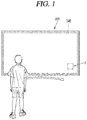
- FIG. 1 is a conceptual diagram showing one embodiment of a display device using semiconductor light-emitting diodes according to the present invention.
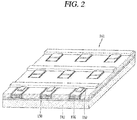
- FIG. 2 is a partial enlarged view of the portion A in the display device of FIG. 1 .
- FIG. 3 is an enlarged view of the semiconductor light-emitting diodes of FIG. 2 .
- FIG. 4 is an enlarged view showing another embodiment of the semiconductor light-emitting diodes of FIG. 2 .
- information processed by a controller of a display device 100 may be outputted by a display module 140.
- An closed loop-shaped case 101 that runs around the edge of the display module may form the bezel of the display device.
- the display module 140 comes with a panel 141 that displays an image, and the panel 141 may come with micro-sized semiconductor light-emitting diodes 150 and a wiring substrate 110 where the semiconductor light-emitting diodes 150 are mounted.
- the wiring substrate 110 may be formed with wiring lines, which can be connected to n-type electrodes 152 and p-type electrodes 156 of the semiconductor light-emitting diodes 150.
- the semiconductor light-emitting diodes 150 may be provided on the wiring substrate 110 as individual pixels that emit light on their own.
- the image displayed on the panel 141 is visual information, which is rendered by controlling the light emission of unit pixels (sub-pixels) arranged in a matrix independently through the wiring lines.
- the present invention takes microLEDs (light-emitting diodes) as an example of the semiconductor light-emitting diodes 150 which convert current into light.
- the microLEDs may be light-emitting diodes that are small in size - less than 100 microns.
- the semiconductor light-emitting diodes 150 have light-emitting regions of red, green, and blue, and unit pixels can produce light through combinations of these colors. That is, the unit pixels are the smallest units for producing one color.
- Each unit pixels may contain at least three microLEDs.
- the semiconductor light-emitting diodes 150 may have a vertical structure.
- the semiconductor light-emitting diodes 150 may be implemented as high-power light-emitting diodes that are composed mostly of gallium nitride (GaN), with some indium (In) and/or aluminum (Al) added to it, and emit light of various colors.
- GaN gallium nitride
- Al aluminum
- Such a vertical semiconductor light-emitting diode comprises a p-type electrode 156, a p-type semiconductor layer 155 formed on the p-type semiconductor layer 156, an active layer 154 formed on the p-type semiconductor layer 155, an n-type semiconductor layer 153 formed on the active layer 154, and an n-type electrode 152 formed on the n-type semiconductor layer 153.
- the p-type electrode 156 at the bottom may be electrically connected to a p electrode of the wiring substrate
- the n-type electrode 152 at the top may be electrically connected to an n electrode above the semiconductor light-emitting diode.
- One of the biggest advantages of the vertical semiconductor light-emitting diode 150 is that the chip size can be reduced by vertically aligning electrodes.
- the semiconductor light-emitting diodes may be flip chip-type light-emitting diodes.
- the semiconductor light-emitting diode 250 comprises a p-type electrode 256, a p-type semiconductor layer 255 formed on the p-type semiconductor layer 256, an active layer 254 formed on the p-type semiconductor layer 255, an n-type semiconductor layer 253 formed on the active layer 254, and an n-type electrode 252 vertically separated from the p-type electrode 256, on the n-type semiconductor layer 253.
- both the p-type electrode 256 and the n-type electrode 252 may be electrically connected to a p electrode and n electrode of the wiring substrate, below the semiconductor light-emitting diode.
- the vertical semiconductor light-emitting diode and a horizontal light-emitting diode each may be used as a green semiconductor light-emitting diode, blue semiconductor light-emitting diode, or red semiconductor light-emitting diode.
- the green semiconductor light-emitting diode and the blue semiconductor light-emitting diode may be implemented as high-power light-emitting diodes that are composed mostly of gallium nitride (GaN), with some indium (In) and/or aluminum (Al) added to it, and emit green and blue light, respectively.
- the semiconductor light-emitting diodes may be composed of gallium nitride thin films which are formed of various layers of n-Gan, p-GaN, AIGaN, InGaN, etc. More specifically, the p-type semiconductor layer may be P-type GaN, and the n-type semiconductor layer may be N-type GaN.
- the p-type semiconductor layer may be P-type GaN doped with Mg on the p electrode
- the n-type semiconductor layer may be N-type GaN doped with Si on the n electrode.
- the above-described semiconductor light-emitting diodes may come without the active layer.
- self-emissive, high-definition unit pixels may be arranged on the display panel, and therefore the display device can deliver high picture quality.
- semiconductor light-emitting diodes are grown on a wafer, formed through mesa and isolation, and used as individual pixels.
- the micro-sized semiconductor light-emitting diodes 150 should be transferred onto a wafer, at preset positions on a substrate of the display panel.
- One of the transfer technologies available is pick and place, but it has a low success rate and requires a lot of time.
- a number of diodes may be transferred at a time by using a stamp or roll, which, however, is not suitable for large-screen displays because of limited yields.
- the present invention suggests a new method and device for manufacturing a display device that can solve these problems.
- FIGS. 5A to 5E are conceptual diagrams for explaining a new process for manufacturing the above-described semiconductor light-emitting diodes.
- a first conductive semiconductor layer 153, an active layer 154, and a second conductive semiconductor layer 155 are grown on a growth substrate 159 ( FIG. 5A ).
- the active layer 154 is grown on the first conductive semiconductor layer 153
- the second conductive semiconductor layer 155 is grown on the active layer 154.
- the first conductive semiconductor layer 153 may be a p-type semiconductor layer
- the second conductive semiconductor layer 155 may be an n-type semiconductor layer.
- the present invention is not necessarily limited to this, and the first conductive type may be n-type and the second conductive type may be p-type.
- the active layer may be omitted if necessary, as stated above.
- the p-type semiconductor layer may be P-type GaN doped with Mg
- the n-type semiconductor layer may be N-type GaN doped with Si on the n electrode.
- the growth substrate 159 may be formed of, but not limited to, light-transmissive material - for example, at least one among sapphire (Al2O3), GaN, ZnO, and AIO. Also, the growth substrate 159 may be made from a material suitable for growing semiconductor materials or carrier wafer.
- the growth substrate 159 may be formed of high thermal conducting material, and may be a conductive substrate or insulating substrate - for example, at least one among SiC, Si, GaAs, GaP, InP, and Ga2O3 substrates which have higher thermal conductivity than sapphire (Al2O3) substrates.
- a plurality of semiconductor light-emitting diodes are formed by removing at least part of the first conductive semiconductor layer 153, active layer 154, and second conductive semiconductor layer 155 ( FIG. 5B ).
- isolation is performed so that the light-emitting diodes form a light-emitting diode array. That is, a plurality of semiconductor light-emitting diodes are formed by vertically etching the first conductive semiconductor layer 153, active layer 154, and second conductive semiconductor layer 155.
- a mesa process may be performed which exposes the first conductive semiconductor layer 153 to the outside by vertically removing part of the active layer 154 and second conductive layer 155, and then isolation may be performed which forms an array of semiconductor light-emitting diodes by etching the first conductive semiconductor layer 153.
- a second conductive electrode 156 (or p-type electrode) is formed on one surface of the second conductive semiconductor layer 155 ( FIG. 5C ).
- the second conductive electrode 156 may be formed by a deposition method such as sputtering, but the present invention is not necessarily limited to this.
- the second conductive electrode 156 may serve as an n-type electrode.
- the growth substrate 159 is removed, thus leaving a plurality of semiconductor light-emitting diodes.
- the growth substrate 159 may be removed using laser lift-off (LLO) or chemical lift-off (CLO) ( FIG. 5D ).
- the step of mounting the semiconductor light-emitting didoes 150 on a substrate in a chamber filled with a fluid is performed ( FIG. 5E ).
- the semiconductor light-emitting diodes 150 and the substrate are put into the chamber filled with a fluid, and the semiconductor light-emitting diodes are self-assembled onto the substrate 161 using fluidity, gravity, surface tension, etc.
- the substrate may be an assembly substrate 161.
- a wiring substrate instead of the assembly substrate 161, may be put into a fluid chamber, and the semiconductor light-emitting diodes 150 may be mounted directly onto the wiring substrate.
- the substrate may be a wiring substrate.
- the present invention is illustrated with an example in which the semiconductor light-emitting diodes 150 are mounted onto the assembly substrate 161.
- cells into which the semiconductor light-emitting diodes 150 are fitted may be provided on the assembly substrate 161.
- cells where the semiconductor light-emitting diodes 150 are mounted are formed on the assembly substrate 161, at positions where the semiconductor light-emitting diodes 150 are aligned with wiring electrodes.
- the semiconductor light-emitting diodes 150 are assembled to the cells as they move within the fluid.
- the semiconductor light-emitting diodes may be transferred to the wiring substrate from the assembly substrate 161, thereby enabling a large-area transfer across a large area.
- the assembly substrate 161 may be referred to as a temporary substrate.
- the present invention proposes a method and device that minimizes the effects of gravity or friction and avoids non-specific binding, in order to increase the transfer yield.
- a magnetic material is placed on the semiconductor light-emitting diodes so that the semiconductor light-emitting diodes are moved by magnetic force, and the semiconductor light-emitting diodes are mounted at preset positions by an electric field while in the process of being moved.
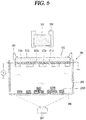
- FIG. 6 is a conceptual diagram showing an example of a device for self-assembling semiconductor light-emitting diodes according to the present invention.
- FIG. 7 is a block diagram of the self-assembly device of FIG. 6 .
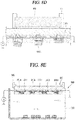
- FIGS. 8A to 8E are conceptual diagrams showing a process for self-assembling semiconductor light-emitting diodes using the self-assembly device of FIG. 6 .
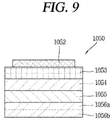
- FIG. 9 is a conceptual diagram for explaining the semiconductor light-emitting diodes of FIGS. 8A to 8E .
- the self-assembly device 160 of the present invention may comprise a fluid chamber 162, magnets 163, and a position controller 164.
- the fluid chamber 162 is equipped with space for a plurality of semiconductor light-emitting diodes.
- the space may be filled with a fluid, and the fluid may be an assembly solution, which includes water or the like.
- the fluid chamber 162 may be a water tank and configured as open-type.
- the present invention is not limited to this, and the fluid chamber 162 may be a closed-type chamber that comes with a closed space.
- a substrate 161 may be placed in the fluid chamber 162 so that an assembly surface where the semiconductor light-emitting diodes 150 are assembled faces downwards.
- the substrate 161 is fed to an assembly site by a feed unit, and the feed unit may come with a stage 165 where the substrate is mounted.
- the position of the stage 165 may be adjusted by the controller, whereby the substrate 161 may be fed to the assembly site.
- the assembly surface of the substrate 161 at the assembly site faces the bottom of the fluid chamber 162.
- the assembly surface of the substrate 161 is placed in such a way as to be soaked with the fluid in the fluid chamber 162.
- the semiconductor light-emitting diodes 150 in the fluid are moved to the assembly surface.
- the substrate 161 is an assembly substrate where an electric field can be formed, and may comprise a base portion 161a, a dielectric layer 161b, and a plurality of electrodes 161c.
- the base portion 161a is made of insulating material, and the electrodes 161c may be thin-film or thick-film bi-planar electrodes that are patterned on one surface of the base portion 161a.
- the electrodes 161c may be formed of a stack of Ti/Cu/Ti, Ag paste, ITO, etc.
- the dielectric layer 161b may be made of inorganic material such as SiO2, SiNx, SiON, Al2O3, TiO2, HfO2, etc.
- the dielectric layer 161b may be an organic insulator and composed of a single layer or multi-layers.
- the thickness of the dielectric layer 161b may range from several tens of nm to several ⁇ m.
- the substrate 161 comprises a plurality of cells 161d that are separated by barrier walls 161e.
- the cells 161d may be sequentially arranged in one direction and made of polymer material.
- the barrier walls 161e form ing the cells 161d may be shared with neighboring cells 161d.
- the barrier walls 161e may protrude from the base portion 161a, and the cells 161d may be sequentially arranged in one direction along the barrier walls 161e. More specifically, the cells 161d may be sequentially arranged in column and row directions and have a matrix structure.
- the cells 161d may have recesses for containing the semiconductor light-emitting diodes 150, and the recesses may be spaces defined by the barrier walls 161e.
- the recesses may have a shape identical or similar to the shape of the semiconductor light-emitting diodes. For example, if the semiconductor light-emitting diodes are rectangular, the recesses may be rectangular too.
- the recesses formed in the cells may be circular if the semiconductor light-emitting diodes are circular.
- each cell is configured to contain one semiconductor light-emitting diode. That is, one cell contains one semiconductor light-emitting diode.
- the plurality of electrodes 161c have a plurality of electrode lines that are placed at the bottom of the cells 161d, and the electrode lines may be configured to extend to neighboring cells.
- the electrodes 161c are placed on the undersides of the cells 161d, and different polarities may be applied to create an electric field within the cells 161d.
- the dielectric layer 161b may form the bottom of the cells 161d while covering the electrodes 161c.
- the electrodes of the substrate 161 at the assembly site are electrically connected to a power supply 171.
- the power supply 171 performs the function of generating an electric field by applying power to the electrodes.
- the self-assembly device may have magnets 163 for applying magnetic force to the semiconductor light-emitting diodes.
- the magnets 163 are placed at a distance from the fluid chamber 162 and apply a magnetic force to the semiconductor light-emitting diodes 150.
- the magnets 163 may be placed to face the opposite side of the assembly surface of the substrate 161, and the positions of the magnets 163 are controlled by the position controller 164 connected to the magnets 163.
- the semiconductor light-emitting diodes 1050 may have a magnetic material so that they are moved within the fluid by a magnetic field.
- a semiconductor light-emitting diode having a magnetic material may comprise a first conductive electrode 1052, a second conductive electrode 1056, a first conductive semiconductor layer 1053 where the first conductive electrode 1052 is placed, a second conductive semiconductor layer 1055 which overlaps the first conductive semiconductor layer 1052 and where the second conductive layer 1056 is placed, and an active layer 1054 placed between the first and second conductive semiconductor layers 1053 and 1055.
- the first conductive may refer to p-type
- the second conductive type may refer to n-type, or vice versa.
- the semiconductor light-emitting diode may be formed without the active layer.
- the first conductive electrode 1052 may be formed after the semiconductor light-emitting diode is assembled onto the wiring substrate by the self-assembling of the semiconductor light-emitting diode.
- the second conductive electrode 1056 may comprise a magnetic material.
- the magnetic material may refer a magnetic metal.
- the magnetic material may be Ni, SmCo, etc.
- the magnetic material may include at least one among Gd-based, La-based, and Mn-based materials.
- the magnetic material may be provided in the form of particles on the second conductive electrode 1056.
- one layer of a conductive electrode comprising a magnetic material may be composed of the magnetic material.
- the second conductive electrode 1056 of the semiconductor light-emitting diode 1050 which comprises a first layer 1056a and a second layer 1056b, as shown in FIG. 9 .
- the first layer 1056a may comprise a magnetic material
- the second layer 1056b may comprise a metal material other than the magnetic material.
- the first layer 1056a comprising the magnetic material may be placed in contact with the second conductive semiconductor layer 1055.
- the first layer 1056a is placed between the second layer 1056b and the second conductive semiconductor layer 1055.
- the second layer 1056b may be a contact metal that is connected to the wiring electrode on the wiring substrate.
- the present invention is not necessarily limited to this, and the magnetic material may be placed on one surface of the first conductive semiconductor layer.
- a magnet handler capable of automatically or manually moving the magnets 163 on the x, y, and z axes or a motor capable of rotating the magnets 163 may be provided.
- the magnet handler and motor may constitute the position controller 164. As such, the magnets 163 may rotate in a horizontal, clockwise, or counterclockwise direction to the substrate 161.
- the fluid chamber 162 may be formed with a light-transmissive bottom plate 166, and the semiconductor light-emitting diodes may be placed between the bottom plate 166 and the substrate 161.
- An image sensor 167 may be placed opposite the bottom plate 166 so as to monitor the inside of the fluid chamber 162 through the bottom plate 166.
- the image sensor 167 may be controlled by a controller 172, and may come with an inverted-type lens, CCD, etc. so as to observe the assembly surface of the substrate 161.
- the above-explained self-assembly device is configured to use a magnetic field and an electric field in combination. With this, the semiconductor light-emitting diodes are mounted at preset positions on the substrate by an electric field while in the process of being moved by changes in the positions of the magnets. Below, the assembly process using the above-explained self-assembly device will be described in more details.
- a plurality of semiconductor light-emitting diodes 1050 having a magnetic material may be formed through the process explained with reference to FIGS. 5A to 5C .
- the magnetic material may be deposited onto the semiconductor light-emitting didoes in the process of forming the second conductive electrode of FIG. 5C .
- the substrate 161 is fed to an assembly site, and the semiconductor light-emitting diodes 1050 are put into the fluid chamber 162 ( FIG. 8A ).
- the assembly site on the substrate 161 may be a position at which the substrate 161 is placed in the fluid chamber 162 in such a way that an assembly surface where the semiconductor light-emitting diodes 150 are assembled faces downwards.
- some of the semiconductor light-emitting diodes 1050 may sink to the bottom of the fluid chamber 162 and some of them may float in the fluid. If the fluid chamber 162 comes with a light-transmissive bottom plate 166, some of the semiconductor light-emitting diodes 1050 may sink to the bottom plate 166.
- a magnetic force is applied to the semiconductor light-emitting diodes 1050 so that the semiconductor light-emitting diodes 1050 in the fluid chamber 162 come up to the surface ( FIG. 8B ).
- the semiconductor light-emitting diodes 1050 float in the fluid towards the substrate 161.
- the original positions may refer to positions at which the magnets 163 are outside the fluid chamber 162.
- the magnets 163 may be composed of electromagnets. In this case, an initial magnetic force is generated by supplying electricity to the electromagnets.
- the assembly surface of the substrate 161 and the spacing between the semiconductor light-emitting diodes 1050 may be controlled by adjusting the strength of the magnetic force.
- the spacing is controlled by using the weight, buoyancy, and magnetic force of the semiconductor light-emitting diodes 1050.
- the spacing may be several millimeters to several tens of micrometers from the outermost part of the substrate 161.
- a magnetic force is applied to the semiconductor light-emitting diodes 1050 so that the semiconductor light-emitting diodes 1050 move in one direction within the fluid chamber 162.
- the magnets 163 may move in a horizontal, clockwise, or counterclockwise direction to the substrate 161 ( FIG. 8C ).
- the semiconductor light-emitting diodes 1050 are moved horizontally to the substrate 161 by the magnetic force, spaced apart from the substrate 161.
- the semiconductor light-emitting diodes 1050 are guided to preset positions on the substrate 161 by applying an electric field so that the semiconductor light-emitting diodes 1050 are mounted at the preset positions while in the process of being moved ( FIG. 8C ).
- the semiconductor light-emitting diodes 1050 are moved vertically to the substrate 161 by the electric field and mounted at preset positions on the substrate 161, while being moved horizontally to the substrate 161.
- an electric field is generated by supplying power to bi-planar electrodes on the substrate 161, and the semiconductor light-emitting diodes 1050 are guided to the preset positions and assembled only there by the electric field. That is, the semiconductor light-emitting diodes 1050 are self-assembled at an assembly site on the substrate 161 by a selectively generated electric field.
- the substrate 161 may be formed with cells into which the semiconductor light-emitting diodes 1050 are fitted.
- the unloading of the substrate 161 is performed, thereby completing the assembly process.
- the substrate 161 is an assembly substrate
- an array of semiconductor light-emitting diodes may be transferred onto a wiring substrate to carry out a subsequent process for realizing the display device, as described previously.
- the magnets 163 may be moved in a direction in which they get farther away from the substrate 161, so that the semiconductor light-emitting diodes 1050 remaining in the fluid chamber 162 fall to the bottom of the fluid chamber 162 ( FIG. 8D ).
- the semiconductor light-emitting diodes 1050 remaining in the fluid chamber 162 fall to the bottom of the fluid chamber 162.
- the semiconductor light-emitting diodes 1050 on the bottom of the fluid chamber 162 may be collected, and the collected semiconductor light-emitting diodes 1050 may be re-used.
- parts distant from one another are concentrated near a preset assembly site by using a magnetic field in order to increase assembly yields in a fluidic assembly, and the parts are selectively assembled only at the assembly site by applying an electric field to the assembly site.
- the assembly substrate is positioned on top of a water tank, with its assembly surface facing downward, thus minimizing the effect of gravity from the weights of the parts and avoiding non-specific binding and eliminating defects.
- large numbers of semiconductor light-emitting diodes can be pixelated on a small-sized wafer and then transferred onto a large-area substrate. This enables the manufacture of a large-area display device at a low cost.
Landscapes
- Led Device Packages (AREA)
- Led Devices (AREA)
- Engineering & Computer Science (AREA)
- Mechanical Engineering (AREA)
Applications Claiming Priority (3)
| Application Number | Priority Date | Filing Date | Title |
|---|---|---|---|
| KR20180045723 | 2018-04-19 | ||
| KR1020180084147A KR102162739B1 (ko) | 2018-04-19 | 2018-07-19 | 반도체 발광소자의 자가조립 장치 및 방법 |
| PCT/KR2018/011438 WO2019203403A1 (ko) | 2018-04-19 | 2018-09-27 | 반도체 발광소자의 자가조립 장치 및 방법 |
Publications (3)
| Publication Number | Publication Date |
|---|---|
| EP3731276A1 true EP3731276A1 (de) | 2020-10-28 |
| EP3731276A4 EP3731276A4 (de) | 2021-09-15 |
| EP3731276B1 EP3731276B1 (de) | 2023-11-01 |
Family
ID=68239665
Family Applications (1)
| Application Number | Title | Priority Date | Filing Date |
|---|---|---|---|
| EP18915494.1A Active EP3731276B1 (de) | 2018-04-19 | 2018-09-27 | Vorrichtung und verfahren zur selbstmontage eines lichtemittierenden halbleiterbauelements |
Country Status (3)
| Country | Link |
|---|---|
| US (1) | US10825702B2 (de) |
| EP (1) | EP3731276B1 (de) |
| WO (1) | WO2019203403A1 (de) |
Cited By (2)
| Publication number | Priority date | Publication date | Assignee | Title |
|---|---|---|---|---|
| CN112599459A (zh) * | 2020-12-16 | 2021-04-02 | 福州京东方光电科技有限公司 | 微发光二极管芯片的转移方法、显示面板及其制作方法 |
| EP3933900A4 (de) * | 2019-02-28 | 2022-11-30 | LG Electronics Inc. | Montagevorrichtung zur montage einer anzeigetafel mit lichtemittierenden halbleiterbauelementen |
Families Citing this family (15)
| Publication number | Priority date | Publication date | Assignee | Title |
|---|---|---|---|---|
| KR102788934B1 (ko) * | 2019-12-06 | 2025-03-31 | 삼성디스플레이 주식회사 | 발광 소자의 정렬 방법, 이를 이용한 표시 장치의 제조 방법 및 표시 장치 |
| KR102773677B1 (ko) * | 2020-01-22 | 2025-02-27 | 엘지전자 주식회사 | 반도체 발광소자의 자가조립 장치 및 방법 |
| CN111710640A (zh) * | 2020-05-09 | 2020-09-25 | 深圳市宝和林电子有限公司 | 一种微型led芯片巨量转移方法 |
| CN112992754B (zh) * | 2020-05-22 | 2022-02-25 | 重庆康佳光电技术研究院有限公司 | 一种巨量转移装置及其转移方法 |
| KR102840659B1 (ko) * | 2020-10-13 | 2025-08-01 | 엘지전자 주식회사 | 디스플레이 장치 |
| CN112366154A (zh) * | 2020-11-06 | 2021-02-12 | 深圳市Tcl高新技术开发有限公司 | 芯片转移方法 |
| CN112635368B (zh) * | 2020-12-29 | 2022-12-06 | Tcl华星光电技术有限公司 | 微型发光二极管转移设备及转移方法 |
| KR102834044B1 (ko) | 2021-02-03 | 2025-07-16 | 엘지전자 주식회사 | 반도체 발광소자의 전사용 롤러부의 전극구조 및 이를포함하는 지능형 조립전사 통합장치 |
| CN113053793B (zh) * | 2021-03-19 | 2023-02-03 | 江西乾照光电有限公司 | 一种Micro LED阵列器件巨量转移装置及转移方法 |
| KR102760290B1 (ko) * | 2021-07-22 | 2025-02-03 | 엘지전자 주식회사 | 반도체 발광 소자를 이용한 디스플레이 장치 및 그 제조 방법 |
| US12402450B2 (en) | 2021-11-12 | 2025-08-26 | Lg Electronics Inc. | Display device |
| KR102931061B1 (ko) | 2021-12-27 | 2026-02-24 | 삼성전자주식회사 | 마이크로 발광소자 어레이 및 마이크로 발광소자 어레이 제조 방법 |
| KR102857453B1 (ko) | 2022-07-04 | 2025-09-08 | 삼성전자주식회사 | 칩 습식 전사 장치 |
| TWI824770B (zh) * | 2022-10-13 | 2023-12-01 | 財團法人工業技術研究院 | 顯示器元件與投影器 |
| KR102878360B1 (ko) | 2023-06-29 | 2025-10-28 | 삼성전자주식회사 | 자기력을 이용한 칩 습식 전사 방법 및 장비 |
Family Cites Families (16)
| Publication number | Priority date | Publication date | Assignee | Title |
|---|---|---|---|---|
| JP2001257218A (ja) * | 2000-03-10 | 2001-09-21 | Sony Corp | 微細チップの実装方法 |
| US6687987B2 (en) * | 2000-06-06 | 2004-02-10 | The Penn State Research Foundation | Electro-fluidic assembly process for integration of electronic devices onto a substrate |
| US7943052B2 (en) * | 2005-07-05 | 2011-05-17 | National Taiwan University | Method for self-assembling microstructures |
| US7926176B2 (en) * | 2005-10-19 | 2011-04-19 | General Electric Company | Methods for magnetically directed self assembly |
| KR100885187B1 (ko) * | 2007-05-10 | 2009-02-23 | 삼성전자주식회사 | 플라즈마 챔버의 상태를 모니터링하는 방법 및 시스템 |
| US7861405B2 (en) * | 2008-03-03 | 2011-01-04 | Palo Alto Research Center Incorporated | System for forming a micro-assembler |
| US8586410B2 (en) * | 2010-01-25 | 2013-11-19 | University Of Florida Research Foundation, Inc. | Enhanced magnetic self-assembly using integrated micromagnets |
| CN102971873B (zh) * | 2010-07-14 | 2016-10-26 | 夏普株式会社 | 微小物体的配置方法、排列装置、照明装置以及显示装置 |
| EP2839522A4 (de) * | 2012-04-20 | 2015-12-09 | Rensselaer Polytech Inst | Lichtemittierende dioden und verfahren zur verpackung davon |
| US10242977B2 (en) * | 2014-10-31 | 2019-03-26 | eLux, Inc. | Fluid-suspended microcomponent harvest, distribution, and reclamation |
| US9825202B2 (en) | 2014-10-31 | 2017-11-21 | eLux, Inc. | Display with surface mount emissive elements |
| US9991415B2 (en) * | 2014-11-26 | 2018-06-05 | Sharp Kabushiki Kaisha | Display device and method of producing display device |
| KR20170026957A (ko) * | 2015-08-31 | 2017-03-09 | 삼성디스플레이 주식회사 | 표시 장치 및 상기 표시 장치의 제조 방법 |
| US9935136B2 (en) * | 2015-11-27 | 2018-04-03 | Innolux Corporation | Manufacturing method of display with lighting devices |
| WO2018045349A1 (en) * | 2016-09-01 | 2018-03-08 | Naya Health, Inc. | Apparatus and methods for measuring fluid attributes in a reservoir |
| EP3471134A1 (de) * | 2017-10-13 | 2019-04-17 | Maven Optronics Co., Ltd. | Verfahren und system zur massenanordnung von mikrokomponentenvorrichtungen |
-
2018
- 2018-09-27 WO PCT/KR2018/011438 patent/WO2019203403A1/ko not_active Ceased
- 2018-09-27 EP EP18915494.1A patent/EP3731276B1/de active Active
-
2019
- 2019-04-18 US US16/388,394 patent/US10825702B2/en active Active
Cited By (3)
| Publication number | Priority date | Publication date | Assignee | Title |
|---|---|---|---|---|
| EP3933900A4 (de) * | 2019-02-28 | 2022-11-30 | LG Electronics Inc. | Montagevorrichtung zur montage einer anzeigetafel mit lichtemittierenden halbleiterbauelementen |
| CN112599459A (zh) * | 2020-12-16 | 2021-04-02 | 福州京东方光电科技有限公司 | 微发光二极管芯片的转移方法、显示面板及其制作方法 |
| CN112599459B (zh) * | 2020-12-16 | 2023-08-22 | 福州京东方光电科技有限公司 | 微发光二极管芯片的转移方法、显示面板及其制作方法 |
Also Published As
| Publication number | Publication date |
|---|---|
| EP3731276B1 (de) | 2023-11-01 |
| EP3731276A4 (de) | 2021-09-15 |
| US20190326144A1 (en) | 2019-10-24 |
| WO2019203403A1 (ko) | 2019-10-24 |
| US10825702B2 (en) | 2020-11-03 |
Similar Documents
| Publication | Publication Date | Title |
|---|---|---|
| EP3731276B1 (de) | Vorrichtung und verfahren zur selbstmontage eines lichtemittierenden halbleiterbauelements | |
| US11798921B2 (en) | Method for manufacturing display device and substrate for manufacturing display device | |
| US12490555B2 (en) | Display device using semiconductor light-emitting element and manufacturing method thereof | |
| US11984337B2 (en) | Device for self-assembling semiconductor light-emitting diodes | |
| US20230119947A1 (en) | A substrate for manufacturing display device and a manufacturing method using the same | |
| US12165884B2 (en) | Self-assembly apparatus and method for semiconductor light-emitting devices | |
| US12324292B2 (en) | Apparatus and method for self-assembly of semiconductor light-emitting element | |
| US11715812B2 (en) | Display device and method for self-assembling semiconductor light emitting diodes | |
| KR102162739B1 (ko) | 반도체 발광소자의 자가조립 장치 및 방법 | |
| EP4024440A1 (de) | Vorrichtung und verfahren zum sammeln von lichtemittierenden halbleiterdioden | |
| US12046484B2 (en) | Module for removing mis-assembled semiconductor light-emitting element and method for removing mis-assembled semiconductor light-emitting element by using same | |
| US12080689B2 (en) | Display device using semiconductor light-emitting elements and manufacturing method therefor | |
| US20230031398A1 (en) | Display device using semiconductor light-emitting element, and manufacturing method therefor | |
| KR102828048B1 (ko) | 반도체 발광 소자를 이용한 디스플레이 장치 및 이의 제조방법 | |
| US20230307598A1 (en) | Display device using semiconductor light-emitting element | |
| KR20200026780A (ko) | 반도체 발광소자 공급 장치 및 공급 방법 | |
| US12315754B2 (en) | Apparatus and method for self-assembling semiconductor light emitting diodes | |
| US20230138887A1 (en) | Semiconductor light-emitting element collecting method and semiconductor light-emitting element collecting method using same | |
| US12469731B2 (en) | Method for manufacturing display device | |
| EP4105995B1 (de) | Anzeigevorrichtung mit verwendung von lichtemittierenden halbleiterelementen und verfahren zur herstellung davon |
Legal Events
| Date | Code | Title | Description |
|---|---|---|---|
| STAA | Information on the status of an ep patent application or granted ep patent |
Free format text: STATUS: THE INTERNATIONAL PUBLICATION HAS BEEN MADE |
|
| PUAI | Public reference made under article 153(3) epc to a published international application that has entered the european phase |
Free format text: ORIGINAL CODE: 0009012 |
|
| STAA | Information on the status of an ep patent application or granted ep patent |
Free format text: STATUS: REQUEST FOR EXAMINATION WAS MADE |
|
| 17P | Request for examination filed |
Effective date: 20200718 |
|
| AK | Designated contracting states |
Kind code of ref document: A1 Designated state(s): AL AT BE BG CH CY CZ DE DK EE ES FI FR GB GR HR HU IE IS IT LI LT LU LV MC MK MT NL NO PL PT RO RS SE SI SK SM TR |
|
| AX | Request for extension of the european patent |
Extension state: BA ME |
|
| DAV | Request for validation of the european patent (deleted) | ||
| DAX | Request for extension of the european patent (deleted) | ||
| REG | Reference to a national code |
Ref country code: DE Ref legal event code: R079 Free format text: PREVIOUS MAIN CLASS: H01L0027150000 Ipc: H01L0033000000 Ref document number: 602018060649 Country of ref document: DE |
|
| A4 | Supplementary search report drawn up and despatched |
Effective date: 20210813 |
|
| RIC1 | Information provided on ipc code assigned before grant |
Ipc: H01L 23/00 20060101ALI20210809BHEP Ipc: H01L 25/075 20060101ALI20210809BHEP Ipc: H01L 33/00 20100101AFI20210809BHEP |
|
| GRAP | Despatch of communication of intention to grant a patent |
Free format text: ORIGINAL CODE: EPIDOSNIGR1 |
|
| STAA | Information on the status of an ep patent application or granted ep patent |
Free format text: STATUS: GRANT OF PATENT IS INTENDED |
|
| INTG | Intention to grant announced |
Effective date: 20230526 |
|
| GRAS | Grant fee paid |
Free format text: ORIGINAL CODE: EPIDOSNIGR3 |
|
| GRAA | (expected) grant |
Free format text: ORIGINAL CODE: 0009210 |
|
| STAA | Information on the status of an ep patent application or granted ep patent |
Free format text: STATUS: THE PATENT HAS BEEN GRANTED |
|
| AK | Designated contracting states |
Kind code of ref document: B1 Designated state(s): AL AT BE BG CH CY CZ DE DK EE ES FI FR GB GR HR HU IE IS IT LI LT LU LV MC MK MT NL NO PL PT RO RS SE SI SK SM TR |
|
| REG | Reference to a national code |
Ref country code: GB Ref legal event code: FG4D |
|
| REG | Reference to a national code |
Ref country code: CH Ref legal event code: EP |
|
| REG | Reference to a national code |
Ref country code: DE Ref legal event code: R096 Ref document number: 602018060649 Country of ref document: DE |
|
| REG | Reference to a national code |
Ref country code: IE Ref legal event code: FG4D |
|
| REG | Reference to a national code |
Ref country code: LT Ref legal event code: MG9D |
|
| REG | Reference to a national code |
Ref country code: NL Ref legal event code: MP Effective date: 20231101 |
|
| PG25 | Lapsed in a contracting state [announced via postgrant information from national office to epo] |
Ref country code: GR Free format text: LAPSE BECAUSE OF FAILURE TO SUBMIT A TRANSLATION OF THE DESCRIPTION OR TO PAY THE FEE WITHIN THE PRESCRIBED TIME-LIMIT Effective date: 20240202 |
|
| PG25 | Lapsed in a contracting state [announced via postgrant information from national office to epo] |
Ref country code: IS Free format text: LAPSE BECAUSE OF FAILURE TO SUBMIT A TRANSLATION OF THE DESCRIPTION OR TO PAY THE FEE WITHIN THE PRESCRIBED TIME-LIMIT Effective date: 20240301 |
|
| PG25 | Lapsed in a contracting state [announced via postgrant information from national office to epo] |
Ref country code: LT Free format text: LAPSE BECAUSE OF FAILURE TO SUBMIT A TRANSLATION OF THE DESCRIPTION OR TO PAY THE FEE WITHIN THE PRESCRIBED TIME-LIMIT Effective date: 20231101 |
|
| REG | Reference to a national code |
Ref country code: AT Ref legal event code: MK05 Ref document number: 1628238 Country of ref document: AT Kind code of ref document: T Effective date: 20231101 |
|
| PG25 | Lapsed in a contracting state [announced via postgrant information from national office to epo] |
Ref country code: NL Free format text: LAPSE BECAUSE OF FAILURE TO SUBMIT A TRANSLATION OF THE DESCRIPTION OR TO PAY THE FEE WITHIN THE PRESCRIBED TIME-LIMIT Effective date: 20231101 |
|
| PG25 | Lapsed in a contracting state [announced via postgrant information from national office to epo] |
Ref country code: AT Free format text: LAPSE BECAUSE OF FAILURE TO SUBMIT A TRANSLATION OF THE DESCRIPTION OR TO PAY THE FEE WITHIN THE PRESCRIBED TIME-LIMIT Effective date: 20231101 |
|
| PG25 | Lapsed in a contracting state [announced via postgrant information from national office to epo] |
Ref country code: ES Free format text: LAPSE BECAUSE OF FAILURE TO SUBMIT A TRANSLATION OF THE DESCRIPTION OR TO PAY THE FEE WITHIN THE PRESCRIBED TIME-LIMIT Effective date: 20231101 |
|
| PG25 | Lapsed in a contracting state [announced via postgrant information from national office to epo] |
Ref country code: NL Free format text: LAPSE BECAUSE OF FAILURE TO SUBMIT A TRANSLATION OF THE DESCRIPTION OR TO PAY THE FEE WITHIN THE PRESCRIBED TIME-LIMIT Effective date: 20231101 Ref country code: LT Free format text: LAPSE BECAUSE OF FAILURE TO SUBMIT A TRANSLATION OF THE DESCRIPTION OR TO PAY THE FEE WITHIN THE PRESCRIBED TIME-LIMIT Effective date: 20231101 Ref country code: IS Free format text: LAPSE BECAUSE OF FAILURE TO SUBMIT A TRANSLATION OF THE DESCRIPTION OR TO PAY THE FEE WITHIN THE PRESCRIBED TIME-LIMIT Effective date: 20240301 Ref country code: GR Free format text: LAPSE BECAUSE OF FAILURE TO SUBMIT A TRANSLATION OF THE DESCRIPTION OR TO PAY THE FEE WITHIN THE PRESCRIBED TIME-LIMIT Effective date: 20240202 Ref country code: ES Free format text: LAPSE BECAUSE OF FAILURE TO SUBMIT A TRANSLATION OF THE DESCRIPTION OR TO PAY THE FEE WITHIN THE PRESCRIBED TIME-LIMIT Effective date: 20231101 Ref country code: BG Free format text: LAPSE BECAUSE OF FAILURE TO SUBMIT A TRANSLATION OF THE DESCRIPTION OR TO PAY THE FEE WITHIN THE PRESCRIBED TIME-LIMIT Effective date: 20240201 Ref country code: AT Free format text: LAPSE BECAUSE OF FAILURE TO SUBMIT A TRANSLATION OF THE DESCRIPTION OR TO PAY THE FEE WITHIN THE PRESCRIBED TIME-LIMIT Effective date: 20231101 Ref country code: PT Free format text: LAPSE BECAUSE OF FAILURE TO SUBMIT A TRANSLATION OF THE DESCRIPTION OR TO PAY THE FEE WITHIN THE PRESCRIBED TIME-LIMIT Effective date: 20240301 |
|
| PG25 | Lapsed in a contracting state [announced via postgrant information from national office to epo] |
Ref country code: SE Free format text: LAPSE BECAUSE OF FAILURE TO SUBMIT A TRANSLATION OF THE DESCRIPTION OR TO PAY THE FEE WITHIN THE PRESCRIBED TIME-LIMIT Effective date: 20231101 Ref country code: RS Free format text: LAPSE BECAUSE OF FAILURE TO SUBMIT A TRANSLATION OF THE DESCRIPTION OR TO PAY THE FEE WITHIN THE PRESCRIBED TIME-LIMIT Effective date: 20231101 Ref country code: PL Free format text: LAPSE BECAUSE OF FAILURE TO SUBMIT A TRANSLATION OF THE DESCRIPTION OR TO PAY THE FEE WITHIN THE PRESCRIBED TIME-LIMIT Effective date: 20231101 Ref country code: NO Free format text: LAPSE BECAUSE OF FAILURE TO SUBMIT A TRANSLATION OF THE DESCRIPTION OR TO PAY THE FEE WITHIN THE PRESCRIBED TIME-LIMIT Effective date: 20240201 Ref country code: LV Free format text: LAPSE BECAUSE OF FAILURE TO SUBMIT A TRANSLATION OF THE DESCRIPTION OR TO PAY THE FEE WITHIN THE PRESCRIBED TIME-LIMIT Effective date: 20231101 Ref country code: HR Free format text: LAPSE BECAUSE OF FAILURE TO SUBMIT A TRANSLATION OF THE DESCRIPTION OR TO PAY THE FEE WITHIN THE PRESCRIBED TIME-LIMIT Effective date: 20231101 |
|
| PG25 | Lapsed in a contracting state [announced via postgrant information from national office to epo] |
Ref country code: DK Free format text: LAPSE BECAUSE OF FAILURE TO SUBMIT A TRANSLATION OF THE DESCRIPTION OR TO PAY THE FEE WITHIN THE PRESCRIBED TIME-LIMIT Effective date: 20231101 |
|
| PG25 | Lapsed in a contracting state [announced via postgrant information from national office to epo] |
Ref country code: CZ Free format text: LAPSE BECAUSE OF FAILURE TO SUBMIT A TRANSLATION OF THE DESCRIPTION OR TO PAY THE FEE WITHIN THE PRESCRIBED TIME-LIMIT Effective date: 20231101 |
|
| PG25 | Lapsed in a contracting state [announced via postgrant information from national office to epo] |
Ref country code: SK Free format text: LAPSE BECAUSE OF FAILURE TO SUBMIT A TRANSLATION OF THE DESCRIPTION OR TO PAY THE FEE WITHIN THE PRESCRIBED TIME-LIMIT Effective date: 20231101 |
|
| PG25 | Lapsed in a contracting state [announced via postgrant information from national office to epo] |
Ref country code: SM Free format text: LAPSE BECAUSE OF FAILURE TO SUBMIT A TRANSLATION OF THE DESCRIPTION OR TO PAY THE FEE WITHIN THE PRESCRIBED TIME-LIMIT Effective date: 20231101 Ref country code: SK Free format text: LAPSE BECAUSE OF FAILURE TO SUBMIT A TRANSLATION OF THE DESCRIPTION OR TO PAY THE FEE WITHIN THE PRESCRIBED TIME-LIMIT Effective date: 20231101 Ref country code: IT Free format text: LAPSE BECAUSE OF FAILURE TO SUBMIT A TRANSLATION OF THE DESCRIPTION OR TO PAY THE FEE WITHIN THE PRESCRIBED TIME-LIMIT Effective date: 20231101 Ref country code: EE Free format text: LAPSE BECAUSE OF FAILURE TO SUBMIT A TRANSLATION OF THE DESCRIPTION OR TO PAY THE FEE WITHIN THE PRESCRIBED TIME-LIMIT Effective date: 20231101 Ref country code: DK Free format text: LAPSE BECAUSE OF FAILURE TO SUBMIT A TRANSLATION OF THE DESCRIPTION OR TO PAY THE FEE WITHIN THE PRESCRIBED TIME-LIMIT Effective date: 20231101 Ref country code: CZ Free format text: LAPSE BECAUSE OF FAILURE TO SUBMIT A TRANSLATION OF THE DESCRIPTION OR TO PAY THE FEE WITHIN THE PRESCRIBED TIME-LIMIT Effective date: 20231101 |
|
| REG | Reference to a national code |
Ref country code: DE Ref legal event code: R097 Ref document number: 602018060649 Country of ref document: DE |
|
| PLBE | No opposition filed within time limit |
Free format text: ORIGINAL CODE: 0009261 |
|
| STAA | Information on the status of an ep patent application or granted ep patent |
Free format text: STATUS: NO OPPOSITION FILED WITHIN TIME LIMIT |
|
| 26N | No opposition filed |
Effective date: 20240802 |
|
| PG25 | Lapsed in a contracting state [announced via postgrant information from national office to epo] |
Ref country code: SI Free format text: LAPSE BECAUSE OF FAILURE TO SUBMIT A TRANSLATION OF THE DESCRIPTION OR TO PAY THE FEE WITHIN THE PRESCRIBED TIME-LIMIT Effective date: 20231101 |
|
| PG25 | Lapsed in a contracting state [announced via postgrant information from national office to epo] |
Ref country code: SI Free format text: LAPSE BECAUSE OF FAILURE TO SUBMIT A TRANSLATION OF THE DESCRIPTION OR TO PAY THE FEE WITHIN THE PRESCRIBED TIME-LIMIT Effective date: 20231101 |
|
| REG | Reference to a national code |
Ref country code: DE Ref legal event code: R079 Ref document number: 602018060649 Country of ref document: DE Free format text: PREVIOUS MAIN CLASS: H01L0033000000 Ipc: H10H0020000000 |
|
| PG25 | Lapsed in a contracting state [announced via postgrant information from national office to epo] |
Ref country code: MC Free format text: LAPSE BECAUSE OF FAILURE TO SUBMIT A TRANSLATION OF THE DESCRIPTION OR TO PAY THE FEE WITHIN THE PRESCRIBED TIME-LIMIT Effective date: 20231101 |
|
| REG | Reference to a national code |
Ref country code: CH Ref legal event code: PL |
|
| PG25 | Lapsed in a contracting state [announced via postgrant information from national office to epo] |
Ref country code: LU Free format text: LAPSE BECAUSE OF NON-PAYMENT OF DUE FEES Effective date: 20240927 |
|
| GBPC | Gb: european patent ceased through non-payment of renewal fee |
Effective date: 20240927 |
|
| PG25 | Lapsed in a contracting state [announced via postgrant information from national office to epo] |
Ref country code: GB Free format text: LAPSE BECAUSE OF NON-PAYMENT OF DUE FEES Effective date: 20240927 |
|
| REG | Reference to a national code |
Ref country code: BE Ref legal event code: MM Effective date: 20240930 |
|
| PG25 | Lapsed in a contracting state [announced via postgrant information from national office to epo] |
Ref country code: BE Free format text: LAPSE BECAUSE OF NON-PAYMENT OF DUE FEES Effective date: 20240930 |
|
| PG25 | Lapsed in a contracting state [announced via postgrant information from national office to epo] |
Ref country code: CH Free format text: LAPSE BECAUSE OF NON-PAYMENT OF DUE FEES Effective date: 20240930 |
|
| PG25 | Lapsed in a contracting state [announced via postgrant information from national office to epo] |
Ref country code: IE Free format text: LAPSE BECAUSE OF NON-PAYMENT OF DUE FEES Effective date: 20240927 |
|
| PG25 | Lapsed in a contracting state [announced via postgrant information from national office to epo] |
Ref country code: FI Free format text: LAPSE BECAUSE OF FAILURE TO SUBMIT A TRANSLATION OF THE DESCRIPTION OR TO PAY THE FEE WITHIN THE PRESCRIBED TIME-LIMIT Effective date: 20231101 |
|
| PGFP | Annual fee paid to national office [announced via postgrant information from national office to epo] |
Ref country code: DE Payment date: 20250805 Year of fee payment: 8 |
|
| PGFP | Annual fee paid to national office [announced via postgrant information from national office to epo] |
Ref country code: FR Payment date: 20250807 Year of fee payment: 8 |
|
| PG25 | Lapsed in a contracting state [announced via postgrant information from national office to epo] |
Ref country code: RO Free format text: LAPSE BECAUSE OF FAILURE TO SUBMIT A TRANSLATION OF THE DESCRIPTION OR TO PAY THE FEE WITHIN THE PRESCRIBED TIME-LIMIT Effective date: 20231101 |
|
| PG25 | Lapsed in a contracting state [announced via postgrant information from national office to epo] |
Ref country code: CY Free format text: LAPSE BECAUSE OF FAILURE TO SUBMIT A TRANSLATION OF THE DESCRIPTION OR TO PAY THE FEE WITHIN THE PRESCRIBED TIME-LIMIT; INVALID AB INITIO Effective date: 20180927 |
|
| PG25 | Lapsed in a contracting state [announced via postgrant information from national office to epo] |
Ref country code: HU Free format text: LAPSE BECAUSE OF FAILURE TO SUBMIT A TRANSLATION OF THE DESCRIPTION OR TO PAY THE FEE WITHIN THE PRESCRIBED TIME-LIMIT; INVALID AB INITIO Effective date: 20180927 |