EP3731473B1 - Verfahren, vorrichtung und speichermedium zur erzeugung eines bidirektionalen segmentroutingtunnels - Google Patents
Verfahren, vorrichtung und speichermedium zur erzeugung eines bidirektionalen segmentroutingtunnels Download PDFInfo
- Publication number
- EP3731473B1 EP3731473B1 EP19740894.1A EP19740894A EP3731473B1 EP 3731473 B1 EP3731473 B1 EP 3731473B1 EP 19740894 A EP19740894 A EP 19740894A EP 3731473 B1 EP3731473 B1 EP 3731473B1
- Authority
- EP
- European Patent Office
- Prior art keywords
- tunnel
- path
- directional
- ero
- network element
- Prior art date
- Legal status (The legal status is an assumption and is not a legal conclusion. Google has not performed a legal analysis and makes no representation as to the accuracy of the status listed.)
- Active
Links
Images


Classifications
-
- H—ELECTRICITY
- H04—ELECTRIC COMMUNICATION TECHNIQUE
- H04L—TRANSMISSION OF DIGITAL INFORMATION, e.g. TELEGRAPHIC COMMUNICATION
- H04L12/00—Data switching networks
- H04L12/28—Data switching networks characterised by path configuration, e.g. LAN [Local Area Networks] or WAN [Wide Area Networks]
- H04L12/46—Interconnection of networks
- H04L12/4633—Interconnection of networks using encapsulation techniques, e.g. tunneling
-
- H—ELECTRICITY
- H04—ELECTRIC COMMUNICATION TECHNIQUE
- H04L—TRANSMISSION OF DIGITAL INFORMATION, e.g. TELEGRAPHIC COMMUNICATION
- H04L45/00—Routing or path finding of packets in data switching networks
- H04L45/34—Source routing
-
- H—ELECTRICITY
- H04—ELECTRIC COMMUNICATION TECHNIQUE
- H04L—TRANSMISSION OF DIGITAL INFORMATION, e.g. TELEGRAPHIC COMMUNICATION
- H04L45/00—Routing or path finding of packets in data switching networks
- H04L45/50—Routing or path finding of packets in data switching networks using label swapping, e.g. multi-protocol label switch [MPLS]
-
- H—ELECTRICITY
- H04—ELECTRIC COMMUNICATION TECHNIQUE
- H04L—TRANSMISSION OF DIGITAL INFORMATION, e.g. TELEGRAPHIC COMMUNICATION
- H04L45/00—Routing or path finding of packets in data switching networks
- H04L45/74—Address processing for routing
- H04L45/741—Routing in networks with a plurality of addressing schemes, e.g. with both IPv4 and IPv6
-
- H—ELECTRICITY
- H04—ELECTRIC COMMUNICATION TECHNIQUE
- H04L—TRANSMISSION OF DIGITAL INFORMATION, e.g. TELEGRAPHIC COMMUNICATION
- H04L47/00—Traffic control in data switching networks
- H04L47/70—Admission control; Resource allocation
- H04L47/82—Miscellaneous aspects
- H04L47/825—Involving tunnels, e.g. MPLS
Definitions
- the present disclosure relates to tunnel creation technologies, and particularly relates to methods and devices for creating a bi-directional segment routing (SR) tunnel and storage medium.
- SR segment routing
- SR is a source routing technology that instructs packet forwarding by pressing a series of ordered labels (segments) into a source node.
- complex network functions such as load balancing and traffic engineering of a network, and fast reroute protection that is not related to topology and the like can be implemented with great convenience.
- SR supports both multiprotocol label switching (MPLS) forwarding plane and IPv6 forwarding plane, is fully compatible with and inherits the existing MPLS forwarding data plane in the MPLS scenario, and can implement forwarding of a segment route without modifying a packet header of MPLS.
- MPLS multiprotocol label switching
- SR has some unique advantages including that: different from the traditional MPLS network which implements label distribution, TE and other functions by means of a signaling protocol such as label distribution protocol (LDP), resource reservation protocol (RSVP) and the like, SR simplifies the control plane, is completely based on a distributed routing protocol, and implements label distribution by simply extending the existing interior gateway protocol (IGP).
- labels represent information of network topology (nodes or links), while end-to-end connection is represented by a group of ordered label stacks, and the node needs to maintain only the topology information but not the connection status, thereby solving the problem of extensibility of the MPLS network.
- the source routing based technology completes establishment of an end-to-end path simply by operating a head node, which greatly improves the service deployment efficiency.
- PCE Communication Protocol is a path computation protocol widely applied to the existing networks, and may also be used as a southbound interface of an SR controller.
- PCEP is extended by IETF, and the specific content of the extension is described in an IETF workgroup draft draft-ietf-pce-segment-routing.
- a Path Computation Client (PCC) terminal and a PCE terminal are defined to perform capability negotiation on PCC and PCE through an OPEN message. If the negotiation is successful, an SR tunnel can be created through PCEP to support the deployment requirements of the SR in a controller scenario.
- PCC Path Computation Client
- the IETF draft can only create a common unidirectional SR tunnel, but does not support the bi-directional SR tunnel applied to a delivery network, leading to difficulties with deployment of the bi-directional SR tunnel.
- the egress node When used, it is inserted at the ingress node of the SR path and immediately follows the last segment of the SR path.
- the Path Segment will not be popped off until it reaches the egress of the SR path, it can be used by the egress node to implement end-2-end SR path protection or performance measurement (PM) of an SR path.
- PM performance measurement
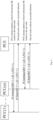
- a method for creating a bi-directional SR tunnel which, as shown in Fig. 2 , includes the following steps 101 to 102.
- capability negotiation for whether to support creation of an SR tunnel is carried out by messaging during a process in which a first network element establishes a session with a second network element.
- the first network element sends an SR tunnel create message carrying a bi-directional flag bit to the second network element to enabled the second network element to determine, in accordance with the bi-directional flag bit, whether a bi-directional tunnel or a unidirectional tunnel is to be created.
- the first network element may be a PCE
- the second network element may be a PCC.
- PCEP is extended to realize the creation of the SR tunnel. Specifically, by extending PCEP, the device and the controller may notify and negotiate whether to support the SR path function and the bi-directional SR tunnel function, and, if the device supports, PCEP may carry path identification information in the SR tunnel to complete the creation of the bi-directional SR tunnel.
- the embodiments of the present disclosure relate to a solution of supporting SR path information and creation of a bi-directional SR tunnel by extending PCEP, and involve a forwarding device (such as PCC) and a related controller (such as PCE) running SR.
- capability negotiation for whether to support creation of a bi-directional SR tunnel is carried out by messaging during a process in which PCE establishes a session with PCC so that the device and the controller may notify and negotiate whether to support the bi-directional SR tunnel function.
- PCE sends an SR tunnel create message carrying a bi-directional flag bit to PCC to enable PCC to determine, in accordance with the flag bit, whether a bi-directional tunnel or a unidirectional tunnel is to be created, and so that if the device supports, PCEP may carry path identification information in the SR tunnel to complete the creation of the bi-directional SR tunnel.
- the embodiments of the present disclosure solve the problem that the intermediate node is not aware of state as well as the problem of bi-directional tunnel binding, thereby greatly expanding the application scenarios of SR.
- SR deployment in a controller scenario also requires PCEP to support the function of extending the SR path, but current PCEP can only create a conventional SR tunnel without carrying SR path information and cannot support creation of a bi-directional SR tunnel, leading to difficulties with deployment the bi-directional SR tunnel. Therefore, by extending PCEP, the embodiments of the present disclosure enable the device and the controller to notify and negotiate whether to support the SR path function and the bi-directional SR tunnel function.
- PCEP can carry path identification information in the SR tunnel to complete the creation of the bi-directional SR tunnel.
- PCEP defined by the IETF draft draft-IETF-pce-segment-routing can only establish a common unidirectional SR tunnel, and the problem that a bi-directional SR tunnel is difficult to deploy are solved.
- SR path information can be carried in the unidirectional tunnel, creation of a bi-directional SR tunnel is supported, and application scenarios of PCEP in the SR network are expanded.
- the bi-directional SR tunnel differs from the conventional unidirectional SR tunnel mainly in that: First, the unidirectional SR can complete tunnel deployment by delivering a label stack to only the head node, while the bi-directional SR tunnel requires configuration to be delivered to both end nodes, as shown in Fig. 3 ; and Second, Path SID for identifying end-to-end connection is carried in the bi-directional SR label stack, and the Path SID has a different meaning from Node SID and Adj SID in the conventional SR technology.
- the conventional Node SID and Adj SID are delivered only to a head node of the service path, and have no directionality.
- Path SID is used to identify a piece of end-to-end connection at the head node and the tail node, is thus required to be delivered to both the head node and the tail node and has directionality, i.e., there may be either forward path information or reverse path information.
- the embodiments of the present disclosure extend PCEP in view of the above two points to support creation of a bi-directional SR tunnel, and specifically include the following contents.
- the label stack carried in the unidirectional SR tunnel create message delivered to PCC from PCE may include forward SR path information, or may not include any SR path information.
- the label stack carried in the bi-directional SR tunnel create message delivered to PCC from PCE is required to have SR path information, and to carry both forward and reverse path information at the same time.
- PCC extracts the forward and reverse path information carried in the message and generates a corresponding forwarding table.
- the SR tunnel create message carries the label stack composed of at least one label; and the label stack does not contain any SR path information, or contains SR path information in any direction.
- Adj SID an existing protocol standard is adopted, which is different from a Path SID in that no SR path information is contained.
- SR path information in any direction when the label is Path SID, SR path information in any direction is contained, and the SR path information in any direction includes forward path information and/or reverse path information. In practical applications, it is specifically forward path SID and reverse path SID.
- a method for creating a bi-directional SR tunnel including: carrying out capability negotiation for whether to support creation of a bi-directional SR tunnel by messaging during a process in which a second network element establishes a session with a first network element; if the creation of the SR tunnel is supported, receiving, by the second network element, an SR tunnel create message carrying a bi-directional flag bit sent from the first network element; and determining, by the second network element in accordance with the bi-directional flag bit, whether a bi-directional tunnel or a unidirectional tunnel is to be created.
- capability negotiation for whether to support creation of a bi-directional SR tunnel is carried out by messaging during a process in which PCE establishes a session with PCC; if the creation of the SR tunnel is supported, PCC receives an SR tunnel create message carrying a bi-directional flag bit from PCE; and PCC determines, in accordance with the bi-directional flag bit, whether a bi-directional tunnel or a unidirectional tunnel is to be created.
- the SR tunnel create message carries a label stack composed of at least one label; and the label stack does not contain any SR path information, or contains SR path information in any direction.
- Adj SID an existing protocol standard is adopted, which is different from a Path SID in that no SR path information is contained.
- SR path information in any direction is contained, and the SR path information in any direction includes forward path information and/or reverse path information.
- the method may further include: completing, by the second network element, association and binding of the bi-directional path according to the forward path information and/or the reverse path information carried in the SR tunnel create message, and generating a corresponding forwarding table.
- PCC completes association and binding of the bi-directional path according to the forward path information and/or the reverse path information carried in the SR tunnel create message, and generates a corresponding forwarding table.
- a device for creating a bi-directional SR tunnel which may be a first network element such as PCE, and includes: a first negotiation unit configured to carry out capability negotiation for whether to support creation of an SR tunnel by messaging during a process of establishing a session; and a sending unit configured to send, if the creation of the SR tunnel is supported, an SR tunnel create message carrying a bi-directional flag bit to a second network element to enable the second network element to determine, in accordance with the bi-directional flag bit, whether a bi-directional tunnel or a unidirectional tunnel is to be created.
- a first negotiation unit configured to carry out capability negotiation for whether to support creation of an SR tunnel by messaging during a process of establishing a session
- a sending unit configured to send, if the creation of the SR tunnel is supported, an SR tunnel create message carrying a bi-directional flag bit to a second network element to enable the second network element to determine, in accordance with the bi-directional flag bit, whether a bi-directional tunnel or a unidirectional tunnel
- the SR tunnel create message carries a label stack composed of at least one label; and the label stack does not contain any SR path information, or contains SR path information in any direction.
- Adj SID an existing protocol standard is adopted, which is different from a Path SID in that no SR path information is contained.
- SR path information in any direction is contained, and the SR path information in any direction includes forward path information and/or reverse path information.
- a device for creating a bi-directional SR tunnel which may be a second network element such as PCC, and includes: a second negotiation unit configured to carry out capability negotiation for whether to support creation of an SR tunnel by messaging during a process of establishing a session; and a receiving unit configured to receive, if the creation of the SR tunnel is supported, an SR tunnel create message carrying a bi-directional flag bit from a first network element; and determine, in accordance with the bi-directional flag bit, whether a bi-directional tunnel or a unidirectional tunnel is to be created.
- a second negotiation unit configured to carry out capability negotiation for whether to support creation of an SR tunnel by messaging during a process of establishing a session
- a receiving unit configured to receive, if the creation of the SR tunnel is supported, an SR tunnel create message carrying a bi-directional flag bit from a first network element; and determine, in accordance with the bi-directional flag bit, whether a bi-directional tunnel or a unidirectional tunnel is to be created.
- the SR tunnel create message carries a label stack composed of at least one label; and the label stack does not contain any SR path information, or contains SR path information in any direction.
- Adj SID an existing protocol standard is adopted, which is different from a Path SID in that no SR path information is contained.
- the label when the label is a path label Path SID, the label contains SR path information in any direction, and the SR path information in any direction includes forward path information and/or reverse path information.
- the device may further include: a table generating unit configured to complete association and binding of the bi-directional path according to the forward path information and/or the reverse path information carried in the SR tunnel create message, and generate a corresponding forwarding table.
- a table generating unit configured to complete association and binding of the bi-directional path according to the forward path information and/or the reverse path information carried in the SR tunnel create message, and generate a corresponding forwarding table.
- a storage medium storing a computer executable instruction thereon, the computer executable instruction cause, when executed by a processor, the processor to perform the method of creating a bi-directional SR tunnel according to any one of the above embodiments.
- PCC(1) to PCC(n) are N PCC nodes in a network
- PCE is a separately deployed entity or a controller embedded module.
- an indication mark indicating whether a default LSP status report on each PCC is reported may be set at an initialization stage.
- This embodiment performs extension based on a flag in SR PCE Capability TLV in the OPEN message, thereby implementing the indication mark indicating whether the LSP status report on the PCC is reported.
- the specific process includes:
- T 1 in SR PCE Capability TLV carried in the OPEN message issued by PCC, it means that PCC supports SR-TP functions, including identification and extraction of SR path information, bi-directional tunnel binding, identification of forward and reverse labels, etc.
- T 1 in SR PCE Capability TLV carried in the OPEN message issued by PCE, it means that PCE supports SR-TP functions, i.e., supports computation of bi-directional SR paths, allocation of SR path labels, and generation of forward SR path information for the head node and reverse SR path information for the tail node.
- PCC(1) to PCC(n) are N PCC nodes in a network
- PCE is a separately deployed entity or a controller embedded module.
- PCE may initiate creation of a bi-directional SR tunnel through an extended PCEP message.
- PCC(1) is a head node (endpoint A) of the bi-directional SR tunnel
- PCC(n) is a tail node (endpoint Z) of the SR tunnel.
- the specific process includes:
- the extended B bit may be used to indicate creation of either an SR tunnel or a common RSVP-TE tunnel.
- step 3 After receiving the PCInitiate message from step 2), PCC starts to parse the packet content, and creates a tunnel according to ERO path information carried in the message.
- the ERO information of the SR tunnel is composed of a series of SR-ERO sub-objects, each SR-ERO representing one piece of segment information.
- the SR-ERO sub-objects can represent only Node SID and Adj SID, but not SR path information.
- a new SR-Path-ERO sub-object is extended and defined to describe SR path information.
- SR-Path-ERO constitutes the complete ERO together with an SR-ERO list, and SR-Path-ERO may appear at any position in the SR-ERO list.
- the SR-Path-ERO sub-object has, expressed in TLV, a format as follows:
- Type indicates the SR-Path-ERO sub-object, and the specific value is to be allocated.
- Length identifies a length of the sub-object, which is not necessarily dependent on a type of the carried SR Path Status.
- PT is 4 bit used to identify the type of the SR path status, which currently includes two types, i.e., a manner represented by two or three layers of labels defined by draft-hegde-spring-traffic-accounting-for-sr-paths, and a manner represented by one layer of label defined by draft-cheng-spring-mpls-path-segment. Detailed information thereof is carried in the Path Status field.
- Path Status includes one layer of labels, and the format of Path Status is as follows:
- PT 1 indicates that Path Status includes two layers of labels, and the format of Path Status is as follows:
- PCE of the controller computes that the bi-directional SR tunnel between A and E needs to pass through five nodes, A-B-C-D-E, and a unique Path SID is allocated to the SR tunnel, so that the SR segment and the Path SID are combined into a complete label stack to be delivered to the head node and the tail node.
- the delivered forward label stack is ⁇ 101, 102, 103, 104, 1000 ⁇ , while the reverse label stack is ⁇ 1001 ⁇ ; and for the tail node E, the delivered forward label stack is ⁇ 103, 102, 101, 100, 1001 ⁇ , while the reverse label stack is ⁇ 1000 ⁇ . Therefore, the PCEP ERO information delivered to the node A from PCE is as follows, and the complete ERO includes 6 sub-objects:
- PCEP ERO information delivered to the node E from PCE is as follows, also including 6 sub-objects:
- PCC parses the SR label information and the SR path information, and generates a forwarding table.
- the creation of the bi-directional SR tunnel is completed.
- PCC After the creation is finished, PCC returns a PCRpt message to PCE to confirm that the tunnel is created successfully.
- PCRpt also needs to carry an SRP object that represents basic contents of the message, where extended bits are also needed to indicate that the message is an acknowledgement message of a bi-directional tunnel.
- PCC Upon detecting a status change, PCC reports the real-time status to PCE via the PCRpt message, where the PCRpt message needs to carry status information of the tunnel and current tunnel path information.
- the path information is carried in a Reported Route Object (RRO) which, like ERO, is also composed of a series of SR-RRO sub-objects, each SR-RRO representing one piece of segment information.
- RRO Reported Route Object
- PCE may also actively modify the bi-directional SR tunnel, such as parameters of the SR path, a bandwidth, attributes, and the like, through a PCUpd message.
- the PCUpd message is also required to carry SRP and ERO objects. Therefore, the extension for the SRP object and the extension for the SR-Path-ERO sub-object described in the above steps 2) and 4) are also applicable to the PCUpd message.
- PCC parses the specific label value and direction, and generates a forwarding table. Thus, modification of the bi-directional SR tunnel is completed.
- PCC After the modification is finished, PCC returns a PCRpt message to PCE to confirm that the tunnel is created successfully.
- PCC(1) to PCC(n) are N PCC nodes in a network
- PCE is a separately deployed entity or a controller embedded module.
- PCE may initiate deletion of a bi-directional SR tunnel through an extended PCEP message.
- PCC(1) is a head node (endpoint A) of the bi-directional SR tunnel
- PCC(n) is a tail node (endpoint Z) of the SR tunnel.
- the specific process includes:
- PCC(1) to PCC(n) are N PCC nodes in a network
- PCE is a separately deployed entity or a controller embedded module.
- PCE may initiate creation of a unidirectional SR tunnel through an extended PCEP message.
- PCC(1) is a head node (endpoint A) of the unidirectional SR tunnel
- PCC(n) is a tail node (endpoint Z) of the SR tunnel.
- the specific process includes:
- embodiments of the present disclosure may be provided as a method, a system, or a computer program product. Accordingly, the present disclosure may take the form of a hardware embodiment, a software embodiment, or a combination embodiment of software and hardware. Moreover, the present disclosure may take the form of a computer program product embodied on one or more computer-usable storage media (including but not limited to disk storage and optical storage, etc.) including a computer-usable program code.
- a computer-usable storage media including but not limited to disk storage and optical storage, etc.
- a device for creating a bi-directional SR tunnel including: a processor, and a memory storing a computer program executable on the processor, where the processor is configured to, when executing the computer program, perform steps of any one of the above methods at the first network element side, or perform steps of any one of the above methods at the second network element side.
- These computer program instructions may also be stored in a computer readable memory that can direct a computer or other programmable data processing apparatus to operate in a particular manner, such that the instructions stored in the computer readable memory produce an article of manufacture comprising an instruction means for implementing the functions specified in one or more flows of the flowchart and/or one or more blocks of the block diagram.
- These computer program instructions may also be loaded onto a computer or other programmable data processing apparatus to cause a series of operational steps to be performed on the computer or other programmable apparatus to produce a computer implemented process such that the instructions which execute on the computer or other programmable apparatus provide steps for implementing the functions specified in one or more flows of the flowchart and/or one or more blocks of the block diagram.
Landscapes
- Engineering & Computer Science (AREA)
- Computer Networks & Wireless Communication (AREA)
- Signal Processing (AREA)
- Data Exchanges In Wide-Area Networks (AREA)
Claims (15)
- Verfahren zum Erzeugen eines bi-direktionalen Segmentleitweg-, SR-, Tunnels, wobei das Verfahren umfasst:Ausführen einer Fähigkeitsaushandlung, ob die Erzeugung eines bi-direktionalen SR-Tunnels unterstützt werden soll, durch Nachrichtenübermittlung während eines Prozesses, in dem ein erstes Netzwerkelement eine Sitzung mit einem zweiten Netzwerkelement herstellt (101); undals Reaktion darauf, dass die Erzeugung des SR-Tunnels unterstützt wird, Senden, durch das erste Netzwerkelement, einer SR-Tunnelerzeugungsnachricht, die ein bi-direktionales Flag-Bit führt, an das zweite Netzwerkelement, um dem zweiten Netzwerkelement zu ermöglichen, gemäß dem bi-direktionalen Flag-Bit zu bestimmen, ob ein bi-direktionaler Tunnel oder ein unidirektionaler Tunnel erzeugt werden soll (102),wobei als Reaktion darauf, dass der bi-direktionale Tunnel erzeugt werden soll, die SR-Tunnelerzeugungsnachricht ferner zustandsabhängige Anforderungsparameter, SRPs, und explizites Leitwegobjekt, ERO, führt, wobei die SRPs das bi-direktionale Flag umfassen und verwendet werden, um grundlegende Informationen der SR-Tunnelerzeugungsnachricht zu beschreiben, ERO detaillierte Pfadparameter des bi-direktionalen Tunnels führt und eine Vielzahl von SR-ERO-Unterobjekten und zwei SR-Pfad-ERO-Unterobjekte umfasst, wobei die SR-ERO-Unterobjekte jeweils Sicherheitskennungen, SIDs, von Knoten repräsentieren, durch die der bi-direktionale Tunnel verläuft, wobei die SR-Pfad-ERO-Unterobjekte jeweils zwei Richtungen des bi-direktionalen Tunnels und Pfad-SIDs repräsentieren, die den zwei Richtungen entsprechen, undwobei Informationen des ERO an einen Kopfknoten und einen Endknoten unter den Knoten geliefert werden.
- Verfahren nach Anspruch 1, wobei die SR-Tunnelerzeugungsnachricht einen Etikettenstapel führt, der aus mindestens einem Etikett besteht; und
der Etikettenstapel keine SR-Pfadinformationen enthält oder SR-Pfadinformationen in irgendeiner Richtung enthält. - Verfahren nach Anspruch 2, wobei, wenn das Etikett eine Pfadetikett-Pfad-SID ist, das Etikett SR-Pfadinformationen in irgendeiner Richtung enthält;
wobei die SR-Pfadinformationen in irgendeiner Richtung Vorwärtspfadinformationen und/oder Rückwärtspfadinformationen umfassen. - Verfahren nach einem der Ansprüche 1 bis 3, wobei das erste Netzwerkelement ein Pfadberechnungselement, PCE, umfasst; und
das zweite Netzwerkelement einen Pfadberechnungs-Client, PCC, umfasst. - Verfahren zum Erzeugen eines bi-direktionalen Segmentleitweg-, SR-, Tunnels, wobei das Verfahren umfasst:Ausführen einer Fähigkeitsaushandlung, ob die Erzeugung eines bi-direktionalen SR-Tunnels unterstützt werden soll, durch Nachrichtenübermittlung während eines Prozesses, in dem ein zweites Netzwerkelement eine Sitzung mit einem ersten Netzwerkelement herstellt;als Reaktion darauf, dass die Erzeugung des SR-Tunnels unterstützt wird, Empfangen, durch das zweite Netzwerkelement, einer SR-Tunnelerzeugungsnachricht, die ein bi-direktionales Flag-Bit führt, das von dem ersten Netzwerkelement gesendet wird; undBestimmen, durch das zweite Netzwerkelement gemäß dem bi-direktionalen Flag-Bit, ob ein bi-direktionaler Tunnel oder ein unidirektionaler Tunnel erzeugt werden soll,wobei als Reaktion darauf, dass der bi-direktionale Tunnel erzeugt werden soll, die SR-Tunnelerzeugungsnachricht ferner zustandsabhängige Anforderungsparameter, SRPs, und explizites Leitwegobjekt, ERO, führt, wobei die SRPs das bi-direktionale Flag umfassen und verwendet werden, um grundlegende Informationen der SR-Tunnelerzeugungsnachricht zu beschreiben, ERO detaillierte Pfadparameter des Tunnels führt und eine Vielzahl von SR-ERO-Unterobjekten und zwei SR-Pfad-ERO-Unterobjekte umfasst, wobei die SR-ERO-Unterobjekte jeweils Sicherheitskennungen, SIDs, von Knoten repräsentieren, durch die der bi-direktionale Tunnel verläuft, wobei die SR-Pfad-ERO-Unterobjekte jeweils zwei Richtungen des bi-direktionalen Tunnels und Pfad-SIDs repräsentieren, die den zwei Richtungen entsprechen, undwobei Informationen des ERO an einen Kopfknoten und einen Endknoten unter den Knoten geliefert werden.
- Verfahren nach Anspruch 5, wobei die SR-Tunnelerzeugungsnachricht einen Etikettenstapel führt, der aus mindestens einem Etikett besteht; und
der Etikettenstapel keine SR-Pfadinformationen enthält oder SR-Pfadinformationen in irgendeiner Richtung enthält. - Verfahren nach Anspruch 6, wobei, wenn das Etikett eine Pfadetikett-Pfad-SID ist, das Etikett SR-Pfadinformationen in irgendeiner Richtung enthält;
wobei die SR-Pfadinformationen in irgendeiner Richtung Vorwärtspfadinformationen und/oder Rückwärtspfadinformationen umfassen. - Verfahren nach einem der Ansprüche 5 bis 7, wobei das Verfahren ferner umfasst:
Vervollständigen, durch das zweite Netzwerkelement, des Verknüpfens und Bindens des bi-direktionalen Pfads gemäß den Vorwärtspfadinformationen und/oder den Rückwärtspfadinformationen, die in der SR-Tunnelerzeugungsnachricht geführt werden, und Erzeugen einer entsprechenden Weiterleitungstabelle. - Verfahren nach einem der Ansprüche 5 bis 7, wobei das erste Netzwerkelement ein Pfadberechnungselement, PCE, umfasst; und
das zweite Netzwerkelement einen Pfadberechnungs-Client, PCC, umfasst. - Vorrichtung zum Erzeugen eines bi-direktionalen Segmentleitweg-, SR-, Tunnels, wobei die Vorrichtung umfasst:eine erste Aushandlungseinheit, die konfiguriert ist, um eine Fähigkeitsaushandlung auszuführen, ob die Erzeugung eines bi-direktionalen SR-Tunnels unterstützt werden soll, durch Nachrichtenübermittlung während eines Prozesses des Herstellens einer Sitzung; undeine Sendeeinheit, die konfiguriert ist, um als Reaktion darauf, dass die Erzeugung des SR-Tunnels unterstützt wird, eine SR-Tunnelerzeugungsnachricht, die ein bi-direktionales Flag-Bit führt, an ein zweites Netzwerkelement zu senden, um dem zweiten Netzwerkelement zu ermöglichen, gemäß dem bi-direktionalen Flag-Bit zu bestimmen, ob ein bi-direktionaler Tunnel oder ein unidirektionaler Tunnel erzeugt werden soll,wobei als Reaktion darauf, dass der bi-direktionale Tunnel erzeugt werden soll, die SR-Tunnelerzeugungsnachricht ferner zustandsabhängige Anforderungsparameter, SRPs, und explizites Leitwegobjekt, ERO, führt, wobei die SRPs das bi-direktionale Flag umfassen und verwendet werden, um grundlegende Informationen der SR-Tunnelerzeugungsnachricht zu beschreiben, ERO detaillierte Pfadparameter des Tunnels führt und eine Vielzahl von SR-ERO-Unterobjekten und zwei SR-Pfad-ERO-Unterobjekte umfasst, wobei die SR-ERO-Unterobjekte jeweils Sicherheitskennungen, SIDs, von Knoten repräsentieren, durch die der bi-direktionale Tunnel verläuft, wobei die SR-Pfad-ERO-Unterobjekte jeweils zwei Richtungen des bi-direktionalen Tunnels und Pfad-SIDs repräsentieren, die den zwei Richtungen entsprechen, undwobei Informationen des ERO an einen Kopfknoten und einen Endknoten unter den Knoten geliefert werden.
- Vorrichtung nach Anspruch 10, wobei die SR-Tunnelerzeugungsnachricht einen Etikettenstapel führt, der aus mindestens einem Etikett besteht; und
der Etikettenstapel keine SR-Pfadinformationen enthält oder SR-Pfadinformationen in irgendeiner Richtung enthält. - Vorrichtung zum Erzeugen eines bi-direktionalen Segmentleitweg-, SR-, Tunnels, wobei die Vorrichtung umfasst:eine zweite Aushandlungseinheit, die konfiguriert ist, um eine Fähigkeitsaushandlung auszuführen, ob die Erzeugung eines bi-direktionalen SR-Tunnels unterstützt werden soll, durch Nachrichtenübermittlung während eines Prozesses des Herstellens einer Sitzung; undeine Empfangseinheit, die konfiguriert ist, um als Reaktion darauf, dass die Erzeugung des SR-Tunnels unterstützt wird, eine SR-Tunnelerzeugungsnachricht, die ein bi-direktionales Flag-Bit führt, von einem ersten Netzwerkelement zu empfangen; undein zweites Netzwerkelement, das konfiguriert ist, um gemäß dem bi-direktionalen Flag-Bit zu bestimmen, ob ein bi-direktionaler Tunnel oder ein unidirektionaler Tunnel erzeugt werden soll,wobei als Reaktion darauf, dass der bi-direktionale Tunnel erzeugt werden soll, die SR-Tunnelerzeugungsnachricht ferner zustandsabhängige Anforderungsparameter, SRPs, und explizites Leitwegobjekt, ERO, führt, wobei die SRPs das bi-direktionale Flag umfassen und verwendet werden, um grundlegende Informationen der SR-Tunnelerzeugungsnachricht zu beschreiben, ERO detaillierte Pfadparameter des Tunnels führt und eine Vielzahl von SR-ERO-Unterobjekten und zwei SR-Pfad-ERO-Unterobjekte umfasst, wobei die SR-ERO-Unterobjekte jeweils Sicherheitskennungen, SIDs, von Knoten repräsentieren, durch die der bi-direktionale Tunnel verläuft, wobei die SR-Pfad-ERO-Unterobjekte jeweils zwei Richtungen des bi-direktionalen Tunnels und Pfad-SIDs repräsentieren, die den zwei Richtungen entsprechen, undwobei Informationen des ERO an einen Kopfknoten und einen Endknoten unter den Knoten geliefert werden.
- Vorrichtung nach Anspruch 12, wobei die SR-Tunnelerzeugungsnachricht einen Etikettenstapel führt, der aus mindestens einem Etikett besteht; und
der Etikettenstapel keine SR-Pfadinformationen enthält oder SR-Pfadinformationen in irgendeiner Richtung enthält. - Vorrichtung zum Erzeugen eines bi-direktionalen Segmentleitweg-, SR-, Tunnels, umfassend: einen Prozessor und einen Speicher zum Speichern eines Computerprogramms, das auf dem Prozessor ausführbar ist,
wobei der Prozessor so konfiguriert ist, dass er beim Ausführen des Computerprogramms das Verfahren nach einem der Ansprüche 1 bis 4 durchführt oder das Verfahren nach einem der Ansprüche 5 bis 9 durchführt. - Speichermedium zum Speichern einer computerausführbaren Anweisung darauf, wobei die computerausführbare Anweisung beim Ausführen durch einen Prozessor bewirkt, dass der Prozessor das Verfahren nach einem der Ansprüche 1 bis 4 oder das Verfahren nach einem der Ansprüche 5 bis 9 durchführt.
Applications Claiming Priority (2)
| Application Number | Priority Date | Filing Date | Title |
|---|---|---|---|
| CN201810050753.1A CN110061920B (zh) | 2018-01-18 | 2018-01-18 | 一种创建双向段路由隧道的方法、设备及存储介质 |
| PCT/CN2019/071015 WO2019141118A1 (zh) | 2018-01-18 | 2019-01-09 | 创建双向分段路由隧道的方法、设备及存储介质 |
Publications (3)
| Publication Number | Publication Date |
|---|---|
| EP3731473A1 EP3731473A1 (de) | 2020-10-28 |
| EP3731473A4 EP3731473A4 (de) | 2021-09-22 |
| EP3731473B1 true EP3731473B1 (de) | 2025-03-05 |
Family
ID=67301324
Family Applications (1)
| Application Number | Title | Priority Date | Filing Date |
|---|---|---|---|
| EP19740894.1A Active EP3731473B1 (de) | 2018-01-18 | 2019-01-09 | Verfahren, vorrichtung und speichermedium zur erzeugung eines bidirektionalen segmentroutingtunnels |
Country Status (4)
| Country | Link |
|---|---|
| US (1) | US11528220B2 (de) |
| EP (1) | EP3731473B1 (de) |
| CN (1) | CN110061920B (de) |
| WO (1) | WO2019141118A1 (de) |
Families Citing this family (20)
| Publication number | Priority date | Publication date | Assignee | Title |
|---|---|---|---|---|
| KR102315401B1 (ko) | 2017-07-14 | 2021-10-19 | 후아웨이 테크놀러지 컴퍼니 리미티드 | Ipv6 터널에 대한 세그먼트 라우팅을 구축하기 위한 방법 |
| CN110417651B (zh) * | 2018-04-28 | 2021-07-16 | 华为技术有限公司 | 一种隧道建立方法、装置及系统 |
| CN110958168B (zh) * | 2018-09-26 | 2022-03-08 | 中兴通讯股份有限公司 | 跨域双向隧道创建方法、通信方法及装置、存储介质 |
| CN110519168B (zh) * | 2019-08-27 | 2022-03-11 | 北京华为数字技术有限公司 | 一种创建srte隧道的方法及相关设备 |
| WO2021046689A1 (en) * | 2019-09-09 | 2021-03-18 | Telefonaktiebolaget Lm Ericsson (Publ) | Method and network node for label switched path traceroute |
| CN110620733A (zh) * | 2019-09-29 | 2019-12-27 | 中国银联股份有限公司 | 一种业务流量控制方法及装置 |
| CN112511427B (zh) * | 2020-01-14 | 2024-05-07 | 中兴通讯股份有限公司 | 段路由业务处理方法、装置、路由设备及存储介质 |
| WO2021195992A1 (en) * | 2020-03-31 | 2021-10-07 | Juniper Networks, Inc. | Transport endpoint segments for inter-domain segment routing |
| CN113630320B (zh) * | 2020-05-06 | 2023-03-24 | 瞻博网络公司 | 计算机网络内创建隧道的方法、入口网络装置及存储介质 |
| CN112491709B (zh) * | 2020-10-21 | 2025-06-20 | 中兴通讯股份有限公司 | 交叉SR/SRv6路径下发方法和装置、存储介质及电子装置 |
| CN114531360A (zh) * | 2020-10-30 | 2022-05-24 | 华为技术有限公司 | 一种语义名称获取方法、装置、设备及存储介质 |
| CN116530065A (zh) * | 2020-12-18 | 2023-08-01 | 华为技术有限公司 | 使用路径计算单元协议创建sr策略的方法、装置及系统 |
| CN114650250B (zh) * | 2020-12-18 | 2024-08-09 | 中国移动通信有限公司研究院 | 双向段路由隧道的处理方法、装置、管控系统及网络设备 |
| CN115373755B (zh) * | 2021-05-20 | 2025-10-31 | 中国移动通信集团有限公司 | 一种参数配置方法、装置、设备及存储介质 |
| WO2023275110A1 (en) * | 2021-06-30 | 2023-01-05 | Telecom Italia S.P.A. | Round-trip time measurement in a packet-switched communication network |
| CN113992475B (zh) * | 2021-09-23 | 2023-12-26 | 新华三信息安全技术有限公司 | 一种隧道建立方法及装置 |
| CN120812542A (zh) * | 2021-10-11 | 2025-10-17 | Oppo广东移动通信有限公司 | 感知数据的收集方法、装置、设备、系统及存储介质 |
| US12052161B2 (en) * | 2022-02-28 | 2024-07-30 | Ciena Corporation | Computing forward and reverse paths and checking the liveness thereof |
| US20240056814A1 (en) * | 2022-08-10 | 2024-02-15 | Arris Enterprises Llc | Supporting computer networking device connections to controllers using different connection protocols |
| CN120455358A (zh) * | 2024-02-08 | 2025-08-08 | 中兴通讯股份有限公司 | 业务路径建立方法、设备和存储介质 |
Citations (1)
| Publication number | Priority date | Publication date | Assignee | Title |
|---|---|---|---|---|
| US20090110395A1 (en) * | 2007-10-26 | 2009-04-30 | Futurewei Technologies, Inc. | Path Computation Element Method to Support Routing and Wavelength Assignment in Wavelength Switched Optical Networks |
Family Cites Families (8)
| Publication number | Priority date | Publication date | Assignee | Title |
|---|---|---|---|---|
| US9049233B2 (en) | 2012-10-05 | 2015-06-02 | Cisco Technology, Inc. | MPLS segment-routing |
| WO2014152839A1 (en) * | 2013-03-14 | 2014-09-25 | Cisco Technology, Inc. | Segment routing: pce driven dynamic setup of forwarding adjacencies and explicit path |
| US9537718B2 (en) * | 2013-03-15 | 2017-01-03 | Cisco Technology, Inc. | Segment routing over label distribution protocol |
| CN103490970B (zh) * | 2013-09-23 | 2017-09-05 | 华为技术有限公司 | 一种流量工程隧道的检测方法、装置及系统 |
| EP3207692B1 (de) * | 2014-10-14 | 2021-10-13 | TSB S.r.l. | Elektronisches system für indirekte interkommunikationsnachrichtenübermittlung zwischen elektronischen endgeräten |
| US9794148B1 (en) * | 2014-12-31 | 2017-10-17 | Juniper Networks, Inc. | Node protection for stacked labels |
| US9860150B2 (en) * | 2015-10-01 | 2018-01-02 | Juniper Networks, Inc. | Fast convergence of EVPN networks for multi homing topologies |
| CN107181689B (zh) * | 2016-03-10 | 2021-09-14 | 中兴通讯股份有限公司 | 路由器之间的消息交互方法和装置 |
-
2018
- 2018-01-18 CN CN201810050753.1A patent/CN110061920B/zh active Active
-
2019
- 2019-01-09 US US16/963,032 patent/US11528220B2/en active Active
- 2019-01-09 EP EP19740894.1A patent/EP3731473B1/de active Active
- 2019-01-09 WO PCT/CN2019/071015 patent/WO2019141118A1/zh not_active Ceased
Patent Citations (1)
| Publication number | Priority date | Publication date | Assignee | Title |
|---|---|---|---|---|
| US20090110395A1 (en) * | 2007-10-26 | 2009-04-30 | Futurewei Technologies, Inc. | Path Computation Element Method to Support Routing and Wavelength Assignment in Wavelength Switched Optical Networks |
Non-Patent Citations (1)
| Title |
|---|
| JP VASSEUR ET AL: "Path Computation Element (PCE) Communication Protocol (PCEP); rfc5440.txt", PATH COMPUTATION ELEMENT (PCE) COMMUNICATION PROTOCOL (PCEP); RFC5440.TXT, INTERNET ENGINEERING TASK FORCE, IETF; STANDARD, INTERNET SOCIETY (ISOC) 4, RUE DES FALAISES CH- 1205 GENEVA, SWITZERLAND, 1 March 2009 (2009-03-01), XP015065509 * |
Also Published As
| Publication number | Publication date |
|---|---|
| CN110061920B (zh) | 2021-10-19 |
| US20200351197A1 (en) | 2020-11-05 |
| EP3731473A4 (de) | 2021-09-22 |
| WO2019141118A1 (zh) | 2019-07-25 |
| CN110061920A (zh) | 2019-07-26 |
| EP3731473A1 (de) | 2020-10-28 |
| US11528220B2 (en) | 2022-12-13 |
Similar Documents
| Publication | Publication Date | Title |
|---|---|---|
| EP3731473B1 (de) | Verfahren, vorrichtung und speichermedium zur erzeugung eines bidirektionalen segmentroutingtunnels | |
| CN102638388B (zh) | 流标签的协商方法、相关装置以及系统 | |
| EP3651423B1 (de) | Bestimmung von identifizierungsinformation über domänenübergreifenden pfad | |
| US11743204B2 (en) | Tunnel establishment method, apparatus, and system | |
| CN101577657B (zh) | 一种建立隧道的方法以及实现隧道建立的系统 | |
| EP3016323B1 (de) | Verfahren, vorrichtung und system zur bestimmung von dienstübertragungspfaden | |
| CN105245452B (zh) | 多协议标签交换流量工程隧道建立方法及设备 | |
| CN105991437B (zh) | 报文转发处理方法、装置、控制器及路由转发设备 | |
| EP2541847B1 (de) | Verfahren und system zur herstellung eines assoziierten bidirektionalen label-switching-weges | |
| CN112702263A (zh) | 转发报文的方法、装置及存储介质 | |
| US11489768B2 (en) | Method for creating inter-domain bidirectional tunnel, communication method and device, and storage medium | |
| CN111464440A (zh) | 一种通信方法及装置 | |
| CN111464441A (zh) | 一种通信方法及装置 | |
| CN110943923B (zh) | 一种lsp建立方法、装置、设备和计算机存储介质 | |
| JP2008236606A (ja) | パス設定方法及び該方法のための通信装置 |
Legal Events
| Date | Code | Title | Description |
|---|---|---|---|
| STAA | Information on the status of an ep patent application or granted ep patent |
Free format text: STATUS: THE INTERNATIONAL PUBLICATION HAS BEEN MADE |
|
| PUAI | Public reference made under article 153(3) epc to a published international application that has entered the european phase |
Free format text: ORIGINAL CODE: 0009012 |
|
| STAA | Information on the status of an ep patent application or granted ep patent |
Free format text: STATUS: REQUEST FOR EXAMINATION WAS MADE |
|
| 17P | Request for examination filed |
Effective date: 20200721 |
|
| AK | Designated contracting states |
Kind code of ref document: A1 Designated state(s): AL AT BE BG CH CY CZ DE DK EE ES FI FR GB GR HR HU IE IS IT LI LT LU LV MC MK MT NL NO PL PT RO RS SE SI SK SM TR |
|
| AX | Request for extension of the european patent |
Extension state: BA ME |
|
| DAV | Request for validation of the european patent (deleted) | ||
| DAX | Request for extension of the european patent (deleted) | ||
| A4 | Supplementary search report drawn up and despatched |
Effective date: 20210825 |
|
| RIC1 | Information provided on ipc code assigned before grant |
Ipc: H04L 12/46 20060101ALI20210819BHEP Ipc: H04L 12/721 20130101ALI20210819BHEP Ipc: H04L 12/723 20130101AFI20210819BHEP |
|
| STAA | Information on the status of an ep patent application or granted ep patent |
Free format text: STATUS: EXAMINATION IS IN PROGRESS |
|
| 17Q | First examination report despatched |
Effective date: 20240118 |
|
| REG | Reference to a national code |
Ref legal event code: R079 Ipc: H04L0045000000 Ref country code: DE Ref legal event code: R079 Ref document number: 602019066873 Country of ref document: DE Free format text: PREVIOUS MAIN CLASS: H04L0012723000 Ipc: H04L0045000000 |
|
| GRAP | Despatch of communication of intention to grant a patent |
Free format text: ORIGINAL CODE: EPIDOSNIGR1 |
|
| STAA | Information on the status of an ep patent application or granted ep patent |
Free format text: STATUS: GRANT OF PATENT IS INTENDED |
|
| RIC1 | Information provided on ipc code assigned before grant |
Ipc: H04L 12/46 20060101ALI20241014BHEP Ipc: H04L 45/50 20220101ALI20241014BHEP Ipc: H04L 45/00 20220101AFI20241014BHEP |
|
| INTG | Intention to grant announced |
Effective date: 20241023 |
|
| GRAS | Grant fee paid |
Free format text: ORIGINAL CODE: EPIDOSNIGR3 |
|
| GRAA | (expected) grant |
Free format text: ORIGINAL CODE: 0009210 |
|
| STAA | Information on the status of an ep patent application or granted ep patent |
Free format text: STATUS: THE PATENT HAS BEEN GRANTED |
|
| AK | Designated contracting states |
Kind code of ref document: B1 Designated state(s): AL AT BE BG CH CY CZ DE DK EE ES FI FR GB GR HR HU IE IS IT LI LT LU LV MC MK MT NL NO PL PT RO RS SE SI SK SM TR |
|
| REG | Reference to a national code |
Ref country code: GB Ref legal event code: FG4D |
|
| REG | Reference to a national code |
Ref country code: CH Ref legal event code: EP |
|
| REG | Reference to a national code |
Ref country code: DE Ref legal event code: R096 Ref document number: 602019066873 Country of ref document: DE |
|
| REG | Reference to a national code |
Ref country code: IE Ref legal event code: FG4D |
|
| PG25 | Lapsed in a contracting state [announced via postgrant information from national office to epo] |
Ref country code: RS Free format text: LAPSE BECAUSE OF FAILURE TO SUBMIT A TRANSLATION OF THE DESCRIPTION OR TO PAY THE FEE WITHIN THE PRESCRIBED TIME-LIMIT Effective date: 20250605 |
|
| PG25 | Lapsed in a contracting state [announced via postgrant information from national office to epo] |
Ref country code: FI Free format text: LAPSE BECAUSE OF FAILURE TO SUBMIT A TRANSLATION OF THE DESCRIPTION OR TO PAY THE FEE WITHIN THE PRESCRIBED TIME-LIMIT Effective date: 20250305 |
|
| REG | Reference to a national code |
Ref country code: NL Ref legal event code: MP Effective date: 20250305 |
|
| PG25 | Lapsed in a contracting state [announced via postgrant information from national office to epo] |
Ref country code: ES Free format text: LAPSE BECAUSE OF FAILURE TO SUBMIT A TRANSLATION OF THE DESCRIPTION OR TO PAY THE FEE WITHIN THE PRESCRIBED TIME-LIMIT Effective date: 20250305 |
|
| REG | Reference to a national code |
Ref country code: LT Ref legal event code: MG9D |
|
| PG25 | Lapsed in a contracting state [announced via postgrant information from national office to epo] |
Ref country code: NO Free format text: LAPSE BECAUSE OF FAILURE TO SUBMIT A TRANSLATION OF THE DESCRIPTION OR TO PAY THE FEE WITHIN THE PRESCRIBED TIME-LIMIT Effective date: 20250605 |
|
| PG25 | Lapsed in a contracting state [announced via postgrant information from national office to epo] |
Ref country code: HR Free format text: LAPSE BECAUSE OF FAILURE TO SUBMIT A TRANSLATION OF THE DESCRIPTION OR TO PAY THE FEE WITHIN THE PRESCRIBED TIME-LIMIT Effective date: 20250305 |
|
| PG25 | Lapsed in a contracting state [announced via postgrant information from national office to epo] |
Ref country code: LV Free format text: LAPSE BECAUSE OF FAILURE TO SUBMIT A TRANSLATION OF THE DESCRIPTION OR TO PAY THE FEE WITHIN THE PRESCRIBED TIME-LIMIT Effective date: 20250305 |
|
| PG25 | Lapsed in a contracting state [announced via postgrant information from national office to epo] |
Ref country code: BG Free format text: LAPSE BECAUSE OF FAILURE TO SUBMIT A TRANSLATION OF THE DESCRIPTION OR TO PAY THE FEE WITHIN THE PRESCRIBED TIME-LIMIT Effective date: 20250305 Ref country code: GR Free format text: LAPSE BECAUSE OF FAILURE TO SUBMIT A TRANSLATION OF THE DESCRIPTION OR TO PAY THE FEE WITHIN THE PRESCRIBED TIME-LIMIT Effective date: 20250606 |
|
| REG | Reference to a national code |
Ref country code: AT Ref legal event code: MK05 Ref document number: 1773988 Country of ref document: AT Kind code of ref document: T Effective date: 20250305 |
|
| PG25 | Lapsed in a contracting state [announced via postgrant information from national office to epo] |
Ref country code: NL Free format text: LAPSE BECAUSE OF FAILURE TO SUBMIT A TRANSLATION OF THE DESCRIPTION OR TO PAY THE FEE WITHIN THE PRESCRIBED TIME-LIMIT Effective date: 20250305 |
|
| PG25 | Lapsed in a contracting state [announced via postgrant information from national office to epo] |
Ref country code: SE Free format text: LAPSE BECAUSE OF FAILURE TO SUBMIT A TRANSLATION OF THE DESCRIPTION OR TO PAY THE FEE WITHIN THE PRESCRIBED TIME-LIMIT Effective date: 20250305 |
|
| PG25 | Lapsed in a contracting state [announced via postgrant information from national office to epo] |
Ref country code: SM Free format text: LAPSE BECAUSE OF FAILURE TO SUBMIT A TRANSLATION OF THE DESCRIPTION OR TO PAY THE FEE WITHIN THE PRESCRIBED TIME-LIMIT Effective date: 20250305 |
|
| PG25 | Lapsed in a contracting state [announced via postgrant information from national office to epo] |
Ref country code: PT Free format text: LAPSE BECAUSE OF FAILURE TO SUBMIT A TRANSLATION OF THE DESCRIPTION OR TO PAY THE FEE WITHIN THE PRESCRIBED TIME-LIMIT Effective date: 20250707 |
|
| PG25 | Lapsed in a contracting state [announced via postgrant information from national office to epo] |
Ref country code: PL Free format text: LAPSE BECAUSE OF FAILURE TO SUBMIT A TRANSLATION OF THE DESCRIPTION OR TO PAY THE FEE WITHIN THE PRESCRIBED TIME-LIMIT Effective date: 20250305 Ref country code: IT Free format text: LAPSE BECAUSE OF FAILURE TO SUBMIT A TRANSLATION OF THE DESCRIPTION OR TO PAY THE FEE WITHIN THE PRESCRIBED TIME-LIMIT Effective date: 20250305 |
|
| PG25 | Lapsed in a contracting state [announced via postgrant information from national office to epo] |
Ref country code: AT Free format text: LAPSE BECAUSE OF FAILURE TO SUBMIT A TRANSLATION OF THE DESCRIPTION OR TO PAY THE FEE WITHIN THE PRESCRIBED TIME-LIMIT Effective date: 20250305 |
|
| PG25 | Lapsed in a contracting state [announced via postgrant information from national office to epo] |
Ref country code: EE Free format text: LAPSE BECAUSE OF FAILURE TO SUBMIT A TRANSLATION OF THE DESCRIPTION OR TO PAY THE FEE WITHIN THE PRESCRIBED TIME-LIMIT Effective date: 20250305 Ref country code: CZ Free format text: LAPSE BECAUSE OF FAILURE TO SUBMIT A TRANSLATION OF THE DESCRIPTION OR TO PAY THE FEE WITHIN THE PRESCRIBED TIME-LIMIT Effective date: 20250305 |
|
| PG25 | Lapsed in a contracting state [announced via postgrant information from national office to epo] |
Ref country code: RO Free format text: LAPSE BECAUSE OF FAILURE TO SUBMIT A TRANSLATION OF THE DESCRIPTION OR TO PAY THE FEE WITHIN THE PRESCRIBED TIME-LIMIT Effective date: 20250305 |
|
| PG25 | Lapsed in a contracting state [announced via postgrant information from national office to epo] |
Ref country code: SK Free format text: LAPSE BECAUSE OF FAILURE TO SUBMIT A TRANSLATION OF THE DESCRIPTION OR TO PAY THE FEE WITHIN THE PRESCRIBED TIME-LIMIT Effective date: 20250305 |
|
| PG25 | Lapsed in a contracting state [announced via postgrant information from national office to epo] |
Ref country code: IS Free format text: LAPSE BECAUSE OF FAILURE TO SUBMIT A TRANSLATION OF THE DESCRIPTION OR TO PAY THE FEE WITHIN THE PRESCRIBED TIME-LIMIT Effective date: 20250705 |
|
| REG | Reference to a national code |
Ref country code: DE Ref legal event code: R097 Ref document number: 602019066873 Country of ref document: DE |
|
| PLBE | No opposition filed within time limit |
Free format text: ORIGINAL CODE: 0009261 |
|
| STAA | Information on the status of an ep patent application or granted ep patent |
Free format text: STATUS: NO OPPOSITION FILED WITHIN TIME LIMIT |
|
| PG25 | Lapsed in a contracting state [announced via postgrant information from national office to epo] |
Ref country code: DK Free format text: LAPSE BECAUSE OF FAILURE TO SUBMIT A TRANSLATION OF THE DESCRIPTION OR TO PAY THE FEE WITHIN THE PRESCRIBED TIME-LIMIT Effective date: 20250305 |
|
| REG | Reference to a national code |
Ref country code: CH Ref legal event code: L10 Free format text: ST27 STATUS EVENT CODE: U-0-0-L10-L00 (AS PROVIDED BY THE NATIONAL OFFICE) Effective date: 20260114 |
|
| 26N | No opposition filed |
Effective date: 20251208 |
|
| PGFP | Annual fee paid to national office [announced via postgrant information from national office to epo] |
Ref country code: GB Payment date: 20260123 Year of fee payment: 8 |
|
| PGFP | Annual fee paid to national office [announced via postgrant information from national office to epo] |
Ref country code: DE Payment date: 20260121 Year of fee payment: 8 |
|
| PGFP | Annual fee paid to national office [announced via postgrant information from national office to epo] |
Ref country code: FR Payment date: 20260123 Year of fee payment: 8 |