EP3732818B1 - Verfahren und system zur kryptografischen aktivierung einer vielzahl von ausrüstungsgegenständen - Google Patents
Verfahren und system zur kryptografischen aktivierung einer vielzahl von ausrüstungsgegenständen Download PDFInfo
- Publication number
- EP3732818B1 EP3732818B1 EP18830871.2A EP18830871A EP3732818B1 EP 3732818 B1 EP3732818 B1 EP 3732818B1 EP 18830871 A EP18830871 A EP 18830871A EP 3732818 B1 EP3732818 B1 EP 3732818B1
- Authority
- EP
- European Patent Office
- Prior art keywords
- activation
- encryption key
- equipment item
- equipment
- cryptographic
- Prior art date
- Legal status (The legal status is an assumption and is not a legal conclusion. Google has not performed a legal analysis and makes no representation as to the accuracy of the status listed.)
- Active
Links
Images


Classifications
-
- H—ELECTRICITY
- H04—ELECTRIC COMMUNICATION TECHNIQUE
- H04L—TRANSMISSION OF DIGITAL INFORMATION, e.g. TELEGRAPHIC COMMUNICATION
- H04L63/00—Network architectures or network communication protocols for network security
- H04L63/06—Network architectures or network communication protocols for network security for supporting key management in a packet data network
- H04L63/062—Network architectures or network communication protocols for network security for supporting key management in a packet data network for key distribution, e.g. centrally by trusted party
-
- H—ELECTRICITY
- H04—ELECTRIC COMMUNICATION TECHNIQUE
- H04L—TRANSMISSION OF DIGITAL INFORMATION, e.g. TELEGRAPHIC COMMUNICATION
- H04L9/00—Cryptographic mechanisms or cryptographic arrangements for secret or secure communications; Network security protocols
- H04L9/08—Key distribution or management, e.g. generation, sharing or updating, of cryptographic keys or passwords
- H04L9/0816—Key establishment, i.e. cryptographic processes or cryptographic protocols whereby a shared secret becomes available to two or more parties, for subsequent use
- H04L9/0819—Key transport or distribution, i.e. key establishment techniques where one party creates or otherwise obtains a secret value, and securely transfers it to the other(s)
- H04L9/0822—Key transport or distribution, i.e. key establishment techniques where one party creates or otherwise obtains a secret value, and securely transfers it to the other(s) using key encryption key
-
- H—ELECTRICITY
- H04—ELECTRIC COMMUNICATION TECHNIQUE
- H04L—TRANSMISSION OF DIGITAL INFORMATION, e.g. TELEGRAPHIC COMMUNICATION
- H04L9/00—Cryptographic mechanisms or cryptographic arrangements for secret or secure communications; Network security protocols
- H04L9/08—Key distribution or management, e.g. generation, sharing or updating, of cryptographic keys or passwords
- H04L9/0816—Key establishment, i.e. cryptographic processes or cryptographic protocols whereby a shared secret becomes available to two or more parties, for subsequent use
- H04L9/0819—Key transport or distribution, i.e. key establishment techniques where one party creates or otherwise obtains a secret value, and securely transfers it to the other(s)
- H04L9/0825—Key transport or distribution, i.e. key establishment techniques where one party creates or otherwise obtains a secret value, and securely transfers it to the other(s) using asymmetric-key encryption or public key infrastructure [PKI], e.g. key signature or public key certificates
-
- H—ELECTRICITY
- H04—ELECTRIC COMMUNICATION TECHNIQUE
- H04L—TRANSMISSION OF DIGITAL INFORMATION, e.g. TELEGRAPHIC COMMUNICATION
- H04L9/00—Cryptographic mechanisms or cryptographic arrangements for secret or secure communications; Network security protocols
- H04L9/08—Key distribution or management, e.g. generation, sharing or updating, of cryptographic keys or passwords
- H04L9/0894—Escrow, recovery or storing of secret information, e.g. secret key escrow or cryptographic key storage
- H04L9/0897—Escrow, recovery or storing of secret information, e.g. secret key escrow or cryptographic key storage involving additional devices, e.g. trusted platform module [TPM], smartcard or USB
-
- H—ELECTRICITY
- H04—ELECTRIC COMMUNICATION TECHNIQUE
- H04L—TRANSMISSION OF DIGITAL INFORMATION, e.g. TELEGRAPHIC COMMUNICATION
- H04L9/00—Cryptographic mechanisms or cryptographic arrangements for secret or secure communications; Network security protocols
- H04L9/14—Cryptographic mechanisms or cryptographic arrangements for secret or secure communications; Network security protocols using a plurality of keys or algorithms
Definitions
- the present invention relates to the field of equipment security, in particular obtaining a cryptographic key used for the encryption or decryption of data handled by a device.
- the aim of the invention is to provide a solution for obtaining a cryptographic key used to encrypt or decrypt encrypted data used by the equipment which makes it possible to start a large number of equipment (or more generally environments of execution, in particular virtualized environments) in constrained time and remotely.
- US 2014/079221 discloses a method of managing encrypted data stored in a data center.
- the invention thus makes it possible to have a solution making it possible to carry out a remote activation operation from a centralized activation station, by propagating the activation data to the equipment to be activated over possibly uncontrolled networks.
- the figure 1 represents a cryptographic activation system S_CIS (in English “Cryptographic Ignition System”) 1, in one embodiment of the invention.
- the S_CIS 1 comprises two subsystems: a cryptographic activation supervision subsystem SS_CIM (in English "Cryptographic Ignition Management Sub-System") 10 and a cryptographic activation network subsystem SS_CIN 2 (in English " Cryptographic Ignition Network Sub-System ').
- SS_CIM in English "Cryptographic Ignition Management Sub-System”
- SS_CIN 2 in English " Cryptographic Ignition Network Sub-System '
- the SS_CIM 10 is physically isolated from the SS_CIN 2 to prevent any leak to the network of sensitive data stored in the SS_CIM 10
- the SS_CIM 10 comprises a cryptographic activation management center CIMC (in English "Cryptographic Ignition Management Center") 9.
- the CIMC 9 corresponds to the management center of the system 1 and comprises for example a central unit, a memory and a man-machine interface allowing exchanges with an individual having the role of system administrator, ROLE_CIS_A.
- the SS_CIN 2 includes a CIC 6 cryptographic activation network center (in English "Cryptographic Ignition Center").
- the CIC 6 comprises for example a central unit, a memory and a man-machine interface allowing exchanges with an individual having the role of operator of the system, ROLE_CIS_O.
- This operator ROLE_CIS_O holds, in the embodiment considered, a security support CIT 8, of the chip card type for example, making it possible to carry out the security operations necessary for the activation of a device in the particular case described here when the CIT 8 is interfaced with the CIC 6 (for example when the smart card 8 is inserted into a complementary receptacle in the CIC 6, to authenticate the carrier ROLE_CIS_O).
- Cryptographic elements necessary for the authentication of the operator and optionally for the activation of a device are also stored on this support CIT 8, in particular the CIT 8 has at least a private asymmetric encryption key noted AK_chiff.pr and associated with the public key denoted AK_chiff.pub (as a reminder, such a public key makes it possible to encrypt any message, but only the owner of the private key can decrypt the message thus encrypted).
- the CIC 6 machine has a memory that is not necessarily trusted and is suitable for communicating with the CIT 8.
- the SS_CIN 2 comprises a set of 3 devices 7.
- Each device 7 includes a CIA ("Cryptographic Ignition Agent") activation device, which in the device, is suitable for communicating with the CIC 6 and for carrying out the operations. operations necessary for the cryptographic activation of the equipment.
- CIA Cosmetic Ignition Agent
- Equipment 7 can be defined in CIMC 9 as forming a group, CIAG (in English “Cryptography Ignition Agent Group”).
- the ROLE_CIS_0 operators are authorized to manage the activation of a group of equipment.
- a device can belong to several groups. For example, in the case shown, the activation devices CIA.1, CIA.2, CIA.3 form the CIAG.1 group. And the activation devices CIA.3, CIA.4, CIA.5 form the CIAG.2 group.
- Each group corresponds to a key pair AK_chiff.pr/AK_chiff.pub, which is specific to it and which is different from that corresponding to a different group.
- Each of the equipment / activation devices CIA.1, CIA.2, CIA.3, CIA.4, CIA.5 is connected by a bi-directional link (which can be unmarked, therefore not necessarily trusted) of telecommunications with CIC 6, for example via the Internet or a 3G or 4G mobile radio network.
- the equipment 7 and the CIC 6 therefore include the interfaces (for example modem or radiofrequency antenna and radiofrequency transceiver, etc.) suitable for implementing this link.
- the equipment 7 is the equipment of a data center, in particular mainframe computers, servers, storage bays, network and telecommunications equipment, constituting the information system of a company (in another embodiment, the set 3 of equipment is a set of equipment storing data from any company).
- an initialization step 100_0 when a new equipment EQPT.i arrives within the data center and therefore within the system 1, an operator installs and configure this new equipment EQPT.i.
- the EQPT.i device is in particular registered on the CIMC 9 by the administrator ROLE_CIS_A as part of the system 1 and in the activation groups to which it belongs.
- This initialization step makes it possible to recover information on the first initialization of the equipment EQPT.i on the system 1: in particular the CIMC 9 prepares a symmetric key for the encryption of telecommunications K_COM_i_0 and authentication data of the equipment EQPT.
- the CIMC 9 provides, using a physical medium, these elements to CIC 6 which stores in its non-volatile memory a hash of RAND_i_0 (ie the result of a hash function on RAND_i_0 providing a hash of its value) .
- a CIA device named CIA.i is installed on this new equipment EQPT.i and initialized with the data recovered previously (identifier “i”, RAND_i_0 and K_COM_i_0).
- the equipment 7 comprising the EQPT.i equipment and the CIA.i installed on this equipment, no longer has its DCK in clear and can therefore no longer use the useful data stored encrypted in its memory, nor encrypt new useful data to store. It has the items listed previously stored in its non-volatile memory.
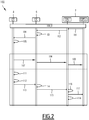
- the item of equipment EQPT.i makes a request to obtain its unencrypted DCK encryption key from its device CIA.i
- the CIA.i transmits this cryptographic activation request to CIC 6, on the link connecting them.
- a step 103 using the identifier “i” provided, the CIC 6 finds in its non-volatile memory (depending on the embodiments) the hash of the associated RAND_i_0.
- step 104 the CIC 6 supplies the CIT 8 with the request received from the CIA.i 7 and the hash of the RAND_I_0 previously found.
- an operator then present on the CIC 6 / CIT 8 activation center can optionally control the request for activation of the equipment 7 and authorize or refuse it. In the event of a refusal by the operator, steps 108, 109 as indicated above are implemented.
- step 105 If the checks in step 105 are correct and in the absence of refusal by the operator, the CIT 8, in a step 111, decrypts the quantity SK_TEMP_0_Chiff to allow activation using its private key AK_chiff. pr.
- a step 114 on receipt of these elements, the CIC 6 updates the hash of RAND_I_1 in its non-volatile memory.
- the CIC 6 then sends to the CIA.i the elements encrypted by K_COM_i_0 in a cryptographic activation response message, in a step 115.
- the CIA.i decrypts the response message received with K_COM_i_0.
- the CIA.i then provides in a step 117 the DCK key in clear to the EQPT.i which then uses it to encrypt or decrypt useful data.
- the required cryptographic activation is then performed.
- step 101 the cryptological activation steps described above from step 101 will thus be implemented again considering the last elements a, b, c, d indicated below. above instead of the elements a, b, c, d previously stored in the memories.
- a hierarchical activation is implemented allowing faster activation of a set of equipment (or execution environments) organized in a tree by propagation of the activation along the tree.
- node 30 is the root of the tree and corresponds to the activation center (CIC 6 and CIT 8) which performs the functions incumbent upon it as described above with reference to the steps starting from step 101.
- the nodes 41, respectively 42 and 43 are for example the devices 7 comprising the CIA.1, respectively CIA.2, CIA.3 of the CIAG.1 group, which implement on each restart the cryptographic activation operations described in reference to the figure 2 and falling to equipment 7, communicating with CIC 6 / CIC 8.
- node 41 (corresponding to device 7 including CIA.1) has two 7-wire devices corresponding to nodes 51 and 52.
- node 42 (corresponding to device 7 including CIA.2 ) has two 7-wire devices corresponding to nodes 53 and 54.
- Each of the child nodes is connected to its parent node by a bilateral telecommunications link. And the cryptographic activation is performed by a device 7 of the child node type in accordance with the steps described from step 101 incumbent on a device 7 except that it is its parent node, once its cryptographic activation has been performed successfully, which performs the functions described in these steps as the responsibility of CIC 6 / CIT 8.
- a child node once its cryptographic activation has been carried out, will be able to respond to a request for cryptographic activation of its child equipment.
- the solution is applicable to hardware equipment, for example in information systems, but also to virtualized solutions, for example software applications. More generally, the invention can be implemented in any system involving a network of equipment that needs to be activated remotely and in a minimum of time.
- each equipment 7 comprises a microprocessor and a memory and the CIA activation device of the equipment 7 comprises software comprising software instructions which is stored in the memory of the equipment 7 and which, when it is executed, implements the steps incumbent on the CIA mentioned in reference to the figure 2 .
- the CIC 6 comprises a microprocessor and a memory comprising software instructions stored in the memory of the CIC 6 and which, when they are executed, implement the steps incumbent on the CIC 6 mentioned in reference. to the figure 2 .
- a CIA of a device 7 and / or a CIC 6 are each made in the form of a programmable logic component, such as an FPGA (standing for Field Programmable Gate Array ), or else in the form of a dedicated integrated circuit, such as an ASIC (standing for Applications Specific Integrated Circuit ).
- a programmable logic component such as an FPGA (standing for Field Programmable Gate Array )
- ASIC Application Specific Integrated Circuit
- K_COM_i_0 (or at the t th successive iteration: K_COM_i_t) is optional.
- the distribution of tasks between the CIT 8 and the CIC 6 as described above is configurable and modifiable, the CIC 6 actually being able in one embodiment carry out all the tasks.
- the division of tasks between the CIA.i and the EQPT.i described above is configurable and modifiable.
Landscapes
- Engineering & Computer Science (AREA)
- Computer Security & Cryptography (AREA)
- Computer Networks & Wireless Communication (AREA)
- Signal Processing (AREA)
- Computer Hardware Design (AREA)
- Computing Systems (AREA)
- General Engineering & Computer Science (AREA)
- Storage Device Security (AREA)
- Computer And Data Communications (AREA)
- Mobile Radio Communication Systems (AREA)
Claims (10)
- Kryptographisches Aktivierungssystem (1), das ein Aktivierungszentrum (6, 8) und einen Satz von ersten Geräten (7) umfasst, wobei das Aktivierungszentrum und die Geräte durch ein Telekommunikationsnetzwerk verbunden sind, wobei jedes erste Gerät angepasst ist, Daten abhängig von einem Verschlüsselungshauptschlüssel zu verschlüsseln bzw. zu entschlüsseln, wenn das erste Gerät den entschlüsselten Verschlüsselungshauptschlüssel besitzt, wobei das Aktivierungssystem dadurch gekennzeichnet ist, dass:jedes erste Gerät einen nichtflüchtigen Speicher umfasst, der einen Verschlüsselungshauptschlüssel speichert, der durch einen ersten sekundären Verschlüsselungsschlüssel verschlüsselt ist, und angepasst ist, bei einem Neustart des ersten Geräts eine kryptografische Aktivierungsanforderung zu erzeugen, die eine Kennung des ersten Geräts angibt, und die kryptografische Aktivierungsanforderung über das Telekommunikationsnetz an das Aktivierungszentrum zu übertragen;das Aktivierungszentrum ausgebildet ist, die Aktivierungsanforderung zu empfangen, die Aktivierungsanforderung abhängig von mindestens der in der Anforderung angegebenen Kennung des ersten Geräts zu bestätigen und nur dann, wenn es die Aktivierungsanforderung bestätigt hat, eine Aktivierungsantwortnachricht zu erzeugen, die den ersten sekundären Datenschlüssel des ersten Geräts enthält, und die Aktivierungsantwort über das Telekommunikationsnetz an das erste Gerät zu senden;wobei das erste Gerät angepasst ist, die kryptografische Aktivierungsantwort zu empfangen, um seine kryptografische Aktivierung abzuschließen, indem es den ersten sekundären Datenschlüssel des ersten Geräts aus der Antwort extrahiert, den im Speicher gespeicherten Verschlüsselungshauptschlüssel mit dem extrahierten ersten sekundären Verschlüsselungsschlüssel entschlüsselt und dadurch den Verschlüsselungshauptschlüssel im Klartext für die Datenverschlüsselung durch das erste Gerät mit dem Hauptschlüssel erhält; wobei das erste Gerät ferner angepasst ist, einen zweiten sekundären Verschlüsselungsschlüssel zu erhalten, um den Verschlüsselungshauptschlüssel mit dem erhaltenen zweiten sekundären Verschlüsselungsschlüssel zu verschlüsseln, um den verschlüsselten Verschlüsselungshauptschlüssel in dem nichtflüchtigen Speicher zu speichern; undwobei das erste Gerät ferner angepasst ist, vor einem auf den Neustart folgenden Herunterfahren den Verschlüsselungshauptschlüssel im Klartext und den zweiten sekundären Verschlüsselungsschlüssel im Klartext aus seinem nichtflüchtigen Speicher zu löschen.
- Kryptographisches Aktivierungssystem (1) nach Anspruch 1, bei dem jedes erste Gerät (7) angepasst ist, bei jedem Neustart des ersten Geräts eine kryptographische Aktivierungsanforderung an das Aktivierungszentrum (6, 8) zu erzeugen, damit letzteres den sekundären Verschlüsselungsschlüssel übermittelt, der von dem ersten Gerät verwendet wurde, um den verschlüsselten Hauptschlüssel zu erhalten, der in dem nichtflüchtigen Speicher gespeichert ist.
- Kryptographisches Aktivierungssystem (1) nach Anspruch 1 oder 2, bei dem jedes erste Gerät (7) ferner angepasst ist, vor dem Neustart in seinem nichtflüchtigen Speicher seinen ersten sekundären Datenschlüssel, der durch einen asymmetrischen öffentlichen Verschlüsselungsschlüssel in Übereinstimmung mit seinem Verschlüsselungshauptschlüssel verschlüsselt ist, der durch den ersten sekundären Verschlüsselungsschlüssel verschlüsselt ist, zu speichern;wobei jedes erste Gerät ferner angepasst ist, bei der Erzeugung der Aktivierungsanforderung den ersten sekundären Datenschlüssel, der durch den zuvor gespeicherten öffentlichen asymmetrischen Verschlüsselungsschlüssel verschlüsselt ist, aus seinem nichtflüchtigen Speicher zu extrahieren und ihn in die Aktivierungsanforderung einzufügen;wobei das Aktivierungszentrum (6, 8) geeignet ist, aus der empfangenen Aktivierungsanforderung den ersten sekundären Datenschlüssel zu extrahieren, der durch den öffentlichen asymmetrischen Verschlüsselungsschlüssel verschlüsselt ist, um ihn unter Verwendung eines privaten asymmetrischen Verschlüsselungsschlüssels zu entschlüsseln, der dem öffentlichen asymmetrischen Verschlüsselungsschlüssel zugeordnet ist, wobei der erste sekundäre Datenschlüssel des ersten Geräts, der in der von dem Zentrum erzeugten Aktivierungsantwortnachricht enthalten ist, der erste sekundäre Datenschlüssel ist, der so durch den privaten Schlüssel entschlüsselt wurde;wobei jedes erste Gerät ferner angepasst ist, vor dem Neustart den zweiten sekundären Verschlüsselungsschlüssel, der durch den öffentlichen asymmetrischen Verschlüsselungsschlüssel in Übereinstimmung mit dem Verschlüsselungshauptschlüssel verschlüsselt ist, der durch den sekundären Verschlüsselungsschlüssel verschlüsselt ist, in dem nichtflüchtigen Speicher zu speichern.
- Kryptographisches Aktivierungssystem (1) nach einem der vorhergehenden Ansprüche, bei dem jedes erste Gerät (7) ferner angepasst ist, die gesamte Aktivierungsanforderung oder einen Teil davon zu verschlüsseln und die gesamte Aktivierungsantwort oder einen Teil davon zu entschlüsseln, wobei ein symmetrischer Kommunikationsverschlüsselungsschlüssel verwendet wird; und parallel dazu die Aktivierungszentrale (6, 8) ferner angepasst ist, die gesamte Aktivierungsantwort oder einen Teil davon zu verschlüsseln und die gesamte Aktivierungsanforderung oder einen Teil davon zu entschlüsseln, wobei der symmetrische Kommunikationsverschlüsselungsschlüssel verwendet wird.
- Kryptographisches Aktivierungssystem (1) nach einem der vorhergehenden Ansprüche, das außerdem zweite Geräte (51, 52) umfasst, wobei die ersten Geräte (41), die zweiten Geräte und das Aktivierungszentrum (6, 8) baumförmig organisiert sind, mit dem Aktivierungszentrum als Wurzel, wobei die ersten Geräte (41) die Väter der zweiten Geräte sind, wobei jedes zweite Gerät geeignet ist, in Bezug auf sein erstes Vatergerät die in den vorhergehenden Ansprüchen beschriebenen Operationen durchzuführen, wie sie von dem ersten Gerät in Bezug auf das Aktivierungszentrum durchgeführt werden; und jedes erste Gerät dann angepasst ist, sobald seine kryptographische Aktivierung durchgeführt wurde, in Bezug auf jedes seiner zweiten Sohngeräte die in den vorhergehenden Ansprüchen beschriebenen Operationen auszuführen, wie sie von der Aktivierungszentrale in Bezug auf die ersten Geräte ausgeführt werden.
- Gerät, das geeignet ist, über ein Telekommunikationsnetz mit einem kryptographischen Aktivierungssystem (1) verbunden zu werden, das ein Aktivierungszentrum (6, 8) umfasst, wobei das Gerät angepasst ist, Daten abhängig von einem Verschlüsselungshauptschlüssel zu verschlüsseln bzw. zu entschlüsseln, wenn das Gerät über den entschlüsselten Verschlüsselungshauptschlüssel verfügt, dadurch gekennzeichnet, dass es einen nichtflüchtigen Speicher umfasst, der einen Verschlüsselungshauptschlüssel speichert, der durch einen ersten sekundären Verschlüsselungsschlüssel verschlüsselt ist, und angepasst ist, bei einem Neustart des Geräts eine kryptographische Aktivierungsanforderung zu erzeugen, die eine Kennung des Gerätes angibt, und die kryptographische Aktivierungsanforderung über das Telekommunikationsnetz an das Aktivierungszentrum zu übertragen;wobei das Gerät angepasst ist, eine kryptografische Aktivierungsantwort, die den ersten sekundären Datenschlüssel des Geräts umfasst, vom Aktivierungszentrum empfängt, um seine kryptografische Aktivierung abzuschließen, wobei es aus der Antwort den ersten sekundären Datenschlüssel des Geräts extrahiert, den im Speicher gespeicherten Verschlüsselungshauptschlüssel mit dem extrahierten ersten sekundären Verschlüsselungsschlüssel entschlüsselt und dadurch den Verschlüsselungshauptschlüssel im Klartext in Hinsicht auf die Datenverschlüsselung durch das Gerät mit dem Hauptschlüssel erhält; wobei das Gerät ferner angepasst ist, einen zweiten sekundären Verschlüsselungsschlüssel zu erhalten, um den Verschlüsselungshauptschlüssel mit dem erhaltenen zweiten sekundären Verschlüsselungsschlüssel zu verschlüsseln, um den verschlüsselten Verschlüsselungshauptschlüssel in einem nichtflüchtigen Speicher zu speichern; undwobei das Gerät ferner angepasst ist, vor einem auf den Neustart folgenden Herunterfahren den Verschlüsselungshauptschlüssel im Klartext und den zweiten sekundären Verschlüsselungsschlüssel im Klartext aus seinem nichtflüchtigen Speicher zu löschen.
- Gerät nach Anspruch 6, das angepasst ist, der Vater mindestens eines anderen Geräts zu sein, das mit ihm über das Telekommunikationsnetz in dem kryptographischen Aktivierungssystem verbunden ist, das in Baumform organisiert ist, wobei das Gerät angepasst ist, eine kryptographische Aktivierungsanforderung von dem anderen Gerät zu empfangen und eine Kennung des anderen Geräts anzugeben, die Aktivierungsanforderung des anderen Geräts in Abhängigkeit von mindestens der Kennung des anderen Geräts, die in der Anforderung angegeben ist, zu bestätigen und nur dann, wenn das Gerät seine eigene kryptographische Aktivierung abgeschlossen und die Aktivierungsanforderung bestätigt hat, eine Aktivierungsantwortnachricht zu erzeugen, die den ersten sekundären Datenschlüssel des anderen Geräts enthält, und die Aktivierungsantwort über das Telekommunikationsnetz an das andere Gerät zu senden.
- Kryptographisches Aktivierungsverfahren in einem kryptographischen Aktivierungssystem (1), das ein Aktivierungszentrum (6, 8) und einen Satz erster Geräte (7) umfasst, die über ein Telekommunikationsnetz verbunden sind, wobei das Verfahren dadurch gekennzeichnet ist, dass es die folgenden Schritte umfasst:- Speichern eines Verschlüsselungshauptschlüssels, der durch einen ersten sekundären Verschlüsselungsschlüssel verschlüsselt ist, durch jedes erste Gerät in einem nichtflüchtigen Speicher des ersten Geräts;- wenn das erste Gerät neu gestartet wird, Erzeugen einer kryptografische Aktivierungsanforderung durch das erste Gerät, die eine Kennung des ersten Geräts angibt, und Übertragen der kryptografischen Aktivierungsanforderung durch erste Gerät über das Telekommunikationsnetz an die Aktivierungszentrale;- Empfangen der Aktivierungsanforderung durch das Aktivierungszentrum, Bestätigen der Aktivierungsanforderung durch das Aktivierungszentrum auf der Basis von mindestens der in der Anforderung angegebenen Kennung des ersten Geräts und, nur wenn es die Aktivierungsanforderung bestätigt hat, Erzeugen einer Aktivierungsantwortnachricht durch das Aktivierungszentrum, die den ersten sekundären Datenschlüssel des ersten Geräts enthält, und Übertragen der Aktivierungsantwort durch das Aktivierungszentrum über das Telekommunikationsnetz an das erste Gerät;- Empfangen der kryptografischen Aktivierungsantwort durch das erste Gerät, Abschließen seiner kryptografischen Aktivierung, wobei der erste sekundäre Datenschlüssel des ersten Geräts aus der Antwort extrahiert wird, der im Speicher gespeicherte Verschlüsselungshauptschlüssel mit dem extrahierten ersten sekundären Verschlüsselungsschlüssel entschlüsselt wird und dadurch der Verschlüsselungshauptschlüssel im Klartext erhalten wird;- Verschlüsseln bzw. Entschlüsseln von Daten abhängig von dem erhaltenen Verschlüsselungshauptschlüssel im Klartext durch jedes erste Gerät;- Gewinnen eines zweiten sekundären Verschlüsselungsschlüssels durch das erste Gerät, Verschlüsseln des Verschlüsselungshauptschlüssels durch das erste Gerät mit dem erhaltenen zweiten sekundären Verschlüsselungsschlüssel, dann Speichern des durch das erste Gerät verschlüsselten Verschlüsselungshauptschlüssels in seinem nichtflüchtigen Speicher; und- vor einem Herunterfahren des ersten Geräts nach dem Neustart, Löschen des Verschlüsselungshauptschlüssels im Klartext und des sekundären Verschlüsselungsschlüssels im Klartext aus seinem nichtflüchtigen Speicher.
- Kryptographisches Aktivierungsverfahren nach Anspruch 8, bei dem bei jedem Neustart des ersten Geräts eine kryptographische Aktivierungsanforderung an das Aktivierungszentrum (6, 8) erzeugt wird, damit letzteres den sekundären Verschlüsselungsschlüssel übermittelt, der von dem ersten Gerät verwendet wurde, um den verschlüsselten Hauptschlüssel zu erhalten, der in dem nichtflüchtigen Speicher gespeichert ist.
- Kryptographisches Aktivierungsverfahren nach Anspruch 8 oder 9, bei dem das kryptographische Aktivierungssystem (1) ferner zweite Geräte (51, 52) umfasst, und die ersten Geräte (41), die zweiten Geräte und das Aktivierungszentrum (6, 8) in einer Baumform mit dem Aktivierungszentrum als Wurzel organisiert sind, wobei die ersten Geräte (41) die Väter der zweiten Geräte sind, umfassend die folgenden Schritte:- Durchführen der in den Ansprüchen 8 oder 9 beschriebenen Operationen durch jedes zweite Gerät in Bezug auf sein erstes Vatergerät, wie sie von dem ersten Gerät in Bezug auf das Aktivierungszentrum durchgeführt werden; und- sobald seine kryptographische Aktivierung durchgeführt wurde, von jedem ersten Gerät in Bezug auf jedes seiner zweiten Sohngeräte Ausführen der in den Ansprüchen 8 oder 9 beschriebenen Operationen, wie sie von der Aktivierungszentrale in Bezug auf die ersten Geräte ausgeführt werden.
Applications Claiming Priority (2)
| Application Number | Priority Date | Filing Date | Title |
|---|---|---|---|
| FR1701387A FR3076423B1 (fr) | 2017-12-28 | 2017-12-28 | Procede et systeme d'activation cryptographique d'une pluralite d'equipements |
| PCT/EP2018/097071 WO2019129842A1 (fr) | 2017-12-28 | 2018-12-28 | Procédé et système d'activation cryptographique d'une pluralité d'équipements |
Publications (2)
| Publication Number | Publication Date |
|---|---|
| EP3732818A1 EP3732818A1 (de) | 2020-11-04 |
| EP3732818B1 true EP3732818B1 (de) | 2021-09-29 |
Family
ID=62597543
Family Applications (1)
| Application Number | Title | Priority Date | Filing Date |
|---|---|---|---|
| EP18830871.2A Active EP3732818B1 (de) | 2017-12-28 | 2018-12-28 | Verfahren und system zur kryptografischen aktivierung einer vielzahl von ausrüstungsgegenständen |
Country Status (4)
| Country | Link |
|---|---|
| EP (1) | EP3732818B1 (de) |
| ES (1) | ES2902769T3 (de) |
| FR (1) | FR3076423B1 (de) |
| WO (1) | WO2019129842A1 (de) |
Families Citing this family (9)
| Publication number | Priority date | Publication date | Assignee | Title |
|---|---|---|---|---|
| AU2014332244A1 (en) | 2013-10-07 | 2016-05-05 | Fornetix Llc | System and method for encryption key management, federation and distribution |
| US10630686B2 (en) | 2015-03-12 | 2020-04-21 | Fornetix Llc | Systems and methods for organizing devices in a policy hierarchy |
| US10965459B2 (en) | 2015-03-13 | 2021-03-30 | Fornetix Llc | Server-client key escrow for applied key management system and process |
| US10917239B2 (en) | 2016-02-26 | 2021-02-09 | Fornetix Llc | Policy-enabled encryption keys having ephemeral policies |
| US10931653B2 (en) | 2016-02-26 | 2021-02-23 | Fornetix Llc | System and method for hierarchy manipulation in an encryption key management system |
| US10880281B2 (en) | 2016-02-26 | 2020-12-29 | Fornetix Llc | Structure of policies for evaluating key attributes of encryption keys |
| US11063980B2 (en) | 2016-02-26 | 2021-07-13 | Fornetix Llc | System and method for associating encryption key management policy with device activity |
| US10860086B2 (en) | 2016-02-26 | 2020-12-08 | Fornetix Llc | Policy-enabled encryption keys having complex logical operations |
| US10713077B2 (en) | 2017-01-26 | 2020-07-14 | Semper Fortis Solutions, LLC | Multiple single levels of security (MSLS) in a multi-tenant cloud |
Family Cites Families (4)
| Publication number | Priority date | Publication date | Assignee | Title |
|---|---|---|---|---|
| ATE368981T1 (de) * | 2000-03-29 | 2007-08-15 | Vadium Technology Inc | Einmalige pad-verschlüsselung mit zentralschlüsseldienst und schlüsselfähigen zeichen |
| JP4724120B2 (ja) * | 2004-03-15 | 2011-07-13 | パナソニック株式会社 | 暗号化装置、鍵配布装置、鍵配布システム |
| US8837734B2 (en) * | 2012-09-14 | 2014-09-16 | Red Hat, Inc. | Managing encrypted data and encryption keys |
| EP2775656A1 (de) * | 2013-03-04 | 2014-09-10 | Thomson Licensing | Vorrichtung zur Erzeugung eines verschlüsselten Schlüssels und Verfahren zur Bereitstellung eines verschlüsselten Schlüssels an einen Empfänger |
-
2017
- 2017-12-28 FR FR1701387A patent/FR3076423B1/fr not_active Expired - Fee Related
-
2018
- 2018-12-28 WO PCT/EP2018/097071 patent/WO2019129842A1/fr not_active Ceased
- 2018-12-28 ES ES18830871T patent/ES2902769T3/es active Active
- 2018-12-28 EP EP18830871.2A patent/EP3732818B1/de active Active
Also Published As
| Publication number | Publication date |
|---|---|
| FR3076423A1 (fr) | 2019-07-05 |
| FR3076423B1 (fr) | 2020-01-31 |
| EP3732818A1 (de) | 2020-11-04 |
| WO2019129842A1 (fr) | 2019-07-04 |
| ES2902769T3 (es) | 2022-03-29 |
Similar Documents
| Publication | Publication Date | Title |
|---|---|---|
| EP3732818B1 (de) | Verfahren und system zur kryptografischen aktivierung einer vielzahl von ausrüstungsgegenständen | |
| US12587388B2 (en) | Systems and methods for trusted path secure communication | |
| US11831753B2 (en) | Secure distributed key management system | |
| EP3937045B1 (de) | Hash-aktualisierungsverfahren und -geräte von integrierte blockchain-station | |
| CN102624699B (zh) | 一种保护数据的方法和系统 | |
| CN202795383U (zh) | 一种保护数据的设备和系统 | |
| US10887085B2 (en) | System and method for controlling usage of cryptographic keys | |
| EP2673732A1 (de) | Sicheres transaktionsverfahren aus einem unsicheren endgerät | |
| EP3262514B1 (de) | Sichere speichersysteme | |
| EP3123387A1 (de) | Sichern des ladens von daten in einen nichtflüchtigen speicher eines sicheren elements | |
| CN111460465A (zh) | 一种基于区块链的身份认证方法、设备及介质 | |
| EP3994596B1 (de) | Sichere cloud-rechenarchitektur und sicherheitsverfahren | |
| US7747861B2 (en) | Method and system for redundant secure storage of sensitive data by using multiple keys | |
| EP2912598B1 (de) | Verfahren zum herunterladen von mindestens einer softwarekomponente auf eine computervorrichtung sowie zugehöriges computerprogrammprodukt, computervorrichtung und computersystem | |
| EP3828737B1 (de) | Datenaustausch-architektur mit einer pluralität von verbundenen objekten mit begrenzten ressourcen | |
| WO2025119852A1 (fr) | Procédé génération d'un jeton d'authentification d'un terminal utilisateur auprès d'un réseau cœur reposant sur l'utilisation d'une chaine de blocs et procédé d'authentification du terminal utilisateur correspondant | |
| FR2887717A1 (fr) | Procede de creation d'un terminal eclate entre un terminal de base et des equipements connectes en serie | |
| WO2023062095A1 (fr) | Procédé et dispositif de transfert d'une communication d'une station de base à une autre | |
| FR3147924A1 (fr) | Procédé et dispositif de génération d’une fonction de sécurité | |
| CN115587384A (zh) | 敏感信息的处理方法和装置、存储介质及电子设备 |
Legal Events
| Date | Code | Title | Description |
|---|---|---|---|
| STAA | Information on the status of an ep patent application or granted ep patent |
Free format text: STATUS: UNKNOWN |
|
| STAA | Information on the status of an ep patent application or granted ep patent |
Free format text: STATUS: THE INTERNATIONAL PUBLICATION HAS BEEN MADE |
|
| PUAI | Public reference made under article 153(3) epc to a published international application that has entered the european phase |
Free format text: ORIGINAL CODE: 0009012 |
|
| STAA | Information on the status of an ep patent application or granted ep patent |
Free format text: STATUS: REQUEST FOR EXAMINATION WAS MADE |
|
| 17P | Request for examination filed |
Effective date: 20200626 |
|
| AK | Designated contracting states |
Kind code of ref document: A1 Designated state(s): AL AT BE BG CH CY CZ DE DK EE ES FI FR GB GR HR HU IE IS IT LI LT LU LV MC MK MT NL NO PL PT RO RS SE SI SK SM TR |
|
| AX | Request for extension of the european patent |
Extension state: BA ME |
|
| DAV | Request for validation of the european patent (deleted) | ||
| DAX | Request for extension of the european patent (deleted) | ||
| GRAJ | Information related to disapproval of communication of intention to grant by the applicant or resumption of examination proceedings by the epo deleted |
Free format text: ORIGINAL CODE: EPIDOSDIGR1 |
|
| STAA | Information on the status of an ep patent application or granted ep patent |
Free format text: STATUS: GRANT OF PATENT IS INTENDED |
|
| GRAP | Despatch of communication of intention to grant a patent |
Free format text: ORIGINAL CODE: EPIDOSNIGR1 |
|
| INTG | Intention to grant announced |
Effective date: 20210519 |
|
| RIN1 | Information on inventor provided before grant (corrected) |
Inventor name: BOULAY, LUDOVIC Inventor name: LEFRANC, DAVID |
|
| GRAS | Grant fee paid |
Free format text: ORIGINAL CODE: EPIDOSNIGR3 |
|
| GRAA | (expected) grant |
Free format text: ORIGINAL CODE: 0009210 |
|
| STAA | Information on the status of an ep patent application or granted ep patent |
Free format text: STATUS: THE PATENT HAS BEEN GRANTED |
|
| REG | Reference to a national code |
Ref country code: DE Ref legal event code: R081 Ref document number: 602018024417 Country of ref document: DE Owner name: THALES, FR Free format text: FORMER OWNER: THALES, COURBEVOIE, FR |
|
| AK | Designated contracting states |
Kind code of ref document: B1 Designated state(s): AL AT BE BG CH CY CZ DE DK EE ES FI FR GB GR HR HU IE IS IT LI LT LU LV MC MK MT NL NO PL PT RO RS SE SI SK SM TR |
|
| REG | Reference to a national code |
Ref country code: GB Ref legal event code: FG4D Free format text: NOT ENGLISH |
|
| REG | Reference to a national code |
Ref country code: CH Ref legal event code: EP Ref country code: AT Ref legal event code: REF Ref document number: 1435190 Country of ref document: AT Kind code of ref document: T Effective date: 20211015 |
|
| REG | Reference to a national code |
Ref country code: DE Ref legal event code: R096 Ref document number: 602018024417 Country of ref document: DE |
|
| REG | Reference to a national code |
Ref country code: IE Ref legal event code: FG4D Free format text: LANGUAGE OF EP DOCUMENT: FRENCH |
|
| REG | Reference to a national code |
Ref country code: LT Ref legal event code: MG9D |
|
| PG25 | Lapsed in a contracting state [announced via postgrant information from national office to epo] |
Ref country code: RS Free format text: LAPSE BECAUSE OF FAILURE TO SUBMIT A TRANSLATION OF THE DESCRIPTION OR TO PAY THE FEE WITHIN THE PRESCRIBED TIME-LIMIT Effective date: 20210929 Ref country code: SE Free format text: LAPSE BECAUSE OF FAILURE TO SUBMIT A TRANSLATION OF THE DESCRIPTION OR TO PAY THE FEE WITHIN THE PRESCRIBED TIME-LIMIT Effective date: 20210929 Ref country code: FI Free format text: LAPSE BECAUSE OF FAILURE TO SUBMIT A TRANSLATION OF THE DESCRIPTION OR TO PAY THE FEE WITHIN THE PRESCRIBED TIME-LIMIT Effective date: 20210929 Ref country code: BG Free format text: LAPSE BECAUSE OF FAILURE TO SUBMIT A TRANSLATION OF THE DESCRIPTION OR TO PAY THE FEE WITHIN THE PRESCRIBED TIME-LIMIT Effective date: 20211229 Ref country code: LT Free format text: LAPSE BECAUSE OF FAILURE TO SUBMIT A TRANSLATION OF THE DESCRIPTION OR TO PAY THE FEE WITHIN THE PRESCRIBED TIME-LIMIT Effective date: 20210929 Ref country code: HR Free format text: LAPSE BECAUSE OF FAILURE TO SUBMIT A TRANSLATION OF THE DESCRIPTION OR TO PAY THE FEE WITHIN THE PRESCRIBED TIME-LIMIT Effective date: 20210929 |
|
| REG | Reference to a national code |
Ref country code: NL Ref legal event code: FP |
|
| REG | Reference to a national code |
Ref country code: AT Ref legal event code: MK05 Ref document number: 1435190 Country of ref document: AT Kind code of ref document: T Effective date: 20210929 |
|
| PG25 | Lapsed in a contracting state [announced via postgrant information from national office to epo] |
Ref country code: LV Free format text: LAPSE BECAUSE OF FAILURE TO SUBMIT A TRANSLATION OF THE DESCRIPTION OR TO PAY THE FEE WITHIN THE PRESCRIBED TIME-LIMIT Effective date: 20210929 Ref country code: GR Free format text: LAPSE BECAUSE OF FAILURE TO SUBMIT A TRANSLATION OF THE DESCRIPTION OR TO PAY THE FEE WITHIN THE PRESCRIBED TIME-LIMIT Effective date: 20211230 |
|
| REG | Reference to a national code |
Ref country code: NO Ref legal event code: T2 Effective date: 20210929 |
|
| REG | Reference to a national code |
Ref country code: ES Ref legal event code: FG2A Ref document number: 2902769 Country of ref document: ES Kind code of ref document: T3 Effective date: 20220329 |
|
| PG25 | Lapsed in a contracting state [announced via postgrant information from national office to epo] |
Ref country code: AT Free format text: LAPSE BECAUSE OF FAILURE TO SUBMIT A TRANSLATION OF THE DESCRIPTION OR TO PAY THE FEE WITHIN THE PRESCRIBED TIME-LIMIT Effective date: 20210929 |
|
| PG25 | Lapsed in a contracting state [announced via postgrant information from national office to epo] |
Ref country code: IS Free format text: LAPSE BECAUSE OF FAILURE TO SUBMIT A TRANSLATION OF THE DESCRIPTION OR TO PAY THE FEE WITHIN THE PRESCRIBED TIME-LIMIT Effective date: 20220129 Ref country code: SK Free format text: LAPSE BECAUSE OF FAILURE TO SUBMIT A TRANSLATION OF THE DESCRIPTION OR TO PAY THE FEE WITHIN THE PRESCRIBED TIME-LIMIT Effective date: 20210929 Ref country code: RO Free format text: LAPSE BECAUSE OF FAILURE TO SUBMIT A TRANSLATION OF THE DESCRIPTION OR TO PAY THE FEE WITHIN THE PRESCRIBED TIME-LIMIT Effective date: 20210929 Ref country code: PT Free format text: LAPSE BECAUSE OF FAILURE TO SUBMIT A TRANSLATION OF THE DESCRIPTION OR TO PAY THE FEE WITHIN THE PRESCRIBED TIME-LIMIT Effective date: 20220131 Ref country code: PL Free format text: LAPSE BECAUSE OF FAILURE TO SUBMIT A TRANSLATION OF THE DESCRIPTION OR TO PAY THE FEE WITHIN THE PRESCRIBED TIME-LIMIT Effective date: 20210929 Ref country code: EE Free format text: LAPSE BECAUSE OF FAILURE TO SUBMIT A TRANSLATION OF THE DESCRIPTION OR TO PAY THE FEE WITHIN THE PRESCRIBED TIME-LIMIT Effective date: 20210929 Ref country code: CZ Free format text: LAPSE BECAUSE OF FAILURE TO SUBMIT A TRANSLATION OF THE DESCRIPTION OR TO PAY THE FEE WITHIN THE PRESCRIBED TIME-LIMIT Effective date: 20210929 Ref country code: AL Free format text: LAPSE BECAUSE OF FAILURE TO SUBMIT A TRANSLATION OF THE DESCRIPTION OR TO PAY THE FEE WITHIN THE PRESCRIBED TIME-LIMIT Effective date: 20210929 |
|
| REG | Reference to a national code |
Ref country code: DE Ref legal event code: R097 Ref document number: 602018024417 Country of ref document: DE |
|
| PG25 | Lapsed in a contracting state [announced via postgrant information from national office to epo] |
Ref country code: MC Free format text: LAPSE BECAUSE OF FAILURE TO SUBMIT A TRANSLATION OF THE DESCRIPTION OR TO PAY THE FEE WITHIN THE PRESCRIBED TIME-LIMIT Effective date: 20210929 Ref country code: DK Free format text: LAPSE BECAUSE OF FAILURE TO SUBMIT A TRANSLATION OF THE DESCRIPTION OR TO PAY THE FEE WITHIN THE PRESCRIBED TIME-LIMIT Effective date: 20210929 |
|
| REG | Reference to a national code |
Ref country code: CH Ref legal event code: PL |
|
| PLBE | No opposition filed within time limit |
Free format text: ORIGINAL CODE: 0009261 |
|
| STAA | Information on the status of an ep patent application or granted ep patent |
Free format text: STATUS: NO OPPOSITION FILED WITHIN TIME LIMIT |
|
| 26N | No opposition filed |
Effective date: 20220630 |
|
| REG | Reference to a national code |
Ref country code: BE Ref legal event code: MM Effective date: 20211231 |
|
| PG25 | Lapsed in a contracting state [announced via postgrant information from national office to epo] |
Ref country code: LU Free format text: LAPSE BECAUSE OF NON-PAYMENT OF DUE FEES Effective date: 20211228 Ref country code: IE Free format text: LAPSE BECAUSE OF NON-PAYMENT OF DUE FEES Effective date: 20211228 |
|
| PG25 | Lapsed in a contracting state [announced via postgrant information from national office to epo] |
Ref country code: SI Free format text: LAPSE BECAUSE OF FAILURE TO SUBMIT A TRANSLATION OF THE DESCRIPTION OR TO PAY THE FEE WITHIN THE PRESCRIBED TIME-LIMIT Effective date: 20210929 Ref country code: BE Free format text: LAPSE BECAUSE OF NON-PAYMENT OF DUE FEES Effective date: 20211231 |
|
| PG25 | Lapsed in a contracting state [announced via postgrant information from national office to epo] |
Ref country code: LI Free format text: LAPSE BECAUSE OF NON-PAYMENT OF DUE FEES Effective date: 20211231 Ref country code: CH Free format text: LAPSE BECAUSE OF NON-PAYMENT OF DUE FEES Effective date: 20211231 |
|
| P01 | Opt-out of the competence of the unified patent court (upc) registered |
Effective date: 20230516 |
|
| PG25 | Lapsed in a contracting state [announced via postgrant information from national office to epo] |
Ref country code: CY Free format text: LAPSE BECAUSE OF FAILURE TO SUBMIT A TRANSLATION OF THE DESCRIPTION OR TO PAY THE FEE WITHIN THE PRESCRIBED TIME-LIMIT Effective date: 20210929 |
|
| PG25 | Lapsed in a contracting state [announced via postgrant information from national office to epo] |
Ref country code: SM Free format text: LAPSE BECAUSE OF FAILURE TO SUBMIT A TRANSLATION OF THE DESCRIPTION OR TO PAY THE FEE WITHIN THE PRESCRIBED TIME-LIMIT Effective date: 20210929 Ref country code: HU Free format text: LAPSE BECAUSE OF FAILURE TO SUBMIT A TRANSLATION OF THE DESCRIPTION OR TO PAY THE FEE WITHIN THE PRESCRIBED TIME-LIMIT; INVALID AB INITIO Effective date: 20181228 |
|
| PG25 | Lapsed in a contracting state [announced via postgrant information from national office to epo] |
Ref country code: MK Free format text: LAPSE BECAUSE OF FAILURE TO SUBMIT A TRANSLATION OF THE DESCRIPTION OR TO PAY THE FEE WITHIN THE PRESCRIBED TIME-LIMIT Effective date: 20210929 |
|
| PG25 | Lapsed in a contracting state [announced via postgrant information from national office to epo] |
Ref country code: TR Free format text: LAPSE BECAUSE OF FAILURE TO SUBMIT A TRANSLATION OF THE DESCRIPTION OR TO PAY THE FEE WITHIN THE PRESCRIBED TIME-LIMIT Effective date: 20210929 |
|
| PG25 | Lapsed in a contracting state [announced via postgrant information from national office to epo] |
Ref country code: MT Free format text: LAPSE BECAUSE OF FAILURE TO SUBMIT A TRANSLATION OF THE DESCRIPTION OR TO PAY THE FEE WITHIN THE PRESCRIBED TIME-LIMIT Effective date: 20210929 |
|
| PGFP | Annual fee paid to national office [announced via postgrant information from national office to epo] |
Ref country code: NL Payment date: 20251127 Year of fee payment: 8 |
|
| PGFP | Annual fee paid to national office [announced via postgrant information from national office to epo] |
Ref country code: GB Payment date: 20251229 Year of fee payment: 8 |
|
| PGFP | Annual fee paid to national office [announced via postgrant information from national office to epo] |
Ref country code: NO Payment date: 20251127 Year of fee payment: 8 |
|
| PGFP | Annual fee paid to national office [announced via postgrant information from national office to epo] |
Ref country code: IT Payment date: 20251210 Year of fee payment: 8 |
|
| PGFP | Annual fee paid to national office [announced via postgrant information from national office to epo] |
Ref country code: FR Payment date: 20251230 Year of fee payment: 8 |
|
| PGFP | Annual fee paid to national office [announced via postgrant information from national office to epo] |
Ref country code: ES Payment date: 20260112 Year of fee payment: 8 |
|
| PGFP | Annual fee paid to national office [announced via postgrant information from national office to epo] |
Ref country code: DE Payment date: 20251231 Year of fee payment: 8 |