EP3733268A1 - Wasserbehandlungsströmungswegelement - Google Patents
Wasserbehandlungsströmungswegelement Download PDFInfo
- Publication number
- EP3733268A1 EP3733268A1 EP18895600.7A EP18895600A EP3733268A1 EP 3733268 A1 EP3733268 A1 EP 3733268A1 EP 18895600 A EP18895600 A EP 18895600A EP 3733268 A1 EP3733268 A1 EP 3733268A1
- Authority
- EP
- European Patent Office
- Prior art keywords
- flow channel
- channel member
- spacer
- treatment flow
- water treatment
- Prior art date
- Legal status (The legal status is an assumption and is not a legal conclusion. Google has not performed a legal analysis and makes no representation as to the accuracy of the status listed.)
- Withdrawn
Links
Images








Classifications
-
- B—PERFORMING OPERATIONS; TRANSPORTING
- B01—PHYSICAL OR CHEMICAL PROCESSES OR APPARATUS IN GENERAL
- B01D—SEPARATION
- B01D69/00—Semi-permeable membranes for separation processes or apparatus characterised by their form, structure or properties; Manufacturing processes specially adapted therefor
- B01D69/14—Dynamic membranes
- B01D69/141—Heterogeneous membranes, e.g. containing dispersed material; Mixed matrix membranes
- B01D69/148—Organic/inorganic mixed matrix membranes
-
- B—PERFORMING OPERATIONS; TRANSPORTING
- B01—PHYSICAL OR CHEMICAL PROCESSES OR APPARATUS IN GENERAL
- B01D—SEPARATION
- B01D65/00—Accessories or auxiliary operations, in general, for separation processes or apparatus using semi-permeable membranes
- B01D65/08—Prevention of membrane fouling or of concentration polarisation
-
- B—PERFORMING OPERATIONS; TRANSPORTING
- B01—PHYSICAL OR CHEMICAL PROCESSES OR APPARATUS IN GENERAL
- B01D—SEPARATION
- B01D61/00—Processes of separation using semi-permeable membranes, e.g. dialysis, osmosis or ultrafiltration; Apparatus, accessories or auxiliary operations specially adapted therefor
- B01D61/02—Reverse osmosis; Hyperfiltration ; Nanofiltration
- B01D61/025—Reverse osmosis; Hyperfiltration
-
- B—PERFORMING OPERATIONS; TRANSPORTING
- B01—PHYSICAL OR CHEMICAL PROCESSES OR APPARATUS IN GENERAL
- B01D—SEPARATION
- B01D61/00—Processes of separation using semi-permeable membranes, e.g. dialysis, osmosis or ultrafiltration; Apparatus, accessories or auxiliary operations specially adapted therefor
- B01D61/02—Reverse osmosis; Hyperfiltration ; Nanofiltration
- B01D61/08—Apparatus therefor
-
- B—PERFORMING OPERATIONS; TRANSPORTING
- B01—PHYSICAL OR CHEMICAL PROCESSES OR APPARATUS IN GENERAL
- B01D—SEPARATION
- B01D61/00—Processes of separation using semi-permeable membranes, e.g. dialysis, osmosis or ultrafiltration; Apparatus, accessories or auxiliary operations specially adapted therefor
- B01D61/02—Reverse osmosis; Hyperfiltration ; Nanofiltration
- B01D61/10—Accessories; Auxiliary operations
-
- B—PERFORMING OPERATIONS; TRANSPORTING
- B01—PHYSICAL OR CHEMICAL PROCESSES OR APPARATUS IN GENERAL
- B01D—SEPARATION
- B01D63/00—Apparatus in general for separation processes using semi-permeable membranes
- B01D63/08—Flat membrane modules
-
- B—PERFORMING OPERATIONS; TRANSPORTING
- B01—PHYSICAL OR CHEMICAL PROCESSES OR APPARATUS IN GENERAL
- B01D—SEPARATION
- B01D71/00—Semi-permeable membranes for separation processes or apparatus characterised by the material; Manufacturing processes specially adapted therefor
- B01D71/02—Inorganic material
- B01D71/021—Carbon
- B01D71/0211—Graphene or derivates thereof
-
- B—PERFORMING OPERATIONS; TRANSPORTING
- B01—PHYSICAL OR CHEMICAL PROCESSES OR APPARATUS IN GENERAL
- B01D—SEPARATION
- B01D71/00—Semi-permeable membranes for separation processes or apparatus characterised by the material; Manufacturing processes specially adapted therefor
- B01D71/02—Inorganic material
- B01D71/021—Carbon
- B01D71/0212—Carbon nanotubes
-
- B—PERFORMING OPERATIONS; TRANSPORTING
- B01—PHYSICAL OR CHEMICAL PROCESSES OR APPARATUS IN GENERAL
- B01D—SEPARATION
- B01D71/00—Semi-permeable membranes for separation processes or apparatus characterised by the material; Manufacturing processes specially adapted therefor
- B01D71/06—Organic material
- B01D71/26—Polyalkenes
- B01D71/262—Polypropylene
-
- B—PERFORMING OPERATIONS; TRANSPORTING
- B01—PHYSICAL OR CHEMICAL PROCESSES OR APPARATUS IN GENERAL
- B01D—SEPARATION
- B01D2313/00—Details relating to membrane modules or apparatus
- B01D2313/14—Specific spacers
- B01D2313/143—Specific spacers on the feed side
-
- B—PERFORMING OPERATIONS; TRANSPORTING
- B01—PHYSICAL OR CHEMICAL PROCESSES OR APPARATUS IN GENERAL
- B01D—SEPARATION
- B01D61/00—Processes of separation using semi-permeable membranes, e.g. dialysis, osmosis or ultrafiltration; Apparatus, accessories or auxiliary operations specially adapted therefor
- B01D61/02—Reverse osmosis; Hyperfiltration ; Nanofiltration
-
- B—PERFORMING OPERATIONS; TRANSPORTING
- B01—PHYSICAL OR CHEMICAL PROCESSES OR APPARATUS IN GENERAL
- B01D—SEPARATION
- B01D61/00—Processes of separation using semi-permeable membranes, e.g. dialysis, osmosis or ultrafiltration; Apparatus, accessories or auxiliary operations specially adapted therefor
- B01D61/14—Ultrafiltration; Microfiltration
-
- C—CHEMISTRY; METALLURGY
- C02—TREATMENT OF WATER, WASTE WATER, SEWAGE, OR SLUDGE
- C02F—TREATMENT OF WATER, WASTE WATER, SEWAGE, OR SLUDGE
- C02F1/00—Treatment of water, waste water, or sewage
- C02F1/44—Treatment of water, waste water, or sewage by dialysis, osmosis or reverse osmosis
- C02F1/441—Treatment of water, waste water, or sewage by dialysis, osmosis or reverse osmosis by reverse osmosis
-
- C—CHEMISTRY; METALLURGY
- C02—TREATMENT OF WATER, WASTE WATER, SEWAGE, OR SLUDGE
- C02F—TREATMENT OF WATER, WASTE WATER, SEWAGE, OR SLUDGE
- C02F2103/00—Nature of the water, waste water, sewage or sludge to be treated
- C02F2103/08—Seawater, e.g. for desalination
-
- C—CHEMISTRY; METALLURGY
- C02—TREATMENT OF WATER, WASTE WATER, SEWAGE, OR SLUDGE
- C02F—TREATMENT OF WATER, WASTE WATER, SEWAGE, OR SLUDGE
- C02F2303/00—Specific treatment goals
- C02F2303/20—Prevention of biofouling
-
- C—CHEMISTRY; METALLURGY
- C02—TREATMENT OF WATER, WASTE WATER, SEWAGE, OR SLUDGE
- C02F—TREATMENT OF WATER, WASTE WATER, SEWAGE, OR SLUDGE
- C02F2303/00—Specific treatment goals
- C02F2303/22—Eliminating or preventing deposits, scale removal, scale prevention
-
- C—CHEMISTRY; METALLURGY
- C02—TREATMENT OF WATER, WASTE WATER, SEWAGE, OR SLUDGE
- C02F—TREATMENT OF WATER, WASTE WATER, SEWAGE, OR SLUDGE
- C02F2305/00—Use of specific compounds during water treatment
- C02F2305/08—Nanoparticles or nanotubes
Definitions
- the present invention relates to a water treatment flow channel member.
- Membrane separation devices have been used for purposes such as desalinating seawater and brine, and purifying domestic and industrial wastewater (for example, see Patent Documents 1 to 3).
- This type of membrane separation device is provided with a treatment membrane such as a microfiltration membrane (hereinafter, MF membrane), an ultrafiltration membrane (hereinafter, UF membrane), a nanofiltration membrane (hereinafter, NF membrane), and a reverse osmosis membrane (hereinafter, RO membrane).
- MF membrane microfiltration membrane
- UF membrane ultrafiltration membrane
- NF membrane nanofiltration membrane
- RO membrane reverse osmosis membrane
- the membrane separation device is typically provided with a plurality of treatment membranes for purposes such as improving the efficiency of water treatment. These treatment membranes are laminated to each other through a raw water spacer that is made from resin and has a mesh structure.
- Raw water to be treated such as seawater or wastewater generally includes components such as organic components (for example, proteins, polysaccharides, and humic acids), inorganic components (ions or salts such as calcium ions and sodium ions), or organic-inorganic composite components. Therefore, when a membrane separation device like that described above is used over an extended period of time, a phenomenon (so-called fouling) occurs in which organic components, inorganic components, and the like adhere and deposit around the raw water spacers.
- organic components for example, proteins, polysaccharides, and humic acids
- inorganic components ions or salts such as calcium ions and sodium ions
- organic-inorganic composite components organic-inorganic composite components. Therefore, when a membrane separation device like that described above is used over an extended period of time, a phenomenon (so-called fouling) occurs in which organic components, inorganic components, and the like adhere and deposit around the raw water spacers.
- the flow resistance of the treatment water (raw water or the like) flowing in the membrane separation device increases, and therefore the load of the pump (supply pump) for supplying the raw water to the membrane separation device increases.
- the treatment membrane may also become contaminated with fouling substances such as organic components, which may reduce the membrane performance.
- a water treatment flow channel member such as a raw water spacer needs to be cleaned periodically with chemical cleaning or the like, and the cost and effort required for such maintenance management has become a significant problem.
- a water treatment flow channel member such as a raw water spacer
- an object of the present invention is to provide a water treatment flow channel member in which the occurrence of fouling is suppressed.
- a water treatment flow channel member in which the occurrence of fouling is suppressed can be provided.
- a water treatment flow channel member is made from a molded product obtained by molding a composition including a synthetic resin and a nanocarbon material into a predetermined shape.
- the water treatment flow channel member is used in a membrane separation device provided with a treatment membrane such as an RO membrane.
- the water treatment flow channel member is used, for example, as a mesh-like spacer (raw water spacer) interposed between a plurality of treatment membranes used in the membrane separation device.
- the synthetic resin used in the water treatment flow channel member examples include thermoplastic resins and thermosetting resins. Note that for reasons such as excellent moldability and the ease of uniformly dispersing the nanocarbon material, the synthetic resin is preferably a thermoplastic resin.
- thermosetting resins examples include phenol resins, epoxy resins, melamine resins, and urea resins.
- thermoplastic resins examples include polyolefin resins such as polyethylene (PE), polypropylene (PP), and ethylene-propylene copolymers; acrylic resins; polyester resins such as polyethylene terephthalate (PET) and polybutylene terephthalate (PBT); polystyrene resins, acrylonitrile butadiene styrene (ABS) resins, modified polyphenylene ethers, polyphenylene sulfides, polyamides, polycarbonates, and polyacetals. These thermoplastic resins may be used alone or in a combination of two or more. Note that a polyolefin resin is preferable as the thermoplastic resin.
- PE polyethylene
- PP polypropylene
- ethylene-propylene copolymers acrylic resins
- polyester resins such as polyethylene terephthalate (PET) and polybutylene terephthalate (PBT)
- ABS acrylonitrile butadiene styrene
- the nanocarbon material is an sp2 carbon-based carbon material, and includes carbon nanotubes, graphene, fullerene, and the like. These may be used alone or in a combination of two or more.
- the carbon nanotubes have a structure in which a graphene sheet is wound in a cylindrical shape, and the diameter thereof is from several nm to several tens of nm, and the length thereof is from several tens of times to several thousands of times the diameter or greater.
- Carbon nanotubes are classified into single-walled carbon nanotubes in which the graphene sheet is substantially one layer, and multi-walled carbon nanotubes of two or more layers. Single-walled carbon nanotubes or multi-walled carbon nanotubes may be used as the carbon nanotubes as long as the object of the present invention is not hindered.
- Graphene generally refers to a sheet of sp2-bonded carbon atoms with a thickness of one atom (single-walled graphene), but as long as the object of the present invention is not hindered, materials in which single-walled graphene is laminated may also be used as the graphene.
- Fullerenes are carbon clusters having a closed shell structure, and ordinarily, the number of carbon atoms is an even number of from 60 to 130. Specific examples of fullerenes include higher-order carbon clusters having C60, C70, C76, C78, C80, C82, C84, C86, C88, C90, C92, C94, C96 or even more carbon atoms. As long as the object of the present invention is not hindered, fullerenes having different numbers of carbon atoms may be combined and used, or a single fullerene may be used.
- carbon nanotubes are most preferable from perspectives such as procurement ease and versatility.
- the blending ratio of the nanocarbon material to the synthetic resin is not particularly limited as long as the object of the present invention is not impaired, but for example, the nanocarbon material may be blended at a ratio of from 1 to 30 parts by mass per 100 parts by mass of the synthetic resin.
- the blended amount of the nanocarbon material is preferably 30 parts by mass or less, more preferably 20 parts by mass or less, and even more preferably 17.6 parts by mass or less per 100 parts by mass of the synthetic resin.
- additives such as UV inhibitors, colorants (pigments, dyes), thickeners, fillers, surfactants, and plasticizers may be appropriately blended in the composition that is used to mold the water treatment flow channel member.
- the water treatment flow channel member is molded as appropriate using a predetermined mold.
- a predetermined mold For example, when the synthetic resin is made from a thermoplastic resin, the water treatment flow channel member is injection molded as appropriate using a predetermined mold.
- the surface of the water treatment flow channel member becomes more hydrophilic due to the influence of the nanocarbon material. It is also presumed that by forming a thin film of water molecules on such a surface, various components (for example, organic components such as proteins, inorganic components such as calcium carbonate, natural organic matters (NOM) such as alginic acid, alginates, humic acid, and huminates, and organic-inorganic composite components) contained in a liquid contacting the water treatment flow channel member cannot approach and adhere to the surface of the water treatment flow channel member.
- Such a water treatment flow channel member excels in fouling resistance. Furthermore, the water treatment flow channel member exhibits high rigidity, and excels in properties such as a slidability and antibacterial action.
- a mesh-shaped spacer (water treatment flow channel member) having a circular shape from a plan view was prepared.
- a spacer 1 of Example 1 was made from a molded product obtained by, using a predetermined mold, molding a composition in which 18 parts by mass of carbon nanotubes were blended per 100 parts by mass of a polypropylene resin.
- Each dimension of the mesh portion of the spacer 1 in Example 1 was as illustrated in FIG. 2 .
- a mesh-shaped spacer 1C having a circular shape from a plan view was prepared in the same manner as in Example 1.
- the spacer 1C of Comparative Example 1 was made from a molded product obtained by molding a polypropylene resin using the same mold as that of Example 1. Note that as illustrated in FIG. 2 , each of the dimensions of the mesh portion of the spacer 1C of Comparative Example 1 was also the same as those in Example 1.
- the spacers 1 and 1C of Example 1 and Comparative Example 1 were suspended by a wire and immersed in a foul ant solution containing, at a concentration of 200 ppm, a bovine serum albumin (BSA) labeled with fluorescein isothiocyanate (FITC)(hereinafter, FITC-BSA).
- BSA bovine serum albumin
- FITC-BSA fluorescein isothiocyanate
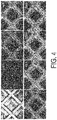
- Example 1 and Comparative Example 1 were observed with a fluorescence microscope at the start of the immersion test (0 hours) and after predetermined amounts of time (after 24 hours, after 48 hours, after 72 hours, after 96 hours, after 120 hours, and after 144 hours).
- the fluorescence photomicrographs of Example 1 are illustrated in FIG. 3
- the fluorescence photomicrographs of Comparative Example 1 are illustrated in FIG. 4 .
- FIG. 5 is a graph showing the relationship between time and fluorescence intensity analyzed on the basis of the results of the fluorescence photomicrographs of Example 1 and the results of the fluorescence photomicrographs of Comparative Example 1.
- the horizontal axis of the graph in FIG. 5 represents the elapsed time (hours) of the immersion test, and the vertical axis represents the fluorescence intensity. Also here, all of the fluorescence photomicrographs of each time illustrated in FIGS. 3 and 4 were set as the analysis range.
- a mesh-shaped spacer (water treatment flow channel member) having a circular shape similar to that of Example 1 from a plan view, and having a mesh portion configuration like that illustrated in FIG. 6 was prepared.
- the spacer of Example 2 was made from a molded product obtained by, using a predetermined mold, molding a composition in which 5.3 parts by mass of carbon nanotubes (CNT) (CNT: 5 mass%) were blended per 100 parts by mass of a polypropylene resin.
- CNT carbon nanotubes
- the mesh portion of the spacer of Example 2 had a shape in which a plurality of upper side line sections m2 aligned in parallel to each other overlapped a plurality of lower side line sections m1 aligned in parallel to each other, such that the upper side line sections m2 intersected the lower side line sections m1 in a plan view.
- Each dimension of the mesh portion of the spacer in Example 2 was as illustrated in FIG. 6 .
- a spacer (water treatment flow channel member) of Example 3 was produced in the same manner as in Example 2 with the exception that the blended amount of carbon nanotubes (CNT) per 100 parts by mass of the polypropylene resin was changed to 11.1 parts by mass (CNT: 10 mass%).
- CNT carbon nanotubes
- a spacer (water treatment flow channel member) of Example 4 was produced in the same manner as in Example 2 with the exception that the blended amount of carbon nanotubes (CNT) per 100 parts by mass of the polypropylene resin was changed to 17.6 parts by mass (CNT: 15 mass%).
- CNT carbon nanotubes
- a spacer of Comparative Example 2 made from a polypropylene resin was prepared in the same manner as in Example 2 with the exception that carbon nanotubes (CNT) were not blended. Note that as illustrated in FIG. 6 , each of the dimensions of the mesh portion of the spacer of Comparative Example 2 was also the same as those in Example 2.
- CNT carbon nanotubes
- the foreign substance removability of each of the members of Examples 2 to 4 and Comparative Example 2 was evaluated using a cross-flow filtration type testing apparatus 10 illustrated in FIG. 7 .
- the testing apparatus 10 will be described with reference to FIG. 7 .
- FIG. 7 is a schematic view of the cross-flow filtration type testing apparatus 10.
- the testing apparatus 10 includes an upstream side piping section 11, a downstream side piping section 12, a filtration unit 13, a reverse osmosis membrane 14, a recovery container 15, a pump 16, a valve 17, a permeate discharge section 19, and the like.
- the filtration unit 13 is a part that filters a to-be-filtered solution 18 using the reverse osmosis membrane 14 while accommodating a test piece S made from the member of Example 2 or like, the test piece S being placed on a commercially available reverse osmosis membrane 14 (trade name "SWC5", available from Nitto Denko Corporation) such that the to-be-filtered solution 18 flowed along the surface of the test piece S.
- BSA bovine serum albumin
- FITC-BSA fluorescein isothiocyanate
- the permeate discharge section 19 is a part that discharges, to the outside, the permeate that has passed through the reverse osmosis membrane 14, and the permeate discharged therefrom is collected by a collection container (not illustrated).
- the to-be-filtered solution 18 contained in the recovery container 15 is supplied to the filtration unit 13 through the upstream side piping section 11.
- the upstream side piping section 11 connects the filtration unit 13 and the recovery container 15.
- the pump 16 for feeding the to-be-filtered solution 18 to the filtration unit 13 is disposed midway in the upstream side piping section 11.
- the downstream side piping section 12 connects the filtration unit 13 and the recovery container 15, and the to-be-filtered solution 18 discharged from the filtration unit 13 passes through the downstream side piping section 12, and is returned once again to the recovery container 15.
- the valve 17 is provided midway in the downstream side piping section 12, and the flow rate of the to-be-filtered solution 18 circulating through the downstream side piping section 12 and the like is regulated by opening and closing the valve 17.
- a filtration test in which the to-be-filtered solution 18 was continuously filtered for 144 hours was performed using the testing apparatus 10.
- the feed pressure of the to-be-filtered solution 18 was set to 0.7 MPa, and the flow rate of the to-be-filtered solution 18 was set to 500 ml/min.
- foreign substance FITC-BSA
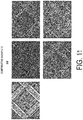
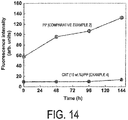
- FIGS. 12 to 14 present graphs showing the relationship between time and the fluorescence intensity of each of Examples 2 to 4, analyzed on the basis of the results of each of the fluorescence photomicrographs and the results of the fluorescence photomicrographs of Comparative Example 2.
- the horizontal axis of the graphs of FIGS. 12 to 14 represents the elapsed time (hours) of the immersion test, and the vertical axis represents the fluorescence intensity.
- all of the fluorescence photomicrographs of each time illustrated in FIGS. 8 to 11 were set as the analysis range.
- Example 5 A spacer with the same configuration as that of Example 4 was prepared as the spacer of Example 5.
- the spacer of Example 5 was made from a molded product of a composition in which 100 parts by mass of a polypropylene resin was used as a base polymer, and carbon nanotubes were blended therewith at a ratio of 17.6 parts by mass (CNT: 15 mass%).
- a spacer with the same configuration as that of Comparative Example 2 was prepared as the spacer of Comparative Example 3.
- the spacer of Comparative Example 3 was made from a molded product of a polypropylene resin not containing carbon nanotubes.
- the fouling resistance to inorganic components was evaluated using the testing apparatus 10 in substantially the same manner as the water permeation test described above, with the exception that as the to-be-filtered solution 18, a 10 mmol/L NaCl aqueous solution containing calcium chloride (CaCl 2 ) at a concentration of 1000 ppm, and sodium hydrogen carbonate (NaHCO 3 ) at a concentration of 100 ppm were used in place of the 10 mmol/L NaCl aqueous solution containing FITC-BSA. Similar to the water permeation test described above, the feed pressure of the to-be-filtered solution 18 was set to 0.7 MPa, and the flow rate of the to-be-filtered solution 18 was also similarly set to 500 ml/min.
- the to-be-filtered solution 18 Similar to the water permeation test described above, the feed pressure of the to-be-filtered solution 18 was set to 0.7 MPa, and the flow rate of the to-be-filtered solution 18 was also similarly set to 500 ml/
- FIG. 17 is a graph showing the relationship with fluorescence intensity analyzed on the basis of the results of the fluorescence photomicrographs of Example 5 and the fluorescence photomicrographs of Comparative Example 3.
Landscapes
- Chemical & Material Sciences (AREA)
- Chemical Kinetics & Catalysis (AREA)
- Engineering & Computer Science (AREA)
- Water Supply & Treatment (AREA)
- Inorganic Chemistry (AREA)
- Nanotechnology (AREA)
- Materials Engineering (AREA)
- Life Sciences & Earth Sciences (AREA)
- Hydrology & Water Resources (AREA)
- Environmental & Geological Engineering (AREA)
- Organic Chemistry (AREA)
- Dispersion Chemistry (AREA)
- Separation Using Semi-Permeable Membranes (AREA)
- Compositions Of Macromolecular Compounds (AREA)
- Carbon And Carbon Compounds (AREA)
Applications Claiming Priority (2)
| Application Number | Priority Date | Filing Date | Title |
|---|---|---|---|
| JP2017253965 | 2017-12-28 | ||
| PCT/JP2018/048261 WO2019131917A1 (ja) | 2017-12-28 | 2018-12-27 | 水処理用流路材 |
Publications (2)
| Publication Number | Publication Date |
|---|---|
| EP3733268A1 true EP3733268A1 (de) | 2020-11-04 |
| EP3733268A4 EP3733268A4 (de) | 2021-08-25 |
Family
ID=67067579
Family Applications (1)
| Application Number | Title | Priority Date | Filing Date |
|---|---|---|---|
| EP18895600.7A Withdrawn EP3733268A4 (de) | 2017-12-28 | 2018-12-27 | Wasserbehandlungsströmungswegelement |
Country Status (6)
| Country | Link |
|---|---|
| US (1) | US20200360867A1 (de) |
| EP (1) | EP3733268A4 (de) |
| JP (1) | JP7072175B2 (de) |
| KR (1) | KR20200070406A (de) |
| CN (1) | CN111447987A (de) |
| WO (1) | WO2019131917A1 (de) |
Families Citing this family (1)
| Publication number | Priority date | Publication date | Assignee | Title |
|---|---|---|---|---|
| JP7347605B1 (ja) | 2022-08-03 | 2023-09-20 | 栗田工業株式会社 | 逆浸透膜装置の運転方法 |
Family Cites Families (16)
| Publication number | Priority date | Publication date | Assignee | Title |
|---|---|---|---|---|
| JPH10323545A (ja) | 1997-05-23 | 1998-12-08 | Kurita Water Ind Ltd | 膜分離装置 |
| CN102333582B (zh) | 2009-02-25 | 2014-08-06 | 普拉特及惠特尼火箭达因公司 | 具有减少的积垢的流体分离系统 |
| AU2011326483B2 (en) | 2010-11-10 | 2017-02-23 | Nanoh2O, Inc. | Improved hybrid TFC RO membranes with non-metallic additives |
| KR101363888B1 (ko) * | 2012-02-02 | 2014-02-19 | 한국과학기술연구원 | 와권형 막 증류용 모듈 |
| US20130233799A1 (en) * | 2012-02-21 | 2013-09-12 | Technion Research & Development Foundation Ltd. | Filtration module |
| JP2014008430A (ja) | 2012-06-28 | 2014-01-20 | Toray Ind Inc | 分離膜エレメント |
| JP2014046293A (ja) * | 2012-09-03 | 2014-03-17 | Dainippon Plastics Co Ltd | ポリフェニレンサルファイド樹脂組成物からなるネット |
| WO2014099649A1 (en) * | 2012-12-19 | 2014-06-26 | Lockheed Martin Corporation | Perforated graphene deionization or desalination |
| US20160023167A1 (en) * | 2013-03-15 | 2016-01-28 | Eva Deemer | Nanocomposite with nanochannels or nanopores for filtration of waste effluents |
| EP2827412A1 (de) * | 2013-07-16 | 2015-01-21 | DWI an der RWTH Aachen e.V. | Mikroröhrchen aus Kohlenstoffnanoröhren |
| US20150096935A1 (en) * | 2013-10-04 | 2015-04-09 | Somenath Mitra | Nanocarbon immobilized membranes |
| JP6521422B2 (ja) * | 2014-02-07 | 2019-05-29 | 日東電工株式会社 | スパイラル型分離膜エレメント |
| EA201692262A1 (ru) * | 2014-05-08 | 2017-04-28 | Локхид Мартин Корпорейшн | Уложенные в стопку двумерные материалы и способы производства содержащих их структур |
| JP6615890B2 (ja) * | 2014-08-21 | 2019-12-04 | ザ チャールズ スターク ドレイパー ラボラトリー, インク. | マイクロ流体装置中の望まれない粒子の対流クリアランスを増すためのシステムおよび方法 |
| CN104311978A (zh) | 2014-08-28 | 2015-01-28 | 王晓伟 | 一种线性低密度聚乙烯管材 |
| EP3458420B1 (de) * | 2016-05-16 | 2021-02-24 | B.G. Negev Technologies & Applications Ltd., at Ben-Gurion University | Antibiofilm und antimikrobieller funktioneller membranabstandhalter |
-
2018
- 2018-12-27 EP EP18895600.7A patent/EP3733268A4/de not_active Withdrawn
- 2018-12-27 JP JP2019562185A patent/JP7072175B2/ja active Active
- 2018-12-27 CN CN201880078803.5A patent/CN111447987A/zh active Pending
- 2018-12-27 WO PCT/JP2018/048261 patent/WO2019131917A1/ja not_active Ceased
- 2018-12-27 KR KR1020207015799A patent/KR20200070406A/ko not_active Ceased
- 2018-12-27 US US16/771,017 patent/US20200360867A1/en not_active Abandoned
Also Published As
| Publication number | Publication date |
|---|---|
| JP7072175B2 (ja) | 2022-05-20 |
| US20200360867A1 (en) | 2020-11-19 |
| WO2019131917A1 (ja) | 2019-07-04 |
| JPWO2019131917A1 (ja) | 2020-11-19 |
| EP3733268A4 (de) | 2021-08-25 |
| CN111447987A (zh) | 2020-07-24 |
| KR20200070406A (ko) | 2020-06-17 |
Similar Documents
| Publication | Publication Date | Title |
|---|---|---|
| Adewole et al. | A review of seawater desalination with membrane distillation: material development and energy requirements | |
| Du et al. | Electrospun nanofibrous polyphenylene oxide membranes for high-salinity water desalination by direct contact membrane distillation | |
| Farahani et al. | Polymer/carbon nanotubes mixed matrix membranes for water purification | |
| Bakshi et al. | Structure dependent water transport in membranes based on two-dimensional materials | |
| US20150076056A1 (en) | Device for use in fluid purification | |
| Nayak et al. | Advancement in polymer-based membranes for water remediation | |
| Takizawa et al. | Effective antiscaling performance of reverse-osmosis membranes made of carbon nanotubes and polyamide nanocomposites | |
| JP6183213B2 (ja) | 造水方法および造水装置 | |
| Shahzad et al. | Advances in the synthesis and application of anti-fouling membranes using two-dimensional nanomaterials | |
| CN106029211A (zh) | 具有用于由内而外过滤的多束中空纤维隔膜的过滤装置 | |
| KR101912869B1 (ko) | 정수기용 일체형 uf-세디먼트 필터 | |
| Abdel-Fatah et al. | Industrial wastewater treatment by membrane process | |
| EP3733268A1 (de) | Wasserbehandlungsströmungswegelement | |
| Acarer-Arat et al. | Heavy metal rejection performance and mechanical performance of cellulose-nanofibril-reinforced cellulose acetate membranes | |
| JP5497309B2 (ja) | 中空糸膜モジュールおよび水処理装置 | |
| Taghipour et al. | Carbon nanotubes composite membrane for water desalination | |
| US9758393B2 (en) | Fresh water generation system | |
| US11648496B2 (en) | Treatment module and operating method therefor | |
| Cartwright | The role of membrane technologies in water reuse applications | |
| CN106045155A (zh) | 一种抗污染纳滤膜净水机 | |
| JP6995390B2 (ja) | 異物易除去部材、及びろ過ユニット | |
| Dharani et al. | Application of membrane technology for wastewater treatment | |
| Jashrapuria et al. | Forward Osmosis in Desalination and Wastewater Treatment | |
| Ghaffour et al. | Fouling resistant membrane spacers | |
| JP2010149061A (ja) | 中空糸膜モジュール |
Legal Events
| Date | Code | Title | Description |
|---|---|---|---|
| STAA | Information on the status of an ep patent application or granted ep patent |
Free format text: STATUS: THE INTERNATIONAL PUBLICATION HAS BEEN MADE |
|
| PUAI | Public reference made under article 153(3) epc to a published international application that has entered the european phase |
Free format text: ORIGINAL CODE: 0009012 |
|
| STAA | Information on the status of an ep patent application or granted ep patent |
Free format text: STATUS: REQUEST FOR EXAMINATION WAS MADE |
|
| 17P | Request for examination filed |
Effective date: 20200610 |
|
| AK | Designated contracting states |
Kind code of ref document: A1 Designated state(s): AL AT BE BG CH CY CZ DE DK EE ES FI FR GB GR HR HU IE IS IT LI LT LU LV MC MK MT NL NO PL PT RO RS SE SI SK SM TR |
|
| AX | Request for extension of the european patent |
Extension state: BA ME |
|
| DAV | Request for validation of the european patent (deleted) | ||
| DAX | Request for extension of the european patent (deleted) | ||
| A4 | Supplementary search report drawn up and despatched |
Effective date: 20210722 |
|
| RIC1 | Information provided on ipc code assigned before grant |
Ipc: B01D 63/00 20060101AFI20210716BHEP Ipc: C02F 1/44 20060101ALI20210716BHEP |
|
| STAA | Information on the status of an ep patent application or granted ep patent |
Free format text: STATUS: THE APPLICATION IS DEEMED TO BE WITHDRAWN |
|
| 18D | Application deemed to be withdrawn |
Effective date: 20220222 |