EP3733283A1 - Edelmetallkatalysator auf kohlenstoffbasis mit hoher selektiver umwandlung und verfahren zu seiner herstellung - Google Patents
Edelmetallkatalysator auf kohlenstoffbasis mit hoher selektiver umwandlung und verfahren zu seiner herstellung Download PDFInfo
- Publication number
- EP3733283A1 EP3733283A1 EP18894840.0A EP18894840A EP3733283A1 EP 3733283 A1 EP3733283 A1 EP 3733283A1 EP 18894840 A EP18894840 A EP 18894840A EP 3733283 A1 EP3733283 A1 EP 3733283A1
- Authority
- EP
- European Patent Office
- Prior art keywords
- acid
- carbon
- catalyst
- transition metal
- weight
- Prior art date
- Legal status (The legal status is an assumption and is not a legal conclusion. Google has not performed a legal analysis and makes no representation as to the accuracy of the status listed.)
- Pending
Links
Images

Classifications
-
- B—PERFORMING OPERATIONS; TRANSPORTING
- B01—PHYSICAL OR CHEMICAL PROCESSES OR APPARATUS IN GENERAL
- B01J—CHEMICAL OR PHYSICAL PROCESSES, e.g. CATALYSIS OR COLLOID CHEMISTRY; THEIR RELEVANT APPARATUS
- B01J23/00—Catalysts comprising metals or metal oxides or hydroxides, not provided for in group B01J21/00
- B01J23/38—Catalysts comprising metals or metal oxides or hydroxides, not provided for in group B01J21/00 of noble metals
- B01J23/54—Catalysts comprising metals or metal oxides or hydroxides, not provided for in group B01J21/00 of noble metals combined with metals, oxides or hydroxides provided for in groups B01J23/02 - B01J23/36
- B01J23/56—Platinum group metals
- B01J23/62—Platinum group metals with gallium, indium, thallium, germanium, tin or lead
- B01J23/622—Platinum group metals with gallium, indium, thallium, germanium, tin or lead with germanium, tin or lead
- B01J23/626—Platinum group metals with gallium, indium, thallium, germanium, tin or lead with germanium, tin or lead with tin
-
- B—PERFORMING OPERATIONS; TRANSPORTING
- B01—PHYSICAL OR CHEMICAL PROCESSES OR APPARATUS IN GENERAL
- B01J—CHEMICAL OR PHYSICAL PROCESSES, e.g. CATALYSIS OR COLLOID CHEMISTRY; THEIR RELEVANT APPARATUS
- B01J21/00—Catalysts comprising the elements, oxides, or hydroxides of magnesium, boron, aluminium, carbon, silicon, titanium, zirconium, or hafnium
- B01J21/18—Carbon
-
- B—PERFORMING OPERATIONS; TRANSPORTING
- B01—PHYSICAL OR CHEMICAL PROCESSES OR APPARATUS IN GENERAL
- B01J—CHEMICAL OR PHYSICAL PROCESSES, e.g. CATALYSIS OR COLLOID CHEMISTRY; THEIR RELEVANT APPARATUS
- B01J21/00—Catalysts comprising the elements, oxides, or hydroxides of magnesium, boron, aluminium, carbon, silicon, titanium, zirconium, or hafnium
- B01J21/18—Carbon
- B01J21/185—Carbon nanotubes
-
- B—PERFORMING OPERATIONS; TRANSPORTING
- B01—PHYSICAL OR CHEMICAL PROCESSES OR APPARATUS IN GENERAL
- B01J—CHEMICAL OR PHYSICAL PROCESSES, e.g. CATALYSIS OR COLLOID CHEMISTRY; THEIR RELEVANT APPARATUS
- B01J23/00—Catalysts comprising metals or metal oxides or hydroxides, not provided for in group B01J21/00
- B01J23/38—Catalysts comprising metals or metal oxides or hydroxides, not provided for in group B01J21/00 of noble metals
-
- B—PERFORMING OPERATIONS; TRANSPORTING
- B01—PHYSICAL OR CHEMICAL PROCESSES OR APPARATUS IN GENERAL
- B01J—CHEMICAL OR PHYSICAL PROCESSES, e.g. CATALYSIS OR COLLOID CHEMISTRY; THEIR RELEVANT APPARATUS
- B01J23/00—Catalysts comprising metals or metal oxides or hydroxides, not provided for in group B01J21/00
- B01J23/38—Catalysts comprising metals or metal oxides or hydroxides, not provided for in group B01J21/00 of noble metals
- B01J23/40—Catalysts comprising metals or metal oxides or hydroxides, not provided for in group B01J21/00 of noble metals of the platinum group metals
- B01J23/46—Ruthenium, rhodium, osmium or iridium
- B01J23/462—Ruthenium
-
- B—PERFORMING OPERATIONS; TRANSPORTING
- B01—PHYSICAL OR CHEMICAL PROCESSES OR APPARATUS IN GENERAL
- B01J—CHEMICAL OR PHYSICAL PROCESSES, e.g. CATALYSIS OR COLLOID CHEMISTRY; THEIR RELEVANT APPARATUS
- B01J23/00—Catalysts comprising metals or metal oxides or hydroxides, not provided for in group B01J21/00
- B01J23/70—Catalysts comprising metals or metal oxides or hydroxides, not provided for in group B01J21/00 of the iron group metals or copper
- B01J23/89—Catalysts comprising metals or metal oxides or hydroxides, not provided for in group B01J21/00 of the iron group metals or copper combined with noble metals
- B01J23/8906—Iron and noble metals
-
- B—PERFORMING OPERATIONS; TRANSPORTING
- B01—PHYSICAL OR CHEMICAL PROCESSES OR APPARATUS IN GENERAL
- B01J—CHEMICAL OR PHYSICAL PROCESSES, e.g. CATALYSIS OR COLLOID CHEMISTRY; THEIR RELEVANT APPARATUS
- B01J35/00—Catalysts, in general, characterised by their form or physical properties
- B01J35/50—Catalysts, in general, characterised by their form or physical properties characterised by their shape or configuration
- B01J35/54—Bars or plates
-
- B—PERFORMING OPERATIONS; TRANSPORTING
- B01—PHYSICAL OR CHEMICAL PROCESSES OR APPARATUS IN GENERAL
- B01J—CHEMICAL OR PHYSICAL PROCESSES, e.g. CATALYSIS OR COLLOID CHEMISTRY; THEIR RELEVANT APPARATUS
- B01J35/00—Catalysts, in general, characterised by their form or physical properties
- B01J35/50—Catalysts, in general, characterised by their form or physical properties characterised by their shape or configuration
- B01J35/55—Cylinders or rings
-
- B—PERFORMING OPERATIONS; TRANSPORTING
- B01—PHYSICAL OR CHEMICAL PROCESSES OR APPARATUS IN GENERAL
- B01J—CHEMICAL OR PHYSICAL PROCESSES, e.g. CATALYSIS OR COLLOID CHEMISTRY; THEIR RELEVANT APPARATUS
- B01J35/00—Catalysts, in general, characterised by their form or physical properties
- B01J35/60—Catalysts, in general, characterised by their form or physical properties characterised by their surface properties or porosity
- B01J35/61—Surface area
- B01J35/613—10-100 m2/g
-
- B—PERFORMING OPERATIONS; TRANSPORTING
- B01—PHYSICAL OR CHEMICAL PROCESSES OR APPARATUS IN GENERAL
- B01J—CHEMICAL OR PHYSICAL PROCESSES, e.g. CATALYSIS OR COLLOID CHEMISTRY; THEIR RELEVANT APPARATUS
- B01J35/00—Catalysts, in general, characterised by their form or physical properties
- B01J35/60—Catalysts, in general, characterised by their form or physical properties characterised by their surface properties or porosity
- B01J35/61—Surface area
- B01J35/615—100-500 m2/g
-
- B—PERFORMING OPERATIONS; TRANSPORTING
- B01—PHYSICAL OR CHEMICAL PROCESSES OR APPARATUS IN GENERAL
- B01J—CHEMICAL OR PHYSICAL PROCESSES, e.g. CATALYSIS OR COLLOID CHEMISTRY; THEIR RELEVANT APPARATUS
- B01J35/00—Catalysts, in general, characterised by their form or physical properties
- B01J35/60—Catalysts, in general, characterised by their form or physical properties characterised by their surface properties or porosity
- B01J35/61—Surface area
- B01J35/617—500-1000 m2/g
-
- B—PERFORMING OPERATIONS; TRANSPORTING
- B01—PHYSICAL OR CHEMICAL PROCESSES OR APPARATUS IN GENERAL
- B01J—CHEMICAL OR PHYSICAL PROCESSES, e.g. CATALYSIS OR COLLOID CHEMISTRY; THEIR RELEVANT APPARATUS
- B01J35/00—Catalysts, in general, characterised by their form or physical properties
- B01J35/60—Catalysts, in general, characterised by their form or physical properties characterised by their surface properties or porosity
- B01J35/61—Surface area
- B01J35/618—Surface area more than 1000 m2/g
-
- B—PERFORMING OPERATIONS; TRANSPORTING
- B01—PHYSICAL OR CHEMICAL PROCESSES OR APPARATUS IN GENERAL
- B01J—CHEMICAL OR PHYSICAL PROCESSES, e.g. CATALYSIS OR COLLOID CHEMISTRY; THEIR RELEVANT APPARATUS
- B01J35/00—Catalysts, in general, characterised by their form or physical properties
- B01J35/60—Catalysts, in general, characterised by their form or physical properties characterised by their surface properties or porosity
- B01J35/63—Pore volume
- B01J35/633—Pore volume less than 0.5 ml/g
-
- B—PERFORMING OPERATIONS; TRANSPORTING
- B01—PHYSICAL OR CHEMICAL PROCESSES OR APPARATUS IN GENERAL
- B01J—CHEMICAL OR PHYSICAL PROCESSES, e.g. CATALYSIS OR COLLOID CHEMISTRY; THEIR RELEVANT APPARATUS
- B01J35/00—Catalysts, in general, characterised by their form or physical properties
- B01J35/60—Catalysts, in general, characterised by their form or physical properties characterised by their surface properties or porosity
- B01J35/63—Pore volume
- B01J35/635—0.5-1.0 ml/g
-
- B—PERFORMING OPERATIONS; TRANSPORTING
- B01—PHYSICAL OR CHEMICAL PROCESSES OR APPARATUS IN GENERAL
- B01J—CHEMICAL OR PHYSICAL PROCESSES, e.g. CATALYSIS OR COLLOID CHEMISTRY; THEIR RELEVANT APPARATUS
- B01J35/00—Catalysts, in general, characterised by their form or physical properties
- B01J35/60—Catalysts, in general, characterised by their form or physical properties characterised by their surface properties or porosity
- B01J35/63—Pore volume
- B01J35/638—Pore volume more than 1.0 ml/g
-
- B—PERFORMING OPERATIONS; TRANSPORTING
- B01—PHYSICAL OR CHEMICAL PROCESSES OR APPARATUS IN GENERAL
- B01J—CHEMICAL OR PHYSICAL PROCESSES, e.g. CATALYSIS OR COLLOID CHEMISTRY; THEIR RELEVANT APPARATUS
- B01J35/00—Catalysts, in general, characterised by their form or physical properties
- B01J35/60—Catalysts, in general, characterised by their form or physical properties characterised by their surface properties or porosity
- B01J35/64—Pore diameter
- B01J35/647—2-50 nm
-
- B—PERFORMING OPERATIONS; TRANSPORTING
- B01—PHYSICAL OR CHEMICAL PROCESSES OR APPARATUS IN GENERAL
- B01J—CHEMICAL OR PHYSICAL PROCESSES, e.g. CATALYSIS OR COLLOID CHEMISTRY; THEIR RELEVANT APPARATUS
- B01J37/00—Processes, in general, for preparing catalysts; Processes, in general, for activation of catalysts
- B01J37/02—Impregnation, coating or precipitation
- B01J37/0201—Impregnation
-
- B—PERFORMING OPERATIONS; TRANSPORTING
- B01—PHYSICAL OR CHEMICAL PROCESSES OR APPARATUS IN GENERAL
- B01J—CHEMICAL OR PHYSICAL PROCESSES, e.g. CATALYSIS OR COLLOID CHEMISTRY; THEIR RELEVANT APPARATUS
- B01J37/00—Processes, in general, for preparing catalysts; Processes, in general, for activation of catalysts
- B01J37/02—Impregnation, coating or precipitation
- B01J37/0201—Impregnation
- B01J37/0207—Pretreatment of the support
-
- B—PERFORMING OPERATIONS; TRANSPORTING
- B01—PHYSICAL OR CHEMICAL PROCESSES OR APPARATUS IN GENERAL
- B01J—CHEMICAL OR PHYSICAL PROCESSES, e.g. CATALYSIS OR COLLOID CHEMISTRY; THEIR RELEVANT APPARATUS
- B01J37/00—Processes, in general, for preparing catalysts; Processes, in general, for activation of catalysts
- B01J37/02—Impregnation, coating or precipitation
- B01J37/0201—Impregnation
- B01J37/0213—Preparation of the impregnating solution
-
- B—PERFORMING OPERATIONS; TRANSPORTING
- B01—PHYSICAL OR CHEMICAL PROCESSES OR APPARATUS IN GENERAL
- B01J—CHEMICAL OR PHYSICAL PROCESSES, e.g. CATALYSIS OR COLLOID CHEMISTRY; THEIR RELEVANT APPARATUS
- B01J37/00—Processes, in general, for preparing catalysts; Processes, in general, for activation of catalysts
- B01J37/12—Oxidising
-
- C—CHEMISTRY; METALLURGY
- C07—ORGANIC CHEMISTRY
- C07C—ACYCLIC OR CARBOCYCLIC COMPOUNDS
- C07C29/00—Preparation of compounds having hydroxy or O-metal groups bound to a carbon atom not belonging to a six-membered aromatic ring
- C07C29/132—Preparation of compounds having hydroxy or O-metal groups bound to a carbon atom not belonging to a six-membered aromatic ring by reduction of an oxygen containing functional group
- C07C29/136—Preparation of compounds having hydroxy or O-metal groups bound to a carbon atom not belonging to a six-membered aromatic ring by reduction of an oxygen containing functional group of >C=O containing groups, e.g. —COOH
- C07C29/147—Preparation of compounds having hydroxy or O-metal groups bound to a carbon atom not belonging to a six-membered aromatic ring by reduction of an oxygen containing functional group of >C=O containing groups, e.g. —COOH of carboxylic acids or derivatives thereof
-
- C—CHEMISTRY; METALLURGY
- C07—ORGANIC CHEMISTRY
- C07C—ACYCLIC OR CARBOCYCLIC COMPOUNDS
- C07C29/00—Preparation of compounds having hydroxy or O-metal groups bound to a carbon atom not belonging to a six-membered aromatic ring
- C07C29/132—Preparation of compounds having hydroxy or O-metal groups bound to a carbon atom not belonging to a six-membered aromatic ring by reduction of an oxygen containing functional group
- C07C29/136—Preparation of compounds having hydroxy or O-metal groups bound to a carbon atom not belonging to a six-membered aromatic ring by reduction of an oxygen containing functional group of >C=O containing groups, e.g. —COOH
- C07C29/147—Preparation of compounds having hydroxy or O-metal groups bound to a carbon atom not belonging to a six-membered aromatic ring by reduction of an oxygen containing functional group of >C=O containing groups, e.g. —COOH of carboxylic acids or derivatives thereof
- C07C29/149—Preparation of compounds having hydroxy or O-metal groups bound to a carbon atom not belonging to a six-membered aromatic ring by reduction of an oxygen containing functional group of >C=O containing groups, e.g. —COOH of carboxylic acids or derivatives thereof with hydrogen or hydrogen-containing gases
-
- C—CHEMISTRY; METALLURGY
- C07—ORGANIC CHEMISTRY
- C07C—ACYCLIC OR CARBOCYCLIC COMPOUNDS
- C07C2521/00—Catalysts comprising the elements, oxides or hydroxides of magnesium, boron, aluminium, carbon, silicon, titanium, zirconium or hafnium
- C07C2521/18—Carbon
-
- C—CHEMISTRY; METALLURGY
- C07—ORGANIC CHEMISTRY
- C07C—ACYCLIC OR CARBOCYCLIC COMPOUNDS
- C07C2523/00—Catalysts comprising metals or metal oxides or hydroxides, not provided for in group C07C2521/00
- C07C2523/38—Catalysts comprising metals or metal oxides or hydroxides, not provided for in group C07C2521/00 of noble metals
- C07C2523/54—Catalysts comprising metals or metal oxides or hydroxides, not provided for in group C07C2521/00 of noble metals combined with metals, oxides or hydroxides provided for in groups C07C2523/02 - C07C2523/36
- C07C2523/56—Platinum group metals
- C07C2523/62—Platinum group metals with gallium, indium, thallium, germanium, tin or lead
-
- C—CHEMISTRY; METALLURGY
- C07—ORGANIC CHEMISTRY
- C07C—ACYCLIC OR CARBOCYCLIC COMPOUNDS
- C07C2601/00—Systems containing only non-condensed rings
- C07C2601/12—Systems containing only non-condensed rings with a six-membered ring
- C07C2601/14—The ring being saturated
Definitions
- the present invention relates to a carbon-based noble metal-transition metal catalyst enabling high selective conversion and a production method therefor, and more particularly, to a carbon-based noble metal-transition metal composite catalyst enabling high selective conversion of a carboxylic acid functional group into an alcohol functional group by pre-treating a carbon carrier including a predetermined ratio or more of mesopores, and a production method therefor.
- Diol is widely used as a base industrial material such as polyesters, polyurethanes, vanishes, and adhesives pharmaceuticals.
- diol compounds can be converted from dicarboxylic acid or its derivatives through a hydroprocessing catalyst.
- Most existing catalyst processes that enable this conversion are catalyst processes based on a Cu-Cr or Zr-Cr based catalyst, ruthenium oxide, ruthenium-carbon composites, and the like.
- catalyst processes require operating conditions of high pressure (200 bar to 300 bar). Therefore, it is essential to develop catalysts that can be operated under relatively low pressure conditions.
- CHDM cyclohexanedimethanol
- TPA terephthalic acid
- CHDM cyclohexanedicarboxylic acid
- a method for synthesizing a catalyst that efficiently produces cyclohexanedimethanol (CHDM), which is a target diol, by using cyclohexanedicarboxylic acid (CHDA) as a representative material of dicarboxylic acid will be described.
- Zhang Xiaoou applied for a patent that the performance and lifespan of catalyst could be secured when ordered mesoporous carbon (OMC) having a pore volume of 1.5 ml/g to 2.5 ml/g, a specific surface area of 1,000 m 2 /g to 2,000 m 2 /g, and a pore size of 3 nm to 10 nm was used as a RuSn catalyst carrier ( CN 101982236A ).
- OMC ordered mesoporous carbon
- RuSn catalyst carrier CN 101982236A
- a synthesis method includes a multi-step process. This increases production costs and is unfavorable for use in actual commercial facilities.
- the present invention aims to solve the above-described problems of the related art and the technical problems requested from the past.
- An object of the present invention is to provide a carbon-based noble metal-transition metal composite catalyst enabling high selective conversion of a carboxylic acid functional group into an alcohol functional group by pre-treating a carbon carrier including a predetermined volume ratio or more of mesopores relative to the total pores, so that a conventional catalyst synthesis process is reduced or improved to exhibit high activity at a low cost, and a production method therefor
- a carbon-based noble metal-transition metal catalyst enabling selective conversion according to the present invention is a hydrogenation catalyst using porous carbon as a carrier.
- the carbon may be 50% or more in a volume ratio of mesopores having a pore size of 2 nm to 50 nm among the total pores, and an amount of an active metal may be in a range of 1 part by weight to 20 parts by weight based on 100 parts by weight of the carrier.
- the carbon may include at least one selected from the group consisting of activated carbon, carbon black, graphite, graphene, ordered mesoporous carbon (OMC), and carbon nanotubes.
- the active metal may include: one or more noble metals selected from the group consisting of palladium (Pd), rhodium (Rh), ruthenium (Ru), and platinum (Pt); and one or more transition metals selected from the group consisting of tin (Sn), iron (Fe), rhenium (Re), and gallium (Ga).
- the noble metal may be ruthenium, and the transition metal may be tin.
- the carbon carrier may be pre-treated with an aqueous nitric acid (HNO 3 ) solution.
- HNO 3 aqueous nitric acid
- the aqueous nitric acid (HNO 3 ) solution may include 1 part by weight to 50 parts by weight of nitric acid based on 100 parts by weight of the solution.
- the carbon may have a specific surface area of 100 m 2 /g to 1,500 m 2 /g and a pore volume of 0.1 ml/g to 1.5 ml/g.
- the carbon may be ordered mesoporous carbon (OMC) having ordered mesopores of 2 nm to 25 nm and having a three-dimensional rod-shaped or three-dimensional tubular pore structure. That is, since the active metal is supported in the carbon carrier arranged in the three-dimensional ordered mesopore structure, the catalyst activity is high as compared to the existing catalyst, thereby improving selectivity and generation rate.
- OMC ordered mesoporous carbon
- the present invention provides a use of a hydrogenation catalyst for hydrogenating a carboxylic acid group to an alcohol group by using the catalyst and a method for producing the catalyst, wherein the carbon carrier is pre-treated with an aqueous nitric acid (HNO 3 ) solution including 1 part by weight to 50 parts by weight of nitric acid once or more times.
- HNO 3 aqueous nitric acid
- the pre-treatment process may be performed in a temperature range of 50°C to 150°C.
- the pre-treatment process may be performed for 1 hour to 10 hours.
- the pre-treatment process may be performed before the active metal is supported.
- the present invention provides a hydrogenation method for hydrogenating a carboxylic acid functional group, an aldehyde functional group, or a ketone functional group to an alcohol functional group by using the catalyst.
- a hydrogenation reaction pressure may be 2 MPa to 15 MPa
- a reaction temperature may be 140°C to 280°C
- a reaction time may be 0.5 hours to 10 hours.
- the carboxylic acid may include oxalic acid, malonic acid, succinic acid, glutaric acid, adipic acid, pimelic acid, suberic acid, azelaic acid, sebacic acid, phthalic acid, isopthalic acid, terephthalic acid, formic acid, acetic acid, caproic acid, caprylic acid, lauric acid, myristic acid, palmitic acid, stearic acid, isostearylic acid, oleic acid, maleic acid, adipic acid, sebacic acid, cyclohexane carboxylic acid, and benzoic acid.
- the aldehyde functional group may include formaldehyde, propionaldehyde, n-butylaldehyde, isobutylaldehyde, valeraldehyde, 2-methylbutylaldehyde, 3-methylbutylaldehyde, 2,2-dimethylpropionaldehyde, capronaldehyde, 2-methylvaleraldehyde, 3-methylvaleraldehyde, 4-methylvaleraldehyde, 2-ethylbutylaldehyde, 2,2-dimethylbutylaldehyde, 3,3-dimethylbutylaldehyde, caprylaldehyde, caprinealdehyde, and glutalaldehyde.
- the ketone functional group may include acetone, butanone, pentanone, hexanone, cyclohexanone, and acetophenone.
- the carbon-based noble metal-transition metal catalyst enabling high selective conversion since the carbon carrier including a predetermined ratio of mesopores is pre-treated and used, the conversion reaction rate of cyclohexane dicarboxylic acid (CHDA) is improved to exhibit high activity at a low cost.
- CHDA cyclohexane dicarboxylic acid
- substitution means that one or more hydrogen atoms in the functional groups of the present invention are substituted with one or more substituents selected from the group consisting of a halogen atom (-F, -Cl, -Br, or -I), a hydroxy group, a nitro group, a cyano group, an amino group, an amidino group, a hydrazine group, a hydrazone group, a carboxyl group, an ester group, a ketone group, a substituted or unsubstituted alkyl group, a substituted or unsubstituted alicyclic organic group, a substituted or unsubstituted aryl group, a substituted or unsubstituted alkenyl group, a substituted or unsubstituted alkynyl group, a substituted or unsubstituted heteroaryl group, and a
- substituted means that a hydrogen atom is substituted with a substituent such as a halogen atom, a C 1 -C 20 hydrocarbon group, a C 1 -C 20 alkoxy group, and a C 6 -C 20 aryloxy group.
- hydrocarbon group refers to a linear, branched, or cyclic saturated or unsaturated hydrocarbon group.
- the alkyl group, the alkenyl group, the alkynyl group, and the like may be linear, branched, or cyclic.
- alkyl group refers to a C 1 -C 30 alkyl group and the term “aryl group” refers to a C 6 -C 30 aryl group.
- heterocyclic group refers to a group in which one to three heteroatoms selected from the group consisting of O, S, N, P, Si, and any combination thereof are contained in one ring. Examples of the heterocyclic group may include pyridine, thiophene, and pyrazine, but the present invention is not limited thereto.
- the term "dicarboxylic acid” refers to an organic acid having two carboxylic acid functional groups in one molecule.
- the molecular formula of the dicarboxylic acid is HOOC-R-COOH.
- R is preferably an alkyl group or an aryl group.
- the present invention solves the above problems by providing a carbon-based noble metal-transition metal catalyst enabling high selective conversion, wherein, as a hydrogenation catalyst using porous carbon as a carrier, a carbon carrier is pre-treated by using an aqueous nitric acid solution, the carbon is 50% or more in a volume ratio of mesopores having a pore size of 2 nm to 50 nm among the total pores, and an amount of an active metal is in a range of 1 part by weight to 20 parts by weight based on 100 parts by weight of the carrier.
- Such a catalyst can exhibit high activity at a low cost by improving a conversion reaction rate of cyclohexane dicarboxylic acid (CHDA) described above.
- CHDA cyclohexane dicarboxylic acid
- the carbon carrier is not particularly limited. At least one selected from the group consisting of activated carbon, carbon black, graphite, graphene, ordered mesoporous carbon (OMC), and carbon nanotubes may be used as the carbon carrier.
- the carbon carrier may be carbon black having a high ratio of mesopores among the total pores.
- the activated carbon may be SX ULTRA, CGSP, PK1-3, SX 1G, DRACO S51HF, CA-1, A-51, GAS 1240 PLUS, KBG, CASP, and SX PLUS, and the carbon black may be BLACK PEARLS®, ELFTEX®, VULCAN®, MOGUL®, MONARCH®, EMPEROR, and REGAL®.
- the present invention is not limited thereto.
- the carbon in the carbon carrier may be 50% or more in a volume ratio of mesopores having a pore size of 2 nm to 50 nm in the total pores.
- the carbon in the carbon carrier is 70% or more in a volume ratio of mesopores among the total pores. More preferably, the carbon in the carbon carrier may be 75% or more in a volume ratio of mesopores among the total pores.
- the volume ratio of the mesopores is less than 50%, there may be micro-transfer rate problems in the carbon carrier of the reactant and the product.
- the average size of the pores exceeds 50 nm, the physical strength of the carrier may be weak. Therefore, the above range is preferable.
- the carbon includes ordered mesoporous carbon (OMC) having a specific surface area (BET) of 100 m 2 /g to 1,500 m 2 /g.
- the carbon includes ordered mesoporous carbon (OMC) having a specific surface area (BET) of 200 m 2 /g to 1,500 m 2 /g.
- BET specific surface area
- the specific surface area of the carbon is less than 100 m 2 /g, high dispersion of active metals (Ru, Sn) may be difficult.
- the specific surface area of the carbon exceeds 1,500 m 2 /g, the ratio of the mesopores may decrease. Therefore, the above range is preferable.
- the active metal may include: one or more noble metals selected from the group consisting of palladium (Pd), rhodium (Rh), ruthenium (Ru), and platinum (Pt); and one or more transition metals selected from the group consisting of tin (Sn), iron (Fe), rhenium (Re), and gallium (Ga).
- Pd palladium
- Rh rhodium
- Ru ruthenium
- Pt platinum
- transition metals selected from the group consisting of tin (Sn), iron (Fe), rhenium (Re), and gallium (Ga).
- the present invention is not limited thereto.
- an amount of the noble metal may be in a range of 1 part by weight to 20 parts by weight based on 100 parts by weight of the carrier.
- the amount of the noble metal may be in a range of 3 parts by weight to 8 parts by weight.
- An amount of the transition metal may be in a range of 1 part by weight to 20 parts by weight based on 100 parts by weight of the carrier.
- the amount of the transition metal may be in a range of 3 parts by weight to 8 parts by weight.
- the carbon carrier of the catalyst according to the present invention includes micropores at an appropriate ratio in addition to the mesoporosity of a medium size.
- the volume ratio of the micropores in the total pores may be 0% to 25%. In this case, when the volume ratio of the micropores exceeds 25%, there may be micro-transfer rate problems in the carbon carrier of the reactant and the product. Therefore, the above range is preferable.
- the present invention provides a method for producing a carbon-based noble metal-transition metal catalyst enabling high selective conversion, wherein a carbon carrier is pre-treated with an aqueous nitric acid (HNO 3 ) solution once or more times.
- HNO 3 aqueous nitric acid
- a process of pre-treating the carbon carrier with the aqueous nitric acid (HNO 3 ) solution once or more times is performed.
- the aqueous nitric acid (HNO 3 ) solution may include 1 part by weight to 50 parts by weight of nitric acid based on 100 parts by weight of the solution.
- the aqueous nitric acid (HNO 3 ) solution may be an aqueous solution including 5 parts by weight to 40 parts by weight of nitric acid based on 100 parts by weight of the solution.
- the aqueous nitric acid (HNO 3 ) solution may be an aqueous solution including 5 parts by weight to 35 parts by weight of nitric acid based on 100 parts by weight of the solution.
- the pre-treatment When the pre-treatment is performed with less than 1 part by weight of nitric acid based on 100 parts by weight of the solution, it may be difficult to expect the desired activity of the catalyst.
- the pre-treatment is performed with 50 parts by weight or more of nitric acid based on 100 parts by weight of the solution, the increase in the acidity of the surface of the carbon carrier and the poisoning of the active metal by oxygen functional groups may cause the reduction in the activity of the catalyst and the collapse of the carbon carrier structure. Therefore, the above range is preferable.
- the pre-treatment process may be performed in a temperature range of 70°C to 150°C, and preferably 80°C to 110°C.
- the temperature of the pre-treatment process is less than 70°C, the introduction of oxygen functional groups into the surface of the carbon carrier may be lowered.
- the temperature of the pre-treatment process exceeds 150°C, the carbon carrier structure may collapse. Therefore, the above range is preferable.
- the present invention may provide a hydrogenation method for converting a dicarboxyl group into a dialcohol group.
- the present invention may be applied to, for example, a hydrogenation method for hydrogenating carboxylic acids, aldehydes and ketones by using the catalyst.
- a cyclohexane dimethanol (CHDM) may be prepared through a cyclohexane dicarboxylic acid (CHDA) hydroprocessing reaction on the catalyst.
- the carboxylic acid is not particularly limited and may include, for example, oxalic acid, malonic acid, succinic acid, glutaric acid, adipic acid, pimelic acid, suberic acid, azelaic acid, sebacic acid, phthalic acid, isopthalic acid, terephthalic acid, formic acid, acetic acid, caproic acid, caprylic acid, lauric acid, myristic acid, palmitic acid, stearic acid, isostearylic acid, oleic acid, maleic acid, adipic acid, sebacic acid, cyclohexane carboxylic acid, and benzoic acid.
- examples of the aldehydes having the aldehyde functional group may include formaldehyde, propionaldehyde, n-butylaldehyde, isobutylaldehyde, valeraldehyde, 2-methylbutylaldehyde, 3-methylbutylaldehyde, 2,2-dimethylpropionaldehyde, capronaldehyde, 2-methylvaleraldehyde, 3-methylvaleraldehyde, 4-methylvaleraldehyde, 2-ethylbutylaldehyde, 2,2-dimethylbutylaldehyde, 3,3-dimethylbutylaldehyde, caprylaldehyde, caprinealdehyde, and glutalaldehyde.
- ketones having the ketone functional group may include acetone, butanone, pentanone, hexanone, cyclohexanone, and acetophenone.
- Activated carbon and carbon black (carbon black B, carbon black A) were used as a support for a Ru-Sn catalyst.
- carbon carrier was pre-treated with a 5 wt% aqueous nitric acid solution at 95°C for 3 hours before impregnating a Ru-Sn precursor.
- each carbon carrier was stirred in 500 g of a 5 wt% aqueous nitric acid solution at 95°C for 3 hours and then filtered. Washing was continuously performed with distilled water until pH of the filtered distilled water became 7.
- Each filtered carbon carrier was dried at 373K for 24 hours, and the physical properties of the carbon carrier pre-treated with nitric acid are shown in Table 1 below.
- Pore size (nm) Micropore volume (cm 3 /g) Mesopore volume (cm 3 /g) BET specific surface are (m 2 /g) Activated Carbon 7.5 0.22 0.44 770 Carbon Black A 13.6 0.06 0.98 307 Carbon Black B 4.92 0.04 0.35 229
- pre-treatment was performed with 30 wt% and 50 wt% aqueous nitric acid solutions at 95°C for 30 hours.
- 30 g of carbon black A carrier was stirred in 500 g of a 30 wt% or 50 wt% aqueous nitric acid solution at 95°C for 3 hours and then filtered. Washing was continuously performed with distilled water until pH of the filtered distilled water became 7. The filtered carbon black A carrier was dried at 373K for 24 hours.
- FIG. 1 and Table 2 The results of nitrogen physical adsorption analysis of the carbon black A carrier pre-treated with nitric acid are shown in FIG. 1 and Table 2 below.
- Ru-Sn was supported on 10 g of carbon carrier of carbon black A, in which an aqueous solution in which 1.38 g of RuCl 3 ⁇ 3H 2 O and 1.12 g of SnCl 2 ⁇ 2H 2 O were dissolved in 7 g of H 2 O was pre-treated with 5 wt% nitric acid, at room temperature by using incipient wetness impregnation. After drying at 373K for 12 hours, reduction was performed at 773K for 3 hours while flowing hydrogen (flow rate: 20 ml min -1 g -1 ), and it was cooled to room temperature while flowing hydrogen (flow rate: 20 ml min -1 g - 1 ).
- Ru-Sn was supported on 10 g of carbon carrier of carbon black A, in which an aqueous solution in which 1.38 g of RuCl 3 ⁇ 3H 2 O and 1.12 g of SnCl 2 ⁇ 2H 2 O were dissolved in 7 g of H 2 O was pre-treated with 30 wt% and 50 wt% nitric acids, at room temperature by using incipient wetness impregnation. After drying at 373K for 12 hours, reduction was performed at 773K for 3 hours while flowing hydrogen (flow rate: 20 ml min -1 g -1 ), and it was cooled to room temperature while flowing hydrogen (flow rate: 20 ml min -1 g -1 ).
- the catalyst After flowing helium (flow rate: 20 ml min -1 g -1 ) at room temperature for 30 minutes, the catalyst was immobilized while flowing 10% oxygen/nitrogen mixed gas (flow rate: 20 ml min -1 g -1 ) for 1 hour.
- the produced catalyst was denoted by "Ru-Sn/carbon black A (30 wt% HNO 3 )" and "Ru-Sn/ Carbon Black A (50 wt% HNO 3 )".
- Ru-Sn was supported on 10 g of carbon carrier of carbon black B, in which an aqueous solution in which 1.38 g of RuCl 3 ⁇ 3H 2 O and 1.12 g of SnCl 2 ⁇ 2H 2 O were dissolved in 7 g of H 2 O was pre-treated with 5 wt% nitric acid, at room temperature by using incipient wetness impregnation. After drying at 373K for 12 hours, reduction was performed at 773K for 3 hours while flowing hydrogen (flow rate: 20 ml min -1 g -1 ), and it was cooled to room temperature while flowing hydrogen (flow rate: 20 ml min -1 g - 1 ).
- Ru-Sn was supported on 10 g of carbon carrier of activated carbon, in which an aqueous solution in which 1.38 g of RuCl 3 ⁇ 3H 2 O and 1.12 g of SnCl 2 ⁇ 2H 2 O were dissolved in 7 g of H 2 O was pre-treated with 5 wt% nitric acid, at room temperature by using incipient wetness impregnation. After drying at 373K for 12 hours, reduction was performed at 773K for 3 hours while flowing hydrogen (flow rate: 20 ml min -1 g -1 ), and it was cooled to room temperature while flowing hydrogen (flow rate: 20 ml min -1 g - 1 ).
- a cyclohexanedicarboxylic acid conversion experiment was performed in a titania-lined stainless steel autoclave with a nominal volume of 250 ml and a maximum working pressure of 10.0 MPa. At this time, 3 g of a catalyst, 11.25 g of a reactant (cyclohexanedicarboxylic acid), and 150 g of a solvent (H 2 O) were added, and the reaction was performed at 503K. Subsequently, the reactor was pressurized to a reaction pressure by using hydrogen, such that whether the reactor leaked was checked through a hydrogen detector. Oxygen inside the reactor was completely removed by depressurization and purging.
- the pressure inside the reactor was set to 10 bar, the reactor was heated to the reaction temperature, and the reactor was pressurized to the reaction pressure of the hydrogen atmosphere. Then, the reaction was performed for 6 hours. The reaction was performed at 90°C and 90 bar for 6 hours, and the stirring was maintained at a speed of 1,000 rpm by using an overhead impeller. After the reaction, the reactor was cooled to room temperature and decompressed, such that the catalyst and the liquid product were separated by filtration and analyzed by gas chromatography with an HP-1 column.
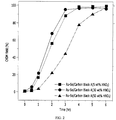
- the activities of the Ru-Sn/carbon black A and Ru-Sn/carbon black B catalysts are faster than the activity of the Ru-Sn/activated carbon catalyst, which has a low ratio of mesopores.
- the difference in the activity of the catalyst according to the nitric acid pre-treatment concentration of the carbon black A carrier can be confirmed.
- the catalyst activity is the fastest.
- the catalyst activity is higher in the order of the 5 wt% aqueous nitric acid solution and the 50 wt% aqueous nitric acid solution.
Landscapes
- Chemical & Material Sciences (AREA)
- Organic Chemistry (AREA)
- Engineering & Computer Science (AREA)
- Materials Engineering (AREA)
- Chemical Kinetics & Catalysis (AREA)
- Nanotechnology (AREA)
- Catalysts (AREA)
- Organic Low-Molecular-Weight Compounds And Preparation Thereof (AREA)
- Carbon And Carbon Compounds (AREA)
- Low-Molecular Organic Synthesis Reactions Using Catalysts (AREA)
Applications Claiming Priority (2)
| Application Number | Priority Date | Filing Date | Title |
|---|---|---|---|
| KR1020170183451A KR102238560B1 (ko) | 2017-12-29 | 2017-12-29 | 고선택 전환이 가능한 탄소 기반의 귀금속-전이금속 촉매 및 이의 제조방법 |
| PCT/KR2018/016746 WO2019132537A1 (ko) | 2017-12-29 | 2018-12-27 | 고선택 전환이 가능한 탄소 기반의 귀금속-전이금속 촉매 및 이의 제조방법 |
Publications (2)
| Publication Number | Publication Date |
|---|---|
| EP3733283A1 true EP3733283A1 (de) | 2020-11-04 |
| EP3733283A4 EP3733283A4 (de) | 2021-09-29 |
Family
ID=67067867
Family Applications (1)
| Application Number | Title | Priority Date | Filing Date |
|---|---|---|---|
| EP18894840.0A Pending EP3733283A4 (de) | 2017-12-29 | 2018-12-27 | Edelmetallkatalysator auf kohlenstoffbasis mit hoher selektiver umwandlung und verfahren zu seiner herstellung |
Country Status (6)
| Country | Link |
|---|---|
| US (1) | US11517880B2 (de) |
| EP (1) | EP3733283A4 (de) |
| JP (1) | JP7003274B2 (de) |
| KR (1) | KR102238560B1 (de) |
| CN (1) | CN111712323A (de) |
| WO (1) | WO2019132537A1 (de) |
Cited By (1)
| Publication number | Priority date | Publication date | Assignee | Title |
|---|---|---|---|---|
| EP4286052A4 (de) * | 2021-02-01 | 2025-01-01 | Hanwha Solutions Corporation | Verfahren zur herstellung eines heterogenen metallhydrierungskatalysators |
Families Citing this family (6)
| Publication number | Priority date | Publication date | Assignee | Title |
|---|---|---|---|---|
| KR102446307B1 (ko) | 2018-12-27 | 2022-09-21 | 한화솔루션 주식회사 | 1,4-사이클로헥산디메탄올의 제조방법 |
| KR102287646B1 (ko) * | 2018-12-31 | 2021-08-06 | 한화솔루션 주식회사 | 탄소 기반의 귀금속-전이금속 복합촉매 및 이의 제조방법 |
| CN113185673B (zh) * | 2021-05-20 | 2022-09-27 | 长春三友智造科技发展有限公司 | 一种碳基催化剂及其制备方法以及用于双环戊二烯聚合的催化剂体系 |
| EP4377004A4 (de) * | 2021-07-28 | 2025-05-21 | Battelle Memorial Institute | Katalysator und verfahren zur herstellung von para-xylen und ortho-xylen |
| CN114275763A (zh) * | 2021-12-27 | 2022-04-05 | 天津大学 | 一种低温去除多孔炭中微量氧的方法 |
| KR102861323B1 (ko) * | 2022-12-01 | 2025-09-18 | 한국화학연구원 | 유기화합물로부터 산소를 선택적으로 제거하여 올레핀 및 파라핀 중 하나 이상의 탄화수소 화합물을 제조하는 RuSn/SiAl 촉매 |
Family Cites Families (23)
| Publication number | Priority date | Publication date | Assignee | Title |
|---|---|---|---|---|
| JP3845904B2 (ja) * | 1996-06-28 | 2006-11-15 | 三菱化学株式会社 | 水素化反応用触媒、その製造法、及び該触媒を用いたカルボン酸類の水素化反応方法 |
| US6294703B1 (en) | 1998-06-22 | 2001-09-25 | Mitsubishi Chemical Company | Process for the manufacture of cycloalkyldimethanol |
| JP2001046874A (ja) * | 1999-08-17 | 2001-02-20 | Mitsubishi Chemicals Corp | 水素化用触媒、及びこれを用いるカルボン酸類からのアルコール類の製造方法 |
| EP1232789A4 (de) | 1999-09-21 | 2006-07-05 | Asahi Chemical Ind | Katalysator für die hydrierung von karbonsäuren |
| JP2001181223A (ja) * | 1999-12-27 | 2001-07-03 | Mitsui Chemicals Inc | 1,4−シクロヘキサンジメタノールの製造方法 |
| DE10119719A1 (de) * | 2001-04-21 | 2002-10-24 | Basf Ag | Verfahren zur Hydrierung von Carbonylverbindungen |
| DE10225565A1 (de) * | 2002-06-10 | 2003-12-18 | Oxeno Olefinchemie Gmbh | Katalysator und Verfahren zur Hydrierung von aromatischen Verbindungen |
| CN1911504A (zh) | 2005-08-09 | 2007-02-14 | 中国石化上海石油化工股份有限公司 | 1,4-环己烷二甲酸加氢制1,4-环己烷二甲醇的催化剂 |
| US7629285B2 (en) * | 2006-10-31 | 2009-12-08 | University Of South Carolina | Carbon-based composite electrocatalysts for low temperature fuel cells |
| CN101450308B (zh) * | 2007-11-28 | 2012-05-09 | 中国石油化工股份有限公司 | 一种炭负载型贵金属催化剂及其制备方法 |
| CN101982236B (zh) * | 2010-09-06 | 2012-07-18 | 常州大学 | 加氢催化剂及1,4-环己烷二甲醇的制备方法 |
| KR101287891B1 (ko) * | 2011-06-28 | 2013-07-19 | (주) 디에이치홀딩스 | 연료전지용 촉매의 제조방법 |
| US9108895B2 (en) * | 2012-10-26 | 2015-08-18 | Eastman Chemical Company | Promoted ruthenium catalyst for the improved hydrogenation of carboxylic acids to the corresponding alcohols |
| KR101468377B1 (ko) * | 2012-11-20 | 2014-12-02 | 한국화학연구원 | 합성가스로부터 함산소탄소화합물 제조를 위한 규칙적인 메조다공성 탄소계 촉매 및 이를 이용한 함산소탄소화합물의 제조방법 |
| JP6051980B2 (ja) | 2013-03-14 | 2016-12-27 | 三菱化学株式会社 | 1,4−シクロヘキサンジメタノールの製造方法 |
| JP2015054828A (ja) * | 2013-09-10 | 2015-03-23 | 三菱化学株式会社 | アルコールの製造方法 |
| CN104549251A (zh) | 2013-10-28 | 2015-04-29 | 中国石油化工股份有限公司 | 用于1,4-环己烷二甲醇合成的催化剂及其制备方法 |
| DE202014101137U1 (de) * | 2013-12-09 | 2014-12-12 | BLüCHER GMBH | Katalysatorsystem |
| KR101572846B1 (ko) * | 2014-03-20 | 2015-11-30 | 서울대학교산학협력단 | 규칙적인 중형기공구조를 갖는 레늄-구리-탄소 복합체 촉매, 그 제조방법 및 상기 촉매를 이용한 1,4-부탄디올의 생산 방법 |
| EP3118181A4 (de) | 2014-04-07 | 2018-03-14 | Lotte Chemical Corporation | Verbundmetallkatalysatorzusammensetzung sowie verfahren und vorrichtung zur herstellung von 1,4-cyclohexanedimethanol damit |
| CN106311201B (zh) * | 2015-06-30 | 2018-10-02 | 中国石油化工股份有限公司 | 一种以含Sn介孔碳为载体的异丁烷脱氢Pt基催化剂、其制备方法及其应用 |
| EP3356033B1 (de) * | 2015-10-01 | 2022-10-19 | Monsanto Technology LLC | Verfahren zur katalytischen hydrierung von halonitroaromaten |
| CN107469813B (zh) * | 2017-07-21 | 2019-11-29 | 浙江工业大学 | 一种负载型贵金属加氢催化剂及其制备和应用 |
-
2017
- 2017-12-29 KR KR1020170183451A patent/KR102238560B1/ko active Active
-
2018
- 2018-12-27 US US16/958,493 patent/US11517880B2/en active Active
- 2018-12-27 EP EP18894840.0A patent/EP3733283A4/de active Pending
- 2018-12-27 JP JP2020536512A patent/JP7003274B2/ja active Active
- 2018-12-27 WO PCT/KR2018/016746 patent/WO2019132537A1/ko not_active Ceased
- 2018-12-27 CN CN201880083805.3A patent/CN111712323A/zh active Pending
Cited By (1)
| Publication number | Priority date | Publication date | Assignee | Title |
|---|---|---|---|---|
| EP4286052A4 (de) * | 2021-02-01 | 2025-01-01 | Hanwha Solutions Corporation | Verfahren zur herstellung eines heterogenen metallhydrierungskatalysators |
Also Published As
| Publication number | Publication date |
|---|---|
| US11517880B2 (en) | 2022-12-06 |
| KR20190081123A (ko) | 2019-07-09 |
| KR102238560B1 (ko) | 2021-04-08 |
| CN111712323A (zh) | 2020-09-25 |
| EP3733283A4 (de) | 2021-09-29 |
| JP7003274B2 (ja) | 2022-02-04 |
| JP2021509354A (ja) | 2021-03-25 |
| US20210060534A1 (en) | 2021-03-04 |
| WO2019132537A1 (ko) | 2019-07-04 |
Similar Documents
| Publication | Publication Date | Title |
|---|---|---|
| US11517880B2 (en) | Carbon-based noble metal-transition metal catalyst enabling high selective conversion and production method therefor | |
| KR102238548B1 (ko) | 카본이 코팅된 실리카-알루미나 담체에 담지된 귀금속-전이금속 복합 촉매 및 이의 제조방법 | |
| EP2858748B1 (de) | Verfahren zur herstellung von adipinsäure aus 1,6-hexandiol | |
| KR20160080379A (ko) | 카보닐화 반응에 의한 초산 제조용 Rh-C3N4 불균일 촉매 | |
| WO2018170932A1 (zh) | 一种四氢糠醇氢解制1,5-戊二醇的催化剂及制备方法及其应用 | |
| JP2023153810A (ja) | 炭素ベースの貴金属-遷移金属複合触媒及びこれの製造方法 | |
| EP3903937A1 (de) | Verfahren zur regenerierung eines hydrierungskatalysators | |
| JP2019526588A (ja) | 1,3−シクロヘキサンジメタノールの製造方法 | |
| CN111974437A (zh) | 介孔分子筛加氢催化剂的制备方法及应用 | |
| CN109790099A (zh) | 用于制备1,3-环己烷二甲酸的方法 | |
| KR101843049B1 (ko) | 수소화 반응 촉매 조성물 및 이를 이용한 1,4-사이클로헥산다이올의 제조 방법 | |
| CN108014791B (zh) | 丁二烯制备1,4-二乙酰氧基丁烷历程的催化剂 | |
| CN108002980B (zh) | 丁二烯氧乙酰化合成1,4-丁二醇的方法 | |
| KR20170104215A (ko) | 2,5-디포르밀퓨란 제조용 촉매 및 이 촉매를 이용한 2,5-디포르밀퓨란의 제조방법 | |
| CN105498800A (zh) | 1,4-环己烷二甲酸催化剂及其制备方法 | |
| HK40050907A (en) | Carbon-based, precious metal-transition metal composite catalyst and preparation method therefor | |
| CN114426520A (zh) | 一种环己亚胺的合成方法、己二醛选择性氨化加氢催化剂及其制备方法 | |
| HK40050907B (zh) | 碳基贵金属-过渡金属复合催化剂及其制备方法 |
Legal Events
| Date | Code | Title | Description |
|---|---|---|---|
| STAA | Information on the status of an ep patent application or granted ep patent |
Free format text: STATUS: THE INTERNATIONAL PUBLICATION HAS BEEN MADE |
|
| PUAI | Public reference made under article 153(3) epc to a published international application that has entered the european phase |
Free format text: ORIGINAL CODE: 0009012 |
|
| STAA | Information on the status of an ep patent application or granted ep patent |
Free format text: STATUS: REQUEST FOR EXAMINATION WAS MADE |
|
| 17P | Request for examination filed |
Effective date: 20200707 |
|
| AK | Designated contracting states |
Kind code of ref document: A1 Designated state(s): AL AT BE BG CH CY CZ DE DK EE ES FI FR GB GR HR HU IE IS IT LI LT LU LV MC MK MT NL NO PL PT RO RS SE SI SK SM TR |
|
| AX | Request for extension of the european patent |
Extension state: BA ME |
|
| DAV | Request for validation of the european patent (deleted) | ||
| DAX | Request for extension of the european patent (deleted) | ||
| A4 | Supplementary search report drawn up and despatched |
Effective date: 20210826 |
|
| RIC1 | Information provided on ipc code assigned before grant |
Ipc: B01J 37/12 20060101ALI20210820BHEP Ipc: B01J 37/02 20060101ALI20210820BHEP Ipc: B01J 35/02 20060101ALI20210820BHEP Ipc: B01J 23/46 20060101ALI20210820BHEP Ipc: B01J 23/89 20060101ALI20210820BHEP Ipc: B01J 23/62 20060101ALI20210820BHEP Ipc: B01J 23/38 20060101ALI20210820BHEP Ipc: B01J 35/10 20060101ALI20210820BHEP Ipc: B01J 21/18 20060101AFI20210820BHEP |
|
| STAA | Information on the status of an ep patent application or granted ep patent |
Free format text: STATUS: EXAMINATION IS IN PROGRESS |
|
| 17Q | First examination report despatched |
Effective date: 20241002 |