EP3733656A1 - Verfahren zur synthese von lobarsäure und analog davon - Google Patents
Verfahren zur synthese von lobarsäure und analog davon Download PDFInfo
- Publication number
- EP3733656A1 EP3733656A1 EP18894427.6A EP18894427A EP3733656A1 EP 3733656 A1 EP3733656 A1 EP 3733656A1 EP 18894427 A EP18894427 A EP 18894427A EP 3733656 A1 EP3733656 A1 EP 3733656A1
- Authority
- EP
- European Patent Office
- Prior art keywords
- formula
- compound
- mhz
- acid
- obtaining
- Prior art date
- Legal status (The legal status is an assumption and is not a legal conclusion. Google has not performed a legal analysis and makes no representation as to the accuracy of the status listed.)
- Granted
Links
- 0 CCCCCc1c(**)c(O)cc(O)c1Oc1cc(C)cc(*(CCCC)OC)c1*=O Chemical compound CCCCCc1c(**)c(O)cc(O)c1Oc1cc(C)cc(*(CCCC)OC)c1*=O 0.000 description 4
- LHPXZHJEQPAEFA-UHFFFAOYSA-N CCCCCc1c(C(OCc2ccccc2)=O)c(OCc2ccccc2)cc(OCc2ccccc2)c1 Chemical compound CCCCCc1c(C(OCc2ccccc2)=O)c(OCc2ccccc2)cc(OCc2ccccc2)c1 LHPXZHJEQPAEFA-UHFFFAOYSA-N 0.000 description 2
- ZNLBXNNLDIMDIE-UHFFFAOYSA-N CCCCC(c1c(C(O)=O)c(I)cc(OC)c1)=O Chemical compound CCCCC(c1c(C(O)=O)c(I)cc(OC)c1)=O ZNLBXNNLDIMDIE-UHFFFAOYSA-N 0.000 description 1
- HUONQKOFQXDKGY-UHFFFAOYSA-N CCCCCc1c(C(C)=O)c(O)cc(O)c1C(O)=O Chemical compound CCCCCc1c(C(C)=O)c(O)cc(O)c1C(O)=O HUONQKOFQXDKGY-UHFFFAOYSA-N 0.000 description 1
- PWMMLSCJIRIVAT-VXLYETTFSA-N CCCCCc1c(C(O)=O)c(O)cc(O)c1Oc1cc(OC)cc(/C(/O2)=C\CCC)c1C2=O Chemical compound CCCCCc1c(C(O)=O)c(O)cc(O)c1Oc1cc(OC)cc(/C(/O2)=C\CCC)c1C2=O PWMMLSCJIRIVAT-VXLYETTFSA-N 0.000 description 1
- PMSHIIFUVGLYFY-UHFFFAOYSA-N CCCCCc1c(C(OCc2ccccc2)=O)c(OCc2ccccc2)cc(OCc2ccccc2)c1O Chemical compound CCCCCc1c(C(OCc2ccccc2)=O)c(OCc2ccccc2)cc(OCc2ccccc2)c1O PMSHIIFUVGLYFY-UHFFFAOYSA-N 0.000 description 1
- FFMCYBHCUWCBLJ-UHFFFAOYSA-N CCCCCc1c(C=O)c(O)cc(O)c1 Chemical compound CCCCCc1c(C=O)c(O)cc(O)c1 FFMCYBHCUWCBLJ-UHFFFAOYSA-N 0.000 description 1
- NJESAXZANHETJV-UHFFFAOYSA-N Cc1ccc(C(O)=O)c(O)c1 Chemical compound Cc1ccc(C(O)=O)c(O)c1 NJESAXZANHETJV-UHFFFAOYSA-N 0.000 description 1
- BCKVHOUUJMYIAN-UHFFFAOYSA-N O=C(c(c1c2)ccc2Br)OC1=O Chemical compound O=C(c(c1c2)ccc2Br)OC1=O BCKVHOUUJMYIAN-UHFFFAOYSA-N 0.000 description 1
Images

















Classifications
-
- C—CHEMISTRY; METALLURGY
- C07—ORGANIC CHEMISTRY
- C07D—HETEROCYCLIC COMPOUNDS
- C07D307/00—Heterocyclic compounds containing five-membered rings having one oxygen atom as the only ring hetero atom
- C07D307/77—Heterocyclic compounds containing five-membered rings having one oxygen atom as the only ring hetero atom ortho- or peri-condensed with carbocyclic rings or ring systems
- C07D307/87—Benzo [c] furans; Hydrogenated benzo [c] furans
- C07D307/89—Benzo [c] furans; Hydrogenated benzo [c] furans with two oxygen atoms directly attached in positions 1 and 3
-
- A—HUMAN NECESSITIES
- A61—MEDICAL OR VETERINARY SCIENCE; HYGIENE
- A61K—PREPARATIONS FOR MEDICAL, DENTAL OR TOILETRY PURPOSES
- A61K31/00—Medicinal preparations containing organic active ingredients
- A61K31/33—Heterocyclic compounds
- A61K31/335—Heterocyclic compounds having oxygen as the only ring hetero atom, e.g. fungichromin
- A61K31/34—Heterocyclic compounds having oxygen as the only ring hetero atom, e.g. fungichromin having five-membered rings with one oxygen as the only ring hetero atom, e.g. isosorbide
- A61K31/343—Heterocyclic compounds having oxygen as the only ring hetero atom, e.g. fungichromin having five-membered rings with one oxygen as the only ring hetero atom, e.g. isosorbide condensed with a carbocyclic ring, e.g. coumaran, bufuralol, befunolol, clobenfurol, amiodarone
-
- A—HUMAN NECESSITIES
- A61—MEDICAL OR VETERINARY SCIENCE; HYGIENE
- A61K—PREPARATIONS FOR MEDICAL, DENTAL OR TOILETRY PURPOSES
- A61K36/00—Medicinal preparations of undetermined constitution containing material from algae, lichens, fungi or plants, or derivatives thereof, e.g. traditional herbal medicines
- A61K36/09—Lichens
-
- A—HUMAN NECESSITIES
- A61—MEDICAL OR VETERINARY SCIENCE; HYGIENE
- A61P—SPECIFIC THERAPEUTIC ACTIVITY OF CHEMICAL COMPOUNDS OR MEDICINAL PREPARATIONS
- A61P31/00—Antiinfectives, i.e. antibiotics, antiseptics, chemotherapeutics
-
- C—CHEMISTRY; METALLURGY
- C07—ORGANIC CHEMISTRY
- C07D—HETEROCYCLIC COMPOUNDS
- C07D307/00—Heterocyclic compounds containing five-membered rings having one oxygen atom as the only ring hetero atom
- C07D307/77—Heterocyclic compounds containing five-membered rings having one oxygen atom as the only ring hetero atom ortho- or peri-condensed with carbocyclic rings or ring systems
- C07D307/87—Benzo [c] furans; Hydrogenated benzo [c] furans
- C07D307/88—Benzo [c] furans; Hydrogenated benzo [c] furans with one oxygen atom directly attached in position 1 or 3
-
- C—CHEMISTRY; METALLURGY
- C07—ORGANIC CHEMISTRY
- C07D—HETEROCYCLIC COMPOUNDS
- C07D321/00—Heterocyclic compounds containing rings having two oxygen atoms as the only ring hetero atoms, not provided for by groups C07D317/00 - C07D319/00
- C07D321/02—Seven-membered rings
- C07D321/10—Seven-membered rings condensed with carbocyclic rings or ring systems
Definitions
- the present invention relates to methods for synthesis of lobaric acid and analogues thereof, and more particularly, to methods of synthesizing lobaric acid and analogues thereof, which exhibit the effect of selectively inhibiting PTP1B, in a simple, economic and efficient manner.
- Lichens are known to produce unique secondary metabolites different from those of higher plants ( Ingolfsdottir, K., Phytochemistry, 61:729, 2002 ). Secondary metabolites produced by lichens are mostly depsides, depsidones and dibenzofurans, and these compounds are considered associated with the low growth rate of lichens ( Kumar, K.C.S. et al., J. Nat. Prod., 62:817, 1999 ; Huneck, S., Naturwissenschaften, 86:559, 1999 ).
- lobaric acid and analogues thereof are five phenolic lichen metabolites that selectively inhibit PTP1B, and as a result, have found that the five phenolic lichen metabolites can be synthesized economically with high yield by simple chemical synthesis methods, thereby completing the present invention.
- the present invention provides a method of preparing a lobaric acid analogue of Formula 3 or 5, the method comprising a step of subjecting a compound of Formula 10 to a coupling reaction with a compound of Formula 16 or 21, followed by a deprotection reaction:
- the present invention also provides a method of preparing lobaric acid, the method comprising protecting the carboxylic acid of a lobaric acid analogue of Formula 3 to obtain a compound of Formula 23, and relactonizing the compound of Formula 23 to obtain a lobaric acid of Formula 1:
- the present invention also provides a method of preparing a lobaric acid analogue, the method comprising reacting a lobaric acid of the following Formula 1 with a strongly nucleophilic strong base or a weakly nucleophilic strong base to obtain the lobaric acid analogue:
- the present invention provides methods for simple synthesis of compounds that selectively inhibit PTP1B, in which the compounds are five phenolic lichen metabolites isolated from an extract of the Antarctic lichen Stereocaulon alpinum .
- analogues pseudodepsidone analogue compounds
- Four major compounds have PTP1B inhibitory activity, and lobaric acid and four analogues thereof may be synthesized by similar synthesis methods.
- the lobaric acid depsidone structure is flexible and reversible.
- the present invention is directed to a method of preparing a lobaric acid analogue of Formula 3 or 5, the method comprising a step of subjecting a compound of Formula 10 to a coupling reaction with a compound of Formula 16 or 21, followed by a deprotection reaction:
- the compound of Formula 10 may be produced by a method comprising steps of: (a) subjecting 4-halogen phthalic anhydride to Ullmann coupling and ring-opening reactions by addition of a metal methoxide, such as sodium methoxide (NaOMe), to obtain 4-methoxy-phthalic acid of Formula 7; (b) reacting the obtained compound of Formula 7 with acetic anhydride to obtain a compound of Formula 8; (c) subjecting the methyl ester moiety of the obtained compound of Formula 8 to Grignard reaction in a solvent, such as THF or ethyl ester, to obtain a compound of Formula 9; and (d) subjecting the obtained compound of Formula 9 to ortho-iodination by addition of an iodoacetate cation-containing compound to obtain the compound of Formula 10:
- a metal methoxide such as sodium methoxide (NaOMe)
- the compound of Formula 16 may be produced by a method comprising steps of: (a) protecting the dihydroxy group and carboxylic acid functional group of 2,4-dihydroxybenzoic acid, and then subjecting the 2,4-dihydroxybenzoic acid to ortho-iodination by addition of an iodoacetate cation-containing compound to obtain a compound of Formula 13; (b) alkylating the compound of Formula 13 by addition of pentylboronic acid to obtain a compound of Formula 14; (c) formylating the compound of Formula 14 with a phosphorus oxychloride compound in DMF as a solvent to obtain an aldehyde compound of Formula 15; and (d) reacting the compound of Formula 15 with chloroperoxybenzoic acid in a solvent, such as methylene chloride (MC) or ethylene dichloride (EDC), to obtain the compound of Formula 16:
- a solvent such as methylene chloride (MC) or ethylene dichloride (EDC)
- the compound of Formula 21 may be produced by a method comprising steps of: (a) formylating an olivetol compound of Formula 17 with a phosphorus oxychloride compound in dimethylformamide (DMF) as a solvent to obtain a compound of Formula 18; (b) oxidizing the aldehyde of the compound of Formula 18 in a solvent to obtain a compound of Formula 19; (c) protecting the dihydroxy group and carboxylic acid functional group of the compound of Formula 19 with benzyl bromide to obtain a compound of Formula 14; (d) protecting the dihydroxy group of benzoic acid of the olivetol compound of Formula 17 in a solvent, followed by formylation with a phosphorus oxychloride compound to obtain a compound of Formula 20; and (e) reacting the compound of Formula 20 with chloroperoxybenzoic acid in a solvent, such as MC or EDC, to obtain the alcohol compound of Formula 21:
- a solvent such as MC or EDC
- Reaction Scheme 2 shows a reaction based on retrosynthesis.
- lobaric acid (Formula 1) may be obtained by reacting an A-ring part with a B-ring part.
- the major step of synthesis of the A-ring is a C-H activated iodination reaction at the ortho position of benzoic acid.
- the alkyl chain of the B ring may be extended by Suzuki coupling reaction.
- Arylether-type lobarin having the A and B rings coupled together may be produced by Ullmann aryl ether coupling reaction.
- a 7-membered lactone ring is produced by esterification.
- Synthesis of lobaric acid (1) starts with the production of the A-ring (Reaction Scheme 3).
- the starting material is 4-bromo phthalic anhydride.
- 4-methoxy-phthalic acid (7) is obtained from the phthalic anhydride by Ullmann coupling with sodium methoxide and ring-opening with an excess of sodium methoxide.
- 4-methoxy-phthalic anhydride (8) is obtained from the 4-methoxy-phthalic acid by reaction with acetic anhydride under heating and reflux in an anhydrous THF solution.
- Compound (9) is produced by the Grignard reaction of the methyl ester moiety in a THF solution at room temperature. Counter cation iodoacetate can aid in the C-H activated ortho iodination reaction.
- A-ring (10) is obtained by heating compound (9) together with palladium, iodine and the counter cation IPh(OAc) 2 in a DMF solution at 60°C.
- a starting material for synthesis of B-ring which is another part is 2,4-dihydroxy-benzoic acid (Reaction Scheme 4).
- Compound (12) may be obtained in an approximate yield by protecting the dihydroxy group and carboxylic acid moiety of the starting material with a benzyl group.
- ortho iodination of compound (12) may be performed in a manner similar to iodination of the A-ring to obtain compound (13).
- compound (13) is alkylated with pentylboronic acid by Suzuki reaction to obtain compound (14).
- Compound (14) is subjected to regioselective Vilsmeier-Haack formylation in DMF to obtain aldehyde compound (15).
- Aldehyde (15) is reacted with m-chloroperoxybenzoic acid (mCPBA) in MC to obtain alcohol compound (16).
- Compound (16) may be synthesized using olivetol as a starting material.
- Compound 16 is subjected to Vilsmeier-Haack reaction with POCl3 in DMF as a solvent to obtain 2,4-dihydroxy-6-pentylbenzaldehyde (18).
- the aldehyde is oxidized with carboxylic acid to obtain the compound 2,4-dihydrozyl-6-pentylbenzoic acid (19).
- the two hydroxyl groups and the benzoic acid are protected with a benzyl group to obtain compound (14).
- a subsequent process is performed in the same manner to obtain compound 16.
- a starting material for synthesis of dicarboxylic acid-type B ring-2 is olivetol.
- Compound (18) is obtained by performing a formylation reaction in the same manner as described above with synthesis of the B-ring. Protection of the dicarboxyl group is performed using benzyl bromide and potassium carbonate in a DMF solvent.
- B-ring 2 product (21) is produced through hydroxylation.
- the A-ring and the B-ring are subjected to Ullmann coupling reaction under heating in DMSO/K 3 PO 4 using copper as a catalyst and picolinic acid as a ligand.
- a 5-membered lactone ring is produced under high-temperature reaction conditions.
- the benzyl protecting group of product (22) is deprotected using Pd/C and H 2 gas.
- Lobarin (3) may be converted into lobaric acid by protection of the carboxyl group, followed by a 7-membered ring relactonization reaction.
- the present invention is directed to a method of preparing lobaric acid, the method comprising subjecting a lobaric acid analogue of Formula 3 to a relactonization reaction in a solvent to obtain a lobaric acid of Formula 1:
- the present invention is also directed to a method of preparing a lobaric acid analogue, the method comprising reacting a lobaric acid of the following Formula 1 with a strongly nucleophilic strong base or a weakly nucleophilic strong base to obtain the lobaric acid analogue:
- a methyllobarin of the following Formula 2 or a lobarin of the following Formula 3 may be produced:
- a lobastin of the following Formula 6 may be produced:
- a reaction scheme for synthesis of a lobaric acid analogue from lobaric acid is as follows.
- lobaric acid depsidone structure Strongly basic and highly nucleophilic sodium hydroxide attacks ketone, and a tandem reaction with depsidone ester produces five-membered or 7-membered ring opened lobarin (3).
- the very weakly nucleophilic strong base NaHMDS may remove ⁇ -protons, and lobastin can be obtained by producing a five-membered ring having almost the same chain as lobarin.
- the ring-A and the B ring-2 (21) are subjected to Ullmann coupling reaction under heating in DMSO/K 3 PO 4 using copper as a catalyst and picolinic acid as a ligand to obtain coupling product (24).
- the benzyl protecting group of the product 24 is deprotected using Pd/C and H 2 gas to obtain sakisacaulon A (5).
- anhydrous solvents and reagents were purchased from Aldrich. TCI was used without further purification. Solvents and liquid reagents were added by a syringe. Thin-film chromatography was performed using a 0.25 mm silica gel plate (Merck). Flash column chromatography was performed using silica gel 60 (230-400 mesh, Merck) containing the described solvent. Organic extracts were dried with the drying agent MgSO 4 , NaHCO 3 or Na 2 SO 4 , and concentrated under reduced pressure using a rotary evaporator. Infrared spectra were recorded using a Thermo Scientific Nicolet 6700 FT-IR spectrometer.
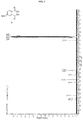
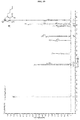
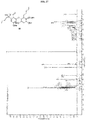
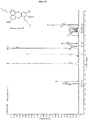
- FIG. 1 shows the 400 MHz 1 H-NMR spectrum (in CD 3 OD) of the compound of Formula 7
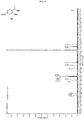
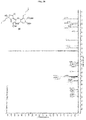
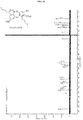
- FIG. 2 shows the 101 MHz 13 C-NMR (in CD 3 OD) of the compound of Formula 7.
- 4-methoxy-phthalic anhydride (8) (3 g, 16.8 mmol) and copper chloride (158 mg, 1.2 mmol) were dried completely and dissolved in 200 ml of THF in a round flask. The solution was cooled to -20°C, and 9.3 ml of 2.0M butyl magnesium chloride was added slowly thereto. After completion of the addition, the mixture was stirred at -20°C for about 12 hours, and the reaction was terminated by addition of IN HCl. The reaction product was extracted with EA and purified by a silica gel column using hexane and EA. The yield was 52%.
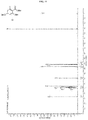
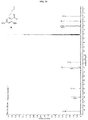
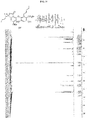
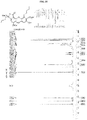
- FIG. 3 shows the 400 MHz 1 H-NMR spectrum (in acetone-D 6 ) of the compound of Formula 9
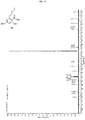
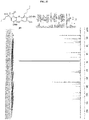
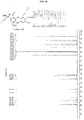
- FIG. 4 shows the 101 MHz 13 C-NMR (in acetone-D 6 ) of the compound of Formula 9.
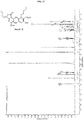
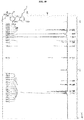
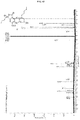
- FIGS. 5 , 6 and 7 show the 600 MHz 1 H-NMR spectrum (in CD 3 OD), 150 MHz 13 C-NMR spectrum (in CD 3 OD) and HMBC spectrum (in CD 3 OD) of the compound of Formula 10, respectively.
- the starting material 2,4-dihydroxy benzoic acid (20 g, 130 mmol) was dissolved in 200 ml of DMF in a 2L round-bottom flask.
- Benzyl bromide (62 ml, 519 mmol) and potassium carbonate (72 g, 519 mmol) were added to the reaction flask at room temperature.
- the reaction temperature was increased to 90°C, followed by stirring for 1 hour.
- Ethyl acetate and IN HCl were added to the reaction residue.
- the mixture was separated into two layers, and the aqueous phase was extracted three times with ethyl acetate.
- the obtained organic layer was dried with anhydrous Na 2 SO 4 , concentrated, and then purified by recrystallization from MeOH. The yield was 98%.
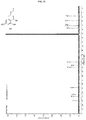
- FIG. 8 shows the 400 MHz 1 H-NMR spectrum (in CD 3 OD) of the compound of Formula 12
- FIG. 9 shows the 101 MHz 13 C-NMR spectrum (in CD 3 OD) of the compound of Formula 12.
- benzyl 2,4-bis(benzyloxy)benzoate (12) (5 g, 15 mmol), Pd(OAc) 2 (337 mg, 1.5 mmol), (diacetoxy)benzene (7.2 g, 22.5 mmol) and iodine (5.7 g, 22.5 mmol) were dissolved in DMF in air.
- the reaction flask was sealed with a cap, and the reaction mixture was stirred at 60°C for 12 hours.
- the reaction mixture was cooled to room temperature, diluted with ethyl acetate, and then washed with IN HCl.
- the organic phase was washed with brine, dried with Na 2 SO 4 , and then evaporated in a rotary evaporator.
- the residue was purified by silica column chromatography. The yield was 78%.
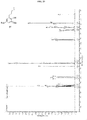
- FIG. 10 shows the 400 MHz 1 H-NMR spectrum (in CD 3 OD) of the compound of Formula 13
- FIG. 11 shows the 101 MHz 13 C-NMR spectrum (in CD 3 OD) of the compound of Formula 13.
- FIG. 12 shows the 400 MHz 1 H-NMR spectrum (in CD 3 OD) of the compound of Formula 14, and FIG. 13 shows the 101 MHz 13 C-NMR spectrum (in CD 3 OD) of the compound of Formula 14.
- POCl 3 (1.24 ml, 13.4 mmol) was precipitated in 10 ml of DMF at a temperature lower than 10°C with rapid stirring for 0.5 hours or more. While the temperature was maintained at lower than 10°C, benzyl 2,4-bis(benzyloxy)-6-pentylbenzoate (14) (4.4 g, 8.9 mmol) was added to 10 ml of DMF. The mixture was warmed to 70°C and stirred for 8 hours. Ethyl acetate and 1N HCl were added to the residue. The mixture was separated into two layers, and the aqueous phase was extracted three times with ethyl acetate. The obtained organic layer was dried with anhydrous Na 2 SO 4 , concentrated, and then purified by silica gel chromatography. The yield was 92%.
- FIG. 14 shows the 400 MHz 1 H-NMR spectrum (in CDCl 3 ) of the compound of Formula 15, and FIG. 15 shows the 101 MHz 13 C-NMR spectrum (in CD 3 OD) of the compound of Formula 15.
- mCPBA (8.5g, 49mmol) was precipitated in the reaction mixture at a temperature lower than 10°C with rapid stirring.
- the reaction mixture was stirred at room temperature for 4 hours. TLC monitoring was performed.
- the reaction mixture was extracted with water, and then extracted three times with NaHCO 3 .
- the organic layer was dried in vacuo , and the crude oil was dissolved again in 100 ml of MeOH.
- the MeOH mixture was precipitated in 125 ml of 10% KOH at 0°C.
- the reaction was terminated by addition of 6N HCl, and the MeOH was removed in a rotary evaporator. The residue was diluted with ethyl acetate. The mixture was separated into two layers, and the aqueous phase was extracted three times with ethyl acetate. The yield was 85%.
- FIGS. 16 , 17 and 18 show the 400 MHz 1 H-NMR spectrum (in CD 3 OD), 101 MHz 13 C-NMR spectrum (in CDCl 3 ) and HMBC spectrum (in CDCl 3 ) of the compound of Formula 16, respectively.
- the starting material olivetol (19) (5 g, 27.7 mmol) was dissolved in 150 ml of DMF in a round-bottom flask. The solution was cooled to 0°C, and POCl3 (3.9 ml, 41.6 mmol) was added slowly thereto over about 5 minutes. After stirring at 0°C for 30 minutes, the mixture was warmed to room temperature and stirred for 8 hours. The reaction was terminated by addition of water, and the reaction mixture was extracted about 4 times with MC. The obtained organic layer was dried with Na 2 SO 4 , concentrated, and then purified by silica gel chromatography. The yield was 90%.
- FIG. 19 shows the 400 MHz 1 H-NMR spectrum (in CD 3 OD) of the compound of Formula 18, and FIG. 20 shows the 101 MHz 13 C-NMR spectrum (in CD 3 OD) of the compound of Formula 18.
- FIG. 21 shows the 400 MHz 1 H-NMR spectrum (in CD 3 OD) of the compound of Formula 19
- FIG. 22 shows the 101 MHz 13 C-NMR spectrum (in CD 3 OD) of the compound of Formula 19.
- Example 1-12 Synthesis of benzyl 4,6-bis(benzyloxyl-3-((1-butyl-1-hydroxy-6-methoxy-3-oxo-1,3-dihydroisobenzofuran-4-yl)oxy)-2-pentylbenzoate (22)
- the tube was left to stand in an oil bath preheated to 110°C and the reaction mixture was stirred vigorously for 12 hours.
- the reaction mixture was cooled to room temperature. After addition of ethyl acetate and H 2 O, the mixture was stirred.
- the organic layer was separated and the aqueous layer was extracted twice with ethyl acetate.
- the organic layer was dried with Na 2 SO 4 and filtered through a silica gel pad. The filtrate was concentrated, and the resulting residue was purified by silica gel chromatography. The yield was 58%.
- FIG. 27 shows the 400 MHz 1 H-NMR spectrum (in CD 3 OD) of the compound of Formula 22, and FIG. 28 shows the 101 MHz 13 C-NMR (in CD 3 OD) of the compound of Formula 22.
- FIG. 29 shows the 400 MHz 1 H-NMR spectrum (in CD 3 OD) of lobarin (Formula 3), and FIG. 30 shows the 101 MHz 13 C-NMR spectrum (in CD 3 OD) of lobarin (Formula 3).
- Example 2-1 Synthesis of benzyl 3-((1-butyl-1-hydroxy-6-methoxy-3-oxo-1,3-dihydroisobenzofuran-4-yl)oxy)-4,6-dihydroxy-2-pentylbenzoate (23)
- Lobarin (3) (50 mg, 0.11 mmol) was added to a round-bottom flask and dissolved in 10 ml of methanol, and then cesium carbonate (17 mg, 0.053 mmol) was added thereto, followed by stirring for 10 minutes. Next, water was completely removed by concentration under reduced pressure. The reaction mixture was dissolved in 3 ml of DMF, and then benzyl bromide (14 ⁇ l, 0.121 mmol) was added thereto, followed by stirring for 18 hours. After completion of the reaction, the white solid was filtered out, and the crude mixture was purified by C18 chromatography. The yield was 83%.
- FIG. 31 shows the 600 MHz 1 H-NMR spectrum (in CD 3 OD) of the compound of Formula 23, and FIG. 32 shows the 150 MHz 13 C-NMR spectrum (in CD 3 OD) of the compound of Formula 23.
- FIG. 33 shows the 400 MHz 1 H-NMR spectrum (in CD 3 OD) of lobaric acid (Formula 1)
- FIG. 34 shows the 101 MHz 13 C-NMR spectrum (in CD 3 OD) of lobaric acid (Formula 1).
- Example 3-1 Synthesis of methyllobarin (3) from lobaric acid
- Lobaric acid (1) (100 mg, 0.22 mmol) was dried sufficiently, and then added to a dried round-bottom flask and dissolved in 100 ml of anhydrous methanol. Sodium methoxide (14 mg, 0.26 mmol) was added slowly thereto, followed by stirring at room temperature for 2 hours. The reaction was terminated by addition of IN HCl, followed by layer separation with ethyl acetate. The organic layer was concentrated under reduced pressure, and the crude mixture was purified by C18 chromatography. The yield was 91%.
- FIG. 35 shows the 400 MHz 1 H-NMR spectrum (in CD 3 OD) of methyllobarin (Formula 2)
- FIG. 36 shows the 150 MHz 13 C-NMR spectrum (in CD 3 OD) of methyllobarin (Formula 2).
- the extract lobaric acid (1) (100 mg, 0.22 mmol) was placed in a round-bottom flask and dissolved in 100 ml of MeOH. 10 ml of IN NaOH was added thereto, followed by stirring at room temperature for 2 hours. MeOH was removed by concentration under reduced pressure, and the residue was adjusted to a pH of 2 to 3 by addition of IN HCl. After layer separation with ethyl acetate, the organic layer was concentrated under reduced pressure. The crude mixture was purified by C18 chromatography. The yield was 93%.
- FIG. 29 shows the 400 MHz 1 H-NMR spectrum (in CD 3 OD) of lobarin (Formula 3), and FIG. 30 shows the 101 MHz 13 C-NMR spectrum (in CD 3 OD) of lobarin (Formula 3).
- the extract lobaric acid (1) (100 mg, 0.22 mmol) was dried completely, and then added to a dried round-bottom flask and dissolved in 25 ml of anhydrous DMF.
- NaHMDS 48 mg, 0.26 mmol was added slowly thereto, followed by stirring at room temperature for 2 hours.
- the reaction was terminated by addition of 1N HCl, followed by layer separation with ethyl acetate.
- the organic layer was concentrated under reduced pressure, and the crude mixture was purified by C18 chromatography. The yield was 85%.
- FIGS. 37 , 38 and 39 show the 400 MHz 1 H-NMR spectrum (in CD 3 OD), 101 MHz 13 C-NMR spectrum (in CD 3 OD) and NOESY spectrum (in CD 3 OD) of lobastin (Formula 4), respectively.
- the starting material olivetol (19) (5 g, 27.7 mmol) was dissolved in 150 ml of DMF in a round-bottom flask. The solution was cooled to 0°C, and POCl3 (3.9 ml, 41.6 mmol) was added slowly thereto over about 5 minutes. After stirring at 0°C for 30 minutes, the mixture was warmed to room temperature and stirred for 8 hours. The reaction was terminated by addition of water, and the reaction mixture was extracted about 4 times with MC. The obtained organic layer was dried with Na 2 SO 4 , concentrated, and then purified by silica gel chromatography. The yield was 90%.
- FIG. 19 shows the 400 MHz 1 H-NMR spectrum (in CD 3 OD) of the compound of Formula 18, and FIG. 20 shows the 101 MHz 13 C-NMR spectrum (in CD 3 OD) of the compound of Formula 18.
- FIG. 23 shows the 400 MHz 1 H-NMR spectrum (in CD 3 OD) of the compound of Formula 20, and FIG. 24 shows the 101 MHz 13 C-NMR spectrum (in CD 3 OD) of the compound of Formula 20.
- FIG. 25 shows the 400 MHz 1 H-NMR spectrum (in CD 3 OD) of the compound of Formula 21, and FIG. 26 shows the 101 MHz 13 C-NMR spectrum (in CD 3 OD) of the compound of Formula 21.
- the tube was left to stand in an oil bath preheated to 110°C and the reaction mixture was stirred vigorously for 12 hours.
- the reaction mixture was cooled to room temperature. After addition of ethyl acetate and H 2 O, the mixture was stirred.
- the organic layer was separated and the aqueous layer was extracted twice with ethyl acetate.
- the organic layer was dried with Na 2 SO 4 and filtered through a silica gel pad. The filtrate was concentrated, and the resulting residue was purified by silica gel chromatography. The yield was 63%.
- FIG. 40 shows the 400 MHz 1 H-NMR spectrum (in CD 3 OD) of the compound of Formula 24, and FIG. 41 shows the 101 MHz 13 C-NMR spectrum (in CD 3 OD) of the compound of Formula 24.
- FIG. 42 shows the 850 MHz 1 H-NMR (in CD 3 OD) spectrum of sakisacaulon A (Formula 5), and FIG. 43 shows the 214 MHz 13 C-NMR spectrum (in CD 3 OD) of sakisacaulon A (Formula 5).
- the synthesis method according to the present invention can synthesize compounds that selectively inhibit PTP1B in a simple and economic manner, in which the compounds are five phenolic lichen metabolites isolated from an extract of the Antarctic lichen Stereocaulon alpinum.
Landscapes
- Chemical & Material Sciences (AREA)
- Organic Chemistry (AREA)
- Health & Medical Sciences (AREA)
- Life Sciences & Earth Sciences (AREA)
- Veterinary Medicine (AREA)
- Public Health (AREA)
- General Health & Medical Sciences (AREA)
- Animal Behavior & Ethology (AREA)
- Medicinal Chemistry (AREA)
- Pharmacology & Pharmacy (AREA)
- Epidemiology (AREA)
- Natural Medicines & Medicinal Plants (AREA)
- Microbiology (AREA)
- Mycology (AREA)
- Botany (AREA)
- Medical Informatics (AREA)
- Biotechnology (AREA)
- Alternative & Traditional Medicine (AREA)
- Engineering & Computer Science (AREA)
- Communicable Diseases (AREA)
- Oncology (AREA)
- Chemical Kinetics & Catalysis (AREA)
- General Chemical & Material Sciences (AREA)
- Nuclear Medicine, Radiotherapy & Molecular Imaging (AREA)
- Organic Low-Molecular-Weight Compounds And Preparation Thereof (AREA)
Applications Claiming Priority (2)
| Application Number | Priority Date | Filing Date | Title |
|---|---|---|---|
| KR1020170183674A KR102022543B1 (ko) | 2017-12-29 | 2017-12-29 | 로바릭산 및 그 유사체의 합성방법 |
| PCT/KR2018/008254 WO2019132148A1 (ko) | 2017-12-29 | 2018-07-23 | 로바릭산 및 그 유사체의 합성방법 |
Publications (3)
| Publication Number | Publication Date |
|---|---|
| EP3733656A1 true EP3733656A1 (de) | 2020-11-04 |
| EP3733656A4 EP3733656A4 (de) | 2021-09-15 |
| EP3733656B1 EP3733656B1 (de) | 2023-05-10 |
Family
ID=67067521
Family Applications (1)
| Application Number | Title | Priority Date | Filing Date |
|---|---|---|---|
| EP18894427.6A Active EP3733656B1 (de) | 2017-12-29 | 2018-07-23 | Verfahren zur synthese von lobarsäure und analog davon |
Country Status (5)
| Country | Link |
|---|---|
| US (1) | US11434217B2 (de) |
| EP (1) | EP3733656B1 (de) |
| KR (1) | KR102022543B1 (de) |
| CN (1) | CN111819170B (de) |
| WO (1) | WO2019132148A1 (de) |
Family Cites Families (7)
| Publication number | Priority date | Publication date | Assignee | Title |
|---|---|---|---|---|
| JP3079831B2 (ja) | 1993-05-07 | 2000-08-21 | 松下電器産業株式会社 | 投射型テレビジョン受信機 |
| CN103249410A (zh) * | 2010-10-07 | 2013-08-14 | 韩国海洋研究院 | 预防或治疗糖尿病或肥胖症的药物组合物和食品组合物 |
| KR101481141B1 (ko) * | 2011-04-26 | 2015-01-15 | 한국해양과학기술원 | 신규 화합물 로바스틴을 함유하는 당뇨병 예방 또는 치료용 약학 조성물 |
| KR101481140B1 (ko) * | 2010-10-07 | 2015-01-15 | 한국해양과학기술원 | 신규 화합물 로바린을 함유하는 당뇨병 또는 비만의 예방 또는 치료용 약학 조성물 |
| US8697745B2 (en) | 2010-10-07 | 2014-04-15 | Korea Ocean Research Institute | Pharmaceutical and food compositions for preventing or treating diabetes or obesity |
| KR101485162B1 (ko) * | 2010-10-07 | 2015-01-26 | 한국해양과학기술원 | 소듐 로바레이트를 함유하는 당뇨병 또는 비만의 예방 또는 치료용 약학 조성물 |
| KR101892078B1 (ko) * | 2012-10-24 | 2018-08-28 | 한국해양과학기술원 | 로바스틴을 함유하는 뇌암의 예방 또는 치료용 약학 조성물 및 이를 이용한 뇌암의 치료를 위한 병용요법 |
-
2017
- 2017-12-29 KR KR1020170183674A patent/KR102022543B1/ko active Active
-
2018
- 2018-07-23 CN CN201880090294.8A patent/CN111819170B/zh active Active
- 2018-07-23 US US16/958,794 patent/US11434217B2/en active Active
- 2018-07-23 WO PCT/KR2018/008254 patent/WO2019132148A1/ko not_active Ceased
- 2018-07-23 EP EP18894427.6A patent/EP3733656B1/de active Active
Also Published As
| Publication number | Publication date |
|---|---|
| KR20190081270A (ko) | 2019-07-09 |
| KR102022543B1 (ko) | 2019-09-18 |
| EP3733656A4 (de) | 2021-09-15 |
| EP3733656B1 (de) | 2023-05-10 |
| CN111819170B (zh) | 2023-12-29 |
| US20210246112A1 (en) | 2021-08-12 |
| WO2019132148A1 (ko) | 2019-07-04 |
| US11434217B2 (en) | 2022-09-06 |
| CN111819170A (zh) | 2020-10-23 |
Similar Documents
| Publication | Publication Date | Title |
|---|---|---|
| JP5547167B2 (ja) | 癌細胞の処理のための組成物及びその合成方法 | |
| EP2668176B1 (de) | Neues verfahren zur synthese von polyphenolen | |
| Riley et al. | A concise synthesis of neo-inositol | |
| US20250042838A1 (en) | Process for the synthesis and purification of cannabinoic acids and acylated derivatives thereof | |
| CN105237452A (zh) | 一种度骨化醇的新结晶形式及其制备方法 | |
| Formánek et al. | Synthesis and migrastatic activity of cytochalasin analogues lacking a macrocyclic moiety | |
| CN104496871A (zh) | 一种他卡西醇的制备方法 | |
| Page et al. | Asymmetric epoxidation of chromenes mediated by iminium salts: Synthesis of mollugin and (3S, 4R)-trans-3, 4-dihydroxy-3, 4-dihydromollugin | |
| EP3733656B1 (de) | Verfahren zur synthese von lobarsäure und analog davon | |
| Zhao et al. | Synthesis and antitumor activity of 6-and 2-(1-substituted-thio-4-methylpent-3-enyl)-5, 8-dimethoxynaphthalene-1, 4-diones | |
| CN110684003A (zh) | 一种简便高效的淫羊藿素及其衍生物的全合成方法 | |
| US20090054516A1 (en) | Composition for treating cancer cells and synthetic method for the same | |
| CN101792477A (zh) | 具抗癌活性的乙酰熊果酰三乙醇胺单酯及其制备方法 | |
| CN115073406A (zh) | 一种桉烷型倍半萜内酯类tba衍生物及其用途 | |
| Wang et al. | Regioselective sonochemical synthesis of genistein derivatives | |
| CN113248465B (zh) | 一种鹰嘴豆芽素a的合成方法 | |
| CN118702664B (zh) | 一种光催化脱苄基反应制备(-)egcg的方法 | |
| Stanoeva et al. | Synthesis of 1-substituted 2, 9, 10-trioxatricyclo [4.3. 1.03, 8] decanes | |
| JP6212462B2 (ja) | 3,4,5−トリカフェオイルキナ酸の製造方法 | |
| CN110669031B (zh) | 天然产物异猴头菌酮j的全合成方法 | |
| Xia et al. | Synthesis, anti-virus and anti-tumour activities of dibenzylbutyrolactone lignans and their analogues | |
| JP4134290B2 (ja) | ポリフェノール誘導体、その製造方法、抗酸化剤、および発がん予防剤 | |
| CN112574033A (zh) | 1-羟基-2,5,8-三甲基-9-芴酮的合成方法 | |
| CN101497590A (zh) | 13-烷氧代-3,15-二氧代赤霉酸酯及其制备方法 | |
| JP2018070509A (ja) | 新規トコフェリルアスコルビン酸誘導体とその製造方法 |
Legal Events
| Date | Code | Title | Description |
|---|---|---|---|
| STAA | Information on the status of an ep patent application or granted ep patent |
Free format text: STATUS: THE INTERNATIONAL PUBLICATION HAS BEEN MADE |
|
| PUAI | Public reference made under article 153(3) epc to a published international application that has entered the european phase |
Free format text: ORIGINAL CODE: 0009012 |
|
| STAA | Information on the status of an ep patent application or granted ep patent |
Free format text: STATUS: REQUEST FOR EXAMINATION WAS MADE |
|
| 17P | Request for examination filed |
Effective date: 20200724 |
|
| AK | Designated contracting states |
Kind code of ref document: A1 Designated state(s): AL AT BE BG CH CY CZ DE DK EE ES FI FR GB GR HR HU IE IS IT LI LT LU LV MC MK MT NL NO PL PT RO RS SE SI SK SM TR |
|
| AX | Request for extension of the european patent |
Extension state: BA ME |
|
| DAV | Request for validation of the european patent (deleted) | ||
| DAX | Request for extension of the european patent (deleted) | ||
| A4 | Supplementary search report drawn up and despatched |
Effective date: 20210813 |
|
| RIC1 | Information provided on ipc code assigned before grant |
Ipc: A61P 31/00 20060101ALI20210809BHEP Ipc: A61K 36/09 20060101ALI20210809BHEP Ipc: A61K 31/343 20060101ALI20210809BHEP Ipc: C07D 307/88 20060101AFI20210809BHEP |
|
| STAA | Information on the status of an ep patent application or granted ep patent |
Free format text: STATUS: EXAMINATION IS IN PROGRESS |
|
| 17Q | First examination report despatched |
Effective date: 20220520 |
|
| GRAP | Despatch of communication of intention to grant a patent |
Free format text: ORIGINAL CODE: EPIDOSNIGR1 |
|
| STAA | Information on the status of an ep patent application or granted ep patent |
Free format text: STATUS: GRANT OF PATENT IS INTENDED |
|
| INTG | Intention to grant announced |
Effective date: 20230103 |
|
| GRAS | Grant fee paid |
Free format text: ORIGINAL CODE: EPIDOSNIGR3 |
|
| GRAA | (expected) grant |
Free format text: ORIGINAL CODE: 0009210 |
|
| STAA | Information on the status of an ep patent application or granted ep patent |
Free format text: STATUS: THE PATENT HAS BEEN GRANTED |
|
| AK | Designated contracting states |
Kind code of ref document: B1 Designated state(s): AL AT BE BG CH CY CZ DE DK EE ES FI FR GB GR HR HU IE IS IT LI LT LU LV MC MK MT NL NO PL PT RO RS SE SI SK SM TR |
|
| REG | Reference to a national code |
Ref country code: GB Ref legal event code: FG4D |
|
| REG | Reference to a national code |
Ref country code: AT Ref legal event code: REF Ref document number: 1566557 Country of ref document: AT Kind code of ref document: T Effective date: 20230515 Ref country code: CH Ref legal event code: EP |
|
| REG | Reference to a national code |
Ref country code: DE Ref legal event code: R096 Ref document number: 602018049847 Country of ref document: DE |
|
| REG | Reference to a national code |
Ref country code: IE Ref legal event code: FG4D |
|
| REG | Reference to a national code |
Ref country code: LT Ref legal event code: MG9D |
|
| REG | Reference to a national code |
Ref country code: NL Ref legal event code: MP Effective date: 20230510 |
|
| REG | Reference to a national code |
Ref country code: AT Ref legal event code: MK05 Ref document number: 1566557 Country of ref document: AT Kind code of ref document: T Effective date: 20230510 |
|
| PG25 | Lapsed in a contracting state [announced via postgrant information from national office to epo] |
Ref country code: SE Free format text: LAPSE BECAUSE OF FAILURE TO SUBMIT A TRANSLATION OF THE DESCRIPTION OR TO PAY THE FEE WITHIN THE PRESCRIBED TIME-LIMIT Effective date: 20230510 Ref country code: PT Free format text: LAPSE BECAUSE OF FAILURE TO SUBMIT A TRANSLATION OF THE DESCRIPTION OR TO PAY THE FEE WITHIN THE PRESCRIBED TIME-LIMIT Effective date: 20230911 Ref country code: NO Free format text: LAPSE BECAUSE OF FAILURE TO SUBMIT A TRANSLATION OF THE DESCRIPTION OR TO PAY THE FEE WITHIN THE PRESCRIBED TIME-LIMIT Effective date: 20230810 Ref country code: NL Free format text: LAPSE BECAUSE OF FAILURE TO SUBMIT A TRANSLATION OF THE DESCRIPTION OR TO PAY THE FEE WITHIN THE PRESCRIBED TIME-LIMIT Effective date: 20230510 Ref country code: ES Free format text: LAPSE BECAUSE OF FAILURE TO SUBMIT A TRANSLATION OF THE DESCRIPTION OR TO PAY THE FEE WITHIN THE PRESCRIBED TIME-LIMIT Effective date: 20230510 Ref country code: AT Free format text: LAPSE BECAUSE OF FAILURE TO SUBMIT A TRANSLATION OF THE DESCRIPTION OR TO PAY THE FEE WITHIN THE PRESCRIBED TIME-LIMIT Effective date: 20230510 |
|
| PG25 | Lapsed in a contracting state [announced via postgrant information from national office to epo] |
Ref country code: RS Free format text: LAPSE BECAUSE OF FAILURE TO SUBMIT A TRANSLATION OF THE DESCRIPTION OR TO PAY THE FEE WITHIN THE PRESCRIBED TIME-LIMIT Effective date: 20230510 Ref country code: PL Free format text: LAPSE BECAUSE OF FAILURE TO SUBMIT A TRANSLATION OF THE DESCRIPTION OR TO PAY THE FEE WITHIN THE PRESCRIBED TIME-LIMIT Effective date: 20230510 Ref country code: LV Free format text: LAPSE BECAUSE OF FAILURE TO SUBMIT A TRANSLATION OF THE DESCRIPTION OR TO PAY THE FEE WITHIN THE PRESCRIBED TIME-LIMIT Effective date: 20230510 Ref country code: LT Free format text: LAPSE BECAUSE OF FAILURE TO SUBMIT A TRANSLATION OF THE DESCRIPTION OR TO PAY THE FEE WITHIN THE PRESCRIBED TIME-LIMIT Effective date: 20230510 Ref country code: IS Free format text: LAPSE BECAUSE OF FAILURE TO SUBMIT A TRANSLATION OF THE DESCRIPTION OR TO PAY THE FEE WITHIN THE PRESCRIBED TIME-LIMIT Effective date: 20230910 Ref country code: HR Free format text: LAPSE BECAUSE OF FAILURE TO SUBMIT A TRANSLATION OF THE DESCRIPTION OR TO PAY THE FEE WITHIN THE PRESCRIBED TIME-LIMIT Effective date: 20230510 Ref country code: GR Free format text: LAPSE BECAUSE OF FAILURE TO SUBMIT A TRANSLATION OF THE DESCRIPTION OR TO PAY THE FEE WITHIN THE PRESCRIBED TIME-LIMIT Effective date: 20230811 |
|
| PG25 | Lapsed in a contracting state [announced via postgrant information from national office to epo] |
Ref country code: FI Free format text: LAPSE BECAUSE OF FAILURE TO SUBMIT A TRANSLATION OF THE DESCRIPTION OR TO PAY THE FEE WITHIN THE PRESCRIBED TIME-LIMIT Effective date: 20230510 |
|
| PG25 | Lapsed in a contracting state [announced via postgrant information from national office to epo] |
Ref country code: SK Free format text: LAPSE BECAUSE OF FAILURE TO SUBMIT A TRANSLATION OF THE DESCRIPTION OR TO PAY THE FEE WITHIN THE PRESCRIBED TIME-LIMIT Effective date: 20230510 |
|
| PG25 | Lapsed in a contracting state [announced via postgrant information from national office to epo] |
Ref country code: SM Free format text: LAPSE BECAUSE OF FAILURE TO SUBMIT A TRANSLATION OF THE DESCRIPTION OR TO PAY THE FEE WITHIN THE PRESCRIBED TIME-LIMIT Effective date: 20230510 Ref country code: SK Free format text: LAPSE BECAUSE OF FAILURE TO SUBMIT A TRANSLATION OF THE DESCRIPTION OR TO PAY THE FEE WITHIN THE PRESCRIBED TIME-LIMIT Effective date: 20230510 Ref country code: RO Free format text: LAPSE BECAUSE OF FAILURE TO SUBMIT A TRANSLATION OF THE DESCRIPTION OR TO PAY THE FEE WITHIN THE PRESCRIBED TIME-LIMIT Effective date: 20230510 Ref country code: EE Free format text: LAPSE BECAUSE OF FAILURE TO SUBMIT A TRANSLATION OF THE DESCRIPTION OR TO PAY THE FEE WITHIN THE PRESCRIBED TIME-LIMIT Effective date: 20230510 Ref country code: DK Free format text: LAPSE BECAUSE OF FAILURE TO SUBMIT A TRANSLATION OF THE DESCRIPTION OR TO PAY THE FEE WITHIN THE PRESCRIBED TIME-LIMIT Effective date: 20230510 Ref country code: CZ Free format text: LAPSE BECAUSE OF FAILURE TO SUBMIT A TRANSLATION OF THE DESCRIPTION OR TO PAY THE FEE WITHIN THE PRESCRIBED TIME-LIMIT Effective date: 20230510 |
|
| REG | Reference to a national code |
Ref country code: DE Ref legal event code: R097 Ref document number: 602018049847 Country of ref document: DE |
|
| PG25 | Lapsed in a contracting state [announced via postgrant information from national office to epo] |
Ref country code: MC Free format text: LAPSE BECAUSE OF FAILURE TO SUBMIT A TRANSLATION OF THE DESCRIPTION OR TO PAY THE FEE WITHIN THE PRESCRIBED TIME-LIMIT Effective date: 20230510 |
|
| PG25 | Lapsed in a contracting state [announced via postgrant information from national office to epo] |
Ref country code: MC Free format text: LAPSE BECAUSE OF FAILURE TO SUBMIT A TRANSLATION OF THE DESCRIPTION OR TO PAY THE FEE WITHIN THE PRESCRIBED TIME-LIMIT Effective date: 20230510 |
|
| REG | Reference to a national code |
Ref country code: CH Ref legal event code: PL |
|
| PLBE | No opposition filed within time limit |
Free format text: ORIGINAL CODE: 0009261 |
|
| STAA | Information on the status of an ep patent application or granted ep patent |
Free format text: STATUS: NO OPPOSITION FILED WITHIN TIME LIMIT |
|
| REG | Reference to a national code |
Ref country code: BE Ref legal event code: MM Effective date: 20230731 |
|
| PG25 | Lapsed in a contracting state [announced via postgrant information from national office to epo] |
Ref country code: LU Free format text: LAPSE BECAUSE OF NON-PAYMENT OF DUE FEES Effective date: 20230723 |
|
| PG25 | Lapsed in a contracting state [announced via postgrant information from national office to epo] |
Ref country code: LU Free format text: LAPSE BECAUSE OF NON-PAYMENT OF DUE FEES Effective date: 20230723 |
|
| 26N | No opposition filed |
Effective date: 20240213 |
|
| GBPC | Gb: european patent ceased through non-payment of renewal fee |
Effective date: 20230810 |
|
| REG | Reference to a national code |
Ref country code: IE Ref legal event code: MM4A |
|
| PG25 | Lapsed in a contracting state [announced via postgrant information from national office to epo] |
Ref country code: CH Free format text: LAPSE BECAUSE OF NON-PAYMENT OF DUE FEES Effective date: 20230731 |
|
| PG25 | Lapsed in a contracting state [announced via postgrant information from national office to epo] |
Ref country code: SI Free format text: LAPSE BECAUSE OF FAILURE TO SUBMIT A TRANSLATION OF THE DESCRIPTION OR TO PAY THE FEE WITHIN THE PRESCRIBED TIME-LIMIT Effective date: 20230510 |
|
| PG25 | Lapsed in a contracting state [announced via postgrant information from national office to epo] |
Ref country code: SI Free format text: LAPSE BECAUSE OF FAILURE TO SUBMIT A TRANSLATION OF THE DESCRIPTION OR TO PAY THE FEE WITHIN THE PRESCRIBED TIME-LIMIT Effective date: 20230510 Ref country code: IT Free format text: LAPSE BECAUSE OF FAILURE TO SUBMIT A TRANSLATION OF THE DESCRIPTION OR TO PAY THE FEE WITHIN THE PRESCRIBED TIME-LIMIT Effective date: 20230510 Ref country code: FR Free format text: LAPSE BECAUSE OF NON-PAYMENT OF DUE FEES Effective date: 20230731 Ref country code: BE Free format text: LAPSE BECAUSE OF NON-PAYMENT OF DUE FEES Effective date: 20230731 |
|
| PG25 | Lapsed in a contracting state [announced via postgrant information from national office to epo] |
Ref country code: IE Free format text: LAPSE BECAUSE OF NON-PAYMENT OF DUE FEES Effective date: 20230723 |
|
| PG25 | Lapsed in a contracting state [announced via postgrant information from national office to epo] |
Ref country code: GB Free format text: LAPSE BECAUSE OF NON-PAYMENT OF DUE FEES Effective date: 20230810 |
|
| PG25 | Lapsed in a contracting state [announced via postgrant information from national office to epo] |
Ref country code: IE Free format text: LAPSE BECAUSE OF NON-PAYMENT OF DUE FEES Effective date: 20230723 Ref country code: GB Free format text: LAPSE BECAUSE OF NON-PAYMENT OF DUE FEES Effective date: 20230810 |
|
| PG25 | Lapsed in a contracting state [announced via postgrant information from national office to epo] |
Ref country code: BG Free format text: LAPSE BECAUSE OF FAILURE TO SUBMIT A TRANSLATION OF THE DESCRIPTION OR TO PAY THE FEE WITHIN THE PRESCRIBED TIME-LIMIT Effective date: 20230510 |
|
| PG25 | Lapsed in a contracting state [announced via postgrant information from national office to epo] |
Ref country code: BG Free format text: LAPSE BECAUSE OF FAILURE TO SUBMIT A TRANSLATION OF THE DESCRIPTION OR TO PAY THE FEE WITHIN THE PRESCRIBED TIME-LIMIT Effective date: 20230510 |
|
| PG25 | Lapsed in a contracting state [announced via postgrant information from national office to epo] |
Ref country code: CY Free format text: LAPSE BECAUSE OF FAILURE TO SUBMIT A TRANSLATION OF THE DESCRIPTION OR TO PAY THE FEE WITHIN THE PRESCRIBED TIME-LIMIT; INVALID AB INITIO Effective date: 20180723 |
|
| PG25 | Lapsed in a contracting state [announced via postgrant information from national office to epo] |
Ref country code: HU Free format text: LAPSE BECAUSE OF FAILURE TO SUBMIT A TRANSLATION OF THE DESCRIPTION OR TO PAY THE FEE WITHIN THE PRESCRIBED TIME-LIMIT; INVALID AB INITIO Effective date: 20180723 |
|
| PGFP | Annual fee paid to national office [announced via postgrant information from national office to epo] |
Ref country code: DE Payment date: 20250707 Year of fee payment: 8 |
|
| PG25 | Lapsed in a contracting state [announced via postgrant information from national office to epo] |
Ref country code: TR Free format text: LAPSE BECAUSE OF FAILURE TO SUBMIT A TRANSLATION OF THE DESCRIPTION OR TO PAY THE FEE WITHIN THE PRESCRIBED TIME-LIMIT Effective date: 20230510 |