EP3733707A1 - Cellules car-t de ciblage de bcma et leurs utilisations - Google Patents
Cellules car-t de ciblage de bcma et leurs utilisations Download PDFInfo
- Publication number
- EP3733707A1 EP3733707A1 EP19172053.1A EP19172053A EP3733707A1 EP 3733707 A1 EP3733707 A1 EP 3733707A1 EP 19172053 A EP19172053 A EP 19172053A EP 3733707 A1 EP3733707 A1 EP 3733707A1
- Authority
- EP
- European Patent Office
- Prior art keywords
- cells
- seq
- car
- amino acid
- bcma
- Prior art date
- Legal status (The legal status is an assumption and is not a legal conclusion. Google has not performed a legal analysis and makes no representation as to the accuracy of the status listed.)
- Ceased
Links
Images


Classifications
-
- C—CHEMISTRY; METALLURGY
- C07—ORGANIC CHEMISTRY
- C07K—PEPTIDES
- C07K14/00—Peptides having more than 20 amino acids; Gastrins; Somatostatins; Melanotropins; Derivatives thereof
- C07K14/435—Peptides having more than 20 amino acids; Gastrins; Somatostatins; Melanotropins; Derivatives thereof from animals; from humans
- C07K14/705—Receptors; Cell surface antigens; Cell surface determinants
- C07K14/70503—Immunoglobulin superfamily
- C07K14/7051—T-cell receptor (TcR)-CD3 complex
-
- A—HUMAN NECESSITIES
- A61—MEDICAL OR VETERINARY SCIENCE; HYGIENE
- A61K—PREPARATIONS FOR MEDICAL, DENTAL OR TOILETRY PURPOSES
- A61K40/00—Cellular immunotherapy
- A61K40/10—Cellular immunotherapy characterised by the cell type used
- A61K40/11—T-cells, e.g. tumour infiltrating lymphocytes [TIL] or regulatory T [Treg] cells; Lymphokine-activated killer [LAK] cells
-
- A—HUMAN NECESSITIES
- A61—MEDICAL OR VETERINARY SCIENCE; HYGIENE
- A61K—PREPARATIONS FOR MEDICAL, DENTAL OR TOILETRY PURPOSES
- A61K40/00—Cellular immunotherapy
- A61K40/20—Cellular immunotherapy characterised by the effect or the function of the cells
- A61K40/22—Immunosuppressive or immunotolerising
-
- A—HUMAN NECESSITIES
- A61—MEDICAL OR VETERINARY SCIENCE; HYGIENE
- A61K—PREPARATIONS FOR MEDICAL, DENTAL OR TOILETRY PURPOSES
- A61K40/00—Cellular immunotherapy
- A61K40/30—Cellular immunotherapy characterised by the recombinant expression of specific molecules in the cells of the immune system
- A61K40/31—Chimeric antigen receptors [CAR]
-
- A—HUMAN NECESSITIES
- A61—MEDICAL OR VETERINARY SCIENCE; HYGIENE
- A61K—PREPARATIONS FOR MEDICAL, DENTAL OR TOILETRY PURPOSES
- A61K40/00—Cellular immunotherapy
- A61K40/40—Cellular immunotherapy characterised by antigens that are targeted or presented by cells of the immune system
- A61K40/41—Vertebrate antigens
- A61K40/418—Antigens related to induction of tolerance to non-self
-
- A—HUMAN NECESSITIES
- A61—MEDICAL OR VETERINARY SCIENCE; HYGIENE
- A61K—PREPARATIONS FOR MEDICAL, DENTAL OR TOILETRY PURPOSES
- A61K40/00—Cellular immunotherapy
- A61K40/40—Cellular immunotherapy characterised by antigens that are targeted or presented by cells of the immune system
- A61K40/41—Vertebrate antigens
- A61K40/42—Cancer antigens
- A61K40/4202—Receptors, cell surface antigens or cell surface determinants
- A61K40/4214—Receptors for cytokines
- A61K40/4215—Receptors for tumor necrosis factors [TNF], e.g. lymphotoxin receptor [LTR], CD30
-
- A—HUMAN NECESSITIES
- A61—MEDICAL OR VETERINARY SCIENCE; HYGIENE
- A61P—SPECIFIC THERAPEUTIC ACTIVITY OF CHEMICAL COMPOUNDS OR MEDICINAL PREPARATIONS
- A61P35/00—Antineoplastic agents
-
- C—CHEMISTRY; METALLURGY
- C07—ORGANIC CHEMISTRY
- C07K—PEPTIDES
- C07K14/00—Peptides having more than 20 amino acids; Gastrins; Somatostatins; Melanotropins; Derivatives thereof
- C07K14/435—Peptides having more than 20 amino acids; Gastrins; Somatostatins; Melanotropins; Derivatives thereof from animals; from humans
- C07K14/705—Receptors; Cell surface antigens; Cell surface determinants
- C07K14/70503—Immunoglobulin superfamily
- C07K14/70517—CD8
-
- C—CHEMISTRY; METALLURGY
- C07—ORGANIC CHEMISTRY
- C07K—PEPTIDES
- C07K14/00—Peptides having more than 20 amino acids; Gastrins; Somatostatins; Melanotropins; Derivatives thereof
- C07K14/435—Peptides having more than 20 amino acids; Gastrins; Somatostatins; Melanotropins; Derivatives thereof from animals; from humans
- C07K14/705—Receptors; Cell surface antigens; Cell surface determinants
- C07K14/70503—Immunoglobulin superfamily
- C07K14/70521—CD28, CD152
-
- C—CHEMISTRY; METALLURGY
- C07—ORGANIC CHEMISTRY
- C07K—PEPTIDES
- C07K14/00—Peptides having more than 20 amino acids; Gastrins; Somatostatins; Melanotropins; Derivatives thereof
- C07K14/435—Peptides having more than 20 amino acids; Gastrins; Somatostatins; Melanotropins; Derivatives thereof from animals; from humans
- C07K14/705—Receptors; Cell surface antigens; Cell surface determinants
- C07K14/70578—NGF-receptor/TNF-receptor superfamily, e.g. CD27, CD30, CD40, CD95
-
- C—CHEMISTRY; METALLURGY
- C07—ORGANIC CHEMISTRY
- C07K—PEPTIDES
- C07K16/00—Immunoglobulins [IG], e.g. monoclonal or polyclonal antibodies
- C07K16/18—Immunoglobulins [IG], e.g. monoclonal or polyclonal antibodies against material from animals or humans
- C07K16/28—Immunoglobulins [IG], e.g. monoclonal or polyclonal antibodies against material from animals or humans against receptors, cell surface antigens or cell surface determinants
- C07K16/2878—Immunoglobulins [IG], e.g. monoclonal or polyclonal antibodies against material from animals or humans against receptors, cell surface antigens or cell surface determinants against the NGF-receptor/TNF-receptor superfamily, e.g. CD27, CD30, CD40, CD95
-
- C—CHEMISTRY; METALLURGY
- C12—BIOCHEMISTRY; BEER; SPIRITS; WINE; VINEGAR; MICROBIOLOGY; ENZYMOLOGY; MUTATION OR GENETIC ENGINEERING
- C12N—MICROORGANISMS OR ENZYMES; COMPOSITIONS THEREOF; PROPAGATING, PRESERVING, OR MAINTAINING MICROORGANISMS; MUTATION OR GENETIC ENGINEERING; CULTURE MEDIA
- C12N15/00—Mutation or genetic engineering; DNA or RNA concerning genetic engineering, vectors, e.g. plasmids, or their isolation, preparation or purification; Use of hosts therefor
- C12N15/09—Recombinant DNA-technology
- C12N15/11—DNA or RNA fragments; Modified forms thereof; Non-coding nucleic acids having a biological activity
- C12N15/113—Non-coding nucleic acids modulating the expression of genes, e.g. antisense oligonucleotides; Antisense DNA or RNA; Triplex- forming oligonucleotides; Catalytic nucleic acids, e.g. ribozymes; Nucleic acids used in co-suppression or gene silencing
- C12N15/1138—Non-coding nucleic acids modulating the expression of genes, e.g. antisense oligonucleotides; Antisense DNA or RNA; Triplex- forming oligonucleotides; Catalytic nucleic acids, e.g. ribozymes; Nucleic acids used in co-suppression or gene silencing against receptors or cell surface proteins
-
- C—CHEMISTRY; METALLURGY
- C12—BIOCHEMISTRY; BEER; SPIRITS; WINE; VINEGAR; MICROBIOLOGY; ENZYMOLOGY; MUTATION OR GENETIC ENGINEERING
- C12N—MICROORGANISMS OR ENZYMES; COMPOSITIONS THEREOF; PROPAGATING, PRESERVING, OR MAINTAINING MICROORGANISMS; MUTATION OR GENETIC ENGINEERING; CULTURE MEDIA
- C12N15/00—Mutation or genetic engineering; DNA or RNA concerning genetic engineering, vectors, e.g. plasmids, or their isolation, preparation or purification; Use of hosts therefor
- C12N15/09—Recombinant DNA-technology
- C12N15/63—Introduction of foreign genetic material using vectors; Vectors; Use of hosts therefor; Regulation of expression
- C12N15/79—Vectors or expression systems specially adapted for eukaryotic hosts
- C12N15/85—Vectors or expression systems specially adapted for eukaryotic hosts for animal cells
- C12N15/86—Viral vectors
-
- C—CHEMISTRY; METALLURGY
- C12—BIOCHEMISTRY; BEER; SPIRITS; WINE; VINEGAR; MICROBIOLOGY; ENZYMOLOGY; MUTATION OR GENETIC ENGINEERING
- C12N—MICROORGANISMS OR ENZYMES; COMPOSITIONS THEREOF; PROPAGATING, PRESERVING, OR MAINTAINING MICROORGANISMS; MUTATION OR GENETIC ENGINEERING; CULTURE MEDIA
- C12N5/00—Undifferentiated human, animal or plant cells, e.g. cell lines; Tissues; Cultivation or maintenance thereof; Culture media therefor
- C12N5/06—Animal cells or tissues; Human cells or tissues
- C12N5/0602—Vertebrate cells
- C12N5/0634—Cells from the blood or the immune system
- C12N5/0636—T lymphocytes
-
- A—HUMAN NECESSITIES
- A61—MEDICAL OR VETERINARY SCIENCE; HYGIENE
- A61K—PREPARATIONS FOR MEDICAL, DENTAL OR TOILETRY PURPOSES
- A61K39/00—Medicinal preparations containing antigens or antibodies
- A61K2039/505—Medicinal preparations containing antigens or antibodies comprising antibodies
-
- A—HUMAN NECESSITIES
- A61—MEDICAL OR VETERINARY SCIENCE; HYGIENE
- A61K—PREPARATIONS FOR MEDICAL, DENTAL OR TOILETRY PURPOSES
- A61K2239/00—Indexing codes associated with cellular immunotherapy of group A61K40/00
- A61K2239/10—Indexing codes associated with cellular immunotherapy of group A61K40/00 characterized by the structure of the chimeric antigen receptor [CAR]
- A61K2239/11—Antigen recognition domain
- A61K2239/13—Antibody-based
-
- A—HUMAN NECESSITIES
- A61—MEDICAL OR VETERINARY SCIENCE; HYGIENE
- A61K—PREPARATIONS FOR MEDICAL, DENTAL OR TOILETRY PURPOSES
- A61K2239/00—Indexing codes associated with cellular immunotherapy of group A61K40/00
- A61K2239/31—Indexing codes associated with cellular immunotherapy of group A61K40/00 characterized by the route of administration
-
- A—HUMAN NECESSITIES
- A61—MEDICAL OR VETERINARY SCIENCE; HYGIENE
- A61K—PREPARATIONS FOR MEDICAL, DENTAL OR TOILETRY PURPOSES
- A61K2239/00—Indexing codes associated with cellular immunotherapy of group A61K40/00
- A61K2239/38—Indexing codes associated with cellular immunotherapy of group A61K40/00 characterised by the dose, timing or administration schedule
-
- A—HUMAN NECESSITIES
- A61—MEDICAL OR VETERINARY SCIENCE; HYGIENE
- A61K—PREPARATIONS FOR MEDICAL, DENTAL OR TOILETRY PURPOSES
- A61K2239/00—Indexing codes associated with cellular immunotherapy of group A61K40/00
- A61K2239/46—Indexing codes associated with cellular immunotherapy of group A61K40/00 characterised by the cancer treated
-
- A—HUMAN NECESSITIES
- A61—MEDICAL OR VETERINARY SCIENCE; HYGIENE
- A61K—PREPARATIONS FOR MEDICAL, DENTAL OR TOILETRY PURPOSES
- A61K38/00—Medicinal preparations containing peptides
-
- A—HUMAN NECESSITIES
- A61—MEDICAL OR VETERINARY SCIENCE; HYGIENE
- A61K—PREPARATIONS FOR MEDICAL, DENTAL OR TOILETRY PURPOSES
- A61K40/00—Cellular immunotherapy
- A61K40/50—Cellular immunotherapy characterised by the use of allogeneic cells
-
- C—CHEMISTRY; METALLURGY
- C07—ORGANIC CHEMISTRY
- C07K—PEPTIDES
- C07K2317/00—Immunoglobulins specific features
- C07K2317/50—Immunoglobulins specific features characterized by immunoglobulin fragments
- C07K2317/56—Immunoglobulins specific features characterized by immunoglobulin fragments variable (Fv) region, i.e. VH and/or VL
- C07K2317/565—Complementarity determining region [CDR]
-
- C—CHEMISTRY; METALLURGY
- C07—ORGANIC CHEMISTRY
- C07K—PEPTIDES
- C07K2317/00—Immunoglobulins specific features
- C07K2317/60—Immunoglobulins specific features characterized by non-natural combinations of immunoglobulin fragments
- C07K2317/62—Immunoglobulins specific features characterized by non-natural combinations of immunoglobulin fragments comprising only variable region components
- C07K2317/622—Single chain antibody (scFv)
-
- C—CHEMISTRY; METALLURGY
- C07—ORGANIC CHEMISTRY
- C07K—PEPTIDES
- C07K2317/00—Immunoglobulins specific features
- C07K2317/70—Immunoglobulins specific features characterized by effect upon binding to a cell or to an antigen
- C07K2317/73—Inducing cell death, e.g. apoptosis, necrosis or inhibition of cell proliferation
-
- C—CHEMISTRY; METALLURGY
- C07—ORGANIC CHEMISTRY
- C07K—PEPTIDES
- C07K2319/00—Fusion polypeptide
- C07K2319/01—Fusion polypeptide containing a localisation/targetting motif
- C07K2319/02—Fusion polypeptide containing a localisation/targetting motif containing a signal sequence
-
- C—CHEMISTRY; METALLURGY
- C07—ORGANIC CHEMISTRY
- C07K—PEPTIDES
- C07K2319/00—Fusion polypeptide
- C07K2319/01—Fusion polypeptide containing a localisation/targetting motif
- C07K2319/03—Fusion polypeptide containing a localisation/targetting motif containing a transmembrane segment
-
- C—CHEMISTRY; METALLURGY
- C07—ORGANIC CHEMISTRY
- C07K—PEPTIDES
- C07K2319/00—Fusion polypeptide
- C07K2319/30—Non-immunoglobulin-derived peptide or protein having an immunoglobulin constant or Fc region, or a fragment thereof, attached thereto
-
- C—CHEMISTRY; METALLURGY
- C07—ORGANIC CHEMISTRY
- C07K—PEPTIDES
- C07K2319/00—Fusion polypeptide
- C07K2319/33—Fusion polypeptide fusions for targeting to specific cell types, e.g. tissue specific targeting, targeting of a bacterial subspecies
-
- C—CHEMISTRY; METALLURGY
- C12—BIOCHEMISTRY; BEER; SPIRITS; WINE; VINEGAR; MICROBIOLOGY; ENZYMOLOGY; MUTATION OR GENETIC ENGINEERING
- C12N—MICROORGANISMS OR ENZYMES; COMPOSITIONS THEREOF; PROPAGATING, PRESERVING, OR MAINTAINING MICROORGANISMS; MUTATION OR GENETIC ENGINEERING; CULTURE MEDIA
- C12N2310/00—Structure or type of the nucleic acid
- C12N2310/10—Type of nucleic acid
- C12N2310/12—Type of nucleic acid catalytic nucleic acids, e.g. ribozymes
- C12N2310/122—Hairpin
-
- C—CHEMISTRY; METALLURGY
- C12—BIOCHEMISTRY; BEER; SPIRITS; WINE; VINEGAR; MICROBIOLOGY; ENZYMOLOGY; MUTATION OR GENETIC ENGINEERING
- C12N—MICROORGANISMS OR ENZYMES; COMPOSITIONS THEREOF; PROPAGATING, PRESERVING, OR MAINTAINING MICROORGANISMS; MUTATION OR GENETIC ENGINEERING; CULTURE MEDIA
- C12N2310/00—Structure or type of the nucleic acid
- C12N2310/50—Physical structure
- C12N2310/53—Physical structure partially self-complementary or closed
- C12N2310/531—Stem-loop; Hairpin
-
- C—CHEMISTRY; METALLURGY
- C12—BIOCHEMISTRY; BEER; SPIRITS; WINE; VINEGAR; MICROBIOLOGY; ENZYMOLOGY; MUTATION OR GENETIC ENGINEERING
- C12N—MICROORGANISMS OR ENZYMES; COMPOSITIONS THEREOF; PROPAGATING, PRESERVING, OR MAINTAINING MICROORGANISMS; MUTATION OR GENETIC ENGINEERING; CULTURE MEDIA
- C12N2510/00—Genetically modified cells
-
- C—CHEMISTRY; METALLURGY
- C12—BIOCHEMISTRY; BEER; SPIRITS; WINE; VINEGAR; MICROBIOLOGY; ENZYMOLOGY; MUTATION OR GENETIC ENGINEERING
- C12N—MICROORGANISMS OR ENZYMES; COMPOSITIONS THEREOF; PROPAGATING, PRESERVING, OR MAINTAINING MICROORGANISMS; MUTATION OR GENETIC ENGINEERING; CULTURE MEDIA
- C12N2740/00—Reverse transcribing RNA viruses
- C12N2740/00011—Details
- C12N2740/10011—Retroviridae
- C12N2740/10041—Use of virus, viral particle or viral elements as a vector
- C12N2740/10042—Use of virus, viral particle or viral elements as a vector virus or viral particle as vehicle, e.g. encapsulating small organic molecule
Definitions
- the present application relates to the field of immunotherapy, more particularly to the field of chimeric antigen receptors (CARs).
- CARs are proposed that are directed against B-cell Maturation Antigen (BCMA, also known as CD269).
- BCMA B-cell Maturation Antigen
- polynucleotides, vectors encoding the transmembrane polypeptide chains and cells expressing such CARs are particularly suitable for use in immunotherapy, and strategies to treat diseases such as cancer using these cells are also provided.
- the engineered immune cells, such as T-cells or natural killer (NK) cells, expressing such CARs are particularly suitable for treating lymphomas, multiple myeloma and leukemia.
- BCMA B-cell maturation antigen
- TNFRSF17 B-cell maturation antigen
- BCMA expression is the highest on terminally differentiated B cells. BCMA is involved in mediating the survival of plasma cells for maintaining long-term humoral immunity.
- the expression of BCMA has been recently linked to a number of cancers, autoimmune disorders, and infectious diseases.
- BCMA cancers with increased expression include some hematological cancers, such as multiple myeloma, Hodgkin's and non-Hodgkin's lymphoma, various leukemias, and glioblastoma. Particularly in multiple myeloma, BCMA is considered a promising target, and several targeted therapies (including antibody-based therapies, ADC-based therapies and CAR-T based therapies) are under development.
- some hematological cancers such as multiple myeloma, Hodgkin's and non-Hodgkin's lymphoma, various leukemias, and glioblastoma.
- BCMA is considered a promising target, and several targeted therapies (including antibody-based therapies, ADC-based therapies and CAR-T based therapies) are under development.
- MM Multiple myeloma
- MM is the second most common hematological malignancy and constitutes 2% of all cancer deaths.
- MM is a heterogeneous disease and caused by mostly by chromosome translocations inter alia t(I 1 ; 14),t(4; 14),t(8;14),del(13),del(17) ( Drach et al., (1998) Blood 92(3): 802-809 ; Gertz et al., (2005) Blood 106(8):2837-2840 ; Facon et al., (2001) Blood 97(6): 1566-1571 ).
- MM-affected patients may experience a variety of disease-related symptoms due to, bone marrow infiltration, bone destruction, renal failure, immunodeficiency, and the psychosocial burden of a cancer diagnosis.
- the current 5-year survival rate for MM is approximately 50% highlighting that MM is a difficult-to-treat disease where there are currently no curative options.
- BCMA-targeted chimeric antigen receptor (CAR) T cells While there already are numerous BCMA-targeted chimeric antigen receptor (CAR) T cells in development, each of them demonstrates a different efficacy and safety profile, and each uses a different construct. There is no link between the antibody binding efficacy and the therapeutic efficacy of the CAR. Although initial results and response rates of BCMA CAR-T therapies have generated excitement, it becomes ever more obvious that all of the BCMA CARs tested so far have a problem with durability of response and remission, and none of the BCMA CARs are close to being approved. The current CAR-T regimens also come at a cost of frequent adverse events, including cytokine release syndrome and neurotoxicity.
- BCMA CAR-T therapies that can improve durability of response, particularly CAR-T that are highly effective and have less side effects (e.g. by being more specific or by reaching the same efficacy at lower, less toxic dose levels).
- the binding moiety for this construct came from an antibody that has not been used in a CAR before and binds to a conformational epitope composed of residues in the ⁇ -hairpin (residues Y13-H19) and helix-loop-helix (residues L26, R27, and N31-L35) regions of BCMA.
- the binding moiety can also disrupt the APRIL and BAFF signaling pathways in plasma cells through steric occlusion and direct competition for the BCMA binding site.
- APRIL and BAFF can signal using other receptors, such as TACI and BAFF-R, and BCMA knock-out mice are still viable. Therefore, blocking the APRIL and BAFF activity through BCMA occlusion with this CAR construct may not be critically toxic for MM patients.
- chimeric antigen receptors comprising an anti-BCMA binding domain, a transmembrane domain, and an intracellular signaling domain, wherein said anti-BCMA binding domain comprises a heavy chain complementarity determining region 1 (CDR1) having the amino acid sequence of SGSYFWG (SEQ ID NO: 1), a heavy chain CDR2 having the amino acid sequence of SIYYSGITYYNPSLKS (SEQ ID NO: 2), and a heavy chain CDR3 having the amino acid sequence of HDGAVAGLFDY (SEQ ID NO: 3).
- CDR1 heavy chain complementarity determining region 1
- SGSYFWG SEQ ID NO: 1
- SIYYSGITYYNPSLKS SEQ ID NO: 2
- HDGAVAGLFDY SEQ ID NO: 3
- the anti-BCMA binding domain further comprises a light chain CDR1 having the amino acid sequence of GGNNIGSKSVH (SEQ ID NO: 4), a light chain CDR2 having the amino acid sequence of DDSDRPS (SEQ ID NO: 5), and a light chain CDR3 having the amino acid sequence of QVWDSSSDHVV (SEQ ID NO: 6).
- the heavy chain comprises the amino acid sequence of QLQLQESGPGLVKPSETLSLTCTVSGGSISSGSYFWGWIRQPPGKGLEWIGSIYYSGITYYNPSLKSRVTISVDTSKNQ FSLKLSSVTAADTAVYYCARHDGAVAGLFDYWGQGTLVTVSS (SEQ ID NO: 7).
- the light chain comprises the amino acid sequence of
- the antibody sequences have first been described in WO2017031104 , incorporated herein in its entirety. Both the epitope and the paratope of the antibody have been characterized, and mutant antibody sequences have been generated therein. There, it was shown that several mutated CDR sequences bound BCMA with similar affinity. For instance, in the heavy chain CDR1, in the sequence SGSYFWG (SEQ ID NO: 1), the first G amino acid (at position 2 of SEQ ID NO: 1) can be mutated to a S and/or the F residue (at position 5) can be mutated to a Y while retaining or improving binding.
- CARs comprising the sequences SSSYFWG (SEQ ID NO: 9), SGSYYWG (SEQ ID NO: 10) and SSSYYWG (SEQ ID NO: 11) in heavy chain CDR1 are also provided herein. Particularly sequences with the G to S substitution (SEQ ID NO: 9 and 11) are envisaged. Further, in the heavy chain CDR2, in the sequence SIYYSGITYYNPSLKS (SEQ ID NO: 2), the second I amino acid (at position 7 of SEQ ID NO: 2) can be mutated to a S while retaining or improving binding. Thus, CARs comprising the sequences SIYYSGSTYYNPSLKS (SEQ ID NO: 12) in heavy chain CDR2 are also provided herein.
- the V amino acid at position 5 of SEQ ID NO: 3
- CARs comprising the sequences HDGATAGLFDY (SEQ ID NO: 13) in heavy chain CDR3 are also provided herein.
- the signaling domain of the CAR molecules contains a signaling domain functional in immune cells.
- the signaling domain comprises a signaling domain selected from the group consisting of a CD3 zeta domain, a Fc epsilon RI gamma domain and a CD3 epsilon domain.
- the signaling domain may further contain accessory domains that reinforce or modify the signal.
- the signaling domain further comprises a costimulatory domain.
- the costimulatory domain is selected from a CD28, 4-1BB, OX40, ICOS, DAP10, DAP12, CD27, and CD2 costimulatory domain.
- CARs are not provided as proteins, but as nucleic acid molecules that encode these proteins (typically isolated nucleic acid molecules). Such nucleic acid molecules can then be expressed in suitable cells to generate the CARs (e.g. in T cells to generate CAR-T cells). These CARs encoded by nucleic acids may have all the features described herein.
- nucleic acid molecules are provided encoding a CAR comprising an anti-BCMA binding domain, a transmembrane domain, and an intracellular signaling domain, wherein said anti-BCMA binding domain comprises a heavy chain complementarity determining region 1 (CDR1) having the amino acid sequence of SGSYFWG (SEQ ID NO: 1), a heavy chain CDR2 having the amino acid sequence of SIYYSGITYYNPSLKS (SEQ ID NO: 2), and a heavy chain CDR3 having the amino acid sequence of HDGAVAGLFDY (SEQ ID NO: 3).
- CDR1 heavy chain complementarity determining region 1
- SGSYFWG SEQ ID NO: 1
- SIYYSGITYYNPSLKS SEQ ID NO: 2
- HDGAVAGLFDY SEQ ID NO: 3
- the anti-BCMA binding domain encoded by these nucleic acid molecules may further comprise a light chain CDR1 having the amino acid sequence of GGNNIGSKSVH (SEQ ID NO: 4), a light chain CDR2 having the amino acid sequence of DDSDRPS (SEQ ID NO: 5), and a light chain CDR3 having the amino acid sequence of QVWDSSSDHVV (SEQ ID NO: 6).
- the nucleic acid molecules encode a heavy chain which comprises the amino acid sequence of QLQLQESGPGLVKPSETLSLTCTVSGGSISSGSYFWGWIRQPPGKGLEWIGSIYYSGITYYNPSLKSRVTISVDTSKNQ FSLKLSSVTAADTAVYYCARHDGAVAGLFDYWGQGTLVTVSS (SEQ ID NO: 7).
- the nucleic acid molecules encode a light chain which comprises the amino acid sequence of
- nucleic acids encoding CARs comprising the sequences SSSYFWG (SEQ ID NO: 9), SGSYYWG (SEQ ID NO: 10) and SSSYYWG (SEQ ID NO: 11) in heavy chain CDR1 are also provided herein. Particularly sequences with the G to S substitution (SEQ ID NO: 9 and 11) are envisaged. Further, in the heavy chain CDR2, in the sequence SIYYSGITYYNPSLKS (SEQ ID NO: 2), the second I amino acid (at position 7 of SEQ ID NO: 2) can be mutated to a S while retaining or improving binding.
- polynucleotides encoding CARs comprising the sequences SIYYSGSTYYNPSLKS (SEQ ID NO: 12) in heavy chain CDR2 are also provided herein.
- the V amino acid (at position 5 of SEQ ID NO: 3) can be mutated to a T while retaining or improving binding.
- nucleic acid molecules encoding CARs comprising the sequences HDGATAGLFDY (SEQ ID NO: 13) in heavy chain CDR3 are also provided herein.
- the signaling domain of the CAR encoded by the nucleic acid molecules contains a signaling domain functional in immune cells.
- the signaling domain comprises a signaling domain selected from the group consisting of a CD3 zeta domain, a Fc epsilon RI gamma domain and a CD3 epsilon domain.
- the signaling domain encoded by the nucleic acid molecules may further contain accessory domains that reinforce or modify the signal.
- the signaling domain further comprises a costimulatory domain.
- the costimulatory domain is selected from a CD28, 4-1BB, OX40, ICOS, DAP10, DAP12, CD27, and CD2 costimulatory domain.
- the nucleic acid molecules will be provided in the form of a vector. Accordingly, vectors are provided comprising a nucleic acid molecule as described herein. Thus, provided are vectors comprising a nucleic acid molecule encoding a CAR comprising an anti-BCMA binding domain, a transmembrane domain, and an intracellular signaling domain, wherein said anti-BCMA binding domain comprises a heavy chain complementarity determining region 1 (CDR1) having the amino acid sequence of SGSYFWG (SEQ ID NO: 1), a heavy chain CDR2 having the amino acid sequence of SIYYSGITYYNPSLKS (SEQ ID NO: 2), and a heavy chain CDR3 having the amino acid sequence of HDGAVAGLFDY (SEQ ID NO: 3). All of the metes and limitations of these CARs (and the specific domains) are as described herein.
- CDR1 heavy chain complementarity determining region 1
- SGSYFWG SEQ ID NO: 1
- SIYYSGITYYNPSLKS
- nucleic acid molecules and vectors may contain other features that enhance the therapeutic efficacy of the CAR.
- features include, but are not limited to, checkpoint inhibitors, cytokines, chemokines, suicide genes, shRNA, antibodies, other CARs, anticalins, or the like.
- the CARs are particularly useful when expressed in a cell, such as an immune cell.
- cells comprising a CAR as described herein, that is: cells comprising a CAR containing an anti-BCMA binding domain, a transmembrane domain, and an intracellular signaling domain, wherein said anti-BCMA binding domain comprises a heavy chain complementarity determining region 1 (CDR1) having the amino acid sequence of SGSYFWG (SEQ ID NO: 1), a heavy chain CDR2 having the amino acid sequence of SIYYSGITYYNPSLKS (SEQ ID NO: 2), and a heavy chain CDR3 having the amino acid sequence of HDGAVAGLFDY (SEQ ID NO: 3).
- CDR1 heavy chain complementarity determining region 1
- cells comprising a nucleic acid molecule as described herein, that is: cells comprising a nucleic acid molecule encoding a CAR comprising an anti-BCMA binding domain, a transmembrane domain, and an intracellular signaling domain, wherein said anti-BCMA binding domain comprises a heavy chain complementarity determining region 1 (CDR1) having the amino acid sequence of SGSYFWG (SEQ ID NO: 1), a heavy chain CDR2 having the amino acid sequence of SIYYSGITYYNPSLKS (SEQ ID NO: 2), and a heavy chain CDR3 having the amino acid sequence of HDGAVAGLFDY (SEQ ID NO: 3).
- CDR1 heavy chain complementarity determining region 1
- cells comprising a vector as described herein, that is: cells comprising a vector containing a nucleic acid molecule encoding a CAR comprising an anti-BCMA binding domain, a transmembrane domain, and an intracellular signaling domain, wherein said anti-BCMA binding domain comprises a heavy chain complementarity determining region 1 (CDR1) having the amino acid sequence of SGSYFWG (SEQ ID NO: 1), a heavy chain CDR2 having the amino acid sequence of SIYYSGITYYNPSLKS (SEQ ID NO: 2), and a heavy chain CDR3 having the amino acid sequence of HDGAVAGLFDY (SEQ ID NO: 3).
- CDR1 heavy chain complementarity determining region 1
- the cells described herein are provided for use as a medicament.
- the cells described herein are provided for use in treating cancer.
- the cancer is selected from leukemia, lymphoma, or multiple myeloma (MM).
- the cells are provided for use in treating multiple myeloma.
- the cells are provided for use in treating autoimmune disorders, as BCMA has been implicated in autoimmune disorders as well as B-lymphocyte malignancies.
- autoimmune diseases where BCMA inhibition has been proven useful include, but are not limited to, rheumatoid arthritis (RA), systemic lupus erythematosus (SLE) and multiple sclerosis (MS) ( Hofmann et al., Front Immunol. 2018;9:835 ).
- RA rheumatoid arthritis
- SLE systemic lupus erythematosus
- MS multiple sclerosis
- the cells containing a BCMA CAR can be autologous cells (the subject receives cells that originated from his or her body, but have been modified ex vivo) or can be allogeneic cells (the immune cells are derived from a donor, and have been modified ex vivo prior to administration to a subject that is not the donor).
- a CAR containing an anti-BCMA binding domain, a transmembrane domain, and an intracellular signaling domain comprising administering to a subject in need thereof a CAR containing an anti-BCMA binding domain, a transmembrane domain, and an intracellular signaling domain, wherein said anti-BCMA binding domain comprises a heavy chain complementarity determining region 1 (CDR1) having the amino acid sequence of SGSYFWG (SEQ ID NO: 1), a heavy chain CDR2 having the amino acid sequence of SIYYSGITYYNPSLKS (SEQ ID NO: 2), and a heavy chain CDR3 having the amino acid sequence of HDGAVAGLFDY (SEQ ID NO: 3).
- CDR1 heavy chain complementarity determining region 1
- the cancer typically is selected from leukemia, lymphoma or MM. Most particularly, it is MM.
- methods of treating an autoimmune disease comprising administering to a subject in need thereof a CAR containing an anti-BCMA binding domain, a transmembrane domain, and an intracellular signaling domain, wherein said anti-BCMA binding domain comprises a heavy chain complementarity determining region 1 (CDR1) having the amino acid sequence of SGSYFWG (SEQ ID NO: 1), a heavy chain CDR2 having the amino acid sequence of SIYYSGITYYNPSLKS (SEQ ID NO: 2), and a heavy chain CDR3 having the amino acid sequence of HDGAVAGLFDY (SEQ ID NO: 3).
- CDR1 heavy chain complementarity determining region 1
- the autoimmune disease to be treated typically is selected from RA, SLE and MS.
- the CARs can further contain all of the features described for them or for specific domains.
- the cells typically are immune cells.
- the methods for treatment can be autologous methods (the subject receives cells that originated from his or her body) or can be allogeneic methods (the cells are derived from a donor that is not the subject).
- nucleic acid molecules described herein are provided for use as a medicament.
- these nucleic acid molecules will then be used to transduce a cell so that it expresses a CAR.
- the cell will then typically be the agent that is administered to a subject in need thereof, nucleic acid molecules are typically easier to store or transport, and more amenable for use as a medicament.
- direct administration of nucleic acid molecules to a subject is envisaged herein as well.
- nucleic acids described herein are provided for use in treating cancer.
- the cancer is selected from leukemia, lymphoma, or multiple myeloma (MM).
- the nucleic acids are provided for use in treating multiple myeloma.
- the nucleic acid molecules are provided for use in treating autoimmune disorders.
- autoimmune diseases include, but are not limited to, rheumatoid arthritis, systemic lupus erythematosus and multiple sclerosis.
- the vectors described herein are provided for use as a medicament. Typically, these vectors will then be used to transduce a cell so that it expresses a CAR. Although the cell will then typically be the agent that is administered to a subject in need thereof, vector molecules are typically easier to store or transport, and more amenable for use as a medicament. Also, although not particularly preferred, direct administration of vectors to a subject is envisaged herein as well. According to a further particular aspect, the vectors described herein are provided for use in treating cancer. According to particular embodiments, the cancer is selected from leukemia, lymphoma, or multiple myeloma (MM).
- MM multiple myeloma
- the vectors are provided for use in treating multiple myeloma.
- the vectors are provided for use in treating autoimmune disorders.
- autoimmune diseases include, but are not limited to, rheumatoid arthritis, systemic lupus erythematosus and multiple sclerosis.
- a nucleic acid molecule encoding a CAR containing an anti-BCMA binding domain, a transmembrane domain, and an intracellular signaling domain
- said anti-BCMA binding domain comprises a heavy chain complementarity determining region 1 (CDR1) having the amino acid sequence of SGSYFWG (SEQ ID NO: 1), a heavy chain CDR2 having the amino acid sequence of SIYYSGITYYNPSLKS (SEQ ID NO: 2), and a heavy chain CDR3 having the amino acid sequence of HDGAVAGLFDY (SEQ ID NO: 3).
- a vector containing a nucleic acid molecule encoding a CAR containing an anti-BCMA binding domain, a transmembrane domain, and an intracellular signaling domain comprising administering to a subject in need thereof a vector containing a nucleic acid molecule encoding a CAR containing an anti-BCMA binding domain, a transmembrane domain, and an intracellular signaling domain, wherein said anti-BCMA binding domain comprises a heavy chain complementarity determining region 1 (CDR1) having the amino acid sequence of SGSYFWG (SEQ ID NO: 1), a heavy chain CDR2 having the amino acid sequence of SIYYSGITYYNPSLKS (SEQ ID NO: 2), and a heavy chain CDR3 having the amino acid sequence of HDGAVAGLFDY (SEQ ID NO: 3).
- CDR1 heavy chain complementarity determining region 1
- the cancer typically is selected from leukemia, lymphoma or MM. Most particularly, it is MM.
- methods of treating an autoimmune disease comprising administering to a subject in need thereof a nucleic acid encoding a CAR containing an anti-BCMA binding domain, a transmembrane domain, and an intracellular signaling domain, wherein said anti-BCMA binding domain comprises a heavy chain complementarity determining region 1 (CDR1) having the amino acid sequence of SGSYFWG (SEQ ID NO: 1), a heavy chain CDR2 having the amino acid sequence of SIYYSGITYYNPSLKS (SEQ ID NO: 2), and a heavy chain CDR3 having the amino acid sequence of HDGAVAGLFDY (SEQ ID NO: 3).
- CDR1 heavy chain complementarity determining region 1
- methods of treating an autoimmune disease comprising administering to a subject in need thereof a vector containing a nucleic acid encoding a CAR containing an anti-BCMA binding domain, a transmembrane domain, and an intracellular signaling domain, wherein said anti-BCMA binding domain comprises a heavy chain complementarity determining region 1 (CDR1) having the amino acid sequence of SGSYFWG (SEQ ID NO: 1), a heavy chain CDR2 having the amino acid sequence of SIYYSGITYYNPSLKS (SEQ ID NO: 2), and a heavy chain CDR3 having the amino acid sequence of HDGAVAGLFDY (SEQ ID NO: 3).
- CDR1 heavy chain complementarity determining region 1
- the autoimmune disease to be treated typically is selected from RA, SLE and MS.
- the CARs can further contain all of the features described for them or for specific domains.
- ACT adoptive cell transfer
- T cells are most often used for ACT, it is also applied using other immune cell types such as NK cells, lymphocytes (e.g. tumor-infiltrating lymphocytes (TILs)), dendritic cells and myeloid cells.
- TILs tumor-infiltrating lymphocytes
- iPSCs induced pluripotent stem cells
- cells will be provided (either obtained from a subject to be treated, or from a donor), and these cells will then be transduced, transfected or otherwise engineered with the nucleic acid molecules or vectors described herein.
- the resulting cells can then be administered to a subject (either the same subject, in case of autologous therapy, or a different subject, in case of allogeneic therapy).
- methods of engineering a cell comprising:
- these methods are ex vivo or in vitro methods.
- the CARs can further contain all of the features described for them or for specific domains.
- the cells typically are immune cells. Most particularly, the cells are selected from the group of T cells, NK cells, NKT cells, lymphocytes, dendritic cells, myeloid cells, stem cells, progenitor cells or iPSCs.
- nucleic acid molecule or the vector will additionally contain features to prevent or reduce graft versus host disease, such as nucleic acid encoding inhibitors of TCR function (e.g. shRNA or TCR inhibitory molecules, as described in WO2013166051 ).
- TCR function e.g. shRNA or TCR inhibitory molecules, as described in WO2013166051 .
- the methods may further comprise a step of administering the engineered cells to a subject in need thereof, making them methods of treatment.
- the methods for treatment can be autologous methods (the subject receives cells that originated from his or her body) or can be allogeneic methods (the cells are derived from a donor that is not the subject).
- a “chimeric antigen receptor” or “CAR” as used herein refers to a chimeric receptor (i.e. composed of parts from different sources) that has at least a binding moiety with a specificity for an antigen (which can e.g. be derived from an antibody, a receptor or its cognate ligand) and a signaling moiety that can transmit a signal in an immune cell (e.g. a CD3 zeta chain).
- transmembrane domain or "TM domain” as used herein is any membrane-spanning protein domain. Most typically, it is derived from a transmembrane protein. However, it can also be artificially designed. Transmembrane domains used herein will typically associate with other transmembrane domains, through charged and non-charged interactions.
- the term "signaling domain” as used herein refers to a moiety that can transmit a signal in a cell, particularly in an immune cell.
- the signaling domain typically comprises a domain derived from a receptor that signals by itself in immune cells, such as the T Cell Receptor (TCR) complex or the Fc receptor. Additionally, it may contain a costimulatory domain (i.e. a domain derived from a receptor that is required in addition to the TCR to obtain full activation, or the full spectrum of the signal in case of inhibitory costimulatory domains, of T cells).
- the costimulatory domain can be from an activating costimulatory receptor or from an inhibitory costimulatory receptor.
- BCMA B-cell maturation antigen
- CD269 CD269
- TNFRSF17 TNFRSF17
- TNFRSF17 TNFRSF17
- BCMA is a non-glycosylated type I transmembrane protein, which is involved in B cell maturation, growth and survival.
- BCMA is a receptor for two ligands of the TNF superfamily: APRIL (a proliferation-inducing ligand, CD256, TNFSF13), the high- affinity ligand to BCMA and the B cell activation factor BAFF (THANK, BlyS, B lymphocyte stimulator, TALL-1 and zTNF4), the low-affinity ligand to BCMA.
- APRIL and BAFF show structural similarity and overlapping yet distinct receptor binding specificity.
- the negative regulator TACI also binds to both BAFF and APRIL.
- An anti-BCMA binding domain is a domain that binds to the BCMA protein.
- immune cells refers to cells that are part of the immune system (which can be either the adaptive or the innate immune system).
- Immune cells as used herein are typically immune cells that are manufactured for adoptive cell transfer (either autologous transfer or allogeneic transfer). Many different types of immune cells are used for adoptive therapy and thus are envisaged for use in the methods described herein. Examples of immune cells include, but are not limited to, T cells, NK cells, NKT cells, lymphocytes, dendritic cells, myeloid cells, stem cells, progenitor cells or iPSCs. The latter three are not immune cells as such, but can be used in adoptive cell transfer for immunotherapy (see e.g.
- stem cells iPSCs
- iPSCs iPSCs used in manufacturing of immune cells for adoptive transfer
- stem cells, progenitor cells and iPSCs or their differentiated progeny that are transduced with a CAR as described herein are considered as immune cells herein.
- the stem cells envisaged in the methods do not involve a step of destruction of a human embryo.
- immune cells include white blood cells (leukocytes), including lymphocytes, monocytes, macrophages and dendritic cells.
- lymphocytes include T cells, NK cells and B cells, most particularly envisaged are T cells.
- immune cells will typically be primary cells (i.e. cells isolated directly from human or animal tissue, and not or only briefly cultured), and not cell lines (i.e. cells that have been continually passaged over a long period of time and have acquired homogenous genotypic and phenotypic characteristics).
- the immune cell is a primary cell.
- the immune cell is not a cell from a cell line.
- Antibody refers to all isotypes of immunoglobulins (IgG, IgA, IgE, IgM, IgD, and IgY) including various monomelic, polymeric and chimeric forms, unless otherwise specified.
- antibody polyclonal antibodies, monoclonal antibodies (mAbs), and antibody-like polypeptides, such as chimeric antibodies and humanized antibodies.
- Antigen-binding fragments are any proteinaceous structure that may exhibit binding affinity for a particular antigen. Antigen-binding fragments include those provided by any known technique, such as enzymatic cleavage, peptide synthesis, and recombinant techniques. Some antigen-binding fragments are composed of portions of intact antibodies that retain antigen-binding specificity of the parent antibody molecule.
- antigen-binding fragments may comprise at least one variable region (either a heavy chain or light chain variable region) or one or more CDRs of an antibody known to bind a particular antigen.
- suitable antigen-binding fragments include, without limitation diabodies and single-chain molecules as well as Fab, F(ab')2, Fc, Fabc, and Fv molecules, single chain (Sc) antibodies, individual antibody light chains, individual antibody heavy chains, chimeric fusions between antibody chains or CDRs and other proteins, protein scaffolds, heavy chain monomers or dimers, light chain monomers or dimers, dimers consisting of one heavy and one light chain, a monovalent fragment consisting of the VL, VH, CL and CHI domains, or a monovalent antibody as described in WO2007059782 , bivalent fragments comprising two Fab fragments linked by a disulfide bridge at the hinge region, a Fd fragment consisting essentially of the V.sub.H and C.sub.HI domains; a
- antigen-binding fragments may include non-antibody proteinaceous frameworks that may successfully incorporate polypeptide segments in an orientation that confers affinity for a given antigen of interest, such as protein scaffolds.
- Antigen-binding fragments may be recombinantly produced or produced by enzymatic or chemical cleavage of intact antibodies.
- the phrase "an antibody or antigen-binding fragment thereof may be used to denote that a given antigen-binding fragment incorporates one or more amino acid segments of the antibody referred to in the phrase.
- epitope means a protein determinant capable of specific binding to an antibody.
- Epitopes usually consist of surface groupings of molecules such as amino acids or sugar side chains and usually have specific three dimensional structural characteristics, as well as specific charge characteristics. Conformational and nonconformational epitopes are distinguished in that the binding to the former but not the latter is lost in the presence of denaturing solvents.
- the epitope may comprise amino acid residues directly involved in the binding and other amino acid residues, which are not directly involved in the binding, such as amino acid residues which are effectively blocked or covered by the specifically antigen binding peptide (in other words, the amino acid residue is within the footprint of the specifically antigen binding peptide).
- Specific binding or “immunospecific binding” or derivatives thereof when used in the context of antibodies, or antibody fragments, represents binding via domains encoded by immunoglobulin genes or fragments of immunoglobulin genes to one or more epitopes of a protein of interest, without preferentially binding other molecules in a sample containing a mixed population of molecules.
- an antibody binds to a cognate antigen with a KD of less than about 1x10 -8 M, as measured by a surface plasmon resonance assay or a cell binding assay.
- Phrases such as "[antigen] - specific" antibody e.g., BCMA-specific antibody
- isolated as used herein means a biological component (such as a nucleic acid, peptide or protein) has been substantially separated, produced apart from, or purified away from other biological components of the organism in which the component naturally occurs, i.e., other chromosomal and extrachromosomal DNA and RNA, and proteins. Nucleic acids, peptides and proteins that have been “isolated” thus include nucleic acids and proteins purified by standard purification methods. "Isolated" nucleic acids, peptides and proteins can be part of a composition and still be isolated if such composition is not part of the native environment of the nucleic acid, peptide, or protein.
- nucleic acids, peptides and proteins prepared by recombinant expression in a host cell as well as chemically synthesized nucleic acids.
- An "isolated" antibody or antigen-binding fragment as used herein, is intended to refer to an antibody or antigen- binding fragment which is substantially free of other antibodies or antigen-binding fragments having different antigenic specificities (for instance, an isolated antibody that specifically binds to BCMA is substantially free of antibodies that specifically bind antigens other than BCMA).
- An isolated antibody that specifically binds to an epitope, isoform or variant of BCMA may, however, have cross-reactivity to other related antigens, for instance from other species (such as BCMA species homologs).
- nucleic acid molecule synonymously referred to as “nucleotides” or “nucleic acids” or “polynucleotide” refers to any polyribonucleotide or polydeoxyribonucleotide, which may be unmodified RNA or DNA or modified RNA or DNA.
- Nucleic acid molecules include, without limitation single- and double-stranded DNA, DNA that is a mixture of single- and double- stranded regions, single- and double-stranded RNA, and RNA that is mixture of single- and double-stranded regions, hybrid molecules comprising DNA and RNA that may be single- stranded or, more typically, double-stranded or a mixture of single- and double-stranded regions.
- polynucleotide refers to triple-stranded regions comprising RNA or DNA or both RNA and DNA.
- the term polynucleotide also includes DNAs or RNAs containing one or more modified bases and DNAs or RNAs with backbones modified for stability or for other reasons.
- Modified bases include, for example, tritylated bases and unusual bases such as inosine.
- polynucleotide embraces chemically, enzymatically or metabolically modified forms of polynucleotides as typically found in nature, as well as the chemical forms of DNA and RNA characteristic of viruses and cells.
- Polynucleotide also embraces relatively short nucleic acid chains, often referred to as oligonucleotides.
- a “vector” is a replicon, such as plasmid, phage, cosmid, or virus in which another nucleic acid segment may be operably inserted so as to bring about the replication or expression of the segment.
- a “clone” is a population of cells derived from a single cell or common ancestor by mitosis.
- a “cell line” is a clone of a primary cell that is capable of stable growth in vitro for many generations. In some examples provided herein, cells are transformed by transfecting the cells with DNA.
- express and produce are used synonymously herein, and refer to the biosynthesis of a gene product. These terms encompass the transcription of a gene into RNA. These terms also encompass translation of RNA into one or more polypeptides, and further encompass all naturally occurring post-transcriptional and post-translational modifications.
- subject refers to human and non-human animals, including all vertebrates, e.g., mammals and non-mammals, such as non-human primates, mice, rabbits, sheep, dogs, cats, horses, cows, chickens, amphibians, and reptiles. In most particular embodiments of the described methods, the subject is a human.
- treating refers to any success or indicia of success in the attenuation or amelioration of an injury, pathology or condition, including any objective or subjective parameter such as abatement, remission, diminishing of symptoms or making the condition more tolerable to the patient, slowing in the rate of degeneration or decline, making the final point of degeneration less debilitating, improving a subject's physical or mental well-being, or prolonging the length of survival.
- the treatment may be assessed by objective or subjective parameters; including the results of a physical examination, neurological examination, or psychiatric evaluations.
- an “effective amount” or “therapeutically effective amount” refers to an amount effective, at dosages and for periods of time necessary, to achieve a desired therapeutic result.
- a therapeutically effective amount of a therapeutic such as the transformed immune cells described herein, may vary according to factors such as the disease state, age, sex, and weight of the individual, and the ability of the therapeutic (such as the cells) to elicit a desired response in the individual.
- a therapeutically effective amount is also one in which any toxic or detrimental effects of the therapeutic are outweighed by the therapeutically beneficial effects.
- GvHD graft versus host disease
- TCR-based reducing
- the present application is the first application to show a systematic side-by-side comparison of BCMA scFvs in a common CAR background. This allowed identification of a scFv that has not been used in a CAR before and that outperforms other scFvs in several experimental set-ups.
- chimeric antigen receptors comprising an anti-BCMA binding domain, a transmembrane domain, and an intracellular signaling domain
- said anti-BCMA binding domain comprises a heavy chain complementarity determining region 1 (CDR1) having the amino acid sequence of SGSYFWG (SEQ ID NO: 1), a heavy chain CDR2 having the amino acid sequence of SIYYSGITYYNPSLKS (SEQ ID NO: 2), and a heavy chain CDR3 having the amino acid sequence of HDGAVAGLFDY (SEQ ID NO: 3).
- the anti-BCMA binding domain further comprises a light chain CDR1 having the amino acid sequence of GGNNIGSKSVH (SEQ ID NO: 4), a light chain CDR2 having the amino acid sequence of DDSDRPS (SEQ ID NO: 5), and a light chain CDR3 having the amino acid sequence of QVWDSSSDHVV (SEQ ID NO: 6).
- the anti-BCMA binding domain further comprises a light chain CDR2 having the amino acid sequence of DDSDRPS (SEQ ID NO: 5), and a light chain CDR3 having the amino acid sequence of QVWDSSSDHVV (SEQ ID NO: 6).
- the heavy chain comprises the amino acid sequence of QLQLQESGPGLVKPSETLSLTCTVSGGSISSGSYFWGWIRQPPGKGLEWIGSIYYSGITYYNPSLKSRVTISVDTSKNQ FSLKLSSVTAADTAVYYCARHDGAVAGLFDYWGQGTLVTVSS (SEQ ID NO: 7).
- the light chain comprises the amino acid sequence of
- the antibody sequences have first been described in WO2017031104 , incorporated herein in its entirety.
- a human immunoglobulin transgenic rat strain (OmniRat ®; OMT, Inc.) was used to develop human BCMA monoclonal antibody expressing hybridoma cells.
- rhBCMA recombinant human BCMA
- Antibodies generated thus were purified and characterized, and the antibody derived from the M2 hybridoma-named BCMB69- was selected as the best hit.
- This antibody comprises SEQ ID NO: 7 and 8 as its heavy and light chains, respectively.
- the antibody recognizes a conformational epitope composed of residues in the ⁇ -hairpin (residues Y13-H19) and helix-loop-helix (residues L26, R27, and N31-L35) regions of BCMA.
- Its epitope comprises an area of about 830 A 2 on BCMA and contains the ligand-binding DXL motif (residues D15-L18 in the type I turn of the ⁇ -hairpin), which protrudes into a shallow cavity lined by the antibody complementarity determining regions (CDRs).
- CDRs complementarity determining regions
- Leucine 17, at the tip of the DXL turn is completely buried in the antibody cavity and has extensive interactions with the antibody.
- Another prevalent epitope residue is Arg27, which makes several hydrogen bond contacts with the heavy chain CDRs.
- the antibody paratope is composed of residues from all CDRs except CDR-L1.
- the sequence of CDR1 in the light chain can be varied without impacting the properties of the antibody.
- the heavy chain has twice the number of contacts with BCMA compared to the light chain, and 40% of total contacts are made by CDR-H3.
- CARs comprising the sequences SSSYFWG (SEQ ID NO: 9), SGSYYWG (SEQ ID NO: 10) and SSSYYWG (SEQ ID NO: 11) in heavy chain CDR1 are also provided herein. Particularly sequences with the G to S substitution (SEQ ID NO: 9 and 11) are envisaged. Further, in the heavy chain CDR2, in the sequence SIYYSGITYYNPSLKS (SEQ ID NO: 2), the second I amino acid (at position 7 of SEQ ID NO: 2) can be mutated to a S while retaining or improving binding. Thus, CARs comprising the sequences SIYYSGSTYYNPSLKS (SEQ ID NO: 12) in heavy chain CDR2 are also provided herein.
- the V amino acid at position 5 of SEQ ID NO: 3
- CARs comprising the sequences HDGATAGLFDY (SEQ ID NO: 13) in heavy chain CDR3 are also provided herein.
- the signaling domain of the CAR molecules contains a signaling domain functional in immune cells.
- the signaling domain comprises a signaling domain selected from the group consisting of a CD3 zeta domain, a Fc epsilon RI gamma domain and a CD3 epsilon domain.
- the signaling domain may further contain accessory domains that reinforce or modify the signal.
- the signaling domain further comprises a costimulatory domain.
- the costimulatory domain is selected from a CD28, 4-1BB, OX40, ICOS, DAP10, DAP12, CD27, and CD2 costimulatory domain.
- CARs are not provided as proteins, but as nucleic acid molecules that encode these proteins (typically isolated nucleic acid molecules). Such nucleic acid molecules can then be expressed in suitable cells to generate the CARs (e.g. in T cells to generate CAR-T cells). These CARs encoded by nucleic acids may have all the features described herein.
- nucleic acid molecules are provided encoding a CAR comprising an anti-BCMA binding domain, a transmembrane domain, and an intracellular signaling domain, wherein said anti-BCMA binding domain comprises a heavy chain complementarity determining region 1 (CDR1) having the amino acid sequence of SGSYFWG (SEQ ID NO: 1), a heavy chain CDR2 having the amino acid sequence of SIYYSGITYYNPSLKS (SEQ ID NO: 2), and a heavy chain CDR3 having the amino acid sequence of HDGAVAGLFDY (SEQ ID NO: 3).
- CDR1 heavy chain complementarity determining region 1
- SGSYFWG SEQ ID NO: 1
- SIYYSGITYYNPSLKS SEQ ID NO: 2
- HDGAVAGLFDY SEQ ID NO: 3
- the anti-BCMA binding domain encoded by these nucleic acid molecules may further comprise a light chain CDR1 having the amino acid sequence of GGNNIGSKSVH (SEQ ID NO: 4), a light chain CDR2 having the amino acid sequence of DDSDRPS (SEQ ID NO: 5), and a light chain CDR3 having the amino acid sequence of QVWDSSSDHVV (SEQ ID NO: 6).
- the nucleic acid molecules encode a heavy chain which comprises the amino acid sequence of QLQLQESGPGLVKPSETLSLTCTVSGGSISSGSYFWGWIRQPPGKGLEWIGSIYYSGITYYNPSLKSRVTISVDTSKNQ FSLKLSSVTAADTAVYYCARHDGAVAGLFDYWGQGTLVTVSS (SEQ ID NO: 7).
- the nucleic acid molecules encode a light chain which comprises the amino acid sequence of
- nucleic acids encoding CARs comprising the sequences SSSYFWG (SEQ ID NO: 9), SGSYYWG (SEQ ID NO: 10) and SSSYYWG (SEQ ID NO: 11) in heavy chain CDR1 are also provided herein. Particularly sequences with the G to S substitution (SEQ ID NO: 9 and 11) are envisaged.
- the heavy chain CDR2 in the sequence SIYYSGITYYNPSLKS (SEQ ID NO: 2), the second I amino acid (at position 7 of SEQ ID NO: 2) can be mutated to a S while retaining or improving binding.
- polynucleotides encoding CARs comprising the sequences SIYYSGSTYYNPSLKS (SEQ ID NO: 12) in heavy chain CDR2 are also provided herein.
- the V amino acid (at position 5 of SEQ ID NO: 3) can be mutated to a T while retaining or improving binding.
- nucleic acid molecules encoding CARs comprising the sequences HDGATAGLFDY (SEQ ID NO: 13) in heavy chain CDR3 are also provided herein.
- the signaling domain of the CAR encoded by the nucleic acid molecules contains a signaling domain functional in immune cells.
- the signaling domain comprises a signaling domain selected from the group consisting of a CD3 zeta domain, a Fc epsilon RI gamma domain and a CD3 epsilon domain.
- the signaling domain encoded by the nucleic acid molecules may further contain accessory domains that reinforce or modify the signal.
- the signaling domain further comprises a costimulatory domain.
- the costimulatory domain is selected from a CD28, 4-1BB, OX40, ICOS, DAP10, DAP12, CD27, and CD2 costimulatory domain.
- the nucleic acid molecules will be provided in the form of a vector. Accordingly, vectors are provided comprising a nucleic acid molecule as described herein. Thus, provided are vectors comprising a nucleic acid molecule encoding a CAR comprising an anti-BCMA binding domain, a transmembrane domain, and an intracellular signaling domain, wherein said anti-BCMA binding domain comprises a heavy chain complementarity determining region 1 (CDR1) having the amino acid sequence of SGSYFWG (SEQ ID NO: 1), a heavy chain CDR2 having the amino acid sequence of SIYYSGITYYNPSLKS (SEQ ID NO: 2), and a heavy chain CDR3 having the amino acid sequence of HDGAVAGLFDY (SEQ ID NO: 3). All of the metes and limitations of these CARs (and the specific domains) are as described herein.
- CDR1 heavy chain complementarity determining region 1
- SGSYFWG SEQ ID NO: 1
- SIYYSGITYYNPSLKS
- nucleic acid molecules and vectors may contain other features that enhance the therapeutic efficacy of the CAR.
- features include, but are not limited to, checkpoint inhibitors, cytokines, chemokines, suicide genes, shRNA, antibodies, other CARs, anticalins, or the like.
- the CARs are particularly useful when expressed in a cell, such as an immune cell.
- cells comprising a CAR as described herein, that is: cells comprising a CAR containing an anti-BCMA binding domain, a transmembrane domain, and an intracellular signaling domain, wherein said anti-BCMA binding domain comprises a heavy chain complementarity determining region 1 (CDR1) having the amino acid sequence of SGSYFWG (SEQ ID NO: 1), a heavy chain CDR2 having the amino acid sequence of SIYYSGITYYNPSLKS (SEQ ID NO: 2), and a heavy chain CDR3 having the amino acid sequence of HDGAVAGLFDY (SEQ ID NO: 3).
- CDR1 heavy chain complementarity determining region 1
- cells comprising a nucleic acid molecule as described herein, that is: cells comprising a nucleic acid molecule encoding a CAR comprising an anti-BCMA binding domain, a transmembrane domain, and an intracellular signaling domain, wherein said anti-BCMA binding domain comprises a heavy chain complementarity determining region 1 (CDR1) having the amino acid sequence of SGSYFWG (SEQ ID NO: 1), a heavy chain CDR2 having the amino acid sequence of SIYYSGITYYNPSLKS (SEQ ID NO: 2), and a heavy chain CDR3 having the amino acid sequence of HDGAVAGLFDY (SEQ ID NO: 3).
- CDR1 heavy chain complementarity determining region 1
- cells comprising a vector as described herein, that is: cells comprising a vector containing a nucleic acid molecule encoding a CAR comprising an anti-BCMA binding domain, a transmembrane domain, and an intracellular signaling domain, wherein said anti-BCMA binding domain comprises a heavy chain complementarity determining region 1 (CDR1) having the amino acid sequence of SGSYFWG (SEQ ID NO: 1), a heavy chain CDR2 having the amino acid sequence of SIYYSGITYYNPSLKS (SEQ ID NO: 2), and a heavy chain CDR3 having the amino acid sequence of HDGAVAGLFDY (SEQ ID NO: 3).
- CDR1 heavy chain complementarity determining region 1
- the cells described herein are provided for use as a medicament.
- the cells described herein are provided for use in treating cancer.
- the cancer is selected from leukemia, lymphoma, or multiple myeloma (MM).
- the cells are provided for use in treating multiple myeloma.
- the cells are provided for use in treating autoimmune disorders, as BCMA has been implicated in autoimmune disorders as well as B-lymphocyte malignancies.
- autoimmune diseases where BCMA inhibition has been proven useful include, but are not limited to, rheumatoid arthritis (RA), systemic lupus erythematosus (SLE) and multiple sclerosis (MS) ( Hofmann et al., Front Immunol. 2018;9:835 ).
- RA rheumatoid arthritis
- SLE systemic lupus erythematosus
- MS multiple sclerosis
- the cells containing a BCMA CAR can be autologous cells (the subject receives cells that originated from his or her body, but have been modified ex vivo) or can be allogeneic cells (the immune cells are derived from a donor, and have been modified ex vivo prior to administration to a subject that is not the donor).
- a CAR containing an anti-BCMA binding domain, a transmembrane domain, and an intracellular signaling domain comprising administering to a subject in need thereof a CAR containing an anti-BCMA binding domain, a transmembrane domain, and an intracellular signaling domain, wherein said anti-BCMA binding domain comprises a heavy chain complementarity determining region 1 (CDR1) having the amino acid sequence of SGSYFWG (SEQ ID NO: 1), a heavy chain CDR2 having the amino acid sequence of SIYYSGITYYNPSLKS (SEQ ID NO: 2), and a heavy chain CDR3 having the amino acid sequence of HDGAVAGLFDY (SEQ ID NO: 3).
- CDR1 heavy chain complementarity determining region 1
- the cancer typically is selected from leukemia, lymphoma or MM. Most particularly, it is MM. In principle, any BCMA-expressing cancer is amenable for treatment; BCMA is known to be a prominent antigen in MM.
- methods of treating an autoimmune disease comprising administering to a subject in need thereof a CAR containing an anti-BCMA binding domain, a transmembrane domain, and an intracellular signaling domain, wherein said anti-BCMA binding domain comprises a heavy chain complementarity determining region 1 (CDR1) having the amino acid sequence of SGSYFWG (SEQ ID NO: 1), a heavy chain CDR2 having the amino acid sequence of SIYYSGITYYNPSLKS (SEQ ID NO: 2), and a heavy chain CDR3 having the amino acid sequence of HDGAVAGLFDY (SEQ ID NO: 3).
- CDR1 heavy chain complementarity determining region 1
- the autoimmune disease to be treated typically is selected from RA, SLE and MS.
- the CAR will typically be administered in an effective amount, i.e. an amount that results in the improvement of at least one symptom or parameter in the subject that receives the treatment.
- the methods may contain the further step of thereby improving at least one symptom or parameter of the disease.
- the CARs can further contain all of the features described for them or for specific domains.
- the methods for treatment can be autologous methods (the subject receives cells that originated from his or her body) or can be allogeneic methods (the cells are derived from a donor that is not the subject).
- nucleic acid molecules described herein are provided for use as a medicament.
- these nucleic acid molecules will then be used to transduce a cell so that it expresses a CAR.
- the cell will then typically be the agent that is administered to a subject in need thereof, nucleic acid molecules are typically easier to store or transport, and more amenable for use as a medicament.
- direct administration of nucleic acid molecules to a subject is envisaged herein as well.
- nucleic acids described herein are provided for use in treating cancer.
- the cancer is selected from leukemia, lymphoma, or multiple myeloma (MM).
- the nucleic acids are provided for use in treating multiple myeloma.
- the nucleic acid molecules are provided for use in treating autoimmune disorders.
- autoimmune diseases include, but are not limited to, rheumatoid arthritis, systemic lupus erythematosus and multiple sclerosis.
- the vectors described herein are provided for use as a medicament. Typically, these vectors will then be used to transduce a cell so that it expresses a CAR. Although the cell will then typically be the agent that is administered to a subject in need thereof, vector molecules are typically easier to store or transport, and more amenable for use as a medicament. Also, although not particularly preferred, direct administration of vectors to a subject is envisaged herein as well. According to a further particular aspect, the vectors described herein are provided for use in treating cancer. According to particular embodiments, the cancer is selected from leukemia, lymphoma, or multiple myeloma (MM).
- MM multiple myeloma
- the vectors are provided for use in treating multiple myeloma.
- the vectors are provided for use in treating autoimmune disorders.
- autoimmune diseases include, but are not limited to, rheumatoid arthritis, systemic lupus erythematosus and multiple sclerosis.
- a nucleic acid molecule encoding a CAR containing an anti-BCMA binding domain, a transmembrane domain, and an intracellular signaling domain
- said anti-BCMA binding domain comprises a heavy chain complementarity determining region 1 (CDR1) having the amino acid sequence of SGSYFWG (SEQ ID NO: 1), a heavy chain CDR2 having the amino acid sequence of SIYYSGITYYNPSLKS (SEQ ID NO: 2), and a heavy chain CDR3 having the amino acid sequence of HDGAVAGLFDY (SEQ ID NO: 3).
- a vector containing a nucleic acid molecule encoding a CAR containing an anti-BCMA binding domain, a transmembrane domain, and an intracellular signaling domain comprising administering to a subject in need thereof a vector containing a nucleic acid molecule encoding a CAR containing an anti-BCMA binding domain, a transmembrane domain, and an intracellular signaling domain, wherein said anti-BCMA binding domain comprises a heavy chain complementarity determining region 1 (CDR1) having the amino acid sequence of SGSYFWG (SEQ ID NO: 1), a heavy chain CDR2 having the amino acid sequence of SIYYSGITYYNPSLKS (SEQ ID NO: 2), and a heavy chain CDR3 having the amino acid sequence of HDGAVAGLFDY (SEQ ID NO: 3).
- CDR1 heavy chain complementarity determining region 1
- the cancer typically is selected from leukemia, lymphoma or MM. Most particularly, it is MM.
- methods of treating an autoimmune disease comprising administering to a subject in need thereof a nucleic acid encoding a CAR containing an anti-BCMA binding domain, a transmembrane domain, and an intracellular signaling domain, wherein said anti-BCMA binding domain comprises a heavy chain complementarity determining region 1 (CDR1) having the amino acid sequence of SGSYFWG (SEQ ID NO: 1), a heavy chain CDR2 having the amino acid sequence of SIYYSGITYYNPSLKS (SEQ ID NO: 2), and a heavy chain CDR3 having the amino acid sequence of HDGAVAGLFDY (SEQ ID NO: 3).
- CDR1 heavy chain complementarity determining region 1
- methods of treating an autoimmune disease comprising administering to a subject in need thereof a vector containing a nucleic acid encoding a CAR containing an anti-BCMA binding domain, a transmembrane domain, and an intracellular signaling domain, wherein said anti-BCMA binding domain comprises a heavy chain complementarity determining region 1 (CDR1) having the amino acid sequence of SGSYFWG (SEQ ID NO: 1), a heavy chain CDR2 having the amino acid sequence of SIYYSGITYYNPSLKS (SEQ ID NO: 2), and a heavy chain CDR3 having the amino acid sequence of HDGAVAGLFDY (SEQ ID NO: 3).
- CDR1 heavy chain complementarity determining region 1
- the autoimmune disease to be treated typically is selected from RA, SLE and MS.
- the nucleic acids or vectors will typically be administered in an effective amount, i.e. an amount that results in the improvement of at least one symptom or parameter in the subject that receives the treatment.
- the methods may contain the further step of thereby improving at least one symptom or parameter of the disease.
- the CARs can further contain all of the features described for them or for specific domains.
- the nucleic acids or vectors encoding the CARs described herein may contain further features to improve therapeutic efficacy.
- the nucleic acids/vectors typically will further comprise an inhibitor of the T cell receptor complex, to prevent GvHD.
- Other elements typically contained in nucleic acid or vector constructs include, but are not limited to, checkpoint inhibitors, cytokines, chemokines, and the like.
- ACT adoptive cell transfer
- T cells are most often used for ACT, it is also applied using other immune cell types such as NK cells, lymphocytes (e.g. tumor-infiltrating lymphocytes (TILs)), dendritic cells and myeloid cells.
- TILs tumor-infiltrating lymphocytes
- iPSCs induced pluripotent stem cells
- cells will be provided (either obtained from a subject to be treated, or from a donor), and these cells will then be transduced, transfected or otherwise engineered with the nucleic acid molecules or vectors described herein.
- the resulting cells can then be administered to a subject (either the same subject, in case of autologous therapy, or a different subject, in case of allogeneic therapy).
- methods of engineering a cell comprising:
- these methods are ex vivo or in vitro methods.
- the CARs can further contain all of the features described for them or for specific domains.
- the cells typically are immune cells. Most particularly, the cells are selected from the group of T cells, NK cells, NKT cells, lymphocytes, dendritic cells, myeloid cells, stem cells, progenitor cells or iPSCs.
- nucleic acid molecule or the vector will additionally contain features to prevent or reduce graft versus host disease, such as nucleic acid encoding inhibitors of TCR function (e.g. shRNA or TCR inhibitory molecules, as described in WO2013166051 ).
- TCR function e.g. shRNA or TCR inhibitory molecules, as described in WO2013166051 .
- the methods may further comprise a step of administering the engineered cells to a subject in need thereof, making them methods of treatment.
- the methods for treatment can be autologous methods (the subject receives cells that originated from his or her body) or can be allogeneic methods (the cells are derived from a donor that is not the subject).
- the cells will typically be administered in an effective amount, i.e. an amount that results in the improvement of at least one symptom or parameter in the subject that receives the treatment.
- the methods may contain the further step of thereby improving at least one symptom or parameter of the disease.
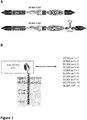
- an identical backbone construct was used, where only the binding moiety of the BCMA-CAR was altered between the different constructs to be tested.
- This backbone construct is shown in Figure 1A , is based on a retroviral vector and further contains a marker.
- an identical construct was made that further contained shRNA against CD247 ( Figure 1A , bottom). When expressed in cells, this shRNA interferes with the function of the T cell receptor complex and thus can prevent the development of graft versus host disease (GvHD) in allogeneic ACT.
- GvHD graft versus host disease
- BCMA CAR The design of the BCMA CAR is shown in more detail in Figure 1B . Eleven different binding moieties were tested, but the hinge, transmembrane and CD3 zeta signaling domains were kept identical. Each construct was tested in a version with either a CD28 or a 4-1BB costimulatory domain.
- BCMA binding moieties all anti-BCMA scFvs
- some sequences were taken from BCMA CARs currently in development (as a benchmark), whereas other sequences were used from BCMA antibodies that have not been used in a CAR before. Examples of CAR sequences are those from WO2013154760 , WO2015158671 and WO2016014789 .
- PBMCs from three different healthy donors were transduced with the indicated BCMA CAR construct or a Mock (tCD34) control vector.
- Fold cell expansion between day 4 to day 10 was compared ( Figure 2A ). All constructs showed a similar fold expansion. Viability at harvest was also comparable between cells transduced with the different BCMA CAR constructs ( Figure 2B ). Results from here onwards are done with 4-1BB based CARs.
- Figure 3B shows the summary of the percentage BCMA-CAR positive cells (%), assessed in the total population of T cells.
- Median fluorescence intensity (MFI) of BCMA-Fc staining is also shown in Fig. 3B , for CD34+ T cells.
- MFI Median fluorescence intensity
- interferon gamma secretion was used to measure activity against cancer cells.
- different BCMA expressing cancer cell lines were co-cultured with Mock (tCD34), or BCMA-CAR expressing T cells. 24h after co-culture, IFN- ⁇ levels were measured in the supernatants. Results are shown in Figure 5 .
- BCMA scFv #11 outperforms the other scFvs tested: not only does it have high expression levels and affinity, it is also the CAR that has the highest activity against the three distinct cancer cell lines tested.
- scFv #11 is derived from an antibody that has not before been used in a CAR, and in these assays thus outperforms several of the scFvs currently in clinical development.
- scFv#11 is a sequence that has been derived from WO2017031104 , Anti-bcma antibodies, bispecific antigen binding molecules that bind bcma and cd3, and uses thereof, incorporated herein in its entirety. Briefly, the binding sequences of the antibody described therein have been used to create a scFv by fusing the variable regions of the heavy and light chains interspersed with a linker peptide.
- mice were engrafted with KMS11-luc multiple myeloma cells. Mice were randomized following bioluminescence measurement at day 5 into three different groups. At day 6, animals were treated with vehicle control, tCD34 transduced T cells or T cells transduced with the selected BCMA-CAR. Results are shown in Figure 6 .
- mice treated with the selected BCMA CAR While in vehicle- and mock-treated animals, the tumor continues to grow, in mice treated with the selected BCMA CAR, the tumors shrink. In one of three animals, the tumor starts to regrow, while in two others, the bioluminescence appears to stay at a plateau level. This appears due to background luminescence, as these two animals appear to be tumor-free.
Landscapes
- Health & Medical Sciences (AREA)
- Life Sciences & Earth Sciences (AREA)
- Chemical & Material Sciences (AREA)
- Organic Chemistry (AREA)
- General Health & Medical Sciences (AREA)
- Immunology (AREA)
- Genetics & Genomics (AREA)
- Engineering & Computer Science (AREA)
- Zoology (AREA)
- Biochemistry (AREA)
- Molecular Biology (AREA)
- Veterinary Medicine (AREA)
- Public Health (AREA)
- Biomedical Technology (AREA)
- Animal Behavior & Ethology (AREA)
- Biophysics (AREA)
- Medicinal Chemistry (AREA)
- Epidemiology (AREA)
- Cell Biology (AREA)
- Proteomics, Peptides & Aminoacids (AREA)
- Biotechnology (AREA)
- Bioinformatics & Cheminformatics (AREA)
- Wood Science & Technology (AREA)
- Gastroenterology & Hepatology (AREA)
- Toxicology (AREA)
- General Engineering & Computer Science (AREA)
- Microbiology (AREA)
- Hematology (AREA)
- Physics & Mathematics (AREA)
- Plant Pathology (AREA)
- Pharmacology & Pharmacy (AREA)
- Chemical Kinetics & Catalysis (AREA)
- General Chemical & Material Sciences (AREA)
- Nuclear Medicine, Radiotherapy & Molecular Imaging (AREA)
- Virology (AREA)
- Medicines Containing Material From Animals Or Micro-Organisms (AREA)
- Medicines That Contain Protein Lipid Enzymes And Other Medicines (AREA)
- Micro-Organisms Or Cultivation Processes Thereof (AREA)
- Peptides Or Proteins (AREA)
- Developmental Biology & Embryology (AREA)
Priority Applications (6)
| Application Number | Priority Date | Filing Date | Title |
|---|---|---|---|
| EP19172053.1A EP3733707A1 (fr) | 2019-04-30 | 2019-04-30 | Cellules car-t de ciblage de bcma et leurs utilisations |
| JP2021564525A JP2022530541A (ja) | 2019-04-30 | 2020-04-30 | Bcmaを標的とするcar t細胞及びその使用 |
| PCT/EP2020/062064 WO2020221873A1 (fr) | 2019-04-30 | 2020-04-30 | Cellules car t ciblant bcma et leurs utilisations |
| US17/607,192 US20220218749A1 (en) | 2019-04-30 | 2020-04-30 | Car t-cells targeting bcma and uses thereof |
| CN202080032347.8A CN113784982A (zh) | 2019-04-30 | 2020-04-30 | 靶向bcma的car t细胞及其用途 |
| EP20727814.4A EP3962949A1 (fr) | 2019-04-30 | 2020-04-30 | Cellules car t ciblant bcma et leurs utilisations |
Applications Claiming Priority (1)
| Application Number | Priority Date | Filing Date | Title |
|---|---|---|---|
| EP19172053.1A EP3733707A1 (fr) | 2019-04-30 | 2019-04-30 | Cellules car-t de ciblage de bcma et leurs utilisations |
Publications (1)
| Publication Number | Publication Date |
|---|---|
| EP3733707A1 true EP3733707A1 (fr) | 2020-11-04 |
Family
ID=66429188
Family Applications (2)
| Application Number | Title | Priority Date | Filing Date |
|---|---|---|---|
| EP19172053.1A Ceased EP3733707A1 (fr) | 2019-04-30 | 2019-04-30 | Cellules car-t de ciblage de bcma et leurs utilisations |
| EP20727814.4A Withdrawn EP3962949A1 (fr) | 2019-04-30 | 2020-04-30 | Cellules car t ciblant bcma et leurs utilisations |
Family Applications After (1)
| Application Number | Title | Priority Date | Filing Date |
|---|---|---|---|
| EP20727814.4A Withdrawn EP3962949A1 (fr) | 2019-04-30 | 2020-04-30 | Cellules car t ciblant bcma et leurs utilisations |
Country Status (5)
| Country | Link |
|---|---|
| US (1) | US20220218749A1 (fr) |
| EP (2) | EP3733707A1 (fr) |
| JP (1) | JP2022530541A (fr) |
| CN (1) | CN113784982A (fr) |
| WO (1) | WO2020221873A1 (fr) |
Cited By (2)
| Publication number | Priority date | Publication date | Assignee | Title |
|---|---|---|---|---|
| CN114426579A (zh) * | 2022-04-06 | 2022-05-03 | 天津旷博同生生物技术有限公司 | 一种抗人cd34抗体、抗人cd34嵌合抗体及应用 |
| JP2024501888A (ja) * | 2020-12-31 | 2024-01-16 | イミュノファーム テクノロジー カンパニー リミテッド | Bcmaに特異的に結合する抗体およびその使用 |
Families Citing this family (4)
| Publication number | Priority date | Publication date | Assignee | Title |
|---|---|---|---|---|
| CN114144202A (zh) | 2019-05-02 | 2022-03-04 | 达尔马科恩有限公司 | 用于载体的多重shRNA |
| JP2026507228A (ja) | 2023-03-03 | 2026-02-27 | アーセナル バイオサイエンシズ インコーポレイテッド | Psma及びca9を標的とするシステム |
| GB202317065D0 (en) | 2023-11-07 | 2023-12-20 | Coding Bio Ltd | BCMA binding molecules |
| WO2026072709A1 (fr) | 2024-09-25 | 2026-04-02 | Orna Therapeutics, Inc. | Récepteurs antigéniques chimériques ciblant bcma |
Citations (7)
| Publication number | Priority date | Publication date | Assignee | Title |
|---|---|---|---|---|
| WO2007059782A1 (fr) | 2005-11-28 | 2007-05-31 | Genmab A/S | Anticorps monovalents recombines et leurs procedes de production |
| WO2013154760A1 (fr) | 2012-04-11 | 2013-10-17 | The United States Of America, As Represented By The Secretary, Department Of Health And Human Services | Récepteurs antigéniques chimériques ciblant un antigène de maturation des lymphocytes b |
| WO2013166051A1 (fr) | 2012-04-30 | 2013-11-07 | The Trustees Of Dartmouth College | Compositions de lymphocytes t déficients en récepteur de lymphocyte t |
| WO2015158671A1 (fr) | 2014-04-14 | 2015-10-22 | Cellectis | Récepteurs antigéniques chimériques spécifiques de bcma (cd269), utiles dans l'immunothérapie du cancer |
| WO2016014789A2 (fr) | 2014-07-24 | 2016-01-28 | Bluebird Bio, Inc. | Récepteurs de l'antigène chimérique bcma |
| WO2017031104A1 (fr) | 2015-08-17 | 2017-02-23 | Janssen Pharmaceutica Nv | Anticorps anti-bcma, molécules bispécifiques de liaison à un antigène liant bcma et cd3 et leurs utilisations |
| WO2018085690A1 (fr) * | 2016-11-04 | 2018-05-11 | Bluebird Bio, Inc. | Compositions de lymphocytes t car anti-bcma |
Family Cites Families (6)
| Publication number | Priority date | Publication date | Assignee | Title |
|---|---|---|---|---|
| MY181834A (en) * | 2014-07-21 | 2021-01-08 | Novartis Ag | Treatment of cancer using humanized anti-bcma chimeric antigen receptor |
| US12048718B2 (en) * | 2016-06-07 | 2024-07-30 | Max-Delbrück-Centrum für Molekulare Medizin in der Helmholtz-Geminschaft | Chimeric antigen receptor and CAR-T cells that bind BCMA |
| KR102512934B1 (ko) | 2016-08-10 | 2023-03-23 | 레전드 바이오테크 아일랜드 리미티드 | Bcma를 표적으로 하는 키메라 항원 수용체 및 이들의 이용 방법 |
| SG11202011306TA (en) * | 2018-05-16 | 2020-12-30 | Janssen Biotech Inc | Bcma/cd3 and gprdc5d/cd3 bispecific antibodies for use in cancer therapy |
| CA3101510A1 (fr) * | 2018-06-01 | 2019-12-05 | University Of Southern California | Domaines divers de liaison a l'antigene, nouvelles plateformes et autres ameliorations pour la therapie cellulaire |
| CN109021116B (zh) * | 2018-08-16 | 2022-03-22 | 重庆精准生物技术有限公司 | 抗bcma抗原的嵌合抗原受体及其应用 |
-
2019
- 2019-04-30 EP EP19172053.1A patent/EP3733707A1/fr not_active Ceased
-
2020
- 2020-04-30 US US17/607,192 patent/US20220218749A1/en not_active Abandoned
- 2020-04-30 EP EP20727814.4A patent/EP3962949A1/fr not_active Withdrawn
- 2020-04-30 CN CN202080032347.8A patent/CN113784982A/zh active Pending
- 2020-04-30 WO PCT/EP2020/062064 patent/WO2020221873A1/fr not_active Ceased
- 2020-04-30 JP JP2021564525A patent/JP2022530541A/ja active Pending
Patent Citations (7)
| Publication number | Priority date | Publication date | Assignee | Title |
|---|---|---|---|---|
| WO2007059782A1 (fr) | 2005-11-28 | 2007-05-31 | Genmab A/S | Anticorps monovalents recombines et leurs procedes de production |
| WO2013154760A1 (fr) | 2012-04-11 | 2013-10-17 | The United States Of America, As Represented By The Secretary, Department Of Health And Human Services | Récepteurs antigéniques chimériques ciblant un antigène de maturation des lymphocytes b |
| WO2013166051A1 (fr) | 2012-04-30 | 2013-11-07 | The Trustees Of Dartmouth College | Compositions de lymphocytes t déficients en récepteur de lymphocyte t |
| WO2015158671A1 (fr) | 2014-04-14 | 2015-10-22 | Cellectis | Récepteurs antigéniques chimériques spécifiques de bcma (cd269), utiles dans l'immunothérapie du cancer |
| WO2016014789A2 (fr) | 2014-07-24 | 2016-01-28 | Bluebird Bio, Inc. | Récepteurs de l'antigène chimérique bcma |
| WO2017031104A1 (fr) | 2015-08-17 | 2017-02-23 | Janssen Pharmaceutica Nv | Anticorps anti-bcma, molécules bispécifiques de liaison à un antigène liant bcma et cd3 et leurs utilisations |
| WO2018085690A1 (fr) * | 2016-11-04 | 2018-05-11 | Bluebird Bio, Inc. | Compositions de lymphocytes t car anti-bcma |
Non-Patent Citations (16)
| Title |
|---|
| ANONYMOUS: "Table 2. Current CAR-T constructs in clinical trials for MM", 26 October 2017 (2017-10-26), XP055518174, Retrieved from the Internet <URL:http://www.multiplemyelomahub.com/media/attachment/a3/a3/table2-cart-cellreview.pdf> [retrieved on 20181023] * |
| AUSUBEL ET AL.: "Current Protocols in Molecular Biology", vol. 114, 2016, JOHN WILEY & SONS |
| DRACH ET AL., BLOOD, vol. 92, no. 3, 1998, pages 802 - 809 |
| FACON ET AL., BLOOD, vol. 97, no. 6, 2001, pages 1566 - 1571 |
| GERTZ ET AL., BLOOD, vol. 106, no. 8, 2005, pages 2837 - 2840 |
| GREEN; SAMBROOK: "Molecular Cloning: A Laboratory Manual", 2012, COLD SPRING HARBOR LABORATORY PRESS |
| HOFMANN ET AL., FRONT IMMUNOL., vol. 9, 2018, pages 835 |
| HOLT ET AL., TRENDS BIOTECHNOL., vol. 21, no. 11, November 2003 (2003-11-01), pages 484 - 90 |
| JIANG ET AL., CELL MOL IMMUNOL, 2014 |
| LAABI ET AL., EMBO J, vol. 11, no. 11, 1992, pages 3897 - 3904 |
| MA TIANTIAN ET AL: "Chimeric antigen receptor T cell targeting B cell maturation antigen immunotherapy is promising for multiple myeloma", ANNALS OF HEMATOLOGY, BERLIN, DE, vol. 98, no. 4, 28 January 2019 (2019-01-28), pages 813 - 822, XP036733763, ISSN: 0939-5555, [retrieved on 20190128], DOI: 10.1007/S00277-018-03592-9 * |
| MADRY ET AL., INT IMMUNOL, vol. 10, no. 11, 1998, pages 1693 - 1702 |
| REVETS ET AL., EXPERT OPIN BIOL THER., vol. 5, no. 1, January 2005 (2005-01-01), pages 111 - 24 |
| SANDRA P SUSANIBAR ADANIYA ET AL: "Chimeric antigen receptor T cell immunotherapy for multiple myeloma: A review of current data and potential clinical applications.", AMERICAN JOURNAL OF HEMATOLOGY, vol. 94, no. S1, 25 February 2019 (2019-02-25), pages S28 - S33, XP055631911, DOI: 10.1002/ajh.25428 * |
| THEMELI ET AL., CELL STEM CELL, 2015 |
| WARD ET AL., NATURE, vol. 341, 1989, pages 544 - 546 |
Cited By (3)
| Publication number | Priority date | Publication date | Assignee | Title |
|---|---|---|---|---|
| JP2024501888A (ja) * | 2020-12-31 | 2024-01-16 | イミュノファーム テクノロジー カンパニー リミテッド | Bcmaに特異的に結合する抗体およびその使用 |
| EP4273168A4 (fr) * | 2020-12-31 | 2025-02-26 | Beijing Immunochina Pharmaceuticals Co., Ltd. | Anticorps se liant de manière spécifique à un antigène de maturation des cellules b et son application |
| CN114426579A (zh) * | 2022-04-06 | 2022-05-03 | 天津旷博同生生物技术有限公司 | 一种抗人cd34抗体、抗人cd34嵌合抗体及应用 |
Also Published As
| Publication number | Publication date |
|---|---|
| WO2020221873A1 (fr) | 2020-11-05 |
| CN113784982A (zh) | 2021-12-10 |
| WO2020221873A8 (fr) | 2022-02-03 |
| US20220218749A1 (en) | 2022-07-14 |
| EP3962949A1 (fr) | 2022-03-09 |
| JP2022530541A (ja) | 2022-06-29 |
Similar Documents
| Publication | Publication Date | Title |
|---|---|---|
| JP7451627B2 (ja) | キメラ受容体及びその使用方法 | |
| CN115141279B (zh) | 抗b7-h3的单克隆抗体及其在细胞治疗中的应用 | |
| JP2022023145A (ja) | 推定上のvista受容体としてのvsig8の同定と、vista/vsig8調節剤を産生するためのその使用 | |
| US20220218749A1 (en) | Car t-cells targeting bcma and uses thereof | |
| US12065498B2 (en) | Methods of making bispecific anti-CD307E and anti-BCMA chimeric antigen receptors and uses of the same | |
| KR102771979B1 (ko) | 형질 전환 성장 인자-베타-반응성 폴리펩티드 및 이의 사용 방법 | |
| KR20210102941A (ko) | 키메라 항원 수용체 및 car-t 세포 및 사용 방법 | |
| KR20230100748A (ko) | 키메라 항원 수용체 및 pd-1 억제제의 조합 요법 | |
| JP2023138960A (ja) | キメラ抗原受容体を発現する免疫細胞 | |
| KR20170057298A (ko) | Cd19에 특이적인 항체 및 키메라 항원 수용체 | |
| KR20140105757A (ko) | Bcma 및 cd3에 대한 결합 분자 | |
| JP2024532482A (ja) | 免疫活性を刺激するための方法および組成物 | |
| US20250000978A1 (en) | Anti-mesothelin car t cells secreting teams and methods of use thereof | |
| US20230192803A1 (en) | Anti-steap2 chimeric antigen receptors and uses thereof | |
| AU2022263573A1 (en) | Bispecific polypeptides for engagement of CAR expressing immune cells with antigen presenting cells and uses thereof | |
| CN115322257A (zh) | Bcma靶向抗体、嵌合抗原受体及其应用 | |
| CN114685659B (zh) | Cd22特异性人源化抗体及利用其的嵌合抗原受体 | |
| CN114933654B (zh) | 靶向cd123的抗体、嵌合抗原受体及其用途 | |
| JP2025530110A (ja) | 二重特異性ポリペプチド及びその使用 | |
| CN119894928A (zh) | 拯救耗竭的免疫细胞的方法 | |
| WO2025006499A2 (fr) | Molécules ciblant gpc3 et leurs utilisations | |
| WO2025246739A1 (fr) | Anticorps anti-cd20 humanisé, produit s'y rapportant et utilisation associée |
Legal Events
| Date | Code | Title | Description |
|---|---|---|---|
| PUAI | Public reference made under article 153(3) epc to a published international application that has entered the european phase |
Free format text: ORIGINAL CODE: 0009012 |
|
| STAA | Information on the status of an ep patent application or granted ep patent |
Free format text: STATUS: THE APPLICATION HAS BEEN PUBLISHED |
|
| AK | Designated contracting states |
Kind code of ref document: A1 Designated state(s): AL AT BE BG CH CY CZ DE DK EE ES FI FR GB GR HR HU IE IS IT LI LT LU LV MC MK MT NL NO PL PT RO RS SE SI SK SM TR |
|
| AX | Request for extension of the european patent |
Extension state: BA ME |
|
| 18R | Application refused |
Effective date: 20201119 |