EP3734445A1 - Sichere und zuverlässige fernaktualisierung einer steuerungsvorrichtung in einem aufzug - Google Patents
Sichere und zuverlässige fernaktualisierung einer steuerungsvorrichtung in einem aufzug Download PDFInfo
- Publication number
- EP3734445A1 EP3734445A1 EP19171949.1A EP19171949A EP3734445A1 EP 3734445 A1 EP3734445 A1 EP 3734445A1 EP 19171949 A EP19171949 A EP 19171949A EP 3734445 A1 EP3734445 A1 EP 3734445A1
- Authority
- EP
- European Patent Office
- Prior art keywords
- packages
- control device
- package
- software
- repository
- Prior art date
- Legal status (The legal status is an assumption and is not a legal conclusion. Google has not performed a legal analysis and makes no representation as to the accuracy of the status listed.)
- Withdrawn
Links
Images


Classifications
-
- G—PHYSICS
- G06—COMPUTING OR CALCULATING; COUNTING
- G06F—ELECTRIC DIGITAL DATA PROCESSING
- G06F8/00—Arrangements for software engineering
- G06F8/60—Software deployment
- G06F8/65—Updates
-
- B—PERFORMING OPERATIONS; TRANSPORTING
- B66—HOISTING; LIFTING; HAULING
- B66B—ELEVATORS; ESCALATORS OR MOVING WALKWAYS
- B66B1/00—Control systems of elevators in general
- B66B1/34—Details, e.g. call counting devices, data transmission from car to control system, devices giving information to the control system
- B66B1/3407—Setting or modification of parameters of the control system
-
- G—PHYSICS
- G06—COMPUTING OR CALCULATING; COUNTING
- G06F—ELECTRIC DIGITAL DATA PROCESSING
- G06F21/00—Security arrangements for protecting computers, components thereof, programs or data against unauthorised activity
- G06F21/50—Monitoring users, programs or devices to maintain the integrity of platforms, e.g. of processors, firmware or operating systems
- G06F21/57—Certifying or maintaining trusted computer platforms, e.g. secure boots or power-downs, version controls, system software checks, secure updates or assessing vulnerabilities
- G06F21/572—Secure firmware programming, e.g. of basic input output system [BIOS]
Definitions
- the present invention relates to secure update procedures of a controller of an elevator system and refer in particular to a method for securely and remotely updating a control device of a people transportation system, like an elevator or escalator, a control device, a system and a computer program.
- Modern elevator systems are based on distributed intelligence in the form of device controllers, such as microprocessors, located at the elevator system.
- device controllers such as microprocessors
- Such control device is operated with software. From time to time this software needs to be updated for bugfixing, new features, change of functionality e.g. due to update of lift regulations, etc.
- a first approach is to download the entire software image to the device (in one run).
- a disadvantage of this approach is that a huge amount of data needs to be transferred each time anew, because usually only a portion of software packages need to be updated and the others may remain unchanged.
- a second approach is to reduce the data transfer by only downloading those software packages that have changed or which are new, compared to the installed version (so called delta update).
- An “Advanced Packaging Tool (APT)” is a free-software user interface that works with core libraries to handle the installation and removal of software on Debian, Ubuntu, and related Linux distributions. APT simplifies the process of managing software on Unix-like computer systems by automating the retrieval, configuration and installation of software packages, either from precompiled files or by compiling source code.
- RPM Package Manager is known as packager management system.
- An RPM package can contain arbitrary set of files.
- Most RPM files are "binary RPMs” (or BRPMs) containing the compiled version of a software.
- source RPMs or SRPMs
- SRPMs source code used to build a binary package.
- the Debian package "dpkg” provides computer programs necessary for run-time functioning of the packaging system.
- elevator systems may not only be used for transportation of goods but mainly for people and therefore need to fulfil very high security requirements.
- high-rise high buildings it is of overall importance to make sure that the control of the elevator system works without failure and corruption in order to safeguard the well-being and health of the people. That is why it is important that a recovery mechanism may be provided which assures that the software is always in a consistent state, also in case a download of a software package fails due to an interruption or deterioration of the data communication channel to the server from where the packages are to be downloaded.
- the software update needs to be initiated and started without manual interaction of service personal in order to keep the costs low.
- the update procedure needs to be traceably monitored and controlled by an authorized entity, which usually is separate from a repository which serves as download server and where the packages are stored and provided for download.
- the software packages may have dependencies with respect to each other.
- a first package requires another second package to be installed in order to be correctly executed or a third package needs a special library etc. Therefore, it is to be assured that the installed software is always in a secure state, in which all dependencies are dissolved.
- the invention relates to a method for reliably and remotely updating a control device of a people transportation system (in particular an elevator) operated with control software, wherein for updating the control software, (software) packages are stored and provided on a repository, wherein the update is controlled by a server, which is separate from the repository and which is informed about the current status of the packages, being installed on the control device, comprising the method steps, being executed on the control device:
- the method provides a reliable procedure for a set of packages that needs to be installed on the control device, wherein each package in the set of packages may be provided in different versions.
- the versions of the packages need to be checked if they comply with each other.
- the versions typically have mutual dependencies. This makes it necessary to ensure the compatibility of the package versions to be updated.
- the compatibility check is automatically executed e.g. by a list of packages and versions that is stored in the corresponding folder of each version on the repository.
- the so called "packages.index" file contains all the packages and their version, that belong to a respective overall software release.
- the software release is what has been tested and is proven to have no compatibility issues. This has two major technical advantages.
- the security is improved, because a version compatibility may be assured automatically and thus a recovery mechanism is provided.
- the recovery mechanism assures that the software with the currently installed packages is always in a consistent state.
- the remote management for the software deployment may be made scalable und much more flexible by safeguarding safety.
- Scalable in this respect refers to the fact that the control of the deployment and update procedure is at the (central) server.
- the server may, thus, be instructed to instruct the update procedure by means of sending the trigger signal to a group of control devices according to a deployment pattern.
- This also allows to deploy the software globally on a set of control devices for a set of transportations systems according to pre-defined rules. For example, it is possible to define a set of control devices as pilot group, deploy the software packages thereon. Then it may be examined if no issues appear after a predefined observation period. If no problems arise, the same software packages may be deployed to a larger group (e.g. country or zone).
- downloading each package individually is executed such as a retry mechanism is applied, wherein the retry mechanism instructs another download operation from the repository for the respective package in case the respective package was not downloaded correctly and wherein the retry mechanism may be re-iterated for a number of pre-configured times for each package.
- the method further comprises:
- the update parameters may comprise a format, syntax and/or time-related parameters. This feature has the advantage that security may be improved as incorrect update parameters may be detected and reported. Typically, the parameter settings are always the same and should not need an "agreement" upfront for example in a configuration phase.
- the method further comprises:
- control device to be updated shall check if the repository is available or reachable through the internet. This can be done by checking the presence of the index file without downloading it.
- the instruction 'wget --spider' may be used. When invoked with this option, Wget will behave as a Web spider, which means that it will not download the contents, but will just check whether or not they are accessible.
- the technical advantage is that unnecessary data transfer to the repository may be avoided and security may be improved as failed network connections may be avoided.
- the method further comprises:
- the configuration file comprises information that is required by a software package management system.
- This software package management system may be deployed or used on the control device and is a piece of software that orchestrates the downloading, verification and installation of the software packages.
- the method further comprises:
- the method processes the received index file package per package and evaluates, whether the respective package is new (i.e. an update package) and is not already installed on the control device (is not already stored in a temporary file structure on the device). If NOT (not locally available), the respective package is downloaded from the repository.
- the invention uses at least two different condition-controlled loop structures (DO-WHILE or REPEAT-UNTIL) to control the data flow.
- DO-WHILE condition-controlled loop structures
- REPEAT-UNTIL REPEAT-UNTIL
- a first loop structure refers to the verification of a successful download of all packages.
- this first loop structure is used after having received the package on the control device for verification of its successful downloading.
- a package download can be successful or not. If the download is not successful, it shall be repeated (retry mechanism). However, even if a download result is successful, the integrity of the package is not guaranteed. Hence, this is why a second loop is used and run to check the integrity (e.g. with SHA256).
- the integrity is checked in a second loop, which is different from the first loop and thus integrity is checked not in the same loop as the download verification.
- the second loop structure will be applied. If the integrity check determines, that the respective received package is compromised or otherwise damaged or not fully received (i.e. due to data connection interruption), then a retry mechanism will be executed for retrying to download the respective package for a number of pre-defined times.
- This feature has the technical advantage in practice that the update process may be made much more efficient, as the update procedure may even be finalized correctly in case a single download process for a package failed for one or two (or more) times.
- installation of the packages will be executed.
- the installation of the package may preferably be executed in a third loop structure.
- the method further comprises:
- a watchdog which is deployed on the control device for preventing unintended software behaviors is disabled before installing the packages and enabled again after all packages have been completely and correctly installed. This improves security of the system.
- a watchdog is an independent electronic circuit that is connected to the reset pin of the central processing unit (CPU).
- CPU central processing unit
- a program on the CPU makes sure that the watchdog timer is refreshed in time. If the watchdog timer is not refreshed in time, the device is reset automatically. This is needed to recover the device from malfunctions.
- NVM non-volatile memory
- it is therefore foreseen to disable the watchdog functionality before starting with the installation of the packages (writing into NVM). When the installation is finished (no more writing into the NVM), the watchdog function can be enabled again.
- the watchdog is only disabled in case it has been verified in a preceding verification step that all packages which have been downloaded show integrity and are not corrupted. This further improves security of the system.
- a confirmation signal is sent to the server in case the step has been executed completely and correctly or not. This makes the system more reliable as the server is always informed about each step.
- At least the trigger signal and/or the report message comprise a clock segment.
- the clock segment is used on the different entities (server, control device) to synchronize their system clocks (system date and time).
- system clocks system date and time
- the clock segment may indicate a time point at which the respective procedure (update procedure) should be executed or has been executed (report). This improves flexibility of the system and makes it possible that the update procedure is controlled on a time-based and/or event-based manner.
- control device for a people transportation system, wherein the control device is operated with control software, comprising:
- the invention relates to a system for a reliable and remote update of control software on a control device, with:
- the invention may also be embodied in a computer program product comprising program elements which induce processor to carry out the steps of the method for reliable and remote update of control software, when the program elements are loaded into a memory of the processor.
- the invention may also be embodied in a computer-readable medium on which program elements are stored that can be read and executed by a processor, in order to perform steps of the method for a reliable and remote software update procedure.
- the realization of the invention by a computer program product and/or a computer-readable medium has the advantage that already existing servers or control devices can be easily adopted by software updates in order to work as proposed by the invention.
- a control device is an electronic device which is operated for controlling operation of a transportation system, like an elevator or an escalator. It may be a wireless gateway.
- the control device is operated with control software, firmware or other forms of computer programs or instructions.
- the control software may comprise packages, which may be provided in different versions.
- the versions of the packages may have dependencies such as the control device is composed of several dependent or independent software packages.
- the update procedure is initiated by a remote instance, by a server or control center.
- the software packages are provided on remote data storage, a repository, which may be in direct data connection with the server.
- installation may involve overwriting old versions of executable files and libraries, updating configuration files to preserve site-specific settings while providing any new configuration parameters required by the new version of software, and recording software version information in a data structure (e.g. deployed on the server) so that a subsequent update cycle can also proceed correctly.
- the step of verifying if all packages of the set have been downloaded successfully as instructed preferably comprises or is followed by a checking step, namely checking data integrity for the (successfully) downloaded packages.
- the updates with software packages are stored in a repository, e.g. a central database, accessible via a networked connection.
- a repository e.g. a central database, accessible via a networked connection.
- This repository can be designed to withstand high amounts of simultaneous download requests, whereas a server doesn't have this requirement.
- the update procedure is controlled by another entity: a server, being different from the repository.
- a status of the control device relates to a status or image of installed versions of software packages. For example, if a first package may be provided in a first version, a second package may be provided in a first version, a third package may be provided in a third version and so on and so forth. However, the first version of the first package is incompatible with the third version of the third package. Therefore, it is necessary that always a consistent state may be provided on the control device.
- This consistency information is typically provided by the server.
- the consistency information may be provided in the trigger signal.
- the consistency information may comprise dependency information, which represents the dependencies of the software packages.
- the dependency information may be provided in the index file.
- the dependency information may contain entries for software packages that is/are required to run the software but which is not included in the set of packages.
- Such required software represents "dependencies" and frequently include such items as language libraries and common object class libraries.
- a dependency can also be another software package.
- the dependencies are stored in the index file. Each package listed in the index file has zero, one or multiple dependency packages listed.
- the software dependencies may also be stored in a table or in a recursive tree format, i.e. as a directed graph.
- the checking of the update parameters comprises an evaluation whether the provided repository name corresponds to a predefined pattern and whether the provided software version parameter is newer than the current software version (currently installed and used on the control device).
- Predefined pattern can be stored in a storage, provided locally or via a network connection.
- the configuration file is the basis on top of which the subsequent processes rely.
- the configuration file comprises instructions for requesting the software updates from the repository and for processing the same. It may comprise verified parameters that were submitted with the trigger signal (i.e. repository URL, SW version) and options that shall be used during the update procedure, such as destination folder for the downloaded files, allowed protocols for the download (e.g. http, https, ftp, ftps, etc.).
- the configuration file represents what shall be installed. A status of the installed software is preferably stored in a separate versioning file on the control device. If the software update process is successful, the software version mentioned in the configuration file should match the software version in the separate versioning file.
- the current software version number is preferably transmitted to the server.
- the index file is downloaded from the repository.
- this step is not mandatory and there may exist embodiments of the invention (e.g. other structure, other operating system) in which the method is applied without such index file, it has the technical advantage that it simplifies and speeds up the process, because it contains all the relevant information in one place. It comprises information such as package name, version, dependencies, size, installed-size, checksum (e.g. SHA256), description, etc.
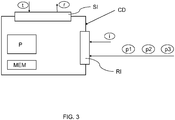
- the method relates to a secure and reliable update procedure for a control device CD of a transportation system, like e.g. an elevator E.
- the control device CD is adapted for controlling the elevator E and may be provided locally at the site of the elevator or directly in the control system of the elevator.
- the control device CD may also be deployed as wireless gateway node.
- the control device CD is provided with a memory MEM for storing control software or control software packages for operating the control device CD. It further is provided with a processor P for executing the control software.
- the control device CD has a server interface SI to a server RUMS, which is adapted to control a software update procedure and a repository interface RI to a repository REP for storing packages of the control software.
- the processor P is adapted to execute a remote software update procedure according to the method which will be explained below with respect to Fig. 2 .
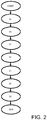
- Fig. 2 shows an update procedure according to a preferred embodiment.
- a trigger signal t is received from the server RUMS.
- the complete control and initiation of the update process is under control of the server RUMS.
- This is an important security feature, as it is avoided that other parties may instruct the control device CD by malware or malicious software to initiate an unauthorized update.
- nobody or no other entity apart from the server RUMS may send the trigger signal t.
- This is achieved by means of using an authentication procedure which may be based on X.509 certificates. With this it may be assured that all messages and (trigger) signals from a server are sent by the original and authorized server RUMS. All other messages or communication will be ignored.
- step S4 the method proceeds directly with step S4.
- a configuration file is updated.
- the configuration file comprises an indication of new software packages to be updated, comprising an indication of the version to be updated and an address in the repository REP, where this update version is accessible.
- the configuration file contains information required by the software update management system. It represents an actual status of the installation on the control device CD.
- the configuration file may be made available and transmitted to the server RUMS.
- an index file i is downloaded from the repository REP.
- the index file i contains a list of all available software packages, being available on the repository REP.
- the index file i may additionally comprise a checksum or hash.
- a checksum is a sequence of numbers and letters used to check data for errors. If the checksum of an original file is known, the control device CD can use a checksum utility to confirm that its copy is identical.
- Typical checksum algorithms may be used, like MD5, SHA-1, SHA-256, and SHA-512.
- the algorithm uses a cryptographic hash function that takes an input and produces a string (a sequence of numbers and letters) of a fixed length.
- the input file can be a small 1 MB file or a massive 4 GB file.
- step S6 each software package, which is mentioned in the index list, is downloaded individually, if it has been determined that the package (in the respective version) does not already exist in the memory of the control device.
- the determination and download step may be implemented in a loop structure (for processing all packages in the index file).
- Step 6 thus comprises for each single package individually a comparison of the very package version with the versions already existent locally on the control device CD, so that a download operation is only triggered in case the version does not already exist.
- This evaluation by comparison e.g. a look up in a data structure
- a retry mechanism is applied, when a download operation was evaluated as not successful (e.g.
- the retry mechanism may again be implemented by means of another loop structure for a pre-configured amount of iterations, e.g. 5 times such as if a download for a package failed, the download operation is re-tried for 5 times. If it has been evaluated that all the re-tries are not successful, in a first embodiment the method may directly proceed to step S8-1 without executing the download operations for the rest of the packages. In a second embodiment, a message is sent to the server RUMS. Both of these embodiments may be applied.
- step S7 for each downloaded package its integrity is checked individually in case it has been evaluated locally on the control device CD that the package in the required version does not already exist.
- step S8-1 it is verified for the complete set off packages and thus for all downloaded packages according to the update instruction, received with the trigger signal t, whether or not all the packages could have been downloaded without error or corruption or interruption (of the data connection). Only in case the complete set of packages is loaded successfully on the control device CD, an install instruction is generated to install the same locally on the control device CD in step S8-2. This verification may be implemented by yet another (a third) loop structure over all downloaded and received packages.
- a report message r may be generated and may be prepared for being sent to the server RUMS in step S9.
- Steps 6, 7 and 8 comprise an iteration (e.g. loop structure) until all packages are processed.
- the method may end or may be rerun.
- Fig. 3 shows a structural overview of a control device CD.
- the control device CD comprises a server interface SI for communication with the server RUMS for receiving the trigger signal t and for sending the report message r.
- the server interface SI preferably is a wireless (e.g. ip-protocol based) interface. Alternatively, it may also be a plug-in card connection (e.g. sdcard) or a wired connection.
- the control device CD comprises a repository interface RI for communication with the repository REP.
- the repository interface RI serves to receive the index file i of the repository REP and the download of each package p1, p2, p3,....
- the control device further comprises am memory for storing or buffering downloaded elements and a processor P for data processing.
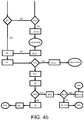
- Fig. 4 is a more detailed flow chart of a multi-step embodiment, which is portioned into Fig. 4a with the first part of the flow chart from the beginning/START to step S5 and into Fig. 4b with the second part of the same flow chart from step S5 to the end.
- the steps S1, S4, S6, S7, S8 and S9 correspond to the ones, already explained with respect to Fig. 2 . Therefore, and for avoiding unnecessary repetitions, these steps are not mentioned again. So, after step S1, step 2 may be performed by checking if parameters (received in the previous step by means of the trigger signal) are valid. In particular, the syntactic correctness of the data may be evaluated (e.g.
- step S21 a "not OK" signal may be sent to the server RUMS and the process ends. If the evaluation is found to be valid, the method proceeds to step S22 for sending a "OK" confirmation signal to the server RUMS. In an alternative embodiment, only one of the steps S21, S22 may be executed.
- step S3 it is checked whether or not the repository REP is available for being accessed (e.g. data connection established and active, etc.). If the evaluation in step S3 is negative (repository not available), then an error message "software update failed" may be sent to the server RUMS in step S31 and the procedure may end. Otherwise (positive result, repository is available), the method may proceed with step S4.
- the repository REP e.g. data connection established and active, etc.
- a configuration file is updated.
- the configuration file contains the software (package) versions to be updated and the new repository address (e.g. in the form of an URL link).
- the configuration file comprises information required by the software package management system.
- the configuration file may be prepared to be sent to the server RUMS.
- step S41 it is checked if the configuration file has been updated successfully. If NO, the method may issue an error message in step S411 and the method may end or if YES (successful update), the method may proceed to step S5.
- step S5 the index file is downloaded from the repository REP, which contains a list of available software packages of that repository REP.
- step S51 it is evaluated if the download of the index file in step S5 has been successful. If NO, in step S511 it is evaluated whether the download attempt already has been executed before for a configurable number of times (the number of admissible iterations may be configured in a configuration phase, e.g. five times). If the upper threshold (number of admissible iterations) has been reached, an error message will be generated in step S5111 and the process may end. If the evaluation in step S51 is YES (download successful) the method may proceed to step S6.
- step S6 the following steps are reiterated for each package listed in the index file:
- step S7 the following steps are reiterated for each package listed in the index file:
- step S71 it is checked if one or more of the packages are corrupted. If YES, in step S711 an error message "Update failed" will be generated and may be sent to the server RUMS, before ending the process. Otherwise (if all packages are OK and not corrupted), the method may proceed to step S72 for disabling a watchdog.
- the watchdog may be a module or function which assures that no unintended changes to the control device CD may be performed. As soon as a change in the installation (runtime environment) is detected, the watchdog will issue a warning message. So, for installing a package, the watchdog mechanism needs to be disabled. After this the method may proceed to step S8.
- step S8 the following steps are reiterated for each package listed in the index file:
- step S81 it is evaluated if all packages could have been installed successfully. If YES, in step S811 a message "update successful" is sent to the server RUMS. In step S8111 it is checked if a reboot_flag is set. If NO, the watchdog is enabled again in step S81111 before going to EXIT. Otherwise (if the reboot flag is not set) /YES, a reboot is initiated in step S81112 before going to EXIT.
- step S81 If it is evaluated in step S81 that not all packages could have been installed successfully (NO), a message "update failed" may be sent in step S9 to the server RUMS. In step S91 the watchdog is enabled again before continuing with EXIT.
- the steps S6 may correspond to a first control loop, step S7 to a second control loop and step S8 may be implemented to a third control loop.
- control device CD for a dedicated update operation by including in the trigger signal information about the specific package version to be downloaded from the repository REP and a link or address for executing the download operation from the repository REP.
- the control device CD needs not to check whether the downloaded package is new or already exists locally, because it will only be instructed by the server RUMS in case the package is new and needs to be downloaded. Thus, the step of comparison may be omitted. It only needs to be verified if all packages could have been downloaded as instructed before checking integrity and before proceeding to the installation and before sending the report of successful update to the server RUMS.
- the consistency and/or dependency information is provided on the server RUMS. The consistency and/or dependency information may be provided in or with the trigger signal.
- the interfaces can be embodied as a hardware interface or as a software interface (e.g. PCI-Bus, USB or Firewire).
- the control device CD can comprise hardware elements and software elements, for example a microprocessor, a field programmable gate array (an acronym is "FPGA") or an application specific integrated circuit (an acronym is "ASIC").
- the memory in the control device CD can be embodied as non-permanent main memory (e.g. random access memory - RAM) or as permanent mass storage (e.g. hard disk, USB stick, SD card, sol-id state disk).
- the network or communication channels can be realized as a LAN (acronym for "local area network”), in particular a WiFi network, or any other local connection, e.g. via Bluetooth or USB (acronym for "universal serial bus”).
- the network can also be realized as a WAN (acronym for "wide area network”), in particular the network can be identical with the internet and may be based on an IP protocol.
- the network can alternatively also be realized as a VPN (acronym for "virtual private network”).
- the repository REP may be a database or can be contained in a memory of a server, or it can be stored on a separate storage unit.
- the repository REP and the server RUMS may be in data connection.
- the system for secure and remote update of a control device in accordance with the method as described above can be implemented as program code means of a computer program and/or as dedicated hardware.
- a computer program may be stored/distributed on a suitable medium, such as an optical storage medium or a solid-state medium, supplied together with or as part of other hardware, but may also be distributed in other forms, such as via the Internet or other wired or wireless telecommunication systems.
- a suitable medium such as an optical storage medium or a solid-state medium, supplied together with or as part of other hardware, but may also be distributed in other forms, such as via the Internet or other wired or wireless telecommunication systems.
- Processes or steps, which have been described with respect to FIG. 2 and/or 4 are computer-implemented and may be embodied as software and/or hardware. At least some steps of the present invention may also be practiced in distributed computing environments where tasks are performed by remote processing devices linked through a communications network. In a distributed computing environment, program modules may be located in local and/or remote memory storage devices.
- the processor P may execute machine-executable instructions to effect one or more aspects of the present invention. At least a portion of the machine executable instructions may be stored (temporarily or more permanently) on the storage devices and/or may be received from an external source via an input interface.
Landscapes
- Engineering & Computer Science (AREA)
- Software Systems (AREA)
- General Engineering & Computer Science (AREA)
- Theoretical Computer Science (AREA)
- Computer Security & Cryptography (AREA)
- Automation & Control Theory (AREA)
- Physics & Mathematics (AREA)
- General Physics & Mathematics (AREA)
- Computer Hardware Design (AREA)
- Computer Networks & Wireless Communication (AREA)
- Stored Programmes (AREA)
Priority Applications (1)
| Application Number | Priority Date | Filing Date | Title |
|---|---|---|---|
| EP19171949.1A EP3734445A1 (de) | 2019-04-30 | 2019-04-30 | Sichere und zuverlässige fernaktualisierung einer steuerungsvorrichtung in einem aufzug |
Applications Claiming Priority (1)
| Application Number | Priority Date | Filing Date | Title |
|---|---|---|---|
| EP19171949.1A EP3734445A1 (de) | 2019-04-30 | 2019-04-30 | Sichere und zuverlässige fernaktualisierung einer steuerungsvorrichtung in einem aufzug |
Publications (1)
| Publication Number | Publication Date |
|---|---|
| EP3734445A1 true EP3734445A1 (de) | 2020-11-04 |
Family
ID=66349357
Family Applications (1)
| Application Number | Title | Priority Date | Filing Date |
|---|---|---|---|
| EP19171949.1A Withdrawn EP3734445A1 (de) | 2019-04-30 | 2019-04-30 | Sichere und zuverlässige fernaktualisierung einer steuerungsvorrichtung in einem aufzug |
Country Status (1)
| Country | Link |
|---|---|
| EP (1) | EP3734445A1 (de) |
Cited By (3)
| Publication number | Priority date | Publication date | Assignee | Title |
|---|---|---|---|---|
| CN114978938A (zh) * | 2022-05-26 | 2022-08-30 | 西安易朴通讯技术有限公司 | 一种交换机测试方法、系统及设备 |
| WO2023088532A1 (en) * | 2021-11-16 | 2023-05-25 | Kone Corporation | Acquiring new set of elevator operation parameters |
| WO2024252056A1 (en) * | 2023-06-07 | 2024-12-12 | Kone Corporation | Software update for a fleet of passenger conveyors |
Citations (3)
| Publication number | Priority date | Publication date | Assignee | Title |
|---|---|---|---|---|
| JP2009155092A (ja) * | 2007-12-27 | 2009-07-16 | Toshiba Elevator Co Ltd | エレベータの制御装置 |
| EP2916219A1 (de) * | 2014-03-03 | 2015-09-09 | Kone Corporation | System und Verfahren für Aufzugs-Softwareaktualisierung auf Aufzugsprozessorkarten |
| EP3173366A1 (de) * | 2015-11-25 | 2017-05-31 | Otis Elevator Company | Automatisierte personenbeförderungssystemmanipulation über automatisierte fernaktivierung und -validierung der steuergerätesoftware |
-
2019
- 2019-04-30 EP EP19171949.1A patent/EP3734445A1/de not_active Withdrawn
Patent Citations (3)
| Publication number | Priority date | Publication date | Assignee | Title |
|---|---|---|---|---|
| JP2009155092A (ja) * | 2007-12-27 | 2009-07-16 | Toshiba Elevator Co Ltd | エレベータの制御装置 |
| EP2916219A1 (de) * | 2014-03-03 | 2015-09-09 | Kone Corporation | System und Verfahren für Aufzugs-Softwareaktualisierung auf Aufzugsprozessorkarten |
| EP3173366A1 (de) * | 2015-11-25 | 2017-05-31 | Otis Elevator Company | Automatisierte personenbeförderungssystemmanipulation über automatisierte fernaktivierung und -validierung der steuergerätesoftware |
Cited By (3)
| Publication number | Priority date | Publication date | Assignee | Title |
|---|---|---|---|---|
| WO2023088532A1 (en) * | 2021-11-16 | 2023-05-25 | Kone Corporation | Acquiring new set of elevator operation parameters |
| CN114978938A (zh) * | 2022-05-26 | 2022-08-30 | 西安易朴通讯技术有限公司 | 一种交换机测试方法、系统及设备 |
| WO2024252056A1 (en) * | 2023-06-07 | 2024-12-12 | Kone Corporation | Software update for a fleet of passenger conveyors |
Similar Documents
| Publication | Publication Date | Title |
|---|---|---|
| US10701084B2 (en) | Reliable and secure firmware update with a dynamic validation for internet of things (IoT) devices | |
| CN110162332B (zh) | 一种rn项目的构建方法及系统 | |
| US9442813B2 (en) | Replaying jobs at a secondary location of a service | |
| US10715637B2 (en) | Systems and methods for automated application deployment management | |
| US8464246B2 (en) | Automation of mainframe software deployment | |
| US20160098262A1 (en) | Release lifecycle management system for multi-node application | |
| CN112363731A (zh) | 一种应用自动化部署方法、装置和计算机可读存储介质 | |
| US20170012819A1 (en) | System and method for provisioning cloud services across heterogeneous environments | |
| CN103353846A (zh) | 一种项目自动部署插件 | |
| KR20170067826A (ko) | 펌웨어의 업데이트 방법 | |
| US10146520B1 (en) | Updating a running application on a computing device | |
| US20220350630A1 (en) | Just-in-time assembly for managed virtual machines | |
| CN119225925A (zh) | 服务管理方法、装置、电子设备及存储介质 | |
| US12265812B2 (en) | Immutable image for deployment to edge devices | |
| CN110268378B (zh) | 创建数据备份的方法、存储介质和虚拟服务器 | |
| CN112486511A (zh) | 一种通过web生成操作系统安装镜像的方法 | |
| US8689048B1 (en) | Non-logging resumable distributed cluster | |
| CN121116340A (zh) | 电子设备上的程序更新方法、设备、介质及程序产品 | |
| CN118170420A (zh) | 一种代码管理方法、系统及计算设备 | |
| US20240211323A1 (en) | Automatically injecting shims into running containers | |
| US12112153B2 (en) | Environment establishment for a program in a server system | |
| CN113190246A (zh) | 软件程序升级方法及装置、可读存储介质、电子设备 | |
| JP6099106B2 (ja) | 少なくとも一つのデータキャリアを提供するための方法、コンピュータシステム、および、メモリデバイス | |
| WO2012177597A1 (en) | Networking elements as a patch distribution platform for distributed automation and control domains | |
| CN121166162A (zh) | 程序升级方法及计算机系统、程序升级装置、程序产品 |
Legal Events
| Date | Code | Title | Description |
|---|---|---|---|
| PUAI | Public reference made under article 153(3) epc to a published international application that has entered the european phase |
Free format text: ORIGINAL CODE: 0009012 |
|
| AK | Designated contracting states |
Kind code of ref document: A1 Designated state(s): AL AT BE BG CH CY CZ DE DK EE ES FI FR GB GR HR HU IE IS IT LI LT LU LV MC MK MT NL NO PL PT RO RS SE SI SK SM TR |
|
| AX | Request for extension of the european patent |
Extension state: BA ME |
|
| STAA | Information on the status of an ep patent application or granted ep patent |
Free format text: STATUS: THE APPLICATION HAS BEEN WITHDRAWN |
|
| 18W | Application withdrawn |
Effective date: 20201106 |