EP3734711A1 - Protecteur, noyau de batterie et batterie - Google Patents
Protecteur, noyau de batterie et batterie Download PDFInfo
- Publication number
- EP3734711A1 EP3734711A1 EP20712827.3A EP20712827A EP3734711A1 EP 3734711 A1 EP3734711 A1 EP 3734711A1 EP 20712827 A EP20712827 A EP 20712827A EP 3734711 A1 EP3734711 A1 EP 3734711A1
- Authority
- EP
- European Patent Office
- Prior art keywords
- impedance element
- piece
- protector
- temperature
- battery cell
- Prior art date
- Legal status (The legal status is an assumption and is not a legal conclusion. Google has not performed a legal analysis and makes no representation as to the accuracy of the status listed.)
- Pending
Links
- 230000001012 protector Effects 0.000 title claims abstract description 51
- 210000004027 cell Anatomy 0.000 claims description 50
- 210000005056 cell body Anatomy 0.000 claims description 5
- 230000017525 heat dissipation Effects 0.000 description 12
- 238000009783 overcharge test Methods 0.000 description 9
- 230000000052 comparative effect Effects 0.000 description 6
- HBBGRARXTFLTSG-UHFFFAOYSA-N Lithium ion Chemical compound [Li+] HBBGRARXTFLTSG-UHFFFAOYSA-N 0.000 description 3
- 229910001416 lithium ion Inorganic materials 0.000 description 3
- 238000000034 method Methods 0.000 description 3
- 238000003466 welding Methods 0.000 description 3
- PXHVJJICTQNCMI-UHFFFAOYSA-N Nickel Chemical compound [Ni] PXHVJJICTQNCMI-UHFFFAOYSA-N 0.000 description 2
- 230000009286 beneficial effect Effects 0.000 description 2
- 239000003792 electrolyte Substances 0.000 description 2
- RYGMFSIKBFXOCR-UHFFFAOYSA-N Copper Chemical compound [Cu] RYGMFSIKBFXOCR-UHFFFAOYSA-N 0.000 description 1
- VCUFZILGIRCDQQ-KRWDZBQOSA-N N-[[(5S)-2-oxo-3-(2-oxo-3H-1,3-benzoxazol-6-yl)-1,3-oxazolidin-5-yl]methyl]-2-[[3-(trifluoromethoxy)phenyl]methylamino]pyrimidine-5-carboxamide Chemical compound O=C1O[C@H](CN1C1=CC2=C(NC(O2)=O)C=C1)CNC(=O)C=1C=NC(=NC=1)NCC1=CC(=CC=C1)OC(F)(F)F VCUFZILGIRCDQQ-KRWDZBQOSA-N 0.000 description 1
- 229910052802 copper Inorganic materials 0.000 description 1
- 239000010949 copper Substances 0.000 description 1
- 230000003111 delayed effect Effects 0.000 description 1
- 230000000694 effects Effects 0.000 description 1
- 229910052751 metal Inorganic materials 0.000 description 1
- 239000002184 metal Substances 0.000 description 1
- 150000002739 metals Chemical class 0.000 description 1
- 229910052759 nickel Inorganic materials 0.000 description 1
- 239000004065 semiconductor Substances 0.000 description 1
- 230000035945 sensitivity Effects 0.000 description 1
Images

Classifications
-
- H—ELECTRICITY
- H01—ELECTRIC ELEMENTS
- H01M—PROCESSES OR MEANS, e.g. BATTERIES, FOR THE DIRECT CONVERSION OF CHEMICAL ENERGY INTO ELECTRICAL ENERGY
- H01M50/00—Constructional details or processes of manufacture of the non-active parts of electrochemical cells other than fuel cells, e.g. hybrid cells
- H01M50/50—Current conducting connections for cells or batteries
- H01M50/572—Means for preventing undesired use or discharge
- H01M50/574—Devices or arrangements for the interruption of current
- H01M50/581—Devices or arrangements for the interruption of current in response to temperature
-
- H—ELECTRICITY
- H01—ELECTRIC ELEMENTS
- H01M—PROCESSES OR MEANS, e.g. BATTERIES, FOR THE DIRECT CONVERSION OF CHEMICAL ENERGY INTO ELECTRICAL ENERGY
- H01M50/00—Constructional details or processes of manufacture of the non-active parts of electrochemical cells other than fuel cells, e.g. hybrid cells
- H01M50/50—Current conducting connections for cells or batteries
- H01M50/572—Means for preventing undesired use or discharge
- H01M50/574—Devices or arrangements for the interruption of current
-
- H—ELECTRICITY
- H01—ELECTRIC ELEMENTS
- H01C—RESISTORS
- H01C1/00—Details
- H01C1/01—Mounting; Supporting
-
- H—ELECTRICITY
- H01—ELECTRIC ELEMENTS
- H01C—RESISTORS
- H01C7/00—Non-adjustable resistors formed as one or more layers or coatings; Non-adjustable resistors made from powdered conducting material or powdered semi-conducting material with or without insulating material
- H01C7/02—Non-adjustable resistors formed as one or more layers or coatings; Non-adjustable resistors made from powdered conducting material or powdered semi-conducting material with or without insulating material having positive temperature coefficient
-
- H—ELECTRICITY
- H01—ELECTRIC ELEMENTS
- H01H—ELECTRIC SWITCHES; RELAYS; SELECTORS; EMERGENCY PROTECTIVE DEVICES
- H01H37/00—Thermally-actuated switches
- H01H37/02—Details
- H01H37/32—Thermally-sensitive members
- H01H37/52—Thermally-sensitive members actuated due to deflection of bimetallic element
-
- H—ELECTRICITY
- H01—ELECTRIC ELEMENTS
- H01M—PROCESSES OR MEANS, e.g. BATTERIES, FOR THE DIRECT CONVERSION OF CHEMICAL ENERGY INTO ELECTRICAL ENERGY
- H01M2200/00—Safety devices for primary or secondary batteries
- H01M2200/10—Temperature sensitive devices
- H01M2200/106—PTC
-
- H—ELECTRICITY
- H01—ELECTRIC ELEMENTS
- H01M—PROCESSES OR MEANS, e.g. BATTERIES, FOR THE DIRECT CONVERSION OF CHEMICAL ENERGY INTO ELECTRICAL ENERGY
- H01M2200/00—Safety devices for primary or secondary batteries
- H01M2200/10—Temperature sensitive devices
- H01M2200/108—Normal resistors
-
- H—ELECTRICITY
- H01—ELECTRIC ELEMENTS
- H01M—PROCESSES OR MEANS, e.g. BATTERIES, FOR THE DIRECT CONVERSION OF CHEMICAL ENERGY INTO ELECTRICAL ENERGY
- H01M50/00—Constructional details or processes of manufacture of the non-active parts of electrochemical cells other than fuel cells, e.g. hybrid cells
- H01M50/10—Primary casings; Jackets or wrappings
- H01M50/102—Primary casings; Jackets or wrappings characterised by their shape or physical structure
- H01M50/103—Primary casings; Jackets or wrappings characterised by their shape or physical structure prismatic or rectangular
-
- H—ELECTRICITY
- H01—ELECTRIC ELEMENTS
- H01M—PROCESSES OR MEANS, e.g. BATTERIES, FOR THE DIRECT CONVERSION OF CHEMICAL ENERGY INTO ELECTRICAL ENERGY
- H01M50/00—Constructional details or processes of manufacture of the non-active parts of electrochemical cells other than fuel cells, e.g. hybrid cells
- H01M50/50—Current conducting connections for cells or batteries
- H01M50/531—Electrode connections inside a battery casing
-
- Y—GENERAL TAGGING OF NEW TECHNOLOGICAL DEVELOPMENTS; GENERAL TAGGING OF CROSS-SECTIONAL TECHNOLOGIES SPANNING OVER SEVERAL SECTIONS OF THE IPC; TECHNICAL SUBJECTS COVERED BY FORMER USPC CROSS-REFERENCE ART COLLECTIONS [XRACs] AND DIGESTS
- Y02—TECHNOLOGIES OR APPLICATIONS FOR MITIGATION OR ADAPTATION AGAINST CLIMATE CHANGE
- Y02E—REDUCTION OF GREENHOUSE GAS [GHG] EMISSIONS, RELATED TO ENERGY GENERATION, TRANSMISSION OR DISTRIBUTION
- Y02E60/00—Enabling technologies; Technologies with a potential or indirect contribution to GHG emissions mitigation
- Y02E60/10—Energy storage using batteries
Definitions
- the disclosure generally relates to batteries, in particular, to a protector, battery cell containing the protector, and battery containing the battery cell.
- Lithium-ion batteries are usually equipped with a temperature-sensitive circuit breaker (TCO) as a protector.
- TCO temperature-sensitive circuit breaker
- the temperature-sensitive circuit breakers usually have a problem of not being able to operate in time, which causes the temperature-sensitive circuit breakers to be unable to cut off or reduce the current in time, so the temperature-sensitive circuit breakers cannot effectively protect the battery cells.
- the protector has a more timely action, thereby effectively protecting the battery cell and the battery.
- a protector in an aspect of the present application, includes: a first adaptor piece; a first impedance element; a second adaptor piece, the first impedance element is coupled to the first adaptor piece and the second adaptor piece, and the first adaptor piece is coupled to an electrode tab; and a second impedance element, the second impedance element is electrically connected to and located between the first impedance element and the second adaptor piece.
- the first impedance element includes: a first connecting piece; a second connecting piece; a first element; and an elastic piece.
- a temperature of the elastic piece is less than a first temperature
- the first connecting piece is electrically contact with the second connecting piece directly.
- the temperature of the elastic piece is greater than or equal to the first temperature
- the elastic piece deforms to form a series circuit by the first connecting piece, the first element, the elastic piece, and the second connecting piece.
- the first element is located between the first connecting piece and the elastic piece, and the elastic piece is located between the first element and the second connecting piece.
- the first element is a positive temperature coefficient thermistor.
- the second impedance element includes a resistor.
- a resistance value of the second impedance element is greater than or equal to 1 mQ and less than or equal to 10 m ⁇ .
- the second impedance element is a positive temperature coefficient thermistor or the same as the first impedance element.
- the protector includes at least two second impedance elements.
- the battery cell includes a cell body and the protector above-mentioned.
- the cell body is provided with a first electrode tab.
- the first electrode tab is coupled to the first adaptor piece.
- the battery includes the battery cell above-mentioned.
- the second impedance element is electrically connected to and located between the first impedance element and the second adaptor piece, so that a heat dissipation path of the first impedance element to the second adaptor piece is changed to a heat dissipation path of the first impedance element to the second impedance element, and to the second adaptor piece, so that a heat dissipation distance of the protector is lengthened, thereby reducing a heat dissipation speed of the first impedance element.
- the second impedance element can generate heat by itself, which can inhibit the first impedance element from dissipating heat to the outside, so that the protector of the present disclosure can act in time to effectively protect the battery cell.
- 100 represents a temperature-sensitive circuit breaker
- 110 and 210 represent a first adaptor piece
- 120 represents a circuit breaker
- 130 and 230 represent a second adaptor piece
- 200 represents a protector
- 220 represents a first impedance element
- 240 represents a second impedance element
- 241 represents a PTC thermistor
- 222 represents a first connecting piece
- 224 represents a second connecting piece
- 226 represents a first element
- 228 represents an elastic piece
- 229 represents a contact point
- 242 represents a resistor
- 700 represents a battery cell
- 710 represents a cell body
- 712 represents a first electrode tab.
- an element when an element is considered to be “connected” to another element, it may be directly connected to another element or there may be a centered element at the same time.
- an element When an element is considered to be “disposed on” another element, it can be an element that is disposed directly on the other element or a centered element may be present at the same time.
- FIG. 1 is a perspective view of a temperature-sensitive circuit breaker according to the prior art.
- the temperature-sensitive circuit breaker 100 includes a first adaptor piece 110, a circuit breaker 120, and a second adaptor piece 130.
- the circuit breaker 120 is connected to and located between the first adaptor piece 110 and the second adaptor piece 130.
- the circuit breaker 120 is in series with a battery cell by the first adaptor piece 110.
- the first adaptor piece 110 is coupled to an electrode tab of a battery cell.
- a temperature of the second adaptor piece 130 is low, so heat will be transferred from the circuit breaker 120 to the second adaptor piece 130, resulting in a decrease in a temperature of the circuit breaker 120, thereby causing action of the circuit breaker 120 is delayed, which causes the battery cell to be further charged and overheated.
- a method is to use a temperature-sensitive circuit breaker with a relatively low operating temperature to ensure that the temperature-sensitive circuit breaker can operate in a timely manner when the battery cell heats up.
- the method of the temperature-sensing circuit breaker with a lower operating temperature limits a high-current discharge capacity of the battery cell, or the temperature-sensing circuit breaker will operate in a high-power discharge mode, causing the battery cell to fail to work properly and equipment to be shut down.
- Another method is to improve an overcharge performance of a battery system by improving electrolyte.
- the improved electrolyte will deteriorate electrochemical performance of the battery cell, for example, high-temperature storage performance of the battery cell.
- FIG. 2 is a perspective view of an embodiment of a protector according to the present disclosure.
- the protector 100 includes a first adaptor piece 210, a first impedance element 220, a second adaptor piece 230, and a second impedance element 240.
- the first impedance element 220 is coupled to the first adaptor piece 210 and the second adaptor piece 230.
- the first adaptor piece 210 is coupled to an electrode tab.
- the second impedance element 240 is connected to and located between the first impedance element 220 and the second adaptor piece 230.
- the second impedance element 240 is connected to and located between the first impedance element 220 and the second adaptor piece 230, so that a heat dissipation path of the first impedance element 220 to the second adaptor piece 230 is changed to a heat dissipation path of the first impedance element 220 to the second impedance element 240, and to the second adaptor piece 230, so that a heat dissipation distance of the protector 100 is lengthened, thereby reducing a heat dissipation speed of the first impedance element 220.
- the second impedance element 240 can generate heat by itself, which can inhibit the first impedance element 220 from dissipating heat to the outside, so that the protector 100 of the present disclosure can act in time to effectively protect the battery cell.
- the first adaptor piece 210 may be connected to the first impedance element 220 by laser welding, the first impedance element 220 may be connected to the second impedance element 240 by laser welding, and the second impedance element 240 may be connected to the second adaptor piece 230 by laser welding, too.
- the first adaptor piece 210 may be connected to the first impedance element 220 by any other properly connecting manners, the first impedance element 220 may be connected to the second impedance element 240 by any other properly connecting manners, and second impedance element 240 may be connected to the second adaptor piece 230 by any other properly connecting manners.
- the second impedance element 240 may include a positive temperature coefficient (PTC) thermistor 241.
- the PTC thermistor is a kind of semiconductor resistor with temperature sensitivity. When it exceeds a certain temperature (Curie temperature), resistance value of the PTC thermistor will increase stepwise with the increase of temperature. Therefore, by connecting the PTC thermistor 241 between the first impedance element 220 and the second adaptor piece 230, the heat dissipation distance of the first impedance element 220 to the second adaptor piece 230 is extended on the one hand, and on the other hand, the PTC thermistor 241 itself has a resistance value, which can generate heat and inhibit the first impedance element 220 from dissipating heat to the outside.
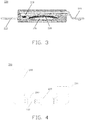
- FIG. 3 is a perspective view of the first impedance element 220.
- the first impedance element 220 includes a first connecting piece 222, a second connecting piece 224, a first element 226, and an elastic piece 228.
- a temperature of the elastic piece 228 is less than a first temperature (for example, a designed operating temperature)
- the first connecting piece 222 is in direct electrical contact with the second connecting piece 224.
- the first connecting piece 222 is electrically contact with the second connecting piece 224 by a contact point 229 in direct.
- a series circuit is defined by the first connecting piece 222, the first element 226, the elastic piece 228, and the second connecting piece 224.
- the elastic piece 228 deforms to separate the contact points 229 from the first connecting piece 222 and the second connecting piece 224, thereby forming the series circuit by the first connecting piece 222, the first element 226, the elastic piece 228, and the second connecting piece 224.
- the first element 226 is located between the first connecting piece 222 and the elastic piece 228, and the elastic piece 228 is located between the first element 226 and the second connecting piece 224. It should be understood that any suitable configuration may be made for the arrangement of the first connecting piece 222, the second connecting piece 224, the first element 226, and the elastic piece 228 of the first impedance element 220, which is not limited in this disclosure.
- the first element 226 may be a PTC thermistor. As described above, when a certain temperature (Curie temperature) is exceeded, the resistance value of the PTC thermistor increases stepwise with the increase of temperature. Therefore, when the temperature of the elastic piece 228 is equal to or greater than the first temperature, the first connecting piece 222, the first element 226, the elastic piece 228, and the second connecting piece 224 form a series circuit.
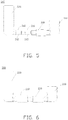
- FIG. 4 is a perspective view of a protector according to an embodiment of the present disclosure.
- the second impedance element 240 includes a resistor 242.
- the resistor 242 is electrically connected to and located between the first impedance element 220 and the second adaptor piece 230, which can lengthen the heat dissipation distance of the first impedance element 220 to the second adaptor piece 230.
- the resistor 242 itself has a resistance value, which can generate heat and inhibit the first impedance element 220 from dissipating heat to the outside.
- the protector 200 includes at least two second impedance elements 240. That is, a number of the second impedance elements 240 may be two or more.
- FIG. 5 is a perspective view of a protector according to an embodiment of the present disclosure.
- the number of the second impedance elements 240 is two, and each of the two second impedance elements 240 includes a resistor 242. It should be understood that, depending on the specific application, the second impedance element 240 may be any other suitable element, and the number of the second impedance element 240 may be any other suitable number.
- FIG. 6 is a perspective view of a protector according to an embodiment of the present disclosure.
- the second impedance element 240 may be the same element as the first impedance element 220.
- the second impedance element 240 may have a structure shown in FIG. 3 .
- connection pins of the first impedance element 220 and connection pins of the second impedance element 240 are metals (for example, copper) that cannot be directly welded by laser, and the first impedance element 220 may be electrically connected to the second impedance element 240 by nickel.
- the second impedance element 240 can improve the heat conduction between the battery cell and the second impedance element 240 while lengthening the heat dissipation path of the first impedance element 220, which can generate heat and inhibit the first impedance element 220 from dissipating heat to the outside.
- a resistance value of the second impedance element 240 is greater than or equal to 1 mQ and less than or equal to 10 m ⁇ . According to the specific application, the resistance value of the second impedance element 240 may be appropriately configured, which is not limited in this disclosure.
- the beneficial effects achieved by the protector of the present disclosure are described below by way of examples. Connecting the protector involved in this disclosure to a battery cell and performing an overcharge test. Taking a battery cell with a temperature-sensitive circuit breaker without a second impedance element as comparative example 1, performing a 1C / 10V overcharge test, and observing records of an overcharge pass rate of each of examples 1-4 and comparative example 1. Table 1 shows a comparison result of the overcharge pass rates of the examples 1-4 and comparative example 1.
- the battery cell of example 1 uses the protector 200 shown in FIG. 6 , in which the resistance values of the first impedance element 220 and the second impedance element 240 are both 3 m ⁇ .
- the 1C / 10V overcharge test is performed on the battery cell of example 1.
- the battery cell of example 2 uses the protector 200 shown in FIG. 2 , in which the resistance value of the PTC thermistor 241 is 5 m ⁇ .
- the 1C / 10V overcharge test is performed on the battery cell of example 2.
- the battery cell of example 3 uses the protector 200 shown in FIG. 4 , in which the resistance value of the resistor 242 is 4 m ⁇ .
- the 1C / 10V overcharge test is performed on the battery cell of example 3.
- the battery cell of example 4 uses the protector 200 shown in FIG. 5 , and the resistance value of the two resistors 242 is 2 m ⁇ .
- the 1C / 10V overcharge test is performed on the battery cell of example 4.
- Table 1 Groups overcharge pass rate Surface temperature of the battery cell when the protector is in action example 1 10/10 pass 73.78 example 2 10/10 pass 75.03 example 3 10/10 pass 76.26 example 4 10/10 pass 75.07 comparative example 1 7/10 pass 82.63
- the overcharge pass rates of examples 1 to 4 are all 10 / 10 pass, which is significantly better than the overcharge pass rate of 7 / 10 pass of comparative example 1.
- the surface temperature of the battery cell is lower than that of comparative example 1 , which indicates that the protector provided in this disclosure is easier to act (trigger) during the overcharge test of the battery cell.
- the protector provided in this disclosure operates more promptly during the overcharge test of the battery cell.
- the second impedance element of example 1 is beneficial to lengthen the heat dissipation path of the first impedance element, and to improve the heat conduction between the second impedance element and the battery cell, so the improvement effect of the battery cell of example 1 is more obvious.
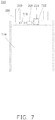
- a battery cell 700 is further provided.
- the battery cell 700 includes a battery body 710 and the protector 200 above-mentioned.
- the battery body 710 is provided with a first electrode tab 712.
- the first pole tab 712 is coupled to the first adaptor piece 210 of the protector 200.
- FIG. 7 illustrates a case where the battery cell 700 includes the protector 200 shown in FIG. 2 . It should be understood that the battery cell of the present disclosure may include any of the above-mentioned protectors.
- a battery is further provided.
- the battery includes the battery cell above-mentioned.
Landscapes
- Engineering & Computer Science (AREA)
- Chemical & Material Sciences (AREA)
- Chemical Kinetics & Catalysis (AREA)
- Electrochemistry (AREA)
- General Chemical & Material Sciences (AREA)
- Microelectronics & Electronic Packaging (AREA)
- Ceramic Engineering (AREA)
- Physics & Mathematics (AREA)
- Electromagnetism (AREA)
- Connection Of Batteries Or Terminals (AREA)
- Thermally Actuated Switches (AREA)
- Secondary Cells (AREA)
Applications Claiming Priority (2)
| Application Number | Priority Date | Filing Date | Title |
|---|---|---|---|
| CN201920276506.3U CN209766544U (zh) | 2019-03-05 | 2019-03-05 | 保护器、电芯以及电池 |
| PCT/CN2020/078065 WO2020177746A1 (fr) | 2019-03-05 | 2020-03-05 | Protecteur, noyau de batterie et batterie |
Publications (2)
| Publication Number | Publication Date |
|---|---|
| EP3734711A1 true EP3734711A1 (fr) | 2020-11-04 |
| EP3734711A4 EP3734711A4 (fr) | 2021-04-21 |
Family
ID=68753806
Family Applications (1)
| Application Number | Title | Priority Date | Filing Date |
|---|---|---|---|
| EP20712827.3A Pending EP3734711A4 (fr) | 2019-03-05 | 2020-03-05 | Protecteur, noyau de batterie et batterie |
Country Status (4)
| Country | Link |
|---|---|
| EP (1) | EP3734711A4 (fr) |
| JP (1) | JP7422142B2 (fr) |
| CN (1) | CN209766544U (fr) |
| WO (1) | WO2020177746A1 (fr) |
Families Citing this family (3)
| Publication number | Priority date | Publication date | Assignee | Title |
|---|---|---|---|---|
| CN209766544U (zh) * | 2019-03-05 | 2019-12-10 | 宁德新能源科技有限公司 | 保护器、电芯以及电池 |
| CN113078023A (zh) * | 2021-03-30 | 2021-07-06 | 重庆冠宇电池有限公司 | 一种电流过载保护器及锂离子电池 |
| CN113904033B (zh) | 2021-09-16 | 2024-07-30 | 宁德新能源科技有限公司 | 电芯以及用电设备 |
Family Cites Families (17)
| Publication number | Priority date | Publication date | Assignee | Title |
|---|---|---|---|---|
| US4901186A (en) * | 1988-06-06 | 1990-02-13 | Therm-O-Disc, Incorporated | Temperature compensated thermal protector |
| JP3416229B2 (ja) * | 1993-11-30 | 2003-06-16 | 三洋電機株式会社 | パック電池 |
| CN1142605C (zh) * | 1997-08-22 | 2004-03-17 | 杜拉塞尔公司 | 电化学电池和其电流分断器 |
| JP2001216883A (ja) | 2000-01-31 | 2001-08-10 | Sony Corp | 保護素子及びバッテリパック |
| JP2001313202A (ja) * | 2000-04-28 | 2001-11-09 | Nec Schott Components Corp | 保護装置 |
| KR100477752B1 (ko) * | 2002-12-26 | 2005-03-21 | 삼성에스디아이 주식회사 | 보호소자 및 이를 구비한 리튬 이차 전지 |
| JP2004327223A (ja) * | 2003-04-24 | 2004-11-18 | Matsushita Electric Ind Co Ltd | 電池収納装置、電源装置、および電動車両 |
| JP2006296180A (ja) * | 2005-03-17 | 2006-10-26 | Furukawa Electric Co Ltd:The | 保護部品、保護装置、電池パック及び携帯用電子機器 |
| DE102007033427A1 (de) * | 2007-07-18 | 2009-01-22 | Robert Bosch Gmbh | Anordnung mit einem Gehäuse |
| US9099761B2 (en) * | 2011-10-07 | 2015-08-04 | Samsung Sdi Co., Ltd. | Rechargeable battery including temperature protection element connected to lead tab and connection tab |
| JP6097637B2 (ja) * | 2013-05-22 | 2017-03-15 | 日立マクセル株式会社 | 保護回路を有する二次電池パック |
| KR102038727B1 (ko) * | 2015-08-31 | 2019-10-30 | 주식회사 엘지화학 | 배터리 셀 보호 회로 |
| KR102325845B1 (ko) * | 2016-10-26 | 2021-11-11 | 삼성에스디아이 주식회사 | 이차 전지 |
| JP6791501B2 (ja) * | 2017-02-08 | 2020-11-25 | 大塚テクノ株式会社 | 瞬断防止用のマイクロブレーカ及び瞬断防止マイクロブレーカの製造方法 |
| JP2018206732A (ja) * | 2017-06-09 | 2018-12-27 | ボーンズ株式会社 | ブレーカー |
| CN208433461U (zh) * | 2018-07-20 | 2019-01-25 | 宁德新能源科技有限公司 | 保护器及电池 |
| CN209766544U (zh) * | 2019-03-05 | 2019-12-10 | 宁德新能源科技有限公司 | 保护器、电芯以及电池 |
-
2019
- 2019-03-05 CN CN201920276506.3U patent/CN209766544U/zh active Active
-
2020
- 2020-03-05 EP EP20712827.3A patent/EP3734711A4/fr active Pending
- 2020-03-05 JP JP2021515141A patent/JP7422142B2/ja active Active
- 2020-03-05 WO PCT/CN2020/078065 patent/WO2020177746A1/fr not_active Ceased
Also Published As
| Publication number | Publication date |
|---|---|
| EP3734711A4 (fr) | 2021-04-21 |
| WO2020177746A1 (fr) | 2020-09-10 |
| JP2022501987A (ja) | 2022-01-06 |
| CN209766544U (zh) | 2019-12-10 |
| JP7422142B2 (ja) | 2024-01-25 |
Similar Documents
| Publication | Publication Date | Title |
|---|---|---|
| US6331764B1 (en) | Supplemental battery overcharge protection device | |
| CN207530023U (zh) | 一种电池及移动终端 | |
| EP3734711A1 (fr) | Protecteur, noyau de batterie et batterie | |
| CN205921041U (zh) | 一种动力电池 | |
| WO2018054143A1 (fr) | Batterie, terminal, et système de charge | |
| TWI288983B (en) | A safety device for preventing overcharge of secondary batteries and secondary batteries therewith | |
| US10056769B2 (en) | Lithium-ion battery protector | |
| JP2011519124A (ja) | 不可逆ヒューズを有する電気化学セル | |
| JP2007035622A (ja) | Ptc素子を備えた二次電池 | |
| US20170077723A1 (en) | Battery system with overcharge and/or exhaustive-discharge protection | |
| KR20170031062A (ko) | 과충전 및/또는 심방전 방지 방식 배터리 시스템 | |
| CN104104068A (zh) | 锂离子电池保护器 | |
| CN217768689U (zh) | 电池组件及终端设备 | |
| KR20000038817A (ko) | 리튬 이차 전지 | |
| JPH11339766A (ja) | 電池パック | |
| JP2005168215A (ja) | 電池パック及び電気装置 | |
| JPH11260220A (ja) | サーマルプロテクタ | |
| JP5295869B2 (ja) | アルカリ蓄電池モジュールおよび電池劣化判定方法 | |
| KR20040037547A (ko) | 이차 전지팩 | |
| US9870886B2 (en) | Protective element and protective circuit substrate using the same | |
| US10879520B2 (en) | Cell and battery | |
| CN205723744U (zh) | 连接组件及电池组件 | |
| CN220189545U (zh) | 一种大电流保护元件 | |
| CN216530551U (zh) | 保护设备和电路保护组件 | |
| KR100577489B1 (ko) | Ptc 특성을 갖는 전극단자를 구비한 이차전지 |
Legal Events
| Date | Code | Title | Description |
|---|---|---|---|
| STAA | Information on the status of an ep patent application or granted ep patent |
Free format text: STATUS: UNKNOWN |
|
| STAA | Information on the status of an ep patent application or granted ep patent |
Free format text: STATUS: THE INTERNATIONAL PUBLICATION HAS BEEN MADE |
|
| PUAI | Public reference made under article 153(3) epc to a published international application that has entered the european phase |
Free format text: ORIGINAL CODE: 0009012 |
|
| STAA | Information on the status of an ep patent application or granted ep patent |
Free format text: STATUS: REQUEST FOR EXAMINATION WAS MADE |
|
| 17P | Request for examination filed |
Effective date: 20200331 |
|
| AK | Designated contracting states |
Kind code of ref document: A1 Designated state(s): AL AT BE BG CH CY CZ DE DK EE ES FI FR GB GR HR HU IE IS IT LI LT LU LV MC MK MT NL NO PL PT RO RS SE SI SK SM TR |
|
| AX | Request for extension of the european patent |
Extension state: BA ME |
|
| A4 | Supplementary search report drawn up and despatched |
Effective date: 20210324 |
|
| RIC1 | Information provided on ipc code assigned before grant |
Ipc: H01M 50/581 20210101AFI20210318BHEP Ipc: H01C 1/01 20060101ALI20210318BHEP Ipc: H01C 7/02 20060101ALI20210318BHEP Ipc: H02H 9/02 20060101ALI20210318BHEP Ipc: H01H 71/08 20060101ALI20210318BHEP Ipc: H01H 71/00 20060101ALN20210318BHEP |
|
| DAV | Request for validation of the european patent (deleted) | ||
| DAX | Request for extension of the european patent (deleted) |