EP3735281B1 - Dispositif pour la capture et l'élimination de matériel de maladie à partir de fluides - Google Patents
Dispositif pour la capture et l'élimination de matériel de maladie à partir de fluides Download PDFInfo
- Publication number
- EP3735281B1 EP3735281B1 EP19735789.0A EP19735789A EP3735281B1 EP 3735281 B1 EP3735281 B1 EP 3735281B1 EP 19735789 A EP19735789 A EP 19735789A EP 3735281 B1 EP3735281 B1 EP 3735281B1
- Authority
- EP
- European Patent Office
- Prior art keywords
- channel
- multidirectional
- substance
- capture
- fluidic channel
- Prior art date
- Legal status (The legal status is an assumption and is not a legal conclusion. Google has not performed a legal analysis and makes no representation as to the accuracy of the status listed.)
- Active
Links
Images







Classifications
-
- A—HUMAN NECESSITIES
- A61—MEDICAL OR VETERINARY SCIENCE; HYGIENE
- A61M—DEVICES FOR INTRODUCING MEDIA INTO, OR ONTO, THE BODY; DEVICES FOR TRANSDUCING BODY MEDIA OR FOR TAKING MEDIA FROM THE BODY; DEVICES FOR PRODUCING OR ENDING SLEEP OR STUPOR
- A61M1/00—Suction or pumping devices for medical purposes; Devices for carrying-off, for treatment of, or for carrying-over, body-liquids; Drainage systems
- A61M1/36—Other treatment of blood in a by-pass of the natural circulatory system, e.g. temperature adaptation, irradiation ; Extra-corporeal blood circuits
- A61M1/3679—Other treatment of blood in a by-pass of the natural circulatory system, e.g. temperature adaptation, irradiation ; Extra-corporeal blood circuits by absorption
-
- G—PHYSICS
- G01—MEASURING; TESTING
- G01N—INVESTIGATING OR ANALYSING MATERIALS BY DETERMINING THEIR CHEMICAL OR PHYSICAL PROPERTIES
- G01N33/00—Investigating or analysing materials by specific methods not covered by groups G01N1/00 - G01N31/00
- G01N33/48—Biological material, e.g. blood, urine; Haemocytometers
- G01N33/483—Physical analysis of biological material
- G01N33/487—Physical analysis of biological material of liquid biological material
- G01N33/49—Blood
- G01N33/492—Determining multiple analytes
-
- B—PERFORMING OPERATIONS; TRANSPORTING
- B01—PHYSICAL OR CHEMICAL PROCESSES OR APPARATUS IN GENERAL
- B01L—CHEMICAL OR PHYSICAL LABORATORY APPARATUS FOR GENERAL USE
- B01L3/00—Containers or dishes for laboratory use, e.g. laboratory glassware; Droppers
- B01L3/50—Containers for the purpose of retaining a material to be analysed, e.g. test tubes
- B01L3/502—Containers for the purpose of retaining a material to be analysed, e.g. test tubes with fluid transport, e.g. in multi-compartment structures
- B01L3/5023—Containers for the purpose of retaining a material to be analysed, e.g. test tubes with fluid transport, e.g. in multi-compartment structures with a sample being transported to, and subsequently stored in an absorbent for analysis
-
- G—PHYSICS
- G01—MEASURING; TESTING
- G01N—INVESTIGATING OR ANALYSING MATERIALS BY DETERMINING THEIR CHEMICAL OR PHYSICAL PROPERTIES
- G01N33/00—Investigating or analysing materials by specific methods not covered by groups G01N1/00 - G01N31/00
- G01N33/48—Biological material, e.g. blood, urine; Haemocytometers
- G01N33/50—Chemical analysis of biological material, e.g. blood, urine; Testing involving biospecific ligand binding methods; Immunological testing
- G01N33/53—Immunoassay; Biospecific binding assay; Materials therefor
- G01N33/543—Immunoassay; Biospecific binding assay; Materials therefor with an insoluble carrier for immobilising immunochemicals
- G01N33/54366—Apparatus specially adapted for solid-phase testing
-
- G—PHYSICS
- G01—MEASURING; TESTING
- G01N—INVESTIGATING OR ANALYSING MATERIALS BY DETERMINING THEIR CHEMICAL OR PHYSICAL PROPERTIES
- G01N33/00—Investigating or analysing materials by specific methods not covered by groups G01N1/00 - G01N31/00
- G01N33/48—Biological material, e.g. blood, urine; Haemocytometers
- G01N33/50—Chemical analysis of biological material, e.g. blood, urine; Testing involving biospecific ligand binding methods; Immunological testing
- G01N33/53—Immunoassay; Biospecific binding assay; Materials therefor
- G01N33/569—Immunoassay; Biospecific binding assay; Materials therefor for microorganisms, e.g. protozoa, bacteria, viruses
- G01N33/56911—Bacteria
-
- B—PERFORMING OPERATIONS; TRANSPORTING
- B01—PHYSICAL OR CHEMICAL PROCESSES OR APPARATUS IN GENERAL
- B01L—CHEMICAL OR PHYSICAL LABORATORY APPARATUS FOR GENERAL USE
- B01L2300/00—Additional constructional details
- B01L2300/08—Geometry, shape and general structure
- B01L2300/0848—Specific forms of parts of containers
- B01L2300/0854—Double walls
Definitions
- US 2016/0334312 A1 discloses a pre-concentration apparatus and method for concentrating disease causing agents, such as foodborne pathogens, from complex media to expedite their detection, in particular to a method to preconcentrate pathogens rapidly, thereby enabling earlier detection times.
- Methods and devices and systems described herein are used to capture and remove bacterial pathogens or associated toxins from fluids for the treatment of sepsis, endotoxemia, bacteremia infection, and other blood-borne diseases.
- Provided herein are methods, devices, and systems for removing pathogens and/or toxins from fluids by flowing fluids through a multidirectional channel that is coated with a polypeptide antibiotic and/or other materials as further defined in the claims.
- a device for the capture and adsorption of blood-borne materials of interest comprising: a fluidic cartridge with at least one inlet and at least one outlet; a first multidirectional fluidic channel between the at least one inlet and the at least one outlet and disposed within the fluidic cartridge; the first multidirectional fluidic channel comprising at least one inner wall; and a first substance coating at least a portion of the at least one inner wall of the first multidirectional fluidic channel, wherein the first substance is a polypeptide antibiotic or vancomycin effective to capture or to adsorb a Gram-negative bacterium, a Gram-positive bacterium, or an endotoxin, wherein the first multidirectional fluidic channel comprises one or more filter plates comprising a curved-shape and arranged in a stackable plate configuration to form the first multidirectional fluidic channel, and wherein the first multidirectional fluidic channel is spiral or helical shaped as defined in the claims.
- a method for capture and adsorption of blood-borne materials of interest wherein the method is not an in vivo method, the method comprising: flowing a sample of fluid through a fluidic cartridge from at least one inlet to at least one outlet, wherein the fluidic cartridge comprises a multidirectional fluidic channel between the at least one inlet and the at least one outlet, wherein the multidirectional fluidic channel comprises at least one inner wall, wherein the at least one inner wall comprises a first substance coating at least a portion of the at least one inner wall, and wherein the multidirectional fluidic cartridge is disposed within the fluidic cartridge, wherein the first substance is a polypeptide antibiotic or vancomycin, wherein the first substance is effective to capture or to adsorb a Gram-negative bacterium, a Gram-positive bacterium, or an endotoxin; adsorbing or capturing one or more of a Gram-negative bacterium, a Gram-positive bacterium, or an endotoxin on the coating of the
- the first substance is a polypeptide antibiotic or vancomycin as defined in the claims.
- the substance coating the channel wall comprises a fixed, covalently-bonded polypeptide antibiotic.
- the covalently-bonded polypeptide antibiotic is a polymyxin - polymyxin B and/or polymyxin E.
- the amount of polymyxin fixed is about 0.5 mM (milliMolar) to about 50 mM. In some embodiments, the amount of polymyxin fixed is at least about 0.5 mM. In some embodiments, the amount of polymyxin fixed is at most about 50 mM.
- the amount of polymyxin fixed is about 0.5 mM to about 1 mM, about 0.5 mM to about 5 mM, about 0.5 mM to about 10 mM, about 0.5 mM to about 20 mM, about 0.5 mM to about 30 mM, about 0.5 mM to about 40 mM, about 0.5 mM to about 50 mM, about 1 mM to about 5 mM, about 1 mM to about 10 mM, about 1 mM to about 20 mM, about 1 mM to about 30 mM, about 1 mM to about 40 mM, about 1 mM to about 50 mM, about 5 mM to about 10 mM, about 5 mM to about 20 mM, about 5 mM to about 30 mM, about 5 mM to about 40 mM, about 5 mM to about 50 mM, about 10 mM to about 20 mM, about 10 mM to about 10 m
- the amount of vancomycin fixed is about 0.5 mM to about 1 mM, about 0.5 mM to about 5 mM, about 0.5 mM to about 10 mM, about 0.5 mM to about 20 mM, about 0.5 mM to about 30 mM, about 0.5 mM to about 40 mM, about 0.5 mM to about 50 mM, about 1 mM to about 5 mM, about 1 mM to about 10 mM, about 1 mM to about 20 mM, about 1 mM to about 30 mM, about 1 mM to about 40 mM, about 1 mM to about 50 mM, about 5 mM to about 10 mM, about 5 mM to about 20 mM, about 5 mM to about 30 mM, about 5 mM to about 40 mM, about 5 mM to about 50 mM, about 10 mM to about 20 mM, about 10 mM to about 10 mM
- the hexamethylene diamine crosslinking agent to be fixed to the base material is at least about 1 % (v/v) aqueous solution. In some embodiments, the hexamethylene diamine crosslinking agent to be fixed to the base material is at most about 20 % (v/v) aqueous solution.
- the hexamethylene diamine crosslinking agent to be fixed to the base material is about 1 % (v/v) aqueous solution to about 2 % (v/v) aqueous solution, about 1 % (v/v) aqueous solution to about 3 % (v/v) aqueous solution, about 1 % (v/v) aqueous solution to about 4 % (v/v) aqueous solution, about 1 % (v/v) aqueous solution to about 5 % (v/v) aqueous solution, about 1 % (v/v) aqueous solution to about 10 % (v/v) aqueous solution, about 1 % (v/v) aqueous solution to about 15 % (v/v) aqueous solution, about 1 % (v/v) aqueous solution to about 20 % (v/v) aqueous solution, about 2 % (v/v) aqueous solution to about 3 % (
- the term about, when used in reference to the amount of the hexamethylene diamine crosslinking agent aqueous solution, means 1 % (v/v) aqueous solution, 2 % (v/v) aqueous solution, 3 % (v/v) aqueous solution, 4 % (v/v) aqueous solution, 5 % (v/v) aqueous solution, 10 % (v/v) aqueous solution, 15 % (v/v) aqueous solution, or 20 % (v/v) aqueous solution.
- the crosslinking agent to be fixed to the base material is polyethylene glycol or a derivative substance in which the amount fixed is about 1 mM to about 50 mM.
- the crosslinking agent to be fixed to the base material is polyethylene glycol or a derivative substance in which the amount fixed is at least about 1 mM. In some embodiments, the crosslinking agent to be fixed to the base material is polyethylene glycol or a derivative substance in which the amount fixed is at most about 50 mM.
- the thermoplastic polymer base material has at least one surface exposed functional group selected from the groups consisting of: carbonyl groups, carboxyl groups, alcohol groups, amino groups, chloride groups, styrene groups, alpha-halogenated acyl group, benzyl groups, isocyanic acid groups, and other polymers or copolymers such as vinylchloride, vinylacetate, acrylamide, polyethylene, polyethylene terephthalate acrylic acid, acrylonitrile, maleic anhydride and methylmethacrylate.
- the base material is polycarbonate.
- the fluidic device is disposable.
- the multidirectional channel has a width of about 0.01 mm (millimeter) to about 1,000 mm. In some embodiments of the device, the multidirectional channel has a width of at least about 0.01 mm. In some embodiments of the device, the multidirectional channel has a width of at most about 1,000 mm.
- the multidirectional channel has a height of about 0.001 mm to about 0.005 mm, about 0.001 mm to about 0.01 mm, about 0.001 mm to about 0.05 mm, about 0.001 mm to about 0.1 mm, about 0.001 mm to about 0.5 mm, about 0.001 mm to about 1 mm, about 0.001 mm to about 10 mm, about 0.001 mm to about 50 mm, about 0.001 mm to about 100 mm, about 0.005 mm to about 0.01 mm, about 0.005 mm to about 0.05 mm, about 0.005 mm to about 0.1 mm, about 0.005 mm to about 0.5 mm, about 0.005 mm to about 1 mm, about 0.005 mm to about 10 mm, about 0.005 mm to about 50 mm, about 0.005 mm to about 100 mm, about 0.01 mm to about 0.05 mm, about 0.01 mm to about 0.1 mm, about 0.005 mm to
- the term about when used in reference to the height of the multidirectional channel, means 0.001 mm, 0.005 mm, 0.01 mm, 0.05 mm, 0.1 mm, 0.5 mm, 1 mm, 10 mm, or 50 mm.
- the multidirectional channel has a length of about 0.1 mm to about 10,000 mm. In some embodiments of the device, the multidirectional channel has a length of at least about 0.1 mm. In some embodiments of the device, the multidirectional channel has a length of at most about 10,000 mm.
- the term about when used in reference to length of the multidirectional channel, means 0.1 mm, 0.5 mm, 1 mm, 10 mm, 50 mm, 100 mm, 500 mm, 1,000 mm, or 5,000 mm.
- the multidirectional channel has a length of about 1.0 to about 3,000.0 mm.
- the spiral shaped channel has an outer-most radius of curvature of about 0.1 mm to about 1,000 mm.
- the spiral shaped channel has an outer-most radius of curvature of at least about 0.1 mm.
- the spiral shaped channel has an outer-most radius of curvature of at most about 1,000 mm.
- the spiral shaped channel has an outer-most radius of curvature of about 0.1 mm to about 10 mm, about 0.1 mm to about 50 mm, about 0.1 mm to about 100 mm, about 0.1 mm to about 500 mm, about 0.1 mm to about 1,000 mm, 1 mm to about 10 mm, about 1 mm to about 50 mm, about 1 mm to about 100 mm, about 1 mm to about 500 mm, about 1 mm to about 1,000 mm, about 10 mm to about 50 mm, about 10 mm to about 100 mm, about 10 mm to about 500 mm, about 10 mm to about 1,000 mm, about 50 mm to about 100 mm, about 50 mm to about 500 mm, about 50 mm to about 1,000 mm, about 100 mm to about 500 mm, about 100 mm to about 1,000 mm, or about 500 mm to about 1,000 mm.
- the spiral shaped channel has an outer-most radius of curvature of about 5 mm to about 100 mm. In some embodiments of the device, the spiral shaped channel has an outer-most radius of curvature of at least about 5 mm. In some embodiments of the device, the spiral shaped channel has an outer-most radius of curvature of at most about 100 mm.
- the spiral shaped multidirectional channel has a center-to-center distance between the channels in the spiral about 0.01 mm to about 1,000 mm. In some embodiments of the device, the spiral shaped multidirectional channel has a center-to center distance between the channels in the spiral at least about 0.01 mm. In some embodiments of the device, the spiral shaped multidirectional channel has a center-to center distance between the channels in the spiral at most about 1,000 mm.
- the spiral shaped multidirectional channel has a center-to center distance between the channels in the spiral about 0.01 mm to about 0.05 mm, about 0.01 mm to about 0.1 mm, about 0.01 mm to about 0.5 mm, about 0.01 mm to about 1 mm, about 0.01 mm to about 10 mm, about 0.01 mm to about 50 mm, about 0.01 mm to about 100 mm, about 0.01 mm to about 500 mm, about 0.01 mm to about 1,000 mm, about 0.05 mm to about 0.1 mm, about 0.05 mm to about 0.5 mm, about 0.05 mm to about 1 mm, about 0.05 mm to about 10 mm, about 0.05 mm to about 50 mm, about 0.05 mm to about 100 mm, about 0.05 mm to about 500 mm, about 0.05 mm to about 1,000 mm, about 0.1 mm to about 0.5 mm, about 0.1 mm to about 1 mm, about 0.05 mm to about 10 mm, about 0.05 mm to about
- the term about when used in reference to the distance between the channel in the spiral, means 0.01 mm, 0.05 mm, 0.1 mm, 0.5 mm, 1 mm, 10 mm, 50 mm, 100 mm, or 500 mm.
- the multidirectional channel is helically shaped and fabricated around a cylindrical chamber.
- the helical shaped multidirectional channel has a radius of curvature of about 0.1 mm to about 1,000 mm.
- the helical shaped multidirectional channel has a radius of curvature of at least about 0.1 mm.
- the helical shaped multidirectional channel has a radius of curvature of at most about 1,000 mm.
- the helical shaped multidirectional channel has a radius of curvature of about 0.1 mm to about 5 mm, about 0.1 mm to about 10 mm, about 0.1 mm to about 50 mm, about 0.1 mm to about 100 mm, about 0.1 mm to about 500 mm, about 0.1 mm to about 1,000 mm, 1 mm to about 5 mm, about 1 mm to about 10 mm, about 1 mm to about 50 mm, about 1 mm to about 100 mm, about 1 mm to about 500 mm, about 1 mm to about 1,000 mm, about 5 mm to about 10 mm, about 5 mm to about 50 mm, about 5 mm to about 100 mm, about 5 mm to about 500 mm, about 5 mm to about 1,000 mm, about 10 mm to about 50 mm, about 10 mm to about 100 mm, about 10 mm to about 500 mm, about 10 mm to about 1,000 mm, about 50 mm to about 100 mm, about 50 mm to about 100 mm, about
- the term about when used in reference to the radius of curvature of the helical shaped multidirectional channel, means 0.1mm, 1 mm, 5 mm, 10 mm, 50 mm, 100 mm, 500 mm, or 1,000 mm.
- the helical shaped multidirectional channel has a radius of curvature of 5.0 to 100.0 mm.
- the helical shaped multidirectional channel has a radius of curvature of about 5.0 to about 100.0 mm.
- the helical shaped multidirectional channel has a pitch of about 1 mm to about 1,000 mm, with the pitch measured as the height of one complete helix turn measured parallel to the axis of the helix.
- the helical shaped multidirectional channel has a pitch of at least about 0.1 mm. In some embodiments of the device, the helical shaped multidirectional channel has a pitch of at most about 1,000 mm. In some embodiments of the device, the helical shaped multidirectional channel has a pitch of about 0.1 mm to about 5 mm, about 0.1 mm to about 10 mm, about 0.1 mm to about 50 mm, about 0.1 mm to about 100 mm, about 0.1 mm to about 500 mm, about 0.1 mm to about 1,000 mm, 1 mm to about 5 mm, about 1 mm to about 10 mm, about 1 mm to about 50 mm, about 1 mm to about 100 mm, about 1 mm to about 500 mm, about 1 mm to about 1,000 mm, about 5 mm to about 10 mm, about 5 mm to about 50 mm, about 5 mm to about 100 mm, about 1 mm to about 500 mm, about 1 mm to about 1,000 mm, about 5 mm to about
- the term about when used in reference to the pitch, means 0.1mm, 1 mm, 5 mm, 10 mm, 50 mm, 100 mm, 500 mm, or 1,000 mm.
- the helical shaped multidirectional channel has a pitch of about 1.0 to about 100.0 mm.
- the helical shaped multidirectional channel operates at a flow rate of about 1 mL/min (milliliters per minute) to about 1,000 mL/min.
- the helical shaped multidirectional channel operates at a flow rate of at least about 1 mL/min.
- the helical shaped multidirectional channel operates at a flow rate of at most about 1,000 mL/min. In some embodiments of the device, the helical shaped multidirectional channel operates at a flow rate of about 1 mL/min to about 5 mL/min, about 1 mL/min to about 10 mL/min, about 1 mL/min to about 50 mL/min, about 1 mL/min to about 100 mL/min, about 1 mL/min to about 500 mL/min, about 1 mL/min to about 1,000 mL/min, about 5 mL/min to about 10 mL/min, about 5 mL/min to about 50 mL/min, about 5 mL/min to about 100 mL/min, about 5 mL/min to about 500 mL/min, about 5 mL/min to about 1,000 mL/min, about 10 mL/min to about 50 mL/min, about 10 mL/min to about 100 m
- the term about when used in reference to the flow rate, means 1 mL/min, 5 mL/min, 10 mL/min, 50 mL/min, 100 mL/min, 200 mL/min, 500 mL/min, or 1000 mL/min.
- the helical shaped multidirectional channel operates with flow rates of about 50 to about 400 mL/min. In some embodiments of the device, the multidirectional channel is enclosed.
- the multidirectional channel is enclosed using bolts, adhesive, binding material, thermal expansion, resin, epoxy, an inner and/or outer sleeve, a base plate, a mandrel, cover glass, curing, extrusion welding, contact welding, high frequency welding, friction welding, laser welding, ultrasonic welding, solvent welding, or casting.
- the multidirectional channel is fabricated using at least one method selected from the group consisting of: 3-D printing, soft lithography, photolithography, injection molding, blow molding, casting, ultrasonic welding, high frequency welding, heated tool or plate welding, solvent bonding, laser welding, spin welding, infrared welding, vibration welding, adhesive bonding, machining, turning, drilling, boring, reaming, electric discharge machining, or milling.
- tubing is attached to the multidirectional channel inlet(s) and/or outlet(s) by the use of fittings, caps, or luer lock connectors.
- a fluid sample is brought in contact with a multidirectional, polypeptide antibiotic coated channel using a pump.
- the pump is a peristaltic pump.
- the pump is a syringe pump.
- a fluid sample is brought in contact with a multidirectional, polypeptide antibiotic coated channel using a syringe.
- the polypeptide antibiotic is polymyxin.
- the antibiotic is vancomycin.
- heparin, sodium citrate, or other anticoagulants are added to the fluid sample prior to being brought in contact with a multidirectional, polypeptide antibiotic coated channel.
- detection of the presence or amount of materials of interest captured within the multidirectional, polypeptide antibiotic coated channel is performed using a method selected from the group comprising: cell counting, MALDI-TOF MS (matrix assisted laser desorption ionization-time of flight mass spectrometry), mass spectrometry, PCR (polymerase chain reaction), biosensing, flow cytometry, and fluorescent labeling.
- a method selected from the group comprising: cell counting, MALDI-TOF MS (matrix assisted laser desorption ionization-time of flight mass spectrometry), mass spectrometry, PCR (polymerase chain reaction), biosensing, flow cytometry, and fluorescent labeling.
- the first substance coating the channel wall is an, optionally fixed, covalently-bonded, polypeptide antibiotic.
- the covalently-bonded polypeptide antibiotic is polymyxin.
- the covalently-bonded antibiotic is vancomycin.
- the substance coating the channel wall comprises a fixed crosslinking agent selected from the group consisting of: hexamethylene diamine, polyethylene glycol, polyethylene glycol derivatives, N-hydroxysuccinimide esters, and glycine.
- the multidirectional channel is composed of at least one thermoplastic polymer base material that has at least one surface exposed functional group.
- the thermoplastic polymer base material has at least one surface exposed functional group selected from the groups consisting of: carbonyl groups, carboxyl groups, alcohol groups, amino groups, chloride groups, styrene groups, alpha-halogenated acyl group, benzyl groups, isocyanic acid groups, and other polymers or copolymers such as vinylchloride, vinylacetate, acrylamide, polyethylene, polyethylene terephthalate acrylic acid, acrylonitrile, maleic anhydride and methylmethacrylate.
- the base material is polycarbonate.
- the fluidic device is disposable.
- a method for treating a patient suspected of having bacteremia, endotoxemia or sepsis can comprise contacting a sample of blood with the fluidic cartridge containing a multidirectional fluidic channel between at least one inlet and at least one outlet; adsorbing one or more materials of interest on at least one wall of the multidirectional fluidic channel; removing the one or more materials of interest from the sample of blood to produce treated blood; and returning said treated blood to said patient.
- In vivo methods are not part of the invention.
- a method for diagnosing a patient suspected of having bacteremia, endotoxemia or sepsis can comprise contacting a sample of fluid with a fluidic cartridge containing a multidirectional fluidic channel between at least one inlet and at least one outlet; adsorbing one or more materials of interest on at least one wall of the multidirectional fluidic channel; and detecting the presence or amount of materials of interest captured along the at least one wall of the multidirectional fluidic channel.
- the method comprises identifying the captured materials of interest through a procedure selected from the group consisting of: polymerase chain reaction (PCR), fluorescence in situ hybridization (FISH), optically active microbeads, optically active nanoparticles, and matrix-assisted laser desorption/ionization time-of-flight (MALDI-TOF).
- PCR polymerase chain reaction
- FISH fluorescence in situ hybridization
- MALDI-TOF matrix-assisted laser desorption/ionization time-of-flight
- the method comprises identifying the captured materials of interest through culturing methods.
- the method comprises identifying the captured materials of interest through elution of the captured materials of interest followed by a procedure selected from the group consisting of polymerase chain reaction (PCR), fluorescence in situ hybridization (FISH), optically active microbeads, optically active nanoparticles, and/or matrix-assisted laser desorption/ionization time-of-flight (MALDI-TOF), or culturing In vivo methods do not form part of the present invention.
- PCR polymerase chain reaction
- FISH fluorescence in situ hybridization
- MALDI-TOF matrix-assisted laser desorption/ionization time-of-flight
- the first multidirectional fluidic channel of the claimed device comprises one or more filter plates comprising a curved-shape and arranged in a stackable plate configuration to form the first multidirectional fluidic channel, and wherein the first multidirectional fluidic channel is spiral or helical shaped.
- a filter plate for the capture and adsorption of blood-borne materials of interest can be comprising: a helical-shaped fluidic channel with at least one inlet and at least one outlet; said helical-shaped fluidic channel comprising at least one inner wall; and a substance coating at least a portion of the at least one inner wall of the helical-shaped fluidic channel.
- the first substance is a polypeptide antibiotic or vancomycin effective to capture or to adsorb a Gram-negative bacterium, a Gram-positive bacterium, or an endotoxin as defined in the claims.
- a substance can be selected from the group consisting of: antibodies, crosslinking agents, peptides, proteins, antibiotics, polymers, amines, polyethers, amino acids, aptamers, tumor necrosis factors, adhesion receptors, E-selectin, cytokines, chemotherapy agents, quorum sensing proteins, quorum sensing receptors, and biological agents.
- the substance coating the channel wall comprises a fixed, covalently-bonded polypeptide antibiotic.
- the covalently-bonded polypeptide antibiotic is polymyxin. In some embodiments, the amount of polymyxin fixed is at least 0.5 mM. In some embodiments, the amount of polymyxin fixed is about 1.0 to about 50.0 mM. In some embodiments, the covalently-bonded antibiotic is vancomycin. In some embodiments, the amount of vancomycin fixed is at least 0.5 mM. In some embodiments, the amount of vancomycin fixed is about 1.0 to about 50.0 mM.
- the substance coating the channel wall comprises a fixed crosslinking agent selected from the group consisting of: hexamethylene diamine, polyethylene glycol, polyethylene glycol derivatives, N-hydroxysuccinimide esters, and glycine.
- the hexamethylene diamine crosslinking agent to be fixed to the base material is about 1% to about 20% (v/v) aqueous solution.
- the crosslinking agent to be fixed to the base material is polyethylene glycol or a derivative substance in which the amount fixed is about 1.0 to about 50.0 mM.
- the filter plate is multidirectional.
- the multidirectional channel is composed of at least one thermoplastic polymer base material that has at least one surface exposed functional group.
- the thermoplastic polymer base material has at least one surface exposed functional group selected from the groups consisting of: carbonyl groups, carboxyl groups, alcohol groups, amino groups, chloride groups, styrene groups, alpha-halogenated acyl group, benzyl groups, isocyanic acid groups, and other polymers or copolymers such as vinylchloride, vinylacetate, acrylamide, polyethylene, polyethylene terephthalate acrylic acid, acrylonitrile, maleic anhydride and methylmethacrylate.
- the base material is polycarbonate.
- the filter plate is disposable.
- the multidirectional channel has a width of about 0.01 to about 1,000.0 mm. In some embodiments, the multidirectional channel has a width of about 1.0 to about 10.0 mm. In some embodiments, the multidirectional channel has a height of about 0.001 to about 100.0 mm. In some embodiments, the multidirectional channel has a height of about 0.1 to about 10.0 mm. In some embodiments, the multidirectional channel has a length of 0.1 to 10,000 mm. In some embodiments, the multidirectional channel has a length of about 1.0 to about 3,000.0 mm. In some embodiments, said multidirectional channel is spiral shaped. In some embodiments, the spiral shaped channel has an outer-most radius of curvature of about 1.0 to about 1,000.0 mm.
- the helical shaped multidirectional channel has a pitch of about 1.0 to about 1,000.0 mm. In some embodiments, the helical shaped multidirectional channel has a pitch of about 10.0 to about 100.0 mm. In some embodiments, the helical shaped multidirectional channel is formed in a stackable plate configuration. In some embodiments, the stackable plate configuration is between 1 plate and 25 plates. In some embodiments, the stackable plate configuration is between 2 plate and 23 plates. In some embodiments, the stackable plate configuration is between 3 plate and 20 plates.
- the helical shaped multidirectional stackable plate is fabricated using: 3-D printing; soft lithography; photolithography; injection molding; blow molding; casting; machining; turning; drilling; boring; reaming; electric discharge machining (EDM); or milling.
- the helical shaped multidirectional stackable plate configuration is assembled using bolts, adhesive, binding material, thermal expansion, resin, epoxy, an inner sleeve, an outer sleeve, a base plate, a mandrel, cover glass, curing, extrusion welding, contact welding, high frequency welding, friction welding, laser welding, ultrasonic welding, solvent welding, or casting.
- the multidirectional channel is extruded.
- the multidirectional channel is extruded polycarbonate tubing. In some embodiments, the multidirectional channel is enclosed. In some embodiments, the multidirectional stackable plate configuration is enclosed within a cylinder. In some embodiments, the multidirectional channel is extruded around a mandrel. In some embodiments, the multidirectional channel is injection molded polycarbonate. In some embodiments, the multidirectional channel is incorporated into a housing formed around a mandrel. In some embodiments, the multidirectional channel is incorporated into an internal surface of the housing formed around a mandrel. In some embodiments, the multidirectional channel is incorporated into an external surface of the housing formed around a mandrel.
- the multidirectional channel is incorporated into a housing formed around a mandrel and contained within a cylinder. In some embodiments, the multidirectional channel is stackable and contained within a cylinder. In some embodiments, the multidirectional channel is stackable and contained within a cylinder, wherein a first multidirectional channel is functionalized with a first polypeptide, and wherein a second multidirectional channel is functionalized with a second polypeptide. In some embodiments, the first polypeptide comprises polymyxin. In some embodiments, the second substance comprises vancomycin.
- the stackable multidirectional channels contained within a cylinder form a single device connected using a connector tube, wherein said channels capture and remove Gram-negative bacteria, Gram-positive bacteria, and endotoxins from flowing fluids within said single device.
- the stackable multidirectional channels contained within the cylinder forming a single device can be connected to an in-line filtration system.
- the in-line filtration system is a dialysis system.
- a device for the capture and adsorption of blood-borne materials of interest can be comprising: a sheet comprising a helical-shaped fluidic channel with at least one inlet and at least one outlet; said helical-shaped fluidic channel comprising at least one inner wall; a mandrel attached to the sheet, wherein the sheet is rolled around the mandrel to create a helical shape; and a substance coating at least a portion of the at least one inner wall of the sheet comprising the helical-shaped fluidic channel.
- the substance is selected from the group consisting of: antibodies, crosslinking agents, peptides, proteins, antibiotics, polymers, amines, polyethers, amino acids, aptamers, tumor necrosis factors, adhesion receptors, E-selectin, cytokines, chemotherapy agents, quorum sensing proteins, quorum sensing receptors, and biological agents.
- the substance coating the channel wall comprises a fixed, covalently-bonded polypeptide antibiotic.
- the covalently-bonded polypeptide antibiotic is polymyxin.
- the amount of polymyxin fixed is at least 0.5 mM. In some embodiments, the amount of polymyxin fixed is about 1.0 to about 50.0 mM.
- the covalently-bonded antibiotic is vancomycin.
- the amount of vancomycin fixed is at least 0.5 mM. In some embodiments, the amount of vancomycin fixed is about 1.0 to about 50.0 mM.
- the substance coating the channel wall comprises a fixed crosslinking agent selected from the group consisting of: hexamethylene diamine, polyethylene glycol, polyethylene glycol derivatives, N-hydroxysuccinimide esters, and glycine. In some embodiments, the hexamethylene diamine crosslinking agent to be fixed to the base material is about 1% to about 20% (v/v) aqueous solution.
- the crosslinking agent to be fixed to the base material is polyethylene glycol or a derivative substance in which the amount fixed is about 1.0 to about 50.0 mM.
- the device is multidirectional.
- the multidirectional channel is composed of at least one thermoplastic polymer base material that has at least one surface exposed functional group.
- the thermoplastic polymer base material has at least one surface exposed functional group selected from the groups consisting of: carbonyl groups, carboxyl groups, alcohol groups, amino groups, chloride groups, styrene groups, alpha-halogenated acyl group, benzyl groups, isocyanic acid groups, and other polymers or copolymers such as vinylchloride, vinylacetate, acrylamide, polyethylene, polyethylene terephthalate acrylic acid, acrylonitrile, maleic anhydride and methylmethacrylate.
- the base material is polycarbonate.
- the device is disposable.
- the multidirectional channel has a width of about 0.01 to about 1,000.0 mm.
- the multidirectional channel has a width of about 1.0 to about 10.0 mm. In some embodiments, the multidirectional channel has a height of about 0.001 to about 100.0 mm. In some embodiments, the multidirectional channel has a height of about 0.1 to about 10.0 mm. In some embodiments, the multidirectional channel has a length of 0.1 to 10,000 mm. In some embodiments, the multidirectional channel has a length of about 1.0 to about 3,000.0 mm. In some embodiments, said multidirectional channel is spiral shaped. In some embodiments, the spiral shaped channel has an outer-most radius of curvature of about 1.0 to about 1,000.0 mm.
- the spiral shaped channel has an outer-most radius of curvature of about 5.0 to about 100.0 mm. In some embodiments, the spiral shaped multidirectional channel has a distance between channels of 0.01 to 1,000 mm. In some embodiments, the spiral shaped multidirectional channel has a distance between the channels in the spiral of about 1.0 to about 10.0 mm. In some embodiments, said multidirectional channel is helically shaped and fabricated around a mandrel. In some embodiments, the helical shaped multidirectional channel has a radius of curvature of about 1.0 to about 1,000.0 mm. In some embodiments, the helical shaped multidirectional channel has a radius of curvature of about 5.0 to about 100.0 mm.
- the helical shaped multidirectional channel has a pitch of about 1.0 to about 1,000.0 mm. In some embodiments, the helical shaped multidirectional channel has a pitch of about 10.0 to about 100.0 mm. In some embodiments, the sheet is rolled around the mandrel between 1 and 100 times. In some embodiments, the sheet is rolled around the mandrel between 1 and 20 times. In some embodiments, the sheet is rolled around the mandrel between 1 and 5 times. In some embodiments, the sheet is fabricated using: 3-D printing; soft lithography; photolithography; injection molding; blow molding; casting; machining; turning; drilling; boring; reaming; electric discharge machining (EDM); or milling.
- EDM electric discharge machining
- the device is assembled using bolts, adhesive, binding material, thermal expansion, resin, epoxy, an inner sleeve, an outer sleeve, a base plate, cover glass, curing, extrusion welding, contact welding, high frequency welding, friction welding, laser welding, ultrasonic welding, solvent welding, or casting.
- the multidirectional channel is enclosed.
- the device is enclosed within a cylinder.
- a first multidirectional channel is functionalized with a first polypeptide
- a second multidirectional channel is functionalized with a second polypeptide.
- the first polypeptide comprises polymyxin.
- the second substance comprises vancomycin.
- the device is contained within a cylinder form a single device connected using a connector tube, wherein said channels capture and remove Gram-negative bacteria, Gram-positive bacteria, and endotoxins from flowing fluids within said single device.
- the stackable multidirectional channels contained within the cylinder forming a single device can be connected to an in-line filtration system.
- the in-line filtration system is a dialysis system.
- devices, systems and methods that are a clinically translatable, alternative therapy for sepsis that can remove both the pathogenic bacteria and modulate the resulting molecular effectors to help mitigate the systemic inflammatory response characteristic of sepsis and inhibit sepsis progression.
- Methods and devices and systems described herein are used to capture and remove bacterial pathogens or associated toxins from fluids for the treatment of sepsis, endotoxemia, bacteremia infection, and other blood-borne diseases.
- Extracorporeal blood cleansing technologies for sepsis have been tested by others with little success. These technologies, in the past, have used dialysis membranes, fibers, or porous beads to capture inflammatory molecules based on size or molecular weight. However, bacteria and many other sepsis mediators are too large to be removed from the blood using these technologies. Furthermore, current extracorporeal blood cleansing technologies are prone to clogging and indiscriminate capture of healthy blood cell components.
- Polymyxin E also known as colistin, is a cationic polypeptide antibiotic used for the treatment of Gram-negative infection and for detoxifying endotoxin.
- devices, and non in-vivo methods for the capture and adsorption of blood-borne materials of interest comprising a fluidic cartridge with at least one inlet and at least one outlet; a multidirectional fluidic channel between the at least one inlet and the at least one outlet; said multidirectional fluidic channel comprising at least one inner wall; and a substance coating at least a portion of the at least one inner wall of the multidirectional fluidic channel as further defined in the claims.
- the substance coating the channel wall is fixed to the channel wall.
- the substance is selected from the group consisting of: antibodies, crosslinking agents, peptides, proteins, antibiotics, polymers, amines, polyethers, amino acids, aptamers, tumor necrosis factors, adhesion receptors, E-selectin, cytokines, chemotherapy agents, quorum sensing proteins, quorum sensing receptors, and biological agents.
- the substance coating the channel wall comprises a covalently-bonded polypeptide antibiotic.
- the covalently-bonded polypeptide antibiotic is a polymyxin - polymyxin B and/or polymyxin E.
- the covalently-bonded polypeptide antibiotic is a polymyxin - polymyxin B and/or polymyxin E.
- the amount of polymyxin fixed is about 0.5 mM to about 50 mM. In some embodiments, the amount of polymyxin fixed is at least about 0.5 mM. In some embodiments, the amount of polymyxin fixed is at most about 50 mM.
- the fixed, covalently-bonded antibiotic is vancomycin.
- the covalently-bonded antibiotic is vancomycin.
- the substance coating the channel wall comprises a covalently-bonded polypeptide antibiotic. Therefore, in some embodiments, the fixed, covalently-bonded antibiotic is vancomycin.
- the covalently-bonded polypeptide antibiotic is fixed to the channel wall. In some embodiments, the substance coating the channel wall is fixed to the channel wall.
- the amount of vancomycin fixed is about 0.5 mM to about 50 mM. In some embodiments, the amount of vancomycin fixed is at least about 0.5 mM. In some embodiments, the amount of vancomycin fixed is at most about 50 mM.
- the amount of vancomycin fixed is about 0.5 mM to about 1 mM, about 0.5 mM to about 5 mM, about 0.5 mM to about 10 mM, about 0.5 mM to about 20 mM, about 0.5 mM to about 30 mM, about 0.5 mM to about 40 mM, about 0.5 mM to about 50 mM, about 1 mM to about 5 mM, about 1 mM to about 10 mM, about 1 mM to about 20 mM, about 1 mM to about 30 mM, about 1 mM to about 40 mM, about 1 mM to about 50 mM, about 5 mM to about 10 mM, about 5 mM to about 20 mM, about 5 mM to about 30 mM, about 5 mM to about 40 mM, about 5 mM to about 50 mM, about 10 mM to about 20 mM, about 10 mM to about 10 mM
- the phrase "material of interest”, “materials of interest” or “disease material” means captured disease material being one or more disease materials comprising cancer cells, circulating tumor cells, peptides, beta amyloid, proteins, enzymes, toxins, diseased cells, infectious microorganisms, cells, parasites, fungi, viruses, microorganisms, bacteria, bacterial toxin, quorum sensing proteins or receptors, lipopolysaccharide, cytokines, IL-I ⁇ , IL-4, IL-6, IL-8, IL-10, IL-11, IL-13, IL-15, IL-16, tumor necrosis factors, procalcitonin, pathogen-associated molecular patterns, C reactive protein, or a small or protein bound biological molecule relevant to liver failure.
- the term “about” or “approximately” means an acceptable error for a particular value as determined by one of ordinary skill in the art, which depends in part on how the value is measured or determined. In certain embodiments, the term “about” or “approximately” means within 1, 2, 3, or 4 standard deviations. In certain embodiments, the term “about” or “approximately” means within 30%, 25%, 20%, 15%, 10%, 9%, 8%, 7%, 6%, 5%, 4%, 3%, 2%, 1%, 0.5%, 0.1%, or 0.05% of a given value or range.
- the term "about” or “approximately” means within 40.0 mm, 30.0 mm, 20.0 mm, 10.0mm 5.0 mm 1.0 mm, 0.9 mm, 0.8 mm, 0.7 mm, 0.6 mm, 0.5 mm, 0.4 mm, 0.3 mm, 0.2 mm or 0.1 mm of a given value or range.
- the terms “user”, “subject” or “patient” are used interchangeably.
- the terms “subject” and “subjects” refers to an animal (e.g., birds, reptiles, and mammals), a mammal including a primate (e.g., a monkey, chimpanzee, and a human) and a non-primate (e.g., a camel, donkey, zebra, cow, pig, horse, cat, dog, rat, and mouse).
- a primate e.g., a monkey, chimpanzee, and a human
- a non-primate e.g., a camel, donkey, zebra, cow, pig, horse, cat, dog, rat, and mouse.
- the mammal is 0 to 6 months old, 6 to 12 months old, 1 to 5 years old, 5 to 10 years old, 10 to 15 years old, 15 to 20 years old, 20 to 25 years old, 25 to 30 years old, 30 to 35 years old, 35 to 40 years old, 40 to 45 years old, 45 to 50 years old, 50 to 55 years old, 55 to 60 years old, 60 to 65 years old, 65 to 70 years old, 70 to 75 years old, 75 to 80 years old, 80 to 85 years old, 85 to 90 years old, 90 to 95 years old or 95 to 100.
- the subject or patient is a pig.
- the pig is 0 to 6 months old, 6 to 12 months old, 1 to 5 years old, 5 to 10 years old or 10 to 15 years old.
- the natural lifespan of a pig is 10-15 years.
- transverse force is the tangential force that is felt in reaction to any angular acceleration. Also known as azimuthal acceleration or transverse acceleration. It is an acceleration that appears when a non-uniformly rotating reference frame is used for analysis of motion and there is variation in the angular velocity of the reference frame's axes. This definition is typically restricted to a reference frame that rotates about a fixed axis.
- the Euler force will be the apparent force pushing the person to the back of the horse, and as the ride comes to a stop, it will be the apparent force pushing the person towards the front of the horse.
- a person on a horse close to the perimeter of the merry-go-round will perceive a greater apparent force than a person on a horse closer to the axis of rotation.
- the Euler force is perpendicular to the centrifugal force and is in the plane of rotation.
- the terms “therapies” and “therapy” can refer to any protocol(s), method(s), compositions, formulations, and/or agent(s) that can be used in the prevention, treatment, management, or amelioration of a condition (e.g., a virus infection or a condition or symptom associated therewith, an infection other than a virus infection or a condition or symptom associated therewith, an IFN treatable disease or a condition in which the attenuated viruses can be used as a vector to induce an immune response to a particular antigen associated with the condition).
- a condition e.g., a virus infection or a condition or symptom associated therewith, an infection other than a virus infection or a condition or symptom associated therewith, an IFN treatable disease or a condition in which the attenuated viruses can be used as a vector to induce an immune response to a particular antigen associated with the condition.
- the terms "prevent”, “preventing” and “prevention” refer to the inhibition of the development or onset of a condition (e.g.: a virus infection or a condition associated therewith, an infection other than a virus infection or a condition associated therewith, an IFN-treatable disease or a condition in which the attenuated viruses can be used as a vector to induce an immune response to a particular antigen associated with the condition), or the prevention of the recurrence, onset, or development of one or more symptoms of a condition (e.g., virus infection or a condition associated therewith, an infection other than a virus infection or a condition associated therewith, or an IFN-treatable disease), in a subject resulting from the administration of a therapy (e.g., a prophylactic or therapeutic agent), or the administration of a combination of therapies (e.g., a combination of prophylactic or therapeutic agents).
- a therapy e.g., a prophylactic or therapeutic agent
- a combination of therapies e
- helix means an object having a three-dimensional shape like that of a wire wound uniformly in a single layer around a cylinder or cone, as in a corkscrew or spiral staircase.
- Alternative synonymous terms may comprise spiral corkscrew, curl, curlicue, twist, gyre, whorl, convolution, etc.
- Geometrically a helix, as used herein can also mean a curve on a conical or cylindrical surface that would become a straight line if the surface were unrolled into a plane.
- cylindrical means having straight parallel sides and a circular or oval cross-section; in the shape or form of a cylinder; i.e.: "a cylindrical plastic container”.
- multidirectional means involving, or operating in several directions, such as moving around in a curved, non-linear or radial direction, such as around a column, a cylinder, a cone, a barrel shape, a parabolic, an ellipse, a hyperbola, etc., as non-limiting examples.
- devices, methods, and systems for the capture and adsorption of blood-borne materials of interest comprising a fluidic cartridge with at least one inlet and at least one outlet; a multidirectional fluidic channel between the at least one inlet and the at least one outlet; said multidirectional fluidic channel comprising at least one inner wall; and a substance coating at least a portion of the at least one inner wall of the multidirectional fluidic channel.
- the presently described embodiments relate to a membrane-free pathogen and endotoxin adsorption device technology that is capable of continuous flow and high throughput.
- the working principle relies on two components: 1) polypeptide antibiotics bonded to the device channel walls and 2) fluidic flow in curved or multidirectional channel structures, such as a spiral or helix, eliminating the need for membrane-based filters or external forces.
- Figure 1 is a representation of particles flowing through a channel and associated forces. Transverse force in a multidirectional channel, such as a spiral or helix, concentrates particulates according to the designed channel aspect ratio ( Figure 1 ). Transverse Dean flows exert a Dean drag force (F D ) on particles flowing in a spiral channel.
- F D Dean drag force
- the described embodiments use a curved channel of a spiral or helical device to introduce centrifugal force upon particulates (i.e. bacteria and endotoxin) flowing in a fluid (i.e. blood, saline, urine) to facilitate improved separation, capture, and removal of such particulates from the fluid.
- particulates i.e. bacteria and endotoxin
- a fluid i.e. blood, saline, urine
- the combination of centrifugal and fluidic forces in a helical- or spiral-shaped multidirectional channel allows for concentration of particulates near the polypeptide antibiotic functionalized sidewalls for capture and adsorption of bacteria and endotoxin.
- polypeptide antibiotics described herein are antibiotic substances having a strong affinity for the outer membrane of various strains of Gram-positive and Gram-negative bacteria, as well as an affinity for endotoxins. This allows for capture and adsorption of these biologics.
- the multidirectional channel is composed of at least one thermoplastic polymer base material that has at least one surface exposed functional group.
- the base material is polycarbonate.
- the multidirectional channel is made of a base material that is typically a thermoplastic polymer, such as polycarbonate.
- the thermoplastic polymer in some embodiments, has surface exposed functional groups capable of fixing polymyxin, vancomycin, and other relative molecules.
- Examples of the exposed functional groups characteristic of the base material include carbonyl groups, carboxyl groups, alcohol groups, amino groups, chloride groups, styrene groups, alpha-halogenated acyl group, benzyl groups, isocyanic acid groups, and other polymers or copolymers such as vinylchloride, vinylacetate, acrylamide, polyethylene, polyethylene terephthalate acrylic acid, acrylonitrile, maleic anhydride, methylmethacrylate, etc.
- the substance coating the channel wall is fixed to the channel wall.
- the substance is selected from the group consisting of: antibodies, crosslinking agents, peptides, proteins, antibiotics, polymers, amines, polyethers, amino acids, aptamers, tumor necrosis factors, adhesion receptors, E-selectin, cytokines, chemotherapy agents, quorum sensing proteins, quorum sensing receptors, and biological agents.
- polycarbonate derivatives are suitable for the carrier due to the exposed carbonyl groups and biocompatibility.
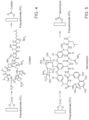
- the exposed carbonyl groups on the polycarbonate surface undergo nucleophilic addition by the amine groups of the polypeptide antibiotic, such as colistin or the glycopeptide vancomycin. This reaction results in scission of the polymer chain and the formation of a terminal carbamate.
- Addition of the polypeptide antibiotic containing one or more amine groups results in a polycarbonate surface decorated with the polypeptide antibiotic, which is available for subsequent capture of bacteria and/or endotoxin ( Figure 4 and Figure 5 ).
- the amount of polymyxin fixed is about 0.5 mM to about 50 mM. In some embodiments, the amount of polymyxin fixed is at least about 0.5 mM. In some embodiments, the amount of polymyxin fixed is at most about 50 mM.
- the amount of polymyxin fixed is about 0.5 mM to about 1 mM, about 0.5 mM to about 5 mM, about 0.5 mM to about 10 mM, about 0.5 mM to about 20 mM, about 0.5 mM to about 30 mM, about 0.5 mM to about 40 mM, about 0.5 mM to about 50 mM, about 1 mM to about 5 mM, about 1 mM to about 10 mM, about 1 mM to about 20 mM, about 1 mM to about 30 mM, about 1 mM to about 40 mM, about 1 mM to about 50 mM, about 5 mM to about 10 mM, about 5 mM to about 20 mM, about 5 mM to about 30 mM, about 5 mM to about 40 mM, about 5 mM to about 50 mM, about 10 mM to about 20 mM, about 10 mM to about 10 m
- Figure 5 illustrates chemistry of functionalization of polycarbonate surface with vancomycin according to the embodiments described herein.
- Figure 5 illustrates chemistry of functionalization of polycarbonate surface with vancomycin according to the embodiments described herein.
- the fixed, covalently-bonded antibiotic is vancomycin.
- the covalently-bonded antibiotic is vancomycin.
- the substance coating the channel wall comprises a covalently-bonded polypeptide antibiotic. Therefore, in some embodiments, the fixed, covalently-bonded antibiotic is vancomycin.
- the covalently-bonded polypeptide antibiotic is fixed to the channel wall.
- the substance coating the channel wall is fixed to the channel wall.
- the amount of vancomycin fixed is about 0.5 mM to about 50 mM. In some embodiments, the amount of vancomycin fixed is at least about 0.5 mM. In some embodiments, the amount of vancomycin fixed is at most about 50 mM.
- the amount of vancomycin fixed is about 0.5 mM to about 1 mM, about 0.5 mM to about 5 mM, about 0.5 mM to about 10 mM, about 0.5 mM to about 20 mM, about 0.5 mM to about 30 mM, about 0.5 mM to about 40 mM, about 0.5 mM to about 50 mM, about 1 mM to about 5 mM, about 1 mM to about 10 mM, about 1 mM to about 20 mM, about 1 mM to about 30 mM, about 1 mM to about 40 mM, about 1 mM to about 50 mM, about 5 mM to about 10 mM, about 5 mM to about 20 mM, about 5 mM to about 30 mM, about 5 mM to about 40 mM, about 5 mM to about 50 mM, about 10 mM to about 20 mM, about 10 mM to about 10 mM
- a glycine or similar structure could be used to generate a carboxylated surface.
- hexamethylene diamine can be functionalized to the surface of the polycarbonate by nucleophilic addition by the diamine, resulting in the formation of a terminal hexylaminocarbamate.
- NHS esters N-hydroxysuccinimide esters
- NHS-Polyethylene glycol-NHS NHS-Polyethylene glycol-NHS (NHS-PEG-NHS) can then be used as a cross linker and react with the amine groups exposed on the hexylaminocarbamate surface using carbodiimide chemistry.
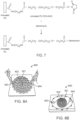
- This reaction results in a surface exposed NHS group, which can then be used to react with the exposed amine groups of polypeptide antibiotics such as polymyxin or the glycopeptide vancomycin, forming a polypeptide functionalized surface ( Figure 6 and Figure 7 ).
- This functionalization methodology allows for extension of the polypeptide antibiotic further from the polycarbonate surface, thereby potentially improving interaction, capture, and adsorption of target biologics, such as bacteria and endotoxin.
- a nitrogen atom bonded to the base material is also effective for capture and removal of Gram-negative pathogens and endotoxin.
- the amount of polypeptide antibiotic substance to be fixed to the base material is, in some embodiments, more than 0.5 mM of substance and in some embodiments is from 1.0 mMto 50.0 mM substance. If the amount is less than 0.5 mM of substance, detoxifying may become ineffective, in some embodiments.
- the substance coating the channel wall comprises a fixed crosslinking agent selected from the group consisting of: hexamethylene diamine, polyethylene glycol, polyethylene glycol derivatives, N-hydroxysuccinimide esters, and glycine.
- the amount of crosslinking agent, such as NHS-PEH-NHS, to be to be fixed to the base material is, in some embodiments, more than 0.1 mM of substance and in some embodiments, 1.0 - 50.0 mM substance.
- Figure 6 illustrates chemistry of functionalization of polycarbonate surface with a crosslinking agent and polymyxin E (i.e. colistin) according to the embodiments described herein.
- Figure 7 illustrates chemistry of functionalization of polycarbonate surface with a crosslinking agent and vancomycin according to the embodiments described herein.
- the crosslinking agent to be fixed to the base material is polyethylene glycol or a derivative substance in which the amount fixed is about 1 mM to about 50 mM.
- the crosslinking agent to be fixed to the base material is polyethylene glycol or a derivative substance in which the amount fixed is at least about 1 mM.
- the crosslinking agent to be fixed to the base material is polyethylene glycol or a derivative substance in which the amount fixed is at most about 50 mM. In some embodiments, the crosslinking agent to be fixed to the base material is polyethylene glycol or a derivative substance in which the amount fixed is about 1 mM to about 5 mM, about 1 mM to about 10 mM, about 1 mM to about 20 mM, about 1 mM to about 30 mM, about 1 mM to about 40 mM, about 1 mM to about 50 mM, about 5 mM to about 10 mM, about 5 mM to about 20 mM, about 5 mM to about 30 mM, about 5 mM to about 40 mM, about 5 mM to about 50 mM, about 10 mM to about 20 mM, about 10 mM to about 30 mM, about 10 mM to about 40 mM, about 10 mM to about 50 mM, about 10 mM
- the term about, when used in reference to the amount of crosslinking agent, means 1 mM, 5 mM, 10 mM, 20 mM, 30 mM, 40 mM, or 50 mM.
- the amount of crosslinking agent, such as hexamethylene diamine, to be to be fixed to the base material is, in some embodiments, more than 0.1% aqueous hexamethylene diamine solution and in some embodiments is from 1 % to 20% aqueous hexamethylene diamine solution.
- the hexamethylene diamine crosslinking agent to be fixed to the base material is about 1 % (v/v) aqueous solution to about 20 % (v/v) aqueous solution.
- the hexamethylene diamine crosslinking agent to be fixed to the base material is at least about 1 % (v/v) aqueous solution. In some embodiments, the hexamethylene diamine crosslinking agent to be fixed to the base material is at most about 20 % (v/v) aqueous solution.
- the hexamethylene diamine crosslinking agent to be fixed to the base material is about 1 % (v/v) aqueous solution to about 2 % (v/v) aqueous solution, about 1 % (v/v) aqueous solution to about 3 % (v/v) aqueous solution, about 1 % (v/v) aqueous solution to about 4 % (v/v) aqueous solution, about 1 % (v/v) aqueous solution to about 5 % (v/v) aqueous solution, about 1 % (v/v) aqueous solution to about 10 % (v/v) aqueous solution, about 1 % (v/v) aqueous solution to about 15 % (v/v) aqueous solution, about 1 % (v/v) aqueous solution to about 20 % (v/v) aqueous solution, about 2 % (v/v) aqueous solution to about 3 % (
- the term about, when used in reference to the amount of the hexamethylene diamine crosslinking agent aqueous solution, means 1 % (v/v) aqueous solution, 2 % (v/v) aqueous solution, 3 % (v/v) aqueous solution, 4 % (v/v) aqueous solution, 5 % (v/v) aqueous solution, 10 % (v/v) aqueous solution, 15 % (v/v) aqueous solution, or 20 % (v/v) aqueous solution.
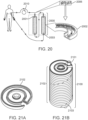
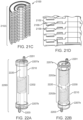
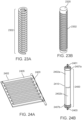
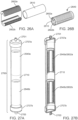
- Embodiments of a multidirectional fluidic channel as described herein may comprise various geometries including without limitation those illustrated in Figure 8A, 8B , 9A, 9B , 9C , 17 , 18 , 21A , 21B , 21C, 21D, 22A , 22B , 23A, 23B, 24A , 24B , 25A, 25B, 25C , 26A, 26B, 27A, 27B , and 28 .
- the multidirectional channel in some embodiments, has an internal channel surface area of 0.001 square meters (m 2 ) to 100 m 2 .
- the multidirectional channel in some embodiments, has a surface area of from 0.001 m 2 to 10 m 2 , as well as exposed functional groups being capable of fixing polymyxin and vancomycin.
- a surface area too large (beyond the maximum of 100 m 2 or 10 m 2 , for example depending on the embodiment) increases the pressure drop of the fluid (e.g. blood) passed through the device too much, and a surface area that is too small (below 0.001 m 2 ) makes the detoxifying capacity of the device insufficient in removing the bacteria and/or pathogens, at least.
- the pressure drop is in some embodiments, less than 10 pounds per square inch (psi) [69 kilopascals (kPa)], and in some embodiments less than 3 psi [21 kPa].
- the internal channel surface area may comprise the area of the entire surface coated by the substance.
- the multidirectional channel in some embodiments, has an internal channel surface area of 0.001m 2 to 80 m 2 , 0.001m 2 to 70 m 2 , 0.001m 2 to 60 m 2 , 0.001m 2 to 50 m 2 , 0.001m 2 to 40 m 2 , 0.001m 2 to 30 m 2 , 0.001m 2 to 25 m 2 , 0.001m 2 to 20 m 2 , 0.001m 2 to 19 m 2 , 0.001m 2 to 18 m 2 , 0.001m 2 to 17 m 2 , 0.001m 2 to 16 m 2 , 0.001m 2 to 15 m 2 , 0.001m 2 to 14 m 2 , 0.001m 2 to 13 m 2 , 0.001m 2 to 12 m 2 , 0.001m 2 to 11 m2, 0.01m 2 to 20 m 2 , 0.01m 2 to
- the radius of curvature may the radius of the circular arc which best approximates the curve of the coated surface of channel at a point on the outer-surface of the channel (in the direction of the Dean's wall-induced lift force).
- the helical-shaped multidirectional channel in some embodiments has a radius of curvature of 0.1 mm to 1,000 mm, in some embodiments has a radius of curvature of 10 mm to 500 mm, and in some embodiments has a radius of curvature of 5 mm to 100 mm. In some embodiments of the device, the spiral shaped channel has an outer-most radius of curvature of about 0.1 mm to about 1,000 mm.
- the spiral shaped channel has an outer-most radius of curvature of at least about 0.1 mm. In some embodiments of the device, the spiral shaped channel has an outer-most radius of curvature (in the direction of the Dean's wall-induced lift force) of at most about 1,000 mm.
- the spiral shaped channel has an outer-most radius of curvature of about 0.1 mm to about 10 mm, about 0.1 mm to about 50 mm, about 0.1 mm to about 100 mm, about 0.1 mm to about 500 mm, about 0.1 mm to about 1,000 mm, 1 mm to about 10 mm, about 1 mm to about 50 mm, about 1 mm to about 100 mm, about 1 mm to about 500 mm, about 1 mm to about 1,000 mm, about 10 mm to about 50 mm, about 10 mm to about 100 mm, about 10 mm to about 500 mm, about 10 mm to about 1,000 mm, about 50 mm to about 100 mm, about 50 mm to about 500 mm, about 50 mm to about 1,000 mm, about 100 mm to about 500 mm, about 100 mm to about 1,000 mm, or about 500 mm to about 1,000 mm.
- the spiral shaped channel has an outer-most radius of curvature of about 5 mm to about 100 mm. In some embodiments of the device, the spiral shaped channel has an outer-most radius of curvature of at least about 5 mm.
- the spiral-shaped multidirectional channel in some embodiments, has an outer-most radius of curvature of 0.1 mm to 1,000 mm, and in some embodiments, the spiral-shaped multidirectional channel has an outer-most radius of curvature of 1 mm to 500 mm, and in some embodiments, the spiral-shaped multidirectional channel has an outer-most radius of curvature of 5 mm to 100 mm. In some embodiments of the device, the spiral shaped channel has an outer-most radius of curvature of at most about 100 mm.
- the spiral shaped channel has an outer-most radius of curvature of about 5 mm to about 10 mm, about 5 mm to about 25 mm, about 5 mm to about 50 mm, about 5 mm to about 75 mm, about 5 mm to about 100 mm, about 10 mm to about 25 mm, about 10 mm to about 50 mm, about 10 mm to about 75 mm, about 10 mm to about 100 mm, about 25 mm to about 50 mm, about 25 mm to about 75 mm, about 25 mm to about 100 mm, about 50 mm to about 75 mm, about 50 mm to about 100 mm, or about 75 mm to about 100 mm.
- the spiral-shaped multidirectional channel in some embodiments has a distance between channels (defined from center of channel lumen to center of channel lumen) of 0.01 mm to 1,000 mm, and in some embodiments the spiral-shaped multidirectional channel has a distance between channels of 0.1 mm to 100 mm, and in some embodiments the spiral-shaped multidirectional channel has a distance between channels of 1 mm to 10 mm. In some embodiments of the device, the spiral shaped multidirectional channel has a center-to-center distance between the channels in the spiral about 0.01 mm to about 1,000 mm. In some embodiments of the device, the spiral shaped multidirectional channel has a center-to center distance between the channels in the spiral at least about 0.01 mm.
- the spiral shaped multidirectional channel has a center-to center distance between the channels in the spiral at most about 1,000 mm. In some embodiments of the device, the spiral shaped multidirectional channel has a center-to center distance between the channels in the spiral about 0.01 mm to about 0.05 mm, about 0.01 mm to about 0.1 mm, about 0.01 mm to about 0.5 mm, about 0.01 mm to about 1 mm, about 0.01 mm to about 10 mm, about 0.01 mm to about 50 mm, about 0.01 mm to about 100 mm, about 0.01 mm to about 500 mm, about 0.01 mm to about 1,000 mm, about 0.05 mm to about 0.1 mm, about 0.05 mm to about 0.5 mm, about 0.05 mm to about 1 mm, about 0.05 mm to about 10 mm, about 0.05 mm to about 50 mm, about 0.05 mm to about 100 mm, about 0.05 mm to about 500 mm, about 0.05 mm to about 1,000 mm, about 0.05 mm
- the term about when used in reference to the distance between the channel in the spiral, means 0.01 mm, 0.05 mm, 0.1 mm, 0.5 mm, 1 mm, 10 mm, 50 mm, 100 mm, or 500 mm.
- the multidirectional channel is helically shaped and fabricated around a cylindrical chamber.
- the pitch of the helical channel may be defined from center of channel lumen to center of channel lumen in the cylindrical axis (e.g. non-radially symmetric axis) of helical devices.
- the device may be cylindrical helical or conical helical.
- the pitch of the helical channel is in some embodiments 0.1 mm to 1,000 mm and in some embodiments has a pitch of 1 mm to 500 mm, and in some embodiments has a pitch of 1 mm to 100 mm.
- the helical shaped multidirectional channel has a pitch of about 1 mm to about 1,000 mm, with the pitch measured as the height of one complete helix turn measured parallel to the axis of the helix.
- the helical shaped multidirectional channel has a pitch of at least about 0.1 mm. In some embodiments of the device, the helical shaped multidirectional channel has a pitch of at most about 1,000 mm. In some embodiments of the device, the helical shaped multidirectional channel has a pitch of about 0.1 mm to about 5 mm, about 0.1 mm to about 10 mm, about 0.1 mm to about 50 mm, about 0.1 mm to about 100 mm, about 0.1 mm to about 500 mm, about 0.1 mm to about 1,000 mm, 1 mm to about 5 mm, about 1 mm to about 10 mm, about 1 mm to about 50 mm, about 1 mm to about 100 mm, about 1 mm to about 500 mm, about 1 mm to about 1,000 mm, about 5 mm to about 10 mm, about 5 mm to about 50 mm, about 5 mm to about 100 mm, about 1 mm to about 500 mm, about 1 mm to about 1,000 mm, about 5 mm to about
- the term about when used in reference to the pitch, means 0.1mm, 1 mm, 5 mm, 10 mm, 50 mm, 100 mm, 500 mm, or 1,000 mm.
- the helical shaped multidirectional channel has a pitch of about 1.0 to about 100.0 mm.
- the cross-section of the lumen of the channel may be polygonal (e.g. square, rectangle, hexagonal, etc.) or may be ellipsoid.
- the channel width may be the interior surface to surface distance of the channel lumen at its widest point.
- the helical- and spiral-shaped multidirectional channel(s) in some embodiments have a channel width of 0.01 mm to 1,000 mm, in some embodiments the helical- and spiral-shaped multidirectional channel(s) have a channel width of 0.1 mm to 100 mm, and in some embodiments the helical- and spiral-shaped multidirectional channel(s) have a channel width of 1 mm to 10 mm.
- the channel height may be the widest, interior center to center distance within the lumen perpendicular to its widest point.
- the helical- and spiral- shaped multidirectional channel(s) in some embodiments have a channel height of 0.001 mm to 100 mm, and in some embodiments the helical- and spiral-shaped multidirectional channel(s) have a channel height of 0.01 mm to 20 mm, and in some embodiments the helical- and spiral-shaped multidirectional channel(s) have a channel height of 0.1 mm to 10 mm.
- the helical- and spiral-shaped multidirectional channel(s) in some embodiments have a channel length of 0.1 mm to 10,000 mm, and in some embodiments the helical- and spiral-shaped multidirectional channel(s) have a channel length of 1 mm to 5,000 mm, and in some embodiments the helical- and spiral-shaped multidirectional channel(s) have a channel length of 1 mm to 3,000 mm.
- the cross-section of the lumen of the channel may be polygonal (e.g. square, rectangle, hexagonal, etc.) or may be ellipsoid.
- the channel width may be the interior surface to surface distance of the channel lumen at its widest point.
- the multidirectional channel has a width of about 0.01 mm to about 1,000 mm. In some embodiments of the device, the multidirectional channel has a width of at least about 0.01 mm. In some embodiments of the device, the multidirectional channel has a width of at most about 1,000 mm.
- the channel height may be the widest, interior center-to-center distance within the lumen perpendicular to its widest point.
- the multidirectional channel has a height of about 0.001 mm to about 100 mm. In some embodiments of the device, the multidirectional channel has a height of at least about 0.001 mm. In some embodiments of the device, the multidirectional channel has a height of at most about 100 mm.
- the multidirectional channel has a height of about 0.001 mm to about 0.005 mm, about 0.001 mm to about 0.01 mm, about 0.001 mm to about 0.05 mm, about 0.001 mm to about 0.1 mm, about 0.001 mm to about 0.5 mm, about 0.001 mm to about 1 mm, about 0.001 mm to about 10 mm, about 0.001 mm to about 50 mm, about 0.001 mm to about 100 mm, about 0.005 mm to about 0.01 mm, about 0.005 mm to about 0.05 mm, about 0.005 mm to about 0.1 mm, about 0.005 mm to about 0.5 mm, about 0.005 mm to about 1 mm, about 0.005 mm to about 10 mm, about 0.005 mm to about 50 mm, about 0.005 mm to about 100 mm, about 0.01 mm to about 0.05 mm, about 0.01 mm to about 0.1 mm, about 0.005 mm to
- the multidirectional channel has a length of about 0.1 mm to about 0.5 mm, about 0.1 mm to about 1 mm, about 0.1 mm to about 10 mm, about 0.1 mm to about 50 mm, about 0.1 mm to about 100 mm, about 0.1 mm to about 500 mm, about 0.1 mm to about 1,000 mm, about 0.1 mm to about 5,000 mm, about 0.1 mm to about 10,000 mm, about 0.5 mm to about 1 mm, about 0.5 mm to about 10 mm, about 0.5 mm to about 50 mm, about 0.5 mm to about 100 mm, about 0.5 mm to about 500 mm, about 0.5 mm to about 1,000 mm, about 0.5 mm to about 5,000 mm, about 0.5 mm to about 10,000 mm, about 1 mm to about 10 mm, about 1 mm to about 50 mm, about 1 mm to about 100 mm, about 1 mm to about 500 mm, about 1 mm to about 500 mm, about 1 mm to
- the term about when used in reference to length of the multidirectional channel, means 0.1 mm, 0.5 mm, 1 mm, 10 mm, 50 mm, 100 mm, 500 mm, 1,000 mm, or 5,000 mm.
- the multidirectional channel has a length of about 1.0 to about 3,000.0 mm
- the helical shaped multidirectional channel operates at a flow rate of about 1 mL/min to about 5 mL/min, about 1 mL/min to about 10 mL/min, about 1 mL/min to about 50 mL/min, about 1 mL/min to about 100 mL/min, about 1 mL/min to about 500 mL/min, about 1 mL/min to about 1,000 mL/min, about 5 mL/min to about 10 mL/min, about 5 mL/min to about 50 mL/min, about 5 mL/min to about 100 mL/min, about 5 mL/min to about 500 mL/min, about 5 mL/min to about 1,000 mL/min, about 10 mL/min to about 50 mL/min, about 10 mL/min to about 100 mL/min, about 10 mL/min to about 500 mL/min, about 10 mL/min to about 50 mL/
- the term about when used in reference to the flow rate, means 1 mL/min, 5 mL/min, 10 mL/min, 50 mL/min, 100 mL/min, 200 mL/min, 500 mL/min, or 1000 mL/min.
- the helical shaped multidirectional channel operates with flow rates of about 50 to about 400 mL/min.
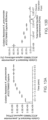
- the detoxifying capacity of the devices, systems, and methods herein, alternatively called capture efficiency herein, as defined as the percent reduction of pathogenic bacteria at 1 minute compared to the starting concentration of the pathogenic bacteria in the fluid passed through the device is at least 30%, at least 35%, at least 40%, at least 45%, at least 50%, at least 55%, at least 60%, at least 65%, at least 70%, at least 75%, at least 80%, at least 81%, at least 82%, at least 83%, at least 84%, at least 85%, at least 86%, at least 87%, at least 88%, at least 89%, at least 90%, at least 91%, at least 92%, at least 93%, at least 94%, at least 95%, at least 96%, at least 97%, at least 98%, or at least 99%, at least about 30%, at least about 35%, at least about 40%, at least about 45%, at least about 50%, at least about 55%, at least about 60%, at least about 65%, at least about 70%, at least
- the helical-shaped multidirectional channel comprises less than 3 loops with one inlet and one outlet for bacterial/endotoxin removal. In some embodiments, the helical-shaped multidirectional channel comprises more than 20 loops with one inlet and one outlet for bacterial/endotoxin removal. Ideally, the helical-shaped multidirectional channel is configured to provide maximum exposure in both time and surface area to enable it to capture, adsorb, and/or remove disease-causing material from biological fluids. Alternatively, the ultimate length and/or number of loops must be monitored to assure that an excessive pressure drop does not occur when the device is used in an in-line procedure with a patient.
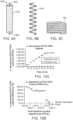
- FIG. 9A illustrates a non-limiting example of a helical-shaped multidirectional channel fabricated around a cylindrical chamber or mandrel.
- FIG. 9B illustrates a helical-shaped multidirectional channel not fabricated around a cylindrical chamber or mandrel.
- FIG. 9C illustrates a more compact helical-shaped multidirectional channel not fabricated around a cylindrical chamber or mandrel.
- the helical-shaped multidirectional channel device 900 is fabricated or extruded around or within a cylindrical chamber or mandrel ( FIGS. 9A, 9B, 9C , 22A, 22B , 23B, 24A, 24B , 25A, 25B and 25C ).
- the vertically designed device offers a constant radius of curvature and compact size and shape.
- Figure 17 illustrates a non-limiting example of a helical-shaped multidirectional channel fabricated around a cylindrical chamber or mandrel that is sealed and enclosed using an outer sleeve.
- a helical-shaped multidirectional channel device 1700 comprising a helical-shaped multidirectional channel 1702 fabricated around a cylindrical chamber or mandrel 1701 , by one of the methods described above, then is sealed and enclosed using an outer sleeve 1710 .
- Figure 18 illustrates the channel(s)'s inlet(s) and/or outlet(s) fitting of the channel of Figure 17 .
- the channel 1802 is fitted with appropriate inlet (i.e.: 1801 ) and outlet (not shown) fittings as illustrated in FIG. 18 .
- Figure 21A illustrates a non-limiting embodiment of a device comprising a filter plate that is a helical-shaped channel fabricated using machining methods or injection molding, with each filter plate channel being 98 mm length at the outermost edge of curve.
- a helical-shaped filter plate channel 2102 is fabricated using machining methods or injection molding, as described above, with each filter plate channel being 98 mm in length at the outermost edge of its curve. Expanding this concept, multiple filter plates 2100, 2102 are assemblable, stacked, and sealed together using solvent welding and adhesive, yielding a total channel length of 1,960 mm, as illustrated in FIG.
- FIG. 21B to create another variant of the claimed device, also comprising an inlet adapter 2101 and outlet 2103 adapter, each attached to the helical-shaped filter plate channel 2102 .
- FIG. 21C illustrates a cross-sectional view of an embodiment comprising stacked helical plates 2100 , 2102 .
- FIG. 21D illustrates the sealed joints 2109 on either side of each filter plate channel 2102 of an embodiment comprising stacked helical filter plates.
- Each plate may be made of translucent polycarbonate.
- the stacked plates may comprise 20 of the plates of FIG. 21A being stacked on each other and glued together.
- the helical shaped multidirectional stackable plate configuration is assembled using bolts, adhesive, binding material, thermal expansion, resin, epoxy, an inner sleeve, an outer sleeve, a base plate, a mandrel, cover glass, curing, extrusion welding, contact welding, high frequency welding, friction welding, laser welding, ultrasonic welding, solvent welding, or casting.
- the stackable plate configuration is between 1 plate and 25 plates.
- the stackable plate configuration is between 2 plate and 23 plates.
- the stackable plate configuration is between 3 plate and 20 plates.
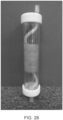
- FIG. 28 shows a photograph of an assembled device of the embodiment illustrated in FIG. 22A .
- FIG. 22B illustrates an embodiment comprising two sets of stacked helical filter plates 2202a, 2202b , in series, in a sealed housing 2210 spaced apart by a spacer tube 2220 and with the stacked helical filter plates 2202a , 2202b connected by a connector tube 2230 .
- the set of staked helical filter places 2202a and 2202b may be a variation or embodiment of the stacked plate configuration of FIG. 21B .
- the first set of stacked helical filter plates 2202a can be functionalized with one polypeptide such as polymyxin E, while the second set of helical plates 2202b can be functionalized with another polypeptide or the glycopeptide vancomycin. This allows for the capture and removal of Gram-negative, Gram-positive, and endotoxins from flowing fluids within a single device.
- the embodiment of FIG. 22B may be incorporated into a filtration system described herein.
- FIG. 23A illustrates an embodiment device comprising polycarbonate tubing extruded to form a helical-shaped multidirectional channel 2302 .
- FIG. 23B illustrates an embodiment device comprising polycarbonate tubing extruded to form a helical-shaped multidirectional channel 2302 that is fabricated around a mandrel 2320 .
- the multidirectional channel is extruded polycarbonate tubing.
- the multidirectional channel is enclosed.
- the multidirectional stackable plate configuration is enclosed within a cylinder.
- the multidirectional channel is extruded around a mandrel.
- the embodiment of FIG. 23A and FIG. 23B may comprise a multidirectional fluidic channel with similar dimensions, e.g. channel length, pitch, diameter, etc. of other multidirectional fluidic channels described herein.
- FIG. 24A illustrates an embodiment device made from a manufacturing method comprising forming an injection molded polycarbonate sheet 2405 attached to a mandrel 2420 with the helical-shaped channel 2402 incorporated into the sheet design.
- the formed sheet is then rolled into a helical shape around a mandrel by first heating the polycarbonate flat sheet and then tightly rolled around the mandrel to create a helical shape.
- two of these rolled sheets 2402a , 2402b can be connected in series using connector tubing (not shown), as illustrated in FIG. 24B , placed in a cylinder 2410 with endcaps 2407a, 2407b having inlet 2401 and outlet 2403 adapters forming another assembly embodiment 2400 .
- the sheet is rolled around the mandrel between 1 and 100 times. In some embodiments, the sheet is rolled around the mandrel between 1 and 20 times. In some embodiments, the sheet is rolled around the mandrel between 1 and 5 times.
- FIG. 24A and FIG. 24B may comprise a multidirectional fluidic channel with similar dimensions, e.g. channel length, channel width, etc. of other multidirectional fluidic channels described herein.
- injection molded polycarbonate parts 2502 x1 , 2502 x2 that incorporate the helical-shaped channel design into the housing can be generated with still another manufacturing method, then assembled, around a solid inner mandrel 2520 and sealed using ultrasonic welding and/or solvent welding 2511 , as illustrated in FIGS. 25A - 25C .
- Figure 25A illustrates an embodiment device made from injection molded polycarbonate parts that incorporate the helical-shaped channel design into the housing, while using a solid inner mandrel.
- FIG. 25B illustrates a cross-sectional view of the helical housing wrapped around the mandrel of FIG. 25A .
- FIG. 25C illustrates an embodiment helical housing of FIG.
- FIG. 25A assembled around the mandrel using ultrasonic welding and/or solvent welding.
- FIG. 25A, FIG.25B , and FIG. 25C may comprise a multidirectional fluidic channel with similar dimensions, e.g. channel length, pitch, diameter, etc. of other multidirectional fluidic channels described herein.
- the device comprises an outer tube that comprises a cast polycarbonate sleeve or extruded polycarbonate sleeve, and at least two cores, 2602a ("A") and 2602b ("B"), comprising injection molded polycarbonate with the helical channel design incorporated into exterior of the cores.
- the faces of the at least two cores A and B in some embodiments, is coated with elastomer, as illustrated in FIG. 26A - FIG. 26B .
- the at least two cores 2602a and 2602b (halves, as shown) are formed into an assembly 2640 and pressed into the outer tube or sleeve 2710 and sealed using an elastomer.
- FIG. 26A and FIG. 26B may comprise a multidirectional fluidic channel with similar dimensions, e.g. channel length, pitch, diameter, etc. of other multidirectional fluidic channels described herein.
- FIG 27A illustrates two stacked and assembled injection molded polycarbonate parts (e.g.: 2640a, 2640b ) that incorporate the helical-shaped channel design into the core pieces ( 2640a/2602a and 2640b/2602b) , while using a solid outer tube 2710 .
- the first piece of injection molded polycarbonate containing a helical channel 2640a/2602a can be functionalized with one polypeptide such as polymyxin E, while the second piece of injection molded polycarbonate containing a helical channel 2640b/2602b can be functionalized with another polypeptide or the glycopeptide vancomycin.
- FIG. 27B illustrates the cross-sectional view of the assembled helical-core channel device of FIG. 27A with endcaps 2707a , 2707b having inlet 2701 and outlet 2703 adapters forming another assembly embodiment 2700 .
- the claimed device can be made through the employment of any number of technologies. For example, it may be made through 3-D printing, soft lithography, photolithography, injection molding, blow molding, casting, ultrasonic welding, high frequency welding, heated tool or plate welding, solvent bonding, laser welding, spin welding, infrared welding, vibration welding, adhesive bonding, extrusion, and machining.
- the machining methods are turning, drilling, boring, reaming, electric discharge machining and/or milling.
- Material may be machined or injection molded to create an enclosure of desired dimensions, such as by injection molding, extrusion, machining channel(s) as a whole or by machining halves that may be sealed and enclosed using bolts, adhesive, epoxy, welding, thermal expansion, or another means ( Figure 8A, 8B , 9A, 9B , 9C , 17 , 18 , 21A , 21B , 21C, 21D, 22A , 22B , 23A, 23B, 24A , 24B , 25A, 25B, 25C , 26A, 26B, 27A, 27B , and 28 ).
- the multidirectional channel is enclosed. In some embodiments of the device, the multidirectional channel is enclosed using bolts, adhesive, binding material, thermal expansion, resin, epoxy, an inner and/or outer sleeve, a base plate, a mandrel, cover glass, curing, extrusion welding, contact welding, high frequency welding, friction welding, laser welding, ultrasonic welding, solvent welding, or casting.
- the multidirectional channel is fabricated using at least one method selected from the group consisting of: 3-D printing, soft lithography, photolithography, injection molding, blow molding, casting, ultrasonic welding, high frequency welding, heated tool or plate welding, solvent bonding, laser welding, spin welding, infrared welding, vibration welding, adhesive bonding, machining, turning, drilling, boring, reaming, electric discharge machining, or milling.
- tubing is attached to the multidirectional channel inlet(s) and/or outlet(s) by the use of fittings, caps, or luer lock connectors.
- a system for the capture and adsorption of blood-borne materials of interest comprising a fluidic cartridge with at least one inlet and at least one outlet; a multidirectional fluidic channel between the at least one inlet and the at least one outlet; said multidirectional fluidic channel comprising at least one inner wall; and a substance selected from the group consisting of: antibodies, crosslinking agents, peptides, proteins, antibiotics, polymers, amines, polyethers, amino acids, aptamers, tumor necrosis factors, adhesion receptors, E-selectin, cytokines, chemotherapy agents, quorum sensing proteins, quorum sensing receptors, and biological agents, coating, fixed and covalently bonded to at least a portion of the at least one inner wall of the multidirectional fluidic channel.
- the substance coating the channel wall comprises a fixed, covalently-bonded polypeptide antibiotic.
- the covalently-bonded polypeptide antibiotic is polymyxin.
- the covalently-bonded antibiotic is vancomycin.
- the substance coating the channel wall comprises a fixed crosslinking agent selected from the group consisting of: hexamethylene diamine, polyethylene glycol, polyethylene glycol derivatives, N-hydroxysuccinimide esters, and glycine.
- the multidirectional channel is composed of at least one thermoplastic polymer base material that has at least one surface exposed functional group.
- the thermoplastic polymer base material has at least one surface exposed functional group selected from the groups consisting of: carbonyl groups, carboxyl groups, alcohol groups, amino groups, chloride groups, styrene groups, alpha-halogenated acyl group, benzyl groups, isocyanic acid groups, and other polymers or copolymers such as vinylchloride, vinylacetate, acrylamide, polyethylene, polyethylene terephthalate acrylic acid, acrylonitrile, maleic anhydride and methylmethacrylate.
- the base material is polycarbonate.
- the fluidic device is disposable. The system may comprise any embodiment of the multidirectional fluidic channel described herein.
- the system may comprise the multidirectional fluidic channel of one or more of Figure 8A, 8B , 9A, 9B , 9C , 17 , 18 , 21A , 21B , 21C, 21D, 22A , 22B , 23A, 23B, 24A , 24B , 25A, 25B, 25C , 26A, 26B, 27A, 27B , and 28 .
- the claimed device is configurable for in-line filtration and capture such that whole blood infected with bacteria and/or endotoxin 1906 can be pumped 1930 from a patient to the inlet 1901 of the double-spiral fluidic device 1900 , as illustrated in FIG. 19 .
- the device is functionalized along the channel walls 1902 with polypeptide antibiotics designed to capture bacteria and endotoxin.
- the blood then containing only healthy material is returned to the patient via the outlet 1903 .
- FIG. 20 is an embodiment configurable for in-line filtration and capture such that whole blood infected with bacteria and/or endotoxin can be pumped 2010 from a patient to the inlet 2001 of the helical fluidic devices in series 2000 .
- the embodiment devices are functionalized along the channel walls 2002 with polypeptide antibiotics designed to capture bacteria and endotoxin 2006 .
- the blood then containing only healthy material is returned to the patient via the outlet 2003 .
- bacteria and endotoxin are removed from blood by circulation outside the body wherein prior to return to the patient body, blood removed from the patient body or plasma components separated from blood are passed through the multidirectional bacterial and endotoxin adsorbent device as described herein, and the cleaned blood or plasma components from which bacteria and endotoxin were removed are returned to the patient body ( FIG. 19 ).
- a method for the capture and adsorption of materials of interest comprising bringing a sample of fluid in contact with a multidirectional, polypeptide antibiotic coated channel; adsorbing said material(s) of interest on said multidirectional channel walls; and detecting the presence or amount of said materials of interest captured within the multidirectional, polypeptide antibiotic coated channel.
- a fluid sample is brought in contact with a multidirectional, polypeptide antibiotic coated channel using a pump.
- the method may comprise any variant, embodiment, or example of the channels described herein.
- the pump is a peristaltic pump.
- the pump is a syringe pump.
- a fluid sample is brought in contact with a multidirectional, polypeptide antibiotic coated channel using a syringe.
- the polypeptide antibiotic is polymyxin.
- the antibiotic is vancomycin.
- heparin, sodium citrate, or other anticoagulants are added to the fluid sample prior to being brought in contact with a multidirectional, polypeptide antibiotic coated channel.
- detection of the presence or amount of materials of interest captured within the multidirectional, polypeptide antibiotic coated channel is performed using a method selected from the group comprising: cell counting, MALDI-TOF MS (matrix assisted laser desorption ionization-time of flight mass spectrometry), mass spectrometry, PCR (polymerase chain reaction), biosensing, flow cytometry, and fluorescent labeling.
- a method selected from the group comprising: cell counting, MALDI-TOF MS (matrix assisted laser desorption ionization-time of flight mass spectrometry), mass spectrometry, PCR (polymerase chain reaction), biosensing, flow cytometry, and fluorescent labeling.
- a method for treating a patient suspected of having bacteremia, endotoxemia or sepsis comprising contacting a sample of blood with the fluidic cartridge containing a multidirectional fluidic channel between at least one inlet and at least one outlet; adsorbing one or more materials of interest on at least one wall of the multidirectional fluidic channel; removing the one or more materials of interest from the sample of blood to produce treated blood; and returning said treated blood to said patient.
- the method may comprise any variant, embodiment, or example of the channels described herein.
- a method for diagnosing a patient suspected of having bacteremia, endotoxemia or sepsis comprising contacting a sample of fluid with a fluidic cartridge containing a multidirectional fluidic channel between at least one inlet and at least one outlet; adsorbing one or more materials of interest on at least one wall of the multidirectional fluidic channel; and detecting the presence or amount of materials of interest captured along the at least one wall of the multidirectional fluidic channel.
- the method may comprise any variant, embodiment, or example of the channels described herein.
- the method comprises identifying the captured materials of interest through a procedure selected from the group consisting of: polymerase chain reaction (PCR), fluorescence in situ hybridization (FISH), optically active microbeads, optically active nanoparticles, and matrix-assisted laser desorption/ionization time-of-flight (MALDI-TOF).
- PCR polymerase chain reaction
- FISH fluorescence in situ hybridization
- MALDI-TOF matrix-assisted laser desorption/ionization time-of-flight
- the method comprises identifying the captured materials of interest through culturing methods.
- the method comprises identifying the captured materials of interest through elution of the captured materials of interest followed by a procedure selected from the group consisting of polymerase chain reaction (PCR), fluorescence in situ hybridization (FISH), optically active microbeads, optically active nanoparticles, and/or matrix-assisted laser desorption/ionization time-of-flight (MALDI-TOF), or culturing.
- PCR polymerase chain reaction
- FISH fluorescence in situ hybridization
- MALDI-TOF matrix-assisted laser desorption/ionization time-of-flight
- thermoplastic tubing is coated with the polypeptide antibiotic substance.
- the method may comprise any variant, embodiment, or example of the channels described herein.
- colistin sulfate salt (0.28g) was added to 16 mLs of a fifty-fifty distilled water/ethanol mixture (50% DiH2O/50% EtOH, v/v). The colistin solution was added to the polycarbonate-based channel and incubated within the channel at room temperature for 1 hour. Afterwards, the channel was washed with EtOH and air dried.
- vancomycin (0.22g) was added to 13 mLs of an ethanol/water mixture (50% DiH2O/50% EtOH (v/v)). The vancomycin solution was added to the polycarbonate-based channel and incubated within the channel at room temperature for 1 hour. Afterwards, the channel was washed with EtOH and air dried.
- NHS-PEG 1000 -NHS (0.24 grams (g)) was added to 16 mLs of an ethanol/water mixture (50% DiH 2 O/50% EtOH (v/v)).
- the NHS-PEG 1000 -NHS solution was added to the polycarbonate-based channel and incubated within the channel at room temperature for 45 minutes. Afterwards, the channel was washed with EtOH and dried.
- Figure 2A and Figure 2B show example implementations of a device of the present disclosure to evaluate the bacterial capture capacity a multidirectional fluidic channel using Acinetobacter baumannii.
- Acinetobacter baumannii ATCC 17978 bacterial cells were chosen as a standard specimen for qualitatively and quantitatively evaluating the bacterial capture capacity of the colistinated and polyethylene glycol (PEGylated) functionalized fluidic devices.
- Figure 2A illustrates adsorption of fluorescently labeled A. baumannii ATCC 17978 along polymyxin functionalized walls of an embodiment polycarbonate device. Fluorescently labeled A.
- baumannii ATCC 17978 are bound to the colistinated channel walls following passage through the fluidic device at 80 mL min -1 and subsequent washing ( Figure 2A ).
- Figure 2B illustrates absence of adsorption of fluorescently labeled A. baumannii ATCC 17978 along PEGylated walls of an embodiment polycarbonate device. Significant bacterial capture did not occur within the PEGylated spiral fluidic device, which served as a control, presumably due to the absence of colistin surface functionalization ( Figure 2B ) .
- Figure 3A and Figure 3B show example implementations of a device of the present disclosure to evaluate the bacterial capture capacity a multidirectional fluidic channel for Staphylococcus aureus.
- Staphylococcus aureus ATCC 29213 bacterial cells were chosen as a standard specimen for qualitatively and quantitatively evaluating the bacterial capture capacity of the vancomycin functionalized and Polyethylene glycol (PEGylated) functionalized fluidic devices.
- Figure 3A illustrates adsorption of fluorescently labeled S. aureus ATCC 29213 along vancomycin functionalized walls of an embodiment polycarbonate device. Fluorescently labeled S.
- FIG. 3A illustrates absence of adsorption of fluorescently labeled S. aureus ATCC 29213 along PEGylated walls of an embodiment polycarbonate device. Significant bacterial capture did not occur within the PEGylated spiral fluidic device, which served as a control, presumably due to the absence of vancomycin surface functionalization ( Figure 3B ).
- Figure 10A and Figure 10B show example implementations of a device of the present disclosure to evaluate the bacterial capture capacity a multidirectional fluidic channel using Acinetobacter baumannii.
- Figure 10A illustrates a capture of A. baumannii ATCC 17978 when flowed through the polymyxin coated device (i.e. colistinated device) at 80 ml min -1 .
- the A. baumannii ATCC 17978 concentration flowed through the device was approximately 10 5 colony-forming units per milliliter (CFU/mL). No capture was observed within the PEGylated device.
- n 4, p ⁇ 0.05*.
- Bacterial capture capacity was quantified by flowing Acinetobacter baumannii ATCC 17978 suspensions through the colistin coated fluidic device at a flow rate of 80 mL min -1 .
- a bacterial cell capture capacity of over 10 7 colony forming units (CFUs) was achieved with a single passage through the colistinated double spiral fluidic device and a capture efficiency of nearly 100% within the first minute of flow ( Figure 10A and Figure 10B ), as confirmed by the reduction of colonies that could be cultured from the fluid exiting the device.
- Figure 10B illustrates the total capture capacity of the device was 2.39E7 CFUs.
- Figure 11A and Figure 11B show example implementations of a device of the present disclosure to evaluate the bacterial capture capacity a multidirectional fluidic channel for Klebsiella pneumoniae.
- Figure 11A illustrates a capture of K. pneumoniae ATCC 700603 when flowed through the polymyxin E coated device (i.e. colistinated device) at 80 ml min -1 .
- the K. pneumoniae ATCC 700603 concentration flowed through the device was approximately 10 5 CFU/mL.
- n 4, p ⁇ 0.05*.
- Klebsiella pneumoniae ATCC 700603, another Gram-negative human pathogen was also successfully removed from flowing fluid with an associated capture efficiency of nearly 100% within the first minute of flow through the colistinated device ( Figure 11A and Figure 11B ).
- Figure 11B illustrates the total capture capacity of the device was 1.98E7 CFUs.
- FIGS. 12A, 12B , 13A, and 13B show example implementations of a device of the present disclosure to evaluate the bacterial capture capacity a multidirectional fluidic channel using Acinetobacter baumannii.
- the colistinated double spiral fluidic device also captured and removed antibiotic-resistant organisms, including colistin-resistant A. baumannii ( Qureshi, Z. A. et al. Colistin-resistant acinetobacter baumannii: Beyond carbapenem resistance. Clin. Infect. Dis. 60, 1295-1303 (2015 )) and colistin-resistant K. pneumoniae ATCC 700603, from flowing fluid ( FIGS. 12A, 12B , 13A, and 13B ).
- FIG. 12A illustrates the capture of colistin resistant A.
- FIG. 12B illustrates the initial capture efficiency was nearly 100%; the total capture capacity of the device was 7.89E6 CFUs.
- FIG. 13A and Figure 13B show example implementations of a device of the present disclosure to evaluate the bacterial capture capacity a multidirectional fluidic channel for Klebsiella pneumoniae.
- FIG. 13A illustrates the capture of colistin resistant K. pneumoniae ATCC 700603 when flowed through the polymyxin E coated device (i.e. colistinated device) at 80 ml min -1 .
- FIG. 13B illustrates the initial capture efficiency was nearly 80%.
- the total capture capacity of the device was 7.31E6 CFUs.
- FIG. 14A and Figure 14B show example implementations of a device of the present disclosure to evaluate the bacterial capture capacity a multidirectional fluidic channel for Staphylococcus aureus.
- the vancomycin functionalized double spiral fluidic device captured and removed Gram-positive pathogens from flowing fluid, including Staphylococcus aureus ATCC 29213, with a capture efficiency of nearly 80% within the first minute of flow ( FIGS. 14A and 14B ).
- FIG. 14A illustrates the capture of S. aureus ATCC 29213 when flowed through the vancomycin functionalized device at 80 ml min -1 .
- the S. aureus ATCC 29213 concentration flowed through the device was approximately 10 4 CFU/mL. No capture was observed within the PEGylated device.
- FIG. 14B illustrates the total capture capacity of the device was 5.24E6 CFUs. PEGylated devices did not capture Gram-positive S. aureus ATCC 29213 or Gram-negative A. baumannii ATCC 17978, confirming specificity for pathogens in colistin- and vancomycin-functionalized devices ( FIGS. 11B and 14B ).
- FIG. 15 shows the capture capacity of the bacteria adsorbent device using a variety of bacterial strains as described and presented in FIGS. 10A-14B .
- Endotoxin one of the principal components of the outer membrane of Gram-negative bacteria, also contributes to the systemic inflammatory response that is characteristic of sepsis ( Wiesel, P. et al. Endotoxin-induced mortality is related to increased oxidative stress and end-organ dysfunction, not refractory hypotension, in heme oxygenase-1-deficient mice. Circulation 102, 3015-3022 (2000 )). Therefore, the removal of endotoxin from flowing fluid using embodiments of the multidirectional fluidic device described herein, according to methods herein was assessed.
Landscapes
- Health & Medical Sciences (AREA)
- Life Sciences & Earth Sciences (AREA)
- Engineering & Computer Science (AREA)
- Chemical & Material Sciences (AREA)
- Hematology (AREA)
- Biomedical Technology (AREA)
- Immunology (AREA)
- General Health & Medical Sciences (AREA)
- Molecular Biology (AREA)
- Urology & Nephrology (AREA)
- Analytical Chemistry (AREA)
- Physics & Mathematics (AREA)
- Pathology (AREA)
- Biochemistry (AREA)
- Food Science & Technology (AREA)
- General Physics & Mathematics (AREA)
- Medicinal Chemistry (AREA)
- Cell Biology (AREA)
- Heart & Thoracic Surgery (AREA)
- Vascular Medicine (AREA)
- Microbiology (AREA)
- Biotechnology (AREA)
- Clinical Laboratory Science (AREA)
- Biophysics (AREA)
- Chemical Kinetics & Catalysis (AREA)
- Ecology (AREA)
- Public Health (AREA)
- Anesthesiology (AREA)
- Animal Behavior & Ethology (AREA)
- Cardiology (AREA)
- Veterinary Medicine (AREA)
- Tropical Medicine & Parasitology (AREA)
- Virology (AREA)
- External Artificial Organs (AREA)
- Apparatus Associated With Microorganisms And Enzymes (AREA)
- Sampling And Sample Adjustment (AREA)
- Measuring Or Testing Involving Enzymes Or Micro-Organisms (AREA)
Claims (14)
- Dispositif de capture et d'adsorption de matériaux hématogènes d'intérêt, le dispositif comprenant :une cartouche fluidique avec au moins une entrée et au moins une sortie ;un premier canal fluidique multidirectionnel entre ladite au moins une entrée et ladite au moins une sortie et disposé à l'intérieur de la cartouche fluidique ;le premier canal fluidique multidirectionnel comprenant au moins une paroi interne ; etune première substance recouvrant au moins une partie de ladite au moins une paroi interne du premier canal fluidique multidirectionnel, dans laquelle la première substance est un antibiotique polypeptidique ou la vancomycine, et dans laquelle la première substance est efficace pour capturer ou absorber une bactérie Gram-négatif, une bactérie Gram-positif ou une endotoxine,dans lequel le premier canal fluidique multidirectionnel comprend une ou plusieurs plaques filtrantes comprenant une forme incurvée et disposées dans une configuration de plaques empilables pour former le premier canal fluidique multidirectionnel, et dans lequel le premier canal fluidique multidirectionnel est de forme spiralée ou hélicoïdale.
- Dispositif selon la revendication 1, dans lequel la première substance comprend un antibiotique polypeptidique lié par covalence.
- Dispositif selon les revendications 1 ou 2, dans lequel l'antibiotique polypeptidique lié par covalence est la polymyxine ; et/ou dans lequel la quantité de polymyxine est d'au moins 0,5 mM ; et/ou dans lequel la quantité de polymyxine est d'environ 1,0 à environ 50,0 mM.
- Dispositif selon l'une quelconque des revendications 1 à 3, dans lequel la première substance comprend un agent de réticulation fixe choisi dans le groupe constitué par : l'hexaméthylène diamine, le polyéthylène glycol, les dérivés du polyéthylène glycol, les esters de N-hydroxysuccinimide et la glycine.
- Dispositif selon l'une quelconque des revendications 1 à 4, dans lequel le premier canal fluidique multidirectionnel comprend un matériau de base polymère thermoplastique qui présente au moins un groupe fonctionnel exposé en surface choisi dans le groupe constitué par : les groupes carbonyle, les groupes carboxyle, les groupes alcool, les groupes amino, les groupes chlorure, les groupes styrène, un groupe acyle alpha-halogéné, les groupes benzyle, les groupes acide isocyanique et d'autres polymères ou copolymères tels que le chlorure de vinyle, l'acétate de vinyle, l'acrylamide, le polyéthylène, le polyéthylène téréphtalate acide acrylique, l'acrylonitrile, l'anhydride maléique et le méthacrylate de méthyle.
- Dispositif selon l'une quelconque des revendications 1 à 5, dans lequel le premier canal fluidique multidirectionnel a une largeur d'environ 0,01 à environ 1 000,0 mm, dans lequel le premier canal fluidique multidirectionnel a une hauteur d'environ 0,001 à environ 100,0 mm, ou dans lequel le premier canal fluidique multidirectionnel a une longueur de 0,1 à 10 000 mm.
- Dispositif selon la revendication 1, dans lequel(i) une spirale ou une hélice du premier canal fluidique multidirectionnel a un rayon de courbure le plus extérieur d'environ 1,0 à environ 1 000,0 mm ; ou(ii) une spirale ou une hélice du premier canal fluidique multidirectionnel a une distance d'environ 1,0 à environ 10,0 mm entre une paire de canaux dans la spirale ou l'hélice.
- Dispositif selon la revendication 1, dans lequel ladite au moins une entrée ou ladite au moins une sortie comprend un raccord, un capuchon ou un connecteur de verrouillage Luer pour fixer le premier canal fluidique multidirectionnel à un tube.
- Dispositif selon la revendication 1, dans lequel la configuration de plaques empilables comprend entre 1 plaque et 25 plaques.
- Dispositif selon la revendication 1, comprenant en outre un second canal fluidique multidirectionnel comprenant au moins une paroi interne, dans lequel la première substance recouvrant au moins ladite partie de ladite au moins une paroi interne du premier canal fluidique multidirectionnel comprend un premier antibiotique polypeptidique, et dans lequel une seconde substance recouvrant au moins une partie de ladite au moins une paroi interne du second canal fluidique multidirectionnel comprend un second antibiotique polypeptidique et, éventuellement, dans lequel la première substance et la seconde substance sont des substances différentes.
- Dispositif selon la revendication 1, dans lequel la première substance est efficace pour capturer ou pour adsorber les bactéries Gram-négatif ou les bactéries Gram-positif avec une capacité de capture de 105 unités formant colonie ou plus.
- Dispositif selon la revendication 1, dans lequel la première substance et la seconde substance sont efficaces pour capturer ou pour adsorber les bactéries Gram-négatif ou les bactéries Gram-positif avec une capacité de capture de 105 unités formant colonie ou plus.
- Dispositif selon la revendication 1, dans lequel la première substance et le canal fluidique multidirectionnel sont efficaces pour capturer ou pour absorber la bactérie Gram-négatif, la bactérie Gram-positif ou l'endotoxine sans filtres à base de membrane ou forces externes.
- Procédé de capture et d'adsorption de matériaux hématogènes d'intérêt, dans lequel le procédé n'est pas un procédé in vivo, le procédé comprenant :faire circuler un échantillon de fluide à travers une cartouche fluidique depuis au moins une entrée vers au moins une sortie, dans lequel la cartouche fluidique comprend un canal fluidique multidirectionnel entre ladite au moins une entrée et ladite au moins une sortie, dans lequel le canal fluidique multidirectionnel comprend au moins une paroi interne, dans lequel ladite au moins une paroi interne comprend une première substance recouvrant au moins une partie de ladite au moins une paroi interne, et dans lequel la cartouche fluidique multidirectionnelle est disposée à l'intérieur de la cartouche fluidique, dans lequel la première substance est un antibiotique polypeptidique ou la vancomycine, et dans lequel la première substance est efficace pour capturer ou adsorber une bactérie Gram-négatif, une bactérie Gram-positif ou une endotoxine ;adsorber ou capturer au moins une parmi une bactérie Gram-négatif, une bactérie Gram-positif ou une endotoxine sur le revêtement de ladite au moins une paroi interne du canal multidirectionnel ; etdétecter la présence ou la quantité de la bactérie Gram-négatif, de la bactérie Gram-positif ou de l'endotoxine capturée le long d'au moins une paroi du canal fluidique multidirectionnel,dans lequel le premier canal fluidique multidirectionnel comprend une ou plusieurs plaques filtrantes comprenant une forme incurvée et disposées dans une configuration de plaques empilables pour former le premier canal fluidique multidirectionnel, dans lequel le premier canal fluidique multidirectionnel est de forme spiralée ou hélicoïdale.
Applications Claiming Priority (2)
| Application Number | Priority Date | Filing Date | Title |
|---|---|---|---|
| US201862614250P | 2018-01-05 | 2018-01-05 | |
| PCT/US2019/012403 WO2019136289A1 (fr) | 2018-01-05 | 2019-01-04 | Dispositif pour la capture et l'élimination de matériel de maladie à partir de fluides |
Publications (3)
| Publication Number | Publication Date |
|---|---|
| EP3735281A1 EP3735281A1 (fr) | 2020-11-11 |
| EP3735281A4 EP3735281A4 (fr) | 2022-03-02 |
| EP3735281B1 true EP3735281B1 (fr) | 2024-11-27 |
Family
ID=67143808
Family Applications (1)
| Application Number | Title | Priority Date | Filing Date |
|---|---|---|---|
| EP19735789.0A Active EP3735281B1 (fr) | 2018-01-05 | 2019-01-04 | Dispositif pour la capture et l'élimination de matériel de maladie à partir de fluides |
Country Status (7)
| Country | Link |
|---|---|
| US (2) | US12078630B2 (fr) |
| EP (1) | EP3735281B1 (fr) |
| JP (2) | JP7429343B2 (fr) |
| CN (1) | CN112088023B (fr) |
| AU (1) | AU2019205316A1 (fr) |
| CA (1) | CA3086405A1 (fr) |
| WO (1) | WO2019136289A1 (fr) |
Families Citing this family (4)
| Publication number | Priority date | Publication date | Assignee | Title |
|---|---|---|---|---|
| EP3735281B1 (fr) | 2018-01-05 | 2024-11-27 | Path Ex, Inc. | Dispositif pour la capture et l'élimination de matériel de maladie à partir de fluides |
| CA3154382A1 (fr) | 2019-09-13 | 2021-03-18 | The Trustees Of Indiana University | Dispositifs et procedes de modulation de l'adma dans le sang |
| CN115107285B (zh) * | 2022-06-16 | 2024-04-02 | 乾德生物医疗技术(重庆)有限公司 | 血液净化装置的制造方法 |
| EP4649134A1 (fr) * | 2023-01-10 | 2025-11-19 | Georgia Tech Research Corporation | Plateforme in vitro pour tri de cellules |
Family Cites Families (177)
| Publication number | Priority date | Publication date | Assignee | Title |
|---|---|---|---|---|
| US3538744A (en) | 1967-11-09 | 1970-11-10 | Phillips Petroleum Co | Chromatography apparatus |
| US4311589A (en) * | 1979-11-06 | 1982-01-19 | Biomedics, Inc. | Toroidal flow blood reactor |
| US4685900A (en) * | 1983-06-01 | 1987-08-11 | Biospecific Technologies, Inc. | Therapeutic device |
| US5571410A (en) | 1994-10-19 | 1996-11-05 | Hewlett Packard Company | Fully integrated miniaturized planar liquid sample handling and analysis device |
| AU1370499A (en) * | 1997-11-04 | 1999-05-24 | Millipore Corporation | Membrane filtration device |
| US6620382B1 (en) | 1998-05-22 | 2003-09-16 | Biopheresis Technologies, Llc. | Method and compositions for treatment of cancers |
| US6406861B1 (en) | 1998-10-07 | 2002-06-18 | Cell Genesys, Inc. | Methods of enhancing effectiveness of therapeutic viral immunogenic agent administration |
| DE19856064C2 (de) | 1998-12-04 | 2000-11-30 | Invitek Gmbh | Universelles Verfahren zur Isolierung von DNA aus beliebigen Ausgangsmaterialien |
| DE19857850C2 (de) | 1998-12-15 | 2003-02-06 | Fresenius Medical Care De Gmbh | Filtervorrichtung |
| US6824679B1 (en) * | 1998-12-17 | 2004-11-30 | Millipore Corporation | Hollow fiber separation module and methods for manufacturing same |
| DK1126859T3 (da) | 1999-03-17 | 2006-08-28 | Jimro Co Ltd | Blodleukocyt-aferese til behandling af HIV |
| US6391541B1 (en) | 1999-05-28 | 2002-05-21 | Kurt E. Petersen | Apparatus for analyzing a fluid sample |
| US6524231B1 (en) | 1999-09-03 | 2003-02-25 | Baxter International Inc. | Blood separation chamber with constricted interior channel and recessed passage |
| AU1206701A (en) * | 1999-10-13 | 2001-04-23 | Alan D Olstein | Antibiotic-metal complexes in the detection of gram-negative bacteria and other biological analytes |
| US6527432B2 (en) | 2000-05-15 | 2003-03-04 | Tecan Trading Ag | Bidirectional flow centrifugal microfluidic devices |
| US6533747B1 (en) | 2000-05-23 | 2003-03-18 | Chf Solutions, Inc. | Extracorporeal circuit for peripheral vein fluid removal |
| CA2419926C (fr) | 2000-08-17 | 2009-11-10 | E. Bayne Carew | Ensemble filtre, element de filtre et procede d'utilisation de ceux-ci |
| JP4167058B2 (ja) | 2000-10-30 | 2008-10-15 | ネフロス・インコーポレーテッド | デュアルステージ型濾過カートリッジ |
| US20040043479A1 (en) | 2000-12-11 | 2004-03-04 | Briscoe Cynthia G. | Multilayerd microfluidic devices for analyte reactions |
| JP2004516896A (ja) | 2000-12-29 | 2004-06-10 | アップフロント・クロマトグラフィー・アー/エス | 細胞外体液からの特異的生体高分子物質の体外捕獲 |
| US20020164816A1 (en) | 2001-04-06 | 2002-11-07 | California Institute Of Technology | Microfluidic sample separation device |
| US20050009101A1 (en) | 2001-05-17 | 2005-01-13 | Motorola, Inc. | Microfluidic devices comprising biochannels |
| US7723123B1 (en) | 2001-06-05 | 2010-05-25 | Caliper Life Sciences, Inc. | Western blot by incorporating an affinity purification zone |
| JP4110806B2 (ja) | 2002-03-14 | 2008-07-02 | 東レ株式会社 | 体外循環用毒素吸着材 |
| EP1575507A2 (fr) | 2002-04-02 | 2005-09-21 | Scantibodies Laboratory, Inc. | Methodes et dispositifs de traitement d'infections bacteriennes peripheriques graves |
| GB0211805D0 (en) | 2002-05-22 | 2002-07-03 | Prometic Biosciences Ltd | Endotoxin-binding ligands and their use |
| US20050209547A1 (en) | 2002-06-06 | 2005-09-22 | Burbank Jeffrey H | Last-chance quality check and/or air/pathogen filter for infusion systems |
| US7151167B2 (en) | 2002-06-10 | 2006-12-19 | Phynexus, Inc. | Open channel solid phase extraction systems and methods |
| JP2005529335A (ja) | 2002-06-10 | 2005-09-29 | フィネクサス, インク. | 開放チャンネルを使って生体分子を固体相として抽出するシステムと方法 |
| US7122640B2 (en) | 2002-06-10 | 2006-10-17 | Phynexus, Inc. | Open channel solid phase extraction systems and methods |
| US20040081563A1 (en) | 2002-10-24 | 2004-04-29 | Baxter International Inc | Blood component processing systems and methods using capacitive sensing of fluid conditions |
| DE10258944A1 (de) | 2002-12-17 | 2004-07-01 | B. Braun Medizintechnologie Gmbh | Vorrichtung zur Entfernung von bakteriellen Lipopolysacchariden oder/und Lipoteichonsäuren aus proteinhaltigen Flüssigkeiten sowie deren Verwendung zur Behandlung von Sepsis |
| AU2003303198A1 (en) | 2002-12-19 | 2004-07-14 | New York University | Method for treating amyloid disease |
| US7160025B2 (en) | 2003-06-11 | 2007-01-09 | Agency For Science, Technology And Research | Micromixer apparatus and methods of using same |
| WO2005007852A2 (fr) | 2003-07-09 | 2005-01-27 | Genvault Corporation | Elution d'acides nucleiques a temperature ambiante |
| WO2005026224A1 (fr) | 2003-09-17 | 2005-03-24 | Gambro Lundia Ab | Materiau de separation |
| US8029454B2 (en) | 2003-11-05 | 2011-10-04 | Baxter International Inc. | High convection home hemodialysis/hemofiltration and sorbent system |
| US20050103712A1 (en) | 2003-11-13 | 2005-05-19 | Voyce Brian D. | Methods and devices for treating severe peripheral bacterial infections |
| AU2004313572B2 (en) | 2003-12-23 | 2008-07-03 | Caliper Life Sciences, Inc. | Analyte injection system |
| US20050158306A1 (en) | 2004-01-16 | 2005-07-21 | Halikas James A. | Treatment for neuro-degenerative disease by a blood cleansing system using monoclonal antibodies |
| AU2005240082B2 (en) | 2004-04-30 | 2009-07-23 | Innatus Corporation | Method and system to remove soluble TNFR1,TNFR2, and IL2 in patients |
| US8708945B2 (en) | 2004-07-22 | 2014-04-29 | Asahi Kasei Medical Co., Ltd. | Method for suppressing surgical site infection and column to be used for the method |
| US20060030027A1 (en) | 2004-08-04 | 2006-02-09 | Aspira Biosystems, Inc. | Capture and removal of biomolecules from body fluids using partial molecular imprints |
| DE102004040785B4 (de) | 2004-08-23 | 2006-09-21 | Kist-Europe Forschungsgesellschaft Mbh | Mikrofluidisches System zur Isolierung biologischer Partikel unter Verwendung der immunomagnetischen Separation |
| DE102005001162A1 (de) | 2005-01-10 | 2006-07-20 | Haemosys Gmbh | Adsorptionssystem zur Entfernung von Viren und viralen Bestandteilen aus Flüssigkeiten, insbesondere aus Blut und Blutplasma |
| US7866485B2 (en) | 2005-02-07 | 2011-01-11 | Hanuman, Llc | Apparatus and method for preparing platelet rich plasma and concentrates thereof |
| US20070017812A1 (en) | 2005-03-30 | 2007-01-25 | Luc Bousse | Optimized Sample Injection Structures in Microfluidic Separations |
| CA2603073C (fr) | 2005-03-31 | 2012-12-04 | Toray Industries, Inc. | Adsorbant et colonne pour circulation extracorporelle |
| GB2472927B (en) | 2005-04-05 | 2011-05-04 | Gen Hospital Corp | Microfluidic Cell Capture on Micro-Corrugated Surface |
| CN100420947C (zh) | 2005-05-30 | 2008-09-24 | 孙东旭 | 用单一捕获剂定量检测特异性分析物的方法及其试剂盒 |
| JP2007040985A (ja) * | 2005-06-27 | 2007-02-15 | Sekisui Chem Co Ltd | 血液分離フィルタ装置、および真空検体採取管 |
| EP1951336A2 (fr) | 2005-07-18 | 2008-08-06 | The Trustees Of Boston University | Procede pour inhiber la proliferation et la croissance des metastases |
| US7993821B2 (en) | 2005-08-11 | 2011-08-09 | University Of Washington | Methods and apparatus for the isolation and enrichment of circulating tumor cells |
| US8173413B2 (en) | 2005-08-11 | 2012-05-08 | University Of Washington | Separation and concentration of biological cells and biological particles using a one-dimensional channel |
| AT502691A1 (de) | 2005-10-24 | 2007-05-15 | Univ Fuer Weiterbildung Krems | Extrakorporales blut- oder plasmareinigungssystem |
| WO2007069983A1 (fr) | 2005-12-13 | 2007-06-21 | Exthera Ab | Méthode pour élimination extracorporelle d'un microbe pathogène, d’une cellule inflammatoire ou d’une protéine inflammatoire du sang |
| US7510654B2 (en) | 2005-12-29 | 2009-03-31 | Spf Innovations, Llc | Method and apparatus for the filtration of biological samples |
| ES2880460T3 (es) | 2006-03-09 | 2021-11-24 | Aethlon Medical Inc | Eliminación extracorpórea de partículas microvesiculares |
| JP2007268490A (ja) | 2006-03-31 | 2007-10-18 | Fujifilm Corp | マイクロデバイス及びそれを用いた触媒反応方法 |
| EP2035061A4 (fr) | 2006-06-16 | 2012-02-01 | Glycorex Transplantation Ab | Dispositif d'adsorption |
| US8163535B2 (en) | 2006-06-26 | 2012-04-24 | Blood Cell Storage, Inc. | Devices and processes for nucleic acid extraction |
| US7736338B2 (en) | 2006-08-23 | 2010-06-15 | Medtronic Minimed, Inc. | Infusion medium delivery system, device and method with needle inserter and needle inserter device and method |
| US20080081332A1 (en) * | 2006-10-03 | 2008-04-03 | Jun Amano | Methods and devices for conducting diagnostic testing |
| US9486812B2 (en) * | 2006-11-30 | 2016-11-08 | Palo Alto Research Center Incorporated | Fluidic structures for membraneless particle separation |
| US9433880B2 (en) | 2006-11-30 | 2016-09-06 | Palo Alto Research Center Incorporated | Particle separation and concentration system |
| JP2010512939A (ja) | 2006-12-21 | 2010-04-30 | ネーデルランド オルガニサティ フォール トウゲパストナチュールウェテンスカッペリューク オンデルツォイック ティーエヌオー | 血液から毒性物質を除去するための装置 |
| US20120149872A1 (en) | 2006-12-28 | 2012-06-14 | Phillip Belgrader | Channel-based purification device |
| US20080200342A1 (en) | 2007-02-15 | 2008-08-21 | Rao Rupa S | Device, Array, And Methods For Disease Detection And Analysis |
| JP2008215894A (ja) * | 2007-03-01 | 2008-09-18 | Sumitomo Bakelite Co Ltd | 蛋白質の検出方法及びペプチドの検出方法 |
| EP2142279A2 (fr) | 2007-04-16 | 2010-01-13 | The General Hospital Corporation d/b/a Massachusetts General Hospital | Systèmes et procédés de focalisation de particules dans des micro-canaux |
| US8841135B2 (en) | 2007-06-20 | 2014-09-23 | University Of Washington | Biochip for high-throughput screening of circulating tumor cells |
| EP2171097A2 (fr) | 2007-06-29 | 2010-04-07 | Population Genetics Technologies LTD. | Procédés et compositions pour isoler des variantes de séquences d'acides nucléiques |
| WO2009009408A2 (fr) | 2007-07-06 | 2009-01-15 | Applied Biosystems Inc. | Dispositifs et procédés pour la détection d'analytes |
| JP2010533869A (ja) | 2007-07-16 | 2010-10-28 | カリフォルニア インスティチュート オブ テクノロジー | 標的分子を検出するためのマイクロ流体装置、方法及びシステム |
| BRPI0816165A2 (pt) | 2007-08-31 | 2015-02-24 | Univ Michigan | Dispositivo de citaferese seletiva e seus métodos relacionados |
| US8641267B2 (en) | 2008-04-14 | 2014-02-04 | Agilent Technologies, Inc. | Fluidic conduit with repeated disturbance of laminar flow |
| US8702637B2 (en) | 2008-04-14 | 2014-04-22 | Haemonetics Corporation | System and method for optimized apheresis draw and return |
| US20100075340A1 (en) | 2008-09-22 | 2010-03-25 | Mehdi Javanmard | Electrical Detection Of Biomarkers Using Bioactivated Microfluidic Channels |
| CN102264411B (zh) | 2008-12-22 | 2014-10-22 | 学校法人藤田学园 | Aβ除去材料、Aβ除去器和Aβ除去系统 |
| AT507846B1 (de) | 2009-01-22 | 2011-12-15 | Fresenius Medical Care De Gmbh | Sorptionsmittel für endotoxine |
| GB0902316D0 (en) | 2009-02-12 | 2009-04-01 | Univ Nottingham | Pathogen detector assay, method and kit |
| US8246565B2 (en) | 2009-02-25 | 2012-08-21 | The Invention Science Fund I, Llc | Device for passively removing a target component from blood or lymph of a vertebrate subject |
| US8454547B2 (en) | 2009-02-25 | 2013-06-04 | The Invention Science Fund I, Llc | Device, system, and method for controllably reducing inflammatory mediators in a subject |
| US20120115167A1 (en) | 2009-04-22 | 2012-05-10 | Clinical Genomics Pty. Ltd. | Method and apparatus for isolating a target bioentity from a biological sample |
| WO2010129532A2 (fr) | 2009-05-05 | 2010-11-11 | Trustees Of Boston University | Procédé et dispositif de détection rapide de la résistance ou de la sensibilité d'une bactérie à un antibiotique |
| EP2454600B1 (fr) | 2009-07-15 | 2018-11-28 | Agilent Technologies, Inc. | Système de colonne de centrifugation et procédés connexes |
| US9919311B2 (en) | 2009-07-20 | 2018-03-20 | Siloam Biosciences, Inc. | Microfluidic assay platforms |
| DE102009034150A1 (de) | 2009-07-20 | 2011-01-27 | Fresenius Medical Care Deutschland Gmbh | Adsorbens zur Adsorption von Hepcidin |
| US20140008301A1 (en) * | 2012-07-05 | 2014-01-09 | Nanoshell Company, Llc | Therapeutic retrieval of targets in biological fluids |
| FR2950699A1 (fr) | 2009-09-29 | 2011-04-01 | Centre Nat Rech Scient | Dispositif a usage unique pour la detection de particules d'interet, telles que des entites biologiques, systeme de detection comprenant ledit dispositif et procede de mise en oeuvre |
| WO2011050360A1 (fr) * | 2009-10-23 | 2011-04-28 | Ivantis, Inc. | Système et procédé d'implant oculaire |
| US9034658B2 (en) | 2009-11-23 | 2015-05-19 | The General Hospital Corporation | Microfluidic devices for the capture of biological sample components |
| JP5925693B2 (ja) | 2009-12-01 | 2016-05-25 | エクステラ・メディカル・コーポレーション | 表面固定した多糖類を用いた、血液からのサイトカイン除去法 |
| AU2011215942B8 (en) | 2010-02-09 | 2014-02-13 | Exthera Medical Corporation | Removal of virulence factors through extracorporeal therapy |
| US20130045496A1 (en) | 2010-02-12 | 2013-02-21 | Gijsbert Johan Jansen | Automatic Fluid Sample Preparation Module, Automatic Analysis System and Method for Use Thereof |
| AU2011223789A1 (en) | 2010-03-01 | 2012-09-20 | Caris Life Sciences Switzerland Holdings Gmbh | Biomarkers for theranostics |
| US9458489B2 (en) | 2010-03-04 | 2016-10-04 | Massachusetts Institute Of Technology | Microfluidics sorter for cell detection and isolation |
| US20110295175A1 (en) | 2010-03-16 | 2011-12-01 | Marv Enterprises Llc | Sequential Extracoporeal Treatment of Bodily Fluids |
| EP2556158B1 (fr) | 2010-04-08 | 2019-12-18 | Qiagen GmbH | Dispositif chromatographique et procédé d'isolation et de purification d'acides nucléiques |
| US20110262989A1 (en) | 2010-04-21 | 2011-10-27 | Nanomr, Inc. | Isolating a target analyte from a body fluid |
| WO2011150675A1 (fr) | 2010-06-01 | 2011-12-08 | 厦门大学 | Puce à adn comportant de multiples microcanaux |
| JP5614114B2 (ja) | 2010-06-09 | 2014-10-29 | セイコーエプソン株式会社 | 流体輸送装置 |
| WO2012024543A1 (fr) | 2010-08-18 | 2012-02-23 | Caris Life Sciences Luxembourg Holdings | Biomarqueurs circulants pour une maladie |
| CN103200886B (zh) | 2010-10-28 | 2015-07-29 | 科维蒂恩有限合伙公司 | 物质移除装置和使用方法 |
| DE102010049790A1 (de) | 2010-10-29 | 2012-05-03 | Fresenius Medical Care Deutschland Gmbh | Medizinische Trennvorrichtung |
| WO2012075508A2 (fr) | 2010-12-03 | 2012-06-07 | Blood Cell Storage, Inc. | Procédés d'isolement de microorganismes |
| CN103889556A (zh) | 2011-01-06 | 2014-06-25 | Gpb科学有限责任公司 | 在引入亲和性和大小两者的微流体芯片上的循环肿瘤细胞捕获 |
| WO2012112724A1 (fr) | 2011-02-15 | 2012-08-23 | Exthera Medical, Llc | Dispositifs et procédé d'élimination de toxines, de cytokines inflammatoires et de pathogènes à diffusion hématogène |
| WO2012133609A1 (fr) * | 2011-03-30 | 2012-10-04 | 東レ株式会社 | Colonne de purification de sang |
| US20130131423A1 (en) | 2011-04-12 | 2013-05-23 | Tianxin Wang | Methods to detect and treat diseases |
| WO2012141697A1 (fr) | 2011-04-13 | 2012-10-18 | Fenwal, Inc. | Systèmes et procédés d'utilisation et de commande d'un séparateur automatisé ayant des colonnes d'adsorption |
| US20130123308A1 (en) | 2011-04-19 | 2013-05-16 | Oasis Consumer Healthcare, Llc | Long-lasting surface anti-microbial and method of application |
| WO2012154218A2 (fr) | 2011-05-09 | 2012-11-15 | The University Of Miami | Réduction du récepteur soluble de l'urokinase dans la circulation |
| US8519189B2 (en) | 2011-06-01 | 2013-08-27 | University Of British Columbia | Polymers for reversing heparin-based anticoagulation |
| US9726666B2 (en) | 2011-06-13 | 2017-08-08 | Tla Targeted Immunotherapies Ab | Diagnosing and treating inflammatory diseases |
| ES2688081T3 (es) | 2011-06-13 | 2018-10-30 | Tla Targeted Immunotherapies Ab | Tratamiento de dolencias asociadas a septicemia |
| WO2013025654A2 (fr) | 2011-08-12 | 2013-02-21 | Mcalister Technologies, Llc | Filtre de distribution de fluide présentant des milieux filtrants en spirale et systèmes et procédés associés |
| WO2013049636A1 (fr) | 2011-09-30 | 2013-04-04 | The Regents Of The University Of Michigan | Système permettant de détecter des cellules rares |
| US10130946B2 (en) | 2011-09-30 | 2018-11-20 | The Regents Of The University Of Michigan | System for detecting rare cells |
| EP2578230A1 (fr) | 2011-10-04 | 2013-04-10 | Trion Pharma Gmbh | Élimination de cellules tumorales d'une récupération peropératoire de sang autologue |
| US20140255409A1 (en) | 2011-10-28 | 2014-09-11 | Glycorex Transplantation Ab | Method for extracorporeal elimination of one or more components from blood |
| US9322047B2 (en) | 2011-10-28 | 2016-04-26 | Board Of Supervisors Of Louisiana State University And Agricultural And Mechanical College | Methods of and devices for capturing circulating tumor cells |
| WO2013126774A2 (fr) * | 2012-02-24 | 2013-08-29 | President And Fellows Of Harvard College | Dispositifs microfluidiques pour la capture d'espèces cibles |
| JP2015518474A (ja) | 2012-04-05 | 2015-07-02 | フォルシュングスツェントルム ユーリッヒ ゲゼルシャフト ミット ベシュレンクテル ハフツングForschungszentrum Juelich GmbH | 血液、血液生産物及び器官を処置する方法 |
| CN104380111B (zh) | 2012-04-05 | 2017-08-29 | 于利希研究中心有限公司 | 包含多价结合淀粉样β蛋白的D‑肽的聚合物及其应用 |
| EP2849817B1 (fr) | 2012-05-14 | 2019-03-13 | Children's Medical Center Corporation | Systèmes pour la modification extracorporelle du sang |
| ES2647577T3 (es) | 2012-06-13 | 2017-12-22 | Exthera Medical Corporation | Uso de heparina y carbohidratos para tratar el cáncer |
| US9399986B2 (en) | 2012-07-31 | 2016-07-26 | General Electric Company | Devices and systems for isolating biomolecules and associated methods thereof |
| AU2013318647B2 (en) * | 2012-09-21 | 2017-10-26 | Massachusetts Institute Of Technology | Micro-fluidic device and uses thereof |
| ES2660438T3 (es) | 2012-11-09 | 2018-03-22 | F. Hoffmann-La Roche Ag | Captura in vitro y análisis de células tumorales circulantes |
| WO2014093031A1 (fr) * | 2012-12-12 | 2014-06-19 | The Regents Of The University Of Michigan | Nanoparticules de ciblage de bactéries et procédés d'utilisation apparentés |
| WO2014113598A2 (fr) | 2013-01-16 | 2014-07-24 | The Regents Of The University Of California | Dispositifs microfluidiques pour extraire, concentrer et isoler des molécules |
| WO2014152643A2 (fr) * | 2013-03-15 | 2014-09-25 | The Broad Institute, Inc. | Détection et isolement de microbes microfluidiques |
| CA2909233C (fr) | 2013-04-15 | 2019-10-22 | Becton, Dickinson And Company | Dispositif de separation de fluide biologique et systeme de separation et d'examen de fluide biologique |
| WO2014176573A1 (fr) | 2013-04-25 | 2014-10-30 | Perlstein Alan | Filtre sanguin non hémolysant et méthodes permettant de filtrer du sang sans hémolyse |
| US11286513B2 (en) | 2013-05-31 | 2022-03-29 | 3I Diagnostics, Inc. | Rapid microbial detection |
| CN104345153B (zh) | 2013-07-30 | 2017-05-10 | 香港中文大学 | 微阵列基底、微阵列、微流体系统及其制备方法 |
| US10144009B2 (en) * | 2013-10-16 | 2018-12-04 | Clearbridge Biomedics Pte Ltd | Microfluidics sorter for cell detection and isolation |
| EP3060269B1 (fr) | 2013-10-21 | 2019-07-10 | Biomet Biologics, LLC | Dispositif de lavage de cellules au moyen d'une onde |
| US20160058937A1 (en) * | 2013-11-05 | 2016-03-03 | Angelo Gaitas | Blood cleansing and apparatus & method |
| US20150122737A1 (en) | 2013-11-05 | 2015-05-07 | Angelo Gaitas | Blood cleansing system |
| US20160334312A1 (en) | 2013-11-05 | 2016-11-17 | Angelo Gaitas | Pre-concertation apparatus & method |
| US20150121808A1 (en) | 2013-11-05 | 2015-05-07 | Angelo Gaitas | Blood cleansing system |
| EP3065796B1 (fr) | 2013-11-08 | 2020-04-15 | ExThera Medical Corporation | Procédés pour diagnostiquer des maladies infectieuses à l'aide de milieux d'adsorption |
| EP3102224B1 (fr) | 2013-12-20 | 2019-02-20 | NephroGenesis, LLC. | Appareils de dialyse rénale et lipocaline pour utilisation dans la prévention et le traitement de l'urémie par dialyse |
| EP2913671A1 (fr) | 2014-02-27 | 2015-09-02 | Leukocare Ag | Nouveaux supports revêtus pour la liaison spécifique de molécules cibles |
| US10905818B2 (en) * | 2014-03-31 | 2021-02-02 | Zoll Medical Corporation | Blood filtering of inflammatory biomarkers to treat post-resuscitation syndrome |
| US20170165334A1 (en) | 2015-12-11 | 2017-06-15 | Tianxin Wang | Methods to Treat Diseases with Protein, Peptide, Antigen Modification and Hemopurification |
| US20150290386A1 (en) | 2014-04-10 | 2015-10-15 | Xianfeng Frank Zhao | Extracorporeal autoimmune solution therapy (east) |
| JP2017513636A (ja) | 2014-04-24 | 2017-06-01 | エクスセラ メディカル コーポレイション | 高流量を用いて血液から細菌を除去するための方法 |
| US10639405B2 (en) | 2014-07-22 | 2020-05-05 | Asahi Kasei Medical Co., Ltd. | Adsorbent for removing histone and purification device for liquid derived from living organism |
| EP4063481A1 (fr) | 2014-07-30 | 2022-09-28 | Case Western Reserve University | Biopuces pour diagnostiquer des troubles de l'hémoglobine et surveiller les cellules sanguines |
| WO2016040850A1 (fr) * | 2014-09-11 | 2016-03-17 | Oregon State University | Dispositif microfluidique pour l'élimination de constituants du sang |
| US10806845B2 (en) | 2014-09-17 | 2020-10-20 | Massachusetts Institute Of Technology | System and method for inertial focusing microfiltration for intra-operative blood salvage autotransfusion |
| CA2959975A1 (fr) | 2014-09-22 | 2016-03-31 | Exthera Medical Corporation | Dispositif d'hemoperfusion pouvant etre porte sur soi |
| WO2016077055A1 (fr) * | 2014-10-24 | 2016-05-19 | Massachusetts Institute Of Technology | Système et procédé de purification par affinité multiplexée de protéines et de cellules |
| JP6649377B2 (ja) | 2014-11-03 | 2020-02-19 | ザ ジェネラル ホスピタル コーポレイション | ミクロ流体装置による粒子の複合式分類および濃縮 |
| WO2016176598A1 (fr) | 2015-04-29 | 2016-11-03 | The Administrators Of The Tulane Educational Fund | Dispositifs et procédés micro-fluidiques pour détection de pathogène dans des échantillons liquides |
| FR3035794B1 (fr) | 2015-05-06 | 2017-05-05 | Elicityl | Procede pour la purification du sang total ou d'un produit issu du sang |
| JP6757981B2 (ja) | 2015-07-02 | 2020-09-23 | ナンヤン テクノロジカル ユニヴァーシティー | 微少流体を用いる白血球および微小粒子分画 |
| WO2017044723A1 (fr) | 2015-09-09 | 2017-03-16 | Memorial Sloan Kettering Cancer Center | Dispositif de capture pour la détection de cellules malignes dans le sang et procédés associés |
| EP3225310A1 (fr) | 2016-03-31 | 2017-10-04 | Biomérieux | Membranes d'analyse de dispositifs microfluidiques, réalisées en un matériau en fibre de verre |
| EP3235527B1 (fr) | 2016-04-21 | 2022-03-23 | Fenwal, Inc. | Systèmes permettant de réduire le risque de contamination bactérienne dans des plaquettes collectées |
| DE102016208024A1 (de) | 2016-05-10 | 2017-11-16 | B. Braun Avitum Ag | Adsorbermaterial zur Prävention oder Behandlung von schweren Verläufen von Infektionskrankheiten |
| WO2017214338A1 (fr) | 2016-06-07 | 2017-12-14 | Drawbridge Health, Inc. | Procédés et dispositifs pour des molécules fortes ou stabilisantes |
| DE202016103638U1 (de) * | 2016-06-22 | 2016-09-15 | Plamex Maschinenbau Gmbh | Mehrschichtwerkzeug |
| EP3482203A4 (fr) * | 2016-07-07 | 2020-01-01 | Vanderbilt University | Dispositif fluidique pour la détection, la capture et/ou l'élimination d'un matériau pathologique |
| EP3523003B1 (fr) | 2016-10-07 | 2023-09-13 | Massachusetts Institute of Technology | Isolement/enrichissement de particules à l'aide de micro-fluidique en boucle fermée continue |
| WO2018093475A1 (fr) | 2016-11-15 | 2018-05-24 | Massachusetts Institute Of Technology | Détection de la leucémie par biopsie liquide à l'aide de la microfluidique en boucle fermée |
| DE102017113853A1 (de) | 2017-06-22 | 2018-12-27 | B. Braun Avitum Ag | Hämokompatibler Adsorber zur Dialyse proteingebundener Urämietoxine |
| CA3072367A1 (fr) | 2017-09-14 | 2019-03-21 | Cytosorbents Corporation | Ensemble connecteur et procedes d'utilisation |
| EP3735281B1 (fr) | 2018-01-05 | 2024-11-27 | Path Ex, Inc. | Dispositif pour la capture et l'élimination de matériel de maladie à partir de fluides |
| WO2019241794A1 (fr) | 2018-06-16 | 2019-12-19 | Hacker Kevin Jay | Identification et caractérisation de micro-organismes |
| EP3870969A4 (fr) | 2018-10-24 | 2022-07-27 | Path Ex, Inc. | Procédé de capture et d'isolement de substances pathologiques à partir de matière en écoulement |
| WO2020102533A1 (fr) * | 2018-11-15 | 2020-05-22 | Massachusetts Institute Of Technology | Dispositif à double spirale multidimensionnel et ses procédés d'utilisation |
| EP4058810A4 (fr) | 2019-11-15 | 2023-12-20 | President And Fellows Of Harvard College | Dispositif et procédé de détection d'analytes |
| KR20220119071A (ko) | 2019-12-18 | 2022-08-26 | 라이프 테크놀로지스 코포레이션 | 자동화된 핵산 및 단백질 분리를 위한 시스템, 방법 및 장치 |
-
2019
- 2019-01-04 EP EP19735789.0A patent/EP3735281B1/fr active Active
- 2019-01-04 WO PCT/US2019/012403 patent/WO2019136289A1/fr not_active Ceased
- 2019-01-04 AU AU2019205316A patent/AU2019205316A1/en not_active Abandoned
- 2019-01-04 CA CA3086405A patent/CA3086405A1/fr active Pending
- 2019-01-04 JP JP2020534886A patent/JP7429343B2/ja active Active
- 2019-01-04 CN CN201980016548.6A patent/CN112088023B/zh active Active
-
2020
- 2020-06-16 US US16/902,745 patent/US12078630B2/en active Active
-
2023
- 2023-11-28 JP JP2023200941A patent/JP2024028779A/ja active Pending
-
2025
- 2025-01-03 US US19/009,207 patent/US20250283869A1/en active Pending
Also Published As
| Publication number | Publication date |
|---|---|
| CA3086405A1 (fr) | 2019-07-11 |
| US20200378948A1 (en) | 2020-12-03 |
| JP7429343B2 (ja) | 2024-02-08 |
| US12078630B2 (en) | 2024-09-03 |
| EP3735281A4 (fr) | 2022-03-02 |
| US20250283869A1 (en) | 2025-09-11 |
| JP2024028779A (ja) | 2024-03-05 |
| WO2019136289A1 (fr) | 2019-07-11 |
| CN112088023A (zh) | 2020-12-15 |
| CN112088023B (zh) | 2024-05-14 |
| JP2021509576A (ja) | 2021-04-01 |
| AU2019205316A1 (en) | 2020-07-30 |
| EP3735281A1 (fr) | 2020-11-11 |
Similar Documents
| Publication | Publication Date | Title |
|---|---|---|
| US20250283869A1 (en) | Device for the capture and removal of disease material from fluids | |
| RU2429902C2 (ru) | Способ селективного удаления компонента из водной жидкости | |
| US8969073B2 (en) | Device and method for isolating cells, bioparticles and/or molecules from liquids | |
| US20150283318A1 (en) | Methods to detect and treat diseases | |
| US20130131423A1 (en) | Methods to detect and treat diseases | |
| EP3930742A1 (fr) | Dispositif de traitement du sang total et méthodes d'élimination d'agents cibles du sang total | |
| JP2022542517A (ja) | 血液中の炎症促進性サイトカインの広範囲にわたる減少のためのデバイス、システム及び方法 | |
| US20210220818A1 (en) | Method for the capture and isolation of disease material from flowing matter | |
| US20150121808A1 (en) | Blood cleansing system | |
| HK40040505A (en) | Device for the capture and removal of disease material from fluids | |
| AU2008201015B2 (en) | Improved separation | |
| US20040014022A1 (en) | Method for removing pyrogens from plasma and blood for treatment of septic shock | |
| HK1111369B (en) | Improved separation |
Legal Events
| Date | Code | Title | Description |
|---|---|---|---|
| STAA | Information on the status of an ep patent application or granted ep patent |
Free format text: STATUS: THE INTERNATIONAL PUBLICATION HAS BEEN MADE |
|
| PUAI | Public reference made under article 153(3) epc to a published international application that has entered the european phase |
Free format text: ORIGINAL CODE: 0009012 |
|
| STAA | Information on the status of an ep patent application or granted ep patent |
Free format text: STATUS: REQUEST FOR EXAMINATION WAS MADE |
|
| 17P | Request for examination filed |
Effective date: 20200803 |
|
| AK | Designated contracting states |
Kind code of ref document: A1 Designated state(s): AL AT BE BG CH CY CZ DE DK EE ES FI FR GB GR HR HU IE IS IT LI LT LU LV MC MK MT NL NO PL PT RO RS SE SI SK SM TR |
|
| AX | Request for extension of the european patent |
Extension state: BA ME |
|
| DAV | Request for validation of the european patent (deleted) | ||
| DAX | Request for extension of the european patent (deleted) | ||
| A4 | Supplementary search report drawn up and despatched |
Effective date: 20220128 |
|
| RIC1 | Information provided on ipc code assigned before grant |
Ipc: G01N 1/40 20060101ALI20220124BHEP Ipc: G01N 33/48 20060101ALI20220124BHEP Ipc: A61M 1/38 20060101ALI20220124BHEP Ipc: A61M 1/36 20060101AFI20220124BHEP |
|
| STAA | Information on the status of an ep patent application or granted ep patent |
Free format text: STATUS: EXAMINATION IS IN PROGRESS |
|
| 17Q | First examination report despatched |
Effective date: 20230925 |
|
| RIN1 | Information on inventor provided before grant (corrected) |
Inventor name: RANSDEN, JEFFREY Inventor name: BACHMAN, ALAN Inventor name: MILLER, SINEAD, E. |
|
| GRAP | Despatch of communication of intention to grant a patent |
Free format text: ORIGINAL CODE: EPIDOSNIGR1 |
|
| STAA | Information on the status of an ep patent application or granted ep patent |
Free format text: STATUS: GRANT OF PATENT IS INTENDED |
|
| INTG | Intention to grant announced |
Effective date: 20240730 |
|
| GRAS | Grant fee paid |
Free format text: ORIGINAL CODE: EPIDOSNIGR3 |
|
| GRAA | (expected) grant |
Free format text: ORIGINAL CODE: 0009210 |
|
| STAA | Information on the status of an ep patent application or granted ep patent |
Free format text: STATUS: THE PATENT HAS BEEN GRANTED |
|
| P01 | Opt-out of the competence of the unified patent court (upc) registered |
Free format text: CASE NUMBER: APP_55375/2024 Effective date: 20241009 |
|
| AK | Designated contracting states |
Kind code of ref document: B1 Designated state(s): AL AT BE BG CH CY CZ DE DK EE ES FI FR GB GR HR HU IE IS IT LI LT LU LV MC MK MT NL NO PL PT RO RS SE SI SK SM TR |
|
| REG | Reference to a national code |
Ref country code: GB Ref legal event code: FG4D |
|
| REG | Reference to a national code |
Ref country code: CH Ref legal event code: EP |
|
| REG | Reference to a national code |
Ref country code: DE Ref legal event code: R096 Ref document number: 602019062571 Country of ref document: DE |
|
| REG | Reference to a national code |
Ref country code: IE Ref legal event code: FG4D |
|
| REG | Reference to a national code |
Ref country code: LT Ref legal event code: MG9D |
|
| REG | Reference to a national code |
Ref country code: NL Ref legal event code: MP Effective date: 20241127 |
|
| PG25 | Lapsed in a contracting state [announced via postgrant information from national office to epo] |
Ref country code: PT Free format text: LAPSE BECAUSE OF FAILURE TO SUBMIT A TRANSLATION OF THE DESCRIPTION OR TO PAY THE FEE WITHIN THE PRESCRIBED TIME-LIMIT Effective date: 20250327 Ref country code: IS Free format text: LAPSE BECAUSE OF FAILURE TO SUBMIT A TRANSLATION OF THE DESCRIPTION OR TO PAY THE FEE WITHIN THE PRESCRIBED TIME-LIMIT Effective date: 20250327 Ref country code: HR Free format text: LAPSE BECAUSE OF FAILURE TO SUBMIT A TRANSLATION OF THE DESCRIPTION OR TO PAY THE FEE WITHIN THE PRESCRIBED TIME-LIMIT Effective date: 20241127 |
|
| PG25 | Lapsed in a contracting state [announced via postgrant information from national office to epo] |
Ref country code: FI Free format text: LAPSE BECAUSE OF FAILURE TO SUBMIT A TRANSLATION OF THE DESCRIPTION OR TO PAY THE FEE WITHIN THE PRESCRIBED TIME-LIMIT Effective date: 20241127 Ref country code: NL Free format text: LAPSE BECAUSE OF FAILURE TO SUBMIT A TRANSLATION OF THE DESCRIPTION OR TO PAY THE FEE WITHIN THE PRESCRIBED TIME-LIMIT Effective date: 20241127 |
|
| REG | Reference to a national code |
Ref country code: AT Ref legal event code: MK05 Ref document number: 1745110 Country of ref document: AT Kind code of ref document: T Effective date: 20241127 |
|
| PG25 | Lapsed in a contracting state [announced via postgrant information from national office to epo] |
Ref country code: BG Free format text: LAPSE BECAUSE OF FAILURE TO SUBMIT A TRANSLATION OF THE DESCRIPTION OR TO PAY THE FEE WITHIN THE PRESCRIBED TIME-LIMIT Effective date: 20241127 |
|
| PG25 | Lapsed in a contracting state [announced via postgrant information from national office to epo] |
Ref country code: ES Free format text: LAPSE BECAUSE OF FAILURE TO SUBMIT A TRANSLATION OF THE DESCRIPTION OR TO PAY THE FEE WITHIN THE PRESCRIBED TIME-LIMIT Effective date: 20241127 |
|
| PG25 | Lapsed in a contracting state [announced via postgrant information from national office to epo] |
Ref country code: NO Free format text: LAPSE BECAUSE OF FAILURE TO SUBMIT A TRANSLATION OF THE DESCRIPTION OR TO PAY THE FEE WITHIN THE PRESCRIBED TIME-LIMIT Effective date: 20250227 |
|
| PG25 | Lapsed in a contracting state [announced via postgrant information from national office to epo] |
Ref country code: LV Free format text: LAPSE BECAUSE OF FAILURE TO SUBMIT A TRANSLATION OF THE DESCRIPTION OR TO PAY THE FEE WITHIN THE PRESCRIBED TIME-LIMIT Effective date: 20241127 Ref country code: GR Free format text: LAPSE BECAUSE OF FAILURE TO SUBMIT A TRANSLATION OF THE DESCRIPTION OR TO PAY THE FEE WITHIN THE PRESCRIBED TIME-LIMIT Effective date: 20250228 Ref country code: AT Free format text: LAPSE BECAUSE OF FAILURE TO SUBMIT A TRANSLATION OF THE DESCRIPTION OR TO PAY THE FEE WITHIN THE PRESCRIBED TIME-LIMIT Effective date: 20241127 |
|
| PG25 | Lapsed in a contracting state [announced via postgrant information from national office to epo] |
Ref country code: PL Free format text: LAPSE BECAUSE OF FAILURE TO SUBMIT A TRANSLATION OF THE DESCRIPTION OR TO PAY THE FEE WITHIN THE PRESCRIBED TIME-LIMIT Effective date: 20241127 |
|
| PG25 | Lapsed in a contracting state [announced via postgrant information from national office to epo] |
Ref country code: RS Free format text: LAPSE BECAUSE OF FAILURE TO SUBMIT A TRANSLATION OF THE DESCRIPTION OR TO PAY THE FEE WITHIN THE PRESCRIBED TIME-LIMIT Effective date: 20250227 |
|
| PG25 | Lapsed in a contracting state [announced via postgrant information from national office to epo] |
Ref country code: SM Free format text: LAPSE BECAUSE OF FAILURE TO SUBMIT A TRANSLATION OF THE DESCRIPTION OR TO PAY THE FEE WITHIN THE PRESCRIBED TIME-LIMIT Effective date: 20241127 |
|
| PG25 | Lapsed in a contracting state [announced via postgrant information from national office to epo] |
Ref country code: DK Free format text: LAPSE BECAUSE OF FAILURE TO SUBMIT A TRANSLATION OF THE DESCRIPTION OR TO PAY THE FEE WITHIN THE PRESCRIBED TIME-LIMIT Effective date: 20241127 |
|
| PG25 | Lapsed in a contracting state [announced via postgrant information from national office to epo] |
Ref country code: EE Free format text: LAPSE BECAUSE OF FAILURE TO SUBMIT A TRANSLATION OF THE DESCRIPTION OR TO PAY THE FEE WITHIN THE PRESCRIBED TIME-LIMIT Effective date: 20241127 |
|
| PG25 | Lapsed in a contracting state [announced via postgrant information from national office to epo] |
Ref country code: RO Free format text: LAPSE BECAUSE OF FAILURE TO SUBMIT A TRANSLATION OF THE DESCRIPTION OR TO PAY THE FEE WITHIN THE PRESCRIBED TIME-LIMIT Effective date: 20241127 |
|
| PG25 | Lapsed in a contracting state [announced via postgrant information from national office to epo] |
Ref country code: SK Free format text: LAPSE BECAUSE OF FAILURE TO SUBMIT A TRANSLATION OF THE DESCRIPTION OR TO PAY THE FEE WITHIN THE PRESCRIBED TIME-LIMIT Effective date: 20241127 |
|
| PG25 | Lapsed in a contracting state [announced via postgrant information from national office to epo] |
Ref country code: CZ Free format text: LAPSE BECAUSE OF FAILURE TO SUBMIT A TRANSLATION OF THE DESCRIPTION OR TO PAY THE FEE WITHIN THE PRESCRIBED TIME-LIMIT Effective date: 20241127 |
|
| PG25 | Lapsed in a contracting state [announced via postgrant information from national office to epo] |
Ref country code: IT Free format text: LAPSE BECAUSE OF FAILURE TO SUBMIT A TRANSLATION OF THE DESCRIPTION OR TO PAY THE FEE WITHIN THE PRESCRIBED TIME-LIMIT Effective date: 20241127 |
|
| REG | Reference to a national code |
Ref country code: DE Ref legal event code: R097 Ref document number: 602019062571 Country of ref document: DE |
|
| REG | Reference to a national code |
Ref country code: CH Ref legal event code: PL |
|
| PG25 | Lapsed in a contracting state [announced via postgrant information from national office to epo] |
Ref country code: SE Free format text: LAPSE BECAUSE OF FAILURE TO SUBMIT A TRANSLATION OF THE DESCRIPTION OR TO PAY THE FEE WITHIN THE PRESCRIBED TIME-LIMIT Effective date: 20241127 |
|
| PG25 | Lapsed in a contracting state [announced via postgrant information from national office to epo] |
Ref country code: LU Free format text: LAPSE BECAUSE OF NON-PAYMENT OF DUE FEES Effective date: 20250104 Ref country code: MC Free format text: LAPSE BECAUSE OF FAILURE TO SUBMIT A TRANSLATION OF THE DESCRIPTION OR TO PAY THE FEE WITHIN THE PRESCRIBED TIME-LIMIT Effective date: 20241127 |
|
| PLBE | No opposition filed within time limit |
Free format text: ORIGINAL CODE: 0009261 |
|
| STAA | Information on the status of an ep patent application or granted ep patent |
Free format text: STATUS: NO OPPOSITION FILED WITHIN TIME LIMIT |
|
| PG25 | Lapsed in a contracting state [announced via postgrant information from national office to epo] |
Ref country code: BE Free format text: LAPSE BECAUSE OF NON-PAYMENT OF DUE FEES Effective date: 20250131 |
|
| PG25 | Lapsed in a contracting state [announced via postgrant information from national office to epo] |
Ref country code: CH Free format text: LAPSE BECAUSE OF NON-PAYMENT OF DUE FEES Effective date: 20250131 |
|
| REG | Reference to a national code |
Ref country code: BE Ref legal event code: MM Effective date: 20250131 |
|
| 26N | No opposition filed |
Effective date: 20250828 |
|
| PG25 | Lapsed in a contracting state [announced via postgrant information from national office to epo] |
Ref country code: IE Free format text: LAPSE BECAUSE OF NON-PAYMENT OF DUE FEES Effective date: 20250104 |
|
| PGFP | Annual fee paid to national office [announced via postgrant information from national office to epo] |
Ref country code: GB Payment date: 20260127 Year of fee payment: 8 |
|
| PGFP | Annual fee paid to national office [announced via postgrant information from national office to epo] |
Ref country code: DE Payment date: 20260128 Year of fee payment: 8 |
|
| PGFP | Annual fee paid to national office [announced via postgrant information from national office to epo] |
Ref country code: FR Payment date: 20260126 Year of fee payment: 8 |
|
| PG25 | Lapsed in a contracting state [announced via postgrant information from national office to epo] |
Ref country code: CY Free format text: LAPSE BECAUSE OF FAILURE TO SUBMIT A TRANSLATION OF THE DESCRIPTION OR TO PAY THE FEE WITHIN THE PRESCRIBED TIME-LIMIT Effective date: 20241127 |
|
| PG25 | Lapsed in a contracting state [announced via postgrant information from national office to epo] |
Ref country code: TR Free format text: LAPSE BECAUSE OF FAILURE TO SUBMIT A TRANSLATION OF THE DESCRIPTION OR TO PAY THE FEE WITHIN THE PRESCRIBED TIME-LIMIT Effective date: 20241127 |
|
| PG25 | Lapsed in a contracting state [announced via postgrant information from national office to epo] |
Ref country code: LT Free format text: LAPSE BECAUSE OF FAILURE TO SUBMIT A TRANSLATION OF THE DESCRIPTION OR TO PAY THE FEE WITHIN THE PRESCRIBED TIME-LIMIT Effective date: 20241127 |