EP3736743B1 - Entwurfverfahren eines signaturgenerators einer einheit, die aktionen in einer it-architektur durchführt, entsprechendes erkennungsverfahren von anormalem verhalten, computerprogramm und system - Google Patents
Entwurfverfahren eines signaturgenerators einer einheit, die aktionen in einer it-architektur durchführt, entsprechendes erkennungsverfahren von anormalem verhalten, computerprogramm und system Download PDFInfo
- Publication number
- EP3736743B1 EP3736743B1 EP20172818.5A EP20172818A EP3736743B1 EP 3736743 B1 EP3736743 B1 EP 3736743B1 EP 20172818 A EP20172818 A EP 20172818A EP 3736743 B1 EP3736743 B1 EP 3736743B1
- Authority
- EP
- European Patent Office
- Prior art keywords
- entity
- signature
- actions
- statistical characteristics
- loss function
- Prior art date
- Legal status (The legal status is an assumption and is not a legal conclusion. Google has not performed a legal analysis and makes no representation as to the accuracy of the status listed.)
- Active
Links
Images



Classifications
-
- G—PHYSICS
- G06—COMPUTING OR CALCULATING; COUNTING
- G06N—COMPUTING ARRANGEMENTS BASED ON SPECIFIC COMPUTATIONAL MODELS
- G06N3/00—Computing arrangements based on biological models
- G06N3/02—Neural networks
- G06N3/08—Learning methods
-
- G—PHYSICS
- G06—COMPUTING OR CALCULATING; COUNTING
- G06F—ELECTRIC DIGITAL DATA PROCESSING
- G06F21/00—Security arrangements for protecting computers, components thereof, programs or data against unauthorised activity
- G06F21/50—Monitoring users, programs or devices to maintain the integrity of platforms, e.g. of processors, firmware or operating systems
- G06F21/55—Detecting local intrusion or implementing counter-measures
- G06F21/552—Detecting local intrusion or implementing counter-measures involving long-term monitoring or reporting
-
- G—PHYSICS
- G06—COMPUTING OR CALCULATING; COUNTING
- G06N—COMPUTING ARRANGEMENTS BASED ON SPECIFIC COMPUTATIONAL MODELS
- G06N3/00—Computing arrangements based on biological models
- G06N3/02—Neural networks
- G06N3/04—Architecture, e.g. interconnection topology
- G06N3/044—Recurrent networks, e.g. Hopfield networks
- G06N3/0442—Recurrent networks, e.g. Hopfield networks characterised by memory or gating, e.g. long short-term memory [LSTM] or gated recurrent units [GRU]
-
- G—PHYSICS
- G06—COMPUTING OR CALCULATING; COUNTING
- G06N—COMPUTING ARRANGEMENTS BASED ON SPECIFIC COMPUTATIONAL MODELS
- G06N3/00—Computing arrangements based on biological models
- G06N3/02—Neural networks
- G06N3/04—Architecture, e.g. interconnection topology
- G06N3/045—Combinations of networks
-
- G—PHYSICS
- G06—COMPUTING OR CALCULATING; COUNTING
- G06N—COMPUTING ARRANGEMENTS BASED ON SPECIFIC COMPUTATIONAL MODELS
- G06N3/00—Computing arrangements based on biological models
- G06N3/02—Neural networks
- G06N3/08—Learning methods
- G06N3/09—Supervised learning
-
- G—PHYSICS
- G06—COMPUTING OR CALCULATING; COUNTING
- G06N—COMPUTING ARRANGEMENTS BASED ON SPECIFIC COMPUTATIONAL MODELS
- G06N3/00—Computing arrangements based on biological models
- G06N3/02—Neural networks
- G06N3/08—Learning methods
- G06N3/0985—Hyperparameter optimisation; Meta-learning; Learning-to-learn
-
- G—PHYSICS
- G06—COMPUTING OR CALCULATING; COUNTING
- G06N—COMPUTING ARRANGEMENTS BASED ON SPECIFIC COMPUTATIONAL MODELS
- G06N5/00—Computing arrangements using knowledge-based models
- G06N5/01—Dynamic search techniques; Heuristics; Dynamic trees; Branch-and-bound
-
- G—PHYSICS
- G06—COMPUTING OR CALCULATING; COUNTING
- G06N—COMPUTING ARRANGEMENTS BASED ON SPECIFIC COMPUTATIONAL MODELS
- G06N3/00—Computing arrangements based on biological models
- G06N3/02—Neural networks
- G06N3/04—Architecture, e.g. interconnection topology
- G06N3/044—Recurrent networks, e.g. Hopfield networks
-
- G—PHYSICS
- G06—COMPUTING OR CALCULATING; COUNTING
- G06N—COMPUTING ARRANGEMENTS BASED ON SPECIFIC COMPUTATIONAL MODELS
- G06N3/00—Computing arrangements based on biological models
- G06N3/02—Neural networks
- G06N3/04—Architecture, e.g. interconnection topology
- G06N3/048—Activation functions
Definitions
- the present invention relates to a method for designing a signature generator of an entity performing actions in a computer architecture, a method for detecting abnormal behavior, a corresponding computer program and system.
- the invention is set forth in the attached set of claims.
- US 2018/176243 A1 describes a cybersecurity system based on representation learning.
- the signature generator is able to generate a signature characterizing the behavior of the entity in a very fine manner, which makes it possible to detect even a small behavioral deviation.
- the signatures of the different entities are sufficiently spaced from each other, thanks to the training on the grouping of the signatures, to minimize the risk of confusing a signature of an entity having unusual behavior with a signature associated with the usual behavior of another entity, and therefore of not detecting the unusual behavior of the first entity.
- the center is a barycenter, for example an isobarycenter, of the signatures of the entity to which this center is associated.
- supervised training uses a total loss function using a first loss function associated with entity prediction and a second loss function associated with signature clustering.
- the total loss function uses a linear combination of the first and second loss functions.
- the trainable machine comprises a global neural network comprising N layers of neurons, the upstream neural network comprising the first N - k layers and the classifier comprising the last k layers, k being greater than or equal to one.
- supervised training is also carried out so that the trainable machine performs one or more other tasks.
- FIG. 1 illustrates an IT infrastructure 100 which may comprise, for example, a large number of computers connected to each other in a network.
- Entities (five in the example described, respectively bearing the references E1, E2, E3, E4, E5) use this IT infrastructure 100.
- Each entity can be an internal element of the IT infrastructure 100 (case of entities E1, E3, E5), for example a computer program or a computer of the IT infrastructure 100, or an external element of the IT infrastructure 100 (case of entities E2, E4), for example a user (human) or a computer device connected to the IT infrastructure 100.
- each entity E1, E2, E3, E4, E5 performs, over time, different actions in the IT infrastructure 100, these actions being represented on the Figure 1 by arrows.
- each entity E1, E2, E3, E4, E5 is associated with a group.
- Each group therefore includes one or more of the entities E1, E2, E3, E4, E5.
- a first group includes the entities E1 and E2 while a second group includes the entities E3, E4, E5.
- monitoring means 102 are provided.
- the monitoring means 102 are designed to monitor the entities E1, E2, E3, E4, E5 and to provide a history H of actions that they perform in the IT infrastructure 100 during a monitoring interval of duration W 0 .
- the history H associates each action with the entity having performed this action and with the date (in the sense of date and time) of this action.
- An example of history H is illustrated in the following table. [Table 1] Action Entity Date Action A1 E3 Day 1 (Monday), 8:56 a.m. Action A1 E3 Day 1 (Monday), 9:37 a.m. Action A2 E1 Day 1 (Monday), 3:13 p.m.
- the H history can also indicate other information for certain actions.
- an action can correspond to sending an email and be associated, in addition to the sending date (corresponding to the date of the action), with the subject of the email, the recipient(s), the sender, the number of attachments and their names.
- Means 104 for extracting statistical characteristics are further provided.
- the extraction means 104 are designed, for each entity E1, E2, E3, E4, E5 and for each of a plurality of time intervals, called extraction intervals, contained in the monitoring interval, to calculate a predefined number of statistical characteristics of actions of this entity listed in the history H and having occurred during the extraction interval considered.
- the extraction means 104 provide, for each entity E1, E2, E3, E4, E5, as many sets of statistical characteristics as there are extraction intervals.
- Statistical characteristics are, for example, calculated from predefined respective calculation rules.
- the reference V represents a set of statistical characteristics provided by the extraction means 104.
- Each set of statistical characteristics is for example in the form of a vector whose components are respectively formed by the statistical characteristics.
- the extraction intervals do not overlap, are adjacent, have the same duration W and are the same for all entities E1, E2, E3, E4, E5.
- the duration W 0 of the monitoring interval is twelve days, subsequently numbered from 1 to 12, and the duration W of the extraction intervals is equal to one day.
- the extraction means 104 provide, for each of the entities E1, E2, E3, E4, E5, twelve sets of statistical characteristics, corresponding respectively to the twelve days of the monitoring interval.
- the set of feature sets of an entity from consecutive extraction intervals will be called a sequence of statistical feature sets.
- the extraction means 104 provide, for each of the entities E1, E2, E3, E4, E5, a sequence of twelve statistical feature sets.
- a statistical characteristic is for example: the average number of occurrences of an action per unit of time; the date of the first activity (useful for example to identify a change in punctuality); aggregation in the form of count, average value or other higher order statistical moments providing relevant information on the underlying distribution (variance, Kurtosis, Skewness, etc.).
- a statistical characteristic can be derived from the distance between the past distribution of the variable and the new distribution (quantified via similarity measures between distributions such as the Kullback-Leibler divergence for example).
- Other statistical characteristics can be derived from the covariance between two activity variables over a time interval (thus allowing access to finer statistical information that could not have been captured by statistical information on each of the variables independently).
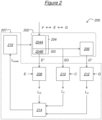
- FIG. 2 illustrates a system 200 for designing a signature generator.
- the design system 200 firstly comprises a trainable machine 202 having hyperparameters, as well as parameters intended to be determined by learning once a set of hyperparameters has been chosen.
- the trainable machine 202 comprises at least one upstream neural network 204A and a downstream classifier 204B.
- the upstream neural network 204A is intended to provide a signature SG of an entity E from a set of statistical characteristics (such as the sets of characteristics provided by the extraction means 104) of actions dated this entity.
- the set of statistical characteristics V is associated with the entity E having carried out these actions, this entity E itself being associated, in the example described, with a group G.
- the downstream classifier 204B is intended to provide an entity prediction E* from the SG signature provided by the upstream neural network 204A.
- the trainable machine 202 comprises a neural network 204, for example a deep neural network, comprising N layers of neurons.
- the upstream neural network 204A then comprises the first N-k layers and the downstream classifier 204B comprises the last k layers, k being an integer greater than or equal to one. k is for example one.
- a "neural network” is a complex structure formed by a plurality of layers, each layer comprising a plurality of artificial neurons.
- An artificial neuron is an elementary processor, which calculates a single output based on the information it receives.
- Each neuron in a layer is connected to at least one neuron in a neighboring layer via an artificial synapse to which a synaptic coefficient or weight is assigned, updated during training of the neural network. It is during this training step that the weight of each artificial synapse will be determined from training data.
- the neural network 204 is for example a recurrent neural network with short and long term memory (or LSTM, from the English “Long Short Term Memory”) or a multi-layer perceptron neural network (or MLP, from the English “Multi Layer Perceptron”).
- LSTM short and long term memory
- MLP multi-layer perceptron neural network
- a hyperparameter can be used to select the structure of the neural network 204, for example the number of layers of neurons of the neural network.
- the last layer of the upstream neural network 204A (i.e., the N-kth layer of the neural network 204) has S neurons, so the SG signature is composed of the outputs of these S neurons.
- the SG signature has S logits.
- a “Logit” is the result of the activation of a neuron, in this case of the N-kth layer.
- the trainable machine 202 is intended to be trained in a supervised manner to perform several tasks simultaneously (a technique known in English as “multi-task learning”). These tasks include at least the following two tasks, called main tasks.
- the first main task is to correctly predict the entity associated with the set of statistical features V provided as input. This entity prediction is denoted by E*. This first main task will be called the “entity prediction task” hereinafter.
- the second main task is to group, in the signature component space, the signatures of the same entity around a center associated with this entity.
- This center is for example a barycenter, such as the isobarycenter, of the signatures of the entity.
- This second main task will be called hereinafter "signature grouping task”.
- the tasks performed by the trainable machine 202 may further comprise N other tasks, called “business tasks”, relating to an aspect relevant to the business.
- the trainable machine 202 may comprise one or more additional elements providing data on which the training is performed, from data provided by the upstream neural network 204A (for example one of the layers, for example that giving the SG signature).
- Business tasks can involve predicting categorical or numeric variables.
- An example of a categorical business task might be classifying a variable 'Web' as having login activity that can have the following values: 1. None, 2. Occasional, 3. Frequent.
- An example of a numeric business task might be predicting the daily login frequency of machines.
- the trainable machine 202 further comprises a group predictor element 206 designed to provide, from the signature SG, a prediction G* of the group to which the entity associated with the set of statistical characteristics V provided as input belongs.
- This business task will hereinafter be called the “group prediction task”.
- Element 206 comprises, for example, a neural network intended to be trained at the same time as neural network 204.
- the trainable machine 202 is intended to be trained in a supervised manner to carry out N + 2 tasks simultaneously (N integer greater than or equal to 0).
- a training device 207 is provided.
- This training device 207 comprises, for each task, a module designed to calculate a loss function, called a specific loss function, associated with this task.
- the training device 207 firstly comprises a first module 208 for calculating a specific loss function L ID associated with the entity prediction task.
- the specific loss function L ID is for example representative of a distance between the identifiers ID and the predictions ID*, for example between the distributions of the true identifiers and the predicted identifiers.
- the specific loss function L ID is the so-called “cross-entropy” loss function.
- the training device 207 further comprises a second module 210 for calculating a specific loss function L C associated with the task of grouping the signatures.
- the specific loss function L C uses, for each entity, a distance (in the space of the S components of the signatures SG) between the signatures of this entity and a center associated with this entity, such as the isobarycenter of these signatures.
- the specific loss function L C is representative of these distances.
- the specific loss function L C is the so-called “center loss” loss function described in the article by Wen, Y., Zhang, K., Li, Z., Qiao, Y., titled “A discriminative feature learning approach for deep face recognition.” and published in Computer Vision - ECCV 2016 - 14th European Conference, Amsterdam, The Netherlands, October 11-14, 2016, Proceedings, Part VII. (2016) 499-515 .
- the training device 207 further comprises a third module 212 for calculating a specific loss function L G associated with the group prediction task.
- the specific loss function L G is representative of a distance between the group predictions G* and the groups G, for example between the distributions of the true groups and the predicted groups.
- the “cross-entropy” loss function is for example used for each business task whose values are categorical, while the so-called “mean squared error” loss function is for example used for business tasks whose values are numeric.
- the business task is group prediction, which is therefore a business task whose values are categorical, so the "cross-entropy" loss function is chosen for the specific loss function L G .
- the training device 207 comprises a fourth module 214 for calculating a total loss function L total from the specific loss functions L ID , L C , and L G .
- the total loss function L total comprises a linear combination of the specific loss functions.
- L REG is a term being a function only of the parameters of the model and constraining the model to remain in a certain solution space.
- An example of a regularization term is the L2 norm (called "weight decay" in the literature) on the parameters of the neural network layers pushing all weights towards 0 when this regularization term is minimized via minimizing the total loss function L total .
- the training device 207 further comprises a module 216 for updating parameters of the trainable machine 202 from the total loss function L total .
- These parameters comprise in particular the synaptic weights of the neural network(s) (the neural networks 204 and 206 in the example described) of the trainable machine 202.
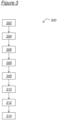
- the monitoring means 102 monitor the actions of the entities E1, E2, E3, E4, E5 during a monitoring time interval of duration W 0 and record their actions in the history H.
- the duration W 0 is, in the example described, twelve days numbered subsequently from one to twelve.
- the duration W is chosen.
- the duration W is one day.
- training data and first and second validation data are obtained.
- the extraction means 104 calculate, for each entity E1, E2, E3, E4, E5 and for each extraction interval, a set of statistical characteristics of the actions of this entity E1, E2, E3, E4, E5 during the extraction interval considered.
- these time intervals have the duration W, i.e. one day.
- the extraction means 104 calculate a set of statistical characteristics for each of the days 1 to 12. Similar calculations are carried out for the other entities E2, E3, E4, E5, so as to obtain twelve sets of characteristics for each entity E1, E2, E3, E4, E5.
- a first part of successive feature sets of a first part of the entities is selected to form the training data.
- a second part of successive feature sets of this first part of the entities is selected to form the first validation data.
- the feature sets of the entities E1, E2, E3 of days 1 to 9 are selected as training data and the feature sets of the entities E1, E2, E3 of days 10 to 12 are selected as first validation data.
- successive feature sets of the other entities are selected as second validation data.
- the feature sets of entities E4, E5 from days 1 to 12 are selected as second validation data.
- values for the hyperparameters are chosen, for example a structure of the neural network 204 among several predefined ones and values of the coefficients ⁇ , ⁇ and ⁇ are chosen.
- the trainable machine 202 is trained in a supervised manner from the training data to carry out the various planned tasks, namely in the example described: entity prediction, signature grouping and, where appropriate, carrying out the business task(s).
- the statistical feature sets of the training data are provided one after the other to the trainable machine 202.
- the upstream neural network 204A For each provided statistical feature set V, the upstream neural network 204A generates a signature SG, the downstream classifier 204B provides an entity prediction E* from the signature SG and the module 212 provides a group prediction G* from the signature SG. From the signatures SG, the entity predictions E* and the group predictions G* obtained from the first training data, the modules 208, 210, 212 respectively calculate the loss functions L ID , L C , L G and the module 216 calculates the total loss function L total for the training data.
- the update module 216 modifies the parameters of the trainable machine 202 according to the overall loss function L total , with the aim of reducing the latter. The previous steps are then repeated, for example until the total loss function L total no longer changes much (for example, until the improvement of the total loss function L total falls below a predefined threshold).
- the loss function L ID guides the training to predict the feature, i.e., classify the input statistical feature sets into U classes, corresponding to the U features of the first training data.
- the loss function LC guides training to group signatures of the same entity, and thereby reduce intra-class variation.
- the upstream neural network 204A is validated using the first and second validation data.
- the statistical feature sets of the first and second validation data are used. More specifically, the following steps are performed.
- the feature sets of the first and second validation data are provided one after the other to the upstream neural network 204A which generates a signature SG each time.
- the signatures obtained are then analyzed to produce a performance evaluation of the upstream neural network 204A.
- Steps 310 and 312 may be repeated with other hyperparameters, in particular with other values for the coefficients ⁇ , ⁇ and ⁇ . In this case, the hyperparameters giving the best performance evaluation in step 312 are selected.
- the upstream neural network 204A is provided as a signature generator (hereinafter designated by the same reference 204A).
- the detection system 400 firstly comprises the IT infrastructure 100, the monitoring means 102 and the extraction means 104. It further comprises the signature generator 204A obtained for example by the method of Figure 3 .
- the detection system 400 further comprises means 402 for determining activity data, means 404 for predicting activity data and means 406 for detecting anomaly.
- the monitoring means 102 monitor at least one entity E (one of the entities E1, E2, E3, E4, E5 or another entity) over a monitoring interval to provide a history H of actions carried out by each monitored entity E in the IT infrastructure 100.
- the extraction means 104 provide, from the history H, for each monitored entity E, a sequence of K+1 sets of statistical characteristics V 1 ... V K , V K+1 , K being an integer greater than or equal to one.
- the means 402 determine activity data D from the last set of statistical characteristics V K+1 of the sequence.
- the first K sets of statistical characteristics V 1 ...V K of the sequence are provided to the signature generator 204A (after training the Figure 3 ) which provides in response as many signatures SG 1 ...SG K of the monitored entity E.
- the anomaly detection means 406 compare the activity data D with a reference data, their prediction D* in the example described, and detect an anomaly, i.e. abnormal behavior, or an absence of anomaly (i.e. normal behavior) from the comparison.
- a signature generator design method such as the one described above makes it possible to obtain a signature generator providing accurate signatures that can be used to detect abnormal (unusual) behavior of an entity.
- each of the elements 102, 104, 202, 204A, 204B, 206, 207, 208, 210, 212, 214, 216, 402, 404, 406 described above can be implemented in hardware, for example by micro-programmed or micro-wired functions in dedicated integrated circuits (without a computer program), and/or in software, for example by one or more computer programs intended to be executed by one or more computers each comprising, on the one hand, one or more memories for storing data files and one or more of these computer programs and, on the other hand, one or more processors associated with this or these memories and intended to execute the instructions of the computer program(s) stored in the memory(s) of this computer.
Landscapes
- Engineering & Computer Science (AREA)
- Theoretical Computer Science (AREA)
- Physics & Mathematics (AREA)
- Software Systems (AREA)
- General Physics & Mathematics (AREA)
- General Engineering & Computer Science (AREA)
- Computing Systems (AREA)
- Artificial Intelligence (AREA)
- Mathematical Physics (AREA)
- Computational Linguistics (AREA)
- Data Mining & Analysis (AREA)
- Evolutionary Computation (AREA)
- Biomedical Technology (AREA)
- Molecular Biology (AREA)
- General Health & Medical Sciences (AREA)
- Biophysics (AREA)
- Life Sciences & Earth Sciences (AREA)
- Health & Medical Sciences (AREA)
- Computer Security & Cryptography (AREA)
- Computer Hardware Design (AREA)
- Management, Administration, Business Operations System, And Electronic Commerce (AREA)
- Debugging And Monitoring (AREA)
- Testing And Monitoring For Control Systems (AREA)
Claims (10)
- Verfahren (300) zum Entwerfen eines Signaturgenerators (204A), der dazu bestimmt ist, eine Signatur (SG) einer Entität (E) bereitzustellen, die Aktionen in einer IT-Infrastruktur (100) umsetzt, wobei diese Signatur (SG) aus einem Satz von statistischen Merkmalen (V) von datierten Aktionen dieser Entität (E) in der IT-Infrastruktur (100) bereitgestellt wird, wobei das Verfahren durch einen Computer implementiert wird und umfassend:- das Erhalten (309) einer trainierbaren Maschine (202), mindestens umfassend:• ein vorgeschaltetes neuronales Netz (204A), das dazu bestimmt ist, eine Signatur (SG) einer Entität (E) aus einem Satz von statistischen Merkmalen (V) von datierten Aktionen dieser Entität (E) in einer IT-Infrastruktur (100) bereitzustellen, und• einen Klassifizierer (204B), der dazu bestimmt ist, eine Entitätsvorhersage (E*) aus der Signatur (SG) bereitzustellen, die durch das vorgeschaltete neuronale Netz (204A) bereitgestellt wird;- das Erhalten (306) von Trainingsdaten, umfassend Sätze von statistischen Merkmalen (V) von datierten Aktionen, die jeweils einer Entität (E) zugeordnet sind, die diese Aktionen in der IT-Infrastruktur (100) umgesetzt hat, wobei die Trainingsdaten eine Vielzahl von Sätzen von statistischen Merkmalen (V) für jede Entität (E) einschließen;- das überwachte Trainieren (310) der trainierbaren Maschine (202) aus den Trainingsdaten, sodass die trainierbare Maschine (202) die Entitäten (E), die den Sätzen von statistischen Merkmalen (V) der Trainingsdaten zugeordnet sind, korrekt vorhersagt, durch Verwendung einer ersten Verlustfunktion (LID), die für einen Abstand zwischen jeder Entitätsvorhersage (E*) und der zugeordneten Entität (E) repräsentativ ist; und- das Bereitstellen (314) des Signaturgenerators (204A) umfassend das vorgeschaltete neuronale Netz (204A) nach dem Training;wobei das Verfahren (300) dadurch gekennzeichnet ist, dass das überwachte Trainieren ferner so umgesetzt wird, dass die trainierbare Maschine (202) die Signaturen (SG) von jeder der Entitäten (E), die den Sätzen von statistischen Merkmalen (V) der Trainingsdaten zugeordnet sind, um ein dieser Entität (E) zugeordnetes Zentrum umgruppiert, durch Verwendung einer zweiten Verlustfunktion (LC), die für jede Entität (E) für einen Abstand zwischen ihren Signaturen (SG) und dem ihr zugeordneten Zentrum repräsentativ ist,wobei das Verfahren ferner ein Erkennen einer Bedrohung in dieser IT-Infrastruktur (100) durch Verwenden der Signatur (SG) einer Entität (E) zum Erkennen eines abnormalen Verhaltens der Entität (E) einschließt.
- Verfahren nach Anspruch 1, wobei das Zentrum ein Baryzentrum, zum Beispiel ein Isobaryzentrum, der Signaturen (SG) der Entität (E) ist, der dieses Zentrum zugeordnet ist.
- Verfahren nach Anspruch 1 oder 2, wobei das überwachte Trainieren eine Gesamtverlustfunktion (Lgesamt) unter Verwendung der ersten Verlustfunktion (LID), DIE der Entitätsvorhersage zugeordnet ist, und der zweiten Verlustfunktion (LC), die der Umgruppierung der Signaturen (SG) zugeordnet ist, minimiert.
- Verfahren nach Anspruch 3, wobei die Gesamtverlustfunktion (Lgesamt) eine lineare Kombination der ersten und der zweiten Verlustfunktion (LID, LC) verwendet.
- Verfahren nach Anspruch 4, wobei die lineare Kombination einen Koeffizienten für mindestens eine der ersten und der zweiten Verlustfunktion (LID, LC) aufweist, wobei dieser Koeffizient ein Hyperparameter ist, und umfassend:- das überwachte Trainieren (310) der trainierbaren Maschine (202) aus den Trainingsdaten für mehrere Sätze von Hyperparametern;- für jeden Satz von Hyperparametern, das Analysieren der erhaltenen Signaturen zum Erstellen einer Leistungsbewertung; und- das Auswählen der Hyperparameter, die die beste Leistungsbewertung ergeben.
- Verfahren nach einem der Ansprüche 1 bis 5, wobei die trainierbare Maschine (202) ein globales neuronales Netz (204) umfasst, umfassend N Schichten von Neuronen, das vorgelagerte neuronale Netz (204A) umfassend die ersten N - k Schichten und den Klassifizierer (204B), umfassend die letzten k Schichten, wobei k größer als oder gleich eins ist.
- Verfahren nach einem der Ansprüche 1 bis 6, wobei das überwachte Trainieren ferner umgesetzt wird, sodass die trainierbare Maschine (202) eine oder mehrere andere Aufgaben umsetzt.
- Verfahren (500) nach einem der Ansprüche 1 bis 7, wobei das Erkennen einer Bedrohung einschließt:- das Bereitstellen (506) mindestens eines Satzes von statistischen Merkmalen (V1... VK) von datierten Aktionen der Entität (E) in der IT-Infrastruktur (100) an den Signaturgenerator (204A);- das Bereitstellen (508) durch den Signaturgenerator (204A) einer Signatur (SG1...SGK) der Entität (E) für jeden Satz von statistischen Merkmalen (V1...VK);- das Vergleichen (512) von einem Referenzdatum (D*), das aus der oder den Signaturen (SG1...SGN) STAMMT, die durch den Signaturgenerator (204A) mit mindestens einem Aktivitätsdatum (D) bereitgestellt werden; und- das Erkennen einer möglichen Bedrohung in der IT-Infrastruktur (100) durch das Erkennen (512) eines normalen oder abnormalen Verhaltens der Entität (E) aus dem Vergleich.
- Computerprogramm, das von einem Kommunikationsnetz herunterladbar ist und/oder auf einem Träger abgespeichert ist, der durch den Computer lesbar und/oder durch einen Prozessor ausführbar ist, dadurch gekennzeichnet, dass es Anweisungen für die Ausführung der Schritte eines Verfahrens nach einem der Ansprüche 1 bis 8 umfasst, wenn das Programm auf einem Computer des Systems ausgeführt wird.
- System (200) für den Entwurf eines Signaturgenerators (204A), der dazu bestimmt ist, eine Signatur (SG) einer Entität (E) bereitzustellen, die Aktionen in einer IT-Infrastruktur (100) für die Erkennung einer Bedrohung dieser IT-Infrastruktur (100) umsetzt, wobei diese Signatur (SG) aus einem Satz von statistischen Merkmalen (V) von datierten Aktionen dieser Entität (E) in der IT-Infrastruktur (100) bereitgestellt wird, umfassend:- eine trainierbare Maschine (202), mindestens umfassend:• ein vorgeschaltetes neuronales Netz (204A), das dazu bestimmt ist, eine Signatur (SG) einer Entität (E) aus einem Satz von statistischen Merkmalen (V) von datierten Aktionen dieser Entität (E) in einer IT-Infrastruktur (100) bereitzustellen, und• einen Klassifizierer (204B), der dazu bestimmt ist, eine Entitätsvorhersage (E*) aus der Signatur (SG) bereitzustellen, die durch das vorgeschaltete neuronale Netz (204A) bereitgestellt wird;- eine Trainingsvorrichtung (207), die zum Trainieren der trainierbaren Maschine (202) auf überwachte Weise aus Trainingsdaten, umfassend Sätze von statistischen Merkmalen (V) von datierten Aktionen, die jeweils einer Entität (E) zugeordnet sind, die diese Aktionen in der IT-Infrastruktur (100) umgesetzt hat, konzipiert ist, wobei die Trainingsdaten eine Vielzahl von Sätzen von statistischen Merkmalen (V) für jede Entität (E) einschließen, sodass die trainierbare Maschine (202) die Entitäten (E), die den Sätzen von statistischen Merkmalen (V) der Trainingsdaten zugeordnet sind, korrekt vorhersagt, durch Verwendung einer ersten Verlustfunktion (LID), die für einen Abstand zwischen jeder Entitätsvorhersage (E*) und der zugeordneten Entität (E) repräsentativ ist;das System (200) dadurch gekennzeichnet ist, dass die Trainingsvorrichtung (207) ferner zum Trainieren der trainierbaren Maschine (202) konzipiert ist, sodass die trainierbare Maschine (202) die Signaturen (SG) von jeder der Entitäten (E), die den Sätzen von statistischen Merkmalen (V) der Trainingsdaten zugeordnet sind, um ein dieser Entität (E) zugeordnetes Zentrum umgruppiert, durch Verwendung einer zweiten Verlustfunktion (LC), die für jede Entität (E) eines Abstand zwischen ihren Signaturen (SG) und dem ihr zugeordneten Zentrum repräsentativ ist, und dadurch, dass der Signaturgenerator (204A) das vorgeschaltete neuronale Netz (204A) nach dem Training umfasst,das System (200) ferner zum Erkennen einer Bedrohung in dieser IT-Infrastruktur (100) konfiguriert ist, durch Verwenden der Signatur (SG) einer Entität (E) zum Erkennen eines abnormalen Verhaltens der Entität (E).
Applications Claiming Priority (1)
| Application Number | Priority Date | Filing Date | Title |
|---|---|---|---|
| FR1904728A FR3095879B1 (fr) | 2019-05-06 | 2019-05-06 | Procédé de conception d’un générateur de signature d’une entité réalisant des actions dans une architecture informatique, procédé de détection de comportement anormal, programme d’ordinateur et système correspondants |
Publications (2)
| Publication Number | Publication Date |
|---|---|
| EP3736743A1 EP3736743A1 (de) | 2020-11-11 |
| EP3736743B1 true EP3736743B1 (de) | 2025-04-16 |
Family
ID=68424954
Family Applications (1)
| Application Number | Title | Priority Date | Filing Date |
|---|---|---|---|
| EP20172818.5A Active EP3736743B1 (de) | 2019-05-06 | 2020-05-04 | Entwurfverfahren eines signaturgenerators einer einheit, die aktionen in einer it-architektur durchführt, entsprechendes erkennungsverfahren von anormalem verhalten, computerprogramm und system |
Country Status (2)
| Country | Link |
|---|---|
| EP (1) | EP3736743B1 (de) |
| FR (1) | FR3095879B1 (de) |
Family Cites Families (1)
| Publication number | Priority date | Publication date | Assignee | Title |
|---|---|---|---|---|
| US10367841B2 (en) * | 2016-12-16 | 2019-07-30 | Patternex, Inc. | Method and system for learning representations for log data in cybersecurity |
-
2019
- 2019-05-06 FR FR1904728A patent/FR3095879B1/fr active Active
-
2020
- 2020-05-04 EP EP20172818.5A patent/EP3736743B1/de active Active
Non-Patent Citations (1)
| Title |
|---|
| LU JIUMING ET AL: "Insider Threat Detection with Long Short-Term Memory", COMPUTATIONAL BIOLOGY AND BIOINFORMATICS, ACM, 2 PENN PLAZA, SUITE 701NEW YORKNY10121-0701USA, 29 January 2019 (2019-01-29), pages 1 - 10, XP059136264, ISBN: 978-1-4503-6552-9, DOI: 10.1145/3290688.3290692 * |
Also Published As
| Publication number | Publication date |
|---|---|
| EP3736743A1 (de) | 2020-11-11 |
| FR3095879B1 (fr) | 2021-11-26 |
| FR3095879A1 (fr) | 2020-11-13 |
Similar Documents
| Publication | Publication Date | Title |
|---|---|---|
| EP3767558B1 (de) | Verfahren und vorrichtung zur bestimmung einer geschätze dauer bis einem technischen vorfall in einer it-infrastruktur basierend auf leistungsindikatorwerten | |
| US11138514B2 (en) | Review machine learning system | |
| EP3767467A1 (de) | Verfahren und vorrichtung zur bestimmung eines leistungsindexwerts zur vorhersage von störungen in einer it-infrastruktur mithilfe von kennzahlenwerten | |
| EP2696344B1 (de) | Verfahren und System zum Erfassen von Schallereignissen in einer gegebenen Umgebung | |
| EP3846087A1 (de) | Verfahren und system zur auswahl eines lernmodells innerhalb einer vielzahl von lernmodellen | |
| CA3085092A1 (en) | System and method for detecting data drift | |
| EP3767468A1 (de) | Verfahren und vorrichtung zur bestimmung eines risikowerts für eine technische störung in einer it-infrastruktur mithilfe von kennzahlenwerten | |
| FR3082963A1 (fr) | Systeme et procede d'evaluation et de deploiement de modeles d'apprentissage automatique non supervises ou semi-supervises | |
| EP3059682B1 (de) | Datenverarbeitungs- und modellierungssystem für die analyse des energieverbrauchs eines standorts | |
| Ihler et al. | Learning to detect events with markov-modulated poisson processes | |
| EP3613003B1 (de) | System und verfahren zur bewirtschaftung von betrugsfehlern in einem finanztransaktionssystem | |
| US10394631B2 (en) | Anomaly detection and automated analysis using weighted directed graphs | |
| EP3489831A1 (de) | Verfahren und vorrichtung zur überwachung eines datenerzeugungsprozesses eines metrischen systems zur vorhersage von störungen | |
| EP3767474B1 (de) | Verfahren zur analyse des ressourcenverbrauchs einer it-infrastruktur, alarm und dimensionierung | |
| EP3736743B1 (de) | Entwurfverfahren eines signaturgenerators einer einheit, die aktionen in einer it-architektur durchführt, entsprechendes erkennungsverfahren von anormalem verhalten, computerprogramm und system | |
| EP1820170B1 (de) | Unterdrückung von falschalarmen unter in einem überwachten informationssystem produzierten alarmen | |
| FR3089648A1 (fr) | Procede de detection non supervise d’attaques internes et systeme associe | |
| EP1792278B1 (de) | Verfahren zur detektion und nachverfolgung von punktuellen zielen in einem optoelektronischen überwachungssystem | |
| EP4523139B1 (de) | Verfahren zur erkennung einer anomalie in einem system eines flugzeugs | |
| EP1418541A2 (de) | Physik basiertes neuronales Netzwerk zur Tendenzdetektion | |
| Ling | Explainable Prediction of Manufacturing Anomalies via Convolutional Models and Layer-wise Relevance Propagation | |
| Patel | Modeling SLA Breach Probability for Critical Fintech Data | |
| Zhang et al. | Listening to the System: Consumer Complaints as Early Warning Signals | |
| Roy et al. | Customer Churn Prediction on Structured Data Using FT-Transformer and Stacking Ensembles | |
| CA3203085A1 (fr) | Procede et systeme de detection automatisee de risque de fraude dans un systeme surveille |
Legal Events
| Date | Code | Title | Description |
|---|---|---|---|
| PUAI | Public reference made under article 153(3) epc to a published international application that has entered the european phase |
Free format text: ORIGINAL CODE: 0009012 |
|
| STAA | Information on the status of an ep patent application or granted ep patent |
Free format text: STATUS: THE APPLICATION HAS BEEN PUBLISHED |
|
| AK | Designated contracting states |
Kind code of ref document: A1 Designated state(s): AL AT BE BG CH CY CZ DE DK EE ES FI FR GB GR HR HU IE IS IT LI LT LU LV MC MK MT NL NO PL PT RO RS SE SI SK SM TR |
|
| AX | Request for extension of the european patent |
Extension state: BA ME |
|
| STAA | Information on the status of an ep patent application or granted ep patent |
Free format text: STATUS: REQUEST FOR EXAMINATION WAS MADE |
|
| 17P | Request for examination filed |
Effective date: 20210504 |
|
| RBV | Designated contracting states (corrected) |
Designated state(s): AL AT BE BG CH CY CZ DE DK EE ES FI FR GB GR HR HU IE IS IT LI LT LU LV MC MK MT NL NO PL PT RO RS SE SI SK SM TR |
|
| P01 | Opt-out of the competence of the unified patent court (upc) registered |
Effective date: 20230330 |
|
| STAA | Information on the status of an ep patent application or granted ep patent |
Free format text: STATUS: EXAMINATION IS IN PROGRESS |
|
| 17Q | First examination report despatched |
Effective date: 20240319 |
|
| GRAP | Despatch of communication of intention to grant a patent |
Free format text: ORIGINAL CODE: EPIDOSNIGR1 |
|
| STAA | Information on the status of an ep patent application or granted ep patent |
Free format text: STATUS: GRANT OF PATENT IS INTENDED |
|
| INTG | Intention to grant announced |
Effective date: 20241112 |
|
| GRAS | Grant fee paid |
Free format text: ORIGINAL CODE: EPIDOSNIGR3 |
|
| GRAA | (expected) grant |
Free format text: ORIGINAL CODE: 0009210 |
|
| STAA | Information on the status of an ep patent application or granted ep patent |
Free format text: STATUS: THE PATENT HAS BEEN GRANTED |
|
| AK | Designated contracting states |
Kind code of ref document: B1 Designated state(s): AL AT BE BG CH CY CZ DE DK EE ES FI FR GB GR HR HU IE IS IT LI LT LU LV MC MK MT NL NO PL PT RO RS SE SI SK SM TR |
|
| REG | Reference to a national code |
Ref country code: GB Ref legal event code: FG4D Free format text: NOT ENGLISH |
|
| REG | Reference to a national code |
Ref country code: CH Ref legal event code: EP Ref country code: DE Ref legal event code: R096 Ref document number: 602020049419 Country of ref document: DE |
|
| REG | Reference to a national code |
Ref country code: IE Ref legal event code: FG4D Free format text: LANGUAGE OF EP DOCUMENT: FRENCH |
|
| PGFP | Annual fee paid to national office [announced via postgrant information from national office to epo] |
Ref country code: DE Payment date: 20250603 Year of fee payment: 6 |
|
| PGFP | Annual fee paid to national office [announced via postgrant information from national office to epo] |
Ref country code: FR Payment date: 20250602 Year of fee payment: 6 |
|
| REG | Reference to a national code |
Ref country code: NL Ref legal event code: MP Effective date: 20250416 |
|
| PG25 | Lapsed in a contracting state [announced via postgrant information from national office to epo] |
Ref country code: NL Free format text: LAPSE BECAUSE OF FAILURE TO SUBMIT A TRANSLATION OF THE DESCRIPTION OR TO PAY THE FEE WITHIN THE PRESCRIBED TIME-LIMIT Effective date: 20250416 |
|
| REG | Reference to a national code |
Ref country code: AT Ref legal event code: MK05 Ref document number: 1786251 Country of ref document: AT Kind code of ref document: T Effective date: 20250416 |
|
| PG25 | Lapsed in a contracting state [announced via postgrant information from national office to epo] |
Ref country code: PT Free format text: LAPSE BECAUSE OF FAILURE TO SUBMIT A TRANSLATION OF THE DESCRIPTION OR TO PAY THE FEE WITHIN THE PRESCRIBED TIME-LIMIT Effective date: 20250818 Ref country code: FI Free format text: LAPSE BECAUSE OF FAILURE TO SUBMIT A TRANSLATION OF THE DESCRIPTION OR TO PAY THE FEE WITHIN THE PRESCRIBED TIME-LIMIT Effective date: 20250416 Ref country code: ES Free format text: LAPSE BECAUSE OF FAILURE TO SUBMIT A TRANSLATION OF THE DESCRIPTION OR TO PAY THE FEE WITHIN THE PRESCRIBED TIME-LIMIT Effective date: 20250416 |
|
| REG | Reference to a national code |
Ref country code: LT Ref legal event code: MG9D |
|
| PG25 | Lapsed in a contracting state [announced via postgrant information from national office to epo] |
Ref country code: NO Free format text: LAPSE BECAUSE OF FAILURE TO SUBMIT A TRANSLATION OF THE DESCRIPTION OR TO PAY THE FEE WITHIN THE PRESCRIBED TIME-LIMIT Effective date: 20250716 Ref country code: GR Free format text: LAPSE BECAUSE OF FAILURE TO SUBMIT A TRANSLATION OF THE DESCRIPTION OR TO PAY THE FEE WITHIN THE PRESCRIBED TIME-LIMIT Effective date: 20250717 |
|
| PG25 | Lapsed in a contracting state [announced via postgrant information from national office to epo] |
Ref country code: PL Free format text: LAPSE BECAUSE OF FAILURE TO SUBMIT A TRANSLATION OF THE DESCRIPTION OR TO PAY THE FEE WITHIN THE PRESCRIBED TIME-LIMIT Effective date: 20250416 |
|
| PG25 | Lapsed in a contracting state [announced via postgrant information from national office to epo] |
Ref country code: BG Free format text: LAPSE BECAUSE OF FAILURE TO SUBMIT A TRANSLATION OF THE DESCRIPTION OR TO PAY THE FEE WITHIN THE PRESCRIBED TIME-LIMIT Effective date: 20250416 |
|
| PG25 | Lapsed in a contracting state [announced via postgrant information from national office to epo] |
Ref country code: HR Free format text: LAPSE BECAUSE OF FAILURE TO SUBMIT A TRANSLATION OF THE DESCRIPTION OR TO PAY THE FEE WITHIN THE PRESCRIBED TIME-LIMIT Effective date: 20250416 |
|
| PG25 | Lapsed in a contracting state [announced via postgrant information from national office to epo] |
Ref country code: AT Free format text: LAPSE BECAUSE OF FAILURE TO SUBMIT A TRANSLATION OF THE DESCRIPTION OR TO PAY THE FEE WITHIN THE PRESCRIBED TIME-LIMIT Effective date: 20250416 |
|
| PG25 | Lapsed in a contracting state [announced via postgrant information from national office to epo] |
Ref country code: RS Free format text: LAPSE BECAUSE OF FAILURE TO SUBMIT A TRANSLATION OF THE DESCRIPTION OR TO PAY THE FEE WITHIN THE PRESCRIBED TIME-LIMIT Effective date: 20250716 |
|
| PG25 | Lapsed in a contracting state [announced via postgrant information from national office to epo] |
Ref country code: IS Free format text: LAPSE BECAUSE OF FAILURE TO SUBMIT A TRANSLATION OF THE DESCRIPTION OR TO PAY THE FEE WITHIN THE PRESCRIBED TIME-LIMIT Effective date: 20250816 |
|
| PG25 | Lapsed in a contracting state [announced via postgrant information from national office to epo] |
Ref country code: LV Free format text: LAPSE BECAUSE OF FAILURE TO SUBMIT A TRANSLATION OF THE DESCRIPTION OR TO PAY THE FEE WITHIN THE PRESCRIBED TIME-LIMIT Effective date: 20250416 |
|
| REG | Reference to a national code |
Ref country code: CH Ref legal event code: H13 Free format text: ST27 STATUS EVENT CODE: U-0-0-H10-H13 (AS PROVIDED BY THE NATIONAL OFFICE) Effective date: 20251223 |
|
| PG25 | Lapsed in a contracting state [announced via postgrant information from national office to epo] |
Ref country code: DK Free format text: LAPSE BECAUSE OF FAILURE TO SUBMIT A TRANSLATION OF THE DESCRIPTION OR TO PAY THE FEE WITHIN THE PRESCRIBED TIME-LIMIT Effective date: 20250416 Ref country code: SM Free format text: LAPSE BECAUSE OF FAILURE TO SUBMIT A TRANSLATION OF THE DESCRIPTION OR TO PAY THE FEE WITHIN THE PRESCRIBED TIME-LIMIT Effective date: 20250416 |
|
| PG25 | Lapsed in a contracting state [announced via postgrant information from national office to epo] |
Ref country code: LU Free format text: LAPSE BECAUSE OF NON-PAYMENT OF DUE FEES Effective date: 20250504 |
|
| PG25 | Lapsed in a contracting state [announced via postgrant information from national office to epo] |
Ref country code: CH Free format text: LAPSE BECAUSE OF NON-PAYMENT OF DUE FEES Effective date: 20250531 |
|
| REG | Reference to a national code |
Ref country code: DE Ref legal event code: R097 Ref document number: 602020049419 Country of ref document: DE |
|
| PG25 | Lapsed in a contracting state [announced via postgrant information from national office to epo] |
Ref country code: CZ Free format text: LAPSE BECAUSE OF FAILURE TO SUBMIT A TRANSLATION OF THE DESCRIPTION OR TO PAY THE FEE WITHIN THE PRESCRIBED TIME-LIMIT Effective date: 20250416 |
|
| PG25 | Lapsed in a contracting state [announced via postgrant information from national office to epo] |
Ref country code: EE Free format text: LAPSE BECAUSE OF FAILURE TO SUBMIT A TRANSLATION OF THE DESCRIPTION OR TO PAY THE FEE WITHIN THE PRESCRIBED TIME-LIMIT Effective date: 20250416 |
|
| PG25 | Lapsed in a contracting state [announced via postgrant information from national office to epo] |
Ref country code: SK Free format text: LAPSE BECAUSE OF FAILURE TO SUBMIT A TRANSLATION OF THE DESCRIPTION OR TO PAY THE FEE WITHIN THE PRESCRIBED TIME-LIMIT Effective date: 20250416 Ref country code: RO Free format text: LAPSE BECAUSE OF FAILURE TO SUBMIT A TRANSLATION OF THE DESCRIPTION OR TO PAY THE FEE WITHIN THE PRESCRIBED TIME-LIMIT Effective date: 20250416 |
|
| PG25 | Lapsed in a contracting state [announced via postgrant information from national office to epo] |
Ref country code: IT Free format text: LAPSE BECAUSE OF FAILURE TO SUBMIT A TRANSLATION OF THE DESCRIPTION OR TO PAY THE FEE WITHIN THE PRESCRIBED TIME-LIMIT Effective date: 20250416 |
|
| REG | Reference to a national code |
Ref country code: BE Ref legal event code: MM Effective date: 20250531 |
|
| PG25 | Lapsed in a contracting state [announced via postgrant information from national office to epo] |
Ref country code: MC Free format text: LAPSE BECAUSE OF FAILURE TO SUBMIT A TRANSLATION OF THE DESCRIPTION OR TO PAY THE FEE WITHIN THE PRESCRIBED TIME-LIMIT Effective date: 20250416 |
|
| PLBE | No opposition filed within time limit |
Free format text: ORIGINAL CODE: 0009261 |
|
| STAA | Information on the status of an ep patent application or granted ep patent |
Free format text: STATUS: NO OPPOSITION FILED WITHIN TIME LIMIT |
|
| REG | Reference to a national code |
Ref country code: CH Ref legal event code: L10 Free format text: ST27 STATUS EVENT CODE: U-0-0-L10-L00 (AS PROVIDED BY THE NATIONAL OFFICE) Effective date: 20260225 |
|
| 26N | No opposition filed |
Effective date: 20260119 |
|
| PGFP | Annual fee paid to national office [announced via postgrant information from national office to epo] |
Ref country code: GB Payment date: 20260324 Year of fee payment: 7 |
|
| PG25 | Lapsed in a contracting state [announced via postgrant information from national office to epo] |
Ref country code: IE Free format text: LAPSE BECAUSE OF NON-PAYMENT OF DUE FEES Effective date: 20250504 |
|
| PG25 | Lapsed in a contracting state [announced via postgrant information from national office to epo] |
Ref country code: BE Free format text: LAPSE BECAUSE OF NON-PAYMENT OF DUE FEES Effective date: 20250531 |