EP3736745A1 - Procédé et appareil de formation de modèles - Google Patents
Procédé et appareil de formation de modèles Download PDFInfo
- Publication number
- EP3736745A1 EP3736745A1 EP19210350.5A EP19210350A EP3736745A1 EP 3736745 A1 EP3736745 A1 EP 3736745A1 EP 19210350 A EP19210350 A EP 19210350A EP 3736745 A1 EP3736745 A1 EP 3736745A1
- Authority
- EP
- European Patent Office
- Prior art keywords
- model
- recognition result
- student model
- student
- teacher
- Prior art date
- Legal status (The legal status is an assumption and is not a legal conclusion. Google has not performed a legal analysis and makes no representation as to the accuracy of the status listed.)
- Granted
Links
Images




Classifications
-
- G—PHYSICS
- G06—COMPUTING OR CALCULATING; COUNTING
- G06N—COMPUTING ARRANGEMENTS BASED ON SPECIFIC COMPUTATIONAL MODELS
- G06N3/00—Computing arrangements based on biological models
- G06N3/02—Neural networks
- G06N3/08—Learning methods
-
- G—PHYSICS
- G10—MUSICAL INSTRUMENTS; ACOUSTICS
- G10L—SPEECH ANALYSIS TECHNIQUES OR SPEECH SYNTHESIS; SPEECH RECOGNITION; SPEECH OR VOICE PROCESSING TECHNIQUES; SPEECH OR AUDIO CODING OR DECODING
- G10L15/00—Speech recognition
- G10L15/06—Creation of reference templates; Training of speech recognition systems, e.g. adaptation to the characteristics of the speaker's voice
- G10L15/063—Training
-
- G—PHYSICS
- G06—COMPUTING OR CALCULATING; COUNTING
- G06N—COMPUTING ARRANGEMENTS BASED ON SPECIFIC COMPUTATIONAL MODELS
- G06N3/00—Computing arrangements based on biological models
- G06N3/02—Neural networks
- G06N3/08—Learning methods
- G06N3/088—Non-supervised learning, e.g. competitive learning
-
- G—PHYSICS
- G06—COMPUTING OR CALCULATING; COUNTING
- G06N—COMPUTING ARRANGEMENTS BASED ON SPECIFIC COMPUTATIONAL MODELS
- G06N3/00—Computing arrangements based on biological models
- G06N3/02—Neural networks
- G06N3/04—Architecture, e.g. interconnection topology
-
- G—PHYSICS
- G06—COMPUTING OR CALCULATING; COUNTING
- G06N—COMPUTING ARRANGEMENTS BASED ON SPECIFIC COMPUTATIONAL MODELS
- G06N3/00—Computing arrangements based on biological models
- G06N3/02—Neural networks
- G06N3/04—Architecture, e.g. interconnection topology
- G06N3/044—Recurrent networks, e.g. Hopfield networks
- G06N3/0442—Recurrent networks, e.g. Hopfield networks characterised by memory or gating, e.g. long short-term memory [LSTM] or gated recurrent units [GRU]
-
- G—PHYSICS
- G06—COMPUTING OR CALCULATING; COUNTING
- G06N—COMPUTING ARRANGEMENTS BASED ON SPECIFIC COMPUTATIONAL MODELS
- G06N3/00—Computing arrangements based on biological models
- G06N3/02—Neural networks
- G06N3/04—Architecture, e.g. interconnection topology
- G06N3/045—Combinations of networks
-
- G—PHYSICS
- G06—COMPUTING OR CALCULATING; COUNTING
- G06N—COMPUTING ARRANGEMENTS BASED ON SPECIFIC COMPUTATIONAL MODELS
- G06N3/00—Computing arrangements based on biological models
- G06N3/02—Neural networks
- G06N3/04—Architecture, e.g. interconnection topology
- G06N3/0464—Convolutional networks [CNN, ConvNet]
-
- G—PHYSICS
- G06—COMPUTING OR CALCULATING; COUNTING
- G06N—COMPUTING ARRANGEMENTS BASED ON SPECIFIC COMPUTATIONAL MODELS
- G06N3/00—Computing arrangements based on biological models
- G06N3/02—Neural networks
- G06N3/04—Architecture, e.g. interconnection topology
- G06N3/047—Probabilistic or stochastic networks
-
- G—PHYSICS
- G06—COMPUTING OR CALCULATING; COUNTING
- G06N—COMPUTING ARRANGEMENTS BASED ON SPECIFIC COMPUTATIONAL MODELS
- G06N3/00—Computing arrangements based on biological models
- G06N3/02—Neural networks
- G06N3/04—Architecture, e.g. interconnection topology
- G06N3/0495—Quantised networks; Sparse networks; Compressed networks
-
- G—PHYSICS
- G06—COMPUTING OR CALCULATING; COUNTING
- G06N—COMPUTING ARRANGEMENTS BASED ON SPECIFIC COMPUTATIONAL MODELS
- G06N3/00—Computing arrangements based on biological models
- G06N3/02—Neural networks
- G06N3/08—Learning methods
- G06N3/09—Supervised learning
-
- G—PHYSICS
- G06—COMPUTING OR CALCULATING; COUNTING
- G06N—COMPUTING ARRANGEMENTS BASED ON SPECIFIC COMPUTATIONAL MODELS
- G06N3/00—Computing arrangements based on biological models
- G06N3/02—Neural networks
- G06N3/08—Learning methods
- G06N3/094—Adversarial learning
-
- G—PHYSICS
- G06—COMPUTING OR CALCULATING; COUNTING
- G06N—COMPUTING ARRANGEMENTS BASED ON SPECIFIC COMPUTATIONAL MODELS
- G06N3/00—Computing arrangements based on biological models
- G06N3/02—Neural networks
- G06N3/08—Learning methods
- G06N3/096—Transfer learning
-
- G—PHYSICS
- G10—MUSICAL INSTRUMENTS; ACOUSTICS
- G10L—SPEECH ANALYSIS TECHNIQUES OR SPEECH SYNTHESIS; SPEECH RECOGNITION; SPEECH OR VOICE PROCESSING TECHNIQUES; SPEECH OR AUDIO CODING OR DECODING
- G10L25/00—Speech or voice analysis techniques not restricted to a single one of groups G10L15/00 - G10L21/00
- G10L25/27—Speech or voice analysis techniques not restricted to a single one of groups G10L15/00 - G10L21/00 characterised by the analysis technique
- G10L25/30—Speech or voice analysis techniques not restricted to a single one of groups G10L15/00 - G10L21/00 characterised by the analysis technique using neural networks
-
- G—PHYSICS
- G06—COMPUTING OR CALCULATING; COUNTING
- G06N—COMPUTING ARRANGEMENTS BASED ON SPECIFIC COMPUTATIONAL MODELS
- G06N3/00—Computing arrangements based on biological models
- G06N3/02—Neural networks
- G06N3/08—Learning methods
- G06N3/084—Backpropagation, e.g. using gradient descent
-
- G—PHYSICS
- G10—MUSICAL INSTRUMENTS; ACOUSTICS
- G10L—SPEECH ANALYSIS TECHNIQUES OR SPEECH SYNTHESIS; SPEECH RECOGNITION; SPEECH OR VOICE PROCESSING TECHNIQUES; SPEECH OR AUDIO CODING OR DECODING
- G10L15/00—Speech recognition
- G10L15/06—Creation of reference templates; Training of speech recognition systems, e.g. adaptation to the characteristics of the speaker's voice
- G10L15/063—Training
- G10L2015/0631—Creating reference templates; Clustering
Definitions
- the following description relates to a model training method and apparatus.
- ANN artificial neural network
- the ANN generates mapping between input patterns and output patterns using an algorithm, and a capability of generating the mapping is expressed as a learning capability of the ANN.
- the ANN may employ an algorithm that mimics abilities to learn.
- the ANN has a capability to generate a relatively correct output with respect to an input pattern that has not been used for training based on a result of previous training.
- a method of training a model including acquiring a recognition result of a teacher model and a recognition result of a student model for an input sequence, and training the student model to minimize a distinction between the recognition result of the teacher model and the recognition result of the student model, based on an objective that the recognition result of the teacher model and the recognition result of the student model are not distinguishable from each other.
- the training of the student model may include determining an adversarial loss based on a degree to which the recognition result of the teacher model and the recognition result of the student model are distinguished from each other, and training the student model to reduce the adversarial loss.
- the determining of the adversarial loss may include determining the adversarial loss based on a degree to which an output sequence of the teacher model and an output sequence of the student model that are respectively output as recognition results for the input sequence are distinguished from each other.
- the determining of the adversarial loss may include determining the adversarial loss by applying a Gumbel-max algorithm, based on probabilities of elements included in an output sequence.
- the determining of the adversarial loss may include determining the adversarial loss by applying a Gumbel-max algorithm, based on a probability of an output sequence.
- the determining of the adversarial loss may include determining the adversarial loss by further applying a Gumbel-max algorithm, based on probabilities of a number of candidate sequences that are likely to correspond to the output sequence.
- the determining of the adversarial loss may include determining the adversarial loss based on a degree to which an element in an output sequence of the teacher model and an element in an output sequence of the student model that are respectively output as recognition results for the input sequence are distinguished from each other.
- the determining of the adversarial loss may include determining the adversarial loss by applying a Gumbel-max algorithm, based on a probability of an element included in an output sequence.
- the training of the student model may include training the student model such that the recognition result of the teacher model and the recognition result of the student model are not distinguished from each other by a discriminator model, and the discriminator model may be trained to distinguish between the recognition result of the teacher model and the recognition result of the student model.
- the training of the student model may include training the student model using the recognition result of the teacher model such that the recognition result of the teacher model may be output from the student model.
- the input sequence may include sentence data including words and speech data including frames.
- an apparatus for training a model including a processor configured to acquire a recognition result of a teacher model and a recognition result of a student model for an input sequence and to train the student model to minimize a distinction between the recognition result of the teacher model and the recognition result of the student model, based on an objective that the recognition result of the teacher model and the recognition result of the student model are not distinguishable from each other.
- the processor may be configured to determine an adversarial loss based on a degree to which the recognition result of the teacher model and the recognition result of the student model are distinguished from each other, and to train the student model to reduce the adversarial loss.
- the processor may be configured to determine the adversarial loss based on a degree to which an output sequence of the teacher model and an output sequence of the student model that are respectively output as recognition results for the input sequence are distinguished from each other.
- the processor may be configured to determine the adversarial loss by applying a Gumbel-max algorithm, based on probabilities of elements included in an output sequence.
- the processor may be configured to determine the adversarial loss by applying a Gumbel-max algorithm, based on a probability of an output sequence.
- the processor may be configured to determine the adversarial loss based on a degree to which an element in an output sequence of the teacher model and an element in an output sequence of the student model that are respectively output as recognition results for the input sequence are distinguished from each other.
- the processor may be configured to train the student model such that the recognition result of the teacher model and the recognition result of the student model are not distinguished from each other by a discriminator model, and the discriminator model may be trained to distinguish between the recognition result of the teacher model and the recognition result of the student model.
- the processor may be configured to train the student model using the recognition result of the teacher model such that the recognition result of the teacher model may be output from the student model.
- the apparatus may include a memory configured to store a parameter of the student model, and to store instructions that, when executed, configures the processor to acquire the recognition result of the teacher model and the student model, and to train the student model.
- an apparatus for training a model including a processor configured to acquire a recognition result of a teacher model and a recognition result of a student model for an input sequence, and train the student model to minimize a distinction between recognition result of the teacher model and the recognition result of the student model, at the discriminator model.
- the processor may be configured to train the discriminator model to distinguish between the recognition result of the teacher model and the recognition result of the student model.
- the processor may be configured to train the student model to reduce an adversarial loss by applying a Gumbel-max algorithm, based on probabilities of elements included in an output sequence.
- the processor may be configured to train the student model to reduce an adversarial loss by applying a Gumbel-max algorithm, based on a probability of an output sequence.
- first,” “second,” and “third” may be used herein to describe various members, components, regions, layers, or sections, these members, components, regions, layers, or sections are not to be limited by these terms. Rather, these terms are only used to distinguish one member, component, region, layer, or section from another member, component, region, layer, or section. Thus, a first member, component, region, layer, or section referred to in examples described herein may also be referred to as a second member, component, region, layer, or section without departing from the teachings of the examples.
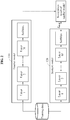
- FIGS. 1 and 2 illustrate examples of a teacher model and a student model.
- FIG. 1 illustrates a teacher model 110 and a student model 120.
- the teacher model 110 and the student model 120 are neural networks having difference sizes and the same target data to be recognized.
- the neural network is a recognition model using numerous artificial neurons connected through edges.
- the teacher model 110 is a model that recognizes target data to be recognized, with a high accuracy using sufficiently numerous characteristics extracted from the target data.
- the teacher model 110 is greater in size than the student model 120.
- the teacher model 110 may include more layers, more nodes, or combinations thereof when compared to the student model 120.
- the student model 120 is a neural network having a size that is smaller than that of the teacher model 110. Due to the small size, the student model 120 uses lesser memory and has a faster recognition speed than the teacher model 110.
- the student model 120 is trained such that the same output data is output as the data that is output by teacher model 110 for specific input data.
- the output data may be, for example, a value of logit and a probability value output from the corresponding model.
- An input sequence X is input to the teacher model 110 and the student model 120.
- the input sequence X includes data including a plurality of elements x 1 , ..., x M and includes, for example, sentence data including a plurality of words or speech data including a plurality of frames.
- sentence data is also referred to as text data including a plurality of words
- speech data is also referred to as data obtained by sampling the speech data for a length, for example, in units of frame. In an example, the length of the frames may be determined in advance.
- a probability distribution p (Y y 1 ... y L
- ⁇ T denotes parameters of the teacher model 110
- ⁇ S denotes parameters of the student model 120.
- Y is an output sequence output from each of the teacher model 110 and the student model 120, and includes a plurality of elements y1, ..., y L .
- the same output data as the teacher model 110 may be acquired at a high recognition rate through the student model 120 trained using the teacher model 110.
- Such training scheme is referred to as a model compression, and related description will be provided later.
- the teacher model 110 and the student model 120 may be trained to perform a desired operation by mapping input data and output data that have a nonlinear relationship therebetween through deep learning to perform tasks such as, for example, object classification, object recognition, audio or speech recognition, and image recognition.
- the deep learning is a machine learning method used to solve a problem given from a big dataset.
- the deep learning may also be construed as a problem-solving process for optimization to find a point where energy is minimized while training the neural network using provided training data.
- supervised or unsupervised learning a weight corresponding to an architecture or a model of the neural network may be obtained, and the input data and the output data may be mapped to each other based on the obtained weight.
- the teacher model 110 and the student model 120 may be implemented as an architecture having a plurality of layers including an input image, feature maps, and an output.
- a convolution operation between the input image, and a filter referred to as a kernel is performed, and as a result of the convolution operation, the feature maps are output.
- the feature maps that are output are input feature maps, and a convolution operation between the output feature maps and the kernel is performed again, and as a result, new feature maps are output. Based on such repeatedly performed convolution operations, results of recognition of characteristics of the input image via the neural network may be output.
- the teacher model 110 and the student model 120 may include an input source sentence, (e.g., voice entry) instead of an input image.
- a convolution operation is performed on the input source sentence with a kernel, and as a result, the feature maps are output.
- the convolution operation is performed again on the output feature maps as input feature maps, with a kernel, and new feature maps are output.
- Input data for the teacher model 110 and the student model 120 may include image data, voice data, and text data. However, they are provided as examples only, and other types of data are considered to be well within the scope of the present disclosure.
- FIG. 2 illustrates an example of training a student model 120 using a teacher model 110.
- the teacher model 110 and the student model 120 are networks in different sizes.
- a method and apparatus for recognizing data based on a neural network is suggested and a method and apparatus for training the neural network is suggested.
- the term "recognition" is used as a concept including verification and identification.
- the verification is an operation of determining whether input data is true of false.
- the verification may be an operation of determining whether input data is true or false.
- the identification is an operation of determining a label indicated by input data from among a plurality of labels.
- the neural network is a model that receives a sequence and performs operations such as, for example, translation, interpretation, and speech recognition.
- the student model 120 and the teacher model 110 may correspond to a recurrent neural network (RNN) or a convolutional neural network (CNN).
- the CNN may be a deep neural network (DNN).
- the DNN may include a region proposal network (RPN), a classification network, a reinforcement learning network, a fully-connected network (FCN), a deep convolutional network (DCN), a long-short term memory (LSTM) network, and a grated recurrent units (GRUs).
- the DNN may include a plurality of layers. The plurality of layers may include an input layer, at least one hidden layer, and an output layer.
- neural network may include a sub-sampling layer, a pooling layer, a fully connected layer, etc., in addition to a convolution layer.
- the neural network includes a plurality of layers, each including a plurality of nodes. Also, the neural network includes connection weights that connect the plurality of nodes included in the plurality of layers to a node included in another layer.
- the neural network includes, for example, an input layer, at least one hidden layer, and an output layer.
- the input layer receives an input for performing training or recognition and transfers the input to the hidden layer.
- the output layer generates an output of the neural network based on a signal received from the hidden layer.
- the hidden layer is interposed between the input layer and the output layer, and changes data transferred though the input layer to a value to be easily predicted.
- Input nodes included in the input layer and hidden nodes included in the hidden layer are connected through edges having connection weights.
- the hidden nodes included in the hidden layer and output nodes included in the output layer are connected through edges having connection weights.
- the neural network may include a plurality of hidden layers.
- the neural network including the plurality of hidden layers is referred to as a deep neural network. Training of the deep neural network is referred to as deep learning.
- the teacher model 110 greater in size than the student model 120 may include a greater number of hidden layers as compared to the student model 120.
- a model training apparatus uses a gradient descent scheme based on output values of nodes included in a neural network and a loss that is back-propagated to the neural network, to determine parameters of the nodes. For example, the model training apparatus updates connection weights between the nodes through loss back-propagation learning.
- the loss back-propagation learning is a method of estimating a loss by performing forward computation on given training data, propagating the estimated loss in a reverse direction from the output layer toward the hidden layer and the input layer, and updating the connection weights to reduce the loss.
- a processing of the neural network is performed in a direction from the input layer toward the hidden layer and the output layer.
- connection weights In the loss back-propagation training, the update of the connection weights is performed in the direction from the output layer, toward the hidden layer and the input layer.
- One or more processers may use a buffer memory that stores a layer or a series of computation data to process the neural network in a desired direction.
- the model training apparatus defines an objective function for measuring a degree to which currently set connection weights are close to optimum, continuously changes the connection weights based on a result of the objective function, and repetitively performs the training.
- the objective function is, for example, a loss function for calculating a loss between an actual output value output by the neural network based on the training input of the training data and a desired expected value to be output, for example, the training output.
- the model training apparatus updates the connection weights to reduce a value of the loss function.
- the loss function will be described in detail as follows.
- the student model 120 is trained from the teacher model 110 based on knowledge distillation for knowledge propagation between two different neural networks.
- the knowledge distillation is a type of model compression.
- a Kullback-Leibler divergence (KLD) loss is used, which is expressed by Equation 1 below.
- Equation 1 H ( p ( Y
- KLD-based knowledge distillation is a scheme for training the student model 120 using a probability distribution of the teacher model 110 as a soft-target.
- the student model 120 is trained to output the recognition result of the teacher model 110 so that a difference between the recognition result of the teacher model 110 and the recognition result of the student model 120 is reduced.
- the recognition result includes, for example, a probability distribution output from each model or a class sampled at a highest probability in the probability distribution.
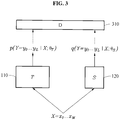
- FIG. 3 illustrates an example of a process of training a student model.
- FIG. 3 illustrates an example of training a student model 120 using a discriminator model 310 and a teacher model 110.
- the discriminator model 310 is a neural network that distinguishes between a recognition result of the teacher model 110 and a recognition result of the student model 120, and may include, for example, convolutional neural networks (CNN), recurrent neural networks (RNN), and self-attention.
- CNN convolutional neural networks
- RNN recurrent neural networks
- self-attention The discriminator model 310 is trained to distinguish the recognition result of the teacher model 110 as true and distinguish the recognition result of the student model 120 as false.
- the student model 120 is trained such that the recognition results of the teacher model 110 and the student model 120 are not distinguished from each other by the discriminator model 310.
- An adversarial loss used in the training is expressed by Equation 2 below.
- Equation 2 d ( Y
- ⁇ p indicates that the sequence Y input to the discriminator model 310 is input from the teacher model 110
- ⁇ q indicates that the sequence Y input to the discriminator model 310 is input from the student model 120, and denotes an expectation.
- the adversarial training is performed by training the student model 120 to reduce the adversarial loss and training the discriminator model 310 to increase the adversarial loss .
- the student model 120 is trained to output the same recognition result as the teacher model 110 at a degree such that the discriminator model 310 is unable to distinguish between the two.
- the student model 120 is trained further based on the KLD loss described above. According to Equation 3, the student model 120 is trained to reduce the KLD loss and the adversarial loss . Also, the discriminator model 310 is trained to increase the adversarial loss . In an example, the teacher model 110 is fixed and not trained. min S max D L KLD + L ADV
- the discriminator model 310 receives a sequence or elements included in the sequence from each of the teacher model 110 and the student model 120, so that the training is performed in units or sequence or in units of element included in the sequence. A training process using the discriminator model 310 will be described in detail with reference to FIGS. 4 and 5 .
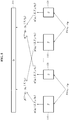
- FIG. 4 illustrates an example of a process of training performed in units of element.
- elements included in sequences output from a teacher model 110 and a student model 120 are input to a discriminator model 310 so that a training is performed in units of element.
- a j-th element in the sequence output from the teacher model 110 and a j-th element in the sequence output from the student model 120 are transferred to the discriminator model 310.
- the discriminator model 310 distinguishes a model from which each of the j-th elements is input. In FIG.
- X , Y :1 ; ⁇ T ) denotes a probability distribution corresponding to a first element in the sequence output from the teacher model 110
- X, Y :1 ; ⁇ S ) denotes a probability distribution corresponding to a first element in the sequence output from the student model 120
- X,Y : L ; ⁇ T ) denotes a probability distribution corresponding to an L-th element in the sequence output from the teacher model 110
- X , Y :L ; ⁇ S ) denotes a probability distribution corresponding to an L-th element in the sequence output from the student model 120.
- Equation 4 an adversarial loss is expressed by Equation 4 below.
- L ADV ⁇ 1 L ⁇ j 1 L G p y j logd z j p ⁇ D + G q y j log 1 ⁇ d z j q ⁇ D
- Equation 4 z j p denotes a class of the j-th element in the sequence output from the teacher model 110 and z j q denotes a class of the j-th element in the sequence output from the student model 120.
- G P ( y j ) is a Gumbel-max algorithm that enables the student model 120 to be trained using the adversarial loss , which is expressed by Equation 5 below.
- G p q y j softmax log p q y j + g ⁇ , g ⁇ ⁇ log ⁇ log uniform 0 1
- Equation 5 As ⁇ converges to 0, a greatest value of a probability distribution is close to 1 and remaining values is close to 0.
- x ; ⁇ T of the element output from the teacher model 110 and the probability distribution q y y 1 q ... y L q
- Equation 7 For the adversarial loss of Equation 4, gradients for the student model 120 and the discriminator model 310 are expressed by Equation 7 from which it can be known that the training is performed normally.
- ⁇ ⁇ S L ADV ⁇ 1 L ⁇ j 1 L log 1 ⁇ d z j q
- ⁇ D G q y j ⁇ ⁇ S log G q y j ⁇ ⁇ D L ADV ⁇ 1 L ⁇ j 1 L G q y j ⁇ ⁇ D log d z j q ⁇ D + G p y j ⁇ ⁇ D log 1 ⁇ d z j p ⁇ D
- FIG. 4 illustrates an example of a process of training performed in units of sequence.
- sequences output from a teacher model 110 and a student model 120 are input to a discriminator model 310 so that a training is performed in units of sequence.
- the sequence output from the teacher model 110 and the sequence output from the student model 120 are transferred to the discriminator model 310.
- the discriminator model 310 distinguishes a model from which each of the sequences is input.
- p ( Y y 1 ... y L
- X ; ⁇ T ) denotes a probability distribution corresponding to the sequence output from the teacher model 110
- q ( Y y 1 ... y L
- X ; ⁇ S ) denotes a probability distribution corresponding to the sequence output from the student model 120.
- Equation 8 an adversarial loss is expressed by Equation 8 below.
- L ADV ⁇ G p Y logd Z p ⁇ D + G q Y log 1 ⁇ d Z q ⁇ D
- a Gumbel-max algorithm, applied to Equation 8 is determined based on a combination of probabilities of elements, or determined based on a probability of a sequence.
- the Gumbel-max algorithm is determined based on a multiplication of probabilities of elements included in an output sequence.
- Equation 10 A Gumbel-max algorithm, based on a probability of a sequence is as shown in Equation 10.
- Equation 10 Y' denotes a number of candidate sequences that may correspond to an output sequence, and may be, for example, k-best among the candidate sequences. As such, by limiting the number of candidate sequences, the Gumbel-max algorithm is determined based on a probability of the output sequence.
- Z ⁇ p,q ⁇ applied to the adversarial loss denotes a class of a sequence sampled based on the probability distribution output from the teacher model 110 or the student model 120.
- Z ⁇ p,q ⁇ denotes a class of a sequence selected as one-best using various schemes such as, for example, beam search and gradient search.
- One of the schemes for determining Z ⁇ p,q ⁇ is expressed by Equation 11 below.
- Equation 11 y j * denotes a j-th element in a ground truth sequence, U(0,1) denotes a uniform distribution, and ⁇ denotes a threshold.
- Equation 12 For the adversarial loss of Equation 8, gradients for the student model 120 and the discriminator model 310 are expressed by Equation 12 from which it can be known that the training is performed normally.
- FIG. 6 illustrates an example of a model training method.
- the operations in FIG. 6 may be performed in the sequence and manner as shown, although the order of some operations may be changed or some of the operations omitted without departing from the scope of the illustrative examples described. Many of the operations shown in FIG. 6 may be performed in parallel or concurrently.
- One or more blocks of FIG. 6 , and combinations of the blocks, can be implemented by special purpose hardware-based computer, such as a processor, that perform the specified functions, or combinations of special purpose hardware and computer instructions.
- FIGS. 1-5 are also applicable to FIG. 6 and are incorporated herein by reference. Thus, the above description may not be repeated here.
- the model training method is performed by a processor of a model training apparatus.
- the model training apparatus acquires a recognition result of a teacher model and a recognition result of a student model with respect to an input sequence.
- the model training apparatus trains the student model such that the recognition result of the teacher model and the recognition result of the student model are not distinguished from each other, in other words, the recognition result of the teacher model and the recognition result of the student model converge as a result of the training.
- the model training apparatus determines an adversarial loss based on a degree to which the recognition result of the teacher model and the recognition result of the student model are distinguished from each other, and trains the student model such that the adversarial loss is reduced.
- the model training apparatus determines an adversarial loss based on a degree to which an output sequence of the teacher model and an output sequence of the student model that are respectively output as recognition results for the input sequence are distinguished from each other. For example, the model training apparatus determines the adversarial loss by applying a Gumbel-max algorithm based on probabilities of elements included in an output sequence. Also, the model training apparatus determines the adversarial loss by applying a Gumbel-max algorithm based on a probability of an output sequence.
- the model training apparatus determines an adversarial loss based on a degree to which an element included in an output sequence of the teacher model and an element included in an output sequence of the student model that are respectively output as recognition results for the input sequence are distinguished from each other. For example, the model training apparatus determines the adversarial loss by applying a Gumbel-max algorithm based on a probability of an element included in an output sequence.
- the model training apparatus trains the student model such that the recognition result of the teacher model and the recognition result of the student model are not distinguished from each other by a discriminator model.
- the discriminator model is trained to distinguish between the recognition result of the teacher model and the recognition result of the student model.
- the model training apparatus trains the student model using the recognition result of the teacher model such that the recognition result of the teacher model is output from the student model.
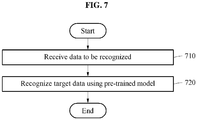
- FIG. 7 illustrates an example of a data recognition method.
- the data recognition method is performed by a processor of a data recognition apparatus.
- the data recognition apparatus receives data to be recognized.
- the data recognition apparatus recognizes target data using a pre-trained model.
- the pre-trained model is the student model described above. Since a training method of the student model is the same as that described above, the descriptions of FIGS. 1-6 are also applicable to FIG. 7 and are incorporated herein by reference. Thus, the above description may not be repeated here and is omitted for brevity.
- FIG. 8 illustrates an example of an apparatus for processing data based on a neural network.
- a data processing apparatus 800 includes a memory 810, a processor 820, and an input/output interface 830.
- the memory 810 and the processor 820 communicate with each other via a bus 840.
- the data processing apparatus 800 is an apparatus for processing input data and outputting the processed data, and may be one of the model training apparatus and the data recognition apparatus described herein.
- the memory 810 includes instructions to be read by a computer.
- the processor 820 performs the aforementioned operations in response to the instructions stored in the memory 810 being executed in the processor 820.
- the processor 820 may be a data processing device configured as hardware having a circuit in a physical structure to implement desired operations.
- the desired operations may include codes or instructions included in a program.
- the data processing device configured as hardware may include a microprocessor, a central processing unit (CPU), a processor core, a multicore processor, a reconfigurable processor, a multiprocessor, an application-specific integrated circuit (ASIC), a field programmable gate array (FPGA), a graphics processor unit (GPU), or any other type of multi- or single-processor configuration. Further details regarding the processor 820 is provided below.
- the memory 810 is a volatile memory or a non-volatile memory.
- the data processing apparatus 800 processes the operations described herein. Further details regarding the memory 810 is provided below.
- the input/output interface 830 may be a display that receives an input from a user or provides an output.
- the input/output interface 830 may function as an input device and receives an input from a user through a traditional input method, for example, a keyboard and a mouse, and a new input method, for example, a touch input, a voice input, and an image input.
- the input/output interface 830 may include, for example, a keyboard, a mouse, a touchscreen, a microphone, and other devices that may detect an input from a user and transmit the detected input to the data processing apparatus 800.
- the input/output interface 830 may function as an output device, and provide an output of the data processing apparatus 800 to a user through a visual, auditory, or tactile channel.
- the input/output interface 830 may include, for example, a display, a touchscreen, a speaker, a vibration generator, and other devices that may provide an output to a user.
- the input/output interface 830 are not limited to the example described above, and any other displays, such as, for example, computer monitor and eye glass display (EGD) that are operatively connected to the data processing apparatus 800 may be used without departing from the scope of the illustrative examples described.
- the input/output interface 830 is a physical structure that includes one or more hardware components that provide the ability to render a user interface, render a display, and/or receive user input.
- the data processing apparatus 800 may be implemented in various electronic devices, such as, for example, a mobile telephone, a smartphone, a wearable smart device (such as, a ring, a watch, a pair of glasses, glasses-type device, a bracelet, an ankle bracket, a belt, a necklace, an earring, a headband, a helmet, a device embedded in the cloths, or an eye glass display (EGD)), a computing device, for example, a server, a laptop, a notebook, a subnotebook, a netbook, an ultra-mobile PC (UMPC), a tablet personal computer (tablet), a phablet, a mobile internet device (MID), a personal digital assistant (PDA), an enterprise digital assistant (EDA), an ultra mobile personal computer (UMPC), a portable lab-top PC, electronic product, for example, a robot, a digital camera, a digital video camera, a portable game console, an MP3 player, a portable/personal multimedia player (PMP), a handheld e-
- the data processing apparatus 800 may be connected to an external device, such as, for example, a personal computer (PC) or a network, via an input/output device of the external device, to exchange data with the external device.
- an external device such as, for example, a personal computer (PC) or a network
- the apparatuses, units, modules, devices, and other components described herein are implemented by hardware components.
- hardware components that may be used to perform the operations described in this application where appropriate include controllers, sensors, generators, drivers, memories, comparators, arithmetic logic units, adders, subtractors, multipliers, dividers, integrators, and any other electronic components configured to perform the operations described in this application.
- one or more of the hardware components that perform the operations described in this application are implemented by computing hardware, for example, by one or more processors or computers.
- a processor or computer may be implemented by one or more processing elements, such as an array of logic gates, a controller and an arithmetic logic unit, a digital signal processor, a microcomputer, a programmable logic controller, a field-programmable gate array, a programmable logic array, a microprocessor, or any other device or combination of devices that is configured to respond to and execute instructions in a defined manner to achieve a desired result.
- a processor or computer includes, or is connected to, one or more memories storing instructions or software that are executed by the processor or computer.
- Hardware components implemented by a processor or computer may execute instructions or software, such as an operating system (OS) and one or more software applications that run on the OS, to perform the operations described in this application.
- OS operating system
- the hardware components may also access, manipulate, process, create, and store data in response to execution of the instructions or software.
- processor or “computer” may be used in the description of the examples described in this application, but in other examples multiple processors or computers may be used, or a processor or computer may include multiple processing elements, or multiple types of processing elements, or both.
- a single hardware component or two or more hardware components may be implemented by a single processor, or two or more processors, or a processor and a controller.
- One or more hardware components may be implemented by one or more processors, or a processor and a controller, and one or more other hardware components may be implemented by one or more other processors, or another processor and another controller.
- One or more processors may implement a single hardware component, or two or more hardware components.
- a hardware component may have any one or more of different processing configurations, examples of which include a single processor, independent processors, parallel processors, single-instruction single-data (SISD) multiprocessing, single-instruction multiple-data (SIMD) multiprocessing, multiple-instruction single-data (MISD) multiprocessing, and multiple-instruction multiple-data (MIMD) multiprocessing.
- SISD single-instruction single-data
- SIMD single-instruction multiple-data
- MIMD multiple-instruction multiple-data
- the methods that perform the operations described in this application are performed by computing hardware, for example, by one or more processors or computers, implemented as described above executing instructions or software to perform the operations described in this application that are performed by the methods.
- a single operation or two or more operations may be performed by a single processor, or two or more processors, or a processor and a controller.
- One or more operations may be performed by one or more processors, or a processor and a controller, and one or more other operations may be performed by one or more other processors, or another processor and another controller.
- One or more processors, or a processor and a controller may perform a single operation, or two or more operations.
- Instructions or software to control a processor or computer to implement the hardware components and perform the methods as described above are written as computer programs, code segments, instructions or any combination thereof, for individually or collectively instructing or configuring the processor or computer to operate as a machine or special-purpose computer to perform the operations performed by the hardware components and the methods as described above.
- the instructions or software includes at least one of an applet, a dynamic link library (DLL), middleware, firmware, a device driver, an application program storing the method of training a model based on a neural network or a method of training a model.
- the instructions or software include machine code that is directly executed by the processor or computer, such as machine code produced by a compiler.
- the instructions or software include higher-level code that is executed by the processor or computer using an interpreter.
- Programmers of ordinary skill in the art can readily write the instructions or software based on the block diagrams and the flow charts illustrated in the drawings and the corresponding descriptions in the specification, which disclose algorithms for performing the operations performed by the hardware components and the methods as described above.
- the instructions or software to control computing hardware for example, one or more processors or computers, to implement the hardware components and perform the methods as described above, and any associated data, data files, and data structures, may be recorded, stored, or fixed in or on one or more non-transitory computer-readable storage media.
- Examples of a non-transitory computer-readable storage medium include read-only memory (ROM), random-access programmable read only memory (PROM), electrically erasable programmable read-only memory (EEPROM), random-access memory (RAM), dynamic random access memory (DRAM), static random access memory (SRAM), flash memory, non-volatile memory, CD-ROMs, CD-Rs, CD+Rs, CD-RWs, CD+RWs, DVD-ROMs, DVD-Rs, DVD+Rs, DVD-RWs, DVD+RWs, DVD-RAMs, BD-ROMs, BD-Rs, BD-R LTHs, BD-REs, blue-ray or optical disk storage, hard disk drive (HDD), solid state drive (SSD), flash memory, card type memory such as multimedia card, secure digital (SD) card, or extreme digital (XD) card, magnetic tapes, floppy disks, magneto-optical data storage devices, optical data storage devices, hard disks, solid-state disks, and
- the instructions or software and any associated data, data files, and data structures are distributed over network-coupled computer systems so that the instructions and software and any associated data, data files, and data structures are stored, accessed, and executed in a distributed fashion by the one or more processors or computers.
Landscapes
- Engineering & Computer Science (AREA)
- Physics & Mathematics (AREA)
- Theoretical Computer Science (AREA)
- Computational Linguistics (AREA)
- Health & Medical Sciences (AREA)
- Artificial Intelligence (AREA)
- Evolutionary Computation (AREA)
- Computing Systems (AREA)
- Software Systems (AREA)
- Biophysics (AREA)
- General Health & Medical Sciences (AREA)
- Molecular Biology (AREA)
- Biomedical Technology (AREA)
- General Engineering & Computer Science (AREA)
- General Physics & Mathematics (AREA)
- Mathematical Physics (AREA)
- Data Mining & Analysis (AREA)
- Life Sciences & Earth Sciences (AREA)
- Audiology, Speech & Language Pathology (AREA)
- Human Computer Interaction (AREA)
- Acoustics & Sound (AREA)
- Multimedia (AREA)
- Probability & Statistics with Applications (AREA)
- Signal Processing (AREA)
- Image Analysis (AREA)
- Machine Translation (AREA)
Applications Claiming Priority (1)
| Application Number | Priority Date | Filing Date | Title |
|---|---|---|---|
| KR1020190053131A KR102896235B1 (ko) | 2019-05-07 | 2019-05-07 | 모델 학습 방법 및 장치 |
Publications (2)
| Publication Number | Publication Date |
|---|---|
| EP3736745A1 true EP3736745A1 (fr) | 2020-11-11 |
| EP3736745B1 EP3736745B1 (fr) | 2025-01-29 |
Family
ID=68762379
Family Applications (1)
| Application Number | Title | Priority Date | Filing Date |
|---|---|---|---|
| EP19210350.5A Active EP3736745B1 (fr) | 2019-05-07 | 2019-11-20 | Procédé et appareil de formation de modèles |
Country Status (4)
| Country | Link |
|---|---|
| US (2) | US11488013B2 (fr) |
| EP (1) | EP3736745B1 (fr) |
| KR (1) | KR102896235B1 (fr) |
| CN (1) | CN112002309B (fr) |
Cited By (1)
| Publication number | Priority date | Publication date | Assignee | Title |
|---|---|---|---|---|
| JPWO2022201534A1 (fr) * | 2021-03-26 | 2022-09-29 |
Families Citing this family (14)
| Publication number | Priority date | Publication date | Assignee | Title |
|---|---|---|---|---|
| KR102896235B1 (ko) * | 2019-05-07 | 2025-12-08 | 삼성전자주식회사 | 모델 학습 방법 및 장치 |
| US11227122B1 (en) | 2019-12-31 | 2022-01-18 | Facebook, Inc. | Methods, mediums, and systems for representing a model in a memory of device |
| CN112560693B (zh) * | 2020-12-17 | 2022-06-17 | 华中科技大学 | 基于深度学习目标检测的高速公路异物识别方法和系统 |
| CN112801362B (zh) * | 2021-01-26 | 2022-03-22 | 桂林电子科技大学 | 一种基于人工神经网络与lstm网络的学业预警方法 |
| CN113240119B (zh) * | 2021-04-08 | 2024-03-19 | 南京大学 | 一种用于游戏ai策略解释的跨模型蒸馏装置 |
| CN115511070B (zh) * | 2021-06-23 | 2026-01-16 | 北京字跳网络技术有限公司 | 模型训练方法、装置及可读存储介质 |
| CN113920540A (zh) * | 2021-11-04 | 2022-01-11 | 厦门市美亚柏科信息股份有限公司 | 基于知识蒸馏的行人重识别方法、装置、设备及存储介质 |
| KR102875516B1 (ko) * | 2022-03-15 | 2025-10-24 | 한국과학기술원 | 언어 모델 압축을 위한 언어 컨텍스트 지식 증류의 방법 및 그를 수행하는 컴퓨터 시스템 |
| CN115085805B (zh) * | 2022-06-09 | 2024-03-19 | 南京信息工程大学 | 一种基于对抗蒸馏模型的光纤光性能监测方法及系统 |
| CN115063875B (zh) * | 2022-08-16 | 2022-12-16 | 北京百度网讯科技有限公司 | 模型训练方法、图像处理方法、装置和电子设备 |
| CN115547308B (zh) * | 2022-09-01 | 2024-09-20 | 北京达佳互联信息技术有限公司 | 一种音频识别模型训练方法、音频识别方法、装置、电子设备及存储介质 |
| CN116091675B (zh) * | 2023-04-06 | 2023-06-30 | 腾讯科技(深圳)有限公司 | 一种图像处理方法、装置、设备及存储介质 |
| KR102653930B1 (ko) * | 2023-06-01 | 2024-04-03 | 주식회사 디월드 | 이상탐지모델을 이용한 환편기 비전 검사 서비스 제공 시스템 |
| CN119091214A (zh) * | 2024-08-29 | 2024-12-06 | 西安交通大学 | 基于clip模型语义信息提取和目标对齐的域泛化方法及系统 |
Family Cites Families (27)
| Publication number | Priority date | Publication date | Assignee | Title |
|---|---|---|---|---|
| US7062476B2 (en) * | 2002-06-17 | 2006-06-13 | The Boeing Company | Student neural network |
| KR102492318B1 (ko) * | 2015-09-18 | 2023-01-26 | 삼성전자주식회사 | 모델 학습 방법 및 장치, 및 데이터 인식 방법 |
| US9799327B1 (en) * | 2016-02-26 | 2017-10-24 | Google Inc. | Speech recognition with attention-based recurrent neural networks |
| US20180268292A1 (en) * | 2017-03-17 | 2018-09-20 | Nec Laboratories America, Inc. | Learning efficient object detection models with knowledge distillation |
| DK179496B1 (en) | 2017-05-12 | 2019-01-15 | Apple Inc. | USER-SPECIFIC Acoustic Models |
| US11195093B2 (en) * | 2017-05-18 | 2021-12-07 | Samsung Electronics Co., Ltd | Apparatus and method for student-teacher transfer learning network using knowledge bridge |
| CN110969250B (zh) * | 2017-06-15 | 2023-11-10 | 北京图森智途科技有限公司 | 一种神经网络训练方法及装置 |
| KR102570278B1 (ko) * | 2017-07-31 | 2023-08-24 | 삼성전자주식회사 | 교사 모델로부터 학생 모델을 트레이닝하는데 사용되는 학습 데이터를 생성하는 장치 및 방법 |
| US10885900B2 (en) * | 2017-08-11 | 2021-01-05 | Microsoft Technology Licensing, Llc | Domain adaptation in speech recognition via teacher-student learning |
| US10643320B2 (en) * | 2017-11-15 | 2020-05-05 | Toyota Research Institute, Inc. | Adversarial learning of photorealistic post-processing of simulation with privileged information |
| US10643602B2 (en) * | 2018-03-16 | 2020-05-05 | Microsoft Technology Licensing, Llc | Adversarial teacher-student learning for unsupervised domain adaptation |
| US12254414B2 (en) * | 2018-05-17 | 2025-03-18 | Tobii Ab | Autoencoding generative adversarial network for augmenting training data usable to train predictive models |
| US11514252B2 (en) * | 2018-06-10 | 2022-11-29 | Adobe Inc. | Discriminative caption generation |
| EP3841706A1 (fr) * | 2018-08-20 | 2021-06-30 | Telefonaktiebolaget Lm Ericsson (Publ) | Amélioration du système immunitaire de sites, au moyen de réseaux adverses génératifs et d'apprentissage par renforcement |
| CN109446803A (zh) * | 2018-09-17 | 2019-03-08 | 深圳点猫科技有限公司 | 一种基于人工智能的学生端应用程序监控方法及系统 |
| US11710029B2 (en) * | 2018-09-28 | 2023-07-25 | Intel Corporation | Methods and apparatus to improve data training of a machine learning model using a field programmable gate array |
| US10922573B2 (en) * | 2018-10-22 | 2021-02-16 | Future Health Works Ltd. | Computer based object detection within a video or image |
| CN109299341B (zh) * | 2018-10-29 | 2020-05-05 | 山东师范大学 | 一种基于字典学习的对抗跨模态检索方法和系统 |
| US11170761B2 (en) * | 2018-12-04 | 2021-11-09 | Sorenson Ip Holdings, Llc | Training of speech recognition systems |
| US11017778B1 (en) * | 2018-12-04 | 2021-05-25 | Sorenson Ip Holdings, Llc | Switching between speech recognition systems |
| US20200342306A1 (en) * | 2019-04-25 | 2020-10-29 | International Business Machines Corporation | Autonomous modification of data |
| KR102896235B1 (ko) * | 2019-05-07 | 2025-12-08 | 삼성전자주식회사 | 모델 학습 방법 및 장치 |
| KR102896236B1 (ko) * | 2019-05-09 | 2025-12-08 | 삼성전자주식회사 | 모델 학습 방법 및 장치 |
| US11392770B2 (en) * | 2019-12-11 | 2022-07-19 | Microsoft Technology Licensing, Llc | Sentence similarity scoring using neural network distillation |
| US20210182660A1 (en) * | 2019-12-16 | 2021-06-17 | Soundhound, Inc. | Distributed training of neural network models |
| CN111179962B (zh) * | 2020-01-02 | 2022-09-27 | 腾讯科技(深圳)有限公司 | 语音分离模型的训练方法、语音分离方法及装置 |
| JP7475105B2 (ja) * | 2020-06-22 | 2024-04-26 | パナソニックオートモーティブシステムズ株式会社 | 学習装置、学習方法及びプログラム |
-
2019
- 2019-05-07 KR KR1020190053131A patent/KR102896235B1/ko active Active
- 2019-09-06 US US16/562,783 patent/US11488013B2/en active Active
- 2019-11-20 EP EP19210350.5A patent/EP3736745B1/fr active Active
- 2019-12-20 CN CN201911326890.4A patent/CN112002309B/zh active Active
-
2022
- 2022-09-22 US US17/950,521 patent/US11727275B2/en active Active
Non-Patent Citations (3)
| Title |
|---|
| PEIYE LIU ET AL: "KTAN: Knowledge Transfer Adversarial Network", ARXIV.ORG, CORNELL UNIVERSITY LIBRARY, 201 OLIN LIBRARY CORNELL UNIVERSITY ITHACA, NY 14853, 18 October 2018 (2018-10-18), XP081067590 * |
| RAMIRO CAMINO ET AL: "Generating Multi-Categorical Samples with Generative Adversarial Networks", ARXIV.ORG, CORNELL UNIVERSITY LIBRARY, 201 OLIN LIBRARY CORNELL UNIVERSITY ITHACA, NY 14853, 3 July 2018 (2018-07-03), XP081110588 * |
| ZHENG XU ET AL: "Training Shallow and Thin Networks for Acceleration via Knowledge Distillation with Conditional Adversarial Networks", ARXIV.ORG, CORNELL UNIVERSITY LIBRARY, 201 OLIN LIBRARY CORNELL UNIVERSITY ITHACA, NY 14853, 2 September 2017 (2017-09-02), XP081312839 * |
Cited By (2)
| Publication number | Priority date | Publication date | Assignee | Title |
|---|---|---|---|---|
| JPWO2022201534A1 (fr) * | 2021-03-26 | 2022-09-29 | ||
| WO2022201534A1 (fr) * | 2021-03-26 | 2022-09-29 | 三菱電機株式会社 | Système et procédé de réapprentissage |
Also Published As
| Publication number | Publication date |
|---|---|
| KR20200128938A (ko) | 2020-11-17 |
| KR102896235B1 (ko) | 2025-12-08 |
| US20200356852A1 (en) | 2020-11-12 |
| US20230035351A1 (en) | 2023-02-02 |
| US11727275B2 (en) | 2023-08-15 |
| CN112002309A (zh) | 2020-11-27 |
| US11488013B2 (en) | 2022-11-01 |
| EP3736745B1 (fr) | 2025-01-29 |
| CN112002309B (zh) | 2025-09-02 |
Similar Documents
| Publication | Publication Date | Title |
|---|---|---|
| US11727275B2 (en) | Model training method and apparatus | |
| US11244671B2 (en) | Model training method and apparatus | |
| US12039016B2 (en) | Method and apparatus for generating training data to train student model using teacher model | |
| US20250013867A1 (en) | Apparatus and method of compressing neural network | |
| US10558912B2 (en) | Method and apparatus to recognize object based on attribute of object and train | |
| EP3567583B1 (fr) | Dispositif et procédé pour personnaliser un modèle de reconnaissance vocale | |
| US20200125927A1 (en) | Model training method and apparatus, and data recognition method | |
| US11861504B2 (en) | Apparatus for performing class incremental learning and method of operating the apparatus | |
| US10957073B2 (en) | Method and apparatus for recognizing image and method and apparatus for training recognition model based on data augmentation | |
| US20210110212A1 (en) | Method of training neural network, and recognition method and apparatus using neural network | |
| US11727263B2 (en) | Method of updating sentence generation model and sentence generating apparatus | |
| EP3059699B1 (fr) | Procédé de formation de réseau neuronal et appareil de reconnaissance | |
| US11100916B2 (en) | Speech recognition method and apparatus | |
| US10540958B2 (en) | Neural network training method and apparatus using experience replay sets for recognition | |
| EP3591581B1 (fr) | Procédé et appareil de construction de modèles d'images | |
| EP3444726A1 (fr) | Procédé et appareil pour déterminer un domaine de phrase | |
| EP3674985A1 (fr) | Procédé et appareil de vérification d'utilisateur à l'aide d'un modèle d'utilisateur généralisé | |
| US11443118B2 (en) | Word embedding method and apparatus, and word search method | |
| US20200210811A1 (en) | Data processing method based on neural network, training method of neural network, and apparatuses thereof | |
| US20210256374A1 (en) | Method and apparatus with neural network and training | |
| US11580963B2 (en) | Method and apparatus for generating speech | |
| US11182555B2 (en) | Method and apparatus for processing sequence |
Legal Events
| Date | Code | Title | Description |
|---|---|---|---|
| PUAI | Public reference made under article 153(3) epc to a published international application that has entered the european phase |
Free format text: ORIGINAL CODE: 0009012 |
|
| STAA | Information on the status of an ep patent application or granted ep patent |
Free format text: STATUS: THE APPLICATION HAS BEEN PUBLISHED |
|
| AK | Designated contracting states |
Kind code of ref document: A1 Designated state(s): AL AT BE BG CH CY CZ DE DK EE ES FI FR GB GR HR HU IE IS IT LI LT LU LV MC MK MT NL NO PL PT RO RS SE SI SK SM TR |
|
| AX | Request for extension of the european patent |
Extension state: BA ME |
|
| STAA | Information on the status of an ep patent application or granted ep patent |
Free format text: STATUS: REQUEST FOR EXAMINATION WAS MADE |
|
| 17P | Request for examination filed |
Effective date: 20210511 |
|
| RBV | Designated contracting states (corrected) |
Designated state(s): AL AT BE BG CH CY CZ DE DK EE ES FI FR GB GR HR HU IE IS IT LI LT LU LV MC MK MT NL NO PL PT RO RS SE SI SK SM TR |
|
| STAA | Information on the status of an ep patent application or granted ep patent |
Free format text: STATUS: EXAMINATION IS IN PROGRESS |
|
| 17Q | First examination report despatched |
Effective date: 20230526 |
|
| P01 | Opt-out of the competence of the unified patent court (upc) registered |
Effective date: 20230530 |
|
| REG | Reference to a national code |
Ref country code: DE Ref legal event code: R079 Free format text: PREVIOUS MAIN CLASS: G06N0003080000 Ipc: G06N0003096000 Ref document number: 602019065343 Country of ref document: DE |
|
| GRAP | Despatch of communication of intention to grant a patent |
Free format text: ORIGINAL CODE: EPIDOSNIGR1 |
|
| STAA | Information on the status of an ep patent application or granted ep patent |
Free format text: STATUS: GRANT OF PATENT IS INTENDED |
|
| RIC1 | Information provided on ipc code assigned before grant |
Ipc: G06N 3/084 20230101ALI20240807BHEP Ipc: G06N 3/047 20230101ALI20240807BHEP Ipc: G06N 3/045 20230101ALI20240807BHEP Ipc: G06N 3/088 20230101ALI20240807BHEP Ipc: G06N 3/096 20230101AFI20240807BHEP |
|
| INTG | Intention to grant announced |
Effective date: 20240821 |
|
| GRAS | Grant fee paid |
Free format text: ORIGINAL CODE: EPIDOSNIGR3 |
|
| GRAA | (expected) grant |
Free format text: ORIGINAL CODE: 0009210 |
|
| STAA | Information on the status of an ep patent application or granted ep patent |
Free format text: STATUS: THE PATENT HAS BEEN GRANTED |
|
| AK | Designated contracting states |
Kind code of ref document: B1 Designated state(s): AL AT BE BG CH CY CZ DE DK EE ES FI FR GB GR HR HU IE IS IT LI LT LU LV MC MK MT NL NO PL PT RO RS SE SI SK SM TR |
|
| REG | Reference to a national code |
Ref country code: GB Ref legal event code: FG4D |
|
| REG | Reference to a national code |
Ref country code: CH Ref legal event code: EP |
|
| REG | Reference to a national code |
Ref country code: DE Ref legal event code: R096 Ref document number: 602019065343 Country of ref document: DE |
|
| REG | Reference to a national code |
Ref country code: IE Ref legal event code: FG4D |
|
| REG | Reference to a national code |
Ref country code: NL Ref legal event code: MP Effective date: 20250129 |
|
| PG25 | Lapsed in a contracting state [announced via postgrant information from national office to epo] |
Ref country code: NL Free format text: LAPSE BECAUSE OF FAILURE TO SUBMIT A TRANSLATION OF THE DESCRIPTION OR TO PAY THE FEE WITHIN THE PRESCRIBED TIME-LIMIT Effective date: 20250129 |
|
| PG25 | Lapsed in a contracting state [announced via postgrant information from national office to epo] |
Ref country code: RS Free format text: LAPSE BECAUSE OF FAILURE TO SUBMIT A TRANSLATION OF THE DESCRIPTION OR TO PAY THE FEE WITHIN THE PRESCRIBED TIME-LIMIT Effective date: 20250429 |
|
| PG25 | Lapsed in a contracting state [announced via postgrant information from national office to epo] |
Ref country code: FI Free format text: LAPSE BECAUSE OF FAILURE TO SUBMIT A TRANSLATION OF THE DESCRIPTION OR TO PAY THE FEE WITHIN THE PRESCRIBED TIME-LIMIT Effective date: 20250129 |
|
| PG25 | Lapsed in a contracting state [announced via postgrant information from national office to epo] |
Ref country code: PL Free format text: LAPSE BECAUSE OF FAILURE TO SUBMIT A TRANSLATION OF THE DESCRIPTION OR TO PAY THE FEE WITHIN THE PRESCRIBED TIME-LIMIT Effective date: 20250129 |
|
| PG25 | Lapsed in a contracting state [announced via postgrant information from national office to epo] |
Ref country code: ES Free format text: LAPSE BECAUSE OF FAILURE TO SUBMIT A TRANSLATION OF THE DESCRIPTION OR TO PAY THE FEE WITHIN THE PRESCRIBED TIME-LIMIT Effective date: 20250129 |
|
| REG | Reference to a national code |
Ref country code: LT Ref legal event code: MG9D |
|
| PG25 | Lapsed in a contracting state [announced via postgrant information from national office to epo] |
Ref country code: NO Free format text: LAPSE BECAUSE OF FAILURE TO SUBMIT A TRANSLATION OF THE DESCRIPTION OR TO PAY THE FEE WITHIN THE PRESCRIBED TIME-LIMIT Effective date: 20250429 Ref country code: IS Free format text: LAPSE BECAUSE OF FAILURE TO SUBMIT A TRANSLATION OF THE DESCRIPTION OR TO PAY THE FEE WITHIN THE PRESCRIBED TIME-LIMIT Effective date: 20250529 |
|
| REG | Reference to a national code |
Ref country code: AT Ref legal event code: MK05 Ref document number: 1764181 Country of ref document: AT Kind code of ref document: T Effective date: 20250129 |
|
| PG25 | Lapsed in a contracting state [announced via postgrant information from national office to epo] |
Ref country code: HR Free format text: LAPSE BECAUSE OF FAILURE TO SUBMIT A TRANSLATION OF THE DESCRIPTION OR TO PAY THE FEE WITHIN THE PRESCRIBED TIME-LIMIT Effective date: 20250129 |
|
| PG25 | Lapsed in a contracting state [announced via postgrant information from national office to epo] |
Ref country code: PT Free format text: LAPSE BECAUSE OF FAILURE TO SUBMIT A TRANSLATION OF THE DESCRIPTION OR TO PAY THE FEE WITHIN THE PRESCRIBED TIME-LIMIT Effective date: 20250529 Ref country code: LV Free format text: LAPSE BECAUSE OF FAILURE TO SUBMIT A TRANSLATION OF THE DESCRIPTION OR TO PAY THE FEE WITHIN THE PRESCRIBED TIME-LIMIT Effective date: 20250129 |
|
| PG25 | Lapsed in a contracting state [announced via postgrant information from national office to epo] |
Ref country code: BG Free format text: LAPSE BECAUSE OF FAILURE TO SUBMIT A TRANSLATION OF THE DESCRIPTION OR TO PAY THE FEE WITHIN THE PRESCRIBED TIME-LIMIT Effective date: 20250129 Ref country code: GR Free format text: LAPSE BECAUSE OF FAILURE TO SUBMIT A TRANSLATION OF THE DESCRIPTION OR TO PAY THE FEE WITHIN THE PRESCRIBED TIME-LIMIT Effective date: 20250430 |
|
| PG25 | Lapsed in a contracting state [announced via postgrant information from national office to epo] |
Ref country code: AT Free format text: LAPSE BECAUSE OF FAILURE TO SUBMIT A TRANSLATION OF THE DESCRIPTION OR TO PAY THE FEE WITHIN THE PRESCRIBED TIME-LIMIT Effective date: 20250129 |
|
| PG25 | Lapsed in a contracting state [announced via postgrant information from national office to epo] |
Ref country code: SE Free format text: LAPSE BECAUSE OF FAILURE TO SUBMIT A TRANSLATION OF THE DESCRIPTION OR TO PAY THE FEE WITHIN THE PRESCRIBED TIME-LIMIT Effective date: 20250129 |
|
| PG25 | Lapsed in a contracting state [announced via postgrant information from national office to epo] |
Ref country code: SM Free format text: LAPSE BECAUSE OF FAILURE TO SUBMIT A TRANSLATION OF THE DESCRIPTION OR TO PAY THE FEE WITHIN THE PRESCRIBED TIME-LIMIT Effective date: 20250129 |
|
| PG25 | Lapsed in a contracting state [announced via postgrant information from national office to epo] |
Ref country code: DK Free format text: LAPSE BECAUSE OF FAILURE TO SUBMIT A TRANSLATION OF THE DESCRIPTION OR TO PAY THE FEE WITHIN THE PRESCRIBED TIME-LIMIT Effective date: 20250129 |
|
| PG25 | Lapsed in a contracting state [announced via postgrant information from national office to epo] |
Ref country code: IT Free format text: LAPSE BECAUSE OF FAILURE TO SUBMIT A TRANSLATION OF THE DESCRIPTION OR TO PAY THE FEE WITHIN THE PRESCRIBED TIME-LIMIT Effective date: 20250129 |
|
| PG25 | Lapsed in a contracting state [announced via postgrant information from national office to epo] |
Ref country code: EE Free format text: LAPSE BECAUSE OF FAILURE TO SUBMIT A TRANSLATION OF THE DESCRIPTION OR TO PAY THE FEE WITHIN THE PRESCRIBED TIME-LIMIT Effective date: 20250129 Ref country code: CZ Free format text: LAPSE BECAUSE OF FAILURE TO SUBMIT A TRANSLATION OF THE DESCRIPTION OR TO PAY THE FEE WITHIN THE PRESCRIBED TIME-LIMIT Effective date: 20250129 |
|
| PG25 | Lapsed in a contracting state [announced via postgrant information from national office to epo] |
Ref country code: RO Free format text: LAPSE BECAUSE OF FAILURE TO SUBMIT A TRANSLATION OF THE DESCRIPTION OR TO PAY THE FEE WITHIN THE PRESCRIBED TIME-LIMIT Effective date: 20250129 |
|
| PG25 | Lapsed in a contracting state [announced via postgrant information from national office to epo] |
Ref country code: SK Free format text: LAPSE BECAUSE OF FAILURE TO SUBMIT A TRANSLATION OF THE DESCRIPTION OR TO PAY THE FEE WITHIN THE PRESCRIBED TIME-LIMIT Effective date: 20250129 |
|
| REG | Reference to a national code |
Ref country code: DE Ref legal event code: R097 Ref document number: 602019065343 Country of ref document: DE |
|
| PLBE | No opposition filed within time limit |
Free format text: ORIGINAL CODE: 0009261 |
|
| STAA | Information on the status of an ep patent application or granted ep patent |
Free format text: STATUS: NO OPPOSITION FILED WITHIN TIME LIMIT |
|
| 26N | No opposition filed |
Effective date: 20251030 |
|
| PGFP | Annual fee paid to national office [announced via postgrant information from national office to epo] |
Ref country code: DE Payment date: 20251022 Year of fee payment: 7 |
|
| PGFP | Annual fee paid to national office [announced via postgrant information from national office to epo] |
Ref country code: GB Payment date: 20251016 Year of fee payment: 7 |
|
| PGFP | Annual fee paid to national office [announced via postgrant information from national office to epo] |
Ref country code: FR Payment date: 20251023 Year of fee payment: 7 |