EP3736765A1 - Procédé et appareil de traitement de données - Google Patents
Procédé et appareil de traitement de données Download PDFInfo
- Publication number
- EP3736765A1 EP3736765A1 EP19741008.7A EP19741008A EP3736765A1 EP 3736765 A1 EP3736765 A1 EP 3736765A1 EP 19741008 A EP19741008 A EP 19741008A EP 3736765 A1 EP3736765 A1 EP 3736765A1
- Authority
- EP
- European Patent Office
- Prior art keywords
- proposal
- group
- instruction
- suppression
- region sequence
- Prior art date
- Legal status (The legal status is an assumption and is not a legal conclusion. Google has not performed a legal analysis and makes no representation as to the accuracy of the status listed.)
- Withdrawn
Links
Images





Classifications
-
- G—PHYSICS
- G06—COMPUTING OR CALCULATING; COUNTING
- G06F—ELECTRIC DIGITAL DATA PROCESSING
- G06F9/00—Arrangements for program control, e.g. control units
- G06F9/06—Arrangements for program control, e.g. control units using stored programs, i.e. using an internal store of processing equipment to receive or retain programs
- G06F9/46—Multiprogramming arrangements
- G06F9/48—Program initiating; Program switching, e.g. by interrupt
- G06F9/4806—Task transfer initiation or dispatching
- G06F9/4843—Task transfer initiation or dispatching by program, e.g. task dispatcher, supervisor, operating system
- G06F9/4881—Scheduling strategies for dispatcher, e.g. round robin, multi-level priority queues
-
- G—PHYSICS
- G06—COMPUTING OR CALCULATING; COUNTING
- G06T—IMAGE DATA PROCESSING OR GENERATION, IN GENERAL
- G06T1/00—General purpose image data processing
- G06T1/20—Processor architectures; Processor configuration, e.g. pipelining
-
- G—PHYSICS
- G06—COMPUTING OR CALCULATING; COUNTING
- G06F—ELECTRIC DIGITAL DATA PROCESSING
- G06F17/00—Digital computing or data processing equipment or methods, specially adapted for specific functions
- G06F17/10—Complex mathematical operations
- G06F17/16—Matrix or vector computation, e.g. matrix-matrix or matrix-vector multiplication, matrix factorization
-
- G—PHYSICS
- G06—COMPUTING OR CALCULATING; COUNTING
- G06F—ELECTRIC DIGITAL DATA PROCESSING
- G06F9/00—Arrangements for program control, e.g. control units
- G06F9/06—Arrangements for program control, e.g. control units using stored programs, i.e. using an internal store of processing equipment to receive or retain programs
- G06F9/46—Multiprogramming arrangements
- G06F9/50—Allocation of resources, e.g. of the central processing unit [CPU]
- G06F9/5005—Allocation of resources, e.g. of the central processing unit [CPU] to service a request
- G06F9/5011—Allocation of resources, e.g. of the central processing unit [CPU] to service a request the resources being hardware resources other than CPUs, Servers and Terminals
- G06F9/5016—Allocation of resources, e.g. of the central processing unit [CPU] to service a request the resources being hardware resources other than CPUs, Servers and Terminals the resource being the memory
-
- G—PHYSICS
- G06—COMPUTING OR CALCULATING; COUNTING
- G06F—ELECTRIC DIGITAL DATA PROCESSING
- G06F9/00—Arrangements for program control, e.g. control units
- G06F9/06—Arrangements for program control, e.g. control units using stored programs, i.e. using an internal store of processing equipment to receive or retain programs
- G06F9/46—Multiprogramming arrangements
- G06F9/50—Allocation of resources, e.g. of the central processing unit [CPU]
- G06F9/5005—Allocation of resources, e.g. of the central processing unit [CPU] to service a request
- G06F9/5027—Allocation of resources, e.g. of the central processing unit [CPU] to service a request the resource being a machine, e.g. CPUs, Servers, Terminals
-
- G—PHYSICS
- G06—COMPUTING OR CALCULATING; COUNTING
- G06N—COMPUTING ARRANGEMENTS BASED ON SPECIFIC COMPUTATIONAL MODELS
- G06N3/00—Computing arrangements based on biological models
- G06N3/02—Neural networks
-
- G—PHYSICS
- G06—COMPUTING OR CALCULATING; COUNTING
- G06V—IMAGE OR VIDEO RECOGNITION OR UNDERSTANDING
- G06V10/00—Arrangements for image or video recognition or understanding
- G06V10/40—Extraction of image or video features
- G06V10/44—Local feature extraction by analysis of parts of the pattern, e.g. by detecting edges, contours, loops, corners, strokes or intersections; Connectivity analysis, e.g. of connected components
- G06V10/443—Local feature extraction by analysis of parts of the pattern, e.g. by detecting edges, contours, loops, corners, strokes or intersections; Connectivity analysis, e.g. of connected components by matching or filtering
- G06V10/449—Biologically inspired filters, e.g. difference of Gaussians [DoG] or Gabor filters
- G06V10/451—Biologically inspired filters, e.g. difference of Gaussians [DoG] or Gabor filters with interaction between the filter responses, e.g. cortical complex cells
- G06V10/454—Integrating the filters into a hierarchical structure, e.g. convolutional neural networks [CNN]
-
- G—PHYSICS
- G06—COMPUTING OR CALCULATING; COUNTING
- G06V—IMAGE OR VIDEO RECOGNITION OR UNDERSTANDING
- G06V10/00—Arrangements for image or video recognition or understanding
- G06V10/70—Arrangements for image or video recognition or understanding using pattern recognition or machine learning
- G06V10/82—Arrangements for image or video recognition or understanding using pattern recognition or machine learning using neural networks
Definitions
- This application relates to the field of data processing technologies, and in particular, to a data processing method and apparatus.
- Non-maximum suppression (non-maximum suppression, NMS) component is indispensable for the object detection, and is responsible for obtaining a unique detection result of a same object.
- NMS non-maximum suppression
- a basic principle of the NMS is comparing an intersection over union proportion of two proposal regions with a threshold. If the proportion is greater than a threshold, a proposal region with a lower score is suppressed.
- a proposal region is a rectangular box, and is represented by using upper left coordinates (y1, x1) and lower right coordinates (y2, x2).
- a score of a proposal region reflects a possibility that the proposal region includes an entire object. A higher score indicates a higher possibility that the proposal region includes the entire object.
- N proposal regions that have been sorted in descending order of scores are input, and M unsuppressed proposal regions having the highest scores are output.
- a central processing unit (central processing unit, CPU) is usually used in NMS calculation.
- the CPU has a limited parallel computing capability, the CPU can obtain a suppression vector only after cyclically performing calculation a plurality of times. Consequently, a calculation time is long.
- a combination of a CPU and a graphics processing unit (graphics processing unit, GPU) GPU is used to perform the NMS calculation.
- the GPU may perform a parallel calculation operation in the NMS calculation, and the CPU may perform a calculation operation other than the parallel calculation.
- extra communication overheads are required between the CPU and the GPU to complete the NMS calculation.
- a calculation time is much shorter than a time used for calculation performed by only the CPU, the calculation time is still relatively long. In addition, extra power consumption is increased.
- This application provides a data processing method and apparatus, to shorten a time used in NMS calculation.
- a data processing method including: obtaining R groups of proposal region sequences, where each group of proposal region sequence includes a plurality of proposal regions, and R is a positive integer; invoking a vector region proposal area calculation (vector region proposal area calculation, VRPAC) instruction to calculate an area of each proposal region in each group of proposal region sequence, where the VRPAC instruction is used to calculate areas of K proposal regions at a single time, and K is associated with a data type; then for a j th group of proposal region sequence in the R groups of proposal region sequences, invoking a vector intersection over union (vector intersection over union, VIOU) instruction and a vector area add (vector area add, VAADD) instruction to determine j suppression matrices of the j th group of proposal region sequence and determine a suppression vector of the j th group of proposal region sequence based on the j suppression matrices, where the VIOU instruction is used to calculate an overlapping area between every two proposal regions in two groups of proposal region sequences at
- the VRPAC instruction is invoked to obtain the area of each proposal region, and the VIOU instruction and the VAADD instruction are invoked to obtain the suppression matrix.
- the method reduces invoked instructions, reduces instruction execution steps, and shortens a time used in the NMS calculation.
- the invoking a VIOU instruction and a VAADD instruction to determine j suppression matrices of the j th group of proposal region sequence includes: invoking the VIOU instruction to calculate an overlapping area between every two proposal regions in two adjacent groups of proposal region sequences in a first group of proposal region sequence to the j th group of proposal region sequence and an overlapping area between every two proposal regions in the j th group of proposal region sequence; invoking the VAADD instruction to calculate an area sum of the every two proposal regions in the two adjacent groups of proposal region sequences in the first group of proposal region sequence to the j th group of proposal region sequence and an area sum of the every two proposal regions in the j th group of proposal region sequence; using the area sum of the every two proposal regions in the two adjacent groups of proposal region sequences in the first group of proposal region sequence to the j th group of proposal region sequence and the area sum of the every two proposal regions in the j th group of proposal region sequence as factors; and comparing a factor area sum of the every
- the VIOU instruction and the VAADD instruction are invoked to obtain the suppression matrix of each group of proposal region sequence.
- the method reduces the invoked instructions, reduces the instruction execution steps, reduces a quantity of data loading times, and shortens the time used in the NMS calculation.
- the determining a suppression vector of the j th group of proposal region sequence based on the j suppression matrices includes: invoking a region proposal network condition or for non-diagonal suppression matrix (region proposal network condition or for non-diagonal suppression matrix, RPN_COR) instruction to perform calculation based on first j-1 suppression matrices in the j suppression matrices, to obtain an intermediate suppression vector result; and invoking a region proposal network diagonal condition or for non-diagonal suppression matrix (region proposal network diagonal condition or for non-diagonal suppression matrix, RPN_COR_DIAG) instruction to perform calculation based on the j th suppression matrix in the j suppression matrices, and performing an or operation on a calculation result and the intermediate suppression vector result to obtain the suppression vector of the j th group of proposal region sequence.
- the RPN COR instruction and the RPN_COR_DIAG instruction are combined to perform calculation based on the suppression matrix to obtain the suppression vector. This reduces a quantity of calculation times, and further shortens the time used in the NMS calculation.
- the RPN_COR_DIAG instruction is used to perform calculation based on a diagonal matrix block of a suppression matrix to obtain a suppression vector
- the RPN_COR instruction is used to perform calculation based on a non-diagonal matrix block of the suppression matrix to obtain an intermediate suppression vector result.
- a data processing apparatus including a communications unit and a processing unit, where the communications unit is configured to obtain R groups of proposal region sequences, where each group of proposal region sequence includes a plurality of proposal regions, and R is a positive integer; and the processing unit is configured to: invoke a VRPAC instruction to calculate an area of each proposal region in each group of proposal region sequence, where the VRPAC instruction is used to calculate areas of K proposal regions at a single time, and K is associated with a data type; for a j th group of proposal region sequence in the R groups of proposal region sequences, invoke a VIOU instruction and a VAADD instruction to determine j suppression matrices of the j th group of proposal region sequence and determine a suppression vector of the j th group of proposal region sequence based on the j suppression matrices, where the VIOU instruction is used to calculate an overlapping area between every two proposal regions in two groups of proposal region sequences at a single time, the VAADD instruction is used to calculate an area sum of the every
- the processing unit when invoking the VIOU instruction and the VAADD instruction to determine the j suppression matrices of the j th group of proposal region sequence, is specifically configured to:
- the processing unit when determining the suppression vector of the j th group of proposal region sequence based on the j suppression matrices, is specifically configured to:
- the RPN_COR_DIAG instruction is used to perform calculation based on a diagonal matrix block of a suppression matrix to obtain a suppression vector
- the RPN_COR instruction is used to perform calculation based on a non-diagonal matrix block of the suppression matrix to obtain an intermediate suppression vector result.
- a data reading apparatus including a processor and a memory, where the memory stores a computer executable instruction; the processor and the memory are connected through a bus; and when the apparatus runs, the processor executes the computer executable instruction stored in the memory, and the apparatus is enabled to perform the method in any one of the first aspect.
- a chip including a processing unit and a communications unit, where the processing unit may be, for example, a processor, and the communications unit may be, for example, an input/output interface, a pin, or a circuit.
- the processing unit may execute a computer executable instruction stored in a storage unit, to perform the data processing method in any one of the first aspect.
- the storage unit is a storage unit in the chip, such as a register or a buffer; or the storage unit may be a storage unit in a terminal device but outside the chip, such as a read-only memory, another type of static storage device capable of storing static information and instructions, or a random access memory.
- a computer-readable storage medium including a computer-readable instruction, where when a computer reads and executes the computer-readable instruction, the computer is enabled to perform the method in any one of the first aspect.
- a computer program product including a computer-readable instruction, where when a computer reads and executes the computer-readable instruction, the computer is enabled to perform the method in any one of the first aspect.
- FIG. 1 shows a possible system architecture according to an embodiment of this application.
- the system architecture includes a fractal matrix multiply processor (fractal matrix multiply processor) 101, a level 2 buffer (L2 buffer) 102, and a main memory (main memory) 103.
- fractal matrix multiply processor fractal matrix multiply processor
- L2 buffer level 2 buffer
- main memory main memory
- the fractal matrix multiply processor 101 includes an instruction fetch unit (Instruction Fetch Unit, IFU) 1001, an instruction dispatch unit (Dispatch Unit) 1002, a level 1 source operand buffer (L1 src Buffer (static random access memory (Static Random Access Memory, SRAM))) (set up by using an SRAM) 1003, a level 0 source operand buffer (L0 src Buffer (DFF)) (set up by using a register) 1004, an accumulator (Accumulator) 1005, a level 0 destination operand buffer (L0 Dest Buffer (DFF)) 1006, a level 1 destination operand buffer (L1 Dest Buffer (SRAM)) 1007, a direct memory access unit (Direct Memory Access Unit, DMA Unit) 1008, a vector unit (Vector Unit) 1009, a scalar unit (Scalar Unit) 1010, a unified buffer (Unified Buffer, UB) 1011, and a bus interface unit (Bus Interface Unit, BIU)
- the L1 src buffer (SRAM) 1003, the L0 src buffer (DFF) 1004, the accumulator 1005, the L0 dest buffer (DFF) 1006, and the L1 dest buffer (SRAM) 1007 may form a fractal matrix multiply unit.
- the IFU 1001 may obtain an instruction from the main memory 103 by using the BIU 1012, and decode the instruction and control an execution procedure.
- the instruction dispatch unit 1002 may submit a corresponding type instruction to four pipeline units.
- the instruction dispatch unit 1002 may control order-preserving execution between the four pipelines units according to a regular rule.
- the pipeline units are classified into two types: asynchronous execution and synchronous execution. All types support order-preserving transmission.
- the scalar unit 1010 is a synchronous execution unit, and the fractal matrix multiply processing unit, the DMA unit 1008, and the vector unit 1009 are asynchronous execution units. All execution units may read/write share data by using the unified buffer 1011.
- the fractal matrix multiply unit includes an L1 dedicated buffer and an L0 dedicated buffers.
- the L1 buffer and the unified buffer 1011 exchange data with external storage space by using the DMA unit 1008.
- the external storage space includes a plurality of levels of storage units. For example, a capacity of the unified buffer 1011 is 256 KB, and the unified buffer is implemented by 64 storage bodies.
- Each storage body is 32B in width.
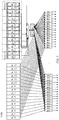
- sorted proposal regions may be stored in a manner shown in Table 1.
- FIG. 2 shows an example of a procedure of a data processing method according to this application.
- the data processing method may be applied to the field of image processing, and the procedure may be performed by the fractal matrix multiply processor.
- the procedure specifically includes the following steps.
- Step 201 Obtain R groups of proposal region sequences.
- the R groups of proposal region sequences are to-be-input data, and are sorted proposal region sequences.
- Each group of proposal region sequence may include a plurality of proposal regions, and a quantity of each group of proposal region is related to a quantity of bits of an input data type.
- Data types may include an 8-bit unsigned integer (8-bit unsigned integer, u8), an 8-bit signed integer (8-bit signed integer, s8), a 16-bit floating point (16-bit floating point, fp16) number, and a 32-bit floating point (32-bit floating point, fp32) number.
- the data type is fp16
- N proposal regions are input.
- the R groups of proposal region sequences may be stored in a UB according to the storage address shown in Table 1.
- the data types are not limited to the foregoing several types, and are merely used as examples.
- Step 202 Invoke a VRPAC instruction to calculate an area of each proposal region in each group of proposal region sequence.
- the VRPAC instruction In a process of non-maximum suppression (non-maximum suppression, NMS) calculation, first, the VRPAC instruction needs to be invoked to calculate the area of each proposal region in each group of proposal region sequence.
- the VRPAC instruction is used to calculate areas of K proposal regions at a single time, where K is associated with a quantity of bits of a data type.
- K may be the same as the quantity of bits of the data type.
- the VRPAC instruction may be used to calculate areas of 16 proposal regions at a single time.
- a value of K may be 8, 16, 32, or the like.
- the VRPAC instruction may support a duplication mode.
- the VRPAC instruction may be implemented by reusing existing M summator resources and (M/4) multiplier resources.
- the VRPAC instruction may be used to complete a calculation task in one beat, two beats, or three beats based on different target frequencies.
- the VRPAC instruction may be used to determine whether the VRPAC instruction is executed in a full pipeline (pipeline) manner or in a non-full pipeline manner based on a quantity of resources of summators and multipliers in a vector unit.
- the value of K is 16, the data type is fp16, 64 fp16 summators and 16 fp16 multipliers in the vector unit are reused.
- the VRPAC instruction may be executed in the full pipeline (pipeline) manner.
- P0 to P15 are proposal regions. Areas of 16 proposal regions are finally output after calculation by using the summators and the multipliers.
- the VRPAC instruction is invoked once and K x R results can be obtained at a time.
- the operation of calculating an area of a proposal region is repeated R times, but the instruction is invoked only once.
- the first instruction is used to calculate horizontal coordinates (x2 - x1) of a proposal region, to obtain an intermediate result res_tmp0.
- the second instruction is used to calculate a sum of res_tmp0 and 1, to obtain an intermediate result res_tmp1.
- the third instruction is used to calculate vertical coordinates (y2 - y1), to obtain an intermediate result res_tmp2.
- the fourth instruction is used to calculate a sum of res_tmp2 and 1, to obtain an intermediate result res_tmp3.
- the fifth instruction is used to calculate a product of res_tmp1 and res_tmp3, to obtain a value of the area of the proposal region. In this calculation manner, in terms of performance, there is no data for res_tmp1 and res_tmp3 to depend on; however, res_tmp1 and res_tmp3 need to be obtained sequentially.
- res_tmp1 is obtained based on res_tmp0 (likewise, res_tmp3 is obtained based on res_tmp2).
- res_tmp1 may be calculated only after res_tmp0 is written back to a register.
- a modern processor usually reduces, in a bypass manner, a performance loss caused by data dependency.
- both a floating point addition operation and a floating point multiplication operation usually need be completed in a plurality of beats. Consequently, a problem that not all performance losses can be eliminated may arise.
- the five instructions need to occupy storage space for the five instructions, and each instruction needs to be fully fetched, decoded, executed, and written back to the register. Consequently, a power efficiency ratio is low.
- the GPU When a GPU is used to calculate an area of a proposal region, the GPU usually assigns different threads to calculate areas of a plurality of proposal regions, to improve a degree of parallelism.
- a calculation process of a single thread is similar to that of the CPU.
- Each thread may also face the same performance, power consumption, and storage problems as the CPU.
- the GPU may hide a calculation loss by switching different threads. However, this requires a large quantity of extra register resources.
- Step 1 Obtain res_tmp0 and res_tmp2 at the same time.
- Step 2 Obtain res_tmp1 and res_tmp3 at the same time.
- Step 3 Obtain a final result.
- this manner includes two less basic steps than the foregoing two manners, the steps are all performed by hardware in a pipeline manner, and there is no potential performance loss problem. Therefore, a calculation time is shortened.
- Step 203 For a j th group of proposal region sequence in the R groups of proposal region sequences, invoke a VIOU instruction and a VAADD instruction to determine j suppression matrices of the j th group of proposal region sequence and determine a suppression vector of the j th group of proposal region sequence based on the j suppression matrices.
- the VIOU instruction may be used to calculate an overlapping area between every two proposal regions in two groups of proposal region sequences at a single time. For example, if each group has K proposal regions, K x K overlapping areas are calculated.
- the VIOU instruction may also support a duplication mode, and may be used to automatically calculate the overlapping areas of a plurality of groups of proposal regions by setting a quantity of repetition times. M comparators, M summators, and (M/4) multipliers that are currently used are reused to complete the calculation in one beat, two beats, or three beats based on different target frequencies.
- a quantity of resources of comparators, summators, and multipliers in the vector unit may be used to determine whether the VIOU instruction is executed in a full pipeline (pipeline) manner or in a non-full pipeline manner.
- calculation of a single overlapping area may be completed by performing one comparison operation, two addition operations, two addition and comparison operations, and one multiplication operation on coordinates of two proposal regions.
- K 16
- M 128, hardware shown in FIG. 5 may be used to implement the calculation.
- Step 1 Obtain xx1, yy1, xx2, and yy2 at the same time.
- Step 2 Obtain res_tmp0 and res_tmp2 at the same time.
- Step 3 Obtain res_tmp1 and res_tmp3 at the same time, and obtain res_tmp4 and res_tmp5 because fewer logic circuits are required when res_tmp4 and res_tmp5 are compared with 0.
- Step 4 Obtain a final result, namely, the overlapping area that needs to be calculated.
- the manner for which the VIOU instruction is used includes seven less basic steps than the existing manner for which the CPU or the GPU is used, the steps are all performed by hardware in a pipeline manner, and there is no potential performance bubble problem. Because calculation steps are reduced, a calculation time is shortened.
- only one instruction that supports the duplication mode can be used to calculate overlapping areas of R x K proposal regions (R is a quantity of repetition times, and K is a degree of parallelism for one repetition, namely, several proposal regions are calculated at a time).
- the VIOU instruction is fetched and decoded only once, and only the final result is written back to the UB. Therefore, extra power consumption is minimized.
- a power efficiency ratio is higher than those for the GPU and the CPU.
- the VAADD instruction may be used to calculate an area sum of every two proposal regions in two groups of proposal region sequences at a single time. For example, if each group has K proposal regions, area sums of every two proposal regions in K x K proposal regions are calculated.
- the VAADD instruction supports a duplication mode, and is used to automatically calculate an area sum of a plurality of groups of proposal regions by setting a quantity of repetition times. Existing M summators may be reused to complete the calculation in one beat, two beats, or three beats based on different target frequencies.
- a quantity of resources of summators in the vector unit may be used to determine whether the instruction is executed in a full pipeline manner or in a non-full pipeline manner.
- a hardware structure shown in FIG. 6 may be used to implement the calculation. 256 results may be generated every two beats, and the VAADD instruction is executed in the non-full pipeline manner. From a perspective of a calculation process of the VAADD instruction, there is only an addition step. Because the area sum of every two of two groups of proposal regions needs to be calculated, orders of accessing the UB may be reduced by using the VAADD instruction. The CPU and the GPU need to load data of a same proposal region a plurality of times to achieve a same effect. Therefore, a calculation time is also shortened.
- the determining the j suppression matrices of the j th group of proposal region sequence may be specifically: invoking the VIOU instruction to calculate an overlapping area between every two proposal regions in two adjacent groups of proposal region sequences in a first group of proposal region sequence to the j th group of proposal region sequence and an overlapping area between every two proposal regions in the j th group of proposal region sequence; invoking the VAADD instruction to calculate an area sum of the every two proposal regions in the two adjacent groups of proposal region sequences in the first group of proposal region sequence to the j th group of proposal region sequence and an area sum of the every two proposal regions in the j th group of proposal region sequence; then using the area sum of the every two proposal regions in the two adjacent groups of proposal region sequences in the first group of proposal region sequence to the j th group of proposal region sequence and the area sum of the every two proposal regions in the j th group of proposal region sequence as factors; and finally comparing a factor area sum of the every two proposal regions
- a value of j is 3
- a quantity of repetition times is set to 3
- an overlapping area every two proposal regions in a first group of proposal region sequence and a second group of proposal region sequence, an overlapping area between every two proposal regions in the second group of proposal region sequence and a third group of proposal region sequence, and an overlapping area between every two proposal regions in the third group of proposal region sequence are calculated.
- the VAADD instruction is invoked, a quantity of repetition times is set to 3, and an area sum of the every two proposal regions in the first group of proposal region sequence and the second group of proposal region sequence, an area sum of the every two proposal regions in the second group of proposal region sequence and the third group of proposal region sequence, and an area sum of the every two proposal regions in the third group of proposal region sequence are calculated. Then, the calculated area sums are used as factors. To be specific, the obtained area sums are multiplied by a parameter factor a, where the parameter factor may be set based on experience. After the area sums are used as factors, the factor area sums may be compared with the calculated overlapping areas, so that three suppression matrices of the third group of proposal region sequence may be obtained.
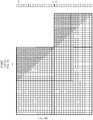
- a finally obtained suppression matrix is an N x N matrix (N is a total quantity of proposal regions), and values of elements on and above a diagonal line of the matrix are all 0.
- the VRPAC instruction when used to load, from a main memory, data that needs to be calculated, the data needs to be loaded R ⁇ K times in one calculation, where R is a quantity of groups of proposal region sequences, and K is a quantity of proposal regions included in each group of proposal region sequence.
- the VIOU instruction or the VAADD instruction is used to load data that needs to be calculated, the data needs to be loaded 2 ⁇ R 2 ⁇ 2 ⁇ K 2 times, that is, R 2 ⁇ 2 ⁇ K times, in one calculation.
- the data needs to be loaded 2 ⁇ R ⁇ K 2 2 times, that is, ( R ⁇ K ) 2 times, in one calculation by invoking each instruction.
- the quantity of data loading times for the case in which the CPU or the GPU is used for calculation is compared with the quantity of data loading times for the case in which the VIOU instruction or the VAADD instruction is used in this application, to obtain that the quantity of data loading times in one calculation for the case in which the CPU or the GPU is used is K 2 times greater than the quantity of data loading times in one calculation for the case in which the VIOU instruction or the VAADD instruction is used.
- a quantity of data loading times for the case in which the CPU or the GPU is used is 8 times greater than a quantity of data loading times for the case in which the VIOU instruction or the VAADD instruction is used.
- a difference between the two quantities of data loading times is 917,504.
- the technical solution of this application can greatly reduce the quantity of data loading times, and save a calculation time.
- steps for calculation by using the CPU or the GPU are more than those in the technical solution of this application. Therefore, a difference between the quantities of data loading times is further increased. Therefore, compared with the existing NMS calculation solution, the technical solution provided in this application reduces the quantity of data loading times, correspondingly reduces a quantity of main memory access times, shortens a calculation time, and reduces extra power consumption.
- the suppression vector of the j th group of proposal region sequence may be determined based on the j suppression matrices. Specifically, a region proposal network condition or for non-diagonal suppression matrix (region proposal network condition or for non-diagonal suppression matrix, RPN_COR) instruction may be invoked to perform calculation based on first j-1 suppression matrices in the j suppression matrices, to obtain an intermediate suppression vector result, then a region proposal network diagonal condition or for non-diagonal suppression matrix (region proposal network diagonal condition or for non-diagonal suppression matrix, RPN_COR DIAG) instruction may be invoked to perform calculation based on the j th suppression matrix in the j suppression matrices, and an or operation is performed on a calculation result and the intermediate suppression vector result to obtain the suppression vector of the j th group of proposal region sequence.
- a region proposal network condition or for non-diagonal suppression matrix region proposal network condition or for non-diagonal suppression matrix, RPN_COR DIAG
- the RPN_COR_DIAG instruction may be used to perform calculation based on a diagonal matrix block of the suppression matrix to obtain a suppression vector.
- suppression vectors K x 1
- K x K diagonal matrix blocks
- This can be implemented in one beat, two beats, or a plurality of beats based on different target frequencies, and the RPN_COR_DIAG instruction may be executed in a full pipeline manner.
- the RPN_COR_DIAG instruction has two inputs: One is a diagonal matrix block, and the other is a special register for storing an intermediate result. In a process of calculating the suppressing vector, a result with a lower score depends on a result with a higher score.
- the i th component is calculated based on calculation results of components 0 to i-1. If a component of a suppression vector is 1, a suppression relationship by the proposal region on a subsequent proposal region with a lower score needs to be canceled. A previously calculated intermediate result is placed in the special register RPN_COR_IR, and a bitwise or operation is performed on the intermediate result and a currently obtained result to obtain final suppression vector results of the 16 proposal regions.
- a proposal region 2 is not suppressed by a proposal region 0 and a proposal region 1, and therefore the proposal region 2 is not suppressed finally.
- a proposal region 5 is suppressed by the proposal region 2. Therefore, the proposal region 5 is suppressed finally.
- a proposal region 12 is suppressed by the proposal region 5, while the proposal region 5 has been suppressed. Therefore, suppression by the proposal region 5 on the proposal region 12 is canceled, and finally, the proposal region 12 is not suppressed.
- the bitwise or operation is performed on an intermediate result and a suppression result previously stored in the special register RPN_COR_IR to obtain final suppression vectors of the 16 proposal regions.
- the RPN_COR instruction may be used to perform calculation based on a non-diagonal matrix block of the suppression matrix to obtain an intermediate suppression vector result.
- the intermediate suppression vector result is calculated based on non-diagonal matrix blocks (K x K) of the suppression matrix and updated to the special register RPN_COR_IR.
- the RPN_COR instruction may support a duplication mode, and calculation can be implemented based on a plurality of non-diagonal matrix blocks by setting a quantity of repetition times.
- the RPN_COR instruction is used to complete the calculation in one beat, two beats, or three beats based on target frequencies, and is executed in a full pipeline manner.
- the RPN_COR instruction has three inputs: One is a non-diagonal matrix block (16 x 16) of the suppression matrix, a second one is a value of a 16 suppression vector with a higher score, and a third one is the special register RPN_COR_IR storing an intermediate result.
- An or operation is performed on a currently obtained suppression vector result and a result stored in the RPN_COR_IR, and a result is written to the special register RPN_COR_IR, so as to continuously accumulate calculation results.
- the RPN_COR_DIAG instruction is used to obtain the final suppression vectors of the 16 proposal regions.
- a proposal region 16 is suppressed by a proposal region 0, and the proposal region 0 is not suppressed, and therefore, suppression by the proposal region 0 on the proposal region 16 is valid.
- the proposal region 16 is further suppressed by a proposal region 15, but the proposal region 15 is suppressed. Therefore, suppression by the proposal region 15 on the proposal region 16 is canceled, and finally, a result is that the proposal region 16 is suppressed in current calculation.
- a proposal region 20 is suppressed by both a proposal region 5 and a proposal region 7, but both the proposal region 5 and the proposal region 7 are suppressed.
- the RPN_COR instruction and the RPN_COR_DIAG instruction are jointly used.
- RPN_COR_IR is initialized to 0, and then RPN_COR_DIAG is invoked for a matrix block 0 once.
- RPN_COR_DIAG is invoked for a matrix block 2 once.
- RPN_COR_IR is initialized to 0
- RPN_COR is separately invoked for matrix blocks 3 and 4
- RON_COR_DIAG is invoked for a matrix block 5 once.
- three suppression matrices are obtained.
- RPN_COR_IR is initialized to 0.
- the RPN_COR instruction is invoked to perform calculation based on matrix blocks of first two suppression matrices, to obtain an intermediate suppression vector result, and RPN_COR_IR is updated with the intermediate suppression vector result.
- RPN_COR_DIAG is invoked to perform calculation based on a matrix block of a third suppression matrix. A bitwise or operation is performed on a calculation result and the intermediate suppression vector result in the RPN_COR_IR to obtain a final suppression vector.
- the register RPN_COR_IR When the suppression vector of the j th group of proposal region sequence is determined, the register RPN_COR_IR is initialized to 0, the RPN_COR instruction is invoked, a quantity of repetition times is set to j-1, a source operand is a matrix block of a non-diagonal suppression matrix, the register RPN_COR_IR is updated with a result, and then RPN_COR_DIAG is invoked. In this way, the suppression vector of the j th group of proposal regions is obtained.
- Step 204 Determine an unsuppressed proposal region based on a suppression vector of each group of proposal region sequence.
- first M non-zero proposal regions namely, first M unsuppressed proposal regions, may be used as final results.
- FIG. 10 shows a hardware structure.
- the foregoing VRPAC instruction, VIOU instruction, and VAADD instruction are implemented by reusing one similar hardware structure.
- one VRPAC result, one VIOU result, and four VAADD results may be generated in one calculation. If more VRPAC, VIOU, or VAADD results need to be generated at a time, the foregoing circuit structure needs to be duplicated by several copies.
- a data type is fp16.
- 16 calculation results are generated at a time by using the VRPAC instruction; an overlapping area between every two proposal regions in two groups of proposal regions (16 proposal regions in each group) is calculated by using the VIOU instruction, and 256 calculation results are generated; an area sum of every two proposal regions in two groups of proposal regions (16 proposal regions in each group) is calculated by using the VAADD instruction, and 256 calculation results are generated; 16 intermediate suppression vector results are obtained at a time by using the RPN_COR instruction; and 16 suppression vectors are obtained at a time by using the RPN_COR_DIAG instruction.
- a time required for NMS calculation may be greatly shortened, calculation efficiency is greatly improved, and competitiveness in application fields related to image detection and image recognition is improved.
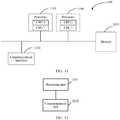
- FIG. 11 shows an example of a structure of a data processing apparatus according to this application.
- the apparatus may perform a data processing procedure.
- the apparatus may be a chip, and may perform the data processing method in any one of the foregoing embodiments.
- the apparatus 1100 includes at least one processor 1101 and a communications interface 1102, and optionally includes a memory 1103.
- the processor 1101, the communications interface 1102, and the memory 1103 are connected to each other.
- the processor 1101 may be a general-purpose central processing unit, a microprocessor, an image processor, an application-specific integrated circuit, or one or more integrated circuits configured to control program execution in the embodiments of this application.
- the communications interface 1102 is configured to input or output data.
- the memory 1103 may be a read-only memory or another type of static storage device that can store static information and an instruction, or a random access memory or another type of dynamic storage device that can store information and an instruction, or may be an electrically erasable programmable read-only memory, a compact disc read-only memory or another compact disc storage, an optical disc storage (including a compact disc, a laser disc, an optical disc, a digital versatile disc, a Blu-ray disc, or the like), a magnetic disk storage medium or another magnetic storage device, or any other medium that can be used to carry or store expected program code in a form of an instruction or data structure and that can be accessed by a computer.
- the memory 1103 is not limited thereto.
- the memory 1103 may exist independently, and is connected to the processor 1101. Alternatively, the memory 1103 may be integrated into the processor.
- the memory 1103 is configured to store application program code for implementing the embodiments of this application, and the application program code is executed under control of the processor 1101.
- the processor 1101 is configured to execute the application program code stored in the memory 1103.
- the processor 1101 may include one or more CPUs such as a CPU 0 and a CPU 1 in FIG. 11 .
- the apparatus 1100 may include a plurality of processors such as the processor 1101 and a processor 1108 in FIG. 11 .
- Each of the processors may be a single-core (single-CPU) processor, or may be a multi-core (multi-CPU) processor.
- the processor herein may be one or more devices, circuits, and/or processing cores configured to process data (for example, a computer program instruction).
- the terminal device may be divided into function modules based on the foregoing method examples.
- the function modules may be obtained through division based on corresponding functions, or at least two functions may be integrated into one processing module.
- the integrated module may be implemented in a form of hardware, or may be implemented in a form of a software function module.
- module division is an example, and is merely logical function division. During actual implementation, another division manner may be used.
- FIG. 12 is a schematic diagram of an apparatus, the apparatus may be the terminal device in the foregoing embodiments, and the apparatus includes a processing unit 1201 and a communications unit 1202.
- the communications unit 1202 is configured to obtain R groups of proposal region sequences, where each group of proposal region sequence includes a plurality of proposal regions, and R is a positive integer.
- the processing unit 1201 is configured to: invoke a VRPAC instruction to calculate an area of each proposal region in each group of proposal region sequence, where the VRPAC instruction is used to calculate areas of K proposal regions at a single time, and K is associated with a data type; for a j th group of proposal region sequence in the R groups of proposal region sequences, invoke a VIOU instruction and a VAADD instruction to determine j suppression matrices of the j th group of proposal region sequence, and determine a suppression vector of the j th group of proposal region sequence based on the j suppression matrices, where the VIOU instruction is used to calculate an overlapping area between every two proposal regions in two groups of proposal region sequences at a single time, the VAADD instruction is used to calculate an area sum of the every two proposal regions in the two groups of proposal region sequences at a single time, and j is an integer greater than or equal to 1 and less than or equal to R; and determine an unsuppressed proposal region based on a suppression vector of each group of proposal region sequence.
- the processing unit 1201 when invoking the VIOU instruction and the VAADD instruction to determine the j suppression matrices of the j th group of proposal region sequence, is specifically configured to:
- the processing unit 1201 when determining the suppression vector of the j th group of proposal region sequence based on the j suppression matrices, is specifically configured to:
- the RPN_COR_DIAG instruction is used to perform calculation based on a diagonal matrix block of a suppression matrix to obtain a suppression vector
- the RPN_COR instruction is used to perform calculation based on a non-diagonal matrix block of the suppression matrix to obtain an intermediate suppression vector result.
- An embodiment of this application further provides a computer storage medium, configured to store a computer software instruction used for the data processing.
- the computer software instruction includes program code designed for executing the foregoing method embodiments.
- this application may be provided as a method, a system, or a computer program product. Therefore, this application may use a form of hardware-only embodiments, software-only embodiments, or embodiments with a combination of software and hardware. Moreover, this application may use a form of a computer program product that is implemented on one or more computer-usable storage media (including but not limited to a magnetic disk memory, a CD-ROM, an optical memory, and the like) that include computer-usable program code.
- computer-usable storage media including but not limited to a magnetic disk memory, a CD-ROM, an optical memory, and the like
- the computer program instructions may be provided for a general-purpose computer, a dedicated computer, an embedded processor, or a processor of another programmable data processing device to generate a machine, so that the instructions executed by the computer or the processor of another programmable data processing device generate an apparatus configured to implement a specific function in one or more processes in the flowcharts and/or in one or more blocks in the block diagrams.
- the computer program instructions may be stored in a computer readable memory that can instruct the computer or the another programmable data processing device to work in a specific manner, so that the instructions stored in the computer readable memory generate an artifact that includes an instruction apparatus, and the instruction apparatus implements a specific function in one or more processes in the flowcharts and/or in one or more blocks in the block diagrams.
- the computer program instructions may be loaded onto a computer or another programmable data processing device, so that a series of operations and steps are performed on the computer or the another programmable data processing device, thereby generating computer-implemented processing. Therefore, the instructions executed on the computer or the another programmable device provide steps for implementing a specific function in one or more processes in the flowcharts and/or in one or more blocks in the block diagrams.
Landscapes
- Engineering & Computer Science (AREA)
- Theoretical Computer Science (AREA)
- Physics & Mathematics (AREA)
- General Physics & Mathematics (AREA)
- Software Systems (AREA)
- Evolutionary Computation (AREA)
- General Engineering & Computer Science (AREA)
- General Health & Medical Sciences (AREA)
- Artificial Intelligence (AREA)
- Health & Medical Sciences (AREA)
- Mathematical Physics (AREA)
- Computing Systems (AREA)
- Multimedia (AREA)
- Computer Vision & Pattern Recognition (AREA)
- Data Mining & Analysis (AREA)
- Molecular Biology (AREA)
- Databases & Information Systems (AREA)
- Life Sciences & Earth Sciences (AREA)
- Biomedical Technology (AREA)
- Pure & Applied Mathematics (AREA)
- Computational Mathematics (AREA)
- Mathematical Optimization (AREA)
- Mathematical Analysis (AREA)
- Biodiversity & Conservation Biology (AREA)
- Medical Informatics (AREA)
- Computational Linguistics (AREA)
- Biophysics (AREA)
- Algebra (AREA)
- Advance Control (AREA)
- Complex Calculations (AREA)
Applications Claiming Priority (2)
| Application Number | Priority Date | Filing Date | Title |
|---|---|---|---|
| CN201810054405.1A CN110060195B (zh) | 2018-01-19 | 2018-01-19 | 一种数据处理的方法及装置 |
| PCT/CN2019/071737 WO2019141160A1 (fr) | 2018-01-19 | 2019-01-15 | Procédé et appareil de traitement de données |
Publications (2)
| Publication Number | Publication Date |
|---|---|
| EP3736765A1 true EP3736765A1 (fr) | 2020-11-11 |
| EP3736765A4 EP3736765A4 (fr) | 2021-03-10 |
Family
ID=67301259
Family Applications (1)
| Application Number | Title | Priority Date | Filing Date |
|---|---|---|---|
| EP19741008.7A Withdrawn EP3736765A4 (fr) | 2018-01-19 | 2019-01-15 | Procédé et appareil de traitement de données |
Country Status (4)
| Country | Link |
|---|---|
| US (1) | US11823303B2 (fr) |
| EP (1) | EP3736765A4 (fr) |
| CN (1) | CN110060195B (fr) |
| WO (1) | WO2019141160A1 (fr) |
Families Citing this family (3)
| Publication number | Priority date | Publication date | Assignee | Title |
|---|---|---|---|---|
| JP7089179B2 (ja) * | 2018-08-30 | 2022-06-22 | 富士通株式会社 | 画像認識装置、画像認識方法および画像認識プログラム |
| WO2023089745A1 (fr) * | 2021-11-18 | 2023-05-25 | オリンパス株式会社 | Dispositif de traitement de calcul |
| US12204897B2 (en) | 2022-11-21 | 2025-01-21 | Nvidia Corporation | Application programming interface to wait on matrix multiply-accumulate |
Family Cites Families (13)
| Publication number | Priority date | Publication date | Assignee | Title |
|---|---|---|---|---|
| EP1526480A1 (fr) * | 2000-10-17 | 2005-04-27 | Fuji Photo Film Co., Ltd | Appareil de réduction de bruit par adaptation de la caractéristique du filtre au signal d'image d'entrée en dépendance de ses caractéristiques |
| US7706586B2 (en) * | 2005-06-22 | 2010-04-27 | General Electric Company | Real-time structure suppression in ultrasonically scanned volumes |
| WO2010137324A1 (fr) * | 2009-05-29 | 2010-12-02 | 三菱電機株式会社 | Dispositif et procédé de codage d'images, dispositif et procédé de décodage d'images |
| CN102750707A (zh) * | 2011-08-29 | 2012-10-24 | 新奥特(北京)视频技术有限公司 | 一种基于感兴趣区域的图像处理方法和装置 |
| US10169661B2 (en) * | 2014-03-28 | 2019-01-01 | International Business Machines Corporation | Filtering methods for visual object detection |
| CN104239854B (zh) * | 2014-08-30 | 2017-07-11 | 电子科技大学 | 一种基于区域稀疏积分通道的行人特征提取和表示方法 |
| US10046715B2 (en) * | 2014-10-22 | 2018-08-14 | GM Global Technology Operations LLC | Systems and methods for object detection |
| US10643101B2 (en) * | 2015-07-09 | 2020-05-05 | Texas Instruments Incorporated | Window grouping and tracking for fast object detection |
| US9984305B2 (en) * | 2016-04-19 | 2018-05-29 | Texas Instruments Incorporated | Efficient SIMD implementation of 3x3 non maxima suppression of sparse 2D image feature points |
| CN106056101A (zh) * | 2016-06-29 | 2016-10-26 | 哈尔滨理工大学 | 用于人脸检测的非极大值抑制方法 |
| CN106452769B (zh) * | 2016-09-13 | 2019-11-29 | 杭州华为数字技术有限公司 | 一种数据处理方法、数据处理装置以及处理器 |
| CN107463912A (zh) * | 2017-08-10 | 2017-12-12 | 武汉大学深圳研究院 | 基于运动显著性的视频人体行为识别方法 |
| CN111859273B (zh) | 2017-12-29 | 2025-01-21 | 华为技术有限公司 | 矩阵乘法器 |
-
2018
- 2018-01-19 CN CN201810054405.1A patent/CN110060195B/zh active Active
-
2019
- 2019-01-15 EP EP19741008.7A patent/EP3736765A4/fr not_active Withdrawn
- 2019-01-15 WO PCT/CN2019/071737 patent/WO2019141160A1/fr not_active Ceased
-
2020
- 2020-07-19 US US16/932,768 patent/US11823303B2/en active Active
Also Published As
| Publication number | Publication date |
|---|---|
| US11823303B2 (en) | 2023-11-21 |
| WO2019141160A1 (fr) | 2019-07-25 |
| US20200364289A1 (en) | 2020-11-19 |
| CN110060195A (zh) | 2019-07-26 |
| EP3736765A4 (fr) | 2021-03-10 |
| CN110060195B (zh) | 2021-05-04 |
Similar Documents
| Publication | Publication Date | Title |
|---|---|---|
| US10140251B2 (en) | Processor and method for executing matrix multiplication operation on processor | |
| US8200940B1 (en) | Reduction operations in a synchronous parallel thread processing system with disabled execution threads | |
| US20190250924A1 (en) | Efficient work execution in a parallel computing system | |
| EP4071619B1 (fr) | Procédé de génération d'adresses, dispositif associé et support de stockage | |
| US20150371359A1 (en) | Processing method and apparatus for single-channel convolution layer, and processing method and apparatus for multi-channel convolution layer | |
| US20220083857A1 (en) | Convolutional neural network operation method and device | |
| US12608319B1 (en) | Computing core, accelerator, computing method and apparatus, device, non-volatile readable storage medium, and system | |
| US11823303B2 (en) | Data processing method and apparatus | |
| US8572355B2 (en) | Support for non-local returns in parallel thread SIMD engine | |
| JP2019517078A (ja) | グラフィック処理のためのパーシェーダープリアンブル | |
| US9880851B2 (en) | System, method, and computer program product for implementing large integer operations on a graphics processing unit | |
| US8615541B2 (en) | Extended-precision integer arithmetic and logical instructions | |
| US12061910B2 (en) | Dispatching multiply and accumulate operations based on accumulator register index number | |
| US12561115B2 (en) | Computing apparatus and method, board card, and computer readable storage medium | |
| US10152328B2 (en) | Systems and methods for voting among parallel threads | |
| US20120084539A1 (en) | Method and sytem for predicate-controlled multi-function instructions | |
| US20040073591A1 (en) | Hardware extension for accelerating fractional integer division within 3D graphics and MP3 applications | |
| US5363322A (en) | Data processor with an integer multiplication function on a fractional multiplier | |
| US11029954B2 (en) | Per-lane dynamic indexing in temporary registers | |
| CN111861920B (zh) | 一种中值滤波方法以及系统 | |
| US11625225B2 (en) | Applications of and techniques for quickly computing a modulo operation by a Mersenne or a Fermat number | |
| US9984305B2 (en) | Efficient SIMD implementation of 3x3 non maxima suppression of sparse 2D image feature points | |
| US20200118238A1 (en) | Arithmetic Logic Unit (ALU)-Centric Operations in Graphics Processing Units (GPUs) | |
| US20250117876A1 (en) | Cache memory architecture augmentation for 3-dimensional (3d) data | |
| US20230195651A1 (en) | Host device performing near data processing function and accelerator system including the same |
Legal Events
| Date | Code | Title | Description |
|---|---|---|---|
| STAA | Information on the status of an ep patent application or granted ep patent |
Free format text: STATUS: THE INTERNATIONAL PUBLICATION HAS BEEN MADE |
|
| PUAI | Public reference made under article 153(3) epc to a published international application that has entered the european phase |
Free format text: ORIGINAL CODE: 0009012 |
|
| STAA | Information on the status of an ep patent application or granted ep patent |
Free format text: STATUS: REQUEST FOR EXAMINATION WAS MADE |
|
| 17P | Request for examination filed |
Effective date: 20200804 |
|
| AK | Designated contracting states |
Kind code of ref document: A1 Designated state(s): AL AT BE BG CH CY CZ DE DK EE ES FI FR GB GR HR HU IE IS IT LI LT LU LV MC MK MT NL NO PL PT RO RS SE SI SK SM TR |
|
| AX | Request for extension of the european patent |
Extension state: BA ME |
|
| A4 | Supplementary search report drawn up and despatched |
Effective date: 20210205 |
|
| RIC1 | Information provided on ipc code assigned before grant |
Ipc: G06F 9/50 20060101ALI20210201BHEP Ipc: G06T 1/20 20060101AFI20210201BHEP Ipc: G06F 9/48 20060101ALI20210201BHEP |
|
| DAV | Request for validation of the european patent (deleted) | ||
| DAX | Request for extension of the european patent (deleted) | ||
| STAA | Information on the status of an ep patent application or granted ep patent |
Free format text: STATUS: THE APPLICATION IS DEEMED TO BE WITHDRAWN |
|
| 18D | Application deemed to be withdrawn |
Effective date: 20210907 |