EP3737087A1 - Procédé de commande et dispositif pour haut-parleur de terminal, et support de stockage lisible par ordinateur - Google Patents
Procédé de commande et dispositif pour haut-parleur de terminal, et support de stockage lisible par ordinateur Download PDFInfo
- Publication number
- EP3737087A1 EP3737087A1 EP19739499.2A EP19739499A EP3737087A1 EP 3737087 A1 EP3737087 A1 EP 3737087A1 EP 19739499 A EP19739499 A EP 19739499A EP 3737087 A1 EP3737087 A1 EP 3737087A1
- Authority
- EP
- European Patent Office
- Prior art keywords
- displayed
- video
- frame
- artificial intelligence
- intelligence learning
- Prior art date
- Legal status (The legal status is an assumption and is not a legal conclusion. Google has not performed a legal analysis and makes no representation as to the accuracy of the status listed.)
- Withdrawn
Links
Images


Classifications
-
- H—ELECTRICITY
- H04—ELECTRIC COMMUNICATION TECHNIQUE
- H04S—STEREOPHONIC SYSTEMS
- H04S7/00—Indicating arrangements; Control arrangements, e.g. balance control
- H04S7/30—Control circuits for electronic adaptation of the sound field
-
- H—ELECTRICITY
- H04—ELECTRIC COMMUNICATION TECHNIQUE
- H04N—PICTORIAL COMMUNICATION, e.g. TELEVISION
- H04N21/00—Selective content distribution, e.g. interactive television or video on demand [VOD]
- H04N21/20—Servers specifically adapted for the distribution of content, e.g. VOD servers; Operations thereof
- H04N21/23—Processing of content or additional data; Elementary server operations; Server middleware
- H04N21/234—Processing of video elementary streams, e.g. splicing of video streams or manipulating encoded video stream scene graphs
- H04N21/23418—Processing of video elementary streams, e.g. splicing of video streams or manipulating encoded video stream scene graphs involving operations for analysing video streams, e.g. detecting features or characteristics
-
- H—ELECTRICITY
- H04—ELECTRIC COMMUNICATION TECHNIQUE
- H04N—PICTORIAL COMMUNICATION, e.g. TELEVISION
- H04N21/00—Selective content distribution, e.g. interactive television or video on demand [VOD]
- H04N21/40—Client devices specifically adapted for the reception of or interaction with content, e.g. set-top-box [STB]; Operations thereof
- H04N21/43—Processing of content or additional data, e.g. demultiplexing additional data from a digital video stream; Elementary client operations, e.g. monitoring of home network or synchronising decoder's clock; Client middleware
- H04N21/44—Processing of video elementary streams, e.g. splicing a video clip retrieved from local storage with an incoming video stream or rendering scenes according to encoded video stream scene graphs
- H04N21/44008—Processing of video elementary streams, e.g. splicing a video clip retrieved from local storage with an incoming video stream or rendering scenes according to encoded video stream scene graphs involving operations for analysing video streams, e.g. detecting features or characteristics in the video stream
-
- H—ELECTRICITY
- H04—ELECTRIC COMMUNICATION TECHNIQUE
- H04N—PICTORIAL COMMUNICATION, e.g. TELEVISION
- H04N21/00—Selective content distribution, e.g. interactive television or video on demand [VOD]
- H04N21/80—Generation or processing of content or additional data by content creator independently of the distribution process; Content per se
- H04N21/81—Monomedia components thereof
- H04N21/8106—Monomedia components thereof involving special audio data, e.g. different tracks for different languages
-
- H—ELECTRICITY
- H04—ELECTRIC COMMUNICATION TECHNIQUE
- H04N—PICTORIAL COMMUNICATION, e.g. TELEVISION
- H04N21/00—Selective content distribution, e.g. interactive television or video on demand [VOD]
- H04N21/80—Generation or processing of content or additional data by content creator independently of the distribution process; Content per se
- H04N21/83—Generation or processing of protective or descriptive data associated with content; Content structuring
- H04N21/84—Generation or processing of descriptive data, e.g. content descriptors
-
- H—ELECTRICITY
- H04—ELECTRIC COMMUNICATION TECHNIQUE
- H04S—STEREOPHONIC SYSTEMS
- H04S1/00—Two-channel systems
- H04S1/007—Two-channel systems in which the audio signals are in digital form
-
- H—ELECTRICITY
- H04—ELECTRIC COMMUNICATION TECHNIQUE
- H04R—LOUDSPEAKERS, MICROPHONES, GRAMOPHONE PICK-UPS OR LIKE ACOUSTIC ELECTROMECHANICAL TRANSDUCERS; ELECTRIC HEARING AIDS; PUBLIC ADDRESS SYSTEMS
- H04R2205/00—Details of stereophonic arrangements covered by H04R5/00 but not provided for in any of its subgroups
- H04R2205/024—Positioning of loudspeaker enclosures for spatial sound reproduction
-
- H—ELECTRICITY
- H04—ELECTRIC COMMUNICATION TECHNIQUE
- H04R—LOUDSPEAKERS, MICROPHONES, GRAMOPHONE PICK-UPS OR LIKE ACOUSTIC ELECTROMECHANICAL TRANSDUCERS; ELECTRIC HEARING AIDS; PUBLIC ADDRESS SYSTEMS
- H04R2420/00—Details of connection covered by H04R, not provided for in its groups
- H04R2420/03—Connection circuits to selectively connect loudspeakers or headphones to amplifiers
-
- H—ELECTRICITY
- H04—ELECTRIC COMMUNICATION TECHNIQUE
- H04R—LOUDSPEAKERS, MICROPHONES, GRAMOPHONE PICK-UPS OR LIKE ACOUSTIC ELECTROMECHANICAL TRANSDUCERS; ELECTRIC HEARING AIDS; PUBLIC ADDRESS SYSTEMS
- H04R2499/00—Aspects covered by H04R or H04S not otherwise provided for in their subgroups
- H04R2499/10—General applications
- H04R2499/15—Transducers incorporated in visual displaying devices, e.g. televisions, computer displays, laptops
-
- H—ELECTRICITY
- H04—ELECTRIC COMMUNICATION TECHNIQUE
- H04S—STEREOPHONIC SYSTEMS
- H04S2400/00—Details of stereophonic systems covered by H04S but not provided for in its groups
- H04S2400/11—Positioning of individual sound objects, e.g. moving airplane, within a sound field
-
- H—ELECTRICITY
- H04—ELECTRIC COMMUNICATION TECHNIQUE
- H04S—STEREOPHONIC SYSTEMS
- H04S2400/00—Details of stereophonic systems covered by H04S but not provided for in its groups
- H04S2400/13—Aspects of volume control, not necessarily automatic, in stereophonic sound systems
Definitions
- the present disclosure relates to the technical field of terminal, in particular to a method and a device for controlling terminal speaker, and a computer readable storage medium.
- Crystal sound television comes into our lives with science and technology boom and motivate the user's live experience.
- the present televisions still include two speakers respectively located at the left and the right sides.
- the sound is controlled by balancing the left and right channels, and the position of the sound output from the television can not be changed with respect to the sound sources of the displayed frames. For example, as the positions of the speakers are fixed, the position of human voice output by the television can not change with the positions of the person displayed on the screens.
- the present disclosure provides a method for controlling terminal speaker, a display screen of a terminal is divided into at least two displaying areas, each displaying area corresponding to at least one speaker, and the method includes the following operations:
- a frame currently displayed by the terminal is a target frame corresponding to the frame identification code, determining position information of a target sound source according to the frame identification code corresponding to the target frame;
- the present disclosure further provides a device for controlling terminal speaker, the device includes a memory, a processor, and a program for controlling terminal speaker stored on the memory and executable on the processor, the program when executed by the processor performs the operations of the method for controlling the terminal speaker as described above.
- the present disclosure further provides a computer readable storage medium, the computer readable storage medium stores a program for controlling terminal speaker, and the program when executed by the processor performs the operations of the method for controlling the terminal speaker as described above.
- the terminal can acquire the frame identification code in the video to be displayed when the video to be displayed which is processed by the artificial intelligence learning is received; if the frame currently displayed by the terminal is the target frame corresponding to the frame identification code, the position information of the target sound source can be determined according to the frame identification code corresponding to the target frame, and the speaker in the displaying area corresponding to the position information of the target sound source can be controlled to output the sound corresponding to the target frame. Therefore, the position of the sound output by the terminal can be changed with respect to the changes of the sound sources of the displayed frames.
- FIG. 1 is a schematic structural diagram of a hardware operating environment according to an exemplary embodiment of the present disclosure.
- FIG. 1 can be a schematic structural diagram of the hardware operating environment of a control device of the terminal torn.
- the device for controlling the terminal speaker can be a terminal device such as a PC or a portable computer.
- the device for controlling the terminal speaker may include a processor 1001, such as a CPU, a user interface 1003, a network interface 1004, a memory 1005, and a communication bus 1002.
- the communication bus 1002 is configured for implementing connection communication among these components.
- the user interface 1003 can include a display, an input unit such as a keyboard.
- the user interface 1003 can also include a standard wired interface, and a wireless interface.
- the network interface 1004 can optionally include a standard wired interface, and a wireless interface (such as a WI-FI interface).
- the memory 1005 may be a high speed Random Access Memory (RAM) or a non-volatile memory such as a disk memory.
- the memory 1005 can also optionally be a storage device independent of the aforementioned processor 1001.
- the structure of the device for controlling the terminal speaker as shown in FIG. 1 does not constitute a limitation of the device for controlling the terminal speaker, and the device for controlling the terminal speaker may include more or less components than those illustrated, a combination of certain components, or a combination of certain components, or components different from those illustrated.
- the memory 1005 regarded as a computer storage medium may include an operating system, a network communication module, a user interface module, and a program for controlling the terminal speaker.
- the operating system is configured to manage and control the program of the terminal speaker for controlling hardware and software resources, and also configured to support the operations of the program for controlling the terminal speaker, and other software or programs.
- the user interface 1003 is mainly configured to connect with a server and perform a data communication with the server.
- the network interface 1004 is mainly configured to connect to a background server and perform a data communication with the background server.
- the device for controlling the terminal speaker can be a terminal where the speaker is located.
- the display screen of the terminal is divided into at least two displaying areas, each displaying area corresponds to at least one speaker.
- the processor 1001 can be configured to call the program for controlling the terminal speaker stored on the memory 1005, and perform the following operations:
- a frame currently displayed by the terminal is a target frame corresponding to the frame identification code, determining position information of a target sound source according to the frame identification code corresponding to the target frame;
- the operation of controlling the at least one speaker in the displaying area corresponding to the position information of the target sound source to output the sound corresponding to the target frame includes:
- the processor 1001 can further call the program for controlling the blockchain-based terminal speaker stored on the memory 1005, and perform the following operations: controlling the speaker corresponding to the previously appeared displaying area to output the sound corresponding to the target frame with a first volume, and controlling the speaker corresponding to the subsequently appeared displaying area to output the sound corresponding to the target frame with a second volume, and the first volume is lower than the second volume.
- the operation of acquiring the frame identification code in the video to be displayed, if it is detected that the video to be displayed is processed by the artificial intelligence learning includes: if yes, acquiring the frame identification code from a header file of the video to be displayed.
- the processor 1001 can further call the program for controlling the blockchain-based terminal speaker stored on the memory 1005, and perform the following operations:
- the operation of associating and writing each of the frame identification codes and corresponding position information of the sound source into the video to be displayed, for obtaining the video to be displayed that is by the artificial intelligence learning includes:
- the processor 1001 can further call the program for controlling the blockchain-based terminal speaker stored on the memory 1005, and perform the following operations:
- the operation of detecting whether the video to be displayed is processed by the artificial intelligence learning, after the video to be displayed sent by the server is received includes:
- the embodiments of the device for controlling the terminal speaker of the present disclosure are substantially the same as the embodiments of the method for controlling the terminal speaker and thus not described herein.
- FIG. 2 is the flow chart of the method for controlling terminal speaker according to a first exemplary embodiment of the present disclosure.
- the method for controlling terminal speaker includes:
- the terminal can be, but is not limited to, a device having a video playing function, such as a television and a personal computer.
- the display screen of the terminal is divided into at least two displaying areas, and each displaying area corresponds to at least one speaker.
- the terminal detects whether the video to be displayed is processed by an Artificial Intelligence (AI) learning.
- AI Artificial Intelligence
- the server may negotiate with the terminal in advance, about on which videos to be displayed the artificial intelligence learning is performed. For example, the server may negotiate with the terminal to determine that which videos to be processed should be subjected to the artificial intelligence learning.
- the server may negotiate with the terminal to determine that the video to be displayed with a display duration longer than a preset display duration can be subjected to the artificial intelligence learning, or determine that the video to be displayed with a specific type can be subjected to the artificial intelligence learning, such as the TV video or music video.
- the terminal after the terminal receives the video to be displayed sent by the server, the terminal only needs to detect the display duration of the video to be processed, or determine the type of the video to be processed, for determining whether the video to be processed has been been processed by the artificial intelligence learning.
- the video contains the position information of sound source and corresponding frame identification code. That is, for the video processed by the artificial intelligence learning, the terminal can determine which frames are sound frames, and their relative positions of the sound sources in the sound frames.
- the frame identification code is configured to indicate there exists the sound frame
- the position information of sound source is configured to indicate the relative position of the sound source in the corresponding sound frame.
- S10 includes:
- the server may perform the artificial intelligence learning to the video to be displayed according to the specific situation. After the server performs the artificial intelligence learning on one video to be displayed, the server adds a feature code to the video to be displayed, for informing the terminal that the video to be displayed has been subjected to artificial intelligence learning.
- the representation form of the feature code is not limited, which may be represented as a number, a letter, or a combination of the two.
- the terminal After the terminal receives the video to be displayed sent by the server, the terminal detects whether the feature code of the artificial intelligence learning exists in the video to be displayed. If it is detected that the feature code exists in the video to be displayed, the terminal determines that the video to be displayed is processed by the artificial intelligence learning; if it detects that the feature code does not exist in the video to be displayed, the terminal determines that the video to be displayed is not processed by the artificial intelligence learning.
- the server can write the feature code in the header file of the video to be displayed. It can be understood that the server can alternatively write the feature code at the end of the video to be displayed. This embodiment does not specifically limit the position of the feature code in the video to be displayed.
- the terminal detects that the video to be displayed is processed by the artificial intelligence learning, the terminal acquires the frame identification code in the video to be displayed.
- the frame having the sound in the video to be displayed can be determined according to the frame identification code.
- the server may set the frame identification code only for the frame having the sound. At this point, each frame identification code has corresponding position information of sound source. If the server sets the frame identification code for each frame of the video to be displayed, only the frame identification code corresponding to the frame having the sound would have the corresponding position information of sound source, and the frame identification code corresponding to the frame without the sound does not have the corresponding position information of sound source.
- the frame identification code corresponding to the frame having the sound is taken as an example in the following contents.
- the representation form of the frame identification code is not specifically limited.
- the frame identification code can be configured to recognize that which frame of the video to be displayed has sound.
- S20 includes: step c, acquiring the frame identification code from a header file of the video to be displayed.
- the server in order to improve the efficiency of the terminal acquiring the frame identification code, after the server recognizes the frame having the sound in the video to be displayed through the artificial intelligence learning, the server sets corresponding frame identification code for the frame having the sound, and writes the identification code into the header file of the video to be displayed. Therefore, when the terminal detects that the video to be displayed is processed by the artificial intelligence learning, the terminal acquires the frame identification code in the header file of the video to be displayed. Further, the server may also write the frame identification code and the feature code into the header file of the audio file corresponding to the video to be displayed.
- the terminal detects whether the currently displayed frame is a frame corresponding to the frame identification code.
- the currently displayed frame corresponding to the frame identification code is recorded as the target frame. If the terminal detects that the currently displayed frame is the target frame, the terminal determines the position information of sound source according to the frame identification code corresponding to the target frame, and records the position information of sound source corresponding to the frame identification code of the target frame as the position information of target sound source.
- the size of one frame in the embodiment of the present disclosure may be set according to specific needs.
- the position information of sound source can be represented by coordinates. As such, referring to FIG.
- the original point can be set at a lower left corner of the display screen of the terminal, the positive direction of the horizontal axis (namely, x axis) extends from the original point to the right, and the positive direction of the vertical axis (namely, y axis) extends upwards from the original point. It should be noted that the original point can be set at a center of the display screen of the terminal. The embodiment does not limit the establishment form of the coordinates.
- the terminal detects that the currently displayed frame is not the target frame, the terminal continues to display the video to be displayed, and continues to detect whether the currently displayed frame is the target frame. It can be understood that, during the process of the terminal displaying the video to be displayed, the terminal can perform the image processing and audio processing on the video to be displayed, for normally displaying the video to be displayed.
- the terminal After the terminal determines the position information of target sound source according to the frame identification code corresponding to the target frame, the terminal controls the speaker in the displaying area corresponding to the position information of a target sound source to output the sound corresponding to the target frame.
- the position information of target sound source may correspond to one coordinate or several coordinates. Therefore, the position information of target sound source may correspond to one or more displaying areas. It can be understood that, if the frame contains the sound source uttered by human, whether someone makes a sound is determined by intelligently learning the changes in mouth shape during the artificial intelligence learning process. And if a person makes the sound, the position information of the sound source should correspond to the position of his mouth. As such, the position information of target sound source may correspond to a plurality of coordinates, which means that the position information of target sound source corresponds to a coordinate group.
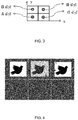
- the display screen of the terminal is divided into four displaying areas with equal size, namely displaying area A , displaying area B, displaying area C, and displaying area D.
- Each displaying area is provided with one speaker.
- the resolution of the display screen is 3840x2160
- the coordinate system can be established according to the pixels, and the coordinate points corresponding to the sounds are represented by the pixels.
- the resolutions of the four displaying areas are all 1920 ⁇ 1080.
- the coordinates of the four speakers are defined as a, b, c and d, respectively.
- the terminal controls the speaker at the displaying area A to output the sound of the video to be displayed.
- the terminal detects that the position information of target sound source has the coordinate of (2000, 900)
- the terminal controls the speaker at the displaying area C to output the sound of the video to be displayed.
- the terminal detects that the position information of target sound source has the coordinates of (1910, 1000) and (1925, 995)
- the terminal controls the speaker at A displaying area and the speaker at the displaying area C together to output the sound of the video to be displayed.
- the terminal when the terminal receives the video to be displayed after being processed by the artificial intelligence learning, the terminal obtains the frame identification code in the video to be displayed. If the currently displayed frame is the target frame corresponding to the frame identification code, the position information of target sound source is determined according to the frame identification code corresponding to the target frame image, and the speaker at the displaying area corresponding to the position information of the target sound source is controlled to output the sound corresponding to the target frame. Therefore, the position of sound output by the terminal can change with the positions of the sound sources in the displayed screens, improving user's live experience when the video is displayed.
- step S40 includes: step d, if it is detected that the position information of the target sound source corresponds to two displaying areas, determining that the position information of target sound source corresponds to a previously appeared displaying area and a subsequently appeared displaying area.
- the terminal may detect whether the position information of target sound source corresponds to the two displaying areas. If it is detected that the position information of target sound source corresponds to two displaying areas, the terminal acquires the previously appeared displaying area and the subsequently appeared displaying area which are both associated with the target frame. It should be noted that the terminal may acquire the previous frame and the subsequent frame relative to the target frame, the terminal may also acquire a previous two frame and the one subsequent frame relative to the target frame, or the terminal may acquire a first three frame and a last three frame relative to the target frame, etc. Specifically, the terminal determines whether the position information of target sound source corresponds to two displaying areas by the coordinate in the position information of the target sound source.
- the terminal can determine that the position information of target sound source corresponds to the previously appeared displaying area and the subsequently appeared displaying area in the two displaying areas according to the previous and subsequent frames.
- the previously appeared displaying area appears first in the frame, and the subsequently appeared displaying area appears later in the frame, that is, the object that emits sound moves from the previously appeared displaying area to the subsequently appeared displaying area.
- the terminal controls the speaker at the displaying area to output the sound of the target frame.
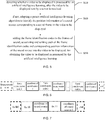
- the display screen of the terminal is divided into six displaying areas, namely displaying areas A, B, C, D, E, and F, respectively. If the bird in the video to be displayed is squeaking all through its flying, when the bird flies in the displaying area A, the terminal controls the speaker corresponding to the displaying area A to output the bird's chirp. When the bird flies to the displaying area B, the terminal controls the speaker corresponding to B displays the area to output the bird's chirp. When the bird flies to the displaying area C, the terminal controls the speaker corresponding to C displays the area to output the bird's chirp.
- Step e controlling the speaker corresponding to the previously appeared displaying area to output the sound corresponding to the target frame with a decreasing voice volume, and controlling the speaker corresponding to the subsequently appeared displaying area to output the sound corresponding to the target frame with an increasing voice volume.
- the terminal After the terminal determines that the position information of target sound source corresponds to the previously appeared displaying area and the subsequently appeared displaying area of the two displaying areas, the terminal controls the speaker corresponding to the previously appeared displaying area to output the sound corresponding to the target frame with the decreasing voice volume, and controls the speaker corresponding to the subsequently appeared displaying area to output the sound corresponding to the target frame with the increasing voice volume.
- the method for controlling the terminal speaker further includes: step f, controlling the speaker corresponding to the previously appeared displaying area to output the sound corresponding to the target frame with a first volume, and controlling the speaker corresponding to the subsequently appeared displaying area to output the sound corresponding to the target frame with a second volume, and the first volume is lower than the second volume.
- the terminal controls the speaker corresponding to previously appeared displaying area to output the sound corresponding to the target frame with the first volume, and controls the speaker corresponding to subsequently appeared displaying area to output the sound corresponding to the target frame with the second volume, and the first volume is lower than the second volume.
- the first volume and the second volume may be set according to specific needs, which are not specifically limited in the embodiment.
- the terminal can determine that the areas of sounding object corresponding to the sound source in the two displaying areas.
- the displaying area having the sounding object with a larger area is recorded as the first displaying area
- the displaying area having the sounding object with a smaller area is recorded as the second displaying area.
- the speaker corresponding to the first displaying area is controlled to output sound of the frame with the third volume
- the speaker corresponding to the second displaying area is controlled to output sound of the frame with the fourth volume
- the third volume is greater than the fourth volume.
- the third volume and the fourth volume are not specifically limited.
- the sounding object can be a mouth of person, a mouth of an animal, a musical instrument, or the like. It can be understood that the terminal can also control the speakers at the two displaying areas to output sounds of the frames with the same volume.
- the rule for controlling speaker corresponding to three or four displaying areas is similar to the rule for controlling speaker corresponding to two displaying areas, and is omitted herein.
- the speaker corresponding to the previously appeared displaying area is controlled to output the sound corresponding to the target frame with the decreasing voice volume
- the speaker corresponding to the subsequently appeared displaying area is controlled to output the sound corresponding to the target frame with the increasing voice volume.
- the speaker corresponding to the first displaying area with the larger area is controlled to output the sound corresponding to the frame with the third volume
- the speaker corresponding to the second displaying area with the smaller area is controlled to output the sound corresponding to the frame with the fourth volume
- the third volume is greater than the fourth volume. Therefore, the accuracy is improved in respect to the positions of sound output by the terminal changing with the sound sources in the displayed frame, further improving the intelligence of the sound output by the terminal.
- the difference between the method for controlling the terminal speaker according to the third embodiment and the method for controlling the terminal speaker according to the first or second embodiment includes that, as shown in FIG. 5 , the method according to the third embodiment further includes:
- the terminal When the terminal detects that the video to be displayed is not processed by the artificial intelligence learning, the terminal adopts the preset artificial intelligence learning algorithm to identify the position information of the sound source corresponding to the sound frame in the video to be displayed.
- the artificial intelligence learning algorithm include, but is not limited to, a machine learning algorithm and a deep learning algorithm.
- the machine learning algorithm includes, but is not limited to, a Support Vector Machine (SVM), a Naive Bayesian (NB), a k-NearestNeighbor (KNN) classification algorithm, a Decision Tree (DT), and a Random Forest (RF), and a Gradient Boosting Decision Tree (GDBT).
- SVM Support Vector Machine
- NB Naive Bayesian
- KNN k-NearestNeighbor
- DT Decision Tree
- RF Random Forest
- GDBT Gradient Boosting Decision Tree
- the deep learning algorithm includes, but is not limited to, a Convolutional Neural Network (CNN), recurrent neural networks, and recursive neural networks.
- CNN Convolutional Neural Network
- recurrent neural networks recurrent neural networks
- recursive neural networks recursive neural networks.
- the terminal adds the frame identification code to the sound frame in the video to be displayed, and each frame identification code and the corresponding position information of sound source are associated and written into the video to be displayed, for obtaining the video to be displayed as processed by the artificial intelligence learning.
- the process of the server performing the artificial intelligence learning on the video to be displayed is consistent with the process of the terminal performing the artificial intelligence learning on the video to be displayed. Therefore, in the embodiment of the present disclosure, there is no need to describe the process of the server performing the artificial intelligence learning on the video to be displayed in detail.
- the terminal when the terminal detects that the video to be displayed is not processed by the artificial intelligence learning, the terminal adopts the preset artificial intelligence learning algorithm to identify the position information of sound source corresponding to the sound frame in the video to be displayed, then adds the frame identification code to the sound frame, and associates and writes each frame identification code and the corresponding position information of sound source into the video to be displayed, for obtaining the video to be displayed after being processed by the artificial intelligence learning. Therefore, the reliability has been improved of the positions of sound changing with the sound sources in the displayed frame.
- the operation of associating and writing each of the frame identification codes and corresponding position information of the sound source into the video to be displayed, for obtaining the video to be displayed as processed by the artificial intelligence learning includes: step h, encoding each of the frame identification codes and corresponding position information of sound source as a character string according to a preset coding rule; and
- the terminal encodes each frame identification code and the corresponding position information of sound source into the header file of the video to be displayed according to a preset coding rule.
- the coding rule can be adopted to combine the frame identification codes and the corresponding position information of sound source into one character string.
- the frame identification codes and the corresponding position information of sound source can be coded according to a formula of "frame identification code 1 - coordinate of sound source 1 - frame identification code 2 - coordinate of sound source 2 frame identification code n - coordinate of sound source n".
- the position information of sound source may also be written in front of the frame identification code.
- step i adding an ending tag to an end of the character string, and writing the character string carrying the ending tag into the header file of the video to be displayed for obtaining the video to be displayed as processed by the artificial intelligence learning.
- the terminal can add the ending tag at the end of the character string, and then write the character string carrying the ending tag into the header file of the video to be displayed for obtaining the video to be displayed as processed by artificial intelligence learning.
- the ending tag may be represented by a specific character.
- the ending tag may be represented by "end", as shown in FIG. 6 .
- the server can write the feature code at the first place of the character string. It should be noted that if the terminal itself performs the artificial intelligence learning on the video to be displayed, there is no need to add the feature code into the character string.
- the two frames of 0x10 and 0x11 are taken as examples.
- the feature code of 0xB0 represents that the video to be displayed is processed by the artificial intelligence learning
- the frame identification code of 0x10 represents that sound exists in the frame corresponding to 0x10
- the position information of sound source corresponding to 0x10 is regarded as the coordinate of sound source 1.
- the frame identification code of 0x11 represents that sound exists in the frame, and the position information of sound source corresponding to 0x10 is regarded as the coordinate of sound source 2. That is, when the frame with the mark of 0x10 is displayed, the coordinate of sound source 1 is acquired, and the speaker at the displaying area corresponding to the coordinate of sound source 1 is controlled to output sound. When the frame with the mark of 0x11 is displayed, the coordinate of sound source 2 is acquired, and the speaker at the displaying area corresponding to the coordinate of sound source 2 is controlled to output sound.
- the terminal is notified that the content displayed before the ending tag is not related to the video to be displayed and the content displayed after the ending tag is related to the video to be displayed by adding the ending tag at the end of the character string, so as to avoid the feature code, the frame identification code, the position information of sound source, and the related content of the video to be displayed from being confused when the terminal decodes the video to be displayed, for preventing the phenomenon of failing to display video to be displayed from and improving the success rate of displaying the video to be displayed.
- the difference between the method for controlling the terminal speaker according to the fourth embodiment and the method for controlling the terminal speaker according to the first or second embodiment includes that, as shown in FIG. 8 , the method according to the fourth embodiment further includes:
- the terminal determines the speaker that is activated, and controls the activated speaker to output the sound in the video to be displayed. Further, when the terminal detects that the video to be displayed is not processed by the artificial intelligence learning, the terminal decodes the video to be displayed for obtaining audio track information in the video to be displayed, and controls the speaker to output the sound in the video to be displayed according to the audio track information.
- the audio tracks are presented as "tracks" parallel to each other visible in sequencer software. Each audio track defines the property of the audio track, such as the timbre of the audio track, the sound library, the number of channels, the input/output port, and the volume, etc.
- the activated speaker of the terminal when it is detected that the video to be displayed is not subjected to the artificial intelligence learning, the activated speaker of the terminal is controlled to output the sound in the video to be displayed, so that the video which is not processed by the artificial intelligence learning can also been displayed normally.
- the embodiment of the present disclosure further provides a computer readable storage medium which stores the program for controlling the terminal speaker.
- the program for controlling the terminal speaker performs, when executed by the processor, the operations of the method for controlling the terminal speaker as described above.
- the terms “comprising”, “including” or other variants aim to cover non-exclusive inclusion, such that the processes, methods, articles or devices including a series of factors not only include these factors, but also include other factors not listed explicitly, or further comprise include intrinsic for such processes, methods, articles or devices.
- the factors limited by “comprising a .." do not exclude that additional identical factors are also included in the processes, methods, articles or devices comprising said factors.
- the present disclosure may be implemented by means of software in connection with necessary universal hardware platform.
- the present disclosure may also be implemented by a hardware. However, in many cases the former is more preferred.
- all or the part contributing to the prior art of the technical solution of the present disclosure may be embodied in the form of software.
- the computer software may be stored in a storage medium (such as ROM/RAM, diskette, or light disk) and include a plurality of instructions which are used to implement the method as described in the various embodiments of the present disclosure by a mobile terminal (such as cell phone, computer, server, air conditioner, or networking devices, etc.).
Landscapes
- Engineering & Computer Science (AREA)
- Signal Processing (AREA)
- Multimedia (AREA)
- Physics & Mathematics (AREA)
- Acoustics & Sound (AREA)
- Two-Way Televisions, Distribution Of Moving Picture Or The Like (AREA)
- Electrically Operated Instructional Devices (AREA)
Applications Claiming Priority (2)
| Application Number | Priority Date | Filing Date | Title |
|---|---|---|---|
| CN201910230077.0A CN109862293B (zh) | 2019-03-25 | 2019-03-25 | 终端喇叭的控制方法、设备及计算机可读存储介质 |
| PCT/CN2019/092954 WO2020191934A1 (fr) | 2019-03-25 | 2019-06-26 | Procédé de commande et dispositif pour haut-parleur de terminal, et support de stockage lisible par ordinateur |
Publications (2)
| Publication Number | Publication Date |
|---|---|
| EP3737087A1 true EP3737087A1 (fr) | 2020-11-11 |
| EP3737087A4 EP3737087A4 (fr) | 2021-03-24 |
Family
ID=66901799
Family Applications (1)
| Application Number | Title | Priority Date | Filing Date |
|---|---|---|---|
| EP19739499.2A Withdrawn EP3737087A4 (fr) | 2019-03-25 | 2019-06-26 | Procédé de commande et dispositif pour haut-parleur de terminal, et support de stockage lisible par ordinateur |
Country Status (3)
| Country | Link |
|---|---|
| EP (1) | EP3737087A4 (fr) |
| CN (1) | CN109862293B (fr) |
| WO (1) | WO2020191934A1 (fr) |
Cited By (3)
| Publication number | Priority date | Publication date | Assignee | Title |
|---|---|---|---|---|
| EP4496352A4 (fr) * | 2022-04-27 | 2025-05-14 | Huawei Technologies Co., Ltd. | Procédé de lecture audio et appareil associé |
| US12432496B2 (en) | 2021-12-15 | 2025-09-30 | Samsung Electronics Co., Ltd. | Display apparatus and control method thereof |
| US12457466B2 (en) | 2022-05-31 | 2025-10-28 | Beijing Boe Display Technology Co., Ltd. | Audio control method, control device, driving circuit and readable storage medium |
Families Citing this family (10)
| Publication number | Priority date | Publication date | Assignee | Title |
|---|---|---|---|---|
| US10922047B2 (en) | 2019-03-25 | 2021-02-16 | Shenzhen Skyworth-Rgb Electronic Co., Ltd. | Method and device for controlling a terminal speaker and computer readable storage medium |
| CN109862293B (zh) * | 2019-03-25 | 2021-01-12 | 深圳创维-Rgb电子有限公司 | 终端喇叭的控制方法、设备及计算机可读存储介质 |
| CN110191303B (zh) * | 2019-06-21 | 2021-04-13 | Oppo广东移动通信有限公司 | 基于屏幕发声的视频通话方法、设备、装置及计算机可读存储介质 |
| CN111641865B (zh) * | 2020-05-25 | 2023-03-24 | 惠州视维新技术有限公司 | 音视频流的播放控制方法、电视设备及可读存储介质 |
| CN113810837B (zh) * | 2020-06-16 | 2023-06-06 | 京东方科技集团股份有限公司 | 一种显示装置的同步发声控制方法及相关设备 |
| CN112929739A (zh) * | 2021-01-27 | 2021-06-08 | 维沃移动通信有限公司 | 发声控制方法、装置、电子设备和存储介质 |
| CN114915812B (zh) * | 2021-02-08 | 2023-08-22 | 华为技术有限公司 | 一种拼接屏音频的分配方法及其相关设备 |
| CN115442549B (zh) * | 2021-06-01 | 2024-09-17 | Oppo广东移动通信有限公司 | 电子设备的发声方法及电子设备 |
| CN114416014A (zh) * | 2022-01-05 | 2022-04-29 | 歌尔科技有限公司 | 屏幕发声方法、装置、显示设备及计算机可读存储介质 |
| CN115002401B (zh) * | 2022-08-03 | 2023-02-10 | 广州迈聆信息科技有限公司 | 一种信息处理方法、电子设备、会议系统及介质 |
Family Cites Families (13)
| Publication number | Priority date | Publication date | Assignee | Title |
|---|---|---|---|---|
| JPS62155879A (ja) * | 1985-12-27 | 1987-07-10 | シャープ株式会社 | パ−ソナルコンピユ−タ |
| US6829018B2 (en) * | 2001-09-17 | 2004-12-07 | Koninklijke Philips Electronics N.V. | Three-dimensional sound creation assisted by visual information |
| JP5865774B2 (ja) * | 2012-05-02 | 2016-02-17 | 京セラ株式会社 | 電子機器、制御方法及び制御プログラム |
| CN103295610B (zh) * | 2013-05-22 | 2016-03-02 | 华为技术有限公司 | 一种播放音频的方法及装置 |
| KR102072146B1 (ko) * | 2013-06-27 | 2020-02-03 | 삼성전자주식회사 | 입체 음향 서비스를 제공하는 디스플레이 장치 및 방법 |
| CN104036789B (zh) * | 2014-01-03 | 2018-02-02 | 北京智谷睿拓技术服务有限公司 | 多媒体处理方法及多媒体装置 |
| CN104618796B (zh) * | 2015-02-13 | 2019-07-05 | 京东方科技集团股份有限公司 | 一种调节音量的方法及显示设备 |
| DE112016004292B4 (de) * | 2015-10-21 | 2019-03-07 | Fujifilm Corporation | Video-Audio-System |
| CN108806560A (zh) * | 2018-06-27 | 2018-11-13 | 四川长虹电器股份有限公司 | 屏幕发声显示屏及声场画面同步定位方法 |
| CN109194796B (zh) * | 2018-07-09 | 2021-03-02 | Oppo广东移动通信有限公司 | 屏幕发声方法、装置、电子装置及存储介质 |
| CN109194999B (zh) * | 2018-09-07 | 2021-07-09 | 深圳创维-Rgb电子有限公司 | 一种实现声音与图像同位的方法、装置、设备及介质 |
| CN109302664A (zh) * | 2018-11-21 | 2019-02-01 | 京东方科技集团股份有限公司 | 显示屏及其声音输出位置控制方法和装置 |
| CN109862293B (zh) * | 2019-03-25 | 2021-01-12 | 深圳创维-Rgb电子有限公司 | 终端喇叭的控制方法、设备及计算机可读存储介质 |
-
2019
- 2019-03-25 CN CN201910230077.0A patent/CN109862293B/zh active Active
- 2019-06-26 WO PCT/CN2019/092954 patent/WO2020191934A1/fr not_active Ceased
- 2019-06-26 EP EP19739499.2A patent/EP3737087A4/fr not_active Withdrawn
Cited By (4)
| Publication number | Priority date | Publication date | Assignee | Title |
|---|---|---|---|---|
| US12432496B2 (en) | 2021-12-15 | 2025-09-30 | Samsung Electronics Co., Ltd. | Display apparatus and control method thereof |
| EP4496352A4 (fr) * | 2022-04-27 | 2025-05-14 | Huawei Technologies Co., Ltd. | Procédé de lecture audio et appareil associé |
| JP2025516202A (ja) * | 2022-04-27 | 2025-05-27 | 華為技術有限公司 | オーディオ再生方法および関連する装置 |
| US12457466B2 (en) | 2022-05-31 | 2025-10-28 | Beijing Boe Display Technology Co., Ltd. | Audio control method, control device, driving circuit and readable storage medium |
Also Published As
| Publication number | Publication date |
|---|---|
| CN109862293A (zh) | 2019-06-07 |
| WO2020191934A1 (fr) | 2020-10-01 |
| EP3737087A4 (fr) | 2021-03-24 |
| CN109862293B (zh) | 2021-01-12 |
Similar Documents
| Publication | Publication Date | Title |
|---|---|---|
| EP3737087A1 (fr) | Procédé de commande et dispositif pour haut-parleur de terminal, et support de stockage lisible par ordinateur | |
| CN111295708B (zh) | 语音识别设备及其操作方法 | |
| US10444942B2 (en) | Display control apparatus and display control method to optimize and display objects of various forms | |
| CN111935532B (zh) | 视频的交互方法、装置、电子设备及存储介质 | |
| US20230007335A1 (en) | Systems and methods of presenting video overlays | |
| JP7037654B2 (ja) | キャプチャされた空間オーディオコンテンツの提示用の装置および関連する方法 | |
| JP2016100033A (ja) | 再生制御装置 | |
| KR20210110852A (ko) | 이미지 변형 제어 방법, 장치 및 하드웨어 장치 | |
| US10922047B2 (en) | Method and device for controlling a terminal speaker and computer readable storage medium | |
| US20230007360A1 (en) | Systems and methods of presenting video overlays | |
| CN114071184A (zh) | 一种字幕定位方法、电子设备及介质 | |
| JP2021508193A5 (fr) | ||
| US9298971B2 (en) | Method and apparatus for processing information of image including a face | |
| JP7621607B2 (ja) | シーン説明の再生制御 | |
| US20250117185A1 (en) | Using audio separation and classification to enhance audio in videos | |
| CN113709566B (zh) | 多媒体内容的播放方法、装置、设备以及计算机存储介质 | |
| JP2022121643A (ja) | 音声認識プログラム、音声認識方法、音声認識装置および音声認識システム | |
| CN112188115B (zh) | 一种图像处理方法、电子设备及存储介质 | |
| CN111031232B (zh) | 一种听写实时检测的方法及电子设备 | |
| CN113395585B (zh) | 视频检测方法、视频播放控制方法、装置和电子设备 | |
| US20230007334A1 (en) | Systems and methods of presenting video overlays | |
| US20190141412A1 (en) | Display apparatus, control system for the same, and method for controlling the same | |
| JP2010282083A (ja) | 誤認識訂正装置、方法及びプログラム | |
| EP4529678B1 (fr) | Utilisation d'une classification audio pour améliorer l'audio dans des vidéos | |
| CN112804584A (zh) | 视频、图片、音频的设置方法及装置 |
Legal Events
| Date | Code | Title | Description |
|---|---|---|---|
| STAA | Information on the status of an ep patent application or granted ep patent |
Free format text: STATUS: UNKNOWN |
|
| STAA | Information on the status of an ep patent application or granted ep patent |
Free format text: STATUS: THE INTERNATIONAL PUBLICATION HAS BEEN MADE |
|
| PUAI | Public reference made under article 153(3) epc to a published international application that has entered the european phase |
Free format text: ORIGINAL CODE: 0009012 |
|
| STAA | Information on the status of an ep patent application or granted ep patent |
Free format text: STATUS: REQUEST FOR EXAMINATION WAS MADE |
|
| 17P | Request for examination filed |
Effective date: 20190723 |
|
| AK | Designated contracting states |
Kind code of ref document: A1 Designated state(s): AL AT BE BG CH CY CZ DE DK EE ES FI FR GB GR HR HU IE IS IT LI LT LU LV MC MK MT NL NO PL PT RO RS SE SI SK SM TR |
|
| AX | Request for extension of the european patent |
Extension state: BA ME |
|
| REG | Reference to a national code |
Ref country code: DE Ref legal event code: R079 Free format text: PREVIOUS MAIN CLASS: H04N0005600000 Ipc: H04N0021234000 |
|
| A4 | Supplementary search report drawn up and despatched |
Effective date: 20210218 |
|
| RIC1 | Information provided on ipc code assigned before grant |
Ipc: H04N 21/84 20110101ALI20210215BHEP Ipc: H04S 7/00 20060101ALI20210215BHEP Ipc: H04S 1/00 20060101ALI20210215BHEP Ipc: H04N 21/44 20110101ALI20210215BHEP Ipc: H04N 21/234 20110101AFI20210215BHEP Ipc: H04N 21/81 20110101ALI20210215BHEP |
|
| DAV | Request for validation of the european patent (deleted) | ||
| DAX | Request for extension of the european patent (deleted) | ||
| STAA | Information on the status of an ep patent application or granted ep patent |
Free format text: STATUS: EXAMINATION IS IN PROGRESS |
|
| 17Q | First examination report despatched |
Effective date: 20230504 |
|
| STAA | Information on the status of an ep patent application or granted ep patent |
Free format text: STATUS: THE APPLICATION IS DEEMED TO BE WITHDRAWN |
|
| 18D | Application deemed to be withdrawn |
Effective date: 20230915 |