EP3737467B1 - Système et programme de neuronavigation clinique - Google Patents
Système et programme de neuronavigation clinique Download PDFInfo
- Publication number
- EP3737467B1 EP3737467B1 EP19738551.1A EP19738551A EP3737467B1 EP 3737467 B1 EP3737467 B1 EP 3737467B1 EP 19738551 A EP19738551 A EP 19738551A EP 3737467 B1 EP3737467 B1 EP 3737467B1
- Authority
- EP
- European Patent Office
- Prior art keywords
- brain
- pulses
- sessions
- subregion
- patient
- Prior art date
- Legal status (The legal status is an assumption and is not a legal conclusion. Google has not performed a legal analysis and makes no representation as to the accuracy of the status listed.)
- Active
Links
Images



Classifications
-
- A—HUMAN NECESSITIES
- A61—MEDICAL OR VETERINARY SCIENCE; HYGIENE
- A61B—DIAGNOSIS; SURGERY; IDENTIFICATION
- A61B5/00—Measuring for diagnostic purposes; Identification of persons
- A61B5/02—Detecting, measuring or recording for evaluating the cardiovascular system, e.g. pulse, heart rate, blood pressure or blood flow
- A61B5/024—Measuring pulse rate or heart rate
- A61B5/02405—Determining heart rate variability
-
- A—HUMAN NECESSITIES
- A61—MEDICAL OR VETERINARY SCIENCE; HYGIENE
- A61B—DIAGNOSIS; SURGERY; IDENTIFICATION
- A61B5/00—Measuring for diagnostic purposes; Identification of persons
- A61B5/05—Detecting, measuring or recording for diagnosis by means of electric currents or magnetic fields; Measuring using microwaves or radio waves
-
- A—HUMAN NECESSITIES
- A61—MEDICAL OR VETERINARY SCIENCE; HYGIENE
- A61B—DIAGNOSIS; SURGERY; IDENTIFICATION
- A61B5/00—Measuring for diagnostic purposes; Identification of persons
- A61B5/05—Detecting, measuring or recording for diagnosis by means of electric currents or magnetic fields; Measuring using microwaves or radio waves
- A61B5/055—Detecting, measuring or recording for diagnosis by means of electric currents or magnetic fields; Measuring using microwaves or radio waves involving electronic [EMR] or nuclear [NMR] magnetic resonance, e.g. magnetic resonance imaging
-
- A—HUMAN NECESSITIES
- A61—MEDICAL OR VETERINARY SCIENCE; HYGIENE
- A61B—DIAGNOSIS; SURGERY; IDENTIFICATION
- A61B5/00—Measuring for diagnostic purposes; Identification of persons
- A61B5/16—Devices for psychotechnics; Testing reaction times ; Devices for evaluating the psychological state
- A61B5/165—Evaluating the state of mind, e.g. depression, anxiety
-
- A—HUMAN NECESSITIES
- A61—MEDICAL OR VETERINARY SCIENCE; HYGIENE
- A61B—DIAGNOSIS; SURGERY; IDENTIFICATION
- A61B5/00—Measuring for diagnostic purposes; Identification of persons
- A61B5/48—Other medical applications
- A61B5/4836—Diagnosis combined with treatment in closed-loop systems or methods
-
- A—HUMAN NECESSITIES
- A61—MEDICAL OR VETERINARY SCIENCE; HYGIENE
- A61N—ELECTROTHERAPY; MAGNETOTHERAPY; RADIATION THERAPY; ULTRASOUND THERAPY
- A61N2/00—Magnetotherapy
- A61N2/004—Magnetotherapy specially adapted for a specific therapy
-
- A—HUMAN NECESSITIES
- A61—MEDICAL OR VETERINARY SCIENCE; HYGIENE
- A61N—ELECTROTHERAPY; MAGNETOTHERAPY; RADIATION THERAPY; ULTRASOUND THERAPY
- A61N2/00—Magnetotherapy
- A61N2/004—Magnetotherapy specially adapted for a specific therapy
- A61N2/006—Magnetotherapy specially adapted for a specific therapy for magnetic stimulation of nerve tissue
-
- A—HUMAN NECESSITIES
- A61—MEDICAL OR VETERINARY SCIENCE; HYGIENE
- A61N—ELECTROTHERAPY; MAGNETOTHERAPY; RADIATION THERAPY; ULTRASOUND THERAPY
- A61N2/00—Magnetotherapy
- A61N2/02—Magnetotherapy using magnetic fields produced by coils, including single turn loops or electromagnets
-
- G—PHYSICS
- G01—MEASURING; TESTING
- G01R—MEASURING ELECTRIC VARIABLES; MEASURING MAGNETIC VARIABLES
- G01R33/00—Arrangements or instruments for measuring magnetic variables
- G01R33/20—Arrangements or instruments for measuring magnetic variables involving magnetic resonance
- G01R33/44—Arrangements or instruments for measuring magnetic variables involving magnetic resonance using nuclear magnetic resonance [NMR]
- G01R33/48—NMR imaging systems
- G01R33/4806—Functional imaging of brain activation
-
- G—PHYSICS
- G01—MEASURING; TESTING
- G01R—MEASURING ELECTRIC VARIABLES; MEASURING MAGNETIC VARIABLES
- G01R33/00—Arrangements or instruments for measuring magnetic variables
- G01R33/20—Arrangements or instruments for measuring magnetic variables involving magnetic resonance
- G01R33/44—Arrangements or instruments for measuring magnetic variables involving magnetic resonance using nuclear magnetic resonance [NMR]
- G01R33/48—NMR imaging systems
- G01R33/4808—Multimodal MR, e.g. MR combined with positron emission tomography [PET], MR combined with ultrasound or MR combined with computed tomography [CT]
-
- G—PHYSICS
- G01—MEASURING; TESTING
- G01R—MEASURING ELECTRIC VARIABLES; MEASURING MAGNETIC VARIABLES
- G01R33/00—Arrangements or instruments for measuring magnetic variables
- G01R33/20—Arrangements or instruments for measuring magnetic variables involving magnetic resonance
- G01R33/44—Arrangements or instruments for measuring magnetic variables involving magnetic resonance using nuclear magnetic resonance [NMR]
- G01R33/48—NMR imaging systems
- G01R33/54—Signal processing systems, e.g. using pulse sequences ; Generation or control of pulse sequences; Operator console
- G01R33/56—Image enhancement or correction, e.g. subtraction or averaging techniques, e.g. improvement of signal-to-noise ratio and resolution
- G01R33/565—Correction of image distortions, e.g. due to magnetic field inhomogeneities
-
- G—PHYSICS
- G16—INFORMATION AND COMMUNICATION TECHNOLOGY [ICT] SPECIALLY ADAPTED FOR SPECIFIC APPLICATION FIELDS
- G16H—HEALTHCARE INFORMATICS, i.e. INFORMATION AND COMMUNICATION TECHNOLOGY [ICT] SPECIALLY ADAPTED FOR THE HANDLING OR PROCESSING OF MEDICAL OR HEALTHCARE DATA
- G16H20/00—ICT specially adapted for therapies or health-improving plans, e.g. for handling prescriptions, for steering therapy or for monitoring patient compliance
- G16H20/30—ICT specially adapted for therapies or health-improving plans, e.g. for handling prescriptions, for steering therapy or for monitoring patient compliance relating to physical therapies or activities, e.g. physiotherapy, acupressure or exercising
-
- A—HUMAN NECESSITIES
- A61—MEDICAL OR VETERINARY SCIENCE; HYGIENE
- A61B—DIAGNOSIS; SURGERY; IDENTIFICATION
- A61B2576/00—Medical imaging apparatus involving image processing or analysis
- A61B2576/02—Medical imaging apparatus involving image processing or analysis specially adapted for a particular organ or body part
- A61B2576/026—Medical imaging apparatus involving image processing or analysis specially adapted for a particular organ or body part for the brain
-
- A—HUMAN NECESSITIES
- A61—MEDICAL OR VETERINARY SCIENCE; HYGIENE
- A61B—DIAGNOSIS; SURGERY; IDENTIFICATION
- A61B5/00—Measuring for diagnostic purposes; Identification of persons
- A61B5/68—Arrangements of detecting, measuring or recording means, e.g. sensors, in relation to patient
- A61B5/6801—Arrangements of detecting, measuring or recording means, e.g. sensors, in relation to patient specially adapted to be attached to or worn on the body surface
- A61B5/6802—Sensor mounted on worn items
- A61B5/681—Wristwatch-type devices
-
- G—PHYSICS
- G16—INFORMATION AND COMMUNICATION TECHNOLOGY [ICT] SPECIALLY ADAPTED FOR SPECIFIC APPLICATION FIELDS
- G16H—HEALTHCARE INFORMATICS, i.e. INFORMATION AND COMMUNICATION TECHNOLOGY [ICT] SPECIALLY ADAPTED FOR THE HANDLING OR PROCESSING OF MEDICAL OR HEALTHCARE DATA
- G16H50/00—ICT specially adapted for medical diagnosis, medical simulation or medical data mining; ICT specially adapted for detecting, monitoring or modelling epidemics or pandemics
- G16H50/30—ICT specially adapted for medical diagnosis, medical simulation or medical data mining; ICT specially adapted for detecting, monitoring or modelling epidemics or pandemics for calculating health indices; for individual health risk assessment
Definitions
- the present invention generally relates to generating personalized targets for invasive and non-invasive neuromodulation and implantable stimulation.
- US2015/119689A1 discloses identifying individual target sites for application of transcranial magnetic stimulation (TMS) to a brain of a patient for treatment of neurological and psychiatric disorders.
- TMS transcranial magnetic stimulation
- the identification of the target TMS stimulation sites may be based on using functional connectivity magnetic resonance imaging (fMRI) to determine cortex regions of the brain that are functionally connected to other regions of the brain that may be stimulated to decrease symptoms of depression and other disorders.
- fMRI functional connectivity magnetic resonance imaging
- TMS may be applied to the patient's head at the identified target TMS sites to treat depression and other neurological and psychiatric disorders.
- the brain is a delicate organ, and so when medical professionals are performing procedures, tests, or otherwise interfacing with its physical structures, precise targets can be very useful. For example, when stimulating a particular portion of a brain in order to treat a patient, stimulating the wrong portion can not only result in failed or incomplete treatment, but may also create negative ramifications for the patient. As such, systems and methods for neuronavigation which can generate and/or utilize precise targets for stimulation can reduce failure rates and increase the quality of treatment.
- TMS time to day
- iTBS time to day
- conventional rTMS/TBS treatment regimens can take multiple weeks of sessions to achieve a stable and effective reduction in clinical symptoms.
- conventional rTMS and iTBS techniques have targeted portions of the brain based on averages of total activity within a region. Such techniques have failed to generate targets optimized for a patient's individualized brain structure and connectivity.
- Accelerated Theta-Burst Stimulation is a new class of rTMS variants described herein in which large quantities of TBS pulses are applied over a short period to a targeted location within the brain. This can be accomplished to produce excitation (intermittent) or to produce inhibition (continuous). Appropriate aTBS protocols in accordance with embodiments of the invention can reduce time to clinical improvement to days from weeks compared to conventional rTMS/TBS meaning patients can be hospitalized for shorter amounts of time.
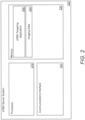
- Memory 230 can be implemented using any combination of volatile and/or nonvolatile memory, including, but not limited to, random access memory, read-only memory, hard disk drives, solid-state drives, flash memory, or any other memory format as appropriate to the requirements of specific applications of embodiments of the invention.
- the memory 230 stores a variety of data, including, but not limited to, an aTBS targeting application 232 and imaging data 234.
- the aTBS targeting application and/or the imaging data are received via the communications interface.
- Processor 210 can be directed by the aTBS targeting application to perform a variety of aTBS processes, including, but not limited to, processing imaging data and generating aTBS targets.
- aTBS computing systems in accordance with embodiments of the invention are conceptually illustrated in FIG. 2 , any of a variety of architectures, including, but limited to, those that direct aTBS devices to perform aTBS, direct brain imaging devices to capture imaging data, and/or utilize different hardware capable of performing similarly to the above can also be utilized.
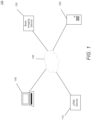
- aTBS computing systems can be implemented on multiple servers within at least one computing system.
- aTBS computing systems can be implemented on various remote "cloud" computing systems as appropriate to the requirements of specific applications of embodiments of the invention.
- Processes for performing aTBS in accordance with embodiments of the invention can include generating personalized aTBS targets to increase the efficiency and efficacy over standard iTBS treatment.
- FIG. 6 a process for generating an aTBS target in accordance with an embodiment of the invention is illustrated.
- resting state data extracted from the resting state imaging data such as, but not limited to, functional connectivities and task based neuronal activations can be mapped to the personalized regions of interest.
- a personalized map of task based functional activations within the ROIs can be utilized to refine or expand a functional connectivity based personalized map of functional subregions.
- Task-based functional imaging data can lead to more refined and/or higher quality analysis of functional connectivities between subregions.
- the relationships between the functional subregions can be determined (650) using a variety of techniques.
- the voxel time course that is most highly correlated with the median of all voxel time courses within a functional subregion can be selected as reflecting the activity of the functional subregion.
- taking a simple average of all time courses for voxels within the subregion can be used, although this tends to be less robust.
- Process 600 further includes parameterizing (660) functional subregions.
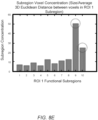
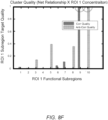
- Subregions can be assigned values for various parameters such as, but not limited to, size of the subregion i.e. the number of voxels or volume of brain, the spatial concentration of voxels i.e. the number of voxels divided by the average Euclidean 3 dimensional spatial distance between all voxels that make up the subregion, the functional relationships between a given subregion and other functional subregions (i.e. voxel-weighted average correlation coefficients), and/or accessibility of the subregion from the surface of the brain such as, but not limited to, the depth of the subregion and/or whether or not the subregion is obscured by another subregion.
- any number of parameters, or parameter weighting schemes can be used as appropriate to the requirements of a given application.
- Functional subregion parameters are used to calculate (670) target quality scores for each the functional subregions.
- the target quality score for each subregion is a function of weighted combinations of subregion parameters.
- Personalized aTBS target are generated (680) based on the target quality scores.
- the highest quality targets are selected as the personalized aTBS target.
- more than one target can be selected.
- aTBS can be applied by implanted neurostimulators.
- aTBS protocols can be adapted to electrical stimulation instead of magnetic stimulation, and stimuli can be applied long-term without the need for external magnetic stimulation.
- external aTBS with an rTMS device can be performed to probe for the correct target choice and therapeutic efficacy, and then neurostimulators can be implanted over the target determined to have the most likely positive results either epidurally or subdurally.
- neurostimulators provide stimulation and record brain activity. By providing both stimulation and recording channels, a closed loop system can be achieved. Based on recorded brain activity, stimulation can be modulated to either increase or decrease the amount of aTBS provided or change stimulation target.
Landscapes
- Health & Medical Sciences (AREA)
- Life Sciences & Earth Sciences (AREA)
- Engineering & Computer Science (AREA)
- General Health & Medical Sciences (AREA)
- Physics & Mathematics (AREA)
- Public Health (AREA)
- Biomedical Technology (AREA)
- Animal Behavior & Ethology (AREA)
- Veterinary Medicine (AREA)
- Nuclear Medicine, Radiotherapy & Molecular Imaging (AREA)
- Radiology & Medical Imaging (AREA)
- Medical Informatics (AREA)
- Biophysics (AREA)
- Pathology (AREA)
- Surgery (AREA)
- Molecular Biology (AREA)
- Heart & Thoracic Surgery (AREA)
- Cardiology (AREA)
- High Energy & Nuclear Physics (AREA)
- Psychiatry (AREA)
- General Physics & Mathematics (AREA)
- Condensed Matter Physics & Semiconductors (AREA)
- Primary Health Care (AREA)
- Epidemiology (AREA)
- Neurology (AREA)
- Developmental Disabilities (AREA)
- Psychology (AREA)
- Social Psychology (AREA)
- Physiology (AREA)
- Child & Adolescent Psychology (AREA)
- Educational Technology (AREA)
- Hospice & Palliative Care (AREA)
- Physical Education & Sports Medicine (AREA)
- Neurosurgery (AREA)
- Pulmonology (AREA)
- Theoretical Computer Science (AREA)
- Signal Processing (AREA)
- Databases & Information Systems (AREA)
- Data Mining & Analysis (AREA)
- Magnetic Resonance Imaging Apparatus (AREA)
Claims (14)
- Système destiné au traitement d'états neurologiques, le système comprenant un processeur (210), une bobine de stimulation magnétique transcrânienne et une application qui est conçue pour ordonner au processeur de stimuler une cible de stimulation cérébrale à l'aide de la bobine de stimulation magnétique transcrânienne conformément à un protocole d'aTBS, ladite application étant conçue pour ordonner au processeur de :obtenir (610) des données d'imagerie cérébrale à partir d'une machine d'imagerie par résonance magnétique capable d'obtenir des données d'image par imagerie par résonance magnétique fonctionnelle, IRMf, du cerveau d'un patient, où les données d'imagerie cérébrale décrivent des activations neuronales dans le cerveau du patient ;cartographier (620) au moins une région d'intérêt pour le cerveau du patient ;localiser des sous-régions fonctionnelles dans ladite au moins une région d'intérêt sur la base des données d'image d'IRMf ;déterminer (650) des relations fonctionnelles entre au moins deux sous-régions fonctionnelles ;générer (660) des paramètres de sous-région pour chaque sous-région fonctionnelle ;générer (670) un score de qualité cible pour chaque sous-région fonctionnelle sur la base des paramètres de sous-région en déterminant des coefficients de corrélation pondérés par taille de voxel pour un ensemble de sous-régions, les coefficients de corrélation pondérés par taille de voxel pour une sous-région donnée étant la somme d'une matrice bidimensionnelle des coefficients de corrélation de Spearman ou de Pearson dérivés d'un algorithme de regroupement hiérarchique décrivant les coefficients de corrélation entre une sous-région de surface de la région d'intérêt et toutes les sous-régions profondes de la région d'intérêt ;sélectionner (680) comme cible d'aiTBS une cible de stimulation cérébrale sur la base de son score de qualité cible et de l'état neurologique du patient ;ordonner à la bobine de stimulation magnétique transcrânienne d'appliquer une stimulation magnétique conformément à un protocole de stimulation thêta-burst accélérée intermittente, aiTBS, sur la cible d'aiTBS dans le cerveau du patient pendant une pluralité de sessions ;séparer chaque session par un intervalle inter-session au cours duquel aucune stimulation magnétique n'est appliquée, ledit intervalle inter-session étant compris entre 25 et 120 minutes ; etprovoquer la délivrance, au cours de chaque session dans la pluralité de sessions, de la stimulation magnétique en générant une pluralité de trains d'impulsions qui comprennent chacun un ensemble d'impulsions, ladite fréquence des impulsions dans chaque ensemble d'impulsions étant comprise entre 20 Hz et 70 Hz et ladite fréquence des ensembles d'impulsions dans chaque train d'impulsions étant comprise entre 3 Hz et 7 Hz, avec des trains d'impulsions toutes les 4 secondes à 10 secondes, chaque train d'impulsions étant séparé par un intervalle inter-train.
- Système selon la revendication 1, ladite bobine de stimulation magnétique transcrânienne se voyant ordonnée d'appliquer la stimulation magnétique conformément au protocole d'aiTBS sur la cible d'aiTBS dans le cerveau du patient pendant une pluralité de sessions sur chacun d'une pluralité de jours consécutifs.
- Système selon la revendication 1 ou la revendication 2, ladite application étant conçue pour ordonner au processeur d'appliquer l'ensemble de trains d'impulsions toutes les 4 à 10 secondes pendant au moins une session de 10 minutes.
- Système selon la revendication 3 ou la revendication 4, ladite pluralité de sessions pour un jour donné comprenant entre 3 et 15 sessions.
- Système selon l'une quelconque des revendications précédentes, ledit intervalle inter-session étant de 50 minutes.
- Système selon la revendication 1, ladite application est conçue pour ordonner au processeur d'appliquer, pour chaque session dans la pluralité de sessions, un ensemble de trains d'impulsions de 2 seconds, où chaque train comprend des impulsions de stimulation magnétique sous la forme de trois impulsions avec une fréquence de 50 Hz appliquées dans des ensembles d'impulsions avec une fréquence de 5 Hz, où l'intervalle inter-train est de 10 secondes, pendant au moins dix sessions de 10 minutes.
- Système selon la revendication 1, ladite application étant conçue pour ordonner au processeur d'appliquer des paramètres d'impulsions d'aiTBS impliquant des ensembles d'impulsions à 3 impulsions et 50 Hz à 5 Hz pour des trains de 2 secondes, avec des trains toutes les 10 secondes pendant des sessions de 10 minutes.
- Programme informatique qui, lorsqu'il est exécuté par un appareil comprenant une bobine de stimulation magnétique transcrânienne, TMS, amène l'appareil à effectuer :l'obtention (610) de données d'imagerie cérébrale à partir d'une machine d'imagerie par résonance magnétique capable d'obtenir des données d'image par imagerie par résonance magnétique fonctionnelle, IRMf, du cerveau d'un patient, où les données d'imagerie cérébrale décrivent des activations neuronales dans le cerveau du patient ;la cartographie (620) d'au moins une région d'intérêt du cerveau du patient ;la localisation de sous-régions fonctionnelles dans ladite au moins une région d'intérêt sur la base des données d'image d'IRMf ;la détermination (650) de relations fonctionnelles entre au moins deux sous-régions fonctionnelles ;la génération (660) de paramètres de sous-région pour chaque sous-région fonctionnelle ;la génération (670) d'un score de qualité cible pour chaque sous-région fonctionnelle sur la base des paramètres de sous-région en déterminant des coefficients de corrélation pondérés par taille de voxel pour un ensemble de sous-régions, les coefficients de corrélation pondérés par taille de voxel pour une sous-région donnée étant la somme d'une matrice bidimensionnelle des coefficients de corrélation de Spearman ou de Pearson dérivés d'un algorithme de regroupement hiérarchique décrivant les coefficients de corrélation entre une sous-région de surface de la région d'intérêt et toutes les sous-régions profondes de la région d'intérêt ;la sélection (680) comme cible d'aiTBS d'une cible de stimulation cérébrale sur la base de son score de qualité cible et de l'état neurologique du patient ;la commande à la bobine de TMS d'appliquer une stimulation magnétique conformément à un protocole accéléré de stimulation thêta-burst intermittente, aiTBS, sur la cible d'aiTBS dans le cerveau du patient pendant une pluralité de sessions ;la séparation de chaque session par un intervalle inter-session au cours duquel aucune stimulation magnétique n'est appliquée, l'intervalle inter-session étant compris entre 25 et 120 minutes ; etla commande à la bobine de TMS de délivrer la stimulation magnétique, au cours de chaque session dans la pluralité de sessions, en générant une pluralité de trains d'impulsions qui comprennent chacun un ensemble d'impulsions, chaque impulsion dans chaque ensemble d'impulsions étant comprise entre 20 Hz et 70 Hz et les impulsions dans chaque ensemble d'impulsions étant appliquées entre 3 Hz et 7 Hz, avec des trains toutes les 4 secondes à 10 secondes.
- Programme informatique selon la revendication 8, ledit programme informatique, lorsqu'il est exécuté par l'appareil comprenant la bobine de TMS, amenant l'appareil à effectuer la commande à la bobine de stimulation magnétique transcrânienne d'appliquer la stimulation magnétique conformément au protocole d'aiTBS sur la cible d'aiTBS dans le cerveau du patient pendant une pluralité de sessions sur chacun d'une pluralité de jours consécutifs.
- Programme informatique selon la revendication 8 ou la revendication 9, ledit programme informatique, lorsqu'il est exécuté, amenant l'appareil à effectuer la commande à la bobine de stimulation magnétique transcrânienne d'appliquer l'ensemble de trains d'impulsions toutes les 4 à 10 secondes pendant au moins une session de 10 minutes.
- Programme informatique selon la revendication 9 ou la revendication 10, ladite pluralité de sessions pendant un jour donné comprenant entre 3 et 15 sessions.
- Programme informatique selon l'une quelconque des revendications 8 à 11, ledit intervalle inter-session étant de 50 minutes.
- Programme informatique selon la revendication 8, ledit programme informatique, lorsqu'il est exécuté, amenant l'appareil à appliquer, pour chaque session dans la pluralité de sessions, un ensemble de trains d'impulsions de 2 secondes, où chaque train comprend des impulsions de stimulation magnétique sous la forme de trois impulsions de 50 Hz appliquées à 5 Hz, où l'intervalle inter-train est de 10 secondes, pendant au moins dix sessions de 10 minutes.
- Programme informatique selon la revendication 8, ledit programme informatique, lorsqu'il est exécuté, amenant l'appareil à appliquer des paramètres d'impulsions d'aiTBS impliquant des impulsions à 3 impulsions et 50 Hz à 5 Hz pour des trains de 2 secondes, avec des trains toutes les 10 secondes pendant des sessions de 10 minutes.
Priority Applications (1)
| Application Number | Priority Date | Filing Date | Title |
|---|---|---|---|
| EP25169210.9A EP4613323A3 (fr) | 2018-01-12 | 2019-01-11 | Système et programme de neuronavigation clinique |
Applications Claiming Priority (2)
| Application Number | Priority Date | Filing Date | Title |
|---|---|---|---|
| US201862617121P | 2018-01-12 | 2018-01-12 | |
| PCT/US2019/013353 WO2019140303A2 (fr) | 2018-01-12 | 2019-01-11 | Systèmes et procédés de neuronavigation clinique |
Related Child Applications (1)
| Application Number | Title | Priority Date | Filing Date |
|---|---|---|---|
| EP25169210.9A Division EP4613323A3 (fr) | 2018-01-12 | 2019-01-11 | Système et programme de neuronavigation clinique |
Publications (3)
| Publication Number | Publication Date |
|---|---|
| EP3737467A2 EP3737467A2 (fr) | 2020-11-18 |
| EP3737467A4 EP3737467A4 (fr) | 2021-09-22 |
| EP3737467B1 true EP3737467B1 (fr) | 2025-04-09 |
Family
ID=67212528
Family Applications (2)
| Application Number | Title | Priority Date | Filing Date |
|---|---|---|---|
| EP25169210.9A Pending EP4613323A3 (fr) | 2018-01-12 | 2019-01-11 | Système et programme de neuronavigation clinique |
| EP19738551.1A Active EP3737467B1 (fr) | 2018-01-12 | 2019-01-11 | Système et programme de neuronavigation clinique |
Family Applications Before (1)
| Application Number | Title | Priority Date | Filing Date |
|---|---|---|---|
| EP25169210.9A Pending EP4613323A3 (fr) | 2018-01-12 | 2019-01-11 | Système et programme de neuronavigation clinique |
Country Status (7)
| Country | Link |
|---|---|
| US (13) | US10595735B2 (fr) |
| EP (2) | EP4613323A3 (fr) |
| JP (3) | JP7377546B2 (fr) |
| AU (2) | AU2019208045B2 (fr) |
| CA (1) | CA3088367A1 (fr) |
| GB (2) | GB2602429B (fr) |
| WO (1) | WO2019140303A2 (fr) |
Families Citing this family (23)
| Publication number | Priority date | Publication date | Assignee | Title |
|---|---|---|---|---|
| US10595735B2 (en) | 2018-01-12 | 2020-03-24 | The Board Of Trustees Of The Leland Stanford Junior University | Systems and methods for personalized clinical applications of accelerated theta-burst stimulation |
| WO2019239367A1 (fr) | 2018-06-14 | 2019-12-19 | Inner Cosmos Llc | Système d'interface utilisateur virtuelle et ses procédés d'utilisation |
| US12290371B2 (en) | 2019-02-07 | 2025-05-06 | Inner Cosmos Inc. | Intracalvarial BCI systems and methods for their making, implantation and use |
| US12172025B2 (en) * | 2019-06-26 | 2024-12-24 | University Of South Carolina | Transcranial magnetic stimulation for the treatment of dysautonomia |
| US20210170180A1 (en) | 2019-12-09 | 2021-06-10 | Washington University | Systems and methods of precision functional mapping-guided personalized neuromodulation |
| WO2021144730A1 (fr) | 2020-01-14 | 2021-07-22 | Inner Cosmos Inc. | Dispositifs, systèmes et procédés de stimulation corticale |
| KR102459296B1 (ko) * | 2020-07-22 | 2022-10-27 | 울산과학기술원 | 운동정보 디코딩을 위한 뇌신경 세포 간의 운동관련 네트워크 특성 추출 방법 및 장치 |
| AU2021362169A1 (en) * | 2020-10-12 | 2023-05-25 | The Board Of Trustees Of The Leland Stanford Junior University | Systems and methods for targeted neuromodulation |
| US20240045011A1 (en) * | 2020-12-09 | 2024-02-08 | Nous Imaging, Inc. | System and method for rapidly reconstructing functional magnetic resonance images |
| KR20230158549A (ko) * | 2021-03-22 | 2023-11-20 | 매그너스 메디컬 인코퍼레이티드 | 신경정신 장애의 장기 치료를 위한 방법 및 시스템 |
| CN113367679B (zh) * | 2021-07-05 | 2023-04-18 | 北京银河方圆科技有限公司 | 靶点确定方法、装置、设备及存储介质 |
| CN113367681B (zh) * | 2021-07-05 | 2022-09-30 | 优脑银河(湖南)科技有限公司 | 靶点确定方法、装置、设备及存储介质 |
| US20230110652A1 (en) * | 2021-10-13 | 2023-04-13 | Omniscient Neurotechnology Pty Limited | Brain data visualization |
| US11382514B1 (en) * | 2021-11-08 | 2022-07-12 | Omniscient Neurotechnology Pty Limited | Relative activation scores for brain parcels |
| CN114255209B (zh) * | 2021-11-22 | 2023-04-07 | 杭州电子科技大学 | 基于磁共振成像和神经网络的脑深部电刺激靶点定位方法 |
| WO2023168437A2 (fr) * | 2022-03-03 | 2023-09-07 | Magnus Medical, Inc. | Méthodes et systèmes d'identification de cibles de traitement |
| FI130646B1 (fi) * | 2022-03-21 | 2024-01-08 | Nexstim Oyj | Pareittaisten terapeuttisten transkraniaalisten magneettistimulaatiopulssien toimitus |
| CN114376558B (zh) | 2022-03-24 | 2022-07-19 | 之江实验室 | 基于磁共振和孪生图神经网络的脑图谱个体化方法及系统 |
| US20230355920A1 (en) * | 2022-05-06 | 2023-11-09 | The Board Of Trustees Of The Leland Stanford Junior University | Systems and Methods for Increasing Hypnotizability |
| EP4554666A1 (fr) * | 2022-07-15 | 2025-05-21 | The Board of Trustees of the Leland Stanford Junior University | Systèmes et procédés de ciblage de neurostimulation à l'aide d'une connectivité spatio-temporelle |
| EP4565321A2 (fr) * | 2022-08-01 | 2025-06-11 | The Board of Trustees of the Leland Stanford Junior University | Systèmes et procédés de neurostimulation par ultrasons focalisée transcrânienne |
| CN116570267B (zh) * | 2023-07-10 | 2023-11-24 | 成都体育学院 | rTMS靶点定位系统 |
| US20250090907A1 (en) * | 2023-09-19 | 2025-03-20 | VeloPro, Inc. | Automatic workout adjustment based on heart rate variability data |
Family Cites Families (32)
| Publication number | Priority date | Publication date | Assignee | Title |
|---|---|---|---|---|
| WO2001039664A1 (fr) | 1999-12-02 | 2001-06-07 | The General Hospital Corporation | Procede et appareil permettant de mesurer des indices d'activite cerebrale |
| US20090105521A1 (en) | 2004-09-13 | 2009-04-23 | Jonathan Bentwich | Systems and methods for assessing and treating medical conditions related to the central nervous system and for enhancing cognitive functions |
| US7894903B2 (en) | 2005-03-24 | 2011-02-22 | Michael Sasha John | Systems and methods for treating disorders of the central nervous system by modulation of brain networks |
| US7606622B2 (en) * | 2006-01-24 | 2009-10-20 | Cardiac Pacemakers, Inc. | Method and device for detecting and treating depression |
| US7747318B2 (en) * | 2006-12-07 | 2010-06-29 | Neuropace, Inc. | Functional ferrule |
| CN101888875A (zh) | 2007-10-04 | 2010-11-17 | 纽若尼克斯有限公司 | 用于治疗与中枢神经系统有关的医学疾病以及用于提高认知功能的系统和方法 |
| US20130281890A1 (en) * | 2009-11-11 | 2013-10-24 | David J. Mishelevich | Neuromodulation devices and methods |
| US20110224571A1 (en) | 2009-11-16 | 2011-09-15 | Alvaro Pascual-Leone | Non-invasive methods for evaluating cortical plasticity impairments |
| US20110245633A1 (en) * | 2010-03-04 | 2011-10-06 | Neumitra LLC | Devices and methods for treating psychological disorders |
| ES2563781T3 (es) | 2011-02-24 | 2016-03-16 | Takasago International Corporation | Método de IRMf para identificar estímulos olfativos del sistema de recompensa dopaminérgico |
| US9649502B2 (en) | 2011-11-14 | 2017-05-16 | Neosync, Inc. | Devices and methods of low frequency magnetic stimulation therapy |
| JP5492247B2 (ja) * | 2012-05-08 | 2014-05-14 | 株式会社Gm3 | 心拍変動指標を用いた精神症状及び精神疾患発病リスク評価のための指標生成装置及びそれを用いた指標生成方法 |
| WO2013172981A1 (fr) | 2012-05-16 | 2013-11-21 | Beth Israel Deaconess Medical Center, Inc. | Identification de sites cibles individuels pour des applications de stimulation magnétique transcrânienne |
| US12453853B2 (en) | 2013-01-21 | 2025-10-28 | Cala Health, Inc. | Multi-modal stimulation for treating tremor |
| US10220211B2 (en) * | 2013-01-22 | 2019-03-05 | Livanova Usa, Inc. | Methods and systems to diagnose depression |
| WO2015079439A1 (fr) | 2013-11-26 | 2015-06-04 | Technion Research And Development Foundation Limited | Modulation neuronale |
| US11412975B2 (en) | 2014-03-28 | 2022-08-16 | The General Hospital Corporation | System and method for measuring functional brain specialization |
| CA2857555A1 (fr) * | 2014-04-01 | 2015-10-01 | William F. Stubbeman | Methode et systeme de stimulation cerebrale therapeutique a l'aide d'impulsions electromagnetiques |
| US9773308B2 (en) | 2014-07-15 | 2017-09-26 | The Brigham And Women's Hospital | Systems and methods for generating biomarkers based on multivariate classification of functional imaging and associated data |
| DK3277178T3 (da) | 2015-03-31 | 2020-04-27 | Cortechs Labs Inc | Kovariat-modulatlas |
| EP4342516A3 (fr) | 2015-06-10 | 2024-07-10 | Cala Health, Inc. | Systèmes et procédés de stimulation du nerf périphérique pour traiter un tremblement avec des unités de traitement et de surveillance détachables |
| US10543367B2 (en) * | 2015-06-18 | 2020-01-28 | Taipei Medical University | Transcranial burst electrostimulation apparatus and its applications |
| AU2017211048B2 (en) | 2016-01-21 | 2022-03-10 | Cala Health, Inc. | Systems, methods and devices for peripheral neuromodulation for treating diseases related to overactive bladder |
| US11164596B2 (en) * | 2016-02-25 | 2021-11-02 | Samsung Electronics Co., Ltd. | Sensor assisted evaluation of health and rehabilitation |
| US20190083805A1 (en) * | 2016-03-28 | 2019-03-21 | The Board Of Trustees Of The Leland Stanford Junior University | Detecting or treating post-traumatic stress syndrome |
| US11324963B2 (en) | 2016-04-28 | 2022-05-10 | The Board Of Trustees Of The Leland Stanford Junior University | Brain stimulation treatment in depression |
| US11704790B2 (en) | 2017-09-26 | 2023-07-18 | Washington University | Supervised classifier for optimizing target for neuromodulation, implant localization, and ablation |
| JP6722845B2 (ja) | 2017-10-03 | 2020-07-15 | 株式会社国際電気通信基礎技術研究所 | 判別装置、うつ症状の判別方法、うつ症状のレベルの判定方法、うつ病患者の層別化方法、うつ症状の治療効果の判定方法及び脳活動訓練装置 |
| US10595735B2 (en) | 2018-01-12 | 2020-03-24 | The Board Of Trustees Of The Leland Stanford Junior University | Systems and methods for personalized clinical applications of accelerated theta-burst stimulation |
| US12383196B2 (en) | 2018-10-15 | 2025-08-12 | The Board Of Trustees Of The Leland Stanford Junior University | Treatment of depression using machine learning |
| EP3963544A4 (fr) | 2019-05-01 | 2023-01-04 | Blackthorn Therapeutics, Inc. | Systèmes et procédés pour traiter des données d'imagerie par résonance magnétique (irm) |
| AU2021362169A1 (en) | 2020-10-12 | 2023-05-25 | The Board Of Trustees Of The Leland Stanford Junior University | Systems and methods for targeted neuromodulation |
-
2018
- 2018-12-10 US US16/215,512 patent/US10595735B2/en active Active
- 2018-12-10 US US16/215,475 patent/US10449384B2/en active Active
- 2018-12-10 US US16/215,519 patent/US11013423B2/en active Active
-
2019
- 2019-01-11 AU AU2019208045A patent/AU2019208045B2/en active Active
- 2019-01-11 WO PCT/US2019/013353 patent/WO2019140303A2/fr not_active Ceased
- 2019-01-11 US US16/246,361 patent/US11534074B2/en active Active
- 2019-01-11 CA CA3088367A patent/CA3088367A1/fr active Pending
- 2019-01-11 GB GB2204290.7A patent/GB2602429B/en active Active
- 2019-01-11 EP EP25169210.9A patent/EP4613323A3/fr active Pending
- 2019-01-11 EP EP19738551.1A patent/EP3737467B1/fr active Active
- 2019-01-11 JP JP2020538604A patent/JP7377546B2/ja active Active
- 2019-01-11 GB GB2012529.0A patent/GB2585282B/en active Active
- 2019-07-19 US US16/517,397 patent/US11213215B2/en active Active
-
2020
- 2020-03-13 US US16/818,897 patent/US11839455B2/en active Active
-
2021
- 2021-05-21 US US17/327,581 patent/US20210378531A1/en active Pending
-
2022
- 2022-01-03 US US17/646,856 patent/US12201410B2/en active Active
- 2022-12-23 US US18/146,297 patent/US20230210388A1/en not_active Abandoned
-
2023
- 2023-10-23 JP JP2023181759A patent/JP7787588B2/ja active Active
- 2023-10-24 US US18/493,749 patent/US20240206749A1/en active Pending
- 2023-10-26 US US18/495,656 patent/US11992298B2/en active Active
-
2024
- 2024-04-23 US US18/643,950 patent/US20240341607A1/en active Pending
- 2024-12-13 US US18/981,404 patent/US20250185929A1/en active Pending
-
2025
- 2025-03-07 AU AU2025201688A patent/AU2025201688A1/en active Pending
- 2025-11-28 JP JP2025208381A patent/JP2026031600A/ja active Pending
Also Published As
Similar Documents
| Publication | Publication Date | Title |
|---|---|---|
| US12201410B2 (en) | Systems and methods for clinical neuronavigation | |
| US20220008727A1 (en) | Brain stimulation system including diagnostic tool | |
| Sankarasubramanian et al. | Transcranial direct current stimulation targeting primary motor versus dorsolateral prefrontal cortices: proof-of-concept study investigating functional connectivity of thalamocortical networks specific to sensory-affective information processing | |
| US20140303424A1 (en) | Methods and systems for diagnosis and treatment of neural diseases and disorders | |
| Riaz et al. | Navigated Transcranial Magnetic Stimulation (nTMS) Based Preoperative Planning for Brain Tumor Treatment | |
| Lee et al. | Invasive brain mapping identifies personalized therapeutic neuromodulation targets for obsessive-compulsive disorder | |
| Van Bogaert et al. | Evoked Resonant Neural Activity Reveals an Electrophysiologic Sweet Spot for Directional Subthalamic Nucleus Deep Brain Stimulation in Parkinson’s Disease | |
| Wildenberg et al. | Cranial Nerve Non-Invasive Neuromodulation (CN-NINM) Induces Long-term Activity Changes within the Brainstem of Balance Patients | |
| Xiao | Experimental and Model-based Approaches to Directional Thalamic Deep Brain Stimulation | |
| Pathak | Neuromodulation for depression: Insights gained from neuroimaging and computational models |
Legal Events
| Date | Code | Title | Description |
|---|---|---|---|
| STAA | Information on the status of an ep patent application or granted ep patent |
Free format text: STATUS: THE INTERNATIONAL PUBLICATION HAS BEEN MADE |
|
| PUAI | Public reference made under article 153(3) epc to a published international application that has entered the european phase |
Free format text: ORIGINAL CODE: 0009012 |
|
| STAA | Information on the status of an ep patent application or granted ep patent |
Free format text: STATUS: REQUEST FOR EXAMINATION WAS MADE |
|
| 17P | Request for examination filed |
Effective date: 20200714 |
|
| AK | Designated contracting states |
Kind code of ref document: A2 Designated state(s): AL AT BE BG CH CY CZ DE DK EE ES FI FR GB GR HR HU IE IS IT LI LT LU LV MC MK MT NL NO PL PT RO RS SE SI SK SM TR |
|
| AX | Request for extension of the european patent |
Extension state: BA ME |
|
| DAV | Request for validation of the european patent (deleted) | ||
| DAX | Request for extension of the european patent (deleted) | ||
| A4 | Supplementary search report drawn up and despatched |
Effective date: 20210825 |
|
| RIC1 | Information provided on ipc code assigned before grant |
Ipc: A61N 2/00 20060101AFI20210819BHEP |
|
| STAA | Information on the status of an ep patent application or granted ep patent |
Free format text: STATUS: EXAMINATION IS IN PROGRESS |
|
| 17Q | First examination report despatched |
Effective date: 20220818 |
|
| GRAP | Despatch of communication of intention to grant a patent |
Free format text: ORIGINAL CODE: EPIDOSNIGR1 |
|
| STAA | Information on the status of an ep patent application or granted ep patent |
Free format text: STATUS: GRANT OF PATENT IS INTENDED |
|
| INTG | Intention to grant announced |
Effective date: 20241029 |
|
| GRAS | Grant fee paid |
Free format text: ORIGINAL CODE: EPIDOSNIGR3 |
|
| GRAA | (expected) grant |
Free format text: ORIGINAL CODE: 0009210 |
|
| STAA | Information on the status of an ep patent application or granted ep patent |
Free format text: STATUS: THE PATENT HAS BEEN GRANTED |
|
| AK | Designated contracting states |
Kind code of ref document: B1 Designated state(s): AL AT BE BG CH CY CZ DE DK EE ES FI FR GB GR HR HU IE IS IT LI LT LU LV MC MK MT NL NO PL PT RO RS SE SI SK SM TR |
|
| REG | Reference to a national code |
Ref country code: GB Ref legal event code: FG4D |
|
| REG | Reference to a national code |
Ref country code: CH Ref legal event code: EP |
|
| REG | Reference to a national code |
Ref country code: DE Ref legal event code: R096 Ref document number: 602019068400 Country of ref document: DE |
|
| REG | Reference to a national code |
Ref country code: IE Ref legal event code: FG4D |
|
| REG | Reference to a national code |
Ref country code: NL Ref legal event code: MP Effective date: 20250409 |
|
| PG25 | Lapsed in a contracting state [announced via postgrant information from national office to epo] |
Ref country code: NL Free format text: LAPSE BECAUSE OF FAILURE TO SUBMIT A TRANSLATION OF THE DESCRIPTION OR TO PAY THE FEE WITHIN THE PRESCRIBED TIME-LIMIT Effective date: 20250409 |
|
| REG | Reference to a national code |
Ref country code: AT Ref legal event code: MK05 Ref document number: 1783033 Country of ref document: AT Kind code of ref document: T Effective date: 20250409 |
|
| PG25 | Lapsed in a contracting state [announced via postgrant information from national office to epo] |
Ref country code: PT Free format text: LAPSE BECAUSE OF FAILURE TO SUBMIT A TRANSLATION OF THE DESCRIPTION OR TO PAY THE FEE WITHIN THE PRESCRIBED TIME-LIMIT Effective date: 20250811 Ref country code: ES Free format text: LAPSE BECAUSE OF FAILURE TO SUBMIT A TRANSLATION OF THE DESCRIPTION OR TO PAY THE FEE WITHIN THE PRESCRIBED TIME-LIMIT Effective date: 20250409 Ref country code: FI Free format text: LAPSE BECAUSE OF FAILURE TO SUBMIT A TRANSLATION OF THE DESCRIPTION OR TO PAY THE FEE WITHIN THE PRESCRIBED TIME-LIMIT Effective date: 20250409 |
|
| REG | Reference to a national code |
Ref country code: LT Ref legal event code: MG9D |
|
| PG25 | Lapsed in a contracting state [announced via postgrant information from national office to epo] |
Ref country code: NO Free format text: LAPSE BECAUSE OF FAILURE TO SUBMIT A TRANSLATION OF THE DESCRIPTION OR TO PAY THE FEE WITHIN THE PRESCRIBED TIME-LIMIT Effective date: 20250709 Ref country code: GR Free format text: LAPSE BECAUSE OF FAILURE TO SUBMIT A TRANSLATION OF THE DESCRIPTION OR TO PAY THE FEE WITHIN THE PRESCRIBED TIME-LIMIT Effective date: 20250710 |
|
| PG25 | Lapsed in a contracting state [announced via postgrant information from national office to epo] |
Ref country code: PL Free format text: LAPSE BECAUSE OF FAILURE TO SUBMIT A TRANSLATION OF THE DESCRIPTION OR TO PAY THE FEE WITHIN THE PRESCRIBED TIME-LIMIT Effective date: 20250409 |
|
| PG25 | Lapsed in a contracting state [announced via postgrant information from national office to epo] |
Ref country code: BG Free format text: LAPSE BECAUSE OF FAILURE TO SUBMIT A TRANSLATION OF THE DESCRIPTION OR TO PAY THE FEE WITHIN THE PRESCRIBED TIME-LIMIT Effective date: 20250409 |
|
| PG25 | Lapsed in a contracting state [announced via postgrant information from national office to epo] |
Ref country code: HR Free format text: LAPSE BECAUSE OF FAILURE TO SUBMIT A TRANSLATION OF THE DESCRIPTION OR TO PAY THE FEE WITHIN THE PRESCRIBED TIME-LIMIT Effective date: 20250409 |
|
| PG25 | Lapsed in a contracting state [announced via postgrant information from national office to epo] |
Ref country code: AT Free format text: LAPSE BECAUSE OF FAILURE TO SUBMIT A TRANSLATION OF THE DESCRIPTION OR TO PAY THE FEE WITHIN THE PRESCRIBED TIME-LIMIT Effective date: 20250409 |
|
| PG25 | Lapsed in a contracting state [announced via postgrant information from national office to epo] |
Ref country code: RS Free format text: LAPSE BECAUSE OF FAILURE TO SUBMIT A TRANSLATION OF THE DESCRIPTION OR TO PAY THE FEE WITHIN THE PRESCRIBED TIME-LIMIT Effective date: 20250709 |
|
| PG25 | Lapsed in a contracting state [announced via postgrant information from national office to epo] |
Ref country code: IS Free format text: LAPSE BECAUSE OF FAILURE TO SUBMIT A TRANSLATION OF THE DESCRIPTION OR TO PAY THE FEE WITHIN THE PRESCRIBED TIME-LIMIT Effective date: 20250809 |
|
| PG25 | Lapsed in a contracting state [announced via postgrant information from national office to epo] |
Ref country code: LV Free format text: LAPSE BECAUSE OF FAILURE TO SUBMIT A TRANSLATION OF THE DESCRIPTION OR TO PAY THE FEE WITHIN THE PRESCRIBED TIME-LIMIT Effective date: 20250409 |
|
| PGFP | Annual fee paid to national office [announced via postgrant information from national office to epo] |
Ref country code: GB Payment date: 20251204 Year of fee payment: 8 |
|
| REG | Reference to a national code |
Ref country code: DE Ref legal event code: R097 Ref document number: 602019068400 Country of ref document: DE |
|
| PG25 | Lapsed in a contracting state [announced via postgrant information from national office to epo] |
Ref country code: DK Free format text: LAPSE BECAUSE OF FAILURE TO SUBMIT A TRANSLATION OF THE DESCRIPTION OR TO PAY THE FEE WITHIN THE PRESCRIBED TIME-LIMIT Effective date: 20250409 Ref country code: SM Free format text: LAPSE BECAUSE OF FAILURE TO SUBMIT A TRANSLATION OF THE DESCRIPTION OR TO PAY THE FEE WITHIN THE PRESCRIBED TIME-LIMIT Effective date: 20250409 |
|
| PGFP | Annual fee paid to national office [announced via postgrant information from national office to epo] |
Ref country code: FR Payment date: 20251208 Year of fee payment: 8 |
|
| PG25 | Lapsed in a contracting state [announced via postgrant information from national office to epo] |
Ref country code: CZ Free format text: LAPSE BECAUSE OF FAILURE TO SUBMIT A TRANSLATION OF THE DESCRIPTION OR TO PAY THE FEE WITHIN THE PRESCRIBED TIME-LIMIT Effective date: 20250409 |
|
| PG25 | Lapsed in a contracting state [announced via postgrant information from national office to epo] |
Ref country code: EE Free format text: LAPSE BECAUSE OF FAILURE TO SUBMIT A TRANSLATION OF THE DESCRIPTION OR TO PAY THE FEE WITHIN THE PRESCRIBED TIME-LIMIT Effective date: 20250409 |
|
| PG25 | Lapsed in a contracting state [announced via postgrant information from national office to epo] |
Ref country code: SK Free format text: LAPSE BECAUSE OF FAILURE TO SUBMIT A TRANSLATION OF THE DESCRIPTION OR TO PAY THE FEE WITHIN THE PRESCRIBED TIME-LIMIT Effective date: 20250409 Ref country code: RO Free format text: LAPSE BECAUSE OF FAILURE TO SUBMIT A TRANSLATION OF THE DESCRIPTION OR TO PAY THE FEE WITHIN THE PRESCRIBED TIME-LIMIT Effective date: 20250409 |
|
| PG25 | Lapsed in a contracting state [announced via postgrant information from national office to epo] |
Ref country code: IT Free format text: LAPSE BECAUSE OF FAILURE TO SUBMIT A TRANSLATION OF THE DESCRIPTION OR TO PAY THE FEE WITHIN THE PRESCRIBED TIME-LIMIT Effective date: 20250409 |
|
| PLBE | No opposition filed within time limit |
Free format text: ORIGINAL CODE: 0009261 |
|
| STAA | Information on the status of an ep patent application or granted ep patent |
Free format text: STATUS: NO OPPOSITION FILED WITHIN TIME LIMIT |
|
| REG | Reference to a national code |
Ref country code: CH Ref legal event code: L10 Free format text: ST27 STATUS EVENT CODE: U-0-0-L10-L00 (AS PROVIDED BY THE NATIONAL OFFICE) Effective date: 20260218 |
|
| 26N | No opposition filed |
Effective date: 20260112 |
|
| PGFP | Annual fee paid to national office [announced via postgrant information from national office to epo] |
Ref country code: DE Payment date: 20251210 Year of fee payment: 8 |