EP3738064B1 - Système et procédé de mise en uvre d'un échange multimédia sécurisé sur un ordinateur monocarte - Google Patents
Système et procédé de mise en uvre d'un échange multimédia sécurisé sur un ordinateur monocarte Download PDFInfo
- Publication number
- EP3738064B1 EP3738064B1 EP19738993.5A EP19738993A EP3738064B1 EP 3738064 B1 EP3738064 B1 EP 3738064B1 EP 19738993 A EP19738993 A EP 19738993A EP 3738064 B1 EP3738064 B1 EP 3738064B1
- Authority
- EP
- European Patent Office
- Prior art keywords
- removable media
- smx
- media device
- check
- storage device
- Prior art date
- Legal status (The legal status is an assumption and is not a legal conclusion. Google has not performed a legal analysis and makes no representation as to the accuracy of the status listed.)
- Active
Links
Images



Classifications
-
- G—PHYSICS
- G06—COMPUTING OR CALCULATING; COUNTING
- G06F—ELECTRIC DIGITAL DATA PROCESSING
- G06F21/00—Security arrangements for protecting computers, components thereof, programs or data against unauthorised activity
- G06F21/50—Monitoring users, programs or devices to maintain the integrity of platforms, e.g. of processors, firmware or operating systems
- G06F21/55—Detecting local intrusion or implementing counter-measures
- G06F21/56—Computer malware detection or handling, e.g. anti-virus arrangements
-
- G—PHYSICS
- G06—COMPUTING OR CALCULATING; COUNTING
- G06F—ELECTRIC DIGITAL DATA PROCESSING
- G06F21/00—Security arrangements for protecting computers, components thereof, programs or data against unauthorised activity
- G06F21/70—Protecting specific internal or peripheral components, in which the protection of a component leads to protection of the entire computer
- G06F21/78—Protecting specific internal or peripheral components, in which the protection of a component leads to protection of the entire computer to assure secure storage of data
-
- G—PHYSICS
- G06—COMPUTING OR CALCULATING; COUNTING
- G06F—ELECTRIC DIGITAL DATA PROCESSING
- G06F11/00—Error detection; Error correction; Monitoring
- G06F11/07—Responding to the occurrence of a fault, e.g. fault tolerance
- G06F11/14—Error detection or correction of the data by redundancy in operations
- G06F11/1402—Saving, restoring, recovering or retrying
-
- G—PHYSICS
- G06—COMPUTING OR CALCULATING; COUNTING
- G06F—ELECTRIC DIGITAL DATA PROCESSING
- G06F16/00—Information retrieval; Database structures therefor; File system structures therefor
- G06F16/10—File systems; File servers
- G06F16/17—Details of further file system functions
-
- G—PHYSICS
- G06—COMPUTING OR CALCULATING; COUNTING
- G06F—ELECTRIC DIGITAL DATA PROCESSING
- G06F21/00—Security arrangements for protecting computers, components thereof, programs or data against unauthorised activity
- G06F21/50—Monitoring users, programs or devices to maintain the integrity of platforms, e.g. of processors, firmware or operating systems
- G06F21/55—Detecting local intrusion or implementing counter-measures
- G06F21/56—Computer malware detection or handling, e.g. anti-virus arrangements
- G06F21/562—Static detection
- G06F21/564—Static detection by virus signature recognition
-
- G—PHYSICS
- G06—COMPUTING OR CALCULATING; COUNTING
- G06F—ELECTRIC DIGITAL DATA PROCESSING
- G06F21/00—Security arrangements for protecting computers, components thereof, programs or data against unauthorised activity
- G06F21/50—Monitoring users, programs or devices to maintain the integrity of platforms, e.g. of processors, firmware or operating systems
- G06F21/57—Certifying or maintaining trusted computer platforms, e.g. secure boots or power-downs, version controls, system software checks, secure updates or assessing vulnerabilities
- G06F21/577—Assessing vulnerabilities and evaluating computer system security
Definitions
- This disclosure relates generally to computing and network security. More specifically, this disclosure relates to a system and method for implementing Secure Media Exchange (SMX) on a single board computer.
- SMX Secure Media Exchange
- US 2017/351877 relates to a method including detecting a storage device and determining whether the storage device has been checked-in for use with at least a protected node. The method also includes granting access to the storage device in response to determining that the storage device has been checked-in for use with at least the protected node.
- the present invention relates to a Secure Media Exchange (SMX) device for checking-in a removable media device, a method comprising detecting, by a processing device, a removable media device and a non-transitory computer readable medium according to the appended claims.
- SMX Secure Media Exchange
- This disclosure provides a system and method for implementing Secure Media Exchange (SMX) on a single board computer, such as a RASPBERRY PI.
- an apparatus in a first embodiment, includes a single board computer comprising a processing device.
- the apparatus also includes a touch screen display coupled to the single board computer.
- the apparatus further includes at least one interface configured to be coupled to a storage device.
- the processing device is configured to detect the storage device, perform a check-in process for the storage device, and generate a result of the check-in process for display on the touch screen display.
- the processing device is configured to scan the storage device to identify any malware contained on the storage device, digitally sign one or more clean files on the storage device, and modify a file system of the storage device.
- a method in a second embodiment, includes detecting, by a processing device, a storage device communicatively coupled to a single board computer, the single board computer comprising the processing device. The method also includes performing, by the processing device, a check-in process for the storage device. The check-in process includes scanning the storage device to identify any malware contained on the storage device, digitally signing one or more clean files on the storage device, and modifying a file system of the storage device. The method further includes generating, by the processing device, a result of the check-in process for display on a touch screen display coupled to the single board computer.
- a non-transitory computer readable medium containing instructions that, when executed by a processing device, cause the processing device to detect a storage device communicatively coupled to a single board computer, the single board computer comprising the processing device.
- the instructions also cause the processing device to perform a check-in process for the storage device.
- the check-in process includes scanning the storage device to identify any malware contained on the storage device, digitally signing one or more clean files on the storage device, and modifying a file system of the storage device.
- the instructions further cause the processing device to generate a result of the check-in process for display on a touch screen display coupled to the single board computer.
- FIGURES 1 through 9 discussed below, and the various embodiments used to describe the principles of the present invention in this patent document are by way of illustration only and should not be construed in any way to limit the scope of the invention. Those skilled in the art will understand that the principles of the invention may be implemented in any type of suitably arranged device or system.
- removable media such as portable Universal Serial Bus (USB) drives represent one of the primary inbound vectors through which viruses and other malware can enter secure networks.
- This disclosure provides techniques to control how files are moved into and out of a secure network using removable media.
- this disclosure describes how the use of a storage device (such as a USB drive or other removable media) is supported using “check-in” and “check-out” processes.
- the storage device is “checked-in,” the storage device can be used with protected nodes of a secure network but not with unprotected nodes.
- the storage device is “checked-out,” the storage device can be used with unprotected nodes but not with protected nodes of a secure network. By default, the storage device is considered checked-out until it undergoes the check-in procedure.
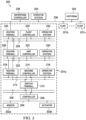
- FIGURE 1 illustrates an example system 100 supporting secure data transfer using removable media according to this disclosure.
- the system 100 includes one or more protected system nodes 102a-102n.
- Each protected system node 102a-102n denotes a computing or networking device that forms a part of a protected system.
- Each protected system node 102a-102n could perform any desired function or functions within a protected system.
- a protected system node 102a-102n could be used to perform functions related to industrial process control, such as functions for controlling manufacturing plants or other manufacturing facilities.
- a protected system node 102a-102n could also be used to store confidential data, such as in hospitals or other healthcare facilities or in classified network areas.
- Each protected system node 102a-102n includes any suitable computing or networking device that supports any desired function(s), such as a personal computer, laptop computer, or server computer running any suitable operating system.
- Each protected system node 102a-102n in this example includes a SECURE MEDIA EXCHANGE or "SMX" agent 103.
- Each SMX agent 103 controls or manages the use of removable media with an associated protected system node 102a-102n.
- each SMX agent 103 can determine whether a storage device has been "checked-in” by examining contents of the storage device or the storage device itself. If the storage device has been checked-in, the SMX agent 103 allows the associated protected system node 102a-102n to access and use the storage device. If the storage device has not been checked-in, the SMX agent 103 blocks the use of the storage device by the associated protected system node 102a-102n.
- Various operations of the SMX agents 103 are also described below.
- Each SMX agent 103 could be implemented in any suitable manner, such as by using one or more software or firmware routines executed by the associated protected system node 102a-102n.
- the system 100 also includes one or more SMX kiosks 104.
- Each SMX kiosk 104 is used to support the "check-in” and "check-out" processes for storage devices. For example, when a user plugs a USB drive or other storage device into a suitable interface of an SMX kiosk 104, the user could initiate a check-in procedure.
- Example functions of the check-in procedure could include the SMX kiosk 104 scanning any files on the storage device and determining whether viruses or other malware is present on the storage device.
- Example functions of the check-in procedure could also include the SMX kiosk 104 quarantining any detected malware, storing various data (such as digital signatures or audit logs) on the storage device, possibly encrypting clean files on the storage device, and locking a file system of the storage device.
- the storage device is considered checked-in and therefore "trusted,” so the storage device could be used with one, some, or all of the protected system nodes 102a-102n but not with any untrusted nodes.
- Example functions of the check-out procedure could include the SMX kiosk 104 scanning any new files on the storage device and determining whether viruses or other malware is present on the storage device.
- Example functions of the check-out procedure could also include the SMX kiosk 104 quarantining any detected malware, removing various data (such as digital signatures or audit logs) from the storage device, decrypting various encrypted elements on the storage device, and unlocking the file system of the storage device.
- the storage device is considered checked-out and therefore "untrusted," so the storage device could be used with untrusted nodes but not with the protected system nodes 102a-102n.
- Each SMX kiosk 104 includes any suitable device or system for checking in and checking out removable media.
- Each SMX kiosk 104 could, for example, denote a desktop computer, laptop computer, server computer, or tablet computer having at least one interface for coupling to removable media.
- the SMX kiosk 104 could be implemented on a single board computer such as a RASPBERRY PI device.
- a single board computer such as a RASPBERRY PI can be acquired and configured for $100-$200 per device.
- a RASPBERRY PI is highly portable and can be used as an Internet of Things (IOT) device that connects to an IOT platform.
- IOT Internet of Things
- Each SMX kiosk 104 in this example includes an SMX application 105.
- Each SMX application 105 can perform the check-in and check-out procedures described above and in more detail below. Various operations of the SMX application 105 are also described below.
- Each SMX application 105 could be implemented in any suitable manner, such as by using one or more software or firmware routines executed by the associated SMX kiosk 104.
- the SMX agents 103 and the SMX applications 105 provide an innovative approach for helping to ensure that information stored on removable media is authorized, safe, and unaltered.
- the SMX agents 103 prevent the normal operation of USB interfaces or other peripheral device interfaces of the protected system nodes 102a-102n that might be used to connect to a storage device unless the storage device is first authorized by one of the SMX applications 105. Once authorized, the storage device is made accessible to the protected system nodes 102a-102n through the SMX agents 103.
- the SMX applications 105 can authorize individual files in order to allow safe files or file types to be brought into a protected system while blocking malicious or unwanted files or file types. This can again be enforced by the SMX agents 103, which block unauthorized files or file types at the protected system nodes 102a-102n.
- the system 100 uses the "check-in” and "check-out” mechanisms to authorize removable media or specific files or file types on the removable media.
- An end user wishing to use a storage device in a protected system first allows an SMX application 105 to scan and authorize the storage device, at which point the storage device is locked to prevent other uses of the storage device. Once locked, the storage device is only useable on protected system nodes 102a-102n having appropriately configured and authorized SMX agents 103. When the user is finished with his or her task, the storage device can be checked-out using an SMX application 105, restoring the storage device to its normal functionality and preventing use of the storage device with the protected system nodes 102a-102n.
- the check-in and check-out mechanisms of the SMX applications 105 and the operations of the SMX agents 103 are able to maintain an audit trail of file transfers to and from a storage device.
- the check-in and check-out mechanisms of the SMX applications 105 and the operations of the SMX agents 103 are also able to pass configuration parameters, event logs, or other data between protected system nodes 102a-102n and an unprotected network without violating the tenants of a "zone and conduit" model of cyber-security, meaning there is no direct network connection between the protected and unprotected networks.
- One example of configuration parameters that might be passed to the SMX agents 103 on the protected system nodes 102a-102n includes whitelists and blacklists of files, file types, or media types that the SMX agents 103 will or will not grant access to, bypassing normal protective behaviors.
- the SMX applications 105 can use a variety of malware detection methods or work in conjunction with a variety of malware detection software packages. Also note that the SMX applications 105 could receive administrator input to control how the SMX applications 105 decide which files, file types, or media types are authorized for use within a protected system. In general, any suitable techniques could be used for identifying files, file types, or media types to which the SMX agents 103 allow access.
- multiple networks 106a-106b are present in the system 100.
- the network 106a supports communications between the protected system nodes 102a-102n, while the network 106b supports communications to and from the SMX kiosks 104.
- the use of different networks 106a-106b here allows the SMX kiosks 104 to reside outside of a protected system (formed by at least the protected system nodes 102a-102n and the network 106a). However, the protected system nodes 102a-102n and the SMX kiosks 104 could alternatively communicate over the same network(s).
- Each network 106a-106b includes any suitable network or combination of networks.
- the system 100 also optionally includes at least one security manager 108 and at least one database 110 used by or otherwise associated with the security manager(s) 108.
- Each security manager 108 denotes a system supporting the analysis of cyber-security data from information sources such as the SMX agents 103 or the SMX applications 105.
- a security manager 108 could analyze threat intelligence data and audit logs generated and supported by the SMX agents 103 or other sources connected to the network 106a.
- each security manager 108 could be connected to the network 106a or to the network 106b but not both, since the network 106a may need to remain isolated from the network 106b.
- the data from the SMX agents 103 could be obtained directly from the SMX agents 103 or indirectly, such as via storage devices that physically transport data from the SMX applications 105 or other components coupled to the network 106b into the network 106a.
- the ability to transport data to the security manager 108 indirectly may allow a wide range of data to be securely provided into a protected network.
- the security manager 108 analyzes the collected data (possibly including data from an unprotected network that might otherwise be unobtainable) to generate indicators identifying various cyber-security threats in the system 100.
- the collected threat intelligence data, audit logs, or other information could be stored in the database 110.
- Each security manager 108 includes any suitable structure used for analyzing cyber security-related data, such as threat data, vulnerability data, network statistics, diagnostics, maintenance information, and performance data. As a particular example, each security manager 108 could denote a HONEYWELL RISK MANAGER.
- Each database 110 includes any suitable structure for storing and retrieving data.
- the system 100 further optionally includes at least one threat analysis server 112 and at least one database 114 used by or otherwise associated with the threat analysis server(s) 112.
- Each threat analysis server 112 denotes a system supporting the analysis of data to identify threats associated with the system 100.
- a threat analysis server 112 could denote a cloud-based or other computing platform that supports sandboxing, code analysis, reputation analysis, and behavioral analysis in order to identify new forms of malware.
- an SMX application 105 is unable to determine whether code on a storage device includes malware, the SMX application 105 could provide the code to the threat analysis server 112 for evaluation.
- the threat analysis server 112 can update the SMX applications 105 with new threat information.
- the threat analysis server 112 could also obtain information identifying new cyber-security threats (such as new malware signatures) from other sources and provide the threat information to the SMX applications 105.
- the threat analysis server 112 could further obtain information defining cyber-security threats identified by some of the SMX applications 105 and provide that information to others of the SMX applications 105.
- the overall system can "learn" about new threats over time and adapt accordingly.
- the SMX applications 105 are updated over time to accumulate intelligence regarding both known and unknown (zero-day) attacks.
- the database 114 is used to store various information about cyber-security threats or other aspects of the system 100.
- the database 114 could be used to store information about known cyber-security attacks, industries and systems currently targeted by cyber-security attacks, and indicators that a device or system has been compromised.
- the database 114 could also be used to store information about threat patterns and advanced threat campaigns.
- the database 114 could further be used to store audit logs or other information collected from the SMX kiosks 104.
- Each database 114 includes any suitable structure for storing and retrieving data.
- threat analysis server 112 and database 114 are shown here as forming part of the system, these components could reside outside of and be used in conjunction with the system 100. This may allow operations of the threat analysis server 112 to be provided as a service to a number of users in the same organization or in multiple organizations. As a particular example, the threat analysis server 112 could be used to generate detailed threat reports as a service to the operator of the system 100 and to operators of other protected systems.
- the SMX agents 103, the SMX kiosks 104, and the SMX applications 105 could be used in any suitable system where at least one protected system node 102a-102n exists. As noted above, these can include industrial control systems, manufacturing plants or other facilities, hospitals or other healthcare facilities, and classified network areas.
- FIGURE 1 illustrates one example of a system 100 supporting secure data transfer using removable media
- the system 100 could include any number of protected system nodes, SMX kiosks, networks, security managers, threat analysis servers, databases, and other components.
- FIGURE 2 illustrates an example industrial process control and automation system 200 in which removable media could be used according to this disclosure.
- the control and automation system 200 denotes one example type of system where the SMX agents 103, the SMX kiosks 104, and the SMX applications 105 described above could be implemented.
- the system 200 includes various components that facilitate production or processing of at least one product or other material.
- the system 200 is used here to facilitate control over components in one or multiple plants 201a-201n.
- Each plant 201a-201n represents one or more processing facilities (or one or more portions thereof), such as one or more manufacturing facilities for producing at least one product or other material.
- each plant 201a-201n may implement one or more processes and can individually or collectively be referred to as a process system.
- a process system generally represents any system or portion thereof configured to process one or more products or other materials in some manner.
- Level 0 may include one or more sensors 202a and one or more actuators 202b.
- the sensors 202a and actuators 202b represent components in a process system that may perform any of a wide variety of functions.
- the sensors 202a could measure a wide variety of characteristics in the process system, such as temperature, pressure, or flow rate.
- the actuators 202b could alter a wide variety of characteristics in the process system.
- the sensors 202a and actuators 202b could represent any other or additional components in any suitable process system.
- Each of the sensors 202a includes any suitable structure for measuring one or more characteristics in a process system.
- Each of the actuators 202b includes any suitable structure for operating on or affecting one or more conditions in a process system.
- One or more networks 204 are coupled to the sensors 202a and actuators 202b.
- the network 204 facilitates interaction with the sensors 202a and actuators 202b.
- the network 204 could transport measurement data from the sensors 202a and provide control signals to the actuators 202b.
- the network 204 could represent any suitable network or combination of networks.
- the network 204 could represent an Ethernet network, an electrical signal network (such as a HART or FOUNDATION FIELDBUS network), a pneumatic control signal network, or any other or additional type(s) of network(s).
- Level 1 includes one or more controllers 206, which are coupled to the network 204.
- each controller 206 may use the measurements from one or more sensors 202a to control the operation of one or more actuators 202b.
- Each controller 206 includes any suitable structure for controlling one or more aspects of a process system. As a particular example, each controller 206 could represent a computing device running a real-time operating system.
- Redundant networks 208 are coupled to the controllers 206.
- the networks 208 facilitate interaction with the controllers 206, such as by transporting data to and from the controllers 206.
- the networks 208 could represent any suitable redundant networks.
- the networks 208 could represent a pair of Ethernet networks or a redundant pair of Ethernet networks, such as a FAULT TOLERANT ETHERNET (FTE) network from HONEYWELL INTERNATIONAL INC.
- FTE FAULT TOLERANT ETHERNET
- At least one switch/firewall 210 couples the networks 208 to two networks 212.
- the switch/firewall 210 may transport traffic from one network to another network.
- the switch/firewall 210 may also block traffic on one network from reaching another network.
- the switch/firewall 210 includes any suitable structure for providing communication between networks, such as a HONEYWELL CONTROL FIREWALL (CF9) device.
- the networks 212 could represent any suitable networks, such as a pair of Ethernet networks or an FTE network.
- Level 2 may include one or more machine-level controllers 214 coupled to the networks 212.
- the machine-level controllers 214 perform various functions to support the operation and control of the controllers 206, sensors 202a, and actuators 202b, which could be associated with a particular piece of industrial equipment (such as a boiler or other machine).
- the machine-level controllers 214 could log information collected or generated by the controllers 206, such as measurement data from the sensors 202a or control signals for the actuators 202b.
- the machine-level controllers 214 could also execute applications that control the operation of the controllers 206, thereby controlling the operation of the actuators 202b.
- the machine-level controllers 214 could provide secure access to the controllers 206.
- Each of the machine-level controllers 214 includes any suitable structure for providing access to, control of, or operations related to a machine or other individual piece of equipment.
- Each of the machine-level controllers 214 could, for example, represent a server computing device running a MICROSOFT WINDOWS operating system.
- different machine-level controllers 214 could be used to control different pieces of equipment in a process system (where each piece of equipment is associated with one or more controllers 206, sensors 202a, and actuators 202b).
- One or more operator stations 216 are coupled to the networks 212.
- the operator stations 216 represent computing or communication devices providing user access to the machine-level controllers 214, which could then provide user access to the controllers 206 (and possibly the sensors 202a and actuators 202b).
- the operator stations 216 could allow users to review the operational history of the sensors 202a and actuators 202b using information collected by the controllers 206 and/or the machine-level controllers 214.
- the operator stations 216 could also allow the users to adjust the operation of the sensors 202a, actuators 202b, controllers 206, or machine-level controllers 214.
- the operator stations 216 could receive and display warnings, alerts, or other messages or displays generated by the controllers 206 or the machine-level controllers 214.
- Each of the operator stations 216 includes any suitable structure for supporting user access and control of one or more components in the system 200.
- Each of the operator stations 216 could, for example, represent a computing device running a MICROSOFT WINDOWS operating system.
- At least one router/firewall 218 couples the networks 212 to two networks 220.
- the router/firewall 218 includes any suitable structure for providing communication between networks, such as a secure router or combination router/firewall.
- the networks 220 could represent any suitable networks, such as a pair of Ethernet networks or an FTE network.
- Level 3 may include one or more unit-level controllers 222 coupled to the networks 220.
- Each unit-level controller 222 is typically associated with a unit in a process system, which represents a collection of different machines operating together to implement at least part of a process.
- the unit-level controllers 222 perform various functions to support the operation and control of components in the lower levels.
- the unit-level controllers 222 could log information collected or generated by the components in the lower levels, execute applications that control the components in the lower levels, and provide secure access to the components in the lower levels.
- Each of the unit-level controllers 222 includes any suitable structure for providing access to, control of, or operations related to one or more machines or other pieces of equipment in a process unit.
- Each of the unit-level controllers 222 could, for example, represent a server computing device running a MICROSOFT WINDOWS operating system. Although not shown, different unit-level controllers 222 could be used to control different units in a process system (where each unit is associated with one or more machine-level controllers 214, controllers 206, sensors 202a, and actuators 202b).
- Access to the unit-level controllers 222 may be provided by one or more operator stations 224.
- Each of the operator stations 224 includes any suitable structure for supporting user access and control of one or more components in the system 200.
- Each of the operator stations 224 could, for example, represent a computing device running a MICROSOFT WINDOWS operating system.
- At least one router/firewall 226 couples the networks 220 to two networks 228.
- the router/firewall 226 includes any suitable structure for providing communication between networks, such as a secure router or combination router/firewall.
- the networks 228 could represent any suitable networks, such as a pair of Ethernet networks or an FTE network.
- Level 4" may include one or more plant-level controllers 230 coupled to the networks 228.
- Each plant-level controller 230 is typically associated with one of the plants 201a-201n, which may include one or more process units that implement the same, similar, or different processes.
- the plant-level controllers 230 perform various functions to support the operation and control of components in the lower levels.
- the plant-level controller 230 could execute one or more manufacturing execution system (MES) applications, scheduling applications, or other or additional plant or process control applications.
- MES manufacturing execution system
- Each of the plant-level controllers 230 includes any suitable structure for providing access to, control of, or operations related to one or more process units in a process plant.
- Each of the plant-level controllers 230 could, for example, represent a server computing device running a MICROSOFT WINDOWS operating system.
- Access to the plant-level controllers 230 may be provided by one or more operator stations 232.
- Each of the operator stations 232 includes any suitable structure for supporting user access and control of one or more components in the system 200.
- Each of the operator stations 232 could, for example, represent a computing device running a MICROSOFT WINDOWS operating system.
- At least one router/firewall 234 couples the networks 228 to one or more networks 236.
- the router/firewall 234 includes any suitable structure for providing communication between networks, such as a secure router or combination router/firewall.
- the network 236 could represent any suitable network, such as an enterprise-wide Ethernet or other network or all or a portion of a larger network (such as the Internet).
- Level 5" may include one or more enterprise-level controllers 238 coupled to the network 236.
- Each enterprise-level controller 238 is typically able to perform planning operations for multiple plants 201a-201n and to control various aspects of the plants 201a-201n.
- the enterprise-level controllers 238 can also perform various functions to support the operation and control of components in the plants 201a-201n.
- the enterprise-level controller 238 could execute one or more order processing applications, enterprise resource planning (ERP) applications, advanced planning and scheduling (APS) applications, or any other or additional enterprise control applications.
- ERP enterprise resource planning
- APS advanced planning and scheduling
- Each of the enterprise-level controllers 238 includes any suitable structure for providing access to, control of, or operations related to the control of one or more plants.
- Each of the enterprise-level controllers 238 could, for example, represent a server computing device running a MICROSOFT WINDOWS operating system.
- the term "enterprise” refers to an organization having one or more plants or other processing facilities to be managed. Note that if a single plant 201a is to be managed, the functionality of the enterprise-level controller 238 could be incorporated into the plant-level controller 230.
- Access to the enterprise-level controllers 238 may be provided by one or more operator stations 240.
- Each of the operator stations 240 includes any suitable structure for supporting user access and control of one or more components in the system 200.
- Each of the operator stations 240 could, for example, represent a computing device running a MICROSOFT WINDOWS operating system.
- a historian 242 is also coupled to the network 236 in this example.
- the historian 242 could represent a component that stores various information about the system 200.
- the historian 242 could, for example, store information used during production scheduling and optimization.
- the historian 242 represents any suitable structure for storing and facilitating retrieval of information. Although shown as a single centralized component coupled to the network 236, the historian 242 could be located elsewhere in the system 200, or multiple historians could be distributed in different locations in the system 200.
- various components in or below “Level 3" in the system 200 could denote protected system nodes that execute the SMX agents 103 described above.
- one or more SMX kiosks 104 and SMX applications 105 could be implemented in the system 200, such as at "Level 4" or higher in the system 200.
- the use of removable media with those components could be restricted as described above.
- industrial control system or "ICS" attacks initiated through the use of removable media could be significantly reduced.
- various components in the system 200 could denote ICS cyber-security-specific monitoring and analytics systems, such as HONEYWELL RISK MANAGER, which might interact with SMX agents 103 to detect potential risk indicators leading to a cyber-security threat.
- ICS cyber-security-specific monitoring and analytics systems such as HONEYWELL RISK MANAGER
- FIGURE 2 illustrates one example of an industrial process control and automation system 200 in which removable media could be used
- various changes may be made to FIGURE 2 .
- industrial control and automation systems come in a wide variety of configurations.
- the system 200 shown in FIGURE 2 is meant to illustrate one example operational environment in which certain functionalities can be used.
- FIGURE 2 does not limit this disclosure to any particular configuration or operational environment.
- FIGURE 3 illustrates an example device 300 supporting secure data transfer using removable media according to this disclosure.
- the device 300 shown in FIGURE 3 could denote any of the protected system nodes 102a-102n or any of the SMX kiosks 104 described above with respect to the system 100 of FIGURE 1 .
- the device 300 shown in FIGURE 3 could also denote any of the protected devices described above with respect to the system 200 of FIGURE 2 .
- the device 300 includes at least one processor 302, at least one storage device 304, at least one communications unit 306, at least one input/output (I/O) unit 308, and at least one removable media interface 310.
- Each processor 302 can execute instructions, such as those that may be loaded into a memory 312.
- Each processor 302 denotes any suitable processing device, such as one or more microprocessors, microcontrollers, digital signal processors, application specific integrated circuits (ASICs), field programmable gate arrays (FPGAs), or discrete circuitry.
- the memory 312 and a persistent storage 314 are examples of storage devices 304, which represent any structure(s) capable of storing and facilitating retrieval of information (such as data, program code, and/or other suitable information on a temporary or permanent basis).
- the memory 312 may represent a random access memory or any other suitable volatile or non-volatile storage device(s).
- the persistent storage 314 may contain one or more components or devices supporting longer-term storage of data, such as a read only memory, hard drive, Flash memory, or optical disc.
- the communications unit 306 supports communications with other systems or devices.
- the communications unit 306 could include a network interface card or a wireless transceiver facilitating communications over a wired or wireless network (such as the network 106b).
- the communications unit 306 may support communications through any suitable physical or wireless communication link(s).
- the I/O unit 308 allows for input and output of data.
- the I/O unit 308 may provide a connection for user input through a keyboard, mouse, keypad, touchscreen, or other suitable input device.
- the I/O unit 308 may also send output to a display, printer, or other suitable output device.
- Each removable media interface 310 denotes a structure to which a storage device can be coupled.
- the device 300 could include one or more USB slots, Secure Digital High Capacity (SDHC) or other Flash memory slots, or other interfaces for coupling to storage devices.
- the device 300 could include a single removable media interface 310 or multiple removable media interfaces 310 of the same type or of different types.
- the processor(s) 302 can execute instructions implementing the SMX application 105.
- the processor(s) 302 could execute instructions for checking-in or checking-out the storage device.
- the processor(s) 302 could also execute instructions for interacting with a security manager 108, threat analysis server 112, or other external system.
- the device 300 when the device 300 implements an SMX kiosk 104, the device 300 can comprise a single board computer such as a RASPBERRY PI.
- a single board computer can include a processor 302, at least one storage device 304 or memory 312, at least one communications unit 306, at least one input/output (I/O) unit 308, and at least one removable media interface 310, all installed on a single board.
- the processor(s) 302 can execute instructions implementing the SMX agent 103. For example, when a storage device is inserted into or otherwise coupled to a removable media interface 310, the processor(s) 302 could execute instructions for determining whether the storage device has been checked-in. If so, the processor(s) 302 could execute instructions allowing the storage device to be accessed and used. If not, the processor(s) 302 could execute instructions blocking use of the storage device.
- FIGURE 3 illustrates one example of a device 300 supporting secure data transfer using removable media
- various changes may be made to FIGURE 3 .
- various components in FIGURE 3 could be combined, further subdivided, or omitted and additional components could be added according to particular needs.
- computing devices can come in a wide variety of configurations, and FIGURE 3 does not limit this disclosure to any particular configuration of computing device.
- FIGURE 4 illustrates an example SMX kiosk 400 that includes a single board computer according to this disclosure.
- the SMX kiosk 400 shown in FIGURE 4 could represent any of the SMX kiosks 104 described above with respect to the system 100 of FIGURE 1 .
- the SMX kiosk 400 can operate as a lightweight portal SMX device that operates in sync with a more robust SMX kiosk 104.
- the SMX kiosk 400 shown in FIGURE 4 could also represent (or be represented by) the device 300 shown in FIGURE 3 .
- the SMX kiosk 400 includes a single board computer 402, a touch screen display 404, an application platform 406, a network interface 408, and an anti-virus or anti-malware software developer kit (SDK) 410. These components 402-410 can optionally be enclosed in a housing 412.
- the single board computer 402 provides an inexpensive, readily available platform for executing the functions of the SMX kiosk 400.
- the single board computer 402 includes at least one processor, such as one or more microprocessors, microcontrollers, digital signal processors, application specific integrated circuits (ASICs), field programmable gate arrays (FPGAs), or discrete circuitry.
- the single board computer 402 can be a RASPBERRY PI device. In other embodiments, another single board computer could be used.
- the touch screen display 404 allows for input and output of data, such as by displaying information on the display and receiving touch inputs on the display.
- the touch screen display 404 is coupled to the single board computer 402 through any suitable interface.
- the application platform 406 is a platform-homogeneous application architecture for development of software applications that execute on different (but related) operating systems, such as MICROSOFT WINDOWS 10 and MICROSOFT WINDOWS 10 MOBILE.
- the application platform 406 can be the UNIVERSAL WINDOWS PLATFORM (UWP) by MICROSOFT.
- UWP UNIVERSAL WINDOWS PLATFORM
- the application platform 406 allows for easy development of applications for executing the functions of the SMX kiosk 400.
- the network interface 408 supports communications with other systems or devices.
- the network interface 408 could include a network interface card or a wireless transceiver facilitating communications over a wired or wireless network, such as the Internet or a cloud-based network.
- the network interface 408 could support integration between the SMX kiosk 400 and cloud-based services, such as an ATIX CLOUD ADVANCED MALWARE ANALYSIS service. Such a service could function as the threat analysis server 112 described in FIGURE 1 .
- the network interface 408 also allows the SMX kiosk 400 to operate as an IOT device, which can communicate with the HONEYWELL SENTIENCE platform for advanced data analysis.
- the SDK 410 supports development of applications for anti-virus or anti-malware scanning of a USB device.
- the SDK 410 can include one or more third party databases or files of viruses and malware that can be detected. These databases and files can be updated or replaced as needed when newer versions are available.
- the SDK 410 can be a MCAFEE anti-virus SDK or any other suitable analysis engine.
- FIGURE 4 illustrates one example of an SMX kiosk 400 that includes a single board computer
- various changes may be made to FIGURE 4 .
- various components in FIGURE 4 could be combined, further subdivided, or omitted and additional components could be added according to particular needs.
- one or more of the application platform 406, the network interface 408, and the anti-virus SDK can be incorporated in the single board computer 402.
- computing devices can come in a wide variety of configurations, and FIGURE 4 does not limit this disclosure to any particular configuration of computing device.
- FIGURES 5A through 7B illustrate examples of handling removable media to support secure data transfer into and out of protected systems according to this disclosure.
- the processes shown in FIGURES 5A through 7B are described with respect to the system 100 of FIGURE 1 and the SMX kiosk 400 of FIGURE 4 .
- the processes shown in FIGURES 5A through 7B could be used in any other suitable system, such as the system 200 of FIGURE 2 .
- a storage device 502 is inserted into a slot of or otherwise coupled to an SMX kiosk 104, and a check-in process can be selected on a display of the SMX kiosk 104 (or using another input mechanism).
- the SMX kiosk 104 can include the lightweight SMX kiosk 400 of FIGURE 4 .
- the SMX application 105 of the SMX kiosk 104 then performs the check-in procedure.
- the check-in procedure could include functions such as scanning the storage device 502 for malware, digitally signing and possibly encrypting clean files on the storage device 502, and quarantining any files identified as having malware on the storage device 502 (where the quarantined files are not signed or encrypted).
- the check-in procedure could also include functions such as authorizing the storage device 502 for connectivity (such as by digitally signing the storage device 502 itself) and locking the file system of the storage device 502 so that only SMX agents 103 can access the storage device 502 (to prevent use outside of a protected system).
- the check-in procedure could further include functions such as creating a file manifest to contain scan results, activity logs, messages, and other information relevant to the operation of the system 100.
- the check-in procedure could also optionally include adding one or more configuration parameters or other data to the storage device 502, such as within the file manifest.
- This data can be stored in an encrypted and signed configuration file or other file.
- the configuration parameters or other data can be used to update SMX agents 103 as described below.
- the results of the malware scan, a timestamp, an active user, configuration options, or other information can be stored on the storage device 502 in a signed (and possibly encrypted) auditing file (called an audit log), and the audit log could be reported to a security manager 108 or threat analysis server 112.
- the scanning of files and the determination of which files are considered "clean” could be done in any suitable manner, such as by using a third-party anti-virus or anti-malware software package, pre-defined configuration files, or manual configurations.
- the scanning and determination could include not only scanning the files on the storage device 502 but also identifying the type of storage device 502 itself and determining whether the storage device 502 is an allowed type of peripheral device. Further, the storage device 502 itself and individual files on the storage device 502 could be signed in any suitable manner.
- an SMX application 105 could digitally sign the storage device 502 itself by storing a hash on the storage device 502, and the SMX application 105 could digitally sign each file by storing a hash for each file on the storage device 502, potentially within the file manifest. Strong hash generation algorithms could be used in order to prevent reverse engineering or "cracking" of hash signatures. Files that are not authorized are not signed, such as when there is no hash provided for that file.
- the file system of the storage device 502 could be locked in any suitable manner, such as by altering key components of the file system using any suitable encryption method and a locally-stored certificate or private key.
- a "checked-in" storage device 502 can be used with a protected system node 102.
- the SMX agent 103 on the protected system node 102 could be configured with the appropriate security certificate(s) and parameter(s) that allow the SMX agent 103 to validate signed storage devices and files, possibly decrypt encrypted files, access a storage device's altered file system, read signed and/or encrypted configuration parameters or other data if present, and read and write to one or more signed and/or encrypted audit logs if present.
- Data can be transferred here from the storage device 502 onto the protected node 102 and/or from the protected node 102 onto the storage device 502.
- an SMX agent 103 can operate as a kernel-level driver or in kernel mode so that the SMX agent 103 allows access to a protected node's file system only upon validation and possibly decryption of certain files or elements.
- the SMX agent 103 could therefore intercept attempts to connect a storage device 502 at the driver level.
- the SMX agent 103 intercepts a connection attempt and (among other things) checks the signature or file system of the storage device 502. If the storage device 502 is allowed (checked-in), it has been digitally signed, utilizes a modified file system structure, and may include a compatible file manifest.
- An SMX agent 103 is able to read the file systems of storage devices 502 that are checked-in by SMX applications 105, and the SMX agent 103 is able to validate the digital signatures of authorized storage devices 502 (such as by using a shared certificate or private key).
- the SMX agent 103 analyzes each file against a unique digital signature (such as a hash) that is provided for that file by the SMX application 105, which is validated using a shared certificate or private key. If the storage device 502 and a file are successfully validated, the file is freely accessible by the local file system of the protected node 102 (so it can be copied from the removable storage device 502 to the local file system). If the storage device 502 or a file is not successfully validated, the storage device 502 or the file is blocked by the SMX agent 103 and not made accessible for any meaningful access to the local file system of the protected node 102.
- a unique digital signature such as a hash
- the audit log(s) on the storage device 502 can be updated by the SMX agent 103 to identify the user and the types of operations attempted or performed using the storage device 502.
- "meaningful" access here includes read, write, or delete access for a stream, file, directory, or volume (which can be prevented when the device 502 is not checked-in).
- Other functions could still be allowed when the device 502 is not checked-in, such as those that may be required by an operating system or those with little or no risk (such as querying or changing standard attributes, performing directory enumerations, or accessing USB power systems for device charging).
- Files from a storage device 502 can be copied onto a protected system node 102 and files from the protected system node 102 can be copied onto the storage device 502 only after the storage device 502 has been checked-in and examined.
- the storage device 502 is inserted into a slot of or otherwise coupled to an SMX kiosk 104 (such as the lightweight SMX kiosk 400 of FIGURE 4 ), and a check-out process can be selected on a display of the SMX kiosk 104 (or using another input mechanism).
- the SMX application 105 of the SMX kiosk 104 then performs the check-out procedure.
- the check-out procedure could include functions such as scanning the storage device 502 for malware in any new files (to stop outbound infection) and unlocking the file system of the storage device 502 so the storage device 502 can be used outside a protected system.
- the check-out procedure could also include functions such as deauthorizing the storage device 502 for connectivity and copying and removing all digital signatures, configuration parameters, log files, or file manifests on the storage device 502.
- a checked-out storage device 502 has reverted to its original state, meaning digital signatures have been removed, encrypted elements have been decrypted, the normal file system operation has been restored, and configuration files have been removed.
- audit log files on the storage device 502 can be collected by the SMX application 105 during the check-out process and then removed from the storage device 502. Note that any new files copied onto the storage device 502 while checked-in may or may not remain on the storage device 502 depending on the configuration of the system.
- an SMX agent 103 can operate in kernel mode on a protected node 102, the SMX agent 103 can be aware of all files copied to or from a storage device 502.
- the SMX agent 103 can also be aware of all file activity that is blocked, such as due to the presence of unauthorized files (like malware) or attempts to save files from a protected node 102 onto the storage device 502.
- the SMX agent 103 can similarly be aware when an unauthorized storage device is connected to a protected node 102, and the attempt can be logged in a local log file on the protected node 102.
- the SMX agent 103 can save information related to all of these events or other events in an audit log file on an authorized storage device 502. For example, the SMX agent 103 can append details of the file activity to the log file on the storage device 502. If a file is copied to the storage device 502 from the protected node 102, the SMX agent 103 can again append details of the file activity to the log file on the storage device 502. If an attempted file transfer to or from the storage device 502 is blocked by the SMX agent 103, the SMX agent 103 can append details of the file activity to the log file on the storage device 502.
- Any suitable information could be included in an audit log file, either on a protected node 102 or on a storage device 502.
- Example details that may be included in the audit log file for a file activity could include a source node or device identifier, a target node or device identifier, parameters of the source and target nodes like Internet Protocol (IP) address and Medium Access Control (MAC) address, file name, file size, file type, file permissions, active user, and whether the file activity was allowed, blocked, or successful.
- IP Internet Protocol
- MAC Medium Access Control
- the file can be decrypted, such as by using a locally-stored certificate or private key, and made accessible to the SMX application 105 or other tool.
- Audit logs could be used in various ways, such as by generating audit reports or passing audit information to other systems like a security manager 108 or threat analysis server 112.
- audit logs on storage devices 502 allows, among other things, the overall system to track which files are introduced to which protected nodes within a protected system via removable media.
- the details contained in an audit log could include pertinent details of file input/output (I/O), such as the active user, date, time, source file, and target system information related to a file transfer.
- I/O file input/output
- Conventional local file system logs available on a target node typically lack information about file authorization or integrity and are unavailable to management or monitoring systems that reside outside of a protected system. Since audit logs on storage devices 502 can be retrieved and forwarded by SMX applications 105, the SMX agents 103 and the SMX applications 105 can collect a large amount of information useful for more effective auditing of the use of removable media in a protected system.
- a storage device 502 cannot be used with an unprotected node 702 (a node that lacks an SMX agent 103) outside a protected system while the storage device 502 is checked-in.
- the storage device 502 could be unrecognizable to a computing system that does not understand the file system modification that has occurred and that does not possess the necessary private key to decrypt the file system elements so that the file system is again fully functional.
- the storage device 502 may be seen as unreadable and will not mount, and a user could be prompted to format the storage device 502 to make it usable.
- an optional configuration parameter may allow an SMX application 105 to create an encrypted backup of a storage device's contents at the time of check-in so as to provide a recovery mechanism should this occur.
- the recovery mechanism could allow the SMX application 105 to restore the backed-up contents to the storage device 502.
- the storage device 502 cannot be used with a protected system node 102 within a protected system if the storage device 502 is not checked-in.
- the protection provided to the protected system node 102 by an SMX agent 103 is enforced at the kernel-level.
- the file containing the malware is not signed by the SMX application 105.
- the protected system node 102 is unable to access that file, hindering the functionality of the malware. If an attempt is made to attach a checked-in storage device 502 to an untrusted node in order to add malware after the storage device 502 has been scanned by the SMX application 105, the attempt fails due to the modifications to the storage device's file system.
- the file copy may be allowed or denied by the driver depending upon the SMX agent's configuration, and the activity is written to the audit log(s) so that file exfiltration attempts can be prevented or managed.
- the controls displayed by the SMX kiosk 104 could be disabled until a storage device 502 is inserted or otherwise coupled to the kiosk 104.
- the SMX application 105 could determine whether the storage device 502 has already been checked-in. If not, the "check-in” option can be enabled, while the “check-out” option can be disabled. If so, the "check out” option can be enabled, while the "check-in” option can be disabled. Additional user interface controls could be accessible using a privileged or administrative mode of the kiosk SMX 104.
- FIGURES 5A through 7B illustrate examples of handling removable media to support secure data transfer into and out of protected systems
- various changes may be made to FIGURES 5A through 7B .
- the storage device 502 is shown here as a USB drive, any other suitable storage devices could be used.
- the form factors of the kiosk and nodes are for illustration only.
- FIGURE 8 illustrates an example method 800 supporting a check-in process for removable media according to this disclosure.
- the method 800 could, for example, be performed by the SMX application 105 executing on the SMX kiosk 104.
- the SMX kiosk 104 could be the lightweight SMX kiosk 400 having a single board computer.
- the check-in process allows the removable media to be used in a protected environment, such as an environment where protected nodes 102a-102n execute SMX agents 103.
- an untrusted storage device is detected at step 802.
- the storage device 502 could denote any suitable device for storing data, such as a USB device, an SDHC or other Flash memory device, or other portable storage device.
- a scan of the untrusted storage device occurs at step 804.
- the SMX application 105 could use a variety of anti-virus or anti-malware software packages, pre-defined configuration files, or manual configurations to determine which files are clean.
- a hash analysis mechanism can be used to identify malware.
- a hash of an individual file is checked against a hash database locally as well as against a third-party cloud database. This could return a result of good, bad or unknown.
- the unknown files are then scanned further through a local scanning engine or anti-virus engine.
- the clean file is digitally signed and possibly encrypted at step 808.
- the infected file is quarantined and the event is logged at step 810.
- the file is sent to an external destination for analysis at step 812.
- the security manager 108 or threat analysis server 112 returns an indication that the file does or does not contain malware, and the SMX application 105 performs step 808 or 810 for that file depending on the determination by the security manager 108 or threat analysis server 112.
- the SMX application 105 can obtain information from an external source in deciding whether the files contain malware. In some embodiments, if a definitive determination cannot be made that a file is clean, the file may not be signed or encrypted in order to protect the nodes of a protected system. However, other approaches could also be used.
- One or more hidden files are stored on the storage device at step 814.
- the file system of the storage device is locked at step 816. This could include, for example, the SMX application 105 modifying the file system of the storage device 502 in a manner recognizable by the SMX agents 103 but not by unprotected nodes.
- the file system of the storage device 502 could be locked in any suitable manner, such as by altering key components of the file system using a certificate or private key.
- the device itself can be signed at step 818. This could include, for example, the SMX application 105 digitally signing the storage device 502 itself, such as by storing a hash on the storage device 502.
- removal of the storage device is allowed at step 820.
- a notification or result of the check-in process can be displayed on a display, such as the touch screen 404.
- the trusted device can now be used with one or more protected nodes 102a-102n, and contents of the trusted device cannot be used by untrusted nodes.
- malware could not intentionally or unintentionally be placed onto the storage device 502 by an unprotected node 702 while the storage device 502 is checked-in.
- FIGURE 9 illustrates an example method 900 supporting a check-out process for removable media according to this disclosure.
- the method 900 could, for example, be performed by the SMX application 105 executing on the SMX kiosk 104.
- the SMX kiosk 104 could be the lightweight SMX kiosk 400 having a single board computer.
- the check-out process allows the removable media to be used in an unprotected environment, such as an environment where nodes are not protected by SMX agents 103.
- the checked-out removable media cannot be used in a protected environment.
- a trusted storage device is detected at step 902.
- a scan of the trusted storage device occurs at step 904.
- the SMX application 105 could also perform an anti-virus or anti-malware scan for previously-existing files on the storage device 502, such as those that were modified since the storage device was checked-in or all files on the storage device 502.
- the SMX application 105 could use a variety of anti-virus or anti-malware software packages, pre-defined configuration files, or manual configurations to determine which files are clean.
- Various contents are removed from the storage device at step 914. This could include, for example, the SMX application 105 deleting digital signatures, log files, configurations, and event logs from the storage device 502.
- the file system of the storage device is unlocked at step 916.
- the SMX application 105 could return the file system of a USB drive or Flash memory device to a standardized file system format so that conventional computing devices (but not protected nodes) could access and use the USB drive or Flash memory device.
- removal of the storage device is allowed at step 918.
- a notification or result of the check-out process can be displayed on a display, such as the touch screen 404.
- the untrusted device can no longer be used with one or more protected nodes 102a-102n, and contents of the untrusted device cannot be accessed by the protected nodes 102a-102n.
- FIGURES 8 and 9 illustrate examples of methods supporting secure data transfer into and out of protected systems using removable media
- various changes may be made to FIGURES 8 through 9 .
- steps in each figure could overlap, occur in parallel, occur in a different order, or occur any number of times.
- various functions described in this patent document are implemented or supported by a computer program that is formed from computer readable program code and that is embodied in a computer readable medium.
- computer readable program code includes any type of computer code, including source code, object code, and executable code.
- computer readable medium includes any type of medium capable of being accessed by a computer, such as read only memory (ROM), random access memory (RAM), a hard disk drive, a compact disc (CD), a digital video disc (DVD), or any other type of memory.
- ROM read only memory
- RAM random access memory
- CD compact disc
- DVD digital video disc
- a “non-transitory” computer readable medium excludes wired, wireless, optical, or other communication links that transport transitory electrical or other signals.
- a non-transitory computer readable medium includes media where data can be permanently stored and media where data can be stored and later overwritten, such as a rewritable optical disc or an erasable storage device.
- application and “program” refer to one or more computer programs, software components, sets of instructions, procedures, functions, objects, classes, instances, related data, or a portion thereof adapted for implementation in a suitable computer code (including source code, object code, or executable code).
- program refers to one or more computer programs, software components, sets of instructions, procedures, functions, objects, classes, instances, related data, or a portion thereof adapted for implementation in a suitable computer code (including source code, object code, or executable code).
- communicate as well as derivatives thereof, encompasses both direct and indirect communication.
- the term “or” is inclusive, meaning and/or.
- phrases "associated with,” as well as derivatives thereof, may mean to include, be included within, interconnect with, contain, be contained within, connect to or with, couple to or with, be communicable with, cooperate with, interleave, juxtapose, be proximate to, be bound to or with, have, have a property of, have a relationship to or with, or the like.
- the phrase "at least one of,” when used with a list of items, means that different combinations of one or more of the listed items may be used, and only one item in the list may be needed. For example, "at least one of: A, B, and C" includes any of the following combinations: A, B, C, A and B, A and C, B and C, and A and B and C.
Landscapes
- Engineering & Computer Science (AREA)
- Theoretical Computer Science (AREA)
- Computer Security & Cryptography (AREA)
- General Engineering & Computer Science (AREA)
- Computer Hardware Design (AREA)
- Software Systems (AREA)
- Physics & Mathematics (AREA)
- General Physics & Mathematics (AREA)
- Health & Medical Sciences (AREA)
- Virology (AREA)
- General Health & Medical Sciences (AREA)
- Computing Systems (AREA)
- Quality & Reliability (AREA)
- Data Mining & Analysis (AREA)
- Databases & Information Systems (AREA)
- Storage Device Security (AREA)
Claims (13)
- Dispositif d'échange de multimédia sécurisé, SMX, pour l'enregistrement d'un dispositif multimédia amovible, le dispositif SMX comprenant :
un logement qui abrite :
un ordinateur monocarte (402) qui comprend :un dispositif de traitement (302) ;au moins une mémoire (312), la au moins une mémoire (312) stockant une plate-forme d'application (406) qui a une architecture d'application homogène à la plate-forme qui est configurée pour prendre en charge le développement et le stockage d'applications logicielles à exécuter par le dispositif de traitement (302), y compris une ou plusieurs applications pour effectuer un processus d'enregistrement SMX ;au moins une interface réseau (408) pour communiquer avec des systèmes ou dispositifs externes au moyen d'un réseau câblé ou sans fil ;au moins une unité d'entrée/sortie, E/S, (308) ;au moins une interface multimédia amovible (310, 410) pour recevoir de manière amovible un dispositif multimédia amovible, l'interface multimédia amovible (310, 410) comprenant un kit de développement logiciel, SDK, (410) anti-virus ou anti-logiciel malveillant qui est configuré pour prendre en charge le développement et le stockage d'applications logicielles pour l'analyse anti-virus et/ou anti-logiciel malveillant du dispositif multimédia amovible une fois qu'il a été reçu par la au moins une interface multimédia amovible (310, 410) ;un affichage à écran tactile (404) accouplé fonctionnellement à l'ordinateur monocarte par l'intermédiaire de la au moins une unité d'entrée/sortie (308) de l'ordinateur monocarte (402) ;dans lequel le dispositif de traitement (302) de l'ordinateur monocarte (402) est configuré pour :détecter un dispositif multimédia amovible reçu par la au moins une interface multimédia amovible (310, 410) ;exécuter une ou plusieurs des applications pour exécuter le processus d'enregistrement SMX pour enregistrer le dispositif multimédia amovible ;générer un résultat du processus d'enregistrement SMX pour l'affichage sur l'écran tactile,dans lequel, pour exécuter le processus d'enregistrement SMX, le dispositif de traitement est configuré pour :analyser le dispositif multimédia amovible pour identifier tout virus et/ou logiciel malveillant contenu sur le dispositif multimédia amovible ;signer numériquement un ou plusieurs fichiers propres sur le dispositif multimédia amovible ; etmodifier un système de fichiers du dispositif multimédia amovible. - Dispositif SMX selon la revendication 1, dans lequel le dispositif de traitement est en outre configuré pour exécuter un processus d'extraction pour le dispositif multimédia amovible ; et
dans lequel, pour exécuter le processus d'extraction, le dispositif de traitement est configuré pour restaurer le système de fichiers du dispositif multimédia amovible. - Dispositif SMX selon la revendication 2, dans lequel le dispositif de traitement est configuré pour modifier le système de fichiers du dispositif multimédia amovible pendant le processus d'enregistrement de sorte que (i) un ou plusieurs noeuds protégés (102a, 102b, 102n) dans un système protégé soient capables de reconnaître le système de fichiers modifié du dispositif multimédia amovible et que (ii) les noeuds extérieurs au système protégé ne puissent pas reconnaître le système de fichiers modifié du dispositif multimédia amovible.
- Dispositif SMX selon la revendication 3, dans lequel le dispositif de traitement est configuré pour restaurer le système de fichiers du dispositif multimédia amovible pendant le processus d'extraction de sorte que (i) le ou les noeuds protégés dans le système protégé ne puissent pas reconnaître le système de fichiers restauré du dispositif multimédia amovible et que (ii) les noeuds à l'extérieur du système protégé soient capables de reconnaître le système de fichiers restauré du dispositif multimédia amovible.
- Dispositif SMX selon la revendication 3, dans lequel le dispositif de traitement est configuré pour :déterminer un type du dispositif multimédia amovible pendant le processus d'enregistrement ;déterminer si le type du dispositif multimédia amovible est autorisé dans le système protégé pendant le processus d'enregistrement ; etbloquer l'utilisation du dispositif multimédia amovible dans le système protégé en réponse à la détermination que le type du dispositif multimédia amovible n'est pas autorisé dans le système protégé.
- Dispositif SMX selon la revendication 1, dans lequel le dispositif de traitement est configuré pour chiffrer un ou plusieurs composants du système de fichiers afin de modifier le système de fichiers du dispositif multimédia amovible.
- Procédé comprenant :
la détection (802), par un dispositif de traitement (302), d'un dispositif multimédia amovible (304, 502) accouplé en communication à un ordinateur monocarte (402), l'ordinateur monocarte comprenant :le dispositif de traitement ;au moins une mémoire (312), la au moins une mémoire (312) stockant une plate-forme d'application (406) qui a une architecture d'application homogène à la plate-forme qui est configurée pour prendre en charge le développement et le stockage d'applications logicielles à exécuter par le dispositif de traitement (302), y compris une ou plusieurs applications pour effectuer un processus d'enregistrement SMX ;au moins une interface réseau (408) pour communiquer avec des systèmes ou dispositifs externes au moyen d'un réseau câblé ou sans fil ;au moins une unité d'entrée/sortie, E/S, (308) ;au moins une interface multimédia amovible (310, 410) pour recevoir de manière amovible un dispositif multimédia amovible, l'interface multimédia amovible (310, 410) comprenant un kit de développement logiciel, SDK, (410) anti-virus ou anti-logiciel malveillant qui est configuré pour prendre en charge le développement et le stockage d'applications logicielles pour l'analyse anti-virus et/ou anti-logiciel malveillant du dispositif multimédia amovible une fois qu'il a été reçu par la au moins une interface multimédia amovible (310, 410) ;exécuter, par le dispositif de traitement, une ou plusieurs des applications pour exécuter le processus d'enregistrement SMX pour une ou plusieurs des applications pour exécuter le SMX du dispositif multimédia amovible, dans lequel le processus d'enregistrement comprend :l'analyse (804) du dispositif multimédia amovible pour identifier tout logiciel malveillant contenu sur le dispositif multimédia amovible ;la signature numérique (808) d'un ou plusieurs fichiers propres sur le dispositif multimédia amovible ; etla modification (816) d'un système de fichiers du dispositif multimédia amovible ; etla génération (820), par le dispositif de traitement, d'un résultat du processus d'enregistrement pour affichage sur un écran tactile (404) accouplé à l'ordinateur monocarte. - Procédé selon la revendication 7, comprenant en outre :la réalisation (900) d'un processus d'extraction pour le dispositif multimédia amovible,dans lequel le processus d'extraction comprend la restauration (916) du système de fichiers du dispositif multimédia amovible.
- Procédé selon la revendication 8, dans lequel le système de fichiers du dispositif multimédia amovible est modifié pendant le processus d'enregistrement de sorte que (i) un ou plusieurs noeuds protégés (102a, 102b, 102n) dans un système protégé soient capables de reconnaître le système de fichiers modifié du dispositif multimédia amovible et que (ii) les noeuds extérieurs au système protégé ne puissent pas reconnaître le système de fichiers modifié du dispositif multimédia amovible.
- Procédé selon la revendication 9, dans lequel le système de fichiers du dispositif multimédia amovible est restauré pendant le processus d'extraction de sorte que (i) un ou plusieurs noeuds protégés dans le système protégé ne puissent pas reconnaître le système de fichiers restauré du dispositif multimédia amovible et que (ii) les noeuds extérieurs au système protégé soient capables de reconnaître le système de fichiers restauré du dispositif multimédia amovible.
- Procédé selon la revendication 9, dans lequel le processus d'enregistrement comprend :la détermination d'un type du dispositif multimédia amovible pendant le processus d'enregistrement ;la détermination pour savoir si le type du dispositif multimédia amovible est autorisé dans le système protégé pendant le processus d'enregistrement ; etla blocage de l'utilisation du dispositif multimédia amovible dans le système protégé en réponse à la détermination du fait que le type du dispositif multimédia amovible n'est pas autorisé dans le système protégé.
- Procédé selon la revendication 7, dans lequel le processus d'enregistrement comprend la signature numérique (818) du dispositif multimédia amovible lui-même.
- Support lisible par ordinateur non transitoire (304, 312, 314) contenant des instructions qui, lorsqu'elles sont exécutées par un dispositif de traitement (302), amènent le dispositif de traitement à :
détecter un dispositif multimédia amovible (304, 502) accouplé en communication à un ordinateur monocarte (402), l'ordinateur monocarte comprenant :le dispositif de traitement ;au moins une mémoire (312), la au moins une mémoire (312) stockant une plate-forme d'application (406) qui a une architecture d'application homogène à la plate-forme qui est configurée pour prendre en charge le développement et le stockage d'applications logicielles à exécuter par le dispositif de traitement (302), y compris une ou plusieurs applications pour effectuer un processus d'enregistrement SMX ;au moins une interface réseau (408) pour communiquer avec des systèmes ou dispositifs externes au moyen d'un réseau câblé ou sans fil ;au moins une unité d'entrée/sortie, E/S, (308) ;au moins une interface multimédia amovible (310, 410) pour recevoir de manière amovible un dispositif multimédia amovible, l'interface multimédia amovible (310, 410) comprenant un kit de développement logiciel, SDK, (410) anti-virus ou anti-logiciel malveillant qui est configuré pour prendre en charge le développement et le stockage d'applications logicielles pour l'analyse anti-virus et/ou anti-logiciel malveillant du dispositif multimédia amovible une fois qu'il a été reçu par la au moins une interface multimédia amovible (310, 410) ;exécuter une ou plusieurs des applications pour effectuer le processus d'enregistrement SMX pour enregistrer le dispositif multimédia amovible, dans lequel le processus d'enregistrement comprend :l'analyse du dispositif multimédia amovible pour identifier tout logiciel malveillant contenu sur le dispositif multimédia amovible ;la signature numérique d'un ou plusieurs fichiers propres sur le dispositif multimédia amovible ; etla modification d'un système de fichiers du dispositif multimédia amovible ; etgénérer un résultat du processus d'enregistrement pour affichage sur un écran tactile accouplé à l'ordinateur monocarte.
Applications Claiming Priority (2)
| Application Number | Priority Date | Filing Date | Title |
|---|---|---|---|
| US15/870,652 US10990671B2 (en) | 2018-01-12 | 2018-01-12 | System and method for implementing secure media exchange on a single board computer |
| PCT/US2019/012625 WO2019139875A1 (fr) | 2018-01-12 | 2019-01-08 | Système et procédé de mise en œuvre d'un échange multimédia sécurisé sur un ordinateur monocarte |
Publications (3)
| Publication Number | Publication Date |
|---|---|
| EP3738064A1 EP3738064A1 (fr) | 2020-11-18 |
| EP3738064A4 EP3738064A4 (fr) | 2021-09-29 |
| EP3738064B1 true EP3738064B1 (fr) | 2023-08-09 |
Family
ID=67214067
Family Applications (1)
| Application Number | Title | Priority Date | Filing Date |
|---|---|---|---|
| EP19738993.5A Active EP3738064B1 (fr) | 2018-01-12 | 2019-01-08 | Système et procédé de mise en uvre d'un échange multimédia sécurisé sur un ordinateur monocarte |
Country Status (3)
| Country | Link |
|---|---|
| US (1) | US10990671B2 (fr) |
| EP (1) | EP3738064B1 (fr) |
| WO (1) | WO2019139875A1 (fr) |
Families Citing this family (7)
| Publication number | Priority date | Publication date | Assignee | Title |
|---|---|---|---|---|
| EP3782063B1 (fr) * | 2018-04-17 | 2025-10-29 | Conocophillips Company | Dispositif anti-virus destiné à des systèmes de commande industriels |
| CN113853765A (zh) * | 2019-08-23 | 2021-12-28 | 西门子股份公司 | 用于对移动存储装置进行安全管理的方法和系统 |
| CN110610087A (zh) * | 2019-09-06 | 2019-12-24 | 武汉达梦数据库有限公司 | 一种数据采集安全检测方法及装置 |
| CN111062064B (zh) * | 2019-12-24 | 2021-11-02 | 飞天诚信科技股份有限公司 | 一种加密u盘系统的实现方法及系统 |
| KR102367756B1 (ko) * | 2020-04-08 | 2022-02-28 | 소프트캠프 주식회사 | 폐쇄형 내부망으로의 입력 소프트웨어 보안시스템과 보안방법 |
| CN115427957A (zh) * | 2020-04-30 | 2022-12-02 | 西门子股份公司 | 一种移动存储设备的控制方法、装置和计算机可读介质 |
| JP7687888B2 (ja) * | 2021-07-07 | 2025-06-03 | アズビル株式会社 | コンピュータシステム及びプログラム。 |
Family Cites Families (22)
| Publication number | Priority date | Publication date | Assignee | Title |
|---|---|---|---|---|
| TW200506641A (en) * | 2003-08-06 | 2005-02-16 | Far Stone Tech Inc | Security management system for a computer, and methods of constructing and utilizing the same |
| US20060200664A1 (en) * | 2005-03-07 | 2006-09-07 | Dave Whitehead | System and method for securing information accessible using a plurality of software applications |
| US8015606B1 (en) | 2005-07-14 | 2011-09-06 | Ironkey, Inc. | Storage device with website trust indication |
| WO2007058907A2 (fr) * | 2005-11-10 | 2007-05-24 | Pkware, Inc. | Systemes et methodes pour un echange d'informations fiable |
| JP2009003676A (ja) * | 2007-06-21 | 2009-01-08 | Sony Corp | 電子機器、および情報処理方法 |
| US8335931B2 (en) | 2008-06-20 | 2012-12-18 | Imation Corp. | Interconnectable personal computer architectures that provide secure, portable, and persistent computing environments |
| US8296564B2 (en) * | 2009-02-17 | 2012-10-23 | Microsoft Corporation | Communication channel access based on channel identifier and use policy |
| US7640589B1 (en) | 2009-06-19 | 2009-12-29 | Kaspersky Lab, Zao | Detection and minimization of false positives in anti-malware processing |
| US20110016298A1 (en) * | 2009-07-17 | 2011-01-20 | Mccollom William G | Configuration File |
| WO2011148224A1 (fr) | 2010-05-24 | 2011-12-01 | Privylink Private Limited | Procédé et système d'environnement informatique sécurisé à commande vérifiable de mouvement de données |
| US8925101B2 (en) | 2010-07-28 | 2014-12-30 | Mcafee, Inc. | System and method for local protection against malicious software |
| KR101769370B1 (ko) | 2010-12-02 | 2017-08-30 | 엘지전자 주식회사 | Usb저장장치의 데이터 보안 방법 및 장치 |
| CN103620612B (zh) | 2011-07-12 | 2016-04-13 | 惠普发展公司,有限责任合伙企业 | 包括端口和来宾域的计算设备 |
| DE102011056191A1 (de) | 2011-12-08 | 2013-06-13 | Wincor Nixdorf International Gmbh | Vorrichtung zum Schutz von Sicherheitstoken gegen Malware |
| US9081960B2 (en) | 2012-04-27 | 2015-07-14 | Ut-Battelle, Llc | Architecture for removable media USB-ARM |
| KR101349849B1 (ko) | 2013-05-21 | 2014-01-10 | (주)세이퍼존 | 범용 보안 저장 장치 |
| US10944764B2 (en) * | 2015-02-13 | 2021-03-09 | Fisher-Rosemount Systems, Inc. | Security event detection through virtual machine introspection |
| US20160275036A1 (en) * | 2015-03-19 | 2016-09-22 | Western Digital Technologies, Inc. | Single board computer interface |
| JP6957496B2 (ja) * | 2016-03-23 | 2021-11-02 | フェデックス コーポレイト サービシズ,インコーポレイティド | 無線ノードネットワーク内のノードのブロードキャスト設定を自動調整するための無線ノードベースの方法、その方法を実行する命令を含む非一時的コンピュータ可読媒体、および無線ノードネットワークにおける自動調整ブロードキャストノード装置 |
| US10402559B2 (en) | 2016-06-03 | 2019-09-03 | Honeywell International Inc. | System and method supporting secure data transfer into and out of protected systems using removable media |
| US10614219B2 (en) * | 2016-06-03 | 2020-04-07 | Honeywell International Inc. | Apparatus and method for locking and unlocking removable media for use inside and outside protected systems |
| US10643007B2 (en) * | 2016-06-03 | 2020-05-05 | Honeywell International Inc. | System and method for auditing file access to secure media by nodes of a protected system |
-
2018
- 2018-01-12 US US15/870,652 patent/US10990671B2/en active Active
-
2019
- 2019-01-08 WO PCT/US2019/012625 patent/WO2019139875A1/fr not_active Ceased
- 2019-01-08 EP EP19738993.5A patent/EP3738064B1/fr active Active
Also Published As
| Publication number | Publication date |
|---|---|
| US10990671B2 (en) | 2021-04-27 |
| US20190220594A1 (en) | 2019-07-18 |
| WO2019139875A1 (fr) | 2019-07-18 |
| EP3738064A4 (fr) | 2021-09-29 |
| EP3738064A1 (fr) | 2020-11-18 |
Similar Documents
| Publication | Publication Date | Title |
|---|---|---|
| US10402577B2 (en) | Apparatus and method for device whitelisting and blacklisting to override protections for allowed media at nodes of a protected system | |
| EP3465529B1 (fr) | Appareil et procédé de verrouillage et de déverrouillage de supports amovibles à utiliser à l'intérieur et à l'extérieur de systèmes protégés | |
| US10643007B2 (en) | System and method for auditing file access to secure media by nodes of a protected system | |
| EP3738064B1 (fr) | Système et procédé de mise en uvre d'un échange multimédia sécurisé sur un ordinateur monocarte | |
| US10205726B2 (en) | Apparatus and method for preventing file access by nodes of a protected system | |
| US10402559B2 (en) | System and method supporting secure data transfer into and out of protected systems using removable media | |
| US10812517B2 (en) | System and method for bridging cyber-security threat intelligence into a protected system using secure media | |
| US10931648B2 (en) | Perimeter encryption | |
| US10516531B2 (en) | Key management for compromised enterprise endpoints | |
| US10382459B2 (en) | Threat detection using a time-based cache of reputation information on an enterprise endpoint | |
| US9852292B2 (en) | Use of an application controller to monitor and control software file and application environments | |
| US9736182B1 (en) | Context-aware compromise assessment | |
| US20170353461A1 (en) | System and method for providing command and control parameters, configuration data, and other data to nodes of a protected system using secure media | |
| US9104864B2 (en) | Threat detection through the accumulated detection of threat characteristics | |
| US20180276378A1 (en) | Labeling objects on an endpoint for encryption management | |
| US11425170B2 (en) | System and method for deploying and configuring cyber-security protection solution using portable storage device | |
| Almadi et al. | Interlinking Industrial Revolution 4.0 with Intelligent Field Cyber Security Protection |
Legal Events
| Date | Code | Title | Description |
|---|---|---|---|
| STAA | Information on the status of an ep patent application or granted ep patent |
Free format text: STATUS: THE INTERNATIONAL PUBLICATION HAS BEEN MADE |
|
| PUAI | Public reference made under article 153(3) epc to a published international application that has entered the european phase |
Free format text: ORIGINAL CODE: 0009012 |
|
| STAA | Information on the status of an ep patent application or granted ep patent |
Free format text: STATUS: REQUEST FOR EXAMINATION WAS MADE |
|
| 17P | Request for examination filed |
Effective date: 20200623 |
|
| AK | Designated contracting states |
Kind code of ref document: A1 Designated state(s): AL AT BE BG CH CY CZ DE DK EE ES FI FR GB GR HR HU IE IS IT LI LT LU LV MC MK MT NL NO PL PT RO RS SE SI SK SM TR |
|
| AX | Request for extension of the european patent |
Extension state: BA ME |
|
| RIN1 | Information on inventor provided before grant (corrected) |
Inventor name: TUTIKA, CHANDRA Inventor name: PLAKKUZHYIL, JENCY JOY Inventor name: CAVALLARO, RICARDO |
|
| DAV | Request for validation of the european patent (deleted) | ||
| DAX | Request for extension of the european patent (deleted) | ||
| A4 | Supplementary search report drawn up and despatched |
Effective date: 20210901 |
|
| RIC1 | Information provided on ipc code assigned before grant |
Ipc: G06F 21/56 20130101ALI20210826BHEP Ipc: G06F 21/71 20130101ALI20210826BHEP Ipc: G06F 21/78 20130101ALI20210826BHEP Ipc: G06F 21/85 20130101AFI20210826BHEP |
|
| GRAP | Despatch of communication of intention to grant a patent |
Free format text: ORIGINAL CODE: EPIDOSNIGR1 |
|
| STAA | Information on the status of an ep patent application or granted ep patent |
Free format text: STATUS: GRANT OF PATENT IS INTENDED |
|
| INTG | Intention to grant announced |
Effective date: 20230330 |
|
| P01 | Opt-out of the competence of the unified patent court (upc) registered |
Effective date: 20230414 |
|
| GRAS | Grant fee paid |
Free format text: ORIGINAL CODE: EPIDOSNIGR3 |
|
| GRAA | (expected) grant |
Free format text: ORIGINAL CODE: 0009210 |
|
| STAA | Information on the status of an ep patent application or granted ep patent |
Free format text: STATUS: THE PATENT HAS BEEN GRANTED |
|
| AK | Designated contracting states |
Kind code of ref document: B1 Designated state(s): AL AT BE BG CH CY CZ DE DK EE ES FI FR GB GR HR HU IE IS IT LI LT LU LV MC MK MT NL NO PL PT RO RS SE SI SK SM TR |
|
| REG | Reference to a national code |
Ref country code: GB Ref legal event code: FG4D |
|
| REG | Reference to a national code |
Ref country code: CH Ref legal event code: EP |
|
| REG | Reference to a national code |
Ref country code: IE Ref legal event code: FG4D |
|
| REG | Reference to a national code |
Ref country code: DE Ref legal event code: R096 Ref document number: 602019034607 Country of ref document: DE |
|
| REG | Reference to a national code |
Ref country code: LT Ref legal event code: MG9D |
|
| REG | Reference to a national code |
Ref country code: NL Ref legal event code: MP Effective date: 20230809 |
|
| REG | Reference to a national code |
Ref country code: AT Ref legal event code: MK05 Ref document number: 1598336 Country of ref document: AT Kind code of ref document: T Effective date: 20230809 |
|
| PG25 | Lapsed in a contracting state [announced via postgrant information from national office to epo] |
Ref country code: GR Free format text: LAPSE BECAUSE OF FAILURE TO SUBMIT A TRANSLATION OF THE DESCRIPTION OR TO PAY THE FEE WITHIN THE PRESCRIBED TIME-LIMIT Effective date: 20231110 |
|
| PG25 | Lapsed in a contracting state [announced via postgrant information from national office to epo] |
Ref country code: IS Free format text: LAPSE BECAUSE OF FAILURE TO SUBMIT A TRANSLATION OF THE DESCRIPTION OR TO PAY THE FEE WITHIN THE PRESCRIBED TIME-LIMIT Effective date: 20231209 |
|
| PG25 | Lapsed in a contracting state [announced via postgrant information from national office to epo] |
Ref country code: SE Free format text: LAPSE BECAUSE OF FAILURE TO SUBMIT A TRANSLATION OF THE DESCRIPTION OR TO PAY THE FEE WITHIN THE PRESCRIBED TIME-LIMIT Effective date: 20230809 Ref country code: RS Free format text: LAPSE BECAUSE OF FAILURE TO SUBMIT A TRANSLATION OF THE DESCRIPTION OR TO PAY THE FEE WITHIN THE PRESCRIBED TIME-LIMIT Effective date: 20230809 Ref country code: PT Free format text: LAPSE BECAUSE OF FAILURE TO SUBMIT A TRANSLATION OF THE DESCRIPTION OR TO PAY THE FEE WITHIN THE PRESCRIBED TIME-LIMIT Effective date: 20231211 Ref country code: NO Free format text: LAPSE BECAUSE OF FAILURE TO SUBMIT A TRANSLATION OF THE DESCRIPTION OR TO PAY THE FEE WITHIN THE PRESCRIBED TIME-LIMIT Effective date: 20231109 Ref country code: NL Free format text: LAPSE BECAUSE OF FAILURE TO SUBMIT A TRANSLATION OF THE DESCRIPTION OR TO PAY THE FEE WITHIN THE PRESCRIBED TIME-LIMIT Effective date: 20230809 Ref country code: LV Free format text: LAPSE BECAUSE OF FAILURE TO SUBMIT A TRANSLATION OF THE DESCRIPTION OR TO PAY THE FEE WITHIN THE PRESCRIBED TIME-LIMIT Effective date: 20230809 Ref country code: LT Free format text: LAPSE BECAUSE OF FAILURE TO SUBMIT A TRANSLATION OF THE DESCRIPTION OR TO PAY THE FEE WITHIN THE PRESCRIBED TIME-LIMIT Effective date: 20230809 Ref country code: IS Free format text: LAPSE BECAUSE OF FAILURE TO SUBMIT A TRANSLATION OF THE DESCRIPTION OR TO PAY THE FEE WITHIN THE PRESCRIBED TIME-LIMIT Effective date: 20231209 Ref country code: HR Free format text: LAPSE BECAUSE OF FAILURE TO SUBMIT A TRANSLATION OF THE DESCRIPTION OR TO PAY THE FEE WITHIN THE PRESCRIBED TIME-LIMIT Effective date: 20230809 Ref country code: GR Free format text: LAPSE BECAUSE OF FAILURE TO SUBMIT A TRANSLATION OF THE DESCRIPTION OR TO PAY THE FEE WITHIN THE PRESCRIBED TIME-LIMIT Effective date: 20231110 Ref country code: FI Free format text: LAPSE BECAUSE OF FAILURE TO SUBMIT A TRANSLATION OF THE DESCRIPTION OR TO PAY THE FEE WITHIN THE PRESCRIBED TIME-LIMIT Effective date: 20230809 Ref country code: AT Free format text: LAPSE BECAUSE OF FAILURE TO SUBMIT A TRANSLATION OF THE DESCRIPTION OR TO PAY THE FEE WITHIN THE PRESCRIBED TIME-LIMIT Effective date: 20230809 |
|
| PG25 | Lapsed in a contracting state [announced via postgrant information from national office to epo] |
Ref country code: PL Free format text: LAPSE BECAUSE OF FAILURE TO SUBMIT A TRANSLATION OF THE DESCRIPTION OR TO PAY THE FEE WITHIN THE PRESCRIBED TIME-LIMIT Effective date: 20230809 |
|
| PG25 | Lapsed in a contracting state [announced via postgrant information from national office to epo] |
Ref country code: ES Free format text: LAPSE BECAUSE OF FAILURE TO SUBMIT A TRANSLATION OF THE DESCRIPTION OR TO PAY THE FEE WITHIN THE PRESCRIBED TIME-LIMIT Effective date: 20230809 |
|
| PG25 | Lapsed in a contracting state [announced via postgrant information from national office to epo] |
Ref country code: SM Free format text: LAPSE BECAUSE OF FAILURE TO SUBMIT A TRANSLATION OF THE DESCRIPTION OR TO PAY THE FEE WITHIN THE PRESCRIBED TIME-LIMIT Effective date: 20230809 Ref country code: RO Free format text: LAPSE BECAUSE OF FAILURE TO SUBMIT A TRANSLATION OF THE DESCRIPTION OR TO PAY THE FEE WITHIN THE PRESCRIBED TIME-LIMIT Effective date: 20230809 Ref country code: ES Free format text: LAPSE BECAUSE OF FAILURE TO SUBMIT A TRANSLATION OF THE DESCRIPTION OR TO PAY THE FEE WITHIN THE PRESCRIBED TIME-LIMIT Effective date: 20230809 Ref country code: EE Free format text: LAPSE BECAUSE OF FAILURE TO SUBMIT A TRANSLATION OF THE DESCRIPTION OR TO PAY THE FEE WITHIN THE PRESCRIBED TIME-LIMIT Effective date: 20230809 Ref country code: DK Free format text: LAPSE BECAUSE OF FAILURE TO SUBMIT A TRANSLATION OF THE DESCRIPTION OR TO PAY THE FEE WITHIN THE PRESCRIBED TIME-LIMIT Effective date: 20230809 Ref country code: CZ Free format text: LAPSE BECAUSE OF FAILURE TO SUBMIT A TRANSLATION OF THE DESCRIPTION OR TO PAY THE FEE WITHIN THE PRESCRIBED TIME-LIMIT Effective date: 20230809 Ref country code: SK Free format text: LAPSE BECAUSE OF FAILURE TO SUBMIT A TRANSLATION OF THE DESCRIPTION OR TO PAY THE FEE WITHIN THE PRESCRIBED TIME-LIMIT Effective date: 20230809 |
|
| REG | Reference to a national code |
Ref country code: DE Ref legal event code: R097 Ref document number: 602019034607 Country of ref document: DE |
|
| PG25 | Lapsed in a contracting state [announced via postgrant information from national office to epo] |
Ref country code: IT Free format text: LAPSE BECAUSE OF FAILURE TO SUBMIT A TRANSLATION OF THE DESCRIPTION OR TO PAY THE FEE WITHIN THE PRESCRIBED TIME-LIMIT Effective date: 20230809 |
|
| PLBE | No opposition filed within time limit |
Free format text: ORIGINAL CODE: 0009261 |
|
| STAA | Information on the status of an ep patent application or granted ep patent |
Free format text: STATUS: NO OPPOSITION FILED WITHIN TIME LIMIT |
|
| 26N | No opposition filed |
Effective date: 20240513 |
|
| PG25 | Lapsed in a contracting state [announced via postgrant information from national office to epo] |
Ref country code: SI Free format text: LAPSE BECAUSE OF FAILURE TO SUBMIT A TRANSLATION OF THE DESCRIPTION OR TO PAY THE FEE WITHIN THE PRESCRIBED TIME-LIMIT Effective date: 20230809 |
|
| PG25 | Lapsed in a contracting state [announced via postgrant information from national office to epo] |
Ref country code: MC Free format text: LAPSE BECAUSE OF FAILURE TO SUBMIT A TRANSLATION OF THE DESCRIPTION OR TO PAY THE FEE WITHIN THE PRESCRIBED TIME-LIMIT Effective date: 20230809 |
|
| PG25 | Lapsed in a contracting state [announced via postgrant information from national office to epo] |
Ref country code: MC Free format text: LAPSE BECAUSE OF FAILURE TO SUBMIT A TRANSLATION OF THE DESCRIPTION OR TO PAY THE FEE WITHIN THE PRESCRIBED TIME-LIMIT Effective date: 20230809 |
|
| REG | Reference to a national code |
Ref country code: CH Ref legal event code: PL |
|
| PG25 | Lapsed in a contracting state [announced via postgrant information from national office to epo] |
Ref country code: LU Free format text: LAPSE BECAUSE OF NON-PAYMENT OF DUE FEES Effective date: 20240108 |
|
| PG25 | Lapsed in a contracting state [announced via postgrant information from national office to epo] |
Ref country code: LU Free format text: LAPSE BECAUSE OF NON-PAYMENT OF DUE FEES Effective date: 20240108 |
|
| PG25 | Lapsed in a contracting state [announced via postgrant information from national office to epo] |
Ref country code: BE Free format text: LAPSE BECAUSE OF NON-PAYMENT OF DUE FEES Effective date: 20240131 |
|
| PG25 | Lapsed in a contracting state [announced via postgrant information from national office to epo] |
Ref country code: CH Free format text: LAPSE BECAUSE OF NON-PAYMENT OF DUE FEES Effective date: 20240131 |
|
| PG25 | Lapsed in a contracting state [announced via postgrant information from national office to epo] |
Ref country code: CH Free format text: LAPSE BECAUSE OF NON-PAYMENT OF DUE FEES Effective date: 20240131 Ref country code: BE Free format text: LAPSE BECAUSE OF NON-PAYMENT OF DUE FEES Effective date: 20240131 |
|
| REG | Reference to a national code |
Ref country code: BE Ref legal event code: MM Effective date: 20240131 |
|
| PG25 | Lapsed in a contracting state [announced via postgrant information from national office to epo] |
Ref country code: BG Free format text: LAPSE BECAUSE OF FAILURE TO SUBMIT A TRANSLATION OF THE DESCRIPTION OR TO PAY THE FEE WITHIN THE PRESCRIBED TIME-LIMIT Effective date: 20230809 |
|
| PG25 | Lapsed in a contracting state [announced via postgrant information from national office to epo] |
Ref country code: BG Free format text: LAPSE BECAUSE OF FAILURE TO SUBMIT A TRANSLATION OF THE DESCRIPTION OR TO PAY THE FEE WITHIN THE PRESCRIBED TIME-LIMIT Effective date: 20230809 |
|
| PG25 | Lapsed in a contracting state [announced via postgrant information from national office to epo] |
Ref country code: IE Free format text: LAPSE BECAUSE OF NON-PAYMENT OF DUE FEES Effective date: 20240108 |
|
| PG25 | Lapsed in a contracting state [announced via postgrant information from national office to epo] |
Ref country code: IE Free format text: LAPSE BECAUSE OF NON-PAYMENT OF DUE FEES Effective date: 20240108 |
|
| PG25 | Lapsed in a contracting state [announced via postgrant information from national office to epo] |
Ref country code: CY Free format text: LAPSE BECAUSE OF FAILURE TO SUBMIT A TRANSLATION OF THE DESCRIPTION OR TO PAY THE FEE WITHIN THE PRESCRIBED TIME-LIMIT; INVALID AB INITIO Effective date: 20190108 |
|
| PG25 | Lapsed in a contracting state [announced via postgrant information from national office to epo] |
Ref country code: HU Free format text: LAPSE BECAUSE OF FAILURE TO SUBMIT A TRANSLATION OF THE DESCRIPTION OR TO PAY THE FEE WITHIN THE PRESCRIBED TIME-LIMIT; INVALID AB INITIO Effective date: 20190108 |
|
| PG25 | Lapsed in a contracting state [announced via postgrant information from national office to epo] |
Ref country code: TR Free format text: LAPSE BECAUSE OF FAILURE TO SUBMIT A TRANSLATION OF THE DESCRIPTION OR TO PAY THE FEE WITHIN THE PRESCRIBED TIME-LIMIT Effective date: 20230809 |
|
| PGFP | Annual fee paid to national office [announced via postgrant information from national office to epo] |
Ref country code: GB Payment date: 20260126 Year of fee payment: 8 |
|
| PGFP | Annual fee paid to national office [announced via postgrant information from national office to epo] |
Ref country code: DE Payment date: 20260127 Year of fee payment: 8 |
|
| PGFP | Annual fee paid to national office [announced via postgrant information from national office to epo] |
Ref country code: FR Payment date: 20260127 Year of fee payment: 8 |