EP3738329B1 - Validation d'identificateurs masqués d'abonnement dans des réseaux mobiles - Google Patents
Validation d'identificateurs masqués d'abonnement dans des réseaux mobiles Download PDFInfo
- Publication number
- EP3738329B1 EP3738329B1 EP18829851.7A EP18829851A EP3738329B1 EP 3738329 B1 EP3738329 B1 EP 3738329B1 EP 18829851 A EP18829851 A EP 18829851A EP 3738329 B1 EP3738329 B1 EP 3738329B1
- Authority
- EP
- European Patent Office
- Prior art keywords
- subscription
- identifier
- concealed identifier
- encryption parameters
- subscription concealed
- Prior art date
- Legal status (The legal status is an assumption and is not a legal conclusion. Google has not performed a legal analysis and makes no representation as to the accuracy of the status listed.)
- Active
Links
Images




Classifications
-
- H—ELECTRICITY
- H04—ELECTRIC COMMUNICATION TECHNIQUE
- H04W—WIRELESS COMMUNICATION NETWORKS
- H04W12/00—Security arrangements; Authentication; Protecting privacy or anonymity
- H04W12/60—Context-dependent security
- H04W12/69—Identity-dependent
- H04W12/72—Subscriber identity
-
- H—ELECTRICITY
- H04—ELECTRIC COMMUNICATION TECHNIQUE
- H04W—WIRELESS COMMUNICATION NETWORKS
- H04W8/00—Network data management
- H04W8/18—Processing of user or subscriber data, e.g. subscribed services, user preferences or user profiles; Transfer of user or subscriber data
-
- H—ELECTRICITY
- H04—ELECTRIC COMMUNICATION TECHNIQUE
- H04L—TRANSMISSION OF DIGITAL INFORMATION, e.g. TELEGRAPHIC COMMUNICATION
- H04L9/00—Cryptographic mechanisms or cryptographic arrangements for secret or secure communications; Network security protocols
- H04L9/08—Key distribution or management, e.g. generation, sharing or updating, of cryptographic keys or passwords
- H04L9/0816—Key establishment, i.e. cryptographic processes or cryptographic protocols whereby a shared secret becomes available to two or more parties, for subsequent use
- H04L9/0819—Key transport or distribution, i.e. key establishment techniques where one party creates or otherwise obtains a secret value, and securely transfers it to the other(s)
- H04L9/0825—Key transport or distribution, i.e. key establishment techniques where one party creates or otherwise obtains a secret value, and securely transfers it to the other(s) using asymmetric-key encryption or public key infrastructure [PKI], e.g. key signature or public key certificates
-
- H—ELECTRICITY
- H04—ELECTRIC COMMUNICATION TECHNIQUE
- H04L—TRANSMISSION OF DIGITAL INFORMATION, e.g. TELEGRAPHIC COMMUNICATION
- H04L9/00—Cryptographic mechanisms or cryptographic arrangements for secret or secure communications; Network security protocols
- H04L9/14—Cryptographic mechanisms or cryptographic arrangements for secret or secure communications; Network security protocols using a plurality of keys or algorithms
-
- H—ELECTRICITY
- H04—ELECTRIC COMMUNICATION TECHNIQUE
- H04W—WIRELESS COMMUNICATION NETWORKS
- H04W12/00—Security arrangements; Authentication; Protecting privacy or anonymity
- H04W12/02—Protecting privacy or anonymity, e.g. protecting personally identifiable information [PII]
-
- H—ELECTRICITY
- H04—ELECTRIC COMMUNICATION TECHNIQUE
- H04W—WIRELESS COMMUNICATION NETWORKS
- H04W12/00—Security arrangements; Authentication; Protecting privacy or anonymity
- H04W12/03—Protecting confidentiality, e.g. by encryption
- H04W12/033—Protecting confidentiality, e.g. by encryption of the user plane, e.g. user's traffic
-
- H—ELECTRICITY
- H04—ELECTRIC COMMUNICATION TECHNIQUE
- H04W—WIRELESS COMMUNICATION NETWORKS
- H04W12/00—Security arrangements; Authentication; Protecting privacy or anonymity
- H04W12/04—Key management, e.g. using generic bootstrapping architecture [GBA]
- H04W12/043—Key management, e.g. using generic bootstrapping architecture [GBA] using a trusted network node as an anchor
- H04W12/0431—Key distribution or pre-distribution; Key agreement
-
- H—ELECTRICITY
- H04—ELECTRIC COMMUNICATION TECHNIQUE
- H04W—WIRELESS COMMUNICATION NETWORKS
- H04W12/00—Security arrangements; Authentication; Protecting privacy or anonymity
- H04W12/06—Authentication
-
- H—ELECTRICITY
- H04—ELECTRIC COMMUNICATION TECHNIQUE
- H04L—TRANSMISSION OF DIGITAL INFORMATION, e.g. TELEGRAPHIC COMMUNICATION
- H04L2209/00—Additional information or applications relating to cryptographic mechanisms or cryptographic arrangements for secret or secure communication H04L9/00
- H04L2209/80—Wireless
-
- H—ELECTRICITY
- H04—ELECTRIC COMMUNICATION TECHNIQUE
- H04W—WIRELESS COMMUNICATION NETWORKS
- H04W12/00—Security arrangements; Authentication; Protecting privacy or anonymity
- H04W12/12—Detection or prevention of fraud
Definitions
- the present disclosure relates generally to security procedures in mobile networks and, more particularly to techniques for preventing unnecessary use of network resources in a mobile network supporting subscription concealed identifiers.
- the Third Generation Partnership Project (3GPP) is developing the next generation of mobile networks known as Fifth Generation (5G).
- Fifth Generation (5G) The earlier generations of mobile networks were called Fourth Generation (4G) or Long Term Evolution (LTE), Third Generation (3G) or Universal Mobile Telecommunications System (UMTS), and Second Generation (2G) or Global System for Mobile Communications (GSM).
- 4G Fourth Generation
- LTE Long Term Evolution
- 3G Third Generation
- UMTS Universal Mobile Telecommunications System
- 2G Second Generation
- GSM Global System for Mobile Communications
- MNOs Mobile Network Operators
- MCC Mobile Country Code
- MNC Mobile Network Code
- a relationship is achieved between the user and the Visited Network by roaming agreements between the MNO of the network where the user has a subscription, i.e., the user's Home Network, and the MNO that the user is being served, i.e., the Visited Network (VN).
- VN Visited Network
- Each subscription in a MNO's 5G network is identified by a unique long-term identifier called the Subscription Permanent Identifier (SUPI).
- SUPI Subscription Permanent Identifier
- Users wirelessly access a 5G network over-the-air using wireless devices known as User Equipment (UEs).
- UEs User Equipment
- a 5G network needs to identify a user, i.e., the user's subscription, behind a UE.
- UEs in earlier generations of mobile networks (4G, 3G, and 2G) sent the users' unique long-term identifier over-the-air. This approach was considered a privacy issue because users could be tracked or identified by any unauthorized entity capable of intercepting message or acting as man-in-the-middle over-the-air.
- the MNO of a 5G network has an ability to offer better privacy to its users so that their unique long-term identifiers (i.e., SUPIs) are not visible over-the-air.
- 5G networks provide support for Subscription Concealed Identifiers (SUCls) that enable a UE to encrypt its SUPI and/or other subscription information.
- SUCls Subscription Concealed Identifiers
- the UEs can generate and send a SUCI over-the-air in place of its SUPI to conceal the subscriber identity.
- the Home Network provides the UEs with all information that is necessary for the calculation of the SUCI. This information is denoted as encryption parameters. Different UEs can be configured to calculate the SUCI differently (i.e., with different encryption parameters), which provides flexibility to the MNO.
- SUCIs provide increased security to users, there are some drawbacks from the perspective of the MNO.
- the use of SUCIs increases complexity of network operations and the MNO must provide sufficient network resources for decrypting SUCls.
- the MNO is also faced with the challenge of determining whether a received SUCI is valid.
- One approach is to validate the decryption result after the SUCI is decrypted.
- a malicious user or misbehaving UE could cause the Home Network to unnecessarily expend resources decrypting an invalid SUCI. Therefore, it is desirable to avoid using network resources on decryption unnecessarily where the SUCI is not valid.
- replay attacks where a malicious user replays a previously used SUCI in an attempt to make the Home Network reveal authentication vectors or other security information.
- WO 2018/006627 A1 discloses an access point decrypting a received encrypted data transmission and validating the data transmission based on a UE ID and signature.
- the present disclosure provides techniques for improving network security and preventing unnecessary use of network resources in a mobile network supporting SUCIs as claimed in claims 1, 12 and 13.
- the validation techniques herein described generally comprise decrypting the SUCI in a received message to obtain subscription information and using the subscription information from the decrypted message to validate the SUCI.
- the techniques herein described provide an efficient and effective mechanism for a Home Network to determine if a received SUCI is valid.
- the efficiency comes from the fact that the Home Network does not need to spend extra resources (e.g., computation, memory, networking, storage) for handling invalid SUCIs.
- the effectiveness comes from the fact that the Home Network knows for certain if the received SUCI is valid or not, which mitigates risks of fraud or security attacks.
- FIG. 1 illustrates a mobile network 10 according to one exemplary embodiment.
- the mobile network 10 comprises a Radio Access Network (RAN) 20 and a core network 30.
- the RAN 20 comprises one or more base stations 25 providing radio access to UEs 70 operating within the mobile network 10.
- the base stations 25 are also referred to as gNodeBs (gNBs).
- the core network 30 provides a connection between the RAN 20 and other Packet Data Networks (PDNs) 80.
- PDNs Packet Data Networks
- the core network 30 comprises an Authentication Server Function (AUSF) 35, Access and Mobility Management Function (AMF) 40, Session Management Function (SMF) 45, Policy Control Function (PCF) 50, Unified Data Management (UDM) function 55, and User Plane Function (UPF) 60.
- AUSF Authentication Server Function
- AMF Access and Mobility Management Function
- SMF Session Management Function
- PCF Policy Control Function
- UDM Unified Data Management
- UPF User Plane Function
- These components of the mobile network 10 comprise logical entities that reside in one or more core network nodes.
- the functions of the logical entities may be implemented by one or more processors, hardware, firmware, or a combination thereof.
- the functions may reside in a single core network node, or may be distributed among two or more core network nodes.
- the AMF 40 performs access control and mobility management functions and is the termination point for Non-access Stratum (NAS) security.
- a Security Anchor Function (SEAF) 65 may be co-located with the AMF 40, or may reside in a separate location.
- the SEAF 65 handles security functions, such as establishing and sharing keys used the UEs 70.
- the SEAF 65 may also initiate authentication during a UE registration as herein after described.
- the SMF 45 performs session management functions, such as setting up and controlling sessions according to network policies.
- the UPF 60 serves as a gateway to external PDNs 80 and routes user data between the external PDNs 80 and the UE 70.
- the PCF 50 functions as a policy server and is generally equivalent to the Policy and Charging Rules Function (PCRF) in 4G networks.
- the UDM 55 stores subscriber data and profiles.
- the AUSF 35 handles authentication of UEs 70 and stores data used for authentication.
- the UE 70 In order to acquire service from the network, the UE 70 performs a registration procedure. In a conventional UE registration procedure, as well as many other signaling procedures, the UE 70 transmits a SUPI or other UE identifier (UE ID) to the network 10, which raises some privacy concerns. To provide greater privacy to subscribers, 5G networks 10 provide support for the use of SUCIs in place of SUPls or other UE IDs.
- SUPI SUPI or other UE identifier
- FIG. 2 is a simplified signaling diagram showing an example of a conventional UE registration procedure using a SUCI. Note that the UE registration procedure for 5G involves more steps than shown in Figure 2 but the signaling diagram gives an overview of how the SUCI travels over the network 10.
- Step 1 the UE 70 connects to a gNB 25 over-the-air and sends a Registration Request.
- the Registration Request contains a SUCI calculated by the UE 70.
- the gNB 25 forwards the received Registration Request to a core network node, such as the AMF 40 or SEAF 65 if located separately.
- the gNB 25 and AMF/SEAF 40/65 are collectively denoted as Serving Network.
- the SEAF 65 locates the AUSF 35 and sends the AUSF 35 an Authentication Information Request (AIR) that among other information contains the received SUCI.
- AIR Authentication Information Request
- the AUSF 35 then contacts the UDM 55 or a Subscription Identifier De-concealing Function (SIDF) function in Step 4.
- AIR Authentication Information Request
- the AUSF 35 and UDM/SIDF 55 are collectively denoted as Home Network.
- the UDM 55 at Step 5 After validating the SUCI, the UDM 55 at Step 5 returns an Authentication Information Response containing the SUPI and Authentication Vectors (AVs) associated with the subscriber.
- AVs Authentication Vectors
- the Home Network configures the subscriber's devices (i.e., UEs 70) with encryption parameters. For various reasons (e.g., load balancing, use case specific security level, network slice specific security, and subscription specific privacy offering, etc.) the Home Network could configure a first set of UEs 70 with one set of encryption parameters and another set of UEs 70 with another set of encryption parameters. As one example, the Home Network configures different UEs 70 or different groups of UEs 70 with different Home Network public keys but the same encryption scheme. As another example, the Home Network configures different UEs 70 or different groups of UEs 70 with different encryption schemes but the same Home Network public key.
- the Home Network configures different UEs 70 or different groups of UEs 70 with different encryption schemes but the same Home Network public key.
- the Home Network configures different UEs or different groups of UEs 70 with different Home Network public keys and different encryption schemes.
- the Home Network configures different UEs 70 with same Home Network public keys and same encryption scheme, but other encryption parameters, such as length of Medium Access Control (MAC), that are different.
- MAC Medium Access Control
- One solution is to assign identifiers for various encryption parameters so that Home Network could use those identifiers to determine if the received SUCI is valid.
- These identifiers can be included in messages that contain a SUCI and used by the UDM 55 to decrypt the SUCI.
- HN-PKI Home Network Public Key Identifier
- ESID Encryption Scheme Identifier
- HN-PKI Home Network Public Key Identifier
- ESID Encryption Scheme Identifier
- the decryption using these parameters is successful, the SUCI is considered valid.
- These encryption parameters could be included in unencrypted information elements (lEs) of any message containing a SUCI.
- the unencrypted IEs could be in the header or message body.
- Figure 3 illustrates an exemplary message containing a SUCI.
- the message includes the MCC and MNC of the Home Network of the subscriber.
- the message further includes the HN-PKI and ESID used to generate the SUCI.
- the Home Network could be configured to only accept SUCIs that are derived using encryption parameters currently in use by the subscribers in its network. In this case, as long as a broken encryption scheme is not provisioned to any UE 70, the Home Network would not attempt to decrypt the SUCI.
- the Home Network might re-provision UEs 70 with a new Home Network public key. Because the Home Network might have many subscribers, or wants to perform gradual rollout, both the old (and possibly expired) and the new Home Network public key will be valid for a period of time. Also, when an encryption scheme is broken, the Home Network may re-provision a new encryption scheme. In this case, there also will be a period of time where there exists some UEs 70 with the old configuration and some UEs 70 with the new configuration. Similar problems from re-provisioning can occur for all encryption parameters. Depending on the provisioning method, the Home Network may not know whether a provisioning has been successful or not.
- misbehaving UEs 70 could still keep using the "old" encryption parameters. Additionally, compromised or untrusted network functions in the communication path could send the old cached SUCI where the old encryption parameters were used. In this case the Home Network will consider the SUCI valid as long as it is decrypted correctly and the encryption parameters are in use by some subscriber.
- a Home Network If a Home Network is trying to migrate from a broken encryption scheme, it would accept SUCIs calculated with the broken encryption scheme until all its subscribers had been provisioned with the new scheme.
- An encryption scheme may be considered broken if the encryption scheme has been compromised, is determined to be vulnerable to attack, or has a flaw that can be exploited.
- Re-provisioning new encryption parameters could take years if for example some subscribers are using UEs 70 that are not compatible with the provisioning method used by the Home Network. During this time, attackers can abuse the weaknesses in this encryption scheme. Such weaknesses could for example be used to achieve replay attacks of old SUCIs to make the Home Network reveal authentication vectors as shown in Step 5 of Figure 1 . Additionally, in cases where the Home Network public key is considered secret, a leaked older Home Network public key will allow attackers to waste resources of the Home Network which perceives valid SUCIs as coming from a known subscriber and proceeds to prepare resources to handle that subscriber.
- the UDM 55 or other network node is configured to decrypt the SUCI in a received message containing the SUCI to obtain subscription information and to use the subscription information from the decrypted message to validate the SUCI.
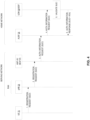
- FIG 4 illustrates a UE registration procedure incorporating the validation techniques as herein described.
- the UE 70 connects to a gNB 25 over-the-air and sends a Registration Request as previously described.
- the Registration Request contains a SUCI calculated by the UE 70. Additionally, the Registration Request may contain the mobile network identifiers (e.g., MCC and MNC) and encryption parameters (e.g., HN-PKI and ESID) as shown in Figure 3 .
- the gNB 25 forwards the received Registration Request to the AMF 40 or SEAF 65 if located separately.
- an Authentication Information Request is generated and forwarded to the UDM 55.
- the Authentication Information Request includes the SUCI along with the mobile network identifiers and the encryption parameters contained in the Registration Request.
- the UDM 55 or other network node validates the SUCI.
- the UDM 55 decrypts the SUCI using the encryption parameters identified in the received message.
- the decryption of the SUCI reveals subscription information (e.g., the user's SUPI) that the UDM 55 uses to retrieve the encryption parameters currently provisioned in the UE 70 (meaning to the subscription belonging to that SUPI). If the encryption parameters currently provisioned to the UE 70 match those used to calculate the SUCI, the SUCI is considered valid. Otherwise, the SUCI is determined to be invalid.
- the UDM 55 at Step 6 returns an Authentication Information Response containing the SUPI and Authentication Vectors (AVs) associated with the subscriber.
- AVs Authentication Vectors
- FIG 5 illustrates an exemplary validation method 100 implemented by the UDM 55 or other network node at Step 5 in Figure 4 .
- the UDM 55 or other network node first verifies that the SUCI is created using encryption parameters currently in use by some subscriber (block 110).
- the encryption parameters used to derive the SUCI may be indicated, for example, by a HN-PKI, ESID, or other encryption parameter identifiers sent along with the SUCI. If the encryption parameters are not in use by any subscribers, the SUCI is declared invalid (block 160). If the encryption parameters used to derive the SUCI are determine to be valid, the UDM 55 decrypts the SUCI (block 120) and verifies the result using the decrypted information (block 130).
- the UDM 55 retrieves the encryption parameters provisioned for the UE 55 (e.g., from a subscriber profile) and compares the encryption parameters currently provisioned to the UE 70 to the encryption parameters used to drive the SUCI (block 140). The encryption parameters. If there is a match, the SUCI is declared valid (block 150). Otherwise, the SUCI is declared invalid (block 160).
- FIG 6 is another exemplary method 200 of validating a SUCI implemented by the UDM 55 or other network node.
- the method 200 begins when the UDM 55 or other network node receives a message including the SUCI (block 210). Responsive to receipt of the message, the UDM 55 or other network node obtains a first set of encryption parameters used to generate the SUCI (block 220). The UDM 55 uses the first set of encryption parameters to de-conceal the SUCI to obtain subscription information associated with a subscription (block 230). Subsequently, the UDM 55 obtains a second set of encryption parameters associated with the subscription using the subscription information (block 240).
- the UDM 55 validates the SUCI based on the second set of encryption parameters (block 250). As one example, the UDM 55 validates the SUCI by comparing the first set of encryption parameters to the second set of encryption parameters and determining if there is a match.
- the first set of encryption parameters is obtained from the received message.
- the first set of encryption parameters comprise a key identifier indicating a public key used to generate the subscription concealed identifier.
- the first set of encryption parameters comprise a scheme identifier indicating an encryption scheme used to generate the subscription concealed identifier.
- the subscription information comprises a subscription permanent identifier
- the subscription permanent identifier is used to obtain the second set of encryption parameters.
- validating the subscription concealed identifier comprises determining whether the subscription concealed identifier is valid by comparing the first set of encryption parameters to the second set of encryption parameters.
- Some embodiments of the method 200 further comprise performing a security operation depending on whether the subscription concealed identifier is valid.
- performing a security operation depending on whether the subscription concealed identifier is valid comprises rejecting the received message responsive to determining that the subscription concealed identifier is invalid.
- rejecting the received message comprises rejecting the received message without a response.
- Some embodiments of the method 200 further comprise returning an error message responsive to determining that the subscription concealed identifier is invalid.
- performing a security operation depending on whether the subscription concealed identifier is valid comprises, responsive to determining that the subscription concealed identifier is invalid determining a total number of related messages that have been received containing an invalid subscription concealed identifier and accepting the received message if the number of related messages is less than a predetermined number.
- performing a security operation depending on whether the subscription concealed identifier is valid comprises updating encryption parameters for a user equipment associated with the subscription responsive to determining that the subscription concealed identifier is invalid.
- performing a security operation depending on whether the subscription concealed identifier is valid comprises performing an authentication procedure responsive to determining that the subscription concealed identifier is valid.
- Some embodiments of the method 200 further comprise verifying that the first set of encryption parameters is valid before de-concealing the subscription concealed identifier.
- Some embodiments of the method 200 further comprise verifying that the result of de-concealing is valid before obtaining the second set of encryption parameters.
- FIG. 7 illustrates a network node 300 in accordance with one or more embodiments.
- the network node 300 is configured to perform validation of the SUCI according to the method shown in Figures 5 and 6 .
- the network node 300 may function as a UDM 55 or other SIDF as herein described.
- the network node 300 comprises a receiving module/unit 310, a first obtaining module/unit 310, and de-concealing module/unit 330, a second obtaining module/unit 340 and a validation module/unit 350.
- the receiving module/unit is configured to receiving a message including the subscription concealed identifier.
- the first obtaining module/unit 320 is configured to obtain a first set of encryption parameters used to generate the subscription concealed identifier.
- the de-concealing module/unit 330 is configured to de-concealing the subscription concealed identifier to obtain subscription information associated with a subscription.
- the second obtaining module/unit 340 is configured to obtain a second set of encryption parameters associated with the subscription using the subscription information.
- the validation module/unit 350 is configured to validate the subscription concealed identifier based on the second set of encryption parameters.
- the various modules/units 310-350 can be implemented by hardware and/or by software code that is executed by a processor or processing circuit.
- FIG 8 is a functional block diagram of another network node 400 configured to function as a UDM 55 or other SIDF as herein described.
- the network node 400 comprises an interface circuit 410, a processing circuit 420, and memory 430.
- the interface circuit 410 provides a communication interface enabling the network node 400 to communicate with other network nodes in the mobile network 10, typically over a wired network.
- the interface circuit 410 may couple to an antenna (not shown) and include radio frequency (RF) circuits for communicating wirelessly with other network nodes.
- the processing circuit 420 controls the overall operation of the network node 400 and processes signals transmitted or received by the network node 400.
- the processing circuit 420 is configured to perform the methods shown in Figures 5 and 6 .
- the processing circuit 420 may comprise one or more microprocessors, hardware, firmware, or a combination thereof.
- Memory 430 comprises both volatile and non-volatile memory for storing computer program code and data needed by the processing circuit 420 for operation.
- Memory 430 may comprise any tangible, non-transitory computer-readable storage medium for storing data including electronic, magnetic, optical, electromagnetic, or semiconductor data storage.
- Memory 430 stores a computer program 440 comprising executable instructions that configure the processing circuit 420 to perform the methods according to Figures 5 and 6 as described herein.
- computer program instructions and configuration information are stored in a non-volatile memory, such as a ROM, erasable programmable read only memory (EPROM) or flash memory.
- Temporary data generated during operation may be stored in a volatile memory, such as a random access memory (RAM).
- computer program 440 for configuring the processing circuit 420 as herein described may be stored in a removable memory, such as a portable compact disc, portable digital video disc, or other removable media.
- the computer program 440 may also be embodied in a carrier such as an electronic signal, optical signal, radio signal, or computer readable storage medium.
- the term unit may have conventional meaning in the field of electronics, electrical devices and/or electronic devices and may include, for example, electrical and/or electronic circuitry, devices, modules, processors, memories, logic solid state and/or discrete devices, computer programs or instructions for carrying out respective tasks, procedures, computations, outputs, and/or displaying functions, and so on, as such as those that are described herein.
Landscapes
- Engineering & Computer Science (AREA)
- Computer Security & Cryptography (AREA)
- Computer Networks & Wireless Communication (AREA)
- Signal Processing (AREA)
- Databases & Information Systems (AREA)
- Mobile Radio Communication Systems (AREA)
Claims (13)
- Procédé mis en oeuvre par un noeud de réseau dans un réseau mobile pour valider un identifiant masqué d'abonnement, lequel noeud de réseau est une fonction de gestion unifiée de données, UDM, ou une autre fonction de d'affichage d'identifiant d'abonnement, SIDF, comprenant :la réception (210) d'un message incluant l'identifiant masqué d'abonnement, dans lequel l'identifiant masqué d'abonnement est généré par un équipement d'utilisateur ;l'obtention (220) d'un premier ensemble de paramètres de chiffrage utilisé pour générer l'identifiant masqué d'abonnement, dans lequel le premier ensemble de paramètres de chiffrage est obtenu à partir du message reçu, et la vérification que le premier ensemble de paramètres de chiffrage est valide avant d'afficher l'identifiant masqué d'abonnement, dans lequel l'identifiant masqué d'abonnement est déterminé comme étant invalide lorsque le premier ensemble de paramètres de chiffrage n'est pas utilisé ;lorsqu'il est déterminé que le premier ensemble de paramètres de chiffrage est valide, l'affichage (230) de l'identifiant masqué d'abonnement pour obtenir des informations d'abonnement associées à un abonnement, dans lequel l'identifiant masqué d'abonnement est affiché en utilisant le premier ensemble de paramètres de chiffrage, et la vérification que le résultat d'affichage est valide avant d'obtenir le second ensemble de paramètres de chiffrage ;lorsqu'il est déterminé que le résultat d'affichage est valide, l'obtention (250) d'un second ensemble de paramètres de chiffrage associé à l'abonnement en utilisant les informations d'abonnement, dans lequel le second ensemble de paramètres de chiffrage est obtenu à partir d'un profil d'abonné associé à l'équipement d'utilisateur ; etla validation (260) de l'identifiant masqué d'abonnement sur la base du second ensemble de paramètres de chiffrage, dans lequel la valisation (260) de l'identifiant masqué d'abonnement comprend la détermination pour établir si l'identifiant masqué d'abonnement est valide en comparant le premier ensemble de paramètres de chiffrage avec le second ensemble de paramètres de chiffrage, et l'une quelconque parmi :- la détermination que l'identifiant masqué d'abonnement est valide lorsque la comparaison aboutit à une correspondance, ou- la détermination que l'identifiant masqué d'abonnement est invalide lorsque la comparaison n'aboutit pas à une correspondance.
- Procédé selon la revendication 1, dans lequel le premier ensemble de paramètres de chiffrage comprend un identifiant de clé indiquant une clé publique utilisée pour générer l'identifiant masqué d'abonnement.
- Procédé selon l'une quelconque des revendications 1-2, dans lequel le premier ensemble de paramètres de chiffrage comprend un identifiant de schéma indiquant un schéma de chiffrage utilisé pour générer l'identifiant masqué d'abonnement.
- Procédé selon l'une quelconque des revendications 1-3, dans lequel :les informations d'abonnement comprennent un identifiant permanent d'abonnement ; etl'identifiant permanent d'abonnement est utilisé pour obtenir le second ensemble de paramètres de chiffrage.
- Procédé selon l'une quelconque des revendications 1-4, comprenant en outre la réalisation d'une opération de sécurité selon que l'identifiant masqué d'abonnement est valide ou non.
- Procédé selon la revendication 5, dans lequel la réalisation d'une opération de sécurité selon que l'identifiant masqué d'abonnement est valide ou non comprend le rejet du message reçu en réponse à la détermination que l'identifiant masqué d'abonnement est invalide.
- Procédé selon la revendication 6, dans lequel le rejet du message reçu comprend le rejet du message reçu sans réponse.
- Procédé selon la revendication 7, comprenant en outre le renvoi d'un message d'erreur en réponse à la détermination que l'identifiant masqué d'abonnement est invalide.
- Procédé selon la revendication 5, dans lequel la réalisation d'une opération de sécurité selon que l'identifiant masqué d'abonnement est valide ou non comprend, en réponse à la détermination que l'identifiant masqué d'abonnement est invalide :la détermination d'un nombre total de messages associés qui ont été reçus contenant un identifiant masqué d'abonnement invalide ; etl'acceptation du message reçu si le nombre de messages associés est inférieur à un nombre prédéterminé.
- Procédé selon l'une quelconque des revendications 5-9, dans lequel la réalisation d'une opération de sécurité selon que l'identifiant masqué d'abonnement est valide ou non comprend la mise à jour des paramètres de chiffrage pour un équipement d'utilisateur associé à l'abonnement en réponse à la détermination que l'identifiant masqué d'abonnement est invalide.
- Procédé selon la revendication 5, dans lequel la réalisation d'une opération de sécurité selon que l'identifiant masqué d'abonnement est valide ou non comprend la réalisation d'une procédure d'authentification en réponse à la détermination que l'identifiant masqué d'abonnement est valide.
- Noeud de réseau configuré pour réaliser l'un quelconque des procédés selon les revendications 1-11.
- Programme informatique comprenant des instructions exécutables qui, lorsqu'elles sont exécutées par un circuit de traitement dans un noeud de réseau d'un réseau mobile, amènent le noeud de réseau à réaliser l'un quelconque des procédés selon les revendications 1-11.
Applications Claiming Priority (2)
| Application Number | Priority Date | Filing Date | Title |
|---|---|---|---|
| US201862616957P | 2018-01-12 | 2018-01-12 | |
| PCT/EP2018/086409 WO2019137792A1 (fr) | 2018-01-12 | 2018-12-20 | Validation d'identificateurs masqués d'abonnement dans des réseaux mobiles |
Publications (2)
| Publication Number | Publication Date |
|---|---|
| EP3738329A1 EP3738329A1 (fr) | 2020-11-18 |
| EP3738329B1 true EP3738329B1 (fr) | 2024-01-31 |
Family
ID=64949289
Family Applications (1)
| Application Number | Title | Priority Date | Filing Date |
|---|---|---|---|
| EP18829851.7A Active EP3738329B1 (fr) | 2018-01-12 | 2018-12-20 | Validation d'identificateurs masqués d'abonnement dans des réseaux mobiles |
Country Status (3)
| Country | Link |
|---|---|
| US (1) | US20210368345A1 (fr) |
| EP (1) | EP3738329B1 (fr) |
| WO (1) | WO2019137792A1 (fr) |
Cited By (1)
| Publication number | Priority date | Publication date | Assignee | Title |
|---|---|---|---|---|
| US20240121706A1 (en) * | 2018-01-15 | 2024-04-11 | Telefonaktiebolaget Lm Ericsson (Publ) | Network function instance selection |
Families Citing this family (18)
| Publication number | Priority date | Publication date | Assignee | Title |
|---|---|---|---|---|
| CA3234868A1 (fr) * | 2018-08-09 | 2020-02-13 | Nokia Technologies Oy | Procede et appareil pour la realisation securisee de connexions dans des reseaux d'acces heterogenes |
| GB2580182B (en) * | 2018-12-24 | 2021-07-21 | Sita Switzerland Sarl | A system and method for controlling mobile device signalling |
| WO2020223319A1 (fr) * | 2019-05-01 | 2020-11-05 | Nix John A | Authentification eap-tls distribuée pour réseaux sans fil à identités d'abonnés dissimulées |
| US12022287B2 (en) * | 2019-07-08 | 2024-06-25 | John A. Nix | EAP-TLS authentication with concealed user identities and wireless networks |
| CN112312359A (zh) * | 2019-07-23 | 2021-02-02 | 中兴通讯股份有限公司 | 一种实现信息关联的方法及装置 |
| US11540121B2 (en) * | 2019-12-05 | 2022-12-27 | Qualcomm Incorporated | Priority fallback of SUCI calculation |
| CN114040387B (zh) * | 2020-07-21 | 2024-06-04 | 中国移动通信有限公司研究院 | 一种攻击消息的确定方法、装置及设备 |
| CN114040386B (zh) * | 2020-07-21 | 2025-03-21 | 中国移动通信有限公司研究院 | 一种重放消息的确定方法、装置及设备 |
| CN114079924B (zh) * | 2020-08-10 | 2024-08-16 | 中国移动通信有限公司研究院 | 消息的处理方法、装置、相关设备及存储介质 |
| EP4173330A1 (fr) * | 2020-08-11 | 2023-05-03 | Google LLC | Traitement de défaillance d'identifiant caché calculé par usim |
| CN114745721B (zh) * | 2021-01-08 | 2025-08-01 | 中国移动通信有限公司研究院 | 一种重放攻击处理方法、统一数据管理实体及存储介质 |
| IT202100008951A1 (it) * | 2021-04-09 | 2022-10-09 | St Microelectronics Srl | Procedimento di occultamento di identificativo di sottoscrizione in un equipaggiamento utente di una rete di comunicazione mobile e corrispondente sistema e prodotto informatico |
| US20250016552A1 (en) * | 2021-10-04 | 2025-01-09 | Telefonaktiebolaget Lm Ericsson (Publ) | Conveying Data to a Communication Network |
| CN116155914A (zh) * | 2021-11-23 | 2023-05-23 | 中兴通讯股份有限公司 | 数据同步方法、udm、计算机可读存储介质 |
| US12513515B2 (en) * | 2022-08-08 | 2025-12-30 | Kevin McTiernan | Identity resolution of a user equipment (UE) connectable to a fifth generation (5G) mobile network |
| US20250071711A1 (en) * | 2023-08-25 | 2025-02-27 | T-Mobile Usa, Inc. | Storing authentication data on ausf |
| US12574886B2 (en) | 2023-08-25 | 2026-03-10 | T-Mobile Usa, Inc. | Optimized registration and deregistration messaging with the SMSF and UDM |
| US20250220559A1 (en) * | 2023-12-28 | 2025-07-03 | T-Mobile Usa, Inc. | Subscriber service validation using suci cleartext |
Family Cites Families (11)
| Publication number | Priority date | Publication date | Assignee | Title |
|---|---|---|---|---|
| EP1873998B1 (fr) * | 2006-06-27 | 2018-09-19 | Vringo Infrastructure Inc. | Identifiants dans un système de communication |
| CN102131188B (zh) * | 2010-09-01 | 2013-12-04 | 华为技术有限公司 | 用户身份信息传输的方法、用户设备、网络侧设备及系统 |
| US9635549B2 (en) * | 2011-09-01 | 2017-04-25 | Nokia Technologies Oy | Providing subscriber identity module function |
| WO2014037053A1 (fr) * | 2012-09-07 | 2014-03-13 | Telefonaktiebolaget L M Ericsson (Publ) | Protection d'un dispositif de communication sans fil contre une utilisation non autorisée |
| US9445443B2 (en) * | 2013-09-27 | 2016-09-13 | Qualcomm Incorporated | Network based provisioning of UE credentials for non-operator wireless deployments |
| CN103987037A (zh) * | 2014-05-28 | 2014-08-13 | 大唐移动通信设备有限公司 | 一种保密通信实现方法及装置 |
| KR20160002321A (ko) * | 2014-06-30 | 2016-01-07 | 삼성전자주식회사 | 무선 통신 시스템에서 통신서비스 제공을 위한 프로파일을 송수신하는 방법 및 장치 |
| US20160005042A1 (en) * | 2014-07-02 | 2016-01-07 | Mistral Mobile | Host card emulation out-of-bound device binding verification |
| US10237729B2 (en) * | 2015-03-05 | 2019-03-19 | Qualcomm Incorporated | Identity privacy in wireless networks |
| US10142819B2 (en) * | 2015-07-29 | 2018-11-27 | Blackberry Limited | Establishing machine type communications |
| CN107592281B (zh) * | 2016-07-06 | 2022-04-05 | 华为技术有限公司 | 一种传输数据的保护系统、方法及装置 |
-
2018
- 2018-12-20 US US16/338,917 patent/US20210368345A1/en active Pending
- 2018-12-20 WO PCT/EP2018/086409 patent/WO2019137792A1/fr not_active Ceased
- 2018-12-20 EP EP18829851.7A patent/EP3738329B1/fr active Active
Cited By (2)
| Publication number | Priority date | Publication date | Assignee | Title |
|---|---|---|---|---|
| US20240121706A1 (en) * | 2018-01-15 | 2024-04-11 | Telefonaktiebolaget Lm Ericsson (Publ) | Network function instance selection |
| US12302229B2 (en) * | 2018-01-15 | 2025-05-13 | Telefonaktiebolaget Lm Ericsson (Publ) | Network function instance selection |
Also Published As
| Publication number | Publication date |
|---|---|
| WO2019137792A1 (fr) | 2019-07-18 |
| EP3738329A1 (fr) | 2020-11-18 |
| US20210368345A1 (en) | 2021-11-25 |
Similar Documents
| Publication | Publication Date | Title |
|---|---|---|
| EP3738329B1 (fr) | Validation d'identificateurs masqués d'abonnement dans des réseaux mobiles | |
| US11863982B2 (en) | Subscriber identity privacy protection against fake base stations | |
| US11856402B2 (en) | Identity-based message integrity protection and verification for wireless communication | |
| CN110945886B (zh) | 无线通信网络中检测漫游活动的反引导的方法和系统 | |
| US11297492B2 (en) | Subscriber identity privacy protection and network key management | |
| CN107018676B (zh) | 用户设备与演进分组核心之间的相互认证 | |
| Norrman et al. | Protecting IMSI and user privacy in 5G networks | |
| EP1873998B1 (fr) | Identifiants dans un système de communication | |
| US11405788B2 (en) | Wireless network service access control with subscriber identity protection | |
| CN119547383A (zh) | 加入通信网络的方法 | |
| CN113518312A (zh) | 一种通信方法、装置及系统 | |
| US11032699B2 (en) | Privacy protection capabilities | |
| KR102783803B1 (ko) | 등록 절차를 위한 무선 통신 방법 | |
| US10492056B2 (en) | Enhanced mobile subscriber privacy in telecommunications networks | |
| EP3488627B1 (fr) | Indicateur de preuve de présence | |
| Fidelis et al. | ENHANCED ADAPTIVE SECURITY PROTOCOL IN LTE AKA |
Legal Events
| Date | Code | Title | Description |
|---|---|---|---|
| STAA | Information on the status of an ep patent application or granted ep patent |
Free format text: STATUS: UNKNOWN |
|
| STAA | Information on the status of an ep patent application or granted ep patent |
Free format text: STATUS: THE INTERNATIONAL PUBLICATION HAS BEEN MADE |
|
| PUAI | Public reference made under article 153(3) epc to a published international application that has entered the european phase |
Free format text: ORIGINAL CODE: 0009012 |
|
| STAA | Information on the status of an ep patent application or granted ep patent |
Free format text: STATUS: REQUEST FOR EXAMINATION WAS MADE |
|
| 17P | Request for examination filed |
Effective date: 20200806 |
|
| AK | Designated contracting states |
Kind code of ref document: A1 Designated state(s): AL AT BE BG CH CY CZ DE DK EE ES FI FR GB GR HR HU IE IS IT LI LT LU LV MC MK MT NL NO PL PT RO RS SE SI SK SM TR |
|
| AX | Request for extension of the european patent |
Extension state: BA ME |
|
| DAV | Request for validation of the european patent (deleted) | ||
| DAX | Request for extension of the european patent (deleted) | ||
| STAA | Information on the status of an ep patent application or granted ep patent |
Free format text: STATUS: EXAMINATION IS IN PROGRESS |
|
| 17Q | First examination report despatched |
Effective date: 20220405 |
|
| GRAP | Despatch of communication of intention to grant a patent |
Free format text: ORIGINAL CODE: EPIDOSNIGR1 |
|
| STAA | Information on the status of an ep patent application or granted ep patent |
Free format text: STATUS: GRANT OF PATENT IS INTENDED |
|
| INTG | Intention to grant announced |
Effective date: 20230725 |
|
| GRAS | Grant fee paid |
Free format text: ORIGINAL CODE: EPIDOSNIGR3 |
|
| GRAA | (expected) grant |
Free format text: ORIGINAL CODE: 0009210 |
|
| STAA | Information on the status of an ep patent application or granted ep patent |
Free format text: STATUS: THE PATENT HAS BEEN GRANTED |
|
| AK | Designated contracting states |
Kind code of ref document: B1 Designated state(s): AL AT BE BG CH CY CZ DE DK EE ES FI FR GB GR HR HU IE IS IT LI LT LU LV MC MK MT NL NO PL PT RO RS SE SI SK SM TR |
|
| REG | Reference to a national code |
Ref country code: GB Ref legal event code: FG4D Ref country code: CH Ref legal event code: EP |
|
| REG | Reference to a national code |
Ref country code: DE Ref legal event code: R096 Ref document number: 602018064784 Country of ref document: DE |
|
| REG | Reference to a national code |
Ref country code: NL Ref legal event code: FP Ref country code: IE Ref legal event code: FG4D |
|
| REG | Reference to a national code |
Ref country code: LT Ref legal event code: MG9D |
|
| PG25 | Lapsed in a contracting state [announced via postgrant information from national office to epo] |
Ref country code: IS Free format text: LAPSE BECAUSE OF FAILURE TO SUBMIT A TRANSLATION OF THE DESCRIPTION OR TO PAY THE FEE WITHIN THE PRESCRIBED TIME-LIMIT Effective date: 20240531 |
|
| PG25 | Lapsed in a contracting state [announced via postgrant information from national office to epo] |
Ref country code: LT Free format text: LAPSE BECAUSE OF FAILURE TO SUBMIT A TRANSLATION OF THE DESCRIPTION OR TO PAY THE FEE WITHIN THE PRESCRIBED TIME-LIMIT Effective date: 20240131 |
|
| PG25 | Lapsed in a contracting state [announced via postgrant information from national office to epo] |
Ref country code: GR Free format text: LAPSE BECAUSE OF FAILURE TO SUBMIT A TRANSLATION OF THE DESCRIPTION OR TO PAY THE FEE WITHIN THE PRESCRIBED TIME-LIMIT Effective date: 20240501 |
|
| REG | Reference to a national code |
Ref country code: AT Ref legal event code: MK05 Ref document number: 1654642 Country of ref document: AT Kind code of ref document: T Effective date: 20240131 |
|
| PG25 | Lapsed in a contracting state [announced via postgrant information from national office to epo] |
Ref country code: RS Free format text: LAPSE BECAUSE OF FAILURE TO SUBMIT A TRANSLATION OF THE DESCRIPTION OR TO PAY THE FEE WITHIN THE PRESCRIBED TIME-LIMIT Effective date: 20240430 Ref country code: HR Free format text: LAPSE BECAUSE OF FAILURE TO SUBMIT A TRANSLATION OF THE DESCRIPTION OR TO PAY THE FEE WITHIN THE PRESCRIBED TIME-LIMIT Effective date: 20240131 |
|
| PG25 | Lapsed in a contracting state [announced via postgrant information from national office to epo] |
Ref country code: ES Free format text: LAPSE BECAUSE OF FAILURE TO SUBMIT A TRANSLATION OF THE DESCRIPTION OR TO PAY THE FEE WITHIN THE PRESCRIBED TIME-LIMIT Effective date: 20240131 |
|
| PG25 | Lapsed in a contracting state [announced via postgrant information from national office to epo] |
Ref country code: AT Free format text: LAPSE BECAUSE OF FAILURE TO SUBMIT A TRANSLATION OF THE DESCRIPTION OR TO PAY THE FEE WITHIN THE PRESCRIBED TIME-LIMIT Effective date: 20240131 |
|
| PG25 | Lapsed in a contracting state [announced via postgrant information from national office to epo] |
Ref country code: RS Free format text: LAPSE BECAUSE OF FAILURE TO SUBMIT A TRANSLATION OF THE DESCRIPTION OR TO PAY THE FEE WITHIN THE PRESCRIBED TIME-LIMIT Effective date: 20240430 Ref country code: NO Free format text: LAPSE BECAUSE OF FAILURE TO SUBMIT A TRANSLATION OF THE DESCRIPTION OR TO PAY THE FEE WITHIN THE PRESCRIBED TIME-LIMIT Effective date: 20240430 Ref country code: LT Free format text: LAPSE BECAUSE OF FAILURE TO SUBMIT A TRANSLATION OF THE DESCRIPTION OR TO PAY THE FEE WITHIN THE PRESCRIBED TIME-LIMIT Effective date: 20240131 Ref country code: IS Free format text: LAPSE BECAUSE OF FAILURE TO SUBMIT A TRANSLATION OF THE DESCRIPTION OR TO PAY THE FEE WITHIN THE PRESCRIBED TIME-LIMIT Effective date: 20240531 Ref country code: HR Free format text: LAPSE BECAUSE OF FAILURE TO SUBMIT A TRANSLATION OF THE DESCRIPTION OR TO PAY THE FEE WITHIN THE PRESCRIBED TIME-LIMIT Effective date: 20240131 Ref country code: GR Free format text: LAPSE BECAUSE OF FAILURE TO SUBMIT A TRANSLATION OF THE DESCRIPTION OR TO PAY THE FEE WITHIN THE PRESCRIBED TIME-LIMIT Effective date: 20240501 Ref country code: FI Free format text: LAPSE BECAUSE OF FAILURE TO SUBMIT A TRANSLATION OF THE DESCRIPTION OR TO PAY THE FEE WITHIN THE PRESCRIBED TIME-LIMIT Effective date: 20240131 Ref country code: ES Free format text: LAPSE BECAUSE OF FAILURE TO SUBMIT A TRANSLATION OF THE DESCRIPTION OR TO PAY THE FEE WITHIN THE PRESCRIBED TIME-LIMIT Effective date: 20240131 Ref country code: BG Free format text: LAPSE BECAUSE OF FAILURE TO SUBMIT A TRANSLATION OF THE DESCRIPTION OR TO PAY THE FEE WITHIN THE PRESCRIBED TIME-LIMIT Effective date: 20240131 Ref country code: AT Free format text: LAPSE BECAUSE OF FAILURE TO SUBMIT A TRANSLATION OF THE DESCRIPTION OR TO PAY THE FEE WITHIN THE PRESCRIBED TIME-LIMIT Effective date: 20240131 |
|
| PG25 | Lapsed in a contracting state [announced via postgrant information from national office to epo] |
Ref country code: PL Free format text: LAPSE BECAUSE OF FAILURE TO SUBMIT A TRANSLATION OF THE DESCRIPTION OR TO PAY THE FEE WITHIN THE PRESCRIBED TIME-LIMIT Effective date: 20240131 Ref country code: PT Free format text: LAPSE BECAUSE OF FAILURE TO SUBMIT A TRANSLATION OF THE DESCRIPTION OR TO PAY THE FEE WITHIN THE PRESCRIBED TIME-LIMIT Effective date: 20240531 |
|
| PG25 | Lapsed in a contracting state [announced via postgrant information from national office to epo] |
Ref country code: SE Free format text: LAPSE BECAUSE OF FAILURE TO SUBMIT A TRANSLATION OF THE DESCRIPTION OR TO PAY THE FEE WITHIN THE PRESCRIBED TIME-LIMIT Effective date: 20240131 Ref country code: PT Free format text: LAPSE BECAUSE OF FAILURE TO SUBMIT A TRANSLATION OF THE DESCRIPTION OR TO PAY THE FEE WITHIN THE PRESCRIBED TIME-LIMIT Effective date: 20240531 Ref country code: PL Free format text: LAPSE BECAUSE OF FAILURE TO SUBMIT A TRANSLATION OF THE DESCRIPTION OR TO PAY THE FEE WITHIN THE PRESCRIBED TIME-LIMIT Effective date: 20240131 Ref country code: LV Free format text: LAPSE BECAUSE OF FAILURE TO SUBMIT A TRANSLATION OF THE DESCRIPTION OR TO PAY THE FEE WITHIN THE PRESCRIBED TIME-LIMIT Effective date: 20240131 |
|
| PG25 | Lapsed in a contracting state [announced via postgrant information from national office to epo] |
Ref country code: DK Free format text: LAPSE BECAUSE OF FAILURE TO SUBMIT A TRANSLATION OF THE DESCRIPTION OR TO PAY THE FEE WITHIN THE PRESCRIBED TIME-LIMIT Effective date: 20240131 |
|
| PG25 | Lapsed in a contracting state [announced via postgrant information from national office to epo] |
Ref country code: SM Free format text: LAPSE BECAUSE OF FAILURE TO SUBMIT A TRANSLATION OF THE DESCRIPTION OR TO PAY THE FEE WITHIN THE PRESCRIBED TIME-LIMIT Effective date: 20240131 |
|
| PG25 | Lapsed in a contracting state [announced via postgrant information from national office to epo] |
Ref country code: EE Free format text: LAPSE BECAUSE OF FAILURE TO SUBMIT A TRANSLATION OF THE DESCRIPTION OR TO PAY THE FEE WITHIN THE PRESCRIBED TIME-LIMIT Effective date: 20240131 Ref country code: CZ Free format text: LAPSE BECAUSE OF FAILURE TO SUBMIT A TRANSLATION OF THE DESCRIPTION OR TO PAY THE FEE WITHIN THE PRESCRIBED TIME-LIMIT Effective date: 20240131 |
|
| PG25 | Lapsed in a contracting state [announced via postgrant information from national office to epo] |
Ref country code: SK Free format text: LAPSE BECAUSE OF FAILURE TO SUBMIT A TRANSLATION OF THE DESCRIPTION OR TO PAY THE FEE WITHIN THE PRESCRIBED TIME-LIMIT Effective date: 20240131 |
|
| PG25 | Lapsed in a contracting state [announced via postgrant information from national office to epo] |
Ref country code: SM Free format text: LAPSE BECAUSE OF FAILURE TO SUBMIT A TRANSLATION OF THE DESCRIPTION OR TO PAY THE FEE WITHIN THE PRESCRIBED TIME-LIMIT Effective date: 20240131 Ref country code: SK Free format text: LAPSE BECAUSE OF FAILURE TO SUBMIT A TRANSLATION OF THE DESCRIPTION OR TO PAY THE FEE WITHIN THE PRESCRIBED TIME-LIMIT Effective date: 20240131 Ref country code: RO Free format text: LAPSE BECAUSE OF FAILURE TO SUBMIT A TRANSLATION OF THE DESCRIPTION OR TO PAY THE FEE WITHIN THE PRESCRIBED TIME-LIMIT Effective date: 20240131 Ref country code: EE Free format text: LAPSE BECAUSE OF FAILURE TO SUBMIT A TRANSLATION OF THE DESCRIPTION OR TO PAY THE FEE WITHIN THE PRESCRIBED TIME-LIMIT Effective date: 20240131 Ref country code: DK Free format text: LAPSE BECAUSE OF FAILURE TO SUBMIT A TRANSLATION OF THE DESCRIPTION OR TO PAY THE FEE WITHIN THE PRESCRIBED TIME-LIMIT Effective date: 20240131 Ref country code: CZ Free format text: LAPSE BECAUSE OF FAILURE TO SUBMIT A TRANSLATION OF THE DESCRIPTION OR TO PAY THE FEE WITHIN THE PRESCRIBED TIME-LIMIT Effective date: 20240131 |
|
| REG | Reference to a national code |
Ref country code: DE Ref legal event code: R097 Ref document number: 602018064784 Country of ref document: DE |
|
| PG25 | Lapsed in a contracting state [announced via postgrant information from national office to epo] |
Ref country code: IT Free format text: LAPSE BECAUSE OF FAILURE TO SUBMIT A TRANSLATION OF THE DESCRIPTION OR TO PAY THE FEE WITHIN THE PRESCRIBED TIME-LIMIT Effective date: 20240131 |
|
| PLBE | No opposition filed within time limit |
Free format text: ORIGINAL CODE: 0009261 |
|
| STAA | Information on the status of an ep patent application or granted ep patent |
Free format text: STATUS: NO OPPOSITION FILED WITHIN TIME LIMIT |
|
| PG25 | Lapsed in a contracting state [announced via postgrant information from national office to epo] |
Ref country code: IT Free format text: LAPSE BECAUSE OF FAILURE TO SUBMIT A TRANSLATION OF THE DESCRIPTION OR TO PAY THE FEE WITHIN THE PRESCRIBED TIME-LIMIT Effective date: 20240131 |
|
| 26N | No opposition filed |
Effective date: 20241101 |
|
| PG25 | Lapsed in a contracting state [announced via postgrant information from national office to epo] |
Ref country code: SI Free format text: LAPSE BECAUSE OF FAILURE TO SUBMIT A TRANSLATION OF THE DESCRIPTION OR TO PAY THE FEE WITHIN THE PRESCRIBED TIME-LIMIT Effective date: 20240131 |
|
| PG25 | Lapsed in a contracting state [announced via postgrant information from national office to epo] |
Ref country code: MC Free format text: LAPSE BECAUSE OF FAILURE TO SUBMIT A TRANSLATION OF THE DESCRIPTION OR TO PAY THE FEE WITHIN THE PRESCRIBED TIME-LIMIT Effective date: 20240131 |
|
| REG | Reference to a national code |
Ref country code: CH Ref legal event code: PL |
|
| PG25 | Lapsed in a contracting state [announced via postgrant information from national office to epo] |
Ref country code: LU Free format text: LAPSE BECAUSE OF NON-PAYMENT OF DUE FEES Effective date: 20241220 |
|
| REG | Reference to a national code |
Ref country code: BE Ref legal event code: MM Effective date: 20241231 |
|
| PG25 | Lapsed in a contracting state [announced via postgrant information from national office to epo] |
Ref country code: BE Free format text: LAPSE BECAUSE OF NON-PAYMENT OF DUE FEES Effective date: 20241231 |
|
| PG25 | Lapsed in a contracting state [announced via postgrant information from national office to epo] |
Ref country code: FR Free format text: LAPSE BECAUSE OF NON-PAYMENT OF DUE FEES Effective date: 20241231 |
|
| PG25 | Lapsed in a contracting state [announced via postgrant information from national office to epo] |
Ref country code: CH Free format text: LAPSE BECAUSE OF NON-PAYMENT OF DUE FEES Effective date: 20241231 |
|
| PG25 | Lapsed in a contracting state [announced via postgrant information from national office to epo] |
Ref country code: IE Free format text: LAPSE BECAUSE OF NON-PAYMENT OF DUE FEES Effective date: 20241220 |
|
| PGFP | Annual fee paid to national office [announced via postgrant information from national office to epo] |
Ref country code: GB Payment date: 20251229 Year of fee payment: 8 |
|
| PGFP | Annual fee paid to national office [announced via postgrant information from national office to epo] |
Ref country code: NL Payment date: 20251226 Year of fee payment: 8 |
|
| PGFP | Annual fee paid to national office [announced via postgrant information from national office to epo] |
Ref country code: DE Payment date: 20251229 Year of fee payment: 8 |