EP3738564B1 - Couche pour nourrissons de poids insuffisant - Google Patents
Couche pour nourrissons de poids insuffisant Download PDFInfo
- Publication number
- EP3738564B1 EP3738564B1 EP19756711.8A EP19756711A EP3738564B1 EP 3738564 B1 EP3738564 B1 EP 3738564B1 EP 19756711 A EP19756711 A EP 19756711A EP 3738564 B1 EP3738564 B1 EP 3738564B1
- Authority
- EP
- European Patent Office
- Prior art keywords
- diaper
- additional joining
- low
- locking member
- weight infant
- Prior art date
- Legal status (The legal status is an assumption and is not a legal conclusion. Google has not performed a legal analysis and makes no representation as to the accuracy of the status listed.)
- Active
Links
Images


Classifications
-
- A—HUMAN NECESSITIES
- A61—MEDICAL OR VETERINARY SCIENCE; HYGIENE
- A61F—FILTERS IMPLANTABLE INTO BLOOD VESSELS; PROSTHESES; DEVICES PROVIDING PATENCY TO, OR PREVENTING COLLAPSING OF, TUBULAR STRUCTURES OF THE BODY, e.g. STENTS; ORTHOPAEDIC, NURSING OR CONTRACEPTIVE DEVICES; FOMENTATION; TREATMENT OR PROTECTION OF EYES OR EARS; BANDAGES, DRESSINGS OR ABSORBENT PADS; FIRST-AID KITS
- A61F13/00—Bandages or dressings; Absorbent pads
- A61F13/15—Absorbent pads, e.g. sanitary towels, swabs or tampons for external or internal application to the body; Supporting or fastening means therefor; Tampon applicators
- A61F13/56—Supporting or fastening means
- A61F13/5622—Supporting or fastening means specially adapted for diapers or the like
- A61F13/5633—Supporting or fastening means specially adapted for diapers or the like open type diaper
-
- A—HUMAN NECESSITIES
- A61—MEDICAL OR VETERINARY SCIENCE; HYGIENE
- A61F—FILTERS IMPLANTABLE INTO BLOOD VESSELS; PROSTHESES; DEVICES PROVIDING PATENCY TO, OR PREVENTING COLLAPSING OF, TUBULAR STRUCTURES OF THE BODY, e.g. STENTS; ORTHOPAEDIC, NURSING OR CONTRACEPTIVE DEVICES; FOMENTATION; TREATMENT OR PROTECTION OF EYES OR EARS; BANDAGES, DRESSINGS OR ABSORBENT PADS; FIRST-AID KITS
- A61F13/00—Bandages or dressings; Absorbent pads
- A61F13/15—Absorbent pads, e.g. sanitary towels, swabs or tampons for external or internal application to the body; Supporting or fastening means therefor; Tampon applicators
- A61F13/56—Supporting or fastening means
- A61F13/64—Straps, belts, ties or endless bands
-
- A—HUMAN NECESSITIES
- A61—MEDICAL OR VETERINARY SCIENCE; HYGIENE
- A61F—FILTERS IMPLANTABLE INTO BLOOD VESSELS; PROSTHESES; DEVICES PROVIDING PATENCY TO, OR PREVENTING COLLAPSING OF, TUBULAR STRUCTURES OF THE BODY, e.g. STENTS; ORTHOPAEDIC, NURSING OR CONTRACEPTIVE DEVICES; FOMENTATION; TREATMENT OR PROTECTION OF EYES OR EARS; BANDAGES, DRESSINGS OR ABSORBENT PADS; FIRST-AID KITS
- A61F13/00—Bandages or dressings; Absorbent pads
- A61F13/15—Absorbent pads, e.g. sanitary towels, swabs or tampons for external or internal application to the body; Supporting or fastening means therefor; Tampon applicators
- A61F13/45—Absorbent pads, e.g. sanitary towels, swabs or tampons for external or internal application to the body; Supporting or fastening means therefor; Tampon applicators characterised by the shape
- A61F13/49—Absorbent pads, e.g. sanitary towels, swabs or tampons for external or internal application to the body; Supporting or fastening means therefor; Tampon applicators characterised by the shape specially adapted to be worn around the waist, e.g. diapers, nappies
-
- A—HUMAN NECESSITIES
- A61—MEDICAL OR VETERINARY SCIENCE; HYGIENE
- A61F—FILTERS IMPLANTABLE INTO BLOOD VESSELS; PROSTHESES; DEVICES PROVIDING PATENCY TO, OR PREVENTING COLLAPSING OF, TUBULAR STRUCTURES OF THE BODY, e.g. STENTS; ORTHOPAEDIC, NURSING OR CONTRACEPTIVE DEVICES; FOMENTATION; TREATMENT OR PROTECTION OF EYES OR EARS; BANDAGES, DRESSINGS OR ABSORBENT PADS; FIRST-AID KITS
- A61F13/00—Bandages or dressings; Absorbent pads
- A61F13/15—Absorbent pads, e.g. sanitary towels, swabs or tampons for external or internal application to the body; Supporting or fastening means therefor; Tampon applicators
- A61F13/45—Absorbent pads, e.g. sanitary towels, swabs or tampons for external or internal application to the body; Supporting or fastening means therefor; Tampon applicators characterised by the shape
- A61F13/49—Absorbent pads, e.g. sanitary towels, swabs or tampons for external or internal application to the body; Supporting or fastening means therefor; Tampon applicators characterised by the shape specially adapted to be worn around the waist, e.g. diapers, nappies
- A61F13/493—Absorbent pads, e.g. sanitary towels, swabs or tampons for external or internal application to the body; Supporting or fastening means therefor; Tampon applicators characterised by the shape specially adapted to be worn around the waist, e.g. diapers, nappies adjustable by adding or removing material, e.g. umbilical cord arrangements
-
- A—HUMAN NECESSITIES
- A61—MEDICAL OR VETERINARY SCIENCE; HYGIENE
- A61F—FILTERS IMPLANTABLE INTO BLOOD VESSELS; PROSTHESES; DEVICES PROVIDING PATENCY TO, OR PREVENTING COLLAPSING OF, TUBULAR STRUCTURES OF THE BODY, e.g. STENTS; ORTHOPAEDIC, NURSING OR CONTRACEPTIVE DEVICES; FOMENTATION; TREATMENT OR PROTECTION OF EYES OR EARS; BANDAGES, DRESSINGS OR ABSORBENT PADS; FIRST-AID KITS
- A61F13/00—Bandages or dressings; Absorbent pads
- A61F13/15—Absorbent pads, e.g. sanitary towels, swabs or tampons for external or internal application to the body; Supporting or fastening means therefor; Tampon applicators
- A61F13/56—Supporting or fastening means
-
- A—HUMAN NECESSITIES
- A61—MEDICAL OR VETERINARY SCIENCE; HYGIENE
- A61F—FILTERS IMPLANTABLE INTO BLOOD VESSELS; PROSTHESES; DEVICES PROVIDING PATENCY TO, OR PREVENTING COLLAPSING OF, TUBULAR STRUCTURES OF THE BODY, e.g. STENTS; ORTHOPAEDIC, NURSING OR CONTRACEPTIVE DEVICES; FOMENTATION; TREATMENT OR PROTECTION OF EYES OR EARS; BANDAGES, DRESSINGS OR ABSORBENT PADS; FIRST-AID KITS
- A61F13/00—Bandages or dressings; Absorbent pads
- A61F13/15—Absorbent pads, e.g. sanitary towels, swabs or tampons for external or internal application to the body; Supporting or fastening means therefor; Tampon applicators
- A61F13/56—Supporting or fastening means
- A61F13/5622—Supporting or fastening means specially adapted for diapers or the like
- A61F13/5633—Supporting or fastening means specially adapted for diapers or the like open type diaper
- A61F13/5638—Supporting or fastening means specially adapted for diapers or the like open type diaper adjustable open type diapers
-
- A—HUMAN NECESSITIES
- A61—MEDICAL OR VETERINARY SCIENCE; HYGIENE
- A61F—FILTERS IMPLANTABLE INTO BLOOD VESSELS; PROSTHESES; DEVICES PROVIDING PATENCY TO, OR PREVENTING COLLAPSING OF, TUBULAR STRUCTURES OF THE BODY, e.g. STENTS; ORTHOPAEDIC, NURSING OR CONTRACEPTIVE DEVICES; FOMENTATION; TREATMENT OR PROTECTION OF EYES OR EARS; BANDAGES, DRESSINGS OR ABSORBENT PADS; FIRST-AID KITS
- A61F13/00—Bandages or dressings; Absorbent pads
- A61F13/15—Absorbent pads, e.g. sanitary towels, swabs or tampons for external or internal application to the body; Supporting or fastening means therefor; Tampon applicators
- A61F13/56—Supporting or fastening means
- A61F13/5622—Supporting or fastening means specially adapted for diapers or the like
- A61F13/5633—Supporting or fastening means specially adapted for diapers or the like open type diaper
- A61F13/5644—Supporting or fastening means specially adapted for diapers or the like open type diaper having more than one pair of fasteners
-
- A—HUMAN NECESSITIES
- A61—MEDICAL OR VETERINARY SCIENCE; HYGIENE
- A61F—FILTERS IMPLANTABLE INTO BLOOD VESSELS; PROSTHESES; DEVICES PROVIDING PATENCY TO, OR PREVENTING COLLAPSING OF, TUBULAR STRUCTURES OF THE BODY, e.g. STENTS; ORTHOPAEDIC, NURSING OR CONTRACEPTIVE DEVICES; FOMENTATION; TREATMENT OR PROTECTION OF EYES OR EARS; BANDAGES, DRESSINGS OR ABSORBENT PADS; FIRST-AID KITS
- A61F13/00—Bandages or dressings; Absorbent pads
- A61F13/15—Absorbent pads, e.g. sanitary towels, swabs or tampons for external or internal application to the body; Supporting or fastening means therefor; Tampon applicators
- A61F13/45—Absorbent pads, e.g. sanitary towels, swabs or tampons for external or internal application to the body; Supporting or fastening means therefor; Tampon applicators characterised by the shape
- A61F13/49—Absorbent pads, e.g. sanitary towels, swabs or tampons for external or internal application to the body; Supporting or fastening means therefor; Tampon applicators characterised by the shape specially adapted to be worn around the waist, e.g. diapers, nappies
- A61F2013/49098—Other Details not otherwise provided of the absorbent articles specially adapted to be worn around the waist
-
- A—HUMAN NECESSITIES
- A61—MEDICAL OR VETERINARY SCIENCE; HYGIENE
- A61F—FILTERS IMPLANTABLE INTO BLOOD VESSELS; PROSTHESES; DEVICES PROVIDING PATENCY TO, OR PREVENTING COLLAPSING OF, TUBULAR STRUCTURES OF THE BODY, e.g. STENTS; ORTHOPAEDIC, NURSING OR CONTRACEPTIVE DEVICES; FOMENTATION; TREATMENT OR PROTECTION OF EYES OR EARS; BANDAGES, DRESSINGS OR ABSORBENT PADS; FIRST-AID KITS
- A61F13/00—Bandages or dressings; Absorbent pads
- A61F13/15—Absorbent pads, e.g. sanitary towels, swabs or tampons for external or internal application to the body; Supporting or fastening means therefor; Tampon applicators
- A61F13/56—Supporting or fastening means
- A61F13/58—Adhesive tab fastener elements
- A61F2013/586—Adhesive tab fastener elements on lateral flaps
Definitions
- the present invention relates to a low-weight infant diaper.
- Patent Document 1 discloses a disposable absorbent clothing article (diaper) that has straps (belt members) provided with fasteners (locking members) that can be detachably attached to both the back side and the front side.
- belt members e.g., fastening tape or straps
- Patent Document 1 discloses a disposable absorbent clothing article (diaper) that has straps (belt members) provided with fasteners (locking members) that can be detachably attached to both the back side and the front side.
- Patent Document 1 Japanese Patent Application Publication No. H6-218009
- US 2017 /0246043 A1 discloses an absorbent article comprising a fully removable fastening member.
- US 5386595 A relates to garments with attachment systems such as disposable absorbent articles.
- a garment shell is provided with attachment pads attached to first and second waist sections of the garment shell.
- a pair of strap members each have forward and rearward end portions with fasteners attached thereto. The fasteners are releasably engageable with the attachment pads.
- the belt members can be attached and detached on the front side and the back side, thus facilitating the operations of putting on and taking off the diaper.
- the diaper can be easily put on or taken off on either the front side or the back side.
- the diaper when the diaper is put on, if a portion of a locking member provided on a belt member peels away from the diaper main body, the detached portion of the locking member may become caught on and engaged with the infant's clothing or mat that they are sleeping on, for example, and the belt member may then completely separate from the diaper main body.
- movement of the low-weight infant's body needs to be minimized in order to reduce the burden placed thereon when the diaper is put on, and therefore if the belt member easily separates from the diaper main body, it becomes difficult to put on the diaper.
- the present invention was achieved in light of conventional problems such as that described above, and an aspect of the present invention is to provide a diaper for a low-weight infant that suppresses the separation of a belt member from a main body portion when being put on.
- the present invention provides the low-weight infant diaper of independent claims 1.
- the dependent claims specify preferred but optional features.
- a main aspect of the present invention for achieving the above-described aspect is a low-weight infant diaper having a longitudinal direction and a width direction that intersect each other, the low-weight infant diaper including:
- the present invention it is possible to provide a diaper for a low-weight infant that suppresses the separation of a belt member from a main body portion when being put on.
- a low-weight infant diaper having a longitudinal direction and a width direction that intersect each other, the low-weight infant diaper including:
- the locking of the belt member to the exterior sheet is strengthened by the additional joining portion, and therefore when the diaper is put on a low-weight infant, the locking member is less likely to be peeled away from the exterior sheet, and the separation of the belt member from the main body portion (exterior sheet) of the diaper is easily suppressed.
- the additional joining portion is provided outward in the longitudinal direction with respect to a center of the belt member.
- the region of the leading end portion in insertion is less likely to be peeled away, and curling of the belt member is suppressed. This thus makes it possible to further suppress the separation of the belt member.
- the additional joining portion is provided at a location overlapped with the one-side locking member.
- the locking of the locking member (belt member) to the exterior sheet becomes even stronger, thus making it possible to further suppress the separation of the belt member from the main body portion of the diaper.
- a pair of the additional joining portions are respectively provided in two widthwise end portions of the one-side locking member.
- the locking of the corner portion of the locking member to the exterior sheet becomes even stronger. Accordingly, when the diaper is put on a low-weight infant, it is possible to suppress the case where the corner portion of the locking member becomes an origin of peeling, and it is possible to suppress the separation of the belt member.
- the additional joining portions are provided at locations that are overlapped with a longitudinal outward end of the one-side locking member and two widthwise ends of the one-side locking member.
- a gap is less likely to be formed between the locking member and the exterior sheet at the corner of the locking member, and therefore the corner is less likely to become an origin of peeling of the locking member. This makes it possible to further suppress the separation of the belt member from the main body portion of the diaper.
- the additional joining portion is provided at a location not overlapped with the one-side locking member.
- the case where hooks at the surface of the locking member are damaged or crushed by welding is suppressed. Accordingly, even if the belt member is peeled away from the exterior sheet of the diaper and then locked once again to the exterior sheet, the locking strength is less likely to decrease.
- the belt member and the exterior sheet are joined in the vicinity of the two widthwise side ends of the locking member, and therefore the locking member is less likely to become peeled away from the exterior sheet when the diaper is put on a low-weight infant. This therefore makes it possible to further suppress the separation of the belt member from the main body portion of the diaper.
- a distance between an inward end of the belt member and the center position is larger in the width direction than a distance between the inward end of the one-side locking member and the center position.
- a joining portion (additional joining portion) is provided for joining the belt member and the exterior sheet at a location closer in the width direction to the inward end of the locking member. Accordingly, when the diaper is put on a low-weight infant, the inward end portion of the locking member is less likely to become peeled away from the exterior sheet. This therefore makes it possible to further suppress the separation of the belt member from the main body portion of the diaper.
- a distance between an outward end of the exterior sheet and the center position is larger in the width direction than a distance between the outward end of the one-side locking member and the center position.
- a joining portion (additional joining portion) is provided for joining the belt member and the exterior sheet at a location closer in the width direction to the outward end of the locking member. Accordingly, when the diaper is put on a low-weight infant, the outward end portion of the locking member is less likely to become peeled away from the exterior sheet. This therefore makes it possible to further suppress the separation of the belt member from the main body portion of the diaper.
- the longitudinal region of the belt member joined by the additional joining portion is smaller, thus allowing the additional joining portion to be easily peeled away when the belt member is pulled along the width direction.
- the widthwise region of the belt member occupied by the additional joining portion is larger, thus suppressing the peeling away of the additional joining portion when the belt member is pulled along the longitudinal direction. Accordingly, the belt member is less likely to separate from the main body portion of the diaper even if subjected to force along the longitudinal direction when the diaper is put on, whereas the belt member is easily separated from the main body portion of the diaper when subjected to force along the width direction when the diaper is taken off.
- a longitudinal length of the additional joining portion is shorter than a widthwise length of the additional joining portion.
- the additional joining portions are each easily peeled away when the belt member is pulled in the width direction, but are less likely to be peeled away when the belt member is pulled in the longitudinal direction. Accordingly, the belt member is even less likely to separate from the main body portion of the diaper even if subjected to force along the longitudinal direction when the diaper is put on, whereas the belt member is even more easily separated from the main body portion of the diaper when subjected to force along the width direction when the diaper is taken off.
- a disposable diaper 1 (hereinafter also simply called the diaper 1) of the present embodiment is a low-weight infant disposable diaper that is mainly intended for a newborn infant or an infant, and is favorably for use by a low-weight infant, whose body weight is 3000 g or less, and particularly favorably for use by a low-birth-weight infant, whose body weight is less than 2500 g.
- the concept of a low-weight infant includes not only a low-birth-weight infant (having a body weight less than 2500 g), but also a very-low-birth-weight infant (having a body weight less than 1500 g) and an extremely-low-birth-weight infant (having a body weight less than 1000 g) .
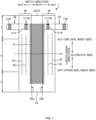
- FIG. 1 is a plan view of the diaper 1 in an unfolded and stretched state.
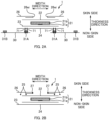
- FIG. 2A is an exploded illustrative view of a schematic cross-section of a back portion 7 of the diaper 1.
- FIG. 2B is an exploded illustrative view of a schematic cross-section of a crotch portion 5 of the diaper 1.
- the unfolded and stretched state of the diaper 1 refers to a state in which the diaper 1 has been unfolded and stretched such that wrinkles in the diaper 1 are substantially no longer visible, that is to say a state in which the diaper 1 has been stretched such that the lengths of constituent members of the diaper 1 (e.g., a later-described top sheet 22 and the like) match or are close to the dimensions of the members on their own.
- the diaper 1 of the present embodiment is a so-called open-type disposable diaper, and as shown in FIG. 1 , includes a front portion 3, a crotch portion 5, and a back portion 7.
- the front portion 3 is the portion that is located on the front portion side (front side, front waist side) of the wearer.
- the back portion 7 is the portion that is located on the back portion side (back side, back waist side) of the wearer.
- the front portion 3 and the back portion 7 are defined in this way for the sake of convenience, but the front portion 3 and the back portion 7 can be switched when the diaper 1 is used (worn).
- the back portion 7 may be located on the front side of the wearer
- the front portion 3 may be located on the back side of the wearer.
- the crotch portion 5 is the portion that is located between the front portion 3 and the back portion 7.
- the directions used in the following descriptions are defined as follows.
- the direction from the front portion 3 toward the back portion 7 is the "longitudinal direction", and the "width direction” is a direction orthogonal to the longitudinal direction.
- the line CL in FIG. 1 denotes a line that indicates the center of the diaper 1 in the longitudinal direction.
- the "thickness direction” is a direction orthogonal to the longitudinal direction and the width direction, and in this direction, the side corresponding to the wearer's skin is the "skin side”, and the side opposite thereto is the "non-skin side".
- the diaper 1 includes a main body portion 10 and belt members 30.
- the main body portion 10 is the portion that absorbs and holds a fluid such as urine excreted by the wearer, and as shown in FIG. 1 , is constituted by the front portion 3, the crotch portion 5, and the back portion 7, and is substantially rectangular in a plan view.
- the main body portion 10 mainly includes an absorbent body 21, a top sheet 22, a leak-proof sheet 23, a back sheet 24, and side sheets 26 (see FIGS. 2A and 2B ).
- the absorbent body 21 includes an absorbent core 21a constituted by layers of a liquid absorbent material that can absorb excrement such as urine, and is arranged extended over the front portion 3, the crotch portion 5, and the back portion 7.
- the dotted region in FIG. 1 indicates the region occupied by the absorbent core 21a.
- the absorbent body 21 (absorbent core 21a) of the present embodiment is substantially rectangular and elongated in the longitudinal direction. Note that the shape of the absorbent body 21 is not intended to be limited to the shape shown in FIG. 1 , and need only be provided in at least the crotch portion 5. Also, the absorbent body 21 may be configured such that the absorbent core 21a is covered by a core-wrapping sheet 21b.
- the absorbent body 21 of the present embodiment is arranged so as to be sandwiched between the top sheet 22 and the leak-proof sheet 23 in the thickness direction.
- the liquid absorbent material that constitutes the absorbent body 21 can be made of liquid absorbent fibers such as pulp fibers, or liquid-absorbent particulate matter such as a superabsorbent polymer.
- the liquid absorbent material may include a liquid absorbent material other than liquid absorbent fibers and liquid-absorbent particulate matter.
- the top sheet 22 is a liquid-permeable member arranged on the skin side of the absorbent body 21, and is made of nonwoven fabric, for example.
- the leak-proof sheet 23 is a liquid-impermeable member arranged on the non-skin side of the absorbent body 21, and is constituted by a resin film sheet, for example.
- the back sheet 24 is a member (exterior sheet) that constitutes the exterior of the non-skin side of the diaper 1, and is made of nonwoven fabric, for example.
- the back sheet 24 is arranged on the non-skin side of the leak-proof sheet 23 (see FIGS. 2A and 2B ).
- At least the crotch portion 5 of the main body portion 10 is provided with leg elastic members 25 (e.g., elastic strings; see FIG. 2B ) that can stretch and contract in the longitudinal direction and are arranged between the side sheets 26 and the back sheet 24 (the top sheet 22 in FIG. 2B ).
- the leg elastic members 25 are members that give the main body portion 10 stretchability in the crotch portion 5.
- the leg elastic members 25 are attached in a state of being stretched in the longitudinal direction. The leg elastic members 25 thus give the main body portion 10 contractive force in the longitudinal direction.
- the crotch portion 5 contracts along the longitudinal direction, and thus the main body portion 10 three-dimensionally deforms into a rounded shape that curves along the wearer's body, the two widthwise side portions of the main body portion 10 contract, and leg gathers are formed around the wearer's legs. Accordingly, the main body portion 10 is held in a shape that wraps around the wearer's crotch, thus improving the fit of the diaper 1. This also facilitates suppressing the case where excrement leaks from around the wearer's legs to the outside of the diaper 1.
- the side sheets 26 are a pair of members provided on the skin side in the thickness direction with respect to the top sheet 22 and on the two widthwise sides, and are made of nonwoven fabric, for example. In widthwise outward end regions, the side sheets 26 are joined to the top sheet 22 and the back sheet 24 in the thickness direction. Also, as shown in FIGS. 2A and 2B , the side sheets 26 are folded outward at widthwise inward ends 26ei such that the folded portions are overlaid thereon in the thickness direction. Between the portions of the folded side sheets 26 in the thickness direction, provided are LSG elastic members 27 (e.g., elastic strings) that can stretch and contract in the longitudinal direction. The LSG elastic members 27 are members that give the side sheets 26 stretchability in the crotch portion 5.
- LSG elastic members 27 are members that give the side sheets 26 stretchability in the crotch portion 5.
- the LSG elastic members 27 are attached in a state of being stretched in the longitudinal direction, and the LSG elastic members 27 exhibit contractive force in the longitudinal direction.
- the LSG elastic members 27 contract in the longitudinal direction, and thus the portions of the side sheets 26 that are not joined to the top sheet 22 (back sheet 24) rise up toward the wearer's skin, and the side sheets 26 function as leak-proof walls that suppress the lateral leakage of excrement or the like.
- the belt members 30 are respectively arranged at the two widthwise side portions of the main body portion 10 in the back portion 7 (back side) of the diaper 1 (see FIG. 1 ).
- the belt members 30 of the present embodiment each include a locking member 31 on both widthwise one side (inward side) or the widthwise other side (outward side), and the locking members 31 can be locked to the exterior sheet (back sheet 24) of the diaper 1.
- the locking members 31 are members having hooks that project in the thickness direction, and are constituted by hook-and-loop fasteners or the like.
- the hooks (not shown) of the locking members 31 become caught on the fibers at the surface of the nonwoven fabric that constitutes the exterior sheet (back sheet 24) of the diaper 1, and thus the belt members 30 are locked to the main body portion 10 (exterior sheet) via the locking member 31.
- the belt members 30 of the present embodiment each include the locking member 31 on both the widthwise one side (inward side) and the widthwise other side (outward side). Accordingly, both widthwise sides of the belt members 30 can be locked to exterior sheet (back sheet 24) of the diaper 1.
- the locking member 31 provided on the widthwise inward side will also be called an inward locking member 31A
- the locking member 31 provided on the widthwise outward side will also be called an outward locking member 31B.
- the belt members 30 are locked to the non-skin side of the back sheet 24 (exterior sheet) by the inward locking members 31A arranged on the widthwise inward side.
- the belt members 30 and the back sheet 24 (exterior sheet) are joined by additional joining portions 70. The additional joining portions 70 will be described in detail later.
- the outward locking members 31B arranged on the widthwise outward side are locked to the non-skin side of the back sheet 24 (exterior sheet) in the front portion 3 (front side) of the main body portion 10, thus forming a waist opening and a pair of leg openings of the diaper 1, and therefore the position of the diaper 1 can be fixed on the wearer's body (waist) (see FIGS. 3A and 3B ).
- the front portion 3 of the diaper 1 may be provided with target tape (not shown), which is for facilitating the locking of the outward locking members 31B, in a region that is on the non-skin side in the thickness direction in the widthwise central portion of the back sheet 24.
- target tape not shown
- a configuration is possible in which, when the diaper 1 is put on, the waist opening is formed by the outward locking member 31B of the widthwise one-side belt member 30 being locked to the non-skin-side surface of the widthwise other-side belt member 30.
- the longitudinal product length of the diaper 1 for a low-weight infant of the present embodiment (the dimension in the state where the product is stretched in the longitudinal direction so as to eliminate wrinkles) is in the range of 170 to 330 mm.
- the product length of the diaper 1 is 310 mm in the case of being for a low-birth-weight infant having a body weight less than 2500 g
- the product length of the diaper 1 is 270 mm in the case of being for a very-low-birth-weight infant having a body weight less than 1500 g
- the product length of the diaper 1 is 170 mm in the case of being for an extremely-low-birth-weight infant having a body weight less than 1000 g.
- the waist dimension of the diaper 1 for a low-weight infant of the present embodiment is in the range of 160 to 295 mm.
- the waist dimension is the dimension in the state where the widthwise outward end portion of one of the belt members 30 is aligned with the widthwise inward end portion of the other belt member 30, and the product is stretched to eliminate wrinkles. In other words, it is a dimension in the state where the product is stretched in the width direction.
- the waist dimension of the diaper 1 is 273.5 mm in the case of being for a low-birth-weight infant, and the waist dimension of the diaper 1 is 220 mm in the case of being for a very-low-birth-weight infant having a body weight less than 1500 g.
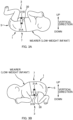
- FIGS. 3A and 3B are diagrams showing the diaper 1 in a put-on state.
- the back portion 7 of the diaper 1 in the unfolded state is arranged at the back part of the intended wearer, the crotch portion 5 is placed against the wearer's crotch part, and the front portion 3 is placed against the wearer's stomach part.
- the pair of belt members 30, which are locked to the two widthwise sides of the main body portion 10 in the back portion 7 (back side) are wrapped around the wearer's waist from the back side toward the front side, and the outward locking members 31B are locked to the non-skin side of the front portion 3 (front side) so as to fix the diaper 1 around the wearer's waist.
- the diaper 1 can thus be put on the intended wearer as shown FIG.
- the operations are performed in the reverse of when being put on, that is to say, the outward locking members 31B, which are locked to the back sheet 24 (exterior sheet) in the front portion 3 (front side), are peeled off to release the waist portion, and the diaper 1 can thus being taken off easily.
- low-weight infants which are the intended wearer of the diaper 1 of the present embodiment, are generally placed in an incubator to grow in a hospital or the like. For this reason, when the diaper for a low-weight infant is put on or taken off, the worker (person who is putting the diaper on the low-weight infant or taking it off) needs to put their hand through an operation window provided in the incubator and perform the task in a small space. Also, it is common for the low-weight infant to be placed in the incubator in a prone posture in which their back is curved in a C shape and their legs are sharply bent into an M shape, as shown in FIG. 3B .
- This posture will also be called the "positioning posture", which is a posture that is close to the posture taken in the mother's womb (fetus-like bent posture) and is a calming posture.
- the outward locking members 31B are located below the stomach of the wearer (low-weight infant) as shown in FIG. 3B .
- the diaper 1 of the present embodiment the inward locking members 31A of the belt members 30 can be peeled off the back sheet 24 (exterior sheet). For this reason, as shown in FIG. 3B , the worker can easily peel off the inward locking members 31A on the back side of the low-weight infant. Accordingly, the diaper can be changed without subjecting the low-weight infant to the burden of a change in posture, for example.
- the diaper 1 of the present embodiment can be put on backwards such that the front portion 3 is on the back side and the back portion 7 is on the front side, and therefore regardless of the posture of the low-weight infant when sleeping, the diaper 1 can be easily put on or taken off without moving the low-weight infant's body, thus making the diaper 1 favorable for low-weight infants.
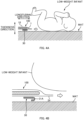
- FIGS. 4A and 4B are diagrams illustrating an operation of putting a diaper 100 according to a comparative example on a low-weight infant.
- the diaper 100 of the comparative example does not include the additional joining portions 70 for joining the belt members 30 to the main body portion 10.
- the belt members 30 are simply locked to the exterior sheet (back sheet 24) with use of the inward locking members 31A, which are hook-and-loop fasteners or the like, and the belt members 30 (inward locking members 31A) can be easily peeled away the exterior sheet.
- the configuration of the diaper 100 of the comparative example is similar to that of the diaper 1 of the present embodiment with the exception of the additional joining portions 70.
- FIG. 4A is a side view of the case where the diaper 100 is put on a low-weight infant who is sleeping face-up on a mat.
- the back portion 7 of the diaper 100 is arranged at the back part of the low-weight infant.
- the back portion 7 of the unfolded diaper 100 is arranged between the low-weight infant's body and the mat by being inserted under the low-weight infant's crotch.
- the diaper 100 is pressed downward toward the mat (i.e., vertically downward) while the back portion 7 of the diaper 100 is inserted between the low-weight infant's back part and the mat.
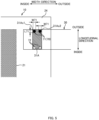
- FIG. 5 is an enlarged plan view illustrating the arrangement of the additional joining portions 70.
- the additional joining portions 70 are formed by using a known welding means (e.g., heat sealing or sonic sealing) to join portions of the belt members 30 to the back sheet 24 (exterior sheet).
- a pair of additional joining portions 71 which are shown as black circles, are provided at positions that are outward in the longitudinal direction with respect to the center of the belt member 30 and in two widthwise end portions of the inward locking member 31A.
- the pair of additional joining portions 71 are substantially circular (dot-shaped) and have a longitudinal length L71 and a widthwise length W71 that are substantially equivalent to each other.
- the pair of additional joining portions 71 are arranged at the same position in the longitudinal direction. Note that the shape of the pair of additional joining portions 71 is not limited to this, and they may have different shapes from each other. Also, the positions of the pair of additional joining portions 71 are not required to be the same in the longitudinal direction.
- two additional joining portions 72 which are shown as white circles, are provided at locations inward in the longitudinal direction with respect to the center of the belt member 30. Providing the additional joining portions 72 in addition to the additional joining portions 71 makes it possible to further suppress separation of the belt member 30 when the diaper 1 is put on, but it is not necessarily required that the additional joining portions 72 be provided.
- FIG. 6 is a diagram illustrating the operation of putting the diaper 1 of the present embodiment on a low-weight infant, and corresponds to FIG. 4B that illustrates the operation of putting on the diaper 100 of the comparative example.
- the back portion 7 of the diaper 1 in the unfolded state is arranged between the low-weight infant's body and the mat by being inserted under the low-weight infant's crotch.
- the belt members 30 and the main body portion 10 being joined by the additional joining portions 71 at longitudinally outward positions of the belt members 30 (i.e., positions in the vicinity of the leading end portions in the operation inserting the diaper 1), suppressed is the curling of the longitudinal outward ends of the belt members 30 shown in FIG. 4B .
- the inward locking members 31A are less likely to peel away from the exterior sheet (back sheet 24), suppressing the separation of the belt members 30 from the main body portion 10 during the operation of putting on the diaper 1.
- the additional joining portions 70 (71) are provided outward in the longitudinal direction with respect to the center of the belt member 30 in FIG. 5 , the effect of suppressing the separation of the belt member 30 from the main body portion 10 is obtained even if the additional joining portions 70 (e.g., the additional joining portions 72 in FIG. 5 ) are provided at the center or inward thereof in the longitudinal direction.
- the additional joining portions 71 (70) being provided so as to be overlapped with the inward locking member 31A in FIG. 5 , the locking of the inward locking member 31A to the exterior sheet (back sheet 24) becomes even stronger, and the separation of the belt member 30 is suppressed even further.
- the positions at which the additional joining portions 70 are provided are as close as possible to the outer peripheral edges of the inward locking members 31A.
- peeling is highly likely to begin at a corner portion of the outer peripheral edges of the inward locking members 31A, particularly in the case where the inward locking members 31A are rectangular. Accordingly, strengthening the locking at such portions makes it possible to further suppress separation of the belt members 30.
- two additional joining portions 71 are respectively provided at positions that are in two widthwise end portions and in a longitudinal outward end portions of the inward locking members 31A, and therefore the locking of the inward locking members 31A to the exterior sheet (back sheet 24) is strong in the corner portions of the inward locking members 31A, and separation of the belt members 30 is likely to be suppressed.
- additional joining portions 70 are formed at corners 31Ac1 and 31Ac2 that are intersections between the longitudinal outward end of the inward locking member 31A and the two widthwise ends of the inward locking member 31A.
- the corners 31Ac1 and 31Ac2 of the inward locking member 31A are joined to the exterior sheet (back sheet 24).
- the inward locking member 31A and the exterior sheet (back sheet 24) are joined without a gap in the thickness direction, thus suppressing the formation of peeling origin points, and further suppressing the separation of the belt member 30.
- the belt members 30 can be freely attached to and detached from the front portion 3 and the back portion 7 of the main body portion 10 as described above, thus preventing a burden from being placed on the low-weight infant's body when the diaper 1 is put on and taken off. Accordingly, the additional joining portions 70 that join the inward locking members 31A to the exterior sheet (back sheet 24) need to be able to be easily peeled off by a person's strength. In other words, the additional joining portions 70 need to detachably join the belt members 30 to the exterior sheet (back sheet 24). In the present embodiment, as shown in FIG. 5 , two dot-shaped additional joining portions 71 are provided in one portion of each inward locking member 31A.
- These additional joining portions 70 (71) are less likely to be peeled away by force commensurate with frictional force generated between the belt member 30 and the mat when the diaper is put on (see FIG. 6 ). However, when the diaper is taken off, these additional joining portions can be easily peeled away when a person forcefully pulls the belt member 30.
- the main body portion 10 is grabbed with one hand, a widthwise end portion of the belt member 30 is grabbed with the other hand, and the grabbed portions are pulled away from each other in the width direction, thus peeling away the locking member 31 (inward locking member 31A) . Accordingly, it is desirable that the additional joining portions 70 are easily peeled away when subjected to force along the width direction.
- the locking member 31 inward locking member 31A
- the additional joining portions 70 are not likely to be peeled away when subjected to force along the longitudinal direction.
- the additional joining portions 70 are formed such that a sum value ⁇ W70 of the widthwise length occupied by the additional joining portions 70 in the belt member 30 is larger than a sum value ⁇ L70 of the longitudinal length occupied by the additional joining portions 70 ( ⁇ W70 > ⁇ L70).
- the longitudinal region of the belt member 30 occupied by the additional joining portions 70 is smaller, thus allowing the additional joining portions 70 to be easily peeled away when the belt member 30 is pulled along the width direction.
- the widthwise region of the belt member 30 occupied by the additional joining portions 70 is larger, thus suppressing the peeling away of the additional joining portions 70 when the belt member 30 is pulled along the longitudinal direction.
- FIGS. 7A to 7C are schematic plan views of variations of the additional joining portions 70.
- additional joining portions 73 that have the same shape as the additional joining portions 71 in FIG. 5 are provided side-by-side along the width direction.
- a sum value ⁇ W73 of the widthwise length occupied by the additional joining portions 73 in the belt member 30 is larger than a sum value ⁇ L73 of the longitudinal length occupied by the additional joining portions 73 ( ⁇ W73 > ⁇ L73). Accordingly, the additional joining portions 73 of the belt member 30 are not likely to be peeled away when subjected to force along the longitudinal direction when the diaper 1 is put on. On the other hand, these additional joining portions are easily peeled away when the belt member 30 is subjected to force along the width direction when the diaper 1 is taken off.
- two additional joining portions 74 are substantially shaped as ellipses that are elongated in the width direction.
- a sum value ⁇ W74 of the widthwise length occupied by the additional joining portions 74 in the belt member 30 is larger than a sum value ⁇ L74 of the longitudinal length occupied by the additional joining portions 74 ( ⁇ W74 > ⁇ L74).
- a length W74 occupied in the width direction is larger than a length L74 occupied in the longitudinal direction (W74 > L74), and therefore the additional joining portions 74 of the belt member 30 are even less likely to be peeled away when subjected to force along the longitudinal direction when the diaper 1 is put on.
- FIG. 7C there is only one additional joining portion 75 that is substantially shaped as an ellipse that is longer in the width direction than the additional joining portions 74 in FIG. 7B .
- a sum value ⁇ W75 of the widthwise length occupied by the additional joining portion 75 in the belt member 30 is larger than a sum value ⁇ L75 of the longitudinal length occupied by the additional joining portion 75 ( ⁇ W75 > ⁇ L75).
- a length W75 occupied in the width direction is larger than a length L75 occupied in the longitudinal direction (W75 > L75). Accordingly, the additional joining portion 75 of the belt member 30 is even less likely to be peeled away when subjected to force along the longitudinal direction when the diaper 1 is put on.
- FIG. 8 is a schematic plan view of a case where additional joining portions 70 are provided outside the inward locking member 31A in the width direction.
- an additional joining portion 76 which is shown as a black circle, is provided at a position that is outward in the longitudinal direction with respect to the center of the belt member 30 and inward in the width direction with respect to an inward end 31Aei of the inward locking member 31A.
- an additional joining portion 77 which is shown as a black circle, is provided at a position that is outward in the longitudinal direction with respect to the center of the belt member 30 and outward in the width direction with respect to an outward end 31Aeo of the inward locking member 31A. Note that although the additional joining portion 76 and the additional joining portion 77 shown in FIG. 8 have the same shape, they may have shapes that are different from each other.
- the additional joining portions 70 are provided at positions not overlapped with the inward locking member 31A, it is possible to obtain effects similar to those of the additional joining portions 71 described using FIGS. 5 and 6 .
- the inward locking members 31A are not likely to be peeled away from the exterior sheet (back sheet 24), and it is possible to suppress the separation of the belt members 30 from the main body portion 10.
- the hooks (not shown) at the surface of the inward locking members 31A are not likely to be damaged or crushed by welding. This therefore suppresses a reduction in locking strength when the inward locking members 31A are peeled away from the exterior sheet (back sheet 24) and then locked once again.
- the sum value W76 + W77 of the widthwise lengths occupied by the additional joining portion 76 and the additional joining portion 77 in the belt member 30 is larger than the sum value L76 ( ⁇ L77) of the longitudinal lengths occupied by the additional joining portion 76 and the additional joining portion 77. Accordingly, similarly to the case described above, the additional joining portion 76 and the additional joining portion 77 are not likely to be peeled away when subjected to force along the longitudinal direction when the diaper 1 is put on, but are easily peeled away when subjected to force along the width direction when the diaper 1 is taken off.
- the additional joining portions 70 are provided at positions not overlapped with the inward locking member 31A, it is desirable that the additional joining portions 70 are arranged as close as possible to the outer peripheral edges of the inward locking member 31A. With respect to the width direction in FIG. 8 , the additional joining portion 76 that is inside the inward locking member 31A is arranged closer to the inward end of the inward locking member 31A than to the inward end of the belt member 30.
- a distance L1 between an inward end 30ei of the belt member 30 and the center position of the additional joining portion 76 is larger than a distance L2 between the center position of the additional joining portion 76 and the inward end 31Aei of the inward locking member 31A (L1 > L2) . Accordingly, when the diaper 1 is put on, the inward end 31Aei (corner 31Ac1) of the inward locking member 31A is not likely to become peeled away, and the separation of the belt member 30 from the main body portion 10 is suppressed.
- the additional joining portion 77 that is outside to the inward locking member 31A is arranged closer to the outward end of the inward locking member 31A than to the outward end of the belt member 30.
- a distance R1 between an outward end 24eo of the back sheet 24 (exterior sheet) and the center position of the additional joining portion 77 is laerger than a distance L2 between the center position of the additional joining portion 77 and the outward end 31Aeo of the inward locking member 31A (R1 > R2). Accordingly, when the diaper 1 is put on, the outward end 31Aeo (corner 31Ac2) of the inward locking member 31A is not likely to become peeled away, and the separation of the belt member 30 from the main body portion 10 is suppressed.
- FIG. 9 is a plan view of a diaper 2 in an unfolded and stretched state, as a variation of the diaper 1.
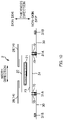
- FIG. 10 is an exploded illustrative view of the back portion 7 of the diaper 2.
- the main body portion 10 of the diaper 2 has a central band-shaped region 12 and side flaps 14.
- the central band-shaped region 12 is a band-shaped region that is constituted by the front portion 3, the crotch portion 5, and the back portion 7, and that is located in the central portion in the width direction.
- the central band-shaped region 12 is the region that corresponds to the main body portion 10 in the diaper 1.
- the central band-shaped region 12 mainly includes the absorbent body 21, the top sheet 22, the leak-proof sheet 23, and the back sheet 24 (exterior sheet).
- the side flaps 14 are portions located at the two widthwise side portions of the central band-shaped region 12.
- the side flaps 14 extend over the front portion 3, the crotch portion 5, and the back portion 7.
- the widthwise length (width) of the side flaps 14 in the crotch portion 5 is smaller than the widthwise length (width) of the side flaps 14 in the front portion 3 and the back portion 7.
- the side flaps 14 are mainly constituted by the side sheets 26 and the back sheet 24 (see FIG. 10 ).
- the pair of side flaps 14 are each provided with side-flap elastic members 15 that stretch and contract in the longitudinal direction.
- the side-flap elastic members 15 are elastic members such as elastic strings that stretch and contract in the longitudinal direction, and are members that give the leg openings stretchability when the diaper 2 is put on.
- the side-flap elastic members 15 are leg elastic members that allow the leg opening portions of the diaper 2 to fit around the wearer's legs.
- leg gathers are configured by the side-flap elastic members 15 giving stretchability to the side sheets 26 and the back sheet 24 in the crotch portion 5.
- the belt members 30 are arranged at the two widthwise side portions of the side flaps 14 in the back portion 7 of the diaper 2 (see FIG. 9 ).
- the belt members 30 each include locking members 31 (31A, 31B) constituted by hook-and-loop fasteners or the like on respective sides in the width direction, and the belt members 30 are locked to the non-skin side of the side flaps 14, that is to say to the back sheet 24 (exterior sheet), by the inward locking members 31A arranged on the widthwise inward side.
- portions of the belt members 30 and the side flaps 14 (back sheet 24) are joined by the additional joining portions 70.
- the configurations and functions of the additional joining portions 70 are similar to those in the diaper 1.
- the additional joining portions 70 when the diaper 2 is put on a low-weight infant, the curling of the outward ends of the belt members 30 in the longitudinal direction as described using FIG. 4B is suppressed. Accordingly, the inward locking members 31A are not likely to peel away from the exterior sheet (back sheet 24), and the separation of the belt members 30 from the side flaps 14 during the operation of putting on the diaper 2 is suppressed.
Landscapes
- Health & Medical Sciences (AREA)
- Epidemiology (AREA)
- Engineering & Computer Science (AREA)
- Biomedical Technology (AREA)
- Heart & Thoracic Surgery (AREA)
- Vascular Medicine (AREA)
- Life Sciences & Earth Sciences (AREA)
- Animal Behavior & Ethology (AREA)
- General Health & Medical Sciences (AREA)
- Public Health (AREA)
- Veterinary Medicine (AREA)
- Absorbent Articles And Supports Therefor (AREA)
- Orthopedics, Nursing, And Contraception (AREA)
Claims (11)
- Couche pour nourrissons de faible poids (1) ayant une direction allant dans le sens longitudinal et une direction allant dans le sens de la largeur qui se croisent l'une l'autre,
la couche pour nourrissons de faible poids (1) comportant :une feuille extérieure (24) agencée sur un côté non en contact avec la peau par rapport à un corps absorbant (21) ; etun élément formant ceinture (30) qui comprend un élément de blocage (31A) sur un côté dans la direction allant dans le sens de la largeur et qui comprend un élément de blocage (31B) sur un autre côté dans la direction allant dans le sens de la largeur,l'élément formant ceinture (30) étant bloqué au niveau d'un côté non en contact avec la peau de la feuille extérieure (24) par l'élément de blocage dudit un côté (31A),une partie d'assemblage supplémentaire (70) étant mise en oeuvre dans une région dudit un côté de l'élément formant ceinture (30),la partie d'assemblage supplémentaire (70) étant une partie qui assemble de manière détachable une partie de l'élément formant ceinture (30) à la feuille extérieure (24). - Couche pour nourrissons de faible poids (1) selon la revendication 1, dans laquelle
la partie d'assemblage supplémentaire (70) est mise en oeuvre vers l'extérieur dans la direction allant dans le sens longitudinal par rapport à un centre de l'élément formant ceinture (30). - Couche pour nourrissons de faible poids (1) selon la revendication 1 ou la revendication 2, dans laquelle
la partie d'assemblage supplémentaire (70) est mise en oeuvre au niveau d'un emplacement chevauché par l'élément de blocage dudit un côté (31A). - Couche pour nourrissons de faible poids (1) selon la revendication 3, dans laquelle
une paire des parties d'assemblage supplémentaires (70) sont respectivement mises en oeuvre dans deux parties d'extrémité dans le sens de la largeur de l'élément de blocage dudit un côté (31A) . - Couche pour nourrissons de faible poids (1) selon la revendication 4, dans laquelle
les parties d'assemblage supplémentaires (70) sont mises en oeuvre au niveau d'emplacements qui sont chevauchés par une extrémité extérieure longitudinale de l'élément de blocage dudit un côté (31A) et par deux extrémités dans le sens de la largeur de l'élément de blocage dudit un côté (31A). - Couche pour nourrissons de faible poids (1) selon la revendication 1 ou la revendication 2, dans laquelle
la partie d'assemblage supplémentaire (70) est mise en oeuvre au niveau d'un emplacement qui n'est pas chevauché par l'élément de blocage dudit un côté (31A). - Couche pour nourrissons de faible poids (1) selon la revendication 6, dans laquelleune partie d'assemblage supplémentaire (76) parmi les parties d'assemblage supplémentaires est mise en oeuvre vers l'intérieur dans la direction allant dans le sens de la largeur par rapport à une extrémité intérieure (31Aei) de l'élément de blocage dudit un côté (31A), etun autre partie d'assemblage supplémentaire (77) parmi les parties d'assemblage supplémentaires est mise en oeuvre vers l'extérieur dans la direction allant dans le sens de la largeur par rapport à une extrémité extérieure (31Aeo) de l'élément de blocage dudit un côté (31A).
- Couche pour nourrissons de faible poids (1) selon la revendication 7, dans laquelleen ce qui concerne une position centrale de la partie d'assemblage supplémentaire (76) qui est à l'intérieur de l'extrémité intérieure (31Aei) de l'élément de blocage dudit un côté (31A),une distance (L1) entre une extrémité intérieure (30ei) de l'élément formant ceinture (30) et la position centrale est supérieure dans la direction allant dans le sens de la largeur par rapport à une distance (L2) entre l'extrémité intérieure (31Aei) de l'élément de blocage dudit un côté (31A) et la position centrale.
- Couche pour nourrissons de faible poids (1) selon la revendication 7 ou la revendication 8, dans laquelleen ce qui concerne une position centrale de la partie d'assemblage supplémentaire (77) qui est à l'extérieur de l'extrémité extérieure (31Aeo) de l'élément de blocage dudit un côté (31A),une distance (R1) entre une extrémité extérieure (24eo) de la feuille extérieure (24) et la position centrale est supérieure dans la direction allant dans le sens de la largeur par rapport à une distance (R2) entre l'extrémité extérieure (31Aeo) de l'élément de blocage dudit un côté (31A) et la position centrale.
- Couche pour nourrissons de faible poids (1) selon l'une quelconque des revendications 1 à 9, dans laquelleune longueur totalisée occupée par la partie d'assemblage supplémentaire (70) dans l'élément formant ceinture (30) dans la direction allant dans le sens longitudinal
est inférieure àune longueur totalisée occupée par la partie d'assemblage supplémentaire (70) dans l'élément formant ceinture (30) dans la direction allant dans le sens de la largeur. - Couche pour nourrissons de faible poids (1) selon la revendication 10, dans laquellepour chaque partie d'assemblage supplémentaire (70),une longueur longitudinale de la partie d'assemblage supplémentaire (70) est plus courte qu'une longueur dans le sens de la largeur de la partie d'assemblage supplémentaire (70).
Applications Claiming Priority (2)
| Application Number | Priority Date | Filing Date | Title |
|---|---|---|---|
| JP2018032265A JP6585751B2 (ja) | 2018-02-26 | 2018-02-26 | 低体重児用おむつ |
| PCT/JP2019/006115 WO2019163780A1 (fr) | 2018-02-26 | 2019-02-19 | Couche pour nourrissons de poids insuffisant |
Publications (3)
| Publication Number | Publication Date |
|---|---|
| EP3738564A1 EP3738564A1 (fr) | 2020-11-18 |
| EP3738564A4 EP3738564A4 (fr) | 2021-04-28 |
| EP3738564B1 true EP3738564B1 (fr) | 2023-03-08 |
Family
ID=67687777
Family Applications (1)
| Application Number | Title | Priority Date | Filing Date |
|---|---|---|---|
| EP19756711.8A Active EP3738564B1 (fr) | 2018-02-26 | 2019-02-19 | Couche pour nourrissons de poids insuffisant |
Country Status (6)
| Country | Link |
|---|---|
| US (1) | US12036106B2 (fr) |
| EP (1) | EP3738564B1 (fr) |
| JP (1) | JP6585751B2 (fr) |
| CN (1) | CN111757721B (fr) |
| TW (1) | TWI773848B (fr) |
| WO (1) | WO2019163780A1 (fr) |
Families Citing this family (3)
| Publication number | Priority date | Publication date | Assignee | Title |
|---|---|---|---|---|
| JP6585751B2 (ja) | 2018-02-26 | 2019-10-02 | ユニ・チャーム株式会社 | 低体重児用おむつ |
| DE102021111498A1 (de) | 2021-05-04 | 2022-11-10 | LK Mahnke GmbH & Co. KG | Wegwerfbare Windel |
| JP7739679B2 (ja) * | 2022-02-17 | 2025-09-17 | 大王製紙株式会社 | 低出生体重児用吸収性物品 |
Family Cites Families (68)
| Publication number | Priority date | Publication date | Assignee | Title |
|---|---|---|---|---|
| US3501813A (en) * | 1965-11-10 | 1970-03-24 | Int Paper Canada | Method of forming a continuous fibrous web |
| JPH0359442A (ja) * | 1989-07-28 | 1991-03-14 | Nec Corp | レジスト膜検出装置 |
| KR970009710B1 (ko) * | 1992-12-30 | 1997-06-17 | 킴벌리-클라크 코포레이션 | 가먼트 부착 시스템 |
| JP3434663B2 (ja) * | 1996-02-27 | 2003-08-11 | ワイケイケイ株式会社 | 使い捨ておむつ用のファスナー用原材 |
| US6372952B1 (en) * | 1996-03-22 | 2002-04-16 | The Procter & Gamble Company | Absorbent components having a sustained acquisition rate capability upon absorbing multiple discharges of aqueous body fluids |
| US6932800B2 (en) * | 1997-03-27 | 2005-08-23 | The Procter & Gamble Company | Absorbent articles comprising a material having a high vertical wicking capacity |
| US7772455B1 (en) * | 1997-11-14 | 2010-08-10 | The Procter & Gamble Company | Disposable article providing improved management of bodily exudates |
| WO1999045877A1 (fr) * | 1998-03-13 | 1999-09-16 | The Procter & Gamble Company | Structures absorbantes comprenant des elements de stockage de fluide presentant une capacite amelioree de sechage des elements de distribution |
| ATE281136T1 (de) * | 1998-03-13 | 2004-11-15 | Procter & Gamble | Absorbierende strukturen mit flüssigkeitsspeichern mit verbesserter fähigkeit, verteilerelemente zu entwässern |
| US6570057B1 (en) * | 1998-03-13 | 2003-05-27 | The Procter & Gamble Company | Absorbent articles with improved distribution properties under sur-saturation |
| US6664439B1 (en) * | 1998-04-28 | 2003-12-16 | The Procter & Gamble Company | Absorbent articles with distribution materials positioned underneath storage material |
| US6720471B1 (en) * | 1998-04-28 | 2004-04-13 | The Procter & Gamble Company | Absorbent articles having reduced rewet with distribution materials positioned underneath storage material |
| US6018093A (en) * | 1998-06-29 | 2000-01-25 | The Procter & Gamble Company | Absorbent article including a calcium-based feces modification agent |
| HUP0103483A3 (en) * | 1998-06-29 | 2004-12-28 | Procter & Gamble | Absorbent article including a reducing agent for feces |
| US5998695A (en) * | 1998-06-29 | 1999-12-07 | The Procter & Gamble Company | Absorbent article including ionic complexing agent for feces |
| CN1314822A (zh) * | 1998-06-29 | 2001-09-26 | 宝洁公司 | 一次性废物处理装置 |
| JP3059442U (ja) * | 1998-11-30 | 1999-07-09 | 株式会社瑞光 | 使い捨てパンツ |
| JP3541144B2 (ja) * | 1999-05-31 | 2004-07-07 | ユニ・チャーム株式会社 | 便処理用の使い捨て着用物品 |
| JP3691292B2 (ja) * | 1999-06-29 | 2005-09-07 | ユニ・チャーム株式会社 | 便処理用の使い捨てパッド |
| JP3498035B2 (ja) * | 2000-03-07 | 2004-02-16 | ユニ・チャーム株式会社 | 衛生物品用の多層構造吸収部材 |
| JP3681320B2 (ja) * | 2000-03-31 | 2005-08-10 | ユニ・チャーム株式会社 | 体液吸収性着用物品 |
| US20020035354A1 (en) * | 2000-06-21 | 2002-03-21 | The Procter & Gamble Company | Absorbent barrier structures having a high convective air flow rate and articles made therefrom |
| JP3964611B2 (ja) * | 2000-08-25 | 2007-08-22 | ユニ・チャーム株式会社 | 衛生物品用の体液吸収性パネル |
| TW532150U (en) * | 2001-02-15 | 2003-05-11 | Uni Charm Corp | Disposable diaper |
| US7795492B2 (en) * | 2001-08-31 | 2010-09-14 | Sca Hygiene Products Ab | Absorbent article having openings in the absorbent body |
| DE10144128A1 (de) * | 2001-09-08 | 2003-03-27 | Hartmann Paul Ag | Saugkörper fü Hygieneartikel |
| JP3818969B2 (ja) * | 2002-07-26 | 2006-09-06 | 花王株式会社 | 前後どちらからでも装着が容易なおむつ |
| JP3978406B2 (ja) * | 2003-04-24 | 2007-09-19 | ユニ・チャーム株式会社 | 使い捨ておむつ |
| JP4279190B2 (ja) * | 2004-04-19 | 2009-06-17 | 大王製紙株式会社 | 使い捨ておむつ |
| JP4771756B2 (ja) * | 2005-06-17 | 2011-09-14 | ユニ・チャーム株式会社 | 吸収性物品 |
| JP2007202575A (ja) * | 2006-01-30 | 2007-08-16 | Livedo Corporation | 吸収用積層体および使い捨て吸収性物品 |
| RU2423094C2 (ru) * | 2006-07-31 | 2011-07-10 | Дайо Пейпер Корпорейшн | Одноразовый подгузник типа трусов |
| EP1918307A3 (fr) * | 2006-10-30 | 2010-01-20 | The Yokohama Rubber Co., Ltd. | Élastomère thermoplastique et composition à élastomère thermoplastique |
| JP4940001B2 (ja) * | 2007-04-09 | 2012-05-30 | 白十字株式会社 | 使い捨て吸収性物品 |
| JP5297675B2 (ja) * | 2008-03-31 | 2013-09-25 | 株式会社リブドゥコーポレーション | 止着テープおよびこの止着テープを備えた使い捨ておむつ、ならびにこれらの製造方法 |
| JP5091001B2 (ja) | 2008-04-30 | 2012-12-05 | 王子ネピア株式会社 | 仮止め止着テープの製造方法、仮止め止着テープ及びこれを用いた使い捨ておむつ |
| JP5328273B2 (ja) * | 2008-09-17 | 2013-10-30 | ユニ・チャーム株式会社 | 体液吸収性物品 |
| JP5306773B2 (ja) * | 2008-10-29 | 2013-10-02 | ユニ・チャーム株式会社 | 着用物品の吸液構造体 |
| KR101697384B1 (ko) * | 2009-03-19 | 2017-01-17 | 유니챰 가부시키가이샤 | 흡수성 물품 |
| JP5701027B2 (ja) * | 2010-11-30 | 2015-04-15 | ユニ・チャーム株式会社 | 使い捨て着用物品 |
| EP2535027B1 (fr) * | 2011-06-17 | 2022-08-17 | The Procter & Gamble Company | Article absorbant avec propriétés d'absorption améliorées |
| EP2535698B1 (fr) * | 2011-06-17 | 2023-12-06 | The Procter & Gamble Company | Article absorbant avec propriétés d'absorption améliorées |
| US9814634B2 (en) * | 2011-10-18 | 2017-11-14 | Basf Se | Fluid-absorbent article |
| JP6157103B2 (ja) * | 2011-12-20 | 2017-07-05 | 花王株式会社 | 使い捨ておむつ |
| JP5291213B1 (ja) * | 2012-03-30 | 2013-09-18 | ユニ・チャーム株式会社 | 使い捨ておむつ |
| JP5243638B1 (ja) * | 2012-03-30 | 2013-07-24 | ユニ・チャーム株式会社 | 使い捨ておむつ |
| EP2671554B1 (fr) * | 2012-06-08 | 2016-04-27 | The Procter & Gamble Company | Noyau absorbant pour articles absorbants |
| EP2679209B1 (fr) * | 2012-06-28 | 2015-03-04 | The Procter & Gamble Company | Articles absorbant avec noyau amélioré |
| EP2679210B1 (fr) * | 2012-06-28 | 2015-01-28 | The Procter & Gamble Company | Articles absorbants avec noyau amélioré |
| HK1214356A1 (zh) * | 2012-10-26 | 2016-07-22 | Pixie Scientific, Inc | 健康診斷系統和方法 |
| JP6157110B2 (ja) * | 2012-12-25 | 2017-07-05 | 花王株式会社 | 使い捨ておむつ |
| US20150065981A1 (en) * | 2013-08-27 | 2015-03-05 | The Procter & Gamble Company | Absorbent Articles With Channels |
| US9486368B2 (en) * | 2013-12-05 | 2016-11-08 | Medline Industries, Inc. | Disposable hygienic article with means for diagnostic testing |
| US20150282998A1 (en) * | 2014-04-08 | 2015-10-08 | The Procter & Gamble Company | Absorbent articles having substrates having zonal treatments |
| EP3187161B1 (fr) * | 2014-08-29 | 2021-12-15 | Daio Paper Corporation | Article absorbant |
| CN204133713U (zh) * | 2014-09-03 | 2015-02-04 | 株式会社利卫多公司 | 一次性尿布 |
| JP6412811B2 (ja) * | 2015-01-30 | 2018-10-24 | ユニ・チャーム株式会社 | 展開型使い捨ておむつ |
| JP6001713B2 (ja) * | 2015-03-16 | 2016-10-05 | 大王製紙株式会社 | 吸収性物品 |
| US20170246052A1 (en) * | 2016-02-25 | 2017-08-31 | The Procter & Gamble Company | Configurable absorbent articles |
| WO2017151712A1 (fr) * | 2016-03-01 | 2017-09-08 | The Procter & Gamble Company | Produit de couche adapté pour la collecte d'échantillon d'urine de nourrisson |
| JP6087462B1 (ja) * | 2016-05-13 | 2017-03-01 | ユニ・チャーム株式会社 | 吸収性物品 |
| WO2018226497A1 (fr) * | 2017-06-05 | 2018-12-13 | The Procter & Gamble Company | Articles absorbants configurables ayant une visualisation d'exsudat corporel améliorée |
| WO2019005650A1 (fr) * | 2017-06-27 | 2019-01-03 | The Procter & Gamble Company | Produit de couche conçu pour la collecte d'un échantillon d'exsudat de nourrisson |
| US11399992B2 (en) * | 2017-08-24 | 2022-08-02 | The Procter & Gamble Company | Configurable absorbent articles having removable fastening members |
| JP6758332B2 (ja) * | 2018-01-10 | 2020-09-23 | ユニ・チャーム株式会社 | 吸収性物品 |
| JP6585751B2 (ja) | 2018-02-26 | 2019-10-02 | ユニ・チャーム株式会社 | 低体重児用おむつ |
| JP6600025B2 (ja) * | 2018-02-28 | 2019-10-30 | ユニ・チャーム株式会社 | 低体重児用おむつ |
| JP6767407B2 (ja) * | 2018-02-28 | 2020-10-14 | ユニ・チャーム株式会社 | 低体重児用おむつ |
-
2018
- 2018-02-26 JP JP2018032265A patent/JP6585751B2/ja active Active
- 2018-11-15 TW TW107140516A patent/TWI773848B/zh active
-
2019
- 2019-02-19 EP EP19756711.8A patent/EP3738564B1/fr active Active
- 2019-02-19 WO PCT/JP2019/006115 patent/WO2019163780A1/fr not_active Ceased
- 2019-02-19 CN CN201980015191.XA patent/CN111757721B/zh active Active
-
2020
- 2020-08-26 US US17/003,702 patent/US12036106B2/en active Active
Also Published As
| Publication number | Publication date |
|---|---|
| EP3738564A4 (fr) | 2021-04-28 |
| CN111757721A (zh) | 2020-10-09 |
| JP6585751B2 (ja) | 2019-10-02 |
| TWI773848B (zh) | 2022-08-11 |
| WO2019163780A1 (fr) | 2019-08-29 |
| US12036106B2 (en) | 2024-07-16 |
| CN111757721B (zh) | 2022-03-29 |
| JP2019146689A (ja) | 2019-09-05 |
| US20200390621A1 (en) | 2020-12-17 |
| EP3738564A1 (fr) | 2020-11-18 |
| TW201936134A (zh) | 2019-09-16 |
Similar Documents
| Publication | Publication Date | Title |
|---|---|---|
| AU2015265236B2 (en) | Disposable diaper | |
| WO2015046632A1 (fr) | Couche jetable du type dépliable | |
| US12036106B2 (en) | Low-weight infant diaper | |
| CN106456389A (zh) | 体重在3000g以下的低体重婴儿用的展开型一次性尿布 | |
| JP2016030200A (ja) | 展開型使い捨ておむつ | |
| JP2016030202A (ja) | 展開型使い捨ておむつ | |
| US10799397B2 (en) | Absorbent article | |
| JP6402092B2 (ja) | 吸収性物品 | |
| EP3738565B1 (fr) | Couche pour nourrissons de faible poids | |
| RU2707697C1 (ru) | Абсорбирующее изделие | |
| EP3510984B1 (fr) | Couche jetable | |
| EP3372210B1 (fr) | Article absorbant | |
| JP2020000906A (ja) | 低体重児用おむつ | |
| CN111655211A (zh) | 纸尿裤 | |
| JP2018102704A (ja) | 吸収性物品 |
Legal Events
| Date | Code | Title | Description |
|---|---|---|---|
| STAA | Information on the status of an ep patent application or granted ep patent |
Free format text: STATUS: THE INTERNATIONAL PUBLICATION HAS BEEN MADE |
|
| PUAI | Public reference made under article 153(3) epc to a published international application that has entered the european phase |
Free format text: ORIGINAL CODE: 0009012 |
|
| STAA | Information on the status of an ep patent application or granted ep patent |
Free format text: STATUS: REQUEST FOR EXAMINATION WAS MADE |
|
| 17P | Request for examination filed |
Effective date: 20200812 |
|
| AK | Designated contracting states |
Kind code of ref document: A1 Designated state(s): AL AT BE BG CH CY CZ DE DK EE ES FI FR GB GR HR HU IE IS IT LI LT LU LV MC MK MT NL NO PL PT RO RS SE SI SK SM TR |
|
| AX | Request for extension of the european patent |
Extension state: BA ME |
|
| A4 | Supplementary search report drawn up and despatched |
Effective date: 20210329 |
|
| RIC1 | Information provided on ipc code assigned before grant |
Ipc: A61F 13/56 20060101AFI20210323BHEP Ipc: A61F 13/49 20060101ALI20210323BHEP Ipc: A61F 13/493 20060101ALI20210323BHEP |
|
| DAV | Request for validation of the european patent (deleted) | ||
| DAX | Request for extension of the european patent (deleted) | ||
| GRAP | Despatch of communication of intention to grant a patent |
Free format text: ORIGINAL CODE: EPIDOSNIGR1 |
|
| STAA | Information on the status of an ep patent application or granted ep patent |
Free format text: STATUS: GRANT OF PATENT IS INTENDED |
|
| RIC1 | Information provided on ipc code assigned before grant |
Ipc: A61F 13/493 20060101ALI20221021BHEP Ipc: A61F 13/49 20060101ALI20221021BHEP Ipc: A61F 13/56 20060101AFI20221021BHEP |
|
| INTG | Intention to grant announced |
Effective date: 20221110 |
|
| GRAS | Grant fee paid |
Free format text: ORIGINAL CODE: EPIDOSNIGR3 |
|
| GRAA | (expected) grant |
Free format text: ORIGINAL CODE: 0009210 |
|
| STAA | Information on the status of an ep patent application or granted ep patent |
Free format text: STATUS: THE PATENT HAS BEEN GRANTED |
|
| AK | Designated contracting states |
Kind code of ref document: B1 Designated state(s): AL AT BE BG CH CY CZ DE DK EE ES FI FR GB GR HR HU IE IS IT LI LT LU LV MC MK MT NL NO PL PT RO RS SE SI SK SM TR |
|
| REG | Reference to a national code |
Ref country code: CH Ref legal event code: EP Ref country code: AT Ref legal event code: REF Ref document number: 1552094 Country of ref document: AT Kind code of ref document: T Effective date: 20230315 |
|
| REG | Reference to a national code |
Ref country code: IE Ref legal event code: FG4D |
|
| REG | Reference to a national code |
Ref country code: DE Ref legal event code: R096 Ref document number: 602019026193 Country of ref document: DE |
|
| REG | Reference to a national code |
Ref country code: LT Ref legal event code: MG9D |
|
| REG | Reference to a national code |
Ref country code: NL Ref legal event code: MP Effective date: 20230308 |
|
| PG25 | Lapsed in a contracting state [announced via postgrant information from national office to epo] |
Ref country code: RS Free format text: LAPSE BECAUSE OF FAILURE TO SUBMIT A TRANSLATION OF THE DESCRIPTION OR TO PAY THE FEE WITHIN THE PRESCRIBED TIME-LIMIT Effective date: 20230308 Ref country code: NO Free format text: LAPSE BECAUSE OF FAILURE TO SUBMIT A TRANSLATION OF THE DESCRIPTION OR TO PAY THE FEE WITHIN THE PRESCRIBED TIME-LIMIT Effective date: 20230608 Ref country code: LV Free format text: LAPSE BECAUSE OF FAILURE TO SUBMIT A TRANSLATION OF THE DESCRIPTION OR TO PAY THE FEE WITHIN THE PRESCRIBED TIME-LIMIT Effective date: 20230308 Ref country code: LT Free format text: LAPSE BECAUSE OF FAILURE TO SUBMIT A TRANSLATION OF THE DESCRIPTION OR TO PAY THE FEE WITHIN THE PRESCRIBED TIME-LIMIT Effective date: 20230308 Ref country code: HR Free format text: LAPSE BECAUSE OF FAILURE TO SUBMIT A TRANSLATION OF THE DESCRIPTION OR TO PAY THE FEE WITHIN THE PRESCRIBED TIME-LIMIT Effective date: 20230308 Ref country code: ES Free format text: LAPSE BECAUSE OF FAILURE TO SUBMIT A TRANSLATION OF THE DESCRIPTION OR TO PAY THE FEE WITHIN THE PRESCRIBED TIME-LIMIT Effective date: 20230308 |
|
| REG | Reference to a national code |
Ref country code: AT Ref legal event code: MK05 Ref document number: 1552094 Country of ref document: AT Kind code of ref document: T Effective date: 20230308 |
|
| PG25 | Lapsed in a contracting state [announced via postgrant information from national office to epo] |
Ref country code: SE Free format text: LAPSE BECAUSE OF FAILURE TO SUBMIT A TRANSLATION OF THE DESCRIPTION OR TO PAY THE FEE WITHIN THE PRESCRIBED TIME-LIMIT Effective date: 20230308 Ref country code: NL Free format text: LAPSE BECAUSE OF FAILURE TO SUBMIT A TRANSLATION OF THE DESCRIPTION OR TO PAY THE FEE WITHIN THE PRESCRIBED TIME-LIMIT Effective date: 20230308 Ref country code: GR Free format text: LAPSE BECAUSE OF FAILURE TO SUBMIT A TRANSLATION OF THE DESCRIPTION OR TO PAY THE FEE WITHIN THE PRESCRIBED TIME-LIMIT Effective date: 20230609 Ref country code: FI Free format text: LAPSE BECAUSE OF FAILURE TO SUBMIT A TRANSLATION OF THE DESCRIPTION OR TO PAY THE FEE WITHIN THE PRESCRIBED TIME-LIMIT Effective date: 20230308 |
|
| PG25 | Lapsed in a contracting state [announced via postgrant information from national office to epo] |
Ref country code: SM Free format text: LAPSE BECAUSE OF FAILURE TO SUBMIT A TRANSLATION OF THE DESCRIPTION OR TO PAY THE FEE WITHIN THE PRESCRIBED TIME-LIMIT Effective date: 20230308 Ref country code: RO Free format text: LAPSE BECAUSE OF FAILURE TO SUBMIT A TRANSLATION OF THE DESCRIPTION OR TO PAY THE FEE WITHIN THE PRESCRIBED TIME-LIMIT Effective date: 20230308 Ref country code: PT Free format text: LAPSE BECAUSE OF FAILURE TO SUBMIT A TRANSLATION OF THE DESCRIPTION OR TO PAY THE FEE WITHIN THE PRESCRIBED TIME-LIMIT Effective date: 20230710 Ref country code: EE Free format text: LAPSE BECAUSE OF FAILURE TO SUBMIT A TRANSLATION OF THE DESCRIPTION OR TO PAY THE FEE WITHIN THE PRESCRIBED TIME-LIMIT Effective date: 20230308 Ref country code: CZ Free format text: LAPSE BECAUSE OF FAILURE TO SUBMIT A TRANSLATION OF THE DESCRIPTION OR TO PAY THE FEE WITHIN THE PRESCRIBED TIME-LIMIT Effective date: 20230308 Ref country code: AT Free format text: LAPSE BECAUSE OF FAILURE TO SUBMIT A TRANSLATION OF THE DESCRIPTION OR TO PAY THE FEE WITHIN THE PRESCRIBED TIME-LIMIT Effective date: 20230308 |
|
| PG25 | Lapsed in a contracting state [announced via postgrant information from national office to epo] |
Ref country code: SK Free format text: LAPSE BECAUSE OF FAILURE TO SUBMIT A TRANSLATION OF THE DESCRIPTION OR TO PAY THE FEE WITHIN THE PRESCRIBED TIME-LIMIT Effective date: 20230308 Ref country code: PL Free format text: LAPSE BECAUSE OF FAILURE TO SUBMIT A TRANSLATION OF THE DESCRIPTION OR TO PAY THE FEE WITHIN THE PRESCRIBED TIME-LIMIT Effective date: 20230308 Ref country code: IS Free format text: LAPSE BECAUSE OF FAILURE TO SUBMIT A TRANSLATION OF THE DESCRIPTION OR TO PAY THE FEE WITHIN THE PRESCRIBED TIME-LIMIT Effective date: 20230708 |
|
| REG | Reference to a national code |
Ref country code: DE Ref legal event code: R097 Ref document number: 602019026193 Country of ref document: DE |
|
| PLBE | No opposition filed within time limit |
Free format text: ORIGINAL CODE: 0009261 |
|
| STAA | Information on the status of an ep patent application or granted ep patent |
Free format text: STATUS: NO OPPOSITION FILED WITHIN TIME LIMIT |
|
| PG25 | Lapsed in a contracting state [announced via postgrant information from national office to epo] |
Ref country code: SI Free format text: LAPSE BECAUSE OF FAILURE TO SUBMIT A TRANSLATION OF THE DESCRIPTION OR TO PAY THE FEE WITHIN THE PRESCRIBED TIME-LIMIT Effective date: 20230308 Ref country code: DK Free format text: LAPSE BECAUSE OF FAILURE TO SUBMIT A TRANSLATION OF THE DESCRIPTION OR TO PAY THE FEE WITHIN THE PRESCRIBED TIME-LIMIT Effective date: 20230308 |
|
| 26N | No opposition filed |
Effective date: 20231211 |
|
| PG25 | Lapsed in a contracting state [announced via postgrant information from national office to epo] |
Ref country code: IT Free format text: LAPSE BECAUSE OF FAILURE TO SUBMIT A TRANSLATION OF THE DESCRIPTION OR TO PAY THE FEE WITHIN THE PRESCRIBED TIME-LIMIT Effective date: 20230308 |
|
| PG25 | Lapsed in a contracting state [announced via postgrant information from national office to epo] |
Ref country code: MC Free format text: LAPSE BECAUSE OF FAILURE TO SUBMIT A TRANSLATION OF THE DESCRIPTION OR TO PAY THE FEE WITHIN THE PRESCRIBED TIME-LIMIT Effective date: 20230308 |
|
| REG | Reference to a national code |
Ref country code: CH Ref legal event code: PL |
|
| PG25 | Lapsed in a contracting state [announced via postgrant information from national office to epo] |
Ref country code: LU Free format text: LAPSE BECAUSE OF NON-PAYMENT OF DUE FEES Effective date: 20240219 |
|
| PG25 | Lapsed in a contracting state [announced via postgrant information from national office to epo] |
Ref country code: CH Free format text: LAPSE BECAUSE OF NON-PAYMENT OF DUE FEES Effective date: 20240229 |
|
| GBPC | Gb: european patent ceased through non-payment of renewal fee |
Effective date: 20240219 |
|
| PG25 | Lapsed in a contracting state [announced via postgrant information from national office to epo] |
Ref country code: LU Free format text: LAPSE BECAUSE OF NON-PAYMENT OF DUE FEES Effective date: 20240219 Ref country code: CH Free format text: LAPSE BECAUSE OF NON-PAYMENT OF DUE FEES Effective date: 20240229 |
|
| PG25 | Lapsed in a contracting state [announced via postgrant information from national office to epo] |
Ref country code: BG Free format text: LAPSE BECAUSE OF FAILURE TO SUBMIT A TRANSLATION OF THE DESCRIPTION OR TO PAY THE FEE WITHIN THE PRESCRIBED TIME-LIMIT Effective date: 20230308 |
|
| PG25 | Lapsed in a contracting state [announced via postgrant information from national office to epo] |
Ref country code: BG Free format text: LAPSE BECAUSE OF FAILURE TO SUBMIT A TRANSLATION OF THE DESCRIPTION OR TO PAY THE FEE WITHIN THE PRESCRIBED TIME-LIMIT Effective date: 20230308 |
|
| REG | Reference to a national code |
Ref country code: BE Ref legal event code: MM Effective date: 20240229 |
|
| PG25 | Lapsed in a contracting state [announced via postgrant information from national office to epo] |
Ref country code: BE Free format text: LAPSE BECAUSE OF NON-PAYMENT OF DUE FEES Effective date: 20240229 |
|
| PG25 | Lapsed in a contracting state [announced via postgrant information from national office to epo] |
Ref country code: GB Free format text: LAPSE BECAUSE OF NON-PAYMENT OF DUE FEES Effective date: 20240219 |
|
| PG25 | Lapsed in a contracting state [announced via postgrant information from national office to epo] |
Ref country code: FR Free format text: LAPSE BECAUSE OF NON-PAYMENT OF DUE FEES Effective date: 20240229 |
|
| PG25 | Lapsed in a contracting state [announced via postgrant information from national office to epo] |
Ref country code: IE Free format text: LAPSE BECAUSE OF NON-PAYMENT OF DUE FEES Effective date: 20240219 |
|
| PG25 | Lapsed in a contracting state [announced via postgrant information from national office to epo] |
Ref country code: IE Free format text: LAPSE BECAUSE OF NON-PAYMENT OF DUE FEES Effective date: 20240219 Ref country code: GB Free format text: LAPSE BECAUSE OF NON-PAYMENT OF DUE FEES Effective date: 20240219 Ref country code: FR Free format text: LAPSE BECAUSE OF NON-PAYMENT OF DUE FEES Effective date: 20240229 Ref country code: BE Free format text: LAPSE BECAUSE OF NON-PAYMENT OF DUE FEES Effective date: 20240229 |
|
| PG25 | Lapsed in a contracting state [announced via postgrant information from national office to epo] |
Ref country code: CY Free format text: LAPSE BECAUSE OF FAILURE TO SUBMIT A TRANSLATION OF THE DESCRIPTION OR TO PAY THE FEE WITHIN THE PRESCRIBED TIME-LIMIT; INVALID AB INITIO Effective date: 20190219 |
|
| PG25 | Lapsed in a contracting state [announced via postgrant information from national office to epo] |
Ref country code: HU Free format text: LAPSE BECAUSE OF FAILURE TO SUBMIT A TRANSLATION OF THE DESCRIPTION OR TO PAY THE FEE WITHIN THE PRESCRIBED TIME-LIMIT; INVALID AB INITIO Effective date: 20190219 |
|
| PG25 | Lapsed in a contracting state [announced via postgrant information from national office to epo] |
Ref country code: TR Free format text: LAPSE BECAUSE OF FAILURE TO SUBMIT A TRANSLATION OF THE DESCRIPTION OR TO PAY THE FEE WITHIN THE PRESCRIBED TIME-LIMIT Effective date: 20230308 |
|
| PGFP | Annual fee paid to national office [announced via postgrant information from national office to epo] |
Ref country code: DE Payment date: 20251230 Year of fee payment: 8 |