EP3739843B1 - Udp-kommunikationsverfahren über multiple kommunikationswege zwischen zwei endgeräten - Google Patents
Udp-kommunikationsverfahren über multiple kommunikationswege zwischen zwei endgeräten Download PDFInfo
- Publication number
- EP3739843B1 EP3739843B1 EP20185234.0A EP20185234A EP3739843B1 EP 3739843 B1 EP3739843 B1 EP 3739843B1 EP 20185234 A EP20185234 A EP 20185234A EP 3739843 B1 EP3739843 B1 EP 3739843B1
- Authority
- EP
- European Patent Office
- Prior art keywords
- communicating device
- udp
- tcp
- communication
- multipath
- Prior art date
- Legal status (The legal status is an assumption and is not a legal conclusion. Google has not performed a legal analysis and makes no representation as to the accuracy of the status listed.)
- Active
Links
Images



Classifications
-
- H—ELECTRICITY
- H04—ELECTRIC COMMUNICATION TECHNIQUE
- H04L—TRANSMISSION OF DIGITAL INFORMATION, e.g. TELEGRAPHIC COMMUNICATION
- H04L69/00—Network arrangements, protocols or services independent of the application payload and not provided for in the other groups of this subclass
- H04L69/14—Multichannel or multilink protocols
-
- H—ELECTRICITY
- H04—ELECTRIC COMMUNICATION TECHNIQUE
- H04L—TRANSMISSION OF DIGITAL INFORMATION, e.g. TELEGRAPHIC COMMUNICATION
- H04L67/00—Network arrangements or protocols for supporting network services or applications
- H04L67/14—Session management
-
- H—ELECTRICITY
- H04—ELECTRIC COMMUNICATION TECHNIQUE
- H04L—TRANSMISSION OF DIGITAL INFORMATION, e.g. TELEGRAPHIC COMMUNICATION
- H04L63/00—Network architectures or network communication protocols for network security
- H04L63/08—Network architectures or network communication protocols for network security for authentication of entities
- H04L63/0853—Network architectures or network communication protocols for network security for authentication of entities using an additional device, e.g. smartcard, SIM or a different communication terminal
-
- H—ELECTRICITY
- H04—ELECTRIC COMMUNICATION TECHNIQUE
- H04L—TRANSMISSION OF DIGITAL INFORMATION, e.g. TELEGRAPHIC COMMUNICATION
- H04L63/00—Network architectures or network communication protocols for network security
- H04L63/12—Applying verification of the received information
- H04L63/126—Applying verification of the received information the source of the received data
-
- H—ELECTRICITY
- H04—ELECTRIC COMMUNICATION TECHNIQUE
- H04L—TRANSMISSION OF DIGITAL INFORMATION, e.g. TELEGRAPHIC COMMUNICATION
- H04L69/00—Network arrangements, protocols or services independent of the application payload and not provided for in the other groups of this subclass
- H04L69/16—Implementation or adaptation of Internet protocol [IP], of transmission control protocol [TCP] or of user datagram protocol [UDP]
-
- H—ELECTRICITY
- H04—ELECTRIC COMMUNICATION TECHNIQUE
- H04L—TRANSMISSION OF DIGITAL INFORMATION, e.g. TELEGRAPHIC COMMUNICATION
- H04L69/00—Network arrangements, protocols or services independent of the application payload and not provided for in the other groups of this subclass
- H04L69/18—Multiprotocol handlers, e.g. single devices capable of handling multiple protocols
Definitions
- the present invention relates to the field of telecommunications, and in particular to communications networks able to implement the IP (Internet Protocol) protocol. More particularly, the present invention relates to the provision of services in “value-added” IP networks, that is to say networks capable of carrying out differentiated processing depending on the nature of the traffic routed in the network.
- IP Internet Protocol
- the invention applies in particular to any type of client device (“ User Equipment ”) such as a fixed or mobile terminal, a “connected TV”, or a residential gateway (i.e. a home or company gateway), or a network operator gateway (“ Gateway ” in English), or even a TV decoder (“ Set-Top Box ”, or STB in English).
- User Equipment such as a fixed or mobile terminal, a “connected TV”, or a residential gateway (i.e. a home or company gateway), or a network operator gateway (“ Gateway ” in English), or even a TV decoder (“ Set-Top Box ”, or STB in English).
- Terminal a client device of any type will often be referred to as a "terminal” hereinafter.
- Terminals such as smart phones (" smartphone “ in English) and personal computers (" Personal Computer “, or PC in English) are now able to activate and operate several logical interfaces linked to one or more physical interfaces .
- Such terminals are called “multi-interfaces” (“ Multi-Interface ”, or MIF in English).
- Multi-Interface When a terminal has several interfaces capable of connecting it to different access networks (for example: fixed, mobile, or WLAN), it then benefits from so-called “hybrid” access, because it combines different access networks.
- MIF Mobility Management Function
- a device can become MIF in the process of establishing a simple call (i.e., a call established along a single path with a given correspondent), or even after establishing a call. simple.
- a device does not know a priori whether it is possible for it to use several distinct paths to establish communication with a given correspondent; more precisely, the device only acquires this information (if any) at the end of a phase during which it attempts to establish a communication using multiple paths with the correspondent.
- a “multipath communication” is a communication established between two devices simultaneously using one or more paths between these two devices.
- the establishment and maintenance of such a communication relies on the use of a dedicated protocol, such as MPTCP (Multi-Path TCP), which can optionally be defined as an extension of a previously defined transport protocol. , such as TCP (initials of the English words " Transmission Control Protocol " meaning "Transmission Control Protocol”).
- MPTCP Multi-Path TCP
- TCP transmission Control Protocol
- a multipath communication is an aggregate of one or more simple communications using the same path or different paths (partially or completely disjoint).
- link aggregation the grouping of several links associated with as many (logical) interfaces as if it were a single link associated with a single interface, particularly with the aim of increasing throughput beyond the limits of a single link, but also to apply the same operating procedures to all the links thus aggregated (notion of " fate sharing ").
- the service offers concerning a terminal with hybrid access are based on the introduction into the network of functions making it possible to aggregate all of the network communications of a terminal (for example: WLAN and 3G, or ADSL , WLAN and 4G).
- Link aggregation also makes it possible to ensure that other interfaces take over if a network link fails (principle of redundancy). Link aggregation applies to any type of traffic carried along these links, including IP traffic.
- Link aggregation can also be used to spread traffic across multiple links.
- the distribution of traffic between links that are the subject of an aggregate depends on various parameters; the distribution of traffic can thus depend on the traffic engineering policy (for example favoring the routing of a particular traffic on a link whose characteristics in terms of robustness or availability are compatible with the nature of said traffic), or the Quality of Service policy (“ Quality of Service ”, or QoS in English) which can for example favor certain links in a context of traffic prioritization.
- a terminal T which communicates with a server S via several IP networks denoted R1, ..., Rm and O, by implementing a multipath communication protocol.
- the nature of the different access networks R1, ..., Rm can be wired, wireless, or other.
- the terminal T may have the ability to connect to different access networks simultaneously or not.
- relay device R a terminal T placed behind a piece of equipment, called the relay device R; this relay device R communicates with a server S via several IP networks denoted R1, ..., Rm and O, by implementing a multipath communication protocol.
- the term “relay device” will be used for equipment located in the network and acting on behalf of one or more client devices, such as a terminal or a gateway. This configuration allows the client device to benefit from optimized use of available network resources, and also to establish multipath communications in a reduced delay.
- link aggregation makes no assumptions about the configuration of the remote machine.
- a source machine can request a link aggregation function without the remote machine using such a function.
- the transport protocols most used by software applications to communicate over the Internet are TCP (mentioned above) and UDP (initials of the English words " User Datagram Protocol " meaning "User Datagram Protocol”).
- TCP Transmission Control Protocol
- UDP User Datagram Protocol
- the technical means allowing a client device/relay device to optimize the use of available network resources according to the needs and constraints of the applications based on TCP or UDP are likely to bring a significant improvement in the level of quality associated with the use of such applications.
- some Internet players are experimenting on a large scale with alternatives to TCP that rely on UDP (and, more specifically, on an encapsulation scheme). From this point of view, service providers and IP network operators are committed to providing a comparable level of quality of use between applications based on TCP and those based on UDP.
- UDP datagram refers to an IP packet transported according to the UDP protocol.
- This solution advantageously makes it possible to use the same functions to establish multipath communications both for TCP traffic and for UDP traffic.
- the disadvantage of this solution is that it offers degraded performance due to the difference in size between the TCP header (20 bytes not counting the options, cf. figure 2a ) and the UDP header (8 bytes, cf. figure 2b ).
- this size difference can cause fragmentation of UDP datagrams.
- This fragmentation forces network operators to modify certain parameters such as the value of the MTU (initials of the English words " Maximum Transfer Unit "), which corresponds to the maximum size of the packets that can be transmitted on a given link: if the size of a packet exceeds the value of the MTU, then the source sending the packet is informed of this excess and is invited to fragment said packet of size greater than the MTU value.
- the modification of such parameters is not always possible in certain contexts, for example due to technological limitations.
- the reliable transport of data characteristic of the TCP protocol can induce a degradation of service for UDP applications.
- the authors of the present invention have realized that the UDP datagrams sent by a transmitting communicating device to a receiving communicating device, using different source IP addresses or different source port numbers, must be adequately identified if one wants to allow the receiving communicating device to correlate all of the UDP datagrams associated with the same multipath UDP communication. Such identification in fact makes it possible to preserve the integrity of the exchange of data between the two devices.
- the sender communicating device inserts into the UDP datagrams that it sends a context identifier, which will be called “Context_ID”; such multipath UDP communication will be referred to as "MPUDP".
- the present invention is based on the native routing of UDP datagrams.
- a typical example of application of the invention is the transfer of files using the resources of the TFTP (Trivial File Transfer Protocol) protocol, or even the optimized management of statistics collection streams based on the SNMP protocol (initials of the English words " Simple Network Management Protocol ”), which uses UDP ports 161 and 162.
- TFTP Trivial File Transfer Protocol
- SNMP Simple Network Management Protocol
- a terminal with several network attachments acting as a TFTP client can dynamically use all the available paths that allow it to access the TFTP server.
- the data transfer time will thus be improved for the benefit of an optimized customer experience.
- the invention makes it possible in particular to make the routing of the traffic more reliable by making it possible to use a fallback path in the event of unavailability of the primary path.
- the communicating devices involved in a communication can be any device compatible with the IP protocol.
- a communicating device can be of any type, for example a client device, or a content server accessible on the Internet, or even a traffic concentrator (remember that a “traffic concentrator” is a network function, physical or virtual, making it possible to aggregate communications using the different paths likely to be used by a given device to establish communication with a remote device).
- a traffic concentrator is a network function, physical or virtual, making it possible to aggregate communications using the different paths likely to be used by a given device to establish communication with a remote device.
- It can have one or more IP addresses assigned to each of its physical or logical interfaces. It may also have only a single interface, in which case it will be assumed that it is located behind a relay device (such as a router or a residential gateway) connected to one or more networks and compatible with a mechanism of link aggregation.
- a relay device such as a router or a residential gateway
- the first communicating device and/or the second communicating device also inserts into said messages a security token enabling the receiver of these messages to authenticate the sender thereof.
- the first communicating device and/or the second communicating device also inserts into said messages information allowing the receiver of these messages to process them in their order of transmission.
- a possible offset is corrected between the order of transmission and the order of arrival of the UDP datagrams, an offset which can be caused in particular by a distortion of the level of quality relating to the various paths used.
- the reliability of the data exchanges (including for example the exchange of IP addresses, port numbers, or security tokens) is ensured, thanks to the TCP or MPTCP protocol, allowing the establishment of communications Multipath UDP.
- said communicating device also comprises means for inserting into the messages that it sends a security token enabling the receiver of these messages to authenticate the sender.
- said communicating device further comprises means for inserting into the messages that it sends information allowing the receiver of these messages to process them in their order of transmission.
- said communicating device embeds a relay comprising means for transmitting to a second communicating device a session establishment message according to the TCP transport protocol (Transmission Control Protocol) containing a dedicated option capable of signaling to said second communicating device that the first communicating device is compatible with multipath UDP communications.
- TCP transport protocol Transmission Control Protocol
- the invention also relates to a computer program downloadable from a communications network and/or stored on a medium readable by computer and/or executable by a microprocessor.
- This computer program is remarkable in that it comprises instructions for the execution of the steps of one of the communication methods briefly explained above, when it is executed on a computer.
- a simple UDP communication is identified by the following set of parameters: source IP address, source port number, destination IP address, and destination port number.
- a multipath UDP communication is, in general, a communication associated with several sets of parameters ⁇ source IP address, source port number, destination IP address, destination port number ⁇ ; the variation of at least one of these four parameters identifies a different path (different simple communication).
- a multipath UDP communication is composed of several simple UDP communications.
- the picture 3 represents, by way of example, a terminal T compatible with multipath communications, connected, via a residential gateway CPE (initials of the English words " Customer Premises Equipment "), three access networks N1, N2 and N3 (wired or wireless) and the Internet, to a server S which is also compatible with multipath communications.
- a first communicating device inserts, in the IP packets sent according to a UDP transport mode to a second communicating device, a context identifier called “Context_ID”.
- the context identifier must be unique for each MPUDP communication established between two communicating devices.
- a communicating device can however reuse a context identifier that would have been used in the context of a previous communication, but now terminated, if there is no risk of collision with the context identifier of a communication in Classes.
- a context identifier can be chosen by the receiving communicating device, or be the result of the association of an identifier chosen by the transmitting communicating device with another identifier chosen by the receiving communicating device; these variants are only possible if an information exchange step between the two devices has been established before the actual sending of the UDP datagrams via multiple paths.
- the context identifier can also be chosen by another entity, such as a network manager who controls the transmitting communicating device, or the receiving communicating device, or both devices.
- the figure 4 illustrates MPUDP communication between a terminal T and a server S.
- UDP datagrams are sent using three simple UDP communications.
- the server S inserts the context identifier ID#1 in the packets that it sends to T.
- FIG 5 illustrates an MPUDP communication between a terminal T1 and a terminal T2 using the context identifier ID#1, and in which a terminal T3 tries to insert data (for example, by spoofing an IP address of T2). If the "Authentication_Token" security token included by T3 is not identical to that used by T2, then T1 does not take into account the data transmitted by T3.
- the context identifier as well as additional data can be inserted into an IP packet, and are, according to a first variant, positioned immediately after the UDP data.
- the "IP Length" value indicates the overall size of the IP packet including that of the IP header (20 bytes in IPv4, 40 bytes in IPv6), while the "UDP Length” value indicates the total size of the UDP header and payload data.
- the context identifier is transported in the field containing the useful data (“ payload ”) UDP.
- one defines new dedicated IPv4 options (in which case the additional data can be conveniently recorded in the "Options" field of the header of an IPv4 packet), or an IPv6 extension header dedicated. These options are used to carry the context identifier as well as any additional data (eg a security token).
- a distortion of the level of quality associated with multiple paths is likely to call into question the integrity of the communication by causing a shift between the order of transmission and the order of arrival of the UDP datagrams.
- a sending UDP communicating device can advantageously insert in the messages that it sends, in addition to the context identifier Context_ID, a additional information enabling a receiving UDP communicating device to process these messages in their order of transmission. This additional information will be called “Order_Rank”.
- This element information can for example be structured as a non-zero integer whose value is incremented; thus, a UDP datagram whose Order_Rank value equals "7" is an indication that this UDP datagram is the seventh in a sequence.
- the initial Order_Rank value (that is to say, that of the first packet) can be non-zero and randomly generated.
- the TCP protocol (defined in particular in the RFC 793 document) is one of the main protocols used by connected terminals to an IP network (for example, the Internet), so the literature often refers to the "TCP/IP" protocol suite.
- the TCP protocol makes it possible to route in a reliable, orderly and error-free manner a flow of digital data between applications executed on terminals connected to a local network (for example, Intranet) or to the Internet.
- the TCP protocol operates at the transport layer of the OSI model. Web browsers use the TCP protocol when connecting to remote servers; the TCP protocol is also used to route electronic mail or to transfer files from one place to another.
- Protocols like HTTP, HTTPS, SMTP, POP3, IMAP, SSH, FTP, Telnet, and many other protocols are transported over TCP connections.
- a TCP connection is identified by the address and port number of the source terminal, and by the address and port number of the destination terminal.
- This embodiment relies on the use of TCP options or IPv4 options to establish UDP communications via multiple paths.
- the “Options” field (described in document RFC 791 of the IETF) of the header of an IPv4 packet can be used.
- TCP options in the TCP messages exchanged between them, in order, for example, to optimize the quality of the TCP connection.
- Such options occupy the space available at the end of the TCP header, and have a length expressed in bytes.
- the option type is a unique identifier that describes the nature of the TCP option. For example, the value “0” indicates the end of the list of options, and the value “2” indicates the maximum size of the TCP segment (“ Maximum Segment Size ”, or MSS in English).
- optional is also used to designate, for example, an IPv6 Extension Header , an IPv4 option, the "source address/source port number” field(s) of an encapsulated packet, the "destination address/destination port number” field(s) of an encapsulated packet, one or more fields of an encapsulated packet, one or more fields of a packet that encapsulates another packet, or an extension of an encapsulation scheme, as well as an option of the TCP protocol or another transport protocol, or even a combination of these different means.
- the "mptcp" working group of the IETF was commissioned in 2009 to specify extensions of the TCP protocol capable of accommodating the constraints imposed by the possibility of assigning several IP addresses to the different logical or physical interfaces of a terminal. .
- This working group published the first specifications of the MPTCP protocol (cf. A. Ford, C. Raiciu and M. Handley, “TCP Extensions for Multipath Operation with Multiple Addresses”, RFC 6824, January 2013 ) - that some "smart" phones and some operating systems are already able to implement.
- the MPTCP protocol responds in particular to the need to ensure IP session continuity in the event of terminal mobility.
- the IETF is considering advancing the status of the current MPTCP specifications to make them true standards as defined by the IETF.
- the MPTCP protocol was therefore proposed to minimize the risks of an untimely break in a TCP connection, linked for example to such addressing modifications, and more generally to meet the requirements posed by a context where a terminal has the capacity to connect to one or multiple networks via one or more interfaces. Furthermore, it is provided in document RFC 6824 that in case of failure of an attempt to establish an MPTCP connection, the communication switches automatically to a simple TCP connection.
- This embodiment applies generally to any protocol of the TCP/IP suite governing multipath communications.
- the application of the invention to the MPTCP protocol will be described below, after a few reminders of certain properties of this protocol.
- an MPTCP connection is an aggregate of TCP sub-sessions.
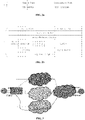
- the figure 7 shows an MPTCP connection between a terminal A and a terminal B; the initial sub-session is established between the address A1 of terminal A and the address B1 of terminal B; subsequently, an additional sub-session is established between the address A2 of terminal A and the address B1 of terminal B.
- a MIF terminal can thus connect to new networks, or disconnect from certain networks, while maintaining the same multipath connection.
- An MPTCP connection is initialized like any classic TCP connection, except that a TCP option called MP_CAPABLE (meaning that the sending terminal is compatible with the MPTCP extensions) is included in the message containing the subsession initialization (SYN) and in subsequent messages.
- An MPTCP terminal can notify the remote terminal of the availability of an additional IP address using a TCP option called ADD_ADDR, without necessarily creating an associated sub-session.
- the ADD_ADDR option of the MPTCP protocol includes an address identifier, called "Address ID", used to unambiguously identify an available IP address. This provision is supposed to avoid the problems induced by the presence of a NAT on the path followed by the packets between the two terminals which have established an MPTCP connection.
- the ADD_ADDR option is also used to transmit a port number in the event that one of the MPTCP terminals does not use the same port number for all of the available IP addresses.
- the MPTCP protocol provides provisions that are supposed to allow, in particular, the crossing of firewalls . More specifically, the MPTCP protocol specification states that the sequence numbers as indicated in the TCP header are specific to each sub-session, while the sequence number indicated in the DSS ( Data Sequence Signal ”) of the MPTCP protocol is used to associate these sub-sessions with the same MPTCP connection.
- the MPTCP protocol specification states that the sequence numbers as indicated in the TCP header are specific to each sub-session, while the sequence number indicated in the DSS ( Data Sequence Signal ”) of the MPTCP protocol is used to associate these sub-sessions with the same MPTCP connection.
- DSS Data Sequence Signal
- the MPTCP protocol thus intends to overcome the constraints imposed by the massive proliferation of “ middle boxes ” (intermediate functions in a communication chain), such as NATs and firewalls deployed in current networks.
- a communicating device must embed a relay device, which will be called "UDP/TCP relay", responsible for relaying to a TCP or MPTCP connection the UDP messages transmitted by a software application associated with the device communicating.
- UDP/TCP relay responsible for relaying to a TCP or MPTCP connection the UDP messages transmitted by a software application associated with the device communicating.
- said software application associated with said first communicating device sends a UDP message, which is intercepted by the UDP/TCP relay on board this first communicating device.
- this UDP/TCP relay sends a SYN message to a second communicating device containing a dedicated option, which will be called "Fallback_UDP_Capable", and which signals to the second communicating device that the first communicating device is compatible with MPUDP.
- this Fallback_UDP _Capable option is an MPTCP option, such as that illustrated in the figure 8 .
- this Fallback_UDP _Capable option is a TCP option, such as that illustrated in the figure 9 - in which case the use of MPTCP signaling is not mandatory.
- the first communicating device is a terminal T compatible with MPTCP, subscribed to a certain network
- the second communicating device is a content server S (or a second terminal), also compatible with MPTCP, which can be reached via this network.
- the first communicating device is a residential gateway CPE, compatible with MPTCP, behind which there is a terminal T which communicates with a content server S (or with a second terminal).
- the second communicating device is a traffic concentrator C compatible with MPTCP, located on the communication paths between the CPE gateway and the server S.
- the interface of each of these communicating devices between the UDP application and the UDP/TCP relay is not shown on the figure 11 and 12 , only the external exchanges being reproduced.
- the UDP datagrams received from the server S are distributed by the traffic concentrator C between the various paths available and sent to the residential gateway CPE. Following receipt of these UDP datagrams by the CPE residential gateway, the latter transmits them to the terminal T.
- the UDP datagrams received from the terminal T are distributed by the residential gateway CPE between two available paths and sent to the traffic concentrator C. Following the reception of these UDP datagrams by the traffic concentrator C, the latter transmits them to the server S.
- the CPE residential gateway inserts the Order_Rank information described above (in addition to the Context_ID context identifier). For example, suppose datagrams "1", “2”, and “5" are sent by the CPE residential gateway via the first path, while datagrams "3", “4", “6”, and “7” are sent through the second path. Following the reception of these different packets by the traffic concentrator C, the latter uses the Order_Rank information to decide whether a datagram is to be relayed immediately to the server S, or whether it must wait for the arrival of other datagrams before to transmit it.
- the concentrator In order to prevent the rescheduling function from inducing a significant delay, provision can be made for the concentrator to transmit the packets put on hold after the lapse of a REORDER_MAX duration. For example, if the order of arrival of the packets through the two paths is ⁇ “1”, “2”, “5”, “3”, “4”, “6”, “7” ⁇ , the concentrator traffic C must process packets "1” and "2"first; the packet whose Order_Rank information value is equal to “5” is put on hold until the receipt of packets “3” and “4”; once these packets are received, the traffic concentrator C transmits the datagram "5". Assuming packets "3" and "4" are not received within REORDER_MAX, then packet "5" is relayed to its destination without waiting for missing packets.
- the terminal T and the server S behave like conventional UDP communicating devices; therefore, they do not need to be compatible with UDP multipath communications.
- the invention can be implemented within communication network nodes, for example terminals, servers, residential gateways or traffic concentrators, by means of software and/or hardware components. Said software components may be integrated into a conventional network node management computer program. Therefore, as stated above, the present invention also relates to a computer system.
- This computer system conventionally comprises a central processing unit controlling a memory by signals, as well as an input unit and an output unit.
- this computer system can be used to execute a computer program comprising instructions for the implementation of any of the methods of communicating the load of a traffic concentrator according to the invention.
- This invention also relates to a computer program as briefly described above.
- This computer program may be stored on a computer readable medium and may be executable by a microprocessor.
- This program may use any programming language, and be in the form of source code, object code, or intermediate code between source code and object code, such as in partially compiled form, or in any other desirable shape.
- the invention also relates to an irremovable, or partially or totally removable, information medium comprising instructions of a computer program as briefly described above.
- This information medium can be any entity or device capable of storing the program.
- the information medium may comprise a storage medium, such as a ROM, for example a CD ROM or a microelectronic circuit ROM, or a magnetic recording medium, such as a hard disk, or even a USB flash drive .
- the information medium can be a transmissible medium such as an electrical or optical signal, which can be conveyed via an electrical or optical cable, by radio or by other means.
- the computer program according to the invention can in particular be downloaded from a network such as the Internet.
- the information medium may be an integrated circuit in which the program is incorporated, the circuit being adapted to execute or to be used in the execution of any of the communication methods according to the invention.
Landscapes
- Engineering & Computer Science (AREA)
- Computer Networks & Wireless Communication (AREA)
- Signal Processing (AREA)
- Computer Security & Cryptography (AREA)
- Computer Hardware Design (AREA)
- Computing Systems (AREA)
- General Engineering & Computer Science (AREA)
- Data Exchanges In Wide-Area Networks (AREA)
- Computer And Data Communications (AREA)
Claims (12)
- Kommunikationsverfahren in einem IP-Netz, das die folgenden Schritte umfasst:a) eine erste kommunizierende Vorrichtung initialisiert eine Kommunikation mit einer zweiten kommunizierenden Vorrichtung, indem sie der zweiten kommunizierenden Vorrichtung signalisiert, dass die erste kommunizierende Vorrichtung mit Mehrwegkommunikation auf Grundlage des Transportprotokolls UDP, User Datagram Protocol, kompatibel ist, undb) wenn die zweite kommunizierende Vorrichtung ihrerseits auch mit der UDP-Mehrwegkommunikation kompatibel ist:- schickt die erste kommunizierende Vorrichtung Daten an die zweite Vorrichtung gemäß dem Transportprotokoll UDP, indem sie in die Nachrichten, die diese Daten enthalten, unabhängig vom genutzten Weg eine gleiche Kennung, Kontextkennung (Context_ID) genannt, aufnimmt, die es der zweiten kommunizierenden Vorrichtung ermöglicht, die gesamten UDP-Datagramme, die zu ein und derselben UDP-Mehrwegkommunikation gehören, in Beziehung zu setzen, und/oder- schickt die zweite kommunizierende Vorrichtung Daten an die erste Vorrichtung gemäß dem Transportprotokoll UDP, indem sie in die Nachrichten, die diese Daten enthalten, unabhängig vom genutzten Weg eine gleiche Kennung, Kontextkennung (Context_ID) genannt, aufnimmt, die es der ersten kommunizierenden Vorrichtung ermöglicht, die gesamten UDP-Datagramme, die zu ein und derselben UDP-Mehrwegkommunikation gehören, in Beziehung zu setzen.
- Kommunikationsverfahren nach Anspruch 1, dadurch gekennzeichnet, dass die erste kommunizierende Vorrichtung und/oder die zweite kommunizierende Vorrichtung außerdem in die Nachrichten ein Sicherheitstoken einfügt, das es dem Empfänger dieser Nachrichten ermöglicht, deren Sender zu authentifizieren.
- Kommunikationsverfahren nach Anspruch 1 oder Anspruch 2, dadurch gekennzeichnet, dass die erste kommunizierende Vorrichtung und/oder die zweite kommunizierende Vorrichtung in die Nachrichten außerdem eine Information einfügt, die es dem Empfänger dieser Nachrichten ermöglicht, sie in ihrer Sendereihenfolge zu bearbeiten.
- Kommunikationsverfahren nach einem der Ansprüche 1 bis 3, dadurch gekennzeichnet, dass es die folgenden Schritte umfasst:- eine erste kommunizierende Vorrichtung, die mit der UDP-Mehrwegkommunikation kompatibel ist, sendet eine UDP-Nachricht, die durch ein Relais in dieser ersten kommunizierenden Vorrichtung abgefangen wird,- das Relais sendet an die zweite kommunizierende Vorrichtung eine Sitzungseröffnungsnachricht gemäß dem Transportprotokoll TCP, Transmission Control Protocol, die eine dedizierte Option enthält, die dazu geeignet ist, der zweiten kommunizierenden Vorrichtung zu signalisieren, dass die erste kommunizierende Vorrichtung mit der UDP-Mehrwegkommunikation kompatibel ist, und- wenn die zweite kommunizierende Vorrichtung ihrerseits auch mit der UDP-Mehrwegkommunikation kompatibel ist, sendet sie eine Antwortnachricht gemäß dem Transportprotokoll TCP, in die sie die dedizierte Option einfügt, dann sendet die erste kommunizierende Vorrichtung Daten an die zweite kommunizierende Vorrichtung und/oder die zweite kommunizierende Vorrichtung sendet Daten an die erste kommunizierende Vorrichtung, indem sie eine UDP-Mehrwegkommunikation nutzt.
- Kommunizierende Vorrichtung, erste kommunizierende Vorrichtung genannt, dadurch gekennzeichnet, dass sie Mittel zu Folgendem umfasst:- Initialisieren einer Kommunikation mit einer anderen kommunizierenden Vorrichtung, zweite kommunizierende Vorrichtung genannt, in einem IP-Netz, indem sie der zweiten kommunizierenden Vorrichtung signalisiert, dass die erste kommunizierende Vorrichtung mit der Mehrwegkommunikation nach UDP, User Datagram Protocol, kompatibel ist,- Senden von Daten gemäß dem Protokoll UDP an die zweite kommunizierende Vorrichtung, indem sie in die Nachrichten, die diese Daten enthalten, unabhängig vom genutzten Weg eine gleiche Kennung, Kontextkennung (Context_ID) genannt, aufnimmt, die es der zweiten kommunizierenden Vorrichtung ermöglicht, die gesamten UDP-Datagramme, die zu ein und derselben UDP-Mehrwegkommunikation gehören, in Beziehung zu setzen, und- Empfangen von Daten von der zweiten kommunizierenden Vorrichtung gemäß dem Protokoll UDP, indem sie in den Nachrichten, die diese Daten enthalten, unabhängig vom genutzten Weg eine gleiche Kennung, Kontextkennung (Context_ID) genannt, erkennt, die es der ersten kommunizierenden Vorrichtung ermöglicht, die gesamten UDP-Datagramme, die zu ein und derselben UDP-Mehrwegkommunikation gehören, in Beziehung zu setzen.
- Kommunizierende Vorrichtung nach Anspruch 5, dadurch gekennzeichnet, dass sie außerdem Mittel zum Einfügen eines Sicherheitstokens in die Nachrichten, die sie sendet, umfasst, das es dem Empfänger dieser Nachrichten ermöglicht, deren Sender zu authentifizieren.
- Kommunizierende Vorrichtung nach Anspruch 5 oder Anspruch 6, dadurch gekennzeichnet, dass sie außerdem Mittel zum Einfügen einer Information in die Nachrichten, die sie sendet, umfasst, die es dem Empfänger dieser Nachrichten ermöglicht, sie in ihrer Sendereihenfolge zu bearbeiten.
- Kommunizierende Vorrichtung nach einem der Ansprüche 5 bis 7, dadurch gekennzeichnet, dass sie ein Relais enthält, das Mittel zum Senden einer Sitzungseröffnungsnachricht an die zweite kommunizierende Vorrichtung gemäß dem Transportprotokoll TCP, Transmission Control Protocol, umfasst, die eine dedizierte Option enthält, die dazu geeignet ist, der zweiten kommunizierenden Vorrichtung zu signalisieren, dass die erste kommunizierende Vorrichtung mit der UDP-Mehrwegkommunikation kompatibel ist.
- Kommunizierende Vorrichtung nach einem der Ansprüche 5 bis 8, dadurch gekennzeichnet, dass sie außerdem Mittel zu Folgendem umfasst:- Berücksichtigen einer dedizierten Option in einer Sitzungseröffnungsnachricht gemäß dem Transportprotokoll TCP, die von einer anderen kommunizierenden Vorrichtung, dritte kommunizierende Vorrichtung genannt, empfangen wurde und dazu fähig ist, der ersten kommunizierenden Vorrichtung zu signalisieren, dass die dritte kommunizierende Vorrichtung mit der UDP-Mehrwegkommunikation kompatibel ist,- Ausgeben einer Antwortnachricht gemäß dem Transportprotokoll TCP, die die dedizierte Option enthält, und- Senden der Daten an die dritte kommunizierende Vorrichtung und/oder Empfangen der von der dritten kommunizierenden Vorrichtung gesendeten Daten unter Verwendung einer UDP-Mehrwegkommunikation.
- Kommunizierende Vorrichtung nach einem der Ansprüche 5 bis 9, dadurch gekennzeichnet, dass sie eine Client-Vorrichtung (T), einen Inhaltsserver (S) oder einen Verkehrskonzentrator (C) umfasst.
- Nicht entfernbares oder teilweise oder ganz entfernbares Speichermedium, das informationstechnische Programmcodeanweisungen zur Ausführung der Schritte eines Kommunikationsverfahrens nach einem der Ansprüche 1 bis 4 umfasst.
- Computerprogramm, das aus einem Kommunikationsnetz herunterladbar und/oder auf einem computerlesbaren Medium und/oder durch einen Mikroprozessor ausführbar ist, dadurch gekennzeichnet, dass es Anweisungen zur Ausführung der Schritte eines Kommunikationsverfahrens nach einem der Ansprüche 1 bis 4 umfasst, wenn es auf einem Computer ausgeführt wird.
Applications Claiming Priority (3)
| Application Number | Priority Date | Filing Date | Title |
|---|---|---|---|
| FR1655907A FR3053196A1 (fr) | 2016-06-24 | 2016-06-24 | Procede de communication udp via des chemins multiples entre deux terminaux |
| PCT/FR2017/051570 WO2017220893A1 (fr) | 2016-06-24 | 2017-06-16 | Procédé de communication udp via des chemins multiples entre deux terminaux |
| EP17737324.8A EP3476096B1 (de) | 2016-06-24 | 2017-06-16 | Udp-kommunikationsmethode über mehrfache wege zwischen zwei rechnerendgeräten |
Related Parent Applications (2)
| Application Number | Title | Priority Date | Filing Date |
|---|---|---|---|
| EP17737324.8A Division EP3476096B1 (de) | 2016-06-24 | 2017-06-16 | Udp-kommunikationsmethode über mehrfache wege zwischen zwei rechnerendgeräten |
| EP17737324.8A Division-Into EP3476096B1 (de) | 2016-06-24 | 2017-06-16 | Udp-kommunikationsmethode über mehrfache wege zwischen zwei rechnerendgeräten |
Publications (2)
| Publication Number | Publication Date |
|---|---|
| EP3739843A1 EP3739843A1 (de) | 2020-11-18 |
| EP3739843B1 true EP3739843B1 (de) | 2022-07-27 |
Family
ID=56787606
Family Applications (2)
| Application Number | Title | Priority Date | Filing Date |
|---|---|---|---|
| EP20185234.0A Active EP3739843B1 (de) | 2016-06-24 | 2017-06-16 | Udp-kommunikationsverfahren über multiple kommunikationswege zwischen zwei endgeräten |
| EP17737324.8A Active EP3476096B1 (de) | 2016-06-24 | 2017-06-16 | Udp-kommunikationsmethode über mehrfache wege zwischen zwei rechnerendgeräten |
Family Applications After (1)
| Application Number | Title | Priority Date | Filing Date |
|---|---|---|---|
| EP17737324.8A Active EP3476096B1 (de) | 2016-06-24 | 2017-06-16 | Udp-kommunikationsmethode über mehrfache wege zwischen zwei rechnerendgeräten |
Country Status (6)
| Country | Link |
|---|---|
| US (1) | US10841406B2 (de) |
| EP (2) | EP3739843B1 (de) |
| CN (1) | CN109644190B (de) |
| ES (2) | ES2929278T3 (de) |
| FR (1) | FR3053196A1 (de) |
| WO (1) | WO2017220893A1 (de) |
Families Citing this family (21)
| Publication number | Priority date | Publication date | Assignee | Title |
|---|---|---|---|---|
| US8312033B1 (en) | 2008-06-26 | 2012-11-13 | Experian Marketing Solutions, Inc. | Systems and methods for providing an integrated identifier |
| US9607336B1 (en) * | 2011-06-16 | 2017-03-28 | Consumerinfo.Com, Inc. | Providing credit inquiry alerts |
| US9633322B1 (en) | 2013-03-15 | 2017-04-25 | Consumerinfo.Com, Inc. | Adjustment of knowledge-based authentication |
| US10664936B2 (en) | 2013-03-15 | 2020-05-26 | Csidentity Corporation | Authentication systems and methods for on-demand products |
| US9721147B1 (en) | 2013-05-23 | 2017-08-01 | Consumerinfo.Com, Inc. | Digital identity |
| FR3053197A1 (fr) | 2016-06-24 | 2017-12-29 | Orange | Procede de communication udp via des chemins multiples entre deux terminaux |
| FR3067550A1 (fr) * | 2017-06-27 | 2018-12-14 | Orange | Procede de communication quic via des chemins multiples |
| FR3072529B1 (fr) * | 2017-10-17 | 2019-10-18 | Sagemcom Broadband Sas | Routage de donnees dans une passerelle residentielle mettant en œuvre l'agregation de liens |
| FR3079987A1 (fr) * | 2018-04-06 | 2019-10-11 | Orange | Procede de traitement d'une transaction entre un terminal source et un terminal destinataire, systeme de services bancaires, terminal et programme d'ordinateur correspondants. |
| US10911234B2 (en) | 2018-06-22 | 2021-02-02 | Experian Information Solutions, Inc. | System and method for a token gateway environment |
| US11064384B2 (en) * | 2019-02-19 | 2021-07-13 | Mediatek Inc. | Apparatuses and methods for multipath communications using a plurality of wireless technologies |
| US11323552B2 (en) * | 2019-04-19 | 2022-05-03 | EMC IP Holding Company LLC | Automatic security configurations in disaster recovery |
| US11941065B1 (en) | 2019-09-13 | 2024-03-26 | Experian Information Solutions, Inc. | Single identifier platform for storing entity data |
| CN113014483B (zh) | 2019-12-19 | 2023-04-18 | 华为技术有限公司 | 一种多路径传输的方法及设备 |
| FR3115644A1 (fr) * | 2020-10-23 | 2022-04-29 | Orange | Procédé et dispositif d’aiguillage d’une donnée applicative |
| CN112398943B (zh) * | 2020-11-13 | 2022-10-21 | Oppo广东移动通信有限公司 | 信息互通方法、装置、存储介质及电子设备 |
| JP7567941B2 (ja) | 2021-01-20 | 2024-10-16 | 日本電信電話株式会社 | 通信システム、通信方法、通信装置及びプログラム |
| CN112954063A (zh) * | 2021-02-25 | 2021-06-11 | 福州创实讯联信息技术有限公司 | 一种tftp内网穿透方法及tftp服务端 |
| CN115915108B (zh) * | 2021-08-05 | 2026-02-27 | 维沃移动通信有限公司 | 多路径通信方法、装置及终端 |
| CN116016025B (zh) * | 2021-10-19 | 2025-03-25 | 北京佰才邦技术股份有限公司 | 一种通信方法、设备及存储介质 |
| CN117135754A (zh) * | 2022-05-27 | 2023-11-28 | 华为技术有限公司 | 一种信息传输方法和装置 |
Family Cites Families (20)
| Publication number | Priority date | Publication date | Assignee | Title |
|---|---|---|---|---|
| US5737328A (en) | 1995-10-04 | 1998-04-07 | Aironet Wireless Communications, Inc. | Network communication system with information rerouting capabilities |
| FI108692B (fi) | 1999-12-30 | 2002-02-28 | Nokia Corp | Menetelmä ja laite datapakettien prosessoinnin ajoittamiseksi |
| US20050264581A1 (en) | 2004-05-21 | 2005-12-01 | Bea Systems, Inc. | Dynamic program modification |
| US20060274899A1 (en) * | 2005-06-03 | 2006-12-07 | Innomedia Pte Ltd. | System and method for secure messaging with network address translation firewall traversal |
| US7978725B2 (en) | 2006-03-06 | 2011-07-12 | Cisco Technology, Inc. | Dynamic modification of contention-based transmission control parameters achieving load balancing scheme in wireless mesh networks |
| JP2011147002A (ja) * | 2010-01-15 | 2011-07-28 | Kyocera Corp | 通信装置および通信方法 |
| CN101895466B (zh) * | 2010-07-02 | 2013-03-20 | 北京交通大学 | 一种降低sctp多路径传输数据包乱序影响的方法 |
| US8630291B2 (en) | 2011-08-22 | 2014-01-14 | Cisco Technology, Inc. | Dynamic multi-path forwarding for shared-media communication networks |
| US20130064198A1 (en) * | 2011-09-14 | 2013-03-14 | Qualcomm Incorporated | Multipath transport tunnel over multiple air interfaces connecting wireless stations |
| US9264353B2 (en) * | 2011-09-22 | 2016-02-16 | Qualcomm Incorporated | Dynamic subflow control for a multipath transport connection in a wireless communication network |
| KR101820583B1 (ko) * | 2012-12-14 | 2018-01-19 | 텔레폰악티에볼라겟엘엠에릭슨(펍) | 통신 네트워크에서 다중경로 통신 제어 프로토콜 시그널링 처리 |
| EP2972864B1 (de) * | 2013-03-15 | 2019-12-11 | Michelle Effros | Verfahren und vorrichtung zur verbesserung der kommunikationsleistung durch netzwerkcodierung |
| US9843522B2 (en) * | 2014-04-09 | 2017-12-12 | Hcl Technologies Ltd. | Efficient mechanism to improve data speed between systems by MPTCP and MIMO combination |
| CN104023006B (zh) * | 2014-05-09 | 2017-02-15 | 东北大学 | 一种基于应用层中继的多径传输系统及方法 |
| BR112017006261B1 (pt) * | 2014-09-25 | 2023-03-28 | Hughes Network Systems, Llc | Método para endereçamento múltiplo sensível a aplicativo para aceleração de tráfego de dados em redes de comunicação de dados |
| US10038741B1 (en) | 2014-11-24 | 2018-07-31 | Amazon Technologies, Inc. | Selective enabling of sequencing for encapsulated network traffic |
| CN104618236A (zh) * | 2015-01-21 | 2015-05-13 | 网宿科技股份有限公司 | 一种加速网络的并行数据传输系统及方法 |
| US10069719B2 (en) | 2015-06-16 | 2018-09-04 | Samsung Electronics Co., Ltd. | Method and apparatus for multipath media delivery |
| EP3459217B1 (de) * | 2016-05-16 | 2020-07-08 | Telefonaktiebolaget LM Ericsson (PUBL) | Transport von udp-paketen über eine mptcp-verbindung |
| FR3053197A1 (fr) | 2016-06-24 | 2017-12-29 | Orange | Procede de communication udp via des chemins multiples entre deux terminaux |
-
2016
- 2016-06-24 FR FR1655907A patent/FR3053196A1/fr active Pending
-
2017
- 2017-06-16 US US16/312,191 patent/US10841406B2/en active Active
- 2017-06-16 ES ES20185234T patent/ES2929278T3/es active Active
- 2017-06-16 WO PCT/FR2017/051570 patent/WO2017220893A1/fr not_active Ceased
- 2017-06-16 CN CN201780051712.8A patent/CN109644190B/zh active Active
- 2017-06-16 ES ES17737324T patent/ES2832813T3/es active Active
- 2017-06-16 EP EP20185234.0A patent/EP3739843B1/de active Active
- 2017-06-16 EP EP17737324.8A patent/EP3476096B1/de active Active
Also Published As
| Publication number | Publication date |
|---|---|
| US20190273809A1 (en) | 2019-09-05 |
| CN109644190B (zh) | 2022-01-11 |
| EP3476096A1 (de) | 2019-05-01 |
| ES2929278T3 (es) | 2022-11-28 |
| ES2832813T3 (es) | 2021-06-11 |
| EP3739843A1 (de) | 2020-11-18 |
| WO2017220893A1 (fr) | 2017-12-28 |
| EP3476096B1 (de) | 2020-08-26 |
| US10841406B2 (en) | 2020-11-17 |
| CN109644190A (zh) | 2019-04-16 |
| FR3053196A1 (fr) | 2017-12-29 |
Similar Documents
| Publication | Publication Date | Title |
|---|---|---|
| EP3739843B1 (de) | Udp-kommunikationsverfahren über multiple kommunikationswege zwischen zwei endgeräten | |
| EP3476095B1 (de) | Verfahren für mehrweg-udp-kommunikationsverfahren zwischen zwei endgeräten | |
| EP3318023B1 (de) | Verfahren zur optimierung der ladung eines netzwerkverbindungs-hubs | |
| WO2019002754A1 (fr) | Procédé de communication quic via des chemins multiples | |
| EP3284224B1 (de) | Verfahren zur emulation einer mehrwegverbindung | |
| EP3257204B1 (de) | Verfahren zur auswahl von netzwerkverbindungsknoten | |
| EP3162027B1 (de) | Mehrweg-tcp-kommunikationsverfahren zwischen zwei endgeräten | |
| EP3172887B1 (de) | Verfahren zur mehrwege-tcp-kommunikation zwischen zwei endgeräten | |
| EP3127295B1 (de) | Verfahren zur kommunikation durch mehrere wege zwischen zwei endgeräten | |
| EP3162024B1 (de) | Mehrweg-tcp-kommunikationsverfahren zwischen zwei endgeräten | |
| FR3153206A1 (fr) | Procédés, dispositifs et système de contrôle d’une communication dans un réseau | |
| WO2025078594A1 (fr) | Procédés de sélection de tranches réseau adaptées à un service, de gestion d'au moins une tranche réseau et de communication, et entités configurées pour mettre en œuvre ces procédés | |
| WO2025133029A1 (fr) | Procédé d'accès à un service par un dispositif de communication via au moins un réseau de communication |
Legal Events
| Date | Code | Title | Description |
|---|---|---|---|
| PUAI | Public reference made under article 153(3) epc to a published international application that has entered the european phase |
Free format text: ORIGINAL CODE: 0009012 |
|
| STAA | Information on the status of an ep patent application or granted ep patent |
Free format text: STATUS: THE APPLICATION HAS BEEN PUBLISHED |
|
| AC | Divisional application: reference to earlier application |
Ref document number: 3476096 Country of ref document: EP Kind code of ref document: P |
|
| AK | Designated contracting states |
Kind code of ref document: A1 Designated state(s): AL AT BE BG CH CY CZ DE DK EE ES FI FR GB GR HR HU IE IS IT LI LT LU LV MC MK MT NL NO PL PT RO RS SE SI SK SM TR |
|
| STAA | Information on the status of an ep patent application or granted ep patent |
Free format text: STATUS: REQUEST FOR EXAMINATION WAS MADE |
|
| 17P | Request for examination filed |
Effective date: 20210504 |
|
| RBV | Designated contracting states (corrected) |
Designated state(s): AL AT BE BG CH CY CZ DE DK EE ES FI FR GB GR HR HU IE IS IT LI LT LU LV MC MK MT NL NO PL PT RO RS SE SI SK SM TR |
|
| RAP3 | Party data changed (applicant data changed or rights of an application transferred) |
Owner name: ORANGE |
|
| GRAP | Despatch of communication of intention to grant a patent |
Free format text: ORIGINAL CODE: EPIDOSNIGR1 |
|
| STAA | Information on the status of an ep patent application or granted ep patent |
Free format text: STATUS: GRANT OF PATENT IS INTENDED |
|
| INTG | Intention to grant announced |
Effective date: 20211220 |
|
| GRAJ | Information related to disapproval of communication of intention to grant by the applicant or resumption of examination proceedings by the epo deleted |
Free format text: ORIGINAL CODE: EPIDOSDIGR1 |
|
| STAA | Information on the status of an ep patent application or granted ep patent |
Free format text: STATUS: REQUEST FOR EXAMINATION WAS MADE |
|
| REG | Reference to a national code |
Ref country code: DE Ref legal event code: R079 Ref document number: 602017060071 Country of ref document: DE Free format text: PREVIOUS MAIN CLASS: H04L0029060000 Ipc: H04L0067140000 |
|
| GRAP | Despatch of communication of intention to grant a patent |
Free format text: ORIGINAL CODE: EPIDOSNIGR1 |
|
| STAA | Information on the status of an ep patent application or granted ep patent |
Free format text: STATUS: GRANT OF PATENT IS INTENDED |
|
| INTC | Intention to grant announced (deleted) | ||
| RIC1 | Information provided on ipc code assigned before grant |
Ipc: H04L 69/16 20220101ALI20220202BHEP Ipc: H04L 69/14 20220101ALI20220202BHEP Ipc: H04L 67/14 20220101AFI20220202BHEP |
|
| INTG | Intention to grant announced |
Effective date: 20220223 |
|
| GRAS | Grant fee paid |
Free format text: ORIGINAL CODE: EPIDOSNIGR3 |
|
| GRAA | (expected) grant |
Free format text: ORIGINAL CODE: 0009210 |
|
| STAA | Information on the status of an ep patent application or granted ep patent |
Free format text: STATUS: THE PATENT HAS BEEN GRANTED |
|
| AC | Divisional application: reference to earlier application |
Ref document number: 3476096 Country of ref document: EP Kind code of ref document: P |
|
| AK | Designated contracting states |
Kind code of ref document: B1 Designated state(s): AL AT BE BG CH CY CZ DE DK EE ES FI FR GB GR HR HU IE IS IT LI LT LU LV MC MK MT NL NO PL PT RO RS SE SI SK SM TR |
|
| REG | Reference to a national code |
Ref country code: CH Ref legal event code: EP |
|
| REG | Reference to a national code |
Ref country code: AT Ref legal event code: REF Ref document number: 1507866 Country of ref document: AT Kind code of ref document: T Effective date: 20220815 |
|
| REG | Reference to a national code |
Ref country code: DE Ref legal event code: R096 Ref document number: 602017060071 Country of ref document: DE |
|
| REG | Reference to a national code |
Ref country code: IE Ref legal event code: FG4D Free format text: LANGUAGE OF EP DOCUMENT: FRENCH |
|
| REG | Reference to a national code |
Ref country code: LT Ref legal event code: MG9D |
|
| REG | Reference to a national code |
Ref country code: ES Ref legal event code: FG2A Ref document number: 2929278 Country of ref document: ES Kind code of ref document: T3 Effective date: 20221128 |
|
| REG | Reference to a national code |
Ref country code: NL Ref legal event code: MP Effective date: 20220727 |
|
| PG25 | Lapsed in a contracting state [announced via postgrant information from national office to epo] |
Ref country code: SE Free format text: LAPSE BECAUSE OF FAILURE TO SUBMIT A TRANSLATION OF THE DESCRIPTION OR TO PAY THE FEE WITHIN THE PRESCRIBED TIME-LIMIT Effective date: 20220727 Ref country code: RS Free format text: LAPSE BECAUSE OF FAILURE TO SUBMIT A TRANSLATION OF THE DESCRIPTION OR TO PAY THE FEE WITHIN THE PRESCRIBED TIME-LIMIT Effective date: 20220727 Ref country code: PT Free format text: LAPSE BECAUSE OF FAILURE TO SUBMIT A TRANSLATION OF THE DESCRIPTION OR TO PAY THE FEE WITHIN THE PRESCRIBED TIME-LIMIT Effective date: 20221128 Ref country code: NO Free format text: LAPSE BECAUSE OF FAILURE TO SUBMIT A TRANSLATION OF THE DESCRIPTION OR TO PAY THE FEE WITHIN THE PRESCRIBED TIME-LIMIT Effective date: 20221027 Ref country code: NL Free format text: LAPSE BECAUSE OF FAILURE TO SUBMIT A TRANSLATION OF THE DESCRIPTION OR TO PAY THE FEE WITHIN THE PRESCRIBED TIME-LIMIT Effective date: 20220727 Ref country code: LV Free format text: LAPSE BECAUSE OF FAILURE TO SUBMIT A TRANSLATION OF THE DESCRIPTION OR TO PAY THE FEE WITHIN THE PRESCRIBED TIME-LIMIT Effective date: 20220727 Ref country code: LT Free format text: LAPSE BECAUSE OF FAILURE TO SUBMIT A TRANSLATION OF THE DESCRIPTION OR TO PAY THE FEE WITHIN THE PRESCRIBED TIME-LIMIT Effective date: 20220727 Ref country code: FI Free format text: LAPSE BECAUSE OF FAILURE TO SUBMIT A TRANSLATION OF THE DESCRIPTION OR TO PAY THE FEE WITHIN THE PRESCRIBED TIME-LIMIT Effective date: 20220727 |
|
| REG | Reference to a national code |
Ref country code: AT Ref legal event code: MK05 Ref document number: 1507866 Country of ref document: AT Kind code of ref document: T Effective date: 20220727 |
|
| PG25 | Lapsed in a contracting state [announced via postgrant information from national office to epo] |
Ref country code: PL Free format text: LAPSE BECAUSE OF FAILURE TO SUBMIT A TRANSLATION OF THE DESCRIPTION OR TO PAY THE FEE WITHIN THE PRESCRIBED TIME-LIMIT Effective date: 20220727 Ref country code: IS Free format text: LAPSE BECAUSE OF FAILURE TO SUBMIT A TRANSLATION OF THE DESCRIPTION OR TO PAY THE FEE WITHIN THE PRESCRIBED TIME-LIMIT Effective date: 20221127 Ref country code: HR Free format text: LAPSE BECAUSE OF FAILURE TO SUBMIT A TRANSLATION OF THE DESCRIPTION OR TO PAY THE FEE WITHIN THE PRESCRIBED TIME-LIMIT Effective date: 20220727 Ref country code: GR Free format text: LAPSE BECAUSE OF FAILURE TO SUBMIT A TRANSLATION OF THE DESCRIPTION OR TO PAY THE FEE WITHIN THE PRESCRIBED TIME-LIMIT Effective date: 20221028 |
|
| PG25 | Lapsed in a contracting state [announced via postgrant information from national office to epo] |
Ref country code: SM Free format text: LAPSE BECAUSE OF FAILURE TO SUBMIT A TRANSLATION OF THE DESCRIPTION OR TO PAY THE FEE WITHIN THE PRESCRIBED TIME-LIMIT Effective date: 20220727 Ref country code: RO Free format text: LAPSE BECAUSE OF FAILURE TO SUBMIT A TRANSLATION OF THE DESCRIPTION OR TO PAY THE FEE WITHIN THE PRESCRIBED TIME-LIMIT Effective date: 20220727 Ref country code: DK Free format text: LAPSE BECAUSE OF FAILURE TO SUBMIT A TRANSLATION OF THE DESCRIPTION OR TO PAY THE FEE WITHIN THE PRESCRIBED TIME-LIMIT Effective date: 20220727 Ref country code: CZ Free format text: LAPSE BECAUSE OF FAILURE TO SUBMIT A TRANSLATION OF THE DESCRIPTION OR TO PAY THE FEE WITHIN THE PRESCRIBED TIME-LIMIT Effective date: 20220727 Ref country code: AT Free format text: LAPSE BECAUSE OF FAILURE TO SUBMIT A TRANSLATION OF THE DESCRIPTION OR TO PAY THE FEE WITHIN THE PRESCRIBED TIME-LIMIT Effective date: 20220727 |
|
| REG | Reference to a national code |
Ref country code: DE Ref legal event code: R097 Ref document number: 602017060071 Country of ref document: DE |
|
| PG25 | Lapsed in a contracting state [announced via postgrant information from national office to epo] |
Ref country code: SK Free format text: LAPSE BECAUSE OF FAILURE TO SUBMIT A TRANSLATION OF THE DESCRIPTION OR TO PAY THE FEE WITHIN THE PRESCRIBED TIME-LIMIT Effective date: 20220727 Ref country code: EE Free format text: LAPSE BECAUSE OF FAILURE TO SUBMIT A TRANSLATION OF THE DESCRIPTION OR TO PAY THE FEE WITHIN THE PRESCRIBED TIME-LIMIT Effective date: 20220727 |
|
| PLBE | No opposition filed within time limit |
Free format text: ORIGINAL CODE: 0009261 |
|
| STAA | Information on the status of an ep patent application or granted ep patent |
Free format text: STATUS: NO OPPOSITION FILED WITHIN TIME LIMIT |
|
| PG25 | Lapsed in a contracting state [announced via postgrant information from national office to epo] |
Ref country code: AL Free format text: LAPSE BECAUSE OF FAILURE TO SUBMIT A TRANSLATION OF THE DESCRIPTION OR TO PAY THE FEE WITHIN THE PRESCRIBED TIME-LIMIT Effective date: 20220727 |
|
| 26N | No opposition filed |
Effective date: 20230502 |
|
| PG25 | Lapsed in a contracting state [announced via postgrant information from national office to epo] |
Ref country code: SI Free format text: LAPSE BECAUSE OF FAILURE TO SUBMIT A TRANSLATION OF THE DESCRIPTION OR TO PAY THE FEE WITHIN THE PRESCRIBED TIME-LIMIT Effective date: 20220727 |
|
| PG25 | Lapsed in a contracting state [announced via postgrant information from national office to epo] |
Ref country code: BG Free format text: LAPSE BECAUSE OF FAILURE TO SUBMIT A TRANSLATION OF THE DESCRIPTION OR TO PAY THE FEE WITHIN THE PRESCRIBED TIME-LIMIT Effective date: 20220727 |
|
| PG25 | Lapsed in a contracting state [announced via postgrant information from national office to epo] |
Ref country code: BG Free format text: LAPSE BECAUSE OF FAILURE TO SUBMIT A TRANSLATION OF THE DESCRIPTION OR TO PAY THE FEE WITHIN THE PRESCRIBED TIME-LIMIT Effective date: 20220727 |
|
| PGFP | Annual fee paid to national office [announced via postgrant information from national office to epo] |
Ref country code: MC Payment date: 20250526 Year of fee payment: 9 |
|
| PGFP | Annual fee paid to national office [announced via postgrant information from national office to epo] |
Ref country code: DE Payment date: 20250520 Year of fee payment: 9 |
|
| PGFP | Annual fee paid to national office [announced via postgrant information from national office to epo] |
Ref country code: GB Payment date: 20250520 Year of fee payment: 9 |
|
| PGFP | Annual fee paid to national office [announced via postgrant information from national office to epo] |
Ref country code: LU Payment date: 20250523 Year of fee payment: 9 Ref country code: BE Payment date: 20250520 Year of fee payment: 9 Ref country code: IT Payment date: 20250520 Year of fee payment: 9 |
|
| PGFP | Annual fee paid to national office [announced via postgrant information from national office to epo] |
Ref country code: FR Payment date: 20250520 Year of fee payment: 9 |
|
| PG25 | Lapsed in a contracting state [announced via postgrant information from national office to epo] |
Ref country code: CY Free format text: LAPSE BECAUSE OF FAILURE TO SUBMIT A TRANSLATION OF THE DESCRIPTION OR TO PAY THE FEE WITHIN THE PRESCRIBED TIME-LIMIT; INVALID AB INITIO Effective date: 20170616 |
|
| PGFP | Annual fee paid to national office [announced via postgrant information from national office to epo] |
Ref country code: IE Payment date: 20250522 Year of fee payment: 9 |
|
| PG25 | Lapsed in a contracting state [announced via postgrant information from national office to epo] |
Ref country code: HU Free format text: LAPSE BECAUSE OF FAILURE TO SUBMIT A TRANSLATION OF THE DESCRIPTION OR TO PAY THE FEE WITHIN THE PRESCRIBED TIME-LIMIT; INVALID AB INITIO Effective date: 20170616 |
|
| PGFP | Annual fee paid to national office [announced via postgrant information from national office to epo] |
Ref country code: ES Payment date: 20250701 Year of fee payment: 9 |
|
| PGFP | Annual fee paid to national office [announced via postgrant information from national office to epo] |
Ref country code: CH Payment date: 20250701 Year of fee payment: 9 |
|
| PG25 | Lapsed in a contracting state [announced via postgrant information from national office to epo] |
Ref country code: TR Free format text: LAPSE BECAUSE OF FAILURE TO SUBMIT A TRANSLATION OF THE DESCRIPTION OR TO PAY THE FEE WITHIN THE PRESCRIBED TIME-LIMIT Effective date: 20220727 |