EP3740935B1 - Visuelle verfolgung durch kolorierung - Google Patents
Visuelle verfolgung durch kolorierung Download PDFInfo
- Publication number
- EP3740935B1 EP3740935B1 EP19737311.1A EP19737311A EP3740935B1 EP 3740935 B1 EP3740935 B1 EP 3740935B1 EP 19737311 A EP19737311 A EP 19737311A EP 3740935 B1 EP3740935 B1 EP 3740935B1
- Authority
- EP
- European Patent Office
- Prior art keywords
- pixel
- target
- video frame
- video frames
- training
- Prior art date
- Legal status (The legal status is an assumption and is not a legal conclusion. Google has not performed a legal analysis and makes no representation as to the accuracy of the status listed.)
- Active
Links
Images


Classifications
-
- G—PHYSICS
- G06—COMPUTING OR CALCULATING; COUNTING
- G06T—IMAGE DATA PROCESSING OR GENERATION, IN GENERAL
- G06T11/00—Two-dimensional [2D] image generation
- G06T11/10—Texturing; Colouring; Generation of textures or colours
-
- G—PHYSICS
- G06—COMPUTING OR CALCULATING; COUNTING
- G06F—ELECTRIC DIGITAL DATA PROCESSING
- G06F18/00—Pattern recognition
- G06F18/20—Analysing
- G06F18/21—Design or setup of recognition systems or techniques; Extraction of features in feature space; Blind source separation
- G06F18/214—Generating training patterns; Bootstrap methods, e.g. bagging or boosting
-
- G—PHYSICS
- G06—COMPUTING OR CALCULATING; COUNTING
- G06F—ELECTRIC DIGITAL DATA PROCESSING
- G06F18/00—Pattern recognition
- G06F18/20—Analysing
- G06F18/22—Matching criteria, e.g. proximity measures
-
- G—PHYSICS
- G06—COMPUTING OR CALCULATING; COUNTING
- G06N—COMPUTING ARRANGEMENTS BASED ON SPECIFIC COMPUTATIONAL MODELS
- G06N3/00—Computing arrangements based on biological models
- G06N3/02—Neural networks
- G06N3/04—Architecture, e.g. interconnection topology
-
- G—PHYSICS
- G06—COMPUTING OR CALCULATING; COUNTING
- G06N—COMPUTING ARRANGEMENTS BASED ON SPECIFIC COMPUTATIONAL MODELS
- G06N3/00—Computing arrangements based on biological models
- G06N3/02—Neural networks
- G06N3/04—Architecture, e.g. interconnection topology
- G06N3/0464—Convolutional networks [CNN, ConvNet]
-
- G—PHYSICS
- G06—COMPUTING OR CALCULATING; COUNTING
- G06N—COMPUTING ARRANGEMENTS BASED ON SPECIFIC COMPUTATIONAL MODELS
- G06N3/00—Computing arrangements based on biological models
- G06N3/02—Neural networks
- G06N3/08—Learning methods
-
- G—PHYSICS
- G06—COMPUTING OR CALCULATING; COUNTING
- G06N—COMPUTING ARRANGEMENTS BASED ON SPECIFIC COMPUTATIONAL MODELS
- G06N3/00—Computing arrangements based on biological models
- G06N3/02—Neural networks
- G06N3/08—Learning methods
- G06N3/0895—Weakly supervised learning, e.g. semi-supervised or self-supervised learning
-
- G—PHYSICS
- G06—COMPUTING OR CALCULATING; COUNTING
- G06T—IMAGE DATA PROCESSING OR GENERATION, IN GENERAL
- G06T7/00—Image analysis
- G06T7/20—Analysis of motion
-
- G—PHYSICS
- G06—COMPUTING OR CALCULATING; COUNTING
- G06V—IMAGE OR VIDEO RECOGNITION OR UNDERSTANDING
- G06V20/00—Scenes; Scene-specific elements
- G06V20/40—Scenes; Scene-specific elements in video content
- G06V20/41—Higher-level, semantic clustering, classification or understanding of video scenes, e.g. detection, labelling or Markovian modelling of sport events or news items
Definitions
- This specification relates to processing data using machine learning models.
- Machine learning models receive an input and generate an output, e.g., a predicted output, based on the received input.
- Some machine learning models are parametric models and generate the output based on the received input and on values of the parameters of the model.
- Some machine learning models are deep models that employ multiple layers of models to generate an output for a received input.
- a deep neural network is a deep machine learning model that includes an output layer and one or more hidden layers that each apply a nonlinear transformation to a received input to generate an output.
- US2014/0071347 describes a method for editing propagation of video and image content based on local feature structure preservation, comprising: mapping all pixels in the input original image and/or video key frames to a selected feature space; finding K nearest neighbor pixels for each pixel according to feature vectors Euclidean distance in the selected feature space; and using Locally Linear Embedding (LLE) dimension reduction to construct the locally linear relationship between each pixel and its K nearest neighbor pixels in the selected feature space.
- LLE Locally Linear Embedding
- the subject matter described in this specification can be implemented in particular embodiments so as to realize one or more of the following advantages.
- the system described in this specification can be trained to perform visual tracking using raw, unlabeled color video data. Therefore, the large amount of unlabeled color video data which is readily available (e.g., on video sharing websites) can be exploited to train the system described in this specification.
- some conventional visual tracking systems must be trained using manually labeled video data (e.g., where a human has manually labelled the pixels of the video frames). Manually labeling video data is tedious, time consuming, and difficult (e.g., because many video frame rates exceed 24 frames-per-second, thereby requiring manual labeling of at least 24 video frames to obtain one second of manually labeled data).
- the system described in this specification enables more efficient use of computational resources, particularly memory resources, by enabling unlabeled color video data stored in a memory to be directly used as training data (i.e., for training a colorization machine learning model to be used in visual tracking). Moreover, the system described in this specification can perform visual tracking more effectively (e.g., with a higher accuracy) than some conventional systems (e.g., systems based on optical flow methods).
- Visual tracking refers to determining a position of an object (or other point of interest) in a video frame given the position of the object (or other point of interest) in one or more other video frames.
- the system can learn to perform visual tracking without manual human supervision using unlabeled videos, i.e., where a person has not manually annotated pixel labels or tracking data on the video frames.
- the system automatically learns to track visual regions by learning to colorize a gray-scale "target" video frame in a video by copying colors from one or more unlabeled color video data stored in a memory to be directly used as training data (i.e., for training a colorization machine learning model to be used in visual tracking).
- the system described in this specification can perform visual tracking more effectively (e.g., with a higher accuracy) than some conventional systems (e.g., systems based on optical flow methods).
- Visual tracking refers to determining a position of an object (or other point of interest) in a video frame given the position of the object (or other point of interest) in one or more other video frames.
- the system can learn to perform visual tracking without manual human supervision using unlabeled videos, i.e., where a person has not manually annotated pixel labels or tracking data on the video frames.
- the system automatically learns to track visual regions by learning to colorize a gray-scale "target" video frame in a video by copying colors from one or more "reference” video frames in the video.
- the system learns a "pointing" mechanism that points from pixels in the target video frame to corresponding pixels in the reference video frames in order to copy the right colors. Once the system is trained, the learned pointing mechanism acts as a tracker across time that can be used to perform visual tracking.
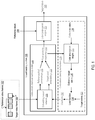
- FIG. 1 shows an example visual tracking system 100.
- the visual tracking system 100 is an example of a system implemented as computer programs on one or more computers in one or more locations in which the systems, components, and techniques described below are implemented.
- the visual tracking system 100 is configured to receive an input including (i) one or more reference video frames 102, (ii) respective reference labels 104 for the pixels from the reference video frames 102, and (iii) a target video frame 1 06.
- the system 100 processes the input to generate respective target labels 108 for the pixels from the target video frame 106.
- the reference video frames 102 and the target video frame 106 may be consecutive video frames from a video (e.g., a video depicting the natural world or a computer-generated video).
- a label for a pixel indicates, for each of multiple possible categories, a respective likelihood that the pixel corresponds to the category.
- the categories may include multiple different objects (e.g., people, cars, animals, and the like) and a background category.
- the label may be represented as a vector of numerical values representing the likelihoods that the pixel corresponds to each of the possible categories.
- a label for a pixel indicates, for each of multiple possible key points, a respective likelihood that the pixel corresponds to the key point.
- the key points may include human pose key points (e.g., the position of the head, the shoulders, the elbows, and the like).
- the label may be represented as a vector of numerical values representing the likelihoods that the pixel corresponds to each of the possible key points.
- the system 100 can perform visual tracking.
- Visual tracking refers to determining a position of an object (or other point of interest) in the target video frame 106 given the position of the object (or other point of interest) in the reference video frames 102.
- the system 100 may perform visual tracking by determining the position of a particular person in the target video frame 106 (e.g., as defined by the target labels 108) given the position of the particular person in the reference video frames 102 (e.g., as defined by the reference labels 104).
- the reference labels 104 may be generated by manual annotation, that is, by a person assigning respective labels to the pixels of the reference video frames 102 (e.g., using a non-automated or semi-automated annotation procedure).
- the system 100 receives reference video frames and corresponding reference labels for the initial video frames of a video, and iteratively determines target labels for each subsequent video frame of the video. More specifically, after determining target labels 108 for a target video frame 106, the system may determine the target video frame to be a reference video frame and the corresponding target labels to be reference labels. Thereafter, the system 100 may use the newly determined reference video frame and reference labels to generate target labels for subsequent video frames. In this manner, the system 100 may visually track the position of an object (e.g., a particular person, as described earlier) through every video frame of a video.
- an object e.g., a particular person, as described earlier
- the reference video frames 102 and the target video frame 106 may be color video frames, that is, video frames where each pixel is associated with data defining a color for the pixel.
- the reference video frames 102 and the target video frame 106 may be RGB video frames, where each pixel is associated with respective intensities of a red color channel, a green color channel, and a blue color channel.
- the system 100 Prior to processing the reference video frames 102 and the target video frame 106, the system 100 partly or fully "decolorizes" the reference video frames 102 and the target video frame 106, e.g., by converting them to a non-color format. For example, prior to processing the reference video frames 102 and the target video frame 106, the system 100 may convert them to a grayscale format.
- the system 100 processes the decolorized reference video frames 102 and the decolorized target video frame 106 using a colorization machine learning model 110 to generate respective pixel similarity measures 112 between the pixels of the target video frame 106 and the pixels of the reference video frames 102.
- the pixel similarity measure 112 between a target pixel from the target video frame 106 and a reference pixel from a reference video frame 102 may be represented as a number.
- the system 100 includes a colorization training subsystem 114 which trains the colorization machine learning model 110 to generate pixel similarity measures 112 that can be used to "colorize" the decolorized target video frame 106 using the colors of the pixels from the reference video frames 102.
- the colorization machine learning model 110 generates the pixel similarity measures 112 by providing the decolorized reference video frames 102 and the decolorized target video frame 106 as an input to an embedding neural network 116.
- the embedding neural network 116 is configured to process the input in accordance with current values of embedding neural network parameters to generate a respective embedding of each of the pixels from the reference video frames 102 (i.e., the reference pixel embeddings 118) and of each of the pixels of the target video frame 106 (i.e., the target pixel embeddings 120).
- An embedding of a pixel refers to a representation of the pixel as an ordered collection of numerical values, for example, as a vector or a matrix of numerical values.
- the system 100 generates the pixel similarity measures 112 using the reference pixel embeddings 118 and the target pixel embeddings 120. For example, for a given target pixel from the target video frame 106 and a given reference pixel from a reference video frame 102, the system 100 may generate the pixel similarity measure 112 between the target pixel and the reference pixel based on a similarity measure (e.g., an inner product) between the reference pixel embedding 118 and the target pixel embedding 120.
- a similarity measure e.g., an inner product
- the system 100 provides the pixel similarity measures 112 and the reference labels 104 as an input to a label propagation engine 122 which is configured to generate the target labels 108 using the pixel similarity measures 112 and the reference labels 104.
- the label propagation engine 122 may generate the target labels 108 for the target video frame 106 by "propagating" the reference labels 104 from the reference video frames 102 to the target video frame 106 in accordance with the pixel similarity measures 112. More specifically, the label propagation engine 122 may generate a target label 108 for a given target pixel from the target video frame 106 as a linear combination of the reference labels 104 where the reference labels 104 are weighted by the pixel similarity measures 112.
- An example process for performing visual tracking by determining the target labels 108 for the target video frame 106 is described in more detail with reference to FIG. 5 .
- the system 100 includes a colorization training subsystem 114 which is configured to train the embedding neural network 116.
- the training subsystem 114 trains the embedding neural network 116 over multiple training iterations to determine trained values of the embedding neural network parameters from initial values of the embedding neural network parameters.
- the training subsystem 114 can train the embedding neural network 116 on large amounts of readily available unlabeled color video data without requiring manual human supervision (e.g., without requiring a human to manually annotated pixel labels on the video data).
- the training subsystem 114 obtains reference video frames 102 and a target video frame 106 which are represented in a color format (e.g., as RGB video frames). More specifically, each reference pixel from a reference video frame 102 is associated with a reference color 124, and each target pixel from the target video frame 106 is associated with a target color 130.
- the color format is an RGB color format
- the reference color 124 associated with a reference pixel or the target color 130 associated with a target pixel
- the reference video frames 102 and the target video frame 106 obtained by the training subsystem 114 are not necessarily associated with pixel labels (e.g., reference labels 104 or target labels 108).
- the training subsystem 114 decolorizes the reference video frames 102 and the target video frame 106 (e.g., by converting them to grayscale) and processes them using the colorization machine learning model 110 to generate the pixel similarity measures 112.
- the training subsystem 114 provides the pixel similarity measures 112 and the reference colors 124 as an input to a color propagation engine 128 which is configured to process the input to generate estimated target colors 126 for the pixels from the target video frame 106.
- the estimated target colors 126 include an estimated color (e.g., represented in an RGB format, as described earlier) for each target pixel from the target video frame 106.
- the color propagation engine 128 is configured to operate analogously to the label propagation engine 122, that is, by propagating the reference colors 124 from the reference video frames 102 to the target video frame 106 in accordance with the pixel similarity measures 112 to "colorize" the target video frame 106.
- the color propagation engine 128 may generate an estimated target color 126 for a given target pixel from the target video frame 106 as a linear combination of the reference colors 124, where the reference colors 124 are weighted by the pixel similarity measures 112.
- the training subsystem 114 adjusts the current values of the embedding neural network parameters to cause the system 100 to colorize the target video frame 106 more accurately. More specifically, the training subsystem 114 adjusts the current values of the embedding neural network parameters based on a difference between: (i) the (actual) target colors 130 of the target pixels in the target video frame 106, and (ii) the estimated target colors 126 of the target pixels in the target video frame 106.
- the training subsystem 114 adjusts the current values of the embedding neural network parameters using a gradient 132 of a loss function 134 with respect to the current values of the embedding neural network parameters.
- the loss function 134 depends on an error between the actual target colors 130 of the target pixels and the estimated target colors 126 of the target pixels.
- the pixel similarity measures 112 can operate as "pointers" from the target pixels of the target video frame 1 06 to the reference pixels of the reference video frames 102, where the strength of a pointer from a target pixel to a reference pixel is determined by the magnitude of the corresponding pixel similarity measure 112.
- the training subsystem 114 causes the colorization machine learning model 110 to learn to generate pixel similarity measures 112 which "point" from target pixels in the target video frame 106 to the right reference pixels in the reference video frames 102.
- the learned "pointing" mechanism is used to propagate reference labels 104 from the reference video frames 102 to the target video frame 1 06, thereby enabling visual tracking.
- FIG. 2 is an illustration of an example data flow 200 for using the visual tracking system 100 to track a positon of an object from a reference video frame 202 to a target video frame 204.
- the system 100 starts by decolorizing the reference video frame 202 and the target video frame 204, e.g., by converting them to corresponding grayscale video frames.
- the system 100 processes the reference video frame 202 and the target video frame 204 using the embedding neural network 206 to generate embeddings corresponding to the pixels of the reference video frame 202 and the target video frame 204.
- the embedding neural network 206 is a convolutional neural network (CNN), that is, a neural network that includes one or more convolutional neural network layers.
- CNN convolutional neural network
- the output of the embedding neural network 206 after processing an input video frame can be represented as a three-dimensional (3D) matrix of numerical values, with two "spatial" dimensions and one "channel” dimension.
- the embedding corresponding to a pixel of the input video frame at a particular spatial position is determined by extracting a portion of the embedding neural network output at the corresponding spatial position (i.e., along the channel dimension).
- the spatial dimensionality of the embedding neural network output may be the same as the input video frame, e.g., the input video frame may have a spatial dimensionality of 256 ⁇ 256, and the embedding neural network output may have a spatial dimensionality of 256 ⁇ 256 with 200 channels. In some other cases, the spatial dimensionality of the embedding neural network output may be greater or lesser than the spatial dimensionality of the input video frame, e.g., the input video frame may have a spatial dimensionality of 256 ⁇ 256, and the embedding neural network output may have a spatial dimensionality of 50 ⁇ 50 with 200 channels.
- the embedding neural network 206 can have any appropriate neural network architecture.
- the embedding neural network architecture may include a ResNet-18 neural network architecture followed by a five layer 3D convolutional neural network.
- the spatial locations of each pixel in an input video frame (e.g., represented as respective 2D vectors in the range [ ⁇ 1,1]) may be provided as an intermediate input to the embedding neural network.
- the system 100 determines respective similarity measures between embeddings corresponding to pixels from the target frame 204 and embeddings corresponding to pixels from the reference frame 202.
- the system 100 may identify the position of the object 208 in the target frame 204 based on the similarity measure between the embedding f i of the object 208 in the reference frame 202 and the embedding ⁇ j in the target frame 204.
- the system 100 trains the embedding network 206 to generate embeddings 210 that can be used to colorize the target frame 204 by generating predicted colors 212 of the target frame 204 based on the reference colors 214 of the reference frame 202.
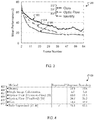
- FIG. 3 and FIG. 4 illustrate examples of the performance gains that can be achieved by using the visual tracking system described in this specification to perform a video segmentation task.
- a video segmentation task a semantic segmentation of one or more initial video frames in a video is provided, and the tracking system propagates the semantic segmentation to the remaining video frames in the video.
- a semantic segmentation of a video frame specifies a label corresponding to each pixel of the video frame.
- FIG. 3 illustrates a graph 300 showing the performance of various tracking systems as a function of time (i.e., video frame number) while performing video segmentation.
- the tracking system 302 refers to the tracking system described in this specification.
- the tracking system 304 uses optic flow techniques to performing tracking.
- the tracking system 306 performs tracking by associating each pixel in a video frame with the corresponding pixel at the same spatial position in the preceding video frame.
- the horizontal axis of the graph 300 identifies the frame number of the video frame being segmented, and the vertical axis identifies the mean performance of each tracking system at segmenting video frames.
- the performance of a tracking system at segmenting a video frame can be determined as the overlap between: (i) the actual segmentation of the video frame, and (ii) the segmentation of the video frame determined by the tracking system. It can be appreciated that the tracking system 302 described in this specification outperforms each baseline tracking method.
- FIG. 4 shows the performance of various "unsupervised” and “supervised” tracking systems while performing video segmentation. Performance is evaluated in the "Segment” column of the table 400 based on the overlap between the actual and estimated segmentations of each video frame, and in the "Boundary” column based on the similarity between the borders of respective regions in the actual and estimated segmentation of each video frame.
- a supervised tracking method refers to a tracking method that is trained with the benefit of labeled images, e.g., images associated with known tracking data or semantic segmentations.
- An unsupervised tracking method (such as tracking method described in this specification) is trained without using labeled images. In some cases, the performance of supervised tracking methods can be expected to upper-bound the performance of unsupervised tracking methods.
- the "Identity” tracking method 402 performs tracking by associating each pixel in a video frame with the corresponding pixel at the same spatial position in the preceding video frame (as described earlier).
- the "Single Image Colorization” tracking method 404 performs tracking in a similar manner as the system described in this specification, except the pixel embeddings are generated as an intermediate output of a neural network trained to perform single image colorization (i.e., by processing a grayscale image to generate a color image).
- the "Optical Flow (Coarse-to-Fine)" tracking method 406 uses optical flow techniques to perform tracking and is described with reference to Liu, C., et al.: “Beyond pixels: exploring new representations and applications for motion analysis", PhD thesis, Massachusetts Institute of Technology (2009 ).
- the "Optical Flow (FlowNet2)” tracking method 408 uses optical flow techniques to perform tracking and is described with reference to Ilg, E., et al.: “Flownet 2.0: Evolution of optical flow estimation with deep networks", IEEE Conference no Computer Vision and Pattern Recognition (CVPR), Volume 2 (2017 ).
- the "Ours” tracking method 410 refers to the tracking method described in this specification.
- the "Fully Supervised” tracking method 412 refers to the fully supervised tracking method described with reference to, e.g., Yang, L., et al.: "Efficient video object segmentation via network modulation", arXiv:1802.01218 (2018 ). It can be appreciated that the tracking method described in this specification achieves a performance that is closer to that of the fully supervised tracking method that any of the other unsupervised tracking methods.
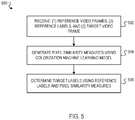
- FIG. 5 is a flow diagram of an example process 500 for performing visual tracking.
- the process 500 will be described as being performed by a system of one or more computers located in one or more locations.
- a visual tracking system e.g., the visual tracking system 100 of FIG. 1 , appropriately programmed in accordance with this specification, can perform the process 500.
- the system receives: (i) one or more reference video frames, (ii) respective reference labels for each of multiple reference pixels in the reference video frames, and (iii) a target video frame (502).
- the reference video frames and the target video frame are drawn from the same video.
- the reference video frames may precede the target video frame in the video, follow the target video frame in the video, or a combination of both, i.e., some of the reference video frames may precede the target video frame, while the remaining reference video frames may follow the target video frame.
- the system may receive reference labels for every pixel in the reference video frames, or for only a proper subset of the pixels in the reference video frames (e.g., for only pixels corresponding to a particular object depicted in the reference video frames).
- the reference labels may have been determined by manual annotation by a person, or may have been previously generated using the process 500.
- the system decolorizes the reference video frames and the target video frame by removing some or all of the data defining the colors of the pixels, e.g., by converting the video frames to a grayscale format.
- the system processes the reference video frames and the target video frames using a colorization machine learning model to generate respective pixel similarity measures between each of (i) multiple target pixels in the target video frame and (ii) multiple reference pixels in the reference video frames (504).
- the system provides the reference video frames and the target video frame as respective inputs to an embedding neural network that is configured to process an input video frame to generate an output that defines a respective embedding for each pixel in the input video frame.
- the colorization machine learning model (in particular, the embedding neural network) is trained to generate pixel similarity measures having the property that the color of each target pixel can be effectively estimated by combining the: (i) the actual colors of the reference pixels, and (ii) the pixel similarity measures. Training of the colorization machine learning model is described in more detail with reference to FIG. 6 .
- the reference labels indicate whether each reference pixel is included in a particular object, and by determining the target labels, the system "tracks" the object from the reference video frames to the target video frame.
- the reference labels define a semantic segmentation of the reference video frames by indicating a respective category (e.g., object category) for each reference pixel, and by determining the target labels, the system propagates the semantic segmentation to the target video frame.
- FIG. 6 is a flow diagram of an example process 600 for training a colorization machine learning model.
- the process 600 will be described as being performed by a system of one or more computers located in one or more locations.
- a visual tracking system e.g., the visual tracking system 100 of FIG. 1 , appropriately programmed in accordance with this specification, can perform the process 600.
- the system obtains one or more training examples (602).
- Each training example includes: (i) one or more training reference video frames, (ii) a training target video frame, and (iii) actual colors of each of the pixels in the training reference video frames and the training target video frame.
- the system may obtain the training examples, e.g., by randomly sampling a predetermined number of training examples from a set of training data that includes multiple training examples.
- the colors of the pixels in the training reference video frames and the training target video frame can be represented in any of a variety of ways.
- the color of a pixel can be represented "continuously", e.g., as a 3D vector of red, green, and blue color values that can assume values in a continuous range of possible values.
- the color of a pixel can be represented "discretely”, e.g., as a one-hot vector indicating a particular "reference" color value from a predetermined set of possible reference color values.
- the set of possible reference color values may be determined by clustering a set of vectors representing the colors of pixels in a set of images or videos, e.g., using a k-means or expectation-maximization clustering technique.
- a pixel may be determined to correspond to the reference color that is closest to its actual color.
- the system processes the training reference video frames and the training target video frame using the colorization machine learning model to generate respective pixel similarity measures between: (i) each pixel in the training target video frame, and (ii) each pixel in the training reference video frames (604).
- An example process for generating such similarity measures using an embedding neural network of the colorization machine learning model is described in more detail with reference to step 504 of FIG. 5 .
- the system adjusts the current values of the embedding neural network parameters of the colorization machine learning model based on a difference between: (i) the actual colors of each pixel in the training target video frame, and (ii) the estimated colors of each pixel in the training target video frame (608).
- the system may adjust the current values of the embedding neural network parameters using a gradient of a loss function with respect to the current values of the embedding neural network parameters.
- the loss function may be, e.g., a cross-entropy loss between the actual colors and the estimated colors of the pixels of the training target video frame.
- the system may determine the gradient using, e.g., a backpropagation technique.
- the system may use the gradient to adjust the current values of the embedding neural network parameters using the update rule of any appropriate gradient descent optimization algorithm, e.g., RMSprop or Adam.
- Embodiments of the subject matter and the functional operations described in this specification can be implemented in digital electronic circuitry, in tangibly-embodied computer software or firmware, in computer hardware, including the structures disclosed in this specification and their structural equivalents, or in combinations of one or more of them.
- Embodiments of the subject matter described in this specification can be implemented as one or more computer programs, i.e., one or more modules of computer program instructions encoded on a tangible non-transitory storage medium for execution by, or to control the operation of, data processing apparatus.
- the computer storage medium can be a machine-readable storage device, a machine-readable storage substrate, a random or serial access memory device, or a combination of one or more of them.
- the program instructions can be encoded on an artificially-generated propagated signal, e.g., a machine-generated electrical, optical, or electromagnetic signal, that is generated to encode information for transmission to suitable receiver apparatus for execution by a data processing apparatus.
- data processing apparatus refers to data processing hardware and encompasses all kinds of apparatus, devices, and machines for processing data, including by way of example a programmable processor, a computer, or multiple processors or computers.
- the apparatus can also be, or further include, special purpose logic circuitry, e.g., an FPGA (field programmable gate array) or an ASIC (application-specific integrated circuit).
- the apparatus can optionally include, in addition to hardware, code that creates an execution environment for computer programs, e.g., code that constitutes processor firmware, a protocol stack, a database management system, an operating system, or a combination of one or more of them.
- a computer program which may also be referred to or described as a program, software, a software application, an app, a module, a software module, a script, or code, can be written in any form of programming language, including compiled or interpreted languages, or declarative or procedural languages; and it can be deployed in any form, including as a stand-alone program or as a module, component, subroutine, or other unit suitable for use in a computing environment.
- a program may, but need not, correspond to a file in a file system.
- a program can be stored in a portion of a file that holds other programs or data, e.g., one or more scripts stored in a markup language document, in a single file dedicated to the program in question, or in multiple coordinated files, e.g., files that store one or more modules, sub-programs, or portions of code.
- a computer program can be deployed to be executed on one computer or on multiple computers that are located at one site or distributed across multiple sites and interconnected by a data communication network.
- engine is used broadly to refer to a software-based system, subsystem, or process that is programmed to perform one or more specific functions.
- an engine will be implemented as one or more software modules or components, installed on one or more computers in one or more locations. In some cases, one or more computers will be dedicated to a particular engine; in other cases, multiple engines can be installed and running on the same computer or computers.
- the processes and logic flows described in this specification can be performed by one or more programmable computers executing one or more computer programs to perform functions by operating on input data and generating output.
- the processes and logic flows can also be performed by special purpose logic circuitry, e.g., an FPGA or an ASIC, or by a combination of special purpose logic circuitry and one or more programmed computers.
- Computers suitable for the execution of a computer program can be based on general or special purpose microprocessors or both, or any other kind of central processing unit.
- a central processing unit will receive instructions and data from a read-only memory or a random access memory or both.
- the essential elements of a computer are a central processing unit for performing or executing instructions and one or more memory devices for storing instructions and data.
- the central processing unit and the memory can be supplemented by, or incorporated in, special purpose logic circuitry.
- a computer will also include, or be operatively coupled to receive data from or transfer data to, or both, one or more mass storage devices for storing data, e.g., magnetic, magneto-optical disks, or optical disks.
- a computer need not have such devices.
- a computer can be embedded in another device, e.g., a mobile telephone, a personal digital assistant (PDA), a mobile audio or video player, a game console, a Global Positioning System (GPS) receiver, or a portable storage device, e.g., a universal serial bus (USB) flash drive, to name just a few.
- PDA personal digital assistant
- GPS Global Positioning System
- USB universal serial bus
- Computer-readable media suitable for storing computer program instructions and data include all forms of non-volatile memory, media and memory devices, including by way of example semiconductor memory devices, e.g., EPROM, EEPROM, and flash memory devices; magnetic disks, e.g., internal hard disks or removable disks; magneto-optical disks; and CD-ROM and DVD-ROM disks.
- semiconductor memory devices e.g., EPROM, EEPROM, and flash memory devices
- magnetic disks e.g., internal hard disks or removable disks
- magneto-optical disks e.g., CD-ROM and DVD-ROM disks.
- embodiments of the subject matter described in this specification can be implemented on a computer having a display device, e.g., a CRT (cathode ray tube) or LCD (liquid crystal display) monitor, for displaying information to the user and a keyboard and a pointing device, e.g., a mouse or a trackball, by which the user can provide input to the computer.
- a display device e.g., a CRT (cathode ray tube) or LCD (liquid crystal display) monitor
- keyboard and a pointing device e.g., a mouse or a trackball
- Other kinds of devices can be used to provide for interaction with a user as well; for example, feedback provided to the user can be any form of sensory feedback, e.g., visual feedback, auditory feedback, or tactile feedback; and input from the user can be received in any form, including acoustic, speech, or tactile input.
- a computer can interact with a user by sending documents to and receiving documents from a device that is used by the user; for example, by sending web pages to a web browser on a user's device in response to requests received from the web browser.
- a computer can interact with a user by sending text messages or other forms of message to a personal device, e.g., a smartphone that is running a messaging application, and receiving responsive messages from the user in return.
- Data processing apparatus for implementing machine learning models can also include, for example, special-purpose hardware accelerator units for processing common and compute-intensive parts of machine learning training or production, i.e., inference, workloads.
- Machine learning models can be implemented and deployed using a machine learning framework, e.g., a TensorFlow framework, a Microsoft Cognitive Toolkit framework, an Apache Singa framework, or an Apache MXNet framework.
- a machine learning framework e.g., a TensorFlow framework, a Microsoft Cognitive Toolkit framework, an Apache Singa framework, or an Apache MXNet framework.
- Embodiments of the subject matter described in this specification can be implemented in a computing system that includes a back-end component, e.g., as a data server, or that includes a middleware component, e.g., an application server, or that includes a front-end component, e.g., a client computer having a graphical user interface, a web browser, or an app through which a user can interact with an implementation of the subject matter described in this specification, or any combination of one or more such back-end, middleware, or front-end components.
- the components of the system can be interconnected by any form or medium of digital data communication, e.g., a communication network. Examples of communication networks include a local area network (LAN) and a wide area network (WAN), e.g., the Internet.
- LAN local area network
- WAN wide area network
- the computing system can include clients and servers.
- a client and server are generally remote from each other and typically interact through a communication network. The relationship of client and server arises by virtue of computer programs running on the respective computers and having a client-server relationship to each other.
- a server transmits data, e.g., an HTML page, to a user device, e.g., for purposes of displaying data to and receiving user input from a user interacting with the device, which acts as a client.
- Data generated at the user device e.g., a result of the user interaction, can be received at the server from the device.
Landscapes
- Engineering & Computer Science (AREA)
- Theoretical Computer Science (AREA)
- Physics & Mathematics (AREA)
- General Physics & Mathematics (AREA)
- Data Mining & Analysis (AREA)
- Life Sciences & Earth Sciences (AREA)
- Artificial Intelligence (AREA)
- Evolutionary Computation (AREA)
- General Engineering & Computer Science (AREA)
- Software Systems (AREA)
- Computational Linguistics (AREA)
- Mathematical Physics (AREA)
- Biophysics (AREA)
- Computing Systems (AREA)
- Molecular Biology (AREA)
- General Health & Medical Sciences (AREA)
- Health & Medical Sciences (AREA)
- Biomedical Technology (AREA)
- Computer Vision & Pattern Recognition (AREA)
- Multimedia (AREA)
- Evolutionary Biology (AREA)
- Bioinformatics & Computational Biology (AREA)
- Bioinformatics & Cheminformatics (AREA)
- Image Analysis (AREA)
Claims (10)
- Computerimplementiertes Verfahren, umfassend:Empfangen (502): (i) von einem oder mehreren Referenzvideoframes (102), (ii) von entsprechenden Referenz-Labeln (104) für jedes einer Mehrzahl von Referenzpixeln in den Referenzvideoframes, wobei die Label für jede von mehreren möglichen Kategorien, eine entsprechende Wahrscheinlichkeit angeben, dass das Pixel einer der Kategorien entspricht, oder für jeden von mehreren möglichen Schlüsselpunkte, eine entsprechende Wahrscheinlichkeit, dass das Pixel dem Schlüsselpunkt entspricht, und (iii) einen Zielvideoframe (106);Verarbeiten (504) der Referenzvideoframes und des Zielvideoframes unter Verwendung eines Kolorierungsmaschinenlernmodells (110), welches ein Einbettungs-Neuralnetzwerk (116) einschließt, um jeweilige Pixelähnlichkeitsmaße (112) zwischen jedem von (i) einer Mehrzahl von Zielpixeln in dem Zielvideoframe, und (ii) den Referenzpixeln in den Referenzvideoframes zu erzeugen, wobei das Verarbeiten umfasst:Bereitstellen der Referenzvideoframes und des Zielvideoframes als eine Eingabe in das Einbettungs-Neuralnetzwerk;Verarbeiten der Eingabe gemäß aktuellen Werten von Parametern des Einbettungs-Neuralnetzwerks, um ein jeweiliges Einbetten von jedem von (i) den Zielpixeln in dem Zielvideoframe (120) und (ii) den Referenzpixeln in den Referenzvideoframes (118) zu erzeugen; undErzeugen der jeweiligen Pixelähnlichkeitsmaße zwischen jedem von (i) den Zielpixeln in dem Zielvideoframe, und (ii) den Referenzpixeln in den Referenzvideoframes unter Verwendung der Einbettungen;wobei das Kolorierungsmaschinenlernmodell trainiert wird, um Pixelähnlichkeitsmaße zu erzeugen, wobei eine entsprechende geschätzte Farbe (126) von jedem der Zielpixel in dem Zielvideoframe definiert wird, durch Kombinieren von (i) wirklichen Farben (124) von jedem der Referenzpixel in den Referenzvideoframes, und (ii) den Pixelähnlichkeitsmaßen (112); undBestimmen (506) eines entsprechenden Ziellabels (108) für jedes Zielpixel in dem Zielvideoframe, umfassend:
Kombinieren (i) der Referenzlabel für die Referenzpixel in den Referenzvideoframes und (ii) der Pixelähnlichkeitsmaße. - Verfahren nach Anspruch 1, wobei die Referenzpixel in den Referenzvideoframes eine ordnungsgemäße Untermenge der Pixel in den Referenzvideoframes umfassen.
- Verfahren nach einem des Anspruchs 1, wobei das Einbettungs-Neuralnetzwerk (116) eine oder mehrere Faltungs-Neuralnetzwerkschichten umfasst.
- Verfahren nach einem der Ansprüche 1 bis 3, wobei das Erzeugen der jeweiligen Pixelähnlichkeitsmaße zwischen jedem von (i) den Zielpixeln in dem Zielvideoframe (106) und (ii) den Referenzpixeln in den Referenzvideoframes (102) unter Verwendung der Einbettungen (118, 120) Folgendes umfasst:
Erzeugen des Pixelähnlichkeitsmaßes (112) zwischen einem Zielpixel und einem Referenzpixel unter Verwendung eines Ähnlichkeitsmaßes zwischen der Einbettung des Zielpixels und der Einbettung des Referenzpixels. - Verfahren nach einem der Ansprüche 1 bis 4, wobei das Kolorierungsmaschinenlernmodell (110) durch eine Mehrzahl von Operationen trainiert ist, umfassend:Erhalten einer Mehrzahl von Trainingsbeispielen, wobei jedes Trainingsbeispiel umfasst: (i) einen oder mehrere Trainings-Referenzvideoframes, (ii) einen Trainings-Zielvideoframe, und (iii) wirkliche Farben von jedem Pixel in den Trainings-Referenzvideoframes und in dem Trainings-Zielvideoframe,Verarbeiten der Trainings-Referenzvideoframes und des Trainings-Zielvideoframes unter Verwendung des Kolorierungsmaschinenlernmodells, um jeweilige Ähnlichkeitsmaße zwischen: (i) jedem Pixel in dem Trainings-Zielvideoframe und (ii) jedem Pixel in den Trainings-Referenzvideoframes zu erzeugen;Bestimmen von geschätzten Farben von jedem Pixel in dem Trainings-Zielvideoframe durch Kombinieren von: (i) den wirklichen Farben von jedem Pixel in den Trainings-Referenzvideoframes, und (ii) den Ähnlichkeitsmaßen; undEinstellen der aktuellen Werte der Parameter des Einbettungs-Neuralnetzwerks basierend auf einer Differenz zwischen: (i) den wirklichen Farben von jedem Pixel in dem Trainings-Zielvideoframe und (ii) den geschätzten Farben von jedem Pixel in dem Trainings-Zielvideoframe.
- Verfahren nach Anspruch 5, wobei das Einstellen der aktuellen Werte der Parameter des Einbettungs-Neuralnetzwerks umfasst:Bestimmen eines Gradienten (132) einer Verlustfunktion, wobei die Verlustfunktion von der Differenz zwischen (i) den wirklichen Farben (130) von jedem Pixel in dem Trainings-Zielvideoframe und (ii) den geschätzten Farben (126) von jedem Pixel in dem Trainings-Zielvideoframe abhängt; undEinstellen der aktuellen Werte der Parameter des Einbettungs-Neuralnetzwerks unter Verwendung des Gradienten.
- Verfahren nach einem der Ansprüche 1 bis 6, wobei die Referenzlabel (104) für die Referenzpixel in einem oder mehreren der Referenzvideoframes zuvor unter Verwendung des Kolorierungsmaschinenlernmodells (110) bestimmt wurden.
- Verfahren nach einem der Ansprüche 1 bis 7, ferner umfassend das Verwenden der Ziellabel (108), um eine Position eines Objekts in den Referenzvideoframes (102) zu dem Zielvideoframe (106) zu verfolgen.
- System, umfassend:eine Datenverarbeitungsvorrichtung; undeinen Speicher, welcher mit der Datenverarbeitungsvorrichtung in Datenkommunikation steht und Anweisungen speichert, welche veranlassen, dass die Datenverarbeitungsvorrichtung die Operationen des jeweiligen Verfahrens nach einem der Ansprüche 1 bis 8 ausführt.
- Nichtflüchtiges Computerspeichermedium, welches Anweisungen speichert, welche, wenn durch einen Computer ausgeführt, veranlassen, dass ein Computer die Operationen des jeweiligen Verfahrens nach einem der Ansprüche 1 bis 8 ausführt.
Applications Claiming Priority (2)
| Application Number | Priority Date | Filing Date | Title |
|---|---|---|---|
| US201862684527P | 2018-06-13 | 2018-06-13 | |
| PCT/US2019/036712 WO2019241346A1 (en) | 2018-06-13 | 2019-06-12 | Visual tracking by colorization |
Publications (2)
| Publication Number | Publication Date |
|---|---|
| EP3740935A1 EP3740935A1 (de) | 2020-11-25 |
| EP3740935B1 true EP3740935B1 (de) | 2021-12-22 |
Family
ID=67211838
Family Applications (1)
| Application Number | Title | Priority Date | Filing Date |
|---|---|---|---|
| EP19737311.1A Active EP3740935B1 (de) | 2018-06-13 | 2019-06-12 | Visuelle verfolgung durch kolorierung |
Country Status (4)
| Country | Link |
|---|---|
| US (1) | US11335093B2 (de) |
| EP (1) | EP3740935B1 (de) |
| CN (1) | CN111742345B (de) |
| WO (1) | WO2019241346A1 (de) |
Families Citing this family (14)
| Publication number | Priority date | Publication date | Assignee | Title |
|---|---|---|---|---|
| CN113132752B (zh) * | 2019-12-30 | 2023-02-24 | 阿里巴巴集团控股有限公司 | 视频处理方法及装置 |
| WO2021150033A1 (en) * | 2020-01-23 | 2021-07-29 | Samsung Electronics Co., Ltd. | Electronic device and controlling method of electronic device |
| CN111862250B (zh) * | 2020-06-12 | 2023-07-21 | 北京百度网讯科技有限公司 | 视频的色彩转换方法、装置、电子设备及存储介质 |
| CN113411550B (zh) * | 2020-10-29 | 2022-07-19 | 腾讯科技(深圳)有限公司 | 视频上色方法、装置、设备及存储介质 |
| US11335048B1 (en) * | 2020-11-19 | 2022-05-17 | Sony Group Corporation | Neural network-based image colorization on image/video editing applications |
| CN119027323A (zh) * | 2021-04-28 | 2024-11-26 | 腾讯云计算(北京)有限责任公司 | 图像处理方法、设备以及介质 |
| CN113177538B (zh) * | 2021-06-30 | 2021-08-24 | 腾讯科技(深圳)有限公司 | 一种视频循环识别方法、装置、计算机设备及存储介质 |
| CN113902000A (zh) * | 2021-09-30 | 2022-01-07 | 京东科技信息技术有限公司 | 模型训练、合成帧生成、视频识别方法和装置以及介质 |
| CN116506625A (zh) * | 2022-01-21 | 2023-07-28 | 戴尔产品有限公司 | 用于处理视频的方法、电子设备和计算机程序产品 |
| CN114581833B (zh) * | 2022-03-09 | 2024-10-15 | 腾讯科技(深圳)有限公司 | 视频类型确定方法、装置、设备以及存储介质 |
| CN114862712B (zh) * | 2022-04-29 | 2025-04-29 | 上海交通大学 | 一种视频染色方法、压缩方法、系统及电子设备 |
| US12412368B2 (en) * | 2022-09-07 | 2025-09-09 | Snap Inc. | Clustering videos using a self-supervised DNN |
| US20250029410A1 (en) * | 2023-07-19 | 2025-01-23 | University Of Central Florida Research Foundation, Inc. | Active Sparse Labeling of Video Frames |
| CN119606408A (zh) * | 2023-09-11 | 2025-03-14 | 上海联影医疗科技股份有限公司 | 一种基于dsa视频图像的出血点检测方法、系统和装置 |
Family Cites Families (8)
| Publication number | Priority date | Publication date | Assignee | Title |
|---|---|---|---|---|
| US5912994A (en) * | 1995-10-27 | 1999-06-15 | Cerulean Colorization Llc | Methods for defining mask of substantially color-homogeneous regions of digitized picture stock |
| US6549643B1 (en) * | 1999-11-30 | 2003-04-15 | Siemens Corporate Research, Inc. | System and method for selecting key-frames of video data |
| US20020147834A1 (en) * | 2000-12-19 | 2002-10-10 | Shih-Ping Liou | Streaming videos over connections with narrow bandwidth |
| US8913074B2 (en) * | 2004-05-05 | 2014-12-16 | Yissum Research Development Company Of The Hebrew University Of Jerusalem | Colorization method and apparatus |
| CN102207966B (zh) * | 2011-06-01 | 2013-07-10 | 华南理工大学 | 基于对象标签的视频内容快速检索方法 |
| CN102903128B (zh) | 2012-09-07 | 2016-12-21 | 北京航空航天大学 | 基于局部特征结构保持的视频图像内容编辑传播方法 |
| US10850177B2 (en) * | 2016-01-28 | 2020-12-01 | Nippon Telegraph And Telephone Corporation | Virtual environment construction apparatus, method, and computer readable medium |
| CN110648375B (zh) * | 2018-06-26 | 2023-07-07 | 微软技术许可有限责任公司 | 基于参考信息的图像彩色化 |
-
2019
- 2019-06-12 EP EP19737311.1A patent/EP3740935B1/de active Active
- 2019-06-12 US US16/966,102 patent/US11335093B2/en active Active
- 2019-06-12 CN CN201980014226.8A patent/CN111742345B/zh active Active
- 2019-06-12 WO PCT/US2019/036712 patent/WO2019241346A1/en not_active Ceased
Also Published As
| Publication number | Publication date |
|---|---|
| US11335093B2 (en) | 2022-05-17 |
| CN111742345A (zh) | 2020-10-02 |
| WO2019241346A1 (en) | 2019-12-19 |
| US20210089777A1 (en) | 2021-03-25 |
| EP3740935A1 (de) | 2020-11-25 |
| CN111742345B (zh) | 2024-10-22 |
Similar Documents
| Publication | Publication Date | Title |
|---|---|---|
| EP3740935B1 (de) | Visuelle verfolgung durch kolorierung | |
| US10635979B2 (en) | Category learning neural networks | |
| US20240273333A1 (en) | Learning observation representations by predicting the future in latent space | |
| CN111027563B (zh) | 一种文本检测方法、装置及识别系统 | |
| US10402690B2 (en) | System and method for learning random-walk label propagation for weakly-supervised semantic segmentation | |
| CN113795851B (zh) | 具有针对使用对抗训练的表示学习的推理的大规模生成神经网络模型 | |
| EP3679525B1 (de) | Erstellen der einbettung eines objekts aus bildern | |
| CN116982089A (zh) | 用于图像语义增强的方法和系统 | |
| CN113554068A (zh) | 一种实例分割数据集的半自动标注方法、装置及可读介质 | |
| CN112364933B (zh) | 图像分类方法、装置、电子设备和存储介质 | |
| US20250200955A1 (en) | Model training method and apparatus, device, storage medium, and product | |
| US20250239059A1 (en) | Weakly-supervised referring expression segmentation | |
| US12488221B2 (en) | Unsupervised pre-training of neural networks using generative models | |
| US20240242365A1 (en) | Method and apparatus with image processing | |
| WO2023158881A1 (en) | Computationally efficient distillation using generative neural networks | |
| Sharjeel et al. | Real time drone detection by moving camera using COROLA and CNN algorithm | |
| CN114330514B (zh) | 一种基于深度特征与梯度信息的数据重建方法及系统 | |
| CN115565152B (zh) | 融合车载激光点云与全景影像的交通标志牌提取方法 | |
| CN116071760A (zh) | 模型的训练、字符识别方法、装置、设备及存储介质 | |
| CN116992947A (zh) | 模型训练方法、视频查询方法和装置 | |
| Deng et al. | Semi-supervised lane detection for continuous traffic scenes | |
| EP4500487B1 (de) | Durchführung von computersichtaufgaben unter verwendung von führungscodesequenzen | |
| CN119579981B (zh) | 基于大模型的铁路图像数据处理方法和装置 | |
| US20260073577A1 (en) | Enhancing map data | |
| Mahmood et al. | Traffic Sign Recognition and Classification Using Deep Learning Method |
Legal Events
| Date | Code | Title | Description |
|---|---|---|---|
| STAA | Information on the status of an ep patent application or granted ep patent |
Free format text: STATUS: UNKNOWN |
|
| STAA | Information on the status of an ep patent application or granted ep patent |
Free format text: STATUS: THE INTERNATIONAL PUBLICATION HAS BEEN MADE |
|
| PUAI | Public reference made under article 153(3) epc to a published international application that has entered the european phase |
Free format text: ORIGINAL CODE: 0009012 |
|
| STAA | Information on the status of an ep patent application or granted ep patent |
Free format text: STATUS: REQUEST FOR EXAMINATION WAS MADE |
|
| 17P | Request for examination filed |
Effective date: 20200821 |
|
| AK | Designated contracting states |
Kind code of ref document: A1 Designated state(s): AL AT BE BG CH CY CZ DE DK EE ES FI FR GB GR HR HU IE IS IT LI LT LU LV MC MK MT NL NO PL PT RO RS SE SI SK SM TR |
|
| AX | Request for extension of the european patent |
Extension state: BA ME |
|
| STAA | Information on the status of an ep patent application or granted ep patent |
Free format text: STATUS: EXAMINATION IS IN PROGRESS |
|
| 17Q | First examination report despatched |
Effective date: 20210511 |
|
| DAV | Request for validation of the european patent (deleted) | ||
| DAX | Request for extension of the european patent (deleted) | ||
| GRAP | Despatch of communication of intention to grant a patent |
Free format text: ORIGINAL CODE: EPIDOSNIGR1 |
|
| STAA | Information on the status of an ep patent application or granted ep patent |
Free format text: STATUS: GRANT OF PATENT IS INTENDED |
|
| INTG | Intention to grant announced |
Effective date: 20211005 |
|
| GRAS | Grant fee paid |
Free format text: ORIGINAL CODE: EPIDOSNIGR3 |
|
| GRAA | (expected) grant |
Free format text: ORIGINAL CODE: 0009210 |
|
| STAA | Information on the status of an ep patent application or granted ep patent |
Free format text: STATUS: THE PATENT HAS BEEN GRANTED |
|
| AK | Designated contracting states |
Kind code of ref document: B1 Designated state(s): AL AT BE BG CH CY CZ DE DK EE ES FI FR GB GR HR HU IE IS IT LI LT LU LV MC MK MT NL NO PL PT RO RS SE SI SK SM TR |
|
| REG | Reference to a national code |
Ref country code: GB Ref legal event code: FG4D |
|
| REG | Reference to a national code |
Ref country code: CH Ref legal event code: EP |
|
| REG | Reference to a national code |
Ref country code: DE Ref legal event code: R096 Ref document number: 602019010315 Country of ref document: DE |
|
| REG | Reference to a national code |
Ref country code: AT Ref legal event code: REF Ref document number: 1457560 Country of ref document: AT Kind code of ref document: T Effective date: 20220115 |
|
| REG | Reference to a national code |
Ref country code: IE Ref legal event code: FG4D |
|
| REG | Reference to a national code |
Ref country code: LT Ref legal event code: MG9D |
|
| PG25 | Lapsed in a contracting state [announced via postgrant information from national office to epo] |
Ref country code: RS Free format text: LAPSE BECAUSE OF FAILURE TO SUBMIT A TRANSLATION OF THE DESCRIPTION OR TO PAY THE FEE WITHIN THE PRESCRIBED TIME-LIMIT Effective date: 20211222 Ref country code: LT Free format text: LAPSE BECAUSE OF FAILURE TO SUBMIT A TRANSLATION OF THE DESCRIPTION OR TO PAY THE FEE WITHIN THE PRESCRIBED TIME-LIMIT Effective date: 20211222 Ref country code: FI Free format text: LAPSE BECAUSE OF FAILURE TO SUBMIT A TRANSLATION OF THE DESCRIPTION OR TO PAY THE FEE WITHIN THE PRESCRIBED TIME-LIMIT Effective date: 20211222 Ref country code: BG Free format text: LAPSE BECAUSE OF FAILURE TO SUBMIT A TRANSLATION OF THE DESCRIPTION OR TO PAY THE FEE WITHIN THE PRESCRIBED TIME-LIMIT Effective date: 20220322 |
|
| REG | Reference to a national code |
Ref country code: NL Ref legal event code: MP Effective date: 20211222 |
|
| REG | Reference to a national code |
Ref country code: AT Ref legal event code: MK05 Ref document number: 1457560 Country of ref document: AT Kind code of ref document: T Effective date: 20211222 |
|
| PG25 | Lapsed in a contracting state [announced via postgrant information from national office to epo] |
Ref country code: SE Free format text: LAPSE BECAUSE OF FAILURE TO SUBMIT A TRANSLATION OF THE DESCRIPTION OR TO PAY THE FEE WITHIN THE PRESCRIBED TIME-LIMIT Effective date: 20211222 Ref country code: NO Free format text: LAPSE BECAUSE OF FAILURE TO SUBMIT A TRANSLATION OF THE DESCRIPTION OR TO PAY THE FEE WITHIN THE PRESCRIBED TIME-LIMIT Effective date: 20220322 Ref country code: LV Free format text: LAPSE BECAUSE OF FAILURE TO SUBMIT A TRANSLATION OF THE DESCRIPTION OR TO PAY THE FEE WITHIN THE PRESCRIBED TIME-LIMIT Effective date: 20211222 Ref country code: HR Free format text: LAPSE BECAUSE OF FAILURE TO SUBMIT A TRANSLATION OF THE DESCRIPTION OR TO PAY THE FEE WITHIN THE PRESCRIBED TIME-LIMIT Effective date: 20211222 Ref country code: GR Free format text: LAPSE BECAUSE OF FAILURE TO SUBMIT A TRANSLATION OF THE DESCRIPTION OR TO PAY THE FEE WITHIN THE PRESCRIBED TIME-LIMIT Effective date: 20220323 |
|
| PG25 | Lapsed in a contracting state [announced via postgrant information from national office to epo] |
Ref country code: NL Free format text: LAPSE BECAUSE OF FAILURE TO SUBMIT A TRANSLATION OF THE DESCRIPTION OR TO PAY THE FEE WITHIN THE PRESCRIBED TIME-LIMIT Effective date: 20211222 |
|
| PG25 | Lapsed in a contracting state [announced via postgrant information from national office to epo] |
Ref country code: SM Free format text: LAPSE BECAUSE OF FAILURE TO SUBMIT A TRANSLATION OF THE DESCRIPTION OR TO PAY THE FEE WITHIN THE PRESCRIBED TIME-LIMIT Effective date: 20211222 Ref country code: SK Free format text: LAPSE BECAUSE OF FAILURE TO SUBMIT A TRANSLATION OF THE DESCRIPTION OR TO PAY THE FEE WITHIN THE PRESCRIBED TIME-LIMIT Effective date: 20211222 Ref country code: RO Free format text: LAPSE BECAUSE OF FAILURE TO SUBMIT A TRANSLATION OF THE DESCRIPTION OR TO PAY THE FEE WITHIN THE PRESCRIBED TIME-LIMIT Effective date: 20211222 Ref country code: PT Free format text: LAPSE BECAUSE OF FAILURE TO SUBMIT A TRANSLATION OF THE DESCRIPTION OR TO PAY THE FEE WITHIN THE PRESCRIBED TIME-LIMIT Effective date: 20220422 Ref country code: ES Free format text: LAPSE BECAUSE OF FAILURE TO SUBMIT A TRANSLATION OF THE DESCRIPTION OR TO PAY THE FEE WITHIN THE PRESCRIBED TIME-LIMIT Effective date: 20211222 Ref country code: EE Free format text: LAPSE BECAUSE OF FAILURE TO SUBMIT A TRANSLATION OF THE DESCRIPTION OR TO PAY THE FEE WITHIN THE PRESCRIBED TIME-LIMIT Effective date: 20211222 Ref country code: CZ Free format text: LAPSE BECAUSE OF FAILURE TO SUBMIT A TRANSLATION OF THE DESCRIPTION OR TO PAY THE FEE WITHIN THE PRESCRIBED TIME-LIMIT Effective date: 20211222 |
|
| PG25 | Lapsed in a contracting state [announced via postgrant information from national office to epo] |
Ref country code: PL Free format text: LAPSE BECAUSE OF FAILURE TO SUBMIT A TRANSLATION OF THE DESCRIPTION OR TO PAY THE FEE WITHIN THE PRESCRIBED TIME-LIMIT Effective date: 20211222 Ref country code: AT Free format text: LAPSE BECAUSE OF FAILURE TO SUBMIT A TRANSLATION OF THE DESCRIPTION OR TO PAY THE FEE WITHIN THE PRESCRIBED TIME-LIMIT Effective date: 20211222 |
|
| REG | Reference to a national code |
Ref country code: DE Ref legal event code: R097 Ref document number: 602019010315 Country of ref document: DE |
|
| PG25 | Lapsed in a contracting state [announced via postgrant information from national office to epo] |
Ref country code: IS Free format text: LAPSE BECAUSE OF FAILURE TO SUBMIT A TRANSLATION OF THE DESCRIPTION OR TO PAY THE FEE WITHIN THE PRESCRIBED TIME-LIMIT Effective date: 20220422 |
|
| PLBE | No opposition filed within time limit |
Free format text: ORIGINAL CODE: 0009261 |
|
| STAA | Information on the status of an ep patent application or granted ep patent |
Free format text: STATUS: NO OPPOSITION FILED WITHIN TIME LIMIT |
|
| PG25 | Lapsed in a contracting state [announced via postgrant information from national office to epo] |
Ref country code: DK Free format text: LAPSE BECAUSE OF FAILURE TO SUBMIT A TRANSLATION OF THE DESCRIPTION OR TO PAY THE FEE WITHIN THE PRESCRIBED TIME-LIMIT Effective date: 20211222 Ref country code: AL Free format text: LAPSE BECAUSE OF FAILURE TO SUBMIT A TRANSLATION OF THE DESCRIPTION OR TO PAY THE FEE WITHIN THE PRESCRIBED TIME-LIMIT Effective date: 20211222 |
|
| 26N | No opposition filed |
Effective date: 20220923 |
|
| PG25 | Lapsed in a contracting state [announced via postgrant information from national office to epo] |
Ref country code: MC Free format text: LAPSE BECAUSE OF FAILURE TO SUBMIT A TRANSLATION OF THE DESCRIPTION OR TO PAY THE FEE WITHIN THE PRESCRIBED TIME-LIMIT Effective date: 20211222 |
|
| REG | Reference to a national code |
Ref country code: CH Ref legal event code: PL |
|
| REG | Reference to a national code |
Ref country code: BE Ref legal event code: MM Effective date: 20220630 |
|
| PG25 | Lapsed in a contracting state [announced via postgrant information from national office to epo] |
Ref country code: SI Free format text: LAPSE BECAUSE OF FAILURE TO SUBMIT A TRANSLATION OF THE DESCRIPTION OR TO PAY THE FEE WITHIN THE PRESCRIBED TIME-LIMIT Effective date: 20211222 |
|
| PG25 | Lapsed in a contracting state [announced via postgrant information from national office to epo] |
Ref country code: LU Free format text: LAPSE BECAUSE OF NON-PAYMENT OF DUE FEES Effective date: 20220612 Ref country code: LI Free format text: LAPSE BECAUSE OF NON-PAYMENT OF DUE FEES Effective date: 20220630 Ref country code: IE Free format text: LAPSE BECAUSE OF NON-PAYMENT OF DUE FEES Effective date: 20220612 Ref country code: CH Free format text: LAPSE BECAUSE OF NON-PAYMENT OF DUE FEES Effective date: 20220630 |
|
| PG25 | Lapsed in a contracting state [announced via postgrant information from national office to epo] |
Ref country code: IT Free format text: LAPSE BECAUSE OF FAILURE TO SUBMIT A TRANSLATION OF THE DESCRIPTION OR TO PAY THE FEE WITHIN THE PRESCRIBED TIME-LIMIT Effective date: 20211222 Ref country code: BE Free format text: LAPSE BECAUSE OF NON-PAYMENT OF DUE FEES Effective date: 20220630 |
|
| P01 | Opt-out of the competence of the unified patent court (upc) registered |
Effective date: 20230510 |
|
| PG25 | Lapsed in a contracting state [announced via postgrant information from national office to epo] |
Ref country code: MK Free format text: LAPSE BECAUSE OF FAILURE TO SUBMIT A TRANSLATION OF THE DESCRIPTION OR TO PAY THE FEE WITHIN THE PRESCRIBED TIME-LIMIT Effective date: 20211222 Ref country code: CY Free format text: LAPSE BECAUSE OF FAILURE TO SUBMIT A TRANSLATION OF THE DESCRIPTION OR TO PAY THE FEE WITHIN THE PRESCRIBED TIME-LIMIT Effective date: 20211222 |
|
| PG25 | Lapsed in a contracting state [announced via postgrant information from national office to epo] |
Ref country code: HU Free format text: LAPSE BECAUSE OF FAILURE TO SUBMIT A TRANSLATION OF THE DESCRIPTION OR TO PAY THE FEE WITHIN THE PRESCRIBED TIME-LIMIT; INVALID AB INITIO Effective date: 20190612 |
|
| PG25 | Lapsed in a contracting state [announced via postgrant information from national office to epo] |
Ref country code: MT Free format text: LAPSE BECAUSE OF FAILURE TO SUBMIT A TRANSLATION OF THE DESCRIPTION OR TO PAY THE FEE WITHIN THE PRESCRIBED TIME-LIMIT Effective date: 20211222 |
|
| PGFP | Annual fee paid to national office [announced via postgrant information from national office to epo] |
Ref country code: DE Payment date: 20250627 Year of fee payment: 7 |
|
| PGFP | Annual fee paid to national office [announced via postgrant information from national office to epo] |
Ref country code: GB Payment date: 20250627 Year of fee payment: 7 |
|
| PGFP | Annual fee paid to national office [announced via postgrant information from national office to epo] |
Ref country code: FR Payment date: 20250625 Year of fee payment: 7 |
|
| PG25 | Lapsed in a contracting state [announced via postgrant information from national office to epo] |
Ref country code: TR Free format text: LAPSE BECAUSE OF FAILURE TO SUBMIT A TRANSLATION OF THE DESCRIPTION OR TO PAY THE FEE WITHIN THE PRESCRIBED TIME-LIMIT Effective date: 20211222 |