EP3742265A1 - Système et procédé d'interface d'utilisateur - Google Patents
Système et procédé d'interface d'utilisateur Download PDFInfo
- Publication number
- EP3742265A1 EP3742265A1 EP20275096.4A EP20275096A EP3742265A1 EP 3742265 A1 EP3742265 A1 EP 3742265A1 EP 20275096 A EP20275096 A EP 20275096A EP 3742265 A1 EP3742265 A1 EP 3742265A1
- Authority
- EP
- European Patent Office
- Prior art keywords
- user
- user interface
- stimuli
- stimulus
- interface device
- Prior art date
- Legal status (The legal status is an assumption and is not a legal conclusion. Google has not performed a legal analysis and makes no representation as to the accuracy of the status listed.)
- Granted
Links
Images






Classifications
-
- G—PHYSICS
- G06—COMPUTING OR CALCULATING; COUNTING
- G06F—ELECTRIC DIGITAL DATA PROCESSING
- G06F3/00—Input arrangements for transferring data to be processed into a form capable of being handled by the computer; Output arrangements for transferring data from processing unit to output unit, e.g. interface arrangements
- G06F3/01—Input arrangements or combined input and output arrangements for interaction between user and computer
- G06F3/048—Interaction techniques based on graphical user interfaces [GUI]
- G06F3/0484—Interaction techniques based on graphical user interfaces [GUI] for the control of specific functions or operations, e.g. selecting or manipulating an object, an image or a displayed text element, setting a parameter value or selecting a range
-
- G—PHYSICS
- G06—COMPUTING OR CALCULATING; COUNTING
- G06F—ELECTRIC DIGITAL DATA PROCESSING
- G06F3/00—Input arrangements for transferring data to be processed into a form capable of being handled by the computer; Output arrangements for transferring data from processing unit to output unit, e.g. interface arrangements
- G06F3/01—Input arrangements or combined input and output arrangements for interaction between user and computer
- G06F3/016—Input arrangements with force or tactile feedback as computer generated output to the user
-
- G—PHYSICS
- G06—COMPUTING OR CALCULATING; COUNTING
- G06F—ELECTRIC DIGITAL DATA PROCESSING
- G06F3/00—Input arrangements for transferring data to be processed into a form capable of being handled by the computer; Output arrangements for transferring data from processing unit to output unit, e.g. interface arrangements
- G06F3/16—Sound input; Sound output
- G06F3/162—Interface to dedicated audio devices, e.g. audio drivers, interface to CODECs
Definitions
- the present invention relates to a Human-Computer Interface, Human-Computer Interface system and method that is particularly applicable to personalisation of interfaces for users.
- a user interface system comprising a controller, a data repository and an I/O unit, the user interface system beings configured to cause, via the I/O unit, a user interface device of a user to provide a stimulus to the user, the user interface system is further configured to receive, from the user, data on the stimulus, wherein in response to the stimulus and the data provided by the user on the stimulus, the user interface system is arranged to record, in the data repository, stimulus recognised by the user, the controller being operable to determine an optimised set of stimuli to be used by the user interface device in dependence on the stimuli recognised by the user, the optimised set matching the number of stimuli provided by the user interface device, the controller being arranged to communicate with the user interface device and configure the user interface device to use the optimised set of stimuli for its functions.
- the user interface system may be configured to guide the user through a series of stimuli applied by the user interface device via the I/O unit and determine a degree of recognition by the user for each stimulus.
- the controller may be configured to record degree of recognition by the user for each stimulus in the data repository.
- the controller may be operable to determine the optimised set of stimuli to be used by the user interface device in dependence on the recorded degree of recognition for each stimulus in the data repository, the optimised set matching the number of stimuli provided by the user interface device.
- the system may further comprise a GUI accessible by the user and operable to assign stimuli to functions of the user interface device.
- the system may further comprise a training system arranged to cause, via the I/O unit, the user interface device to provide training on a stimulus or a set of stimuli to the user.
- a training system arranged to cause, via the I/O unit, the user interface device to provide training on a stimulus or a set of stimuli to the user.
- the system may further comprise a machine learning system, the machine learning system being configured to guide the selection of stimuli and/or optimised stimuli for the user to be trained upon.
- the system may further comprise an Appstore, the appstore includes apps and/or extensions that can be selectively installed onto a user device, the system being configured to determine assignment of stimuli in the user device for apps installed via the appstore.
- Appstore includes apps and/or extensions that can be selectively installed onto a user device, the system being configured to determine assignment of stimuli in the user device for apps installed via the appstore.
- the system may be configured to communicate with multiple user devices of a user and is configured to provide a substantially consistent stimulus for a particular function across the multiple user devices.
- the system may further comprise a stimulus user profile in the data repository for each user, the stimulus user profile including data on the optimised sets of methods for stimulation for the user.
- the stimuli may comprise one or more selected from a set including: vibration, electrical, stretching of the user's skin, pressure applied to the user's skin, sound and light.
- the stimuli may be provided by an actuator that is controlled to provide a coded representation of a function, the representation being selected from one or more of a set including: amplitude modulation, frequency modulation, spatiotemporal patterns across the multiple actuators.
- the user interface system may be configured to guide the user through a series of stimuli applied by the user interface device via the I/O unit and determine a degree of reaction by the user for each stimulus, the controller being operable to determine the optimised set of stimuli to be used by the user interface device in dependence on the degree of reaction to the stimuli by the user.
- the reaction may be a physical reaction, the system including one or more sensors configured to measure the user's physical reaction.
- the reaction may be an emotional reaction
- the user interface system being configured to receive an input from the user rating his or her emotional reaction to the stimulus, the user interface system being configured to determine the degree of reaction in dependence on the rating.
- the user interface system may be configured to group stimuli in dependence on a user's reaction.
- the user interface system may be configured to assign grouped stimuli to a common contact, contact type, role, demographic or other grouping relevant to the user.
- the method may include applying one or more selected stimuli to a user device.
- a user interface system comprising a controller, a data repository and an I/O unit.
- the user interface system is configured to cause, via the I/O unit, a user interface device of a user to provide a stimulus to the user.
- the user interface system is further configured to receive, from the user, data on the stimulus.
- the user interface system In response to the stimulus and the data provided by the user on the stimulus, the user interface system is arranged to record, in the data repository, stimulus recognised by the user, the controller being operable to determine an optimised set of stimuli to be used by the user interface device in dependence on the stimuli recognised by the user, the optimised set matching the number of stimuli provided by the user interface device, the controller being arranged to communicate with the user interface device and configure the user interface device to use the optimised set of stimuli for its functions.
- Embodiments seek to provide a framework to organise and coordinate the outputs of devices to suit abilities of users.
- Embodiments of the present invention seek to provide a system and method in which extensibility of a user interface can be managed in dependence on user capabilities.
- Preferred embodiments seek to provide a user interface system in which a user can be trained and/or tested to improve recognition of differing inputs and/or identify areas of granularity of user inputs that cannot be differentiated by a user. In this manner, user capabilities can be tested and monitored.
- Embodiments furthermore seek to provide a user interface that can be customised and improved in dependence on the testing and training to best suit the user's capabilities. While the aim is not to improve the user's capabilities, there may be situations where this is achieved.
- Embodiments seek to improve the stimulus paradigm to suit the (perhaps improving) capabilities of the user
- a user interface may have a haptic output device for providing outputs to a user - the system can test and optionally train the user so as to determine and optionally improve the range of haptic stimuli the user can recognise from the device. Once the range of recognisable stimuli is identified, the system can associate outputs such as differing alert events with different haptic stimulus outputs by the device that have been determined to be distinguishable by the user. Optionally, the user may undergo training to improve his or her ability to recognise haptic stimuli so as to increase the number of stimuli that can be provided by the device.
- the user interface device may be the output device for an extensible computing device (such as a mobile phone, smart watch etc on which new apps may be installed) - the system can optionally determine an optimised set of stimuli for the installed functions of the computing device in dependence on the user's capabilities. Where a threshold of detectable stimuli from the output device is reached, the system may be configured to suggest training and/or limitation of installed functions to ensure the user is able to successfully recognise the assigned stimuli.
- an extensible computing device such as a mobile phone, smart watch etc on which new apps may be installed
- the system may be configured to suggest training and/or limitation of installed functions to ensure the user is able to successfully recognise the assigned stimuli.
- Preferred embodiments seek to support the creation and maintenance of a haptic (or other stimulus type) user profile containing the optimised sets of methods for stimulation for that user.
- the profile can, in turn, be used to determine best configuration of user interfaces (apps etc) or devices as they are acquired by the user.
- the profile can also be used to determine when the stimuli used in an existing device could be changed or expanded upon.
- Preferred embodiments also seek to provide a system in which multiple user interfaces and/or user interface devices are associated with a user profile such that common alerts/events across different devices have common stimuli associated with them and different alerts, events etc are associated with different stimuli.
- embodiments seek to optimise and coordinate the output of multiple devices and have a unified set of protocols for an individual user that is applied to all the devices of that user
- Embodiments of the present invention are particularly suited to managing and supporting user interfaces that interact via haptic stimuli.
- embodiments may support actuators that provide (by themselves or in combination) multiple stimuli types and/or stimuli other than haptic.
- Vibrotactile stimulation or haptics
- Vibrotactile stimulation has been widely used as a mechanism for notification. In recent years, uses have expanded considerably.
- haptic stimulators have relied on simple binary activation using a single frequency.
- the spatial resolution of the human tactile sense, in most parts of the body is not very high.
- only simple actuators and haptic stimuli have been used.
- Embodiments of the present invention enable more complex actuators to be employed, leading to more complex and varied stimulation patterns. They could, for example, use a combination of amplitude and frequency modulation and/or employ multiple spaced actuators to provide stimuli formed from defined spatiotemporal patterns across the multiple actuators. In this case, varying the spatial pattern of activation across multiple actuators in a specific spatial arrangement (e.g. a row of actuators on a bracelet or belt) can be used to encode information.
- haptic stimulators may be used with other user interface devices that provide stimuli to users to indicate alerts, action, events and the like.
- Such stimulators may include:
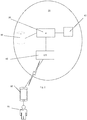
- Figure 1 is a schematic diagram of a user interface system according to an embodiment.
- the user interface system 10 includes a controller 20, a data repository 30 and an I/O unit 50.
- the user interface system 10 is configured to cause, via the I/O unit 50, a user interface device 60 of a user 70 to provide a stimulus to the user 70.
- the user interface system 10 is further configured to receive, from the user 70, data on the stimulus.
- the user interface system 10 is arranged to record, in the data repository 30, stimulus recognised by the user.
- the user interface system 10 is configured to guide the user through a series of stimuli applied by the user interface device 60 via the I/O unit 50 and determine a degree of recognition for each stimulus.
- the controller 20 is configured to record degree of recognition by the user 70 for each stimulus in the data repository 30.
- the user interface device 60 is configurable, the controller 20 is operable to determine an optimised set of stimuli to be used by the user interface device 60 in dependence on the recorded degree of recognition for each stimulus in the data repository, the optimised set matching the number of stimuli provided by the user interface device 60.
- the controller is arranged to communicate with the user interface device 60 and configure the user interface device 60 to use the optimised set of stimuli for its functions.
- the user interface system 10 may include a GUI accessible by the user 60 to assign stimuli to particular functions of the user interface device 60. It will be appreciated that systems other than GUIs could also be used including verbal and gesture based interfaces.
- Figure 2 is a schematic diagram of the user interface system of Figure 1 highlighted selected preferred options.
- the user interface system 10 is configured to invoke a training system 40, the training system 40 being arranged to cause, via the I/O unit 50, the user interface device 60 to provide training on a stimulus or a set of stimuli to the user 70.
- Training may, for example, include providing a number of different stimuli and guiding the user so as to highlight the sensation provided by the respective stimulus. Due to repeated stimuli, the user can be educated to recognise and differentiate different stimuli.
- the controller 20 and/or the training system 40 includes a machine learning system.
- the machine learning system may guide the selection of stimuli and/or optimised stimuli. It may also guide the selection of stimuli for the user to be trained upon (or those to be avoided as the user is not ready or able to differentiate).
- Figure 3 is a schematic diagram illustrating a further embodiment.
- the user interface system 10 includes an Appstore 80.
- the Appstore 80 includes apps and/or extensions that can be selectively installed onto a user device.
- the user device may be the user interface device 60 or it may be a user device 65 that communicates with the user via the user interface device 60.
- the user interface device 60 may be a smartwatch with a haptic stimulator.
- apps may be installable onto the smartwatch 60 or they may be installed onto a smartphone 65 linked to the smartwatch 60 via Bluetooth, Bluetooth Low Energy, ANT+ or similar technologies. In the latter case, the app could be installed on the smartphone 65 and provides stimulus to the user via the smartwatch 60.
- the user interface system 10 may furthermore guide the user on combinations of apps that can be accommodated. For example, where two apps want to use the same stimulus, the user interface system 10 may suggest changing the stimulus of one or the other. Similarly, where the user seeks to install more apps that provide stimuli exceeding those the user interface device 60 can provide or exceeding the number the user has shown he or she can recognise, the user interface system 10 may provide a warning, block installations or suggest more training to extend the stimuli recognition of the user.
- a particular advantage of embodiments of the present invention is that they focus on flexibility and extensibility.
- the type and capability of the user interface device and its stimulator can vary and as more complex devices and stimulators become available or different ways of stimulating a user become recognised, embodiments can accommodate these.
- the user interface system is distinct and separable from any specific user interface device hardware.
- Communication with the user interface device and its stimulator will depend on the particular device but would typically be via Bluetooth, an API or similar.
- an app may be installed on the smartphone to act as a gateway to the smartphone hardware for the user interface system 10.
- Embodiments seek to enable a single device (with one or more actuators) to provide pertinent haptic communication for multiple independent applications. Embodiments seek to achieve this by employing a unique combination of cognitive modelling with machine learning (to identify the stimuli the user can recognise) and complex temporal vibrotactile stimulation protocols (which can provide a granular and extensive vocabulary of stimuli for communicating with the user) to create a rich and complex language that is uniquely tailored and private to an individual user.
- Preferred embodiments use structured stimulation patterns that do not rely on a spatial arrangement of actuators to be effective.
- combinations of distinct and varying rhythms with frequency and amplitude modulation are used to create rich structured stimulation patterns.
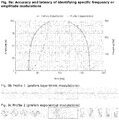
- the main challenge with this type of stimulation is that accuracy and precision are often variable between individuals but internally consistent within an individual.
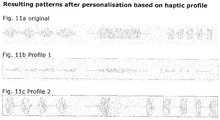
- a combination of modelling approaches and machine learning algorithms are used to personalise and adapt structured haptic stimulation to create a personalised and efficient haptic language system for transmitting information.
- Embodiments seek to provide a system that provides ongoing interaction between learning of the user and training of the machine learning models that can be used to continuously optimise the stimuli available to all users and in particular to tune those used for particular users.
- modelling there are four main aspects to the modelling, which are all interdependent and, preferably, occur simultaneously and some of which may optionally be repeated periodically or upon a change to the user interface device, apps installed etc:
- the creation of a model requires sufficient data about an individual's capabilities and preferences.
- the user will initially go through an onboarding process aimed at testing aspects of communication protocols to determine the abilities and preferences of that individual. This means that the initial learning process is optimised and the stimulation protocols and language structure is personalised from the onset.
- the main factors extracted for the haptic profile may include:
- the haptic profile may also contain other information that could impact on the choice of stimulus protocols and structure of the language. It is important to note that while this information might be used to inform parameter selection, the main purpose is to complement the experimental data from the testing phase.
- the stimulation parameters in the haptic profile will preferably be continually tweaked to optimise the efficiency of the stimulation. This may be done in several ways:
- This aspect involves assigning stimulation protocols (or sets thereof) to applications through an app-store. This may involve the addition of new applications or an expansion of the functionality of an existing application.
- the private and personalised nature of the language protocols makes the user interface system uniquely portable, which means it can be used across multiple haptic devices while maintaining consistent and effective communication. i.e. once a user has learned the association between a stimulation protocol and a meaning on one device, this same protocol could be employed to transmit the same information on multiple devices.
- the data repository may take various forms including a central or distributed file store, database (such as SQL or other relational or non-relational database types). It may be implemented using storage devices such as hard disks, random access memories, solid state disks or any other forms of storage media.
- the controller discussed herein may represent a single processor or a collection of processors acting in a synchronised, semi-synchronised or asynchronous manner.
- a master server system may maintain the user interface system and be responsible for interaction between fully autonomous agents whilst a user's local PC or other computing device may be the "controller" or I/O device responsible for communicating with the user interface device.
- a central system may be responsible for processing decisions.
- the machine learning system may take many forms including a trained neural network, Support Vector Machines, Random Forest, K-Means, Matrix Factorisation or some combination thereof.
- the method and system enables stimuli to be harmonised across devices for a user and in the case where different stimulators are used, the system and method could approximate a stimulus pattern so that it is as close as possible depending on the capabilities of the different stimulators and recognised to be the same by the user across those different devices.
- a haptic stimulator is used that is controllable such that one or more of frequency, amplitude, duration, signal gaps, waveform shape or other attributes can be adjusted to suit the user.
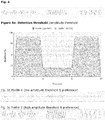
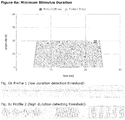
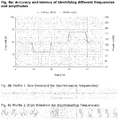
- the Figures illustrate:
- the system may be configured to automatically or semi-automatically assign stimuli to functions/applications of a device.
- the content of the stimulus (such as haptic) profile and the type of content/function may be matched to provide either an automatic assignment of or a narrowed down selection of "appropriate" stimuli and not the full complement of stimuli in the profile.
- emotional reaction may also be tested/recorded.
- an emotional valence value may be assessed either by monitoring reactions, directly asking users about testing and/or using prediction based on other data from the user, e.g. performance/perception data from various psychological tests.
- Physiological measures e.g. heart rate, temperature and movement may also be used to assess the emotional response to a stimulus.
- Stimuli may be grouped, either by emotion (happy, enjoyable, scary%), activity type (pleasure, business, family), for contacts (a group for spouse etc) or in other ways such that a stimulus from that group is assigned to alerts or actions from the device associated with that grouping.
- stimuli are classified according to what effect they will have on you, whether it be emotional associations, e.g. long duration pulses, low frequency and slow modulations for calming stimuli or short duration pulses in a higher frequency-band with fast modulations. for some notifications/alerts.
- One possible arrangement may include the steps:
- code e.g., a software algorithm or program
- firmware e.g., a software algorithm or program
- computer useable medium having control logic for enabling execution on a computer system having a computer processor.
- Such a computer system typically includes memory storage configured to provide output from execution of the code which configures a processor in accordance with the execution.
- the code can be arranged as firmware or software, and can be organized as a set of modules such as discrete code modules, function calls, procedure calls or objects in an object-oriented programming environment. If implemented using modules, the code can comprise a single module or a plurality of modules that operate in cooperation with one another.
Landscapes
- Engineering & Computer Science (AREA)
- General Engineering & Computer Science (AREA)
- Theoretical Computer Science (AREA)
- Human Computer Interaction (AREA)
- Physics & Mathematics (AREA)
- General Physics & Mathematics (AREA)
- Multimedia (AREA)
- Health & Medical Sciences (AREA)
- Audiology, Speech & Language Pathology (AREA)
- General Health & Medical Sciences (AREA)
- User Interface Of Digital Computer (AREA)
- Stored Programmes (AREA)
Applications Claiming Priority (3)
| Application Number | Priority Date | Filing Date | Title |
|---|---|---|---|
| GBGB1907385.7A GB201907385D0 (en) | 2019-05-24 | 2019-05-24 | User interface, user interfact system and method |
| US201962870449P | 2019-07-03 | 2019-07-03 | |
| GB1915435.0A GB2584167B (en) | 2019-05-24 | 2019-10-24 | User interface, user interface system and method |
Publications (3)
| Publication Number | Publication Date |
|---|---|
| EP3742265A1 true EP3742265A1 (fr) | 2020-11-25 |
| EP3742265B1 EP3742265B1 (fr) | 2025-08-06 |
| EP3742265C0 EP3742265C0 (fr) | 2025-08-06 |
Family
ID=70775280
Family Applications (1)
| Application Number | Title | Priority Date | Filing Date |
|---|---|---|---|
| EP20275096.4A Active EP3742265B1 (fr) | 2019-05-24 | 2020-05-22 | Système et méthode d'interface utilisateur haptique |
Country Status (3)
| Country | Link |
|---|---|
| US (1) | US11402974B2 (fr) |
| EP (1) | EP3742265B1 (fr) |
| GB (1) | GB2584167B (fr) |
Families Citing this family (1)
| Publication number | Priority date | Publication date | Assignee | Title |
|---|---|---|---|---|
| CN113769401B (zh) * | 2021-09-13 | 2024-09-03 | 网易(杭州)网络有限公司 | 信息处理方法及装置、存储介质及电子设备 |
Citations (3)
| Publication number | Priority date | Publication date | Assignee | Title |
|---|---|---|---|---|
| EP2778843A2 (fr) * | 2013-03-11 | 2014-09-17 | Immersion Corporation | Système de réglage d'effet haptique automatique |
| US20170168773A1 (en) * | 2015-12-11 | 2017-06-15 | Oculus Vr, Llc | Modifying haptic feedback provided to a user to account for changes in user perception of haptic feedback |
| US20180173311A1 (en) * | 2014-05-20 | 2018-06-21 | Immersion Corporation | Haptic authoring tool using a haptification model |
Family Cites Families (7)
| Publication number | Priority date | Publication date | Assignee | Title |
|---|---|---|---|---|
| US6449496B1 (en) * | 1999-02-08 | 2002-09-10 | Qualcomm Incorporated | Voice recognition user interface for telephone handsets |
| KR20100007625A (ko) * | 2008-07-14 | 2010-01-22 | 엘지전자 주식회사 | 이동 단말기 및 그 메뉴 표시 방법 |
| US20140057232A1 (en) * | 2011-04-04 | 2014-02-27 | Daniel Z. Wetmore | Apparatus, system, and method for modulating consolidation of memory during sleep |
| US10264112B2 (en) * | 2015-10-16 | 2019-04-16 | Muchi Corporation | Voice communication and location tracking system |
| KR101807655B1 (ko) * | 2015-12-01 | 2017-12-11 | 주식회사 퓨처플레이 | 사용자 인터페이스를 제공하기 위한 방법, 디바이스, 시스템 및 비일시성의 컴퓨터 판독 가능한 기록 매체 |
| CN110023917A (zh) * | 2016-12-05 | 2019-07-16 | 索尼公司 | 信息处理装置、信息处理方法、程序以及信息处理系统 |
| US9891884B1 (en) * | 2017-01-27 | 2018-02-13 | International Business Machines Corporation | Augmented reality enabled response modification |
-
2019
- 2019-10-24 GB GB1915435.0A patent/GB2584167B/en active Active
-
2020
- 2020-05-22 US US16/881,975 patent/US11402974B2/en active Active
- 2020-05-22 EP EP20275096.4A patent/EP3742265B1/fr active Active
Patent Citations (3)
| Publication number | Priority date | Publication date | Assignee | Title |
|---|---|---|---|---|
| EP2778843A2 (fr) * | 2013-03-11 | 2014-09-17 | Immersion Corporation | Système de réglage d'effet haptique automatique |
| US20180173311A1 (en) * | 2014-05-20 | 2018-06-21 | Immersion Corporation | Haptic authoring tool using a haptification model |
| US20170168773A1 (en) * | 2015-12-11 | 2017-06-15 | Oculus Vr, Llc | Modifying haptic feedback provided to a user to account for changes in user perception of haptic feedback |
Also Published As
| Publication number | Publication date |
|---|---|
| GB201915435D0 (en) | 2019-12-11 |
| US11402974B2 (en) | 2022-08-02 |
| EP3742265B1 (fr) | 2025-08-06 |
| GB2584167A (en) | 2020-11-25 |
| EP3742265C0 (fr) | 2025-08-06 |
| GB2584167B (en) | 2023-06-28 |
| GB2584167A8 (en) | 2021-02-03 |
| US20200371652A1 (en) | 2020-11-26 |
Similar Documents
| Publication | Publication Date | Title |
|---|---|---|
| US20220343794A1 (en) | Neural network model for generation of compressed haptic actuator signal from audio input | |
| US10380851B2 (en) | Haptic effects conflict avoidance | |
| KR102444165B1 (ko) | 적응적으로 회의를 제공하기 위한 장치 및 방법 | |
| EP2965729B1 (fr) | Fourniture d'informations à un utilisateur par rétroaction somatosensorielle | |
| CN108388349A (zh) | 自动触觉效果调节系统 | |
| KR20170037486A (ko) | 햅틱 captcha | |
| CN105051647A (zh) | 基于生物物理信号的搜集时间和空间模式的大脑计算机接口(bci)系统 | |
| Blum et al. | Getting your hands dirty outside the lab: A practical primer for conducting wearable vibrotactile haptics research | |
| KR20160033969A (ko) | 단말 장치 및 그 제어방법 | |
| EP3742265B1 (fr) | Système et méthode d'interface utilisateur haptique | |
| Duente et al. | Colorful electrotactile feedback on the wrist | |
| CN119310868A (zh) | 一种智能家居管理方法、电子设备及存储介质 | |
| Qian et al. | Determining the efficacy of multi-parameter tactons in the presence of real-world and simulated audio distractors | |
| EP4160615A1 (fr) | Procédés et systèmes d'administration de signaux d'état cognitif | |
| Salous et al. | Augmenting Imagery with Multimodal Vibrotactile Representations: Touch, Feel, and Hear | |
| Chu et al. | A comparative evaluation of mechanical vibration and ultrasonic vibration on smartphones in tactile code perception | |
| Zhao et al. | Spatiotemporal rendering for dynamic sensation reproduction via electrostatic-enhanced vibro-haptic interface | |
| Swerdfeger | A first and second longitudinal study of haptic icon learnability: The impact of rhythm and melody | |
| Le | Touching and feeling complex vibrotactile stimuli | |
| Sahoo et al. | Mello: A Calm Companion for Stress Relief-A Multi-sensory and Interactive Plush Toy | |
| Zand et al. | Assessing Cognitive Fatigue in Human Teammates During Human-Robot Collaboration | |
| WO2026024739A1 (fr) | Cadre d'interaction pour biosignaux | |
| Bailey | Decoding the content of cross-modal influences in the brain | |
| CN121118967A (zh) | 一种ai玩具成长轨迹算法优化监控方法 | |
| Rodrigues et al. | An application to enrich the study of Auditory Emotion Recognition |
Legal Events
| Date | Code | Title | Description |
|---|---|---|---|
| PUAI | Public reference made under article 153(3) epc to a published international application that has entered the european phase |
Free format text: ORIGINAL CODE: 0009012 |
|
| STAA | Information on the status of an ep patent application or granted ep patent |
Free format text: STATUS: THE APPLICATION HAS BEEN PUBLISHED |
|
| AK | Designated contracting states |
Kind code of ref document: A1 Designated state(s): AL AT BE BG CH CY CZ DE DK EE ES FI FR GB GR HR HU IE IS IT LI LT LU LV MC MK MT NL NO PL PT RO RS SE SI SK SM TR |
|
| AX | Request for extension of the european patent |
Extension state: BA ME |
|
| STAA | Information on the status of an ep patent application or granted ep patent |
Free format text: STATUS: REQUEST FOR EXAMINATION WAS MADE |
|
| 17P | Request for examination filed |
Effective date: 20210507 |
|
| RBV | Designated contracting states (corrected) |
Designated state(s): AL AT BE BG CH CY CZ DE DK EE ES FI FR GB GR HR HU IE IS IT LI LT LU LV MC MK MT NL NO PL PT RO RS SE SI SK SM TR |
|
| STAA | Information on the status of an ep patent application or granted ep patent |
Free format text: STATUS: EXAMINATION IS IN PROGRESS |
|
| 17Q | First examination report despatched |
Effective date: 20220322 |
|
| GRAP | Despatch of communication of intention to grant a patent |
Free format text: ORIGINAL CODE: EPIDOSNIGR1 |
|
| STAA | Information on the status of an ep patent application or granted ep patent |
Free format text: STATUS: GRANT OF PATENT IS INTENDED |
|
| INTG | Intention to grant announced |
Effective date: 20241007 |
|
| GRAJ | Information related to disapproval of communication of intention to grant by the applicant or resumption of examination proceedings by the epo deleted |
Free format text: ORIGINAL CODE: EPIDOSDIGR1 |
|
| STAA | Information on the status of an ep patent application or granted ep patent |
Free format text: STATUS: EXAMINATION IS IN PROGRESS |
|
| GRAP | Despatch of communication of intention to grant a patent |
Free format text: ORIGINAL CODE: EPIDOSNIGR1 |
|
| STAA | Information on the status of an ep patent application or granted ep patent |
Free format text: STATUS: GRANT OF PATENT IS INTENDED |
|
| INTC | Intention to grant announced (deleted) | ||
| INTG | Intention to grant announced |
Effective date: 20250221 |
|
| GRAS | Grant fee paid |
Free format text: ORIGINAL CODE: EPIDOSNIGR3 |
|
| GRAA | (expected) grant |
Free format text: ORIGINAL CODE: 0009210 |
|
| STAA | Information on the status of an ep patent application or granted ep patent |
Free format text: STATUS: THE PATENT HAS BEEN GRANTED |
|
| AK | Designated contracting states |
Kind code of ref document: B1 Designated state(s): AL AT BE BG CH CY CZ DE DK EE ES FI FR GR HR HU IE IS IT LI LT LU LV MC MK MT NL NO PL PT RO RS SE SI SK SM TR |
|
| RBV | Designated contracting states (corrected) |
Designated state(s): AL AT BE BG CH CY CZ DE DK EE ES FI FR GR HR HU IE IS IT LI LT LU LV MC MK MT NL NO PL PT RO RS SE SI SK SM TR |
|
| REG | Reference to a national code |
Ref country code: CH Ref legal event code: EP |
|
| REG | Reference to a national code |
Ref country code: DE Ref legal event code: R096 Ref document number: 602020055872 Country of ref document: DE |
|
| REG | Reference to a national code |
Ref country code: IE Ref legal event code: FG4D |
|
| U01 | Request for unitary effect filed |
Effective date: 20250808 |
|
| U07 | Unitary effect registered |
Designated state(s): AT BE BG DE DK EE FI FR IT LT LU LV MT NL PT RO SE SI Effective date: 20250820 |
|
| PG25 | Lapsed in a contracting state [announced via postgrant information from national office to epo] |
Ref country code: IS Free format text: LAPSE BECAUSE OF FAILURE TO SUBMIT A TRANSLATION OF THE DESCRIPTION OR TO PAY THE FEE WITHIN THE PRESCRIBED TIME-LIMIT Effective date: 20251206 |
|
| PG25 | Lapsed in a contracting state [announced via postgrant information from national office to epo] |
Ref country code: NO Free format text: LAPSE BECAUSE OF FAILURE TO SUBMIT A TRANSLATION OF THE DESCRIPTION OR TO PAY THE FEE WITHIN THE PRESCRIBED TIME-LIMIT Effective date: 20251106 |
|
| PG25 | Lapsed in a contracting state [announced via postgrant information from national office to epo] |
Ref country code: HR Free format text: LAPSE BECAUSE OF FAILURE TO SUBMIT A TRANSLATION OF THE DESCRIPTION OR TO PAY THE FEE WITHIN THE PRESCRIBED TIME-LIMIT Effective date: 20250806 |
|
| PG25 | Lapsed in a contracting state [announced via postgrant information from national office to epo] |
Ref country code: GR Free format text: LAPSE BECAUSE OF FAILURE TO SUBMIT A TRANSLATION OF THE DESCRIPTION OR TO PAY THE FEE WITHIN THE PRESCRIBED TIME-LIMIT Effective date: 20251107 |
|
| PG25 | Lapsed in a contracting state [announced via postgrant information from national office to epo] |
Ref country code: PL Free format text: LAPSE BECAUSE OF FAILURE TO SUBMIT A TRANSLATION OF THE DESCRIPTION OR TO PAY THE FEE WITHIN THE PRESCRIBED TIME-LIMIT Effective date: 20250806 |
|
| PG25 | Lapsed in a contracting state [announced via postgrant information from national office to epo] |
Ref country code: RS Free format text: LAPSE BECAUSE OF FAILURE TO SUBMIT A TRANSLATION OF THE DESCRIPTION OR TO PAY THE FEE WITHIN THE PRESCRIBED TIME-LIMIT Effective date: 20251106 |
|
| PG25 | Lapsed in a contracting state [announced via postgrant information from national office to epo] |
Ref country code: ES Free format text: LAPSE BECAUSE OF FAILURE TO SUBMIT A TRANSLATION OF THE DESCRIPTION OR TO PAY THE FEE WITHIN THE PRESCRIBED TIME-LIMIT Effective date: 20250806 |
|
| PG25 | Lapsed in a contracting state [announced via postgrant information from national office to epo] |
Ref country code: SM Free format text: LAPSE BECAUSE OF FAILURE TO SUBMIT A TRANSLATION OF THE DESCRIPTION OR TO PAY THE FEE WITHIN THE PRESCRIBED TIME-LIMIT Effective date: 20250806 |
|
| PG25 | Lapsed in a contracting state [announced via postgrant information from national office to epo] |
Ref country code: CZ Free format text: LAPSE BECAUSE OF FAILURE TO SUBMIT A TRANSLATION OF THE DESCRIPTION OR TO PAY THE FEE WITHIN THE PRESCRIBED TIME-LIMIT Effective date: 20250806 |
|
| PG25 | Lapsed in a contracting state [announced via postgrant information from national office to epo] |
Ref country code: SK Free format text: LAPSE BECAUSE OF FAILURE TO SUBMIT A TRANSLATION OF THE DESCRIPTION OR TO PAY THE FEE WITHIN THE PRESCRIBED TIME-LIMIT Effective date: 20250806 |