EP3742802A1 - Mobilität zwischen systemen in integrierten drahtlosen netzwerken - Google Patents
Mobilität zwischen systemen in integrierten drahtlosen netzwerken Download PDFInfo
- Publication number
- EP3742802A1 EP3742802A1 EP20183810.9A EP20183810A EP3742802A1 EP 3742802 A1 EP3742802 A1 EP 3742802A1 EP 20183810 A EP20183810 A EP 20183810A EP 3742802 A1 EP3742802 A1 EP 3742802A1
- Authority
- EP
- European Patent Office
- Prior art keywords
- twan
- connection
- pdn
- interface
- sgw
- Prior art date
- Legal status (The legal status is an assumption and is not a legal conclusion. Google has not performed a legal analysis and makes no representation as to the accuracy of the status listed.)
- Granted
Links
Images













Classifications
-
- H—ELECTRICITY
- H04—ELECTRIC COMMUNICATION TECHNIQUE
- H04W—WIRELESS COMMUNICATION NETWORKS
- H04W36/00—Hand-off or reselection arrangements
- H04W36/14—Reselecting a network or an air interface
- H04W36/144—Reselecting a network or an air interface over a different radio air interface technology
- H04W36/1446—Reselecting a network or an air interface over a different radio air interface technology wherein at least one of the networks is unlicensed
-
- H—ELECTRICITY
- H04—ELECTRIC COMMUNICATION TECHNIQUE
- H04W—WIRELESS COMMUNICATION NETWORKS
- H04W12/00—Security arrangements; Authentication; Protecting privacy or anonymity
- H04W12/04—Key management, e.g. using generic bootstrapping architecture [GBA]
-
- H—ELECTRICITY
- H04—ELECTRIC COMMUNICATION TECHNIQUE
- H04W—WIRELESS COMMUNICATION NETWORKS
- H04W12/00—Security arrangements; Authentication; Protecting privacy or anonymity
- H04W12/06—Authentication
-
- H—ELECTRICITY
- H04—ELECTRIC COMMUNICATION TECHNIQUE
- H04W—WIRELESS COMMUNICATION NETWORKS
- H04W12/00—Security arrangements; Authentication; Protecting privacy or anonymity
- H04W12/08—Access security
-
- H—ELECTRICITY
- H04—ELECTRIC COMMUNICATION TECHNIQUE
- H04W—WIRELESS COMMUNICATION NETWORKS
- H04W76/00—Connection management
- H04W76/10—Connection setup
- H04W76/12—Setup of transport tunnels
-
- H—ELECTRICITY
- H04—ELECTRIC COMMUNICATION TECHNIQUE
- H04W—WIRELESS COMMUNICATION NETWORKS
- H04W8/00—Network data management
- H04W8/02—Processing of mobility data, e.g. registration information at HLR [Home Location Register] or VLR [Visitor Location Register]; Transfer of mobility data, e.g. between HLR, VLR or external networks
- H04W8/06—Registration at serving network Location Register, VLR or user mobility server
-
- H—ELECTRICITY
- H04—ELECTRIC COMMUNICATION TECHNIQUE
- H04W—WIRELESS COMMUNICATION NETWORKS
- H04W88/00—Devices specially adapted for wireless communication networks, e.g. terminals, base stations or access point devices
- H04W88/02—Terminal devices
- H04W88/06—Terminal devices adapted for operation in multiple networks or having at least two operational modes, e.g. multi-mode terminals
-
- H—ELECTRICITY
- H04—ELECTRIC COMMUNICATION TECHNIQUE
- H04W—WIRELESS COMMUNICATION NETWORKS
- H04W88/00—Devices specially adapted for wireless communication networks, e.g. terminals, base stations or access point devices
- H04W88/16—Gateway arrangements
-
- H—ELECTRICITY
- H04—ELECTRIC COMMUNICATION TECHNIQUE
- H04W—WIRELESS COMMUNICATION NETWORKS
- H04W92/00—Interfaces specially adapted for wireless communication networks
- H04W92/16—Interfaces between hierarchically similar devices
- H04W92/24—Interfaces between hierarchically similar devices between backbone network devices
Definitions
- the UE associates with the WiFi access point using the attach procedure as described above.
- the association results in the establishment of an Sla-C interface between the TWAN and an MME in the 3GPP network, as well as the identification of an Sla-U interface between the TWAN and an SGW in the 3GPP network.
- the SGW generates and transmits a request for a handover to the PGW.
- the PGW coordinates the handover of the existing connection of the UE within the 3GPP network and, assuming the request is authorized, generates and transmits a create session response.
- the response includes information regarding the existing communication path between the SGW and the PDN that was previously established to service access through the LTE access network.
- the UE With a connection established to the PDN via the TWAN, the UE generates, and the TWAN receives, a multi-connection request that indicates a request to assign the same IP address for the UE access to the PDN through the TWAN as has been assigned for communication via the LTE access network.
- the multi-connection request is received at the WLAN AN, which forwards the request to the TWAG.
- the TWAG forwards the request over the established Sla-C interface to the MME.
- the MME generates and transmits a request for a multi-connection session to the SGW over an S11 interface.
- the TWAN that is integrated with the LTE access network may be adapted to provide single-PDN connectivity. While in other instances, the TWAN may be adapted to provide multi-PDN connectivity.
- the functionality that is traditionally associated with a TWAG portion of a TWAN may be integrated into the SGW in the 3GPP processing network.
- GTP The GPRS Tunneling Protocol
- PMIP Proxy Mobile IP
- WLAN access networks in particular, there has been activity directed at standardizing procedures for 3GPP access using the GTP protocol. The activities were intended to enable subscriber access to the MNO's core network via lower cost unlicensed 802.11 spectrum in lieu of expensive cellular spectrum.
- GAN generic access network
- I-WLAN I-WLAN
- Untrusted WLAN interest in Trusted WLAN seems to be gaining momentum, especially with respect to the GTP-based option.
- 3GPP Release 10 standardized a GTP-based S2b interface for Untrusted WLAN access to the EPC. This included the associated support for a GTP-based S2b interface between an evolved Packet Data Gateway (ePDG) and the PGW. Untrusted WLAN solutions may require UE support for IPSec as well as EPC support of an ePDG for establishing an IPSec tunnel with the UE.
- ePDG evolved Packet Data Gateway
- 3GPP Release 6 provided a standardized WLAN Interworking (I-WLAN) solution by introducing a Packet Data Gateway (PDG) for WLAN access to the "pre-EPC" packet-switched core network.
- PDG Packet Data Gateway
- This release additionally described how to reuse existing GGSN deployments to implement the PDG functionality using a subset of the Gn interface (denoted as Gn') via a "Tunnel Termination Gateway” (TTG) using GTP towards the GGSN.
- TSG Transmission Gateway
- these solutions may require UE support for IPSec as well as PDG/TTG support for establishing an IPSec tunnel with the UE.
- 3GPP Release 6 also standardized Generic Access Network (GAN) support for 2G/WiFi dual-mode handsets. Release 8 added support for 3G/WiFi handsets.
- Unlicensed Mobile Access (UMA) is the commercial name used by mobile carriers for GAN access via WiFi.
- GAN-enabled UEs can use WiFi to interface with a "GAN Controller" (GANC) that presents itself as a 2G BSC or 3G RNC to the core network.
- GANC provides a circuit-switched (CS) interface to the MSC, a packet-switched (PS) interface to the SGSN, and a Diameter EAP interface to the AAA Server/Proxy.
- CS circuit-switched
- PS packet-switched
- Diameter EAP Diameter EAP
- GAN/UMA I-WLAN Untrusted WLAN Trusted WLAN Network Element
- PGW PGW CN Protocols GTP GTP GTP or PMIP GTP or PMIP UE Protocols IKEv2/IPSec, EAP-AKA, Generic Access Radio Resource Control (GA-RRC), NAS protocols tunneled between UE and SGSN IKEv2/IPSec, EAP-AKA IKEv2/IPSec, EAP-AKA EAP-AKA', WLAN Control Protocol (WLCP) as defined for SaMOG Phase 2.
- GAN/UMA PS only shown
- PGW PGW CN Protocols GTP GTP GTP or PMIP GTP or PMIP UE Protocols IKEv2/IPSec
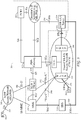
- FIG. 1 depicts an existing 3GPP architecture that provides cellular LTE and Trusted WLAN access to an EPC 114.
- the Trusted WLAN Access Network (TWAN) 112 can be connected to the Evolved Packet Core (EPC) 114 via the STa interface 116 toward the 3GPP AAA Server 118 for authentication, authorization, and accounting via the S2a interface 120 toward the PDN Gateway (PGW) 122 for user plane traffic flows.
- EPC Evolved Packet Core
- the 3GPP LTE access network 130 (i.e., evolved Node B) is connected to the EPC 114 via the S1-MME interface 132 which provides a communication path with the Mobility Management Entity (MME) 134.
- MME Mobility Management Entity
- the S1-U interface 136 provides a communication path with the Serving Gateway (SGW) 138, which interfaces with the PDN Gateway (PGW) 122 via the S5 interface 140.
- SGW Serving Gateway
- PGW PDN Gateway
- WLAN Access Network (WLAN AN) 110 comprises one or more WLAN Access Points (APs).
- An AP terminates the UE's WLAN IEEE 802.11 link via the SWw interface 156.
- the APs may be deployed as standalone APs or as "thin" APs connected to a Wireless LAN Controller (WLC) using, for example, the IETF CAPWAP protocols.
- WLC Wireless LAN Controller
- Trusted WLAN AAA Proxy (TWAP) 164 terminates the Diameter-based STa interface 116 with the 3GPP AAA Server 118.
- the TWAP 164 relays the AAA information between the WLAN AN 110 and the 3GPP AAA Server 118 (or Proxy in case of roaming).
- the TWAP 164 can inform the TWAG 160 of the occurrence of layer 2 attach and detach events.
- the TWAP 164 establishes the binding of UE subscription data (including IMSI) with UE MAC address and can provide such information to the TWAG 160.
- the UE 162 can leverage Universal Subscriber Identity Module (USIM) features for both 3GPP and non-3GPP WLAN access. Processing for authentication and security is described in section 4.9.1 of 3GPP TS 23.402.
- non-3GPP access authentication such as that which takes place via a WLAN, defines the process that is used for access control and thereby permits or denies a subscriber from attaching to and using the resources of a non-3GPP IP access which is interworked with the EPC network.
- Non-3GPP access authentication signaling is executed between the UE and the 3GPP AAA server 118 and HSS 170. The authentication signaling may pass through AAA proxies.
- Trusted 3GPP-based access authentication is executed across an STa reference point 116.
- the 3GPP based access authentication signaling is based on IETF protocols, e.g., Extensible Authentication Protocol (EAP).
- EAP Extensible Authentication Protocol
- the STa interface 116 and Diameter application are used for authenticating and authorizing the UE 162 for EPC access via trusted non-3GPP accesses.
- 3GPP TS 29.273 describes the standard TWAN procedures currently supported on the STa interface.
- the IPv4 address and/or IPv6 prefix is allocated to the UE 162 when a new PDN connection is established with the EPC 114 over the TWAN 112.
- a separate IP address may also be allocated by the TWAN 112 for local network traffic and/or direct Internet offload.
- the TWAN 112 receives relevant PDN information via EAP/Diameter or WLCP signaling.
- the TWAN 112 may request an IPv4 address for the UE 162 from the PGW 122 via the GTP Create Session Request.
- the IPv4 address is delivered to the TWAN 112 during the GTP tunnel establishment via the GTP Create Session Response.
- the TWAN 112 delivers the received IPv4 address to the UE 162 within DHCPv4 signaling.
- Corresponding procedures are also defined for IPv6.
- the UE 162 automatically triggers a PDN connection as part of its initial attachment to the EPC network 114. The UE 162 may subsequently establish additional PDN connections as needed.
- a UE 162 When a UE 162 attempts to attach to the EPC 114 via an (H)eNB LTE access network 130, it first establishes an RRC connection with the (H)eNB LTE access network 130 and encapsulates the Attach Request within the RRC signaling. The (H)eNB LTE access network 130 then forwards the attach request to the MME 134 via S1-AP signaling on the S1-MME interface 132. The MME 134 retrieves subscription information from the HSS 170 via the S6a interface 172 in order to authenticate the UE 162 and allow attachment to the EPC 114.
- the MME 134 After successfully authenticating the UE 162, the MME 134 selects an SGW 138 (e.g., based on proximity to the (H)eNB LTE access network 130), and also selects a PGW 122 (e.g., based on the default APN retrieved from HSS 170 or a specific APN requested by UE 162).
- the MME 134 communicates with the SGW 138 over the S11 interface 174 and requests creation of the PDN connection.
- the SGW 138 executes the signaling to establish a GTP user plane tunnel with the designated PGW 122 over the S5 interface 140.
- GTP control signaling takes place within the S1-AP protocol between the MME 134 and (H)eNB 130. This ultimately leads to the establishment of a GTP user plane tunnel on the S1-U interface 136 between (H)eNB 130 and SGW 138. The path for the PDN connection between the UE 162 and PGW 122 is thus completed through the (H)eNB 130 and SGW 138.
- UE 162 authentication and EPC 114 attachment is accomplished via EAP signaling between the UE 162 and 3GPP AAA Server 118.
- the PDN connectivity service is provided by the point-to-point connectivity between the UE 162 and the TWAN 112, concatenated with S2a bearer(s) 120 between the TWAN 112 and the PGW 122.
- the 3GPP AAA Server 118 also provides the TWAN 112 with information via STa interface 116 for establishing a PDN connection to the default PDN provisioned in the HSS 170.
- the TWAN 112 then exercises GTP control plane (GTP-C) and user plane (GTP-U) protocols over the S2a interface 120 directly toward the PGW 122, thereby completing the PDN connection between the UE 162 and PGW 122 through the TWAN 112.
- GTP-C GTP control plane
- GTP-U user plane
- two concurrent connections to the PDN may be established, one via the LTE and one via WiFi.
- a "multi-connection" connection feature in the MME/SGW results in improved mobility robustness and reduce handover ping-ponging.
- the multi-connection aspect of the disclosed embodiments allows for an alternate path to the PDN to be made available as needed without incurring handover setup delays.
- the availability of alternate communication paths improves the user experience by reducing session interruptions when the primary data path is degraded (which can be a common occurrence given the limited coverage of small cell and WiFi access points).
- FIG.'s 2 and 3 depict example embodiments of systems for providing inter-system mobility in integrated WLAN and LTE access networks.
- both example embodiments comprise a new "S1a-C" control plane interface (290, 390) between the MME (234, 334) and the TWAN (212, 312), and a new "S1a-U" user plane interface (292, 392) between SGW (238, 338) and TWAN (212, 312).
- the MME (234, 334) operates as a common control plane entity for both LTE access network (295, 395) and TWAN (212, 312) access, while the SGW (238, 338) operates as a user plane gateway for both LTE access network (295, 395) and TWAN (212, 312).
- the integrated MME (234, 334) and SGW (238, 338) which continue to be comprised in the core EPC network (214, 314), allow for user equipment (UE) (262, 362) to access the capabilities of a packet data network (PDN) through either the LTE access network (295, 395) or TWAN (212, 312).
- PDN packet data network
- an existing communication connection between a UE (262, 362) and a PDN (222, 322) may be handed over from one of the LTE access network (295, 395) or TWAN (212, 312) to the other.
- the MME (234, 334) and SGW (238, 338) provide for simultaneously maintain two communication paths, one via the LTE access network (295, 395) and one via the TWAN (212, 312), between a UE (262, 362) and a PDN (222, 322).
- FIG. 3 depicts an alternative embodiment, wherein the functionality that had traditionally been provided by TWAG has been combined with the SGW 338.
- the combined SGW and TWAG 338 offer the benefit of reducing the number of devices that a communication must traverse between the UE 362 to the PGW 322.
- the Sla-C 390 and Sla-U 392 interfaces terminate in the TWAN 312, but terminate specifically in the WLAN AN 310 rather than the TWAG 260 as in FIG. 2 .
- the UE (262, 262) initiates both attach and PDN connection establishment via EAP signaling with the 3GPP AAA Server (218, 318).
- the 3GPP AAA Server (218, 318) provides a new ISW-based indication via Diameter signaling extensions to the TWAN (212, 312) (based on reported UE (262, 362) and TWAN (212, 312) capabilities), allowing it to communicate with an enhanced MME (234, 334) via the new Sla-C interface.
- authentication and security procedures are performed consistent with existing standard mechanisms using the STa, SWx, and S6b interfaces that may have been enhanced.
- the STa (STa') interface between 3GPP AAA Server (218, 318) and TWAN (212, 312) may be extended to enable exchange of additional ISW-based information.
- the SWx (SWx') interface between HSS and 3GPP AAA Server (218, 318) may be extended to enable exchange of additional ISW-based information.
- the S6a (S6a') interface between the HSS (270, 370) and the MME (234, 334) may be enhanced to enable exchange of additional ISW-based information.
- the extended EAP signaling described for SaMOG phase-2 already supports use of the "handover” indication along with the "APN" for the PDN connection to be handed over.
- a new indicator for "multi-connection” is defined which provides the "APN" of the PDN to which the connection is being made.
- the GTPv2-C protocol may also be extended in connection with the systems and methods disclosed herein.
- the indication flags in the GTP-C "Create Session Request" may be expanded to include a value for "multi-connection” in addition to the existing "handover indication”.
- the HSS (270, 370) is updated with the latest UE connectivity information such as, for example, the MME address, SGW address, PGW address, etc.
- the 3GPP AAA Server (218, 318) retrieves the latest UE subscription and connection information. If the UE (262, 362) is already connected to an ISW-enabled MME (234, 334) and SGW (238, 338) via LTE access, the same MME (234, 334) and/or SGW (238, 338) may be preferred for use via the TWAN access. In the scenario where the UE (262, 362) is in the vicinity of LTE and TWAN access points capable of sharing the same MME and/or SGW, the ISW-enabled MME and/or SGW may be preferred.
- the MME (234, 334) is adapted to provide integrated small-cell and WiFi (ISW) capabilities.
- the TWAN (212, 312) uses the ISW-enabled MME (234, 334) to establish a PDN connection from the TWAN (212, 312) to the PGW (222, 322) via an ISW-enabled SGW (238, 338).
- This processing involves new GTP-based signaling between the TWAN (212, 312) and MME (234, 334) via the newly proposed "S1a-C" interface and a new user plane path between the TWAN (2312, 312) and SGW (238, 338) via the newly proposed "S1a-U" interface.
- the MME (234, 334) is adapted to handle the new information elements provided in the extended GTP-C protocols over the Sla-C interface with the TWAN.
- the Sla-C interface terminates in the WLAN AN 310 function of the TWAN 312.
- the MME 334 processes any new information elements from the extended GTP-C signaling (e.g., UE MAC address, VLAN ID) in order to facilitate routing of packets between the UE 362 and SGW 338.
- This information along with possible access routing policies, are conveyed to the ISW-enabled SGW 338 via modified GTPv2-C signaling on the S11' interface.
- the SGW 338 may perform IP flow mobility procedures based on the MME-provided policy as further described below.
- Additional TWAN capabilities may be included in the request.
- the request may specify support for local TWAG or remote combined TWAG+SGW along with a list of connected MMEs, if any.
- the UE 362 associates to a WiFi access point (AP) that is part of an operator's Trusted WLAN Access Network (TWAN) 312.
- the association occurs via standard IEEE 802.11 procedures via the SWw interface 356.
- the UE 362 may discover and attempt association with this WiFi AP based on pre-configured information, ANDSF policies, ANQP signaling, etc.
- the requested results in multiple access PDN connectivity "MAPCON," i.e., simultaneous use of cellular and WiFi access for PDN connectivity.
- the EAP authentication is performed.
- the processing is substantially the same as described above in connection with steps 2-8 of FIG. 4A with the exception that in the scenario associated with FIG. 6A , the EAP Payload may contain an indication of the UE's "multi-PDN" TWAN capability as per the SaMOG phase-2 solution described in 3GPP TR 23.852 v 12.0.0 .
- the WLAN AN 310 communicates the successful PDN Connection establishment to the UE 362 via the WLCP protocol over the SWw interface 356.
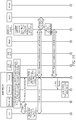
- FIGs. 7A-B depict a flow diagram depicting example processing associated with a UE attaching to a PDN via a TWAN in a system such as depicted in FIG. 2 wherein the TWAN has multi-PDN connectivity. More particularly, FIGs. 7A-B depict processing in an example system embodiment wherein the TWAN 212 supports a multi-PDN connection and wherein the TWAG functionality is located in the TWAN 212.
- this scenario consists of two separate procedures: one for the initial attach using EAP extensions, and one for subsequent PDN connection(s) using the extended WLCP signaling between the UE and TWAN.
- the TWAN consists of a WLAN AN, TWAP and TWAG.
- the EAP authentication is performed.
- the processing is substantially the same as described above in connection with steps 2-8 of FIG. 5A with the exception that in the scenario associated with FIG. 7A , the EAP Payload may contain an indication of the UE's "multi-PDN" TWAN capability as per the SaMOG phase-2 solution described in 3GPP TR 23.852 v 12.0.0 .
- the TWAG 260 sends a GTP-C Create Session Request message to the selected MME 234 over the Sla-C interface 290.
- the MME 260 transmits a GTP-C Create Session Request message to the SGW 238 over the S11' ("prime") interface 274.
- the message comprises any suitable information needed for further processing including, for example, an APN, IMSI, RAT type (e.g., ISW-WLAN), BSSID, SSID, etc..
- the SGW 238 transmits a GTP-C Create Session Request message to the selected PGW 222 over the S5 interface 240.
- the PGW 222 uses the S6b interface 396 to update the 3GPP AAA Server 218 with the associated PGW connectivity information for the UE 262. In addition, it also provides the associated SGW information.
- the 3GPP AAA Server 218 subsequently updates the Home Subscriber System (HSS) 270 with this information via the SWx interface 280.
- HSS Home Subscriber System
- the PGW 222 generates and transmits the GTP-C Create Session Response message to the SGW over the S5 interface including GTP tunnel information, bearer parameters, and the allocated UE IP address.
- the GTP tunnel between the PGW 222 and SGW 238 is thereby established.
- the TWAG 260 generates and transmits a GTP-C Create Session Request message to the ISW-enabled MME 234 over the Sla-C interface 290.
- the message comprises any information that is need for further processing including, for example, an APN, IMSI, RAT type (e.g., ISW-WLAN), BSSID, SSID, etc.), along with the "handover" indication.
- the MME 234 transmits a GTP-C Create Session Request message to the SGW over the modified S11' ("prime") interface.
- the message comprises any suitable information needed for further processing including, for example, an APN, IMSI, RAT type (e.g., ISW-WLAN), BSSID, SSID, etc.), along with the "handover" indication.
- the MME 234 transmits the GTP-C Create Session Response message to the TWAG 260 over the Sla-C interface 290.
- the message comprises any suitable information needed for further processing including, for example, GTP tunnel information, bearer parameters, and the previously allocated IP address for the UE.
- the TWAG 260 function in the TWAN 212 transmits the PDN Connection Response to the WLAN AN 210.
- the WLAN AN 210 communicates the successful PDN Connection establishment to the UE 262 via the WLCP protocol over the SWw interface 256.
- the UE 262 and SGW 238 transmit and receive associated PDN packets exclusively via the TWAG 260.
- an ISW-enabled MME 234 and ISW-enabled SGW 238 are already serving the UE 262 via an LTE connection to a particular PDN.
- the UE 262 maintains both connections and assigns transmission of specific uplink IP traffic flows to either the TWAN or LTE access depending on locally stored policies, signal conditions, etc.
- the access can change on a packet-by-packet basis, it is expected that a specific access will typically be used for a stable period of time as long as conditions allow.
- the SGW 238 keeps track of the access for received uplink IP packets and may transmit the associated downlink packets (e.g., based on corresponding 5-tuple) via the same access. Alternatively, the SGW 238 may send downlink packets over either access based on its own criteria, e.g., for load balancing, etc.
- the transport network layer (TNL) connection has been established between TWAN 212 and MME 234 which may be performed using, for example, OAM.
- the 3GPP AAA Server 218 maintains information about the ISW-enabled MMEs 234, ISW-enabled SGWs 238, and ISW-enabled TWANs 212.
- the UE 262 discovers a WiFi AP belonging to the operator's TWAN 212 and determines to establish a multi-access connection to the existing PDN.
- the UE 262 may discover and attempt association with this WiFi AP based on pre-configured information, ANDSF policies, ANQP signaling, etc.
- the UE 262 may determine to initiate the multi-access PDN connection based on local policies and conditions (e.g., signal strength, perceived congestion, battery power, etc.).
- the TWAG 260 generates and transmits a GTP-C Create Session Request message to the ISW-enabled MME 234 over the Sla-C interface 290.
- the message comprises any information that is need in further processing including, for example, a multi-connection indication, an APN, IMSI, RAT type (e.g., ISW-WLAN), BSSID, SSID, etc.
- the SGW 238 transmits a Create Session Request with "Multi-connection" indication for the existing APN to the PGW 222.
- the example processing of FIG. 9 involves intra-SGW multi-connection attachment over an existing PDN connection. Accordingly, the same PGW 222 is used for both the LTE and WLAN connections. Therefore, when the PGW 222 identifies the Create Session Request message with the "Multi-connection" indication, the PGW 222 uses the existing SGW GTP tunnel rather than create a new one with the SGW 238. One effect of this message is to allow the PGW 222 to notify the PCRF 294 of the additional TWAN 212 access such that the appropriate policy and charging takes place.
- the PGW 222 indicates the TWAN session establishment to the Policy and Charging Rules Function (PCRF) 294 in order to retrieve the QoS and charging rules. Since the "Multi-connection" indication is included, the PGW 222 executes a PCEF-initiated IP-CAN Session Modification Procedure with the PCRF 294 to obtain the policy and charging rules to be enforced. The PGW 222 enforces these rules as needed. If dynamic PCC is not implemented, such rules may be pre-configured in the PGW 222.
- PCRF Policy and Charging Rules Function
- the PGW 222 generates and transmits a GTP-C Create Session Response message to the SGW 238 over the S5 interface 240 including GTP tunnel information, bearer parameters, and the allocated UE IP address.
- This message further comprises the previously allocated IP address for the UE.
- the MME 234 transmits the GTP-C Create Session Response message to the TWAG 260 over the Sla-C interface 290.
- the message comprises any suitable information including, for example, GTP tunnel information, bearer parameters, and the previously allocated IP address for the UE
- the WLAN AN 210 communicates the successful PDN Connection establishment to the UE 262 via the WLCP protocol over the SWw interface 256.
- the TWAG 260 is able to route packets between the UE 262 and PGW 222 via the SGW 238.
- an initial attach via an LTE (H)eNB network is performed substantially as defined in existing 3GPP standards.
- An initial attach via (H)eNB utilizes the standard MME 234 and SGW 238 baseline EPC architecture and protocols.
- MME 234 assigns an ISW-enabled SGW 238 for initial LTE access.
- the MME 234 is made aware of this information as part of the extended information provided by the HSS 270 via the S6a interface.
- FIG. 8 A process for intra-SGW handover from an LTE connection to TWAN connection is described above in connection with FIG. 8 .
- the disclosed systems and methods are likewise adapted to support handovers from a TWAN connection to an LTE connection.
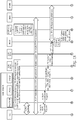
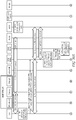
- FIGs. 10A-B depict example processing performed in connection with a handover procedure from a TWAN connection to an LTE connection.
- inter-system LTE handover per existing 3GPP standards, all inter-system handovers are initiated by the UE. Handovers are likewise initiated by the UE in connection with the systems and methods for inter system integration disclosed herein. However, pursuant to the presently disclosed systems and methods, and in contrast with the existing methodologies, inter-system LTE/WiFi handovers employ an S1a interface defined between the MME and WLAN.
- an inter-system handover using an intra-MME/intra-SGW procedure is described. It is understood for this particular scenario that a PDN connection already exists via the concatenation of a WLAN link between UE and TWAN, a GTP tunnel between TWAN and SGW, and another GTP tunnel between the SGW and PGW.
- the scenario could be extended to include the handover of one or more dedicated bearers using the concatenation of additional GTP tunnels.
- the UE employs a TWAN 212 to connect to the PGW 222 via an ISW-SGW 238 as described above in connection with FIGs 5A-5B .
- the connection consists of a concatenation of the following: a WLAN link over the SWw interface 256 between the UE 262 and TWAN 212; a GTP tunnel over the Sla-U interface 292 between the TWAN 212 and SGW 238; and a GTP tunnel over the S5 interface 240 between the SGW 238 and PGW 222.
- the UE 262 generates and transmits an Attach Request comprising an Attach Type and APN through the LTE (H)eNB network 295 to the MME 234.
- the message is routed by the (H)eNB 295 to the MME 234.
- the UE 262 would include the "Handover" indication.
- the UE would also include any one of the APNs corresponding to the PDN connections in the TWAN.
- the MME 234 contacts the HSS 270 and authenticates the UE 262.
- the MME 262 performs a location update procedure and subscriber data retrieval from the HSS 270. If the Request Type was "Handover", the PGW address conveyed to the MME 234 is stored in the MME's PDN subscription context. The MME 234 receives information for the UE's TWAN PDN connection via the Subscriber Data obtained from the HSS 270.
- the HSS 270 may include information identifying the MME 234 and SGW 238 as "ISW-enabled.” According to an aspect of the disclosed system embodiments, the HSS 270 may comprise information regarding the SGW 238 that the UE 262 is connected to via the TWAN 212.
- the SGW 238 transmits a Create Session Request ("Handover" Indication) message to the PGW 222.
- a Create Session Request (“Handover" Indication) message
- the same PGW 222 is used.
- the PGW 222 identifies the Create Session Request message with the inter-system "Handover" indication and the same APN as per the existing session with the TWAN 212
- the PGW 222 uses the existing GTP tunnel rather than create a new one with the SGW 238.
- One effect of this message is to notify the PCRF 294 of the change in access such that the appropriate policy and charging takes place.
- the PGW 222 executes a PCEF-initiated IP-CAN Session Modification Procedure with the PCRF 294 to obtain the policy and charging rules to be enforced.
- the PGW 222 responds with a Create Session Response message to the SGW 238.
- this message includes the IP address or prefix that was assigned to the UE 262 for TWAN access. It also contains the charging ID that was assigned for the PDN connection through the TWAN 212.
- the SGW acknowledges by sending a Modify Bearer Response (with EPS Bearer Identity) message to the MME 234.
- the TWAG 260 utilizes the WLCP: PDN Connection Release message to release the UE-TWAN connection.
- the UE acknowledges the release via the WLCP: PDN Disconnection Response message to the TWAN 212 and releases the WLAN connection.
- the TWAN 212 indicates release of the TWAN connection by sending the Delete Bearer Response to the MME 234 via the Sla-C interface 290.
- FIG. 9 a process is described for establishing a multi-connection attachment between a UE and PDN wherein a connection via a TWAN is added to an existing LTE connection.
- the disclosed systems and methods are similarly adapted to support forming multi-channel connections by adding an LTE channel to a previously existing TWAN connection.
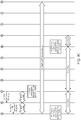
- FIGs. 11A-B depict example processing performed in connection with establishing a multi-channel connection by adding an LTE channel to a previously existing TWAN connection.
- the UE 262 uses a TWAN 212 to connect to the PGW 222 via an ISW-SGW 238.
- the connection consists of a concatenation of: a WLAN link over the SWw interface 256 between the UE 262 and TWAN 212; and a GTP tunnel over the Sla-U 292 interface between the TWAN 212 and SGW 238; and a GTP tunnel over the S5 interface 240 between the SGW 238 and PGW 222.
- the UE 262 discovers an (H)eNB LTE access network 295 and determines to establish a multi-access connection to an existing PDN.
- the UE 262 may use ANDSF policies to determine the course of action.
- the MME 234 contacts the HSS 270 and authenticates the UE 262.
- the MME 234 selects an APN, SGW, and PGW.
- the (H)eNB network 295 can be served by the same SGW 238 as the TWAN 212 (i.e., it is an ISW-enabled SGW)
- the MME 234 transmits a Create Session Request (including IMSI, MME Context ID, PGW address, APN, "Multi-connection" indication, access routing policy) message to the selected SGW 238.
- the PGW 222 executes a PCEF-initiated IP-CAN Session Modification Procedure with the PCRF 294 to obtain the policy and charging rules to be enforced.
- the MME 234 initiates access bearers establishment between the (H)eNB network 295 and SGW 238, and Radio Bearer establishment between the UE 262 and the (H)eNB network 295.
- the MME 234 transmits a Modify Bearer Request (eNB address, eNB TEID, "Multi-connection" indication) to the SGW 238 in order to add the GTP tunnel from the (H)eNB network 295.
- a Modify Bearer Request eNB address, eNB TEID, "Multi-connection” indication
- the SGW acknowledges by sending a Modify Bearer Response (with EPS Bearer Identity) message to the MME 234.
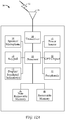
- FIG. 12A is a system diagram of an example wireless communications device 30, such as, for example, a UE.
- the device 30 may include a processor 32, a transceiver 34, a transmit/receive element 36, a speaker/microphone 38, a keypad 40, a display/touchpad/indicator(s) 42, non-removable memory 44, removable memory 46, a power source 48, a global positioning system (GPS) chipset 50, and other peripherals 52.
- display/touchpad/indicator(s) 42 may comprise one or more indicators that operate as part of a user interface. It will be appreciated that the device 30 may include any sub-combination of the foregoing elements while remaining consistent with an embodiment.
- the device 30 of FIG 12A may be a device that uses the serving gateway extensions for inter-system mobility systems and methods as discussed above.
- the processor 32 may be a general purpose processor, a special purpose processor, a conventional processor, a digital signal processor (DSP), a plurality of microprocessors, one or more microprocessors in association with a DSP core, a controller, a microcontroller, one or more Application Specific Integrated Circuits (ASICs), one or more Field Programmable Gate Array (FPGAs) circuits, any other type and number of integrated circuits (ICs), a state machine, and the like.
- the processor 32 may perform signal coding, data processing, power control, input/output processing, and/or any other functionality that enables the device 30 to operate in a wireless environment.
- the processor 32 may be coupled to the transceiver 34, which may be coupled to the transmit/receive element 36. While FIG.
- the processor 32 may perform application-layer programs (e.g., browsers) and/or radio access-layer (RAN) programs and/or communications.
- the processor 32 may perform security operations such as authentication, security key agreement, and/or cryptographic operations, such as at the access-layer and/or application layer for example.
- the transmit/receive element 36 may be configured to transmit signals to, and/or receive signals from, an eNode-B, Home eNode-B, WiFi access point, etc.
- the transmit/receive element 36 may be an antenna configured to transmit and/or receive RF signals.
- the transmit/receive element 36 may support various networks and air interfaces, such as WLAN, WPAN, cellular, and the like.
- the transmit/receive element 36 may be an emitter/detector configured to transmit and/or receive IR, UV, or visible light signals, for example.
- the transmit/receive element 36 may be configured to transmit and receive both RF and light signals. It will be appreciated that the transmit/receive element 36 may be configured to transmit and/or receive any combination of wireless or wired signals.
- the transceiver 34 may be configured to modulate the signals that are to be transmitted by the transmit/receive element 36 and to demodulate the signals that are received by the transmit/receive element 36.
- the device 30 may have multi-mode capabilities.
- the transceiver 34 may include multiple transceivers for enabling the device 30 to communicate via multiple RATs, such as UTRA and IEEE 802.11, for example.
- the processor 32 may access information from, and store data in, any type of suitable memory, such as the non-removable memory 44 and/or the removable memory 46.
- the non-removable memory 44 may include random-access memory (RAM), read-only memory (ROM), a hard disk, or any other type of memory storage device.
- the removable memory 46 may include a subscriber identity module (SIM) card, a memory stick, a secure digital (SD) memory card, and the like.
- SIM subscriber identity module
- SD secure digital
- the processor 32 may access information from, and store data in, memory that is not physically located on the device 30, such as on a server or a home computer.
- the processor 30 may receive power from the power source 48, and may be configured to distribute and/or control the power to the other components in the device 30.
- the power source 48 may be any suitable device for powering the device 30.
- the power source 48 may include one or more dry cell batteries (e.g., nickel-cadmium (NiCd), nickel-zinc (NiZn), nickel metal hydride (NiMH), lithium-ion (Li-ion), etc.), solar cells, fuel cells, and the like.
- the processor 32 may also be coupled to the GPS chipset 50, which may be configured to provide location information (e.g., longitude and latitude) regarding the current location of the device 30. It will be appreciated that the device 30 may acquire location information by way of any suitable location-determination method while remaining consistent with an embodiment.
- location information e.g., longitude and latitude
- the processor 32 may further be coupled to other peripherals 52, which may include one or more software and/or hardware modules that provide additional features, functionality and/or wired or wireless connectivity.
- the peripherals 52 may include an accelerometer, an e-compass, a satellite transceiver, a sensor, a digital camera (for photographs or video), a universal serial bus (USB) port, a vibration device, a television transceiver, a hands free headset, a Bluetooth® module, a frequency modulated (FM) radio unit, a digital music player, a media player, a video game player module, an Internet browser, and the like.
- FIG. 12B depicts a block diagram of an exemplary computing system 90 that may be used to implement the systems and methods described herein.
- the computing system 1000 may be used to implement devices that operate as, for example, MME, SGW, WLAN, TWAP, and PGW such as referenced herein.
- Computing system 90 may comprise a computer or server and may be controlled primarily by computer readable instructions, which may be in the form of software, wherever, or by whatever means such software is stored or accessed. Such computer readable instructions may be executed within central processing unit (CPU) 91 to cause computing system 90 to do work.
- CPU central processing unit
- central processing unit 91 is implemented by a single-chip CPU called a microprocessor.
- the central processing unit 91 may comprise multiple processors.
- Coprocessor 81 is an optional processor, distinct from main CPU 91 that performs additional functions or assists CPU 91.
- CPU 91 and/or coprocessor 81 may receive, generate, and process data related to the disclosed serving gateway extensions for inter-system mobility systems and methods.
- CPU 91 fetches, decodes, and executes instructions, and transfers information to and from other resources via the computer's main data-transfer path, system bus 80.
- system bus 80 Such a system bus connects the components in computing system 90 and defines the medium for data exchange.
- System bus 80 typically includes data lines for sending data, address lines for sending addresses, and control lines for sending interrupts and for operating the system bus.
- An example of such a system bus 80 is the PCI (Peripheral Component Interconnect) bus.
- Memory devices coupled to system bus 80 include random access memory (RAM) 82 and read only memory (ROM) 93. Such memories include circuitry that allows information to be stored and retrieved. ROMs 93 generally contain stored data that cannot easily be modified. Data stored in RAM 82 may be read or changed by CPU 91 or other hardware devices. Access to RAM 82 and/or ROM 93 may be controlled by memory controller 92. Memory controller 92 may provide an address translation function that translates virtual addresses into physical addresses as instructions are executed. Memory controller 92 may also provide a memory protection function that isolates processes within the system and isolates system processes from user processes. Thus, a program running in a first mode can access only memory mapped by its own process virtual address space; it cannot access memory within another process's virtual address space unless memory sharing between the processes has been set up.
- RAM random access memory
- ROM read only memory
- computing system 90 may contain peripherals controller 83 responsible for communicating instructions from CPU 91 to peripherals, such as printer 94, keyboard 84, mouse 95, and disk drive 85.
- peripherals controller 83 responsible for communicating instructions from CPU 91 to peripherals, such as printer 94, keyboard 84, mouse 95, and disk drive 85.
- Display 86 which is controlled by display controller 96, is used to display visual output generated by computing system 90. Such visual output may include text, graphics, animated graphics, and video. Display 86 may be implemented with a CRT-based video display, an LCD-based flat-panel display, gas plasma-based flat-panel display, or a touch-panel. Display controller 96 includes electronic components required to generate a video signal that is sent to display 86.
- computing system 90 may contain network adaptor 97 that may be used to connect computing system 90 to an external communications network, such as PDNs.
- network adaptor 97 may receive and transmit data related to the disclosed serving gateway extensions for inter-system mobility systems and methods.
- a control plane interface referred to as the Sla-C interface
- a trusted WLAN access network TWAN
- MME mobility management entity
- a user plane interface referred to as the Sla-U interface
- the MME operates as a common control plane entity for both LTE and TWAN access, while the SGW operates as a user plane gateway for both LTE and TWAN.
- the integrated MME and SGW allow for user equipment (UE) to access the capabilities of a packet data network (PDN) through either the LTE access network or TWAN.
- PDN packet data network
- the computing device generally includes a processor, a storage medium readable by the processor (including volatile and non-volatile memory and/or storage elements), at least one input device, and at least one output device.
- example embodiments may refer to utilizing aspects of the subject matter described herein in the context of one or more stand-alone computer systems or devices, the subject matter described herein is not so limited, but rather may be implemented in connection with any computing environment, such as a network or distributed computing environment. Still further, aspects of the subject matter described herein may be implemented in or across a plurality of processing chips or devices, and storage may similarly be affected across a plurality of devices. Such devices might include personal computers, network servers, handheld devices, supercomputers, or computers integrated into other systems such as automobiles and airplanes.
- AAA Authentication, Authorization, and Accounting ANDSF Access Network Discovery and Selection Function
- ANQP Access Network Query Protocol AP Access Point APN Access Point Name CAPWAP Control And Provisioning of Wireless Access Points
- DHCP Dynamic Host Configuration Protocol
- EAP-AKA EAP Authentication and Key Agreement
- EAP-AKA' EAP AKA "prime”
- EAPoL EAP over LAN
- EPC Evolved Packet Core GPRS General Packet Radio Service
- GTP GPRS Tunneling Protocol HSS Home Subscription System IETF Internet Engineering Task Force IMSI International Mobile Subscriber Identity IP Internet Protocol ISW Integrated Small-cell and WiFi ISWN Integrated Small-cell and WiFi Networks LTE Long Term Evolution MAC Medium Access Control MAPCON Multi Access PDN Connectivity
- MCN Mobile Core Network
- MME Mobility Management Entity MNO Mobile Network Operator
- NAS Non Access Stratum NSWO
Landscapes
- Engineering & Computer Science (AREA)
- Computer Networks & Wireless Communication (AREA)
- Signal Processing (AREA)
- Computer Security & Cryptography (AREA)
- Databases & Information Systems (AREA)
- Mobile Radio Communication Systems (AREA)
Applications Claiming Priority (3)
| Application Number | Priority Date | Filing Date | Title |
|---|---|---|---|
| US201462015763P | 2014-06-23 | 2014-06-23 | |
| PCT/US2015/037186 WO2015200326A1 (en) | 2014-06-23 | 2015-06-23 | Inter-system mobility in integrated wireless networks |
| EP15738188.0A EP3158783B1 (de) | 2014-06-23 | 2015-06-23 | Mobilität zwischen systemen in integrierten drahtlosen netzwerken |
Related Parent Applications (2)
| Application Number | Title | Priority Date | Filing Date |
|---|---|---|---|
| EP15738188.0A Division-Into EP3158783B1 (de) | 2014-06-23 | 2015-06-23 | Mobilität zwischen systemen in integrierten drahtlosen netzwerken |
| EP15738188.0A Division EP3158783B1 (de) | 2014-06-23 | 2015-06-23 | Mobilität zwischen systemen in integrierten drahtlosen netzwerken |
Publications (2)
| Publication Number | Publication Date |
|---|---|
| EP3742802A1 true EP3742802A1 (de) | 2020-11-25 |
| EP3742802B1 EP3742802B1 (de) | 2025-09-03 |
Family
ID=53546720
Family Applications (2)
| Application Number | Title | Priority Date | Filing Date |
|---|---|---|---|
| EP20183810.9A Active EP3742802B1 (de) | 2014-06-23 | 2015-06-23 | Mobilität zwischen systemen in integrierten drahtlosen netzwerken |
| EP15738188.0A Active EP3158783B1 (de) | 2014-06-23 | 2015-06-23 | Mobilität zwischen systemen in integrierten drahtlosen netzwerken |
Family Applications After (1)
| Application Number | Title | Priority Date | Filing Date |
|---|---|---|---|
| EP15738188.0A Active EP3158783B1 (de) | 2014-06-23 | 2015-06-23 | Mobilität zwischen systemen in integrierten drahtlosen netzwerken |
Country Status (6)
| Country | Link |
|---|---|
| US (3) | US20170195930A1 (de) |
| EP (2) | EP3742802B1 (de) |
| JP (2) | JP2017523689A (de) |
| KR (2) | KR101835532B1 (de) |
| CN (3) | CN111405558B (de) |
| WO (1) | WO2015200326A1 (de) |
Families Citing this family (42)
| Publication number | Priority date | Publication date | Assignee | Title |
|---|---|---|---|---|
| US10433161B2 (en) * | 2012-01-30 | 2019-10-01 | Telefonaktiebolaget Lm Ericsson (Publ) | Call handover between cellular communication system nodes that support different security contexts |
| EP3742802B1 (de) | 2014-06-23 | 2025-09-03 | InterDigital Patent Holdings, Inc. | Mobilität zwischen systemen in integrierten drahtlosen netzwerken |
| MY186828A (en) * | 2014-06-24 | 2021-08-24 | Intel Corp | Power optimization for network based internet protocol flow mobility |
| EP3154306B1 (de) * | 2014-06-25 | 2020-02-26 | Huawei Technologies Co., Ltd. | Errichtung einer netzwerkverbindung |
| CN105282798A (zh) * | 2014-07-24 | 2016-01-27 | 中兴通讯股份有限公司 | 一种关于流迁移触发的相关实现方法及设备 |
| EP3207744B1 (de) * | 2014-10-15 | 2022-09-07 | Telefonaktiebolaget LM Ericsson (publ) | Verfahren und netzwerkknoten zur wiederverwendung einer epc-sitzung zwischen 3gpp und wlan |
| CN105848126B (zh) * | 2015-01-15 | 2021-04-30 | 中兴通讯股份有限公司 | 一种支持多种无线网络接入的方法和装置 |
| KR102304147B1 (ko) | 2015-06-05 | 2021-09-23 | 콘비다 와이어리스, 엘엘씨 | 통합된 스몰 셀 및 wi-fi 네트워크를 위한 통합 인증 |
| US11006467B2 (en) * | 2015-09-24 | 2021-05-11 | Kt Corporation | Method and apparatus for transmitting and receiving data using WLAN radio resources |
| US11323410B2 (en) * | 2015-10-30 | 2022-05-03 | Mavenir Systems, Inc. | Method and system for secure distribution of mobile data traffic to closer network endpoints |
| US10447722B2 (en) * | 2015-11-24 | 2019-10-15 | Bank Of America Corporation | Proactive intrusion protection system |
| EP3913867A1 (de) | 2016-01-15 | 2021-11-24 | NEC Corporation | Kommunikationssystem und kommunikationsverfahren |
| US10212590B2 (en) * | 2016-08-16 | 2019-02-19 | Lg Electronics Inc. | Method and apparatus for authenticating device in wireless communication system |
| CN108377527B (zh) | 2016-11-02 | 2021-02-26 | 华为技术有限公司 | 一种适应灵活部署场景的网络架构 |
| US10299173B2 (en) * | 2017-01-05 | 2019-05-21 | Htc Corporation | Device and method of handling a PDN connection in LTE to NR/5G inter-system mobility |
| US10848238B1 (en) * | 2017-02-13 | 2020-11-24 | Lockheed Martin Corporation | Evolved packet system over non-LTE radio access network |
| US10812532B2 (en) | 2017-06-15 | 2020-10-20 | Palo Alto Networks, Inc. | Security for cellular internet of things in mobile networks |
| US10721272B2 (en) | 2017-06-15 | 2020-07-21 | Palo Alto Networks, Inc. | Mobile equipment identity and/or IOT equipment identity and application identity based security enforcement in service provider networks |
| US10834136B2 (en) | 2017-06-15 | 2020-11-10 | Palo Alto Networks, Inc. | Access point name and application identity based security enforcement in service provider networks |
| US11050789B2 (en) | 2017-06-15 | 2021-06-29 | Palo Alto Networks, Inc. | Location based security in service provider networks |
| US10708306B2 (en) | 2017-06-15 | 2020-07-07 | Palo Alto Networks, Inc. | Mobile user identity and/or SIM-based IoT identity and application identity based security enforcement in service provider networks |
| EP3653017B1 (de) * | 2017-07-10 | 2023-07-05 | Motorola Mobility LLC | Mehrfachzugriffsdatenverbindung in einem mobilen netzwerk |
| KR102452106B1 (ko) | 2017-07-13 | 2022-10-07 | 삼성전자주식회사 | 무선 통신 시스템에서 핸드오버를 수행하기 위한 장치 및 방법 |
| IL272552B2 (en) * | 2017-08-11 | 2023-09-01 | Idac Holdings Inc | Traffic routing and switching between multiple access networks |
| CN109587709B (zh) * | 2017-09-29 | 2020-12-15 | 中国移动通信有限公司研究院 | 本地数据网的发现、配置方法、终端、核心网设备及基站 |
| US11399285B2 (en) | 2017-11-06 | 2022-07-26 | Intel Corporation | Secure device onboarding techniques |
| KR102418565B1 (ko) * | 2018-03-13 | 2022-07-07 | 삼성전자주식회사 | 통신을 수행하는 방법 및 이를 위한 장치 |
| CN111935808B (zh) * | 2018-05-07 | 2022-02-18 | Oppo广东移动通信有限公司 | 一种悬挂rrc连接的方法及装置、计算机存储介质 |
| WO2019226116A1 (en) * | 2018-05-25 | 2019-11-28 | Nokia Technologies Oy | Communication connections |
| CN112586036B (zh) | 2018-06-22 | 2024-11-08 | 诺基亚通信公司 | 基于接口可用性的选择性切换或重定向 |
| JP2022501866A (ja) | 2018-08-29 | 2022-01-06 | オッポ広東移動通信有限公司Guangdong Oppo Mobile Telecommunications Corp., Ltd. | 無線通信方法及び通信デバイス |
| US10834591B2 (en) * | 2018-08-30 | 2020-11-10 | At&T Intellectual Property I, L.P. | System and method for policy-based extensible authentication protocol authentication |
| WO2020046380A1 (en) * | 2018-08-31 | 2020-03-05 | Cisco Technology, Inc. | Systems and methods for integrating lte/5g access traffic into a dna fabric of a network |
| US10694560B2 (en) | 2018-09-09 | 2020-06-23 | Cisco Technology, Inc. | Integrating private LTE radio service with WiFi access architectures |
| WO2020124230A1 (en) * | 2018-12-19 | 2020-06-25 | Conversant Intellectual Property Management Inc. | System and method for a network access service |
| CN110430622A (zh) * | 2019-08-12 | 2019-11-08 | 北京多尼卡空联技术有限公司 | 机载网络装置及系统 |
| CN111065135B (zh) * | 2019-11-29 | 2021-11-12 | 北京长焜科技有限公司 | 一种3g网关到4g网关的切换方法 |
| WO2022065788A1 (ko) * | 2020-09-22 | 2022-03-31 | 삼성전자 주식회사 | Rcs 데이터를 수신 또는 전송하는 전자 장치 및 전자 장치의 동작 방법 |
| WO2022127791A1 (en) * | 2020-12-15 | 2022-06-23 | Telefonaktiebolaget Lm Ericsson (Publ) | Methods, entities and computer readable media for non-3gpp access authentication |
| IT202000031130A1 (it) * | 2020-12-16 | 2022-06-16 | Athonet S R L | Metodo per il collegamento selettivo di dispositivi mobili alle reti 4g o 5g e federazione di reti 4g o 5g che implementano tale metodo |
| US11751253B2 (en) | 2021-02-25 | 2023-09-05 | Lockheed Martin Corporation | Random access for broadband 4G and 5G over satellite |
| WO2025019126A1 (en) * | 2023-07-17 | 2025-01-23 | Interdigital Patent Holdings, Inc. | Method for wtru function delegation in intermediate node for ultra-low complexity devices |
Citations (1)
| Publication number | Priority date | Publication date | Assignee | Title |
|---|---|---|---|---|
| US20130077482A1 (en) * | 2011-09-20 | 2013-03-28 | Accelera Mobile Broadband, Inc. | Seamless handoff, offload, and load balancing in integrated wi-fi/small cell systems |
Family Cites Families (44)
| Publication number | Priority date | Publication date | Assignee | Title |
|---|---|---|---|---|
| US20020184510A1 (en) | 2001-04-17 | 2002-12-05 | At&T Wireless Services, Inc. | Binding information for IP media flows |
| WO2004105272A1 (ja) | 2003-05-20 | 2004-12-02 | Fujitsu Limited | 移動通信システムにおけるアプリケーションハンドオーバ方法並びに同移動通信システムに使用される移動管理ノード及び移動ノード |
| JP4496733B2 (ja) | 2003-08-06 | 2010-07-07 | 日本電気株式会社 | 移動通信システム及びそれに用いるハンドオーバ方法 |
| KR100991476B1 (ko) | 2003-11-12 | 2010-11-04 | 인터디지탈 테크날러지 코포레이션 | 상이한 타입의 액세스 기술 네트워크에 대한 애플리케이션서버 자동 액세스(asaa) 시스템 |
| KR101194031B1 (ko) | 2003-12-02 | 2012-10-24 | 삼성전자주식회사 | Ip기반의 무선통신시스템에서의 서로 다른 무선인터페이스를 갖는 기지국간 핸드오프 방법 |
| WO2006055784A2 (en) | 2004-11-19 | 2006-05-26 | The Trustees Of The Stevens Institute Of Technology | Multi-access terminal wiht capability for simultaneous connectivity to multiple communication channels |
| GB0508057D0 (en) | 2005-04-21 | 2005-06-01 | Nokia Corp | Selection of a communication interface |
| US7650143B2 (en) | 2005-05-11 | 2010-01-19 | Cisco Technology, Inc. | System and method for offering seamless connectivity across multiple devices in a communications environment |
| US8169966B2 (en) | 2005-06-01 | 2012-05-01 | Telefonaktiebolaget L M Ericsson (Publ) | Method and a network node for managing handovers in a packet data communication environment |
| US7711369B2 (en) | 2005-08-22 | 2010-05-04 | Toshiba America Research, Inc. | Seamless mobility for a multiple interface device in a co-located wireless environment |
| US20070064660A1 (en) | 2005-09-16 | 2007-03-22 | Qi Emily H | Techniques for enhanced transition from access point to access point by a mobile wireless device |
| WO2007063901A1 (ja) | 2005-12-01 | 2007-06-07 | Sharp Kabushiki Kaisha | 無線通信システム及び無線通信方法 |
| CN101022450A (zh) | 2006-02-15 | 2007-08-22 | 华为技术有限公司 | 重认证过程中确定安全信息的实现方法及装置 |
| EP1868332A1 (de) | 2006-06-16 | 2007-12-19 | Alcatel Lucent | Steuerung der Dienstqualität (QoS) in einem drahtlosen Netz. |
| TWI328373B (en) | 2006-11-08 | 2010-08-01 | Ind Tech Res Inst | Method and system for guaranteeing qos between different radio networks |
| US8145210B2 (en) | 2006-12-29 | 2012-03-27 | United States Cellular Corporation | Enhanced cross-network handoff for mobile IP service mobility |
| US8289954B2 (en) | 2007-05-01 | 2012-10-16 | Qualcomm Incorporated | Split and sequential paging for voice call continuity |
| CN101431780B (zh) | 2007-11-09 | 2010-12-22 | 华为技术有限公司 | 一种实现网络优化切换的方法、设备及系统 |
| US20090207812A1 (en) | 2008-01-07 | 2009-08-20 | Vivek Gupta | Dual radio handovers beween wimax and 3gpp |
| EP2079253A1 (de) | 2008-01-09 | 2009-07-15 | Panasonic Corporation | Optimierungen von Nicht-3GPP-zu-3GPP-Netzwerkweiterreichungen |
| KR101531513B1 (ko) * | 2008-02-04 | 2015-07-06 | 엘지전자 주식회사 | 랜덤 접속의 접속 지연 재개 방법 |
| US20090287764A1 (en) | 2008-05-15 | 2009-11-19 | Motorola, Inc. | Media access control server for radio access network |
| US8224303B2 (en) | 2008-05-27 | 2012-07-17 | Motorola Mobility, Inc. | Method, device and system for session mobility of multimedia content delivered to mobile communication devices |
| US8797846B2 (en) * | 2008-06-19 | 2014-08-05 | Telefonaktiebolaget Lm Ericsson (Publ) | Transfer of connections triggered by a MME in case of failure of a serving gateway |
| MY159088A (en) | 2009-01-09 | 2016-12-15 | Interdigital Patent Holdings Inc | Data flow mobility |
| US8838111B2 (en) * | 2010-09-09 | 2014-09-16 | Panasonic Intellectual Property Corporation Of America | Communication system, communication method, mobile terminal, and base station device |
| FI3319395T3 (fi) | 2010-12-03 | 2023-08-01 | Interdigital Patent Holdings Inc | Menetelmä ja laite moniradioliityntätekniikan kantoaaltojen yhdistämisen suorittamiseksi |
| CN102752830B (zh) * | 2011-04-20 | 2017-04-12 | 中兴通讯股份有限公司 | 一种网关的选择方法、实现设备及系统 |
| US9526119B2 (en) * | 2011-06-29 | 2016-12-20 | Telefonaktiebolaget Lm Ericsson (Publ) | Methods and apparatus for multiple data packet connections |
| EP2737768A1 (de) | 2011-07-29 | 2014-06-04 | Interdigital Patent Holdings, Inc. | Verfahren und vorrichtung für funkressourcenverwaltung in drahtlosen systemen mit mehrfunkzugriffstechnologie |
| JP5728377B2 (ja) * | 2011-12-20 | 2015-06-03 | 株式会社日立製作所 | 無線通信システムおよび無線通信方法、ならびに移動端末 |
| CN103369502B (zh) * | 2012-04-11 | 2018-05-18 | 中兴通讯股份有限公司 | 一种策略控制会话的处理方法及网元 |
| WO2013170783A1 (en) * | 2012-05-18 | 2013-11-21 | Mediatek Inc. | Enhanced ue data transmission for power consumption optimization |
| CN103517264B (zh) * | 2012-06-29 | 2017-04-12 | 华为终端有限公司 | 用于切换网络的方法和装置 |
| KR20140006329A (ko) | 2012-07-03 | 2014-01-16 | 주식회사 케이티 | 핸드오버 수행 방법, 이를 지원하는 디지털 신호 처리 장치 및 신호 처리 시스템 |
| EP2880841A1 (de) * | 2012-07-30 | 2015-06-10 | Telefonaktiebolaget L M Ericsson (PUBL) | Verfahren und system zur bereitstellung mehrerer dienste über wlan |
| KR101954265B1 (ko) | 2012-09-21 | 2019-03-05 | 주식회사 케이티 | 이동통신 시스템과 ims의 연동 방법 및 이를 위한 통신 시스템 |
| CN103687071A (zh) * | 2012-09-24 | 2014-03-26 | 华为终端有限公司 | 分组数据网连接释放的方法及设备 |
| CN103716770B (zh) * | 2012-09-29 | 2018-08-28 | 中兴通讯股份有限公司 | 网络接入处理方法及系统 |
| CN105027664B (zh) * | 2013-01-03 | 2018-11-02 | 英特尔公司 | 在使用无线局域网的无线通信系统中的分组数据连接 |
| TR201806887T4 (tr) * | 2013-01-03 | 2018-06-21 | Huawei Tech Co Ltd | Bir ağa erişilmesine yönelik sistemler ve yöntemler. |
| US9973966B2 (en) | 2013-01-11 | 2018-05-15 | Interdigital Patent Holdings, Inc. | User-plane congestion management |
| EP3742802B1 (de) | 2014-06-23 | 2025-09-03 | InterDigital Patent Holdings, Inc. | Mobilität zwischen systemen in integrierten drahtlosen netzwerken |
| EP3207744B1 (de) * | 2014-10-15 | 2022-09-07 | Telefonaktiebolaget LM Ericsson (publ) | Verfahren und netzwerkknoten zur wiederverwendung einer epc-sitzung zwischen 3gpp und wlan |
-
2015
- 2015-06-23 EP EP20183810.9A patent/EP3742802B1/de active Active
- 2015-06-23 JP JP2016574422A patent/JP2017523689A/ja active Pending
- 2015-06-23 EP EP15738188.0A patent/EP3158783B1/de active Active
- 2015-06-23 KR KR1020177001904A patent/KR101835532B1/ko active Active
- 2015-06-23 WO PCT/US2015/037186 patent/WO2015200326A1/en not_active Ceased
- 2015-06-23 CN CN202010221628.XA patent/CN111405558B/zh active Active
- 2015-06-23 CN CN202311123397.9A patent/CN116980998A/zh active Pending
- 2015-06-23 CN CN201580040906.9A patent/CN107079287B/zh active Active
- 2015-06-23 KR KR1020187005782A patent/KR102318735B1/ko active Active
- 2015-06-23 US US15/321,365 patent/US20170195930A1/en not_active Abandoned
-
2018
- 2018-04-27 JP JP2018086695A patent/JP6496861B2/ja active Active
-
2020
- 2020-02-26 US US16/801,783 patent/US20200196212A1/en not_active Abandoned
-
2023
- 2023-01-09 US US18/151,983 patent/US12587825B2/en active Active
Patent Citations (1)
| Publication number | Priority date | Publication date | Assignee | Title |
|---|---|---|---|---|
| US20130077482A1 (en) * | 2011-09-20 | 2013-03-28 | Accelera Mobile Broadband, Inc. | Seamless handoff, offload, and load balancing in integrated wi-fi/small cell systems |
Non-Patent Citations (3)
| Title |
|---|
| "3rd Generation Partnership Project; Technical Specification Group Services and System Aspects; Architecture enhancements for non-3GPP accesses (Release 12)", 3GPP STANDARD; 3GPP TS 23.402, 3RD GENERATION PARTNERSHIP PROJECT (3GPP), MOBILE COMPETENCE CENTRE ; 650, ROUTE DES LUCIOLES ; F-06921 SOPHIA-ANTIPOLIS CEDEX ; FRANCE, vol. SA WG2, no. V12.1.0, 21 June 2013 (2013-06-21), pages 1 - 254, XP050692719 * |
| SANKARAN C B: "Data offloading techniques in 3GPP Rel-10 networks: A tutorial", IEEE COMMUNICATIONS MAGAZINE, IEEE SERVICE CENTER, PISCATAWAY, US, vol. 50, no. 6, 1 June 2012 (2012-06-01), pages 46 - 53, XP011446096, ISSN: 0163-6804, DOI: 10.1109/MCOM.2012.6211485 * |
| TOMICI JOHN ET AL: "Integrated small cell and Wi-Fi networks", 2015 IEEE WIRELESS COMMUNICATIONS AND NETWORKING CONFERENCE (WCNC), IEEE, 9 March 2015 (2015-03-09), pages 1261 - 1266, XP032786458, DOI: 10.1109/WCNC.2015.7127650 * |
Also Published As
| Publication number | Publication date |
|---|---|
| KR101835532B1 (ko) | 2018-03-08 |
| JP6496861B2 (ja) | 2019-04-10 |
| JP2017523689A (ja) | 2017-08-17 |
| US12587825B2 (en) | 2026-03-24 |
| EP3158783A1 (de) | 2017-04-26 |
| KR102318735B1 (ko) | 2021-10-28 |
| EP3158783B1 (de) | 2020-09-02 |
| WO2015200326A8 (en) | 2017-02-09 |
| CN111405558B (zh) | 2023-09-19 |
| US20200196212A1 (en) | 2020-06-18 |
| CN107079287B (zh) | 2020-03-27 |
| WO2015200326A1 (en) | 2015-12-30 |
| CN111405558A (zh) | 2020-07-10 |
| US20230164653A1 (en) | 2023-05-25 |
| JP2018117389A (ja) | 2018-07-26 |
| US20170195930A1 (en) | 2017-07-06 |
| CN107079287A (zh) | 2017-08-18 |
| CN116980998A (zh) | 2023-10-31 |
| KR20180023072A (ko) | 2018-03-06 |
| KR20170019466A (ko) | 2017-02-21 |
| EP3742802B1 (de) | 2025-09-03 |
Similar Documents
| Publication | Publication Date | Title |
|---|---|---|
| US12587825B2 (en) | Inter-system mobility in integrated wireless networks | |
| US11425612B2 (en) | Inter-system handover and multi-connectivity via an integrated small cell and WiFi gateway | |
| US11310702B2 (en) | Network-initiated handover in integrated small cell and WiFi networks | |
| EP3917212A1 (de) | Verlängerungen eines versorgenden gateways für mobilität zwischen systemen |
Legal Events
| Date | Code | Title | Description |
|---|---|---|---|
| PUAI | Public reference made under article 153(3) epc to a published international application that has entered the european phase |
Free format text: ORIGINAL CODE: 0009012 |
|
| STAA | Information on the status of an ep patent application or granted ep patent |
Free format text: STATUS: REQUEST FOR EXAMINATION WAS MADE |
|
| 17P | Request for examination filed |
Effective date: 20200719 |
|
| AC | Divisional application: reference to earlier application |
Ref document number: 3158783 Country of ref document: EP Kind code of ref document: P |
|
| AK | Designated contracting states |
Kind code of ref document: A1 Designated state(s): AL AT BE BG CH CY CZ DE DK EE ES FI FR GB GR HR HU IE IS IT LI LT LU LV MC MK MT NL NO PL PT RO RS SE SI SK SM TR |
|
| STAA | Information on the status of an ep patent application or granted ep patent |
Free format text: STATUS: EXAMINATION IS IN PROGRESS |
|
| 17Q | First examination report despatched |
Effective date: 20220413 |
|
| RAP1 | Party data changed (applicant data changed or rights of an application transferred) |
Owner name: INTERDIGITAL PATENT HOLDINGS, INC. |
|
| RAP3 | Party data changed (applicant data changed or rights of an application transferred) |
Owner name: INTERDIGITAL PATENT HOLDINGS, INC. |
|
| GRAP | Despatch of communication of intention to grant a patent |
Free format text: ORIGINAL CODE: EPIDOSNIGR1 |
|
| STAA | Information on the status of an ep patent application or granted ep patent |
Free format text: STATUS: GRANT OF PATENT IS INTENDED |
|
| INTG | Intention to grant announced |
Effective date: 20250403 |
|
| GRAS | Grant fee paid |
Free format text: ORIGINAL CODE: EPIDOSNIGR3 |
|
| GRAA | (expected) grant |
Free format text: ORIGINAL CODE: 0009210 |
|
| STAA | Information on the status of an ep patent application or granted ep patent |
Free format text: STATUS: THE PATENT HAS BEEN GRANTED |
|
| AC | Divisional application: reference to earlier application |
Ref document number: 3158783 Country of ref document: EP Kind code of ref document: P |
|
| AK | Designated contracting states |
Kind code of ref document: B1 Designated state(s): AL AT BE BG CH CY CZ DE DK EE ES FI FR GB GR HR HU IE IS IT LI LT LU LV MC MK MT NL NO PL PT RO RS SE SI SK SM TR |
|
| REG | Reference to a national code |
Ref country code: CH Ref legal event code: EP |
|
| REG | Reference to a national code |
Ref country code: DE Ref legal event code: R096 Ref document number: 602015092317 Country of ref document: DE |
|
| REG | Reference to a national code |
Ref country code: IE Ref legal event code: FG4D |
|
| P01 | Opt-out of the competence of the unified patent court (upc) registered |
Free format text: CASE NUMBER: UPC_APP_9057_3742802/2025 Effective date: 20251006 |
|
| REG | Reference to a national code |
Ref country code: NL Ref legal event code: MP Effective date: 20250903 |
|
| PG25 | Lapsed in a contracting state [announced via postgrant information from national office to epo] |
Ref country code: NO Free format text: LAPSE BECAUSE OF FAILURE TO SUBMIT A TRANSLATION OF THE DESCRIPTION OR TO PAY THE FEE WITHIN THE PRESCRIBED TIME-LIMIT Effective date: 20251203 |
|
| REG | Reference to a national code |
Ref country code: LT Ref legal event code: MG9D |
|
| PG25 | Lapsed in a contracting state [announced via postgrant information from national office to epo] |
Ref country code: FI Free format text: LAPSE BECAUSE OF FAILURE TO SUBMIT A TRANSLATION OF THE DESCRIPTION OR TO PAY THE FEE WITHIN THE PRESCRIBED TIME-LIMIT Effective date: 20250903 |
|
| PG25 | Lapsed in a contracting state [announced via postgrant information from national office to epo] |
Ref country code: HR Free format text: LAPSE BECAUSE OF FAILURE TO SUBMIT A TRANSLATION OF THE DESCRIPTION OR TO PAY THE FEE WITHIN THE PRESCRIBED TIME-LIMIT Effective date: 20250903 |
|
| PG25 | Lapsed in a contracting state [announced via postgrant information from national office to epo] |
Ref country code: GR Free format text: LAPSE BECAUSE OF FAILURE TO SUBMIT A TRANSLATION OF THE DESCRIPTION OR TO PAY THE FEE WITHIN THE PRESCRIBED TIME-LIMIT Effective date: 20251204 |
|
| PG25 | Lapsed in a contracting state [announced via postgrant information from national office to epo] |
Ref country code: SE Free format text: LAPSE BECAUSE OF FAILURE TO SUBMIT A TRANSLATION OF THE DESCRIPTION OR TO PAY THE FEE WITHIN THE PRESCRIBED TIME-LIMIT Effective date: 20250903 |
|
| PG25 | Lapsed in a contracting state [announced via postgrant information from national office to epo] |
Ref country code: LV Free format text: LAPSE BECAUSE OF FAILURE TO SUBMIT A TRANSLATION OF THE DESCRIPTION OR TO PAY THE FEE WITHIN THE PRESCRIBED TIME-LIMIT Effective date: 20250903 |
|
| PG25 | Lapsed in a contracting state [announced via postgrant information from national office to epo] |
Ref country code: BG Free format text: LAPSE BECAUSE OF FAILURE TO SUBMIT A TRANSLATION OF THE DESCRIPTION OR TO PAY THE FEE WITHIN THE PRESCRIBED TIME-LIMIT Effective date: 20250903 Ref country code: PL Free format text: LAPSE BECAUSE OF FAILURE TO SUBMIT A TRANSLATION OF THE DESCRIPTION OR TO PAY THE FEE WITHIN THE PRESCRIBED TIME-LIMIT Effective date: 20250903 |
|
| PG25 | Lapsed in a contracting state [announced via postgrant information from national office to epo] |
Ref country code: RS Free format text: LAPSE BECAUSE OF FAILURE TO SUBMIT A TRANSLATION OF THE DESCRIPTION OR TO PAY THE FEE WITHIN THE PRESCRIBED TIME-LIMIT Effective date: 20251203 |
|
| PG25 | Lapsed in a contracting state [announced via postgrant information from national office to epo] |
Ref country code: ES Free format text: LAPSE BECAUSE OF FAILURE TO SUBMIT A TRANSLATION OF THE DESCRIPTION OR TO PAY THE FEE WITHIN THE PRESCRIBED TIME-LIMIT Effective date: 20250903 |
|
| REG | Reference to a national code |
Ref country code: AT Ref legal event code: MK05 Ref document number: 1834695 Country of ref document: AT Kind code of ref document: T Effective date: 20250903 |
|
| PG25 | Lapsed in a contracting state [announced via postgrant information from national office to epo] |
Ref country code: NL Free format text: LAPSE BECAUSE OF FAILURE TO SUBMIT A TRANSLATION OF THE DESCRIPTION OR TO PAY THE FEE WITHIN THE PRESCRIBED TIME-LIMIT Effective date: 20250903 |
|
| PG25 | Lapsed in a contracting state [announced via postgrant information from national office to epo] |
Ref country code: SM Free format text: LAPSE BECAUSE OF FAILURE TO SUBMIT A TRANSLATION OF THE DESCRIPTION OR TO PAY THE FEE WITHIN THE PRESCRIBED TIME-LIMIT Effective date: 20250903 |
|
| PG25 | Lapsed in a contracting state [announced via postgrant information from national office to epo] |
Ref country code: AT Free format text: LAPSE BECAUSE OF FAILURE TO SUBMIT A TRANSLATION OF THE DESCRIPTION OR TO PAY THE FEE WITHIN THE PRESCRIBED TIME-LIMIT Effective date: 20250903 |
|
| PG25 | Lapsed in a contracting state [announced via postgrant information from national office to epo] |
Ref country code: IT Free format text: LAPSE BECAUSE OF FAILURE TO SUBMIT A TRANSLATION OF THE DESCRIPTION OR TO PAY THE FEE WITHIN THE PRESCRIBED TIME-LIMIT Effective date: 20250903 |
|
| PG25 | Lapsed in a contracting state [announced via postgrant information from national office to epo] |
Ref country code: IS Free format text: LAPSE BECAUSE OF FAILURE TO SUBMIT A TRANSLATION OF THE DESCRIPTION OR TO PAY THE FEE WITHIN THE PRESCRIBED TIME-LIMIT Effective date: 20260103 |
|
| PG25 | Lapsed in a contracting state [announced via postgrant information from national office to epo] |
Ref country code: PT Free format text: LAPSE BECAUSE OF FAILURE TO SUBMIT A TRANSLATION OF THE DESCRIPTION OR TO PAY THE FEE WITHIN THE PRESCRIBED TIME-LIMIT Effective date: 20260105 Ref country code: CZ Free format text: LAPSE BECAUSE OF FAILURE TO SUBMIT A TRANSLATION OF THE DESCRIPTION OR TO PAY THE FEE WITHIN THE PRESCRIBED TIME-LIMIT Effective date: 20250903 |
|
| PG25 | Lapsed in a contracting state [announced via postgrant information from national office to epo] |
Ref country code: SK Free format text: LAPSE BECAUSE OF FAILURE TO SUBMIT A TRANSLATION OF THE DESCRIPTION OR TO PAY THE FEE WITHIN THE PRESCRIBED TIME-LIMIT Effective date: 20250903 Ref country code: EE Free format text: LAPSE BECAUSE OF FAILURE TO SUBMIT A TRANSLATION OF THE DESCRIPTION OR TO PAY THE FEE WITHIN THE PRESCRIBED TIME-LIMIT Effective date: 20250903 |