EP3743403B1 - Verfahren zur herstellung von mit keramikmatrixaufschlämmung infundierten keramikkabeln und keramikmatrixverbundwerkstoffe - Google Patents
Verfahren zur herstellung von mit keramikmatrixaufschlämmung infundierten keramikkabeln und keramikmatrixverbundwerkstoffe Download PDFInfo
- Publication number
- EP3743403B1 EP3743403B1 EP19707455.2A EP19707455A EP3743403B1 EP 3743403 B1 EP3743403 B1 EP 3743403B1 EP 19707455 A EP19707455 A EP 19707455A EP 3743403 B1 EP3743403 B1 EP 3743403B1
- Authority
- EP
- European Patent Office
- Prior art keywords
- ceramic
- tow
- coated
- tows
- coating
- Prior art date
- Legal status (The legal status is an assumption and is not a legal conclusion. Google has not performed a legal analysis and makes no representation as to the accuracy of the status listed.)
- Active
Links
Images

Classifications
-
- C—CHEMISTRY; METALLURGY
- C04—CEMENTS; CONCRETE; ARTIFICIAL STONE; CERAMICS; REFRACTORIES
- C04B—LIME, MAGNESIA; SLAG; CEMENTS; COMPOSITIONS THEREOF, e.g. MORTARS, CONCRETE OR LIKE BUILDING MATERIALS; ARTIFICIAL STONE; CERAMICS; REFRACTORIES; TREATMENT OF NATURAL STONE
- C04B35/00—Shaped ceramic products characterised by their composition; Ceramics compositions; Processing powders of inorganic compounds preparatory to the manufacturing of ceramic products
- C04B35/01—Shaped ceramic products characterised by their composition; Ceramics compositions; Processing powders of inorganic compounds preparatory to the manufacturing of ceramic products based on oxide ceramics
- C04B35/10—Shaped ceramic products characterised by their composition; Ceramics compositions; Processing powders of inorganic compounds preparatory to the manufacturing of ceramic products based on oxide ceramics based on aluminium oxide
- C04B35/111—Fine ceramics
- C04B35/117—Composites
-
- C—CHEMISTRY; METALLURGY
- C04—CEMENTS; CONCRETE; ARTIFICIAL STONE; CERAMICS; REFRACTORIES
- C04B—LIME, MAGNESIA; SLAG; CEMENTS; COMPOSITIONS THEREOF, e.g. MORTARS, CONCRETE OR LIKE BUILDING MATERIALS; ARTIFICIAL STONE; CERAMICS; REFRACTORIES; TREATMENT OF NATURAL STONE
- C04B35/00—Shaped ceramic products characterised by their composition; Ceramics compositions; Processing powders of inorganic compounds preparatory to the manufacturing of ceramic products
- C04B35/01—Shaped ceramic products characterised by their composition; Ceramics compositions; Processing powders of inorganic compounds preparatory to the manufacturing of ceramic products based on oxide ceramics
- C04B35/10—Shaped ceramic products characterised by their composition; Ceramics compositions; Processing powders of inorganic compounds preparatory to the manufacturing of ceramic products based on oxide ceramics based on aluminium oxide
-
- C—CHEMISTRY; METALLURGY
- C04—CEMENTS; CONCRETE; ARTIFICIAL STONE; CERAMICS; REFRACTORIES
- C04B—LIME, MAGNESIA; SLAG; CEMENTS; COMPOSITIONS THEREOF, e.g. MORTARS, CONCRETE OR LIKE BUILDING MATERIALS; ARTIFICIAL STONE; CERAMICS; REFRACTORIES; TREATMENT OF NATURAL STONE
- C04B35/00—Shaped ceramic products characterised by their composition; Ceramics compositions; Processing powders of inorganic compounds preparatory to the manufacturing of ceramic products
- C04B35/01—Shaped ceramic products characterised by their composition; Ceramics compositions; Processing powders of inorganic compounds preparatory to the manufacturing of ceramic products based on oxide ceramics
- C04B35/14—Shaped ceramic products characterised by their composition; Ceramics compositions; Processing powders of inorganic compounds preparatory to the manufacturing of ceramic products based on oxide ceramics based on silica
-
- C—CHEMISTRY; METALLURGY
- C04—CEMENTS; CONCRETE; ARTIFICIAL STONE; CERAMICS; REFRACTORIES
- C04B—LIME, MAGNESIA; SLAG; CEMENTS; COMPOSITIONS THEREOF, e.g. MORTARS, CONCRETE OR LIKE BUILDING MATERIALS; ARTIFICIAL STONE; CERAMICS; REFRACTORIES; TREATMENT OF NATURAL STONE
- C04B35/00—Shaped ceramic products characterised by their composition; Ceramics compositions; Processing powders of inorganic compounds preparatory to the manufacturing of ceramic products
- C04B35/01—Shaped ceramic products characterised by their composition; Ceramics compositions; Processing powders of inorganic compounds preparatory to the manufacturing of ceramic products based on oxide ceramics
- C04B35/16—Shaped ceramic products characterised by their composition; Ceramics compositions; Processing powders of inorganic compounds preparatory to the manufacturing of ceramic products based on oxide ceramics based on silicates other than clay
- C04B35/18—Shaped ceramic products characterised by their composition; Ceramics compositions; Processing powders of inorganic compounds preparatory to the manufacturing of ceramic products based on oxide ceramics based on silicates other than clay rich in aluminium oxide
- C04B35/185—Mullite 3Al2O3-2SiO2
-
- C—CHEMISTRY; METALLURGY
- C04—CEMENTS; CONCRETE; ARTIFICIAL STONE; CERAMICS; REFRACTORIES
- C04B—LIME, MAGNESIA; SLAG; CEMENTS; COMPOSITIONS THEREOF, e.g. MORTARS, CONCRETE OR LIKE BUILDING MATERIALS; ARTIFICIAL STONE; CERAMICS; REFRACTORIES; TREATMENT OF NATURAL STONE
- C04B35/00—Shaped ceramic products characterised by their composition; Ceramics compositions; Processing powders of inorganic compounds preparatory to the manufacturing of ceramic products
- C04B35/622—Forming processes; Processing powders of inorganic compounds preparatory to the manufacturing of ceramic products
- C04B35/626—Preparing or treating the powders individually or as batches ; preparing or treating macroscopic reinforcing agents for ceramic products, e.g. fibres; mechanical aspects section B
- C04B35/628—Coating the powders or the macroscopic reinforcing agents
- C04B35/62802—Powder coating materials
- C04B35/62805—Oxide ceramics
- C04B35/62813—Alumina or aluminates
-
- C—CHEMISTRY; METALLURGY
- C04—CEMENTS; CONCRETE; ARTIFICIAL STONE; CERAMICS; REFRACTORIES
- C04B—LIME, MAGNESIA; SLAG; CEMENTS; COMPOSITIONS THEREOF, e.g. MORTARS, CONCRETE OR LIKE BUILDING MATERIALS; ARTIFICIAL STONE; CERAMICS; REFRACTORIES; TREATMENT OF NATURAL STONE
- C04B35/00—Shaped ceramic products characterised by their composition; Ceramics compositions; Processing powders of inorganic compounds preparatory to the manufacturing of ceramic products
- C04B35/622—Forming processes; Processing powders of inorganic compounds preparatory to the manufacturing of ceramic products
- C04B35/626—Preparing or treating the powders individually or as batches ; preparing or treating macroscopic reinforcing agents for ceramic products, e.g. fibres; mechanical aspects section B
- C04B35/628—Coating the powders or the macroscopic reinforcing agents
- C04B35/62844—Coating fibres
-
- C—CHEMISTRY; METALLURGY
- C04—CEMENTS; CONCRETE; ARTIFICIAL STONE; CERAMICS; REFRACTORIES
- C04B—LIME, MAGNESIA; SLAG; CEMENTS; COMPOSITIONS THEREOF, e.g. MORTARS, CONCRETE OR LIKE BUILDING MATERIALS; ARTIFICIAL STONE; CERAMICS; REFRACTORIES; TREATMENT OF NATURAL STONE
- C04B35/00—Shaped ceramic products characterised by their composition; Ceramics compositions; Processing powders of inorganic compounds preparatory to the manufacturing of ceramic products
- C04B35/622—Forming processes; Processing powders of inorganic compounds preparatory to the manufacturing of ceramic products
- C04B35/626—Preparing or treating the powders individually or as batches ; preparing or treating macroscopic reinforcing agents for ceramic products, e.g. fibres; mechanical aspects section B
- C04B35/63—Preparing or treating the powders individually or as batches ; preparing or treating macroscopic reinforcing agents for ceramic products, e.g. fibres; mechanical aspects section B using additives specially adapted for forming the products, e.g.. binder binders
- C04B35/632—Organic additives
- C04B35/634—Polymers
- C04B35/63404—Polymers obtained by reactions only involving carbon-to-carbon unsaturated bonds
-
- C—CHEMISTRY; METALLURGY
- C04—CEMENTS; CONCRETE; ARTIFICIAL STONE; CERAMICS; REFRACTORIES
- C04B—LIME, MAGNESIA; SLAG; CEMENTS; COMPOSITIONS THEREOF, e.g. MORTARS, CONCRETE OR LIKE BUILDING MATERIALS; ARTIFICIAL STONE; CERAMICS; REFRACTORIES; TREATMENT OF NATURAL STONE
- C04B35/00—Shaped ceramic products characterised by their composition; Ceramics compositions; Processing powders of inorganic compounds preparatory to the manufacturing of ceramic products
- C04B35/622—Forming processes; Processing powders of inorganic compounds preparatory to the manufacturing of ceramic products
- C04B35/626—Preparing or treating the powders individually or as batches ; preparing or treating macroscopic reinforcing agents for ceramic products, e.g. fibres; mechanical aspects section B
- C04B35/63—Preparing or treating the powders individually or as batches ; preparing or treating macroscopic reinforcing agents for ceramic products, e.g. fibres; mechanical aspects section B using additives specially adapted for forming the products, e.g.. binder binders
- C04B35/632—Organic additives
- C04B35/634—Polymers
- C04B35/63404—Polymers obtained by reactions only involving carbon-to-carbon unsaturated bonds
- C04B35/63408—Polyalkenes
-
- C—CHEMISTRY; METALLURGY
- C04—CEMENTS; CONCRETE; ARTIFICIAL STONE; CERAMICS; REFRACTORIES
- C04B—LIME, MAGNESIA; SLAG; CEMENTS; COMPOSITIONS THEREOF, e.g. MORTARS, CONCRETE OR LIKE BUILDING MATERIALS; ARTIFICIAL STONE; CERAMICS; REFRACTORIES; TREATMENT OF NATURAL STONE
- C04B35/00—Shaped ceramic products characterised by their composition; Ceramics compositions; Processing powders of inorganic compounds preparatory to the manufacturing of ceramic products
- C04B35/622—Forming processes; Processing powders of inorganic compounds preparatory to the manufacturing of ceramic products
- C04B35/626—Preparing or treating the powders individually or as batches ; preparing or treating macroscopic reinforcing agents for ceramic products, e.g. fibres; mechanical aspects section B
- C04B35/63—Preparing or treating the powders individually or as batches ; preparing or treating macroscopic reinforcing agents for ceramic products, e.g. fibres; mechanical aspects section B using additives specially adapted for forming the products, e.g.. binder binders
- C04B35/632—Organic additives
- C04B35/634—Polymers
- C04B35/63404—Polymers obtained by reactions only involving carbon-to-carbon unsaturated bonds
- C04B35/63424—Polyacrylates; Polymethacrylates
-
- C—CHEMISTRY; METALLURGY
- C04—CEMENTS; CONCRETE; ARTIFICIAL STONE; CERAMICS; REFRACTORIES
- C04B—LIME, MAGNESIA; SLAG; CEMENTS; COMPOSITIONS THEREOF, e.g. MORTARS, CONCRETE OR LIKE BUILDING MATERIALS; ARTIFICIAL STONE; CERAMICS; REFRACTORIES; TREATMENT OF NATURAL STONE
- C04B35/00—Shaped ceramic products characterised by their composition; Ceramics compositions; Processing powders of inorganic compounds preparatory to the manufacturing of ceramic products
- C04B35/622—Forming processes; Processing powders of inorganic compounds preparatory to the manufacturing of ceramic products
- C04B35/626—Preparing or treating the powders individually or as batches ; preparing or treating macroscopic reinforcing agents for ceramic products, e.g. fibres; mechanical aspects section B
- C04B35/63—Preparing or treating the powders individually or as batches ; preparing or treating macroscopic reinforcing agents for ceramic products, e.g. fibres; mechanical aspects section B using additives specially adapted for forming the products, e.g.. binder binders
- C04B35/632—Organic additives
- C04B35/634—Polymers
- C04B35/63448—Polymers obtained otherwise than by reactions only involving carbon-to-carbon unsaturated bonds
-
- C—CHEMISTRY; METALLURGY
- C04—CEMENTS; CONCRETE; ARTIFICIAL STONE; CERAMICS; REFRACTORIES
- C04B—LIME, MAGNESIA; SLAG; CEMENTS; COMPOSITIONS THEREOF, e.g. MORTARS, CONCRETE OR LIKE BUILDING MATERIALS; ARTIFICIAL STONE; CERAMICS; REFRACTORIES; TREATMENT OF NATURAL STONE
- C04B35/00—Shaped ceramic products characterised by their composition; Ceramics compositions; Processing powders of inorganic compounds preparatory to the manufacturing of ceramic products
- C04B35/622—Forming processes; Processing powders of inorganic compounds preparatory to the manufacturing of ceramic products
- C04B35/626—Preparing or treating the powders individually or as batches ; preparing or treating macroscopic reinforcing agents for ceramic products, e.g. fibres; mechanical aspects section B
- C04B35/63—Preparing or treating the powders individually or as batches ; preparing or treating macroscopic reinforcing agents for ceramic products, e.g. fibres; mechanical aspects section B using additives specially adapted for forming the products, e.g.. binder binders
- C04B35/638—Removal thereof
-
- C—CHEMISTRY; METALLURGY
- C04—CEMENTS; CONCRETE; ARTIFICIAL STONE; CERAMICS; REFRACTORIES
- C04B—LIME, MAGNESIA; SLAG; CEMENTS; COMPOSITIONS THEREOF, e.g. MORTARS, CONCRETE OR LIKE BUILDING MATERIALS; ARTIFICIAL STONE; CERAMICS; REFRACTORIES; TREATMENT OF NATURAL STONE
- C04B35/00—Shaped ceramic products characterised by their composition; Ceramics compositions; Processing powders of inorganic compounds preparatory to the manufacturing of ceramic products
- C04B35/71—Ceramic products containing macroscopic reinforcing agents
- C04B35/78—Ceramic products containing macroscopic reinforcing agents containing non-metallic materials
- C04B35/80—Fibres, filaments, whiskers, platelets, or the like
-
- D—TEXTILES; PAPER
- D04—BRAIDING; LACE-MAKING; KNITTING; TRIMMINGS; NON-WOVEN FABRICS
- D04C—BRAIDING OR MANUFACTURE OF LACE, INCLUDING BOBBIN-NET OR CARBONISED LACE; BRAIDING MACHINES; BRAID; LACE
- D04C1/00—Braid or lace, e.g. pillow-lace; Processes for the manufacture thereof
- D04C1/06—Braid or lace serving particular purposes
- D04C1/12—Cords, lines, or tows
-
- D—TEXTILES; PAPER
- D06—TREATMENT OF TEXTILES OR THE LIKE; LAUNDERING; FLEXIBLE MATERIALS NOT OTHERWISE PROVIDED FOR
- D06M—TREATMENT, NOT PROVIDED FOR ELSEWHERE IN CLASS D06, OF FIBRES, THREADS, YARNS, FABRICS, FEATHERS OR FIBROUS GOODS MADE FROM SUCH MATERIALS
- D06M15/00—Treating fibres, threads, yarns, fabrics, or fibrous goods made from such materials, with macromolecular compounds; Such treatment combined with mechanical treatment
- D06M15/19—Treating fibres, threads, yarns, fabrics, or fibrous goods made from such materials, with macromolecular compounds; Such treatment combined with mechanical treatment with synthetic macromolecular compounds
- D06M15/21—Macromolecular compounds obtained by reactions only involving carbon-to-carbon unsaturated bonds
- D06M15/356—Macromolecular compounds obtained by reactions only involving carbon-to-carbon unsaturated bonds of other unsaturated compounds containing nitrogen, sulfur, silicon or phosphorus atoms
- D06M15/3562—Macromolecular compounds obtained by reactions only involving carbon-to-carbon unsaturated bonds of other unsaturated compounds containing nitrogen, sulfur, silicon or phosphorus atoms containing nitrogen
-
- C—CHEMISTRY; METALLURGY
- C04—CEMENTS; CONCRETE; ARTIFICIAL STONE; CERAMICS; REFRACTORIES
- C04B—LIME, MAGNESIA; SLAG; CEMENTS; COMPOSITIONS THEREOF, e.g. MORTARS, CONCRETE OR LIKE BUILDING MATERIALS; ARTIFICIAL STONE; CERAMICS; REFRACTORIES; TREATMENT OF NATURAL STONE
- C04B2235/00—Aspects relating to ceramic starting mixtures or sintered ceramic products
- C04B2235/02—Composition of constituents of the starting material or of secondary phases of the final product
- C04B2235/30—Constituents and secondary phases not being of a fibrous nature
- C04B2235/32—Metal oxides, mixed metal oxides, or oxide-forming salts thereof, e.g. carbonates, nitrates, (oxy)hydroxides, chlorides
- C04B2235/3217—Aluminum oxide or oxide forming salts thereof, e.g. bauxite, alpha-alumina
-
- C—CHEMISTRY; METALLURGY
- C04—CEMENTS; CONCRETE; ARTIFICIAL STONE; CERAMICS; REFRACTORIES
- C04B—LIME, MAGNESIA; SLAG; CEMENTS; COMPOSITIONS THEREOF, e.g. MORTARS, CONCRETE OR LIKE BUILDING MATERIALS; ARTIFICIAL STONE; CERAMICS; REFRACTORIES; TREATMENT OF NATURAL STONE
- C04B2235/00—Aspects relating to ceramic starting mixtures or sintered ceramic products
- C04B2235/02—Composition of constituents of the starting material or of secondary phases of the final product
- C04B2235/30—Constituents and secondary phases not being of a fibrous nature
- C04B2235/32—Metal oxides, mixed metal oxides, or oxide-forming salts thereof, e.g. carbonates, nitrates, (oxy)hydroxides, chlorides
- C04B2235/3217—Aluminum oxide or oxide forming salts thereof, e.g. bauxite, alpha-alumina
- C04B2235/3218—Aluminium (oxy)hydroxides, e.g. boehmite, gibbsite, alumina sol
-
- C—CHEMISTRY; METALLURGY
- C04—CEMENTS; CONCRETE; ARTIFICIAL STONE; CERAMICS; REFRACTORIES
- C04B—LIME, MAGNESIA; SLAG; CEMENTS; COMPOSITIONS THEREOF, e.g. MORTARS, CONCRETE OR LIKE BUILDING MATERIALS; ARTIFICIAL STONE; CERAMICS; REFRACTORIES; TREATMENT OF NATURAL STONE
- C04B2235/00—Aspects relating to ceramic starting mixtures or sintered ceramic products
- C04B2235/02—Composition of constituents of the starting material or of secondary phases of the final product
- C04B2235/30—Constituents and secondary phases not being of a fibrous nature
- C04B2235/34—Non-metal oxides, non-metal mixed oxides, or salts thereof that form the non-metal oxides upon heating, e.g. carbonates, nitrates, (oxy)hydroxides, chlorides
- C04B2235/3418—Silicon oxide, silicic acids or oxide forming salts thereof, e.g. silica sol, fused silica, silica fume, cristobalite, quartz or flint
-
- C—CHEMISTRY; METALLURGY
- C04—CEMENTS; CONCRETE; ARTIFICIAL STONE; CERAMICS; REFRACTORIES
- C04B—LIME, MAGNESIA; SLAG; CEMENTS; COMPOSITIONS THEREOF, e.g. MORTARS, CONCRETE OR LIKE BUILDING MATERIALS; ARTIFICIAL STONE; CERAMICS; REFRACTORIES; TREATMENT OF NATURAL STONE
- C04B2235/00—Aspects relating to ceramic starting mixtures or sintered ceramic products
- C04B2235/02—Composition of constituents of the starting material or of secondary phases of the final product
- C04B2235/30—Constituents and secondary phases not being of a fibrous nature
- C04B2235/34—Non-metal oxides, non-metal mixed oxides, or salts thereof that form the non-metal oxides upon heating, e.g. carbonates, nitrates, (oxy)hydroxides, chlorides
- C04B2235/3427—Silicates other than clay, e.g. water glass
- C04B2235/3463—Alumino-silicates other than clay, e.g. mullite
-
- C—CHEMISTRY; METALLURGY
- C04—CEMENTS; CONCRETE; ARTIFICIAL STONE; CERAMICS; REFRACTORIES
- C04B—LIME, MAGNESIA; SLAG; CEMENTS; COMPOSITIONS THEREOF, e.g. MORTARS, CONCRETE OR LIKE BUILDING MATERIALS; ARTIFICIAL STONE; CERAMICS; REFRACTORIES; TREATMENT OF NATURAL STONE
- C04B2235/00—Aspects relating to ceramic starting mixtures or sintered ceramic products
- C04B2235/02—Composition of constituents of the starting material or of secondary phases of the final product
- C04B2235/50—Constituents or additives of the starting mixture chosen for their shape or used because of their shape or their physical appearance
- C04B2235/52—Constituents or additives characterised by their shapes
- C04B2235/5208—Fibers
- C04B2235/5216—Inorganic
- C04B2235/522—Oxidic
-
- C—CHEMISTRY; METALLURGY
- C04—CEMENTS; CONCRETE; ARTIFICIAL STONE; CERAMICS; REFRACTORIES
- C04B—LIME, MAGNESIA; SLAG; CEMENTS; COMPOSITIONS THEREOF, e.g. MORTARS, CONCRETE OR LIKE BUILDING MATERIALS; ARTIFICIAL STONE; CERAMICS; REFRACTORIES; TREATMENT OF NATURAL STONE
- C04B2235/00—Aspects relating to ceramic starting mixtures or sintered ceramic products
- C04B2235/02—Composition of constituents of the starting material or of secondary phases of the final product
- C04B2235/50—Constituents or additives of the starting mixture chosen for their shape or used because of their shape or their physical appearance
- C04B2235/52—Constituents or additives characterised by their shapes
- C04B2235/5208—Fibers
- C04B2235/5216—Inorganic
- C04B2235/522—Oxidic
- C04B2235/5228—Silica and alumina, including aluminosilicates, e.g. mullite
-
- C—CHEMISTRY; METALLURGY
- C04—CEMENTS; CONCRETE; ARTIFICIAL STONE; CERAMICS; REFRACTORIES
- C04B—LIME, MAGNESIA; SLAG; CEMENTS; COMPOSITIONS THEREOF, e.g. MORTARS, CONCRETE OR LIKE BUILDING MATERIALS; ARTIFICIAL STONE; CERAMICS; REFRACTORIES; TREATMENT OF NATURAL STONE
- C04B2235/00—Aspects relating to ceramic starting mixtures or sintered ceramic products
- C04B2235/60—Aspects relating to the preparation, properties or mechanical treatment of green bodies or pre-forms
- C04B2235/602—Making the green bodies or pre-forms by moulding
- C04B2235/6028—Shaping around a core which is removed later
-
- C—CHEMISTRY; METALLURGY
- C04—CEMENTS; CONCRETE; ARTIFICIAL STONE; CERAMICS; REFRACTORIES
- C04B—LIME, MAGNESIA; SLAG; CEMENTS; COMPOSITIONS THEREOF, e.g. MORTARS, CONCRETE OR LIKE BUILDING MATERIALS; ARTIFICIAL STONE; CERAMICS; REFRACTORIES; TREATMENT OF NATURAL STONE
- C04B2235/00—Aspects relating to ceramic starting mixtures or sintered ceramic products
- C04B2235/60—Aspects relating to the preparation, properties or mechanical treatment of green bodies or pre-forms
- C04B2235/616—Liquid infiltration of green bodies or pre-forms
-
- D—TEXTILES; PAPER
- D10—INDEXING SCHEME ASSOCIATED WITH SUBLASSES OF SECTION D, RELATING TO TEXTILES
- D10B—INDEXING SCHEME ASSOCIATED WITH SUBLASSES OF SECTION D, RELATING TO TEXTILES
- D10B2101/00—Inorganic fibres
- D10B2101/02—Inorganic fibres based on oxides or oxide ceramics, e.g. silicates
- D10B2101/08—Ceramic
Definitions
- the present disclosure relates to methods of making prepreg comprising ceramic matrix slurry infused tows of ceramic fibers, including spread tows of ceramic fibers.
- the methods include exposing a coated tow of ceramic fibers to a ceramic matrix slurry. Methods of forming ceramic matric composites from such prepregs are also described
- WO 2017/209852 A1 discloses a method for fabricating a laminar composite article, the method comprising spreading a set of continuous fiber tows from a spool to form a first ply layer having a consistent layer thickness.
- a binder is applied to the spread set of continuous tows.
- the set of continuous fiber tows and applied binder are cured at a cure temperature less than a thermal decomposition temperature of the binder.
- the cured set of continuous fiber tows is processed at a post-cure temperature greater than the cure temperature.
- the present disclosure provides methods of making a ceramic prepreg comprising: a) exposing at least one coated tow to a ceramic matrix slurry comprising a solvent and a ceramic precursor, wherein the coated tow comprises a bundle of ceramic fibers surrounded by at least 0.2 weight percent of a coating based on the total weight of the coated tow; and b) infusing the slurry into the bundle of ceramic fibers to form the ceramic prepreg; wherein at least 80 percent by weight of the coating is soluble in the solvent at 25 °C.
- at least 50 wt.% of the coating is dissolved from the surface of the coated tow into the slurry.
- the present disclosure provides methods of making a ceramic matrix composite comprising (c) forming the ceramic prepreg of the present disclosure into a green body; and d) exposing the green body to a temperature sufficient to sinter the ceramic precursor to form the ceramic matrix composite, wherein at least 50 wt.% of the coating is dissolved from the surface of the coated tow into the slurry prior to step (d).
- the sintering temperature is at least 1000 °C.
- forming the ceramic prepreg into a green body comprises using filament winding to place the ceramic prepreg to form the green body. In some embodiments, forming the ceramic prepreg into a green body comprises using advanced fiber placement to place the ceramic prepreg to form the green body.
- the tow is a spread tow.
- the ceramic fibers comprise oxide ceramic fibers.
- the solvent comprises water.
- the coated tow comprises no greater than 3 weight percent of a coating based on the total weight of the coated tow. In some embodiments, at least 95 percent by weight of the coating is soluble in the solvent at 25 °C. In some embodiments, during or subsequent to step (b), at least 80 wt.% of the coating is dissolved from the surface of the coated tow into the slurry.
- step (a) comprises exposing a plurality of coated tows to the ceramic matrix slurry.
- the coated tows are braided.
- the coated tows are woven to form a fabric.
- at least a portion of the plurality of the coated tows are spread tows.
- Oxide-based ceramic fibers include, e.g., alumina fibers and alumina-silica fibers.
- Oxide-based ceramic fibers may include additional components such as boria, alkaline earth oxides, alkali metal oxides, and metals.
- Nonoxide-based ceramic fibers are based on carbides and nitrides, including oxynitrides, oxycarbides, and oxycarbonitrides.
- Exemplary nonoxide-based ceramic fibers include silicon carbide, silicon nitride, silicone oxycarbides, and silicon oxycarbonitrides fibers.
- Such nonoxide-based ceramic fibers may include additional components such as metals or carbon
- Ceramic fibers are useful in a wide variety of applications.
- composites may be formed by embedding ceramic fibers in a variety of matrices including polymers (i.e., polymer matrix composites, "PMC"), metals (i.e., metal matrix composites "MMC”), and ceramics (i.e., ceramic matrix composites "CMC”).
- PMC polymer matrix composites
- MMC metal matrix composites
- CMC ceramic matrix composites
- ceramic matrix composites which comprise reinforcing ceramic fibers embedded in a ceramic matrix, can provide superior performance including high-temperature resistance and stability, mechanical strength, hardness, and corrosion resistance.
- Ceramic fibers have been available as individual fibers (sometimes referred to as filaments) or as tows.
- a tow (sometimes referred to as a strand or roving) is a bundle of fibers aligned along a common axis.
- individual ceramic fibers may have a dimeter of about 5 to 20 micrometers, e.g., at least 8 microns to less than 15 microns.
- Tows of such fibers may have a nominal fiber count of at least 200, e.g., at least 400 fibers. In some embodiments, the nominal fiber count may be as high as 1125, 2550, 5100, or even greater. Examples of some commercially available ceramic fibers and their properties are summarized in Table 1. Tows of ceramic fibers are also available as yarns consisting of multiple tows twisted together. Table 1 : Summary of commercially available 3M NEXTEL Ceramic tows.
- the tows may be coated with, e.g., a sizing agent or finishing agent.
- a sizing agent or finishing agent typically contain a variety of organic compounds selected for the desired benefits.
- the coating may be selected to provide compatibility between the ceramic fibers and the polymeric matrix. In such applications, the coating must remain on the fibers during the step in which the polymeric matrix infuses the sized ceramic fiber tow. The presence of the sizing in subsequent, low-temperature processing steps such a curing of a polymeric matrix does not create problems.
- ceramic matrix composites ultimately undergo high-temperature sintering processes. Exposure to these temperatures can result in degradation and even charring of the sizing material. This can lead to unacceptable defects such as voids or contaminants in the finished part. Also, the organic coating can inhibit the formation of intimate contact between the ceramic fibers and the ceramic matrix, resulting in poor physical properties. Therefore, when preparing ceramic matrix composites, uncoated tows are used, e.g., the coating is removed prior to infusing the tows with the ceramic matrix. For example, coated tows may be heat-treated to burn off any coating materials.
- Coated tows are also used when creating woven fabrics of ceramic fibers.
- the coating composition may be selected to provide lubricity and other features that are advantageous or necessary in typical weaving operations. Again, prior to exposure to ceramic matrices, such coatings must be removed (e.g., burned-off) to avoid defects in later sintering steps.
- a tow of uncoated (e.g., heat-treated) ceramic fibers is impregnated with the ceramic matrix material to form a ceramic prepreg (also referred to as a tow-preg).
- the ceramic fibers are exposed to (e.g., dipped into) a slurry comprising a ceramic precursor and a solvent.
- the solvent and ceramic precursor are infused into the bundle of ceramic fibers to form the prepreg.
- This prepreg may be wound onto cores for use in a later process. In other cases, the prepreg is immediately transported to further processes in-line with the impregnation step.
- the prepreg is formed to the desired shape, sometimes referred to as a "green body," using known methods such as drum winding, filament winding, automated tape layup, and advanced fiber placement.
- the green body is then exposed to high temperatures to sinter the ceramic precursor, forming the ceramic matrix composite part.
- sintering may occur at temperatures of at least 1000 °C, e.g., at least 1200 °C, or even at least 1400 °C.
- the sintering temperature will be no greater than 1600 °C, e.g., no greater than 1500 °C.
- the sintering temperature is between 800 and 1400 °C, e.g., between 1000 and 1400 °C, or even between 1000 and 1200 °C, inclusive.
- the sintering conditions e.g., temperature, time, and pressure will depend on the composition of the part and its desired properties, and may be selected by known methods.
- FIG. 1 This prior art process is illustrated in FIG. 1 .
- cleaning step (110) a coated-tow of ceramic fibers (10) is cleaned (e.g., heat-treated) to remove coating material to form uncoated tows (20).
- infusing step (120) the uncoated tow (20) is infused with ceramic matrix material to form a prepreg (30). In some embodiments, this prepreg may be wound on cores for later use (optional winding step (130) ).
- the prepreg (30) is formed to a desired shape using, e.g., filament winding or advanced fiber placement.
- the resulting green body (40) is then treated at high temperatures to sinter the ceramic matrix, forming the finished ceramic matrix composite in sintering step (150). Further processing steps may be performed, such as machining, grinding and polishing.
- Fabrics formed from tows of ceramic fibers have also been used.
- the coated fabric is treated to remove the coating.
- the fabric is infused with the ceramic matrix to form a fabric prepreg.
- the fabric prepreg is then laid-up into the desired shape to form a green body.
- the green body is then exposed to high temperatures to sinter the ceramic matrix and form the finished ceramic matrix composite part.
- spread tows of ceramic fibers are now available.
- spread tows may be formed using any known methods including those suitable for use with carbon fibers, e.g., the use of spreader bars. Such techniques spread the fibers of the bundle, significantly increasing the width of the tow while reducing the thickness.
- a "spread tow” refers to a tow of fibers having an aspect ratio (A2/A1) of no greater than 0.05, wherein A1 is the width of the tow and A2 is the thickness.
- traditional circular or elliptical tows may have an aspect ratio ranging from 1 to 0.2.
- the aspect is no greater than 0.04, e.g., no greater than 0.03 or even no greater than 0.02.
- the aspect is greater than 0.002, e.g., greater than 0.005.
- the aspect ratio is between 0.005 and 0.04, e.g., between 0.01 and 0.03, e.g., between 0.01 and 0.02, wherein all ranges are inclusive of the end points.
- a spread tow could be as thin as a single layer of fibers.
- the spread tow has an average thickness of at least 5 fibers, e.g., at least 10 fibers.
- the thickness of the spread tow will be no greater than 25 fibers, e.g., no greater than 20 fibers, or even no greater than 15 fibers.
- the significantly lower aspect ratio achieved with spread tows results in much more compact packing of the ceramic fibers, less open volume between tows, and as a result, a significant reduction or elimination of the matrix-rich regions associated with circular spread tow constructions.
- Individual spread tows of ceramic fibers may be used with the same materials (e.g., sizings and matrix materials) and in the same manner as traditional circular tows.
- such spread tows may be applied using filament winding and advanced fiber placement equipment. Modifications may need to be made to handle the width of the spread tows; however, such modifications would be similar to those already required for tapes prepared from parallel rows of traditional circular spread tows.
- a coating is applied to prevent the fiber bundle from reverting to a circular shape during handling, e.g., winding and fiber-handling. If this coating is removed from a spread tow of ceramic fibers before the ceramic matrix is applied, the spread tow may lose its desirable flat, thin form - reverting instead to a more elliptical cross-section. Therefore, the processes used with traditional uncoated tows must be altered.
- the coating should be removed (e.g., dissolved or dispersed) prior to exposure to high temperatures in e.g., the sintering step.
- at least 50% by weight of the coating is removed, e.g., at least 80 wt.% or even at least 95 wt.%.
- ceramic matrix slurries are known, and any such slurry may be used. These slurries contain a solvent and a ceramic precursor. In some embodiments, the slurries contain additional components, as known in the art.
- Suitable solvents include water and organic solvents.
- water is a preferred solvent, either alone or in combination with an organic solvent.
- Suitable organic solvents include, e.g., alcohols (e.g., methyl, ethyl, isopropyl, and t-butyl alcohols); aromatic hydrocarbons (e.g., benzene, toluene and xylene); aliphatic hydrocarbons (e.g., heptane, hexane, and octane); glycol ethers (e.g., propylene glycol methyl ether); dipropylene glycol; ethers (e.g., methyl ether, propylene glycol n-butyl ether, propylene glycol n-propyl ether, and ethylene glycol n-butyl ether); ketones (e.g., methyl ethyl ketone and methyl isobutyl ketone); and hal
- any known ceramic precursor may be used.
- the precursor is selected based on its compatibility with the ceramic fibers and the desired end-use properties.
- Common precursors used in ceramic slurries include sol gel and particulate based refractory materials.
- Sol gels include colloidal suspensions of particles in the size range of 2-300 nanometers and concentrations from about 5 wt. % to about 30 wt. % of refractory particles.
- Particulate slurries can use much larger refractory particles, e.g., from 0.2 to 200 microns.
- Exemplary refractory particles include alumina (Al2O3), and hydrates of alumina (e.g., boehmite or aluminum trihydrate) and silica (SiO2), alumina-coated silica, or mullite.
- alumina Al2O3
- hydrates of alumina e.g., boehmite or aluminum trihydrate
- silica SiO2
- alumina-coated silica e.g., alumina-coated silica, or mullite.
- a least a portion of the coating is dissolved in the ceramic matrix slurry.
- the performance criteria for coating chemistries include high water solubility, good tow bundling (i.e., film forming), good tow flexibility (i.e., not brittle), and low charring performance during burn-off.
- polyvinyl alcohol e.g., polyethylene glycol, propylene glycol
- polyols e.g., glycerol
- polyolefin oxides e.g., ethylene oxide, propylene oxide, and copolymers thereof
- polyvinylpyrrolidone e.g., polyvinylpyrrolidone
- common ceramic binders and additives including carboxymethyl cellulose, cell gum, guar gum, acacia gum, and sugars (e.g., sucrose or dextrose) can be used
- the performance criteria for sizing chemistries includes solvent solubility, good tow bundling, good tow flexibility, and low charring performance during burn-off.
- An added criterion is solubility in a solvent with low toxicity.
- Potential coatings include polyvinyl butyral (PVB) and acrylics, as well as polyolefins (e.g., polyethylene), silicones, polyesters, styrene/maleic acid copolymers, styrene/acrylate copolymer, acrylate/acrylamide copolymer, polymethylmethacrylate, microcrystalline wax, hydrogenated polyisobutenes, polydecenes, silicones like polydimethylsiloxanes, oxidized polyethylenes and functional groups containing copolymers of polyethylenes, acrylates/tert-octyl-propenaminde copolymers polyvinylpyrrolidone as well as water soluble versions.
- PVB polyvinyl butyral
- acrylics e.g., polyethylene
- polyolefins e.g., polyethylene
- silicones e.g., polyesters, styrene/maleic acid copolymers, styrene
- the coatings of the present disclosure are substantially soluble in the solvent of the ceramic matrix slurry, e.g., water.
- at least 80 wt.% of the coating is soluble in the solvent at 25 °C.
- at least 90 wt.%, at least 95 wt.% or even at least 99 wt.% of the coating is soluble in the solvent at 25 °C.
- the solvent comprises or consists of water
- at least 80 wt.% e.g., at least 90 wt.%, at least 95 wt.% or even at least 99 wt.% of the coating is soluble in water at 25 °C.
- not all of the coating is dissolved in the solvent. In some embodiments, a portion of the coating may be insoluble. These materials may still be removed and dispersed into the ceramic matrix slurry.
- the coating is applied at no greater than 3% by weight based on the total weight of the coated tow, e.g., no greater than 2 wt. %, or even no greater than 1 wt.%.
- the coating is applied at at least 0.2 wt.%, at least 0.3 wt.%, at least 0.5 wt.%, or even at least 0.8 wt.% based on the total weight of the coated fiber tow.
- the coating is present at 0.2 to 3 wt.%, e.g., 0.2 to 2 wt.%, or even 0.3 to 1 wt.%, based on the total weight of the coated tow.
- the coating materials will be removed after the green body is formed.
- these materials will evaporate or burn-off during the high-temperature sintering step, along with any organics present in the ceramic matrix slurry itself.
- a separate burn-off step may occur prior to the sintering step.
- the coating materials will be removed in this separate step.
- the coatings of the present disclosure comprise no greater than five percent by weight of charring materials, based on the total of the coating. In some embodiments, the coating comprises no greater than 2 wt.%, no greater than 0.5, or even no greater than 0.1 wt.% of charring materials.
- Materials known to char include, e.g., waxes.
- Coated tow of ceramic fiber (22) is processed in hybrid step (220).
- hybrid step (220) the tow of coated ceramic fibers is exposed to a ceramic matrix slurry comprising ceramic precursor and a solvent. Upon exposure to the slurry, some of the coating may begin to be removed from the coated tow. The material is transferred to (e.g., dissolved or dispersed in) the ceramic matrix slurry. During this step, the solvent and ceramic precursor infuse into the tow of ceramic fibers to form prepreg (32).
- prepreg (32) may be wound on a core for later use.
- prepreg (32) is formed into a desired shape by conventional means such as filament winding or advanced fiber placement to form green body (42).
- coating can start or continue to be removed from the coated tows and dissolve and diffuse away from the fiber surface into the ceramic matrix. By removing the coating from the surface of the fibers while the ceramic matrix is still in slurry form, good contact is made between the slurry and the surface of the fibers.
- sintering step (150) green body (42) is exposed to high temperatures to sinter the ceramic matrix, forming the finished ceramic matrix composite part (52).
- an optional thermal treatment step may occur before sintering.
- the organic materials of the coating and the slurry are removed in one or both of these steps. For example, the organic materials are evaporated or burned-off.
- coated ceramic tows may be used to form ceramic matrix composites without the need of a separate cleaning step.
- the cost and efficiency benefits of removing a step would be beneficial even when using traditional circular tows of ceramic fibers.
- the coatings and methods of the present disclosure allow coated spread tows of ceramic fibers to be used without risking the loss of the desirable thin, wide form fabric that can occur if the coating is removed prior to the matrix infusing step of the traditional process.
- Coated, spread tows of ceramic fibers may be prepared as follows.
- Sample ST-1 Preparation of Sample ST-1.
- Sample ST-2 Preparation of Sample ST-2.
- a water-sized 20,000 denier NEXTEL 610 ceramic fiber tow (3M Company) having a nominal filament count of 5100 was unwound and passed through a tube furnace at 900 °C to dry off the water.
- the tow was then passed through a series of three spreader bars, evenly spaced apart 7.6 cm horizontally and 5.1 cm vertically. This caused the tow to spread.
- the resulting spread tow was then coated with polyethylene oxide (100,000 gm/mol, from Alfa Aesar), dried at 140 °C using a hot air gun, and wound on a core.
- the resulting spread tow had an average width of 12.7 mm, thickness of 0.19 mm.
- the coating content was 1.5 wt.%, based on the total weight of the coated tow.
- Sample ST-3 A water-sized 10,000 denier NEXTEL 610 ceramic fiber tow (3M Company) having a nominal filament count of 2550 was unwound and passed through a tube furnace at 900 °C to dry off the water. The tow was then passed through a series of three spreader bars, evenly spaced apart 7.6 cm horizontally and 5.1 cm vertically. This caused the tow to spread. The resulting spread tow was then coated with polyethylene oxide (20,000 g/mol, Alfa Aesar), dried at 140 °C using a hot air gun, and wound on a core. The resulting spread tow had an average width of 6.1 mm, thickness of 0.09 mm. The coating content was 3.4 wt.%, based on the total weight of the coated tow.
- polyethylene oxide 20,000 g/mol, Alfa Aesar
- Sample ST-4 A water-sized 20,000 denier NEXTEL 610 ceramic fiber tow (3M Company) having a nominal filament count of 5100 was unwound and passed through a tube furnace at 900 °C to dry off the water. The tow was then passed through a series of three spreader bars, evenly spaced apart 7.6 cm horizontally and 5.1 cm vertically. This caused the tow to spread. The resulting spread tow was then coated with a low molecular weight polyvinyl alcohol (26,000 g/mol, Alfa Aesar), dried at 140 °C using a hot air gun, and wound on a core. The resulting spread tow had an average width of 12.6 mm, thickness of 0.17 mm. The coating content was 0.2 wt.%, based on the total weight of the coated tow.
- a low molecular weight polyvinyl alcohol (26,000 g/mol, Alfa Aesar
- Sample ST-5 A water-sized 20,000 denier NEXTEL 610 ceramic fiber tow (3M Company) having a nominal filament count of 5100 was unwound and passed through a tube furnace at 900 °C to dry off the water. The tow was then passed through a series of three spreader bars, evenly spaced apart 7.6 cm horizontally and 5.1 cm vertically. This caused the tow to spread. The resulting spread tow was then coated with a polyvinylpyrrodliodone (40,000 g/mol, Sigma Aldrich), dried at 140 °C using a hot air gun, and wound on a core. The resulting spread tow had an average width of 12.4 mm, thickness of 0.20 mm. The coating content was 0.7 wt.%, based on the total weight of the coated tow.
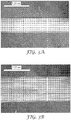
- FIGS. 3A and 3B Two exemplary spread tows are shown in FIGS. 3A (Spread Tow ST-1) and 3B (Spread Tow ST-2).
Landscapes
- Chemical & Material Sciences (AREA)
- Engineering & Computer Science (AREA)
- Ceramic Engineering (AREA)
- Manufacturing & Machinery (AREA)
- Structural Engineering (AREA)
- Materials Engineering (AREA)
- Organic Chemistry (AREA)
- Inorganic Chemistry (AREA)
- Chemical Kinetics & Catalysis (AREA)
- Textile Engineering (AREA)
- Composite Materials (AREA)
- Chemical Or Physical Treatment Of Fibers (AREA)
- Treatments For Attaching Organic Compounds To Fibrous Goods (AREA)
- Moulding By Coating Moulds (AREA)
Claims (16)
- Ein Verfahren zum Herstellen eines keramischen Prepregs, umfassend:a) Aussetzen mindestens eines beschichteten Strangs gegenüber einer Keramikmatrixaufschlämmung, die ein Lösungsmittel und einen Keramikvorläufer umfasst, wobei der beschichtete Strang ein Bündel von Keramikfasern umfasst, das bezogen auf das Gesamtgewicht des beschichteten Strangs zu mindestens 0,2 Gewichtsprozent von einer Beschichtung umgeben ist; undb) Infundieren der Aufschlämmung in das Bündel von Keramikfasern, um das keramische Prepreg zu bilden;wobei bei 25 °C mindestens 80 Gewichtsprozent der Beschichtung in dem Lösungsmittel löslich ist.
- Das Verfahren nach Anspruch 1, wobei während oder im Anschluss an Schritt (b) mindestens 50 Gew.-% der Beschichtung von der Oberfläche des beschichteten Strangs in die Aufschlämmung gelöst werden.
- Ein Verfahren zum Herstellen eines Keramikmatrixverbundwerkstoffs, umfassend:c) Bilden des keramischen Prepregs nach Anspruch 1 zu einem Grünkörper; undd) Aussetzen des Grünkörpers gegenüber einer Temperatur, die ausreicht, um den Keramikvorläufer zu sintern, um den Keramikmatrixverbundwerkstoff zu bilden, wobei mindestens 50 Gew.-% der Beschichtung vor Schritt (d) von der Oberfläche des beschichteten Strangs in die Aufschlämmung gelöst wird.
- Das Verfahren nach Anspruch 3, wobei die Temperatur mindestens 1000 °C beträgt.
- Das Verfahren nach Anspruch 3 oder 4, wobei das Bilden des keramischen Prepregs zu dem Grünkörper das Verwenden einer Filamentwicklung zum Platzieren des keramischen Prepregs umfasst, um den Grünkörper zu bilden.
- Das Verfahren nach Anspruch 3 oder 4, wobei das Bilden des keramischen Prepregs zu dem Grünkörper das Verwenden einer fortgeschrittenen Faserplatzierung zum Platzieren des keramischen Prepregs umfasst, um den Grünkörper zu bilden.
- Das Verfahren nach einem der vorstehenden Ansprüche, wobei der Strang ein ausgebreiteter Strang ist.
- Das Verfahren nach einem der vorstehenden Ansprüche, wobei die Keramikfasern Oxidkeramikfasern umfassen.
- Das Verfahren nach einem der vorstehenden Ansprüche, wobei das Lösungsmittel Wasser umfasst.
- Das Verfahren nach einem der vorstehenden Ansprüche, wobei der beschichtete Strang bezogen auf das Gesamtgewicht des beschichteten Strangs nicht mehr als 3 Gewichtsprozent der Beschichtung umfasst.
- Das Verfahren nach einem der vorstehenden Ansprüche, wobei bei 25 °C mindestens 95 Gewichtsprozent der Beschichtung in dem Lösungsmittel löslich sind.
- Das Verfahren nach einem der vorstehenden Ansprüche, wobei während oder im Anschluss an Schritt (b) mindestens 80 Gew.-% der Beschichtung von der Oberfläche des beschichteten Strangs in die Aufschlämmung gelöst wird.
- Das Verfahren nach einem der vorstehenden Ansprüche, wobei Schritt (a) das Aussetzen einer Mehrzahl beschichteter Stränge gegenüber der Keramikmatrixaufschlämmung umfasst.
- Das Verfahren nach Anspruch 13, wobei die beschichteten Stränge geflochten werden.
- Das Verfahren nach Anspruch 13, wobei die beschichteten Stränge gewebt werden, um ein Gewebe zu bilden.
- Das Verfahren nach einem der Ansprüche 13 bis 15, wobei mindestens ein Abschnitt der Mehrzahl der beschichteten Stränge ausgebreitete Stränge sind.
Applications Claiming Priority (2)
| Application Number | Priority Date | Filing Date | Title |
|---|---|---|---|
| US201862620255P | 2018-01-22 | 2018-01-22 | |
| PCT/IB2019/050499 WO2019142168A1 (en) | 2018-01-22 | 2019-01-21 | Method of making ceramic matrix slurry infused ceramic tows and ceramic matrix composites |
Publications (2)
| Publication Number | Publication Date |
|---|---|
| EP3743403A1 EP3743403A1 (de) | 2020-12-02 |
| EP3743403B1 true EP3743403B1 (de) | 2021-02-24 |
Family
ID=65529739
Family Applications (1)
| Application Number | Title | Priority Date | Filing Date |
|---|---|---|---|
| EP19707455.2A Active EP3743403B1 (de) | 2018-01-22 | 2019-01-21 | Verfahren zur herstellung von mit keramikmatrixaufschlämmung infundierten keramikkabeln und keramikmatrixverbundwerkstoffe |
Country Status (5)
| Country | Link |
|---|---|
| US (1) | US11220462B2 (de) |
| EP (1) | EP3743403B1 (de) |
| JP (1) | JP7353287B2 (de) |
| CN (1) | CN111655653B (de) |
| WO (1) | WO2019142168A1 (de) |
Families Citing this family (6)
| Publication number | Priority date | Publication date | Assignee | Title |
|---|---|---|---|---|
| WO2020068999A1 (en) | 2018-09-26 | 2020-04-02 | 3M Innovative Properties Company | Fiber tows with a heat-activated sizing |
| US12122723B2 (en) * | 2019-11-22 | 2024-10-22 | Rtx Corporation | Preform for ceramic matrix composite, method of making a ceramic matrix composite and ceramic matrix composite |
| FR3115281A1 (fr) | 2020-10-21 | 2022-04-22 | Safran Ceramics | Mèches pré-imprégnées pour matériau composite |
| CN113050736B (zh) * | 2021-06-02 | 2021-09-03 | 成都飞机工业(集团)有限责任公司 | 一种自动铺丝预浸料硬挺度检测方法 |
| US20230013205A1 (en) * | 2021-07-14 | 2023-01-19 | Raytheon Technologies Corporation | Method of fabric processing for improved cmc infiltration |
| US20250066260A1 (en) * | 2023-08-21 | 2025-02-27 | Rtx Corporation | Polymer towpreg for ceramic matrix composites |
Family Cites Families (21)
| Publication number | Priority date | Publication date | Assignee | Title |
|---|---|---|---|---|
| JPS6359473A (ja) * | 1986-08-26 | 1988-03-15 | 宇部興産株式会社 | 複合材料用無機繊維の製造法 |
| US4902326A (en) * | 1988-11-02 | 1990-02-20 | United Technologies Corporation | Method for making fiber reinforced glass matrix composite article having selectively oriented fiber reinforcement |
| US5024978A (en) | 1989-05-30 | 1991-06-18 | Corning Incorporated | Compositions and methods for making ceramic matrix composites |
| US5316797A (en) | 1990-07-13 | 1994-05-31 | General Atomics | Preparing refractory fiberreinforced ceramic composites |
| US5652188A (en) | 1994-08-08 | 1997-07-29 | Corning Incorporated | Fiber-reinforced composite with sheet silicate interlayer |
| US5547622A (en) | 1995-03-15 | 1996-08-20 | Corning Incorporated | Binder for fiber reinforced composites |
| EP0933343B1 (de) | 1998-01-29 | 2003-06-25 | Coi Ceramics, Inc. | Verfahren zur Herstellung von geschlichteten beschichteten keramischen Fasern |
| DE19826792C2 (de) | 1998-06-16 | 2002-02-07 | Deutsch Zentr Luft & Raumfahrt | Hochtemperaturbeständige Faserverbundmaterialien und Verfahren zu deren Herstellung |
| CA2512201A1 (en) * | 2003-01-08 | 2005-02-17 | 3M Innovative Properties Company | Ceramic fiber composite and method for making the same |
| US7153379B2 (en) | 2004-10-15 | 2006-12-26 | General Electric Company | Methods of producing a ceramic matrix composite |
| US20100081556A1 (en) | 2005-05-23 | 2010-04-01 | Vann Heng | Oxide-based ceramic matrix composites |
| JP2009522461A (ja) | 2005-12-30 | 2009-06-11 | スリーエム イノベイティブ プロパティズ カンパニー | セラミックオキシド繊維 |
| EP1998056A1 (de) | 2007-05-29 | 2008-12-03 | Sgl Carbon Ag | Verbundbefestiger für keramische Bauteile |
| GB201006625D0 (en) | 2010-04-21 | 2010-06-02 | Rolls Royce Plc | A method of manufacturing a ceramic matrix composite article |
| US20130157037A1 (en) * | 2011-12-14 | 2013-06-20 | General Electric Company | Slurry composition, prepreg tape, and process for producing composites |
| US9102571B2 (en) * | 2013-01-14 | 2015-08-11 | Coi Ceramics, Inc. | Methods of forming ceramic matrix composite structures |
| US11319253B2 (en) | 2013-03-15 | 2022-05-03 | General Electric Company | Slurries for composite materials |
| EP2848599B1 (de) * | 2013-09-12 | 2019-07-10 | Thomas Wamser | Methode zur herstellung eines oxidkeramischen verbundmaterials und einer faservorform |
| WO2016016388A1 (en) * | 2014-07-30 | 2016-02-04 | Universität Bayreuth | Ceramic matrix composites and processes for their production |
| US20170348876A1 (en) | 2016-05-31 | 2017-12-07 | General Electric Company | Thin ply high temperature composites |
| WO2019142167A1 (en) | 2018-01-22 | 2019-07-25 | 3M Innovative Properties Company | Woven fabric of ceramic spread tow |
-
2019
- 2019-01-21 US US16/963,874 patent/US11220462B2/en active Active
- 2019-01-21 CN CN201980009583.5A patent/CN111655653B/zh not_active Expired - Fee Related
- 2019-01-21 WO PCT/IB2019/050499 patent/WO2019142168A1/en not_active Ceased
- 2019-01-21 JP JP2020540455A patent/JP7353287B2/ja active Active
- 2019-01-21 EP EP19707455.2A patent/EP3743403B1/de active Active
Non-Patent Citations (1)
| Title |
|---|
| None * |
Also Published As
| Publication number | Publication date |
|---|---|
| JP7353287B2 (ja) | 2023-09-29 |
| US11220462B2 (en) | 2022-01-11 |
| US20210047241A1 (en) | 2021-02-18 |
| EP3743403A1 (de) | 2020-12-02 |
| CN111655653A (zh) | 2020-09-11 |
| CN111655653B (zh) | 2022-03-11 |
| WO2019142168A1 (en) | 2019-07-25 |
| JP2021511280A (ja) | 2021-05-06 |
Similar Documents
| Publication | Publication Date | Title |
|---|---|---|
| EP3743403B1 (de) | Verfahren zur herstellung von mit keramikmatrixaufschlämmung infundierten keramikkabeln und keramikmatrixverbundwerkstoffe | |
| US10611695B2 (en) | Method for making ceramic matrix composite articles | |
| KR102384719B1 (ko) | 세라믹 복합 재료 및 이의 제조 방법 | |
| US8309013B2 (en) | Method for the production of components made of ceramic-matrix composite material | |
| JPWO1992019569A1 (ja) | アルミナ繊維強化セラミック材料及びその製造方法 | |
| EP0328316B1 (de) | Heizelement aus Zirconiumoxid | |
| JP7676311B2 (ja) | セラミックマトリックス複合材料用の乾燥プリプレグ | |
| JP2003128471A (ja) | 成形支持体を用いて溶融含浸セラミック複合体を製造する方法 | |
| WO2020203484A1 (ja) | 被覆層付セラミックス連続繊維及びその製造方法、並びにセラミックマトリックス複合材料及びその製造方法 | |
| JP5371894B2 (ja) | 繊維強化複合セラミックス材料の製造方法、及び繊維強化複合セラミックス材料 | |
| KR19990038233A (ko) | 상온 압출 성형 공정에 의한 섬유상 세라믹스의 제조방법 및 이를 이용한 섬유상 단체 세라믹스의 제조방법 | |
| EP2349948B1 (de) | Verfahren zur herstellung von bauteilen aus keramik-matrix-verbundwerkstoff | |
| CN113185313A (zh) | 一种碳纤维增强陶瓷基复合材料及其制备方法 | |
| EP4292995A2 (de) | Mit partikeln eingebettetes servinggarn für cmc-anwendungen | |
| EP4201915A1 (de) | Einführung von metallischen teilchen zur herstellung von metallischen karbiden in einer matrix | |
| EP3856699B1 (de) | Faserbündel mit wärmeaktivierter leimung | |
| JPH06116035A (ja) | 炭素繊維束強化炭化ケイ素焼結体とその製造方法 | |
| JP2025025893A (ja) | 炭素層を有するセラミックス連続繊維の製造方法 | |
| Cinibulk et al. | Nextel 610 And 650 Fiber Reinforced Porous Alumina‐Yag Matrix Composites | |
| JPH0640764A (ja) | 複合体の製造方法 | |
| JPH0641819A (ja) | アルミナ質繊維及びその製造方法 |
Legal Events
| Date | Code | Title | Description |
|---|---|---|---|
| STAA | Information on the status of an ep patent application or granted ep patent |
Free format text: STATUS: UNKNOWN |
|
| STAA | Information on the status of an ep patent application or granted ep patent |
Free format text: STATUS: THE INTERNATIONAL PUBLICATION HAS BEEN MADE |
|
| PUAI | Public reference made under article 153(3) epc to a published international application that has entered the european phase |
Free format text: ORIGINAL CODE: 0009012 |
|
| STAA | Information on the status of an ep patent application or granted ep patent |
Free format text: STATUS: REQUEST FOR EXAMINATION WAS MADE |
|
| 17P | Request for examination filed |
Effective date: 20200805 |
|
| AK | Designated contracting states |
Kind code of ref document: A1 Designated state(s): AL AT BE BG CH CY CZ DE DK EE ES FI FR GB GR HR HU IE IS IT LI LT LU LV MC MK MT NL NO PL PT RO RS SE SI SK SM TR |
|
| AX | Request for extension of the european patent |
Extension state: BA ME |
|
| GRAP | Despatch of communication of intention to grant a patent |
Free format text: ORIGINAL CODE: EPIDOSNIGR1 |
|
| STAA | Information on the status of an ep patent application or granted ep patent |
Free format text: STATUS: GRANT OF PATENT IS INTENDED |
|
| DAV | Request for validation of the european patent (deleted) | ||
| DAX | Request for extension of the european patent (deleted) | ||
| INTG | Intention to grant announced |
Effective date: 20201210 |
|
| GRAS | Grant fee paid |
Free format text: ORIGINAL CODE: EPIDOSNIGR3 |
|
| GRAA | (expected) grant |
Free format text: ORIGINAL CODE: 0009210 |
|
| STAA | Information on the status of an ep patent application or granted ep patent |
Free format text: STATUS: THE PATENT HAS BEEN GRANTED |
|
| AK | Designated contracting states |
Kind code of ref document: B1 Designated state(s): AL AT BE BG CH CY CZ DE DK EE ES FI FR GB GR HR HU IE IS IT LI LT LU LV MC MK MT NL NO PL PT RO RS SE SI SK SM TR |
|
| REG | Reference to a national code |
Ref country code: CH Ref legal event code: EP |
|
| REG | Reference to a national code |
Ref country code: AT Ref legal event code: REF Ref document number: 1364241 Country of ref document: AT Kind code of ref document: T Effective date: 20210315 |
|
| REG | Reference to a national code |
Ref country code: IE Ref legal event code: FG4D |
|
| REG | Reference to a national code |
Ref country code: DE Ref legal event code: R096 Ref document number: 602019002799 Country of ref document: DE |
|
| REG | Reference to a national code |
Ref country code: LT Ref legal event code: MG9D |
|
| REG | Reference to a national code |
Ref country code: NL Ref legal event code: MP Effective date: 20210224 |
|
| PG25 | Lapsed in a contracting state [announced via postgrant information from national office to epo] |
Ref country code: PT Free format text: LAPSE BECAUSE OF FAILURE TO SUBMIT A TRANSLATION OF THE DESCRIPTION OR TO PAY THE FEE WITHIN THE PRESCRIBED TIME-LIMIT Effective date: 20210624 Ref country code: NO Free format text: LAPSE BECAUSE OF FAILURE TO SUBMIT A TRANSLATION OF THE DESCRIPTION OR TO PAY THE FEE WITHIN THE PRESCRIBED TIME-LIMIT Effective date: 20210524 Ref country code: LT Free format text: LAPSE BECAUSE OF FAILURE TO SUBMIT A TRANSLATION OF THE DESCRIPTION OR TO PAY THE FEE WITHIN THE PRESCRIBED TIME-LIMIT Effective date: 20210224 Ref country code: GR Free format text: LAPSE BECAUSE OF FAILURE TO SUBMIT A TRANSLATION OF THE DESCRIPTION OR TO PAY THE FEE WITHIN THE PRESCRIBED TIME-LIMIT Effective date: 20210525 Ref country code: FI Free format text: LAPSE BECAUSE OF FAILURE TO SUBMIT A TRANSLATION OF THE DESCRIPTION OR TO PAY THE FEE WITHIN THE PRESCRIBED TIME-LIMIT Effective date: 20210224 Ref country code: BG Free format text: LAPSE BECAUSE OF FAILURE TO SUBMIT A TRANSLATION OF THE DESCRIPTION OR TO PAY THE FEE WITHIN THE PRESCRIBED TIME-LIMIT Effective date: 20210524 Ref country code: HR Free format text: LAPSE BECAUSE OF FAILURE TO SUBMIT A TRANSLATION OF THE DESCRIPTION OR TO PAY THE FEE WITHIN THE PRESCRIBED TIME-LIMIT Effective date: 20210224 |
|
| REG | Reference to a national code |
Ref country code: AT Ref legal event code: MK05 Ref document number: 1364241 Country of ref document: AT Kind code of ref document: T Effective date: 20210224 |
|
| PG25 | Lapsed in a contracting state [announced via postgrant information from national office to epo] |
Ref country code: SE Free format text: LAPSE BECAUSE OF FAILURE TO SUBMIT A TRANSLATION OF THE DESCRIPTION OR TO PAY THE FEE WITHIN THE PRESCRIBED TIME-LIMIT Effective date: 20210224 Ref country code: RS Free format text: LAPSE BECAUSE OF FAILURE TO SUBMIT A TRANSLATION OF THE DESCRIPTION OR TO PAY THE FEE WITHIN THE PRESCRIBED TIME-LIMIT Effective date: 20210224 Ref country code: LV Free format text: LAPSE BECAUSE OF FAILURE TO SUBMIT A TRANSLATION OF THE DESCRIPTION OR TO PAY THE FEE WITHIN THE PRESCRIBED TIME-LIMIT Effective date: 20210224 Ref country code: PL Free format text: LAPSE BECAUSE OF FAILURE TO SUBMIT A TRANSLATION OF THE DESCRIPTION OR TO PAY THE FEE WITHIN THE PRESCRIBED TIME-LIMIT Effective date: 20210224 Ref country code: NL Free format text: LAPSE BECAUSE OF FAILURE TO SUBMIT A TRANSLATION OF THE DESCRIPTION OR TO PAY THE FEE WITHIN THE PRESCRIBED TIME-LIMIT Effective date: 20210224 |
|
| PG25 | Lapsed in a contracting state [announced via postgrant information from national office to epo] |
Ref country code: IS Free format text: LAPSE BECAUSE OF FAILURE TO SUBMIT A TRANSLATION OF THE DESCRIPTION OR TO PAY THE FEE WITHIN THE PRESCRIBED TIME-LIMIT Effective date: 20210624 |
|
| PG25 | Lapsed in a contracting state [announced via postgrant information from national office to epo] |
Ref country code: SM Free format text: LAPSE BECAUSE OF FAILURE TO SUBMIT A TRANSLATION OF THE DESCRIPTION OR TO PAY THE FEE WITHIN THE PRESCRIBED TIME-LIMIT Effective date: 20210224 Ref country code: AT Free format text: LAPSE BECAUSE OF FAILURE TO SUBMIT A TRANSLATION OF THE DESCRIPTION OR TO PAY THE FEE WITHIN THE PRESCRIBED TIME-LIMIT Effective date: 20210224 Ref country code: CZ Free format text: LAPSE BECAUSE OF FAILURE TO SUBMIT A TRANSLATION OF THE DESCRIPTION OR TO PAY THE FEE WITHIN THE PRESCRIBED TIME-LIMIT Effective date: 20210224 Ref country code: EE Free format text: LAPSE BECAUSE OF FAILURE TO SUBMIT A TRANSLATION OF THE DESCRIPTION OR TO PAY THE FEE WITHIN THE PRESCRIBED TIME-LIMIT Effective date: 20210224 |
|
| REG | Reference to a national code |
Ref country code: DE Ref legal event code: R097 Ref document number: 602019002799 Country of ref document: DE |
|
| PG25 | Lapsed in a contracting state [announced via postgrant information from national office to epo] |
Ref country code: DK Free format text: LAPSE BECAUSE OF FAILURE TO SUBMIT A TRANSLATION OF THE DESCRIPTION OR TO PAY THE FEE WITHIN THE PRESCRIBED TIME-LIMIT Effective date: 20210224 Ref country code: SK Free format text: LAPSE BECAUSE OF FAILURE TO SUBMIT A TRANSLATION OF THE DESCRIPTION OR TO PAY THE FEE WITHIN THE PRESCRIBED TIME-LIMIT Effective date: 20210224 Ref country code: RO Free format text: LAPSE BECAUSE OF FAILURE TO SUBMIT A TRANSLATION OF THE DESCRIPTION OR TO PAY THE FEE WITHIN THE PRESCRIBED TIME-LIMIT Effective date: 20210224 |
|
| PLBE | No opposition filed within time limit |
Free format text: ORIGINAL CODE: 0009261 |
|
| STAA | Information on the status of an ep patent application or granted ep patent |
Free format text: STATUS: NO OPPOSITION FILED WITHIN TIME LIMIT |
|
| PG25 | Lapsed in a contracting state [announced via postgrant information from national office to epo] |
Ref country code: ES Free format text: LAPSE BECAUSE OF FAILURE TO SUBMIT A TRANSLATION OF THE DESCRIPTION OR TO PAY THE FEE WITHIN THE PRESCRIBED TIME-LIMIT Effective date: 20210224 Ref country code: AL Free format text: LAPSE BECAUSE OF FAILURE TO SUBMIT A TRANSLATION OF THE DESCRIPTION OR TO PAY THE FEE WITHIN THE PRESCRIBED TIME-LIMIT Effective date: 20210224 |
|
| 26N | No opposition filed |
Effective date: 20211125 |
|
| PG25 | Lapsed in a contracting state [announced via postgrant information from national office to epo] |
Ref country code: IT Free format text: LAPSE BECAUSE OF FAILURE TO SUBMIT A TRANSLATION OF THE DESCRIPTION OR TO PAY THE FEE WITHIN THE PRESCRIBED TIME-LIMIT Effective date: 20210224 |
|
| PG25 | Lapsed in a contracting state [announced via postgrant information from national office to epo] |
Ref country code: IS Free format text: LAPSE BECAUSE OF FAILURE TO SUBMIT A TRANSLATION OF THE DESCRIPTION OR TO PAY THE FEE WITHIN THE PRESCRIBED TIME-LIMIT Effective date: 20210624 |
|
| PG25 | Lapsed in a contracting state [announced via postgrant information from national office to epo] |
Ref country code: MC Free format text: LAPSE BECAUSE OF FAILURE TO SUBMIT A TRANSLATION OF THE DESCRIPTION OR TO PAY THE FEE WITHIN THE PRESCRIBED TIME-LIMIT Effective date: 20210224 |
|
| REG | Reference to a national code |
Ref country code: CH Ref legal event code: PL |
|
| REG | Reference to a national code |
Ref country code: BE Ref legal event code: MM Effective date: 20220131 |
|
| PG25 | Lapsed in a contracting state [announced via postgrant information from national office to epo] |
Ref country code: LU Free format text: LAPSE BECAUSE OF NON-PAYMENT OF DUE FEES Effective date: 20220121 |
|
| PG25 | Lapsed in a contracting state [announced via postgrant information from national office to epo] |
Ref country code: BE Free format text: LAPSE BECAUSE OF NON-PAYMENT OF DUE FEES Effective date: 20220131 |
|
| PG25 | Lapsed in a contracting state [announced via postgrant information from national office to epo] |
Ref country code: LI Free format text: LAPSE BECAUSE OF NON-PAYMENT OF DUE FEES Effective date: 20220131 Ref country code: CH Free format text: LAPSE BECAUSE OF NON-PAYMENT OF DUE FEES Effective date: 20220131 |
|
| PG25 | Lapsed in a contracting state [announced via postgrant information from national office to epo] |
Ref country code: IE Free format text: LAPSE BECAUSE OF NON-PAYMENT OF DUE FEES Effective date: 20220121 |
|
| P01 | Opt-out of the competence of the unified patent court (upc) registered |
Effective date: 20230530 |
|
| PG25 | Lapsed in a contracting state [announced via postgrant information from national office to epo] |
Ref country code: MK Free format text: LAPSE BECAUSE OF FAILURE TO SUBMIT A TRANSLATION OF THE DESCRIPTION OR TO PAY THE FEE WITHIN THE PRESCRIBED TIME-LIMIT Effective date: 20210224 Ref country code: CY Free format text: LAPSE BECAUSE OF FAILURE TO SUBMIT A TRANSLATION OF THE DESCRIPTION OR TO PAY THE FEE WITHIN THE PRESCRIBED TIME-LIMIT Effective date: 20210224 |
|
| PG25 | Lapsed in a contracting state [announced via postgrant information from national office to epo] |
Ref country code: HU Free format text: LAPSE BECAUSE OF FAILURE TO SUBMIT A TRANSLATION OF THE DESCRIPTION OR TO PAY THE FEE WITHIN THE PRESCRIBED TIME-LIMIT; INVALID AB INITIO Effective date: 20190121 |
|
| PG25 | Lapsed in a contracting state [announced via postgrant information from national office to epo] |
Ref country code: TR Free format text: LAPSE BECAUSE OF FAILURE TO SUBMIT A TRANSLATION OF THE DESCRIPTION OR TO PAY THE FEE WITHIN THE PRESCRIBED TIME-LIMIT Effective date: 20210224 |
|
| PG25 | Lapsed in a contracting state [announced via postgrant information from national office to epo] |
Ref country code: MT Free format text: LAPSE BECAUSE OF FAILURE TO SUBMIT A TRANSLATION OF THE DESCRIPTION OR TO PAY THE FEE WITHIN THE PRESCRIBED TIME-LIMIT Effective date: 20210224 |
|
| PGFP | Annual fee paid to national office [announced via postgrant information from national office to epo] |
Ref country code: GB Payment date: 20251219 Year of fee payment: 8 |
|
| PGFP | Annual fee paid to national office [announced via postgrant information from national office to epo] |
Ref country code: FR Payment date: 20251218 Year of fee payment: 8 |
|
| PG25 | Lapsed in a contracting state [announced via postgrant information from national office to epo] |
Ref country code: SI Free format text: LAPSE BECAUSE OF FAILURE TO SUBMIT A TRANSLATION OF THE DESCRIPTION OR TO PAY THE FEE WITHIN THE PRESCRIBED TIME-LIMIT Effective date: 20210224 |
|
| PGFP | Annual fee paid to national office [announced via postgrant information from national office to epo] |
Ref country code: DE Payment date: 20251217 Year of fee payment: 8 |