EP3743802B1 - Procédé et appareil pour la génération d'un contenu d'affichage - Google Patents
Procédé et appareil pour la génération d'un contenu d'affichage Download PDFInfo
- Publication number
- EP3743802B1 EP3743802B1 EP18724508.9A EP18724508A EP3743802B1 EP 3743802 B1 EP3743802 B1 EP 3743802B1 EP 18724508 A EP18724508 A EP 18724508A EP 3743802 B1 EP3743802 B1 EP 3743802B1
- Authority
- EP
- European Patent Office
- Prior art keywords
- application window
- window surfaces
- memory
- hardware layers
- display subsystem
- Prior art date
- Legal status (The legal status is an assumption and is not a legal conclusion. Google has not performed a legal analysis and makes no representation as to the accuracy of the status listed.)
- Active
Links
Images


Classifications
-
- G—PHYSICS
- G09—EDUCATION; CRYPTOGRAPHY; DISPLAY; ADVERTISING; SEALS
- G09G—ARRANGEMENTS OR CIRCUITS FOR CONTROL OF INDICATING DEVICES USING STATIC MEANS TO PRESENT VARIABLE INFORMATION
- G09G5/00—Control arrangements or circuits for visual indicators common to cathode-ray tube indicators and other visual indicators
- G09G5/36—Control arrangements or circuits for visual indicators common to cathode-ray tube indicators and other visual indicators characterised by the display of a graphic pattern, e.g. using an all-points-addressable [APA] memory
- G09G5/37—Details of the operation on graphic patterns
- G09G5/377—Details of the operation on graphic patterns for mixing or overlaying two or more graphic patterns
-
- G—PHYSICS
- G06—COMPUTING OR CALCULATING; COUNTING
- G06F—ELECTRIC DIGITAL DATA PROCESSING
- G06F3/00—Input arrangements for transferring data to be processed into a form capable of being handled by the computer; Output arrangements for transferring data from processing unit to output unit, e.g. interface arrangements
- G06F3/14—Digital output to display device ; Cooperation and interconnection of the display device with other functional units
-
- G—PHYSICS
- G09—EDUCATION; CRYPTOGRAPHY; DISPLAY; ADVERTISING; SEALS
- G09G—ARRANGEMENTS OR CIRCUITS FOR CONTROL OF INDICATING DEVICES USING STATIC MEANS TO PRESENT VARIABLE INFORMATION
- G09G5/00—Control arrangements or circuits for visual indicators common to cathode-ray tube indicators and other visual indicators
- G09G5/36—Control arrangements or circuits for visual indicators common to cathode-ray tube indicators and other visual indicators characterised by the display of a graphic pattern, e.g. using an all-points-addressable [APA] memory
- G09G5/39—Control of the bit-mapped memory
- G09G5/393—Arrangements for updating the contents of the bit-mapped memory
-
- G—PHYSICS
- G09—EDUCATION; CRYPTOGRAPHY; DISPLAY; ADVERTISING; SEALS
- G09G—ARRANGEMENTS OR CIRCUITS FOR CONTROL OF INDICATING DEVICES USING STATIC MEANS TO PRESENT VARIABLE INFORMATION
- G09G5/00—Control arrangements or circuits for visual indicators common to cathode-ray tube indicators and other visual indicators
- G09G5/36—Control arrangements or circuits for visual indicators common to cathode-ray tube indicators and other visual indicators characterised by the display of a graphic pattern, e.g. using an all-points-addressable [APA] memory
- G09G5/39—Control of the bit-mapped memory
- G09G5/395—Arrangements specially adapted for transferring the contents of the bit-mapped memory to the screen
-
- G—PHYSICS
- G09—EDUCATION; CRYPTOGRAPHY; DISPLAY; ADVERTISING; SEALS
- G09G—ARRANGEMENTS OR CIRCUITS FOR CONTROL OF INDICATING DEVICES USING STATIC MEANS TO PRESENT VARIABLE INFORMATION
- G09G2340/00—Aspects of display data processing
- G09G2340/10—Mixing of images, i.e. displayed pixel being the result of an operation, e.g. adding, on the corresponding input pixels
-
- G—PHYSICS
- G09—EDUCATION; CRYPTOGRAPHY; DISPLAY; ADVERTISING; SEALS
- G09G—ARRANGEMENTS OR CIRCUITS FOR CONTROL OF INDICATING DEVICES USING STATIC MEANS TO PRESENT VARIABLE INFORMATION
- G09G2340/00—Aspects of display data processing
- G09G2340/12—Overlay of images, i.e. displayed pixel being the result of switching between the corresponding input pixels
-
- G—PHYSICS
- G09—EDUCATION; CRYPTOGRAPHY; DISPLAY; ADVERTISING; SEALS
- G09G—ARRANGEMENTS OR CIRCUITS FOR CONTROL OF INDICATING DEVICES USING STATIC MEANS TO PRESENT VARIABLE INFORMATION
- G09G2370/00—Aspects of data communication
Definitions
- the present application relates to the field of computer technology, and more particularly to graphical user interfaces and a solution for generating display contents based on display subsystem compositing.
- US 2010/079489 A1 describes a method of compositing planes onto a target surface using a computing device with graphics processing capability. Further conventional methods for combining image planes by a graphic processor are discussed.
- CA 2752344 A1 describes a system and a method for compositing graphics on a computing device.
- the computing device includes one or more hardware layers. If a number of surfaces to be displayed by the computing device is more than the number of the hardware layers, two or more of the surfaces are combined to form one or more pseudo surfaces by a front-end compositor.
- US 2016/163280 A1 describes a method and a system for image layer composition.
- the method includes detecting whether a plurality of computing devices of a computing system have available resource for performing image layer composition.
- the method also includes receiving a plurality of image layers and controlling at least one computing device detected having available resource for performing image layer composition to compose the plurality of image layers.
- US 2017/329613 A1 describes a composition system in which multiple input surfaces are to be composited (combined) using a composition processor (such as a compositing display controller or composition engine), to provide an output surface (that can, for example, then be displayed and/ or written out to a memory, e.g. for display).
- a composition processor such as a compositing display controller or composition engine
- an output surface that can, for example, then be displayed and/ or written out to a memory, e.g. for display.
- two or more of the input surfaces are first, in effect, combined into a single, secondary (intermediate) surface, and that secondary surface is then used when compositing the output surface.
- Graphical user interfaces of modern operating systems have a windowing support.
- An application typically renders its contents in a dedicated, rectangular, two-dimensional area that is commonly referred to as a window or window surface.
- the operating system needs to composite the window surfaces into a final, combined view that is then sent to a device display.
- the final compositing may be based on the windows' positions, sizes, transparences, and other features. Further, the final compositing for window surfaces may be done in different ways, depending on available hardware resources and capabilities of the hardware resources. However, performance and power consumption of compositing differ between the different hardware resources.
- a solution is provided for display contents generation in a case where several application window surfaces are visible at the same time and the number of application window surfaces exceeds the number of available hardware layers in a display subsystem (DSS).
- DSS display subsystem
- the display subsystem is sequentially used to composite the final display frame.
- This method enables display contents generation by performing a composition procedure using only the display subsystem sequentially even when the number of application window surfaces to be composited exceeds the number of available hardware layers in the display subsystem. Thus, by using only the display subsystem this also decreases the load of other hardware resources. Further, a solution is provided in which a graphical processing unit (GPU) will be available for applications to render their content for the next frame while a previous frame composition is still ongoing, thus enabling asynchronous composition and GPU offloading. This may also improve overall system performance.
- GPU graphical processing unit
- This apparatus enables display contents generation by performing a composition procedure using only the display subsystem sequentially even when the number of application window surfaces to be composited exceeds the number of available hardware layers in the display subsystem. Thus, by using only the display subsystem this also decreases the load of other hardware resources. Further, a solution is provided in which a graphical processing unit (GPU) will be available for applications to render their content for the next frame while a previous frame composition is still ongoing, thus enabling asynchronous composition and GPU offloading. This may also improve overall system performance.
- GPU graphical processing unit
- a disclosure in connection with a described method may also hold true for a corresponding device or system configured to perform the method and vice versa.
- a corresponding device may include a unit or other means to perform the described method step, even if such unit is not explicitly described or illustrated in the figures.
- a corresponding method may include a step performing the described functionality, even if such step is not explicitly described or illustrated in the figures.
- display contents generation may start when a newly started application requests a window surface from a window manager.
- the application then generates graphical content on the window surface.
- the graphical content may be generated using the operating system's rendering engine.
- the content may be generated on a graphical processing unit (GPU) driver.
- a compositor, or a compositing window manager combines the window surfaces from all visible applications and generates the final frame using, for example, the GPU, a display subsystem (DSS), or both, depending on the number of the window surfaces. For example, in situations where several application window surfaces are visible simultaneously and the number of the window surfaces exceeds the number of available hardware layers in the display subsystem, the application window surfaces may be sent to the GPU for final compositing.
- the purpose is to provide a solution that utilizes only the display subsystem hardware for compositing a final display frame.
- hardware layers of the display subsystem are sequentially used to composite a final display frame from application window surfaces and an intermediate frame stored in a memory. This enables display subsystem based compositing even when the number of application window surfaces to be composited exceeds the number of the hardware layers in the display subsystem.
- This also provides a solution in which a graphical processing unit (GPU) will be available for applications to render their content for the next frame while a previous frame composition is still ongoing, thus enabling asynchronous composition and GPU offloading. This may also improve overall system performance.
- GPU graphical processing unit
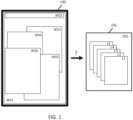
- FIG. 1 illustrates schematic representation of a scenario in which the number of window surfaces to be composited exceeds the number of hardware layers available in a display subsystem 102.
- the final frame of a display 100 to be composited comprises six window surfaces WS1, WS2, WS3, WS4, WS5, WS6.
- the display subsystem 102 comprise only five hardware layers (or overlays) L1, L2, L3, L4, L5.
- a display subsystem implementation has a limited number of hardware layers due to the cost associated with them.
- the operating system typically performs a GPU based compositing of window surfaces and then sends the final frame to DSS, thus utilizing only one hardware layer or overlay. This means that the load of the GPU may increase, and the operation may take GPU resources away from applications that need GPU for rendering their scenes.
- FIG. 2 illustrates a flowchart of a method for display contents generation using only a display subsystem when an initial number of application window surfaces exceeds the number of available hardware layers of the display subsystem.
- the number of application window surfaces to be composited is N and the number of available hardware layers in the display subsystem is K.
- data of multiple application window surfaces stored in a memory is selected and fed to the hardware layers at 200.
- the number of selected application window surfaces corresponds to the number of the available hardware layers such that at first K application window surfaces are selected.
- an intermediate frame is composited by a compositor of the display subsystem based on the contents of the hardware layers.
- the selected K application window surfaces are composited to form an intermediate frame.
- the intermediate frame may also be stored in the memory for subsequent use.
- previously non-selected application window surfaces are selected and fed to the available hardware layers together with the intermediate frame.
- Each of the hardware layers are fed with one of the now selected application window surfaces or the intermediate frame.
- one of the hardware layers comprises the intermediate frame and each remaining hardware layer is either empty or comprises data associated with an application window surface.
- a subsequent frame is composited by the compositor based on the contents of the hardware layers.
- the subsequent frame may be stored in the memory, and the subsequent frame may replace the earlier stored intermediate frame as a new intermediate frame.
- the composition procedure returns back to 204. Otherwise, the latest subsequent frame may be regarded as a final frame and a combined view of application window surfaces of all running applications has been generated.
- a graphical processing unit (GPU) will be available for applications to render their content for the next frame while a previous frame composition is still ongoing, thus enabling asynchronous composition and GPU offloading. This may also improve overall system performance.
- GPU graphical processing unit
- FIG. 3 illustrates schematic representation of an exemplary display subsystem 300 configuration.
- FIG. 3 also illustrates a composition procedure discussed already in relation to FIG. 2 .
- FIG. 3 illustrates an exemplary structure of the display subsystem 300 and an exemplary number of application window surfaces and hardware layer.
- the display subsystem 300 may be arranged, for example, in a computing device, for example, a smartphone, a tablet computer or a computer.
- the display subsystem 300 comprises four hardware layers 304. There may be several applications running in an apparatus.
- FIG. 3 illustrates an example in which there are eight application window surfaces 302 to be composited. Each application window surface may relate to a separate application executed by the apparatus.
- the application window surfaces 302 are stored in a memory 310. Because the number of the application window surfaces 302 exceeds the number of available hardware layers 304, the display content generation may be implemented by several compositing sequences.
- the composition procedure comprises compositing an intermediate frame from part of the application window surfaces and then sequentially aggregating previously non-selected application window surfaces with the resulted intermediate frame.
- the procedure starts by selecting and feeding as many application window surfaces 302 into the display subsystem 300 as there are available hardware layers 304.
- four application window surfaces 302a are fed to the four hardware layers 304. This is further identified by the number "1" associated with arrows from the application window surfaces 302a towards the hardware layers 304.
- the fed application window surfaces 302a may be the top window surfaces in the memory.
- the procedure may be implemented in a reverse order, starting with the bottom application window surfaces 302c, 302b and moving up from there.
- the contents of the hardware layers are fed to a compositor 306 for compositing an intermediate frame.
- the resulting intermediate frame 308 may then be stored in the memory 310.
- the intermediate frame 308 is stored in the same memory 310 as the application window surfaces, in other examples, the intermediate frame 308 may be stored in a separate memory.
- the compositor 306 may be implemented as a hardware unit or a hardware block as part of the display subsystem, and it may perform its operations without involving a central processing unit (CPU) or a graphical processing unit (GPU). As an example, the compositor 306 may perform a so-called "Bit Blit" operation in which several bitmaps are combined into one.
- the number of elements to be composited that are fed to the display subsystem again corresponds to the number of the hardware layers 304.
- the intermediate frame 308 stored in the memory 310 is included and aggregated with a second set of application window surfaces 302b. This step is illustrated in FIG. 3 with "2".
- the contents of the hardware layers 304 are again composited by the compositor 306.
- the resulting subsequent frame may be stored again in memory 310, and the previously stored intermediate frame may be replaced with the new frame, i.e. the subsequent frame.
- the remaining previously non-selected application window surface 302c are selected.
- the intermediate frame 308 stored in the memory 310 and the remaining previously non-selected window surface 302c are fed to the hardware layers 304. This step is illustrated in FIG. 3 with "3". Again, the contents of the hardware layers 304 are composited in the compositor 306 into the subsequent frame. As there are no longer remaining previously non-selected application window surfaces 302 left to be composited, the resulting subsequent frame may be considered as a final frame.
- the final frame may also be provided for a virtual display as an output alternative, for example, for screen recording into a file or for sending the final frame over a network or an interface (for example, a Universal Serial Bus (USB)) to a television or to other appliances.
- FIG. 3 illustrates an example in which the final frame may also be encoded by a primary display encoder 312 to be viewed in, for example, a primary display.
- the final frame may be encoded into formats used by peripherals with an external connector encoder 314 enabling viewing of the final frame, for example, with a monitor having a High-Resolution Multimedia Interface (HMDI).
- HMDI High-Resolution Multimedia Interface
- the display subsystem 300 may be implemented as a system-on-a-chip (SoC) 316.
- SoC system-on-a-chip
- FIG. 4 illustrates a schematic representation of an exemplary apparatus 400 including a variety of optional hardware and software components, shown generally at 412. Any components 412 in the computer system can communicate with any other component, although not all connections are shown, for ease of illustration.
- the apparatus 400 can be any of a variety of computing devices, for example, a smart phone, a tablet computer, a desktop computer and a laptop computer.
- the illustrated apparatus 400 can include one or more controllers or processors 402 (e.g., signal processor, microprocessor, ASIC, or other control and processing logic circuitry) for performing such tasks as signal coding, data processing, input/output processing, power control, and/or other functions.
- An operating system 408 can control the allocation and usage of the components 412 and support for one or more application programs 410.
- the illustrated apparatus 400 can also include the display subsystem 300 discussed in more detail in relation to FIG. 3 .
- the illustrated apparatus 400 can include a memory.
- the memory can include a non-removable memory 404 and/or a removable memory 406.
- the non-removable memory 404 can include RAM, ROM, flash memory, a hard disk, or other well-known memory storage technologies.
- the removable memory 406 can include flash memory or other well-known memory storage technologies.
- the memory can be used for storing data and/or code for running the operating system 408 and the applications 410.
- the apparatus 400 can further include at least one physical connector, which can be a USB port, IEEE 1394 (FireWire) port, and/or RS-232 port etc.
- the illustrated components 412 are not required or all-inclusive, as any components can deleted and other components can be added.
- the apparatus 400 may be configured to implement the various features, examples and embodiments illustrated in FIGS. 2-3 partially or completely.
- the functionality described herein can be performed, at least in part, by one or more computer program product components such as software components.
- the processor 402 may be configured by the program code which when executed performs the examples and embodiments of the operations and functionality described.
- the functionality described herein can be performed, at least in part, by one or more hardware logic components.
- illustrative types of hardware logic components include Field-programmable Gate Arrays (FPGAs), Program-specific Integrated Circuits (ASICs), Program-specific Standard Products (ASSPs), System-on-a-chip systems (SOCs), Complex Programmable Logic Devices (CPLDs), Graphics Processing Units (GPUs).
- FPGAs Field-programmable Gate Arrays
- ASICs Program-specific Integrated Circuits
- ASSPs Program-specific Standard Products
- SOCs System-on-a-chip systems
- CPLDs Complex Programmable Logic Devices
- GPUs Graphics Processing Units
- one or more of the disclosed elements or components 412 of the apparatus 400 may constitute means for selecting data of multiple application window surfaces stored in a memory, wherein an initial number of the application window surfaces exceeds the number of available hardware layers of a display subsystem; means for feeding the data of the selected multiple window surfaces to the available hardware layers; means for compositing an intermediate frame by the compositor based on the contents of the fed hardware layers; means for selecting data of at least one previously non-selected application window surface stored in the memory; means for feeding the intermediate frame and data of the selected at least one previously non-selected application window surface to the available hardware layers; and means for compositing a subsequent frame by the compositor based on the contents of the fed hardware layers.
- the functionality of the apparatus 400 may be implemented by program instructions stored on a computer readable medium.
- the program instructions when executed, cause the computer, processor or the like, to perform the steps of the encoding and/or decoding methods.
- the computer readable medium can be any medium, including non-transitory storage media, on which the program is stored such as a Blu-Ray disc, DVD, CD, USB (flash) drive, hard disc, server storage available via a network, a ROM, a PROM, an EPROM, an EEPROM or a Flash memory having electronically readable control signals stored thereon which cooperate or are capable of cooperating with a programmable computer system such that an embodiment of at least one of the inventive methods is performed.
- An embodiment of the invention comprises or is a computer program comprising program code for performing any of the methods described herein, when executed on a computer.
- Another example of the invention comprises or is a computer readable medium comprising a program code that, when executed by a processor, causes a computer system to perform any of the methods described herein.
Landscapes
- Engineering & Computer Science (AREA)
- Theoretical Computer Science (AREA)
- Physics & Mathematics (AREA)
- General Physics & Mathematics (AREA)
- Computer Hardware Design (AREA)
- Human Computer Interaction (AREA)
- General Engineering & Computer Science (AREA)
- Controls And Circuits For Display Device (AREA)
- User Interface Of Digital Computer (AREA)
Claims (6)
- Procédé de génération de contenus d'affichage par un sous-système d'affichage (300) comprenant un nombre K de couches matérielles (304) disponibles et un compositeur (306), le compositeur (306) étant mis en oeuvre sous forme d'une unité matérielle ou d'un bloc matériel faisant partie du sous-système d'affichage (300), et le compositeur (306) réalisant ses opérations sans l'intervention d'une unité centrale de traitement ou d'une unité de traitement graphique, le procédé comprenant :la sélection (200) de surfaces de fenêtre d'application multiples stockées dans une mémoire (310), un nombre des surfaces de fenêtre d'application (302) stockées dans la mémoire (310) étant supérieur à un nombre K de couches matérielles (306) disponibles du sous-système d'affichage (300), et le nombre de surfaces de fenêtre d'application (302) sélectionnées étant égal au nombre K des couches matérielles (304) disponibles ;l'alimentation de données dans chacune des K surfaces de fenêtre d'application multiples sélectionnées à une couche matérielle disponible respective parmi les K couches matérielles (304) disponibles ;la composition (202) d'une image intermédiaire par le compositeur (306) du sous-système d'affichage (300) sur la base des contenus des couches matérielles (304) alimentées ;la détermination (204) si un nombre de surfaces de fenêtre d'application (302) non sélectionnées restantes dans la mémoire (310) est supérieur à K - 1 ;la sélection (206) de K - 1 surfaces de fenêtre d'application non sélectionnées précédemment stockées dans la mémoire (310), si le nombre de surfaces de fenêtre d'application (302) non sélectionnées restantes est supérieur ou égal à K - 1, ou la sélection (210) de toutes les surfaces de fenêtre d'application (302) restantes, si le nombre de surfaces de fenêtre d'application non sélectionnées restantes est inférieur à K - 1 ;l'alimentation de l'image intermédiaire et des données dans chacune des surfaces de fenêtre d'application non sélectionnées précédemment sélectionnées à des couches matérielles disponibles respectives parmi les K couches matérielles (304) disponibles ;la composition (208) d'une image suivante par le compositeur (306) sur la base des contenus des couches matérielles (304) alimentées ; etle retour (212) à l'étape de détermination (204) s'il reste des surfaces de fenêtre d'application (302) non sélectionnées précédemment dans la mémoire (310).
- Procédé selon la revendication 1, le procédé comprenant en outre :
le stockage de l'image intermédiaire dans la mémoire (310). - Procédé selon la revendication 2, le procédé comprenant en outre :
le stockage de l'image suivante dans la mémoire (310) par remplacement de l'image intermédiaire stockée précédemment. - Procédé selon l'une quelconque des revendications précédentes, l'alimentation de l'image intermédiaire et des données de l'au moins une surface de fenêtre d'application non sélectionnée précédemment sélectionnée à des couches matérielles (304) disponibles comprenant, lorsque le nombre des surfaces de fenêtre d'application non sélectionnées restantes est supérieur ou égal au nombre des couches matérielles (304), l'alimentation de chacune des couches matérielles (304) disponibles par l'une des surfaces de fenêtre d'application non sélectionnées précédemment ou l'image intermédiaire.
- Appareil, comprenant :une mémoire (310) configurée pour stocker des données de surfaces de fenêtre d'application (302) multiples, un nombre des surfaces de fenêtre d'application (302) stockées dans la mémoire (310) étant supérieur à un nombre K de couches matérielles (304) disponibles du sous-système d'affichage (300) ;un sous-système d'affichage (300) comprenant les K couches matérielles (304) disponibles et un compositeur (306) ;le compositeur (306) étant mis en oeuvre sous forme d'une unité matérielle ou d'un bloc matériel faisant partie du sous-système d'affichage (300), et le compositeur (306) réalisant ses opérations sans l'intervention d'une unité centrale de traitement ou d'une unité de traitement graphique, etl'appareil étant configuré pour réaliser un procédé selon l'une quelconque des revendications 1 à 4.
- Dispositif informatique comprenant l'appareil selon la revendication 5.
Applications Claiming Priority (1)
| Application Number | Priority Date | Filing Date | Title |
|---|---|---|---|
| PCT/EP2018/061701 WO2019214803A1 (fr) | 2018-05-07 | 2018-05-07 | Procédé, appareil et programme informatique pour la génération d'un contenu d'affichage |
Publications (2)
| Publication Number | Publication Date |
|---|---|
| EP3743802A1 EP3743802A1 (fr) | 2020-12-02 |
| EP3743802B1 true EP3743802B1 (fr) | 2024-01-24 |
Family
ID=62165548
Family Applications (1)
| Application Number | Title | Priority Date | Filing Date |
|---|---|---|---|
| EP18724508.9A Active EP3743802B1 (fr) | 2018-05-07 | 2018-05-07 | Procédé et appareil pour la génération d'un contenu d'affichage |
Country Status (4)
| Country | Link |
|---|---|
| US (1) | US11302292B2 (fr) |
| EP (1) | EP3743802B1 (fr) |
| CN (1) | CN112074805B (fr) |
| WO (1) | WO2019214803A1 (fr) |
Family Cites Families (11)
| Publication number | Priority date | Publication date | Assignee | Title |
|---|---|---|---|---|
| US7830372B2 (en) * | 2004-08-30 | 2010-11-09 | Qnx Software Systems Gmbh & Co. Kg | Method and system for providing transparent access to hardware graphic layers |
| JP4780101B2 (ja) * | 2007-12-26 | 2011-09-28 | 日本電気株式会社 | 画像表示システム、画像表示方法及びプログラム |
| US8159505B2 (en) * | 2008-10-01 | 2012-04-17 | Ati Technologies Ulc | System and method for efficient digital video composition |
| US20130069981A1 (en) * | 2011-09-15 | 2013-03-21 | Research In Motion Limited | System and Methods for Managing Composition of Surfaces |
| CA2752344A1 (fr) * | 2011-09-15 | 2013-03-15 | Research In Motion Limited | Systeme et methodes de gestion de la composition des surfaces |
| US9030482B2 (en) * | 2012-11-09 | 2015-05-12 | Intel Corporation | Hybrid display frame buffer for display subsystem |
| US20160163280A1 (en) * | 2013-07-16 | 2016-06-09 | Norman Weyrich | Image layer composition |
| KR20150033162A (ko) * | 2013-09-23 | 2015-04-01 | 삼성전자주식회사 | 컴포지터, 이를 포함하는 시스템온칩 및 이의 구동 방법 |
| GB2532940B (en) * | 2014-12-01 | 2021-12-15 | Advanced Risc Mach Ltd | Method of and apparatus for providing an output surface in a data processing system |
| US9836661B2 (en) * | 2014-12-04 | 2017-12-05 | General Electric Company | System and method for collision avoidance |
| WO2016126256A1 (fr) * | 2015-02-05 | 2016-08-11 | Citrix Systems, Inc. | Détection de types de contenus et de régions de fenêtre dans des trames d'affichage composées |
-
2018
- 2018-05-07 EP EP18724508.9A patent/EP3743802B1/fr active Active
- 2018-05-07 WO PCT/EP2018/061701 patent/WO2019214803A1/fr not_active Ceased
- 2018-05-07 CN CN201880093125.XA patent/CN112074805B/zh active Active
-
2020
- 2020-07-20 US US16/932,958 patent/US11302292B2/en active Active
Also Published As
| Publication number | Publication date |
|---|---|
| CN112074805A (zh) | 2020-12-11 |
| WO2019214803A1 (fr) | 2019-11-14 |
| CN112074805B (zh) | 2023-03-28 |
| EP3743802A1 (fr) | 2020-12-02 |
| US20200349906A1 (en) | 2020-11-05 |
| US11302292B2 (en) | 2022-04-12 |
Similar Documents
| Publication | Publication Date | Title |
|---|---|---|
| US11144323B2 (en) | Independent mapping of threads | |
| TWI912355B (zh) | 用於圖形處理單元混合渲染的裝置和方法 | |
| EP3270371B1 (fr) | Procédé et appareil de gestion de couches graphiques dans un composant d'affichage graphique | |
| US9881592B2 (en) | Hardware overlay assignment | |
| US9164646B2 (en) | Method and apparatus for accommodating display migration among a plurality of physical displays | |
| US20140168242A1 (en) | Techniques for setting up and executing draw calls | |
| US9041719B2 (en) | Method and system for transparently directing graphics processing to a graphical processing unit (GPU) of a multi-GPU system | |
| CN101025821A (zh) | 不对称多gpu处理 | |
| CN112596843A (zh) | 图像处理方法、装置、电子设备及计算机可读存储介质 | |
| US9383968B2 (en) | Math processing by detection of elementary valued operands | |
| US10417814B2 (en) | Method and apparatus for blending layers within a graphics display component | |
| EP3438936A1 (fr) | Procédé et appareil de gestion de couches graphiques dans un système de traitement de données | |
| EP3743802B1 (fr) | Procédé et appareil pour la génération d'un contenu d'affichage | |
| US9911217B2 (en) | Animation arrangement | |
| US9400870B2 (en) | Method and apparatus for the progressive loading of medical multidimensional images into a medical application | |
| US20130182000A1 (en) | System and method for rendering an image | |
| EP3522530A1 (fr) | Procédé d'amélioration des performances de système, dispositif d'amélioration des performances de système et dispositif d'affichage | |
| KR101131636B1 (ko) | 커맨드 실행 순서 결정 방법 및 이를 수행하기 위한 컴퓨팅 디바이스와 컴퓨터 판독가능 기록 매체 | |
| US20150199833A1 (en) | Hardware support for display features | |
| TWI918756B (zh) | 用於疊加複合的平面規劃的方法、裝置、及電腦可讀取媒體 | |
| WO2015006910A1 (fr) | Composition d'une couche d'image | |
| US20150109473A1 (en) | Programming a camera sensor | |
| US20150160911A1 (en) | Enabling hardware acceleration in a computing device during a mosaic display mode of operation thereof | |
| TW202605756A (zh) | 區域演現再新 | |
| US20220337868A1 (en) | Rendering video frames for a user interface operation performed at a client device |
Legal Events
| Date | Code | Title | Description |
|---|---|---|---|
| STAA | Information on the status of an ep patent application or granted ep patent |
Free format text: STATUS: UNKNOWN |
|
| STAA | Information on the status of an ep patent application or granted ep patent |
Free format text: STATUS: THE INTERNATIONAL PUBLICATION HAS BEEN MADE |
|
| PUAI | Public reference made under article 153(3) epc to a published international application that has entered the european phase |
Free format text: ORIGINAL CODE: 0009012 |
|
| STAA | Information on the status of an ep patent application or granted ep patent |
Free format text: STATUS: REQUEST FOR EXAMINATION WAS MADE |
|
| 17P | Request for examination filed |
Effective date: 20200827 |
|
| AK | Designated contracting states |
Kind code of ref document: A1 Designated state(s): AL AT BE BG CH CY CZ DE DK EE ES FI FR GB GR HR HU IE IS IT LI LT LU LV MC MK MT NL NO PL PT RO RS SE SI SK SM TR |
|
| AX | Request for extension of the european patent |
Extension state: BA ME |
|
| DAV | Request for validation of the european patent (deleted) | ||
| DAX | Request for extension of the european patent (deleted) | ||
| STAA | Information on the status of an ep patent application or granted ep patent |
Free format text: STATUS: EXAMINATION IS IN PROGRESS |
|
| 17Q | First examination report despatched |
Effective date: 20220218 |
|
| GRAP | Despatch of communication of intention to grant a patent |
Free format text: ORIGINAL CODE: EPIDOSNIGR1 |
|
| STAA | Information on the status of an ep patent application or granted ep patent |
Free format text: STATUS: GRANT OF PATENT IS INTENDED |
|
| INTG | Intention to grant announced |
Effective date: 20230905 |
|
| GRAS | Grant fee paid |
Free format text: ORIGINAL CODE: EPIDOSNIGR3 |
|
| GRAA | (expected) grant |
Free format text: ORIGINAL CODE: 0009210 |
|
| STAA | Information on the status of an ep patent application or granted ep patent |
Free format text: STATUS: THE PATENT HAS BEEN GRANTED |
|
| AK | Designated contracting states |
Kind code of ref document: B1 Designated state(s): AL AT BE BG CH CY CZ DE DK EE ES FI FR GB GR HR HU IE IS IT LI LT LU LV MC MK MT NL NO PL PT RO RS SE SI SK SM TR |
|
| REG | Reference to a national code |
Ref country code: GB Ref legal event code: FG4D |
|
| REG | Reference to a national code |
Ref country code: CH Ref legal event code: EP |
|
| REG | Reference to a national code |
Ref country code: DE Ref legal event code: R096 Ref document number: 602018064470 Country of ref document: DE |
|
| REG | Reference to a national code |
Ref country code: IE Ref legal event code: FG4D |
|
| REG | Reference to a national code |
Ref country code: LT Ref legal event code: MG9D |
|
| REG | Reference to a national code |
Ref country code: NL Ref legal event code: MP Effective date: 20240124 |
|
| PG25 | Lapsed in a contracting state [announced via postgrant information from national office to epo] |
Ref country code: NL Free format text: LAPSE BECAUSE OF FAILURE TO SUBMIT A TRANSLATION OF THE DESCRIPTION OR TO PAY THE FEE WITHIN THE PRESCRIBED TIME-LIMIT Effective date: 20240124 |
|
| PG25 | Lapsed in a contracting state [announced via postgrant information from national office to epo] |
Ref country code: NL Free format text: LAPSE BECAUSE OF FAILURE TO SUBMIT A TRANSLATION OF THE DESCRIPTION OR TO PAY THE FEE WITHIN THE PRESCRIBED TIME-LIMIT Effective date: 20240124 |
|
| PG25 | Lapsed in a contracting state [announced via postgrant information from national office to epo] |
Ref country code: IS Free format text: LAPSE BECAUSE OF FAILURE TO SUBMIT A TRANSLATION OF THE DESCRIPTION OR TO PAY THE FEE WITHIN THE PRESCRIBED TIME-LIMIT Effective date: 20240524 |
|
| PG25 | Lapsed in a contracting state [announced via postgrant information from national office to epo] |
Ref country code: LT Free format text: LAPSE BECAUSE OF FAILURE TO SUBMIT A TRANSLATION OF THE DESCRIPTION OR TO PAY THE FEE WITHIN THE PRESCRIBED TIME-LIMIT Effective date: 20240124 |
|
| PG25 | Lapsed in a contracting state [announced via postgrant information from national office to epo] |
Ref country code: GR Free format text: LAPSE BECAUSE OF FAILURE TO SUBMIT A TRANSLATION OF THE DESCRIPTION OR TO PAY THE FEE WITHIN THE PRESCRIBED TIME-LIMIT Effective date: 20240425 |
|
| REG | Reference to a national code |
Ref country code: AT Ref legal event code: MK05 Ref document number: 1652688 Country of ref document: AT Kind code of ref document: T Effective date: 20240124 |
|
| PG25 | Lapsed in a contracting state [announced via postgrant information from national office to epo] |
Ref country code: HR Free format text: LAPSE BECAUSE OF FAILURE TO SUBMIT A TRANSLATION OF THE DESCRIPTION OR TO PAY THE FEE WITHIN THE PRESCRIBED TIME-LIMIT Effective date: 20240124 Ref country code: RS Free format text: LAPSE BECAUSE OF FAILURE TO SUBMIT A TRANSLATION OF THE DESCRIPTION OR TO PAY THE FEE WITHIN THE PRESCRIBED TIME-LIMIT Effective date: 20240424 |
|
| PG25 | Lapsed in a contracting state [announced via postgrant information from national office to epo] |
Ref country code: ES Free format text: LAPSE BECAUSE OF FAILURE TO SUBMIT A TRANSLATION OF THE DESCRIPTION OR TO PAY THE FEE WITHIN THE PRESCRIBED TIME-LIMIT Effective date: 20240124 |
|
| PG25 | Lapsed in a contracting state [announced via postgrant information from national office to epo] |
Ref country code: AT Free format text: LAPSE BECAUSE OF FAILURE TO SUBMIT A TRANSLATION OF THE DESCRIPTION OR TO PAY THE FEE WITHIN THE PRESCRIBED TIME-LIMIT Effective date: 20240124 |
|
| PG25 | Lapsed in a contracting state [announced via postgrant information from national office to epo] |
Ref country code: RS Free format text: LAPSE BECAUSE OF FAILURE TO SUBMIT A TRANSLATION OF THE DESCRIPTION OR TO PAY THE FEE WITHIN THE PRESCRIBED TIME-LIMIT Effective date: 20240424 Ref country code: NO Free format text: LAPSE BECAUSE OF FAILURE TO SUBMIT A TRANSLATION OF THE DESCRIPTION OR TO PAY THE FEE WITHIN THE PRESCRIBED TIME-LIMIT Effective date: 20240424 Ref country code: LT Free format text: LAPSE BECAUSE OF FAILURE TO SUBMIT A TRANSLATION OF THE DESCRIPTION OR TO PAY THE FEE WITHIN THE PRESCRIBED TIME-LIMIT Effective date: 20240124 Ref country code: IS Free format text: LAPSE BECAUSE OF FAILURE TO SUBMIT A TRANSLATION OF THE DESCRIPTION OR TO PAY THE FEE WITHIN THE PRESCRIBED TIME-LIMIT Effective date: 20240524 Ref country code: HR Free format text: LAPSE BECAUSE OF FAILURE TO SUBMIT A TRANSLATION OF THE DESCRIPTION OR TO PAY THE FEE WITHIN THE PRESCRIBED TIME-LIMIT Effective date: 20240124 Ref country code: GR Free format text: LAPSE BECAUSE OF FAILURE TO SUBMIT A TRANSLATION OF THE DESCRIPTION OR TO PAY THE FEE WITHIN THE PRESCRIBED TIME-LIMIT Effective date: 20240425 Ref country code: FI Free format text: LAPSE BECAUSE OF FAILURE TO SUBMIT A TRANSLATION OF THE DESCRIPTION OR TO PAY THE FEE WITHIN THE PRESCRIBED TIME-LIMIT Effective date: 20240124 Ref country code: ES Free format text: LAPSE BECAUSE OF FAILURE TO SUBMIT A TRANSLATION OF THE DESCRIPTION OR TO PAY THE FEE WITHIN THE PRESCRIBED TIME-LIMIT Effective date: 20240124 Ref country code: BG Free format text: LAPSE BECAUSE OF FAILURE TO SUBMIT A TRANSLATION OF THE DESCRIPTION OR TO PAY THE FEE WITHIN THE PRESCRIBED TIME-LIMIT Effective date: 20240124 Ref country code: AT Free format text: LAPSE BECAUSE OF FAILURE TO SUBMIT A TRANSLATION OF THE DESCRIPTION OR TO PAY THE FEE WITHIN THE PRESCRIBED TIME-LIMIT Effective date: 20240124 |
|
| PG25 | Lapsed in a contracting state [announced via postgrant information from national office to epo] |
Ref country code: PL Free format text: LAPSE BECAUSE OF FAILURE TO SUBMIT A TRANSLATION OF THE DESCRIPTION OR TO PAY THE FEE WITHIN THE PRESCRIBED TIME-LIMIT Effective date: 20240124 Ref country code: PT Free format text: LAPSE BECAUSE OF FAILURE TO SUBMIT A TRANSLATION OF THE DESCRIPTION OR TO PAY THE FEE WITHIN THE PRESCRIBED TIME-LIMIT Effective date: 20240524 |
|
| PG25 | Lapsed in a contracting state [announced via postgrant information from national office to epo] |
Ref country code: SE Free format text: LAPSE BECAUSE OF FAILURE TO SUBMIT A TRANSLATION OF THE DESCRIPTION OR TO PAY THE FEE WITHIN THE PRESCRIBED TIME-LIMIT Effective date: 20240124 Ref country code: PT Free format text: LAPSE BECAUSE OF FAILURE TO SUBMIT A TRANSLATION OF THE DESCRIPTION OR TO PAY THE FEE WITHIN THE PRESCRIBED TIME-LIMIT Effective date: 20240524 Ref country code: PL Free format text: LAPSE BECAUSE OF FAILURE TO SUBMIT A TRANSLATION OF THE DESCRIPTION OR TO PAY THE FEE WITHIN THE PRESCRIBED TIME-LIMIT Effective date: 20240124 Ref country code: LV Free format text: LAPSE BECAUSE OF FAILURE TO SUBMIT A TRANSLATION OF THE DESCRIPTION OR TO PAY THE FEE WITHIN THE PRESCRIBED TIME-LIMIT Effective date: 20240124 |
|
| PG25 | Lapsed in a contracting state [announced via postgrant information from national office to epo] |
Ref country code: DK Free format text: LAPSE BECAUSE OF FAILURE TO SUBMIT A TRANSLATION OF THE DESCRIPTION OR TO PAY THE FEE WITHIN THE PRESCRIBED TIME-LIMIT Effective date: 20240124 |
|
| PG25 | Lapsed in a contracting state [announced via postgrant information from national office to epo] |
Ref country code: SM Free format text: LAPSE BECAUSE OF FAILURE TO SUBMIT A TRANSLATION OF THE DESCRIPTION OR TO PAY THE FEE WITHIN THE PRESCRIBED TIME-LIMIT Effective date: 20240124 |
|
| PG25 | Lapsed in a contracting state [announced via postgrant information from national office to epo] |
Ref country code: EE Free format text: LAPSE BECAUSE OF FAILURE TO SUBMIT A TRANSLATION OF THE DESCRIPTION OR TO PAY THE FEE WITHIN THE PRESCRIBED TIME-LIMIT Effective date: 20240124 Ref country code: CZ Free format text: LAPSE BECAUSE OF FAILURE TO SUBMIT A TRANSLATION OF THE DESCRIPTION OR TO PAY THE FEE WITHIN THE PRESCRIBED TIME-LIMIT Effective date: 20240124 |
|
| REG | Reference to a national code |
Ref country code: DE Ref legal event code: R097 Ref document number: 602018064470 Country of ref document: DE |
|
| PG25 | Lapsed in a contracting state [announced via postgrant information from national office to epo] |
Ref country code: SK Free format text: LAPSE BECAUSE OF FAILURE TO SUBMIT A TRANSLATION OF THE DESCRIPTION OR TO PAY THE FEE WITHIN THE PRESCRIBED TIME-LIMIT Effective date: 20240124 |
|
| PG25 | Lapsed in a contracting state [announced via postgrant information from national office to epo] |
Ref country code: SM Free format text: LAPSE BECAUSE OF FAILURE TO SUBMIT A TRANSLATION OF THE DESCRIPTION OR TO PAY THE FEE WITHIN THE PRESCRIBED TIME-LIMIT Effective date: 20240124 Ref country code: SK Free format text: LAPSE BECAUSE OF FAILURE TO SUBMIT A TRANSLATION OF THE DESCRIPTION OR TO PAY THE FEE WITHIN THE PRESCRIBED TIME-LIMIT Effective date: 20240124 Ref country code: RO Free format text: LAPSE BECAUSE OF FAILURE TO SUBMIT A TRANSLATION OF THE DESCRIPTION OR TO PAY THE FEE WITHIN THE PRESCRIBED TIME-LIMIT Effective date: 20240124 Ref country code: EE Free format text: LAPSE BECAUSE OF FAILURE TO SUBMIT A TRANSLATION OF THE DESCRIPTION OR TO PAY THE FEE WITHIN THE PRESCRIBED TIME-LIMIT Effective date: 20240124 Ref country code: DK Free format text: LAPSE BECAUSE OF FAILURE TO SUBMIT A TRANSLATION OF THE DESCRIPTION OR TO PAY THE FEE WITHIN THE PRESCRIBED TIME-LIMIT Effective date: 20240124 Ref country code: CZ Free format text: LAPSE BECAUSE OF FAILURE TO SUBMIT A TRANSLATION OF THE DESCRIPTION OR TO PAY THE FEE WITHIN THE PRESCRIBED TIME-LIMIT Effective date: 20240124 |
|
| PLBE | No opposition filed within time limit |
Free format text: ORIGINAL CODE: 0009261 |
|
| STAA | Information on the status of an ep patent application or granted ep patent |
Free format text: STATUS: NO OPPOSITION FILED WITHIN TIME LIMIT |
|
| PG25 | Lapsed in a contracting state [announced via postgrant information from national office to epo] |
Ref country code: IT Free format text: LAPSE BECAUSE OF FAILURE TO SUBMIT A TRANSLATION OF THE DESCRIPTION OR TO PAY THE FEE WITHIN THE PRESCRIBED TIME-LIMIT Effective date: 20240124 |
|
| REG | Reference to a national code |
Ref country code: CH Ref legal event code: PL |
|
| PG25 | Lapsed in a contracting state [announced via postgrant information from national office to epo] |
Ref country code: IT Free format text: LAPSE BECAUSE OF FAILURE TO SUBMIT A TRANSLATION OF THE DESCRIPTION OR TO PAY THE FEE WITHIN THE PRESCRIBED TIME-LIMIT Effective date: 20240124 |
|
| 26N | No opposition filed |
Effective date: 20241025 |
|
| PG25 | Lapsed in a contracting state [announced via postgrant information from national office to epo] |
Ref country code: MC Free format text: LAPSE BECAUSE OF FAILURE TO SUBMIT A TRANSLATION OF THE DESCRIPTION OR TO PAY THE FEE WITHIN THE PRESCRIBED TIME-LIMIT Effective date: 20240124 |
|
| PG25 | Lapsed in a contracting state [announced via postgrant information from national office to epo] |
Ref country code: LU Free format text: LAPSE BECAUSE OF NON-PAYMENT OF DUE FEES Effective date: 20240507 |
|
| PG25 | Lapsed in a contracting state [announced via postgrant information from national office to epo] |
Ref country code: MC Free format text: LAPSE BECAUSE OF FAILURE TO SUBMIT A TRANSLATION OF THE DESCRIPTION OR TO PAY THE FEE WITHIN THE PRESCRIBED TIME-LIMIT Effective date: 20240124 Ref country code: LU Free format text: LAPSE BECAUSE OF NON-PAYMENT OF DUE FEES Effective date: 20240507 Ref country code: CH Free format text: LAPSE BECAUSE OF NON-PAYMENT OF DUE FEES Effective date: 20240531 |
|
| REG | Reference to a national code |
Ref country code: BE Ref legal event code: MM Effective date: 20240531 |
|
| PG25 | Lapsed in a contracting state [announced via postgrant information from national office to epo] |
Ref country code: IE Free format text: LAPSE BECAUSE OF NON-PAYMENT OF DUE FEES Effective date: 20240507 |
|
| PG25 | Lapsed in a contracting state [announced via postgrant information from national office to epo] |
Ref country code: SI Free format text: LAPSE BECAUSE OF FAILURE TO SUBMIT A TRANSLATION OF THE DESCRIPTION OR TO PAY THE FEE WITHIN THE PRESCRIBED TIME-LIMIT Effective date: 20240124 Ref country code: BE Free format text: LAPSE BECAUSE OF NON-PAYMENT OF DUE FEES Effective date: 20240531 |
|
| PG25 | Lapsed in a contracting state [announced via postgrant information from national office to epo] |
Ref country code: FR Free format text: LAPSE BECAUSE OF NON-PAYMENT OF DUE FEES Effective date: 20240531 |
|
| PGFP | Annual fee paid to national office [announced via postgrant information from national office to epo] |
Ref country code: DE Payment date: 20250402 Year of fee payment: 8 |
|
| PGFP | Annual fee paid to national office [announced via postgrant information from national office to epo] |
Ref country code: GB Payment date: 20250401 Year of fee payment: 8 |
|
| PG25 | Lapsed in a contracting state [announced via postgrant information from national office to epo] |
Ref country code: CY Free format text: LAPSE BECAUSE OF FAILURE TO SUBMIT A TRANSLATION OF THE DESCRIPTION OR TO PAY THE FEE WITHIN THE PRESCRIBED TIME-LIMIT; INVALID AB INITIO Effective date: 20180507 |
|
| PG25 | Lapsed in a contracting state [announced via postgrant information from national office to epo] |
Ref country code: HU Free format text: LAPSE BECAUSE OF FAILURE TO SUBMIT A TRANSLATION OF THE DESCRIPTION OR TO PAY THE FEE WITHIN THE PRESCRIBED TIME-LIMIT; INVALID AB INITIO Effective date: 20180507 |