EP3744769A2 - Folie und herstellungsverfahren - Google Patents
Folie und herstellungsverfahren Download PDFInfo
- Publication number
- EP3744769A2 EP3744769A2 EP20177536.8A EP20177536A EP3744769A2 EP 3744769 A2 EP3744769 A2 EP 3744769A2 EP 20177536 A EP20177536 A EP 20177536A EP 3744769 A2 EP3744769 A2 EP 3744769A2
- Authority
- EP
- European Patent Office
- Prior art keywords
- chitosan
- layer
- solution
- polymeric substrate
- antioxidant
- Prior art date
- Legal status (The legal status is an assumption and is not a legal conclusion. Google has not performed a legal analysis and makes no representation as to the accuracy of the status listed.)
- Granted
Links
- GDOPTJXRTPNYNR-UHFFFAOYSA-N CC1CCCC1 Chemical compound CC1CCCC1 GDOPTJXRTPNYNR-UHFFFAOYSA-N 0.000 description 1
Images


Classifications
-
- B—PERFORMING OPERATIONS; TRANSPORTING
- B05—SPRAYING OR ATOMISING IN GENERAL; APPLYING FLUENT MATERIALS TO SURFACES, IN GENERAL
- B05D—PROCESSES FOR APPLYING FLUENT MATERIALS TO SURFACES, IN GENERAL
- B05D7/00—Processes, other than flocking, specially adapted for applying liquids or other fluent materials to particular surfaces or for applying particular liquids or other fluent materials
- B05D7/24—Processes, other than flocking, specially adapted for applying liquids or other fluent materials to particular surfaces or for applying particular liquids or other fluent materials for applying particular liquids or other fluent materials
-
- C—CHEMISTRY; METALLURGY
- C08—ORGANIC MACROMOLECULAR COMPOUNDS; THEIR PREPARATION OR CHEMICAL WORKING-UP; COMPOSITIONS BASED THEREON
- C08J—WORKING-UP; GENERAL PROCESSES OF COMPOUNDING; AFTER-TREATMENT NOT COVERED BY SUBCLASSES C08B, C08C, C08F, C08G or C08H
- C08J7/00—Chemical treatment or coating of shaped articles made of macromolecular substances
- C08J7/04—Coating
- C08J7/042—Coating with two or more layers, where at least one layer of a composition contains a polymer binder
-
- B—PERFORMING OPERATIONS; TRANSPORTING
- B05—SPRAYING OR ATOMISING IN GENERAL; APPLYING FLUENT MATERIALS TO SURFACES, IN GENERAL
- B05D—PROCESSES FOR APPLYING FLUENT MATERIALS TO SURFACES, IN GENERAL
- B05D3/00—Pretreatment of surfaces to which liquids or other fluent materials are to be applied; After-treatment of applied coatings, e.g. intermediate treating of an applied coating preparatory to subsequent applications of liquids or other fluent materials
- B05D3/04—Pretreatment of surfaces to which liquids or other fluent materials are to be applied; After-treatment of applied coatings, e.g. intermediate treating of an applied coating preparatory to subsequent applications of liquids or other fluent materials by exposure to gases
- B05D3/0433—Pretreatment of surfaces to which liquids or other fluent materials are to be applied; After-treatment of applied coatings, e.g. intermediate treating of an applied coating preparatory to subsequent applications of liquids or other fluent materials by exposure to gases the gas being a reactive gas
- B05D3/044—Pretreatment
- B05D3/0446—Pretreatment of a polymeric substrate
-
- B—PERFORMING OPERATIONS; TRANSPORTING
- B05—SPRAYING OR ATOMISING IN GENERAL; APPLYING FLUENT MATERIALS TO SURFACES, IN GENERAL
- B05D—PROCESSES FOR APPLYING FLUENT MATERIALS TO SURFACES, IN GENERAL
- B05D7/00—Processes, other than flocking, specially adapted for applying liquids or other fluent materials to particular surfaces or for applying particular liquids or other fluent materials
- B05D7/50—Multilayers
- B05D7/52—Two layers
- B05D7/54—No clear coat specified
- B05D7/544—No clear coat specified the first layer is let to dry at least partially before applying the second layer
-
- B—PERFORMING OPERATIONS; TRANSPORTING
- B32—LAYERED PRODUCTS
- B32B—LAYERED PRODUCTS, i.e. PRODUCTS BUILT-UP OF STRATA OF FLAT OR NON-FLAT, e.g. CELLULAR OR HONEYCOMB, FORM
- B32B27/00—Layered products comprising a layer of synthetic resin
- B32B27/32—Layered products comprising a layer of synthetic resin comprising polyolefins
-
- B—PERFORMING OPERATIONS; TRANSPORTING
- B32—LAYERED PRODUCTS
- B32B—LAYERED PRODUCTS, i.e. PRODUCTS BUILT-UP OF STRATA OF FLAT OR NON-FLAT, e.g. CELLULAR OR HONEYCOMB, FORM
- B32B9/00—Layered products comprising a layer of a particular substance not covered by groups B32B11/00 - B32B29/00
- B32B9/04—Layered products comprising a layer of a particular substance not covered by groups B32B11/00 - B32B29/00 comprising such particular substance as the main or only constituent of a layer, which is next to another layer of the same or of a different material
- B32B9/045—Layered products comprising a layer of a particular substance not covered by groups B32B11/00 - B32B29/00 comprising such particular substance as the main or only constituent of a layer, which is next to another layer of the same or of a different material of synthetic resin
-
- B—PERFORMING OPERATIONS; TRANSPORTING
- B05—SPRAYING OR ATOMISING IN GENERAL; APPLYING FLUENT MATERIALS TO SURFACES, IN GENERAL
- B05D—PROCESSES FOR APPLYING FLUENT MATERIALS TO SURFACES, IN GENERAL
- B05D2201/00—Polymeric substrate or laminate
- B05D2201/02—Polymeric substrate
-
- B—PERFORMING OPERATIONS; TRANSPORTING
- B05—SPRAYING OR ATOMISING IN GENERAL; APPLYING FLUENT MATERIALS TO SURFACES, IN GENERAL
- B05D—PROCESSES FOR APPLYING FLUENT MATERIALS TO SURFACES, IN GENERAL
- B05D2401/00—Form of the coating product, e.g. solution, water dispersion, powders or the like
- B05D2401/20—Aqueous dispersion or solution
-
- B—PERFORMING OPERATIONS; TRANSPORTING
- B32—LAYERED PRODUCTS
- B32B—LAYERED PRODUCTS, i.e. PRODUCTS BUILT-UP OF STRATA OF FLAT OR NON-FLAT, e.g. CELLULAR OR HONEYCOMB, FORM
- B32B2264/00—Composition or properties of particles which form a particulate layer or are present as additives
-
- B—PERFORMING OPERATIONS; TRANSPORTING
- B32—LAYERED PRODUCTS
- B32B—LAYERED PRODUCTS, i.e. PRODUCTS BUILT-UP OF STRATA OF FLAT OR NON-FLAT, e.g. CELLULAR OR HONEYCOMB, FORM
- B32B2439/00—Containers; Receptacles
- B32B2439/70—Food packaging
-
- C—CHEMISTRY; METALLURGY
- C08—ORGANIC MACROMOLECULAR COMPOUNDS; THEIR PREPARATION OR CHEMICAL WORKING-UP; COMPOSITIONS BASED THEREON
- C08J—WORKING-UP; GENERAL PROCESSES OF COMPOUNDING; AFTER-TREATMENT NOT COVERED BY SUBCLASSES C08B, C08C, C08F, C08G or C08H
- C08J2323/00—Characterised by the use of homopolymers or copolymers of unsaturated aliphatic hydrocarbons having only one carbon-to-carbon double bond; Derivatives of such polymers
- C08J2323/02—Characterised by the use of homopolymers or copolymers of unsaturated aliphatic hydrocarbons having only one carbon-to-carbon double bond; Derivatives of such polymers not modified by chemical after treatment
- C08J2323/04—Homopolymers or copolymers of ethene
- C08J2323/06—Polyethene
-
- C—CHEMISTRY; METALLURGY
- C08—ORGANIC MACROMOLECULAR COMPOUNDS; THEIR PREPARATION OR CHEMICAL WORKING-UP; COMPOSITIONS BASED THEREON
- C08J—WORKING-UP; GENERAL PROCESSES OF COMPOUNDING; AFTER-TREATMENT NOT COVERED BY SUBCLASSES C08B, C08C, C08F, C08G or C08H
- C08J2323/00—Characterised by the use of homopolymers or copolymers of unsaturated aliphatic hydrocarbons having only one carbon-to-carbon double bond; Derivatives of such polymers
- C08J2323/02—Characterised by the use of homopolymers or copolymers of unsaturated aliphatic hydrocarbons having only one carbon-to-carbon double bond; Derivatives of such polymers not modified by chemical after treatment
- C08J2323/10—Homopolymers or copolymers of propene
- C08J2323/12—Polypropene
-
- C—CHEMISTRY; METALLURGY
- C08—ORGANIC MACROMOLECULAR COMPOUNDS; THEIR PREPARATION OR CHEMICAL WORKING-UP; COMPOSITIONS BASED THEREON
- C08J—WORKING-UP; GENERAL PROCESSES OF COMPOUNDING; AFTER-TREATMENT NOT COVERED BY SUBCLASSES C08B, C08C, C08F, C08G or C08H
- C08J2405/00—Characterised by the use of polysaccharides or of their derivatives not provided for in groups C08J2401/00 or C08J2403/00
- C08J2405/08—Chitin; Chondroitin sulfate; Hyaluronic acid; Derivatives thereof
Definitions
- the present invention relates to films or foils which are both antimicrobial and antioxidant, and particularly, although not exclusively, to such films or foils for use in food packaging.
- Biodegradable packaging material has become an essential part of the global food packaging market aiding to the ever-increasing consumer awareness and importance of eco-friendly substitutes.
- the demand for biodegradable packaging is increasing and will continue to increase as the companies utilize packaging like a medium to protect their products and promote the safety of the environment.
- New competitive bio-based packaging solutions are multifunctional, economically viable and can be easily incorporated in present industrial manufacturing processes.
- Examples of natural biodegradable and bioactive substances are antimicrobial polysaccharides and their derivatives.
- Chitosan obtained from chitin by partial de-acetylation, which makes it water-soluble in acidic-aqueous solutions, has diverse and important properties, such as biocompatibility, biodegradability, and non-toxicity, and it is widely known as a valuable material for different biomedical and food applications.
- chitosan's excellent antimicrobial activity it has been found that it shows very poor antioxidant activity, which is required for a bioactive packaging material to retard the natural processes of the food leading to its spoilage by reducing oxygen and moisture. (The oxidative deterioration of meat products is caused by the degradation reactions of fats and pigments.)
- chitosan with natural compounds with proven high antioxidant capacity, such as plant phenols.
- Tocopherols are the only natural food-grade antioxidants currently regulated as such by the FDA (Food and Drug Administration).
- Spices and flavourings such as rosemary and sage are regulated only as flavourings.
- An ever-popular trend is the use of vegetable and essential oils as natural antioxidants.
- Some plant extracts such as grapefruit seed, cinnamon, horseradish, clove, garlic and many others have been previously added to packaging systems to demonstrate an effective antioxidant-antimicrobial activity against spoilage and pathogens bacteria.
- Chitosan coatings for improved properties of foils or films for food industry. In general, those discuss application of chitosan as an antibacterial substance. Chitosan is applied in various forms and may or may not be mixed with other substances.
- Chitosan is known for its antibacterial properties, which are particularly enhanced when it is used in the form of nanoparticles.
- the antibacterial properties of packaging foils can thus be improved by using methods described in those publications; however, a simultaneous significant reduction of oxygen permeation and antioxidant activity is still needed.
- Polymeric materials of the type often used in packaging such as polyethylene or polypropylene, are often inadequate because of rather large permeability for gases such as oxygen, little or no antioxidant properties and little or no antibacterial properties. While there are numerous methods for improving these properties of PE or PP materials, only few enable excellent reduction of permeability simultaneously with the antioxidant and antimicrobial properties.
- the present invention has been devised in light of the above considerations.
- the present invention relates to methods for synthesizing materials, particularly for food packaging.
- the superior properties of the materials can be made by pre-treatment of a polymeric substrate with oxygen followed by coating with a chitosan layer followed by coating with a layer comprising an antioxidant (such as polyphenol, resveratrol, catechin and/or pomegranate extract) and chitosan nanoparticles.
- an antioxidant such as polyphenol, resveratrol, catechin and/or pomegranate extract
- the materials exhibit over 90% reduction of Staphylococcus aureus as compared to untreated polymeric layers, reduction of oxygen permeability by over 90% and an increase of antioxidant activity by a factor of more than 10.
- the methods and products are useful in different applications where such properties of packaging materials are desired. Exemplary usage is for packaging of food such as meat, vegetables, dairy & bakery products, pharmacy packaging, etc.
- the present invention provides a packaging material, comprising: (a) a polymeric substrate layer; (b) a chitosan layer, formed on the polymeric substrate layer; and (c) an active layer, comprising chitosan nanoparticles and an antioxidant material, formed on the chitosan layer.
- the active layer comprises a network of chitosan nanoparticles having antioxidant material encapsulated therein and/or embedded on their outer surface, formed on the chitosan layer.
- the antioxidant may be at least one selected from naturally occurring antioxidants such as polyphenols, resveratrol, catechin and pomegranate extract.
- the antioxidant material comprises a polyphenol (for example, a polyphenol other than resveratrol) and at least one selected from resveratrol, catechin and pomegranate extract.
- the total content of the at least one selected from resveratrol, catechin and pomegranate extract may suitably be 0.1 to 10 w/v%, for example 0.3 to 2 w/v%.
- the content of chitosan nanoparticles in the active layer may suitably be 0.5 to 4 w/v%.
- the chitosan in the chitosan layer and/or the active layer may preferably have a number average molecular weight of 10 to 300 kDa, for example 50 to 200 kDa.
- the polymeric substrate layer comprises polyethylene or polypropylene.
- the present invention provides a method of manufacturing a packaging material, for example a packaging material as set out herein, comprising the steps of: (a) treating a polymeric substrate layer with oxygen, for example neutral oxygen atoms at a dose of between 10 20 and 10 24 m -2 ; (b) applying a solution of chitosan to the treated polymeric substrate layer, to form a chitosan layer on the polymeric substrate layer; and (c) applying a solution containing an antioxidant material and chitosan nanoparticles to the chitosan layer, to form an active layer on the chitosan layer.
- oxygen for example neutral oxygen atoms at a dose of between 10 20 and 10 24 m -2
- oxygen for example neutral oxygen atoms at a dose of between 10 20 and 10 24 m -2
- a solution of chitosan to the treated polymeric substrate layer, to form a chitosan layer on the polymeric substrate layer
- the method may, after step (b) and before step (c), include a step of drying the chitosan layer.
- the method may, after step (c), include a step of drying the active layer.
- the solution of chitosan used in step (b) may optionally be prepared by dissolving chitosan powder in water and adjusting the pH of the resultant solution to 3 to 5. This preparation may be a separate step of the present methods.
- the solution may optionally further comprise acetic acid.
- the solution used in step (c) comprises a polyphenol, 0.5 to 4 w/v% of chitosan nanoparticles and 0.1 to 10 w/v% of at least one selected from resveratrol, catechin and pomegranate extract.
- the chitosan nanoparticles are prepared by ionic gelation of a solution comprising chitosan, water and sodium tripolyphosphate, the solution optionally further comprising a polyphenol (for example, a polyphenol other than resveratrol) and at least one selected from resveratrol, catechin and pomegranate extract.
- the ionic gelation may be performed by magnetic stirring of the solution.
- the present invention also provides an apparatus, optionally for performing a method as described herein or for producing a packaging material as described herein, comprising in sequence: (a) a unit for treatment of a polymeric substrate layer with neutral oxygen atoms; (b) a unit for applying a solution of chitosan to the treated polymeric substrate layer; and (c) a unit for applying a solution containing an antioxidant material and chitosan nanoparticles.
- the apparatus may optionally comprise, after unit (b) and before unit (c), a first drying unit; and/or may optionally comprise, after unit (c), a second drying unit.
- the present invention also provides for the use of a packaging material as described herein as a food packaging. That is, the invention related to a food packaging item comprising a packaging material as described herein.
- the present invention also relates to a coating for packaging materials.
- the coating comprises a network of chitosan nanoparticles having antioxidant material encapsulated therein and/or embedded on their outer surface. It may further comprise a chitosan layer upon which the network is formed.
- the invention includes the combination of the aspects and preferred features described except where such a combination is clearly impermissible or expressly avoided.
- Packaging materials generally have a bulk substrate which is formed to the desired shape or style of the packaging. For example it may create a container for a product to be placed in, or a lid to close such a container. Such substrates are advantageously coated with the films of the present invention to form functional packaging materials.
- the substrate is not particularly limited but should suitably be a polymeric material. It may be, for example, polyethylene (PE) or polypropylene (PP). Such polymeric materials are widely used and understood in the packaging field, especially with regard to food packaging.
- PE polyethylene
- PP polypropylene
- the chitosan layer is formed on top of the polymeric substrate layer, for example to entirely cover it (all such is not essential).
- the chitosan layer may suitably be a thin film.
- the chitosan layer acts as an intermediate layer between the substrate and the active layer.
- the chitosan layer acts as a barrier for oxygen diffusion as well as an antibacterial coating. It also promotes adhesion of the active layer (discussed below), therefore allowing the active layer to be adhered to the polymeric substrate firmly and effectively. Without the chitosan layer, the active layer does not adhere well to the polymeric substrate layer and would not be evenly distributed thereon.
- the chitosan used in this layer is preferably of relatively low molecular weight.
- it may have a number average molecular weight of 10 to 300 kDa, for example 50 to 200 kDa.
- the molecular weight may be found by viscosity measurement, for example using the Mark-Houwink equation. Accoridngly this can be referred to as a viscosity-average molecular weight.
- Chitosan is a natural antibacterial substance. It is an aminopolysaccharide molecule with a strong positive electrical charge, which strongly attracts and bonds to negatively charged molecules. Chitosan-derived biomaterials have received considerable attention as an antimicrobial, functional, renewable, nontoxic, biocompatible, bioabsorbable, and biodegradable biopolymer agent 1 .
- the active layer contains an antioxidant and chitosan nanoparticles.
- it may comprise a network of chitosan nanoparticles having antioxidant material encapsulated therein and/or embedded on the outer surface. Additional antioxidant material may also be present in the layer, for example dispersed between nanoparticles.
- Some solution containing chitosan may also be present in the active layer (the chitosan there not being in the form of nanoparticles).
- the active layer has chitosan nanoparticles in it, which encapsulate an antioxidant material such as a polyphenol, and have on their surface bonded, embedded, absorbed or adsorbed antioxidant material such as more polyphenol, resveratrol, catechin or pomegranate extract.
- an antioxidant material such as a polyphenol
- the active layer may be applied as a solution, as discussed herein, containing not only the chitosan nanoparticles (optionally encapsulating antioxidant) but also further, non-nanoparticulate chitosan, further, non-encapsulated antioxidant, and solvent, for example, such components may also be present in the active layer.
- the antioxidant material in the active layer is encapsulated within chitosan nanoparticles, more preferably 80% or more.
- the active layer is formed on top of the chitosan layer.
- the antioxidant may be selected from known antioxidant compounds and materials. It may be, for example, selected from polyphenols, such as resveratrol, flavan-3-ols such as catechin, or natural extracts such as pomegranate extract.
- pomegranate extract is discussed herein, it is intended to refer broadly to antioxidants or mixtures or combinations of antioxidants found in or derived from parts of the pomegranate fruit.
- Polyphenols can come from pomegranate extract.
- pomegranate extract also contains other antioxidants such as anthocyanins, flavonoids, tannins etc.
- a pomegranate fruit peel extract may be prepared by, for example, lyophilisation and crushing the peel to make a powder. Then phenolic compounds can be extracted by using different solvents such as methanol, ethanol, acetone, chloroform, ethyl acetate, water, etc. Polar solvents have greater extraction capability than non-polar solvents. The use of different solvents yields different phenolic content in the extract and thus to different antioxidant activity 2 .
- extraction may be done by mixing 1 g of lyophilised peel powder with 5 ml of 70% ethanol. Extraction may be performed in an ultrasound bath at 10 °C for 50 min. After the extraction, the mixture may be filtered through a 0.8 ⁇ m filter paper. The remaining ethanol may be removed by evaporation using a rotary evaporator, whereas remaining water may be removed by lyophilisation.
- antioxidant activity of the pomegranate extract is explained by the presence of various phenolic compounds as well as antioxidants such as anthocyanins, flavonoids, flavanols and tannins.
- antioxidants such as anthocyanins, flavonoids, flavanols and tannins.
- phenolic compounds were found: galloyl-glucose, punicalagin ⁇ , peduncalagin I, punicalagin ⁇ , galloyl-HHDP-hexose, ellagic acid glucoside, granatin B, punigluconin, ellagic acid deoxyhexose, ellagic acid pentoside, ellagic acid, syringetin-hexoside, phellatin or amurensin, phlorizin.
- delphinidin-3,5-diglycoside delphinidin-3,5-diglycoside, cyanidin-3,5-diglycoside, pelargonidin-3,5-diglycoside, delphinidin-3-glycoside, cyanidin-pentoside-hexoside, (epi) afzelchin-delphinidin-3-hexoside, (epi) gallocatechin-pelargonidin-3-hexoside, (epi) afzelchin-delphinidin-3-hexoside, cyanidin-3-glycoside, (epi) gallocatechin -cyanidin-3-hexoside, cyanidin-3-rutinoside, pelargonidin-3-glycoside, (epi) catechin-cyanidin-3-hexoside.
- the pomegranate extract used contains at least 75% by weight, more preferably at least 85% by weight, more preferably at least 95% by weight and most preferably at least 98% by weight of these antioxidant compounds.
- anthocyanins may vary between 20 to 82% of the total phenolic content.
- the content of flavonoids may vary between 1.6-24% of the total phenolic compounds, while phenolic acids and ellagitannins were found to be in the range between 16-66%.
- Inclusion of polyphenol is particularly suitable, because as well as being antioxidant it binds well to chitosan nanoparticles, allowing them to be efficiently bonded to the chitosan layer and thus to the packaging material.
- two antioxidants may be included.
- a polyphenol and a further antioxidant, such as one, two or all three of resveratrol, catechin and pomegranate extract.
- the polyphenol can form a strong network having the further antioxidant, such as resveratrol, catechin or active compounds from pomegranate extract, dispersed therein.
- the total content of it/them in the layer may suitably be 0.1 to 10 w/v%, for example 0.3 to 2 w/v%.
- the antioxidant content of the active layer aids to slow oxidation processes in any product (for example food) contained within the packaging material of the present invention.
- the chitosan nanoparticles are preferably formed from chitosan of relatively low molecular weight, for example, it may have a number average molecular weight of 10 to 300 kDa, for example 50 to 200 kDa.
- the content of chitosan nanoparticles in the active layer may be, for example, 0.1 to 10 w/v%, for example 0.5 to 4 w/v%.
- the chitosan nanoparticles may have a number average particle diameter, measured by SEM analysis, of 200 to 1000 nm.
- the effective surface area of chitosan in the active layer is increased as compared to a standard thin film. Accordingly the antibacterial effects of the active layer are enhanced by the use of chitosan nanoparticles.
- the surface decoration with three-dimensional chitosan particles is thus advantageous.
- the active layer with its antioxidant network and chitosan nanoparticles, also serves as a further oxygen permeation barrier.
- the present production method may be used to make a film or packaging material as set out herein.
- the method has the steps of (a) treating a polymeric substrate layer with neutral oxygen atoms at a dose of between 10 20 and 10 24 m -2 ; (b) applying a solution of chitosan to the treated polymeric substrate layer, to form a chitosan layer on the polymeric substrate layer; and (c) applying a solution containing an antioxidant material and chitosan nanoparticles to the chitosan layer, to form an active layer on the chitosan layer.
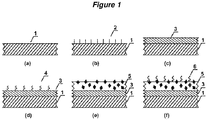
- Figure 1 schematically shows a product at various stages of an exemplary production method.
- a polymeric substrate 1 ( Figure 1(a) ) is treated with atomic oxygen to form polar surface groups 2 ( Figure 1(b) ).
- a chitosan layer 3 is formed ( Figure 1(c) ) and optionally dried ( Figure 1(d) ) to evaporate excess solvent for example water 4. It is treated with a solution to form the active layer 5 ( Figure 1(e) ) , and again optionally dried to evaporate excess solvent or other volatile molecules 6 ( Figure 1(f) ).
- step (a) a polymeric substrate layer is treated with oxygen.
- the oxygen is suitably atomic or molecular oxygen (O or O 2 ) and is suitably neutral atomic oxygen.
- Ozone (O 3 ) may also be used.
- Neutral atomic oxygen or “neutral oxygen atom”, as used herein, can be understood to relate to a single oxygen atom not covalently bound, or connected to, a further atom.
- the oxygen is in free radical form.
- the oxygen is preferably not electrically charged (neither positively nor negatively). Hence, oxygen plasma is preferably excluded.
- the oxygen (for example oxygen atoms) may be in the ground state or in an excited state.
- O-atoms in the ground and/or excited states examples include O-atoms in the ground and/or excited states, O 2 molecules in electronically excited states (often referred as the "a" and “b” state at the excitation energy of about 1 and 2 eV, respectively), OH radicals, ozone and hydrogen peroxide.
- O 2 may preferably not be in the "a” state. It may preferably not be in the singlet state, and may preferably be in the triplet state.
- Neutral atomic oxygen can also be formed in a remote plasma source, as described in G. Primc et al 4 , (Experimental method) which is incorporated by reference.
- the polymeric substrate layer is treated with sufficient oxygen to saturate the treated surface with polar functional groups, without other modifications of the substrate's properties.
- the initial treatment with oxygen is advantageous in that it improves the wettability of the chitosan layer to be deposited onto the substrate. That is, a solution (generally, aqueous) of chitosan on a polymeric substrate without this oxygen treatment will not stick: instead of a thin film of the solution of chitosan, droplets will form spontaneously on the surface of the polymeric substrate. The formation of droplets is the consequence of the low surface energy of the polymeric layer such as PE or PP.
- the present inventors have found that the formation of droplets is suppressed by increasing the surface energy, in particular the polar component of the surface energy.
- a standard technique for such might be application of gaseous plasma.
- the inventors have found that not all gaseous plasma, however, is suitable for increasing the polar component of the polymeric substrate (for example PE or PP) layers for food packaging.
- plasma treatment causes not only an increase of the polymer surface energy, but also etching, formation of low-weight molecular fragments, modification of mechanical and chemical properties due to bond scission and so on. It also introduces new chemical groups that may act as binding sites for an adsorbate. These effects are detrimental for food packaging.
- a UV-radiation free source of reactive oxygen gaseous species is applied for increasing the surface energy of polymeric substrate layer prior to deposition of a coating.
- neutral oxygen atoms in the ground state are applied for increasing the surface energy of the polymeric substrate layer.
- a suitable method for production of neutral oxygen atoms is passing molecular oxygen through a series of heated catalysers taking advantage of the surface-stimulated dissociation, or through a gaseous discharge taking advantage of electron-impact dissociation.
- the efficiency of the surface treatment with neutral oxygen atoms depends on their flux to the surface and the treatment time.
- polymeric substrate layers such as PE and PP
- the dose is between 10 20 and 10 24 m -2 . In a further preferred embodiment, the dose is between 10 21 and 10 23 m -2 .
- the chitosan layer is formed by applying a solution of chitosan to the polymeric substrate layer. For best effect this is done after the above treatment to increase the surface energy.
- the chitosan solution is not particularly limited, but it may preferably be an aqueous solution.
- the water may be deionized water, and may be purified water. Chitosan is dissolved into the solution, often in the form of a powder or dust. Stirring can be carried out to ease dissolution.
- the chitosan itself may have properties as discussed above for the chitosan layer.
- chitosan in the solution for example water
- This reduction of pH may be performed by, for example, adding an appropriate amount of acid to the solution. Addition may be, for example, dropwise. Suitable acids include acetic acid. Of course, the chitosan may be added to the solution before or after the pH is adjusted.
- an appropriate amount added to the solution may be, for example, 10 to 40 w/v%.
- the solution to form the chitosan layer can be applied to the polymeric substrate layer by any method. Examples include immersion of the polymeric substrate layer in the solution of chitosan or spraying the solution of chitosan onto the polymeric substrate layer. Preferred techniques include roll printing and spraying as these are more easily incorporated in a continuous manufacturing process.
- the preferred content of chitosan in the applied solution is up to 10 w/v%, more preferably 0.5 to 4 w/v%.
- the time between these two steps may be less than 10 minutes, for example less than 5 minutes, less than 2 minutes, less than 1 minute or less than 30 seconds.
- the chitosan solution may optionally be subjected to a drying step to remove excess solvent such as water and acetic acid.
- the drying may be performed by heating, or by resting at room temperature for an extended period of time.
- the drying step helps solidify the chitosan layer, and improves the uniformity of the coatings. It will be apparent that not all the solvent must necessarily be removed from the chitosan layer; merely enough for the active layer to be successfully deposited.
- the active layer is formed by applying a solution, sometimes referred to herein as a chitosan nanoparticle dispersion (CSNP) to the chitosan layer.
- CSNP chitosan nanoparticle dispersion
- the solution contains chitosan nanoparticles and an antioxidant as explained above.
- the solution itself may be prepared by admixture in a suitable solvent.
- the chitosan nanoparticles may be pre-prepared, or may alternatively be formed in the solution in situ. For example, this can be done by the ionic gelation technique. As an example of such a technique, a solution using sodium tripolyphosphate can be described.
- a certain amount of sodium tripolyphosphate (thereafter: TPP) may be mixed with, for example, polyphenol solution, and then mixed with a chitosan aqueous solution.
- TPP sodium tripolyphosphate
- a suitable weight ratio of chitosan to TPP in the resultant mixture is, for example, 10:1 to 2:1, for example around 5:1.
- Chitosan nanoparticles can then be formed spontaneously under, for example, magnetic stirring for approximately 1 h at room temperature.
- the pH of the CSNP is then adjusted to 3 to 5, preferably around 4, in order to improve the dispersion of the chitosan nanoparticles.
- This reduction of pH may be performed by, for example, adding an appropriate amount of acid to the solution. Addition may be, for example, dropwise. Suitable acids include acetic acid. Where acetic acid is used, an appropriate amount added to the solution may be, for example, 10 to 40 w/v%.
- an antioxidant may be added to the CSNP.
- it may be added before chitosan nanoparticles are added to a solution; or after the nanoparticles are added; before or after the pH is adjusted; and even before or after the chitosan nanoparticles are synthesised if that is being done in situ.
- antioxidant is present in solution with chitosan before nanoparticles are formed, for example, this may lead to encapsulation of antioxidant within the formed chitosan nanoparticles. It may therefore be preferable to form the chitosan nanoparticles in situ in a solution containing an antioxidant material as defined herein.
- the antioxidant itself may be as explained above for the active layer. There may be one or more antioxidants, for example two or more or three or more. In some embodiments, a polyphenol is included.
- the preferred concentration of antioxidant within the CSNP is between 0.1 and 10 w/v%, more preferably between 0.3 and 2 w/v%.
- the CSNP can be applied to the chitosan layer by any method. Examples include immersion in the CSNP or spraying the CSNP. Preferred techniques include roll printing and spraying as these are more easily incorporated in a continuous manufacturing process.
- the CSNP may optionally be subjected to a drying step to remove excess solvent such as water and acetic acid.
- the drying may be performed by heating, or by resting at room temperature for an extended period of time. It will be apparent that not all the solvent must necessarily be removed.
- the present invention also relates to apparatuses for making packaging materials, and for depositing films, of the present invention.
- the apparatus of the present invention may be one for performing one of the methods of the present invention or for manufacturing a film or material of the present invention.
- Figure 5 illustrates schematically an example of such an apparatus.
- a substrate material is treated in a continuous manner, 'roll-to-roll', but of course that is not essential.
- the untreated polymeric substrate 1 passes from a first roll 26 to a second roll 27, via a series of treatment units.
- the apparatus includes, in sequence, (a) a unit for treatment of a polymeric substrate layer with neutral oxygen atoms; (b) a unit for applying a solution of chitosan to the treated polymeric substrate layer; and (c) a unit for applying a solution containing an antioxidant material and chitosan nanoparticles.
- a drying unit between (b) and (c), and may optionally be a further drying unit after (c).
- the unit for treatment of a polymeric substrate layer with neutral oxygen atoms is a chamber 28. Atomic oxygen is continuously introduced into the chamber 28.
- the polymeric substrate is coated with a chitosan solution, for example by a roll-on method, or by spraying or dipping. Any suitable deposition method of the chitosan solution can be utilized here. Where present, the substrate then rolls through the first drying unit 30, which dries the chitosan layer (removing solvent such as water) and solidifying the thin film.
- the substrate passes into the unit 31, for depositing the solution for forming the active layer.
- any suitable deposition method of the solution can be utilized here but a roll-on technique is illustrated. Others such as spraying or dipping could be used instead.
- the substrate then rolls through the second drying unit 32, which dries the chitosan layer (removing solvent such as water) and solidifying the active layer.
- Catechin powder was suspended in absolute ethanol in order to prepare a 50 mg/ml solution.
- the pomegranate extract was prepared from the peel. Extraction was done by mixing 1 g of lyophilised peel powder with 5 ml of 70% ethanol. Extraction was performed in the ultrasound bath at 10 °C for 50 min. After the extraction, the mixture was filtered through a 0.8 ⁇ m filter paper. The remaining ethanol was removed by evaporation using a rotary evaporator, whereas remaining water was removed by lyophilisation. The antioxidant activity of such pomegranate extract was 98%.
- Chitosan nanoparticles were prepared by the ionic gelation technique. Simultaneously 0.2% (w/v) of TPP solution and 12,5 mg/ml polyphenol solutions were added to a fixed volume of 1% (w/v) chitosan solution in order to obtain 5:1 chitosan to TPP weight ratio. Particles were formed spontaneously under magnetic stirring for 1 h at room temperature. The final pH of CS nanoparticles dispersions with polyphenols was adjusted to 4.0 by the addition of concentrated acetic acid.
- the catechin solution or pomegranate extract was then added to form the solution for forming the active layer.
- chitosan solutions 1% and 2%, w/v
- Chitosan powder was suspended in MQ-water.
- Solution was kept under constant magnetic stirring while concentrated acetic acid was added drop-wise to enable the dissolution of chitosan.
- the solution was left stirring overnight and pH was adjusted with acetic acid to 4.0.
- the coating was applied in two layers (layer-by-layer deposition) to polyethylene and polypropylene foils. The first layer was made of 2% chitosan.
- nanoparticles with embedded polyphenols were added, in solution with either catechin or pomegranate extract, to form a polyethylene material whose active layer includes catechin, a polypropylene material whose active layer includes catechin, a polyethylene material whose active layer includes pomegranate extract, and a polypropylene material whose active layer includes pomegranate extract.
- the foils were dried at each step at room temperature.
- Oxygen permeability of each of the materials made in Synthesis Example 1 was measured. The oxygen permeability was determined using Oxygen Transmission Rate System PERME® OX2/230, Labthink Instruments Co., Ltd. PR China, by standard ASTM D3985.
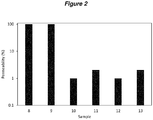
- Figure 2 shows the results. The results are for untreated polyethylene (8), untreated polypropylene (9), the polyethylene material whose active layer includes catechin (10), the polypropylene material whose active layer includes catechin (11), the polyethylene material whose active layer includes pomegranate extract (12), and the polypropylene material whose active layer includes pomegranate extract (13).
- a permeability of 100% indicated the permeability of oxygen for a particular untreated material.
- the permeability for polyethylene or polypropylene materials coated according to the present invention is only 1% of the original (untreated) materiasl in the case of catechin.
- the permeability of oxygen is 2% of the original value. The results presented in Figure 2 therefore confirm the excellent barrier properties of the coatings.
- Antimicrobial activity of each of the materials made in Synthesis Example 1 was measured.
- a modified version of ISO 22196 (by using wet foils, and extending the testing time to 2 hours) was used for determination of the antimicrobial activity.
- the tested bacteria were Staphylococcus aureus.
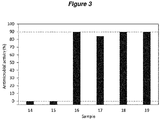
- Figure 3 shows the results. The results are for untreated polyethylene (14), untreated polypropylene (15), the polyethylene material whose active layer includes catechin (16), the polypropylene material whose active layer includes catechin (17), the polyethylene material whose active layer includes pomegranate extract (18), and the polypropylene material whose active layer includes pomegranate extract (19).
- the untreated materials do not exhibit a measurable antimicrobial activity; therefore, the values were set to 0%.
- the materials of the present invention exhibit excellent antimicrobial activity.
- the detection limit of this standard is 90% reduction of the viable bacteria as compared to the initial value.
- the detection limit is represented by a dashed line in Figure 3 .
- the concentration of viable bacteria on all materials of the present invention is below the detection limit of the standard adopted for these measurements.
- the size of the columns for coated materials therefore only presents the minimal antibacterial efficacy for the samples treated according to the invention.
- Antioxidant activity of each of the materials made in Synthesis Example 1 was measured.
- An important property of materials that come to contact with food is antioxidant activity.
- Antioxidant activity was determined using a biochemical reagent, ABTS (2,2'-azino-bis(3-ethylbenzothiazoline-6-sulphonic acid)). The method is based on the reduction of the ABTS•+ radical, which is determined spectrophotometrically at a wavelength of 734 nm 15 minutes after adding the reagent.
- Figure 4 shows the results. The results are for untreated polyethylene (20), untreated polypropylene (21), the polyethylene material whose active layer includes catechin (22), the polypropylene material whose active layer includes catechin (23), the polyethylene material whose active layer includes pomegranate extract (24), and the polypropylene material whose active layer includes pomegranate extract (25).
- the untreated materials exhibit a small antioxidant activity at 2 and 4 % for PE and PP, respectively.
- the antioxidant activity for samples prepared according to the present invention is much higher. For all samples, except for the PE whose active layer contained catechin (22), 100% inhibition is achieved. For the sample (22), 85% is achieved.
Landscapes
- Engineering & Computer Science (AREA)
- Wood Science & Technology (AREA)
- Chemical & Material Sciences (AREA)
- Life Sciences & Earth Sciences (AREA)
- Chemical Kinetics & Catalysis (AREA)
- Medicinal Chemistry (AREA)
- Polymers & Plastics (AREA)
- Organic Chemistry (AREA)
- Ceramic Engineering (AREA)
- Health & Medical Sciences (AREA)
- Food Preservation Except Freezing, Refrigeration, And Drying (AREA)
- Wrappers (AREA)
- Laminated Bodies (AREA)
Applications Claiming Priority (1)
| Application Number | Priority Date | Filing Date | Title |
|---|---|---|---|
| GB1907793.2A GB2584438A (en) | 2019-05-31 | 2019-05-31 | Film and production method |
Publications (3)
| Publication Number | Publication Date |
|---|---|
| EP3744769A2 true EP3744769A2 (de) | 2020-12-02 |
| EP3744769A3 EP3744769A3 (de) | 2021-03-03 |
| EP3744769B1 EP3744769B1 (de) | 2025-11-26 |
Family
ID=67385685
Family Applications (1)
| Application Number | Title | Priority Date | Filing Date |
|---|---|---|---|
| EP20177536.8A Active EP3744769B1 (de) | 2019-05-31 | 2020-05-29 | Folie und herstellungsverfahren |
Country Status (3)
| Country | Link |
|---|---|
| EP (1) | EP3744769B1 (de) |
| GB (1) | GB2584438A (de) |
| SI (1) | SI25863A (de) |
Cited By (1)
| Publication number | Priority date | Publication date | Assignee | Title |
|---|---|---|---|---|
| IT202100014120A1 (it) * | 2021-05-28 | 2022-11-28 | Univ Degli Studi Milano | Film di packaging alimentare con effetto multi-barriera |
Families Citing this family (1)
| Publication number | Priority date | Publication date | Assignee | Title |
|---|---|---|---|---|
| CN116850802B (zh) * | 2023-07-17 | 2024-01-30 | 青岛科技大学 | 一种超亲水多功能聚醚砜膜及其制备方法和应用 |
Family Cites Families (4)
| Publication number | Priority date | Publication date | Assignee | Title |
|---|---|---|---|---|
| KR100478093B1 (ko) * | 2004-10-07 | 2005-03-24 | 한정호 | 키토산이 함유된 식품 포장용 필름의 제조 방법 |
| KR101417767B1 (ko) * | 2014-04-18 | 2014-07-14 | 한정호 | 키토산 및 무기항균제를 포함하는 식품 포장용 항균 필름 및 그 제조 방법 |
| CN106750580A (zh) * | 2017-01-09 | 2017-05-31 | 福州大学 | 一种新型可食性抗菌食品包装膜及其制备方法 |
| CN109554913A (zh) * | 2018-10-17 | 2019-04-02 | 蚌埠尚岛宜家日用品科技工业有限公司 | 一种浸渍涂覆抗菌微胶囊-聚乙烯醇制备无纺布包装材料的方法 |
-
2019
- 2019-05-31 GB GB1907793.2A patent/GB2584438A/en not_active Withdrawn
-
2020
- 2020-05-29 SI SI202000095A patent/SI25863A/sl not_active IP Right Cessation
- 2020-05-29 EP EP20177536.8A patent/EP3744769B1/de active Active
Non-Patent Citations (4)
| Title |
|---|
| A.M. GOMEZ-CARAVACAV. VERARDOM. TOSELLIA. SEGURA-CARRETEROA. FERNANDEZ-GUTIERREZM. FIORENZA CABONI: "Determination of the Major Phenolic Compounds in Pomegranate Juices by HPLC-DAD-ESI-MS", JOURNAL OF AGRICULTURAL AND FOOD CHEMISTRY, vol. 61, no. 22, 2013, pages 5328 - 5337 |
| G. PRIMCR. ZAPLOTNIKA.VESELM. MOZETIC: "Microwave discharge as a remote source of neutral oxygen atoms", AIP ADVANCES, vol. 1, 2011, pages 022129 |
| M. HALLELUYAH PERIAYAHA. SUKARI HALIMA. ZAHARIL MAT SAAD: "Chitosan: A promising marine polysaccharide for biomedical research", PHARMACOGN REV., vol. 10, no. 19, January 2016 (2016-01-01), pages 39 - 42 |
| T. ISMAILP. SESTILIS. AKHTAR: "Pomegranate peel and fruit extracts: A review of potential antiinflammatory and anti-infective effects", JOURNAL OF ETHNOPHARMACOLOGY, vol. 143, no. 2, 28 September 2012 (2012-09-28), pages 397 - 405 |
Cited By (1)
| Publication number | Priority date | Publication date | Assignee | Title |
|---|---|---|---|---|
| IT202100014120A1 (it) * | 2021-05-28 | 2022-11-28 | Univ Degli Studi Milano | Film di packaging alimentare con effetto multi-barriera |
Also Published As
| Publication number | Publication date |
|---|---|
| EP3744769A3 (de) | 2021-03-03 |
| EP3744769B1 (de) | 2025-11-26 |
| GB2584438A (en) | 2020-12-09 |
| GB201907793D0 (en) | 2019-07-17 |
| SI25863A (sl) | 2020-12-31 |
Similar Documents
| Publication | Publication Date | Title |
|---|---|---|
| Maroufi et al. | Advanced properties of gelatin film by incorporating modified kappa-carrageenan and zein nanoparticles for active food packaging | |
| Cui et al. | Biodegradable zein active film containing chitosan nanoparticle encapsulated with pomegranate peel extract for food packaging | |
| Chen et al. | Characterization and functional properties of a pectin/tara gum based edible film with ellagitannins from the unripe fruits of Rubus chingii Hu | |
| Ji et al. | Green synthesis, characterization and in vitro release of cinnamaldehyde/sodium alginate/chitosan nanoparticles | |
| Esmaeili et al. | In vitro release and biological activities of Carum copticum essential oil (CEO) loaded chitosan nanoparticles | |
| Soleymanfallah et al. | Preparation, physical properties, and evaluation of antioxidant capacity of aqueous grape extract loaded in chitosan‐TPP nanoparticles | |
| Rahmani et al. | Development and characterisation of chitosan or alginate-coated low density polyethylene films containing Satureja hortensis extract | |
| Maroufi et al. | Novel electrospun nanofibers based on gelatin/oxidized xanthan gum containing propolis reinforced by Schiff base cross-linking for food packaging | |
| da Rosa et al. | Microencapsulation of gallic acid in chitosan, β-cyclodextrin and xanthan | |
| Piryaei et al. | Preparation and evaluation of smart food packaging films with anthocyanin Sardasht black grape based on Astragalus gummifer and chitosan nanoparticles | |
| Piran et al. | Controlling the antioxidant activity of green tea extract through encapsulation in chitosan‐citrate nanogel | |
| EP3744769B1 (de) | Folie und herstellungsverfahren | |
| Sultan et al. | Antimicrobial gelatin-based films with cinnamaldehyde and ZnO nanoparticles for sustainable food packaging | |
| Çanga et al. | Characterization of cellulose acetate/gum Arabic fibers loaded with extract of Viburnum opulus L. fruit | |
| Batool et al. | Quality control of nano-food packing material for grapes (Vitis vinifera) based on ZnO and polylactic acid (PLA) biofilm | |
| Sharma et al. | Shellac: Bridging the gap between chemistry and sustainability—A comprehensive review of its multifunctional coating applications for food, drug, and paper packaging | |
| Lawal et al. | Unveiling the effect of natural deep eutectic solvents-based date seed polyphenolic extract on the properties of chitosan-PVA films and its application in shrimp packaging | |
| Shaygannia et al. | Phenolic compounds and antioxidant activities of lemon wastes affected by microencapsulation using coatings of Arabic, Persian, and basil seed gums | |
| Irimia et al. | Comparative study on gamma irradiation and cold plasma pretreatment for a cellulosic substrate modification with phenolic compounds | |
| EP3380081A1 (de) | Verfahren zur herstellung eines stabilen kolloidalen propolis-dispersionssystems mit kontrollierter freisetzung für verschiedene verwendungen | |
| Rezazadeh et al. | Capsaicin-incorporated zein electrospun nanofibers: Characterization and release behavior | |
| Sharma et al. | A biogenic approach to develop guava derived edible copper and zinc oxide nanocoating to extend shelf life and efficiency for food preservation | |
| Golmakani et al. | Electrospun zein incorporating phycocyanin and Spirulina extract: Fabrication, characterization, and potential application | |
| Mohammadi et al. | Development and characterization of wheat gluten-based antibacterial/antioxidant films activated by free and encapsulated Origanum majorana L. essential oil | |
| Sari Gencag et al. | Green synthesis of silver nanoparticles from pomegranate peel and their application in PVA-based nanofibers for coating minced meat |
Legal Events
| Date | Code | Title | Description |
|---|---|---|---|
| PUAI | Public reference made under article 153(3) epc to a published international application that has entered the european phase |
Free format text: ORIGINAL CODE: 0009012 |
|
| STAA | Information on the status of an ep patent application or granted ep patent |
Free format text: STATUS: THE APPLICATION HAS BEEN PUBLISHED |
|
| AK | Designated contracting states |
Kind code of ref document: A2 Designated state(s): AL AT BE BG CH CY CZ DE DK EE ES FI FR GB GR HR HU IE IS IT LI LT LU LV MC MK MT NL NO PL PT RO RS SE SI SK SM TR |
|
| AX | Request for extension of the european patent |
Extension state: BA ME |
|
| PUAL | Search report despatched |
Free format text: ORIGINAL CODE: 0009013 |
|
| AK | Designated contracting states |
Kind code of ref document: A3 Designated state(s): AL AT BE BG CH CY CZ DE DK EE ES FI FR GB GR HR HU IE IS IT LI LT LU LV MC MK MT NL NO PL PT RO RS SE SI SK SM TR |
|
| AX | Request for extension of the european patent |
Extension state: BA ME |
|
| RIC1 | Information provided on ipc code assigned before grant |
Ipc: C08J 5/18 20060101AFI20210122BHEP |
|
| STAA | Information on the status of an ep patent application or granted ep patent |
Free format text: STATUS: REQUEST FOR EXAMINATION WAS MADE |
|
| 17P | Request for examination filed |
Effective date: 20210827 |
|
| RBV | Designated contracting states (corrected) |
Designated state(s): AL AT BE BG CH CY CZ DE DK EE ES FI FR GB GR HR HU IE IS IT LI LT LU LV MC MK MT NL NO PL PT RO RS SE SI SK SM TR |
|
| GRAP | Despatch of communication of intention to grant a patent |
Free format text: ORIGINAL CODE: EPIDOSNIGR1 |
|
| STAA | Information on the status of an ep patent application or granted ep patent |
Free format text: STATUS: GRANT OF PATENT IS INTENDED |
|
| INTG | Intention to grant announced |
Effective date: 20250701 |
|
| GRAS | Grant fee paid |
Free format text: ORIGINAL CODE: EPIDOSNIGR3 |
|
| GRAA | (expected) grant |
Free format text: ORIGINAL CODE: 0009210 |
|
| STAA | Information on the status of an ep patent application or granted ep patent |
Free format text: STATUS: THE PATENT HAS BEEN GRANTED |
|
| AK | Designated contracting states |
Kind code of ref document: B1 Designated state(s): AL AT BE BG CH CY CZ DE DK EE ES FI FR GB GR HR HU IE IS IT LI LT LU LV MC MK MT NL NO PL PT RO RS SE SI SK SM TR |
|
| P01 | Opt-out of the competence of the unified patent court (upc) registered |
Free format text: CASE NUMBER: UPC_APP_0010539_3744769/2025 Effective date: 20251021 |
|
| REG | Reference to a national code |
Ref country code: CH Ref legal event code: F10 Free format text: ST27 STATUS EVENT CODE: U-0-0-F10-F00 (AS PROVIDED BY THE NATIONAL OFFICE) Effective date: 20251126 Ref country code: GB Ref legal event code: FG4D |
|
| REG | Reference to a national code |
Ref country code: DE Ref legal event code: R096 Ref document number: 602020062666 Country of ref document: DE |
|
| REG | Reference to a national code |
Ref country code: IE Ref legal event code: FG4D |
|
| REG | Reference to a national code |
Ref country code: DE Ref legal event code: R084 Ref document number: 602020062666 Country of ref document: DE |
|
| REG | Reference to a national code |
Ref country code: NL Ref legal event code: MP Effective date: 20251126 |
|
| PG25 | Lapsed in a contracting state [announced via postgrant information from national office to epo] |
Ref country code: ES Free format text: LAPSE BECAUSE OF FAILURE TO SUBMIT A TRANSLATION OF THE DESCRIPTION OR TO PAY THE FEE WITHIN THE PRESCRIBED TIME-LIMIT Effective date: 20251126 |
|
| REG | Reference to a national code |
Ref country code: LT Ref legal event code: MG9D |
|
| PG25 | Lapsed in a contracting state [announced via postgrant information from national office to epo] |
Ref country code: NO Free format text: LAPSE BECAUSE OF FAILURE TO SUBMIT A TRANSLATION OF THE DESCRIPTION OR TO PAY THE FEE WITHIN THE PRESCRIBED TIME-LIMIT Effective date: 20260226 |
|
| PG25 | Lapsed in a contracting state [announced via postgrant information from national office to epo] |
Ref country code: HR Free format text: LAPSE BECAUSE OF FAILURE TO SUBMIT A TRANSLATION OF THE DESCRIPTION OR TO PAY THE FEE WITHIN THE PRESCRIBED TIME-LIMIT Effective date: 20251126 Ref country code: FI Free format text: LAPSE BECAUSE OF FAILURE TO SUBMIT A TRANSLATION OF THE DESCRIPTION OR TO PAY THE FEE WITHIN THE PRESCRIBED TIME-LIMIT Effective date: 20251126 Ref country code: AT Free format text: LAPSE BECAUSE OF FAILURE TO SUBMIT A TRANSLATION OF THE DESCRIPTION OR TO PAY THE FEE WITHIN THE PRESCRIBED TIME-LIMIT Effective date: 20251126 |
|
| REG | Reference to a national code |
Ref country code: AT Ref legal event code: MK05 Ref document number: 1861049 Country of ref document: AT Kind code of ref document: T Effective date: 20251126 |
|
| PG25 | Lapsed in a contracting state [announced via postgrant information from national office to epo] |
Ref country code: NL Free format text: LAPSE BECAUSE OF FAILURE TO SUBMIT A TRANSLATION OF THE DESCRIPTION OR TO PAY THE FEE WITHIN THE PRESCRIBED TIME-LIMIT Effective date: 20251126 |
|
| PG25 | Lapsed in a contracting state [announced via postgrant information from national office to epo] |
Ref country code: RS Free format text: LAPSE BECAUSE OF FAILURE TO SUBMIT A TRANSLATION OF THE DESCRIPTION OR TO PAY THE FEE WITHIN THE PRESCRIBED TIME-LIMIT Effective date: 20260226 |
|
| PG25 | Lapsed in a contracting state [announced via postgrant information from national office to epo] |
Ref country code: IS Free format text: LAPSE BECAUSE OF FAILURE TO SUBMIT A TRANSLATION OF THE DESCRIPTION OR TO PAY THE FEE WITHIN THE PRESCRIBED TIME-LIMIT Effective date: 20260326 |
|
| PG25 | Lapsed in a contracting state [announced via postgrant information from national office to epo] |
Ref country code: PT Free format text: LAPSE BECAUSE OF FAILURE TO SUBMIT A TRANSLATION OF THE DESCRIPTION OR TO PAY THE FEE WITHIN THE PRESCRIBED TIME-LIMIT Effective date: 20260326 |
|
| PG25 | Lapsed in a contracting state [announced via postgrant information from national office to epo] |
Ref country code: PL Free format text: LAPSE BECAUSE OF FAILURE TO SUBMIT A TRANSLATION OF THE DESCRIPTION OR TO PAY THE FEE WITHIN THE PRESCRIBED TIME-LIMIT Effective date: 20251126 |
|
| PG25 | Lapsed in a contracting state [announced via postgrant information from national office to epo] |
Ref country code: LV Free format text: LAPSE BECAUSE OF FAILURE TO SUBMIT A TRANSLATION OF THE DESCRIPTION OR TO PAY THE FEE WITHIN THE PRESCRIBED TIME-LIMIT Effective date: 20251126 |