EP3745383B1 - Procédé et système de génération de points de réflexion radar - Google Patents
Procédé et système de génération de points de réflexion radar Download PDFInfo
- Publication number
- EP3745383B1 EP3745383B1 EP19176838.1A EP19176838A EP3745383B1 EP 3745383 B1 EP3745383 B1 EP 3745383B1 EP 19176838 A EP19176838 A EP 19176838A EP 3745383 B1 EP3745383 B1 EP 3745383B1
- Authority
- EP
- European Patent Office
- Prior art keywords
- power distribution
- distribution pattern
- reflection points
- pattern image
- radar reflection
- Prior art date
- Legal status (The legal status is an assumption and is not a legal conclusion. Google has not performed a legal analysis and makes no representation as to the accuracy of the status listed.)
- Active
Links
Images

Classifications
-
- G—PHYSICS
- G01—MEASURING; TESTING
- G01S—RADIO DIRECTION-FINDING; RADIO NAVIGATION; DETERMINING DISTANCE OR VELOCITY BY USE OF RADIO WAVES; LOCATING OR PRESENCE-DETECTING BY USE OF THE REFLECTION OR RERADIATION OF RADIO WAVES; ANALOGOUS ARRANGEMENTS USING OTHER WAVES
- G01S7/00—Details of systems according to groups G01S13/00, G01S15/00, G01S17/00
- G01S7/02—Details of systems according to groups G01S13/00, G01S15/00, G01S17/00 of systems according to group G01S13/00
- G01S7/41—Details of systems according to groups G01S13/00, G01S15/00, G01S17/00 of systems according to group G01S13/00 using analysis of echo signal for target characterisation; Target signature; Target cross-section
- G01S7/411—Identification of targets based on measurements of radar reflectivity
- G01S7/412—Identification of targets based on measurements of radar reflectivity based on a comparison between measured values and known or stored values
-
- G—PHYSICS
- G06—COMPUTING OR CALCULATING; COUNTING
- G06N—COMPUTING ARRANGEMENTS BASED ON SPECIFIC COMPUTATIONAL MODELS
- G06N3/00—Computing arrangements based on biological models
- G06N3/02—Neural networks
- G06N3/08—Learning methods
-
- G—PHYSICS
- G01—MEASURING; TESTING
- G01S—RADIO DIRECTION-FINDING; RADIO NAVIGATION; DETERMINING DISTANCE OR VELOCITY BY USE OF RADIO WAVES; LOCATING OR PRESENCE-DETECTING BY USE OF THE REFLECTION OR RERADIATION OF RADIO WAVES; ANALOGOUS ARRANGEMENTS USING OTHER WAVES
- G01S7/00—Details of systems according to groups G01S13/00, G01S15/00, G01S17/00
- G01S7/02—Details of systems according to groups G01S13/00, G01S15/00, G01S17/00 of systems according to group G01S13/00
- G01S7/40—Means for monitoring or calibrating
- G01S7/4052—Means for monitoring or calibrating by simulation of echoes
-
- G—PHYSICS
- G01—MEASURING; TESTING
- G01S—RADIO DIRECTION-FINDING; RADIO NAVIGATION; DETERMINING DISTANCE OR VELOCITY BY USE OF RADIO WAVES; LOCATING OR PRESENCE-DETECTING BY USE OF THE REFLECTION OR RERADIATION OF RADIO WAVES; ANALOGOUS ARRANGEMENTS USING OTHER WAVES
- G01S13/00—Systems using the reflection or reradiation of radio waves, e.g. radar systems; Analogous systems using reflection or reradiation of waves whose nature or wavelength is irrelevant or unspecified
- G01S13/88—Radar or analogous systems specially adapted for specific applications
- G01S13/89—Radar or analogous systems specially adapted for specific applications for mapping or imaging
-
- G—PHYSICS
- G01—MEASURING; TESTING
- G01S—RADIO DIRECTION-FINDING; RADIO NAVIGATION; DETERMINING DISTANCE OR VELOCITY BY USE OF RADIO WAVES; LOCATING OR PRESENCE-DETECTING BY USE OF THE REFLECTION OR RERADIATION OF RADIO WAVES; ANALOGOUS ARRANGEMENTS USING OTHER WAVES
- G01S7/00—Details of systems according to groups G01S13/00, G01S15/00, G01S17/00
- G01S7/02—Details of systems according to groups G01S13/00, G01S15/00, G01S17/00 of systems according to group G01S13/00
- G01S7/41—Details of systems according to groups G01S13/00, G01S15/00, G01S17/00 of systems according to group G01S13/00 using analysis of echo signal for target characterisation; Target signature; Target cross-section
- G01S7/417—Details of systems according to groups G01S13/00, G01S15/00, G01S17/00 of systems according to group G01S13/00 using analysis of echo signal for target characterisation; Target signature; Target cross-section involving the use of neural networks
-
- G—PHYSICS
- G06—COMPUTING OR CALCULATING; COUNTING
- G06N—COMPUTING ARRANGEMENTS BASED ON SPECIFIC COMPUTATIONAL MODELS
- G06N3/00—Computing arrangements based on biological models
- G06N3/02—Neural networks
- G06N3/04—Architecture, e.g. interconnection topology
- G06N3/0464—Convolutional networks [CNN, ConvNet]
-
- G—PHYSICS
- G06—COMPUTING OR CALCULATING; COUNTING
- G06N—COMPUTING ARRANGEMENTS BASED ON SPECIFIC COMPUTATIONAL MODELS
- G06N3/00—Computing arrangements based on biological models
- G06N3/02—Neural networks
- G06N3/08—Learning methods
- G06N3/09—Supervised learning
-
- G—PHYSICS
- G09—EDUCATION; CRYPTOGRAPHY; DISPLAY; ADVERTISING; SEALS
- G09B—EDUCATIONAL OR DEMONSTRATION APPLIANCES; APPLIANCES FOR TEACHING, OR COMMUNICATING WITH, THE BLIND, DEAF OR MUTE; MODELS; PLANETARIA; GLOBES; MAPS; DIAGRAMS
- G09B9/00—Simulators for teaching or training purposes
- G09B9/54—Simulation of radar
Definitions
- the present invention relates to a method and a system for generating radar reflection points as well as a computer program comprising instructions which, when the program is executed by a computer, cause the computer to carry out the method.
- Radar simulation is important for radar function development and verification purposes, such as driver assistance, sensor fusion and automated driving at a vehicle.
- Existing radar models are typically black- or white-box.
- Black-box models represent radar return in a stochastic manner.
- White-box models use ray-tracing for estimating electromagnetic path propagation and typically rely on object radar cross section values being given, or for extracting virtual scattering centers as e.g. introduced in the article " Extraction of virtual scattering centers of vehicles by ray-tracing simulations" by K. Schuler et al..
- White-box models require detailed models of environment to capture important radar-related effects such as multipath propagation and interference. However, models with sufficient details are often not available, and the extensive computations which are required accordingly render a real-time simulation infeasible.
- DSRM deep stochastic radar model
- Tim A. et al. which consists of a plurality of sub-models.
- DSRM allows for arbitrary roadway configurations and scene composition through the use of a terrain raster grid and an object list as inputs.
- DSRM produces power return fields that exhibit radar phenomena without explicit programming and runs in real-time.
- DSRM demonstrates the advantage of neural networks in radar data processing, there is still one drawback that the application of this model is limited in real radar devices due to the fact that the input and output of this model are special raw data, i.e., the data before the ambiguity resolution, clustering and/or object tracking. In this regard, these raw data are unable to be directly used for further development of radar simulation functions.
- US 2018/060725 A1 describes a machine learning module which generates distribution from training data including labeled modeling data correlated with reflection data.
- the modeling data may include data from a LIDAR system, camera and/or a GPS for a target environment/object.
- the reflection data may be collected from the same environment/object by a radar a probability and/or an ultrasonic system.
- the present invention provides a method for generating radar reflection points according to claim 1, a system for generating radar reflection points according to claim 8 and a computer program according to claim 9.
- the invention provides, according to a first aspect, a method for generating radar reflection points comprising the steps of: providing a plurality of predefined radar reflection points of at least one first object detected by a radar and at least one first scenario description describing a first environment related to the detected first object; converting the predefined radar reflection points into at least one first power distribution pattern image related to a distribution of a power returning from the detected first object; training a model based on the first power distribution pattern image and the first scenario description; providing at least one second scenario description describing a second environment related to a second object; generating at least one second power distribution pattern image related to a distribution of a power returning from the second object based on the trained model and the second scenario description; and sampling the second power distribution pattern image.
- the inventive method may advantageously utilize real radar reflection points as input in order to train a model for the subsequent generation of radar reflection points.
- the real radar reflection points are converted to a power distribution pattern image which is a kind of radar images. It is known that radar reflection points are the radar output after a certain signal processing performed on a raw image received by a radar. This raw image is basically a distribution of power returning to the radar. After the signal processing such as object detection, ambiguity resolution and object tracking, some information is lost. In this regard, on one hand, it is impossible to recover the radar raw image exactly, and on the other hand, it may make less sense by doing so because the radar raw image can be hardly used directly due to some ambiguities embedded in the raw image. In this case, the present method converts real radar reflection points which were obtained from a real radar raw image to a power distribution pattern image which can reflect the real power distribution received by the radar to some extent, but without any object ambiguities.
- inventively the computational complexity and costs during radar simulation processes are significantly reduced.
- the radar simulation may adapt to arbitrary roadway topologies and scene configurations as the environment of a target object inclusive of the target object itself since the training of the model is directed to arbitrary roadway topologies and scene configurations.
- the step of converting the predefined radar reflection points into at least one first power distribution pattern image comprises: converting each of the predefined radar reflection points into a third power distribution pattern image related to a distribution of a power returning from an area around the each of the predefined radar reflection points; and merging the third power distribution pattern images to form the first power distribution pattern image.
- all the real radar reflection points as the predefined radar reflection points are converted to a power distribution pattern image which reflects the real power distribution received by the radar to some extent, but without any object ambiguities.
- the step of converting each of the predefined radar reflection points into a third power distribution pattern image comprises implementing a sinc function using the each of the predefined radar reflection points as the variable of the sinc function in the longitudinal and/or lateral direction corresponding to the relative position between the radar and the first object.
- the generated power distribution pattern image is similar to the real power distribution image received by the radar since essentially the radar output after signal processing has a sinc form, either along the longitudinal or lateral direction.
- the position and value of the peak of the sinc function represent the position and the radar cross section of the reflection point, respectively.
- the 3dB bandwidth of the sinc function is determined by the measuring accuracy of the radar.
- the first and second scenario description comprise spatial data related to the first and/or second object, in particular represented by a raster, and an object list, in particular with features of the first and/or second object.
- the spatial data and object lists are both complex and multi-dimensional in order to e.g. capture the full space of driving scenes for a vehicle. Compared with traditional parametric radar models, the present method is able to handle such complicated inputs.
- the first and second scenario description are identical. Thereby, more radar reflection points are generated for the same scenario in order to e.g. increase the dataset for this scenario.
- the second scenario description may be different from the first scenario description in order to generate radar reflection points for a new scenario.
- scenario characters describing a scenario indicated in the second scenario description should be used as a part of the first scenario description in the training step.
- the step of training the model comprises training a deep neural network.
- a deep neural network is efficient to use once being trained.
- the step of generating the second power distribution pattern image is in addition based on a noise value, in particular randomly generated. Since noises bring inaccuracies to a real radar, the inventive method generates radar reflection points exhibiting the same inaccuracies as if these radar reflection points were from a real radar. Thereby, the radar simulation is improved.
- the invention further provides, according to a second aspect, a system for generating radar reflection points comprising an image conversion preparation unit configured to provide a plurality of predefined radar reflection points of at least one first object detected by a radar and at least one first scenario description describing a first environment related to the detected first object, an image conversion unit configured to convert the predefined radar reflection points into at least one first power distribution pattern image related to a distribution of a power returning from the detected first object, a training unit configured to train a model based on the first power distribution pattern image and the first scenario description, a scenario description providing unit configured to provide at least one second scenario description describing a second environment related to a second object, an image generation unit configured to generate at least one second power distribution pattern image related to a distribution of a power returning from the second object based on the trained model and the second scenario description, and a sampling unit configured to sample the second power distribution pattern image.
- an image conversion preparation unit configured to provide a plurality of predefined radar reflection points of at least one first object detected by a radar and at least one
- the invention further provides, according to a third aspect, a computer program comprising instructions which, when the program is executed by a computer, cause the computer to carry out the method according to the first aspect of the invention.
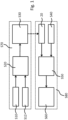
- the embodiment of the inventive method for generating radar reflection points shown in Fig. 1 comprises steps S10, S12, S20, S30, S40, S50, S60.
- step S10 a plurality of predefined/real radar reflection points of at least one first object detected by a radar is provided.
- at least one first scenario description describing a first environment related to the detected first object is provided.
- step S20 the predefined/real radar reflection points are converted into at least one first power distribution pattern image related to a distribution of a power returning from the detected first object.
- a model is trained based on the first power distribution pattern image and the first scenario description.
- step S40 at least one second scenario description describing a second environment related to a second object is provided.
- step S50 at least one second power distribution pattern image related to a distribution of a power returning from the second object is generated based on the trained model and the second scenario description.
- step S60 the second power distribution pattern image is sampled to generate radar reflection points.
- the steps S10, S12, S20 and S30 form a training stage S70 after which a pre-trained model 20 is generated.
- the steps S40, S50 and S60 form a deployment stage in order to output radar reflection points based on scenario descriptions inputted in the pre-trained model 20.
- step S30 of the embodiment shown in Fig. 1 DSRM is applied for training due to its ability to automatically learn robust hierarchical features from complicated inputs and its high efficiency once being trained.
- step S60 of the embodiment shown in Fig. 1 a simple random sampling is adopted.
- the generated radar reflection points are expected in the normal/Gaussian distribution.
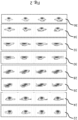
- Rows 22, 26, 30, 34 shown in Fig. 2 represent power distribution pattern images converted from real radar reflection points of a vehicle as the detected object in different orientations, respectively.
- Rows 24, 28, 32, 36 shown in Fig. 2 represent power distribution pattern images generated using the model of the embodiment according to Fig. 1 which is trained by means of the power distribution pattern images in the Rows 22, 26, 30, 34, and using the same scenario description as the one for the previous training of the model.
- Column 42 shown in Fig. 3 represents real radar reflection points of the vehicle as the detected object in four different orientations.
- Columns 44, 46, 48 shown in Fig. 3 represent, respectively, radar reflection points generated by sampling the generated power distribution pattern images as the output of the trained model of the embodiment according to Fig. 1 .
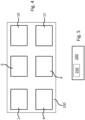
- the embodiment of the inventive system 100 for generating radar reflection points comprises an image conversion preparation unit 2 configured to provide a plurality of predefined radar reflection points of at least one first object detected by a radar and at least one first scenario description describing a first environment related to the detected first object, an image conversion unit 4 configured to convert the predefined radar reflection points into at least one first power distribution pattern image related to a distribution of a power returning from the detected first object, a training unit 6 configured to train a model based on the first power distribution pattern image and the first scenario description, a scenario description providing unit 8 configured to provide at least one second scenario description describing a second environment related to a second object, an image generation unit 10 configured to generate at least one second power distribution pattern image related to a distribution of a power returning from the second object based on the trained model and the second scenario description, and a sampling unit 12 configured to sample the second power distribution pattern image.
- an image conversion preparation unit 2 configured to provide a plurality of predefined radar reflection points of at least one first object detected by a radar and at least one first scenario
- the embodiment of the inventive computer program 200 shown in Fig. 5 comprises instructions 250 which, when the program 200 is executed by a computer, cause the computer to carry out the embodiment of the inventive method shown in Fig. 1 .
Landscapes
- Engineering & Computer Science (AREA)
- Physics & Mathematics (AREA)
- Remote Sensing (AREA)
- Radar, Positioning & Navigation (AREA)
- General Physics & Mathematics (AREA)
- Theoretical Computer Science (AREA)
- Computer Networks & Wireless Communication (AREA)
- Evolutionary Computation (AREA)
- Artificial Intelligence (AREA)
- Biophysics (AREA)
- Biomedical Technology (AREA)
- Molecular Biology (AREA)
- Computing Systems (AREA)
- General Engineering & Computer Science (AREA)
- Data Mining & Analysis (AREA)
- Mathematical Physics (AREA)
- Software Systems (AREA)
- Computational Linguistics (AREA)
- General Health & Medical Sciences (AREA)
- Life Sciences & Earth Sciences (AREA)
- Health & Medical Sciences (AREA)
- Electromagnetism (AREA)
- Business, Economics & Management (AREA)
- Educational Administration (AREA)
- Educational Technology (AREA)
- Image Analysis (AREA)
- Radar Systems Or Details Thereof (AREA)
Claims (9)
- Procédé de génération de points de réflexion radar comprenant les étapes suivantes :la fourniture (S10, S12) d'une pluralité de points de réflexion radar prédéfinis d'au moins un premier objet détecté par un radar et d'au moins une première description de scénario décrivant un premier environnement lié au premier objet détecté ;la conversion (S20) des points de réflexion radar prédéfinis en au moins une première image de diagramme de distribution de puissance liée à une distribution d'une puissance renvoyée par le premier objet détecté ;l'apprentissage (S30) d'un modèle sur la base de la première image de diagramme de distribution de puissance et la première description de scénario ;la fourniture (S40) d'au moins une deuxième description de scénario décrivant un deuxième environnement lié à un deuxième objet ;la génération (S50) d'au moins une deuxième image de diagramme de distribution de puissance liée à une distribution d'une puissance renvoyée par le deuxième objet en fonction du modèle formé (20) et de la deuxième description de scénario, dans lequel l'étape de génération de l'au moins une deuxième image de diagramme de distribution de puissance est basée en outre sur une valeur de bruit ; etl'échantillonnage (S60) de la deuxième image de diagramme de distribution de puissance.
- Procédé selon la revendication 1, dans lequel l'étape de conversion des points de réflexion radar prédéfinis en au moins une première image de diagramme de distribution de puissance comprend :la conversion de chacun des points de réflexion radar prédéfinis en une troisième image de diagramme de distribution de puissance liée à une distribution d'une puissance revenant d'une zone autour de chacun des points de réflexion radar prédéfinis ; etla fusion des troisièmes images de diagramme de distribution de puissance pour former la première image de diagramme de distribution de puissance.
- Procédé selon la revendication 2, dans lequel l'étape de conversion de chacun des points de réflexion radar prédéfinis en une troisième image de diagramme de distribution de puissance comprend la mise en œuvre d'une fonction sine en utilisant chacun des points de réflexion radar prédéfinis comme variable de la fonction sine dans la direction longitudinale et/ou latérale correspondant à la position relative entre le radar et le premier objet.
- Procédé selon l'une quelconque des revendications précédentes, dans lequel les première et deuxième descriptions de scénario comprennent des données spatiales relatives au premier et/ou au deuxième objet, représentées en particulier par une trame, et une liste d'objets, en particulier avec des caractéristiques du premier et/ou du deuxième objet.
- Procédé selon l'une quelconque des revendications précédentes, dans lequel les première et deuxième descriptions de scénario sont identiques.
- Procédé selon l'une quelconque des revendications précédentes, dans lequel l'étape d'apprentissage du modèle comprend l'apprentissage d'un réseau neuronal profond.
- Procédé selon l'une quelconque des revendications précédentes, dans laquelle la valeur de bruit est générée de manière aléatoire.
- Système de génération de points de réflexion radar comprenantune unité de préparation de conversion d'image (2) configurée pour fournir une pluralité de points de réflexion radar prédéfinis d'au moins un premier objet détecté par un radar et au moins une première description de scénario décrivant un premier environnement lié au premier objet détecté,une unité de conversion d'image (4) configurée pour convertir les points de réflexion radar prédéfinis en au moins une première image de diagramme de distribution de puissance liée à une distribution d'une puissance renvoyée par le premier objet détecté,une unité d'apprentissage (6) configurée pour former un modèle sur la base de la première image de diagramme de distribution de puissance et de la première description de scénario,une unité de fourniture de description de scénario (8) configurée pour fournir au moins une deuxième description de scénario décrivant un deuxième environnement lié à un deuxième objet,une unité de génération d'images (10) configurée pour générer au moins une deuxième image de diagramme de distribution de puissance liée à une distribution d'une puissance revenant du deuxième objet en fonction du modèle formé et de la deuxième description de scénario, dans lequel l'unité de fourniture de description de scénario (8) est adaptée pour générer de plus l'au moins une deuxième image de diagramme de distribution de puissance sur la base d'une valeur de bruit, etune unité d'échantillonnage (12) configurée pour échantillonner la deuxième image de diagramme de distribution d'énergie.
- Programme d'ordinateur (200) comprenant des instructions (250) qui, à l'exécution du programme (200) par un ordinateur, amènent l'ordinateur à mettre en œuvre le procédé selon l'une quelconque des revendications 1 à 7.
Priority Applications (3)
| Application Number | Priority Date | Filing Date | Title |
|---|---|---|---|
| EP19176838.1A EP3745383B1 (fr) | 2019-05-27 | 2019-05-27 | Procédé et système de génération de points de réflexion radar |
| US16/878,814 US20200379087A1 (en) | 2019-05-27 | 2020-05-20 | Method and system for generating radar reflection points |
| CN202010463521.6A CN111999706A (zh) | 2019-05-27 | 2020-05-27 | 用于生成雷达反射点的方法和系统 |
Applications Claiming Priority (1)
| Application Number | Priority Date | Filing Date | Title |
|---|---|---|---|
| EP19176838.1A EP3745383B1 (fr) | 2019-05-27 | 2019-05-27 | Procédé et système de génération de points de réflexion radar |
Publications (2)
| Publication Number | Publication Date |
|---|---|
| EP3745383A1 EP3745383A1 (fr) | 2020-12-02 |
| EP3745383B1 true EP3745383B1 (fr) | 2023-07-12 |
Family
ID=66668741
Family Applications (1)
| Application Number | Title | Priority Date | Filing Date |
|---|---|---|---|
| EP19176838.1A Active EP3745383B1 (fr) | 2019-05-27 | 2019-05-27 | Procédé et système de génération de points de réflexion radar |
Country Status (3)
| Country | Link |
|---|---|
| US (1) | US20200379087A1 (fr) |
| EP (1) | EP3745383B1 (fr) |
| CN (1) | CN111999706A (fr) |
Family Cites Families (7)
| Publication number | Priority date | Publication date | Assignee | Title |
|---|---|---|---|---|
| SE1551370A1 (sv) * | 2015-10-22 | 2017-02-07 | Uniquesec Ab | Testing method with virtual radar signatures for an automotive safety radar system |
| US10317520B2 (en) * | 2016-03-18 | 2019-06-11 | Src, Inc. | Radar system |
| US10055675B2 (en) * | 2016-06-15 | 2018-08-21 | Ford Global Technologies, Llc | Training algorithm for collision avoidance using auditory data |
| US20180349526A1 (en) * | 2016-06-28 | 2018-12-06 | Cognata Ltd. | Method and system for creating and simulating a realistic 3d virtual world |
| US20180025640A1 (en) * | 2016-07-19 | 2018-01-25 | Ford Global Technologies, Llc | Using Virtual Data To Test And Train Parking Space Detection Systems |
| US10592805B2 (en) * | 2016-08-26 | 2020-03-17 | Ford Global Technologies, Llc | Physics modeling for radar and ultrasonic sensors |
| US10235601B1 (en) * | 2017-09-07 | 2019-03-19 | 7D Labs, Inc. | Method for image analysis |
-
2019
- 2019-05-27 EP EP19176838.1A patent/EP3745383B1/fr active Active
-
2020
- 2020-05-20 US US16/878,814 patent/US20200379087A1/en not_active Abandoned
- 2020-05-27 CN CN202010463521.6A patent/CN111999706A/zh active Pending
Also Published As
| Publication number | Publication date |
|---|---|
| US20200379087A1 (en) | 2020-12-03 |
| CN111999706A (zh) | 2020-11-27 |
| EP3745383A1 (fr) | 2020-12-02 |
Similar Documents
| Publication | Publication Date | Title |
|---|---|---|
| Wheeler et al. | Deep stochastic radar models | |
| KR101808840B1 (ko) | 학습 기반 깊이 정보 추출 방법 및 장치 | |
| WO2022103479A1 (fr) | Estimation de pose 3d multimodale | |
| Hartjen et al. | Classification of driving maneuvers in urban traffic for parametrization of test scenarios | |
| CN111868803A (zh) | 产生合成雷达信号 | |
| Philomin et al. | Pedestrian tracking from a moving vehicle | |
| CN113340334A (zh) | 用于无人车的传感器标定方法、装置及电子设备 | |
| CN113936138B (zh) | 基于多源图像融合的目标检测方法、系统、设备、介质 | |
| US20230177241A1 (en) | Method for determining similar scenarios, training method, and training controller | |
| JP2022035033A (ja) | 情報処理システム、情報処理方法、プログラムおよび車両制御システム | |
| CN104408443B (zh) | 多传感器辅助的基于激光雷达的路面类型识别方法及装置 | |
| De Borba et al. | Increasing safety of automated driving by infrastructure-based sensors | |
| CN117452155A (zh) | 电缆放电位置的定位方法、装置、存储介质及电子设备 | |
| CN114648633A (zh) | 确定车辆环境的语义分割的方法 | |
| CN119418337A (zh) | 一种融合语义信息的激光雷达与视觉融合深度估计系统及方法 | |
| Rahman et al. | Predicting driver behaviour at intersections based on driver gaze and traffic light recognition | |
| Lin et al. | 3D environmental perception modeling in the simulated autonomous-driving systems | |
| CN117150428B (zh) | 一种多类传感器数据融合方法、装置及电子设备 | |
| CN104392245A (zh) | 多传感器融合的路面类型识别方法及装置 | |
| EP3745383A1 (fr) | Procédé et système de génération de points de réflexion radar | |
| CN112016571A (zh) | 一种基于注意力机制的特征提取方法、装置及电子设备 | |
| CN120014257A (zh) | 基于光学和sar遥感影像的建筑物屋顶提取方法 | |
| CN118505855B (zh) | 一种图像辅助点云生成方法、系统、设备与存储介质 | |
| CN114488057A (zh) | 目标识别方法、装置及存储介质 | |
| Argui et al. | Building a vision-based mixed-reality framework for autonomous driving navigation |
Legal Events
| Date | Code | Title | Description |
|---|---|---|---|
| PUAI | Public reference made under article 153(3) epc to a published international application that has entered the european phase |
Free format text: ORIGINAL CODE: 0009012 |
|
| STAA | Information on the status of an ep patent application or granted ep patent |
Free format text: STATUS: THE APPLICATION HAS BEEN PUBLISHED |
|
| AK | Designated contracting states |
Kind code of ref document: A1 Designated state(s): AL AT BE BG CH CY CZ DE DK EE ES FI FR GB GR HR HU IE IS IT LI LT LU LV MC MK MT NL NO PL PT RO RS SE SI SK SM TR |
|
| AX | Request for extension of the european patent |
Extension state: BA ME |
|
| STAA | Information on the status of an ep patent application or granted ep patent |
Free format text: STATUS: REQUEST FOR EXAMINATION WAS MADE |
|
| 17P | Request for examination filed |
Effective date: 20210602 |
|
| RBV | Designated contracting states (corrected) |
Designated state(s): AL AT BE BG CH CY CZ DE DK EE ES FI FR GB GR HR HU IE IS IT LI LT LU LV MC MK MT NL NO PL PT RO RS SE SI SK SM TR |
|
| GRAP | Despatch of communication of intention to grant a patent |
Free format text: ORIGINAL CODE: EPIDOSNIGR1 |
|
| STAA | Information on the status of an ep patent application or granted ep patent |
Free format text: STATUS: GRANT OF PATENT IS INTENDED |
|
| INTG | Intention to grant announced |
Effective date: 20230201 |
|
| GRAS | Grant fee paid |
Free format text: ORIGINAL CODE: EPIDOSNIGR3 |
|
| GRAA | (expected) grant |
Free format text: ORIGINAL CODE: 0009210 |
|
| STAA | Information on the status of an ep patent application or granted ep patent |
Free format text: STATUS: THE PATENT HAS BEEN GRANTED |
|
| AK | Designated contracting states |
Kind code of ref document: B1 Designated state(s): AL AT BE BG CH CY CZ DE DK EE ES FI FR GB GR HR HU IE IS IT LI LT LU LV MC MK MT NL NO PL PT RO RS SE SI SK SM TR |
|
| REG | Reference to a national code |
Ref country code: CH Ref legal event code: EP |
|
| REG | Reference to a national code |
Ref country code: IE Ref legal event code: FG4D |
|
| REG | Reference to a national code |
Ref country code: DE Ref legal event code: R096 Ref document number: 602019032425 Country of ref document: DE |
|
| REG | Reference to a national code |
Ref country code: LT Ref legal event code: MG9D |
|
| REG | Reference to a national code |
Ref country code: NL Ref legal event code: MP Effective date: 20230712 |
|
| REG | Reference to a national code |
Ref country code: AT Ref legal event code: MK05 Ref document number: 1587976 Country of ref document: AT Kind code of ref document: T Effective date: 20230712 |
|
| PG25 | Lapsed in a contracting state [announced via postgrant information from national office to epo] |
Ref country code: NL Free format text: LAPSE BECAUSE OF FAILURE TO SUBMIT A TRANSLATION OF THE DESCRIPTION OR TO PAY THE FEE WITHIN THE PRESCRIBED TIME-LIMIT Effective date: 20230712 |
|
| PG25 | Lapsed in a contracting state [announced via postgrant information from national office to epo] |
Ref country code: GR Free format text: LAPSE BECAUSE OF FAILURE TO SUBMIT A TRANSLATION OF THE DESCRIPTION OR TO PAY THE FEE WITHIN THE PRESCRIBED TIME-LIMIT Effective date: 20231013 |
|
| PG25 | Lapsed in a contracting state [announced via postgrant information from national office to epo] |
Ref country code: ES Free format text: LAPSE BECAUSE OF FAILURE TO SUBMIT A TRANSLATION OF THE DESCRIPTION OR TO PAY THE FEE WITHIN THE PRESCRIBED TIME-LIMIT Effective date: 20230712 |
|
| PG25 | Lapsed in a contracting state [announced via postgrant information from national office to epo] |
Ref country code: IS Free format text: LAPSE BECAUSE OF FAILURE TO SUBMIT A TRANSLATION OF THE DESCRIPTION OR TO PAY THE FEE WITHIN THE PRESCRIBED TIME-LIMIT Effective date: 20231112 |
|
| PG25 | Lapsed in a contracting state [announced via postgrant information from national office to epo] |
Ref country code: SE Free format text: LAPSE BECAUSE OF FAILURE TO SUBMIT A TRANSLATION OF THE DESCRIPTION OR TO PAY THE FEE WITHIN THE PRESCRIBED TIME-LIMIT Effective date: 20230712 Ref country code: RS Free format text: LAPSE BECAUSE OF FAILURE TO SUBMIT A TRANSLATION OF THE DESCRIPTION OR TO PAY THE FEE WITHIN THE PRESCRIBED TIME-LIMIT Effective date: 20230712 Ref country code: PT Free format text: LAPSE BECAUSE OF FAILURE TO SUBMIT A TRANSLATION OF THE DESCRIPTION OR TO PAY THE FEE WITHIN THE PRESCRIBED TIME-LIMIT Effective date: 20231113 Ref country code: NO Free format text: LAPSE BECAUSE OF FAILURE TO SUBMIT A TRANSLATION OF THE DESCRIPTION OR TO PAY THE FEE WITHIN THE PRESCRIBED TIME-LIMIT Effective date: 20231012 Ref country code: LV Free format text: LAPSE BECAUSE OF FAILURE TO SUBMIT A TRANSLATION OF THE DESCRIPTION OR TO PAY THE FEE WITHIN THE PRESCRIBED TIME-LIMIT Effective date: 20230712 Ref country code: LT Free format text: LAPSE BECAUSE OF FAILURE TO SUBMIT A TRANSLATION OF THE DESCRIPTION OR TO PAY THE FEE WITHIN THE PRESCRIBED TIME-LIMIT Effective date: 20230712 Ref country code: IS Free format text: LAPSE BECAUSE OF FAILURE TO SUBMIT A TRANSLATION OF THE DESCRIPTION OR TO PAY THE FEE WITHIN THE PRESCRIBED TIME-LIMIT Effective date: 20231112 Ref country code: HR Free format text: LAPSE BECAUSE OF FAILURE TO SUBMIT A TRANSLATION OF THE DESCRIPTION OR TO PAY THE FEE WITHIN THE PRESCRIBED TIME-LIMIT Effective date: 20230712 Ref country code: GR Free format text: LAPSE BECAUSE OF FAILURE TO SUBMIT A TRANSLATION OF THE DESCRIPTION OR TO PAY THE FEE WITHIN THE PRESCRIBED TIME-LIMIT Effective date: 20231013 Ref country code: FI Free format text: LAPSE BECAUSE OF FAILURE TO SUBMIT A TRANSLATION OF THE DESCRIPTION OR TO PAY THE FEE WITHIN THE PRESCRIBED TIME-LIMIT Effective date: 20230712 Ref country code: ES Free format text: LAPSE BECAUSE OF FAILURE TO SUBMIT A TRANSLATION OF THE DESCRIPTION OR TO PAY THE FEE WITHIN THE PRESCRIBED TIME-LIMIT Effective date: 20230712 Ref country code: AT Free format text: LAPSE BECAUSE OF FAILURE TO SUBMIT A TRANSLATION OF THE DESCRIPTION OR TO PAY THE FEE WITHIN THE PRESCRIBED TIME-LIMIT Effective date: 20230712 |
|
| PG25 | Lapsed in a contracting state [announced via postgrant information from national office to epo] |
Ref country code: PL Free format text: LAPSE BECAUSE OF FAILURE TO SUBMIT A TRANSLATION OF THE DESCRIPTION OR TO PAY THE FEE WITHIN THE PRESCRIBED TIME-LIMIT Effective date: 20230712 |
|
| REG | Reference to a national code |
Ref country code: DE Ref legal event code: R097 Ref document number: 602019032425 Country of ref document: DE |
|
| PG25 | Lapsed in a contracting state [announced via postgrant information from national office to epo] |
Ref country code: SM Free format text: LAPSE BECAUSE OF FAILURE TO SUBMIT A TRANSLATION OF THE DESCRIPTION OR TO PAY THE FEE WITHIN THE PRESCRIBED TIME-LIMIT Effective date: 20230712 Ref country code: RO Free format text: LAPSE BECAUSE OF FAILURE TO SUBMIT A TRANSLATION OF THE DESCRIPTION OR TO PAY THE FEE WITHIN THE PRESCRIBED TIME-LIMIT Effective date: 20230712 Ref country code: EE Free format text: LAPSE BECAUSE OF FAILURE TO SUBMIT A TRANSLATION OF THE DESCRIPTION OR TO PAY THE FEE WITHIN THE PRESCRIBED TIME-LIMIT Effective date: 20230712 Ref country code: DK Free format text: LAPSE BECAUSE OF FAILURE TO SUBMIT A TRANSLATION OF THE DESCRIPTION OR TO PAY THE FEE WITHIN THE PRESCRIBED TIME-LIMIT Effective date: 20230712 Ref country code: CZ Free format text: LAPSE BECAUSE OF FAILURE TO SUBMIT A TRANSLATION OF THE DESCRIPTION OR TO PAY THE FEE WITHIN THE PRESCRIBED TIME-LIMIT Effective date: 20230712 Ref country code: SK Free format text: LAPSE BECAUSE OF FAILURE TO SUBMIT A TRANSLATION OF THE DESCRIPTION OR TO PAY THE FEE WITHIN THE PRESCRIBED TIME-LIMIT Effective date: 20230712 |
|
| PLBE | No opposition filed within time limit |
Free format text: ORIGINAL CODE: 0009261 |
|
| STAA | Information on the status of an ep patent application or granted ep patent |
Free format text: STATUS: NO OPPOSITION FILED WITHIN TIME LIMIT |
|
| PG25 | Lapsed in a contracting state [announced via postgrant information from national office to epo] |
Ref country code: IT Free format text: LAPSE BECAUSE OF FAILURE TO SUBMIT A TRANSLATION OF THE DESCRIPTION OR TO PAY THE FEE WITHIN THE PRESCRIBED TIME-LIMIT Effective date: 20230712 |
|
| 26N | No opposition filed |
Effective date: 20240415 |
|
| PG25 | Lapsed in a contracting state [announced via postgrant information from national office to epo] |
Ref country code: SI Free format text: LAPSE BECAUSE OF FAILURE TO SUBMIT A TRANSLATION OF THE DESCRIPTION OR TO PAY THE FEE WITHIN THE PRESCRIBED TIME-LIMIT Effective date: 20230712 |
|
| PG25 | Lapsed in a contracting state [announced via postgrant information from national office to epo] |
Ref country code: BG Free format text: LAPSE BECAUSE OF FAILURE TO SUBMIT A TRANSLATION OF THE DESCRIPTION OR TO PAY THE FEE WITHIN THE PRESCRIBED TIME-LIMIT Effective date: 20230712 |
|
| PG25 | Lapsed in a contracting state [announced via postgrant information from national office to epo] |
Ref country code: BG Free format text: LAPSE BECAUSE OF FAILURE TO SUBMIT A TRANSLATION OF THE DESCRIPTION OR TO PAY THE FEE WITHIN THE PRESCRIBED TIME-LIMIT Effective date: 20230712 |
|
| REG | Reference to a national code |
Ref country code: CH Ref legal event code: PL |
|
| PG25 | Lapsed in a contracting state [announced via postgrant information from national office to epo] |
Ref country code: MC Free format text: LAPSE BECAUSE OF FAILURE TO SUBMIT A TRANSLATION OF THE DESCRIPTION OR TO PAY THE FEE WITHIN THE PRESCRIBED TIME-LIMIT Effective date: 20230712 |
|
| PG25 | Lapsed in a contracting state [announced via postgrant information from national office to epo] |
Ref country code: LU Free format text: LAPSE BECAUSE OF NON-PAYMENT OF DUE FEES Effective date: 20240527 |
|
| GBPC | Gb: european patent ceased through non-payment of renewal fee |
Effective date: 20240527 |
|
| PG25 | Lapsed in a contracting state [announced via postgrant information from national office to epo] |
Ref country code: MC Free format text: LAPSE BECAUSE OF FAILURE TO SUBMIT A TRANSLATION OF THE DESCRIPTION OR TO PAY THE FEE WITHIN THE PRESCRIBED TIME-LIMIT Effective date: 20230712 Ref country code: LU Free format text: LAPSE BECAUSE OF NON-PAYMENT OF DUE FEES Effective date: 20240527 Ref country code: CH Free format text: LAPSE BECAUSE OF NON-PAYMENT OF DUE FEES Effective date: 20240531 |
|
| REG | Reference to a national code |
Ref country code: BE Ref legal event code: MM Effective date: 20240531 |
|
| PG25 | Lapsed in a contracting state [announced via postgrant information from national office to epo] |
Ref country code: IE Free format text: LAPSE BECAUSE OF NON-PAYMENT OF DUE FEES Effective date: 20240527 |
|
| PG25 | Lapsed in a contracting state [announced via postgrant information from national office to epo] |
Ref country code: BE Free format text: LAPSE BECAUSE OF NON-PAYMENT OF DUE FEES Effective date: 20240531 |
|
| PG25 | Lapsed in a contracting state [announced via postgrant information from national office to epo] |
Ref country code: FR Free format text: LAPSE BECAUSE OF NON-PAYMENT OF DUE FEES Effective date: 20240531 |
|
| PG25 | Lapsed in a contracting state [announced via postgrant information from national office to epo] |
Ref country code: GB Free format text: LAPSE BECAUSE OF NON-PAYMENT OF DUE FEES Effective date: 20240527 |
|
| PG25 | Lapsed in a contracting state [announced via postgrant information from national office to epo] |
Ref country code: HU Free format text: LAPSE BECAUSE OF FAILURE TO SUBMIT A TRANSLATION OF THE DESCRIPTION OR TO PAY THE FEE WITHIN THE PRESCRIBED TIME-LIMIT; INVALID AB INITIO Effective date: 20190527 |
|
| PG25 | Lapsed in a contracting state [announced via postgrant information from national office to epo] |
Ref country code: CY Free format text: LAPSE BECAUSE OF FAILURE TO SUBMIT A TRANSLATION OF THE DESCRIPTION OR TO PAY THE FEE WITHIN THE PRESCRIBED TIME-LIMIT; INVALID AB INITIO Effective date: 20190527 |
|
| PGFP | Annual fee paid to national office [announced via postgrant information from national office to epo] |
Ref country code: DE Payment date: 20250716 Year of fee payment: 7 |