EP3745809A1 - Kommunikationsverfahren und -vorrichtung - Google Patents
Kommunikationsverfahren und -vorrichtung Download PDFInfo
- Publication number
- EP3745809A1 EP3745809A1 EP19754390.3A EP19754390A EP3745809A1 EP 3745809 A1 EP3745809 A1 EP 3745809A1 EP 19754390 A EP19754390 A EP 19754390A EP 3745809 A1 EP3745809 A1 EP 3745809A1
- Authority
- EP
- European Patent Office
- Prior art keywords
- communications device
- heterogeneous
- duplication operation
- communications system
- communications
- Prior art date
- Legal status (The legal status is an assumption and is not a legal conclusion. Google has not performed a legal analysis and makes no representation as to the accuracy of the status listed.)
- Pending
Links
- 238000004891 communication Methods 0.000 title claims abstract description 1041
- 238000000034 method Methods 0.000 title claims abstract description 197
- 230000004913 activation Effects 0.000 claims abstract description 100
- 230000009849 deactivation Effects 0.000 claims abstract description 22
- 238000001514 detection method Methods 0.000 claims description 35
- 238000004590 computer program Methods 0.000 claims description 20
- 238000005516 engineering process Methods 0.000 abstract description 16
- 230000004048 modification Effects 0.000 description 237
- 238000012986 modification Methods 0.000 description 237
- 230000004044 response Effects 0.000 description 137
- 230000006870 function Effects 0.000 description 67
- 238000012546 transfer Methods 0.000 description 25
- 238000010586 diagram Methods 0.000 description 17
- 230000005540 biological transmission Effects 0.000 description 16
- 230000008569 process Effects 0.000 description 15
- 238000012545 processing Methods 0.000 description 12
- 230000003287 optical effect Effects 0.000 description 11
- 230000002093 peripheral effect Effects 0.000 description 9
- 230000011664 signaling Effects 0.000 description 8
- 238000007726 management method Methods 0.000 description 6
- 230000009977 dual effect Effects 0.000 description 5
- 230000009286 beneficial effect Effects 0.000 description 4
- 238000005259 measurement Methods 0.000 description 4
- 230000008878 coupling Effects 0.000 description 3
- 238000010168 coupling process Methods 0.000 description 3
- 238000005859 coupling reaction Methods 0.000 description 3
- 230000033001 locomotion Effects 0.000 description 3
- 230000007774 longterm Effects 0.000 description 3
- 102100034112 Alkyldihydroxyacetonephosphate synthase, peroxisomal Human genes 0.000 description 2
- 101000799143 Homo sapiens Alkyldihydroxyacetonephosphate synthase, peroxisomal Proteins 0.000 description 2
- 230000002776 aggregation Effects 0.000 description 2
- 238000004220 aggregation Methods 0.000 description 2
- 238000004458 analytical method Methods 0.000 description 2
- 238000013500 data storage Methods 0.000 description 2
- 238000013461 design Methods 0.000 description 2
- 238000007667 floating Methods 0.000 description 2
- 238000010295 mobile communication Methods 0.000 description 2
- 230000005236 sound signal Effects 0.000 description 2
- 230000003068 static effect Effects 0.000 description 2
- 230000005641 tunneling Effects 0.000 description 2
- 101100150274 Caenorhabditis elegans srb-2 gene Proteins 0.000 description 1
- 101100150275 Caenorhabditis elegans srb-3 gene Proteins 0.000 description 1
- 230000001133 acceleration Effects 0.000 description 1
- 230000003213 activating effect Effects 0.000 description 1
- 230000002730 additional effect Effects 0.000 description 1
- 238000003491 array Methods 0.000 description 1
- 230000001174 ascending effect Effects 0.000 description 1
- 230000003190 augmentative effect Effects 0.000 description 1
- 230000008901 benefit Effects 0.000 description 1
- 239000000470 constituent Substances 0.000 description 1
- 238000007599 discharging Methods 0.000 description 1
- 238000000802 evaporation-induced self-assembly Methods 0.000 description 1
- 230000005484 gravity Effects 0.000 description 1
- 230000003993 interaction Effects 0.000 description 1
- 239000004973 liquid crystal related substance Substances 0.000 description 1
- 239000000463 material Substances 0.000 description 1
- 239000002184 metal Substances 0.000 description 1
- 239000013307 optical fiber Substances 0.000 description 1
- 239000004065 semiconductor Substances 0.000 description 1
- 239000007787 solid Substances 0.000 description 1
- 238000010897 surface acoustic wave method Methods 0.000 description 1
- 238000012795 verification Methods 0.000 description 1
- 230000000007 visual effect Effects 0.000 description 1
Images


















Classifications
-
- H—ELECTRICITY
- H04—ELECTRIC COMMUNICATION TECHNIQUE
- H04L—TRANSMISSION OF DIGITAL INFORMATION, e.g. TELEGRAPHIC COMMUNICATION
- H04L5/00—Arrangements affording multiple use of the transmission path
- H04L5/0001—Arrangements for dividing the transmission path
- H04L5/0003—Two-dimensional division
- H04L5/0005—Time-frequency
- H04L5/0007—Time-frequency the frequencies being orthogonal, e.g. OFDM(A) or DMT
- H04L5/001—Time-frequency the frequencies being orthogonal, e.g. OFDM(A) or DMT the frequencies being arranged in component carriers
-
- H—ELECTRICITY
- H04—ELECTRIC COMMUNICATION TECHNIQUE
- H04W—WIRELESS COMMUNICATION NETWORKS
- H04W76/00—Connection management
- H04W76/10—Connection setup
- H04W76/15—Setup of multiple wireless link connections
-
- H—ELECTRICITY
- H04—ELECTRIC COMMUNICATION TECHNIQUE
- H04W—WIRELESS COMMUNICATION NETWORKS
- H04W76/00—Connection management
- H04W76/20—Manipulation of established connections
- H04W76/25—Maintenance of established connections
-
- H—ELECTRICITY
- H04—ELECTRIC COMMUNICATION TECHNIQUE
- H04L—TRANSMISSION OF DIGITAL INFORMATION, e.g. TELEGRAPHIC COMMUNICATION
- H04L5/00—Arrangements affording multiple use of the transmission path
-
- H—ELECTRICITY
- H04—ELECTRIC COMMUNICATION TECHNIQUE
- H04L—TRANSMISSION OF DIGITAL INFORMATION, e.g. TELEGRAPHIC COMMUNICATION
- H04L5/00—Arrangements affording multiple use of the transmission path
- H04L5/003—Arrangements for allocating sub-channels of the transmission path
- H04L5/0053—Allocation of signalling, i.e. of overhead other than pilot signals
-
- H—ELECTRICITY
- H04—ELECTRIC COMMUNICATION TECHNIQUE
- H04L—TRANSMISSION OF DIGITAL INFORMATION, e.g. TELEGRAPHIC COMMUNICATION
- H04L5/00—Arrangements affording multiple use of the transmission path
- H04L5/0091—Signalling for the administration of the divided path, e.g. signalling of configuration information
- H04L5/0096—Indication of changes in allocation
- H04L5/0098—Signalling of the activation or deactivation of component carriers, subcarriers or frequency bands
-
- H—ELECTRICITY
- H04—ELECTRIC COMMUNICATION TECHNIQUE
- H04W—WIRELESS COMMUNICATION NETWORKS
- H04W28/00—Network traffic management; Network resource management
- H04W28/02—Traffic management, e.g. flow control or congestion control
- H04W28/06—Optimizing the usage of the radio link, e.g. header compression, information sizing, discarding information
-
- H—ELECTRICITY
- H04—ELECTRIC COMMUNICATION TECHNIQUE
- H04W—WIRELESS COMMUNICATION NETWORKS
- H04W36/00—Hand-off or reselection arrangements
- H04W36/0005—Control or signalling for completing the hand-off
- H04W36/0011—Control or signalling for completing the hand-off for data sessions of end-to-end connection
- H04W36/0027—Control or signalling for completing the hand-off for data sessions of end-to-end connection for a plurality of data sessions of end-to-end connections, e.g. multi-call or multi-bearer end-to-end data connections
-
- H—ELECTRICITY
- H04—ELECTRIC COMMUNICATION TECHNIQUE
- H04W—WIRELESS COMMUNICATION NETWORKS
- H04W76/00—Connection management
- H04W76/10—Connection setup
-
- H—ELECTRICITY
- H04—ELECTRIC COMMUNICATION TECHNIQUE
- H04W—WIRELESS COMMUNICATION NETWORKS
- H04W76/00—Connection management
- H04W76/10—Connection setup
- H04W76/15—Setup of multiple wireless link connections
- H04W76/16—Involving different core network technologies, e.g. a packet-switched [PS] bearer in combination with a circuit-switched [CS] bearer
-
- H—ELECTRICITY
- H04—ELECTRIC COMMUNICATION TECHNIQUE
- H04W—WIRELESS COMMUNICATION NETWORKS
- H04W76/00—Connection management
- H04W76/30—Connection release
- H04W76/34—Selective release of ongoing connections
-
- H—ELECTRICITY
- H04—ELECTRIC COMMUNICATION TECHNIQUE
- H04W—WIRELESS COMMUNICATION NETWORKS
- H04W88/00—Devices specially adapted for wireless communication networks, e.g. terminals, base stations or access point devices
- H04W88/02—Terminal devices
- H04W88/06—Terminal devices adapted for operation in multiple networks or having at least two operational modes, e.g. multi-mode terminals
-
- H—ELECTRICITY
- H04—ELECTRIC COMMUNICATION TECHNIQUE
- H04W—WIRELESS COMMUNICATION NETWORKS
- H04W28/00—Network traffic management; Network resource management
- H04W28/02—Traffic management, e.g. flow control or congestion control
- H04W28/08—Load balancing or load distribution
- H04W28/082—Load balancing or load distribution among bearers or channels
-
- H—ELECTRICITY
- H04—ELECTRIC COMMUNICATION TECHNIQUE
- H04W—WIRELESS COMMUNICATION NETWORKS
- H04W36/00—Hand-off or reselection arrangements
- H04W36/0005—Control or signalling for completing the hand-off
- H04W36/0055—Transmission or use of information for re-establishing the radio link
- H04W36/0069—Transmission or use of information for re-establishing the radio link in case of dual connectivity, e.g. decoupled uplink/downlink
- H04W36/00695—Transmission or use of information for re-establishing the radio link in case of dual connectivity, e.g. decoupled uplink/downlink using split of the control plane or user plane
-
- H—ELECTRICITY
- H04—ELECTRIC COMMUNICATION TECHNIQUE
- H04W—WIRELESS COMMUNICATION NETWORKS
- H04W36/00—Hand-off or reselection arrangements
- H04W36/0005—Control or signalling for completing the hand-off
- H04W36/0055—Transmission or use of information for re-establishing the radio link
- H04W36/0069—Transmission or use of information for re-establishing the radio link in case of dual connectivity, e.g. decoupled uplink/downlink
- H04W36/00698—Transmission or use of information for re-establishing the radio link in case of dual connectivity, e.g. decoupled uplink/downlink using different RATs
-
- H—ELECTRICITY
- H04—ELECTRIC COMMUNICATION TECHNIQUE
- H04W—WIRELESS COMMUNICATION NETWORKS
- H04W80/00—Wireless network protocols or protocol adaptations to wireless operation
- H04W80/02—Data link layer protocols
-
- H—ELECTRICITY
- H04—ELECTRIC COMMUNICATION TECHNIQUE
- H04W—WIRELESS COMMUNICATION NETWORKS
- H04W88/00—Devices specially adapted for wireless communication networks, e.g. terminals, base stations or access point devices
- H04W88/08—Access point devices
- H04W88/085—Access point devices with remote components
Definitions
- Embodiments of this application relate to the field of communications technologies, and in particular, to a communication method and an apparatus.
- a duplication operation is introduced on a radio access network (Radio Access Network, RAN) side in a 5th generation (the 5 Generation Mobile Communication Technology, 5G) system.
- a packet data convergence protocol (Packet Data Convergence Protocol, PDCP) layer of a transmit end makes one copy (or a plurality of copies) of an original (original) data packet, such as a PDCP protocol data unit (Protocol Data Unit, PDU), to generate a plurality of same data packets, namely, the original data packet and a duplicated data packet.
- the transmit end may use a dual connectivity (Dual Connectivity, DC) manner to send the same data packets to a peer end twice (or multiple times) along two independent transmission paths (transmission path).
- DC Dual Connectivity
- the same data packets are sent twice. For the first time, the sending is performed over a link to a master node; for the other time, the sending is performed over a link to a secondary node.
- a PDCP layer After a receive end receives the foregoing data packets, a PDCP layer performs duplicate data packet detection, deletes a duplicate data packet, and transmits, to an upper layer, only one data packet that is not duplicate.
- a gNB (a base station, using new radio (New Radio, NR), in a 5G system) uses radio resource control (Radio Resource Control, RRC) signaling to configure duplication of each radio bearer (Radio Bearer, RB), and uses media access control (Media Access Control, MAC) layer signaling to activate/deactivate duplication of each data radio bearer (Data Radio Bearer, DRB), that is, per DRB.
- RRC Radio Resource Control
- MAC Media Access Control
- the foregoing duplication operation can improve data transmission reliability and reduce a data transmission latency, and is particularly applicable to an ultra-reliable and low-latency service.
- a gNB and a long term evolution (Long Term Evolution, LTE) base station for example, an eNB connected to an evolved packet core (Evolved Packet Core, EPC) or an ng-eNB connected to a next generation core (Next Generation Core, NGC)
- EPC evolved Packet Core
- NGC next Generation Core
- a base station in which a PDCP entity of an RB is located is referred to as a PDCP anchor (anchor)
- a transmission path between the master node (Master Node, MN) and a terminal is referred to as an MN link (MN link), an MN leg (MN leg), or a master leg (master leg)
- a transmission path between the secondary node (Secondary Node, SN) and the terminal is referred to as an SN link (SN link), an SN leg (SN leg), or a secondary leg (secondary leg).
- the PDCP anchor may be an LTE base station or a gNB.
- a MAC layer of the gNB can activate/deactivate the duplication, but a MAC layer of the LTE base station cannot perform an activation/deactivation operation. In this way, when the PDCP anchor is the LTE base station, the LTE base station cannot send a duplication activation/deactivation indication to the terminal through an LTE air interface.
- Embodiments of this application provide a communication method and an apparatus, to resolve a problem that an LTE base station cannot send an activation/deactivation indication to a terminal when a PDCP anchor is the LTE base station.
- a communication method After obtaining status information of a duplication operation of an RB, a first communications device sends the status information of the duplication operation of the RB to a second communications device, so that the second communications device generates an activation indication based on the status information of the duplication operation of the RB, and sends the activation indication to a terminal.
- the activation indication is used to indicate the terminal to activate/deactivate the duplication operation of the RB
- the status information of the duplication operation of the RB is used to represent activation/deactivation of the duplication operation of the RB
- the RB is an RB of a heterogeneous communications system.
- the LTE base station may send status information of an RB to the gNB after obtaining the status information of the RB, so that a MAC layer of the gNB generates an activation indication.
- the first communications device is a CU in the gNB and the second communications device is a DU in the gNB
- an activation indication may be generated by using a MAC layer of the DU, and then the activation indication is sent to the terminal. In this way, configuration and activation of a duplication operation are implemented in a scenario in which the gNB includes the CU and the DU.
- the first communications device and a PDCP anchor may be a same device, or may be different devices.
- a method of the "obtaining status information of a duplication operation of a radio bearer RB" may be: The first communications device determines the status information of the duplication operation of the RB. That the first communications device determines the status information of the duplication operation of the RB is: The first communications device determines whether to activate/deactivate the duplication operation of the RB.
- the first communications device determines the status information of the duplication operation of the RB, the first communications device determines to configure the duplication operation for the RB, or the first communications device receives information about the RB sent by a third communications device.
- the first communications device determines to configure the duplication operation for the RB, and determines the status information of the duplication operation of the RB.
- the first communications device receives the information about the RB sent by the third communications device (the LTE base station), and determines the status information of the duplication operation of the RB based on the received information about the RB.
- the first communications device when the first communications device determines to configure the duplication operation for the RB, when the heterogeneous communications system is an ENDC or an NG-ENDC, the first communications device may be a master node of the heterogeneous communications system, correspondingly the second communications device may be a secondary node of the heterogeneous communications system, and the RB is an RB of a master cell group MCG; or when the heterogeneous communications system is an NEDC, the first communications device may be a secondary node of the heterogeneous communications system, correspondingly the second communications device may be a master node of the heterogeneous communications system, and the RB is an RB of a secondary cell group SCG; or when the heterogeneous communications system is an ENDC or an NG-ENDC, the first communications device may be a centralized unit CU in a secondary node of the heterogeneous communications system, correspondingly the second communications device is a distributed unit DU in the secondary node of
- the first communications device when the first communications device receives the information about the RB sent by the third communications device, when the heterogeneous communications system is an ENDC or an NG-ENDC, the first communications device may be a CU in a secondary node of the heterogeneous communications system, correspondingly the second communications device is a DU in the secondary node of the heterogeneous communications system, the third communications device is a master node of the heterogeneous communications system, and the RB is an RB of an MCG; or
- the heterogeneous communications system is an NEDC
- the first communications device may be a CU in a master node of the heterogeneous communications system, correspondingly the second communications device is a DU in the master node of the heterogeneous communications system, the third communications device is a secondary node of the heterogeneous communications system, and the RB is an RB of an SCG.
- a method of the "obtaining status information of a duplication operation of a radio bearer RB" may be:
- the first communications device receives the status information of the duplication operation of the RB from a third communications device.
- the heterogeneous communications system is an ENDC or an NG-ENDC
- the first communications device may be a CU in a secondary node of the heterogeneous communications system
- the second communications device is a DU in the secondary node of the heterogeneous communications system
- the third communications device is a master node of the heterogeneous communications system
- the RB is an RB of an MCG.
- the first communications device may be a CU in a master node of the heterogeneous communications system, correspondingly the second communications device is a DU in the master node of the heterogeneous communications system, the third communications device is a secondary node of the heterogeneous communications system, and the RB is an RB of an SCG.
- the first communications device may determine the status information of the duplication operation of the RB, or may receive the status information of the duplication operation of the RB sent by the third communications device.
- a communications device is provided.
- the communications device is a first communications device.
- the communications device includes an obtaining unit and a sending unit.
- the obtaining unit is configured to obtain status information of a duplication operation duplication of a radio bearer RB, where the status information of the duplication operation of the RB is used to represent activation/deactivation of the duplication operation of the RB, and the RB is an RB of a heterogeneous communications system.
- the sending unit is configured to send, to a second communications device, the status information, of the duplication operation of the RB, obtained by the obtaining unit, so that the second communications device generates an activation indication based on the status information of the duplication operation of the RB, and sends the activation indication to a terminal, where the activation indication is used to indicate the terminal to activate/deactivate the duplication operation of the RB.
- the communications device provided in this embodiment of this application further includes a determining unit.
- the determining unit is configured to determine the status information, of the duplication operation of the RB, obtained by the obtaining unit.
- the determining unit is further configured to determine, before determining the status information of the duplication operation of the RB, to configure the duplication operation for the RB.
- the communications device provided in this embodiment of this application further includes a receiving unit. The receiving unit is configured to: before the determining unit determines the status information of the duplication operation of the RB, receive information about the RB sent by a third communications device.
- the heterogeneous communications system is an ENDC or an NG-ENDC
- the first communications device is a master node of the heterogeneous communications system
- the second communications device is a secondary node of the heterogeneous communications system
- the RB is an RB of a master cell group MCG
- the heterogeneous communications system is an NEDC
- the first communications device is a secondary node of the heterogeneous communications system
- the second communications device is a master node of the heterogeneous communications system
- the RB is an RB of a secondary cell group SCG
- the heterogeneous communications system is an ENDC or an NG-ENDC
- the first communications device is a centralized unit CU in a secondary node of the heterogeneous communications system
- the second communications device is a distributed unit DU in the secondary node of the heterogeneous communications system
- the RB is an RB of
- the receiving unit when the receiving unit receives the information about the RB sent by the third communications device, the heterogeneous communications system is an ENDC or an NG-ENDC, the first communications device is a CU in a secondary node of the heterogeneous communications system, the second communications device is a DU in the secondary node of the heterogeneous communications system, the third communications device is a master node of the heterogeneous communications system, and the RB is an RB of an MCG; or the heterogeneous communications system is an NEDC, the first communications device is a CU in a master node of the heterogeneous communications system, the second communications device is a DU in the master node of the heterogeneous communications system, the third communications device is a secondary node of the heterogeneous communications system, and the RB is an RB of an SCG.
- the first communications device is a CU in a secondary node of the heterogeneous communications system
- the second communications device is a DU in the secondary no
- the obtaining unit is specifically configured to receive the status information of the duplication operation of the RB from the third communications device.
- the heterogeneous communications system is an ENDC or an NG-ENDC
- the first communications device is a CU in a secondary node of the heterogeneous communications system
- the second communications device is a DU in the secondary node of the heterogeneous communications system
- the third communications device is a master node of the heterogeneous communications system
- the RB is an RB of an MCG
- the heterogeneous communications system is an NEDC
- the first communications device is a CU in a master node of the heterogeneous communications system
- the second communications device is a DU in the master node of the heterogeneous communications system
- the third communications device is a secondary node of the heterogeneous communications system
- the RB is an RB of an SCG.
- a communications device includes: one or more processors, a memory, and a communications interface.
- the memory and the communications interface are coupled to the one or more processors.
- the communications device communicates with another device through the communications interface.
- the memory is configured to store computer program code.
- the computer program code includes an instruction. When the one or more processors execute the instruction, the communications device performs the communication method according to the first aspect and the possible implementations of the first aspect.
- a computer-readable storage medium stores an instruction.
- the communications device is enabled to perform the communication method according to the first aspect and the possible implementations of the first aspect.
- a computer program product including an instruction is further provided.
- the communications device is enabled to perform the communication method according to the first aspect and the possible implementations of the first aspect.
- a communication method includes: obtaining, by a first communications device, information about a radio bearer RB for which a duplication operation duplication has been configured, where the RB is an RB of a heterogeneous communications system; determining, by the first communications device, whether to activate the duplication operation of the RB; and generating, by the first communications device, an activation indication, and sending the activation indication to a terminal, where the activation indication is used to indicate the terminal to activate/deactivate the duplication operation of the RB.
- the first communications device may be a gNB or a DU in a gNB, so that configuration and activation of a duplication operation in a scenario in which the gNB includes a CU and the DU are implemented.
- the first communications device and a PDCP anchor may be a same device, or may be different devices.
- a method for the "obtaining, by a first communications device, information about a radio bearer RB for which a duplication operation duplication has been configured" is: receiving, by the first communications device, the information about the RB from a second communications device, where the information about the RB is determined by the second communications device, or is sent by a third communications device and received by the second communications device.
- the heterogeneous communications system is an ENDC or an NG-ENDC
- the first communications device is a secondary node of the heterogeneous communications system
- the second communications device is a master node of the heterogeneous communications system
- the RB is an RB of a master cell group MCG
- the heterogeneous communications system is an NEDC
- the first communications device is a master node of the heterogeneous communications system
- the second communications device is a secondary node of the heterogeneous communications system
- the RB is an RB of a secondary cell group SCG
- the heterogeneous communications system is an ENDC or an NG-ENDC
- the first communications device is a distributed unit DU in a secondary node of the heterogeneous communications system
- the second communications device is a centralized unit CU in the secondary node of the heterogeneous communications system
- the RB is an RB of a secondary cell group MCG
- the heterogeneous communications system is an NEDC
- the heterogeneous communications system is an ENDC or an NG-ENDC
- the first communications device is a distributed unit DU in a secondary node of the heterogeneous communications system
- the second communications device is a centralized unit CU in the secondary node of the heterogeneous communications system
- the third communications device is a master node of the heterogeneous communications system
- the RB is an RB of an MCG
- the heterogeneous communications system is an NEDC
- the first communications device is a DU in a master node of the heterogeneous communications system
- the second communications device is a CU in the master node of the heterogeneous communications system
- the third communications device is a secondary node of the heterogeneous communications system
- the RB is an RB of an SCG.
- a method for the "obtaining, by a first communications device, information about a radio bearer RB for which a duplication operation duplication has been configured" is: The first communications device determines to configure the duplication operation for the RB.
- the heterogeneous communications system is an ENDC or an NG-ENDC
- the first communications device is a secondary node of the heterogeneous communications system or a DU in the secondary node of the heterogeneous communications system
- the RB is an RB of an SCG
- the heterogeneous communications system is an NEDC
- the first communications device is a master node of the heterogeneous communications system or a DU in the master node of the heterogeneous communications system
- the RB is an RB of an MCG.
- the first communications device may determine to configure the duplication operation for the RB, or may receive the information about the RB sent by the second communications device.
- the first communications device after the first communications device determines whether to activate the duplication operation of the RB, the first communications device further sends status information of the duplication operation of the RB to the second communications device, so that the second communications device determines, based on the status information of the duplication operation of the RB, whether to enable duplicate data packet detection.
- the status information of the duplication operation of the RB is used to represent activation/deactivation of the duplication operation of the RB.
- the first communications device is the DU in the secondary node of the heterogeneous communications system, and the second communications device is the CU in the secondary node of the heterogeneous communications system; or the first communications device is the DU in the master node of the heterogeneous communications system, and the second communications device is the CU in the master node of the heterogeneous communications system.
- the first communications device is the secondary node of the heterogeneous communications system, and the second communications device is the master node of the heterogeneous communications system; or the first communications device is the master node of the heterogeneous communications system, and the second communications device is the secondary node of the heterogeneous communications system.
- the first communications device after the first communications device determines to configure the duplication operation for the RB, the first communications device sends the information about the RB to a second communications device, so that the second communications device generates configuration information based on the information about the RB, and sends the configuration information to the terminal, where the configuration information is used to indicate to configure the duplication operation for the RB; and the heterogeneous communications system is an ENDC or an NG-ENDC, the first communications device is the DU in the secondary node of the heterogeneous communications system, and the second communications device is a CU in the secondary node of the heterogeneous communications system; or the heterogeneous communications system is an NEDC, the first communications device is the DU in the master node of the heterogeneous communications system, and the second communications device is a CU in the master node of the heterogeneous communications system.
- the heterogeneous communications system is an ENDC or an NG-ENDC
- the first communications device is the DU in the secondary node of
- the first communications device further generates configuration information, and sends the configuration information to a second communications device, so that the second communications device sends the configuration information to the terminal, where the configuration information is used to indicate to configure the duplication operation for the RB; and the heterogeneous communications system is an ENDC or an NG-ENDC, the first communications device is the secondary node of the heterogeneous communications system, and the second communications device is the master node of the heterogeneous communications system; or the heterogeneous communications system is an NEDC, the first communications device is the master node of the heterogeneous communications system, and the second communications device is the secondary node of the heterogeneous communications system.
- a communications device is provided.
- the communications device is a first communications device.
- the communications device includes an obtaining unit, a determining unit, a generating unit, and a sending unit.
- the obtaining unit is configured to obtain information about a radio bearer RB for which a duplication operation duplication has been configured, where the RB is an RB of a heterogeneous communications system.
- the determining unit is configured to determine whether to activate the duplication operation of the RB obtained by the obtaining unit.
- the generating unit is configured to generate an activation indication based on a determining result of the determining unit, where the activation indication is used to indicate a terminal to activate/deactivate the duplication operation of the RB.
- the sending unit is configured to send, to the terminal, the activation indication generated by the generating unit.
- the obtaining unit is specifically configured to receive the information about the RB from a second communications device, where the information about the RB is determined by the second communications device, or is sent by a third communications device and received by the second communications device.
- the heterogeneous communications system is an ENDC or an NG-ENDC
- the first communications device is a secondary node of the heterogeneous communications system
- the second communications device is a master node of the heterogeneous communications system
- the RB is an RB of a master cell group MCG
- the heterogeneous communications system is an NEDC
- the first communications device is a master node of the heterogeneous communications system
- the second communications device is a secondary node of the heterogeneous communications system
- the RB is an RB of a secondary cell group SCG
- the heterogeneous communications system is an ENDC or an NG-ENDC
- the first communications device is a distributed unit DU in a secondary node of the heterogeneous communications system
- the second communications device is a centralized unit CU in the secondary node of the heterogeneous communications system
- the RB is an RB of a secondary cell group MCG
- the heterogeneous communications system is an NEDC
- the heterogeneous communications system is an ENDC or an NG-ENDC
- the first communications device is a distributed unit DU in a secondary node of the heterogeneous communications system
- the second communications device is a centralized unit CU in the secondary node of the heterogeneous communications system
- the third communications device is a master node of the heterogeneous communications system
- the RB is an RB of an MCG
- the heterogeneous communications system is an NEDC
- the first communications device is a DU in a master node of the heterogeneous communications system
- the second communications device is a CU in the master node of the heterogeneous communications system
- the third communications device is a secondary node of the heterogeneous communications system
- the RB is an RB of an SCG.
- the obtaining unit is specifically configured to determine to configure the duplication operation for the RB.
- the heterogeneous communications system is an ENDC or an NG-ENDC
- the first communications device is a secondary node of the heterogeneous communications system or a DU in the secondary node of the heterogeneous communications system
- the RB is an RB of an SCG
- the heterogeneous communications system is an NEDC
- the first communications device is a master node of the heterogeneous communications system or a DU in the master node of the heterogeneous communications system
- the RB is an RB of an MCG.
- the sending unit is further configured to send status information of the duplication operation of the RB to a second communications device, so that the second communications device determines, based on the status information of the duplication operation of the RB, whether to enable duplicate data packet detection, where the status information of the duplication operation of the RB is used to represent activation/deactivation of the duplication operation of the RB; and the first communications device is the DU in the secondary node of the heterogeneous communications system, and the second communications device is the CU in the secondary node of the heterogeneous communications system; or the first communications device is the DU in the master node of the heterogeneous communications system, and the second communications device is the CU in the master node of the heterogeneous communications system.
- the sending unit is further configured to: after it is determined to configure the duplication operation for the RB, send the information about the RB to a second communications device, so that the second communications device generates configuration information based on the information about the RB, and sends the configuration information to the terminal, where the configuration information is used to indicate to configure the duplication operation for the RB; and the heterogeneous communications system is an ENDC or an NG-ENDC, the first communications device is the DU in the secondary node of the heterogeneous communications system, and the second communications device is a CU in the secondary node of the heterogeneous communications system; or the heterogeneous communications system is an NEDC, the first communications device is the DU in the master node of the heterogeneous communications system, and the second communications device is a CU in the master node of the heterogeneous communications system.
- the heterogeneous communications system is an ENDC or an NG-ENDC
- the first communications device is the DU in the secondary node of the heterogene
- the generating unit is further configured to generate configuration information, where the configuration information is used to indicate to configure the duplication operation for the RB; and the sending unit is further configured to send the configuration information to a second communications device, so that the second communications device sends the configuration information to the terminal; and the heterogeneous communications system is an ENDC or an NG-ENDC, the first communications device is the secondary node of the heterogeneous communications system, and the second communications device is the master node of the heterogeneous communications system; or the heterogeneous communications system is an NEDC, the first communications device is the master node of the heterogeneous communications system, and the second communications device is the secondary node of the heterogeneous communications system.
- a communications device includes: one or more processors, a memory, and a communications interface.
- the memory and the communications interface are coupled to the one or more processors.
- the communications device communicates with another device through the communications interface.
- the memory is configured to store computer program code.
- the computer program code includes an instruction. When the one or more processors execute the instruction, the communications device performs the communication method according to the sixth aspect and the possible implementations of the sixth aspect.
- a computer-readable storage medium stores an instruction.
- the communications device is enabled to perform the communication method according to the sixth aspect and the possible implementations of the sixth aspect.
- a computer program product including an instruction is further provided.
- the communications device is enabled to perform the communication method according to the sixth aspect and the possible implementations of the sixth aspect.
- a name of the foregoing communications device does not constitute any limitation to devices or function modules. During actual implementation, these devices or function modules may have other names.
- Each device or function module falls within the scope defined by the claims and their equivalent technologies in this application, provided that a function of the device or function module is similar to that described in this application.
- the word “exemplary” or “for example” is used to represent giving an example, an illustration, or a description. Any embodiment or design scheme described as an “exemplary” or “for example” in the embodiments of this application should not be explained as being more preferred or having more advantages than another embodiment or design scheme. Exactly, use of the word “exemplary” or “example” or the like is intended to present a relative concept in a specific manner.
- first and second are merely intended for a purpose of description, and shall not be understood as an indication or implication of relative importance or implicit indication of the number of indicated technical features. Therefore, a feature limited by “first” or “second” may explicitly or implicitly include one or more features. In the description of the embodiment of this application, unless otherwise stated, “multiple” means two or more than two.
- a duplication operation is introduced on a RAN side in a 5G system.
- a PDCP layer of a transmit end makes one copy (or a plurality of copies) of an original (original) data packet, generating a plurality of same data packets, namely, the original data packet and a duplicated data packet.
- the transmit end may use a DC manner to send the same data packets to a peer end twice (or a plurality of times) along two independent transmission paths (transmission path).
- a PDCP layer After a receive end receives the foregoing data packets, a PDCP layer performs duplicate data packet detection, deletes a duplicate data packet, and transmits, to an upper layer, only one data packet that is not duplicate.
- the transmit end may generate two same data packets, or may be configured to generate a plurality of same data packets.
- the transmit end may generate two same data packets, or may be configured to generate a plurality of same data packets.
- all subsequent content in the embodiments of this application is described by using an example in which the transmit end generates two same data packets.
- the gNB may send the indication to the terminal by using a MAC control element (Control Element, CE).
- CE MAC control element
- Bitmap is defined at a MAC layer, to indicate an active/inactive state of PDCP duplication corresponding to the DRB. "1" indicates active, and "0" indicates inactive.
- a bearer may include a radio bearer RB, an EPS bearer, an evolved radio access bearer E-RAB, and the like.
- the EPS bearer and the E-RAB each include a radio bearer part and are in a one-to-one correspondence with the radio bearer
- the RB in this application may refer to the radio bearer, or may refer to the E-RAB or the EPS bearer.
- the heterogeneous communications system includes an ENDC (E-UTRANR DC), an NEDC (NR E-UTRA DC), and an NG-ENDC (Next Generation E-UTRA NR DC).
- the LTE base station LTE eNB/eLTE eNB
- the eLTE eNB is an LTE eNB that can be connected to an NGC.
- the NGC is also referred to as a 5th generation core (5th Generation Core, 5GC), and the eLTE eNB is also referred to as an ng-eNB.
- an LTE eNB is an MN
- a gNB is an SN
- the MN is connected to an evolved packet core (Evolved Packet Core, EPC)
- EPC evolved Packet Core
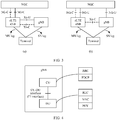
- FIG. 1 (a) in FIG. 1 is a schematic structural diagram of an Option 3 communications system, and (b) in FIG. 1 is a schematic structural diagram of an Option 3A communications system.
- an LTE eNB is connected to an EPC through an S1 interface (including an S1-C interface and an S1-U interface)
- the LTE eNB is connected to a gNB through an X2 interface
- the LTE eNB is connected to a terminal by using an MN leg
- the gNB is connected to the terminal by using an SN leg.
- the Option 3A communications system is different from the Option 3 communications system in that, a gNB is further connected to an EPC through an S1-U interface.
- control plane connections are represented by using dashed lines.
- the NEDC is also referred to as Option 4/4A.
- a gNB is an MN
- an eLTE eNB is an SN
- an MN is connected to an NGC
- the MN and the SN provide an air interface transmission resource for data between a terminal and the NGC.
- FIG. 2 (a) in FIG. 2 is a schematic structural diagram of an Option 4 communications system, and (b) in FIG. 2 is a schematic structural diagram of an Option 4A communications system.
- a gNB is connected to an NGC through an NG interface (including an NG-C interface and an NG-U interface)
- an eLTE eNB is connected to a gNB through an Xn interface
- the gNB is connected to a terminal by using an MN leg
- the eLTE eNB is connected to the terminal by using an SN leg.
- the Option 4A communications system is different from the Option 4 communications system in that, an eLTE eNB is further connected to an NGC through an NG-U interface.
- control plane connections are represented by using dashed lines.
- the NG-ENDC is also referred to as Option 7/7A/7X.
- an eLTE eNB is an MN
- a gNB is an SN
- the MN is connected to an NGC.
- the NG-ENDC communications system is different from the foregoing ENDC communications system in that, the MN and the SN provide an air interface transmission resource for data between a terminal and the NGC.
- FIG. 3 (a) in FIG. 3 is a schematic structural diagram of an Option 7 communications system, and (b) in FIG. 3 is a schematic structural diagram of an Option 7A communications system.
- an eLTE eNB is connected to an NGC through an NG interface (including an NG-C interface and an NG-U interface), the eLTE eNB is connected to a gNB through an Xn interface, the eLTE eNB is connected to a terminal by using an MN leg, and the gNB is connected to the terminal by using an SN leg.
- the Option 7A communications system is different from the Option 7 communications system in that, a gNB is further connected to an NGC through an NG-U interface.
- control plane connections are represented by using dashed lines.
- the gNB may include a centralized unit (Centralized Unit, CU) and a distributed unit (Distributed Unit, DU).
- CU Centralized Unit
- DU Distributed Unit
- the CU is mainly configured to be responsible for centralized management and control of a radio resource and a connection, and has a wireless higher layer protocol stack function, for example, an RRC layer or a PDCP layer.
- the CU can also support movement of some core network functions to an access network, where the access network is referred to as an edge computing network, so that a higher requirement, on a network delay, of an emerging service (such as a video, online shopping, or virtual/augmented reality) in a future communications network can be satisfied.
- the DU has a distributed user plane processing function, and mainly has a physical layer function and a layer 2 function that has a relatively high real-time requirement.
- the CU has the RRC layer and the PDCP layer, and the DU has an RLC layer, a MAC layer, and a PHY layer.
- the CU may be deployed in a centralized manner, and deployment of the DU depends on an actual network environment. For example, for a core urban area, or an area with relatively high traffic density, a relatively small inter-site distance, or a limited equipment room resource, for example, a college or a large-scale performance venue, a DU may be deployed in the centralized manner. For an area with relatively sparse traffic, a relatively large inter-site distance, or the like, for example, an area such as a suburban county or a mountain area, a DU may be deployed in a distributed manner.
- FIG. 4 is a schematic structural diagram of a gNB including a CU and a DU.
- the CU communicates with the DU through a CU-DU interface.
- the interface may be configured to transmit a control plane message between the CU and the DU, an RRC message of a terminal of the gNB, data of a terminal served by the gNB, or the like.
- the CU-DU interface is referred to as an F1 interface
- a control plane of the CU-DU interface is referred to as F1-C
- a user plane of the CU-DU interface is referred to as F1-U.
- a control plane message, between a CU and a DU, carried by the F1-C is referred to as an F1 application protocol (F1 Application Protocol, F1AP) message.
- F1AP F1 Application Protocol
- the F1AP message may be divided into two parts: a common message (Common Message, or Non-UE-Associated) and a message related to user equipment (User Equipment, UE) (UE-Associated).
- the common message may be used for F1 interface management, a CU/DU configuration update, cell management, and the like.
- the message related to UE may be used to establish/manage/update/delete a UE context, and exchange a quality of service (Quality of Service, QoS) parameter of the UE, a protocol stack configuration of the UE, and the like.
- QoS Quality of Service
- the message related to UE may be further used to transmit an RRC message of the UE, to be specific, transmission is performed by adding a PDCP protocol data unit (Protocol Data Unit, PDU) of an RRC message transmitted by using a signaling radio bearer (Signaling Radio Bearer, SRB) 1/an SRB 2/ an SRB 1S/an SRB 2S/an SRB 3 of the UE and an RRC PDU of an RRC message transmitted by using an SRB 0, to an F1AP message as RRC containers (Container).
- PDU Packe Radio Bearer
- SRB Signaling Radio Bearer
- F1-U transmits data of the UE.
- transmission is performed by encapsulating a PDCP PDU of the UE in a general packet radio service tunneling protocol-user plane (General Packet Radio Service Tunneling Protocol-User Plane, GTP-U) data packet.
- GTP-U General Packet Radio Service Tunneling Protocol-User Plane
- a DRB of the UE may be identified by using a GTP tunnel endpoint identifier (Tunnel Endpoint Identifier, TEID).
- a duplicated data packet may be generated after a duplication operation is configured and activated for an RB, and a same data packet may be transmitted for the RB by using an MN link and an SN link separately, improving data sending reliability.
- the NR PDCP has the duplication function. Therefore, in all the three communications systems of the MR-DC, an NR side has the duplication function; an LTE side may also have the duplication function because the NR PDCP may also be configured on the LTE side for a terminal.
- the PDCP anchor may generate configuration information, and configure a duplication operation for an RB (for example, an SCG bearer or an SCG split bearer) of a secondary cell group (Secondary Cell Group, SCG)/an RB (SN terminated bearer) for which the PDCP is terminated on the SN.
- the PDCP anchor is an MN
- the PDCP anchor may generate configuration information, and configure a duplication operation for an RB (for example, an MCG bearer or an MCG split bearer) of a master cell group (Master Cell Group, MCG)/an RB (MN terminated bearer) for which the PDCP is terminated on the MN
- the RB for example, an SCG bearer or an SCG split bearer
- the secondary cell group Secondary Cell Group, SCG
- RB SN terminated bearer
- the RB for example, an MCG bearer or an MCG split bearer
- the master cell group Master Cell Group, MCG
- RB MN terminated bearer
- the MN determines whether to configure a duplication operation for the RB of the MCG, and the SN determines whether to configure a duplication operation for the RB of the SCG.
- the MN determines whether to configure a duplication operation for the RB of the MCG and the RB of the SCG.
- the MN sends information about the RB (for example, an RB identifier (ID) and an RB index (RB index)) to the SN (for example, by using an interface message between the MN and the SN, where the interface message may be a control plane message of an X2/Xn interface; and optionally, the message is a secondary node addition request (SN addition request) message/a secondary node modification request (SN modification request) message), to enable the SN to generate configuration information (for example, a PDCP configuration) corresponding to the RB, and then the SN sends the configuration information to the MN (for example, by using an interface message between the MN and the SN, where the interface message may be a control plane message of the X2/Xn interface; and optionally, the message is a secondary node addition request acknowledge (SN addition request acknowledge) message/a secondary node modification request acknowledge (SN modification request acknowledge) message
- a MAC layer of an NR gNB can activate/deactivate duplication, but a MAC layer of an E-UTRA/LTE base station (for example, an LTE eNB or an eLTE eNB) cannot perform an activation/deactivation operation. In this way, when the PDCP anchor is an LTE base station, the LTE base station cannot send an activation/deactivation indication to the terminal through an LTE air interface.
- an LTE eNB for example, an LTE eNB or an eLTE eNB
- the gNB includes the CU and the DU
- the gNB currently there is no method for determining, by the gNB, whether to configure a duplication operation and determining whether to activate/deactivate the duplication operation after the configuration.
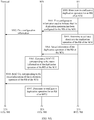
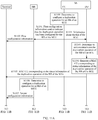
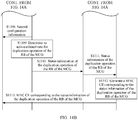
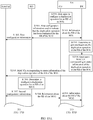
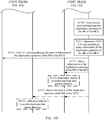
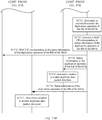
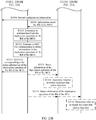
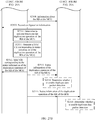
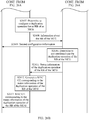
- an embodiment of this application provides a communication method. After obtaining status information of a duplication operation of an RB, a first communications device sends the status information of the duplication operation of the RB to a second communications device, so that the second communications device generates, based on the status information of the duplication operation of the RB, an activation indication used to indicate a terminal to activate/deactivate the duplication operation of the RB, and sends the activation indication to the terminal.
- the first communications device is an LTE base station and the second communications device is a gNB
- the LTE base station may send status information of an RB to the gNB after obtaining the status information of the RB, so that a MAC layer of the gNB generates an activation indication.
- the LTE base station cannot send the activation/deactivation indication to the terminal when the anchor is the LTE base station.
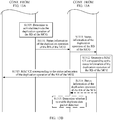
- an activation indication may be generated by using a MAC layer of the DU, and then the activation indication is sent to the terminal.
- the first communications device and a PDCP anchor may be a same device, or may be different devices.
- the second communications device may be a PDCP anchor.
- the MN and the PDCP anchor may be a same device, or may be different devices.
- the second communications device may be a gNB.
- the MN and the gNB may be a same device, or may be different devices.
- an embodiment of this application further provides a communication method.
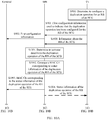
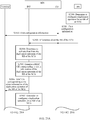
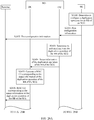
- a first communications device obtains information about an RB for which a duplication operation has been configured, and determines whether to activate the duplication operation of the RB.
- the first communications device generates an activation indication used to indicate a terminal to activate/deactivate the duplication operation of the RB, and sends the activation indication to the terminal.
- the first communications device may be a gNB or a DU in the gNB, so that configuration and activation of a duplication operation in a scenario in which the gNB includes a CU and the DU may also be implemented.
- the first communications device and a PDCP anchor may be a same device, or may be different devices.
- the PDCP anchor determines whether to configure the duplication operation for the RB, and the PDCP anchor determines whether to activate/deactivate the duplication operation of the RB.
- the PDCP anchor determines whether to configure the duplication operation for the RB, and the gNB determines whether to activate/deactivate the duplication operation of the RB.
- a master node determines whether to configure the duplication operation for the RB, and the PDCP anchor determines whether to activate/deactivate the duplication operation of the RB.
- a master node determines whether to configure the duplication operation for the RB, and the gNB determines whether to activate/deactivate the duplication operation of the RB.
- a master node determines whether to configure the duplication operation for the RB, and the master node determines whether to activate/deactivate the duplication operation of the RB.
- the gNB Because a MAC layer of the gNB generates a MAC CE and sends, to the terminal, the MAC CE generated by the gNB, in subsequent content in this embodiment of this application, the gNB is also represented as a "MAC CE sending device".
- the PDCP anchor in this embodiment of this application may be the LTE base station, or may be the gNB.
- the PDCP anchor is an LTE base station.
- the PDCP anchor is a gNB.
- the PDCP anchor is an LTE base station.
- the PDCP anchor is a gNB.
- the communication method provided in this embodiment of this application is applicable to the heterogeneous communications system shown in any one of FIG. 1 to FIG. 3 .
- both the LTE base station and the gNB are base stations.
- FIG. 5 shows a composition structure of a base station (eLTE eNB/eLTE eNB/gNB) according to an embodiment of this application.
- the base station may include at least one processor 51, a memory 52, a transceiver 53, and a bus 54.
- the processor 51 is a control center of the base station, and may be one processor, or may be a collective name of a plurality of processing elements.
- the processor 51 is a CPU, or may be an application-specific integrated circuit (Application Specific Integrated Circuit, ASIC), or is configured as one or more integrated circuits that implement this embodiment of this application, for example, one or more microprocessors (Digital Signal Processor, DSP), or one or more field programmable gate arrays (Field Programmable Gate Array, FPGA).
- ASIC Application Specific Integrated Circuit
- the processor 51 may perform various functions of the base station by running or executing a software program stored in the memory 52, and invoking data stored in the memory 52.
- the processor 51 may include one or more CPUs, for example, a CPU 0 and a CPU 1 shown in the figure.
- the base station may include a plurality of processors, for example, the processor 51 and a processor 55 shown in FIG. 5 .
- Each of the processors may be a single-core (single-CPU) processor, or may be a multi-core (multi-CPU) processor.
- the processor herein may be one or more devices, circuits, and/or processing cores configured to process data (for example, a computer program instruction).
- the memory 52 may be a read-only memory (Read-Only Memory, ROM), or another type of static storage device that can store static information and an instruction, a random access memory (Random Access Memory, RAM), or another type of dynamic storage device that can store information and an instruction, or may be an electrically erasable programmable read-only memory (Electrically Erasable Programmable Read-Only Memory, EEPROM), a compact disc read-only memory (Compact Disc Read-Only Memory, CD-ROM) or another optical disc storage, an optical disc storage (including a compact optical disc, a laser disc, an optical disc, a digital versatile optical disc, a Blu-ray optical disc, or the like), a magnetic disk storage medium, or another magnetic storage device, or any other medium that can carry or store expected program code in a form of an instruction or a data structure and can be accessed by a computer.
- the memory 52 is not limited thereto.
- the memory 52 may exist independently, and is connected to the processor 51 by using the bus 54.
- the memory 52 is configured to store a software program used to execute a solution in this application, and the execution is controlled by the processor 51.
- the transceiver 53 is configured to communicate with another device or a communications network.
- the transceiver 53 is configured to communicate with a communications network such as the Ethernet, a radio access network (radio access network, RAN), or a wireless local area network (Wireless Local Area Network, WLAN).
- the transceiver 53 may include all or a part of a baseband processor, and may further selectively include an RF processor.
- the RF processor is configured to receive and send an RF signal.
- the baseband processor is configured to process a baseband signal converted from an RF signal or a baseband signal that is to be converted into an RF signal.
- the bus 54 may be an industry standard architecture (Industry Standard Architecture, ISA) bus, a peripheral component interconnect (Peripheral Component, PCI) bus, an extended industry standard architecture (Extended Industry Standard Architecture, EISA) bus, or the like.
- ISA Industry Standard Architecture
- PCI peripheral component interconnect
- EISA Extended Industry Standard Architecture
- the bus may be classified into an address bus, a data bus, a control bus, and the like. For ease of representation, only one thick line is used to represent the bus in FIG. 5 , but this does not mean that there is only one bus or only one type of bus.
- a device structure shown in FIG. 5 does not constitute a limitation to the base station.
- the base station may include more or fewer components than those shown in the figure, or combine some components, or have a different component arrangement.
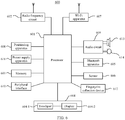
- the terminal in this embodiment of this application may be a mobile phone (a mobile phone 600 shown in FIG. 6 ), a tablet, a personal computer (Personal Computer, PC), a personal digital assistant (Personal Digital Assistant, PDA), a smartwatch, a netbook, a wearable electronic device, or the like that can implement, on a control plane and a user plane, data transmission with the eLTE eNB/eLTE eNB/gNB
- a specific form of the device is not especially limited in this embodiment of this application.
- the mobile phone 600 may specifically include components such as a processor 601, a radio frequency (Radio Frequency, RF) circuit 602, a memory 603, a touchscreen 604, a Bluetooth apparatus 605, one or more sensors 606, a wireless fidelity (Wireless Fidelity, Wi-Fi) apparatus 607, a positioning apparatus 608, an audio circuit 609, a peripheral interface 610, and a power supply apparatus 611.
- RF Radio Frequency
- RF Radio Frequency
- RF Radio Frequency
- memory 603 a touchscreen 604
- Bluetooth apparatus 605 one or more sensors 606, a wireless fidelity (Wireless Fidelity, Wi-Fi) apparatus 607, a positioning apparatus 608, an audio circuit 609, a peripheral interface 610, and a power supply apparatus 611.
- These components may perform communication by using one or more communications buses or signal cables (not shown in FIG. 6 ).
- a hardware structure shown in FIG. 6 does not constitute a limitation to the mobile phone, and the mobile phone 600 may include more or
- the components of the mobile phone 600 are described in detail with reference to FIG. 6 below.
- the processor 601 is a control center of the mobile phone 600, and is connected to various parts of the mobile phone 600 by using various interfaces and lines. By running or executing an application program stored in the memory 603, and invoking data stored in the memory 603, the processor 601 performs various functions of the mobile phone 600 and processes data.
- the processor 601 may include one or more processing units.
- the processor 601 may further include a fingerprint verification chip, configured to verify a collected fingerprint.
- the radio frequency circuit 602 may be configured to receive and send a radio signal in an information receiving and sending process or in a call process. Particularly, after receiving downlink data from a base station, the radio frequency circuit 602 may send the downlink data to the processor 601 for processing, and sends related uplink data to the base station.
- the radio frequency circuit includes but is not limited to an antenna, at least one amplifier, a transceiver, a coupler, a low noise amplifier, a duplexer, and the like.
- the radio frequency circuit 602 may further communicate with another device through wireless communication.
- the wireless communication may use any communications standard or protocol, including but not limited to global system for mobile communications, general packet radio service, code division multiple access, wideband code division multiple access, long term evolution, email, short message service, and the like.
- the memory 603 is configured to store an application program and data. By running the application program and the data that are stored in the memory 603, the processor 601 performs various functions of the mobile phone 600 and data processing.
- the memory 603 mainly includes a program storage area and a data storage area.
- the program storage area may store an operating system, and an application program required by at least one function (for example, a sound playing function or an image processing function).
- the data storage area may store data (for example, audio data or a phone book) created when the mobile phone 600 is used.
- the memory 603 may include a high-speed random access memory (RAM), and may further include a nonvolatile memory such as a magnetic disk storage device or a flash memory component, another volatile solid-state storage device, or the like.
- the memory 603 may store various operating systems such as an iOS operating system and an Android operating system.
- the memory 603 may be independent, and is connected to the processor 601 by using the communications bus. Alternatively, the memory 603 may be integrated with the processor 601.
- the touchscreen 604 may specifically include a touchpad 604-1 and a display 604-2.
- the touchpad 604-1 may collect a touch event performed on or near the touchpad 604-1 by a user of the mobile phone 600 (for example, an operation performed on or near the touchpad 604-1 by the user by using any proper object such as a finger or a stylus), and send collected touch information to another device (for example, the processor 601).
- the touch event performed near the touchpad 604-1 by the user may be referred to as a floating touch.
- the floating touch may mean that the user does not need to directly touch the touchpad to select, move, or drag a target (for example, an icon), and the user only needs to be near the device to perform a desired function.
- the touchpad 604-1 may be implemented in a plurality of types such as a resistive type, a capacitive type, an infrared type, and a surface acoustic wave type.
- the display 604-2 may be configured to display information entered by the user or information provided for the user, and various menus of the mobile phone 600.
- the display 604-2 may be a liquid crystal display, an organic light emitting diode, or the like.
- the touchpad 604-1 may cover the display 604-2. When detecting the touch event on or near the touchpad 604-1, the touchpad 604-1 transfers the touch event to the processor 601 to determine a type of the touch event. Then, the processor 601 can provide a corresponding visual output on the display 604-2 based on the type of the touch event.
- the touchpad 604-1 and the display screen 604-2 are used as two independent components to implement input and output functions of the mobile phone 600.
- the touchpad 604-1 and the display screen 604-2 may be integrated to implement the input and output functions of the mobile phone 600. It may be understood that the touchscreen 604 is formed by stacking a plurality of layers of materials. In this embodiment of this application, only the touchpad (layer) and the display screen (layer) are displayed, and another layer is not set forth in this embodiment of this application.
- the touchpad 604-1 may be disposed on a front facet of the mobile phone 600 in a form of a full panel
- the display screen 604-2 may also be disposed on the front facet of the mobile phone 600 in the form of a full panel. In this way, a bezel-less structure can be implemented on the front facet of the mobile phone.
- the mobile phone 600 may further have a fingerprint recognition function.
- a fingerprint sensor 612 may be disposed on a back facet of the mobile phone 600 (for example, below a rear-facing camera), or the fingerprint sensor 612 may be disposed on the front facet of the mobile phone 600 (for example, below the touchscreen 604).
- a fingerprint collection device 612 may be disposed in the touchscreen 604 to implement the fingerprint recognition function.
- the fingerprint collection device 612 may be integrated with the touchscreen 604 to implement the fingerprint recognition function of the mobile phone 600.
- the fingerprint collection device 612 is disposed in the touchscreen 604, and may be a part of the touchscreen 604, or may be disposed in the touchscreen 604 in another manner.
- a main component of the fingerprint collection device 612 is a fingerprint sensor.
- the fingerprint sensor may use any type of sensing technology, including but not limited to an optical, a capacitive, a piezoelectric, or an ultrasonic sensing technology.
- the mobile phone 600 may further include the Bluetooth apparatus 605, configured to implement data exchange between the mobile phone 600 and another short-distance device (for example, a mobile phone or a smartwatch).
- the Bluetooth apparatus may be an integrated circuit, a Bluetooth chip, or the like.
- the mobile phone 600 may further include at least one sensor 606, such as an optic sensor, a motion sensor, or another sensor.
- the optic sensor may include an ambient optical sensor and a proximity sensor.
- the ambient optical sensor may adjust luminance of the display in the touchscreen 604 based on brightness of ambience light.
- the proximity sensor may power off the display when the mobile phone 600 moves to an ear.
- an accelerometer sensor may detect values of accelerations in all directions (usually, three axes), may detect a value and a direction of gravity when the mobile phone is stationary, and may be used in an application for identifying a mobile phone posture (such as screen switching between a landscape mode and a portrait mode, a related game, or magnetometer posture calibration), a function related to vibration identification (such as a pedometer or a knock), and the like.
- a mobile phone posture such as screen switching between a landscape mode and a portrait mode, a related game, or magnetometer posture calibration
- a function related to vibration identification such as a pedometer or a knock
- Another sensor such as a gyroscope, a barometer, a hygrometer, a thermometer, or an infrared sensor may be further configured in the mobile phone 600. Details are not described herein.
- the Wi-Fi apparatus 607 is configured to provide the mobile phone 600 with network access that complies with a standard protocol related to Wi-Fi, and the mobile phone 600 may access a Wi-Fi access point by using the Wi-Fi apparatus 607, to help the user receive and send an email, browse a web page, access streaming media, and so on.
- the Wi-Fi apparatus 607 provides wireless broadband Internet access for the user.
- the Wi-Fi apparatus 607 may alternatively be used as a Wi-Fi wireless access point, and may provide Wi-Fi network access for another device.
- the positioning apparatus 608 is configured to provide a geographical location for the mobile phone 600. It may be understood that the positioning apparatus 608 may be specifically a receiver of a positioning system such as the global positioning system (Global Positioning System, GPS), the BeiDou navigation satellite system, or the Russia GLONASS. After receiving a geographical location sent by the positioning system, the positioning apparatus 608 sends the information to the processor 601 for processing, or sends the information to the memory 603 for storage. In some other embodiments, the positioning apparatus 608 may alternatively be a receiver of the assisted global positioning system (Assisted Global Positioning System, AGPS). The AGPS system serves as an assisted server to assist the positioning apparatus 608 in completing ranging and positioning services.
- AGPS assisted Global Positioning System
- the auxiliary positioning server provides positioning assistance by communicating with a positioning apparatus 608 (namely, a GPS receiver) of a device such as the mobile phone 600 by using a wireless communications network.
- the positioning apparatus 608 may alternatively be a positioning technology that is based on a Wi-Fi access point. Because each Wi-Fi access point has a globally unique MAC address, and a device may scan and collect a broadcast signal of a surrounding Wi-Fi access point when Wi-Fi is enabled for the device, the device can obtain a MAC address broadcast by the Wi-Fi access point.
- the device sends, to a location server by using a wireless communications network, the data (for example, the MAC address) that can indicate the Wi-Fi access point.
- the location server retrieves a geographical location of each Wi-Fi access point, calculates a geographic location of the device with reference with strength of a Wi-Fi broadcast signal, and sends the geographic location of the device to the positioning apparatus 608 of the device.
- the audio circuit 609, a speaker 613, and a microphone 614 may provide an audio interface between the user and the mobile phone 600.
- the audio circuit 609 may transmit, to the speaker 613, an electrical signal converted from received audio data, and the speaker 613 converts the electrical signal into a sound signal for output.
- the microphone 614 converts a collected sound signal into an electrical signal.
- the audio circuit 609 receives the electrical signal, converts the electrical signal into audio data, and then outputs the audio data to the RF circuit 602, to send the audio data to, for example, another mobile phone, or outputs the audio data to the memory 603 for further processing.
- the peripheral interface 610 is configured to provide various interfaces for an external input/output device (for example, a keyboard, a mouse, an external display, an external memory, or a subscriber identification module card).
- an external input/output device for example, a keyboard, a mouse, an external display, an external memory, or a subscriber identification module card.
- the peripheral interface 610 is connected to a mouse through a universal serial bus (Universal Serial Bus, USB) interface, and is connected, by using a metal contact on a card slot of a subscriber identification module card, to a subscriber identification module module (Subscriber Identification Module, SIM) card provided by a telecom operator.
- the peripheral interface 610 may be configured to couple the foregoing external input/output peripheral device to the processor 601 and the memory 603.
- the mobile phone 600 may communicate with another device in a device group by using the peripheral interface 610.
- the mobile phone 600 may receive, through the peripheral interface 610, display data sent by the another device, for displaying. This is not limited in this embodiment of this application.
- the mobile phone 600 may further include the power supply apparatus 611 (for example, a battery or a power supply management chip) that supplies power to the components.
- the battery may be logically connected to the processor 601 by using the power supply management chip, so that functions such as charging, discharging, and power consumption management are implemented by using the power supply apparatus 611.
- the mobile phone 600 may further include a camera (a front-facing camera and/or a rear-facing camera), a flash, a micro projection apparatus, a near field communication (Near Field Communication, NFC) apparatus, and the like. Details are not described herein.
- a camera a front-facing camera and/or a rear-facing camera
- a flash a flash
- a micro projection apparatus a near field communication (Near Field Communication, NFC) apparatus, and the like. Details are not described herein.
- NFC Near Field Communication
- the PDCP anchor determines whether to configure a duplication operation of an RB, and determines status information of the duplication operation of the RB, that is, determines whether to activate/deactivate the duplication operation of the RB.
- Communication mode 2 The PDCP anchor determines whether to configure a duplication operation of an RB, and the MAC CE sending device determines status information of the duplication operation of the RB, that is, determines whether to activate/deactivate the duplication operation of the RB.
- Communication mode 3 The MN determines whether to configure a duplication operation of an RB, and determines status information of the duplication operation of the RB, that is, determines whether to activate/deactivate the duplication operation of the RB.
- Communication mode 4 The MN determines whether to configure a duplication operation of an RB, and the PDCP anchor determines status information of the duplication operation of the RB, that is, determines whether to activate/deactivate the duplication operation of the RB.
- Communication mode 5 The MN determines whether to configure a duplication operation of an RB, and the MAC CE sending device determines status information of the duplication operation of the RB, that is, determines whether to activate/deactivate the duplication operation of the RB.
- the PDCP anchor and the MAC CE sending device may be a same device, or may be different devices.
- the PDCP anchor is an LTE base station
- the MAC CE sending device is a gNB.
- both the PDCP anchor and the MAC CE device are gNBs.
- the MN and the PDCP anchor may be a same device, or may be different devices.
- the MN and the MAC CE device may be a same device, or may be different devices.
- the MN is an LTE base station
- the MAC CE device is a gNB.
- both the MN and the MAC CE device are gNBs.
- the PDCP anchor determines whether to configure the duplication operation of the RB. That the PDCP anchor determines whether to configure the duplication operation of the RB is described below.
- Step 1 The PDCP anchor determines to configure a duplication operation for an RB of a terminal.
- the PDCP anchor determines whether to configure the duplication operation for the RB of the terminal.
- the PDCP anchor may determine, based on link quality of an MN leg and/or an SN leg, whether to configure the duplication operation of the RB. For example, if the link quality of the MN leg is less than a first threshold and/or the link quality of the SN leg is less than a second threshold, the PDCP anchor determines to configure the duplication operation for the RB. In this way, the PDCP anchor may send a same data packet by using the MN leg and the SN leg, improving data sending reliability. If the link quality of the MN leg is greater than a third threshold and/or the link quality of the SN leg is greater than a fourth threshold, the PDCP anchor configures the RB as a split (split) bearer.
- split split
- the PDCP anchor uses the MN leg and the SN leg to send different data packets, increasing a data rate of the terminal.
- the first threshold, the second threshold, the third threshold, and the fourth threshold may be a same value, or may be different values.
- the PDCP anchor may determine link quality of a leg based on a measurement result reported by the terminal, or may measure an uplink signal of the terminal and estimate link quality of a leg based on a result of the measurement. This is not specifically limited in this embodiment of this application.
- Step 2 The PDCP anchor sends configuration information to the terminal by using the MN in the heterogeneous communications system.
- the PDCP anchor may be an LTE base station, or may be a gNB.
- the LTE base station is an MN
- the gNB is an SN
- the LTE base station is an SN. Therefore, in this embodiment of this application, the PDCP anchor and the MN may be a same device, or may be different devices.
- the PDCP anchor If the PDCP anchor is an SN, after determining to configure the duplication operation for the RB of the terminal, the PDCP anchor further generates the configuration information, and sends the configuration information to the MN, so that the MN forwards the configuration information to the terminal. If the PDCP anchor is an MN, after determining to configure the duplication operation for the RB of the terminal, the PDCP anchor generates the configuration information, and sends the configuration information to the terminal. Optionally, the configuration information is included in a PDCP configuration.
- the MN may send the configuration information to the terminal by using an RRC reconfiguration (RRC Reconfiguration) message, or may send the configuration information to the terminal by using an RRC connection reconfiguration (RRC Connection Reconfiguration) message.
- RRC Reconfiguration RRC reconfiguration
- RRC Connection Reconfiguration RRC Connection Reconfiguration
- the MN determines whether to configure the duplication operation of the RB. That the MN determines whether to configure a duplication operation of an RB is described below.
- Step 1 The MN determines to configure a duplication operation for an RB of a terminal.
- the MN determines whether to configure the duplication operation for the RB of the terminal.
- the MN may determine, based on link quality of an MN leg and/or an SN leg, whether to configure the duplication operation of the RB. For example, if the link quality of the MN leg is less than a first threshold and/or the link quality of the SN leg is less than a second threshold, the MN determines to configure the duplication operation for the RB. In this way, the MN may send a same data packet by using the MN leg and the SN leg, improving data sending reliability. If the link quality of the MN leg is greater than a third threshold and/or the link quality of the SN leg is greater than a fourth threshold, the MN configures the RB as a split (split) bearer. In this case, the MN uses the MN leg and the SN leg to send different data packets, to increase a data rate of the terminal.
- the first threshold, the second threshold, the third threshold, and the fourth threshold may be a same value, or may be different values.
- the MN may determine link quality of a leg based on a measurement result reported by the terminal, or may measure an uplink signal of the terminal and estimate link quality of a leg based on a result of the measurement. This is not specifically limited in this embodiment of this application.
- Step 2 The MN sends configuration information to the terminal.
- the MN may be an LTE base station, or may be a gNB.
- the LTE base station is an MN
- the gNB is an SN
- the gNB is an MN
- the LTE base station is an SN.
- the MN and the PDCP anchor are different devices, in other words, the PDCP anchor is an SN, after determining to configure the duplication operation for the RB of the terminal, the MN further notifies the SN of information about the RB for which the duplication operation has been configured. In this way, the SN generates the configuration information, and sends the configuration information to the MN, so that the MN forwards the configuration information to the terminal.
- the PDCP anchor If the MN and the PDCP anchor are a same device, in other words, the PDCP anchor is an MN, after determining to configure the duplication operation for the RB of the terminal, the PDCP anchor generates the configuration information, and sends the configuration information to the terminal.
- the configuration information is included in a PDCP configuration.
- the MN may send the configuration information to the terminal by using an RRC reconfiguration (RRC Reconfiguration) message, or may send the configuration information to the terminal by using an RRC connection reconfiguration (RRC Connection Reconfiguration) message.
- RRC Reconfiguration RRC reconfiguration
- RRC Connection Reconfiguration RRC Connection Reconfiguration
- the base station may further specify an initial active/inactive state of the duplication operation.
- the base station may specify the initial active/inactive state of the RB as an active state.
- the MN adds the initial active/inactive state of the RB to an RRC message and sends the RRC message to the terminal.
- the initial active/inactive state of the RB and the configuration information may be included in a same message and then the message is sent to the terminal, or the initial active/inactive state of the RB and the configuration information may be included in different messages and then the messages are sent to the terminal.
- the initial active/inactive state of the RB is carried in the PDCP configuration.
- the MN determines the configuration of the duplication operation, and the PDCP anchor is not an MN, the MN needs to notify the PDCP anchor of the initial active/inactive state of the RB. Therefore, when generating the PDCP configuration, the PDCP anchor sets the corresponding initial active/inactive state.
- the base station when the MAC CE sending device determines an active/inactive state of a subsequent duplication operation of the RB, and the base station is not a MAC CE sending device, after specifying the initial active/inactive state of the duplication operation of the RB, the base station sends the status information to the MAC CE sending device, so that the MAC CE sending device learns of a current status information of the duplication operation of the RB.
- the PDCP anchor/MN determines whether to activate/deactivate the duplication operation, or the MAC CE sending device determines whether to activate/deactivate the duplication operation, or the MN determines whether to activate/deactivate the duplication operation.
- the MAC CE sending device is a gNB. Therefore, regardless of whether the PDCP anchor, the MCE CE sending device, or the MN determines whether to activate/deactivate the duplication operation, the base station determines whether to activate/deactivate the duplication operation. After the base station determines whether to activate/deactivate the duplication operation, a MAC layer of the MCE CE sending device generates a MAC CE used to indicate the activation/deactivation to be performed, and sends the MAC CE to the terminal.
- the base station that determines whether to perform the activation/deactivation may be a gNB (that is, a device that determines whether to perform the activation/deactivation is the same as the MAC CE sending device), or may be an LTE base station (that is, a device that determines whether to perform the activation/deactivation is different from the MAC CE sending device).
- a gNB that is, a device that determines whether to perform the activation/deactivation is the same as the MAC CE sending device
- LTE base station that is, a device that determines whether to perform the activation/deactivation is different from the MAC CE sending device.
- That the base station determines whether to activate a duplication operation of an RB is described below. Specifically, in this embodiment of this application, that the base station determines whether to activate a duplication operation of an RB specifically includes:
- the base station in step I may be a PDCP anchor, or may be a MAC CE sending device, or may be an MN
- step I A case in which the base station in step I is a PDCP anchor is described below.
- the PDCP anchor determines whether to activate/deactivate a duplication operation of an RB. Specifically, the PDCP anchor may determine, specially for an uplink direction, whether to activate/deactivate the duplication operation of the RB.
- the PDCP anchor may determine, based on link quality of an MN leg and/or an SN leg, whether to activate the duplication operation. For example, if link quality of the MN leg is less than a first threshold and/or link quality of the SN leg is less than a second threshold, the PDCP anchor determines to activate the duplication operation of the RB. In this way, same data may be sent by using the MN leg and the SN leg, improving data sending reliability. If the link quality of the MN leg is greater than a third threshold and/or the link quality of the SN leg is greater than a fourth threshold, the PDCP anchor may determine to deactivate the duplication operation of the RB.
- the first threshold, the second threshold, the third threshold, and the fourth threshold may be a same value, or may be different values.
- the MAC CE sending device namely, the gNB
- the MAC CE sending device sends a corresponding MAC CE to the terminal, so that the terminal learns of RBs whose duplication operations are activated/deactivated, that is, step II is performed.
- the PDCP anchor enables a PDCP duplicate packet detection function of the RB.
- the PDCP anchor when the PDCP anchor is the same as the MAC CE sending device, the PDCP anchor is a gNB. After the PDCP anchor determines to activate/deactivate a duplication operation of an RB, a MAC layer of the PDCP anchor generates a MAC CE used to indicate to activate/deactivate the duplication operation, and sends the MAC CE to the terminal.
- This case is applicable to an RB of an SCG in an ENDC/NG-ENDC communications system and an RB of an MCG in an NEDC scenario.
- the PDCP anchor When the PDCP anchor is different from the MAC CE sending device, the PDCP anchor is an LTE base station. After determining to activate/deactivate a duplication operation of an RB, the PDCP anchor sends status information of the duplication operation of the RB determined by the PDCP anchor to the MAC CE sending device, so that the MAC CE sending device generates a corresponding MAC CE.
- the PDCP anchor sends the status information of the duplication operation of the RB to the MAC CE sending device through an X2/Xn interface.
- the status information of the duplication operation of the RB is carried in a secondary node addition request (SN addition request) message/secondary node modification request (SN modification request)/secondary node modification required (SN modification required) message.
- the MAC CE sending device sends a response message to the PDCP anchor through the X2/Xn interface, to determine to send the status information to the terminal.
- the PDCP anchor enables a PDCP duplicate packet detection function of the RB.
- the response message is a secondary node addition request acknowledge (SN addition request acknowledge) message/secondary node modification request acknowledge (SN modification request acknowledge) message/secondary node modification confirm (SN modification confirm) message.
- the MAC CE sending device sends reject information to the PDCP anchor through the X2/Xn interface, to indicate that the status information determined by the PDCP anchor is rejected.
- the reject information carries a cause value to describe a cause of the rejection.
- the reject information may be carried in a secondary node addition request acknowledge (SN addition request acknowledge) message/secondary node modification request acknowledge (SN modification request acknowledge) message/secondary node modification confirm (SN modification confirm) message/secondary node addition request reject (SN addition request reject) message/secondary node modification request reject (SN modification request reject) message/secondary node modification refuse (SN modification refuse) message.
- This case is applicable to an RB of an MCG in an ENDC/NG-ENDC communications system and an RB of an SCG in an NEDC communications system.
- the PDCP anchor determines whether to configure the duplication operation of the RB, and determines whether to activate the duplication operation of the RB, and the PDCP anchor is different from the MAC CE sending device
- the information about the RB for which the duplication operation has been configured and the status information of the duplication operation of the RB may be carried in a same message and then the message is sent to the MAC CE sending device, or the information about the RB for which the duplication operation has been configured and the status information of the duplication operation of the RB may be carried in different messages and then the messages are sent to the MAC CE sending device.
- step I A case in which the base station is a MAC CE sending device in step I is described below.
- the MAC CE sending device determines whether to activate/deactivate a duplication operation of an RB. Specifically, the MAC CE sending device may determine, specially for uplink, whether to activate/deactivate a duplication operation of the RB of the terminal.
- the MAC CE sending device may determine, based on link quality of an MN leg and/or an SN leg, whether to activate the duplication operation. For example, if link quality of the MN leg is less than a first threshold and/or link quality of the SN leg is less than a second threshold, the MAC CE sending device determines to activate the duplication operation of the RB. In this way, same data may be sent by using the MN leg and the SN leg, improving data sending reliability. If the link quality of the MN leg is greater than a third threshold and/or the link quality of the SN leg is greater than a fourth threshold, the MAC CE sending device may determine to deactivate the duplication operation of the RB.
- the first threshold, the second threshold, the third threshold, and the fourth threshold may be a same value, or may be different values.
- the PDCP anchor sends information about the RB to the MAC CE sending device, so that the MAC CE sending device determines whether to activate/deactivate the duplication operation of the RB, and generates a corresponding MAC CE.
- the PDCP anchor sends, to the MAC CE sending device through the X2/Xn interface, information about the RB for which the duplication operation has been configured.
- the information about the RB for which the duplication operation has been configured is carried in a secondary node addition request (SN addition request) message/secondary node modification request (SN modification request)/secondary node modification required (SN modification required) message.
- the information about the RB is an ID of the RB or a value of an index (index) of the RB.
- index an index
- the information about the RB for which the duplication operation has been configured may be carried in an RB list.
- Duplication operation configuration indication information is carried to represent that the duplication operation has been configured for the corresponding RB.
- the MAC CE sending device sends the response message to the PDCP anchor through the X2/Xn interface, to determine to accept the configuration of the duplication operation of the RB.
- the PDCP anchor enables a PDCP duplicate packet detection function of the RB.
- the response message is a secondary node addition request acknowledge (SN addition request acknowledge) message/secondary node modification request acknowledge (SN modification request acknowledge) message/secondary node modification confirm (SN modification confirm) message.
- the MAC CE sending device sends reject information to the PDCP anchor through the X2/Xn interface, to indicate that configuration information of the duplication operation of the RB determined by the PDCP anchor is rejected.
- the reject information carries a cause value to describe a cause of the rejection.
- the reject information may be carried in a secondary node addition request acknowledge (SN addition request acknowledge) message/secondary node modification request acknowledge (SN modification request acknowledge) message/secondary node modification confirm (SN modification confirm) message/secondary node addition request reject (SN addition request reject) message/secondary node modification request reject (SN modification request reject) message/secondary node modification refuse (SN modification refuse) message.
- This case is applicable to an RB of an SCG in the ENDC/NG-ENDC communications system and an RB of an MCG in the NEDC communications system.
- the MAC CE sending device determines whether to activate/deactivate the duplication operation of the RB, and the PDCP anchor is different from the MAC CE sending device, the MAC CE sending device further sends status information of the duplication operation of the RB to the PDCP anchor, so that the PDCP anchor determines, based on the status information of the duplication operation of the RB, whether to enable duplicate data packet detection.
- the PDCP anchor is the same as the MAC CE sending device, there is no interaction between devices. This case is applicable to an RB of an SCG in the ENDC/NG-ENDC communications system and an RB of an MCG in the NEDC communications system.
- the MN determines whether to activate/deactivate a duplication operation of an RB. Specifically, the MN may determine, specially for an uplink direction, whether to activate/deactivate the duplication operation of the RB.
- the MN may determine, based on link quality of an MN leg and/or an SN leg, whether to activate the duplication operation. For example, if link quality of the MN leg is less than a first threshold and/or link quality of the SN leg is less than a second threshold, the MN determines to activate the duplication operation of the RB. In this way, same data may be sent by using the MN leg and the SN leg, improving data sending reliability. If the link quality of the MN leg is greater than a third threshold and/or the link quality of the SN leg is greater than a fourth threshold, the MN may determine to deactivate the duplication operation of the RB.
- the first threshold, the second threshold, the third threshold, and the fourth threshold may be a same value, or may be different values.
- the MAC CE sending device namely, the gNB
- the MAC CE anchor enables a PDCP duplicate packet detection function of the RB.
- the MN when the MN is the same as the MAC CE sending device, the MN is a gNB. After the MN determines to activate/deactivate a duplication operation of an RB, a MAC layer of the MN generates a MAC CE used to indicate to activate/deactivate the duplication operation, and sends the MAC CE to the terminal.
- This case is applicable to an RB of an MCG/SCG in the NEDC scenario.
- the MN When the MN is different from the MAC CE sending device, the MN is an LTE base station. After determining to activate/deactivate a duplication operation of an RB, the MN sends a status information of the duplication operation of the RB determined by the PDCP anchor to the MAC CE sending device, so that the MAC CE sending device generates a corresponding MAC CE.
- the MN sends status information of the duplication operation of the RB to the MAC CE sending device through an X2/Xn interface.
- the status information of the duplication operation of the RB is carried in a secondary node addition request (SN addition request) message/secondary node modification request (SN modification request) message/secondary node modification required (SN modification required) message.
- the MAC CE sending device after the MAC CE sending device receives the status information, of the duplication operation of the RB, sent by the MN, the MAC CE sending device further sends a response message to the MN through the X2/Xn interface, to indicate that the status information has been sent to the terminal.
- the MN after receiving the response message, the MN enables a PDCP duplicate packet detection function of an RB of an MCG.
- the response message is a secondary node addition request acknowledge (SN addition request acknowledge) message/secondary node modification request acknowledge (SN modification request acknowledge) message/secondary node modification confirm (SN modification confirm) message.
- the MAC CE sending device sends reject information to the MN through the X2/Xn interface, to indicate that the status information determined by the MN is rejected.
- the reject information carries a cause value to describe a cause of the rejection.
- the reject information may be carried in a secondary node addition request acknowledge (SN addition request acknowledge) message/secondary node modification request acknowledge (SN modification request acknowledge) message/secondary node modification confirm (SN modification confirm) message/secondary node addition request reject (SN addition request reject) message/secondary node modification request reject (SN modification request reject) message/secondary node modification refuse (SN modification refuse) message.
- This case is applicable to an RB of an MCG/SCG in the ENDC/NG-ENDC communications system.
- the MN determines whether to configure the duplication operation of the RB and determines whether to activate the duplication operation of the RB
- information about the RB for which the duplication operation has been configured and information about an active state of the RB may be carried in a same message and then the message is sent to the MAC CE sending device, or the information about the RB for which the duplication operation has been configured and the information about an active state of the RB may be carried in different messages and then the messages are sent to the MAC CE sending device.
- the base station (which may be a PDCP anchor, a MAC CE sending device, or a master node MN) may determine an initial active/inactive state of the duplication operation of the RB.
- a specific determining manner is similar to that of the active/inactive state indicated in the foregoing MAC CE.
- the base station determines the initial active/inactive state of the duplication operation of the RB
- the base station needs to notify the PDCP anchor of the initial active/inactive state, so that configuration information, of the RB, generated by the PDCP anchor includes the initial active/inactive state, and the configuration information is sent to the terminal by using the MN.
- the MN adds the initial active/inactive state of the RB to an RRC message and sends the RRC message to the terminal.
- the initial active/inactive state of the RB and the configuration information may be included in a same message and then the message is sent to the terminal, or the initial active/inactive state of the RB and the configuration information may be included in different messages and then the messages are sent to the terminal.
- the initial active/inactive state of the RB is carried in the PDCP configuration.
- the MN determines the configuration of the duplication operation, and the PDCP anchor is not an MN, the MN needs to notify the PDCP anchor of the initial active/inactive state of the RB. Therefore, when generating the PDCP configuration, the PDCP anchor sets the corresponding initial active/inactive state.
- the MN is an LTE base station
- the SN is a gNB.
- the SN determines to configure a duplication operation for an RB of an SCG, and determines whether to activate/deactivate the duplication operation of the RB of the SCG.
- a communication method provided in an embodiment of this application includes steps S700 to S705.
- the MN determines to configure a duplication operation for an RB of an MCG, and determines whether to activate/deactivate the duplication operation of the RB of the MCG.
- the communication method provided in this embodiment of this application includes steps S706 to S711.
- the communication method provided in this embodiment of this application includes the following steps.
- the SN determines to configure a duplication operation for an RB of an SCG.
- the SN generates first configuration information used to indicate that the duplication operation has been configured for the RB of the SCG, and sends the first configuration information to the MN
- the first configuration information is a PDCP configuration of the RB of the SCG.
- the first configuration information may be included in an X2/Xn interface message, for example, an SgNB Modification Required message.
- the MN forwards the first configuration information to a terminal.
- the first configuration information is included in an RRC connection reconfiguration (RRC Connection Reconfiguration) message.
- RRC connection reconfiguration RRC Connection Reconfiguration
- the SN determines to activate/deactivate the duplication operation of the RB of the SCG.
- the SN generates a MAC CE corresponding to status information of the duplication operation of the RB of the SCG.
- the SN sets a value of a bit location that is in the MAC CE and that corresponds to the RB of the SCG to a value corresponding to a status information of the duplication operation of the RB of the SCG.
- the SN sends, to the terminal, the MAC CE corresponding to the status information of the duplication operation of the RB of the SCG.
- the MN determines to configure a duplication operation for an RB of an MCG.
- the MN generates second configuration information used to indicate that the duplication operation has been configured for the RB of the MCG, and sends the second configuration information to the terminal.
- the second configuration information is a PDCP configuration of the RB of the MCG.
- the second configuration information is included in an RRC connection reconfiguration (RRC Connection Reconfiguration) message.
- the MN determines to activate/deactivate the duplication operation of the RB of the MCG.
- the MN sends status information of the duplication operation of the RB of the MCG to the SN.
- the status information of the duplication operation of the RB of the MCG is included in an X2/Xn interface message, for example, an SgNB Modification Request message.
- the interface message includes either of or a combination of the following: an RB list, and a correspondence between a DRB identifier and an EPS bearer identifier.
- the RB list includes an RB identifier and a status information of the duplication operation of the RB.
- the SN may learn of an identifier of a DRB corresponding to the E-RAB identifier.
- the correspondence between a DRB identifier and an EPS bearer identifier is included in an inter-node message (inter-node message), such as SCG Configlnfo, sent by the MN to the SN.
- the SN may send a response message to the MN.
- the response message carries information used to indicate that the RB configuration is acknowledged or rejected.
- the response message carries a cause for the rejection.
- the MN is an LTE base station, and the SN is a gNB. Therefore, after determining to activate/deactivate the duplication operation of the RB of the MCG, the MN further needs to send a status information of the duplication operation of the RB of the MCG to the SN, so that a MAC layer of the SN generates a MAC CE corresponding to the status information of the duplication operation of the RB of the MCG, and sends the MAC CE to the terminal.
- the SN generates the MAC CE corresponding to the status information of the duplication operation of the RB of the MCG.
- the SN sets a value of a bit location that is in the MAC CE and that corresponds to the RB of the MCG to a value corresponding to the status information of the duplication operation of the RB of the MCG.
- the SN sends, to the terminal, the MAC CE corresponding to the status information of the duplication operation of the RB of the MCG.
- the first configuration information and the second configuration information may be carried in a same message, or may be carried in different messages.
- S705 and S711 may alternatively be both performed.
- steps S700 to S705 are used to activate/deactivate the duplication operation of the RB of the SCG
- steps S706 to S711 are used to activate/deactivate the duplication operation of the RB of the MCG.
- the two parts are not subject to a sequence and may be used separately or together.
- the MN is an LTE base station
- the SN is a gNB.
- the SN determines to configure a duplication operation for an RB of an SCG, and determines whether to activate/deactivate the duplication operation of the RB of the SCG.
- a communication method provided in an embodiment of this application includes steps S700 to S705.
- the MN determines to configure a duplication operation for an RB of an MCG, and the SN determines whether to activate/deactivate the duplication operation of the RB of the MCG.
- the communication method provided in this embodiment of this application includes steps S706 and S707, and S800 to S803 are performed after S707.
- the communication method provided in this embodiment of this application includes S700 to S707 and the following steps.
- the MN sends, to the SN, information about the RB, of the MCG, for which the duplication operation has been configured.
- the information about the RB of the MCG is included in an X2/Xn interface message, for example, an SgNB Modification Request message.
- the interface message includes either of or a combination of the following: an RB list, and a correspondence between a DRB identifier and an EPS bearer identifier.
- the RB list includes an RB identifier, and indication information indicating that the duplication operation has been configured for the RB.
- the SN may learn of an identifier of a DRB corresponding to the E-RAB identifier.
- the SN may send a response message to the MN.
- the response message carries information used to indicate that the RB configuration is acknowledged or rejected.
- the response message carries a cause for the rejection.
- the SN determines to activate/deactivate the duplication operation of the RB of the MCG.
- the SN sets a value of a bit location that is in the MAC CE and that corresponds to the RB of the SCG to a value corresponding to a status information of the duplication operation of the RB of the SCG.
- the SN generates a MAC CE corresponding to status information of the duplication operation of the RB of the MCG.
- the SN sends, to the terminal, the MAC CE corresponding to the status information of the duplication operation of the RB of the MCG.
- the MN sends, to the terminal, a message including the MAC CE corresponding to the status information of the duplication operation of the RB of the MCG and the MAC CE corresponding to the status information of the duplication operation of the RB of the SCG, or may separately send, to the terminal, a message including the MAC CE corresponding to the status information of the duplication operation of the RB of the MCG and a message including the MAC CE corresponding to the status information of the duplication operation of the RB of the SCG.
- a procedure of the communication method shown in FIG. 8A and FIG. 8B may further include S804 and S805.
- the SN sends the status information of the duplication operation of the RB of the MCG to the MN
- the MN determines, based on the status information of the duplication operation of the RB of the MCG, whether to enable duplicate data packet detection.
- S804 and S805 are optional, and therefore are represented by using dashed lines in FIG. 8A and FIG. 8B .
- the MN is a gNB
- the SN is an LTE base station.
- the SN determines to configure a duplication operation for an RB of an SCG, and determines whether to activate/deactivate the duplication operation of the RB of the SCG.
- a communication method provided in an embodiment of this application includes steps S900 to S906.
- the MN determines to configure a duplication operation for an RB of an MCG, and the MN determines whether to activate/deactivate the duplication operation of the RB of the MCG.
- the communication method provided in this embodiment of this application includes steps S907 to S911.
- the steps S900 to S906 and S907 to S911 may be used separately or together. This is not limited in this embodiment of this application.
- the communication method provided in this embodiment of this application includes the following steps.
- the SN determines to configure a duplication operation for an RB of an SCG.
- the SN generates first configuration information used to indicate that the duplication operation has been configured for the RB of the SCG, and sends the first configuration information to the MN
- the first configuration information is a PDCP configuration of the RB of the SCG.
- the first configuration information is included in an Xn interface message, for example, an SeNB Modification Required message.
- the MN forwards the first configuration information to a terminal.
- the first configuration information is included in an RRC reconfiguration (RRC Reconfiguration) message.
- RRC Reconfiguration RRC Reconfiguration
- the SN determines to activate/deactivate the duplication operation of the RB of the SCG.
- the SN sends a status information of the duplication operation of the RB of the SCG to the MN
- the status information of the duplication operation of the RB of the SCG is included in the Xn interface message, for example, the SeNB Modification Required message.
- the interface message includes an RB list.
- the RB list includes an RB identifier and the status information of the duplication operation of the RB.
- the MN may send a response message to the SN.
- the response message carries information used to indicate that the RB configuration is acknowledged or rejected.
- the response message carries a cause for the rejection.
- the MN generates a MAC CE corresponding to status information of the duplication operation of the RB of the SCG.
- the MN sets a value of a bit location that is in the MAC CE and that corresponds to the RB of the SCG to a value corresponding to the status information of the duplication operation of the RB of the SCG.
- the MN sends, to the terminal, the MAC CE corresponding to the status information of the duplication operation of the RB of the SCG.
- the MN determines to configure a duplication operation for an RB of an MCG.
- the MN generates second configuration information used to indicate that the duplication operation has been configured for the RB of the MCG, and sends the second configuration information to the terminal.
- the second configuration information is a PDCP configuration of the RB of the MCG.
- the second configuration information is included in an RRC reconfiguration (RRC Reconfiguration) message.
- the MN determines to activate/deactivate the duplication operation of the RB of the MCG.
- the MN generates a MAC CE corresponding to status information of the duplication operation of the RB of the MCG.
- the MN sets a value of a bit location that is in the MAC CE and that corresponds to the RB of the MCG to a value corresponding to a status information of the duplication operation of the RB of the MCG.
- the MN sends, to the terminal, the MAC CE corresponding to the status information of the duplication operation of the RB of the MCG.
- the first configuration information and the second configuration information may be carried in a same message, or may be carried in different messages.
- S901 and S904 may alternatively be both performed, and S906 and S911 may alternatively be both performed.
- the MN is a gNB
- the SN is an LTE base station.
- the SN determines to configure a duplication operation for an RB of an SCG
- the MN determines whether to activate/deactivate the duplication operation of the RB of the SCG.
- a communication method provided in an embodiment of this application includes steps S900 to S902, and S1000 to S1003 are performed after S902.
- the MN determines to configure a duplication operation for an RB of an MCG, and determines whether to activate/deactivate the duplication operation of the RB of the MCG.
- the communication method provided in this embodiment of this application includes steps S907 to S911.
- the communication method provided in this embodiment of this application includes S900 to S902, S1000 to S1003, and S907 to S911.
- S1000 to S1003 are specifically: S1000.
- the SN sends information about the RB of the SCG to the MN
- the information about the RB of the SCG is included in an Xn interface message, for example, an SeNB Modification Required message.
- the interface message includes an RB list.
- the RB list includes an RB identifier, and indication information indicating that the duplication operation has been configured for the RB.
- the MN may send a response message to the SN.
- the response message carries information used to indicate that the RB configuration is acknowledged or rejected.
- the response message carries a cause for the rejection.
- the MN determines to activate/deactivate the duplication operation of the RB of the SCG.
- the MN generates a MAC CE corresponding to status information of the duplication operation of the RB of the SCG.
- the MN sets a value of a bit location that is in the MAC CE and that corresponds to the RB of the SCG to a value corresponding to a status information of the duplication operation of the RB of the MCG.
- the MN sends, to the terminal, the MAC CE corresponding to the status information of the duplication operation of the RB of the SCG.
- the MN further sends the status information of the duplication operation of the RB of the SCG to the SN, so that the SN determines, based on the status information of the duplication operation of the RB of the SCG, whether to enable duplicate data packet detection.
- a procedure of the communication method shown in FIG. 10A and FIG. 10B may further include S1004 and S1005 after S1001.
- the MN sends status information of the duplication operation of the RB of the SCG to the SN.
- the SN determines, based on the status information of the duplication operation of the RB of the SCG, whether to enable duplicate data packet detection.
- S1004 and S1005 are optional, and therefore are represented by using dashed lines in FIG. 10A and FIG. 10B .
- this embodiment of this application further includes the following four solutions:
- the MN is an LTE/eLTE eNB
- the SN is an NR gNB
- the MN is an NR gNB
- the SN is an eLTE eNB.
- the first base station includes a CU and a DU, and the first base station determines whether to configure a duplication operation of an RB is described below.
- the first base station may be a PDCP anchor or a master node in a heterogeneous communications system.
- Step 1 The first base station determines to configure a duplication operation for an RB.
- the PDCP anchor determines to configure a duplication operation for an RB of an MCG. If the PDCP anchor is an SN, the PDCP anchor determines to configure a duplication operation for an RB of an SCG, generates configuration information used to indicate that the duplication operation has been configured for the RB, and sends the configuration information to the MN
- an implementable manner is: determining, by the MN-CU, to configure a duplication operation for an RB of an MCG; another implementable manner is: determining, by the MN-DU, to configure a duplication operation for an RB of an MCG.
- the MN-DU needs to notify the MN-CU of information about the RB through an F1 interface, so that the MN-CU generates configuration information used to indicate that the duplication operation has been configured for the RB.
- an implementable manner is: determining, by the SN-CU, to configure a duplication operation for an RB of an SCG; another implementable manner is: determining, by the SN-DU, to configure a duplication operation for an RB of an SCG.
- the SN-DU needs to notify the SN-CU of information about the RB through an F1 interface, so that the SN-CU generates configuration information used to indicate that the duplication operation has been configured for the RB.
- the MN determines to configure a duplication operation for an RB of an MCG; the MN determines to configure a duplication operation for an RB of an SCG, and notifies, through an interface (for example, an X2 or Xn interface) between the MN and the SN, the SN of information about the RB, of the SCG, for which the duplication operation has been configured, so that the SN generates configuration information used to indicate that the duplication operation has been configured for the RB, and the SN sends the configuration information to the MN through the interface between the MN and the SN.
- an interface for example, an X2 or Xn interface
- an implementable manner is: determining, by the MN-CU, to configure a duplication operation for an RB of an MCG/SCG; another implementable manner is: determining, by the MN-DU, to configure a duplication operation for an RB of an MCG/SCG.
- the MN-DU needs to notify the MN-CU of information about the RB through an F1 interface, so that the MN-CU generates configuration information used to indicate that the duplication operation has been configured for the RB of the MCG, or the MN-CU sends, to the SN, information about the RB, of the SCG, for which the duplication operation has been configured, and the SN generates configuration information used to indicate that the duplication operation has been configured for the RB of the SCG.
- an implementable manner is: determining, by the MN, to configure a duplication operation for an RB of an SCG, and notifying, through an interface (for example, an X2 or Xn interface) between the MN and the SN, the SN (which is specifically the SN-CU in this case) of information about the RB, of the SCG, for which the duplication operation has been configured, so that the SN-CU generates configuration information used to indicate that the duplication operation has been configured for the RB, and the SN-CU sends the configuration information to the MN through the interface between the MN and the SN.
- an interface for example, an X2 or Xn interface
- Step 2 The PDCP anchor sends configuration information to the terminal by using the MN in the heterogeneous communications system.
- the MN-CU If the PDCP anchor is an MN, and the MN includes an MN-CU and an MN-DU, regardless of whether the MN-CU determines to configure a duplication operation for an RB of an MCG or the MN-DU determines to configure a duplication operation for an RB of an MCG, the MN-CU generates configuration information used to indicate that the duplication operation has been configured for the RB of the MCG. After generating the configuration information, the MN-CU sends the configuration information to the terminal.
- the SN-DU determines to configure a duplication operation for an RB of an SCG
- the SN-DU notifies the SN-CU of information about the RB through an F1 interface, so that the SN-CU generates configuration information used to indicate that the duplication operation has been configured for the RB
- the SN-CU sends the configuration information to the MN, and the MN forwards the configuration information to the terminal.
- the SN-CU After the SN-CU determines to configure a duplication operation for an RB of an SCG, the SN-CU generates configuration information used to indicate that the duplication operation has been configured for the RB, and sends the configuration information to the MN, so that the MN forwards the configuration information to the terminal.
- the configuration information is an RRC message, for example, an RRC reconfiguration (RRC Reconfiguration) message in an NR system or an RRC connection reconfiguration (RRC Connection Reconfiguration) message in an LTE/eLTE system.
- RRC Reconfiguration RRC reconfiguration
- RRC Connection Reconfiguration RRC Connection Reconfiguration
- a second base station determines whether to activate/deactivate the duplication operation of the RB.
- the second base station may be a PDCP anchor, a MAC CE sending device, or a master node MN. That a device (a PDCP anchor/a MAC CE sending device/an MN) that determines whether to activate a duplication operation of an RB includes a CU and a DU, and the CU/DU determines whether to activate the duplication operation of the RB is described below.
- Step A The second base station determines to activate/deactivate a duplication operation of an RB.
- Step B The MAC CE sending device generates a MAC CE used to indicate to activate/deactivate the duplication operation of the RB, and sends the MAC CE to the terminal.
- the second base station in step A may be a PDCP anchor, or may be a MAC CE sending device, or may be an MN
- the second base station in step A is a PDCP anchor is described below.
- the PDCP anchor determines whether to activate/deactivate a duplication operation of an RB. Specifically, the PDCP anchor may determine, specially for an uplink direction, whether to activate/deactivate the duplication operation of the RB. After the PDCP anchor determines a status (active/inactive) of a duplication operation of an RB, the MAC CE sending device (namely, the gNB) sends a corresponding MAC CE to the terminal, so that the terminal learns of RBs whose duplication operations are activated/deactivated, that is, step B is performed.
- the MAC CE sending device namely, the gNB
- the PDCP anchor is the same as the MAC CE sending device.
- the PDCP anchor determines to activate/deactivate the duplication operation of the RB, that is, after the PDCP anchor determines status information of the duplication operation of the RB, the PDCP anchor generates an activation indication (for example, a MAC CE) corresponding to the status information of the duplication operation of the RB, and sends the activation indication to the terminal.
- an activation indication for example, a MAC CE
- the MAC CE sending device is an SN
- the PDCP anchor is the same as the MAC CE sending device.
- the PDCP anchor is also an SN. Therefore, the PDCP anchor determines to activate/deactivate a duplication operation of an RB of an SCG.
- the SN is a gNB.
- the SN includes a CU and a DU
- the SN-CU After the SN-CU determines to activate/deactivate a duplication operation of an RB of an SCG, the SN-CU sends status information of the duplication operation of the RB of the SCG to the SN-DU, so that the SN-DU generates an activation indication (for example, a MAC CE) corresponding to the status information of the duplication operation of the RB of the SCG, and then the SN-DU sends the activation indication to the terminal.
- an activation indication for example, a MAC CE
- the SN-DU After the SN-DU determines to activate/deactivate a duplication operation of an RB of an SCG, the SN-DU generates an activation indication corresponding to the duplication operation of the RB of the SCG, and sends the activation indication to the terminal.
- the SN-DU may further send status information of the duplication operation of the RB of the SCG to the SN-CU through an F1 interface, so that the SN-CU determines, based on the status information of the duplication operation of the RB of the SCG, whether to enable a duplicate data packet detection function.
- the SN-CU determines to configure a duplication operation for an RB of an SCG, and the SN-DU determines to activate/deactivate the duplication operation of the RB of the SCG, after determining to configure the duplication operation for the RB of the SCG, the SN-CU needs to send information about the RB of the SCG to the SN-DU through an F1 interface, so that the SN-DU determines whether to activate the duplication operation of the RB of the SCG.
- the MAC CE sending device is an MN
- the PDCP anchor is the same as the MAC CE sending device.
- the PDCP anchor is also an MN Therefore, the PDCP anchor determines to activate/deactivate a duplication operation of an RB of an MCG.
- the MN is a gNB.
- the MN includes a CU and a DU
- the MN-CU After the MN-CU determines to activate/deactivate a duplication operation of an RB of an MCG, the MN-CU sends status information of the duplication operation of the RB of the MCG to the MN-DU, so that the MN-DU generates an activation indication (for example, a MAC CE) corresponding to the status information of the duplication operation of the RB of the MCG, and then the MN-DU sends the activation indication to the terminal.
- an activation indication for example, a MAC CE
- the MN-DU After the MN-DU determines to activate/deactivate a duplication operation of an RB of an MCG, the MN-DU generates an activation indication corresponding to the duplication operation of the RB of the MCG, and sends the activation indication to the terminal.
- the MN-DU may further send status information of the duplication operation of the RB of the MCG to the MN-CU through an F1 interface, so that the MN-CU determines, based on the status information of the duplication operation of the RB of the MCG, whether to enable a duplicate data packet detection function.
- the MN-CU determines to configure a duplication operation for an RB of an MCG, and the MN-DU determines to activate/deactivate the duplication operation of the RB of the MCG, after determining to configure the duplication operation for the RB of the MCG, the MN-CU needs to send information about the RB of the MCG to the MN-DU through an F1 interface, so that the MN-DU determines whether to activate the duplication operation of the RB of the MCG.
- the PDCP anchor is different from the MAC CE sending device.
- the PDCP anchor determines to activate/deactivate the duplication operation of the RB, that is, after the PDCP anchor determines status information of the duplication operation of the RB
- the PDCP anchor sends the status information of the duplication operation of the RB to the MAC CE sending device, so that the MAC CE sending device generates an activation indication (for example, a MAC CE) corresponding to the status information of the duplication operation of the RB, and sends the activation indication to the terminal.
- an activation indication for example, a MAC CE
- the MAC CE sending device is an SN
- the PDCP anchor is different from the MAC CE sending device.
- the PDCP anchor is an MN. Therefore, the PDCP anchor determines to activate/deactivate a duplication operation of an RB of an MCG.
- the SN is a gNB.
- the MN After the MN determines to activate/deactivate the duplication operation of the RB of the MCG, that is, after the PDCP anchor determines status information of the duplication operation of the RB of the MCG, the MN sends the status information of the duplication operation of the RB to the SN.
- an SN-CU receives, through an interface (for example, an X2/Xn interface) between the SN and the MN, the status information, sent by the MN, of the duplication operation of the RB of the MCG.
- the SN-CU sends the status information of the duplication operation of the RB of the MCG to the SN-DU through an F1 interface.
- the SN-DU generates a corresponding activation indication (for example, a MAC CE) based on the status information of the duplication operation of the RB of the MCG, and sends the activation indication to the terminal.
- the MAC CE sending device is an MN
- the PDCP anchor is different from the MAC CE sending device.
- the PDCP anchor is an SN. Therefore, the PDCP anchor determines to activate/deactivate a duplication operation of an RB of an SCG.
- the MN is a gNB.
- the MN-CU receives, through an interface (for example, an X2/Xn interface) between an SN and the MN, status information, sent by the SN, of the duplication operation of the RB of the SCG.
- the MN-CU sends the status information of the duplication operation of the RB of the SCG to the MN-DU through an F1 interface.
- the MN-DU generates a corresponding activation indication (for example, a MAC CE) based on the status information of the duplication operation of the RB of the SCG, and sends the activation indication to the terminal.
- a corresponding activation indication for example, a MAC CE
- step A A case in which the second base station is a MAC CE sending device in step A is described below.
- the MAC CE sending device determines whether to activate/deactivate a duplication operation of an RB. Specifically, the MAC CE sending device may determine, specially for uplink, whether to activate/deactivate the duplication operation of the RB. After determining a status (active/inactivate) of a duplication operation of an RB, the MAC CE sending device sends a corresponding MAC CE to the terminal, so that the terminal learns of RBs whose duplication operations are activated/deactivated, that is, step B is performed.
- the case c is the same as the case a. Directly refer to the description of the case a. Details are not described herein again.
- the PDCP anchor is different from the MAC CE sending device.
- the PDCP anchor needs to learn of information about an RB, determined by the MAC CE sending device, for which a duplication operation has been configured, so that the MAC CE sending device determines a status information of the duplication operation of the RB based on the information about the RB, and further generates a corresponding MAC CE.
- the information about the RB for which the duplication operation has been configured may be determined by the MAC CE sending device or determined by the PDCP anchor.
- the PDCP anchor needs to send, to the MAC CE sending device, the information about the RB for which the duplication operation has been configured.
- the MAC CE sending device is an SN, and the PDCP anchor is different from the MAC CE sending device.
- the PDCP anchor is an MN. Therefore, the MAC CE sending device determines to activate/deactivate a duplication operation of an RB of an MCG.
- the SN is a gNB.
- the SN includes a CU and a DU
- the SN-CU After the SN-CU determines to activate/deactivate a duplication operation of an RB of an MCG, the SN-CU sends status information of the duplication operation of the RB of the MCG to the SN-DU, so that the SN-DU generates an activation indication (for example, a MAC CE) corresponding to the status information of the duplication operation of the RB of the MCG, and then the SN-DU sends the activation indication to the terminal.
- an activation indication for example, a MAC CE
- the SN-DU After the SN-DU determines to activate/deactivate a duplication operation of an RB of an MCG, the SN-DU generates an activation indication corresponding to the duplication operation of the RB of the MCG, and sends the activation indication to the terminal.
- the SN-CU obtains, through an interface (for example, an X2/Xn interface) between the SN and the MN, information about the RB, of the MCG, for which the duplication operation has been configured, and sends the information about the RB to the SN-DU.
- the SN-DU may further send status information of the duplication operation of the RB of the MCG to the SN-CU through an F1 interface, so that the SN-CU determines, based on the status information of the duplication operation of the RB of the MCG, whether to enable a duplicate data packet detection function.
- the MAC CE sending device is an MN, and the PDCP anchor is different from the MAC CE sending device.
- the PDCP anchor is an SN. Therefore, the MAC CE sending device determines to activate/deactivate a duplication operation of an RB of an SCG.
- the MN is a gNB.
- the MN includes a CU and a DU
- the MN-CU After the MN-CU determines to activate/deactivate a duplication operation of an RB of an SCG, the MN-CU sends status information of the duplication operation of the RB of the SCG to the MN-DU, so that the MN-DU generates an activation indication (for example, a MAC CE) corresponding to the status information of the duplication operation of the RB of the SCG, and then the MN-DU sends the activation indication to the terminal.
- an activation indication for example, a MAC CE
- the MN-DU After the MN-DU determines to activate/deactivate a duplication operation of an RB of an SCG, the MN-DU generates an activation indication corresponding to the duplication operation of the RB of the SCG, and sends the activation indication to the terminal.
- the MN-CU obtains information about the RB, of the SCG, for which the duplication operation has been configured, and sends the information about the RB to the MN-DU.
- the information about the RB for which the duplication operation has been configured may be determined by the SN or determined by the MN.
- the MN-CU obtains, through an interface (for example, an X2/Xn interface) between the MN and the SN, the information about the RB, of the SCG, for which the duplication operation has been configured, and sends the information about the RB to the MN-DU.
- an interface for example, an X2/Xn interface
- the MN-DU may further send the status information of the duplication operation of the RB of the SCG to the MN-CU through an F1 interface, so that the MN-CU determines, based on the status information of the duplication operation of the RB of the SCG, whether to enable a duplicate data packet detection function.
- step A A case in which the second base station is an MN in step A is described below.
- the MN determines whether to activate/deactivate a duplication operation of an RB. Specifically, the MN may determine, specially for an uplink direction, whether to activate/deactivate the duplication operation of the RB. After the MN determines a status (active/inactive) of a duplication operation of an RB, the MAC CE sending device (namely, the gNB) sends a corresponding MAC CE to the terminal, so that the terminal learns of RBs whose duplication operations are activated/deactivated, that is, step B is performed.
- the MAC CE sending device namely, the gNB
- the MN is the same as the MAC CE sending device. In this case, after the MN determines to activate/deactivate the duplication operation of the RB, the MN generates an activation indication (for example, a MAC CE) corresponding to status information of the duplication operation of the RB, and sends the activation indication to the terminal.
- an activation indication for example, a MAC CE
- the MAC CE sending device is an SN, and the case e is not applicable.
- the MAC CE sending device is an MN, that is, the MN is the same as the MAC CE sending device.
- the MN includes a CU and a DU
- the MN-CU After the MN-CU determines to activate/deactivate a duplication operation of an RB of an MCG/SCG, the MN-CU sends status information of the duplication operation of the RB of the MCG/SCG to the MN-DU, so that the MN-DU generates an activation indication (for example, a MAC CE) corresponding to the status information of the duplication operation of the RB of the MCG/SCG, and then the MN-DU sends the activation indication to the terminal.
- an activation indication for example, a MAC CE
- the MN-DU After the MN-DU determines to activate/deactivate a duplication operation of an RB of an MCG/SCG, the MN-DU generates an activation indication corresponding to the duplication operation of the RB of the MCG/SCG, and sends the activation indication to the terminal.
- the MN-DU may further send status information of the duplication operation of the RB of the MCG to the MN-CU through an F1 interface, so that the MN-CU determines, based on the status information of the duplication operation of the RB of the MCG, whether to enable a duplicate data packet detection function.
- the MN-DU may further send status information of the duplication operation of the RB of the SCG to the MN-CU through the F1 interface, or enable the MN-CU to forward status information of the duplication operation of the RB of the SCG to the SN, so that the SN determines whether to enable a duplicate data packet detection function.
- the MN-CU determines to configure a duplication operation for an RB of an MCG/SCG, and the MN-DU determines to activate/deactivate the duplication operation of the RB of the MCG/SCG, after determining to configure the duplication operation for the RB of the MCG/SCG, the MN-CU needs to send information about the RB of the MCG/SCG to the MN-DU through the F1 interface, so that the MN-DU determines whether to activate the duplication operation of the RB of the MCG/SCG.
- the MN is different from the MAC CE sending device.
- the MN after determining to activate/deactivate the duplication operation of the RB, the MN sends status information of the duplication operation of the RB to the MAC CE sending device, so that the MAC CE sending device generates an activation indication (for example, a MAC CE) corresponding to the status information of the duplication operation of the RB, and sends the activation indication to the terminal.
- an activation indication for example, a MAC CE
- the MAC CE sending device is an SN.
- the case f means that the MN determines to activate/deactivate a duplication operation of an RB of an MCG/SCG.
- the SN is a gNB.
- the MN After determining to activate/deactivate the duplication operation of the RB of the MCG/SCG, the MN sends status information of the duplication operation of the RB to the SN.
- an SN-CU receives, through an interface (for example, an X2/Xn interface) between the SN and the MN, the status information, sent by the MN, of the duplication operation of the RB of the MCG/SCG.
- the SN-CU sends the status information of the duplication operation of the RB of the MCG/SCG to the SN-DU through an F1 interface.
- the SN-DU generates a corresponding activation indication (for example, a MAC CE) based on the status information of the duplication operation of the RB of the MCG/SCG, and sends the activation indication to the terminal.
- a corresponding activation indication for example, a MAC CE
- the MAC CE sending device is an MN, and the case f is not applicable.
- the second base station in step A may be further configured to determine an initial active/inactive state of a duplication operation of an RB.
- the second base station when the second base station is not a PDCP anchor, the second base station notifies the PDCP anchor after determining the initial active/inactive state of the duplication operation of the RB. Therefore, when the PDCP anchor generates configuration information of the RB, the configuration information of the RB includes the initial active/inactive state of the duplication operation of the RB.
- the PDCP anchor when the PDCP anchor is not a master node, the PDCP anchor sends the configuration information that includes the initial active/inactive state of the duplication operation of the RB to the master node, so that the master node sends the configuration information to the terminal.
- the MN is an LTE base station
- the SN is a gNB
- the SN includes an SN-DU and an SN-CU.
- FIG. 11A and FIG. 11B in the communications systems shown in FIG. 1 and FIG. 3 , when the PDCP anchor is an SN, the SN-CU determines to configure a duplication operation for an RB of an SCG, and the SN-DU determines whether to activate/deactivate the duplication operation of the RB of the SCG.
- a communication method provided in an embodiment of this application includes steps S1100 to S1105.
- the MN determines to configure a duplication operation for an RB of an MCG, and determines whether to activate/deactivate the duplication operation of the RB of the MCG.
- the communication method provided in this embodiment of this application includes steps S1106 to S1112.
- S1100 to S1105 and S1106 to S1112 may be used separately or together. This is not limited in this application.
- the communication method provided in this embodiment of this application includes the following steps.
- the SN-CU determines to configure a duplication operation for an RB of an SCG.
- the SN-CU sends the first configuration information to the MN
- the SN-CU further sends information about the RB of the SCG to the SN-DU, and generates the first configuration information used to indicate that the duplication operation has been configured for the RB of the SCG.
- the information that is about the RB of the SCG and that is sent by the SN-CU to the SN-DU may be sent through an F1 interface.
- the information about the RB of the SCG is included in a UE context setup request (UE Context Setup Request) message or a UE context modification request (UE Context Modification Request) message.
- the UE context setup request (UE Context Setup Request) message or the UE context modification request (UE Context Modification Request) includes an RB list.
- the RB list includes an RB ID, and indication information indicating that the duplication operation has been configured for the RB.
- the MN forwards the first configuration information to a terminal.
- the SN-DU determines to activate/deactivate the duplication operation of the RB of the SCG.
- the SN-DU generates a MAC CE corresponding to status information of the duplication operation of the RB of the SCG.
- the SN-DU sends, to the terminal, the MAC CE corresponding to the status information of the duplication operation of the RB of the SCG.
- the MN determines to configure a duplication operation for an RB of an MCG.
- the MN generates second configuration information used to indicate that the duplication operation has been configured for the RB of the MCG, and sends the second configuration information to the terminal.
- the MN determines to activate/deactivate the duplication operation of the RB of the MCG.
- the MN sends status information of the duplication operation of the RB of the MCG to the SN-CU.
- the SN-CU forwards the status information of the duplication operation of the RB of the MCG to the SN-DU.
- the status information, of the duplication operation of the RB of the MCG, sent by the SN-CU to the SN-DU may be sent through the F1 interface.
- the status information of the duplication operation of the RB of the MCG is included in a UE context setup request (UE Context Setup Request) message or a UE context modification request (UE Context Modification Request) message.
- the UE context setup request (UE Context Setup Request) message or the UE context modification request (UE Context Modification Request) message includes an RB list.
- the RB list includes either of or a combination of the following: an RB ID, and indication information of an active/inactive state of a duplication operation of an RB.
- the SN-DU may send a response message to the SN-CU through the F1 interface.
- the response message carries information used to indicate that the foregoing configuration is acknowledged or rejected.
- the response message may further carry a cause value for the rejection.
- the SN-DU generates a MAC CE corresponding to the status information of the duplication operation of the RB of the MCG.
- the SN-DU sends, to the terminal, the MAC CE corresponding to the status information of the duplication operation of the RB of the MCG.
- the first configuration information and the second configuration information may be carried in a same message, or may be carried in different messages.
- S1105 and S1112 may alternatively be both performed.
- a procedure of the communication method shown in FIG. 11A and FIG. 11B may further include S1113 and S1114 after S1103.
- the SN-DU sends the status information of the duplication operation of the RB of the SCG to the SN-CU.
- the status information, of the duplication operation of the RB of the SCG, sent by the SN-DU to the SN-CU may be sent through the F1 interface.
- the status information of the duplication operation of the RB of the SCG is included in a UE context modification required (UE Context Modification Required) message.
- the UE context modification required (UE Context Modification Required) message includes an RB list.
- the RB list includes either of or a combination of the following: an RB ID, and indication information of an active/inactive state of a duplication operation of an RB.
- the SN-CU may send a response message to the SN-DU through the F1 interface.
- the response message carries information used to indicate that the foregoing configuration is acknowledged or rejected.
- the response message may further carry a cause value for the rejection.
- the SN-CU determines, based on the status information of the duplication operation of the RB of the SCG, whether to enable duplicate data packet detection.
- S1113 and S1114 are optional, and therefore are represented by using dashed lines in FIG. 11A and FIG. 11B .
- the MN is an LTE base station
- the SN is a gNB
- the SN includes an SN-DU and an SN-CU.
- the SN-CU determines to configure a duplication operation for an RB of an SCG, and determines whether to activate/deactivate the duplication operation of the RB of the SCG.
- a communication method provided in an embodiment of this application includes steps S1100 to S1102, S 1200 and S1201 are performed after S1102, and S1104 and S1105 are performed after S1201.
- the MN determines to configure a duplication operation for an RB of an MCG, and determines whether to activate/deactivate the duplication operation of the RB of the MCG.
- the communication method provided in this embodiment of this application includes steps S1106 to S1112.
- the communication method provided in this embodiment of this application includes S1100 to S1102, S1200 and S1201, and S1104 to S1112.
- S1200 and S1201 are as follows:
- the status information, of the duplication operation of the RB of the SCG, sent by the SN-CU to the SN-DU may be sent through the F1 interface.
- the status information of the duplication operation of the RB of the SCG is included in a UE context setup request (UE Context Setup Request) message or a UE context modification request (UE Context Modification Request) message.
- the UE context setup request (UE Context Setup Request) message or the UE context modification request (UE Context Modification Request) message includes an RB list.
- the RB list includes either of or a combination of the following: an RB ID, and indication information of an active/inactive state of a duplication operation of an RB.
- the SN-DU may send a response message to the SN-CU through the F1 interface.
- the response message carries information used to indicate that the foregoing configuration is acknowledged or rejected.
- the response message may further carry a cause value for the rejection.
- the MN is an LTE base station
- the SN is a gNB
- the SN includes an SN-DU and an SN-CU.
- the SN-DU determines to configure a duplication operation for an RB of an SCG, and determines whether to activate/deactivate the duplication operation of the RB of the SCG.
- a communication method provided in an embodiment of this application includes steps S1300 to S1306.
- the MN determines to configure a duplication operation for an RB of an MCG, and determines whether to activate/deactivate the duplication operation of the RB of the MCG.
- the communication method provided in this embodiment of this application includes steps S1307 to S1313.
- the communication method provided in this embodiment of this application includes the following steps.
- the SN-DU determines to configure a duplication operation for an RB of an SCG.
- the SN-DU sends, to the SN-CU, information about the RB, of the SCG, for which the duplication operation has been configured.
- the information that is about the RB of the SCG and that is sent by the SN-DU to the SN-CU may be sent through an F1 interface.
- the information about the RB of the SCG is included in a UE context modification required (UE Context Modification Required) message.
- the UE context modification required (UE Context Modification Required) message includes an RB list.
- the RB list includes an RB ID, and indication information indicating that the duplication operation has been configured for the RB.
- the SN-CU may send a response message to the SN-DU through the F1 interface.
- the response message carries information used to indicate that the foregoing configuration is acknowledged or rejected.
- the response message may further carry a cause value for the rejection.
- the SN-CU generates first configuration information used to indicate that the duplication operation has been configured for the RB of the SCG, and sends the first configuration information to the MN
- the MN forwards the first configuration information to a terminal.
- the SN-DU determines to activate/deactivate the duplication operation of the RB of the SCG.
- the SN-DU generates a MAC CE corresponding to status information of the duplication operation of the RB of the SCG.
- the SN-DU sends, to the terminal, the MAC CE corresponding to the status information of the duplication operation of the RB of the SCG.
- the MN determines to configure a duplication operation for an RB of an MCG.
- the MN generates second configuration information used to indicate that the duplication operation has been configured for the RB of the MCG, and sends the second configuration information to the terminal.
- the MN determines to activate/deactivate the duplication operation of the RB of the MCG.
- the MN sends status information of the duplication operation of the RB of the MCG to the SN-CU.
- the SN-CU forwards the status information of the duplication operation of the RB of the MCG to the SN-DU.
- the status information, of the duplication operation of the RB of the MCG, sent by the SN-CU to the SN-DU may be sent through the F1 interface.
- the status information of the duplication operation of the RB of the MCG is included in a UE context setup request (UE Context Setup Request) message or a UE context modification request (UE Context Modification Request) message.
- the UE context setup request (UE Context Setup Request) message or the UE context modification request (UE Context Modification Request) message includes an RB list.
- the RB list includes either of or a combination of the following: an RB ID, and indication information of an active/inactive state of a duplication operation of an RB.
- the SN-DU generates a MAC CE corresponding to the status information of the duplication operation of the RB of the MCG.
- the SN-DU sends, to the terminal, the MAC CE corresponding to the status information of the duplication operation of the RB of the MCG.
- the first configuration information and the second configuration information may be carried in a same message, or may be carried in different messages.
- S1306 and S1313 may alternatively be both performed.
- a procedure of the communication method shown in FIG. 13A and FIG. 13B may further include S1314 and S1315 after S1304.
- the SN-DU sends the status information of the duplication operation of the RB of the SCG to the SN-CU.
- the SN-CU determines, based on the status information of the duplication operation of the RB of the SCG, whether to enable duplicate data packet detection.
- S1314 and S1315 are optional, and therefore are represented by using dashed lines in FIG. 13A and FIG. 13B .
- the MN is an LTE base station
- the SN is a gNB
- the SN includes an SN-DU and an SN-CU.
- the SN-DU determines to configure a duplication operation for an RB of an SCG
- the SN-CU determines whether to activate/deactivate the duplication operation of the RB of the SCG.
- the communication method provided in this embodiment of this application includes steps S1300 to S1303, S1400 and S1401 are performed after S1303, and S1305 and S1306 are performed after S1401.
- the MN determines to configure a duplication operation for an RB of an MCG, and determines whether to activate/deactivate the duplication operation of the RB of the MCG.
- the communication method provided in this embodiment of this application includes steps S1307 to S1313.
- the communication method provided in this embodiment of this application includes S1300 to S1303, S1400 and S1401, and S1305 to S1313.
- S1400 and S1401 are as follows:
- the status information, of the duplication operation of the RB of the SCG, sent by the SN-CU to the SN-DU may be sent through the F1 interface.
- the status information of the duplication operation of the RB of the SCG is included in a UE context setup request (UE Context Setup Request) message or a UE context modification request (UE Context Modification Request) message.
- the UE context setup request (UE Context Setup Request) message or the UE context modification request (UE Context Modification Request) message includes an RB list.
- the RB list includes either of or a combination of the following: an RB ID, and indication information of an active/inactive state of a duplication operation of an RB.
- the SN-DU may send a response message to the SN-CU through the F1 interface.
- the response message carries information used to indicate that the foregoing configuration is acknowledged or rejected.
- the response message may further carry a cause value for the rejection.
- the MN is an LTE base station
- the SN is a gNB
- the SN includes an SN-DU and an SN-CU.
- FIG. 15A and FIG. 15B in the communications systems shown in FIG. 1 and FIG. 3 , when the PDCP anchor is an SN, the SN-CU determines to configure a duplication operation for an RB of an SCG, and the SN-DU determines whether to activate/deactivate the duplication operation of the RB of the SCG.
- a communication method provided in an embodiment of this application includes steps S1500 to S1505.
- the MN determines to configure a duplication operation for an RB of an MCG, and the SN determines whether to activate/deactivate the duplication operation of the RB of the MCG.
- the communication method provided in this embodiment of this application includes steps S1506 to S1512.
- the communication method provided in this embodiment of this application includes the following steps.
- the SN-CU determines to configure a duplication operation for an RB of an SCG.
- the SN-CU generates first configuration information used to indicate that the duplication operation has been configured for the RB of the SCG, and sends the first configuration information to the MN
- the SN-CU further sends information about the RB of the SCG to the SN-DU.
- the information that is about the RB of the SCG and that is sent by the SN-CU to the SN-DU may be sent through an F1 interface.
- the information about the RB of the SCG is included in a UE context setup request (UE Context Setup Request) message or a UE context modification request (UE Context Modification Request) message.
- the UE context setup request (UE Context Setup Request) message or the UE context modification request (UE Context Modification Request) message includes an RB list.
- the RB list includes an RB ID, and indication information indicating that the duplication operation has been configured for the RB.
- the MN forwards the first configuration information to a terminal.
- the SN-DU determines to activate/deactivate the duplication operation of the RB of the SCG.
- the SN-DU generates a MAC CE corresponding to status information of the duplication operation of the RB of the SCG.
- the SN-DU sends, to the terminal, the MAC CE corresponding to the status information of the duplication operation of the RB of the SCG.
- the MN determines to configure a duplication operation for an RB of an MCG.
- the MN generates second configuration information used to indicate that the duplication operation has been configured for the RB of the MCG, and sends the second configuration information to the terminal.
- the MN sends information about the RB of the MCG to the SN-CU.
- the SN-CU sends, to the SN-DU, the information about the RB, of the MCG, for which the duplication operation has been configured.
- the information that is about the RB of the MCG and that is sent by the SN-CU to the SN-DU may be sent through the F1 interface.
- the information about the RB of the MCG is included in a UE context setup request (UE Context Setup Request) message or a UE context modification request (UE Context Modification Request) message.
- the UE context setup request (UE Context Setup Request) message or the UE context modification request (UE Context Modification Request) message includes an RB list.
- the RB list includes either of or a combination of the following: an RB ID, and indication information indicating that the duplication operation has been configured for the RB.
- the SN-DU determines to activate/deactivate the duplication operation of the RB of the MCG.
- the SN-DU generates a MAC CE corresponding to status information of the duplication operation of the RB of the MCG.
- the SN-DU sends, to the terminal, the MAC CE corresponding to the status information of the duplication operation of the RB of the MCG.
- the first configuration information and the second configuration information may be carried in a same message, or may be carried in different messages.
- S1505 and S1512 may alternatively be both performed.
- a procedure of the communication method shown in FIG. 15A and FIG. 15B may further include S1513 and S1514 after S1503.
- the SN-DU sends the status information of the duplication operation of the RB of the SCG to the SN-CU.
- the status information, of the duplication operation of the RB of the SCG, sent by the SN-DU to the SN-CU may be sent through the F1 interface.
- the status information of the duplication operation of the RB of the SCG is included in a UE context modification required (UE Context Modification Required) message.
- the UE context modification required (UE Context Modification Required) message includes an RB list.
- the RB list includes either of or a combination of the following: an RB ID, and indication information of an active/inactive state of a duplication operation of an RB.
- the SN-CU may send a response message to the SN-DU through the F1 interface.
- the response message carries information used to indicate that the foregoing configuration is acknowledged or rejected.
- the response message may further carry a cause value for the rejection.
- the SN-CU determines, based on the status information of the duplication operation of the RB of the SCG, whether to enable duplicate data packet detection.
- S1513 and S1514 are optional, and therefore are represented by using dashed lines in FIG. 15A and FIG. 15B .
- a procedure of the communication method shown in FIG. 15A and FIG. 15B may further include S1515 and S1516 after S1510.
- the SN-DU sends the status information of the duplication operation of the RB of the MCG to the MN by using the SN-CU.
- the MN determines, based on the status information of the duplication operation of the RB of the MCG, whether to enable duplicate data packet detection.
- S1515 and S1516 are optional, and therefore are represented by using dashed lines in FIG. 15A and FIG. 15B .
- the MN is an LTE base station
- the SN is a gNB
- the SN includes an SN-DU and an SN-CU.
- the SN-CU determines to configure a duplication operation for an RB of an SCG, and determines whether to activate/deactivate the duplication operation of the RB of the SCG.
- S1503 is replaced with S1600 and S1601.
- the MN determines to configure a duplication operation for an RB of an MCG, and the SN determines whether to activate/deactivate the duplication operation of the RB of the MCG.
- S1509 is replaced with S1602
- S1510 is replaced with S1603.
- a communication method provided in an embodiment of this application includes S1500 to S1502, S1600 and S1601, S1504 to S1508, S1602 and S1603, and S1511 and S1512.
- S1600 and S1601, and S1602 and S1603 are as follows:
- the status information, of the duplication operation of the RB of the SCG, sent by the SN-CU to the SN-DU may be sent through the F1 interface.
- the status information of the duplication operation of the RB of the SCG is included in a UE context setup request (UE Context Setup Request) message or a UE context modification request (UE Context Modification Request) message.
- the UE context setup request (UE Context Setup Request) message or the UE context modification request (UE Context Modification Request) message includes an RB list.
- the RB list includes either of or a combination of the following: an RB ID, and indication information of an active/inactive state of a duplication operation of an RB.
- the SN-CU determines to activate/deactivate the duplication operation of the RB of the MCG.
- the SN-CU sends status information of the duplication operation of the RB of the MCG to the SN-DU.
- the status information, of the duplication operation of the RB of the MCG, sent by the SN-CU to the SN-DU may be sent through the F1 interface.
- the status information of the duplication operation of the RB of the MCG is included in a UE context setup request (UE Context Setup Request) message or a UE context modification request (UE Context Modification Request) message.
- the UE context setup request (UE Context Setup Request) message or the UE context modification request (UE Context Modification Request) message includes an RB list.
- the RB list includes either of or a combination of the following: an RB ID, and indication information of an active/inactive state of a duplication operation of an RB.
- the MN is an LTE base station
- the SN is a gNB
- the SN includes an SN-DU and an SN-CU.
- the SN-DU determines to configure a duplication operation for an RB of an SCG, and determines whether to activate/deactivate the duplication operation of the RB of the SCG.
- a communication method provided in an embodiment of this application includes steps S1700 to S1706.
- the MN determines to configure a duplication operation for an RB of an MCG, and the SN determines whether to activate/deactivate the duplication operation of the RB of the MCG.
- the communication method provided in this embodiment of this application includes steps S1707 to S1713.
- the communication method provided in this embodiment of this application includes the following steps.
- the SN-DU determines to configure a duplication operation for an RB of an SCG.
- the SN-DU sends, to the SN-CU, information about the RB, of the SCG, for which the duplication operation has been configured.
- the information that is about the RB of the SCG and that is sent by the SN-DU to the SN-CU may be sent through an F1 interface.
- the information about the RB of the SCG is included in a UE context modification required (UE Context Modification Required) message.
- the UE context modification required (UE Context Modification Required) message includes an RB list.
- the RB list includes an RB ID, and indication information indicating that the duplication operation has been configured for the RB.
- the SN-CU may send a response message to the SN-DU through the F1 interface.
- the response message carries information used to indicate that the foregoing configuration is acknowledged or rejected.
- the response message may further carry a cause value for the rejection.
- the SN-CU generates first configuration information used to indicate that the duplication operation has been configured for the RB of the SCG, and sends the first configuration information to the MN
- the MN forwards the first configuration information to a terminal.
- the SN-DU determines to activate/deactivate the duplication operation of the RB of the SCG.
- the SN-DU generates a MAC CE corresponding to status information of the duplication operation of the RB of the SCG.
- the SN-DU sends, to the terminal, the MAC CE corresponding to the status information of the duplication operation of the RB of the SCG.
- the MN determines to configure a duplication operation for an RB of an MCG.
- the MN generates second configuration information used to indicate that the duplication operation has been configured for the RB of the MCG, and sends the second configuration information to the terminal.
- the MN sends, to the SN-CU, information about the RB, of the MCG, for which the duplication operation has been configured.
- the SN-CU sends, to the SN-DU, the information about the RB, of the MCG, for which the duplication operation has been configured.
- the information that is about the RB of the MCG and that is sent by the SN-CU to the SN-DU may be sent through the F1 interface.
- the information about the RB of the MCG is included in a UE context setup request (UE Context Setup Request) message or a UE context modification request (UE Context Modification Request) message.
- the UE context setup request (UE Context Setup Request) message or the UE context modification request (UE Context Modification Request) message includes an RB list.
- the RB list includes an RB ID, and indication information indicating that the duplication operation has been configured for the RB.
- the SN-DU determines to activate/deactivate the duplication operation of the RB of the MCG.
- the SN-DU generates a MAC CE corresponding to status information of the duplication operation of the RB of the MCG.
- the SN-DU sends, to the terminal, the MAC CE corresponding to the status information of the duplication operation of the RB of the MCG.
- the first configuration information and the second configuration information may be carried in a same message, or may be carried in different messages.
- S1706 and S1713 may alternatively be both performed.
- a procedure of the communication method shown in FIG. 17A and FIG. 17B may further include S1714 and S1715 after S1704.
- the SN-DU sends the status information of the duplication operation of the RB of the SCG to the SN-CU.
- the status information, of the duplication operation of the RB of the SCG, sent by the SN-DU to the SN-CU may be sent through the F1 interface.
- the status information of the duplication operation of the RB of the SCG is included in a UE context modification required (UE Context Modification Required) message.
- the UE context modification required (UE Context Modification Required) message includes an RB list.
- the RB list includes either of or a combination of the following: an RB ID, and indication information of an active/inactive state of a duplication operation of an RB.
- the SN-CU may send a response message to the SN-DU through the F1 interface.
- the response message carries information used to indicate that the foregoing configuration is acknowledged or rejected.
- the response message may further carry a cause value for the rejection.
- the SN-CU determines, based on the status information of the duplication operation of the RB of the SCG, whether to enable duplicate data packet detection.
- S1714 and S1715 are optional, and therefore are represented by using dashed lines in FIG. 17A and FIG. 17B .
- a procedure of the communication method shown in FIG. 17A and FIG. 17B may further include S1716 and S1717 after S1711.
- the SN-DU sends the status information of the duplication operation of the RB of the MCG to the MN by using the SN-CU.
- the status information, of the duplication operation of the RB of the MCG, sent by the SN-DU to the SN-CU may be sent through the F1 interface.
- the status information of the duplication operation of the RB of the MCG is included in a UE context modification required (UE Context Modification Required) message.
- the UE context modification required (UE Context Modification Required) message includes an RB list.
- the RB list includes either of or a combination of the following: an RB ID, and indication information of an active/inactive state of a duplication operation of an RB.
- the MN determines, based on the status information of the duplication operation of the RB of the MCG, whether to enable duplicate data packet detection.
- S1716 and S1717 are optional, and therefore are represented by using dashed lines in FIG. 17A and FIG. 17B .
- the MN is an LTE base station
- the SN is a gNB
- the SN includes an SN-DU and an SN-CU.
- the SN-DU determines to configure a duplication operation for an RB of an SCG
- the SN-CU determines whether to activate/deactivate the duplication operation of the RB of the SCG.
- S1704 is replaced with S1800 and S1801.
- the MN determines to configure a duplication operation for an RB of an MCG, and the SN determines whether to activate/deactivate the duplication operation of the RB of the MCG.
- S1710 is replaced with S1802
- S1711 is replaced with S1803.
- a communication method provided in an embodiment of this application includes S1700 to S1703, S1800 and S1801, S1705 to S1709, S1802 and S1803, and S1712 and S1713.
- S1800 and S1801, and S1802 and S1803 are respectively as follows:
- the status information, of the duplication operation of the RB of the SCG, sent by the SN-CU to the SN-DU may be sent through the F1 interface.
- the status information of the duplication operation of the RB of the SCG is included in a UE context setup request (UE Context Setup Request) message or a UE context modification request (UE Context Modification Request) message.
- the UE context setup request (UE Context Setup Request) message or the UE context modification request (UE Context Modification Request) message includes an RB list.
- the RB list includes either of or a combination of the following: an RB ID, and indication information of an active/inactive state of a duplication operation of an RB.
- the SN-DU may send a response message to the SN-CU through the F1 interface.
- the response message carries information used to indicate that the foregoing configuration is acknowledged or rejected.
- the response message may further carry a cause value for the rejection.
- the SN-CU determines to activate/deactivate the duplication operation of the RB of the MCG.
- the SN-CU sends status information of the duplication operation of the RB of the MCG to the SN-DU.
- the status information, of the duplication operation of the RB of the MCG, sent by the SN-CU to the SN-DU may be sent through the F1 interface.
- the status information of the duplication operation of the RB of the MCG is included in a UE context setup request (UE Context Setup Request) message or a UE context modification request (UE Context Modification Request) message.
- the UE context setup request (UE Context Setup Request) message or the UE context modification request (UE Context Modification Request) message includes an RB list.
- the RB list includes either of or a combination of the following: an RB ID, and indication information of an active/inactive state of a duplication operation of an RB.
- the SN-DU may send a response message to the SN-CU through the F1 interface.
- the response message carries information used to indicate that the foregoing configuration is acknowledged or rejected.
- the response message may further carry a cause value for the rejection.
- the MN is a gNB
- the SN is an LTE base station
- the MN includes an MN-DU and an MN-CU.
- the SN determines to configure a duplication operation for an RB of an SCG, and determines whether to activate/deactivate the duplication operation of the RB of the SCG.
- a communication method provided in an embodiment of this application includes steps S1900 to S1907.
- the MN-CU determines to configure a duplication operation for an RB of an MCG, and the MN-DU determines whether to activate/deactivate the duplication operation of the RB of the MCG.
- the communication method provided in this embodiment of this application includes steps S1908 to S1912.
- the communication method provided in this embodiment of this application includes the following steps.
- the SN determines to configure a duplication operation for an RB of an SCG.
- the SN generates first configuration information used to indicate that the duplication operation has been configured for the RB of the SCG, and sends the first configuration information to the MN-CU.
- the MN-CU forwards the first configuration information to a terminal.
- the MN-CU sends the first configuration information to the MN-DU through an F1 interface
- the MN-DU sends the first configuration information to the terminal through an air interface
- the first configuration information is included in an F1 interface message: a UE context modification request (UE Context Modification Request) message or a downlink RRC message transfer (DL RRC Message Transfer) message.
- the SN determines to activate/deactivate the duplication operation of the RB of the SCG.
- the SN sends status information of the duplication operation of the RB of the SCG to the MN-CU.
- the MN-CU forwards the status information of the duplication operation of the RB of the SCG to the MN-DU.
- the status information, of the duplication operation of the RB of the SCG, sent by the MN-CU to the MN-DU may be sent through the F1 interface.
- the status information of the duplication operation of the RB of the SCG is included in a UE context setup request (UE Context Setup Request) message or a UE context modification request (UE Context Modification Request) message.
- the UE context setup request (UE Context Setup Request) message or the UE context modification request (UE Context Modification Request) message includes an RB list.
- the RB list includes either of or a combination of the following: an RB ID, and indication information of an active/inactive state of a duplication operation of an RB.
- the MN-DU may send a response message to the MN-CU through the F1 interface.
- the response message carries information used to indicate that the foregoing configuration is acknowledged or rejected.
- the response message may further carry a cause value for the rejection.
- the MN-DU generates a MAC CE corresponding to the status information of the duplication operation of the RB of the SCG.
- the MN-DU sends, to the terminal, the MAC CE corresponding to the status information of the duplication operation of the RB of the SCG.
- the MN-CU determines to configure a duplication operation for an RB of an MCG.
- the MN-CU sends, to the MN-DU, information about the RB, of the MCG, for which the duplication operation has been configured, and generates second configuration information used to indicate that the duplication operation has been configured for the RB of the MCG, and the MN-CU sends the second configuration information to the terminal.
- the information that is about the RB of the MCG and that is sent by the MN-CU to the MN-DU may be sent through the F1 interface.
- the information about the RB of the MCG is included in a UE context setup request (UE Context Setup Request) message or a UE context modification request (UE Context Modification Request) message.
- the UE context setup request (UE Context Setup Request) message or the UE context modification request (UE Context Modification Request) message includes an RB list.
- the RB list includes an RB ID, and indication information indicating that the duplication operation has been configured for the RB.
- the MN-DU determines to activate/deactivate the duplication operation of the RB of the MCG.
- the MN-DU generates a MAC CE corresponding to status information of the duplication operation of the RB of the MCG.
- the MN-DU sends, to the terminal, the MAC CE corresponding to the status information of the duplication operation of the RB of the MCG.
- the first configuration information and the second configuration information may be carried in a same message, or may be carried in different messages.
- S1907 and S1912 may alternatively be both performed.
- a procedure of the communication method shown in FIG. 19A and FIG. 19B may further include S1913 and S1914 after S1910.
- the MN-DU sends the status information of the duplication operation of the RB of the MCG to the MN-CU.
- the status information, of the duplication operation of the RB of the MCG, sent by the MN-DU to the MN-CU may be sent through the F1 interface.
- the status information of the duplication operation of the RB of the MCG is included in a UE context modification required (UE Context Modification Required) message.
- the UE context modification required (UE Context Modification Required) message includes an RB list.
- the RB list includes either of or a combination of the following: an RB ID, and indication information of an active/inactive state of a duplication operation of an RB.
- the MN-CU may send a response message to the MN-DU through the F1 interface.
- the response message carries information used to indicate that the foregoing configuration is acknowledged or rejected.
- the response message may further carry a cause value for the rejection.
- the MN-CU determines, based on the status information of the duplication operation of the RB of the MCG, whether to enable duplicate data packet detection.
- S1913 and S1914 are optional, and therefore are represented by using dashed lines in FIG. 19A and FIG. 19B .
- the MN is a gNB
- the SN is an LTE base station
- the MN includes an MN-DU and an MN-CU.
- the SN determines to configure a duplication operation for an RB of an SCG, and determines whether to activate/deactivate the duplication operation of the RB of the SCG.
- a communication method provided in an embodiment of this application includes steps S1900 to S1907.
- the MN-CU determines to configure a duplication operation for an RB of an MCG, and determines whether to activate/deactivate the duplication operation of the RB of the MCG.
- the communication method provided in this embodiment of this application includes steps S2000 to S2005.
- the communication method provided in this embodiment of this application includes S1900 to S1907, and S2000 to S2005.
- S2000 to S2005 are as follows:
- the MN-CU sends the second configuration information to the MN-DU through the F1 interface
- the MN-DU sends the second configuration information to the terminal through an air interface
- the second configuration information is included in an F1 interface message: a UE context modification request (UE Context Modification Request) message or a downlink RRC message transfer (DL RRC Message Transfer) message.
- the MN-CU determines to activate/deactivate the duplication operation of the RB of the MCG.
- the MN-CU sends status information of the duplication operation of the RB of the MCG to the MN-DU.
- the status information, of the duplication operation of the RB of the MCG, sent by the MN-CU to the MN-DU may be sent through the F1 interface.
- the status information of the duplication operation of the RB of the MCG is included in a UE context setup request (UE Context Setup Request) message or a UE context modification request (UE Context Modification Request) message.
- the UE context setup request (UE Context Setup Request) message or the UE context modification request (UE Context Modification Request) message includes an RB list.
- the RB list includes either of or a combination of the following: an RB ID, and indication information of an active/inactive state of a duplication operation of an RB.
- the MN-DU may send a response message to the MN-CU through the F1 interface.
- the response message carries information used to indicate that the foregoing configuration is acknowledged or rejected.
- the response message may further carry a cause value for the rejection.
- the MN-DU generates a MAC CE corresponding to the status information of the duplication operation of the RB of the MCG.
- the MN-DU sends, to the terminal, the MAC CE corresponding to the status information of the duplication operation of the RB of the MCG.
- the MN is a gNB
- the SN is an LTE base station
- the MN includes an MN-DU and an MN-CU.
- the SN determines to configure a duplication operation for an RB of an SCG, and determines whether to activate/deactivate the duplication operation of the RB of the SCG.
- a communication method provided in an embodiment of this application includes steps S1900 to S1907.
- the MN-DU determines to configure a duplication operation for an RB of an MCG, and determines whether to activate/deactivate the duplication operation of the RB of the MCG.
- the communication method provided in this embodiment of this application includes steps S2100 to S2105.
- the communication method provided in this embodiment of this application includes S1900 to S1907, and S2100 to S2105.
- S2100 to S2105 are as follows:
- the information that is about the RB of the MCG and that is sent by the MN-DU to the MN-CU may be sent through the F1 interface.
- the information about the RB of the MCG is included in a UE context modification required (UE Context Modification Required) message.
- the UE context modification required (UE Context Modification Required) message includes an RB list.
- the RB list includes an RB ID, and indication information indicating that the duplication operation has been configured for the RB.
- the MN-CU may send a response message to the MN-DU through the F1 interface.
- the response message carries information used to indicate that the foregoing configuration is acknowledged or rejected.
- the response message may further carry a cause value for the rejection.
- the MN-CU generates second configuration information used to indicate that the duplication operation has been configured for the RB of the MCG, and the MN-CU sends the second configuration information to the terminal.
- the MN-CU sends the second configuration information to the MN-DU through the F1 interface
- the MN-DU sends the second configuration information to the terminal through an air interface
- the second configuration information is included in an F1 interface message: a UE context modification request (UE Context Modification Request) or a downlink RRC message transfer (DL RRC Message Transfer) message.
- the MN-DU determines to activate/deactivate the duplication operation of the RB of the MCG.
- the MN-DU generates a MAC CE corresponding to status information of the duplication operation of the RB of the MCG.
- the MN-DU sends, to the terminal, the MAC CE corresponding to the status information of the duplication operation of the RB of the MCG.
- a procedure of the communication method shown in FIG. 21A and FIG. 21B may further include S2106 and S2107 after S2103.
- the MN-DU sends the status information of the duplication operation of the RB of the MCG to the MN-CU.
- the status information, of the duplication operation of the RB of the MCG, sent by the MN-DU to the MN-CU may be sent through the F1 interface.
- the status information of the duplication operation of the RB of the MCG is included in a UE context modification required (UE Context Modification Required) message.
- the UE context modification required (UE Context Modification Required) message includes an RB list.
- the RB list includes either of or a combination of the following: an RB ID, and indication information of an active/inactive state of a duplication operation of an RB.
- the MN-CU may send a response message to the MN-DU through the F1 interface.
- the response message carries information used to indicate that the foregoing configuration is acknowledged or rejected.
- the response message may further carry a cause value for the rejection.
- the MN-CU determines, based on the status information of the duplication operation of the RB of the MCG, whether to enable duplicate data packet detection.
- S2106 and S2107 are optional, and therefore are represented by using dashed lines in FIG. 21A and FIG. 21B .
- the MN is a gNB
- the SN is an LTE base station
- the MN includes an MN-DU and an MN-CU.
- the SN determines to configure a duplication operation for an RB of an SCG, and determines whether to activate/deactivate the duplication operation of the RB of the SCG.
- a communication method provided in an embodiment of this application includes steps S1900 to S1907.
- the MN-DU determines to configure a duplication operation for an RB of an MCG, and determines whether to activate/deactivate the duplication operation of the RB of the MCG.
- the communication method provided in this embodiment of this application includes steps S2200 to S2206.
- the communication method provided in this embodiment of this application includes S1900 to S1907, and S2200 to S2206.
- S2200 to S2206 are as follows:
- the information that is about the RB of the MCG and that is sent by the MN-DU to the MN-CU may be sent through the F1 interface.
- the information about the RB of the MCG is included in a UE context modification required (UE Context Modification Required) message.
- the UE context modification required (UE Context Modification Required) message includes an RB list.
- the RB list includes an RB ID, and indication information indicating that the duplication operation has been configured for the RB.
- the MN-CU may send a response message to the MN-DU through the F1 interface.
- the response message carries information used to indicate that the foregoing configuration is acknowledged or rejected.
- the response message may further carry a cause value for the rejection.
- the MN-CU generates second configuration information used to indicate that the duplication operation has been configured for the RB of the MCG, and the MN-CU sends the second configuration information to the terminal.
- the MN-CU sends the second configuration information to the MN-DU through the F1 interface
- the MN-DU sends the second configuration information to the terminal through an air interface
- the second configuration information is included in an F1 interface message: a UE context modification request (UE Context Modification Request) or a downlink RRC message transfer (DL RRC Message Transfer) message.
- the MN-CU determines to activate/deactivate the duplication operation of the RB of the MCG.
- the MN-CU sends status information of the duplication operation of the RB of the MCG to the MN-DU.
- the status information, of the duplication operation of the RB of the MCG, sent by the MN-CU to the MN-DU may be sent through the F1 interface.
- the status information of the duplication operation of the RB of the MCG is included in a UE context setup request (UE Context Setup Request) message or a UE context modification request (UE Context Modification Request) message.
- the UE context setup request (UE Context Setup Request) message or the UE context modification request (UE Context Modification Request) message includes an RB list.
- the RB list includes either of or a combination of the following: an RB ID, and indication information of an active/inactive state of a duplication operation of an RB.
- the MN-DU may send a response message to the MN-CU through the F1 interface.
- the response message carries information used to indicate that the foregoing configuration is acknowledged or rejected.
- the response message may further carry a cause value for the rejection.
- the MN-DU generates a MAC CE corresponding to the status information of the duplication operation of the RB of the MCG.
- the MN-DU sends, to the terminal, the MAC CE corresponding to the status information of the duplication operation of the RB of the MCG.
- the MN is a gNB
- the SN is an LTE base station
- the MN includes an MN-DU and an MN-CU.
- the SN determines to configure a duplication operation for an RB of an SCG
- the MN-DU determines whether to activate/deactivate the duplication operation of the RB of the SCG.
- a communication method provided in an embodiment of this application includes steps S2300 to S2306.
- the MN-CU determines to configure a duplication operation for an RB of an MCG, and the MN-DU determines whether to activate/deactivate the duplication operation of the RB of the MCG.
- the communication method provided in this embodiment of this application includes steps S2307 to S2312.
- the communication method provided in this embodiment of this application includes the following steps.
- the SN determines to configure a duplication operation for an RB of an SCG.
- the SN generates first configuration information used to indicate that the duplication operation has been configured for the RB of the SCG, and sends the first configuration information to the MN-CU.
- the MN-CU forwards the first configuration information to a terminal.
- the MN-CU sends the first configuration information to the MN-DU through an F1 interface
- the MN-DU sends the first configuration information to the terminal through an air interface
- the first configuration information is included in an F1 interface message: a UE context modification request (UE Context Modification Request) or a downlink RRC message transfer (DL RRC Message Transfer) message.
- the SN sends, to the MN-DU by using the MN-CU, information about the RB, of the SCG, for which the duplication operation has been configured.
- the information that is about the RB of the SCG and that is sent by the MN-CU to the MN-DU may be sent through the F1 interface.
- the information about the RB of the SCG is included in a UE context setup request (UE Context Setup Request) message or a UE context modification request (UE Context Modification Request) message.
- the UE context setup request (UE Context Setup Request) message or the UE context modification request (UE Context Modification Request) message includes an RB list.
- the RB list includes an RB ID, and indication information indicating that the duplication operation has been configured for the RB.
- the MN-DU determines to activate/deactivate the duplication operation of the RB of the SCG.
- the MN-DU generates a MAC CE corresponding to status information of the duplication operation of the RB of the SCG.
- the MN-DU sends, to the terminal, the MAC CE corresponding to the status information of the duplication operation of the RB of the SCG.
- the MN-CU determines to configure a duplication operation for an RB of an MCG.
- the MN-CU generates second configuration information used to indicate that the duplication operation has been configured for the RB of the MCG, and sends the second configuration information to the terminal.
- the MN-CU sends the second configuration information to the MN-DU through the F1 interface
- the MN-DU sends the second configuration information to the terminal through an air interface
- the second configuration information is included in an F1 interface message: a UE context modification request (UE Context Modification Request) message or a downlink RRC message transfer (DL RRC Message Transfer) message.
- the MN-CU sends information about the RB of the MCG to the MN-DU.
- the status information of the duplication operation of the RB of the MCG may be sent through the F1 interface.
- the status information of the duplication operation of the RB of the MCG is included in a UE context setup request (UE Context Setup Request) message or a UE context modification request (UE Context Modification Request) message.
- the UE context setup request (UE Context Setup Request) message or the UE context modification request (UE Context Modification Request) message includes an RB list.
- the RB list includes either of or a combination of the following: an RB ID, and indication information of an active/inactive state of a duplication operation of an RB.
- the MN-DU may send a response message to the MN-CU through the F1 interface.
- the response message carries information used to indicate that the foregoing configuration is acknowledged or rejected.
- the response message may further carry a cause value for the rejection.
- the MN-DU determines to activate/deactivate the duplication operation of the RB of the MCG.
- the MN-DU generates a MAC CE corresponding to the status information of the duplication operation of the RB of the MCG.
- the MN-DU sends, to the terminal, the MAC CE corresponding to the status information of the duplication operation of the RB of the MCG.
- the first configuration information and the second configuration information may be carried in a same message, or may be carried in different messages.
- S2306 and S2312 may alternatively be both performed.
- a procedure of the communication method shown in FIG. 23A and FIG. 23B may further include S2313 and S2314 after S2310.
- the MN-DU sends the status information of the duplication operation of the RB of the MCG to the MN-CU.
- the information that is about the RB of the MCG and that is sent by the MN-DU to the MN-CU may be sent through the F1 interface.
- the information about the RB of the MCG is included in a UE context modification required (UE Context Modification Required) message.
- the UE context modification required (UE Context Modification Required) message includes an RB list.
- the RB list includes an RB ID, and indication information indicating that the duplication operation has been configured for the RB.
- the MN-CU may send a response message to the MN-DU through the F1 interface.
- the response message carries information used to indicate that the foregoing configuration is acknowledged or rejected.
- the response message may further carry a cause value for the rejection.
- the MN-CU determines, based on the status information of the duplication operation of the RB of the MCG, whether to enable duplicate data packet detection.
- S2313 and S2314 are optional, and therefore are represented by using dashed lines in FIG. 23A and FIG. 23B .
- a procedure of the communication method shown in FIG. 23A and FIG. 23B may further include S2315 and S2316 after S2304.
- the MN-DU sends the status information of the duplication operation of the RB of the SCG to the SN by using the MN-CU.
- the information that is about the RB of the SCG and that is sent by the MN-DU to the MN-CU may be sent through the F1 interface.
- the information about the RB of the SCG is included in the UE Context Modification Required.
- the UE context modification required (UE Context Modification Required) message includes an RB list.
- the RB list includes an RB ID, and indication information indicating that the duplication operation has been configured for the RB.
- the MN-CU may send a response message to the MN-DU through the F1 interface.
- the response message carries information used to indicate that the foregoing configuration is acknowledged or rejected.
- the response message may further carry a cause value for the rejection.
- the SN determines, based on the status information of the duplication operation of the RB of the SCG, whether to enable duplicate data packet detection.
- S2315 and S2316 are optional, and therefore are represented by using dashed lines in FIG. 23A and FIG. 23B .
- the MN is a gNB
- the SN is an LTE base station
- the MN includes an MN-DU and an MN-CU.
- the SN determines to configure a duplication operation for an RB of an SCG
- the MN-CU determines whether to activate/deactivate the duplication operation of the RB of the SCG.
- a communication method provided in an embodiment of this application includes steps S2400 to S2406.
- the MN-CU determines to configure a duplication operation for an RB of an MCG, and determines whether to activate/deactivate the duplication operation of the RB of the MCG.
- the communication method provided in this embodiment of this application includes steps S2407 to S2412.
- the communication method provided in this embodiment of this application includes the following steps.
- the SN determines to configure a duplication operation for an RB of an SCG.
- the SN generates first configuration information used to indicate that the duplication operation has been configured for the RB of the SCG, and sends the first configuration information to the MN-CU.
- the MN-CU forwards the first configuration information to a terminal.
- the MN-CU sends the first configuration information to the MN-DU through an F1 interface
- the MN-DU sends the first configuration information to the terminal through an air interface
- the first configuration information is included in an F1 interface message: a UE context modification request (UE Context Modification Request) message or a downlink RRC message transfer (DL RRC Message Transfer) message.
- the MN-CU determines to activate/deactivate the duplication operation of the RB of the SCG.
- the MN-CU sends status information of the duplication operation of the RB of the SCG to the MN-DU.
- the status information, of the duplication operation of the RB of the SCG, sent by the MN-CU to the MN-DU may be sent through the F1 interface.
- the status information of the duplication operation of the RB of the SCG is included in a UE context setup request (UE Context Setup Request) message or a UE context modification request (UE Context Modification Request).
- the UE context setup request (UE Context Setup Request) message or the UE context modification request (UE Context Modification Request) includes an RB list.
- the RB list includes either of or a combination of the following: an RB ID, and indication information of an active/inactive state of a duplication operation of an RB.
- the MN-DU may send a response message to the MN-CU through the F1 interface.
- the response message carries information used to indicate that the foregoing configuration is acknowledged or rejected.
- the response message may further carry a cause value for the rejection.
- the MN-DU generates a MAC CE corresponding to the status information of the duplication operation of the RB of the SCG.
- the MN-DU sends, to the terminal, the MAC CE corresponding to the status information of the duplication operation of the RB of the SCG.
- the MN-CU determines to configure a duplication operation for an RB of an MCG.
- the MN-CU generates second configuration information used to indicate that the duplication operation has been configured for the RB of the MCG, and sends the second configuration information to the terminal.
- the MN-CU sends the second configuration information to the MN-DU through the F1 interface
- the MN-DU sends the second configuration information to the terminal through an air interface
- the second configuration information is included in an F1 interface message: a UE context modification request (UE Context Modification Request) message or a downlink RRC message transfer (DL RRC Message Transfer) message.
- the MN-CU determines to activate/deactivate the duplication operation of the RB of the MCG.
- the MN-CU sends status information of the duplication operation of the RB of the MCG to the MN-DU.
- the status information, of the duplication operation of the RB of the MCG, sent by the MN-CU to the MN-DU may be sent through the F1 interface.
- the status information of the duplication operation of the RB of the MCG is included in a UE context setup request (UE Context Setup Request) message or a UE context modification request (UE Context Modification Request).
- the UE context setup request (UE Context Setup Request) message or the UE context modification request (UE Context Modification Request) includes an RB list.
- the RB list includes either of or a combination of the following: an RB ID, and indication information of an active/inactive state of a duplication operation of an RB.
- the MN-DU may send a response message to the MN-CU through the F1 interface.
- the response message carries information used to indicate that the foregoing configuration is acknowledged or rejected.
- the response message may further carry a cause value for the rejection.
- the MN-DU generates a MAC CE corresponding to the status information of the duplication operation of the RB of the MCG.
- the MN-DU sends, to the terminal, the MAC CE corresponding to the status information of the duplication operation of the RB of the MCG.
- the MN is a gNB
- the SN is an LTE base station
- the MN includes an MN-DU and an MN-CU.
- the SN determines to configure a duplication operation for an RB of an SCG
- the MN-DU determines whether to activate/deactivate the duplication operation of the RB of the SCG.
- a communication method provided in an embodiment of this application includes steps S2500 to S2506.
- the MN-DU determines to configure a duplication operation for an RB of an MCG, and determines whether to activate/deactivate the duplication operation of the RB of the MCG.
- the communication method provided in this embodiment of this application includes steps S2507 to S2512.
- the communication method provided in this embodiment of this application includes the following steps.
- the SN determines to configure a duplication operation for an RB of an SCG.
- the SN generates first configuration information used to indicate that the duplication operation has been configured for the RB of the SCG, and sends the first configuration information to the MN-CU.
- the MN-CU forwards the first configuration information to a terminal.
- the MN-CU sends the first configuration information to the MN-DU through an F1 interface
- the MN-DU sends the first configuration information to the terminal through an air interface
- the first configuration information is included in an F1 interface message: a UE context modification request (UE Context Modification Request) message or a downlink RRC message transfer (DL RRC Message Transfer) message.
- the SN sends information about the RB of the SCG to the MN-DU by using the MN-CU.
- the information that is about the RB of the SCG and that is sent by the MN-CU to the MN-DU may be sent through the F1 interface.
- the information about the RB of the SCG is included in a UE context setup request (UE Context Setup Request) message or a UE context modification request (UE Context Modification Request).
- the UE context setup request (UE Context Setup Request) message or the UE context modification request (UE Context Modification Request) includes an RB list.
- the RB list includes an RB ID, and indication information indicating that the duplication operation has been configured for the RB.
- the MN-DU determines to activate/deactivate the duplication operation of the RB of the SCG.
- the MN-DU generates a MAC CE corresponding to status information of the duplication operation of the RB of the SCG.
- the MN-DU sends, to the terminal, the MAC CE corresponding to the status information of the duplication operation of the RB of the SCG.
- the MN-DU determines to configure a duplication operation for an RB of an MCG.
- the MN-DU sends information about the RB of the MCG to the MN-CU.
- the information that is about the RB of the MCG and that is sent by the MN-DU to the MN-CU may be sent through the F1 interface.
- the information about the RB of the MCG is included in a UE context modification required (UE Context Modification Required) message.
- the UE context modification required (UE Context Modification Required) message includes an RB list.
- the RB list includes an RB ID, and indication information indicating that the duplication operation has been configured for the RB.
- the MN-CU may send a response message to the MN-DU through the F1 interface.
- the response message carries information used to indicate that the foregoing configuration is acknowledged or rejected.
- the response message may further carry a cause value for the rejection.
- the MN-CU generates second configuration information used to indicate that the duplication operation has been configured for the RB of the MCG, and sends the second configuration information to the terminal.
- the MN-CU sends the second configuration information to the MN-DU through the F1 interface
- the MN-DU sends the second configuration information to the terminal through an air interface
- the second configuration information is included in an F1 interface message: a UE context modification request (UE Context Modification Request) message or a downlink RRC message transfer (DL RRC Message Transfer) message.
- the MN-DU determines to activate/deactivate the duplication operation of the RB of the MCG.
- the MN-DU generates a MAC CE corresponding to status information of the duplication operation of the RB of the MCG.
- the MN-DU sends, to the terminal, the MAC CE corresponding to the status information of the duplication operation of the RB of the MCG.
- the first configuration information and the second configuration information may be carried in a same message, or may be carried in different messages.
- S2506 and S2512 may alternatively be both performed.
- a procedure of the communication method shown in FIG. 25A and FIG. 25B may further include S2513 and S2514 after S2510.
- the MN-DU sends the status information of the duplication operation of the RB of the MCG to the MN-CU.
- the information that is about the RB of the MCG and that is sent by the MN-DU to the MN-CU may be sent through the F1 interface.
- the information about the RB of the MCG is included in a UE context modification required (UE Context Modification Required) message.
- the UE context modification required (UE Context Modification Required) message includes an RB list.
- the RB list includes an RB ID, and indication information indicating that the duplication operation has been configured for the RB.
- the MN-CU may send a response message to the MN-DU through the F1 interface.
- the response message carries information used to indicate that the foregoing configuration is acknowledged or rejected.
- the response message may further carry a cause value for the rejection.
- the MN-CU determines, based on the status information of the duplication operation of the RB of the MCG, whether to enable duplicate data packet detection.
- S2513 and S2514 are optional, and therefore are represented by using dashed lines in FIG. 25A and FIG. 25B .
- a procedure of the communication method shown in FIG. 25A and FIG. 25B may further include S2515 and S2516 after S2504.
- the MN-DU sends the status information of the duplication operation of the RB of the SCG to the SN by using the MN-CU.
- the information that is about the RB of the SCG and that is sent by the MN-DU to the MN-CU may be sent through the F1 interface.
- the information about the RB of the SCG is included in a UE context modification required (UE Context Modification Required) message.
- the UE context modification required (UE Context Modification Required) message includes an RB list.
- the RB list includes an RB ID, and indication information indicating that the duplication operation has been configured for the RB.
- the MN-CU may send a response message to the MN-DU through the F1 interface.
- the response message carries information used to indicate that the foregoing configuration is acknowledged or rejected.
- the response message may further carry a cause value for the rejection.
- the SN determines, based on the status information of the duplication operation of the RB of the MCG, whether to enable duplicate data packet detection.
- S2515 and S2516 are optional, and therefore are represented by using dashed lines in FIG. 25A and FIG. 25B .
- the MN is a gNB
- the SN is an LTE base station
- the MN includes an MN-DU and an MN-CU.
- the SN determines to configure a duplication operation for an RB of an SCG
- the MN-CU determines whether to activate/deactivate the duplication operation of the RB of the SCG.
- a communication method provided in an embodiment of this application includes steps S2600 to S2606.
- the MN-DU determines to configure a duplication operation for an RB of an MCG, and the MN-CU determines whether to activate/deactivate the duplication operation of the RB of the MCG.
- the communication method provided in this embodiment of this application includes steps S2607 to S2613.
- the communication method provided in this embodiment of this application includes the following steps.
- the SN determines to configurea duplication operation for an RB of an SCG.
- the SN generates first configuration information used to indicate that the duplication operation has been configured for the RB of the SCG, and sends the first configuration information to the MN-CU.
- the MN-CU forwards the first configuration information to a terminal.
- the MN-CU sends the first configuration information to the MN-DU through an F1 interface
- the MN-DU sends the first configuration information to the terminal through an air interface
- the first configuration information is included in an F1 interface message: a UE context modification request (UE Context Modification Request) message or a downlink RRC message transfer (DL RRC Message Transfer) message.
- the MN-CU determines to activate/deactivate the duplication operation of the RB of the SCG.
- the MN-CU sends status information of the duplication operation of the RB of the SCG to the MN-DU.
- the status information, of the duplication operation of the RB of the SCG, sent by the MN-CU to the MN-DU may be sent through the F1 interface.
- the status information of the duplication operation of the RB of the SCG is included in a UE context setup request (UE Context Setup Request) message or a UE context modification request (UE Context Modification Request).
- the UE context setup request (UE Context Setup Request) message or the UE context modification request (UE Context Modification Request) includes an RB list.
- the RB list includes either of or a combination of the following: an RB ID, and indication information of an active/inactive state of a duplication operation of an RB.
- the MN-DU may send a response message to the MN-CU through the F1 interface.
- the response message carries information used to indicate that the foregoing configuration is acknowledged or rejected.
- the response message may further carry a cause value for the rejection.
- the MN-DU generates a MAC CE corresponding to the status information of the duplication operation of the RB of the SCG.
- the MN-DU sends, to the terminal, the MAC CE corresponding to the status information of the duplication operation of the RB of the SCG.
- the MN-DU determines to configure a duplication operation for an RB of an MCG.
- the MN-DU sends information about the RB of the MCG to the MN-CU.
- the information that is about the RB of the MCG and that is sent by the MN-DU to the MN-CU may be sent through the F1 interface.
- the information about the RB of the MCG is included in a UE context modification required (UE Context Modification Required) message.
- the UE context modification required (UE Context Modification Required) message includes an RB list.
- the RB list includes an RB ID, and indication information indicating that the duplication operation has been configured for the RB.
- the MN-CU may send a response message to the MN-DU through the F1 interface.
- the response message carries information used to indicate that the foregoing configuration is acknowledged or rejected.
- the response message may further carry a cause value for the rejection.
- the MN-CU generates second configuration information used to indicate that the duplication operation has been configured for the RB of the MCG, and sends the second configuration information to the terminal.
- the MN-CU sends the second configuration information to the MN-DU through the F1 interface
- the MN-DU sends the second configuration information to the terminal through an air interface
- the second configuration information is included in an F1 interface message: a UE context modification required (UE Context Modification Required) message or a downlink RRC message transfer (DL RRC Message Transfer) message.
- the MN-CU determines to activate/deactivate the duplication operation of the RB of the MCG.
- the MN-CU sends status information of the duplication operation of the RB of the MCG to the MN-DU.
- the status information, of the duplication operation of the RB of the MCG, sent by the MN-CU to the MN-DU may be sent through the F1 interface.
- the status information of the duplication operation of the RB of the MCG is included in a UE context setup request (UE Context Setup Request) message or a UE context modification request (UE Context Modification Request).
- the UE context setup request (UE Context Setup Request) message or the UE context modification request (UE Context Modification Request) includes an RB list.
- the RB list includes either of or a combination of the following: an RB ID, and indication information of an active/inactive state of a duplication operation of an RB.
- the MN-DU may send a response message to the MN-CU through the F1 interface.
- the response message carries information used to indicate that the foregoing configuration is acknowledged or rejected.
- the response message may further carry a cause value for the rejection.
- the MN-DU generates a MAC CE corresponding to the status information of the duplication operation of the RB of the MCG.
- the MN-DU sends, to the terminal, the MAC CE corresponding to the status information of the duplication operation of the RB of the MCG.
- the first configuration information and the second configuration information may be carried in a same message, or may be carried in different messages.
- S2606 and S2613 may alternatively be both performed.
- a process in which the terminal configures and activates a duplication operation includes the following steps.
- Step 1 The terminal receives third configuration information sent by an MN
- the third configuration information includes any one of or any combination of the following information: an identifier of an RB, a first PDCP configuration of the RB, a configuration of a master cell group, a configuration of a secondary cell group, and the like.
- the first PDCP configuration of the RB is used to indicate that a type (Bearer Type) of the RB is a split bearer.
- Step 2 The terminal transmits data based on the third configuration information by using the MCG and the SCG.
- Step 3 The terminal receives fourth configuration information sent by the MN
- the fourth configuration information includes any one of or any combination of the following information: the identifier of the RB, a second PDCP configuration of the RB, the configuration of the master cell group, the configuration of the secondary cell group, an initial active/inactive state of the duplication operation, and the like.
- the second PDCP configuration of the RB is used to indicate that an uplink duplication operation has been configured for the RB.
- Step 4 The terminal transmits data based on the fourth configuration information by using the MCG and the SCG.
- a MAC layer of the terminal sends a duplication operation activation indication to a PDCP entity corresponding to the RB.
- the duplication operation activation indication is used to indicate the PDCP entity to start to generate a duplicated data packet, and send the same data packet to an RLC entity of the MCG and an RLC entity of the SCG.
- the RB may be an RB of the MCG or an RB of the SCG.
- the RB of the MCG and the RB of the SCG are not distinguished from each other from the perspective of the terminal, that is, second configuration information generated by the MN and first configuration information generated by an SN are not distinguished from each other.
- Step 5 The terminal receives a MAC CE sent by an SgNB.
- the MAC CE is used to indicate that a status information of the duplication operation of the RB included in the fourth configuration information is set to active/inactive.
- the MAC layer of the terminal sends indication information to the PDCP entity corresponding to the RB.
- the indication information is used to indicate the PDCP entity to start to generate a duplicated data packet. If the current status is active, and the MAC CE indicates inactive, the indication information is used to indicate the PDCP entity to stop generating a duplicated data packet.
- the type of the RB falls back to the split bearer, to be specific, the PDCP entity performs data transmission by using the master cell group and/or the secondary cell group based on a specific configuration of the split bearer.
- the third configuration information and the fourth configuration information may be sent in a same message.
- it may be considered that the duplication operation has been configured for the split bearer at the same time when the split bearer is configured, and the initial active/inactive state may be assigned to the duplication operation.
- the problem that the LTE base station cannot send the activation/deactivation indication to the terminal when the anchor is the LTE base station is resolved in all the different heterogeneous communications systems.
- the configuration and the activation of the duplication operation are further implemented in the scenario in which the gNB includes the CU and the DU.
- An embodiment of this application provides a communications device 270.
- the communications device 270 may be a CU in a gNB, or may be an LTE base station.
- the communications device 270 is configured to perform the steps performed by the CU in the gNB or the LTE base station in the foregoing communication methods.
- the communications device 270 provided in this embodiment of this application may include a module corresponding to a corresponding step.
- function modules in the communications device 270 may be obtained through division based on the foregoing method examples.
- each function module corresponding to each function may be obtained through division, or two or more functions may be integrated into one processing module.
- the integrated module may be implemented in a form of hardware, or may be implemented in a form of a software function module.
- division into the module is an example, and is merely a logical function division. In actual implementation, another division manner may be used.
- FIG. 27 is a possible schematic structural diagram of the communications device 270.
- the communications device 270 includes an obtaining unit 2700, a sending unit 2701, a determining unit 2702, and a receiving unit 2703.
- the obtaining unit 2700 is configured to support the communications device 270 in performing the obtaining operations shown in FIG. 7 to FIG. 26A and FIG. 26B , such as S708, S903, S1109, S1113, S1200, S1310, S1314, S1400, S1513, S1600, S1602, and S1714, and/or another process used for the technologies described in this specification.
- the sending unit 2701 is configured to support the communications device 270 in performing the sending operations shown in FIG. 7 to FIG. 26A and FIG. 26B , such as S804, S904, S1110, S1201, S1311, and S1401, and/or another process used for the technologies described in this specification.
- the determining unit 2702 is configured to support the communications device 270 in performing the determining operations shown in FIG. 7 to FIG. 26A and FIG. 26B , such as S706, S708, S805, S900, S903, S1005, S1100, and S1200, and/or another process used for the technologies described in this specification.
- the receiving unit 2703 is configured to support the communications device 270 in performing the receiving operations shown in FIG. 7 to FIG. 26A and FIG.
- the communications device 270 includes but is not limited to the foregoing modules.
- the communications device 270 may further include a storage unit.
- the storage unit may be configured to store program code of the communications device 270. All related content of steps in the foregoing method embodiments may be cited in function descriptions of corresponding function modules, and details are not described herein again.
- the obtaining unit 2700 and the determining unit 2702 may be the processor 51 in FIG. 5
- the sending unit 2701 and the receiving unit 2703 may be the transceiver 53 in FIG. 5
- the storage unit may be the memory 52 in FIG. 5 .
- the communications device 270 is a CU in a gNB
- a hardware structure of the CU in the gNB is similar to that in FIG. 5 . Details are not described herein again.
- Another embodiment of this application further provides a computer-readable storage medium.
- the computer-readable storage medium stores an instruction.
- the communications device 270 performs the steps of the MN in the communication methods in the embodiments shown in FIG. 7 and FIG. 8A and FIG. 8B , or performs the steps of the SN in the communication methods in the embodiments shown in FIG. 9A and FIG. 9B and FIG. 10A and FIG. 10B , or performs the steps of the CU in the SN in the communication methods in the embodiments shown in FIG. 11A and FIG. 11B to FIG. 19A and FIG. 19B , or performs the steps of the CU in the MN in the communication methods in the embodiments shown in FIG. 20A and FIG. 20B to FIG. 26A and FIG. 26B .
- a computer program product is further provided.
- the computer program product includes a computer execution instruction, and the computer execution instruction is stored in a computer-readable storage medium.
- At least one processor of the communications device 270 may read the computer execution instruction from the computer-readable storage medium, and the at least one processor executes the computer execution instruction, so that the communications device 270 performs the steps of the MN in the communication methods in the embodiments shown in FIG. 7 and FIG. 8A and FIG. 8B , or performs the steps of the SN in the communication methods in the embodiments shown in FIG. 9A and FIG. 9B and FIG. 10A and FIG. 10B , or performs the steps of the CU in the SN in the communication methods in the embodiments shown in FIG. 11A and FIG. 11B to FIG. 19A and FIG. 19B , or performs the steps of the CU in the MN in the communication methods in the embodiments shown in FIG. 20A and FIG. 20B to FIG. 26A and FIG. 26B .
- An embodiment of this application provides a communications device 280.
- the communications device 280 may be a gNB, or may be a DU in the gNB.
- the communications device 280 is configured to perform the steps performed by the gNB or the DU in the gNB in the foregoing communication methods.
- the communications device 280 provided in this embodiment of this application may include a module corresponding to a corresponding step.
- function modules in the communications device 280 may be obtained through division based on the foregoing method examples.
- each function module corresponding to each function may be obtained through division, or two or more functions may be integrated into one processing module.
- the integrated module may be implemented in a form of hardware, or may be implemented in a form of a software function module.
- division into the modules is an example, and is merely a logical function division. In actual implementation, another division manner may be used.
- FIG. 28 is a possible schematic structural diagram of the communications device 280 in this embodiment.
- the communications device 280 includes an obtaining unit 2800, a determining unit 2801, a generating unit 2802, and a sending unit 2803.
- the obtaining unit 2800 is configured to support the communications device 280 in performing the obtaining operation shown in FIG. 7 to FIG. 26A and FIG. 26B , such as S250, and/or another process used for the technologies described in this specification.
- the determining unit 2801 is configured to support the communications device 280 in performing the determining operations shown in FIG. 7 to FIG. 26A and FIG.
- the generating unit 2802 is configured to support the communications device 280 in performing the generation operations shown in FIG. 7 to FIG. 26A and FIG. 26B , such as S251 and S252, and/or another process used for the technologies described in this specification.
- the sending unit 2803 is configured to support the communications device 280 in performing the sending operations shown in FIG. 7 to FIG. 26A and FIG. 26B , such as S251 and S252, and/or another process used for the technologies described in this specification. All related content of steps in the foregoing method embodiments may be cited in function descriptions of corresponding function modules, and details are not described herein again.
- the communications device 280 provided in this embodiment of this application includes but is not limited to the foregoing modules.
- the communications device 280 may further include a storage unit.
- the storage unit may be configured to store program code and data of the communications device 280.
- the obtaining unit 2800, the determining unit 2801, and the generating unit 2802 may be the processor 51 in FIG. 5
- the sending unit 2803 may be the transceiver 53 in FIG. 5
- the storage unit may be the memory 52 in FIG. 5 .
- the communications device 280 is a DU in a gNB
- a hardware structure of the DU in the gNB is similar to that in FIG. 5 . Details are not described herein again.
- Another embodiment of this application further provides a computer-readable storage medium.
- the computer-readable storage medium stores an instruction.
- the communications device 280 performs the steps of the SN in the communication methods in the embodiments shown in FIG. 7 and FIG. 8A and FIG. 8B , or performs the steps of the MN in the communication methods in the embodiments shown in FIG. 9A and FIG. 9B and FIG. 10A and FIG. 10B , or performs the steps of the DU in the SN in the communication methods in the embodiments shown in FIG. 11A and FIG. 11B to FIG. 19A and FIG. 19B , or performs the steps of the DU in the MN in the communication methods in the embodiments shown in FIG. 20A and FIG. 20B to FIG. 26A and FIG. 26B .
- a computer program product is further provided.
- the computer program product includes a computer execution instruction, and the computer execution instruction is stored in a computer-readable storage medium.
- At least one processor of the communications device 280 may read the computer execution instruction from the computer-readable storage medium, and the at least one processor executes the computer execution instruction, so that the communications device 280 performs the steps of the SN in the communication methods in the embodiments shown in FIG. 7 and FIG. 8A and FIG. 8B , or performs the steps of the MN in the communication methods in the embodiments shown in FIG. 9A and FIG. 9B and FIG. 10A and FIG. 10B , or performs the steps of the DU in the SN in the communication methods in the embodiments shown in FIG. 11A and FIG. 11B to FIG. 19A and FIG. 19B , or performs the steps of the DU in the MN in the communication methods in the embodiments shown in FIG. 20A and FIG. 20B to FIG. 26A and FIG. 26B .
- All or some of the foregoing embodiments may be implemented by means of software, hardware, firmware, or any combination thereof.
- a software program is used to implement the embodiments, the embodiments may be implemented completely or partially in a form of a computer program product.
- the computer program product includes one or more computer instructions.
- the computer may be a general-purpose computer, a dedicated computer, a computer network, or other programmable apparatuses.
- the computer instructions may be stored in a computer-readable storage medium or may be transmitted from a computer-readable storage medium to another computer-readable storage medium.
- the computer instructions may be transmitted from a website, computer, server, or data center to another website, computer, server, or data center in a wired (for example, a coaxial cable, an optical fiber, or a digital subscriber line (DSL)) or wireless (for example, infrared, radio, and microwave, or the like) manner.
- the computer-readable storage medium may be any usable medium accessible by a computer, or a data terminal device, such as a server or a data center, integrating one or more usable media.
- the usable medium may be a magnetic medium (for example, a floppy disk, a hard disk, or a magnetic tape), an optical medium (for example, a DVD), a semiconductor medium (for example, a solid-state drive Solid State Disk (SSD)), or the like.
- a magnetic medium for example, a floppy disk, a hard disk, or a magnetic tape
- an optical medium for example, a DVD
- a semiconductor medium for example, a solid-state drive Solid State Disk (SSD)
- the disclosed apparatus and method may be implemented in other manners.
- the described apparatus embodiment is merely an example.
- the module or unit division is merely logical function division and may be other division in actual implementation.
- a plurality of units or components may be combined or integrated into another apparatus, or some features may be ignored or not performed.
- the displayed or discussed mutual couplings or direct couplings or communication connections may be implemented by using some interfaces.
- the indirect couplings or communication connections between the apparatuses or units may be implemented in electronic, mechanical, or other forms.
- the units described as separate parts may or may not be physically separate, and parts displayed as units may be one or more physical units, may be located in one place, or may be distributed on different places. Some or all of the units may be selected based on actual requirements to achieve the objectives of the solutions of the embodiments.
- functional units in the embodiments of this application may be integrated into one processing unit, or each of the units may exist alone physically, or two or more units are integrated into one unit.
- the integrated unit may be implemented in a form of hardware, or may be implemented in a form of a software functional unit.
- the integrated unit When the integrated unit is implemented in the form of a software functional unit and sold or used as an independent product, the integrated unit may be stored in a readable storage medium. Based on such an understanding, the technical solutions of this application essentially, or the part contributing to the prior art, or all or some of the technical solutions may be implemented in the form of a software product.
- the software product is stored in a storage medium and includes several instructions for instructing a device (which may be a single-chip microcomputer, a chip or the like) or a processor (processor) to perform all or some of the steps of the methods described in the embodiments of this application.
- the foregoing storage medium includes: any medium that can store program code, such as a USB flash drive, a removable hard disk, a read-only memory (Read-Only Memory, ROM), a random access memory (Random Access Memory, RAM), a magnetic disk, or an optical disc.
- program code such as a USB flash drive, a removable hard disk, a read-only memory (Read-Only Memory, ROM), a random access memory (Random Access Memory, RAM), a magnetic disk, or an optical disc.
Landscapes
- Engineering & Computer Science (AREA)
- Signal Processing (AREA)
- Computer Networks & Wireless Communication (AREA)
- Mobile Radio Communication Systems (AREA)
Applications Claiming Priority (2)
| Application Number | Priority Date | Filing Date | Title |
|---|---|---|---|
| CN201810151003.3A CN110149730B (zh) | 2018-02-13 | 2018-02-13 | 一种通信方法及装置 |
| PCT/CN2019/074882 WO2019158057A1 (zh) | 2018-02-13 | 2019-02-12 | 一种通信方法及装置 |
Publications (2)
| Publication Number | Publication Date |
|---|---|
| EP3745809A1 true EP3745809A1 (de) | 2020-12-02 |
| EP3745809A4 EP3745809A4 (de) | 2021-03-03 |
Family
ID=67589097
Family Applications (1)
| Application Number | Title | Priority Date | Filing Date |
|---|---|---|---|
| EP19754390.3A Pending EP3745809A4 (de) | 2018-02-13 | 2019-02-12 | Kommunikationsverfahren und -vorrichtung |
Country Status (8)
| Country | Link |
|---|---|
| US (1) | US11483892B2 (de) |
| EP (1) | EP3745809A4 (de) |
| JP (1) | JP7108718B2 (de) |
| KR (1) | KR102430189B1 (de) |
| CN (1) | CN110149730B (de) |
| BR (1) | BR112020016294A2 (de) |
| RU (1) | RU2020129977A (de) |
| WO (1) | WO2019158057A1 (de) |
Cited By (1)
| Publication number | Priority date | Publication date | Assignee | Title |
|---|---|---|---|---|
| EP4307800A4 (de) * | 2021-03-11 | 2025-02-26 | Ntt Docomo, Inc. | Endgerät und kommunikationsverfahren |
Families Citing this family (17)
| Publication number | Priority date | Publication date | Assignee | Title |
|---|---|---|---|---|
| CN109314923B (zh) * | 2016-06-30 | 2020-11-17 | 华为技术有限公司 | 一种站点唤醒方法、相关设备和系统 |
| CN108307538B (zh) * | 2016-09-30 | 2023-05-02 | 夏普株式会社 | 用于建立/重配置数据承载的方法和设备 |
| KR102764316B1 (ko) * | 2018-06-21 | 2025-02-07 | 삼성전자주식회사 | 이동 통신 시스템에서 기지국 노드 간 패킷 복제 동작 동기화 방법 및 장치 |
| WO2019245339A1 (ko) * | 2018-06-21 | 2019-12-26 | 삼성전자주식회사 | 이동 통신 시스템에서 기지국 노드 간 패킷 복제 동작 동기화 방법 및 장치 |
| US11184275B2 (en) | 2018-11-16 | 2021-11-23 | Huawei Technologies Co., Ltd. | System and method for transmission redundancy in wireless communications |
| CN110401919A (zh) * | 2019-08-21 | 2019-11-01 | RealMe重庆移动通信有限公司 | 信息处理方法及装置、电子设备、存储介质 |
| CN110519307A (zh) * | 2019-10-10 | 2019-11-29 | 重庆邮电大学 | 一种基于分组数据汇聚协议复制的数据发送方法 |
| WO2021083957A1 (en) * | 2019-11-01 | 2021-05-06 | Nokia Technologies Oy | Controlling duplicate transmissions in multi-connectivity mode |
| CN111182656B (zh) * | 2019-12-10 | 2021-09-21 | 京信网络系统股份有限公司 | 建立x2连接的方法、装置、设备和存储介质 |
| CN115866677A (zh) * | 2020-01-15 | 2023-03-28 | 大唐移动通信设备有限公司 | 数据重传激活方法、设备、装置及存储介质 |
| CN113498219B (zh) * | 2020-03-18 | 2024-10-18 | 深圳传音控股股份有限公司 | 多连接管理方法及相关产品 |
| CN113498108B (zh) | 2020-03-20 | 2023-06-27 | 华为技术有限公司 | 基于业务类型调整数据传输策略的芯片、设备以及方法 |
| WO2022021101A1 (en) * | 2020-07-28 | 2022-02-03 | Nec Corporation | Methods of communication, terminal devices, network devices and computer readable media |
| CN114339843B (zh) * | 2020-09-27 | 2023-08-15 | 中国移动通信集团浙江有限公司 | 一种基于网络覆盖的锚点问题识别方法和装置 |
| CN115190527A (zh) * | 2021-04-02 | 2022-10-14 | 大唐移动通信设备有限公司 | 实现辅小区组去激活的方法、装置、节点及存储介质 |
| CN118140577A (zh) * | 2021-10-15 | 2024-06-04 | 中兴通讯股份有限公司 | 用于无线通信的方法、设备和计算机程序产品 |
| CN117014901A (zh) * | 2022-04-28 | 2023-11-07 | 中兴通讯股份有限公司 | Mr-dc的全量配置方法、装置、计算机设备及可读介质 |
Family Cites Families (10)
| Publication number | Priority date | Publication date | Assignee | Title |
|---|---|---|---|---|
| US9497073B2 (en) * | 2011-06-17 | 2016-11-15 | International Business Machines Corporation | Distributed link aggregation group (LAG) for a layer 2 fabric |
| CN110099399B (zh) | 2012-11-28 | 2022-06-28 | 索尼公司 | 无线通信网络中的装置 |
| KR101615803B1 (ko) | 2013-07-25 | 2016-04-26 | 주식회사 케이티 | 캐리어 병합을 제어 및 설정하는 방법과 그 장치 |
| TWI664862B (zh) * | 2017-05-05 | 2019-07-01 | 華碩電腦股份有限公司 | 無線通訊系統中傳送複製資料的方法和設備 |
| CN107241164B (zh) * | 2017-05-05 | 2021-10-22 | 大唐移动通信设备有限公司 | 一种无线承载重复传输的处理方法及装置 |
| US11212701B2 (en) * | 2017-05-14 | 2021-12-28 | FG Innovation Company Limited | Systems, methods, and devices for ultra-reliable low latency communication quality-of-service guarantee |
| US10638487B2 (en) * | 2017-06-15 | 2020-04-28 | Ofinno, Llc | Packet duplication control |
| CN107342851B (zh) * | 2017-06-15 | 2020-05-26 | 电信科学技术研究院 | 一种重复传输的配置及重复传输方法及装置 |
| EP3642993B1 (de) * | 2017-06-22 | 2025-01-15 | Sharp Kabushiki Kaisha | Vorrichtung und verfahren zur paketdateneinheitsduplizierung für paketdateneinheitsprotokol |
| US20190104562A1 (en) * | 2017-09-29 | 2019-04-04 | Mediatek Inc. | Apparatuses and methods for handling a radio link control (rlc) failure |
-
2018
- 2018-02-13 CN CN201810151003.3A patent/CN110149730B/zh active Active
-
2019
- 2019-02-12 KR KR1020207026180A patent/KR102430189B1/ko active Active
- 2019-02-12 EP EP19754390.3A patent/EP3745809A4/de active Pending
- 2019-02-12 RU RU2020129977A patent/RU2020129977A/ru unknown
- 2019-02-12 JP JP2020565012A patent/JP7108718B2/ja active Active
- 2019-02-12 BR BR112020016294-9A patent/BR112020016294A2/pt not_active IP Right Cessation
- 2019-02-12 WO PCT/CN2019/074882 patent/WO2019158057A1/zh not_active Ceased
-
2020
- 2020-08-13 US US16/992,950 patent/US11483892B2/en active Active
Cited By (1)
| Publication number | Priority date | Publication date | Assignee | Title |
|---|---|---|---|---|
| EP4307800A4 (de) * | 2021-03-11 | 2025-02-26 | Ntt Docomo, Inc. | Endgerät und kommunikationsverfahren |
Also Published As
| Publication number | Publication date |
|---|---|
| KR20200119306A (ko) | 2020-10-19 |
| US11483892B2 (en) | 2022-10-25 |
| RU2020129977A (ru) | 2022-03-14 |
| KR102430189B1 (ko) | 2022-08-05 |
| US20200374964A1 (en) | 2020-11-26 |
| CN110149730B (zh) | 2021-01-29 |
| EP3745809A4 (de) | 2021-03-03 |
| WO2019158057A1 (zh) | 2019-08-22 |
| BR112020016294A2 (pt) | 2020-12-15 |
| JP7108718B2 (ja) | 2022-07-28 |
| JP2021513823A (ja) | 2021-05-27 |
| CN110149730A (zh) | 2019-08-20 |
Similar Documents
| Publication | Publication Date | Title |
|---|---|---|
| EP3745809A1 (de) | Kommunikationsverfahren und -vorrichtung | |
| EP4145864B1 (de) | Verfahren und vorrichtung zur prs-konfigurationsverarbeitung sowie kommunikationsvorrichtung und speichermedium | |
| EP3790355B1 (de) | Kommunikationsverfahren, -vorrichtung und -system | |
| EP3852405B1 (de) | Kommunikationsverfahren und -vorrichtung | |
| EP4224901A1 (de) | Kommunikationsverfahren und -vorrichtung | |
| JP7241865B2 (ja) | 情報処理方法、通信デバイス、システム、および記憶媒体 | |
| EP3761752A1 (de) | Verbindungswiederherstellungsverfahren und -vorrichtung | |
| EP4287712A1 (de) | Kommunikationsverfahren und -vorrichtung auf netzwerk-slice-basis | |
| CN116405170A (zh) | 电子设备及无线通信方法 | |
| CN110546989B (zh) | 无线通信系统中的电子设备以及无线通信方法 | |
| WO2018001031A1 (zh) | 移动基站中的电子装置和方法 | |
| CN109217995A (zh) | 一种数据处理方法、终端以及基站 | |
| CN116801227A (zh) | 通信方法、装置和系统 | |
| EP3787345B1 (de) | Verfahren, vorrichtung und system zur aktualisierung eines pfades | |
| JP5874825B2 (ja) | 通信装置、通信制御プログラムおよび通信制御方法 | |
| CN111757364A (zh) | 网络切换方法、通信系统及相关装置 | |
| CN115066920B (zh) | 波束指示方法及装置以及波束确定方法及装置 | |
| CN103841588A (zh) | 无线通信方法、设备及系统 | |
| EP4373184A1 (de) | Elektronische verwaltungsvorrichtung und verfahren zur drahtlosen kommunikation sowie elektronische mitgliedervorrichtung und verfahren zur drahtlosen kommunikation | |
| WO2026061499A1 (zh) | 感知业务的连续性处理方法、装置、设备和存储介质 | |
| WO2026066544A1 (zh) | 一种系统信息请求的方法、装置及相关系统 | |
| KR20210156687A (ko) | 전자 장치 및 전자 장치에서의 인접 셀의 신호 품질 측정 방법 |
Legal Events
| Date | Code | Title | Description |
|---|---|---|---|
| STAA | Information on the status of an ep patent application or granted ep patent |
Free format text: STATUS: THE INTERNATIONAL PUBLICATION HAS BEEN MADE |
|
| PUAI | Public reference made under article 153(3) epc to a published international application that has entered the european phase |
Free format text: ORIGINAL CODE: 0009012 |
|
| STAA | Information on the status of an ep patent application or granted ep patent |
Free format text: STATUS: REQUEST FOR EXAMINATION WAS MADE |
|
| 17P | Request for examination filed |
Effective date: 20200825 |
|
| AK | Designated contracting states |
Kind code of ref document: A1 Designated state(s): AL AT BE BG CH CY CZ DE DK EE ES FI FR GB GR HR HU IE IS IT LI LT LU LV MC MK MT NL NO PL PT RO RS SE SI SK SM TR |
|
| AX | Request for extension of the european patent |
Extension state: BA ME |
|
| A4 | Supplementary search report drawn up and despatched |
Effective date: 20210201 |
|
| RIC1 | Information provided on ipc code assigned before grant |
Ipc: H04W 88/08 20090101ALN20210126BHEP Ipc: H04W 28/08 20090101ALI20210126BHEP Ipc: H04W 76/15 20180101AFI20210126BHEP Ipc: H04L 1/08 20060101ALI20210126BHEP Ipc: H04W 80/02 20090101ALN20210126BHEP |
|
| DAV | Request for validation of the european patent (deleted) | ||
| DAX | Request for extension of the european patent (deleted) | ||
| STAA | Information on the status of an ep patent application or granted ep patent |
Free format text: STATUS: EXAMINATION IS IN PROGRESS |
|
| 17Q | First examination report despatched |
Effective date: 20220615 |