EP3746399B1 - Verfahren zur herstellung von haloaminen unter verwendung von mindestens einem festen reaktanten und daraus hergestellte produkte - Google Patents
Verfahren zur herstellung von haloaminen unter verwendung von mindestens einem festen reaktanten und daraus hergestellte produkte Download PDFInfo
- Publication number
- EP3746399B1 EP3746399B1 EP19705000.8A EP19705000A EP3746399B1 EP 3746399 B1 EP3746399 B1 EP 3746399B1 EP 19705000 A EP19705000 A EP 19705000A EP 3746399 B1 EP3746399 B1 EP 3746399B1
- Authority
- EP
- European Patent Office
- Prior art keywords
- solution
- ppm
- aqueous solution
- solid
- releaser
- Prior art date
- Legal status (The legal status is an assumption and is not a legal conclusion. Google has not performed a legal analysis and makes no representation as to the accuracy of the status listed.)
- Active
Links
Images

Classifications
-
- C—CHEMISTRY; METALLURGY
- C01—INORGANIC CHEMISTRY
- C01B—NON-METALLIC ELEMENTS; COMPOUNDS THEREOF; METALLOIDS OR COMPOUNDS THEREOF NOT COVERED BY SUBCLASS C01C
- C01B21/00—Nitrogen; Compounds thereof
- C01B21/082—Compounds containing nitrogen and non-metals and optionally metals
- C01B21/083—Compounds containing nitrogen and non-metals and optionally metals containing one or more halogen atoms
-
- A—HUMAN NECESSITIES
- A01—AGRICULTURE; FORESTRY; ANIMAL HUSBANDRY; HUNTING; TRAPPING; FISHING
- A01N—PRESERVATION OF BODIES OF HUMANS OR ANIMALS OR PLANTS OR PARTS THEREOF; BIOCIDES, e.g. AS DISINFECTANTS, AS PESTICIDES OR AS HERBICIDES; PEST REPELLANTS OR ATTRACTANTS; PLANT GROWTH REGULATORS
- A01N59/00—Biocides, pest repellants or attractants, or plant growth regulators containing elements or inorganic compounds
-
- C—CHEMISTRY; METALLURGY
- C01—INORGANIC CHEMISTRY
- C01B—NON-METALLIC ELEMENTS; COMPOUNDS THEREOF; METALLOIDS OR COMPOUNDS THEREOF NOT COVERED BY SUBCLASS C01C
- C01B21/00—Nitrogen; Compounds thereof
- C01B21/082—Compounds containing nitrogen and non-metals and optionally metals
- C01B21/087—Compounds containing nitrogen and non-metals and optionally metals containing one or more hydrogen atoms
- C01B21/088—Compounds containing nitrogen and non-metals and optionally metals containing one or more hydrogen atoms containing also one or more halogen atoms
- C01B21/09—Halogeno-amines, e.g. chloramine
-
- C—CHEMISTRY; METALLURGY
- C01—INORGANIC CHEMISTRY
- C01B—NON-METALLIC ELEMENTS; COMPOUNDS THEREOF; METALLOIDS OR COMPOUNDS THEREOF NOT COVERED BY SUBCLASS C01C
- C01B21/00—Nitrogen; Compounds thereof
- C01B21/082—Compounds containing nitrogen and non-metals and optionally metals
- C01B21/087—Compounds containing nitrogen and non-metals and optionally metals containing one or more hydrogen atoms
- C01B21/088—Compounds containing nitrogen and non-metals and optionally metals containing one or more hydrogen atoms containing also one or more halogen atoms
- C01B21/09—Halogeno-amines, e.g. chloramine
- C01B21/091—Chloramine, i.e. NH2Cl or dichloramine, i.e. NHCl2
-
- C—CHEMISTRY; METALLURGY
- C02—TREATMENT OF WATER, WASTE WATER, SEWAGE, OR SLUDGE
- C02F—TREATMENT OF WATER, WASTE WATER, SEWAGE, OR SLUDGE
- C02F1/00—Treatment of water, waste water, or sewage
- C02F1/72—Treatment of water, waste water, or sewage by oxidation
- C02F1/76—Treatment of water, waste water, or sewage by oxidation with halogens or compounds of halogens
-
- A—HUMAN NECESSITIES
- A01—AGRICULTURE; FORESTRY; ANIMAL HUSBANDRY; HUNTING; TRAPPING; FISHING
- A01N—PRESERVATION OF BODIES OF HUMANS OR ANIMALS OR PLANTS OR PARTS THEREOF; BIOCIDES, e.g. AS DISINFECTANTS, AS PESTICIDES OR AS HERBICIDES; PEST REPELLANTS OR ATTRACTANTS; PLANT GROWTH REGULATORS
- A01N25/00—Biocides, pest repellants or attractants, or plant growth regulators, characterised by their forms, or by their non-active ingredients or by their methods of application, e.g. seed treatment or sequential application; Substances for reducing the noxious effect of the active ingredients to organisms other than pests
- A01N25/02—Biocides, pest repellants or attractants, or plant growth regulators, characterised by their forms, or by their non-active ingredients or by their methods of application, e.g. seed treatment or sequential application; Substances for reducing the noxious effect of the active ingredients to organisms other than pests containing liquids as carriers, diluents or solvents
-
- A—HUMAN NECESSITIES
- A01—AGRICULTURE; FORESTRY; ANIMAL HUSBANDRY; HUNTING; TRAPPING; FISHING
- A01N—PRESERVATION OF BODIES OF HUMANS OR ANIMALS OR PLANTS OR PARTS THEREOF; BIOCIDES, e.g. AS DISINFECTANTS, AS PESTICIDES OR AS HERBICIDES; PEST REPELLANTS OR ATTRACTANTS; PLANT GROWTH REGULATORS
- A01N43/00—Biocides, pest repellants or attractants, or plant growth regulators containing heterocyclic compounds
- A01N43/34—Biocides, pest repellants or attractants, or plant growth regulators containing heterocyclic compounds having rings with one nitrogen atom as the only ring hetero atom
- A01N43/36—Biocides, pest repellants or attractants, or plant growth regulators containing heterocyclic compounds having rings with one nitrogen atom as the only ring hetero atom five-membered rings
-
- A—HUMAN NECESSITIES
- A01—AGRICULTURE; FORESTRY; ANIMAL HUSBANDRY; HUNTING; TRAPPING; FISHING
- A01N—PRESERVATION OF BODIES OF HUMANS OR ANIMALS OR PLANTS OR PARTS THEREOF; BIOCIDES, e.g. AS DISINFECTANTS, AS PESTICIDES OR AS HERBICIDES; PEST REPELLANTS OR ATTRACTANTS; PLANT GROWTH REGULATORS
- A01N43/00—Biocides, pest repellants or attractants, or plant growth regulators containing heterocyclic compounds
- A01N43/48—Biocides, pest repellants or attractants, or plant growth regulators containing heterocyclic compounds having rings with two nitrogen atoms as the only ring hetero atoms
- A01N43/50—1,3-Diazoles; Hydrogenated 1,3-diazoles
-
- A—HUMAN NECESSITIES
- A01—AGRICULTURE; FORESTRY; ANIMAL HUSBANDRY; HUNTING; TRAPPING; FISHING
- A01N—PRESERVATION OF BODIES OF HUMANS OR ANIMALS OR PLANTS OR PARTS THEREOF; BIOCIDES, e.g. AS DISINFECTANTS, AS PESTICIDES OR AS HERBICIDES; PEST REPELLANTS OR ATTRACTANTS; PLANT GROWTH REGULATORS
- A01N43/00—Biocides, pest repellants or attractants, or plant growth regulators containing heterocyclic compounds
- A01N43/64—Biocides, pest repellants or attractants, or plant growth regulators containing heterocyclic compounds having rings with three nitrogen atoms as the only ring hetero atoms
- A01N43/66—1,3,5-Triazines, not hydrogenated and not substituted at the ring nitrogen atoms
-
- C—CHEMISTRY; METALLURGY
- C02—TREATMENT OF WATER, WASTE WATER, SEWAGE, OR SLUDGE
- C02F—TREATMENT OF WATER, WASTE WATER, SEWAGE, OR SLUDGE
- C02F2103/00—Nature of the water, waste water, sewage or sludge to be treated
- C02F2103/02—Non-contaminated water, e.g. for industrial water supply
- C02F2103/023—Water in cooling circuits
-
- C—CHEMISTRY; METALLURGY
- C02—TREATMENT OF WATER, WASTE WATER, SEWAGE, OR SLUDGE
- C02F—TREATMENT OF WATER, WASTE WATER, SEWAGE, OR SLUDGE
- C02F2103/00—Nature of the water, waste water, sewage or sludge to be treated
- C02F2103/16—Nature of the water, waste water, sewage or sludge to be treated from metallurgical processes, i.e. from the production, refining or treatment of metals, e.g. galvanic wastes
-
- C—CHEMISTRY; METALLURGY
- C02—TREATMENT OF WATER, WASTE WATER, SEWAGE, OR SLUDGE
- C02F—TREATMENT OF WATER, WASTE WATER, SEWAGE, OR SLUDGE
- C02F2103/00—Nature of the water, waste water, sewage or sludge to be treated
- C02F2103/22—Nature of the water, waste water, sewage or sludge to be treated from the processing of animals, e.g. poultry, fish, or parts thereof
- C02F2103/24—Nature of the water, waste water, sewage or sludge to be treated from the processing of animals, e.g. poultry, fish, or parts thereof from tanneries
-
- C—CHEMISTRY; METALLURGY
- C02—TREATMENT OF WATER, WASTE WATER, SEWAGE, OR SLUDGE
- C02F—TREATMENT OF WATER, WASTE WATER, SEWAGE, OR SLUDGE
- C02F2103/00—Nature of the water, waste water, sewage or sludge to be treated
- C02F2103/26—Nature of the water, waste water, sewage or sludge to be treated from the processing of plants or parts thereof
- C02F2103/28—Nature of the water, waste water, sewage or sludge to be treated from the processing of plants or parts thereof from the paper or cellulose industry
-
- C—CHEMISTRY; METALLURGY
- C02—TREATMENT OF WATER, WASTE WATER, SEWAGE, OR SLUDGE
- C02F—TREATMENT OF WATER, WASTE WATER, SEWAGE, OR SLUDGE
- C02F2103/00—Nature of the water, waste water, sewage or sludge to be treated
- C02F2103/32—Nature of the water, waste water, sewage or sludge to be treated from the food or foodstuff industry, e.g. brewery waste waters
-
- C—CHEMISTRY; METALLURGY
- C02—TREATMENT OF WATER, WASTE WATER, SEWAGE, OR SLUDGE
- C02F—TREATMENT OF WATER, WASTE WATER, SEWAGE, OR SLUDGE
- C02F2103/00—Nature of the water, waste water, sewage or sludge to be treated
- C02F2103/42—Nature of the water, waste water, sewage or sludge to be treated from bathing facilities, e.g. swimming pools
-
- C—CHEMISTRY; METALLURGY
- C02—TREATMENT OF WATER, WASTE WATER, SEWAGE, OR SLUDGE
- C02F—TREATMENT OF WATER, WASTE WATER, SEWAGE, OR SLUDGE
- C02F2303/00—Specific treatment goals
- C02F2303/04—Disinfection
Definitions
- the present invention relates to haloamines such as monochloramine in solution, and methods to prepare same.
- These industrial materials and media include, but are not limited to, for example, wood pulp, wood chips, lumber, adhesives, coatings, animal hides, paper mill liquors, pharmaceutical formulations, cosmetic formulations, toiletry formulations, geological drilling lubricants, petrochemicals, agrochemical compositions, paints, leathers, plastics, seeds, plants, wood, metalworking fluids, cooling water, recreational water, influent plant water, waste water, pasteurizers, retort cookers, tanning liquors or solutions, starch, proteinaceous materials, acrylic latex paint emulsions, and textiles.
- microorganisms such as algae, fungi, yeasts, and bacteria.
- These microorganisms may be introduced during a manufacturing or other industrial process, by exposure to air, tanks, pipes, equipment, and humans. They can also be introduced while using a material or product, for example, by multiple openings and reclosures of packages or from stirring or removing material with contaminated objects.
- Aqueous systems are also highly subject to microbiological growth, attack, and degradation. These aqueous systems may be fresh, brackish or saltwater systems. Exemplary aqueous systems include, but are not limited to, latexes, surfactants, dispersants, stabilizers, thickeners, adhesives, starches, waxes, proteins, emulsifying agents, cellulose products, metal working fluids, cooling water, waste water, aqueous emulsions, aqueous detergents, coating compositions, paint compositions, and resins formulated in aqueous solutions, emulsions or suspensions. These systems frequently contain relatively large amounts of water and organic material causing them to be environments well-suited for microbiological growth and thus attack and degradation.
- Microbiological degradation of aqueous systems may manifest itself as a variety of problems, such as loss of viscosity, gas formation, objectionable odors, decreased pH, emulsion breaking, color change, and gelling. Additionally, microbiological deterioration of aqueous systems can cause fouling of the related water-handling system, which may include cooling towers, pumps, heat exchangers, and pipelines, heating systems, scrubbing systems, and other similar systems.
- Biocidal chloramine solutions can be formed by reacting dilute ammonia solution or at least one ammonium salt or other nitrogen source with at least one chlorine-containing oxidant.
- the respective parent reagents are commonly available as concentrated solutions. When used, at the site of where the chloramine will be used, these parent solutions are stored near a generator in which they are combined in defined proportions to form the biocide treatment. In order to produce the biocide of the highest efficacy and in a safe manner, sophisticated hardware and software are needed to operate the generators. Similar issues exists with haloamines in general.
- the efficacy of the prepared haloamines such as a prepared chloramine based biocide depends on the concentration of the active materials in the parent solutions.
- concentration of the active materials in the parent solutions One deficiency of the traditional method is that if the actives concentrations change over time, for example, due to aging, a reproducible production of an efficacious chloramine biocide becomes practically impossible.
- hypochlorite solutions bearing NFPA health rating as high as 3 (short exposure could cause serious temporary or moderate residual injury).
- products of hypochlorite aging decomposition such as chlorite and chlorate ions, can represent additional hazards.
- EP2944615 A1 discloses a sanitary warm water system and method for the disinfection of sanitary warm water.
- US2015/0329387 discloses systems and methods for the on-site generation of haloamines such as chloramines and/or bromoamines.
- EP1928784 B1 discloses methods to produce mixtures of haloamines to control growth of microorganisms in aqueous systes, more particularly in industrial process waters, and most particularly in pulp and paper process systems.
- the present invention relates to a method as defined in claim 1 to prepare a haloamine or mixture thereof in solution.
- the method includes the steps of dissolving at least one solid halogen releaser in a first aqueous solution to form a dilute first reactant.
- the method also includes preparing a second reactant of free ammonia or ammonium ion in a second aqueous solution to form a dilute second reactant.
- the method further includes combining the dilute first reactant and the dilute second reactant to form said haloamine in solution, wherein said haloamine comprises a monochloramine.
- the solid halogen releaser comprises a solid chlorine releaser, the concentration of chlorine releaser in said first aqueous solution is from about 0.01 wt% to about 10 wt%, and concentration of said ammonia or ammonium ion in said second aqueous solution is from about 0.01 wt% to about 20 wt%.
- the haloamine can be one haloamine in solution or can be a mixture of two or more haloamines in solution.
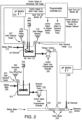
- FIG. 1 and FIG. 2 are schematic diagrams showing optional set-ups for a system to practice the present invention to form a haloamine such as a monochloramine and/or other haloamines.
- the present invention provides methods as defined in claim 1 to prepare haloamine in solution using at least one solid reactant or ingredient.
- the method comprises, consists essentially of, consists of, or includes
- the solid halogen releaser comprises a solid chlorine releaser.
- the solid halogen releaser can be a solid chlorine releaser of one type or can be a combination of a solid chlorine releaser and one or more different solid halogen releasers.
- the solid halogen releaser is a solid at room temperature (25 deg C). If more than one type of solid halogen releaser is used in step a), the multiple halogen releasers should preferably not react with each other.
- a solid halogen releaser is understood to be a composition, compound, or polymer that is dissolvable in water and has the ability to release a halogen ion in solution and be replaced by a different atom, typically a hydrogen atom, which generally is from the free ammonia or ammonium ion, once the two solutions are combined.
- the solid halogen releaser comprises a solid chlorine releaser, optionally in combination with a solid bromine releaser or solid iodine releaser or any combinations thereof.
- the solid halogen releaser can be a composition, compound, or polymer that has two or more different types of halogen atoms or substituents such that the halogen released in solution is two or more halogens.
- the composition, compound, or polymer can have bromo and chloro atoms or substituents such that bromine and chlorine are released in solution as part of the process of the present invention.
- the solid chlorine releaser can be of one type or can be two or more different solid chlorine releasers.
- the solid chlorine releaser is a solid at room temperature (25 deg C). If more than one type of solid chlorine releaser is used in step a), the multiple chlorine releasers should preferably not react with each other.
- a solid chlorine releaser is understood to be a composition, compound, or polymer that is dissolvable in water and has the ability to release a chlorine ion in solution and be replaced by a different atom, typically a hydrogen atom, which generally is from the free ammonia or ammonium ion, once the two solutions are combined.
- solid chlorine releasers examples include, but are not limited to, calcium hypochlorite, trichloroisocyanuric acid, sodium dichloroisocyanurate, dichlorodimethylhydantoin, Chloramine T, Chloramine B, or N-chlorosuccinimide, or any combinations thereof. Each of these chlorine releasers are commercially available.
- solid bromine releasers examples include, but are not limited to, 1,3-dibromo-5,5-dimethylhydantoin (DBDMH).
- DBDMH 1,3-dibromo-5,5-dimethylhydantoin
- BULAB 6133 from Buckman Laboratories, Int'l.
- An example of a solid halogen releaser that has two different halogen atoms or substituents that can be released is 1-bromo-3-chloro-5,5-dimethylhydantoin (BCDMH).
- An example of such a solid dual halogen releaser is BULAB 6058 from Buckman Laboratories, Int'l.
- the solid halogen releaser such as a solid chlorine releaser or solid dual bromine/chlorine releaser, can be dissolved in the first aqueous solution as a powder, agglomerates, pellets, bricks, or in other solid shapes.
- the solid halogen releaser can be dissolved initially to form a highly concentrated solution that can then be diluted further. Or, the solid halogen releaser can be dissolved to a dilution that is combined with the other reactant(s).
- the concentration of the halogen releaser (e.g., chlorine releaser) in the first aqueous solution can be from about 0.01 wt% to about 1 wt% (e.g., 0.1 wt% to 1 wt%, 0.5 wt% to 1 wt%) or other amounts.
- the solid halogen releaser can be metered into a known amount of solution to achieve the desired concentration and this can be done manually or by a dry feeder equipment.
- the first aqueous solution can be water and the source of the water can be of any source, such as, purified, distilled, well water, municipal water, or other water sources.
- the solid halogen releaser can be added to the aqueous solution or vice versa.
- a mixer can be used to disperse and/or better dissolve or disperse the solid halogen releaser in solution.
- the halogen releaser can be considered an acting halogenating agent in the reaction to form the desired haloamine.
- the reaction can occur at faster rates with pHs above 7, such as a pH of 8 or higher.
- the first aqueous solution with the dissolved halogen releaser(s) can have a pH of above 7, such as from about 8 to about 13, or from about 9 to about 12, or from about 10 to about 12, such as a pH between 10 and 11.
- the pH of the first aqueous solution can be kept above 7 or well above 7, or even above a pH of 9.
- a base or two or more bases can be used to keep the pH above 7.
- the pH of the aqueous solution can be adjusted to above one of the pH levels.
- a base can be added to the aqueous solution, such as NaOH.
- the base(s) can be a solid or liquid or a solid pre-dissolved in a liquid. These can be added to the aqueous solution before, during, or after the solid halogen releaser(s) is dissolved in the aqueous solution.
- the chlorine releaser can be considered an acting chlorinating agent in the reaction to form the monochloramine as shown in some of the exemplary reaction schemes below.
- the reaction occurs quickest at a pH of 8 or higher.
- the first aqueous solution with the dissolved chlorine releaser can have a pH of above 7, such as from about 8 to about 13, or from about 9 to about 12, or from about 10 to about 12, such as a pH between 10 and 11.
- the pH of the first aqueous solution is kept above 7 or well above 7, and preferably above 9. If the pH of the aqueous solution, for instance by monitoring, is dropping to a pH below 8 or below 9, or below 10, the pH of the aqueous solution can be adjusted to above one of the pH levels.
- a base can be added to the aqueous solution, such as NaOH.
- the base(s) can be a solid or liquid or a solid pre-dissolved in a liquid. These can be added to the aqueous solution before, during, or after the solid chlorine releaser is dissolved in the aqueous solution. More details of the base and preparation of the aqueous solution are provided below.
- the second reactant can be free ammonia or an ammonium ion.
- the free ammonia in solution can be from ammonia gas or be an ammonia containing liquid.
- the second reactant is free ammonia
- step b) further comprises introducing ammonia gas or liquid into the second aqueous solution to form the free ammonia in the second aqueous solution.
- the ammonia gas or liquid can be pumped into the aqueous solution or any other technique to mix a gas or liquid with an aqueous liquid can be used.
- the concentration of the free ammonia in the second aqueous solution is from about 0.01 wt% to about 20 wt% (e.g.
- step b) further comprises dissolving one or more solid ammonium salt(s) in the second aqueous solution to form the ammonium ion in the second aqueous solution.
- the ammonium salt typically a solid, can be combined in the same fashion as the solid chlorine releaser is combined with the first aqueous solution.
- the concentration of the ammonium salt in the second aqueous solution can be from about 0.01 wt% to about 50 wt% (e.g., 0.01 wt% to 40 wt%, 0.01 wt% to 30 wt%, 0.1 wt% to 30 wt%, 1.0 wt% to 30 wt%, 1.0 wt% to 15 wt%) or other amounts.
- the solid ammonium salt can be metered into a known amount of solution to achieve the desired concentration and this can be done manually or by a dry feeder equipment.
- ammonium salts examples include, but are not limited to, ammonium sulfate, ammonium nitrate, ammonium chloride, ammonium hydroxide, ammonium carbamate, ammonium bicarbonate, and ammonium bromide.
- the second aqueous solution with the free ammonia or ammonium ion can have a pH of from about 4 to about 14, such as from about 5 to 12, or 6 to 12, or 7 to 12, or 8 to 12, or 8 to 14.
- aqueous solution can, as an example, refer to a solution that is predominantly water (e.g., over 50% by volume water such as over 75% by volume, over 95% by volume, or over 99% by volume water) and retains the solution characteristics of water. Where the aqueous solution contains solvents in addition to water, water is typically the predominant solvent.
- the two solutions can be combined.
- the combining of the two solutions can be done in any fashion to mix two solutions together.
- a mixer or blender can be used. It is important in the present invention to first prepare each dilute solution (the first aqueous solution and the second aqueous solution) and then combine so as to avoid any violent reactions of the reactants.
- the combining of the two solutions can be done using liquid metering equipment.
- the amount of ammonia (in the form of free ammonia or ammonium ion) to the amount of the halogen releaser(s) can be in stochimetric amounts to form the haloamine without any residual ammonia.
- excess molar amount of the ammonia or ammonium ion can be used so as to ensure that all halogens from the halogen releaser is used in the formation of the haloamine and that excess ammonia is present to prevent or avoid unwanted by-product formation.
- the molar ratio of halogen releaser to the ammonia (or ammonium ion) can be a molar ratio of about 1:1 to about 1:4, or from about 1:1.1 to about 1:4, or from about 1:1.5 to about 1:3, or from about 1:2 to about 1:3.
- the haloamine(s) in solution is formed, for instance, immediately (e.g., within 30 seconds or less, within 15 seconds or less, within 5 seconds or less, or within 1 second or less) and can be used for biocidal treatments.
- the haloamine solution can be further diluted to any suitable concentration.
- the concentration of the haloamine (or mixture of haloamines) in solution can be from about 0.1 ppm to about 10,000 ppm or from about 1 ppm to about 10000 ppm (e.g., 10 ppm to 5,000 ppm, 10 ppm to 2,500 ppm, 10 ppm to 1,250 ppm, 10 ppm to 750 ppm, 10 ppm to 500 ppm, 10 ppm to 100 ppm) or any other ppm amount above or below any of these ranges or amounts.
- the pH of the reaction mixture e.g., each aqueous solution and the combined aqueous solution
- the pH of the haloamine(s) in solution can be above a pH of 7, and can be from about 8 pH to about 13 pH, and preferably is from about 9 to about 12 pH, or from about 10 to about 11 pH.
- the amount of ammonia (in the form of free ammonia or ammonium ion) to the amount of the chlorine releaser can be in stochimetric amounts to form the monochloramine without any residual ammonia.
- excess molar amount of the ammonia or ammonium ion can be used so as to ensure that all chlorine from the chlorine releaser is used in the formation of MCA and that excess ammonia is present to prevent or avoid unwanted by-product formation.
- the molar ratio of chlorine releaser to the ammonia (or ammonium ion) can be a molar ratio of about 1:1 to about 1:4, or from about 1:1.1 to about 1:4, or from about 1:1.5 to about 1:3, or from about 1:2 to about 1:3.
- the monochloramine (MCA) in solution is formed, generally immediately and can be used for biocidal treatments.
- the MCA solution can be further diluted to any suitable concentration.
- the concentration of the monochloramine in solution can be from about 0.1 ppm to about 10000 ppm or from about 1 ppm to about 10000 ppm (e.g., 10 ppm to 5,000 ppm, 10 ppm to 2,500 ppm, 10 ppm to 1,250 ppm, 10 ppm to 750 ppm, 10 ppm to 500 ppm, 10 ppm to 100 ppm) or any other ppm amount above or below any of these ranges or amounts.
- the pH of the reaction mixture e.g., each aqueous solution and the combined aqueous solution
- the pH of the reaction mixture remains or is alkaline throughout the process.
- the pH of the monochloramine in solution is above a pH of 7, and can be from about 8 pH to about 13 pH, and preferably is from about 9 pH to about 12 pH, or from about 10 pH to about 11 pH.
- the halogen releaser when the halogen releaser also contains a bromine releaser, the halogen releaser can dissolve in water or an aqueous solution and release HOBr, which in turn, reacts with the ammonia or ammonium ion to produce the bromamine (or bromoamine), e.g., NH 2 Br.
- the bromamine or bromoamine
- haloamine comprisinga monochloramine
- monochloramine is formed at the site of use and can be formed with minutes, or hours of use.
- monochloramine is formed as a highly concentrated solution that is made off-site and transported to the user's site and then diluted as needed.
- the disadvantage of this approach is the expense of shipping a concentrated solution, and once monochloramine is formed, it begins to break down and form by-products such as chlorate ions.
- the monochloramine is made on-site, again, generally highly concentrated solutions of MCA are made which poses many hazards.
- one or all of the reactants are solids which can be shipped to the user's site, instead of liquids.
- the reactants can be metered out as needed to form a dilute haloamine solution, such as a MCA solution or chloramine solution or mixture of halogens such as a bromamine and chloramine in solution.
- a dilute haloamine solution such as a MCA solution or chloramine solution or mixture of halogens such as a bromamine and chloramine in solution.
- a haloamine such as MCA
- the reagents can be safely stored and/or do not break-down over time.
- chloramines and particularly MCA (but not limited to)
- the chloramine(s) such as MCA
- the process permits a chloramine solution, such as a MCA solution, to be formed that is in the substantial absence of any sodium hypochlorite and/or hypochlorite ions once the chloramine or MCA is formed in solution.
- the chloramine solution or MCA solution can have a chlorate ion amount of about 1 ppm or less or even 0.5 ppm or less, or non-detectable or zero.
- a solution of a solid chlorine releaser like dichlorodimethylhydantoin, it is optional but preferred to add some additional alkalinity (e.g., as sodium or potassium hydroxide) to the solution.
- the pH of the chlorine solution can be adjusted to a pH above 7, or above 8, and preferably to a pH of 10 or approximately 11 before it is combined with the ammonia solution to produce monochloramine.
- a halogen-releasing solid chemical (13) comprising a chlorine-releasing solid chemical is introduced into a mix tank (15) containing dilution water, where the dilution water (e.g. aqueous solution) can be fed to the mix tank by any means (17).
- the solution in the tank is agitated by means of a motor-driven mixer (19) or other mixing device.
- the volume of water in the tank is known and is regulated by means of level switches (not shown).
- the amount of halogen-releasing solid chemical is known and is measured by the solid-chemical feeder using weight or volume.
- Control of the solid-chemical feeder and the water volume in the tank is provided either by a programmable controller (21) or by the facility's distributed control system (DCS) (not shown).
- the pH of the solution is measured by means of a pH monitor (23), the output of which is connected to the programmable controller, which also controls the solid chemical feeder (45) that feeds the solid sodium or potassium hydroxide from a supply (45) to the mix tank.
- the programmable controller controls the solid chemical feeder (45) that feeds the solid sodium or potassium hydroxide from a supply (45) to the mix tank.
- the solution is injected or otherwise introduced (31) into a stream of dilution water (25) that contains, as described below, the ammonia solution.
- This introduction can be done by way of a pump (27) that is connected to the programmable controller using for instance a control signal (29).
- an aqueous solution of ammonia (33) is injected into a stream of dilution water so that the total ammonia concentration (NH 3 + NH 4 + ) in the water is from about 0.01-0.5 wt% as NH 3 , preferably from about 0.03-0.1 wt% as NH 3 .
- An ammonia solution tank (37) that can have a concentration of from about 0.01 wt% to about 40 wt% of ammonia can be outputted by way of a pump (35) to the dilution stream (25).
- the pumps (27 and 35) that inject the alkaline chlorine solution and the ammonia solution are both controlled by the programmable controller, which ensures that the solutions are combined in a molar ratio that provide at least a 1:1 (or greater) molar ratio of ammonia to halogen (e.g., chlorine and/or bromine) in the final mixture.
- halogen e.g., chlorine and/or bromine
- the pH of the final solution of the haloamine (41) comprising MCA can be monitored via a monitor (39) to ensure that it is in the range of from about 10 to about 11.
- One or more mixers (43) e.g., static mixers
- static mixers in the line that has the dilution water (25) can be used.
- a set-up using solid starting materials for each reactant can be used.
- a solid base like NaOH
- a liquid base is used, for instance, a NaOH solution in a tank (49) is used and pumped via a pump (51) to the mix tank (15).
- the chemical feeder arrangement used in FIG. 1 for the NaOH can be used to form the NaOH solution in the tank (49).
- either or both of the liquid solutions may be prepared on-site using solid forms of the chemicals, and using, for instance, chemical feeder arrangements as shown.
- a solid-chemical feeder (57) may be used to add ammonium salt (55) into the mix tank (61) that includes optionally a mixer (53).
- Dilution water (59) can be metered in, to obtain known volumes using, for instance, level switches and the like.
- the ammonia solution in mix tank (61) can be pumped via pump (35) to the dilution water stream.
- the use of dilution water (25) is completely optional, since the desired concentration of the two reactants may already be obtained via (33) and (31).
- Static mixer(s) (43) can be used to further combine or mix the reactants together.
- the haloamine solution is stable, for instance for at least 2 hours (e.g., 2 hours to 6 hours or more, or 2 hours to 4 hours or more), wherein the haloamine starting concentration initially formed does not change more than 15%, or not more than 10%, or not more than 5% in ppm haloamine concentration during this time period.
- the MCA solution is stable, for instance for at least 2 hours (e.g., 2 hours to 6 hours or more, or 2 hours to 4 hours or more), wherein the MCA starting concentration initially formed does not change more than 15%, or not more than 10%, or not more than 5% in ppm MCA concentration during this time period.
- the MCA solution formed can be essentially free, or free of other chloramine compounds, such as dichloramine and/or nitrogen trichloride, such as below 10 ppm or about 0 ppm or 0 ppm.
- the haloamine solution e.g., MCA solution, or chloramine solution
- the haloamine solution can be applied to the area to be treated, which can be a surface or solution or medium for biocidal control.
- the surface or solution can be any surface or solution that typically receives MCA treatment or other haloamine treatment.
- the haloamine solution e.g., MCA aqueous solution
- MCA aqueous solution can be used in a method for controlling the growth of at least one microorganism in or on a product, material, or medium susceptible to attack by the microorganism. This method includes the step of adding to, applying to, or otherwise contacting the product, material, or medium with the haloamine solution.
- the surface or solution can be a food processing plant, sugar mill, paper mill, or fiberglass insulation plant.
- the surface or solution can be a material or medium, such as, wood pulp or paper, wood chips, lumber, paints, leathers, adhesives, coatings, animal hides, tanning liquor, paper mill liquor, fiberglass, dairy processing, poultry processing, meat packing facilities, meat processing, metalworking fluids, petrochemicals, pharmaceutical formulations, cooling water, recreational water, dyes, clays, mineral slurries, cationic surfactants, formulations with cationic surfactants, influent water, waste water, pasteurizers, retort cookers, cosmetic formulations, toiletry formulations, textiles, geological, drilling lubricants, agrochemical compositions for crop or seed protection, sugar beet and/or sugar cane processing, flour and/or starch processing, bioethanol production and/or processing (e.g., any one or more steps such as wet grinding), dry grinding processing in ethanol production, cellulosic processes, and any food and/or beverage production and/or processing.
- a material or medium such as, wood pulp or paper,
- the surface can be a surface, device, and/or machinery utilized in meat, vegetable, or fruit preparation or processing or packing, including, but not limited to, the items mentioned herein.
- the haloamine aqueous solution such as the monochloramine aqueous solution, is useful in preserving various type of products, media, or materials susceptible to attack by at least one microorganism.
- the use of the haloamine solution, such as the monochloramine solution is useful in agrochemical formulations for the purpose of protecting seeds or crops against microbial spoilage. These methods of preserving and protecting are accomplished by adding or otherwise contacting the haloamine aqueous solution to the products, media, or materials in an amount that can preferably be microbicidally to preserve or control the products, media, or materials from attack by at least one microorganism or to effectively protect the seeds or crops against microbial spoilage.
- haloamine solution e.g., MCA solution
- aqueous systems such as ones subject to microbiological growth, attack, and degradation.
- aqueous systems may be or include, but are not limited to, fresh, brackish or saltwater systems.
- exemplary aqueous systems include, but are not limited to, latexes, surfactants, dispersants, stabilizers, thickeners, adhesives, starches, waxes, proteins, emulsifying agents, cellulose products, metal working fluids, cooling water, waste water, aqueous emulsions, aqueous detergents, coating compositions, paint compositions, and resins formulated in aqueous solutions, emulsions or suspensions.
- microbiological deterioration of aqueous systems can be prevented or controlled including, but not limited to, related water-handling system, which may include cooling towers, pumps, heat exchangers, and pipelines, heating systems, scrubbing systems, and other similar systems, and the like.
- related water-handling system which may include cooling towers, pumps, heat exchangers, and pipelines, heating systems, scrubbing systems, and other similar systems, and the like.
- the haloamine solution (e.g., MCA solution) can be used to protect or treat or preserve foods and/or surfaces in contact with food, such as fresh foods (e.g., vegetables and fruits) or meats, or dairy products or processing, for instance, to extend shelf life.
- the present invention can be used to protect or treat facilities that process food (meats, fruits, vegetables) including, but not limited to, the surfaces and machinery and devices that come into contact with the food or animal.
- Particular examples include, but are not limited to, sugar beet, sugar cane, corn, flour, starch containing foods, sugar containing foods and the like.
- the haloamine solution (e.g., MCA solution) can be useful in agrochemical formulations for the purpose of protecting seeds or crops against microbial spoilage.
- the pH of the haloamine prepared solutions can be from about 8 to about 12, such as from about 9 to about 12, or from 9 to 11.5, or from 10 to 12, or from about 10 to about 11.
- the aqueous solution can further include least one pH control agent, such as at least one base or at least one acid, and as indicated, the pH control agent, if used, will generally be at least one base.
- the aqueous solution can include at least one base, such as sodium hydroxide and/or other base. The addition or presence of at least one base along with the monochloramine in the aqueous solution can provide optimal control of pathogenic bacteria.
- the aqueous haloamine solution may comprise, consist essentially of, consist of, or include a haloamine comprising a monochloramine in solution and a dehalogenated organic compound in solution.
- the dehalogenated organic compound is a reference to a halogen releaser(s) that has exchanged one or all of the halogens on the halogen releaser compound for another molecule which typically is a hydrogen atom.
- An aqueous monochloramine solution may comprise, consist essentially of, consist of, or include a monochloramine in solution and a dechlorinated organic compound in solution.
- the dechlorinated organic compound is a reference to a chlorine releaser that has exchanged one or all of the chlorines on the chlorine releaser compound for another molecule which typically is a hydrogen atom.
- dechlorinated organic compounds include, but are not limited to, calcium hydroxide, triisocyanuric acid, sodium diisocyanurate, dihydrogendimethylhydantoin, Amine T, Amine B, or N-succinimide, or any combinations thereof.
- the aqueous haloamine solution can have a concentration of from about 0.1 ppm to about 10,000 or from about 10 ppm to about 10000 ppm
- the dehalogenated organic compound can have a concentration of from about 1 ppm to about 5,000 ppm, or from about 0.1 ppm to 5,000 ppm, or from about 0.01 ppm to about 5,000 ppm, or from about 0.05 ppm to about 5000 ppm, or from about 5 ppm to about 5000 ppm (e.g., 5 ppm to 2500 ppm, 5 ppm to 1250 ppm, 5 ppm to 750 ppm, 10 ppm to 500 ppm, 25 ppm to 250 ppm).
- the aqueous monochloramine solution can have a concentration of from about 0.1 ppm to about 10000 ppm or from about 10 ppm to about 10000 ppm
- the dechlorinated organic compound can be at a concentration of from about 1 ppm to about 5,000 ppm, or from about 0.1 ppm to 5,000 ppm, or from about 0.01 ppm to about 5,000 ppm, or from about 0.05 ppm to about 5000 ppm, or from about 5 ppm to about 5000 ppm (e.g., 5 ppm to 2500 ppm, 5 ppm to 1250 ppm, 5 ppm to 750 ppm, 10 ppm to 500 ppm, 25 ppm to 250 ppm).
- the aqueous monochloramine solution can have 1 ppm or less of chlorate ions, such as from about 0 ppm to 1 ppm, or from about 0.1 ppm to 0.9 ppm.
- the aqueous haloamine solution can consist essentially of or consist of the haloamine in solution and the dehalogenated organic compound in solution.
- the aqueous haloamine can be in the absence of any other actives.
- the aqueous monochloramine solution can consist essentially of or consist of the monochloramine in solution and the dechlorinated organic compound in solution.
- the aqueous monochloramine can be in the absence of any other actives.
- controlling or inhibiting the growth of at least one microorganism includes the reduction and/or the prevention of such growth.
- controlling i.e., preventing
- the growth of the microorganism is inhibited. In other words, there is no growth or essentially no growth of the microorganism.
- Controlling the growth of at least one microorganism maintains the microorganism population at a desired level, reduces the population to a desired level (even to undetectable limits, e.g., zero population), and/or inhibits the growth of the microorganism.
- products, material, or media susceptible to attack by the at least one microorganism can be preserved from this attack and the resulting spoilage and other detrimental effects caused by the microorganism.
- controlling the growth of at least one microorganism also includes biostatically reducing and/or maintaining a low level of at least one microorganism such that the attack by the microorganism and any resulting spoilage or other detrimental effects are mitigated, i.e., the microorganism growth rate or microorganism attack rate is slowed down and/or eliminated.
- At least one base can be present or included in either the method of forming the aqueous solutions or the formed haloamine solution (e.g. MCA solution), for instance, to adjust, e.g., fine-tune, the pH for optimal effect of the haloamine (e.g. MCA) from a biocidal efficiency standpoint, or cost perspective, or both.
- Any base can be used herein as a pH-adjusting adjunct for adjusting the pH (e.g., increasing pH).
- the base can be an alkali metal hydroxide, alkaline earth metal hydroxide, or any combination thereof.
- the base can be sodium hydroxide, potassium hydroxide, calcium hydroxide, barium hydroxide, magnesium hydroxide, sodium carbonate, or any combination thereof.
- Preferred bases for pH adjustment can include water-soluble alkalis such as sodium hydroxide, potassium hydroxide, or mixtures thereof.
- the base can be used as an aqueous solution.
- the base can be added to the aqueous solution before treatment of a product, material or medium, and/or can be added to the product, material or medium before or after treatment with the aqueous solution, or both.
- the base can be used as a pH control agent.
- a pH control agent can be used which is at least one acid.
- the at least one acid if used, can be acetic acid, citric acid, hydrochloric acid, sulfuric acid, or other acids, or alum, or any combination thereof.
- the amount of base added can be the amount needed to adjust the aqueous solution to the desired pH value or range.
- concentration of the base can be any commercially available concentration (e.g., 0.1 N or 0.01N, or concentrated base) and/or can be diluted to any desired or appropriate concentration.
- the mode as well as the rates of application of the aqueous solution of this invention could vary depending upon the intended use.
- the aqueous solution could be applied by spraying or brushing onto the material or product.
- the material or product in question could also be treated by dipping in a suitable formulation of the aqueous solution.
- the aqueous solution In a liquid or liquid-like medium, the aqueous solution could be added into the medium by pouring, or by metering with a suitable device so that a solution or a dispersion of the aqueous solution can be produced.
- a molar equivalent amount of BUSPERSE 2454 was ⁇ 0.7 ml for a one liter solution. A 30% molar overdosage was used and thus, 1 ml of BUSPERSE 2454 was added to the aqueous solution of Dantochlor. The combined solution had the following characteristics:
- the molar excess of the ammonium sulfate ensured excess ammonia in order to prevent unwanted by-product formation.
- the concentration of chlorate ion in this generated MCA solution (200 ppm) was found to be very low, approximately 1 ppm.
- the chlorate ion concentration was also analyzed for various aqueous solutions of the Dantochlor product (1.5 - 72 ppm); chlorate ion was not detected above the method's detection limit of 0.5 ppm.
Landscapes
- Chemical & Material Sciences (AREA)
- Organic Chemistry (AREA)
- Life Sciences & Earth Sciences (AREA)
- Inorganic Chemistry (AREA)
- Engineering & Computer Science (AREA)
- Plant Pathology (AREA)
- Dentistry (AREA)
- Environmental Sciences (AREA)
- Agronomy & Crop Science (AREA)
- Pest Control & Pesticides (AREA)
- Zoology (AREA)
- Health & Medical Sciences (AREA)
- Wood Science & Technology (AREA)
- General Health & Medical Sciences (AREA)
- Environmental & Geological Engineering (AREA)
- Hydrology & Water Resources (AREA)
- Water Supply & Treatment (AREA)
- Agricultural Chemicals And Associated Chemicals (AREA)
- Low-Molecular Organic Synthesis Reactions Using Catalysts (AREA)
- Organic Low-Molecular-Weight Compounds And Preparation Thereof (AREA)
Claims (13)
- Verfahren zum Herstellen eines Haloamins, wobei das Verfahren umfasst:a) Auflösen mindestens eines festen Halogenfreisetzers in einer ersten wässrigen Lösung, um einen verdünnten ersten Reaktanten zu bilden;b) Herstellen eines zweiten Reaktanten aus freiem Ammoniak oder Ammoniumion in einer zweiten wässrigen Lösung, um einen verdünnten zweiten Reaktanten zu bilden; undc) Kombinieren des verdünnten ersten Reaktanten und des verdünnten zweiten Reaktanten, um das Haloamin in Lösung zu bilden;wobei das Haloamin ein Monochloramin umfasst, der feste Halogenfreisetzer einen festen Chlorfreisetzer umfasst, und wobei Konzentration des Chlorfreisetzers in der ersten wässrigen Lösung von etwa 0,01 Gew.-% bis etwa 10 Gew.-% beträgt und Konzentration des Ammoniaks oder Ammoniumions in der zweiten wässrigen Lösung von etwa 0,01 Gew.-% bis etwa 20 Gew.-% beträgt.
- Verfahren nach Anspruch 1, wobei das Haloamin aus einem Monochloramin besteht.
- Verfahren nach Anspruch 1 oder Anspruch 2, wobei der feste Chlorfreisetzer Calciumhypochlorit, Trichlorisocyanursäure, Natriumdichlorisocyanurat, Dichlordimethylhydantoin, Chloramin T, Chloramin B oder N-Chlorsuccinimid oder beliebige Kombinationen davon umfasst.
- Verfahren nach einem der Ansprüche 1 bis 3, wobei der zweite Reaktant das freie Ammoniak ist und der Schritt b) weiter Einführen von Ammoniakgas in die zweite wässrige Lösung umfasst, um das freie Ammoniak in der zweiten wässrigen Lösung zu bilden.
- Verfahren nach einem der Ansprüche 1 bis 3, wobei der zweite Reaktant das Ammoniumion ist und der Schritt b) weiter Auflösen eines festen Ammoniumsalzes in der zweiten wässrigen Lösung umfasst, um das Ammoniumion in der zweiten wässrigen Lösung zu bilden.
- Verfahren nach einem vorstehenden Anspruch, wobei das Verfahren in Abwesenheit jeglichen Natriumhypochlorits oder jeglicher Hypochloritionen ist, sobald das Monochloramin gebildet ist.
- Verfahren nach einem vorstehenden Anspruch, wobei das Monochloramin in Lösung eine Chlorationenmenge von 1 ppm oder weniger aufweist.
- Verfahren nach einem vorstehenden Anspruch, wobei die erste wässrige Lösung einen pH-Wert von 6 bis 13 aufweist und die zweite wässrige Lösung einen pH-Wert von 6 bis 13 aufweist.
- Verfahren nach einem vorstehenden Anspruch, wobei das Monochloramin in Lösung bei einer Konzentration von etwa 0,1 ppm bis etwa 10000 ppm vorhanden ist.
- Verfahren nach einem vorstehenden Anspruch, wobei das Monochloramin in Lösung bei einem pH-Wert von etwa 6 bis etwa 13 vorhanden ist.
- Verfahren nach einem vorstehenden Anspruch, wobei die erste wässrige Lösung einen pH-Wert über 7 aufweist.
- Verfahren nach einem vorstehenden Anspruch, wobei eine Base zu der ersten wässrigen Lösung hinzugefügt wird.
- Verfahren nach Anspruch 12, wobei die Base NaOH ist.
Applications Claiming Priority (2)
| Application Number | Priority Date | Filing Date | Title |
|---|---|---|---|
| US201862624186P | 2018-01-31 | 2018-01-31 | |
| PCT/US2019/015499 WO2019152332A1 (en) | 2018-01-31 | 2019-01-29 | Methods to prepare haloamines using at least one solid reactant and products made therefrom |
Publications (3)
| Publication Number | Publication Date |
|---|---|
| EP3746399A1 EP3746399A1 (de) | 2020-12-09 |
| EP3746399B1 true EP3746399B1 (de) | 2024-03-06 |
| EP3746399C0 EP3746399C0 (de) | 2024-03-06 |
Family
ID=65409574
Family Applications (1)
| Application Number | Title | Priority Date | Filing Date |
|---|---|---|---|
| EP19705000.8A Active EP3746399B1 (de) | 2018-01-31 | 2019-01-29 | Verfahren zur herstellung von haloaminen unter verwendung von mindestens einem festen reaktanten und daraus hergestellte produkte |
Country Status (7)
| Country | Link |
|---|---|
| US (1) | US20190233287A1 (de) |
| EP (1) | EP3746399B1 (de) |
| CN (1) | CN111670160A (de) |
| AU (1) | AU2019213605A1 (de) |
| CA (1) | CA3090187A1 (de) |
| MX (1) | MX2020008088A (de) |
| WO (1) | WO2019152332A1 (de) |
Families Citing this family (4)
| Publication number | Priority date | Publication date | Assignee | Title |
|---|---|---|---|---|
| JP2022510262A (ja) * | 2018-11-30 | 2022-01-26 | バックマン ラボラトリーズ インターナショナル,インコーポレイティド | ハロアミン及びハロアミン溶液を製造する方法 |
| KR20230018383A (ko) * | 2020-04-29 | 2023-02-07 | 솔레니스 테크놀러지스, 엘.피. | 할로아민 살생물제의 생산을 제어하기 위한 방법 및 장치 |
| CN112063409B (zh) * | 2020-09-08 | 2022-04-26 | 重庆科技学院 | 基于多相气固流态化反应的含氯塑料热解制油工艺及装置 |
| CN115626703B (zh) * | 2022-10-31 | 2025-01-10 | 山东大学 | 利用一氯胺预氧化强化混凝高效除藻的方法 |
Family Cites Families (3)
| Publication number | Priority date | Publication date | Assignee | Title |
|---|---|---|---|---|
| CA2620449C (en) * | 2005-08-26 | 2012-03-27 | Hercules Incorporated | Method and apparatus for producing synergistic biocide |
| US9896360B2 (en) * | 2014-05-16 | 2018-02-20 | Sanipur S.R.L. | Hot sanitary water system and method for disinfection of hot water |
| US20150329387A1 (en) * | 2014-05-19 | 2015-11-19 | Buckman Laboratories International, Inc. | Systems and methods for generating haloamines and application thereof in oil and gas operations |
-
2019
- 2019-01-29 US US16/260,159 patent/US20190233287A1/en not_active Abandoned
- 2019-01-29 CN CN201980011286.4A patent/CN111670160A/zh active Pending
- 2019-01-29 EP EP19705000.8A patent/EP3746399B1/de active Active
- 2019-01-29 AU AU2019213605A patent/AU2019213605A1/en not_active Abandoned
- 2019-01-29 CA CA3090187A patent/CA3090187A1/en active Pending
- 2019-01-29 MX MX2020008088A patent/MX2020008088A/es unknown
- 2019-01-29 WO PCT/US2019/015499 patent/WO2019152332A1/en not_active Ceased
Also Published As
| Publication number | Publication date |
|---|---|
| MX2020008088A (es) | 2020-09-24 |
| EP3746399A1 (de) | 2020-12-09 |
| CN111670160A (zh) | 2020-09-15 |
| CA3090187A1 (en) | 2019-08-08 |
| BR112020015644A2 (pt) | 2020-12-08 |
| AU2019213605A1 (en) | 2020-09-10 |
| WO2019152332A1 (en) | 2019-08-08 |
| EP3746399C0 (de) | 2024-03-06 |
| US20190233287A1 (en) | 2019-08-01 |
Similar Documents
| Publication | Publication Date | Title |
|---|---|---|
| EP3746399B1 (de) | Verfahren zur herstellung von haloaminen unter verwendung von mindestens einem festen reaktanten und daraus hergestellte produkte | |
| US8048435B2 (en) | Preparation of concentrated aqueous bromine solutions and biocidal applications thereof | |
| US7285224B2 (en) | Process and compositions for the disinfection of waters | |
| CN108347926B (zh) | 包含一氯胺和过酸的杀微生物水溶液及其使用方法 | |
| US6069142A (en) | Synergistic antimicrobial combination of 4,5-dichloro-2-N-octyl-4-isothiazolin-3-one and a mixture of a chlorinated isocyanurate and a bromide compound and methods of using same | |
| CA1324942C (en) | Method for the control of biofouling in recirculating water systems | |
| BR112020015644B1 (pt) | Método para preparar uma haloamina | |
| JP7570356B2 (ja) | 殺生物剤を生成するための方法 | |
| Nalepa | 25 Years of Bromine Chemistry In Industrial Water Systems: A Review | |
| US10212937B2 (en) | Microbicidal aqueous solutions including a monochloramine and a peracid, and methods of using the same | |
| JP4636333B2 (ja) | 微生物を殺滅する方法 | |
| HK40066257A (zh) | 用於制造一杀生物剂的方法 | |
| WO2017074720A1 (en) | Microbicidal compositions including monochloramine and a peracid, and methods of using the same | |
| US8293795B1 (en) | Preparation of concentrated aqueous bromine solutions and biocidal applications thereof |
Legal Events
| Date | Code | Title | Description |
|---|---|---|---|
| STAA | Information on the status of an ep patent application or granted ep patent |
Free format text: STATUS: UNKNOWN |
|
| STAA | Information on the status of an ep patent application or granted ep patent |
Free format text: STATUS: THE INTERNATIONAL PUBLICATION HAS BEEN MADE |
|
| PUAI | Public reference made under article 153(3) epc to a published international application that has entered the european phase |
Free format text: ORIGINAL CODE: 0009012 |
|
| STAA | Information on the status of an ep patent application or granted ep patent |
Free format text: STATUS: REQUEST FOR EXAMINATION WAS MADE |
|
| 17P | Request for examination filed |
Effective date: 20200722 |
|
| AK | Designated contracting states |
Kind code of ref document: A1 Designated state(s): AL AT BE BG CH CY CZ DE DK EE ES FI FR GB GR HR HU IE IS IT LI LT LU LV MC MK MT NL NO PL PT RO RS SE SI SK SM TR |
|
| AX | Request for extension of the european patent |
Extension state: BA ME |
|
| DAV | Request for validation of the european patent (deleted) | ||
| DAX | Request for extension of the european patent (deleted) | ||
| STAA | Information on the status of an ep patent application or granted ep patent |
Free format text: STATUS: EXAMINATION IS IN PROGRESS |
|
| 17Q | First examination report despatched |
Effective date: 20211125 |
|
| RIC1 | Information provided on ipc code assigned before grant |
Ipc: C02F 103/42 20060101ALI20230208BHEP Ipc: C02F 103/32 20060101ALI20230208BHEP Ipc: C02F 103/28 20060101ALI20230208BHEP Ipc: C02F 103/24 20060101ALI20230208BHEP Ipc: C02F 103/16 20060101ALI20230208BHEP Ipc: C02F 103/02 20060101ALI20230208BHEP Ipc: C02F 1/76 20060101ALI20230208BHEP Ipc: C01B 21/083 20060101ALI20230208BHEP Ipc: C02F 1/50 20060101ALI20230208BHEP Ipc: A01N 33/02 20060101ALI20230208BHEP Ipc: A01N 59/00 20060101ALI20230208BHEP Ipc: C01B 21/09 20060101AFI20230208BHEP |
|
| GRAP | Despatch of communication of intention to grant a patent |
Free format text: ORIGINAL CODE: EPIDOSNIGR1 |
|
| STAA | Information on the status of an ep patent application or granted ep patent |
Free format text: STATUS: GRANT OF PATENT IS INTENDED |
|
| INTG | Intention to grant announced |
Effective date: 20230320 |
|
| GRAJ | Information related to disapproval of communication of intention to grant by the applicant or resumption of examination proceedings by the epo deleted |
Free format text: ORIGINAL CODE: EPIDOSDIGR1 |
|
| STAA | Information on the status of an ep patent application or granted ep patent |
Free format text: STATUS: EXAMINATION IS IN PROGRESS |
|
| INTC | Intention to grant announced (deleted) | ||
| GRAP | Despatch of communication of intention to grant a patent |
Free format text: ORIGINAL CODE: EPIDOSNIGR1 |
|
| STAA | Information on the status of an ep patent application or granted ep patent |
Free format text: STATUS: GRANT OF PATENT IS INTENDED |
|
| INTG | Intention to grant announced |
Effective date: 20231011 |
|
| GRAS | Grant fee paid |
Free format text: ORIGINAL CODE: EPIDOSNIGR3 |
|
| GRAA | (expected) grant |
Free format text: ORIGINAL CODE: 0009210 |
|
| STAA | Information on the status of an ep patent application or granted ep patent |
Free format text: STATUS: THE PATENT HAS BEEN GRANTED |
|
| AK | Designated contracting states |
Kind code of ref document: B1 Designated state(s): AL AT BE BG CH CY CZ DE DK EE ES FI FR GB GR HR HU IE IS IT LI LT LU LV MC MK MT NL NO PL PT RO RS SE SI SK SM TR |
|
| REG | Reference to a national code |
Ref country code: CH Ref legal event code: EP |
|
| REG | Reference to a national code |
Ref country code: DE Ref legal event code: R096 Ref document number: 602019047713 Country of ref document: DE |
|
| REG | Reference to a national code |
Ref country code: IE Ref legal event code: FG4D |
|
| U01 | Request for unitary effect filed |
Effective date: 20240306 |
|
| U07 | Unitary effect registered |
Designated state(s): AT BE BG DE DK EE FI FR IT LT LU LV MT NL PT SE SI Effective date: 20240313 |
|
| PG25 | Lapsed in a contracting state [announced via postgrant information from national office to epo] |
Ref country code: GR Free format text: LAPSE BECAUSE OF FAILURE TO SUBMIT A TRANSLATION OF THE DESCRIPTION OR TO PAY THE FEE WITHIN THE PRESCRIBED TIME-LIMIT Effective date: 20240607 |
|
| PG25 | Lapsed in a contracting state [announced via postgrant information from national office to epo] |
Ref country code: HR Free format text: LAPSE BECAUSE OF FAILURE TO SUBMIT A TRANSLATION OF THE DESCRIPTION OR TO PAY THE FEE WITHIN THE PRESCRIBED TIME-LIMIT Effective date: 20240306 Ref country code: RS Free format text: LAPSE BECAUSE OF FAILURE TO SUBMIT A TRANSLATION OF THE DESCRIPTION OR TO PAY THE FEE WITHIN THE PRESCRIBED TIME-LIMIT Effective date: 20240606 |
|
| PG25 | Lapsed in a contracting state [announced via postgrant information from national office to epo] |
Ref country code: ES Free format text: LAPSE BECAUSE OF FAILURE TO SUBMIT A TRANSLATION OF THE DESCRIPTION OR TO PAY THE FEE WITHIN THE PRESCRIBED TIME-LIMIT Effective date: 20240306 |
|
| PG25 | Lapsed in a contracting state [announced via postgrant information from national office to epo] |
Ref country code: RS Free format text: LAPSE BECAUSE OF FAILURE TO SUBMIT A TRANSLATION OF THE DESCRIPTION OR TO PAY THE FEE WITHIN THE PRESCRIBED TIME-LIMIT Effective date: 20240606 Ref country code: NO Free format text: LAPSE BECAUSE OF FAILURE TO SUBMIT A TRANSLATION OF THE DESCRIPTION OR TO PAY THE FEE WITHIN THE PRESCRIBED TIME-LIMIT Effective date: 20240606 Ref country code: HR Free format text: LAPSE BECAUSE OF FAILURE TO SUBMIT A TRANSLATION OF THE DESCRIPTION OR TO PAY THE FEE WITHIN THE PRESCRIBED TIME-LIMIT Effective date: 20240306 Ref country code: GR Free format text: LAPSE BECAUSE OF FAILURE TO SUBMIT A TRANSLATION OF THE DESCRIPTION OR TO PAY THE FEE WITHIN THE PRESCRIBED TIME-LIMIT Effective date: 20240607 Ref country code: ES Free format text: LAPSE BECAUSE OF FAILURE TO SUBMIT A TRANSLATION OF THE DESCRIPTION OR TO PAY THE FEE WITHIN THE PRESCRIBED TIME-LIMIT Effective date: 20240306 |
|
| PG25 | Lapsed in a contracting state [announced via postgrant information from national office to epo] |
Ref country code: IS Free format text: LAPSE BECAUSE OF FAILURE TO SUBMIT A TRANSLATION OF THE DESCRIPTION OR TO PAY THE FEE WITHIN THE PRESCRIBED TIME-LIMIT Effective date: 20240706 |
|
| PG25 | Lapsed in a contracting state [announced via postgrant information from national office to epo] |
Ref country code: SM Free format text: LAPSE BECAUSE OF FAILURE TO SUBMIT A TRANSLATION OF THE DESCRIPTION OR TO PAY THE FEE WITHIN THE PRESCRIBED TIME-LIMIT Effective date: 20240306 |
|
| PG25 | Lapsed in a contracting state [announced via postgrant information from national office to epo] |
Ref country code: CZ Free format text: LAPSE BECAUSE OF FAILURE TO SUBMIT A TRANSLATION OF THE DESCRIPTION OR TO PAY THE FEE WITHIN THE PRESCRIBED TIME-LIMIT Effective date: 20240306 |
|
| PG25 | Lapsed in a contracting state [announced via postgrant information from national office to epo] |
Ref country code: PL Free format text: LAPSE BECAUSE OF FAILURE TO SUBMIT A TRANSLATION OF THE DESCRIPTION OR TO PAY THE FEE WITHIN THE PRESCRIBED TIME-LIMIT Effective date: 20240306 |
|
| PG25 | Lapsed in a contracting state [announced via postgrant information from national office to epo] |
Ref country code: SK Free format text: LAPSE BECAUSE OF FAILURE TO SUBMIT A TRANSLATION OF THE DESCRIPTION OR TO PAY THE FEE WITHIN THE PRESCRIBED TIME-LIMIT Effective date: 20240306 |
|
| PG25 | Lapsed in a contracting state [announced via postgrant information from national office to epo] |
Ref country code: SM Free format text: LAPSE BECAUSE OF FAILURE TO SUBMIT A TRANSLATION OF THE DESCRIPTION OR TO PAY THE FEE WITHIN THE PRESCRIBED TIME-LIMIT Effective date: 20240306 Ref country code: SK Free format text: LAPSE BECAUSE OF FAILURE TO SUBMIT A TRANSLATION OF THE DESCRIPTION OR TO PAY THE FEE WITHIN THE PRESCRIBED TIME-LIMIT Effective date: 20240306 Ref country code: RO Free format text: LAPSE BECAUSE OF FAILURE TO SUBMIT A TRANSLATION OF THE DESCRIPTION OR TO PAY THE FEE WITHIN THE PRESCRIBED TIME-LIMIT Effective date: 20240306 Ref country code: PL Free format text: LAPSE BECAUSE OF FAILURE TO SUBMIT A TRANSLATION OF THE DESCRIPTION OR TO PAY THE FEE WITHIN THE PRESCRIBED TIME-LIMIT Effective date: 20240306 Ref country code: IS Free format text: LAPSE BECAUSE OF FAILURE TO SUBMIT A TRANSLATION OF THE DESCRIPTION OR TO PAY THE FEE WITHIN THE PRESCRIBED TIME-LIMIT Effective date: 20240706 Ref country code: CZ Free format text: LAPSE BECAUSE OF FAILURE TO SUBMIT A TRANSLATION OF THE DESCRIPTION OR TO PAY THE FEE WITHIN THE PRESCRIBED TIME-LIMIT Effective date: 20240306 |
|
| REG | Reference to a national code |
Ref country code: DE Ref legal event code: R097 Ref document number: 602019047713 Country of ref document: DE |
|
| PLBE | No opposition filed within time limit |
Free format text: ORIGINAL CODE: 0009261 |
|
| STAA | Information on the status of an ep patent application or granted ep patent |
Free format text: STATUS: NO OPPOSITION FILED WITHIN TIME LIMIT |
|
| 26N | No opposition filed |
Effective date: 20241209 |
|
| U20 | Renewal fee for the european patent with unitary effect paid |
Year of fee payment: 7 Effective date: 20250127 |
|
| REG | Reference to a national code |
Ref country code: CH Ref legal event code: PL |
|
| PG25 | Lapsed in a contracting state [announced via postgrant information from national office to epo] |
Ref country code: MC Free format text: LAPSE BECAUSE OF FAILURE TO SUBMIT A TRANSLATION OF THE DESCRIPTION OR TO PAY THE FEE WITHIN THE PRESCRIBED TIME-LIMIT Effective date: 20240306 |
|
| GBPC | Gb: european patent ceased through non-payment of renewal fee |
Effective date: 20250129 |
|
| PG25 | Lapsed in a contracting state [announced via postgrant information from national office to epo] |
Ref country code: GB Free format text: LAPSE BECAUSE OF NON-PAYMENT OF DUE FEES Effective date: 20250129 |
|
| PG25 | Lapsed in a contracting state [announced via postgrant information from national office to epo] |
Ref country code: CH Free format text: LAPSE BECAUSE OF NON-PAYMENT OF DUE FEES Effective date: 20250131 |
|
| PG25 | Lapsed in a contracting state [announced via postgrant information from national office to epo] |
Ref country code: IE Free format text: LAPSE BECAUSE OF NON-PAYMENT OF DUE FEES Effective date: 20250129 |
|
| U20 | Renewal fee for the european patent with unitary effect paid |
Year of fee payment: 8 Effective date: 20260127 |