EP3748626A1 - Appareil de mélange et procédé de mélange - Google Patents
Appareil de mélange et procédé de mélange Download PDFInfo
- Publication number
- EP3748626A1 EP3748626A1 EP20177659.8A EP20177659A EP3748626A1 EP 3748626 A1 EP3748626 A1 EP 3748626A1 EP 20177659 A EP20177659 A EP 20177659A EP 3748626 A1 EP3748626 A1 EP 3748626A1
- Authority
- EP
- European Patent Office
- Prior art keywords
- audio signal
- spectrum
- amplitude
- amplitude spectrum
- phase
- Prior art date
- Legal status (The legal status is an assumption and is not a legal conclusion. Google has not performed a legal analysis and makes no representation as to the accuracy of the status listed.)
- Granted
Links
Images








Classifications
-
- G—PHYSICS
- G10—MUSICAL INSTRUMENTS; ACOUSTICS
- G10H—ELECTROPHONIC MUSICAL INSTRUMENTS; INSTRUMENTS IN WHICH THE TONES ARE GENERATED BY ELECTROMECHANICAL MEANS OR ELECTRONIC GENERATORS, OR IN WHICH THE TONES ARE SYNTHESISED FROM A DATA STORE
- G10H1/00—Details of electrophonic musical instruments
- G10H1/46—Volume control
-
- H—ELECTRICITY
- H04—ELECTRIC COMMUNICATION TECHNIQUE
- H04H—BROADCAST COMMUNICATION
- H04H60/00—Arrangements for broadcast applications with a direct linking to broadcast information or broadcast space-time; Broadcast-related systems
- H04H60/02—Arrangements for generating broadcast information; Arrangements for generating broadcast-related information with a direct linking to broadcast information or to broadcast space-time; Arrangements for simultaneous generation of broadcast information and broadcast-related information
- H04H60/04—Studio equipment; Interconnection of studios
-
- G—PHYSICS
- G10—MUSICAL INSTRUMENTS; ACOUSTICS
- G10L—SPEECH ANALYSIS TECHNIQUES OR SPEECH SYNTHESIS; SPEECH RECOGNITION; SPEECH OR VOICE PROCESSING TECHNIQUES; SPEECH OR AUDIO CODING OR DECODING
- G10L21/00—Speech or voice signal processing techniques to produce another audible or non-audible signal, e.g. visual or tactile, in order to modify its quality or its intelligibility
- G10L21/003—Changing voice quality, e.g. pitch or formants
-
- G—PHYSICS
- G06—COMPUTING OR CALCULATING; COUNTING
- G06F—ELECTRIC DIGITAL DATA PROCESSING
- G06F3/00—Input arrangements for transferring data to be processed into a form capable of being handled by the computer; Output arrangements for transferring data from processing unit to output unit, e.g. interface arrangements
- G06F3/16—Sound input; Sound output
- G06F3/165—Management of the audio stream, e.g. setting of volume, audio stream path
-
- G—PHYSICS
- G10—MUSICAL INSTRUMENTS; ACOUSTICS
- G10H—ELECTROPHONIC MUSICAL INSTRUMENTS; INSTRUMENTS IN WHICH THE TONES ARE GENERATED BY ELECTROMECHANICAL MEANS OR ELECTRONIC GENERATORS, OR IN WHICH THE TONES ARE SYNTHESISED FROM A DATA STORE
- G10H1/00—Details of electrophonic musical instruments
- G10H1/02—Means for controlling the tone frequencies, e.g. attack or decay; Means for producing special musical effects, e.g. vibratos or glissandos
- G10H1/06—Circuits for establishing the harmonic content of tones, or other arrangements for changing the tone colour
- G10H1/12—Circuits for establishing the harmonic content of tones, or other arrangements for changing the tone colour by filtering complex waveforms
-
- G—PHYSICS
- G10—MUSICAL INSTRUMENTS; ACOUSTICS
- G10L—SPEECH ANALYSIS TECHNIQUES OR SPEECH SYNTHESIS; SPEECH RECOGNITION; SPEECH OR VOICE PROCESSING TECHNIQUES; SPEECH OR AUDIO CODING OR DECODING
- G10L21/00—Speech or voice signal processing techniques to produce another audible or non-audible signal, e.g. visual or tactile, in order to modify its quality or its intelligibility
- G10L21/02—Speech enhancement, e.g. noise reduction or echo cancellation
- G10L21/0316—Speech enhancement, e.g. noise reduction or echo cancellation by changing the amplitude
- G10L21/0364—Speech enhancement, e.g. noise reduction or echo cancellation by changing the amplitude for improving intelligibility
-
- G—PHYSICS
- G10—MUSICAL INSTRUMENTS; ACOUSTICS
- G10L—SPEECH ANALYSIS TECHNIQUES OR SPEECH SYNTHESIS; SPEECH RECOGNITION; SPEECH OR VOICE PROCESSING TECHNIQUES; SPEECH OR AUDIO CODING OR DECODING
- G10L21/00—Speech or voice signal processing techniques to produce another audible or non-audible signal, e.g. visual or tactile, in order to modify its quality or its intelligibility
- G10L21/04—Time compression or expansion
- G10L21/057—Time compression or expansion for improving intelligibility
-
- H—ELECTRICITY
- H03—ELECTRONIC CIRCUITRY
- H03G—CONTROL OF AMPLIFICATION
- H03G3/00—Gain control in amplifiers or frequency changers
- H03G3/20—Automatic control
- H03G3/30—Automatic control in amplifiers having semiconductor devices
- H03G3/32—Automatic control in amplifiers having semiconductor devices the control being dependent upon ambient noise level or sound level
-
- H—ELECTRICITY
- H04—ELECTRIC COMMUNICATION TECHNIQUE
- H04S—STEREOPHONIC SYSTEMS
- H04S7/00—Indicating arrangements; Control arrangements, e.g. balance control
- H04S7/30—Control circuits for electronic adaptation of the sound field
- H04S7/307—Frequency adjustment, e.g. tone control
-
- G—PHYSICS
- G01—MEASURING; TESTING
- G01C—MEASURING DISTANCES, LEVELS OR BEARINGS; SURVEYING; NAVIGATION; GYROSCOPIC INSTRUMENTS; PHOTOGRAMMETRY OR VIDEOGRAMMETRY
- G01C21/00—Navigation; Navigational instruments not provided for in groups G01C1/00 - G01C19/00
- G01C21/26—Navigation; Navigational instruments not provided for in groups G01C1/00 - G01C19/00 specially adapted for navigation in a road network
- G01C21/34—Route searching; Route guidance
- G01C21/36—Input/output arrangements for on-board computers
- G01C21/3626—Details of the output of route guidance instructions
- G01C21/3629—Guidance using speech or audio output, e.g. text-to-speech
-
- H—ELECTRICITY
- H03—ELECTRONIC CIRCUITRY
- H03G—CONTROL OF AMPLIFICATION
- H03G5/00—Tone control or bandwidth control in amplifiers
- H03G5/16—Automatic control
- H03G5/165—Equalizers; Volume or gain control in limited frequency bands
-
- H—ELECTRICITY
- H03—ELECTRONIC CIRCUITRY
- H03G—CONTROL OF AMPLIFICATION
- H03G9/00—Combinations of two or more types of control, e.g. gain control and tone control
- H03G9/02—Combinations of two or more types of control, e.g. gain control and tone control in untuned amplifiers
- H03G9/025—Combinations of two or more types of control, e.g. gain control and tone control in untuned amplifiers frequency-dependent volume compression or expansion, e.g. multiple-band systems
-
- H—ELECTRICITY
- H04—ELECTRIC COMMUNICATION TECHNIQUE
- H04R—LOUDSPEAKERS, MICROPHONES, GRAMOPHONE PICK-UPS OR LIKE ACOUSTIC ELECTROMECHANICAL TRANSDUCERS; ELECTRIC HEARING AIDS; PUBLIC ADDRESS SYSTEMS
- H04R2430/00—Signal processing covered by H04R, not provided for in its groups
- H04R2430/01—Aspects of volume control, not necessarily automatic, in sound systems
-
- H—ELECTRICITY
- H04—ELECTRIC COMMUNICATION TECHNIQUE
- H04R—LOUDSPEAKERS, MICROPHONES, GRAMOPHONE PICK-UPS OR LIKE ACOUSTIC ELECTROMECHANICAL TRANSDUCERS; ELECTRIC HEARING AIDS; PUBLIC ADDRESS SYSTEMS
- H04R2430/00—Signal processing covered by H04R, not provided for in its groups
- H04R2430/03—Synergistic effects of band splitting and sub-band processing
-
- H—ELECTRICITY
- H04—ELECTRIC COMMUNICATION TECHNIQUE
- H04R—LOUDSPEAKERS, MICROPHONES, GRAMOPHONE PICK-UPS OR LIKE ACOUSTIC ELECTROMECHANICAL TRANSDUCERS; ELECTRIC HEARING AIDS; PUBLIC ADDRESS SYSTEMS
- H04R2499/00—Aspects covered by H04R or H04S not otherwise provided for in their subgroups
- H04R2499/10—General applications
- H04R2499/13—Acoustic transducers and sound field adaptation in vehicles
Definitions
- the present invention relates to a mixing apparatus and a mixing method.
- a mixing apparatus configured to mix audio signals respectively input from a plurality of sound source circuits.
- a mixing apparatus when an audio guidance signal is input from a navigation device in a case where a music signal is being input from a car audio device, a quieting processing is temporarily applied to the music signal and the audio guidance signal is mixed with the quieted music signal.
- a passenger who is listening to the music has an inconvenience since a volume of the music he/she is listening to temporarily becomes too low.
- a sound of a sound source circuit that the listener wishes to clearly listen to i.e., a sound having a higher priority
- a sound of another sound source circuit having a lower priority than the priority sound will be referred to as a “non-priority sound.”
- a technique according to the present invention has been made in view of the above circumstances, and an object thereof is to provide a mixing apparatus and a mixing method capable of suppressing masking of a priority sound by a non-priority sound when the non-priority sound is played, and of ensuring audibility of the priority sound.
- a mixing apparatus is configured to mix a first audio signal representing a first sound and a second audio signal representing a second sound to enable a listener to listen to the first sound in a more prioritized manner than the second sound.
- the mixing apparatus comprises a weighting circuit configured to perform weighting, within a particular control target band, an amplitude spectrum of at least one of the first audio signal and the second audio signal taking at least one of frequency masking and time masking into account, an amplitude changer configured to perform an amplitude spectrum changing process of relatively amplifying an amplitude spectrum of the first audio signal within the control target band by changing the amplitude spectrum of the at least one of the first audio signal and the second audio signal based on the amplitude spectrum to which the weighting has been applied, a phase changer configured to perform a phase spectrum changing process of making a phase spectrum of the second audio signal approach a phase spectrum of the first audio signal, within the control target band, by changing a phase spectrum of at least one of the first audio signal and the second audio signal based on the amplitude spectrum to which the weighting has been applied, and a mixer configured to mix the first audio signal and the second audio signal after the amplitude spectrum changing process and the phase spectrum changing process have been performed.
- the amplitude spectrum of at least one of the first audio signal and the second audio signal is weighted taking at least one of the frequency masking and the time masking into account, the amplitude spectrum of the first audio signal is relatively amplified and the phase spectrum of the second audio signal is approached to the phase spectrum of the first audio signal within the control target band based on the amplitude spectrum to which the weighting is applied, and then the first audio signal and the second audio signal are mixed.
- the masking of the first sound by the second sound can be suppressed when the second sound is played, thereby audibility of the first sound is ensured.
- the weighting circuit may be configured to, by performing weighting the amplitude spectrum taking the frequency masking into account, widen a shape of the amplitude spectrum of the at least one of the first audio signal and the second audio signal within the control target band such that the shape simulates a range in which a sound having an amplitude spectrum masks other sounds on a frequency axis.
- the weighting circuit may be configured to, by performing weighting the amplitude spectrum taking the time masking into account, widen a shape of the amplitude spectrum of the at least one of the first audio signal and the second audio signal within the control target band such that the shape simulates a range in which a sound having the amplitude spectrum masks other sounds on a time axis.
- the mixing apparatus may be configured to include a calculator configured to calculate a particular control value based on an amplitude ratio, within the control target band, of the first audio signal and the second audio signal to which the weighting have been applied.
- the amplitude changer may be configured to amplify the amplitude spectrum of the first audio signal and attenuates the amplitude spectrum of the second audio signal within the control target band based on the particular control value.
- the phase changer may be configured to change only the phase spectrum of the second audio signal based on the particular control value, and matches the phase spectrum of the second audio signal to the phase spectrum of the first audio signal within the control target band.
- the mixing apparatus may comprise a first converter configured to overlap each of the first audio signal and the second audio signal to convert into a frequency-domain signal, and a second converter configured to, after the amplitude spectrum changing process by the amplitude changer and the phase spectrum changing process by the phase changer, overlap each of the first audio signal and the second audio signal to convert into a time-domain signal.
- the weighting circuit performs the weighting the amplitude spectrum of the at least one of the first audio signal and the second audio signal, which has been converted to the frequency-domain signal by the first converter.
- the amplitude changer changes the amplitude spectrum of the at least one of the first audio signal and the second audio signal, which has been converted to the frequency-domain signal converted by the first converter.
- the phase changer changes the phase spectrum of the at least one of the first audio signal and the second audio signal, which has been converted to the frequency-domain signal by the first converter.
- the overlapping process is performed on the first audio signal and the second audio signal, thereby discontinuity of waveform generated by the amplitude spectrum changing process of the amplitude changer and the phase changing process of the phase spectrum changer is smoothed.
- a mixing method is a method for mixing a first audio signal representing a first sound and a second audio signal representing a second sound to enable a listener to listen to the first sound in a more prioritized manner than the second sound.
- the mixing method includes a weighting step of performing weighting, within a particular control target band, an amplitude spectrum of at least one of the first audio signal and the second audio signal taking at least one of frequency masking and time masking into account, an amplitude changing step of perform an amplitude spectrum changing process of relatively amplifying an amplitude spectrum of the first audio signal within the control target band by changing the amplitude spectrum of the at least one of the first audio signal and the second audio signal based on the amplitude spectrum to which the weighting has been applied, a phase changing step of performing a phase spectrum changing process of making a phase spectrum of the second audio signal approach a phase spectrum of the first audio signal, within the control target band, by changing a phase spectrum of at least one of the first audio signal and the second audio signal based on the amplitude spectrum to which the weighting has been applied, and a mixing step of mixing the first audio signal and the second audio signal after the amplitude spectrum changing process and the phase spectrum changing process has been performed.
- a mixing apparatus and a mixing method capable of suppressing masking of a first sound by a second sound even when a second sound is flowing, and ensuring audibility of the first sound.
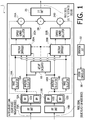
- Fig. 1 is a block diagram showing a functional configuration of a mixing apparatus 1 according to an embodiment of the present invention.
- the mixing apparatus 1 is configured to mix a priority audio signal of a priority sound the apparatus attempts to make the listener listen to with a high priority and a non-priority audio signal of a non-priority sound having a priority lower than the priority of the priority audio signal. As shown in Fig.
- the mixing apparatus 1 includes FFT circuits 10A, 10B, band dividers 12A, 12B, phase calculators 14A, 14B, amplitude calculators 16A, 16B, a weight calculator 18, spectrum controllers 20A, 20B, complex number calculators 22A, 22B, adders 24A, 24B, 26 and an IFFT circuit 28, a system controller 30 and an operation device 32.
- the priority sound and the non-priority sound are examples of a first sound and a second sound, respectively.
- the priority audio signal and the non-priority audio signal are examples of a first audio signal and a second audio signal, respectively.
- the mixing apparatus 1 is configured to mix the priority audio signal and the non-priority audio signal to enable a listener to listen to the priority sound in a more prioritized manner than the non-priority sound.
- an audio signal (more particularly, an audio guidance signal) is input, in the FFT circuit 10A, from a navigation device (not shown), while a music signal is input, in the FFT circuit 10B, from a car audio device (not shown).
- a navigation device not shown
- a music signal is input, in the FFT circuit 10B, from a car audio device (not shown).
- Each of the navigation device and the car audio device is an example of the sound source circuit.
- the mixing apparatus 1 mixes the audio guidance signal with the music signal and outputs the mixed signal to a speaker mounted in the car. As a result, the audio guidance is reproduced while the music is being played in the car. According to the present embodiment, when the audio guidance is reproduced while the music is being played in the car in this manner, masking of the audio guidance by the music can be suppressed, and audibility of the audio guidance can be ensured.
- the audio guidance will be referred to as the "priority sound” and the music will be referred to as the “non-priority sound.” Further, the audio guidance signal, which is the signal of the priority sound, will be referred to as “a priority audio signal,” and the music signal, which is the signal of the non-priority sound, will be referred to as "a non-priority audio signal.”
- the system controller 30 is configured to determine the audio signal (i.e., the audio guidance signal) input from the navigation device as the priority audio signal, determine the audio signal (i.e., the music signal) input from the car audio device as the non-priority audio signal, and control each circuit of the mixing apparatus 1.
- the system controller 30 determines whether the audio signal is the priority audio signal or the non-priority audio signal based on a sound source circuit of the audio signal (in this embodiment, based on whether the sound source circuit is the navigation device or the car audio device). It is noted that the system controller 30 may be configured to determine whether the audio signal is the priority audio signal or the non-priority audio signal based on meta-information contained in the audio signal (e.g., based on information indicating whether the audio signal is the priority audio signal or the non-priority audio signal).
- the listener may be allowed to arbitrarily set the audio signals from which sound source circuits are the priority audio signal and the non-priority audio signal, respectively, by operating the operating device 32.
- the FFT circuits 10A and 10B are configured to apply an overlapping process and a weighting process using a window function to the audio signals input from the respective sound source circuits.
- the FFT circuits 10A and 10B convert the audio signals, to which the overlapping process and the weighting process using the window function have been applied, from a time domain to a frequency domain by a short time Fourier transform processing, and output the converted signals to the band dividers 12A and 12B as frequency spectrums, respectively. That is, each of the FFT circuits 10A and 10B works as a first converter configured to overlap each of the priority audio signal and the non-priority audio signal and convert the overlapped signal into a frequency-domain signal.
- Fig. 2 is a diagram showing an audio signal input to the FFT circuit 10A or 10B, a Fourier transform length N and an overlap length M when performing the short time Fourier transform processing for this audio signal.
- the waveform indicates a waveform of the audio signal in a time domain and each solid line under the waveform indicates the Fourier transform length N.
- the FFT circuit 10A or 10B performs the short time Fourier transform while shifting time by the difference time between the Fourier transform length N and the overlap length M. Thus, n frequency spectra whose time is shifted by the difference time are obtained.
- Figs. 3A-3C are graphs showing amplitude spectra for respective time shifts.
- Fig. 3A shows the amplitude spectrum at time to
- Fig. 3B shows the amplitude spectrum at time t 1
- Fig. 3C shows the amplitude spectrum at time t 2 .
- Each of Figs. 3A-3C shows the amplitudes for respective frequencies (i.e., f 0 , f 1 , f 2 , ... , f N-2 , f N-1 ).
- the total number of amplitude spectra is N. Since the music signal and audio guidance signal are non-static signals, as shown in Figs. 3A-3C , the amplitude spectrum fluctuates depending on the shift time.
- Figs. 4A-4C show the time variations of amplitudes of the amplitude spectra at respective frequencies when the amplitude spectra fluctuate depending on the shift time.
- Fig. 4A shows the time variation of the amplitude at the frequency f 0
- Fig. 4B shows the time variation of the amplitude at the frequency f 1
- Fig. 4C shows the amplitude of the frequency f N-1 .
- Each of Figs. 4A-4C shows the amplitude at each time (t 0 , t 1 , t 2 , ).
- the amplitude spectrum is sampled for the time shift interval and output as the frequency spectrum.
- Each of the band dividers 12A and 12B includes a BPF 120 and a BSF 122, respectively.
- Fig. 5 shows the filtering characteristics of the BPF 120 and the BSF 122.
- the vertical axis represents power (unit: dB), and the horizontal axis represents frequency (unit: Hz).
- a broken line indicates a filter characteristic of the BPF 120
- a dashed-dotted line indicates a filter characteristic of the BSF 122
- a solid line indicates a synthesizing characteristic of the filter characteristic of the BPF 120 and the filter characteristic of the BSF 122.
- the BPF 120 is configured to pass only a signal with a frequency band to be controlled (hereinafter referred to as a "control target band") in a signal input from the FFT circuit 10A (or the FFT circuit 10B), and output the passing signal to both the phase calculator 14A and the amplitude calculator 16A (or both the phase calculator 14B and the amplitude calculator 16B).
- control target band a signal with a frequency band to be controlled
- the BSF 122 is configured to stop a signal within control target band and pass a signal with a band other than the control target band in the signal input from the FFT circuit 10A (or the FFT circuit 10B), and output the passing signal to the adder 24A (or the adder 24B).
- the control target band is a band of the priority audio signal.
- the priority audio signal is the audio guidance signal, which is the signal of the human voice, 130 Hz to 8,000 Hz is set to the control target band.
- the control target band is set to a band of an audio signal of the sound source circuit after the changing. It is noted that the listener can arbitrarily change the control target band by operating the operation device 32.
- the phase calculator 14A and the amplitude calculator 16A are configured to calculate a phase spectrum and an amplitude spectrum within the control target band, respectively, from the frequency spectrum within the control target band input from the band divider 12A.
- the phase spectrum within the control target band calculated by the phase calculator 14A will be referred to as a "phase spectrum pA”
- the amplitude spectrum within the control target band calculated by the amplitude calculator 16A will be referred to as a "amplitude spectrum aA.”
- the phase calculator 14A is configured to output the calculated phase spectrum pA within the control target band to each of the spectrum controllers 20A and 20B.
- the amplitude calculator 16A is configured to output the calculated amplitude spectrum aA within the control target band to the weight calculator 18 and the spectrum controller 20A.
- the phase calculator 14B and the amplitude calculator 16B are configured to calculate a phase spectrum and a amplitude spectrum within the control target band, respectively, from the frequency spectrum within the control target band input from the band divider 12B.
- the phase spectrum within the control target band calculated by the phase calculator 14B will be referred to as a "phase spectrum pB”
- the amplitude spectrum within the control target band calculated by the amplitude calculator 16B will be referred to as a "amplitude spectrum aB.”
- the phase calculator 14B is configured to output the calculated phase spectrum pB within the control target band to the spectrum controller 20A and 20B.
- the amplitude calculator 16B is configured to output the calculated amplitude spectrum aB within the control target band to the weight calculator 18 and the spectrum controller 20B.
- Fig. 6 is a block diagram showing a functional configuration of the weight calculator 18.
- the weight calculator 18 includes frequency-axis weight calculators 180A and 180B, time-axis weight calculators 182A and 182B, and a control gain calculator 183.
- the frequency-axis weight calculators 180A and 180B are configured to weight, while taking frequency masking into account, the amplitude spectra aA and aB within the control target band input from the amplitude calculators 16Aand 16B, respectively. Specifically, the frequency-axis weight calculators 180A and 180B weight the amplitude spectra aA and aB, respectively, such that each of the amplitude spectra aA and aB simulates a range where the frequency masking is occurred between two sounds of the two sound source circuits.
- Figs. 7A-7D show a diagram illustrating a functional configuration and operation of the frequency-axis weight calculator 180A.
- Fig. 7A shows the functional configuration of the frequency-axis weight calculator 180A. Since the configuration of the frequency-axis weight calculator 180B is the same as that of the frequency-axis weight calculator 180A, a detailed description thereof is omitted.
- the frequency-axis weight calculator 180A includes a plurality of LPFs (F 0 , F 1 , ... , F k ) and an adder AD.
- Figs. 7B-7C show graphs indicating amplitude spectra to be input to the plurality of LPFs, respectively. In each LPF, the amplitude spectrum of each frequency within the control target band is input.
- Figs. 7B-7C show the amplitude spectra at time to of Fig. 3A as examples of the amplitude spectra to be input to the LPFs.
- Fig. 8 shows the characteristics of respective LPFs provided by the frequency-axis weight calculator 180A.
- the vertical axis indicates the power (dB) and the horizontal axis indicates the normalized frequency (no unit).
- Fig. 8 shows, as examples, the characteristics of the LPFs applied to amplitude spectra which have different frequencies (125Hz, 250Hz, 500Hz, 1,000Hz, 2,000Hz, 4,000Hz, 8,000Hz) by one octave, respectively.
- Each LPF provided by the frequency-axis weight calculator 180A is configured to perform a low-pass filtering process on the amplitude spectrum input thereto and output it to the adder AD.
- the adder AD is configured to add up the amplitude spectra input from the respective LPFs (i.e., the amplitude spectra of respective frequencies after filtering). As a result of the amplitude spectra of respective frequencies after filtering being summed at the adder AD and, for the control target band, a weighted amplitude spectrum taking the frequency masking into account is obtained.
- the signals output from the frequency-axis weight calculators 180A and 180B (i.e., the weighted amplitude spectrum taking the frequency masking into account) will be referred to as "amplitude spectrum fmA” and “amplitude spectrum fmB,” respectively.
- Fig. 9 shows the amplitude spectrum fmA obtained by weighting the amplitude spectrum of a sine wave having frequency components of 125Hz, 250Hz, 500Hz, 1,000Hz, 2,000Hz, 4,000Hz and 8,000Hz by the frequency-axis weighting calculator 180A taking the frequency masking into account.
- the vertical axis represents the power (dB)
- the horizontal axis represents the frequency (unit: Hz).
- the solid lines indicate the line spectra (i.e., the frequency components) contained in the sine wave, respectively
- the dashed line indicates the amplitude spectrum fmA
- the dashed-dotted lines indicate the 1/3 octave bandwidths centered on respective line spectra.
- a shape of each frequency component included in the sine wave is converted into a spectral shape having width (i.e., a spectral shape having about a 1/3 octave bandwidth).
- This shape i.e., the shape of the amplitude spectrum fmA
- This shape simulates a range in which the sound of a sine wave masks other sounds on the frequency axis (i.e., other sounds having frequencies different from that of the sine wave), and the higher the frequency, the wider the bandwidth of the range.
- the time-axis weight calculators 182A and 182B are configured to weight, while taking the time masking int account, the amplitude spectra fmA and fmB input from the frequency-axis weight calculators 180A and 180B, respectively. Specifically, the time-axis weight calculators 182A and 182B weight the amplitude spectra fmA and fmB, respectively, such that each of the amplitude spectra fmA and fmB simulates a range where the time masking is occurred between two sounds of the two sound source circuits.
- signals output from the time-axis weight calculators 182A and 182B i.e., amplitude spectra weighted taking the time masking into account in addition to frequency masking
- amplitude spectrum ftmA signals output from the time-axis weight calculators 182A and 182B
- amplitude spectrum ftmB amplitude spectrum ftmB
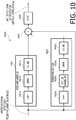
- Fig. 10 shows a functional configuration of the time-axis weight calculator 182A configured by applying the technique described in this patent. Since the configuration of the time-axis weight calculator 182B is the same as that of the time-axis weight calculator 182A, a detailed description thereof will be omitted.
- the time-axis weight calculator 182A includes an attack sound controller 1821, a reverberation controller 1822, an adder 1823 and a limiter 1824.
- the amplitude spectrum fmA is input from the frequency-axis weight calculator 180A.
- the attack sound controller 1821 includes an HPF (High Pass Filter) 1821a, a limiter 1821b and a gain circuit 1821c.
- HPF High Pass Filter
- the HPF 1821a is configured to perform a high-pass filtering process, for each amplitude spectrum, to the input amplitude spectrum fmA.
- the limiter 1821b sets the amplitude of a negative side of the high-pass filtered amplitude spectrum to zero. By setting the amplitude of the negative side to zero, it is possible to detect a rising component of the signal for each amplitude spectrum, that is, the attack component (attack sound).
- the higher the cutoff frequency set in the HPF 1821a the shorter control time of the attack sound. In other words, the lower this value, the longer the control time of the attack sound.
- the cutoff frequency is set based on, for example, the sound source circuit of the audio signal and the band of the audio signal estimated from the sound source circuit (e.g., the band of the human voice if the sound source circuit is the navigation device).
- the cutoff frequency can be arbitrarily set by the listener operating the operation device 32.
- the gain circuit 1821c is configured to perform weighting of the attack component of the amplitude spectrum detected by the limiter 1821b, and output the amplitude spectrum to the adder 1823.
- the adder 1823 in addition to the amplitude spectrum fmA to which the weighting of the attack component is performed, the amplitude spectrum fmA to which the weighting is not performed is input from the frequency-axis weight calculator 180A.
- the adder 1823 adds up these amplitude spectra.
- the value of the weighting amount of the attack sound is set to, for example, -1 or more and +1 or less.
- the value of the weighting amount is set, for example, based on the sound source circuit of the audio signal and the band of the audio signal presumed from the sound source circuit.
- the value of the weighting amount can be arbitrarily set by the listener operating the operation device 32.
- the reverberation controller 1822 includes an HPF 1822a, an amplitude inverter 1822b, a limiter 1822c and a gain circuit 1822d.
- the HPF 1822a is configured to perform a high-pass filtering process, for each amplitude spectrum, to the input amplitude spectrum fmA.
- the amplitude inverter 1822b multiplies the high-pass filtered amplitude spectrum at HPF 1822a by -1 to invert its amplitude.
- the limiter 1822c is configured to set the amplitude of a negative side of the amplitude spectrum after amplitude inversion to zero. By setting the amplitude of the negative side to zero, it is possible to detect the falling component of the signal for each amplitude spectrum, i.e., the reverberation component (reverberation) sustained after the attack sound.
- the cutoff frequency is set, for example, based on the sound source circuit of the audio signal and the band of the audio signal presumed from the sound source circuit. The cutoff frequency can be arbitrarily set by the listener operating the operation device 32.
- the gain circuit 1822d is configured to perform weighting of the reverberant component of the amplitude spectrum detected by the limiter 1822c, and output the amplitude spectrum to the adder 1823.
- the adder 1823 in addition to the amplitude spectrum fmA to which the weighting of the reverberant component is performed, the amplitude spectrum fmA to which the weighting is not performed is input from the frequency-axis weight calculator 180A.
- the adder 1823 is configured to add up these amplitude spectra.
- the value of the weighting amount of the reverberant is set to, for example, a value of -1 or more and +1 or less.
- the value of this weighting amount is set, for example, based on the sound source circuit of the audio signal and the band of the audio signal presumed from the sound source circuit, etc.
- the value of the weighting amount can be arbitrarily set by the listener operating on the operation device 32.
- the adder 1823 is configured to add, to the amplitude spectrum fmA, the amplitude spectrum to which the weighting of the attack component is performed and the amplitude spectrum to which the weighting of the reverberation component is performed to obtain an amplitude spectrum in which the attack sound and the reverberation are enhanced or reduced, and output the obtained amplitude spectrum to the limiter 1824.
- the limiter 1824 is configured to set the amplitude of a negative side of the amplitude spectrum input from the adder 1823 to zero, and output the amplitude spectrum (i.e., the amplitude spectrum ftmA weighted taking the frequency masking and the time masking into account) to each of the control gain calculator 183 and the spectrum controllers 20A, 20B. It is noted that the time-axis weight calculator 182B outputs the amplitude spectrum ftmB only to the control gain calculator 183.
- the time-axis weight calculator 182A can adjust duration of the rising component (i.e., the attack component) and duration of the falling component (i.e., the reverberant component) of the audio signal (i.e., the priority audio signal in the time-axis weight calculator 182A) by changing the amplitude spectrum fmA input from the frequency-axis weight calculator 180A (more particularly, the amplitude spectra fmA of n frequency spectra obtained by the FFT circuit 10A) in accordance with the cutoff frequencies of the HPF 1821a and the HPF 1822a and the weighting amount of the attack sound and the reverberation.
- the time-axis weight calculator 182B can simulate a range in which the music masks the audio guidance on the time axis by extending the duration of the falling component of the non-priority audio signal.
- the time-axis weight calculators 182A and 182B weight the amplitude spectra within the control target band taking the time masking into account, respectively.
- the amplitude spectra aA and aB within the control target band are weighted taking both the frequency masking and the time masking.
- one or both of the amplitude spectra aA and aB within the control target band may be weighted taking only one of the frequency masking and the time masking into account. In such an embodiment, the same effect can be obtained (however, a higher effect will be obtained by weighting both the amplitude spectra aA and aB within the control target band taking both the frequency masking and the time masking into account).
- the weight calculator 18 operates as a weighting circuit that performs weighting, while taking at least one of the frequency masking and the time masking into account, with respect to at least one of the amplitude spectra aA and aB within the control target band. More specifically, the frequency-axis weight calculators 180A and 180B perform, weighting taking the frequency masking into account, to widen the shape of the amplitude spectra aA and aB within the control target band, respectively, such that each shape simulates a range in which a sound having the amplitude spectrum aA or aB masks other sounds on the frequency axis.
- the frequency-axis weight calculators 180A and 180B weight the amplitude spectra aA and aB within the control target band, respectively, in order to further widen bandwidths as the frequency is higher.
- the time-axis weight calculators 182A and 182B widen the shape of the amplitude spectra aA and aB within the control target band, respectively, by weighting taking the time masking into account such that each shape simulates a range in which a sound having the amplitude spectrum aA or aB masks other sounds on the time axis.
- Figs. 11A and 11B show functions that the control gain calculator 183 holds. As shown in Figs. 11A and 11B , the control gain calculator 183 holds a first gain function and a second gain function.
- the control gain calculator 183 is configured to calculate, for each frequency, an amplitude ratio between the amplitude spectrum ftmA input from the time-axis weight calculator 182A and the amplitude spectrum ftmB input from the time-axis weight calculator 182B. Then the control gain calculator 183 inputs the calculated amplitude ratio to the first gain function to obtain a control gain gA for the priority audio signal, and also inputs the amplitude ratio to the second gain function to obtain a control gain gB for the non-priority audio signal.
- the control gain calculator 183 outputs the control gain gA to the spectrum controller 20A, and outputs the control gain gB to the spectrum controller 20B.
- control gain calculator 183 operates as a calculator for calculating a particular control value based on the amplitude ratio in the control target band between the priority audio signal and the non-priority audio signal after the weighting process.
- the control gain gA becomes higher and the control gain gB becomes lower.
- the control gain gA becomes lower and the control gain gB becomes higher.
- the control gain gA is a positive gain
- the control gain gB is a negative gain.
- Figs. 12A and 12B are block diagrams showing functional configurations of the spectrum controllers 20A and 20B, respectively.
- the spectrum controller 20A includes an amplitude controller 200Aand a phase controller 202A.
- the spectrum controller 20B includes an amplitude controller 200B and a phase controller 202B.
- the amplitude spectrum aA is input from the amplitude calculator 16A
- the amplitude spectrum ftmA is input from the time-axis weight calculator 182A
- the control gain gA is input from the control gain calculator 183.
- the phase controller 202A the phase spectra pA and pB are input from the phase calculators 14A and 14B, respectively
- the amplitude spectrum ftmA is input from the time-axis weight calculator 182A
- the control gain gA is input from the control gain calculator 183.
- the amplitude controller 200B the amplitude spectrum aB is input from the amplitude calculator 16B, the amplitude spectrum ftmA is input from the time-axis weight calculator 182A, and the control gain gB is input from the control gain calculator 183.
- the phase controller 202B the phase spectra pA and pB are input from the phase calculator 14A and 14B, respectively, the amplitude spectrum ftmA is input from the time-axis weight calculator 182A, and the control gain gB is input from the control gain calculator 183.
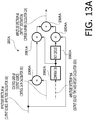
- Figs. 13A and 13B show a block diagrams of the amplitude controller 200A and the phase controller 202A, respectively.
- the amplitude controller 200A includes multipliers 2000A and 2001A, a comparator 2002A, a NOT circuit 2003A, a multiplier 2004A and an adder 2005A.
- the multiplier 2000A is configured to multiply the amplitude spectrum aA input from the amplitude calculator 16A by the control gain gA input from the control gain calculator 183, and output the multiplied amplitude spectrum aA to the multiplier 2001A.
- the comparator 2002A is configured to compare the amplitude spectrum ftmA input from the time-axis weight calculator 182A to a threshold K, and output 1 when the amplitude spectrum ftmA is greater than the threshold K, and output 0 when the amplitude spectrum ftmA is equal to or less than the threshold K.
- the multiplier 2001A is configured to multiply the amplitude spectrum input from the multiplier 2000A by the output from the comparator 2002A (i.e., 0 or 1) and output the multiplication result to the adder 2005A. That is, the multiplier 2001A outputs the amplitude spectrum aA multiplied by the control gain gA to the adder 2005A only when the amplitude spectrum ftmA is greater than the threshold K.
- the multiplier 2004A is configured to multiply the amplitude spectrum aA input from the amplitude calculator 16A by the output of the NOT circuit 2003A (i.e., the inverted output of the comparator 2002A) and outputs the multiplication result to the adder 2005A. That is, the multiplier 2004A outputs the amplitude spectrum aA not multiplied by the control gain gA to the adder 2005A only when the amplitude spectrum ftmA is equal to or smaller than the threshold K.
- the adder 2005A is configured to add up the amplitude spectrum input from the multiplier 2001A and the amplitude spectrum input from the multiplier 2004A and output the addition result to the complex number calculator 22A.
- the amplitude controller 200A amplifies the amplitude spectrum aA input from the amplitude calculator 16A by multiplying with the control gain gA only in a band in which the amplitude spectrum ftmA is larger than the threshold K, and outputs the amplified spectrum aA to the complex number calculator 22A.
- the amplitude spectrum output to the complex number calculator 22A will be referred to as "amplitude spectrum AA.”
- an originally low power band of the audio guidance (specifically, a band in which amplitude spectrum ftmA is equal to or lower than the threshold K) is considered to be a band of a sound components that are substantially acceptable for a listener even if the listener cannot listen to them, and the amplitude spectrum aA is not amplified by the control gain gA.
- whole the control target band of the audio guidance may be amplified with the control gain gA.
- the amplitude controller 200A amplifies the amplitude of the priority audio signal and suppresses masking of the priority sound by the non-priority sound by performing the multiplying process using a control gain gA (i.e., a parameter that takes a value corresponding to the amplitude ratio of the amplitude spectrum ftmA and the amplitude spectrum ftmB which are weighted taking the frequency masking and the time masking into account).
- a control gain gA i.e., a parameter that takes a value corresponding to the amplitude ratio of the amplitude spectrum ftmA and the amplitude spectrum ftmB which are weighted taking the frequency masking and the time masking into account.
- the amplitude controller 200A does not excessively amplify the amplitude of the priority audio signal while limiting the band in whish amplifying is performed to the control target band.
- the amplitude controller 200A does not amplify the amplitude of the priority audio signal when the amplitude spectral ftmA is fully larger than the amplitude spectral ftmB.
- the phase controller 202A includes a weight coefficient calculator 2020A, complex number calculators 2021A and 2022A, an adder 2023A, a phase calculator 2024A, a comparator 2025A, a multiplier 2026A, a NOT circuit 2027A, a multiplier 2028A and an adder 2029A.
- Figs. 14A and 14B show functions held by the weight coefficient calculator 2020A.
- the weight coefficient calculator 2020A holds a weight function 1A and a weight function 2A.
- the weight coefficient calculator 2020A is configured to input the control gain gA from the control gain calculator 183 to each of the weight function 1A and the weight function 2A to calculate the weight coefficients mA and nA, and output the weight coefficient mA to the complex number calculator 2021A while outputting the weight coefficient nAto the complex number calculator 2022A.
- each of the weight coefficient mA and the weight coefficient nA takes a value between 0 and 1 such that a sum of the weight coefficient mA and the weight coefficient nA is equal to 1.
- the complex number calculator 2021A is configured to calculate a frequency spectrum cAA using the phase spectrum pA input from the phase calculator 14A and the weight coefficient mA input from the weight coefficient calculator 2020A (in this case, the weight coefficient mA is considered as the amplitude spectrum), and output the calculated frequency spectrum cAA to the adder 2023A.
- the complex number calculator 2022A is configured to calculate a frequency spectrum cBA using the phase spectrum pB input from the phase calculator 14B and the weight coefficient nA input from the weight coefficient calculator 2020A (in this case, the weight coefficient nA is considered as the amplitude spectrum), and output the calculated frequency spectrum cBA to the adder 2023A.
- the adder 2023A is configured to add up the frequency spectrum cAA and the frequency spectrum cBA input from the complex number calculators 2021A and 2022A, respectively, and output the addition result to the phase calculator 2024A.
- the phase calculator 2024A is configured to obtain an argument in the complex plane from the addition result of the frequency spectrum cAA and the frequency spectrum cBA. Since this argument (i.e., phase) is calculated for each frequency, in the phase calculator 2024A, a phase spectrum in which the frequency spectrum cAA and the frequency spectrum cBA are synthesized is obtained.
- the comparator 2025A is configured to compare the amplitude spectrum ftmA input from the time-axis weight calculator 182A with a threshold L, and output 1 when the amplitude spectrum ftmA is greater than the threshold L, and output 0 when the amplitude spectrum ftmA is equal to or less than the threshold L.
- the multiplier 2026A is configured to multiply the phase spectrum input from the phase calculator 2024A by the output from the comparator 2025A (i.e., 0 or 1), and output the multiplication result to the adder 2029A. That is, the multiplier 2026A outputs the phase spectrum input from the phase calculator 2024A to the adder 2029A only when the amplitude spectrum ftmA is greater than the threshold L.
- the multiplier 2028A is configured to multiply the phase spectrum pA input from the phase calculator 14A by the output of the NOT circuit 2027A (i.e., the inverted output of the comparator 2025A), and output the multiplication result to the adder 2029A. That is, the multiplier 2028A outputs the phase spectrum pA to the adder 2029A only when the amplitude spectrum ftmA is equal to or smaller than the threshold L.
- the adder 2029A is configured to add up the phase spectrum input from the multiplier 2026A and the phase spectrum input from the multiplier 2028A.
- the adder 2029A outputs the phase spectrum PA obtained by the adding to the complex number calculator 22A.
- the weight coefficient mA and the weight coefficient nA are constants of 1 and 0, respectively. Therefore, the phase spectrum PA is the same as the phase spectrum pA input from the phase calculator 14A to the complex number calculator 2021A.
- the phase controller 202A does not change a phase of the priority audio signal in order to emphasize the audibility of the priority sound.
- the phase controller 202A may change the phase of the priority audio signal within a range where the priority sound is not hard to be listened to.
- Figs. 15A and 15B show block diagrams of the amplitude controller 200B and the phase controller 202B, respectively.
- the amplitude controller 200B includes multipliers 2000B, 2001B, a comparator 2002B, a NOT circuit 2003B, a multiplier 2004B and an adder 2005B.
- the phase controller 202B includes a weight coefficient calculator 2020B, complex number calculators 2021B and 2022B, an adder 2023B, a phase calculator 2024B, a comparator 2025B, a multiplier 2026B, a NOT circuit 2027B, a multiplier 2028B and an adder 2029B.
- configuration of the amplitude controller 200B is the same as that of the amplitude controller 200A, and configuration of the phase controller 202B is the same as that of the phase controller 202A. Therefore, detailed descriptions of the amplitude controller 200B and the phase controller 202B will be omitted.
- the amplitude controller 200B is configured to attenuate the amplitude spectrum aB input from the amplitude calculator 16B by multiplying with the control gain gB in a band in which the amplitude spectrum ftmA is greater than the threshold K, and output the attenuated amplitude spectrum aB to the complex number calculator 22B.
- the amplitude spectrum output to the complex number calculator 22B will be referred to as an "amplitude spectrum AB.”
- the amplitude controller 200B is configured to attenuate the amplitude of the non-priority audio signal by performing a multiplication process using the control gain gB (i.e., a parameter taking a value corresponding to the amplitude ratio of the amplitude spectrum ftmA and the amplitude spectrum ftmB which are weighted taking the frequency masking and the time masking into account) and thereby suppress the masking of the priority sound by the non-priority sound.
- the control gain gB i.e., a parameter taking a value corresponding to the amplitude ratio of the amplitude spectrum ftmA and the amplitude spectrum ftmB which are weighted taking the frequency masking and the time masking into account
- the amplitude controller 200B does not excessively attenuate the amplitude of the non-priority audio signal while limiting the band in which attenuating is performed to the control target band.
- the amplitude controller 200B does not attenuate the amplitude of the non-priority audio signal when the amplitude spectral ftmA is fully larger than the amplitude spectral ftmB.
- the amplitude spectrum aA is relatively amplified in the controlled target band by amplifying the amplitude spectrum aA while attenuating the amplitude spectrum aB in order to obtain an effect of suppressing masking of the audio guidance by the music to ensure the audibility of the audio guidance.
- only one of amplification of the amplitude spectrum aA and attenuation of the amplitude spectrum aB may be performed to relatively amplify the amplitude spectrum aA in the control target band.
- the adder 2029B is configured to add up the phase spectrum output from the multiplier 2026B and the phase spectrum output from the multiplier 2028B, and output the phase spectrum PB obtained thereby to the complex number calculator 22B.
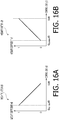
- Figs. 16A and 16B show functions held by the weight coefficient calculator 2020B.
- the weight coefficient calculator 2020B holds a weight function 1B and a weight function 2B.
- the weight coefficient calculator 2020B is configured to calculate the weight coefficient mB and the weight coefficient nB being a value corresponding to the control gain gB input from the control gain calculator 183, and output the weight coefficient mB to the complex number calculator 2021B and output the weight coefficient nB to the complex number calculator 2022B.
- the weight coefficient mB and the weight coefficient nB also take the value between 0 and 1, as well as the weight coefficient mA and the weight coefficient nA, such that a sum of the weight coefficient mB and the weight coefficient nB is equal to 1.
- the smaller the control gain gB (in other words, the smaller the amplitude spectrum ftmA with respect to the amplitude spectrum ftmB), the larger the weight coefficient mB and the smaller the weight coefficient nB.
- the weight coefficient calculator 2020B is configured to calculate the frequency spectrum cAB using the phase spectrum pA and the weight coefficient mB (here, the weight coefficient mB is considered to be the amplitude spectrum).
- the weight coefficient mB has a larger value as the amplitude spectrum ftmA is smaller with respect to the amplitude spectrum ftmB.
- the weight coefficient calculator 2020B is configured to calculate the frequency spectrum cBB using the phase spectrum pB and the weight coefficient nB (here, the weight coefficient nB is considered to be the amplitude spectrum).
- the weight coefficient nB has a smaller value as the amplitude spectrum ftmA is larger with respect to the amplitude spectrum ftmB.
- the phase spectrum pB of the non-priority audio signal is matched to the phase spectrum pA of the priority audio signal.
- phase spectrum pB is perfectly coincide with the phase spectrum pA
- the effect of reducing the cancellation of the priority sound by the non-priority sound is obtained, thereby the audibility of the priority sound is improved.
- Each of the amplitude controllers 200A and 200B operates as an amplitude modifying circuit configured to change the amplitude spectrum of at least one of the priority audio signal and the non-priority audio signal based on the amplitude spectrum after the weighting process by the weighting circuit (more particularly, based on a control value obtained in accordance with the amplitude spectrum after the weighting process) to relatively amplifies the amplitude spectrum of the priority audio signal in the control target band.
- each of the phase controllers 202A and 202B operate as a phase changer configured to change the phase spectrum of at least one of the priority audio signal and the non-priority audio signal based on the amplitude spectrum after the weighting operation by the weighting circuit (more particularly, based on the control values obtained in accordance with the amplitude spectrum after the weighting operation), to make the phase spectrum of the non-priority audio signal approach the phase spectrum of the priority audio signal in the control target band.
- the complex number calculator 22A is configured to calculate a frequency spectrum in the control target band based on the amplitude spectrum AA input from the amplitude controller 200A and the phase spectrum PA input from the phase controller 202A, and output the calculated frequency spectrum to the adder 24A.
- the adder 24A is configured to add up the frequency spectrum in the control target band of the priority audio signal input from the complex number calculator 22A and the frequency spectrum in a band other than the control target band of the priority audio signal input from the BSF 122 of the band divider 12A, and output the addition result to the adder 26.
- the complex number calculator 22B is configured to calculate the frequency spectrum in the control target band based on the amplitude spectrum AB input from the amplitude controller 200B and the phase spectrum PB input from the phase controller 202B, and output the calculated frequency spectrum to the adder 24B.
- the adder 24B is configured to add up the frequency spectrum in the control target band of the non-priority audio signal input from the complex number calculator 22B and the frequency spectrum in a band other than the control target band of the non-priority audio signal input from the BSF 122 of the band divider 12B, and output the addition result to the adder 26.
- the adder 26 is configured to add up the frequency spectrum, which is input from the adder 24A, of the priority audio signal whose amplitude within the control target band have been changed and the frequency spectrum, which is input from the adder 24B, of the non-priority audio signal whose amplitude and phase within the control target band have been changed, and output the addition result to the IFFT circuit 28.
- the adder 26 operates as a mixer configured to mix the priority audio signal and the non-priority audio signal after the changing process of the amplitude spectrum by the amplitude changer and the changing process of the phase spectrum by the phase changer.
- the IFFT circuit 28 is configured to convert the frequency spectrum input from the adder 26 from the frequency domain to the time domain by a short-time inverse Fourier transform process, perform the overlapping process and the weighting process using the window function, and output it to a speaker (not shown) embedded in the car. That is, the IFFT circuit 28 operates as a second converter configured to overlap at least one of the priority audio signal and the non-priority audio signal after the changing process of the amplitude spectra and the changing process of the phase spectra by the spectrum controller 20A or 20B, and convert the frequency spectrum into a time-domain signal.
- the weighting taking the frequency masking and the time masking into account is performed with respect to the amplitude spectra of the audio guidance signal and the music signal.
- the amplitude of the music is amplified while the amplitude of the audio guidance signal is attenuated in a frequency band of the human voice (i.e., the control target band) based on the weighted amplitude spectrum (in other words, taking masking between the audio guidance and the music into account), and the phase of the music signal is matched to the phase of the audio guidance signal.
- the mixing process is performed using the data of the frequency spectrum having a small number of dimensions. Therefore, the processing load is suppressed as compared with processing load of the conventional mixing processing of performing the mixing process using the data on the time-frequency plane having a large number of dimensions.
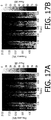
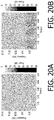
- Figs. 17A to 20B show specific processing examples.
- Fig. 17A shows the amplitude spectrum of the priority audio signal to which the mixing process according to the present embodiment has not been performed.
- Fig. 17B shows the amplitude spectrum of the priority audio signal to which the mixing process according to the present embodiment has been performed.
- Fig. 18A shows the amplitude spectrum of the non-priority audio signal to which the mixing process according to the present embodiment has not been performed.
- Fig. 18B shows the amplitude spectrum of the non-priority audio signal to which the mixing process according to the present embodiment has been performed.
- each vertical axis indicates the frequency (unit: kHz), and each horizontal axis indicates the time (unit: sec).
- a band with a higher power is represented by higher brightness
- a band with a lower power is represented by lower brightness.
- Fig. 17B is whitish (i.e., represented by higher brightness) on the whole in the control target band, that is, the amplitude is amplified.
- Fig. 18A and Fig. 18B it can be seen that Fig. 18B is blackish (i.e., represented by lower brightness) on the whole in the control target band, that is, the amplitude is attenuated.
- Fig. 19 shows a phase difference between the phase spectrum of the non-priority audio signal to which the mixing according to the present embodiment has not been performed and the phase spectrum of the non-priority audio signal to which the mixing according to the embodiment of the present invention has been performed.
- the vertical axis indicates the frequency (unit: kHz) and the horizontal axis indicates the time (unit: sec).
- a band with larger phase difference between when the mixing process according to the present embodiment is performed and when the mixing process according to the present embodiment is not performed i.e., the changing amount of the phase given to the non-priority audio signal in the mixing process according to the present embodiment
- a band with smaller phase difference is represented by lower brightness.
- the band in which this phase difference equals to zero is shown in black.
- Fig. 20A shows a mixing signal obtained by mixing the priority audio signal to which the mixing process according to the present embodiment has not been performed and the non-priority audio signal to which the mixing process according to the present embodiment has not been performed.
- Fig. 20B shows a mixing signal of the priority audio signal and the non-priority audio signal output from the IFFT circuit 28 when amplitude amplification shown in Fig. 17B is applied to the priority audio signal and amplitude attenuation shown in Fig. 18B and phase change shown in Fig. 19 are applied to the non-priority audio signal.
- each process in the mixing apparatus 1 is executed by cooperation between software and hardware provided in the mixing apparatus 1.
- At least the OS (Operating System) of the software included in the mixing apparatus 1 is provided as an embedded system, but other parts, for example, software modules for performing mixing of the priority audio signal and the non-priority audio signal may be provided as an application that can be distributed on networks or held in a recording medium such as a memory card.
Landscapes
- Engineering & Computer Science (AREA)
- Physics & Mathematics (AREA)
- Multimedia (AREA)
- Acoustics & Sound (AREA)
- Signal Processing (AREA)
- Audiology, Speech & Language Pathology (AREA)
- Human Computer Interaction (AREA)
- Health & Medical Sciences (AREA)
- Quality & Reliability (AREA)
- Computational Linguistics (AREA)
- Theoretical Computer Science (AREA)
- General Health & Medical Sciences (AREA)
- General Engineering & Computer Science (AREA)
- General Physics & Mathematics (AREA)
- Tone Control, Compression And Expansion, Limiting Amplitude (AREA)
Applications Claiming Priority (1)
| Application Number | Priority Date | Filing Date | Title |
|---|---|---|---|
| JP2019104249A JP7352383B2 (ja) | 2019-06-04 | 2019-06-04 | ミキシング処理装置及びミキシング処理方法 |
Publications (2)
| Publication Number | Publication Date |
|---|---|
| EP3748626A1 true EP3748626A1 (fr) | 2020-12-09 |
| EP3748626B1 EP3748626B1 (fr) | 2022-06-22 |
Family
ID=70975701
Family Applications (1)
| Application Number | Title | Priority Date | Filing Date |
|---|---|---|---|
| EP20177659.8A Active EP3748626B1 (fr) | 2019-06-04 | 2020-06-01 | Appareil de mélange et procédé de mélange |
Country Status (4)
| Country | Link |
|---|---|
| US (1) | US11251890B2 (fr) |
| EP (1) | EP3748626B1 (fr) |
| JP (1) | JP7352383B2 (fr) |
| CN (1) | CN112037805B (fr) |
Families Citing this family (1)
| Publication number | Priority date | Publication date | Assignee | Title |
|---|---|---|---|---|
| EP4156181A1 (fr) * | 2021-09-24 | 2023-03-29 | Elektrobit Automotive GmbH | Contrôle de la lecture de données audio |
Citations (4)
| Publication number | Priority date | Publication date | Assignee | Title |
|---|---|---|---|---|
| US5228093A (en) * | 1991-10-24 | 1993-07-13 | Agnello Anthony M | Method for mixing source audio signals and an audio signal mixing system |
| US20120263322A1 (en) * | 2011-04-18 | 2012-10-18 | Microsoft Corporation | Spectral shaping for audio mixing |
| JP2013051589A (ja) | 2011-08-31 | 2013-03-14 | Univ Of Electro-Communications | ミキシング装置、ミキシング信号処理装置、ミキシングプログラム及びミキシング方法 |
| EP2827330A1 (fr) * | 2012-03-12 | 2015-01-21 | Clarion Co., Ltd. | Dispositif et procédé de traitement de signaux audio |
Family Cites Families (11)
| Publication number | Priority date | Publication date | Assignee | Title |
|---|---|---|---|---|
| JPH10308999A (ja) * | 1997-05-09 | 1998-11-17 | Nippon Hoso Kyokai <Nhk> | 音声レベルバランス指示装置 |
| JP4230414B2 (ja) * | 1997-12-08 | 2009-02-25 | 三菱電機株式会社 | 音信号加工方法及び音信号加工装置 |
| US6804565B2 (en) * | 2001-05-07 | 2004-10-12 | Harman International Industries, Incorporated | Data-driven software architecture for digital sound processing and equalization |
| EP2323130A1 (fr) * | 2009-11-12 | 2011-05-18 | Koninklijke Philips Electronics N.V. | Codage et décodage paramétrique |
| JP5532518B2 (ja) * | 2010-06-25 | 2014-06-25 | ヤマハ株式会社 | 周波数特性制御装置 |
| CN102986254B (zh) * | 2010-07-12 | 2015-06-17 | 华为技术有限公司 | 音频信号产生装置 |
| WO2014084000A1 (fr) * | 2012-11-27 | 2014-06-05 | 日本電気株式会社 | Dispositif de traitement de signal, procédé de traitement de signal, et programme de traitement de signal |
| EP2811758B1 (fr) * | 2013-06-06 | 2016-11-02 | Harman Becker Automotive Systems GmbH | Mélange de signaux audio |
| JP6482880B2 (ja) * | 2015-01-19 | 2019-03-13 | 国立大学法人電気通信大学 | ミキシング装置、信号ミキシング方法、及びミキシングプログラム |
| EP3309981B1 (fr) * | 2016-10-17 | 2021-06-02 | Nxp B.V. | Circuit de traitement audio, unité audio, circuit intégré et procédé de mélange |
| US10779105B1 (en) * | 2019-05-31 | 2020-09-15 | Apple Inc. | Sending notification and multi-channel audio over channel limited link for independent gain control |
-
2019
- 2019-06-04 JP JP2019104249A patent/JP7352383B2/ja active Active
-
2020
- 2020-05-29 US US16/887,849 patent/US11251890B2/en active Active
- 2020-05-29 CN CN202010474967.9A patent/CN112037805B/zh active Active
- 2020-06-01 EP EP20177659.8A patent/EP3748626B1/fr active Active
Patent Citations (6)
| Publication number | Priority date | Publication date | Assignee | Title |
|---|---|---|---|---|
| US5228093A (en) * | 1991-10-24 | 1993-07-13 | Agnello Anthony M | Method for mixing source audio signals and an audio signal mixing system |
| US20120263322A1 (en) * | 2011-04-18 | 2012-10-18 | Microsoft Corporation | Spectral shaping for audio mixing |
| JP2013051589A (ja) | 2011-08-31 | 2013-03-14 | Univ Of Electro-Communications | ミキシング装置、ミキシング信号処理装置、ミキシングプログラム及びミキシング方法 |
| US20140219478A1 (en) * | 2011-08-31 | 2014-08-07 | The University Of Electro-Communications | Mixing device, mixing signal processing device, mixing program and mixing method |
| EP2827330A1 (fr) * | 2012-03-12 | 2015-01-21 | Clarion Co., Ltd. | Dispositif et procédé de traitement de signaux audio |
| JP5898534B2 (ja) | 2012-03-12 | 2016-04-06 | クラリオン株式会社 | 音響信号処理装置および音響信号処理方法 |
Also Published As
| Publication number | Publication date |
|---|---|
| EP3748626B1 (fr) | 2022-06-22 |
| JP2020197651A (ja) | 2020-12-10 |
| CN112037805A (zh) | 2020-12-04 |
| US11251890B2 (en) | 2022-02-15 |
| CN112037805B (zh) | 2024-12-10 |
| JP7352383B2 (ja) | 2023-09-28 |
| US20200389241A1 (en) | 2020-12-10 |
Similar Documents
| Publication | Publication Date | Title |
|---|---|---|
| US8150067B2 (en) | Bass enhancing method, signal processing device, and audio reproducing system | |
| EP2209326B1 (fr) | Appareil de correction de sensibilité auditive | |
| JP6216553B2 (ja) | 伝搬遅延補正装置及び伝搬遅延補正方法 | |
| CN102016984A (zh) | 用于动态声音传送的系统和方法 | |
| JP2010014914A (ja) | 音声強調装置 | |
| EP3171362B1 (fr) | Accentuation des graves et séparation d'un signal audio en une composante de signal transitoire et harmonique | |
| US9066177B2 (en) | Method and arrangement for processing of audio signals | |
| EP3748626B1 (fr) | Appareil de mélange et procédé de mélange | |
| US8254590B2 (en) | System and method for intelligibility enhancement of audio information | |
| EP1275200B1 (fr) | Procede et appareil d'optimisation dynamique du son | |
| US20230217166A1 (en) | Bass enhancement for loudspeakers | |
| JP2012187995A (ja) | 車載用音響再生装置 | |
| EP3783912B1 (fr) | Dispositif de mélange, procédé de mélange et programme de mélange | |
| JPS631296A (ja) | ハウリング抑圧装置 | |
| JP5998357B2 (ja) | 車載用音響再生装置 | |
| EP4693899A1 (fr) | Dispositif de commande de gain automatique, dispositif d'élimination d'écho, procédé de commande de gain automatique et programme de commande de gain automatique | |
| JP2016148818A (ja) | 信号処理装置 | |
| US20250022481A1 (en) | Method and apparatus for improving intelligibility of speech and audibility of warning sounds in noise | |
| JP5040623B2 (ja) | 自動音量補正装置 | |
| JPH05137191A (ja) | ハウリング抑制装置 | |
| JP5036283B2 (ja) | オートゲインコントロール装置、音響信号記録装置、映像・音響信号記録装置および通話装置 | |
| HK40125956A (zh) | 自动增益控制装置、回波去除装置、自动增益控制方法以及自动增益控制程序 | |
| JP5018427B2 (ja) | ノイズリダクション装置 | |
| CN114026881A (zh) | 基于心理声学掩蔽的扬声器失真的动态降低 | |
| JPH0799417A (ja) | 自動音量制御装置 |
Legal Events
| Date | Code | Title | Description |
|---|---|---|---|
| PUAI | Public reference made under article 153(3) epc to a published international application that has entered the european phase |
Free format text: ORIGINAL CODE: 0009012 |
|
| STAA | Information on the status of an ep patent application or granted ep patent |
Free format text: STATUS: THE APPLICATION HAS BEEN PUBLISHED |
|
| AK | Designated contracting states |
Kind code of ref document: A1 Designated state(s): AL AT BE BG CH CY CZ DE DK EE ES FI FR GB GR HR HU IE IS IT LI LT LU LV MC MK MT NL NO PL PT RO RS SE SI SK SM TR |
|
| AX | Request for extension of the european patent |
Extension state: BA ME |
|
| STAA | Information on the status of an ep patent application or granted ep patent |
Free format text: STATUS: REQUEST FOR EXAMINATION WAS MADE |
|
| 17P | Request for examination filed |
Effective date: 20210517 |
|
| RBV | Designated contracting states (corrected) |
Designated state(s): AL AT BE BG CH CY CZ DE DK EE ES FI FR GB GR HR HU IE IS IT LI LT LU LV MC MK MT NL NO PL PT RO RS SE SI SK SM TR |
|
| GRAP | Despatch of communication of intention to grant a patent |
Free format text: ORIGINAL CODE: EPIDOSNIGR1 |
|
| STAA | Information on the status of an ep patent application or granted ep patent |
Free format text: STATUS: GRANT OF PATENT IS INTENDED |
|
| INTG | Intention to grant announced |
Effective date: 20220315 |
|
| GRAS | Grant fee paid |
Free format text: ORIGINAL CODE: EPIDOSNIGR3 |
|
| GRAA | (expected) grant |
Free format text: ORIGINAL CODE: 0009210 |
|
| STAA | Information on the status of an ep patent application or granted ep patent |
Free format text: STATUS: THE PATENT HAS BEEN GRANTED |
|
| AK | Designated contracting states |
Kind code of ref document: B1 Designated state(s): AL AT BE BG CH CY CZ DE DK EE ES FI FR GB GR HR HU IE IS IT LI LT LU LV MC MK MT NL NO PL PT RO RS SE SI SK SM TR |
|
| REG | Reference to a national code |
Ref country code: GB Ref legal event code: FG4D |
|
| REG | Reference to a national code |
Ref country code: CH Ref legal event code: EP |
|
| REG | Reference to a national code |
Ref country code: DE Ref legal event code: R096 Ref document number: 602020003625 Country of ref document: DE |
|
| REG | Reference to a national code |
Ref country code: AT Ref legal event code: REF Ref document number: 1500301 Country of ref document: AT Kind code of ref document: T Effective date: 20220715 |
|
| REG | Reference to a national code |
Ref country code: IE Ref legal event code: FG4D |
|
| REG | Reference to a national code |
Ref country code: LT Ref legal event code: MG9D |
|
| REG | Reference to a national code |
Ref country code: NL Ref legal event code: MP Effective date: 20220622 |
|
| PG25 | Lapsed in a contracting state [announced via postgrant information from national office to epo] |
Ref country code: SE Free format text: LAPSE BECAUSE OF FAILURE TO SUBMIT A TRANSLATION OF THE DESCRIPTION OR TO PAY THE FEE WITHIN THE PRESCRIBED TIME-LIMIT Effective date: 20220622 Ref country code: NO Free format text: LAPSE BECAUSE OF FAILURE TO SUBMIT A TRANSLATION OF THE DESCRIPTION OR TO PAY THE FEE WITHIN THE PRESCRIBED TIME-LIMIT Effective date: 20220922 Ref country code: LT Free format text: LAPSE BECAUSE OF FAILURE TO SUBMIT A TRANSLATION OF THE DESCRIPTION OR TO PAY THE FEE WITHIN THE PRESCRIBED TIME-LIMIT Effective date: 20220622 Ref country code: HR Free format text: LAPSE BECAUSE OF FAILURE TO SUBMIT A TRANSLATION OF THE DESCRIPTION OR TO PAY THE FEE WITHIN THE PRESCRIBED TIME-LIMIT Effective date: 20220622 Ref country code: GR Free format text: LAPSE BECAUSE OF FAILURE TO SUBMIT A TRANSLATION OF THE DESCRIPTION OR TO PAY THE FEE WITHIN THE PRESCRIBED TIME-LIMIT Effective date: 20220923 Ref country code: FI Free format text: LAPSE BECAUSE OF FAILURE TO SUBMIT A TRANSLATION OF THE DESCRIPTION OR TO PAY THE FEE WITHIN THE PRESCRIBED TIME-LIMIT Effective date: 20220622 Ref country code: BG Free format text: LAPSE BECAUSE OF FAILURE TO SUBMIT A TRANSLATION OF THE DESCRIPTION OR TO PAY THE FEE WITHIN THE PRESCRIBED TIME-LIMIT Effective date: 20220922 |
|
| REG | Reference to a national code |
Ref country code: AT Ref legal event code: MK05 Ref document number: 1500301 Country of ref document: AT Kind code of ref document: T Effective date: 20220622 |
|
| PG25 | Lapsed in a contracting state [announced via postgrant information from national office to epo] |
Ref country code: RS Free format text: LAPSE BECAUSE OF FAILURE TO SUBMIT A TRANSLATION OF THE DESCRIPTION OR TO PAY THE FEE WITHIN THE PRESCRIBED TIME-LIMIT Effective date: 20220622 Ref country code: LV Free format text: LAPSE BECAUSE OF FAILURE TO SUBMIT A TRANSLATION OF THE DESCRIPTION OR TO PAY THE FEE WITHIN THE PRESCRIBED TIME-LIMIT Effective date: 20220622 |
|
| PG25 | Lapsed in a contracting state [announced via postgrant information from national office to epo] |
Ref country code: NL Free format text: LAPSE BECAUSE OF FAILURE TO SUBMIT A TRANSLATION OF THE DESCRIPTION OR TO PAY THE FEE WITHIN THE PRESCRIBED TIME-LIMIT Effective date: 20220622 |
|
| PG25 | Lapsed in a contracting state [announced via postgrant information from national office to epo] |
Ref country code: SM Free format text: LAPSE BECAUSE OF FAILURE TO SUBMIT A TRANSLATION OF THE DESCRIPTION OR TO PAY THE FEE WITHIN THE PRESCRIBED TIME-LIMIT Effective date: 20220622 Ref country code: SK Free format text: LAPSE BECAUSE OF FAILURE TO SUBMIT A TRANSLATION OF THE DESCRIPTION OR TO PAY THE FEE WITHIN THE PRESCRIBED TIME-LIMIT Effective date: 20220622 Ref country code: RO Free format text: LAPSE BECAUSE OF FAILURE TO SUBMIT A TRANSLATION OF THE DESCRIPTION OR TO PAY THE FEE WITHIN THE PRESCRIBED TIME-LIMIT Effective date: 20220622 Ref country code: PT Free format text: LAPSE BECAUSE OF FAILURE TO SUBMIT A TRANSLATION OF THE DESCRIPTION OR TO PAY THE FEE WITHIN THE PRESCRIBED TIME-LIMIT Effective date: 20221024 Ref country code: ES Free format text: LAPSE BECAUSE OF FAILURE TO SUBMIT A TRANSLATION OF THE DESCRIPTION OR TO PAY THE FEE WITHIN THE PRESCRIBED TIME-LIMIT Effective date: 20220622 Ref country code: EE Free format text: LAPSE BECAUSE OF FAILURE TO SUBMIT A TRANSLATION OF THE DESCRIPTION OR TO PAY THE FEE WITHIN THE PRESCRIBED TIME-LIMIT Effective date: 20220622 Ref country code: CZ Free format text: LAPSE BECAUSE OF FAILURE TO SUBMIT A TRANSLATION OF THE DESCRIPTION OR TO PAY THE FEE WITHIN THE PRESCRIBED TIME-LIMIT Effective date: 20220622 Ref country code: AT Free format text: LAPSE BECAUSE OF FAILURE TO SUBMIT A TRANSLATION OF THE DESCRIPTION OR TO PAY THE FEE WITHIN THE PRESCRIBED TIME-LIMIT Effective date: 20220622 |
|
| PG25 | Lapsed in a contracting state [announced via postgrant information from national office to epo] |
Ref country code: PL Free format text: LAPSE BECAUSE OF FAILURE TO SUBMIT A TRANSLATION OF THE DESCRIPTION OR TO PAY THE FEE WITHIN THE PRESCRIBED TIME-LIMIT Effective date: 20220622 Ref country code: IS Free format text: LAPSE BECAUSE OF FAILURE TO SUBMIT A TRANSLATION OF THE DESCRIPTION OR TO PAY THE FEE WITHIN THE PRESCRIBED TIME-LIMIT Effective date: 20221022 |
|
| REG | Reference to a national code |
Ref country code: DE Ref legal event code: R097 Ref document number: 602020003625 Country of ref document: DE |
|
| PG25 | Lapsed in a contracting state [announced via postgrant information from national office to epo] |
Ref country code: AL Free format text: LAPSE BECAUSE OF FAILURE TO SUBMIT A TRANSLATION OF THE DESCRIPTION OR TO PAY THE FEE WITHIN THE PRESCRIBED TIME-LIMIT Effective date: 20220622 |
|
| PG25 | Lapsed in a contracting state [announced via postgrant information from national office to epo] |
Ref country code: DK Free format text: LAPSE BECAUSE OF FAILURE TO SUBMIT A TRANSLATION OF THE DESCRIPTION OR TO PAY THE FEE WITHIN THE PRESCRIBED TIME-LIMIT Effective date: 20220622 |
|
| PLBE | No opposition filed within time limit |
Free format text: ORIGINAL CODE: 0009261 |
|
| STAA | Information on the status of an ep patent application or granted ep patent |
Free format text: STATUS: NO OPPOSITION FILED WITHIN TIME LIMIT |
|
| 26N | No opposition filed |
Effective date: 20230323 |
|
| PG25 | Lapsed in a contracting state [announced via postgrant information from national office to epo] |
Ref country code: SI Free format text: LAPSE BECAUSE OF FAILURE TO SUBMIT A TRANSLATION OF THE DESCRIPTION OR TO PAY THE FEE WITHIN THE PRESCRIBED TIME-LIMIT Effective date: 20220622 |
|
| PG25 | Lapsed in a contracting state [announced via postgrant information from national office to epo] |
Ref country code: MC Free format text: LAPSE BECAUSE OF FAILURE TO SUBMIT A TRANSLATION OF THE DESCRIPTION OR TO PAY THE FEE WITHIN THE PRESCRIBED TIME-LIMIT Effective date: 20220622 |
|
| PG25 | Lapsed in a contracting state [announced via postgrant information from national office to epo] |
Ref country code: MC Free format text: LAPSE BECAUSE OF FAILURE TO SUBMIT A TRANSLATION OF THE DESCRIPTION OR TO PAY THE FEE WITHIN THE PRESCRIBED TIME-LIMIT Effective date: 20220622 Ref country code: IT Free format text: LAPSE BECAUSE OF FAILURE TO SUBMIT A TRANSLATION OF THE DESCRIPTION OR TO PAY THE FEE WITHIN THE PRESCRIBED TIME-LIMIT Effective date: 20220622 |
|
| REG | Reference to a national code |
Ref country code: CH Ref legal event code: PL |
|
| REG | Reference to a national code |
Ref country code: BE Ref legal event code: MM Effective date: 20230630 |
|
| PG25 | Lapsed in a contracting state [announced via postgrant information from national office to epo] |
Ref country code: LU Free format text: LAPSE BECAUSE OF NON-PAYMENT OF DUE FEES Effective date: 20230601 |
|
| REG | Reference to a national code |
Ref country code: IE Ref legal event code: MM4A |
|
| PG25 | Lapsed in a contracting state [announced via postgrant information from national office to epo] |
Ref country code: LU Free format text: LAPSE BECAUSE OF NON-PAYMENT OF DUE FEES Effective date: 20230601 |
|
| PG25 | Lapsed in a contracting state [announced via postgrant information from national office to epo] |
Ref country code: IE Free format text: LAPSE BECAUSE OF NON-PAYMENT OF DUE FEES Effective date: 20230601 |
|
| PG25 | Lapsed in a contracting state [announced via postgrant information from national office to epo] |
Ref country code: IE Free format text: LAPSE BECAUSE OF NON-PAYMENT OF DUE FEES Effective date: 20230601 Ref country code: CH Free format text: LAPSE BECAUSE OF NON-PAYMENT OF DUE FEES Effective date: 20230630 |
|
| PG25 | Lapsed in a contracting state [announced via postgrant information from national office to epo] |
Ref country code: BE Free format text: LAPSE BECAUSE OF NON-PAYMENT OF DUE FEES Effective date: 20230630 |
|
| PG25 | Lapsed in a contracting state [announced via postgrant information from national office to epo] |
Ref country code: BG Free format text: LAPSE BECAUSE OF FAILURE TO SUBMIT A TRANSLATION OF THE DESCRIPTION OR TO PAY THE FEE WITHIN THE PRESCRIBED TIME-LIMIT Effective date: 20220622 |
|
| PG25 | Lapsed in a contracting state [announced via postgrant information from national office to epo] |
Ref country code: BG Free format text: LAPSE BECAUSE OF FAILURE TO SUBMIT A TRANSLATION OF THE DESCRIPTION OR TO PAY THE FEE WITHIN THE PRESCRIBED TIME-LIMIT Effective date: 20220622 |
|
| GBPC | Gb: european patent ceased through non-payment of renewal fee |
Effective date: 20240601 |
|
| PG25 | Lapsed in a contracting state [announced via postgrant information from national office to epo] |
Ref country code: GB Free format text: LAPSE BECAUSE OF NON-PAYMENT OF DUE FEES Effective date: 20240601 |
|
| PGFP | Annual fee paid to national office [announced via postgrant information from national office to epo] |
Ref country code: DE Payment date: 20250520 Year of fee payment: 6 |
|
| PGFP | Annual fee paid to national office [announced via postgrant information from national office to epo] |
Ref country code: FR Payment date: 20250520 Year of fee payment: 6 |
|
| PG25 | Lapsed in a contracting state [announced via postgrant information from national office to epo] |
Ref country code: CY Free format text: LAPSE BECAUSE OF FAILURE TO SUBMIT A TRANSLATION OF THE DESCRIPTION OR TO PAY THE FEE WITHIN THE PRESCRIBED TIME-LIMIT; INVALID AB INITIO Effective date: 20200601 |
|
| PG25 | Lapsed in a contracting state [announced via postgrant information from national office to epo] |
Ref country code: HU Free format text: LAPSE BECAUSE OF FAILURE TO SUBMIT A TRANSLATION OF THE DESCRIPTION OR TO PAY THE FEE WITHIN THE PRESCRIBED TIME-LIMIT; INVALID AB INITIO Effective date: 20200601 |
|
| PG25 | Lapsed in a contracting state [announced via postgrant information from national office to epo] |
Ref country code: TR Free format text: LAPSE BECAUSE OF FAILURE TO SUBMIT A TRANSLATION OF THE DESCRIPTION OR TO PAY THE FEE WITHIN THE PRESCRIBED TIME-LIMIT Effective date: 20220622 |