EP3748888B1 - Procédé et appareil de transmission d'informations, support d'informations et appareil électronique - Google Patents
Procédé et appareil de transmission d'informations, support d'informations et appareil électronique Download PDFInfo
- Publication number
- EP3748888B1 EP3748888B1 EP18903152.9A EP18903152A EP3748888B1 EP 3748888 B1 EP3748888 B1 EP 3748888B1 EP 18903152 A EP18903152 A EP 18903152A EP 3748888 B1 EP3748888 B1 EP 3748888B1
- Authority
- EP
- European Patent Office
- Prior art keywords
- csi
- pdcch
- transmission
- bits
- subcarrier
- Prior art date
- Legal status (The legal status is an assumption and is not a legal conclusion. Google has not performed a legal analysis and makes no representation as to the accuracy of the status listed.)
- Active
Links
Images

Classifications
-
- H—ELECTRICITY
- H04—ELECTRIC COMMUNICATION TECHNIQUE
- H04B—TRANSMISSION
- H04B7/00—Radio transmission systems, i.e. using radiation field
- H04B7/02—Diversity systems; Multi-antenna system, i.e. transmission or reception using multiple antennas
- H04B7/04—Diversity systems; Multi-antenna system, i.e. transmission or reception using multiple antennas using two or more spaced independent antennas
- H04B7/06—Diversity systems; Multi-antenna system, i.e. transmission or reception using multiple antennas using two or more spaced independent antennas at the transmitting station
- H04B7/0613—Diversity systems; Multi-antenna system, i.e. transmission or reception using multiple antennas using two or more spaced independent antennas at the transmitting station using simultaneous transmission
- H04B7/0615—Diversity systems; Multi-antenna system, i.e. transmission or reception using multiple antennas using two or more spaced independent antennas at the transmitting station using simultaneous transmission of weighted versions of same signal
- H04B7/0619—Diversity systems; Multi-antenna system, i.e. transmission or reception using multiple antennas using two or more spaced independent antennas at the transmitting station using simultaneous transmission of weighted versions of same signal using feedback from receiving side
- H04B7/0621—Feedback content
- H04B7/0626—Channel coefficients, e.g. channel state information [CSI]
-
- H—ELECTRICITY
- H04—ELECTRIC COMMUNICATION TECHNIQUE
- H04L—TRANSMISSION OF DIGITAL INFORMATION, e.g. TELEGRAPHIC COMMUNICATION
- H04L1/00—Arrangements for detecting or preventing errors in the information received
- H04L1/12—Arrangements for detecting or preventing errors in the information received by using return channel
- H04L1/16—Arrangements for detecting or preventing errors in the information received by using return channel in which the return channel carries supervisory signals, e.g. repetition request signals
- H04L1/18—Automatic repetition systems, e.g. Van Duuren systems
- H04L1/1812—Hybrid protocols; Hybrid automatic repeat request [HARQ]
-
- H—ELECTRICITY
- H04—ELECTRIC COMMUNICATION TECHNIQUE
- H04L—TRANSMISSION OF DIGITAL INFORMATION, e.g. TELEGRAPHIC COMMUNICATION
- H04L5/00—Arrangements affording multiple use of the transmission path
- H04L5/003—Arrangements for allocating sub-channels of the transmission path
- H04L5/0053—Allocation of signalling, i.e. of overhead other than pilot signals
- H04L5/0055—Physical resource allocation for ACK/NACK
-
- H—ELECTRICITY
- H04—ELECTRIC COMMUNICATION TECHNIQUE
- H04L—TRANSMISSION OF DIGITAL INFORMATION, e.g. TELEGRAPHIC COMMUNICATION
- H04L5/00—Arrangements affording multiple use of the transmission path
- H04L5/003—Arrangements for allocating sub-channels of the transmission path
- H04L5/0053—Allocation of signalling, i.e. of overhead other than pilot signals
- H04L5/0057—Physical resource allocation for CQI
-
- H—ELECTRICITY
- H04—ELECTRIC COMMUNICATION TECHNIQUE
- H04L—TRANSMISSION OF DIGITAL INFORMATION, e.g. TELEGRAPHIC COMMUNICATION
- H04L5/00—Arrangements affording multiple use of the transmission path
- H04L5/0091—Signalling for the administration of the divided path, e.g. signalling of configuration information
- H04L5/0094—Indication of how sub-channels of the path are allocated
-
- H—ELECTRICITY
- H04—ELECTRIC COMMUNICATION TECHNIQUE
- H04W—WIRELESS COMMUNICATION NETWORKS
- H04W72/00—Local resource management
- H04W72/50—Allocation or scheduling criteria for wireless resources
- H04W72/54—Allocation or scheduling criteria for wireless resources based on quality criteria
- H04W72/542—Allocation or scheduling criteria for wireless resources based on quality criteria using measured or perceived quality
-
- H—ELECTRICITY
- H04—ELECTRIC COMMUNICATION TECHNIQUE
- H04W—WIRELESS COMMUNICATION NETWORKS
- H04W76/00—Connection management
- H04W76/20—Manipulation of established connections
- H04W76/27—Transitions between radio resource control [RRC] states
-
- H—ELECTRICITY
- H04—ELECTRIC COMMUNICATION TECHNIQUE
- H04W—WIRELESS COMMUNICATION NETWORKS
- H04W72/00—Local resource management
- H04W72/20—Control channels or signalling for resource management
- H04W72/23—Control channels or signalling for resource management in the downlink direction of a wireless link, i.e. towards a terminal
-
- Y—GENERAL TAGGING OF NEW TECHNOLOGICAL DEVELOPMENTS; GENERAL TAGGING OF CROSS-SECTIONAL TECHNOLOGIES SPANNING OVER SEVERAL SECTIONS OF THE IPC; TECHNICAL SUBJECTS COVERED BY FORMER USPC CROSS-REFERENCE ART COLLECTIONS [XRACs] AND DIGESTS
- Y02—TECHNOLOGIES OR APPLICATIONS FOR MITIGATION OR ADAPTATION AGAINST CLIMATE CHANGE
- Y02D—CLIMATE CHANGE MITIGATION TECHNOLOGIES IN INFORMATION AND COMMUNICATION TECHNOLOGIES [ICT], I.E. INFORMATION AND COMMUNICATION TECHNOLOGIES AIMING AT THE REDUCTION OF THEIR OWN ENERGY USE
- Y02D30/00—Reducing energy consumption in communication networks
- Y02D30/70—Reducing energy consumption in communication networks in wireless communication networks
Definitions
- the present invention relates to the field of communication, and particularly to an information transmission method and device, a storage medium and an electronic device.
- NB-loT Narrowband-Internet of Things
- 3GPP 3rd Generation Partnership Project
- the NB-loT system is enhanced, and new characteristics include positioning, multicast, capacity increase (paging and access based on non-anchor carriers), delay/power consumption reduction and time division duplex.
- enhanced aspects include introduction of a wakeup signal, advanced data transmission based on a random access process and support to additional transmission of system information blocks.
- the NB-loT system may continue to be enhanced in Rel-16.
- UE User Equipment
- CSI Channel State Information
- UE is usually in a static or low-speed moving state (a channel state may not frequently change), and meanwhile, a transmission period of a downlink service is relatively long, so that periodic CSI reporting may cause unnecessary uplink overheads.
- Document EP 2658331 A1 discloses a method for resource allocation, method for channel state information transmission, base station and user equipment.
- Document US 2013/336273 A1 discloses an aperiodic channel state information reporting method, a radio base station apparatus and a user terminal in a next-generation radio communication system.
- Document WO 2014/116061 A1 discloses a method and device for report the channel state information (CSI) in a wireless communication system.
- Embodiments of the present invention provide an information transmission method and device, a storage medium and an electronic device.
- an information transmission method may include that: a Physical Downlink Control Channel (PDCCH) transmitted by a base station is received; and CSI is transmitted to the base station according to the PDCCH.
- a Physical Downlink Control Channel (PDCCH) transmitted by a base station is received; and CSI is transmitted to the base station according to the PDCCH.
- PDCCH Physical Downlink Control Channel
- another information transmission method is provided, which may include that: a PDCCH is transmitted to UE; and CSI transmitted by the UE is received according to the PDCCH.
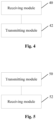
- an information transmission device may include: a receiving module, configured to receive a PDCCH transmitted by a base station; and a transmitting module, configured to transmit CSI to the base station according to the PDCCH.
- another information transmission device may include: a transmitting module, configured to transmit a PDCCH to UE; and a receiving module, configured to receive, according to the PDCCH, CSI transmitted by the UE.
- a storage medium in which a computer program may be stored, the computer program being configured to run to execute the operations in any abovementioned method embodiment applied to UE.
- another storage medium in which a computer program may be stored, the computer program being configured to run to execute the operations in any abovementioned method embodiment applied to a base station.
- an electronic device may include a memory and a processor.
- a computer program may be stored in the memory.
- the processor may be configured to run the computer program to execute the operations in any abovementioned method embodiment applied to UE and/or a base station.
- the CSI is not periodically reported but transmitted to the base station according to scheduling of PDCCH data, so that the technical problem in the related art that an uplink overhead is excessively high when CSI is transmitted is solved, a resource overhead of CSI transmission between the UE and the base station is reduced, and a resource utilization rate is increased.
- Fig. 1 is a diagram of a network architecture according to an embodiment of the present invention.
- the network architecture includes a base station and UE.
- the base station performs information interaction with the UE.
- Fig. 2 is a flowchart of an information transmission method according to an embodiment of the present invention. As shown in Fig. 2 , the flow includes the following operations.
- a PDCCH transmitted by a base station is received.
- CSI is transmitted to the base station according to the PDCCH.
- the CSI is not periodically reported but transmitted to the base station according to scheduling of the PDCCH, so that the technical problem in the related art that an uplink overhead is excessively high when CSI is transmitted is solved, a resource overhead of CSI transmission between UE and the base station is reduced, and a resource utilization rate is increased.
- an executer of the operations may be, but not limited to, a UE such as a mobile phone or a UE in the Internet of things.
- the PDCCH is an uplink grant PDCCH or a downlink allocation PDCCH.
- the method may further include that: a Hybrid Automatic Repeat reQuest-Acknowledgement (HARQ-ACK) feedback is transmitted to the base station according to the PDCCH.
- HARQ-ACK Hybrid Automatic Repeat reQuest-Acknowledgement
- the method may further include that: indication information configured to trigger UE to perform CSI reporting is acquired, the indication information being contained in at least one of:
- the subcarrier indication field includes Q bits, wherein first P bits in the Q bits taking a preset value indicates that the CSI reporting is triggered, and when the CSI reporting is triggered, last Q-P bits in the Q bits are configured to indicate a subcarrier allocated for CSI transmission, both Q and P being integers greater than 0, Q being greater than P and a value of P being a preset value or determined according to the subcarrier spacing adopted in uplink data transmission.
- the subcarrier allocated for the CSI transmission is one of X subcarriers, wherein the X subcarriers include Y continuous subcarriers close to an upper sideband and X-Y continuous subcarriers close to a lower sideband, both X and Y being integers greater than 1 and X being greater than Y.
- the PDSCH transmission related field is a new data indicator field.
- the HARQ-ACK feedback is transmitted to the base station at first, and the CSI is transmitted to the base station after the transmission of the HARQ-ACK feedback is completed.
- a frequency-domain size of a resource unit corresponding to CSI transmission is the same as a frequency-domain size of a resource unit corresponding to HARQ-ACK feedback transmission
- a time-domain size of the resource unit corresponding to the CSI transmission is N times a time-domain size of the resource unit corresponding to the HARQ-ACK feedback transmission, N being greater than 1 and a value of N being a preset value or configured for a UE by the base station.
- the CSI includes at least one of: CSI of a carrier for receiving a PDSCH, CSI of a carrier for receiving the PDCCH, CSI of a carrier with best channel quality in a measurement carrier set, CSI of a specified carrier in the measurement carrier set and CSI of all carriers in the measurement carrier set.
- the measurement carrier set is a set formed by all carriers allowed for PDSCH transmission.
- the method may further include that: CSI measurement is performed, a subframe for CSI measurement being at least one of: all or part of subframes in a downlink subframe set for receiving PDSCH; all or part of subframes in a downlink subframe set for receiving the PDCCH; all or part of subframes in a downlink subframe set positioned between the end of PDSCH reception and the start of CSI transmission; all or part of subframes in a downlink subframe set positioned between the end of PDCCH reception and the start of PDSCH reception; and all or part of subframes in a downlink subframe set positioned between the end of PDCCH reception and the start of CSI transmission.
- a CSI reporting mode corresponding to the CSI is determined according to one of a modulation and coding scheme field contained in the PDCCH and a Physical Random Access Channel (PRACH) coverage level, and the CSI reporting mode corresponds to at least one of the following information: a carrier corresponding to the CSI and a content of the CSI.
- PRACH Physical Random Access Channel
- the operation determining the CSI reporting mode according to the PRACH coverage level includes that: when the PRACH coverage level is less than or equal to a preset threshold value, the CSI reporting mode is a first mode; and when the PRACH coverage level is greater than the preset threshold value, the CSI reporting mode is a second mode.
- Fig. 3 is a flowchart of another information transmission method according to an embodiment of the present invention. As shown in Fig. 3 , the flow includes the following operations.
- a PDCCH is transmitted to UE.
- CSI transmitted by the UE is received according to the PDCCH.
- the PDCCH is an uplink grant PDCCH or a downlink allocation PDCCH.
- the method may further include that: a HARQ-ACK feedback is received according to the PDCCH.
- the solution includes that: indication information configured to trigger the UE to perform CSI reporting is transmitted, the indication information being contained in at least one of:
- the PDSCH transmission related field is a new data indicator field.
- the HARQ-ACK feedback is received at first, and the CSI is received after the reception of the HARQ-ACK feedback is completed.
- the CSI includes at least one of: CSI of a carrier for transmitting a PDSCH, CSI of a carrier for transmitting the PDCCH, CSI of a carrier with best channel quality in a measurement carrier set, CSI of a specified carrier in the measurement carrier set and CSI of all carriers in the measurement carrier set.
- a CSI reporting mode corresponding to the CSI is indicated through a modulation and coding scheme field contained in the PDCCH; or, the CSI reporting mode corresponding to the CSI is determined according to a PRACH coverage level, and the CSI reporting mode corresponds to at least one of the following information: a carrier corresponding to the CSI and a content of the CSI.
- the computer software product is stored in a storage medium (for example, a Read-Only Memory (ROM)/Random Access Memory (RAM), a magnetic disk and an optical disk), including a plurality of instructions configured to enable a terminal device (which may be a mobile phone, a computer, a server, a network device or the like) to execute the method of each embodiment of the present invention.
- a storage medium for example, a Read-Only Memory (ROM)/Random Access Memory (RAM), a magnetic disk and an optical disk
- a terminal device which may be a mobile phone, a computer, a server, a network device or the like
- the embodiment also provides an information transmission device, which is configured to implement the abovementioned embodiments and exemplary implementation modes. What has been described will not be elaborated.
- term "module” used below may be a combination of software and/or hardware capable of realizing a preset function.
- the device described in the following embodiment is preferably implemented with software, implementation with hardware or a combination of the software and the hardware is also possible and conceivable.
- Fig. 4 is a structure block diagram of an information transmission device according to an embodiment of the present invention. As shown in Fig. 4 , the device includes:
- the PDCCH is an uplink grant PDCCH or a downlink allocation PDCCH.
- the embodiment is an exemplary embodiment of the present application, and is adopted to describe the present application in combination with exemplary implementation modes in detail.
- the embodiment Based on the problem in the related art that periodic CSI reporting may cause unnecessary uplink overheads, the embodiment provides a PDCCH-scheduling-based aperiodic CSI reporting manner.
- the aperiodic CSI reporting solution is described with an NB-loT system an example.
- a base station transmits data of an uplink grant PDCCH to UE, and the UE receives the data of the uplink grant PDCCH from the base station.
- the uplink grant PDCCH adopts a downlink control information format N0, and is configured to schedule the UE to perform data transmission in a Physical Uplink Shared Channel (PUSCH) format 1 or configured to schedule the UE to perform CSI transmission.
- PUSCH Physical Uplink Shared Channel
- a magnitude of a payload (also called downlink control information) of the uplink grant PDCCH which schedules the UE to perform CSI transmission is the same as a magnitude of a payload of the uplink grant PDCCH which schedules data transmission in the PUSCH format 1.
- transmission includes sending and/or receiving.
- Example 1 in the example, all fields contained in the uplink grant PDCCH which schedules CSI transmission are the same as those contained in the uplink grant PDCCH which schedules data transmission in the PUSCH format 1, and the base station indicates a function (whether to schedule transmission in the PUSCH format 1 or to schedule CSI transmission) of the uplink grant PDCCH through a subcarrier indication field contained in the uplink grant PDCCH.
- Subcarrier indication 6 bits Resource allocation 3 bits Scheduling delay 2 bits Modulation and coding scheme 4 bits Redundancy version 1 bit Repeat count 3 bits New data indicator 1 bit Downlink control information repeat count 2 bits HARQ process number 1 bit Bit number 24
- the uplink grant PDCCH When uplink data transmission is performed based on a subcarrier spacing 3.75kHz, if first two bits of the subcarrier indication field take a value of 11, it is indicated that the uplink grant PDCCH is configured to schedule CSI transmission (equivalent to triggering the UE to perform CSI reporting), and in such case, the last four bits of the subcarrier indication field are configured to indicate a subcarrier that is allocated (for CSI transmission); and if the first two bits of the subcarrier indication field take a value other than 11, it is indicated that the uplink grant PDCCH is configured to schedule transmission in the PUSCH format 1 (equivalent to triggering the UE to perform data transmission in the PUSCH format 1), and in such case, all of the six bits of the subcarrier indication field are configured to indicate the subcarrier that is allocated (for the PUSCH format 1).
- subcarrier spacing 3.75kHz corresponds to 48 subcarriers
- the last four bits is not able to represent any single subcarrier in the 48 subcarriers. Therefore, subcarriers that are allowed to be allocated are required to be limited, for example, it may be limited that eight continuous subcarriers close to an upper sideband and eight continuous subcarriers close to a lower sideband (totally 16 subcarriers) are subcarriers that are allowed to be allocated.
- the single subcarrier that is allocated may be jointly indicated through the last four bits of the subcarrier indication field and two bits contained in another field (for example, first two bits contained in a modulation and coding scheme field or one bit contained in a redundancy version field plus one bit contained in a new data indicator field).
- At least one of resource allocation, modulation and coding scheme, redundancy version, new data indicator and HARQ process number fields may be configured to indicate a CSI reporting mode. If all or part of bits in the resource allocation, modulation and coding scheme, redundancy version, new data indicator or HARQ process number field are not configured to indicate any information, these bits may be used as reserved bits or used for virtual Cyclic Redundancy Check (CRC).
- CRC Cyclic Redundancy Check
- the resource allocation field is configured to indicate the number of resource units allocated for CSI transmission
- a value range of the field is the same as or different from that when the uplink grant PDCCH is configured to schedule data in the PUSCH format 1. For example, there is made such a hypothesis that the value range of the resource allocation field is ⁇ 1, 2, 3, 4, 5, 6, 8, 10 ⁇ (representing the number of the allocated resource units) when the uplink grant PDCCH is configured to schedule the data in the PUSCH format 1.
- the value range of the resource allocation field may reuse the abovementioned range or may be a set ⁇ 1, 2, 3, 4 ⁇ , and when the latter is adopted, only two bits of the resource allocation field contained in the PDCCH which schedules CSI transmission are used and the other one bit is reserved.
- a time-domain size of a resource unit is the same as that when the uplink grant PDCCH is configured to schedule data transmission in the PUSCH format 1 or less than the time-domain size of the resource unit when the uplink grant PDCCH is configured to schedule data transmission in the PUSCH format 1.
- the time-domain size of the resource unit is equal to 32 milliseconds when the PDCCH is configured to schedule data transmission in the PUSCH format 1, and in such case, when the uplink grant PDCCH is configured to schedule CSI transmission, the time-domain size of the resource unit may be 32 milliseconds or 16 milliseconds.
- a value range of a repeat count field is the same as or different from that when the PDCCH is configured to schedule the data in the PUSCH format 1.
- the value range of the repeat count field is ⁇ 1, 2, 4, 8, 16, 32, 64, 128 ⁇ when the uplink grant PDCCH is configured to schedule the data in the PUSCH format 1.
- the value range of the repeat count field may reuse the abovementioned range or may be a set ⁇ 1, 2, 4, 8 ⁇ , and when the latter is adopted, only two bits of the field are used and the other one bit is reserved.
- a value range of a scheduling delay field is the same as or different from that when the PDCCH is configured to schedule the data in the PUSCH format 1.
- the value range of the scheduling delay field is ⁇ 8, 16, 32, 64 ⁇ milliseconds when the uplink grant PDCCH is configured to schedule the data in the PUSCH format 1
- the value range of the scheduling delay field reuses the abovementioned range or adopts a set ⁇ 16, 32, 64, 128 ⁇ milliseconds, and for the latter, a maximum delay is greater than a maximum delay when the uplink grant PDCCH is configured to schedule the PUSCH format 1.
- the uplink grant PDCCH is configured to schedule CSI transmission (equivalent to triggering the UE to perform CSI reporting), and the last five bits of the field are configured to indicate the subcarrier that is allocated (for CSI transmission); and if the first bit of the subcarrier indication field takes a value of 0, it is indicated that the uplink grant PDCCH is configured to schedule data transmission in the PUSCH format 1 (equivalent to triggering the UE for transmission in the PUSCH format 1), and the last five bits of the field are configured to indicate the subcarrier that is allocated.
- a subcarrier number that may be indicated by the last five bits of the subcarrier indication field is the same as or different from that when the PDCCH is configured to schedule the data in the PUSCH format 1.
- the subcarrier number that is able to be indicated by the last five bits of the subcarrier indication field is 1, 3, 6 or 12 when the uplink grant PDCCH is configured to schedule the data in the PUSCH format 1.
- the last five bits of the subcarrier indication field may reuse the abovementioned subcarrier number or support indication of only one subcarrier. Since the subcarrier spacing 15kHz corresponds to 12 subcarriers, when the latter is adopted, only four bits of the five bits are required to be used, and the other one bit is reserved.
- At least one of the new data indicator, modulation and coding scheme, resource allocation, redundancy version and HARQ process number fields may be configured to indicate the CSI reporting mode. If all or part of the bits in the resource allocation, modulation and coding scheme, redundancy version, new data indicator or HARQ process number field are not configured to indicate any information, these bits may be used as reserved bits or used for virtual CRC.
- the value range of the field is the same as or different from that when the uplink grant PDCCH is configured to schedule data in the PUSCH format 1. For example, there is made such a hypothesis that the value range of the resource allocation field is ⁇ 1, 2, 3, 4, 5, 6, 8, 10 ⁇ (representing the number of the allocated resource units) when the uplink grant PDCCH is configured to schedule the data in the PUSCH format 1.
- the value range of the resource allocation field may reuse the abovementioned range or be the set ⁇ 1, 2, 3, 4 ⁇ , and when the latter is adopted, only two bits of the resource allocation field contained in the uplink grant PDCCH which schedules CSI transmission are used and the other one bit is reserved.
- the time-domain size of the resource unit is the same as that when the uplink grant PDCCH is configured to schedule data transmission in the PUSCH format 1 or less than the time-domain size of the resource unit when the uplink grant PDCCH is configured to schedule data transmission in the PUSCH format 1.
- the time-domain size of the resource unit may be 8 milliseconds or 4 milliseconds.
- the value range of the repeat count field is the same as or different from that when the uplink grant PDCCH is configured to schedule the data in the PUSCH format 1. For example, there is made such a hypothesis that the value range of the repeat count field is ⁇ 1, 2, 4, 8, 16, 32, 64, 128 ⁇ when the uplink grant PDCCH is configured to schedule the PUSCH format 1. In such case, when the uplink grant PDCCH is configured to schedule CSI transmission, the value range of the repeat count field may reuse the abovementioned range or be the set ⁇ 1, 2, 4, 8 ⁇ , and when the latter is adopted, only two bits of the field are used and the other one bit is reserved.
- the value range of the scheduling delay field is the same as or different from that when the uplink grant PDCCH is configured to schedule the PUSCH format 1. For example, there is made such a hypothesis that the value range of the scheduling delay field is ⁇ 8, 16, 32, 64 ⁇ milliseconds when the uplink grant PDCCH is configured to schedule the data in the PUSCH format 1.
- the value range of the scheduling delay field reuses the abovementioned range or adopts the set ⁇ 16, 32, 64, 128 ⁇ milliseconds, and for the latter, a maximum delay is greater than a maximum delay when the uplink grant PDCCH schedules the PUSCH format 1.
- Example 2 in the example, all fields contained in the uplink grant PDCCH which schedules CSI transmission are the same as those contained in the uplink grant PDCCH which schedules data in the PUSCH format 1, and the base station indicates a function (whether to schedule CSI transmission or to schedule data transmission in the PUSCH format 1) of the present uplink grant PDCCH through a modulation and coding scheme field.
- the function of the uplink grant PDCCH is indicated through the modulation and coding scheme field in the following manners.
- a first manner if four bits of the modulation and coding scheme field take a value of 1110, it is indicated that the uplink grant PDCCH is configured to schedule CSI transmission (equivalent to triggering the UE to perform CSI reporting); and if the four bits of the modulation and coding scheme field take a value less than 1110, it is indicated that the present uplink grant PDCCH is configured to schedule data transmission in the PUSCH format 1 (equivalent to triggering the UE to perform data transmission in the PUSCH format 1).
- a third manner if the four bits of the modulation and coding scheme field take a value of 1110, it is indicated that the uplink grant PDCCH is configured to schedule CSI transmission (equivalent to triggering the UE to perform CSI reporting) and it is also indicated that a first CSI reporting mode is adopted; if four bits of the modulation and coding scheme field take a value of 1111, it is indicated that the uplink grant PDCCH is configured to schedule CSI transmission and it is also indicated that a second CSI reporting mode is adopted; and if four bits of the modulation and coding scheme field take a value less than 1110, it is indicated that the uplink grant PDCCH is configured to schedule transmission in the PUSCH format 1 (equivalent to triggering the UE to perform data transmission in the PUSCH format 1).
- a fourth manner if the four bits of the modulation and coding scheme field take a value of 1011, it is indicated that the uplink grant PDCCH is configured to schedule CSI transmission (equivalent to triggering the UE to perform CSI reporting) and it is also indicated that the first CSI reporting mode is adopted; if the four bits of the modulation and coding scheme field take a value of 1100, it is indicated that the uplink grant PDCCH is configured to schedule CSI transmission and it is also indicated that the second CSI reporting mode is adopted; and if the four bits of the modulation and coding scheme field take a value less than 1011, it is indicated that the uplink grant PDCCH is configured to schedule transmission in the PUSCH format 1 (equivalent to triggering the UE to perform data transmission in the PUSCH format 1).
- a fifth manner if the first three bits of the modulation and coding scheme field take a value of 111, it is indicated that the uplink grant PDCCH is configured to schedule CSI transmission (equivalent to triggering the UE to perform CSI reporting); and if the first three bits of the modulation and coding scheme field take a value other than 111, it is indicated that the present uplink grant PDCCH is configured to schedule data transmission in the PUSCH format 1 (equivalent to triggering the UE to perform data transmission in the PUSCH format 1) and all of the four bits of the modulation and coding scheme field are configured to indicate a modulation and coding scheme for data in the PUSCH format 1.
- a sixth manner when a subcarrier number indicated by a subcarrier indication field is 1, if the four bits of the modulation and coding scheme field take a value of 1011, it is indicated that the uplink grant PDCCH is configured to schedule the UE to perform CSI transmission; and if the four bits of the modulation and coding scheme field take a value less than 1011, it is indicated that the uplink grant PDCCH is configured to schedule the UE to perform data transmission in the PUSCH format 1.
- the uplink grant PDCCH is configured to schedule the UE to perform CSI transmission; and if the four bits of the modulation and coding scheme field take a value less than 1110, it is indicated that the uplink grant PDCCH is configured to schedule the UE for transmission in the PUSCH format 1.
- the subcarrier number that is able to be indicated by the subcarrier indication field is the same as that when the PDCCH is configured to schedule the data in the PUSCH format 1 (indication of only one subcarrier is supported).
- the subcarrier number that is able to be indicated by the subcarrier indication field is the same as or different from that when the PDCCH is configured to schedule the data in the PUSCH format 1.
- the subcarrier indication field may reuse the abovementioned subcarrier number or support allocation of only one subcarrier when the uplink grant PDCCH is configured to schedule CSI transmission. Since the subcarrier spacing 15kHz corresponds to 12 subcarriers, when the latter is adopted, only four bits of five bits are required to be used, and the other one bit may be reserved.
- redundancy version, resource allocation, new data indicator and HARQ process number fields may be configured to indicate the CSI reporting mode. If all or part of bits in the resource allocation, redundancy version, new data indicator or HARQ process number field are not configured to indicate any information, these bits may be used as reserved bits or used for virtual CRC.
- the uplink grant PDCCH is configured to schedule CSI transmission
- the resource allocation field is configured to indicate the number of resource units allocated for CSI transmission
- a value range of the field is the same as or different from that when the uplink grant PDCCH is configured to schedule the UE to perform data transmission in the PUSCH format 1.
- the value range of the resource allocation field is ⁇ 1, 2, 3, 4, 5, 6, 8, 10 ⁇ (representing the number of the allocated resource units) when the uplink grant PDCCH is configured to schedule the UE for transmission in the PUSCH format 1
- the value range of the resource allocation field may reuse the abovementioned range or be a set ⁇ 1, 2, 3, 4 ⁇ when the uplink grant PDCCH is configured to schedule CSI transmission, and for the latter, only two bits of the resource allocation field contained in the PDCCH which schedules CSI transmission are used and the other one bit is reserved.
- a time-domain size of a resource unit is the same as that when the uplink grant PDCCH is configured to schedule data transmission in the PUSCH format 1 or less than the time-domain size of the resource unit when the uplink grant PDCCH is configured to schedule data transmission in the PUSCH format 1.
- the time-domain size of the resource unit is equal to 32 milliseconds when the uplink grant PDCCH is configured to schedule data transmission in the PUSCH format 1, and in such case, the time-domain size of the resource unit may be 32 milliseconds or 16 milliseconds when the uplink grant PDCCH is configured to schedule CSI transmission.
- a value range of a repeat count field is the same as or different from that when the uplink grant PDCCH is configured to schedule transmission in the PUSCH format 1.
- the value range of the repeat count field may reuse the abovementioned range or be a set ⁇ 1, 2, 4, 8 ⁇ when the uplink grant PDCCH is configured to schedule CSI transmission, and when the latter is adopted, only two bits of the field are used and the other one bit may be reserved.
- Example 3 in the example, fields contained in the uplink grant PDCCH configured to schedule CSI transmission are different from those contained in the uplink grant PDCCH which schedules transmission in the PUSCH format 1.
- Table 2 Subcarrier Spacing 15kHz
- PUSCH format 1 scheduling field CSI transmission scheduling field Format N0/format N1 identification (1 bit)
- PUSCH format 1 scheduling/CSI transmission scheduling identification (1 bit)
- Subcarrier indication (5 bits)
- Subcarrier indication (4 bits)
- Resource allocation (3 bits) Scheduling delay (2 bits) Scheduling delay (2 bits) Repeat count (3 or 2 bits)
- Modulation and coding scheme (4 bits) Downlink control information repeat count (2 bits) Redundancy version (1 bit) CSI reporting mode (1 bit) Repeat count (3 bits) Reserved field (10 or 11 bits) New data indicator (1 bit) Bit number (24)
- a second bit is configured to indicate whether the uplink grant PDCCH is configured to schedule transmission in the PUSCH format 1 or CSI transmission. If the second bit takes a value of 0, it is indicated that the uplink grant PDCCH is configured to schedule transmission in the PUSCH format 1 (equivalent to triggering the UE for transmission in the PUSCH format 1). If the second bit takes a value of 1, it is indicated that the uplink grant is configured to schedule CSI transmission (equivalent to triggering the UE to perform CSI reporting).
- the uplink grant PDCCH is configured to schedule CSI transmission
- a single subcarrier is adopted for CSI transmission. Since there are 12 subcarriers, four bits are required to indicate an allocated subcarrier.
- a value range of a scheduling delay field is the same as or different from that when the uplink grant PDCCH is configured to schedule transmission in the PUSCH format 1.
- the value range of the scheduling delay field is ⁇ 8, 16, 32, 64 ⁇ milliseconds when the uplink grant PDCCH is configured to schedule the PUSCH format 1
- the value range of the scheduling delay field reuses the abovementioned range or adopts a set ⁇ 16, 32, 64, 128 ⁇ milliseconds, and for the latter, a maximum delay is greater than a maximum delay when the uplink grant PDCCH schedules the PUSCH format 1.
- a value range of a repeat count field is the same as or different from that when the uplink grant PDCCH is configured to schedule transmission in the PUSCH format 1.
- the value range of the repeat count field is ⁇ 1, 2, 4, 8, 16, 32, 64, 128 ⁇ when the uplink grant PDCCH schedules transmission in the PUSCH format 1
- the value range of the repeat count field reuses the abovementioned range (indicated through three bits) or adopts ⁇ 1, 2, 4, 8 ⁇ (indicated through two bits) when the CSI transmission is scheduled.
- a time-domain size of a resource unit is the same as that when the uplink grant PDCCH is configured to schedule the data in the PUSCH format 1 or less than the time-domain size of the resource unit when the PDCCH is configured to schedule data transmission in the PUSCH format 1.
- the time-domain size of the resource unit is equal to 32 milliseconds when the uplink grant PDCCH is configured to schedule data transmission in the PUSCH format 1, and in such case, the time-domain size of the resource unit may be 32 milliseconds or 16 milliseconds when the uplink grant PDCCH is configured to schedule CSI transmission.
- Table 3 (Subcarrier Spacing 3.75kHz) PUSCH format 1 scheduling field CSI transmission scheduling field Format N0/format N1 identification (1 bit) PUSCH format 1 scheduling and high-order bit for subcarrier indication/CSI transmission scheduling (2 bits) Subcarrier indication (4 low-order bits) Subcarrier indication (6 bits) Resource allocation (3 bits) Scheduling delay (2 bits) Scheduling delay (2 bits) Repeat count (3 or 2 bits) Modulation and coding scheme (4 bits) Downlink control information repeat count (2 bits) Redundancy version (1 bit) CSI reporting mode (1 bit) Repeat count (3 bits) Reserved field (7 or 8 bits) New data indicator (1 bit) Bit number (24) Downlink control information repeat count (2 bits) HARQ process number (1 bit) Bit number (24)
- the second and third bits indicate whether the present uplink grant PDCCH is configured to schedule data transmission in the PUSCH format 1 or configured to schedule CSI transmission.
- the two bits are further configured to allocate a subcarrier for transmission in the PUSCH format 1.
- the two bits take a value of 11, it is indicated that the present uplink grant PDCCH is configured to schedule CSI transmission (equivalent to triggering the UE to perform CSI transmission); and if the two bits take a value other than 11, it is indicated that the uplink grant PDCCH is configured to schedule data transmission in the PUSCH format 1 (equivalent to triggering the UE to perform data transmission in the PUSCH format 1), and meanwhile, the two bits (high-order bits) and four bits (low-order bits) in a subcarrier indication field jointly indicate the subcarrier allocated for transmission in the PUSCH format 1.
- the uplink grant PDCCH is configured to schedule CSI transmission
- a single subcarrier is adopted for CSI transmission. Since there are 48 subcarriers, six bits are required to indicate the allocated subcarrier.
- the value range of the scheduling delay field is the same as or different from that when the uplink grant PDCCH is configured to schedule data transmission in the PUSCH format 1.
- the value range of the scheduling delay field is ⁇ 8, 16, 32, 64 ⁇ milliseconds when the uplink grant PDCCH is configured to schedule data transmission in the PUSCH format 1
- the value range of the scheduling delay field reuses the abovementioned range or adopts the set ⁇ 16, 32, 64, 128 ⁇ milliseconds when the PDCCH is configured to schedule CSI transmission, and for the latter, the maximum delay is greater than the maximum delay when the uplink grant PDCCH schedules the PUSCH format 1.
- the value range of the repeat count field is the same as or different from that when the uplink grant PDCCH is configured to schedule data transmission in the PUSCH format 1.
- the value range of the repeat count field is ⁇ 1, 2, 4, 8, 16, 32, 64, 128 ⁇ when the uplink grant PDCCH is configured to schedule data transmission in the PUSCH format 1
- the value range of the repeat count field reuses the abovementioned range (indicated through three bits) or adopts ⁇ 1, 2, 4, 8 ⁇ (indicated through two bits) when the uplink grant is configured to schedule CSI transmission.
- a time-domain size of a resource unit is the same as that when the uplink grant PDCCH is configured to schedule data transmission in the PUSCH format 1 or less than the time-domain size of the resource unit when the uplink grant PDCCH is configured to schedule data transmission in the PUSCH format 1.
- the time-domain size of the resource unit is equal to 8 milliseconds when the PDCCH is configured to schedule the data in the PUSCH format 1, and in such case, the time-domain size of the resource unit may be 8 milliseconds or 4 milliseconds when the uplink grant PDCCH is configured to schedule CSI transmission.
- the PDSCH is configured to bear a downlink service.
- Two manners may be adopted for PDSCH transmission.
- a first manner the PDSCH is only allowed to be scheduled through the same carrier.
- the PDSCH is always transmitted in a carrier transmitting the PDCCH.
- a second manner: cross-carrier scheduling of the PDSCH is allowed.
- the PDSCH is transmitted in the carrier transmitting the PDCCH or a carrier not transmitting the PDCCH.
- the base station configures all carriers allowed for PDSCH transmission for the UE through a field contained in a UE-specific RRC message, and the carrier transmitting the PDCCH is one of all the carriers allowed for PDSCH transmission.
- the specific carrier that is the carrier transmitting the PDCCH in all the carriers allowed for PDSCH transmission may be preset (for example, it is the first carrier in all the carriers allowed for PDSCH transmission by default) or configured by the base station.
- a subframe for CSI measurement of the UE may be one of: (1) all or part of subframes in a downlink subframe set transmitting the uplink grant PDCCH; and (2), all or part of subframes in a downlink subframe set between the end of uplink grant PDCCH transmission and the start of CSI transmission (i.e., all or part of subframes during a scheduling delay).
- the number of the subframe for CSI measurement (called a measurement subframe for short) may be configured by the base station.
- the CSI includes one of:
- the measurement carrier set is a set formed by all the carriers allowed for PDSCH transmission (a cross-carrier scheduling carrier set); or, the measurement carrier set is a carrier set different from the cross-carrier scheduling carrier set, and the base station configures it for the UE through the UE-specific RRC message.
- the subframe for CSI measurement of the UE is one of: all or part of the subframes in the downlink subframe set transmitting the uplink grant PDCCH and all or part of the subframes in the downlink subframe between the end of uplink grant PDCCH transmission and the start of CSI transmission.
- the subframe for CSI measurement of the UE is all or part of the subframes in the downlink subframe set between the end of uplink grant PDCCH transmission and the start of CSI transmission.
- the base station may configure the number of the subframe for CSI measurement (measurement subframe) through the UE-specific RRC message.
- the value range of the scheduling delay field contained in the uplink grant PDCCH configured to schedule the UE to perform CSI transmission is different from the value range of the scheduling delay field contained when the PDSCH is only allowed to be scheduled through the same carrier.
- the value range of a scheduling delay is ⁇ 8, 16, 32, 64 ⁇ milliseconds when the PDSCH is only allowed to be scheduled through the same carrier
- the value range of the scheduling delay may be ⁇ 16, 32, 64, 128 ⁇ when cross-carrier scheduling of the PDSCH is allowed (namely a maximum delay when cross-carrier scheduling of the PDSCH is allowed is greater than a maximum delay when the PDSCH is only allowed to be scheduled through the same carrier).
- the base station may schedule the UE to perform CSI transmission by use of the uplink grant PDCCH, the magnitude of the payload of the uplink grant PDCCH which schedules the UE to perform CSI transmission being the same as the magnitude of the payload of the uplink grant PDCCH which schedules the UE to perform data transmission in the PUSCH format 1.
- Adopting the method has the advantages that the UE may report the CSI to the base station before the PDSCH is transmitted and increase of the maximum number of times of PDCCH detection of the UE is avoided.
- a base station transmits data of an uplink grant PDCCH to UE, and the UE receives the data of the uplink grant PDCCH from the base station.
- the uplink grant PDCCH adopts a downlink control information format N0 to schedule the UE to perform data transmission in a PUSCH format 1 and adopts an information format (represented as Nx) different from the downlink control information format N0 to schedule the UE to perform CSI transmission.
- a magnitude of a payload of the uplink grant PDCCH which schedules the UE to perform CSI transmission is different from that of the uplink grant PDCCH which schedules the UE to perform data transmission in the PUSCH format 1.
- the magnitude of the payload of the uplink grant PDCCH is configured to indicate whether the uplink grant PDCCH is configured to schedule the UE to perform data transmission in the PUSCH format 1 or to perform CSI transmission. If the magnitude of the payload of the uplink grant PDCCH is a first value (corresponding to the downlink control information format N0), it is indicated that the uplink grant PDCCH is configured to schedule transmission in the PUSCH format 1 (equivalent to triggering the UE for transmission in the PUSCH format 1).
- the uplink grant PDCCH is configured to schedule CSI transmission (equivalent to triggering the UE to perform CSI transmission).
- fields contained in the uplink grant PDCCH which schedules the UE to perform CSI transmission are shown in Table 4.
- a single subcarrier is adopted for CSI transmission.
- uplink data transmission is performed based on a subcarrier spacing 15kHz, there are totally 12 subcarriers, so that four bits are required to indicate an allocated subcarrier.
- uplink data transmission is performed based on a subcarrier spacing 3.75kHz, there are totally 48 subcarriers, six bits are required to indicate the allocated subcarrier.
- a value range of a scheduling delay field is the same as or different from that when the uplink grant PDCCH is configured to schedule the UE to perform data transmission in the PUSCH format 1.
- the value range of the scheduling delay field is ⁇ 8, 16, 32, 64 ⁇ milliseconds when the uplink grant PDCCH is configured to schedule transmission in the PUSCH format 1.
- the value range of the scheduling delay field reuses the abovementioned range or adopts ⁇ 16, 32, 64, 128 ⁇ milliseconds when the UE is schedules for CSI transmission in the example, and for the latter, a maximum delay is greater than a maximum delay when the uplink grant PDCCH schedules the PUSCH format 1.
- a value range of a repeat count field is the same as or different from that when the uplink grant PDCCH is configured to schedule the UE to perform data transmission in the PUSCH format 1.
- the value range of the repeat count field is ⁇ 1, 2, 4, 8, 16, 32, 64, 128 ⁇ when the uplink grant PDCCH is configured to schedule transmission in the PUSCH format 1
- the value range of the repeat count field reuses the abovementioned range (indicated through three bits) or adopts ⁇ 1, 2, 4, 8 ⁇ (indicated through two bits) when the UE is scheduled for CSI transmission in the example.
- a time-domain size of a resource unit is the same as that when the uplink grant PDCCH is configured to schedule data transmission in the PUSCH format 1 or less than the time-domain size of the resource unit when the uplink grant PDCCH is configured to schedule data transmission in the PUSCH format 1.
- the time-domain size of the resource unit is equal to 32 milliseconds when the uplink grant PDCCH is configured to schedule transmission in the PUSCH format 1, and in such case, the time-domain size of the resource unit may be 32 milliseconds or 16 milliseconds when the uplink grant PDCCH is configured to schedule CSI transmission.
- a subframe for CSI measurement is the same as that in implementation mode 1.
- the base station may schedule the UE to perform CSI transmission by use of the uplink grant PDCCH, the magnitude of the payload of the uplink grant PDCCH which schedules CSI transmission being different from the magnitude of the payload of the uplink grant PDCCH which schedules data in the PUSCH format 1.
- Adopting the method has the advantages that the UE may report the CSI to the base station before the PDSCH is transmitted and it is ensured that an overhead of the PDCCH configured to schedule CSI transmission is reduced to the minimum.
- a base station transmits data of a downlink allocation PDCCH to UE, and the UE receives the data of the downlink allocation PDCCH from the base station.
- the downlink allocation PDCCH adopts a downlink control information format N1, and is configured to schedule the UE for PDSCH and ⁇ HARQ-ACK feedback, CSI ⁇ transmission or configured to schedule the UE for PDSCH and HARQ-ACK feedback transmission.
- a magnitude of a payload of the downlink allocation PDCCH which schedules the UE to perform PDSCH data and ⁇ HARQ-ACK feedback, CSI ⁇ transmission is the same as a magnitude of a payload of the downlink allocation PDCCH which schedules the UE to perform PDSCH data and HARQ-ACK feedback transmission.
- Example 1 the base station indicates through a UE-specific RRC message that the downlink allocation PDCCH is configured to schedule the UE to perform PDSCH data and ⁇ HARQ-ACK feedback, CSI ⁇ transmission or configured to schedule the UE to perform PDSCH data and HARQ-ACK feedback transmission.
- the downlink allocation PDCCH is configured to schedule the UE to perform PDSCH data and ⁇ HARQ-ACK feedback, CSI ⁇ transmission or configured to schedule the UE to perform PDSCH data and HARQ-ACK feedback transmission.
- the method is equivalent to that the base station indicates whether a function of the downlink allocation PDCCH includes scheduling the UE to perform CSI transmission or not through the UE-specific RRC message, or, is equivalent to that the base station triggers the UE whether to perform CSI transmission or not through the UE-specific RRC message.
- the base station When the base station indicates through a field in the UE-specific RRC message that the downlink allocation PDCCH is configured to schedule the UE to perform PDSCH data and ⁇ HARQ-ACK feedback, CSI ⁇ transmission, the base station further configures a CSI reporting mode for the UE through the field contained in the UE-specific RRC message.
- Field contained in downlink allocation PDCCH which schedules PDSCH and ⁇ HARQ-ACK feedback CSI ⁇ transmission Format N0, format N1 distinguished identification (1 bit) PDCCH command indicator (1 bit) Scheduling delay (3 bits) Resource allocation (3 bits) Modulation and coding scheme (4 bits) Repeat count (4 bits) New data indicator (1 bit) Downlink control information repeat count (2 bits) HARQ process number (1 bit) HARQ-ACK resource (4 bits) ⁇ HARQ-ACK, CSI ⁇ resource (4 bits) Bit number (24) Bit number (24)
- a HARQ-ACK resource field (four bits) is configured to indicate a resource transmitting a HARQ-ACK feedback.
- a subcarrier number for transmission of the HARQ-ACK feedback is 1 by default (corresponding to a Single tone transmission mode)
- a subcarrier position for transmission of the HARQ-ACK feedback is indicated through three bits
- a time-domain offset for transmission of the HARQ-ACK feedback is indicated through one bit
- a time-domain size of a resource unit corresponding to the HARQ-ACK feedback is 8 milliseconds.
- the subcarrier number for transmission of the HARQ-ACK feedback is 1 by default, the subcarrier position for transmission of the HARQ-ACK feedback is indicated through two bits, the time-domain offset for transmission of the HARQ-ACK feedback is indicated through two bits, and the time-domain size of the resource unit corresponding to the HARQ-ACK feedback is 2 milliseconds.
- the base station configures a repeated transmission count of the HARQ-ACK feedback through the UE-specific RRC message.
- a subcarrier transmitting the HARQ-ACK feedback is one of eight subcarriers (subcarrier indexes are 38 to 45), and the time-domain offset is one of ⁇ 0, 8 ⁇ milliseconds.
- the subcarrier transmitting the HARQ-ACK feedback is one of four subcarriers (subcarrier indexes are 0 to 3), and the time-domain offset is one of ⁇ 0, 2, 4, 5 ⁇ milliseconds.
- the time-domain offset in the implementation mode is the 12th millisecond after PDSCH transmission is ended or an ending moment of a 12th downlink subframe.
- the downlink allocation PDCCH is configured to schedule the UE to perform PDSCH data and ⁇ HARQ-ACK feedback, CSI ⁇ transmission, ⁇ HARQ-ACK feedback, CSI ⁇ is transmitted in one of the following manners.
- a first manner joint coding is adopted for the HARQ-ACK feedback and CSI.
- a ⁇ HARQ-ACK feedback, CSI ⁇ resource field is configured to indicate a resource transmitting the ⁇ HARQ-ACK feedback, CSI ⁇ .
- a subcarrier number for transmission of the ⁇ HARQ-ACK feedback, CSI ⁇ is 1 by default (corresponding to the Single tone transmission mode)
- a subcarrier position for transmission of the ⁇ HARQ-ACK feedback, CSI ⁇ is indicated through three bits
- CSI ⁇ is indicated through one bit
- a time-domain size of a resource unit corresponding to the ⁇ HARQ-ACK feedback, CSI ⁇ is 32 milliseconds (quadruple of the time-domain size of the resource unit corresponding to the HARQ-ACK feedback).
- the base station may configure a repeated transmission count corresponding to the ⁇ HARQ-ACK feedback, CSI ⁇ for the UE through the UE-specific RRC message.
- a subcarrier transmitting the ⁇ HARQ-ACK feedback, CSI ⁇ is one of eight subcarriers (indexes are 38 to 45), and the time-domain offset is one of ⁇ 0, 8 ⁇ or ⁇ 0, 32 ⁇ milliseconds (for the latter, a maximum value of the time-domain offset is greater than a maximum value of the time-domain offset for transmission of the HARQ-ACK feedback).
- the subcarrier number for transmission of the ⁇ HARQ-ACK feedback, CSI ⁇ is 1 by default (corresponding to the Single tone transmission mode), a position of a single subcarrier transmitting the ⁇ HARQ-ACK feedback, CSI ⁇ is indicated through two bits, the time-domain offset for transmission of the ⁇ HARQ-ACK feedback, CSI ⁇ is indicated through two bits, and the time-domain size of the resource unit corresponding to the ⁇ HARQ-ACK feedback, CSI ⁇ is 8 milliseconds (quadruple of the time-domain size of the resource unit corresponding to the HARQ-ACK feedback); or, the subcarrier number for transmission of the ⁇ HARQ-ACK feedback, CSI ⁇ is 3 (corresponding to a Multi-tones mode), positions of three subcarriers transmitting the ⁇ HARQ-ACK feedback, CSI ⁇ are indicated through two bits, the time-domain offset for transmission of the ⁇ HARQ-ACK feedback, CSI ⁇ is indicated through two bits, and the time
- the subcarrier transmitting the ⁇ HARQ-ACK feedback, CSI ⁇ is one of four subcarriers (indexes are 0 to 3), and the time-domain offset is one of ⁇ 0, 2, 4, 5 ⁇ or ⁇ 0, 8, 16, 20 ⁇ milliseconds (for the latter, the maximum value of the time-domain offset is greater than the maximum value of the time-domain offset for transmission of the HARQ-ACK feedback).
- the first subcarrier in the three subcarriers transmitting the ⁇ HARQ-ACK feedback, CSI ⁇ is one of four subcarriers (indexes are 0 to 3), and the time-domain offset is one of ⁇ 0, 2, 4, 5 ⁇ or ⁇ 0, 4, 8, 10 ⁇ milliseconds (for the latter, the maximum value of the time-domain offset is greater than the maximum value of the time-domain offset for transmission of the HARQ-ACK feedback).
- the subcarrier number for transmission of the HARQ-ACK feedback is also called a frequency-domain size of the resource unit corresponding to the HARQ-ACK feedback.
- the subcarrier number for transmission of the ⁇ HARQ-ACK feedback, CSI ⁇ is also called a frequency-domain size of the resource unit corresponding to the ⁇ HARQ-ACK feedback, CSI ⁇ .
- the HARQ-ACK feedback is transmitted at first, and the CSI is transmitted after the transmission of the HARQ-ACK feedback is completed.
- the ⁇ HARQ-ACK feedback, CSI ⁇ resource field (four bits) is configured to indicate a resource transmitting the HARQ-ACK feedback and the CSI.
- a subcarrier number for transmission of the HARQ-ACK feedback and the CSI is 1 (corresponding to the Sine tone transmission mode)
- a subcarrier position for transmission of the HARQ-ACK feedback and the CSI is indicated through three bits (namely the HARQ-ACK feedback and the CSI are transmitted through the same subcarrier)
- a time-domain offset for transmission of the HARQ-ACK feedback and the CSI is indicated through one bit (the HARQ-ACK feedback is transmitted at first, so the time-domain offset is equal to the time-domain offset corresponding to transmission of the HARQ-ACK feedback)
- a time-domain size of a resource unit corresponding to the HARQ-ACK feedback is 8 milliseconds
- a time-domain size of the resource unit corresponding to the CSI is 32 milliseconds (quadruple of the time-domain size of the resource unit corresponding to the HARQ-ACK feedback that is transmitted at first).
- the subcarrier number for transmission of the HARQ-ACK feedback and the CSI is 1 by default, the subcarrier position for transmission of the HARQ-ACK feedback and the CSI is indicated through two bits, the time-domain offset for transmission of the HARQ-ACK feedback and the CSI is indicated through one bit, the time-domain size of the resource unit corresponding to the HARQ-ACK feedback is 2 milliseconds, and the time-domain size of the resource unit corresponding to the CSI is 8 milliseconds (quadruple of the time-domain size of the resource unit corresponding to the HARQ-ACK feedback that is transmitted at first).
- the base station configures the repeated transmission count of the HARQ-ACK feedback and the CSI for the UE through the UE-specific RRC message.
- the subcarrier number for transmission of the HARQ-ACK feedback and the CSI is also called a frequency-domain size of the resource unit corresponding to transmission of the HARQ-ACK feedback and the CSI.
- a subcarrier for transmitting the HARQ-ACK feedback and the CSI is one of eight subcarriers (subcarrier indexes are 38 to 45), and the corresponding time-domain offset is one of ⁇ 0, 8 ⁇ milliseconds.
- the subcarrier transmitting the HARQ-ACK feedback and the CSI is one of four subcarriers (subcarrier indexes are 0 to 3), and the corresponding time-domain offset is one of ⁇ 0, 2, 4, 5 ⁇ milliseconds.
- Example 2 the base station specifically indicates whether the downlink allocation PDCCH is configured to schedule the UE for PDSCH and ⁇ HARQ-ACK feedback, CSI ⁇ transmission or configured to schedule the UE for PDSCH and HARQ-ACK feedback transmission through a field contained in the downlink allocation PDCCH.
- the method is equivalent to that the base station indicates whether a function of the downlink allocation PDCCH includes scheduling the UE to perform CSI transmission or not through the field contained in the downlink allocation PDCCH, or, is equivalent to that the base station triggers the UE whether to perform CSI transmission or not through the field contained in the downlink allocation PDCCH.
- the downlink allocation PDCCH is configured to schedule the UE to perform PDSCH data and ⁇ HARQ-ACK feedback, CSI ⁇ transmission
- a definition of a ⁇ HARQ-ACK feedback, CSI ⁇ resource field and a transmission manner for ⁇ HARQ-ACK feedback, CSI ⁇ are the same as those in example 1.
- Example 3 the base station implicitly indicates whether the downlink allocation PDCCH is configured to schedule the UE for PDSCH and ⁇ HARQ-ACK feedback, CSI ⁇ transmission or configured to schedule the UE for PDSCH and HARQ-ACK feedback transmission through a PDSCH transmission related field contained in the downlink allocation PDCCH (equivalent to that the base station indicates whether a function of the downlink allocation PDCCH includes scheduling the UE to perform CSI transmission or not through the PDSCH transmission related field, or, equivalent to that the base station triggers the UE whether to perform CSI transmission or not through the PDSCH transmission related field).
- Field contained in downlink allocation PDCCH which schedules PDSCH and ⁇ HARQ-ACK feedback CSI ⁇ transmission Format N0/format N1 distinguished identification (1 bit) PDCCH command indicator (1 bit) Scheduling delay (3 bits) Resource allocation (3 bits) Modulation and coding scheme (4 bits) Repeat count (4 bits) New data indicator (1 bit) Downlink control information repeat count (2 bits) HARQ process number (1 bit) HARQ-ACK resource (4 bits) ⁇ HARQ-ACK, CSI ⁇ resource (4 bits) Bit number (24) Bit number (24)
- the base station configures a CSI reporting mode through a UE-specific RRC message.
- a value of a new data indicator field is 0 (indicating first transmission of the PDSCH)
- the downlink allocation PDCCH is configured to schedule the UE to perform PDSCH data and HARQ-ACK feedback transmission.
- the value of the new data indicator field is 1 (indicating retransmission of the PDSCH)
- the downlink allocation PDCCH is configured to schedule the UE to perform PDSCH data and ⁇ HARQ-ACK feedback, CSI ⁇ transmission.
- the downlink allocation PDCCH is configured to schedule the UE to perform PDSCH data and ⁇ HARQ-ACK feedback, CSI ⁇ transmission
- a definition of a ⁇ HARQ-ACK feedback, CSI ⁇ resource field and a transmission manner for ⁇ HARQ-ACK feedback, CSI ⁇ are the same as those in example 1.
- the base station configures the CSI reporting mode for the UE through a field contained in the UE-specific RRC message.
- Two manners may be adopted for PDSCH transmission.
- a first manner the PDSCH is only allowed to be scheduled through the same carrier.
- the PDSCH is always transmitted in a carrier transmitting the PDCCH.
- a second manner: cross-carrier scheduling of the PDSCH is allowed.
- the PDSCH is transmitted in the carrier transmitting the PDCCH or a carrier not transmitting the PDCCH.
- the base station configures all carriers allowed for PDSCH transmission for the UE through the field contained in the UE-specific RRC message, and the carrier transmitting the PDCCH is one of all the carriers allowed for PDSCH transmission.
- the specific carrier that is the carrier transmitting the PDCCH in all the carriers allowed for PDSCH transmission may be preset (for example, it is the first carrier in all the carriers allowed for PDSCH transmission by default) or configured by the base station.
- a subframe for CSI measurement of the UE may be one of:
- the CSI includes one of:
- the measurement carrier set is a set formed by all the carriers allowed for PDSCH transmission (a cross-carrier scheduling carrier set); or, the measurement carrier set is a carrier set different from the cross-carrier scheduling carrier set, and the base station configures it for the UE through the UE-specific RRC message.
- the subframe for CSI measurement of the UE is one of: all or part of subframes in a downlink subframe set transmitting the downlink allocation PDCCH and all or part of subframes in a downlink subframe between the end of downlink allocation PDCCH transmission and the start of PDSCH transmission.
- the subframe for CSI measurement of the UE is one of: all or part of the subframes in the downlink subframe set transmitting the PDSCH and all or part of the subframes in the downlink subframe set between the end of PDSCH transmission and the start of ⁇ HARQ-ACK feedback, CSI ⁇ transmission.
- the subframe for CSI measurement of the UE is all or part of the subframes in the downlink subframe set between the end of PDSCH transmission and the start of ⁇ HARQ-ACK feedback, CSI ⁇ transmission.
- the base station configures the number of the subframe for CSI measurement (measurement subframe) for the UE through the UE-specific RRC message.
- CSI is the CSI of the carrier with the best channel quality in the measurement carrier set or is the CSI of all the carriers in the measurement carrier set
- a value range of the time-domain offset (relative to the end of PDSCH transmission) corresponding to transmission of the ⁇ HARQ-ACK feedback, CSI ⁇ is different from the corresponding time-domain offset when the PDSCH is only allowed to be scheduled through the same carrier.
- the value range of the corresponding time-domain offset is ⁇ 0, 8 ⁇ milliseconds when the PDSCH is only allowed to be scheduled through the same carrier, and the value range of the corresponding time-domain offset is ⁇ 8, 16 ⁇ milliseconds when cross-carrier scheduling of the PDSCH is allowed (namely a corresponding maximum time-domain offset when cross-carrier scheduling of the PDSCH is allowed is greater than a corresponding maximum time-domain offset when the PDSCH is only allowed to be scheduled through the same carrier).
- the value range of the corresponding time-domain offset is ⁇ 0, 2, 4, 5 ⁇ milliseconds when the PDSCH is only allowed to be scheduled through the same carrier, and the value range of the corresponding time-domain offset may be ⁇ 4, 5, 8, 10 ⁇ milliseconds when cross-carrier scheduling of the PDSCH is allowed.
- the method shown in implementation mode 1 (or implementation mode 2) and the method shown in implementation mode 3 may be used at the same time.
- the CSI in implementation mode 1 (or implementation mode 2) is the CSI of all the carriers in the measurement carrier set
- the CSI in implementation mode 3 is one of the CSI of the carrier transmitting the PDSCH, the CSI of the carrier transmitting the downlink allocation PDCCH, the CSI of the carrier with the best channel quality in the measurement carrier set and the CSI of the specified carrier in the measurement carrier set.
- the base station schedules the UE for PDSCH and ⁇ HARQ-ACK feedback, CSI ⁇ transmission by use of the downlink allocation PDCCH.
- Adopting the method has the advantages that it is ensured that the overhead of the PDCCH configured to schedule the UE to perform CSI transmission is minimum and increase of the maximum number of detection times of PDCCH detection of the UE in a range of a search space is avoided.
- a content of the CSI is at least one of: a Channel Quality Indication (CQI), Reference Signal Received Power (RSRP), Reference Signal Received Quality (RSRQ), a repeated transmission count, a coverage level and a Signal to Interference plus Noise Ratio (SINR).
- CQI Channel Quality Indication
- RSRP Reference Signal Received Power
- RSRQ Reference Signal Received Quality
- SINR Signal to Interference plus Noise Ratio
- an adopted CQI table may be shown as Table 8 (namely CQI information is represented with four bits).
- the six continuous entries indexed to be 2 to 7 are six CQI entries corresponding to a QPSK modulation manner in a CQI table of a Long Term Evolution (LTE) system, and the two entries indexed to be 1 and 8 are two CQI entries added for the NB-loT system based on the six CQI entries and correspond to lower and higher QPSK code rates respectively.
- LTE Long Term Evolution
- the CSI reporting mode corresponds to content information of the CSI.
- the CSI content corresponding to each of the first CSI reporting mode and the second CSI reporting mode may be one of all the entries in Table 9.
- Table 9 Index First CSI reporting mode Second CSI reporting mode 0 CQI Repeated transmission count 1 CQI RSRP 2 CQI and SINR Repeated transmission count 3 CQI and SINR RSRP 4 CQI Repeated transmission count and SINR 5 CQI RSRP and SINR 8 CQI and RSRQ Repeated transmission count 9 CQI and RSRQ RSRP 10 CQI Repeated transmission count and RSRQ 11 CQI RSRP and RSRQ
- the base station and the UE may also determine the CSI reporting mode according to a PRACH coverage level. For example, when the PRACH coverage level is 0, the first reporting mode is adopted, and when the coverage level is greater than 0, the second CSI reporting mode is adopted.
- the CSI reporting mode may also correspond to carrier information corresponding to the CSI.
- the CSI reporting mode there are two CSI reporting modes.
- a carrier corresponding to the CSI corresponding to each of the first CSI reporting mode and the second CSI reporting mode is one of the entries in Table 10 (note: the carrier set in the table is a measurement carrier set).
- Table 10 Index First CSI reporting mode Second CSI reporting mode 0 Carrier transmitting the PDSCH All the carriers in the carrier set 1 Carrier transmitting the uplink grant PDCCH All the carriers in the carrier set 2 Carrier transmitting the downlink allocation PDCCH All the carriers in the carrier set 3 Carrier with best channel quality in the carrier set All the carriers in the carrier set 4 Carrier transmitting the PDSCH Carrier with best channel quality in the carrier set 5 Carrier transmitting the uplink grant PDCCH Carrier with best channel quality in the carrier set 6 Carrier transmitting the downlink allocation PDCCH Carrier with best channel quality in the carrier set
- the CSI reporting mode may also correspond to both the content information of the CSI and the carrier information corresponding to the CSI.
- the CSI content corresponding to the first CSI reporting mode is one of the entries in Table 9, and the carrier corresponding to the corresponding CSI is one of the entries in Table 10.
- the CSI content corresponding to the second CSI reporting mode is also one of the entries in Table 9, and the carrier corresponding to the corresponding CSI is also one of the entries in Table 10.
- the embodiment of the present invention also provides a storage medium, in which a computer program is stored, the computer program being configured to run to execute the operations in the method embodiment applied to UE.
- the storage medium may be configured to store a computer program configured to execute the following operations.
- CSI is transmitted to the base station according to the PDCCH.
- the storage medium may include, but not limited to, various medium capable of storing computer programs such as a U disk, a ROM, a RAM, a mobile hard disk, a magnetic disk or an optical disk.
- the embodiment of the present invention also provides another storage medium, in which a computer program is stored, the computer program being configured to run to execute the operations in the method embodiment applied to a base station.
- the storage medium may be configured to store a computer program configured to execute the following operations:
- the embodiment of the present invention also provides an electronic device, which includes a memory and a processor.
- a computer program is stored in the memory.
- the processor is configured to run the computer program to execute the operations in any abovementioned method embodiment.
- the electronic device may further include a transmission device and an input/output device.
- the transmission device is connected with the processor, and the input/output device is connected with the processor.
- the processor in the embodiment may be configured to execute the following operations through the computer program.
- CSI is transmitted to the base station according to the PDCCH.
- exemplary examples in the embodiment may refer to the examples described in the abovementioned embodiments and exemplary implementation modes and will not be elaborated in the embodiment.
- each module or each step of the present invention may be implemented through a universal computing device. They may be concentrated in a single computing device or distributed in a network formed by multiple computing devices. In at least one exemplary implementation of the embodiment, they may be implemented by program codes executable for the computing devices and thus may be stored in a storage device for execution with the computing devices. Moreover, in some cases, the shown or described operations may be executed in sequences different from those described here, or may form various integrated circuit modules respectively, or multiple modules or operations therein may form a single integrated circuit module for implementation. Therefore, the present invention is not limited to any specific hardware and software combination.
- the embodiment of the present invention may be provided as a method, a system or a computer program product. Therefore, the present invention may adopt a form of pure hardware embodiment, pure software embodiment and combined software and hardware embodiment. Moreover, the present invention may adopt a form of computer program product implemented in one or more computer-available storage media (including, but not limited to, a disk memory and an optical memory) including computer-available program codes.
- a computer-available storage media including, but not limited to, a disk memory and an optical memory
- each flow and/or block in the flowcharts and/or the block diagrams and combinations of the flows and/or blocks in the flowcharts and/or the block diagrams may be implemented by computer program instructions.
- These computer program instructions may be provided for a universal computer, a dedicated computer, an embedded processor or a processor of other programmable data processing equipment to generate a machine, so that a device for realizing a function specified in one flow or more flows in the flowcharts and/or one block or more blocks in the block diagrams is generated by the instructions executed through the computer or the processor of the other programmable data processing equipment.
- the CSI is not periodically reported but transmitted to the base station according to scheduling of PDCCH data, so that the technical problem in the related art that an uplink overhead is excessively high when CSI is transmitted is solved, a resource overhead of CSI transmission between the UE and the base station is reduced, and a resource utilization rate is increased.
Landscapes
- Engineering & Computer Science (AREA)
- Signal Processing (AREA)
- Computer Networks & Wireless Communication (AREA)
- Quality & Reliability (AREA)
- Mobile Radio Communication Systems (AREA)
Claims (12)
- Procédé de transmission d'informations comprenant :la réception (S202) d'un canal physique de commande de liaison descendante, PDCCH, transmis par une station de base ; etla transmission (S204) d'informations relatives à l'état de canal, CSI, à la station de base selon le PDCCH,dans lequel l'acquisition d'informations d'indication configurées pour déclencher l'équipement utilisateur, UE, pour effectuer un rapport de CSI, les informations d'indication étant contenues dans un champ d'indication de sous-porteuse contenu dans le PDCCH ;dans lequel le champ d'indication de sous-porteuse comprend Q bits, dans lequel les premiers P bits dans les Q bits prenant une valeur prédéfinie indiquent que le rapport de CSI est déclenché, et lorsque le rapport de CSI est déclenché, les derniers Q-P bits dans les Q bits sont configurés pour indiquer une sous-porteuse allouée pour la transmission de CSI, Q et P étant tous deux des entiers supérieurs à 0, Q étant supérieur à P et une valeur de P étant une valeur prédéfinie ou déterminée en fonction de l'espacement de sous-porteuse adopté dans la transmission de données de liaison montante ; dans lequel de préférence, la sous-porteuse allouée pour la transmission de CSI est l'une des X sous-porteuses, les X sous-porteuses comprenant Y sous-porteuses continues proches d'une bande latérale supérieure et X-Y sous-porteuses continues proches d'une bande latérale inférieure, X et Y étant tous deux des entiers supérieurs à 1 et X étant supérieur à Y.
- Procédé selon la revendication 1, dans lequel le PDCCH est un PDCCH d'octroi de liaison montante ou un PDCCH d'allocation de liaison descendante.
- Procédé selon la revendication 1, après réception (S202) du PDCCH transmis par la station de base, comprenant en outre : la transmission d'une rétroaction d'accusé de réception de requête automatique de répétition hybride, HARQ-ACK, à la station de base selon le PDCCH.
- Procédé selon la revendication 3, dans lequel la rétroaction HARQ-ACK est transmis à la station de base dans un premier temps, et les CSI sont transmises à la station de base une fois la transmission de rétroaction HARQ-ACK terminée ; ou,une taille de domaine de fréquence d'une unité de ressources correspondant à la transmission de CSI est la même qu'une taille de domaine de fréquence d'une unité de ressources correspondant àla transmission de rétroaction HARQ-ACK, et une taille de domaine temporel de l'unité de ressource correspondant à la transmission de CSI est N fois une taille de domaine temporel de l'unité de ressource correspondant à la transmission de rétroaction HARQ-ACK, N étant supérieur à 1 et une valeur de N étant une valeur prédéfinie ou configurée pour un UE par la station de base.
- Procédé selon la revendication 1, dans lequel les CSI comprennent au moins un élément parmi : des CSI d'une porteuse pour recevoir un PDSCH, des CSI d'une porteuse pour recevoir le PDCCH, des CSI d'une porteuse avec la meilleure qualité de canal dans un ensemble de porteuses de mesure, des CSI d'une porteuse spécifiée dans l'ensemble de porteuses de mesure et des CSI de toutes les porteuses dans l'ensemble de porteuses de mesure, de préférence, l'ensemble de porteuses de mesure étant un ensemble formé par toutes les porteuses autorisées pour la transmission PDSCH.
- Procédé selon la revendication 1, avant de transmettre (S204) les CSI à la station de base selon le PDCCH, comprenant en outre : la réalisation d'une mesure de CSI, une sous-trame pour la mesure de CSI étant au moins un élément parmi :
toutes ou une partie des sous-trames dans un ensemble de sous-trames de liaison descendante pour la réception du PDSCH ; toutes ou une partie de sous-trames dans un ensemble de sous-trames de liaison descendante pour la réception du PDCCH ; toutes ou une partie de sous-trames dans un ensemble de sous-trames de liaison descendante positionnées entre la fin de la réception du PDSCH et le début de la transmission de CSI ; toutes ou une partie des sous-trames dans un ensemble de sous-trames de liaison descendante positionnées entre la fin de la réception du PDCCH et le début de la réception du PDSCH ; et toutes ou une partie de sous-trames dans un ensemble de sous-trames de liaison descendante positionnées entre la fin de la réception du PDCCH et le début de la transmission de CSI. - Procédé selon la revendication 1, dans lequel un mode de rapport de CSI correspondant aux CSI est déterminé selon l'un élément parmi un champ de schéma de modulation et de codage contenu dans le PDCCH et un niveau de couverture de canal physique d'accès aléatoire, PRACH, et le mode de rapport de CSI correspond à au moins l'une des informations suivantes :une porteuse correspondante aux CSI et un contenu des CSI ;dans lequel, de préférence, la détermination du mode de rapport de CSI selon le niveau de couverture PRACH comprend que : lorsque le niveau de couverture PRACH est inférieur ou égal à une valeur seuil prédéfinie, le mode de rapport de CSI est un premier mode ; et lorsque le niveau de couverture PRACH est supérieur à la valeur seuil prédéfinie, le mode de rapport de CSI est un second mode.
- Procédé de transmission d'informations comprenant :la transmission (S302) d'un canal physique de commande de liaison descendante, PDCCH, à un équipement utilisateur, UE ; etla réception (S304), selon le PDCCH, d'informations relatives à l'état de canal, CSI, transmises par l'UE,dans lequel la transmission d'informations d'indication est configurée pour déclencher l'UE pour qu'il effectue un rapport de CSI, les informations d'indication étant contenues dans un champ d'indication de sous-porteuse contenu dans le PDCCH ;dans lequel le champ d'indication de sous-porteuse comprend Q bits, dans lequel les premiers P bits dans les Q bits prenant une valeur prédéfinie indiquent que le rapport de CSI est déclenché, et lorsque le rapport de CSI est déclenché, les derniers Q-P bits dans les Q bits sont configurés pour indiquer une sous-porteuse allouée pour la transmission de CSI, Q et P étant tous deux des entiers supérieurs à 0, Q étant supérieur à P et une valeur de P étant une valeur prédéfinie ou déterminée en fonction de l'espacement de sous-porteuse adopté dans la transmission de données de liaison montante ; dans lequel de préférence, la sous-porteuse allouée pour la transmission de CSI est l'une des X sous-porteuses, les X sous-porteuses comprenant Y sous-porteuses continues proches d'une bande latérale supérieure et X-Y sous-porteuses continues proches d'une bande latérale inférieure, X et Y étant tous deux des entiers supérieurs à 1 et X étant supérieur à Y.
- Procédé selon la revendication 8, dans lequel le PDCCH est un PDCCH d'octroi de liaison montante ou un PDCCH d'allocation de liaison descendante.
- Procédé selon la revendication 8 après transmission (S302) du PDCCH à l'UE, comprenant en outre : la réception d'une rétroaction d'accusé de réception de requête automatique de répétition hybride, HARQ-ACK, selon le PDCCH.
- Dispositif de transmission d'informations comprenant :un module de réception (40), configuré pour recevoir un canal physique de commande de liaison descendante, PDCCH, transmis par une station de base ; etun module de transmission (42), configuré pour transmettre des informations relatives à l'état de canal, CSI, à la station de base selon le PDCCH,dans lequel l'acquisition d'informations d'indication configurées pour déclencher l'équipement utilisateur, UE, pour effectuer un rapport de CSI, les informations d'indication étant contenues dans un champ d'indication de sous-porteuse contenu dans le PDCCH ;dans lequel le champ d'indication de sous-porteuse comprend Q bits, dans lequel les premiers P bits dans les Q bits prenant une valeur prédéfinie indiquent que le rapport de CSI est déclenché, et lorsque le rapport de CSI est déclenché, les derniers Q-P bits dans les Q bits sont configurés pour indiquer une sous-porteuse allouée pour la transmission de CSI, Q et P étant des entiers supérieurs à 0, Q étant supérieur à P et une valeur de P étant une valeur prédéfinie ou déterminée selon l'espacement de sous-porteuse adopté dans la transmission de données de liaison montante ; dans lequelde préférence, la sous-porteuse allouée à la transmission de CSI est l'une des X sous-porteuses, les X sous-porteuses comprenant Y sous-porteuses continues proches d'une bande latérale supérieure et X-Y sous-porteuses continues proches d'une bande latérale inférieure, X et Y étant tous deux des entiers supérieurs à 1 et X étant supérieur à Y.
- Dispositif de transmission d'informations, comprenant : un module de transmission (50), configuré pour transmettre un canal physique de commande de liaison descendante, PDCCH, à un équipement utilisateur, UE ; etun module de réception (52), configuré pour recevoir, selon le PDCCH, des informations relatives à l'état de canal, CSI, transmises par l'UE,dans lequel la transmission d'informations d'indication est configurée pour déclencher l'UE pour qu'il effectue un rapport de CSI, les informations d'indication étant contenues dans un champ d'indication de sous-porteuse contenu dans le PDCCH ;dans lequel le champ d'indication de sous-porteuse comprend Q bits, dans lequel les premiers P bits dans les Q bits prenant une valeur prédéfinie indiquent que le rapport de CSI est déclenché, et lorsque le rapport de CSI est déclenché, les derniers Q-P bits dans les Q bits sont configurés pour indiquer une sous-porteuse allouée pour la transmission de CSI, Q et P étant tous deux des entiers supérieurs à 0, Q étant supérieur à P et une valeur de P étant une valeur prédéfinie ou déterminée en fonction de l'espacement de sous-porteuse adopté dans la transmission de données de liaison montante ; dans lequel de préférence, la sous-porteuse allouée pour la transmission de CSI est l'une des X sous-porteuses, les X sous-porteuses comprenant Y sous-porteuses continues proches d'une bande latérale supérieure et X-Y sous-porteuses continues proches d'une bande latérale inférieure, X et Y étant tous deux des entiers supérieurs à 1 et X étant supérieur à Y.
Applications Claiming Priority (2)
| Application Number | Priority Date | Filing Date | Title |
|---|---|---|---|
| CN201810091907.1A CN110098904B (zh) | 2018-01-30 | 2018-01-30 | 信息的传输方法及装置、存储介质、电子装置 |
| PCT/CN2018/101283 WO2019148813A1 (fr) | 2018-01-30 | 2018-08-20 | Procédé et appareil de transmission d'informations, support d'informations et appareil électronique |
Publications (3)
| Publication Number | Publication Date |
|---|---|
| EP3748888A1 EP3748888A1 (fr) | 2020-12-09 |
| EP3748888A4 EP3748888A4 (fr) | 2021-04-07 |
| EP3748888B1 true EP3748888B1 (fr) | 2025-02-26 |
Family
ID=67442279
Family Applications (1)
| Application Number | Title | Priority Date | Filing Date |
|---|---|---|---|
| EP18903152.9A Active EP3748888B1 (fr) | 2018-01-30 | 2018-08-20 | Procédé et appareil de transmission d'informations, support d'informations et appareil électronique |
Country Status (5)
| Country | Link |
|---|---|
| US (1) | US11382089B2 (fr) |
| EP (1) | EP3748888B1 (fr) |
| CN (1) | CN110098904B (fr) |
| CA (1) | CA3087391C (fr) |
| WO (1) | WO2019148813A1 (fr) |
Families Citing this family (11)
| Publication number | Priority date | Publication date | Assignee | Title |
|---|---|---|---|---|
| WO2019213941A1 (fr) * | 2018-05-11 | 2019-11-14 | Qualcomm Incorporated | Calcul d'informations d'état de canal apériodiques permettant une planification inter-porteuses |
| KR20200050812A (ko) | 2018-11-02 | 2020-05-12 | 삼성전자주식회사 | 무선 통신 시스템에서 데이터 및 피드백의 송수신을 수행하는 방법 및 장치 |
| CN114402556B (zh) * | 2019-09-29 | 2023-07-18 | 华为技术有限公司 | 信号接收、发送方法及装置 |
| WO2021066546A1 (fr) * | 2019-10-04 | 2021-04-08 | 엘지전자 주식회사 | Procédé et dispositif de transmission et de réception de signaux dans un système de communication sans fil |
| CN113225162B (zh) * | 2020-01-21 | 2023-04-18 | 维沃移动通信有限公司 | 信道状态信息csi上报方法、终端及计算机可读存储介质 |
| EP4094513A4 (fr) * | 2020-01-23 | 2023-10-04 | Qualcomm Incorporated | Indication de groupage à travers des porteuses |
| US11812473B2 (en) * | 2020-02-07 | 2023-11-07 | Qualcomm Incorporated | Random access procedures for new radio (NR) networks |
| US11706810B2 (en) * | 2020-02-21 | 2023-07-18 | Qualcomm Incorporated | Message 2 repetition with transmit beam sweep and associated beam refinement for message 3 and message 4 |
| US12562845B2 (en) * | 2021-01-22 | 2026-02-24 | Beijing Xiaomi Mobile Software Co., Ltd. | Communication method, communication apparatus, and storage medium |
| CN115150865B (zh) * | 2021-03-31 | 2025-04-08 | 华为技术有限公司 | 信道质量信息确定方法及装置 |
| BR112023027315A2 (pt) * | 2021-06-24 | 2024-03-12 | Beijing Xiaomi Mobile Software Co Ltd | Método para determinar um tempo de aplicação de um feixe, dispositivo de comunicação, e, meio de armazenamento legível por computador tendo instruções armazenadas no mesmo |
Family Cites Families (16)
| Publication number | Priority date | Publication date | Assignee | Title |
|---|---|---|---|---|
| CN108900288B (zh) * | 2010-04-06 | 2023-09-05 | 北京璟石知识产权管理有限公司 | 信道状态信息的传输方法、装置及计算机可读存储介质 |
| CN101917259B (zh) * | 2010-08-16 | 2016-06-15 | 中兴通讯股份有限公司 | 非周期信道状态信息报告的触发方法及基站 |
| US9107211B2 (en) | 2010-11-17 | 2015-08-11 | Lg Electronics Inc. | Method and device for aperiodically reporting channel state information in wireless connection system |
| CA2944691C (fr) | 2010-12-22 | 2018-08-14 | Fujitsu Limited | Procede d'attribution de ressources, procede de transmission d'information d'etat de canal, station de base et equipement utilisateur |
| JP5487136B2 (ja) | 2011-02-14 | 2014-05-07 | 株式会社Nttドコモ | 非周期的チャネル状態情報通知方法、無線基地局装置、ユーザ端末 |
| WO2013113142A1 (fr) * | 2012-01-30 | 2013-08-08 | Renesas Mobile Corporation | Procédé et appareil pour fournir des informations de commande de liaison montante |
| US11546787B2 (en) * | 2012-05-09 | 2023-01-03 | Samsung Electronics Co., Ltd. | CSI definitions and feedback modes for coordinated multi-point transmission |
| WO2014005325A1 (fr) * | 2012-07-06 | 2014-01-09 | 华为技术有限公司 | Procédé virtuel d'agrégation de porteuses, station de base et équipement d'utilisateur |
| CN103999391A (zh) * | 2012-11-15 | 2014-08-20 | 华为技术有限公司 | 信道传输方法、装置、基站及终端 |
| US9825747B2 (en) | 2013-01-23 | 2017-11-21 | Qualcomm Incorporated | Efficient uplink resource indication for CSI feedback |
| CN103973391A (zh) | 2013-01-24 | 2014-08-06 | 北京三星通信技术研究有限公司 | 一种汇报信道状态信息的方法及设备 |
| CN104104467B (zh) * | 2013-04-03 | 2019-06-25 | 中兴通讯股份有限公司 | 下行数据的传输、传输处理方法及装置 |
| EP3910998A1 (fr) * | 2013-08-15 | 2021-11-17 | Telefonaktiebolaget LM Ericsson (publ) | Procédé et noeud radio pour le traitement de rapports d'informations csi |
| WO2015056947A1 (fr) * | 2013-10-14 | 2015-04-23 | 엘지전자 주식회사 | Procédé de renforcement de la couverture dans un système de communications sans fil, et appareil à cet effet |
| US10425825B2 (en) * | 2014-08-20 | 2019-09-24 | Lg Electronics Inc. | Method and apparatus for transmitting signal in wireless communication system |
| US20160218788A1 (en) * | 2015-01-28 | 2016-07-28 | Lg Electronics Inc. | Method and apparatus for transmitting channel state information |
-
2018
- 2018-01-30 CN CN201810091907.1A patent/CN110098904B/zh active Active
- 2018-08-20 EP EP18903152.9A patent/EP3748888B1/fr active Active
- 2018-08-20 WO PCT/CN2018/101283 patent/WO2019148813A1/fr not_active Ceased
- 2018-08-20 CA CA3087391A patent/CA3087391C/fr active Active
- 2018-08-20 US US16/960,105 patent/US11382089B2/en active Active
Also Published As
| Publication number | Publication date |
|---|---|
| CA3087391C (fr) | 2023-03-07 |
| EP3748888A1 (fr) | 2020-12-09 |
| CN110098904A (zh) | 2019-08-06 |
| EP3748888A4 (fr) | 2021-04-07 |
| WO2019148813A1 (fr) | 2019-08-08 |
| CA3087391A1 (fr) | 2019-08-08 |
| US20210105748A1 (en) | 2021-04-08 |
| US11382089B2 (en) | 2022-07-05 |
| CN110098904B (zh) | 2022-10-11 |
Similar Documents
| Publication | Publication Date | Title |
|---|---|---|
| EP3748888B1 (fr) | Procédé et appareil de transmission d'informations, support d'informations et appareil électronique | |
| US12133237B2 (en) | System and method for delay scheduling | |
| US10912038B2 (en) | Uplink scheduling method and apparatus | |
| EP4068888B1 (fr) | Procédé et appareil permettant d'obtenir une valeur d'indication de ressources | |
| US9590785B2 (en) | Terminal device, base station device, communication method, and integrated circuit for processing demodulation reference signals | |
| EP3331179B1 (fr) | Procédé et terminal de transmission de données | |
| RU2556387C2 (ru) | Способы и устройство для основанного на конкуренции предоставления в сети беспроводной связи | |
| EP3584984B1 (fr) | Procédé de réception d'informations de commande d'un système de communication mobile | |
| US10159084B2 (en) | Resource scheduling method and apparatus | |
| US10873420B2 (en) | Method and terminal for data transmission | |
| US10869304B2 (en) | Downlink control information sending method, downlink control information detection method, and device | |
| CN105580467A (zh) | 终端装置、基站装置、通信系统、通信方法以及集成电路 | |
| EP3496480B1 (fr) | Procédé, appareil et système pour envoyer des informations de commande | |
| CN105594274B (zh) | 数据传输方法和装置 | |
| CN104756535A (zh) | 在无线通信系统中接收控制信息的方法及其设备 | |
| EP3122105B1 (fr) | Terminal utilisateur, dispositif de station de base et procédé de communication | |
| CN109391355B (zh) | 无线通信的方法、芯片和系统 | |
| US12279291B2 (en) | Information sending method and apparatus | |
| CN110754131B (zh) | 一种信道资源集的指示方法及装置、计算机存储介质 |
Legal Events
| Date | Code | Title | Description |
|---|---|---|---|
| STAA | Information on the status of an ep patent application or granted ep patent |
Free format text: STATUS: THE INTERNATIONAL PUBLICATION HAS BEEN MADE |
|
| PUAI | Public reference made under article 153(3) epc to a published international application that has entered the european phase |
Free format text: ORIGINAL CODE: 0009012 |
|
| STAA | Information on the status of an ep patent application or granted ep patent |
Free format text: STATUS: REQUEST FOR EXAMINATION WAS MADE |
|
| 17P | Request for examination filed |
Effective date: 20200630 |
|
| AK | Designated contracting states |
Kind code of ref document: A1 Designated state(s): AL AT BE BG CH CY CZ DE DK EE ES FI FR GB GR HR HU IE IS IT LI LT LU LV MC MK MT NL NO PL PT RO RS SE SI SK SM TR |
|
| AX | Request for extension of the european patent |
Extension state: BA ME |
|
| RIN1 | Information on inventor provided before grant (corrected) |
Inventor name: FANG, HUIYING Inventor name: DAI, BO Inventor name: YANG, WEIWEI Inventor name: CHEN, XIANMING Inventor name: LIU, KUN |
|
| A4 | Supplementary search report drawn up and despatched |
Effective date: 20210310 |
|
| RIC1 | Information provided on ipc code assigned before grant |
Ipc: H04W 72/04 20090101ALI20210303BHEP Ipc: H04L 5/00 20060101AFI20210303BHEP Ipc: H04W 72/08 20090101ALI20210303BHEP |
|
| DAV | Request for validation of the european patent (deleted) | ||
| DAX | Request for extension of the european patent (deleted) | ||
| STAA | Information on the status of an ep patent application or granted ep patent |
Free format text: STATUS: EXAMINATION IS IN PROGRESS |
|
| 17Q | First examination report despatched |
Effective date: 20230215 |
|
| GRAP | Despatch of communication of intention to grant a patent |
Free format text: ORIGINAL CODE: EPIDOSNIGR1 |
|
| STAA | Information on the status of an ep patent application or granted ep patent |
Free format text: STATUS: GRANT OF PATENT IS INTENDED |
|
| RIC1 | Information provided on ipc code assigned before grant |
Ipc: H04W 72/23 20230101ALN20241018BHEP Ipc: H04W 72/542 20230101ALI20241018BHEP Ipc: H04L 5/00 20060101AFI20241018BHEP |
|
| INTG | Intention to grant announced |
Effective date: 20241112 |
|
| GRAS | Grant fee paid |
Free format text: ORIGINAL CODE: EPIDOSNIGR3 |
|
| GRAA | (expected) grant |
Free format text: ORIGINAL CODE: 0009210 |
|
| STAA | Information on the status of an ep patent application or granted ep patent |
Free format text: STATUS: THE PATENT HAS BEEN GRANTED |
|
| AK | Designated contracting states |
Kind code of ref document: B1 Designated state(s): AL AT BE BG CH CY CZ DE DK EE ES FI FR GB GR HR HU IE IS IT LI LT LU LV MC MK MT NL NO PL PT RO RS SE SI SK SM TR |
|
| REG | Reference to a national code |
Ref country code: GB Ref legal event code: FG4D |
|
| REG | Reference to a national code |
Ref country code: CH Ref legal event code: EP |
|
| REG | Reference to a national code |
Ref country code: DE Ref legal event code: R096 Ref document number: 602018079711 Country of ref document: DE |
|
| REG | Reference to a national code |
Ref country code: IE Ref legal event code: FG4D |
|
| REG | Reference to a national code |
Ref country code: NL Ref legal event code: MP Effective date: 20250226 |
|
| PG25 | Lapsed in a contracting state [announced via postgrant information from national office to epo] |
Ref country code: RS Free format text: LAPSE BECAUSE OF FAILURE TO SUBMIT A TRANSLATION OF THE DESCRIPTION OR TO PAY THE FEE WITHIN THE PRESCRIBED TIME-LIMIT Effective date: 20250526 |
|
| PG25 | Lapsed in a contracting state [announced via postgrant information from national office to epo] |
Ref country code: FI Free format text: LAPSE BECAUSE OF FAILURE TO SUBMIT A TRANSLATION OF THE DESCRIPTION OR TO PAY THE FEE WITHIN THE PRESCRIBED TIME-LIMIT Effective date: 20250226 |
|
| PG25 | Lapsed in a contracting state [announced via postgrant information from national office to epo] |
Ref country code: PL Free format text: LAPSE BECAUSE OF FAILURE TO SUBMIT A TRANSLATION OF THE DESCRIPTION OR TO PAY THE FEE WITHIN THE PRESCRIBED TIME-LIMIT Effective date: 20250226 |
|
| PG25 | Lapsed in a contracting state [announced via postgrant information from national office to epo] |
Ref country code: ES Free format text: LAPSE BECAUSE OF FAILURE TO SUBMIT A TRANSLATION OF THE DESCRIPTION OR TO PAY THE FEE WITHIN THE PRESCRIBED TIME-LIMIT Effective date: 20250226 |
|
| PGFP | Annual fee paid to national office [announced via postgrant information from national office to epo] |
Ref country code: GB Payment date: 20250626 Year of fee payment: 8 |
|
| REG | Reference to a national code |
Ref country code: LT Ref legal event code: MG9D |
|
| PG25 | Lapsed in a contracting state [announced via postgrant information from national office to epo] |
Ref country code: IS Free format text: LAPSE BECAUSE OF FAILURE TO SUBMIT A TRANSLATION OF THE DESCRIPTION OR TO PAY THE FEE WITHIN THE PRESCRIBED TIME-LIMIT Effective date: 20250626 Ref country code: NO Free format text: LAPSE BECAUSE OF FAILURE TO SUBMIT A TRANSLATION OF THE DESCRIPTION OR TO PAY THE FEE WITHIN THE PRESCRIBED TIME-LIMIT Effective date: 20250526 |
|
| PG25 | Lapsed in a contracting state [announced via postgrant information from national office to epo] |
Ref country code: NL Free format text: LAPSE BECAUSE OF FAILURE TO SUBMIT A TRANSLATION OF THE DESCRIPTION OR TO PAY THE FEE WITHIN THE PRESCRIBED TIME-LIMIT Effective date: 20250226 |
|
| PG25 | Lapsed in a contracting state [announced via postgrant information from national office to epo] |
Ref country code: HR Free format text: LAPSE BECAUSE OF FAILURE TO SUBMIT A TRANSLATION OF THE DESCRIPTION OR TO PAY THE FEE WITHIN THE PRESCRIBED TIME-LIMIT Effective date: 20250226 |
|
| PG25 | Lapsed in a contracting state [announced via postgrant information from national office to epo] |
Ref country code: PT Free format text: LAPSE BECAUSE OF FAILURE TO SUBMIT A TRANSLATION OF THE DESCRIPTION OR TO PAY THE FEE WITHIN THE PRESCRIBED TIME-LIMIT Effective date: 20250626 Ref country code: LV Free format text: LAPSE BECAUSE OF FAILURE TO SUBMIT A TRANSLATION OF THE DESCRIPTION OR TO PAY THE FEE WITHIN THE PRESCRIBED TIME-LIMIT Effective date: 20250226 |
|
| PGFP | Annual fee paid to national office [announced via postgrant information from national office to epo] |
Ref country code: FR Payment date: 20250610 Year of fee payment: 8 |
|
| PG25 | Lapsed in a contracting state [announced via postgrant information from national office to epo] |
Ref country code: GR Free format text: LAPSE BECAUSE OF FAILURE TO SUBMIT A TRANSLATION OF THE DESCRIPTION OR TO PAY THE FEE WITHIN THE PRESCRIBED TIME-LIMIT Effective date: 20250527 Ref country code: BG Free format text: LAPSE BECAUSE OF FAILURE TO SUBMIT A TRANSLATION OF THE DESCRIPTION OR TO PAY THE FEE WITHIN THE PRESCRIBED TIME-LIMIT Effective date: 20250226 |
|
| REG | Reference to a national code |
Ref country code: AT Ref legal event code: MK05 Ref document number: 1771743 Country of ref document: AT Kind code of ref document: T Effective date: 20250226 |
|
| PG25 | Lapsed in a contracting state [announced via postgrant information from national office to epo] |
Ref country code: SE Free format text: LAPSE BECAUSE OF FAILURE TO SUBMIT A TRANSLATION OF THE DESCRIPTION OR TO PAY THE FEE WITHIN THE PRESCRIBED TIME-LIMIT Effective date: 20250226 |
|
| PG25 | Lapsed in a contracting state [announced via postgrant information from national office to epo] |
Ref country code: SM Free format text: LAPSE BECAUSE OF FAILURE TO SUBMIT A TRANSLATION OF THE DESCRIPTION OR TO PAY THE FEE WITHIN THE PRESCRIBED TIME-LIMIT Effective date: 20250226 |
|
| PG25 | Lapsed in a contracting state [announced via postgrant information from national office to epo] |
Ref country code: DK Free format text: LAPSE BECAUSE OF FAILURE TO SUBMIT A TRANSLATION OF THE DESCRIPTION OR TO PAY THE FEE WITHIN THE PRESCRIBED TIME-LIMIT Effective date: 20250226 |
|
| PGFP | Annual fee paid to national office [announced via postgrant information from national office to epo] |
Ref country code: DE Payment date: 20250624 Year of fee payment: 8 |
|
| PG25 | Lapsed in a contracting state [announced via postgrant information from national office to epo] |
Ref country code: IT Free format text: LAPSE BECAUSE OF FAILURE TO SUBMIT A TRANSLATION OF THE DESCRIPTION OR TO PAY THE FEE WITHIN THE PRESCRIBED TIME-LIMIT Effective date: 20250226 |
|
| PG25 | Lapsed in a contracting state [announced via postgrant information from national office to epo] |
Ref country code: AT Free format text: LAPSE BECAUSE OF FAILURE TO SUBMIT A TRANSLATION OF THE DESCRIPTION OR TO PAY THE FEE WITHIN THE PRESCRIBED TIME-LIMIT Effective date: 20250226 |
|
| PG25 | Lapsed in a contracting state [announced via postgrant information from national office to epo] |
Ref country code: CZ Free format text: LAPSE BECAUSE OF FAILURE TO SUBMIT A TRANSLATION OF THE DESCRIPTION OR TO PAY THE FEE WITHIN THE PRESCRIBED TIME-LIMIT Effective date: 20250226 Ref country code: EE Free format text: LAPSE BECAUSE OF FAILURE TO SUBMIT A TRANSLATION OF THE DESCRIPTION OR TO PAY THE FEE WITHIN THE PRESCRIBED TIME-LIMIT Effective date: 20250226 |
|
| PG25 | Lapsed in a contracting state [announced via postgrant information from national office to epo] |
Ref country code: RO Free format text: LAPSE BECAUSE OF FAILURE TO SUBMIT A TRANSLATION OF THE DESCRIPTION OR TO PAY THE FEE WITHIN THE PRESCRIBED TIME-LIMIT Effective date: 20250226 |
|
| PG25 | Lapsed in a contracting state [announced via postgrant information from national office to epo] |
Ref country code: SK Free format text: LAPSE BECAUSE OF FAILURE TO SUBMIT A TRANSLATION OF THE DESCRIPTION OR TO PAY THE FEE WITHIN THE PRESCRIBED TIME-LIMIT Effective date: 20250226 |
|
| REG | Reference to a national code |
Ref country code: DE Ref legal event code: R097 Ref document number: 602018079711 Country of ref document: DE |
|
| PLBE | No opposition filed within time limit |
Free format text: ORIGINAL CODE: 0009261 |
|
| STAA | Information on the status of an ep patent application or granted ep patent |
Free format text: STATUS: NO OPPOSITION FILED WITHIN TIME LIMIT |
|
| REG | Reference to a national code |
Ref country code: CH Ref legal event code: L10 Free format text: ST27 STATUS EVENT CODE: U-0-0-L10-L00 (AS PROVIDED BY THE NATIONAL OFFICE) Effective date: 20260107 |
|
| 26N | No opposition filed |
Effective date: 20251127 |
|
| REG | Reference to a national code |
Ref country code: CH Ref legal event code: H13 Free format text: ST27 STATUS EVENT CODE: U-0-0-H10-H13 (AS PROVIDED BY THE NATIONAL OFFICE) Effective date: 20260324 |
|
| PG25 | Lapsed in a contracting state [announced via postgrant information from national office to epo] |
Ref country code: MC Free format text: LAPSE BECAUSE OF FAILURE TO SUBMIT A TRANSLATION OF THE DESCRIPTION OR TO PAY THE FEE WITHIN THE PRESCRIBED TIME-LIMIT Effective date: 20250226 |
|
| PG25 | Lapsed in a contracting state [announced via postgrant information from national office to epo] |
Ref country code: LU Free format text: LAPSE BECAUSE OF NON-PAYMENT OF DUE FEES Effective date: 20250820 |