EP3748983B1 - Procédé de lecture vidéo, appareil terminal et support d'informations - Google Patents
Procédé de lecture vidéo, appareil terminal et support d'informations Download PDFInfo
- Publication number
- EP3748983B1 EP3748983B1 EP19747355.6A EP19747355A EP3748983B1 EP 3748983 B1 EP3748983 B1 EP 3748983B1 EP 19747355 A EP19747355 A EP 19747355A EP 3748983 B1 EP3748983 B1 EP 3748983B1
- Authority
- EP
- European Patent Office
- Prior art keywords
- image frame
- window
- terminal device
- video stream
- switching
- Prior art date
- Legal status (The legal status is an assumption and is not a legal conclusion. Google has not performed a legal analysis and makes no representation as to the accuracy of the status listed.)
- Active
Links
Images






Classifications
-
- H—ELECTRICITY
- H04—ELECTRIC COMMUNICATION TECHNIQUE
- H04N—PICTORIAL COMMUNICATION, e.g. TELEVISION
- H04N21/00—Selective content distribution, e.g. interactive television or video on demand [VOD]
- H04N21/20—Servers specifically adapted for the distribution of content, e.g. VOD servers; Operations thereof
- H04N21/23—Processing of content or additional data; Elementary server operations; Server middleware
- H04N21/234—Processing of video elementary streams, e.g. splicing of video streams or manipulating encoded video stream scene graphs
- H04N21/2343—Processing of video elementary streams, e.g. splicing of video streams or manipulating encoded video stream scene graphs involving reformatting operations of video signals for distribution or compliance with end-user requests or end-user device requirements
- H04N21/23439—Processing of video elementary streams, e.g. splicing of video streams or manipulating encoded video stream scene graphs involving reformatting operations of video signals for distribution or compliance with end-user requests or end-user device requirements for generating different versions
-
- H—ELECTRICITY
- H04—ELECTRIC COMMUNICATION TECHNIQUE
- H04N—PICTORIAL COMMUNICATION, e.g. TELEVISION
- H04N21/00—Selective content distribution, e.g. interactive television or video on demand [VOD]
- H04N21/80—Generation or processing of content or additional data by content creator independently of the distribution process; Content per se
- H04N21/83—Generation or processing of protective or descriptive data associated with content; Content structuring
- H04N21/845—Structuring of content, e.g. decomposing content into time segments
- H04N21/8456—Structuring of content, e.g. decomposing content into time segments by decomposing the content in the time domain, e.g. in time segments
-
- H—ELECTRICITY
- H04—ELECTRIC COMMUNICATION TECHNIQUE
- H04N—PICTORIAL COMMUNICATION, e.g. TELEVISION
- H04N21/00—Selective content distribution, e.g. interactive television or video on demand [VOD]
- H04N21/20—Servers specifically adapted for the distribution of content, e.g. VOD servers; Operations thereof
- H04N21/23—Processing of content or additional data; Elementary server operations; Server middleware
- H04N21/234—Processing of video elementary streams, e.g. splicing of video streams or manipulating encoded video stream scene graphs
- H04N21/23424—Processing of video elementary streams, e.g. splicing of video streams or manipulating encoded video stream scene graphs involving splicing one content stream with another content stream, e.g. for inserting or substituting an advertisement
-
- H—ELECTRICITY
- H04—ELECTRIC COMMUNICATION TECHNIQUE
- H04N—PICTORIAL COMMUNICATION, e.g. TELEVISION
- H04N21/00—Selective content distribution, e.g. interactive television or video on demand [VOD]
- H04N21/40—Client devices specifically adapted for the reception of or interaction with content, e.g. set-top-box [STB]; Operations thereof
- H04N21/43—Processing of content or additional data, e.g. demultiplexing additional data from a digital video stream; Elementary client operations, e.g. monitoring of home network or synchronising decoder's clock; Client middleware
- H04N21/431—Generation of visual interfaces for content selection or interaction; Content or additional data rendering
- H04N21/4312—Generation of visual interfaces for content selection or interaction; Content or additional data rendering involving specific graphical features, e.g. screen layout, special fonts or colors, blinking icons, highlights or animations
-
- H—ELECTRICITY
- H04—ELECTRIC COMMUNICATION TECHNIQUE
- H04N—PICTORIAL COMMUNICATION, e.g. TELEVISION
- H04N21/00—Selective content distribution, e.g. interactive television or video on demand [VOD]
- H04N21/40—Client devices specifically adapted for the reception of or interaction with content, e.g. set-top-box [STB]; Operations thereof
- H04N21/43—Processing of content or additional data, e.g. demultiplexing additional data from a digital video stream; Elementary client operations, e.g. monitoring of home network or synchronising decoder's clock; Client middleware
- H04N21/44—Processing of video elementary streams, e.g. splicing a video clip retrieved from local storage with an incoming video stream or rendering scenes according to encoded video stream scene graphs
- H04N21/44008—Processing of video elementary streams, e.g. splicing a video clip retrieved from local storage with an incoming video stream or rendering scenes according to encoded video stream scene graphs involving operations for analysing video streams, e.g. detecting features or characteristics in the video stream
-
- H—ELECTRICITY
- H04—ELECTRIC COMMUNICATION TECHNIQUE
- H04N—PICTORIAL COMMUNICATION, e.g. TELEVISION
- H04N21/00—Selective content distribution, e.g. interactive television or video on demand [VOD]
- H04N21/40—Client devices specifically adapted for the reception of or interaction with content, e.g. set-top-box [STB]; Operations thereof
- H04N21/43—Processing of content or additional data, e.g. demultiplexing additional data from a digital video stream; Elementary client operations, e.g. monitoring of home network or synchronising decoder's clock; Client middleware
- H04N21/44—Processing of video elementary streams, e.g. splicing a video clip retrieved from local storage with an incoming video stream or rendering scenes according to encoded video stream scene graphs
- H04N21/44016—Processing of video elementary streams, e.g. splicing a video clip retrieved from local storage with an incoming video stream or rendering scenes according to encoded video stream scene graphs involving splicing one content stream with another content stream, e.g. for substituting a video clip
-
- H—ELECTRICITY
- H04—ELECTRIC COMMUNICATION TECHNIQUE
- H04N—PICTORIAL COMMUNICATION, e.g. TELEVISION
- H04N21/00—Selective content distribution, e.g. interactive television or video on demand [VOD]
- H04N21/40—Client devices specifically adapted for the reception of or interaction with content, e.g. set-top-box [STB]; Operations thereof
- H04N21/47—End-user applications
- H04N21/472—End-user interface for requesting content, additional data or services; End-user interface for interacting with content, e.g. for content reservation or setting reminders, for requesting event notification, for manipulating displayed content
- H04N21/47202—End-user interface for requesting content, additional data or services; End-user interface for interacting with content, e.g. for content reservation or setting reminders, for requesting event notification, for manipulating displayed content for requesting content on demand, e.g. video on demand
-
- H—ELECTRICITY
- H04—ELECTRIC COMMUNICATION TECHNIQUE
- H04N—PICTORIAL COMMUNICATION, e.g. TELEVISION
- H04N21/00—Selective content distribution, e.g. interactive television or video on demand [VOD]
- H04N21/40—Client devices specifically adapted for the reception of or interaction with content, e.g. set-top-box [STB]; Operations thereof
- H04N21/47—End-user applications
- H04N21/472—End-user interface for requesting content, additional data or services; End-user interface for interacting with content, e.g. for content reservation or setting reminders, for requesting event notification, for manipulating displayed content
- H04N21/47217—End-user interface for requesting content, additional data or services; End-user interface for interacting with content, e.g. for content reservation or setting reminders, for requesting event notification, for manipulating displayed content for controlling playback functions for recorded or on-demand content, e.g. using progress bars, mode or play-point indicators or bookmarks
-
- H—ELECTRICITY
- H04—ELECTRIC COMMUNICATION TECHNIQUE
- H04N—PICTORIAL COMMUNICATION, e.g. TELEVISION
- H04N21/00—Selective content distribution, e.g. interactive television or video on demand [VOD]
- H04N21/80—Generation or processing of content or additional data by content creator independently of the distribution process; Content per se
- H04N21/85—Assembly of content; Generation of multimedia applications
- H04N21/854—Content authoring
- H04N21/85406—Content authoring involving a specific file format, e.g. MP4 format
-
- H—ELECTRICITY
- H04—ELECTRIC COMMUNICATION TECHNIQUE
- H04N—PICTORIAL COMMUNICATION, e.g. TELEVISION
- H04N21/00—Selective content distribution, e.g. interactive television or video on demand [VOD]
- H04N21/80—Generation or processing of content or additional data by content creator independently of the distribution process; Content per se
- H04N21/85—Assembly of content; Generation of multimedia applications
- H04N21/854—Content authoring
- H04N21/8547—Content authoring involving timestamps for synchronizing content
Definitions
- This application relates to the field of video play, and in particular, to a video play method, and a terminal device and a media service system.
- a user may play video content by using different computing devices.
- the video content may be transcoded into a plurality of bitstreams for the user to select.
- bitstream switching in an existing solution, a new file slice or an intra frame (I frame) in a target video stream is usually selected and played.
- I frame intra frame
- US 2014/269932 A1 concerns a video streaming method for transitioning between multiple sequences of coded video data that includes receiving and decoding transmission units from a first sequence of coded video data.
- the method determines whether a time to transition to the second sequence of coded video data can be reduced by transitioning to the second sequence of coded video data via an intermediate sequence of coded video data. If the time can be reduced, the method includes receiving at least one transmission unit from an intermediate sequence of coded video data that corresponds to the request to transition, decoding the transmission unit from the intermediate sequence, and transitioning from the first sequence to the second sequence via the decoded transmission unit from the intermediate sequence.
- EP 1819169 A2 concerns a transmitting and receiving system including a transmitting apparatus that delivers a main stream for performing a streaming broadcast and an auxiliary stream generated from the main stream and a receiving apparatus that receives the main stream and the auxiliary stream from the transmitting apparatus.
- the transmitting apparatus includes a main-stream storing unit, a bit-rate-reducing converting unit, an auxiliary-stream storing unit, and a delivery control unit.
- the receiving apparatus includes a main-stream-reception control unit, an auxiliary-stream-reception control unit, a data processing unit, and an inter-stream-error storing unit.
- the main-stream-reception control unit selects, from data of an auxiliary stream of a tuned broadcast, data at such a time that the auxiliary stream is possible to be switched to a main stream without shift of scenes when the auxiliary stream is switched to the main stream later and supplies the data to the data processing unit.
- This application provides a video play solution, to improve picture continuity during bitstream switching.
- the present invention provides a video play method according to claim 1, and a terminal device and a media service system according to claim 2.
- the switching point (that is, the first image frame) of the first video stream and the starting point (that is, the second image frame) of the second video stream can be determined. Because the first image frame matches the second image frame, the video play solution can avoid a problem of picture playback or picture skipping during picture switching, so that smooth switching can be performed between video stream pictures, thereby improving picture continuity.
- FIG. 1 is a schematic diagram of an application scenario 100.
- the application scenario 100 may include a terminal device 110 and a media service system 120.
- the terminal device 110 may be different intelligent devices such as a mobile phone, a desktop computer, a laptop, a TV box, a projection device, a head-mounted display device, or a tablet computer.
- the terminal device 110 may include a video play application 111.
- the video play application 111 may be, for example, a video client (for example, Tencent Video client or Youku Video client), a social application capable of playing a video, or a browser, which is not limited in this application.
- the media service system 120 may include one or more servers, and provide video content to the terminal device 110 through a network 130.
- the video content herein may be a video on demand or a live video.
- the media service system 120 may generate video data in different data formats by using one piece of video content.
- one piece of video content may correspond to a plurality of pieces of video data.
- the data formats may be classified based on one or more of parameters such as a frame rate, a bit rate, and a resolution. Using the resolution as an example, a range of the data formats may include standard definition, high definition, super definition, and the like.
- the media service system 120 may transmit the video data to the terminal device 110 in a stream form.
- the video data transmitted in the stream form may be referred to as a video stream.
- the terminal device 110 may request one or more video streams of the video content from the media service system 120.
- FIG. 2 is a schematic diagram of a media service system 120 which may be used in some embodiments of this application.
- the media service system 120 may include a transcoding server 210 and a content server 220.
- the transcoding server 210 may include an encoding unit 211 and a slicing unit 212.
- the encoding unit 211 may encode media content, to generate video data in a plurality of formats corresponding to the media content.
- the encoding unit 211 herein may perform encoding based on the second of several standards developed by the Moving Pictures Expert Group (MPEG-2), but this application is not limited hereto.
- MPEG-2 Moving Pictures Expert Group
- the slicing unit 212 may slice video data to obtain a corresponding slice file and index file.
- the index file is, for example, in a format of M3U8.
- the slice file is, for example, in a format of a transport stream (TS) slice.
- the content server 220 may include the slice file and the index file of the video data.
- the content server 220 may provide the index file to the terminal device 110, so that the terminal device 110 requests, from the content server 220 according to the index file, a slice file corresponding to the index file.
- the content server 220 may provide two video streams to the terminal device 110: a first video stream 221 and a second video stream 222.
- the first video stream 221 may include a first index file Mi and a first slice file TS 1 .
- the second video stream 222 may include a second index file M 2 and a second slice file TS 2 .
- the content server 220 further includes an index service unit 223.
- the index service unit 223 may send, to the terminal device 110 according to a request of the terminal device 110 for a video stream, an index file corresponding to the video stream.
- the index service unit 223 may send the first index file Mi to the terminal device 110.
- the terminal device 110 may request the first slice file TS 1 from the content server 220 according to the first index file Mi.
- the content server 220 may include an index server and a video stream server (not shown in FIG. 2 ).
- the terminal device 110 may send an access request for a video stream to the index server, so that the index server returns a video address (that is, an index file) corresponding to the video stream.
- the terminal device 110 may receive the video address, and obtain an image frame sequence from the video stream server according to the video address.
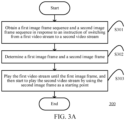
- FIG. 3A is a flowchart of a video play method 300 used in the invention.
- the video play method 300 may be performed by the terminal device 110, for example, may be performed by the video play application 111 in the terminal device 110.
- the video play method 300 includes steps S301 to S303.
- step S301 a first image frame sequence and a second image frame sequence are obtained in response to an instruction of switching from a first video stream to a second video stream.
- the first video stream is a currently played video stream.
- the first image frame sequence is from the first video stream, and the second image frame sequence is from the second video stream.
- the first image frame sequence is a plurality of image frames that have not been played by the video play application 111.
- a presentation time stamp (PTS) range of image frames in the first image frame sequence corresponds to a first time interval.
- a PTS range of image frames in the second image frame sequence corresponds to a second time interval.
- a play time of the second image frame sequence may correspond to a play time of the first image frame sequence.
- the corresponding of the play times means that there is an overlap between the first time interval and the second time interval.
- a bitstream of the first video stream is greater than that of the second video stream.
- the video play application 111 may adaptively determine whether to switch between the video streams. When it is detected that a video stream transmission bandwidth is less than a threshold, the video play application 111 may generate the instruction of switching from the first video stream to the second video stream.
- the video play interface may display a check box 302.
- the check box 302 may include, for example, three resolution options: a standard definition option A, a high definition option B, and a super definition option C.
- Each resolution option corresponds to one video stream.
- the standard definition corresponds to the first video stream
- the super definition corresponds to the second video stream.
- the video play application 111 may generate the instruction of switching from the first video stream to the second video stream.
- step S301 a video address, for example, the second index file M 2 , of the second video stream is requested from the content server 220.
- the corresponding second image frame sequence is requested from the content server 220 according to the video address.
- the first image frame sequence may be obtained from the content server 220, and details are not further described herein.
- the media service server 120 may include an index server 121 and a video stream server 122.
- the index server 121 may store video addresses of video streams.
- the video stream server 122 may store image frame sequences of video streams.
- step S301 an access request for the second video stream is sent to the index server 121, so that the index server 121 returns the video address corresponding to the second video stream.
- the video address corresponding to the second video stream may be received, and the second image frame sequence may be obtained from the video stream server 122 according to the video address.
- the first image frame sequence may be obtained from the video stream server 122, and details are not further described herein.
- a first image frame as a switching point in the first image frame sequence and a second image frame matching the first image frame in the second image frame sequence are determined.
- that the first image frame matches the second image frame means that the two image frames match in an image feature aspect.
- a higher matching degree between the first image frame and the second image frame indicates closer capturing time points between the two image frames.
- the capturing time point is a sampling time (which may also be referred to as a shooting time) corresponding to a picture in the image frame.
- the first video stream is played until the first image frame, and then the second video stream starts to be played by using the second image frame as a starting point.
- the second image frame matching the first image frame may be determined based on different proper image matching algorithms.
- the second video stream may be played starting form the second image frame.
- the second video stream may be played starting form an image frame right after the second image frame.
- step S302 the switching point (that is, the first image frame) of the first video stream and the starting point (that is, the second image frame) of the second video stream that match each other may be determined. Because the first image frame matches the second image frame, the method 300 can avoid a problem of picture playback or picture skipping during picture switching in step S303, so that smooth switching can be performed between video stream pictures, thereby improving picture continuity.
- the following describes a process of determining the first image frame and the second image frame by using an example.
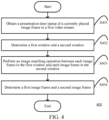
- step S302 is implemented as a method 400.
- a PTS of a currently played image frame in the first video stream may be obtained, and the PTS is used as a reference PTS.
- a first window and a second window are determined according to the reference PTS.
- the first window belongs to the first image frame sequence.
- the second window belongs to the second image frame sequence.
- an image frame in the first image frame sequence that is spaced by a switching threshold from the reference PTS is determined, the image frame is used as a first reference image frame, and the first window centered on the first reference image frame is determined.
- the first window may include the first reference image frame and one adjacent image frame before (or after) the first reference image frame.
- the first window may include more than two image frames.
- the switching threshold may be a default configured value.
- the switching threshold is obtained from the media service system 120.
- the media service system 120 may store one or more switching operation records about switching from the first video stream to the second video stream.
- a switching operation record may include a time length or a quantity of frames from a play position (that is, a PTS of a currently played image frame when an instruction of switching to the second video stream is received) to a switching point in the first video stream on the terminal device.
- the media service system 120 may use an average value of time lengths (or quantities of frames) in the one or more switching records as the switching threshold.
- the video play application 111 may obtain, from the media service system 120, the switching threshold determined according to the switching operation records.
- a reference switching point (that is, the first reference image frame) may be determined according to the switching threshold.
- the reference switching point (the first reference image frame) is determined by using the switching threshold determined according to the switching operation records, so that the reference switching point may be closer to a finally determined actual switching point (that is, the first image frame), thereby improving efficiency of determining the switching point.
- an image frame in the second image frame sequence whose PTS is the closest to that of the first reference image frame may be further determined, and the image frame is used as a second reference image frame.
- the second window in the second image frame that is centered on the second reference image frame may be determined.
- the second window may include one or more image frames, which is not limited in this application.
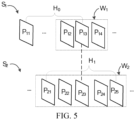
- FIG. 5 shows a process of determining a first window and a second window according to some embodiments of this application.
- a currently displayed image frame in a first image frame sequence S 1 is P 11 .
- PTS 0 that is, a reference PTS, of P 11 may be obtained.
- an image frame P 13 that is spaced by a switching threshold H 0 from P 11 may be determined, and P 13 is used as a first reference image frame.
- P 13 is in the middle of a first window W 1 .
- the first window W 1 may include, for example, P 12 , P 13 , and P 14 .
- a second reference image frame P 23 may be determined.
- a second window W 2 may be determined.
- the second window W 2 includes a plurality of consecutive image frames in the second image frame sequence, for example, includes P 21 , P 22 , P 23 , P 24 , and P 25 .
- the size of the second window may be, for example, an image frame quantity threshold or a time length threshold, which is not limited in this application.
- step S403 of the method 400 may be performed.
- an image matching operation is performed between each image frame in the first window and each image frame in the second window to determine two image frames having the highest matching degree.
- the image frames in the first window and the second window may be decoded (for example, decoded to be in a format such as YUV), and then the image matching operation is performed according to a histogram of oriented gradient (HOG) algorithm.
- the image matching operation may alternatively be performed by using another proper image matching algorithm, which is not limited in this application.
- a decoding operation may be performed according to dependencies between each image frame and other image frames.
- a to-be-decoded image frame is a predictive frame (P frame)
- decoding may be performed based on an I frame on which the P frame depends, and details are not further described herein.
- step S404 one of the two image frames that belongs to the first window is used as the first image frame, and the other image frame that belongs to the second window is used as the second image frame.
- two corresponding image frame sets (that is, the first window and the second window) may be determined in the first image frame sequence and the second image frame sequence.
- two matching image frames (that is, the first image frame and the second image frame) may be flexibly determined as the switching point and the starting point, to improve continuity between a picture before switching and a picture after switching.
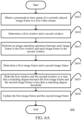
- FIG. 6A is a flowchart of a method 600 for performing step S302 not falling under the invention.
- the method 600 may include steps S601 to S604.
- steps S601 to S604 are the same as those of steps S401 to S404, and details are not described herein again.
- the method 600 may further include steps S605 and S606.
- step S605 the first window and the second window are slid in a case that a matching degree between the first image frame and the second image frame is less than a matching degree threshold, so that the first image frame is in the middle of the slid first window, and the second image frame is in the middle of the slid window.
- step S606 the first image frame and the second image frame are updated based on the slid first window and the slid second window. Specifically, in step S606, an image matching operation may be performed between each image frame in the slid first window and each image frame in the slid second window to determine two image frames having the highest matching degree.
- step S606 one of the two image frames that belongs to the first window may be used as an updated first image frame, and the other image frame that belongs to the second window may be used as an updated second image frame. Based on this, in the method 600, it may be further determined whether a matching degree between the updated first image frame and the updated second image frame reaches the matching degree threshold. If the matching degree threshold is not reached, steps S605 and S606 of the method 600 may be further performed iteratively until a matching degree reaches the matching degree threshold.
- FIG. 6B is a schematic diagram of the first window and the second window in FIG. 5 after sliding.
- the first window W 1 may include image frames P 13 , P 14 , and P 15
- the second window W 2 includes image frames P 23 , P 24 , P 25 , P 26 , and P 27 .
- step S606 of the method 600 may be performed, to update the first image frame and the second image frame.
- the matching degree between the first image frame and the second image frame may be increased by performing steps S605 and S606, thereby improving picture continuity during picture switching in step S303.
- FIG. 7A is a flowchart of a method 700 for performing step S302 not falling under the invention.
- the method 700 includes steps S701 to S703.
- An implementation of step S701 is the same as that of step S401, and details are not described herein again.
- step S702 the first image frame is determined according to the reference PTS, and a window belonging to the second image frame sequence is determined.
- step S702 an image frame in the first image frame sequence that is spaced by a switching threshold from the reference PTS may be determined, and the image frame is used as the first image frame.
- step S702 an image frame in the second image frame sequence whose PTS is the closest to that of the first image frame may be determined, and the image frame is used as a second reference image frame. In this way, in step S702, the window in the second image frame sequence that is centered on the second reference image frame may be determined.
- step S703 an image matching operation is performed between each image frame in the window and the first image frame, to determine an image frame having the highest matching degree with the first image frame in the window, and the image frame is used as the second image frame.
- a currently displayed image frame in a first image frame sequence S 1 is P 11 .
- PTS 0 that is, a reference PTS, of P 11 may be obtained.
- an image frame P 13 that is spaced by a switching threshold H 0 from PTS 0 may be determined, and P 13 is used as a first image frame.
- a second reference image frame P 23 may be determined.
- a window W 0 may be determined, which may include, for example, P 21 , P 22 , P 23 , P 24 , and P 25 .
- the first image frame may be quickly determined according to the switching threshold, and the second image frame may be selected within a range (that is, the window determined in step S702) in the second image frame sequence that is close to the PTS of the first image frame.
- a range that is, the window determined in step S702
- an image matching degree between the switching point and the starting point may be improved, thereby improving smoothness of picture switching.
- FIG. 8A is a flowchart of a method 800 for performing step S302 not falling under the invention.
- the method 800 may include steps S801 to S803.
- steps S801 to S803 are the same as those of steps S701 to S703, and details are not described herein again.
- the method 800 may further include steps S804 and S805.
- step S804 the window is slid according to a variation trend of matching degrees corresponding to image frames in the window in a case that a matching degree between the first image frame and the second image frame is less than a matching degree threshold.
- step S805 an image frame having the highest matching degree with the first image frame is determined in the slid window, and the second image frame is updated to the determined image frame.
- step S804 the window is slid forward in a case that the matching degrees corresponding to the image frames in the window increase progressively, that is, a sliding direction is the same as an increasing direction.
- step S804 the window is slid backward in a case that the matching degrees corresponding to the image frames in the window decrease progressively.
- a sliding step length of the window may be determined according to a difference between the matching degree between the first image frame and the second image frame and the matching degree threshold.
- a larger difference corresponds to a larger sliding step length.
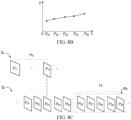
- an image frame range of the window may be adjusted based on the variation trend of the matching degrees according to the sliding step length. To explain more vividly, a process of sliding the window is described below by using FIG. 8B and FIG. 8C as examples.
- FIG. 8B is a line graph of a variation trend of matching degrees corresponding to image frames in a window.
- an x-axis indicates a serial number of each image frame
- a y-axis indicates a matching degree.
- a value range of the matching degree is, for example, [0, 1].
- FIG. 8C is a schematic diagram of the window in FIG. 7B after a sliding operation is performed.
- the matching degrees corresponding to the image frames increase progressively in FIG. 8B
- the second image frame in the window in FIG. 7B is P 25 . Therefore, in step S805, the window may be slid forward (that is, in a rightward direction in FIG. 8C ).
- the slid window may include image frames P 26 to P 30 .
- the sliding direction may be determined according to the variation trend of the matching degrees corresponding to the image frames in the second image frame , to accurately update the second image frame, thereby increasing the matching degree between the second image frame and the first image frame.
- a speed of determining the second image frame may be increased, that is, efficiency of determining a starting point is improved.
- FIG. 9 is a flowchart of a method 900 for performing step S302 not falling under the invention.
- the method 900 may include steps S901 to S903.
- steps S901 to S903 are the same as those of steps S701 to S703, and details are not described herein again.
- the method 900 may further include step S904 and step S905.
- step S904 the window is slid in a case that a matching degree between the first image frame and the second image frame is less than a matching degree threshold, so that the second image frame is in the middle of the slid window.
- step S905 an image frame having the highest matching degree with the first image frame is determined in the slid window, and the second image frame is updated to the determined image frame.
- a range of the window can be quickly adjusted and the second image frame can be quickly updated, thereby increasing the matching degree between the switching point and the starting point.
- FIG. 10A is a schematic diagram of a video play apparatus 1000.
- the terminal device 110 may include a video play apparatus 1000.
- the video play apparatus 1000 may include an image obtaining unit 1010, a switching control unit 1020, and a video play unit 1030.
- the image obtaining unit 1010 is configured to obtain a first image frame sequence and a second image frame sequence in response to an instruction of switching from a first video stream to a second video stream.
- the first image frame sequence is from the first video stream
- the second image frame sequence is from the second video stream.
- the switching control unit 1020 is configured to determine a first image frame as a switching point in the first image frame sequence and a second image frame matching the first image frame in the second image frame sequence.
- the video play unit 1030 is configured to play the first video stream until the first image frame, and then start to play the second video stream by using the second image frame as a starting point.
- the switching control unit 1020 further includes a window determining module 1021 and an image matching unit 1022.
- the window determining module 1021 is configured to obtain a reference PTS of a currently played image frame in the first video stream upon reception of the instruction. In this way, according to the reference PTS, the window determining module 1021 may determine a first window and a second window.
- the first window belongs to the first image frame sequence.
- the second window belongs to the second image frame sequence.
- the window determining module 1021 may determine an image frame in the first image frame sequence that is spaced by a switching threshold from the reference PTS, use the image frame as a first reference image frame, and determine the first window centered on the first reference image frame. In addition, the window determining module 1021 may determine an image frame in the second image frame sequence whose PTS is the closest to that of the first reference image frame, and use the image frame as a second reference image frame. Based on this, the window determining module 1021 may determine the second window in the second image frame that is centered on the second reference image frame.
- the image matching module 1022 is configured to perform an image matching operation between each image frame in the first window and each image frame in the second window, to determine two image frames having the highest matching degree.
- the image matching module 1022 may use one of the two image frames that belongs to the first window as the first image frame, and use the other image frame that belongs to the second window as the second image frame.
- the window determining module 1021 is further configured to slide the first window and the second window in a case that a matching degree between the first image frame and the second image frame is less than a matching degree threshold, so that the first image frame is in the middle of the slid first window, and the second image frame is in the middle of the slid second window.
- the image matching module 1022 is further configured to update the first image frame and the second image frame according to the slid first window and the slid second window. Specifically, the image matching module 1022 may perform an image matching operation between each image frame in the slid first window and each image frame in the slid second window to determine two image frames having the highest matching degree.
- the image matching module 1022 may use one of the two image frames that belongs to the first window as an updated first image frame, and use the other image frame that belongs to the second window as an updated second image frame. Based on this, the switching control unit 1020 may further determine whether a matching degree between the updated first image frame and the updated second image frame reaches a matching degree threshold by using the window determining module 1021. If the matching degree threshold is not reached, the switching control unit 1020 may further iteratively slide the first window and the second window and update the first image frame and the second image frame until the matching degree reaches the matching degree threshold.
- the switching control unit 1020 further includes a window determining module 1023 and an image matching unit 1024.
- the window determining module 1023 is configured to obtain a reference PTS of a currently played image frame in the first video stream upon reception of the instruction. According to the reference PTS, the window determining module 1023 may determine the first image frame and determine a window belonging to the second image frame sequence. The window determining module 1023 may determine an image frame in the first image frame sequence that is spaced by a switching threshold from the reference PTS, and use the image frame as the first image frame. The window determining module 1023 may determine an image frame in the second image frame sequence whose PTS is the closest to that of the first image frame, and use the image frame as a second reference image frame. In this way, the window determining module 1023 may determine the window in the second image frame sequence that is centered on the second reference image frame.
- the image matching module 1024 is configured to perform an image matching operation between each image frame in the window and the first image frame, to determine an image frame having the highest matching degree with the first image frame in the window, and use the image frame as the second image frame.
- the window determining module 1023 is further configured to slide the window according to a variation trend of matching degrees corresponding to image frames in the window in a case that a matching degree between the first image frame and the second image frame is less than a matching degree threshold. In a case that the matching degrees corresponding to the image frames increase progressively, the window determining module 1023 slides the window forward. In a case that the matching degrees corresponding to the image frames decrease progressively, the window determining module 1023 slides the window backward. In an embodiment, the window determining module 1023 may determine a sliding step length of the window according to a difference between the matching degree between the first image frame and the second image frame and the matching degree threshold.
- the window determining module 1023 may adjust an image frame range of the window according to the sliding step length.
- the image matching module 1024 is further configured to determine an image frame having the highest matching degree with the first image frame in the slid window, and update the second image frame to the determined image frame.
- the window determining module 1023 is further configured to slide the window in a case that a matching degree between the first image frame and the second image frame is less than a matching degree threshold, so that the second image frame is in the middle of the slid window.
- the image matching module is further configured to determine an image frame having the highest matching degree with the first image frame in the slid window, and update the second image frame to the determined image frame.
- the video play apparatus 1000 may determine the switching point (that is, the first image frame) of the first video stream and the starting point (that is, the second image frame) of the second video stream that match each other. Because the first image frame matches the second image frame, the video play apparatus 1000 can avoid a problem of picture playback or picture skipping during picture switching, so that smooth switching can be performed between video stream pictures, thereby improving picture continuity.
- FIG. 11 is a structural diagram of composition of a terminal device.
- the terminal device includes one or more processors (CPUs or GPUs) 1102, a communications module 1104, a memory 1106, a user interface 1110, and a communications bus 1108 for connecting the components.
- the processor 1102 may receive and send data by using the communications module 1104 to implement network communication and/or local communication.
- the user interface 1110 includes one or more output devices 1112, including one or more speakers and/or one or more visualization displays.
- the user interface 1110 further includes one or more input devices 1114, including, for example, a keyboard, a mouse, a sound command input unit or a microphone, a touch display, a touch-sensitive input panel, a posture capturing camera, or another input key or control.
- the memory 1106 may be a high-speed random access memory (RAM) such as a DRAM, an SRAM, a DDR RAM, or another random access solid-state memory device; or a non-volatile memory such as one or more magnetic disk storage devices, optical disk storage devices, flash memory devices, or other non-volatile solid-state memory devices.
- RAM random access memory
- SRAM SRAM
- DDR RAM DDR RAM
- non-volatile memory such as one or more magnetic disk storage devices, optical disk storage devices, flash memory devices, or other non-volatile solid-state memory devices.
- the memory 1106 stores an instruction set that can be executed by the processor 1102 and includes:
Landscapes
- Engineering & Computer Science (AREA)
- Multimedia (AREA)
- Signal Processing (AREA)
- Databases & Information Systems (AREA)
- Human Computer Interaction (AREA)
- Computer Security & Cryptography (AREA)
- Marketing (AREA)
- Business, Economics & Management (AREA)
- Two-Way Televisions, Distribution Of Moving Picture Or The Like (AREA)
- Television Signal Processing For Recording (AREA)
- Computer Vision & Pattern Recognition (AREA)
- Physics & Mathematics (AREA)
- General Physics & Mathematics (AREA)
- Theoretical Computer Science (AREA)
- Compression Or Coding Systems Of Tv Signals (AREA)
Claims (2)
- Procédé de lecture de vidéo, comprenant:l'obtention (S301), par un dispositif de terminal, d'une première séquence de trames d'image et d'une seconde séquence de trames d'image en réponse à une instruction de commutation d'un premier flux vidéo à un second flux vidéo, la première séquence de trames d'image se trouvant à partir du premier flux vidéo et la seconde séquence de trames vidéo se trouvant à partir du second flux vidéo;la détermination (S302), par le dispositif de terminal, d'une première trame d'image en tant que point de commutation dans la première séquences de trames d'image et de la seconde séquence de trames d'image correspondant à la première trame d'image dans la seconde séquence de trames d'image; etla lecture (S303), par le dispositif de terminal, du premier flux vidéo jusqu'à la première trame d'image, et ensuite le démarrage de la lecture du second flux vidéo à l'aide de la seconde trame d'image en tant que point de départ, dans lequelle premier flux vidéo et le second flux vidéo ont différentes fréquences de trames,caractérisé en ce quela détermination (S302), par le dispositif de terminal, d'une première trame d'image en tant que point de commutation dans la première séquences de trames d'image et de la seconde séquence de trames d'image correspondant à la première trame d'image dans la seconde séquence de trames d'image comprend:l'obtention (S401), par le dispositif de terminal, d'une estampille temporelle de présentation de référence, PTS, d'une trame d'image en cours de lecture dans le premier flux vidéo à la réception de l'instruction;la détermination (S402), par le dispositif de terminal, d'une première fenêtre et d'une seconde fenêtre selon la PTS de référence, la première fenêtre appartenant à la première séquence de trames d'image, et la seconde fenêtre appartement à la seconde séquence de trames d'image;la réalisation (S403), par le dispositif de terminal, d'une opération de mise en correspondance d'images entre chaque trame d'image dans la première fenêtre et chaque trame d'image dans la seconde fenêtre, pour déterminer deux trames d'image ayant le degré de correspondance le plus élevé; etl'utilisation (S404), par le dispositif de terminal, d'une des deux trames d'image qui appartient à la première fenêtre en tant que première trame d'image, et l'utilisation de l'autre trame d'image qui appartient à la seconde fenêtre en tant que seconde trame d'image, dans lequella détermination, par le dispositif de terminal, d'une première fenêtre et d'une seconde fenêtre selon le PTS de référence comprend:la détermination, par le dispositif de terminal, d'une trame d'image dans la première trame d'image qui est espacée par un seuil de commutation de la PTS de référence, à l'aide de la trame d'image en tant que première trame d'image de référence;la détermination, par le dispositif de terminal, de la première fenêtre centrée sur la première trame d'image de référence;la détermination, par le dispositif de terminal, d'une trame d'image dans la seconde trame d'image dont la PTS est la plus proche de celle de la première trame d'image de référence, et à l'aide de la trame d'image en tant que seconde trame d'image de référence; etla détermination, par le dispositif de terminal, de la seconde fenêtre dans la seconde trame d'image qui est centrée sur la seconde trame d'image de référence;le stockage, par un système de service multimédia (120), d'un ou plusieurs enregistrements d'opération de commutation concernant la commutation du premier flux de vidéo au second flux de vidéo, dans lequel un enregistrement d'opération de commutation comprend une longueur temporelle ou une quantité de trames à partir d'une position de lecture, la position de lecture étant une PTS d'une trame d'image en cours de lecture lorsqu'une instruction de commutation au second flux vidéo est reçue, à un point de commutation dans le premier flux vidéo sur le dispositif de terminal de sorte que le système de service multimédia (120) utilise une valeur moyenne de longueurs temporelles dans le ou les enregistrements de commutation en tant que seuil de commutation; etl'obtention, par le dispositif de terminal à partir du système de service multimédia (120), lors de l'obtention (S301) de la première trame d'image et de la seconde trame d'image en réponse à l'instruction de commutation du premier flux vidéo au second flux de trame vidéo, du seuil de commutation déterminé selon les enregistrements d'opération de commutation.
- Dispositif de terminal (110) et système de services multimédia (120) connectés par l'intermédiaire d'un réseau (130), le dispositif de terminal (110) comprenant:un ou plusieurs processeurs (1102);une mémoire (1106) ; etun ou plusieurs programmes, stockés dans la mémoire (1106) et configurés pour être exécutés par le ou les processeurs (1102), le dispositif de terminal (110) et le système de services multimédia (120) étant configurés pour exécuter le procédé selon la revendication 1.
Applications Claiming Priority (2)
| Application Number | Priority Date | Filing Date | Title |
|---|---|---|---|
| CN201810101152.9A CN108307248B (zh) | 2018-02-01 | 2018-02-01 | 视频播放方法、装置、计算设备及存储介质 |
| PCT/CN2019/071914 WO2019149066A1 (fr) | 2018-02-01 | 2019-01-16 | Procédé de lecture vidéo, appareil terminal et support d'informations |
Publications (3)
| Publication Number | Publication Date |
|---|---|
| EP3748983A1 EP3748983A1 (fr) | 2020-12-09 |
| EP3748983A4 EP3748983A4 (fr) | 2020-12-16 |
| EP3748983B1 true EP3748983B1 (fr) | 2024-04-24 |
Family
ID=62850823
Family Applications (1)
| Application Number | Title | Priority Date | Filing Date |
|---|---|---|---|
| EP19747355.6A Active EP3748983B1 (fr) | 2018-02-01 | 2019-01-16 | Procédé de lecture vidéo, appareil terminal et support d'informations |
Country Status (4)
| Country | Link |
|---|---|
| US (1) | US11356739B2 (fr) |
| EP (1) | EP3748983B1 (fr) |
| CN (1) | CN108307248B (fr) |
| WO (1) | WO2019149066A1 (fr) |
Families Citing this family (5)
| Publication number | Priority date | Publication date | Assignee | Title |
|---|---|---|---|---|
| CN108307248B (zh) | 2018-02-01 | 2019-10-29 | 腾讯科技(深圳)有限公司 | 视频播放方法、装置、计算设备及存储介质 |
| CN110830813B (zh) * | 2019-10-31 | 2020-11-06 | 北京达佳互联信息技术有限公司 | 一种视频切换的方法、装置、电子设备及存储介质 |
| CN110769174B (zh) * | 2019-10-31 | 2022-05-06 | 维沃移动通信有限公司 | 视频查看方法及电子设备 |
| CN112543342B (zh) * | 2020-11-26 | 2023-03-14 | 腾讯科技(深圳)有限公司 | 虚拟视频直播处理方法及装置、存储介质、电子设备 |
| CN115941951B (zh) * | 2022-11-10 | 2026-03-27 | 北京环境特性研究所 | 帧频切换的图像压缩方法、装置、计算设备及存储介质 |
Family Cites Families (20)
| Publication number | Priority date | Publication date | Assignee | Title |
|---|---|---|---|---|
| US7809154B2 (en) * | 2003-03-07 | 2010-10-05 | Technology, Patents & Licensing, Inc. | Video entity recognition in compressed digital video streams |
| JP4534997B2 (ja) * | 2006-02-13 | 2010-09-01 | ソニー株式会社 | 送受信システム、受信装置、受信方法 |
| JP5224862B2 (ja) * | 2008-03-25 | 2013-07-03 | キヤノン株式会社 | コンテンツ切換装置およびコンテンツ切換方法 |
| CN102187667B (zh) * | 2008-08-26 | 2014-07-23 | Csir公司 | 从第一编码视频流切换到第二编码视频流的方法 |
| CN102957672A (zh) * | 2011-08-25 | 2013-03-06 | 中国电信股份有限公司 | 自适应播放flv媒体流的方法、客户端和系统 |
| US20130055326A1 (en) * | 2011-08-30 | 2013-02-28 | Microsoft Corporation | Techniques for dynamic switching between coded bitstreams |
| CN202799004U (zh) * | 2012-06-04 | 2013-03-13 | 深圳市景阳科技股份有限公司 | 一种视频播放终端及系统 |
| US9900629B2 (en) * | 2013-03-13 | 2018-02-20 | Apple Inc. | Codec techniques for fast switching with intermediate sequence |
| CN104240224B (zh) * | 2013-06-20 | 2018-04-27 | 富泰华工业(深圳)有限公司 | 视频分析系统及方法 |
| US9654531B2 (en) * | 2013-08-01 | 2017-05-16 | Spotify Ab | System and method for transitioning between receiving different compressed media streams |
| EP3092806A4 (fr) * | 2014-01-07 | 2017-08-23 | Nokia Technologies Oy | Procédé et appareil de codage et de décodage vidéo |
| CN105657520A (zh) * | 2014-11-18 | 2016-06-08 | 乐视网信息技术(北京)股份有限公司 | 一种视频清晰度切换方法和视频播放器 |
| CN104394486B (zh) * | 2014-11-26 | 2018-03-13 | 中标软件有限公司 | 一种基于云桌面的视频流处理方法及装置 |
| CN104967884B (zh) * | 2015-04-17 | 2018-01-26 | 北京奇艺世纪科技有限公司 | 一种码流切换方法和装置 |
| CN105430449B (zh) * | 2015-11-25 | 2018-12-18 | 小米科技有限责任公司 | 媒体文件播放方法、装置及系统 |
| CN106937114B (zh) * | 2015-12-30 | 2020-09-25 | 株式会社日立制作所 | 用于对视频场景切换进行检测的方法和装置 |
| CN106162235B (zh) * | 2016-08-17 | 2018-06-01 | 北京百度网讯科技有限公司 | 用于切换视频流的方法和装置 |
| CN106454395B (zh) * | 2016-09-20 | 2018-10-12 | 北京百度网讯科技有限公司 | 在服务器中用于自适应提供多码率流媒体的方法及装置 |
| US10873775B2 (en) * | 2017-06-12 | 2020-12-22 | Netflix, Inc. | Staggered key frame video encoding |
| CN108307248B (zh) * | 2018-02-01 | 2019-10-29 | 腾讯科技(深圳)有限公司 | 视频播放方法、装置、计算设备及存储介质 |
-
2018
- 2018-02-01 CN CN201810101152.9A patent/CN108307248B/zh active Active
-
2019
- 2019-01-16 EP EP19747355.6A patent/EP3748983B1/fr active Active
- 2019-01-16 WO PCT/CN2019/071914 patent/WO2019149066A1/fr not_active Ceased
-
2020
- 2020-06-01 US US16/889,282 patent/US11356739B2/en active Active
Also Published As
| Publication number | Publication date |
|---|---|
| EP3748983A1 (fr) | 2020-12-09 |
| WO2019149066A1 (fr) | 2019-08-08 |
| EP3748983A4 (fr) | 2020-12-16 |
| CN108307248A (zh) | 2018-07-20 |
| US11356739B2 (en) | 2022-06-07 |
| CN108307248B (zh) | 2019-10-29 |
| US20200296470A1 (en) | 2020-09-17 |
Similar Documents
| Publication | Publication Date | Title |
|---|---|---|
| EP3748983B1 (fr) | Procédé de lecture vidéo, appareil terminal et support d'informations | |
| US10652506B2 (en) | High quality multimedia transmission from a mobile device for live and on-demand viewing | |
| CN113141514B (zh) | 媒体流传输方法、系统、装置、设备及存储介质 | |
| US9979768B2 (en) | System and method for transitioning between receiving different compressed media streams | |
| CN117581552A (zh) | 在传输预创作视频帧和合成视频帧之间切换 | |
| JP2020519094A (ja) | ビデオ再生方法、デバイス、およびシステム | |
| CN113141522B (zh) | 资源传输方法、装置、计算机设备及存储介质 | |
| CN110582012B (zh) | 视频切换方法、视频处理方法、装置及存储介质 | |
| CN112637661B (zh) | 视频流的切换方法及装置、计算机存储介质、电子设备 | |
| CN111404882B (zh) | 媒体流处理方法及装置 | |
| US20240031451A1 (en) | Pushing content in time windows based on different positions | |
| CN107690093B (zh) | 一种视频播放方法及装置 | |
| CN113225585A (zh) | 一种视频清晰度的切换方法、装置、电子设备以及存储介质 | |
| US20240205469A1 (en) | Apparatus and method for processing cloud streaming low latency playback | |
| KR20220034022A (ko) | 다중 라이브 송출 환경에서의 채널 간 고속 전환 모드를 구현하는 방법, 시스템, 및 컴퓨터 판독가능한 기록 매체 | |
| WO2018171567A1 (fr) | Procédé, serveur et terminal pour lire un flux multimédia | |
| EP3661216A1 (fr) | Procédé et appareil de lecture en boucle de contenu vidéo | |
| KR20240008319A (ko) | 사용자 맞춤형 콘텐츠와 미리 작성된 미디어 콘텐츠의 전송 간 전환 | |
| JP2019033362A (ja) | 配信装置、受信装置及びプログラム | |
| HK40051647A (en) | A video definition switching method, device, electronic equipment and storage medium | |
| WO2022193022A1 (fr) | Système et procédé de changement de débit binaire dynamique de flux multimédias dans une production de diffusion multimédia | |
| HK40018734A (en) | Video switching method, video processing method, device and storage medium | |
| HK40018734B (en) | Video switching method, video processing method, device and storage medium |
Legal Events
| Date | Code | Title | Description |
|---|---|---|---|
| STAA | Information on the status of an ep patent application or granted ep patent |
Free format text: STATUS: THE INTERNATIONAL PUBLICATION HAS BEEN MADE |
|
| PUAI | Public reference made under article 153(3) epc to a published international application that has entered the european phase |
Free format text: ORIGINAL CODE: 0009012 |
|
| STAA | Information on the status of an ep patent application or granted ep patent |
Free format text: STATUS: REQUEST FOR EXAMINATION WAS MADE |
|
| 17P | Request for examination filed |
Effective date: 20200730 |
|
| AK | Designated contracting states |
Kind code of ref document: A1 Designated state(s): AL AT BE BG CH CY CZ DE DK EE ES FI FR GB GR HR HU IE IS IT LI LT LU LV MC MK MT NL NO PL PT RO RS SE SI SK SM TR |
|
| AX | Request for extension of the european patent |
Extension state: BA ME |
|
| A4 | Supplementary search report drawn up and despatched |
Effective date: 20201117 |
|
| RIC1 | Information provided on ipc code assigned before grant |
Ipc: H04N 21/44 20110101ALI20201112BHEP Ipc: H04N 21/2343 20110101ALI20201112BHEP Ipc: H04N 21/845 20110101AFI20201112BHEP Ipc: H04N 21/431 20110101ALI20201112BHEP Ipc: H04N 21/8547 20110101ALI20201112BHEP Ipc: H04N 21/234 20110101ALI20201112BHEP |
|
| DAV | Request for validation of the european patent (deleted) | ||
| DAX | Request for extension of the european patent (deleted) | ||
| STAA | Information on the status of an ep patent application or granted ep patent |
Free format text: STATUS: EXAMINATION IS IN PROGRESS |
|
| 17Q | First examination report despatched |
Effective date: 20210928 |
|
| RAP3 | Party data changed (applicant data changed or rights of an application transferred) |
Owner name: TENCENT TECHNOLOGY (SHENZHEN) COMPANY LIMITED |
|
| GRAP | Despatch of communication of intention to grant a patent |
Free format text: ORIGINAL CODE: EPIDOSNIGR1 |
|
| STAA | Information on the status of an ep patent application or granted ep patent |
Free format text: STATUS: GRANT OF PATENT IS INTENDED |
|
| INTG | Intention to grant announced |
Effective date: 20231024 |
|
| GRAS | Grant fee paid |
Free format text: ORIGINAL CODE: EPIDOSNIGR3 |
|
| GRAA | (expected) grant |
Free format text: ORIGINAL CODE: 0009210 |
|
| STAA | Information on the status of an ep patent application or granted ep patent |
Free format text: STATUS: THE PATENT HAS BEEN GRANTED |
|
| AK | Designated contracting states |
Kind code of ref document: B1 Designated state(s): AL AT BE BG CH CY CZ DE DK EE ES FI FR GB GR HR HU IE IS IT LI LT LU LV MC MK MT NL NO PL PT RO RS SE SI SK SM TR |
|
| REG | Reference to a national code |
Ref country code: GB Ref legal event code: FG4D |
|
| REG | Reference to a national code |
Ref country code: CH Ref legal event code: EP |
|
| REG | Reference to a national code |
Ref country code: DE Ref legal event code: R096 Ref document number: 602019050900 Country of ref document: DE |
|
| REG | Reference to a national code |
Ref country code: IE Ref legal event code: FG4D |
|
| REG | Reference to a national code |
Ref country code: LT Ref legal event code: MG9D |
|
| REG | Reference to a national code |
Ref country code: NL Ref legal event code: MP Effective date: 20240424 |
|
| REG | Reference to a national code |
Ref country code: AT Ref legal event code: MK05 Ref document number: 1680884 Country of ref document: AT Kind code of ref document: T Effective date: 20240424 |
|
| PG25 | Lapsed in a contracting state [announced via postgrant information from national office to epo] |
Ref country code: NL Free format text: LAPSE BECAUSE OF FAILURE TO SUBMIT A TRANSLATION OF THE DESCRIPTION OR TO PAY THE FEE WITHIN THE PRESCRIBED TIME-LIMIT Effective date: 20240424 |
|
| PG25 | Lapsed in a contracting state [announced via postgrant information from national office to epo] |
Ref country code: NL Free format text: LAPSE BECAUSE OF FAILURE TO SUBMIT A TRANSLATION OF THE DESCRIPTION OR TO PAY THE FEE WITHIN THE PRESCRIBED TIME-LIMIT Effective date: 20240424 |
|
| PG25 | Lapsed in a contracting state [announced via postgrant information from national office to epo] |
Ref country code: IS Free format text: LAPSE BECAUSE OF FAILURE TO SUBMIT A TRANSLATION OF THE DESCRIPTION OR TO PAY THE FEE WITHIN THE PRESCRIBED TIME-LIMIT Effective date: 20240824 |
|
| PG25 | Lapsed in a contracting state [announced via postgrant information from national office to epo] |
Ref country code: BG Free format text: LAPSE BECAUSE OF FAILURE TO SUBMIT A TRANSLATION OF THE DESCRIPTION OR TO PAY THE FEE WITHIN THE PRESCRIBED TIME-LIMIT Effective date: 20240424 |
|
| PG25 | Lapsed in a contracting state [announced via postgrant information from national office to epo] |
Ref country code: FI Free format text: LAPSE BECAUSE OF FAILURE TO SUBMIT A TRANSLATION OF THE DESCRIPTION OR TO PAY THE FEE WITHIN THE PRESCRIBED TIME-LIMIT Effective date: 20240424 Ref country code: HR Free format text: LAPSE BECAUSE OF FAILURE TO SUBMIT A TRANSLATION OF THE DESCRIPTION OR TO PAY THE FEE WITHIN THE PRESCRIBED TIME-LIMIT Effective date: 20240424 |
|
| PG25 | Lapsed in a contracting state [announced via postgrant information from national office to epo] |
Ref country code: GR Free format text: LAPSE BECAUSE OF FAILURE TO SUBMIT A TRANSLATION OF THE DESCRIPTION OR TO PAY THE FEE WITHIN THE PRESCRIBED TIME-LIMIT Effective date: 20240725 |
|
| PG25 | Lapsed in a contracting state [announced via postgrant information from national office to epo] |
Ref country code: PT Free format text: LAPSE BECAUSE OF FAILURE TO SUBMIT A TRANSLATION OF THE DESCRIPTION OR TO PAY THE FEE WITHIN THE PRESCRIBED TIME-LIMIT Effective date: 20240826 |
|
| PG25 | Lapsed in a contracting state [announced via postgrant information from national office to epo] |
Ref country code: ES Free format text: LAPSE BECAUSE OF FAILURE TO SUBMIT A TRANSLATION OF THE DESCRIPTION OR TO PAY THE FEE WITHIN THE PRESCRIBED TIME-LIMIT Effective date: 20240424 |
|
| PG25 | Lapsed in a contracting state [announced via postgrant information from national office to epo] |
Ref country code: AT Free format text: LAPSE BECAUSE OF FAILURE TO SUBMIT A TRANSLATION OF THE DESCRIPTION OR TO PAY THE FEE WITHIN THE PRESCRIBED TIME-LIMIT Effective date: 20240424 |
|
| PG25 | Lapsed in a contracting state [announced via postgrant information from national office to epo] |
Ref country code: PL Free format text: LAPSE BECAUSE OF FAILURE TO SUBMIT A TRANSLATION OF THE DESCRIPTION OR TO PAY THE FEE WITHIN THE PRESCRIBED TIME-LIMIT Effective date: 20240424 |
|
| PG25 | Lapsed in a contracting state [announced via postgrant information from national office to epo] |
Ref country code: LV Free format text: LAPSE BECAUSE OF FAILURE TO SUBMIT A TRANSLATION OF THE DESCRIPTION OR TO PAY THE FEE WITHIN THE PRESCRIBED TIME-LIMIT Effective date: 20240424 |
|
| PG25 | Lapsed in a contracting state [announced via postgrant information from national office to epo] |
Ref country code: PT Free format text: LAPSE BECAUSE OF FAILURE TO SUBMIT A TRANSLATION OF THE DESCRIPTION OR TO PAY THE FEE WITHIN THE PRESCRIBED TIME-LIMIT Effective date: 20240826 Ref country code: PL Free format text: LAPSE BECAUSE OF FAILURE TO SUBMIT A TRANSLATION OF THE DESCRIPTION OR TO PAY THE FEE WITHIN THE PRESCRIBED TIME-LIMIT Effective date: 20240424 Ref country code: NO Free format text: LAPSE BECAUSE OF FAILURE TO SUBMIT A TRANSLATION OF THE DESCRIPTION OR TO PAY THE FEE WITHIN THE PRESCRIBED TIME-LIMIT Effective date: 20240724 Ref country code: LV Free format text: LAPSE BECAUSE OF FAILURE TO SUBMIT A TRANSLATION OF THE DESCRIPTION OR TO PAY THE FEE WITHIN THE PRESCRIBED TIME-LIMIT Effective date: 20240424 Ref country code: IS Free format text: LAPSE BECAUSE OF FAILURE TO SUBMIT A TRANSLATION OF THE DESCRIPTION OR TO PAY THE FEE WITHIN THE PRESCRIBED TIME-LIMIT Effective date: 20240824 Ref country code: HR Free format text: LAPSE BECAUSE OF FAILURE TO SUBMIT A TRANSLATION OF THE DESCRIPTION OR TO PAY THE FEE WITHIN THE PRESCRIBED TIME-LIMIT Effective date: 20240424 Ref country code: GR Free format text: LAPSE BECAUSE OF FAILURE TO SUBMIT A TRANSLATION OF THE DESCRIPTION OR TO PAY THE FEE WITHIN THE PRESCRIBED TIME-LIMIT Effective date: 20240725 Ref country code: FI Free format text: LAPSE BECAUSE OF FAILURE TO SUBMIT A TRANSLATION OF THE DESCRIPTION OR TO PAY THE FEE WITHIN THE PRESCRIBED TIME-LIMIT Effective date: 20240424 Ref country code: ES Free format text: LAPSE BECAUSE OF FAILURE TO SUBMIT A TRANSLATION OF THE DESCRIPTION OR TO PAY THE FEE WITHIN THE PRESCRIBED TIME-LIMIT Effective date: 20240424 Ref country code: BG Free format text: LAPSE BECAUSE OF FAILURE TO SUBMIT A TRANSLATION OF THE DESCRIPTION OR TO PAY THE FEE WITHIN THE PRESCRIBED TIME-LIMIT Effective date: 20240424 Ref country code: AT Free format text: LAPSE BECAUSE OF FAILURE TO SUBMIT A TRANSLATION OF THE DESCRIPTION OR TO PAY THE FEE WITHIN THE PRESCRIBED TIME-LIMIT Effective date: 20240424 Ref country code: RS Free format text: LAPSE BECAUSE OF FAILURE TO SUBMIT A TRANSLATION OF THE DESCRIPTION OR TO PAY THE FEE WITHIN THE PRESCRIBED TIME-LIMIT Effective date: 20240724 |
|
| PG25 | Lapsed in a contracting state [announced via postgrant information from national office to epo] |
Ref country code: DK Free format text: LAPSE BECAUSE OF FAILURE TO SUBMIT A TRANSLATION OF THE DESCRIPTION OR TO PAY THE FEE WITHIN THE PRESCRIBED TIME-LIMIT Effective date: 20240424 |
|
| PG25 | Lapsed in a contracting state [announced via postgrant information from national office to epo] |
Ref country code: EE Free format text: LAPSE BECAUSE OF FAILURE TO SUBMIT A TRANSLATION OF THE DESCRIPTION OR TO PAY THE FEE WITHIN THE PRESCRIBED TIME-LIMIT Effective date: 20240424 |
|
| PG25 | Lapsed in a contracting state [announced via postgrant information from national office to epo] |
Ref country code: CZ Free format text: LAPSE BECAUSE OF FAILURE TO SUBMIT A TRANSLATION OF THE DESCRIPTION OR TO PAY THE FEE WITHIN THE PRESCRIBED TIME-LIMIT Effective date: 20240424 |
|
| PG25 | Lapsed in a contracting state [announced via postgrant information from national office to epo] |
Ref country code: SK Free format text: LAPSE BECAUSE OF FAILURE TO SUBMIT A TRANSLATION OF THE DESCRIPTION OR TO PAY THE FEE WITHIN THE PRESCRIBED TIME-LIMIT Effective date: 20240424 Ref country code: RO Free format text: LAPSE BECAUSE OF FAILURE TO SUBMIT A TRANSLATION OF THE DESCRIPTION OR TO PAY THE FEE WITHIN THE PRESCRIBED TIME-LIMIT Effective date: 20240424 |
|
| REG | Reference to a national code |
Ref country code: DE Ref legal event code: R097 Ref document number: 602019050900 Country of ref document: DE |
|
| PG25 | Lapsed in a contracting state [announced via postgrant information from national office to epo] |
Ref country code: SM Free format text: LAPSE BECAUSE OF FAILURE TO SUBMIT A TRANSLATION OF THE DESCRIPTION OR TO PAY THE FEE WITHIN THE PRESCRIBED TIME-LIMIT Effective date: 20240424 |
|
| PG25 | Lapsed in a contracting state [announced via postgrant information from national office to epo] |
Ref country code: SM Free format text: LAPSE BECAUSE OF FAILURE TO SUBMIT A TRANSLATION OF THE DESCRIPTION OR TO PAY THE FEE WITHIN THE PRESCRIBED TIME-LIMIT Effective date: 20240424 Ref country code: SK Free format text: LAPSE BECAUSE OF FAILURE TO SUBMIT A TRANSLATION OF THE DESCRIPTION OR TO PAY THE FEE WITHIN THE PRESCRIBED TIME-LIMIT Effective date: 20240424 Ref country code: RO Free format text: LAPSE BECAUSE OF FAILURE TO SUBMIT A TRANSLATION OF THE DESCRIPTION OR TO PAY THE FEE WITHIN THE PRESCRIBED TIME-LIMIT Effective date: 20240424 Ref country code: EE Free format text: LAPSE BECAUSE OF FAILURE TO SUBMIT A TRANSLATION OF THE DESCRIPTION OR TO PAY THE FEE WITHIN THE PRESCRIBED TIME-LIMIT Effective date: 20240424 Ref country code: DK Free format text: LAPSE BECAUSE OF FAILURE TO SUBMIT A TRANSLATION OF THE DESCRIPTION OR TO PAY THE FEE WITHIN THE PRESCRIBED TIME-LIMIT Effective date: 20240424 Ref country code: CZ Free format text: LAPSE BECAUSE OF FAILURE TO SUBMIT A TRANSLATION OF THE DESCRIPTION OR TO PAY THE FEE WITHIN THE PRESCRIBED TIME-LIMIT Effective date: 20240424 |
|
| PLBE | No opposition filed within time limit |
Free format text: ORIGINAL CODE: 0009261 |
|
| STAA | Information on the status of an ep patent application or granted ep patent |
Free format text: STATUS: NO OPPOSITION FILED WITHIN TIME LIMIT |
|
| 26N | No opposition filed |
Effective date: 20250127 |
|
| PG25 | Lapsed in a contracting state [announced via postgrant information from national office to epo] |
Ref country code: SI Free format text: LAPSE BECAUSE OF FAILURE TO SUBMIT A TRANSLATION OF THE DESCRIPTION OR TO PAY THE FEE WITHIN THE PRESCRIBED TIME-LIMIT Effective date: 20240424 |
|
| REG | Reference to a national code |
Ref country code: CH Ref legal event code: PL |
|
| PG25 | Lapsed in a contracting state [announced via postgrant information from national office to epo] |
Ref country code: SE Free format text: LAPSE BECAUSE OF FAILURE TO SUBMIT A TRANSLATION OF THE DESCRIPTION OR TO PAY THE FEE WITHIN THE PRESCRIBED TIME-LIMIT Effective date: 20240424 |
|
| PG25 | Lapsed in a contracting state [announced via postgrant information from national office to epo] |
Ref country code: LU Free format text: LAPSE BECAUSE OF NON-PAYMENT OF DUE FEES Effective date: 20250116 Ref country code: MC Free format text: LAPSE BECAUSE OF FAILURE TO SUBMIT A TRANSLATION OF THE DESCRIPTION OR TO PAY THE FEE WITHIN THE PRESCRIBED TIME-LIMIT Effective date: 20240424 |
|
| PG25 | Lapsed in a contracting state [announced via postgrant information from national office to epo] |
Ref country code: BE Free format text: LAPSE BECAUSE OF NON-PAYMENT OF DUE FEES Effective date: 20250131 |
|
| PG25 | Lapsed in a contracting state [announced via postgrant information from national office to epo] |
Ref country code: CH Free format text: LAPSE BECAUSE OF NON-PAYMENT OF DUE FEES Effective date: 20250131 |
|
| REG | Reference to a national code |
Ref country code: BE Ref legal event code: MM Effective date: 20250131 |
|
| PG25 | Lapsed in a contracting state [announced via postgrant information from national office to epo] |
Ref country code: IE Free format text: LAPSE BECAUSE OF NON-PAYMENT OF DUE FEES Effective date: 20250116 |
|
| PG25 | Lapsed in a contracting state [announced via postgrant information from national office to epo] |
Ref country code: IT Free format text: LAPSE BECAUSE OF FAILURE TO SUBMIT A TRANSLATION OF THE DESCRIPTION OR TO PAY THE FEE WITHIN THE PRESCRIBED TIME-LIMIT Effective date: 20240424 |
|
| PGFP | Annual fee paid to national office [announced via postgrant information from national office to epo] |
Ref country code: GB Payment date: 20260122 Year of fee payment: 8 |
|
| PGFP | Annual fee paid to national office [announced via postgrant information from national office to epo] |
Ref country code: DE Payment date: 20260120 Year of fee payment: 8 |
|
| PGFP | Annual fee paid to national office [announced via postgrant information from national office to epo] |
Ref country code: FR Payment date: 20260121 Year of fee payment: 8 |