EP3750533A1 - Mittel zur verbesserung des lymphkreislaufs - Google Patents
Mittel zur verbesserung des lymphkreislaufs Download PDFInfo
- Publication number
- EP3750533A1 EP3750533A1 EP19752027.3A EP19752027A EP3750533A1 EP 3750533 A1 EP3750533 A1 EP 3750533A1 EP 19752027 A EP19752027 A EP 19752027A EP 3750533 A1 EP3750533 A1 EP 3750533A1
- Authority
- EP
- European Patent Office
- Prior art keywords
- fatty acid
- composition
- highly unsaturated
- recited
- triglyceride
- Prior art date
- Legal status (The legal status is an assumption and is not a legal conclusion. Google has not performed a legal analysis and makes no representation as to the accuracy of the status listed.)
- Pending
Links
Images
Classifications
-
- A—HUMAN NECESSITIES
- A61—MEDICAL OR VETERINARY SCIENCE; HYGIENE
- A61K—PREPARATIONS FOR MEDICAL, DENTAL OR TOILETRY PURPOSES
- A61K31/00—Medicinal preparations containing organic active ingredients
- A61K31/185—Acids; Anhydrides, halides or salts thereof, e.g. sulfur acids, imidic, hydrazonic or hydroximic acids
- A61K31/19—Carboxylic acids, e.g. valproic acid
- A61K31/20—Carboxylic acids, e.g. valproic acid having a carboxyl group bound to a chain of seven or more carbon atoms, e.g. stearic, palmitic, arachidic acids
- A61K31/202—Carboxylic acids, e.g. valproic acid having a carboxyl group bound to a chain of seven or more carbon atoms, e.g. stearic, palmitic, arachidic acids having three or more double bonds, e.g. linolenic
-
- A—HUMAN NECESSITIES
- A23—FOODS OR FOODSTUFFS; TREATMENT THEREOF, NOT COVERED BY OTHER CLASSES
- A23L—FOODS, FOODSTUFFS OR NON-ALCOHOLIC BEVERAGES, NOT OTHERWISE PROVIDED FOR; PREPARATION OR TREATMENT THEREOF
- A23L33/00—Modifying nutritive qualities of foods; Dietetic products; Preparation or treatment thereof
- A23L33/10—Modifying nutritive qualities of foods; Dietetic products; Preparation or treatment thereof using additives
- A23L33/115—Fatty acids or derivatives thereof; Fats or oils
- A23L33/12—Fatty acids or derivatives thereof
-
- A—HUMAN NECESSITIES
- A23—FOODS OR FOODSTUFFS; TREATMENT THEREOF, NOT COVERED BY OTHER CLASSES
- A23L—FOODS, FOODSTUFFS OR NON-ALCOHOLIC BEVERAGES, NOT OTHERWISE PROVIDED FOR; PREPARATION OR TREATMENT THEREOF
- A23L33/00—Modifying nutritive qualities of foods; Dietetic products; Preparation or treatment thereof
- A23L33/10—Modifying nutritive qualities of foods; Dietetic products; Preparation or treatment thereof using additives
- A23L33/115—Fatty acids or derivatives thereof; Fats or oils
-
- A—HUMAN NECESSITIES
- A23—FOODS OR FOODSTUFFS; TREATMENT THEREOF, NOT COVERED BY OTHER CLASSES
- A23L—FOODS, FOODSTUFFS OR NON-ALCOHOLIC BEVERAGES, NOT OTHERWISE PROVIDED FOR; PREPARATION OR TREATMENT THEREOF
- A23L33/00—Modifying nutritive qualities of foods; Dietetic products; Preparation or treatment thereof
- A23L33/40—Complete food formulations for specific consumer groups or specific purposes, e.g. infant formula
-
- A—HUMAN NECESSITIES
- A61—MEDICAL OR VETERINARY SCIENCE; HYGIENE
- A61K—PREPARATIONS FOR MEDICAL, DENTAL OR TOILETRY PURPOSES
- A61K31/00—Medicinal preparations containing organic active ingredients
- A61K31/185—Acids; Anhydrides, halides or salts thereof, e.g. sulfur acids, imidic, hydrazonic or hydroximic acids
- A61K31/19—Carboxylic acids, e.g. valproic acid
- A61K31/20—Carboxylic acids, e.g. valproic acid having a carboxyl group bound to a chain of seven or more carbon atoms, e.g. stearic, palmitic, arachidic acids
- A61K31/201—Carboxylic acids, e.g. valproic acid having a carboxyl group bound to a chain of seven or more carbon atoms, e.g. stearic, palmitic, arachidic acids having one or two double bonds, e.g. oleic, linoleic acids
-
- A—HUMAN NECESSITIES
- A61—MEDICAL OR VETERINARY SCIENCE; HYGIENE
- A61K—PREPARATIONS FOR MEDICAL, DENTAL OR TOILETRY PURPOSES
- A61K31/00—Medicinal preparations containing organic active ingredients
- A61K31/21—Esters, e.g. nitroglycerine, selenocyanates
- A61K31/215—Esters, e.g. nitroglycerine, selenocyanates of carboxylic acids
- A61K31/22—Esters, e.g. nitroglycerine, selenocyanates of carboxylic acids of acyclic acids, e.g. pravastatin
- A61K31/23—Esters, e.g. nitroglycerine, selenocyanates of carboxylic acids of acyclic acids, e.g. pravastatin of acids having a carboxyl group bound to a chain of seven or more carbon atoms
- A61K31/232—Esters, e.g. nitroglycerine, selenocyanates of carboxylic acids of acyclic acids, e.g. pravastatin of acids having a carboxyl group bound to a chain of seven or more carbon atoms having three or more double bonds, e.g. etretinate
-
- A—HUMAN NECESSITIES
- A61—MEDICAL OR VETERINARY SCIENCE; HYGIENE
- A61K—PREPARATIONS FOR MEDICAL, DENTAL OR TOILETRY PURPOSES
- A61K45/00—Medicinal preparations containing active ingredients not provided for in groups A61K31/00 - A61K41/00
- A61K45/06—Mixtures of active ingredients without chemical characterisation, e.g. antiphlogistics and cardiaca
-
- A—HUMAN NECESSITIES
- A61—MEDICAL OR VETERINARY SCIENCE; HYGIENE
- A61P—SPECIFIC THERAPEUTIC ACTIVITY OF CHEMICAL COMPOUNDS OR MEDICINAL PREPARATIONS
- A61P17/00—Drugs for dermatological disorders
- A61P17/16—Emollients or protectives, e.g. against radiation
-
- A—HUMAN NECESSITIES
- A61—MEDICAL OR VETERINARY SCIENCE; HYGIENE
- A61P—SPECIFIC THERAPEUTIC ACTIVITY OF CHEMICAL COMPOUNDS OR MEDICINAL PREPARATIONS
- A61P25/00—Drugs for disorders of the nervous system
- A61P25/18—Antipsychotics, i.e. neuroleptics; Drugs for mania or schizophrenia
-
- A—HUMAN NECESSITIES
- A61—MEDICAL OR VETERINARY SCIENCE; HYGIENE
- A61P—SPECIFIC THERAPEUTIC ACTIVITY OF CHEMICAL COMPOUNDS OR MEDICINAL PREPARATIONS
- A61P7/00—Drugs for disorders of the blood or the extracellular fluid
- A61P7/10—Antioedematous agents; Diuretics
-
- A—HUMAN NECESSITIES
- A23—FOODS OR FOODSTUFFS; TREATMENT THEREOF, NOT COVERED BY OTHER CLASSES
- A23V—INDEXING SCHEME RELATING TO FOODS, FOODSTUFFS OR NON-ALCOHOLIC BEVERAGES AND LACTIC OR PROPIONIC ACID BACTERIA USED IN FOODSTUFFS OR FOOD PREPARATION
- A23V2002/00—Food compositions, function of food ingredients or processes for food or foodstuffs
Definitions
- the present invention relates to a technology for improving lymphatic circulation
- the lymphatic vascular system begins with lymphatic capillaries responsible for the absorption of the tissue fluid present in tissue spaces; the lymphatic capillaries lead to collecting lymphatic vessels, then to larger lymphatic trunks (including the thoracic duct) and are connected to veins at the venous angle (the site where the subclavian and internal jugular veins converge.)
- lymphatic vascular system is semicircular. Lymphatic circulation refers to the flow of lymph inside the lymphatic vascular system and is synonymous with lymph transport.
- lymphatic circulation i.e., less efficient lymph flow
- a protein-rich body fluid will stay within intercellular spaces and this results in lymphedema.
- Immunity is lowered at the site of onset of lymphedema and bacterial or otherwise infection may sometimes even result from slight trauma to cause acute inflammations (cellulitis and lymphangitis.)
- lymphedema may develop from a treatment of breast cancer, uterus cancer, prostate cancer, etc. if it involves an excision of lymph nodes near the lesion and its manifestation will considerably lower the QOL of patients.
- Lymphedema once manifested, is not easy to cure completely and once the chronic stage is reached where the subcutaneous tissue starts to change (the condition of a hardened skin surface is called elephantiasis), it is extremely difficult to reverse the symptom. This explains the need to perform appropriate self-care from the early stage.
- lymphedema Currently known therapies of lymphedema include daily life guidance (body weight reduction is recommended because fats will compress lymphatic vessels to render the lymph flow less efficient), skin care for preventing infections, exercise therapy under compression, manual lymph drainage, and so forth. On the other hand, compositions that can ameliorate lymphedema by the oral route have little been reported to date.
- lymphatic vascular system through which lymphocytes (immunocytes) circulate also plays an important role as a site of biological defense.
- lymph nodes antigens in lymph such as foreign materials (proteins) and bacteria are blocked and incorporated into macrophages, dendritic cells, and the like, so that the antigenic information is transmitted to the immune system. Therefore, improved lymphatic circulation is also considered to be important for enhancing immunological functions.
- EPA eicosapentanoic acid
- DHA docosahexaenoic acid
- ethyl esters of highly unsaturated fatty acids are common, and for use as health foods and the like, triglycerides as in purified fish oils are common.
- Middle chain fatty acids are absorbed well, so there have been several reports on the idea of enhancing the absorption of highly unsaturated fatty acids by formulating a triglyceride that contains a highly unsaturated fatty acid(s) and a middle chain fatty acid(s).
- Patent Document 1 discloses a composition suitable for parenteral administration that comprises a triglyceride that comprises 1 - 20% of C 20-22 fatty acids, 30 - 50% of C 14-18 fatty acids and 40 - 60% of C 6-12 fatty acids as constituent fatty acids and which can be used for treatment or prevention of arteriosclerosis and hyperlipidemia.
- Patent Document 2 teaches that a triglyceride prepared by ester interchange between a fish oil and a middle chain fatty acid triglyceride is absorbed so quickly that it is suitable as a nutrient substitute that can be applied to patients and other subjects with lowered resistance against infection.
- Patent Document 3 discloses an oil or fat composition having a blood lipid modulating function that is a triglyceride containing 5 - 55% of n-3 long chain polyunsaturated fatty acids and 2 - 40% of middle chain fatty acids.
- Patent Documents 4 - 6 which are based on the finding that fatty acids attached to a triglyceride at 1- and 3-positions are not easily absorbed because they are resistant to decomposition by lipase, teach that a triglyceride having a highly unsaturated fatty acid attached at 2-position and middle chain fatty acids attached at 1- and 3-positions is suitable as an infusion solution or enteral nutrient that can be applied to patients with lowered absorption.
- Patent Document 7 teaches that ingestion of a triglyceride comprising fatty acids derived from an EPA-containing fish oil and middle chain fatty acids as constituent fatty acids permits faster EPA absorption and can maintain high blood EPA levels, as compared with a mixture of a purified fish oil and a triglyceride comprising middle chain fatty acids as constituent fatty acids.
- An object of the present invention is to provide a means for alleviating various symptoms that accompany the stagnation of lymphatic circulation.
- the present inventors evaluated the lymph flow rate observed when the animals ingested various kinds of feed and found unexpectedly that the ingestion of feeds comprising highly unsaturated fatty acids increased the lymph flow rate. The present inventors also found that the increase of the lymph flow rate was more marked when the animals ingested triglycerides comprising a highly unsaturated fatty acid(s) and a middle chain fatty acid(s) as constituent fatty acids in one molecule.
- the present invention is as follows.
- Lymphatic circulation can be improved by orally ingesting the composition of the present invention.
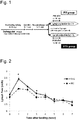
- Fig. 1 is a diagram showing the schedule of feeding laboratory animals in the Examples.
- STG eicosapentaenoic acid (EPA)/middle chain fatty acid (MCFA) structured lipid
- PM a mixed oil or fat as prepared by physically mixing an EPA containing fish oil with MCFA triacylglycerol (MCT) and then adjusting the mixture to become identical with STG in terms of fatty acid composition.
- EPA eicosapentaenoic acid
- MCFA middle chain fatty acid
- PM a mixed oil or fat as prepared by physically mixing an EPA containing fish oil with MCFA triacylglycerol (MCT) and then adjusting the mixture to become identical with STG in terms of fatty acid composition.
- MCT triacylglycerol
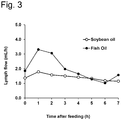
- Fig. 2 is a graph showing hourly changes in the lymph flow rate (mL/h) in STG and PM groups. *: p ⁇ 0.05.
- Fig. 3 is a graph showing hourly changes in the lymph flow rate (mL/h) in Fish oil and Soybean oil groups.
- the present invention provides a composition for improving lymphatic circulation, which contains a component selected from at least one highly unsaturated fatty acid, salt thereof, and ester thereof as an active ingredient (this composition is hereunder sometimes referred to as the composition of the present invention).
- the term "improving lymphatic circulation” refers to an improvement in the flow of lymph in the lymphatic vascular system. Improvement of lymphatic circulation can be evaluated using the lymph flow rate in laboratory animals as an index.
- the lymph flow rate here referred to is affected by constraint, anesthesia and other events, so a semi-permanent method for cannulation of thoracic duct lymph is used because it allows meals to be ingested and lymph collected over time, without need for anesthesia and constraint ( Lipids (2011) 46: 789-793 ).
- surgery for semi-permanent cannulation of thoracic duct lymph was performed on laboratory animals and the lymph flow rate measured in the following manner.
- a medical tube filled with heparin in physiological saline was inserted into the thoracic duct of each rat, fixed and sutured to the endothelium, and thereafter fixed to the head by a subcutaneous route.
- a 2-day recuperative period was provided and at the 3 rd post-operation day, the animals were divided into a test substance group and a control group; the test substance group was fed a test substance containing diet for 30 minutes whereas the control group was fed a test substance free diet for 30 minutes.
- Lymph was collected for 20 minutes before feeding and for one or more hours after the start of feeding.
- the lymph flow rate per hour (mL/h) was calculated from the collected lymph.
- the test substance of interest is evaluated as having a lymph circulation improving effect.
- the composition of the present invention is particularly high in the effect for increasing the lymph flow rate (mL/h) from ingestion until the passage of an hour.
- the term "at least one highly unsaturated fatty acid” refers to a fatty acid(s) with a carbon number of 18 or more and a double bond number of 3 or more, for example, a fatty acid(s) with a carbon number of 20 or more and a double bond number of 3 or more, a fatty acid(s) with a carbon number of 20 or more and a double bond number of 4 or more, or a fatty acid(s) with a carbon number of 20 or more and a double bond number of 5 or more.
- the at least one highly unsaturated fatty acid is n-3 highly unsaturated fatty acids, and more preferably eicosapentaenoic acid and/or docosahexaenoic acid.
- Glycerides containing at least one highly unsaturated fatty acid as a constituent fatty acid are known to be abundant in certain kinds of microorganism oils, vegetable oils, and marine animal oils. Specific examples include: fish oils such as sardine oil, tuna oil, bonito oil, menhaden oil, cod liver oil, herring oil, capelin oil, and salmon oil; marine animal oils as from crustaceans such as krill; vegetable oils as from perilla, flax, soybean, and rapeseed; fats or oils produced by microorganisms belonging to the genus Mortierella, the genus Penicillium, the genus Aspergillus, the genus Rhodotorula, and the genus Fusarium.
- fish oils such as sardine oil, tuna oil, bonito oil, menhaden oil, cod liver oil, herring oil, capelin oil, and salmon oil
- marine animal oils as from crustaceans such as krill
- vegetable oils as from perilla, flax
- the at least one highly unsaturated fatty acid, salt thereof, and ester thereof according to the present invention are those which derives from the above-mentioned fats or oils.
- These fats or oils may be purified or concentrated oils as manufactured in accordance with the usual manner.
- Free highly unsaturated fatty acids, salts and non-glyceride esters thereof can be prepared by methods known to persons skilled in the art, starting, for example, from the above-mentioned glyceride.
- the salt of the at least one highly unsaturated fatty acid to be used in the present invention is exemplified by potassium salts and sodium salts.
- the ester of the at least one highly unsaturated fatty acid is exemplified by esters of lower alcohols with a carbon number of 5 or less (such as methyl ester, ethyl ester, n-propyl ester, i-propyl ester, n-butyl ester, s-butyl ester, t-butyl ester, and n-pentyl ester), esters with glycerin such as monoglyceride, diglyceride and triglyceride (i.e., collectively referred to as glycerides), and phospholipids, with glycerides being preferred.
- the at least one highly unsaturated fatty acid in the composition of the present invention accounts for 10 - 70 wt%, say, 15 - 50 wt% or 20 - 40 wt%, of constituent fatty acids.
- the at least one highly unsaturated fatty acid is EPA and DHA
- the at least one highly unsaturated fatty acid in the composition of the present invention accounts for 5 - 65 wt%, say, 10 - 45 wt% or 15 - 35 wt%, of constituent fatty acids.
- the proportion of specific fatty acids (wt%) relative to all fatty acids in the composition is calculated, unless otherwise noted, on the basis of the values of measurement by gas chromatography following esterification of components in the composition in accordance with "AOCS official method Celb-89."
- the content of fatty acids as referred to herein, also means the above-mentioned proportion of specific fatty acids (wt%) relative to all fatty acids in the composition.
- Analytical conditions of gas chromatography are as follows.
- Apparatus Agilent 6890N GC system (Agilent Technologies, Inc.) Column: DB-WAX (Agilent Technologies, 30 m x 0.25 mm ID, 0.25 ⁇ m film thickness) Carrier gas: helium (1.0 mL/min, constant flow) Injection port temperature: 250°C Injection volume: 1 ⁇ L Injection method: split Split ratio: 20:1 Column oven: 180°C - 3°C/min - 230°C Detector: FID Detector temperature: 250°C
- the composition of the present invention further contains a component selected from at least one middle chain fatty acid, salt thereof, and ester thereof as an active ingredient.
- the at least one middle chain fatty acid to be used in the present invention is one with a carbon number of 8 - 12 and it may be either saturated or unsaturated. Specific examples include caprylic acid, pelargonic acid, capric acid, lauric acid, and so on.
- the at least one middle chain fatty acid may be either a single middle chain fatty acid or a combination of two or more middle chain fatty acids.
- the at least one middle chain fatty acid is caprylic acid and/or capric acid.
- Glycerides having at least one middle chain fatty acid as a constituent fatty acid are known to be abundant in coconut oil, palm oil, and the like.
- the at least one middle chain fatty acid, salt thereof, and ester thereof to be used in the present invention are those which derives from the above-mentioned fats or oils.
- These fats or oils may be purified or concentrated oils that are manufactured in accordance with the usual manner.
- Free middle chain fatty acids, salts and non-glyceride esters thereof can be prepared by known methods, starting, for example, from the glycerides contained in the above-mentioned fats or oils.
- a middle chain fatty acid triglyceride of high purity as prepared by purifying at least one free middle chain fatty acid and subjecting the purified free middle chain fatty acid to esterification reaction with glycerin may be contained as an active ingredient.
- the at least one highly unsaturated fatty acid in the composition of the present invention accounts for 10 - 70 wt%, say, 15 - 50 wt% or 20 -40 wt%, of constituent fatty acids and the at least one middle chain fatty acid in the composition accounts for 20 - 70 wt%, say, 30 - 60 wt% or 40 - 55 wt%, of constituent fatty acids.
- the at least one highly unsaturated fatty acid in the composition of the present invention accounts for 5 - 65 wt%, say, 10 - 45 wt% or 15 - 35 wt%, of constituent fatty acids and the at least one middle chain fatty acid in the composition accounts for 20 - 70 wt%, say, 30 - 60 wt% or 40 - 55 wt%, of constituent fatty acids.
- the active ingredients in the composition of the present invention are a triglyceride comprising the at least one highly unsaturated fatty acid as a constituent fatty acid and a triglyceride comprising the at least one middle chain fatty acid as a constituent fatty acid.
- the triglyceride containing the at least one highly unsaturated fatty acid as a constituent fatty acid is exemplified by one which derives, for example, from fish oils and marine animal oils as from crustaceans such as krill, vegetable oils as from perilla, flax, soybean, and rapeseed, fats or oils produced by microorganisms belonging to the genus Mortierella, the genus Penicillium, the genus Aspergillus, the genus Rhodotorula, and the genus Fusarium.
- the triglyceride comprising the at least one middle chain fatty acid as a constituent fatty acid is exemplified by one which derives, for example, from coconut oil, palm oil, and the like.
- the proportion of the at least one middle chain fatty acid in constituent fatty acids can be 90 wt% or more, 95 wt% or more, 97 wt% or more, 99 wt% or more, or even 100 wt%.
- the triglyceride comprising the at least one middle chain fatty acid as a constituent fatty acid is a triglyceride comprising only middle chain fatty acids as constituent fatty acids (MCT).
- the active ingredient in the composition of the present invention is a mixed oil consisting of a triglyceride comprising the at least one highly unsaturated fatty acid as a constituent fatty acid and a triglyceride comprising the at least one middle chain fatty acid as a constituent fatty acid.
- the triglyceride comprising the at least one middle chain fatty acid as a constituent fatty acid is a triglyceride comprising only middle chain fatty acids as constituent fatty acids (MCT).
- a mixed oil consisting of the triglyceride comprising the at least one highly unsaturated fatty acid as a constituent fatty acid and the triglyceride comprising the at least one middle chain fatty acid as a constituent fatty acid has a lymphatic circulation improving effect.
- Such mixed oil can be prepared by, for example, physically mixing the triglyceride comprising the at least one highly unsaturated fatty acid as a constituent fatty acid with the triglyceride comprising the at least one middle chain fatty acid as a constituent fatty acid.
- the mixing ratio may be appropriately set so that the lymphatic circulation improving effect is obtained, for example, in such a way that the proportion of each of the at least one highly unsaturated fatty acid and the at least one middle chain fatty acid in the composition of the present invention will assume the value indicated above.
- the active ingredient in the composition of the present invention is a triglyceride comprising the at least one highly unsaturated fatty acid and the at least one middle chain fatty acid as constituent fatty acids in one molecule.
- the triglyceride comprising the at least one highly unsaturated fatty acid and the at least one middle chain fatty acid as constituent fatty acids in one molecule has the lymphatic circulation improving effect further enhanced in comparison with the mixed oil that is identical in terms of fatty acid composition.
- the aforementioned triglyceride comprising the at least one highly unsaturated fatty acid as a constituent fatty acid and the triglyceride comprising the at least one middle chain fatty acid as a constituent fatty acid may, for example, be subjected to transesterification.
- the catalyst to be used in ester interchange may be a chemical catalyst or an enzyme (lipase).
- ester interchange using a chemical catalyst the constituent fatty acids will be bonded at random positions. Note that triglycerides of this type that have been prepared from naturally occurring triglycerides by modifying the positions at which the constituent fatty acids are bonded and modifying fatty acid composition are sometimes referred to as structured lipids.
- about 0.1 - 2 wt% of the catalyst may first be added to the mixed oil consisting of the triglyceride comprising the at least one highly unsaturated fatty acid as a constituent fatty acid and the triglyceride comprising the at least one middle chain fatty acid as a constituent fatty acid, and the resulting mixture is subjected to reaction under stirring at an atmospheric or reduced pressure for 3 - 120 minutes at 50 - 270°C.
- ordinary purification steps such as washing with water, drying, decoloring, and deodorizing, the end product can be obtained.
- the ratio at which the triglyceride comprising the at least one highly unsaturated fatty acid as a constituent fatty acid is mixed with the triglyceride comprising the at least one middle chain fatty acid as a constituent fatty acid may be set appropriately so that the lymphatic circulation improving effect is obtained, for example, in such a way that the proportion of each of the at least one highly unsaturated fatty acid and the at least one middle chain fatty acid in the composition of the present invention will assume the value indicated above.
- the applicable chemical catalyst may be exemplified by alkali metal hydroxides such as lithium hydroxide, sodium hydroxide and potassium hydroxide, or alkali metal alkoxides such as lithium methoxide and sodium methoxide.
- the composition of the present invention can be used for ameliorating edema, ameliorating swollenness, ameliorating excessive sensitivity to cold, ameliorating skin roughness, ameliorating skin dullness, reducing cellulites and body fat, mitigating stress, detoxing (excreting wastes out of the body), or ameliorating disorders due to exercise.
- the composition of the present invention is used for ameliorating edema such as lymphedema that results from a stagnation of the lymph flow.
- composition of the present invention is to be administered to mammals, preferably a human.
- the composition of the present invention is administered to subjects having symptoms of edema (e.g. lymphedema), excessive sensitivity to cold, skin roughness or skin dullness, subjects having cellulites, subjects having stress, subjects who need detoxing, or subjects having disorders due to exercise, and these symptoms can be ameliorated by improving the lymphatic circulation in those subjects.
- composition of the present invention may be prepared in forms suitable for pharmaceutical compositions, food compositions (e.g. functional foods, health foods, and supplements), food additives, and the like, as exemplified by various solid preparations including granules (including dry syrups), capsules (soft capsules and hard capsules), tablets (including chewables), powders and pills, as well as liquid preparations including liquids for internal application (including liquids, suspensions, and syrups).
- the composition of the present invention can be formulated as soft capsules that have the active ingredient filled into a gelatin shell.
- Additives for formulation include, for example, excipients, lubricants, binders, disintegrants, fluidizers, dispersants, wetting agents, preservatives, viscous agents, pH modifiers, coloring agents, flavoring agents, surfactants, and solubilizers. If liquids are to be formulated, thickeners can be incorporated, as exemplified by pectin, xanthan gum, and guar gum. In other cases, coating agents may be used to formulate coated tablets; alternatively, pasty leim may be formulated. Even in the case of preparing other forms, conventional methods may be followed.
- the composition of the present invention can assume the form of food compositions or food additives.
- the term "food compositions” refers to foods in general that include beverages; it encompasses not only common foods including health foods such as supplements but also foods for specified health uses (FOSHU) and foods with nutrient function claims (FNFC), both being specified in the Consumer Affairs Agency's System of Foods with Health Claims.
- functional foods labeled with the indication to the effect that they have a lymphatic circulation improving effect.
- fish oil containing foods may be provided as such.
- the food composition or food additive of the present invention also encompasses food ingredients for imparting the lymphatic circulation improving effect as by being added to, mixed with or coated on other foods.
- the food composition or food additive of the present invention may be provided as animal feeds or the like.
- the food composition or food additive of the present invention can be prepared by incorporating the composition of the present invention into a food composition or a food additive, whereupon the lymphatic circulation improving function is imparted.
- the food composition of the present invention may be beverages, confectionery, bread, soup, etc. and may be exemplified by common retorted foods, frozen foods, instant foods (e.g. instant noodles), canned foods, sausages, cookies, biscuits, cereal bars, crackers, snacks (e.g. potato chips), pastry, cakes, pies, candies, chewing gum (including pellets and sticks), jellies, soup, ice cream, dressings, yoghurt, etc.; supplements in such forms as tablet, capsule, and emulsion; and refreshing beverages.
- Methods of producing these foods are not particularly limited as long as they do not impair the effects of the present invention, and methods employed for respective foods by persons skilled in the art may be followed.
- Selling the products according to the present invention with their packaging containers, product manuals or brochures indicating the effects to be exhibited by the composition of the present invention is included within the scope of the present invention.
- Advertising and selling the products according to the present invention with their effects displayed on TV or indicated on the internet's web sites, brochures, newspapers, magazines, etc. are also included within the scope of the present invention.
- the amount of the active ingredient to be ingested by subjects in the present invention is not particularly limited and it may, for example, be ingested in amounts no less than the effective amount for obtaining the desired effects.
- the term "the effective amount for obtaining the desired effects" refers to the amount necessary for improving lymphatic circulation.
- the active ingredient may be ingested in no less than 20 mg/kg body weight/day, say, no less than 50 mg/kg body/day or no less than 100 mg/kg body/day, depending on various conditions such as the age, body weight and health status of the subject. Since the active ingredient in the composition of the present invention does not have strong side effects, its daily intake is not limited in any way but 500 mg/kg body/day and less may be given as an example.
- a purified fish oil product of Nippon Suisan Kaisha, Ltd., with specified values of 28 wt% EPA and 12 wt% DHA
- MCT middle chain fatty acids as constituent fatty acids
- the purified fish oil and MCT were mixed at a weight ratio of 55:45 and after adding 0.2 wt% of sodium methoxide, the mixture was stirred at 60 - 80°C for 60 minutes to effect ester interchange.
- the resulting product was washed with water, dried, decolored and deodorized to prepare a triglyceride the constituent fatty acids of which were the fatty acids derived from the EPA containing fish oil and the middle chain fatty acids (the triglyceride is hereunder referred to as STG).
- a mixed oil was prepared as a control sample by mixing the purified fish oil and MCT at a weight ratio of 50:50 (the mixed oil is hereunder referred to as PM).
- a feed (training diet) comprising 7% of soybean oil as a feed fat was prepared and fed to rats during two periods, one being before a surgery for thoracic duct lymph cannulation and one being a recuperative period after the surgery for thoracic duct lymph cannulation.
- the animals were given a surgery for semi-permanent cannulation of thoracic duct lymph under inhalation anesthesia with isoflurane. The surgery was followed by a 2-day recuperative period, during which the training diet was also given as per the schedule described above.
- SD rats were subjected to inhalation anesthesia with isoflurane, during which a SILASCON® medical tube (KANEKA MEDICAL PRODUCTS, Tokyo) filled with heparin in physiological saline was inserted into a lymphatic vessel in the thoracic duct.
- the tube was fixed and sutured to the endothelium and thereafter fixed to the head by a subcutaneous route.
- an appropriate amount of a sulfamethoxazole powder (nacalai tesque, Kyoto) was applied to the laparotomy-affected area, and to assure post-operative pain control, the analgesic Betorfal (Meiji Seika Pharma Co., Ltd., Tokyo) was administered intraperitoneally.
- an isotonic aqueous solution containing 139 mM glucose and 85 mM sodium chloride was given as drinking water.
- the flow rate of the lymph collected for 20 minutes before feeding of the experimental diet was converted to a value per hour, which was designated as the 0-hour value; the lymph flow rate from the start of feeding to an hour after feeding was designated as the value for the first hour.
- the lymph flow increased immediately after the feeding. It should be noted that, when the feed containing no highly unsaturated fatty acids was ingested, no increase in the lymph flow rate was confirmed. In addition, the lymph flow rates at the first and third hours after the intake of STG increased significantly as compared with the values from the PM group ( Fig. 2 and Table 3). It was therefore shown that highly unsaturated fatty acids have an action for increasing the lymph flow rate and that the lymphatic circulation improving effect is further enhanced by formulating a triglyceride comprising highly unsaturated fatty acids and middle chain fatty acids as constituent fatty acids.
- AIN-93G a feed (training diet) comprising 7% of soybean oil as a feed fat was prepared and fed to rats during two periods, one being before a surgery for thoracic duct lymph cannulation and one being a recuperative period after the surgery for thoracic duct lymph cannulation.
- AIN-93G a feed comprising 10% of a fish oil containing EPA and other highly unsaturated fatty acids with carbon numbers of 20 and more (i.e., fish oil diet) was prepared in accordance with AIN-93G.
- soybean oil diet a feed comprising 10% of soybean oil (i.e., soybean oil diet) was prepared in accordance with AIN-93G.
- the composition of the respective feeds is shown in Table 4.
- Fatty acid composition in the soybean oil and the fish oil is shown in Table 5.
- the animals were given a surgery for semi-permanent cannulation of thoracic duct lymph under inhalation anesthesia with isoflurane. The surgery was followed by a 2-day recuperative period, during which the training diet was given as per the schedule described above.
- SD rats were subjected to inhalation anesthesia with isoflurane, during which a SILASCON® medical tube (KANEKA MEDICAL PRODUCTS, Tokyo) filled with heparin in physiological saline was inserted into a lymphatic vessel in the thoracic duct.
- the tube was fixed and sutured to the endothelium and thereafter fixed to the head by a subcutaneous route.
- an appropriate amount of a sulfamethoxazole powder (nacalai tesque, Kyoto) was applied to the laparotomy-affected area, and to ensure post-operative pain control, the analgesic Betorfal (Meiji Seika Pharma Co., Ltd., Tokyo) was administered intraperitoneally.
- an isotonic aqueous solution containing 139 mM glucose and 85 mM sodium chloride was given as drinking water.
- the flow rate of the lymph collected for 20 minutes before feeding of the experimental diet was converted to a value per hour, which was designated as the 0-hour value; the lymph flow rate from the start of feeding to an hour after feeding was designated as the value for the first hour.
- the lymph flow rate increased only slightly after the feeding.
- the fish oil group a considerable increase in the lymph flow rate was observed at the first hour after ingestion ( Fig. 3 ). It was thus shown that EPA, DHA and other highly unsaturated fatty acids with carbon numbers of 20 and more have an action for increasing the lymph flow rate.
- food compositions, food additives and the like that improve lymphatic circulation are provided.
- food compositions, food additives and the like that can be used for ameliorating edema, ameliorating excessive sensitivity to cold, ameliorating skin roughness, ameliorating skin dullness, reducing cellulites and body fat, mitigating stress, detoxing (excreting wastes out of the body), or ameliorating disorders due to exercise are also provided.
Landscapes
- Health & Medical Sciences (AREA)
- Life Sciences & Earth Sciences (AREA)
- Chemical & Material Sciences (AREA)
- Engineering & Computer Science (AREA)
- Medicinal Chemistry (AREA)
- Pharmacology & Pharmacy (AREA)
- Animal Behavior & Ethology (AREA)
- General Health & Medical Sciences (AREA)
- Public Health (AREA)
- Veterinary Medicine (AREA)
- Epidemiology (AREA)
- Bioinformatics & Cheminformatics (AREA)
- Nutrition Science (AREA)
- Mycology (AREA)
- Food Science & Technology (AREA)
- Polymers & Plastics (AREA)
- Chemical Kinetics & Catalysis (AREA)
- General Chemical & Material Sciences (AREA)
- Nuclear Medicine, Radiotherapy & Molecular Imaging (AREA)
- Organic Chemistry (AREA)
- Oil, Petroleum & Natural Gas (AREA)
- Hematology (AREA)
- Diabetes (AREA)
- Pediatric Medicine (AREA)
- Emergency Medicine (AREA)
- Psychiatry (AREA)
- Neurosurgery (AREA)
- Toxicology (AREA)
- Dermatology (AREA)
- Neurology (AREA)
- Biomedical Technology (AREA)
- Acyclic And Carbocyclic Compounds In Medicinal Compositions (AREA)
Applications Claiming Priority (2)
| Application Number | Priority Date | Filing Date | Title |
|---|---|---|---|
| JP2018022378 | 2018-02-09 | ||
| PCT/JP2019/004588 WO2019156210A1 (ja) | 2018-02-09 | 2019-02-08 | リンパ循環改善剤 |
Publications (2)
| Publication Number | Publication Date |
|---|---|
| EP3750533A1 true EP3750533A1 (de) | 2020-12-16 |
| EP3750533A4 EP3750533A4 (de) | 2021-11-03 |
Family
ID=67548298
Family Applications (1)
| Application Number | Title | Priority Date | Filing Date |
|---|---|---|---|
| EP19752027.3A Pending EP3750533A4 (de) | 2018-02-09 | 2019-02-08 | Mittel zur verbesserung des lymphkreislaufs |
Country Status (4)
| Country | Link |
|---|---|
| US (1) | US11679091B2 (de) |
| EP (1) | EP3750533A4 (de) |
| JP (1) | JP7295812B2 (de) |
| WO (1) | WO2019156210A1 (de) |
Family Cites Families (10)
| Publication number | Priority date | Publication date | Assignee | Title |
|---|---|---|---|---|
| US4607052A (en) | 1983-04-15 | 1986-08-19 | Roussel-Uclaf | Triglycerides, dietetic and therapeutical applications and compositions containing them |
| US4871768A (en) | 1984-07-12 | 1989-10-03 | New England Deaconess Hospital Corporation | Dietary supplement utilizing ω-3/medium chain trigylceride mixtures |
| JPH0832628B2 (ja) | 1986-12-17 | 1996-03-29 | 株式会社ミドリ十字 | トリグリセリド組成物 |
| JPS63297342A (ja) | 1987-05-28 | 1988-12-05 | Nisshin Oil Mills Ltd:The | 合成油脂ならびにこれを含有する脂肪乳剤輸液および経腸栄養剤 |
| DK565288D0 (da) | 1988-10-11 | 1988-10-11 | Novo Industri As | Fremgangsmaade til fremstilling af triglycerider, anvendelse af saadanne triglycerider og en emulsion, der indeholder saadanne triglycerider |
| JP3997043B2 (ja) * | 2000-02-18 | 2007-10-24 | 日清オイリオグループ株式会社 | 油脂組成物および油脂加工品 |
| IL158552A0 (en) * | 2003-10-22 | 2004-05-12 | Enzymotec Ltd | Lipids containing omega-3 fatty acids |
| WO2015050071A1 (ja) * | 2013-10-01 | 2015-04-09 | 日本水産株式会社 | 栄養補助剤及び心血管疾患改善剤 |
| WO2016040570A2 (en) | 2014-09-12 | 2016-03-17 | Children's Medical Center Corporation | Dietary emulsion formulations and methods for using the same |
| US20180153951A1 (en) * | 2016-12-05 | 2018-06-07 | Mead Johnson Nutrition Company | Methods for Inducing Adipocyte Browning, Improving Metabolic Flexibility, and Reducing Detrimental White Adipocyte Tissue Deposition and Dysfunction |
-
2019
- 2019-02-08 EP EP19752027.3A patent/EP3750533A4/de active Pending
- 2019-02-08 WO PCT/JP2019/004588 patent/WO2019156210A1/ja not_active Ceased
- 2019-02-08 US US16/968,321 patent/US11679091B2/en active Active
- 2019-02-08 JP JP2019571166A patent/JP7295812B2/ja active Active
Also Published As
| Publication number | Publication date |
|---|---|
| US11679091B2 (en) | 2023-06-20 |
| WO2019156210A1 (ja) | 2019-08-15 |
| JP7295812B2 (ja) | 2023-06-21 |
| EP3750533A4 (de) | 2021-11-03 |
| US20210077447A1 (en) | 2021-03-18 |
| JPWO2019156210A1 (ja) | 2021-01-28 |
Similar Documents
| Publication | Publication Date | Title |
|---|---|---|
| JP4699901B2 (ja) | 体脂肪代謝機能と燃焼エネルギーの活用機能とを備えているダイエット用添加物質 | |
| JP4031219B2 (ja) | 油脂組成物 | |
| US20100280112A1 (en) | Composition Enriched in Diglyceride with Conjugated Linoleic Acid | |
| WO2000051444A1 (en) | Utilization of material containing docosapentaenoic acid | |
| RU2546865C2 (ru) | Сбалансированные жировые композиции и их применение в жидких питательных композициях для энтерального питания | |
| EP2027864B1 (de) | Zusammensetzung zur verbesserung des fettstoffwechsels | |
| JP4633048B2 (ja) | 日内リズム正常化組成物 | |
| US10376485B2 (en) | Metabolic syndrome ameliorating agent | |
| JP2006083136A (ja) | ストレスに起因する脳機能の低下およびそれに伴う症状あるいは疾患の予防又は改善作用を有する組成物 | |
| JP2006219454A (ja) | 皮膚疾患経口治療または予防剤 | |
| AU639675B2 (en) | Triglyceride, nutritional composition comprising such triglyceride, and use of the nutritional composition for nutrition | |
| JP5967855B2 (ja) | 日中活動量の低下および/又はうつ症状の改善作用を有する組成物 | |
| TWI503117B (zh) | A pharmaceutical composition and a food and medicine for preventing or ameliorating a symptom or a disease caused by aging of the blood vessel caused by a decrease in blood vessel elasticity, a method for producing the same, and arachidonic acid and / or arachidonic acid The use of fatty acid compounds for the manufacture of drugs (2) | |
| JP2006083134A (ja) | ストレスに起因する行動異常を伴う症状あるいは疾患の予防又は改善作用を有する組成物 | |
| JPWO2015050071A1 (ja) | 栄養補助剤及び心血管疾患改善剤 | |
| JP2002302441A (ja) | 月経前症候群症状緩和用組成物及び飲食物 | |
| US11679091B2 (en) | Lymphatic circulation improving agents | |
| US20030086981A1 (en) | Glycerin fatty acid ester for palliate a symptom of premenstrual syndrome, a palliative of premenstrual syndrome, oil or fat composition for palliate a symptom of premenstrual syndrome, and food and drink for palliate a symptom of premenstrual syndrome | |
| JP2006306812A (ja) | 好酸球浸潤抑制剤 | |
| WO2004022050A1 (ja) | 脂質代謝調整剤および飲食物 | |
| JPWO2004022051A1 (ja) | ペルオキシソーム増殖薬活性化受容体調整剤 | |
| JP2024051305A (ja) | 糖質燃焼促進剤 | |
| KR100684641B1 (ko) | 유지 조성물, 이를 함유하는 식품 및 건강보조식품 | |
| EP3632422B1 (de) | Zusammensetzung enthaltend einfach ungesättigte fettsäuren mit 20 oder mehr kohlenstoffatomen zur verwendung zur verbesserung der vaskulären endothelialen funktion | |
| WO2024009986A1 (ja) | 持久力向上剤 |
Legal Events
| Date | Code | Title | Description |
|---|---|---|---|
| STAA | Information on the status of an ep patent application or granted ep patent |
Free format text: STATUS: THE INTERNATIONAL PUBLICATION HAS BEEN MADE |
|
| PUAI | Public reference made under article 153(3) epc to a published international application that has entered the european phase |
Free format text: ORIGINAL CODE: 0009012 |
|
| STAA | Information on the status of an ep patent application or granted ep patent |
Free format text: STATUS: REQUEST FOR EXAMINATION WAS MADE |
|
| 17P | Request for examination filed |
Effective date: 20200811 |
|
| AK | Designated contracting states |
Kind code of ref document: A1 Designated state(s): AL AT BE BG CH CY CZ DE DK EE ES FI FR GB GR HR HU IE IS IT LI LT LU LV MC MK MT NL NO PL PT RO RS SE SI SK SM TR |
|
| AX | Request for extension of the european patent |
Extension state: BA ME |
|
| DAV | Request for validation of the european patent (deleted) | ||
| DAX | Request for extension of the european patent (deleted) | ||
| A4 | Supplementary search report drawn up and despatched |
Effective date: 20211006 |
|
| RIC1 | Information provided on ipc code assigned before grant |
Ipc: A61K 45/06 20060101ALI20210930BHEP Ipc: A61K 31/201 20060101ALI20210930BHEP Ipc: A23L 33/12 20160101ALI20210930BHEP Ipc: A61P 25/18 20060101ALI20210930BHEP Ipc: A61P 17/16 20060101ALI20210930BHEP Ipc: A61P 7/10 20060101ALI20210930BHEP Ipc: A61K 31/232 20060101ALI20210930BHEP Ipc: A23L 33/115 20160101ALI20210930BHEP Ipc: A61K 31/202 20060101AFI20210930BHEP |
|
| RAP3 | Party data changed (applicant data changed or rights of an application transferred) |
Owner name: NISSUI CORPORATION |
|
| STAA | Information on the status of an ep patent application or granted ep patent |
Free format text: STATUS: EXAMINATION IS IN PROGRESS |
|
| 17Q | First examination report despatched |
Effective date: 20241004 |