EP3750970B1 - Composition de conversion de couleur, composé utilisé pour celle-ci, et dispositif électroluminescent - Google Patents
Composition de conversion de couleur, composé utilisé pour celle-ci, et dispositif électroluminescent Download PDFInfo
- Publication number
- EP3750970B1 EP3750970B1 EP19751633.9A EP19751633A EP3750970B1 EP 3750970 B1 EP3750970 B1 EP 3750970B1 EP 19751633 A EP19751633 A EP 19751633A EP 3750970 B1 EP3750970 B1 EP 3750970B1
- Authority
- EP
- European Patent Office
- Prior art keywords
- group
- color conversion
- compound
- general formula
- conversion composition
- Prior art date
- Legal status (The legal status is an assumption and is not a legal conclusion. Google has not performed a legal analysis and makes no representation as to the accuracy of the status listed.)
- Active
Links
Classifications
-
- C—CHEMISTRY; METALLURGY
- C09—DYES; PAINTS; POLISHES; NATURAL RESINS; ADHESIVES; COMPOSITIONS NOT OTHERWISE PROVIDED FOR; APPLICATIONS OF MATERIALS NOT OTHERWISE PROVIDED FOR
- C09K—MATERIALS FOR MISCELLANEOUS APPLICATIONS, NOT PROVIDED FOR ELSEWHERE
- C09K11/00—Luminescent materials, e.g. electroluminescent or chemiluminescent
- C09K11/06—Luminescent materials, e.g. electroluminescent or chemiluminescent containing organic luminescent materials
-
- C—CHEMISTRY; METALLURGY
- C07—ORGANIC CHEMISTRY
- C07F—ACYCLIC, CARBOCYCLIC OR HETEROCYCLIC COMPOUNDS CONTAINING ELEMENTS OTHER THAN CARBON, HYDROGEN, HALOGEN, OXYGEN, NITROGEN, SULFUR, SELENIUM OR TELLURIUM
- C07F5/00—Compounds containing elements of Groups 3 or 13 of the Periodic Table
- C07F5/02—Boron compounds
- C07F5/022—Boron compounds without C-boron linkages
-
- C—CHEMISTRY; METALLURGY
- C09—DYES; PAINTS; POLISHES; NATURAL RESINS; ADHESIVES; COMPOSITIONS NOT OTHERWISE PROVIDED FOR; APPLICATIONS OF MATERIALS NOT OTHERWISE PROVIDED FOR
- C09K—MATERIALS FOR MISCELLANEOUS APPLICATIONS, NOT PROVIDED FOR ELSEWHERE
- C09K11/00—Luminescent materials, e.g. electroluminescent or chemiluminescent
- C09K11/02—Use of particular materials as binders, particle coatings or suspension media therefor
-
- G—PHYSICS
- G02—OPTICS
- G02F—OPTICAL DEVICES OR ARRANGEMENTS FOR THE CONTROL OF LIGHT BY MODIFICATION OF THE OPTICAL PROPERTIES OF THE MEDIA OF THE ELEMENTS INVOLVED THEREIN; NON-LINEAR OPTICS; FREQUENCY-CHANGING OF LIGHT; OPTICAL LOGIC ELEMENTS; OPTICAL ANALOGUE/DIGITAL CONVERTERS
- G02F1/00—Devices or arrangements for the control of the intensity, colour, phase, polarisation or direction of light arriving from an independent light source, e.g. switching, gating or modulating; Non-linear optics
- G02F1/01—Devices or arrangements for the control of the intensity, colour, phase, polarisation or direction of light arriving from an independent light source, e.g. switching, gating or modulating; Non-linear optics for the control of the intensity, phase, polarisation or colour
- G02F1/13—Devices or arrangements for the control of the intensity, colour, phase, polarisation or direction of light arriving from an independent light source, e.g. switching, gating or modulating; Non-linear optics for the control of the intensity, phase, polarisation or colour based on liquid crystals, e.g. single liquid crystal display cells
- G02F1/133—Constructional arrangements; Operation of liquid crystal cells; Circuit arrangements
- G02F1/1333—Constructional arrangements; Manufacturing methods
- G02F1/1335—Structural association of cells with optical devices, e.g. polarisers or reflectors
- G02F1/1336—Illuminating devices
- G02F1/133617—Illumination with ultraviolet light; Luminescent elements or materials associated to the cell
-
- C—CHEMISTRY; METALLURGY
- C09—DYES; PAINTS; POLISHES; NATURAL RESINS; ADHESIVES; COMPOSITIONS NOT OTHERWISE PROVIDED FOR; APPLICATIONS OF MATERIALS NOT OTHERWISE PROVIDED FOR
- C09K—MATERIALS FOR MISCELLANEOUS APPLICATIONS, NOT PROVIDED FOR ELSEWHERE
- C09K2211/00—Chemical nature of organic luminescent or tenebrescent compounds
- C09K2211/10—Non-macromolecular compounds
- C09K2211/1003—Carbocyclic compounds
- C09K2211/1007—Non-condensed systems
-
- C—CHEMISTRY; METALLURGY
- C09—DYES; PAINTS; POLISHES; NATURAL RESINS; ADHESIVES; COMPOSITIONS NOT OTHERWISE PROVIDED FOR; APPLICATIONS OF MATERIALS NOT OTHERWISE PROVIDED FOR
- C09K—MATERIALS FOR MISCELLANEOUS APPLICATIONS, NOT PROVIDED FOR ELSEWHERE
- C09K2211/00—Chemical nature of organic luminescent or tenebrescent compounds
- C09K2211/10—Non-macromolecular compounds
- C09K2211/1003—Carbocyclic compounds
- C09K2211/1011—Condensed systems
-
- C—CHEMISTRY; METALLURGY
- C09—DYES; PAINTS; POLISHES; NATURAL RESINS; ADHESIVES; COMPOSITIONS NOT OTHERWISE PROVIDED FOR; APPLICATIONS OF MATERIALS NOT OTHERWISE PROVIDED FOR
- C09K—MATERIALS FOR MISCELLANEOUS APPLICATIONS, NOT PROVIDED FOR ELSEWHERE
- C09K2211/00—Chemical nature of organic luminescent or tenebrescent compounds
- C09K2211/10—Non-macromolecular compounds
- C09K2211/1018—Heterocyclic compounds
- C09K2211/1022—Heterocyclic compounds bridged by heteroatoms, e.g. N, P, Si or B
-
- C—CHEMISTRY; METALLURGY
- C09—DYES; PAINTS; POLISHES; NATURAL RESINS; ADHESIVES; COMPOSITIONS NOT OTHERWISE PROVIDED FOR; APPLICATIONS OF MATERIALS NOT OTHERWISE PROVIDED FOR
- C09K—MATERIALS FOR MISCELLANEOUS APPLICATIONS, NOT PROVIDED FOR ELSEWHERE
- C09K2211/00—Chemical nature of organic luminescent or tenebrescent compounds
- C09K2211/10—Non-macromolecular compounds
- C09K2211/1018—Heterocyclic compounds
- C09K2211/1025—Heterocyclic compounds characterised by ligands
- C09K2211/1029—Heterocyclic compounds characterised by ligands containing one nitrogen atom as the heteroatom
-
- C—CHEMISTRY; METALLURGY
- C09—DYES; PAINTS; POLISHES; NATURAL RESINS; ADHESIVES; COMPOSITIONS NOT OTHERWISE PROVIDED FOR; APPLICATIONS OF MATERIALS NOT OTHERWISE PROVIDED FOR
- C09K—MATERIALS FOR MISCELLANEOUS APPLICATIONS, NOT PROVIDED FOR ELSEWHERE
- C09K2211/00—Chemical nature of organic luminescent or tenebrescent compounds
- C09K2211/10—Non-macromolecular compounds
- C09K2211/1018—Heterocyclic compounds
- C09K2211/1025—Heterocyclic compounds characterised by ligands
- C09K2211/1029—Heterocyclic compounds characterised by ligands containing one nitrogen atom as the heteroatom
- C09K2211/104—Heterocyclic compounds characterised by ligands containing one nitrogen atom as the heteroatom with other heteroatoms
-
- C—CHEMISTRY; METALLURGY
- C09—DYES; PAINTS; POLISHES; NATURAL RESINS; ADHESIVES; COMPOSITIONS NOT OTHERWISE PROVIDED FOR; APPLICATIONS OF MATERIALS NOT OTHERWISE PROVIDED FOR
- C09K—MATERIALS FOR MISCELLANEOUS APPLICATIONS, NOT PROVIDED FOR ELSEWHERE
- C09K2211/00—Chemical nature of organic luminescent or tenebrescent compounds
- C09K2211/10—Non-macromolecular compounds
- C09K2211/1018—Heterocyclic compounds
- C09K2211/1025—Heterocyclic compounds characterised by ligands
- C09K2211/1044—Heterocyclic compounds characterised by ligands containing two nitrogen atoms as heteroatoms
- C09K2211/1055—Heterocyclic compounds characterised by ligands containing two nitrogen atoms as heteroatoms with other heteroatoms
-
- C—CHEMISTRY; METALLURGY
- C09—DYES; PAINTS; POLISHES; NATURAL RESINS; ADHESIVES; COMPOSITIONS NOT OTHERWISE PROVIDED FOR; APPLICATIONS OF MATERIALS NOT OTHERWISE PROVIDED FOR
- C09K—MATERIALS FOR MISCELLANEOUS APPLICATIONS, NOT PROVIDED FOR ELSEWHERE
- C09K2211/00—Chemical nature of organic luminescent or tenebrescent compounds
- C09K2211/10—Non-macromolecular compounds
- C09K2211/1018—Heterocyclic compounds
- C09K2211/1025—Heterocyclic compounds characterised by ligands
- C09K2211/1092—Heterocyclic compounds characterised by ligands containing sulfur as the only heteroatom
-
- H—ELECTRICITY
- H10—SEMICONDUCTOR DEVICES; ELECTRIC SOLID-STATE DEVICES NOT OTHERWISE PROVIDED FOR
- H10H—INORGANIC LIGHT-EMITTING SEMICONDUCTOR DEVICES HAVING POTENTIAL BARRIERS
- H10H20/00—Individual inorganic light-emitting semiconductor devices having potential barriers, e.g. light-emitting diodes [LED]
- H10H20/80—Constructional details
- H10H20/85—Packages
- H10H20/851—Wavelength conversion means
- H10H20/8511—Wavelength conversion means characterised by their material, e.g. binder
- H10H20/8512—Wavelength conversion materials
Definitions
- the present invention relates to a color conversion composition, a compound used for the same, and a light emitting device.
- WO2013/035303A describes, as a material used for an organic thin-film solar cell, an organic thin-film solar cell material containing a specific compound in which a dipyrromethene compound is coordinated to a coordination metal atom in a tetradentate manner.
- WO2016/190283A discloses a color conversion composition containing a dipyrromethene boron complex compound, in which a dipyrromethene compound is coordinated to a boron atom in a bidentate manner, and a binder resin.
- a white LED is constituted with a combination of an LED and a phosphor.
- this phosphor is formed of a color conversion composition containing a fluorescent compound (also referred to as photoluminescent phosphor), which has a function or property of absorbing light (incoming ray) of a specific wavelength radiated from an LED and emitting light (outgoing ray) of a specific wavelength different from the incoming ray, and a resin used as needed.
- a fluorescent compound also referred to as photoluminescent phosphor
- an organic fluorescent compound exhibits high color conversion efficiency and is thus superior to an inorganic fluorescent compound. Examples of such an organic fluorescent compound include the dipyrromethene boron complex compound in WO2016/190283A described above.
- WO2013/035303A has no description regarding the use of the aforementioned compound as a phosphor of an LED.
- fluorescent compounds and color conversion compositions containing the fluorescent compounds used in these devices are required to have not only a high quantum yield but also high light fastness, high durability against moisture and heat (moisture-heat resistance), and the like.
- the quantum yield refers to the ratio of the number of photons that a fluorescent compound emits as fluorescence to the number of photons absorbed by the fluorescent compound.
- An object of the present invention is to provide a color conversion composition (also referred to as a color conversion material) which achieves both the high level of light fastness and high level of moisture-heat resistance while maintaining a high quantum yield.
- Another object of the present invention is to provide a fluorescent compound used in the color conversion composition exhibiting the excellent characteristics described above.
- Still another object of the present invention is to provide a light emitting device using the color conversion composition exhibiting the excellent characteristics described above.
- the inventors of the present invention have found that a specific compound represented by the following general formula, in which a compound obtained by introducing one or two specific substituents into a dipyrromethene skeleton is coordinated to a boron atom as a tridentate or tetradentate ligand, and a composition containing the specific compound function as a fluorescent compound or a color conversion composition respectively, have a high quantum yield, and exhibit excellent characteristics in terms of light fastness and moisture-heat resistance. Based on these findings, the inventors further repeated examinations and have accomplished the present invention.
- color conversion means converting (incoming) light of a specific wavelength into (outgoing) light of a wavelength different from the specific wavelength, usually, a wavelength longer than the specific wavelength.
- Color conversion is also referred to as “wavelength conversion”.
- the color conversion composition according to an embodiment of the present invention and the compound according to an embodiment of the present invention exhibit a high quantum yield and can achieve both the high level of light fastness and high level of moisture-heat resistance. Therefore, the composition and the compound can be suitably used, for example, in light emitting devices such as display devices and lighting devices. Furthermore, the light emitting device according to an embodiment of the present invention has a high quantum yield, excellent light fastness, and excellent moisture-heat resistance. Therefore, the light emitting device can emit outgoing rays, which are obtained by the color conversion of incoming rays, for a long period of time with a high quantum yield.
- substituents and the like may be the same as or different from each other.
- the number of substituents and the like is specified.
- substituents and the like may be linked to each other to form a ring.
- a ring such as an alicyclic ring, an aromatic ring, or a heterocyclic ring may be further fused to form a fused ring.
- the molecule in a case where a molecule has an E-type double bond and a Z-type double bond, unless otherwise specified, the molecule may be either an E isomer or a Z isomer or may be a mixture thereof.
- the term "compound” means a compound including a salt and ion thereof. Furthermore, as long as the effects of the present invention are not impaired, the term also means a compound having partially modified structure. In addition, for a compound which is not specified regarding whether or not the compound is substituted, as long as the effects of the present invention are not impaired, the term means that the compound may have any substituent. The same is true of substituents and linking groups.
- a range of numerical values described using “to” means a range including numerical values described before and after “to” as a lower limit and an upper limit.
- a composition includes a mixture of components having a constant concentration (evenly dispersed components) and a mixture of components having a concentration that changes within a range in which the intended color conversion function is not impaired.
- the color conversion composition according to the embodiment of the present invention contains, as a phosphor, at least one kind of compound between a compound represented by General Formula (I) which will be described later and a compound represented by General Formula (II) which will be described later (either or both of the compounds are referred to as compound according to the embodiment of the present invention in some cases).
- the color conversion composition converts the wavelength of the incoming ray into a longer wavelength. Specifically, the composition can convert the incoming ray into light of a wavelength equal to or longer than 540 nm, for example.
- the color conversion composition according to the embodiment of the present invention may contain one kind of phosphor or two or more kinds of phosphors, but at least one kind of phosphor in the composition is a compound represented by General Formula (I) which will be described later or a compound represented by General Formula (II) which will be described later.
- the compound according to the embodiment of the present invention functions as a phosphor, and can convert the wavelength of the incoming ray into a longer wavelength. Therefore, the compound is also referred to as color conversion substance.
- the incoming ray which comes into the compound according to the embodiment of the present invention in a case where the compound functions as a phosphor, and the light of a longer wavelength converted from the incoming ray are the same as those described above regarding the color conversion composition.
- the compound that can be contained in the color conversion composition according to the embodiment of the present invention is a fluorescent compound represented by General Formula (I) (hereinafter, referred to as compound (I) in some cases).
- X represents CR 5 or N, and preferably represents CR 5 .
- R 1 to R 5 each independently represent a hydrogen atom, an alkyl group, a cycloalkyl group, an aliphatic heterocyclic group, an alkenyl group, a cycloalkenyl group, an alkynyl group, a hydroxyl group, a mercapto group, an alkoxy group, an alkylthio group, an aryloxy group, an arylthio group, an aryl group, a heteroaryl group, a halogen atom, a cyano group, a formyl group, an R-CO- group, an R-O-CO- group, an R-CO-O- group, an (R A ) 2 N-CO- group, an amino group, a nitro group, or a silyl group.
- R represents an alkyl group, a cycloalkyl group, an aliphatic heterocyclic group, an alkenyl group, a cycloalkenyl group, an alkynyl group, an aryl group, or a heteroaryl group.
- R A represents a hydrogen atom, an alkyl group, a cycloalkyl group, an aliphatic heterocyclic group, an alkenyl group, a cycloalkenyl group, an alkynyl group, an aryl group, or a heteroaryl group.
- the alkyl group, the cycloalkyl group, the aliphatic heterocyclic group, the alkenyl group, the cycloalkenyl group, the alkynyl group, the alkoxy group, the alkylthio group, the aryloxy group, the arylthio group, the aryl group, the heteroaryl group, the amino group, and the silyl group that can be adopted as R 1 to R 5 have the same definition as the corresponding groups in a substituent group T respectively, and preferred examples thereof are also the same. Specific examples of each of these groups include those described in WO2016/190283A , and the descriptions of the examples are preferably incorporated into the present specification.
- each of the alkynyl group, the alkoxy group, and the alkylthio group includes a cyclic group in addition to linear and branched groups.
- halogen atom examples include a fluorine atom, a chlorine atom, a bromine atom, and an iodine atom. Among these, a fluorine atom is preferable.
- R is preferably an alkyl group, an aryl group, or a heteroaryl group.
- R A in the (R A ) 2 N-CO- group capable of being adopted as R 1 to R 5 have the same definition as the corresponding groups that can be adopted as R 1 to R 5 , and the preferred ranges thereof are also the same.
- R A is preferably a hydrogen atom, an alkyl group, a cycloalkyl group, an aryl group, or a heteroaryl group.
- Each of the above groups that can be adopted as R 1 to R 5 may be an unsubstituted group or a group having a substituent.
- the substituent that may be included in the above groups capable of being adopted as R 1 to R 5 is not particularly limited. It is preferable that the substituent is selected from the substituent group T which will be described later.
- As the substituent that may be included in the groups capable of being adopted as R 1 to R 4 and particularly as R 2 and R 3 an alkyl group, an alkoxy group, an aryl group, a heteroaryl group, or a silyl group is preferable.
- a cyano group or a halogen atom is particularly preferable.
- the number of substituents is not particularly limited. For example, the number of substituents can be equal to or smaller than 4.
- Each of R 1 and R 4 preferably represents a hydrogen atom, an alkyl group, an aryl group, or a heteroaryl group, more preferably represents a hydrogen atom or an alkyl group, and even more preferably represents a hydrogen atom.
- Each of R 2 and R 3 preferably represents a hydrogen atom, an alkyl group, an alkynyl group, an aryl group, or a heteroaryl group, and more preferably represents a hydrogen atom, an alkynyl group, or an aryl group.
- R 5 is preferably a hydrogen atom, an alkyl group, an aryl group, a heteroaryl group, a cyano group, or an R-O-CO- group, more preferably an alkyl group, an aryl group, or a heteroaryl group, and even more preferably an aryl group.
- R 1 to R 4 may be the same as or different from each other. It is preferable that at least R 1 and R 4 represent a hydrogen atom. It is more preferable that both of R 1 and R 4 represent a hydrogen atom. R 1 to R 4 may be the same as R 5 . However, it is preferable that R 1 to R 4 are different from R 5 . In this case, it is preferable that at least R 1 and R 4 represent a hydrogen atom and R 5 represents an aryl group which is more preferably a phenyl group.
- L 1 each independently represents a divalent linking group which is selected from an arylene group, a heteroarylene group, an ethenylene group, an alkylene group, and a cycloalkylene group.
- Each of the arylene group, the heteroarylene group, the alkylene group, and the cycloalkylene group that can be adopted as L 1 has the same definition as a group obtained in a case where one more hydrogen atom is removed from the aryl group, the heteroaryl group, the alkyl group, and the cycloalkyl group that can be adopted as R 1 to R 4 , and the preferred examples thereof are also the same.
- L 1 is preferably an arylene group or a heteroarylene group, more preferably an arylene group, even more preferably an unsubstituted arylene group, and particularly preferably a phenylene group.
- the portion bonded to a carbon atom and L 2 , which will be described later, in the pyrrole ring in General Formula (I) is not particularly limited, and is preferably two adjacent atoms (vicinal atoms) in each of the above groups.
- a phenylene group is adopted as L 1
- a 1,2-phenylene group is preferable.
- L 2 each independently represents a single bond, a carbonyl group, or an alkylene group having 1 to 6 carbon atoms.
- L 3 is a linking group represented by Formula (1-1) which will be described later
- L 2 represents a carbonyl group or an alkylene group having 1 to 6 carbon atoms, and preferably represents an alkylene group having 1 to 6 carbon atoms.
- the number of carbon atoms in the alkylene group that can be adopted as L 2 does not mean the total number of carbon atoms constituting the alkylene group, and means the number of carbon atoms incorporated into the ring structure formed of adjacent carbon atoms (carbon atoms bonded to L 1 ) and a nitrogen atom in a pyrrole ring, a boron atom, and L 1 to L 3 in General Formula (I).
- the number of carbon atoms in the alkylene group as L 2 is also referred to as "number of carbon atoms forming a ring structure together with L 1 and L 3 .
- the carbon atoms (methyl group) at both ends do not form a ring structure together with L 1 and L 3 . Accordingly, the number of carbon atoms forming a ring structure together with L 1 and L 3 is 1.
- the number of carbon atoms in the alkylene group that can be adopted as L 2 is preferably 1 or 2, and more preferably 1.
- the total number of carbon atoms in L 2 is preferably 1 to 46, more preferably from 1 to 13, even more preferably from 1 to 7, and particularly preferably from 1 to 3.
- each of R 21 and R 22 has the same definition as R 1 .
- Each of R 21 and R 22 is preferably a hydrogen atom, an alkyl group, a cycloalkyl group, an aliphatic heterocyclic group, an aryl group, or a heteroaryl group, more preferably an alkyl group, and even more preferably a methyl group.
- R 21 and R 22 may be the same as or different from each other.
- R 21 and R 22 preferably both represent an alkyl group, and more preferably both represent a methyl group.
- Each of the above groups that can be adopted as R 21 and R 22 may be an unsubstituted group or a group having a substituent.
- the substituent which may be included in each of the above groups capable of being adopted as R 21 and R 22 is not particularly limited. It is preferable that the substituent is selected from the substituent group T which will be described later.
- the number of substituents is not particularly limited as long as it is equal to or greater than 1.
- L 2 is preferably an alkylene group having 1 to 6 carbon atoms, more preferably an alkylene group having 1 or 2 carbon atoms, even more preferably an alkylene group having 1 carbon atom, and particularly preferably a 2,2-propylidene group.
- L 2 is an alkylene group having 1 carbon atom that forms a ring structure together with L 1 and L 3 , and L 1 is the rest of the alkylene portion.
- L 3 represents a divalent linking group which is represented by any of Formulas (1-1) to (1-3). Among these, a linking group represented by Formula (1-1) is preferable.
- R 11 represents a hydrogen atom or a substituent.
- the substituent that can be adopted as R 11 is not particularly limited, and is preferably selected from the substituent group T which will be described later.
- R 11 a hydrogen atom, an alkyl group, an aryl group, a heteroaryl group, and a sulfonyl group are preferable.
- ⁇ represents a portion bonded to a boron atom or L 2 in General Formula (I) or General Formula (II).
- Each of the groups or linking groups that can be adopted as L 1 to L 3 may be unsubstituted or may have a substituent.
- the substituent which may be included in each of the groups or linking groups capable of being adopted as L 1 to L 3 is not particularly limited, but is preferably selected from the substituent group T which will be described later.
- the number of substituents is not particularly limited as long as it is equal to or greater than 1.
- two ring structures formed of adjacent carbon and nitrogen atoms in a pyrrole ring, a boron atom, and L 1 to L 3 are not particularly limited as long as L 1 to L 3 specified in the present invention are satisfied.
- the number of members constituting each of the ring structures can be, for example, 6 to 9, and is preferably 6 or 7.
- the combination of L 1 to L 3 is not particularly limited. It is preferable to combine preferred groups or linking groups that can be adopted as L 1 to L 3 . For example, as a combination of any two groups among L 1 to L 3 (a combination of L 1 and L 2 , a combination of L 1 and L 3 , and a combination of L 2 and L 3 ) or a combination of L 1 to L 3 (a combination of L 1 , L 2 , and L 3 ), the following groups or linking groups may be combined.
- the two ring structures present in a molecule may be the same as or different from each other, and are preferably the same as each other.
- the compound that can be contained in the color conversion composition according to the embodiment of the present invention is a fluorescent compound represented by General Formula (II) (hereinafter, referred to as compound (II) in some cases).
- the compound represented by General Formula (II) is the same as the compound (I) described above, except that the compound represented by General Formula (II) has one ring structure formed of adjacent carbon and nitrogen atoms in a pyrrole ring, a boron atom, and L 1 to L 3 .
- X, R 1 to R 5 , and L 1 to L 3 have the same definition as X, R 1 to R 5 , and L 1 to L 3 in General Formula (I) respectively, and preferred examples thereof are also the same.
- R 6 has the same definition as R 1 in General Formula (I).
- R 6 is preferably a hydrogen atom, an alkyl group, an aryl group, a halogen atom, or a heteroaryl group.
- R 7 represents an alkyl group, a cycloalkyl group, an aliphatic heterocyclic group, an alkenyl group, a cycloalkenyl group, an alkynyl group, a hydroxyl group, a mercapto group, an alkoxy group, an alkylthio group, an aryloxy group, an arylthio group, an aryl group, a heteroaryl group, or a halogen atom.
- R 7 is preferably a halogen atom, an alkynyl group, an alkoxy group, or a hydroxyl group.
- Each of the above groups that can be adopted as R 6 and R 7 may be an unsubstituted group or a group having a substituent.
- the substituent which may be included in each of the above groups capable of being adopted as R 6 and R 7 is not particularly limited. It is preferable that the substituent is selected from the substituent group T which will be described later.
- the number of substituents is not particularly limited as long as it is equal to or greater than 1.
- R 6 and R 7 are not bonded to each other directly or through a linking group to form a ring.
- This ring is a ring formed of adjacent carbon and nitrogen atoms in a pyrrole ring, a boron atom, and L 1 to L 3 in the compound represented by General Formula (II).
- a ring may be formed in the compound represented by General Formula (II) as long as it is not the aforementioned ring.
- substituents for example, substituents selected from the following substituent group T are preferable.
- substituent group T may be referred to.
- substituent group T may be applied.
- alkyl group means both the linear alkyl group and branched alkyl group.
- alkyl group means all of a linear alkyl group, a branched alkyl group, and a cycloalkyl group.
- the lower limit of the number of atoms in the group forming the cyclic skeleton is equal to or greater than 3 and preferably equal to or greater than 5, regardless of the lower limit of the number of atoms specifically described below regarding the group that can have such a structure.
- alkyl group and "cycloalkyl group”
- a group having a linear or branched structure and a group having a cyclic structure are separately described in some cases such that they are clearly distinguished from each other.
- the groups included in the substituent group T include the following groups.
- the substituent group T includes an alkyl group (preferably having 1 to 20 carbon atoms, more preferably having 1 to 12 carbon atoms, even more preferably having 1 to 8 carbon atoms, and particularly preferably having 1 to 6 carbon atoms), an alkenyl group (preferably having 2 to 20 carbon atoms, and more preferably having 2 to 12 carbon atoms), an alkynyl group (preferably having 2 to 20 carbon atoms, and more preferably having 2 to 12 carbon atoms), a cycloalkyl group (preferably having 3 to 20 carbon atoms), a cycloalkenyl group (preferably having 5 to 20 carbon atoms), an aryl group (the aryl group may be a monocyclic group or a fused cyclic group (preferably a fused cyclic group having 2 to 6 rings); the number of members constituting the monocyclic ring is preferably 5 to 7 and more preferably 5 or 6; the aryl group preferably has 6 to 40 carbon atoms, more preferably has
- the substituent selected from the substituent group T is more preferably an alkyl group, an alkenyl group, a cycloalkyl group, an aryl group, a heterocyclic group, an alkoxy group, a cycloalkoxy group, an aryloxy group, an alkoxycarbonyl group, a cycloalkoxycarbony group, an amino group, an acylamino group, a cyano group, or a halogen atom, and particularly preferably an alkyl group, an alkenyl group, an aryl group, a heterocyclic group, an alkoxy group, an alkoxycarbonyl group, an amino group, an acylamino group, or a cyano group.
- the substituent selected from the substituent group T also includes a group obtained by combining a plurality of groups described above.
- a compound or a substituent and the like include an alkenyl group or the like, these may be substituted or unsubstituted.
- a compound or a substituent and the like include an aryl group, a heterocyclic group, or the like, these may be a monocyclic ring or a fused ring which may be substituted or unsubstituted.
- TMS represents a trimethylsilyl group.
- the color conversion composition according to the embodiment of the present invention may contain one kind of compound represented by General Formula (I) and one kind of compound represented by General Formula (II) or may contain two or more kinds of compounds represented by General Formula (I) and two or more kinds of compounds represented by General Formula (II).
- the color conversion composition according to the embodiment of the present invention may contain either or both of the compound represented by General Formula (I) and the compound represented by General Formula (II), as long as the composition contains at least one kind of compound between the compound represented by General Formula (I) and the compound represented by General Formula (II).
- the color conversion composition according to the embodiment of the present invention contains at least the compound represented by General Formula (I).
- the content (content per 1 g of solid contents) of the compound represented by General Formula (I) and the compound represented by General Formula (II) is not particularly limited, and is appropriately determined according to the molar extinction coefficient of the compound and the required characteristics (quantum yield, light fastness, moisture-heat resistance, and the like).
- the content is preferably equal to or smaller than 0.01 to 50 ⁇ mol/g, more preferably equal to or smaller than 0.05 to 10 ⁇ mol/g, even more preferably 0.1 to 1.0 ⁇ mol/g, and most preferably 0.1 to 0.5 ⁇ mol/g.
- the content of the compound represented by General Formula (I) and the compound represented by General Formula (II) is not particularly limited as long as the content satisfies the aforementioned content per 1 g of solid contents.
- the content of the compounds represented by General Formula (I) and General Formula (II) with respect to 100 parts by mass of the resin, which will be described later, is preferably 0.0005 to 5 parts by mass, preferably equal to or smaller than 0.0025 to 1 part by mass, and even more preferably 0.005 to 0.1 parts by mass.
- the aforementioned content means the total content of the compounds.
- the compound represented by General Formula (I) and the compound represented by General Formula (II) can be synthesized with reference to conventional synthesis methods or known synthesis methods such as the synthesis methods described in WO2013/035303A and WO2016/190283A . Furthermore, these compounds can be synthesized according to the synthesis methods of compounds (1) to (12) described in Examples which will be described later.
- the color conversion composition according to the embodiment of the present invention may contain a resin as a binder (also referred to as a binder resin). Particularly, in a case where the color conversion composition forms a color conversion member which will be described later, the composition generally contains a binder resin.
- binder resin it is possible to use a thermoplastic polymer compound, a thermosetting or photocurable polymer compound, or a mixture of these.
- polymer compound in a case where a polymer compound is a thermosetting or photocurable polymer compound, "polymer compound” also includes a compound (monomer) or a polymeric precursor that forms the polymer compound.
- the binder resin is not used in the form of particles.
- the binder resin used in the present invention is preferably transparent or semitransparent (having a transmittance equal to or higher than 50% for visible rays (wavelength: 300 to 830 nm)).
- binder resin examples include a (meth)acrylic resin, polyvinyl cinnamate, polycarbonate, polyimide, polyamide imide, polyester imide, polyether imide, polyether ketone, polyether ether ketone, polyether sulfone, polysulfone, polyparaxylene, polyester, polyvinyl acetal, polyvinyl chloride, polyvinyl acetate, polyamide, polystyrene, polyurethane, polyvinyl alcohol, cellulose acylate, a fluorinated resin, a silicone resin, an epoxy silicone resin, a phenol resin, an alkyd resin, an epoxy resin, a maleic acid resin, a melamine resin, a urea resin, aromatic sulfonamide, a benzoguanamine resin, a silicone elastomer, aliphatic polyolefin (for example, ethylene or polypropylene), a cyclic olefin copolymer, and
- binder resin polystyrene, a (meth)acrylic resin, a silicone resin, or a mixture of two or more kinds of these is preferable.
- the mass average molecular weight of the binder resin is not particularly limited, but is preferably, for example, 1,000 to 100,000.
- the color conversion composition according to the embodiment of the present invention may contain one kind of binder resin or two or more kinds of binder resins.
- the content of the binder resin in the color conversion composition is not particularly limited.
- the content of the binder resin can be equal to or greater than 50% by mass, and is preferably equal to or greater than 90% by mass.
- the color conversion composition according to the embodiment of the present invention may be a liquid composition containing a solvent.
- the solvent to be used is not particularly limited, and examples thereof include the solvents described regarding the method for preparing the color conversion composition that will be described later.
- the content of the solvent in the color conversion composition is not particularly limited.
- the content of the solvent can be equal to or greater than 70% by mass, and is preferably equal to or greater than 90% by mass and more preferably equal to or greater than 99% by mass.
- the color conversion composition according to the embodiment of the present invention may contain various additives that are usually used in color conversion compositions.
- additives include photoluminescent phosphors other than the compound according to the embodiment of the present invention, inorganic phosphors, dyes for tone correction, processing, oxidation, and heat stabilizers (such as antioxidants and phosphorus-based processing stabilizers), light fastness stabilizers (such as ultraviolet absorbers), silane coupling agents, organic acids, matting agents, radical scavengers, deterioration inhibitors, fillers (for example, silica, glass fibers, and glass beads), plasticizers, lubricants, flame retardants (for example, organic halogen compounds), flame retardant aids, antistatic agents, charbeability imparting agents, impact resistance enhancers, discoloration inhibitors, release agents (for example, higher fatty acid esters of monohydric or polyhydric alcohols), fluidity enhancers, reactive or non-reactive diluents, and the like.
- the photoluminescent phosphors other than the compound according to the embodiment of the present invention are not particularly limited, and examples thereof include known photoluminescent phosphors (coloring agents).
- Specific examples of the various additives include "other components" described in WO2016-190283A , those described in JP2011-241160A , and the like. The descriptions of the additives are preferably incorporated into the present specification.
- the content of the additives is not particularly limited, and is appropriately determined within a range that does not impair the objects of the present invention.
- the color conversion composition according to the embodiment of the present invention may be a solution composition obtained by dissolving the compound according to the embodiment of the present invention and, as components used if necessary, a binder resin and additives in a solvent, or a solid composition which is a mixture of the compound according to the embodiment of the present invention and, as components used if necessary, a binder resin and additives.
- Both the compound according to the embodiment of the present invention and the color conversion composition according to the embodiment of the present invention can convert the incoming ray into light of a wavelength longer than the wavelength of the incoming ray, and exhibit a high quantum yield, excellent light fastness, and excellent moisture-heat resistance.
- the quantum yield exhibited by the compound according to the embodiment of the present invention and the color conversion composition according to the embodiment of the present invention is the same as the quantum yield exhibited by a color conversion portion used in the light emitting device according to an embodiment of the present invention.
- the compound according to the embodiment of the present invention and the color conversion composition according to the embodiment of the present invention can be used as a color conversion material for a white LED. In this case, the compound and the composition can still maintain a high quantum yield, excellent light fastness, and excellent moisture-heat resistance.
- all of the compounds according to the embodiment of the present invention are obtained by coordinating a compound having a dipyrromethene skeleton, into which one or two specific substituents (for example, a hydroxymethylphenyl group, a mercaptophenyl group, and an aminophenyl group) having an acid dissociation constant (pKa) higher than a pKa of a phenolic hydroxyl group are introduced, to a boron atom not as a bidentate ligand but as a tridentate or tetradentate ligand. It is considered that for this reason, the bond with the boron atom in the compound (complex) may become strong, and thus the compound and the composition including the compound may exhibit a high quantum yield, excellent light fastness, and excellent moisture-heat resistance.
- one or two specific substituents for example, a hydroxymethylphenyl group, a mercaptophenyl group, and an aminophenyl group
- pKa acid dissociation constant
- the quantum yield and the moisture-heat resistance can be improved.
- the reason is still unclear but is assumed to be as follows. That is, in a case where the steric hindrance around the boron atom increases, the nucleophilic attack from water can be more effectively reduced, and accordingly, it is possible to impart high moisture-heat resistance and to maintain a high quantum yield by inhibiting the aggregation of the compound according to the embodiment of the present invention (in both the resin and the solution).
- the method for preparing the color conversion composition according to the embodiment of the present invention is not particularly limited, and examples thereof include the following methods A to C.
- Method A a method including a step of dissolving or suspending the compound according to the embodiment of the present invention and, as components used if necessary, a binder resin and additives in a solvent as needed.
- the solution obtained by the above step can be dried.
- Method B a method including a step of curing a mixture including the compound according to the embodiment of the present invention and, as components used if necessary, a monomer and/or polymeric precursor forming a binder resin, and additives.
- a method may be used in which the compound according to the embodiment of the present invention and, as components used if necessary, additives are mixed with (dispersed in) a monomer or a polymeric precursor of a thermosetting or photocurable polymer, and then the monomer or the polymeric precursor are polymerized.
- a method may be used in which the compound according to the embodiment of the present invention and, as components used if necessary, additives are mixed with (dissolved or suspended in) a solution of a monomer or a polymeric precursor, a solvent is then removed, and the monomer or the polymeric precursor is polymerized.
- Method C a method including a step of melting a mixture of the compound according to the embodiment of the present invention and, as components used if necessary, a binder resin and additives.
- a method may be used in which the compound according to the embodiment of the present invention and, as components used if necessary, additives are dispersed in a binder resin, and then the dispersion is melted.
- the color conversion composition according to the embodiment of the present invention can be prepared as a solid mixture.
- the method of mixing (dissolving, suspending, or dispersing) the compound according to the embodiment of the present invention with a solvent or a binder resin is not particularly limited. It is possible to use a stirring method, melt blending, a method of mixing the compound with a binder resin powder, and the like.
- melt blending method known methods can be used without particular limitation, and the melt blending conditions can be set as appropriate.
- devices used for melt blending or dispersion and melting temperature conditions for example, the devices and the temperature conditions described in JP2011-241160A can be used, and the descriptions thereof are preferably incorporated into the present specification.
- examples of the solvent include various solvents such as a hydrocarbon, a ketone compound, a halogenated hydrocarbon, an ester compound, an alcohol compound, and an ether compound, polar solvents such as N,N-dimethylformamide, N,N-dimethylacetamide, 1-methyl-2-pyrrolidone, 1,3-dimethylimidazolidinone, and dimethyl sulfoxide, water, and the like.
- solvents such as a hydrocarbon, a ketone compound, a halogenated hydrocarbon, an ester compound, an alcohol compound, and an ether compound
- polar solvents such as N,N-dimethylformamide, N,N-dimethylacetamide, 1-methyl-2-pyrrolidone, 1,3-dimethylimidazolidinone, and dimethyl sulfoxide, water, and the like.
- One kind of solvent may be used singly, or a plurality of solvents may be used in combination.
- the method of removing the solvent is not particularly limited. Usually, examples thereof include a method of evaporating and removing the solvent by leaving the solvent at room temperature or by air blowing, a method of evaporating and removing the solvent by heating, a method of evaporating and removing the solvent under reduced pressure (equal to or lower than atmospheric pressure), and a method as a combination of these.
- the method of polymerizing the monomer and/or polymeric precursor in the method B is not particularly limited, and may be thermal polymerization or photopolymerization.
- the thermal polymerization can be performed by a conventional method.
- Examples of the thermal polymerization method include a method in which a catalyst is added if necessary to a mixture of the aforementioned monomer and/or polymeric precursor and the compound according to the embodiment of the present invention, and then the mixture is heated.
- the thermal polymerization method the thermal polymerization conditions, the catalyst to be used, and the amount of the catalyst to be used, for example, the method described in JP2011-241160A can be referred to, and the descriptions of the publication are preferably incorporated into the present specification.
- Photopolymerization can be performed by a conventional method.
- the photopolymerization method include a method in which a photopolymerization initiator is added if necessary to a mixture of the aforementioned monomer and/or polymeric precursor and the compound according to the embodiment of the present invention, and then the mixture is irradiated with light.
- the photopolymerization method the photopolymerization conditions, the polymerization initiator to be used, and the amount of the polymerization initiator to be used, for example, the method described in JP2011-241160A can be referred to, and the descriptions of the publication are preferably incorporated into the present specification.
- the binder resin is a silicone resin
- a method of polymerizing by an addition curing reaction is preferable.
- the addition curing reaction of the silicone resin can also be performed by a conventional method.
- the polymerization is preferably carried out by a hydrosilylation reaction between organosiloxane having a polymerizable reactive group (for example, an alkenyl group) and hydrogen siloxane having a hydrogen atom bonded to a silicon atom.
- the conditions of the hydrosilylation reaction are not particularly limited, and examples thereof include a condition in which the composition is heated to a temperature equal to or higher than room temperature, for example, to 50°C to 200°C in the presence of an addition reaction catalyst (for example, platinum) as desired.
- the light emitting device has a color conversion portion consisting of the color conversion composition according to the embodiment of the present invention and a light source, and emits light of an intended wavelength.
- a unit consisting of a color conversion portion and a light source is called color conversion unit in some cases.
- the color conversion portion has a function of absorbing light (incoming ray) emitted (radiated) from the light source, and emitting (color conversion) light (outgoing ray) of a specific wavelength (generally, a wavelength longer than the wavelength of the incoming ray) different from the wavelength of the incoming ray.
- the color conversion portion totally or partially absorbs the light from the light source and radiates light of a specific wavelength.
- the light emitting device can emit red light or green light by partially absorbing blue light from the light source, and the entirety of the device can emit white light with the blue light from the light source.
- the color conversion portion performs a function of converting light into red light or green light.
- the way the color conversion portion and the light source are arranged is not particularly limited.
- the color conversion portion and the light source may be arranged close to or in contact with each other, or may be arranged in separate positions or in a state where another member is interposed therebetween.
- the color conversion composition and the color conversion portion according to the embodiment of the present invention exhibit excellent light fastness and excellent moisture-heat resistance. Therefore, the color conversion portion and the light source can be arranged close to or in contact with each other. In a case where the arrangement described above is adopted, the light emitting device can still emit the outgoing ray, which is obtained by the color conversion of the incoming ray, for a long period of time with a high quantum yield.
- the light emitting device according to the embodiment of the present invention can be used in a white LED or as a white LED. In this case, the light emitting device still exhibits a high quantum yield, excellent light fastness, and excellent moisture-heat resistance.
- the shape, dimensions, and the like of the color conversion portion are not particularly limited as long as the color conversion portion consists of the color conversion composition according to the embodiment of the present invention, and are appropriately set according to the use and the like.
- the color conversion portion used in the light emitting device according to the embodiment of the present invention may be the color conversion composition according to the embodiment of the present invention or a molded article.
- the color conversion portion is formed by applying (coating or disposing) the color conversion composition according to the embodiment of the present invention to a surface on which the color conversion portion is to be installed.
- the shape thereof is not particularly limited.
- the molded article may have the shape of a film, a plate (such as a sheet, a film, or a disk), a lens, fiber, an optical waveguide, or the like.
- the color conversion portion has the shape of a plate.
- the color conversion portion (also referred to as color conversion filter) may be formed as a color conversion layer consisting of the color conversion composition according to the embodiment of the present invention.
- the thickness of the color conversion layer is not particularly limited, but is, for example, preferably 10 to 3,000 ⁇ m and more preferably 30 to 2,000 ⁇ m.
- the color conversion portion may be a laminate (color conversion member) provided on a substrate or the like.
- Examples of the substrate include a glass substrate and a resin substrate.
- Examples of the glass substrate include substrates made of various types of glass such as such as soda-lime glass, barium-strontium-containing glass, lead glass, aluminosilicate glass, borosilicate glass, barium-borosilicate glass, and quartz.
- Examples of the resin substrate include substrates made of various resins such as polycarbonate, an acrylic resin, polyethylene terephthalate, polyether sulfide, and polysulfone.
- the color conversion portion may have a constituent member other than the substrate.
- a constituent member is not particularly limited as long as it is generally used for color conversion members, and examples thereof include a protective film (film) and the like.
- the color conversion portion can emit outgoing ray, which is obtained by the color conversion of incoming ray, for a long period of time with a high quantum yield.
- the quantum yield exhibited by the color conversion portion is preferably equal to or higher than 0.7, more preferably equal to or higher than 0.8, and even more preferably equal to or higher than 0.9.
- the upper limit of the quantum yield is not particularly limited, but is generally equal to or lower than 1.0.
- the quantum yield can be measured using a commercial quantum yield measuring device.
- the quantum yield of the color conversion portion thickness: 60 ⁇ m
- PL absolute photoluminescence
- the color conversion portion is prepared by molding the color conversion composition according to the embodiment of the present invention in a predetermined shape.
- the molding method is not particularly limited, and examples thereof include a molding method such as injection molding performed in a hot melt state and a film forming method performed after the color conversion composition according to the embodiment of the present invention is melted.
- the film forming method is not particularly limited, and examples thereof include a spin coating method, a roll coating method, a bar coating method, a Langmuir-Blodgett method, a casting method, a dipping method, a screen printing method, a Bubble jet (registered trademark) method, an ink jet method, a vapor deposition method, an electric field method, and the like.
- the binder resin is a thermosetting or photocurable resin
- a mold is filled with a mixture of a monomer and/or a polymeric precursor of the binder resin, the compound according to the embodiment of the present invention, and the like or the mixture is formed into a film by the aforementioned film forming method, and then the mixture is polymerized by light or heat.
- the light source used in the light emitting device according to the embodiment of the present invention is not particularly limited as long as the light source emits light of an emission wavelength (light having a wavelength) capable of exciting at least the compound according to the embodiment of the present invention and preferably all the fluorescent compounds contained in the color conversion portion.
- Examples of such a light source include incandescent lamps, metal halide lamps, High Intensity Discharge (HID) lamps, xenon lamps, sodium lamps, mercury lamps, fluorescent lamps, cold cathode fluorescent lamps, cathode luminescence, low-speed electronic beam tubes, light emitting diodes [for example, GaP (red and green), GaP x As (1 - x ) (red, orange, and yellow: 0 ⁇ x ⁇ 1), Al x Ga (1 - x )As (red: 0 ⁇ x ⁇ 1), GaAs (red), SiC (blue), GaN (blue), ZnS, and ZnSe], electroluminescence (for example, an inorganic EL or an organic EL using a ZnS matrix and an emission center), lasers (for example, a He-Ne laser, a CO 2 laser, an Ar, Kr, He-Cd laser, an excimer laser, a gas laser such as a nitrogen laser, a rub
- the light source is preferably a light emitting diode, electroluminescence, or a semiconductor laser, and more preferably a light emitting diode.
- a semiconductor light emitting element which has a light emitting layer capable of emitting light of an emission wavelength that can excite at least the compound according to the embodiment of the present invention.
- Examples of such a semiconductor light emitting element include semiconductor light emitting elements having a light emitting layer containing the semiconductor described above.
- a semiconductor other than the semiconductors described above a nitride semiconductor (In x Al y Ga (1 - x - y) , 0 ⁇ X, 0 ⁇ Y, X + Y ⁇ 1) is preferable which can emit light of a short wavelength capable of efficiently exciting the compound according to the embodiment of the present invention.
- the light emitting layer does not contain the compound according to the embodiment of the present invention.
- the semiconductor contained in the light emitting layer is preferably an inorganic semiconductor.
- the structure of the semiconductor include a homo-structure having a Metal-Insulator-Silicon (MIS) junction, a PIN junction, a pn junction, or the like, a hetero structure, and a double heterostructure.
- MIS Metal-Insulator-Silicon
- PIN junction a PIN junction
- pn junction pn junction
- Various emission wavelengths can be selected according to the material of the light emitting layer or the degree of mixing of crystals in the light emitting layer.
- the emission wavelength (excitation wavelength) of the light source is preferably 350 to 480 nm. In order to further improve the excitation and emission efficiency of the light source and the compound according to the embodiment of the present invention, the emission wavelength is more preferably 380 to 450 nm.
- the light emitting diode is usually disposed on a substrate such as copper foil having a patterned metal.
- the material of the substrate include an organic or inorganic compound (for example, glass and ceramics) having insulating properties.
- the organic compound various polymer materials (for example, an epoxy resin and an acrylic resin) can be used.
- the shape of the substrate is not particularly limited, and can be selected from various shapes such as a plate shape, a cup shape, and a porous plate shape.
- the semiconductor laser described above is not particularly limited, but preferably has the following mechanism. That is, a pn junction is formed in a semiconductor, a forward bias is applied thereto, and minority carriers at a high energy level are injected into the semiconductor such that the electrons flowing into the p region are recombined with holes and the holes flowing into the n region are recombined with electrons. As a result, electrons are moved to a low energy level from a high energy level, and photons equivalent to the energy difference are released. This is an example of the mechanism of the semiconductor laser described above.
- the material of the semiconductor laser examples include group IV elements such as germanium and silicon, direct transition-type group III-V and group II-VI compounds such as GaAs and InP that do not result in lattice vibration, and the like. Furthermore, not only binary materials but also multi-element materials such as ternary, quaternary, and quinary materials may be used as these materials.
- the semiconductor laser may have a laminated structure such as a double heterostructure provided with a clad layer, or may be constituted with a lower clad, an active layer, and an upper clad. Moreover, a multiple quantum well structure may also be applied.
- the light emitting device may comprise a color filter if desired.
- the color purity can be adjusted.
- the color filter is not particularly limited as long as it is a commonly used color filter.
- pigments used for the color filter include various pigments such as perylene pigments, lake pigments, azo pigments, quinacridone pigments, anthraquinone pigments, anthracene pigments, isoindoline pigments, isoindolinone pigments, phthalocyanine pigments, basic triphenylmethane dyes, indanthrone pigments, indophenol pigments, cyanine pigments, and dioxazine pigments, a pigment mixture of two or more of kinds of pigments among these, and a mixture of the pigment or pigment mixture described above and a binder resin (solid-state mixture in which the pigment or the pigment mixture and the binder resin are dissolved or dispersed).
- pigments such as perylene pigments, lake pigments, azo pigments, quinacridone pigments, anthraquinone pigments, anthracene pigments, isoindoline pigments, isoindolinone pigments, phthalocyanine pigments, basic
- the compound according to the embodiment of the present invention can convert an incoming ray from a light source and preferably an incoming ray in the wavelength range described above into an outgoing ray of a predetermined wavelength with a high quantum yield, and emit the outgoing ray for a long period of time.
- the quantum yield is as described above.
- the light emitted by the entirety of the light emitting device according to the embodiment of the present invention may be only the light having undergone color conversion by the compound or color conversion portion according to the embodiment of the present invention, or may be light mixed with the light of the aforementioned wavelength emitted from a light source.
- the constitution of the light emitting device according to the embodiment of the present invention is not particularly limited, and examples thereof include the following constitutions.
- examples of the constitution thereof include light source/color conversion portion, light source/light transmitting substrate/color conversion portion, light source/color conversion portion/light transmitting substrate, light source/light transmitting substrate/color conversion portion/light transmitting substrate, light source/color conversion portion/color filter, light source/color conversion portion/light transmitting substrate/color filter, light source/color conversion portion/light transmitting substrate/color filter, light source/light transmitting substrate/color conversion portion/light transmitting substrate/color filter, light source/light transmitting substrate/color conversion portion/color filter/light transmitting substrate, and light source/color conversion portion/color filter/light transmitting substrate.
- the color conversion portion consists the color conversion composition according to the embodiment of the present invention.
- the light emitting device may have another color conversion portion performing color conversion to generate light different from the light converted by the color conversion portion described above.
- the color conversion portion may be arranged in a line.
- the respective constituents are arranged in contact with or separated from each other.
- the light transmitting substrate refers to a substrate that can transmit 50% or more of visible light. Specifically, the light transmitting substrate has the same definition as the substrate that the color conversion portion may have.
- the color filter has the same definition as the color filter that the color conversion portion may have.
- the shape of the light transmitting substrate and the color filter is not particularly limited, and the light transmitting substrate and the color filter may have the shape of a plate or lens.
- the light emitting device according to the embodiment of the present invention can be used for various purposes.
- the light emitting device can be preferably used in display devices such as various displays, lighting devices, and the like.
- the display devices are not particularly limited, and examples thereof include various (liquid crystal) displays, liquid crystal backlights, liquid crystal front lights, liquid crystal display devices such as field-sequential liquid crystal displays, traffic signals, traffic display devices, and the like.
- the lighting devices are not particularly limited, and examples thereof include general lighting devices (instruments), local lighting devices, lighting devices for interior decoration, and the like.
- the light emitting device according to the embodiment of the present invention can be prepared by known methods.
- the light emitting device can be prepared by sequentially laminating the constituents used in the constitution described above or by bonding the constituents to each other. There is no particular limitation on the order in which the constituents are laminated.
- the comparative compound (1) is the compound A described in paragraph "0052" of WO2013/035303A .
- the comparative compound (2) is the compound described in the second section from the right of the second column in paragraph "0143" of WO2016-190283A .
- room temperature means 25°C.
- the compound (1) was synthesized based on the following scheme.
- the compound 1-A and compound 1-B were synthesized based on the method described in chem. Eur. J. 2016, 22, 93-96 and the method described in Org. Process Res. Dev. 2015, 19, 1774-1783 respectively.
- the compound (1) was identified by ESI-MS and 1 H-NMR (solvent: deuterated dichloromethane).
- the compound (2) was synthesized based on the following scheme.
- the compound (2) was obtained in the same manner as in Synthesis Example 1 (synthesis of compound 1), except that in Synthesis Example 1 (synthesis of compound 1), the compound 2-A synthesized based on the method described in US2005/192310B was used instead of the compound 1-B.
- the compound (2) was identified by ESI-MS.
- the compound (3) was synthesized based on the following scheme.
- the compound (3) was obtained in the same manner as in Synthesis Example 1 (synthesis of compound 1), except that in Synthesis Example 1 (synthesis of compound 1), the compound 3-A synthesized based on the method described in Org. Process Res. Dev. 2015, 19, 1774-1783 was used instead of the compound 1-B.
- the compound (3) was identified by ESI-MS.
- the compound (4) was synthesized based on the following scheme.
- the compound (4) was obtained in the same manner as in Synthesis Example 1 (synthesis of compound 1), except that in Synthesis Example 1 (synthesis of compound 1), the compound 4-B was used instead of the compound 1-B.
- the compound 4-B was synthesized based on the method described in Org. Process Res. Dev. 2015, 19, 1774-1783 by using the compound 4-A synthesized based on the method described in J. Am. Chem. Soc. 2017, 139, 6484-6493 .
- the compound (4) was identified by ESI-MS.
- the compound (5) was synthesized based on the following scheme.
- the compound (5) was obtained in the same manner as in Synthesis Example 1 (synthesis of compound 1), except that in Synthesis Example 1 (synthesis of compound 1), the compound 5-A synthesized based on the method described in chem. Eur. J. 2016, 22, 93-96 was used instead of the compound 1-A.
- the compound (5) was identified by ESI-MS and 1 H-NMR (solvent: deuterated dichloromethane).
- the compound (6) was synthesized based on the following scheme.
- the compound (1) (100 mg) and 10 mL of dichloromethane were introduced into a 100 mL three-necked flask, and stirred at room temperature. Then, 86 mg of N-bromosuccinimide was introduced into the flask, and the mixture was stirred at room temperature for 1 hour.
- the obtained reaction solution was concentrated under reduced pressure, and then 10 mL of an aqueous sodium thiosulfate solution (containing about 2 g of sodium thiosulfate dissolved) and 20 mL of methylene chloride were added thereto, followed by extraction and liquid separation.
- the obtained organic layer was pre-dried over anhydrous sodium sulfate, and then concentrated under reduced pressure. By recrystallizing the obtained crude product from methanol, 103 mg of a compound 6-A was obtained.
- the obtained organic layer was pre-dried over anhydrous sodium sulfate, and then concentrated under reduced pressure.
- the obtained crude product was purified by silica gel column chromatography (developing solvent: hexane/ethyl acetate) and then recrystallized from methanol, thereby obtaining 58 mg of the compound (6).
- the compound (6) was identified by ESI-MS.
- the compound (7) was synthesized based on the following scheme.
- the compound (7) was obtained in the same manner as in Synthesis Example 1 (synthesis of compound 1), except that in Synthesis Example 1 (synthesis of compound 1), the compound 7-A synthesized based on the method described in Org. Process Res. Dev. 2015, 19, 1774-1783 was used instead of the compound 1-B.
- the compound (7) was identified by ESI-MS.
- the compound (8) was synthesized based on the following scheme.
- the compound (8) was obtained in the same manner as in Synthesis Example 1 (synthesis of compound 1), except that in Synthesis Example 1 (synthesis of compound 1), the amount of the compound 1-B used was changed to 1.2 g.
- the compound (8) was identified by ESI-MS.
- the compound (9) was synthesized based on the following scheme.
- the compound (9-A) (4.7 g) and 80 mL of tetrahydrofuran were added to a 500 mL three-necked flask, and cooled to a temperature equal to or lower than -60°C in an acetone dry ice bath while being stirred under nitrogen.
- a solution prepared by dissolving 6.3 g of N-bromosuccinimide in 60 mL of tetrahydrofuran was added dropwise thereto and allowed to react for 45 minutes.
- a solution prepared by dissolving 4.19 g of 2,3-dichloro-5,6-dicyano-p-benzoquinone in 60 mL of tetrahydrofuran was added dropwise thereto and allowed to react for 70 minutes.
- the purified product was dissolved in the minimum amount of dichloromethane, methanol was added thereto, dichloromethane was distilled away under reduced pressure by using a rotary evaporator, and the precipitate was filtered. The residue was washed with methanol and dried, thereby obtaining 3.0 g of a compound (9-C).
- the compound (9) was identified by ESI-MS.
- the compound (10) was synthesized based on the following scheme.
- the compound (9-C) (0.5 g), 25 mL of THF, 2 mL of triethylamine, 0.137 g of ethynylanisole, 7 mg of copper iodide, and 11 mg of bis(triphenylphosphine) palladium (II) were put in a 100 mL three-necked flask, subjected to nitrogen purging, and allowed to react for 1 hour at an external temperature of 75°C.
- the compound (10) was synthesized by the same method as the synthesis method of the compound (9), except that in the synthesis method of the compound (9), the compound (10-A) was used instead of the compound (9-C).
- the compound (10) was identified by ESI-MS.
- the compound (11) was synthesized based on the following scheme.
- the compound (9-C) (0.5 g), 0.126 g of 2-methyl-1H-pyrrole, and 5 mL of toluene were put in a 100 mL three-necked flask, subjected to nitrogen purging, and then allowed to react for 2.5 hours at an external temperature of 130°C.
- the compound (11) was synthesized by the same method as the synthesis method of the compound (10), except that in the synthesis method of the compound (10), the compound (11-A) was used instead of the compound (10-A).
- the compound (11) was identified by ESI-MS.
- the compound (12) was synthesized based on the following scheme.
- a 1 L three-necked flask was purged with nitrogen, and 25 g of a compound (12-A), 17.55 g of DMAP, 125 mL of THF (super-dehydrated, containing a stabilizer) and 125 mL of t-butanol were added to the flask, and in a state where the mixture was being stirred at room temperature, 41.3 g of di-tert-butyl dicarbonate was added dropwise thereto. After being stirred for 4 hours, the mixture was left to stand overnight, then heated to 70°C, and stirred and heated for 1 hour.
- a 1 L three-necked flask was purged with nitrogen, 18.23 g of the compound (12-B) and 414 mL of THF (super-dehydrated, containing a stabilizer) were put in the flask, and the mixture was stirred and cooled to a temperature equal to or lower than -60°C by using a dry ice-acetone bath.
- n-Butyllithium 36 mL was slowly added dropwise thereto and allowed to react for 30 minutes, and 9 mL of DMF (super-dehydrated) was slowly added dropwise thereto. The mixture was stirred for 10 minutes, then heated to 0°C to 10°C, and stirred for 2 hour.
- a saturated aqueous solution of ammonium chloride (200 mL) was added dropwise to the reaction solution, the reaction solution was stirred for 30 minutes, and then 10 mL of 30% aqueous hydrochloric acid was added dropwise thereto.
- the obtained liquid was moved to a 1 L separatory funnel, and a small amount of ethyl acetate and a 25% aqueous sodium chloride solution were added thereto for liquid separation.
- magnesium sulfate was added to the organic phase for drying, followed by natural filtration. The solvent of the filtrate was distilled away under reduced pressure, thereby obtaining 19.11 g of a crude product.
- the compound (12) was identified by ESI-MS.
- Polystyrene (30 g, PSJ-polystyrene SGP-10, manufactured by PS Japan Corporation.) was dissolved in 70 g of methylene chloride, then 7.5 mg (0.5 ( ⁇ mol/g) of the compound (1) was added thereto, thereby preparing a color conversion composition (solution).
- a glass plate was spin-coated with the color conversion composition by 2,000 rotations, and dried on a hot plate at 100°C, thereby preparing a film-shaped color conversion member.
- the thickness of the obtained color conversion layer was 60 ⁇ m.
- Color conversion compositions (solutions) and film-shaped color conversion members were prepared in the same manner as in Example 1, except that in preparing the color conversion composition (solution) of Example 1, the amount of the compound (1) added was changed to the value shown in Table 1.
- the thickness of the obtained color conversion layer was 60 ⁇ m.
- Cellulose acylate having an acetyl substitution degree of 2.87 was prepared.
- sulfuric acid (7.8 parts by mass with respect to 100 parts by mass of cellulose) was added to the cellulose acylate.
- carboxylic acid as a raw material of an acyl substituent was added thereto, and an acylation reaction was performed at 40°C. After the acylation, the product was left to age at 40°C. Furthermore, the cellulose acylate was washed with acetone so as to remove low molecular weight components.
- a glass plate was spin-coated with the color conversion composition by 2,000 rotations, and dried on a hot plate at 140°C, thereby preparing a film-shaped color conversion member.
- the thickness of the obtained color conversion layer was 60 ⁇ m.
- Polymethyl methacrylate (30 g, manufactured by Sigma-Aldrich Co. LLC.) was dissolved in 300 mL of toluene, 7.5 mg (0.5 ⁇ mol/g) of the compound (1) was then added thereto, thereby preparing a color conversion composition (solution).
- a glass plate was spin-coated with the color conversion composition by 2,000 rotations, and dried on a hot plate at 50°C, thereby preparing a film-shaped color conversion member.
- the thickness of the obtained color conversion layer was 60 ⁇ m.
- a solution A (15 g) and 15 g of a solution B of a silicone resin (KER-2500, dual component addition curing type, manufactured by Shin-Etsu Chemical Co., Ltd.) were mixed together, and then 7.5 mg (0.5 ⁇ mol/g) of the compound (1) was added thereto. These are mixed together using a rotation/revolution mixer (AWATORI RENTARO manufactured by THINKY CORPORATION) at 2,000 rpm (rotation per minute) and defoamed at 2,200 rpm. In this way, a color conversion composition (solution) was prepared.
- a rotation/revolution mixer AVERI RENTARO manufactured by THINKY CORPORATION
- a glass plate was coated with the color conversion composition and heated on a hot plate for 2 hours at 60°C and then for 4 hours at 150°C so as to cure the composition. In this way, a film-shaped color conversion member was prepared.
- the thickness of the obtained color conversion layer was 60 ⁇ m.
- NMP-HEPES N-methylpyrrolidone-N-(2-hydroxyethyl)piperazine-N'-2-ethanesulfonic acid
- Color conversion compositions (solutions) and film-shaped color conversion members were prepared in the same manner as in Example 1, except that in preparing the color conversion composition (solution) of Example 1, the compounds shown in Table 1 were used instead of the compound (1).
- the thickness of the obtained color conversion layer was 60 ⁇ m.
- Color conversion compositions were prepared in the same manner as in Example 7, except that in preparing the color conversion composition (solution) of Example 7, the compounds shown in Table 1 were used instead of the compound (1).
- Each of the prepared film-shaped color conversion members was cut in a size of 15 mm ⁇ 15 mm, thereby obtaining a test piece (with a glass plate).
- the quantum yield of the test piece was measured using an absolute PL quantum yield measuring device C9920-02 (manufactured by Hamamatsu Photonics K.K.).
- the excitation wavelength was set to a wavelength 50 nm shorter than the maximum absorption wavelength of the compound used for each of the color conversion members.
- Example 7 the quantum yield was measured in a state where the prepared color conversion composition (solution) was put in a quartz cell (quantum yield in a solution state).
- Each of the prepared film-shaped color conversion members was cut in a size of 40 mm ⁇ 40 mm, thereby preparing a test piece.
- the test piece was irradiated with light for a predetermined time by using a xenon irradiator UXL-500D-0 (output 500 W, 170,000 lux, manufactured by Ushio Inc.). Then, by using a UV3150 spectrophotometer (manufactured by Shimadzu Corporation), the absorbance thereof was measured, and the light fastness thereof was evaluated.
- absorbance retention after irradiation for 200 hours rate of change in absorbance before and after irradiation at maximum absorption wavelength (absorbance after irradiation at maximum absorption wavelength/absorbance before irradiation at maximum absorption wavelength) was calculated, and in which the following evaluation ranks the obtained rate of change is was determined.
- the test condition is as follows.
- Example 7 the light fastness was evaluated in a state where the prepared color conversion composition (solution) was put in a quartz cell (light fastness in a solution state).
- Each of the prepared film-shaped color conversion members was cut in a size of 40 mm x 40 mm, thereby preparing a test piece.
- the test piece was stored in a thermohygrostat (ESPEC CORP PR-4T, manufactured by ESPEC CORP.). After the storage for a predetermined time, the absorbance was measured using a UV3150 spectrophotometer, and the moisture-heat resistance was evaluated. For evaluating the moisture-heat resistance, absorbance retention rate after lapse of 7 days: rate of change in absorbance before and after storage at maximum absorption wavelength (absorbance after storage at maximum absorption wavelength/absorbance before storage at maximum absorption wavelength) was calculated, and in which of the following evaluation ranks the obtained rate of change is was determined.
- the test condition is as follows.
- Example 7 moisture-heat resistance was not evaluated (described as "-" in Table 1).
- Each of the prepared film-shaped color conversion members was cut in a size of 15 mm x 15 mm, thereby preparing a test piece.
- the emission spectrum of the test piece was measured using a fluorescence spectrometer RF5300PC (manufactured by Shimadzu Corporation).
- Example 7 the emission spectrum was measured in a state where the prepared color conversion composition (solution) was put in a quartz cell (emission spectrum in a solution state).
- the color conversion performance was determined based on in which of the following wavelength ranges the maximum wavelength of the emission spectrum is. In a case where the maximum absorption wavelength is within the following range, each of the color conversion composition and the color conversion member is regarded as being capable of converting the incoming ray into a wavelength (color) in the following wavelength range.
- color conversion compositions or color conversion members which contain the compound represented by General Formula (I) or General Formula (II) specified in the present invention as a phosphor, have been found to exhibit an excellent color conversion function. That is, even though the color conversion compositions and the color conversion members of examples are in the form of a solution composition or in the form of a film-shaped color conversion member (solid composition) as a mixture with a binder resin, the color conversion compositions and the color conversion members exhibit a high quantum yield and can achieve both the high level of light fastness and high level of moisture-heat resistance.
- a dye filter was removed from a backlight unit of a commercial liquid crystal television (JS7000FXZA, manufactured by SAMSUNG), and instead, the film-shaped color conversion member (with a glass plate) prepared in Example 11 was inserted between a prism sheet and a diffusion plate.
- JS7000FXZA commercial liquid crystal television
- a white LED obtained by combining a blue LED with a green phosphor and a red phosphor was used.
- the obtained liquid crystal television was evaluated in terms of the color reproduction range and luminance by the apparatus. As a result, it has been confirmed that in the liquid crystal television using the color conversion member prepared in Example 11, the color reproduction range and luminance are further improved than in a liquid crystal television (JS7000FXZA comprising a dye filter originally installed in the television).
- the display device comprising the color conversion member according to an embodiment of the present invention has a high quantum yield, excellent light fastness, and excellent moisture-heat resistance, and can emit an outgoing ray, which is obtained by the color conversion of an incoming ray, for a long period of time with a high quantum yield.
Landscapes
- Chemical & Material Sciences (AREA)
- Organic Chemistry (AREA)
- Physics & Mathematics (AREA)
- Engineering & Computer Science (AREA)
- Materials Engineering (AREA)
- Nonlinear Science (AREA)
- Mathematical Physics (AREA)
- Optics & Photonics (AREA)
- General Physics & Mathematics (AREA)
- Crystallography & Structural Chemistry (AREA)
- Electroluminescent Light Sources (AREA)
- Led Device Packages (AREA)
- Optical Filters (AREA)
Claims (13)
- Composition de conversion de couleur comprenant : au moins un type de composé entre un composé représenté par la formule générale (I) et un composé représenté par la formule générale (II),
 R1 à R6 représentent un atome d'hydrogène, un groupe alkyle, un groupe cycloalkyle, un groupe hétérocyclique aliphatique, un groupe alcényle, un groupe cycloalcényle, un groupe alcynyle, un groupe hydroxyle, un groupe mercapto, un groupe alcoxy, un groupe alkylthio, un groupe aryloxy, un groupe arylthio, un groupe aryle, un groupe hétéroaryle, un atome d'halogène, un groupe cyano, un groupe formyle, un groupe R-CO-, un groupe R-O-CO-, un groupe R-CO-O-, un groupe (RA)2N-CO-, un groupe amino, un groupe nitro, ou un groupe silyle, R représente un groupe alkyle, un groupe cycloalkyle, un groupe hétérocyclique aliphatique, un groupe alcényle, un groupe cycloalcényle, un groupe alcynyle, un groupe aryle, ou un groupe hétéroaryle, RA représente un atome d'hydrogène, un groupe alkyle, un groupe cycloalkyle, un groupe hétérocyclique aliphatique, un groupe alcényle, un groupe cycloalcényle, un groupe alcynyle, un groupe aryle, ou un groupe hétéroaryle,R7 représente un groupe alkyle, un groupe cycloalkyle, un groupe hétérocyclique aliphatique, un groupe alcényle, un groupe cycloalcényle, un groupe alcynyle, un groupe hydroxyle, un groupe mercapto, un groupe alcoxy, un groupe alkylthio, un groupe aryloxy, un groupe arylthio, un groupe aryle, un groupe hétéroaryle, ou un atome d'halogène,R6 et R7 ne sont pas liés l'un à l'autre pour former un cycle,L1 représente un groupe de liaison sélectionné parmi un groupe arylène, un groupe hétéroarylène, un groupe éthénylène, un groupe alkylène, et un groupe cycloalkylène,L2 représente une liaison simple, un groupe carbonyle, ou un groupe alkylène qui forme une structure cyclique conjointement avec L1 et L3 et présente 1 à 6 atomes de carbone, dans le cas où L3 est un groupe de liaison représenté par la formule (1-1), L2 représente un groupe carbonyle ou le groupe alkylène présentant 1 à 6 atomes de carbone,L3 représente un groupe de liaison représenté par l'une quelconque des formules (1-1) à (1-3),
 ∗ représente une partie liée à un atome de bore ou L2 dans la formule générale (I) ou la formule générale (II),dans laquelle un groupe alkylène et un groupe cycloalkylène sont définis comme étant un groupe obtenu en éliminant un atome d'hydrogène supplémentaire d'un groupe alkyle ou d'un groupe cycloalkyle, respectivement.
 - Composition de conversion de couleur selon la revendication 1,
dans laquelle tous les L3 représentent le groupe de liaison représenté par la formule (1-1). - Composition de conversion de couleur selon la revendication 1 ou 2,
dans laquelle X représente CR5, et R5 est un groupe aryle. - Composition de conversion de couleur selon l'une quelconque des revendications 1 à 3,
dans laquelle tous les L2 représentent un groupe alkylène qui forme une structure cyclique conjointement avec L1 et L3 et présente 1 atome de carbone. - Composition de conversion de couleur selon l'une quelconque des revendications 1 à 4,
dans laquelle toutes les structures cycliques formées d'atomes de carbone et d'azote adjacents dans un cycle pyrrole, d'un atome de bore et de L1 à L3 dans les composés représentés par les formules générales sont des structures cycliques à 6 chaînons ou à 7 chaînons. - Composition de conversion de couleur selon l'une quelconque des revendications 1 à 5, comprenant en outre :
une résine. - Composition de conversion de couleur selon la revendication 6,
dans laquelle la résine est un polystyrène, une résine (méth)acrylique, une résine de silicone, ou un mélange de deux types ou plus de ceux-ci. - Composition de conversion de couleur selon l'une quelconque des revendications 1 à 7,
dans laquelle une teneur du composé dans la composition de conversion de couleur est de 0,1 à 0,5 µmol/g. - Composé représenté par la formule générale (I),
 R1 à R5 représentent un atome d'hydrogène, un groupe alkyle, un groupe cycloalkyle, un groupe hétérocyclique aliphatique, un groupe alcényle, un groupe cycloalcényle, un groupe alcynyle, un groupe hydroxyle, un groupe mercapto, un groupe alcoxy, un groupe alkylthio, un groupe aryloxy, un groupe arylthio, un groupe aryle, un groupe hétéroaryle, un atome d'halogène, un groupe cyano, un groupe formyle, un groupe R-CO-, un groupe R-O-CO-, un groupe R-CO-O-, un groupe (RA)2N-CO-, un groupe amino, un groupe nitro, ou un groupe silyle, R représente un groupe alkyle, un groupe cycloalkyle, un groupe hétérocyclique aliphatique, un groupe alcényle, un groupe cycloalcényle, un groupe alcynyle, un groupe aryle, ou un groupe hétéroaryle, RA représente un atome d'hydrogène, un groupe alkyle, un groupe cycloalkyle, un groupe hétérocyclique aliphatique, un groupe alcényle, un groupe cycloalcényle, un groupe alcynyle, un groupe aryle, ou un groupe hétéroaryle,L1 représente un groupe de liaison sélectionné parmi un groupe arylène, un groupe hétéroarylène, un groupe éthénylène, un groupe alkylène, et un groupe cycloalkylène,L2 représente une liaison simple, un groupe carbonyle, ou un groupe alkylène qui forme une structure cyclique conjointement avec L1 et L3 et présente 1 à 6 atomes de carbone, dans le cas où L3 est un groupe de liaison représenté par la formule (1-1), L2 représente un groupe carbonyle ou le groupe alkylène présentant 1 à 6 atomes de carbone,L3 représente un groupe de liaison représenté par l'une quelconque des formules (1-1) à (1-3),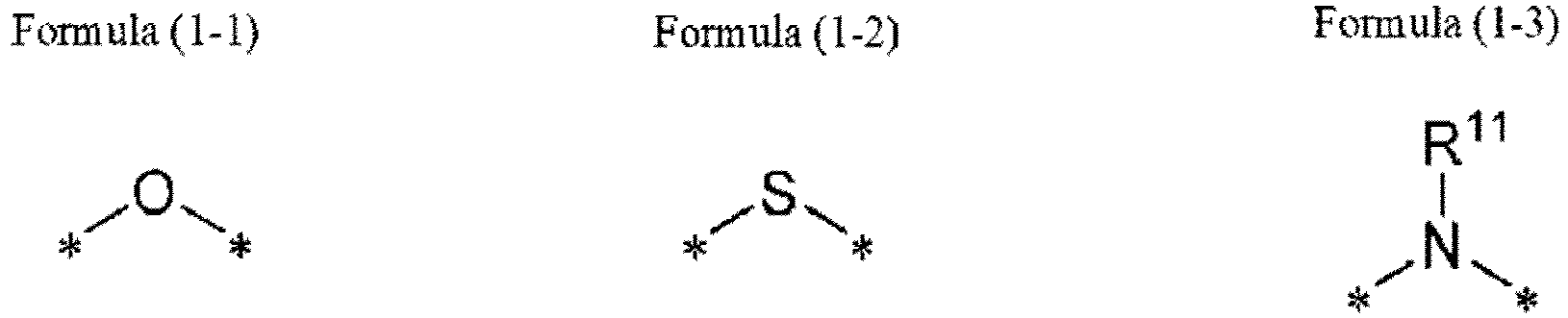
∗ représente une partie liée à un atome de bore ou L2 dans la formule générale (I). - Composé représenté par la formule générale (II),
 R1 à R6 représentent un atome d'hydrogène, un groupe alkyle, un groupe cycloalkyle, un groupe hétérocyclique aliphatique, un groupe alcényle, un groupe cycloalcényle, un groupe alcynyle, un groupe hydroxyle, un groupe mercapto, un groupe alcoxy, un groupe alkylthio, un groupe aryloxy, un groupe arylthio, un groupe aryle, un groupe hétéroaryle, un atome d'halogène, un groupe cyano, un groupe formyle, un groupe R-CO-, un groupe R-O-CO-, un groupe R-CO-O-, un groupe (RA)2N-CO-, un groupe amino, un groupe nitro, ou un groupe silyle, R représente un groupe alkyle, un groupe cycloalkyle, un groupe hétérocyclique aliphatique, un groupe alcényle, un groupe cycloalcényle, un groupe alcynyle, un groupe aryle, ou un groupe hétéroaryle, RA représente un atome d'hydrogène, un groupe alkyle, un groupe cycloalkyle, un groupe hétérocyclique aliphatique, un groupe alcényle, un groupe cycloalcényle, un groupe alcynyle, un groupe aryle, ou un groupe hétéroaryle,R7 représente un groupe alkyle, un groupe cycloalkyle, un groupe hétérocyclique aliphatique, un groupe alcényle, un groupe cycloalcényle, un groupe alcynyle, un groupe hydroxyle, un groupe mercapto, un groupe alcoxy, un groupe alkylthio, un groupe aryloxy, un groupe arylthio, un groupe aryle, un groupe hétéroaryle, ou un atome d'halogène,R6 et R7 ne sont pas liés l'un à l'autre pour former un cycle,L1 représente un groupe de liaison sélectionné parmi un groupe arylène, un groupe hétéroarylène, un groupe éthénylène, un groupe alkylène, et un groupe cycloalkylène,L2 représente une liaison simple, un groupe carbonyle, ou un groupe alkylène qui forme une structure cyclique conjointement avec L1 et L3 et présente 1 à 6 atomes de carbone, dans le cas où L3 est un groupe de liaison représenté par la formule (1-1), L2 représente un groupe carbonyle ou le groupe alkylène présentant 1 à 6 atomes de carbone,L3 représente un groupe de liaison représenté par l'une quelconque des formules (1-1) à (1-3),
∗ représente une partie liée à un atome de bore ou L2 dans la formule générale (II). - Dispositif émetteur de lumière, comprenant :une source de lumière ; etun partie de conversion de couleur qui convertit une lumière émise par la source de lumière et consiste en la composition de conversion de couleur selon l'une quelconque des revendications 1 à 8.
- Dispositif émetteur de lumière selon la revendication 11, qui est un dispositif d'affichage ou un dispositif d'éclairage.
- Dispositif émetteur de lumière selon la revendication 12,
dans lequel le dispositif d'affichage est un dispositif d'affichage à cristaux liquides.
Applications Claiming Priority (2)
| Application Number | Priority Date | Filing Date | Title |
|---|---|---|---|
| JP2018018985 | 2018-02-06 | ||
| PCT/JP2019/002457 WO2019155911A1 (fr) | 2018-02-06 | 2019-01-25 | Composition de conversion de couleur, composé utilisé pour celle-ci, et dispositif électroluminescent |
Publications (3)
| Publication Number | Publication Date |
|---|---|
| EP3750970A1 EP3750970A1 (fr) | 2020-12-16 |
| EP3750970A4 EP3750970A4 (fr) | 2020-12-16 |
| EP3750970B1 true EP3750970B1 (fr) | 2022-03-23 |
Family
ID=67549042
Family Applications (1)
| Application Number | Title | Priority Date | Filing Date |
|---|---|---|---|
| EP19751633.9A Active EP3750970B1 (fr) | 2018-02-06 | 2019-01-25 | Composition de conversion de couleur, composé utilisé pour celle-ci, et dispositif électroluminescent |
Country Status (4)
| Country | Link |
|---|---|
| US (1) | US11434420B2 (fr) |
| EP (1) | EP3750970B1 (fr) |
| JP (1) | JP6868128B2 (fr) |
| WO (1) | WO2019155911A1 (fr) |
Families Citing this family (1)
| Publication number | Priority date | Publication date | Assignee | Title |
|---|---|---|---|---|
| JP7064583B2 (ja) * | 2018-06-01 | 2022-05-10 | 富士フイルム株式会社 | 蛍光性化合物及びこれを用いた蛍光標識生体物質 |
Family Cites Families (12)
| Publication number | Priority date | Publication date | Assignee | Title |
|---|---|---|---|---|
| US7378426B2 (en) | 2004-03-01 | 2008-05-27 | Bristol-Myers Squibb Company | Fused heterotricyclic compounds as inhibitors of 17β-hydroxysteroid dehydrogenase 3 |
| WO2006058448A1 (fr) * | 2004-11-30 | 2006-06-08 | Eidgenössische Technische Hochschule Zürich | Colorants d'aza-dipyrromethene compatibles avec les lasers a diode, et leurs procedes de preparation |
| JP5458301B2 (ja) * | 2009-02-10 | 2014-04-02 | 三菱化学株式会社 | ジベンゾピロメテンホウ素キレート化合物及びその製造方法、並びにこれを用いた太陽電池、光重合性組成物、光記憶媒体、発光素子、光学フィルター、及び医療診断用蛍光色素 |
| JP2011241160A (ja) | 2010-05-17 | 2011-12-01 | Yamamoto Chem Inc | 色変換材料、該材料を含む組成物、該組成物を使用した色変換光学部品および該色変換光学部品を使用した発光素子 |
| JP2012199541A (ja) * | 2011-03-10 | 2012-10-18 | Mitsubishi Chemicals Corp | 有機薄膜太陽電池素子、太陽電池及び太陽電池モジュール |
| JPWO2013035303A1 (ja) * | 2011-09-09 | 2015-03-23 | 出光興産株式会社 | 有機薄膜太陽電池材料 |
| JP2016006033A (ja) * | 2014-04-23 | 2016-01-14 | シャープ株式会社 | 化合物、標識剤、太陽電池モジュール、太陽光発電装置、有機薄膜太陽電池、表示装置及び有機el素子 |
| EP3305870B1 (fr) | 2015-05-26 | 2020-11-18 | Toray Industries, Inc. | Complexe pyrrométhène-bore, composition changeant de couleur, film changeant de couleur, unité source de lumière les comprenant, dispositif d'affichage et dispositif d'éclairage |
| US11333964B2 (en) | 2016-03-18 | 2022-05-17 | Nippon Kayaku Kabushiki Kaisha | Organic compound, near infrared absorbing dye, photoelectric conversion element, light sensor thereof, and imaging element |
| JP6761690B2 (ja) | 2016-07-28 | 2020-09-30 | アスリートFa株式会社 | 柱状部材搭載装置、柱状部材搭載方法 |
| KR102386678B1 (ko) * | 2016-10-28 | 2022-04-13 | 닛뽄 가야쿠 가부시키가이샤 | 디벤조피로메텐붕소킬레이트 화합물, 근적외광 흡수 재료, 박막 및 유기 일렉트로닉스 디바이스 |
| JP6770278B2 (ja) * | 2017-02-01 | 2020-10-14 | 東京都公立大学法人 | ジベンゾピロメテンホウ素キレート化合物、近赤外光吸収色素、光電変換素子、近赤外光センサー及び撮像素子 |
-
2019
- 2019-01-25 EP EP19751633.9A patent/EP3750970B1/fr active Active
- 2019-01-25 WO PCT/JP2019/002457 patent/WO2019155911A1/fr not_active Ceased
- 2019-01-25 JP JP2019570677A patent/JP6868128B2/ja active Active
-
2020
- 2020-07-23 US US16/936,434 patent/US11434420B2/en active Active
Also Published As
| Publication number | Publication date |
|---|---|
| EP3750970A1 (fr) | 2020-12-16 |
| JP6868128B2 (ja) | 2021-05-12 |
| US20200354629A1 (en) | 2020-11-12 |
| US11434420B2 (en) | 2022-09-06 |
| EP3750970A4 (fr) | 2020-12-16 |
| JPWO2019155911A1 (ja) | 2020-12-03 |
| WO2019155911A1 (fr) | 2019-08-15 |
Similar Documents
| Publication | Publication Date | Title |
|---|---|---|
| CN110114440B (zh) | 波长转换用发光性树脂组合物及其制造方法、以及波长转换部件及发光元件 | |
| US11186769B2 (en) | Wavelength conversion luminescent resin composition, method for producing wavelength conversion luminescent resin composition, wavelength conversion member, and light-emitting element | |
| Wu et al. | Dual emission from donor-modified MR-TADF emitter: Evidence for coexistence of TICT and MR excited states | |
| CN109790185B (zh) | 含氮化合物和包含其的色彩转换膜 | |
| CN108139522A (zh) | 颜色转换组合物、颜色转换片以及包含其的光源单元、显示器、照明装置、背光单元、led芯片及led封装体 | |
| US11434420B2 (en) | Color conversion composition, compound used for same, and light emitting device | |
| JP6670776B2 (ja) | 波長変換用発光性樹脂組成物、波長変換部材、波長変換ユニット及び発光素子 | |
| CN110325538B (zh) | 含氮环状化合物和包含其的色彩转换膜 | |
| US11091503B2 (en) | Compound and color conversion film comprising the same | |
| JP2018178061A (ja) | 波長変換組成物及び発光装置 | |
| JP2018180477A (ja) | 波長変換組成物及び発光装置 | |
| JP7808222B2 (ja) | 化合物 | |
| US20260085233A1 (en) | Pyrromethene-boron complex, color conversion composition, color conversion sheet, color conversion substrate, light source unit, display device, and lighting device | |
| US20240301282A1 (en) | Polycyclic aromatic compound, color conversion composition, color conversion sheet, light source unit, display and lighting device | |
| KR102736288B1 (ko) | 자발광 감광성 수지 조성물, 이를 이용하여 제조된 색변환층 및 이를 포함하는 컬러필터 및 화상표시장치 | |
| KR101461419B1 (ko) | 신규한 백금 착체 및 이를 포함하는 유기발광소자 | |
| CN121735830A (zh) | 一种螺环化合物及有机发光器件 | |
| CN121604623A (zh) | 一种有机电致发光器件和显示装置 |
Legal Events
| Date | Code | Title | Description |
|---|---|---|---|
| STAA | Information on the status of an ep patent application or granted ep patent |
Free format text: STATUS: THE INTERNATIONAL PUBLICATION HAS BEEN MADE |
|
| PUAI | Public reference made under article 153(3) epc to a published international application that has entered the european phase |
Free format text: ORIGINAL CODE: 0009012 |
|
| STAA | Information on the status of an ep patent application or granted ep patent |
Free format text: STATUS: REQUEST FOR EXAMINATION WAS MADE |
|
| 17P | Request for examination filed |
Effective date: 20200810 |
|
| A4 | Supplementary search report drawn up and despatched |
Effective date: 20201030 |
|
| AK | Designated contracting states |
Kind code of ref document: A1 Designated state(s): AL AT BE BG CH CY CZ DE DK EE ES FI FR GB GR HR HU IE IS IT LI LT LU LV MC MK MT NL NO PL PT RO RS SE SI SK SM TR |
|
| AX | Request for extension of the european patent |
Extension state: BA ME |
|
| RAP3 | Party data changed (applicant data changed or rights of an application transferred) |
Owner name: FUJIFILM CORPORATION |
|
| DAV | Request for validation of the european patent (deleted) | ||
| DAX | Request for extension of the european patent (deleted) | ||
| GRAP | Despatch of communication of intention to grant a patent |
Free format text: ORIGINAL CODE: EPIDOSNIGR1 |
|
| STAA | Information on the status of an ep patent application or granted ep patent |
Free format text: STATUS: GRANT OF PATENT IS INTENDED |
|
| RIC1 | Information provided on ipc code assigned before grant |
Ipc: H01L 33/50 20100101ALI20210928BHEP Ipc: C07B 61/00 20060101ALI20210928BHEP Ipc: G02B 5/20 20060101ALI20210928BHEP Ipc: C07F 5/02 20060101ALI20210928BHEP Ipc: C09K 11/06 20060101AFI20210928BHEP |
|
| INTG | Intention to grant announced |
Effective date: 20211027 |
|
| GRAS | Grant fee paid |
Free format text: ORIGINAL CODE: EPIDOSNIGR3 |
|
| GRAA | (expected) grant |
Free format text: ORIGINAL CODE: 0009210 |
|
| STAA | Information on the status of an ep patent application or granted ep patent |
Free format text: STATUS: THE PATENT HAS BEEN GRANTED |
|
| AK | Designated contracting states |
Kind code of ref document: B1 Designated state(s): AL AT BE BG CH CY CZ DE DK EE ES FI FR GB GR HR HU IE IS IT LI LT LU LV MC MK MT NL NO PL PT RO RS SE SI SK SM TR |
|
| REG | Reference to a national code |
Ref country code: GB Ref legal event code: FG4D |
|
| REG | Reference to a national code |
Ref country code: CH Ref legal event code: EP |
|
| REG | Reference to a national code |
Ref country code: IE Ref legal event code: FG4D |
|
| REG | Reference to a national code |
Ref country code: DE Ref legal event code: R096 Ref document number: 602019012866 Country of ref document: DE |
|
| REG | Reference to a national code |
Ref country code: AT Ref legal event code: REF Ref document number: 1477433 Country of ref document: AT Kind code of ref document: T Effective date: 20220415 |
|
| REG | Reference to a national code |
Ref country code: LT Ref legal event code: MG9D |
|
| REG | Reference to a national code |
Ref country code: NL Ref legal event code: MP Effective date: 20220323 |
|
| PG25 | Lapsed in a contracting state [announced via postgrant information from national office to epo] |
Ref country code: SE Free format text: LAPSE BECAUSE OF FAILURE TO SUBMIT A TRANSLATION OF THE DESCRIPTION OR TO PAY THE FEE WITHIN THE PRESCRIBED TIME-LIMIT Effective date: 20220323 Ref country code: RS Free format text: LAPSE BECAUSE OF FAILURE TO SUBMIT A TRANSLATION OF THE DESCRIPTION OR TO PAY THE FEE WITHIN THE PRESCRIBED TIME-LIMIT Effective date: 20220323 Ref country code: NO Free format text: LAPSE BECAUSE OF FAILURE TO SUBMIT A TRANSLATION OF THE DESCRIPTION OR TO PAY THE FEE WITHIN THE PRESCRIBED TIME-LIMIT Effective date: 20220623 Ref country code: LT Free format text: LAPSE BECAUSE OF FAILURE TO SUBMIT A TRANSLATION OF THE DESCRIPTION OR TO PAY THE FEE WITHIN THE PRESCRIBED TIME-LIMIT Effective date: 20220323 Ref country code: HR Free format text: LAPSE BECAUSE OF FAILURE TO SUBMIT A TRANSLATION OF THE DESCRIPTION OR TO PAY THE FEE WITHIN THE PRESCRIBED TIME-LIMIT Effective date: 20220323 Ref country code: BG Free format text: LAPSE BECAUSE OF FAILURE TO SUBMIT A TRANSLATION OF THE DESCRIPTION OR TO PAY THE FEE WITHIN THE PRESCRIBED TIME-LIMIT Effective date: 20220623 |
|
| REG | Reference to a national code |
Ref country code: AT Ref legal event code: MK05 Ref document number: 1477433 Country of ref document: AT Kind code of ref document: T Effective date: 20220323 |
|
| PG25 | Lapsed in a contracting state [announced via postgrant information from national office to epo] |
Ref country code: LV Free format text: LAPSE BECAUSE OF FAILURE TO SUBMIT A TRANSLATION OF THE DESCRIPTION OR TO PAY THE FEE WITHIN THE PRESCRIBED TIME-LIMIT Effective date: 20220323 Ref country code: GR Free format text: LAPSE BECAUSE OF FAILURE TO SUBMIT A TRANSLATION OF THE DESCRIPTION OR TO PAY THE FEE WITHIN THE PRESCRIBED TIME-LIMIT Effective date: 20220624 Ref country code: FI Free format text: LAPSE BECAUSE OF FAILURE TO SUBMIT A TRANSLATION OF THE DESCRIPTION OR TO PAY THE FEE WITHIN THE PRESCRIBED TIME-LIMIT Effective date: 20220323 |
|
| PG25 | Lapsed in a contracting state [announced via postgrant information from national office to epo] |
Ref country code: NL Free format text: LAPSE BECAUSE OF FAILURE TO SUBMIT A TRANSLATION OF THE DESCRIPTION OR TO PAY THE FEE WITHIN THE PRESCRIBED TIME-LIMIT Effective date: 20220323 |
|
| PG25 | Lapsed in a contracting state [announced via postgrant information from national office to epo] |
Ref country code: SM Free format text: LAPSE BECAUSE OF FAILURE TO SUBMIT A TRANSLATION OF THE DESCRIPTION OR TO PAY THE FEE WITHIN THE PRESCRIBED TIME-LIMIT Effective date: 20220323 Ref country code: SK Free format text: LAPSE BECAUSE OF FAILURE TO SUBMIT A TRANSLATION OF THE DESCRIPTION OR TO PAY THE FEE WITHIN THE PRESCRIBED TIME-LIMIT Effective date: 20220323 Ref country code: RO Free format text: LAPSE BECAUSE OF FAILURE TO SUBMIT A TRANSLATION OF THE DESCRIPTION OR TO PAY THE FEE WITHIN THE PRESCRIBED TIME-LIMIT Effective date: 20220323 Ref country code: PT Free format text: LAPSE BECAUSE OF FAILURE TO SUBMIT A TRANSLATION OF THE DESCRIPTION OR TO PAY THE FEE WITHIN THE PRESCRIBED TIME-LIMIT Effective date: 20220725 Ref country code: ES Free format text: LAPSE BECAUSE OF FAILURE TO SUBMIT A TRANSLATION OF THE DESCRIPTION OR TO PAY THE FEE WITHIN THE PRESCRIBED TIME-LIMIT Effective date: 20220323 Ref country code: EE Free format text: LAPSE BECAUSE OF FAILURE TO SUBMIT A TRANSLATION OF THE DESCRIPTION OR TO PAY THE FEE WITHIN THE PRESCRIBED TIME-LIMIT Effective date: 20220323 Ref country code: CZ Free format text: LAPSE BECAUSE OF FAILURE TO SUBMIT A TRANSLATION OF THE DESCRIPTION OR TO PAY THE FEE WITHIN THE PRESCRIBED TIME-LIMIT Effective date: 20220323 Ref country code: AT Free format text: LAPSE BECAUSE OF FAILURE TO SUBMIT A TRANSLATION OF THE DESCRIPTION OR TO PAY THE FEE WITHIN THE PRESCRIBED TIME-LIMIT Effective date: 20220323 |
|
| PG25 | Lapsed in a contracting state [announced via postgrant information from national office to epo] |
Ref country code: PL Free format text: LAPSE BECAUSE OF FAILURE TO SUBMIT A TRANSLATION OF THE DESCRIPTION OR TO PAY THE FEE WITHIN THE PRESCRIBED TIME-LIMIT Effective date: 20220323 Ref country code: IS Free format text: LAPSE BECAUSE OF FAILURE TO SUBMIT A TRANSLATION OF THE DESCRIPTION OR TO PAY THE FEE WITHIN THE PRESCRIBED TIME-LIMIT Effective date: 20220723 Ref country code: AL Free format text: LAPSE BECAUSE OF FAILURE TO SUBMIT A TRANSLATION OF THE DESCRIPTION OR TO PAY THE FEE WITHIN THE PRESCRIBED TIME-LIMIT Effective date: 20220323 |
|
| REG | Reference to a national code |
Ref country code: DE Ref legal event code: R097 Ref document number: 602019012866 Country of ref document: DE |
|
| PLBE | No opposition filed within time limit |
Free format text: ORIGINAL CODE: 0009261 |
|
| STAA | Information on the status of an ep patent application or granted ep patent |
Free format text: STATUS: NO OPPOSITION FILED WITHIN TIME LIMIT |
|
| PG25 | Lapsed in a contracting state [announced via postgrant information from national office to epo] |
Ref country code: DK Free format text: LAPSE BECAUSE OF FAILURE TO SUBMIT A TRANSLATION OF THE DESCRIPTION OR TO PAY THE FEE WITHIN THE PRESCRIBED TIME-LIMIT Effective date: 20220323 |
|
| 26N | No opposition filed |
Effective date: 20230102 |
|
| PG25 | Lapsed in a contracting state [announced via postgrant information from national office to epo] |
Ref country code: SI Free format text: LAPSE BECAUSE OF FAILURE TO SUBMIT A TRANSLATION OF THE DESCRIPTION OR TO PAY THE FEE WITHIN THE PRESCRIBED TIME-LIMIT Effective date: 20220323 |
|
| P01 | Opt-out of the competence of the unified patent court (upc) registered |
Effective date: 20230515 |
|
| PG25 | Lapsed in a contracting state [announced via postgrant information from national office to epo] |
Ref country code: IT Free format text: LAPSE BECAUSE OF FAILURE TO SUBMIT A TRANSLATION OF THE DESCRIPTION OR TO PAY THE FEE WITHIN THE PRESCRIBED TIME-LIMIT Effective date: 20220323 |
|
| REG | Reference to a national code |
Ref country code: CH Ref legal event code: PL |
|
| PG25 | Lapsed in a contracting state [announced via postgrant information from national office to epo] |
Ref country code: LU Free format text: LAPSE BECAUSE OF NON-PAYMENT OF DUE FEES Effective date: 20230125 |
|
| REG | Reference to a national code |
Ref country code: BE Ref legal event code: MM Effective date: 20230131 |
|
| PG25 | Lapsed in a contracting state [announced via postgrant information from national office to epo] |
Ref country code: LI Free format text: LAPSE BECAUSE OF NON-PAYMENT OF DUE FEES Effective date: 20230131 Ref country code: CH Free format text: LAPSE BECAUSE OF NON-PAYMENT OF DUE FEES Effective date: 20230131 |
|
| PG25 | Lapsed in a contracting state [announced via postgrant information from national office to epo] |
Ref country code: FR Free format text: LAPSE BECAUSE OF NON-PAYMENT OF DUE FEES Effective date: 20230131 Ref country code: BE Free format text: LAPSE BECAUSE OF NON-PAYMENT OF DUE FEES Effective date: 20230131 |
|
| PG25 | Lapsed in a contracting state [announced via postgrant information from national office to epo] |
Ref country code: IE Free format text: LAPSE BECAUSE OF NON-PAYMENT OF DUE FEES Effective date: 20230125 |
|
| PG25 | Lapsed in a contracting state [announced via postgrant information from national office to epo] |
Ref country code: MC Free format text: LAPSE BECAUSE OF FAILURE TO SUBMIT A TRANSLATION OF THE DESCRIPTION OR TO PAY THE FEE WITHIN THE PRESCRIBED TIME-LIMIT Effective date: 20220323 |
|
| PG25 | Lapsed in a contracting state [announced via postgrant information from national office to epo] |
Ref country code: MC Free format text: LAPSE BECAUSE OF FAILURE TO SUBMIT A TRANSLATION OF THE DESCRIPTION OR TO PAY THE FEE WITHIN THE PRESCRIBED TIME-LIMIT Effective date: 20220323 |
|
| PG25 | Lapsed in a contracting state [announced via postgrant information from national office to epo] |
Ref country code: CY Free format text: LAPSE BECAUSE OF FAILURE TO SUBMIT A TRANSLATION OF THE DESCRIPTION OR TO PAY THE FEE WITHIN THE PRESCRIBED TIME-LIMIT; INVALID AB INITIO Effective date: 20190125 |
|
| PG25 | Lapsed in a contracting state [announced via postgrant information from national office to epo] |
Ref country code: HU Free format text: LAPSE BECAUSE OF FAILURE TO SUBMIT A TRANSLATION OF THE DESCRIPTION OR TO PAY THE FEE WITHIN THE PRESCRIBED TIME-LIMIT; INVALID AB INITIO Effective date: 20190125 |
|
| PG25 | Lapsed in a contracting state [announced via postgrant information from national office to epo] |
Ref country code: TR Free format text: LAPSE BECAUSE OF FAILURE TO SUBMIT A TRANSLATION OF THE DESCRIPTION OR TO PAY THE FEE WITHIN THE PRESCRIBED TIME-LIMIT Effective date: 20220323 |
|
| PGFP | Annual fee paid to national office [announced via postgrant information from national office to epo] |
Ref country code: GB Payment date: 20251204 Year of fee payment: 8 |
|
| PGFP | Annual fee paid to national office [announced via postgrant information from national office to epo] |
Ref country code: DE Payment date: 20251203 Year of fee payment: 8 |