EP3757761A1 - Verfahren und vorrichtung zur absichtlichen programmierung für heterogene systeme - Google Patents
Verfahren und vorrichtung zur absichtlichen programmierung für heterogene systeme Download PDFInfo
- Publication number
- EP3757761A1 EP3757761A1 EP20165699.8A EP20165699A EP3757761A1 EP 3757761 A1 EP3757761 A1 EP 3757761A1 EP 20165699 A EP20165699 A EP 20165699A EP 3757761 A1 EP3757761 A1 EP 3757761A1
- Authority
- EP
- European Patent Office
- Prior art keywords
- code
- variant
- heterogeneous system
- executable
- representation
- Prior art date
- Legal status (The legal status is an assumption and is not a legal conclusion. Google has not performed a legal analysis and makes no representation as to the accuracy of the status listed.)
- Granted
Links
Images






Classifications
-
- G—PHYSICS
- G06—COMPUTING OR CALCULATING; COUNTING
- G06F—ELECTRIC DIGITAL DATA PROCESSING
- G06F9/00—Arrangements for program control, e.g. control units
- G06F9/06—Arrangements for program control, e.g. control units using stored programs, i.e. using an internal store of processing equipment to receive or retain programs
- G06F9/30—Arrangements for executing machine instructions, e.g. instruction decode
- G06F9/3017—Runtime instruction translation, e.g. macros
- G06F9/30174—Runtime instruction translation, e.g. macros for non-native instruction set, e.g. Javabyte, legacy code
-
- G—PHYSICS
- G06—COMPUTING OR CALCULATING; COUNTING
- G06F—ELECTRIC DIGITAL DATA PROCESSING
- G06F8/00—Arrangements for software engineering
- G06F8/40—Transformation of program code
- G06F8/41—Compilation
- G06F8/44—Encoding
- G06F8/443—Optimisation
-
- G—PHYSICS
- G06—COMPUTING OR CALCULATING; COUNTING
- G06F—ELECTRIC DIGITAL DATA PROCESSING
- G06F8/00—Arrangements for software engineering
- G06F8/30—Creation or generation of source code
- G06F8/31—Programming languages or programming paradigms
-
- G—PHYSICS
- G06—COMPUTING OR CALCULATING; COUNTING
- G06F—ELECTRIC DIGITAL DATA PROCESSING
- G06F8/00—Arrangements for software engineering
- G06F8/40—Transformation of program code
- G06F8/41—Compilation
- G06F8/45—Exploiting coarse grain parallelism in compilation, i.e. parallelism between groups of instructions
-
- G—PHYSICS
- G06—COMPUTING OR CALCULATING; COUNTING
- G06F—ELECTRIC DIGITAL DATA PROCESSING
- G06F8/00—Arrangements for software engineering
- G06F8/40—Transformation of program code
- G06F8/52—Binary to binary
-
- G—PHYSICS
- G06—COMPUTING OR CALCULATING; COUNTING
- G06F—ELECTRIC DIGITAL DATA PROCESSING
- G06F8/00—Arrangements for software engineering
- G06F8/70—Software maintenance or management
- G06F8/75—Structural analysis for program understanding
-
- G—PHYSICS
- G06—COMPUTING OR CALCULATING; COUNTING
- G06F—ELECTRIC DIGITAL DATA PROCESSING
- G06F8/00—Arrangements for software engineering
- G06F8/70—Software maintenance or management
- G06F8/76—Adapting program code to run in a different environment; Porting
-
- G—PHYSICS
- G06—COMPUTING OR CALCULATING; COUNTING
- G06F—ELECTRIC DIGITAL DATA PROCESSING
- G06F9/00—Arrangements for program control, e.g. control units
- G06F9/06—Arrangements for program control, e.g. control units using stored programs, i.e. using an internal store of processing equipment to receive or retain programs
- G06F9/30—Arrangements for executing machine instructions, e.g. instruction decode
- G06F9/38—Concurrent instruction execution, e.g. pipeline or look ahead
- G06F9/3877—Concurrent instruction execution, e.g. pipeline or look ahead using a secondary processor, e.g. coprocessor
-
- G—PHYSICS
- G06—COMPUTING OR CALCULATING; COUNTING
- G06N—COMPUTING ARRANGEMENTS BASED ON SPECIFIC COMPUTATIONAL MODELS
- G06N20/00—Machine learning
-
- G—PHYSICS
- G06—COMPUTING OR CALCULATING; COUNTING
- G06N—COMPUTING ARRANGEMENTS BASED ON SPECIFIC COMPUTATIONAL MODELS
- G06N3/00—Computing arrangements based on biological models
- G06N3/02—Neural networks
- G06N3/04—Architecture, e.g. interconnection topology
- G06N3/0464—Convolutional networks [CNN, ConvNet]
-
- G—PHYSICS
- G06—COMPUTING OR CALCULATING; COUNTING
- G06N—COMPUTING ARRANGEMENTS BASED ON SPECIFIC COMPUTATIONAL MODELS
- G06N3/00—Computing arrangements based on biological models
- G06N3/02—Neural networks
- G06N3/08—Learning methods
- G06N3/09—Supervised learning
-
- G—PHYSICS
- G06—COMPUTING OR CALCULATING; COUNTING
- G06N—COMPUTING ARRANGEMENTS BASED ON SPECIFIC COMPUTATIONAL MODELS
- G06N5/00—Computing arrangements using knowledge-based models
- G06N5/04—Inference or reasoning models
- G06N5/046—Forward inferencing; Production systems
Definitions
- This disclosure relates generally to machine learning and, more particularly, to methods and apparatus for intentional programming for heterogeneous systems.
- Computer hardware manufacturers develop hardware components for use in various components of a computer platform. For example, computer hardware manufacturers develop motherboards, chipsets for motherboards, central processing units (CPUs), graphics processing units (GPUs), vision processing units (VPUs), field programmable gate arrays (FPGAs), hard-disk drives (HDDs), solid-state drives (SSDs), and other computer components. Many computer hardware manufacturers develop programs and/or other methods to compile algorithms and/or other code to be run on a specific processing platform.
- CPUs central processing units
- GPUs graphics processing units
- VPUs vision processing units
- FPGAs field programmable gate arrays
- HDDs hard-disk drives
- SSDs solid-state drives
- Descriptors "first,” “second,” “third,” etc. are used herein when identifying multiple elements or components which may be referred to separately. Unless otherwise specified or understood based on their context of use, such descriptors are not intended to impute any meaning of priority or ordering in time but merely as labels for referring to multiple elements or components separately for ease of understanding the disclosed examples.
- the descriptor "first” may be used to refer to an element in the detailed description, while the same element may be referred to in a claim with a different descriptor such as "second” or “third.” In such instances, it should be understood that such descriptors are used merely for ease of referencing multiple elements or components.
- DSLs domain specific languages
- algorithms e.g., Halide, OpenCL, etc.
- DSLs utilize the principle of separation of concerns to separate how an algorithm (e.g., a program, a block of code, etc.) is written from how the algorithm is executed.
- many DSLs prompt a developer of an algorithm to implement a high-level strategy to map a processing pipeline for the algorithm to a parallel machine (e.g., a schedule).
- an algorithm may be defined to blur an image (e.g., how the algorithm is written) and a developer may desire for the algorithm to run effectively on a CPU, an FPGA, a GPU, and a VPU.
- a schedule is to be generated.
- the algorithm is transformed in different ways depending on the particular processing element.
- Many methods of automating compilation time scheduling of an algorithm have been developed. For example, compilation auto-scheduling may include auto-tuning, heuristic searching, and hybrid scheduling.
- Hybrid scheduling includes utilizing artificial intelligence (AI) to identify a cost model for a generic processing element.
- the cost model can correspond to representing, predicting, and/or otherwise determining computation costs of one or more processing elements to execute a portion of code to facilitate processing of one or more workloads.
- artificial intelligence including machine learning (ML), deep learning (DL), and/or other artificial machine-driven logic enables machines (e.g., computers, logic circuits, etc.) to use a model to process input data to generate an output based on patterns and/or associations previously learned by the model via a training process.
- the model may be trained with data to recognize patterns and/or associations and follow such patterns and/or associations when processing input data such that other input(s) result in output(s) consistent with the recognized patterns and/or associations.
- machine learning models include, for example, a support vector machine (SVM), a neural network (NN), a recurrent neural network (RNN), a convolutional neural network (CNN), a long short term memory (LSTM), a gate recurrent unit (GRU), etc.
- SVM support vector machine
- NN neural network
- RNN recurrent neural network
- CNN convolutional neural network
- LSTM long short term memory
- GRU gate recurrent unit
- a heterogeneous system offloads one or more computation tasks (e.g., a workload, a computation workload, etc.) to a GPU
- An example effect of such a ramification can be that a workload of size X offloaded to the GPU may have the same or substantially similar processing time as a workload of size 0.5X offloaded to the GPU.
- a runtime scheduler may utilize a GPU's texture sampler to process images in a workload.
- the images are converted from a linear format supported by the CPU to a tiled format supported by the GPU.
- Such a conversion incurs computational cost on the CPU and while it may be faster to process the image on the GPU, the overall operation of converting the format of the image on the CPU and subsequent processing on the GPU may be longer than simply processing the image on the CPU.
- the heterogeneous system can execute the executable to process a plurality of workloads to dynamically select one(s) of one or more variant binary files of the executable based on performance characteristics of the heterogeneous system to improve runtime performance of software executing on the heterogeneous system.
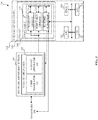
- each of the CPU 102, the storage 104, the FPGA 106, the VPU 108, and the GPU 110 is in communication with the other elements of the heterogeneous system 100.
- the CPU 102, the storage 104, the FPGA 106, the VPU 108, and the GPU 110 are in communication via an example communication bus 112.
- the communication bus 112 may correspond to an interface circuit or any other type of hardware or logic circuit to facilitate inter-element communication.
- one or more of the CPU 102, the storage 104, the FPGA 106, the VPU 108, and/or the GPU 110 are in communication via any suitable wired and/or wireless communication method.
- FIG. 2 depicts a block diagram illustrating an example system (e.g., a software adjustment system) 200 including an example administrator device 202, a first example software adjustment system 204, an example network 206, an example database 208, and a second example software adjustment system 210.
- a software adjustment system 200 including an example administrator device 202, a first example software adjustment system 204, an example network 206, an example database 208, and a second example software adjustment system 210.
- the administrator device 202 is a desktop computer.
- the administrator device 202 may be any suitable computing system or platform such as a mobile phone, a tablet computer, a workstation, a laptop computer, or a server.
- an administrator or user may train the first software adjustment system 204 via the administrator device 202.
- an administrator may generate training data via the administrator device 202.
- the training data originates from randomly generated algorithms that are subsequently utilized by the first software adjustment system 204.
- an administrator may use the administrator device 202 to generate and transmit a large quantity (e.g., hundreds, thousands, hundreds of thousands, etc.) of algorithms to the first software adjustment system 204 to train the first software adjustment system 204.
- the administrator device 202 is in communication with the first software adjustment system 204 via a wired connection.
- the administrator device 202 may be in communication with the first software adjustment system 204 via any suitable wired and/or wireless connection.
- the database 208 may additionally or alternatively be implemented by one or more mass storage devices such as HDD(s), CD drive(s), digital versatile disk (DVD) drive(s), SSD(s), etc. While in the illustrated example the database 208 is illustrated as a single database, the database 208 may be implemented by any number and/or type(s) of databases. Furthermore, the data stored in the database 208 may be in any data format such as, for example, binary data, comma delimited data, tab delimited data, structured query language (SQL) structures, etc. In FIG. 2 , the database 208 is stored on a computational system that is electronically accessible. For example, the database 208 may be stored on a server, a desktop computer, an HDD, an SSD, or any other suitable computing system.
- the heterogeneous system 304 can correspond to the heterogeneous system 100 of FIG. 1 .
- the storage 306 can correspond to the storage 104 of FIG. 1 .
- the executable 308 can correspond to the executable 105 of FIG. 1 .
- the heterogeneous system 304 includes an example CPU 316, an example FPGA 318, an example VPU 320, and an example GPU 322.
- the heterogeneous system 304 may include fewer or more processing elements than depicted in FIG. 3 .
- the variant application 305 includes the variant generator 302 to compile one or more variants of an algorithm to be executed by the heterogeneous system 304.
- the variant generator 302 may obtain an algorithm in a DSL representation from the code translator 303 and can compile one or more variants of the algorithm to be offloaded to the one or more processing elements of the heterogeneous system 304.
- the variant generator 302 may be separate from the third software adjustment system 301 and/or the variant application 305.
- the variant is subsequently executed on the heterogeneous system 304.
- the variant generator 302 can obtain performance characteristics associated with the selected processing element (e.g., the FPGA 318).
- the performance characteristics when in training mode, can correspond to characteristics of the selected processing element (e.g., the FPGA 318) including, for example, power consumption of the selected processing element, time to run on the selected processing element, and/or other performance characteristics associated with the selected processing element.
- the variant generator 302 in response to the variant generator 302 determining at least one of (1) the success function, (2) related aspect(s) of the overall system (e.g., the heterogeneous system 304) to target, or (3) the performance delta associated with the success function, the variant generator 302 updates and/or otherwise adjusts the cost model(s) associated with the respective processing elements of the heterogeneous system 304 to account for the real-time characteristics and load (e.g., load profile) of the heterogeneous system 304.
- load profile e.g., load profile
- the runtime scheduler 314 determines how to execute a workload (e.g., one or more algorithms) during runtime of the heterogeneous system 304. In some examples, the runtime scheduler 314 generates and/or transmits execution graphs to a processing element to execute and/or otherwise implement. In some examples, the runtime scheduler 314 determines whether a workload should be offloaded from one processing element to a different processing element to achieve a performance goal associated with the overall heterogeneous system 304.
- a workload e.g., one or more algorithms
- the runtime scheduler 314 can monitor the heterogeneous system 304 to profile a performance of the heterogeneous system 304 based on performance characteristics obtained from the executable 308. In some examples, the runtime scheduler 314 can determine to offload a workload from one processing element to another based on the performance. For example, during runtime of the heterogeneous system 304, the executable 308 can be executed by the CPU 316 and, based on the performance of the CPU 316 and/or, more generally, the heterogeneous system 304, the runtime scheduler 314 can offload a workload scheduled to be executed by the CPU 316 to the FPGA 318. In some examples, the CPU 316 executes the executable 308 from the storage 306 while, in other examples, the CPU 316 can execute the executable 308 locally on the CPU 316.
- the runtime scheduler 314 writes to a data section in the executable 308 (e.g., the fat binary 309) to store the performance characteristics.
- the performance characteristics can be stored in the executable 308 to avoid a possibility of history loss across different executions of the executable 308.
- the runtime scheduler 314 executes on the CPU 316 as an image of the executable 308.
- the runtime scheduler 314 can store the performance characteristics in the executable 308 stored in the storage 306. If the heterogeneous system 304 does not include a persistent storage, but rather includes a flash storage or a persistent BIOS, a similar method of storing the performance characteristic in the executable 308 may be implemented.
- FIG. 3 While an example manner of implementing the executable 308 is shown in FIG. 3 , one or more of the elements, processes, and/or devices illustrated in FIG. 3 may be combined, divided, re-arranged, omitted, eliminated, and/or implemented in any other way.
- the example variant library 310, the example jump table library 312, the example runtime scheduler 314 and/or, more generally, the example executable 308 of FIG. 3 may be implemented by hardware, software, firmware and/or any combination of hardware, software and/or firmware.
- FIG. 3 could be implemented by one or more analog or digital circuit(s), logic circuits, programmable processor(s), programmable controller(s), GPU(s), DSP(s), application specific integrated circuit(s) (ASIC(s)), programmable logic device(s) (PLD(s)) and/or field programmable logic device(s) (FPLD(s)).
- ASIC application specific integrated circuit
- PLD programmable logic device
- FPLD field programmable logic device
- FIG. 4 depicts a block diagram illustrating an example implementation of the variant generator 302 of FIG. 3 .
- the variant generator 302 compiles one or more variant binary files corresponding to algorithm(s) in a DSL representation from the code translator 303.
- the variant generator 302 includes an example variant manager 402, an example cost model learner 404, an example weight storage 406, an example compilation auto-scheduler 408, an example variant compiler 410, an example jump table 412, an example application compiler 414, an example feedback interface 416, and an example performance analyzer 418.
- the variant generator 302 includes the variant manager 402 to analyze communications received and/or otherwise obtained from devices external to the variant generator 302 (e.g., the heterogeneous system 304, the database 208 of FIG. 2 , the administrator device 202 of FIG. 2 , etc., and/or a combination thereof) and manage operation of one or more components of the variant generator 302.
- the variant manager 402 receives and/or otherwise obtains an algorithm from the code translator 303.
- the variant manager 402 may obtain an algorithm in a DSL representation from the code translator 303, which the code translator 303 converted from an imperative programming language representation.
- the variant manager 402 receives and/or otherwise obtains an algorithm from an external device. For example, during a training phase, the variant manager 402 may obtain an arbitrary algorithm in a series or collection of arbitrary algorithms that are utilized to train the variant manager 402. Additionally or alternatively, during an inference phase, the variant manager 402 may obtain an algorithm associated with a workload to be executed on the heterogeneous system 304 of FIG. 3 .
- the variant manager 402 in response to obtaining an algorithm from an external device, can select a processing element for which to generate a cost model and/or variant.
- the processing element may be one of the CPU 316, the FPGA 318, the VPU 320, or the GPU 322 of FIG. 3 .
- the variant manager 402 may additionally select an aspect of the selected processing element to target for a success function.
- the variant manager 402 may select power consumption of the GPU 322 to target for a success function associated with the GPU 322.
- the variant manager 402 selects an aspect associated with a predetermined success function provided by a user (e.g., an administrator, a developer, etc.).
- the variant manager 402 determines whether there are any additional aspects of the selected processing element to target, whether there are additional processing elements to generate variants for, and/or whether there are any additional algorithms with which to train the cost model learner 404. In response to determining that there are one or more additional aspects, one or more additional processing elements, and/or one or more additional algorithms of interest to process, the variant manager 402 may repeat the above actions. In response to determining that there are no additional aspects, additional processing elements, and/or additional algorithms, the variant manager 402 may output the weights associated with the respective trained ML/AI models (e.g., the trained ML/AI model 214 of FIG. 2 ) corresponding to the respective processing elements of the heterogeneous system 304.
- the respective trained ML/AI models e.g., the trained ML/AI model 214 of FIG. 2
- the variant generator 302 includes the cost model learner 404 to implement and/or otherwise facilitate the execution of one or more ML/AI techniques to generate trained ML/AI models associated with generating applications to be run on a heterogeneous system.
- the cost model learner 404 implements a supervised DNN to learn and improve cost models associated with processing elements.
- the cost model learner 404 may implement any suitable ML/AI model with supervised and/or unsupervised learning.
- the cost model learner 404 implements a CNN, a DNN, etc., for each processing element of the heterogeneous system 304.
- the variant generator 302 includes the weight storage 406 as a memory where the weights can be associated with one or more cost models for respective ones of the processing elements of the heterogeneous system 304.
- the weights are stored in a file structure where each cost model has a respective weight file. Alternatively, a weight file may be used for more than one cost model.
- the weight files are read during a compilation auto-scheduling event (e.g., an event executed by the compilation auto-scheduler 408) and in response to the variant manager 402 outputting and/or otherwise generating the trained ML/AI model 214.
- weights are written to the weight files in response to the cost model learner 404 generating a cost model.
- the compilation auto-scheduler 408 selects and/or otherwise identifies a processing element (e.g., a hardware target) to process. For example, the compilation auto-scheduler 408 may select the CPU 316 of FIG. 3 to process.
- the compilation auto-scheduler 408 can configure one or more auto-schedulers included in the compilation auto-scheduler 408 for the processing element based on a corresponding configuration. For example, the compilation auto-scheduler 408 may be configured based on the target configuration associated with the CPU 316. In such examples, the compilation auto-scheduler 408 can be configured based on a hardware architecture, scheduling heuristics, etc., associated with the CPU 316.
- the compilation auto-scheduler 408 can be configured based on metadata from the code translator 303.
- the code translator 303 may embed and/or otherwise include metadata within an annotated code block or transmit the metadata to the compilation auto-scheduler 408.
- the code translator 303 generates metadata including scheduling information or data corresponding to a power profile of the heterogeneous system 304, where the power profile indicates whether low-power consumption is preferred over maximum performance and to what degree.
- the code translator 303 generates metadata including instructions that specify which of the processing element(s) and/or compute API(s) are to be used for an algorithm of interest.
- the variant compiler 410 implements means for compiling the variant binaries 502, 504, 506, 508, 510 based on a schedule, where each of the variant binaries 502, 504, 506, 508, 510 is associated with an algorithm of interest in the DSL, and where the variant binaries 502, 504, 506, 508, 510 include the first variant binary 502 that corresponds to a first processing element (e.g., the CPU 316 of FIG. 3 ) and the second variant binary 504 that corresponds to a second processing element (e.g., the GPU 322 of FIG. 3 ).
- a first processing element e.g., the CPU 316 of FIG. 3
- the second variant binary 504 e.g., the GPU 322 of FIG. 3
- the means for compiling may be implemented by one or more analog or digital circuit(s), logic circuits, programmable processor(s), programmable controller(s), GPU(s), DSP(s), application specific integrated circuit(s) (ASIC(s)), PLD(s), and/or FPLD(s).
- the variant generator 302 includes the jump table 412 to associate the different variants generated by the variant compiler 410 with a location where the respective variants are located (e.g., are to be located) in an executable application (e.g., the executable 308, the fat binary 309, etc.).
- the jump table 412 associates the different variants with a respective location of the different variants in an executable application via a variant symbol (e.g., a pointer) that points to the location of the respective variant in the executable application.
- the illustrated example depicts the fat binary 309 of FIG. 3 including the variant library 310, the jump table library 312, and the runtime scheduler 314 of FIG. 3 .
- the fat binary 309 includes the variant library 310 to store example variant binaries 502, 504, 506, 508, 510 including a first example variant binary 502, a second example variant binary 504, a third example variant binary 506, a fourth example variant binary 508, and a fifth example variant binary 510.
- the variant library 310 may include one variant binary or a different quantity of variant binaries than depicted in FIG. 5 .
- the variant binaries 502, 504, 506, 508, 510 are based on Halide.
- one or more of the variant binaries 502, 504, 506, 508, 510 may be based on a different DSL, such as OpenCL.
- the first variant binary 502 is a CPU variant binary and corresponds to a compilation of an algorithm according to a first schedule based on a first target configuration of the CPU 316 of FIG. 3 .
- the second variant binary 504 is a GPU variant binary and corresponds to a compilation of the algorithm according to a second schedule based on a second target configuration of the GPU 322 of FIG. 3 .
- the third variant binary 506 is an iStudio Publisher (ISPX) variant binary and corresponds to a compilation of the algorithm according to a third schedule based on a third target configuration corresponding to one of the CPU 316, the FPGA 318, the VPU 320, or the GPU 322 of FIG.
- ISPX iStudio Publisher
- the jump table library 312 includes one or more jump tables including the jump table 412 of FIG. 4 .
- the jump table 412 includes example metadata 512 corresponding to information about correct or desired usage of a respective processing element, performance characteristics, and workload characteristics generated in response to a workload being executed on a respective processing element.
- the metadata 512 includes the data structure "IP_CPU_PERF" that can correspond to data associated with at least one of (1) correct or desired usage of the CPU 316, (2) performance characteristics of the CPU 316 that can be representative of values of performance counters or execution graphs, or (3) workload characteristics associated with data generated by the CPU 316 or a performance monitoring unit (PMU) monitoring the CPU 316, where the data is generated in response to the CPU 316 executing a workload.
- IP_CPU_PERF data structure
- PMU performance monitoring unit
- the jump table 412 includes example symbols (e.g., entry-point symbols, variant symbols, etc.) 514.
- each of the symbols 514 corresponds to a respective one of the variant binaries 502, 504, 506, 508, 510.
- the symbol "_halide_algox_cpu" can correspond to the first variant binary 502.
- the symbols 514 are based on Halide because the variant binaries 502, 504, 506, 508, 510 of FIG. 5 are based on Halide.
- one or more of the symbols 514 may be based on a different DSL, such as OpenCL, when a corresponding one of the variant binaries 502, 504, 506, 508, 510 are based on the different DSL.
- the fat binary 309 includes the runtime scheduler 314 to access and/or otherwise invoke the jump table 412 of the jump table library 312.
- the variant library 310 is linked to the jump table 412 via the symbols 514.
- the runtime scheduler 314 is linked to the jump table library 312 via an example jump function 516.
- the runtime scheduler 314 executes an example application function 518 to execute a workload associated with an algorithm.
- the runtime scheduler 314 executes the jump function 516 to determine a workload dispatch decision based on the metadata 512 (e.g., the metadata 512 that is collected in real-time or substantially real-time).
- the runtime scheduler 314 determines the workload dispatch decision by identifying one of the processing elements of FIG. 3 to use to execute the workload. For example, the runtime scheduler 314 may determine to use the GPU 322 based on the metadata 512. In such examples, the runtime scheduler 314 can select "_halide _algox_gpu" from the symbols 514 to invoke the second variant binary 504 to execute the workload.
- the variant generator 302 includes the application compiler 414 to compile the algorithms, respective variants, variant symbols, and/or a runtime scheduler (e.g., the runtime scheduler 314 of FIG. 3 ) into one or more executable applications (e.g., the executable 308) for storage.
- the application compiler 414 can be in communication with the heterogeneous system 304 and store the one or more executable applications in the storage 306 of FIG. 3 of the heterogeneous system 304 of FIG. 3 .
- the application compiler 414 compiles the algorithms, respective variants, and the runtime scheduler as a compiled version of the original algorithm (e.g., code, human-readable instructions, etc.) received by the variant generator 302 (e.g., from the code translator 303, the one or more external devices of FIG. 2 , etc.).
- the application compiler 414 can compile the algorithm, the respective variants, variant symbols, and a runtime scheduler into an executable C or C++ application that includes the variants written in their respective languages for execution on respective processing elements.
- the executable applications compiled by application compiler 414 are fat binaries.
- the application compiler 414 may compile an application to process one or more algorithms by assembling the executable 308 of FIG. 3 by linking the runtime scheduler 314, the jump table library 312, and the variant library 310.
- the application compiler 414 may generate the fat binary 309 of FIGS. 3 and/or 5 based on the one or more linkages.
- the executable application compiled by the application compiler 414 may be any suitable executable file.
- the application compiler 414 generates a jump table to be included in a jump table library.
- the application compiler 414 may add the jump table 412 of FIG. 4 to the jump table library 312 of FIGS. 3 and/or 4. Accordingly, the application compiler 414 can generate the jump table library 312 in response to generating one or more jump tables, such as the jump table 412.
- the application compiler 414 implements means for compiling the executable 308 to include the runtime scheduler 314 to select one or more of the variant binaries 502, 504, 506, 508, 510 of FIG. 5 to execute a workload of interest based on a schedule (e.g., a schedule generated by the compilation auto-scheduler 408).
- a schedule e.g., a schedule generated by the compilation auto-scheduler 408.
- the variant generator 302 includes the feedback interface 416 to interface between executable applications (e.g., the executable 308) running on a heterogeneous system (e.g., the heterogeneous system 304 of FIG. 3 ) and/or a storage facility (e.g., the database 208).
- the feedback interface 416 may be a network interface, a USB port interface, an Ethernet port interface, or a serial port interface.
- the feedback interface 416 can collect performance characteristics associated with a selected processing element.
- the collected performance characteristics can correspond to a quantification of power consumption of the selected processing element, a time to run parameter on the selected processing element, and/or other performance characteristics associated with the selected processing element.
- the feedback interface 416 can be configured to collect performance characteristics and the performance delta associated with the system wide success function.
- the feedback interface 416 obtains (e.g., directly obtains) the performance characteristics from an application executing on a heterogeneous system and/or from a storage device exterior to the heterogeneous system.
- the variant generator 302 includes the performance analyzer 418 to identify received data (e.g., performance characteristics).
- the performance analyzer 418 can determine whether the selected variant meets and/or otherwise satisfies a performance threshold.
- the performance analyzer 418 can analyze the performance of a processing element to meet and/or otherwise satisfy a success function.
- the performance analyzer 418 can analyze the performance of an individual processing element in isolation and may not consider the overall context of the processing elements in a heterogeneous system. The analysis of the individual processing element can be fed back into the cost model learner 404 to assist the CNN, the DNN, etc., in analyzing and developing a more accurate cost model for the particular processing element compared to a previous cost model for the particular processing element.
- the performance analyzer 418 In response to outputting and/or otherwise generating the trained ML/AI model 214 for deployment (e.g., use by an administrator, a developer, etc.), the performance analyzer 418, after receiving an indication that input data (e.g., runtime characteristics on an heterogeneous system under load) has been received (e.g., an indication from the feedback interface 416), the performance analyzer 418 can identify an aspect of the heterogeneous system to target based on the success function of the system and the performance characteristics. In some examples, the performance analyzer 418 determines the performance delta by determining a difference between the desired performance (e.g., a performance threshold) defined by the success function and the actual performance achieved during execution of the algorithm during the inference phase.
- the desired performance e.g., a performance threshold
- the additional empirical data obtained by the feedback interface 416 and utilized by the performance analyzer 418 may be reinserted into the cost model learner 404 to adjust the one or more cost models of the individual processing element based on the contextual data associated with the system as a whole (e.g., the performance characteristics, such as, runtime load and environment characteristics).
- the cost model learner 404 executes and/or otherwise performs a variety of executable actions associated with the different cost models for the respective processing elements based on the contextual data. For example, based on the collected empirical data, the cost model learner 404 may adjust the cost models of the respective processing elements to invoke the compilation auto-scheduler 408 to generate schedules, utilizing the adjusted cost models, to perform a specified workload in a more desirable way (e.g., by using less power, taking less time to perform, etc.).
- the performance analyzer 418 in response to determining that the performance characteristics indicate that a particular variant is infrequently selected, can determine that variants targeting the particular aspect associated with that variant are not satisfactory candidates for workload offloading during runtime. Based on the determination, the performance analyzer 418 can instruct the variant manager 402 to not generate variants for the associated aspect and/or associated processing element.
- the variant manager 402 can reduce space on the application (e.g., the fat binary) generated by the application compiler 414 to reduce the memory consumed by the application when stored in memory.
- the cost model learner 404 may additionally utilize additional CNNs, DNNs, etc., to generate multiple cost models associated with a specific processing element.
- Each cost model may be focused on a specific aspect of a specific processing element, and at runtime, a runtime scheduler (e.g., the runtime scheduler 314) can choose from a variety of variants to be used on the heterogeneous system 304 of FIG. 3 . For example, if an overall system success function is associated with conserving power, the runtime scheduler 314 may utilize variants on all processing elements that are targeted at reducing power consumption.
- the cost model learner 404 may generate multiple variants targeting at least reducing power consumption and improving speed.
- the runtime scheduler 314, implementing the examples disclosed herein may determine that even executing a variant targeting improved speed is still within the bounds of the success function associated with conserving power.
- the runtime scheduler 314 can improve the performance of an overall heterogeneous system while still maintaining the functionality to satisfy the desired success function.
- FIG. 4 While an example manner of implementing the variant generator 302 of FIG. 3 is illustrated in FIG. 4 , one or more of the elements, processes, and/or devices illustrated in FIG. 4 may be combined, divided, re-arranged, omitted, eliminated, and/or implemented in any other way.
- any of the example variant manager 402, the example cost model learner 404, the example weight storage 406, the example compilation auto-scheduler 408, the example variant compiler 410, the example jump table 412, the example application compiler 414, the example feedback interface 416, the example performance analyzer 418 and/or, more generally, the example variant generator 302 and/or, more generally, the example variant application 305 of FIG. 3 could be implemented by one or more analog or digital circuit(s), logic circuits, programmable processor(s), programmable controller(s), GPU(s), DSP(s), ASIC(s), PLD(s) and/or FPLD(s).
- FIG. 6 depicts a block diagram illustrating an example implementation of the code translator 303 of FIG. 3 .
- the code translator 303 generates a representation of one or more algorithms in a DSL.
- the code translator 303 can convert the one or more algorithms in a first representation corresponding to an imperative programming language to a second representation corresponding to the DSL.
- the code translator 303 may convert, translate, and/or otherwise generate a Halide representation, an OpenCL representation, etc., of an algorithm initially represented in and/or otherwise by an imperative programming language.
- the code translator 303 may generate any other type of representation (e.g., separation of concern representation) of the algorithm and/or use any other type of DSL.
- the code translator 303 obtains one or more algorithms from the network 206 of FIG. 2 , converts the one or more algorithms into the DSL representation, and transmits the one or more translated algorithms to the variant generator 302.
- the code translator 303 includes an example code interface 602, an example code lifter 604, an example domain specific language (DSL) generator 606, an example metadata generator 608, an example code replacer 610, and an example database 612.
- the database 612 includes example annotated code 614 and example non-annotated code 616. Further depicted in the code translator 303 of FIG. 6 is an example communication bus 618.
- the code translator 303 includes the code interface 602 to obtain code (e.g., application code, portions of code, code blocks, human-readable instructions, machine-readable instructions that correspond to human-readable instructions, etc.) corresponding to algorithm(s) in an imperative programming language representation to be executed on the heterogeneous system 304 of FIG. 3 .
- the code can correspond to example application code 700 as described below in connection with FIG. 7 .
- the code can be associated with one or more workloads to be processed by the heterogeneous system 304 of FIG. 3 .
- the code interface 602 obtains one or more algorithms from the one or more external devices of FIG. 2 , the database 208, the database 612, etc.
- the code interface 602 can obtain the one or more algorithms from a user (e.g., an administrator, a developer, a computing device associated with the administrator or the developer, etc.).
- the code translator 303 includes the code lifter 604 to identify example annotated code 614 (e.g., one or more annotated code block(s), one or more annotated code portion(s), etc.) included in the code obtained by the code interface 602.
- the code lifter 604 identifies the annotated code block(s) based on a presence of an identifier (e.g., an annotated code identifier, an offloading identifier, etc.) corresponding to an imperative programming language compiler extension (e.g., %pragma, #pragma, etc.).
- a user or a computing device associated with the user can insert the identifier at one or more code sites, locations, positions, etc., within application code to designate, flag, and/or otherwise be indicative of an intent to offload an execution of the designated code on one or more of the processing elements of the heterogeneous system 304.
- the code lifter 604 identifies non-annotated code 616 (e.g., one or more non-annotated code block(s), one or more non-annotated code portion(s), etc.) included in the code obtained by the code interface 602.
- the code lifter 604 can identify the non-annotated code 616 based on a lack of a presence of the identifier corresponding to the imperative programming language compiler extension.
- the code lifter 604 can perform verified lifting by taking as input a block of the annotated code 614 (e.g., potentially optimized code for heterogeneous offloading) written in an imperative general-purpose language (e.g., an imperative programming language) and inferring a summary expressed in a high-level or formal specification language (e.g., a lifted intermediate representation, a programming language based on predicate logic, a functional (e.g., a purely functional) programming language, etc.) that is provably equivalent to the semantics of the original program or code.
- the code lifter 604 can determine that the annotated code 614 is a complex sequence of nested loops that instead can be implemented by a simple five point stencil.
- the code lifter 604 infers the summary by searching for possible candidate programs in a target language (e.g., a DSL) that the annotated code 614 can be translated into.
- a target language e.g., a DSL
- the code lifter 604 can search the database 208 of FIG. 2 , the database 612 of FIG. 6 , and/or any other computing device or storage repository.
- the code lifter 604 can query the ML/AI model 214 to invoke the ML/AI model 214 to output one or more candidate programs.
- the code lifter 604 instead of the code lifter 604 searching for programs that are expressible in the concrete syntax of the target language, the code lifter 604 can search over a space of programs in the database 208 of FIG. 2 , the database 612 of FIG.
- the high-level specification language can have a functional language-like syntax (e.g., programming languages such as Clean, Haskell, Mercury, etc.) and represent the semantics of the target language.
- the high-level specification language can correspond to an intermediate representation (e.g., a lifted intermediate representation) of code (e.g., intermediate code).
- the code lifter 604 finds (e.g., automatically finds) the lifted summaries expressed using the predicate language by using inductive synthesis.
- the code lifter 604 can find the lifted summaries by querying an ML/AI model (e.g., the trained ML/AI model 214 of FIG. 2 ), the database 208 of FIG. 2 , the database 612 of FIG. 6 , etc., and/or a combination thereof.
- the database 612 can include the trained ML/AI model 214.
- the code lifter 604 can query the trained ML/AI model 214 with the annotated code 614 to identify the lifted summaries.
- the code lifter 604 can transmit the annotated code 614 to the database 208 of FIG. 2 to obtain the lifted summaries in response to the query. In response to obtaining the lifted summaries, the code lifter 604 can transmit and/or otherwise provide the lifted summaries to the DSL generator 606 to translate to a high-performance DSL and subsequently retargeted by the variant generator 302 for execution on different architectures or target hardware as needed.
- the code lifter 604 of the illustrated example of FIG. 6 can determine that an inferred summary is provably equivalent to the semantics of the original program or code by using inductive synthesis.
- the code lifter 604 can perform inductive synthesis by generating hypotheses (e.g., a candidate inferred summary) by generalizing from observed behavior of the annotated code 614, and then testing the hypotheses by attempting to verify the hypotheses.
- the code lifter 604 can generate a hypothesis by converting the annotated code 614 into intermediate code (e.g., code in a formal or intermediate representation, where the formal or the intermediate representation is a high-level specification language).
- the code lifter 604 can convert the code by querying the trained ML/AI model 214, the database 208, etc., with the annotated code 614 and the trained ML/AI model 214, the database 208, etc., can output the intermediate code by matching (e.g., substantially matching, matching an algorithmic intent of the annotated code 614 with the intermediate code, etc.) the annotated code 614 with a stored and/or otherwise previously generated intermediate code.
- matching e.g., substantially matching, matching an algorithmic intent of the annotated code 614 with the intermediate code, etc.
- the trained ML/AI model 214, the database 208, etc. can return and/or otherwise transmit the intermediate code as the hypothesis for the code lifter 604 to process and/or otherwise validate or verify (e.g., the intermediate code is a correct summary of the annotated code 614).
- the code lifter 604 determines that the intermediate code is a correct summary of the annotated code 614 by constructing a verification condition.
- the intermediate code may correspond to a postcondition for the annotated code 614.
- a postcondition can correspond to a predicate that will be true at the end of a block of code under all possible executions as long as the inputs to the block of code satisfy some given precondition.
- the code lifter 604 determines that the intermediate code is valid with respect to a given precondition and postcondition by constructing a verification condition.
- the verification condition can correspond to a formula (e.g., a mathematical formula) that, if true, implies that the intermediate code is valid with respect to the precondition and the postcondition.
- the code lifter 604 uses syntax guided synthesis to search a large space of possible invariants and postconditions. For example, the code lifter 604 may search the database 208, query the trained ML/AI model 214, etc., to identify an invariant (e.g., a loop invariant) for each loop of the annotated code 614 and a corresponding postcondition that can lead to a verification condition that a theorem prover can determine is valid. For example, the code lifter 604 may identify one or more candidate programs or candidate blocks of code stored in a repository that include and/or otherwise correspond to an invariant and postcondition pair.
- an invariant e.g., a loop invariant
- the code lifter 604 may identify one or more candidate programs or candidate blocks of code stored in a repository that include and/or otherwise correspond to an invariant and postcondition pair.
- the code lifter 604 validates the intermediate code by confirming the verification condition. For example, the code lifter 604 can search a large space of possible invariants (e.g., loop invariants) on a verification of one or more logic statements.
- An invariant can refer to a formal statement about a relationship between variables in a code loop that holds true just before the code loop is run and is true again at the bottom of the code loop, each time through the code loop.
- the code lifter 604 can find an invariant for each loop (e.g., each loop of the intermediate code) and a postcondition that together can lead to a verification condition that a theorem prover (e.g., an executable or application code that can prove theorems) can certify as valid.
- a theorem prover e.g., an executable or application code that can prove theorems
- the code lifter 604 can transmit the intermediate code to the DSL generator 606 for processing.
- the code lifter 604 implements means for identifying annotated code corresponding to an algorithm to be executed on the heterogeneous system 304 based on an identifier being associated with the annotated code 614, the annotated code 614 being in a first representation. In some examples, the code lifter 604 implements means for converting the annotated code in the first representation to intermediate code in a second representation by identifying the intermediate code as having a first algorithmic intent that corresponds to a second algorithmic intent of the annotated code.
- the means for identifying and/or the means for converting may be implemented by one or more analog or digital circuit(s), logic circuits, programmable processor(s), programmable controller(s), GPU(s), DSP(s), application specific integrated circuit(s) (ASIC(s)), PLD(s), and/or FPLD(s).
- the code lifter 604 can transmit the intermediate code and the corresponding metadata to the variant generator 302 to configure the compilation auto-scheduler 408 to compile a variant.
- the metadata generator 608 may transmit the metadata to the compilation auto-scheduler 408.
- the code replacer 610 invokes a compiler (e.g., an imperative programming language compiler, a C/C++ compiler, etc.) to compile the executable 308 of FIG. 3 .
- a compiler e.g., an imperative programming language compiler, a C/C++ compiler, etc.
- the code replacer 610 can invoke the compiler to compile the executable 308 by compiling a modified version of application code into the executable 308.
- the modified version can correspond to application code, where the annotated code 614 is replaced with one or more function calls to the runtime scheduler 314.
- the annotated code 614 can be replaced with the one or more function calls based on the data semantics associated with and/or otherwise used for heterogeneous offload.
- the code replacer 610 implements means for invoking a compiler to generate the executable 308 including the variant binaries 502, 504, 506, 508, 510 based on the DSL code, where each of the variant binaries 502, 504, 506, 508, 510 can invoke a respective one of the processing elements of the heterogeneous system 304 to execute an algorithm of interest.
- the means for invoking may be implemented by one or more analog or digital circuit(s), logic circuits, programmable processor(s), programmable controller(s), GPU(s), DSP(s), application specific integrated circuit(s) (ASIC(s)), PLD(s), and/or FPLD(s).
- FIG. 7 depicts example application code 700 including the annotated code 614 and the non-annotated code 616 of FIG. 6 .
- the code translator 303 may obtain the application code 700 from a user, the database 208 of FIG. 2 , the one or more external devices of FIG. 2 , etc., and/or a combination thereof.
- the code translator 303 can identify that the annotated code 614 by identifying and/or otherwise determining a presence of an imperative programming language compiler extensions.
- the code "#pragma intent" can correspond to the imperative programming language compiler extension.
- the code translator 303 can identify the annotated code 614 as intentional code.
- the code translator 303 converts the annotated code 614 from an imperative programming language representation to example intermediate code (e.g., lifted intermediate code) 808 in a lifted intermediate representation using inductive synthesis.
- the intermediate code 808 may be represented and/or otherwise expressed in a high-level or formal specification language (e.g., a programming language based on predicate logic, a functional (e.g., a purely functional) programming language, etc.) that is provably equivalent to the semantics of the annotated code 614.
- the code translator 303 can transmit the intermediate code 808 to the variant generator 302.
- FIG. 10 is an example workflow 1000 to compile the fat binary 309 of FIGS. 3 and/or 5.
- a user e.g., an administrator, a developer, etc.
- the code translator 303 identifies the annotated code 614 of FIG. 6 and extracts the identified annotated code 614.
- the code translator 303 lifts an algorithm intent from the annotated code 614.
- the code translator 303 may convert the annotated code 614 from a first representation to a second representation, where the second representation corresponds to a lifted intermediate representation. In such examples, the code translator 303 converts the annotated code 614 into the intermediate code 808 of FIG. 8 .
- the code translator 303 lowers the intermediate code 808 into the DSL code 812 of FIG. 8 corresponding to a DSL representation.
- the variant generator 302 implements and/or otherwise facilitates execution of a separation of concern compiler 1002.
- the variant generator 302 includes the separation of concern compiler 1002 to output the variant library 310 of FIG. 3 , the jump table library 312 of FIG. 3 , etc., for generation of the executable 308 of FIG. 3 .
- the separation of concern compiler 1002 utilizes the principle of separation of concerns to separate how an example algorithm 1004 in a DSL representation is written from how the algorithm 1004 is executed.
- the separation of concern compiler 1002 selects a variant (e.g., a variant binary) of interest corresponding to a processing element of interest. For each variant (e.g., to be executed in parallel, in sequential order, etc.), the separation of concern compiler 1002 selects scheduling heuristics corresponding to the variant of interest during a sixth operation and selects a target (e.g., a hardware target, a processing element, etc.) during a seventh operation. In response to selecting the scheduling heuristics at the sixth operation, the separation of concern compiler 1002 configures the compilation auto-scheduler 408 of FIG. 4 based on the corresponding scheduling heuristics during an eighth operation. For example, the compilation auto-scheduler 408 may be configured based on example scheduling metadata 1006 corresponding to the annotated code 614.
- a variant e.g., a variant binary
- the separation of concern compiler 1002 selects scheduling heuristics corresponding to the variant of interest during a sixth operation and selects
- the variant generator 302 After each variant has been compiled and/or otherwise processed, the variant generator 302 generates a jump table (e.g., the jump table 412 of FIG. 4 ) and stores the jump table in the jump table library 312. During a twelfth operation, the variant generator 302 generates the fat binary 309 of FIGS. 3 and/or 5 by at least linking the variant library 310, the jump table library 312, and the runtime scheduler 314 of FIGS. 3 , 4 , and/or 5. During a thirteenth operation, the code translator 303 replaces the annotated code 614 with one or more runtime scheduler calls.
- a jump table e.g., the jump table 412 of FIG. 4
- the variant generator 302 generates the fat binary 309 of FIGS. 3 and/or 5 by at least linking the variant library 310, the jump table library 312, and the runtime scheduler 314 of FIGS. 3 , 4 , and/or 5.
- the code translator 303 replaces the annot
- the program may be embodied in software stored on a non-transitory computer readable storage medium such as a CD-ROM, a floppy disk, a hard drive, a DVD, a Blu-ray disk, or a memory associated with the processor 1812, but the entire program and/or parts thereof could alternatively be executed by a device other than the processor 1812 and/or embodied in firmware or dedicated hardware.
- a non-transitory computer readable storage medium such as a CD-ROM, a floppy disk, a hard drive, a DVD, a Blu-ray disk, or a memory associated with the processor 1812
- the entire program and/or parts thereof could alternatively be executed by a device other than the processor 1812 and/or embodied in firmware or dedicated hardware.
- the example program is described with reference to the flowcharts illustrated in FIGS. 13 and/or 16, many other methods of implementing the example executable 308 may alternatively be used. For example, the order of execution of the blocks may be changed, and/or some
- the machine readable instructions may be stored in a state in which they may be read by a computer, but require addition of a library (e.g., a dynamic link library (DLL)), a software development kit (SDK), an API, etc., in order to execute the instructions on a particular computing device or other device.
- a library e.g., a dynamic link library (DLL)
- SDK software development kit
- the machine readable instructions may need to be configured (e.g., settings stored, data input, network addresses recorded, etc.) before the machine readable instructions and/or the corresponding program(s) can be executed in whole or in part.
- the disclosed machine readable instructions and/or corresponding program(s) are intended to encompass such machine readable instructions and/or program(s) regardless of the particular format or state of the machine readable instructions and/or program(s) when stored or otherwise at rest or in transit.
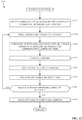
- FIG. 11 is a flowchart representative of example machine readable instructions 1100 that may be executed to implement the code translator 303 of FIGS. 3 , 4 , 6 , and/or 10 and/or the variant generator 302 of FIGS. 3 , 4 , 6 , 9 and/or 10 to invoke an application to execute workload(s) on the heterogeneous system 100 of FIG. 1 and/or the heterogeneous system 304 of FIGS. 3 , 4 , and/or 6.
- the machine readable instructions 1100 begin at block 1102, at which the code translator 303 and/or, more generally, the variant application 305 ( FIG. 5 ) obtains application code corresponding to algorithm(s) in an imperative programming language representation to be executed on a heterogeneous system.
- the code translator 303 and/or, more generally, the variant application 305 selects an annotated code block of interest to process.
- the code lifter 604 may identify an annotated code block corresponding to the annotated code 614 depicted in FIG. 7 to process.
- the code lifter 604 can identify an algorithm associated with the annotated code block to process.
- the code translator 303 and/or, more generally, the variant application 305 lowers the annotated code block to a DSL representation.
- the DSL generator 606 may convert the intermediate code 808 to the DSL code 812 of FIG. 8 , where the DSL code 812 is in a DSL representation.
- the code translator 303 and/or, more generally, the variant application 305 replaces the annotated code block with a function call to a runtime scheduler.
- the code replacer 610 FIG. 6
- the code replacer 610 may replace the annotated code 614 in the application code 700 with one or more function calls to the runtime scheduler 314 of FIG. 3 .
- the executable 308 in response to the heterogeneous system 304 executing the application code 700 compiled in the executable 308 at a site (e.g., a code site) of the replaced code (e.g., the code site of the annotated code 614), the executable 308 can execute the one or more function calls to invoke the runtime scheduler 314 to execute the algorithm corresponding to the annotated code 614 with at least one of the processing elements of the heterogeneous system 304.
- a site e.g., a code site
- the executable 308 can execute the one or more function calls to invoke the runtime scheduler 314 to execute the algorithm corresponding to the annotated code 614 with at least one of the processing elements of the heterogeneous system 304.
- the code translator 303 and/or, more generally, the variant application 305 determines whether to select additional application code corresponding to another algorithm to process. If, at block 1122, the code translator 303 and/or, more generally, the variant application 305 determines that there is additional application code and/or additional algorithm(s) of interest to process, control returns to block 1102 to obtain the additional application code and/or the additional algorithm(s). If, at block 1122, the code translator 303 and/or, more generally, the variant application 305 determines that there is no additional code and/or algorithm(s) of interest to process, then, at block 1124, the heterogeneous system 304 invokes the application to execute workload(s). An example process that may be used to implement block 1124 is described below in connection with FIG. 13 . In response to executing the application to execute workload(s) at block 1124, the machine readable instructions 1100 of FIG. 11 conclude.
- the target configuration may include information indicative of the heterogeneous system 304 including the CPU 316, the FPGA 318, the VPU 320, and/or the GPU 322 of FIG. 3 .
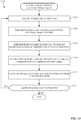
- the variant generator 302 and/or, more generally, the variant application 305 selects a hardware target of interest.
- the compilation auto-scheduler 408 ( FIG. 4 ) may select the CPU 316 to process.
- the variant generator 302 and/or, more generally, the variant application 305 configures an auto-scheduler for the hardware target based on scheduling metadata and the corresponding configuration.
- the compilation auto-scheduler 408 may be configured based on the target configuration associated with the CPU 316 and/or the scheduling metadata 1006 of FIG. 10 .
- the compilation auto-scheduler 408 can be configured based on a hardware architecture, scheduling heuristics, etc., associated with the CPU 316.
- the compilation auto-scheduler 408 can generate a schedule, one or more execution graphs, etc., that can be used by the CPU 316 to execute the workload.
- the variant generator 302 and/or, more generally, the variant application 305 compiles a variant.
- the variant compiler 410 FIG. 4
- the variant application 305 adds the variant to a variant library.
- the variant compiler 410 may add the first variant binary 502 to the variant library 310 of FIG. 3 .
- the variant generator 302 and/or, more generally, the variant application 305 adds a variant symbol to a jump table.
- the variant compiler 410 may add a variant symbol that corresponds to the first variant binary 502 to the jump table 412 of FIG. 4 of the jump table library 312 of FIGS. 3 and/or 4.
- the variant compiler 410 can add a variant symbol of "_halide_algox_cpu" to correspond to the first variant binary 502 of "ALGOX_CPU.O" as depicted in the illustrated example of FIG. 5 .
- the variant generator 302 and/or, more generally, the variant application 305 determines whether to select another hardware target of interest. For example, the compilation auto-scheduler 408 may select the FPGA 318 of FIG. 3 to process. If, at block 1214, the variant generator 302 and/or, more generally, the variant application 305 determines to select another hardware target of interest, control returns to block 1204 to select another hardware target of interest. If, at block 1214, the variant generator 302 and/or, more generally, the variant application 305 determines not to select another hardware target of interest, then, at block 1216, the variant generator 302 and/or, more generally, the variant application 305 adds the jump table to a jump table library. For example, the application compiler 414 ( FIG.
- the machine readable instructions 1116 of FIG. 11 return to block 1118 of the machine readable instructions 1100 of FIG. 11 to modify the application code to capture data semantics used for offload to the heterogeneous system.
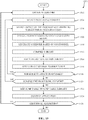
- FIG. 13 is a flowchart representative of the machine readable instructions 1124 that may be executed to implement the heterogeneous system 304 of FIGS. 3 , 4 , and/or 6 to invoke an application to execute workload(s).
- the process of FIG. 13 may be used to implement block 1124 of FIG. 11 .
- the machine readable instructions 1124 of FIG. 13 begin at block 1302, at which the heterogeneous system 304 obtains a workload to process.
- the heterogenous system 304 may obtain an algorithm from the database 208 of FIG. 2 , the one or more external devices of FIG. 2 , from the storage 306 of FIG. 3 , the storage 306 of FIG. 3 , etc., to process.
- the heterogeneous system 304 obtains performance characteristics of the heterogeneous system 304.
- the runtime scheduler 314 may obtain the metadata 512 of FIG. 5 to obtain performance characteristics associated with the CPU 316, the FPGA 318, the VPU 320, and/or the GPU 322 of FIG. 3 .
- the heterogeneous system 304 determines processing element(s) to deploy the workload based on the performance characteristics. For example, the runtime scheduler 314 may determine to use the GPU 322 to execute the workload based on the performance characteristics corresponding to the GPU 322 being indicative that the GPU 322 has available bandwidth to execute the workload. In other examples, the runtime scheduler 314 can determine, at a first time, to use the GPU 322 even though the GPU 322 is unavailable to execute the workload at the first time. For example, the runtime scheduler 314 may determine that the GPU 322 can execute the workload at a second time after the first time.
- the runtime scheduler 314 can determine that waiting until the second time to execute the workload with the GPU 322 is faster or provides a different benefit (e.g., a different quantity of power consumption, a more efficient use of the processing elements, etc.) than executing the workload with an available one of the processing elements at the first time.
- a different benefit e.g., a different quantity of power consumption, a more efficient use of the processing elements, etc.
- the heterogeneous system 304 invokes one or more variant binaries by invoking corresponding symbol(s) in a jump table.
- the runtime scheduler 314 may execute the jump function 516 of FIG. 5 to invoke the second variant binary 504 of FIG. 5 of the variant library 310.
- the runtime scheduler 314 can invoke the second variant binary 504 by calling and/or otherwise invoking the variant symbol "_halide_algox_gpu" of the variant symbols 514 of the jump table 412.
- the heterogeneous system 304 executes the workload using the one or more invoked variant binaries.
- the runtime scheduler 314 may execute the application function 518 of FIG. 5 to execute the workload using the second variant binary 504.
- the runtime scheduler 314 can load the second variant binary 504 onto the GPU 322 by accessing the respective variant symbol from the jump table library 312.
- the runtime scheduler 314 can execute the application function 518 to execute a first portion of the workload using a first one of the variant binaries 502, 504, 506, 508, 510 and a second portion of the workload using a second one of the variant binaries 502, 504, 506, 508, 510.
- the runtime scheduler 314 can load the second variant binary 504 onto the GPU 322 and load the fourth variant binary 508 onto the VPU 320 by accessing the respective variant symbol from the jump table library 312.
- the heterogeneous system 304 determines whether there is another workload to process. For example, the runtime scheduler 314 may determine that there is another workload to process or, in other examples, can determine that there are no additional workloads to process. If, at block 1312, the heterogeneous system 304 determines that there is another workload of interest to process, control returns to block 1302 to obtain another workload to process, otherwise the machine readable instructions 1124 of FIG. 13 return to the machine readable instructions 1100 of FIG. 11 to conclude.
- FIG. 14 is a flowchart representative of example machine readable instructions 1400 that may be executed to implement the variant generator 302 of FIGS. 3 , 4 , 6 , 9 , and/or 10 in a training phase.
- the machine readable instructions 1400 of FIG. 14 begin at block 1402, at which the variant manager 402 ( FIG. 4 ) obtains an algorithm.
- the external device may correspond to the administrator device 202 and the algorithm may correspond to an arbitrary algorithm in a set of arbitrary algorithms.
- the variant generator 302 selects a processing element for which to develop the algorithm.
- the variant generator 302 may be developing variants for use on a heterogeneous system including four processing elements.
- the variant manager 402 can select one of the processing elements of the heterogeneous system 304 of FIG. 3 for which to generate a variant.
- the variant generator 302 selects an aspect of the processing element to target for a success function of the selected processing element. For example, the variant manager 402 may select to target execution speed of the obtained algorithm on the FPGA 318 of FIG. 3 .
- the variant generator 302 generates a cost model for the selected processing element and the select aspect to target.
- the cost model learner 404 may utilize generic weights for a DNN to generate one or more of the cost models 904 of FIG. 9 .
- the variant generator 302 generates a schedule to implement the obtained algorithm with a success function associated with the selected aspect on the selected processing element.
- the compilation auto-scheduler 408 may generate one or more of the schedules 912 of FIG. 9 to implement the obtained algorithm with a success function associated with the selected aspect on the selected processing element.
- the variant generator 302 compiles a variant.
- the variant compiler 410 may compile the variant according to the schedule generated by the compilation auto-scheduler 408.
- the compiled variant can be loaded into an application that is compiled by the application compiler 414 ( FIG. 4 ) as an executable file (e.g., a binary).
- the variant generator 302 collects performance characteristics associated with the performance of the variant on the selected processing element.
- the feedback interface 416 may obtain the performance characteristics associated with the performance of the variant on the selected processing element.
- the variant generator 302 determines whether the execution of the variant meets a performance threshold. For example, the performance analyzer 418 ( FIG. 4 ) may determine whether the execution of the variant meets and/or otherwise satisfies a performance threshold. If the execution of the variant does not meet the performance threshold (e.g., a desired performance level) (block 1416: NO), control returns to block 1408 where the collected performance characteristics are fed back into the cost model learner 404. If the execution of the variant meets the performance threshold (block 1416: YES), then, at block 1418, the variant generator 302 (e.g., the variant manager 402) determines whether there are any other aspects are to be targeted for success functions for the selected processing element.
- the variant generator 302 e.g., the variant manager 402 determines whether there are any other aspects are to be targeted for success functions for the selected processing element.
- the variant generator 302 e.g., the variant manager 402 determines whether there are any other processing elements for which to develop one or more variants for.
- the variant generator 302 determines whether there are additional algorithms. If there are additional algorithms (block: 1422: YES), control returns to block 1402. If there are not additional algorithms (block: 1422: NO), then, at block 1424, the variant generator 302 (e.g., the variant manager 402) outputs the respective trained DNN models (e.g., the trained ML/AI model 214 of FIGS. 2 and/or 3) corresponding the respective processing elements of a heterogeneous system (e.g., weight files) for use.
- the respective trained DNN models e.g., the trained ML/AI model 214 of FIGS. 2 and/or 3
- the variant generator 302 can generate a ⁇ n ⁇ m DNN to generate and analyze the various cost models.
- the variant manager 402 may output the trained DNN models to a database, another variant generator, and/or a heterogeneous system in the field or system.
- the variant generator 302 monitors for input data.
- the feedback interface 416 may monitor a database, a heterogeneous system in the field or system, or other data sources that may provide empirically collected performance characteristics.
- the variant generator 302 determines whether input data has been received and/or otherwise obtained. If the feedback interface 416 determines that input data has not been received (block 1428: NO), control returns to block 1426. If the feedback interface 416 determines that input data has been received (block 1428: YES), then, at block 1430, the variant generator 302 (e.g., the performance analyzer 418) identifies an aspect of the heterogeneous system to target based on the success function of the system and the performance characteristics.
- the variant generator 302 determines the difference between the desired performance (e.g., a performance threshold) defined by the success function and the actual performance achieved during execution of the algorithm during the inference phase.
- the machine readable instructions 1400 of FIG. 14 return to block 1408 where the empirical data is re-inserted into the variant generator 302 (e.g., the cost model learner 404) to adjust the cost models of the individual processing element based on the contextual data associated with the system as a whole (e.g., the performance characteristics, such as, runtime load and environment characteristics).
- FIG. 15 is a flowchart representative of example machine readable instructions 1500 that may be executed to implement the variant generator 302 of FIGS. 3 , 4 , 6 , 9 and/or 10 during an inference phase.
- the machine readable instructions 1500 of FIG. 15 begin at block 1502, at which the variant generator 302 (e.g., the variant manager 402) obtains an algorithm from an external device.
- the external device may correspond to a laptop computer of a program developer, a user, an administrator, etc.
- the variant generator 302 selects a particular processing element for which to develop the algorithm.
- the variant generator 302 may be developing variants for use on a heterogeneous system including four processing elements.
- the variant manager 402 can select one of the processing elements for which to generate a variant.
- the variant generator 302 selects an aspect of the processing element to target for a success function of the selected processing element. For example, the variant manager 402 may select to target power consumption of execution of the obtained algorithm on an GPU such as the GPU 322 of FIG. 3 .
- the variant generator 302 (e.g., the cost model learner 404 of FIG. 4 ) utilizes the trained DNN models to generate at least one cost model of the algorithm for execution on at least one processing element of a heterogeneous system.
- the variant generator 302 e.g., the compilation auto-scheduler 408 of FIG. 4
- the variant generator 302 generates a schedule to implement the obtained algorithm with a success function associated with the selected aspect on the selected processing element.
- the variant generator 302 (e.g., the variant compiler 410 of FIG. 4 ) compiles a variant according to the schedule generated by the compilation auto-scheduler 408.
- the variant generator 302 adds the variant to a variant library of the application to be compiled.
- the variant generator 302 adds a variant symbol (e.g., a pointer) to the jump table 412 of FIGS. 4 and/or 5 by transmitting the variant to the jump table 412, which generates a corresponding symbol associated with the location of the variant in a variant library of the application to be compiled.
- a variant symbol e.g., a pointer
- the variant generator 302 determines whether there are any other aspects are to be targeted for success functions for the selected processing element. If there are subsequent aspects to target for success functions (block: 1518: YES), control returns to block 1506. If there are not subsequent aspects to target for success functions (block: 1518: NO), then, at block 1520, the variant generator 302 (e.g., the variant manager 402) determines whether there are any other processing elements for which to develop one or more variants for. If there are subsequent processing elements (block: 1520: YES), control returns to block 1504.
- the variant generator 302 e.g., the jump table 412 adds the current state of the jump table 412 to the jump table library of the application to be compiled.
- the variant generator 302 e.g., the application compiler 414) compiles the different variants for the respective processing elements in the variant library, the variant symbols in the jump table library, and a runtime scheduler into an executable application.
- the variant generator determines whether there are additional algorithms. If there are additional algorithms (block: 1526: YES), control returns to block 1502. If there are not additional algorithms (block: 1526: NO), the machine readable instructions 1500 of FIG. 15 conclude.
- FIG. 16 is a flowchart representative of example machine readable instructions 1600 that may be executed to implement the executable 308 of FIGS. 3 and/or 10.
- the machine readable instructions 1600 begin at block 1602, at which the runtime scheduler 314 ( FIG. 3 ) determines a system-wide success function for a heterogeneous system.
- the runtime scheduler 314 executes the algorithm on a heterogeneous system according to variants generated by a trained ML/AI model.
- the runtime scheduler 314 monitors the performance characteristics of the heterogeneous system under a load and environmental conditions.
- the runtime scheduler 314 adjusts the configuration of the heterogeneous system to meet the system-wide success function. For example, based on the performance characteristics, the runtime scheduler 314 may offload the workload executing on the CPU 316 to the GPU 322. To do so, the runtime scheduler 314 can access a variant for the specific algorithm of the workload that corresponds to the GPU 322 that is stored in the variant library 310. The runtime scheduler 314 can load the variant onto the GPU 322 by accessing the respective variant symbol from the jump table library 312.
- the runtime scheduler 314 determines whether the heterogeneous system includes persistent storage. If the runtime scheduler 314 determines that the heterogeneous system does include persistent storage (block 1610: YES), then, at block 1612, the runtime scheduler 314 periodically stores the monitored data in the executable (e.g., the fat binary 309 of FIGS. 3 and/or 5) on the persistent storage. After block 1612, control proceeds to block 1624. If the runtime scheduler 314 determines that the heterogeneous system does not include persistent storage (block 1610: NO), then, at block 1614, the runtime scheduler 314 determines whether the heterogeneous system includes flash storage.
- the runtime scheduler 314 determines whether the heterogeneous system includes flash storage.
- the runtime scheduler 314 determines that the heterogeneous system does include flash storage (block 1614: YES), then, at block 1616, the runtime scheduler 314 periodically stores the monitored data in the executable (e.g., the fat binary 309) on the flash storage. After block 1616, control proceeds to block 1624. If the runtime scheduler 314 determines that the heterogeneous system does not include flash storage (block 1614: NO), then, at block 1618, the runtime scheduler 314 determines whether the heterogeneous system includes persistent storage.
- the runtime scheduler 314 determines that the heterogeneous system does include persistent BIOS (block 1618: YES), then, at block 1620, the runtime scheduler 314 periodically stores the monitored data in the executable (e.g., the fat binary 309) on the persistent BIOS. After block 1620, control proceeds to block 1624. If the runtime scheduler 314 determines that the heterogeneous system does not include persistent storage (block 1618: NO), then, at block 1622, the runtime scheduler 314 transmits the monitored data (e.g., the empirical performance characteristics) to an external storage (e.g., the database 208 of FIG. 2 ).
- the monitored data e.g., the empirical performance characteristics
- the runtime scheduler 314 determines whether the algorithm has finished executing. If the runtime scheduler 314 determines that the algorithm has not finished executing (block 1624: NO), control returns to block 1606. If the runtime scheduler 314 determines that the algorithm has finished executing (block 1624: YES), then, at block 1626, the runtime scheduler 314 transmits the monitored data (e.g., the empirical performance characteristics) to an external device (e.g., the database 208, the variant generator 302, etc.). At block 1628, the runtime scheduler 314 determines whether there are additional algorithms. If there are additional algorithms (block: 1628: YES), control returns to block 1602. If there are no additional algorithms (block: 1628: NO), the machine readable instructions 1600 of FIG. 16 conclude.
- the monitored data e.g., the empirical performance characteristics
- FIG. 17 is a block diagram of an example processor platform 1700 structured to execute the instructions of FIGS. 11 , 12 , 14 , and/or 15 to implement the variant application 305 of FIGS. 3 , 4 , 6 , and/or 10 and/or, more generally, the third software adjustment system 301 of FIG. 3 .
- the processor platform 1700 can be, for example, a server, a personal computer, a workstation, a self-learning machine (e.g., a neural network), a mobile device (e.g., a cell phone, a smart phone, a tablet such as an iPadTM), or any other type of computing device.
- the processor platform 1700 of the illustrated example includes a processor 1712.
- the processor 1712 of the illustrated example is hardware.
- the processor 1712 can be implemented by one or more integrated circuits, logic circuits, microprocessors, GPUs, DSPs, or controllers from any desired family or manufacturer.
- the hardware processor may be a semiconductor based (e.g., silicon based) device.
- the processor 1712 implements the example variant generator 302 of FIGS.
- the processor 1712 implements the example code translator 303 of FIGS. 3 , 4 , 6 , and/or 10, and the example code interface 602, the example code lifter 604, the example DSL generator 606, the example metadata generator 608, and/or the example code replacer 610 of FIG. 6 .
- the processor 1712 implements the variant application 305 of FIGS. 3 , 4 , 6 , and/or 10.
- the processor 1712 of the illustrated example includes a local memory 1713 (e.g., a cache).
- the processor 1712 of the illustrated example is in communication with a main memory including a volatile memory 1714 and a non-volatile memory 1716 via a bus 1718.
- the volatile memory 1714 may be implemented by SDRAM, DRAM, RDRAM®, and/or any other type of random access memory device.
- the non-volatile memory 1716 may be implemented by flash memory and/or any other desired type of memory device. Access to the main memory 1714, 1716 is controlled by a memory controller.
- the processor platform 1700 of the illustrated example also includes an interface circuit 1720.
- the interface circuit 1720 may be implemented by any type of interface standard, such as an Ethernet interface, a universal serial bus (USB), a Bluetooth® interface, a near field communication (NFC) interface, and/or a PCI express interface.
- the interface circuit 1720 implements the communication bus 420 of FIG. 4 and the communication bus 618 of FIG. 6 .
- the interface circuit 1720 may implement the code interface 602 of FIG. 6 .
- one or more input devices 1722 are connected to the interface circuit 1720.
- the input device(s) 1722 permit(s) a user to enter data and/or commands into the processor 1712.
- the input device(s) can be implemented by, for example, an audio sensor, a microphone, a camera (still or video), a keyboard, a button, a mouse, a touchscreen, a track-pad, a trackball, isopoint and/or a voice recognition system.
- One or more output devices 1724 are also connected to the interface circuit 1720 of the illustrated example.
- the output devices 1724 can be implemented, for example, by display devices (e.g., a light emitting diode (LED), an organic light emitting diode (OLED), a liquid crystal display (LCD), a cathode ray tube display (CRT), an in-place switching (IPS) display, a touchscreen, etc.), a tactile output device, a printer and/or speaker.
- the interface circuit 1720 of the illustrated example thus, typically includes a graphics driver card, a graphics driver chip and/or a graphics driver processor.
- the interface circuit 1720 of the illustrated example also includes a communication device such as a transmitter, a receiver, a transceiver, a modem, a residential gateway, a wireless access point, and/or a network interface to facilitate exchange of data with external machines (e.g., computing devices of any kind) via a network 1726.
- the communication can be via, for example, an Ethernet connection, a digital subscriber line (DSL) connection, a telephone line connection, a coaxial cable system, a satellite system, a line-of-site wireless system, a cellular telephone system, etc.
- DSL digital subscriber line
- the processor platform 1700 of the illustrated example also includes one or more mass storage devices 1728 for storing software and/or data.
- mass storage devices 1728 include floppy disk drives, hard drive disks, compact disk drives, Blu-ray disk drives, redundant array of independent disks (RAID) systems, and DVD drives.
- the one or more mass storage devices 1728 implements the database 612 of FIG. 6 , which includes the annotated code 614 and the non-annotated code 616 of FIGS. 6 and/or 7.
- the machine executable instructions 1732 of FIGS. 11 , 12 , 14 , and/or 15 may be stored in the mass storage device 1728, in the volatile memory 1714, in the non-volatile memory 1716, and/or on a removable non-transitory computer readable storage medium such as a CD or DVD.
- FIG. 18 is a block diagram of an example processor platform 1800 structured to execute the instructions of FIGS. 13 and/or 16 to implement the executable 308 of FIGS. 3 and/or 10.
- the processor platform 1800 can be, for example, a server, a personal computer, a workstation, a self-learning machine (e.g., a neural network), a mobile device (e.g., a cell phone, a smart phone, a tablet such as an iPadTM), or any other type of computing device.
- the processor platform 1800 of the illustrated example includes a processor 1812.
- the processor 1812 of the illustrated example is hardware.
- the processor 1812 can be implemented by one or more integrated circuits, logic circuits, microprocessors, GPUs, DSPs, or controllers from any desired family or manufacturer.
- the hardware processor may be a semiconductor based (e.g., silicon based) device.
- the processor platform 1800 may include additional processing elements such as, the example CPU 316, the example FPGA 318, the example VPU 320, and/or the example GPU 322 of FIG. 3 .
- the processor platform 1800 of the illustrated example also includes an interface circuit 1820.
- the interface circuit 1820 may be implemented by any type of interface standard, such as an Ethernet interface, a universal serial bus (USB), a Bluetooth® interface, a near field communication (NFC) interface, and/or a PCI express interface.
- one or more input devices 1822 are connected to the interface circuit 1820.
- the input device(s) 1822 permit(s) a user to enter data and/or commands into the processor 1812.
- the input device(s) can be implemented by, for example, an audio sensor, a microphone, a camera (still or video), a keyboard, a button, a mouse, a touchscreen, a track-pad, a trackball, isopoint and/or a voice recognition system.
- One or more output devices 1824 are also connected to the interface circuit 1820 of the illustrated example.
- the output devices 1824 can be implemented, for example, by display devices (e.g., a LED, an OLED, a LCD, a CRT, an IPS display, a touchscreen, etc.), a tactile output device, a printer and/or speaker.
- the interface circuit 1820 of the illustrated example thus, typically includes a graphics driver card, a graphics driver chip and/or a graphics driver processor.
- the interface circuit 1820 of the illustrated example also includes a communication device such as a transmitter, a receiver, a transceiver, a modem, a residential gateway, a wireless access point, and/or a network interface to facilitate exchange of data with external machines (e.g., computing devices of any kind) via a network 1826.
- the communication can be via, for example, an Ethernet connection, a digital subscriber line (DSL) connection, a telephone line connection, a coaxial cable system, a satellite system, a line-of-site wireless system, a cellular telephone system, etc.
- DSL digital subscriber line
- the processor platform 1800 of the illustrated example also includes one or more mass storage devices 1828 for storing software and/or data.
- mass storage devices 1828 include floppy disk drives, HDDs, CD drives, Blu-ray disk drives, RAID systems, and DVD drives.
- the machine executable instructions 1832 of FIGS. 13 and/or 16 may be stored in the mass storage device 1828, in the volatile memory 1814, in the non-volatile memory 1816, and/or on a removable non-transitory computer readable storage medium such as a CD or DVD.
- example methods, apparatus and articles of manufacture have been disclosed that do not rely solely on theoretical understanding of processing elements, developer knowledge of algorithm transformations and other scheduling techniques, and the other pitfalls of some methods for compilation scheduling.
- the examples disclosed herein uses algorithms based on relatively simple semantics for denoting performance and/or power intensive code blocks in regular imperative programming language idioms. Such semantics can include metadata about developer intent beyond mere algorithmic definition.
- the examples disclosed herein use verified lifting techniques to convert imperative programming language code into a lifted intermediate representation or formal description of program intent.
- the examples disclosed herein convert the formal description of the program intent into a domain specific language representation that can be used to generate variants of the original algorithm to be deployed across one or more of a plurality of processing elements of a heterogeneous system.
- the examples disclosed herein collect empirical performance characteristics as well as the difference between the desired performance (e.g., a success function) and the actual performance attained. Additionally, the examples disclosed herein allow for the continuous and automated performance improvement of a heterogeneous system without developer intervention.
- the disclosed methods, apparatus and articles of manufacture improve the efficiency of using a computing device by at least reducing the power consumption of an algorithm executing on a computing device by deploying workloads based on utilization of processing elements, increasing the speed of execution of an algorithm on a computing device by deploying workloads to processing elements that may be not utilized or underutilized, and increasing the usage of the various processing elements of a computing system by distributing workloads to available processing elements.
- the disclosed methods, apparatus and articles of manufacture are accordingly directed to one or more improvements) in the functioning of a computer.
- Example methods, apparatus, systems, and articles of manufacture for intentional programming for heterogeneous systems are disclosed herein. Further examples and combinations thereof include the following:
Landscapes
- Engineering & Computer Science (AREA)
- Theoretical Computer Science (AREA)
- Software Systems (AREA)
- General Engineering & Computer Science (AREA)
- Physics & Mathematics (AREA)
- General Physics & Mathematics (AREA)
- Computing Systems (AREA)
- Artificial Intelligence (AREA)
- Mathematical Physics (AREA)
- Data Mining & Analysis (AREA)
- Evolutionary Computation (AREA)
- Biomedical Technology (AREA)
- Molecular Biology (AREA)
- General Health & Medical Sciences (AREA)
- Computational Linguistics (AREA)
- Biophysics (AREA)
- Life Sciences & Earth Sciences (AREA)
- Health & Medical Sciences (AREA)
- Computer Vision & Pattern Recognition (AREA)
- Medical Informatics (AREA)
- Stored Programmes (AREA)
- Devices For Executing Special Programs (AREA)
Priority Applications (1)
| Application Number | Priority Date | Filing Date | Title |
|---|---|---|---|
| EP24155106.8A EP4343645A3 (de) | 2019-06-27 | 2020-03-25 | Verfahren und vorrichtung zur gezielten programmierung für heterogene systeme |
Applications Claiming Priority (1)
| Application Number | Priority Date | Filing Date | Title |
|---|---|---|---|
| US16/455,388 US11269639B2 (en) | 2019-06-27 | 2019-06-27 | Methods and apparatus for intentional programming for heterogeneous systems |
Related Child Applications (2)
| Application Number | Title | Priority Date | Filing Date |
|---|---|---|---|
| EP24155106.8A Division EP4343645A3 (de) | 2019-06-27 | 2020-03-25 | Verfahren und vorrichtung zur gezielten programmierung für heterogene systeme |
| EP24155106.8A Division-Into EP4343645A3 (de) | 2019-06-27 | 2020-03-25 | Verfahren und vorrichtung zur gezielten programmierung für heterogene systeme |
Publications (2)
| Publication Number | Publication Date |
|---|---|
| EP3757761A1 true EP3757761A1 (de) | 2020-12-30 |
| EP3757761B1 EP3757761B1 (de) | 2024-03-20 |
Family
ID=68237933
Family Applications (2)
| Application Number | Title | Priority Date | Filing Date |
|---|---|---|---|
| EP20165699.8A Active EP3757761B1 (de) | 2019-06-27 | 2020-03-25 | Verfahren und vorrichtung zur absichtlichen programmierung für heterogene systeme |
| EP24155106.8A Pending EP4343645A3 (de) | 2019-06-27 | 2020-03-25 | Verfahren und vorrichtung zur gezielten programmierung für heterogene systeme |
Family Applications After (1)
| Application Number | Title | Priority Date | Filing Date |
|---|---|---|---|
| EP24155106.8A Pending EP4343645A3 (de) | 2019-06-27 | 2020-03-25 | Verfahren und vorrichtung zur gezielten programmierung für heterogene systeme |
Country Status (3)
| Country | Link |
|---|---|
| US (3) | US11269639B2 (de) |
| EP (2) | EP3757761B1 (de) |
| CN (2) | CN112148294A (de) |
Families Citing this family (28)
| Publication number | Priority date | Publication date | Assignee | Title |
|---|---|---|---|---|
| US11948073B2 (en) | 2018-04-20 | 2024-04-02 | Advanced Micro Devices, Inc. | Machine learning inference engine scalability |
| US11769041B2 (en) | 2018-10-31 | 2023-09-26 | Advanced Micro Devices, Inc. | Low latency long short-term memory inference with sequence interleaving |
| CN111353575B (zh) * | 2018-12-20 | 2025-01-10 | 超威半导体公司 | 用于卷积神经网络的图块化格式 |
| CN111723918B (zh) | 2019-03-18 | 2026-03-24 | 超威半导体公司 | 用于卷积内核的自动生成和调谐工具 |
| US11269639B2 (en) | 2019-06-27 | 2022-03-08 | Intel Corporation | Methods and apparatus for intentional programming for heterogeneous systems |
| US11036477B2 (en) | 2019-06-27 | 2021-06-15 | Intel Corporation | Methods and apparatus to improve utilization of a heterogeneous system executing software |
| US10776089B1 (en) * | 2019-10-25 | 2020-09-15 | Capital One Services, Llc | Computer architecture based on program / workload profiling |
| CN112711409B (zh) * | 2019-10-25 | 2024-06-04 | 杭州海康威视数字技术股份有限公司 | 应用程序开发、运行方法、系统及智能分析设备 |
| CN111475152B (zh) * | 2020-04-14 | 2023-03-14 | 中国人民解放军战略支援部队信息工程大学 | 一种代码处理方法及装置 |
| CN111930691B (zh) * | 2020-10-16 | 2021-01-12 | 北京美摄网络科技有限公司 | 一种模型调用方法、装置及系统 |
| US11403090B2 (en) * | 2020-12-08 | 2022-08-02 | Alibaba Group Holding Limited | Method and system for compiler optimization based on artificial intelligence |
| US20230367640A1 (en) * | 2020-12-08 | 2023-11-16 | Intel Corporation | Program execution strategies for heterogeneous computing systems |
| CN114911586A (zh) * | 2021-02-07 | 2022-08-16 | 华为技术有限公司 | 任务调度方法、装置及系统 |
| US20230205605A1 (en) * | 2021-12-23 | 2023-06-29 | Intel Corporation | Dynamic asymmetric resources |
| US20230205517A1 (en) * | 2021-12-27 | 2023-06-29 | Advanced Micro Devices, Inc. | Automated use of computational motifs via deep learning detection |
| KR102671262B1 (ko) * | 2021-12-30 | 2024-06-03 | 성균관대학교산학협력단 | 이종 컴퓨팅 클라우드의 컴퓨팅 유닛 동적 재조립 방법 및 장치 |
| US12535996B2 (en) * | 2022-01-28 | 2026-01-27 | Mikroelektronika D.O.O. | Natural language macro expansion for programming languages |
| US12182556B2 (en) * | 2022-03-15 | 2024-12-31 | Tata Consultancy Services Limited | Method and system for performing program transformations for precise analysis of enterprise applications |
| US11900087B1 (en) * | 2022-03-23 | 2024-02-13 | Amazon Technologies, Inc. | Application binary replatforming as a service |
| US12147855B2 (en) | 2022-03-31 | 2024-11-19 | Mellanox Technologies, Ltd. | Processor supporting vectored system calls |
| CN116700684B (zh) * | 2022-09-30 | 2024-04-12 | 荣耀终端有限公司 | 一种代码生成方法和终端 |
| EP4394601A1 (de) * | 2022-12-29 | 2024-07-03 | Samsung Electronics Co., Ltd. | Systeme, verfahren und vorrichtung für zwischendarstellungen von arbeitsflüssen für rechenvorrichtungen |
| CN115794868A (zh) * | 2022-12-30 | 2023-03-14 | 天翼云科技有限公司 | 一种基于递归的计算字段生成方法 |
| CN116185373B (zh) * | 2023-04-26 | 2023-09-01 | 上海金仕达软件科技股份有限公司 | 基于静态代码分析的微服务基础设施生成方法 |
| US12474903B1 (en) * | 2023-06-08 | 2025-11-18 | The Math Works, Inc. | Systems and methods for automatically generating computer programming code and schedules and comparing their performance |
| US20250004731A1 (en) * | 2023-06-27 | 2025-01-02 | Advanced Micro Devices, Inc. | Cross-Component Optimizing Compiler Systems |
| CN120743260A (zh) * | 2025-06-25 | 2025-10-03 | 苏州密位科技有限公司 | 基于低代码平台的异构计算任务构建方法及系统 |
| JP7829785B1 (ja) * | 2025-08-26 | 2026-03-13 | 株式会社大和総研 | コード変換システムおよびプログラム |
Citations (1)
| Publication number | Priority date | Publication date | Assignee | Title |
|---|---|---|---|---|
| US20090158248A1 (en) * | 2007-12-17 | 2009-06-18 | Linderman Michael D | Compiler and Runtime for Heterogeneous Multiprocessor Systems |
Family Cites Families (22)
| Publication number | Priority date | Publication date | Assignee | Title |
|---|---|---|---|---|
| US20100153934A1 (en) | 2008-12-12 | 2010-06-17 | Peter Lachner | Prefetch for systems with heterogeneous architectures |
| US20110289519A1 (en) * | 2010-05-21 | 2011-11-24 | Frost Gary R | Distributing workloads in a computing platform |
| US8959469B2 (en) | 2012-02-09 | 2015-02-17 | Altera Corporation | Configuring a programmable device using high-level language |
| US20170123775A1 (en) * | 2014-03-26 | 2017-05-04 | Empire Technology Development Llc | Compilation of application into multiple instruction sets for a heterogeneous processor |
| US9483282B1 (en) | 2014-05-30 | 2016-11-01 | Altera Corporation | Methods and systems for run-time hardware configuration change management |
| US20160210174A1 (en) * | 2015-01-15 | 2016-07-21 | Microsoft Corporation | Hybrid Scheduler and Power Manager |
| US10152310B2 (en) | 2015-05-27 | 2018-12-11 | Nvidia Corporation | Fusing a sequence of operations through subdividing |
| US9800466B1 (en) | 2015-06-12 | 2017-10-24 | Amazon Technologies, Inc. | Tunable parameter settings for a distributed application |
| US10007520B1 (en) | 2016-02-25 | 2018-06-26 | Jpmorgan Chase Bank, N.A. | Systems and methods for using alternate computer instruction sets |
| US20180082212A1 (en) | 2016-09-20 | 2018-03-22 | Intel Corporation | Optimizing machine learning running time |
| US10289394B2 (en) * | 2016-10-11 | 2019-05-14 | Oracle International Corporation | Selective generation of multiple versions of machine code for source code functions for execution on different processor versions and/or architectures |
| US10713213B2 (en) | 2016-12-21 | 2020-07-14 | Intel Corporation | Systems and methods for multi-architecture computing |
| US10187252B2 (en) | 2016-12-27 | 2019-01-22 | Cisco Technology, Inc. | Configuring heterogeneous computing environments using machine learning |
| US10445118B2 (en) | 2017-09-22 | 2019-10-15 | Intel Corporation | Methods and apparatus to facilitate field-programmable gate array support during runtime execution of computer readable instructions |
| US10831451B2 (en) * | 2017-12-01 | 2020-11-10 | Microsoft Technology Licensing, Llc | Synthesized programming-by-example programs |
| US10666265B2 (en) * | 2018-09-28 | 2020-05-26 | Intel Corporation | Interface for parallel configuration of programmable devices |
| US20200334084A1 (en) * | 2019-04-16 | 2020-10-22 | Kazuhm, Inc. | Distributed in-platform data storage utilizing graphics processing unit (gpu) memory |
| US11449347B1 (en) * | 2019-05-23 | 2022-09-20 | Xilinx, Inc. | Time-multiplexed implementation of hardware accelerated functions in a programmable integrated circuit |
| US20190317880A1 (en) | 2019-06-27 | 2019-10-17 | Intel Corporation | Methods and apparatus to improve runtime performance of software executing on a heterogeneous system |
| US10908884B2 (en) | 2019-06-27 | 2021-02-02 | Intel Corporation | Methods and apparatus for runtime multi-scheduling of software executing on a heterogeneous system |
| US11036477B2 (en) | 2019-06-27 | 2021-06-15 | Intel Corporation | Methods and apparatus to improve utilization of a heterogeneous system executing software |
| US11269639B2 (en) | 2019-06-27 | 2022-03-08 | Intel Corporation | Methods and apparatus for intentional programming for heterogeneous systems |
-
2019
- 2019-06-27 US US16/455,388 patent/US11269639B2/en active Active
-
2020
- 2020-03-25 EP EP20165699.8A patent/EP3757761B1/de active Active
- 2020-03-25 EP EP24155106.8A patent/EP4343645A3/de active Pending
- 2020-03-26 CN CN202010223629.8A patent/CN112148294A/zh active Pending
- 2020-03-26 CN CN202510356087.4A patent/CN120295633A/zh active Pending
-
2022
- 2022-02-15 US US17/672,142 patent/US11941400B2/en active Active
-
2024
- 2024-02-06 US US18/434,426 patent/US12393423B2/en active Active
Patent Citations (1)
| Publication number | Priority date | Publication date | Assignee | Title |
|---|---|---|---|---|
| US20090158248A1 (en) * | 2007-12-17 | 2009-06-18 | Linderman Michael D | Compiler and Runtime for Heterogeneous Multiprocessor Systems |
Non-Patent Citations (4)
| Title |
|---|
| BALAPRAKASH PRASANNA ET AL: "Autotuning in High-Performance Computing Applications", PROCEEDINGS OF THE IEEE, IEEE. NEW YORK, US, vol. 106, no. 11, 1 November 2018 (2018-11-01), pages 2068 - 2083, XP011703347, ISSN: 0018-9219, [retrieved on 20181025], DOI: 10.1109/JPROC.2018.2841200 * |
| BARATI SAEID ET AL: "Proteus: Language and Runtime Support for Self-Adaptive Software Development", IEEE SOFTWARE, INSTITUTE OF ELECTRICAL AND ELECTRONICS ENGINEERS, US, vol. 36, no. 2, 1 March 2019 (2019-03-01), pages 73 - 82, XP011711520, ISSN: 0740-7459, [retrieved on 20190221], DOI: 10.1109/MS.2018.2884864 * |
| MEJBAH ALAM ET AL: "A Zero-Positive Learning Approach for Diagnosing Software Performance Regressions", 31 May 2019 (2019-05-31), XP055749022, Retrieved from the Internet <URL:https://arxiv.org/pdf/1709.07536v4.pdf> [retrieved on 20201110] * |
| SHOAIB KAMIL ET AL: "Verified lifting of stencil computations", PROGRAMMING LANGUAGE DESIGN AND IMPLEMENTATION, ACM, 2 PENN PLAZA, SUITE 701 NEW YORK NY 10121-0701 USA, 2 June 2016 (2016-06-02), pages 711 - 726, XP058259814, ISBN: 978-1-4503-4261-2, DOI: 10.1145/2908080.2908117 * |
Also Published As
| Publication number | Publication date |
|---|---|
| EP4343645A3 (de) | 2024-05-01 |
| US11269639B2 (en) | 2022-03-08 |
| US20190324755A1 (en) | 2019-10-24 |
| CN120295633A (zh) | 2025-07-11 |
| CN112148294A (zh) | 2020-12-29 |
| US20220171626A1 (en) | 2022-06-02 |
| EP3757761B1 (de) | 2024-03-20 |
| US11941400B2 (en) | 2024-03-26 |
| US12393423B2 (en) | 2025-08-19 |
| EP4343645A2 (de) | 2024-03-27 |
| US20240329997A1 (en) | 2024-10-03 |
Similar Documents
| Publication | Publication Date | Title |
|---|---|---|
| US12393423B2 (en) | Methods and apparatus for intentional programming for heterogeneous systems | |
| US10908884B2 (en) | Methods and apparatus for runtime multi-scheduling of software executing on a heterogeneous system | |
| US20190317880A1 (en) | Methods and apparatus to improve runtime performance of software executing on a heterogeneous system | |
| US11036477B2 (en) | Methods and apparatus to improve utilization of a heterogeneous system executing software | |
| US20230111365A1 (en) | Methods, systems, articles of manufacture and apparatus to map workloads | |
| US20170109210A1 (en) | Program Execution On Heterogeneous Platform | |
| CN116126333A (zh) | 自动化编译的系统和方法 | |
| US20130283250A1 (en) | Thread Specific Compiler Generated Customization of Runtime Support for Application Programming Interfaces | |
| Sharif et al. | ApproxHPVM: a portable compiler IR for accuracy-aware optimizations | |
| US20250321862A1 (en) | Systems, apparatus, and methods to debug accelerator hardware | |
| US11340874B2 (en) | Methods and apparatus to recommend instruction adaptations to improve compute performance | |
| US11733981B2 (en) | Methods, systems, articles of manufacture and apparatus to automatically optimize software programs | |
| CN116339704A (zh) | 用于机器学习引导的编译器优化的方法和装置 | |
| US20220222177A1 (en) | Systems, apparatus, articles of manufacture, and methods for improved data transfer for heterogeneous programs | |
| Moren et al. | Automatic mapping for OpenCL-programs on CPU/GPU heterogeneous platforms | |
| TW202445344A (zh) | 可組合核心 | |
| WO2024039923A1 (en) | Method of compile-time optimization for nested parallel for-loops for deep learning neural network computation | |
| CN116382884A (zh) | 生成要被卸载到加速器电路的命令列表的方法和装置 | |
| US20220116284A1 (en) | Methods and apparatus for dynamic xpu hardware-aware deep learning model management | |
| Oh et al. | Efficient execution of stream graphs on coarse-grained reconfigurable architectures | |
| Maier et al. | Approximating memory-bound applications on mobile GPUs | |
| Chougule et al. | Software frameworks for TinyML | |
| US20240192934A1 (en) | Framework for development and deployment of portable software over heterogenous compute systems | |
| CN117331541B (zh) | 面向动态图框架和异构芯片的编译与运行方法和装置 | |
| Pfaffe | Autotuning for Automatic Parallelization on Heterogeneous Systems |
Legal Events
| Date | Code | Title | Description |
|---|---|---|---|
| PUAI | Public reference made under article 153(3) epc to a published international application that has entered the european phase |
Free format text: ORIGINAL CODE: 0009012 |
|
| STAA | Information on the status of an ep patent application or granted ep patent |
Free format text: STATUS: THE APPLICATION HAS BEEN PUBLISHED |
|
| AK | Designated contracting states |
Kind code of ref document: A1 Designated state(s): AL AT BE BG CH CY CZ DE DK EE ES FI FR GB GR HR HU IE IS IT LI LT LU LV MC MK MT NL NO PL PT RO RS SE SI SK SM TR |
|
| AX | Request for extension of the european patent |
Extension state: BA ME |
|
| STAA | Information on the status of an ep patent application or granted ep patent |
Free format text: STATUS: REQUEST FOR EXAMINATION WAS MADE |
|
| 17P | Request for examination filed |
Effective date: 20210604 |
|
| RBV | Designated contracting states (corrected) |
Designated state(s): AL AT BE BG CH CY CZ DE DK EE ES FI FR GB GR HR HU IE IS IT LI LT LU LV MC MK MT NL NO PL PT RO RS SE SI SK SM TR |
|
| STAA | Information on the status of an ep patent application or granted ep patent |
Free format text: STATUS: EXAMINATION IS IN PROGRESS |
|
| 17Q | First examination report despatched |
Effective date: 20220705 |
|
| GRAP | Despatch of communication of intention to grant a patent |
Free format text: ORIGINAL CODE: EPIDOSNIGR1 |
|
| STAA | Information on the status of an ep patent application or granted ep patent |
Free format text: STATUS: GRANT OF PATENT IS INTENDED |
|
| RIC1 | Information provided on ipc code assigned before grant |
Ipc: G06N 20/00 20190101ALI20230927BHEP Ipc: G06N 5/046 20230101ALI20230927BHEP Ipc: G06F 8/41 20180101AFI20230927BHEP |
|
| INTG | Intention to grant announced |
Effective date: 20231020 |
|
| GRAS | Grant fee paid |
Free format text: ORIGINAL CODE: EPIDOSNIGR3 |
|
| GRAA | (expected) grant |
Free format text: ORIGINAL CODE: 0009210 |
|
| STAA | Information on the status of an ep patent application or granted ep patent |
Free format text: STATUS: THE PATENT HAS BEEN GRANTED |
|
| AK | Designated contracting states |
Kind code of ref document: B1 Designated state(s): AL AT BE BG CH CY CZ DE DK EE ES FI FR GB GR HR HU IE IS IT LI LT LU LV MC MK MT NL NO PL PT RO RS SE SI SK SM TR |
|
| REG | Reference to a national code |
Ref country code: GB Ref legal event code: FG4D |
|
| REG | Reference to a national code |
Ref country code: CH Ref legal event code: EP |
|
| P01 | Opt-out of the competence of the unified patent court (upc) registered |
Effective date: 20240227 |
|
| REG | Reference to a national code |
Ref country code: IE Ref legal event code: FG4D |
|
| REG | Reference to a national code |
Ref country code: DE Ref legal event code: R096 Ref document number: 602020027388 Country of ref document: DE |
|
| REG | Reference to a national code |
Ref country code: NL Ref legal event code: FP |
|
| PG25 | Lapsed in a contracting state [announced via postgrant information from national office to epo] |
Ref country code: LT Free format text: LAPSE BECAUSE OF FAILURE TO SUBMIT A TRANSLATION OF THE DESCRIPTION OR TO PAY THE FEE WITHIN THE PRESCRIBED TIME-LIMIT Effective date: 20240320 |
|
| REG | Reference to a national code |
Ref country code: LT Ref legal event code: MG9D |
|
| PG25 | Lapsed in a contracting state [announced via postgrant information from national office to epo] |
Ref country code: GR Free format text: LAPSE BECAUSE OF FAILURE TO SUBMIT A TRANSLATION OF THE DESCRIPTION OR TO PAY THE FEE WITHIN THE PRESCRIBED TIME-LIMIT Effective date: 20240621 |
|
| PG25 | Lapsed in a contracting state [announced via postgrant information from national office to epo] |
Ref country code: HR Free format text: LAPSE BECAUSE OF FAILURE TO SUBMIT A TRANSLATION OF THE DESCRIPTION OR TO PAY THE FEE WITHIN THE PRESCRIBED TIME-LIMIT Effective date: 20240320 Ref country code: RS Free format text: LAPSE BECAUSE OF FAILURE TO SUBMIT A TRANSLATION OF THE DESCRIPTION OR TO PAY THE FEE WITHIN THE PRESCRIBED TIME-LIMIT Effective date: 20240620 |
|
| PG25 | Lapsed in a contracting state [announced via postgrant information from national office to epo] |
Ref country code: RS Free format text: LAPSE BECAUSE OF FAILURE TO SUBMIT A TRANSLATION OF THE DESCRIPTION OR TO PAY THE FEE WITHIN THE PRESCRIBED TIME-LIMIT Effective date: 20240620 Ref country code: NO Free format text: LAPSE BECAUSE OF FAILURE TO SUBMIT A TRANSLATION OF THE DESCRIPTION OR TO PAY THE FEE WITHIN THE PRESCRIBED TIME-LIMIT Effective date: 20240620 Ref country code: LT Free format text: LAPSE BECAUSE OF FAILURE TO SUBMIT A TRANSLATION OF THE DESCRIPTION OR TO PAY THE FEE WITHIN THE PRESCRIBED TIME-LIMIT Effective date: 20240320 Ref country code: HR Free format text: LAPSE BECAUSE OF FAILURE TO SUBMIT A TRANSLATION OF THE DESCRIPTION OR TO PAY THE FEE WITHIN THE PRESCRIBED TIME-LIMIT Effective date: 20240320 Ref country code: GR Free format text: LAPSE BECAUSE OF FAILURE TO SUBMIT A TRANSLATION OF THE DESCRIPTION OR TO PAY THE FEE WITHIN THE PRESCRIBED TIME-LIMIT Effective date: 20240621 Ref country code: FI Free format text: LAPSE BECAUSE OF FAILURE TO SUBMIT A TRANSLATION OF THE DESCRIPTION OR TO PAY THE FEE WITHIN THE PRESCRIBED TIME-LIMIT Effective date: 20240320 Ref country code: BG Free format text: LAPSE BECAUSE OF FAILURE TO SUBMIT A TRANSLATION OF THE DESCRIPTION OR TO PAY THE FEE WITHIN THE PRESCRIBED TIME-LIMIT Effective date: 20240320 |
|
| REG | Reference to a national code |
Ref country code: AT Ref legal event code: MK05 Ref document number: 1668438 Country of ref document: AT Kind code of ref document: T Effective date: 20240320 |
|
| PG25 | Lapsed in a contracting state [announced via postgrant information from national office to epo] |
Ref country code: SE Free format text: LAPSE BECAUSE OF FAILURE TO SUBMIT A TRANSLATION OF THE DESCRIPTION OR TO PAY THE FEE WITHIN THE PRESCRIBED TIME-LIMIT Effective date: 20240320 Ref country code: LV Free format text: LAPSE BECAUSE OF FAILURE TO SUBMIT A TRANSLATION OF THE DESCRIPTION OR TO PAY THE FEE WITHIN THE PRESCRIBED TIME-LIMIT Effective date: 20240320 |
|
| PG25 | Lapsed in a contracting state [announced via postgrant information from national office to epo] |
Ref country code: IS Free format text: LAPSE BECAUSE OF FAILURE TO SUBMIT A TRANSLATION OF THE DESCRIPTION OR TO PAY THE FEE WITHIN THE PRESCRIBED TIME-LIMIT Effective date: 20240720 |
|
| PG25 | Lapsed in a contracting state [announced via postgrant information from national office to epo] |
Ref country code: SM Free format text: LAPSE BECAUSE OF FAILURE TO SUBMIT A TRANSLATION OF THE DESCRIPTION OR TO PAY THE FEE WITHIN THE PRESCRIBED TIME-LIMIT Effective date: 20240320 Ref country code: PT Free format text: LAPSE BECAUSE OF FAILURE TO SUBMIT A TRANSLATION OF THE DESCRIPTION OR TO PAY THE FEE WITHIN THE PRESCRIBED TIME-LIMIT Effective date: 20240722 |
|
| PG25 | Lapsed in a contracting state [announced via postgrant information from national office to epo] |
Ref country code: ES Free format text: LAPSE BECAUSE OF FAILURE TO SUBMIT A TRANSLATION OF THE DESCRIPTION OR TO PAY THE FEE WITHIN THE PRESCRIBED TIME-LIMIT Effective date: 20240320 |
|
| PG25 | Lapsed in a contracting state [announced via postgrant information from national office to epo] |
Ref country code: EE Free format text: LAPSE BECAUSE OF FAILURE TO SUBMIT A TRANSLATION OF THE DESCRIPTION OR TO PAY THE FEE WITHIN THE PRESCRIBED TIME-LIMIT Effective date: 20240320 Ref country code: CZ Free format text: LAPSE BECAUSE OF FAILURE TO SUBMIT A TRANSLATION OF THE DESCRIPTION OR TO PAY THE FEE WITHIN THE PRESCRIBED TIME-LIMIT Effective date: 20240320 |
|
| PG25 | Lapsed in a contracting state [announced via postgrant information from national office to epo] |
Ref country code: AT Free format text: LAPSE BECAUSE OF FAILURE TO SUBMIT A TRANSLATION OF THE DESCRIPTION OR TO PAY THE FEE WITHIN THE PRESCRIBED TIME-LIMIT Effective date: 20240320 |
|
| PG25 | Lapsed in a contracting state [announced via postgrant information from national office to epo] |
Ref country code: PL Free format text: LAPSE BECAUSE OF FAILURE TO SUBMIT A TRANSLATION OF THE DESCRIPTION OR TO PAY THE FEE WITHIN THE PRESCRIBED TIME-LIMIT Effective date: 20240320 |
|
| PG25 | Lapsed in a contracting state [announced via postgrant information from national office to epo] |
Ref country code: SK Free format text: LAPSE BECAUSE OF FAILURE TO SUBMIT A TRANSLATION OF THE DESCRIPTION OR TO PAY THE FEE WITHIN THE PRESCRIBED TIME-LIMIT Effective date: 20240320 |
|
| PG25 | Lapsed in a contracting state [announced via postgrant information from national office to epo] |
Ref country code: SM Free format text: LAPSE BECAUSE OF FAILURE TO SUBMIT A TRANSLATION OF THE DESCRIPTION OR TO PAY THE FEE WITHIN THE PRESCRIBED TIME-LIMIT Effective date: 20240320 Ref country code: SK Free format text: LAPSE BECAUSE OF FAILURE TO SUBMIT A TRANSLATION OF THE DESCRIPTION OR TO PAY THE FEE WITHIN THE PRESCRIBED TIME-LIMIT Effective date: 20240320 Ref country code: RO Free format text: LAPSE BECAUSE OF FAILURE TO SUBMIT A TRANSLATION OF THE DESCRIPTION OR TO PAY THE FEE WITHIN THE PRESCRIBED TIME-LIMIT Effective date: 20240320 Ref country code: PT Free format text: LAPSE BECAUSE OF FAILURE TO SUBMIT A TRANSLATION OF THE DESCRIPTION OR TO PAY THE FEE WITHIN THE PRESCRIBED TIME-LIMIT Effective date: 20240722 Ref country code: PL Free format text: LAPSE BECAUSE OF FAILURE TO SUBMIT A TRANSLATION OF THE DESCRIPTION OR TO PAY THE FEE WITHIN THE PRESCRIBED TIME-LIMIT Effective date: 20240320 Ref country code: IS Free format text: LAPSE BECAUSE OF FAILURE TO SUBMIT A TRANSLATION OF THE DESCRIPTION OR TO PAY THE FEE WITHIN THE PRESCRIBED TIME-LIMIT Effective date: 20240720 Ref country code: ES Free format text: LAPSE BECAUSE OF FAILURE TO SUBMIT A TRANSLATION OF THE DESCRIPTION OR TO PAY THE FEE WITHIN THE PRESCRIBED TIME-LIMIT Effective date: 20240320 Ref country code: EE Free format text: LAPSE BECAUSE OF FAILURE TO SUBMIT A TRANSLATION OF THE DESCRIPTION OR TO PAY THE FEE WITHIN THE PRESCRIBED TIME-LIMIT Effective date: 20240320 Ref country code: CZ Free format text: LAPSE BECAUSE OF FAILURE TO SUBMIT A TRANSLATION OF THE DESCRIPTION OR TO PAY THE FEE WITHIN THE PRESCRIBED TIME-LIMIT Effective date: 20240320 Ref country code: AT Free format text: LAPSE BECAUSE OF FAILURE TO SUBMIT A TRANSLATION OF THE DESCRIPTION OR TO PAY THE FEE WITHIN THE PRESCRIBED TIME-LIMIT Effective date: 20240320 |
|
| REG | Reference to a national code |
Ref country code: CH Ref legal event code: PL |
|
| PG25 | Lapsed in a contracting state [announced via postgrant information from national office to epo] |
Ref country code: LU Free format text: LAPSE BECAUSE OF NON-PAYMENT OF DUE FEES Effective date: 20240325 |
|
| PG25 | Lapsed in a contracting state [announced via postgrant information from national office to epo] |
Ref country code: LU Free format text: LAPSE BECAUSE OF NON-PAYMENT OF DUE FEES Effective date: 20240325 |
|
| PG25 | Lapsed in a contracting state [announced via postgrant information from national office to epo] |
Ref country code: IT Free format text: LAPSE BECAUSE OF FAILURE TO SUBMIT A TRANSLATION OF THE DESCRIPTION OR TO PAY THE FEE WITHIN THE PRESCRIBED TIME-LIMIT Effective date: 20240320 |
|
| REG | Reference to a national code |
Ref country code: BE Ref legal event code: MM Effective date: 20240331 |
|
| REG | Reference to a national code |
Ref country code: DE Ref legal event code: R097 Ref document number: 602020027388 Country of ref document: DE |
|
| PG25 | Lapsed in a contracting state [announced via postgrant information from national office to epo] |
Ref country code: IT Free format text: LAPSE BECAUSE OF FAILURE TO SUBMIT A TRANSLATION OF THE DESCRIPTION OR TO PAY THE FEE WITHIN THE PRESCRIBED TIME-LIMIT Effective date: 20240320 |
|
| PG25 | Lapsed in a contracting state [announced via postgrant information from national office to epo] |
Ref country code: MC Free format text: LAPSE BECAUSE OF FAILURE TO SUBMIT A TRANSLATION OF THE DESCRIPTION OR TO PAY THE FEE WITHIN THE PRESCRIBED TIME-LIMIT Effective date: 20240320 |
|
| PG25 | Lapsed in a contracting state [announced via postgrant information from national office to epo] |
Ref country code: DK Free format text: LAPSE BECAUSE OF FAILURE TO SUBMIT A TRANSLATION OF THE DESCRIPTION OR TO PAY THE FEE WITHIN THE PRESCRIBED TIME-LIMIT Effective date: 20240320 |
|
| PG25 | Lapsed in a contracting state [announced via postgrant information from national office to epo] |
Ref country code: BE Free format text: LAPSE BECAUSE OF NON-PAYMENT OF DUE FEES Effective date: 20240331 |
|
| PG25 | Lapsed in a contracting state [announced via postgrant information from national office to epo] |
Ref country code: IE Free format text: LAPSE BECAUSE OF NON-PAYMENT OF DUE FEES Effective date: 20240325 |
|
| PLBE | No opposition filed within time limit |
Free format text: ORIGINAL CODE: 0009261 |
|
| STAA | Information on the status of an ep patent application or granted ep patent |
Free format text: STATUS: NO OPPOSITION FILED WITHIN TIME LIMIT |
|
| PG25 | Lapsed in a contracting state [announced via postgrant information from national office to epo] |
Ref country code: MC Free format text: LAPSE BECAUSE OF FAILURE TO SUBMIT A TRANSLATION OF THE DESCRIPTION OR TO PAY THE FEE WITHIN THE PRESCRIBED TIME-LIMIT Effective date: 20240320 Ref country code: IE Free format text: LAPSE BECAUSE OF NON-PAYMENT OF DUE FEES Effective date: 20240325 Ref country code: DK Free format text: LAPSE BECAUSE OF FAILURE TO SUBMIT A TRANSLATION OF THE DESCRIPTION OR TO PAY THE FEE WITHIN THE PRESCRIBED TIME-LIMIT Effective date: 20240320 Ref country code: BE Free format text: LAPSE BECAUSE OF NON-PAYMENT OF DUE FEES Effective date: 20240331 Ref country code: CH Free format text: LAPSE BECAUSE OF NON-PAYMENT OF DUE FEES Effective date: 20240331 |
|
| 26N | No opposition filed |
Effective date: 20241223 |
|
| PG25 | Lapsed in a contracting state [announced via postgrant information from national office to epo] |
Ref country code: SI Free format text: LAPSE BECAUSE OF FAILURE TO SUBMIT A TRANSLATION OF THE DESCRIPTION OR TO PAY THE FEE WITHIN THE PRESCRIBED TIME-LIMIT Effective date: 20240320 |
|
| PG25 | Lapsed in a contracting state [announced via postgrant information from national office to epo] |
Ref country code: CY Free format text: LAPSE BECAUSE OF FAILURE TO SUBMIT A TRANSLATION OF THE DESCRIPTION OR TO PAY THE FEE WITHIN THE PRESCRIBED TIME-LIMIT; INVALID AB INITIO Effective date: 20200325 |
|
| PG25 | Lapsed in a contracting state [announced via postgrant information from national office to epo] |
Ref country code: HU Free format text: LAPSE BECAUSE OF FAILURE TO SUBMIT A TRANSLATION OF THE DESCRIPTION OR TO PAY THE FEE WITHIN THE PRESCRIBED TIME-LIMIT; INVALID AB INITIO Effective date: 20200325 |
|
| PG25 | Lapsed in a contracting state [announced via postgrant information from national office to epo] |
Ref country code: TR Free format text: LAPSE BECAUSE OF FAILURE TO SUBMIT A TRANSLATION OF THE DESCRIPTION OR TO PAY THE FEE WITHIN THE PRESCRIBED TIME-LIMIT Effective date: 20240320 |
|
| PGFP | Annual fee paid to national office [announced via postgrant information from national office to epo] |
Ref country code: NL Payment date: 20260227 Year of fee payment: 7 |
|
| PGFP | Annual fee paid to national office [announced via postgrant information from national office to epo] |
Ref country code: GB Payment date: 20260219 Year of fee payment: 7 |
|
| PGFP | Annual fee paid to national office [announced via postgrant information from national office to epo] |
Ref country code: DE Payment date: 20260102 Year of fee payment: 7 |
|
| PGFP | Annual fee paid to national office [announced via postgrant information from national office to epo] |
Ref country code: FR Payment date: 20260223 Year of fee payment: 7 |