EP3757777A1 - Webseitenladeverfahren, server und webseitenladesystem - Google Patents
Webseitenladeverfahren, server und webseitenladesystem Download PDFInfo
- Publication number
- EP3757777A1 EP3757777A1 EP18916420.5A EP18916420A EP3757777A1 EP 3757777 A1 EP3757777 A1 EP 3757777A1 EP 18916420 A EP18916420 A EP 18916420A EP 3757777 A1 EP3757777 A1 EP 3757777A1
- Authority
- EP
- European Patent Office
- Prior art keywords
- loading
- accelerated
- resource
- rewriting
- request
- Prior art date
- Legal status (The legal status is an assumption and is not a legal conclusion. Google has not performed a legal analysis and makes no representation as to the accuracy of the status listed.)
- Ceased
Links
Images

Classifications
-
- G—PHYSICS
- G06—COMPUTING OR CALCULATING; COUNTING
- G06F—ELECTRIC DIGITAL DATA PROCESSING
- G06F16/00—Information retrieval; Database structures therefor; File system structures therefor
- G06F16/90—Details of database functions independent of the retrieved data types
- G06F16/95—Retrieval from the web
- G06F16/957—Browsing optimisation, e.g. caching or content distillation
- G06F16/9577—Optimising the visualization of content, e.g. distillation of HTML documents
-
- G—PHYSICS
- G06—COMPUTING OR CALCULATING; COUNTING
- G06F—ELECTRIC DIGITAL DATA PROCESSING
- G06F16/00—Information retrieval; Database structures therefor; File system structures therefor
- G06F16/90—Details of database functions independent of the retrieved data types
- G06F16/903—Querying
- G06F16/9035—Filtering based on additional data, e.g. user or group profiles
-
- G—PHYSICS
- G06—COMPUTING OR CALCULATING; COUNTING
- G06F—ELECTRIC DIGITAL DATA PROCESSING
- G06F16/00—Information retrieval; Database structures therefor; File system structures therefor
- G06F16/90—Details of database functions independent of the retrieved data types
- G06F16/95—Retrieval from the web
- G06F16/957—Browsing optimisation, e.g. caching or content distillation
- G06F16/9574—Browsing optimisation, e.g. caching or content distillation of access to content, e.g. by caching
-
- G—PHYSICS
- G06—COMPUTING OR CALCULATING; COUNTING
- G06F—ELECTRIC DIGITAL DATA PROCESSING
- G06F40/00—Handling natural language data
- G06F40/10—Text processing
- G06F40/12—Use of codes for handling textual entities
- G06F40/151—Transformation
- G06F40/154—Tree transformation for tree-structured or markup documents, e.g. XSLT, XSL-FO or stylesheets
-
- G—PHYSICS
- G06—COMPUTING OR CALCULATING; COUNTING
- G06F—ELECTRIC DIGITAL DATA PROCESSING
- G06F9/00—Arrangements for program control, e.g. control units
- G06F9/06—Arrangements for program control, e.g. control units using stored programs, i.e. using an internal store of processing equipment to receive or retain programs
- G06F9/44—Arrangements for executing specific programs
- G06F9/445—Program loading or initiating
- G06F9/44521—Dynamic linking or loading; Link editing at or after load time, e.g. Java class loading
- G06F9/44526—Plug-ins; Add-ons
-
- G—PHYSICS
- G06—COMPUTING OR CALCULATING; COUNTING
- G06F—ELECTRIC DIGITAL DATA PROCESSING
- G06F9/00—Arrangements for program control, e.g. control units
- G06F9/06—Arrangements for program control, e.g. control units using stored programs, i.e. using an internal store of processing equipment to receive or retain programs
- G06F9/44—Arrangements for executing specific programs
- G06F9/455—Emulation; Interpretation; Software simulation, e.g. virtualisation or emulation of application or operating system execution engines
- G06F9/45504—Abstract machines for programme code execution, e.g. Java virtual machine [JVM], interpreters, emulators
- G06F9/45508—Runtime interpretation or emulation, e g. emulator loops, bytecode interpretation
- G06F9/45512—Command shells
Definitions
- the present disclosure relates to the Internet, in particular, to a web page loading acceleration technology.
- a script is an extension of a batch file, and is a program saved in plain text.
- a computer script program is a combination of a series of determined operations that control a computer to perform arithmetic operations, where certain logical branches may be performed.
- One page contains multiple elements such as HTML, JavaScript (JS), Cascading Style Sheet (CSS), a picture and so on.
- JS JavaScript
- CSS Cascading Style Sheet
- a main method in the existing technologies is to modify a website structure and adjust the loading sequence, so as to improve the speed at which the page is presented to a user.
- modification of the website structure can only be performed by an obligee of the web page which is accessed, while a visitor accessing the web page has no right to modify it.
- a third-party JS file on the web page is uncontrollable and can not be modified.
- Embodiments of the present disclosure aim to provide a method and a system for loading a web page, and a server, so that it is unnecessary to modify codes of an origin site during a process of optimizing the loading of the web page, thereby reducing time of technical development by an owner of the website while optimizing user experience and facilitating popularization.
- embodiments of the present disclosure provide a method for loading a web page, applied to an edge server of a content delivery network, including: obtaining a loading list corresponding to a page according to a page loading request when the page loading request is received from a user terminal, and the loading list includes several add-ins to be loaded; identifying a resource to be accelerated from the add-ins to be loaded; rewriting the resource to be accelerated in the loading list according to a predetermined optimization scheme; and feeding back the loading list that is rewritten to the user terminal for the user terminal to request each add-in on the loading list to perform a page loading.
- Embodiments of the present disclosure further provide a server, including: at least one processor; and a memory communicably connected to the at least one processor; where the memory stores instructions executable by the at least one processor, and the instructions are executed by the at least one processor to cause the at least one processor to perform the method for loading the web page as described above.
- Embodiments of the present disclosure further provide a system for loading a web page, including: a user terminal and the server as described above.
- Embodiments of the present disclosure further provide a computer readable storage medium, storing a computer program which, when executed by a processor, performs the method for loading the web page as described above.
- the edge server of the content delivery network optimizes a loading mode of the add-ins by rewriting the loading list fed back to the user terminal which then requests each add-in according to the loading list that is rewritten, so as to rapidly obtain the add-ins that may be displayed, such as pictures, words and the like, so that the page escapes from being blank and the user may see the accessed page as soon as possible, thereby improving user experience of accessing the website.
- embodiments of the present disclosure are performed by a content delivery network creatively improves a given network optimization mode in this industry, which does not require modifying a configuration of the user terminal, codes of the origin site, or a network architecture of the origin site of the page to be accessed, and has good compatibility. And time of technical development used by the owner of the website can be reduced, better network experience can be provided to a user terminal side, and popularization of embodiments of the present disclosure can be facilitated.
- the server in the embodiments of the present disclosure may be an edge server under the content delivery network (CDN) architecture, so a cloud provider may optimize a loading mode more effectively, automatically and intelligently based on a network environment such as a terminal loading condition.
- CDN content delivery network
- a predetermined optimization scheme at least includes one of: an asynchronous rewriting scheme, an acceleration rewriting scheme and a shielding rewriting scheme. Multiple optional optimization schemes are further defined, so that the resource to be accelerated is better optimized.
- the predetermined optimization scheme is determined by a preset strategy; where the preset strategy is that: a corresponding optimization scheme is the asynchronous rewriting scheme if the resource to be accelerated is a script file that meets a first preset condition; the corresponding optimization scheme is the acceleration rewriting scheme if the resource to be accelerated belongs to a third-party external link; the corresponding optimization scheme is the shielding rewriting scheme if the resource to be accelerated belongs to a preset blacklist. It is further defined that a preset strategy is provided, it is thus seen that multiple optimization schemes may be performed separately or in combination, and a more proper optimization scheme for different resources to be accelerated may be configured as required.
- the resource to be accelerated belongs to the third-party external link.
- An identification mode of a third-party external link is further defined, so that the identification of the resource to be accelerated is more accurate and a determined optimization scheme is more appropriate.
- the preset strategy is configured by the customer. It is further defined that the preset strategy is configured by the customer, which facilitates adjusting the preset strategy based on actual demands so that the strategy is more suitable for the customer' demands.
- the loading list includes a loading sequence of each add-in; and rewriting the resource to be accelerated in the loading list according to the predetermined optimization scheme, including: rewriting the loading sequence of a script file that meets a first preset condition in the loading list when the predetermined optimization scheme is the asynchronous rewriting scheme.
- This further defines it is the loading sequence of the script file that is rewritten in the asynchronous rewriting scheme, which further accelerates a user browser side's escaping from being blank.
- rewriting the loading sequence of the script file that meets the first preset condition in the loading list includes: rewriting the loading sequence of the script file that meets the first preset condition in the loading list by modifying a type tab of the script file that meets the first preset condition. It is further defined that rewriting the loading sequence by modifying the type tab of the script file, which is easy to be realized, simple and less error-prone.
- rewriting the resource to be accelerated in the loading list according to the predetermined optimization scheme includes: adding identification information to a specific position of a request address corresponding to the resource to be accelerated when the optimization scheme is the acceleration rewriting scheme; and after feeding back the loading list that is rewritten to the user terminal, further including: receiving the loading request for each add-in from the user terminal, and sending the loading request to a target site; where, a preferred network node is used to send the loading request for the resource to be accelerated that contains the identification information if the loading request that is received includes the identification information.
- rewriting the resource to be accelerated in the loading list according to the predetermined optimization scheme includes: adding a stop identifier to a specific position of a request address corresponding to the resource to be accelerated when the optimization scheme is the shielding rewriting scheme; and after feeding back the loading list that is rewritten to the user terminal, further including: receiving the loading request for each add-in from the user terminal, and sending the loading request to a target site; where, a stop-loading instruction for the resource to be accelerated that contains the stop identifier is returned if the loading request that is received includes the stop identifier.
- adding the step identifier to the add-ins in the shielding rewriting scheme so as to directly return the stop instruction when subsequently requesting loading the add-ins, skip the loading of the add-ins, and avoid an unnecessary waste of time, thereby accelerating a loading speed of a page.
- embodiments of the present disclosure further includes: locally storing the loading list when the loading list corresponding to the page is obtained according to the loading request. It is further defined that locally backing up the loading list after the loading list is requested and obtained, so that there is no need to obtain the loading list again when subsequently requesting, which accelerates a speed of requesting the list, thereby accelerating a loading process of an entire page.
- embodiments of the present disclosure further includes: determining whether to use an optimization service, and performing the step of identifying the resource to be accelerated from the add-ins to be loaded when it is determined to use the optimization service. It is further defined that there is an entry determination in the optimization process of loading the entire page, and the entry is carried out only when it is determined that the optimization is needed, so that embodiments of the present disclosure are more suitable for actual conditions.
- a first embodiment of the present disclosure relates to a method for loading a web page.
- a distributed computer system in the existing technologies is a "content delivery network" or "CDN" operated and managed by a service provider.
- the service provider generally provides the content delivery service on behalf of third parties (e.g., customers) who use the service provider's infrastructure.
- a distributed system of this type generally refers to a connection of autonomous computers linked by one or more networks, and software, systems, protocols, and technologies designed to facilitate various services, such as content delivery, web application acceleration, or other infrastructure of origin that supports outsourcing.
- a CDN service provider generally provides service delivery through a digital attribute (such as a website) which is provisioned in a customer portal and then deployed to a network.
- a digital property is generally bound to one or more edge configurations to allow the service provider to account for traffic and bill its customer.
- An overlay network such as described above may incorporate or interoperate with a Front-End Optimization (FEO) scheme.
- FEO Front-End Optimization
- the FEO is the process of accelerating web pages by modifying the HTML and resources on them. The goal is to eliminate bottlenecks and inefficiencies in front-end of a site that is using the overlay.
- a plurality of specific optimizations may be employed, and they aim to do one or more of the following: reduce the number of HTTP requests required to load the page, instead of downloading more data in one request; reduce a total size of the web page and its parts by using more efficient formats so as to improve cache-capability and remove unnecessary contents; and accelerate rendering by making the browser load the add-ins in different sequences or timing, e.g., the third-party script is prevented from delaying everything else on the page.
- the distributed computer system is configured as the CDN and is assumed to have a set of machines 1 ⁇ 2a-n distributed around the Internet.
- machines are servers located near the edge of the Internet, i.e., at or adjacent final users access networks.
- a network operations command center (NOCC) manages operations of various machines in the system.
- Third-party sites such as website, offload delivered contents (e.g., HTML, embedded page objects, streaming media, software downloads and the like) to the distributed computer system, in particular, to "edge" servers.
- content providers offload their content delivery by providing (e.g., by a DNS CNAME) alias of given content provider domains or subdomains to domains that are managed by authoritative domain name service of the service provider.
- the final users that desire the content are directed to the distributed computer system to obtain that content more reliably and more efficiently.
- the distributed computer system may also include other infrastructure, such as a distributed data collection system that collects usage amount and other data from the edge servers, aggregates that data across a region or set of regions, and passes that data to other back-end systems to facilitate monitoring, logging, alerts, billing, management and other operational and administrative functions.
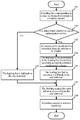
- FIG. 1 A flow of a method for loading a web page in this embodiment is shown in FIG. 1 , which is specifically as follows.
- step 101 a loading list corresponding to a page is obtained according to a loading request.
- the loading list corresponding to the page is obtained according to the loading request when a page loading request from a user terminal is received. More specifically, the page loading request may be sent when the user loads the web page through a browser, or when the user is viewing a certain page of an application (i.e., "APP").
- APP an application
- the loading list (i.e., an HTML file) includes add-ins and a loading sequence of each add-in of the page.
- the loading list may be pre-stored on a local server, and the loading list may also be mirrored to the local server even if the actual location of a server to which the web page belongs is far away, so that the pre-stored loading list may be directly fed back to the user terminal for the user' browser to perform a subsequent operation when the web page loading request is received.
- the loading list corresponding to the page to be accessed may also not be pre-stored on the local server.
- the server may request the loading list from an origin site of the web page and then feed it back to the user terminal.
- a local storage step is added to locally store the loading list described above when obtaining the loading list.
- edge server for requests from the user terminal is described in detail in the following according to an implementation in practice.
- An overlay network customer is provisioned to use the FEO service using the customer total, and CDN edge servers are provided configuration data indicating that FEO should be applied to the customer's site (or some portions thereof).
- a first user request i.e., a loading request of a page
- An edge server global host (GHost) process applies its configuration data and determines that this request should use FEO. It then looks up the normalization information for this digital property.
- the GHost process communicates with the FEO network using RESTful requests and data is exchanged to an API (e.g., a Google protocol buffer).
- an API e.g., a Google protocol buffer
- the API responds to the request for normalization by performing a database lookup for this digital property and returns the information.
- the responses to the RESTful requests are cached.
- a second user request is then received at the edge server GHost process, which then applies configuration and determines that this request should use the FEO.
- the GHost process looks up the normalization information for this customer, and this information is now present.
- step 102 it is determined whether to use an optimization service; if yes, a step 103 is performed; or if not, a step 103 is performed.
- this step may be applied to determine whether a customer purchases the optimization service. If yes, a following optimization process is performed; or if not, a following rewriting step is not performed, but the loading list is directly fed back to the user terminal.
- step 103 a resource to be accelerated is identified from the add-ins to be loaded.
- the resource to be accelerated may be a JS script, and further, may be a third-party JS script, and further, may be an external link.
- a condition for identification may be set by customers and is not limited herein.
- the user terminal determines whether the resource to be accelerated is a script through a ⁇ script> tab, for example, a JS script. In this step, it may be determined whether the resource to be accelerated is the JS script and whether it is the external link and the like according to a src tab.
- JS may affect such conditions as a document object model (DOM) and style of the page when being executed
- a user browser may stop analyzing the following HTML if the script tab of a file to be downloaded is being analyzed when analyzing and rendering the HTML. Then an external link JS file is downloaded and performed. The rest of the HTML may not be analyzed until implementation of the JS is completed, which is the so-called "JS congestion".
- DOM document object model
- step 104 the resource to be accelerated in the loading list is rewritten according to a predetermined optimization scheme.
- the predetermined optimization scheme at least includes one of: an asynchronous rewriting scheme, an acceleration rewriting scheme and a shielding rewriting scheme. More specifically, in rewriting the resource to be accelerated in the loading list according to the predetermined optimization scheme, the predetermined optimization scheme is determined by a preset strategy. Where, in the preset strategy, each resource to be accelerated may be specified to use a certain optimization scheme, or different optimization schemes may be specified to use different resources to be accelerated. Additionally, in practice, apart from the three optimization schemes described above, other optimization schemes may be added as required, and a number and content of the optimization schemes is not limited herein.
- step 105 the loading list that is rewritten is fed back to the user terminal.
- the loading list fed back to the user may allow the user terminal to request each add-in in the loading list to perform page loading.
- the loading list carries request addresses of each add-in, so that the user terminal may directly request each add-in from the origin site. More specifically, the user terminal does not need to know whether the loading list that is received is rewritten or not, but still requests the add-ins one by one according to each add-ins listed on the loading list that is received and its loading sequence. Then a step 107 is performed.
- step 106 the loading list is fed back to the user terminal.
- step 101 the loading list obtained in step 101 is fed back to the user terminal, but the loading list is not rewritten.
- feedback of the loading list may be completed when it is unnecessary to use the optimization service.
- step 107 is performed.
- step 107 the loading request for each add-in is received from the user terminal.
- the user terminal may request each add-in in the loading list one by one according to the loading sequence after receiving the loading list. Because the loading list stores request addresses of each add-in, the respective loading requests also carry request addresses.
- step 108 the loading request is sent to a target site.
- the server sends the loading request to the target site, where the target site is the origin site to which the web page to be accessed belongs. It should be noted that the server may directly forward the loading request that is received to the target site, or may send the loading request to the target site using a preferred network node. Where, an IP and a port of the origin site are determined through an IP and port information that have been monitored, and an optimal path between the user terminal and the origin site is then determined through an intelligent sideway device.
- this embodiment has the following differences and effects: the edge server of the content delivery network optimizes a loading mode of the add-ins by rewriting the loading list fed back to the user terminal which then requests each add-in according to the loading list that is rewritten, so as to rapidly obtain the add-ins that may be displayed, such as pictures, words and the like, so that the page escapes from being blank and the user may see the accessed page as soon as possible, thereby improving user experience of accessing the website.
- this embodiment of the present disclosure is performed by a content delivery network creatively improves a given network optimization mode in this industry, which does not require modifying a configuration of a user terminal, codes of the origin site, or a network architecture of the origin site of the page to be accessed, and has good compatibility. And time of technical development used by the owner of the website can be reduced, better network experience can be provided to a user terminal side, and popularization of this embodiment can be facilitated.
- the server in this embodiment of the present disclosure may be an edge server under the content delivery network (CDN) architecture, so a cloud provider may optimize a loading mode more effectively, automatically and intelligently based on a network environment such as a terminal loading condition.
- CDN content delivery network
- a second embodiment of the present disclosure relates to a method for loading a web page, which is a further development on the basis of the first embodiment.
- the second embodiment is improved in that: a preset strategy is added in the second embodiment to be used for determining an optimization scheme for each resource to be accelerated, automatic recognition of the resources to be accelerated is realized, and more suitable optimization schemes are configured for the resources to be accelerated as required.
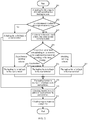
- FIG. 2 The method for loading the web page in this embodiment is shown in FIG. 2 , which is specifically as follows.
- Steps 201 and 203 are similar to steps 101 and 103 in the first embodiment respectively and thus will not be repeated herein.
- step 202 it is determined whether to use an optimization service; if yes, a step 203 is performed; or if not, a step 209 is performed.
- a determination mode in this step is similar to step 102 in the first embodiment and thus is not repeated.
- step 204 it is determined which optimization scheme the resource to be accelerated corresponds to according to the preset strategy; a step 205 is performed if it is an asynchronous rewriting scheme; a step 206 is performed if it is an acceleration rewriting scheme; and a step 207 is performed if it is a shielding rewriting scheme.
- the preset strategy in this step includes the following three aspects:
- each resource to be accelerated only corresponds to one optimization scheme. In practice, however, it may be configured that multiple optimization schemes may be combined if an acceleration resource meets more than one of the conditions described above. It is seen that the preset strategy may be voluntarily configured by the customer and thus is not limited herein.
- step 205 a loading sequence of the script file that meets the first preset condition in the loading list is rewritten.
- the loading sequence of the script file that meets the first preset condition in the loading list is rewritten by modifying a type tab of the script file that meets the first preset condition.
- the type tab may be modified by inserting a piece script, and a function of the script file may be to rewrite the type tab of the script file in the loading list.
- the script file that meets the first preset condition may be the JS script.
- the page may be required to wait for analyzation and execution of the script during execution of the script, and downloading and rendering of the page have to stop to wait for completion of execution of the script whether a current Javascript is embedded or contains an external link file. That is, the sequence of loading the JS script file may be modified if a script element is created dynamically and added to the end of an HTML file through a document object model (DOM) tree. That is, a sequence of the JS script is modified to the end in the loading sequence of the loading list.
- DOM document object model
- modifying the type tab of the script file may be realized by inserting a part of script file in practice.
- a specific script tab may be rewritten first when the script file is being executed. In this way, the user terminal may ignore this part of the script file upon execution, and then the script file that is ignored may be executed again after loading of all other add-ins is completed.
- the inventor of the present disclosure tests the effect in practice, and the result is that most websites have reduced time for loading a first page and acceleration of the first page is improved more than 50%.
- step 206 identification information is added to a specific position of a request address corresponding to the resource to be accelerated.
- the third-party external link refers to a link that is provided by other service providers (which is uncontrollable to the content producer) who decorate their service into JS SDK for the web page producer to use.
- the third-party JS is distinguished from a first-party JS in that:
- the identification information may be such information as a customer name, a customer domain name, or the like, and may further be a specific identification number and the like.
- the content of the identification information may be set according to actual demands, which is not limited herein.
- the specific position may be the end of the request address (URL) in practice.
- step 207 a stop identifier is added to a specific position of a request address corresponding to the resource to be accelerated.
- the stop identifier may be a predetermined identifier, and a position for adding the stop identifier may be the end of the request address (URL).
- a form and a specification position of the stop identifier may be set according to actual demands, which is not limited herein.
- a specific position for adding the step identifier and a specific position for adding identification information in step 206 may be either the same or different, for which no more examples will be provided herein.
- steps 205, 206 and 207 described above are particular methods for rewriting the loading list, and after execution of each of them is completed, a step 208 is performed. Because steps 208 to 210 are similar to steps 105 to 107 in the first embodiment, steps 208 to 210 are not presented herein. Besides, it should be noted that after execution of each of steps 208 and 209 is completed, a step 210 is then performed.
- step 211 the loading request is sent to a target site.
- a plurality of or a group of loading requests may be received at the same time when the loading request is received, and the loading request needs to be analyzed before being sent.
- the loading request may be sent for the resource to be accelerated that contains the identification information using a preferred network node if identification information exists. It is thus seen that, in this way, the third-party external link may be accelerated.
- a stop-loading instruction for the resource to be accelerated that contains the stop identifier is returned to the user terminal if a stop identifier exists, so as to prevent the user terminal from reloading the resource to be accelerated.
- the error "403" may also be returned. That is, the error "403" may be returned for the URL blocked by the firewall.
- each loading request may be sent to the target site (e.g., an origin site server).
- this embodiment further defines that a preset strategy is provided. It is thus seen that multiple optimization schemes may be performed separately or in combination, and a more proper optimization scheme may be configured for different resources to be accelerated as required. Besides, an automatic identification for each resource to be accelerated may be realized to save labor. Further, in this embodiment, implementations of three preferred optimization schemes are detailed from different methods for rewriting the loading list to subsequently request the add-ins, so as to make solutions of the present embodiment clear, effective, simple, easy and advantageous for popularization.
- a third embodiment of the present disclosure relates to a server, as shown in FIG. 3 , including: at least one processor; and a memory in communicative connection with the at least one processor; where the memory stores an instruction executable by the at least one processor, and the instruction is executed by the at least one processor to cause the at least one processor to perform the method for loading the web page in any one of the first embodiment to a fourth embodiment.
- the memory and the processor are connected using a bus which may include interconnected buses and bridges of a random number.
- the bus connects various circuits of the one or more processors and the memory.
- the bus may further connect other circuits such as a peripheral device, a regulator, a power management circuit, and the like, which are commonly known in the art.
- a bus interface provides an interface between the bus and a transceiver which may be either an element or a plurality of elements, for example, a plurality of receivers and transmitters, providing units to communicate with various other devices on a transmission medium.
- Data processed by the processor may be transmitted on a wireless medium through an antenna. Further, the antenna may further receive data and transmit the data to the processor.
- the processor manages the bus and general processing, and may provide various functions such as timing, a peripheral interface, voltage adjustment, power management and other control functions.
- the memory may be configured to store data used by the processor during operation.
- a fourth embodiment of the present disclosure relates to a system for loading a web page, as shown in FIG. 4 , including: a user terminal and a server mentioned in a fifth embodiment, where the server may be an edge server under a CDN architecture.
- the system for loading the web page in this embodiment may further include an origin site server to which a web page to be loaded belongs.
- a fifth embodiment relates to a computer readable storage medium, storing a computer program which, when executed by a processor, performs the method embodiments described above.
- the program is stored in a storage medium and includes several instructions for enabling one device (which may be a chip microcomputer, a chip and the like) or a processor to perform all or some steps of the respective embodiment methods of the present disclosure.
- the storage medium described above may be a medium (such as a U-disk, a mobile hard disk, a read-only memory (ROM), a random access memory (RAM), a disk or a disc) that may store program codes.
Landscapes
- Engineering & Computer Science (AREA)
- Theoretical Computer Science (AREA)
- Databases & Information Systems (AREA)
- Physics & Mathematics (AREA)
- General Engineering & Computer Science (AREA)
- General Physics & Mathematics (AREA)
- Software Systems (AREA)
- Data Mining & Analysis (AREA)
- Computational Linguistics (AREA)
- Health & Medical Sciences (AREA)
- Artificial Intelligence (AREA)
- Audiology, Speech & Language Pathology (AREA)
- General Health & Medical Sciences (AREA)
- Information Transfer Between Computers (AREA)
Applications Claiming Priority (2)
| Application Number | Priority Date | Filing Date | Title |
|---|---|---|---|
| CN201810380713.3A CN108804514A (zh) | 2018-04-25 | 2018-04-25 | 一种网页加载方法、服务器和网页加载系统 |
| PCT/CN2018/087675 WO2019205203A1 (zh) | 2018-04-25 | 2018-05-21 | 一种网页加载方法、服务器和网页加载系统 |
Publications (2)
| Publication Number | Publication Date |
|---|---|
| EP3757777A1 true EP3757777A1 (de) | 2020-12-30 |
| EP3757777A4 EP3757777A4 (de) | 2021-01-27 |
Family
ID=64093910
Family Applications (1)
| Application Number | Title | Priority Date | Filing Date |
|---|---|---|---|
| EP18916420.5A Ceased EP3757777A4 (de) | 2018-04-25 | 2018-05-21 | Webseitenladeverfahren, server und webseitenladesystem |
Country Status (4)
| Country | Link |
|---|---|
| US (1) | US11263284B2 (de) |
| EP (1) | EP3757777A4 (de) |
| CN (1) | CN108804514A (de) |
| WO (1) | WO2019205203A1 (de) |
Cited By (1)
| Publication number | Priority date | Publication date | Assignee | Title |
|---|---|---|---|---|
| EP3896940A4 (de) * | 2018-12-18 | 2022-05-18 | Wangsu Science & Technology Co., Ltd. | Verarbeitung von ressourcenbeschreibungsdateien sowie verfahren und vorrichtung zur gewinnung von seitenressourcen |
Families Citing this family (16)
| Publication number | Priority date | Publication date | Assignee | Title |
|---|---|---|---|---|
| CN109670131A (zh) * | 2018-12-18 | 2019-04-23 | 网宿科技股份有限公司 | 资源描述文件的处理、页面资源的获取方法及中间服务器 |
| CN111478933B (zh) * | 2019-01-24 | 2025-03-18 | 北京沃东天骏信息技术有限公司 | 应用集群数据预加载方法、装置、存储介质、设备及系统 |
| CN111686448B (zh) * | 2019-03-13 | 2023-07-21 | 上海波克城市网络科技股份有限公司 | 游戏脚本的运行控制方法及装置、存储介质、服务器 |
| CN112019791A (zh) * | 2019-05-30 | 2020-12-01 | 广州云积软件技术有限公司 | 基于教育考试的多方音视频通话方法及系统 |
| CN112650540B (zh) | 2019-09-26 | 2022-07-22 | 华为技术有限公司 | 一种启动快应用的方法及相关装置 |
| US20230350969A1 (en) * | 2019-12-13 | 2023-11-02 | Prine Strategy Co., Ltd. | Automatic display control method for web content |
| CN111625743B (zh) * | 2020-05-21 | 2023-05-23 | 广州华多网络科技有限公司 | 资源加载方法、装置及电子设备 |
| CN111736926A (zh) * | 2020-05-29 | 2020-10-02 | 北京慧博科技有限公司 | 在Java Web程序中低侵入式使用CDN加速服务的方法以及系统 |
| CN111881391B (zh) * | 2020-06-12 | 2022-03-22 | 马上消费金融股份有限公司 | 静态网络资源预加载的方法、数据模型训练的方法及装置 |
| CN112035186B (zh) * | 2020-09-02 | 2023-10-13 | 湖北华中电力科技开发有限责任公司 | H5页面的预加载及跳转方法、装置、设备及介质 |
| CN112965756B (zh) * | 2021-01-21 | 2023-09-26 | 北京达佳互联信息技术有限公司 | 页面资源加载量的监测方法、装置、电子设备及存储介质 |
| US11729023B2 (en) | 2021-04-29 | 2023-08-15 | Bank Of America Corporation | Artificial intelligence integration of third-party software into large-scale digital platforms |
| CN113836456A (zh) * | 2021-09-23 | 2021-12-24 | 桂林长海发展有限责任公司 | 一种对web前端网页进行性能优化的方法、装置和存储介质 |
| CN115391703B (zh) * | 2022-07-29 | 2026-01-06 | 天翼云科技有限公司 | 一种界面信息处理方法及装置 |
| CN116304444A (zh) * | 2022-09-09 | 2023-06-23 | 聚好看科技股份有限公司 | 一种显示设备和访问标签页的控制方法 |
| CN116628372B (zh) * | 2023-06-01 | 2025-10-24 | 北京世纪好未来教育科技有限公司 | 资源文件的处理方法、装置、设备及介质 |
Family Cites Families (24)
| Publication number | Priority date | Publication date | Assignee | Title |
|---|---|---|---|---|
| US7447738B1 (en) * | 1997-03-14 | 2008-11-04 | International Business Machines Corporation | Component download selection mechanism for web browsers |
| US6085193A (en) * | 1997-09-29 | 2000-07-04 | International Business Machines Corporation | Method and system for dynamically prefetching information via a server hierarchy |
| US6330561B1 (en) * | 1998-06-26 | 2001-12-11 | At&T Corp. | Method and apparatus for improving end to end performance of a data network |
| US7475404B2 (en) * | 2000-05-18 | 2009-01-06 | Maquis Techtrix Llc | System and method for implementing click-through for browser executed software including ad proxy and proxy cookie caching |
| US7269157B2 (en) * | 2001-04-10 | 2007-09-11 | Internap Network Services Corporation | System and method to assure network service levels with intelligent routing |
| US7389330B2 (en) * | 2002-09-11 | 2008-06-17 | Hughes Network Systems, Llc | System and method for pre-fetching content in a proxy architecture |
| US7275179B1 (en) * | 2003-04-24 | 2007-09-25 | Network Appliance, Inc. | System and method for reducing unrecoverable media errors in a disk subsystem |
| CN101763357B (zh) * | 2008-11-13 | 2016-09-14 | 北京搜狗科技发展有限公司 | 一种用于浏览器加载互联网资源的方法及系统 |
| US10296653B2 (en) * | 2010-09-07 | 2019-05-21 | F5 Networks, Inc. | Systems and methods for accelerating web page loading |
| US8285808B1 (en) * | 2011-05-20 | 2012-10-09 | Cloudflare, Inc. | Loading of web resources |
| CN102722563B (zh) * | 2012-05-31 | 2014-12-03 | 优视科技有限公司 | 页面显示方法及装置 |
| CN102932358B (zh) * | 2012-11-07 | 2015-10-21 | 网宿科技股份有限公司 | 基于内容分发网络的第三方文件改写加速分发方法和装置 |
| CN103970770B (zh) * | 2013-01-29 | 2018-10-09 | 腾讯科技(深圳)有限公司 | 一种网页优化处理方法、装置及客户端 |
| CN103336702A (zh) * | 2013-06-29 | 2013-10-02 | 广州市动景计算机科技有限公司 | 网页加载加速方法及装置 |
| US10984175B2 (en) * | 2013-08-09 | 2021-04-20 | Yottaa Inc. | Systems and methods for dynamically modifying a requested web page from a server for presentation at a client |
| US9607322B1 (en) * | 2013-09-19 | 2017-03-28 | Amazon Technologies, Inc. | Conditional promotion in content delivery |
| US9477774B2 (en) * | 2013-09-25 | 2016-10-25 | Akamai Technologies, Inc. | Key resource prefetching using front-end optimization (FEO) configuration |
| CN103561068B (zh) * | 2013-10-25 | 2016-09-28 | 星云融创(北京)科技有限公司 | 一种提高网页浏览速度的方法及装置 |
| CN105701113B (zh) * | 2014-11-27 | 2019-04-09 | 国际商业机器公司 | 用于优化网页预加载的方法和设备 |
| CN105045645B (zh) * | 2015-09-22 | 2016-08-17 | 广州神马移动信息科技有限公司 | 网页加载方法、装置及系统 |
| CN107402937B (zh) | 2016-05-20 | 2021-01-05 | 北京搜狗科技发展有限公司 | 一种搜索方法、装置及电子设备 |
| CN107402938B (zh) * | 2016-05-22 | 2021-07-13 | 阿里巴巴(中国)有限公司 | 页面展示方法、装置和客户端设备 |
| CN107545058B (zh) * | 2017-08-29 | 2019-12-03 | 北京北信源软件股份有限公司 | 一种页面加载方法、服务器及浏览器 |
| US10726092B2 (en) * | 2018-07-09 | 2020-07-28 | ShimmerCat AB | Method of improving web page loading time using scannable indicia |
-
2018
- 2018-04-25 CN CN201810380713.3A patent/CN108804514A/zh active Pending
- 2018-05-21 WO PCT/CN2018/087675 patent/WO2019205203A1/zh not_active Ceased
- 2018-05-21 EP EP18916420.5A patent/EP3757777A4/de not_active Ceased
-
2019
- 2019-12-19 US US16/721,668 patent/US11263284B2/en active Active
Cited By (1)
| Publication number | Priority date | Publication date | Assignee | Title |
|---|---|---|---|---|
| EP3896940A4 (de) * | 2018-12-18 | 2022-05-18 | Wangsu Science & Technology Co., Ltd. | Verarbeitung von ressourcenbeschreibungsdateien sowie verfahren und vorrichtung zur gewinnung von seitenressourcen |
Also Published As
| Publication number | Publication date |
|---|---|
| US20200125623A1 (en) | 2020-04-23 |
| US11263284B2 (en) | 2022-03-01 |
| CN108804514A (zh) | 2018-11-13 |
| WO2019205203A1 (zh) | 2019-10-31 |
| EP3757777A4 (de) | 2021-01-27 |
Similar Documents
| Publication | Publication Date | Title |
|---|---|---|
| US11263284B2 (en) | Method and system for loading web page, and server | |
| US20230018109A1 (en) | System providing faster and more efficient data communication | |
| EP3584669B1 (de) | Verfahren zum laden einer webseite, system zum laden einer webseite und server | |
| EP2920714B1 (de) | Verbesserung der websiteleistung unter verwendung von edge-servern in fog-computing-architektur | |
| US7702317B2 (en) | System and method to query wireless network offerings | |
| US9418353B2 (en) | Methods and systems for delivering content to differentiated client devices | |
| US8301748B2 (en) | Managing CDN registration by a storage provider | |
| US10693979B2 (en) | Third party validation of web content | |
| US20090327460A1 (en) | Application Request Routing and Load Balancing | |
| US20130007273A1 (en) | Optimizing resource configurations | |
| CN108932277B (zh) | 一种网页加载方法、网页加载系统和服务器 | |
| US8868638B2 (en) | Methods for reducing latency in network connections using automatic redirects and systems thereof | |
| EP2853074B1 (de) | Verfahren zur optimierung von inhaltsdienstanfragen und vorrichtungen dafür | |
| US20210021691A1 (en) | Site and page specific resource prioritization | |
| US20190273808A1 (en) | Leveraging Time-Windows Generated by Web Browser Pre-Connections | |
| CN103763340A (zh) | 一种Web访问优化的装置和方法 | |
| RU2665240C2 (ru) | Способ и устройство вставки страницы | |
| CN107846613A (zh) | 视频获取方法、平台和系统,终端,调度和缓存子系统 |
Legal Events
| Date | Code | Title | Description |
|---|---|---|---|
| STAA | Information on the status of an ep patent application or granted ep patent |
Free format text: STATUS: THE INTERNATIONAL PUBLICATION HAS BEEN MADE |
|
| PUAI | Public reference made under article 153(3) epc to a published international application that has entered the european phase |
Free format text: ORIGINAL CODE: 0009012 |
|
| STAA | Information on the status of an ep patent application or granted ep patent |
Free format text: STATUS: REQUEST FOR EXAMINATION WAS MADE |
|
| 17P | Request for examination filed |
Effective date: 20191223 |
|
| AK | Designated contracting states |
Kind code of ref document: A1 Designated state(s): AL AT BE BG CH CY CZ DE DK EE ES FI FR GB GR HR HU IE IS IT LI LT LU LV MC MK MT NL NO PL PT RO RS SE SI SK SM TR |
|
| AX | Request for extension of the european patent |
Extension state: BA ME |
|
| A4 | Supplementary search report drawn up and despatched |
Effective date: 20210113 |
|
| RIC1 | Information provided on ipc code assigned before grant |
Ipc: G06F 16/957 20190101AFI20201222BHEP |
|
| DAV | Request for validation of the european patent (deleted) | ||
| DAX | Request for extension of the european patent (deleted) | ||
| STAA | Information on the status of an ep patent application or granted ep patent |
Free format text: STATUS: EXAMINATION IS IN PROGRESS |
|
| 17Q | First examination report despatched |
Effective date: 20211105 |
|
| REG | Reference to a national code |
Ref country code: DE Ref legal event code: R003 |
|
| STAA | Information on the status of an ep patent application or granted ep patent |
Free format text: STATUS: THE APPLICATION HAS BEEN REFUSED |
|
| 18R | Application refused |
Effective date: 20221002 |