EP3758384B1 - Procédé de commande de partage de vidéo par l'intermédiaire d'un service de suite de communication riche et dispositif électronique associé - Google Patents
Procédé de commande de partage de vidéo par l'intermédiaire d'un service de suite de communication riche et dispositif électronique associé Download PDFInfo
- Publication number
- EP3758384B1 EP3758384B1 EP19785285.8A EP19785285A EP3758384B1 EP 3758384 B1 EP3758384 B1 EP 3758384B1 EP 19785285 A EP19785285 A EP 19785285A EP 3758384 B1 EP3758384 B1 EP 3758384B1
- Authority
- EP
- European Patent Office
- Prior art keywords
- electronic device
- data
- transmission amount
- processor
- network
- Prior art date
- Legal status (The legal status is an assumption and is not a legal conclusion. Google has not performed a legal analysis and makes no representation as to the accuracy of the status listed.)
- Active
Links
Images


Classifications
-
- H—ELECTRICITY
- H04—ELECTRIC COMMUNICATION TECHNIQUE
- H04N—PICTORIAL COMMUNICATION, e.g. TELEVISION
- H04N7/00—Television systems
- H04N7/14—Systems for two-way working
- H04N7/141—Systems for two-way working between two video terminals, e.g. videophone
- H04N7/147—Communication arrangements, e.g. identifying the communication as a video-communication, intermediate storage of the signals
-
- H—ELECTRICITY
- H04—ELECTRIC COMMUNICATION TECHNIQUE
- H04L—TRANSMISSION OF DIGITAL INFORMATION, e.g. TELEGRAPHIC COMMUNICATION
- H04L65/00—Network arrangements, protocols or services for supporting real-time applications in data packet communication
- H04L65/10—Architectures or entities
- H04L65/1059—End-user terminal functionalities specially adapted for real-time communication
-
- H—ELECTRICITY
- H04—ELECTRIC COMMUNICATION TECHNIQUE
- H04L—TRANSMISSION OF DIGITAL INFORMATION, e.g. TELEGRAPHIC COMMUNICATION
- H04L65/00—Network arrangements, protocols or services for supporting real-time applications in data packet communication
- H04L65/1066—Session management
- H04L65/1083—In-session procedures
- H04L65/1089—In-session procedures by adding media; by removing media
-
- H—ELECTRICITY
- H04—ELECTRIC COMMUNICATION TECHNIQUE
- H04L—TRANSMISSION OF DIGITAL INFORMATION, e.g. TELEGRAPHIC COMMUNICATION
- H04L65/00—Network arrangements, protocols or services for supporting real-time applications in data packet communication
- H04L65/40—Support for services or applications
- H04L65/401—Support for services or applications wherein the services involve a main real-time session and one or more additional parallel real-time or time sensitive sessions, e.g. white board sharing or spawning of a subconference
- H04L65/4015—Support for services or applications wherein the services involve a main real-time session and one or more additional parallel real-time or time sensitive sessions, e.g. white board sharing or spawning of a subconference where at least one of the additional parallel sessions is real time or time sensitive, e.g. white board sharing, collaboration or spawning of a subconference
-
- H—ELECTRICITY
- H04—ELECTRIC COMMUNICATION TECHNIQUE
- H04L—TRANSMISSION OF DIGITAL INFORMATION, e.g. TELEGRAPHIC COMMUNICATION
- H04L67/00—Network arrangements or protocols for supporting network services or applications
- H04L67/50—Network services
- H04L67/60—Scheduling or organising the servicing of application requests, e.g. requests for application data transmissions using the analysis and optimisation of the required network resources
- H04L67/63—Routing a service request depending on the request content or context
-
- H—ELECTRICITY
- H04—ELECTRIC COMMUNICATION TECHNIQUE
- H04N—PICTORIAL COMMUNICATION, e.g. TELEVISION
- H04N21/00—Selective content distribution, e.g. interactive television or video on demand [VOD]
- H04N21/20—Servers specifically adapted for the distribution of content, e.g. VOD servers; Operations thereof
- H04N21/23—Processing of content or additional data; Elementary server operations; Server middleware
- H04N21/238—Interfacing the downstream path of the transmission network, e.g. adapting the transmission rate of a video stream to network bandwidth; Processing of multiplex streams
- H04N21/2381—Adapting the multiplex stream to a specific network, e.g. an Internet Protocol [IP] network
-
- H—ELECTRICITY
- H04—ELECTRIC COMMUNICATION TECHNIQUE
- H04N—PICTORIAL COMMUNICATION, e.g. TELEVISION
- H04N21/00—Selective content distribution, e.g. interactive television or video on demand [VOD]
- H04N21/20—Servers specifically adapted for the distribution of content, e.g. VOD servers; Operations thereof
- H04N21/27—Server based end-user applications
- H04N21/274—Storing end-user multimedia data in response to end-user request, e.g. network recorder
- H04N21/2743—Video hosting of uploaded data from client
-
- H—ELECTRICITY
- H04—ELECTRIC COMMUNICATION TECHNIQUE
- H04N—PICTORIAL COMMUNICATION, e.g. TELEVISION
- H04N21/00—Selective content distribution, e.g. interactive television or video on demand [VOD]
- H04N21/60—Network structure or processes for video distribution between server and client or between remote clients; Control signalling between clients, server and network components; Transmission of management data between server and client, e.g. sending from server to client commands for recording incoming content stream; Communication details between server and client
- H04N21/61—Network physical structure; Signal processing
-
- H—ELECTRICITY
- H04—ELECTRIC COMMUNICATION TECHNIQUE
- H04N—PICTORIAL COMMUNICATION, e.g. TELEVISION
- H04N21/00—Selective content distribution, e.g. interactive television or video on demand [VOD]
- H04N21/60—Network structure or processes for video distribution between server and client or between remote clients; Control signalling between clients, server and network components; Transmission of management data between server and client, e.g. sending from server to client commands for recording incoming content stream; Communication details between server and client
- H04N21/61—Network physical structure; Signal processing
- H04N21/6106—Network physical structure; Signal processing specially adapted to the downstream path of the transmission network
- H04N21/6131—Network physical structure; Signal processing specially adapted to the downstream path of the transmission network involving transmission via a mobile phone network
-
- H—ELECTRICITY
- H04—ELECTRIC COMMUNICATION TECHNIQUE
- H04N—PICTORIAL COMMUNICATION, e.g. TELEVISION
- H04N21/00—Selective content distribution, e.g. interactive television or video on demand [VOD]
- H04N21/60—Network structure or processes for video distribution between server and client or between remote clients; Control signalling between clients, server and network components; Transmission of management data between server and client, e.g. sending from server to client commands for recording incoming content stream; Communication details between server and client
- H04N21/61—Network physical structure; Signal processing
- H04N21/6156—Network physical structure; Signal processing specially adapted to the upstream path of the transmission network
- H04N21/6181—Network physical structure; Signal processing specially adapted to the upstream path of the transmission network involving transmission via a mobile phone network
-
- H—ELECTRICITY
- H04—ELECTRIC COMMUNICATION TECHNIQUE
- H04N—PICTORIAL COMMUNICATION, e.g. TELEVISION
- H04N21/00—Selective content distribution, e.g. interactive television or video on demand [VOD]
- H04N21/60—Network structure or processes for video distribution between server and client or between remote clients; Control signalling between clients, server and network components; Transmission of management data between server and client, e.g. sending from server to client commands for recording incoming content stream; Communication details between server and client
- H04N21/63—Control signaling related to video distribution between client, server and network components; Network processes for video distribution between server and clients or between remote clients, e.g. transmitting basic layer and enhancement layers over different transmission paths, setting up a peer-to-peer communication via Internet between remote STB's; Communication protocols; Addressing
- H04N21/632—Control signaling related to video distribution between client, server and network components; Network processes for video distribution between server and clients or between remote clients, e.g. transmitting basic layer and enhancement layers over different transmission paths, setting up a peer-to-peer communication via Internet between remote STB's; Communication protocols; Addressing using a connection between clients on a wide area network, e.g. setting up a peer-to-peer communication via Internet for retrieving video segments from the hard-disk of other client devices
Definitions
- Various embodiments of the disclosure relate to a method for controlling video sharing through a rich communication suite service and an electronic device including the method.
- client devices i.e., user equipment (UE), such as a mobile device or a stationary device
- UE user equipment
- LTE long-term evolution
- GSMA Global System for Mobile Communications Association
- RCS Rich communication suite
- An RCS service generally allows a client device to update pieces of status information about counterparts stored in an address book in real time and thus to enable "rich communication", for example, voice over LTE (VoLTE), a video call, instant messaging (IM), file or image sharing, and the like, based on the pieces of status information updated in real time.
- VoLTE voice over LTE
- IM instant messaging
- an RCS service RCS may provide a call function (enriched call) of sharing a multimedia file, such as a video or a picture, during a call, an address book function (enhanced phonebook) of obtaining information about a communication partner registered in an address book in real time, a message function (enriched messaging) of sharing a file during a chat, and the like.
- This RCS service first started in Europe and is currently being widely used all over the world including in South Korea and the USA.
- a method for controlling video sharing through a rich communication suite service and an electronic device including the method according to various embodiments of the disclosure may prevent a call drop while using a video call function using an RCS service.
- a method may include: receiving a resource change request from a network; determining whether there is a video sharing operation through the RCS service upon receiving the request; determining whether a cell connected with the electronic device is a cell supporting a high speed packet access, HSPA, communication method when there is the video sharing operation; determining whether a transmission amount of data is equal to or greater than a predetermined transmission amount when it is determined that the cell connected with the electronic device is the cell supporting the HSPA communication method; and transmitting the request to an application supporting the RCS service when the transmission amount of data is equal to or greater than the predetermined transmission amount.
- an electronic device for controlling video sharing through a rich communication suite, RCS, service may comprise: a display; a communication module; a processor; and a memory configured to be electrically connected to the processor, wherein the memory comprises instructions that cause the processor to: receive a resource change request from a network; determine whether there is a video sharing operation through the RCS service upon receiving the request; determine whether a cell connected with the electronic device is a cell supporting a high speed packet access, HSPA, communication method when there is the video sharing operation; determine whether a transmission amount of data is equal to or greater than a predetermined transmission amount when it is determined that the cell connected with the electronic device is the cell supporting the HSPA communication method; and transmit the request to an application supporting the RCS service when the data transmission amount of data is equal to or greater than the predetermined transmission amount.
- a method for controlling video sharing through a rich communication suite service and an electronic device including the method according to various embodiments of the disclosure may stably perform a video sharing operation without experiencing a call drop.
- Fig. 1 is a block diagram illustrating an electronic device 101 in a network environment 100 according to various embodiments.
- the electronic device 101 in the network environment 100 may communicate with an electronic device 102 via a first network 198 (e.g., a short-range wireless communication network), or an electronic device 104 or a server 108 via a second network 199 (e.g., a long-range wireless communication network).
- a first network 198 e.g., a short-range wireless communication network
- an electronic device 104 or a server 108 via a second network 199 (e.g., a long-range wireless communication network).
- the electronic device 101 may communicate with the electronic device 104 via the server 108.
- the electronic device 101 may include a processor 120, memory 130, an input device 150, a sound output device 155, a display device 160, an audio module 170, a sensor module 176, an interface 177, a haptic module 179, a camera module 180, a power management module 188, a battery 189, a communication module 190, a subscriber identification module(SIM) 196, or an antenna module 197.
- at least one (e.g., the display device 160 or the camera module 180) of the components may be omitted from the electronic device 101, or one or more other components may be added in the electronic device 101.
- some of the components may be implemented as single integrated circuitry.
- the sensor module 176 e.g., a fingerprint sensor, an iris sensor, or an illuminance sensor
- the display device 160 e.g., a display
- an haptic module 179 e.g., a camera module 180
- a power management module 188 e.g., the display
- the processor 120 may execute, for example, software (e.g., a program 140) to control at least one other component (e.g., a hardware or software component) of the electronic device 101 coupled with the processor 120, and may perform various data processing or computation. According to one embodiment, as at least part of the data processing or computation, the processor 120 may load a command or data received from another component (e.g., the sensor module 176 or the communication module 190) in volatile memory 132, process the command or the data stored in the volatile memory 132, and store resulting data in non-volatile memory 134.
- software e.g., a program 140
- the processor 120 may load a command or data received from another component (e.g., the sensor module 176 or the communication module 190) in volatile memory 132, process the command or the data stored in the volatile memory 132, and store resulting data in non-volatile memory 134.
- the processor 120 may include a main processor 121 (e.g., a central processing unit (CPU) or an application processor (AP)), and an auxiliary processor 123 (e.g., a graphics processing unit (GPU), an image signal processor (ISP), a sensor hub processor, or a communication processor (CP)) that is operable independently from, or in conjunction with, the main processor 121.
- auxiliary processor 123 may be adapted to consume less power than the main processor 121, or to be specific to a specified function.
- the auxiliary processor 123 may be implemented as separate from, or as part of the main processor 121.
- the auxiliary processor 123 may control at least some of functions or states related to at least one component (e.g., the display device 160, the sensor module 176, or the communication module 190) among the components of the electronic device 101, instead of the main processor 121 while the main processor 121 is in an inactive (e.g., sleep) state, or together with the main processor 121 while the main processor 121 is in an active state (e.g., executing an application).
- the auxiliary processor 123 e.g., an image signal processor or a communication processor
- the memory 130 may store various data used by at least one component (e.g., the processor 120 or the sensor module 176) of the electronic device 101.
- the various data may include, for example, software (e.g., the program 140) and input data or output data for a command related thererto.
- the memory 130 may include the volatile memory 132 or the non-volatile memory 134.
- the program 140 may be stored in the memory 130 as software, and may include, for example, an operating system (OS) 142, middleware 144, or an application 146.
- OS operating system
- middleware middleware
- application application
- the input device 150 may receive a command or data to be used by other component (e.g., the processor 120) of the electronic device 101, from the outside (e.g., a user) of the electronic device 101.
- the input device 150 may include, for example, a microphone, a mouse, or a keyboard.
- the sound output device 155 may output sound signals to the outside of the electronic device 101.
- the sound output device 155 may include, for example, a speaker or a receiver.
- the speaker may be used for general purposes, such as playing multimedia or playing record, and the receiver may be used for an incoming calls. According to an embodiment, the receiver may be implemented as separate from, or as part of the speaker.
- the display device 160 may visually provide information to the outside (e.g., a user) of the electronic device 101.
- the display device 160 may include, for example, a display, a hologram device, or a projector and control circuitry to control a corresponding one of the display, hologram device, and projector.
- the display device 160 may include touch circuitry adapted to detect a touch, or sensor circuitry (e.g., a pressure sensor) adapted to measure the intensity of force incurred by the touch.
- the audio module 170 may convert a sound into an electrical signal and vice versa. According to an embodiment, the audio module 170 may obtain the sound via the input device 150, or output the sound via the sound output device 155 or a headphone of an external electronic device (e.g., an electronic device 102) directly (e.g., wiredly) or wirelessly coupled with the electronic device 101.
- an external electronic device e.g., an electronic device 102
- directly e.g., wiredly
- wirelessly e.g., wirelessly
- the sensor module 176 may detect an operational state (e.g., power or temperature) of the electronic device 101 or an environmental state (e.g., a state of a user) external to the electronic device 101, and then generate an electrical signal or data value corresponding to the detected state.
- the sensor module 176 may include, for example, a gesture sensor, a gyro sensor, an atmospheric pressure sensor, a magnetic sensor, an acceleration sensor, a grip sensor, a proximity sensor, a color sensor, an infrared (IR) sensor, a biometric sensor, a temperature sensor, a humidity sensor, or an illuminance sensor.
- the interface 177 may support one or more specified protocols to be used for the electronic device 101 to be coupled with the external electronic device (e.g., the electronic device 102) directly (e.g., wiredly) or wirelessly.
- the interface 177 may include, for example, a high definition multimedia interface (HDMI), a universal serial bus (USB) interface, a secure digital (SD) card interface, or an audio interface.
- HDMI high definition multimedia interface
- USB universal serial bus
- SD secure digital
- a connecting terminal 178 may include a connector via which the electronic device 101 may be physically connected with the external electronic device (e.g., the electronic device 102).
- the connecting terminal 178 may include, for example, a HDMI connector, a USB connector, a SD card connector, or an audio connector (e.g., a headphone connector).
- the haptic module 179 may convert an electrical signal into a mechanical stimulus (e.g., a vibration or a movement) or electrical stimulus which may be recognized by a user via his tactile sensation or kinesthetic sensation.
- the haptic module 179 may include, for example, a motor, a piezoelectric element, or an electric stimulator.
- the camera module 180 may capture a still image or moving images.
- the camera module 180 may include one or more lenses, image sensors, image signal processors, or flashes.
- the power management module 188 may manage power supplied to the electronic device 101.
- the power management module 188 may be implemented as at least part of, for example, a power management integrated circuit (PMIC).
- PMIC power management integrated circuit
- the battery 189 may supply power to at least one component of the electronic device 101.
- the battery 189 may include, for example, a primary cell which is not rechargeable, a secondary cell which is rechargeable, or a fuel cell.
- the communication module 190 may support establishing a direct (e.g., wired) communication channel or a wireless communication channel between the electronic device 101 and the external electronic device (e.g., the electronic device 102, the electronic device 104, or the server 108) and performing communication via the established communication channel.
- the communication module 190 may include one or more communication processors that are operable independently from the processor 120 (e.g., the application processor (AP)) and supports a direct (e.g., wired) communication or a wireless communication.
- AP application processor
- the communication module 190 may include a wireless communication module 192 (e.g., a cellular communication module, a short-range wireless communication module, or a global navigation satellite system (GNSS) communication module) or a wired communication module 194 (e.g., a local area network (LAN) communication module or a power line communication (PLC) module).
- a wireless communication module 192 e.g., a cellular communication module, a short-range wireless communication module, or a global navigation satellite system (GNSS) communication module
- GNSS global navigation satellite system
- wired communication module 194 e.g., a local area network (LAN) communication module or a power line communication (PLC) module.
- LAN local area network
- PLC power line communication
- a corresponding one of these communication modules may communicate with the external electronic device via the first network 198 (e.g., a short-range communication network, such as Bluetooth TM , wireless-fidelity (Wi-Fi) direct, or infrared data association (IrDA)) or the second network 199 (e.g., a long-range communication network, such as a cellular network, the Internet, or a computer network (e.g., LAN or wide area network (WAN)).
- the first network 198 e.g., a short-range communication network, such as Bluetooth TM , wireless-fidelity (Wi-Fi) direct, or infrared data association (IrDA)
- the second network 199 e.g., a long-range communication network, such as a cellular network, the Internet, or a computer network (e.g., LAN or wide area network (WAN)
- These various types of communication modules may be implemented as a single component (e.g., a single chip), or may be implemented as multi
- the wireless communication module 192 may identify and authenticate the electronic device 101 in a communication network, such as the first network 198 or the second network 199, using subscriber information (e.g., international mobile subscriber identity (IMSI)) stored in the subscriber identification module 196.
- subscriber information e.g., international mobile subscriber identity (IMSI)
- the antenna module 197 may transmit or receive a signal or power to or from the outside (e.g., the external electronic device) of the electronic device 101.
- the antenna module 197 may include a plurality of antennas.
- at least one antenna appropriate for a communication scheme used in the communication network such as the first network 198 or the second network 199, may be selected, for example, by the communication module 190 (e.g., the wireless communication module 192) from the plurality of antennas.
- the signal or the power may then be transmitted or received between the communication module 190 and the external electronic device via the selected at least one antenna.
- At least some of the components may be connected to each other and may exchange signals (e.g., commands or data) with each other through a communication method (e.g., bus, general-purpose input and output (GPIO), serial peripheral interface (SPI), or mobile industry processor interface (MIPI)) between peripheral devices.
- a communication method e.g., bus, general-purpose input and output (GPIO), serial peripheral interface (SPI), or mobile industry processor interface (MIPI) between peripheral devices.
- a command or data may be transmitted or received between the electronic device 101 and the external electronic device 104 through the server 108 connected to the second network 199.
- Each of the electronic devices 102 and 104 may be a device of a type which is the same as or different from that of the electronic device 101.
- all or part of the operations executed by the electronic device 101 may be executed by one or more external devices of the external electronic devices 102, 104, or 108.
- the electronic device 101 may request one or more external electronic devices to perform at least part of the function or the service rather than or in addition to autonomously executing the function or service.
- the one or more external electronic devices receiving the request may execute at least part of the requested function or service or an additional function or service associated with the request and may transmit the result of the execution to the electronic device 101.
- the electronic device 101 may provide the result as at least part of a response to the request as it is or by additionally processing the result.
- cloud computing distributed computing, or client-server computing technology may be used.
- FIG. 2 schematically illustrates the configuration 200 of an electronic device 101 supporting an RCS service according to various embodiments of the disclosure.
- the electronic device 200 may include at least one application 210 directly run by a user.
- the at least one application 210 may be an application supporting an RCS service.
- a data controller 220 may process data received through an antenna 230 to transmit the data to the at least application 210 and may process data transmitted from the at least one application 210 to transmit the data through the antenna 230.
- the antenna 230 may receive data from a network to transmit the data to the data controller 220 or may transmit data received from the data controller 220 to the network.
- the data controller 220 may be included in the communication module 190 of FIG. 1 or may be the same as the processor 190 of FIG. 1 .
- the antenna 230 may be included in the antenna module 197 of FIG. 1 or may be the same as the antenna module of FIG. 1 .
- the at least one application 210 may be the same as the application 146 of FIG. 1 .
- RCS Rich communication suite
- RCS may provide various services, such as service discovery, video sharing, image sharing, instant-message chat, and file transfer.
- RCS may allow the electronic device (e.g., the electronic device 101 of FIG. 1 ) to update pieces of status information about counterparts stored in an address book in real time and thus to enable "rich communication", for example, voice over LTE (VoLTE), a video call, instant messaging (IM), file or image sharing, and the like, based on the pieces of status information updated in real time.
- VoLTE voice over LTE
- IM instant messaging
- file or image sharing and the like
- RCS may provide a call function (enriched call) of sharing a multimedia file, such as a video or a picture, during a call, an address book function (enhanced phonebook) of obtaining information about a communication partner registered in an address book in real time, a message function (enriched messaging) of sharing a file during a chat, and the like.
- a call function enriched call
- a multimedia file such as a video or a picture
- an address book function enhanced phonebook
- message function enriched messaging
- FIG. 3 is a flowchart illustrating a method for configuring a video sharing service using RCS in an electronic device 101 according to various embodiments of the disclosure.
- the electronic device may perform a power-on operation.
- the power-on operation may be an operation in which the electronic device 101 is supplied with power from a battery (e.g., the battery 189 of FIG. 1 ) or an external power source so that the electronic device 101 can operate.
- the electronic device 101 is powered on through a data controller (e.g., the data controller 220 of FIG. 2 ) and may then determine whether information about whether a first communication method is supported is received through system information of a cell on which the electronic device 101 is currently camping.
- a data controller e.g., the data controller 220 of FIG. 2
- a network e.g., a NodeB (NB) or an eNodeB (eNB)
- NB NodeB
- eNB eNodeB
- a network may transmit information about a communication rule or a parameter to a mobile terminal (e.g., a UE) entering cell coverage managed by the network through a system information message.
- a mobile terminal e.g., a UE
- the electronic device 101 may receive the information about whether the first communication method is supported through a message about the system information.
- the system information may exist in system information block 5 (SIB5) according to a communication standard, and the first communication method may be a high speed packet access (HSPA) communication method.
- SIB5 system information block 5
- HSPA high speed packet access
- the electronic device 101 may receive information about whether HSPA is supported which is included in a SIB5 message from a communication network through the data controller (e.g., the data controller 220 of FIG. 2 ).
- the data controller e.g., the data controller 220 of FIG. 2 .
- the electronic device 101 may activate an RCS video sharing (VSH) function of the electronic device 101 or a video sharing function thereof during a circuit-switched (CS) call through an RCS service through the data controller (e.g., the data controller 220 of FIG. 2 ) in operation 309.
- VSH RCS video sharing
- CS circuit-switched
- the electronic device 101 may attempt a circuit-switched (CS) call through the data controller (e.g., the data controller 220 of FIG. 2 ) in operation 305.
- CS circuit-switched
- the electronic device 101 may identify whether a resource for the first communication method is allocated by the network through a SIP query through the data controller (e.g., the data controller 220 of FIG. 2 ).
- the data controller e.g., the data controller 220 of FIG. 2 .
- SIP denotes a session initiation protocol, which is a signaling protocol for generating, deleting, and modifying a communication session between electronic devices capable of communication, and the electronic device 101 may identify whether the network allocates the resource for the first communication method through the SIP query.
- the electronic device 101 may determine whether the network allocates the resource for the first communication method through the data controller (e.g., the data controller 220 of FIG. 2 ).
- the data controller e.g., the data controller 220 of FIG. 2 .
- the electronic device 101 may proceed from operation 307 to operation 309 through the data controller (e.g., the data controller 220 of FIG. 2 ).
- the data controller e.g., the data controller 220 of FIG. 2 .
- the electronic device 101 may deactivate the RCS VSH function or RCS video sharing function of the electronic device 101 through the data controller (e.g., the data controller 220 of FIG. 2 ) in operation 311.
- the data controller e.g., the data controller 220 of FIG. 2
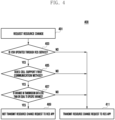
- FIG. 4 is a flowchart 400 illustrating a method for controlling video sharing through an RCS service when the information about whether the first communication method is supported is not received through the system information in FIG. 3 according to various embodiments of the disclosure.
- the network may identify whether the resource for the first communication method is allocated and may activate the video sharing function through the RCS service.
- the activated video sharing function through the RCS service may be used by user selection.
- a network resource change request may be received from the network.
- the electronic device may receive a network resource change request from the network through the data controller (e.g., the data controller 220 of FIG. 2 ).
- the data controller e.g., the data controller 220 of FIG. 2 .
- the electronic device 101 may determine whether the video sharing (VSH) function through the RCS service is operating through an application (e.g., the application 210 of FIG. 2 ) supporting the RCS service or the data controller (e.g., the data controller 220 of FIG. 2 ).
- an application e.g., the application 210 of FIG. 2
- the data controller e.g., the data controller 220 of FIG. 2
- the electronic device 101 may transmit the network resource change request to the application supporting the RCS service through the data controller (e.g., the data controller 220 of FIG. 2 ) in operation 411.
- the data controller e.g., the data controller 220 of FIG. 2
- the electronic device 101 may identify whether a cell currently connected with the electronic device 101 is a cell supporting the first communication method through the data controller (e.g., the data controller 220 of FIG. 2 ) in operation 405.
- the first communication method may be a high speed packet access (HSPA) communication method.
- HSPA high speed packet access
- the electronic device 101 may proceed from operation 405 to operation 411 through the data controller (e.g., the data controller 220 of FIG. 2 ).
- the data controller e.g., the data controller 220 of FIG. 2 .
- the electronic device 101 may identify whether a variance in transmission data transmitted from the application supporting the RCS service to the data controller (e.g., the data controller 220 of FIG. 2 ) is less than or equal to a specific variance determined by the data controller through the data controller (e.g., the data controller 220 of FIG. 2 ) in operation 407.
- the data controller e.g., the data controller 220 of FIG. 2
- the specific variance in transmission data (TX data) determined by the data controller may be less than or equal to a variance transmission data determined by the network when a resource change request is made.
- the electronic device 101 may determine whether a variance in transmission data of the electronic device 101 is less than or equal to the specific variance determined by the data controller by comparing 1) a variance in transmission data at a time when the network determines a resource change with 2) a variance in transmission data transmitted from an application area supporting the RCS service of the electronic device 101 to the data controller (e.g., the data controller 220 of FIG. 2 ) at a current time when the resource change request is received in operation 407.
- the data controller e.g., the data controller 220 of FIG. 2
- the electronic device 101 may not transmit the network resource change request to the application supporting the RCS service through the data controller (e.g., the data controller 220 of FIG. 2 ) in operation 409.
- the data controller e.g., the data controller 220 of FIG. 2
- the electronic device 101 may transmit the network resource change request to the application supporting the RCS service through the data controller (e.g., the data controller 220 of FIG. 2 ) in operation 411.
- the data controller e.g., the data controller 220 of FIG. 2
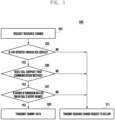
- FIG. 5 is another flowchart 500 illustrating a method for controlling video sharing through an RCS service when the information about whether the first communication method is supported is not received through the system information in FIG. 3 according to various embodiments of the disclosure.
- the network may identify whether the resource for the first communication method is allocated and may activate the video sharing function through the RCS service.
- the activated video sharing function through the RCS service may be used by user selection.
- a network resource change request may be received from the network.
- the electronic device may receive a network resource change request from the network through the data controller (e.g., the data controller 220 of FIG. 2 ).
- the data controller e.g., the data controller 220 of FIG. 2 .
- the electronic device 101 may determine whether the video sharing (VSH) function through the RCS service is operating through an application (e.g., the application 210 of FIG. 2 ) supporting the RCS service or the data controller (e.g., the data controller 220 of FIG. 2 ).
- an application e.g., the application 210 of FIG. 2
- the data controller e.g., the data controller 220 of FIG. 2
- the electronic device 101 may transmit the network resource change request to the application supporting the RCS service through the data controller (e.g., the data controller 220 of FIG. 2 ) in operation 511.
- the data controller e.g., the data controller 220 of FIG. 2
- the electronic device 101 may identify whether a cell currently connected with the electronic device 101 is a cell supporting the first communication method through the data controller (e.g., the data controller 220 of FIG. 2 ) in operation 505.
- the first communication method may be a high speed packet access (HSPA) communication method.
- HSPA high speed packet access
- the electronic device 101 may proceed from operation 505 to operation 511 through the data controller (e.g., the data controller 220 of FIG. 2 ).
- the data controller e.g., the data controller 220 of FIG. 2 .
- the electronic device 101 may identify whether a variance in transmission data transmitted from the application supporting the RCS service to the data controller (e.g., the data controller 220 of FIG. 2 ) is less than or equal to a specific variance determined by the data controller through the data controller (e.g., the data controller 220 of FIG. 2 ) in operation 507.
- the data controller e.g., the data controller 220 of FIG. 2
- the specific variance in transmission data (TX data) determined by the data controller may be less than or equal to a variance transmission data determined by the network when a resource change request is made.
- the electronic device 101 may determine whether a variance in transmission data of the electronic device 101 is less than or equal to the specific variance determined by the data controller by comparing 1) a variance in transmission data at a time when the network determines a resource change with 2) a variance in transmission data transmitted from an application area supporting the RCS service of the electronic device 101 to the data controller (e.g., the data controller 220 of FIG. 2 ) at a current time when the resource change request is received in operation 507.
- the data controller e.g., the data controller 220 of FIG. 2
- the electronic device 101 may transmit dummy data to the network through the data controller (e.g., the data controller 220 of FIG. 2 ) in operation 409.
- the data controller e.g., the data controller 220 of FIG. 2
- the electronic device 101 transmits dummy data to the network through the data controller (e.g., the data controller 220 of FIG. 2 ) in operation 409, thereby satisfying a data variance or transmission amount required by the network.
- the network does not request a resource change. Accordingly, a resource change does not occur while the video sharing function through the RCS service is operating, so that a call drop may not occur.
- the electronic device 101 may transmit the network resource change request to the application supporting the RCS service through the data controller (e.g., the data controller 220 of FIG. 2 ) in operation 511.
- the data controller e.g., the data controller 220 of FIG. 2
- the electronic device may be one of various types of electronic devices.
- the electronic devices may include, for example, a portable communication device (e.g., a smart phone), a computer device, a portable multimedia device, a portable medical device, a camera, a wearable device, or a home appliance.
- a first”, “a second”, “the first”, and “the second” may be used to simply distinguish a corresponding element from another, and does not limit the elements in other aspect (e.g., importance or order). It is to be understood that if an element (e.g., a first element) is referred to, with or without the term “operatively” or “communicatively”, as “coupled with,” “coupled to,” “connected with,” or “connected to” another element (e.g., a second element), it means that the element may be coupled with the other element directly (e.g., wiredly), wirelessly, or via another element (e.g., third element).
- module may include a unit implemented in hardware, software, or firmware, and may be interchangeably used with other terms, for example, “logic,” “logic block,” “component,” or “circuit”.
- the “module” may be a minimum unit of a single integrated component adapted to perform one or more functions, or a part thereof.
- the “module” may be implemented in the form of an application-specific integrated circuit (ASIC).
- ASIC application-specific integrated circuit
- Various embodiments as set forth herein may be implemented as software (e.g., the program 140) including one or more instructions that are stored in a storage medium (e.g., internal memory 136 or external memory 138) that is readable by a machine (e.g., the electronic device 101).
- a processor e.g., the processor 120
- the machine e.g., the electronic device 101
- the one or more instructions may include a code generated by a complier or a code executable by an interpreter.
- the machine-readable storage medium may be provided in the form of a non-transitory storage medium.
- non-transitory simply means that the storage medium is a tangible device, and does not include a signal (e.g., an electromagnetic wave), but this term does not differentiate between where data is semi-permanently stored in the storage medium and where the data is temporarily stored in the storage medium.
- a method may be included and provided in a computer program product.
- the computer program product may be traded as a product between a seller and a buyer.
- the computer program product may be distributed in the form of a machine-readable storage medium (e.g., compact disc read only memory (CD-ROM)), or be distributed (e.g., downloaded or uploaded) online via an application store (e.g., Play StoreTM), or between two user devices (e.g., smart phones) directly. If distributed online, at least part of the computer program product may be temporarily generated or at least temporarily stored in the machine-readable storage medium, such as memory of the manufacturer's server, a server of the application store, or a relay server.
- CD-ROM compact disc read only memory
- an application store e.g., Play StoreTM
- two user devices e.g., smart phones
- each element e.g., a module or a program of the above-described elements may include a single entity or multiple entities. According to various embodiments, one or more of the above-described elements may be omitted, or one or more other elements may be added. Alternatively or additionally, a plurality of elements (e.g., modules or programs) may be integrated into a single element. In such a case, according to various embodiments, the integrated element may still perform one or more functions of each of the plurality of elements in the same or similar manner as they are performed by a corresponding one of the plurality of elements before the integration.
- operations performed by the module, the program, or another element may be carried out sequentially, in parallel, repeatedly, or heuristically, or one or more of the operations may be executed in a different order or omitted, or one or more other operations may be added.
Landscapes
- Engineering & Computer Science (AREA)
- Signal Processing (AREA)
- Multimedia (AREA)
- Computer Networks & Wireless Communication (AREA)
- Business, Economics & Management (AREA)
- General Business, Economics & Management (AREA)
- Mobile Radio Communication Systems (AREA)
- Telephone Function (AREA)
Claims (14)
- Procédé de commande de partage de vidéo par l'intermédiaire d'un service de suite de communication riche, RCS, par un dispositif électronique, le procédé comprenant :recevoir (401, 501) une demande de changement de ressource en provenance d'un réseau ;déterminer (403, 503) s'il existe une opération de partage de vidéo par l'intermédiaire du service RCS après réception de la demande ;déterminer (405, 505) si une cellule connectée au dispositif électronique est une cellule prenant en charge un procédé de communication d'accès par paquets haut débit, HSPA, lors de l'opération de partage de vidéo ;déterminer (407, 507) si une quantité de transmission de données est égale ou supérieure à une quantité de transmission prédéterminée lorsqu'il est déterminé que la cellule connectée au dispositif électronique est la cellule prenant en charge le procédé de communication HSPA ; ettransmettre (411, 511) la demande à une application prenant en charge le service RCS lorsque la quantité de transmission de données est égale ou supérieure à la quantité de transmission prédéterminée.
- Procédé selon la revendication 1, comprenant la non transmission (409) de la demande à l'application prenant en charge le service RCS lorsque la quantité de transmission de données est inférieure ou égale à la quantité de transmission prédéterminée.
- Procédé selon la revendication 1, comprenant la transmission (509) de données factices au réseau lorsque la quantité de transmission de données est inférieure ou égale à la quantité de transmission prédéterminée.
- Procédé selon la revendication 1, comprenant la transmission (411, 511) de la demande à l'application prenant en charge le service RCS lorsqu'il n'y a pas d'opération de partage de vidéo par l'intermédiaire du service RCS.
- Procédé selon la revendication 1, comprenant la transmission (411, 511) de la demande à l'application prenant en charge le service RCS lorsqu'il est déterminé que la cellule connectée au dispositif électronique n'est pas la cellule prenant en charge le procédé de communication HPSA.
- Procédé selon la revendication 1, dans lequel le fait de déterminer (407, 507) si la quantité de transmission de données est égale ou supérieure à la quantité de transmission prédéterminée comprend en outre :déterminer si une quantité de données transmise de l'application prenant en charge le service RCS à un processeur correspond à une quantité de transmission prédéterminée déterminée par le processeur, etla quantité de transmission prédéterminée est déterminée par le processeur comme étant inférieure ou égale à la quantité de transmission de données déterminée par le réseau lorsque la demande de changement de ressource est faite.
- Procédé selon la revendication 1, dans lequel le fait de déterminer (407, 507) si la quantité de transmission de données est égale ou supérieure à la quantité de transmission prédéterminée comprend en outre la comparaison 1) d'une quantité de données de transmission à un moment où le réseau détermine un changement de ressource avec 2) une quantité de données de transmission transmise de l'application prenant en charge le service RCS à un processeur à un moment donné lorsque la demande de changement de ressource est reçue, et
la quantité de transmission prédéterminée est déterminée par le processeur comme étant inférieure ou égale à la quantité de transmission de données déterminée par le réseau lorsque la demande de changement de ressource est faite. - Dispositif électronique permettant de commander le partage de vidéo par l'intermédiaire d'un service de suite de communication riche, RCS, le dispositif électronique comprenant :un affichage (160) ;un module de communication (190) ;un processeur (120) ; etune mémoire (130) configurée pour être connectée électriquement au processeur (120),dans lequel la mémoire (130) comprend des instructions qui amènent le processeur (120) à :recevoir (401, 501) une demande de changement de ressource en provenance d'un réseau ;déterminer (403, 503) s'il existe une opération de partage de vidéo par l'intermédiaire du service RCS après réception de la demande ;déterminer (405, 505) si une cellule connectée au dispositif électronique est une cellule prenant en charge un procédé de communication d'accès par paquets haut débit, HSPA, lors de l'opération de partage de vidéo ;déterminer (407, 507) si une quantité de transmission de données est égale ou supérieure à une quantité de transmission prédéterminée lorsqu'il est déterminé que la cellule connectée au dispositif électronique est la cellule prenant en charge le procédé de communication HSPA ; ettransmettre (411, 511) la demande à une application prenant en charge le service RCS lorsque la quantité de transmission de données est égale ou supérieure à la quantité de transmission prédéterminée.
- Dispositif électronique selon la revendication 8, dans lequel la mémoire comprend des instructions qui amènent le processeur à ne pas transmettre (409) la demande de changement de ressource depuis le réseau à l'application prenant en charge le service RCS lorsque la quantité de transmission de données transmise au réseau est inférieure ou égale à une quantité de transmission prédéterminée.
- Dispositif électronique selon la revendication 8, dans lequel la mémoire comprend des instructions qui amènent le processeur à transmettre (509) des données factices au réseau par l'intermédiaire du module de communication lorsque la quantité de transmission de données transmise au réseau est égale ou supérieure à une quantité de transmission prédéterminée.
- Dispositif électronique selon la revendication 8, dans lequel la mémoire comprend des instructions qui amènent le processeur à ne pas transmettre (411, 511) la demande de changement de ressource depuis le réseau à l'application prenant en charge le service RCS lorsqu'il n'y a pas d'opération de partage de vidéo par l'intermédiaire du service RCS.
- Dispositif électronique selon la revendication 8, dans lequel la mémoire comprend des instructions qui amènent le processeur à ne pas transmettre la demande de changement de ressource depuis le réseau à l'application prenant en charge le service RCS lorsqu'il est déterminé que la cellule connectée au module de communication n'est pas une cellule prenant en charge le procédé de communication HPSA.
- Dispositif électronique selon la revendication 8, dans lequel la mémoire comprend des instructions qui amènent le processeur à déterminer (407, 507) si une quantité de données transmise depuis l'application prenant en charge le service RCS au processeur correspond à la quantité de transmission prédéterminée déterminée par le processeur, et
la quantité de transmission prédéterminée est déterminée par le processeur comme étant inférieure ou égale à la quantité de transmission de données déterminée par le réseau lorsque la demande de changement de ressource est faite. - Dispositif électronique selon la revendication 8, dans lequel la mémoire comprend des instructions qui amènent le processeur à comparer 1) une quantité de données de transmission à un moment où le réseau détermine un changement de ressource avec 2) une quantité de données de transmission transmises d'une zone d'application prenant en charge le service RCS à un processeur à un moment donné lorsque la demande de changement de ressource est reçue, et
la quantité de transmission prédéterminée est déterminée par le processeur comme étant inférieure ou égale à la quantité de transmission de données déterminée par le réseau lorsque la demande de changement de ressource est faite.
Applications Claiming Priority (2)
| Application Number | Priority Date | Filing Date | Title |
|---|---|---|---|
| KR1020180040900A KR102457007B1 (ko) | 2018-04-09 | 2018-04-09 | 리치 통신 스위트 서비스를 통한 비디오 공유 제어 방법 및 전자 장치 |
| PCT/KR2019/004196 WO2019199016A1 (fr) | 2018-04-09 | 2019-04-09 | Procédé de commande de partage de vidéo par l'intermédiaire d'un service de suite de communication riche et dispositif électronique associé |
Publications (3)
| Publication Number | Publication Date |
|---|---|
| EP3758384A1 EP3758384A1 (fr) | 2020-12-30 |
| EP3758384A4 EP3758384A4 (fr) | 2020-12-30 |
| EP3758384B1 true EP3758384B1 (fr) | 2023-09-27 |
Family
ID=68164429
Family Applications (1)
| Application Number | Title | Priority Date | Filing Date |
|---|---|---|---|
| EP19785285.8A Active EP3758384B1 (fr) | 2018-04-09 | 2019-04-09 | Procédé de commande de partage de vidéo par l'intermédiaire d'un service de suite de communication riche et dispositif électronique associé |
Country Status (3)
| Country | Link |
|---|---|
| EP (1) | EP3758384B1 (fr) |
| KR (1) | KR102457007B1 (fr) |
| WO (1) | WO2019199016A1 (fr) |
Families Citing this family (1)
| Publication number | Priority date | Publication date | Assignee | Title |
|---|---|---|---|---|
| KR20210127503A (ko) | 2020-04-14 | 2021-10-22 | 삼성전자주식회사 | 저전력 rcs 통신 장치 및 그 방법 |
Family Cites Families (12)
| Publication number | Priority date | Publication date | Assignee | Title |
|---|---|---|---|---|
| US6694429B1 (en) * | 1998-08-04 | 2004-02-17 | At&T Corp. | Method for establishing call state information without maintaining state information at gate controllers |
| EP1841145A1 (fr) * | 2006-03-30 | 2007-10-03 | BRITISH TELECOMMUNICATIONS public limited company | Réseaux de communication |
| KR20070117101A (ko) * | 2006-06-07 | 2007-12-12 | 삼성전자주식회사 | 무선 통신시스템에서 셀 재선택 장치 및 방법 |
| EP2258085A1 (fr) * | 2008-03-10 | 2010-12-08 | Dilithium Holdings, Inc. | Procédé et appareil pour services vidéo |
| US10694428B2 (en) * | 2010-05-03 | 2020-06-23 | Samsung Electronics Co., Ltd | Method and system for handover of video calls from a packet switched network to a circuit switched network in a single radio environment |
| US20120030682A1 (en) * | 2010-07-28 | 2012-02-02 | Cisco Technology, Inc. | Dynamic Priority Assessment of Multimedia for Allocation of Recording and Delivery Resources |
| US9433030B2 (en) * | 2014-01-14 | 2016-08-30 | Qualcomm Incorporated | Volte call setup |
| WO2015126160A1 (fr) * | 2014-02-20 | 2015-08-27 | Samsung Electronics Co., Ltd. | Appareil et procédé d'amélioration de la qualité de service de visiotéléphonie |
| WO2015131922A1 (fr) * | 2014-03-03 | 2015-09-11 | Telefonaktiebolaget L M Ericsson (Publ) | Transmission en continu d'un contenu multimédia à un équipement d'utilisateur dans un sous-système multimédia à protocole internet |
| WO2016138550A1 (fr) * | 2015-03-02 | 2016-09-09 | Mill Development International Pty Ltd | Procédé et système pour tester une infrastructure de télécommunications |
| US9756088B2 (en) * | 2015-09-08 | 2017-09-05 | Qualcomm Incorporated | IMS over soft AP admission control and resource management |
| EP3446447B1 (fr) * | 2016-04-20 | 2024-02-28 | Vasona Networks, Inc. | Débits binaires de codage durables maximaux pour les téléchargements vidéo |
-
2018
- 2018-04-09 KR KR1020180040900A patent/KR102457007B1/ko active Active
-
2019
- 2019-04-09 WO PCT/KR2019/004196 patent/WO2019199016A1/fr not_active Ceased
- 2019-04-09 EP EP19785285.8A patent/EP3758384B1/fr active Active
Also Published As
| Publication number | Publication date |
|---|---|
| WO2019199016A1 (fr) | 2019-10-17 |
| KR102457007B1 (ko) | 2022-10-21 |
| EP3758384A1 (fr) | 2020-12-30 |
| EP3758384A4 (fr) | 2020-12-30 |
| KR20190117937A (ko) | 2019-10-17 |
Similar Documents
| Publication | Publication Date | Title |
|---|---|---|
| KR102775191B1 (ko) | 무선 네트워크 환경에서 핸드오버를 수행하기 위한 전자 장치 및 그에 관한 방법 | |
| US11057762B2 (en) | Electronic device and method for switching electronic device between dual standby mode and single standby mode | |
| US12213077B2 (en) | Electronic device for reducing power consumption in network on basis of Wi-Fi direct protocol, and method related thereto | |
| US20220030459A1 (en) | Method for providing low latency communication for extended reality service and electronic device therefor | |
| US11647564B2 (en) | Apparatus and method for performing data communication in NAN protocol-based network environment | |
| US11089443B2 (en) | Electronic device and method for connecting short range communication | |
| US11385690B2 (en) | Electronic device for switching between communication channels and control method thereof | |
| EP3697112B1 (fr) | Dispositif et procédé permettant de prendre en charge une pluralité de sims dans un système de communication sans fil | |
| US11903062B2 (en) | Method for operating application requiring communication with external device, and electronic device therefor | |
| EP3900415B1 (fr) | Dispositif électronique pour partager des informations de communication bluetooth | |
| US11503451B2 (en) | Device and method for transmitting signals in plurality of frequency bands | |
| US11863475B2 (en) | Method and apparatus for designing rate matching pattern for partial demodulation reference signal (DMRS) transmission | |
| KR102788965B1 (ko) | 메시지 채팅 서비스를 제공하는 전자 장치 및 방법 | |
| US20200358634A1 (en) | Electronic device for communicating with external electronic device | |
| US11729277B2 (en) | Apparatus and method for controlling application relocation in edge computing environment | |
| EP3758384B1 (fr) | Procédé de commande de partage de vidéo par l'intermédiaire d'un service de suite de communication riche et dispositif électronique associé | |
| US20220061126A1 (en) | Method for connecting to network and electronic device performing same | |
| KR20210051274A (ko) | 이웃 인식 네트워킹에서 통신을 수행하는 전자 장치 및 그 동작 방법 | |
| US11224018B2 (en) | Electronic device and method for reducing current consumption of electronic device in near field wireless communication using same | |
| EP4114139B1 (fr) | Dispositif de communication rcs de faible puissance et procédé associé | |
| US11147086B2 (en) | Electronic device for preventing packet drop for uplink transmission |
Legal Events
| Date | Code | Title | Description |
|---|---|---|---|
| STAA | Information on the status of an ep patent application or granted ep patent |
Free format text: STATUS: THE INTERNATIONAL PUBLICATION HAS BEEN MADE |
|
| PUAI | Public reference made under article 153(3) epc to a published international application that has entered the european phase |
Free format text: ORIGINAL CODE: 0009012 |
|
| STAA | Information on the status of an ep patent application or granted ep patent |
Free format text: STATUS: REQUEST FOR EXAMINATION WAS MADE |
|
| 17P | Request for examination filed |
Effective date: 20200923 |
|
| A4 | Supplementary search report drawn up and despatched |
Effective date: 20201022 |
|
| AK | Designated contracting states |
Kind code of ref document: A1 Designated state(s): AL AT BE BG CH CY CZ DE DK EE ES FI FR GB GR HR HU IE IS IT LI LT LU LV MC MK MT NL NO PL PT RO RS SE SI SK SM TR |
|
| AX | Request for extension of the european patent |
Extension state: BA ME |
|
| DAV | Request for validation of the european patent (deleted) | ||
| DAX | Request for extension of the european patent (deleted) | ||
| REG | Reference to a national code |
Ref country code: DE Ref legal event code: R079 Free format text: PREVIOUS MAIN CLASS: H04N0021274300 Ipc: H04L0065401000 Ref country code: DE Ref legal event code: R079 Ref document number: 602019038290 Country of ref document: DE Free format text: PREVIOUS MAIN CLASS: H04N0021274300 Ipc: H04L0065401000 |
|
| RIC1 | Information provided on ipc code assigned before grant |
Ipc: H04N 7/14 20060101ALI20220425BHEP Ipc: H04N 21/63 20110101ALI20220425BHEP Ipc: H04N 21/61 20110101ALI20220425BHEP Ipc: H04N 21/2743 20110101ALI20220425BHEP Ipc: H04N 21/2381 20110101ALI20220425BHEP Ipc: H04L 67/63 20220101ALI20220425BHEP Ipc: H04L 65/1089 20220101ALI20220425BHEP Ipc: H04L 65/1059 20220101ALI20220425BHEP Ipc: H04L 65/401 20220101AFI20220425BHEP |
|
| STAA | Information on the status of an ep patent application or granted ep patent |
Free format text: STATUS: EXAMINATION IS IN PROGRESS |
|
| 17Q | First examination report despatched |
Effective date: 20220613 |
|
| GRAP | Despatch of communication of intention to grant a patent |
Free format text: ORIGINAL CODE: EPIDOSNIGR1 |
|
| STAA | Information on the status of an ep patent application or granted ep patent |
Free format text: STATUS: GRANT OF PATENT IS INTENDED |
|
| INTG | Intention to grant announced |
Effective date: 20230525 |
|
| GRAS | Grant fee paid |
Free format text: ORIGINAL CODE: EPIDOSNIGR3 |
|
| GRAA | (expected) grant |
Free format text: ORIGINAL CODE: 0009210 |
|
| STAA | Information on the status of an ep patent application or granted ep patent |
Free format text: STATUS: THE PATENT HAS BEEN GRANTED |
|
| AK | Designated contracting states |
Kind code of ref document: B1 Designated state(s): AL AT BE BG CH CY CZ DE DK EE ES FI FR GB GR HR HU IE IS IT LI LT LU LV MC MK MT NL NO PL PT RO RS SE SI SK SM TR |
|
| REG | Reference to a national code |
Ref country code: GB Ref legal event code: FG4D |
|
| REG | Reference to a national code |
Ref country code: CH Ref legal event code: EP |
|
| REG | Reference to a national code |
Ref country code: DE Ref legal event code: R096 Ref document number: 602019038290 Country of ref document: DE |
|
| REG | Reference to a national code |
Ref country code: IE Ref legal event code: FG4D |
|
| REG | Reference to a national code |
Ref country code: LT Ref legal event code: MG9D |
|
| PG25 | Lapsed in a contracting state [announced via postgrant information from national office to epo] |
Ref country code: GR Free format text: LAPSE BECAUSE OF FAILURE TO SUBMIT A TRANSLATION OF THE DESCRIPTION OR TO PAY THE FEE WITHIN THE PRESCRIBED TIME-LIMIT Effective date: 20231228 |
|
| PG25 | Lapsed in a contracting state [announced via postgrant information from national office to epo] |
Ref country code: SE Free format text: LAPSE BECAUSE OF FAILURE TO SUBMIT A TRANSLATION OF THE DESCRIPTION OR TO PAY THE FEE WITHIN THE PRESCRIBED TIME-LIMIT Effective date: 20230927 Ref country code: RS Free format text: LAPSE BECAUSE OF FAILURE TO SUBMIT A TRANSLATION OF THE DESCRIPTION OR TO PAY THE FEE WITHIN THE PRESCRIBED TIME-LIMIT Effective date: 20230927 Ref country code: NO Free format text: LAPSE BECAUSE OF FAILURE TO SUBMIT A TRANSLATION OF THE DESCRIPTION OR TO PAY THE FEE WITHIN THE PRESCRIBED TIME-LIMIT Effective date: 20231227 Ref country code: LV Free format text: LAPSE BECAUSE OF FAILURE TO SUBMIT A TRANSLATION OF THE DESCRIPTION OR TO PAY THE FEE WITHIN THE PRESCRIBED TIME-LIMIT Effective date: 20230927 Ref country code: LT Free format text: LAPSE BECAUSE OF FAILURE TO SUBMIT A TRANSLATION OF THE DESCRIPTION OR TO PAY THE FEE WITHIN THE PRESCRIBED TIME-LIMIT Effective date: 20230927 Ref country code: HR Free format text: LAPSE BECAUSE OF FAILURE TO SUBMIT A TRANSLATION OF THE DESCRIPTION OR TO PAY THE FEE WITHIN THE PRESCRIBED TIME-LIMIT Effective date: 20230927 Ref country code: GR Free format text: LAPSE BECAUSE OF FAILURE TO SUBMIT A TRANSLATION OF THE DESCRIPTION OR TO PAY THE FEE WITHIN THE PRESCRIBED TIME-LIMIT Effective date: 20231228 Ref country code: FI Free format text: LAPSE BECAUSE OF FAILURE TO SUBMIT A TRANSLATION OF THE DESCRIPTION OR TO PAY THE FEE WITHIN THE PRESCRIBED TIME-LIMIT Effective date: 20230927 |
|
| REG | Reference to a national code |
Ref country code: NL Ref legal event code: MP Effective date: 20230927 |
|
| REG | Reference to a national code |
Ref country code: AT Ref legal event code: MK05 Ref document number: 1616506 Country of ref document: AT Kind code of ref document: T Effective date: 20230927 |
|
| PG25 | Lapsed in a contracting state [announced via postgrant information from national office to epo] |
Ref country code: NL Free format text: LAPSE BECAUSE OF FAILURE TO SUBMIT A TRANSLATION OF THE DESCRIPTION OR TO PAY THE FEE WITHIN THE PRESCRIBED TIME-LIMIT Effective date: 20230927 |
|
| PG25 | Lapsed in a contracting state [announced via postgrant information from national office to epo] |
Ref country code: IS Free format text: LAPSE BECAUSE OF FAILURE TO SUBMIT A TRANSLATION OF THE DESCRIPTION OR TO PAY THE FEE WITHIN THE PRESCRIBED TIME-LIMIT Effective date: 20240127 |
|
| PG25 | Lapsed in a contracting state [announced via postgrant information from national office to epo] |
Ref country code: AT Free format text: LAPSE BECAUSE OF FAILURE TO SUBMIT A TRANSLATION OF THE DESCRIPTION OR TO PAY THE FEE WITHIN THE PRESCRIBED TIME-LIMIT Effective date: 20230927 |
|
| PG25 | Lapsed in a contracting state [announced via postgrant information from national office to epo] |
Ref country code: ES Free format text: LAPSE BECAUSE OF FAILURE TO SUBMIT A TRANSLATION OF THE DESCRIPTION OR TO PAY THE FEE WITHIN THE PRESCRIBED TIME-LIMIT Effective date: 20230927 |
|
| PG25 | Lapsed in a contracting state [announced via postgrant information from national office to epo] |
Ref country code: SM Free format text: LAPSE BECAUSE OF FAILURE TO SUBMIT A TRANSLATION OF THE DESCRIPTION OR TO PAY THE FEE WITHIN THE PRESCRIBED TIME-LIMIT Effective date: 20230927 Ref country code: RO Free format text: LAPSE BECAUSE OF FAILURE TO SUBMIT A TRANSLATION OF THE DESCRIPTION OR TO PAY THE FEE WITHIN THE PRESCRIBED TIME-LIMIT Effective date: 20230927 Ref country code: IS Free format text: LAPSE BECAUSE OF FAILURE TO SUBMIT A TRANSLATION OF THE DESCRIPTION OR TO PAY THE FEE WITHIN THE PRESCRIBED TIME-LIMIT Effective date: 20240127 Ref country code: ES Free format text: LAPSE BECAUSE OF FAILURE TO SUBMIT A TRANSLATION OF THE DESCRIPTION OR TO PAY THE FEE WITHIN THE PRESCRIBED TIME-LIMIT Effective date: 20230927 Ref country code: EE Free format text: LAPSE BECAUSE OF FAILURE TO SUBMIT A TRANSLATION OF THE DESCRIPTION OR TO PAY THE FEE WITHIN THE PRESCRIBED TIME-LIMIT Effective date: 20230927 Ref country code: CZ Free format text: LAPSE BECAUSE OF FAILURE TO SUBMIT A TRANSLATION OF THE DESCRIPTION OR TO PAY THE FEE WITHIN THE PRESCRIBED TIME-LIMIT Effective date: 20230927 Ref country code: AT Free format text: LAPSE BECAUSE OF FAILURE TO SUBMIT A TRANSLATION OF THE DESCRIPTION OR TO PAY THE FEE WITHIN THE PRESCRIBED TIME-LIMIT Effective date: 20230927 Ref country code: SK Free format text: LAPSE BECAUSE OF FAILURE TO SUBMIT A TRANSLATION OF THE DESCRIPTION OR TO PAY THE FEE WITHIN THE PRESCRIBED TIME-LIMIT Effective date: 20230927 Ref country code: PT Free format text: LAPSE BECAUSE OF FAILURE TO SUBMIT A TRANSLATION OF THE DESCRIPTION OR TO PAY THE FEE WITHIN THE PRESCRIBED TIME-LIMIT Effective date: 20240129 |
|
| PG25 | Lapsed in a contracting state [announced via postgrant information from national office to epo] |
Ref country code: PL Free format text: LAPSE BECAUSE OF FAILURE TO SUBMIT A TRANSLATION OF THE DESCRIPTION OR TO PAY THE FEE WITHIN THE PRESCRIBED TIME-LIMIT Effective date: 20230927 Ref country code: IT Free format text: LAPSE BECAUSE OF FAILURE TO SUBMIT A TRANSLATION OF THE DESCRIPTION OR TO PAY THE FEE WITHIN THE PRESCRIBED TIME-LIMIT Effective date: 20230927 |
|
| REG | Reference to a national code |
Ref country code: DE Ref legal event code: R097 Ref document number: 602019038290 Country of ref document: DE |
|
| PG25 | Lapsed in a contracting state [announced via postgrant information from national office to epo] |
Ref country code: DK Free format text: LAPSE BECAUSE OF FAILURE TO SUBMIT A TRANSLATION OF THE DESCRIPTION OR TO PAY THE FEE WITHIN THE PRESCRIBED TIME-LIMIT Effective date: 20230927 |
|
| PG25 | Lapsed in a contracting state [announced via postgrant information from national office to epo] |
Ref country code: DK Free format text: LAPSE BECAUSE OF FAILURE TO SUBMIT A TRANSLATION OF THE DESCRIPTION OR TO PAY THE FEE WITHIN THE PRESCRIBED TIME-LIMIT Effective date: 20230927 |
|
| PLBE | No opposition filed within time limit |
Free format text: ORIGINAL CODE: 0009261 |
|
| STAA | Information on the status of an ep patent application or granted ep patent |
Free format text: STATUS: NO OPPOSITION FILED WITHIN TIME LIMIT |
|
| 26N | No opposition filed |
Effective date: 20240628 |
|
| PG25 | Lapsed in a contracting state [announced via postgrant information from national office to epo] |
Ref country code: SI Free format text: LAPSE BECAUSE OF FAILURE TO SUBMIT A TRANSLATION OF THE DESCRIPTION OR TO PAY THE FEE WITHIN THE PRESCRIBED TIME-LIMIT Effective date: 20230927 |
|
| PG25 | Lapsed in a contracting state [announced via postgrant information from national office to epo] |
Ref country code: SI Free format text: LAPSE BECAUSE OF FAILURE TO SUBMIT A TRANSLATION OF THE DESCRIPTION OR TO PAY THE FEE WITHIN THE PRESCRIBED TIME-LIMIT Effective date: 20230927 |
|
| PG25 | Lapsed in a contracting state [announced via postgrant information from national office to epo] |
Ref country code: BG Free format text: LAPSE BECAUSE OF FAILURE TO SUBMIT A TRANSLATION OF THE DESCRIPTION OR TO PAY THE FEE WITHIN THE PRESCRIBED TIME-LIMIT Effective date: 20230927 |
|
| PG25 | Lapsed in a contracting state [announced via postgrant information from national office to epo] |
Ref country code: MC Free format text: LAPSE BECAUSE OF FAILURE TO SUBMIT A TRANSLATION OF THE DESCRIPTION OR TO PAY THE FEE WITHIN THE PRESCRIBED TIME-LIMIT Effective date: 20230927 |
|
| PG25 | Lapsed in a contracting state [announced via postgrant information from national office to epo] |
Ref country code: MC Free format text: LAPSE BECAUSE OF FAILURE TO SUBMIT A TRANSLATION OF THE DESCRIPTION OR TO PAY THE FEE WITHIN THE PRESCRIBED TIME-LIMIT Effective date: 20230927 Ref country code: BG Free format text: LAPSE BECAUSE OF FAILURE TO SUBMIT A TRANSLATION OF THE DESCRIPTION OR TO PAY THE FEE WITHIN THE PRESCRIBED TIME-LIMIT Effective date: 20230927 |
|
| REG | Reference to a national code |
Ref country code: CH Ref legal event code: PL |
|
| PG25 | Lapsed in a contracting state [announced via postgrant information from national office to epo] |
Ref country code: LU Free format text: LAPSE BECAUSE OF NON-PAYMENT OF DUE FEES Effective date: 20240409 |
|
| GBPC | Gb: european patent ceased through non-payment of renewal fee |
Effective date: 20240409 |
|
| REG | Reference to a national code |
Ref country code: BE Ref legal event code: MM Effective date: 20240430 |
|
| PG25 | Lapsed in a contracting state [announced via postgrant information from national office to epo] |
Ref country code: LU Free format text: LAPSE BECAUSE OF NON-PAYMENT OF DUE FEES Effective date: 20240409 |
|
| PG25 | Lapsed in a contracting state [announced via postgrant information from national office to epo] |
Ref country code: BE Free format text: LAPSE BECAUSE OF NON-PAYMENT OF DUE FEES Effective date: 20240430 |
|
| PG25 | Lapsed in a contracting state [announced via postgrant information from national office to epo] |
Ref country code: GB Free format text: LAPSE BECAUSE OF NON-PAYMENT OF DUE FEES Effective date: 20240409 |
|
| PG25 | Lapsed in a contracting state [announced via postgrant information from national office to epo] |
Ref country code: FR Free format text: LAPSE BECAUSE OF NON-PAYMENT OF DUE FEES Effective date: 20240430 |
|
| PG25 | Lapsed in a contracting state [announced via postgrant information from national office to epo] |
Ref country code: GB Free format text: LAPSE BECAUSE OF NON-PAYMENT OF DUE FEES Effective date: 20240409 Ref country code: FR Free format text: LAPSE BECAUSE OF NON-PAYMENT OF DUE FEES Effective date: 20240430 Ref country code: BE Free format text: LAPSE BECAUSE OF NON-PAYMENT OF DUE FEES Effective date: 20240430 Ref country code: CH Free format text: LAPSE BECAUSE OF NON-PAYMENT OF DUE FEES Effective date: 20240430 |
|
| PG25 | Lapsed in a contracting state [announced via postgrant information from national office to epo] |
Ref country code: IE Free format text: LAPSE BECAUSE OF NON-PAYMENT OF DUE FEES Effective date: 20240409 |
|
| PGFP | Annual fee paid to national office [announced via postgrant information from national office to epo] |
Ref country code: DE Payment date: 20250320 Year of fee payment: 7 |
|
| PG25 | Lapsed in a contracting state [announced via postgrant information from national office to epo] |
Ref country code: CY Free format text: LAPSE BECAUSE OF FAILURE TO SUBMIT A TRANSLATION OF THE DESCRIPTION OR TO PAY THE FEE WITHIN THE PRESCRIBED TIME-LIMIT; INVALID AB INITIO Effective date: 20190409 |
|
| PG25 | Lapsed in a contracting state [announced via postgrant information from national office to epo] |
Ref country code: HU Free format text: LAPSE BECAUSE OF FAILURE TO SUBMIT A TRANSLATION OF THE DESCRIPTION OR TO PAY THE FEE WITHIN THE PRESCRIBED TIME-LIMIT; INVALID AB INITIO Effective date: 20190409 |