EP3760718A1 - Tissu à utiliser en tant que greffe allogénique ou xénogénique et son procédé de production - Google Patents
Tissu à utiliser en tant que greffe allogénique ou xénogénique et son procédé de production Download PDFInfo
- Publication number
- EP3760718A1 EP3760718A1 EP19184380.4A EP19184380A EP3760718A1 EP 3760718 A1 EP3760718 A1 EP 3760718A1 EP 19184380 A EP19184380 A EP 19184380A EP 3760718 A1 EP3760718 A1 EP 3760718A1
- Authority
- EP
- European Patent Office
- Prior art keywords
- mhc
- expression
- tissue
- allogeneic
- xenogeneic
- Prior art date
- Legal status (The legal status is an assumption and is not a legal conclusion. Google has not performed a legal analysis and makes no representation as to the accuracy of the status listed.)
- Withdrawn
Links
- 230000000735 allogeneic effect Effects 0.000 title claims abstract description 88
- 238000000034 method Methods 0.000 title claims abstract description 14
- 238000004519 manufacturing process Methods 0.000 title abstract description 4
- 230000014509 gene expression Effects 0.000 claims abstract description 156
- 108010027412 Histocompatibility Antigens Class II Proteins 0.000 claims abstract description 16
- 102000018713 Histocompatibility Antigens Class II Human genes 0.000 claims abstract description 16
- 230000002401 inhibitory effect Effects 0.000 claims description 51
- 108020004707 nucleic acids Proteins 0.000 claims description 38
- 102000039446 nucleic acids Human genes 0.000 claims description 38
- 150000007523 nucleic acids Chemical class 0.000 claims description 38
- 108091032973 (ribonucleotides)n+m Proteins 0.000 claims description 36
- 230000003828 downregulation Effects 0.000 claims description 26
- 102100022002 CD59 glycoprotein Human genes 0.000 claims description 22
- 102100025680 Complement decay-accelerating factor Human genes 0.000 claims description 22
- 101000897400 Homo sapiens CD59 glycoprotein Proteins 0.000 claims description 22
- 101000856022 Homo sapiens Complement decay-accelerating factor Proteins 0.000 claims description 22
- 230000000295 complement effect Effects 0.000 claims description 20
- 241001465754 Metazoa Species 0.000 claims description 16
- 108700002010 MHC class II transactivator Proteins 0.000 claims description 15
- 150000001875 compounds Chemical class 0.000 claims description 14
- 238000010353 genetic engineering Methods 0.000 claims description 9
- 210000000056 organ Anatomy 0.000 claims description 9
- 101000961414 Homo sapiens Membrane cofactor protein Proteins 0.000 claims description 8
- 102100039373 Membrane cofactor protein Human genes 0.000 claims description 8
- 201000010099 disease Diseases 0.000 claims description 7
- 208000037265 diseases, disorders, signs and symptoms Diseases 0.000 claims description 7
- 108090000623 proteins and genes Proteins 0.000 claims description 7
- 108010058597 HLA-DR Antigens Proteins 0.000 claims description 5
- 102000006354 HLA-DR Antigens Human genes 0.000 claims description 5
- 230000008569 process Effects 0.000 claims description 5
- 210000004602 germ cell Anatomy 0.000 claims description 4
- 229960003444 immunosuppressant agent Drugs 0.000 claims description 4
- 239000003018 immunosuppressive agent Substances 0.000 claims description 4
- 102100028972 HLA class I histocompatibility antigen, A alpha chain Human genes 0.000 claims description 3
- 108010075704 HLA-A Antigens Proteins 0.000 claims description 3
- 231100000673 dose–response relationship Toxicity 0.000 claims description 3
- 230000001105 regulatory effect Effects 0.000 claims description 3
- 230000000392 somatic effect Effects 0.000 claims description 3
- 102100028976 HLA class I histocompatibility antigen, B alpha chain Human genes 0.000 claims description 2
- 102100028971 HLA class I histocompatibility antigen, C alpha chain Human genes 0.000 claims description 2
- 108010058607 HLA-B Antigens Proteins 0.000 claims description 2
- 108010052199 HLA-C Antigens Proteins 0.000 claims description 2
- 108010010378 HLA-DP Antigens Proteins 0.000 claims description 2
- 102000015789 HLA-DP Antigens Human genes 0.000 claims description 2
- 108010062347 HLA-DQ Antigens Proteins 0.000 claims description 2
- 230000002452 interceptive effect Effects 0.000 claims description 2
- 108020004459 Small interfering RNA Proteins 0.000 claims 8
- 230000001900 immune effect Effects 0.000 abstract description 5
- 230000004077 genetic alteration Effects 0.000 abstract description 4
- 231100000118 genetic alteration Toxicity 0.000 abstract description 4
- 210000001519 tissue Anatomy 0.000 description 80
- 210000004027 cell Anatomy 0.000 description 34
- 210000003734 kidney Anatomy 0.000 description 26
- 108091027967 Small hairpin RNA Proteins 0.000 description 18
- 210000002889 endothelial cell Anatomy 0.000 description 18
- 239000004055 small Interfering RNA Substances 0.000 description 17
- 241000700159 Rattus Species 0.000 description 15
- 230000000694 effects Effects 0.000 description 15
- 239000013598 vector Substances 0.000 description 14
- 239000002245 particle Substances 0.000 description 11
- 210000003289 regulatory T cell Anatomy 0.000 description 11
- 230000008105 immune reaction Effects 0.000 description 10
- 230000010412 perfusion Effects 0.000 description 10
- 102000043131 MHC class II family Human genes 0.000 description 9
- 108091054438 MHC class II family Proteins 0.000 description 9
- 108020004999 messenger RNA Proteins 0.000 description 9
- 238000002054 transplantation Methods 0.000 description 8
- 102000008949 Histocompatibility Antigens Class I Human genes 0.000 description 7
- 108010088652 Histocompatibility Antigens Class I Proteins 0.000 description 7
- 102000043129 MHC class I family Human genes 0.000 description 7
- 108091054437 MHC class I family Proteins 0.000 description 6
- 241000282898 Sus scrofa Species 0.000 description 6
- 108010081355 beta 2-Microglobulin Proteins 0.000 description 6
- 239000004074 complement inhibitor Substances 0.000 description 6
- 230000001404 mediated effect Effects 0.000 description 6
- 230000003612 virological effect Effects 0.000 description 6
- 206010052779 Transplant rejections Diseases 0.000 description 5
- 102000015736 beta 2-Microglobulin Human genes 0.000 description 5
- 210000000822 natural killer cell Anatomy 0.000 description 5
- 108090000765 processed proteins & peptides Proteins 0.000 description 5
- 102000004196 processed proteins & peptides Human genes 0.000 description 5
- 239000000243 solution Substances 0.000 description 5
- 230000001629 suppression Effects 0.000 description 5
- 230000008685 targeting Effects 0.000 description 5
- ZWGNFOFTMJGWBF-VZSHSMSCSA-N (2s)-2-amino-3-(1h-imidazol-5-yl)propanoic acid;(2s)-2-amino-3-(1h-indol-3-yl)propanoic acid;2-oxopentanedioic acid Chemical compound OC(=O)CCC(=O)C(O)=O.OC(=O)[C@@H](N)CC1=CN=CN1.C1=CC=C2C(C[C@H](N)C(O)=O)=CNC2=C1 ZWGNFOFTMJGWBF-VZSHSMSCSA-N 0.000 description 4
- 230000015572 biosynthetic process Effects 0.000 description 4
- 230000001276 controlling effect Effects 0.000 description 4
- 230000002222 downregulating effect Effects 0.000 description 4
- 230000008629 immune suppression Effects 0.000 description 4
- 230000010354 integration Effects 0.000 description 4
- 210000004153 islets of langerhan Anatomy 0.000 description 4
- 238000003757 reverse transcription PCR Methods 0.000 description 4
- 238000013518 transcription Methods 0.000 description 4
- 230000035897 transcription Effects 0.000 description 4
- 108700028369 Alleles Proteins 0.000 description 3
- 102100037850 Interferon gamma Human genes 0.000 description 3
- 108010074328 Interferon-gamma Proteins 0.000 description 3
- 239000005089 Luciferase Substances 0.000 description 3
- 108060001084 Luciferase Proteins 0.000 description 3
- 108091008874 T cell receptors Proteins 0.000 description 3
- 102000016266 T-Cell Antigen Receptors Human genes 0.000 description 3
- 210000001744 T-lymphocyte Anatomy 0.000 description 3
- 239000004098 Tetracycline Substances 0.000 description 3
- 230000004913 activation Effects 0.000 description 3
- 230000002411 adverse Effects 0.000 description 3
- 230000009227 antibody-mediated cytotoxicity Effects 0.000 description 3
- 239000000427 antigen Substances 0.000 description 3
- 108091007433 antigens Proteins 0.000 description 3
- 102000036639 antigens Human genes 0.000 description 3
- 210000003719 b-lymphocyte Anatomy 0.000 description 3
- 230000001413 cellular effect Effects 0.000 description 3
- 230000004186 co-expression Effects 0.000 description 3
- 231100000433 cytotoxic Toxicity 0.000 description 3
- 210000001151 cytotoxic T lymphocyte Anatomy 0.000 description 3
- 230000001472 cytotoxic effect Effects 0.000 description 3
- 230000007423 decrease Effects 0.000 description 3
- 238000001943 fluorescence-activated cell sorting Methods 0.000 description 3
- 230000009368 gene silencing by RNA Effects 0.000 description 3
- 210000000987 immune system Anatomy 0.000 description 3
- 230000003993 interaction Effects 0.000 description 3
- 239000013642 negative control Substances 0.000 description 3
- 239000002773 nucleotide Substances 0.000 description 3
- 125000003729 nucleotide group Chemical group 0.000 description 3
- 230000002829 reductive effect Effects 0.000 description 3
- 210000002966 serum Anatomy 0.000 description 3
- 229960002180 tetracycline Drugs 0.000 description 3
- 229930101283 tetracycline Natural products 0.000 description 3
- 235000019364 tetracycline Nutrition 0.000 description 3
- 150000003522 tetracyclines Chemical class 0.000 description 3
- 239000013603 viral vector Substances 0.000 description 3
- 102000040650 (ribonucleotides)n+m Human genes 0.000 description 2
- 102100022900 Actin, cytoplasmic 1 Human genes 0.000 description 2
- 108010085238 Actins Proteins 0.000 description 2
- 206010002091 Anaesthesia Diseases 0.000 description 2
- 108020004414 DNA Proteins 0.000 description 2
- 102100026371 MHC class II transactivator Human genes 0.000 description 2
- 108091030071 RNAI Proteins 0.000 description 2
- 108700019146 Transgenes Proteins 0.000 description 2
- 108091093126 WHP Posttrascriptional Response Element Proteins 0.000 description 2
- 238000011316 allogeneic transplantation Methods 0.000 description 2
- 230000037005 anaesthesia Effects 0.000 description 2
- 238000004458 analytical method Methods 0.000 description 2
- 239000011324 bead Substances 0.000 description 2
- 230000008901 benefit Effects 0.000 description 2
- 238000006243 chemical reaction Methods 0.000 description 2
- 230000006378 damage Effects 0.000 description 2
- 230000001627 detrimental effect Effects 0.000 description 2
- 238000011161 development Methods 0.000 description 2
- 238000000684 flow cytometry Methods 0.000 description 2
- 230000030279 gene silencing Effects 0.000 description 2
- 238000010362 genome editing Methods 0.000 description 2
- 238000009396 hybridization Methods 0.000 description 2
- 230000028993 immune response Effects 0.000 description 2
- 230000001939 inductive effect Effects 0.000 description 2
- 238000002372 labelling Methods 0.000 description 2
- 239000003761 preservation solution Substances 0.000 description 2
- 239000000047 product Substances 0.000 description 2
- 238000003753 real-time PCR Methods 0.000 description 2
- 230000000241 respiratory effect Effects 0.000 description 2
- 230000000638 stimulation Effects 0.000 description 2
- 108010056545 swine leukocyte antigen Proteins 0.000 description 2
- 238000010361 transduction Methods 0.000 description 2
- 230000026683 transduction Effects 0.000 description 2
- HBZBAMXERPYTFS-SECBINFHSA-N (4S)-2-(6,7-dihydro-5H-pyrrolo[3,2-f][1,3]benzothiazol-2-yl)-4,5-dihydro-1,3-thiazole-4-carboxylic acid Chemical compound OC(=O)[C@H]1CSC(=N1)c1nc2cc3CCNc3cc2s1 HBZBAMXERPYTFS-SECBINFHSA-N 0.000 description 1
- SGKRLCUYIXIAHR-AKNGSSGZSA-N (4s,4ar,5s,5ar,6r,12ar)-4-(dimethylamino)-1,5,10,11,12a-pentahydroxy-6-methyl-3,12-dioxo-4a,5,5a,6-tetrahydro-4h-tetracene-2-carboxamide Chemical compound C1=CC=C2[C@H](C)[C@@H]([C@H](O)[C@@H]3[C@](C(O)=C(C(N)=O)C(=O)[C@H]3N(C)C)(O)C3=O)C3=C(O)C2=C1O SGKRLCUYIXIAHR-AKNGSSGZSA-N 0.000 description 1
- FWMNVWWHGCHHJJ-SKKKGAJSSA-N 4-amino-1-[(2r)-6-amino-2-[[(2r)-2-[[(2r)-2-[[(2r)-2-amino-3-phenylpropanoyl]amino]-3-phenylpropanoyl]amino]-4-methylpentanoyl]amino]hexanoyl]piperidine-4-carboxylic acid Chemical compound C([C@H](C(=O)N[C@H](CC(C)C)C(=O)N[C@H](CCCCN)C(=O)N1CCC(N)(CC1)C(O)=O)NC(=O)[C@H](N)CC=1C=CC=CC=1)C1=CC=CC=C1 FWMNVWWHGCHHJJ-SKKKGAJSSA-N 0.000 description 1
- VHRSUDSXCMQTMA-PJHHCJLFSA-N 6alpha-methylprednisolone Chemical compound C([C@@]12C)=CC(=O)C=C1[C@@H](C)C[C@@H]1[C@@H]2[C@@H](O)C[C@]2(C)[C@@](O)(C(=O)CO)CC[C@H]21 VHRSUDSXCMQTMA-PJHHCJLFSA-N 0.000 description 1
- HTBLMRUZSCCOLL-UHFFFAOYSA-N 8-benzyl-2-(furan-2-ylmethyl)-6-phenylimidazo[1,2-a]pyrazin-3-ol Chemical compound OC1=C(CC2=CC=CO2)N=C2N1C=C(N=C2CC1=CC=CC=C1)C1=CC=CC=C1 HTBLMRUZSCCOLL-UHFFFAOYSA-N 0.000 description 1
- 102100021943 C-C motif chemokine 2 Human genes 0.000 description 1
- 101710155857 C-C motif chemokine 2 Proteins 0.000 description 1
- 102100032367 C-C motif chemokine 5 Human genes 0.000 description 1
- 102100025248 C-X-C motif chemokine 10 Human genes 0.000 description 1
- 101710098275 C-X-C motif chemokine 10 Proteins 0.000 description 1
- 238000010453 CRISPR/Cas method Methods 0.000 description 1
- 108010055166 Chemokine CCL5 Proteins 0.000 description 1
- 102000029816 Collagenase Human genes 0.000 description 1
- 108060005980 Collagenase Proteins 0.000 description 1
- PMATZTZNYRCHOR-CGLBZJNRSA-N Cyclosporin A Chemical compound CC[C@@H]1NC(=O)[C@H]([C@H](O)[C@H](C)C\C=C\C)N(C)C(=O)[C@H](C(C)C)N(C)C(=O)[C@H](CC(C)C)N(C)C(=O)[C@H](CC(C)C)N(C)C(=O)[C@@H](C)NC(=O)[C@H](C)NC(=O)[C@H](CC(C)C)N(C)C(=O)[C@H](C(C)C)NC(=O)[C@H](CC(C)C)N(C)C(=O)CN(C)C1=O PMATZTZNYRCHOR-CGLBZJNRSA-N 0.000 description 1
- 229930105110 Cyclosporin A Natural products 0.000 description 1
- 108010036949 Cyclosporine Proteins 0.000 description 1
- 108090000695 Cytokines Proteins 0.000 description 1
- 102000004127 Cytokines Human genes 0.000 description 1
- 238000002965 ELISA Methods 0.000 description 1
- 239000001828 Gelatine Substances 0.000 description 1
- 102210042925 HLA-A*02:01 Human genes 0.000 description 1
- 102210039566 HLA-B*39:01 Human genes 0.000 description 1
- HTTJABKRGRZYRN-UHFFFAOYSA-N Heparin Chemical compound OC1C(NC(=O)C)C(O)OC(COS(O)(=O)=O)C1OC1C(OS(O)(=O)=O)C(O)C(OC2C(C(OS(O)(=O)=O)C(OC3C(C(O)C(O)C(O3)C(O)=O)OS(O)(=O)=O)C(CO)O2)NS(O)(=O)=O)C(C(O)=O)O1 HTTJABKRGRZYRN-UHFFFAOYSA-N 0.000 description 1
- 101001057504 Homo sapiens Interferon-stimulated gene 20 kDa protein Proteins 0.000 description 1
- 101001055144 Homo sapiens Interleukin-2 receptor subunit alpha Proteins 0.000 description 1
- 101150017040 I gene Proteins 0.000 description 1
- 101150062179 II gene Proteins 0.000 description 1
- 206010062016 Immunosuppression Diseases 0.000 description 1
- 238000012404 In vitro experiment Methods 0.000 description 1
- 108010002350 Interleukin-2 Proteins 0.000 description 1
- 102100026878 Interleukin-2 receptor subunit alpha Human genes 0.000 description 1
- 108700005089 MHC Class I Genes Proteins 0.000 description 1
- 108700005092 MHC Class II Genes Proteins 0.000 description 1
- 241000699670 Mus sp. Species 0.000 description 1
- 206010028980 Neoplasm Diseases 0.000 description 1
- 102000002508 Peptide Elongation Factors Human genes 0.000 description 1
- 108010068204 Peptide Elongation Factors Proteins 0.000 description 1
- 108010076504 Protein Sorting Signals Proteins 0.000 description 1
- 238000012228 RNA interference-mediated gene silencing Methods 0.000 description 1
- 239000012979 RPMI medium Substances 0.000 description 1
- 101000729860 Rattus norvegicus Beta-2-microglobulin Proteins 0.000 description 1
- QAOWNCQODCNURD-UHFFFAOYSA-L Sulfate Chemical compound [O-]S([O-])(=O)=O QAOWNCQODCNURD-UHFFFAOYSA-L 0.000 description 1
- 101000729853 Sus scrofa Beta-2-microglobulin Proteins 0.000 description 1
- 102000004887 Transforming Growth Factor beta Human genes 0.000 description 1
- 108090001012 Transforming Growth Factor beta Proteins 0.000 description 1
- 241001492404 Woodchuck hepatitis virus Species 0.000 description 1
- 238000001949 anaesthesia Methods 0.000 description 1
- 210000000628 antibody-producing cell Anatomy 0.000 description 1
- 238000013459 approach Methods 0.000 description 1
- QVGXLLKOCUKJST-UHFFFAOYSA-N atomic oxygen Chemical compound [O] QVGXLLKOCUKJST-UHFFFAOYSA-N 0.000 description 1
- 230000009286 beneficial effect Effects 0.000 description 1
- 230000029918 bioluminescence Effects 0.000 description 1
- 238000005415 bioluminescence Methods 0.000 description 1
- 210000004369 blood Anatomy 0.000 description 1
- 239000008280 blood Substances 0.000 description 1
- 230000036760 body temperature Effects 0.000 description 1
- 230000037396 body weight Effects 0.000 description 1
- 230000010261 cell growth Effects 0.000 description 1
- 230000006037 cell lysis Effects 0.000 description 1
- 238000005119 centrifugation Methods 0.000 description 1
- 229960001265 ciclosporin Drugs 0.000 description 1
- 229960002424 collagenase Drugs 0.000 description 1
- 230000024203 complement activation Effects 0.000 description 1
- 239000012228 culture supernatant Substances 0.000 description 1
- 229930182912 cyclosporin Natural products 0.000 description 1
- 230000003013 cytotoxicity Effects 0.000 description 1
- 231100000135 cytotoxicity Toxicity 0.000 description 1
- 230000001934 delay Effects 0.000 description 1
- 238000012217 deletion Methods 0.000 description 1
- 230000037430 deletion Effects 0.000 description 1
- 230000001419 dependent effect Effects 0.000 description 1
- 238000013461 design Methods 0.000 description 1
- 108010007093 dispase Proteins 0.000 description 1
- 229960003722 doxycycline Drugs 0.000 description 1
- 239000003651 drinking water Substances 0.000 description 1
- 235000020188 drinking water Nutrition 0.000 description 1
- 210000003038 endothelium Anatomy 0.000 description 1
- 238000005516 engineering process Methods 0.000 description 1
- 229920000159 gelatin Polymers 0.000 description 1
- 235000019322 gelatine Nutrition 0.000 description 1
- 239000001963 growth medium Substances 0.000 description 1
- 210000002216 heart Anatomy 0.000 description 1
- 229960002897 heparin Drugs 0.000 description 1
- 229920000669 heparin Polymers 0.000 description 1
- 230000002163 immunogen Effects 0.000 description 1
- 230000009851 immunogenic response Effects 0.000 description 1
- 230000001506 immunosuppresive effect Effects 0.000 description 1
- 230000001861 immunosuppressant effect Effects 0.000 description 1
- -1 immunosuppressants Chemical class 0.000 description 1
- 238000002513 implantation Methods 0.000 description 1
- 238000000338 in vitro Methods 0.000 description 1
- 208000015181 infectious disease Diseases 0.000 description 1
- 230000000302 ischemic effect Effects 0.000 description 1
- 238000002350 laparotomy Methods 0.000 description 1
- 210000000265 leukocyte Anatomy 0.000 description 1
- 210000004185 liver Anatomy 0.000 description 1
- 210000004072 lung Anatomy 0.000 description 1
- 238000007885 magnetic separation Methods 0.000 description 1
- 210000004925 microvascular endothelial cell Anatomy 0.000 description 1
- 230000000877 morphologic effect Effects 0.000 description 1
- 230000002018 overexpression Effects 0.000 description 1
- 229910052760 oxygen Inorganic materials 0.000 description 1
- 239000001301 oxygen Substances 0.000 description 1
- 238000004806 packaging method and process Methods 0.000 description 1
- 210000000496 pancreas Anatomy 0.000 description 1
- 230000005298 paramagnetic effect Effects 0.000 description 1
- 210000003819 peripheral blood mononuclear cell Anatomy 0.000 description 1
- 230000002093 peripheral effect Effects 0.000 description 1
- 239000013641 positive control Substances 0.000 description 1
- 230000001124 posttranscriptional effect Effects 0.000 description 1
- 230000002265 prevention Effects 0.000 description 1
- 230000009467 reduction Effects 0.000 description 1
- 210000005084 renal tissue Anatomy 0.000 description 1
- 230000004044 response Effects 0.000 description 1
- 230000001177 retroviral effect Effects 0.000 description 1
- 239000000523 sample Substances 0.000 description 1
- 230000001743 silencing effect Effects 0.000 description 1
- 210000003491 skin Anatomy 0.000 description 1
- 238000010561 standard procedure Methods 0.000 description 1
- 229910021653 sulphate ion Inorganic materials 0.000 description 1
- 230000004083 survival effect Effects 0.000 description 1
- ZRKFYGHZFMAOKI-QMGMOQQFSA-N tgfbeta Chemical compound C([C@H](NC(=O)[C@H](C(C)C)NC(=O)CNC(=O)[C@H](CCC(O)=O)NC(=O)[C@H](CCCNC(N)=N)NC(=O)[C@H](CC(N)=O)NC(=O)[C@H](CC(C)C)NC(=O)[C@H]([C@@H](C)O)NC(=O)[C@H](CCC(O)=O)NC(=O)[C@H]([C@@H](C)O)NC(=O)[C@H](CC(C)C)NC(=O)CNC(=O)[C@H](C)NC(=O)[C@H](CO)NC(=O)[C@H](CCC(N)=O)NC(=O)[C@@H](NC(=O)[C@H](C)NC(=O)[C@H](C)NC(=O)[C@@H](NC(=O)[C@H](CC(C)C)NC(=O)[C@@H](N)CCSC)C(C)C)[C@@H](C)CC)C(=O)N[C@@H]([C@@H](C)O)C(=O)N[C@@H](C(C)C)C(=O)N[C@@H](CC=1C=CC=CC=1)C(=O)N[C@@H](C)C(=O)N1[C@@H](CCC1)C(=O)N[C@@H]([C@@H](C)O)C(=O)N[C@@H](CC(N)=O)C(=O)N[C@@H](CCC(O)=O)C(=O)N[C@@H](C)C(=O)N[C@@H](CC=1C=CC=CC=1)C(=O)N[C@@H](CCCNC(N)=N)C(=O)N[C@@H](C)C(=O)N[C@@H](CC(C)C)C(=O)N1[C@@H](CCC1)C(=O)N1[C@@H](CCC1)C(=O)N[C@@H](CCCNC(N)=N)C(=O)N[C@@H](CCC(O)=O)C(=O)N[C@@H](CCCNC(N)=N)C(=O)N[C@@H](CO)C(=O)N[C@@H](CCCNC(N)=N)C(=O)N[C@@H](CC(C)C)C(=O)N[C@@H](CC(C)C)C(O)=O)C1=CC=C(O)C=C1 ZRKFYGHZFMAOKI-QMGMOQQFSA-N 0.000 description 1
- 230000009261 transgenic effect Effects 0.000 description 1
Images


Classifications
-
- C—CHEMISTRY; METALLURGY
- C12—BIOCHEMISTRY; BEER; SPIRITS; WINE; VINEGAR; MICROBIOLOGY; ENZYMOLOGY; MUTATION OR GENETIC ENGINEERING
- C12N—MICROORGANISMS OR ENZYMES; COMPOSITIONS THEREOF; PROPAGATING, PRESERVING, OR MAINTAINING MICROORGANISMS; MUTATION OR GENETIC ENGINEERING; CULTURE MEDIA
- C12N15/00—Mutation or genetic engineering; DNA or RNA concerning genetic engineering, vectors, e.g. plasmids, or their isolation, preparation or purification; Use of hosts therefor
- C12N15/09—Recombinant DNA-technology
- C12N15/11—DNA or RNA fragments; Modified forms thereof; Non-coding nucleic acids having a biological activity
- C12N15/111—General methods applicable to biologically active non-coding nucleic acids
-
- A—HUMAN NECESSITIES
- A61—MEDICAL OR VETERINARY SCIENCE; HYGIENE
- A61L—METHODS OR APPARATUS FOR STERILISING MATERIALS OR OBJECTS IN GENERAL; DISINFECTION, STERILISATION OR DEODORISATION OF AIR; CHEMICAL ASPECTS OF BANDAGES, DRESSINGS, ABSORBENT PADS OR SURGICAL ARTICLES; MATERIALS FOR BANDAGES, DRESSINGS, ABSORBENT PADS OR SURGICAL ARTICLES
- A61L27/00—Materials for grafts or prostheses or for coating grafts or prostheses
- A61L27/36—Materials for grafts or prostheses or for coating grafts or prostheses containing ingredients of undetermined constitution or reaction products thereof, e.g. transplant tissue, natural bone, extracellular matrix
-
- C—CHEMISTRY; METALLURGY
- C12—BIOCHEMISTRY; BEER; SPIRITS; WINE; VINEGAR; MICROBIOLOGY; ENZYMOLOGY; MUTATION OR GENETIC ENGINEERING
- C12N—MICROORGANISMS OR ENZYMES; COMPOSITIONS THEREOF; PROPAGATING, PRESERVING, OR MAINTAINING MICROORGANISMS; MUTATION OR GENETIC ENGINEERING; CULTURE MEDIA
- C12N15/00—Mutation or genetic engineering; DNA or RNA concerning genetic engineering, vectors, e.g. plasmids, or their isolation, preparation or purification; Use of hosts therefor
- C12N15/09—Recombinant DNA-technology
- C12N15/11—DNA or RNA fragments; Modified forms thereof; Non-coding nucleic acids having a biological activity
- C12N15/113—Non-coding nucleic acids modulating the expression of genes, e.g. antisense oligonucleotides; Antisense DNA or RNA; Triplex- forming oligonucleotides; Catalytic nucleic acids, e.g. ribozymes; Nucleic acids used in co-suppression or gene silencing
-
- A—HUMAN NECESSITIES
- A01—AGRICULTURE; FORESTRY; ANIMAL HUSBANDRY; HUNTING; TRAPPING; FISHING
- A01K—ANIMAL HUSBANDRY; AVICULTURE; APICULTURE; PISCICULTURE; FISHING; REARING OR BREEDING ANIMALS, NOT OTHERWISE PROVIDED FOR; NEW BREEDS OF ANIMALS
- A01K2267/00—Animals characterised by purpose
- A01K2267/02—Animal zootechnically ameliorated
- A01K2267/025—Animal producing cells or organs for transplantation
-
- C—CHEMISTRY; METALLURGY
- C12—BIOCHEMISTRY; BEER; SPIRITS; WINE; VINEGAR; MICROBIOLOGY; ENZYMOLOGY; MUTATION OR GENETIC ENGINEERING
- C12N—MICROORGANISMS OR ENZYMES; COMPOSITIONS THEREOF; PROPAGATING, PRESERVING, OR MAINTAINING MICROORGANISMS; MUTATION OR GENETIC ENGINEERING; CULTURE MEDIA
- C12N2310/00—Structure or type of the nucleic acid
- C12N2310/10—Type of nucleic acid
- C12N2310/14—Type of nucleic acid interfering nucleic acids [NA]
-
- C—CHEMISTRY; METALLURGY
- C12—BIOCHEMISTRY; BEER; SPIRITS; WINE; VINEGAR; MICROBIOLOGY; ENZYMOLOGY; MUTATION OR GENETIC ENGINEERING
- C12N—MICROORGANISMS OR ENZYMES; COMPOSITIONS THEREOF; PROPAGATING, PRESERVING, OR MAINTAINING MICROORGANISMS; MUTATION OR GENETIC ENGINEERING; CULTURE MEDIA
- C12N2310/00—Structure or type of the nucleic acid
- C12N2310/50—Physical structure
- C12N2310/53—Physical structure partially self-complementary or closed
- C12N2310/531—Stem-loop; Hairpin
Definitions
- the present invention relates to a tissue for use as a transplant, which tissue is allogeneic or xenogeneic and respectively the tissue may express an MHC I molecule that is immunologically incompatible to the transplant recipient and/or may express an MHC II molecule immunologically incompatible to the transplant recipient.
- the tissue may alternatively express identical MHC I and MHC II molecules, as even identical MHC molecules in twins can present different peptides, which in transplantation result in minor histocompatibility antigens.
- the tissue suitable for use as a transplant and the method for its production comprise a genetic alteration of the tissue that provides for immunologic compatibility of the tissue with a transplant recipient.
- the invention relates to nucleic acid constructs, e.g. viral vectors, suitable for introducing the genetic alterations into allogeneic or xenogeneic tissue in order to make them immunologically compatible to a transplant recipient.
- the tissue comprising the genetic alteration according to the invention, and respectively tissue produced according to the invention, in spite of being allogeneic or in spite of the expression of allogeneic or xenogeneic MHC I and MHC II molecules has the advantage of being immunologically tolerated by the transplant recipient, and that therefore no or a reduced general immune suppression of the transplant recipient is required in order to avoid cellular and/or humoral transplant rejection (host-versus-graft (HvG) disease).
- a further advantage of the tissue according to the invention is that the immune system of the transplant recipient does not need to be modulated in the same extent as usually required, e.g. in an allotransplantation setting, e.g. by using powerful immunosuppressants.
- the genetically altered tissue according to the invention is suitable for use as a transplant in a recipient without temporary or permanent standard immune suppression, e.g. without or with reduced immunosuppressant for temporary or for permanent use in the treatment of adverse immune reactions, e.g. in the treatment of adverse immune reactions against the transplant, especially HvG disease.
- the genetically altered tissue according to the invention is for use as a transplant with reduced or without general or specific immune suppression, e.g. excluding pharmaceutical compounds, e.g. immunosuppressants, for use in suppressing immunological reactions, e.g. for suppressing HvG disease, wherein the use in suppressing immunological reactions is preferably temporary, more preferably permanent.
- graft rejection by the recipient of the grafted transplant is a complex multifactorial process that results in the destruction of the transplanted tissue by the immune response of the recipient.
- This immune response is led by T-cells that directly or indirectly recognise MHC molecules of the transplant as allogeneic or xenogeneic.
- B-cells are activated which leads to the production of antibodies which usually are directed against the immunologically incompatible MHC molecules of the transplant.
- the tissue that is transplanted can easily be immunologically incompatible in respect of the recipient due to differences in its MHC class I or MHC class II antigens and/or in its allogeneic or xenogeneic peptides presented in even identical MHC molecules.
- a standard practice for reducing the immune reaction of the transplant recipient against the transplant is a general and unspecific immune suppression of the transplant recipient, which in turn leads to severe side effects and to frequent occurrence of e.g. infections and increased risk of tumours.
- EP 1546174 B1 describes generally that nucleic acid constructs encoding short hairpin RNA upon expression in a cell specifically suppress the expression of a hybridizing target nucleic acid.
- WO 2018/215571 A1 describes a method for genetically modifying a vascularized tissue by an ex vivo method in order to genetically modify the vascularized tissue, which may be an organ, for use as a transplant.
- a further object is to provide an ex vivo method for manipulating an allogeneic or xenogeneic tissue to produce a tissue that is immunologically tolerated by a future transplant recipient and is therefore suitable for use as a transplant.
- a further object is to provide compounds, e.g. nucleic acid constructs, preferably packaged in viral particles, which are suitable for the manipulation of the allogeneic or xenogeneic tissue in order to make the tissue immunologically tolerable.
- the invention achieves the objects by the features of the claims, and specifically provides nucleic acid constructs which are suitable as compounds for the treatment of HvG disease, e.g. for making allogeneic or xenogeneic tissue immunologically tolerable, especially tolerable for a recipient of the allogeneic or xenogeneic tissue.
- the invention provides allogeneic or xenogeneic tissue, e.g. tissue expressing an MHC I molecule and/or an MHC II molecule, which is genetically manipulated to make the tissue tolerable to the immune system of a recipient, and therefore the invention provides the genetically manipulated tissue for use as a transplant.
- the invention provides an in vitro process for producing the tissue for use as a transplant.
- the downregulation of allogeneic MHC I molecule expression abrogates the generation of cytotoxic T-cells when the expression of the MHC I molecule is suppressed by at least 60% or by at least 70% or by at least 80% in comparison to wild-type cells, leaving a residual expression of at most 40%, respectively of at most 30% or of at most 20%.
- the downregulation of the expression of allogeneic MHC I induces the generation or activation of cytotoxic NK-cells, e.g. when the suppression of the allogeneic MHC I molecule is by at least 80%, e.g. by 80 to 90%, compared to wild-type cells, leaving a residual expression of 20 to 10%.
- the downregulation of expression of allogeneic MHC II molecules by at least 70%, e.g. by 70% up to at least 80% or more, leaving a residual expression of at most 30%, e.g. 30 to 20% or less, in comparison to expression of MHC II in wild-type cells, in transplant recipients was found to be sufficient to support the expansion of regulatory T-cells (Treg cells) of the recipients, e.g. in contrast to HLA-DR knockout cells which are not able to induce the expansion Treg cells.
- Treg cells regulatory T-cells
- the tissue of the invention is genetically manipulated, e.g. to quantitatively balance the level of expression of the allogeneic or xenogeneic MHC I and/or allogeneic or xenogeneic MHC II molecules, and to prevent a complement reaction.
- the invention provides a tissue for use as a transplant, which tissue expresses identical or allogeneic or xenogeneic MHC I and/or identical or allogeneic or xenogeneic MHC II molecules, wherein the expression of the identical or allogeneic or xenogeneic MHC I is downregulated by at least 50% to up to 90%, leaving a residual expression of at maximum 50% to 10%, wherein preferably the expression of the identical or allogeneic or xenogeneic MHC I is downregulated by at least 60%, more preferably by at least 70%, more preferably by 80% up to 90% or up to 85%, leaving a residual expression of the allogeneic or xenogeneic MHC I of at maximum 40%, at maximum 30%, more preferably at maximum 20% to 10% or 20% to 15%, and wherein the expression of the identical or allogeneic or xenogeneic MHC II is downregulated by at least 50%, e.g.
- the downregulation of the identical or allogeneic or xenogeneic MHC I and/or of the identical or allogeneic or xenogeneic MHC II is in relation to its expression in wild-type tissue, and additionally expressing at least one complement inhibitory molecule on the tissue, which complement inhibitory molecule is at least one of CD46, CD55 and CD59, preferably two of these, more preferably expression of CD46 and of CD55 and of CD59.
- the expression of the MHC I is downregulated by at least 50% to up to 90% and the expression of MHC I is downregulated by at least 60%.
- the term allogeneic MHC I and MHC II may comprise identical MHC I and identical MHC II, respectively.
- the upper and lower percentages can be combined freely to define ranges of downregulation, respectively of residual expression.
- expression in wild-type is the level of expression in the tissue prior to genetic manipulation, or the level of expression by the transplant recipient's own tissue, e.g. autologous tissue of the transplant recipient.
- downregulation can be determined as reduction of transcript levels, preferably normalized to transcript levels of a household gene.
- Transcript levels can quantitatively be determined by RT-PCR, allowing the determination of residual transcript levels that remain after hybridization with inhibitory RNA, and residual transcript levels are a measure for expression levels.
- the tissue according to the invention does not abrogate the activation and expansion of Treg-cells and prevents or avoids the generation or activation of cytotoxic T-cells, of cytotoxic NK-cells and delays or prevents or avoids the formation of antibodies originating from B-cells expressing antibody directed against the allogeneic or xenogeneic MHC I and/or directed against the allogeneic or xenogeneic MHC II.
- the downregulation of the expression of the allogeneic or xenogeneic MHC I and/or of the allogeneic or xenogeneic MHC II in the tissue provides for tolerance by the immune system of the recipient of the tissue or mitigates the immune reaction against the tissue.
- complement inhibitors were found to inhibit the cytotoxic effect of antibodies directed against the allogeneic or xenogeneic MHC I or against the allogeneic or xenogeneic MHC II molecules efficiently, e.g. co-expression of complement inhibitors CD55 and CD59, or co-expression of CD46 and CD55, or co-expression of CD46 an CD59, preferably of CD46 and of CD55 and of CD59 in the tissue, only or particularly when the expression of the allogeneic or xenogeneic MHC I and of the allogeneic or xenogeneic MHC II is downregulated.
- Expression levels of MHC II and of MHC I can be determined e.g. by FACS using antibodies directed against MHC II, respectively against MHC I, using isotype controls as reference to determine the background fluorescence.
- Transcripts levels of MHC II and of MHC I can be determined e.g. by Real-Time PCR using primers and probes directed against MHC II, respectively against MHC I, preferably using expression of a household gene as an internal standard and normalizing expression of MHC II, respectively of MHC I, to the expression of the household gene.
- a suitable household gene is e.g. beta-actin, the expression of which can be determined for normalizing expression of MHC II and of MHC I, in wild-type tissue and in tissue genetically manipulated with nucleic acid constructs that downregulate expression of MHC II and of MHC I, respectively.
- the MHC I and the MHC II of the tissue is allogenic or xenogeneic in respect of the transplant recipient.
- the MHC which is xenogeneic can be a swine leukocyte antigen (SLA) for a non-swine recipient, e.g. for a human recipient
- an allogeneic MHC can be a human leukocyte antigen (HLA) which differs from the HLA type of the human recipient and/or differs by presenting allogeneic peptides from the recipient even if the donor and recipient have the same HLA type.
- SLA swine leukocyte antigen
- HLA human leukocyte antigen
- TCR T-cell receptor
- NK-cells NK-cells with MHC I to a sufficient extent to prevent cytotoxicity by NK-cells.
- the residual expression of the allogeneic or xenogeneic MHC I and of the allogeneic or xenogeneic MHC II results in generation of antibody producing cells, which antibodies are directed against the MHC I and/or against the MHC II.
- the expression of at least one molecule, preferably of two or of all three molecules, selected from CD46, CD55 and CD59, on the tissue has been found to prevent detrimental effects of these antibodies, e.g. to provide protection against complement activity against the tissue.
- the tissue can be genetically manipulated to downregulate expression of gene products other than MHC I and MHC II, which gene products are foreign to the transplant recipient, e.g. downregulated by at least 80%, preferably by at least 90%, more preferably downregulated by 100%.
- the tissue can be genetically manipulated by integration of nucleic acid constructs which encode inhibitory RNA sequences, e.g. siRNA, preferably short hairpin RNA (shRNA), which downregulate the expression of MHC class I and MHC class II genes, e.g. by being specific for the allogeneic or xenogeneic MHC I gene transcripts, respectively for the allogeneic and/or xenogeneic MHC II gene transcripts.
- inhibitory RNA sequences e.g. siRNA, preferably short hairpin RNA (shRNA)
- the expression of the allogeneic or xenogeneic MHC I and/or the expression of the allogeneic or xenogeneic MHC II is downregulated by the tissue being genetically manipulated to contain at least one nucleic acid construct comprising at least one expression cassette encoding inhibitory RNA interfering with at least one transcript encoding the allogeneic or xenogeneic MHC I molecule and/or encoding the allogeneic or xenogeneic MHC II molecule.
- the inhibitory RNA e.g. siRNA, preferably shRNA is preferably specific for the transcript of the ⁇ 2-microglobulin gene ( ⁇ 2m), and/or specific for the transcript of at least one, or two, preferably for transcripts of all three heavy chains of e.g. HLA-A, HLA-B and HLA-C molecules or SLA-1, SLA-2 and SLA-3 molecules.
- the inhibitory RNA sequences preferably are specific for transcripts of at least one of the alpha chain and/or beta chain of e.g. HLA-DR, HLA-DQ and HLA-DP or SLA-DR and SLA-DQ, and/or by encoding inhibitory RNA sequences which are specific for the transcripts of the class II transactivator gene (CIITA), e.g. shRNA.
- CIITA class II transactivator gene
- inhibitory RNA sequences can comprise one or more RNA sequences which are specific for one or more different transcripts.
- the inhibitory RNA sequences e.g. shRNA sequences
- the inhibitory RNA sequences can have sequences which only suboptimally hybridize, e.g. by being less specific for the transcript, by designing the inhibitory RNA for hybridizing to less effective regions of the transcripts than SEQ ID NO: 1, which optimally hybridizes to the mRNA of sh ⁇ 2m and may inhibit higher than desired in the invention, or SEQ ID NO: 3, which optimally hybridizes to the mRNA of CIITA, e.g.
- SEQ ID NO: 2 (HS_sh ⁇ 2m-2), which according to the invention less efficiently hybridizes to the mRNA of ⁇ 2m, leading to a HLA class I suppression of only up to 60%
- SEQ ID NO: 4 (HS_shCIITA-2), which according to the invention less efficiently hybridizes to the mRNA of CIITA, leading to a HLA class II expression of only up to 60%
- by controlling transcription of the inhibitory RNA sequences by using a promoter having an activity to express the inhibitory RNA only at the activity required for the downregulation, e.g. by using the U6 sequence, SEQ ID NO: 15, causing a 10%-20% weaker expression of the shRNAs than e.g.
- H1 promoter having SEQ ID NO: 14, or by the inhibitory RNA sequences being shorter than the optimal inhibitory RNA, e.g. SEQ ID NO: 5 for human CIITA (HS_shCIITA-3), or by the inhibitory RNA having one or more mismatches to the mRNA encoding MHC I or MHC II, e.g. one or more mismatches in the hybridizing section, e.g. according to the invention SEQ ID NO: 7 (SS_sh ⁇ 2m-2) for the Sus scrofa ⁇ 2m transcript.
- the efficacy of hybridization of inhibitory RNA to a transcript of the allogeneic or xenogeneic MHC I and/or MHC II molecules can be determined, e.g. by calculating or experimentally determining the stability of the hybrid, resp. determining the efficacy of RNA interference, e.g. by RT-PCR or flow cytometry.
- the human mRNA sequence encoding ⁇ 2m is SEQ ID NO: 28
- the human mRNA sequence encoding CIITA is SEQ ID NO: 29.
- RNAi designer software tools e.g. by the publicly accessible tool BLOCK-iTTM RNAi Designer at https://rnaidesigner.thermofisher.com/maiexpress.
- the expression of the inhibitory RNA can be controlled by a conditional promoter system which can be regulated in a dose-dependent manner by the presence of a synthetic compound, e.g. using the tetracycline-inducible promoter or a tetracycline-repressible promoter for controlling the transcription of inhibitory RNA, which is induced, resp. repressed, by administration of tetracycline.
- a conditional promoter system which can be regulated in a dose-dependent manner by the presence of a synthetic compound, e.g. using the tetracycline-inducible promoter or a tetracycline-repressible promoter for controlling the transcription of inhibitory RNA, which is induced, resp. repressed, by administration of tetracycline.
- the expression of MHC class I or MHC class II can be downregulated by modifying the original promoter, e.g. by causing an activity lower than the activity of the wild-type promoter controlling expression of the allogeneic or xenogeneic MHC I or of the allogeneic or xenogeneic MHC II, respectively, or the splice sites of the individual MHC genes using genome editing approaches, e.g. CRSPR/Cas technology.
- CRSPR/Cas technology e.g. CRSPR/Cas technology.
- HLA-B*39:01 it has been shown that the nucleotide deletion of TC at the genomic positions -151-152 (g-151-152delTC) causes a decrease in promoter activity and low expression of this allele.
- HLA-A*24:92 it has been shown that the nucleotide exchange from G to A at genomic position 708 (g708G>A) causes a low expression of this allele due to an insufficient splicing.
- genome editing of other promoter positions and splice sites at the intron-exon borders are capable of substantially lowering the MHC expression without abrogating expression.
- complement inhibitory molecules e.g. at least one of CD46 (SEQ ID NO: 22, SEQ ID NO: 23), CD55 (SEQ ID NO: 17, SEQ ID NO: 18, SEQ ID NO: 24) and CD59 (SEQ ID NO: 19, SEQ ID NO: 20, SEQ ID NO: 25), sequences encoding these molecules can be contained in expression cassettes, preferably under the control of a constitutive promoter.
- the coding sequences for complement inhibitory molecules may comprise signal peptides resulting in expression on the cell surface of the tissue.
- Exemplary promoters for controlling expression of the complement inhibitory molecules are e.g. the H1 promoter (SEQ ID NO: 14), the U6 promoter (SEQ ID NO: 15), the elongation factor short (EFS) promoter (SEQ ID NO: 11), and the EF1 alpha promoter (SEQ ID NO: 12).
- the nucleic acid constructs for expressing inhibitory RNA directed against the allogeneic or xenogeneic MHC I and for inhibitory RNA directly against the allogeneic or xenogeneic MHC II of the tissue, and expression cassettes for expression of at least one of the complement inhibitory molecules can be contained in different nucleic acid molecules, and preferably are contained on one common nucleic acid molecule, e.g. on a DNA or RNA contained in a viral vector, which preferably is packaged in a viral particle.
- the viral vector is a lentiviral vector, packaged in lentiviral particles.
- the tissue can be cells, e.g. single cells, e.g. islet cells, a portion of an organ or a complete organ, which organ is e.g. a kidney, liver, heart, lung, pancreas, skin, or an extremity.
- cells e.g. single cells, e.g. islet cells, a portion of an organ or a complete organ, which organ is e.g. a kidney, liver, heart, lung, pancreas, skin, or an extremity.
- the tissue of the invention can be generated by genetically manipulating a non-human mammalian animal to contain expression cassettes for downregulating expression of MHC I and MHC II, and preferably for expressing at least two of the complement inhibitory molecules.
- a non-human mammalian animal preferably is a swine.
- the expression of inhibitory RNAs for downregulating transcripts of MHC I and MHC II can be controlled by a promoter which is inducible or repressible by a synthetic compound, e.g. a tetracycline-inducible promoter, especially the Tet-on or Tet-off promoter.
- a synthetic compound e.g. a tetracycline-inducible promoter, especially the Tet-on or Tet-off promoter.
- expression cassettes encoding inhibitory RNA for downregulating MHC I and MHC II, and optionally to contain expression cassettes for expression of at least two complement inhibitory molecules, which expression cassettes contain promoters that are inducible or are repressible by a synthetic compound.
- Such animals preferably are transgenic for these expression cassettes.
- these expression cassettes contain a promoter which is repressed by absence of the synthetic compound, e.g.
- a Tet-off promoter in order to allow a MHC-expression dependant healthy development of the animals in the absence of the synthetic compound with no activity of these expression cassettes, so that after transplantation of this tissue into a recipient, activity of the expression cassettes for transcription of inhibitory RNA, and accordingly for downregulation expression of MHC I and of MHC II in the tissue can be induced by administration of the synthetic compound, e.g. tetracycline or doxycycline for use in the treatment of HvG in a recipient of the tissue.
- the Tet-operator element can be SEQ ID NO: 13.
- a promoter which is repressed by the presence of the synthetic compound e.g.
- a Tet-on promoter can be used, allowing a MHC-expression dependant healthy development of the animals in the presence of the synthetic compound with no activity of these expression cassettes, so that after transplantation of this tissue into a recipient, activity of the expression cassettes for transcription of inhibitory RNA, and accordingly for downregulation expression of MHC I and of MHC II in the tissue can be induced by the absence of the synthetic compound, e.g. tetracycline for use in the treatment of HvG in a recipient of the tissue.
- the level of expression can be adjusted to the level needed to prevent detrimental immune reactions and enable beneficial Treg cell immune reactions as described.
- non-human animals are genetically manipulated to contain, by somatic genetic manipulation or preferably in their germline, nucleic acid constructs which encode inhibitory RNA under the control of a conditional promoter system which can be regulated in a dose-dependent manner by the presence of a synthetic compound, wherein inhibitory RNA under the control of the conditional promoter is arranged to downregulate expression of the MHC I by at least 50% to up to 90%, wherein inhibitory RNA under the control of the conditional promoter is arranged to downregulate expression of MHC II by at least 50% to up to 90%, wherein the downregulation of the MHC I and/or of the MHC II is in relation to its expression in wild-type tissue, and wherein the nucleic acid construct, optionally under the control of the conditional promoter, additionally expresses at least one complement inhibitory molecule.
- Such non-human animals can e.g. be genetically manipulated to contain nucleic acid constructs of the invention.
- Example 1 Genetic manipulation of xenogeneic pig islet cells for use as transplant
- pig islet cells were used.
- a lentiviral vector backbone was used, which contained an expression cassette encoding according to the invention an siRNA (SEQ ID NO: 6) specific for the transcript of the Sus scrofa ⁇ 2-microglobulin gene (SEQ ID NO: 30) and/or an expression cassette encoding an siRNA (SEQ ID NO: 8) specific for the transcript of the class II transactivator gene (CIITA) (SEQ ID NO: 31), preferably both expression cassettes.
- the inhibitory RNAs were designed and sufficient for a downregulation of MHC class I and MHC class II by 80% but not more than 90%. Following transplantation into mice as transplant recipients it was found that no cellular immunogenic response was elicited in the recipient, and no T-cell-mediated graft rejection occurred.
- a lentiviral vector which contained expression cassettes encoding complement inhibitors CD55 (SEQ ID NO: 17) and CD59 (SEQ ID NO: 19). It was found that a less intense downregulation of expression of the xenogeneic MHC I and MHC II does not result in antibody-mediated graft rejection when the xenogeneic cells expressed higher levels of complement inhibitors.
- a rat kidney that was genetically manipulated according to the invention was used as an allogeneic transplant in a recipient rat.
- a nucleic acid construct was made which contained expression cassettes for a shRNA encoding SEQ ID NO: 9, which according to the invention is specifically targeting the rat ⁇ 2-microglobulin mRNA (SEQ ID NO: 26), and an shRNA encoding SEQ ID NO: 10, according to the invention specifically targeting the rat MHC class II transactivator (CIITA) (SEQ ID NO: 27), as well as the coding sequences for the complement inhibitors CD55 (SEQ ID NO: 18) and CD59 (SEQ ID NO: 20).
- CIITA rat MHC class II transactivator
- the shRNA targeting the ⁇ 2-microglobulin mRNA causes silencing of MHC class I in a specific and selective manner without exceeding a level of suppression above 80% compared to untreated, i.e. wild-type, cells and the shRNA targeting the MHC class II transactivator (CIITA) causes silencing of MHC class II in a specific and selective manner without exceeding a level of suppression of 70% compared to untreated cells.
- the nucleic acid construct further contained an expression cassette for Luciferase, suitable for labelling cells in which the nucleic acid construct is integrated.
- This nucleic acid construct in addition to shRNA targeting MHC transcripts optionally contained the coding sequences for CD55 and CD59.
- the nucleic acid constructs with or without the additional coding sequences for CD55 and CD59 were packaged in lentiviral particles using packaging cells, were concentrated by centrifugation at 30 000 x g for 8h and resuspended in the preservation solution.
- the viral particle titer was determined using p24 ELISA and the lentiviral vector particles were stored was at -80°C.
- the explanted rat kidneys of LEW1U.RT1 rats were flushed with preservation solution (composed of Custodiol) containing 80 IE heparin at a temperature of 4°C immediately after explantation.
- the flushed rat kidneys were connected to an ex vivo perfusion system, warmed up to 37°C and perfused for 2-3h with the vector encoding the shRNA sequences directed against MHC I and MHC II, or with the vector encoding both the shRNA sequences directed against MHC I and MHC II and expression cassettes encoding CD55 and CD59 sequences, using Custodiol supplemented with 8 ⁇ g/mL Protamin sulphate and 4mg Urbason. 10 9 -10 10 lentiviral particles were used per kidney. During perfusion the temperature was maintained at 37°C and a flow rate of 10-14 mL/min was used.
- the perfusion solution was replaced with Custodiol containing 3-6mL of heparinized peripheral rat blood and the kidneys were perfused for 20-30 min to remove the free residual vector. Afterwards, the kidneys were washed with fresh Custodiol solution and cooled down to 4°C.
- kidney tissue was taken from different regions and digested with collagenase VI and dispase (both obtained from Sigma).
- endothelial cells of the kidney macrovasculature and microvasculature after labelling with anti-CD31 antibody were isolated using paramagnetic beads (Dyna-beads, obtained from Thermo Fisher) for magnetic separation.
- endothelial cells were isolated from a non-transduced kidney which was treated in the same way, except that no viral particle was added. Analyses showed that endothelial cells were isolated at purities above 70%. Endothelial cells were cultivated in gelatine-coated tissue culture plates. Five days after perfusion with the lentiviral vector the MHC silencing effect and the levels of expression of CD55 and CD59 were evaluated by flow cytometric analyses.
- luciferase activity was detected in the culture supernatant.
- the levels of this bioluminescence increased during the 96h of cultivation.
- cells from the kidneys showed to be transduced, indicating integration and activity of the nucleic acid construct in the entire organ endothelium. Luciferase activity was measured after addition of luciferase substrate (Furimazine, Promega).
- Fig. 1 depicts the expression levels of CD55 and CD59 in rat kidney endothelial cells isolated from two different regions designated R1 and R2 of the kidney perfused with the lentiviral vector encoding for CD55 and CD59 in comparison to the native levels expressed in a kidney perfused without vector (non-transduced).
- the result shows that lentiviral particles provided for stable and permanent integration the nucleic acid construct including the expression cassettes into the genome of the vascularized tissue.
- Fig. 2 depicts the results of real-time PCR using DNA that was isolated from the cultivated rat endothelial cells and primers that were specific for the woodchuck hepatitis virus posttranscriptional element WPRE, which is present in the nucleic acid construct.
- the result shows the high levels of WPRE, respectively of the nucleic acid construct according to the invention, in the endothelial cells treated by the method of the invention, and background levels only in the endothelial cells from the kidneys that were treated in parallel but without addition of the lentiviral vector
- Isolated cells were cultured in EBM-2 endothelial cell growth medium (obtained from Lonza). Endothelial cells were stimulated with IFN- ⁇ (100ng/mL) for 48h. It was found that endothelial cells from the microvasculature of the non-transduced parallel treatment were able to up-regulate MHC class I (RT1-A) and MHC class II (RT1-B) transcript levels (p ⁇ 0.001) upon exposure to IFN- ⁇ , but microvascular endothelial cells from kidneys treated with the nucleic acid construct according to the invention, contained in the lentiviral particle, upon IFN- ⁇ stimulation did not show a significant increase in transcript levels for ⁇ 2-microglobulin and RT1-B.
- RT1-A MHC class I
- RT1-B MHC class II transcript levels
- Fig. 3 depicts the levels detected by RT-PCR for transcripts of ⁇ 2-microglobulin and for transcripts of MHC class II (RT1-B) after stimulation with IFN ⁇ for 48h in the cultivated endothelial cells.
- RT1-B MHC class II
- shNS non-binding non-specific shRNA
- Fig. 4 depicts the analytical result of FACS for Treg cells (CD4+CD25+FoxP3+).
- the result shows that frequencies of Treg cells that were expanded in the presence of cells containing an expression cassette for shRNA directed against MHC II transcripts for downregulation by 60% (HLA class II silenced (60%)) or by 90% (HLA class II silenced (90%)), are higher than the frequencies of Tregs in the presence of MHC class II knockout cells (HLA-DR knockout, 100% downregulated) and in the moderate downregulation of MHC class II transcripts by 60% even higher than with non-transduced cells.
- HLA-DR knockout single donor HUVEC cells or HLA class II silenced single donor HUVEC cells that were downregulated for up to 60% or up to 90% were co-cultured in presence of PBMCs in RPMI medium supplemented with 5% AB serum and 100U/mL IL-2 and 20ng TGF- ⁇ . Non-transduced cells were used as controls (Non-Transduced).
- the kidneys from explanted kidneys of LEW1U.RT1 donor rats were used as allogeneic transplants in LEW.RT1 rats as recipients.
- the right kidney was perfused and genetically manipulated as described above and then was transplanted in rat LEW.RT1 recipients in an orthotopic manner.
- the animals are maintained on a thermoplate to maintain the body temperature constant.
- the recipient was ventilated via a respiratory mask.
- Isofluran was administered. After laparotomy the right kidney was resected and the vessels clamped.
- the kidney was removed from the ex vivo perfusion system, flushed with fresh cold perfusion solution and prepared for implantation. The kidney was then transplanted using standard techniques. After discontinuation of anesthesia and removal of the respiratory mask, the animals were put into boxes provided with drinking water. The animals were regularly controlled for signs of rejection and cytokine levels such as IP-10, MCP-1 or RANTES were monitored. In the first 14 days after transplantation the animals received a mild immunosuppression (10mg/kg body weight Cyclosporin/day).
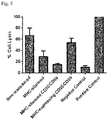
- Fig. 5 depicts the percentage of lysed cells which contain expression cassettes for different complement inhibitory molecules.
- the results show that the overexpression of CD55 and CD59 in MHC-silenced rat endothelial cells (LEW.1W) substantially decreases antibody-mediated cytotoxicity nearly to the level of the negative control.
- Rat endothelial cells (ECs) were incubated with serum of an immunized rat containing anti-RT1 u antibodies and complement.
- MHC-silenced ECs overexpressing CD55 and CD59 were best protected against complement-dependent antibody-mediated cell lysis. Only MHC-silenced ECs showed an improved protection compared to non-MHC-silenced only CD55 and CD59 transgenes expressing ECs.
- the data was normalized to the positive control.
- the negative control used serum from the EC donor (autologous control).
- This example shows that the transplantation of an allogeneic kidney does not induce an immunogenic cellular reaction by the recipient and does not induce a T-cell and B-cell-mediated rejection (HvG), which kidney was genetically manipulated by retroviral transduction to contain expression cassettes for downregulating expression of its MHC I and MHC II by at least 80%, leaving a residual expression of at most 20%, compared to wild-type expression, and to contain expression cassettes for expression of complement inhibitors CD55 an CD59.
- HvG T-cell and B-cell-mediated rejection
Landscapes
- Health & Medical Sciences (AREA)
- Life Sciences & Earth Sciences (AREA)
- Engineering & Computer Science (AREA)
- Genetics & Genomics (AREA)
- Biomedical Technology (AREA)
- Chemical & Material Sciences (AREA)
- Zoology (AREA)
- Wood Science & Technology (AREA)
- Bioinformatics & Cheminformatics (AREA)
- General Engineering & Computer Science (AREA)
- Biotechnology (AREA)
- Organic Chemistry (AREA)
- Molecular Biology (AREA)
- General Health & Medical Sciences (AREA)
- Biochemistry (AREA)
- Biophysics (AREA)
- Microbiology (AREA)
- Plant Pathology (AREA)
- Physics & Mathematics (AREA)
- Dermatology (AREA)
- Veterinary Medicine (AREA)
- Public Health (AREA)
- Animal Behavior & Ethology (AREA)
- Epidemiology (AREA)
- Transplantation (AREA)
- Oral & Maxillofacial Surgery (AREA)
- Medicinal Chemistry (AREA)
- Chemical Kinetics & Catalysis (AREA)
- Botany (AREA)
- Medicines Containing Material From Animals Or Micro-Organisms (AREA)
- Micro-Organisms Or Cultivation Processes Thereof (AREA)
Priority Applications (5)
| Application Number | Priority Date | Filing Date | Title |
|---|---|---|---|
| EP19184380.4A EP3760718A1 (fr) | 2019-07-04 | 2019-07-04 | Tissu à utiliser en tant que greffe allogénique ou xénogénique et son procédé de production |
| EP20735218.8A EP3994264A1 (fr) | 2019-07-04 | 2020-07-06 | Tissu destiné à être utilisé en tant que greffe allogénique ou xénogénique et son procédé de production |
| CA3181150A CA3181150A1 (fr) | 2019-07-04 | 2020-07-06 | Tissu destine a etre utilise en tant que greffe allogenique ou xenogenique et son procede de production |
| PCT/EP2020/068988 WO2021001577A1 (fr) | 2019-07-04 | 2020-07-06 | Tissu destiné à être utilisé en tant que greffe allogénique ou xénogénique et son procédé de production |
| US17/623,704 US20230010683A1 (en) | 2019-07-04 | 2020-07-06 | Tissue for use as allogeneic or xenogeneic transplant and method for its production |
Applications Claiming Priority (1)
| Application Number | Priority Date | Filing Date | Title |
|---|---|---|---|
| EP19184380.4A EP3760718A1 (fr) | 2019-07-04 | 2019-07-04 | Tissu à utiliser en tant que greffe allogénique ou xénogénique et son procédé de production |
Publications (1)
| Publication Number | Publication Date |
|---|---|
| EP3760718A1 true EP3760718A1 (fr) | 2021-01-06 |
Family
ID=67437514
Family Applications (2)
| Application Number | Title | Priority Date | Filing Date |
|---|---|---|---|
| EP19184380.4A Withdrawn EP3760718A1 (fr) | 2019-07-04 | 2019-07-04 | Tissu à utiliser en tant que greffe allogénique ou xénogénique et son procédé de production |
| EP20735218.8A Pending EP3994264A1 (fr) | 2019-07-04 | 2020-07-06 | Tissu destiné à être utilisé en tant que greffe allogénique ou xénogénique et son procédé de production |
Family Applications After (1)
| Application Number | Title | Priority Date | Filing Date |
|---|---|---|---|
| EP20735218.8A Pending EP3994264A1 (fr) | 2019-07-04 | 2020-07-06 | Tissu destiné à être utilisé en tant que greffe allogénique ou xénogénique et son procédé de production |
Country Status (4)
| Country | Link |
|---|---|
| US (1) | US20230010683A1 (fr) |
| EP (2) | EP3760718A1 (fr) |
| CA (1) | CA3181150A1 (fr) |
| WO (1) | WO2021001577A1 (fr) |
Families Citing this family (1)
| Publication number | Priority date | Publication date | Assignee | Title |
|---|---|---|---|---|
| JP2024534771A (ja) * | 2021-08-11 | 2024-09-26 | サナ バイオテクノロジー,インコーポレイテッド | 補体媒介性炎症反応を低減するための同種異系細胞療法のための遺伝子改変細胞 |
Citations (5)
| Publication number | Priority date | Publication date | Assignee | Title |
|---|---|---|---|---|
| EP1546174A2 (fr) | 2002-01-22 | 2005-06-29 | Cold Spring Harbor Laboratory | Methodes et compositions d'interference arn |
| WO2012009337A2 (fr) * | 2010-07-12 | 2012-01-19 | Dana-Farber Cancer Institute, Inc. | Nlrc5 en tant que cible pour moduler les réponses immunitaires médiées par le cmh de classe i |
| WO2016094679A1 (fr) * | 2014-12-10 | 2016-06-16 | Regents Of The University Of Minnesota | Cellules, tissus et organes génétiquement modifiés pour le traitement d'une maladie |
| WO2017218714A1 (fr) * | 2016-06-14 | 2017-12-21 | Regents Of The University Of Minnesota | Cellules, tissus et organes génétiquement modifiés pour le traitement d'une maladie |
| WO2018215571A1 (fr) | 2017-05-26 | 2018-11-29 | Medizinische Hochschule Hannover | Procédé pour modifier génétiquement un tissu vascularisé |
-
2019
- 2019-07-04 EP EP19184380.4A patent/EP3760718A1/fr not_active Withdrawn
-
2020
- 2020-07-06 WO PCT/EP2020/068988 patent/WO2021001577A1/fr not_active Ceased
- 2020-07-06 EP EP20735218.8A patent/EP3994264A1/fr active Pending
- 2020-07-06 US US17/623,704 patent/US20230010683A1/en active Pending
- 2020-07-06 CA CA3181150A patent/CA3181150A1/fr active Pending
Patent Citations (5)
| Publication number | Priority date | Publication date | Assignee | Title |
|---|---|---|---|---|
| EP1546174A2 (fr) | 2002-01-22 | 2005-06-29 | Cold Spring Harbor Laboratory | Methodes et compositions d'interference arn |
| WO2012009337A2 (fr) * | 2010-07-12 | 2012-01-19 | Dana-Farber Cancer Institute, Inc. | Nlrc5 en tant que cible pour moduler les réponses immunitaires médiées par le cmh de classe i |
| WO2016094679A1 (fr) * | 2014-12-10 | 2016-06-16 | Regents Of The University Of Minnesota | Cellules, tissus et organes génétiquement modifiés pour le traitement d'une maladie |
| WO2017218714A1 (fr) * | 2016-06-14 | 2017-12-21 | Regents Of The University Of Minnesota | Cellules, tissus et organes génétiquement modifiés pour le traitement d'une maladie |
| WO2018215571A1 (fr) | 2017-05-26 | 2018-11-29 | Medizinische Hochschule Hannover | Procédé pour modifier génétiquement un tissu vascularisé |
Non-Patent Citations (2)
| Title |
|---|
| DANGI ANIL ET AL: "Emerging approaches and technologies in transplantation: the potential game changers", CELLULAR & MOLECULAR IMMUNOLOGY, CHINESE SOCIETY OF IMMUNOLOGY, CH, vol. 16, no. 4, 13 February 2019 (2019-02-13), pages 334 - 342, XP036854554, ISSN: 1672-7681, [retrieved on 20190213], DOI: 10.1038/S41423-019-0207-3 * |
| ECKHARD WOLF ET AL: "Genetically modified pigs as donors of cells, tissues, and organs for xenotransplantation", ANIMAL FRONTIERS, vol. 9, no. 3, 25 June 2019 (2019-06-25), pages 13 - 20, XP055654636, ISSN: 2160-6056, DOI: 10.1093/af/vfz014 * |
Also Published As
| Publication number | Publication date |
|---|---|
| WO2021001577A1 (fr) | 2021-01-07 |
| CA3181150A1 (fr) | 2021-01-07 |
| EP3994264A1 (fr) | 2022-05-11 |
| US20230010683A1 (en) | 2023-01-12 |
Similar Documents
| Publication | Publication Date | Title |
|---|---|---|
| AU2021202641B2 (en) | Universal donor cells and related methods | |
| Gornalusse et al. | HLA-E-expressing pluripotent stem cells escape allogeneic responses and lysis by NK cells | |
| Ristich et al. | Tolerization of dendritic cells by HLA‐G | |
| Flahou et al. | Fit-for-all iPSC-derived cell therapies and their evaluation in humanized mice with NK cell immunity | |
| Papapetrou et al. | Harnessing endogenous miR-181a to segregate transgenic antigen receptor expression in developing versus post-thymic T cells in murine hematopoietic chimeras | |
| WO2015183885A9 (fr) | Procédés et compositions pour perturber l'expression génique dans des lignées de cellules souches hématopoïétiques in vivo | |
| CN107090437A (zh) | 用于增强t细胞功能的方法 | |
| US20140050710A1 (en) | Methods for preparing accessory cells and uses thereof for preparing activated nk cells | |
| Brandl et al. | The microprocessor component, DGCR8, is essential for early B‐cell development in mice | |
| Xu et al. | Production of triple-gene (GGTA1, B2M and CIITA)-modified donor pigs for xenotransplantation | |
| Kieback et al. | Enhanced T cell receptor gene therapy for cancer | |
| US20230010683A1 (en) | Tissue for use as allogeneic or xenogeneic transplant and method for its production | |
| Zheng et al. | Engineering of human mesenchymal stem cells resistant to multiple natural killer subtypes | |
| Haga et al. | Permanent, lowered HLA class I expression using lentivirus vectors with shRNA constructs: averting cytotoxicity by alloreactive T lymphocytes | |
| Kemter et al. | Human TNF‐related apoptosis‐inducing ligand‐expressing dendritic cells from transgenic pigs attenuate human xenogeneic T cell responses | |
| Hacke et al. | Suppression of HLA expression by lentivirus-mediated gene transfer of siRNA cassettes and in vivo chemoselection to enhance hematopoietic stem cell transplantation | |
| RU2846197C1 (ru) | Универсальные донорские клетки и связанные с ними способы | |
| Crane et al. | Living donor organ transplantation—gene therapy | |
| Vivien et al. | The doubling potential of T lymphocytes allows clinical-grade production of a bank of genetically modified monoclonal T-cell populations | |
| Inoue et al. | Transgene number‐dependent, gene expression rate‐independent rejection of Dd‐, Kd‐, or DdKd‐transgened mouse skin or tumor cells from C57BL/6 (DbKb) mice | |
| RU2827758C2 (ru) | Универсальные донорские клетки и связанные с ними способы | |
| RU2795302C2 (ru) | Универсальные донорские клетки и связанные с ними способы | |
| CN121487745A (zh) | 细胞 | |
| Cicciarelli et al. | Prospects for Designing ‘Universal’Stem Cell Lines | |
| WO2025181283A1 (fr) | Cellule |
Legal Events
| Date | Code | Title | Description |
|---|---|---|---|
| PUAI | Public reference made under article 153(3) epc to a published international application that has entered the european phase |
Free format text: ORIGINAL CODE: 0009012 |
|
| STAA | Information on the status of an ep patent application or granted ep patent |
Free format text: STATUS: THE APPLICATION HAS BEEN PUBLISHED |
|
| AK | Designated contracting states |
Kind code of ref document: A1 Designated state(s): AL AT BE BG CH CY CZ DE DK EE ES FI FR GB GR HR HU IE IS IT LI LT LU LV MC MK MT NL NO PL PT RO RS SE SI SK SM TR |
|
| AX | Request for extension of the european patent |
Extension state: BA ME |
|
| STAA | Information on the status of an ep patent application or granted ep patent |
Free format text: STATUS: THE APPLICATION IS DEEMED TO BE WITHDRAWN |
|
| 18D | Application deemed to be withdrawn |
Effective date: 20210707 |