EP3760760B1 - Oberflächenaktivierung für dichtstoffhaftung auf oberflächen - Google Patents
Oberflächenaktivierung für dichtstoffhaftung auf oberflächen Download PDFInfo
- Publication number
- EP3760760B1 EP3760760B1 EP20182933.0A EP20182933A EP3760760B1 EP 3760760 B1 EP3760760 B1 EP 3760760B1 EP 20182933 A EP20182933 A EP 20182933A EP 3760760 B1 EP3760760 B1 EP 3760760B1
- Authority
- EP
- European Patent Office
- Prior art keywords
- glossy
- sealant
- transition metal
- composition
- adhesion
- Prior art date
- Legal status (The legal status is an assumption and is not a legal conclusion. Google has not performed a legal analysis and makes no representation as to the accuracy of the status listed.)
- Active
Links
Images

Classifications
-
- C—CHEMISTRY; METALLURGY
- C09—DYES; PAINTS; POLISHES; NATURAL RESINS; ADHESIVES; COMPOSITIONS NOT OTHERWISE PROVIDED FOR; APPLICATIONS OF MATERIALS NOT OTHERWISE PROVIDED FOR
- C09J—ADHESIVES; NON-MECHANICAL ASPECTS OF ADHESIVE PROCESSES IN GENERAL; ADHESIVE PROCESSES NOT PROVIDED FOR ELSEWHERE; USE OF MATERIALS AS ADHESIVES
- C09J1/00—Adhesives based on inorganic constituents
-
- C—CHEMISTRY; METALLURGY
- C23—COATING METALLIC MATERIAL; COATING MATERIAL WITH METALLIC MATERIAL; CHEMICAL SURFACE TREATMENT; DIFFUSION TREATMENT OF METALLIC MATERIAL; COATING BY VACUUM EVAPORATION, BY SPUTTERING, BY ION IMPLANTATION OR BY CHEMICAL VAPOUR DEPOSITION, IN GENERAL; INHIBITING CORROSION OF METALLIC MATERIAL OR INCRUSTATION IN GENERAL
- C23C—COATING METALLIC MATERIAL; COATING MATERIAL WITH METALLIC MATERIAL; SURFACE TREATMENT OF METALLIC MATERIAL BY DIFFUSION INTO THE SURFACE, BY CHEMICAL CONVERSION OR SUBSTITUTION; COATING BY VACUUM EVAPORATION, BY SPUTTERING, BY ION IMPLANTATION OR BY CHEMICAL VAPOUR DEPOSITION, IN GENERAL
- C23C18/00—Chemical coating by decomposition of either liquid compounds or solutions of the coating forming compounds, without leaving reaction products of surface material in the coating; Contact plating
- C23C18/02—Chemical coating by decomposition of either liquid compounds or solutions of the coating forming compounds, without leaving reaction products of surface material in the coating; Contact plating by thermal decomposition
- C23C18/12—Chemical coating by decomposition of either liquid compounds or solutions of the coating forming compounds, without leaving reaction products of surface material in the coating; Contact plating by thermal decomposition characterised by the deposition of inorganic material other than metallic material
- C23C18/1229—Composition of the substrate
- C23C18/1241—Metallic substrates
-
- C—CHEMISTRY; METALLURGY
- C09—DYES; PAINTS; POLISHES; NATURAL RESINS; ADHESIVES; COMPOSITIONS NOT OTHERWISE PROVIDED FOR; APPLICATIONS OF MATERIALS NOT OTHERWISE PROVIDED FOR
- C09J—ADHESIVES; NON-MECHANICAL ASPECTS OF ADHESIVE PROCESSES IN GENERAL; ADHESIVE PROCESSES NOT PROVIDED FOR ELSEWHERE; USE OF MATERIALS AS ADHESIVES
- C09J5/00—Adhesive processes in general; Adhesive processes not provided for elsewhere, e.g. relating to primers
- C09J5/02—Adhesive processes in general; Adhesive processes not provided for elsewhere, e.g. relating to primers involving pretreatment of the surfaces to be joined
-
- B—PERFORMING OPERATIONS; TRANSPORTING
- B05—SPRAYING OR ATOMISING IN GENERAL; APPLYING FLUENT MATERIALS TO SURFACES, IN GENERAL
- B05D—PROCESSES FOR APPLYING FLUENT MATERIALS TO SURFACES, IN GENERAL
- B05D3/00—Pretreatment of surfaces to which liquids or other fluent materials are to be applied; After-treatment of applied coatings, e.g. intermediate treating of an applied coating preparatory to subsequent applications of liquids or other fluent materials
- B05D3/10—Pretreatment of surfaces to which liquids or other fluent materials are to be applied; After-treatment of applied coatings, e.g. intermediate treating of an applied coating preparatory to subsequent applications of liquids or other fluent materials by other chemical means
-
- B—PERFORMING OPERATIONS; TRANSPORTING
- B05—SPRAYING OR ATOMISING IN GENERAL; APPLYING FLUENT MATERIALS TO SURFACES, IN GENERAL
- B05D—PROCESSES FOR APPLYING FLUENT MATERIALS TO SURFACES, IN GENERAL
- B05D7/00—Processes, other than flocking, specially adapted for applying liquids or other fluent materials to particular surfaces or for applying particular liquids or other fluent materials
- B05D7/14—Processes, other than flocking, specially adapted for applying liquids or other fluent materials to particular surfaces or for applying particular liquids or other fluent materials to metal, e.g. car bodies
-
- C—CHEMISTRY; METALLURGY
- C09—DYES; PAINTS; POLISHES; NATURAL RESINS; ADHESIVES; COMPOSITIONS NOT OTHERWISE PROVIDED FOR; APPLICATIONS OF MATERIALS NOT OTHERWISE PROVIDED FOR
- C09J—ADHESIVES; NON-MECHANICAL ASPECTS OF ADHESIVE PROCESSES IN GENERAL; ADHESIVE PROCESSES NOT PROVIDED FOR ELSEWHERE; USE OF MATERIALS AS ADHESIVES
- C09J5/00—Adhesive processes in general; Adhesive processes not provided for elsewhere, e.g. relating to primers
-
- C—CHEMISTRY; METALLURGY
- C23—COATING METALLIC MATERIAL; COATING MATERIAL WITH METALLIC MATERIAL; CHEMICAL SURFACE TREATMENT; DIFFUSION TREATMENT OF METALLIC MATERIAL; COATING BY VACUUM EVAPORATION, BY SPUTTERING, BY ION IMPLANTATION OR BY CHEMICAL VAPOUR DEPOSITION, IN GENERAL; INHIBITING CORROSION OF METALLIC MATERIAL OR INCRUSTATION IN GENERAL
- C23C—COATING METALLIC MATERIAL; COATING MATERIAL WITH METALLIC MATERIAL; SURFACE TREATMENT OF METALLIC MATERIAL BY DIFFUSION INTO THE SURFACE, BY CHEMICAL CONVERSION OR SUBSTITUTION; COATING BY VACUUM EVAPORATION, BY SPUTTERING, BY ION IMPLANTATION OR BY CHEMICAL VAPOUR DEPOSITION, IN GENERAL
- C23C18/00—Chemical coating by decomposition of either liquid compounds or solutions of the coating forming compounds, without leaving reaction products of surface material in the coating; Contact plating
- C23C18/02—Chemical coating by decomposition of either liquid compounds or solutions of the coating forming compounds, without leaving reaction products of surface material in the coating; Contact plating by thermal decomposition
- C23C18/12—Chemical coating by decomposition of either liquid compounds or solutions of the coating forming compounds, without leaving reaction products of surface material in the coating; Contact plating by thermal decomposition characterised by the deposition of inorganic material other than metallic material
- C23C18/1204—Chemical coating by decomposition of either liquid compounds or solutions of the coating forming compounds, without leaving reaction products of surface material in the coating; Contact plating by thermal decomposition characterised by the deposition of inorganic material other than metallic material inorganic material, e.g. non-oxide and non-metallic such as sulfides, nitrides based compounds
- C23C18/1208—Oxides, e.g. ceramics
- C23C18/1216—Metal oxides
-
- C—CHEMISTRY; METALLURGY
- C23—COATING METALLIC MATERIAL; COATING MATERIAL WITH METALLIC MATERIAL; CHEMICAL SURFACE TREATMENT; DIFFUSION TREATMENT OF METALLIC MATERIAL; COATING BY VACUUM EVAPORATION, BY SPUTTERING, BY ION IMPLANTATION OR BY CHEMICAL VAPOUR DEPOSITION, IN GENERAL; INHIBITING CORROSION OF METALLIC MATERIAL OR INCRUSTATION IN GENERAL
- C23C—COATING METALLIC MATERIAL; COATING MATERIAL WITH METALLIC MATERIAL; SURFACE TREATMENT OF METALLIC MATERIAL BY DIFFUSION INTO THE SURFACE, BY CHEMICAL CONVERSION OR SUBSTITUTION; COATING BY VACUUM EVAPORATION, BY SPUTTERING, BY ION IMPLANTATION OR BY CHEMICAL VAPOUR DEPOSITION, IN GENERAL
- C23C18/00—Chemical coating by decomposition of either liquid compounds or solutions of the coating forming compounds, without leaving reaction products of surface material in the coating; Contact plating
- C23C18/02—Chemical coating by decomposition of either liquid compounds or solutions of the coating forming compounds, without leaving reaction products of surface material in the coating; Contact plating by thermal decomposition
- C23C18/12—Chemical coating by decomposition of either liquid compounds or solutions of the coating forming compounds, without leaving reaction products of surface material in the coating; Contact plating by thermal decomposition characterised by the deposition of inorganic material other than metallic material
- C23C18/1229—Composition of the substrate
- C23C18/1233—Organic substrates
- C23C18/1237—Composite substrates, e.g. laminated, premixed
-
- B—PERFORMING OPERATIONS; TRANSPORTING
- B05—SPRAYING OR ATOMISING IN GENERAL; APPLYING FLUENT MATERIALS TO SURFACES, IN GENERAL
- B05D—PROCESSES FOR APPLYING FLUENT MATERIALS TO SURFACES, IN GENERAL
- B05D2202/00—Metallic substrate
- B05D2202/20—Metallic substrate based on light metals
- B05D2202/25—Metallic substrate based on light metals based on Al
-
- B—PERFORMING OPERATIONS; TRANSPORTING
- B05—SPRAYING OR ATOMISING IN GENERAL; APPLYING FLUENT MATERIALS TO SURFACES, IN GENERAL
- B05D—PROCESSES FOR APPLYING FLUENT MATERIALS TO SURFACES, IN GENERAL
- B05D2350/00—Pretreatment of the substrate
- B05D2350/60—Adding a layer before coating
- B05D2350/63—Adding a layer before coating ceramic layer
-
- B—PERFORMING OPERATIONS; TRANSPORTING
- B05—SPRAYING OR ATOMISING IN GENERAL; APPLYING FLUENT MATERIALS TO SURFACES, IN GENERAL
- B05D—PROCESSES FOR APPLYING FLUENT MATERIALS TO SURFACES, IN GENERAL
- B05D2401/00—Form of the coating product, e.g. solution, water dispersion, powders or the like
- B05D2401/20—Aqueous dispersion or solution
- B05D2401/21—Mixture of organic solvent and water
-
- B—PERFORMING OPERATIONS; TRANSPORTING
- B05—SPRAYING OR ATOMISING IN GENERAL; APPLYING FLUENT MATERIALS TO SURFACES, IN GENERAL
- B05D—PROCESSES FOR APPLYING FLUENT MATERIALS TO SURFACES, IN GENERAL
- B05D2503/00—Polyurethanes
-
- B—PERFORMING OPERATIONS; TRANSPORTING
- B05—SPRAYING OR ATOMISING IN GENERAL; APPLYING FLUENT MATERIALS TO SURFACES, IN GENERAL
- B05D—PROCESSES FOR APPLYING FLUENT MATERIALS TO SURFACES, IN GENERAL
- B05D2504/00—Epoxy polymers
-
- B—PERFORMING OPERATIONS; TRANSPORTING
- B05—SPRAYING OR ATOMISING IN GENERAL; APPLYING FLUENT MATERIALS TO SURFACES, IN GENERAL
- B05D—PROCESSES FOR APPLYING FLUENT MATERIALS TO SURFACES, IN GENERAL
- B05D2601/00—Inorganic fillers
- B05D2601/20—Inorganic fillers used for non-pigmentation effect
- B05D2601/24—Titanium dioxide, e.g. rutile
-
- B—PERFORMING OPERATIONS; TRANSPORTING
- B05—SPRAYING OR ATOMISING IN GENERAL; APPLYING FLUENT MATERIALS TO SURFACES, IN GENERAL
- B05D—PROCESSES FOR APPLYING FLUENT MATERIALS TO SURFACES, IN GENERAL
- B05D7/00—Processes, other than flocking, specially adapted for applying liquids or other fluent materials to particular surfaces or for applying particular liquids or other fluent materials
- B05D7/50—Multilayers
- B05D7/52—Two layers
- B05D7/54—No clear coat specified
-
- C—CHEMISTRY; METALLURGY
- C09—DYES; PAINTS; POLISHES; NATURAL RESINS; ADHESIVES; COMPOSITIONS NOT OTHERWISE PROVIDED FOR; APPLICATIONS OF MATERIALS NOT OTHERWISE PROVIDED FOR
- C09J—ADHESIVES; NON-MECHANICAL ASPECTS OF ADHESIVE PROCESSES IN GENERAL; ADHESIVE PROCESSES NOT PROVIDED FOR ELSEWHERE; USE OF MATERIALS AS ADHESIVES
- C09J2400/00—Presence of inorganic and organic materials
- C09J2400/10—Presence of inorganic materials
- C09J2400/12—Ceramic
-
- C—CHEMISTRY; METALLURGY
- C09—DYES; PAINTS; POLISHES; NATURAL RESINS; ADHESIVES; COMPOSITIONS NOT OTHERWISE PROVIDED FOR; APPLICATIONS OF MATERIALS NOT OTHERWISE PROVIDED FOR
- C09J—ADHESIVES; NON-MECHANICAL ASPECTS OF ADHESIVE PROCESSES IN GENERAL; ADHESIVE PROCESSES NOT PROVIDED FOR ELSEWHERE; USE OF MATERIALS AS ADHESIVES
- C09J2400/00—Presence of inorganic and organic materials
- C09J2400/10—Presence of inorganic materials
- C09J2400/16—Metal
- C09J2400/166—Metal in the pretreated surface to be joined
-
- C—CHEMISTRY; METALLURGY
- C09—DYES; PAINTS; POLISHES; NATURAL RESINS; ADHESIVES; COMPOSITIONS NOT OTHERWISE PROVIDED FOR; APPLICATIONS OF MATERIALS NOT OTHERWISE PROVIDED FOR
- C09J—ADHESIVES; NON-MECHANICAL ASPECTS OF ADHESIVE PROCESSES IN GENERAL; ADHESIVE PROCESSES NOT PROVIDED FOR ELSEWHERE; USE OF MATERIALS AS ADHESIVES
- C09J2463/00—Presence of epoxy resin
- C09J2463/008—Presence of epoxy resin in the pretreated surface to be joined
-
- C—CHEMISTRY; METALLURGY
- C09—DYES; PAINTS; POLISHES; NATURAL RESINS; ADHESIVES; COMPOSITIONS NOT OTHERWISE PROVIDED FOR; APPLICATIONS OF MATERIALS NOT OTHERWISE PROVIDED FOR
- C09J—ADHESIVES; NON-MECHANICAL ASPECTS OF ADHESIVE PROCESSES IN GENERAL; ADHESIVE PROCESSES NOT PROVIDED FOR ELSEWHERE; USE OF MATERIALS AS ADHESIVES
- C09J2467/00—Presence of polyester
- C09J2467/008—Presence of polyester in the pretreated surface to be joined
-
- C—CHEMISTRY; METALLURGY
- C09—DYES; PAINTS; POLISHES; NATURAL RESINS; ADHESIVES; COMPOSITIONS NOT OTHERWISE PROVIDED FOR; APPLICATIONS OF MATERIALS NOT OTHERWISE PROVIDED FOR
- C09J—ADHESIVES; NON-MECHANICAL ASPECTS OF ADHESIVE PROCESSES IN GENERAL; ADHESIVE PROCESSES NOT PROVIDED FOR ELSEWHERE; USE OF MATERIALS AS ADHESIVES
- C09J2475/00—Presence of polyurethane
- C09J2475/008—Presence of polyurethane in the pretreated surface to be joined
Definitions
- compositions generally relate to compositions and methods of using compositions.
- Sealants are used on structures for a variety of industries for a variety of purposes, such as providing water-proofing, corrosion resistance, thermal and acoustic insulation, electrical and electro-magnetic insulation, fire-barrier protection, fuel sealing, aerosmoothing, or aesthetic appeal.
- Commercially available processes and adhesion promoters for applying a sealant to glossy topcoated metal substrates and bare carbon fiber reinforced polymer (CFRP) substrates are costly, time consuming to apply, pose health and safety concerns, and/or are ineffective.
- Commercially available processes and adhesion promoters require multiple separate steps of sanding of the surface, cleaning the sanded surface, applying an adhesion promoter over the cleaned surface, and applying a sealant over the activated surface.
- the glossy topcoated surfaces and CFRP surfaces are sanded or abraded to create a rough texture in the topcoated surfaces and the CFRP surfaces.
- the roughened surfaces have increased surface area and dangling bonds for binding of an adhesion promoter.
- sanding of surfaces is difficult to perform over large surfaces, over curved surfaces, or over multi-faceted surfaces. Sanding of surfaces is also costly and time consuming to perform.
- sanding of surfaces poses environmental and health concerns. Due to particles generated during sanding, an operator typically wears a respirator mask during a sanding process.
- Sanded glossy topcoated surfaces and sanded CFRP surfaces are cleaned to remove contaminants that spoil the sealant or inhibit physical or chemical bond formation with the surfaces.
- the cleaned glossy topcoated sanded surfaces and cleaned CFRP sanded surfaces are surface activated with an adhesion promoter in a separate step following the cleaning step.
- Commercially available adhesion promoters may require subsequent processes, such as curing of the adhesion promoter with heat and/or light for activation of the adhesion promoter. Insufficiently activated areas may cause adhesion failure of the sealant resulting in the need for rework, including repeating the entire sanding, cleaning, surface activation, and curing steps.
- FIG. 1 is a schematic cross-sectional view of a vehicle surface 10 activated with a suspension of a titanium dioxide adhesion promoter 20.
- the vehicle surface 10 includes a plurality of panels 12 joined together with a plurality of rivets 14.
- the titanium dioxide adhesion promoter 20 is applied from a suspension of solid titanium dioxide particles of pre-determined size in a liquid.
- the titanium dioxide adhesion promoter 20 from a suspension tends to agglomerate. Agglomeration of the titanium dioxide adhesion promoter 20 results in poor coverage over the vehicle surface 10.
- the agglomerated titanium dioxide adhesion promoter 20 does not cover microcracks 18 or rivets 14 on the vehicle surface 10 due to the titanium dioxide adhesion promoter 20 adhering to itself rather than seeping into microcracks or adhering to rivets.
- the agglomerated titanium dioxide adhesion promoter 20 does not cover gaps formed between panels 12 since the gaps 16 cannot be sanded since the agglomerated titanium dioxide adhesion promoter 20 does not penetrate into the gaps.
- JP2017132504 relates to packaging materials that can form a packaging bag which can maintain excellent tearability even when a packaging object has a high alcohol content.
- the disclosure provides a packaging material for an object containing an alcohol.
- the packaging material has a substrate layer, a barrier layer, and a sealant layer in the stated order.
- An anchor coat layer containing a titanium oxide is provided between the barrier layer and the sealant layer.
- US2007092735 relates to an organometallic coating deposited from a metal alkoxide composition under conditions sufficient to form a polymeric metal oxide coating with unreacted alkoxide and hydroxyl groups. Also disclosed are substrates coated with the organometallic coating and a method for applying the organometallic coating to a substrate.
- US2006162769 relates to a low-temperature fabrication method for fabricating a conformal metal oxide coating on a substrate, the method comprising the steps of: coating a surface of a substrate with a non-hydrolysed precursor solution of one or more moisture-sensitive metal alkoxides in an organic solvent at a temperature of less than 150° C; and rinsing the precursor solution coated on the surface of the substrate in water at a temperature of less than 150° C to hydrolyse the precursor solution at the surface of the substrate and thereby form a conformal metal oxide coating on the substrate.
- JPS4841939 relates to a metal surface coloring method for forming a thin film of titanium oxide on the surface of a metal plate, rod, wire or the like.
- US2018265820 relates to methods of cleaning/activating a surface before application of sealant, comprising contacting the substrate with an adhesion promoter in combination with a cleaning agent and a dye enabling visual inspection of the surface prior to application of the sealant.
- the document describes a method of improving adhesion of sealant to a surface, the method comprising the steps of: (i) contacting a surface with a liquid composition comprising at least one cleaning agent, at least one adhesion promoter, and at least one dye; (ii) transitioning at least one portion of the surface in a first surface contamination state to a second surface contamination state and simultaneously distributing the at least one dye on the surface associated with the second surface contamination state, the second surface contamination state having reduced or eliminated surface contamination, the transitioning step simultaneously cleaning and preparing the at least one portion of the surface for adhesion to or by another material; (iii) identifying remaining surface in the first surface contamination state after steps (i) and (ii) by the visual distribution of the at least one dye on the surface.
- the at least one adhesion promoter may include one or more of a transition metal alkoxide or a metal alkylalkoxide.
- the transition metal alkoxide or the metal alkylalkoxide may be selected from mono-, di-, tri- and tetra (alkyl)alkoxides of aluminum, titanium, and zirconium.
- a composition for surface activation of an aerospace vehicle comprises an organic solvent present in an amount from about 95 to about 99.5 volume percent, a transition metal alkoxide present in an amount from about 0.5 to about 5 volume percent, and a water content in an amount from about 0 to about 5 volume percent.
- a method of sealing a surface of an aerospace vehicle includes applying a composition to the surface.
- the composition includes an organic solvent present in an amount from about 95 to about 99.5 volume percent, transition metal alkoxide present in an amount from about 0.5 to about 5 volume percent, and a water content present in an amount from about 0 to about 5 volume percent.
- the composition applied to the surface is dried to form a transition metal oxide from the transition metal alkoxide. Excess of the transition metal oxide is removed from the surface. A sealant is applied over a remaining layer of the transition metal oxide on the surface.
- a sealed surface of an aerospace vehicle includes a substrate having a surface roughness from about 1 microinch ( ⁇ in) (25 nm) to about 500 microinch ( ⁇ in) (12700 nm) selected from a group consisting of a glossy topcoated metal substrate or a bare composite substrate.
- ⁇ in microinch
- ⁇ in microinch
- a monolayer or more of a transition metal oxide is adsorbed on a surface of the substrate.
- a sealant is adhered to the one or more monolayers of the transition metal oxide.
- ranges from any lower limit can be combined with any upper limit to recite a range not explicitly recited, as well as, ranges from any lower limit can be combined with any other lower limit to recite a range not explicitly recited, in the same way, ranges from any upper limit can be combined with any other upper limit to recite a range not explicitly recited.
- ranges from any upper limit can be combined with any other upper limit to recite a range not explicitly recited.
- within a range includes every point or individual value between its end points even though not explicitly recited. Thus, every point or individual value can serve as its own lower or upper limit combined with any other point or individual value or any other lower or upper limit, to recite a range not explicitly recited.
- compositions and methods are related to sealing a surface of an aircraft, a spacecraft, or an aerospace vehicle (collectively referred to as an "aerospace vehicle"), such as a surface outside or within an aerospace vehicle.
- the surface can be a glossy topcoated metal surface, a bare composite surface, or other smooth surfaces. Bare composites are used in aircrafts for horizontal wing skins, horizontal tail skins, vertical tail skins, fuselage covers, avionic doors, and other aircraft components.
- an adhesion promoter based cleaning composition is used to clean and to activate a surface of an aerospace vehicle to promote adhesion of a sealant over the cleaned activated surface eliminating separate cleaning and adhesion promoting processes.
- a smooth surface of an aerospace vehicle is sealed without mechanical abrasion or chemical acid etching of the surface.
- a surface of an aerospace vehicle can be surface activated or sealed with reduced labor, with reduced time, with reduced cost, and/or with reduced environmental/health/safety concerns as compared to conventional processes.
- the adhesion promoter based cleaning composition can also be used to clean and promote adhesion of a sealant over any topcoated metal surface or bare composite surface other than an aerospace vehicle surface.
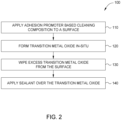
- FIG. 2 is a schematic flow chart of a method 100 of activating and/or sealing a surface of an aerospace vehicle.
- an adhesion promoter based cleaning composition is applied to a non-textured surface to clean and to activate the surface.
- a non-textured surface is a surface with has not been sanded nor etched to increase the surface roughness.
- the adhesion promoter based cleaning composition includes an organic solvent and a transition metal alkoxide.
- the organic solvent acts as a cleaning agent removing contaminants that spoil the sealant/adhesion promoter or inhibit physical or chemical bond formation of the adhesion promoter/sealant with the substrate.
- the transition metal alkoxide is an adhesion promoter providing an interface between the surface and the sealant to affect an improved adhesion thereof.
- the non-textured surface includes a substrate, such as a metal substrate, a polymer substrate, a composite substrate, or other suitable substrates.
- the metal substrate can be a bare aluminum substrate, an anodized aluminum substrate, a titanium substrate, a stainless steel substrate, a high strength steel substrate, or other suitable metal substrates.
- the metal substrates include a glossy topcoat formed thereover. Examples of glossy topcoats include polyurethane, epoxy, polyester, polycarbonate, acrylic, and polyester coatings.
- the glossy topcoats formed over the metal substrates can include or exclude intermediate or priming layers between the glossy topcoats and the metal substrates.
- An aluminum (bare or anodized) substrate with a glossy topcoat formed thereover is one example of a metal substrate used to manufacture aerospace vehicles.
- Polymer substrates comprise polyimide, polysulfide, plastic, elastomer, or other polymer materials.
- Composite surface can be a surface of a CFRP substrate, a glass fiber reinforced polymer substrate, an aramid fiber reinforced polymer substrate, a boron fiber reinforced polymer substrate, or other suitable fiber reinforced polymer/resin substrates.
- a CFRP substrate without any glossy topcoat is one example of a composite substrate used in the manufacture of aerospace vehicles.
- Other suitable substrates include substrates containing glass, wood, or fabric.
- the present adhesion promoter based cleaning composition can be directly applied to a bare composite substrate. In comparison, other adhesion promoters require a top coating over the bare composite substrate in which the adhesion promoters are applied to the top coated composite substrate.
- the method 100 excludes mechanical abrading or chemical acid etching of the surface to retain a non-textured surface, a non-sanded, or a smooth surface of the aerospace vehicle.
- a substrate having a surface roughness of about 1 microinch ( ⁇ in) (25 nm) to about 500 microinch ( ⁇ in) (12700 nm) indicates a non-textured, a non-sanded, or a smooth surface.
- the method 100 renders optional traditional mechanical abrasion by sanding of surfaces, such as glossy topcoated metal surfaces and bare composite surfaces, due to the uniform coverage and/or strength of the present adhesion promoter onto the unsanded surfaces.
- the sanding process is economically undesirable since sanding adds to manufacture time and is environmentally undesirable since sanding produces dust.
- Sanding is difficult to apply uniformly, especially over curved substrates, large substrates, or multi-faceted substrates of an aerospace vehicle.
- Sanding is aesthetically undesirable since sanding alters or shifts the color of the surface.
- Sanding typically cannot be used on special effect topcoats containing micas or metallic particles.
- the organic solvent of the adhesion promoter based cleaning composition comprises one or a blend of volatile organic solvents, including but not limited to, isopropyl alcohol (IPA), benzyl alcohol, butanol, methyl ethyl ketone (MEK), methyl n-propyl ketone (MPK), toluene, methyl isobutyl ketone (MIBK), acetone, DIESTONE DLS (a mixture of monopropylene glycol methyl ether, 2-methoxy 1-methylethyl acetate, C 9-11 n-alkanes, isoalkanes, cyclics with ⁇ 2% aromatics), other solvents, and other co-solvents.
- volatile organic solvents including but not limited to, isopropyl alcohol (IPA), benzyl alcohol, butanol, methyl ethyl ketone (MEK), methyl n-propyl ketone (MPK), toluene, methyl isobuty
- the organic solvent is isopropyl alcohol (IPA), benzyl alcohol, or butanol due to their low cost and low environmental health and safety impact. Additional solvents are unnecessary to add to the composition to assist in the solubility of the adhesion promoter.
- IPA isopropyl alcohol
- benzyl alcohol or butanol due to their low cost and low environmental health and safety impact. Additional solvents are unnecessary to add to the composition to assist in the solubility of the adhesion promoter.
- transition metal alkoxide may comprise alkoxide or alkanoate groups.
- a transition metal alkoxide as referenced throughout this disclosure may therefore be a transition metal alkoxide or a transition metal alkanoate.
- the transition metal of the transition metal alkoxide of the adhesion promoter based cleaning composition can be titanium or zirconium.
- the transition metal alkoxide can be a transition metal having an oxidation state of +4 with four of the same or independent alkoxide groups (-OR) or alkanoate groups (-OOR).
- the transition metal alkoxide is represented by the formula M(OR) 4 or M(OOR) 4 in which each R independently represents the same or different alkyl group.
- Each alkyl group can comprise any number of carbon atoms, such as 20 carbon atoms or less, such as 10 carbon atoms or less, such as from 1 to 8 carbon atoms.
- the transition metal alkoxide is a transition metal butoxide, a transition metal ethoxide, a transition metal ethylhexyloxide, a transition metal ethylhexanoate, or mixtures thereof.
- the transition metal alkoxide is a titanium (IV) butoxide (TiB), a titanium (IV) ethoxide (TiE), a titanium (IV) ethylhexyloxide (TiEH), a titanium (IV) ethylhexanoate (TiEHO), or mixtures thereof.
- the transition metal alkoxide used according to the presently claimed invention is titanium (IV) ethoxide (TiE) due to its high adhesion to a variety of surfaces, such as over a polyurethane glossy enamel topcoated metal surface.
- the method 100 combines what would typically be a two-step process, into a one step process in which the cleaning solvent and the adhesion promoter are combined into a single adhesion promoter based cleaning composition to provide an effective layer of adhesion promoter on a surface of an aerospace vehicle.
- the adhesion promoter based cleaning composition can be applied to a surface of an aerospace vehicle by brushing, rolling, dipping, drenching, or other suitable application of the composition.
- brushing the composition includes utilizing a brush or a cleaning cloth (such as a cheese cloth, a wiper cloth, or a rag) to apply the composition over a surface of an aerospace vehicle.
- the adhesion promoter based cleaning composition cannot be sprayed with a spray gun due to the high volume percent of organic solvent of the adhesion promoter based cleaning composition.
- the high volume percent of organic solvent causes the composition to be flammable due to the low flash point of the organic solvent and unsuitable to be applied by spraying in a manufacturing setting.
- the adhesion promoter based cleaning composition takes the form of a solution or an aerosol.
- the solution or aerosol of the adhesion promoter based cleaning composition spreads more easily over a surface of an aerospace vehicle in comparison to commercial adhesion promoters in the form of suspensions or pastes.
- an adhesion promoter based cleaning composition can remove or can reduce the amount of oils or other contaminants from a surface of an aerospace vehicle. For example, brushing or rolling the adhesion promoter can dissolve and/or entrain oils or contaminants onto the brush, cleaning cloth, rollers, etc.
- Application of an adhesion promoter based cleaning composition leaves a monolayer or more of a transition metal alkoxide over a surface of an aerospace vehicle.
- a transition metal oxide is formed in-situ over the surface of the aerospace vehicle.
- the transition metal oxide formed is a monolayer or more of solid transition metal oxide physically binding to the surface of the aerospace vehicle.
- the transition metal oxide provides a nanosurface that enhances the interface of the sealant to a surface of an aerospace vehicle, such as a glossy topcoated surface or a bare composite surface.
- the organic solvent of the adhesion promoter based cleaning composition can be a volatile organic solvent which evaporates in ambient conditions to leave the transition metal alkoxide on the surface the aerospace vehicle.
- ambient conditions means that there is no heating by heat lamps or heating elements directed to the surface to evaporate the organic solvent.
- the organic solvent of the adhesion promoter based cleaning composition applied at block 110 includes an organic solvent with a vapor pressure at 20°C of above 10 mm Hg (1.3 kPa) or more to provide more rapid evaporation.
- the organic solvent of the adhesion promoter based cleaning solution can include an organic solvent with a vapor pressure at 20°C of about 45 mm Hg (6.0 kPa) or less to reduce excess organic solvent vapors.
- the organic solvent of the adhesion promoter based cleaning solution include an organic solvent with a vapor pressure at 20°C from about 10 mm Hg (1.3 kPa) to about 45 mm Hg (6.0 kPa), such as isopropyl alcohol (IPA) which has a vapor pressure at 20°C of about 33 mmHg (4.4 kPa) or such as tert-butanol which has a vapor pressure at 20°C of about 31 mmHg (4.1 kPa).
- IPA isopropyl alcohol
- tert-butanol which has a vapor pressure at 20°C of about 31 mmHg (4.1 kPa).
- the transition metal alkoxide left on the surface the aerospace vehicle comprises a monolayer or more of the transition metal alkoxide over the surface.
- the transition metal alkoxide is hydrolysable.
- moisture in the air reacts with the transition metal alkoxide to form a transition metal oxide.
- moisture in the air reacts with titanium alkoxide to form titanium dioxide in-situ
- moisture in the air reacts with zirconium alkoxide to form zirconium dioxide in-situ. Formation of metal oxide in-situ increases the uniform coverage of the transition metal oxide over the surface of the aerospace vehicle.
- the transition metal oxide formed in-situ from the adhesion promoter based cleaning composition has reduced agglomeration and increased spreading.
- the transition metal alkoxide can be present in the adhesion promoter based cleaning composition applied at block 110 in an amount from about 0.5 to about 5 volume percent and the organic solvent can be present in an amount from about 95 to about 99.5 volume percent.
- the low ratio of transition metal alkoxide to organic solvent helps the spreading of the transition metal alkoxide when applied over the surface of the aerospace vehicle and helps to provide in-situ reactions of the transition metal alkoxide to transition metal oxide on the surface of the aerospace vehicle.
- transition metal alkoxide may cause undesirable agglomeration of the formed transition metal oxide.
- commercially available titanium dioxide adhesion promoter suspensions have titanium dioxide formed ex situ which agglomerates or adheres to itself rather than on the surface of an aerospace vehicle.
- the organic solvent in the adhesion promoter based cleaning composition applied at block 110 can be an anhydrous solvent.
- the adhesion promoter based cleaning composition applied at block 110 comprises, consists essentially of, or consists of an organic solvent present in an amount from about 95 to about 99.5 volume percent, a transition metal alkoxide present in an amount from about 0.5 to about 5 volume percent, and a water content in an amount from about 0 to about 5 volume percent.
- the water content of the adhesion promoter based cleaning composition is above 0 vol percent due to water absorption into the organic solvent.
- Formation of a transition metal oxide in-situ over the surface of the aerospace vehicle can occur in a time from about 0.5 minutes to about 30 minutes after application in block 110. The time varies depending on how fast the organic solvent evaporations leaving the transition metal alkoxide to react with moisture in the air. Allowing the adhesion promoter based cleaning composition to dry over the surface of the aerospace vehicle in a time from about 0.5 minute to about 30 minutes is sufficient to proceed to block 130 to reduce the overall time to perform the method 100. However, allowing the adhesion promoter based cleaning composition to dry over the surface of the aerospace vehicle for longer than 30 minutes does not reduce the quality of activation of the surface.
- the transition metal alkoxide by itself and/or the adhesion promoter based cleaning composition as a whole can be a colorless or a transparent solution.
- the adhesion promoter cleaning composition can provide a white solid color from the transition metal oxide layer formed in-situ as the organic solvent evaporates, such as white titanium dioxide or white zirconium dioxide.
- the white solid color of the transition metal oxide can be indicative of whether there is nonuniform application of the adhesion promoter based cleaning composition.
- the adhesion promoter based cleaning composition can be re-applied to areas of the surface of the aerospace vehicle with insufficient coverage.
- the adhesion promoter based cleaning composition can exclude dyes used as a tracking mechanism to track coverage of the composition since the white solid color of the transition metal oxide can indicate uniform coverage.
- excess transition metal oxide is wiped from the surface of the aerospace vehicle.
- the excess transition metal oxide can be wiped using a cheese cloth, a wiper cloth, a rag, or other suitable wiper.
- Excess transition metal oxide or loose particles of transition metal oxide over the surface of the aerospace vehicle is wiped from the surface leaving a monolayer or more, such as a thickness from about 200 nm to about 400 nm, of transition metal oxide with a strong physical adsorption over the surface.
- the wipe is a dry wipe to physically remove the excess or loose transition metal oxide. A wet water or wet solvent wipe is unnecessary.
- the transition metal oxide can penetrate into the topcoat of a glossy topcoated metal surface, such as into a glossy topcoated aluminum substrate.
- the adhesion based cleaning composition provides a more uniform thin coverage of transition metal oxide in comparison to other adhesion promoters which have agglomerated transition metal oxide particles prone to adhesion failure.
- the adhesion based cleaning composition can exclude surfactants.
- other commercially available adhesion promoters with titanium dioxide particles in suspension have surfactants to reduce agglomeration or precipitation of the titanium dioxide particles. These surfactants may adversely affect sealant adhesion.
- the adhesion based cleaning composition can be low cost for one or more of factors.
- the adhesion based cleaning composition can comprise mainly of a low cost organic solvent, such as comprising about 95 or more volume percent of organic solvent.
- the adhesion based cleaning composition can have a low amount of relatively more expensive transition metal alkoxide in comparison to relatively less expensive organic solvent, such as comprising about 5 or less volume percent of transition metal alkoxide.
- the adhesion based cleaning composition can exclude dyes.
- the adhesion based cleaning composition can exclude surfactants.
- a sealant is applied over the transition metal oxide formed over the surface of the aerospace vehicle.
- the sealant physically and/or chemically binds to the transition metal oxide covered surface of the aerospace vehicle.
- sealants include, without limitation, polysulfides, polythioethers, polysilicones, polysiloxanes, epoxides, and polyurethanes.
- the sealants can provide leakage resistance, corrosion resistance, thermal and acoustic insulation, electrical and electro-magnetic insulation, fire-barrier protection, and/or aesthetic appeal.
- the sealants provide leakage resistance and corrosion resistance from uniform coverage of the adhesion promoter over gaps, microcracks, cervices, pinholes, or imperfections of a surface of an aerospace vehicle.
- the sealant adheres to the surface, such as a glossy topcoated metal substrate or a composite substrate, after treatment with the adhesion promoter based cleaning composition. These sealants exhibit high adhesive peel strength and low cohesive failure when pulled under a load machine.
- the sealant has a peel strength of about 20 or more pounds per inch of width (PIW) (3.5 or more N/mm), such as a peel strength of about 25 or more PIW (4.4 or more N/mm), as measured by ASTM D3330 over a glossy topcoated metal surface, such as a glossy topcoated aluminum substrate, which has not been sanded or texture.
- the sealant has a peel strength of about 20 or more pounds per inch of width (PIW) (3.5 or more N/mm), such as a peel strength of about 25 or more PIW (4.4 or more N/mm), as measured by ASTM D3330 over a composite surface, such as a CFRP substrate, which has not been sanded or texture.
- PIW pounds per inch of width
- ASTM D3330 over a composite surface, such as a CFRP substrate, which has not been sanded or texture.
- the sealant can be non-transparent or transparent.
- the adhesion promoter based clean composition can be dye-free or can include a colored dye.
- the color of the transition metal oxide or colored dye of the adhesion promoter based cleaning composition can be seen through the transparent sealant.
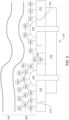
- FIG. 3 is a schematic cross-sectional view of an aerospace vehicle surface 210 activated with an adhesion promoter based cleaning composition with a transition metal oxide adhesion promoter 220 formed in-situ from a transition metal alkoxide, such as the adhesion promoter based cleaning composition as described in reference to the method 100 of FIG. 2 .
- the aerospace vehicle surface 210 includes a plurality of panels 212 joined together with a plurality of rivets 214.
- the aerospace vehicle can be any surface of an aircraft, a spacecraft, or an aerospace vehicle (collectively referred to as an "aerospace vehicle"), including unmanned vehicles, rotary wing vehicles, missiles, or ballistic flight vehicles.
- the surface can be an exterior component or an interior component.
- the transition metal oxide adhesion promoter 220 such as titanium dioxide, is applied from a transition metal alkoxide liquid with an organic solvent.
- the transition metal oxide adhesion promoter 220 forms to a thickness of a monolayer or more, such as a thickness from about 200 nm to 400 nm. Since the transition metal alkoxide is a liquid, the transition metal alkoxide more uniformly spreads over the aerospace vehicle surface 210 in comparison to a commercially available titanium dioxide suspension. Since the transition metal alkoxide does not agglomerate or precipitate out as a particle in an organic solvent, the transition metal alkoxide has increased coverage over gaps 216, between the panels 212, and over the rivets 214.
- transition metal alkoxide forms transition metal oxide in-situ
- the physical adsorption of the transition metal oxide formed in-situ onto the aerospace vehicle surface 210 is stronger than the physical adsorption of titanium dioxide particles applied as a suspension.
- the transition metal alkoxide of the adhesion promoter based cleaning composition acts as a filler of microcracks, crevices, imperfections, or pinholes. No additional filler additive is necessary to be added to the adhesion promoter based cleaning composition.
- a sealant applied over the transition metal oxide adhesion promoter 220 forms a sealant layer 230 over the aerospace vehicle surface 210. Since the transition metal oxide adhesion promoter 220 from the adhesion based promoter cleaning composition is formed more uniformly over microcracks, cervices, or imperfections on the aerospace vehicle surface 210, the sealant layer 230 forms more uniformly over the transition metal oxide adhesion promoter 220 and the aerospace vehicle surface 210. Thus, the sealant has increased corrosion resistance, leakage performance, fire resistance, and/or peel strength due to more uniform coverage over the aerospace vehicle surface.
- transition metal alkoxide of the adhesion promoter based cleaning composition can interact with hydroxyl groups present on the surface of the aerospace vehicle surface 210, such as the hydroxyl groups of a glossy topcoat formed over a metal substrate or such as the hydroxyl groups from a composite substrate, forming a chemical adsorption of the transition metal oxide onto the aerospace vehicle surface.
- the transition metal oxide has a strong chemical bond to the glossy topcoated surface of a metal substrate or to a bare surface of a composite substrate.
- a sealant layer 230 has a peel strength of about 20 or more pounds per inch of width (PIW) (3.5 or more N/mm), such as a peel strength of about 25 or more PIW (4.4 or more N/mm), as measured by ASTM D3330 over a glossy topcoated metal surface, such as a glossy topcoated aluminum substrate, which has not been sanded or texture.
- PIW pounds per inch of width
- the sealant has a peel strength of about 20 or more pounds per inch of width (PIW) (3.5 or more N/mm), such as a peel strength of about 25 or more PIW (4.4 or more N/mm), as measured by ASTM D3330 over a bare composite surface, such as a CFRP substrate, which has not been sanded or texture.
- PIW pounds per inch of width
- ASTM D3330 over a bare composite surface, such as a CFRP substrate, which has not been sanded or texture.
- adhesion promoters lack the peel strength of the sealant provided by the adhesion based promoter cleaning composition.
- Other adhesion promoters are directed to the aesthetic appearance of coatings, such as paint coatings, decorative coatings, or decals, over the adhesion promoters with visually reduced cracking or visually reduced peeling. Visually reduced cracking or visually reduced peeling is typically tested by an impact test of dropping a weight from a certain height to the specimen to see if there are visual cracks or visual peeling.
- Peel strength tests are very different from impact tests. Peel strength tests are tensile measurements of the bond strength between the sealant and the glossy topcoated metal substrate or to a bare surface of a composite substrate provided by the transition metal oxide. A specimen that passes an impact test can have low or no peel strength when pulled or elongated from a tensile load. Measurement of peel strength as referenced herein may be according to ASTM D3330-04(2010), Method A .
- the sealant layer 230 can be applied to functional areas of an aerospace vehicle.
- the sealant layer 230 can be applied to the wings and to the tails of an aircraft to prevent water corrosion.
- the wings and the tails experience high mechanical loads and stresses. Water corrosion to the wings and tail of an aircraft can cause mechanical failure of the aircraft.
- the sealant layer 230 can be applied to the fuel tanks of an aircraft to prevent fuel leakage.
- the fuel tanks can be in the wings, the fuselage, and/or the tail of the aircraft. Leakage of fuel can cause a fire or explosion of the aircraft.
- the sealant layer 230 can be applied to the engine compartment of an aircraft to reduce the spread of any flames from the engine compartment. In comparison, aesthetic coatings provide little or no function purpose to the aircraft.
- the present compositions and methods are related to sealing a smooth surface of an aerospace vehicle, such as a glossy topcoated metal surface or a bare composite surface.
- the present adhesion promoter based cleaning compositions can be used to clean and to activate a smooth surface of an aerospace vehicle to promote adhesion of a sealant over the cleaned activated surface, eliminating separate cleaning and adhesion promoting steps.
- the smooth surface of an aerospace vehicle can be sealed without mechanical abrasion or chemical acid etching of the surface.
- the surface of an aerospace vehicle can be surface activated or sealed with reduced labor, with reduced time, with reduced cost, and/or with reduced environmental/health/safety concerns. The extent of protection provided by the present application is determined by the appended claims.
- examples 1-6 aluminum substrates were coated with an epoxy glossy enamel topcoat. None of the surfaces of the epoxy glossy enamel top coated substrates were sanded.
- the epoxy glossy enamel top coat was cleaned and surface activated with application of a single composition comprising an IPA organic solvent present in an amount from about 95 to about 99.5 volume percent and a titanium ethylhexanoate (TiEHO) present in an amount from about 0.5 to about 5 volume percent.
- the substrates were left to dry in ambient temperature and ambient air for about 30 minutes to form titanium dioxide over the epoxy glossy enamel topcoat. Excess titanium dioxide was wiped from the substrates. A sealant was applied over the titanium dioxide over the epoxy glossy enamel topcoated substrates.
- the epoxy glossy enamel top coat was cleaned and surface activated with application of a single composition comprising an IPA organic solvent present in an amount from about 95 to about 99.5 volume percent and a titanium ethylhexyloxide (TiEH) present in an amount from about 0.5 to about 5 volume percent.
- the substrates were left to dry in ambient temperature and ambient air for about 30 minutes to form titanium dioxide over the epoxy glossy enamel topcoat. Excess titanium dioxide was wiped from the substrates. A sealant was applied over the titanium dioxide over the epoxy glossy enamel topcoated substrates.
- the peel strength in pounds per inch widths (PIW) of the sealant onto the substrate was peel tested in accordance to ASTM D3330 and percentage of sealant adhesion failure during testing are shown in TABLE 1 below.
- Examples 1-2 without any adhesion promoter showed low sealant adhesion strength of 6.3 PIW (1.1 N/mm) or less with 60% or more adhesion failure.
- Examples 3-6 with TiEHO or TiEH adhesion promoters showed high adhesion strength of 29 PIW (5.1 N/mm) or more with 0% adhesion failure (100 % cohesion).
- examples 7-18 aluminum substrates were coated with a glossy polyester topcoat. None of the surfaces of the glossy polyester topcoated substrates were sanded.
- the glossy polyester topcoated surface was cleaned and surface activated with application of a single composition comprising an IPA organic solvent present in an amount from about 95 to about 99.5 volume percent and a titanium butoxide (TiB) present in an amount from about 0.5 to about 5 volume percent.
- the substrates were left to dry in ambient temperature and ambient air for about 30 minutes to form titanium dioxide over the glossy polyester topcoated surface. Excess titanium dioxide was wiped from the substrates. A sealant was applied over the titanium dioxide over the glossy polyester topcoated substrates.
- the glossy polyester topcoated surface was cleaned and surface activated with application of a single composition comprising an IPA organic solvent present in an amount from about 95 to about 99.5 volume percent and a titanium ethoxide (TiE) present in an amount from about 0.5 to about 5 volume percent.
- IPA organic solvent present in an amount from about 95 to about 99.5 volume percent
- TiE titanium ethoxide
- the substrates were left to dry in ambient temperature and ambient air for about 30 minutes to form titanium dioxide over the glossy polyester topcoated surface. Excess titanium dioxide was wiped from the substrates. A sealant was applied over the titanium dioxide over the glossy polyester topcoated substrates.
- the glossy polyester topcoated surface was cleaned with an organic solvent.
- the cleaned glossy polyester topcoated surface was surface activated with Socogel TM A0203 sol-gel from Socomore located in Fort Worth, TX following the recommended directions for use from Socomore.
- a sealant was applied over the activated surface of the glossy polyester topcoated substrate.
- the glossy polyester topcoated surface was cleaned with an organic solvent.
- the cleaned glossy polyester topcoated surface was surface activated with AP86A Adhesion promoter from 3M located in St. Paul, MN following the recommended directions for use from 3M.
- a sealant was applied over the activated surface of the glossy polyester topcoated substrate.
- the glossy polyester topcoated surface was cleaned with an organic solvent.
- the cleaned glossy polyester topcoated surface was surface activated with AP596 Adhesion promoter from 3M located in St. Paul, MN following the recommended directions for use from 3M.
- a sealant was applied over the activated surface of the glossy polyester topcoated substrate.
- the glossy polyester topcoated surface was cleaned with an organic solvent.
- the cleaned glossy polyester topcoated surface was surface activated with PR-1826 from PPG located in Pittsburgh, PA following the recommended directions for use from PPG.
- a sealant was applied over the activated surface of the glossy polyester topcoated substrate.
- PIW pounds per inch widths
- Examples 7-8 without any adhesion promoter showed low sealant adhesion strength of 1.34 PIW (0.23 N/mm) or less with 100% adhesion failure.
- Examples 9-14 with TiB or TiE adhesion promoters showed high adhesion strength of 24 PIW (4.2 N/mm) or more with 0% adhesion failure (100 % cohesion).
- Examples 15-18 with commercially available adhesion promoters showed low sealant adhesion strength of 12.7 PIW (2.2 N/mm) or less with 100% adhesion failure.
- examples 19-29 aluminum substrates were coated with a polyurethane glossy enamel topcoat. None of the surfaces of the polyurethane glossy enamel topcoated substrates were sanded.
- the polyurethane glossy enamel topcoated surface was cleaned and surface activated with application of a single composition comprising an IPA organic solvent present in an amount from about 95 to about 99.5 volume percent and a titanium ethoxide (TiE) present in an amount from about 0.5 to about 5 volume percent.
- IPA organic solvent present in an amount from about 95 to about 99.5 volume percent
- TiE titanium ethoxide
- the substrates were left to dry in ambient temperature and ambient air for about 30 minutes to form titanium dioxide over the glossy polyester topcoated surface. Excess titanium dioxide was wiped from the substrates. A sealant was applied over the titanium dioxide over the glossy polyester topcoated substrates.
- the polyurethane glossy enamel topcoated surface was cleaned with an organic solvent.
- the cleaned polyurethane glossy enamel topcoated surface was activated with Socogel TM sol-gel from Socomore located in Fort Worth, TX following the recommended directions for use from Socomore.
- a sealant was applied over the activated surface of the polyurethane glossy enamel topcoated substrate.
- the polyurethane glossy enamel topcoated surface was cleaned with an organic solvent.
- the cleaned polyurethane glossy enamel topcoated surface was surface activated with AP86A Adhesion promoter from 3M located in St. Paul, MN following the recommended directions for use from 3M.
- a sealant was applied over the activated surface of the polyurethane glossy enamel topcoated substrate.
- the polyurethane glossy enamel topcoated surface was cleaned with an organic solvent.
- the cleaned polyurethane glossy enamel topcoated surface was surface activated with Bondit A-43 promoter from Reltek located in Santa Rosa, CA following the recommended directions for use from Reltek.
- a sealant was applied over the activated surface of the polyurethane glossy enamel topcoated substrate.
- the polyurethane glossy enamel topcoated surface was cleaned with an organic solvent.
- the cleaned polyurethane glossy enamel topcoated surface was surface activated with AP596 Adhesion promoter from 3M located in St. Paul, MN following the recommended directions for use from 3M.
- a sealant was applied over the activated surface of the polyurethane glossy enamel topcoated substrate.
- the glossy polyester topcoated surface was cleaned with an organic solvent.
- the cleaned polyurethane glossy enamel topcoated surface was surface activated with PR-1826 from PPG located in Pittsburgh, PA following the recommended directions for use from PPG.
- a sealant was applied over the activated surface of the polyurethane glossy enamel topcoated substrate.
- PIW pounds per inch widths
- CFRP substrates are provided without any topcoat. None of the surfaces of the CFRP substrates were sanded.
- the CFRP surface was cleaned and surface activated with application of a single composition comprising an IPA organic solvent present in an amount from about 95 to about 99.5 volume percent and a titanium butoxide (TiB) present in an amount from about 0.5 to about 5 volume percent.
- the substrates were left to dry in ambient temperature and ambient air for about 30 minutes to form titanium dioxide over the CFRP surface. Excess titanium dioxide was wiped from the substrates. A sealant was applied over the titanium dioxide over the CFRP substrates.
- the CFRP surface was cleaned and surface activated with application of a single composition comprising an IPA organic solvent present in an amount from about 95 to about 99.5 volume percent and a titanium ethoxide (TiE) present in an amount from about 0.5 to about 5 volume percent.
- IPA organic solvent present in an amount from about 95 to about 99.5 volume percent
- TiE titanium ethoxide
- the substrates were left to dry in ambient temperature and ambient air for about 30 minutes to form titanium dioxide over the CFRP surface. Excess titanium dioxide was wiped from the substrates. A sealant was applied over the titanium dioxide over the CFRP substrates.
- PIW pounds per inch widths
Landscapes
- Chemical & Material Sciences (AREA)
- Organic Chemistry (AREA)
- Engineering & Computer Science (AREA)
- Inorganic Chemistry (AREA)
- General Chemical & Material Sciences (AREA)
- Chemical Kinetics & Catalysis (AREA)
- Metallurgy (AREA)
- Thermal Sciences (AREA)
- Physics & Mathematics (AREA)
- Materials Engineering (AREA)
- Mechanical Engineering (AREA)
- Composite Materials (AREA)
- Life Sciences & Earth Sciences (AREA)
- Wood Science & Technology (AREA)
- Ceramic Engineering (AREA)
- Paints Or Removers (AREA)
- Sealing Material Composition (AREA)
- Application Of Or Painting With Fluid Materials (AREA)
Claims (15)
- Verfahren zum Abdichten einer Oberfläche eines Luftfahrzeugs, umfassend:
Aufbringen einer Zusammensetzung auf die Oberfläche, wobei die Zusammensetzung umfasst:ein organisches Lösungsmittel, vorhanden in einer Menge von etwa 95 bis etwa 99,5 Volumenprozent;Titan(IV)-ethoxid, vorhanden in einer Menge von etwa 0,5 bis etwa 5 Volumenprozent; undeinen Wassergehalt, vorhanden in einer Menge von etwa 0 bis etwa 5 Volumenprozent;Trocknen der auf die Oberfläche aufgebrachten Zusammensetzung, um Titandioxid zu bilden;Entfernen eines Überschusses des Titandioxids von der Oberfläche; undAufbringen eines Dichtmittels auf eine verbleibende Schicht des Titandioxids auf der Oberfläche, wobei das Dichtmittel ausgewählt ist einer Gruppe bestehend aus einem Polysulfid, einem Polythioether, einem Polysilicon, einem Polyurethan und Kombinationen davon. - Verfahren nach Anspruch 1, wobei die die Oberfläche ungeschliffen ist.
- Verfahren nach Anspruch 1 oder 2, wobei die Oberfläche eine glänzende deckbeschichtete Oberfläche über einem Aluminiumsubstrat ist.
- Verfahren nach Anspruch 1 oder 2, wobei die Oberfläche eine blanke Oberfläche eines Verbundsubstrats ist.
- Verfahren nach Anspruch 4, wobei das Verbundsubstrat ein kohlenstofffaserverstärktes Polymersubstrat (CFK) ist.
- Verfahren nach einem der Ansprüche 1-5, wobei die Zusammensetzung in der Form einer Lösung auf die Oberfläche aufgebracht wird.
- Verfahren nach einem der Ansprüche 1-5, wobei die Zusammensetzung in der Form eines Aerosols auf die Oberfläche aufgebracht wird.
- Verfahren nach einem der Ansprüche 1-7, wobei die Zusammensetzung für einen Zeitraum von etwa 0,5 Minuten bis etwa 30 Minuten getrocknet wird.
- Verfahren nach einem der Ansprüche 1-8, wobei das Titandioxid gebildet wird, wenn das Titan(IV)-ethoxid gegenüber Luft exponiert wird, wenn das organische Lösungsmittel während des Trocknens der Zusammensetzung verdampft.
- Verfahren nach Anspruch 9, wobei das Trocknen bei Umgebungsbedingungen durchgeführt wird.
- Verfahren nach einem der Ansprüche 1-10, wobei der entfernte Überschuss des Titandioxids eine Monoschicht oder mehr des Titandioxids an die Oberfläche adsorbiert zurücklässt.
- Verfahren nach Anspruch 11, wobei die Monolayer oder mehr eine Dicke von etwa 200 nm bis etwa 400 nm aufweist.
- Verfahren nach einem der Ansprüche 1-12, wobei das organische Lösungsmittel einen Dampfdruck von etwa 10 mmHg (1,3 kPa) bis etwa 45 mmHg (6,0 kPa) bei 20 °C aufweist.
- Verfahren nach einem der Ansprüche 1-12, wobei das organische Lösungsmittel ausgewählt ist aus Isopropylalkohol, Benzylalkohol, Butanol und Gemischen davon.
- Verfahren nach einem der Ansprüche 1-14, wobei die Zusammensetzung keine Farbstoffe enthält.
Applications Claiming Priority (1)
| Application Number | Priority Date | Filing Date | Title |
|---|---|---|---|
| US16/460,699 US11149168B2 (en) | 2019-07-02 | 2019-07-02 | Surface activation for sealant adhesion on surfaces |
Publications (2)
| Publication Number | Publication Date |
|---|---|
| EP3760760A1 EP3760760A1 (de) | 2021-01-06 |
| EP3760760B1 true EP3760760B1 (de) | 2024-12-25 |
Family
ID=71401629
Family Applications (1)
| Application Number | Title | Priority Date | Filing Date |
|---|---|---|---|
| EP20182933.0A Active EP3760760B1 (de) | 2019-07-02 | 2020-06-29 | Oberflächenaktivierung für dichtstoffhaftung auf oberflächen |
Country Status (4)
| Country | Link |
|---|---|
| US (1) | US11149168B2 (de) |
| EP (1) | EP3760760B1 (de) |
| CN (1) | CN112175529B (de) |
| CA (1) | CA3083875C (de) |
Families Citing this family (3)
| Publication number | Priority date | Publication date | Assignee | Title |
|---|---|---|---|---|
| US20230101282A1 (en) * | 2021-09-28 | 2023-03-30 | General Electric Company | Anti-corrosion coatings |
| CN121368616A (zh) | 2023-06-16 | 2026-01-20 | 凯密特尔有限责任公司 | 用于基于聚硫化物和聚硫醚的密封剂的粘合促进剂 |
| TW202506916A (zh) | 2023-06-16 | 2025-02-16 | 德商開麥妥公司 | 供基於聚硫化物與聚硫醚之密封劑使用的黏著促進劑 |
Citations (1)
| Publication number | Priority date | Publication date | Assignee | Title |
|---|---|---|---|---|
| US20180265820A1 (en) * | 2017-03-15 | 2018-09-20 | The Boeing Company | Cleaning composition and method for enhanced sealant adhesion |
Family Cites Families (10)
| Publication number | Priority date | Publication date | Assignee | Title |
|---|---|---|---|---|
| JPS5142574B2 (de) | 1971-10-01 | 1976-11-16 | ||
| GB0217990D0 (en) | 2002-08-02 | 2002-09-11 | Imp College Innovations Ltd | Low temperature metal oxide coating |
| WO2005089480A2 (en) | 2004-03-19 | 2005-09-29 | Stuart Arthur Bateman | Activation method |
| WO2006086828A1 (en) * | 2005-01-21 | 2006-08-24 | Commonwealth Scientific And Industrial Research Organisation | Activation method using modifying agent |
| JP2009512551A (ja) | 2005-10-24 | 2009-03-26 | アキュロン, インコーポレイテッド | ポリマー性有機金属膜 |
| FR2927631B1 (fr) * | 2008-02-15 | 2010-03-05 | Arkema France | Utilisation d'un promoteur d'adherence dans une solution de nettoyage de la surface d'un substrat a base de tpe et/ou de pa, pour augmenter l'adherence dudit substrat avec les joints de colle aqueux. |
| US20140322540A1 (en) * | 2013-04-26 | 2014-10-30 | The Boeing Company | Surface treatment for structural bonding to aluminum |
| US20150044381A1 (en) * | 2013-08-09 | 2015-02-12 | Electronics And Telecommunications Research Institute | Metal oxide solution in organic solvent for fabricating high refractive film, method of preparing the same and method of fabricating high refractive film using the same |
| JP6716928B2 (ja) | 2016-01-28 | 2020-07-01 | 凸版印刷株式会社 | 包装材、包装袋、及び包装体 |
| EP3831893B1 (de) | 2017-03-03 | 2022-11-30 | The Boeing Company | Behandlung zur oberflächenreaktivierung |
-
2019
- 2019-07-02 US US16/460,699 patent/US11149168B2/en active Active
-
2020
- 2020-06-16 CA CA3083875A patent/CA3083875C/en active Active
- 2020-06-28 CN CN202010595367.8A patent/CN112175529B/zh active Active
- 2020-06-29 EP EP20182933.0A patent/EP3760760B1/de active Active
Patent Citations (1)
| Publication number | Priority date | Publication date | Assignee | Title |
|---|---|---|---|---|
| US20180265820A1 (en) * | 2017-03-15 | 2018-09-20 | The Boeing Company | Cleaning composition and method for enhanced sealant adhesion |
Also Published As
| Publication number | Publication date |
|---|---|
| CN112175529A (zh) | 2021-01-05 |
| CA3083875A1 (en) | 2021-01-02 |
| EP3760760A1 (de) | 2021-01-06 |
| CN112175529B (zh) | 2024-08-20 |
| CA3083875C (en) | 2024-06-11 |
| US20210002514A1 (en) | 2021-01-07 |
| US11149168B2 (en) | 2021-10-19 |
Similar Documents
| Publication | Publication Date | Title |
|---|---|---|
| CA3083875C (en) | Surface activation for sealant adhesion on surfaces | |
| CA2901557C (en) | Surface treatment for structural bonding to aluminum | |
| US8206501B2 (en) | Heat and rain erosion resistant coating | |
| KR102481351B1 (ko) | 표면 재활성화 처리제 | |
| US20210008593A1 (en) | Conformal fluoropolymer coatings | |
| TWI886573B (zh) | 金屬表面處理劑、塗裝體、鐵道車輛、表面處理劑之製造方法以及塗裝體之製造方法 | |
| JP7672227B2 (ja) | 共硬化済みフィルム層の再活性化 | |
| JP4706097B2 (ja) | 表面処理層を有する基材とその製造方法 | |
| KR102063914B1 (ko) | 코팅 시스템 | |
| EP3425010B1 (de) | Schutzelement, bewegtobjekt und verfahren zur herstellung des schutzelements | |
| EP4696808A2 (de) | Chemisches reaktivierungsverfahren zur direkten haftung von beschichtungen auf metalloberflächen | |
| EP4477720A1 (de) | Haftvermittler für verbundwerkstoffe und verfahren dafür | |
| KR100433203B1 (ko) | 마모저항성이 우수한 발수유리의 제조방법 | |
| US20260061726A1 (en) | Transparency shell or transparency film for a vehicle transparency and application methods | |
| CN119680854A (zh) | 一种提高胶接件表面涂层结合力的方法 | |
| WO2024033936A1 (en) | A glass substrate having a heat treatable enamel coating and a method of manufacturing the same | |
| WO2023141373A1 (en) | Ambient coreactive extrusion manufacturing of textured surfaces | |
| BR102024011443A2 (pt) | Promotor de adesão para compostos e métodos do mesmo | |
| JP2004322031A (ja) | 塗装方法 |
Legal Events
| Date | Code | Title | Description |
|---|---|---|---|
| PUAI | Public reference made under article 153(3) epc to a published international application that has entered the european phase |
Free format text: ORIGINAL CODE: 0009012 |
|
| STAA | Information on the status of an ep patent application or granted ep patent |
Free format text: STATUS: THE APPLICATION HAS BEEN PUBLISHED |
|
| AK | Designated contracting states |
Kind code of ref document: A1 Designated state(s): AL AT BE BG CH CY CZ DE DK EE ES FI FR GB GR HR HU IE IS IT LI LT LU LV MC MK MT NL NO PL PT RO RS SE SI SK SM TR |
|
| AX | Request for extension of the european patent |
Extension state: BA ME |
|
| STAA | Information on the status of an ep patent application or granted ep patent |
Free format text: STATUS: REQUEST FOR EXAMINATION WAS MADE |
|
| 17P | Request for examination filed |
Effective date: 20210604 |
|
| RBV | Designated contracting states (corrected) |
Designated state(s): AL AT BE BG CH CY CZ DE DK EE ES FI FR GB GR HR HU IE IS IT LI LT LU LV MC MK MT NL NO PL PT RO RS SE SI SK SM TR |
|
| STAA | Information on the status of an ep patent application or granted ep patent |
Free format text: STATUS: EXAMINATION IS IN PROGRESS |
|
| 17Q | First examination report despatched |
Effective date: 20221208 |
|
| RAP3 | Party data changed (applicant data changed or rights of an application transferred) |
Owner name: THE BOEING COMPANY |
|
| RIC1 | Information provided on ipc code assigned before grant |
Ipc: B05D 7/00 20060101ALN20240109BHEP Ipc: B05D 7/14 20060101ALI20240109BHEP Ipc: C23C 18/12 20060101AFI20240109BHEP |
|
| GRAP | Despatch of communication of intention to grant a patent |
Free format text: ORIGINAL CODE: EPIDOSNIGR1 |
|
| RIC1 | Information provided on ipc code assigned before grant |
Ipc: B05D 7/00 20060101ALN20240125BHEP Ipc: B05D 7/14 20060101ALI20240125BHEP Ipc: C23C 18/12 20060101AFI20240125BHEP |
|
| STAA | Information on the status of an ep patent application or granted ep patent |
Free format text: STATUS: GRANT OF PATENT IS INTENDED |
|
| INTG | Intention to grant announced |
Effective date: 20240229 |
|
| GRAJ | Information related to disapproval of communication of intention to grant by the applicant or resumption of examination proceedings by the epo deleted |
Free format text: ORIGINAL CODE: EPIDOSDIGR1 |
|
| STAA | Information on the status of an ep patent application or granted ep patent |
Free format text: STATUS: EXAMINATION IS IN PROGRESS |
|
| GRAP | Despatch of communication of intention to grant a patent |
Free format text: ORIGINAL CODE: EPIDOSNIGR1 |
|
| STAA | Information on the status of an ep patent application or granted ep patent |
Free format text: STATUS: GRANT OF PATENT IS INTENDED |
|
| INTC | Intention to grant announced (deleted) | ||
| RIC1 | Information provided on ipc code assigned before grant |
Ipc: B05D 7/00 20060101ALN20240708BHEP Ipc: B05D 7/14 20060101ALI20240708BHEP Ipc: C23C 18/12 20060101AFI20240708BHEP |
|
| INTG | Intention to grant announced |
Effective date: 20240717 |
|
| GRAS | Grant fee paid |
Free format text: ORIGINAL CODE: EPIDOSNIGR3 |
|
| GRAA | (expected) grant |
Free format text: ORIGINAL CODE: 0009210 |
|
| STAA | Information on the status of an ep patent application or granted ep patent |
Free format text: STATUS: THE PATENT HAS BEEN GRANTED |
|
| AK | Designated contracting states |
Kind code of ref document: B1 Designated state(s): AL AT BE BG CH CY CZ DE DK EE ES FI FR GB GR HR HU IE IS IT LI LT LU LV MC MK MT NL NO PL PT RO RS SE SI SK SM TR |
|
| REG | Reference to a national code |
Ref country code: GB Ref legal event code: FG4D |
|
| REG | Reference to a national code |
Ref country code: CH Ref legal event code: EP |
|
| REG | Reference to a national code |
Ref country code: DE Ref legal event code: R096 Ref document number: 602020043591 Country of ref document: DE |
|
| P01 | Opt-out of the competence of the unified patent court (upc) registered |
Free format text: CASE NUMBER: APP_65011/2024 Effective date: 20241209 |
|
| REG | Reference to a national code |
Ref country code: IE Ref legal event code: FG4D |
|
| REG | Reference to a national code |
Ref country code: LT Ref legal event code: MG9D |
|
| PG25 | Lapsed in a contracting state [announced via postgrant information from national office to epo] |
Ref country code: HR Free format text: LAPSE BECAUSE OF FAILURE TO SUBMIT A TRANSLATION OF THE DESCRIPTION OR TO PAY THE FEE WITHIN THE PRESCRIBED TIME-LIMIT Effective date: 20241225 |
|
| PG25 | Lapsed in a contracting state [announced via postgrant information from national office to epo] |
Ref country code: FI Free format text: LAPSE BECAUSE OF FAILURE TO SUBMIT A TRANSLATION OF THE DESCRIPTION OR TO PAY THE FEE WITHIN THE PRESCRIBED TIME-LIMIT Effective date: 20241225 |
|
| PG25 | Lapsed in a contracting state [announced via postgrant information from national office to epo] |
Ref country code: BG Free format text: LAPSE BECAUSE OF FAILURE TO SUBMIT A TRANSLATION OF THE DESCRIPTION OR TO PAY THE FEE WITHIN THE PRESCRIBED TIME-LIMIT Effective date: 20241225 |
|
| PG25 | Lapsed in a contracting state [announced via postgrant information from national office to epo] |
Ref country code: NO Free format text: LAPSE BECAUSE OF FAILURE TO SUBMIT A TRANSLATION OF THE DESCRIPTION OR TO PAY THE FEE WITHIN THE PRESCRIBED TIME-LIMIT Effective date: 20250325 |
|
| PG25 | Lapsed in a contracting state [announced via postgrant information from national office to epo] |
Ref country code: GR Free format text: LAPSE BECAUSE OF FAILURE TO SUBMIT A TRANSLATION OF THE DESCRIPTION OR TO PAY THE FEE WITHIN THE PRESCRIBED TIME-LIMIT Effective date: 20250326 Ref country code: LV Free format text: LAPSE BECAUSE OF FAILURE TO SUBMIT A TRANSLATION OF THE DESCRIPTION OR TO PAY THE FEE WITHIN THE PRESCRIBED TIME-LIMIT Effective date: 20241225 |
|
| PG25 | Lapsed in a contracting state [announced via postgrant information from national office to epo] |
Ref country code: RS Free format text: LAPSE BECAUSE OF FAILURE TO SUBMIT A TRANSLATION OF THE DESCRIPTION OR TO PAY THE FEE WITHIN THE PRESCRIBED TIME-LIMIT Effective date: 20250325 |
|
| REG | Reference to a national code |
Ref country code: NL Ref legal event code: MP Effective date: 20241225 |
|
| PG25 | Lapsed in a contracting state [announced via postgrant information from national office to epo] |
Ref country code: NL Free format text: LAPSE BECAUSE OF FAILURE TO SUBMIT A TRANSLATION OF THE DESCRIPTION OR TO PAY THE FEE WITHIN THE PRESCRIBED TIME-LIMIT Effective date: 20241225 |
|
| REG | Reference to a national code |
Ref country code: AT Ref legal event code: MK05 Ref document number: 1754200 Country of ref document: AT Kind code of ref document: T Effective date: 20241225 |
|
| PG25 | Lapsed in a contracting state [announced via postgrant information from national office to epo] |
Ref country code: SM Free format text: LAPSE BECAUSE OF FAILURE TO SUBMIT A TRANSLATION OF THE DESCRIPTION OR TO PAY THE FEE WITHIN THE PRESCRIBED TIME-LIMIT Effective date: 20241225 |
|
| PG25 | Lapsed in a contracting state [announced via postgrant information from national office to epo] |
Ref country code: PL Free format text: LAPSE BECAUSE OF FAILURE TO SUBMIT A TRANSLATION OF THE DESCRIPTION OR TO PAY THE FEE WITHIN THE PRESCRIBED TIME-LIMIT Effective date: 20241225 |
|
| PG25 | Lapsed in a contracting state [announced via postgrant information from national office to epo] |
Ref country code: ES Free format text: LAPSE BECAUSE OF FAILURE TO SUBMIT A TRANSLATION OF THE DESCRIPTION OR TO PAY THE FEE WITHIN THE PRESCRIBED TIME-LIMIT Effective date: 20241225 |
|
| PG25 | Lapsed in a contracting state [announced via postgrant information from national office to epo] |
Ref country code: IS Free format text: LAPSE BECAUSE OF FAILURE TO SUBMIT A TRANSLATION OF THE DESCRIPTION OR TO PAY THE FEE WITHIN THE PRESCRIBED TIME-LIMIT Effective date: 20250425 |
|
| PG25 | Lapsed in a contracting state [announced via postgrant information from national office to epo] |
Ref country code: PT Free format text: LAPSE BECAUSE OF FAILURE TO SUBMIT A TRANSLATION OF THE DESCRIPTION OR TO PAY THE FEE WITHIN THE PRESCRIBED TIME-LIMIT Effective date: 20250428 |
|
| PG25 | Lapsed in a contracting state [announced via postgrant information from national office to epo] |
Ref country code: EE Free format text: LAPSE BECAUSE OF FAILURE TO SUBMIT A TRANSLATION OF THE DESCRIPTION OR TO PAY THE FEE WITHIN THE PRESCRIBED TIME-LIMIT Effective date: 20241225 |
|
| PG25 | Lapsed in a contracting state [announced via postgrant information from national office to epo] |
Ref country code: RO Free format text: LAPSE BECAUSE OF FAILURE TO SUBMIT A TRANSLATION OF THE DESCRIPTION OR TO PAY THE FEE WITHIN THE PRESCRIBED TIME-LIMIT Effective date: 20241225 Ref country code: AT Free format text: LAPSE BECAUSE OF FAILURE TO SUBMIT A TRANSLATION OF THE DESCRIPTION OR TO PAY THE FEE WITHIN THE PRESCRIBED TIME-LIMIT Effective date: 20241225 |
|
| PG25 | Lapsed in a contracting state [announced via postgrant information from national office to epo] |
Ref country code: SK Free format text: LAPSE BECAUSE OF FAILURE TO SUBMIT A TRANSLATION OF THE DESCRIPTION OR TO PAY THE FEE WITHIN THE PRESCRIBED TIME-LIMIT Effective date: 20241225 |
|
| PG25 | Lapsed in a contracting state [announced via postgrant information from national office to epo] |
Ref country code: CZ Free format text: LAPSE BECAUSE OF FAILURE TO SUBMIT A TRANSLATION OF THE DESCRIPTION OR TO PAY THE FEE WITHIN THE PRESCRIBED TIME-LIMIT Effective date: 20241225 |
|
| PG25 | Lapsed in a contracting state [announced via postgrant information from national office to epo] |
Ref country code: IT Free format text: LAPSE BECAUSE OF FAILURE TO SUBMIT A TRANSLATION OF THE DESCRIPTION OR TO PAY THE FEE WITHIN THE PRESCRIBED TIME-LIMIT Effective date: 20241225 |
|
| PG25 | Lapsed in a contracting state [announced via postgrant information from national office to epo] |
Ref country code: SE Free format text: LAPSE BECAUSE OF FAILURE TO SUBMIT A TRANSLATION OF THE DESCRIPTION OR TO PAY THE FEE WITHIN THE PRESCRIBED TIME-LIMIT Effective date: 20241225 |
|
| REG | Reference to a national code |
Ref country code: DE Ref legal event code: R097 Ref document number: 602020043591 Country of ref document: DE |
|
| PG25 | Lapsed in a contracting state [announced via postgrant information from national office to epo] |
Ref country code: DK Free format text: LAPSE BECAUSE OF FAILURE TO SUBMIT A TRANSLATION OF THE DESCRIPTION OR TO PAY THE FEE WITHIN THE PRESCRIBED TIME-LIMIT Effective date: 20241225 |
|
| PLBE | No opposition filed within time limit |
Free format text: ORIGINAL CODE: 0009261 |
|
| STAA | Information on the status of an ep patent application or granted ep patent |
Free format text: STATUS: NO OPPOSITION FILED WITHIN TIME LIMIT |
|
| REG | Reference to a national code |
Ref country code: CH Ref legal event code: L10 Free format text: ST27 STATUS EVENT CODE: U-0-0-L10-L00 (AS PROVIDED BY THE NATIONAL OFFICE) Effective date: 20251105 |
|
| 26N | No opposition filed |
Effective date: 20250926 |
|
| REG | Reference to a national code |
Ref country code: CH Ref legal event code: H13 Free format text: ST27 STATUS EVENT CODE: U-0-0-H10-H13 (AS PROVIDED BY THE NATIONAL OFFICE) Effective date: 20260127 |
|
| PG25 | Lapsed in a contracting state [announced via postgrant information from national office to epo] |
Ref country code: MC Free format text: LAPSE BECAUSE OF FAILURE TO SUBMIT A TRANSLATION OF THE DESCRIPTION OR TO PAY THE FEE WITHIN THE PRESCRIBED TIME-LIMIT Effective date: 20241225 |
|
| PG25 | Lapsed in a contracting state [announced via postgrant information from national office to epo] |
Ref country code: LU Free format text: LAPSE BECAUSE OF NON-PAYMENT OF DUE FEES Effective date: 20250629 |
|
| REG | Reference to a national code |
Ref country code: BE Ref legal event code: MM Effective date: 20250630 |
|
| PG25 | Lapsed in a contracting state [announced via postgrant information from national office to epo] |
Ref country code: IE Free format text: LAPSE BECAUSE OF NON-PAYMENT OF DUE FEES Effective date: 20250629 |
|
| PG25 | Lapsed in a contracting state [announced via postgrant information from national office to epo] |
Ref country code: BE Free format text: LAPSE BECAUSE OF NON-PAYMENT OF DUE FEES Effective date: 20250630 |
|
| PG25 | Lapsed in a contracting state [announced via postgrant information from national office to epo] |
Ref country code: CH Free format text: LAPSE BECAUSE OF NON-PAYMENT OF DUE FEES Effective date: 20250630 |
|
| PG25 | Lapsed in a contracting state [announced via postgrant information from national office to epo] |
Ref country code: LT Free format text: LAPSE BECAUSE OF FAILURE TO SUBMIT A TRANSLATION OF THE DESCRIPTION OR TO PAY THE FEE WITHIN THE PRESCRIBED TIME-LIMIT Effective date: 20241225 |
|
| PGFP | Annual fee paid to national office [announced via postgrant information from national office to epo] |
Ref country code: GB Payment date: 20260629 Year of fee payment: 7 |
|
| PGFP | Annual fee paid to national office [announced via postgrant information from national office to epo] |
Ref country code: DE Payment date: 20260629 Year of fee payment: 7 |
|
| PGFP | Annual fee paid to national office [announced via postgrant information from national office to epo] |
Ref country code: FR Payment date: 20260625 Year of fee payment: 7 |
|
| PG25 | Lapsed in a contracting state [announced via postgrant information from national office to epo] |
Ref country code: CY Free format text: LAPSE BECAUSE OF FAILURE TO SUBMIT A TRANSLATION OF THE DESCRIPTION OR TO PAY THE FEE WITHIN THE PRESCRIBED TIME-LIMIT Effective date: 20241225 |