EP3761162A1 - Procédé et appareil de traitement de signal tactile et support - Google Patents
Procédé et appareil de traitement de signal tactile et support Download PDFInfo
- Publication number
- EP3761162A1 EP3761162A1 EP20152138.2A EP20152138A EP3761162A1 EP 3761162 A1 EP3761162 A1 EP 3761162A1 EP 20152138 A EP20152138 A EP 20152138A EP 3761162 A1 EP3761162 A1 EP 3761162A1
- Authority
- EP
- European Patent Office
- Prior art keywords
- full
- touch signal
- screen gesture
- screen
- gesture
- Prior art date
- Legal status (The legal status is an assumption and is not a legal conclusion. Google has not performed a legal analysis and makes no representation as to the accuracy of the status listed.)
- Granted
Links
Images
Classifications
-
- G—PHYSICS
- G06—COMPUTING OR CALCULATING; COUNTING
- G06F—ELECTRIC DIGITAL DATA PROCESSING
- G06F3/00—Input arrangements for transferring data to be processed into a form capable of being handled by the computer; Output arrangements for transferring data from processing unit to output unit, e.g. interface arrangements
- G06F3/01—Input arrangements or combined input and output arrangements for interaction between user and computer
- G06F3/048—Interaction techniques based on graphical user interfaces [GUI]
- G06F3/0487—Interaction techniques based on graphical user interfaces [GUI] using specific features provided by the input device, e.g. functions controlled by the rotation of a mouse with dual sensing arrangements, or of the nature of the input device, e.g. tap gestures based on pressure sensed by a digitiser
- G06F3/0488—Interaction techniques based on graphical user interfaces [GUI] using specific features provided by the input device, e.g. functions controlled by the rotation of a mouse with dual sensing arrangements, or of the nature of the input device, e.g. tap gestures based on pressure sensed by a digitiser using a touch-screen or digitiser, e.g. input of commands through traced gestures
- G06F3/04883—Interaction techniques based on graphical user interfaces [GUI] using specific features provided by the input device, e.g. functions controlled by the rotation of a mouse with dual sensing arrangements, or of the nature of the input device, e.g. tap gestures based on pressure sensed by a digitiser using a touch-screen or digitiser, e.g. input of commands through traced gestures for inputting data by handwriting, e.g. gesture or text
-
- G—PHYSICS
- G06—COMPUTING OR CALCULATING; COUNTING
- G06F—ELECTRIC DIGITAL DATA PROCESSING
- G06F3/00—Input arrangements for transferring data to be processed into a form capable of being handled by the computer; Output arrangements for transferring data from processing unit to output unit, e.g. interface arrangements
-
- G—PHYSICS
- G06—COMPUTING OR CALCULATING; COUNTING
- G06F—ELECTRIC DIGITAL DATA PROCESSING
- G06F3/00—Input arrangements for transferring data to be processed into a form capable of being handled by the computer; Output arrangements for transferring data from processing unit to output unit, e.g. interface arrangements
- G06F3/01—Input arrangements or combined input and output arrangements for interaction between user and computer
- G06F3/03—Arrangements for converting the position or the displacement of a member into a coded form
- G06F3/041—Digitisers, e.g. for touch screens or touch pads, characterised by the transducing means
-
- G—PHYSICS
- G06—COMPUTING OR CALCULATING; COUNTING
- G06F—ELECTRIC DIGITAL DATA PROCESSING
- G06F3/00—Input arrangements for transferring data to be processed into a form capable of being handled by the computer; Output arrangements for transferring data from processing unit to output unit, e.g. interface arrangements
- G06F3/01—Input arrangements or combined input and output arrangements for interaction between user and computer
- G06F3/03—Arrangements for converting the position or the displacement of a member into a coded form
- G06F3/041—Digitisers, e.g. for touch screens or touch pads, characterised by the transducing means
- G06F3/0416—Control or interface arrangements specially adapted for digitisers
-
- G—PHYSICS
- G06—COMPUTING OR CALCULATING; COUNTING
- G06F—ELECTRIC DIGITAL DATA PROCESSING
- G06F3/00—Input arrangements for transferring data to be processed into a form capable of being handled by the computer; Output arrangements for transferring data from processing unit to output unit, e.g. interface arrangements
- G06F3/01—Input arrangements or combined input and output arrangements for interaction between user and computer
- G06F3/048—Interaction techniques based on graphical user interfaces [GUI]
-
- G—PHYSICS
- G06—COMPUTING OR CALCULATING; COUNTING
- G06F—ELECTRIC DIGITAL DATA PROCESSING
- G06F3/00—Input arrangements for transferring data to be processed into a form capable of being handled by the computer; Output arrangements for transferring data from processing unit to output unit, e.g. interface arrangements
- G06F3/01—Input arrangements or combined input and output arrangements for interaction between user and computer
- G06F3/048—Interaction techniques based on graphical user interfaces [GUI]
- G06F3/0481—Interaction techniques based on graphical user interfaces [GUI] based on specific properties of the displayed interaction object or a metaphor-based environment, e.g. interaction with desktop elements like windows or icons, or assisted by a cursor's changing behaviour or appearance
-
- G—PHYSICS
- G06—COMPUTING OR CALCULATING; COUNTING
- G06F—ELECTRIC DIGITAL DATA PROCESSING
- G06F3/00—Input arrangements for transferring data to be processed into a form capable of being handled by the computer; Output arrangements for transferring data from processing unit to output unit, e.g. interface arrangements
- G06F3/01—Input arrangements or combined input and output arrangements for interaction between user and computer
- G06F3/048—Interaction techniques based on graphical user interfaces [GUI]
- G06F3/0484—Interaction techniques based on graphical user interfaces [GUI] for the control of specific functions or operations, e.g. selecting or manipulating an object, an image or a displayed text element, setting a parameter value or selecting a range
-
- G—PHYSICS
- G06—COMPUTING OR CALCULATING; COUNTING
- G06F—ELECTRIC DIGITAL DATA PROCESSING
- G06F3/00—Input arrangements for transferring data to be processed into a form capable of being handled by the computer; Output arrangements for transferring data from processing unit to output unit, e.g. interface arrangements
- G06F3/01—Input arrangements or combined input and output arrangements for interaction between user and computer
- G06F3/048—Interaction techniques based on graphical user interfaces [GUI]
- G06F3/0487—Interaction techniques based on graphical user interfaces [GUI] using specific features provided by the input device, e.g. functions controlled by the rotation of a mouse with dual sensing arrangements, or of the nature of the input device, e.g. tap gestures based on pressure sensed by a digitiser
- G06F3/0488—Interaction techniques based on graphical user interfaces [GUI] using specific features provided by the input device, e.g. functions controlled by the rotation of a mouse with dual sensing arrangements, or of the nature of the input device, e.g. tap gestures based on pressure sensed by a digitiser using a touch-screen or digitiser, e.g. input of commands through traced gestures
-
- G—PHYSICS
- G06—COMPUTING OR CALCULATING; COUNTING
- G06F—ELECTRIC DIGITAL DATA PROCESSING
- G06F9/00—Arrangements for program control, e.g. control units
- G06F9/06—Arrangements for program control, e.g. control units using stored programs, i.e. using an internal store of processing equipment to receive or retain programs
- G06F9/46—Multiprogramming arrangements
- G06F9/48—Program initiating; Program switching, e.g. by interrupt
- G06F9/4806—Task transfer initiation or dispatching
-
- G—PHYSICS
- G06—COMPUTING OR CALCULATING; COUNTING
- G06F—ELECTRIC DIGITAL DATA PROCESSING
- G06F9/00—Arrangements for program control, e.g. control units
- G06F9/06—Arrangements for program control, e.g. control units using stored programs, i.e. using an internal store of processing equipment to receive or retain programs
- G06F9/46—Multiprogramming arrangements
- G06F9/54—Interprogram communication
- G06F9/542—Event management; Broadcasting; Multicasting; Notifications
-
- G—PHYSICS
- G06—COMPUTING OR CALCULATING; COUNTING
- G06F—ELECTRIC DIGITAL DATA PROCESSING
- G06F2203/00—Indexing scheme relating to G06F3/00 - G06F3/048
- G06F2203/041—Indexing scheme relating to G06F3/041 - G06F3/045
- G06F2203/04101—2.5D-digitiser, i.e. digitiser detecting the X/Y position of the input means, finger or stylus, also when it does not touch, but is proximate to the digitiser's interaction surface and also measures the distance of the input means within a short range in the Z direction, possibly with a separate measurement setup
Definitions
- the present disclosure generally relates to the field of mobile terminal data processing technologies, and more particularly, to a method and an apparatus for processing a touch signal, and a medium.
- full-screen mobile terminals are widely used, full-screen gestures are supported within gesture input regions of display screens for convenient operations, so as to improve the user experience.
- the present disclosure provides a method and an apparatus for processing a touch signal, and a medium.
- a method for processing a touch signal which includes:
- detecting, through an event dispatch process, a full-screen gesture touch signal determining whether the full-screen gesture touch signal conforms to a full-screen gesture trajectory determination rule; and sending, based on a result of the determining, the full-screen gesture touch signal or a part of events of the full-screen gesture touch signal to a gesture processing process or an application processing process.
- the above method for processing a touch signal further has preferably the following features:
- the sending, based on a result of the determining, the full-screen gesture touch signal or a part of events of the full-screen gesture touch signal to a gesture processing process or an application processing process preferably includes:
- the above method for processing a touch signal further has preferably the following features:
- the above method for processing a touch signal further has preferably the following features: the full-screen gesture preferably includes at least one of a finger press-down event or a finger movement event; or the full-screen gesture preferably includes at least one of the finger press-down event or the finger movement event, and further preferably includes at least one of a finger pause event or a finger lift event.
- an apparatus for processing a touch signal which includes an event dispatch process processing module, wherein the event dispatch process processing module includes:
- the above apparatus for processing a touch signal further has preferably the following features:
- the above apparatus for processing a touch signal further has preferably the following features:
- the above apparatus for processing a touch signal further has preferably the following features: the full-screen gesture includes at least one of a finger press-down event or a finger movement event; or the full-screen gesture includes at least one of the finger press-down event or the finger movement event, and further includes at least one of a finger pause event or a finger lift event.
- an apparatus for processing a touch signal which includes:
- the processor is configured to: detect, through an event dispatch process, a full-screen gesture touch signal, determine whether the full-screen gesture touch signal conforms to a full-screen gesture trajectory determination rule; and send, based on a result as determined, the full-screen gesture touch signal or a part of events of the full-screen gesture touch signal to a gesture processing process or an application processing process.
- a non-transitory computer-readable storage medium wherein instructions in the storage medium are executed by a processor of a mobile terminal such that the mobile terminal can execute a method for processing a touch signal, the method including: detecting, through an event dispatch process, a full-screen gesture touch signal, determining whether the full-screen gesture touch signal conforms to a full-screen gesture trajectory determination rule; and sending, based on a result of the determining, the full-screen gesture touch signal or a part of events of the full-screen gesture touch signal to a gesture processing process or an application processing process.
- the application process is enable to receive a complete sequence of touch operations that conforms to a processing logic, thereby effectively preventing the gesture processing process and the application processing process from simultaneously responding, such that interface switching is ensured to be stable and smooth when a user operates in a gesture input region.
- an event dispatch process sends the touch signal to a gesture processing process, such that the gesture processing process determines whether this touch signal conforms to a full-screen gesture trajectory determination rule. If this touch signal does not conform to the full-screen gesture trajectory determination rule, all events contained in this touch signal are sent to the event dispatch process, which will send the received events to an application processing process. In this process, the event dispatch process may also dispatch a touch signal for an application to the application processing process.
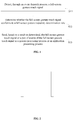
- Various embodiments can provide a method for processing a touch signal through creative labor. As shown in FIG. 1 , the method for processing a touch signal includes following steps.
- step S11 a full-screen gesture touch signal is detected by an event dispatch process.
- step S12 it is determined whether the full-screen gesture touch signal conforms to a full-screen gesture trajectory determination rule.
- step S13 the full-screen gesture touch signal or a part of events of the full-screen gesture touch signal is sent to a gesture processing process or an application processing process based on a result as determined.
- the step S13 of sending the full-screen gesture touch signal or a part of events of the full-screen gesture touch signal to a gesture processing process or an application processing process based on a result as determined includes:
- the event dispatch process is positioned at the bottom layer of a system, for example, at a system_server layer of the system.
- the application processing process is positioned at a business layer of the system and is used to process applications (such as setting applications, map applications, desktop applications, interface interactive applications, etc.).
- the gesture processing process Positioned at the business layer of the system, the gesture processing process may be maintained by a certain application in the business layer, or the gesture processing process may be a separate business layer process.
- the application process is enabled to receive a complete sequence of touch operations that conforms to a processing logic, thereby effectively preventing the gesture processing process and the application processing process from simultaneously responding, such that interface switching is ensured to be stable and smooth when a user operates in a gesture input region.
- Each gesture input region corresponds to a full-screen gesture trajectory determination rule.
- This full-screen gesture trajectory determination rule includes trajectory determination rules of one or more gestures, and different gestures have different functions. For example, the function of one gesture is to directly return to the home page, whereas the function of another gesture is to return to the previous path of the current interface path.
- the step S11 of detecting a full-screen gesture touch signal by an event dispatch process includes: detecting, by the event dispatch process, a full-screen gesture touch signal within a preset screen region.
- the step S12 of determining whether the full-screen gesture touch signal conforms to a full-screen gesture trajectory determination rule includes: determining whether the full-screen gesture touch signal conforms to the full-screen gesture trajectory determination rule corresponding to the preset screen region.
- FIG. 2 is a schematic diagram showing a location where a gesture input region is on a display screen of a mobile terminal.
- the full-screen gesture input region generally is at the edge of the display screen, such as the left edge, the right edge, or the bottom edge.
- the full-screen gesture includes a series of coherent operation events.
- the full-screen gesture includes at least one of a finger press-down event or a finger movement event.
- the full-screen gesture includes at least one of the finger press-down event or the finger movement event and further includes at least one of a finger pause event or a finger lift event.
- the right edge region of the screen of the mobile terminal is the gesture input region, and the full-screen gesture trajectory determination rule indicates to return to the home screen page when a sliding touch signal is inputted into the gesture input region.
- the right region of the current game interface including the gesture input region is an operation region for returning to game home interface.
- the game application will be switched from the current game to the game home interface.
- the user inputs a sliding touch signal in the gesture input region.
- the event dispatch process determines that this touch signal conforms to the full-screen gesture trajectory determination rule, and sends this touch signal to the gesture processing process.
- the gesture processing process controls the current interface to return to the home screen page.
- the user inputs a sliding touch signal in the gesture input region, wherein this sliding signal includes one finger press-down event and five finger movement events.
- this touch signal conforms to the full-screen gesture trajectory determination rule
- one finger press-down event and the first three finger movement events of this touch signal are sent to the gesture processing process.
- the gesture processing process controls the current interface to return to the home screen page.
- the user inputs a double-click touch signal in the gesture input region.
- the event dispatch process determines that this touch signal does not conform to the full-screen gesture trajectory determination rule, and sends this touch signal to the application processing process.
- the gesture processing process controls the current interface to return to the game home interface.
- the user inputs a double-click touch signal in the gesture input region.
- the event dispatch process determines that this touch signal does not conform to the full-screen gesture trajectory determination rule, and sends a part of events of this touch signal to the application processing process. That is, one single-click event of this touch signal is sent to the application processing process.
- the gesture processing process maintains the current interface unchanged.
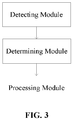
- FIG. 3 illustrates a block diagram of an apparatus for processing a touch signal according to an exemplary embodiment.
- the apparatus includes an event dispatch process processing module, wherein the event dispatch process processing module includes:
- the processing module includes a first sending module and a second sending module.
- the first sending module is configured to send, when the result indicates that the full-screen gesture touch signal conforms to the full-screen gesture trajectory determination rule, the full-screen gesture touch signal or the part of events of the full-screen gesture touch signal to the gesture processing process.
- the second sending module is configured to send, when the result indicates that the full-screen gesture touch signal does not conform to the full-screen gesture trajectory determination rule, the full-screen gesture touch signal or the part of events of the full-screen gesture touch signal to the application processing process.
- the detecting module is further configured to detect the full-screen gesture touch signal by detecting a full-screen gesture touch signal within a preset screen region.
- the determining module is further configured to determine whether the full-screen gesture touch signal conforms to the full-screen gesture trajectory determination rule by determining whether the full-screen gesture touch signal conforms to the full-screen gesture trajectory determination rule corresponding to the preset screen region.
- the full-screen gesture includes at least one of a finger press-down event or a finger movement event.
- the full-screen gesture includes at least one of the finger press-down event or the finger movement event and further includes at least one of a finger pause event or a finger lift event.
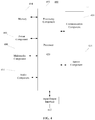
- FIG. 4 illustrates a block diagram of an apparatus 400 for determining a performance parameter of a speech enhancement algorithm according to an exemplary embodiment.
- the apparatus 400 may be a mobile phone, a computer, a digital broadcast terminal, a message transceiver device, a game console, a tablet device, a medical equipment, a fitness equipment, a personal digital assistant, and the like.
- the apparatus 400 may include one or more of the following components: a processing component 402, a memory 404, a power component 406, a multimedia component 408, an audio component 410, an input/output (I/O) interface 412, a sensor component 414, and a communication component 416.
- the processing component 402 typically controls overall operations of the apparatus 400, such as the operations associated with display, telephone calls, data communications, camera operations, and recording operations.
- the processing component 402 may include one or more processors 420 to execute instructions to perform all or part of the steps in the above described methods.
- the processing component 402 may include one or more modules which facilitate the interaction between the processing component 402 and other components.
- the processing component 402 may include a multimedia module to facilitate the interaction between the multimedia component 405 and the processing component 402.
- the memory 404 is configured to store various types of data to support the operation of the apparatus 400. Examples of such data may include instructions for any applications or methods operated on the apparatus 400, contact data, phonebook data, messages, pictures, video, etc.
- the memory 404 may be implemented using any type of volatile or non-volatile memory devices, or a combination thereof, such as a static random access memory (SRAM), an electrically erasable programmable read-only memory (EEPROM), an erasable programmable read-only memory (EPROM), a programmable read-only memory (PROM), a read-only memory (ROM), a magnetic memory, a flash memory, a magnetic or optical disk.
- SRAM static random access memory
- EEPROM electrically erasable programmable read-only memory
- EPROM erasable programmable read-only memory
- PROM programmable read-only memory
- ROM read-only memory
- magnetic memory a magnetic memory
- flash memory a flash memory
- magnetic or optical disk a magnetic or
- the power component 406 may provide power to various components of the apparatus 400.
- the power component 406 may include a power management system, one or more power sources, and any other components associated with the generation, management, and distribution of power in the apparatus 400.
- the multimedia component 405 includes a screen providing an output interface between the apparatus 400 and the user.
- the screen may include a liquid crystal display (LCD) and a touch panel (TP).
- LCD liquid crystal display
- TP touch panel
- OLED organic light-emitting diode
- the screen may be implemented as a touch screen to receive input signals from the user.
- the touch panel includes one or more touch sensors to sense touches, slips, and gestures on the touch panel.
- the touch sensors may not only sense a boundary of a touch or slip action, but also sense a period of time and a pressure associated with the touch or slip action.
- the multimedia component 405 may include a front camera and/or a rear camera.
- the front camera and/or the rear camera may receive an external multimedia datum while the apparatus 400 is in an operation mode, such as a photographing mode or a video mode.
- Each of the front camera and the rear camera may be a fixed optical lens system or have focus and optical zoom capability.
- the audio component 410 is configured to output and/or input audio signals.
- the audio component 410 includes a microphone ("MIC") configured to receive an external audio signal when the apparatus 400 is in an operation mode, such as a call mode, a recording mode, and a voice recognition mode.
- the received audio signal may be further stored in the memory 404 or transmitted via the communication component 416.
- the audio component 410 further includes a speaker to output audio signals.
- the I/O interface 412 provides an interface between the processing component 402 and peripheral interface modules, such as a keyboard, a click wheel, buttons, and the like.
- the buttons may include, but are not limited to, a home button, a volume button, a starting button, and a locking button.
- the sensor component 414 includes one or more sensors to provide status assessments of various aspects of the apparatus 400.
- the sensor component 414 may detect the on/off state of the apparatus 400, relative locations of components, for example, the components are the displayer and keypads of the apparatus 400.
- the sensor component 414 may further sense the position change of a component of the apparatus 400 or the position change of the apparatus 400, whether the touch exists between the user and the apparatus 400, the direction or acceleration/deceleration of the apparatus 400, and temperature change of the apparatus 400.
- the sensor component 414 may include a proximity sensor configured to detect the presence of nearby objects without any physical contact.
- the sensor component 414 may also include a light sensor, such as a CMOS or CCD image sensor, for use in imaging applications.
- the sensor component 414 may also include an accelerometer sensor, a gyroscope sensor, a magnetic sensor, a pressure sensor, or a temperature sensor.
- the communication component 416 is configured to facilitate communication, wired or wirelessly, between the apparatus 400 and other devices.
- the apparatus 400 can access a wireless network based on a communication standard, such as WiFi, 2G, 3G, 4G, or 5G, or a combination thereof.
- the communication component 416 receives by means of a broadcast channel the broadcast signal or broadcast-related information from external broadcast management systems.
- the communication component 416 further includes a near field communication (NFC) module to facilitate short-range communications.
- the NFC module may be implemented based on a radio frequency identification (RFID) technology, an infrared data association (IrDA) technology, an ultra-wideband (UWB) technology, a Bluetooth (BT) technology, and other technologies.
- RFID radio frequency identification
- IrDA infrared data association
- UWB ultra-wideband
- BT Bluetooth
- the apparatus 400 may be implemented with one or more application specific integrated circuits (ASICs), digital signal processors (DSPs), digital signal processing devices (DSPDs), programmable logic devices (PLDs), field programmable gate arrays (FPGAs), controllers, micro-controllers, microprocessors, or other electronic components, for performing the above described methods.
- ASICs application specific integrated circuits
- DSPs digital signal processors
- DSPDs digital signal processing devices
- PLDs programmable logic devices
- FPGAs field programmable gate arrays
- controllers micro-controllers, microprocessors, or other electronic components, for performing the above described methods.
- non-transitory computer-readable storage medium including instructions, such as included in the memory 404, executable by the processor 420 in the apparatus 400, for performing the above-described methods.
- the non-transitory computer-readable storage medium may be a ROM, a RAM, a CD-ROM, a magnetic tape, a floppy disc, an optical data storage device, and the like.
- circuits, device components, modules, units, blocks, or portions may have modular configurations, or are composed of discrete components, but nonetheless can be referred to as "units,” “modules,” or “portions” in general.
- the "circuits,” “components,” “modules,” “blocks,” “portions,” or “units” referred to herein may or may not be in modular forms.
- modules/units can each be implemented by hardware, or software, or a combination of hardware and software.
- modules/units may be combined as one module/unit, and each of the above described modules/units may be further divided into a plurality of sub-modules/sub-units.
- first and second are used for descriptive purposes only and are not to be construed as indicating or implying a relative importance or implicitly indicating the number of technical features indicated.
- elements referred to as “first” and “second” may include one or more of the features either explicitly or implicitly.
- a plurality indicates two or more unless specifically defined otherwise.
- the terms “installed,” “connected,” “coupled,” “fixed” and the like shall be understood broadly, and may be either a fixed connection or a detachable connection, or integrated, unless otherwise explicitly defined. These terms can refer to mechanical or electrical connections, or both. Such connections can be direct connections or indirect connections through an intermediate medium. These terms can also refer to the internal connections or the interactions between elements. The specific meanings of the above terms in the present disclosure can be understood by those of ordinary skill in the art on a case-by-case basis.
- a first element being "on,” “over,” or “below” a second element may indicate direct contact between the first and second elements, without contact, or indirect through an intermediate medium, unless otherwise explicitly stated and defined.
- a first element being "above,” “over,” or “at an upper surface of' a second element may indicate that the first element is directly above the second element, or merely that the first element is at a level higher than the second element.
- the first element “below,” “underneath,” or “at a lower surface of' the second element may indicate that the first element is directly below the second element, or merely that the first element is at a level lower than the second feature.
- the first and second elements may or may not be in contact with each other.
- the terms “one embodiment,” “some embodiments,” “example,” “specific example,” or “some examples,” and the like may indicate a specific feature described in connection with the embodiment or example, a structure, a material or feature included in at least one embodiment or example.
- the schematic representation of the above terms is not necessarily directed to the same embodiment or example.
- control and/or interface software or app can be provided in a form of a non-transitory computer-readable storage medium having instructions stored thereon is further provided.
- the non-transitory computer-readable storage medium may be a Read-Only Memory (ROM), a Random-Access Memory (RAM), a Compact Disc Read-Only Memory (CD-ROM), a magnetic tape, a floppy disk, optical data storage equipment, a flash drive such as a USB drive or an SD card, and the like.
- Implementations of the subject matter and the operations described in this disclosure can be implemented in digital electronic circuitry, or in computer software, firmware, or hardware, including the structures disclosed herein and their structural equivalents, or in combinations of one or more of them. Implementations of the subject matter described in this disclosure can be implemented as one or more computer programs, i.e., one or more modules of computer program instructions, encoded on one or more computer storage medium for execution by, or to control the operation of, data processing apparatus.
- the program instructions can be encoded on an artificially-generated propagated signal, e.g., a machine-generated electrical, optical, or electromagnetic signal, that is generated to encode information for transmission to suitable receiver apparatus for execution by a data processing apparatus.
- an artificially-generated propagated signal e.g., a machine-generated electrical, optical, or electromagnetic signal
- a computer storage medium can be, or be included in, a computer-readable storage device, a computer-readable storage substrate, a random or serial access memory array or device, or a combination of one or more of them.
- a computer storage medium is not a propagated signal
- a computer storage medium can be a source or destination of computer program instructions encoded in an artificially-generated propagated signal.
- the computer storage medium can also be, or be included in, one or more separate components or media (e.g., multiple CDs, disks, drives, or other storage devices). Accordingly, the computer storage medium may be tangible.
- the operations described in this disclosure can be implemented as operations performed by a data processing apparatus on data stored on one or more computer-readable storage devices or received from other sources.
- the devices in this disclosure can include special purpose logic circuitry, e.g., an FPGA (field-programmable gate array), or an ASIC (application-specific integrated circuit).
- the device can also include, in addition to hardware, code that creates an execution environment for the computer program in question, e.g., code that constitutes processor firmware, a protocol stack, a database management system, an operating system, a cross-platform runtime environment, a virtual machine, or a combination of one or more of them.
- the devices and execution environment can realize various different computing model infrastructures, such as web services, distributed computing, and grid computing infrastructures.
- the devices can be controlled remotely through the Internet, on a smart phone, a tablet computer or other types of computers, with a web-based graphic user interface (GUI).
- GUI graphic user interface
- a computer program (also known as a program, software, software application, app, script, or code) can be written in any form of programming language, including compiled or interpreted languages, declarative or procedural languages, and it can be deployed in any form, including as a stand-alone program or as a module, component, subroutine, object, or other unit suitable for use in a computing environment.
- a computer program may, but need not, correspond to a file in a file system.
- a program can be stored in a portion of a file that holds other programs or data (e.g., one or more scripts stored in a mark-up language document), in a single file dedicated to the program in question, or in multiple coordinated files (e.g., files that store one or more modules, sub-programs, or portions of code).
- a computer program can be deployed to be executed on one computer or on multiple computers that are located at one site or distributed across multiple sites and interconnected by a communication network.
- the processes and logic flows described in this disclosure can be performed by one or more programmable processors executing one or more computer programs to perform actions by operating on input data and generating output.
- the processes and logic flows can also be performed by, and apparatus can also be implemented as, special purpose logic circuitry, e.g., an FPGA, or an ASIC.
- processors or processing circuits suitable for the execution of a computer program include, by way of example, both general and special purpose microprocessors, and any one or more processors of any kind of digital computer.
- a processor will receive instructions and data from a read-only memory, or a random-access memory, or both.
- Elements of a computer can include a processor configured to perform actions in accordance with instructions and one or more memory devices for storing instructions and data.
- a computer will also include, or be operatively coupled to receive data from or transfer data to, or both, one or more mass storage devices for storing data, e.g., magnetic, magneto-optical disks, or optical disks.
- mass storage devices for storing data
- a computer need not have such devices.
- a computer can be embedded in another device, e.g., a mobile telephone, a personal digital assistant (PDA), a mobile audio or video player, a game console, a Global Positioning System (GPS) receiver, or a portable storage device (e.g., a universal serial bus (USB) flash drive), to name just a few.
- PDA personal digital assistant
- GPS Global Positioning System
- USB universal serial bus
- Devices suitable for storing computer program instructions and data include all forms of non-volatile memory, media and memory devices, including by way of example semiconductor memory devices, e.g., EPROM, EEPROM, and flash memory devices; magnetic disks, e.g., internal hard disks or removable disks; magneto-optical disks; and CD-ROM and DVD-ROM disks.
- semiconductor memory devices e.g., EPROM, EEPROM, and flash memory devices
- magnetic disks e.g., internal hard disks or removable disks
- magneto-optical disks e.g., CD-ROM and DVD-ROM disks.
- the processor and the memory can be supplemented by, or incorporated in, special purpose logic circuitry.
- implementations of the subject matter described in this specification can be implemented with a computer and/or a display device, e.g., a VR/AR device, a head-mount display (HMD) device, a head-up display (HUD) device, smart eyewear (e.g., glasses), a CRT (cathode-ray tube), LCD (liquid-crystal display), OLED (organic light emitting diode) display, other flexible configuration, or any other monitor for displaying information to the user and a keyboard, a pointing device, e.g., a mouse, trackball, etc., or a touch screen, touch pad, etc., by which the user can provide input to the computer.
- a display device e.g., a VR/AR device, a head-mount display (HMD) device, a head-up display (HUD) device, smart eyewear (e.g., glasses), a CRT (cathode-ray tube), LCD (liquid-crystal display), OLED (organ
- feedback provided to the user can be any form of sensory feedback, e.g., visual feedback, auditory feedback, or tactile feedback; and input from the user can be received in any form, including acoustic, speech, or tactile input.
- a user can speak commands to the audio processing device, to perform various operations.
- Implementations of the subject matter described in this specification can be implemented in a computing system that includes a back-end component, e.g., as a data server, or that includes a middleware component, e.g., an application server, or that includes a front-end component, e.g., a client computer having a graphical user interface or a Web browser through which a user can interact with an implementation of the subject matter described in this specification, or any combination of one or more such back-end, middleware, or front-end components.
- the components of the system can be interconnected by any form or medium of digital data communication, e.g., a communication network.
- Examples of communication networks include a local area network (“LAN”) and a wide area network (“WAN”), an inter-network (e.g., the Internet), and peer-to-peer networks (e.g., ad hoc peer-to-peer networks).
- LAN local area network
- WAN wide area network
- inter-network e.g., the Internet
- peer-to-peer networks e.g., ad hoc peer-to-peer networks.
Landscapes
- Engineering & Computer Science (AREA)
- Theoretical Computer Science (AREA)
- General Engineering & Computer Science (AREA)
- Physics & Mathematics (AREA)
- General Physics & Mathematics (AREA)
- Human Computer Interaction (AREA)
- Software Systems (AREA)
- Multimedia (AREA)
- User Interface Of Digital Computer (AREA)
Applications Claiming Priority (1)
| Application Number | Priority Date | Filing Date | Title |
|---|---|---|---|
| CN201910599976.8A CN112181265B (zh) | 2019-07-04 | 2019-07-04 | 一种触控信号处理方法、装置及介质 |
Publications (2)
| Publication Number | Publication Date |
|---|---|
| EP3761162A1 true EP3761162A1 (fr) | 2021-01-06 |
| EP3761162B1 EP3761162B1 (fr) | 2025-07-30 |
Family
ID=69174349
Family Applications (1)
| Application Number | Title | Priority Date | Filing Date |
|---|---|---|---|
| EP20152138.2A Active EP3761162B1 (fr) | 2019-07-04 | 2020-01-16 | Procédé et appareil de traitement de signal tactile et support |
Country Status (8)
| Country | Link |
|---|---|
| US (1) | US11513679B2 (fr) |
| EP (1) | EP3761162B1 (fr) |
| JP (1) | JP7252905B2 (fr) |
| KR (1) | KR102258742B1 (fr) |
| CN (1) | CN112181265B (fr) |
| ES (1) | ES3039760T3 (fr) |
| RU (1) | RU2742605C1 (fr) |
| WO (1) | WO2021000450A1 (fr) |
Families Citing this family (3)
| Publication number | Priority date | Publication date | Assignee | Title |
|---|---|---|---|---|
| CN115291792B (zh) * | 2021-02-08 | 2024-10-29 | 海信视像科技股份有限公司 | 一种显示设备及其控制方法 |
| CN112905296A (zh) * | 2021-03-31 | 2021-06-04 | 读书郎教育科技有限公司 | 一种解决全面屏手势导航与应用逻辑冲突的系统及方法 |
| CN119303291A (zh) * | 2023-07-12 | 2025-01-14 | 荣耀终端有限公司 | 触控方法及相关设备 |
Citations (1)
| Publication number | Priority date | Publication date | Assignee | Title |
|---|---|---|---|---|
| US20130135221A1 (en) * | 2011-11-30 | 2013-05-30 | Google Inc. | Turning on and off full screen mode on a touchscreen |
Family Cites Families (27)
| Publication number | Priority date | Publication date | Assignee | Title |
|---|---|---|---|---|
| US6377288B1 (en) * | 1998-01-12 | 2002-04-23 | Xerox Corporation | Domain objects having computed attribute values for use in a freeform graphics system |
| US8677285B2 (en) * | 2008-02-01 | 2014-03-18 | Wimm Labs, Inc. | User interface of a small touch sensitive display for an electronic data and communication device |
| US8169414B2 (en) * | 2008-07-12 | 2012-05-01 | Lim Seung E | Control of electronic games via finger angle using a high dimensional touchpad (HDTP) touch user interface |
| US9684521B2 (en) * | 2010-01-26 | 2017-06-20 | Apple Inc. | Systems having discrete and continuous gesture recognizers |
| US8447894B2 (en) * | 2011-01-05 | 2013-05-21 | Alibaba Group Holding Limited | Upgrading an elastic computing cloud system |
| US20130002567A1 (en) * | 2011-06-30 | 2013-01-03 | Ricky Lee | Method and System of Implementing Multi-Touch Panel Gestures in Computer Applications Without Multi-Touch Panel Functions |
| CN102902469B (zh) * | 2011-07-25 | 2015-08-19 | 宸鸿光电科技股份有限公司 | 手势识别方法及触控系统 |
| US20130038552A1 (en) * | 2011-08-08 | 2013-02-14 | Xtreme Labs Inc. | Method and system for enhancing use of touch screen enabled devices |
| JP5990011B2 (ja) * | 2012-02-28 | 2016-09-07 | キヤノン株式会社 | 情報処理装置及びその制御方法 |
| US20130222272A1 (en) * | 2012-02-28 | 2013-08-29 | Research In Motion Limited | Touch-sensitive navigation in a tab-based application interface |
| US20130283204A1 (en) * | 2012-04-18 | 2013-10-24 | Research In Motion Limited | Systems and Methods for Displaying Information or a Feature in Overscroll Regions on Electronic Devices |
| KR101341737B1 (ko) * | 2012-06-21 | 2013-12-16 | 주식회사 팬택 | 후면 터치를 이용한 단말 제어 장치 및 방법 |
| US9128548B2 (en) * | 2012-10-17 | 2015-09-08 | Perceptive Pixel, Inc. | Selective reporting of touch data |
| CN102981768B (zh) * | 2012-12-04 | 2016-12-21 | 中兴通讯股份有限公司 | 一种在触屏终端界面实现悬浮式全局按钮的方法及系统 |
| US9884253B2 (en) * | 2014-06-03 | 2018-02-06 | King.Com Ltd. | Using a data structure |
| KR20160014983A (ko) * | 2014-07-30 | 2016-02-12 | 주식회사 동부하이텍 | 스마트 기기 및 이를 제어하는 방법 |
| CN104007932B (zh) * | 2014-06-17 | 2017-12-29 | 华为技术有限公司 | 一种触摸点识别方法及装置 |
| US9921660B2 (en) * | 2014-08-07 | 2018-03-20 | Google Llc | Radar-based gesture recognition |
| US9891811B2 (en) * | 2015-06-07 | 2018-02-13 | Apple Inc. | Devices and methods for navigating between user interfaces |
| US10346030B2 (en) * | 2015-06-07 | 2019-07-09 | Apple Inc. | Devices and methods for navigating between user interfaces |
| CN104932744B (zh) * | 2015-06-12 | 2020-08-21 | 惠州Tcl移动通信有限公司 | 一种触摸屏终端及其应用的操作方法 |
| US9965445B2 (en) * | 2015-08-06 | 2018-05-08 | FiftyThree, Inc. | Systems and methods for gesture-based formatting |
| US11073980B2 (en) * | 2016-09-29 | 2021-07-27 | Microsoft Technology Licensing, Llc | User interfaces for bi-manual control |
| CN107506087B (zh) * | 2017-09-21 | 2022-08-23 | 京东方科技集团股份有限公司 | 显示处理方法、系统以及电子设备 |
| CN108459794A (zh) * | 2017-12-20 | 2018-08-28 | 北京奇安信科技有限公司 | 一种无按钮屏幕的交互操作处理方法及装置 |
| AU2019100488B4 (en) * | 2018-05-07 | 2019-08-22 | Apple Inc. | Devices, methods, and graphical user interfaces for navigating between user interfaces, displaying a dock, and displaying system user interface elements |
| US11126466B2 (en) * | 2019-02-26 | 2021-09-21 | Sap Se | Server resource balancing using a fixed-sharing strategy |
-
2019
- 2019-07-04 CN CN201910599976.8A patent/CN112181265B/zh active Active
- 2019-10-15 RU RU2019143081A patent/RU2742605C1/ru active
- 2019-10-15 JP JP2019563202A patent/JP7252905B2/ja active Active
- 2019-10-15 KR KR1020197033549A patent/KR102258742B1/ko active Active
- 2019-10-15 WO PCT/CN2019/111321 patent/WO2021000450A1/fr not_active Ceased
- 2019-11-30 US US16/699,647 patent/US11513679B2/en active Active
-
2020
- 2020-01-16 ES ES20152138T patent/ES3039760T3/es active Active
- 2020-01-16 EP EP20152138.2A patent/EP3761162B1/fr active Active
Patent Citations (1)
| Publication number | Priority date | Publication date | Assignee | Title |
|---|---|---|---|---|
| US20130135221A1 (en) * | 2011-11-30 | 2013-05-30 | Google Inc. | Turning on and off full screen mode on a touchscreen |
Also Published As
| Publication number | Publication date |
|---|---|
| CN112181265B (zh) | 2022-04-15 |
| JP2021531519A (ja) | 2021-11-18 |
| WO2021000450A1 (fr) | 2021-01-07 |
| KR102258742B1 (ko) | 2021-06-01 |
| EP3761162B1 (fr) | 2025-07-30 |
| KR20210005508A (ko) | 2021-01-14 |
| RU2742605C1 (ru) | 2021-02-09 |
| CN112181265A (zh) | 2021-01-05 |
| JP7252905B2 (ja) | 2023-04-05 |
| US11513679B2 (en) | 2022-11-29 |
| ES3039760T3 (en) | 2025-10-24 |
| US20210004151A1 (en) | 2021-01-07 |
Similar Documents
| Publication | Publication Date | Title |
|---|---|---|
| EP3460647B1 (fr) | Procédé de commande d'un écran, dispositif et support de stockage | |
| US10891031B2 (en) | Method and device for displaying task management interface | |
| US20210303106A1 (en) | Method, apparatus and storage medium for displaying application interface | |
| US11087116B2 (en) | Method and apparatus for determining fingerprint collection region | |
| US11169638B2 (en) | Method and apparatus for scanning touch screen, and medium | |
| EP3901941A1 (fr) | Procédé de réglage d'affichage d'écran, appareil et support d'enregistrement | |
| US11062119B2 (en) | Fingerprint recognition method and device | |
| US20210182015A1 (en) | Audio playing control method and device and storage medium | |
| US11368739B2 (en) | Method and apparatus for inputting information on display interface, and storage medium | |
| US11644942B2 (en) | Method and device for displaying application, and storage medium | |
| EP3761162B1 (fr) | Procédé et appareil de traitement de signal tactile et support | |
| US11157085B2 (en) | Method and apparatus for switching display mode, mobile terminal and storage medium | |
| US11164024B2 (en) | Method, apparatus and storage medium for controlling image acquisition component | |
| US20220197478A1 (en) | Method for cursor control, electronic device and storage medium | |
| US11295505B2 (en) | Animation generation using a target animation model and animation state parameters | |
| US11452040B2 (en) | Method and apparatus for identifying electronic device, terminal device, and electronic device | |
| US11664591B2 (en) | Antenna structure, electronic device and arraying method for antenna structure | |
| EP3995942B1 (fr) | Dispositif d'affichage de fenêtre à petit écran, procédé et support d'informations | |
| US11665778B2 (en) | Function controlling method, function controlling device and storage medium | |
| US11323558B2 (en) | Method for reducing terminal temperature, device for reducing terminal temperature, and storage medium | |
| US20220232120A1 (en) | Inter-device interactive control method, apparatus, and storage medium |
Legal Events
| Date | Code | Title | Description |
|---|---|---|---|
| PUAI | Public reference made under article 153(3) epc to a published international application that has entered the european phase |
Free format text: ORIGINAL CODE: 0009012 |
|
| STAA | Information on the status of an ep patent application or granted ep patent |
Free format text: STATUS: THE APPLICATION HAS BEEN PUBLISHED |
|
| AK | Designated contracting states |
Kind code of ref document: A1 Designated state(s): AL AT BE BG CH CY CZ DE DK EE ES FI FR GB GR HR HU IE IS IT LI LT LU LV MC MK MT NL NO PL PT RO RS SE SI SK SM TR |
|
| AX | Request for extension of the european patent |
Extension state: BA ME |
|
| STAA | Information on the status of an ep patent application or granted ep patent |
Free format text: STATUS: REQUEST FOR EXAMINATION WAS MADE |
|
| 17P | Request for examination filed |
Effective date: 20210706 |
|
| RBV | Designated contracting states (corrected) |
Designated state(s): AL AT BE BG CH CY CZ DE DK EE ES FI FR GB GR HR HU IE IS IT LI LT LU LV MC MK MT NL NO PL PT RO RS SE SI SK SM TR |
|
| STAA | Information on the status of an ep patent application or granted ep patent |
Free format text: STATUS: EXAMINATION IS IN PROGRESS |
|
| 17Q | First examination report despatched |
Effective date: 20221011 |
|
| REG | Reference to a national code |
Ref country code: DE Ref legal event code: R079 Free format text: PREVIOUS MAIN CLASS: G06F0003048800 Ipc: G06F0003048830 Ref document number: 602020055302 Country of ref document: DE |
|
| GRAP | Despatch of communication of intention to grant a patent |
Free format text: ORIGINAL CODE: EPIDOSNIGR1 |
|
| STAA | Information on the status of an ep patent application or granted ep patent |
Free format text: STATUS: GRANT OF PATENT IS INTENDED |
|
| RIC1 | Information provided on ipc code assigned before grant |
Ipc: G06F 3/0481 20130101ALI20250227BHEP Ipc: G06F 3/04883 20220101AFI20250227BHEP |
|
| INTG | Intention to grant announced |
Effective date: 20250312 |
|
| P01 | Opt-out of the competence of the unified patent court (upc) registered |
Free format text: CASE NUMBER: APP_21462/2025 Effective date: 20250506 |
|
| GRAS | Grant fee paid |
Free format text: ORIGINAL CODE: EPIDOSNIGR3 |
|
| GRAA | (expected) grant |
Free format text: ORIGINAL CODE: 0009210 |
|
| STAA | Information on the status of an ep patent application or granted ep patent |
Free format text: STATUS: THE PATENT HAS BEEN GRANTED |
|
| AK | Designated contracting states |
Kind code of ref document: B1 Designated state(s): AL AT BE BG CH CY CZ DE DK EE ES FI FR GB GR HR HU IE IS IT LI LT LU LV MC MK MT NL NO PL PT RO RS SE SI SK SM TR |
|
| REG | Reference to a national code |
Ref country code: GB Ref legal event code: FG4D |
|
| REG | Reference to a national code |
Ref country code: CH Ref legal event code: EP |
|
| REG | Reference to a national code |
Ref country code: DE Ref legal event code: R096 Ref document number: 602020055302 Country of ref document: DE |
|
| REG | Reference to a national code |
Ref country code: NL Ref legal event code: FP Ref country code: IE Ref legal event code: FG4D |
|
| REG | Reference to a national code |
Ref country code: ES Ref legal event code: FG2A Ref document number: 3039760 Country of ref document: ES Kind code of ref document: T3 Effective date: 20251024 |
|
| PGFP | Annual fee paid to national office [announced via postgrant information from national office to epo] |
Ref country code: NL Payment date: 20251126 Year of fee payment: 7 |
|
| REG | Reference to a national code |
Ref country code: AT Ref legal event code: MK05 Ref document number: 1819705 Country of ref document: AT Kind code of ref document: T Effective date: 20250730 |
|
| PG25 | Lapsed in a contracting state [announced via postgrant information from national office to epo] |
Ref country code: PT Free format text: LAPSE BECAUSE OF FAILURE TO SUBMIT A TRANSLATION OF THE DESCRIPTION OR TO PAY THE FEE WITHIN THE PRESCRIBED TIME-LIMIT Effective date: 20251202 |
|
| PG25 | Lapsed in a contracting state [announced via postgrant information from national office to epo] |
Ref country code: IS Free format text: LAPSE BECAUSE OF FAILURE TO SUBMIT A TRANSLATION OF THE DESCRIPTION OR TO PAY THE FEE WITHIN THE PRESCRIBED TIME-LIMIT Effective date: 20251130 |
|
| PGFP | Annual fee paid to national office [announced via postgrant information from national office to epo] |
Ref country code: GB Payment date: 20251127 Year of fee payment: 7 |
|
| PG25 | Lapsed in a contracting state [announced via postgrant information from national office to epo] |
Ref country code: NO Free format text: LAPSE BECAUSE OF FAILURE TO SUBMIT A TRANSLATION OF THE DESCRIPTION OR TO PAY THE FEE WITHIN THE PRESCRIBED TIME-LIMIT Effective date: 20251030 |
|
| REG | Reference to a national code |
Ref country code: LT Ref legal event code: MG9D |
|
| PG25 | Lapsed in a contracting state [announced via postgrant information from national office to epo] |
Ref country code: AT Free format text: LAPSE BECAUSE OF FAILURE TO SUBMIT A TRANSLATION OF THE DESCRIPTION OR TO PAY THE FEE WITHIN THE PRESCRIBED TIME-LIMIT Effective date: 20250730 |
|
| PG25 | Lapsed in a contracting state [announced via postgrant information from national office to epo] |
Ref country code: FI Free format text: LAPSE BECAUSE OF FAILURE TO SUBMIT A TRANSLATION OF THE DESCRIPTION OR TO PAY THE FEE WITHIN THE PRESCRIBED TIME-LIMIT Effective date: 20250730 |
|
| PG25 | Lapsed in a contracting state [announced via postgrant information from national office to epo] |
Ref country code: HR Free format text: LAPSE BECAUSE OF FAILURE TO SUBMIT A TRANSLATION OF THE DESCRIPTION OR TO PAY THE FEE WITHIN THE PRESCRIBED TIME-LIMIT Effective date: 20250730 |
|
| PGFP | Annual fee paid to national office [announced via postgrant information from national office to epo] |
Ref country code: FR Payment date: 20251124 Year of fee payment: 7 |
|
| PG25 | Lapsed in a contracting state [announced via postgrant information from national office to epo] |
Ref country code: GR Free format text: LAPSE BECAUSE OF FAILURE TO SUBMIT A TRANSLATION OF THE DESCRIPTION OR TO PAY THE FEE WITHIN THE PRESCRIBED TIME-LIMIT Effective date: 20251031 |
|
| PG25 | Lapsed in a contracting state [announced via postgrant information from national office to epo] |
Ref country code: SE Free format text: LAPSE BECAUSE OF FAILURE TO SUBMIT A TRANSLATION OF THE DESCRIPTION OR TO PAY THE FEE WITHIN THE PRESCRIBED TIME-LIMIT Effective date: 20250730 |
|
| PG25 | Lapsed in a contracting state [announced via postgrant information from national office to epo] |
Ref country code: LV Free format text: LAPSE BECAUSE OF FAILURE TO SUBMIT A TRANSLATION OF THE DESCRIPTION OR TO PAY THE FEE WITHIN THE PRESCRIBED TIME-LIMIT Effective date: 20250730 |
|
| PG25 | Lapsed in a contracting state [announced via postgrant information from national office to epo] |
Ref country code: BG Free format text: LAPSE BECAUSE OF FAILURE TO SUBMIT A TRANSLATION OF THE DESCRIPTION OR TO PAY THE FEE WITHIN THE PRESCRIBED TIME-LIMIT Effective date: 20250730 Ref country code: PL Free format text: LAPSE BECAUSE OF FAILURE TO SUBMIT A TRANSLATION OF THE DESCRIPTION OR TO PAY THE FEE WITHIN THE PRESCRIBED TIME-LIMIT Effective date: 20250730 |
|
| PG25 | Lapsed in a contracting state [announced via postgrant information from national office to epo] |
Ref country code: RS Free format text: LAPSE BECAUSE OF FAILURE TO SUBMIT A TRANSLATION OF THE DESCRIPTION OR TO PAY THE FEE WITHIN THE PRESCRIBED TIME-LIMIT Effective date: 20251030 |
|
| PG25 | Lapsed in a contracting state [announced via postgrant information from national office to epo] |
Ref country code: SM Free format text: LAPSE BECAUSE OF FAILURE TO SUBMIT A TRANSLATION OF THE DESCRIPTION OR TO PAY THE FEE WITHIN THE PRESCRIBED TIME-LIMIT Effective date: 20250730 |
|
| PGFP | Annual fee paid to national office [announced via postgrant information from national office to epo] |
Ref country code: ES Payment date: 20260213 Year of fee payment: 7 |
|
| PG25 | Lapsed in a contracting state [announced via postgrant information from national office to epo] |
Ref country code: DK Free format text: LAPSE BECAUSE OF FAILURE TO SUBMIT A TRANSLATION OF THE DESCRIPTION OR TO PAY THE FEE WITHIN THE PRESCRIBED TIME-LIMIT Effective date: 20250730 |
|
| PGFP | Annual fee paid to national office [announced via postgrant information from national office to epo] |
Ref country code: DE Payment date: 20251126 Year of fee payment: 7 |
|
| PG25 | Lapsed in a contracting state [announced via postgrant information from national office to epo] |
Ref country code: IT Free format text: LAPSE BECAUSE OF FAILURE TO SUBMIT A TRANSLATION OF THE DESCRIPTION OR TO PAY THE FEE WITHIN THE PRESCRIBED TIME-LIMIT Effective date: 20250730 |
|
| PG25 | Lapsed in a contracting state [announced via postgrant information from national office to epo] |
Ref country code: CZ Free format text: LAPSE BECAUSE OF FAILURE TO SUBMIT A TRANSLATION OF THE DESCRIPTION OR TO PAY THE FEE WITHIN THE PRESCRIBED TIME-LIMIT Effective date: 20250730 |
|
| PG25 | Lapsed in a contracting state [announced via postgrant information from national office to epo] |
Ref country code: SK Free format text: LAPSE BECAUSE OF FAILURE TO SUBMIT A TRANSLATION OF THE DESCRIPTION OR TO PAY THE FEE WITHIN THE PRESCRIBED TIME-LIMIT Effective date: 20250730 Ref country code: EE Free format text: LAPSE BECAUSE OF FAILURE TO SUBMIT A TRANSLATION OF THE DESCRIPTION OR TO PAY THE FEE WITHIN THE PRESCRIBED TIME-LIMIT Effective date: 20250730 |