EP3761608B1 - Fahrzeugkommunikationsverfahren, vorrichtung, computerlesbares medium und elektronische vorrichtung - Google Patents
Fahrzeugkommunikationsverfahren, vorrichtung, computerlesbares medium und elektronische vorrichtung Download PDFInfo
- Publication number
- EP3761608B1 EP3761608B1 EP19871415.6A EP19871415A EP3761608B1 EP 3761608 B1 EP3761608 B1 EP 3761608B1 EP 19871415 A EP19871415 A EP 19871415A EP 3761608 B1 EP3761608 B1 EP 3761608B1
- Authority
- EP
- European Patent Office
- Prior art keywords
- network slices
- network
- wireless transmission
- user equipment
- vehicle communication
- Prior art date
- Legal status (The legal status is an assumption and is not a legal conclusion. Google has not performed a legal analysis and makes no representation as to the accuracy of the status listed.)
- Active
Links
Images


Classifications
-
- H—ELECTRICITY
- H04—ELECTRIC COMMUNICATION TECHNIQUE
- H04W—WIRELESS COMMUNICATION NETWORKS
- H04W4/00—Services specially adapted for wireless communication networks; Facilities therefor
- H04W4/30—Services specially adapted for particular environments, situations or purposes
- H04W4/40—Services specially adapted for particular environments, situations or purposes for vehicles, e.g. vehicle-to-pedestrians [V2P]
-
- H—ELECTRICITY
- H04—ELECTRIC COMMUNICATION TECHNIQUE
- H04L—TRANSMISSION OF DIGITAL INFORMATION, e.g. TELEGRAPHIC COMMUNICATION
- H04L67/00—Network arrangements or protocols for supporting network services or applications
- H04L67/01—Protocols
- H04L67/12—Protocols specially adapted for proprietary or special-purpose networking environments, e.g. medical networks, sensor networks, networks in vehicles or remote metering networks
-
- H—ELECTRICITY
- H04—ELECTRIC COMMUNICATION TECHNIQUE
- H04L—TRANSMISSION OF DIGITAL INFORMATION, e.g. TELEGRAPHIC COMMUNICATION
- H04L67/00—Network arrangements or protocols for supporting network services or applications
- H04L67/14—Session management
- H04L67/141—Setup of application sessions
-
- H—ELECTRICITY
- H04—ELECTRIC COMMUNICATION TECHNIQUE
- H04W—WIRELESS COMMUNICATION NETWORKS
- H04W4/00—Services specially adapted for wireless communication networks; Facilities therefor
- H04W4/30—Services specially adapted for particular environments, situations or purposes
- H04W4/40—Services specially adapted for particular environments, situations or purposes for vehicles, e.g. vehicle-to-pedestrians [V2P]
- H04W4/46—Services specially adapted for particular environments, situations or purposes for vehicles, e.g. vehicle-to-pedestrians [V2P] for vehicle-to-vehicle communication [V2V]
-
- H—ELECTRICITY
- H04—ELECTRIC COMMUNICATION TECHNIQUE
- H04W—WIRELESS COMMUNICATION NETWORKS
- H04W72/00—Local resource management
- H04W72/04—Wireless resource allocation
- H04W72/044—Wireless resource allocation based on the type of the allocated resource
-
- H—ELECTRICITY
- H04—ELECTRIC COMMUNICATION TECHNIQUE
- H04W—WIRELESS COMMUNICATION NETWORKS
- H04W72/00—Local resource management
- H04W72/50—Allocation or scheduling criteria for wireless resources
- H04W72/52—Allocation or scheduling criteria for wireless resources based on load
-
- H—ELECTRICITY
- H04—ELECTRIC COMMUNICATION TECHNIQUE
- H04W—WIRELESS COMMUNICATION NETWORKS
- H04W76/00—Connection management
- H04W76/10—Connection setup
- H04W76/11—Allocation or use of connection identifiers
-
- H—ELECTRICITY
- H04—ELECTRIC COMMUNICATION TECHNIQUE
- H04W—WIRELESS COMMUNICATION NETWORKS
- H04W84/00—Network topologies
- H04W84/18—Self-organising networks, e.g. ad-hoc networks or sensor networks
-
- H—ELECTRICITY
- H04—ELECTRIC COMMUNICATION TECHNIQUE
- H04W—WIRELESS COMMUNICATION NETWORKS
- H04W72/00—Local resource management
- H04W72/50—Allocation or scheduling criteria for wireless resources
- H04W72/56—Allocation or scheduling criteria for wireless resources based on priority criteria
-
- H—ELECTRICITY
- H04—ELECTRIC COMMUNICATION TECHNIQUE
- H04W—WIRELESS COMMUNICATION NETWORKS
- H04W76/00—Connection management
- H04W76/10—Connection setup
- H04W76/12—Setup of transport tunnels
Definitions
- the present disclosure relates to the technical field of computer and communication, and in particular to a vehicle communication method and apparatus, a computer-readable medium, and an electronic device.
- 5G Internet of Vehicles includes more than 20 types of different vehicle to X (V2X) use cases.
- Different use cases have different quality of service (QoS) requirements.
- QoS quality of service
- Different V2X use cases may use different network slices due to different QoS requirements, and the number of V2X use cases is far greater than 8.
- the 3GPP Rel-15 stipulates that one user equipment (UE) supports at most eight network slices, and different network slices have to use different protocol data unit (PDU) sessions.
- PDU protocol data unit
- a vehicle communication method and apparatus to increase, at least to a certain extent, the number of vehicle communication use cases that can be supported by user equipment, and thus is beneficial to a promotion and a deployment of an Internet of Vehicles solution.
- a vehicle communication method applied to a network side device according to claim 1 is provided.
- a vehicle communication apparatus according to claim 5 is provided.
- a computer-readable medium stores a computer program, when being executed by a processor, implements the vehicle communication method according to the foregoing embodiments.
- a network side device receives a connection establishment request transmitted by user equipment, and establishes a PDU session with the user equipment in a case that identification information of multiple network slices carried in the connection establishment request is determined to correspond to the same vehicle communication service, so that the multiple network slices share one PDU session, and thus the user equipment supports more network slices by establishing multiple PDU sessions.
- the number of network slices corresponds to the number of vehicle communication use cases, thereby increasing the number of vehicle communication use cases that can be supported by the user equipment, and being beneficial to a promotion and a deployment of an Internet of Vehicles solution.
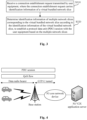
- FIG. 1 is a schematic diagram of an exemplary system architecture to which a technical solution according to an embodiment of the present disclosure may be applied.
- the system architecture may include a vehicle terminal 101, a base station 102, a core network device 103 and an application server 104.
- the core network device 103 may be an AMF in a 5G core network or the like.
- the number of vehicle terminals 101, the number of the base stations 102, the number of core network devices 103 and the number of application servers 104 shown in FIG. 1 are merely schematic. According to an implementation requirement, there may be any number of vehicle terminals 101, any number of base stations 102, any number of core network devices 103 and any number of application servers 104.
- a network side device receives a connection establishment request transmitted by the vehicle terminal 101. If the connection establishment request carries identification information of multiple network slices and the multiple network slices are determined to correspond to a same vehicle communication service, the network side device may establish a PDU session with the vehicle terminal 101, so that the vehicle terminal 101 can support more network slices by establishing multiple PDU sessions.
- the number of network slices corresponds to the number of V2X use cases, thereby increasing the number of V2X use cases that can be supported by the user equipment, and being beneficial to a promotion and a deployment of an Internet of Vehicles solution.
- a network side device receives a connection establishment request transmitted by the vehicle terminal 101. If the connection establishment request carries identification information of a virtual bundled network slice, the network side device may determine identification information of multiple network slices corresponding to the virtual bundled network slice according to the identification information of the virtual bundled network slice, to establish a PDU session with the vehicle terminal 101 based on the multiple network slices, so that the vehicle terminal 101 can support more network slices by using the virtual bundled network slice corresponding to the multiple network slices.
- the number of network slices corresponds to the number of V2X use cases, thereby increasing the number of V2X use cases that can be supported by the user equipment, and being beneficial to a promotion and a deployment of an Internet of Vehicles solution.
- FIG. 2 is a schematic flowchart of a vehicle communication method according to an embodiment of the present disclosure.
- the vehicle communication method may be performed by a network side device.
- the vehicle communication method may be performed by a base station, a core network device, or an application server located at a network edge.
- the vehicle communication method includes at least S210 to S230.
- S210 a connection establishment request transmitted by user equipment is received.
- the connection establishment request carries identification information of multiple network slices.
- the user equipment may be a vehicle terminal, and the connection establishment request transmitted by the user equipment may be a request for establishing a PDU session.
- Identification information of a network slice may be single network slice selection assistance information (S-NSSAI).
- the network side device may transmit available network slice information (such as Allowed NSSAI) to the user equipment.
- the available network slice information includes the identification information of the multiple network slices, so as to help the user equipment to select from the available network slice information.
- the identification information of the multiple network slices carried in the connection establishment request in the embodiments of the present disclosure may include the following configurations.
- values of the identification information of the multiple network slices are in a predetermined interval, to indicate that the multiple network slices correspond to a same PDU session.
- the predetermined interval is required to be different from an interval of values of identification information of a common network slice (that is, a network slice carried in a message transmitted by user equipment in the current solution).
- an SST field in the identification information of the multiple network slices includes an indicator bit, to indicate that the multiple network slices correspond to the same PDU session.
- an SD field in the identification information of the multiple network slices includes an indicator bit, to indicate that the multiple network slices correspond to the same PDU session.
- the multiple network slices may correspond to the same AMF and the same UPF.
- S220 it is determined whether the multiple network slices correspond to the same vehicle communication service according to the identification information of the multiple network slices.
- the network side device in a case that the network side device receives the connection establishment request carrying identification information of the multiple network slices, it is determined whether the multiple network slices correspond to the same vehicle communication service according to an indication of a service request message included in the connection establishment request.
- a PDU session is established with the user equipment.
- the multiple network slices share one PDU session, so that the user equipment can support more network slices by establishing multiple PDU sessions.
- the number of network slices corresponds to the number of V2X use cases, thereby increasing the number of V2X use cases that can be supported by the user equipment, and being beneficial to a promotion and a deployment of an Internet of Vehicles solution.
- the different QoS flows may be isolated by using a GTP-U protocol, a VPN, or a bandwidth management mechanism.
- the network side device performs scheduling to ensure that the user equipment uses different wireless transmission resources for different network slices.
- the wireless transmission resources include a time domain resource and a frequency domain resource.
- wireless transmission resource pools may be configured for different network slices, so that the user equipment uses different wireless transmission resources for different network slices.
- a priority and a size of the wireless transmission resource pool have a positive correlation with a priority of the network slice corresponding to the wireless transmission resource pool, and the size of the wireless transmission resource pool has a positive correlation with the priority of the network slice corresponding to the wireless transmission resource pool. For example, if the priority and/or size of the wireless transmission resource pool increases, the priority of the network slice corresponding to the wireless transmission resource pool becomes higher.
- configuration signaling may be transmitted to the user equipment, to configure the wireless transmission resource pools corresponding to the different network slices for the user equipment, or pre-configure the wireless transmission resource pools corresponding to the different network slices for the user equipment.
- the configuration signaling may indicate the wireless transmission resource pools corresponding to the different network slices in an explicit or implicit manner.
- the wireless transmission resource pools corresponding to the different network slices are directly indicated.
- multiple wireless transmission resource pools are indicated in an order. The multiple wireless transmission resource pools respectively correspond to different network slices.
- the foregoing configuration signaling may be Radio Resource Control (RRC) signaling or non-access stratum (NAS) signaling.
- RRC Radio Resource Control
- NAS non-access stratum
- the number of network slices supported by the user equipment may be expanded by expanding the number of data radio bearers (DRBs).
- DRBs data radio bearers
- FIG. 3 is a schematic flowchart of a vehicle communication method according to an embodiment of the present disclosure.
- the vehicle communication method may be performed by a network side device.
- the vehicle communication method may be performed by a base station, a core network device, or an application server located at a network edge.
- the vehicle communication method includes at least S310 and S320. A detailed description is as follows.
- step S310 a connection establishment request transmitted by user equipment is received.
- the connection establishment request carries identification information of a virtual bundled network slice.
- the user equipment may be a vehicle terminal, and the connection establishment request transmitted by the user equipment may be a request for establishing a PDU session.
- Identification information of a network slice may be S-NSSAI.
- the virtual bundled network slice corresponds to multiple real network slices. Multiple real network slices are bundled to obtain a virtual network slice corresponding to the multiple real network slices, and the virtual network slice is referred to as the virtual bundled network slice. Identification information of the virtual bundled network slice may also be S-NSSAI.
- the network side device may transmit available network slice information (such as Allowed NSSAI) to the user equipment.
- the available network slice information includes the identification information of the virtual bundled network slice, so as to help the user equipment to select from the available network slice information.
- the identification information of the virtual bundled network slice carried in the connection establishment request in the embodiments of the present disclosure may include the following configurations.
- values of the identification information of the virtual bundled network slice are in a predetermined interval, to indicate that the virtual bundled network slice corresponds to the multiple network slices.
- the predetermined interval is required to be different from an interval of values of identification information of a common network slice (that is, a network slice carried in a message transmitted by user equipment in the current solution).
- an SST field in the identification information of the virtual bundled network slice includes an indicator bit, to indicate that the virtual bundled network slice corresponds to the multiple network slices.
- an SD field in the identification information of the virtual bundled network slice includes an indicator bit, to indicate that the virtual bundled network slice corresponds to the multiple network slices.
- step S320 identification information of multiple network slices corresponding to the virtual bundled network slice is determined according to the identification information of the virtual bundled network slice, to establish a PDU session with the user equipment based on the multiple network slices.
- the identification information of the multiple network slices corresponding to the virtual bundled network slice may be determined according to a pre-configured correspondence.
- one network slice may correspond to one PDU session, or multiple network slices may correspond to one PDU session.
- the user equipment can support more network slices by using the virtual bundled network slice corresponding to the multiple network slices.
- the number of network slices corresponds to the number of vehicle communication use cases, thereby increasing the number of vehicle communication use cases that can be supported by the user equipment, and being beneficial to a promotion and a deployment of an Internet of Vehicles solution.
- V2X use cases include different QoS requirements
- the V2X use cases need to be isolated from each other through slicing to ensure reliable transmission due to V2X security involved, and the number of V2X use cases is greater than an upper limit allowed by the UE, technical solutions of the following embodiments may be used.
- the number of network slices supported by the UE is limited in consideration of the number of DRBs and a restriction that introduced network slices have to use different PDU sessions on a radio access network (RAN) side to reduce the impact on specifications on the RAN side.
- the number of network slices that can be supported by the UE may be expanded by expanding the number of DRBs.
- the number of DRBs may be expanded to 32, and thus the number of slices supported by the UE may also be expanded to 32.
- network slices that support sharing of a PDU session may be introduced, that is, multiple network slices are carried by using the same PDU session.
- this solution the following condition should be met: AMFs corresponding to different V2X use cases/network slices are the same, and UPFs corresponding to different V2X use cases/network slices are the same as well.
- all of the multiple network slices sharing the PDU session need to be embodied in allowed NSSAI.
- the multiple network slices sharing the PDU session need to be identified and distinguished from other network slices (that is, network slices that share no PDU session) at a protocol level.
- an interval of values of the S-NSSAI of the network slices sharing the PDU session may be separated from that of S-NSSAI of a common network slice; or an indicator bit area may be introduced, such as defining a new SST, to add a corresponding identification bit to the new SST; or a corresponding identification bit may be added to an SD part for distinguishing.
- a connection establishment process of the multiple network slices sharing the PDU session is different from that of the common network slice.
- an MSG5 RRC Setup Complete message carries only one piece of S-NSSAI to be selected by an AMF
- an MSG5 message may carry multiple pieces of S-NSSAI.
- the network side device (such as the base station or the AMF) receives the MSG5 message including the multiple pieces of S-NSSAI
- a new function needs to be introduced to identify whether the multiple pieces of S-NSSAI belong to the same V2X service (for example, it is determined whether the multiple pieces of S-NSSAI belong to the same V2X service based on an indication of a service request message included in the MSG5 message ), and then establishment of only one PDU session is triggered.
- V2X use cases/network slices may establish different QoS flows.
- a 5G core network device may isolate different QoS flows from each other through a GTP-U tunnel, a VPN or a bandwidth management mechanism.
- a wireless side may isolate different network slices from each other in a manner of scheduling.
- the wireless side may configure corresponding shared resource pools for different network slices, to isolate different network slices from each other.
- Priorities and the sizes of the shared resource pools configured by the wireless side may embody priorities of different slices.
- the wireless side may configure the shared resource pools corresponding to different network slices by using signaling (such as RRC signaling or NAS signaling) or in a manner of pre-configuration, and a correspondence between a network slice and a shared resource pool may be explicitly given in configuration signaling or may be implicitly given at intervals.
- Interaction signaling (such as an RRC message) between the user equipment and a base station includes information about a network slice, and the process may include the following steps S501 to S508.
- the base station transmits an NG establishment request to an AMF1.
- the NG establishment request carries a list of supported S-NSSAI.
- the AMF 1 returns an NG establishment response message to the base station.
- the NG establishment response message carries the list of supported S-NSSAI.
- the base station transmits an NG establishment request to an AMF2.
- the NG establishment request carries a list of supported S-NSSAI.
- the AMF2 returns an NG establishment response message to the base station.
- the NG establishment response message carries the list of supported S-NSSAI.
- an RRC connection is established between the base station and the user equipment.
- the base station identifies a network slicing strategy and identifies a core network (CN) node that supports a relevant network slice; or the base station selects a default CN node.
- the network slicing strategy identified by the base station is to identify whether multiple network slices need to be carried by using the same PDU session.
- the base station transmits an initial UE message to the AMF1.
- the AMF1 verifies permission of the UE and availability of a network slice.
- network slices of multiple V2X use cases correspond to one virtual bundled network slice.
- a correspondence between the virtual bundled network slice and the network slices of the multiple V2X use cases may be maintained only on the network side.
- the virtual bundled network slice needs to be identified and distinguished from other network slices (that is, network slices that are not virtually bundled) at a protocol level.
- an interval of values of the S-NSSAI of the virtual bundled network slice may be separated from that of S-NSSAI of a common network slice; or an indicator bit area may be introduced, such as defining a new SST, to add a corresponding identification bit to the new SST; or a corresponding identification bit may be added to an SD part for distinguishing.
- information about the virtual bundled network slice may be maintained only on the network side.
- This embodiment is the same as the network slices sharing the PDU session (that is, the foregoing embodiment 2) in that, the network slices corresponding to different V2X use cases are still maintained in the core network.
- the UE on the wireless side is unnecessary to maintain the network slices corresponding to all the V2X use cases in allowed NSSAI, only the virtual bundled network slice may be included in the allowed NSSAI, and thus network slices corresponding to multiple V2X use cases are bundled into one on the wireless side.
- a connection establishment process of the virtual bundled network slice may be different from that of the common network slice. Specifically, different from a solution provided by the 3GPP Rel-15 that an MSG5 RRC Setup Complete message carries only one piece of S-NSSAI to be selected by an AMF, in the technical solutions of the embodiments of the present disclosure, when the UE initials the connection establishment request to the network side device, an MSG5 message carries only one virtual bundled network slice.
- the network side device (such as the base station or the AMF) receives the virtual bundled network slice in the MSG5 message
- a new function needs to be introduced to identify the network slices of the multiple V2X use cases corresponding to the virtual bundled network slice, for example, identifying according to a correspondence between the virtual bundled network slice and the network slices of the V2X use cases.
- the network side device (such as the base station or the AMF) can determine the correspondence between the virtual bundled network slice and the network slices of the multiple V2X use cases, the isolation between the network slices can still be guaranteed.
- a partial signaling process of establishing a PDU session between a user equipment and a network side device may also be shown in FIG. 5 .
- the network slicing strategy identified by the base station is to identify the network slices of the multiple V2X use cases corresponding to the virtual bundled network slice.
- the technical solutions of the foregoing embodiments of the present disclosure are applicable to an implementation scenario of a deployment based on a network slice in future 5G Internet of Vehicles and automatic driving.
- a limitation problem of network slices put forward in the 3GPP Rel-15 can be effectively resolved, thereby increasing the number of V2X use cases that can be supported by the user equipment, enabling the V2X use cases to implement an isolation by using a network slicing mechanism, and thus being beneficial to a promotion and a deployment of an Internet of Vehicles solution.
- Apparatus embodiments of the present disclosure are described below, and the apparatus may be used for performing the vehicle communication method in the foregoing embodiments of the present disclosure. For details not disclosed in the apparatus embodiments of the present disclosure, one may refer to the foregoing vehicle communication method embodiments of the present disclosure.
- FIG. 6 is a schematic block diagram of a vehicle communication apparatus according to an embodiment of the present disclosure.
- a vehicle communication apparatus 600 includes: a receiving unit 602, a determining unit 604, and a processing unit 606.
- the receiving unit 602 is configured to receive a connection establishment request transmitted by user equipment.
- the connection establishment request carries identification information of multiple network slices.
- the determining unit 604 is configured to determine whether the multiple network slices correspond to a same vehicle communication service according to the identification information of the multiple network slices.
- the processing unit 606 is configured to establish, in a case that the multiple network slices are determined to correspond to the same vehicle communication service, a PDU session with the user equipment.
- values of the identification information of the multiple network slices are in a predetermined interval, to indicate that the multiple network slices correspond to the same PDU session; or an SST field in the identification information of the multiple network slices includes an indicator bit, to indicate that the multiple network slices correspond to the same PDU session; or an SD field in the identification information of the multiple network slices includes an indicator bit, to indicate that the multiple network slices correspond to the same PDU session.
- the processing unit 606 is further configured to control, in the PDU session, different network slices or different use cases to correspond to different QoS flows.
- the processing unit 606 is further configured to isolate the different QoS flows by using a GTP-U protocol, a VPN, or a bandwidth management mechanism.
- the vehicle communication apparatus 600 further includes a scheduling unit, configured to schedule the user equipment to use different wireless transmission resources for different network slices.
- the vehicle communication apparatus 600 further includes a configuration unit, configured to configure wireless transmission resource pools for different network slices, so that the user equipment uses different wireless transmission resources for different network slices.
- a priority of the wireless transmission resource pool has a positive correlation with a priority of the network slice corresponding to the wireless transmission resource pool, and a size of the wireless transmission resource pool has a positive correlation with the priority of the network slice corresponding to the wireless transmission resource pool.
- the configuration unit is configured to transmit configuration signaling to the user equipment, to configure the wireless transmission resource pools corresponding to the different network slices for the user equipment, or pre-configure the wireless transmission resource pools corresponding to the different network slices for the user equipment.
- the configuration unit is configured to indicate the wireless transmission resource pools corresponding to the different network slices in an explicit or implicit manner, by using the configuration signaling transmitted to the user equipment.
- the vehicle communication apparatus 600 further includes a transmission unit, configured to transmit available network slice information to the user equipment.
- the available network slice information includes the identification information of the multiple network slices.
- the multiple network slices correspond to a same AMF and a same UPF.
- the vehicle communication apparatus 600 further includes an expansion unit, configured to expand the number of data radio bearers, to expand the number of network slices supported by the user equipment.
- FIG. 7 is a schematic block diagram of a vehicle communication apparatus according to an embodiment of the present disclosure.
- a vehicle communication apparatus 700 includes: a receiving unit 702 and a processing unit 704.
- the receiving unit 702 is configured to receive a connection establishment request transmitted by user equipment.
- the connection establishment request carries identification information of a virtual bundled network slice.
- the processing unit 704 is configured to determine identification information of multiple network slices corresponding to the virtual bundled network slice according to the identification information of the virtual bundled network slice, to establish a PDU session with the user equipment based on the multiple network slices.
- the processing unit 704 is configured to determine the identification information of the multiple network slices corresponding to the virtual bundled network slice according to a pre-configured correspondence.
- the vehicle communication apparatus 700 further includes a transmission unit, configured to transmit available network slice information to the user equipment.
- the available network slice information includes the identification information of the virtual bundled network slice.
- values of the identification information of the virtual bundled network slice are in a predetermined interval, to indicate that the virtual bundled network slice corresponds to the multiple network slices; or an SST field in the identification information of the virtual bundled network slice includes an indicator bit, to indicate that the virtual bundled network slice corresponds to the multiple network slices; or an SD field in the identification information of the virtual bundled network slice includes an indicator bit, to indicate that the virtual bundled network slice corresponds to the multiple network slices.
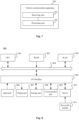
- FIG. 8 is a schematic structural diagram of a computer system adapted to implement an electronic device according to an embodiment of the present disclosure.
- a computer system 800 of the electronic device shown in FIG. 8 is only schematic, and is not intended to impose any restriction on functions and scopes of use of the embodiments of the present disclosure.
- the computer system 800 includes a central processing unit (CPU) 801.
- the CPU 801 may perform various proper actions and processing according to a program stored in a read-only memory (ROM) 802 or a program loaded from a storage part 808 into a random access memory (RAM) 803.
- the RAM 803 further stores various programs and data required for system operations.
- the CPU 801, the ROM 802, and the RAM 803 are connected to each other through a bus 804.
- An input/output (I/O) interface 805 is also connected to the bus 804.
- the following components are connected to the I/O interface 805: an input part 806 including a keyboard, a mouse, or the like, an output part 807 including a cathode ray tube (CRT), a liquid crystal display (LCD), a speaker, or the like, a storage part 808 including a hard disk, or the like, and a communication part 809 including a network interface card such as a local area network (LAN) card or a modem.
- the communication part 809 performs a communication processing over a network such as the Internet.
- a driver 810 is also connected to the I/O interface 805 as required.
- a removable medium 811 such as a magnetic disk, an optical disc, a magneto-optical disk, or a semiconductor memory is installed on the driver 810 as required, so that a computer program read from the removable medium 811 is installed into the storage part 808 as required.
- the processes described below by referring to the flowcharts may be implemented as computer software programs.
- a computer program product includes a computer program carried on a computer-readable medium, and the computer program includes program codes used for performing the methods shown in the flowcharts.
- the computer program may be downloaded and installed through the communication part 809 from a network, and/or installed from the removable medium 811.
- the computer program is executed by the CPU 801, various functions defined in the system of the present disclosure are executed.
- the computer-readable medium shown in the embodiments of the present disclosure may be a computer-readable signal medium or a computer-readable storage medium or any combination thereof.
- the computer-readable storage medium may be, for example, but is not limited to, an electric, a magnetic, an optical, an electromagnetic, an infrared, or a semi-conductive system, apparatus, or device, or any combination thereof.
- a more specific example of the computer-readable storage medium may include but is not limited to: an electrical connection including one or more wires, a portable computer magnetic disk, a hard disk, a RAM, a ROM, an erasable programmable read-only memory (EPROM), a flash memory, an optical fiber, a portable compact disc read-only memory (CD-ROM), an optical storage device, a magnetic storage device, or any appropriate combination thereof.
- the computer-readable storage medium may be any tangible medium including or storing a program, and the program may be used by or used in combination with an instruction execution system, an apparatus, or a device.
- a computer-readable signal medium may include a data signal propagated in a baseband or as part of a carrier, and stores computer-readable program code. Such a propagated data signal may be in multiple forms, including but not limited to an electromagnetic signal, an optical signal, or any suitable combination thereof.
- the computer-readable signal medium may be further any computer-readable medium in addition to the computer-readable storage medium.
- the computer-readable medium may send, propagate, or transmit a program configured to be used by or in combination with an instruction execution system, an apparatus, or a device.
- the program code included in the computer-readable medium may be transmitted by using any suitable medium, including but not limited to: a wireless medium, a wired medium, or the like, or any suitable combination thereof.
- each box in a flowchart or a block diagram may represent a module, a program segment, or a part of code.
- the module, the program segment, or the part of code includes one or more executable instructions used for implementing specified logic functions.
- functions annotated in the boxes may be implemented in a sequence different from that annotated in the accompanying drawings. For example, operations in two connected boxes may be performed substantially in parallel, and the operations in the two connected boxes may be performed in a reverse sequence, depending on a related function.
- Each box in a block diagram or a flowchart and a combination of boxes in the block diagram or the flowchart may be implemented by using a dedicated hardware-based system configured to perform a specified function or an operation, or may be implemented by using a combination of dedicated hardware and a computer instruction.
- a related unit described in the embodiments of the present disclosure may be implemented in a software manner, or may be implemented in a hardware manner, and the unit described may also be provided in a processor. Names of the units do not constitute a limitation on the units in a specific case.
- a computer-readable medium is further provided according to the present disclosure.
- the computer-readable medium may be included in the electronic device described in the foregoing embodiments, or may exist alone and is not arranged in the electronic device.
- the computer-readable medium carries one or more programs, the one or more programs, when being executed by the electronic device, cause the electronic device to implement the method described in the foregoing embodiments.
- the software product may be stored in a non-volatile storage medium (which may be a CD-ROM, a USB flash drive, a removable hard disk, or the like) or on the network.
- the software product includes multiple instructions for instructing a computing device (which may be a personal computer, a server, a touch terminal, a network device, or the like) to perform the methods according to the embodiments of the present disclosure.
Landscapes
- Engineering & Computer Science (AREA)
- Computer Networks & Wireless Communication (AREA)
- Signal Processing (AREA)
- Health & Medical Sciences (AREA)
- Computing Systems (AREA)
- General Health & Medical Sciences (AREA)
- Medical Informatics (AREA)
- Mobile Radio Communication Systems (AREA)
Claims (7)
- Fahrzeugkommunikationsverfahren, wobei das Verfahren umfasst:- ein Schritt (S210) des Empfangens einer von einer Benutzerausrüstung übertragenen Verbindungsaufbauanforderung durch eine netzwerkseitige Vorrichtung, wobei die Verbindungsaufbauanforderung Identifikationsinformationen einer Mehrzahl von Netzwerkslices trägt; wobei das Verfahren dadurch gekennzeichnet ist, dass es ferner umfasst:- ein Schritt (S220) des Bestimmens, durch die netzwerkseitige Vorrichtung, ob die Mehrzahl von Netzwerkslices einem gleichen Fahrzeugkommunikationsdienst gemäß den Identifikationsinformationen der Mehrzahl von Netzwerkslices entspricht;- ein Schritt (S230) des Aufbauens einer PDU-Sitzung mit der Benutzerausrüstung, durch die netzwerkseitge Vorrichtung in einem Fall, in dem bestimmt wird, dass die Mehrzahl von Netzwerkslices dem gleichen Fahrzeugkommunikationsdienst entspricht;- ein Schritt des Konfigurierens von Ressourcenpools für drahtlose Übertragung für unterschiedliche Netzwerksegmente durch die netzwerkseitige Vorrichtung, sodass die Benutzerausrüstung unterschiedliche Ressourcen für drahtlose Übertragung für unterschiedliche Netzwerkslices verwendet, wobei eine Priorität des Ressourcenpools für drahtlose Übertragung eine positive Korrelation mit einer Priorität des Netzwerksegments aufweist, das dem Ressourcenpool für drahtlose Übertragung entspricht, und eine Größe des Ressourcenpools für drahtlose Übertragung eine positive Korrelation mit der Priorität des Netzwerkslices aufweist, die dem Ressourcenpool für drahtlose Übertragung entspricht; und- ein Schritt des Isolierens unterschiedlicher QoS-Flüsse in der PDU-Sitzung durch die netzwerkseitige Vorrichtung unter Verwendung einer GPRS-Tunnelprotokoll-Benutzerebene, GTP-U, wobei jeder QoS-Fluss einem unterschiedlichen Netzwerkslice entspricht;wobei PDU für Protokolldateneinheit steht.
- Fahrzeugkommunikationsverfahren nach Anspruch 1, wobei:- Werte der Identifikationsinformationen der Mehrzahl von Netzwerkslices in einem vorbestimmten Intervall liegen, um anzugeben, dass die Mehrzahl von Netzwerkslices derselben PDU-Sitzung entspricht; oder- ein Feld der Slice/Dienst-Art, SST-Feld, in den Identifikationsinformationen der Mehrzahl von Netzwerkslices ein Indikatorbit umfasst, um anzugeben, dass die Mehrzahl von Netzwerkslices derselben PDU-Sitzung entspricht; oder- ein Slice-Differenzierungsfeld, SD-Feld in den Identifikationsinformationen der Mehrzahl von Netzwerkslices ein Indikatorbit umfasst, um anzugeben, dass die Mehrzahl von Netzwerkslices derselben PDU-Sitzung entspricht.
- Fahrzeugkommunikationsverfahren nach Anspruch 1, das ferner umfasst:- ein Schritt des Planens durch die netzwerkseitige Vorrichtung, dass die Benutzerausrüstung unterschiedliche drahtlose Übertragungsressourcen für unterschiedliche Netzwerkslices verwenden soll.
- Fahrzeugkommunikationsverfahren nach Anspruch 1, wobei der Schritt des Konfigurierens umfasst:- ein Schritt des Übertragens einer Konfigurationssignalisierung durch die netzwerkseitige Vorrichtung an die Benutzerausrüstung, um die Ressourcenpools für die drahtlose Übertragung entsprechend den unterschiedlichen Netzwerkslices für die Benutzerausrüstung zu konfigurieren; oder- ein Schritt des Vorkonfigurierens der Ressourcenpools für die drahtlose Übertragung durch die netzwerkseitige Vorrichtung, die den unterschiedlichen Netzwerkslices für die Benutzerausrüstung entsprechen.
- Fahrzeugkommunikationseinrichtung, wobei die Einrichtung umfasst:- eine Empfangseinheit, die dazu konfiguriert ist, eine von einer Benutzerausrüstung übertragene Verbindungsaufbauanforderung zu empfangen, wobei die Verbindungsaufbauanforderung Identifikationsinformationen einer Mehrzahl von Netzwerkslices trägt; wobei die Einrichtung dadurch gekennzeichnet ist, dass sie ferner umfasst:- eine Bestimmungseinheit, die dazu konfiguriert ist, zu bestimmen, ob die Mehrzahl von Netzwerkslices einem gleichen Fahrzeugkommunikationsdienst gemäß den Identifikationsinformationen der Mehrzahl von Netzwerkslices entspricht;- eine Verarbeitungseinheit, die dazu konfiguriert ist, in einem Fall, in dem bestimmt wird, dass die Mehrzahl von Netzwerkslices dem gleichen Fahrzeugkommunikationsdienst entspricht, eine PDU-Sitzung mit der Benutzerausrüstung aufzubauen;- eine Konfigurationseinheit, die dazu konfiguriert ist, ein Ressourcenpool für drahtlose Übertragung für unterschiedliche Netzwerkslices zu konfigurieren, sodass die Benutzerausrüstung unterschiedliche Ressourcen für drahtlose Übertragung für unterschiedliche Netzwerkslices verwendet, wobei eine Priorität des Ressourcenpools für drahtlose Übertragung eine positive Korrelation mit einer Priorität des Netzwerksegments aufweist, das dem Ressourcenpool für drahtlose Übertragung entspricht, und eine Größe des Ressourcenpools für drahtlose Übertragung eine positive Korrelation mit der Priorität des Netzwerkslices aufweist, die dem Ressourcenpool für drahtlose Übertragung entspricht;- wobei die Verarbeitungseinheit ferner dazu konfiguriert ist, unterschiedliche QoS-Flüsse in der PDU-Sitzung unter Verwendung einer GPRS-Tunnelprotokoll-Benutzerebene, GTP-U, zu isolieren, wobei jeder QoS-Fluss einem anderen Netzwerkslice entspricht;wobei PDU für Protokolldateneinheit steht.
- Computerlesbares Medium, das ein Computerprogramm speichert, wobei das Computerprogramm, wenn es von einem Prozessor ausgeführt wird,- das Fahrzeugkommunikationsverfahren nach einem der Ansprüche 1 bis 4 implementiert.
- Computerprogrammprodukt, das Anweisungen umfasst, wobei die Anweisungen, wenn sie auf einem Computer ablaufen,- den Computer veranlassen, das Fahrzeugkommunikationsverfahren nach einem der Ansprüche 1 bis 4 durchzuführen.
Applications Claiming Priority (2)
| Application Number | Priority Date | Filing Date | Title |
|---|---|---|---|
| CN201811169725.8A CN109040322B (zh) | 2018-10-08 | 2018-10-08 | 车辆通信方法、装置、计算机可读介质及电子设备 |
| PCT/CN2019/091809 WO2020073678A1 (zh) | 2018-10-08 | 2019-06-19 | 车辆通信方法、装置、计算机可读介质及电子设备 |
Publications (3)
| Publication Number | Publication Date |
|---|---|
| EP3761608A1 EP3761608A1 (de) | 2021-01-06 |
| EP3761608A4 EP3761608A4 (de) | 2021-07-14 |
| EP3761608B1 true EP3761608B1 (de) | 2025-01-15 |
Family
ID=64615768
Family Applications (1)
| Application Number | Title | Priority Date | Filing Date |
|---|---|---|---|
| EP19871415.6A Active EP3761608B1 (de) | 2018-10-08 | 2019-06-19 | Fahrzeugkommunikationsverfahren, vorrichtung, computerlesbares medium und elektronische vorrichtung |
Country Status (5)
| Country | Link |
|---|---|
| US (1) | US11445522B2 (de) |
| EP (1) | EP3761608B1 (de) |
| JP (1) | JP7058833B2 (de) |
| CN (1) | CN109040322B (de) |
| WO (1) | WO2020073678A1 (de) |
Families Citing this family (15)
| Publication number | Priority date | Publication date | Assignee | Title |
|---|---|---|---|---|
| CN109040322B (zh) | 2018-10-08 | 2021-05-11 | 腾讯科技(深圳)有限公司 | 车辆通信方法、装置、计算机可读介质及电子设备 |
| WO2020156663A1 (en) * | 2019-01-30 | 2020-08-06 | Huawei Technologies Co., Ltd. | Device and method for exposure information based adaptation of a network and/or management function |
| CN113261361B (zh) | 2019-03-28 | 2023-04-11 | 华为技术有限公司 | 用于辅助侧行链路通信的控制单元和方法 |
| CN114902703B (zh) * | 2019-12-31 | 2024-10-18 | 华为技术有限公司 | D2d通信方法、装置及系统 |
| CN111294762B (zh) * | 2020-01-23 | 2021-04-13 | 北京邮电大学 | 基于无线接入网络ran切片协作的车辆业务处理方法 |
| CN113285876B (zh) * | 2020-02-19 | 2024-04-23 | 中兴通讯股份有限公司 | 路由方法、路由装置及计算机可读存储介质 |
| CN111698290B (zh) * | 2020-05-19 | 2021-06-15 | 展讯通信(天津)有限公司 | Pdu会话复用方法、装置、用户设备及存储介质 |
| US11671876B2 (en) * | 2020-05-29 | 2023-06-06 | Dell Products, L.P. | Classifying network traffic to use cellular network slices based on application parameters |
| TWI740713B (zh) * | 2020-11-11 | 2021-09-21 | 財團法人工業技術研究院 | 網路切片的資源管理方法、資源管理系統及工作負載調度裝置 |
| CN122205652A (zh) * | 2021-06-11 | 2026-06-12 | 北京小米移动软件有限公司 | 多终端共享pdu会话的方法、装置、通信设备及存储介质 |
| CN113365245B (zh) * | 2021-07-01 | 2024-03-22 | 腾讯科技(深圳)有限公司 | 应用于远程驾驶的通信方法、装置、介质及电子设备 |
| CN114257618A (zh) * | 2021-12-13 | 2022-03-29 | 航天科技控股集团股份有限公司 | 一种基于车联网平台的车辆运行数据实时分析系统 |
| CN116095640B (zh) * | 2022-12-29 | 2026-08-11 | 天翼物联科技有限公司 | 一种车载应用流量分析方法、系统、装置及介质 |
| CN118842828A (zh) * | 2024-06-27 | 2024-10-25 | 岚图汽车科技有限公司 | 汽车型号识别方法、装置、设备及存储介质 |
| US20260212709A1 (en) * | 2025-01-23 | 2026-07-23 | T-Mobile Innovations Llc | Consolidated vehicle data analysis via wireless network slicing |
Citations (2)
| Publication number | Priority date | Publication date | Assignee | Title |
|---|---|---|---|---|
| US20190313359A1 (en) * | 2018-04-05 | 2019-10-10 | Samsung Electronics Co., Ltd. | Method and apparatus for supporting vehicle communications in 5g system |
| US20200359208A1 (en) * | 2018-02-06 | 2020-11-12 | Huawei Technologies Co., Ltd. | Security Negotiation Method and Apparatus |
Family Cites Families (12)
| Publication number | Priority date | Publication date | Assignee | Title |
|---|---|---|---|---|
| EP3403464B1 (de) * | 2016-01-15 | 2021-07-28 | Telefonaktiebolaget LM Ericsson (PUBL) | Sendende kommunikationsvorrichtung, empfangende kommunikationsvorrichtung, darin ausgeführte verfahren im kontext des netzwerk-slicing und computerprogramm |
| KR20200079352A (ko) | 2016-02-16 | 2020-07-02 | 아이디에이씨 홀딩스, 인크. | 네트워크 슬라이싱 동작 |
| CN112996087B (zh) * | 2016-09-28 | 2023-03-10 | 华为技术有限公司 | 一种网络切片选择方法、终端设备及网络设备 |
| CN108307516B (zh) * | 2016-09-30 | 2021-08-13 | 华为技术有限公司 | 数据传输方法及相关设备 |
| US11140544B2 (en) * | 2016-11-11 | 2021-10-05 | Guangdong Oppo Mobile Telecommunications Corp., Ltd. | Wireless communication method, terminal device, and network device |
| WO2018137873A1 (en) * | 2017-01-27 | 2018-08-02 | Telefonaktiebolaget Lm Ericsson (Publ) | Secondary authentication of a user equipment |
| US10397892B2 (en) * | 2017-02-06 | 2019-08-27 | Huawei Technologies Co., Ltd. | Network registration and network slice selection system and method |
| CN108696905B (zh) * | 2017-02-20 | 2023-06-13 | 中兴通讯股份有限公司 | 一种无线资源的管理方法及装置 |
| CA3065624C (en) * | 2017-06-19 | 2022-07-26 | Huawei Technologies Co., Ltd. | Registration method, session establishment method, terminal, and amf entity |
| KR102324522B1 (ko) * | 2017-10-16 | 2021-11-09 | 후아웨이 테크놀러지 컴퍼니 리미티드 | 이동성 관리 방법, 장치, 및 시스템 |
| US10797894B2 (en) * | 2017-12-28 | 2020-10-06 | Ofinno, Llc | Service type and device type-based policy and charging control |
| CN109040322B (zh) * | 2018-10-08 | 2021-05-11 | 腾讯科技(深圳)有限公司 | 车辆通信方法、装置、计算机可读介质及电子设备 |
-
2018
- 2018-10-08 CN CN201811169725.8A patent/CN109040322B/zh active Active
-
2019
- 2019-06-19 JP JP2020560135A patent/JP7058833B2/ja active Active
- 2019-06-19 EP EP19871415.6A patent/EP3761608B1/de active Active
- 2019-06-19 WO PCT/CN2019/091809 patent/WO2020073678A1/zh not_active Ceased
-
2020
- 2020-10-20 US US17/075,612 patent/US11445522B2/en active Active
Patent Citations (2)
| Publication number | Priority date | Publication date | Assignee | Title |
|---|---|---|---|---|
| US20200359208A1 (en) * | 2018-02-06 | 2020-11-12 | Huawei Technologies Co., Ltd. | Security Negotiation Method and Apparatus |
| US20190313359A1 (en) * | 2018-04-05 | 2019-10-10 | Samsung Electronics Co., Ltd. | Method and apparatus for supporting vehicle communications in 5g system |
Non-Patent Citations (1)
| Title |
|---|
| FOUKAS XENOFON ET AL: "Network Slicing in 5G: Survey and Challenges", IEEE COMMUNICATIONS MAGAZINE, IEEE SERVICE CENTER, PISCATAWAY, US, vol. 55, no. 5, 1 May 2017 (2017-05-01), pages 94 - 100, XP011649171, ISSN: 0163-6804, [retrieved on 20170511], DOI: 10.1109/MCOM.2017.1600951 * |
Also Published As
| Publication number | Publication date |
|---|---|
| JP7058833B2 (ja) | 2022-04-25 |
| EP3761608A1 (de) | 2021-01-06 |
| WO2020073678A1 (zh) | 2020-04-16 |
| US11445522B2 (en) | 2022-09-13 |
| US20210037542A1 (en) | 2021-02-04 |
| JP2021519040A (ja) | 2021-08-05 |
| CN109040322A (zh) | 2018-12-18 |
| EP3761608A4 (de) | 2021-07-14 |
| CN109040322B (zh) | 2021-05-11 |
Similar Documents
| Publication | Publication Date | Title |
|---|---|---|
| US11445522B2 (en) | Vehicle communication method and apparatus, computer-readable medium, and electronic device | |
| EP3968700B1 (de) | Netzwerkzugriffsteuerungsverfahren, computerlesbares medium und elektronische vorrichtung | |
| JP7669274B2 (ja) | サイドリンク通信のサービス品質制御方法、装置、コンピュータプログラム及び電子機器 | |
| US10743252B2 (en) | Method for identifying access point and hotspot and terminal | |
| US10299248B2 (en) | Method and apparatus for transmitting system information, and method and apparatus for receiving system information | |
| CN110831074B (zh) | 一种直连通信的方法、amf、接入网功能实体及计算机存储介质 | |
| CN111279773B (zh) | 业务配置方法及相关产品 | |
| CN114902703A (zh) | D2d通信方法、装置及系统 | |
| CN116569580A (zh) | 用于通信的方法、设备和计算机可读介质 | |
| US12101792B2 (en) | Communication method and apparatus, computer-readable medium, and electronic device | |
| US12598472B2 (en) | Device, method, apparatus and computer readable storage medium for network slicing | |
| WO2020237510A1 (zh) | 控制信令的检测方法、装置、设备及存储介质 | |
| CN111836389B (zh) | 上行资源调度方法、终端及网络侧设备 | |
| EP2947952A1 (de) | Informationsbenachrichtigungsverfahren zur vorrichtung-zu-vorrichtung-kommunikation, benutzervorrichtung und basisstation | |
| EP3606212A1 (de) | Endgerätmodus-beschaffungsverfahren, einrichtung und vorrichtung | |
| EP3534661B1 (de) | Internet-of-vehicles-übertragungsressourcenerfassungsverfahhren und -endgerät | |
| CN115707143B (zh) | 接入网切片的随机接入资源隔离方法、设备及介质 | |
| US12543241B2 (en) | Control for non-SDT data transmission | |
| CN113728711A (zh) | 一种侧行链路实现方法及相关产品 | |
| CN111918415B (zh) | 一种双连接修改的方法和设备 | |
| US20110202590A1 (en) | Method of randomizing operation start point in time of machine type terminal in mobile communication system | |
| CN116074980A (zh) | 无线连接控制方法、装置、电子设备及存储介质 | |
| HK40027915B (en) | Service collaborative processing method and related apparatus | |
| CN114900901A (zh) | 业务处理方法及装置、设备、计算机可读存储介质 |
Legal Events
| Date | Code | Title | Description |
|---|---|---|---|
| STAA | Information on the status of an ep patent application or granted ep patent |
Free format text: STATUS: THE INTERNATIONAL PUBLICATION HAS BEEN MADE |
|
| PUAI | Public reference made under article 153(3) epc to a published international application that has entered the european phase |
Free format text: ORIGINAL CODE: 0009012 |
|
| STAA | Information on the status of an ep patent application or granted ep patent |
Free format text: STATUS: REQUEST FOR EXAMINATION WAS MADE |
|
| 17P | Request for examination filed |
Effective date: 20201001 |
|
| AK | Designated contracting states |
Kind code of ref document: A1 Designated state(s): AL AT BE BG CH CY CZ DE DK EE ES FI FR GB GR HR HU IE IS IT LI LT LU LV MC MK MT NL NO PL PT RO RS SE SI SK SM TR |
|
| AX | Request for extension of the european patent |
Extension state: BA ME |
|
| A4 | Supplementary search report drawn up and despatched |
Effective date: 20210611 |
|
| RIC1 | Information provided on ipc code assigned before grant |
Ipc: H04W 4/40 20180101AFI20210607BHEP Ipc: H04W 4/46 20180101ALI20210607BHEP Ipc: H04W 76/11 20180101ALI20210607BHEP Ipc: H04W 76/12 20180101ALN20210607BHEP Ipc: H04W 72/10 20090101ALN20210607BHEP |
|
| DAV | Request for validation of the european patent (deleted) | ||
| DAX | Request for extension of the european patent (deleted) | ||
| RAP3 | Party data changed (applicant data changed or rights of an application transferred) |
Owner name: TENCENT TECHNOLOGY (SHENZHEN) COMPANY LIMITED |
|
| STAA | Information on the status of an ep patent application or granted ep patent |
Free format text: STATUS: EXAMINATION IS IN PROGRESS |
|
| 17Q | First examination report despatched |
Effective date: 20221209 |
|
| REG | Reference to a national code |
Free format text: PREVIOUS MAIN CLASS: H04L0029080000 Ref country code: DE Ref legal event code: R079 Ref document number: 602019064971 Country of ref document: DE Free format text: PREVIOUS MAIN CLASS: H04L0029080000 Ipc: H04W0004460000 |
|
| GRAP | Despatch of communication of intention to grant a patent |
Free format text: ORIGINAL CODE: EPIDOSNIGR1 |
|
| STAA | Information on the status of an ep patent application or granted ep patent |
Free format text: STATUS: GRANT OF PATENT IS INTENDED |
|
| RIC1 | Information provided on ipc code assigned before grant |
Ipc: H04W 76/12 20180101ALN20241024BHEP Ipc: H04W 76/11 20180101ALI20241024BHEP Ipc: H04W 4/46 20180101AFI20241024BHEP |
|
| GRAS | Grant fee paid |
Free format text: ORIGINAL CODE: EPIDOSNIGR3 |
|
| INTG | Intention to grant announced |
Effective date: 20241112 |
|
| GRAA | (expected) grant |
Free format text: ORIGINAL CODE: 0009210 |
|
| STAA | Information on the status of an ep patent application or granted ep patent |
Free format text: STATUS: THE PATENT HAS BEEN GRANTED |
|
| AK | Designated contracting states |
Kind code of ref document: B1 Designated state(s): AL AT BE BG CH CY CZ DE DK EE ES FI FR GB GR HR HU IE IS IT LI LT LU LV MC MK MT NL NO PL PT RO RS SE SI SK SM TR |
|
| REG | Reference to a national code |
Ref country code: CH Ref legal event code: EP Ref country code: GB Ref legal event code: FG4D |
|
| REG | Reference to a national code |
Ref country code: DE Ref legal event code: R096 Ref document number: 602019064971 Country of ref document: DE |
|
| REG | Reference to a national code |
Ref country code: IE Ref legal event code: FG4D |
|
| REG | Reference to a national code |
Ref country code: NL Ref legal event code: MP Effective date: 20250115 |
|
| PG25 | Lapsed in a contracting state [announced via postgrant information from national office to epo] |
Ref country code: NL Free format text: LAPSE BECAUSE OF FAILURE TO SUBMIT A TRANSLATION OF THE DESCRIPTION OR TO PAY THE FEE WITHIN THE PRESCRIBED TIME-LIMIT Effective date: 20250115 |
|
| PG25 | Lapsed in a contracting state [announced via postgrant information from national office to epo] |
Ref country code: RS Free format text: LAPSE BECAUSE OF FAILURE TO SUBMIT A TRANSLATION OF THE DESCRIPTION OR TO PAY THE FEE WITHIN THE PRESCRIBED TIME-LIMIT Effective date: 20250415 |
|
| PG25 | Lapsed in a contracting state [announced via postgrant information from national office to epo] |
Ref country code: FI Free format text: LAPSE BECAUSE OF FAILURE TO SUBMIT A TRANSLATION OF THE DESCRIPTION OR TO PAY THE FEE WITHIN THE PRESCRIBED TIME-LIMIT Effective date: 20250115 |
|
| PG25 | Lapsed in a contracting state [announced via postgrant information from national office to epo] |
Ref country code: PL Free format text: LAPSE BECAUSE OF FAILURE TO SUBMIT A TRANSLATION OF THE DESCRIPTION OR TO PAY THE FEE WITHIN THE PRESCRIBED TIME-LIMIT Effective date: 20250115 |
|
| PG25 | Lapsed in a contracting state [announced via postgrant information from national office to epo] |
Ref country code: ES Free format text: LAPSE BECAUSE OF FAILURE TO SUBMIT A TRANSLATION OF THE DESCRIPTION OR TO PAY THE FEE WITHIN THE PRESCRIBED TIME-LIMIT Effective date: 20250115 |
|
| REG | Reference to a national code |
Ref country code: LT Ref legal event code: MG9D |
|
| PG25 | Lapsed in a contracting state [announced via postgrant information from national office to epo] |
Ref country code: IS Free format text: LAPSE BECAUSE OF FAILURE TO SUBMIT A TRANSLATION OF THE DESCRIPTION OR TO PAY THE FEE WITHIN THE PRESCRIBED TIME-LIMIT Effective date: 20250515 Ref country code: NO Free format text: LAPSE BECAUSE OF FAILURE TO SUBMIT A TRANSLATION OF THE DESCRIPTION OR TO PAY THE FEE WITHIN THE PRESCRIBED TIME-LIMIT Effective date: 20250415 |
|
| REG | Reference to a national code |
Ref country code: AT Ref legal event code: MK05 Ref document number: 1760609 Country of ref document: AT Kind code of ref document: T Effective date: 20250115 |
|
| PG25 | Lapsed in a contracting state [announced via postgrant information from national office to epo] |
Ref country code: HR Free format text: LAPSE BECAUSE OF FAILURE TO SUBMIT A TRANSLATION OF THE DESCRIPTION OR TO PAY THE FEE WITHIN THE PRESCRIBED TIME-LIMIT Effective date: 20250115 |
|
| PG25 | Lapsed in a contracting state [announced via postgrant information from national office to epo] |
Ref country code: PT Free format text: LAPSE BECAUSE OF FAILURE TO SUBMIT A TRANSLATION OF THE DESCRIPTION OR TO PAY THE FEE WITHIN THE PRESCRIBED TIME-LIMIT Effective date: 20250515 Ref country code: LV Free format text: LAPSE BECAUSE OF FAILURE TO SUBMIT A TRANSLATION OF THE DESCRIPTION OR TO PAY THE FEE WITHIN THE PRESCRIBED TIME-LIMIT Effective date: 20250115 |
|
| PG25 | Lapsed in a contracting state [announced via postgrant information from national office to epo] |
Ref country code: GR Free format text: LAPSE BECAUSE OF FAILURE TO SUBMIT A TRANSLATION OF THE DESCRIPTION OR TO PAY THE FEE WITHIN THE PRESCRIBED TIME-LIMIT Effective date: 20250416 Ref country code: BG Free format text: LAPSE BECAUSE OF FAILURE TO SUBMIT A TRANSLATION OF THE DESCRIPTION OR TO PAY THE FEE WITHIN THE PRESCRIBED TIME-LIMIT Effective date: 20250115 |
|
| PG25 | Lapsed in a contracting state [announced via postgrant information from national office to epo] |
Ref country code: AT Free format text: LAPSE BECAUSE OF FAILURE TO SUBMIT A TRANSLATION OF THE DESCRIPTION OR TO PAY THE FEE WITHIN THE PRESCRIBED TIME-LIMIT Effective date: 20250115 |
|
| PG25 | Lapsed in a contracting state [announced via postgrant information from national office to epo] |
Ref country code: SE Free format text: LAPSE BECAUSE OF FAILURE TO SUBMIT A TRANSLATION OF THE DESCRIPTION OR TO PAY THE FEE WITHIN THE PRESCRIBED TIME-LIMIT Effective date: 20250115 |
|
| PG25 | Lapsed in a contracting state [announced via postgrant information from national office to epo] |
Ref country code: SM Free format text: LAPSE BECAUSE OF FAILURE TO SUBMIT A TRANSLATION OF THE DESCRIPTION OR TO PAY THE FEE WITHIN THE PRESCRIBED TIME-LIMIT Effective date: 20250115 |
|
| PG25 | Lapsed in a contracting state [announced via postgrant information from national office to epo] |
Ref country code: DK Free format text: LAPSE BECAUSE OF FAILURE TO SUBMIT A TRANSLATION OF THE DESCRIPTION OR TO PAY THE FEE WITHIN THE PRESCRIBED TIME-LIMIT Effective date: 20250115 |
|
| PG25 | Lapsed in a contracting state [announced via postgrant information from national office to epo] |
Ref country code: IT Free format text: LAPSE BECAUSE OF FAILURE TO SUBMIT A TRANSLATION OF THE DESCRIPTION OR TO PAY THE FEE WITHIN THE PRESCRIBED TIME-LIMIT Effective date: 20250115 |
|
| REG | Reference to a national code |
Ref country code: DE Ref legal event code: R097 Ref document number: 602019064971 Country of ref document: DE |
|
| PG25 | Lapsed in a contracting state [announced via postgrant information from national office to epo] |
Ref country code: CZ Free format text: LAPSE BECAUSE OF FAILURE TO SUBMIT A TRANSLATION OF THE DESCRIPTION OR TO PAY THE FEE WITHIN THE PRESCRIBED TIME-LIMIT Effective date: 20250115 Ref country code: EE Free format text: LAPSE BECAUSE OF FAILURE TO SUBMIT A TRANSLATION OF THE DESCRIPTION OR TO PAY THE FEE WITHIN THE PRESCRIBED TIME-LIMIT Effective date: 20250115 |
|
| PG25 | Lapsed in a contracting state [announced via postgrant information from national office to epo] |
Ref country code: RO Free format text: LAPSE BECAUSE OF FAILURE TO SUBMIT A TRANSLATION OF THE DESCRIPTION OR TO PAY THE FEE WITHIN THE PRESCRIBED TIME-LIMIT Effective date: 20250115 |
|
| PG25 | Lapsed in a contracting state [announced via postgrant information from national office to epo] |
Ref country code: SK Free format text: LAPSE BECAUSE OF FAILURE TO SUBMIT A TRANSLATION OF THE DESCRIPTION OR TO PAY THE FEE WITHIN THE PRESCRIBED TIME-LIMIT Effective date: 20250115 |
|
| PLBE | No opposition filed within time limit |
Free format text: ORIGINAL CODE: 0009261 |
|
| STAA | Information on the status of an ep patent application or granted ep patent |
Free format text: STATUS: NO OPPOSITION FILED WITHIN TIME LIMIT |
|
| REG | Reference to a national code |
Ref country code: CH Ref legal event code: L10 Free format text: ST27 STATUS EVENT CODE: U-0-0-L10-L00 (AS PROVIDED BY THE NATIONAL OFFICE) Effective date: 20251126 |
|
| 26N | No opposition filed |
Effective date: 20251016 |
|
| REG | Reference to a national code |
Ref country code: CH Ref legal event code: H13 Free format text: ST27 STATUS EVENT CODE: U-0-0-H10-H13 (AS PROVIDED BY THE NATIONAL OFFICE) Effective date: 20260127 |
|
| PG25 | Lapsed in a contracting state [announced via postgrant information from national office to epo] |
Ref country code: MC Free format text: LAPSE BECAUSE OF FAILURE TO SUBMIT A TRANSLATION OF THE DESCRIPTION OR TO PAY THE FEE WITHIN THE PRESCRIBED TIME-LIMIT Effective date: 20250115 |
|
| PG25 | Lapsed in a contracting state [announced via postgrant information from national office to epo] |
Ref country code: LU Free format text: LAPSE BECAUSE OF NON-PAYMENT OF DUE FEES Effective date: 20250619 |
|
| REG | Reference to a national code |
Ref country code: BE Ref legal event code: MM Effective date: 20250630 |
|
| PG25 | Lapsed in a contracting state [announced via postgrant information from national office to epo] |
Ref country code: IE Free format text: LAPSE BECAUSE OF NON-PAYMENT OF DUE FEES Effective date: 20250619 |
|
| PG25 | Lapsed in a contracting state [announced via postgrant information from national office to epo] |
Ref country code: BE Free format text: LAPSE BECAUSE OF NON-PAYMENT OF DUE FEES Effective date: 20250630 |
|
| PG25 | Lapsed in a contracting state [announced via postgrant information from national office to epo] |
Ref country code: CH Free format text: LAPSE BECAUSE OF NON-PAYMENT OF DUE FEES Effective date: 20250630 |
|
| PG25 | Lapsed in a contracting state [announced via postgrant information from national office to epo] |
Ref country code: LT Free format text: LAPSE BECAUSE OF FAILURE TO SUBMIT A TRANSLATION OF THE DESCRIPTION OR TO PAY THE FEE WITHIN THE PRESCRIBED TIME-LIMIT Effective date: 20250115 |
|
| PGFP | Annual fee paid to national office [announced via postgrant information from national office to epo] |
Ref country code: GB Payment date: 20260623 Year of fee payment: 8 |
|
| PGFP | Annual fee paid to national office [announced via postgrant information from national office to epo] |
Ref country code: DE Payment date: 20260623 Year of fee payment: 8 |
|
| PGFP | Annual fee paid to national office [announced via postgrant information from national office to epo] |
Ref country code: FR Payment date: 20260622 Year of fee payment: 8 |
|
| PG25 | Lapsed in a contracting state [announced via postgrant information from national office to epo] |
Ref country code: CY Free format text: LAPSE BECAUSE OF FAILURE TO SUBMIT A TRANSLATION OF THE DESCRIPTION OR TO PAY THE FEE WITHIN THE PRESCRIBED TIME-LIMIT Effective date: 20250115 |