EP3762037B1 - Conjugués d'anticorps libérables - Google Patents
Conjugués d'anticorps libérables Download PDFInfo
- Publication number
- EP3762037B1 EP3762037B1 EP19717146.5A EP19717146A EP3762037B1 EP 3762037 B1 EP3762037 B1 EP 3762037B1 EP 19717146 A EP19717146 A EP 19717146A EP 3762037 B1 EP3762037 B1 EP 3762037B1
- Authority
- EP
- European Patent Office
- Prior art keywords
- group
- formula
- compound
- optionally substituted
- attachment
- Prior art date
- Legal status (The legal status is an assumption and is not a legal conclusion. Google has not performed a legal analysis and makes no representation as to the accuracy of the status listed.)
- Active
Links
Classifications
-
- A—HUMAN NECESSITIES
- A61—MEDICAL OR VETERINARY SCIENCE; HYGIENE
- A61K—PREPARATIONS FOR MEDICAL, DENTAL OR TOILETRY PURPOSES
- A61K47/00—Medicinal preparations characterised by the non-active ingredients used, e.g. carriers or inert additives; Targeting or modifying agents chemically bound to the active ingredient
- A61K47/50—Medicinal preparations characterised by the non-active ingredients used, e.g. carriers or inert additives; Targeting or modifying agents chemically bound to the active ingredient the non-active ingredient being chemically bound to the active ingredient, e.g. polymer-drug conjugates
- A61K47/51—Medicinal preparations characterised by the non-active ingredients used, e.g. carriers or inert additives; Targeting or modifying agents chemically bound to the active ingredient the non-active ingredient being chemically bound to the active ingredient, e.g. polymer-drug conjugates the non-active ingredient being a modifying agent
- A61K47/68—Medicinal preparations characterised by the non-active ingredients used, e.g. carriers or inert additives; Targeting or modifying agents chemically bound to the active ingredient the non-active ingredient being chemically bound to the active ingredient, e.g. polymer-drug conjugates the non-active ingredient being a modifying agent the modifying agent being an antibody, an immunoglobulin or a fragment thereof, e.g. an Fc-fragment
- A61K47/6889—Conjugates wherein the antibody being the modifying agent and wherein the linker, binder or spacer confers particular properties to the conjugates, e.g. peptidic enzyme-labile linkers or acid-labile linkers, providing for an acid-labile immuno conjugate wherein the drug may be released from its antibody conjugated part in an acidic, e.g. tumoural or environment
-
- A—HUMAN NECESSITIES
- A61—MEDICAL OR VETERINARY SCIENCE; HYGIENE
- A61K—PREPARATIONS FOR MEDICAL, DENTAL OR TOILETRY PURPOSES
- A61K47/00—Medicinal preparations characterised by the non-active ingredients used, e.g. carriers or inert additives; Targeting or modifying agents chemically bound to the active ingredient
- A61K47/50—Medicinal preparations characterised by the non-active ingredients used, e.g. carriers or inert additives; Targeting or modifying agents chemically bound to the active ingredient the non-active ingredient being chemically bound to the active ingredient, e.g. polymer-drug conjugates
- A61K47/51—Medicinal preparations characterised by the non-active ingredients used, e.g. carriers or inert additives; Targeting or modifying agents chemically bound to the active ingredient the non-active ingredient being chemically bound to the active ingredient, e.g. polymer-drug conjugates the non-active ingredient being a modifying agent
- A61K47/68—Medicinal preparations characterised by the non-active ingredients used, e.g. carriers or inert additives; Targeting or modifying agents chemically bound to the active ingredient the non-active ingredient being chemically bound to the active ingredient, e.g. polymer-drug conjugates the non-active ingredient being a modifying agent the modifying agent being an antibody, an immunoglobulin or a fragment thereof, e.g. an Fc-fragment
- A61K47/6801—Drug-antibody or immunoglobulin conjugates defined by the pharmacologically or therapeutically active agent
- A61K47/6803—Drugs conjugated to an antibody or immunoglobulin, e.g. cisplatin-antibody conjugates
- A61K47/6807—Drugs conjugated to an antibody or immunoglobulin, e.g. cisplatin-antibody conjugates the drug or compound being a sugar, nucleoside, nucleotide, nucleic acid, e.g. RNA antisense
- A61K47/6809—Antibiotics, e.g. antitumor antibiotics anthracyclins, adriamycin, doxorubicin or daunomycin
-
- A—HUMAN NECESSITIES
- A61—MEDICAL OR VETERINARY SCIENCE; HYGIENE
- A61K—PREPARATIONS FOR MEDICAL, DENTAL OR TOILETRY PURPOSES
- A61K47/00—Medicinal preparations characterised by the non-active ingredients used, e.g. carriers or inert additives; Targeting or modifying agents chemically bound to the active ingredient
- A61K47/50—Medicinal preparations characterised by the non-active ingredients used, e.g. carriers or inert additives; Targeting or modifying agents chemically bound to the active ingredient the non-active ingredient being chemically bound to the active ingredient, e.g. polymer-drug conjugates
- A61K47/51—Medicinal preparations characterised by the non-active ingredients used, e.g. carriers or inert additives; Targeting or modifying agents chemically bound to the active ingredient the non-active ingredient being chemically bound to the active ingredient, e.g. polymer-drug conjugates the non-active ingredient being a modifying agent
- A61K47/56—Medicinal preparations characterised by the non-active ingredients used, e.g. carriers or inert additives; Targeting or modifying agents chemically bound to the active ingredient the non-active ingredient being chemically bound to the active ingredient, e.g. polymer-drug conjugates the non-active ingredient being a modifying agent the modifying agent being an organic macromolecular compound, e.g. an oligomeric, polymeric or dendrimeric molecule
- A61K47/59—Medicinal preparations characterised by the non-active ingredients used, e.g. carriers or inert additives; Targeting or modifying agents chemically bound to the active ingredient the non-active ingredient being chemically bound to the active ingredient, e.g. polymer-drug conjugates the non-active ingredient being a modifying agent the modifying agent being an organic macromolecular compound, e.g. an oligomeric, polymeric or dendrimeric molecule obtained otherwise than by reactions only involving carbon-to-carbon unsaturated bonds, e.g. polyureas or polyurethanes
- A61K47/60—Medicinal preparations characterised by the non-active ingredients used, e.g. carriers or inert additives; Targeting or modifying agents chemically bound to the active ingredient the non-active ingredient being chemically bound to the active ingredient, e.g. polymer-drug conjugates the non-active ingredient being a modifying agent the modifying agent being an organic macromolecular compound, e.g. an oligomeric, polymeric or dendrimeric molecule obtained otherwise than by reactions only involving carbon-to-carbon unsaturated bonds, e.g. polyureas or polyurethanes the organic macromolecular compound being a polyoxyalkylene oligomer, polymer or dendrimer, e.g. PEG, PPG, PEO or polyglycerol
-
- A—HUMAN NECESSITIES
- A61—MEDICAL OR VETERINARY SCIENCE; HYGIENE
- A61K—PREPARATIONS FOR MEDICAL, DENTAL OR TOILETRY PURPOSES
- A61K47/00—Medicinal preparations characterised by the non-active ingredients used, e.g. carriers or inert additives; Targeting or modifying agents chemically bound to the active ingredient
- A61K47/50—Medicinal preparations characterised by the non-active ingredients used, e.g. carriers or inert additives; Targeting or modifying agents chemically bound to the active ingredient the non-active ingredient being chemically bound to the active ingredient, e.g. polymer-drug conjugates
- A61K47/51—Medicinal preparations characterised by the non-active ingredients used, e.g. carriers or inert additives; Targeting or modifying agents chemically bound to the active ingredient the non-active ingredient being chemically bound to the active ingredient, e.g. polymer-drug conjugates the non-active ingredient being a modifying agent
- A61K47/68—Medicinal preparations characterised by the non-active ingredients used, e.g. carriers or inert additives; Targeting or modifying agents chemically bound to the active ingredient the non-active ingredient being chemically bound to the active ingredient, e.g. polymer-drug conjugates the non-active ingredient being a modifying agent the modifying agent being an antibody, an immunoglobulin or a fragment thereof, e.g. an Fc-fragment
- A61K47/6835—Medicinal preparations characterised by the non-active ingredients used, e.g. carriers or inert additives; Targeting or modifying agents chemically bound to the active ingredient the non-active ingredient being chemically bound to the active ingredient, e.g. polymer-drug conjugates the non-active ingredient being a modifying agent the modifying agent being an antibody, an immunoglobulin or a fragment thereof, e.g. an Fc-fragment the modifying agent being an antibody or an immunoglobulin bearing at least one antigen-binding site
-
- A—HUMAN NECESSITIES
- A61—MEDICAL OR VETERINARY SCIENCE; HYGIENE
- A61K—PREPARATIONS FOR MEDICAL, DENTAL OR TOILETRY PURPOSES
- A61K47/00—Medicinal preparations characterised by the non-active ingredients used, e.g. carriers or inert additives; Targeting or modifying agents chemically bound to the active ingredient
- A61K47/50—Medicinal preparations characterised by the non-active ingredients used, e.g. carriers or inert additives; Targeting or modifying agents chemically bound to the active ingredient the non-active ingredient being chemically bound to the active ingredient, e.g. polymer-drug conjugates
- A61K47/51—Medicinal preparations characterised by the non-active ingredients used, e.g. carriers or inert additives; Targeting or modifying agents chemically bound to the active ingredient the non-active ingredient being chemically bound to the active ingredient, e.g. polymer-drug conjugates the non-active ingredient being a modifying agent
- A61K47/68—Medicinal preparations characterised by the non-active ingredients used, e.g. carriers or inert additives; Targeting or modifying agents chemically bound to the active ingredient the non-active ingredient being chemically bound to the active ingredient, e.g. polymer-drug conjugates the non-active ingredient being a modifying agent the modifying agent being an antibody, an immunoglobulin or a fragment thereof, e.g. an Fc-fragment
- A61K47/6835—Medicinal preparations characterised by the non-active ingredients used, e.g. carriers or inert additives; Targeting or modifying agents chemically bound to the active ingredient the non-active ingredient being chemically bound to the active ingredient, e.g. polymer-drug conjugates the non-active ingredient being a modifying agent the modifying agent being an antibody, an immunoglobulin or a fragment thereof, e.g. an Fc-fragment the modifying agent being an antibody or an immunoglobulin bearing at least one antigen-binding site
- A61K47/6883—Polymer-drug antibody conjugates, e.g. mitomycin-dextran-Ab; DNA-polylysine-antibody complex or conjugate used for therapy
-
- A—HUMAN NECESSITIES
- A61—MEDICAL OR VETERINARY SCIENCE; HYGIENE
- A61P—SPECIFIC THERAPEUTIC ACTIVITY OF CHEMICAL COMPOUNDS OR MEDICINAL PREPARATIONS
- A61P35/00—Antineoplastic agents
Definitions
- WO 2015/195904 A1 describes antibody-drug conjugates inclduing an antobody as a targeting moiety, a linker which contains an acyl unit, an optional spacer unit for providing distance between the drug moiety and the targeting moiety, a peptide linker which can be cleaved under appropriate conditions, a hydrophilic self-immolative linker, and an optional second self-immolative spacer or cyclization self-elimination linker.
- WO 2015/095755 A1 describes ligand-drug conjugates, where the ligand-drug conjugate is comprised of a self-immolative assembly unit having a methylene carbamate unit for conjugation of a drug to a targeting ligand.
- conjugates of a cytotoxic or chemotherapeutic compound bound indirectly e.g., through a linking moiety, for example an aliphatic polymer
- an antibody e.g., a monoclonal antibody or antibody fragment
- conjugates are referred to herein as "releasable antibody conjugates”.
- This document further includes methods and materials for making and using such releasable antibody conjugates.
- this document provides a compound of Formula (I): or a pharmaceutically acceptable salt thereof, wherein: the antibody moiety is selected from:
- PEGylation Modification of small molecular weight drugs or biopharmaceuticals with PEG or other hydrophilic polymers provides great flexibility to production of complicated pharmaceuticals including antibody drug conjugates.
- PEG and many related polymers are soluble in both organic and aqueous solutions.
- Modification of hydrophobic drugs or proteins can be carried out in organic solutions and the polymer-modified drug can then be further modified e. g., coupled to a targeting protein or ligand, or further purified in aqueous solution.
- Aqueous solution-based purifications are typically less expensive, safer to operate, more environmentally friendly, and require less complicated process lines.
- PEG-biopharmaceuticals are modified at one amino acid site (e.g., a carboxyl or amino terminal group, the free amino group of a lysine amino acid residue, or a cysteine sulfhydryl group).
- the resulting reaction product mixture may contain one third each of monoPEGylated drug product, multi-PEGylated entities, unmodified native drug or protein.
- the amount of functional drug product is reduced to one third of the starting material (on a mole ratio) and it must be purified from the reaction product mixture - which reduces yield even further while adding on costs related to purification, quality control, etc.
- mAbs monoclonal antibodies
- Fabs mAb fragments
- Releasable (cleavable) linkers have recently been reviewed in Jain et al. and McCombs et al. Jain et al. noted that there are two families of linkers, non-cleavable and cleavable, with the latter related to "selective release of the cytotoxin from the ADC. There are three commonly used mechanisms: 1) protease-sensitivity, 2) pH-sensitivity, and 3) glutathione-sensitivity.” With pH-sensitivity taking advantage of the lower pH (e.g. pH 5-6) in the endosomal and lysosomal (cancer cell) compartments as compared to the cytosol (pH 7.4), while glutathione sensitivity takes advantage of relatively higher intracellular concentrations of glutathione.
- pH-sensitivity taking advantage of the lower pH (e.g. pH 5-6) in the endosomal and lysosomal (cancer cell) compartments as compared to the cytosol (pH 7.4)
- glutathione sensitivity takes advantage of
- R NR Tether stays with (and protects) drug, which in the case of an enzyme or binder may not be affected by the presence of the tether.
- 5 Single Direct NR Link Classic NR linkage incorporated into the compounds as described herein allows for reporter and other groups to be added. It also allows for release of native drug and for more efficient and less expensive pharmaceutical production.
- 6 Single Direct R Link Classic R linkage incorporated into the compounds as described herein allows for reporter and other groups to be added. It also allows for release of native drug and for more efficient and less expensive pharmaceutical production.
- Releasable (R) and Non-Releasable (R) linkers refer to controlled releasing linkages.
- Antibody represents the targeting molecule, which could be an antibody, antibody fragment, or other target affinity group.
- the linking group L is a linking group of formulae: wherein indicates a point of attachment of the linking group to the polymer or to the CH 2 group, and z is an integer from 1 to 10 (e.g., 4).
- the group of formula (L 1 ) is
- the group of formula (L 1 ) is
- p is an integer from 1 to 6.
- p is 1, 2, 3, 4, 5, or 6.
- p is an integer from 1 to 4.
- the aliphatic moiety can be cyanoethylene.
- the aliphatic moiety can be 2-cyanoethylene.
- the aliphatic moiety is C 3-7 cycloalkylene (e.g., cyclopropylene, cyclobutylene, cyclopentylene or cyclohexylene).
- R P is isopropylene.
- R P is cyanoethylene.
- M A is a diradical characterized in that, alone or together with Z 1 , upon nucleophilic attack on the phosphorus atom in Formula (I), or Formula (III), M A (along with Z 3 -D or Z 3 -R A -D) creates a better leaving group than any one of the antibody moieties (Formula (I) or Formula (III)) described herein.
- Z 1 upon nucleophilic attack on the phosphorus atom in Formula (I), or Formula (III), M A (along with Z 3 -D or Z 3 -R A -D) creates a better leaving group than any one of the antibody moieties (Formula (I) or Formula (III)) described herein.
- Scheme 2 upon nucleophilic attack on the phosphorus atom by the 2' hydroxyl group of the ribose unit, both 2-hydroxy propionate and the antibody fragment create equally good leaving groups and the nucleophilic substitution reaction is non-selective.
- a group comprising the -Z 1 -M A - fragment is a better leaving group than the antibody moeity, such that under similar conditions as compared to Scheme 2, upon nucleophilic attack on the phosphorus atom by the 2' hydroxyl group of the ribose unit, the fragment containing the antibody moiety remains covalently attached to the phosphorus atom, while the group comprising the -Z 1 -M A - fragment is selectively cleaved.
- M A is a diradical, characterized in that, alone or together with Z 1 , upon nucleophilic attack on the phosphorus atom in Formula (I), or Formula (III), M A (along with Z 3 -D or Z 3 -R A -D) creates a better leaving group than antibody moiety (Formula (I) or Formula (III)).
- the conjugate acid of the Z 1 -M A -Z 3 -D moiety represented by the formula HZ 1 -M A -Z 3 -D, has a lower pKa value than the conjugate acid of the antibody moiety or the aliphatic moiety that is conjugated to a compound of Formula (I).
- the group HZ 1 -M A -Z 3 D has a lower pKa value than a polyethylene glycol or an alcohol.
- Z 1 is oxygen and M A comprises an aromatic moiety (e.g., M A comprises a phenylene).
- Z 1 is nitrogen and M A comprises an aromatic moiety (e.g., M A comprises a phenylene), and the conjugated base of the comound of formula HZ 1 -M A -Z 3 -D is a better leaving group than any one of the antibody moieties (Formula (I)) described herein due to delocalization of the lone pair of electrons on the nitrogen atom of Z 1 into the aromatic ring of M A .
- the compound of Formula (I) or Formula (III) comprises a single immolative functionality.
- M A is a self-immolative group.
- M A is any one of the self-immolative groups described, for example, in Alouane, A. et al., "Self-immolative spacers: kinetic aspects, structure-property relationships, and applications", Angew. Chem. Int. Ed., 2015, 54, 7492 - 7509 .
- M A is any one of the self-immolative groups described, for example, in Kolakowski, R.
- M A is a self-immolative group having any one of formulae (a)-(i): wherein x denotes a point of attachment to Z 1 and y denotes a point of attachment to Z3.
- the conjugated base of the compound of formula HZ 3 -D is a moiety of formula - Z 3 -D.
- Z 3 is present (e.g., Z 3 is O or NH) and M A is a self-immolative group.
- the self-immolative group is characterized in that the cleavage of the P-Z 1 bond generates a cascade of decomposition reactions ultimately leading to the release of the conjugate base of the compound HZ 3 -D.
- M A is a self-immolative group of formula (b), and M A' is a fragment of formula: wherein x denotes a point of attachment to Z 1 and y denotes a point of attachment to Z3.
- M A is a self-immolative group of formula (d), and M A' is a fragment of formula: wherein x denotes a point of attachment to Z 1 and y denotes a point of attachment to Z3.
- cleavage of the P-Z 1 bond results in the formation of the conjugate base of the compound HZ 3 -D and a compound of formula:
- the self-immolative group of formula (b) has the formula (b-1): wherein x denotes a point of attachment to Z 1 and y denotes a point of attachment to z3.
- the self-immolative group of formula (b) has the formula (b-2): wherein x denotes a point of attachment to Z 1 and y denotes a point of attachment to Z3.
- the self-immolative group of formula (c) has the formula (c-1): wherein x denotes a point of attachment to Z 1 and y denotes a point of attachment to z3.
- the self-immolative group of formula (d) has the formula (d-1): wherein x denotes a point of attachment to Z 1 and y denotes a point of attachment to z3.
- Z 1 is O or NH and M A is a self-immolative group of any one of formula (b)-(i).
- Z 1 is O or NH
- Z 3 is absent
- M A is a self-immolative group of any one of formula (b)-(i).
- Z 1 is O or NH
- Z 3 is absent
- M A is a self-immolative group of formula (b), wherein R 7 and R 8 are each C 1-6 alkyl, or a formula (b-2).
- Z 1 is O
- Z 3 is O
- M A is a self-immolative group of formula (h-1): wherein x denotes a point of attachment to Z 1 and y denotes a point of attachment to z3.
- Z 1 is O
- Z 3 is O
- M A is a self-immolative group of formula (i-1): wherein x denotes a point of attachment to Z 1 and y denotes a point of attachment to z3.
- Z 1 is NH, Z 3 is O, and M A is a self-immolative group of formula (h-1). In some embodiments, wherein Z 1 is NH, Z 3 is O, and M A is a self-immolative group of formula (i-1).
- M A is a stable diradical.
- the stable diradical is not a self-immolative group (e.g. upon nucleophilic attack on the phosphorus atom in Formula (A), the stable diradical does not lead to the cleavage of the Z 1 -M A bond, or the M A -Z 3 bond).
- the stable diradical is characterized in that the cleavage of the P-Z 1 bond generates a conjugate base of the compound of formula HZ 1 -M A -Z 3 -D, which is stable and does not undergo the decomposition reaction.
- M A is a stable diradical having any one of formulae (j)-(l): wherein x denotes a point of attachment to Z 1 and y denotes a point of attachment to Z 3 .
- Z 1 and Z 3 are independently O or NH (e.g., Z 1 is O and Z 3 is NH).
- Z 1 is O.
- Z 1 is NH.
- M A is a stable diradical having the formula (m): wherein x denotes a point of attachment to Z 1 and y denotes a point of attachment to Z 3 .
- Z 1 and Z 3 are independently O or NH (e.g., Z 1 is O and Z 3 is NH).
- Z 1 is O and R 7 and R 8 are each hydrogen.
- R 7 is selected from C 1-6 alkyl, C 3-7 cycloalkyl, amino, acylamino, and a protected amino group
- R 8 is H.
- R 8 is selected from C 1-6 alkyl, C 3-7 cycloalkyl, amino, acylamino, and a protected amino group, and R 7 is H.
- R 8 is H and R 7 is C 1-6 alkyl (e.g., methyl, ethyl, propyl, isopropyl or tert-butyl). In some embodiments, R 7 is H and R 8 is C 1-6 alkyl (e.g., methyl, ethyl, propyl, isopropyl or tert-butyl). In some embodiments, R 7 and R 8 are both H. In some embodiments, R 7 and R 8 are both C 1-6 alkyl. In another example, R 7 and R 8 are both methyl. In another example, R 7 is methyl, and R 8 is ethyl. In some embodiments, R 7 and R 8 are both C 3-7 cycloalkyl (e.g., cyclopropyl or cyclobutyl).
- R 7 and R 8 are each independently H or acylamino (e.g., acetylamino, propionylamino, or butyramino).
- R 7 is amino or acetylamino.
- R 8 is amino or acetylamino.
- R 7 is acetylamino and R 8 is H.
- R 7 is H.
- R 8 is H.
- M A is a self-immolative group of any one of formulae (b), (c) or (d), and R 7 and R 8 are both C 1-6 alkyl (e.g., methyl, ethyl, propyl, isopropyl or tert-butyl).
- M A is a stable diradical of formula (k) or formula (l), and R 7 and R 8 are independently selected from H or acylamino (e.g., acetylamino, propionylamino, or butyramino).
- the stable diradical of formula (k) has the formula (k-1): wherein x denotes a point of attachment to Z 1 and y denotes a point of attachment to Z3.
- R 1 and R 2 are independently selected from the group consisting of hydrogen, optionally substituted C 1-6 alkyl, optionally substituted C 6-10 aryl and optionally substituted 5- to 14-membered heteroaryl. In some embodiments, R 1 and R 2 are each hydrogen. In some embodiments, R 1 and R 2 together form a chemical bond (i.e., a carbon-carbon double bond is formed between the carbon to which R 1 is attached and the carbon atom to which R 2 is attached).
- R 1 and R 2 are joined together with the carbon atoms to which they are attached to form an optionally substituted C 3-7 cycloalkyl ring, an optionally substituted 4- to 7-membered aliphatic heterocyclic ring, an optionally substituted C 6-10 aryl or an optionally substituted 5- to 14-membered heteroaryl.
- R 1 and R 2 together form a C 3-7 cycloalkyl ring (e.g., cyclopropyl, cyclobutyl, cyclopentyl and cyclohexyl).
- R 1 and R 2 together form a 4- to 7-membered aliphatic heterocyclic ring (e.g., pyrrolidine, piperidine, tetrahydrofuran and tetrahydropyran).
- R 1 and R 2 are joined together to form a ribose ring system (e.g., adenosine, guanosine, 5-methyluridine, uridine, 5-methylcytidine, cytidine, inosine, xanthosine, and wybutosine, each of which is substituted as described herein).
- a ribose ring system e.g., adenosine, guanosine, 5-methyluridine, uridine, 5-methylcytidine, cytidine, inosine, xanthosine, and wybutosine, each of which is substituted as described herein.
- the ribonucleoside is uridine.
- the ribonucleoside is uridine.
- R 1 and R 2 together form a ribose ring system of formula: wherein either a denotes a point of attachment to O and b denotes a point of attachment to A, or a denotes a point of attachment to A and b denotes a point of attachment to O, and wherein W is selected from the group consisting of H and an antibody moiety as described herein.
- W is selected from the group consisting of H and an antibody moiety as described herein.
- the nucleobase is selected from the group consisting of adenine, cytosine, guanine, thymine, uracil, and other natural and non-natural nucleobases.
- R 1 and R 2 together form a ribose ring system of any one of the following formulae: wherein either a denotes a point of attachment to O and b denotes a point of attachment to A, or a denotes a point of attachment to A and b denotes a point of attachment to O, and wherein W is selected from the group consisting of H, an acyl group and a protecting group (e.g., a protecting group other than acyl), or an antibody moiety as described herein.
- R 1 and R 2 together form a ribose ring system having a nucleobase containing exocyclic amino group used as a point of attachment to a fluorophore or a linking molecule connected to a fluorescent group or an antibody moiety, as exemplified in the following formula:
- the aliphatic moiety is R P .
- R P is C 1-6 alkyl (e.g., ethyl or isopropyl).
- R P is cyanoethyl.
- the aliphatic moiety is a polymer (e.g., polyethylene glycol).
- the aliphatic moiety is a group of formula: polymer-L-(CH 2 ) m -.
- W is hydrogen
- W is an acyl group.
- W is any one of the acyl groups described herein (e.g., W is an acyl group selected from formyl, acetyl, propionyl, acrylyl, pivaloyl, and benzoyl). In some embodiments, W is pivaloyl, adamantoyl carboxylate, or benzoyl. In some embodiments, W and E are the same (e.g., W and E are each an acyl group). In some embodiments, W is an acyl group and E is a cleavable group other than an acyl group.
- an acyl group is hydrolyzable in the presence of any one of the numerous hydrolase enzymes (e.g., intracellular hydrolase enzymes) existing in vivo.
- W is an antibody moiety as described herein.
- an antibody moiety bound directly or indirectly through a linker (L) to the O linked to the ribose moiety.
- the antibody moiety is selected from an antibody, an antibody fragment, a group , a group showing affinity to a receptor present at the surface of the tumor cell (e.g., cyclopeptides, bicyclopeptides, aptamers, or a combination thereof), etc. and a group selected from: antibody-L-(CH 2 ) q - and antibody-L-(aliphatic moiety)-, wherein L, aliphatic moiety, antibody, and q are as described herein.
- one of R 1 or R 2 is substituted directly or indirectly through a linker (L) with an antibody moiety selected from an antibody, an antibody fragment, a group showing affinity to a receptor present at the surface of the tumor cell (e.g., cyclopeptides, bicyclopeptides, aptamers, or a combination thereof), etc.
- an antibody moiety selected from an antibody, an antibody fragment, a group showing affinity to a receptor present at the surface of the tumor cell (e.g., cyclopeptides, bicyclopeptides, aptamers, or a combination thereof), etc.
- an antibody moiety selected from an antibody, an antibody fragment, a group showing affinity to a receptor present at the surface of the tumor cell (e.g., cyclopeptides, bicyclopeptides, aptamers, or a combination thereof), etc.
- a group selected from: antibody-L-(CH 2 ) q - and antibody-L-(aliphatic moiety)-; wherein the R
- R 1 is substituted with an antibody moiety.
- R 2 is substituted with an antibody moiety.
- the antibody moiety when R 1 is substituted with an antibody moiety as described herein, is linked through the 5'position of the nucleoside. In some embodiments, when R 2 is substituted with an antibody moiety as described herein, the antibody is linked through the N3 position of the uracil. In some embodiments, the antibody moiety is linked to the R 1 or R 2 positions through a linker (L) as described herein. In some embodiments, the antibody moiety is linked to the R 1 or R 2 positions through a linker (L-(CH 2 ) m ) as described herein.
- A is selected from O and N(R N ). In some embodiments, A is O. In some embodiments, A is N(R N ). In some embodiments, A is NH. In some embodiments, A is N(C 1-6 alkyl). In some embodiments, A is N(CH 3 ). In some embodiments, A is N(CH 2 CH 3 ).
- R N and R 1 together with A and the carbon atom to which R 1 is attached, form an optionally substituted 4 to 7 membered aliphatic heterocyclic ring.
- the 4 to 7 membered aliphatic heterocyclic ring is selected from the group consisting of: wherein x denotes a point of attachment to E, and y denotes a point of attachment to the carbon atom to which R 1 is attached.
- R N and R 2 together with A, the carbon atom to which R 1 is attached, and the carbon atom to which R 2 is attached, form an optionally substituted 4 to 8 membered aliphatic heterocyclic ring.
- R 3 is selected from H and C 1-6 alkyl, or
- A is N. In other embodiments, A is O.
- A is NR 3 .
- the 4 to 7 membered aliphatic heterocyclic ring is selected from the group consisting of: and wherein x denotes a point of attachment to E, and y denotes a point of attachment to the carbon atom to which R 1 is attached.
- E is a cleavable moiety that upon cleavage liberates a free AH group, where H is hydrogen.
- the cleavable moiety E can include, for example:
- E moiety cleavable by any one of the following enzymes (e.g., intracellular enzymes):
- esters, carbonates and methyloxy esters can be hydrolyzed by an esterase enzyme.
- the reactivity of these functional groups in the enzymatic reaction can be modulated by selection of a carboxylic acid component of the ester functional group containing different electron donating groups or by making the ester sterically hindered. Both the acid component and the alcohol component of the ester may be sterically hindered.
- Methyl azido, azido, 3-(2-nitrophenyl)propyl carbamate, [2,2-dimethyl-2-(2-nitrophenyl) acety- l]oxy ⁇ methyl (DAM) ethers, 2-nitrophenyl- methyl carbamate groups and 2-oxymethyleneantraquinone carbamates (MAQC) are examples of cleavable moieties E, that both can be cleaved by a reductase enzyme.
- a moiety E cleavable by a reductase is a methyl azido group, or the moiety E may be of the following formulae:
- A-E represents a heteroatom substituted by a sugar residue forming a glycosidic bond with the rest of the compound of Formula (I), or Formula (III), then an action of a glycosidase in vivo can cleave E and liberate the free A-H.
- E is cleavable by an enzyme (e.g., an intracellular enzyme) selected from the group consisting of an esterase, a specific or an unspecific peptidase, a reductase, an oxidase, a glycosidase, a hydrolase, a glycosyl transferase, and a transaminase.
- an enzyme e.g., an intracellular enzyme selected from the group consisting of an esterase, a reductase, an oxidase, a glycoside, a hydrolase and glycosyl transferase.
- cleavable moiety E Any acid-cleavable alcohol protecting group can be used as cleavable moiety E.
- acetals, ortho-esters and phenyl substituted ethers can be used.
- cleavable moieties include protecting groups such as THF, MTHP or MDMP, and also more labile acetals such as methoxy isopropyl acetal or methoxy cyclohexenyl acetal.
- Other examples of cleavable moieties E of this type that are cleaved in an acidic environment include dimethoxytrityl, trimethoxytrityl and pixyl groups. See, e.g., U.S. Publication No. 2018/0360974 .
- E contains a dithio group, cleavable by a biogenic thiol.
- moiety E is cleavable by a glutathione.
- A is O
- E is a group of formula:
- A is NH
- E is a group of formula:
- A is O
- E is a group of formula:
- A is O and E is a group of formula:
- a moiety E is attached to A using a group of formula (L E ): wherein a denotes a point of attachment to A, and b denotes a point of attachment to E.
- A is O.
- the group of formula L E undergoes decomposition reaction to yield CO 2 and a compound of formula: thus liberating a free A - group, which may then undergo a nucleophilic attack on the poshorus atom in the compound of Formula (I), or Formula (III).
- the A - group may also be protonated to yield the group AH prior to the nucleophilic attack.
- E is a 4 to 7 membered aliphatic heterocyclic ring.
- the 4 to 7 membered aliphatic heterocyclic ring can be selected from the group consisting of pyrrolidine, piperidine, tetrahydrofuran and tetrahydropyran.
- the cytotoxic or chemotherapeutic compound may be described as a compound of formula HZ 3 D, wherein HZ 3 - represents a reactive amino- or hydroxyl-group of the cytotoxic or chemotherapeutic compound (when Z 3 is nitrogen or oxygen, respectively), and D is a residue of the cytotoxic or chemotherapeutic compound (e.g., a small molecule drug).
- HZ 3 - represents a reactive amino- or hydroxyl-group of the cytotoxic or chemotherapeutic compound (when Z 3 is nitrogen or oxygen, respectively)
- D is a residue of the cytotoxic or chemotherapeutic compound (e.g., a small molecule drug).
- the cytotoxic or chemotherapeutic compound is a small-molecule drug containing a reactive amino group such as lisinopril:
- D is a residue of the cytotoxic or chemotherapeutic compound having the following formula: and Z 3 is -NH-.
- the small-molecule drug comprises an amino group (e.g., when Z 3 is NH) or a carboxyl group (e.g., when Z 3 is absent).
- chemotherapeutic agents include any of: abarelix, aldesleukin, alitretinoin, allopurinol, altretamine, anastrozole, asparaginase, azacitidine, bexarotene, bleomycin, bortezomib, busulfan, calusterone, capecitabine, carboplatin, carmustine, chlorambucil, cisplatin, cladribine, clofarabine, cyclophosphamide, cytarabine, dacarbazine, dactinomycin, dalteparin, dasatinib, daunorubicin, decitabine, denileukin, dexrazoxane, docetaxel, doxorubicin, dromostanolone, epirubicin, erlotinib, estramustine, etoposide, exemestane, filgrastim, floxuridine,
- more than one cytotoxic agent is coupled to a single cleavable linker (e.g., two cytotoxic agents, three cytotoxic agents, four cytotoxic agents, etc.). In some embodiments, more than one cytotoxic agent is coupled to a single antibody moiety (e.g., two cytotoxic agents, three cytotoxic agents, four cytotoxic agents, five cytotoxic agents, etc.).
- antibody refers to a glycoprotein evoked in an animal by an immunogen (antigen).
- An antibody demonstrates specificity to the immunogen, or, more specifically, to one or more epitopes contained in the immunogen.
- Native antibody comprises at least two light polypeptide chains and at least two heavy polypeptide chains. Each of the heavy and light polypeptide chains contains at the amino terminal portion of the polypeptide chain a variable region (i.e., V H and V L respectively), which contains a binding domain that interacts with antigen.
- the constant region of the heavy chain of the cell surface form of an antibody further comprises a spacer-transmembranal region (M1) and a cytoplasmic region (M2) of the membrane carboxy terminus.
- the secreted form of an antibody generally lacks the M1 and M2 regions.
- a targeting antibody can be selected from the group consisting of 20-(74)-(74) (milatuzumab; veltuzumab), 3F8, 74-(20)-(20) (milatuzumab; veltuzumab), 8H9, A33, AB-16B5, abagovomab, abciximab, abituzumab, ABP 494 (cetuximab biosimilar), abrilumab, ABT-700, ABT-806, actoxumab, adalimumab, ADC-1013, adecatumumab, afelimomab, AFM13, afutuzumab, AGEN1884, alemtuzumab, alirocumab, altumomab, amatuximab, AMG 228, anifrolumab, anrukinzumab, APN311, apolizumab, APX00
- the targeting antibody can be selected from the antibody portion of an ADC selected from the group consisting of ABBV-085, ABBV-221, ABBV-838, AbGn-107, ADCT-301, ADCT-402, AGS15E, AGS-16C3F, AGS62P1, AGS67E, AMG 172, AMG 224, AMG 595, anetumab ravtansine, ARX788, ASG-15ME, AVE9633, BAY1129980 (Lupartumab amadotin), BAY1187982 (Aprutumab ixadotin), BIIB015, bivatuzumab mertansine, BMS-936561, BMS-986148, brentuximab vedotin, cantuzumab mertansine, cantuzumab ravtansine, CBR96-doxorubicin immunoconjugate, CDX-014, CMB-401, CMD-19
- the targeting antibody can be selected from an antibody portion of a molecule selected from the group consisting of Actimab-A (actinium Ac-225 lintuzumab), alacizumab, alacizumab pegol, altumomab pentetate, anatumomab mafenatox, APN301, arcitumomab, ATL101, besilesomab, Betalutin, BI 836880, biciromab, C2-2b-2b, caplacizumab, capromab pendetide, CDX-1401, certolizumab pegol, citatuzumab communicatingox, clivatuzumab tetraxetan, dapirolizumab pegol, Darleukin, enlimomab pegol, epitumomab cituxetan, epratuzumab tetraxetan, fanolesomab, FF-21
- polyclonal antibodies various procedures known in the art can be used for the production of polyclonal antibodies.
- various host animals can be immunized by injection with the peptide corresponding to the desired epitope including but not limited to rabbits, mice, rats, sheep, goats, etc.
- the peptide is conjugated to an immunogenic carrier (e.g., diphtheria toxoid, bovine serum albumin [BSA], or keyhole limpet hemocyanin [KLH]).
- an immunogenic carrier e.g., diphtheria toxoid, bovine serum albumin [BSA], or keyhole limpet hemocyanin [KLH]
- adjuvants can be used to increase the immunological response, depending on the host species, including but not limited to Freund's (complete and incomplete), mineral gels such as aluminum hydroxide, surface active substances such as lysolecithin, pluronic polyols, polyanions, peptides, oil emulsions, keyhole limpet hemocyanins, dinitrophenol, and potentially useful human adjuvants such as BCG (Bacille Calmette-Guerin) and Corynebacterium parvum.
- BCG Bacille Calmette-Guerin
- any technique that provides production of antibody molecules by continuous cell lines in culture may be used.
- these include, but are not limited to, the hybridoma technique originally developed by Kohler and Milstein ( Köhler and Milstein, Nature, 256:495-497 [1975] ), as well as the trioma technique, the human B-cell hybridoma technique (See e.g., Kozbor et al., Immunol.
- Antibody fragments that contain the idiotype (antigen binding region) of the antibody molecule can be generated by known techniques.
- fragments include but are not limited to: the F(ab ' )2 fragment that can be produced by pepsin digestion of an antibody molecule; the Fab' fragments that can be generated by reducing the disulfide bridges of an F(ab ' )2 fragment, and the Fab fragments that can be generated by treating an antibody molecule with papain and a reducing agent.
- a polymer can be, for example, poly(alkylene glycol), poly(oxyethylated polyol), poly(olefinic alcohol), poly( ⁇ -hydroxy acid), poly(vinyl alcohol), polyoxazoline, or a copolymer thereof.
- a polyalkylene glycol includes linear or branched polymeric polyether polyols. Such polyalkylene glycols, include, but are not limited to, polyethylene glycol (PEG), polypropylene glycol, polybutylene glycol, and derivatives thereof. Other exemplary embodiments are listed, for example, in commercial supplier catalogs, such as Shearwater Corporation's catalog "Polyethylene glycol and Derivatives for Biomedical Applications" (2001 ).
- such polymeric polyether polyols have average molecular weights between about 0.1 kDa to about 100 kDa.
- such polymeric polyether polyols include, but are not limited to, between about 500 Da and about 100,000 Da or more.
- the molecular weight of the polymer may be between about 500 Da and about 100,000 Da.
- the poly(ethylene glycol) molecule is a linear polymer.
- Linear PEG can be alkylated (e.g., methylated or ethylated), at one termini, but they can by incorporated to the conjugate of any one of the formulae disclosed herein using the free terminus in the non-derivatized hydroxyl form.
- the molecular weight of the linear chain PEG may be between about 1,000 Da and about 100,000 Da.
- a branched chain PEG used herein can have a molecular weight of about 100,000 Da, 95,000 Da, 90,000 Da, 85,000 Da, 80,000 Da, 75,000 Da, 70,000 Da, 65,000 Da, 60,000 Da, 55,000 Da, 50,000 Da, 45,000 Da, 40,000 Da, 35,000 Da, 30,000 Da, 25,000 Da, 20,000 Da, 15,000 Da, 10,000 Da, 9,000 Da, 8,000 Da, 7,000 Da, 6,000 Da, 5,000 Da, 5,000 Da, 4,000 Da, 3,000 Da, 2,000 Da, and 1,000 Da.
- the molecular weight of the branched chain PEG is between about 1,000 Da and about 50,000 Da.
- the molecular weight of the branched chain PEG is between about 1,000 Da and about 40,000 Da. In some embodiments, the molecular weight of the branched chain PEG is between about 5,000 Da and about 40,000 Da. In some embodiments, the molecular weight of the branched chain PEG is between about 5,000 Da and about 20,000 Da.
- n is an integer from 1 to 1,000, from 1 to 800, from 1 to 300, or from 1 to 100. In some embodiments, n is selected from 10, 20, 50, 100, 200, 250, 300, 500, 600, and 1000.
- acids commonly employed to form pharmaceutically acceptable salts of the compounds of Formula (I), or Formula (III) disclosed herein include inorganic acids such as hydrogen bisulfide, hydrochloric acid, hydrobromic acid, hydroiodic acid, sulfuric acid and phosphoric acid, as well as organic acids such as para-toluenesulfonic acid, salicylic acid, tartaric acid, bitartaric acid, ascorbic acid, maleic acid, fumaric acid, gluconic acid, glucuronic acid, formic acid, glutamic acid, methanesulfonic acid, ethanesulfonic acid, benzenesulfonic acid, lactic acid, oxalic acid, para-bromophenylsulfonic acid, carbonic acid, succinic acid, citric acid, benzoic acid and acetic acid, as well as related inorganic and organic acids.
- inorganic acids such as hydrogen bisulfide, hydrochloric acid, hydrobromic acid, hydroiodic acid
- the compounds of Formula (I), or Formula (III) disclosed herein, or pharmaceutically acceptable salts thereof, are substantially isolated.
- this document provides a compounds of Formula (I), or Formula (III) disclosed herein, or pharmaceutically acceptable salts thereof, prepared by any one of the processes described herein.
- compounds of Formula (I) can be prepared as described in Scheme 3. wherein U is uracil.
- doxorubicin The cytotoxic drug, doxorubicin, shown in Scheme 3 has been selected from the large number of existing cytotoxic drugs to demonstrate the principle of the present methodology. Particularly, the characteristic light absorbance of doxyrubicin, with a maximum at 480 nm, allows for clear following of the drug at the different stages of ADC synthesis and its release upon addition of a dithiol reducing agent.
- doxorubicin has, however, some disadvantages. It contains a free and reactive carbonyl group, preventing use of aminooxy- and hydrazido-subjected linkers for covalent coupling to carbonylated antibodies. Therefore, Scheme 3 describes an example where the covalent linkage to an antibody was created by means of reacting an NHS activated drug moeity with one or more amino groups present on the surface of antibodies. See, for example, Example 1.
- compounds of Formula (I) can be prepared as described in Scheme 4. See, for example, Example 2.
- compounds of Formula (I) can be prepared as described in Scheme 5. See, for example, Example 3.
- Scheme 5 describes application of a longer PEG than in Scheme 4.
- increasing of linker length may improve reactivity of the reagent with antibody, and it may improve the water solubility of the reagent.
- compounds of Formula (I) can be prepared as described in Scheme 6. See, for example, Example 4.
- Suitable synthetic methods of starting materials, intermediates and products may be identified by reference to the literature, including reference sources such as: Advances in Heterocyclic Chemistry, Vols. 1-107 (Elsevier, 1963-2012 ); Journal of Heterocyclic Chemistry Vols. 1-49 ( Journal of Heterocyclic Chemistry, 1964-2012 ); Carreira, et al. (Ed.) Science of Synthesis, Vols. 1-48 (2001-2010 ); Katritzky et al. (Ed.); Comprehensive Organic Functional Group Transformations II (Elsevier, 2nd Edition, 2004 ); Smith et al., March's Advanced Organic Chemistry: Reactions, Mechanisms, and Structure, 6th Ed. (Wiley, 2007 ); Trost et al. (Ed.), Comprehensive Organic Synthesis (Pergamon Press, 1991 ).
- Preparation of the compounds provided herein can involve the protection and deprotection of various chemical groups.
- the chemistry of protecting groups can be found, for example, in P. G. M. Wuts and T. W. Greene, Protective Groups in Organic Synthesis, 4th Ed., Wiley & Sons, Inc., New York (2006 ).
- the chemistry and protecting group strategy related to the nucleosides and nucleotides can be found in Methods in Molecular Biology - Oligonucleotide Synthesis, edited by Piet Herdewijn, Humana Press Inc. 2005 and also in Protocols for oligonucleotide conjugate, edited by Sudhir Agrawal, Humana Press Inc. 1994 . Suitable starting materials and intermediates are readily available from various commercial sources.
- this document provides a method for treating a disease, disorder or condition in a mammal (e.g., a human in need of such treatment), comprising the step of administering to the mammal a compound of Formula (I), or Formula (III) as described herein, or a pharmaceutically acceptable salt thereof, or a pharmaceutical composition comprising same.
- a mammal e.g., a human in need of such treatment
- the compounds of this document are useful in the treatment of a disease or condition beneficially treated by administration of a cytotoxic or chemotherapeutic compound as described herein to a subject.
- the disease or condition is cancer.
- the cancer is selected from the group consisting of bladder cancer, brain cancer, breast cancer, colorectal cancer, cervical cancer, gastrointestinal cancer, genitourinary cancer, head and neck cancer, lung cancer, ovarian cancer, pancreatic cancer, prostate cancer, renal cancer, skin cancer, and testicular cancer.
- cancer is selected from the group selected from sarcoma, angiosarcoma, fibrosarcoma, rhabdomyosarcoma, liposarcoma, myxoma, rhabdomyoma, fibroma, lipoma, teratoma, lung cancer, bronchogenic carcinoma squamous cell, undifferentiated small cell, undifferentiated large cell, adenocarcinoma, alveolar bronchiolar carcinoma, bronchial adenoma, sarcoma, lymphoma, chondromatous hamartoma, mesothelioma, gastrointestinal cancer, cancer of the esophagus, squamous cell carcinoma, adenocarcinoma, leiomyosarcoma, lymphoma, cancer of the stomach, carcinoma, lymphoma, leiomyosarcoma, cancer of the pancreas, ductal adenocarcinoma,
- compositions comprising an effective amount of a compound of any one of Formula (I), or Formula (III) disclosed herein, or a pharmaceutically acceptable salt thereof; and a pharmaceutically acceptable carrier.
- the carrier(s) are "acceptable” in the sense of being compatible with the other ingredients of the formulation and, in the case of a pharmaceutically acceptable carrier, not deleterious to the recipient thereof in an amount used in the medicament.
- Pharmaceutically acceptable carriers, adjuvants and vehicles that may be used in the pharmaceutical compositions of the present document include, but are not limited to, ion exchangers, alumina, aluminum stearate, lecithin, serum proteins, such as human serum albumin, buffer substances such as phosphates, glycine, sorbic acid, potassium sorbate, partial glyceride mixtures of saturated vegetable fatty acids, water, salts or electrolytes, such as protamine sulfate, disodium hydrogen phosphate, potassium hydrogen phosphate, sodium chloride, zinc salts, colloidal silica, magnesium trisilicate, polyvinyl pyrrolidone, cellulose-based substances, polyethylene glycol, sodium carboxymethylcellulose, polyacrylates, waxes, polyethylene-polyoxypropylene-block polymers, polyethylene glycol, and wool fat.
- ion exchangers alumina, aluminum stearate, lecithin
- serum proteins such as human serum albumin
- buffer substances such as
- compositions or dosage forms may contain a compound of Formula (I), or Formula (III) described herein in the range of 0.005% to 100% with the balance made up from the suitable pharmaceutically acceptable excipients.
- the contemplated compositions may contain 0.001%-100% of a compound of Formula (I), or Formula (III) provided herein, in one embodiment 0.1-95%, in another embodiment 75-85%, in a further embodiment 20-80%, wherein the balance may be made up of any pharmaceutically acceptable excipient described herein, or any combination of these excipients.
- compositions of the present document include those suitable for any acceptable route of administration.
- the conjugates provided herein are administered by parenteral administration.
- compositions and formulations described herein can be conveniently presented in a unit dosage form, and prepared by any methods well known in the art of pharmacy. See, for example, Remington: The Science and Practice of Pharmacy, Lippincott Williams & Wilkins, Baltimore, MD (20th ed. 2000 ). Such preparative methods include the step of bringing into association with the molecule to be administered ingredients such as the carrier that constitutes one or more accessory ingredients.
- compositions suitable for parenteral administration include aqueous and non-aqueous sterile injection solutions or infusion solutions which may contain antioxidants, buffers, bacteriostats and solutes which render the formulation isotonic with the blood of the intended recipient; and aqueous and non-aqueous sterile suspensions which may include suspending agents and thickening agents.
- the formulations may be presented in unit-dose or multi-dose containers, for example, sealed ampules and vials, and may be stored in a freeze dried (lyophilized) condition requiring only the addition of the sterile liquid carrier, for example water for injections, saline or 5% dextrose solution, immediately prior to use.
- Extemporaneous injection solutions and suspensions may be prepared from sterile powders, granules and tablets.
- the injection solutions may be in the form, for example, of a sterile injectable aqueous or oleaginous suspension.
- This suspension may be formulated according to techniques known in the art using suitable dispersing or wetting agents and suspending agents.
- the sterile injectable preparation may also be a sterile injectable solution or suspension in a non-toxic parenterally-acceptable diluent or solvent, for example, as a solution in 1,3-butanediol.
- the acceptable vehicles and solvents that may be employed are mannitol, water, Ringer's solution and isotonic sodium chloride solution.
- sterile, fixed oils are conventionally employed as a solvent or suspending medium.
- any bland fixed oil may be employed including synthetic mono- or diglycerides.
- Fatty acids, such as oleic acid and its glyceride derivatives are useful in the preparation of injectables, as are natural pharmaceutically-acceptable oils, such as olive oil or castor oil, especially in their polyoxyethylated versions.
- These oil solutions or suspensions may also contain a long-chain alcohol diluent or dispersant.
- a compound of Formula (I), or Formula (III) disclosed herein is present in an effective amount (e.g., a therapeutically effective amount).
- Effective doses may vary, depending on the diseases treated, the severity of the disease, the route of administration, the sex, age and general health condition of the subject, excipient usage, the possibility of co-usage with other therapeutic treatments such as use of other agents and the judgment of the treating physician.
- the foregoing dosages can be administered on a daily basis (e.g., as a single dose or as two or more divided doses, e.g., once daily, twice daily, thrice daily) or non-daily basis (e.g., every other day, every two days, every three days, once weekly, twice weeks, once every two weeks, once a month).
- a daily basis e.g., as a single dose or as two or more divided doses, e.g., once daily, twice daily, thrice daily
- non-daily basis e.g., every other day, every two days, every three days, once weekly, twice weeks, once every two weeks, once a month.
- kits useful for example, in the treatment of disorders, diseases and conditions referred to herein, which include one or more containers containing a pharmaceutical composition comprising a therapeutically effective amount of a compound provided herein.
- kits can further include, if desired, one or more of various conventional pharmaceutical kit components, such as, for example, containers with one or more pharmaceutically acceptable carriers, additional containers, etc.
- Instructions, either as inserts or as labels, indicating quantities of the components to be administered, guidelines for administration, and/or guidelines for mixing the components, can also be included in the kit.
- C n-m alkyl includes straight-chain alkyl groups (e.g., methyl, ethyl, propyl, butyl, pentyl, hexyl, heptyl, octyl, nonyl, decyl, etc .) and branched-chain alkyl groups (e.g., isopropyl, tert-butyl, isobutyl, etc .).
- a straight chain or branched chain alkyl has twelve or fewer carbon atoms in its backbone (e.g., C 1-12 for straight chain; C 3-12 for branched chain).
- the term C 1-12 includes alkyl groups containing 1 to 12 carbon atoms.
- C n-m alkylene refers to a divalent alkyl linking group having n to m carbons.
- alkylene groups include, but are not limited to, ethan-1,1-diyl, ethan-1,2-diyl, propan-1,1,-diyl, propan-1,3-diyl, propan-1,2-diyl, butan-1,4-diyl, butan-1,3-diyl, butan-1,2-diyl, 2-methyl-propan-1,3-diyl, and the like.
- the alkylene moiety contains 2 to 6, 2 to 4, 2 to 3, 1 to 6, 1 to 4, or 1 to 2 carbon atoms.
- C n-m alkenyl refers to an alkyl group having one or more double carbon-carbon bonds and having n to m carbons.
- Example alkenyl groups include, but are not limited to, ethenyl, n-propenyl, isopropenyl, n-butenyl, sec- butenyl, and the like.
- the alkenyl moiety contains 2 to 6, 2 to 4, or 2 to 3 carbon atoms.
- C n-m alkenylene refers to divalent alkenyl linking groups.
- C n-m alkoxy refers to a group of formula -O-alkyl, wherein the alkyl group has n to m carbons.
- Example alkoxy groups include, but are not limited to, methoxy, ethoxy, propoxy (e.g., n -propoxy and isopropoxy), butoxy (e.g., n -butoxy and tert- butoxy), and the like.
- the alkyl group has 1 to 6, 1 to 4, or 1 to 3 carbon atoms.
- C n-m alkylamino refers to a group of formula -NH(alkyl), wherein the alkyl group has n to m carbon atoms. In some embodiments, the alkyl group has 1 to 6, 1 to 4, or 1 to 3 carbon atoms.
- amino refers to a group of formula -NH 2 .
- carboxy or “carboxyl” refers to a -C(O)OH group.
- halo or halogen refers to F, Cl, Br, or I. In some embodiments, halo is F, Cl, or Br. In some embodiments, halo is F or Cl.
- cycloalkyl is cyclopropyl, cyclobutyl, cyclopentyl, cyclohexyl, cyclooctyl, or cyclooctenyl.
- the cycloalkyl is a cyclooctenyl ring fused with 1 or 2 benzene rings.
- the cycloalkyl is a 3-8 membered or 3-7 membered monocyclic cycloalkyl group (e.g., C 3-8 or C 3-7 cycloalkyl).
- the cycloalkyl is a 8-12-membered bicyclic cycloalkyl.
- the cycloalkyl is a 8-16-membered bicyclic or tricyclic cycloalkyl (e.g., C 8-16 cycloalkyl).
- heteroaryl refers to a monocyclic or polycyclic aromatic heterocycle having at least one heteroatom ring member selected from sulfur, oxygen, and nitrogen.
- the heteroaryl ring has 1, 2, 3, or 4 heteroatom ring members independently selected from nitrogen, sulfur and oxygen.
- any ring-forming N in a heteroaryl moiety can be an N-oxide.
- the heteroaryl is a 5-10 membered monocyclic or bicyclic heteroaryl having 1, 2, 3 or 4 heteroatom ring members independently selected from nitrogen, sulfur and oxygen.
- the heteroaryl is a 5-6 membered monocyclic heteroaryl having 1 or 2 heteroatom ring members independently selected from nitrogen, sulfur and oxygen.
- the heteroaryl is a five-membered or six-membered heteroaryl ring.
- a five-membered heteroaryl ring is a heteroaryl with a ring having five ring atoms wherein one or more (e.g., 1, 2, or 3) ring atoms are independently selected from N, O, and S.
- Exemplary five-membered heteroaryls are thienyl, furyl, pyrrolyl, imidazolyl, thiazolyl, oxazolyl, pyrazolyl, isothiazolyl, isoxazolyl, 1,2,3-triazolyl, tetrazolyl, 1,2,3-thiadiazolyl, 1,2,3-oxadiazolyl, 1,2,4-triazolyl, 1,2,4-thiadiazolyl, 1,2,4-oxadiazolyl, 1,3,4-triazolyl, 1,3,4-thiadiazolyl, and 1,3,4-oxadiazolyl.
- a six-membered heteroaryl ring is a heteroaryl with a ring having six ring atoms wherein one or more (e.g., 1, 2, or 3) ring atoms are independently selected from N, O, and S.
- Exemplary six-membered heteroaryls are pyridyl, pyrazinyl, pyrimidinyl, triazinyl and pyridazinyl.
- heteroarylene refers to a divalent heteroaryl linking group.
- aromatic refers to a carbocycle or heterocycle having one or more polyunsaturated rings having aromatic character (i.e., having (4n + 2) delocalized ⁇ (pi) electrons where n is an integer).
- aliphatic refers to organic compounds (including polymers) in which carbon atoms and heteroatoms form open chains and which do not contain polyunsaturated rings having aromatic character. Aliphatic compounds may be linear or cyclic, saturated or unsaturated, straight chain or branched.
- polymer refers to a macromolecule containing a plurality of repeating subunits.
- aryl employed alone or in combination with other terms, refers to an aromatic hydrocarbon group, which may be monocyclic or polycyclic (e.g., having 2, 3 or 4 fused rings).
- C n-m aryl refers to an aryl group having from n to m ring carbon atoms.
- Aryl groups include, e.g., phenyl, naphthyl, anthracenyl, phenanthrenyl, indanyl, indenyl and the like. In some embodiments, aryl groups have from 6 to about 20 carbon atoms, from 6 to about 15 carbon atoms, or from 6 to about 10 carbon atoms. In some embodiments, the aryl group is phenyl.
- arylene refers to a divalent aryl linking group.
- heterocycloalkyl or “aliphatic heterocycle” refers to non-aromatic monocyclic or polycyclic heterocycles having one or more ring-forming heteroatoms selected from O, N, or S. Included in heterocycloalkyl are monocyclic 4-, 5-, 6-, 7-, 8-, 9- or 10-membered heterocycloalkyl groups. Heterocycloalkyl groups can also include spirocycles.
- Example heterocycloalkyl groups include pyrrolidin-2-one, 1,3-isoxazolidin-2-one, pyranyl, tetrahydropuran, oxetanyl, azetidinyl, morpholino, thiomorpholino, piperazinyl, tetrahydrofuranyl, tetrahydrothienyl, piperidinyl, pyrrolidinyl, isoxazolidinyl, isothiazolidinyl, pyrazolidinyl, oxazolidinyl, thiazolidinyl, imidazolidinyl, azepanyl, benzazapene, and the like.
- heterocycloalkyl group containing a fused aromatic ring can be attached through any ring-forming atom including a ring-forming atom of the fused aromatic ring.
- the heterocycloalkyl is a monocyclic 4 to 6 membered heterocycloalkyl having 1 or 2 heteroatoms independently selected from nitrogen, oxygen, or sulfur and having one or more oxidized ring members.
- the heterocycloalkyl is a monocyclic or bicyclic 4 to 10 (written below as 4-10) membered heterocycloalkyl having 1, 2, 3, or 4 heteroatoms independently selected from nitrogen, oxygen, or sulfur and having one or more oxidized ring members.
- the heterocycloalkyl is a 8-12 membered heterocycloalkyl (e.g., bicyclic heterocycloalkyl).
- the heterocycloalkyl is an 8-16 membered heterocycloalkyl (e.g., bicyclic or tricyclic heterocycloalkyl).
- the 8 -12 membered bicyclic heterocycloalkyl is an 8-12 membered fused heterocycloalkylaryl group or an 8-12 membered fused heterocycloalkylheteroaryl group.
- the heterocycloalkyl is a 9-12 membered bicyclic heterocycloalkyl.
- the 9-10 membered bicyclic heterocycloalkyl is a 9-10 membered fused heterocycloalkylaryl group or a 9-10 membered fused heterocycloalkylheteroaryl group.
- heterocycloalkylene refers to a divalent heterocycloalkyl linking group.
- the term "individual” or “patient,” used interchangeably, refers to any animal, including mammals, preferably mice, rats, other rodents, rabbits, dogs, cats, swine, cattle, sheep, horses, or primates, and most preferably humans.
- the phrase "therapeutically effective amount” refers to the amount of active compound or pharmaceutical agent that elicits the biological or medicinal response in a tissue, system, animal, individual, or human that is being sought by a researcher, veterinarian, medical doctor or other clinician.
- treating refers to 1) inhibiting the disease; for example, inhibiting a disease, condition or disorder in an individual who is experiencing or displaying the pathology or symptomatology of the disease, condition or disorder ( i.e. , arresting further development of the pathology and/or symptomatology), and/or 2) ameliorating the disease; for example, ameliorating a disease, condition or disorder in an individual who is experiencing or displaying the pathology or symptomatology of the disease, condition or disorder ( i.e. , reversing the pathology and/or symptomatology).
- leaving group refers to a molecule or a molecular fragment (e.g., an anion) that is displaced in a chemical reaction as a stable species taking with it the bonding electrons.
- leaving groups include an arylsulfonyloxy group or an alkylsulfonyloxy group, such as a mesylate or a tosylate group.
- Common anionic leaving groups also include halides such as Cl-, Br-, and I-.
- ribose ring system refers to, e.g., an optionally substituted ribofuranose, arabinofuranose, xylofuranose or lyxofuranose ring system having the following general structure:
- the ribose ring system comprises a part of an optionally substituted ribonucleoside having the following structure:
- the ribose ring system comprises a part of an optionally substituted lyxonucleoside having the following structure:
- self-immolative refers to a moiety or residue that provides stable bond formation between two groups of a compound or conjugate, but which becomes labile upon activation (e.g., nucleophilic attack) leading to rapid cleavage of the moiety or residue and separation of the two groups.
- the chemistry of self-immolative groups is described in the literature, for example, in Alouane, A. et al., "Self-immolative spacers: kinetic aspects, structure-property relationships, and applications", Angew. Chem. Int. Ed., 2015, 54, 7492 - 7509 ; and Kolakowski, R. V.
- the term "optionally substituted” refers to a group (e.g., alkyl group, cycloalkyl group, alkylene group, aryl group, heteroaryl group, and the like), where one or more hydrogens on the designated atom, usually a carbon, oxygen, or nitrogen atom, may be replaced with a designated substituent, provided that the designated atom's normal valency is not exceeded, and that the substitution results in a stable compound.
- 2 hydrogens on the atom are replaced.
- the one or more substituents can be independently selected from C 1-6 alkyl, C 1-4 haloalkyl, C 3-7 cycloalkyl, C 2-6 alkenyl, C 2-6 alkynyl, C 6-10 aryl, 4 to 7 membered heterocycloalkyl, substituted 5- to 14-membered heteroaryl, halo, CN, NO 2 , OR a , SR a , C(O)R a , C(O)NR a R a , C(O)OR a , OC(O)R a , OC(O)NR a R a , N 3 , NHR a , NR a R a , NR a C(O)R a , NR a C(O)OR a , NR a C(O)NR a R a , NR a S(O) 2 R a , S(O) 2 R a , and S(O)
- the optional substituent is SH.
- the optional substituent is an azide (N 3 ).
- the optional substituent is a group of formula:
- the optional substituent is a maleimide of formula:
- the optional substituent is a cyclooctyne, such as dibenzocyclooctyne (DBCO), difluorobenzocyclooctyne (DIFBO), biarylazacyclooctynone (BARAC), dibenzocyclooctyne (DIBO), difluorinated cyclooctyne (DIFO), monofluorinated cyclooctyne (MOFO), dimethoxyazacyclooctyne (DIMAC), or aryl-less octyne (ALO), each of which is optionally substituted with 1, 2, 3, 4 or 5 optional substituents described herein.
- DBCO dibenzocyclooctyne
- DIBO difluorobenzocyclooctyne
- BARAC biarylazacyclooctynone
- DIBO dibenzocyclooctyne
- DIFO difluorinated cycl
- the optional substituent is a cyclooctyne selected from the group consisting of:
- the term antibody refers to an antibody, or antibody derived or related molecule such as an antibody fragment, bi- or tri-specific antibody, single chain antibody, nanobody, etc.
- the chemical approaches used herein to couple a pharmaceutical agent to a targeting antibody agent can readily be used with other protein targeting agents (e.g. lectins, aptamers, or non-antibody proteins that bind to specific cell surface receptors) or ligands that contain reactive groups similar to proteins (see references provided herein).
- the second step of this reaction proceeded for 15 hours and the reaction mixture was quenched by addition of 1M triethylammonium bicarbonate solution (with pH adjusted to 7.5 - 8.0).
- the mixture was extracted with dichloromethane, the organic phase was evaporated and the residue co-evaporated with toluene.
- the residue was flash chromatographed on silica gel 60A with MeOH/DCM gradient (2-15 % MeOH) containing pyridine (0.2 %) to afford the phosphodiester 4 as white foam in a form of the triethylammonium salt. Yield (1.7 g, 70%).
- Phosphodiester 4 (0.6 g, 0.5 mmol), FmocNHPEGOH* (average mw ⁇ 700 Da, 0.74 g, 1 mmol) and N-methylimidazole (0.33 mL, 4 mmol) were dried by coevaporation with acetonitrile (3x5 mL), and dissolved in dry acetonitrile (5 mL).
- Mesitylenesulfonylchloride (0.44 g, 2 mmol) was dissolved in 1 mL dry acetonitrile and added dropwise.
- the hydroxy compound 6 (100 mg , 68 ⁇ mol) was dried by co-evaporation with toluene (2 x 10 mL), dissolved in dichloromethane (4 mL), and 1.4 M phosgene in toluene (5 mL) was added. The mixture was stirred at RT for 3 hours and then all volatile materials were evaporated. The residue was co-evaporated with dry toluene three times to give the crude chloroformate.
- N-FMOC [2-(2-hydroxyethoxy)ethyl]carbamate 12 was preparred conveniently from 2-(2-hydroxyethoxy)ethylamine (1.5 mol eq) and FMOC-Cl (1.0 mol eq) in saturated sodium bicarbonate (5 mL/mmol) and THF (2 mL/mmol), acidification until pH 2, extraction of the product by dichloromethane, evaporation and crystallization of the pure material from small amount of toluene.
- Phosphodiester 14 (2.0 g, 3.18 mmol), 2-(tetrahydro-2 H -pyran-2-yloxy)ethanol (0.94 g, 6.4 mmol) and N-methylimidazole (2.1 g, 25.5 mmol) were dried by coevaporation with dry acetonitrile (30 mL), then dissolved in dry acetonitrile (20 mL).
- Mesitylene-sulfonylchloride (2.8 g, 12.7 mmol) was added in one portion. The reaction solution was stirred at RT for 3 hours. The reaction was quenched with water and concentrated on a rotary evaporator and the concentrate was partitioned between dichloromethane and saturated aqueous sodium bicarbonate.
- compound 17 (10 mg, 10 ⁇ mol) was dissolved in anhydrous DMF (0.4 mL), and then diisopropylethylamine (14 ⁇ L, 80 ⁇ mol) was added. The mixture was stirred at room temperature in darkness under nitrogen for 30 minutes. This solution was added dropwise over a few minutes into a solution of dry DMF (0.4 mL) containing adipic acid bis(hydroxysuccinimidyl) ester (17 mg, 50 ⁇ mol) and diisopropylethylamine (10 ⁇ L, 50 ⁇ mol).
- reaction mixture was stirred in darkness at room temperature and progress was monitored by RP-HPLC using a TFA buffer system (A: 5% acetonitrile / 0.1%TFA. B: 0.1%TFA in acetonitrile). After 4 hours, the volatiles were removed rotary evaporator under high vacuum at 30 - 35°C. The residue was triturated with diethyl ether three times and the insoluble material was dried under vacuum to provide crude product 18 that was used without further purification in the next step.
- TFA buffer system A: 5% acetonitrile / 0.1%TFA.
- B 0.1%TFA in acetonitrile
- Human serum IgG (10 mg, 67 nmol) was dissolved in HEPES buffer, 0.1 M, pH 7.4 (2 mL (34 ⁇ M)). To this solution, a solution of doxorubicin-mono-NHS ester 18 (0.67 ⁇ mol, 10 equiv. in DMF (0.2 mL). DMF total concentration was 9% was added. The mixture was kept at room temperature with occasional shaking for 6 hours. The mixture was evaporated to dryness and the ADC conjugate 19 was isolated by SEC chromatography on Zorbax GF-250 HPLC-column.
- a phosphotriester 20 was obtained in a manner similar to what was described for compound 15 in Example 2, with exception that FMOC-NH-PEG500 was used instead of a short diethylene glycol analogue, and the order of incorporation of the acid labile trigger and the PEG was switched.
- the benzaldehyde phosphotriester was reduced to benzalcohol by means of borohydride as previously described and the final compound 20 was obtained after silica gel flash chromatography. Yield 49% (3 steps).
- Phosphotriester 22 (0.40 g, 0.42 mmol) was converted to nitrophenyl carbonate 23 following the methodology described in Example 2. The product was obtained in the form of an oil with practically quantitative yield.
- Phosphodiester 28 (1.75 g, 2.4 mmol), FMOC-NH-PEG 500 OH (3.4 g, 4.8 mmol) and N-methylimidazole (1.5 mL, 19.2 mmol) were dried by coevaporation with acetonitrile (2 x 50 mL), then dissolved in dry acetonitrile (25 mL).
- Mesitylenesulfonylchloride (2.1 g, 9.6 mmol) was added in one portion with vigorous stirring. The reaction solution was stirred at RT for 3 hours. The reaction was quenched with water and concentrated on a rotary evaporator. The concentrate was then partitioned between dichloromethane and saturated aqueous sodium bicarbonate.
- reaction mixture was stirred in darkness at room temperature and progress was monitored by RP-HPLC using a TFA buffer system (A: 5% acetonitrile / 0.1%TFA. B: 0.1%TFA in acetonitrile). After 4 hours, the volatiles were removed by rotary evaporator under high vacuum at 30 - 35°C. The residue was triturated with diethyl ether three times and the insoluble material was dried under vacuum to provide crude product 34, which was used without further purification in the next step.
- TFA buffer system A: 5% acetonitrile / 0.1%TFA.
- B 0.1%TFA in acetonitrile
- Human serum IgG (10 mg, 67 nmol,) was dissolved in HEPES buffer, 0.1 M, pH 7.4 (2 mL (34 ⁇ M)). To this solution, a solution of doxorubicin-mono-NHS ester 34 (137 mg, 0.67 ⁇ mol, 10 equiv. in DMF (0.5 mL) (DMF total concentration was 9%) was added. The mixture was kept at room temperature with occasional shaking for 6 hours. The mixture was evaporated to dryness and the ADC conjugate 35 was isolated by SEC chromatography on Zorbax GF-250 HPLC-column.
- Uridine (5.0g, 20.5 mmol) was suspended in dry methanol (100 mL) and evaporated after addition of toluene (200 mL). This water-free material was dissolved in dry THF (75 mL) and dry methanol (8 mL) and triphenyl phosphine (8 g, 30 mmol) was added followed by diisopropylazodicarboxylate (6.26 g, 31 mmol). The mixture was stirred at RT for 60 minutes and TLC analysis showed complete disapperance of the uridine starting material and formation of a material with slightly higher Rf. All volatile material was evaporated and the residual oil was coevaporated with dry pyridine at 60°C.
- the 2'-O-thf- N3-methyl-uridine 36 (3.0 g, 9.15 mmol) was converted to its 5'-azido derivative 37 in a modified Mitsunobu reaction using the method described in T. Hata et al., J. C. S. Perkin I, 1980, 306-310 .
- Compound 37 was obtained as an oil (2.29 g, 71%).
- Nucleoside 37 (1.5 g, 4.2 mmol) in dry pyridine (20 mL) was reacted with bis-triazolide 13 (0.2 M in MeCN) (40 mL, 8.0 mmol) for 2 hours at RT.
- Excess triazolide was hydrolyzed by addition of 1 M triethylammonium bicarbonate and after 10 minutes the product was extracted into dichloromethane.
- Silica gel column chromatography yielded triethylammonium salt of 38 as a colorless oil. Yield 2.25 g, 82%.
- Phosphodiester 38 (2.0 g, 3.06 mmol) was converted to phosphotriester 39 by means of a standard Efimov reaction, as it was earlier described in Example 2, with exception that here isopropanol was used as the hydroxyl component.
- Other alcohols, such as MeO-PEG-OH could be used, for example, to prepare a phosphotriester exhibiting improved water solubility properties.
- the hydroxyl group of compound 40 (1.0 g, 1.67 mmol) was activated by reation with p-nitrophenyl chloroformate, according to the standardized procedures described in Example 2. After work-up, the product 41 was essentially pure. It was evaporated, coevaporated with toluene and dried under low pressure.
- This reaction mixture was analyzed on an analytical C18-HPLC column and purified on a preparative RP-HPLC column using triethylammonium acetate pH 7.0 /acetonitrile gradient for elution.
- the isolated, pure material 45 was evaporated, coevaporated with toluene and dried overnight on a high vacuum pump. Yield 1.54 g, 67%.
- Activation of benzylic hydroxyl of 46 was performed using (0.25 g, 0.1 mmol) of 46 according to the standard procedure (Example 2). HPLC analysis of the isolated material showed a complete conversion of compound 46 to the reagent 47. The material was evaporated and dried by coevaporation with toluene.
Landscapes
- Health & Medical Sciences (AREA)
- Engineering & Computer Science (AREA)
- Bioinformatics & Cheminformatics (AREA)
- Life Sciences & Earth Sciences (AREA)
- Chemical & Material Sciences (AREA)
- Medicinal Chemistry (AREA)
- Pharmacology & Pharmacy (AREA)
- Animal Behavior & Ethology (AREA)
- General Health & Medical Sciences (AREA)
- Public Health (AREA)
- Veterinary Medicine (AREA)
- Epidemiology (AREA)
- Immunology (AREA)
- Organic Chemistry (AREA)
- Biochemistry (AREA)
- Molecular Biology (AREA)
- Chemical Kinetics & Catalysis (AREA)
- General Chemical & Material Sciences (AREA)
- Nuclear Medicine, Radiotherapy & Molecular Imaging (AREA)
- Biotechnology (AREA)
- Medicinal Preparation (AREA)
- Pharmaceuticals Containing Other Organic And Inorganic Compounds (AREA)
- Medicines Containing Antibodies Or Antigens For Use As Internal Diagnostic Agents (AREA)
- Medicines That Contain Protein Lipid Enzymes And Other Medicines (AREA)
- Peptides Or Proteins (AREA)
- Saccharide Compounds (AREA)
Claims (15)
- Composé de formule (I)
 anticorps-L-(CH2)q- et anticorps-L-(groupement aliphatique)- ;le groupement aliphatique étant choisi parmi un polymère, Rp, et un groupe choisi parmi :-polymère-L-(CH2)m- et -polymère-L-(CH2-CH2-O)p-(CH2)m- ;Rp étant choisi parmi C1-6 alkyle éventuellement substitué, C1-3 alkyle éventuellement substitué-O-(CH2-CH2-O)p-(CH2)m-, et C3-7 cycloalkyle éventuellement substitué ;chaque L étant indépendamment un groupe de liaison ;m, p et q étant chacun indépendamment un entier de 1 à 10 ;D étant un radical d'un composé cytotoxique ou chimiothérapeutique ;Z1 étant choisi parmi O, S, et N(RN) ;Z3 étant choisi parmi O et N(RN) ou Z3 étant absent ;A étant O ou N, dans lequel lorsque A est O alors R3 est absent ;RN étant choisi parmi H et C1-6 alkyle éventuellement substitué ;R3 étant choisi parmi H et C1-6 alkyle, ouR3 et R1, conjointement avec A et l'atome de carbone auquel R1 est fixé, formant un cycle hétérocyclique aliphatique à 4 à 7 chaînons éventuellement substitué ; ouR3 et R2, conjointement avec A, l'atome de carbone auquel R1 est fixé, et l'atome de carbone auquel R2 est fixé, formant un cycle hétérocyclique aliphatique à 4 à 8 chaînons éventuellement substitué ;MA étant un groupe auto-immolateur ayant l'une quelconque des formules (a)-(i) :


 x désignant un point de fixation à Z1 et y désignant un point de fixation à Z3 ;R1 et R2 étant indépendamment choisis dans le groupe constitué par hydrogène, C1-6 alkyle éventuellement substitué, C6-10 aryle éventuellement substitué et hétéroaryle à 5 à 14 chaînons éventuellement substitué ;ou R1 et R2 étant joints conjointement avec les atomes de carbone auxquels ils sont fixés pour former un cycle C3-7 cycloalkyle éventuellement substitué, un cycle hétérocyclique aliphatique à 4 à 7 chaînons éventuellement substitué, un C6-10 aryle éventuellement substitué ou un hétéroaryle à 5 à 14 chaînons éventuellement substitué ;ou R1 et R2 étant joints ensemble pour former un système cyclique de ribose ;R7 et R8 étant indépendamment choisis parmi H et C1-6 alkyle ; etE étant un groupement clivable.
 - Composé selon la revendication 1, le composé cytotoxique étant choisi dans le groupe composé par les agents alkylants, les antimétabolites, les inhibiteurs de mitose et les inhibiteurs de topoisomérase.
- Composé selon l'une quelconque des revendications 1 et 2, E étant clivable par une enzyme (par ex., une enzyme extracellulaire) choisie dans le groupe constitué par une estérase, une peptidase spécifique ou une peptidase non spécifique, une réductase, une oxydase, une glycosidase, une hydrolase, une glycosyltransférase et une transaminase, ouE n'étant pas clivable de manière enzymatique à pH acide, ouE contenant un groupe dithio qui est clivable par un thiol biogénique.
- Composé selon l'une quelconque des revendications 1 à 3, E étant un groupe acyle, un groupe O-méthyl-acyle, un groupe méthylazido, un radical de sucre, un acétal protégé ou un ester de carbonate.
- Composé selon la revendication 4, A étant O et E étant un groupe de formule :
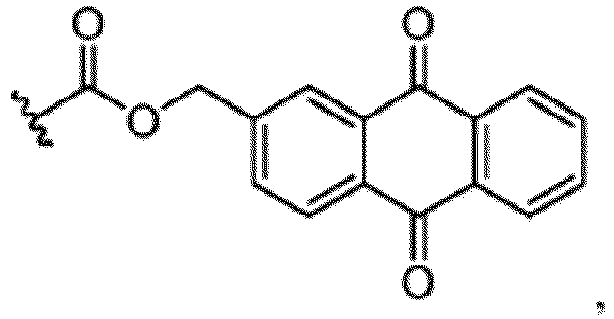 E étant un groupe parmi l'une quelconque des formules suivantes :
 RE étant choisi dans le groupe constitué par C1-6 alkyle et benzyle, ouA étant O, et E étant un groupe de formule :
- Composé selon l'une quelconque des revendications 1 et 2, un groupement clivable E étant fixé à A en utilisant un groupe de formule (LE) :

- Composé selon l'une quelconque des revendications 1 à 6, R1 et R2 formant ensemble un cycle C3-7 cycloalkyle, éventuellement, le cycle C3-7 cycloalkyle étant choisi dans le groupe constitué par cyclopropyle, cyclobutyle, cyclopentyle et cyclohexyle, ouR1 et R2 formant ensemble un cycle hétérocyclique aliphatique à 4 à 7 chaînons,éventuellement, le cycle hétérocyclique aliphatique à 4 à 7 chaînons étant choisi dans le groupe constitué par pyrrolidine, pipéridine, tétrahydrofuranne et tétrahydropyranne.
- Composé selon l'une quelconque des revendications 1 à 6, R1 et R2 formant ensemble un système cyclique de ribose d'un ribonucléoside de formule :
 soit a désignant un point de fixation à O et b désignant un point de fixation à A, a désignant un point de fixation à A et b désignant un point de fixation à O, et W étant choisi dans le groupe constitué par H, un groupe acyle et un groupe protecteur,éventuellement, la nucléobase étant choisie dans le groupe constitué par adénine, cytosine, guanine, thymine, uracile et d'autres nucléobases naturelles et non naturelles, ouR1 et R2 formant ensemble un système cyclique de ribose de formule :
- Composé selon l'une quelconque des revendications 1 à 8, A étant NR3, dans lequel R3 et R1, conjointement avec A et l'atome de carbone auquel R1 est fixé, formant un cycle hétérocyclique aliphatique à 4 à 7 chaînons éventuellement substitué,éventuellement, le cycle hétérocyclique aliphatique à 4 à 7 chaînons étant choisi dans le groupe constitué par :


 x désignant un point de fixation à E, et y désignant un point de fixation à l'atome de carbone auquel R1 est fixé.
 - Composé selon l'une quelconque des revendications 1 à 9, le groupement aliphatique étant choisi parmi un polymère, RP et un groupe de formule :
-polymère-L-(CH2)m-;
RP étant choisi parmi C1-6 alkyle éventuellement substitué et C3-7 cycloalkyle éventuellement substitué ; etm étant un entier de 1 à 10. - Composé selon l'une quelconque des revendications 1 à 10, L étant un groupe de liaison selon l'une quelconque des formules suivantes :
 indiquant un point de fixation du groupe de liaison au polymère ou au groupe CH2, ou
 le groupe de liaison L étant un groupe de liaison des formules :
 indiquant un point de fixation du groupe de liaison au polymère ou au groupe CH2, ou
 le groupe de liaison L comprenant un groupe de formule (L1) :
 le cycle C étant choisi dans le groupe constitué par un C8-16 cycloalkyle éventuellement substitué et un hétérocycloalkyle à 8 à 16 chaînons éventuellement substitué, etindiquant un point de fixation du groupe de liaison au polymère ou au groupe CH2.
- Composé selon l'une quelconque des revendications 1 à 11, le polymère étant choisi dans le groupe constitué par un poly(alkylène glycol), un poly(polyol oxyéthylé), un poly(alcool oléfinique), un poly(a-hydroxyacide), un poly(alcool vinylique), une polyoxazoline et des copolymères correspondants, le polymère étant un polyéthylène glycol linéaire ou ramifié.
- Composé selon l'une quelconque des revendications 1 à 12, Z1 étant S et MA étant un groupe auto-immolateur de formule (a) :

- Composition pharmaceutique comprenant le composé selon l'une quelconque des revendications 1 à 13, ou un sel pharmaceutiquement acceptable correspondant et un support pharmaceutiquement acceptable.
- Composé selon l'une quelconque des revendications 1 à 13, ou sel pharmaceutiquement acceptable correspondant, ou composition pharmaceutique selon la revendication 14 pour une utilisation dans un procédé de traitement d'un cancer chez un sujet qui en a besoin, le procédé comprenant une administration au sujet d'une quantité thérapeutiquement efficace dudit composé ou du sel pharmaceutiquement acceptable correspondant, ou de ladite composition pharmaceutique.
Applications Claiming Priority (2)
| Application Number | Priority Date | Filing Date | Title |
|---|---|---|---|
| US201862640733P | 2018-03-09 | 2018-03-09 | |
| PCT/IB2019/051956 WO2019171358A1 (fr) | 2018-03-09 | 2019-03-11 | Conjugués d'anticorps libérables |
Publications (2)
| Publication Number | Publication Date |
|---|---|
| EP3762037A1 EP3762037A1 (fr) | 2021-01-13 |
| EP3762037B1 true EP3762037B1 (fr) | 2023-12-27 |
Family
ID=66103035
Family Applications (1)
| Application Number | Title | Priority Date | Filing Date |
|---|---|---|---|
| EP19717146.5A Active EP3762037B1 (fr) | 2018-03-09 | 2019-03-11 | Conjugués d'anticorps libérables |
Country Status (10)
| Country | Link |
|---|---|
| US (1) | US20210170045A1 (fr) |
| EP (1) | EP3762037B1 (fr) |
| JP (2) | JP2021515765A (fr) |
| KR (2) | KR20220127380A (fr) |
| CN (1) | CN111629759A (fr) |
| AU (2) | AU2019232652B2 (fr) |
| BR (1) | BR112020015071A2 (fr) |
| CA (2) | CA3179334A1 (fr) |
| TW (1) | TW202003044A (fr) |
| WO (1) | WO2019171358A1 (fr) |
Families Citing this family (4)
| Publication number | Priority date | Publication date | Assignee | Title |
|---|---|---|---|---|
| AU2018231832A1 (en) * | 2017-03-10 | 2019-08-08 | Quiapeg Pharmaceuticals Ab | Releasable conjugates |
| EP3849660A1 (fr) | 2018-09-12 | 2021-07-21 | QuiaPEG Pharmaceuticals AB | Conjugués de glp-1 libérables |
| EP4192508A1 (fr) | 2020-08-05 | 2023-06-14 | Ascendis Pharma A/S | Conjugués comprenant des lieurs réversibles et leurs utilisations |
| KR20240047835A (ko) | 2022-10-05 | 2024-04-12 | 주식회사 엘지에너지솔루션 | 방화벽을 포함하는 버스바 어셈블리 및 이를 포함하는 전지팩 |
Citations (1)
| Publication number | Priority date | Publication date | Assignee | Title |
|---|---|---|---|---|
| WO2015095755A1 (fr) * | 2013-12-19 | 2015-06-25 | Seattle Genetics, Inc. | Liants à base de carbamate de méthylène à utiliser avec des conjugués de médicaments ciblés |
Family Cites Families (14)
| Publication number | Priority date | Publication date | Assignee | Title |
|---|---|---|---|---|
| US4946778A (en) | 1987-09-21 | 1990-08-07 | Genex Corporation | Single polypeptide chain binding molecules |
| US5208020A (en) | 1989-10-25 | 1993-05-04 | Immunogen Inc. | Cytotoxic agents comprising maytansinoids and their therapeutic use |
| US5395619A (en) | 1993-03-03 | 1995-03-07 | Liposome Technology, Inc. | Lipid-polymer conjugates and liposomes |
| EP3434275A1 (fr) | 2003-11-06 | 2019-01-30 | Seattle Genetics, Inc. | Méthode de dépistage de cellules cancéreuses basé sur l'utilisation de conjugués d'auristatin avec anticorps |
| JP5642673B2 (ja) | 2008-07-10 | 2014-12-17 | セリナ・セラピユーテイツクス・インコーポレーテツド | 不活性末端基を有するポリオキサゾリン類、保護された開始基から調製されるポリオキサゾリン類及び関連化合物 |
| CA3140885A1 (fr) | 2010-12-13 | 2012-06-21 | Quiapeg Pharmaceuticals Ab | Polymeres fonctionnalises |
| CA2876315C (fr) | 2012-06-12 | 2021-05-25 | Marek Kwiatkowski | Conjugues de molecules biologiquement actives a des polymeres fonctionnalises |
| WO2014061277A1 (fr) | 2012-10-19 | 2014-04-24 | 第一三共株式会社 | Conjugué anticorps-médicament produit par liaison par l'intermédiaire d'un lieur ayant une structure hydrophile |
| CN106659783A (zh) * | 2014-06-20 | 2017-05-10 | 艾比吉诺米克斯国际股份有限公司 | Her2抗体‑药物缀合物 |
| CA2979895A1 (fr) * | 2015-03-18 | 2016-09-22 | Immunobiochem Corporation | Conjugues pour le traitement du cancer ciblant les antigenes associes aux tumeurs intracellulaires |
| HUE057906T2 (hu) | 2015-08-14 | 2022-07-28 | Remegen Biosciences Inc | Kovalens kötõcsoportok ellenanyag-hatóanyag konjugátumokban és eljárások elõállításukra és alkalmazásukra |
| GB201607827D0 (en) | 2016-05-04 | 2016-06-15 | Bicycle Therapeutics Ltd | Bicyclic peptide-toxin conjugates specific for MT1-MMP |
| WO2018127699A1 (fr) | 2017-01-06 | 2018-07-12 | Bicyclerd Limited | Composés permettant de traiter le cancer |
| AU2018231832A1 (en) | 2017-03-10 | 2019-08-08 | Quiapeg Pharmaceuticals Ab | Releasable conjugates |
-
2019
- 2019-03-11 KR KR1020227031170A patent/KR20220127380A/ko not_active Ceased
- 2019-03-11 AU AU2019232652A patent/AU2019232652B2/en not_active Ceased
- 2019-03-11 EP EP19717146.5A patent/EP3762037B1/fr active Active
- 2019-03-11 CN CN201980009621.7A patent/CN111629759A/zh active Pending
- 2019-03-11 BR BR112020015071-1A patent/BR112020015071A2/pt unknown
- 2019-03-11 TW TW108108060A patent/TW202003044A/zh unknown
- 2019-03-11 WO PCT/IB2019/051956 patent/WO2019171358A1/fr not_active Ceased
- 2019-03-11 JP JP2020546105A patent/JP2021515765A/ja active Pending
- 2019-03-11 CA CA3179334A patent/CA3179334A1/fr active Pending
- 2019-03-11 CA CA3086651A patent/CA3086651C/fr active Active
- 2019-03-11 US US16/978,991 patent/US20210170045A1/en not_active Abandoned
- 2019-03-11 KR KR1020207021757A patent/KR20200103780A/ko not_active Ceased
-
2022
- 2022-06-24 AU AU2022204496A patent/AU2022204496A1/en not_active Abandoned
- 2022-12-23 JP JP2022206327A patent/JP2023036821A/ja active Pending
Patent Citations (1)
| Publication number | Priority date | Publication date | Assignee | Title |
|---|---|---|---|---|
| WO2015095755A1 (fr) * | 2013-12-19 | 2015-06-25 | Seattle Genetics, Inc. | Liants à base de carbamate de méthylène à utiliser avec des conjugués de médicaments ciblés |
Also Published As
| Publication number | Publication date |
|---|---|
| AU2022204496A1 (en) | 2022-07-21 |
| TW202003044A (zh) | 2020-01-16 |
| CA3179334A1 (fr) | 2019-09-12 |
| JP2021515765A (ja) | 2021-06-24 |
| AU2019232652B2 (en) | 2022-04-21 |
| KR20220127380A (ko) | 2022-09-19 |
| US20210170045A1 (en) | 2021-06-10 |
| CN111629759A (zh) | 2020-09-04 |
| AU2019232652A1 (en) | 2020-07-09 |
| KR20200103780A (ko) | 2020-09-02 |
| CA3086651A1 (fr) | 2019-09-12 |
| BR112020015071A2 (pt) | 2021-01-05 |
| CA3086651C (fr) | 2023-01-17 |
| WO2019171358A1 (fr) | 2019-09-12 |
| EP3762037A1 (fr) | 2021-01-13 |
| JP2023036821A (ja) | 2023-03-14 |
Similar Documents
| Publication | Publication Date | Title |
|---|---|---|
| US10898503B2 (en) | Cleavable drug conjugates, compositions thereof and methods of use | |
| AU2022204496A1 (en) | Releasable antibody conjugates | |
| TW201919693A (zh) | 包含可裂解連接子之化合物及其用途 | |
| US12448518B2 (en) | Phthalocyanine dye compounds, conjugates and methods of use thereof | |
| JP7657153B2 (ja) | 切断可能なリンカーを含む化合物及びその使用 | |
| US12503506B2 (en) | Dual drug antibody-drug conjugates | |
| CA3195303A1 (fr) | Glycoconjugues | |
| EP4319817A1 (fr) | Composés de colorant à base de phthalocyanine, conjugués et procédés d'utilisation associés | |
| WO2026037321A1 (fr) | Composés, compositions et méthodes | |
| US20250382317A1 (en) | N-substituted indole derivatives and conjugates for the treatment of cancer | |
| TW202615007A (zh) | 化合物、組成物和方法 | |
| TW202517255A (zh) | 化合物、組合物及方法 | |
| RU2795168C2 (ru) | Соединения, содержащие расщепляемый линкер, и способы их применения | |
| EA046916B1 (ru) | Производные бензодиазепина и их применение |
Legal Events
| Date | Code | Title | Description |
|---|---|---|---|
| STAA | Information on the status of an ep patent application or granted ep patent |
Free format text: STATUS: UNKNOWN |
|
| STAA | Information on the status of an ep patent application or granted ep patent |
Free format text: STATUS: THE INTERNATIONAL PUBLICATION HAS BEEN MADE |
|
| PUAI | Public reference made under article 153(3) epc to a published international application that has entered the european phase |
Free format text: ORIGINAL CODE: 0009012 |
|
| STAA | Information on the status of an ep patent application or granted ep patent |
Free format text: STATUS: REQUEST FOR EXAMINATION WAS MADE |
|
| 17P | Request for examination filed |
Effective date: 20200909 |
|
| AK | Designated contracting states |
Kind code of ref document: A1 Designated state(s): AL AT BE BG CH CY CZ DE DK EE ES FI FR GB GR HR HU IE IS IT LI LT LU LV MC MK MT NL NO PL PT RO RS SE SI SK SM TR |
|
| AX | Request for extension of the european patent |
Extension state: BA ME |
|
| DAV | Request for validation of the european patent (deleted) | ||
| DAX | Request for extension of the european patent (deleted) | ||
| REG | Reference to a national code |
Ref country code: HK Ref legal event code: DE Ref document number: 40043694 Country of ref document: HK |
|
| STAA | Information on the status of an ep patent application or granted ep patent |
Free format text: STATUS: EXAMINATION IS IN PROGRESS |
|
| 17Q | First examination report despatched |
Effective date: 20220413 |
|
| GRAP | Despatch of communication of intention to grant a patent |
Free format text: ORIGINAL CODE: EPIDOSNIGR1 |
|
| STAA | Information on the status of an ep patent application or granted ep patent |
Free format text: STATUS: GRANT OF PATENT IS INTENDED |
|
| INTG | Intention to grant announced |
Effective date: 20230725 |
|
| GRAS | Grant fee paid |
Free format text: ORIGINAL CODE: EPIDOSNIGR3 |
|
| GRAA | (expected) grant |
Free format text: ORIGINAL CODE: 0009210 |
|
| STAA | Information on the status of an ep patent application or granted ep patent |
Free format text: STATUS: THE PATENT HAS BEEN GRANTED |
|
| AK | Designated contracting states |
Kind code of ref document: B1 Designated state(s): AL AT BE BG CH CY CZ DE DK EE ES FI FR GB GR HR HU IE IS IT LI LT LU LV MC MK MT NL NO PL PT RO RS SE SI SK SM TR |
|
| REG | Reference to a national code |
Ref country code: GB Ref legal event code: FG4D |
|
| REG | Reference to a national code |
Ref country code: CH Ref legal event code: EP |
|
| REG | Reference to a national code |
Ref country code: DE Ref legal event code: R096 Ref document number: 602019043985 Country of ref document: DE |
|
| REG | Reference to a national code |
Ref country code: IE Ref legal event code: FG4D |
|
| PG25 | Lapsed in a contracting state [announced via postgrant information from national office to epo] |
Ref country code: GR Free format text: LAPSE BECAUSE OF FAILURE TO SUBMIT A TRANSLATION OF THE DESCRIPTION OR TO PAY THE FEE WITHIN THE PRESCRIBED TIME-LIMIT Effective date: 20240328 |
|
| REG | Reference to a national code |
Ref country code: LT Ref legal event code: MG9D |
|
| PG25 | Lapsed in a contracting state [announced via postgrant information from national office to epo] |
Ref country code: LT Free format text: LAPSE BECAUSE OF FAILURE TO SUBMIT A TRANSLATION OF THE DESCRIPTION OR TO PAY THE FEE WITHIN THE PRESCRIBED TIME-LIMIT Effective date: 20231227 |
|
| PG25 | Lapsed in a contracting state [announced via postgrant information from national office to epo] |
Ref country code: ES Free format text: LAPSE BECAUSE OF FAILURE TO SUBMIT A TRANSLATION OF THE DESCRIPTION OR TO PAY THE FEE WITHIN THE PRESCRIBED TIME-LIMIT Effective date: 20231227 |
|
| PG25 | Lapsed in a contracting state [announced via postgrant information from national office to epo] |
Ref country code: LT Free format text: LAPSE BECAUSE OF FAILURE TO SUBMIT A TRANSLATION OF THE DESCRIPTION OR TO PAY THE FEE WITHIN THE PRESCRIBED TIME-LIMIT Effective date: 20231227 Ref country code: GR Free format text: LAPSE BECAUSE OF FAILURE TO SUBMIT A TRANSLATION OF THE DESCRIPTION OR TO PAY THE FEE WITHIN THE PRESCRIBED TIME-LIMIT Effective date: 20240328 Ref country code: FI Free format text: LAPSE BECAUSE OF FAILURE TO SUBMIT A TRANSLATION OF THE DESCRIPTION OR TO PAY THE FEE WITHIN THE PRESCRIBED TIME-LIMIT Effective date: 20231227 Ref country code: ES Free format text: LAPSE BECAUSE OF FAILURE TO SUBMIT A TRANSLATION OF THE DESCRIPTION OR TO PAY THE FEE WITHIN THE PRESCRIBED TIME-LIMIT Effective date: 20231227 Ref country code: BG Free format text: LAPSE BECAUSE OF FAILURE TO SUBMIT A TRANSLATION OF THE DESCRIPTION OR TO PAY THE FEE WITHIN THE PRESCRIBED TIME-LIMIT Effective date: 20240327 |
|
| REG | Reference to a national code |
Ref country code: NL Ref legal event code: MP Effective date: 20231227 |
|
| REG | Reference to a national code |
Ref country code: AT Ref legal event code: MK05 Ref document number: 1643922 Country of ref document: AT Kind code of ref document: T Effective date: 20231227 |
|
| PG25 | Lapsed in a contracting state [announced via postgrant information from national office to epo] |
Ref country code: NL Free format text: LAPSE BECAUSE OF FAILURE TO SUBMIT A TRANSLATION OF THE DESCRIPTION OR TO PAY THE FEE WITHIN THE PRESCRIBED TIME-LIMIT Effective date: 20231227 |
|
| PG25 | Lapsed in a contracting state [announced via postgrant information from national office to epo] |
Ref country code: SE Free format text: LAPSE BECAUSE OF FAILURE TO SUBMIT A TRANSLATION OF THE DESCRIPTION OR TO PAY THE FEE WITHIN THE PRESCRIBED TIME-LIMIT Effective date: 20231227 Ref country code: RS Free format text: LAPSE BECAUSE OF FAILURE TO SUBMIT A TRANSLATION OF THE DESCRIPTION OR TO PAY THE FEE WITHIN THE PRESCRIBED TIME-LIMIT Effective date: 20231227 Ref country code: NO Free format text: LAPSE BECAUSE OF FAILURE TO SUBMIT A TRANSLATION OF THE DESCRIPTION OR TO PAY THE FEE WITHIN THE PRESCRIBED TIME-LIMIT Effective date: 20240327 Ref country code: NL Free format text: LAPSE BECAUSE OF FAILURE TO SUBMIT A TRANSLATION OF THE DESCRIPTION OR TO PAY THE FEE WITHIN THE PRESCRIBED TIME-LIMIT Effective date: 20231227 Ref country code: LV Free format text: LAPSE BECAUSE OF FAILURE TO SUBMIT A TRANSLATION OF THE DESCRIPTION OR TO PAY THE FEE WITHIN THE PRESCRIBED TIME-LIMIT Effective date: 20231227 Ref country code: HR Free format text: LAPSE BECAUSE OF FAILURE TO SUBMIT A TRANSLATION OF THE DESCRIPTION OR TO PAY THE FEE WITHIN THE PRESCRIBED TIME-LIMIT Effective date: 20231227 |
|
| PG25 | Lapsed in a contracting state [announced via postgrant information from national office to epo] |
Ref country code: IS Free format text: LAPSE BECAUSE OF FAILURE TO SUBMIT A TRANSLATION OF THE DESCRIPTION OR TO PAY THE FEE WITHIN THE PRESCRIBED TIME-LIMIT Effective date: 20240427 |
|
| PG25 | Lapsed in a contracting state [announced via postgrant information from national office to epo] |
Ref country code: AT Free format text: LAPSE BECAUSE OF FAILURE TO SUBMIT A TRANSLATION OF THE DESCRIPTION OR TO PAY THE FEE WITHIN THE PRESCRIBED TIME-LIMIT Effective date: 20231227 Ref country code: CZ Free format text: LAPSE BECAUSE OF FAILURE TO SUBMIT A TRANSLATION OF THE DESCRIPTION OR TO PAY THE FEE WITHIN THE PRESCRIBED TIME-LIMIT Effective date: 20231227 |
|
| PG25 | Lapsed in a contracting state [announced via postgrant information from national office to epo] |
Ref country code: SK Free format text: LAPSE BECAUSE OF FAILURE TO SUBMIT A TRANSLATION OF THE DESCRIPTION OR TO PAY THE FEE WITHIN THE PRESCRIBED TIME-LIMIT Effective date: 20231227 |
|
| PG25 | Lapsed in a contracting state [announced via postgrant information from national office to epo] |
Ref country code: SM Free format text: LAPSE BECAUSE OF FAILURE TO SUBMIT A TRANSLATION OF THE DESCRIPTION OR TO PAY THE FEE WITHIN THE PRESCRIBED TIME-LIMIT Effective date: 20231227 Ref country code: SK Free format text: LAPSE BECAUSE OF FAILURE TO SUBMIT A TRANSLATION OF THE DESCRIPTION OR TO PAY THE FEE WITHIN THE PRESCRIBED TIME-LIMIT Effective date: 20231227 Ref country code: RO Free format text: LAPSE BECAUSE OF FAILURE TO SUBMIT A TRANSLATION OF THE DESCRIPTION OR TO PAY THE FEE WITHIN THE PRESCRIBED TIME-LIMIT Effective date: 20231227 Ref country code: IT Free format text: LAPSE BECAUSE OF FAILURE TO SUBMIT A TRANSLATION OF THE DESCRIPTION OR TO PAY THE FEE WITHIN THE PRESCRIBED TIME-LIMIT Effective date: 20231227 Ref country code: IS Free format text: LAPSE BECAUSE OF FAILURE TO SUBMIT A TRANSLATION OF THE DESCRIPTION OR TO PAY THE FEE WITHIN THE PRESCRIBED TIME-LIMIT Effective date: 20240427 Ref country code: EE Free format text: LAPSE BECAUSE OF FAILURE TO SUBMIT A TRANSLATION OF THE DESCRIPTION OR TO PAY THE FEE WITHIN THE PRESCRIBED TIME-LIMIT Effective date: 20231227 Ref country code: CZ Free format text: LAPSE BECAUSE OF FAILURE TO SUBMIT A TRANSLATION OF THE DESCRIPTION OR TO PAY THE FEE WITHIN THE PRESCRIBED TIME-LIMIT Effective date: 20231227 Ref country code: AT Free format text: LAPSE BECAUSE OF FAILURE TO SUBMIT A TRANSLATION OF THE DESCRIPTION OR TO PAY THE FEE WITHIN THE PRESCRIBED TIME-LIMIT Effective date: 20231227 |
|
| PG25 | Lapsed in a contracting state [announced via postgrant information from national office to epo] |
Ref country code: PT Free format text: LAPSE BECAUSE OF FAILURE TO SUBMIT A TRANSLATION OF THE DESCRIPTION OR TO PAY THE FEE WITHIN THE PRESCRIBED TIME-LIMIT Effective date: 20240429 Ref country code: PL Free format text: LAPSE BECAUSE OF FAILURE TO SUBMIT A TRANSLATION OF THE DESCRIPTION OR TO PAY THE FEE WITHIN THE PRESCRIBED TIME-LIMIT Effective date: 20231227 |
|
| PG25 | Lapsed in a contracting state [announced via postgrant information from national office to epo] |
Ref country code: PT Free format text: LAPSE BECAUSE OF FAILURE TO SUBMIT A TRANSLATION OF THE DESCRIPTION OR TO PAY THE FEE WITHIN THE PRESCRIBED TIME-LIMIT Effective date: 20240429 Ref country code: PL Free format text: LAPSE BECAUSE OF FAILURE TO SUBMIT A TRANSLATION OF THE DESCRIPTION OR TO PAY THE FEE WITHIN THE PRESCRIBED TIME-LIMIT Effective date: 20231227 |
|
| REG | Reference to a national code |
Ref country code: DE Ref legal event code: R097 Ref document number: 602019043985 Country of ref document: DE |
|
| PG25 | Lapsed in a contracting state [announced via postgrant information from national office to epo] |
Ref country code: DK Free format text: LAPSE BECAUSE OF FAILURE TO SUBMIT A TRANSLATION OF THE DESCRIPTION OR TO PAY THE FEE WITHIN THE PRESCRIBED TIME-LIMIT Effective date: 20231227 |
|
| PG25 | Lapsed in a contracting state [announced via postgrant information from national office to epo] |
Ref country code: DK Free format text: LAPSE BECAUSE OF FAILURE TO SUBMIT A TRANSLATION OF THE DESCRIPTION OR TO PAY THE FEE WITHIN THE PRESCRIBED TIME-LIMIT Effective date: 20231227 |
|
| REG | Reference to a national code |
Ref country code: CH Ref legal event code: PL |
|
| PLBE | No opposition filed within time limit |
Free format text: ORIGINAL CODE: 0009261 |
|
| STAA | Information on the status of an ep patent application or granted ep patent |
Free format text: STATUS: NO OPPOSITION FILED WITHIN TIME LIMIT |
|
| PG25 | Lapsed in a contracting state [announced via postgrant information from national office to epo] |
Ref country code: LU Free format text: LAPSE BECAUSE OF NON-PAYMENT OF DUE FEES Effective date: 20240311 |
|
| PG25 | Lapsed in a contracting state [announced via postgrant information from national office to epo] |
Ref country code: MC Free format text: LAPSE BECAUSE OF FAILURE TO SUBMIT A TRANSLATION OF THE DESCRIPTION OR TO PAY THE FEE WITHIN THE PRESCRIBED TIME-LIMIT Effective date: 20231227 |
|
| PG25 | Lapsed in a contracting state [announced via postgrant information from national office to epo] |
Ref country code: MC Free format text: LAPSE BECAUSE OF FAILURE TO SUBMIT A TRANSLATION OF THE DESCRIPTION OR TO PAY THE FEE WITHIN THE PRESCRIBED TIME-LIMIT Effective date: 20231227 Ref country code: LU Free format text: LAPSE BECAUSE OF NON-PAYMENT OF DUE FEES Effective date: 20240311 |
|
| 26N | No opposition filed |
Effective date: 20240930 |
|
| REG | Reference to a national code |
Ref country code: BE Ref legal event code: MM Effective date: 20240331 |
|
| PG25 | Lapsed in a contracting state [announced via postgrant information from national office to epo] |
Ref country code: BE Free format text: LAPSE BECAUSE OF NON-PAYMENT OF DUE FEES Effective date: 20240331 |
|
| PG25 | Lapsed in a contracting state [announced via postgrant information from national office to epo] |
Ref country code: IE Free format text: LAPSE BECAUSE OF NON-PAYMENT OF DUE FEES Effective date: 20240311 |
|
| PG25 | Lapsed in a contracting state [announced via postgrant information from national office to epo] |
Ref country code: IE Free format text: LAPSE BECAUSE OF NON-PAYMENT OF DUE FEES Effective date: 20240311 Ref country code: BE Free format text: LAPSE BECAUSE OF NON-PAYMENT OF DUE FEES Effective date: 20240331 Ref country code: CH Free format text: LAPSE BECAUSE OF NON-PAYMENT OF DUE FEES Effective date: 20240331 |
|
| PG25 | Lapsed in a contracting state [announced via postgrant information from national office to epo] |
Ref country code: SI Free format text: LAPSE BECAUSE OF FAILURE TO SUBMIT A TRANSLATION OF THE DESCRIPTION OR TO PAY THE FEE WITHIN THE PRESCRIBED TIME-LIMIT Effective date: 20231227 |
|
| PG25 | Lapsed in a contracting state [announced via postgrant information from national office to epo] |
Ref country code: CY Free format text: LAPSE BECAUSE OF FAILURE TO SUBMIT A TRANSLATION OF THE DESCRIPTION OR TO PAY THE FEE WITHIN THE PRESCRIBED TIME-LIMIT; INVALID AB INITIO Effective date: 20190311 |
|
| PG25 | Lapsed in a contracting state [announced via postgrant information from national office to epo] |
Ref country code: HU Free format text: LAPSE BECAUSE OF FAILURE TO SUBMIT A TRANSLATION OF THE DESCRIPTION OR TO PAY THE FEE WITHIN THE PRESCRIBED TIME-LIMIT; INVALID AB INITIO Effective date: 20190311 |
|
| PGFP | Annual fee paid to national office [announced via postgrant information from national office to epo] |
Ref country code: DE Payment date: 20250926 Year of fee payment: 7 |
|
| PGFP | Annual fee paid to national office [announced via postgrant information from national office to epo] |
Ref country code: GB Payment date: 20250926 Year of fee payment: 7 |
|
| PGFP | Annual fee paid to national office [announced via postgrant information from national office to epo] |
Ref country code: FR Payment date: 20250926 Year of fee payment: 7 |
|
| PG25 | Lapsed in a contracting state [announced via postgrant information from national office to epo] |
Ref country code: TR Free format text: LAPSE BECAUSE OF FAILURE TO SUBMIT A TRANSLATION OF THE DESCRIPTION OR TO PAY THE FEE WITHIN THE PRESCRIBED TIME-LIMIT Effective date: 20231227 |